
Download Now
Home Blog Page 592

Unemployment compensation in South Carolina : an insight

0
Image source - https://bit.ly/2NVSZ6A

This article is written by Swetalika Das, from Amity University, Kolkata. This is an exhaustive article about the status of unemployment compensation in South Carolina.

Introduction 

Unemployment compensation is a monetary benefit provided to the people who lost their jobs, not because of their fault but due to some other circumstances. The issues of unemployment are all over the world especially at the time of economic crisis. However, the unemployment compensation program has benefited many unemployed people.

In South Carolina, a southern state in the United States, the unemployment rate is not as high as compared to the other states in the country, however, according to the sources, only 14.8% of unemployed people manage to receive the unemployment compensation benefits and the other 85% struggle to receive it. Also, the rank of South Carolina is very low in terms of providing unemployment compensation. Moreover, the process of getting unemployment benefits in South Carolina is not easy, it is a very complicated process. 

This article gives a brief insight into the eligibility requirements to receive unemployment compensation, the process to file for the benefits, amount, and duration of unemployment compensation

A brief overview of unemployment compensation in South Carolina

The key eligibility requirements

The reasons for unemployment vary from person to person. As there can be different reasons for unemployment, the benefit must be specific to only the person who meets the required eligibility criteria set by the Government to provide maximum benefit. 

Every state in the United States has its eligibility requirements to receive unemployment benefits. Similarly, the South Carolina state also has its own rules and regulations regarding unemployment compensation. The Department of Employment and Workforce (DEW) of South Carolina regulates all the activities and sets the eligibility criteria. To apply for the unemployment compensation program the person must fulfil the following requirements:

  • The past earnings of the applicant must fulfil the minimum earning requirements set by the Government.
  • The cause of unemployment must not be caused due to the applicant’s fault.
  • The applicant must be readily available for work and must be able to do the work.
  • The applicant must be actively seeking new job opportunities.

Minimum earning requirement

In South Carolina, to determine the minimum earning requirement, a base period is taken into consideration to check the recent earnings before the applicant lost his employment. 

The base period is the year of employment before losing his work. In South Carolina, the provisions for the base period are mentioned in Chapter 47 of the Department of Employment and Workforce which states that the base period is the first four quarters of the last five quarters years before applying for the compensation claim. It is important to note that the quarter of a year is a three month period which is divided into four quarters for each financial year. Therefore, the four quarters are as follows:

  1. January-March (1st quarter).
  2. April-June (2nd quarter).
  3. July-September (3rd quarter).
  4. October-December (4th quarter).

For instance, let’s say the applicant filed the claim in January 2021. Then the base period will be from 1st October 2019 through 30th September 2020. 

In between the base period, the applicant is required to meet the following guidelines for eligibility:

  1. The total earning must be $4,455.
  2. The earning in the highest quarter must be $1,092.
  3. The total earning must be 1.5 times more than the highest quarter earnings.

The ‘No fault of your own’ requirement

Unemployment due to lay off or reduction in force (RIF)

If the person had laid off from the employment due to some temporary reasons or if the person lost his job due to reduction in force (RIF) which means the person permanently terminated himself from the company due to some issues faced by him while working at the company such as loads of work pressure, unprofessional behaviours from employers, etc. In this case, the person is eligible to meet this requirement and to apply for unemployment compensation. 

Unemployment for being fired  

Under Section 41-35-120(2) of the South Carolina Code, it is stated that if the person was fired due to his inability, incapacity, or inefficiency, then, he wouldn’t be discharged from the eligibility requirements to apply for unemployment compensation. However, if the person was fired due to his misconduct then he would not be eligible to file for compensation because, in South Carolina, ‘misconduct’ is an intentional act caused to violate the company’s rules and regulations. If an employee intentionally does something which is against the company’s rule then it can be regarded as misconduct. 

For instance, if an employee regularly takes leave without having a good cause, shows unprofessional behaviour towards the employer or other staff of the company even after the continuous warnings from the employer, then it means the employee is doing the act intentionally, and hence, it is misconduct. 

Even if the act is not exactly misconduct, the employee would not be able to file for compensation due to ‘for cause’. It means the employee has caused severe harm to the company’s reputation or violated the rules but didn’t act on it intentionally. If the person was fired due to ‘or cause’ then the person may not get permission to file for a stipulated time, i.e, 5 weeks to 19 weeks. 

Unemployment due to quitting the job

If the person quit the job then he wouldn’t be eligible for an unemployment compensation program until and unless there is a good reason for quitting. The good enough reason includes facing unsafe conditions in the company, bad work culture, or family issues. 

For instance, if the employee faced some problems concerning his and his family’s safety but the company didn’t try to help, then he would be eligible for filing for compensation. The good reason must be like the person didn’t find any other way but to quit the job. However, if the person quit the job just because he wasn’t satisfied with the job then he wouldn’t be qualified to file for unemployment compensation.

The person must be available and seeking jobs

According to this requirement, a person must be able to perform the tasks. Also, he must be available for work and looking for job opportunities. Here, the availability for work means the person needs to go for every opportunity that he finds suitable. The person can find a suitable opportunity if the level of work matches with his level of skills and experience if the job gives a good amount of wages or any other facilities provided by the employer.

Section 41-35-110(3) of the South Carolina Code states that a claimant is eligible for unemployment compensation only if he is found to be sincere in searching for jobs. The active search must include two searches conducted through the South Carolina Works Online System (SCWOS) as it makes the searches verified and easy for the department to consider the claimant’s eligibility. 

This requirement was held in the case Hyman v. sc emp.security comm. (1959), where the court stated that the condition of availability for work is an important requirement for the exposure of the normal labour market. The applicant must prove that he met all the required guidelines to be eligible for compensation. Also, it is important to prove that the applicant has made several efforts to find a job opportunity but wasn’t able to find one. If the applicant cannot fulfil the above requirements then he wouldn’t be able to receive the benefits. 

Filing claims for benefits in South Carolina

Types of claims

The types of claims are provided in Chapter 47 of the Department of Employment and Workforce (DEW). There are two types of claims:

Non-Job Attached Unemployment Claim

A Non-Job Attached Unemployment means an individual is unemployed without having any job. The two types of Non-Job Attached Unemployment Claim are:

Initial Claims: Any individual can file for the claim at the Department office and must state that he is unemployed and is available for the work. Such requests are termed as initial claims by an individual.

Continued Claims: For the further weeks of Non-Job Attached Unemployment, the individual must continue with the filing process by stating the following points:

  • The claimant has not worked or earned any wages
  • The claimant has never refused to do any work
  • The claimant can do the work and is available for the work and is seeking permanent job opportunities. 

Job-Attached Unemployment Claims

The Job-Attached Unemployment means unemployment of a person who earns less than his weekly benefit amount or works less than the normal hours due to his incapacity and is employed under an employer. The four types of Job-Attached Unemployment Claims are:

Initial Claims: The Job-Attached employee to whom the employer has asked to work for a week with fewer benefits than the maximum weekly benefit amount. In this type of claim, the employer must prepare a Low Earnings Report. The employee is required to sign and provide his address in the report. Later, the employer shall forward the report to its nearest DEW office. 

Eligibility Notification: If an employee has fulfilled all the requirements and is found eligible to receive the benefits then he shall be informed about his weekly benefit amount through a notice which also states the ending dates of the unemployment compensation year. Later, the employer would be instructed that the prescribed amount in the notice is only applicable for the weeks within the benefit year and the employer is required to continue with filing the low earnings report after obtaining the signature from the employee. The filing of the report shall continue till the end of the benefit year.

Ineligibility Notification: If an employee is not having sufficient base period wages for being eligible to receive the unemployment benefits, then he shall be informed by the DEW office.

Continued Claims: If in case the employee is not performing the full-time work and working less than the normal working hours resulting in few earnings for a week than his weekly benefit amount, then the employer is required to submit the low earnings report stating the facts that the claimant is Job-Attached to the employer and the unemployment week mentioned in the report is due to the inability of claimant to perform full-time employment in that period of a week. 

How to file for claims?

A person can file for claims through the mail, fax, or online official website of DEW. After the filing process, one must continue with the filing and claim benefits for each week. After receiving the claims, the person would get a notification from the DEW office stating about the unemployment compensation benefit amount and the duration of benefits. 

What to do if the claims have been denied?

An appeal can be filed in writing, mail, fax, within ten days from the denial of the claim to the Department of Employment and Workforce (DEW) Appeals division. The appellant must keep a copy of his appeal and the proof of the mail or fax which shows that the appellant has sent the request for appeal. 

While waiting for the hearing, the appellant is required to continue with the claims and looking for job opportunities. After the appeal is received, a notice will be provided to the appellant for an Appeal Tribunal Hearing. The hearing may happen either in person or by telephone. After receiving all the evidence from both parties, the DEW Appeal Division will state the decision in writing. If the appellant isn’t satisfied with the decision, then he can file an appeal within ten days from the decision to the Appellate panel. If the appellant is not satisfied with the Panel’s decision then he can appeal within 30 days from the decision to the South Carolina Administrative Law Court.

How is unemployment compensation paid?

The Unemployment compensation is paid according to the following process:

  • Firstly, the Businesses or Companies pay the unemployment taxes in place of each worker. 
  • The taxes are then transferred to the State Government office if a worker is found eligible. 
  • Lastly, the Government pays the unemployment compensation through the help of the State Government Office. 

It is important to note that if a worker has not worked for a long time then he may not get the compensation. However, if the worker has worked for a stipulated time then he can receive the unemployment compensation benefits. 

A sneak peek into the amount and duration of unemployment benefits in South Carolina 

Amount of Unemployment Benefits

The unemployment benefit amount is provided every week. In South Carolina, the weekly unemployment benefit amount is 50% of the average weekly income in the claimant’s base period. The weekly benefit income is a maximum of $326 and a minimum of $42. The weekly benefit amount and maximum benefit amount are calculated through the wages provided by the employer as stated under Title 41 of the South Carolina Code of Laws. 

Duration of Unemployment Benefits

Generally, the claim is introduced for one year from the starting date of the claim. However, the maximum duration of the Unemployment compensation can be up to 20 weeks. 

Federal unemployment benefits – the end

Recently on June 27, 2021, the federal unemployment benefits in South Carolina came to an end. The federal unemployment programs were introduced to provide benefits to unemployed individuals or the individuals who were not able to do work due to the COVID 19 pandemic. However, the programs affected the labour capacity of the state and resulted in a shortage of labour in some sectors. It is because of the continuous supply of unemployment benefits. Therefore, to solve this issue the Department of Employment and Workforce (DEW) put an end to the federal unemployment benefits program, however, the standard unemployment benefits still exist. The unemployment programs that came to an end are:

Pandemic Unemployment Assistance (PUA)

This program was for the affected people due to the COVID 19 pandemic. The program aims to benefit the unemployed individuals who were unable to work. It also includes the COVID 19 positive individuals and the individuals who were in quarantine. 

Pandemic Emergency Unemployment Compensation (PEUC)

Through the help of this program, claimants were able to extend their unemployment benefits from only 20 weeks to an additional 53 weeks. 

Federal Pandemic Unemployment Compensation (FPUC)

The program helped all the categories of unemployed individuals with a weekly additional benefit of $300. 

Mixed Earners Unemployment Compensation (MEUC)

This program provides a weekly additional benefit of $100 only to the eligible individuals for unemployment insurance benefits. Also, the eligible individuals must have a self-earned income. 

Conclusion 

In light of the above discussions, it can be concluded that the state of South Carolina undoubtedly has proper rules and regulations to maintain the activities related to unemployment compensation. However, as mentioned before, according to some sources, the rank of South Carolina in terms of average weekly unemployment benefits is low as compared to the other states in the US.

The differences in unemployment benefits are because of different calculation methods adopted by the states and the different costs of living. The difference in unemployment benefit is set by the states only, they choose the amount of unemployment compensation to replace the claimant’s previous income, in South Carolina the replacement rate is 50%. Also, the maximum duration of benefits in South Carolina is up to 20 weeks, however, in other states, it is up to 26 weeks.

The differences between replacement rate and duration of benefits are what makes a state as best and worst in the ranking of unemployment benefits. However, it depends completely on the state to ensure a balance between unemployment compensation and the economic productivity of a state. 

References 


LawSikho has created a telegram group for exchanging legal knowledge, referrals and various opportunities. You can click on this link and join:
Follow us on Instagram and subscribe to our YouTube channel for more amazing legal content.

Download Now

Analysis on arguments for mandatory registration of migrant workers to protect their rights

0
Image Source: https://rb.gy/w7cxwy

This article is written by Abhishek Aditya, pursuing Diploma in M&A, Institutional Finance and Investment Laws (PE and VC transactions) from Lawsikho.

Introduction

The Government of NCT of Delhi issued a circular in May this year. The circular states that the Inter State Migrant Workmen Act (ISMW Act), 1979 is applicable to all establishments which employ five or more inter-state migrant workmen. Sikkim and Meghalaya have enacted new legislation with provisions for the mandatory registration of migrant workers. The irony in these developments is unmistakable – the ISMW Act and the provision for mandatory registration of migrant workers have been around for over forty years. If the Delhi Government considers it necessary to merely re-state the provisions of an act, after so many years, it is clear that the adherence to the act has been inadequate. 

What has prompted the latest measures on mandatory registration?

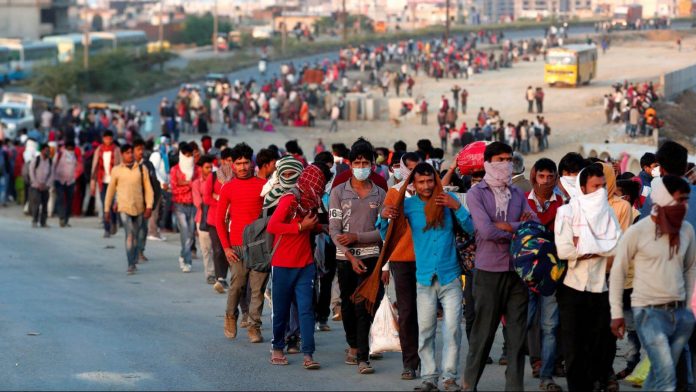
One of the most tragic events in recent years was the migration of migrant workers to their hometowns after the imposition of the nation-wide lockdown last year in March. Many never reached there, dying of exhaustion, starvation or accidents before COVID-19 could actually harm them. 

Among a number of measures that the Government of India announced under the ‘Atma Nirbhar Bharat Scheme’ for providing relief during the pandemic, was the scheme for providing food grains to migrant workers. While announcing this scheme, the government admitted that the number of inter-state migrants was not documented anywhere, neither with Central nor with State Governments. Its allocation of food-grains under this scheme was based on ‘liberal’ estimates of about 8 crore migrants. The subsequent distribution of these food-grains meant for migrant workers was left to the states. States were free to distribute these to not just migrant workers, but to anyone who did not have a ration card or was unable to access food-grains.

In the absence of a database of migrant workers, it is not possible to comment on how far the scheme has been able to provide for those who actually were in need. The government itself candidly admitted as much. The governments also do not have data about how many migrant workers lost their jobs or lives in the pandemic. Even with the best of intentions, the efforts to provide relief to migrant workers will fall short – simply because it is not possible to identify them. 

Almost a year has passed since then. During this time, the Code on Occupational Safety and Health has become an Act, with newer provisions for migrant workers. In view of the challenges faced during the last year, the need for the registration of migrant workers, especially unorganized workers, cannot be overemphasized. The Supreme Court too expressed this view while hearing a PIL on ‘Problems and Miseries of Migrant Workers’. 

Why did this registration not happen till now?

It is well-recognized in the context of labour legislation in India, that the unorganized workers remain out of the safety net provided by these laws. The ISMW Act was the sole legislation pertaining to migrant workers. A large number of ‘migrant workers’, could not be recognized as such under this Act because they work in unorganized employment. The Act applies to establishments and contractors who employ five or more ‘inter-state migrant workmen’. Only traditional employment arrangements which involve an ‘establishment’ or ‘employer’ were covered. All kinds of self-employment such as rickshaw-pullers, street-vendors, cooks or domestic workers were thus excluded. Self-registration by workers was not possible. Moreover, the high cost of compliance under the ISMW Act, ensured that the adherence was low even in organized sectors. The Act is now subsumed in Code on OSH, which has tried to address these deficiencies. 

Under the Code, the Central and State Governments are obligated to maintain a database of inter-state migrant workers. Whereas the ISMW act envisaged registration of migrant workers through the employer alone, the code allows self-registration by workers based on Aadhaar (Section 21, Code on OSH). Registrations by employers are ‘mandatory’ (Section 3, Code on OSH). 

What problems did the migrant workers face?

Two major issues, which became especially acute during the lock-down pertain to the basic needs of food and shelter for migrant workers. The Public Distribution System (PDS) in India operates through a network of Fair Price Shops. A ration card allows purchase from only one particular Fair Price Shop. Migrant workers, especially those working away from their families, or those who work for a few months away from their homes, would not normally go through the hassle of getting a ration card made separately for themselves or for a few months. Thus they lose access to the subsidized food-grains that PDS provides, once they move away from their native places. 

It must be clarified that the portability of PDS benefits and registration of migrant workers are not linked. However, addressing this issue became central to alleviating the distress of migrant workers. It was the absence of food that drove them to undertake arduous journeys to their hometown – often, on foot. 

The second need pertaining to shelter, ironically, is obligatory upon the employers to provide to migrant workers under the ISMW Act. The cost of this, especially in large cities, was enough to discourage most employers to employ migrant workmen, or as is more practical, avoid complying with the law. This was a major reason why even in organized sectors, employers would not adhere to mandatory registration requirements for migrant workers. As it turned out, the lack of registration, and in turn the lack of shelter, proved devastating during the lock-down. Faced with sudden unemployment, many workers could no longer afford the rent of their houses. 

Benefits of mandatory registration

Certain advantages of mandatory registration of migrant workers appear obvious. Firstly, it ensures that the benefits of development schemes reach their targeted beneficiaries. It allows governments to frame and deliver schemes in an efficient manner. 

Secondly, government schemes often suffer from a lack of information among their targeted audience. A registration based on the mobile app or web portal will also help disseminate information about these schemes. Such an IT-based solution will also provide a forum for grievance redressal of migrant workers. 

Self-registration provides an impetus for the workers to come onboard, whereas previously they would remain at the mercy of their employer. Moreover, it is hoped that more employers will adhere to the mandatory registration clause now since their cost of compliance will now be almost similar whether they are hiring a migrant or a non-migrant. This is because the obligations of employers under the ISMW Act to provide residential accommodation and free medical facilities have now been removed in OSH Code. Thus apart from a ‘journey allowance’, the employer has no ‘disincentive’ to employ a migrant worker. 

The Code on OSH added specific provisions so that migrant workers are able to avail benefits of the public distribution system (Section 62, Code on OSH). The government has also announced Aadhaar based ‘One Nation One Ration Card Scheme (ONORC)’ to ensure portability of PDS benefits. While ON OR may not be linked to registration as a migrant worker it nevertheless addresses the root of the problem – access to PDS for migrant workers. 

So is mandatory registration a panacea?

A summary of the arguments thus far outline the following; that the requirement to provide ‘free-accommodation’ was one major reason why compliance to the ISMW act was poor. This was one reason that governments had no data related to migrant workers. Food and shelter were the basic needs that drove the migrants to displacement. The issue of food is to be addressed through the portability of PDS. As regards ‘shelter’ the requirement to provide ‘free-accommodation’ has already been done away with the OSH Code.

Does mandatory registration still matter?

The answer must be in the affirmative. For one, the need for affordable housing with access to clean drinking water and hygienic surroundings, as well as access to healthcare are basic necessities of life. Even if it is no longer obligatory upon employers to provide these to their migrant workmen (or for that matter non-migrant workmen), governments and societies must aim to secure these basic needs for all human beings. However, even beyond these basic needs, it is essential that migrant workers do not remain at the margins of the communities which they help build and nurture; that they are assimilated and integrated and not isolated, and that they have access to opportunities like everyone else. The barriers of language and culture, of customs and beliefs, should not make them aliens in a far-off land.

The Kerala Interstate Migrant Workers Scheme offers valuable lessons in this regard. Some of the measures taken by the government of Kerala under this scheme are:

  • Promotion of education, in their vernacular language, for children of migrant workers,
  • Introduction of Link Workers to enhance access to healthcare for migrant families,
  • The government’s programme for the empowerment of women and poverty eradication was extended to migrant women,
  • Mobile creches to take care of children of migrant workers,
  • Affordable rental housing scheme for migrants,
  • Health insurance and accidental insurance for migrant workers.

The scheme however has not yielded desired results. Some of the reasons for the same are that migrant workers can be registered only through employers (this drawback has been highlighted above), and that migrant workers face ‘isolation’ from the natives of the state. 

Secondly, the migrant workmen, like other workmen may face oppressive conditions at work, inadequate protection from hazards and lack of labour law protections. However, they also face the additional handicap of lacking a social support structure and are therefore more vulnerable to exploitation. Mandatory registration makes them ‘visible’ to governments and gives them recourse for their grievances.

Conclusion

Migrant workers and their ‘destination-states’ i.e. the one where they find employment have a mutual- interdependence. They both need each other to fulfil a need. The mere fact that the worker has come from another state, should not render him worse-off compared to his counterparts from the same state. 

References

  1. Inclusion of Interstate Migrant Workers in Kerala and Lessons for India | SpringerLink
  2. The Inter State Migrant Workmen (Regulation of Employment and Conditions of Service) Act, 1979
  3. The Occupational Safety, Health and Working Conditions Code, 2020
  4. Lok Sabha Question on Migrant Workers returning to Hometown
  5. Supreme Court of India – Suo Motu Writ petition in Re: Problems and Miseries of Migrant Labours (IA No. 58769/2021)

Students of Lawsikho courses regularly produce writing assignments and work on practical exercises as a part of their coursework and develop themselves in real-life practical skills.

LawSikho has created a telegram group for exchanging legal knowledge, referrals, and various opportunities. You can click on this link and join:

Follow us on Instagram and subscribe to our YouTube channel for more amazing legal content.

Download Now

Investment guidelines for securities lending and borrowing

0

This article is written by Aura Das, pursuing Diploma in M&A, Institutional Finance and Investment Laws (PE and VC transactions) from Lawsikho.

What is Securities Lending and Borrowing?

Securities Lending and Borrowing (SLB) is a medium of lending and borrowing securities that are legally approved by SEBI. Securities Lending and Borrowing is a scheme that enables the settlement of securities sold short. It also enables lending of idle securities through the investors by way of clearing corporations or clearing house of stock exchanges in order to earn a return through the same. Short sale of securities generally occurs when investors sell securities that they do not own. They sell the securities with the belief that the prices of the securities. This would enable the investors to buy back the securities at a lower price and make a profit.

SEBI in May 1997 formed the regulations for SLB which were further modified in November 2012. All market participants including retail (except Qualified Foreign Investors) in the Indian securities market have been legally permitted to lend or borrow securities but only through an Authorized Intermediary (AI). The only two authorized intermediaries are NSCCL (NSE Clearing Corporation) and BOISL (BSE Clearing Corporation).

The SLB operations are managed by the clearing corporation of the National Stock Exchange of India (NSE) which operates through a screen-based exchange-traded system called SLB-NEAT. All the borrowing and lending are cleared, settled and guaranteed in a centralized anonymous order book. The lending fees and the price are quoted and the tenure is generally up to 12 months. Moreover, the facility to make an early repayment of securities and to further related them is made available to the borrower.

Securities in the Future and Options (F&O) are the majorly traded stock derivative in the share market. These are basically contracts signed between two parties for trading a stock asset at a later date at a predetermined price. It allows investors to prevent future risks of their investment through pre-determined prices. Certain companies list their shares as F&O for future transactions. Securities in the F&O segment are eligible for short selling. Presently, derivatives of securities that are available in the F&O segment are available for SLB transactions.

NSCCL gets the bulk of the transactions and acts as a central counterparty providing a financial settlement guarantee for SLB transactions. It collects margins from participants which is adequate to cover counterparty risks.

The position limits which are specified by SEBI are not applicable to early recall or repayment transactions. They are applicable to original transactions till the successful completion of early recall or repayment transactions. Participants may deposit collaterals in the form of cash equivalents i.e. cash, fixed deposit receipts and bank guarantee. The collateral deposited by the participant is utilized towards the margin requirement of the participant. A minimum of Rs. 10 lakhs in the form of cash needs to be continuously maintained by every participant, as prescribed by the NSCCL. The deposit needs to be provided by the participant at the time of registration in the Securities Lending and Borrowing Scheme (SLBS). All transactions are subjected to margins as prescribed by the scheme.

SEBI framework for Securities Lending and Borrowing

In order to regulate the borrowing and lending of securities to enable settlement of securities sold short, SEBI notified a full-fledged securities lending and borrowing (SLB) scheme “Securities Lending Scheme, 1997” (SLS 1997) for all market participants in the Indian securities market. The main features of the scheme are as follows:

  1. The securities lending and borrowing scheme would be operated through Clearing Corporation/ Clearing House of stock exchanges which would have their terminals all over the nation and would be registered as Approved Intermediaries (AIs) under the SLS 1997. The AIs would provide screen-based automated platforms which would be independent of all other trading platforms.
  2. As discussed above, securities traded in the F&O segment would be eligible under the scheme for lending and borrowing.
  3. All categories of investors such as retail, institutional, financial, etc. would be eligible for borrowing and lending of securities. The borrowers and lenders can do so by accessing the lending and borrowing platform set up by the AIs through the Clearing Members (CMs). The CMs can include banks or other bodies and need to be authorized by the AIs for such activities.
  4. An agreement is undertaken by the AIs, CMs and the clients specifying the rights, obligations and responsibilities of the parties. It would also include specific conditions for borrowing and lending as per the scheme and may include suitable conditions to ensure proper execution, settlement of lending and borrowing transactions with the clearing member and client as well as risk management. The main responsibility of the CMs is to ensure compliance with the KYC norms. The exact roles of each party with respect to the clients would be elucidated in the agreement. There would also be one master agreement, the first part of which would be between the AIs and the CMs and the second part would be between the CMs and the clients.
  5. The tenure of the lending and borrowing is generally fixed as standard contracts. The settlement of the transactions would be independent of normal market settlements and would be on a T+1 basis. Suitable risk management systems would be formulated by the AIs to guarantee the delivery of securities to the borrower and return the same to the lender.
  6. Any case of failure to deliver the securities to the AIs or any failure by the borrower to return the securities to the AI would amount to an auction to be conducted by the AI for obtaining the securities. In the event of exceptional circumstances resulting in the non-availability of securities in the auction, such transactions would be financially closed-out at appropriate rates, which may be more than the rates applicable for the normal close-out of transactions, so as to act as a sufficient deterrent against failure to deliver securities.
  7. The position limits would be determined by the AIs in consultation with SEBI. The market-wide position limits for SLB transactions shall be 10% of the number of shares in the refloat capital of the company. A clearing member is not allowed to have an open position of more than 10% of the market-wide position limit or Rs. 50 crores, whichever is lower. The position limits for an FII shall be the same as any clearing member. The position of the client shall not be more than 1% of the market-wide position limits.
  8. For the purpose of compliance with the FDI/FII limits and the norms regarding the acquisition of securities or any disclosure requirements specified under various regulations of SEBI, any borrowing, lending or return of securities would not amount to purchase, disposal or transfer of the same.

Lending and borrowing regulations for other entities

  • Foreign Portfolio Investors (FPI) and the Foreign Institutional Investors (FII)

For the Foreign Portfolio Investors (FPI) and the Foreign Institutional Investors (FII), the lending is allowed subject to the FDI policy. Lending is not permitted for shares that are listed in the caution list of RBI. Borrowing is permitted only for delivery into short sales. Margins need to be paid in the form of cash. Short selling, lending and borrowing of securities will have to be reported by the custodians on a daily basis.

  • Mutual funds

In the case of mutual funds, offer documents will have to disclose the intention of the parties to lend securities, the exposure limit for the scheme as well as the market risks. The Asset Management Companies (AMCs) need to report to the trustees about the lending with respect to their values, volume and intermediaries, earnings and losses and other details as may be required on a daily basis.

  • Insurance companies

For insurance companies, lending is allowed to the extent of 10% of the quantity in the respective funds. The lending limit needs to be adhered to at all times. Any security lent in SLB shall not be treated as creating any charge, hypothecation, encumbrance or lien on such security. Lending shall be allowed only after approval from the investment committee. The lending fees shall be accounted for on an accrual basis.

References

  1. https://www.frrshares.com/slb/Regulations-on-Securities-Lending-and-Borrowing.aspx

2.http://www.aralaw.com/wp-content/uploads/2016/08/SEBI-framework-for-securities-lending-and-borrowingLRS-for-Resident-IndividualsFIIsDIPCompetition-Bill-December-2008.pdf

3.https://www.pfrda.org.in/writereaddata/links/concept%20paper%20on%20slbf84f849a-7a9d-4121-bbae-697da38842c0.pdf


Students of Lawsikho courses regularly produce writing assignments and work on practical exercises as a part of their coursework and develop themselves in real-life practical skills.

LawSikho has created a telegram group for exchanging legal knowledge, referrals, and various opportunities. You can click on this link and join:

Follow us on Instagram and subscribe to our YouTube channel for more amazing legal content.

Download Now

Dissecting the halted Indus OS acquisition : Scuffle between PhonePe and Affle

0
Image Source: https://rb.gy/6zoqhr

This article is written by Harshita Gupta, pursuing Diploma in M&A, Institutional Finance and Investment Laws (PE and VC transactions) from Lawsikho.

Background of the deal: Laying out the context

Indus OS is an online app marketplace that brings together various stakeholders-the users, application developers and brands like Samsung on a single platform. It is the home-grown app store and furthers the spirit of AtmaNirbhar Bharat as propounded by our current Prime Minister, Narendra Modi. Another important leverage is that the platform deals with its focus on local and regional languages to cater to the vast diversity of the Indian population as it has applications in more than 12 regional languages. Its significance has been rising due to a push for using home-grown technologies and as an alternative to Google Appstore. Google Appstore had announced a 30% cut from the purchases that will be made from applications downloaded from it. This has been to avoid circumvention of its in-app payment policy by applications that offer direct credit card payment instead of following Google’s billing system. Various other leaders in the mobile space have their own app marketplaces like Jio marketplace (Reliance), Mini AppStore (Paytm) and PhonePe who want to allegedly acquire a 90%-92% stake in Indus OS to fulfil the requirement of its own app marketplace and it can see the flow of synergies in the proposed deal. Indus OS founders on the other hand look forward to an exit through acquisition by the PhonePe. Possible reasons for the same will be discussed later in the article. 

How does Affle Global come into the picture in the proposed deal? Affle is a digital advertising firm that regulates consumer engagement through relevant mobile-based advertising. It has a minority investment in OSLabs Private Limited (Indus OS). It claims to not have agreed to the touted acquisition of Indus OS by PhonePe and has filed a lawsuit in Singapore against the valuation of Indus OS and has also invoked the Right of First Refusal (ROFR) against the founders’ stake in Indus OS. 

Events that have transpired so far

Let us look at a few developments that have transpired till now which will help us understand  the deal better:

  • The Economic Times and The Ken have reported that PhonePe currently has a 30%-32% stake in the Indus OS after having bought stakes from investors such as Omidyar Network, JSW Ventures, Micromax etc. It aims to acquire a 90%-92% stake through the proposed acquisition.
  • Affle India’s subsidiary Affle International acquired an 8% stake in Indus OS for around 2.86 million US dollars and its CEO reported that the deal would be crucial in building up its multilingual capacities and help in enhancing its vernacular footprint and vertical integration strategy. It is alleged to buy additional stakes from the other investors taking the total stake to 23% as reported by The Ken.
  • It is alleged that PhonePe went on to buy the stakes of other investors also taking its holding in Indus OS from 8% to 32%. 

The current holding structure of Indus OS is as follows (based on various reports):

Phone Pe- 32%

Affle- 23%

Founders of Indus OS- 20%

Samsung- 20%

Other investors- 5% 

Therefore, the picture is clear PhonePe cannot acquire 90%-92% stakes in Indus OS without buying out shares of Affle.  Affle is claiming the Right of First Refusal (ROFR) against the selling of Founders’ stake of 20% to PhonePe as it will total up the holding of PhonePe to 52% majority shareholding. More so, Affle has a 23% stake currently short of the 25% required to block a special resolution if such a need arises.  So both the investors; PhonePe and Affle respectively seem to have competing notions about the valuation of Indus OS; however, Affle is against such an acquisition by PhonePe and is claiming the Right of First Refusal (ROFR) in this context. 

The bone of contention: ROFR clause and valuation mismatches

Affle claims that Indus OS should be valued at 90 million dollars whereas the projection of PhonePe while acquiring Indus OS is that of 60 million dollars. For the purpose of this article, the researcher will not go into the valuation aspect and would discuss only the contention of Right of First Refusal(ROFR) and various interests the investors have in the Indus OS deal. Affle contends that there is a Right of First Refusal (ROFR) in the shareholder’s agreement and therefore Indus OS cannot sell the founders’ stake to PhonePe without first giving the opportunity of buying that stake to Affle. 

How does ROFR work and what are the implications?

The Right of First Refusal (ROFR) clause of the shareholders’ agreement governs the selling off of a stake by current investors and other investors’ right to be given a preference to acquire it first. The existing investors (in this case the founders) have to offer the stake to current investors before selling it off to anyone else. In the present case, Affle is claiming this right of ROFR and not PhonePe, though both are investors of the Indus OS. This clause is extremely important for the existing shareholders as it gives them a chance to avoid the shares passing on to their competitor or to whom it does not share friendly relations. Minority shareholders find this clause beneficial if they feel that they would not want the majority shareholding to shift to someone else other than the current majority shareholder.

In the case of Right of First Refusal (ROFR), the founders have to solicit an offer from a third party regarding the acquisition and they have to put the same offer to existing shareholders. The existing shareholders have the right to accept the offer or to refuse it. If they refuse the offer, only then can the founders sell their stake to someone else. So, here if Affle wants to retain its shareholding and restrict PhonePe from becoming a majority shareholder after acquiring founders’ stake, then Affle is invoking the right clause which will give it an extremely important strategic advantage. Again, it might not agree with the valuation aspect but still, it will have an opportunity to buy the founders’ stake. 

An important point that is still to be discovered is whether the Right of First Refusal (ROFR) clause was incorporated for Affle and PhonePe. As if both entities can invoke the clause then founders will have to offer the stake to both the investors. It will still benefit Affle as PhonePe would not be able to acquire more than a 50% stake. So, how the clause is drafted will have huge implications on the exit process by the founders and also on the valuation of such an exit. The Right of First Refusal (ROFR) clause also includes the situations in which it can be invoked so Affle would need to satisfy those conditions before invoking the clause.

PhonePe and Indus OS have made the contention that Affle had already agreed to the proposed acquisition and is therefore bound by its agreement. Affle on the other hand contends that it did not sign any legally binding term sheet. These facts have to be enquired by the court now that the lawsuit has been filed. The Right of First Refusal(ROFR) is by all means just a right given to investors and it can very well be waived. So, if Affle has already agreed to the proposed 90%-92% acquisition of Indus OS by PhonePe then it would be deemed that they have waived their ROFRand now it cannot invoke the same. But this will be a determination based on facts as these term sheets and agreements are not public. 

Competing or non-aligned interests of investors

This is a classic example of investors of the same company having non-aligned interests. PhonePe has even termed Affle contentions as ones motivated by ‘bad faith’ to stall the purported acquisition. The motivations of each party involved are different and therefore the acquisition by PhonePe is now beset with difficulties. Indus OS has grown over the last few months due to the pandemic and also the push for home-grown technologies. Its user base has increased but still, there are a lot of uncertainties due to which further growth cannot be promised. In this context, we have two investors who might see Indus OS as an addition to their existing capabilities and they can look forward to leveraging the vernacular base of Indus OS. Since the interest of PhonePe lies in buying a 90% stake, it might be in competition to the interests of Affle as it also might want to acquire some control over Indus OS and Affle is continuing to project itself as a strategic investor. 

What can be expected next?

Since a lot of contentions are just based on public announcements and some unidentified sources, nothing concrete can be said about the deal. The way in which the clause of Right of First Refusal (ROFR) is drafted will determine whether it can be invoked by Affle or not. The term sheet also needs to be checked to see whether Affle is bound by it or not. Now that the case is filed, these determinations are better left to the court. The lessons for us from this deal are far-reaching in terms of the importance of the Right of First Refusal (ROFR) clause and also in terms of having investors with interests aligned to that of the founders and to each other.


Students of Lawsikho courses regularly produce writing assignments and work on practical exercises as a part of their coursework and develop themselves in real-life practical skills.

LawSikho has created a telegram group for exchanging legal knowledge, referrals, and various opportunities. You can click on this link and join:

Follow us on Instagram and subscribe to our YouTube channel for more amazing legal content.

Download Now

Business transfer via slump sale : the tax battleground

0
Image Source: https://rb.gy/pkobnt

This article is written by Rishabh Dasgupta, pursuing Diploma in M&A, Institutional Finance and Investment Laws (PE and VC transactions) from Lawsikho.

Introduction

Mergers and acquisitions (“M&A”), for the purpose of simple understanding, is the inorganic corporate growth and expansion of a company which either involves taking over a target company or a specific business of the target company (“acquisition”) or the consolidation of the companies (“merger”).

Acquiring a company or its business undertaking can be done by a company in five (5) ways namely; (a) asset sale, (b) slump sale, (c) share sale, (d) amalgamation and (e) demerger. The mode of acquisition sought by a company can have wide-ranging implications for both the acquirer and the seller which primarily includes but is not limited to taxation, stamp duty, successors liability, employee transfer, a bundle of other commercial considerations and the time and energy invested by the parties in structuring the transaction and getting the deal done. Thus, the transaction structure if not chosen correctly and wisely could simply sabotage and break the deal especially, in a country like India.

The article would aim to simply explain what a slump-sale is and proceed to explain how the concept of a slump sale evolved over the decades in a tax perspective due to several issues faced pertaining to the tax-computation mechanism of a slump sale and the confusion surrounding certain methods of slump transfers and whether they can qualify as a slump sale. 

Company acquisition or business acquisition?

What the acquirer wants to acquire and why the acquirer wants to acquire are two fundamental questions a lawyer should ask before charting out the legal framework of an acquisition. A share-sale acquisition will be preferred if it is the company an acquirer wants to acquire; if the objective is to acquire the business – an acquisition via an asset sale or slump sale may be preferred.

The terms – ‘company’ and ‘business’, usually go hand-in-hand during a conversation. However, to understand acquisitions and advise your client of a legally correct deal structure that is best suited for them, it is of utmost importance that the concept of a Company and a Business is understood as per the laws regulating them in India.

Layman understanding of a business

Assume, you have a ‘business’ which is into the retail of electronic home appliances and smartphones and the ‘company’ which houses these ‘business’ is called ‘Gadget-X’. Simply put, Gadget-X comprises your retail store, your employees and all such other assets and liabilities which all put together to form your ‘company’ which houses your ‘retail business’.

Legal understanding of a business

In legal parlance, a business is called an ‘undertaking’ of a company. The term ‘undertaking’ has been defined in the Income Tax Act, 1961 for the purpose of determining and computing the capital gains arising out of a business transfer and under the Companies Act, 2013 for outlining the decision-making process of a company pertaining to the business transfer which acts as the corporate authorization allowing the transfer of business.  

Section 2(19AA): Income Tax Act, 1961

The term “undertaking” includes (a) any part of an undertaking, or (b) a unit or division of an undertaking or (c) a business activity taken as a whole, but does not include individual assets or liabilities or any combination thereof not constituting a business activity.

Section 180: Companies Act, 2013

The term ‘undertaking’ shall mean an undertaking in which the investment of the company exceeds 20% of its net worth as per the audited balance sheet of the preceding financial year or an undertaking that generates 20% of the total income of the company during the previous financial year.

Concept building example

Assume you are the legal counsel appointed by a company ‘Gen-Z’, which wants to acquire Gadget-X. Now, in a scenario where a company houses multiple undertakings (businesses) one needs to understand the objective of the acquisition basis which Gen-Z will have 2 options which will be between acquiring:

  1. The entire company which houses both businesses into one electronic home appliance and the other into smartphones; or
  2. A specific business of the company wherein the acquisition is not of Gadget-X, as a whole, but instead, just the acquisition of either the retail business engaged in electronic home appliances or the retail business engaged in smartphones.

Scenario I

Gen-Z wants to acquire Gadget-X since Gadget-X has created a name for itself and has a significant goodwill and customer base in the market.

Solution

Gen-Z should acquire Gadget-X through share-sale acquisition by way of which Gen-Z absorbs all assets and liabilities of Gadget-X as shares of a company reflects the underlying value of the entire company.

Scenario II

Gen-Z wants to only acquire the division of Gadget-X which is into the retail business of smartphones since it wants to tap into the retail business of smartphones and acquiring the smartphones retail business of Gadget-X would save Gen-Z the time and energy of starting the retail business from base one and establish it from the ground up.

Solution

In this scenario, Gen-Z should not opt for a share acquisition since this would lead to the buying of the entire Company of Gadget-X including all its assets and liabilities.  Instead, Gen-Z should proceed with a slump sale transaction or a court-approved demerger which would cater to the objective of selectively owning and controlling the smartphone retail division of Gadget-X.

What is a slump sale?

Basic understanding

  1. A slump sale, also referred to as a business transfer, is the transfer of a business undertaking as a whole, on a ‘going concern’ basis, wherein the acquirer wants to acquire the whole setup of a business undertaking along with all assets and liabilities of the target company but, without acquiring the target company which houses the business.
  2. In other words, the existing business entity will continue to run its operations without much disruption but under the control and management of the acquirer. Drawing reference to the example given above, the smartphone retail business of Gadget-X will now be owned, controlled and managed by Gen-Z leaving Gadget-X with only its retail business in electronic home appliances.

Legal understanding

  1. Slump sale is purely a tax concept introduced in the year 2000 by insertion of Section 50B and Section 2(42C) of the Income Tax Act, 1961 (hereinafter referred to as the “Income Tax Act” or “IT Act” or “Act”).
  2. Section 2(42C) of the Act defines slump-sale as follows: “transfer of one or more undertakings as a result of the sale for a lump-sum consideration without values being assigned to the individual assets and liabilities”. The prerequisites to a business transfer being in the nature of slump sale will be – a) transfer of a business undertaking, b) by way of sale, c) for a lump sum consideration and c) without values being assigned to the individual assets and liabilities.

Commercial understanding

  1. The acquirer wants to quickly diversify into a new business or wants to expand its existing business at a new location (an asset sale could be preferred but, target companies do not prefer asset sale owing to its tax disadvantage wherein capital gains are required to be paid individually on each asset); 
  2. The seller wants to segregate their core company operations from its non-core operations;
  3. A company wants to separate one of its businesses to enable private equity investment into that particular division of business; or 
  4. In case of non-corporate entities, such as partnership firms, sole proprietors, Hindu undivided families, trusts, an association of persons and co-operative societies slump sales would be one of the few options available for transfer of the business undertaking since they are not eligible for court-approved demergers.

Why create special provisions for a slump-sale under the Income Tax Act, 1961?

  1. Prior to the insertion of Section 50B under the Act which came into force on April 1, 2000, the capital gains tax on a slump-sale was computed as per the mechanism provided under Section 48 read with Section 45 of the Income Tax Act – the parent provisions governing capital gains and its computation.
  2. However, a stark rise in litigation was witnessed pertaining to the issue that the computation mechanism of capital gains under Section 48 (“Difference between the ‘Sales Consideration’ and ‘Cost of Acquisition’.”) and that this formula cannot be applied to a slump-sale since the ‘Cost of Acquisition’ of an undertaking cannot be ascertained due to the following reasons:
  • An undertaking as a whole also includes its intangible assets whose value are not determinable, and
  • Owing to the peculiar feature of a slump-sale, assets and liabilities cannot be valued individually for the purposes of determining the sale price of an undertaking.
  1. In such cases, where the cost of acquisition becomes impossible to determine, the Supreme Court held that the computation mechanism for capital gains under Section 48 would fail and therefore, no capital gains could be computed for the purposes of Section 45 of the Income Tax Act, 1961.
  2. Thus, to plug these loopholes, Section 50B was inserted to provide the computation machinery of capital gains in case of a slump sale. Section 50B deems the ‘Net Worth’ of the business undertaking as to the ‘Cost of Acquisition’ for the purposes of capital gains computation in a slump sale. Net-worth, for this purpose, would be the – ‘Difference between the ‘Book Value of Assets’ and ‘Book Value of Liabilities’. In the case of depreciable assets, the written down value of such assets would be taken as the book value. 
  3. However, certain questions still remained unanswered post the introduction of Section 50B with respect to the valuation of intangible assets like the business goodwill, whether a slump sale can be structured as a slump exchange or any other transfer mechanisms mentioned in Section 2(47) of the Income Tax Act. All these issues will be addressed in the later sections of this article.

How are capital gains calculated under Section 50B?

As mentioned above, a special computation mechanism was put in place for calculating the capital gains arising out of a slump sale. The key factors of computing capital gains arising out of slump sale are:

  1. The capital gains are taxed in the year an undertaking is transferred and the capital gains tax levied is upon the difference between the sales consideration and the cost of acquisition wherein the cost of acquisition is deemed the “net worth” of the undertaking for the purpose of Section 50B. 
  • ‘Net Worth’ of the undertaking will be the ‘Book Value of Assets’ and ‘Book Value of Liabilities’.
  • In the case of depreciable assets, the written down value of such assets would be taken as the book value.
  • Such net-worth would need to be certified by a chartered accountant in Form 3CEA as prescribed under Rule 6H of the Income Tax Rules, 1962.
  • In case the net worth of the undertaking is negative, the Mumbai ITAT had ruled that the negative net worth needed to be added to the consideration. 

2. If an undertaking is held for more than 36 months, it would be a long-term capital asset and capital gains tax rate of 20% (excluding surcharge/ cess) would apply and if capital assets are held for less than 36 months, it would deem to be short-term capital gains tax capped at a rate of 15–30 % (excluding surcharge/cess), depending on the nature of shares and securities.

What makes your business transfer a slump sale?

As discussed above there are three (3) parameters which if satisfied would bring your business deal under the ambit of Section 2(42C) of the Income Tax Act, 1961.

Transfer of an undertaking

  1. As discussed above, an undertaking is primarily a business of a company which even if separated from the company can continue with its function and operations immediately after the business transfer and falls under the definition of an ‘undertaking’ under Section 2(19AA) of the Income Tax Act, 1961.
  2. What additionally needs to be kept in mind is that all assets and liabilities of the undertaking are transferred ‘as is’ on a going concern basis to the acquirer. In other words, the acquirer is not at the liberty to cherry-pick the assets of an undertaking that they find desirable and leave the remaining assets or liabilities out of the business acquisition process.
  3. Although, certain clarifications have been made by various income tax tribunals concerning the requirements of transferring all assets and liabilities of an undertaking in a slump sale:
  • In the case of CIT vs. Max India Ltd., Punjab and Haryana High Court held that it is not necessary that all assets of a business to be transferred in a transaction for it to qualify as a slump sale. However, it is essential that the assets being transferred hold the capability to become an undertaking in itself, and can function without any interruption.
  • In the case of Rohan Software Pvt Ltd. vs. ITO, the Income Tax Tribunal, Mumbai held that if the subsequent purchaser was able to carry on his business, as was carried on by the party who sold it to him, even without purchasing all of the assets and liabilities of the undertaking it will be treated as if the undertaking has been sold as a whole.
  • In the case of Triune Projects P. Ltd. vs. DCIT, the Income Tax Tribunal, Delhi held that a buyer is well within his rights to exclude defunct assets or property from a business transfer which will cause inconvenience or some kind of trouble for the buyer and still qualify as a slump sale and be eligible for treat of tax under Section 50B of the Income Tax Act, 1961.

Simply put, it isn’t necessary to transfer all assets and liabilities for a business transfer to qualify as a slump sale. However, the assets and liabilities that are being transferred should be able to form an undertaking or part of an undertaking or a unit or division of an undertaking or a business activity taken as a whole by themselves and the business operations of that undertaking should be able to instantly resume after the business transfer is consummated. 

Lump sum consideration

  1. The consideration for slump sale has to be a ‘lump-sum’ figure without attaching individual values to the assets and liabilities which are forming part of the business undertaking. In other words, the business needs to be valued as a whole in its entirety and not in parts.
  2. However, it is clarified that the values of an asset or liability can be individually ascertained but this should be done only for the purpose of payment of registration fees, stamp duty or other similar taxes or fees and this shall not be regarded as an assignment of values to individual assets or liabilities for the purpose of determining the lumpsum consideration price of the business undertaking.

Transfer by way of sale: Slump exchange=slump sale

  1. The “sale” parameter has been the most contentious and litigated parameter of a slump sale. Although, it now stands amended by the Finance Act, 2021 and is replaced with the words “transfer by any means”, which will be discussed under the next section of this article. But, keeping into consideration the decades of litigation and interpretations of courts and tribunals which revolved around this one word – ‘sale’, it is only fair to discuss it under this article.
  2. The decades of litigation and interpretation surrounding slump-sale is owing to a lot of businesses structuring their business transfer as an exchange wherein the consideration paid in lieu of the business transfer is not monetary consideration but payment by the buyer in the form of non-monetary considerations (issue of shares/debentures etc.) (“slump exchange”). This mechanism was adopted by many companies to escape the ambit of Section 50B and thereby, avoid the payment of capital gains tax. This was backed up with the contention that an ‘exchange’ cannot be deemed a ‘sale’ as they are different modes of transfer in law and are addressed separately under Section 2(47) of the Income Tax Act.
  3. Thus, a lot of ambiguity surrounded slump-sale, as a matter of law, specific to the issue of whether the consideration amount in a business transfer can be paid in kind and yet, fall under the definition of a slump-sale under Section2(42C) of the Income Tax Act. 

How have the High Courts and Tax Tribunals approached the said issue?

Areva T&D India Ltd. v. CIT

  • The Madras High Court held that monetary consideration is necessary for a business transfer to be qualified as a ‘sale’ and that in the absence of ‘any monetary consideration’, a transfer should not be considered a ‘slump sale’.
  • It was acknowledged that the term ‘sale’ has not been defined under the Income Tax Act. The Madras High Court considered the definition of ‘sale’ under Section 54 of the Transfer of Property Act, 1882 (“TOPA”) for the purposes of interpreting Section 50B which defined ‘sale’ as a transfer of ownership in exchange for a price paid or promised or part paid and part promised.
  • Since the term ‘price’ was not defined under the ITA or TOPA, interpretation of it was done through the definition of ‘price’ under the Sale of Goods Act, 1930 (“SOGA”) which defined it as ‘money consideration’ for the sale of goods.
  • On the basis of the definition of ‘sale’ under the TOPA and ‘price’ under the SOGA, the Madras High Court opined that in order for a business transfer to qualify as a ‘slump sale’, the sale needs to be by way of transfer of ownership in exchange of a price paid or promised or part paid and part promised and the price should be a money consideration. It held that if there is no monetary consideration involved, then the Transaction could not be brought within the ambit of a ‘slump sale’ under the Income Tax Act.

Bennett Coleman & Co. Ltd vs. ACIT

  • The Mumbai ITAT held that transfer of a business undertaking in exchange of equity shares and debentures will not attract capital gains tax and that provisions of Section 50B will not be applicable in case of slump exchange and the same is not a slump sale.
  • It was also stated that since the business undertaking was transferred by the assessee on a going concern basis and no cost of acquisition can be attributed to individual assets in that undertaking considering the peculiar nature of a slump sale wherein individual values cannot be attached to the assets and liabilities of an undertaking; therefore, even the charging provisions of capital gains under Section 45 would fail.

CIT v. Bharat Bijlee Limited

  • The Bombay High Court held that the transfer of an undertaking on a going concern basis in exchange for the issuance of bonds or preference shares will be deemed an exchange and not a sale. 
  • Merely because there was quantification with respect to value being attached to the bonds/preference shares, it does not mean that monetary consideration was determined with respect to the cost of acquisition. In other words, this is also not a case where the consideration was determined and decided by parties in terms of money but the disbursements were made in terms of allotment or issue of bonds/preference shares. 
  • Accordingly, the Bombay High Court held that Section 50B of the ITA relating to computation of capital gains in case of a slump sale was not applicable to such a transfer. The case is presently pending before the Supreme Court and is yet to be settled.

SREI Infrastructure Finance Ltd vs. ITSC

  • The Delhi High Court held that the intention of the legislature to introduce Section 50B was to tax slump sales and not to further carve deeper classifications within it and leave certain slump transfers out of the tax net.
  • That word ‘sale’ in ‘slump sale’ is not intended to narrow down the concept of a ‘transfer’ as defined and understood in Section 2(47) of the Act. All transfers in nature of ‘sales’ i.e. ‘slum sales’ are covered by the definition clause 2 (42C) of the Act and would include sale, exchange or relinquishment, extinguishment of any right in an asset, compulsory acquisition under the law etc.
  • However, it must be noted, that in this specific case the consideration for the transfer of business undertaking was both in the form of monetary consideration (cash) and non-monetary consideration (shares) and thus there was the presence of monetary consideration in parts if not in whole.

Hence, to sum it all judgements and interpretation, the general view was that, even if not in whole, the presence of at least some monetary consideration is mandatory for business transfer to constitute as a sale. In the absence of any monetary consideration at all, a slump transfer cannot be deemed to be a slump sale for the purpose of Section 50B.

Plugging loopholes within Section 50B: Recent amendments by Finance Act, 2021

As discussed above, slump-sale has been a highly litigated matter across numerous states in India. However, the recent amendments made to the Income Tax Act and Income Tax Rules by the Finance Act, 2021 gazetted on March 28, 2021, has put to rest decades of arguments between businesses and income tax assessing officers as to whether a slump exchange should fall within the ambit of Section 50B or not.

Following are the modifications introduced to slump sale

  • Transfer by ‘any means’ and not just sale

The new definition of slump sale states as follows: “transfer of one or more undertakings by any means for a lump-sum consideration without values being assigned to the individual assets and liabilities”. This new definition now allows the transfer of a business undertaking not only ‘by way of sale’ but also ‘by way of an exchange’ or any other transfer structure defined in Section 2(47) of the Act to be included within its scope.

  • How to value goodwill while computing the ‘net worth’ of the undertaking? 

While computing the ‘net worth’ of an undertaking which is then deemed ‘cost of acquisition’ under Section 50B, the insertion of Explanation 2(aa) of Section 50B clarifies that the value of any goodwill of business or profession (other than goodwill acquired by purchase from a previous owner) would need to be taken as NIL.

  • The full value of sales consideration will now be calculated as per the fair market value computation which now provides assessment not only for monetary considerations but also non-monetary considerations 

Prior to Finance Act 2021, the full value of consideration was the lump sum value agreed which was considered while computing capital gains for slump sales.  Post Finance Act 2021, a new clause in Subsection 2 of Section 50B has been inserted, where “Fair market value of the capital assets as on the date of transfer, calculated in the prescribed manner, shall be deemed to be the full value of the consideration received or accruing as a result of the transfer of such capital asset.”

  • How will this fair market value be calculated?

The Central Board of Direct Taxes notified Rule 11UAE under the Income Tax Rules 1962, vide its Notification dated 24th May, 2021, for the computation of fair market value of capital assets in case of a slump sale.

As per the notified Rules, two methods of calculating the fair market value (FMV1 and FMV2) have been provided for determining the full value of consideration in case of an exchange of assets in a slump sale is either: 

  1. The fair market value of the assets transferred (FMV1); or 
  2. The fair market value of the assets received in the slump sale (FMV2) 

Whichever is higher is to be considered. Both the FMVs of the assets transferred and received are to be determined as per Rule 11UAE.


FMV Computation for Sales Consideration in Slump Sale


FMV1


FMV2

Meaning

The fair market value of the capital assets transferred by way of slump sale


Fair market value of the consideration received or accruing as a result of transfer by way of slump sale

Formula

FMV1 = A + B + C + D – L


FMV2 = E + F + G + H


Breaking Down the Formula


Breaking Down the Formula

A

Book value of Assets (other than jewellery, artistic work, shares, securities and immovable property) as appearing in the books of accounts of the undertaking minus the following amount which relate to such undertaking:

i) any amount of income-tax paid, if any, less the amount of income-tax refund claimed if any; and

ii) any amount is shown as asset including the unamortised amount of deferred expenditure which does not represent the value of any asset.

E

The value of the monetary consideration received or accruing as a result of the transfer.

B

The price which the jewellery and artistic work would fetch if sold in the open market on the basis of the valuation report obtained from a registered valuer.

F

The fair market value of non-monetary consideration received or accruing as a result of the transfer for property covered by Rule 11UA(1) shall be determined as per Rule 11UA(1).

C

The fair market value of shares and securities is determined in the manner provided in sub-rule (1) of Rule 11UA.

G

The fair market value of non-monetary consideration received or accruing as a result of the transfer for property not covered in Rule 11UA(1) then the open market price of such property to be ascertained on the basis of the valuation report obtained from a registered valuer.

D

The value adopted or assessed or assessable by any authority of the Government for the purpose of payment of stamp duty in respect of the immovable property the value adopted or assessed or assessable by any authority of the Government for the purpose of payment of stamp duty in respect of the immovable property.

H

The fair market value of non-monetary consideration received or accruing as a result of the transfer for immovable property, the stamp duty value adopted or assessed or assessable by the state government.

L

The book value of liabilities as appearing in the books of accounts of the undertaking or the division transferred by way of slump sale, but not including the following:

i) Paid-up equity share capital;

ii) Amount of Proposed Dividend on preference shares and equity shares;

iii) Reserves and Surplus other than Depreciation Reserve;

iv) Provision for taxation;

iv) Provisions made for meeting liabilities, other than ascertained liabilities;

v) Any amount representing contingent liabilities except arrears of dividends payable in respect of cumulative preference shares.


Tabular Representation of Computation of FMV 1

Book Value of all Assets

Rs. xx.xx

Less: The following assets

(-)xx.xx


Jewellery

(-)xx.xx


Artistic Work

(-)xx.xx


Shares and Securities

(-)xx.xx


Immovable Property

(-)xx.xx


Income Tax Paid – Income Tax Refund Claimed

(-)xx.xx


Book Value of Assets

Value of ‘A’ in the formula

Rs. xx.xx

Market Price of Jewellery

Value of ‘B’ in the formula

Rs. xx.xx

Market Price of Artistic Work

Value of ‘B’ in the formula


Value of Shares and Securities as per Rule 11UA(1)

Value of ‘C’ in the formula

Rs. xx.xx

Stamp Duty on Immovable Property

Value of ‘D’ in the formula

Rs. xx.xx

Value of all Assets

A + B + C + D

Rs. xx.xx

Less: Value of Liabilities

Rs. xx.xx


Paid-up equity share capital

(-)xx.xx


Proposed Dividend

(-)xx.xx


Reserves and Surplus

(-)xx.xx


Provision for Tax

(-)xx.xx


Provision for meeting liabilities

(-)xx.xx


Contingent Liabilities

(-)xx.xx


Value of Net Liabilities


Rs. (-)xx.xx

FMV 1

As per Rule 11UAE(2)

Rs. xx.xx

Tabular Representation of Computation of FMV 2

Monetary Consideration 


E. Value of Money


Rs. xx.xx 

Non-Monetary Consideration


F. If a property is covered under Rule 11UA(1):

  1. Shares and Securities
  2. Archaeological collections, drawings, paintings, sculptures or any work of art.
  3. Jewellery

Value as per Rule 11UA(1)

Rs. xx.xx 

G. Any other movable property


Rs. xx.xx 

H. Immovable Property

Open Market Price

Rs. xx.xx 

FMV2

E + F +G + H

Rs. xx.xx 

Conclusion

A slump sale, also known as a business transfer, is the transfer of a business undertaking as a whole, on a ‘going concern’ basis, wherein the buyer acquires the whole business setup of a company but not the company. Before April 1, 2000, slump sale was being taxed under Section 45 read with Section 48 of the Income Tax Act, 1961. However, the computation machinery failed to calculate the capital gains arising out of slump sales owing to the peculiar feature of slump-sale that the assets and liabilities cannot be valued individually for the purposes of determining the sale price of an undertaking.

Post-April 1, 2000, Section 50B of the Income Tax Act, 1961 became the governing provision for slump sale. Section 50B also failed in certain ways owing to its inability to clarify whether slump exchange can be a slump sale and if yes, what will be the computation mechanism for non-monetary considerations. 

The majority of the courts and tax tribunals were of the opinion that in the absence of any monetary consideration, a slump transfer cannot be deemed to be a slump sale for the purpose of Section 50B. The loopholes in Section 50B were finally plugged the recent amendments made to the Income Tax Act and Income Tax Rules by the Finance Act, 2021 gazetted on March 28, 2021 which clarified that a business transfer can be through any means of transfer as provided in Section 2(47) of the Income Tax Act and just through the sale. It also made provisions to enable the taxation of slump exchange by introducing the computation mechanism under Rule 11UAE which now captures not only monetary considerations but non-monetary considerations as well.

The Rule 11UAE under the Income Tax Rules, 1962 prescribe the valuation method of slump exchange as per the Net Asset Value (NAV) method and the seller will have to pay tax on the fair market value as computed as per Rule 11UAE even if the actual consideration received is less than the fair market value of capital assets.


Students of Lawsikho courses regularly produce writing assignments and work on practical exercises as a part of their coursework and develop themselves in real-life practical skills.

LawSikho has created a telegram group for exchanging legal knowledge, referrals, and various opportunities. You can click on this link and join:
Follow us on Instagram and subscribe to our YouTube channel for more amazing legal content.

Download Now

Partial quashing of the 97th Amendment Act, 2011 : Union of India vs. Rajendra N Shah

0
Image source - https://bit.ly/2VnRC41

This article is written by Anubhuti Awasthi.

Introduction

The International Labour Organisation defines a co-operative as (see here) “an autonomous association of persons united voluntarily to meet their common economic, social and cultural needs and aspirations through a jointly owned and democratically controlled enterprise”. The United Nations General Assembly had declared 2012 as the International Year of Cooperatives and adding to it the 97th Amendment Act, 2011 had also come into force on 15th February, 2012, acting on the mandates of the United Nations. The above development with respect to co-operatives was also highlighted recently as a new “Ministry of Cooperation” has also been established to give a major boost to the Indian economy which is still dealing with repercussions of the pandemic.

The 97th Amendment Act, 2011 was partially struck down by the three judge bench of the Supreme Court in Union Of India Vs. Rajendra N Shah, 2021, (see here) delivered by Justice Rohinton F. Nariman. The 97th amendment comprised of the part IX-B which dealt with functioning of ‘co-operative societies’ in the country. The court had applied the doctrine of severability to come to the conclusion of quashing the remnants of the 97th amendment. The court upheld that the 97th Amendment Act had failed to achieve the requisite ratification by half of the states which is necessary as per Article 368(2) of the Indian Constitution.

Coram: Justice R.F. Nariman, Justice B.R. Gavai and Justice K.M. Joseph.

Background

 A conference of ministers dealing with co-operatives was held on December 7, 2004, in various states. To address the major concerns of voluntary formation, autonomous functioning, democratic control, and professional management of cooperatives in the country. The conference resolved to amend the Constitution to ensure democratic, autonomous functioning and timely conduct of elections with respect to cooperative societies. As a result, it was a precursor which finally led to the 97th amendment after consultation by various states and ministries. The amendment made changes to Article 19(1)(c) by the addition of the word ‘co-operative societies’ and insertion of Article 43B for ‘promotion of cooperative societies. A new part IX B dealing with co-operative societies, by inserting Article s 243ZH to 243ZT, was added to the Constitution. 

Later, a writ petition was filed in the Gujarat High Court for quashing the 97th amendment as it was ultra vires to the Indian Constitution. The Court upheld the petitioners’ stand that insertion of part IX B to the Constitution is ultra vires as it falls short of the requisite ratification, that is by half of the states as per Article 368(2) in Rajendra N. Shah Vs. Union Of India, 2013 (see here). However, the judgement did not impact the amendments made under Article 19(1)(c) and 43B of the Indian Constitution. The prayer for a stay of operation of Gujarat High Court judgement was also filed by the Union of India which was rejected by the court. As a result, an appeal was filed by the Union Of India in the Supreme Court as it was aggrieved by the decision of the Gujarat High Court. The issue that arose before the court in Union Of India Vs. Rajendra N Shah, 2021 was regarding the Constitutionality of the 97th amendment whether the ratification by half of the states is necessary or not. Additionally, a second issue also arose, whether multi-state co-operative societies are severable from the co-operative societies in part IX-B?

Arguments made by Appellants

    1. Attorney General, K.K. Venugopal argued that 97th Amendment Act has been instrumental in achieving vital social and economic growth with regards to the functioning of cooperative societies in India, which is a sector that has given a major boost to the economy of the nation. Adding to it, he said that part IX-B has provisions which are in two separate parts for both co-operative societies as well as a multi-state co-operative society. Although there was no challenge insofar as multi-State co-operative societies were concerned, the entire Part IXB has been struck down by the High Court, “throwing out the baby with the bathwater”.
    2. He further argued that 17 out of 28 states have enacted legislative measures which are in conformity with the said amendment. No state government has also challenged it so far as a detailed consultation had already taken place before the amendment came into force.
    3. As a matter of fact, a reading of part IX B would show that no additional legislative power has been bestowed to the Union with respect to cooperative societies and it all rests within the domain of the States. 
    4. The findings of the division bench (Gujarat High Court) that the said amendment violated basic structure was “uncalled and unwarranted” as the real issue at hand was whether ratification is necessary. He further pressed his argument that the application of the doctrine of severability in “Part IX-B ought to be upheld, at least insofar as the multi-State co-operative societies are concerned”.
    5. Shri Prakash Jani, the senior advocate, agreed with the arguments of the Attorney General and further added that while inserting part IX-B parliament has exercised its ‘constituent’ power and not ‘legislative’ power, by giving an example of the insertion of Article 21A by Constitution (Eighty-Sixth Amendment) Act, 2002. 

Arguments made by Respondents

  • Shri Masoom K. Shah argued with respect to the Parliament that “donee of a limited amending power cannot do indirectly what it is not permitted to do directly”. He kept his point as a point of fact that Part IX-B of the Constitution would show that the “unfettered power” of the State legislatures before the 97th amendment has now been “fettered by the provisions of Part IXB” in several aspects such as the fixation of the maximum number of directors of co-operative societies, the reservation policy contained in Article 243ZJ, the duration of the term of elected members of the board of co-operative societies and many more.
  • The 97th amendment has to be quashed for want of ratification as it impacts the vital parts of the Indian Constitution namely, the federal structure and the distribution of legislative powers between the Union and the States. He further argued that even if 17 States have made laws in furtherance with the 97th amendment, still it lacks the necessary ratification under Article 368(2). It fails to achieve the Constitutional position.
  • The respondents counter-argued that the validity of a Constitutional amendment is not dependent upon whether a State government accepts it or challenges it. With respect to multi-state co-operative societies, firstly given the tests of severability, multi-State co-operative societies are “inextricably entwined with co-operative societies” and the objective of 97th Constitution Amendment while enacting it for multi-State co-operative societies solely would have not been on the table too. If the said amendment is allowed to pass ‘Constitutional muster without ratification’, it will eventually rob the States’ legislative power converting the federal structure into that of unitary one.
  • Smt. Ritika Sinha, learned counsel appearing for the Intervenor, put emphasis on the language of Article 243ZI and 243ZT. According to her, these Articles have made it clear that the States’ legislative competence is made subject to the provisions of Part IX B, as an exception, to Entry 32 of List II. Also, the clause in Article 243ZT is overriding the legal provisions on the contrary making it clear that State legislatures have to mandatory enact provisions of Part IX-B in the place of earlier State legislations.

 Judgement

 Majority View:

  • This Supreme Court has therefore upheld, “that when it comes to Multi State Co-operative Societies with objects not confined to one state, the legislative power would be that of the Union of India which is contained in Entry 44 List I. Article 243ZR of Part IXB makes it clear that all the provisions of this Part which apply to multi-State co-operative societies would apply subject to the modification that any reference to a “Legislature of a State, State Act or State Government” shall be construed as a reference to “Parliament, Central Act or the Central Government” respectively”.
    • Co-operative societies as a subject matter which belongs exclusively to the State legislatures to legislate upon, whereas multi-State cooperative societies is exclusively within the ken of Parliament”. The court while ascertaing the facts of the case held that the federal supremacy principle will not apply as laid down by the judgments of this court as there is no overlap. The exclusive power to make laws, with respect to co-operative societies lies with the State Legislatures under Article 246(3) read with Entry 32 of List II.
  • The Supreme Court while referring to the Parliament’s ‘constituent power’ under Article 368(1). Amending the Constitution is a constituent power different from legislative power but it “does not convert Parliament into an original constituent assembly”. Parliament, being a donee of a limited power should exercise that power accordingly subjecting to the constraints of both the procedural and substantive limitations as enshrined in the Constitution of India. “The present case concerns itself with the procedural ground contained in Article 368(2) proviso there being no substantive challenge to Part IXB on the ground that it violates the basic structure doctrine as laid down in Kesavananda Bharati’s case”.
  • There can be no doubt that our Constitution has been described as quasi-federal in that, so far as legislative powers are concerned, though there is a tilt in favour of the Centre vis-à-vis the States given the federal supremacy principle outlined hereinabove, yet within their own sphere, the States have exclusive power to legislate on topics reserved exclusively to them“.
  • The Supreme Court laid down the restrictions contained in Part IXB in the following order:

“I.) Under Article 243ZI, the legislature of a State may make laws affecting co-operative societies only if such laws follow the principles of voluntary formation, democratic member control, member economic participation and autonomous functioning. 

II.) Under Article 243ZJ(1), the maximum number of directors of a co-operative society cannot exceed twenty one. Further, the State law must compulsorily provide for reservation of one seat for scheduled castes or scheduled tribes and two seats for women on the board of every co-operative society which consists of individuals as members. 

III.) Under Article 243ZJ(2), the term of office of elected members shall be five years from the date of election. 

IV.) The State Legislature under Article 243ZJ(3) is bound to make provisions for co-option of members to the board having experience in the field of banking, management, finance or specialization in any other field relating to the objects and activities undertaken by the co-operative society, the number of such co-opted members being restricted to two, as also the fact that such co-opted members shall not have the right to vote. 

V). Under Article 243ZK(1), the non-obstante clause contained therein makes it clear that the State legislature has to lay down that the election of a board shall be conducted before the expiry of the term of the board. 

VI.) Under Article 243ZL, a State legislature can only supersede a board for a period not exceeding 6 months, if certain enumerated conditions alone are satisfied. 

VII.) Under Article 243ZM, minimum qualifications and experience of auditors and auditing firms have to be laid down by a State Legislature, and co-operatives societies have to be audited only by such persons or firms. 

VIII). Under Article 243ZN, the Legislature of a State must provide that the annual general body meeting of every co-operative society shall be convened within a period of six months of the close of the financial year. 

IX.) Under Article 243ZP, every co-operative society is to file returns within the specified period of six months of the close of every financial year, indicating the list of matters set out in the said provision. 

X.) Under Article 243ZQ, the Legislature of a State may make provisions for offences relating to co-operative societies and penalties for such offences, provided that under sub-clause (2), in respect of five separate subject matters, the Legislature of a State must mandatorily include such subject matters”.

  • The court upheld that the above restrictions have put curtailments with respect to states’ exclusive power to deal with co-operative societies under Entry 32 List II. It further states that Article 243ZI makes it clear that those state laws that will not conform to the restrictions imposed in part IX-B will come to and end after one year of commencement of the 97th Amendment Act, 2011
  • The Supreme Court concluded it’s judgement by the following words, “The judgment of the High Court is upheld except to the extent that it strikes down the entirety of Part IX-B of the Constitution of India. As held by us above, it is declared that Part IX-B of the Constitution of India is operative only insofar as it concerns multi-State cooperative societies both within the various States and in the Union territories of India”. 

The Dissent

    • The dissenting judgement was given by Justice K.M Joseph in the above case, stating that the entire part IX-B should be quashed, as he could not achieve parity on the point of application of doctrine of severability with the majority.
  • He was in complete agreement with the ratio decidendi of the majority view with regards to the provisions relating to Article 240ZI to Article 243ZQ and Article 243ZT, those being ultra vires for non-compliance, with regards to the proviso to Article 368(2) of the Indian Constitution. But however he couldn’t agree on the point of application of doctrine of severability that it “will apply to sustain Article 243ZR and Article 243ZS to the multistate cooperative societies operating in the Union Territories, and that, it would not apply to cooperative societies confined to the territories of the Union Territories”. 
  • The dissent was concluded on the following note that the “Doctrine of Severability must apply on surer foundations. It is my view that unless the provisions, which have been found unConstitutional, are kept alive, Article s 243R and 243ZQ are plainly unworkable”.

Conclusion

The Union of India Vs. Rajendra N Shah (see here) has laid down a landmark judgement in a 2:1 majority to come to the conclusion of quashing the remnants (co-operative society) of the 97th Amendment Act, 2011. It upheld that the 97th amendment for cooperative societies (which are registered or deemed to be registered under any law related to cooperative societies in any state) is inoperative as it lacked the ratification by half of the states as per Article 368(2). But for multi-state co-operative societies, (which are registered or deemed to be registered under any law related to cooperative societies and not limited to any one state or union territory solely) the court held that they can operate as parliament is empowered to make laws regarding multi-state co-operative societies which is contained in Entry 44 List I that is the union list and doesn’t require ratification.

It is essential to note as per section 2 of the 97th Amendment Act, 2011 Article 19(1)c and Article 43B were also amended with respect to cooperatives. Provisions related to above Article s remains intact as those have not been challenged in the appeal. The judgement has set new precedents with regards to Constitutionality of amendments by stating that When a citizen of India challenges a Constitutional amendment as being procedurally infirm, it is the duty of the court to examine such challenge on merits as the Constitution of India is a national charter of governance affecting persons, citizens and institutions alike.Although, the judgement given by the court has a dissenting view with regards to application of doctrine of severability. I would like to quote James William Fulbright on this, “In a democracy, dissent is an act of faith”.

References

  1. https://www.ilo.org/global/topics/cooperatives/lang–en/index.htm
  2. https://www.un.org/en/events/coopsyear/
  3. Union Of India Vs. Rajendra N Shah 2021 SCC OnLine SC 474
  4. Rajendra N. Shah Vs. Union Of India WRIT PETITION (PIL) NO. 166 of 2012

LawSikho has created a telegram group for exchanging legal knowledge, referrals, and various opportunities. You can click on this link and join:

https://t.me/joinchat/J_0YrBa4IBSHdpuTfQO_sA

Follow us on Instagram and subscribe to our YouTube channel for more amazing legal content.

Download Now

Recent events for Start-ups in India : A Boon for Entrepreneurs

0

This article is written by Rudra Shandilya and Rishi Badraj from DSNLU,Visakhapatnam.

Introduction

For the purpose of this paper, we have dealt with three major events for start-ups namely, introduction of SISFS, inclusion of start-ups in fast track mergers, and the recent changes to the framework of IGP by SEBI. 

On the fifth anniversary of the Startup India program, Indian Prime Minister Shri Narendra Modi announced the ‘Startup India Seed Fund Scheme (SISFS)’ in his grand address at the “Prarambh: Startup India International Summit” on January 15-16, 2021 which witnessed participation from over 25 countries and more than 200 global speakers. Accordingly, the policy and guidelines for the same were released by the government, and are in effect since April 01, 2021

The SISFS majorly aims to provide start-ups with financial assistance for prototype development, proof of concept, commercialization and market entry. The government has pledged INR 945 crores for providing seed fund to qualifying startups in the next four years, which will be disbursed through approved incubators across India. Around 3600 budding startups are expected to get benefit from this program.

In the ‘Proof of Concept’ and ‘seed’ development stages, the Indian startup environment suffers from a lack of funds. For businesses with profitable corporate ideas, the funding necessary at this point might prove to be a now or never situation. Having easy access to funds is critical for entrepreneurs in the early phases of their business’s development. 

Startups can only get funding from angel investors and venture capital firms when they have satisfactorily demonstrated their ideas. Likewise, banks only lend to applicants who have assets to back up their claims. Seed capital is critical for firms with profitable ideas to perform proof of concept trials. 

There might be a multiplier effect when Seed funds are provided to such promising businesses, resulting in the validation of many such start-up ideas and the creation of jobs. Hence, it is necessary to propose schemes for seed funds.

SISFS: An overview

The SISFS is only one of many government initiatives aimed at boosting the startup industry. For example, the Small Industries Development Bank of India (“SIDBI”) and Social Alpha in February 2021, announced the creation of the “Swavalamban Divyangjan Assistive Tech Market Access fund”, which will provide financial grants to incubated assistive technology startups. Similarly, the recent union budget extended the deadline for startups to apply for a tax exemption under Section 80-IAC of the Income Tax Act of 1961 until March 31, 2022.

For a startup to be eligible under the SISFS, the below-mentioned points have to be fulfilled: 

  • It should be recognized by Department for Promotion of Industry and Internal Trade (DPIIT), and at the time of application, it shall not have been in existence for more than two years. Further, a minimum 51% of its shareholding should be held by Indian promoters.
  • It should have a business plan to develop a service or product with the chance of scaling, market fit, and viable commercialization. 
  • The startups utilizing technology in their main service or product, or distribution and business model are also eligible. 
  • The startups that have not got above INR Ten Lakhs of financial assistance from any other government program/scheme are eligible.   

On fulfilling the aforesaid conditions, Seed Fund under the SISFS will be disbursed by the authorized incubator as follows:

  1. Up to INR Twenty Lakhs as a financial grant for prototype development, or product trials, or Proof of Concept validation. The said grant will be paid in instalments based on milestones. Such milestones can be related to product testing, development of a prototype, and preparing a product for launch in the relevant market, among other things.
  2. Through convertible debentures, debt-linked instruments, or debt, up to INR Fifty Lakhs as financial grants can be provided to the startup for market entry, commercialization, or scaling up.

One of the most noteworthy points is that the DPIIT is required to establish an Experts Advisory Committee (EAC) for the overall monitoring and execution of the SISFS. EAC which has now already been constituted is required to assess and choose eligible incubators for seed funding. It also has to regularly monitor progress, and take all important steps to ensure that the funds are used efficiently to achieve the SISFS goals. 

Following the EAC’s selection of incubators, in accordance with the norms of an Incubator Seed Management Committee, the incubators will be in charge of choosing eligible startups. The startups will be judged on their potential impact, simplicity of use, and novelty of their concepts, as well as their money utilization strategies and team composition. The incubators will receive funds from the EAC in instalments with a maximum limit of INR Fifty Million (USD 675,000). 

 Problems associated with the SISFS 

The Seed Fund through SISFS is more likely to encourage entrepreneurs in industries that have garnered less venture capital than those like education, e-commerce, tourism, and food technology. It is a part of the government’s goal to not just encourage the present and next generations of entrepreneurs, but also to build a strong startup environment that will generate jobs, particularly in smaller and remote areas. 

By establishing an online infrastructure, the initiative will boost virtual incubation for startups. This could expand the scheme’s reach, thus, enabling it to deal with the current pandemic problems. Simultaneously, the bureaucratic processes and scheme’s extensive qualifying criteria can make its implementation cumbersome.

The main problem with SISFS is that there are ambiguities over various aspects of the scheme’s implementation. For example, one of the eligibility conditions for startups is that the “Startup must have a business idea to develop a product or a service with market fit, viable commercialization and scope of scaling”. 

The SISFS, on the other hand, does not specify the criteria for what constitutes “market fit” or “viable commercialization”. This could possibly lead to a wider issue with the SISFS, which is that the incubators and EAC have been vested with huge discretionary power when it comes to selecting ‘suitable’ startups and incubators respectively.

Likewise, the EAC has the power to set the milestone levels for monitoring progress at its exclusive discretion. Hence, if the milestones are set too above, it will make the fulfilment of the SISFS goals practically impossible. Subsequent distributions of the funds to the incubators, and ultimately the Startups, would then be at a halt.     

On a concluding note, presently, the SISFS initiative is being applauded by the startup industry and media, but, its successful implementation will be totally dependent on the functioning and administration of the EAC, the startups and the incubators in synchronization, which remains to be observed yet. Such schemes are not new to the world. 

For instance, from a global perspective, the UNICEF Innovation Fund for startups provide early stage (seed) fund to eligible for-profit startups thereby improving the ease of doing business. Further, at the CEO Roundtable in New York with top executives from across twenty sectors and 42 global CEOs, India highlighted the steps taken by it to build a USD 5 trillion economy. The steps include making the startup environment in India attractive. Hence, a scheme particularly for startups in India i.e. SISFS is welcomed by the industry and is also the need of the hour. 

Extending the scope of Section 233 to Startups

On 1st February 2021, the Ministry of Corporate Affairs vide its notification through the gazette widened the scope of Section 233 of the Companies Act, 2013 read with Rule 25 of Companies (Compromises, Arrangements and Amalgamations) Rules, 2016 to include a merger between a startup with another startup or a startup with a small company.

Section 233 deals with fast tracker mergers of companies, fast track merger as the name suggest is a quicker process that eliminates a lot of steps in a traditional merger. There is no intervention of courts in this type of merger, i.e. not mandated to seek approval from the NCLT.

With the amendment of the rules, startups are now a recognized corporation under section 233 of the Companies Act, 2013 and Rule 25 Companies (Compromises, Arrangements and Amalgamations) Rules, 2016 for the purpose of merger with the approval of the Central Government. 

This type of specific merger could determine the rate of economic recovery after the pandemic, seeing as to how the NLCT would be overburdened with the IBC cases and could specifically be useful with the advantages of ease of doing, the money involved and time invested

Advantages of Fast track merger – 

  • It is not mandated to seek approval from the National Company Law Tribunal
  • Issuance of public advertisement is also not necessary
  • The meeting is not court convened
  • The administrative burden is lessened
  • Same effect as dissolution without the process of winding up of transferor corporation
  • Such mergers are cost-effective and time-efficient

There were various roadblocks faced by the small companies and startups which directly relate to their definition, not every company has the resources of a large corporation, especially a startup whose motive is innovation. 

The complex procedure was proving to be a hurdle for nascent as well as companies with less revenue/ turnover. The same procedure for each corporation despite the difference in the size was coming to show its ages especially during the pandemic where businesses struggled.

For an entity to be considered as a startup for the purpose of fast track merger, it shall comply with all the necessary requirements to be termed as a startup as notified by the Department for Promotion of Industry and Internal Trade vide its notification dated 19th February 2019

Rules

Companies (Compromises, Arrangements and Amalgamations) Amendment Rules, 2016

Companies (Compromises, Arrangements and Amalgamations) Amendment Rules, 2021

Beneficiaries of fast track merger

Before the amendment dated 1st February 2021, a merger (fast track) could be entered between – 

  1. Two or more small companies or
  2. Between a holding company and its wholly-owned subsidiary company.

After the amendment dated 1st February 2021, a merger (fast track) could now be entered between –

  1. Two or more start-up companies
  2. One or more start-up companies with one or more small companies.

The scheme is introduced to further facilitate the ease of doing business as referred by the finance minister in the budget speech.

SEBI Saving the Start-up Trading Platform

The start-up culture in India is new and booming which is evident from the fact in just 7 months into 2021, the pandemic hit the Indian economy has seen 14 of its start-ups turn to Unicorn, i.e. $1 Billion in valuation.

SEBI to nurture the start-ups had in 2015 launched a Trading Platform for these start-ups known as the Innovators Growth Platform (formerly – Institutional Trading Platform) to list these start-ups, gain visibility and increase the brand presence of these start-ups. The plan of SEBI was to build a trading platform exclusively for start-ups in the shoes of the NASDAQ stock exchange. 

While since its inception, the Platform hasn’t seen much success as currently no entity is listed on the IGP, but SEBI hasn’t lost much hope as SEBI sought changes to the IGP as per the board meeting on 25th March 2021 which were notified on 5th May 2021 by way of two separate notifications.

The reason for the active nature of SEBI here is to tap the resources, i.e. the potential investors who are willing to invest in a startup as it is an under-invested field. Only 9% (3436 out of 38,815) of the active start-ups have been able to raise further capital after seed funding rounds

The goal is not only to fund these start-ups byways of the public market but provide an exit to early-stage investors.

SEBI has reduced the issuer’s requirement of pre-issue capital of 25% from 2 years to 1 year held by eligible investors making it a faster process after changes to the IGP, while the previous regulation stated 10% of the pre-issue shareholding of an investor might be considered of the pre-issue capital, it stands amended to 25%. 

While the IGP proposes to be a full-fledged trading platform, the minimum offer size was set at a meagre Rs 10 crores and the trading lots and minimum application size were fixed at Rs 2 Lakhs. The SEBI also tried to make the process seamless by assuring that these start-ups could transfer to the main board of stock exchanges after certain prerequisites are satisfied, namely – 1 year of the minimum listing period on IGP, three years of net worth/ profitability track record or Qualified Institutional Buyers holding 75% of the capital of the startup. These restrictions meant that the IGP could not see any listing so far.

The SEBI, to ease the investment has provided total discretion to transfer 60% of the size of the issue before opening up the issue albeit with a lock-in period of 30 days taking inspiration from the mainboard. SEBI is further aiming to incubate the start-ups and hoping for them to mature under IGP, in the footprint of the mainboard, the company (issuer) with promoters and founders holding Equity shares with Superior Voting Rights can be allowed to list under the Innovator’s Growth Platform. 

The concept of Mergers & acquisitions scares startups, due to the costly and time taking nature of the process and a requirement of public offer announcement for a mere 25%  of shares ensured less interest, it has now been increased to 49% under the new provisions. Further to protect interests, any change in control, be it direct or indirect will now trigger an open offer.

SEBI has also eased the delisting and the migration procedure to the mainboard. For delisting, a statement of explanation must be sent to the shareholders and they must pass the exit by special resolution, it must also be passed by the Board of Directors in its meeting. 

The aim of India to become a hub for tech start-ups was far-fetched a few years back, but the likes of various start-ups becoming unicorns have further boosted the trust in the Indian startup economy. The new regulations are aimed at helping improve the ease of doing business policy of the Government.

LawSikho has created a telegram group for exchanging legal knowledge, referrals, and various opportunities. You can click on this link and join:
https://t.me/joinchat/J_0YrBa4IBSHdpuTfQO_sA

Follow us on Instagram and subscribe to our YouTube channel for more amazing legal content.

Download Now

How to draft Antenuptial/Prenuptial Agreement

0
Image source-https://rb.gy/tecuxk

This article is written by Shreya Roushan who is pursuing Introductory Course to Legal Writing from LawSikho.

Introduction

Marriage is a solemn affair. It is quite often seen that people marry out of love and sometimes fail to consider practical aspects of the union. Many a times after marriage differences occur between spous es and they go for divorce, during the course of divorce there comes various problems such as division of assets, custody of child, maintenance provisions etc. to avoid the wastage of time and energy on this problem people have started considering signing an Antenuptial/Prenuptial agreement.

This article will focus on how to draft an Antenuptial/Prenuptial agreement, by explaining what is a Antenuptial/Prenuptial agreement; how these kinds of agreements are perceived by Indians; objective of an agreement like this, for example: how will it ensure financial stability to the spouses in the event of their separation etc.; what issues one should keep in mind while drafting an Antenuptial/Prenuptial agreement and a sample Antenuptial/Prenuptial agreement.

What is the antenuptial/ prenuptial agreement?

An antenuptial or Prenuptial Agreement is an agreement in the form of a contract that takes place between spouses before marriage. This agreement generally contains clear provisions with respect to each partner to protect their interest, in matters relating to the division of assets, maintenance provisions, custody division, financial savings, gifts etc. The Prenuptial Agreement basically is of  Western origin, from countries such as Italy, France etc., which is now slowly gaining momentum in the countries of the East.

Position in India 

Antenuptial/Prenuptial Agreement is not valid in India. It does not have binding force but only persuasive value. The reason for this is that marriage is considered under Hindu law to be eternal, even in ancient Hindu law there was no concept of divorce, though the concept of divorce has now become prevalent, still, agreements like prenuptial agreements are not socially acceptable. 

Thus, in India, the Prenuptial Agreement, depending on its validity, acts as a supporting document to gather the intention of parties that they had during the marriage, at the time of divorce. The reason for it not having binding force is that contracts like these are invalid under Hindu marriage law, thus, they also become invalid under section 23 of the Indian Contract Act, 1872, which states that “the consideration or object of an agreement is lawful unless it is forbidden by law;  or is of such a nature that, if permitted, it would defeat the provisions of any law.” 

The objective of the antenuptial/prenuptial agreement

  • Prevent legal hustle during divorce with regard to the division of assets, maintenance, custody of child etc.
  • Prevent abuse of male spouses in case of untenable maintenance claimed by the wife after divorce.
  • Most women leave their career after marriage, an Antenuptial/Prenuptial agreement ensures financial security to them after divorce.
  • If provision regarding custody is added in the agreement, the child’s future will be secured and the child may not be burdened on any of the spouses.
  • Generally, women are considered a weaker section of society, but it is not always the case, sometimes men are also not financially stable, through this type of agreement their financial position is also secured post-dissolution of marriage.
  • Prevent abuse between ex-partners post-dissolution of marriage with regard to the division of assets, upbring of their children etc.
  • Lessens the emotional and financial trauma during separation, to some extent.

Issues to be taken into consideration while drafting a prenuptial agreement

Before entering into an Antenuptial/Prenuptial agreement, there must be mutual consent between both the parties, the agreement must be honest and fair, it must also have an attorney certificate from both parties. The prenuptial agreement includes:-

  • Premarital cohabitation 

If the couple live together before marriage, how that property would be treated or disposed off post the dissolution of marriage.

For instance, a clause like this may be added in the agreement, Property acquired by prospective husband and prospective wife before marriage, in which they cohabited before marriage would be treated as joint property and will be disposed-off by mutual consent by giving equal share to each.

  • Title to an existing property

Whether the property acquired during the marriage will be treated as non-marital, individual, separate or joint property. Example: Property acquired by prospective husband and prospective wife during the marriage will be treated as separate property.

  • Premarital debts

Whether both spouses will be liable to repay the debt or only the one on whose name the debt was incurred. Example: Debt incurred by prospective spouses before the marriage will be treated as individual debt, in whose name it was incurred. 

  • Debts Acquired During Marriage

In the event of termination of marriage whether the marital debt be subject to division or repaid by only one party. Example: Debt incurred by prospective spouses after marriage will be payable by both the spouses even after post dissolution of marriage.

  • Taxes

It depends on the intention of the parties to file taxes jointly or separately while being in a marriage and whether they want to amend its character post-dissolution of marriage or not. Example: Prospective husband and prospective wife will pay their taxes individually post marriage.

  • Wages and salaries

Whether the parties will consider the salaries to be their separate property or community property. Example: Prospective spouses will consider their respective salaries as community property while being married to each other.

  • Retirement benefits

Whether the earning party’s retirement benefit will be enjoyed by the other party or will it be the earning party’s exclusive right. Example: If a prospective husband and prospective wife are married to each other during the time of claiming of retirement benefits, it will be enjoyed by both the parties, post-dissolution of marriage it will be earning party’s exclusive right.

  • Life insurance, medical insurance claims, etc.

Will these claims be covered jointly or each party will cover his or her own expenses? Example: Post dissolution of marriage prospective spouses will cover their own claims with respect to life insurance and medical insurance.

  • Management of joint bank accounts

Whether the jointness in the bank account remains intact or transferred in the name of only one party. Example: Post-dissolution of marriage all types of joint accounts will be transferred in the name of one of the prospective spouses with the mutual consent of both the spouses.

  • Child custody

If a child is involved, how his/her educational and other anticipated expenses will be covered, in whose care and protection will she/he live. Example: Post dissolution of marriage if there is the question of child’s custody if the child is major she/he will have the discretion to choose between one of his/her parents and his/her expenses will be carried out by that parent, if the child is minor, it will depend on the financial stability of the prospective spouses, the one who will be more stable financially will get the child’s custody, but the other parent should also be provided proper visiting time during every month to spend quality time with his/her child to maintain their relation. 

  • Alimony/ Maintenance

If any of the spouses are unable to maintain themselves post-dissolution of marriage, she/he can claim maintenance. The amount of maintenance may be pre-specified under the agreement, which may prevent hustle between spouses at time of divorce. It may also prevent either of the parties from taking undue advantage of the other during the time of divorce. Example: Post dissolution of marriage, if any of the prospective spouses is unable to maintain herself/himself, can claim maintenance from 35% of the income of the other spouse.

  • Binding

The agreement will be binding on both the parties and their successors as well as representatives. The binding nature of the agreement on both the parties(prospective spouses) is a mandatory clause, but it may or may not be binding on their successors or representatives depending on mutual consent between the parties. 

  • Severability

If due to certain reasons any part of the agreement is invalid, illegal or unenforceable by law, it depends on the parties to decide whether the remaining provisions will be affected or not.

  • Governing law

It depends on the parties to decide which state’s law will govern their prenuptial agreement. 

  • Amendment or revocation

The amendment of revocation will depend on the manner prescribed by the parties, whether it will be written or oral, but it must be authorised by the competent authority with respect to state or local laws.

  • Signature of the parties

The agreement must be duly signed by both the parties under free will without any compulsion. It is evidence of acknowledgement on the part of both the parties, of the contract being fair.

Sample antenuptial/ prenuptial agreement

(Prospective husband, hereinafter referred to as party 1.)

                                                (Prospective wife, hereinafter referred to as party 2.)

This prenuptial agreement is entered on                   day of                 20, between:

Whereas  party 1 and party 2 intend to marry each other in near future and wish to establish their respective rights, with respect to properties, assets etc. acquired before and after marriage, and their obligations after termination of marriage.

Whereas both party 1 and party 2 are aware of each other’s assets, disclosed by them in exhibit 1 and exhibit 2, and both are aware of the contents of this agreement and are entering into this agreement through their free will without any coercion or compulsion.

Except otherwise provided below, party 1 and party 2 mutually agree to the following:

  1. To treat property acquired during marriage as joint property.
  2. To repay premarital and post marital debts mutually.
  3. To pay taxes individually.
  4.  To share benefits of retirement, life insurance and medicals claims, equally.
  5.  To provide for both permanent and temporary maintenance of spouse
  6.  [ADDITIONAL PROVISIONS ]


  1. Additional clauses will be valid upon due signature of both the parties, in presence of their respective counsels.
  2. On account of invalidity of any part of agreement other provisions will not be affected.
  3. The contents of this agreement will be governed by the laws of the state where both party 1 and party 2 reside.
  4.  If party 1 and party 2, due to unforeseen circumstances could not marry on the prospective date, the contents of the agreement will be null and void.

This agreement will come into force immediately upon the marriage of party 1 and party 2.

 I HAVE READ AND FULLY UNDERSTOOD THE CONTENTS OF THE ABOVE AGREEMENT AND I AM FULLY AWARE OF ITS IMPLICATIONS AND CONSEQUENCES  THEIR-OF. I HAVE SIGNED THE ABOVE DOCUMENT WITH FREE WILL WITHOUT ANY FORCE OR COMPULSION.

Signature of party 1 

Signature of party 2

PARTY 1 HAS SIGNED THE ABOVE AGREEMENT IN MY PRESENCE, BY FULLY UNDERSTANDING ITS CONTENTS WITHOUT ANY FORCE OR COMPULSION.

Signature of Counsel of party 1

PARTY 2 HAS SIGNED THE ABOVE AGREEMENT IN MY PRESENCE, BY FULLY UNDERSTANDING ITS CONTENTS WITHOUT ANY FORCE OR COMPULSION.

Signature of Counsel of party 2


Conclusion

As already mentioned earlier Prenuptial Agreements are not socially accepted in India because according to Hindu law, marriage is so sacred and pious that to enter into a prenuptial agreement is considered to be immoral. It is also considered to be against public policy. It is true that in ancient Hindu Law, due to the eternal and sacred nature of marriage there was no concept of divorce, but slowly and gradually the concept of divorce became prevalent due to change in the character of marriage and people’s mindset, over the years. But it will still take longer for Indians to accept something like an Antenuptial/Prenuptial Agreement. However, in today’s modernised society, this practice has become prevalent in metropolitan cities like Delhi, Mumbai and Bangalore, still it constitutes a very small number of populations. Due to rising acceptance among young couples, an increase in the independence of women and a rising rate of divorce, agreements like these are gaining momentum.

Thus, entering into a prenuptial agreement before marriage is beneficial to both men and women as it has benefits like, it protects men from false accusations under section 498A of IPC, in many cases where a woman is unable to support herself financially, a prenuptial agreement will help her to secure alimony in concurrence with her husband’s financial status and as per predetermined conditions. It also saves either party from getting financially exhausted after a separation or a divorce.

References


LawSikho has created a telegram group for exchanging legal knowledge, referrals, and various opportunities. You can click on this link and join:

https://t.me/joinchat/J_0YrBa4IBSHdpuTfQO_sA

Follow us on Instagram and subscribe to our YouTube channel for more amazing legal content. 

Download Now

Concept of consent under Indian rape laws

0
Indian rape laws
Image Source: https://rb.gy/h95nem

This article is written by Aparna Jayakumar, from Guru Gobind Singh Indraprastha University. This article examines how rape law’s conception of consent establishes an objective standard for defining rape survivors’ subjective experiences.

Introduction 

“There are no blurred lines when it comes to consent”. 

– United Nations Women

Rape’s sociology, psychology, and biology have all been extensively discussed worldwide. The law prohibiting it has been extensively written and debated too. Many efforts have been made around the world to successfully prosecute and ultimately deter rapes. And, as a result of these historical, political, social, scientific, and legal processes, the definition of the word “rape” has evolved significantly. Rape was not seen through the narrow lens of land in ancient times, so it lacked the modern elements that make it a crime. The rape was seen as a crime against the person who was her legal guardian, rather than a crime just against the woman’s body.

Despite the fact that rape is primarily a female social experience, the crime of rape is nevertheless interpreted and described in law from a male social perspective. Since penetration is central to the male concept of sex, the offense of rape also focuses on it, regardless of its lack of connection to female sexuality, desire, or violation.

In classical liberal theory, “consent” refers to an expression of autonomy and free will by competent and rational people who are free from coercion and pressure. Postmodern feminists argue that the classical liberal view of “consent” fails to represent women’s choices in patriarchal societies because it ‘overplays’ female autonomy and ignores the power gap between men and women, especially in the normative sense of social structures that exclude female experiences and exclude any possibility of women exercising free choice. This article analyses the current standing of Indian rape laws with respect to ‘Consent’.

Consent under the Indian Penal Code (IPC) 

Consent is difficult to describe but simple to comprehend. Any attempt to define consent, particularly in rape laws, risks destroying the entire edifice of consent-based offenses. Consent, on the other hand, is specified in Section 375 of the IPC

Consent must be “unequivocal,” “voluntary,” and “willing,” according to the definition, and the will must be “communicated.” As a result, the concept of consent raises a number of important questions, such as whether consent entails willing agreement; whether there is some relationship between the words “shall” and “consent; and whether consent entails voluntary agreement.

The application of relevant sections of the IPC that define consent in the context of rape reveals that seemingly victim-friendly definitions of rape have proven insufficient in the Indian socio-cultural context. Section 90 of the Code defines consent broadly and negatively, whereas Section 375 defines it specifically for the offense of rape. In cases of rape, both sections must be read together, with the latter specific provision superseding the former according to established statutory interpretation rules. 

  • Section 90 states that “Consent is not consent in the sense intended by any section of this Code if it is given by a person under fear of injury or under a misconception of fact, and the person doing the act knows or has reason to believe, that the consent was given as a result of such fear or misunderstanding.”
  • Explanation 2 of Section 375 states that, “Consent means an unequivocal voluntary agreement when the woman communicates her willingness to participate in the specific sexual act via words, gestures, or any other form of verbal or nonverbal communication. 

However, provided that a woman who does not physically resist the act of penetration shall not be regarded as consenting to the sexual activity solely on the basis of that fact.”

Consent – an unequivocal agreement

Explanation 2 to Section 375 of the Indian Penal Code describes consent as “an unequivocal voluntary agreement when the woman communicates a willingness to engage in the specific sexual act through words, gestures, or any other means of verbal or nonverbal communication.

The Delhi High Court’s acquittal of M.F. Farooqui, who had been found guilty of raping an American research scholar, has generated a critique of judicial reasoning on consent, which is not derived from the 2013 amendment. The amendment defines ‘consent’ as an unequivocal agreement to engage in a specific sexual act; it also clarifies that the absence of resistance does not imply consent.

In this case, judicial reasoning flips the concept of “affirmative consent” on its head. It does so by accepting the woman’s testimony as “sterling,” but doubting her because informed women are held to have a different level of consent. 

The court held that if the woman is conservative (i.e., she is not attracted to a married man), her level of consent would be different, and secondly, the court held that when the “parties are in a forbidden relationship”, “little or no opposition” combined with a “feeble ‘no'” does not constitute “denial of consent.”

Case laws 

Tukaram v. State of Maharashtra

Brief facts

Mathura was a young girl (prosecutrix) who lived with her brother (Gama) after her parents died when she was a teenager. Mathura worked as a laborer at Nunshi’s home, and during her time there, she met the son of Nunshi’s sister (Ashok) and began a sexual relationship with him. Following that, they decided to marry. On March 26, 1972, her brother Gama filed a police report alleging that Nunshi, her husband Laxman, and Ashok had kidnapped Mathura. At 10:30 p.m, Head Constable Baburao (Appellant No.1) recorded the statements. He took down Mathura’s and Ashok’s claims. Baburao then asked everyone to leave, instructing Gama to bring a copy pertaining to the birth date of Mathura. She was told to stay at the police station only, by Appellant No. 1. He then shut the doors and turned off the lights after everybody had left. After that, he dragged Mathura into the bathroom and raped her. Following him, appellant no.2 fondled her private parts and attempted to rape her but was unsuccessful due to his intoxication. Nunshi, Gama, and Ashok, who was waiting for Mathura outside the police station, began to doubt him. Mathura told them about the incident. Following that, a report was filed, and Mathura was examined by Dr. Kamal Shastrakar on March 27, 1972, who discovered no injuries on her body. Even on the pubic hair, the examiner did not find any signs of semen. The semen, however, was discovered on the girl’s clothing.

Judgment 

According to the Supreme Court, the essence of the victim’s consent had to be decided by the circumstances, and the circumstances clearly showed that the consent was not “passive.” There was no harm or injury on the girl’s body, and it was impossible to conclude that she had been subjected to or was under some fear or compulsion that would justify a conclusion of “passive submission.” The accused’s appeal against the high court’s judgment was accepted, and the Supreme Court overturned the High Court’s decision, as well as the appellants’ conviction order. The Supreme Court upheld the Session Judge’s opinion, ruling that this was a case of voluntary sexual intercourse.

The court also stated that because there were “no signs of injury” on Mathura’s body, there was “no struggle” on her part, and she “consented to sex” because she did not “raise an alarm” for help. Furthermore, if Mathura wanted to resist, she would be helpless in the face of two well-built, powerful constables, making “marks of injury” difficult to carve onto her body. It was also noted that Mathura’s failure to identify the precise appellant who had raped her worked against her because the Court claimed that if she could contradict her initial testimony by changing the accused from Tukaram to Ganpat, she could have lied about everything else as well.

Mahmood Farooqui v. State (Govt. of NCT of Delhi)

Brief facts  

The accused was accused of forcing oral sex on the prosecutrix, an American research scholar who had visited him many times and had become acquainted with him. On September 25, 2017, the Delhi High Court acquitted the accused of his earlier conviction for rape under Section 376 of the Indian Penal Code, effectively halting all progress made in the case. A woman’s “yes” would mean “yes” and her “no” would mean “no” for any sexual proposition under the affirmative model of consent. Furthermore, this model assumes that the woman has not consented to any sexual activity until she is explicitly questioned and says “yes”. After a woman says no, however, any subsequent act should be deemed rape. 

Judgment 

In the Farooqui case, the court ruled that:

  1. The standard and widely accepted model is an “affirmative model,” which states that “yes” means “yes” and “no” means “no.” There will be some difficulties in universal adoption of the above model of consent because, in some situations, there may be an affirmative consent or a positive rejection, but it might remain underlying/dormant, causing doubt in the other person’s mind.
  2. An analysis of the judgment shows that the Court’s understanding of consent goes against the positive paradigm of consent as it tries to explain why the prosecutrix’s “no” was really a “yes,” contradicting itself in the process. As a result, the Court placed the burden of proof on the prosecutrix to show that she said “no,” rather than on the accused to show that the woman said “yes.”
  3. “Consent does not simply imply hesitation, resistance, or a resounding ‘No’ to any sexual advances; it must be expressed in plain terms.” (reiterated in this case)

The court, however, failed to recognize that the 2013 Amendments do not allow judges to apply their own principles of consent or to assume consent based on the parties’ relationship or educational status. Rather, it necessitates the use of the affirmative consent model. Finally, by highlighting the offender, the judgment defeated the aim of a victim-friendly clause, subjugated female agency, and blurred the line between consensual and non-consensual sexual conduct, setting an alarming precedent for the future.

Age of consent

India introduced the Protection of Children from Sexual Offenses (POCSO) Act in 2012, which included a detailed and graded definition of sexual harassment against children for the first time in the country’s legislation. The Act distinguishes a variety of penetrative and non-penetrative sexual assaults, as well as their penalties. The POCSO Act of 2012 contains important provisions that address various types of child sexual exploitation.

According to Section 2(d) of the Act, a child is described as a person under the age of eighteen.  Two aspects of the act are worth mentioning here: 

  1. This act, is gender-neutral, as it seeks to safeguard both genders equally, without discrimination. 
  2. In addition, the age at which an individual becomes incompetent to consent has been set at eighteen. 

All the sexual acts defined in various POCSO sections are considered infringing only if a “victim” is under the age of 18. It is considered that a person under the age of 18 is incapable of consenting to a sexual act. Therefore it is still punishable, even if the act is consensual. The POCSO Act also increased the age of consent for sexual activity from 16 years to 18 years for children of all genders.

Case laws

Independent Thought v. Union of India

Brief facts

In this case, the petitioner was Independent Thought, a national human rights organization established in 2009. The petitioner filed a writ petition under Article 32 in the public interest, arguing that Exception 2 to Section 375 of the IPC is both arbitrary and discriminatory against a girl child.

According to the petitioner, the Criminal Law (Amendment) Act, 2013 has set the age of consent for sexual intercourse at 18, implying that someone having sexual intercourse with a girl child under the age of 18 is committing rape, even though the sexual activity was with her consent. However, under Exception 2 to Section 375 of the IPC, if a girl child between the ages of 15 and 18 is married, her husband is free to engage in non-consensual sexual intercourse with her solely because she is his wife and for no other purpose. The right to bodily integrity and to refuse sexual intercourse with her husband has been statutorily stripped away, and non-consensual sexual intercourse with her husband is not an offense under the IPC.

The petitioner argued that this type of law achieves nothing because it has an unclear objective. Just because a girl between the ages of 15 and 18 is married does not change the fact that she is still a child who is not physically or mentally ready to have sexual or conjugal relations with a man.

Judgment 

While discussing all the relevant matters in the case, the Division Bench gave the following judgment:

  1. Without any reasonable nexus, exception 2 discriminates between a married girl child and an unmarried girl child. It is a violation of a girl child’s sexual integrity, dignity, and reproductive choice.
  2. The age of consent under exception 2 is unreasonable, and it violates the girl child’s right, as the parliament has increased the age of giving consent from 16 to 18  years.

Current standing of Indian rape laws

Since the Indian Penal Code, 1860 (‘IPC’), and the Indian Evidence Act, 1872 (‘IEA’) were passed, ‘rape laws,’ a crude but convenient term for laws dealing with rape, have been revised twice. The first amendment was enacted in 1983, following the Supreme Court’s decision in Tukaram v. State of Maharashtra, also known as the Mathura Rape Case. It has been noted that the Judiciary, as the third pillar of the Constitution, has played an important role in determining the appropriate remedy in rape cases. The judiciary has attempted to strike a balance and equilibrium in society at times by broad interpretation of provisions of various legislation and the Constitution, and at other times by setting down landmark decisions where there are no clear laws. 

The judiciary has attempted to bridge the gap between a rapidly-shifting world and rigid rules (because of the long and time-consuming procedure of enacting laws by legislature, it’s not easy to amend these laws with the fast-changing society). Nirbhaya’s case has once again highlighted the inadequacy and lack of proper enforcement of laws; however, the Anti-rape Bill- Criminal Law (Amendment) Bill, 2013 has been passed. Rape survivor laws have only been enforced following much public outcry or by judicial interference. This Amendment Bill was also introduced following the loss of Nirbhaya and widespread protests. The judge in Nishan Singh’s case correctly observed that the Court can only lay down the rules, but society must play an important role in their execution.

Conclusion 

The rise in the number of rape cases in India in the last few years has bought major improvements in the section but there are still quite a few existing loopholes that need to be addressed. An effort should be made to root out the problems that exist in our Criminal Justice System so that offenders are brought to justice. It is often difficult for a victim to convey the absence of agreement, it is a practical need that Section 375 of the Indian Penal Code be read with a high level of objectivity. Because a victim may submit to an accused’s sexual advances out of fear of violence, her mere compliance cannot be construed as consent. The purpose of the 2013 Criminal Law (Amendment) Act, which was passed to widen the scope of rape and increase the severity of the punishment, is being undermined by judgments like Mahmood Farooqui’s.

References


Students of Lawsikho courses regularly produce writing assignments and work on practical exercises as a part of their coursework and develop themselves in real-life practical skills.

LawSikho has created a telegram group for exchanging legal knowledge, referrals, and various opportunities. You can click on this link and join:

Follow us on Instagram and subscribe to our YouTube channel for more amazing legal content.


Download Now

Foreign investment regime in Finland: an overview

0

This article has been written by Saksham Grover pursuing a Diploma in Merger and Acquisitions (PE and VC transactions) from LawSikho.

Introduction

Foreign direct investment (FDI) flows to Finland have improved in recent years after contracting sharply due to the international financial crisis and the Eurozone crisis. Inflows have been fluctuating, and according to UNCTAD’s World Investment Report 2020, Finland’s FDI inflows in 2019 totaled USD 8 billion (after disinvestment of USD 2.4 billion the previous year). The overall amount of FDI was USD 78 billion. According to OECD data, Sweden, Luxembourg, the Netherlands, Denmark, and Germany account for the majority of investment stock. The investment stock from the EU area accounts for 90% of the total. Inward FDI to Finland is mostly focused on services to firms in manufacturing, information and communication, real estate, financial and insurance activity, wholesale and retail trade, according to industry analysis. Good!

Foreign entrepreneurs were key contributors to Finland’s industrialization as well as buyers of foreign know-how. Entrepreneurs and artisans were widely mobile in late 1800s and early 1900s Europe, looking for new possibilities to apply their abilities. In Finland, some people have settled and started companies. Foreign entrepreneurs and foreign know-how, for example, have substantially benefited the food and woodworking sectors and commerce. 

In comparison to many other small industrial countries, the impact of foreign entrepreneurs and direct investments on the Finnish economy has been very low. Foreign enterprises’ investments in Finland were relatively minor in the decades after independence and the two World Wars. This was due to Finnish people’s reservations, as well as Finland’s tiny size and remote geographic location as a market area. Finland has become a stronger magnet for investors, and Finnish enterprises have become attractive investment targets, thanks to technology, know-how, and high-quality infrastructure. When the capital investment operations, which were originally founded to offer available money for Finnish-owned enterprises – and, in part, to enhance Finnish ownership – now have worldwide owners, they have achieved a particular point in development. In the global world economy, investing and ownership increasingly have a professional component, and ideology and national borders are becoming less and less important. Perfect!

Trade and investment

Because foreign investments are thought to boost economic growth and well-being, several nations have created their own agencies and incentives to encourage international firms to establish subsidiaries in their nations. When establishing a subsidiary in a target country, international corporations bring with their investments and cash, new buildings and equipment, employment, knowledge transfers, economies of scale, and technological advancement. Good!

The national investment promotion agency “InvestinFinland” is administered by the department Enterprise and Innovation and functions under the direction of the Foreign Ministry and the Ministry of Employment and Economy. Invest in Finland assists multinational corporations in identifying business possibilities in Finland and offers them with pertinent information and consulting in order to establish a subsidiary in the country. The goals of the Invest in Finland organization are to promote foreign investments that create new jobs in Finland, to develop Finnish innovation clusters by bringing in foreign actors and international interaction, to enhance structural change in Finland by renewing and diversifying the scene, and finally to develop, coordinate, and manage foreign investment. 

Furthermore, there are numerous local and regional actors attempting to improve the position of various Finnish regions. SEKES Association of Regional Development Agencies in Finland, for example, is a cooperation organization for regional development agencies in Finland. SEKES members are regional organizations with the goal of promoting investments and implementing investment marketing plans in their local regions, whilst Invest in Finland organizes national investment promotion efforts. Centers for Economic Development, Transportation, and the Environment (ELY Centres) also provide services that may be of interest to foreign enterprises looking to set up shop in Finland. ELY Centres provide a wide range of advice and assistance to enterprises, entrepreneurs, and private individuals.

Adoption of FDI screening 

When launching a business in a regulated industry, a non-European Economic Area resident (persons or businesses) operating in Finland must seek a license or a notification. Several European Union (EU) member states, as well as the EU itself, have revised their policies on foreign direct investment in recent years (FDI). A growing number of European countries have enacted or tightened existing restrictions prohibiting FDI. Till 2019, 14 of the 28 Member States had implemented methods to monitor FDI, ranging from screening procedures to partial or whole FDI bans in specific sectors. Germany, the United Kingdom, and France, three of Europe’s largest economies, have all lately toughened their FDI screening regimes. Other Member States with FDI screening mechanisms are Austria, Denmark, Italy, Latvia, Lithuania, Hungary, Poland, Portugal, Romania, Spain, and Finland. Even traditionally open economies in Europe, such as the Netherlands and Switzerland, are in the process of developing, debating, or implementing FDI regulations. 

Furthermore, the EU has just adopted a “framework for the screening of foreign direct investments into the Union,” which is the first time the EU has enacted FDI screening regulations. Despite their differences in structure and procedures, all of these systems are designed to address the issues generated by FDI into industries that are considered sensitive or strategic to national economies or national security. This is especially concerning for businesses in the aerospace, defense, and government services (ADG) sector. National governments have historically kept a close eye on the ADG business, and the current trend is for even more stringent regulation. New provisions revising the Enterprise Act 2002 in the United Kingdom, for example, expressly expand the laws to cover smaller enterprises operating in the military and dual-use sectors, as well as the sophisticated technology sector. When executing cross-border transactions, ADG companies should pay special attention to the regulations in effect and consider their potential influence on the due diligence process and transaction timing. It is critical to stay on top of regulatory framework changes because they are always changing. Since the EU Foreign Direct Investment Screening went into effect in April 2019, there has been a growing trend among the Member States to reform foreign (direct) investment to protect strategic industries and businesses from opportunistic acquisitions by “foreign” investors. While the Covid-19 epidemic has heightened attention to this issue, national governments have taken steps to tighten foreign investment rules in the run-up to the global outbreak. Excellent!

The FDI Regulation creates a framework for FDI screening in the European Union. It empowers the European Commission to assess certain investments of “Union interest” (albeit the Commission does not have direct authority to veto investments under the FDI Regulation) and offer a non-binding opinion to the Member State in which the investment is made. The FDI Regulation’s goal is to coordinate the screening of FDI from third nations that potentially threaten a Member State’s security or public order. To this purpose, Member States are required to share information with one another as well as with the European Commission. Okay!

Key features of FDI regulation

  1. Allowing the European Commission to issue a non-binding opinion if an investment threatens the security or public order of more than one Member State, or if an investment threatens EU-wide projects such as energy, transportation, and telecommunications networks. By issuing an opinion to a Member State, the Commission will be able to “influence” the result of foreign investment screening.
  2. Allowing the EU Member States to make comments to the Member State reviewing an investment if they believe it would have an impact on their security or public order. Such views and opinions must be given fair attention by the evaluating Member State. Even if the Member State in which the investment is made does not perform a screening, Member States may give comments.
  3. Providing an indicative list of factors to assist the Member States and the Commission in determining whether an investment is likely to affect security or public order, hence broadening the scope of investments to be examined. Among the items on this list are the consequences of the investment on essential technologies and dual-use items (artificial intelligence, robotics, semiconductors, cybersecurity, aerospace, defense, energy storage, quantum and nuclear technologies, as well as nanotechnologies and biotechnologies).Good!

Conclusion

The EU FDI Regulation adds another layer to the EU’s FDI regulatory structure. However, it is still too early to predict how the new rules would be implemented by member states. National screening procedures continue to differ, both in terms of procedure and substantive examination. As a result, firms must conduct a strategic evaluation of their current or planned transactions in order to gain a better knowledge of the timing and economics of their investments.

First, member states may implement FDI legislation revisions that incorporate the factors outlined in the EU FDI Regulation as significant in assessing an investment for security and public order reasons. This can be ascertained by looking at current patterns, which show that member states are more likely to speed up changes to their regimes and tighten FDI screening.

Second, businesses must be well-positioned to evaluate the terms of their transactions in light of current competition and trade restrictions. While the EU FDI Regulation is an important step toward creating standard requirements among national screening bodies, the FDI review framework is not. Some member states have implemented full-fledged FDI screening processes. Several member states, however, continue to depend entirely on their competition framework and antitrust instruments to examine acquisitions in their jurisdiction.

Finally, the EU FDI Regulation addresses concerns about FDIs controlled directly or indirectly by a third-country government, or that pursue state-led external initiatives or programs. Member states and the EC may now consider the foreign investor’s ownership structure and the financing of the planned or completed investment, including, when available, information about third-country subsidies, when determining whether an FDI is likely to affect security or public order under the new framework. As a result, governmental bodies’ dealings may be subjected to more strict scrutiny. Good!

References

  1. https://unctad.org/system/files/official-document/wir2020_en.pdf.
  2. https://helda.helsinki.fi/bof/bitstream/handle/123456789/7579/173321.pdf?sequence=1.
  3. https://www.mondaq.com/corporate-and-company-law/324840/amendments-to-the-act-on-the-monitoring-of-foreign-corporate-acquisitions-in-finland.
  4. https://www.financierworldwide.com/foreign-direct-investment-what-is-the-impact-of-the-new-eu-fdi-screening-regulation-on-investments-in-europe.
  5. https://www.mondaq.com/uk/inward-foreign-investment/832950/foreign-investment-control-in-the-european-union-and-its-member-states.
  6. https://iclg.com/practice-areas/mergers-and-acquisitions-laws-and-regulations/finland
  7. https://www.lexisnexis.co.uk/legal/guidance/finland-fdi-control.
  8. https://investmentpolicy.unctad.org/investment-laws/laws/72/finland-act-on-the-monitoring-of-foreign-corporate-acquisitions-in-finland.
  9. https://investmentpolicy.unctad.org/investment-policy-monitor/measures/3637/finland-amends-its-fdi-screening-regime.

Students of Lawsikho courses regularly produce writing assignments and work on practical exercises as a part of their coursework and develop themselves in real-life practical skills.

LawSikho has created a telegram group for exchanging legal knowledge, referrals, and various opportunities. You can click on this link and join:

Follow us on Instagram and subscribe to our YouTube channel for more amazing legal content.


Download Now
logo
FREE & ONLINE 3-Day Bootcamp (LIVE only) on

How Can Experienced Professionals Become Independent Directors

calender
28th, 29th Mar, 2026, 2 - 5pm (IST) &
30th Mar, 2026, 7 - 10pm (IST).
Bootcamp starting in
Days
HRS
MIN
SEC
Abhyuday AgarwalCOO & CO-Founder, LawSikho

Register now

Abhyuday AgarwalCOO & CO-Founder, LawSikho