Download Now
Home Blog Page 593

The conflicts between civil liberties and public safety in the arena of anti-terrorism legislation

0
Human rights
Image source - https://bit.ly/2ut6mBp

This article is written by Miss Srestha Nandy from IMS Unison University, Dehradun. This is an exhaustive article which deals with the conflicts between civil liberties and public safety.

Introduction

Terrorism is never an outdated topic, whether it is internal or foreign. From the emergence of terrorism, our legislation to the concern has come to make prominent bodies to aid terrorism. But before constructing laws and restrictions, one needs to understand the root cause of it. Also, there exist different motives behind making the laws and regulations. This context also holds a responsible ground which signifies to whom the powers shall be distributed to prevent the misuse. The following contexts consist of the major aspects of anti-terrorism legislation. 

Concept of terrorism

Terrorism is nothing new, but going by history, the modern concept of terrorism had emerged from the ‘French Revolution’ in 1789. Before this, terrorism also has an ancient origin. There was a Jewish Terrorist Organisation founded in the 1st Century AD. Terrorism also includes the context of guerrilla warfare. The essentials of guerrilla wars are political goals, extraordinary leadership, and military discipline.  

The judgment in the case Mohd. Iqbal M. Shaikh & Ors v. The State Of Maharashtra (1998) stated that “it is not possible to give a precise definition of terrorism, but it can be described as the use of violence which results in not only physical damage but also a prolonged psychological effect on the society. If the object of the activity is to disturb the harmony and tranquillity of society and terrorize the people, where a sense of fear and insecurity has been created in people’s minds, undoubtedly it will be considered a terrorist act”. Terrorism shares some common characteristics with war and crime but all these are not the same. 

Terrorism can be differentiated from organized crime in the following ways:

  • Terrorism is politically and socially motivated while organized crime is profit-motivated.
  • Terrorists seek media attention, unlike criminals.
  • Terrorist groups seek government recognition. 

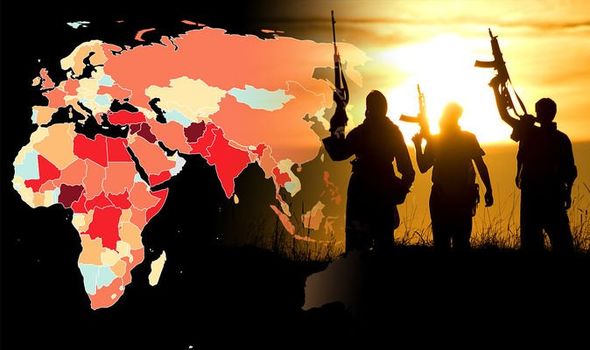
Terrorism is motivated by group identity, religious beliefs, political objections, etc. Sometimes the individuals involved in terrorism believe that the government is not treating them well, and denies accepting their policies. Terrorism comes from formal groups and individuals. Sometimes governments are also involved in terrorism. When terrorism affects many states at a global level, it is considered international terrorism. Studies have shown that the Middle East and North Africa are one of the regions prone to terrorism, about 60% of death were due to terrorism in 2017. 

Types of terrorism

There are four types of terrorism recognized worldly:

  1. State-sponsored terrorism – When there is a support of government to a terrorist organization, it constitutes state-sponsored terrorism. These activities include proxies in armed conflict between the states.   
  2. Dissent terrorism – When terrorists rebel against the government, it constitutes dissent terrorism.
  3. Religious terrorism – Terrorist organizations spreading their religion across the globe constitutes religious terrorism.
  4. Criminal terrorism – When organizations get involved in aid in crime and criminal profits for the growth of terrorism, it constitutes criminal terrorism.

Anti-terror laws in India

The anti-terror legislation or the Indian Anti-terror laws include a broad context. These laws are not enclosed within some acts but a series of enactments. These enactments with time get repealed and with every repeal, new law arrives. The object of these laws is to safeguard national security as it is very important to maintain proper security and public order. But with the dynamic environment, these laws sometimes impose unrestricted power over an individual body which leads to the imbalance of civil rights. So to be consistent with the current affairs of the states, the laws are regularly modified.

The Preventive Detention Act, 1950

Before independence, Britishers used the measures of preventive detention to empower and control India. But after independence, there were internal disturbances and communal violence. To aid these problems, and to secure the rights of the citizens, a bill was passed in the Parliament which was recommended by Sardar Vallabhbhai Patel. The bill became a law and it was known as the Preventive Detention Act, 1950.

This Act signified that the government holds the power to detain an individual for a term of one year on reasonable grounds. The purpose of this law was to handle the violence and displacement caused due to the partition. But one major aspect of this law is that it was temporary. The objective of the temporary laws was that they would lapse when the concerned issue got sorted, due to which this law was made. These types of laws include the sunset clause. Here, the parliament had mentioned during the formation of this law, that with specific time intervals this law will be modified unless the major issue gets sorted. So with time, this law was terminated in 1969. 

The Maintenance of Internal Security Act, 1971

Within the two years of lapse of the Preventive Detention Act, the Maintenance of Internal Security Act, 1971 arrived. So there were major similar provisions in both the enactments. The purpose of these acts was to impose more restrictions on the individuals who were detained due to reasonable grounds. During this time, under this enactment, many individuals were detained without proper trial rights, violating their civil liberties and freedom.  

But in 1975 there was major misuse of this law. It was the year of the 3rd National Emergency. The 1st was in 1961 when China invaded India while the 2nd was in 1971 during the war with Pakistan. The 3rd National Emergency in 1975 signified internal disturbance. During this time, political leaders were arrested, elections got postponed, anti-government protests emerged, and the press was also censored. Those who were engaged with the conflicts and facing the government, upon them the provisions of the Maintenance of Internal Security Act were imposed. There were student protests in Gujrat and Bihar and other major conflicts in different parts of the country. 

Finally, in 1977 two things ended, the first one the Government of Indira Gandhi and the enactment of the Maintenance of Internal Security Act. After this, in 1980 a new act arrived which was the National Security Act, 1980

The Armed Forces (Special Powers) Act, 1958

There was an emergence of violence in Nagaland in the year 1957 – 1958 due to the separated movements. Even the Central Government was unable to control the conflicts. So during that time, a new act was introduced namely the Armed Forces Special Powers Act, 1958. The purpose of the Act is to deal with the disturbed areas of the State to maintain public order. It also provided special powers to the armed forces to deal with the disturbances. 

What makes AFSPA different from other enactments

AFSPA provides the government under Section 3 a special power to declare any region as a disturbed area. Along with that, AFSPA also ensures the armed forces act upon those disturbed areas. Further, under AFSPA, the armed forces retain special powers such as arrest and search without a warrant, cease of firearms, etc. Under these when an area has been declared as disturbed by the government under AFSPA, then the police and the military work parallelly to maintain the public order. Otherwise, it is the duty of the police specifically to maintain the public order of a state.

Initially, AFSPA was introduced to handle the issues of Nagaland, but eventually, with time AFSPA provisions were also imposed on the other North-Eastern states, even other states like Punjab and Jammu and Kashmir.

The National Security Act, 1980

This enactment is formed by a combination of provisions of the Preventive Detention Act and the Maintenance of Internal Security Act. One of the major aspects of this Act is to detain an individual to curb one from committing more crimes in the future and to prevent one from escaping prosecution and punishment. 

This Act empowers the state and central government to detain any individual or group in the interest of national security. It is still in existence. Under this Act, an individual can be detained for a maximum period of 12 months. In case of new evidence supporting the offence, the detention can be extended. Also, this Act denies two basic rights: one states that the authority doesn’t need to inform the accused regarding the grounds of the detention, and the other states that no legal aid shall be provided.

Criticism of the Act

It has been said that there are some acts under the National Security Act, which signify a punitive measure instead of a preventive measure. This Act holds flaws along with its purpose. The government believes that crimes disrupt public order, so even a threatened act causing a commotion or any fear arising from a media report of a criminal incident is to be considered and analyzed so as to prevent any negative consequences. Also, the government permits detention when a public order gets threatened to favour the provisions of the National Security Act. Another major issue with the system is that they lack proper records for the grounds of detention, and there is no other authority to question this. 

The Terrorist and Disruptive Activities Act, 1987

This Act was introduced to deal with and control the issues of separatist activities and terrorist activities of Punjab. But the provisions under this Act were overriding the provisions of the Constitution of India and the Code of Criminal Procedure, 1908. Under this Act, there are new provisions related to new offences, police powers and restrictions to arrested persons. For example, a confession in police custody is not admissible under Section 24 of the Indian Evidence Act, 1872, but under the Terrorist and Disruptive Activities Act, confessions in police custody are considered a major piece of evidence and are admissible in court. All these grounds made TADA Act supreme over the Constitution. So due to this, using the sunset clause, this Act was repealed in the year 1995.  

The Prevention of Terrorism Act, 2001

Due to the consequence of three major attacks, that is, Kandahar Hijack, 1999, World Trade Center Attack, 2001, Indian Parliament Attack, 2001, the Prevention of Terrorism Act (POTA), 2002 was introduced to strengthen the anti-terror laws. This Act holds the provision for the detention of 180 days. Another major aspect is that the objectives of TADA were similar to that of POTA, because of which there were similar allegations against POTA. In 2004, a report was presented before the People’s Tribunal highlighting the fact that the security legislation has granted unnecessary powers to authorities which are resulting in misuse of powers and restrictions of basic rights. So finally in 2004, the Union Cabinet approved the ordinance to repeal the Prevention of Terrorism Act and amend the Unlawful Activities Prevention Act 1967.

The Unlawful Activities (Prevention) Act, 1967

This enactment is also known as POTA 2.0. It is the national security legislation that provides powers to the government to detain individuals based on vague and arbitrary grounds in the interest of national security. The purpose of this enactment was to deal with the issue of ‘National Integration and Regionalization’, and to introduce reasonable restrictions. With the introduction of the 16th Amendment of the Constitution, there was the imposition of restrictions on certain fundamental rights such as:

  1. Freedom of speech and expression. 
  2. Right to assembly peacefully.
  3. Right to associations and unions.

So to exercise these provisions, UAPA was introduced and enacted in 1967.

Amendment of 2019

Before the year 2019, this Act was only applicable to organizations or specifically terrorist organizations. But after the amendment, it is now applicable to both individuals and organizations. 

This Act provides powers to the government to designate any organization as a terrorist organization if:

  1. It commits and participates in acts of terrorism.
  2. Prepare and promotes terrorism.
  3. Otherwise involves terrorism.

The above changes were brought because earlier the government observed that in case they ban any terrorist organization, the members of that banned organization again form another organization or start acting individually. 

Another major change of UAPA from normal criminal law is on the grounds of detention. Under Section 167 of the Code of Criminal Procedure, one cannot be detained for more than 90 days even if the investigation is not complete and the charge-sheet is not filed, the detention cannot be extended and the right to bail for the accused will be available. But in the case of UAPA, under Section 43D of the Code, one can be detained for 180 days. It can be extended without a charge sheet and the right to bail will not arise in these cases if the magistrate or the judge is satisfied with the reasons of the public prosecutor, or in case the investigation requires more time. 

The last change is the addition of the 4th schedule. In this, the government has the power to add the name of an individual or organization under the 4th schedule and declare them a terrorist. But there is no definite process for this procedure. Only one remedy is available, in which within 45 days one can appeal to the government to denotify their name from the 4th schedule.

But there are some negative aspects to these changes:

  1. In case when a person or individual is considered a terrorist or involved in such activity, under UAPA Act one will be detained for 180 days and there will be no bail available, where the detention can be also extended. 
  2. To execute the appeal option, one has to approach the same government that has tagged them as a terrorist. 
  3. To this, once one had been declared a terrorist then in reality one would not be considered as a civilian anymore. All civil rights and other opportunities will be ceased. 

The government has to provide a security system. But in the name of security, civil rights are getting restricted, which is not fair. Here lies the conflict. 

Conclusion

With the developments and innovations, the economy is evolving. To this, our legislation is present to amend, make and repeal laws whether it is on the field of anti-terrorism or any other. The same law won’t be effective after ten years. So in this regard, change is constant and with upcoming events, there are wider scopes for new enactments, provisions, etc. 

References


LawSikho has created a telegram group for exchanging legal knowledge, referrals, and various opportunities. You can click on this link and join:
Follow us on Instagram and subscribe to our YouTube channel for more amazing legal content.

Download Now

Truth as a defence in contempt proceedings : an analysis 

0
Supreme court of India

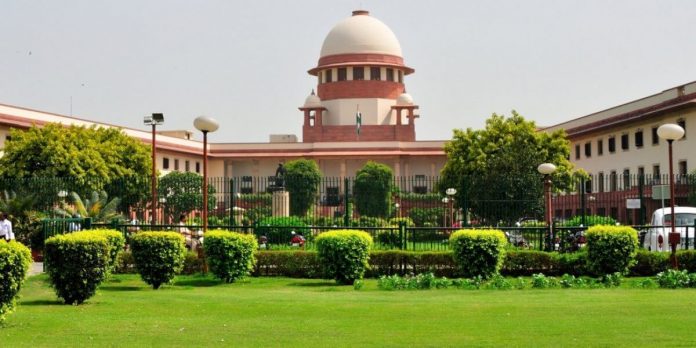
 This article is written by Ms Kishita Gupta from Unitedworld School of Law, Karnavati University, Gandhinagar. It deals with the law relating to contempt of court in India and whether truth is valid in contempt proceedings is thus analysed in relation to other jurisdictions.

Meaning of Contempt of Court

The question of criminal contempt continues to be a topic of debate among people. It wasn’t long ago that the issue of contempt was in the spotlight after the Supreme Court filed a suo motu contempt action against Senior Advocate Prashant Bhushan. Recently, contempt proceedings against the stand-up comedian, Kunal Kamra and cartoonist, Rachita Taneja have once again placed the topic of contempt in the limelight.

The concept of contempt of court refers to the impartial administration of justice intending to punish conduct that jeopardizes the courts’ dignity and authority. The responsibility for safeguarding the majesty of the Indian judiciary was entrusted to the judiciary itself, which was given contempt jurisdiction.

According to Articles 129 and 215 of the Indian Constitution, the Supreme Court of India and the High Courts, respectively, are the courts of record with all the powers of a court of record, including the power to penalize for contempt of court.

The Contempt of Courts Act 1971 distinguishes between civil and criminal contempt. The objective behind the enactment of this Act as observed by the Law Commission of India in its 274th Report can be best described by the pronouncement by Justice Wilmot in the case of Rex v. Almon (1765)

“And whenever men’s allegiance to the law is so fundamentally shaken, it is the most fatal and most dangerous obstruction of justice and…calls out for a more rapid and immediate redress than any obstruction whatsoever, not for the sake of the Judges as private individuals but because they are the channels by which the King’s justice is conveyed to the people …” 

Criminal contempt is defined under Section 2(C) of the Act as the publication of any matter or doing of something that 

  1. Scandalizes or tends to scandalize or lowers or tends to lower the authority of any court prejudices or
  2. Interferes or tends to interfere with the due course of any judicial proceeding or
  3. Interferes or tends to interfere with, or obstructs or tends to obstruct the admixture process

Criminal contempt laws have accidentally trampled on civil liberties in the twenty-first century, regardless of the larger benefit they were intended to produce. The High Courts have the authority to penalize contempt of subordinate courts under Section 10 of the Contempt of Courts Act, 1971. Similarly, Section 15(2) states that in the case of criminal contempt of a subordinate court, the High Court must commence contempt proceedings on the subordinate court’s referral or the Advocate-application. General’s (or Law officer in cases of Union Territory). It’s worth noting that, for the Contempt of Courts Act, 1971, the term “High Court” includes the Court of Judicial Commissioner as per Section 2(d) of the Act.

Defences against civil and criminal contempt proceedings

Defences in civil contempt

The following defences are available to a person charged with civil contempt of court:

  • Order is vague 

If the command that is violated is vague or ambiguous in character, and the direction supplied through the order is contingent on certain additional facts that are unclear or inadequate, then such disobedience is not contempt.

The Supreme Court held in Dulal ChandraBhar v. Sukumar Banerjee (1958) that if the details of the persons to be arrested or the particulars of the properties to be attached were not specified in a court order of imprisonment or attachment of property, this would not be considered an order disobeyed due to its ambiguity.

  • No knowledge of the order

In general, a person cannot be found guilty of contempt for an order that he claims to be uninformed of. There is no intentional disobedience of the order if the respondent commits conduct that results in a breach of the order of which he had no actual awareness as discussed in the case of Mariyappa vs. V.R. Ramkrishna Rao (1999).

  • Disobedience or breach was not wilful

The disobedience occurred, however, it was due to circumstances beyond the control of the party involved, such as an accident, administrative issues, or other factors. This plea may be successful if the order has been followed and a reasonable justification for non-compliance has been provided.

  • More than one reasonable interpretations are available for the order

If a court order has multiple reasonable and rational interpretations, and the responder picks one of them and acts in line with it, he cannot be held accountable for contempt of court. Only when a valid question of interpretation arises is this defence available. In the case of T.M.A. Pai Foundation vs. the State of Karnataka (2002), it was decided that this defence would not be recognized if doubt about the order was purposefully generated when there was none.

  • Impossible compliance of the order

One of the permissible defences in civil contempt proceedings is that compliance with the order is impracticable. However, in the case of Amar Singh v. K.P. Geetakrishnan (1991), the court rejected the argument that the order was difficult but not impossible to follow.

  • Non – Jurisdictional order was passed

If the order in question was issued by a court that lacked jurisdiction, its breach would not be considered contempt of court because an order issued without jurisdiction is void. 

Defences in criminal contempt

The crime of contempt is not absolute, and an act of contempt in and of itself is not punishable. In the case of Mrityunjoy Das v. Sayed Hasibur Rahaman, (2001) it was observed that “Exercise of powers under the Contempt of Courts Act shall have to be very circumspect and use of it rather sparingly after addressing itself to the genuine effect of the contemptuous conduct”. Following are the available defences as per the Contempt Act:

  • Innocent publication

Section 3 of the Contempt Act demonstrates that some comments or matters that may interfere or tend to interfere with the process of justice or obstruct or tend to obstruct the course of justice in connection with any civil or criminal actions pending at the time of publication are immune from prosecution. However, if the people publishing had no reasonable reasons to believe that the proceeding was underway at the time of publication, the publication is defined as “innocent” by this section as observed in the case of Sadanand Trimbak Yardi v. Prabhakar Laxman Mokashi (1973).

  • A fair and accurate report of a judicial proceeding

As per Section 4 of the Act, a person shall not be convicted of contempt of court for publishing a fair and truthful report of a judicial proceeding or any stage thereof, subject to the provisions of Section 7.

Section 7 deals with information leaks, whereas Section 4 deals with judicial proceedings reporting. The point of hearing in chambers or in a camera is defeated if there is leakage. Sahara India Real Estate Corp. Ltd. v. SEBI (2012).

  • Fair criticism

A person is not guilty of criminal contempt under Section 5 of the Act if he publishes a fair opinion on the merits of a case that has been conclusively determined (but not in pending proceedings). It is the Indian citizen’s special right to believe what he considers to be true and to express his thoughts, if not necessarily with the best of taste; and to speak, perhaps, with greater boldness than regard for accuracy. The judiciary is not immune to criticism. However, there is no justification for people who are parties and participants to use this freedom and privilege to criticize the procedures while they are ongoing. Sheela Barse v. Union of India (1988).

In the well-known Arundhati Roy case, the Supreme Court ruled that judicial criticism cannot be sought under Article 19(1)(a) of the Indian Constitution‘s Freedom of Speech and Expression clause.

  • Complaint against the presiding officer

As per Section 6, a person must not be held in contempt of court for making a statement in good faith about the presiding officer of any subordinate court to— It is subordinate to either (a) any other subordinate court or (b) the High Court. In addition to this, an accused may seek the defence of truth, apology, or ignorance, which can all be used as mitigating factors in certain cases.

  • Apology

The accused may be freed or the punishment imposed remitted if an apology is made to the satisfaction of the Court, according to the proviso to Section 12(1) of the Act. The Court should be convinced that the apology is genuine and honest. If the court accepts the apology after being convinced of his sincerity, the contemnor is considered to have absolved himself of the blame as held in the case of Pravin C. Shah v. K.A. Mohd. Ali (2001).

  • Truth

This defence is explained in Section 13 of the Act. The next part of the article will be dealing with this in detail.

The defence of truth/fair criticism in criminal contempt proceedings

If the Court is persuaded that justification by truth is in the public interest and the request for invoking the defence is bona genuine, Section 13 of the Act allows the Court to allow it as a viable defence in any contempt proceedings. The truth should normally be accepted as a defence unless the court determines that it is really a ruse to avoid the consequences of a deliberate attempt to scandalize the Court.

“… No attempt was made before the High Court to demonstrate that the facts mentioned in the article were factual or founded on correct data,” the Supreme Court observed in Perspective Publications v. the State of Maharashtra (1971), a historic decision. Court continued that, “although truthfulness or factual correctness may be a good defence in a libel action, there are few English or Indian cases in which such a defence has been advised in the law of contempt.” 

According to the Supreme Court in Indirect Tax Practitioners’ Association v. R.K. Jain (2010) truth is also a defence in criminal contempt cases if it is genuine and made for the public good.

In the most recent Prashant Bhushan case (2020) of contempt of court, the Supreme Court observed that truth is a valid defence in the cases of contempt of court only when it is bonafide and in the public interest. While reading Section 13 of the Act, the court observed that 

“The aforementioned provision demonstrates that there is a dual need for accepting the truth as a competent defence. That such a defence is in the public interest, and that the desire to invoke it is genuine. The Court must be satisfied that the defence is in the public interest and that the request to invoke the defence is genuine in order to accept the truth as a valid defence. However, since the contemnor insists that the Court consider truth as a defence at this stage as well, we would be obligated to do so, lest the contemnor believes we have overlooked it.”

In the above-mentioned case, a few observations were made on freedom of speech as well, the Supreme Court noted that, 

Though there is a right to free speech, it is never absolute since the framers of the Constitution placed limitations on it. Particularly when such freedom of speech is sought to be misused and has the consequence of scandalizing the institution as a whole as well as the individuals who are members of the said institution and are unable to defend themselves publicly, the same cannot be allowed under the law. Though a person’s freedom to criticize a decision is protected by law, he or she cannot go beyond the right to scandalize the institution granted by Article 19(1)(a) of the Constitution.”

Difference between fair criticism and contemptuous words

What the law allows you to say about how Indian courts work, i.e. there is a fine line between criticism and contempt. Freedom of expression is a fundamental right given to every Indian citizen by Article 19(1)(a) of the Constitution, while it is subject to reasonable limitations under Article 19(1)(b) of the Constitution. The Supreme Court concluded in C.K. Daphtary v. O.P. Gupta (1971) that the existing law of criminal contempt is one such legitimate restraint. That is not to say that one cannot voice their displeasure with the judiciary without risking being held in contempt.

Sections 4 and 5 of the Contempt of Courts Act are similar to the defence of fair remark in a defamation case. The Supreme Court declared in Re: S. Mugolkar v. Unknown (1978) that the judiciary cannot be free from fair criticism, and that contempt action should only be utilized where an evident untruth is made with malicious purpose to undermine public faith in the courts or to influence the courts. The court laid down certain points that need to be kept in mind while initiating contempt proceedings. These are:

  1. The court’s use of the contempt power has been prudent.
  2. The constitutional values of free criticism and the judiciary must be reconciled, and a happy balance between the two must be achieved.
  3. It’s important to distinguish between personal protection for a libelled Judge and obstruction of public justice.
  4. When the emphasis of critical attention is on the court, the press should be allowed to operate freely within reasonable bounds.
  5. Judges should not be overly sensitive when inaccuracies and insults go too far, but rather deflate such vulgar denunciations with a dignified demeanour.
  6. Finally, when an attack on a judge is slanderous or vicious beyond tolerance, the strong arm of the law must strike in the name of public interest and justice.

Chief Justice M.H. Beg wrote in this decision that the judiciary sometimes adopts a “magnanimously compassionate attitude, even when wholly uncharitable and harsh criticism of its operations is offered out of genuine concern for betterment.” Justice Beg later stated after his retirement that Justice H.R. Khanna’s famous dissent in the ADM Jabalpur case (1976) contributed nothing to the law but increased his fame. Justice Beg was found not guilty of contempt by the Allahabad High Court, which cited Brahma Prakash Sharma (1953).

The Supreme Court ruled that whenever a statement is made about a judge’s performance, it must be determined if the comment is fair or malicious. If the comment is directed at a specific judge, the Court will evaluate whether the comment is intended to interfere with the judge’s administration or is simply libellous or defamatory.

Contempt of court in other jurisdictions

The law of contempt has changed significantly in Western democracies.

United States of America

Acts of contempt in American law are classified as either direct or indirect, civil or criminal. Civil contempt is “coercive and corrective” rather than punitive, and occurs in the presence of a court.

Contempt of court in the United States can include obtaining or publishing details of jury deliberations, filming or recording inside court buildings, paying witnesses, publishing information obtained from confidential court documents, reporting on the defendant’s previous convictions, mounting an organized campaign to influence proceedings, and reporting on court proceedings in violation of a court order.

England and Wales

The maximum term for contempt in English law (the Contempt of Court Act 1981) is two years. As “direct” contempt, disorderly, contemptuous, or arrogant behaviour toward the judge or magistrates while the Court is in session, with the intent to disrupt the proper conduct of a trial or other judicial action, may be prosecuted. The term “direct” refers to when the Court cites the individual who is in contempt by stating the behaviour that was observed on the record. Direct contempt differs from indirect contempt, in which a third party may file papers alleging contempt against someone who has willfully disobeyed a legal court order.

Lord Sidney Templeman was depicted in a cartoon by the Daily Mirror in the aftermath of the 1987 Spycatcher judgment by the House of Lords in the United Kingdom, with the caption “You old fools.” However, he refused to file a contempt charge, claiming that not every personal view, even if expressed without malice, is grounds for action. He famously stated that he was old and that whether or not he was a fool was a matter of opinion, which he did not hold. In 2016, no contempt charges were brought against the Daily Mail for calling their piece “Enemies of the People” after the Brexit decision.

Canada

Contempt of court is an exception in Canada to the usual rule that all criminal offences are defined in the Federal Criminal Code. The only remaining common law offences in Canada are contempt of court and contempt of Parliament. Only when there is a real and substantial threat to the administration of justice can contempt proceedings be brought in Canada.

The need to review the concept of contempt of court in India

The aftermath of the Prashant Bhushan case has raised various questions on the laws of contempt of court in the Indian jurisdiction. Individual court personnel are not protected from insult or injury by the power to punish for contempt. “The ability to commit contempt summarily is regarded as vital for the proper administration of justice,” Lord Morris wrote in Attorney General v. Times Newspapers Ltd: Thalidomide (1973) case. It is not to be utilized for the personal vindication of a judge. He’ll have to sue for libel or criminal information.” 

The reason for this is the uncertainty and vagueness in the three elements that make up the Contempt of court Act’s meaning. The legislature has consciously or unknowingly placed the burden of proof on the judiciary to fill in the gaps between what scandalizes the Court and what interferes with or obstructs the administration of justice.

Contempt of Court has become a mercurial jurisdiction over time, providing the court’s vast discretionary powers, as indicated by a multiplicity of judgments, due to the uncertainty and flexibility in the text of the legislation.

Any contempt of court proceedings must be justified in the exercise of the court’s jurisdiction to maintain orderly processes, according to the United Nations Human Rights Committee. The Indian parliament must revise the Contempt of Courts Act to align it with the International Covenant on Civil and Political Rights.

Therefore, it may be said that it is time for India to also adopt a liberal approach in dealing with contempt cases just like the other jurisdictions. To avoid becoming close to an authoritarian system, where it is above any criticism, the courts must become more broad-shouldered and liberal in their approach to criticism.

Conclusion 

The Indian Law Commission concluded that the rule relating to judicial contempt should be preserved. However, it was also suggested that the meaning of contempt under the Contempt of Court Act be limited to civil contempt, which is defined as willful disobedience of a court’s judgment. Furthermore, in the age of social media, not only does the law on criminal contempt need to be revisited, but the test for contempt also has to be assessed.

References


LawSikho has created a telegram group for exchanging legal knowledge, referrals, and various opportunities. You can click on this link and join:

Follow us on Instagram and subscribe to our YouTube channel for more amazing legal content.

Download Now

Investing in the education sector

0

This article has been written by Anupam Bhaduri pursuing a Diploma in Merger and Acquisitions (PE and VC transactions) from LawSikho.

Introduction

The Constitution of India recognized the right to education as a fundamental right protected under the provisions of Article 21A on 1st  April 2010 and became one of the 135 countries that have walked down the same path. The Indian government went forward and enacted the Right of Children to Free and Compulsory Education Act on 4th August 2009. Through this Act, the government planned to ensure that children between 6-14 years of age receive free and compulsory education. Approximately, 26.31% of the population falls within the upper boundary of 14 years in age. Hence, in a move to enhance the quality of education imparted and with a view to better the infrastructure, the Indian government opened the gates of education to foreign investors. This article delves deeply into the paths we have tread till now and what can be the potential future.

FDI in the education sector prior to 2020

Ever since the launch of economic reforms of 1991, the substantial economic growth of India has cemented its place in the global economy. The pace of reforms has been steady and the gates that had been opened to foreign direct investment (FDI) back in 1993 have been widened over the years. 

As per the regime, 100% of FDI was allowed into the educational sector through the automatic route. The Consolidated FDI Policy that was released in 2017 further exempted the construction development activities in the education sector from the lock-in period of three years from the date of completion of minimum capitalization. However, despite all of this, FDI has remained scanty in the education sector and the surface of the following reasons as the most significant for such a trend :

  • Prevailing regulations allow schools to only be a non-profit body. This means that schools can only be set up by a Society or Trust or by a company registered under Section 8 of the Companies Act, 2013. The complication that arises here is that despite the funding opportunities, a Trust is not allowed to receive FDI. A similar predicament is faced by Section 8 companies that are charitable by nature. The regulatory framework states that the profits earned or any income generated must distribute it for the promotion of culture, art, charity or science. 
  • There is a significant lack of streamlining the effects of the Centre and the States in this regard. Although the RTE is the backbone for all policies regarding it, the sheer lack of coordination between the States and the Central Government is an issue that needs to be addressed. 
  • This lack of proper streamlining of processes is also reflected in the potential legal disputes that could arise due to the transfer of existing human resource and infrastructure.
  • The investment environment surrounding the education sector has a web of cumbersome compliance requirements. There are too many regulatory compliances to be made and approvals to be sought. The ‘for profit’ ventures in the educational sector have uncertain regulations. 

FDI in the education sector in the new decade 

As we have now seen, FDI was always open for the education sector to its maximum possible limit. However, the reaction to it had been lukewarm to say the best. In order to correct the scenario, the government, in its Budget 2020, allowed the educational institutes to source funds through external commercial borrowings (ECBs). This was done in the hopes that the funding would fuel the research institutes to build better infrastructure. 

Upon careful observation, we can conclude that this is in ties with the ‘Digital India’ campaign of the GoI. The   Finance Ministry stated that the government was aiming at providing education up to degree courses entirely through the online mode. However, such courses could only be designed and conducted by the institutions that have been ranked in the Top 100 of NIRF. The aim to retain students in India is appreciable and opening the gates for funding with cheaper interest rates is beneficial to both the students and the education sector as a whole. It is also noteworthy that for this to be of effect, the Foreign Contribution (Regulation) Act will have to ease the requirement for trusts.

Segment analysis for investors 

Although regulatory uncertainties are a massive pain point for investors, that alone is not sufficient to deter them. Moreover, ed-tech companies or companies that provide educational services need not confine themselves to the ‘not-for-profit’ status. In most cases, education-centric laws do not apply to them either. Keeping this in mind, the most likely place for foreign investors to invest in would be the companies that provide educational and construction services to the educational institutions. This opens a wide array of options to investors that include management services, design curriculum and provide adequate training to teachers. The advantage of investing in these segments is that these are market players that span across the length and breadth of the education sector, irrespective of schools and colleges. 

Other possible segments that could be eyed for aggressive investment plans are

  • Test-prep services- The increasing difficulty of getting through a state/national level entrance exam for college and job opportunities has forced tutoring as a practice to undergo a monumental change. The faith in the institutional methods and the teacher-centric approach has greatly changed to accommodate the promise of performance and content delivery model. Investment in this sector is important because the businesses catering to the students have high scalability promises. However, this scalability can only take place if the business continues to deliver a consistent quality of teaching material and are able to cater to the individual needs of the students. In order for them to be able to do so, these businesses would require to streamline themselves with the technological methods of delivering content assessing students, and benchmarking them for self-paced learning. The key to investing in a successful business in this market segment would require the investor to make significant Investments from time to time and develop a long investment horizon before banking on the profits.
  • Vocational education- Given the multitude of population and the per capita income distribution of India in most cities, the students that graduate from colleges are far more inclined to take up a job rather than pursue higher education in the form of research opportunities. However, from an industry-specific point of view the students that graduate is not employable in the industries because they lack significant practical exposure. This is where the investors could focus on investing in private players that provide upskilling opportunities to students so that they can find themselves employed in the IT and hospitality sector. At present, the IT training market is one of the biggest vocational course segments and is projected to run into a multi-million dollar industry. 
  • Educational services- Foreign investors could provide investment opportunities to educational institutions that serve to train and develop the skill of students to enhance the chances of employability. This market sector is different from vocational training in the sense that the purview of regulations does not cover educational services that are delivered to students on a profit basis. Foreign investors could look into the PPP program to design courses based on employability in specific industry sectors.
  • The PPP model- The PPP model in education is basically a union between the non-profit activities carried out by a for-profit administration running the educational institutions. The Supreme Court has previously ruled that the institutions that operate within the education sector are necessarily non-profit in nature. However, a reasonable surplus accumulated from the running of such institutions is allowed, making PPP a preferable model for foreign investors who are unsure about long-term investment into the Indian demographic. All investment firms provide technical support apart from monetary support. Hence the foreign investors could enter into the higher education sector and provide infrastructure investment and advice on the capacities for future expansion. This market segment is already inundated with private players who have established niche models like Basic Infrastructure Model, Outsourcing Model, Equity or Hybrid Model, and Reverse Outsourcing Models. Being in sync with the current market trends, foreign investors could find a solid and safe footing into the education sector through this market segment. Another advantage of the PPP model is that the investors could construct educational hubs in different parts of the country which would benefit both the large public and the private sector enterprises as they are funded by the corporate social responsibility regulations. Essential inputs and infrastructure help could be extended by the state governments concerned.
  • Ed-tech- Given the ongoing pandemic, the biggest market player in the educational sector right now is online education platforms. Compared to an educational institution the online education platforms are drawn on a significant low-cost basis since their programs are offered online and no investment is required into establishing assets other than intellectual property. While Byju plan on going for an IPO in the near future, other online education platforms are also thriving given that trend the students are avoiding physical coaching centers and underlying on most self-paced module education models from the advantage of their homes. If this was not enough to show promise to an investor, a report by the KPMG has indicated that the industry of online education is supposed to grow by 8 times in India by the end of 2021. 

Conclusion

It would be unwise to say that foreign investment would flow is based on the fact alone that the Indian population is significantly dotted with children up till 14 years of age. If that were true, the foreign funding landscape would have bloomed ever since the FDI borders were loosened in 2002. However, that has not been the case as the foreign investors did not find any merit in the existing regulatory framework of the Government of India. By allowing access to instruments like ECB, the industrialists and the academia alike believe that education institutes will now be able to reach out for foreign funding at much lower interest rates than limiting their options to the cash-strapped Indian banks. 

References

  1. http://www.nishithdesai.com/fileadmin/user_upload/pdfs/Research_Papers/Investment-in-Education.pdf.
  2. https://papers.ssrn.com/sol3/papers.cfm?abstract_id=2774664.
  3. https://www.mondaq.com/india/inward-foreign-investment/535572/fdi-in-indian-education-sector.
  4. https://www.fdi.finance/sectors/education.
  5. https://www.ibef.org/industry/education-presentation.

Students of Lawsikho courses regularly produce writing assignments and work on practical exercises as a part of their coursework and develop themselves in real-life practical skills.

LawSikho has created a telegram group for exchanging legal knowledge, referrals, and various opportunities. You can click on this link and join:

Follow us on Instagram and subscribe to our YouTube channel for more amazing legal content.


Download Now

All you need to know about formation of a contract

0

 This article is written by Sahaja from NALSAR University of Law, Hyderabad. This article evaluates the essentials of a contract and the significance of forming a valid contract. 

Introduction 

The term contract is defined in Section 2(h) of the Indian Contract Act. It is defined as an agreement enforceable by law. What  happens herein is that one party puts forth a proposal before the other party. When the proposal is accepted by the other party, it becomes a promise. This promise, backed by a consideration (in cash or kind), is an agreement. An enforceable agreement, that is, an agreement to which the parties want legal backing and rules according to which it must comply, is a contract. 

The necessities associated with the formation of a contract 

An enforceable agreement is a contract only if the contract is valid. A contract that is invalid, vitiated or irregular will either be void, voidable or unenforceable. Therefore, a contract must be formed keeping in mind certain conditions and terms that have to be met with before and during the formation of the contract. The Indian Contract Act, 1872, prescribes the law relating to contracts in India. 

The key ingredients in a contract and their respective provisions 

The requirements of a contract are as follows:

When these requirements are not met, the contract will be invalid and could be rendered void. 

Offer and acceptance

There needs to be a proposal (offer) and the acceptance of this proposal to form a contract. The communication of the proposal and the acceptance need to be complete. A proposal needs to be communicated to the promisee or the offeree who is willing to accept it. This proposal or acceptance can be express or implied:

  • A proposal or offer is implied when the party expresses his or her desire to do something or to get something done by their actions. 
  • An express proposal or acceptance is when the offer or acceptance is expressed in some form, written, oral, or by words. Implied acceptances and offers are valid.

The communication of a proposal is said to be completed when it is brought to the knowledge of the person to whom the proposal is made. An acceptance can be made only if the offeree knows that an offer has been made to him/her, that is, when the communication of the offer is complete.

Upton-on-Severn RDC v. Powell (1942)

In this case, a person who received services from a fire brigade under the impression that the area was entitled to free service, had to pay the fire brigade when he found out that the area did not service charge free. He had made an implied promise to pay for the service while availing of benefits.

Lalman Shukla v. Gauri Datt (1913)

In this case, the servant (petitioner) could not claim the reward for finding the defendant’s nephew. The communication of an offer that a reward would be granted for finding the nephew came to the knowledge of the servant after he had found the nephew.

The communication of acceptance under the Contract Act has different rules for different modes used to communicate the acceptance. 

For the postal mode of acceptance, the acceptance of the offer is complete when the letter of acceptance has been put into transmission by the offeree. This acceptance is complete against the offeror and the offeree and the contract will be created. This has been reiterated in the case of Adams v. Lindsell (1817). The court’s reasoning in this judgment was that if one party is given an option of knowledge/ information the other party must also be given the option to receive an acknowledgment. If this is given it will go on ad infinitum. To stop this chain at the first instance, the contract is concluded when the letter of acceptance has been put into the transmission. 

For an instantaneous mode of communicating acceptance, the Indian courts have accepted the principle followed in the case of Entores Ltd v. Miles Far East Corporation (1955), where it was held that the communication of acceptance is completed when the acceptance reaches the offeror. Therefore, for an instantaneous mode of communication, the acceptance is complete when it reaches the party to whom the acceptance is conveyed. 

The acceptance of a contract must be absolute and unqualified as given in Section 7 of the Act. An acceptance that has a variation or is a partial acceptance is not treated as an acceptance. It is rather a counter-proposal/offer. This when accepted by the original offeror gives rise to a new contract and the previous offer becomes non-existent. Thus, an acceptance needs to be absolute and unqualified to give rise to a valid contract.

Consideration 

Consideration is another major essential for a contract to be valid. Section 25 of the Contract Act states that a contract without consideration is void. Consideration is defined under Section 2(d) of the Act. Fundamentally, consideration is the price for which the promise of the other party is bought, and this promise which has been given for value is enforceable. 

An act done at the request of another, express or implied, is sufficient consideration to support a promise.

A promise to pay a subscription becomes enforceable as soon as any definite steps have been taken in furtherance of the object and on the faith of the promised subscription.

Doraswami Iyer v. Arunachala Ayyar (1935)

In this case, the defendant promised to pay some amount for renovation. he promised while the renovation was going on, but later refused to pay. Since the renovation was going on when he made the promise, it cannot be said that it was done at the desire of the promisor. Therefore, there was no consideration and he was not liable to pay the amount.

Hudson Re. (2011)

In this case, it was held that if there is no consideration to pay a particular sum towards a charity, a person cannot be held for non-payment. 

Past consideration is an act done without any promise. In Indian Law, a promise to compensate for a past act that is voluntarily done is enforceable. An act done by one party at the request of another is also enforceable. 

Lampleigh v. Brathwait (1615) 

In this case, an imprisoned person asked an acquaintance to get him out of the prison. When this request was made, he had not promised to give the acquaintance anything in return. His friend got him out, after which he promised to pay him a certain amount, but he didn’t pay. Therefore, the friend filed a case. The court held that the person is liable to pay since the act was done at his request. 

Therefore, the consideration in a contract must be valid without which the contract will be void and unenforceable. 

Competency to contract 

Section 10 of the Contract Act states the parties must be competent to contract. Competency is defined in Section 11. Minors, persons of unsound mind, and persons disqualified by law to which they are subject are incompetent to contract. A contract entered into by a minor is void. 

A minor’s guardian can enter into a valid contract on behalf of the minor. Such contracts can also be enforced by the minor. 

There cannot be reliance-based estoppel. The minor cannot be estopped from the original agreement. The defence of infancy acts in the minor’s favour.

The doctrine of restitution- a minor obtains property of goods by misrepresenting the age. The property can be restored from the minor if it is in their possession.

Srikakulam Subramanyam v. Kurra Subba Rao (1948) 

In this case, there was a minor and the minor’s mother, who sold a piece of land to discharge a debt of the minor’s father. This property was mortgaged. Subsequently, the minor had second thoughts and claimed that the contract was void. The privy council found that the contract was within the competence of the guardian. The contract was thus enforceable since the mother contracted on behalf of the minor. The contract had also been made for the benefit of the minor. Thus, it was not a void contract.

Leslie (R) Ltd. v. Sheill (1914)

In this case, a minor deceived a moneylender with respect to age and secured some amount. The moneylender sued the minor for the restitution of money. The money could not be traced therefore, this doctrine does not apply to money. The minor was not liable.

The agreement of a person who is of unsound mind is void similar to a minor’s agreement in India. A person is said to be of sound mind for the purpose of making a contract, if, at the time when he makes it, he is capable of understanding it and of forming a rational judgment as to its effect upon his interests. A person who is usually of unsound mind, but occasionally of sound mind, may make a contract when he is of sound mind.

Inder Singh v. Parmeshwardhari Singh (1957) 

In this case, an individual sold a property worth a lot more for a smaller amount. The mother of this person showed that the person was of unsound mind. The court found that the person was of unsound mind when the contract was made and thus it was void.

Free consent of the parties

Section 10 specifies that free consent is an essential requirement of a contract. Section 14 of the Contract Act defines free consent. Both the parties entering a contract must enter the contract by their own will and must give free consent to the contract. There must be a meeting of the minds of the parties on the same subject, to form a valid contract. 

When consent to an agreement is given by coercion, undue influence, fraud, or misrepresentation, the contract is voidable at the option of the party whose consent was so caused. According to Section 2(i), a voidable contract has been classified as a contract that is enforceable by law at the option of one or more of the parties thereto but not at the option of the other or others.

If consent is caused by mistake the agreement is void and cannot be enforced by either of the parties.

Allcard v. Skinner (1887)

Religious influence is very dangerous and powerful. The court, in this case, stated that she cannot recover the amount due to the law of limitation. She had claimed to recover the amount after 6 years which is a delay and limits her from claiming the share. The court did recognize that it is a case of undue influence.

Lawful object

Section 23 of the Contract Act states what considerations in a contract are lawful and unlawful. An object that is forbidden by law defeats the purpose of any law, is fraudulent, or opposed to public policy is unlawful. Contracts in which the consideration is unlawful are void.

Mohinder Singh v. State of Punjab (1963) 

In this case, a person, who was elected as a sarpanch for a period of five years, made an agreement with another member that the latter would be given two -year term and the elected one, the remaining three years. The agreement was held to be void as it would have defeated the purpose and provisions of the Punjab Panchayat Raj Act, 1994.

The consequences associated with not forming an appropriate contract 

When a contract is formed without complying with the section of the Contract Act, it will lead to the contract being void or voidable due to which the parties intending to contract might face losses or would fail to acquire services or goods from the other party. A void party is not enforceable, due to which, except in rare cases, the parties cannot be compensated. A voidable contract can be deemed as void at the choice of one of the parties to the contract. Therefore, to avoid such situations, it is of utmost significance to form contracts that are in complete compliance with the Indian Contract Act. 

Conclusion 

In conclusion, the essential requirements to form a valid contract are that there needs to be an offer and an acceptance to the same offer, considerations from both the parties must exist, the parties entering into the contract must be competent to contract, these parties must give their free consent and lastly, the object must be lawful. 

References 


LawSikho has created a telegram group for exchanging legal knowledge, referrals, and various opportunities. You can click on this link and join:

Follow us on Instagram and subscribe to our YouTube channel for more amazing legal content.

Download Now

Here is what you need to know about Barbeque Nation hitting the IPO grill

0
Image source: https://www.restaurantindia.in/article/bengaluru-gets-11th-outlet-of-barbeque-nation.12330

This article has been written by Hinal Khakkhar pursuing a Diploma in Merger and Acquisitions (PE and VC transactions) from LawSikho.

Introduction

Barbeque Nation is one of the leading chains in India when it comes to casual dining. The very first dining outlet of Barbeque Nation was started by one of its promoters known as Sayaji Hotels in the year 2006. Currently, it owns and operates around 147 dining outlets in India across 77 cities, 5 outlets in UAE, 1 outlet in Malaysia and Oman each. Barbeque Nation is very famous among Indian Restaurants. It has a very unique concept of giving a live grill facility at every individual table.  It also offers countless cuisines and has a lot of variety. 

Barbeque Nation had decided to raise funds from the public in the open market by issuing Initial Public Offering (IPO). The IPO was offered in the month of March 2021 and it was open for subscription from 24 March 2021 to 26 March 2021. The company had decided to raise Rs 453 crore via this IPO. The IPO consisted of fresh equity issues of Rs 180 crore in the primary market and Rs 273 crore in the secondary market. The price band for the IPO was set for Rs 498-500 per share. Let us know more about the company and its IPO in detail.

Company background

Barbeque Nation was established in the year 2006 by opening its first outlet in the year 2008 in Aurangabad City of Maharashtra, which is known as The City of Gates. The very first outlet of Barbeque nation was started by one of its promoters known as Sayaji Hotels. Barbeque Nation is well known for its countless cuisines, variety of food and efficient service, it is also very popular as it serves individual grills on every table so that any customer can enjoy perfectly grilled food with a personal touch. Since its establishment, this company had started developing and growing in terms of revenue and in opening more and more outlets in the country. Currently, India has around 147 outlets across 77 cities.

Barbeque Nation had acquired another brand which is known as the Red Apple Kitchen. This particular brand has 10 Italian restaurants across Bengaluru and Chennai and runs under the brand name Toscano. Most of the outlets of Barbeque Nation are in Metro Cities which is around 70% and the rest 30% are in semi-urban areas. One of the key investors of Barbeque Nation is Jubilant FoodWorks and which has around a 10% stake in the company. Another major investment has been made by Alchemy Capital which is owned by Rakesh Jhunjhunwala and has around a 2% stake in the company. 

Insights on IPO

Filing of paper, issue size, and price band

In the year 2017 Barbeque nation had filed for the very first-time fresh Draft Red Herring Prospectus (DRHP) with SEBI for its Initial Public Offering, but during that time the process took long due to pending regulatory action for past violations, and when the company got approval from SEBI and was able to finish all the regulatory compliance for past violations in early 2018, the market conditions turned adverse and hence it could not launch the issue within one year period. Therefore, in the year 2021 on the 18th of February, Barbeque Nation re-filed fresh DRHP with SEBI for its IPO. 

The total size of this IPO was around Rs 453 Crore. This IPO was in two parts, the fresh issue was around Rs 180 crore and the offer for sale was around Rs 272 crore. The IPO comprises 9057,470 equity shares with a face value of Rs 5 per share. The minimum number of shares that any person has to subscribe to was 30 and the maximum number of lots which was allowed for an investor to apply was 13 lots which is 390 shares. The minimum investment value which can be done by investors was Rs 15,000 and the maximum was Rs 1,95,000. The price band of the IPO for per share was around Rs 498-500.

Promoters, shareholders, and management

The promoters of Barbeque Nation are Sayaji Hotels, Sayaji Housekeeping Services, Kayum Dhanani, Raoof Dhanani, and Suchitra Dhanani. The stake held by the promoters’ group in the company is around 47.80% and the rest is held by public shareholders. Promotor Sayaji Housekeeping holds around 37% of the stake in the company.

Jubilant FoodWorks is the majority shareholder of the company and holds around 10% of the stake in the company. Another major shareholder in the company is Alchemy Capital which is owned by Rakesh Jhunjhunwala and has around a 2% stake in the company.

The list of Board of Directors of the company are as follows:

Sr. No.

Name of Director

Designation

1

Mr. T N Unni

Chairman

2.

Mr. Kayum Dhanani

Managing Director

3.

Mr. Rahul Agarwal 

Chief Executive Officer

4.

Mr. Raoof Dhanani

Non-Executive Director

5. 

Mr. Suchitra Dhanani

Non-Executive Director

6.

Mr. Abhay Chaudhary

Non-Executive, Independent Director

7. 

Mr. Natarajan Ranganathan

Non-Executive, Independent Director

8.

Mr. Devinjit Singh

Non-Executive Director

9.

Mr. Tarun Khanna

Non-Executive, Nominee Director

Financials of Barbeque Nation

Barbeque Nation even with such a well-known name in the market was suffering losses since the financial year 2018. Even though the company was bearing a loss, the revenue was simultaneously booming for Barbeque Nation from the financial year 2018 to 2020, but it could not overcome the losses which the company was suffering. This is a clear indication of more loss and less revenue. 

In fact, the Covid-19 situation and sudden lockdown made it more difficult for Barbeque Nation to cover up their losses in the latest financial year. This, in turn, increased the loss of Barbeque Nation to more than Rs 100 Crores by November 2020, and the revenue was around Rs 201 Crore. Looking at the short-term financials of the company, it seems to have a  weak financial condition. As of now, we can say that this company is a loss-making company and the financials of the company do not look promising.

Lead Managers in the listing of IPO

The leading fund managers for the IPO of Barbeque Nation were Axis Capital Limited, Ambit Private Limited, IIFL Holdings Limited, and SBI Capital Markets Limited.

Subscription and allotment

As of 26th  March 2021, which was the closing date of IPO, the shares for this issue were subscribed 5.98 x times. The public issue was subscribed 13.13x times in the retail category, 5x times in the Qualified Institutional Buyer category, and 3x times in the Non-Institutional Investors Category. The allotment of IPO was done on 1st  April 2021 and by 6th  April 2021 shares were credited to the Demat account of investors.

Listing of IPO

The IPO was listed on 7th  April 2021 on BSE and NSE.  It was listed at a 2.03 % discounted price in the market at Rs 489.85 which was a weak listing of the issue. The share price of Barbeque Nation rose 68% on 9th  April and from the issue price of Rs 500, it went today high of Rs 839 on BSE.

IPO proceeds and strategies

The proceeds of the IPO were to be utilized to repay the outstanding borrowings of Rs 205 Crore which was borrowed by the company for general corporate purposes. The company had the further intention of utilizing the fresh funds from IPO in the expansion of the company and in opening more outlets for dining restaurants. The IPO money was also distributed among the existing shareholders of the company.

Barbeque Nation had intended to focus on growth by focusing on some strategies like focusing on the expansion of new outlets of restaurants which will, in turn, provide them with more customers. Further, it had aimed to preserve its customer by its team-focused culture and values.

Risk considerations

The first and foremost risk factor in the IPO of Barbeque Nation was Covid-19. Due to lockdown, the hotel industry was the one that was badly affected revenue-wise. The restaurants were shut for a long period and as it is the company was into huge losses even before this shut down. Also, post lockdown the outlets were allowed to operate at 50% capacity which in turn further affected the revenue of the company.

The food industry is one such industry where constant new dishes are to be brought up which matches the tastes and preferences of the public, and if the company fails to adapt to the preferences of the people, it might suffer on the part of revenue.

Barbeque Nation has to spend most of the time on the third party for delivery of its food, if their relationship is embroiled in any kind of disputes, then their revenue will take a hit. As it is, in these days of a global pandemic, most people prefer to order food and eat at home and so here the delivery of food plays a very important role in terms of generation of revenue. Barbeque Nation is considered to be one of the pricey restaurants which will not attract the customers of small cities. 

Conclusion

To sum up we can say that the listing day of the IPO for the company was not that good and was kind of weak but two days after the listing of the company, the share price showed strong resistance in the market. As the company was making huge losses since 2018 and revenue was not sufficient to control losses the situation before the listing was worrisome, but later on, after listing, the company managed to perform well with an uptrend in its share price.

References

  1. https://www.moneycontrol.com/news/business/ipo/barbeque-nation-hospitality-ipo-10-key-things-to-know-before-the-issue-opens-6678311.html.
  2. https://marketfeed.news/barbeque-nation-ipo-all-you-need-to-know/.
  3. https://www.business-standard.com/article/markets/barbeque-nation-hospitality-s-rs-453-crore-ipo-to-open-on-wednesday-121032300025_1.html.
  4. https://economictimes.indiatimes.com/markets/ipos/fpos/barbeque-nation-hospitality-ipo-all-you-need-to-know/articleshow/74223280.cms.
  5. https://www.barbequenation.com.

Students of Lawsikho courses regularly produce writing assignments and work on practical exercises as a part of their coursework and develop themselves in real-life practical skills.

LawSikho has created a telegram group for exchanging legal knowledge, referrals, and various opportunities. You can click on this link and join:

Follow us on Instagram and subscribe to our YouTube channel for more amazing legal content.


Download Now

Legal rights and status of a person, unborn child and environmental resources

0
Legal rights and status

This article is written by R Sai Gayatri from Post Graduate College of Law, Osmania University. This article deals extensively with the legal rights and status of a person, an unborn child, and environmental resources. 

Introduction 

We live in a world where we hear the words ‘rights’ and ‘duties’ on a daily basis. Rights are understood as the means that provide certain kinds of privileges to a person and duties are understood as the obligations that a person needs to fulfill. Prima facie, rights and duties look the same for everyone but when we take a closer look, we notice that rights and duties differ at various levels based on the entities they are dealing with. For example, when someone breaches your rights you can approach the court, similarly, you can also make someone do their lawful duty in case of default. This is all fine in the case of human beings but what stand do entities such as an unborn child and environmental resources have in the eyes of law? Can they be given rights, status, and ownership similar to that of a person? Let us know about the legal status of a person, an unborn child, and the environmental resources through this article. 

The legal status of a person

According to Salmond – “A person is any being whom the law regards as capable of rights and bound by legal duties.” The term ‘person’ is further classified into two terms i.e, natural person and legal/artificial person.

Natural person

According to Austin the term ‘person’ refers to a physical or natural person including every being who can be deemed as human. An individual who has his own legal personality is known as a ‘person’ in jurisprudence. Generally, a living human being is considered a natural person. In the olden days, slaves were not allowed to have any privileges that a legal person possesses, rather, by the virtue of their birth, they were only considered as natural persons. Most of the rights and privileges guaranteed by the law with duties and obligations are conferred upon natural persons. A natural person may sue and be sued as per the law. Human rights and fundamental rights are laid down for the benefit of such natural persons.

A natural person has civil rights such as the right to life, the right to vote, the right to privacy, the right to marry, the right to practice a profession, the right to travel, the right to religion, etc. Such rights are meaningful and useful to human beings, hence, they are conferred only upon natural persons. However, few rights such as the right to marry and the right to vote are subject to the age attained by a natural person.

In its broadest sense, a natural person as per jurisprudence is a reasonable and prudent human being. They shall be empowered with all those rights that any person living in that area would possess. A person is considered a natural person when he is born and he ceases to be a natural person after his death. When a person is dead, his body is honoured first, later his property and reputation are considered. A dead person’s property must not be dishonoured. He must not be defamed to harm the reputation of the family or to hurt the feelings of his family members. Natural persons have the most privileges and duties under the law. 

Legal or artificial person in the eyes of the law

As time passed by, the concept of persons under jurisprudence became wider. Natural persons started developing entities for their businesses, for this purpose, certain natural persons were required to act on behalf of such entities. However, a complex situation arose when the entities were to be sued. In order to avoid this problem, the concept of a ‘legal/artificial’ person was introduced.

In jurisprudence, an entity or a person is attributed as a legal person only when he is capable of suing and being sued in a court of law. For example, a legal person can be a company, a State, an idol, a trade union, etc. The law has the power to transform an entity into an artificial person who has legal status and value. This is done by the law to clarify the identity of the one who is suing or being sued. The law acts as the means that provides the capacity to become a legal person for carrying out the procedures in the court with ease. Thus, legal persons are conferred with rights and duties by the law for the purpose of the law.

The main concept to understand here is that all-natural persons are considered legal persons but all legal persons are not natural persons. This can be understood with the help of an example – A person living in Hyderabad will be considered as a legal person and a natural person. However, a business established in Chennai will only be considered as a legal person and not a natural person as it only entails legal existence.  

Legal personality is not just limited to businesses, it also extends to the position of a person. A president or a deputy officer are legal positions given to people. This means that irrespective of who holds such a position, the duties to be carried out will be the same. Hence, a person holding a position may be sued for the actions done by them while being in the course of such a position. Further, the concept of corporate personality is also created by the law. A corporate personality has more rights and duties when compared to other legal persons. 

The legal status of an unborn child

As already mentioned, an individual is considered a natural person from the time of his birth till his death. Such a natural person is capable of bearing rights and duties, thus he has a legal personality. Generally, a natural person before birth and after death does not have a legal personality. So, for a natural person to have rights and duties, he must be alive. However, the law faces an issue when it comes to the case of an unborn child. The subjects such as medicine and theology establish that an unborn child is a living entity.  

As per legal fiction, a child in its mother’s womb is considered as already born. When he is born alive, he will attain legal status. In usual terms, the law only gives attention to living natural persons but in the case of an infant ventre sa mere (a child in its mother’s womb), the law makes an exception. A child in its mother’s womb is capable of acquiring certain rights and inheriting property, but it all depends on whether the child is born alive or not. An unborn child is considered a person during partition. Damages can also be claimed by such an unborn child for the injury sustained while in its mother’s womb.

Indian laws dealing with an unborn child

Indian Penal Code, 1860 

Section 315 – This section of the IPC states that inflicting prenatal injury on a child possessing the capability of being born and where such injury affects it from being born amounts to an offence of child destruction.

Criminal Procedure Code, 1973 

Section 416 – This section of the CrPC states that in case any woman who is sentenced to death is found to be pregnant, an order to postpone the execution must be passed by the High Court, or if it deems it fit, the execution can be reduced to life imprisonment.

Transfer of Property Act, 1882 

Section 13 – This section of the said Act states that a property can be transferred for the benefit of an unborn person through the means of trust.

The Indian Succession Act, 1925 

Section 114 – This section provides for the creation of prior interest before the unborn child is made the owner of the corporeal or incorporeal property. However, no property will be deemed to be vested in the unborn child until he is born alive as per the Act

Under Hindu Law, an unborn child is deemed to be a living person for certain purposes. The rights of an unborn child that is in the womb of its mother are dealt with by Section 20 of the Hindu Succession Act, 1956. As per Mitakshara Law, in a Hindu Undivided Family, an unborn child will have an interest in coparcenary property. Under Mohammedan Law a gift in the name of a person who does not exist is void. 

The legal status of environmental resources

Section 2(a) of the Environment (Protection) Act, 1986 states that the term ‘environment’ covers air, water, and land. It also extends to the relationship among and between water, air, land, human beings, flora, fauna and micro-organisms, and property. This definition gives us an idea of how wide the concept of the environment is. Human beings are just a part of the environment. Now, when only human beings have so many rights and privileges, then it is obvious that the environment and its resources must also have certain rights and privileges for protection. There are various Indian laws that provide protection to the environment. Indian Judiciary has played an active role in establishing certain doctrines and principles for safeguarding the environment. Let us understand the legal status of the environment and its resources through the following case laws, principles and doctrines.

Union Carbide Corporation v Union Of India (Bhopal Gas Tragedy Case)

The Supreme Court, in this case, held that an enterprise that carries out any inherently dangerous or hazardous activity and such activity or it’s happening, in the form of a mishap such as the escape of poisonous gas, causes any kind of harm to any person, then the enterprise will be strictly compelled to repay such individuals who are harmed by the accident. Such escapes or risks are not excusable and no exemption will be given. As a result, the Supreme Court established the ‘Doctrine of Absolute Liability’ through this case, where the party at fault will be awarded no exemption at any cost.

Indian Council for Enviro-Legal Action v Union of India (Bicchri Case)

In this case, the Court opined that once an act that is inherently dangerous or hazardous is carried out, the person carrying out such an activity shall be liable to compensate for loss or harm caused to any other person by virtue of such activity. The Court further opined that liability shall be imposed irrespective of the fact whether the person exercised reasonable care while carrying out such activity or not. This concept of ‘making the loss good’ has been moulded into the Polluter Pays Principle (PPP) by the court. The PPP imposes liability on an individual who pollutes or harms the environment to compensate for the harm caused and revive the environment to its original form irrespective of his intention.

Vellore Citizens Welfare Forum v Union of India

The Supreme Court in this case laid down the following rules concerning the Precautionary Principle –  

  • The State Governments and local authorities are supposed to foresee and prevent the causes of environmental degradation. They must effectively and regularly conduct checks on the activities that are damaging the environment.
  • Just because there is insufficient scientific knowledge concerning whether certain activity is harming the environment or not, the government must not avoid its inspection process and prevention.
  • It is the duty of the party carrying out an activity to prove that whatever activity is being carried out by him is environmentally friendly. In short, the onus of proof lies on the party carrying out an activity that is suspicious in the eyes of the government or other authorities.

MC Mehta v Kamal Nath

The Doctrine of Public Trust states that environmental resources such as air, water, forests, and sea are of great significance in the eyes of people who as a whole can be called public. Therefore, it would be an unjustifiable act to provide private ownership over such environmental resources. The Court in this case opined that the Public Trust Doctrine is a part of the Indian law. This doctrine helps the States to manage their resources effectively. It bestows power in the hands of the citizens to question the inefficient management of environmental resources. Further, the Public Trust Doctrine is employed by the courts as a mechanism to protect the environment from being degraded.

Rural Litigation and Entitlement Kendra v State of Uttar Pradesh

In this case, the court stated that the environment is a perpetual asset of mankind and it shall not be exhausted by one generation. This case brought the focus of Indian environmental law upon the concept of sustainable development. Inter-generational equity refers to the right of every generation to be benefitted from environmental resources. Principle 3 of the Rio Declaration mentions that the current generation must not abuse and exploit the non-renewable resources which might deprive future generations of environmental benefits.

Indian Constitution and the environment

The Constitution of India pays high regard to the environment and its resources. Thus, it has played a significant role in protecting the environment in various ways. The Indian Constitution contains exclusive provisions for safeguarding the environment. By the virtue of the 42nd Amendment Act, 1946, the Constitution laid responsibility on the States to protect and develop the environment.

Article 21

This Article states that except according to the process prescribed by the law, no individual will be deprived of his life or personal liberty. The Indian courts interpreted this article in various cases for environmental protection. In Maneka Gandhi v Union of India, the Apex court opined that Article 21 i.e, the right to life also provides the right to a safe environment, this is because, when the environment is unhealthy and unsafe it affects the lives of people as well. 

Article 48-A

This Article comes under the Directive Principle of State Policy. It mentions that the State shall thrive to safeguard and improve the environment, forests, and wildlife of the country. This article expressly imposes a duty on the State to protect the environment from degradation such as pollution by employing different measures.

Article 51A(g)

This Article states that it is the fundamental duty of the citizens of India to safeguard and improve the environment including lakes, rivers, wildlife, and forests. It also imposes the duty to have compassion for other living creatures. In its most basic sense, this article states that when we receive a clean environment, it is our responsibility to protect and maintain it that way.

Conclusion

The legal status of a person, an unborn child, and the environmental resources differ at various levels. A person, either natural or legal, is said to benefit the most from rights and privileges. An unborn child’s rights and privileges depend upon the condition whether he is born alive or not. Environment and its resources are given great importance in the legal world. Various case laws, doctrines, and principles have been pronounced to protect the environment from degradation. 

References 


Students of Lawsikho courses regularly produce writing assignments and work on practical exercises as a part of their coursework and develop themselves in real-life practical skills.

LawSikho has created a telegram group for exchanging legal knowledge, referrals, and various opportunities. You can click on this link and join:

Follow us on Instagram and subscribe to our YouTube channel for more amazing legal content.


Download Now

Confusion over COVID vaccination doses and the role of courts in the same

0

This article is written by Jannat, from Chandigarh University, Mohali. The article talks about the confusion over COVID vaccination doses and the role of the courts in the same.

Introduction

Every year, vaccines save millions of lives. Vaccines work by training and preparing the body’s natural defences, the immune system, to identify and combat the viruses and bacteria they are specially designed to combat. If the body is later exposed to such disease-causing germs after vaccination, the body can kill them right away, avoiding illness. Although continuous efforts are being made by scientists all over the world, an instant cure for Covid seems unlikely to arrive anytime soon. Under such circumstances, vaccines are the only secure way of preventing this dangerous virus. Yet people have turned into sceptics doubting the credibility of these vaccines. When India has recently witnessed a record-breaking surge in the number of cases and deaths, the hesitation for getting vaccinated is appalling. 

Unfortunately, a lot of misinformation has circulated about vaccines and their effects. It’s important to distinguish between misconceptions and reality when determining whether or not to get the vaccine.

Myth versus facts

Myth

Since the COVID-19 vaccine was produced so rapidly, it is dangerous.

Fact

Vaccines that have been approved are safe and reliable. They went through the same comprehensive Food and Drug Administration process as other vaccines, meeting all safety requirements, despite being produced in record time. There were no steps that were missed. Instead, we should thank unparalleled global cooperation and investment for the vaccines’ production being completed in less time. Clinical trials and safety evaluations took around the same amount of time as they did with other vaccines.

Myth

The COVID-19 vaccine would cause my DNA to be altered.

Fact

The first vaccines approved for emergency use include messenger RNA (mRNA), which tells cells to make the new coronavirus’s “spike protein.” When the immune system recognizes this protein, it produces antibodies, which teach the body how to defend itself from infection in the future. The mRNA never makes it into the nucleus of the cell, where our DNA (genetic material) is stored. The body disposes of the mRNA as soon as the instructions have been completed.

Myth

The COVID-19 vaccine causes serious side effects, including allergic reactions.

Fact

Some vaccine trial participants reported side effects similar to those seen in other vaccinations, such as muscle pain, chills, and headache. People may also have serious allergic reactions to vaccine products, but this is extremely rare. That’s why doctors advise against getting the vaccine if you’ve had a history of serious allergic reactions to the vaccine’s ingredients, such as anaphylaxis.

Myth

The COVID-19 vaccine makes women infertile.

Fact

According to misinformation on social media, the vaccine causes the body to target syncytin-1, a protein found in the placenta, which can cause infertility in women. The fact is that the spike protein and a placental protein share an amino acid sequence; however, experts believe it’s too short to trigger an immune response and therefore has little effect on fertility.

Myth

Since I’ve already been diagnosed with COVID-19, I don’t need the vaccine.

Fact

Even though you’ve already had COVID-19, there’s proof that the vaccine will still help you. Experts are unsure how long someone will be safe from becoming ill again after recovering from COVID-19. Natural immunity, or immunity gained as a result of an infection, differs from person to person. Early evidence indicates that natural immunity could be short-lived.

Myth

I won’t need to wear a mask after getting the COVID-19 vaccine.

Fact

Until a sufficient number of people are immune, masking, handwashing, and physical separation is needed in public. People who have been completely vaccinated do not need to wear masks when they meet with other fully vaccinated people.

Myth

COVID-19 may be acquired from the vaccine, according to legend.

Fact

The vaccine does not contain the live virus, so you cannot contract COVID-19 from it.

Myth

I will test positive for COVID-19 after receiving the vaccine.

Fact

COVID-19 is diagnosed using viral tests that look for the virus that causes COVID-19 in samples taken from the respiratory system. The vaccines do not affect your test results because they contain no live virus. Before the vaccine has had time to completely protect your body, you may become infected with the virus.

Myth

I’m not at risk for serious COVID-19 complications, so I don’t need the vaccine.

Fact

You can contract the infection and spread it to others regardless of your risk, so it’s important to get vaccinated. It is recommended that as many qualified individuals as possible receive the vaccine until it is widely available. It’s not only for your safety but also for the safety of your family and friends.

Myth

If I get the COVID-19 vaccine, I’ll be more likely to get sick with another disease.

Fact

No proof having the vaccine increases the chances of contracting another infection like the flu.

Myth

Since some blood types have milder COVID-19 infections, a vaccine isn’t needed.

Fact

According to research, there is no reason to assume that having a specific blood type increases the incidence of COVID-19. You are protecting not only yourself and your family, but also your social surroundings, by getting vaccinated.

Wastage of vaccine

Health officials in India said on Wednesday that about 6.5 percent of coronavirus vaccine doses are wasted, urging states to better control their immunization drives to maximize the use of what one called “this elixir-like precious commodity.” Although several urban vaccination centres have been overcrowded, several rural sites have had to nudge people to get vaccines due to a lack of public knowledge, which can result in vaccine wastage. Once a vaccine vial is opened, doses must be administered within four hours, necessitating the coordination of the flow of recipients by health workers.

The central government’s health ministry has provided 75.4 million vaccine doses to India’s states, with 36 million doses being used so far. India is using an AstraZeneca shot as well as one produced by Bharat Biotech at home. The government did not state how many doses were thrown away, but the percentage indicates it may be more than 2 million, which is a large number considering that many countries have yet to begin immunizing their people and India is still immunizing priority groups. “Wasting this elixir-like precious commodity, which is now the most important thing for a person or a country as a whole, is completely wrong,” top health official Vinod Kumar Paul said at a press conference.

Role of courts

Delhi High Court

The Delhi High Court has advised the Central and Delhi governments to resolve the scarcity of the COVID-19 vaccine, Covaxin, to administer the vaccine’s second dose.

Justice Rekha Palli’s bench said, “You’re now attempting to minimize the harm by instructing private hospitals to only prescribe the second dose of Covaxin. It is impossible to vaccinate everybody.”

Allahabad High Court 

The Allahabad High Court, hearing a PIL on Uttar Pradesh’s handling of the Covid pandemic, issued a slew of directives to the state government on Tuesday, ranging from giving the state government 48 hours to form a three-member grievance committee in each district to requesting a roadmap from the state and federal governments on how they intend to vaccinate “illiterate labours and other villagers” in the 18+ category “if they are not able to register online for vaccination”.

The Court has also ordered the government to reconsider the amount of compensation to be paid to the families of polling officers who died of Covid while on duty during the recent panchayat elections, stating that it “must be at least Rs 1 crore.”

Bombay High Court 

The Bombay High Court (Nagpur Bench) will rule on a petition requesting an online examination or vaccination for nearly 45,000 undergraduate medical students who are scheduled to take the theory exam physically on June 10, 2021. The PIL was heard by a single bench of Justice Avinash Gharote, who reserved it for orders, citing a shortage of vaccines and questioning the fate of people if would-be doctors are afraid of disease.

“Life is uncertain…”

“You aspire to work in a noble career. And you’re worried about catching the disease? What will happen to the citizens if a would-be doctor loses his courage?”

In December, doctors could opt to appear for two semesters at the same time, he said.

Madras High Court

“We should not be caught napping when the next Covid-19 wave reaches us,” the Madras High Court warned the central government, referring to issues ranging from oxygen to vaccines and Remdesivir availability.

The first bench of Chief Justice Sanjib Banerjee and Senthilkumar Ramamoorthy ordered the Centre to develop a comprehensive strategy to combat future pandemic waves. It also ordered civic bodies in Tamil Nadu to crack down on exorbitant fees demanded in crematoriums and burial grounds to dispose of the bodies of the covid-19 victims. “Though the state has begun vaccination drives for the 18-plus age group, it appears that there may not be sufficient doses of vaccine available,” the bench said. “Suggestions have been made to look into the Sputnik vaccine, which has been successfully tested, as well as the single-dose variant thereof,” the judges continued.

Gujarat High Court 

During the destructive second wave of the coronavirus pandemic, the Gujarat High Court chastised the state government for slowing down the vaccination campaign in the state. The court also asked the state government to consider setting aside some vaccines for beneficiaries who register on the spot, especially in rural areas where people do not have access to online registration.

Although the Centre recently approved on-site registration and appointment for people aged 18 to 45, the Gujarat government has stated that it will continue to administer vaccinations using the current method, which requires prior registration and appointment. “For example, if you have 100 [doses] allocated for today, you can register online for 80 of them, leaving the remaining 20 for spot registration,” Justice Karia explained.

Conclusion

Being vaccinated does not exempt us from exercising caution and putting ourselves and others at risk. The research into the extent to which vaccines protect not only against disease but also against infection and transmission is still ongoing. Whenever a situation as dangerous and fatal as the pandemic arises, public fear and panic are reasonable. Hence, it is the responsibility of the government to instil faith amongst the citizens in order to seek their cooperation. Also, the government should support public funding to the biopharma companies in order to cope better with such situations. 

References


LawSikho has created a telegram group for exchanging legal knowledge, referrals, and various opportunities. You can click on this link and join:

Follow us on Instagram and subscribe to our YouTube channel for more amazing legal content.

Download Now

Secondment : an understanding

0
Image source: https://rb.gy/pvdenx

This article has been written by Prashant Samantrai, pursuing a Diploma in Advanced Contract Drafting, Negotiation, and Dispute Resolution from LawSikho.com

Introduction

The term ‘secondment’ refers to a temporary movement or transfer of an employee of the organisation from one department to another, or from one group company to another for the achievement of specific goals of the management. In this era of knowledge-based global economy, the term has evolved to an assignment of employees of one organisation to another, be it domestic or offshore, for achieving specific organisational objectives, such as to provide service to a client organisation, to impart knowledge along with technology transfers, to intensively train the employees in skills otherwise not possible within the organisation, or for bringing in diverse practices within the organisation for increased flexibility. It is a prevalent practice across government, private, and charity sectors around the world. Secondment benefits the employees in terms of continuing education, enhancement of skills, networking opportunities, etc. Organisations use this as a tool to develop comprehensive talent management programs and improve their skill base.

Issues like payroll, control, accountability and monitoring, and consequences of termination of employment are inherent with the secondment of employees. Execution of an explicit secondment agreement between the parties involved is a key step to address these issues. The purpose of this article is to analyse the importance of secondment agreements so as to give the readers a fair comprehension of the subject.

What is secondment?

Secondment denotes the temporary movement of an employee from one part to another part within the same organisation, to another organisation within the same group, or to a different organisation altogether, such as a client or a business partner. The key feature of secondment is that the subject employee will return to his original organisation or department. 

This type of arrangement proves to be valuable for both employee and organizational development in terms of knowledge transfer, the flexibility of operations, enhancing an employee’s particular skill set, keeping the costs in check, etc.

There are essentially three parties to a secondment agreement:

  1. Employer- The employer will dispatch its employee to another company.
  2. Secondee- The secondee is the employee who will be delegated to another company.
  3. Host- The host company will take on the secondee for a defined period.

A secondment becomes effective after the parties execute an agreement consisting of terms and conditions of their arrangement pertaining to the employment of the secondee with the host.

Rationale behind secondments

From an organisational perspective, it provides the employer and hosts an opportunity to strengthen their relationship. Secondments, as a tool of human resource management, are used across the industry due to the variety of benefits it offers to the employees, such as low-risk opportunities for professional development without incurring personal cost, exposure to new management styles, and global exposure in case of overseas secondment. 

Through secondments, an employer’s headcount may be adjusted in accordance with the ebb and flow of the business cycle or due to an overall increase or decline in productivity. It allows a business to deploy resources to different departments or to external companies instead of increasing or decreasing headcount intermittently. International secondments help employers to expose their employees to global markets and work environments without additional costs; at the same time, the host company benefits from the skill set of the secondee without incurring long-term employmentabo costs. For organisations, the secondment of employment is a strategic device for optimal use of their human resources by staying within their assigned budget for the same.

Types of secondments

Secondment can be broadly classified in the following manner:

  • Internal secondment – Under this type, the secondee is assigned to work for a different department within the same organization. This can be understood with the following example.

Example 1: Sultan is an employee of Wasseypur Outsourcing Limited and is designated in its marketing department. Part of his role in the marketing team is to also promote employment opportunities in the business. For this, the management wants Sultan to further develop his interpersonal skills and learn the recruitment process and gives him a secondment to the human resources department for 3 months. He returns after the secondment being more comfortable with the recruitment process and dealing with people. The knowledge extension improves his performance on the job and allows him to promote the business with more insight and expertise.

  • External secondment– under this type, the secondee is transferred to a different organisation altogether which is usually in the case of group companies such as holding or subsidiary companies or a company outside the group such as a client or with a business partner. This can be understood with the following example.

Example 2: Sardar runs a consulting business in Dhanbad and employs 6 graduates per year. He has a partnership with a law firm, Asgar Nasir & Associates, which has offices in multiple locations nationwide. Sardar chose Faizal, a graduate employed in his legal affairs department, to go on secondment at Asgar Nasir & Associates. Faizal will be sent to Mumbai for secondment for a period of 6 months and will return to his main office i.e. at Sardar’s, after that period.

Contractual issues under secondments

The Indian employment laws clearly demarcate between the employees who are defined as ‘workmen’ and those who are in the supervisory, administrative, and management roles (‘non-workmen’). These laws regulate and service conditions, payments and protect the rights of ‘workmen’ only. The service conditions of non-workmen are typically governed by the internal policies of the organisation and the terms of relevant employment contracts of the employees. Further, there is no specific statute that governs the secondment of an employee; therefore, the organisations prefer to enter into a contractual arrangement with detailed terms and conditions to regulate the secondment of an employee.

In the event an employee is seconded to another department within the same organisation, the terms of employment are governed essentially by the primary employment agreement executed at the time of the start of the employment. 

The secondment of an employee to another organization, however, has complexities and includes a range of issues because the employee is technically working for the host, whilst still being employed under the primary employer. Some of these issues include:

  • Who has a legal relationship with which party?
  • Who will monitor the second employee’s performance?
  • Who will be liable for the payment of remuneration?
  • Who will be liable for the actions of the seconded employee and enforce discipline?
  • What happens at the end of the secondment?
  • How to end the secondment early?
  • Who is responsible for the second employee’s safety?
  • What happens if the employee resigns?
  • Which laws will be applicable to the employee in case of overseas secondment?

These issues can be understood with following cases:

  1. In the case of Centrica India Offshore Private Limited vs. CIT, the issue raised was whether the services provided by the secondees to the Indian host amounted to ‘fees for technical services to be taxable in India. 
  2. In the case of Sheela Devi Alias Parvati Devi vs. Choudhary Shrawan Kumar H.P. Krishi Vishwavidyalay, the issue decided was whether a secondment to transfer can be made without the consent of the employee concerned.
  3. In the case of ITER International Fusion Energy Organization, the issue was raised to challenge the decision of ending the secondment term by ITER and failure to investigate the harassment allegations of the complainant.
  4. In the case of International Telecommunication Union before the ILO administrative tribunal,, the complainant objected to the working conditions during the secondment, contending that the appraisal rules of terms of secondment were breached.

Essential components of the secondment agreement

These contractual issues under secondment of employees can be addressed by execution of a secondment agreement, after carefully negotiating some essential terms of the secondment, which are discussed as under:

1. Variation of terms of employment

In a secondment arrangement, the terms of the employment contract of the secondee will be varied inevitably. Therefore, the employer must ensure that the secondee agrees to such variation of terms before concluding the secondment agreement and the employer must ensure. Ideally, the secondee must be a party to the agreement or expressly consent to the terms which affect him.

Example clause: The agreement may only be varied with the express written agreement of the host, the employee, and the employer.

2. Remuneration, benefits, and responsibility

The employer and host must ascertain who amongst them will be responsible for remunerating the secondee during the period of their arrangement. In case, the employer agrees to remunerate the secondee, the employer and host must negotiate the terms of payment by the host to the employer for the secondee’s services to the host. The secondment being a temporary arrangement, the contractual arrangements between the employer and the secondee in relation to retirement funding and medical aid will not be affected, unless otherwise agreed. 

Example clause: (1) The Employer shall continue to pay the Employee’s salary and any allowances, provide any benefits due to the Employee and make any deductions that it is required to make from the Employee’s salary and other payments in accordance with their Contract of Employment. (2) The Host shall reimburse the Employer the amount of any salary, enhancements, overtime, performance and excellence awards, and expenses properly and reasonably incurred in the course of performing the Post for the Host, excluding travel to and from his place of work. 

3. Terms of service during a secondment

The employer and host must clearly set out the scope of work, work hours, performance measures for the secondee, outcome expectations, particulars of person or team to which the secondee will report, in order to avert and address any service-related issues pertaining to secondment. The secondee must be aware of and agree to these terms of service.

Example clause: (1) The Employer will supply the services of the Employee for 18.75 hours per week between Monday and Friday inclusive. In addition to the standard hours, the Employee may be required to work at other times as may be necessary for the proper performance of his duties, including participation on call. (2) The Employee will comply with the Host’s reasonable requirements and instructions as communicated by it to the Employee from time to time. 

4. Performance management and discipline

Performance management of the secondee ought not to be neglected, especially in the case of secondment for a longer duration. The parties may include a mechanism as to how the employer will be kept abreast of the performance of the secondee. If key performance areas or performance measures differ related to services being provided under secondment, the secondee must be advised beforehand. 

Example clause: (1) The Host will submit reports on the performance or conduct of the Employee as and when reasonably requested by the Employer. Any key performance targets shall be based on targets set by the Host. (2) All matters of grievance and discipline shall be dealt with by the Employer in accordance with the Employer’s normal grievance and disciplinary procedures. (3) The Host agrees to report to the Employer, at the earliest possible opportunity, any grievance raised by or on behalf of the Employee and on all matters which it believes may require disciplinary action.

5. Adherence to policies

A secondment agreement ought to record that the secondee will comply with policies and procedures of the host company, and shall be subject to the consequences in the event of non-adherence to the policies. Discipline, however, must remain the responsibility of the employer in cooperation with the host.

Example clause: The policies and procedures of the Employer shall apply to the Employee and take precedence over the policies and procedures of the Host, unless otherwise stated within this Agreement.

6. Leave

Primarily, the secondee will be entitled to annual leave as stipulated in the employment contract, and any reduction in the secondee’s contractual leave entitlement can be made without his express consent. Further, the employer and host will have to make provision for processing and approval of the leave application and replacement arrangements during the leave period depending upon the reason and duration of the leave.

Example clause: (1) The Employee shall be entitled to holidays during the Secondment Period in accordance with their Contract of Employment with Employer. The Employee shall book all leave to which they are entitled with the Host in accordance with the procedures of the Host and at times that are reasonably convenient to the Host. (2) In the event of sickness, the Employee shall notify both the Employer and the Host in accordance with the agreed procedures of each party. (3) The Employer shall not be obliged to make available to the Host the services of the Employee or any replacement during any period of incapacity on the part of the Employee due to illness or injury or as otherwise permitted under the Contract of Employment. 

7. Health and safety

This clause may be included in order to monitor that the secondee observes ‘health and safety policies and procedures of the host and maintains a safe method of working and to delegate the responsibility of such monitoring and feedback. 

Example clause: The Host shall be responsible for ensuring that the Employee observes its health and safety policies and procedures and maintains a safe method of working. The Employee will observe all reasonable safety instructions given to him from time to time by the Host.

8. Term of the agreement

Generally, this clause stipulates the duration of the secondment and automatic termination after the end of its duration. It is essential to clearly mention the same in the secondment agreement to avoid the risk of employment expectation by the host, particularly when the secondment continues for a long duration. The agreement may contain a provision for potential extension of secondment to address such a situation. Where the secondee is a foreign national, the term of secondment must be limited to the duration specified in the secondee’s work visa.

Example clause: The period of secondment shall commence on [date] and end on [date] after a period of 2 years. After [date] secondment shall terminate automatically and the Employee shall return to the Employer.

9. Termination of the agreement

Apart from the end of the term, other foreseeable circumstances must also be included such as the end of primary employment due to resignation, superannuation or otherwise, breach of agreement, unsuitability of secondee to the project. Parties may also provide for cancellation on notice or by agreement. The parties must essentially include the consequences of termination and their post-termination obligation towards each other.

Example clause: The Employer may terminate this Agreement at any time with immediate effect by notice in writing to the Host if the Contract of Employment is terminated for any reason. In addition, this Agreement may be terminated by notice in writing by any party having immediate effect if any of the other parties commits any serious and material breach of its obligations under this Agreement justifying summary termination. 

10. Non-solicitation

The agreement may include provisions restricting the host from offering the secondee another secondment or employment, during or after the stated period of the secondment.

Example clause: The Host shall not provide any additional benefits other than those agreed to herein and shall not make any offer for employment during and after 1 year after the expiry of the term of this agreement.

11. Confidentiality

The employer and secondee must undertake to keep all information confidential, acquired by the secondee during the period of secondment with the host; and this obligation ought to survive termination of the secondment. The clause must provide an understanding of the parties about the circumstances under which confidential information may be disclosed.

Example clause: The Employee agrees to adopt all such procedures as the Host may reasonably require and to keep confidential all Confidential Information and that the Employee shall not, (save as required by law) disclose the Confidential Information in whole or in part to anyone and agrees not to disclose the Confidential Information other than in connection with the provision of the Services. The Employer will not, however, be liable for any failure on the part of the Employee to observe this requirement

12. Intellectual property

The ownership of intellectual property created by an employee in the course of his employment vests with the employer, unless there is an agreement to the contrary. Therefore, in instances where the secondment involves creating new intellectual property, the host and employer must negotiate and clearly specify in the agreement who will own the intellectual property created by the secondee, in order to avoid future disputes.

Example clause: Any discovery, development, invention, improvement, design, process, formula, information, computer program, semi-conductor or other topography, copyright work, trademark or trade name or get-up made, created devised, developed or discovered by the Employee during the Secondment (whether capable of being patented or registered or not) either alone or with any other person in connection with or in any way affecting or relating to the business of the Host or capable of being used or adapted for use therein or in connection therewith (‘Works’) shall forthwith be disclosed to the Host and shall belong to and be the absolute property of the Host.

13. Data protection

This clause may be negotiated to specify provisions and measures to protect the data of the employer and the host during and after the term of the secondment. The employer and host may append their privacy notices to the secondment agreement to clearly set out what personal data each of them will process by way of secondee during the secondment and the reasons for doing so.

Example clause: The Employee and the Employer consent to the Host holding, disclosing, using, or otherwise processing any information about them which they provide to the Host or which the Host may acquire as a result of this Agreement.

14. Liability and indemnity

It is of paramount importance that the relationship between the parties is defined clearly so as to ascertain liability and responsibility of indemnity. The agreement must specify who will be responsible and to what extent, for acts, omissions, errors of the secondee, which may occur during the performance of his services towards the host. The parties must ensure that their insurance policies extend to cover the activities of the secondee. This clause may also clearly specify the tax implication in the event any liability arises.

Example clause: (1) The Employer shall not be liable for any act or omission on the part of the Employee during the Secondment and shall incur no liability for loss, damage, or injury of whatever nature sustained by the Employee during the Secondment Period. (2) The Host shall indemnify and keep indemnified the Employer against any and all claims, liabilities, actions, proceedings, costs (including legal fees on an indemnity basis), losses, damages, demands, penalties, fines, or expenses suffered or incurred by the Employer which, are attributable to any act or omission by the Host any other person.

15. Governing law

The secondment agreement must take into account the laws of the employer’s country and the host country. An international secondment involves the cross-border transfer of the secondee to a foreign company. It is essential in international secondments to clearly specify the law under which their relationship under the agreement will be governed.

Example clause: This Agreement shall be governed and construed in accordance with the laws of [Country], and the Courts at [Place] shall have exclusive jurisdiction over disputes arising pertaining to this Agreement. Further, the structure of a secondment agreement can be understood from this sample.

Pros and cons of secondment

Any secondment arrangement, regardless of duration, industry sector, or purpose of secondment involves three parties, i.e. employer, host, and the secondee. Therefore, the pros and cons must be considered from all three perspectives:

The secondee

Usually, an employee is selected for a secondment due to knowledge and performance of a specific function, which puts the secondee already in a privileged position within his employer organisation. Additionally, it provides the following benefits to the secondee:

  • Security: Secondee has the opportunity to gain new experience with a promise of returning to their original job, thereby providing secured employment.
  • Education: A secondee is exposed to different work cultures, technologies, and leadership styles, in turn leading to the increased level of expertise of the secondee, without incurring a personal cost.
  • Networking: Exposure to other organisations, their management, and employee groups increases the secondee’s network outreach, which is a useful resource for him and in turn his employer.
  • Diversity: Each organisation has a different way of functioning. This variation of practices and personnel offers a wealth of experience.
  • Motivation: Employees who are under the same role for a longer duration, can use some change and become rejuvenated with new opportunities and roles.
  • Personal development: This is enabled when employees work in an environment having conditions to help attain additional skills.
  • Career enhancement: Employees attract promotion and better employment opportunities when they cultivate and expand their skill set.
  • Better opportunities: When exposed to different experiences, better avenues are available to employees, such as leadership and management opportunities.
  • Nurture: Secondment accompanied by mentoring and clear objects becomes an encouraging experience for the secondees, and enables them to fulfill their potential.

On the other hand, it may also lead to an upheaval of personal life if the roles are not managed poorly. Secondments also pose a risk of loss of long-term value from the experience gained if they are not put to use. There is also a risk of not fitting into the original role in the employer organisation. The fear of missing out is an inherent psychological aspect here, where the secondee has concerns about missing out on employee benefits such as appraisal, bonus, promotion, etc.

The secondee’s employer and host organisation

Most of the benefits and hazards are similar for both employer and host organisations and therefore they are discussed here together. Most immediate benefits include building relations with other organisations, introducing novelty of operations, getting external perspective, gaining skills for the organisation, and addressing staff shortage or excess of human resources. It also helps the organisations to gain the reputation of being a good employer.

However, there is a risk that the secondee may be unmotivated after resuming back from secondment thereby not adding the desired value. Employers may also have to deal with dissatisfied employees who do not qualify for the secondment. A host may face challenges when the secondee finds it difficult to fit into the organisational culture and its value system.

Conclusion

Secondment of employment is a well-established part of human resource management in business operations. Secondments affect a huge range of factors that are considered vital to organisational success from productivity to the wellbeing of employees. A well-structured secondment programme supported by a secondment agreement leads to the employee as well as organisational effectiveness. On the contrary, a secondment with unclear responsibilities, accountability, and expectation leads to ambiguity and defeats its whole purpose. It is important therefore, to have a secondment agreement in place dealing with all probable legal eventualities during or after the period of secondment.  

References


Students of Lawsikho courses regularly produce writing assignments and work on practical exercises as a part of their coursework and develop themselves in real-life practical skills.

LawSikho has created a telegram group for exchanging legal knowledge, referrals, and various opportunities. You can click on this link and join:

Follow us on Instagram and subscribe to our YouTube channel for more amazing legal content.

Download Now

All about the Vodafone India and Idea merger

0
https://bit.ly/3oe2aeX

This article is written by Bushra Tungekar from the University of Mumbai Law Academy. In his article, the author analyses the merger of the two largest players in the telecom industry in India.

Introduction

Mergers and acquisitions have been proved to be an effective tool for the purpose of corporate restructuring activities. The telecommunication industry is one of the most profitable and rapidly developing industries. The Indian telecommunications industry is the world’s second-largest telecommunication industry. It has a subscriber base of 1183.51 million users, an internet subscriber base of 604.21 million, and the revenue generated by the telecom sector is around Rs 185,291 crore.

Mergers in the Indian telecom industry are not uncommon. The merger phenomenon has grown in the industry since the past few decades. The famous mergers seen in the industry are Vodafone and Hutchison Essar in 2007, Idea and Spice Telecom, Telenor and Unitech, Reliance and Aircel, etc.

In the year 2017, Vodafone India and Idea Cellular announced that they had received approvals from their respective Boards for a merger. It was the creation of India’s largest telecom company beating Bharti Airtel and Reliance Jio.

Background of the merger

Vodafone Group 

  • Vodafone is a British multinational company. It is one of the largest telecommunication groups based in the United Kingdom.
  • It provides its services in over 25 countries across the globe, partners with mobile networks in 46 more countries, and has fixed broadband services in 18 markets, majorly in Europe, Africa, the Middle East, and Asia pacific.
  • The services provided by the Vodafone group range from voice, messaging, data, and fixed communications.
  • The Vodafone Group had 534.5 million mobile customers and 19.9 million fixed broadband customers as of 2018. This included India and all of the customers of the company including the joint ventures.

Aditya Birla Group

  • Aditya Birla is an Indian multinational company based in Mumbai.
  • It is in the group of Fortune 500 companies. It has its business operations in almost 36 countries.
  • It has a workforce of 120,000 employees.
  • Globally it is number one in aluminium rolling, viscose staple fibre, and carbon black.
  • In India, the Aditya Birla Group leads in several sectors such as fashion, lifestyle, viscose filament yarn, grey, white cement, and concrete. It is the largest producer in the Chlor-alkali sector, as well as in life insurance and asset management.
  • Idea Cellular was the first multinational company under the Birla group. It was established in 1995.
  • Idea Cellular was the third-largest telecom company in India, with a market share of 15.9%.

Reason for the merger

With this merger, the two companies have gained immensely. It was a horizontal merger amongst the two biggest players in the telecom industry. This merger deal was worth $23 billion.

The rationale behind this merger, when both the companies were doing well individually, is explained below:

Synergy benefits 

  • Both the companies had said in their statement that the synergy would be extremely cost-effective. The estimated savings annually would go up to 14,000 crores. The savings would be in the form of both capital expenditure as well as operating costs. 
  • EBITDA (earnings before interest, tax, depreciation, and amortization) of both the companies were around the margin of 30%. It was comparatively lower than that of Bharti Airtel and Reliance Jio Infocomm Ltd.   

Domination of the market 

  • Individually, the market share of Vodafone India and Idea was very low as compared to Bharti Airtel and the recent entry of Reliance Jio. Reliance Jio took the telecom industry by storm.
  • The merged company would gain 400 million subscribers, a customer market share of 35%, and a revenue market share of 40%. 

Spectrum share 

  • Vodafone and Idea had individual spectrum holdings of 411 MHz and 316 MHz respectively. However, on the other hand, the spectrum hold of Bharti Airtel and Reliance Jio was 860 MHz and 650 MHz respectively. Therefore, effectively competing in the industry individually was proving to be difficult for Vodafone and Idea.
  • The amalgamation of the companies would give, it was expected, the merged company a hold of 728 Mhz increasing the chances of the merged company to rank no one or on number 2 in India.

Deal structure 

The merger was an all-share merger, which later moved on to the deconsolidation of Vodafone operations in India. The deal excluded Vodafone’s 42% share in the Indus Towers. The promoters of both companies had equal rights on important matters. Both the companies had joint control over the appointment of the Chief Operating Officer (COO) and the Chief Executive Officer (CEO).

Merger ratio

The merger ratio was 1:1. This ratio was based on the price of Idea at 72.5 per unit. Implied enterprise value for Idea and Vodafone was INR 72 thousand crores and INR 82 thousand and 8 hundred crores respectively. The agreement had a break fee of Rs 3,300 crore payable upon certain conditions.

Stock transfer

Under the deal, Aditya Birla Group was allotted a stake of 4.9% of the merged company. The stake was given from Vodafone for Rs 109 per share (INR 3900 crores). This brought the shareholding of the Aditya Birla group to 26%, therefore giving Vodafone a stake of 45.2%. 26% stake was given to other promoters of the idea group and the remaining 24% was owned by the public.

Lock-in period

Neither company could purchase or sell any shares from or to any third party for a period of 3 years (lock-in period). Vodafone offered an acquisition of 9.5% additional without any premium, enabling the Aditya Birla Group to acquire an additional 9.5% of the shares within the period of the next 3 years at a predetermined price of Rs. 103 per share. 

Sale at market rate

If at the end of 3 years Aditya Birla group fails to purchase any stakeout of the additional stake of 9.5%, then they will be given the last opportunity to purchase the stake at the prevailing market price for the purpose of share equalization.

Sale to third parties

If after four years Aditya Birla Group still hasn’t purchased Vodafone shares for equalization, then the shares may be sold to a third party.

Net debt

Vodafone contributed net debt of  Rs. 55,200 crore to the merged entity, whereas Idea contributed  Rs. 52,700 crore. Vodafone contributed net debt of Rs. 2,500 crore more than Idea.

Hurdles faced

The merged entity faced many regulatory challenges such as:

  • The entity was exceeding the caps on revenue market share, subscriber market share, and spectrum holdings in at least six circles each.
  • In the spectrum holding cap, the combined entity was shooting over 25% in Gujarat, Kerala, Maharashtra, Madhya Pradesh, and western Uttar Pradesh.

Approval from DoT (Directory of Telecommunications)

The DoT provides for M&A guidelines (Guidelines for Transfer/Merger of various categories of Telecommunication Service License/Authorization under Unified Licence on Compromises, Arrangements, and Amalgamation of the Companies), wherein it lays down certain conditions which are meant to be met in order to receive approval for mergers in the telecom industry.

The guidelines provide that the entity must submit excess spectrum within one year from receiving the permissions. The guidelines permit the entities to sell excess spectrum to different telecom companies.

The merged entity can have up to fifty per cent spectrum holding in each band individually. However, the challenge faced by the merged entity was that they were breaching the spectrum cap 900MHz band. The obstacle, with the excess of market share, was that it had to be reduced to the prescribed limit within one year of receiving the approval.

Effect of the merger

The Vodafone idea merger was embraced by all the stakeholders but had its repercussions as well.

Employee

The merger took a toll on the employees of both companies. The employees were met with serious uncertainty. Somewhere, the companies failed to boost or maintain company morale. Vodafone – Idea had to let go of 5000 employees leading up to the merger. The employees who fell in the bottom quartile in the performance assessment were asked to leave the company. Other than that, there was a huge cultural difference that affected the remaining employees. The companies were different with respect to their salary levels and human resource processes. According to a few of the employees, the new structure which was adopted after the merger led to demotions. Many of the Idea employees who were asked to leave were accommodated in different companies under the Aditya Birla Group, but no such resort was given to the employees of Vodafone India.   

Customer 

The merger of Vodafone and Idea is a perfect example of a market that mostly benefits the customers. This deal released the telecom industry from the pressure of fierce prices and tariffs. The entry of Reliance Jio into the telecom industry had a huge impact. It cornered other companies to decrease their prices as Reliance Jio had launched free voice calling and data at discounted rates. The merger meant an increase in competition which means that the consumers will be paying less price. The merger increased their reach. It now collectively provides 4G services to a wider range. The assets were also combined with both the companies which meant better services, airwaves, and workforce. It also benefits the customer with better quality of network and expansion of the same across the country. The company can further invest in R&D to improve its services by providing innovative products. The company is now capable of providing better 4G and 5G network access to its consumers. Vodafone being a market lead in urban circles and Idea being a market lead in the rural circle, the synergy of both the companies will give them a stronghold in both the circles.

Other stakeholders 

The merger left the telecom industry with only three players namely Bharti Airtel, Reliance Jio, and Vodafone Idea Ltd. Vodafone Idea Ltd. became the largest player with 35% of the market share worth INR 1.5 lakh crores. The telecom industry was amidst fierce price wars due to the entry of Reliance Jio. The price wars were affecting the revenues and profits of the telecom industry. The cost-cutting would benefit the government. It would also help in controlling the cut-throat competition in the industry, stabilizing the telecom industry in India. 

Operations after the acquisition

While Vodafone and Idea had joint control over the appointment of the CEO and COO, Vodafone had exclusive rights to appoint the Chief Financial Officer (CFO). Giving Vodafone more financial rights. 

Key management

Vodafone appointed Akshaya Moondra as the CFO. Both the companies jointly appointed Balesh Sharma as the CEO and Ambrish Jain as COO. 

Board composition

The Board comprises twelve directors which will include six independent directors along with the chairman. Mr. Kumar Mangalam Birla was appointed as the chairman. The Board has equal representation from both companies.

The current status of Vodafone-Idea merger

In the month of September 2020, Vodafone – Idea rebranded itself. The company used the initials to rebrand itself as ‘Vi’. The rebranding took place after almost two years of the merger, however it shows the spirit of integration. The company in its statement said that the name ‘Vi’ is to be pronounced as ‘we’. The long-overdue rebranding was done to commemorate the final lapse of the merger. It marked the consolidation of the two companies after three years of merger talks and execution.

Rebranding created a lot of buzz over social media. The company in a statement said that the pronunciation of ‘Vi’ reflected the origin of the brands and the collective nature. There have been various advertisements of the ‘Vi’ across digital platforms. The announcement of the rebranding was however led by the Hon’ble Supreme Court of India directing Vodafone Idea to pay back government dues. Vodafone Idea owes approximately INR 504 billion. To pay off these debts, the company has to raise 3.41 billion dollars. The company plans to raise capital through a mix of debt and equity. It has received the required Board approval. It also plans to focus on joining the 5G service sector in India. 

Conclusion

It can be concluded that the merger was needed in order to fight the competitive pricing policy taken up by Reliance Jio. The consumer is the most beneficial because of this merger as now all the telecom companies will try to bring in the best technology at the best price and with better customer service in order to maintain customer loyalty. 

References


LawSikho has created a telegram group for exchanging legal knowledge, referrals and various opportunities. You can click on this link and join:

Follow us on Instagram and subscribe to our YouTube channel for more amazing legal content.

Download Now

Corporate governance issues in TATA-Mistry dispute

0
Image source: https://rb.gy/q2yrlh

This article is written by Tejas Geetey, pursuing a Diploma in International Business Law from LawSikho.

Introduction 

An effective corporate governance structure is needed to protect the interests of all the stakeholders. For the proper functioning of a corporation, the majority shareholders should ensure that their use of power does not lead to affecting the rights of minority shareholders. Many times, promoters and majority shareholders of a company use their dominant powers to take major decisions and control of the business operations, thereby questioning the independence of the corporation. This article deals with a similar issue that occurred in the Tata-Mistry dispute and provides a brief analysis of the fundamental governance issues faced by the company.  

Overview of the Tata-Mistry dispute  

Tata Sons are the principal holding company of the Tata Group. Since 2006, Cyrus Mistry was one of the directors of Tata Sons and thereafter appointed as the chairman of the Board. But certain disagreements happened between Cyrus Mistry and the Tata Sons Board relating to the functioning of the company and decisions taken by Cyrus Mistry. This led to the removal of Cyrus Mistry as the Chairman of Tata Sons in 2016.

Cyrus Mistry challenged the removal from the position in National Company Law Tribunal (NCLT). The same was rejected by NCLT and held that that parent company has the power to remove him as the chairman. The removal was further challenged in National Company Law Appellate Tribunal (NCLAT) which allowed and held that the removal is illegal and that the company’s affairs were managed in a way that was detrimental and oppressive to its minority shareholders, particularly Cyrus Mistry and his family enterprises which include Shapoorji Pallonji Group.  

Tata Sons opposed the order as it weakens the board’s corporate democracy and rights and therefore pursued the matter in the Supreme Court. Thereafter, the Supreme Court stayed the order of NCLAT which included appointing Cyrus Mistry again as the Chairman of the Company. In the midst of this dispute, a parallel dispute arises between the parties as to the family enterprise of Cyrus Mistry, Shapoorji Pallonji (SP) Group, which holds approximately 18.47% equity capital in Tata Sons and wanted to pledge its shares in the company. Pledging of shares was required to reduce the debt obligation for which an investment deal of around $ 400 million was also in the initial stage with Brookfield Asset Management Inc. Thereafter, appeals were filed by both parties in relation to the dispute.

Supreme Court’s decision in relation to oppression and mismanagement

Chapter XVI of the Companies Act, 2013 deals with the prevention of oppression and management in a company.  Removal of a person can only be considered when the same is the result of the oppression and mismanagement in the company. The Supreme Court in pursuance of the proceeding set aside the order of NCLAT and allowed all the petitions of Tata Group. 

The court held that no oppression or mismanagement was done and the Board was justified in removing Cyrus Mistry as the Chairman in accordance with the articles of association of the company. As per Section 241 of the Companies Act, 2013, a company’s activities can be considered to that of oppression or mismanagement if the affairs of the company are conducted in a manner prejudicial to the public interest or any material change, or any alteration in the Board of Directors (BOD), or in any other manner by which the affairs of the company will be conducted in a manner prejudicial to its interests or its members. 

The court held that mere removal from the post cannot be considered as a ground that it was just and equitable for winding up the company under Section 242 of the Companies Act, 2013. The court also reversed the decision of NCLAT in relation to article 75 of Articles of Association (AoA). The Court held that the article can be used to misuse and violate section 241 of the Companies Act, 2013 cannot be considered as a ground to remove the said article as no misuse or violation of the given article has been reported. 

Governance issues revolving around the dispute

Though the Supreme Court decision may be justified considering the legal obligations, certain disputed points arise that question the corporate governance policies adopted by the company:

1.  Dominant powers are given to the promoters

The majority shareholding of Tata Sons is with Tata Trusts which is approximately 66% of the total shares.  Tata trusts being the majority holder has significant power in appointing and removal a chairman. According to the Articles of association (AoA) of the company, if Tata Sons hold at least 40% of the shares in the company, then it shall have the power to nominate one-third of the company’s directors. The article of association also provides for the appointment as well as the quorum of the general meeting. Specifically, in relation to the quorum of a general meeting provided under Article 86 of Articles of Association, it is given that quorum should include a minimum of 5 members out of which at least one shall be jointly nominated by Sir Dorabji Tata Trust & Sir Ratan Tata Trust.  The above articles may be in consonance with Section 103 of the Companies Act, 2013 which provides the quorum for the meeting of the board, but the articles indicate that promoters have significant powers in influencing the operations of the company.   

2.   Affirmative voting rights

Another issue in relation to the dispute is the powers given to nominee directors under articles of association. Pursuant to Article 121 of Articles of Association (AoA), in any matter related to business operations, the consent of nominee directors has to be taken. In relation to this, the Supreme Court held that having affirmative voting rights is a common practice followed in a company and is done in its interests and therefore not violative but this gives significant power to promoters to manage and control the activities of the company. 

3.   Independence in decision making

 As the promoters have a major stake in decision-making, many times rights of minority shareholders or independent directors get affected. In the given dispute, when Nusli Wadia supported Cyrus Mistry in the company’s action against his removal, he was removed from the position of independent director in 2016 alleging that he was acting in concert with Cyrus Mistry, that is he had a common objective to speak against Board’s actions. It is arbitrary, to say the least, that the board did not consider any support which was shown by Nusli Wadia against the removal of Cyrus Mistry. Promoters had moved the resolution citing that Nusli Wadia was allegedly influencing other members to vote for Cyrus Mistry which thereby led to his removal.  The removal of Independent Directors by the Board questions the independence of directors appointed. The promoters have the power to influence the decision as they have major say in the matter.  

Conclusion

The Tata-Mistry dispute is one of the largest corporate disputes in India which touches on various fundamental questions of corporate governance. Being a promoter-controlled company, Tata Sons’ major decisions are taken through the consent of promoters. The same powers are provided in the Articles of Association (AoA) of the company. Tata-Mistry dispute reiterates the importance of Articles of Association approved by the Board. If the shareholders of the company once accept the Articles of Association (AoA), then that shall be followed even if it favours more to the promoters.   

The problem with the ownership structure of these companies is not only the power imbalance between the promoters and shareholders but also that it restricts the rights of minority shareholders if it is not in the interest of the promoters. This leads to a conflict of interest between the promoters and other members of the company thereby affecting their mutual relationship. Business corporations often consider the interests of the promoters before the interest of the company which fails to have long-term sustainability in the relevant business market.  

It is important to understand for the founders and major stakeholders of a corporation that following the legal compliances does not result in an effective corporate structure. The corporation has to effectively mold its governance policies that protect the rights of shareholders, not draft one-sided policies which favour only promoters, and oversee the policies that benefit every stakeholder involved in the business process.

References


Students of Lawsikho courses regularly produce writing assignments and work on practical exercises as a part of their coursework and develop themselves in real-life practical skills.

LawSikho has created a telegram group for exchanging legal knowledge, referrals, and various opportunities. You can click on this link and join:

Follow us on Instagram and subscribe to our YouTube channel for more amazing legal content.

Download Now
logo
FREE & ONLINE 3-Day Bootcamp (LIVE only) on

How Can Experienced Professionals Become Independent Directors

calender
28th, 29th Mar, 2026, 2 - 5pm (IST) &
30th Mar, 2026, 7 - 10pm (IST).
Bootcamp starting in
Days
HRS
MIN
SEC
Abhyuday AgarwalCOO & CO-Founder, LawSikho

Register now

Abhyuday AgarwalCOO & CO-Founder, LawSikho