Download Now
Home Blog Page 88

Article on mastering agile leadership : essential guide for leaders

0

This article has been written by Shwetha K M pursuing a Remote freelancing and profile building program from Skill Arbitrage.

This article has been edited and published by Shashwat Kaushik.

Introduction 

The Agile framework is a boon to the current business world, as the Agile principles are loaded with a framework to steer with uncertainty, respond swiftly to change and promote continuous improvement.

Agile leadership encourages the current dynamic business environment to follow the Agile framework, which helps the business be more adaptive, collaborative and people-centric. Agile leadership will have the skills to navigate uncertainty and respond swiftly to change in an environment that promotes continuous improvement. 

Agile leadership moves towards flexible, iterative, collaborative and empowering approach from the old-fashioned top-down management method. Overall, agile leadership is a mindset that values individuals and interactions, encourages change and helps increase team potential.

Demand for agile leadership

In the traditional top-down management method, it was difficult to keep track of the rapid technological changes, which may have led to a lack of opportunities and team inefficiencies. Whereas agile leadership can work with unprecedented levels of complexity, rapid technological changes, irrespective of the business domains. 

An agile framework defines a set of principles and practices that highlight the importance of adapting to technological changes and foster a culture of collaboration and innovation. Agile leaders can be flexible and adaptive by tailoring their strategies based on the different challenges and opportunities the business encounters.

Mastering Agile leadership will provide the principles, strategies, and tools and also provide a way of transformative thinking and leading, well-suited to the demands of modern complex businesses.

Agile leadership core principles

Following are the core principles of agile leadership, which serve as the foundation for creating an environment where teams can thrive:-

Adaptability

As one of the fundamental aspects of adaptability, the agile leader should promote embracing change and iterative learning within the team.

Sub principleExplanationImplementation
Embracing changesAgile leaders embrace change as they recognise it as an inevitable and, more importantly, valuable aspect of business. They develop the mindset that change is not a disruption but an opportunity for growth, improvement and innovation.Communicate the benefits of the change to the team.Adjust the strategies and plans to match the circumstances.Grow a culture of continuous learning to accept the new challenges and the changes that follow them.
Iterative learningAgile leaders encourage the team to cultivate a culture of continuous learning and improve themselves.Conduct a retrospective to check on the past performance and to identify areas for improvement.Collect feedback from the stakeholders and work on it.

Collaboration

As one of the fundamental aspects of collaboration, the Agile leader should promote Cross-Functional and Open-Communication within the team. 

Sub principleExplanationImplementation
Cross- functionalAgile leaders should promote collaboration across different functionality/areas. They understand the value of diverse perspectives in solving complex problems and driving innovation.Structure team members based on their diverse skills and backgrounds.Align team goals with organisational objectives. 
Open-CommunicationAgile leaders should encourage the team to feel comfortable with each other by sharing their ideas, providing feedback and expressing concerns openly, as effective communication plays an important role in building a good and supportive team.Share relevant information openly and transparently.Actively listen to other team members and stakeholders.Collecting feedback regularly.Establish open communication channels to facilitate collaboration and information flow.

Servant leadership

As one of the fundamental aspects of servant leadership, the agile leader should always put the team first and try to remove obstacles.

Sub principleExplanationImplementation
Putting team firstAgile leaders should adopt a servant leadership mindset where they prioritise their team’s needs over their own. They should support and empower the team, which leads to greater overall success.Provide the necessary resources and tools for the team to succeed.Identify and remove impediments hindering team progress.Acknowledge and celebrate team achievements and contributions.
Removing obstaclesAgile leaders should try to identify and eliminate the obstacles the team is facing. And create an environment where the team can work without any unnecessary barriers and feel free to share their problems to complete the task.Anticipate potential obstacles and address them in the meeting.Empowering the team to find and implement solutions to challenges.Encourage continuous improvement in their work and find opportunities for learning and growth.

The impact of agile leadership

Agile leadership does not just impact team performance; it also influences the entire organisation’s resilience. Agile leadership turns business into strong tools for success- for example, by improving team performance, helping the business adapt to the changes, and increasing employee satisfaction.

There are many benefits to agile leadership. Some of these benefits include:

  • Increased innovation: Agile leaders create a culture of innovation and encourage their teams to think outside the box. This can lead to the development of new products and services that give organisations a competitive advantage.
  • Improved customer satisfaction: Agile leaders focus on building strong relationships with their customers and stakeholders. This can lead to improved customer satisfaction and loyalty.
  • Increased employee engagement: Agile leaders empower their teams to make decisions and take ownership of their work. This can lead to increased employee engagement and motivation.
  • Improved organisational performance: Agile organisations are able to respond quickly to change and adapt to new challenges. This can lead to improved organisational performance and profitability.

Here are some of the key characteristics of agile leaders:

  • They are visionary: Agile leaders have a clear vision for the future of their organisation. They are able to articulate this vision to their team and inspire them to work towards it.
  • They are adaptable: Agile leaders are able to adapt to change quickly and easily. They are not afraid to try new things and experiment.
  • They are collaborative: Agile leaders work collaboratively with their team and stakeholders. They value input from others and are willing to compromise.
  • They are empowering: Agile leaders empower their teams to make decisions and take ownership of their work. They trust their team members to do their best work.
  • They are focused on results: Agile leaders are focused on achieving results. They set clear goals and hold themselves and their team accountable for achieving them.

Agile leadership strategies

Below discussed strategies can be customised to adapt agile leadership:

Leading by example

CustomisationStrategyExecution
Modelling agile valuesAgile leaders understand the importance of embodying team values within the team. This involves consistently demonstrating behaviours aligned with Agile principles, such as collaboration, transparency, and a commitment to continuous improvement.Actively participating in collaborative activities with team members.Collecting feedback and sharing it within the team for their improvement.Explaining the importance of accepting the change and adapting to it.
Demonstrating flexibilityAgile leaders exhibit flexibility in their decision-making processes. They recognise that rigid plans may need adjustments in response to changing circumstances and are willing to adapt their strategies accordingly.Being open to reevaluation of priorities based on evolving business needs.Adjusting timelines and resource allocations as necessary.

Building a learning culture

CustomisationStrategyExecution
Encouraging experimentationAgile leaders adopt a culture where experimentation is accepted and encouraged. Agile leaders should make the team understand that failure is a part of innovation and an opportunity for valuable learning and they should be ready to take calculated risks.Provide safe environment for teams to workEncourage team to take calculated risk.Celebrate success and failure as opportunities for learning.Guide the team to experiment with new technology.
Providing learning opportunitiesAgile leaders invest in continuous learning at both the individual and organisational levels. They recognise the importance of keeping skills up-to-date and staying informed about industry trends.Provide training and workshops on the required skills.Encourage the team to participate in webinars, meeting or conferences related to the business.Support the team to take up certification courses or professional development.

Agile decision-making

CustomisationStrategyExecution
Decentralised decision-makingAgile leaders should support decision-making across teams, empowering individuals to make decisions aligned with their expertise.Define responsibilities within the team.Encourage the team to make decisions and consider diverse perspectives.Provide support and guidance to the team during difficult times.
Data-driven decision-makingAgile leaders influence data and insights to inform their decisions, ensuring that choices are based on objective information rather than assumptions or personal biases.Make a decision based on the collected data.Identify the patterns, trends, and areas for improvement.Be very transparent in your communication and the decision you make based on the data.

Challenges in mastering agile leadership

The main challenges in introducing agile leadership within the organisation, which follows the traditional model, are:

  • Employees may be accustomed to established ways of working and may be hesitant to embrace a more collaborative and adaptive approach.
  • Existing leadership structures may not align with the more decentralised and collaborative nature of agile leadership.
  • Ensuring that agile principles are consistently applied across multiple teams and departments.
  • Scaling agile leadership requires developing leadership capabilities at all levels of the organisation.
  • Building a leadership pipeline that embodies Agile values and principles is essential but can be time-consuming.

To overcome these challenges, agile leadership can follow below discussed strategies:

  • Conduct workshops and training to communicate and educate the team on the benefits of Agile to the team.
  • As part of the pilot programmes, introduce smaller parts of Agile practices to the team.
  • Identify the enthusiastic team peer to act as a “Change Campions.”
  • Engaging leaders in coaching and mentoring relationships with experienced Agile coaches can provide personalised guidance on aligning leadership styles with Agile principles.
  • Establishing standardised Agile practices and frameworks that can be applied consistently across different teams ensures a common understanding and approach.
  • Encouraging collaboration and knowledge-sharing among different Agile teams helps maintain alignment and consistency in Agile practices.
  • Implementing structured training programmes for leaders at different levels to acquire and enhance agile leadership skills.
  • Identifying potential leaders within the organisation and creating a succession plan that focuses on developing agile leadership skills.

Implementing agile leadership: practical steps

As part of implementing agile leadership, the organisation can incorporate the following methods:

Training typeTraining details
Investing in leadership developmentOrganisations should invest in agile leadership training programmes to train recognised leaders with the skills and mindset necessary for agile success.Generally, agile leadership training programmes are conducted either through workshops or coaching sessions.
Mentoring and coachingThe best way to train is to pair leaders with experienced agile coaches or mentors in  real-world scenarios. This mentorship helps leaders navigate challenges and continuously refine their approach.
Regular retrospectivesImplementing regular retrospectives allows leaders to gather feedback, identify areas for improvement, and make necessary adjustments to their leadership approach. These reflective sessions contribute to a culture of continuous improvement.
360-degree feedbackLeaders actively seek feedback from all stakeholders. 360-degree feedback provides a holistic view of leadership effectiveness, creating self-awareness and a sense of commitment within the team.

Conclusion

To conclude, mastering agile leadership is crucial to encapsulating the essence of an agile framework. Agile Leadership is not merely a set of practices but a transformative philosophy that reshapes the way leaders approach their roles. With some of the fundamental insights like adaptability, collaboration, servant leadership, etc., agile leadership can help any modern complex business become successful.

Also, as businesses evolve and face new challenges, agile leadership remains a dynamic and evolving philosophy. Agile leadership is a mindset that encourages continuous improvement and learning.

Mastering agile leadership is an ongoing journey rather than a destination. Leaders committed to Agile principles will find themselves better equipped to navigate the complexities of the modern business world, inspiring their teams to achieve remarkable outcomes.

References

Download Now

How to build a Supreme Court practice in India

0

This article is written by Ashutosh with the aim of elucidating how a lawyer can develop a successful practice in the Supreme Court of India. In this article, the author has covered all the aspects related to the practice of law in the Supreme Court of India, covering additional topics such as Senior Advocate, AOR, eligibility criteria, how to become a Supreme Court lawyer, skills required, tips, issues and challenges faced by young lawyers etc.

Table of Contents

Introduction

There are a lot of students who get into law schools with a dream of becoming lawyers and having successful practice in the Supreme Court of India. Every year, hundreds and thousands of law students graduate in India who want to pursue litigation as their career and want to become successful Supreme Court lawyers. The Supreme Court is the court of the highest authority in India and becoming a Supreme Court lawyer is in itself a matter of prestige. However, there are various law students who don’t know about the functioning of the Supreme Court and what all it takes to become a successful Supreme Court lawyer.

If you are also a law student who is aspiring to become a successful Supreme Court lawyer but you don’t know when and how to start your preparation for the same, then don’t worry, because we have got you covered. In this article, we will be dealing with all the important aspects related to the practice as a Supreme Court lawyer.

Supreme Court of India and its significance

The Supreme Court of India is the court of the highest authority in India and it is also known as the court of the final appeal. The Supreme Court of India was established in accordance with the Government of India Act, 1935. The purpose of this court was to settle the disputes between the federal states and the provinces and it also heard various appeals against the judgements given by the High Courts. After India got Independence in 1947, the Judicial committee and the federal court of the Privy Council were replaced by the Supreme Court of India in the year 1950 and the Constitution of India envisaged for a Supreme Court that would consist of a Chief Justice and 7 other Judges. The number of judges of the Supreme Court was increased by the Parliament after amending the Supreme Court (Number of Judges) Act, 1956 and the latest amendment was done in 2019 in which the number of judges was increased from 30 to 33 (excluding the Chief Justice of India).  As of now there are a total of thirty four judges including the Chief Justice of India. However, currently the Supreme Court is functioning with a strength of 31 judges. 

The Supreme Court has a duty to perform various functions in order to safeguard the interests of the parties and to provide justice to the citizens of India. Some of the most prominent functions of the Supreme Court of India are to deal with the appeals against the judgements and orders of the various High Courts, tribunals and all other courts. The Supreme Court also takes up the cases that have been referred to it by the President. One of the most important functions of the Supreme Court is given under Articles 131 and 143.

The Supreme Court of India deals with three kinds of jurisdictions, namely the original, appellate and advisory jurisdiction. Original jurisdiction (Article 131) of the Supreme Court is the power of the court through which it can take up a matter as the court of the first instance. Article 143 confers the advisory jurisdiction upon the Supreme Court by the virtue of which the President of India can request for the advisory opinion of the Supreme Court on any question of fact or law that holds public importance. The appellate jurisdiction of the Supreme Court is given under Article 132 of the Indian Constitution and it states that the Supreme Court has the power to decide an appeal against the judgement of a High Court, provided that the High Court certifies that the matter involves a substantial question of law.

The Supreme Court of India also has a provision to consult the President of India in order to regulate the procedure and practice of the court. All the constitutional cases of the country are dealt with by the Constitutional bench consisting of five or more judges whereas all the other cases can be decided by a bench consisting of at least three Supreme Court Judges. According to Article 130 of the Constitution of India, Delhi is declared as the seat of the Supreme Court of India and it has the power to assign any other place as the seat of the Supreme Court. This provision is optional and not mandatory.

Who is a senior advocate

Section 16 of the Advocate Act, 1961 talks about two categories of advocates, namely the senior advocates and the other ones includes all other advocates and junior advocates. An advocate can get a designation of a Senior Advocate if the High Court or the Supreme Court is of the opinion that such an advocate has certain abilities and qualifications, and he possesses special knowledge and experience in the field of law and he deserves to get a distinction from all other lawyers who have less qualification and experience. However, all the senior advocates in the area of practice are being subjected to certain restrictions which are prescribed by the Bar Council of India in the interest of the legal profession. 

A senior advocate is not allowed to file a vakalatnama or present a case in any tribunal or court or before any person of authority as mentioned under Section 30 of the Advocates Act, 1961. Explanation of this rule makes it clear that to act basically means to file for an appearance or application or any pleading in any tribunal or any person of authority mentioned under Section 30 of the Advocates Act,1961 or to do any other act other than the act of pleading that is required or authorised by law to be done by a party in such tribunals or courts. 

This Section further states that a senior advocate is not eligible to appear in the Supreme Court without an Advocate on Record. This rule also states that a senior advocate is free to make any concession or give any kind of undertakings while giving an argument on behalf of his clients on instructions from the junior advocates. A senior advocate also does not have an authority to accept directly from a client, any instruction or brief, to appear in any of the courts or tribunal or before any person or other authority in India.

Guidelines for the designation of senior advocates by the Supreme Court of India

  • A lawyer who wants to become a senior advocate must have a standing at the Bar as an Advocate for a period of at least ten years or he must combinedly be an advocate and a District and session judge for a period of ten years or he should be a judicial member of any tribunal or court in India.
  • A lawyer who wanted to become a senior advocate must primarily practise in the Supreme Court of India, but the advocates who have domain expertise in practising before specialised tribunals may be given some concession.
  • According to the latest guidelines, the age limit for applying for the position of a senior advocate in the Supreme Court of India is forty five years unless the age limit is relaxed. The age limit for becoming a Senior advocate can be relaxed by the Committee for the Designation of Senior Advocates and it can also be done in a case if the appointment of the senior advocate is being recommended by the Chief Justice of India or by any judge of the Supreme Court.

Criteria for becoming a senior advocate

  • The latest guidelines have a revised and new point system for the purpose of evaluating the lawyers who are eligible to become a senior advocate. 
  • The new criteria is inclusive of two factors, and that is the number of years of practice a lawyer has gone through and the body of their work. 
  • The breakup of the point system is as follows:
    • Number of years of practice: All the applicants will receive a maximum of 20 points, of which 10 points will be for 10 years of practice and 1 point each will be for every additional year of the practice.
    • Judgments unreported and reported, work of pro bono nature and the expertise in Constitution domain has 50 points.
    • Test of suitability and personality that is based on the interview consists of 25 points.
    • Publication of academic articles, experience of teaching and assignments in the field of law, guest lectures delivered in law schools and professional institutions connected with law consists of 5 marks.

Selection

  • The selection for the purpose of designation as a senior advocate will be done by the Committee for Designation of Senior Advocates. This committee is headed by the Chief Justice of India (CJI) as its Chairperson.
  • The applications for the purpose of designation as a senior advocate are invited once every year and the committee meets twice every year.
  • The committee will consist of a permanent secretariat, the members of which will be selected by the CJI and the committee members.

Who is an Advocate-on-Record (AOR)

An Advocate on Record (AOR) is a legal professional who has the authority to practise before the Supreme Court of India. They are majorly responsible for filing various applications and representing the matters of their client in front of the Supreme Court. An AOR has a special privilege and that is, they are the only legal professionals who can plead in the premises of the Supreme Court. Even a senior advocate of the Supreme Court can not plead in front of the judges of the Supreme Court until and unless he is assisted by an AOR.

There are various challenges that a lawyer faces in order to become an AOR, and one of them is clearing the AOR exam. In order to become an AOR, a lawyer is required to successfully clear the exam conducted by the Supreme Court of India. The examination conducted by the Supreme Court of India for the appointments of AOR is very competitive and it covers multiple subjects and various topics, such as civil law, constitutional law, procedural law, criminal law etc.

Once a lawyer successfully qualifies the AOR exam, they are registered with the Supreme Court of India and they are assigned with a unique code. These lawyers also have a special responsibility and that is to have a chamber at the premises of the Supreme Court of India.

AORs play an extremely vital role in the legal system of India. They are responsible for making sure that the interest of their clients is safeguarded when they represent them in the Supreme Court to fight for their justice. 

There are various responsibilities and duties that an AOR performs and some of their major responsibilities are as follows:

  • Assisting the Supreme Court of India in maintaining the rule of law and in the proper administration of justice.
  • Drafting and preparing various legal documents such as vakalatnama, appeals, special leave petitions. 
  • Representing and filing matters before the Supreme Court of India.
  • Providing legal advice to their clients on legal matters.
  • Appearing before the Supreme Court of India in order to safeguard the interest of their clients.

Becoming an Advocate on Record in the Supreme Court of India is an extremely prestigious job. In order to become an AOR, a lawyer needs to have a deep understanding of the procedures of the Supreme Court and it also requires a lawyer to have an in-depth understanding of all the legal matters that are being carried out in the Supreme Court. AORs basically serve as a bridge between the Supreme Court and their clients and they also help various organisations and individuals in navigating through the various complex legal processes in the court with the highest authority in India.

How to become a Supreme Court lawyer

Criminal litigation

Most of the legal aspirants dream to have a successful practice in the Supreme Court of India. But there are certain steps that a person must follow in order to achieve their dream and become a Supreme Court lawyer. In this part of the article, we have given a step by step procedure that law aspirants can follow to become a Supreme Court lawyer:

Scoring minimum 45% in 12th boards examination

If you are a school student and have decided to pursue law as a career, you must score a minimum of 45% in your 12th boards examination because the criteria to sit in Common Law Admission Test is to have minimum 45% marks in 12th boards examination and even many reputed private colleges only accept students who fulfil this criteria. Many private colleges also give scholarships to students who have good percentages in their 12th boards examination. However, nowadays private law colleges are accepting students on CLAT scores as well. If you are someone who has completed their bachelors degree from arts, science or commerce and have now decided to pursue law, you can enrol yourself in law colleges or universities that provides 3 years LLB degree like Delhi University, Symbiosis law college (Pune), BHU (Varanasi), ILS law college (Pune), etc.

Enrollment in a law college

In order to become a Supreme Court lawyer, the first important thing you need to do is get into a law school, because this is the place where you will build your base and will create the foundation of your career. After getting yourself enrolled in a law college, you must try to do internships with advocates and good law firms. For those who want to become a Supreme Court lawyer, it is advised to do internships with lawyers from the Supreme Court , as it will provide them with an experience of working in the Supreme Court. If you do regular internships in the Supreme Court, you might get a hang of how things are done there and it will be much easier for you once you start your own practice after law school ends. 

Registration with Bar Council of India after law college

Once you receive your degree from the law college, the first and foremost step that you should take to become an advocate is to get registered with the Bar Council of India. It is mandatory for lawyers to get registered with the Bar Council of India in order to practise in any court of India. Different states of India have their respective Bar Councils and you must get yourself registered with the state where you want to practise.

This article talks about the lawyers of the Supreme Court of India, so these candidates should enrol with the Bar Council of Delhi. One can obtain the enrolment application from head office or branch office of the Delhi Bar Council. The Bar council of Delhi’s library is located at Tis Hazari, Delhi and lawyers can also obtain application form from there after making a payment of Rs. 1000/- 

Passing the All India Bar Exam (AIBE)

Every year the Bar Council of India hosts the All India Bar Exam or the AIBE, and every law student who graduates from law college sits for this exam. Every lawyer who wants to practise law in any of the courts in India needs to clear the All India Bar exam in order to become a certified lawyer in India and practise successfully as a lawyer in the Indian courts. This exam consists of hundred marks and is held every year by the Bar Council of India. In this exam a law student needs to solve a hundred objective type questions within a time period of three hours and thirty minutes. This exam does not contain any negative marking. Once the candidate successfully passes this examination and gets the ABIE certificate, he/she becomes eligible to practise law in any of the courts in India as a lawyer.

Find a job as a junior lawyer under a senior advocate of Supreme Court

After registering yourself with the Bar Council of India, you become eligible to practise in any court of India. It is not easy for new lawyers to start their own practice in the Supreme Court thus, most lawyers always start their practising career as junior advocate of any well renowned Supreme Court lawyer. There are many benefits of starting a career as junior assistant to some experienced lawyer. The first and foremost being that you get to learn the work, be it drafting or arguing in the Court. Senior lawyers always help their juniors in getting familiar with all kinds of work. Also, as a junior lawyer, you will make many connections which will help you to get clients in the future. So, overall taking up a job as a junior lawyer would be the best step if you want to become a Supreme Court lawyer.

Practise in lower courts

Once a lawyer clears the AIBE, he is set to practise law in any of the courts in India. It is suggested for all the budding lawyers to start their career of law practise in lower courts. This is because they will get more opportunities and more knowledge in lower courts, because the Supreme Court is often ruled by the senior advocates and advocates on records. Once you gain enough experience and knowledge from lower and subordinate courts you can move to the Supreme Court. Practising law in lower and subordinate courts have two fold benefits, and that is, lawyers who practise law in lower courts in their initial days, they gain ground level knowledge and it helps the lawyers in understanding the practises and procedures of court in a better manner and also gives the experience that a lawyer can use while practising law in the Supreme Court of India. 

Gain knowledge and practical experience

After you have successfully completed your initial years of practise at the subordinate courts or in the High Court, you can move forward and work under a Supreme Court advocate as a trainee or junior lawyer. By doing this, you will get to know all the important insights of Supreme Court practice and you will also get to know how Supreme Court lawyers deal with their cases. In short it will take around six years to start your practice in the Supreme Court of India.

Qualify the Advocate on Record (AOR) exam

An Advocate on Record is a special category of lawyer in the Supreme Court of India, only these lawyers in India have the authority to plead in the Supreme Court of India on behalf of their clients. Every year the Supreme Court of India conducts this exam for all the lawyers who wish to practise in the Supreme Court of India. This particular test is conducted to check the skills, knowledge and calibre of the lawyers and whether they are fit or not to practise in the court of highest authority of India. After the lawyer or the candidate successfully clears the Advocate on Record exam he is qualified to practise law in the Indian Supreme Court, and he will also be registered as an Advocate on Record member in the Supreme Court Bar Association.

Holding an office

Once the candidate successfully clears the Advocate on Record exam, it becomes mandatory for him to hold an office within 10 miles from the premises of the Supreme Court of India and he is also required to appoint a registered office clerk at his office. Once he has complied with all the formalities, he will be appointed as an Advocate on Record by the Judge of the Supreme Court. 

Practising law in the Supreme Court of India

Once you are done with all the above mentioned things, such as you have qualified the AOR exam, you have established an office within the premises of the Supreme Court, you are all set to practise independently in the court of highest authority and represent their clients and take up cases according to your speciality in the field of law. 

Categories of Supreme Court lawyers as per Advocates Act, 1961 and the Supreme Court Rules, 2013

The legal profession has always been considered as one of the most noble professions and lawyers of the Supreme Court are considered as the pillars of justice in society as they practise law in the Apex Court of the country. The Advocates Act, 1961 contains rules and regulations concerning lawyers of India and also contains their rights and duties. These rules provide the methods for practice and procedure to be followed in the Supreme Court. The above statutory act does not clearly demarcate types of lawyers, but through a bare perusal of the act following types of lawyers have been described.

The Advocates Act has made a provision for distinction between Senior advocates and other advocates. While the Supreme Court Rules, 2013 has made provisions for Advocate on Record. 

  • Senior Advocates- Section 16 of the Advocates Act, 1961 create two classes of lawyers i.e. Senior advocate and other Advocates. The Supreme Court or the High Court may, with the consent of the advocate, designate him/her as a senior advocate if in the opinion of the court, the concerned advocate has required ability, special knowledge or experience in law and he deserves to be designated as such. It is necessary for a senior advocate to appear in the Court with an Advocate on Record in the Supreme Court. Many great advocates have been designated as Senior advocates in the Supreme Court such as Late Shri Fali S Nariman, Late Shri P.P. Rao, Shri K.K Venugopalan etc. These lawyers have left a mark in legal history due to their immense knowledge. The designation of  a Senior Advocate in the Supreme Court is of immense glory and respect in the society and only few deserving advocates are designated as Senior Advocates. 
  • Advocate on Record- It is not a designation given by any court rather one becomes AOR only after passing the AOR exam conducted by the Supreme Court. In order to sit in the exam there are certain eligibility criteria that one has to fulfil. The exam consists of 4 papers and the exam is conducted every year. Not all the practising lawyers in the Supreme Court can file any  document or a Vakalatnama, and only Advocates on Record have the entitlement to file these. Thus, AORs have great value in the Supreme Court as the ordinary advocates cannot file any document in the Court without the help of an AOR. 
  • Other Advocates- Other Advocates are the normal advocates with no special designation. They are usually enrolled as advocates under the Bar Council of any state maintained under the Advocates Act, 1961. In any other court except for the Supreme Court of India, they can appear, argue and file any document, however in the Supreme Court, these lawyers can only argue and cannot file any document or matter before the court. These lawyers are usually referred to as junior advocates in normal parlance. 

Eligibility criteria to become an Advocate-on-Record (AOR)

There are various eligibility criteria that a lawyer needs to follow and comply with in order to become an Advocate on Record in the Supreme Court of India. All the eligibility criteria that a lawyer needs to follow are mentioned under Rules 4 and 5 under Order IV of the Supreme Court Rules, 2013, and the eligibility criteria are as follows:

  • Under the Order IV, it is mentioned that any lawyer who is not a senior advocate, if he fulfils all the conditions that are mentioned in Rule 5, can get himself registered in the Supreme Court of India as an Advocate on Record. Provided that notwithstanding anything that is mentioned under the Rule 5, any lawyer who has already got his name registered with the Registrar as an Advocate on Record can immediately get himself enrolled as an AOR before 8th of September, 1962.
  • Any lawyer who wants to become an Advocate on Record should have a practise of minimum four years as an advocate. Basically his name should be registered under any state bar council for that particular period of time.
  • The lawyer who wants to become an Advocate on Record is required to train under an already existing Advocate on Record for a period of one year. Once he completes his training for a period of one year he will have to appear for the Advocate on Record examination.
  • After the lawyer successfully excels in the Advocate on Record examination, it is mandatory for him to establish his personal office within a radius of ten miles from the premisses of the Supreme Court, and he has followed all these eligibility criterias the judge of the Indian Supreme Court will accept him as a qualified Advocate on Record.
  • The lawyer who wished to become an Advocate on record must be enrolled with any of the state bar councils.
  • Senior lawyers of the Supreme Court can not become an Advocate on Record.

How to practise as an Advocate-on-Record (AOR) in India

An Advocate on Record in the Indian Supreme Court is a legal professional who is registered in the Supreme Court of India, and is eligible to plead on behalf of their clients in front of the Supreme Court. Advocate on Record plays a very crucial role in the legal proceedings of the Supreme Court. There are various procedures that a lawyer needs to perform and various requirements that a lawyer needs to fulfil in order to practise as an Advocate on Record in the Supreme Court of India. They are as follows:

  • Registration- First and the most important thing that a lawyer needs to do in order to practise as an Advocate on Record is to get himself registered with the Supreme Court of India.
  • Eligibility- To become an Advocate on Record, a lawyer also needs to fulfil certain eligibility criteria. such as, he must have practised at the bar for a minimum period of four years and he should have also cleared the Advocate on Record examination conducted by the supreme court of India. 
  • Rights and responsibilities- Becoming an Advocate on record is not an easy task, and once a lawyer clears the Advocate on record examination, he is required to perform various responsibilities during his tenure as an Advocate on record. The main responsibilities of an advocate on record is filing and drafting various applications and petitions, and various other legal documents, as well as representing their clients before the Indian Supreme Court. Advocate on Records are the only legal professionals who are eligible to argue in the supreme court.
  • Expertise- In order to have a successful practice in the Supreme Court of India, an Advocate on Record is required to have expertise on all the legal matters and subjects and he must also be well-versed with all the legal procedures and functioning of the Supreme Court. 
  • Advocate on Record Examination- Every year the Supreme Court of India conducts an Advocate on Record examination to elect the eligible lawyers to become a Advocate on Record. This examination is a very rigorous and competitive one and passing it is not easy for all the lawyers. In this examination lawyers are asked various practical questions, and through these questions the knowledge of the candidate is checked.
  • Client representation- One of the most important work of an Advocate on Record is to  represent their clients and defend them in front of the Supreme Court. The Advocate on Record plays a very crucial role in making sure that all the necessary documents and procedures are followed properly and accurately.  
  • Importance of an Advocate on Record- The Advocate on Record plays a very significant role in the Indian legal system, this is because they are instrumental in pursuing and initiating various legal actions in the Indian Supreme Court, the court with the highest authority in India.

Becoming an Advocate on Record is a very prestigious job in the Indian legal system and especially in the Supreme Court of India and this profession requires a deep understanding of the courts procedure and practises and a high level experience of legal matters. 

If you want to know all about the Advocate on Record examination and how to successfully crack the exam, then click on this link.

What does a Supreme Court lawyer do

The lawyers of the Supreme Court play a very pivotal and critical role in shaping the legal decisions that have far-reaching implications on all the parts of our country. The impact of Supreme Court lawyers is evident through all the cases in which they represent their clients and argue before the court of highest authority, influencing not only the interests of individuals but also setting precedents that guide the future rulings or cases.

One of the key aspects of the influence of a Supreme Court lawyer lies in their skill and ability to present strong persuasive arguments that are grounded in the Constitutional principles and legal precedent. Lawyers extensively research and analyse all the relevant and landmark case laws, Constitutional provisions, statutes to develop a strong foundation for all their arguments. The lawyers of the Indian Supreme Court craft compelling narratives to convince the judges of the position of their clients, often relying on the deep and extensive understanding of legal policies and doctrines. 

The Supreme Court lawyers also have a responsibility of presenting diverse perspectives on various complex legal issues. These lawyers advocate for justice by representing their clients from all kinds of backgrounds and interests, making sure that all the voices of the country are heard during deliberations. This inclusivity strengthens the democracy of the Indian Judicial system while making more well-rounded and reasonable decisions. 

One of the other most important roles of a Supreme Court lawyer is to create social changes in the society by choosing which case they will take on their own or pro bono. Lawyers have the power to address all systemic injustices or champion the rights of marginalised communities. 

The Advocate on Records not only represents their clients in the court of highest authority but they also safeguard the interest of all the citizens of India by fighting for a good cause. Other than arguing before the Supreme Court of India, these lawyers also play a very important behind the scenes role, such as drafting amicus briefs supporting certain positions or providing expert advice on various complex legal matters. Through all these contributions, these lawyers provide valuable insights into various intricate areas of law that may escape scrutiny otherwise. 

Skills required to become a successful Supreme Court lawyer

There are various skills that a Supreme Court lawyer must have in order to establish a successful career. Some of the most important skills are listed below.

  • Networking: Networking is one of the most crucial things in the life of a lawyer. The reason that most lawyers put a lot of emphasis on developing networking skills is because they know that in the field of law, networking is more useful than knowledge. Networking can get you clients and will help you build your reputation. In short, networking will build your whole career if you use it wisely. Make sure to connect with all the seniors in your field and make a strong connection with them.
  • Stay updated: It is very essential for a lawyer to remain updated with all the rules and procedures of the Supreme Court and along with that you should also have an in-depth knowledge about the recent legislations, amendments and case developments. If you do so you can assist your clients in time and help them solve their legal issues. 
  • Legal research: Lawyers are required to do a lot of research work on various complex issues, thus, it is extremely important for a lawyer to develop extraordinary research skills. Having good legal research skills can save you a lot of time in dealing with complex cases. 
  • Drafting and writing skills: Every lawyer is required to have excellent writing and drafting skills in order to become a successful lawyer. Similarly, if you want to have a successful career in the Supreme Court and you want to excel there, then make sure to polish your drafting skills that are commonly used in the Supreme Court. Draftings are a very crucial element in the field of law thus, having proficiency in it can help you a lot in establishing a successful career in law.

How to develop an independent practice in the Supreme Court

Establishing an independent law practice is not an easy task, that is because there are numerous challenges that a lawyer needs to face while establishing his independent practice in the Supreme Court of India, challenges such as financial burden and lack of clients are of biggest concern. Independent legal practice means making solo decisions, self sufficiency, self assessment, self management etc. everything on your own.

If you want to become an Independent lawyer in the Supreme Court of India, then you must prepare yourself before you leave your senior. Strategic planning and proper implementation of plans is very crucial when establishing an independent practice. Here are a few things that you must keep in your mind while going for an independent practice of law in the Supreme Court of India.

  • Strategic planning: Strategic planning is one of the most crucial things for a lawyer when switching to an independent practise of law. Make a plan of saving money that you can use in the initial days of your independent practice, because there is a probability that you won’t be earning enough money to sustain yourself in the initial days of your independent practice if you are a new lawyer. Thus, prepare a plan on how you will establish your career and what steps you will take to procure the clients and how you will build your reputation in the legal field, everything must be pre-planned. If you do not have a proper plan then there is a possibility that your independent practice is not going to flourish.
  • Work under a senior lawyer who has an independent practice: Before you establish your independent practice of law in the Supreme Court of India make sure that you work under a Senior Advocate. Take up independent briefs of the lawyer and try to take additional work from which you can earn and save extra money for your future. By doing this you will get an idea of how things are and how things work in an independent practice. Make sure to gather valuable insights from the senior lawyer during the tenure you work under them, by doing this you will gain extra practical knowledge and you will be able to establish a successful career in law. One more important thing that you must do is to establish a good connection with your senior so that he can help you in your future.
  • Having a good mentor: It is very important for a lawyer who is establishing his independent practice of law in the Supreme Court of India to have a good mentor. Most of the lawyers who have good mentors never fail in their practice because their mentors save them from making mistakes that they have made during their practice. There is a common misconception among all the lawyers that they want to become self-made lawyers without having any mentor or godfather, but that is not the case. Having a good mentor can benefit you in numerous ways. Always try to learn as much as possible from your mentors and seniors, it is not necessary that you follow the same path as them but you can gain some additional knowledge and experience from them, it’s just that you will have someone to guide and you will be able to prevent yourself from any unnecessary problems. If you have a good mentor then he can also help you in procuring clients as well.
  • Build your own brand: When establishing an independent practice of law the most important and crucial thing that a lawyer needs to do is to build a brand and reputation among all the legal professionals in the Supreme Court of India. Being a lawyer you can’t do any kind of advertisement in order to promote yourself or to build a brand because lawyers are restricted from doing any kind of advertisement in India. You can create your brand through delivering exceptional services to your clients, by being consistent and dealing with high stake matters. 
  • Networking: Networking is a very crucial element in the field of law, it is necessary for all the legal professionals to have a strong network consisting of senior lawyers, mentors and other eminent personalities. Having strong networking skills can be a game changer for all the lawyers who want to establish a successful independent practice in the Supreme Court of India because if you have strong networking skills then you will get plenty of clients without any struggle. You can create a strong network through linkedIn, connect with the pioneers of your field and have a conversation with them, making sure that you leave a good impact on them. LinkedIn is one of the most useful tools that a lawyer can use for building his network. 
  • Select your niche area: Finding and selecting a particular niche area in the initial days of your independent practice is very crucial for all the lawyers who want to have a successful career in the Supreme Court of India. Rather than dealing with all kinds of issues it would be ideal for you to stick to two or three particular areas of practice and build your expertise in those fields. It is better to become a master of one than becoming a jack of all trades because if you become a jack of all trades then you will have knowledge in multiple areas of law but expertise in none. Focusing on certain specific areas will help you in reducing your competition and it also increases your efficiency in your area of law. There are also high chances that you will get new clients through referrals from other advocates who don’t deal into that field of practice. 

What is the roadmap to develop a Supreme Court practice

Most of the Indian lawyers don’t know the roadmap they need to follow in order to establish a successful Supreme Court practice. One of the most common mistakes that they make is getting stuck at the knowledge level and assuming that the rest of the things will fall into line automatically over time, but that is not the case. Most of the lawyers don’t focus on developing new skills and they just get stuck with the books and bare acts. Skills are extremely critical for all the lawyers and having only theoretical knowledge is not enough. 

It is suggested for all the new and budding lawyers who want to establish a successful practice in the Supreme Court of India to work with senior advocates, AORs and other organisations to learn more and get more practical knowledge. Publish articles related to the common issues that most of the clients face in the Supreme Court. After this, you must outreach to various people who you think might need your services, similarly reach out to principal associates, partners, AORs and other potential clients and check whether they need your services or not. 

Roadmap for lawyers with an experience of 4 years or more

  • If you are a senior lawyer or you have a practice of four or more than forty years in the field of law and you want to move to the Supreme Court, then your time for preparation is now. Make sure to aim for the latest AOR exam that is going to happen and make a plan and study accordingly. 
  • Along with your exam preparation make sure to build your track record by helping all the other Advocate on Records and senior advocates at the Supreme Court in a remote manner, assisting them mainly in drafting and research work.
  • Develop skills such as arbitration and corporate litigation to help your clients, as in the Supreme Court these skills are in great demand.
  • Start reaching out to all the startups who are at their initial stage and network with them and provide your services to them and create a good reputation.

Roadmap for lawyers with an experience of less than 4 years

  • If you are a lawyer who has just started his career and has an experience of less than four years in the field of law, then you have a longer period of time to prepare for the examination, and this gives you an advantage to prepare for the examination in a more planned and systematic manner.
  • Focus more on developing your skills and make sure to track your record for corporate litigation. Reach out to all the startups and help them with drafting contracts, compliances and various other initial works. This is one of the best ways to develop trust and could hold the key to gaining a lot of your own clients and more matters of arbitration and litigation in the coming next few years.
  • The main goal in the life of a lawyer is to build a position of trust with his clients and make sure that he safeguard their interest and represent them successfully in the court. You can build a  good track record and reputation if you help your client in resolving his disputes. After that, you can start charging and the clients will happily pay you after looking at your track record.
  • Ideally, the goal of a new lawyer should be to go independent as soon as possible, if you are working under a senior lawyer then this can take you around six months. Once you start earning around thirty thousand to fifty thousand rupees per month, you can build the confidence to do this. 
  • Start the preparation for AOR exam in your initial days and make sure to focus on key topics such as drafting, practice and procedure of Supreme Court etc. You can assist AOR’s who are already well established in the Supreme Court with drafting and research work and earn from there too.
  • Double down on the AOR exam preparation as the exam draws near.
  • Once you qualify the AOR exam and get registered as an official AOR in the Supreme Court of India, you can earn additional money from all the Supreme Court matters, higher payments in district/High Courts and you can then charge even more. If you are a successful AOR in the Supreme Court then you can easily earn up to two lakh rupees per month.
  • Plus, if you want to then you can establish your own law firm. If you build a brand and good reputation in the legal field, then most of the law firms will also want to hire you as a partner of their firm in order to expand their litigation practice.

Roadmap for college students

If you are a college student and want to work as a Supreme Court lawyer then, these are things that you must follow for a successful career.

  • Focus more on corporate litigation and assist startups in India that are in their initial stage. Make sure to work under AOR’s as interns and assist them in research and drafting work.
  • Even if you are a law student who has recently graduated, then also you must work under an AOR as you will get to learn a lot of valuable insights.
  • If you are a college student then make sure to do long-term internships in your internships break. Intern after your class hours as well if you have a flexible time table that allows you to do so. You can intern under lawyers who deal with matters of real estate, NCLT, arbitration, tax matters and various other high stakes matters, etc.
  • Keep yourself updated with all rules and procedures of the Supreme Court.
  • Determine if you want to become an AOR then, make sure to prepare for the AOR examination from the beginning because it is not an easy exam.
  • You can get some opportunities to represent your startup clients in arbitration and other commercial matters if they face any such issue. If you are able to help them, then you will build a good reputation in front of them and you will also get a good stipend amount. You can also get opportunities to file Special Leave Petitions as well and you will also get an opportunity to brief your seniors and partners and get experience of arguing yourself.

How to practise as a young lawyer in the Supreme Court

There are various young lawyers in India who want to become a Supreme Court lawyer, but they don’t know that becoming a successful Supreme Court lawyer in India requires a lot of planning and preparation. There are various parameters that are meant to be followed by a lawyer in order to practise in the Supreme Court of India.

In case of a new and young lawyer who has recently started his practise in the Supreme Court of India, he must have a practise of one year under a Advocate on record. It is given in the Certificate of Practice and Renewal Rules, 2014 issued by the Bar Council of India and it lays down certain conditions that are needed to be taken into concern and only after that a lawyer can be enrolled in the Supreme Court of India and continue his practice thereafter. There are various other conditions that must be also followed. 

  • For all the young and new lawyers who are yet to be registered at the Supreme Court of India, must have a post qualification experience of about 5 years which must be inclusive of 3 years of litigation practice in any trial court and two years in any of the High Court. Only after all these requirements are fulfilled the lawyer is supposed to appear in training conducted by the AOR.
  • All the individuals who want to become a Supreme Court lawyer must clear the examination conducted by the Board of Examiners under the governance and regulation of the Supreme Court. Once this examination is cleared, the lawyer is supposed to hold a register office which must be situated within ten miles from the location of the Supreme Court. The office of the lawyer must be accompanied by a registered clerk. 

If you want to know more about the AOR examination and other important details related to it then click here.

Issues and challenges faced by young lawyers in the Supreme Court

There is a lot of competition and politics in the field of law. Especially the young lawyers who come to practise law in the Supreme Court of India face a lot of issues in their initial days of practise. It is not an easy task to sustain and build a successful career in the field of law, especially in the Supreme Court. Some of the issues that are commonly faced by most of the young lawyers in practising law at Supreme Court are:

  • Economic issues: This is one of the greatest concerns for all the young lawyers who want to establish their independent practice of law in the Supreme Court of India. In the Initial stage all the young lawyers have to struggle a lot in order to find clients and any kind of independent work. In litigation especially in the Supreme Court there are various big players with brand value and strong recognition who rule over the legal field and all the clients want to avail their services and none of the clients trust new lawyers. In such cases, it becomes extremely difficult for all the young lawyers to survive in such an atmosphere.
  • Legal Issues: Indian laws are extremely vast and old. There have been various amendments in several statutes and still there are a lot of loopholes that need to be fixed, which means more amendments are required. The young lawyers aim to bring in a change in the legal system, adjusting and applying the old and existing laws have become difficult for the young lawyers.
  • Financial constraints: Starting a law career can be extremely financially challenging for all the young lawyers. Many young lawyers struggle to make their ends meet and earn money that could help them in fulfilling their basic needs, especially in the initial years of the practice. Unpaid internships and low-paying internships are also very common and it makes it even more difficult to cover the expenses of law school, such as rent, student loans, and daily living costs. 
  • Ethical dilemmas: Young advocates often face various ethical dilemmas that are extremely challenging to navigate. Such as winning cases, meeting all the deadlines, and pleasing their clients and these things sometimes collide with their ethical standards. Upholding the professional ethics is paramount, but it can become extremely difficult in the face of competing demands.

Conclusion

Almost hundreds and thousands of lawyers graduate every year in India with a dream to become one of the best Supreme Court lawyers, but they don’t know how and when to start and what all challenges and hurdles that they will have to go through in this journey. Becoming a successful Supreme Court lawyer is not an easy task, and in order to achieve this, a lot of hardwork and dedication is required. Roadmap to a successful practise in the Supreme Court starts from your initial days of practise and you need to determine your field of expertise so that you can build your experience and gain enough knowledge in that field.

Here in this article, the author has highlighted all the necessary things that a lawyer needs to do in order to have a successful practice of law in the Supreme Court. The author has also talked about how young lawyers can become successful lawyers and what are the challenges that they will face in their journey. If you follow all the things that are mentioned in this article then you will surely be able to make a smooth pass for your career as a successful Supreme Court lawyer.

Frequently Asked Questions (FAQs)

Is there any particular exam that one has to give to become a Supreme Court lawyer?

Although, there is no particular exam for determining eligible advocates who can practise in the Supreme Court, legal aspirants must pass the bar examination conducted by different states to become an advocate to practise in the Supreme Court. 

Can I start practising in the Supreme Court right after completing my LLB?

Yes, you can easily start your practice in the Supreme Court right after you complete your LLB, however, you will have to pass the Bar examination conducted by the Bar Council of India. It is always advised to fresh law graduates to start their practice in the Supreme Court as a junior lawyer to some experienced Supreme Court advocate who has a good clientele and connections. This will help the fresh graduates to garner connections and expose them to quality work which will definitely help them in building their own practice. 

How should law students prepare for AOR exams conducted by the Supreme Court, in order to crack it at first attempt?

The Board of Examiners of the Supreme Court conducts AOR examination every year in New Delhi. The exam consists of four papers which are held for a period of three hours each. As mentioned above, the papers include, Practice and Procedure, Advocacy and Professional Ethics, Drafting and Case Laws. The eligibility criteria for giving AOR examination is that, candidates must have a practice of at least 4 years, newly fresh graduates cannot give AOR examination. However, if you want you can start reading for the subjects from your law school days only. Ideally if you give six months of time to prepare for this examination, you can easily crack this examination. 

What are the skills that I will need to become a Supreme Court Lawyer?

There is no special skill set that Supreme Court Lawyers need, but there are certain skills that every lawyer needs to become a good practitioner. These skills include, logical reasoning, critical analysis, speaking skills, time management, communication skills. As you will gain experience as a practitioner, your skills will keep on polishing. These skills are essential for any lawyer and one must try to improve them as much as possible. 

Can any lawyer file documents in the Supreme Court?

No, not any lawyer can file documents like Vakalatnama or other such documents in the Supreme Court. Only Advocate on record is eligible to file such documents in the Supreme Court. The ordinary lawyers of the Supreme Court can only make arguments and present before the judges. 

How much does a Supreme Court Lawyer earn in a year?

Supreme Court lawyers or any lawyer for that matter do not get a fixed monthly salary per month, and their salary depends on case to case basis. And lawyers take fees from their clients for each hearing. When it comes to junior lawyers, they are paid regularly by the senior lawyers, in whose chamber the juniors practice. But the payment given to junior lawyers isn’t very high, ranging from rs 15000/- per month to anywhere around rs 35000/- to rs 40000/- per month (depending on the skills of lawyers). The senior lawyers or experienced lawyers of the Supreme Court take anywhere around rs. 40,000/- to even  3-6 lacs per hearing. Senior lawyers even charge rs. 15,00,000/- per hearing. 

Does cracking the bar examination require a lot of studying?

Bar examinations are comparatively easier to any other competitive exams that lawyers give. If you have been attentive in your law school and you understand the basic concepts of all the subjects, you will easily be able to pass the Bar examination. Another good point with bar examinations is that they are open book examinations, so you can easily look up the section’s number in case you forget any. 

Is there a difference between a lawyer and an advocate?

Though the words lawyer and advocate are used interchangeably by common people, there is a difference between them. A lawyer is any person who has graduated from law school and got his LLB degree, however, an advocate is a person who has passed the bar examination of India. Only an advocate can act as a legal representative in the court of law and general lawyers who have not passed the bar examination cannot act as legal representative. Thus, every advocate is a lawyer but not all lawyers are advocates. 

How can I establish my own practice in the Supreme Court?

If you are still a school student and you want to become a Supreme Court lawyer in the future, the first and foremost thing that you must do to start your practice is to enrol in a law school recognised by the Bar Council of India. After completing your degree, you may give the bar examination and become an advocate. And soon after, you must join the chamber of some senior advocate in the Supreme Court to gain experience and knowledge. You can also give the AOR examination as, AOR lawyers in the Supreme Court have much greater value. After becoming an AOR you shall continue your practise with the senior lawyer and gain as many connections as possible. The only way to get a good clientele is through connections. In this article we have mentioned the roadmap to become a Supreme Court lawyer in an exhaustive manner.

Is there any benefit of becoming an AOR?

Yes, definitely there are many benefits of passing the AOR examination. It is not an easy examination and requires top notch preparation and that’s why AOR holds value that ordinary Supreme Court lawyers don’t have. Any client will automatically prefer an AOR for his case in comparison to ordinary lawyers. Most AORs even charge higher than the ordinary lawyers, so there is the advantage of earning more than ordinary lawyers. Apart from that, there are certain Delhi based firms that only give their cases to AORs. Thus, the benefits of becoming an AOR are endless and if you are planning to become a Supreme Court lawyer, you must also consider giving the AOR examination. 

What is the earnings of an AOR?

As mentioned above, lawyers do not have a fixed salary and the earnings of an AOR may vary from case to case or even client to client. But according to a report that was given by the Bar Council of India in 2021 on salaries of advocates, the average annual income of Advocate on Record was approximately calculated around INR 20 lakhs to INR 50 lakhs varying on the basis of seniority, connections and experience.  

What is the most useful piece of advice for a young lawyer who wants to establish his career in the Supreme Court?

One of the most important and best pieces of advice for a young lawyer who wants to practise law in the Supreme Court is to save as much money as you can before entering in this field. Saving money is the most important things for a young lawyer and this is because most of the lawyers in their initial days of the practise in the Supreme Court don’t get any clients and eventually they don’t earn any money, thus it is very important for a young lawyer to save extra money to sustain oneself in his initial days of practise,

Who is a senior advocate in the Supreme Court?

Any lawyer who has been practising in the Supreme Court for a long period of time, can suggest his name to the Supreme Court to be designated as a Supreme Court lawyer. The Supreme Court after looking into the experience, skills, knowledge and ability of the lawyer may designate him as a senior advocate if in the eyes of the committee such a lawyer is fit for it. There are certain requirements and criterias that a lawyer needs to fulfil in order to get the designation of a senior advocate, click here to read the criterias. 

What is the salary of an Advocate on Record?

The salary of an Advocate on Record depends upon their years of practise and experience in the field of law. Any experienced Advocate on Record who has successfully dealt with various cases in the Supreme Court and has a good reputation can easily earn up to fifty to sixty lakh rupees per year.

What is the difference between an AOR and a senior advocate?

Both the AOR and a senior advocate work in the Supreme Court and deal with the cases of the Supreme Court but they are not the same. In order to become an AOR a lawyer needs to qualify the Advocate on Record exam conducted by the Supreme Court, and to become a senior advocate a lawyer needs to fulfil certain criterias required by the Supreme Court in order to get the designation of a senior advocate. A senior advocate can not plead and argue in the Supreme Court whereas an AOR is the only legal professional who can argue and plead in front of the Supreme Court.

What is the salary of a senior advocate?

Similarly like an AOR, the salary of a senior advocate also depends upon their years of practise, reputation and trust among the clients. A successful supreme court lawyer can easily earn up to thirty to forty lakh rupees in a year.

References


Students of Lawsikho courses regularly produce writing assignments and work on practical exercises as a part of their coursework and develop themselves in real-life practical skills.

LawSikho has created a telegram group for exchanging legal knowledge, referrals, and various opportunities. You can click on this link and join:

https://t.me/lawyerscommunity

Follow us on Instagram and subscribe to our YouTube channel for more amazing legal content.

Download Now

Indian Express Newspapers (Bombay) vs. Union of India & Ors.,1986

0

This article is written by Shivani. A. This is an exhaustive article analysing the case of Indian Express Newspapers (Bombay) vs. Union of India & Ors. This case is a landmark judgement pertaining to the right to freedom of speech and expression provided under Article 19(1)(a) of the Indian Constitution. This article provides the brief facts of the case, the issues involved, the judgement of the case, and the rationale behind the judgement. It also deals with the important provisions of the law as well as case laws referred by the judges while delivering the judgement.

It has been published by Rachit Garg.

Introduction 

Freedom of the press is a precious privilege that no country can forego.”- Mahatma Gandhi.

In India, it is widely believed by the people that the media plays an important role as the fourth pillar of democracy. Therefore, the people expect that the media will always broadcast the facts without any fear or pressure from the government. An essential requirement for the media to function in such a manner is that it is granted the freedom to publish and express its views freely without any dominance from external factors. A bare perusal of Article 19(1)(a) of the Constitution of India helps us understand that the Constitution does provide for the freedom of speech and expression. However, it does not expressly mention that this right also encompasses the freedom of the press or media within its ambit and hence, this issue of whether the media can claim its right under Article 19(1)(a) has been time and again brought up before the courts. However, the issue is now clear as the courts have clarified that the freedom of media is also a fundamental right under the said Article. 

In the instant case, the Supreme Court was posed with a challenge to strike a balance between the duty of the government to levy taxes and the right to speech of the media, and the court was successful in establishing this balance. It was held by the court that the freedom of the media to express its views is not hindered merely by the imposition of tax by the government. It further stated that the government is definitely entitled to impose a tax on the press, however, it should make sure that it does not impose any undue burden on them. In other words, the court held that the government should not use its power of taxation to silence the press. Therefore, this article provides an overview of the facts of the case, the issues involved, the cases relied upon by the Supreme Court while delivering the judgement and also the rationale for the judgement.

Details of the case

Case name: Indian Express Newspapers (Bombay) vs. Union of India

Case number: 1986 AIR 515

Equivalent Citations: 1985 SCR (2) 287, 1985 SCC (1) 641

Acts involved: The Customs Act, 1962, the Customs Tariff Act, 1975

Important provisions: Article 19(1)(a), Article 19(1)(g), Article 14 of the Constitution of India, Section 13(2) of the Customs Act, 1962

Court: Supreme Court 

Bench: Justice E.S. Venkataramaiah, Justice O. Chinnappa Reddy, Justice A.P. Sen

Petitioners: Indian Express Newspapers Ltd.

Respondents: Union of India & Ors.

Judgement Date: 6th December 1986

Facts of Indian Express Newspapers (Bombay) vs. Union of India & Ors.,1986 

Earlier, the government of India did not levy any kind of tax or import duties on the newspapers. However, in the year 1985, the government decided to impose import duties along with other auxiliary duties on the newspapers which were imported from abroad. Because of this decision of the government to impose tax on the newspapers, the publishers had to increase the price of the newspapers. This led to a decrease in the circulation of the newspapers, which in turn decreased the revenue of the company. Therefore, the employees, shareholders, etc. of the newspaper trust filed a petition before the Supreme Court challenging the constitutionality of the tax. The petitioners requested the court to declare the tax as unconstitutional as it violated their freedom of speech and expression, while the respondents argued that it was their duty to levy tax on the newspapers.

Laws involved in Indian Express Newspapers (Bombay) vs. Union of India & Ors.,1986

Constitution of India

Article 14 of the Constitution

This Article provides the principle of equal treatment under the law. This Article consists of 2 important phrases: ‘equality before law’ and ‘equal protection of law’. The phrase ‘equality before the law’ means that all people irrespective of their gender, caste, creed, etc. must be treated equally by the government.

The second phrase, ‘equal protection of law’ acts as an exception to the first phrase. This clause is based on the principle that ‘equals must be treated equally’ and enables the government to discriminate and provide special facilities to disadvantaged groups. However, the government cannot discriminate and provide facilities to people as per its whims, instead, the government must classify the people who shall avail the benefit and such classification must be reasonable. Further, the government must classify the people in order to achieve some kind of objective.

In this case, the government had classified the newspaper companies into small, medium and big companies and the petitioners contended that such classification was unfair and was against Article 14. However, the court. After referring to this Article held that the classification was reasonable and was not against the right to equality.

Article 19(1)(a) of the Constitution

This Article provides for the right to freedom of speech and expression of a person. This Article provides the right to the citizens of the country to speak and express their thoughts freely, however, they can be restricted by the government in certain situations given under Article 19(2) of the Constitution.

Article 19(2) gives power to the state to impose reasonable restrictions on the freedom of speech of the people. The restrictions can be imposed on the citizens when a person makes a statement:

  • against the sovereignty and integrity of India,
  • against the security of the State,
  • which tends to affect the relations of the country with other foreign countries,
  • which tends to disrupt the public order,
  • which is indecent or immoral,
  • which amounts to contempt of court,
  • which tends to defame another person,
  • to incite violence.

The petitioners in the instant case contested that the imposition of tax by the government violated their right to freedom of speech and expression. Therefore, the court referred to Article 19(1)(a) and observed that though freedom of press has not been expressly mentioned in the Article, it can be implied from the language of the Article. The court therefore held that the right to freedom of speech and expression also includes the right to press.  

Article 19(1)(g) of the Constitution

This Article provides for the citizens the right to practise any trade, profession, or business. It states that all individuals have the right to decide the career that they want to pursue without any limitations from the government. However, the Constitution also gives power to the State to impose reasonable restrictions on this right under Article 19(6). The State can restrict this right under the following circumstances:

  • The State can make a rule as to the qualifications required for employment in any organisation and can thereby prevent a person who does not have the desired qualification from getting employed in that particular organisation.
  • The State has the power to monopolise any trade or business to be dealt with exclusively by the State corporations and prevent any citizen or a group of citizens from carrying out such trade or business.

The petitioners also contested that the respondents violated their right to freedom of trade. This is because the imposition of tax by the government led to a decrease in the revenue of their company. To ascertain the claim of the petitioners,the court referred to Article 19(1)(g) of the Constitution and held that the imposition of tax did not violate the right to trade of the petitioners. 

The Customs Act, 1962

Section 13(2)

This Section gives power to the Central Board of Indirect Taxes and Customs to release a notification in the Official Gazette to fix the tariff values for any goods or class of goods which are imported to India or exported from India. After the board fixes such value, the duty shall be chargeable with reference to such tariff value. The government utilised the power conferred under this provision to levy taxes on the newspapers,

Issues raised

  1. Whether the imposition of import duties on the newspapers violates the right to freedom of speech and expression of the petitioners guaranteed under Article 19(1)(a) of the Constitution.
  2. Whether the categorisation of newspapers by size violated the right to equality under Article 14 of the Constitution.

Arguments of the parties

Arguments of the petitioners

  • In this case, the petitioners argued that the government violated their right to speech and expression under Article 19(1)(a) of the Constitution as the tax levied by the government led to a decrease in the circulation of their newspapers.
  • The petitioners claimed that the government violated their right to trade under Article 19(1)(g) of the Constitution. As the government had imposed a tax on the newspapers, the petitioners had to increase its price. Many people refused to purchase the newspapers at a higher price, which led to a decline in the revenue of the newspaper company.
  • Further, they also contended that the reason for which the government decided to levy tax on the newspapers was because the government wanted to restrict the speech and expression of the petitioners and also because they wanted to prevent the general public from accessing the information published in the newspapers. 

Arguments of the respondents 

  • The respondents argued that the government had no intention to restrict the freedom of the press. Instead, they contended that the tax was levied in view of public interest and to increase the revenue of the government. 
  • The government also contended that the tax levied was reasonable and also argued that it had the duty to levy tax under the Constitution.

Judgement in Indian Express Newspapers (Bombay) vs. Union of India & Ors.,1986

The Supreme Court ordered the central government to reconsider the tax policy imposed on the newsprint. It also declared that the imposition of tax on the newspapers did not violate the freedom of speech and expression of the press. The court tried to strike a balance between the duty of the government to levy taxes and also the freedom of the press under Article 19 of the Constitution. The court held that the taxes imposed should be reasonable, which should not impose any sort of burden on the newspapers. It also assured that it would make sure that the power and freedom of the media would not be crippled due to the imposition of tax by the government.

Issue wise judgement of the case

Criminal litigation

Whether the imposition of import duties on the newspapers violates the right to freedom of speech and expression of the petitioners guaranteed under Article 19(1)(a) of the Constitution.

The petitioners in this case, contested that the government of India had imposed tax on the newspapers in order to cripple the freedom of speech and expression of the press which is guaranteed under Article 19(1)(a) of the Constitution. Further, they also claimed the imposition of tax led to the violation of their right to trade under Article 19(1)(g) of the Constitution as the price of the newspapers had to be increased which ultimately led to the decrease in their circulation. They also argued that the way in which the tax was imposed under the Customs Act, 1962 and the Customs Tariff Act, 1975 led to an increase in the interference of the executive. 

Further, they also claimed that there was no need to impose tax on newsprint as the newspapers were exempted from taxation till 1985. Imposing such a huge amount of tax at once along with the inflation made it impossible for the petitioners to bear the duty imposed on them. Therefore, they claimed that since the capacity to bear the duty was one of the essentials in determining the reasonableness of a tax, the tax levied by the government was unreasonable and hereby violative of Articles 19(1)(a) and Article 19(1)(g) of the Constitution.

However, the respondents claimed that it was their duty to levy tax in the public interest and also to maintain sufficient revenue with the government. They further denied the allegations levelled upon them by the petitioners and claimed that the imposition of the levy was free from any sort of mala fide intention and argued that it was not against the freedom of speech and expression of the petitioners.

The petitioners also relied on the case of Sakal Papers Ltd vs. Union of India (1961). In this case, there was a company named Sakal papers Ltd. which was a newspaper publishing company. This company filed a petition in the Supreme Court challenging the constitutionality of the Newspaper (Price and Page) Act, 1956 and the Daily Newspaper (Price and Page) Order, 1960. This Act provided that the newspaper companies should fix the price of the newspapers based on the number of pages. It also fixed a certain space for publishing advertisements and also prescribed the number of supplements that can be published. Therefore, the company claimed that the Act was violating their right under Article 19(1)(a). In this case, the Supreme Court held that the Newspaper Act, 1956 and the Order of 1960 were unconstitutional as they restricted the freedom of press, which was against Article 19(1)(a).

Another case that was relied upon by the petitioners is the case of Bennett Coleman & Ors. vs. Union of India (1972). In this case, the question that arose for consideration before the court was whether the restrictions introduced by the Newsprint Policy of 1972-73 were constitutional. This policy introduced restrictions based on 4 criteria: 

  • Firstly, when an agency already was publishing 2 newspapers, and at least one among them was a daily, they were prohibited from launching any new newspapers.
  • The second restriction was that no newspaper could have more than 10 pages.
  • Further, if there were less than 10 pages in any newspaper, they could increase the number of newspapers by only 20%. 
  • No interchangeability of newsprint was permitted between different newspapers of the same establishment or between various editions of the same paper.

The Supreme Court, in this case, held that the government did not have the authority to impose a limit on the number of pages. This is because restriction on the number of pages to be published would not only restrict the freedom of speech of the petitioners but also affect the revenue of the petitioners due to a reduction in the advertisements which can be printed in the newspaper. This, in turn, would adversely affect the newspaper in carrying out its day-to-day activities. 

In the instant case, the judges relied upon both cases and observed that neither of the two cases was concerned with the power of the government to levy taxes on newspapers. The court also observed the newspaper industry was not expressly exempted from taxation under Entry 92 List 1 of the Seventh Schedule

The judges in the instant case also relied upon the First Amendment of the Constitution of the United States of America. The court observed that even though the freedom of speech in the USA was absolute, the government still had the power to levy tax on the newspapers, and the freedom of the press was not lost merely because the government had the power to levy tax on the newspapers. While considering the scope of the freedom of the press in India, the court observed that the press in India has two freedoms: 

  • freedom of speech and expression under Article 19(1)(a) and 
  • the freedom to engage in any profession, occupation, trade or industry. 

The court clarified that even though the government cannot levy any tax on the freedom of speech and expression, the government can levy tax on the freedom of profession, occupation, trade, and business of the press. However, the court also declared that the tax imposed must be reasonable and should be within the restrictions mentioned under Article 19(2). If the tax imposed is not within the limitations under Article 19(2), it becomes unconstitutional. Another thing that was pointed out by the judges is that the tax should be laid by the government in such a way that it does not impose any burden on the newspapers. It also held that in the instant case, the government levied customs duty on the newspapers which amounts to “imposition on knowledge and would virtually amount to a burden imposed on a man for being literate and for being conscious of his duty as a citizen to inform himself about the world around him.”

In the context of the instant case, the court held that even though the petitioners claimed that the circulation of the newspapers had decreased, they failed to prove that the decrease in circulation was a direct consequence resulting from the tax that was levied upon the newspaper by the government. The court observed that the fall in circulation could be due to various reasons such as the rise in the cost of living, the reluctance of people to buy as many newspapers as they used to buy, bad management, change of editorial policy, or absence of certain feature writers and not necessarily due to the levy of customs duty. Therefore, since the petitioners did not succeed in proving their claim that the decrease in circulation was a result of the tax imposed by the government, the court did not quash the impugned legislation, rather, it directed the government to reconsider the tax policy and levy the tax in such a manner that it would not burden the newspapers.

Whether the categorisation of newspapers by size violated the right to equality under Article 14 of the Constitution. 

While levying the tax on the newspapers, the government had categorised the newspapers based on their size. The newspapers were classified into 3 categories: small, medium and big. The classification was based on the number of newspapers which were circulated by a particular company. If a company circulated less than 15,000 newspapers, the company was considered to be a small company and such companies were exempted from paying any import duties. If a company circulated 15000 and 50,000 newspapers, then that company would be considered as a medium company and had to pay 5% ad-valorem duty. Also, if the circulation of newspapers of a company was beyond 50,000, then that company was considered as a big company and had to pay 15% ad-valorem duty. It was contended by the petitioners that such classification was irrational and was against Article 14 of the Constitution. 

However, the court observed that such a classification was reasonable and had a rational nexus. This is because the small and medium companies have limited advertisements in their newspapers and thereby, the income generated by such newspapers is low. Hence, this classification was made by the government in order to aid such small and medium newspaper companies and also to promote rural readership. Hence, the court held that the classification was not discriminatory and was not against Article 14 of the Constitution.

Importance of freedom of speech and expression and freedom of press

The judges also highlighted the main social purposes served by the freedom of speech and expression. They are as follows:

  • The right helps a person to attain self-fulfilment,
  • It helps in understanding the truth,
  • It helps an individual in the decision-making process,
  • It helps in maintaining a balance between stability and social change. 

While underlining the importance of freedom of speech and expression, the Court observed that the Government should be more cautious when levying taxes on matters concerning the newspaper industry than when levying taxes on other matters.

The court also held that “the freedom of press is the heart of the social and political intercourse.” The judges explained that the role played by the media is significant at present, as people make use of media for formal and informal educational purposes. Newspapers serve as an important means of spreading information among people belonging to all sectors of society as other forms of media such as television cannot be accessed by the people belonging to the deprived classes as they are expensive. The only solution that they have to access information is the newspapers. Therefore, the court explained that the government should consider all these points while levying the tax on newspapers and make sure that the tax levied is reasonable.

The court also observed that the newspapers also play an important role in publishing facts and opinions. It also observed that the newspapers also have the power to influence public opinion and they often publish articles criticising the government. Such articles tend to act as a threat to the government and the governments naturally try to suppress the views of such newspapers through different means.

Precedents referred in Indian Express Newspaper vs. UOI (1986)

Romesh Thappar vs. State of Madras (1950)

Facts of the case

In this case, the state of Madras had banned the publication of a journal named ‘Crossroads’. This is because the journal contained certain articles which criticised the government and were against Section 9(1-A) of the Madras Maintenance of Public Order Act, 1949. Therefore, the petitioner, who was the editor and publisher of the journal, filed a petition in the court claiming the Section to be violative of his right to speech. 

Issue of the case

Whether Section 9(1-A) of the Madras Maintenance of Public Order Act, 1949 violates the right to freedom of speech and expression of the petitioner. 

Judgement of the case

In this case, the Supreme Court observed that the right to freedom of speech and expression also includes the freedom of press. It also observed that Section 9(1-A) of the Madras Maintenance of Public Order Act, 1949 was in violation of the freedom of press and hence declared it to be unconstitutional. 

Brij Bhushan vs. State of Delhi (1950)

Facts of the case

In this case, the name of the petitioner was Brij Bhushan Sharma. He was the editor and journalist of a newspaper called “Swatantra Bharat’”. In this newspaper, he had published an article in which he criticised the government. He was therefore charged with sedition under Section 124A of the Indian Penal Code, 1860 and was thereby detained by the police. (The term ‘Sedition’ has been removed from the new Bharatiya Nyaya Samhita, 2023 (BNS) and has been replaced with the term ‘Act endangering sovereignty, unity and integrity of India’ under Section 152 of the BNS.) However, Brij Bhushan Sharma contested that this was against his right to speech and hence filed a petition in the Supreme Court.

Issue of the case

Whether the detention of the petitioner merely for criticising the government violated his right to freedom of speech and expression.

Judgement of the case 

In this case, the Supreme Court observed that the right to freedom of speech and expression was not an absolute right and could be subject to reasonable restrictions. The court also observed that a speech that was seditious in nature could be restricted and, thus, held that the petitioner’s right to speech was not violated.

Analysis of the judgement in Indian Express Newspaper vs. UOI (1986)

This judgement of the Supreme Court can be considered to be a landmark judgement pertaining to the freedom of press. This is because the way in which the Supreme Court interpreted Article 19(1)(a) in the instant case is commendable. The court rightfully refused the contention of the petitioners that the tax levied by the government would lead to a violation of their fundamental right to speech and expression. Further, the court also made sure that the government does not misuse its power to impose tax by levying unreasonable tax on the newspapers by declaring that this power of the government was subject to judicial review.

The court also observed that, just because the government had the power to levy taxes under Entry 92 List 1 of the Seventh Schedule, it does not mean that it was outside the scope of judicial review. In this way, the court assured the petitioners that their right to speech would be protected and also made sure that the government was not deprived of its power to impose tax on the newspapers. The instant case is of significant importance and has served as a basis of various subsequent Supreme Court cases. In the case of Anuradha Bhasin vs. Union of India (2020), the Supreme Court relied on the judgement given in this case and held that the action of the government to prohibit the people of Jammu and Kashmir from accessing the internet was invalid and against Article 19(1)(a). The court also stressed that the restrictions on the fundamental rights of a citizen such as the right to freedom of speech and expression cannot be made arbitrarily and in secret. 

Conclusion 

Hence, in view of what has been stated hereinabove, it can be concluded that the decision of the Supreme Court in the case of Indian Express Newspapers (Bombay) vs. Union of India is just and proper. It can also be considered a landmark judgement pertaining to Article 19 of the Constitution. This is because the court explained the scope of the freedom of speech and expression which is available to the press. Apart from that, it also made sure that the judgement did not cause any hindrance to the government in the exercise of its obligation to levy taxes on the newspapers. Thus, this judgement serves as a perfect balance of the rights of the press as well as the obligation or duty of the government. 

References


Students of Lawsikho courses regularly produce writing assignments and work on practical exercises as a part of their coursework and develop themselves in real-life practical skills.

LawSikho has created a telegram group for exchanging legal knowledge, referrals, and various opportunities. You can click on this link and join:

https://t.me/lawyerscommunity

Follow us on Instagram and subscribe to our YouTube channel for more amazing legal content.

Download Now

Indian lawyers guide to cracking Supreme Court Advocate on Record (AOR) exam

1
aor

This article is written by Ashutosh. It is an exhaustive guide that deals with the Supreme Court AOR exam and all essential information related to this exam such as the eligibility criteria, syllabus, exam pattern, significance, duties of an AOR, benefits of becoming an AOR, process, earnings, tips, and strategies to clear the exam and some FAQs.

It has been published by Rachit Garg.

Table of Contents

Introduction

Advocate on Record, also known as AOR, is a very prestigious profession in the field of law, they are advocates of the Supreme Court and hold a higher position than any other advocate who works in district or high courts.  In this article, we will be dealing with everything related to the AOR exam such as its syllabus, eligibility criteria, benefits of becoming an AOR, previous question papers, etc. 

The Supreme Court of India introduced the AOR system while framing Rule 2, Rule 4, and Rule 6 of the Supreme Court Rules 1966. All the Advocates of the Supreme Court are not AOR, AORs are some special advocates who can plead on behalf of their clients in front of the Supreme Court and are elected through a special examination. The AOR examination consists of four different papers namely, drafting, Supreme Court procedures, professional ethics and the leading and landmark cases, and each of these papers consists of 100 marks. We will be reading in detail about the syllabus and other important stuff further in this article.

Who is an Advocate on Record (AOR)

As per Article 145(1) of the Indian Constitution, the Supreme Court has the power and authority to make rules and regulations with the approval of the President and subject to any Parliamentary law for regulating the procedures and practices of the court, which also includes provisions related to persons practising in the court.  

According to Chapter IV of the Supreme Court Rules, 2013, only an Advocate on Record or AOR can appear or plead on behalf of a party in front of the Supreme Court. But if there is any instruction given by the Supreme Court then in such a case an advocate other than the AOR can also appear in front of the court. Interestingly, every lawyer who practises in the Supreme Court is not an AOR, there are certain conditions and an exam that lawyers need to clear and fulfil in order to become an AOR.

In order to become an AOR, an advocate is required to clear the Advocate on Record examination that is conducted by the Supreme Court itself. The exam that is being conducted is a highly competitive exam and covers a wide range of topics such as criminal law, civil law and also procedural law. 

All the qualified AORs are registered with the Supreme Court of India, and they are assigned a unique code, each AOR gets a personal unique code. The AORs are also required to maintain their chambers at the premises of the Supreme Court of India. 

AOR plays a very important role in the Indian judiciary and in the Indian legal system, and they are also responsible for the smooth and efficient functioning of the Supreme Court. All the AORs also play an important role in safeguarding the rights and interests of their clients and making sure that every one of them gets justice. 

Eligibility criteria to become an Advocate on Record (AOR)

The Supreme Court of India in it’s Order IV under Rule IV and V has prescribed all the eligibility criterias to become an AOR, and they are as follows:

Rule IV:

  • Any advocate who is not a senior advocate may on fulfilling all the conditions that are laid down in rule 5, can get himself registered in the Court as an AOR. Provided that notwithstanding anything that is contained under rule 5, any advocate whose name is already registered with the Registrar as an AOR immediately before the date of 8th September, 1962 shall be registered as an AOR.

Rule V:

  • The candidate who wants to become an AOR  must have a practice of at least 4 years as an advocate. That means his name to be borne on the roll of any State Bar Council for that period.
  • The candidate needs to tell the Supreme Court that he or she has started working and training with a senior advocate on the record because he wants to become an AOR.
  • After the training of one year under the AOR, the candidate has to appear for the advocate on record examination conducted by the Supreme Court of India.
  • After the candidate successfully clears the advocate on record exam, he/she must establish an office within a radius of ten miles from the building of the Supreme Court, and after he has done all these things the judge of the Supreme Court will accept him as an AOR.
  • The advocate must be enrolled with any of the State Bar Council.
  • The advocate who wants to become an AOR must not be a senior advocate

Duties of an Advocate on Record (AOR)

There are various duties that an advocate needs to carry out once he has qualified for the AOR exam. Some of the main jobs and duties of the Advocate on Record are listed below:

  • Representing clients in the Supreme Court- The main and the most important job that an advocate on record performs is to represent their client until and unless he is asked by the AOR to do so, and only an AOR can file a vakalatnama in the Supreme Court of India, they have the exclusive right to conduct the cases in the Supreme Court of India. Rule 1 of the Order 4 of Supreme Court Rules provides that no advocate other than an AOR can appear in the Supreme Court of India and plead in any matter until and unless an AOR instructs him to do so. However, the court may, if it thinks desirable to do so for any reason, permit any person to appear and address the Court in a particular case.
  • Drafting all legal documents– Drafting legal documents is also one of the most important jobs that an Advocate on Record does, he is responsible, and he also drafts various legal documents such as applications, petitions, appeals, vakalatnama, Special Leave Petitions, writs, Curative petitions etc, and other important fillings that are to be submitted to the Supreme Court. 
  • Handling court procedures– The Advocate on Record should be well-versed and has enough knowledge of all the practise and procedures of the Supreme Court. They are responsible for navigating all the procedures of the court, adhering to all the rules and regulations, and they make sure that all the legal formalities of the court are also followed. An advocate can not handle the procedures of the Supreme Court, it is the AOR who handles all the court proceedings. 
  • Advocacy and argumentation- The Advocate on Record has a duty to present the legal arguments and advocate on behalf of their clients in front of the Supreme Court during the hearings. They are highly skilled in articulating legal points and also persuading the court to rule in favour of their clients.
  • Research and case preparation– A lot of time is spent by the AOR in researching and repairing their case so that they can fluently speak and defend their clients, so it is very necessary for all the AORs to do proper research and understand all the underlying issues in the case.
  • Interaction with clients– One of the most important jobs that an AOR does is interacting with the clients and providing correct legal advice to them and providing all the updates of the case to their clients. 
  • Compliance with the ethical standards– It is very necessary for all the AORs to make sure that they maintain and follow the ethical standards of the Supreme Court. They are required to maintain the legal integrity of their profession and adhere to the professional code of conduct.
  • Collaborating and networking with senior advocates- Most of the time, AORs work in collaboration with the senior advocates, who lead the arguments in the court. The AORs play an important role in supporting the senior advocates by handling all the procedural aspects and document preparation.
  • Case management- It is the primary duty of an AOR to manage the cases with full efficiency. They are required to keep a track of all the deadlines related to their case, filing requirements, and they also make sure that all the procedural steps of the case are carried out timely.
  • Remaining updated with all the legal changes– To perform their duties effectively, the AORs keep themselves updated with all the legal changes that occur and keep all the required knowledge that would help in dealing with the issues of their client.

Benefits of becoming an Advocate on Record (AOR)

Becoming an Advocate on Record is a very prestigious thing, and takes a lot of hard work and dedication towards law and its process and procedures. Since it is a challenging task, if you successfully crack it, you will be able to enjoy the various benefits of becoming an AOR. There are multiple benefits of becoming an AOR, and those benefits are as follows:

  • You will have a specialised and focused career, and you will be able to exclusively practise in the Supreme Court. This authorization of being an AOR gives them the ability to practise law exclusively in the Supreme Court.
  • Once you become an AOR, your earning potential is increased, and you will be able to charge more fees for your services. Typically, the fees charged by an AOR is higher than the fees of lawyers practising in lower courts.
  • Getting the designation of an AOR in the Supreme Court is a very esteemed title among all the legal professionals, that signals a level of prestige that every lawyer can not have. It is seen as a truly elite position among the lawyers.
  • The Supreme Court of India provides a national jurisdiction that allows legal representatives of advocacy to handle all the assorted lawsuits with huge national implications.
  • The AORs can practise all kinds of cases whether it be criminal and civil cases, public interest litigations or constitutional matters. Multiple career opportunities also become available after becoming an AOR, esteemed law firms look for AORs who can help them in litigation matters in the Supreme Court.
  • The Supreme Court gives an opportunity to all the AORs to grow intellectually through all the professional challenges in the field of law.
  • The facilities and all the resources of the Supreme Court Bar Association can be availed by those members who have gained admission through an AOR.
  • The AORs get access to the vast legal resources of the library of the Supreme Court, and they can use all these resources for doing their research. 
  • AORs play a very significant role in the development of the Indian legal system, and in the top court of the nation, they serve an indispensable duty in following the regulations of the legal system and in maintaining fairness.
  • AORs have a responsibility to maintain the rule of law and in the administration of justice.
  • Only a registered AOR can file a vakalatnama in the Supreme Court on behalf of the client. In any matter in the Supreme Court the AOR must be the sole advocate to plead and appear unless it is instructed otherwise.
  • The Special Leave Petition under Article 136 can only be filed in the Supreme Court, if an AOR issues a certificate for the same.

Earnings of an Advocate on Record (AOR)

The Supreme Court under Rules 2013, has prescribed a set of fees for filling the cases in the Supreme Court of India. However, the reality is not the same. For instance, the fees that are prescribed under the rules range between five thousand rupees to twenty-four thousand rupees to make drafts and appear before the Supreme Court. 

The AORs who are in practice, charge an amount of fifteen thousand to twenty thousand rupees for each case, just to sign on the vakalatnama or to file a petition. And if they perform any substantial drafting works the charges will be even more.

Generally, an AOR charges a minimum of twenty to twenty-five thousand rupees per case to draft a single petition in the supreme court, though in some cases where they are assisting an senior advocate then in such cases they may charge less. After the AORs have completed 3-4 years of experience, their fees also increase with their experience. They charge almost seventy five thousand to one lakh rupees for complex cases, and if the petitions are more complex they can also charge two lakh rupees. The charges for effective hearings are separate from these charges. Fifty thousand rupees is a common charge, senior advocates can charge up to one lakh rupees. 

These lawyers also charge for conferences such as meeting senior advocates or clients, therefore it is very easy for an AOR to earn almost twenty lakh rupees per year from the work of the Supreme Court even if you are not based in Delhi.

Significance of the Advocate on Record (AOR) exam

An advocate on record can file an affidavit, vakalatnama, and petition or any other application on behalf of the client that he is representing in the Supreme Court. All the process and procedural aspects of a case are to be dealt with the help of a clerk who is registered in the Supreme Court. An advocate on record is held responsible for the proper conduct of a case. An advocate on record is also entitled by the Supreme Court of India to practise anywhere in any court all around India, however if a lawyer wants to practise in the Supreme Court as an AOR then that person needs to have some additional qualifications as mentioned by the Supreme Court. The post of an advocate on record is based on the experience and knowledge of an advocate.

As the Supreme Court of India is the Apex Court of Appeals and the court of last resort in India, it has to deal with all kinds of subjects that evolve in front of it. It will be highly supportive if all these matters are dealt with by an advocate that is highly experienced and knowledgeable, and this is the main reason why the Advocate on Record exam is conducted and AORs are appointed.

How to become an Advocate on Record (AOR)

Read below to know more about the process of becoming an Advocate on Record.

  • In order to qualify and become Advocate on Record on Supreme Court, the applicants must necessarily fulfil all the qualifications and requirements mentioned in the rules of Supreme Court, 2013, mentioned under the Rule 5 Order IV
  • To successfully meet all the eligibility criteria, the applicant must complete one year of training with an Advocate on Record or a court approved representation of AOR and must also have a training of minimum 4 years in the legal field.
  • The applicant who wants to take the Advocate on Record examination must be eligible for it, and he/she can only be eligible if they obtain a minimum of 60% marks, that is 240 marks out of 400 marks. Other than this the applicant must obtain a minimum of fifty percent marks in all the subjects including drafting, procedure and practice, leading cases and professional ethics.
  • Every year around 250-300 lawyers pass this difficult exam and become certified AORs. Other than all these qualifications and conditions, the Advocate on Record must possess an office in Delhi within the radius of 16 kilometres from the Supreme Court of India, and after becoming an AOR the AOR must also appoint a registered clerk after one month of registration as an AOR.
  • After all the things are done and the AOR has its personal office and a registered clerk, he/she will get an unique identification number that must be present in all the documents submitted by the AOR to the Supreme Court.

What are the rules that govern the Advocate on Record (AOR) system in India

Rules that govern the advocate on record system in India are as follows:

  • The first rule is Section 30 of the Advocates Act 1961. This Section in India allows all the advocates and lawyers that are registered in the Bar Council to practise in any court in which they wish to practise in the country. 
  • Article 145 of the Indian Constitution gives certain powers to the Supreme Court Of India to make certain rules and regulations to regulate the proceedings of the court for all the case hearings that are going on.
  • CThe same system is found in the Indian legal system and is found in the legal history of India where a distinction is maintained between people who argue cases and those who handle clients.
  • In India the Senior advocates that are appointed by the Court , follow a same model where the barristers are engaged by the other advocates rather than soliciting the clients on their own.
  • The Supreme Court of India carefully adheres to all the historical traditions and processes in maintaining its rules and regulations for the registration of advocates.
  • Under the regulation number 11 (iv) of the regulations regarding the advocate on record examination, candidates will get five chances to appear for the AOR examination.

Process of Advocate on Record (AOR) exam application

The applicants who want to appear for the Advocate on Record’s examination must fill out the application in compliance with all the terms and conditions of the Supreme Court, the application form can be submitted through both online and offline modes. The terms and conditions for both the modes are different. Now let’s go through the application procedures.

Offline application procedure

  • Under Order IV and Rules 5 (i) of the Supreme Court Rules 2013 and Regulation 2 of the regulations relating to the AOR examination, the date of the AOR examination is provided in an official notice by the Supreme Court. 
  • All the lawyers and advocates who have completed their training for a period of one year starting from the end of the fourth year of the date of their enrolment ending that ends on 30th April 2023, or lawyers who will complete their training before the commencement of the AOR examination, will be eligible to sit in the aforesaid examination.
  • Applications made by the applications should reach the office of the secretary, and examiner’s board by 6th May, 2023. Offline application forms can be obtained from the office of the secretary on any of the working days during working hours. 
  • Acceptance to the application of an advocate is subject to the production of the requisite certificate of training from an AOR under regulation number 6 of the regulations regarding the AOR examination.
  • Under Regulation 11 (ii) of the regulations in regard to the AOR examination, any candidate who fails to appear in all the papers of the exam will not be allowed to appear in the next examination. The candidates who don’t appear in all the papers and also fail in those papers in which they have appeared shall be treated as having failed in all the papers in which they did not appear.

Instructions to fill online application form for the AOR exam

The aspirants who want to appear for the advocate on record examination can as an alternative to the submission of a hard copy of the application, also submit a scanned copy of the application form, along with all the required documents and the fees, through the mode of email. There are a few instructions which all the applicants must keep in mind while submitting the online application form, and those instructions are:

  • The applicants or the advocates who have completed or will complete their continuous training of one year commencing from the end of the fourth year of the date of their enrolment that ends on 30th April 2023, or will complete their training before the commencement of AOR examination, will be eligible to appear in the exam. Acceptance of this application that is submitted by the applicant is subject to the production of the requisite certificate of training from an AOR under Regulation 6 of the regulations regarding the AOR exam.
  • The application form should be filled legibly and should be also duly signed by the applicant-advocate.

This is what the application form looks like, you can get this application form from the official website of the Supreme Court. Scroll down to the last page and you will get it.

  • All the fields that are mentioned in the application form have to be filled by the applicant-advocate. And if any field is not applicable, then that should be struck out. No material information is to be concealed.
  • All the applicant forms that are not complete or are illegible will be directly rejected.
  • The applicant needs to paste one photograph at the top right side of the application form.
  • One self-attested and legible copy of the enrolment certificate has to be annexed to the application form.
  • The applicant who is filling out the application form must make sure that he/she is eligible to apply for the AOR examinations, i.e., they should have completed the mandatory training and had furnished prior intimation to this registry.
  • The applicant is required to submit the scanned copy of the duly filled application form along with a photograph fixed to the application form, and along with a self-attested copy of the enrolment certificate at the mail ID [email protected] on the prescribed date and time mentioned in the official notice.
  • After the application form is submitted the verification of all the documents and application form is done, and it is found out that the application form is correct and there is no default in the application form then the application will be accepted, and the applicant will be informed through an email thereafter he will be asked to deposit the examination fee of 750 rupees within a period of two days from the date of the receipt of the confirmatory email from the registry office. The applicant will be notified about the bank account to which he needs to submit the fees which shall include the account number, IFSC code and bank name. The applicant must keep in mind that while he is submitting the fees he must also mention his name in the column of remarks in the module of online payment. And it is compulsory for all the applicants to submit the prescribed fees within the timeframe of 2 days and in case if the applicant does not submit the fees then his application will be rejected.
  • After the applicant has submitted the fees, he is required to forward the hard copy of the following documents through courier or post. Documents such as: 
    • application form with a photograph
    • self-attested copy of enrolment certificate
    •  receipt of the payment of the prescribed fee
  • The final acceptance of this application form will be subject to the receipt of the hard copy of the application form. 

Advocate on Record (AOR) exam pattern 

The AOR examination is conducted by the Supreme Court in offline mode for a period of four days. The examination consists of a total of four papers of 100 marks each that are taken on the four days consecutively. Candidates have a total of 3 hours for each paper and the questions are of descriptive type. 

Particulars 

Description

Number of Papers

4 papers

Total Time duration of examination

3 hours for each paper

Number of days in which examination is conducted

4 days

Mode of examination

Offline mode

Type of examination

Descriptive type questions

Language of the examination

English

Total Marks

100 marks for each paper

Advocate on Record (AOR) exam result

Every year the Supreme Court of India releases the result of the AOR examination in their official website, in which the serial number, roll number and the name of the candidates who have qualified the AOR examination is mentioned. According to the passing criteria of the AOR exam all the candidates that have secured fifty percent marks in each subject and an aggregate of sixty percent are qualified to become an AOR.

Here below we have attached an image for better understanding, please refer to the same.

This is how the result window looks like, read below to learn how to check the AOR exam result.

How to check AOR exam result

Follow these simple steps to view the AOR exam result.

  • First thing that you need to do is to tap on this link.
  • Once you tap on the link you will be directed to a page where the serial number, name, and roll number of the qualified candidates will be mentioned. Refer to the image above for better clarity.
  • Once you reach the PDF scroll down the whole PDF that has opened and you can see all the names of qualified AOR exam candidates. 

Advocate on Record (AOR) exam syllabus

The syllabus of AOR examination consists of subjects from different areas of law such as civil law, criminal law, constitutional law and administrative law. The exam tests the theoretical knowledge of candidates in these areas of law and also tests their ability to apply the knowledge in different situations. The examination also tests the practical knowledge of the candidates through drafting questions, as they are required to draft pleadings and petitions. The four sets of papers are:

  1. Practice and procedure of Supreme Court;
  2. Drafting;
  3. Advocate and professional ethics;
  4. Leading cases and

Click on this link to view the official document released by the Supreme Court mentioning the AOR syllabus.

Syllabus for each paper in AOR examination

Paper I (Practise and Procedure of Supreme Court) 

For this paper. One must be well-versed with the important provisions of the Indian Constitution related to the jurisdiction of the Supreme Court. In addition to that, the important Acts/statutes to be studied are Supreme Court Rules and provisions of the Civil Procedure Code, 1908, the Limitation Act,1963 and General Principles of Court Fees Act, 1870. 

Paper II (Drafting)

The drafting paper includes the drafting of various petitions such as Special Leave Petition, statements of cases etc. It includes the following topics specifically:

  • Petitions for Special Leave and Statements of Cases, etc. 
  • Decree, petition for appeal, Orders and Writs etc. 
  • Plaint and Written Statement in a suit under Article 131 of the Constitution of India
  • Review petitions under Article 137 of the Constitution of India
  • Transfer Petitions under Section 25 of Civil Procedure Code, Article 139 of the Constitution of India and Section 406 of the Criminal Procedure Code 1973.
  • Contempt petitions under Article 129 of the Indian Constitution
  • Interlocutory application, including criminal miscellaneous petitions for bail
  • Condonation of delay
  • Exemption from surrender 
  • Application for revocation of special leave, etc.

Paper III (Advocacy and Professional Ethics)

This paper shall include questions on the following topics:

  1. The concept of the legal profession and other such questions on topics such as – the nature and purposes of the legal profession, the connection between morality and ethics and professional ethics in general including topics such as:- definitions, general principles, seven lamps of Advocacy, Public Trust Doctrine, the exclusive right to practise in court.
  2. History of the legal professions in India and the statutes that are relevant in historical development. 
  3. a. Laws governing the legal profession, and their relevance and scope. 
  1. Professional excellence and conduct
  2. Professional and criminal misconduct and its punishment under the Advocates Act and prescribed Code of Conduct. 
  3. Duty not to strike
  4. Rules regarding advertisement/solicitation
  5. a. Rules prescribed by the Bar Council of India regarding obligations and duties of the legal profession.
  1. Need to avoid sharp practices 
  2. commercialisation of the legal profession and the role of the Bar Council in promoting legal services as provided by the Indian Constitution. 
  3. Role of Bar Council in regulating ethics in the legal profession. 
  4. Standard of Professional Conduct and Etiquette as per Bar Council rules Chapter- II. 
  5. Different types of duties of an advocate, including the categories given in Bar Council rules. 
  6. Conflict between the kinds of duties and how can law help in resolving them. 
  7. Difference between the following:
  8. Misconduct, negligence, and breach of ethics.
  9. Misconduct and crime 
  1. A comparative study of the legal profession in different countries and the relevance of the profession with the Bar. 
  2. Different perspectives on the role of the legal profession in the Adversary system and criticism of the Adversary system. 
  3. Issues related to advocacy in criminal law adversarial system 
  4. a. Relationship of Lawyer-Client
  1. Confidentiality related rules and issues regarding conflict of interest.
  2. negotiation, mediation, and counselling and their importance in the justice system
  3. Ethical Consideration in Mediation
  4. Role of Amicus Curiae in Ethical Consideration
  1. Any recent developments in the organisation of the legal profession, legal firms, companies etc.
  2. A. Special role as advocates of the Supreme Court and its obligation in the administration of justice. 
  1. Adjournments
  2. Duties of AOR
  3. Supervisory role of Supreme Court
  4. Contempt of Courts 

Paper IV- (Leading Cases)

This paper shall include all the cases that are provided by the Supreme Court on its official website. The candidates need to go through these cases in detail. 

List of important leading cases

Case laws are one of the most important things on which an advocate must focus while preparing for the AOR exam. It is suggested for all the applicants to make sure that they read all the landmark cases and also make a list of all the cases that are frequently asked. Some of the most important and landmark cases that are asked in the AOR exam are as follows.

  • His Holiness Kesavananda Bharati v. State of Kerala (1973)
  • Maneka Gandhi v. Union of India (1978)
  • Minerva Mills Ltd and Ors v. Union of India and Ors (1981)
  • Sharad Birdhi Chand Sarda v. State of Maharashtra (1985)
  • AR Antulay v. R S Nayak and Anr (1988)
  • Kihoto Hollohan v. Zachillhu and Others (1992)
  • S R Bommai and Ors v. Union of India (1994)
  • Indra Sawhney and Ors v. Union of India and Ors (1992)
  • Vellore Citizens Welfare Forum v. Union of India and Ors (1996)
  • Mafatlal Industries Ltd v. Union of India (1996)
  • Githa Hariharan and Anr v. Reserve Bank of India and Anr (1999) 
  • Vishaka and Ors v. State of Rajasthan (1997)
  • Pradeep Kumar Biswas and Ors v. Indian Institute of Chemical Biology and Ors (2002)
  • Rupa Ashok Hurra v. Ashok Hurra and Anr (2002)
  • TMA Pai Foundation and Ors v. State of Karnataka and Ors (2002)
  • P Rama Chandra Rao v. State of Karnataka (2002)
  • Technip SA v. SMS Holding Pvt Ltd and Ors (2005)
  • P A Inamdar v. State of Karnataka (2004)
  • Rameshwar Prasad and Ors v. Union of India and Anr (2006)
  • SBP and Co v. Patel Engineering Ltd and Anr (2005)
  • IR Coelho Dead by LRs v. State of Tamil Nadu (2007)
  • State of West Bengal and Ors v. The Committee for Protection of Democratic Rights (2010)
  • Common Cause v. Union of India and Ors (2008)
  • Selvi and Ors v. State of Karnataka (2010)
  • Republic of Italy and Ors v. Union of India and Ors (2014)
  • Dr Balram Prasad v. Dr Kunal Saha and Ors (2013)
  • Novartis AG v. Union of India and Ors (2013)
  • Lalita Kumari v. Govt of UP and Ors (2013)
  • National Legal Services Authority v. Union of India and Ors (2014)
  • Kailash Nath Associates v. Delhi Development Authority and Anr (2015)
  • Supreme Court AOR Association and Anr v. Union of India (2015)
  • Shreya Singhal v. Union of India (2015)
  • Gujarat Urja Vikas Nigam Limited v. EMCO Limited and Ors (2016)
  • Union of India v. Sriharan (2015)
  • Excel Crop Care Limited v. Competition Commission of India and Another (2017)
  • Mukesh and Anr v. State for NCT of Delhi and Ors (2017)
  • Common Cause v. Union of India and Ors (2017)
  • Justice K S Puttaswamy and Anr v. Union of India and Ors (2017)
  • Shakti Vahini v. Union of India and Others (2018)
  • Municipal Corporation, Ujjain & Anr v. BVG India Limited and Ors (2018)
  • Navtej Singh johar & Ors v. Union of India the. Secretary ministry of law and justice (2018)
  • Joseph Shine v. Union of India (2018)
  • Jarnail Singh & others v. Lachhmi Narain Gupta & Others (2018)
  • Swiss Ribbons Pvt. Ltd. & Anr v. Union of India & Ors (2019)
  • Competition Commission of India v. Bharti Airtel Limited and Others (2018)
  • Ssangyong Engineering & Construction Co. Ltd v. National Highway Authority of India (NHAI) (2019)
  • Ashwani Kumar v. Union of India and Anr (2019)
  • Rojer Mathew v. South Indian Bank Ltd and Ors (2019)’
  • Committee of Creditors of Essar Steel v. Satish Kumar Gupta and Ors (2019)
  • Shanti Conductors Pvt Ltd v. Assam State Electricity Board and Ors (2019)
  • Keisham Meghachandra Singh v. The Hon’ble Speaker and Ors (2020)
  • Dheeraj Mor v. High Court of Delhi (2020)
  • Sushila Aggarwal and Ors v. State NCT of Delhi and Anr (2020)
  • Indore Development Authority v. Manoharlal (2020)
  • Madras Bar Association v. Union of India and Anr (2020)
  • Internet and Mobile Association of India v. RBI (2020)

How to prepare for the Advocate on Record (AOR) exam

If you want to clear the Advocate on Record examination, then the first and the most important thing that you should do is to familiarise yourself with the past years’ papers of the examination, as well as all the topics and subjects that are covered in this examination. Keep yourself updated with the exam pattern and the syllabus of the exam because these things are the must-do while preparing for your AOR examination. These things will give you an idea about the difficulty of the examination and what is the requirement of this examination, and then you can start your preparation accordingly.

While you go through the past years’ question papers of the examination, make sure that you make a list of all the important topics or most frequently asked topics in the examination, and give a little extra focus on those topics. Do your research and prepare extensively because this is not your common law school exam, it is one of the most prestigious posts in the legal field.  Read below to know all about the preparation for the AOR exam.

Study materials

Before you start your preparation, make sure that you have all the necessary study materials handy with you. Most of the materials that you need to prepare for the AOR examination will be provided to you through the photocopiers in the Supreme Court, and sometimes even the Supreme Court provides a list of important cases and other important materials through notices on the Supreme Court of India website. The materials contained in the photocopiers of the Supreme Court may seem like a very lengthy one, but if you approach in the correct manner, then it will be easy for you to manage it.

The materials will consist of landmark and relevant case laws, commentaries, formats of various drafts, procedures, and practice and materials on professional ethics. 

Books and Resources

Subjects 

Book Names 

Links 

Drafting 

1. Supreme Court’s AOR Exam- Drafting 

By- Jayprakash Bansilal Somani

Click here to buy

Judgements (For Leading Cases)

1. Landmark Judgements 

By- Universal

2. Leading Cases For AOR Examination: Volume 1 

By- Prasoon Kumar Mishra

  1. Click here to buy
  2. Click here to buy

Practice and Procedure 

1. Supreme Court Practice and Procedure (Includes Supreme Court Rules AOR Exam Regulations, E-filing) 

By- B.R. Agarwala

2. Practice & Procedure – Paper I- AOR Examination of SC

By- Dr M.K.Ravi

  1. Click here to buy
  2. Click here to buy

Professional Ethics

Professional Ethics for Advocates- Supreme Court Leading Case Laws

By- Jayprakash Bansilal Somani 

Assisted by- Rachit Manchanda 

Click here to buy

Other books

1. The Ultimate Guide to Supreme Court AOR Examination

By- Kush Kalra, Surya Saxena

2. The Supreme Court Rules, 2013 (Bare Act)

  1. Click here to buy
  2. Click here to buy

Guidance to prepare for Paper-1 (procedure and practice)

Civil-Litigation-Practice,-Procedure-and-Drafting_696X293-

This paper in the AOR examination is added to test the knowledge and familiarity of an advocate with all the daily procedures that create the basis of practice before the Supreme Court. This paper is designed in a manner to test the knowledge of the applicant about the functioning of the Supreme Court and also about the various powers and jurisdictions of the Supreme Court. 

Thus, when going for this stage, you should be well versed and prepared with both the substantive and procedural laws that consist of the practice before the Supreme Court. While preparing for this you may feel that it is a very vast topic but when you will start preparing you will find that you already know most of the concepts. While going through the past years papers you will find that most of the topics are frequently repeated and are very common. Here are some of the major topics that will take the bare minimum effort to cover:

  • Writ jurisdiction
  • Article 134- Criminal Appeals in Supreme Court
  • Various jurisdictions of the Supreme Court
  • Ordinary original jurisdiction (Article 131)
  • Article 136- Special leave petition
  • Statutory appeals
  • Court fees
  • Vacation bench
  • Stare decisis (Article 141)
  • Affidavits
  • Miscellaneous
  • Jurisdiction to appoint an arbitrator
  • Powers and duties of the chamber judge and registrar
  • Concept of the curative petitions
  • Powers to do the complete justice (Article 142)
  • Powers of the Supreme Court to punish for the offence of contempt
  • Supreme Court Rules 2013

The topics mentioned above are the mandatory topics that every applicant must prepare before appearing for the examination. 

Types of questions asked in paper 1

You can expect questions like these in paper 1 of the AOR exam.

  1. Which are the statutes under which the Supreme Court exercises appellate jurisdiction? Whether the scope of jurisdiction of the Supreme Court as a statutory appellate body is different from the jurisdiction exercised under Article 136 of the Constitution?
  2. Under which provisions the Supreme Court can transfer a case from one court to another court and under what circumstances? Whether a transfer petition can be heard and finally decided by a single judge of the Supreme Court?

These are the kinds of questions that are asked under paper 1 of the AOR exam, as it is clearly evident that the questions are related to the procedure and practice of the Supreme Court, so it is suggested that to score good marks in the Paper 1 of the AOR exam the candidates must be well versed with all the procedure and practice of the Supreme Court. Refer to the above-mentioned books and resources for better clarity, and practise as many previous year question papers as you can.

Guidance to prepare for Paper-2 (professional ethics and advocacy)

While preparing for this paper, the first thing every applicant must do is to go through the Advocates Act 1961 and the Bar Council of India Rules. Most of the time the lawyers and advocates neglect the Advocate’s Act, 1961 which is a very negative thing for this examination. 

For the additional reading of this paper, applicants can refer to the book of Mr. Raju Ramachandaran (senior advocate) on professional ethics. This book will help you a lot in expanding your knowledge about professional ethics every advocate must have.

While preparing for this paper, there are certain topics which should not be ignored, topics that are mandatory, and those are:

  • Advocate’s right to strike
  • Advocate’s duties to the court
  • Advocate’s duties towards the client
  • Advocate’s duties to their opponent
  • Advocate’s duties to colleagues
  • Right to lien
  • Professional misconduct
  • Right of an amicus curiae
  • Concept of conflict of interest
  • Contempt of Supreme Court

Types of questions asked under paper 2 of AOR exam

These are the kind of questions that are asked under paper 2 of the AOR exam.

  1. What would be the consequence if an Advocate is found guilty of”professional misconduct” or “other misconduct” and under which provision of which Act can action be taken against him ? Discuss with reference to the judgments of the Supreme Court on professional misconduct” and “other misconduct”. (20 marks)
  2. Discuss the scope and limitations of fair criticism or comment by an Advocate on the judgement of the Court. Also state the role and responsibility of the media in reporting on sub-judice matters. (10 marks)

Under paper 2 of the AOR exam you will get to solve questions that are related to the professional ethics and advocacy that an advocate is obliged to maintain in the Supreme Court. If you want to score good marks under this paper then make sure you are well versed with all the mannerisms and conducts of a lawyer that he is obliged to follow as a law professional working under the premises of Supreme Court.

Guidance to prepare for Paper-3 (drafting)

When preparing for this stage, you should start by preparing a sketch out of skeleton drafts of all the different pleadings that can be asked in the examination. Lay out the whole structure of the petition, starting with the cause title of the draft and then moving towards “In the Supreme Court of India” and ending with the “Advocate for the petitioner”. 

While preparing for this paper, try to focus on the details that differentiate between all the drafts. You must know about all the annexures of the appeal and the petition that are marked. One of the most important and significant skills of an AOR is the ability to clearly and concisely draft a synopsis which should summarise all the legal grounds that are raised in the appeal or petition, as the case may be. The purpose behind the synopsis is to lay down the petitioner’s entire case on law at the very outset. And it must not be a mere reiteration of either the questions of law or the grounds that are raised.

Type of questions asked under paper 3 of AOR exam

You can expect a question like this under paper 3 of the AOR exam.

  1. The Hon’ble Supreme Court of India vide Judgment and Final Order dated 11.09.2022 titled “Upmanyu vs. Union of India”, while dealing with a batch of petitions arising out of the impugned judgement of High Court of Judicature of Allahabad inter-alia held that All India Council for Technical Education (AICTE) was the sole repository of power to lay down parameters of qualitative norms for broader concepts of technical education which entails both theory and practical. It further held that AICTE having not laid down the modalities of how practicals could be conducted through distance mode, imparting of technical courses through distance mode could not be permitted through Distance Education Council (DEC).
  2. The Hon’ble Supreme Court was pleased to declare all the degrees and diplomas awarded to all the students from the year 2018 i.e. when such permission were granted to the Universities/Other Educational Institutions till the date of the Supreme Court Judgment i.e. 11.09.2022 to appear in a special examination to be conducted by the AICTE as a one-time measure to get their Degrees/Diplomas validated.
  3. The Applicants are diploma holders from a duly accredited NAAC ‘A’ of a “Deemed to be University” within the meaning of Section 3 of the UGC Act, 1956.
  4. The Applicants were not parties before the Hon’ble Supreme Court.
  5. The Applicants joined the distance course to pursue the advertisement and were duly admitted to the course after a competitive selection process.
  6. The Applicants also attended regular classes, which included practicals.
  7. The Applicants are now gainfully employed in various government services.
  8. The threat of losing their livelihood looms over their heads

Instructions:

  1. DRAFT AN APPROPRIATE REVIEW PETITION BEFORE THE HON’BLE SUPREME COURT WHICH MAY PROVIDE SUCCOUR TO THE APPLICANTS ALONGWITH A BRIEF SYNOPSIS, GROUNDS AND PRAYERS.
  2. LIST OF DATES IS “NOT” REQUIRED TO BE DRAFTED.

This is the kind of question you will be getting under paper 3 of the AOR exam. You will get the whole set of facts and all essential information that are important for drafting, and in the end of the question you will get to see a few instructions upon which you will have to do the drafting. If you go through the above-mentioned question then you can clearly see that there are two instructions given, in which the candidate is asked to draft a review petition before the Supreme Court of India and that petition must contain a brief synopsis, prayers and grounds. 

If you want to score good marks in this paper, then you must have an in-depth knowledge of all the drafts that are used in the proceedings of the Supreme Court.

Guidance to prepare for Paper-4 (case laws)

One of the most difficult and vast subjects of this examination is to prepare for the case laws. The list of all the important landmarks and revised case laws is generally provided on the Supreme Court website and is revealed every year. It is advised to obtain the latest list of case laws before beginning the preparation of this stage. Generally, there are 50-60 case laws that you need to prepare for, yet the advantage the applicants get in this stage is that every applicant is given a Supreme Court Reports Journal for all the cases for the examination.

However, the applicants can not adopt any shortcut while preparing for this stage, all the cases that are listed must be read and the judgements of these cases must be completely read without any shortcut method. 

Start preparing for this stage with a systematic approach. Start the preparation by dividing the list of cases according to their subject such as civil, education, service, criminal, and constitutional. Once this is done, start preparing the list of cases in a chronological manner. This will help you a lot, and you will be reading the case laws like a story, which will be very interesting for you. 

Before you actually start reading these cases, make sure that you watch a lecture by an online expert, or you can also read some good research papers which talks about the growth of law since its inception. Doing this will give you an upper hand because through this you will be introduced to case laws other than the ones which are mentioned in the list of Supreme Court and you will also get a better critical and analytic understanding of law and how it has evolved.

While preparing for the AOR examination, one thing that you should keep in mind is that the examiners expect the applicants to be conceptually clear. Any aspirant who has a grip on the process and procedures of the Supreme Court will always have an advantage over others. 

Types of questions asked under paper 4 of AOR exam

Questions that are asked under paper 4 of the AOR exam are like this:

  1. Summarise the reasons stipulated In the case of Navtej Singh Johar V. Union of India (2018) 10 SCC 1 for declaring Section 377 of IPC as violative of the fundamental rights provided under Articles 14, 15, 19 and 21 of the Constitution.
  2. The doctrine of separation of powers cannot curtail the power of judicial review when fundamental rights are sought to be abrogated. Explain with reference to relevant case laws.

Under paper 4 of the AOR exam, you will get to solve questions related to landmark case laws. Read all the landmark case laws in totality and go through the reasons and the changes that the particular case law brought in the Indian legal system and also the impact it created. Make sure that you are well versed with all the landmark case laws that are mentioned in the official notification of the Supreme Court. Refer to the case laws mentioned in this article.

Challenges faced by an Advocate on Record (AOR)

Everything has its own pros and cons, whether it be a prestigious post or something else. Though the position of an Advocate on Record is a very prestigious job and has so many benefits attached to it, it also has some hindrances which AORs face during their practise. Those hindrances are as follows:

  • As we know that becoming an AOR is not an easy task, the admission process, exam everything is challenging, all the candidates have to clear a written examination and meet all the additional requirements as prescribed by the Supreme Court, for many of the applicants it is a very frustrating and difficult task.
  • Someone who wants to establish himself as an AOR has to go through intense competition because there is a huge competition and there are only a limited number of seats available.
  • While judging a heavy caseload, the AORs are required to perform multiple heavy tasks concurrently, due to which extra workload and extra strain come on the shoulders of an AOR.
  • AORs are always time-bound, and they have various deadlines for different cases which they need to complete on time, thus meeting all the deadlines and the process and procedure requirements is not an easy job.
  • Being an Advocate on Record is a very prestigious job, and maintaining all professional ethics and standards is a very crucial task for all the AORs; maintaining these standards becomes tough in certain situations.
  • Meeting all the requirements of clients in difficult cases can be a very challenging task, keeping all the clients informed and meeting their expectations are also very crucial components.
  • For some of the AORs, keeping up with all the software and legal technology becomes a difficult task.
  • One of the challenges that AORs face is maintaining a work-life balance, because they have an extreme workload and their job is extremely demanding. They are unable to balance their life and work.

Tips and tricks for becoming an Advocate on Record (AOR)

As of now, we already know that cracking the AOR exam is not an easy task, but if the applicant has a systematic approach and knows certain tips and tricks then he can easily do it. There are various tips and tricks that an advocate can follow to successfully crack this examination. Here we have mentioned some specific tips and tricks that you can follow while preparing for the AOR exam, and they are as follows. 

Know your syllabus

Make sure that you are well-versed with the syllabus and the exam pattern. If you know your syllabus, then you will eventually know how to prepare for it. Analyse the whole syllabus and check in which you are strong and which area needs the most preparation. If you do this, you will save yourself a lot of time and will be able to have a good study plan because eventually, the first step of every study plan is to know the syllabus.

Practise previous years’ question papers

Don’t miss out on previous years’ question papers because they can be your game changer. Analyse previous years’ question papers to find out the most important frequently asked topics. Doing this will help you in so many ways, you will get to know all the frequently asked questions and topics from which most of the questions are asked, and then you can focus more on those topics to have a better grip on all such commonly asked topics and questions.

Make a plan

Create a systematic plan and give time to each subject, make sure that your plan is flexible, and you are able to stick with it. Because setting unrealistic goals and having a bad plan can put a lot of pressure on you, but if you have a good and flexible plan you will be able to study more, and you will not get bored of studying. Create a plan according to your workload, and work according to the plan that you have created.

Time management

In all the examination whether it be the AOR exam or any other competitive exam, time management is one of the most crucial thing that every candidate must have, because if you are not able to manage your time properly you will end up losing marks in the examination, and you also won’t be able to attempt all the questions, which will not allow you to succeed in any exam that you give. To improve your time management skills, practise the previous year question papers in a time limit, fix a time limit for yourself and try to finish the questions under that time that you have fixed, and by doing this you will be able to learn time management skills very easily.

Mentorship

Connect with the AORs who have previously cleared the AOR examination and ask them about their strategies, you can learn a lot from these AORS. They will tell you a lot of important things that will help you in cleaning the AOR exam. You can ask them what approach they take while preparing for their exam and how they studied and everything that you need to know about the preparation of the AOR exam.

Online courses

Attend various boot camps and online courses on how to crack the Supreme Court AOR exam, because these boot camps provide some valuable insights that can be extremely helpful for you. These boot camps and online courses will help you a lot in getting an overall understanding of the AOR exam, and you will get to know all the details related to exam pattern, syllabus and many other things. Through these online courses, you will also get access to solve multiple question papers and that will help you to score better marks in the exam. 

Read case laws

Prioritise reading case laws, focus on all the landmark cases and also those cases which are frequently repeated in the examination. Most of the time, candidates don’t take case laws in a serious manner and end up losing a huge amount of marks in the examination. Make sure that you go through all the cases listed by the Supreme Court and all the case laws that are repeated, read the case laws in totality and don’t miss out on anything, read everything from the facts to judgements. 

Answer writing tips

Answer writing is one of the most essential things that every candidate must have, because even if you have enough knowledge, but you don’t know how to frame your answer, you will not be able to qualify this exam. Here we have mentioned some essential answer-writing tips that you must follow while writing an answer.

Paper 1: Practice and Procedure 

  • Make sure to use direct language and don’t use complex words in your answer, make your answer easy to understand. Avoid using convoluted sentences in your answer, and also don’t use legal jargons that are unnecessary.
  • Make sure to organise your answer with proper subheadings and headings, so that your answers become easy to read.
  • Always try to support your arguments in the answer with relevant statutes and precedents.
  • One thing you must keep in mind while writing your answers is to write them in a time-bound manner, so that you don’t miss any question.

Paper 2: Drafting

  • Make sure that you are well-versed with all the important draftings that are commonly asked in the AOR exam. Draftings such as affidavits, Special Leave Petitions, appeals etc. learn proper formatting for all these drafts.
  • Whenever you draft anything, make sure that the words that you use in your draft are not ambiguous and have a clear meaning.
  • Practice drafting which are commonly asked in AOR examination. Proofreading is one of the most essential things when it comes to drafting. So make sure that you carefully proofread the whole draft you make for practice and correct all the grammatical errors, and punctuations for better results. 

Paper 3: Professional ethics and advocacy

  • Go through the rules of the Supreme Court and Bar Council of India and apply all those rules in your daily life so that you don’t miss out on any essential rule.
  • Try to apply all the ethical principles in all the complex scenarios that are presented to you in the AOR exam.
  • Make sure that you explain your answer or the argument with the ethical rules and principles.
  • Use clear and formal language while writing your answer.

Paper 4: Leading case laws

  • Make sure to identify the main principle or the ratio decidendi that was established in the particular case and what is the significance of it.
  • Discuss all the limitations that the case presents and also the relevance of the case in all the contemporary legal situations.
  • In this paper, make sure that you approach the answers in a logical manner. Analyse the logic of the court while deciding this case and what would have been your approach in the same scenario.

Conclusion

AOR is one of the most prestigious posts in the field of law, but to become one, you need to clear the Supreme Court’s AOR exam. To make it easier for all the candidates appearing for the AOR exam, we have mentioned all the valuable information that a candidate must know about the AOR exam in this article. We hope that you have read the whole article and that your concept of AOR and AOR exam is crystal clear.

Frequently Asked Questions (FAQs)

Does one need to have experience to appear in AOR exams?

Yes, one must have an experience of 4 years before appearing for the AOR exams. 

Is there any fixed salary for AORs?

No, there is no fixed salary for an AOR, and they get paid on the same basis as a normal lawyer in litigation. However, the fees of AORs are mostly higher than the lawyers practising in any other court of India. 

Is there any restriction on the number of attempts in the AOR examination?

Yes, there are only 5 attempts available to a candidate for AOR examination. It should be noted that candidates who were declared to have failed in all papers of the last AOR examination, in which they appeared, are, therefore, not eligible to apply for AOR Examination

Can only AORs practice in the Supreme Court?

Yes, in order to practise in the Supreme Court, one has to pass the AOR examination and take training as an AOR. Once the candidate has qualified the examination, he/she is assigned a unique code by the Supreme Court. 

Are there any restrictions on the number of attempts in the AOR exam?

Yes, there is a restriction on the number of attempts in the AOR examination, any candidate that has already appeared for the AOR exam for a number of five times is not eligible to apply further.

What are the requirements of becoming an Advocate on Record?

In order to become an Advocate on Record in the Supreme Court of India, the candidate must fulfil the following requirements and must also some necessary steps such as:

  • Getting a law degree from any recognised university,
  • The candidate must be a practising advocate with an experience of four years,
  • The candidate must be registered with the State Bar Council of India,
  • The candidate should not have any criminal history, and should not have any kind of charges or instances of professional misconduct in his name.

What is the process of becoming an Advocate on Record?

The process of becoming an advocate on record starts from filling out an application form. After the candidate has successfully filled out the application form, he will have to clear the written examination that is conducted by the Supreme Court of India. Once the candidate has successfully cleared the examination, he will have to go through training and orientation classes organised by the Registry of the Supreme Court.

Are AORs different from normal advocates?

People often confuse AOR with a new category of advocate, but that is not the case. The AOR system does not create a new category of advocate, but it rather designates the advocates with expertise and specific skills in the practice of the Supreme Court. This designation is done to acknowledge the unique requirements of arguing the cases in the Apex Court, promoting proficiency and specialisation among all the practitioners.

 What is the syllabus of the AOR exam?

The syllabus of the AOR exam is divided into four papers, where all the papers deal with different topics. 

  • The first paper deals with the practice and procedure of the Supreme Court;
  • The second paper of the AOR exam deals with different kinds of drafting;
  • The third paper of this exam deals with advocacy and professional ethics; and
  • The last and final paper consists of leading case laws.
Criminal litigation

What kinds of drafting is asked in the AOR exam?

There are various important draftings that are asked under paper II of the AOR exam, some of the most common draftings  are:

  •  Review petitions under Article 137 of the Indian Constitution, 
  • Appeal petitions, 
  • Transfer petitions under Section 25 of the Civil Procedure Code, 
  • Interlocutory applications, and  
  • Applications for revocation of special leave. No

What comes under paper I of the AoR exam?

The first paper of the AOR exam consists of relevant provisions in the Indian Constitution that is related to the jurisdiction of the court, and it also consists of the rules of the Supreme Court and all the relevant provisions of the Civil Procedure Code, general principles of the Court Fees Act and also the Limitation Act.

What to study under paper III of the AoR exam?

Things that you need to study under paper III of the AOR exam are:

  • The Advocates Act, 1961 and all the cases that are reported under it, especially the disciplinary proceeding
  • Cases that are related to contempt of court involving the Advocates
  • The Rules of the Bar Council of India
  • The Supreme Court Rules, 2013

What does paper IV of the AOR exam consist of?

The fourth paper of the AOR exam consists of leading case laws, and all these case laws are made available by the registry and also released through a notification on the official website of the Supreme Court.

Does an AoR earn more than a normal lawyer?

The earnings of an AOR basically depends upon the experience and years of practice, but yes they do earn more than a normal lawyer. AORs get around fifty to seventy-five thousand rupees for just appearing in a case.

Is it difficult to crack the AOR exam?

Yes, to be very frank, cracking the AOR exam is not an easy task, or something that you can crack without preparing for it. In order to crack the AOR exam, you will have to sincerely prepare for it and go through all the papers carefully. Though it is a little difficult, you can easily crack the AOR exam if you prepare sincerely for it.

How to start preparing for the AOR exam?

While preparing for the AOR examination the first thing that you should start with, is the syllabus itself. Make sure that you know each and everything about the AOR syllabus and start your preparation accordingly. Start reading bare acts of all the important subjects and practice answer writing; make sure to solve previous years question papers, and you must read all the important and revised case laws. 

What are the benefits of becoming an AOR?

There are various benefits of being an AOR and some of the best benefits are getting an enhanced salary, getting better recognition and representation in the Supreme Court of India and most importantly you get an AOR tag which makes you different from other normal advocates. 

How much does an AOR charge for a case?

The fees and charges of all the AORs are different and vary from person to person, but most of the time the fees of an AOR is dependent upon his experience and year of practice. On an average, if an AOR is practising in the Supreme Court for more than four years, then he can easily charge approximately 75-80 thousand rupees for appearing in a case.

What are the challenges faced by an AOR?

There are various challenges faced by an Advocate on Record, some of the most common challenges that they face are, dealing with a lot of workloads, managing their daily life and maintaining a balance in their life. 


Students of Lawsikho courses regularly produce writing assignments and work on practical exercises as a part of their coursework and develop themselves in real-life practical skills.

LawSikho has created a telegram group for exchanging legal knowledge, referrals, and various opportunities. You can click on this link and join:

https://t.me/lawyerscommunity

Follow us on Instagram and subscribe to our YouTube channel for more amazing legal content.

Download Now

Financial flexibility and corporate employment : an insight

0

This article has been written by Bhaskar pursuing a Diploma in US Corporate Law and Paralegal Studies from LawSikho.

This article has been edited and published by Shashwat Kaushik.

Introduction

The COVID-19 pandemic has caused significant economic, financial, and operational disruptions for the firm. In response to that, many companies have taken drastic measures, such as laying off employees. These changes have highlighted the role of the firm’s financial features in determining how the firm responds at the time of the pandemic in the economy and how it affects the lifestyle of people and has a huge impact on the market.

Understanding financial flexibility

It means that a firm can avoid financial distress at the time of the negative impact and fund investment when profit opportunities arise. As we know, financially flexible firms have greater cash holdings and easier access to external debt. Financial flexibility is a key factor in determining the financing and employment decisions that affect firms at the time of the occurrence of financial crises in the economy. We majorly focus on the two major labour decisions that were announced during the first three months of the pandemic: (i) to reduce the workforce and layoffs of the workers and (ii) to increase pay or hire additional workers when it is essential. Financial flexibility is one of the key features corporations need to cope with a changing and unstable economy. It can adjust and react to changes in the degree of capitalization, opportunities, or threats. This flexibility is attained through effective financial resource management, sound decision-making, and risk versus return balance.

Key components of financial flexibility

Liquidity management

The ability to keep sufficient cash balances and readily accessible assets empowers a company in its short-term obligations by enabling it to access new opportunities unobtrusively while also navigating any unexpected challenge.

Debt structure

Financial flexibility also requires balance in the use of debt. However, debt may serve as a source of required capital to use its funds for expansion or operational needs but it could, in excess, limit the company’s capacity to respond effectively at times when adversity arises.

Cost control

Effective cost management allows the company to use its resources properly. This includes cost optimisation of operational expenses, evaluation of capital expenditures, and finding opportunities for reducing costs without compromising performance.

Strategic investments

The essence of financial flexibility is that the company has a platform to invest in technology, research and development, as well as employee training. These investments are aimed at long-term sustainability and competitiveness.

Risk management

Flexibility in the management of financial risks, like currency fluctuation, interest rate variation or market volatility, becomes an important aspect. Hedging strategies and risk-mitigating mechanisms allow the company to remain financially viable.

CFO survey data

Our baseline data source is the Global Business Outlook survey of US CFOs from Duke University in 2020. This survey gives information on how companies reacted to the sudden emergence of the COVID-19 crisis. The period of recruitment for this survey began on February 11, 2020, before the spread of the coronavirus across America. The closing round of this survey was recorded on April 10, 2020. Due to being centred on March, they called it the “March 2020” survey. They received responses to the survey from 520 CFOs. The overall response rate is 19.5%, which seems high in comparison with conventional executive surveys and investor surveys.

Role of firm heterogeneity in financial flexibility

When the impact of COVID-19 spread across the world, it became clear that shock severity was not equal across firms. In the March 2020 survey, CFOs were asked about their firms’ risk exposure to COVID-19. Determinants of this self-assessed risk exposure are analysed in Table IA.2 in the Internet Appendix. It is observed that lower levels of workplace flexibility and investment are linked with greater perceived COVID-19 risk exposure. Lower financial flexibility is also linked to higher COVID-19 risk exposure, although the statistical relationship between these two metrics is not very pronounced, indicating that CFOs do certainly consider 202 analysis. CFOs also note that more customer interactions (direct or indirect) are associated with higher COVID-19 risk. Although subjective, such a COVID-19-linked evaluation provides an idea of the CFO’s perceptions concerning the multiplicity of problems posed by COVID-19. Specifically, the moderator effect of corporate flexibility serves as a source to delve into its real consequences.

Role of flexibility during the COVID-19 pandemic

  • Corporate flexibility has affected the firm’s real decisions during the pandemic. It helped us organise the framework related to the empirical work.
  • The financing constraints help in decision-making for the firm at the time of crisis, even if no crisis originates from the financial sector, because the firms rely more on financial resources to support their operations and avoid financial distress. The issues focus more on several firms’ financial policies during COVID-19.
  • Workplace flexibility is the ability for employees to work from home. It was a major issue during the COVID-19 crisis. It is also reflected in the analysis of the work done from home during the pandemic. Workplace flexibility became a critical part of the pandemic, as it helped in better social distancing practices and helped the employees to balance and care for their family members when it was needed. Firms whose employees cannot work easily from home may need to adopt additional health protocols to control and maintain social distancing at the workplace. Low workplace flexibility shows the inability to work from home, and it harms firms and their productivity during the pandemic.
  • Due to the unexpected pandemic outbreak, firms need to carefully consider their ability to invest in their ongoing projects. The company can use greater flexibility with the investment. When there are any unfavourable conditions for the firms during the pandemic, they can utilise greater investment from capital spending during the crisis.

COVID-19 has significantly changed the way of life for corporations across industries, concerning both corporate flexibility and financial flexibility worldwide. Here are some key aspects of how the pandemic has influenced these areas:

Corporate flexibility

  • Remote work and digital transformation: The pandemic spurred a sudden change to remote work, meaning that companies had little choice but to learn how to do business in new ways. Organisations that were nimble and able to rapidly adopt digital transformation initiatives performed well in preserving operational continuity.
  • Supply chain disruptions: The pandemic revealed weaknesses in global supply chains. Organisations with more adaptive supply chain management were able to respond much better to disruptions as opposed to firms that witnessed challenges in procuring materials and delivering products.
  • Agile decision-making: The highly dynamic nature of the business world during COVID-19 demanded companies make quick adjustments. People with agile decision-making processes proved to be more resilient.

Financial flexibility

  • Liquidity challenges: Liquidity problems were due to revenues suddenly coming under heavy disruptions for many businesses. Companies that had greater financial flexibility gained some sound benefits as they were able to tap into their cash reserves or alternative sources of financing to maintain themselves when economic uncertainties prevailed.
  • Debt management: Firms with a well-thought strategy regarding debt levels were better prepared for the downturn. Organisations resorted to renegotiating the terms of debt, accessing government support programmes, and other initiatives to relieve financial distress.
  • Cost containment and efficiency: The need to save monetary resources resulted in prioritising cost control and operational effectiveness. Organisations with high flexibility in finances were capable of cost-cutting without compromising long-term sustainability.

Impact of financial flexibility on workforce planning

The impact of financial flexibility on workforce planning is significant and multifaceted. Companies with financial flexibility have the agility to adapt their workforce in response to market fluctuations, ensuring their long-term success.

Hiring and layoffs

During economic downturns, financial flexibility allows organisations to temporarily reduce hiring or implement cost-cutting measures, such as furloughs or part-time work. This enables them to preserve cash and weather the storm without resorting to mass layoffs.

Conversely, during periods of growth, companies with financial flexibility can ramp up hiring quickly to capitalise on opportunities and expand their operations. They can attract top talent by offering competitive salaries and benefits, ensuring they have the skilled workforce needed to drive growth.

Workforce restructuring

Financial flexibility enables companies to undertake workforce restructuring initiatives when necessary. They can invest in training and development programmes to upskill or reskill existing employees, aligning their skill sets with changing business needs. This proactive approach helps companies avoid costly layoffs and ensures a smooth transition during periods of change.

Employee retention

Financial flexibility allows organisations to offer competitive compensation and benefits packages, making them an employer of choice. This helps attract and retain top talent, reducing turnover rates and the associated costs of recruiting and onboarding new employees.

Talent acquisition

Companies with financial flexibility can invest in talent acquisition initiatives, such as employer branding campaigns and recruitment marketing. This helps them attract a wider pool of qualified candidates and build a strong talent pipeline. They can also offer relocation assistance and other incentives to attract top talent from different regions or countries.

Innovation and expansion

Financial flexibility allows organisations to invest in innovation and expansion initiatives. They can allocate funds for research and development, new product development, and market expansion. This enables them to stay competitive, drive growth, and create new job opportunities.

Overall, financial flexibility provides companies with the agility and resilience needed to navigate market fluctuations and ensure their long-term success. It empowers them to make strategic workforce decisions, attract and retain top talent, and invest in innovation and expansion, ultimately contributing to a thriving and sustainable workforce.

Talent retention and employee engagement

Financial flexibility plays a pivotal role in the success of companies, empowering them to offer competitive compensation packages that enable them to attract and retain top talent. By providing bonuses, stock options, and comprehensive retirement plans, organisations not only enhance employee satisfaction and engagement but also strengthen their overall competitiveness in the market. This strategic approach helps them secure the services of highly skilled professionals who contribute significantly to the company’s performance and long-term growth.

Moreover, financial flexibility allows organisations to invest in training and development programmes, fostering a culture of continuous learning and growth. This commitment to employee development benefits both the individual and the company. Employees are equipped with the necessary skills and knowledge to adapt to evolving industry trends, embrace new technologies, and contribute innovative ideas. This, in turn, enhances their productivity, job satisfaction, and overall career prospects.

For the company, investing in training and development programmes leads to a more skilled and adaptable workforce capable of driving innovation and effectively responding to market challenges. By promoting a culture of continuous learning, organisations create an environment where employees are encouraged to embrace new opportunities, challenge themselves, and reach their full potential. This leads to increased employee engagement, higher job satisfaction, and reduced turnover rates, ultimately contributing to the organisation’s long-term success and sustainability. 

Adapting to changing market conditions

In volatile economic environments where change is the only constant, financial flexibility becomes a critical lifeline for businesses. Companies that possess a solid financial position have a distinct advantage in navigating the unpredictable terrain of the market. They can respond promptly and decisively to shifts in consumer demands, technological advancements, and regulatory changes.

A strong financial foundation enables organisations to make strategic investments in research and development, expand into new markets, and acquire complementary businesses. These proactive moves can position them ahead of competitors and open up new avenues for growth. Furthermore, during times of economic downturn, companies with financial flexibility can weather the storm more effectively. They can maintain operations, protect jobs, and emerge stronger when the economy recovers.

Financial flexibility goes beyond having ample cash reserves. It encompasses a comprehensive approach to managing financial resources. This includes efficient cash flow management, a balanced debt-to-equity ratio, and a diversified investment portfolio. By adopting sound financial practices, companies can mitigate risks, seize opportunities, and ensure long-term sustainability.

In addition to safeguarding existing jobs, financial flexibility also positions organisations for future success. Companies that can adapt quickly to changing circumstances are more likely to thrive in the face of disruption and innovation. They can attract top talent, develop cutting-edge products and services, and establish strategic partnerships. This agility enables them to stay competitive and maintain a leadership position in their respective industries.

Conclusion

Financial flexibility is an enduring comparative advantage that defines the employment strategies of corporations and their overall performance. The level of financial flexibility enables a company to be versatile, as it can quickly respond and readjust its operations to changing economic conditions, market dynamics, or unexpected challenges. Financial flexibility plays a significant role in determining how well an organisation can manage its workforce. From its inability to navigate the challenges, investment in employees, and growing opportunities, financial flexibility helps to create a favourable workspace and ensure corporate employment by promoting stability, adaptation and strategic decision-making. Financial flexibility and economic uncertainty affect the stability of the market. While financial flexibility is important, it is not sufficient to understand how a firm will react to economic uncertainty. Non-financial policies also play a significant role in predicting a firm’s reaction to uncertainty.

References

Download Now

Internet violence and threats of internet privacy

0

This article has been written by Apurv Majumdar pursuing a Diploma in Indian Data Protection and Privacy Implementation, Compliance and Regulatory Work from Skill Arbitrage.

This article has been edited and published by Shashwat Kaushik.

Introduction

In this era of always being on the “net,” going digital and the rising number of internet crimes, it is time that we understood some basic facts about internet violence. In this article, we will examine what internet violence is and how it affects or threatens to affect the internet privacy of an individual as well.

What is internet violence

Internet violence is said to take place the moment an offender uses a computer system to do something that inflicts/ causes/ is likely to cause physical, sexual, psychological or economic harm or suffering on another person or group of persons or a juristic entity. The term internet violence also includes the mere facilitating or threatening of such violence. So, we can see that there are three components of internet violence:

  • Actual physical, sexual, psychological or economic harm or suffering is being caused.
  • A mere threat is being created about the physical, sexual, psychological or economic harm or suffering.
  • Facilitating (aiding and abetting) the causing of such harm.

The above goes to show that the width of the components takes into consideration and ropes in a whole lot of people who can be said to be guilty of an act of internet violence when so inflicted. The number of offenders could be more than one in each instance.

Very well-known types of internet violences

Though, of course, the below list is not an all-inclusive one, the most well-known of internet violence are as follows:

  • Email fraud- A type of scam that uses email to deceive or trick victims into revealing personal information or transferring funds to fraudulent accounts.
  • Social media fraud- A fraudster will pose as one of your friends or send you a phishing link that takes you to a malicious site.
  • Banking fraud- There are various types of banking fraud, the most common being check fraud, debit and credit card fraud.
  • Ransomware attacks- It is an attack on the victim’s data, files, devices or systems that the attacker/offender locks in such a way that the victim cannot use the data for his own use, and the lock on this data is not removed until the fraudster/attacker/offender receives a ransom payment.
  • Cyber espionage- The use of computer networks to gain illicit access to confidential information, typically that held by a government or other organisation.
  • Identity theft- Here the offender uses the victim’s private information to apply for loans or open bank accounts and credit cards in other people’s names.
  • Spyware- Malicious software that enters a victim’s computer, gathers data from the device and victim, and sends it to third parties without the victim’s consent.

In recent years, phishing (a technique used by cybercriminals to trick people into installing some malicious software, most likely through a link) has become the most prevalent cyber-attack.

The other most common types of internet violence are hacking, shutting down or misusing websites or computer networks; spreading hate and inciting terrorism; distributing child pornography; and grooming: making sexual advances to minors.

In fact, internet violence and privacy threats are two concepts that are highly connected to one another. As a result, the moment an act of internet violence takes place, the internet privacy of a person/organisation gets breached. This is because acts of violence can take place only when a person intrudes into the cyberspace of another person in the most unwanted manner.

Privacy and its components

What is privacy

According to the dictionary definition, it is as follows:

  • A state in which one is not observed or disturbed by other people.
  • The state of being free from public attention.

But in today’s digital era and the era of the internet, can you vouch that you are always having private time? “No” is the answer!

The right to privacy of human beings

Human beings have always longed for privacy. Since time immemorial, they have been seeking privacy in their personal lives. Despite being a social animal, human beings have always tried to seclude themselves for a while from their daily schedule of activities just to enjoy some privacy. A private time, a private talk, and a private life are what they have always asked for. It is a human right enjoyed by every human being by virtue of his or her existence.

The right to privacy was declared a fundamental right by the Supreme Court. The right to privacy is protected as an intrinsic part of the right to life and personal liberty under Article 21 and as a part of the freedoms guaranteed by Part III of the Constitution.

Internet privacy

Just as you feel the need to secure your household belongings and possessions, so should you protect your online privacy/ internet privacy/digital privacy. Its your right to do so. You have the right to keep private your personal data and any information that relates to the financial, social and physical aspects of your life.

With the advent of the internet and the digital era, gone are the days when a person could be found left to himself all alone. Now, you are being continuously watched by someone or a group at every point of time in your day-to-day life. Be you on the computer, on your smart phone or on the social media portal, you are under strict surveillance, which is not always wanted. Knowingly or unknowingly, every moment your privacy is being compromised.

However secure and secluded you might feel while surfing the net, you are actually not secure. The pages that you visit, the sites that you enter and the kinds of choices that you make are always being watched and more of your chosen stuff is continuously fed to you through your screen.

Internet violence and compromised privacy

One of the worst forms of internet violence is cyber-harassment. In this, the victim is targeted in a specific manner again and again to cause the victim emotional distress, which may invoke in the victim the fear of physical harm as well.

Cyber violence is directly related to the violation of a victim’s privacy. This is because cyber-violence can be perpetrated by an offender against a victim only when the offender has intruded on the victim’s computer to steal and manipulate personal data. The offender’s intention in all these cases is to cause shame and harassment to the victim by publishing or threatening to publish this personal data on the open internet. Cyber-extortion is also connected to this kind of cyber-violence because the offender often connects with the victim and tries to extort money from the victim on the plea that if the offender does not cough up the demanded amount of money, then the personal data (e.g., pictures, private videos, etc.) will be published on the internet for all to see. Such broadcasting of the personal data of the victim is also known as “doxing.”

Cyberviolence also comprises direct threats of violence or direct physical violence. Computer systems may be used in connection with murder, kidnapping, rape and other acts of sexual violence, or extortion. And in each case, it is a case of compromised internet privacy.

Research in the matter suggests that the following could be a few types of privacy that a person can be said to be entitled to:

  • Privacy of the individual. You can think of the privacy of the individual as bodily autonomy.
  • Privacy of behaviour and action.
  • Privacy of communication.
  • Privacy of personal data
  • Privacy of thoughts and feelings.
  • Privacy of location and space.
  • Privacy of association.

Having said all of the above, we now need to understand how we must protect our privacy online. You could consider:

  • Creating very strong passwords.
  • Changing passwords very frequently.
  • Adhering to the “password policy” of different websites while maintaining accounts in such websites.
  • Being careful about attachments and links in any email or message.
  • Being very careful about using free Wi-Fi in a public place, be it a railway station or a restaurant.
  • Definitely, do not forget to close all unused accounts; be it an email account, an account in any site or a social media account.
  • Be it social media YouTube, or Instagram, think twice before posting any personal information.
  • In any social media, limit the audience/ viewership of your posts and stories to the people whom you really know and not always to the world at large
  • Make appropriate use of the “privacy” tab in all social media accounts and raise the security settings to a high level.
  • As and where available, enable two-factor authentication in your social media and other online accounts.
  • Using masked copies of identity proofs like Aadhar cards, etc.
  • Building safe online-habits.

The Digital Personal Data Protection Act, 2023

The Digital Personal Data Protection Act 2023, recently passed in India, has garnered significant attention as a landmark piece of legislation aimed at safeguarding the privacy and protection of personal data of individuals in the digital age. While the Act has been passed, it is yet to be notified, leaving many eagerly anticipating its implementation and the subsequent impact it will have on data privacy practices in the country.

As citizens of India, we have many expectations and concerns regarding the implementation of the Digital Personal Data Protection Act 2023. Here are some key aspects we can anticipate and reflect upon:

  1. Enhanced data privacy rights:
    • The Act is expected to provide individuals with enhanced rights and control over their personal data, empowering them to make informed choices about how their data is collected, processed, and shared.
    • Individuals may gain the right to access their personal data, rectify inaccuracies, and request the erasure of data under certain circumstances.
  2. Data protection obligations for organisations:
    • Organisations that collect, process, and store personal data will be subject to specific obligations under the Act, including obtaining informed consent from individuals, implementing robust security measures, and adhering to data minimization principles.
    • Failure to comply with these obligations may result in penalties and legal consequences.
  3. Data localisation requirements:
    • The Act may introduce data localisation requirements, mandating organisations to store certain sensitive personal data within India.
    • This provision aims to enhance data sovereignty and reduce the risk of unauthorised cross-border data transfers.
  4. Cross-border data transfers:
    • The Act is likely to regulate the transfer of personal data outside India, ensuring that adequate safeguards and protections are in place to prevent unauthorised access or misuse.
    • Organisations may need to comply with specific conditions and obtain necessary approvals before transferring data across borders.
  5. Data protection authority:
    • The establishment of a dedicated Data Protection Authority is anticipated, which will be responsible for enforcing the Act, addressing grievances, and ensuring compliance by organisations.
    • The authority’s role will be critical in promoting a culture of data privacy and safeguarding the rights of individuals.
  6. Impact on businesses:
    • The Act may have significant implications for businesses that handle personal data, requiring them to review their data collection, storage, and processing practices.
    • Compliance with the Act may entail investments in technology, training, and legal expertise, potentially impacting operational costs and business processes.
  7. International collaboration:
    • The Act’s provisions may align with international data privacy standards and regulations, facilitating cross-border data flows and enhancing India’s standing in the global digital economy.
    • Collaboration with other countries on data protection matters may become more prominent.

The implementation of the Digital Personal Data Protection Act 2023 will undoubtedly have a profound impact on the legal, technological, and societal landscape in India. As we eagerly await the notification and enforcement of the Act, it is crucial for individuals, organisations, and policymakers to engage in discussions and prepare for the changes it will bring. The coming days and months will be pivotal in shaping the future of data privacy in India and its implications for citizens, businesses, and the digital ecosystem as a whole. No law is a fool-proof law, scammers and fraudsters would always be on their prowl to circumvent or by-pass the legal provisions and that is where we need to come up with ideas for amending the law in a significant manner. Experts have observed that the law has been laid down in a user-friendly way in the current data protection law in India, thus making the meaning of the provisions clear to all.

Laws on internet privacy

The Information Technology Act (ITA) 2000 

The Information Technology Act (ITA) 2000 is a landmark piece of legislation in India that addresses various aspects of cybersecurity and electronic commerce. It serves as the primary legal framework for regulating online activities and safeguarding individuals’ privacy rights in the digital realm. While the ITA 2000 was enacted before the widespread adoption of social media and mobile internet, it still provides a foundational framework for addressing privacy concerns in the digital age.

One of the key provisions of the ITA 2000 related to privacy is Section 43A, which deals with the protection of personal data. This section requires companies and organisations that collect, possess, or process personal information to take reasonable steps to protect it from unauthorised access, use, or disclosure. It also gives individuals the right to access their personal data and seek corrections if necessary.

The ITA 2000 also addresses the issue of unsolicited commercial communication, such as spam emails and telemarketing calls. Section 46 of the act prohibits the sending of unsolicited commercial communication without the recipient’s prior consent. It also provides individuals with the right to opt out of receiving such communications.

In addition to these specific provisions, the ITA 2000 also contains broad principles that can be applied to privacy issues in the digital age. For example, Section 43 of the Act requires companies and organisations to protect the confidentiality of information provided by users. This principle can be interpreted to cover a wide range of privacy concerns, including the collection and use of personal data for marketing purposes.

While the ITA 2000 provides a comprehensive framework for privacy protection, it has been criticised for being outdated and not adequately addressing the challenges posed by new technologies and emerging forms of online data collection. In recent years, there have been calls for a more comprehensive data protection law that would align with international standards and provide stronger safeguards for individuals’ privacy rights.

The Right to Information Act (RTI)

The Right to Information Act (RTI), enacted in 2005, represents landmark legislation that empowers Indian citizens to access information held by public authorities.  This groundbreaking law embodies the fundamental principles of transparency and accountability in governance. Here’s a comprehensive elaboration on the RTI Act:

  1. Right to access information:
    • The RTI Act grants citizens the legal right to request and receive information from any public authority, including government departments, public sector undertakings, and non-governmental organisations that perform public functions.
  2. Wide scope of information:
    • The Act encompasses a broad range of information, including records, documents, e-mails, opinions, advice, press releases, circulars, orders, logbooks, contracts, reports, and any other material held or controlled by public authorities.
  3. Timely response:
    • Public authorities are mandated to provide the requested information within a stipulated time frame, typically 30 days from the date of receiving the request. In exceptional circumstances, the time limit can be extended by a maximum of 45 days with clear justification.
  4. Single window system:
    • To streamline the process, the RTI Act introduces a single window system, known as the Public Information Officer (PIO). The PIO is designated by each public authority to receive and process RTI requests.
  5. Fees and charges:
    • The Act specifies reasonable fees and charges for obtaining information, ensuring that the process remains accessible to all citizens.
  6. Appeal mechanism:
    • If an applicant is dissatisfied with the response received or fails to receive a response within the specified time frame, they can file an appeal with the First Appellate Authority (FAA). The FAA is an independent body within the public authority and has the power to review and overturn the decision of the PIO.
  7. Information commissions:
    • The RTI Act establishes the Central Information Commission (CIC) and State Information Commissions (SICs) as independent bodies to oversee the implementation of the Act. These commissions have the authority to hear and decide appeals, impose penalties, and promote compliance with the Act.
  8. Proactive disclosure:
    • The Act also mandates public authorities to proactively disclose certain categories of information, such as the structure and functions of the organisation, powers and duties of officers, rules and regulations, and financial statements.
  9. Exemptions and exclusions:
    • While the RTI Act promotes transparency, it does recognise certain exemptions and exclusions to protect national security, defence, personal privacy, and other legitimate interests.
  10. Impact and significance:
    • The RTI Act has significantly contributed to fostering transparency, accountability, and public participation in governance. It has empowered citizens to seek information about government policies, decisions, and the utilisation of public resources.
  11. Challenges and implementation:
    • Despite its transformative potential, the implementation of the RTI Act has faced challenges related to resource constraints, lack of awareness, and resistance from certain public authorities. However, the Act has remained a powerful tool in the hands of citizens to question, scrutinise, and ensure responsible governance.

Conclusion

In conclusion, it can be said that as long as human brains keep thinking and innovating, there will be positive as well as negative innovations. By positive innovations, I mean those that are beneficial to mankind and by negative innovations, I mean those that are used to harm the world. Hackers and fraudsters would continue to invent newer ways of defrauding people; accordingly, we would have to keep vigil, develop safer internet habits and be careful while roaming around in the digital world.

References

Download Now

Jacob George vs. State of Kerala (1994)

0

The article is written by Nishimita Tah . This article deals with the case of Jacob George vs State of Kerala in an exhaustive manner by giving emphasis upon its facts, issues, contentions of the parties and the judgement passed by the Hon’ble High Court of Kerala and the verdict of the Supreme Court in the appeal preferred before it. The author also took the initiative to give a detailed analysis of the judgement in a clear and precise manner. 

Introduction. 

The usage of many methods of birth control and abortion by women has to be tracked down throughout history. Abortion is not only an issue of techno-therapeutic but the blueprint of conflicts in the broader spectrum.

In 1971, abortion of the unborn was announced as a criminal offence. Section 312 to Section 318 of the Indian Penal Code,1860 (IPC) deals with the offences relating to the Children. Section 312 of IPC, entails the voluntarily causing of child miscarriage which shall not be an excuse in favour of good faith for the purpose to save the life of a woman. The offence of punishment with imprisonment for a term extendable to three years along with fine. According to explanation under Section 312, it clearly states that if a women herself takes the decision to opt for the miscarriage or Induced abortion shall be criminally liable with fine for the committed offence 

The relationship between Medical Termination of Pregnancy Act and Indian Penal Code was analysed by R.M Sahai J. and B.L.Hansaria J in the case of Dr. Jacob George vs. State of Kerala (1994) as follows “After the enactment of Medical Termination of Pregnancy Act, 1971, the provisions of the Penal code relating to miscarriage have become inferior to this act because of the non-obstante clause under Section 3 of Medical Termination of Pregnancy act, 1971 which permits miscarriage or abortion by a registered practitioner under certain circumstances.” However, a detailed explanation by the Kerala High Court on theories of Punishment has been analysed in the present case of Dr. Jacob George Vs State of Kerala (1994).The article also focuses on the critical analysis of the judgement by both the High Court and the Hon’ble Supreme Court of India.

Details of the case

Name of the Case

Dr. Jacob George Vs State of Kerala 

Type of case

Criminal Appeal 

Date of judgement

13/04/1994

Name of the court

Supreme Court of India

Equivalent citations

1994 SCC (3) 430; JT 1994 (3) 225; 1994 SCALE (2) 563

Bench

Justice B.L. Hansaria and Justice R.M. Sahai

Parties to the case

Dr. Jacob George (Petitioner)

State of Kerala (Respondent)

Relevant statutes and provisions

Section 312 of Indian Penal Code,1860

Section 201 of Indian Penal Code,1860

Section 357 of Code of Criminal Procedure, 1973

Medical Termination of Pregnancy Act, 1971

Probation of Offenders Act, 1958 

Facts of Jacob George vs. State of Kerala (1994) 

  • The victim Thankamani married Sathyan. They lived as a married couple for about a year and half and a son was born out of wedlock. After six months, Sathyan left Thankamani without any prior information.  They both reconciled three months before the death of Thankamani, who was expecting the baby for the second time. Thankamani took the decision to abort the baby. The victim informed her mother regarding the termination of pregnancy since she refused for another child. The mother and her brother in law told about the decision of Thankamani.The brother in law knew the clinic of  Dr. Jacob George was established in Nilambur where Thankamani abortion was done.
  • However, on 14th January, 1987 brother-in-law and Thankamani went to the clinic and the matter of Abortion was discussed with Dr. Jacob George. On the same day, Thankamani was admitted and Dr.Jacob agreed for the abortion. Abortion of Thankamani was done on payment of Rs 600 of which Rs 500 was paid immediately as an advance before the termination and the remaining amount of rupees 100 was paid after the successful operation on 15th january,1987. On the same date around  10 PM Thankamani was taken to the operation theatre and at midnight Dr. Jacob George said that the operation was successful. Brother-in-law found Thankamani unconscious. On the next day , Thankamani regained consciousness around 5 AM in the morning and asked for water. Brother-in -law brought a cup of tea which Thankamani found difficult to drink and her body started shivering. The information was given immediately to Dr. Jacob George, he came with a nurse. When the medical examination started her overall condition of her health found to be deteriorating.
  • Suddenly, Froth came out from her mouth and Thankamani could not survive. After some time after Thankamani’s death, police were informed and the incident was reported. The charge sheet was made under Section 312 and Section 314 admitted under Indian Penal Code. However, the learned trial court held that charges had not been established beyond the reasonable doubt . Therefore, Dr.Jacob George was acquitted. Later, Dr. Jacob George filed a special leave petition before the Hon’ble Supreme Court under Article 136 of the Constitution.
Criminal litigation

Issues raised  

  1. The issue was raised whether the quantum of sentence given by the High Court can be reduced or not.
  2. Can a homoeopathic doctor who negligently performs the termination resulting in death be charged and sentenced under the virtue of Section 314  of IPC?

Arguments of the parties

Petitioners 

  • The doctor argued  that the women arrived at his clinic with injuries from an attempted self inflicted abortion.
  • The petitioner argued that since the Medical Termination of Pregnancy Act of 1971 was passed , the provisions of the IPC that violate the criminal offence related to miscarriage have become subordinate to this code. Thus, the grounds carry on with the question of sentence. 
  • The petitioner also argued that he has undergone two months of imprisonment. The learned counsel urge for reduction of imprisonment period because he has already undergone for months. 
  • Further, he prayed for the allocation for the benefit of the Probation of Offenders Act (1958). It was decided in the case of V.Manickam Pillai vs. State (1972) by the Hon’ble Madras High Court, where the Hon’ble High Court granted such benefits according to the Probation of Offenders Act ,1958. 

Respondent  

  • It was argued that the autopsy report clearly indicates the perforation of the deceased uterus was done by Dr. Jacob. The person admitted and he is guilty that Dr.Jacob was the person who took the decision of taking the deceased case into admission for termination of her pregnancy. 

Laws discussed 

The distinction between Section 312 and Section 314 of the IPC is not applicable to our purpose in the present case.“Causing of miscarriage” and “ the punishment to the person who has the intention to cause miscarriage of a woman” embodied under Section 312 and Section 314 of Indian Penal Code,1860. The Sections specify that the act committed by Dr.Jacob George was found guilty after setting of acquittal order by the Hon’ble High Court of Kerala.

Overview of Section 312 IPC

The ingredients of Section 312 under IPC,1860 are:

  1. Voluntarily causing a woman with a child to miscarry.
  2. Miscarriage for the purpose of saving the life of a woman as a cause of good faith is not acceptable under the prescribed law.
  3. If the miscarriage caused by the woman is quick with the child which causes the death of a woman.  
  4. Punishment for miscarriage done with a cause of good faith for saving the life of a woman is imprisonment for 3 years or fine or both.
  5. Punishment for miscarriage of women is quick with child is imprisoned for 7 years and fine

The observation of the lawmakers while the enactment of the Indian penal code states that with respect to the offence related to abortion, it is important to indulge into a strong apprehension that this offence shall be abusive to vicious purposes. The criminal offence of Abortion isn’t accepted in society and leaves a strain on the dignity of the families. The power of bringing false accusations in the present case is imposed by unethical men. This law provides conviction by taking care of respectable families to harvest profit from repealing these offences from society. The code of criminal procedure lays down rules to prevent such heinous offences. 

Thus, Section 312 of the code clearly bifurcates the sense of voluntary causing miscarriage into two circumstances: that is when a woman is “with child” and “quick with child” . According to the judicial interpretation, A woman is measured to be in an earlier state as soon as the development begins and the latter circumstance “quick with child” specifies the situations when the action is felt by the mother. In other words, speeding up with a child to get aborted is a perception by the mother that the movement of the foetus is in progress.

Overview of Section 314 IPC

The ingredients of Section 314 denoted under IPC are:

  1. An intention to cause miscarriage of a woman with child
  2. Any act which causes the death of a woman
  3. The act is punishable with imprisonment to 10 years and liable with fine.
  4. If the act is done without consent, the act is punishable by life imprisonment 

The explanation expressed under the Section states that it is not necessary that the offender should be aware that the act is probable to cause death.

Thus, in the case under Section 314, the High Court upheld the award of conviction because apparently the case didn’t cover any exception mentioned under the Medical Termination Pregnancy Act,1971. The visualisation under the Section does not only impose a sentence of imprisonment only but also permits an amount as a fine. The High Court imposed rigorous imprisonment and  a fine of Rupees 5000. 

Section 3 of the Medical Termination Pregnancy Act,1971

It indicates a non obstante clause which permits abortion or miscarriage by a registered practitioner under certain situations. The permission can be granted on three grounds:

  1. In case of life risk of a woman physically or mentally.
  2. Arise of Unsafe pregnancy from sex crime like rape or intercourse with a lunatic woman.
  3. In case of substantial risk the child born would suffer from deformities and health risks.

Hari Singh vs. Sukhbir Singh

In the case of Hari Singh vs. Sukhbir Singh(1988) , Justice Shetty spelled on behalf of a judge Bench that the essence of imposing a fine to reassure the victim that she has not been ignored by the eyes of Criminal Justice System. The measure of responding to a serious crime by taking instant action as well as reconciling the victim with the offender. The constructive approach to crimes recommends that the Session court should exercise this power to meet the end towards the justice of an innocent. The court also takes care that the amount of compensation awarded must be reasonable.

Manickam Pillai vs. State of Madras

The petitioner relied on the case of Manickam Pillai vs. State of Madras(1972) . He argued that in the cited case, he is also the doctor because due to the error of Judgement towards the patient, the probation was extended. If the probation has been extended in the particular cited case then the Petitioner in the present case should also be released with Probation.

The Hon’ble Supreme Court stated that in the cited case of Manchikampillai, the doctor was a qualified practitioner, so the precedent was not extended. Further, The Supreme Court pointed out that the present case Dr.Jacob George Vs State of Kerala does not fit to be released on probation.

Judgement in Jacob George vs. State of Kerala (1994)

The present Judgement of the case has been delivered by Justice Hansaria. The verdict also states that the Court would consider it as negligence if a professional surgeon made constant surgical errors. In the present case the Court also expressed that when the service provider knew he lacked the medical skills to perform a termination of pregnancy, the Hon’ble Court sentenced the doctor under the judicial bars and imposed a fine of Rupees 1 lakh.

Decision of the Sessions Court

The Trial court upheld that charges had not been established perfectly which shows beyond reasonable doubt. Dr. Jacob was awarded 4 years of Rigorous imprisonment and asked for 5000 as a fine . Further, it was also stated that rupees 4000 shall be paid to the living son of the deceased towards compensation for the loss of Thankamani. The Petitioner has been found guilty after the acquittal order was set by the learned Sessions Judge before the Hon’ble High Court of Kerala. The Hon’ble High Court had also taken Suo Motu cognizance against the order of acquittal.

Judgement of the High Court

The Hon’ble High Court held that the petitioner‘s character, gravity, and the nature of offence, does not deserve the benefit of probation. Further, the Hon’ble High Court urges that if an homoeopathic expert takes the responsibility to operate on a pregnant lady and prick her uterus by stating as Abortion, the petitioner doesn’t deserve for the benefit of probation. The case would have been taken into consideration if the operation was done by a trained surgeon in question of consent of a victim resulting in death of the patient.

Judgement given by the Supreme Court

The Hon’ble Supreme Court held that Dr. Jacob George was not a professional and had lack of medical practice and knowledge of medical termination of pregnancy conducts surgery shall be charged under Section 314 of IPC. The Supreme Court also held that this case is not fit to extend probation. However, the Supreme Court held rigorous Imprisonment for two years with a fine of Rupees 1 lakh.

The Hon’ble Supreme Court also held  that the amount of compensation  shall be upgraded to 1 lakh Rupees. The compensation shall be submitted before 6 months within the stipulated time to the Nationalised Bank in the name of the Thankamani’s surviving son. It must be reported before the registrar with a demand draft of 1 lakh rupees. The Court also stated that if the compensation is not paid within 6 months, he will be continuing with the imprisonment.

Rationale behind this judgement

The reason behind the Judgement was to protect and safeguard the society from the burglary of dangerous people settled in the society to housebreak the life of any innocent. The Theoretical form of protection may not be seen as taking the approval from the society but if the matter crosses the border of immediate action Judiciary plays its role in the way it thinks it’s correct. The theory of Retribution cannot do justice in full because, under Section 314 of IPC, the sentence provides imprisonment for a term which is extendable to 10 years. If an offence like miscarriage is caused with the consent of the woman willing to undergo the termination of pregnancy, the death penalty is not provided as punishment. The retributive theory of the punishment is completely taken care of by the detrimental effect which the conviction will wholly affect in his homoeopathic practice of the petitioner.

Analysis of Jacob George vs. State of Kerala (1994) 

The Court imposed criminal penalties based on the negligence committed by the doctor by not performing abortion with professional care and ending up with unregistered surgical tools. Despite Dr.Jacob being a qualified and registered Medical practitioner would have faced medical malpractice but not considered as the criminally punishable offence. However, the court reduced the doctor’s sentence of four years rigorous imprisonment and a fine of Rs. 5000 to rigorous imprisonment for two years with fine of Rs 1 lakh.

Right to life of an unborn child under Article 21

Under the umbrella of the Indian Constitution,1950  Article 21 signifies the right to life. The Article carries a heavy implication on the Right to Life. According to Taylor’s Principal “An unborn child growing in the womb of a mother is also taken as a Human Being.” In regard to human life, the interpretation of Article 21 has been broadly justified by the Indian judiciary. Right of an unborn child is a controversial issue encompassed under the purview of Article 21.  In India, the legal position of India related to the rights of unborn children can be tracked down with past cases.

Kharak Singh vs. State of U.P (1963)

In this case of Kharak Singh vs. State of U.P (1963), Hon’ble Supreme Court majorly focused on the right to life under Article 21 of the Indian constitution. The court held that the right to life includes the right to live with human dignity and later it also inserted the right to health under the purview of article 21.

Unnikrishnan vs. State of Andhra Pradesh (1993)

In this case of Unnikrishnan vs. State of Andhra Pradesh (1993), the Hon’ble Supreme Court held that the right to the medical care of both the mother and the unborn child was inserted under the right to life stated under Article 21 of Indian constitution.

Suchita Shrivastava vs. Chandigarh Administration (2009) 

The issue of the rights of an unborn child was raised in this case. The Hon’ble Supreme Court held that the protection given to the rights of an unborn child to their life and personal liberty is enforced under Article 21 of the Indian constitution. Further, it was stated that the responsibility of the state is to protect the life and health of a pregnant woman and the unborn child she is carrying in her womb. It was also held that the right of an unborn child is not absolute but should be balanced with the right of the mother’s health was held in the case of Suchita Srivastava vs. Chandigarh Administration (2009).

Indulekha sreejith vs. Union of India & ors (2021)

In this case of Indulekha Sreejith vs. Union of India and Ors (2021), the Kerala high court observed that if any stage of pregnancy results to alive baby diagnosed with foetal abnormalities is without any threat to the life of mother, under the scope of article 21 of the constitution the reproductive choice of the mother is one of the ingredients guaranteed under the fundamental rights which gives the right of the unborn to be born. 

The Government Of India launched the acts to combat Illegal Abortion. The enactment of the Pre Conception And PreNatal Diagnostic Techniques Act,1994 and The Medical Termination Of Pregnancy Act,1971 with a motto to reduce the practice of Illegal Abortion and the outcome of maternal mortality and morbidity. The justification on Abortion  done for the good faith for saving the life of the mother was purposely signified by the IPC. Under Section 3(2)(b) of MTPA states that not less than two registered medical practitioners must be in good faith before continuation of pregnancy of any woman who falls within the ambit of risk towards life, grave injury to her physical health and grave injury to her mental health. Cases like X vs. Union Of India (2017), Mamta Verma vs. Union Of India (2018) , Meera Santosh Pal vs. Union Of India (2017) , Sarmishtha Chakraborty vs. Union Of India (2018), in these cases the court gave permission for 20 weeks termination of the pregnancy taking the risk of grave injury of mental health into account.     

An American Philosopher, Jurist, and Scholar named Ronald Dwork, made a detailed study on the issue of Abortion. In his Research and study, he stated that “The development of the foetus is granted as the moral person from the moment of his conception. Thus,  the unborn child has the right to live. The practice of abortion is considered Murder.” According to the World Health Organization (WHO) Report it states that the procedure of Induced Abortion is simple and commonly used under Healthcare services. Every year, almost half of the pregnancies, approximately 121 million, are unintended pregnancies that end due to Induced Abortion.

Conclusion

In the present case, the Supreme Court refused to give the benefit of probation under the Probation of Offenders Act (1958) to the petitioner. On behalf of the petitioner, it was submitted to grant for probation which removes the disqualification to get convicted because he was found guilty under Section 12 of the Probation of Offenders Act, 1958. The court increased the award from rupees 5000 to 1 lakh rupees which was to be deposited within a six months time period.

Hence, it is safe to say that the reformative theory of punishment is the only expected outcome of undergoing a sentence. The court decided that the petitioner must undergo imprisonment so that he accepts his mistake while being in medical practice. The purpose behind the reformative theory of punishment is that the petitioner inside the prison walls accepts the trauma and loss during the period of bar so that he expects to take caution and care in future practices. 

Frequently Asked Questions (FAQs)

Is abortion legal in India?

Yes, it is legal. The Medical Termination of Pregnancy Act, 1971 allows the medical termination of pregnancy till 20 weeks of conception for all women and 24 weeks of conception in few circumstances where the women go under certain unavoidable situations.

Can an 18-year-old girl get an abortion?

Yes, but the girl’s guardian’s consent is mandatory. According to the Medical Termination of Pregnancy Act,1971 defines the “guardian” as a person having the care of the person of a minor or a lunatic.

Is there a need for a husband’s consent for abortion?

No, if the person has attained the age of 18 or above, she does not need husband’s consent for abortion.

What is the difference between probation and parole?

Probation is an alternative sentencing that allows the offender to stay convicted of a crime while remaining in the community instead of moving to jail. However, Parole is an early release of an offender but he remains in legal custody.

References


Students of Lawsikho courses regularly produce writing assignments and work on practical exercises as a part of their coursework and develop themselves in real-life practical skills.

LawSikho has created a telegram group for exchanging legal knowledge, referrals, and various opportunities. You can click on this link and join:

https://t.me/lawyerscommunity

Follow us on Instagram and subscribe to our YouTube channel for more amazing legal content.

Download Now

Hirachand Srinivas vs. Sunanda (2001) 

0
Marriage

This article is written by Shafaq Gupta. This article provides a comprehensive overview of the judgement of Hirachand Srinivas v. Sunanda (2001), which was delivered by the Hon’ble Supreme Court of India. It particularly deals with the scope of divorce petitions as per Hindu marriage laws and the interrelation between Sections 13 and 23 of the Hindu Marriage Act, 1955.

Introduction

In ancient times, Hindu marriage was considered a sacrament rather than a social contract. It was considered necessary for procreation and continuing the legacy of the family. Marriage was also necessary for the child to be considered as legitimate. But nowadays, the trend has changed, and it has become more of a social contract emerging from the ideals of equality and liberty. Hindu marriages in India are governed by the Hindu Marriage Act, 1955, which lays down various provisions to save the pious institution of marriage before granting a decree for divorce and completely severing the marital ties. 

The case of Hirachand Srinivas v. Sunanda (2001) is a very significant judgement delivered by the Supreme Court of India that analyses the scope and objective of the divorce petitions filed under Section 13 of the Hindu Marriage Act, 1955 (referred to as the Act) on the grounds of non-resumption of cohabitation after the expiration of the period of one or more years of passing such a decree of judicial separation between both parties to the marriage. There is an established principle in law that one must come to court with clean hands. This case is a perfect example of it. It is an interplay among Section 10 (judicial separation), Section 13 (divorce), and Section 23 (decree in proceedings) of the Hindu Marriage Act, 1955. The appellant was the husband of the respondent, and he tried to take advantage of his own wrong by not paying the maintenance amount to his wife. He later filed a petition for divorce on grounds of non-resumption of cohabitation after one year of passing a decree for judicial separation.  

Details of the case

  • Case No.: Civil Appeal 1473 of 1999
  • Court Name: Supreme Court of India 
  • Appellant: Hirachand Srinivas 
  • Respondent: Sunanda 
  • Date of the Judgement: 20th march, 2001 
  • Bench: D.P. Mohapatra (J) and Doraiswamy Raju (J)
  • Relevant Citations: (2001) 4 SCC 125, AIR 2001 SC 1285 
  • Relevant provisions involved: Section 10, Section 13(1A)(i), and Section 23 of the Hindu Marriage Act, 1955.   

Facts of Hirachand Srinivas vs. Sunanda (2001) 

The facts of the case are that Hirachand Srinivas was the husband of the respondent. Earlier, the respondent had filed a decree for divorce from the husband on the grounds of adultery. On 06-01-1981, the Karnataka High Court passed a decree for judicial separation under Section 10 of the Hindu Marriage Act, 1955, whereby a one year period was given to them as an opportunity to cohabit together. The Court had also ordered the appellant to pay a maintenance sum of Rs. 100 to his wife and Rs. 75 to his daughter. No order as to compensation for the educational and marriage expenses of their daughter was passed. 

The appellant failed to comply with the order of the High Court and did not pay even a single penny to the respondent. On 13-09-1983, the appellant filed a divorce petition under Section 13(1A)(i) of the Act for the purpose of dissolution of marriage on the grounds that there has been a non-resumption of cohabitation between the spouses for more than one year since the decree for judicial separation was passed earlier.

On 10-04-1995, the Karnataka High Court delivered the judgement and rejected the appellant’s petition for dissolution of marriage. It was rejected because the respondent argued before the court that the appellant failed to comply with the previous order of the court to pay maintenance and therefore wants to take advantage of his own wrong. The appellant had intentionally not complied with the order to lessen his own financial burden by not paying maintenance. These contentions were considered and accepted by the High Court while delivering the judgement. Against the above mentioned order of the High Court, the appellant approached the Supreme Court by way of special leave under Article 136 of the Constitution of India.

Issues raised

The following issues arose in the present case:

  1. Whether the petition filed by the husband (appellant) under Section 13(1A)(i) of the Act can be declined on the grounds that he failed to pay maintenance to his wife and daughter despite the order of the Karnataka High Court? 
  2. Whether disobeying the order of the High Court by the appellant comes under the ambit of  “wrong” as specified under Section 23 of the Act? Did the appellant want to take advantage of his own wrong by filing a divorce petition?
  3. Was the husband not under an obligation to cohabit after the decree for judicial separation was passed by the court as per Section 10 of the Act?
  4. Whether continuing to stay with another lady rather than his spouse also amounts to ‘wrong’ under Section 23 of the Act?

Arguments of the parties

Appellant 

  • The appellant, represented by Ms. Kiran Suri, made the contention that the prerequisite condition that is to be met for filing a petition for divorce under Section 13(1A)(i) of the Act is that there has been non-resumption of cohabitation between the parties to the marriage for the prescribed period of one year or more after the decree for judicial separation involving both spouses has been passed. The appellant submitted that there has been no resumption of cohabitation between the parties to the marriage after the expiration of the given period of one year; hence, a decree of divorce must be granted. 
  • Section 23(1)(a) of the Act provides that it is the duty of the court to examine whether the petitioner or the appellant does not take advantage of his own wrong for the purpose of getting the relief claimed. It is not connected to the provisions of Section 13(1A)(i). It was argued that Section 13 is absolute and that it is the right of the appellant to get divorce if all the conditions are met. Non-payment of the maintenance amount by the respondent and filing a petition for divorce are different cases, so both of them must not be dealt with simultaneously in a single case.
  • The “wrong” that is alleged to have been committed by the appellant has no connection with the relief sought in the present case. The non-payment of the maintenance amount and the decree of divorce are two different cases. The respondent has the legal remedy to initiate a different proceeding according to the law to realise the due amount.  
  • Therefore, the appellant concluded by saying that the respondent had not committed any wrong by not paying the maintenance amount to his wife and daughter, and he should be granted divorce as prayed for.  

Respondent  

  • The counsel for the respondent, Mr. K.R. Nagraja, contended that the appellant had a malafide intention to file a petition for a decree of divorce as he did not comply with the order of the Karnataka High Court to pay maintenance amount to his wife and daughter. 
  • The appellant continued to stay in adultery with another lady even after the decree for judicial separation had been passed. 
  • There had been no efforts on the part of the appellant (husband) to cohabit in the period of one year after the passing of such a decree. 
  • He contended that the appellant intended to take advantage of his wrong and is liable under Section 23(A) of the Act for the “wrong” committed. 
  • The respondent also pointed out a fault in the previous judgement delivered by the High Court that it did not pass any order relating to the educational and marriage expenses of their daughter. Therefore, the maintenance amount must also be decided for education and the marriage of the daughter, and the same must be paid to the respondent. 
  • Therefore, the respondent concluded the arguments by saying that the appellant must not be granted divorce as he committed a wrong by not paying the maintenance amount and filing the divorce petition just after the expiration of one year from the passing of the decree for judicial separation.   

Relation between Sections 10, 13, and 23 of Hindu Marriage Act, 1955

Section 10 of Hindu Marriage Act, 1955

Section 10(1) of the Act provides for the decree of judicial separation, which may be passed by the court on any of the grounds mentioned under Section 13(1), and there are some grounds available specifically to the wife that are mentioned under Section 13(2). A petition for the same can be filed by either of the two parties to the marriage whose marriage has been solemnised as per Hindu law, whether before or after the commencement of the Act. 

Clause (2) provides that after the decree for judicial separation has been passed, the petitioner is not under an obligation to live together with the respondent. But the Court has the power to rescind such a decree if it is satisfied with the truth of the statements and finds it reasonable to take such action.

Section 13 of Hindu Marriage Act, 1955

Section 13(1) of the Act provides that the divorce petition can be filed by either the wife or the husband, and whether their marriage is solemnised before or after the commencement of the Act is of no consideration. After the solemnization of marriage, it can be dissolved when one of the parties to the marriage;

  1. Had voluntary sexual intercourse with any person other than his or her spouse (i.e., adultery).
  • On grounds of cruelty to the petitioner, 
  • On grounds of continuous desertion for a period not less than two years immediately before the petition was filed.
  1. The respondent ceased to be a Hindu by converting to another religion.
  2. Incurable unsoundness of mind.
  3. Either of them is suffering from an incurable type of leprosy. 
  4. Either of them is suffering from an incurable communicable disease.
  5. Has renounced all worldly pleasures.
  6. Had not been heard alive for a continuous period of seven years by the people who must have naturally heard of it. 

Section 13(1A) provides that a divorce petition can also be filed by either party to the marriage,

  • on grounds of non-resumption of cohabitation between both spouses for a year or more after the decree for judicial separation has been passed involving both parties.
  • on grounds of non-restitution of conjugal rights between both spouses for a year or more after the decree for restitution of conjugal rights has been passed involving both parties.

Section 23 of Hindu Marriage Act, 1955

Section 23(1)(a) of the Act provides that the Court can only grant relief if it is satisfied that the petitioner is not taking any advantage of his own wrong or disability for the motive of getting such relief, except when the relief is asked for under Section 5(ii)(a),(b),(c)

Earlier, there were nine grounds available for divorce under Section 13(1), but now only seven of them are there. The two of them were deleted and added under a new subsection, Section 13(1A) by 44th Amendment Act of 1964. It gave a broader scope to the filing of divorce petitions on the two grounds mentioned in the subsection. Now, it could be filed by either party to a marriage, unlike earlier, where it could only be filed by the party obtaining the decree for judicial separation or the decree for restitution of conjugal rights. All three sections are interrelated and have a connection with each other. Section 23 is applicable to Section 13, and Section 10 and 13 are in conjunction with each other. All three of them need to be considered together for a wholesome understanding of the Act. 

Judgement in Hirachand Srinivas vs. Sunanda (2001)

The Supreme Court of India upheld the judgement delivered by the Karnataka High Court, as it was considered right to pronounce such a judgement. The appellant in the present case, i.e., Hirachand Srinavas, was not granted the claimed relief, and the divorce petition filed by him was dismissed along with the Rs 15,000 cost. The case was decided in favour of the respondent, i.e., Sunanda. 

Rationale behind this judgement

The rationale behind the present judgement is that one cannot take advantage of his own wrong to do away with his responsibilities and also seek the required relief by the Court on some other grounds. All the facts of the case must be taken into consideration as a whole. Granting divorce by the court is not an absolute and unqualified right. It is restricted by the application of Section 23 of the Act, and hence, the decision is based upon the satisfaction of the Court.

In this case, the appellant did not pay the maintenance amount to his wife and daughter even after the order to such effect was passed by the Hon’ble Karnataka High Court and also continued to stay with a lady other than his spouse after the passing of a decree of judicial separation. This amounted to his continued adultery and not accepting his own mistakes. He did not make any efforts from his side to reconcile with his wife and just waited for the expiration period (one year from the date of the passing of decree for judicial separation) to get over it and file the divorce petition. So, he filed a divorce petition on the grounds of non-resumption of cohabitation under Section 13(1A) of the Act, which was not justifiable. It was held to be a ‘wrong’ as per Section 23 of the Act by the Supreme Court of India, as the right to divorce is not a vested right of any of the parties to marriage, and the court has the power to exercise its own discretion if it is not satisfied to grant the relief sought based upon all the facts and circumstances of the case. It can be clearly seen that the appellant had a malafide intention of not paying the maintenance amount and even continued to stay with another lady other than his spouse. He wanted to claim divorce in any possible way. It cannot be considered bona fide as per the law. So, the court dismissed his petition as it was violative of Section 23 of the Act. His divorce petition was rejected by the court. Thus, we can say that every attempt is made by the judiciary to save the sacred institution of marriage before the ties are permanently severed. 

Criminal litigation

Issue-wise judgement

  1. Whether the petition filed by the husband (appellant) under Section 13(1A)(i) of the Act can be declined on the grounds that he failed to comply with the order of the Karnataka High Court to pay maintenance amount to his wife and daughter? Should the ‘wrong’ as stated in Section 23 be considered in connection with the grounds provided for divorce under Section 13 of the Act?

The contentions made by the appellant that Section 13 is an absolute and unqualified right were held to be faulty. Section 13(1A) just gave broad powers to either party to a marriage to file a divorce petition on the mentioned grounds, unlike earlier, where only the decree holder was conferred with such rights. It did not affect the application of Section 23 to any of the provisions of Section 13. No person should be allowed to take advantage of his wrong just for the purpose of obtaining the claimed relief. Therefore, the Court has the power to dismiss the petition if it is not satisfied, as per Section 23 of the Act, that the appellant had not taken any advantage of his own fault while claiming other reliefs under the Act. 

  1. Whether non-payment of the maintenance amount by the appellant comes under the ambit of “Wrong”  as specified under Section 23 of the Act? Did the appellant want to take advantage of his own wrong by filing a divorce petition? 

Cohabitation, as defined by Mulla, basically means a married couple living together, performing their marital duties as a husband and a wife. Both must make equal efforts to cohabit again by performing their respective duties and treating each other as husband and wife. Cohabitation does not mean merely living together but also acting as husband and wife in real society. (17th edition of Mulla’s Hindu Law)

The court referred to the case of Dharmendra Kumar v. Usha Kumar (1977), in which it was held that the “wrong” alleged to be made under Section 23 means the conduct alleged is something more than a mere reluctance to accept an offer of reunion; it must be misconduct serious enough to justify denial of the relief to which the husband or wife is otherwise entitled. 

In the present case, the husband failed to fulfil his duties by not providing the maintenance amount and continued to stay with the lady other than his wife. Therefore, he failed to make the required efforts to cohabit together and hence, committed a “wrong” as per Section 23 of the Act. It is clear from the facts and the circumstances of the case that he intended to take advantage of his own wrong by continuing to stay in adultery and just waiting for the expiration of a period of one year after the decree for judicial separation was passed by the Karnataka High Court so that he could file for divorce.

  1. Was the husband not under an obligation to cohabit after the decree for judicial separation was passed by the court as per Section 10?

The court interpreted Section 10(2) as follows: It is only applicable to the petitioner who filed the petition for judicial separation. It just terminates some of the rights and duties arising out of a marriage and is not the final order by the court. The court further opined that it is reversible if the couple is able to cohabit well within a period of one year and they give an application for withdrawal of the divorce petition. Every chance is given for reconciliation before the complete dissolution of a marriage. The court stated that both husband and wife should make sincere efforts to live along with each other peacefully and try to save their marriage from breaking. Not making any efforts to reconcile with his partner does not give the appellant the right to obtain a decree for divorce. Divorce is only granted when there is an irretrievable breakdown of marriage and things cannot be sorted out after making all the required efforts. 

  1. Whether continuing to stay with another lady rather than his spouse also amounts to ‘wrong’ under Section 23? 

The decree for judicial separation was granted by the High Court on the grounds of adultery by the husband. Even after that, no efforts were made by the husband to reconcile and cohabit with his spouse, and he continued to stay with another lady. This amounted to continued adultery. Therefore, it was held to be  ‘wrong’ under Section 23. The court stated that the divorce petition was filed keeping in mind the expiration period of one year of such a decree, which can be considered to be done with the malafide intention of not bearing any responsibility to pay alimony and claim divorce. There was no bona fide intention of the appellant in his acts.   

The court referred to the case of Soundarammal v. Sundara Mahalinga Nadar, (1980)  for this particular issue. The single judge bench of the Madras High Court held that when the decree for judicial separation has been passed on the filing of such a petition by the wife and the husband continues to live in adultery, he cannot be granted divorce. The reason cited for this decision was that this relief is barred by Section 23(1)(a), as the relief is sought by taking advantage of his own wrong. The continued adultery and not complying with the order of the court are considered to be wrong in law. 

Analysis of Hirachand Srinivas vs. Sunanda (2001) 

Under Hindu law, marriage is considered as a sacrament rather than just a social contract. Every possible attempt is made under the Hindu Marriage Act, 1955, to preserve and protect it from dissolution unless the circumstances otherwise exist. Human beings have feelings that must be respected and cherished. When two people agree to a marriage, even the emotions and feelings of their families get connected, which needs to be protected. But, in some cases, divorce has to be granted for the peaceful living of everyone connected to that marriage. Under Section 13(1) of the Act, seven grounds have been given for divorce by either the husband or the wife. Two more grounds were added under Section 13(1A) by the 44th Amendment of 1976 just to widen the scope of divorce. All the provisions must be read subject to Section 23 of the Act, whereby no one must be allowed to take advantage of his own faults and cause a disadvantage to the other party.  

There is an established principle in law that one must come to court with clean hands, which is reflected well in this case. The appellant never had a bona fide intention to save his marriage and hence, did not even try for the same. Therefore, the Supreme Court was right in dismissing his divorce petition and not granting him the claimed relief.  

Conclusion 

After reading and understanding the case in detail, we can infer that the high court was right in declining the relief to the appellant, and the same decision was upheld by the Supreme Court by further interpreting the scope of ‘wrong’ as per Section 23 of the Act and its interplay with Section 10 and Section 13 of the Act. In conclusion, a person cannot be granted a decree of divorce by taking advantage of his own wrongs. The person must have a bona fide intention to seek relief and not cause disadvantage to others by doing wrong. He must have knowledge of the consequences of his acts and be careful with them. 

Frequently Asked Questions (FAQs)

Is divorce under Section 13 of HMA, 1955 an absolute and unqualified right?

No, it is not an absolute right. It is subject to the restrictions mentioned under Section 23 of the Act, which states that the court must be satisfied that the person claiming relief is not taking advantage of his own wrong and causing any wrongful loss to another person. It is not a vested right, and the decision is based upon the facts and circumstances of a particular case. 

Is adultery still a ground for divorce under HMA, 1955?

Yes, it continues to be a valid ground for divorce as per Section 13 of the Hindu Marriage Act, 1955. But it was decriminalised as a criminal offence under Section 497 of the Indian Penal Code, 1860, in the case of Joseph Shine v. Union of India (2018). It was decriminalised as it was based upon gender discrimination between a man and a woman, as it only punished men for committing an offence of adultery and also lowered the dignity of women in society by considering them as the personal property of their husbands. 

References 

  1. https://www.aironline.in/legal-articles/Concept%20of%20taking%20Advantage%20of%20his%20or%20her%20Own%20Wrong%20in%20the%20Matter%20of%20Divorce%20on%20Breakdown%20Grounds
  2. https://legalvidhiya.com/hirachand-srinivas-managaonkar-vs-sunanda-air-2001-sc-1285/
  3. https://blog.ipleaders.in/analysis-of-section-13-of-hindu-marriage-act-1955/#:~:text=Section%2013(1A)%20of%20Hindu%20Marriage%20Act%2C%201955,-A%20spouse%20can&text=The%20term%20%E2%80%9Cresumption%20of%20cohabitation,under%20Section%2013(1A)
  4. https://blog.ipleaders.in/decriminalisation-of-adulter/

Students of Lawsikho courses regularly produce writing assignments and work on practical exercises as a part of their coursework and develop themselves in real-life practical skills.

LawSikho has created a telegram group for exchanging legal knowledge, referrals, and various opportunities. You can click on this link and join:

https://t.me/lawyerscommunity

Follow us on Instagram and subscribe to our YouTube channel for more amazing legal content.
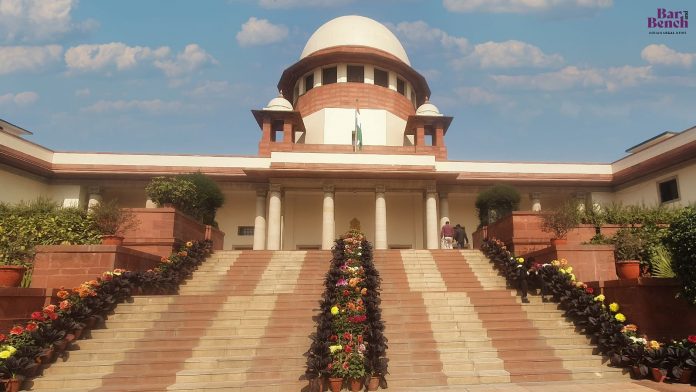
Download Now

Devinder Singh Narula vs. Meenakshi Nangia (2012)

0

This article is written by Adv. Dilpreet Kaur Kharbanda. It is an effort to delve into the aspects of Divorce by Mutual Consent under Section 13B of the Hindu Marriage Act, 1955. Along with analysing the case of Devinder Singh Narula v. Meenakshi Nangia, the cases before and after this judgment have also been looked into to understand the evolution of divorce under the Consent Theory of Divorce. Furthermore, the extraordinary power of the Supreme Court enshrined under Article 142 of the Indian Constitution and how this power has been used over the years has been tried to be condensed. It also includes a few suggestions and frequently asked questions related to Section 13 B and Article 142.

Table of Contents

Introduction 

Black’s Law Dictionary (9th edition, 2009) defines Marriage as “the legal union of a couple as spouses”. This definition has undergone varied changes, adapting to the changing times and has even become gender-neutral as an outcome of the acceptance of same-sex couples in society. In the case of Tekait Amon Mohini Jemadai v. Basanti Kumar Singh (1901), the Calcutta High Court called the marriage under Hindu Law to be an indissoluble union of flesh with flesh and bone with bone. There has been a tussle between courts as to whether marriage is to be considered a sacrament or a contract. Different courts have had different opinions; some considered it solely pious and sacramental. In contrast, some of the courts settled on the stance of Hindu Marriage being a combination of both a sacrament and a civil contract.

The hidden aspect of Hindu Marriage, being a contract, brings forth the concept of divorce. According to Vedas and the Holy Scriptures, once two people enter into a holy matrimony, they are inseparable. Originally, in Vedas and Dharmashastras, no concept of divorce existed. But with the changing times and acceptance of marriage being more than just a religious practice and equally about a partnership and companionship between two people, the need for statutory provisions for divorce was felt. Thus, the Hindu Marriage Act, 1955 came into existence that provided provisions dealing with Marriage as well as Divorce. In the original text of the act, only a few grounds of divorce were present under Section 13, but later, different grounds, as well as the concept of mutual divorce, were added in the form of Section 13 B

Details of the case

Case Name: Devinder Singh Narula v. Meenakshi Nangia

Equivalent Citations: 2012 (8) SCC 580, 2012  AIR (SC) 2890, 2012 (7) JT 519, 2012 (7) SCALE 473

Court: Supreme Court of India 

Bench: J. Altamas Kabir and J. Chelameswar

Appellant: Devinder Singh Narula

Respondent: Meenakshi Nangia

Date of Judgment: 22.08.2012

Legal Provisions Involved: 

Facts of Devinder Singh Narula vs. Meenakshi Nangia (2012)

  • On 26.03.2011, marriage was solemnised between the Appellant and the Respondent.
  • The Appellant filed a petition under Section 12 of the Hindu Marriage Act, 1955 (hereinafter referred to as HMA) on 01.06.2011 on the grounds of marriage being a nullity.
  • During the pendency of the petition under Section 12 of HMA, 1955, the parties decided to go for mediation. Therein, the parties agreed to dissolve the marriage by filing a petition under Section 13 B of HMA, 1955, i.e., Divorce by Mutual Consent. The report of the mediator was submitted to the Mediation Centre of Tis Hazari Court, New Delhi.
  • After the agreement, an application was put up on 15.10.2011, in the pending case under Section 12, that the parties would like to settle under Section 13 B and would file the petition on or before 15.04.2012.
  • A Joint Petition by both the appellant and the respondent-wife was filed on 13.04.2012 under Section 13 B before the Additional District Judge, West Delhi.
  • The court fixed the 2nd Motion to be heard on 15.10.2012.
  • Aggrieved by the decision of the judge on fixing the date for the 2nd motion at a gap of 6 months, the parties filed the present appeal before the Supreme Court, praying for an exception from completing the cooling period of 6 months before filing the 2nd Motion.

Issues Raised

After perusing the facts and circumstances at hand, the Hon’ble Supreme settled on the issue of Whether the Cooling period of 6 months under Section 13 B of HMA be waived off.  

Contentions of the parties

As the original petition filed was a divorce petition by a husband against his wife, thus, the title says, Devinder Singh v. Meenakshi. But, later a joint petition under Section 13 B was filed by both the husband and wife together. The present matter before the Supreme Court has been reached by way of an appeal. Thus, both the Appellant and the Respondent-wife made the same arguments and their arguments were countered by the Advocate of the state.

Arguments Advanced by the Appellant 

The main arguments can be summarised in the following pointers:

  • Both parties had been living separately since their marriage and even stopped cohabitation since the filing of the petition on 01.06.2011, i.e., almost a year and a half has elapsed since then. Furthermore, they don’t see each other living under the same roof even in the future, as the respondent-wife is living and working in Canada.
  • A period of 18 months has elapsed from the date of filing the original petition (HMA No. 239 of 2011). This period of 6 months must be counted towards or set off against the 6-month cooling period requirement under Section 13B. 
  • Apart from this cooling period of 6 months, all other requirements of Section 13 B are being met by the parties.
  • Parties relied on the case of Anil Kumar Jain v. Maya Jain (2009). They urged the court to invoke their power under Article 142 of the Indian Constitution and grant a decree of divorce on the ground of Irretrievable Breakdown of their marriage, as their marriage is just hanging by the formalities of the law and have no hope for their relationship to get better in future.

Arguments Advanced by the Respondent    

The only argument the state made was that the cooling period of 6 months provided by the statutory provision should be strictly adhered to, otherwise, entertaining such prayer of waiving off the cooling period would cause confusion in the minds of the public and would be against the interest of the general public.

Judgment in Devinder Singh Narula vs. Meenakshi Nangia (2012)

Taking into consideration the arguments put forth by the parties and the state, the Hon’ble Supreme Court, using its power envisaged under Article 142 of the Indian Constitution, waived off the statutory cooling period of 6 months provided under Section 13 B(2). Court converted the petition pending under Section 12 of HMA, 1955 into a joint petition under Section 13 B, underlining that all the essential elements of Section 13 B(1) for granting divorce by mutual consent are met by the parties and the circumstances of the case are such that the marriage of the parties has completely broken down (irretrievable breakdown) and is hanging by a thread on mere account of the statutory requirement of cooling period of 6 months under Section 13 B(2).  The Hon’ble Supreme Court allowed the appeal filed by the parties and granted divorce on mutual consent. 

Rationale behind the Judgment 

The court took into consideration that the parties have been living separately for over a period of one year since the date they filed the original petition and that already 4 months (a significant chunk of the cooling period) have elapsed and decided the remaining period of 2 months can be waived off. Moreover, the court exclaimed that the parties have never stayed together after their marriage and don’t seem to have any marital relations at all. There appears to be no hope for their relationship to change and for their marriage to be sustained.

Keeping in mind the legislative intent (saving the institution of marriage) of framing the said statutory provision and balancing it out with the exceptional circumstances of the case (doing complete justice to the parties), the court can exercise the power envisaged under Article 142 of the Indian Constitution. 

The court relied on the judgment of Anil Kumar Jain and Kiran v. Sharad Dutt (1999). In the case of Anil Kumar Jain, the Hon’ble Supreme Court mentioned the three circumstances under which the court can exercise its extraordinary power under Article 142:

  • Where the marriage is irretrievably broken 
  • Where one party withdraws consent in the case of divorce by mutual consent 
  • Where the statutory period under Section 13 B(2) has not been completed, still the court can grant divorce by mutual consent by waiving off the remaining period.

The Supreme Court, in the case of Kiran v. Sharad Dutt, while taking into consideration the period of time parties were living apart, reached a conclusion that waiting for another 6 months would mean just delaying the whole process and, thus, granting divorce on mutual consent.

Thus, the Supreme Court concluded, in exceptional circumstances, taking into consideration the facts and circumstances of the case, the court could exercise the right vested in them under Article 142 of the Indian Constitution and waive off the cooling period of 6 months.

Critical analysis of Devinder Singh Narula vs. Meenakshi Nangia (2012)

If one of the parties withdraws consent, can divorce still be granted in such a situation under Section 13B?

First, any party can withdraw their consent at any time before the divorce decree is passed. Hon’ble Supreme Court in Hitesh Bhatnagar v. Deepa Bhatnagar (2011), while pressing on the legislative intent, held that the period of 6 months under sub-section 2 of Section 13 B, is a cooling period where parties can rethink what they want, whether they want to go ahead with the divorce or not, etc. With regard to the consent, it was expanded by the Supreme Court in the case of Sureshta Devi v. Om Prakash (1991) that the mutual consent of the parties should continue till the decree of divorce is granted. However, the Hon’ble Supreme Court, in the case of Ashok Hurrah v. Rupa Bipin Zaveri (1997), was asked to reconsider the judgment of Sureshta Devi as it was too broad and not within the logical tenets of Section 13 B(2). 

While discussing the Sureshta Devi Judgement, the Supreme Court dissected the facts of the case and looked into the decisions passed at all the stages of the case. The husband and wife filed a petition for mutual divorce. The second petition under section 13 B(2) was filed by the husband only and not by the wife. After 18 months had elapsed, the wife withdrew her consent. Considering the previous judgments passed by various high courts, the trial court decided that a decree of divorce could not be granted in such a situation. The matter went before a single judge of the High Court. The marriage was said to be irretrievably broken, and hence, the decree of divorce was said to be granted. Then, the matter was listed before the division bench of the High Court. The decision of the single bench was set aside. 

When the matter went before the Supreme Court, after looking into all the circumstances and the allegations that husband and wife had made against each other, the fact that they were living separately for quite a long time and the marriage was just for namesake, to end the agony of both the partners and to do complete justice, Hon’ble Supreme Court used its extraordinary power envisaged under Article 142 of the Indian Constitution and passed decree of divorce on mutual consent under section 13B of the Hindu marriage Act, 1955. 

So, even if the consent is withdrawn before the decree of divorce is granted, courts can still move forward with divorce on the ground of mutual consent, provided the marriage is irretrievably broken, and its substance is gone. It would be unfair for both parties to continue in such a relationship.

Furthermore, HMA does not provide for a set procedure as to how the petitions will be withdrawn. But the same can be deduced by relying on Section 21 of HMA. So, as per Section 21, High Court rules will apply to the withdrawal of petitions and will be governed by Order XXIII of the Code of Civil Procedure (Withdrawal and Adjustment of suits).

Can the statutory period of One year under Section 13 B(1) be waived off

There have been mixed opinions of the different High Courts about waiving off the period of 1 year before filing the petition for divorce on mutual consent. 

Delhi High Court, in the case of Priya v. Sanjay Gaba (2004), taking into consideration the exceptional circumstances and that both the parties were completely willing to move ahead in their respective lives, held that the statutory period of one year could be waived.

Karnataka High Court, in the case of Sweety v. Sunil Kumar (2007), referred to the judgment of the Delhi High Court in the case of Pooja Gupta v. Nil (2003) and provided certain pointers to be kept in mind before waiving the statutory period of one year:

  •  the maturity and the comprehension of the spouses;
  •  absence of coercion/intimidation/undue influence;
  • the duration of the marriage sought to be dissolved;
  • absence of any possibility of reconciliation;
  • lack of frivolity;
  • lack of misrepresentation or concealment;
  • the age of the spouses and the deleterious effect of continuation of a sterile marriage on the prospects of re-marriage of the parties.

But, Allahabad High Court, in the case of Arpit Garg v. Ayushi Jaiswal (2019) clearly denied the waiver of the statutory period of one year. The court observed that the period of 1 year of marriage before filing a petition for divorce on mutual consent is mandatory in nature. The intent of the legislature is absolutely clear and there is no ambiguity present. Hence, a literal interpretation of the statute needs to be done. Moreover, Section 13 B has to be read with Section 14, where the limitation of 1 year has been clearly provided.

Is the waiting period of 6 months under Section 13 B (2) mandatory

Over the years, different courts have had different opinions on whether the statutory period of 6 months is mandatory.

In 1986, the Andhra Pradesh High Court, in the case of Omprakash v. Nalini (1985), while quoting a Telugu Poet Vemana, “broken iron can be joined together but not broken hearts” called attention to why to wait for 6 months. The court waived the cooling period of 6 months. Similar judgments were passed by Gujarat and Madhya Pradesh High Courts as well.

In 2000, the Andhra Pradesh High Court, in the case of Hitesh Narendra Doshi v. Jesal Doshi (2000), observed that the provision for a waiting period of 6 months has been added with a specific purpose and hence cannot be changed. Correspondingly, the Punjab and Haryana High Court in 2006, in the case of Charanjit Singh Maan v. Neelam Maan (2006), held the statutory period provided is mandatory in nature. There is no ambiguity in Section 13 B(2), and hence, literal interpretation should be made, and a minimum period of 6 months must elapse before the 2nd Motion can be filed. A similar stance was taken by the Bombay High Court in the case of Savitri v. Principal Judge, Family Court, Nagpur (2008).

However, in the case of Manoj Kedia v. Anupama Kedia (2010), the Chhattisgarh High Court observed that the period of 6 months can be waived after enquiring about the circumstances of the case. If the marriage is irretrievably broken, there is no need to wait for 6 more months and a decree of divorce on mutual consent can be given.

The confusion on this point was finally settled by the Hon’ble Supreme Court in the case of Amardeep Singh v. Harveen Kaur (2017). Hon’ble Court held that the minimum period of 6 months can be relaxed in exceptional cases. The court clearly pointed out that where the court is encountered with a situation where the question of waiving off the cooling period is to be decided, the court should look for answers to a few questions:

  • Whether a period of 18 months has already elapsed before even filing the 1st petition under Section 13 B(1)?
  • Whether all the efforts have been made to reconcile between the partners as per Section 23(2) of HMA or in terms of Section 9 of the Family Courts Act?
  • Whether the matters of alimony, child custody and similar related issues have been settled between the parties?
  • Whether the waiting period prolong the parties’ agony?

If the answer to all these questions is in affirmation, courts can go ahead and waive the period of 6 months. The court held the request for a waiver can be made after 1 week of the filing of the 1st petition under Section 13 B (1).

Important provisions involved in Devinder Singh Narula vs. Meenakshi Nangia (2012) 

Section 13 B of HMA,1955

Section 13 B was added by the 1976 Amendment Act. Before this, only Section 28 of the Special Marriage Act,1954 dealt with divorce by mutual consent. The major requirements of Section 13 B are discussed further.

The process of filing a petition for divorce by mutual consent is divided into 2 parts:

For filing the 1st Petition under Section 13 B (1) of HMA, 1955, the following requirements must be met:

  • That the parties are living separately for 1 year or more before filing the petition. Living separately would include living in the same house but not fulfilling the marital duties towards each other.
  • That they cannot live together anymore.
  • That both parties want their marriage to get dissolved.

It is mandatory that the petition is to be jointly presented to the district court by the spouses only. Nobody other than the spouses can file a petition under Section 13B. The same has been held in the case of Ranjana Munshi v. Taral Munshi (1995).

2nd Petition/Motion under Section 13 B (2) can be moved by the parties after the expiration of 6 months and not later than 18 months from the date of filing of the 1st petition. The period of 18 months mentioned in the statute is an upper limit, but even after that, courts have the power to pass a decree of divorce. The same has been opined in the case of Santosh v. Virendra (1986).

If the parties do not withdraw the petition, the court can pass a decree for dissolution of marriage in the meantime. But before passing such a decree, the court must

  • Hear both the parties, and 
  • Conduct a proper inquiry regarding the solemnisation of their marriage and check if the averments made in the petition by the parties are true or not.

If the courts are satisfied and all the statutory requirements are met, the marriage will be said to be dissolved from the date of the decree.

Evolution of Section 13 B

Section 13 B of the HMA, 1955 is based on the Consent Theory and Irretrievable Breakdown of the Marriage Theory of Divorce. 

Consent theory is a much later developed theory of divorce. The basis of this theory is Contractual. If the parties have a right to enter into marriage with their consent, they have a similar right to dissolve their marriage. The major Criticism that this theory faced at the time of implementation in the form of Section 13 B, was that it will make taking Divorce way too easy. The entire institution of marriage will suffer. However, due to the safeguards provided in the provision, it cannot be said to be making divorce easy, rather, the stringent time periods provided for in the provision act as the necessary checks and balances.

Irretrievable Breakdown of Marriage Theory is somewhat a modern view of Divorce. This theory has been an ever-evolving process in our country. J. Salmond once said, “When the matrimonial relation has for that period ceased to exist de facto, it should, unless there are special reasons to the contrary, cease to exist de jure also”. In the 71st Law Commission Report, for the very first time, an irretrievable breakdown of marriage was recommended to be a ground of divorce under HMA, 1955. The Marriage Laws Amendment Bill, 2010 was also introduced in the parliament with an aim to amend both the Hindu Marriage Act and the Special Marriage Act. In 2013, it was even passed by the Rajya Sabha, but it never got passed from the Lok Sabha and thus, never saw the light of the day. Therefore, the irretrievable breakdown of marriage is still not a statutory ground of divorce under any of the marriage laws in India. The elements of Breakdown theory in relation to Hindu Law can be seen in two ways:   

  •  Implied Breakdown

Section 13B provides an option to the parties to go for divorce through mutual consent, wherein parties feel there is nothing left in their marriage to make it survive. 

Section 13(1A) (i) wherein if the decree of judicial separation has been passed and within that one year, parties have not cohabitated since then. This points towards the marriage being broken.

Section 13(1A) (ii), wherein there has been no restitution of conjugal rights even after the passing of a decree by the court for restitution, and one year or more time has elapsed. This also points towards marriage being a sinking ship.

But the courts have time and again cautioned to look into the circumstances carefully. In the case of Saroj Rani v. Sudarshan Kumar (1984), the Hon’ble Supreme held that where there is a decree of Restitution and its compliance has not been made. That will not straight away constitute a wrong under Section 23 of the Act. If the initiation of the case is fraudulent, let’s say a decree of Restitution is obtained with the only purpose of getting a divorce, then this is wrong. Both circumstances have to be integrated carefully. Where the intention is bad, that can be considered falling under Section 23 of the act.

  • Judicial Recognition (Precedents)

In the case of Ashok Hurra v. Rupa Bipin Zaveri (1997), the Hon’ble Court observed that marriage, as per the facts of that particular case, was dead; there was no spark left, and hence divorce was granted.

Similarly, in the case of Romesh Chander v. Savitri (1995), Naveen Kohli v. Neelu Kohli (2006), Anil Kumar Jain v. Maya Jain, Hon’ble Supreme Court has time and again taken into consideration the fact that if the marriage has become emotionally and physically dead, it won’t be fair for the courts just to close their eyes, it wouldn’t fall within the ambit of ‘complete justice’. Thus, courts have allowed divorce on the ground that the marriage is irretrievably broken.

Hon’ble Supreme Court in Devinder Singh Case also took note of the marriage being irretrievably broken and that is why it used the power envisaged under Article 142 to waive off the cooling period.

With the passage of time, the interpretation of Section 13 B has changed. Courts have set precedents with reference to different factual situations. 

Article 142 of the Indian Constitution 

To understand the aspects of Article 142, we need to read the provision through and through. The power provided by the Article is wide enough that the court can use the same to pass any decree or order. The powers envisaged under the article are elastic to suit the needs of different situations. The exact word used is ‘complete justice’. Courts have time and again interpreted this term to realise the extent of the power. Hon’ble Supreme Court, Constitution Bench, in the case of Prem Chand Garg v. Excise Commissioner (1962) held that, that the order that the Supreme Court can pass under Article 142 should not violate the Fundamental Rights and, at the same time to do complete justice, should not be violative of the statutory provisions with regard to which order is passed. A similar stance was taken in the case of Supreme Court Bar Association v. Union of India (1998), where the court observed that until and unless the order or decree passed under Article 142 is not violating any fundamental right and is not against the public policy, it won’t be violating the provisions of the statute made by the Parliament, in the way of achieving ‘complete justice’.

Relevant case laws 

Understanding the judgments pronounced before Devinder Singh, gives us a wide idea as to how courts used to interpret the law in different circumstances and what different approaches have brought the courts to where they are in the present. Let’s understand these few judgments in chronological order.

Anjana Kishore v. Puneet Kishore (2002)

In the case of Anjana Kishore v. Puneet Kishore (2002), the Hon’ble Supreme Court invoked its extraordinary power under Article 142 of the Indian Constitution. It waived off the cooling period of 6 months provided under Section 13 B (2). Waving off the cooling period was said to be done with the sole motive of doing ‘complete justice’, but there were no specific circumstances mentioned that the court took into consideration and concluded for the marriage to be broken.

Harpreet Singh Popli & Ors. v.  Manmeet Kaur Popli & Anr. (2010)

The next case that came forth is  Harpreet Singh Popli & Ors. v. Manmeet Kaur Popli & Anr. (2010). The Hon’ble Supreme Court withdrew the petitions filed by the wife under the Protection of Women from Domestic Violence Act, 2005, and the divorce petition under HMA and granted divorce on mutual consent by waiving off the 6 months time period provided under Section 13 B. 

However, the major difference between this case and the Anjana Kishore case is that this court has no direct reference to its powers under Article 142. Moreover, in Harpreet Singh Polpli, the basis of divorce was the compromise deed entered into by the parties where the husband settled to pay the wife a sum of ₹13.50 Lacs. The Supreme Court waived off the 6 months time period but without any reference as to the power under Article 142.

Manish Goel v. Rohini Goel (2010)

Another important case that waived the way to Devinder Singh Narula’s judgment is Manish Goel v. Rohini Goel (2010). Hon’ble Supreme Court dismissed the petition and did not invoke its powers under Article 142 of the Indian Constitution. Instead, the Hon’ble court stuck to the point of the motive of the legislature behind the framing of the statute. The court held, “In exercise of the power under Article 142, this court generally does not pass an order in contravention of or ignoring the statutory provisions. Not the power is exercised merely on sympathy”.

S G Rajagopalan Prabhu & Or. v. Veena & Anr. (2010)

Another important case that needs reference is S G Rajagopalan Prabhu & Or. v. Veena & Anr. (2010). On the basis of the compromise agreement entered into by the parties, the court allowed the petition for divorce by mutual consent. But, similar to the case of Harpreet Singh Popli, there was no direct reference to the use of extraordinary power under Article 142 of the Indian Constitution.

The loopholes present in each of the cases above, and the confusion that prevailed were put to rest by the Devinder Singh Narula Case. Further clarity on the subject came with two important  judgments that are mentioned below:

In the case of Amardeep Singh, as discussed above, the Supreme Court provided certain considerations that the courts should keep in mind before waiving off the cooling period of 6 months. With regard to the power under Article 142, the Supreme Court clearly observed that the order passed by the court should not be in violation of the statutory provisions, especially in matters that are not present before the very court.

Shilpa Shailesh v. Varun Sreenivasan, (2023)

Hon’ble Supreme Court, in the case of Shilpa Shailesh v. Varun Sreenivasan (2023), observed and held in affirmative that the court can use its power under Article 142 in matters of divorce by mutual consent. The legislative intent of the cooling period of 6 months is not at all sidelined and is absolutely respected. But there are such exceptional circumstances where lingering on or giving time for reconciliation only exaggerates the pain and agony. In such cases, the procedure should be sidelined for a while for bigger public and personal interest. Only then would courts be able to do complete justice in the truest sense. At the same time, the court cautioned to follow the considerations laid down in the case of Amardeep Singh and Amit Kumar v. Suman Beniwal (2021).

Divorce by mutual consent under other laws

The concept of Divorce by Mutual Consent has, over time, made its place in different laws governing people of different religions.

Special Marriage Act, 1954

Section 28 of the Special Marriage Act deals with Divorce by Mutual Consent. This process and requirements of filing a petition under Section 28 are similar to that under HMA. But before filing the petition under Section 28, certain pointers need to be kept in mind:

  • Parties must have married under the Special Marriage Act  (inferred from Section 28(2)).
  • Before filing the petition, it is advisable, as indicated in the case of Amardeep Singh, that parties should sort out all the disputes and issues so that there are no future litigations because of that.  Furthermore, matters related to alimony, child custody, child maintenance, and education are often advised to be sorted out and decided upon.

After all these requirements are met, then:

The spouses can file a joint petition to the court. The court will make an inquiry into the circumstances and will record the statements of the parties. After that, an order of inquiry will be given by the court. A cooling period of 6 months will be provided if the parties want to reconcile. Parties have to move a 2nd petition after the elapse of a minimum of 6 months and a maximum of 18 months. Again, the court will make an inquiry into the averments made by the parties. If the court feels right, it will pass the decree of divorce on mutual grounds.

Parsi Law

Section 32 B of the Parsi Marriage and Divorce Act, 1934, provides for divorce by mutual consent. This provision was added by the 1988 amendment. The grounds and requirements for applying under this provision are exactly the same as under the Special Marriage Act and Hindu Marriage Act. There are just 2 differences:

  • 1st is that parties must have married under the Parsi Law.
  • 2nd being that there is no mandatory provision of a cooling period of 6 months between the two petitions.

Christian Law

Section 10 A of the Indian Divorce Act, 1869, provides for divorce by mutual consent. Provision was added by the 2001 Amendment. The grounds and requirements for applying under this provision are exactly the same as under the other laws. There are just 2 differences:

  • 1st being, parties must have married under Christian Law.
  • 2nd being, both the parties must have been living separately for a period of 2 years or more.

In the case of Reynold Rajamani v. Union of India (1982), the Hon’ble Supreme Court observed that where parties got married under Christian Law, they could not get their marriage annulled under Section 28 of the Special Marriage Act, 1954.

With regard to the period of 2 years, the Division Bench of Hon’ble Kerala High Court, in the case of Soumya Thomas v. Union of India (2010), has clearly held that this distinction from other laws is completely arbitrary and unconstitutional. To quote the exact words, “…..offends the mandate of equality and right to life under Arts.14 and 21 of the Constitution. Applying the doctrine of severability as has been held in the case of D.S. Nakara v. Union of India (1982), we are satisfied that we will be well within the power of this Court to read down such an unconstitutional provision, which is unrelated to the object sought to be achieved. The stipulation of two years can be severed and can be read down to one year to bring in conformity with the provisions of other laws to avoid the vice of unconstitutionality.

Muslim Law

Muslim law does not, in any codified form, put forth provisions with regard to divorce by Mutual Consent. But, Khula and Mubarat forms of Divorce fall under the category of Divorce by Mutual Consent. 

Khula is a type of divorce at the instance of the wife. Literally, ‘Khula’ means to draw off or put off. The history of Khula can be put into words: once, a woman went to Prophet Muhammad and said I can’t remain/stay with my husband anymore, and at the same time, I don’t even want to cheat Islam by staying out of marriage. I want my relations with the Husband to be severed. Prophet replied, “If you have decided so, are you ready to give away the garden to him, if you can, your marriage stands terminated.”

Privy Council in the case of Buzul-ul- Raheem v. Lateef-oon – Nissa (1861) held that divorce by Khula is a divorce by consent and at the instance of the wife, in which she gives or agrees to give consideration to the husband for releasing her from marriage ties.

Unlike Khula, Mubarat is the dissolution of marriage by mutual consent. Furthermore, there is no concept of consideration that is to be paid by the wife to the husband. Those who criticise the Islamic law of Divorce have put this type of divorce under the carpet.

Prophet Mohammad has said, “If a marriage can’t work, let it be dissolved.”

Both Shias and Sunnis recognise Mubarat as an acceptable form of divorce, and this type of divorce is irrevocable in nature.

Conclusion 

The judgment of Devinder Singh Narula came at such a juncture where the courts were providing relief to the parties by simply waiving off the cooling period of 6 months under Section 13 B on the basis that their marriage was irretrievably broken. There is no anticipation of reconciliation between them, or the courts were specifically using their plenary powers under Article 142 to waive off the statutory period of 6 months. Before this judgment, there was no inter-relation defined between these two provisions by the court. So, Devinder Singh’s judgment condensed down the law and even opened further paths for the courts to delve into these particular provisions. The abovementioned judgments clearly show how much the legal horizons have widened over the last decade.

However, there is still a loophole in the entire process of divorce by mutual consent, and that is the absence of a specific provision providing for the irretrievable breakdown of marriage as a separate ground of divorce. Along with that, the ratio of Amardeep Singh should also be a part of the statute, wherein the time period of 6 months be clarified as discretionary and not mandatory in nature. There is no abnegating the fact that the Supreme Court has started giving relief by using its power under Article 142, but that makes just the Supreme Court a relief-giving authority. There is still no relief that the District and Family Courts can provide with regard to divorce by mutual consent. If all such divorce matters reach the Supreme Court, it will lead to overburdening the entire system.

Frequently Asked Questions (FAQs)

When was the concept of Divorce by Mutual Consent under the Hindu Marriage Act, 1955 introduced in India?

The concept of divorce by mutual consent was introduced in India by the Amendment of 1976 (Act 68 of 1976) in the form of Section 13 B.

Who can one file the petition for divorce by mutual consent under the Hindu Marriage Act 1955?

The petition can only be filed by the spouses. Petition cannot be moved by some other family member on behalf of the spouses.  A joint petition has to be moved by the parties under Section 13 B (1) of HMA.

What is the purpose behind the cooling period of 6 months before filing the 2nd petition/2nd motion?

The legislative purpose behind the six-month cooling period is to give couples time to clear their headspace and rethink their decision to get a divorce. It is an effort towards protecting the institution of marriage and giving the partners an opportunity to reconcile.

Is the cooling period of 6 months provided under section 13 B(2) Mandatory or discretionary in nature?

There was a constant tussle between different High Courts as to whether this period of 6 months could be waived off or not. Finally, the Supreme Court in the case of settled the contention by observing that the period of 6 months provided under section 13 B(2) is discretionary in nature, and the courts can waive off this cooling period, taking into consideration the exceptional circumstances of the case where the marriage is irretrievably broken.

What is the power of the Supreme Court envisaged under Article 142 of the Indian Constitution?

Article 142 of the Indian Constitution provides extraordinary power to the Supreme Court, wherein it can pass any order or decree to do complete justice in any matter pending before it. This power under Article 142 has been used by the Supreme Court in various cases, stretching from divorce by mutual consent cases to Chandigarh Mayor Election matter to Compensation to victims in the Union Carbide case, and the list goes on.

References


Students of Lawsikho courses regularly produce writing assignments and work on practical exercises as a part of their coursework and develop themselves in real-life practical skills.

LawSikho has created a telegram group for exchanging legal knowledge, referrals, and various opportunities. You can click on this link and join:

https://t.me/lawyerscommunity

Follow us on Instagram and subscribe to our YouTube channel for more amazing legal content.

Download Now
logo
FREE & ONLINE 3-Day Bootcamp (LIVE only) on

How Can Experienced Professionals Become Independent Directors

calender
28th, 29th Mar, 2026, 2 - 5pm (IST) &
30th Mar, 2026, 7 - 10pm (IST).
Bootcamp starting in
Days
HRS
MIN
SEC
Abhyuday AgarwalCOO & CO-Founder, LawSikho

Register now

Abhyuday AgarwalCOO & CO-Founder, LawSikho