We are now living in a world where digital marketing has become an increasing trend. Every business is now acknowledging the importance of this new trend and trying to connect with prospects through this medium.
The internet has now become an important channel for communication, where business promotion for products or services is done through online advertising. There are several platforms used for digital marketing, such as:
Smartphones
Computers
Social media
Game console
As a result, the traditional marketing approach is slowly being replaced by digital marketing. Now, gradually, all kinds of businesses are embracing this new form of marketing, as it has become a more powerful way to market any products or services. If anyone wants to pursue a career in marketing, then obtaining a degree in digital marketing can be very useful for career growth.
Indian digital marketing industries have also achieved a lot of growth in digital marketing over the years, and particularly the younger generations are trying to capitalise on the new opportunities. During 2020, when the whole world was combating the pandemic, many businesses preferred to shift to online marketing, and as a result, digital marketing has become quite popular.
However, despite the plenty of outward allure about digital marketing that is visible in the industries, there are a few challenges too.
What is digital marketing
In the traditional form of marketing, normally there is face-to-face communication. However, when we go for digital marketing, buyers and sellers may not even meet or see each other. Every deal will be made digitally through computers, and the internet will remain the medium for communication. In digital marketing, there are different tools used, such as:
Email
RSS
Voice broadcast
Blogging
Video
Streaming
Wireless text message
Instant message.
Prospects will get connected through online advertising, SEO, PPC, and much more. Most of the digital platforms can be any of the following:
Desktop
Mobile phone
Tablets.
Customers are generally engaged through various electronic channels, like social media, analytics, and e-commerce sites. Most of the activities that will revolve around digital marketing are:
Product creation
Customer reach
Retention
Loyalty building
Meeting demands.
The landscape for marketing has now changed, and businesses have to adopt quick, realistic, and effective marketing and technology strategies so that they can easily meet the demands of the present generation. For selling any products and services, search engines have a very important role, and most companies use the internet only as a primary medium to market.
As digital technology evolves, online marketing will remain a fast-growing industry. All kinds of businesses are going to thrive with this type of marketing in this age.
While the world is turning digital, businesses of all sizes are trying to seize the opportunity and target their audiences. Since this technology is constantly evolving, it can often be difficult for new businesses to navigate the opportunities and challenges that digital marketing can offer.
History of digital marketing
The concept of digital marketing was born during the late 1900s. It was thought that marketing and technology could not be separated. That was just the beginning, and subsequently, many steps were followed to reach the stage that we are seeing today.
The following are chronological events that shaped digital marketing as it is seen today.
1945-1970
In the US universities, in the computer science department, Vannevar Bush floated the idea of adopting a net for linking documents.
1971-1980
Bob Metcalfe first introduced the Apple II personal computer series while writing his thesis on Ethernet.
1981-1990
IBM launched the first computer, and ANSI adopted SQL as a standard. Also, computer storage of 100 MB capacity was seen.
1990-1993
Archie launched the first search engine, and the concept of digital marketing was coined.
1993-2001
The web banner was seen for the first time, e-commerce transactions started, Yahoo was launched, Google was born and Universal Music started a mobile marketing campaign for the first time.
2002-2010
LinkedIn was launched, and Facebook, YouTube, Twitter, WhatsApp, and Google Buzz were live. Amazon sales increased to $10 billion; the iPhone series was launched; and internet users in China surpassed those in the US.
2011-2015
64% increase in social media budget, Facebook took over WhatsApp, the number of mobile users surpassed PC users, and Snapchat launched the Discover feature.
2016- till today
The Internet in India became household after Jio launched its Internet service, with the highest ever number of users of WhatsApp, YouTube and Instagram.
Opportunities in digital marketing
Digital marketing offers several opportunities for brands, as they can get in touch with their prospects and easily interact with them from different parts of the globe or time zones using different platforms.
Every client is different, and so are their needs. Therefore, brands must meet the requirements of their clients. Digital marketing can create the necessary synergy, and the brands can easily offer a better customer experience and effectively engage them.
Digital marketing is becoming more cost-effective for most brands, and hence, businesses, whether they are large or small, are trying to adopt this new form of marketing concept. As a result, many new opportunities are being developed for digital marketers. Let us discuss what new opportunities digital marketing can offer.
Profitable career
By using a digital marketing platform, a brand can easily connect to its audiences globally faster than in the traditional way. Hence, most companies prefer to hire professionals who have a digital marketing background.
Those who are familiar with social media marketing and SEO have very good career prospects and can easily rise the corporate ladder.
Global opportunities
Today, digital marketing defies geographical boundaries. One can be sitting in one corner of the globe and easily market his products and services to people who may be in other parts of the world.
If you have good knowledge of digital marketing and also have good exposure in this field, then you can easily get a lucrative job from any international company.
Business promotion
In today’s scenario, if you want to be a successful business owner, then learning digital marketing is mandatory. Initially, you may face a little challenge, but if you have the required knowledge and background, then sooner or later, your business will flourish. Your knowledge of digital marketing will help you make a better decision.
More creativity
Once you enter the digital marketing field, you can enhance your creativity in any activity that you perform. If you are looking for faster growth in your career, then entering the digital marketing field offers you endless opportunities.
Convergence platforms
Those marketers who have adopted digital marketing can strategically advertise their products and services with the help of videos where their clients are available. The viewers can easily get attracted to the allure of the full high-definition resolution of the pictures and videos.
Digital marketers can also showcase their products through a few popular platforms like YouTube and attract customers.
Mobile platform
These days, more than 60% of people carry mobile phones in their hands, and marketers can exploit this platform. The availability of 4G and 5G and a few advanced tools, such as GPS and AR can also attract digital marketers, and they can capitalise on the ever-increasing landscape of mobile phones.
Cost-effectiveness
If you look at the cost aspects, then digital marketing will be much more cost-effective than traditional marketing channels. With the help of email campaigns, online advertising, and social media outreach, it is possible to optimise your marketing budget and also allocate resources efficiently.
Targeted advertising
You can get unrivalled targeting capabilities through digital platforms. There are very efficient tools available, such as data analytics, that enable you to track the user’s behaviour, which can help you customise your advertising in the right locations so that you can get the maximum return on your investment.
Real-time analytics
With digital marketing, you can derive the benefits of real-time analytics, which helps companies track the performance of their different campaigns. If needed, it is possible to correct your strategies to get the best results quickly.
Brand engagement
These days, social media platforms are very active, and it is possible to have direct and immediate communication between the company and the customers. So, by being active on different social media platforms, companies can increase their online presence and nurture brand engagement and loyalty among customers.
Challenges in digital marketing
Surely, digital marketing offers many exciting opportunities, but there are still many challenges, too. It is good to know what these challenges are so that strategies can be created on how to beat them. Let us briefly discuss the various challenges.
Information overload
There is too much information that is constantly bombarded in various media that may often confuse consumers. Therefore, to attract an audience, marketers need to invent new stories, which is a challenge for digital marketers.
Changing algorithms
The digital marketing platform regularly gets updated due to changes in algorithms. As a result, the visibility of the content is affected. Therefore, to maintain their online presence, marketers need to change their strategies regularly.
Regulation
In order to meet the expectations of consumers who have been familiar with using traditional media earlier, digital marketers have to complete various regulations that may eat into their revenue. Digital marketers need to take care of consumer protection and also maintain a high standard.
Security concerns
Digital platforms offer many cyber threats and data breaches, which also add another risk to data privacy. Digital marketing poses a greater challenge to protecting the privacy of the customer’s data and maintaining a secure online environment.
Skill gap
As digital marketing is still evolving, companies need to update the skills of their workforce regularly. To remain competitive, companies need to always be up-to-date so that they can meet this challenge.
Cross-channel marketing
Digital marketing does not involve only a single website or social media platform. Digital marketers need to be informed about several video platforms, search engines, app stores, consumers’ inboxes, and many more. If the marketers miss any of the media, then they can fail to connect with a significant chunk of their audiences.
Pursuing your target audience
Suppose you are interested in entering into digital marketing today; you need to project your company as highly competitive, where many other companies have already captured a large segment of the market.
Therefore, to draw the attention of your target audiences, you need to face tough competition to convince them why you are better than others.
Unpredictable buying behaviour
Ever since the internet has become easily accessible, consumer awareness has also greatly increased, as the whole world has now become a single marketplace. Therefore, consumers now have more options, and their buying behaviour has also changed.
Limited budgets
A big company can afford to do their marketing campaign with a huge budget. However, for a start-up company, which may not be as resourceful, it becomes a challenge to create effective and engaging content, especially while creating video content.
Striving to be mobile-friendly
These days, large numbers of consumers are mobile phone users, and very few like to use tablets or laptops. Hence, the websites need to be mobile-friendly too. This can also be a challenge for many small companies.
Growing costs
Increasing costs is one factor that cannot be controlled, as the rate of hiring experts is constantly rising. In addition to that, software package prices, digital transformation costs, and marketplace fees may drive a small business crazy.
How to overcome the challenges of digital marketing
There are a number of things that organisations can do to overcome the challenges of digital marketing. These include:
Developing a comprehensive digital marketing strategy: This strategy should include goals, objectives, target audience, and a plan for execution.
Investing in the right tools and technology: There are a number of digital marketing tools and technologies available that can help organisations reach their goals.
Hiring the right people: Organisations need to hire people with the skills and expertise needed to execute their digital marketing strategy.
Focusing on data privacy and security: Organisations need to have a plan in place for protecting customer data and digital assets.
Measuring and tracking results: Organisations need to track the results of their digital marketing campaigns to see what is working and what isn’t.
By overcoming the challenges of digital marketing, organisations can reap the benefits of increased reach, targeted advertising, personalisation, measurable results, and cost-effectiveness.
Digital marketing trends for coming years
If you want to be competitive in digital marketing, it is crucial to stay well-informed about emerging trends. This will help you connect effectively with your target audience. As we are already in 2024, several trends are going to shape the future of the digital marketing realm.
Social commerce integration
Commerce through social media will be a buzzword in 2024, which is going to redefine how the interaction between consumers and marketers will take place. The integration between social media and eCommerce will grow stronger.
Not only will this increase convenience for customers, but marketers will also get the opportunity to increase their new customer base to expand the business. This integration between social media and e-commerce is essential for companies to stay ahead of the market.
Video content dominance
Video content is going to help in digital marketing, and it will remain one of the most preferred mediums of content for most of the platforms. Hence, every business must capitalise on this trend by creating engaging videos that can be shared on different platforms.
Video content can be anything from compelling stories to product demonstrations or glimpses of behind-the-scenes activities. Video content can always engage any audience and have a deeper impact. Hence, whoever can successfully create compelling video content will be the winner.
Mobile-first marketing
In 2024, the mobile marketing trend will continue, and more and more mobile-friendly content will be created. Since most prospects will access the information via mobile, you must create all your content so that it is compatible with mobile phones. Businesses need to invest in the development of mobile apps.
If you want to create a presence in the arena of digital marketing in 2024, then you must adapt your business to future trends. Businesses must be agile and be ready to embrace the new change. Therefore, you must regularly evaluate your marketing strategy, monitor the trends of the industry, and adjust your business accordingly.
Influencer marketing
Influencer marketing will continue to grow as businesses leverage the power of influencers to reach and engage with their target audience. Micro-influencers, who have a smaller but highly engaged following, will gain more traction.
Sustainability
Sustainability will become a key consideration in digital marketing as consumers increasingly expect businesses to operate in an environmentally friendly and socially responsible manner. Brands will incorporate sustainability into their marketing messages and initiatives, aligning with consumer values.
Conclusion
There is no doubt that digital marketing has totally revolutionised the way businesses are conducted these days and how marketers can engage with their audiences. Therefore, it is quite natural that traditional companies have preferred to switch to this new way of conducting their business operations.
These days, many new platforms have evolved for conducting business, such as switching from PCs and computers to mobile phones and the emergence of social media, which is now playing a very crucial role in digital marketing.
Several new opportunities have evolved in the digital landscape, including global outreach, cost-effectiveness, and enhanced creativity. Also, digital marketing has created a unique opportunity for career growth, particularly in India, where connectivity has tremendously improved since Jio started providing the internet.
Despite all these positives, there are a few challenges posed by digital marketing. Now, audiences are overloaded with information, which can often confuse them. Also, changing algorithms can keep digital marketers on their toes. Data security is also another concern. Since this field is still in its evolving stage, these challenges will be overcome in the near future.
If we look at the future trend of digital marketing, social media will emerge as a powerful platform for e-commerce. Also, conducting business through mobile phones will increase, and hence, every company must create mobile phone-friendly content.
Those businesses that can remain agile, stay informed, and be responsive to market needs are certainly going to win the race and be successful.
We live in an era dominated by rapid technological advancements. Artificial Intelligence (AI) stands at the forefront of innovation, promising unprecedented capabilities and efficiencies. As AI systems become increasingly integrated into various aspects of our lives, the ethical implications surrounding their development and deployment become more pressing. This article delves into the intricate relationship between AI and ethics, exploring the challenges, concerns, and imperative considerations that arise as we navigate the uncharted territory of intelligent machines shaping our future.
The first thing that should keep you up at night is that people may have no idea that artificial intelligence is making a decision that directly impacts their lives, like what percentage interest rate you get on your loan, whether you get that job that you applied for, whether you get into that college that they really want to go to, and so on and so forth. Today, AI is making most of these decisions, decisions that directly impact you in a big way.
The second thing that should keep you up at night is that, even when people know that an AI is making a decision about them, they may assume that, because it’s not a fallible human with bias, somehow the AI is going to make a decision that’s morally or ethically squeaky clean, and that could not be farther from the truth.
So, if you think about organisations dealing with AI, what happens over 80% of the time is that the ‘proof of concepts’ associated with artificial intelligence actually gets stalled in testing and more often than not, it is because people do not trust the results of that AI model.
Pillars of trust and principle of AI
So, we’re going to talk a lot about trust and when thinking about trust there’s actually five pillars. When you’re thinking about what it takes to earn trust in an artificial intelligence that’s being made by your organisation or procured by your organisation,. There are five pillars of trust in this realm.
The first thing to be thinking about is ‘fairness’. How can you ensure that the AI model is fair to everybody, in particular historically underrepresented groups?
The second is ‘explainable’. Is your AI model explainable in such a way that you’d be able to tell somebody, an end user, what data sets were used in order to curate that model, what methods were used, what expertise the data lineage in provenance was associated with, and how that model was trained.
The third is ‘robustness’. Can you assure end users that nobody can hack such an AI model that a person could disadvantage other people and/or make the results of that model benefit one particular person over another?
The fourth is ‘Transparency’. Are you telling people, right off the bat, that the AI model is indeed being used to make that decision and are you giving people access to a fact sheet or metadata so that they can learn more about that model?
And the fifth one and maybe the biggest pillar, is ‘Data Privacy’. Are you ensuring people’s data privacy? So, those are the five pillars.
Apart from these 5 pillars, there are three principles when thinking about AI in an organisation.
The first is that the purpose of artificial intelligence is really meant to augment human intelligence, not replace it.
The second is that data and the insights from those data belong to the creator alone.
The third is that AI systems and the entire AI life cycle really should be transparent and explainable.
Now, the next thing we should remember in this space of earning trust and using artificial intelligence is that this is not a technological challenge but more of a question of willingness or unwillingness. It can’t be solved with just throwing tools and tech. This is a Socio-Technological challenge, and it must be addressed holistically.
Holistically, there are three major things that you should think about. First are people; another is the culture of the organisation; and third is the diversity of the entire AI ecosystem team.
Let’s say your data science team is curating that data to train that model. How many women are on that team? How many minorities are on that team? Think about diversity. One must have heard of the phrase “wisdom of crowds.” That’s actually a proven mathematical theory, the more diverse your group of people, the less chance for error, and that is absolutely true in the realm of artificial intelligence.
The second thing is process or governance, what/who is it that uses your organisation, What are you going to promise to both your employees and the market with respect to what standards you’re going to stand by for your AI model in terms of things like fairness, explainability, accountability, etc.
Risk of LLM (large language models)
With all the excitement around ChatGPT, it’s easy to lose sight of the unique risks of generative AI. Large language models (LLM), a form of generative AI, are really good at helping people who struggle with writing English prose. It can help them unlock the written word at a low cost and sound like a native speaker.
Since they’re so good at generating the next syntactically correct word, large language models may give a false impression that they possess an actual understanding or meaning of the language. The results can include a flagrantly false narrative directly as a result of its calculated predictions versus a true understanding. Let us see an example of the same. When we translate from one language to another, we need to understand the context of that sentence. It’s not just a case of taking each individual word from, say, English and then translating it into another language. We need to understand the overall structure and context of what’s being said. Assume if you take the phrase “spirit is willing, but the flesh is weak” and translate that from English to Russian and then you translate that Russian translation back into English, you’re going to go from “spirit is willing, but the flesh is weak” to something a bit more like “vodka is good, but the meat is rotten,” which is really not the intended context of that sentence whatsoever. It translated spirit into vodka and flesh into meat while changing the whole context.
So ask yourself: What is the cost of using an AI that could spread misinformation? What is the cost to your brand, your business, individuals or society? Could your large language model be hijacked by a bad actor?
Let us see how risk can be reduced.
It falls into four areas: hallucinations, biases, consent, and security.
AI hallucinations
Let’s start with the falsehoods, often referred to as “AI hallucinations.” However, I really don’t like the word “hallucinations” because I fear it anthropomorphizes AI. Let’s understand it a bit. You’ve probably heard the news reports of large language models claiming they’re human, claiming they have emotions, or just stating things that are factually wrong.
What’s actually going on here? Well, large language models predict the next best syntactically correct word and usually not accurate answers based on understanding of what the human is actually asking for, which means it’s going to sound great, but might be 100% wrong in its answer.
LLMs are trained on a plethora of texts that may contain noise, errors, biases or inconsistencies. For example, some LLMs were trained by scraping all of Wikipedia and all of Reddit. Is everything on Reddit 100% accurate?
So LLMs may generalise from data without being able to verify its accuracy or relevance. And sometimes it just gets it wrong
This wrong answer is a statistical error. Let’s take a simple example. Who authored the poems A, B, and C? Let’s say they were all authored by the poet X, but there’s one source claiming it was the author Z. And since we know that the source of all this data is the internet and all other data we feed the LLMs, we can have conflicting sources in the training data, like you would have seen conflicting answers to something you would have googled recently.
Which one actually wins the argument? Even worse, there may not be a disagreement at all, but again, a statistical error. The response could very well be incorrect because, again, the large language models do not understand, meaning these inaccuracies can be exceptionally dangerous. It’s even more dangerous when you have large language models annotating their sources for totally bogus answers.
Why? Because it gives the perception that it has proof when it just doesn’t have any. Imagine a call centre that has replaced its personnel with a large language model, and it offers a factually wrong answer to a customer.
This brings us to our first mitigation strategy: Explainability
Now, you could offer inline explainability and pair a large language model with the system that offered real data and data lineage and provenance via a knowledge graph.
Why did the model say what it just said? Where did it pull its data from? Which sources? The large language model could provide variations on the answer and explain different choices it made in its answer via a knowledge graph.
Bias
Imagine you asked your LLM for a list of the best poets in modern history. Do not be surprised if the output for your original query only lists white male Western European poets. Want a more representative answer? Your prompt would have to say something like, “Can you please give me a list of poets that include women and non-Western Europeans?”
Don’t expect the large language model to learn from your prompt. This brings us to the second mitigation strategy: Culture and Audits
It starts with approaching this entire subject with humility, as there is so much that has to be learned and, in some cases, unlearned. You need teams that are truly diverse and multidisciplinary in nature working on AI because AI is a great mirror into our own biases. Let’s take the results of our audits of AI models and make corrections to our own organisational culture when there are disparate outcomes. Audit pre-model deployment as well as post-model deployment.
Consent
Is the data that you are curating representative? Was it gathered with consent? Are there any copyright issues? These are things we can and should ask for.
This should be included in an easy to find, understandable fact sheet. Often, we subjects have no idea where the training data came from for these large language models, where it was gathered from. Did the developers hoover the dark recesses of the Internet to get some of that data?
To mitigate consent-related risk, we need the combined efforts of auditing and accountability. Accountability includes establishing AI governance processes, making sure you are compliant to existing laws and regulations and offering ways for people to have their feedback incorporated.
Security
Large language models could be used for all sorts of malicious tasks, including leaking people’s private information, helping criminals phish, spam, and scam. Hackers have gotten AI models to change their original programming, endorsing things like racism, suggesting people do illegal things. It’s called jailbreaking.
Another attack is an indirect, prompt injection. That’s when a third party alters a website, adding hidden data to change the AI’s behaviour, since we know AI devours the internet data to train and hence can end up suggesting all sorts of wrong information that the malicious actor intended. The result? Automation relying on AI could potentially send out malicious instructions without you even being aware.
This brings us to our final mitigation strategy, and the one that actually pulls all of this together is education. Let’s see an example.
Training a brand-new large language model produces as much carbon as over 100 roundtrip flights between New York and Beijing. This means it’s important that we know the strengths and weaknesses of this technology.
It means educating our own people on the principles for the responsible curation of AI, the risks, the environmental cost, the safe guardrails, and what the opportunities are.
Today, some tech companies are just trusting that large language model training data has not been maliciously tampered with. However, one can buy a domain and fill it with bogus data. By poisoning the dataset with enough examples, you could influence a large language model’s behaviour and outputs forever.
Conclusion
This tech isn’t going anywhere. We need to think about the relationship that we ultimately want to have with AI. If we’re going to use it to augment human intelligence, we have to ask ourselves the question:
What is the experience like for a person who has been augmented? Are they indeed empowered? We need to make education about the subject of data and AI far more accessible and inclusive than it is today. We need more seats at the table for different kinds of people with varying skill sets to work on this extremely important topic.
This article is written by Advocate Navya Prathipati and edited by Vanshika Kapoor. This article will cover all the details regarding contract drafting, its importance, skills required, opportunities in contract drafting, and FAQs that law students, young lawyers, and practitioners should know about contract drafting.
Table of Contents
Introduction
Wondering how drafting itself can be a career opportunity? Yes, we are not talking just about drafting, but contract drafting. It might be an understatement to mention that contract drafting is, or can be, a new gig for 21st-century legal professionals. However, we do not mean that it cannot be a promising career option. So, what exactly is this contract drafting? To know more, keep reading. Until today, you might have already heard enough about the importance of drafting in the legal profession. If not, let us recall you. Do you remember your professor’s distinct instructions on drafting skills or the task of proofreading contracts assigned by law firms during internships? How did seniors emphasise the importance of error-free and impressive drafting of affidavits or petitions? And the laborious work that you invested in drafting an agreement during corporate internships? In this way, you might have been informed enough about the significance of drafting, which might have imbibed in your subconscious memory for sure. However, what if we tell you that most people fail to understand the real scope and depth of drafting in the legal field? Interesting right!? This article is specifically curated to provide all the necessary information concerning contract drafting in the legal profession for all legal enthusiasts.
Law students presume that drafting is part of advocacy, and young lawyers strive hard to draft those kinds of court affidavits or petitions that impress the judge. But what if we tell you that drafting is way beyond that? With the help of a skill like contract drafting, a young lawyer can become financially independent and survive litigation without much worry; similarly, a law student can earn pocket money or save up for further education. It can be a good source of income for practising lawyers, too. As it is said, legal drafting is a skill, so why not utilize it to its fullest potential? Contract drafting is one of the essential skills that every lawyer and law student should be trained in. It can also be a lucrative career option for every lawyer and law student. While your law college or university and seniors neglected to inform and teach you about contract drafting, we are here with this article to give all law students, lawyers or advocates, law professionals, and legal enthusiasts an overall understanding of contract drafting and career scope in a particular sector. You can find all the necessary information concerning contract drafting in this article. Without further ado, read further.
All about contract drafting
Agreements form the basis of any relationships or transactions that take place across the globe. While regular day-to-day and personal transactions are usually oral in nature, business or finance matters, relations or transactions are written down on paper and executed through contracts. A document that contains or mentions the liabilities and obligations, or terms and conditions (promises exchanged between two or more parties), and clauses such as force majeure, indemnity, guarantee, etc. agreed upon between two or more parties is known as an agreement for contract. Agreements which are enforceable by law become Contracts. All commercial activities depend on and are based on contracts. Disputes arise in breach or violation of contractual clauses, leading to litigation before courts or a resolution by forums. Hence, contracts play a crucial role in commercial transactions or dealings. Contract Drafting is a process through which agreements or contracts are formed. All the negotiations or discussions between parties are written down in contracts only through contract drafting.
What is contract drafting
As said earlier, contracts play a crucial role in commercial transactions. Contracts legally bind the parties to an agreement with respect to their rights and liabilities. The essential ingredients of a contract are offer, acceptance, consideration, intention, and capacity. All the ingredients (either in express or implied form) should be fulfilled or complied with in order to form a legally binding contract.
In India, the Indian Contract Act of 1872 contains the essential elements and definitions of terms that form a contract. Section 10 of the Act mentions all the essential elements of a contract. The three most basic ones are: offer, acceptance, and consideration.
Differences between drafting an agreement and a contract
An agreement that is binding and legally enforceable is known as a contract. The relationship between contract and agreement cannot be explained without referring to the statement, ‘All contracts are agreements, but not all agreements are contracts’. A contract and its drafting are not as simple as they seem. Drafting an agreement is different from drafting a contract. Generally, there are agreements that are peremptory; for example: an agreement for sale that expires within a period of three years. These agreements contain terms and conditions subject to ancillary/consequential events. A contract legally binds the parties to all obligations and liabilities enshrined in the document. Therefore, a contract has to be drafted carefully by defining the rights and obligations clearly as they bind the parties.
The process of creating a legally binding agreement can be called contract drafting. It contains terms and conditions with respect to payment, time, delivery clauses of confidentiality, dispute forums, and others. The process is complex and requires the brainstorming of legal principles and concepts in addition to the requirements of the client.
Before drafting a contract, a drafter should clearly understand the purpose of the contract and the parties involved. Accordingly, the rights and obligations of each party should be incorporated into the agreement. All the terms should be discussed by the parties before signing the contract. The processes of contract drafting differ depending on the type and purpose of the contract. For example: contract drafting is different in cases such as unilateral and bilateral contracts, trademark agreements, partnership deeds, etc. Contract drafting is a skill, not a mundane task, as it may seem. The expertise and creativity can be expanded to produce the finest quality legal documents. A well-crafted contract prevents future disputes between the parties, which saves time, money, and energy. In addition to the clauses in a contract, the terms related to performance, timelines, and damage calculation have to be taken care of.
Contract drafting goes beyond typing a few clauses on a piece of paper; it is an interlinkage of purpose, business, legal acumen, and knowledge. It requires an understanding ability along with the appropriate application of law. It is a skill that should be nurtured with experience and expertise. Contract drafting is a skill that every lawyer should possess. Contract drafting can be a career option for legal professionals. It acts as a strategic edge for young lawyers. Every deal or transaction of the corporates and businesses is associated with or evidenced by a contract. Contracts are an indispensable part of the businesses. Today, there is an increasing growth of the business sector in India, which is leading to an increase in the requirement of professionals/experts for drafting, reviewing, and management of contracts for the companies. Hence, it can be observed that even professionals who do not belong to the legal profession are showcasing their learning and doing the work of contract drafting. With the increase in work, there will be more opportunities in the contract drafting sector soon. Hence, learning contract drafting is a kind of investment for the future.
Importance of contract drafting
Contracts are an indispensable part of everyday life. Even in day-to-day activity, we enter into various implied contracts, knowingly or unknowingly, such as booking a cab, accessing a website, etc. Hence, basic working knowledge of contracts is a necessity for all, especially the legal fraternity. The legal industry has a lot of work associated with contracts. Contract drafting is one of the most basic and essential skills for lawyers. Individuals from non-legal backgrounds can gain hands-on experience in the legal industry by learning contract drafting. From negotiation of contracts to research and presentation before courts, contract drafting skills are significant for all law students, legal practitioners, business lawyers, contract managers, corporate lawyers, in-house counsel, and legal or financial advisors for the following reasons:
It is an indispensable skill that caters to the needs of a professional for negotiating deals, and others.
A well-drafted contract is significant and also facilitates the companies.
A well-drafted contract prevents future disputes which may arise between the parties by fulfilling the main purpose behind creation or formation of contracts.
It helps to navigate through the contracts and agreements at ease with the knowledge of the basics of drafting and to deepen the understanding of the contracts along with the key provisions.
For legal practitioners, the skill aid in the presentation before courts. It helps to put forward all the facts correctly and accurately through a well-drafted document. Even in oral arguments or presentations concerning a contractual case, an advocate can gain good grip on the important points, defects and clauses in a contract.
What are the skills required for contract drafting
Contract drafting skills are the need of the hour for today’s lawyers. There are growing requirements and opportunities in the contract drafting field. Nonetheless, language proficiency and typing speed would not be sufficient to ace the skill of contract drafting. Expertise in contract drafting can only be achieved with experience and time, but efficiency and skills should be learned in the initial years of the profession, especially for legal professionals. Non-lawyers can ace the skills first by learning and putting in thorough practice. In this section, a brief overview of the skills that are required for contract drafting is given below. This list is inclusive and not exhaustive.
Clarity and precision
Clarity of thought and the ability to express it precisely are the foremost qualities that a legal profession requires. It not only applies to advocacy skills before a court of law but to every aspect of the legal profession. Contract drafting, especially commercial contracts, requires the utmost diligence and caution, as the deals among companies are watertight and involve billions of dollars. Clauses of a commercial contract impact several parties involved in the contract. Hence, a drafter should be able to understand the purpose and transactions involved in the contract. With such clarity, all the clauses, terms, and conditions of a contract have to be drafted precisely to fulfil the needs of the parties involved. A right balance of mind and action is one of the best practices for achieving clarity and precision. Only with sufficient practice and experience can the clarity and precision required for drafting be achieved.
Knowledge of law
A knowledge of law differentiates a typist from a lawyer or legal professional. A typist simply types down all the terms and conditions as per client requirements on stamp paper without any legal thought. However, when a lawyer drafts a contract, it has to be within the limits of the law and meet all the legal requirements. The contracts are drafted in compliance with the law and with utmost due diligence. A synthesis of law and parties’ requirements has to be met consistently. Contracts are legal documents that are used to inform, instruct, and advocate for the rights and liabilities of parties. Knowledge of particular laws required depending on the type of contract is essential. Any kind of error in drafting a contract as per the law jeopardizes the parties, leading to litigation. Hence, adequate knowledge of the law is not only a skill but also a compulsory requirement.
You might have doubted why knowledge of the law is considered a skill, especially for the purposes of contract drafting. Let me explain: having basic knowledge of law only aids in drafting a contract with basic elements. However, the more depth and grasp of the law, the better it helps lawyers to advise clients on the clauses that can be incorporated, which will be beneficial to the client. Impressive and satisfactory clients bring in more work. This way, through this skill, one can become more successful in comparison to others. Knowledge and the proper application of the law at the right time are crucial for contract drafting.
Negotiation skills
Negotiation and contract drafting skills go hand-in-hand. It is one of the crucial skills that has to be equipped and nurtured through practice. Before concluding a contract, certain deals and terms are negotiated by the parties. The consensus between parties can be obtained only through negotiation. A negotiation requires effective communication, understanding, and knowledge of human psychology. Lawyers participate in such negotiations, and sometimes only the parties’ lawyers are involved. Effective negotiation skills result in mutual benefit and win-win situations, risk management, and strengthening relations. Both parties discuss at length their rights, obligations, etc. to get the best deal. A lawyer has to negotiate to bring in the best deal in the interests of the client. Hence, negotiation skills are essential for contract drafting purposes. The important clauses that are in the client’s best interests can be incorporated into the contract only through contract drafting.
Contract negotiation needs certain qualities, like foreseeing the long-term goals of a project, building trust, conducting deep analysis and understanding of the issues involved, and finally arriving at a finish line with a desired price. A contract negotiation strategy is essential to a successful deal. Learning from the courses and continuous practice or involvement in the practical sessions will help to improve the skills.
Analytical skills
Analytical ability is another skill required for a lawyer. When a client approaches you with a problem and certain requirements, analytical skills are the foremost ability that comes into play. Given the facts, law, and parties’ negotiations, a solution in the form of a contract can only be drawn from the analysis. Analytical skills pave the way for good contract drafting with clarity and precision. Hence, an individual should develop analytical skills.
In order to develop or improve contract analytics, a strong understanding of the fundamentals, such as types and structures of contracts, risks and issues, etc., is important. Familiarity with legal, industry, and regulatory frameworks is also crucial. All these basics can be learned through books, webinars, podcasts, and online courses. After learning the basics, the practical application of skills on real-time contracts helps to deepen the knowledge. Experiences enhance expertise and skills. The guidance of mentors would add value to the learning of skills like contract analytics.
Language and editing skills
Language is an important component of contract drafting. The use of metaphors and idioms is not suggested or preferred in the contracts. The language used for contract drafting should be simple, without the use of technical words or perfect grammar. Other than that, there is no requirement to use typical English terminology in contracts. The language of contracts should be simple and easily understood by the parties. Technical terms should be used with care and caution. Once the contract is finalised, proofreading must be done to identify any mistakes. Therefore, language editing skills are also important.
Tips to improve the skills
Contract drafting requires a myriad of skills, as explained above. A candidate can improve their skills only through consistent practice and understanding of the law. Each skill required for contract drafting has to be nurtured and developed by an individual. In addition to the enhancement of skills, their proper application in practice is also crucial. A few tips that help to improve the skills for contract drafting are:
Contract Law: Strong basics and sound knowledge of contract law are crucial and fundamental for the contract drafting learning process. Staying updated on the latest legal amendments will be an added advantage.
Study of Contracts: Practical exposure or working knowledge of real-time contracts, including the structure and language of the clauses, is important.
The language of the contracts should be improved by regular practice and analysing the standard contracts being used or circulated in the practice.
Critical analysis of the purpose of the contract helps identify potential legal issues and address them by incorporating suitable clauses in the contract to prevent future disputes.
Being specific and precise on the terms will ultimately enhance the skill and gain expertise on the topic.
These tips would help to improve the clarity, conciseness, and effectiveness of the contracts.
What are the know and how’s of contract drafting
Though contract drafting is a complex process, having the basics right decreases the pressure of delivering fine contracts. Before you become skilled at contract drafting, certain essential aspects have to be known and learned before dwelling on contract drafting. An indicative list of the know-how of contract drafting is provided in this section.
Some of the fundamental aspects one should know for purposes of contract drafting are:
Obtaining all the information from the client and organizing or arranging such information in chronological order.
Collecting the facts and getting information from the client, such as names of parties, addresses, requirement details, etc., is the first step.
A checklist of important clauses and essential things related to commercial contracts:
After analysing the information gathered, the scope of the contract and goods or services need to be ascertained.
To conduct negotiations and risk analysis of high-value contracts
After necessary consultations, discussions, and negotiations, the terms and conditions need to be written down, including price, payment method, conditions, warranties, and others.
Knowledge about standard clauses and calculation of damages for contractual breaches:
After the inclusion of significant clauses based on the requirements of contracts, the standard clauses concerning dispute resolution have to be incorporated. The arbitration or mediation clauses and jurisdiction of courts are to be included.
To read and proofread the contract:
This is one of the most significant but often neglected parts of contract drafting. It includes checking the draft contract in compliance with the law. Sometimes even well-crafted contracts are held invalid by the courts. The reason is non-compliance with the law. The relevant laws applicable to the contract, for example: IP law, consumer protection, etc., should be complied with. If you are not a lawyer, then seeking legal advice on the drafted contract is advisable. In the stage of proofreading, any jargon or typical terms used should also be removed because the language of contracts should be simple and clear.
Stamp duty payable and registration requirements for successful execution of contracts: After review of the contract, the final copy of the contract, which is free of omissions and errors, should be executed with all the legal requirements of registration and stamp duty.
Unambiguous drafting of the contract with all the basic elements is key.
The final object of drafting an agreement is that the client should be able to understand the use and purpose of each clause incorporated in the contract. The effects of each clause should also be known. Practical training from experts is a must to learn how to conduct the aspects given in the above checklist. To learn more about contract drafting, click here.
Contract drafting and the legal profession
Drafting is one of the basic skills expected from a lawyer, irrespective of their area of specialization. The rapid growth of businesses and corporations led to the creation of more contracts. The advancements equally apply to the legal industry, which changes and adapts to changing times. Hence, the scope of drafting expanded beyond legal documents such as affidavits, petitions, etc. With the increasing significance of the contract, even individuals are prepared to agree with the conclusion of a transaction, for example: rent agreements, partnership deeds, and others. The work of contract drafting is spread across diverse roles that lawyers play at different organizations.
Contract drafting is indispensable for the legal profession. Can you even imagine the profession of law without drafting? However, as stated earlier, let us focus on the role of contract drafting apart from the drafting of pleadings, which has more to do with courtrooms. The amount of contract drafting work that lawyers deal with in various roles is explained in this section. Let us observe the various roles of contract drafting.
Corporate law firms
Firstly, let’s begin with the world’s favourite subject for young lawyers: corporate law. Almost every law student aspires to become a corporate lawyer after graduation. The race of Tier-1, Tier-2 and Tier-3 corporate firms is unending. So what exactly is the work of corporate lawyers? No, do not go back to the famous legal drama show ‘Suits’ and Harvey Spector’s deals from the show. Of course, deals and negotiations are significant parts of corporate transactions. However, contracts and agreements form the heart and soul of the corporate world because any and every deal can be enforced only through contracts.
Corporate law is the lighting guide for a corporate lawyer. In addition to the compliances specified for companies under various commercial and corporate laws, every contract entered into by a corporation or company shall comply with them. From board meetings to stock market listings, things require due compliance. How diligently and smartly a lawyer verifies and drafts a contract is a skill in and of itself. During events like mergers and acquisitions, the significance of contracts cannot be overemphasised enough. One small error or mistake in the contract may cost the company billions of dollars. Hence, these contracts have to be drafted meticulously without any loopholes. Some of the major responsibilities of a corporate lawyer are compliance of transactions with corporate law, due diligence of agreements/contracts, research or negotiation, and drafting of contracts.
As it is said, “a stitch in time saves nine.” Hence, companies hire top-tier law firms to draft their watertight contracts to avoid any future complexities or liabilities that might arise out of the contracts by their competitors or any third party. Companies invest or incur a huge sum for each crafted document that fulfils their requirements. Due to this reason, an associate gets a higher salary for a month from a desk job, unlike a litigation payscale. Nonetheless, it is not an easy job as it requires a lot of focus and drafting skills to draft such watertight contracts. Hence, law firms hire candidates who can understand and draft contracts as per requirements. In addition to knowledge of corporate law, fixtures, and deals, a lawyer should know how to put all those oral agreements on paper in the form of a contract for the benefit of the company. So, a majority of corporate lawyers’ work involves contract drafting, which includes the work of leading law firms. Remember, the popular career option for law graduates has a lot to do with contract drafting. In fact, the contract drafting skills can help law students or law graduates get their dream corporate jobs in top-tier firms.
An in-house counsel’s work majorly includes contract drafting and contract management. They spend hours of time drafting and reviewing the company’s contracts with various stakeholders. Contract management is the primary responsibility of an in-house counsel. Without proper knowledge about contracts, agreements, and clauses, an in-house counsel faces a tough time while dealing with such a huge number of contracts. Some of the major responsibilities of in-house counsel include negotiating, drafting, and reviewing the commercial contracts of the company, providing advice, and ensuring compliance with relevant rules and regulations.
Contract drafting is one of the most time-consuming tasks for an in-house counsel. It is never going to be fun to draft a contract without knowing standard clauses, templates, guides, checklists, and knowledge on warranties, rights, conditions, representations, remedy provisions, etc. Hence, contract drafting and contract review become fundamental skills for an in-house counsel. Contract drafting skills can help an in-house counsel scale up their ladder in promotions, and improvised performance would definitely incentivise them in the long run of their professional career.
An in-house counsel role is another flexible option available for corporate law enthusiasts. Some of the career opportunities in this field are: working with Public Sector Undertakings (PSUs) under central and state governments such as HPCL, NTPC, etc. as law officers; and working as in-house counsel at various private companies in different business verticals like insurance, hospitals, banks, and technology industries based on availability and choice. Examples of companies are Reliance, TATA, ICICI Bank, HDFC Bank, Oriental Insurance Company, and so on. In almost every government and private company, there is a need for in-house law departments and lawyers. Based on the interest, one can apply. To succeed as an in-house counsel, working knowledge of the business industry is essential.
You can refer to Lawsikho’s article on in-house counsel roles in detail here.
Litigation and service law firms
You might be surprised why separate sections are made for corporate law firms and litigation or service law firms. The main purpose is to explain the differences and highlight the key points of the functioning of different firms. Even in litigation and full-service law firms, drafting plays a key role. While a corporate lawyer has a desk job with casual visits to clients’ offices, in-service and litigation firms, court visits are regular chores. Though the amount of drafting work is almost the same, the kind of drafting differs. The corporate law firm specialises in corporate law and works in contracts relating to mergers and acquisitions, ventures, funding, etc. The types, nature, kind, and requirements of contracts vary depending on the parties. For example: in commercial contracts, the parties involved are artificial entities, i.e., companies and businesses. The difference between corporate firms and litigation or service law firms is that while corporate law firms exclusively deal with corporate law, the other firms deal with cases of varied laws other than or in addition to corporate law. Some of the major responsibilities of a litigation lawyer are: critically reviewing agreements or contracts; drafting agreements; court pleadings; and appearing before the court. In the initial few years, juniors will be assigned only the drafting work.
Litigation or full-service firms deal with different areas of law, such as employment law, bankruptcy law, real estate, and others. For example: an employment contract vastly differs from an M&A agreement. As these firms are involved in litigation before courts, that knowledge helps them draft clauses that possibly avoid conflicts. So, even the litigation and full-service laws raise revenues from contract drafting in addition to the litigation cases. The contract drafting skill knowledge helps the associates interpret the contracts involved in the disputes appropriately and formulate the strategy or arguments for the cases.
The career opportunities in this segment are similar to those in corporate law, i.e., joining law firms that deal with litigation. There are full-service or dispute resolution firms such as Karanjawala & Co, Samvad Partners, etc. The pay in these firms is comparatively less compared to that of corporate firms. On the litigation side, a few boutique firms specialise in laws such as IPR, shipping, employment law, tribunal practice (DRT or NCLT), and others. Joining these firms is another strategic career opportunity. However, candidates who are genuinely interested in the specific areas of law should join boutique law firms, as specialising in the practice area is an important aspect that requires consideration.
Chambers and independent practitioners
The disputes dealt with by chamber practitioners are centred around contracts. It is crucial for lawyers to be able to understand and ascertain each of the clauses in a contract. Knowing the purpose and functioning of contract drafting aids in giving the best interpretation before a court of law. Even traditional practice areas such as land laws and partnership deeds, which involve contracts like sale deeds, require interpretation and intention of the terms incorporated. Hence, overall, contract drafting assists practitioners in all areas of law or specialization except criminal law.
Lawyers who aspire to become independent practitioners or litigators can benefit from contract drafting in two ways:
First, through contract drafting, lawyers can build financial backup without waiting for years to gain stability in their practice.
Second, the drafting skills developed through contract drafting help in drafting the finest court pleadings. It helps both in written and oral presentations before the court of law. Contract drafting helps to strengthen the financial aspect of the law practice, at least to pay bills for the office during the first initial phases or years of the litigation struggles. It also helps to build reputation and credibility in the profession. During your earlier practice, clients might be reluctant to hand over cases. Hence, by drafting high-quality contracts and showcasing your lawyering skills, you can gain the confidence of clients.
Joining the chambers of a senior advocate or starting an independent law practice are the conventional career paths that a litigation enthusiast can opt for. Depending on one’s ability and convenience, one can choose the courts to practice in, such as a district court, a high court, or the Supreme Court. If you are equipped with drafting skills and have expert knowledge of corporate, act as a corporate consultant for national or international projects on a freelance basis. Practising commercial litigation before forums such as the National Company Law Tribunal (NCLT) is another lucrative career option.
How can contract drafting skills help a legal professional
If you vouch for old school and believe in the traditional advocacy role contract, we would say contract drafting is essential. You might want to become a good counsel and earn money through advocacy skills, but it is not going to happen in a day or so; it requires years of patience and determination. Sometimes, only one can land in such a desired position. Still keeping your dreams alive, you work under a busy lawyer, usually making adjournments or taking the next dates for cases. Suppose, if you are skilled at contract drafting, you can get an opportunity to work with a busy lawyer for decent pay. In addition to the financial benefits, you can also build your reputation and credibility.
Writing is one of the most underrated career prospects in the legal field. The growth of digital content expanded the scope for writers. Today, it has become the norm for every lawyer to author articles on legal topics for publications to promote their name. If you are an individual who has a passion for writing, then writing articles on legal topics can be a desired option. Along with passion, it can be an extra source of income to pay bills. Writing is not an easy task and requires skill. A contract drafting expert can easily be involved in writing because of the other ancillary skills developed during the course. The right use of words, knowledge about the audience and topic, and simple language are some of the crucial elements required for a writer. These skills can be learned through contract drafting.
Why do contract drafting skills matter
Why do contract drafting skills matter? A genuine answer would be to gain expertise and reap the benefits of it. Everyone knows that drafting is an indispensable part of advocacy. However, it is one of the most satisfactory ways for legal professionals to earn money. With the right amount of knowledge and practice, a lawyer or law firm can raise revenues through contract drafting. Contract drafting is equally part of the legal profession, which can be relied upon for a decent income. It is a skill that every legal professional should learn, despite their area of practice. With evolving times, India is on the list of the top five emerging economies that will have exponential growth in the coming days. To cope with such an emerging market and in a field like law, which is equally competitive, having hands-on experience with present and future trends is crucial. Contract drafting is one such skill that must be learned by all legal professionals.
How can law students and budding lawyers benefit from contract drafting
Law students and budding lawyers can get the utmost benefit in terms of financial and professional growth. Young lawyers who struggle to establish themselves in the profession hardly get the opportunity to deal with the big cases to which they aspire. Salaries paid by seniors will hardly be sufficient for daily essentials. It requires a lot of time and patience to gain credibility and money in litigation. Hence, contract drafting can be an alternative source of income for young lawyers. In addition to paying bills, expertise and experience in drafting aid in professional practice. One can kickstart the independent practice by starting with contract drafting. Once you get a good one among the businesses’ circle for the services, the cases will automatically be entrusted to you. This way, in numerous ways, a law graduate or young lawyer can benefit from contract drafting skills.
Importance of contract drafting and its practical applications
As already said above, drafting has always been taught as part of advocacy skills. If you want to know how contract drafting skills are still relevant and significant, leaving everything aside, in simple and practical terms, let us explain to you the relevancy and importance of contract drafting.
Have you come across this situation at any time when a neighbour, friend, or family member sends an agreement and keeps asking questions about the terms and conditions? Or ask to draft a promissory note? It happens almost every time for all lawyers, especially in social interactions. Or consider the possibility that your senior has given you a case where a contract dispute is at issue. Usually, the documents involved in these transactions are promissory notes, land purchase and rent agreements, and others. Even the cases that you aspire to argue before court arise from a simple contract. In all these situations, knowledge of the law itself is not the only solution. It requires skill to understand the terms of a contract. So, without learning about contract drafting, it is tough to get established in the legal profession, especially in the civil and commercial areas of practice. It is also detrimental to the clients.
Contract drafting skills enhance all other essential skills, as explained above. Harnessing these skills helps even young lawyers earn a reliable income source. Young graduates who want to succeed as arguing counsel have trouble due to the lower pay. You need not wait for years, struggling financially, physically, and emotionally, waiting for that day to attain the advocacy skills to charge lakhs for a hearing before the court of law. Unlike litigation, the time and effort that you put into contract drafting results are consistent with the results and outcome.
In this way, a lawyer tremendously benefits in most fields. Drafting and negotiation are skills that every lawyer should imbibe. These are also valuable skills that provide opportunities across various fields of law. To know more about contract drafting and its uses in the law profession, click here.
Career prospects and opportunities in contract drafting
The career scope and opportunities in contract drafting are ample and ever-expanding. Some of the career options or opportunities in contract drafting are given below for a better understanding.
Law students and young law graduates
Law students and young law graduates can benefit most from contract drafting skills. Contract drafting skill that helps law students or graduates achieve the dream job of working with top-tier law firms. The main qualifications that law firms require from associates are writing and research skills. So, a diploma or a course in contract drafting will add value to your CV. There are endless opportunities for law students with the skill of contract drafting. So, every law student should learn contract drafting skills as early as possible. Law students shall be equipped, at least, with the basics of contract drafting before graduation.
Freelancing
Freelancing is the gig of today’s modern job market. Once in a while, everyone should or might have done freelancing to earn an extra penny. Freelancing provides lucrative opportunities for contract drafting. As a freelancer, you will be required to complete a project by drafting a contract, providing a review of an agreement, etc. It also provides you with working knowledge of all the rights and clauses of an agreement. Anyone new to contract drafting can start with freelancing. Commercial agreements can be drafted for MSME on a freelance basis. For a commercial contract, the charge is easily Rs. 10,000. If it is freelancing from platforms such as Fiverr and Upwork, the pay is on an hourly basis, ranging between INR 500-1500 depending on the quality and reviews of the work. If you want more work, then initially the price can be reduced to increase the flow of work. Once the clients are satisfied with your work and you have more experience, you can gradually raise the price.
You can create a free account and set up your profile on freelancing websites to begin your freelance journey.
Snippets of a few such works are provided below for better illustration:
This is one of the works for the drafting of a commercial contract concerning the real estate business. The basic knowledge of commercial contracts, along with the basics of the business sector, i.e., real estate and the process of leasing, Similarly, you can find contract drafting work related to employment law and others such as Employment agreements, service agreements, etc. Knowledge and strong fundamentals of contract drafting are required to take on this type of drafting work.
Similarly, one creates a profile on the freelancing websites, mentioning your skills and services. The service price can be quoted as per the prevailing market prices. Ratings on the platform are what determine your reputation. Remember, before marketing professional services, an individual must be strong on the basics along with knowledge of the work. For contract drafting, in addition to expertise in law, knowledge about the industry, market dynamics, etc. should also be acquired.
In the above images 3 and 4, the freelance work is related to purely contract drafting. In the above two projects, in addition to the basics of law, a working/practical knowledge about the contract is needed. NDA agreements are one of the simplest forms of contracts; however, mere theoretical knowledge would not be sufficient. Knowledge about the basic structure and important clauses pertaining to the contracts is important. If you are a specialist lawyer, such as a corporate lawyer, then work associated with a particular law, i.e., venture capital, can be taken up. These are a few opportunities that a lawyer who gains expertise in drafting can get work done online. A decent amount of income can be earned by sitting in a home or office and utilizing your drafting skills.
Similarly, a small section of people, such as web developers, graphic designers, etc., need a lawyer to deal with their contracts and usually have low budgets. If you could draft a contract that fulfils their requirements within a reasonable budget, then the companies would keep queuing for you. Similarly, government contractors and start-ups are the best examples. These are the types of clients not properly sourced by law firms and busy lawyers due to their poor budgets to pay for the services. But this category of clients requires legal services. So, able and trained law students (in contract drafting), young lawyers, and independent practitioners can provide services to clients through these websites. Anyone can start a freelance business, whether they are a legal professional or a young law graduate.
Advocates and legal practitioners
Contract drafting can help legal practitioners immensely, especially young to mid-level practitioners who are in the process of building a stable legal practice. Firstly, by taking up the contract drafting work, it increases the outreach to potential clients. Secondly, one can earn a decent amount of income to sustain the practice. The work can be obtained directly from individual or company clients. In addition, young practitioners can freelance their work to the necessary clients, both on online platforms and offline. Contract drafting work can be an additional fund source for litigators. In the long term, the skill would reward the litigator for dealing with court cases.
Senior advocates’ offices look for or hire a junior or an associate advocate for purposes of doing their drafting work or consultancy work with respect to contract drafting or contract review. In case, an advocate could not succeed in litigation practice, then shifting to a law firm would be easy, as banking and corporate firms require candidates who can handle contracts from negotiation, drafting, and final delivery. At this juncture, having a certification or a diploma in contract drafting would benefit the individual in the long term. Read here to learn more about diploma courses on contract drafting by LawSikho. Always remember that learning a course or any skill is never a waste and would benefit you in uncountable ways.
Corporate lawyers and corporate law enthusiasts
If you have a profound interest in corporate law or have previously worked with a corporate law firm, then you can kick-start your independent practice or law firm business through contract drafting. You cannot expect crores of deals to get assigned to your firm from the start. However, there are fascinating areas, for example: shareholders’ agreements (SHA). SHAs are one of the good areas for earning potential. The shareholder’s agreement has certain rules and establishes relations between the company and the shareholders. The majority of law firm partners raise revenue for the firm through SHA-related work. In addition to due diligence and compliance, mergers and acquisitions (M&A), venture capital, and private equity include SHA and share subscription and purchase agreements (SSPA) drafting.
With a growing economy, there is an increase in the number of companies in the form of start-ups or MSMEs. These businesses or companies have minimum budgets but the same legal requirements as the big corporations. Individual lawyers and legal practitioners can take part in these small deals and earn a good amount of money that contributes to the practice. They can start working on drafting the SHA for start-up companies because usually the shareholder’s agreement work related to angel and seed investment rounds is not taken up by the big firms due to their billing hours policies. So, young corporate lawyers can avail themselves of this opportunity and get the work of SHA drafting done by quoting a lesser price prevailing in the market. This helps in the increase of workflow initially. If you are a law student, qualified lawyer, or CA or CS, and seek to extend your financial source, without further delay, you should check courses on contract drafting.
Scope of work in contract drafting for Indians in other countries
The scope of contract drafting is vast, and Indian lawyers can be involved in international work too. Getting work or doing work for clients in other countries involves a lot of hustle. However, it is completely possible with the right amount of skills and strategy. The results are also appreciable and equally rewarding. The type of drafting work is similar or remains the same, with variations in the kinds of contracts, parties involved, cultures, national laws, and others. The opportunities explained above can also be found in other countries; for example: you can try foreign corporate firms and in-house roles in MNCs. Though there are many methods to obtain work in foreign countries, clarity and strategy are important to excel in the international job market. Networking is the first and most significant method to source the work. It also helps in outreach to potential clients.
Freelancing
Freelancing is the best opportunity for law students, young lawyers, and independent practitioners in contract drafting at both national and international levels. Many foreign law firms and foreigners hire lawyers from other countries to do their contract drafting. In countries like the USA and the U.K., contracts play a major role because of the advancements both economically and legally. Hence, there is a lot of work. Some individuals, small companies, and businesses take advantage of currency differences and hire lawyers from other countries to do their work. Through this, they benefit in monetary terms. So, associating with foreign clients through freelancing is equally satisfying in terms of work and money.
Legal outsourcing
Today, legal process outsourcing (LPO) has grown as an industry itself. The global share of LPO services is estimated to be around $680-690 billion, among which 60 percent is accounted for in Europe and the United States. This is the demand for legal services prevailing in the markets. Taking profits into consideration, many firms and corporations delegate tasks through LPO. LPO is a process in which a law firm or corporation obtains legal services from outside firms or layers. It helps companies or firms save money and also provides a perfect job environment. One who aspires to start a law firm can make money through contract drafting by outsourcing the drafting work.
India, a common law country with a huge number of trained, proficient English lawyers, is expected to reach a $11.01 share of the global LPO market by 2025. The majority of work that foreign nations outsource is contract drafting work. Some foreign firms are even providing opportunities for Indian lawyers to work for them on a hybrid basis.
Drafting of cross-border commercial contracts
Drafting international contracts is a great and ultimate opportunity that one can aspire to in contract drafting. These contracts have to be drafted considering the trade, commerce, culture, and local practices of the countries. The terminologies and documents used vary from those of regular national transactions. In addition to the boilerplate, standard clauses and other clauses related to jurisdiction, governing law, execution terms, etc. become relevant. In this way, there are many aspects. To learn more about international contracts in detail, click here.
In addition to companies, NRIs and foreigners who make investments in India are also involved in commercial transactions. They prefer to hire a lawyer to deal with all the documents. This way, drafting cross-border commercial contracts is one of the opportunities in the international legal market.
Legal consultations and legal advice
In addition to drafting, a lawyer with knowledge of international contracts and drafting can provide legal consultation. Legal consultation includes reviewing and conducting due diligence on a contract. A draft contract needs to be reviewed, and any changes can be suggested. Legal consultations and advice can be said to be ancillary work. No special training is required to learn about legal consultation, except for some formal procedures and etiquette.
Through contract drafting skills, an individual develops a good understanding of contracts. So, advocates can undertake due diligence on contracts that have already been prepared by third parties. You can earn by giving legal advice or consultation without drafting the whole contract.
Pay and work structure in contract drafting
One of the best things about contract drafting is that you have the option to work from anywhere. It is not necessary to meet the clients face to face. Depending on the quality and service, the quantity of work will increase.
Regarding pay, a precise figure cannot be quoted as the price depends on the type of contract. Usually, the figure ranges from Rs. 30,000 to Rs. 40,00,000. An individual lawyer can draft documents for an MSME or start-up with a minimum price of 30,000-40,000. Mid-size or boutique firms charge around 3 to 5 lakhs for a 10-crore corporate deal. Firms that have expertise in investment law charge percentages in the deal. Big law firms charge approximately 30-40 lakhs for negotiations such as shareholders’ agreements (SHA). The price varies depending on the complexity involved. Apart from corporate contracts, an individual lawyer or a small firm can earn enough money by drafting partnership agreements and employment contracts, which might range from Rs. 20,000-50,000 depending on the place of practice. If you undertake work on a freelance basis, then the income can gradually go up to Rs. 1 lakh. Some lawyers earn up to 2 lakhs through remote legal work. However, it entirely depends on the workflow.
How can Indian lawyers avail international opportunities for contract drafting work
These days, there is an increasing trend for specialization in the legal field. It is considered one of the most effective ways to establish the practice. Similarly, depending on the area of specialization, the drafting work can be taken up. For example: a construction disputes specialist can draft construction contracts such as work contracts, etc. However, there are divergent views on the topic. But when it comes to international law, specialization becomes a necessity. The scope and level of international work differ for each nation. The style and nature of the contract, parties, and purpose of the contract are different. The standard clauses, templates, and adoption of clauses also differ. The international moot court experiences and debates would not be solely sufficient to understand the practical application of international law, especially for purposes of contract drafting. Hence, whoever desires contract drafting at the international level of knowledge should be enhanced with the help of additional courses. Expertise and knowledge are crucial to excelling in international markets. To learn more about Lawsikho’s courses on drafting international contracts, click here.
Reaching international markets is not a simple task and involves a lot of hustle. It requires skill, an enormous amount of time, and dedication. The rapid expansion of remote legal work is a boon to young lawyers.
Role of networking and social media
The sky is only the limit! The statement is true and aptly applicable to the 21st-century world, which is dominated by technology. Social media expanded beyond the entertainment zone. It has become essential for every professional to be active on platforms like LinkedIn. These are some wonderful platforms through which networking can be done beyond the boundaries. It has been observed that many are availing of job opportunities through these platforms.
In addition to LinkedIn, freelance work platforms such as Fiverr, Guru, Freelancer, and Upwork connect millions of freelancers and businesses. The postings for legal freelance work can be found on these websites. There is an opportunity for direct work as people from different fields, such as social media experts, developers, etc., connect on the same platform. The platforms are completely legal and facilitate dispute resolution processes and freelancer contracts to ensure safety. Though a lot of work can be found on these websites, depending on your profile’s rating, positive reviews, experience, and skills, the workflow depends. So maintaining an amazing work profile is crucial to getting work from these websites. This way, networking plays a key role in availing opportunities, including in the field of contract drafting.
How do you learn and improve your drafting skills
You might be thinking, why should one learn contract drafting, especially when contract law was already taught during a law course? The reason is way beyond the difference between theory and practice. In law schools, all were taught about contract law provisions and more about standard clauses, boiler plates, etc. However, no one was ever taught about contract drafting or even introduced to it as a prospective career option. If you want to apply your legal theory knowledge directly, then let me tell you, it is not going to work. As explained above, there are several considerations that must be taken care of. To start right and get the utmost benefits of contract drafting, it is advised to learn it from an expert guide.
To learn more about contract drafting, you can attend Lawsikho’s free online boot camp on opportunities in contract drafting. Along with answering your questions, all the practical aspects relating to contract drafting will be explained in the bootcamp. Stay tuned for the bootcamp on the official website of Lawsikho.
If you already have enough knowledge about contract drafting and are seeking opportunities in the field, or if you are a legal professional doing work related to contract drafting, improving and honing your drafting skills is essential for growth. One of the best ways to improve skills is to pursue courses. You can pursue a diploma or courses related to contract drafting to keep engaged and updated.
Conclusion
All being said, it is significant that all the opportunities and work should be undertaken only with the right skills. Without training and acquiring skills, doing legal work related to contract drafting brings a lot of trouble. The reputation of not only the individual lawyer but the profession itself will be a risk. Hence, only after proper training and experience should one undertake the contract drafting task and explore opportunities. Finally, getting legal work requires business acumen with respect to legal practice in addition to these skills. Once skills are acquired, with the help of legal practice management, a flourishing career can be started.
Frequently Asked Questions (FAQs)
Is contract drafting a skill?
Yes, contract drafting is a skill. It is one of the important skill required in the legal profession. There are no prescribed standard methods for drafting except basic rules. With experience and practice the quality of work increases. A skilled drafted will be able to draft a contract that meets the standards and able to fulfil the requirement of clients. Hence, it is called as a skill. In order to excel in the skill, a strong foundation of basics is crucial.
How can contract drafting be a career option?
If the same question was asked a decade back then the answer have been different. Today, the increasing growth of businesses and trade opportunities, the answer would definitely be yes. Infact, it will be a forthcoming gig for legal professionals in the 21st century. The contract drafting can be a good freelancing opportunity or a good financial source of stable income for lawyers as well as professionals who do not belong to legal profession. Contract drafting is a skill that, if improved upon and used effectively, can be a good career option.
What is the difference between drafting and contract drafting?
Contract drafting is a subset of drafting. Drafting involves the preparation of legal documents such as agreements, contract pleadings, and others. Contract drafting is a specialised area of expertise in drafting contracts such as partnership deeds, corporate due diligence reports, shareholder agreements, M&A agreements, and others. Contract drafting can be a major revenue source for young lawyers and practitioners.
What is the difference between the drafting of an agreement and a contract?
The key difference between an agreement and a contract is legality. An agreement may or may not have a legal obligation, whereas a contract has a legal obligation. For example: an agreement for sale does not bind the parties for a necessary sale or transfer of ownership, whereas a sale deed transfers ownership and binds the parties. In this case, a sale deed is a contract. Hence, the terms and conditions, clauses, and necessary stipulations should be incorporated based on whether it is an agreement or a contract.
How much time does it take to draft a single contract?
The answer to the question depends on the individual’s practice of drafting, awareness of the contract, and type of contract. For example: agreements such as non-disclosure, and employment contracts that have templates and standard clauses take less time—approximately an hour—compared to co-founder’s contracts, which are complex and require time. The more skilled you are, the less time it takes to draft a contract. It is to be kept in mind that the outcome of a contract plays a significant role in addition to time.
Can I use the templates available online to draft the contracts?
The straight answer is NO. Being a professional, your work demands accuracy and precision. In the majority of cases, the source of online information is not authentic and valid. Hence, do not completely rely on the information available online or accept its authenticity all by yourself. Though the templates available online would give a brief overview, they cannot be the final basis for providing professional services. It is advisable to get a good grip on the basics through courses, as each contract has to be crafted depending on clients’ requirements.
Is special learning necessary for contract drafting?
There is no straight-jacket formula to answer the question. While expertise grows through practice and experience, many presume that it’s part of the law degree course and no special training is required for the same. However, most law schools have never taught about contract drafting and its prospects. Hence, it is advisable to take a course to gain enough knowledge and techniques about contract drafting.
What are the websites that facilitate the drafting work?
Many websites connect clients and freelancers. Some of the websites and links are provided below:
Do I need additional qualifications to work internationally as a contract drafting specialist?
There are no prescribed additional qualifications to become a contract drafting specialist, even to work internationally. However, a basic undergraduate degree with a minimum of experience is essential. Acquiring a professional certification in contract drafting would be beneficial, especially for working with international clients. It adds credibility to the person and also to the work. Basic working knowledge of international expertise would add value.
What are the challenges that Indian lawyers might face when working internationally in contract drafting?
Indian lawyers might not face any challenges if they are well-informed and well-prepared about the international set-up. Otherwise, some of the challenges that Indian lawyers might face are: First, the workspace interface, the workplace set-up or the atmosphere in both domestic and international spaces are entirely different. Hence, while dealing with international clients, the differences should be observed and adopted. Secondly, the standard of work. Third, the differences in law and legal procedure. The standard and quality of work varies from each country, especially we can find a huge difference between advanced/developed countries and developing countries. Hence, it is better to research and be equipped with the standard of work and also the laws of the country. Taking courses and sharpening the skills associated with international negotiation and drafting would help to mitigate the challenges. Click here to learn about the courses.
Are all contract drafting jobs same?
No, all contract drafting roles are different. The contracts are drafted differently for each role. For example: contracts drafted by a corporate lawyer differ from those of a settlement agreement drafted by a litigator. Similarly, employment agreements, sale deeds, construction contracts, etc. differ from each other. This way, in each set up the requirements, patterns, and clauses change for each role. A contract drafter should be cautious about the role and purpose of the contract.
What are the trends in international contract drafting, and how can Indian lawyers stay ahead of these trends?
With the increase in trade, the global intersection became a common thing. The latest trends that are currently prevailing are AI, data privacy, cyber security, and digitisation (e-documents). On this line, trends can be observed in international contract drafting. The inclusion of new clauses in contracts with respect to data privacy, cyber security, and related developments, along with the nation’s policy, shall be noted. The validation and execution of e-contracts is also another trend that is part of growing digitisation. The Indian lawyers need to be updated with the latest policy regulations and laws of the member states concerning the latest developments or trends to stay ahead of the competition and trends. Contracts are time-sensitive. Hence, contract drafting should be in line with the latest trends.
With all the constant and ever-increasing buzz around AI, it’s natural to develop a huge interest in AI and its interaction with the legal system. So, one might start reading the EU AI Act, the everyday news about AI, various podcasts on AI and every relevant material out there regarding AI and where it intersects with the law. However, it’s also equally natural to face the problem that any lawyer with a non-science/tech background would face, of not understanding all the critical technical terms and keywords that are necessary to understand AI substantially. One cannot really understand the AI laws and the need for their regulation unless one understands AI itself. So, let’s acquire a basic, fundamental understanding of AI in simple language with examples for anybody who wants to understand it and bridge that knowledge gap.
What does it even mean to be artificially intelligent
AI, in simple words, is basically the simulation of intelligent behaviour in computers for performing human-like tasks.
Now, what do we mean by something being intelligent? And more importantly, are the so-called “intelligent” machines there yet? Are they really intelligent in a real sense? Let’s figure it out. Let’s see, if one put up a number like 3467 and multiplied it by say 234 and if he/she could tell you after a calculation in head, just like that, the answer to that multiplication is xyz, is that intelligence? It is indeed really impressive. But, you know, you’ve got a calculator. It can do the same thing. And you can really not declare that your calculator is an intelligent sentient. So, it’s not artificially intelligent.
Well, how about our school days? Our science teacher considered intelligence to be if we knew all the elements in the periodic table, where they went, what their atomic numbers were, how to spell them and their abbreviations, and if we could place all of them where they belonged. And that would have been considered intelligent.
Was she right?
With the greatest respect to all science teachers, that’s not intelligence either. What they just described as intelligent is a database lookup.
How about, then, something a bit more advanced than that? Something that takes years and years to get good at, like a chess grandmaster. Now, think of all of the time that you have to invest to learn all of the patterns, all of the moves, and all of the strategies. Is a chess grandmaster a real example of intelligence? Yeah, that’s what most people would say, somebody who is the best in the world at chess is a genius. So, you would think, if you’re a genius, you’re intelligent.
But guess what? IBM did this trick in 1997 when they created a computer called “Deep Blue.” And Deep Blue was able to beat the best chess player in the world, Gary Kasparov, handily. So, already, if that’s your bar, we’ve passed it. Yet again, we kind of feel like we’re left empty. We’re still not feeling there yet.
So, what is the classic question—the classic problem to solve? The answer to this could be the Turing test.
For those who don’t know, with the Turing Test, you basically have a user on one side of a wall and they are typing to another person behind a wall and they cannot see who it is that they are typing to.
So, they’re typing messages back and forth, and they may be talking to another person, or they may be talking to a computer. And if it’s indistinguishable when they have their communications and they can’t tell if they’re talking to another person or talking to a computer, then we would declare “game over.” The computer has achieved artificial intelligence. So, if we could ever do that, then we’d be there, right?
Well, this one is a little bit disputed as to whether we passed the Turing test or not. But in 2014, technically, some people say that we did it with a chatbot that simulated a 13-year-old boy. Well, so that’s setting the bar kind of low, 13-year-old boy, we need to set the bar higher.
But would we consider other technologies that have raised the bar further towards the Turing Test? One might talk to Chat GPT daily, and sometimes one could be convinced that this is a real person and there have been a lot of advances in that kind of area. Clearly, the bar has been raised.
If we ask the question, “Are the machines there yet or not?” it appears like we move the finish line every time we get close to it. As soon as we cross it, then we say, “Yeah, but that’s not quite there yet.”
So, we kind of had this sense that, if we look at all of these things together, we have these sorts of compartmental intelligence. We have something that’s really great at arithmetic, we have something that’s really great at memorization and recall, something that’s great at a narrowly bounded game, that is quite complex, but still has very specific rules that can be mathematically described.
So, we continue to have these developments in individual areas, but putting them all together so that one machine can do it all—that’s your AGI or artificial general intelligence—is certainly not there yet.
But it’s also worth pointing out that the development curve for AI just seems to have changed, even from last year; it’s just going faster and faster than ever before. And we are getting closer and closer to this idea of general intelligence, moving away from where we have everything siloed, like Deep Blue, which is deeply siloed to just chess, to now these AI systems that are really getting closer and closer to being able to accomplish much more of what we do as humans.
When most of us were in school, we talked about artificial intelligence, and it was always about something that was about five or ten years away. And then, ten years later, it was another five or ten years away. But now it really feels like we’re actually narrowing the gap. In the last few years, it’s been this steep curve towards what we would consider general artificial intelligence.
So, are we there yet? No, but we’ve never been closer.
Types of AI
All of artificial intelligence or AI, is classified into seven types. And that’s a tall order. But these seven types of AI can largely be understood by examining two encompassing categories. The two categories are “AI Capabilities,” and then there’s “AI Functionalities.” So, let’s start with AI capabilities, and there are three subcategories.
The first of which is known as artificial Narrow AI, which also goes by the rather unflattering name “Weak AI.” Now, on its face, that doesn’t sound like Narrow AI is a very interesting capability to start us off. But actually, narrow AI is the only type of AI that exists today and it’s all we currently have. Any other form of AI is theoretical. So, we can think of Narrow AI as ‘Realised AI’ as that’s the artificial intelligence we have today and theoretical AI, which is the artificial intelligence we may have in the future.
Now narrow AI can be trained to perform a narrow task, which, to be fair to narrow AI, might be something that a human could not do as well as the AI can but it cannot perform outside of its defined task. It still needs us humans to train it. So, if narrow AI represents all the AI capabilities we have today, well, what else is there?
Well, a favourite of memes, science fiction movies and books is Artificial General Intelligence, also known as AGI. And also known as “Strong AI.” To be clear, general AI or AGI, is currently nothing more than a theoretical concept. But here’s the idea: AGI can use previous learnings and skills to accomplish new tasks in a different context, without the need for us human beings to train the underlying models. If AGI wants to learn how to perform a new task, it will figure it out by itself. This sounds disconcerting but we haven’t even talked about the third type of AI capability yet and that’s artificial “super AI.”
If super AI is ever realised, it would think, reason, learn, make judgments and possess cognitive abilities that surpass those of human beings. The application’s possessing super AI capabilities would have evolved beyond the point of catering to human sentiments and experiences, and would be able to feel emotions, have needs and possess beliefs and desires of their own. Yes, you guessed it right, it can be like Vision or maybe even Ultron (the hero or villain that the AI will itself decide as it has its own cognitive abilities) from your Marvel comics.
Yeah. So, let’s park that scary (or exciting) thought for now and consider the four types of AI based on functionalities. And we’re back in the real world of realised AI here, at least initially. So, we can think of narrow AI as having two fundamental functions.
Reactive AI
These machine systems are designed to perform a very specific, specialised task. Reactive AI stems from statistical maths, and it can analyse vast amounts of data to produce a seemingly intelligent output. We’ve had reactive AI for quite a while. Back in the late 1990s, IBM’s chess playing supercomputer Deep Blue beat chess grandmaster Garry Kasparov by analysing the pieces on the board and predicting the probable outcomes of each move. That’s a specialised task with a lot of available data to create insights, the hallmark of reactive AI. The self-driving car is also an example of reactive AI.
Reactive AI is widely utilised in numerous applications, including:
Natural Language Processing (NLP): Reactive AI powered chatbots, virtual assistants, and language translation tools, allowing them to comprehend and respond to human language.
Recommendation systems: Reactive AI analyses user preferences and behaviours to provide personalised recommendations for products, movies, or music.
Image and speech recognition: Reactive AI enables devices to identify and interpret visual and auditory information, enhancing features such as facial recognition and voice commands.
Predictive analytics: Reactive AI can analyse historical data to make predictions about future outcomes, aiding in decision-making processes.
While reactive AI exhibits impressive capabilities, it has certain limitations. It lacks the ability to learn and adapt over time, making it suitable for tasks that require consistent and predictable responses. Additionally, reactive AI systems are often trained on specific datasets and may not perform optimally when presented with unfamiliar or out-of-scope data.
As technology advances, reactive AI continues to evolve, becoming even more adept at handling complex tasks and interacting with humans in a more natural way. It plays a vital role in automating routine processes, enhancing user experiences, and driving innovation across various sectors.
Limited memory AI
We can really think of other narrow AI functionalities as being classified as “limited memory AI.” This form of AI can now recall past events and outcomes and monitor specific objects or situations over time. It can use past and present moment data to decide on a course of action most likely to help achieve a desired outcome. And as it’s trained on more data over time, limited memory AI can improve in performance. Think of your favourite generative AI chatbot, which relies on limited memory AI capabilities to predict the next word, the next phrase or the next visual element within the context it’s generating. Hence, in a way, our autocorrect, sentence-completing suggestions in email, and Youtube’s copyright detection algorithm are examples of it.
Now, what about our two theoretical AI capabilities? Well, if we look at AGI, we have to think about “theory of mind AI.” Now, this would understand the thoughts and emotions of other entities so it could infer human motives and reasoning and personalise its interactions with individuals based on their unique emotional needs and intentions. And actually, emotion AI is a theory of mind AI currently in development. AI researchers hope it will have the ability to analyse voices, images and other kinds of data to understand and respond to human feelings. Finally! Somebody (even though artificial) really understands you.
And then, under super AI, we have “Self-Aware AI,” the scariest AI of all, if you would like to call it that. It would have the ability to understand its own internal conditions and traits, leading to its own set of emotions, needs and beliefs. Vision and Ultron fans, assemble.
We’ve covered seven types of AI, and only three of them actually exist today! There is still so much to be learned and discovered. But as those advancements happen, at least here we have a taxonomy of AI types that will tell us how far along we are on our AI journey.
Machine learning
There’s no doubt that this is an incredibly hot topic with significant interest from both business professionals and technologists. So, let’s talk about what machine learning or ML is.
Differences between machine learning, AI, and deep learning
So, before we get too far into the details, let’s talk about some terms that are often used interchangeably but have certain differences. Terms like “artificial intelligence,” “machine learning,” and even “deep learning”.
So, at the highest level, AI is defined as leveraging computers or machines to mimic the problem-solving and decision-making capabilities of the human mind. Machine learning is a subset within AI that’s more focused on the use of various self-learning algorithms that derive knowledge from data in order to predict outcomes. And then, finally, deep learning is a further subset within even machine learning, and deep learning is often thought of as scalable machine learning because it automates a lot of the feature extraction process and eliminates some of the human intervention involved to enable the use of some really, really big data sets.
But let’s just focus on machine learning, so we’ll get rid of the other two and dive one level deeper and talk about the different types of machine learning.
Supervised and unsupervised learning
This is when we use labelled data sets to train algorithms to classify data or predict outcomes. And when we say labelled, we mean that the rows in the data set are labelled, tagged, or classified in some interesting way that tells us something about that data. So, it could be a yes or a no, or it could be a particular category of some different attribute.
So how do we apply supervised machine learning techniques?
Well, this really depends on your particular use-case. We could be using a classification model that recognises and groups ideas or objects into predefined categories. An example of this in the real world is customer retention.
So, if you’re in the business of managing customers, one of your goals is typically minimising and identifying customer churn, which are customers that no longer buy a particular product or service, and we want to avoid churn because it’s almost always more costly to acquire a new customer than it is to retain an existing one, right?
So, if we have historical data for the customer, like their activity – whether they churned or not—we can build a classification model using supervised machine learning and our labelled dataset that will help us identify customers that are about to churn and then allow us to take action to retain them.
Ok, so the other type of supervised learning is “regression.” Now, this is when we build an equation using various input values with their specific weights determined by the overall value of their impact on the outcome and we use these to generate an estimate for an output value.
So, let’s see another example here. So, airlines rely heavily on machine learning, and they use regression techniques to accurately predict how much they should be charging for a particular flight, right? So, they use various input factors, like the days before departure, the day of the week, the departure, and the destination, to predict an accurate dollar value for how much they should be charging for a specific flight that will maximise their revenue.
Now let’s move on to the second type of machine learning, which is “unsupervised learning.”. This is when we use machine learning algorithms to analyse and cluster unlabeled data sets, and this method helps us discover hidden patterns or groupings without the need for human intervention.
So, we’re using unlabeled data here. So, again, let’s talk about the different techniques for unsupervised learning. One method is “clustering.” And a real-world example of this is when organisations try to do customer segmentation.
So, when businesses try to do effective marketing, it’s really critical that they really understand who their customers are, so that they can connect with them in the most relevant way. And, oftentimes, it’s not obvious or clear how certain customers are similar to or different from one another. Right, clustering algorithms can help take into account a variety of information on the customer, like their purchase history, their social media activity, or their website activity, which could be their geography, and much more, to group similar customers into buckets so that we can send them more relevant offers, provide them better customer service, and be more targeted with our marketing efforts.
Reinforcement learning
The last type of machine learning we need to talk about is called “reinforcement learning.”. This is a form of semi-supervised learning where we typically have an agent or system take actions in an environment. Now the environment will either reward the agent for correct moves, or punish it for incorrect moves. And, through many iterations of this, we can teach a system a particular task.
A great example of this method in the real world is with self-driving cars. So, autonomous driving has several factors, right? There’s the speed limit, there are drivable zones, there are collisions, and so on. So, we can use forms of reinforcement learning to teach a system how to drive by avoiding collisions, following the speed limit, and so on.
Foundation models and generative AI
In the past couple of months, large language models, or LLMs, such as ChatGPT, have taken the world by storm. Whether it’s writing poetry or helping plan your upcoming vacation, we are seeing a step change in the performance of AI and its potential to drive enterprise value.
Now, large language models or LLMs, are actually part of a different class of models called foundation models. Now, the term “foundation models” was actually first coined by a team from Stanford when they saw that the field of AI was converging to a new paradigm. Whereas before AI applications were being built by training, maybe a library of different AI models were trained on very task-specific data to perform very specific tasks.
They predicted that we were going to start moving to a new paradigm, where we would have a foundational capability, or a foundation model, that would drive all of these same use cases and applications.
So, the same exact applications that we were envisioning before with conventional AI, and the same model could drive any number of additional applications. The point is that this model could be transferred to any number of tasks and this gives this model the superpower to be able to transfer to multiple different tasks and perform multiple different functions.
It’s been trained on a huge amount, in an unsupervised manner, on unstructured data and what that means, in the language domain is basically that you’ll feed a bunch of sentences and we are talking terabytes of data here to train this model. For example: the start of my sentence might be “no use crying over spilled,” and the end of my sentence might be “milk.” And I’m trying to get my model to predict the last word of the sentence based on the words that it saw before. This prediction comes from feeding an enormous amount of data where the last word would be “milk.”
Now, talking about generative AI, it’s this generative capability of the model predicting and generating the next word based off of previous words that it’s seen beforehand. That is why foundation models are actually a part of the field of AI called generative AI, because we’re generating something new in this case (as something new is generated), the next word in a sentence.
All of these examples that we’ve talked through so far have just been on the language side. But the reality is, there are a lot of other domains that foundation models can be applied to. Famously, we’ve seen foundation models for vision looking at models such as DALL-E 2, which takes text data, and that’s then used to generate a custom image.
We’ve seen models for code with products like Copilot that can help complete code as it’s being authored. There are also models for climate change, including Earth Science Foundation models using geospatial data to improve climate research. So, basically, generative AI is everywhere now.
Conclusion
With this description, it is hoped a non tech savvy lawyer will be able to at least grasp the understanding of this ever-changing enigma called AI. It’s very important to understand its fundamentals to be able to advise on legislation and regulation around it, as with its bloom comes the responsibility to put a lid on the devil’s casket. The excessive use of the word “data” in the entire article is enough to point out that data is the bedrock of AI and with lots of data it is meant as data with a capital D as it consumes terabytes of data and most of the time we don’t know where that data came from; it could be your personal data or mine and we would never know. Hence, to have an AI law, we need to have a very strong data privacy law first.
Artificial intelligence (AI) has become a pivotal focus in the contemporary global tech landscape, particularly with the introduction of OpenAI’s ChatGPT a year prior. This has spurred a competitive rush among nations and corporations, urging them to shape regulations and standards. Policymakers and leaders emphasise the need to avoid past errors, such as late internet and social media regulation.
Recent developments underscore this urgency. The EU is on the cusp of bringing the world’s first AI legislation into existence. The U.S.A. unveiled a presidential executive order on AI, China presented an AI governance framework, India’s Global India AI Summit and the UK hosted an AI Safety Summit leading to the adoption of the “Bletchley Declaration.” Though global AI regulation remains complex due to varied national perspectives, a nascent framework for AI diplomacy is emerging.
Why is it important to regulate AI
The AI regulation should be aimed at instilling trust among citizens in the capabilities of AI. While many AI systems present minimal risks and contribute positively to societal issues, certain systems carry potential risks that necessitate attention to prevent unfavourable consequences.
One notable concern is the lack of transparency in understanding the rationale behind decisions or predictions made by AI systems and the subsequent actions taken. This opacity poses challenges in assessing whether individuals have been subjected to unfair disadvantages, such as in hiring processes or when applying for public benefit programmes, often referred to as “bias” in the AI ecosystem.
While current legislation offers some safeguards, it falls short of adequately addressing the unique challenges posed by AI systems. Additional measures are deemed necessary to comprehensively address the potential issues associated with AI technology. The impact of hallucinations, ethical concerns, and automated decision making can impact our lives in ways we cannot imagine and the worst part could be that it can all go undetected as we are still scratching the surface of this technology.
What should the global AI regulatory framework look like
The global framework should, ideally:
Suggest a compilation of high-risk use cases.
Establish explicit criteria for AI systems intended for high-risk applications.
Outline precise responsibilities for users and providers of AI systems in high-risk scenarios.
Recommend a thorough assessment of compliance before the deployment or market entry of AI systems.
Advocate for enforcement measures post-deployment of such AI systems in the market.
Put forward a framework for governance at both global and national levels.
Trends of AI regulation at national level
EU AI Act
In April 2021, the European Union introduced the Artificial Intelligence Act (AIA), which currently proposes a risk-based framework for overseeing AI applications in both the public and private domains. This approach categorises AI use into three risk levels: unacceptable risk applications, high-risk applications, and applications not explicitly prohibited. The regulation prohibits AI deployment in critical services that could pose threats or encourage harmful behaviour, while permitting its use in sensitive sectors like health, subject to rigorous safety and efficacy evaluations by regulators. The legislation got the nod of the European Parliament in December 2023 and might come into force early this year.
The AI Act represents a form of legislation that governs all forms of automated technology, rather than addressing specific concerns within distinct domains. It broadly defines AI systems to encompass a diverse array of automated decision-making tools, including algorithms, machine learning tools, and logic tools, despite the fact that certain technologies covered may not strictly fall under the traditional definition of AI.
The United States’ Executive Order
The United States has not yet enacted comprehensive federal legislation specifically targeting AI applications. Instead, the Biden Administration, in collaboration with the National Institute of Standards and Technology (NIST), has released expansive guidelines aimed at ensuring the safe deployment of AI. Concurrently, various state and municipal governments are crafting their own AI regulations and establishing dedicated task forces. Unlike the EU’s approach, the U.S. regulatory focus has been on regulating specific AI applications rather than attempting to comprehensively oversee AI technology as a whole.
On the federal front, the Biden Administration unveiled the AI Bill of Rights, addressing concerns related to potential AI misuse and offering guidelines for the responsible use of AI across the public and private sectors. Notably, this AI strategy does not carry legal mandates. Instead, the Bill of Rights emphasises essential safety measures, including enhanced data privacy, safeguards against algorithmic bias, and recommendations for ensuring the safe and effective implementation of AI tools. Although not legally enforceable, this framework serves as a foundational reference for policymakers at various government levels contemplating AI-related regulations.
China’s Global AI Governance Initiative
It’s worth highlighting that just prior to the announcement of the U.S. executive order, China revealed its “Global AI Governance Initiative” at the BRI Forum in Beijing. China has set a goal for the private AI industry to make a whopping $154 billion annually by 2030.
However, in contrast to the extensive and detailed U.S. executive order, China’s initiative was concise, comprising approximately 1,500 characters. It primarily emphasised overarching principles such as a
people-centric approach to AI development
promoting beneficial AI advancements
ensuring fairness and non-discrimination
advocating for broad participation and consensus-driven decisions
emphasising AI’s role in mitigating associated risks
However, certain nuances within the initiative shed light on China’s underlying objectives. The document underscores the importance of “respecting the national sovereignty of other nations and adhering strictly to their laws.” It explicitly opposes leveraging AI for “manipulating public opinion, disseminating disinformation, interfering in another country’s internal affairs, or compromising its sovereignty.”Furthermore, China’s Global AI Governance Initiative emphasises the need for inclusive AI development that benefits all sectors of society. This includes initiatives to ensure that AI technologies are accessible to small and medium-sized enterprises (SMEs) and that they contribute to sustainable economic growth and social development.
China’s Global AI Governance Initiative is significant for several reasons. First, it demonstrates China’s ambition to play a leading role in shaping the global discourse on AI governance. Second, it highlights China’s commitment to responsible and inclusive AI development, which could have a positive impact on the global AI landscape. Third, it signals China’s willingness to engage in international cooperation on AI, which is crucial for addressing the challenges and opportunities posed by AI.
Overall, China’s Global AI Governance Initiative is a significant step towards establishing a more robust and inclusive global framework for AI governance. It is likely to have a major impact on the development and use of AI technologies worldwide.
UK’s AI Diplomacy
Considering the dominant roles played by the United States, China, and the EU in shaping AI regulations, there was a notable twist when the UK government declared in June 2023 that it would organise the inaugural global summit on AI safety. This move came as a surprise, particularly since the United Kingdom had been perceived as lagging behind in AI regulation. Prime Minister Rishi Sunak had explicitly expressed a cautious approach, emphasising that he would not hastily impose regulations on AI.
Significant strides were achieved during the summit, culminating in the signing of the Bletchley Declaration by 27 nations, which notably included both China and the United States, along with the European Union. The declaration emphasises addressing the challenges posed by advanced AI technologies. Its core objectives are to recognise shared AI safety concerns, foster a collective understanding based on scientific evidence, and establish risk-aligned policies to ensure safety across nations.
It’s crucial to highlight that the U.S. government’s AI executive order also underscored its commitment to shaping an international AI framework by collaborating with 20 nations and the EU. This strategic engagement ensured that the United States played a pivotal role in shaping the discussions at the AI Safety Summit, all while fostering collaboration with China. This collaboration lays a foundational blueprint for future global AI diplomacy efforts.
Furthermore, there’s a growing consensus among academics and industry leaders advocating for the establishment of an international regulatory body for AI, drawing parallels to entities like the International Atomic Energy Agency. The AI Safety Summit hosted by the UK could mark an initial step towards releasing this vision.
Canada’s AIDA: Artificial Intelligence and Data Act
In 2022, the Canadian Parliament introduced a preliminary regulatory framework for artificial intelligence, employing a tailored risk-based strategy. Canada’s objective with these AI regulations is to standardise the design and development practices of private companies working with AI across its provinces and territories.
Diverging from the European Union’s methodology, the modified risk-based approach in Canada does not outright prohibit the use of automated decision-making tools, even in critical sectors. Instead, under the AIDA regulation, developers are required to formulate a mitigation plan aimed at reducing risks and enhancing transparency when employing AI in high-risk systems. The regulatory framework is designed to ensure that AI technologies are developed and used in a responsible and ethical manner. It sets out a number of principles that AI companies must adhere to, including:
Transparency: AI companies must be transparent about how their AI systems work.
Accountability: AI companies are accountable for the decisions made by their AI systems.
Fairness: AI systems must be fair and unbiased.
Safety and security: AI systems must be designed and used in a way that ensures the safety and security of individuals.
Respect for privacy: AI companies must respect the privacy of individuals.
The regulatory framework also includes a number of specific requirements for AI companies, such as:
Conducting risk assessments to identify and mitigate potential risks associated with their AI systems.
Developing and implementing policies and procedures to ensure compliance with the regulatory framework.
Providing training to employees on the regulatory framework and their responsibilities under it.
The Canadian government is committed to working with stakeholders to develop a comprehensive regulatory framework for AI that will protect individuals and society from the potential risks of AI while also promoting innovation and economic growth.
Core principles of these diverse regulations
Recognising the diverse regulatory approaches across different jurisdictions due to varied cultural norms and legislative contexts, five overarching areas of consensus emerge. These areas collectively emphasise the need to harness AI’s potential benefits while mitigating associated risks, aiming for the collective good of citizens. These shared principles serve as foundational pillars for crafting more specific regulations:
Regulations and guidelines regarding AI align with foundational principles outlined by the OECD and backed by the G20. These encompass upholding human rights, promoting sustainability, ensuring transparency, and implementing robust risk management.
Emphasis on a risk-centric strategy for AI regulation. This entails customising regulatory measures based on perceived AI-related risks and ensuring alignment with core values such as privacy, transparency, non-discrimination, and security. The guiding principle is that regulatory requirements should be commensurate with the associated risk level — minimal obligations for low-risk scenarios and rigorous requirements for high-risk situations.
Recognising the multifaceted applications of AI, some jurisdictions advocate for a blend of sector-specific regulations alongside overarching, sector-neutral rules to address distinct industry needs.
AI regulatory efforts are integrated with broader digital policy agendas, encompassing domains like cybersecurity, data privacy, and intellectual property rights. The EU, in particular, adopts a holistic approach by harmonising AI regulations with comprehensive digital policy frameworks.
Collaboration with the Private Sector: Various jurisdictions leverage regulatory sandboxes, fostering collaboration between the private sector and policymakers. These collaborative platforms aim to formulate rules that champion safe and ethical AI practices while addressing potential risks associated with innovative, high-stakes AI applications that warrant closer scrutiny.
Conclusion
Given the extensive global reach of AI technology, encompassing data utilisation for training, research and development, computing infrastructure, and applications that transcend national borders, it becomes evident that no single government can comprehensively address AI policy and regulation in isolation. International cooperation is imperative to guarantee that individuals and societies worldwide can confidently rely on the advantages of AI that are both trustworthy and accountable. Additionally, collaboration at the international level is essential for continually assessing and mitigating the new risks associated with AI.
To facilitate this collaboration, there is a need for a dedicated international forum that brings together governments and various stakeholders to work cooperatively on AI policy. Such a forum would provide a platform for sharing insights, experiences, and best practices, fostering a collective approach to addressing the challenges posed by AI on a global scale.
Moreover, international cooperation should aim to promote the interoperability of AI policies and regulations. This approach, in the context of data protection, encourages the responsible provision of services across borders. It has the potential to enhance accessibility, reduce compliance costs, increase legal certainty, and ensure consistent protection of the rights and interests of individuals involved in the AI ecosystem.
This article is written by Bheeni Goyal and has been further updated by Syed Owais Khadri. This article provides a comprehensive study of the judgement of Lily Thomas v. Union of India, in which the Supreme Court of India struck down Section 8(4) of the Representation of People Act, 1951. The article provides a simpler study of the case by breaking it down under various headings.
Table of Contents
Introduction
During the rule of the Colonial Government, a Southborough Committee, 1932 was set up for the purpose of designing a system of electoral representation for the Dominion of India. The committee called upon Dr. Ambedkar for his advice on electoral representation. While making the submission, Dr. Ambedkar had listed the two significant criterias that make citizenship. The two criterias were the right of representation and the right to hold office under the States.
But the views as stated by the father of our Constitution do not hold relevance in the current times, as many politicians have time and again abused the above-mentioned facet as stated by Dr. B.R. Ambedkar. In current times, many MPs and MLAs who have been elected in the houses of Parliament have criminal records, and therefore Lily Thomas, an advocate, approached the court to stop the convicted criminals from being a part of those few people who represent the views of the citizens by sticking onto the seats of MPs and MLAs even after being convicted of various crimes.
The Supreme Court of India in the case of Lily Thomas v, Union of India (2013) dealt with a Public Interest Litigation (PIL) challenging the validity of Section 8(4) of the Representation of the People Act, 1951, which protects the sitting MPs and MLAs of any state from disqualification in case of conviction for certain offences provided under the other three clauses of Section 8 of the above-mentioned Act. The division bench of the Supreme Court comprising Justices A.K. Patnaik and S.J. Mukhopadhaya delivered the judgement in July 2013, declaring the impugned Section as ultra-vires to the Constitution and held that Section 8(4) would not save any MP or MLA from disqualification with immediate effect if convicted for any offences mentioned in Subsections (1), (2), and (3) of the above mentioned Section.
Details of Lily Thomas v. Union of India
Following are some of the important details of the case discussed in this article-
Bench – Justices Shudhanshu J. Mukhopadhaya and A.K. Patnaik
Petitioners – Lily Thomas, Lok Prahari, Basant Kumar Chaudhary
Respondents – Union of India
Judgement Date – 10th July 2013
Facts of Lily Thomas v. Union of India
In 2005, Lily Thomas, along with the advocate Satya Narain Shukla from Lucknow, filed a writ petition in the Supreme Court for the purpose of challenging Section 8(4) of the Representation of the People Act, 1951. This Section sought to protect the convicted politicians against any sort of disqualification from contesting the elections, on the ground of pending appeals against their conviction in the appellate courts. Although the petition filed by the petitioners was rejected at the first attempt, eventually after nine years, after constantly making attempts, later in July 2013, the Supreme Court bench, which comprised Justices A.K. Patnaik and S.J. Mukhopadhaya, passed a verdict.
The facts that are relevant to this case, i.e, to challenge Section 8(4) of the Representation of the People Act, 1951, are that the Constituent Assembly laid down certain grounds for disqualification of MPs and MLAs under Articles 102 and 191, respectively, of the Constitution of India. Clause (e) in both the Articles empowers the Parliament to lay additional grounds for disqualification under any law made by them. Therefore, by using the powers given by the Constitution in Articles 102(1)(e) and 191(1)(e), the Parliament enacted the Representation of the People Act, 1951, which provides for disqualification of the Members of Parliament (MPs) and Members of Legislative Assembly (MLAs) on conviction for certain offences listed under Section 8. Subsection (4) of the aforementioned Section protects any sitting MP or MLA of any State from disqualification with immediate effect in case of conviction for any of the offences mentioned under that Section.
The petitioner Lily Thomas, an advocate along with others, has therefore filed a Public Interest Litigation (PIL) before the Supreme Court of India in 2005, challenging the constitutional validity of Section 8(4) of the Representation of the People Act, 1951 and declaring it as ultra-vires to the Constitution.
Issues
Whether the Parliament was empowered to enact Subsection 4 of Section 8 of the Representation of People Act, 1951?
Whether Section 8(4) is ultra-vires to the Constitution of India?
Point of law involved in Lily Thomas v. Union of India
The Constitution of India
Various provisions of the Indian Constitution were discussed in this case. These are enumerated below-
Article 101 – Provides for the vacation of the seats in either house of the Parliament. Clause 3(a) provides that a seat of an MP would become vacant if that particular MP is subject to disqualifications mentioned in Article 102.
Article 102 – Provides for the disqualifications for membership of the Parliament. Clause 1(e) empowers Parliament to lay down additional grounds for disqualification under any law made by the Parliament.
Article 190 – Provides for the vacation of the seats in the State Legislature. Clause 3(a) provides that a seat of an MLA would become vacant if that particular MLA is subject to disqualifications mentioned in Article 191.
Article 191 – Provides for the disqualifications for membership of State Legislature. Clause 1(e) empowers Parliament to lay down additional grounds for disqualification under any law made by the Parliament.
Article 246 – Provides for power of the Parliament and State Legislatures to make laws on various subject matters. Clauses 1 and 2 empower Parliament to make laws on subject matters mentioned in Union and Concurrent Lists (List I and III) of Seventh Schedule of the Constitution.
Article 248 – States that the Residuary Power rests with the Parliament. Residuary Power refers to the Power of the Parliament to make laws on subject matters not mentioned in the State List (List II) of Seventh Schedule of the Constitution. Similar power is given to the Parliament under Entry 97 of List I (Union List) of the Seventh Schedule.
Representation of the People Act, 1951
The relevant provisions of Representation of People Act which are discussed in this case are mentioned below-
Section 7 – Defines the terms ‘appropriate government’ and ‘disqualified’.ec
Section 7(a) defines ‘Appropriate Government’ as “appropriate Government” means in relation to any disqualification for being chosen as or for being a member of either House of Parliament, the Central Government, and in relation to any disqualification for being chosen as or for being a member of the Legislative Assembly or Legislative Council of a State, the State Government.
Section 7(b) defines ‘Disqualified’ – “disqualified” means disqualified for being chosen as, and for being, a member of either House of Parliament or of the Legislative Assembly or Legislative Council of a State 4 under the provisions of this Chapter, and on no other grounds.
Section 8 – Provides for disqualification on the ground of conviction for certain offences. Subsections (1), (2), and (3) lists down various offences, convictions of which would disqualify a candidate from either contesting or being an MP or an MLA. Subsection (4) serves as a protection provision for the sitting MPs and MLAs, preventing the immediate disqualification on conviction. It provides that the disqualification on conviction of a sitting MP or an MLA shall not take effect until three months have elapsed from the date of conviction or the disposition of any appeal, if any filed by the convicted MP or MLA.
Contentions of the parties in Lily Thomas v. Union of India
Petitioners
The Petitioners’ primary contention was that the disqualifications for being chosen as an MP or MLA of any State Legislature and the disqualifications for being a sitting MP or on MLA cannot be different. They argued that the same was made clear at the beginning of the Articles 102 and 191 of the Constitution. They further relied upon the judgement of Election Commission v. Saka Venkata Rao (1953) in which the Apex Court observed that Article 191 lays down the same set of disqualifications for being chosen and for continuing as a Member of any State Legislature. Therefore, the Petitioner’s contended that the impugned provision is in contravention of Clause (1) of Articles 102 and 191 of the Constitution.
The Petitioners’ next major contention was that the Parliament lacked the power to enact Section 8(4) of the Representation of the People Act, 1951. They contended that the Articles 102 and 191 do not empower the Parliament to enact any provision protecting the sitting MPs and MLAs from immediate disqualification after conviction. Therefore, the Petitioners’ argued that since the Parliament lacked the legislative power to enact the impugned provision, it must be held ultra-vires to the Constitution.
The Petitioners’ contended that the suspension/disqualification of an MP or MLA must operate in the same manner as the conviction and the sentence operates until it is set aside. They relied upon the observation of a Constitution Bench of the apex court in B.R. Kapur v. State of T.N (2001) where the court held that conviction and the sentence given upon the conviction operates until it is set aside in an appeal and the same applies to the disqualification as well.
The Petitioners’ further contended that the disqualified MPs and MLAs will have a remedy even in the absence of Section 8(4) of the Representation of the People Act, 1951. They contended that disqualification can be stayed by the appellate court by suspending the order of conviction under Section 389(1) of the Code of Criminal Procedure,1973. The Petitioners argued that the same has been clarified by the Apex Court in Navjot Singh Sidhu v. State of Punjab (2007). They, therefore, argued that a blanket provision like the impugned provision cannot be made to keep the disqualification in abeyance.
The Petitioners’ pointed out that the observations made or reasons given by the Apex Court in K. Prabhakaran v. P. Jayarajan (2005)regarding the Parliament’s classification of sitting MPs and MLAs in a different category to protect them through the impugned provision are obiter dicta and are not binding ratio on the issue of validity of the impugned provision since the provision itself was not under challenge in that case.
The Petitioners’ contended that the impugned provision is violative of Article 14 of the Constitution as it is arbitrary and discriminatory in nature. They claimed that it discriminates between the sitting MPs and MLAs and those who are to be chosen as MPs and MLAs so far as the disqualifications are concerned.
Respondents
The Respondents’ submitted that the Apex Court had upheld the validity of the impugned provision in K. Prabhakaran v. P. Jayarajan (2013). They submitted that the Court in the aforementioned case provided two main reasons for the classification of sitting MPs or MLAs in a different category which is protected by the impugned provision. They contended that it is for those reasons the Parliament has enacted the impugned provision. The two reasons provided are as follows:
The immediate disqualification of sitting MPs or MLAs would reduce the strength of the house as well as of the political party. In cases where the party in power stands exactly at the necessary mark and forms the government, it can be affected by the disqualification, since each member counts in such a case. Disqualification in such a case would have an adverse impact on the functioning of the government.
A by-election shall have to be held, which may turn pointless in an event of the disqualified member being acquitted by the appellate court.
The Respondents’ contended that the Parliament derives the legislative power to enact the impugned provision from Articles 102(1)(e) and 191(1)(e), and if not, then from Article 246(1) r/w Schedule VII, List I, Entry 97 and Article 248 of the Constitution, which confers residuary power to the Parliament to legislate on subject matters not enumerated in List II and III of Schedule VII of the Constitution. They further contended that under the aforementioned Articles, along with the power to lay down additional grounds for disqualification, the Parliament also has the power to prescribe as to when exactly the disqualification shall become effective in case of conviction of sitting MPs or MLAs.
The Respondents’ contended that the impugned provision does not provide any different set of disqualifications for sitting MPs and MLAs and those who are to be chosen as MPs or MLAs. They submitted that it merely states that the very same disqualifications shall take effect after a certain period of time in case of conviction of sitting MPs or MLAs.
The Respondents’ contended the Petitioners’ contention, that the disqualified members shall have a remedy to move to the court to stay the disqualification or suspension under Section 389 of the Code of Criminal Procedure, 1973, is not right as the aforementioned provision does not give the power to an appellate court to stay the disqualification which would take effect from the date of conviction and hence there is a necessity and rationale to enact a safeguard under the impugned provision.
Judgement in Lily Thomas v. Union of India
The Hon’ble Supreme Court held that the enactment of a provision to protect the sitting MPs and MLAs is beyond the powers of the Parliament. The Court observed that the disqualifications for the sitting MPs and MLAs should be the same as those who are to be chosen as MPs or MLAs. The Court further held that the Parliament cannot prevent the vacation of the seat of the house, which takes place on disqualification under Articles 101(3)(a) and 190(3)(a) by deferring the date from which the disqualification shall become effect by enacting a provision protecting the sitting MPs and MLAs from disqualification due to conviction.
The Court observed that the Parliament has the power to make law laying down disqualifications for a person to be chosen as an MP or MLA and for the sitting MPs and MLAs under Articles 102(1)(e) and 191(1)(e) but at the same time, as per the Articles 101(3)(a) and 190(3)(a), the Parliament is prohibited from prescribing any law to defer the date from which the disqualification shall become effective. The Court held that the Parliament acted beyond the powers conferred by the Constitution by enacting the impugned provision and therefore the impugned provision is ultra-vires to the Constitution.
Analysis of the case
The Supreme Court has ruled out in this case that as soon as there will be a conviction of the politician ordered by the court, they will be disqualified immediately from contesting the elections or continuing as a member of the Parliament.
The Hon’ble court rejected both the contentions of the respondent on the ground that entry 97 will come into force when the Constitution is silent on who has the competency to enact such a law on the given subject matter. However, Articles 102 and 191 of the Constitution clearly state that the Parliament has the power to make laws on the subject matter of the disqualifications of all the MPs and MLAs.
However, in India, the rate of conviction depends on the process of the court providing the punishment, which takes a really long time. In 2019, The Association for Democratic Reforms found that in the 2019 Lok Sabha Elections there were about 45% of elected MPs who had criminal cases or pending criminal cases against them. This figure surprisingly has not decreased, but the number of politicians winning the elections with past criminal records has comparatively increased in the Parliament. According to the statistics given out by the Association, in the 2009 elections, about thirty percent of the Politicians with past criminal records were appointed to Parliament and in 2014, about 34% of the MPs with past criminal records were appointed to the Parliament.
Therefore, the requirement that the convicted criminals should not be allowed to contest the election or sit in the Parliament will not make such a difference. As suggested by the Law Commission, that any person accused of the crime or any charges that have been framed against him, should be debarred from contesting the elections. However, the question that arises is: what about those complaints which are frivolous and are filed against the politicians for the purpose of defaming them.
The court can take the middle way in dealing with all the frivolous and vexatious complaints filed against them. Before framing the charges, it is essential for the court to take considerable thought to the said issue. Only after due consideration, charges should be framed against the candidate. The court should make sure that the accusations against the candidate have a legal basis and the charges or accusations against them cannot be used as a political tool.
However, the Hon’ble Supreme Court in Public interest foundaton v. Union of India (2018), came out with the judgement that the candidates who are contesting the elections should not be barred on the basis of the charge sheet filed against them. The Supreme Court has ordered the political parties to share their entire criminal antecedents on the websites whenever they are contesting for the Lok Sabha elections. The Supreme Court further directed that the information about their criminal records should be shared in the local and national newspapers as well. The Supreme Court does not realise the consequences of such actions, as it may give an opportunity to politicians to misuse the observation made by the Hon’ble court and therefore to win elections by spreading fake charge sheets in the local newspapers.
Although the Supreme Court has made an effort to make sure that all the information about the political parties should be made available to the voters of the country. But in India, where the literacy rate is low and the individuals cast their votes mostly on the basis of the election campaign undertaken by the political parties. Therefore, it is not necessary that votes which have been cast by the average voter in our country would be on the basis of the due study of the criminal records of the candidates on the websites.
Rather than inquiring about the political parties, the selection of their candidates should be looked into. The Supreme Court should emphasise more on filling the gap in the legislature, which the Parliament is certainly not going to do. At this time, what is desirable is an amendment which is required to be brought into Representation of the People Act, 1951 so that the candidates can be barred from contesting elections in cases where:
(a) serious/heinous crimes have been committed by them or such cases have been pending against them in the court of law, where the specified sentence is imprisonment for two or four years;
(b) the cases should have been listed at least six months before the declaration of the election dates; and
(c) charges have been framed by a court of law, from contesting elections until the charges have been further cleared by the court.
Conclusion
It is really significant to curb the problem of electing criminals to Parliament. Our country cannot be run by a handful of criminals. To curb such a problem, it is really significant to give powers to the Election Commission of India (ECI) so that they can effectively carry out their function of monitoring the parties.
The Election Commission of our Country has been provided with the power to stop recognizing the political parties, however, the ECI should be given more power to de-register political parties. If the commission gets the power of automatic deregistration, then it will have a deterrent effect on the political parties, and the ECI will not give the tickets to the candidates who have faced the criminal charges or any charge sheet for the criminal charges that have been filed against them.
Although the Hon’ble Supreme Court has approved of the new requirements [sharing the crimnal records and pending cases publicly before contesting elections] through its judgement in 2018 [Public interest foundaton v. Union of India (2018)]. It is really important to understand that the majority of the voters in our country who belong to rural areas are not literate enough to understand and analyse the criminal records of any candidates who are contesting the elections. Therefore, it is suggested by some people that Election Commission should be given the power to debar the candidates from contesting elections who have committed heinous crimes or against whom the charge sheet is framed for committing heinous crimes, as the judiciary must have applied their judicial mind before forming such charges against the candidates. However, it should be noted that complete bar on accused to content election would be unjustified as the cases registered might be false and malice.
Frequently Asked Questions (FAQs)
Whether this case is in any way related to Lily Thomas v. Union of India (Bigamy Case)?
No, Lily Thomas v. Union of India (Bigamy case) is different from the case discussed in this article. The judgement of Bigamy case was delivered in April 2000, whereas the case discussed in this article is of 2013 and it dealt with constitutional validity of Section 8(4) of Representation of the People Act, 1951. Apart from that, as mentioned, the Lily Thomas case of 2000 reviewed the landmark case of Sarla Mudgal vs. Union of India (2000). The Supreme Court conformed with the Sarla Mudgal case and held that prohibition on conversion into Islamic religion just to perform bigamy is not violation of fundamental right of religion enshrined in Article 25.
Students of Lawsikho courses regularly produce writing assignments and work on practical exercises as a part of their coursework and develop themselves in real-life practical skills.
LawSikho has created a telegram group for exchanging legal knowledge, referrals, and various opportunities. You can click on this link and join:
This article is written by Monesh Mehndiratta and Anjali Sharma. The article explains the provisions related to the winding up of a company, its meaning, modes of winding up, grounds of winding up by the tribunal, voluntary winding up as given under Insolvency and bankruptcy code, 2016 and other related provisions given under the Companies Act, 2013. The article also deals with provisions related to the official liquidator under the companies Act, dissolution of company and further provides the recent case laws on the same. The article was originally written by Anjali Sharma.
Table of Contents
Introduction
Imagine, you bought a phone from a shop of XYZ company. For some months, it functioned properly, but then there were some technical issues. You decided to file a complaint, but when you tried reaching out to the shopkeeper, you got to know that the company had been closed.
Shocking, right?
You might be wondering how this happens and whether it is possible for a company to be closed suddenly. Well, yes. A company can cease to exist, but this happens only after it is wound up and dissolved.
Winding up is a process whereby the assets of a company are realised, creditors are paid, and its surplus is distributed among the members of the company in order to finally dissolve it. Now, you must be wondering what is the procedure of winding up of a company and who does it. Do not worry, the present article will help resolve all of your queries in this regard. The article explains the procedure of winding up of a company and the provisions related to it as given under the Companies Act, 2013. It further deals with the provisions for the establishment of a tribunal and its power with respect to the winding up of a company.
Meaning of winding up of a company
The process of ending the life of a company by administering its properties for the benefit of shareholders & creditors of the company is known as winding up of a company. A company is a corporate body which is an association of people for some common purpose of carrying on the business and earning profits. A company has to be incorporated and registered according to the Companies Act 2013. Chief Justice Marshall defines a company as “a corporation which is an artificial being, invisible, intangible and exists only in contemplation of law.” A company, being a corporate body has the following characteristics:
It has a separate legal entity.
It is an artificial person.
It has limited liability.
It can own separate properties and assets.
It has a common seal.
It has perpetual succession.
It can sue and be sued in its own name.
In a public company, shares can be transferred freely.
From the above definition, it is clear that a company has to be incorporated according to the provisions of the Act. Similarly, when a company is to be closed, a proper procedure has to be followed. This process of realisation of assets, payment to creditors and distribution of surplus among the shareholders in order to finally dissolve the company is called winding up. Thus, it can be said that winding up is the last stage after which a company ceases to exist and is finally dissolved.
Evolution of provisions of winding up of a company
In the British Era, the company law was introduced by the Joint Stock Company Act, 1850. This Act was based on the English Companies Act, 1844. This Act laid down the procedure for the incorporation of a company for the first time. It also recognised companies as having separate legal entities, but the concept of limited liability was not added. This concept was introduced in India in 1857. In 1858, this concept was made applicable to banking companies as well. In 1866, a consolidated Companies Act was enacted which provided provisions for incorporation, regulation and winding up of the companies. This Act was further amended in 1882 in order to make the Act in conformity with the English Companies Act, 1862.
Further, the Act was replaced by the Companies Act, 1913 passed in accordance with the English Companies Consolidation Act, 1908. This Act was amended extensively in 1936 due to the enactment of a new English law. Finally, a committee was set up under the Chairmanship of Shri H.C. Bhaba for the revision of company law in the country. The committee recommended enacting a new legislation. Thus, Companies Act 1956 was enacted and implemented. This Act was also amended several times till 1991 when the government tried to recast the Act. However, the bill was withdrawn, and certain amendments were made in the existing Act. The Companies (Second Amendment) Act, 2002 is important for provisions related to winding up of the companies. It provides for a speedy winding-up process and facilitates the rehabilitation of sick companies. It also established the National Company Law Tribunal in this regard. The Companies Act 1956 was finally replaced by the Companies Act, 2013 which is more rationalised and simplified. The Act also introduced corporate social responsibility, fixed terms for independent directors etc. Another major development in the field of Company Law was the implementation of the Insolvency and Bankruptcy Code, 2016 which omitted the provisions for voluntary winding up in the Companies Act, 2013. The provisions of voluntary winding are now dealt with under the IBC Code.
Modes of winding up of a company
According to Section 270 of the Act, a company can be wound up by either of the two modes. These are:
Winding up by the Tribunal ( NCLT)/ Compulsory winding-up
Voluntary winding up of a company
Chapter XX of the Companies Act, 2013 deals with the winding up of a company. Part I provides for winding up by the tribunal, while Part II provides provisions for the voluntary winding up of a company. However, Part II has been omitted by the Insolvency and Bankruptcy Code, 2016. These are further explained in detail below.
Winding up by court/tribunal
Chapter XX of the Companies Act, 2013 in part I deals with the winding up of a company by a court or tribunal. When a company is wound up by the order of a court or tribunal, it is called winding up by the court or tribunal. This mode of winding up is also called compulsory winding up of a company. The provisions with respect to the same are explained below.
Who can file a petition for the winding up of a company
According to Section 272 of the Companies Act, 2013, the following persons can present a petition for the winding up of a company to the Tribunal:
Company
According to Section 272(1)(a), a petition for winding up can be presented by a company itself. However, before presenting a petition, the company must pass a special resolution in this regard. In the case of BOC India Ltd. Zinc Products & Co. (P) Ltd. (1996), a petition for winding up was presented by a person not authorised to do so by the board of directors and hence, the petition was declared as incompetent.
Any contributory
According to Section 2(26) of the Act, a contributory is a person who is liable to contribute towards assets of the company in case it is wound up. However, according to Section 272(2), a contributory will be allowed to present a petition for winding in spite of him being the holder of fully paid up shares or the company has no surplus assets left for distribution among its shareholders after satisfying all the liabilities. One important requirement is that the shares in respect of which a person is a contributory were allotted or registered under him for at least 6 months during the period of 18 months before the commencement of winding up or such shares devolved on him by the death of the former holder.
All or any persons mentioned above
The petition for winding up can also be presented by the company and the contributories together or separately.
Registrar
The registrar can file a petition for the winding up of a company under the following circumstances:
Actions of the Company were against the interests of sovereignty and integrity of the country, Security of States, friendly relations, morality etc.
If the tribunal is of the opinion that the company was formed with a fraudulent aim and unlawful purpose or its affairs have been conducted in a fraudulent manner or the persons who formed the company are guilty of fraud or misconduct.
There was a default in filing the financial statements or annual returns of the company with the Registrar.
It is just and equitable for the tribunal to wound up the company.
However, a registrar cannot file a petition for winding up of a company to a tribunal, if a company has decided that it will be wound up by a tribunal by a special resolution.
The registrar is also required to obtain previous sanction from the Central Government before filing a petition. The government will not accord the sanction unless the company is given a reasonable opportunity to make the representations. Also, a petition presented by a company for winding up will be admitted by the tribunal only if it is accompanied by a statement of affairs.
Person authorised by central government
Section 272(1)(e) provides that a petition for winding up can also be filed by any person who is authorised by the Central Government to do so.
Central or State government
The Central or State government can also present a petition for winding up of a company if its actions are against the sovereignty and integrity of the country, public order, morality, decency, foreign relations etc.
Grounds for winding up by court
Section 271 deals with circumstances under which a tribunal can order for winding up of a company. These are:
Special resolution
According to Section 271(a), a petition for the winding up of a company can be prevented if a special resolution has been passed by the company in this regard.
Sovereignty, integrity, and other factors
A company can be wound by a tribunal if it acts against the sovereignty and integrity of India, the security of the state, foreign relations, public order, morality etc. This is given under Section 271(b) of the Act.
Fraudulent conduct of the company.
According to Section 271(c), if the tribunal on the application filed by the registrar is of the opinion that the company was formed with a fraudulent aim and unlawful purpose or its affairs have been conducted in a fraudulent manner or the persons who formed the company are guilty of fraud or misconduct, it can order for winding up of the company.
Default in filing financial statements or audit returns
Section 271(d) provides that where the company defaults in filing its financial statements or audit returns with the registrar, the tribunal can order for winding up of the company.
Just and equitable
A tribunal can order for winding up of a company if it is just and equitable to do so in the following circumstances:
Deadlock: When two or more people cannot agree with each other and reach an agreement, the situation is known as deadlock. In case of deadlock between the management of the company, it is just and equitable for the tribunal to wind up the company. In the case of Etisalat Mauritius Ltd. V. Etisalat DB Telecom (P) Ltd. (2013), there was a deadlock and irretrievable breakdown between major shareholders of the company which further hampered its performance and work and no scheme or solution could be propounded, the tribunal ordered to wind up the company.
Loss of Substratum: When the object of the company fails, it leads to loss of substratum. In the case of Dunlop India Ltd. re (2013), the company was unable to show its long or short term business plans and the company was not conducting its business for quite some time and so the company was ordered to wind up. In the case of Seth Mohan Lal v. Grain Chambers Ltd. (1968), the Supreme Court observed that when the object of the company for which it was formed fails substantially, it leads to loss of substratum.
Losses: if a company is suffering loss and cannot carry on its business, it is just and equitable to wind up the company. A company was asked to wind up on this ground in the case of Bachharaj Factories v. Hirjee Mills Ltd. (1955).
Oppression of minority: another just and equitable ground for a tribunal to order winding up is where the principal shareholders adopt aggressive or oppressive policies towards the minority shareholders.
Fraudulent purpose: a tribunal can also order for winding up of a company if it has been formed for an unlawful or illegal purpose.
Public interest: if it is in the public interest to wind up a company, it is a just and equitable ground. In the case of Millennium Advanced Technology Ltd., re, (2004), the company was ordered to wind up due to multiple undesirable practices like false invoicing etc.
Company was a bubble: When the company was a bubble, i.e. it was never in real business, then also it classifies as just and equitable ground of winding up.
Steps for compulsory winding up or winding up by a tribunal
The Companies (Winding Up) Rules, 2020 provides the rules governing compulsory winding up process of a company along with required forms and particulars. This, the steps involved in the process are:
Step 1- the petition for winding up must be presented in Form WIN 1 or Form WIN 2. The petition must be verified by an affidavit by a person making the petition or if the petition is made by the company by its director, secretary or any other authorised person. The affidavit must be in accordance with Form WIN 3.
Step 2- the statement of affairs has to be filed within 30 days in accordance with Section 274 of the Companies Act, 2013. It must contain the information till the date when the statement is filed. The statement must be filed in Form WIN 4 and accompanied by an affidavit of concurrence of the statement.
Step 3- the petition will be posted before the tribunal and a date will be fixed for hearing the petitioners. If the petition is not made by the company, notice will be sent to the company and an opportunity to be heard must be given before advertisement directions to be given with respect to the petition.
Step 4- according to Rule 6, every contributories will be served a copy of the petition by the person making the petition within 24 hours of making payment in this regard.
Step 5- notice of the petition will be given in advertisement 14 days before fixing a date of hearing in a daily newspaper which is widely circulated in the state where the office of registrar is located. The newspaper must be either in English or any vernacular language of such area. Further, rule 8 provides that an application for winding up cannot be withdrawn without the permission of the tribunal
Step 6- Any objection can be filed in the form of an affidavit in objection within 30 days from the date of order and the same will be served to the petitioner.
Step 7- The reply to the objection must be filed in the form of an affidavit within 7 days before the date fixed for hearing of petition.
Step 8- provisional liquidator will be appointed after the admission of petition by the tribunal and upon sufficient grounds for his appointment in accordance with Rule 14. The order of appointment of provisional liquidator will also contain restrictions and limitations on his powers. The same will also be intimated to the provisional liquidator and the registrar of companies within 7 days from the date of order of appointment.
Step 9- order of winding up by the tribunal will be in accordance with Form WIN 11 and will be sent by the registrar to the company liquidator and the registrar of the companies within 7 days and the same will also be advertised.
Step 10- after the affairs of the company have wound up completely, the company liquidator will apply for the dissolution of the company within 10 days along with audited final accounts and auditors certificates and the tribunal will order for dissolution. The process of winding up will be concluded on the day on which the order of dissolution has been reported to the registrar of the company.
Appointment of official liquidator
The official liquidator is an officer who is appointed to proceed with the winding up of a company and its affairs. Section 275 provides that in order to wind up a company, the tribunal will appoint an official liquidator from a panel maintained by the Central Government which consists of names of advocates, Chartered Accountants, Company Secretaries, Cost Accountants etc. having at least ten years of experience in the matters related to the company. However, if a provisional liquidator is appointed, his powers will be restricted by an order of appointment by the tribunal. A provisional liquidator is a person appointed by the court or tribunal to carry on the process of winding up of a company.
The central government also has the power to remove the name of any person from the panel on the grounds of misconduct, fraud, breach of duties, professional incompetence etc, but before doing so an opportunity to be heard must be given to him. The liquidator so appointed must within seven days of appointment make a declaration regarding conflict of interest or lack of independence with respect to his appointment with the tribunal.
According to Section 276, a provisional liquidator or a company liquidator appointed by the tribunal can be removed by the tribunal on the following grounds:
Misconduct;
Fraud or misfeasance;
Professional incompetence or failure to exercise due care and diligence;
Inability to act as a liquidator;
Conflict of interest or lack of independence during the term of appointment
Appointment of advisory committee
According to Section 287, the tribunal can direct the appointment of an advisory committee in order to advise the company liquidator. The committee will consist of a maximum of 12 members. The company liquidator will convene a meeting of creditors and contributories within thirty days from the date order or winding up has been passed by the tribunal in order to determine the member of the committee.
The committee has been empowered to inspect the books of accounts and other documents along with assets and properties of the company under liquidation. The Section provides that the committee will be chaired by the company liquidator and the provisions related to convening of meetings, the procedure to be followed in the meetings and conduct of the business of the committee will be prescribed accordingly.
Powers of liquidator
According to Section 277(5), a company liquidator will be the convener of meetings of the winding up committee which will assist in the liquidation proceedings and related functions like:
Take over the assets.
Examination of statement of affairs.
Recovery of property and other assets of the company.
Review of audit reports and accounts.
Sale of assets.
Finalising the list of creditors and contributories.
Compromise and settlement of claims.
Payment of dividends.
Any other function.
The company liquidator is also required to submit a report along with minutes of meetings of the committee before the tribunal. The report will be submitted on a monthly basis and will be signed by the members present in the meeting till a report for dissolution of the company is submitted (Section 277(6)). He will also prepare a draft final report for the approval of the winding up committee (Section 277(7)).
According to Section 290, the Company liquidator will have the power to:
Manage the business of the company for the process of winding up.
Execute deeds, receipts and other documents on behalf of the company and use its seal if necessary.
Sell the immovable and movable property and actionable claims of the company, either by public auction or private contract.
Sell the undertaking of the company.
Raise money required for the security of assets of the company.
Institute or defend suits or other legal proceedings, whether civil or criminal, on behalf of the company.
Settle claims of creditors, employees or any other claimant and distribute the sale proceeds.
Inspect the records and returns of the company.
Draw, accept, make and endorse any negotiable instrument which includes a cheque, bill of exchange, hundi or promissory note on behalf of the company.
Obtain any professional assistance from any person or appoint any professional for the protection of assets of the company.
Take actions and steps and sign, execute and verify papers, deeds, documents, applications etc for winding up of the company, distribution of assets and discharge of duties and obligations of liquidator.
Duties of company liquidator
According to Section 288, it is the duty of the company liquidator to make periodical reports to the Tribunal and make reports at the end of each quarter regarding the progress of winding up of the company. Section 292 deals with the exercise and control of powers of company liquidators. The company liquidator is required to give regard to the directions given by the creditors or contributories in a resolution at any general meeting or by the advisory committee. The directors of creditors and contributories will override those given by the advisory committee in case of conflict. The company liquidator can also:
Summon the meetings of creditors or contributories.
Summon meetings as and when directed or requested by the contributories and creditors in writing by not less than one-tenth.
If a person is aggrieved by the decision or any act of the company liquidator, he can make an application to the tribunal, which can further confirm, reverse or modify the decision. Section 294 of the Act further provides another duty of the company liquidator to maintain proper and regular books of accounts, receipts and payments which will be presented to the tribunal two times in each year during his tenure. The tribunal can cause the accounts to be audited, and the company liquidator will have to furnish such vouchers and information to the tribunal as required. One copy of the audited accounts will be filed with the tribunal and the other will be delivered to the registrar. If the account refers to a government company, the company liquidator will give a copy to the:
Central Government if it is a member of the government company.
State government if it is a member of the company
Both the governments, if they are members of the company.
Submission of reports by the liquidator
According to Section 281, when the tribunal has made an order for the winding up of a company or appointed a liquidator in this regard, he will within sixty days, submit a report to the tribunal containing the following particulars:
Nature and details of assets of the company which includes their value and also state the cash balance separately. However, the valuation must be obtained from the registered valuers.
Amount of capital issued, paid up and subscribed.
Existing and contingent liabilities of the company which include names, addresses, and occupations of the creditors. The amount of secured and unsecured debts must also be stated separately. For secured debts, particulars of securities and their value and dates on which they were given must also be provided.
All debts due to the company along with the necessary details like names, addresses and occupations of persons to whom they are due along with the amount.
Guarantees extended by the company.
List of contributories and dues to be paid by them and details of unpaid calls.
Details of trademarks and intellectual properties owned by a company.
Legal cases filed by or against the company and their details.
Any other information which the tribunal or company liquidator considers necessary.
The manner in which the company was promoted or formed and whether there has been any fraud by any officer of the company must be included in the report. He will also make a report on the viability of the business of the company or steps for maximising the value of assets of a company. According to Section 281(4), a company liquidator can also make further reports. Further subsection 5 provides that a person who describes himself as a creditor or contributory can inspect the report submitted under the Section and take copies or extracts.
Section 282 of the Act deals with the directions of the tribunal on the report submitted by the company liquidator and provides that on the basis of the report submitted by the liquidator, a time limit will be fixed by the tribunal to complete the entire proceedings and can revise the same. It will also order for sale of the company as a going concern or its assets on examination of the report and can also appoint a sale committee consisting of creditors, promoters, and officers of the company to assist the company liquidator in the sale. If the report discloses that fraud has been committed in the company, the tribunal will order for investigation or direct the company liquidator to file a criminal complaint. The tribunal will also take necessary steps to protect, preserve or enhance the value of the assets of the company.
Consequences of winding up
According to Section 278 of the Act, the order of winding up will operate in favour of all creditors and contributories as if it has been made on their joint petition. Section 279 further provides that no suit or any other legal proceeding can be initiated against a company against whom an order of winding up has been passed without any permission from the tribunal, against whom the order of winding up has been passed. An application in this regard will be decided within 60 days.
Voluntary winding up of a company
Corporate Insolvency Resolution Process (CIRP) is a process to resolve the corporate insolvency of a corporate debtor. It can be initiated by filing an application to the Adjudicating Authority under Chapter II of Part II of the Code. If this process fails, the company initiates the process of liquidation. The process of voluntary winding up under IBC may be started by a corporate debtor, financial creditor or operational creditor.
When a company decides to wind up its affairs and proceed further with the required proceedings on its own, this Act is called the voluntary winding up of a company. Part II of Chapter XX of the Act deals with the voluntary winding up of the companies.
Circumstances in which a company can be wound up voluntarily
Section 304 provides the circumstances under which a company can be wound up voluntarily:
Company passes a resolution in a general meeting regarding voluntary winding up due to the expiry of its duration fixed by its articles or due to the occurrence of any event for which articles provide that the company should be dissolved;
Company passes a special resolution regarding voluntary winding up.
However, this Section and the provisions related to the voluntary winding up of a company were omitted in 2016. Now, the Insolvency and Bankruptcy Code, 2016 deals with the voluntary winding up process.
Meeting of creditors
It is necessary to inform the creditors of the company which can be done through the post. A meeting is conducted where they are notified about the amount of money due to each creditor. The board of directors will then put forth the statement of affairs and if the majority opines that the company should be wound up voluntarily, the process is initiated. However, if the majority opt for compulsory winding up of the company or winding up by a tribunal, application must be sent in this regard to the tribunal within 14 days and inform the same to the registrar within 10 days. A company liquidator is appointed to carry on the process of voluntary winding up according to the Insolvency and Bankruptcy Code, 2016 who finally evaluates the assets of the company and submits the report to the tribunal.
Procedure of voluntary winding up
Further, Section 59 of the Insolvency and Bankruptcy Code, 2016 deals with the voluntary liquidation of corporate persons. It provides that a corporate person who wants to liquidate itself voluntarily and has not committed any default may initiate the liquidation proceedings under the Act. However, the proceedings of a registered corporate person must satisfy the following conditions:
There must be a declaration from the majority of the directors of the company which must be verified by an affidavit and must state that:
A full inquiry into the affairs of the company has been made and an opinion has been formed that the company has no debt or will be able to pay its debts in full from selling its assets in the voluntary liquidation.
The company is not liquidated in order to defraud any person.
The declaration must be accompanied by the following documents:
Financial statements and record of the company’s operations for the preceding two years or since its incorporation.
Valuation report of the assets of the company which is prepared by a registered valuer.
A special resolution regarding the voluntary winding up of the company must be passed within four weeks of declaration or a general resolution must be passed in a general meeting regarding voluntary winding up due to the expiry of its duration fixed by its articles or due to occurrence of any event for which articles provide that the company should be dissolved.
Further, the Section provides that the company must notify the Registrar and Board about the resolution being passed for the liquidation of the company within seven days from the date such resolution is approved by the creditors. With the approval of creditors, the liquidation proceedings of the company will be deemed to have commenced from the date such resolution is passed. When the affairs of a company have wound up completely and its assets have been liquidated completely, an application will be made by the liquidator to the Adjudicating Authority for the dissolution of such a company. The Authority will pass an order regarding dissolution of the company and it will be dissolved accordingly and the copy of said order must be given to the required authority with which the company is registered within fourteen days.
Powers and duties of company liquidator under the Code
According to Section 35 of the IBC, a liquidator will perform the following functions and duties:
Verify the claims of creditors of the company.
Take into custody all the assets, properties and actionable claims belonging to the company.
Evaluate the assets and property of the company and prepare a report in this regard.
Take measures to protect and preserve the assets and properties of the company.
Carry on the business for beneficial liquidation.
He can also sell the immovable or movable property of the company.
Draw, accept, make and endorse any negotiable instrument including the bill of exchange, hundi or promissory note on behalf of the company.
He can also obtain any professional assistance in order to discharge his duties.
Institute or defend the suits by or against the company.
Investigate the financial affairs of a company.
Duties related to dissolution of a company under the Companies Act, 2013 prior to 2016
Before 2016, the Companies Act, 2013, under Section 318 provided that once the affairs of a company are wound up completely, the company liquidator is required to prepare a report of the same showing that the assets of the company have been disposed of and the debts have been discharged and then call a general meeting of the company in order to finally wind up the accounts. If in case the majority of the members decide to wind up the company after considering the report of the company liquidator, they may pass a resolution for its dissolution.
Within two weeks of this meeting, the company liquidator must send the following documents to the registrar and file an application along with a report related to the winding up of the company before the tribunal in order for it to pass an order for dissolution of the company:
Copy of final accounts related to winding up of the company and make a return with respect to each meeting.
Copy of resolutions passed in such meetings.
Power to accept shares
Under Section 319, if a company is to be wound up voluntarily and the whole or part of its business is to be sold or transferred to any other company, the company liquidator of the transfer or company may with the sanction of a special resolution which conferred on him a general authority:
Receive shares, policies or other interest in the transferee company by way of compensation.
Enter into any other arrangement wherein the members of the transferor company participate in the profits or receive any other benefit from the transferee company with respect to cash, shares, policies or any other like interest received.
However, these arrangements must be entered into with the due consent of the secured creditors. The Section further provided that any transfer, sale or arrangement will be binding on the members of the transferor company. If any member of the transferor company expressed his dissent in writing and addressed the same to the company liquidator within seven days after such resolution is passed and also did not vote in favour of the special resolution, may require the liquidator to:
Abstain from carrying such resolution into effect or
Purchase his interest at a price which will be determined by the agreement or registered valuer.
Further, if the liquidator decides to buy a member’s interest, such money raised by him will be determined by a special resolution and paid before the company is dissolved. However, the provision has been omitted in 2016.
Winding up of unregistered companies
Part II of Chapter XXI deals with the winding up of unregistered companies. Section 375 of the Act provides that an unregistered company cannot be wound up voluntarily under the Act. It provides that such a company will be wound up under the following circumstances:
The company is dissolved or ceases to carry on the business or is continuing to carry on the business only for the purpose of winding up.
The company is not able to pay its debts.
It is just and equitable in the opinion of the tribunal to wind up the company.
The Section further provides that an unregistered company will include any partnership firm, limited liability partnership, society or cooperative society, association etc but will not include:
A railway company incorporated under any Act of Parliament or any other Indian law.
Any company registered under the Act.
Any company registered under the previous company law but not a company whose office was in Burma, Aden, or Pakistan.
According to Section 376, a foreign company incorporated outside India but carrying business in India can be wound up as an unregistered company if it ceases to carry business in India.
Official liquidators under the Companies Act
Section 359 provides for the appointment of official liquidators for the winding up of companies by the tribunal. It provides that the Central Government can appoint official liquidators, joint liquidators, and deputy or assistant official liquidators in order to discharge the functions of an official liquidator. Section 360 further provides that the official liquidator will person such duties and exercise such powers as prescribed by the Central Government. It can also conduct inquiries or investigations as directed by the tribunal or the Central Government.
Summary procedure for winding up of a company
Section 361 provides that if a company which is to be wound up has assets of a book value not exceeding one crore rupees and belongs to prescribed classes of companies, the central government may order for winding up of such company. After the order is made, the central government will appoint an official liquidator in this regard. He will further take into his custody all the assets, effects and actionable claims belonging to the company. He will also submit a report to the central government in this regard and whether any fraud is committed in the company within thirty days of his appointment.
On receiving the report, the central government can order an investigation into the affairs of the company in case any fraud has been committed. After taking into consideration the investigation report, the government can finally order for winding up of the company according to part I of Chapter XX.
Establishment of tribunal under Companies Act
Chapter XXVII of the Act provides for the establishment of the National Company Law Tribunal and Appellate Tribunal. The relevant provisions in this regard have been discussed below.
Constitution of National Company Law Tribunal
Section 408 of the Act provides that the National Company Law Tribunal will be established by the Central Government in order to discharge powers and functions conferred upon it by this Act or any other law. It further provides that the President of the tribunal and its judicial and technical members will also be appointed by the Central Government. The tribunal is a quasi-judicial body constituted by the Central Government on 1st June 2016 and deals with all the matters related to companies.
Further, it must be noticed that civil courts have no jurisdiction to entertain any proceeding or suit in the matters tried by the tribunal and no injunction can be granted with respect to action of the tribunal or appellate tribunal constituted under the Companies Act, 2013. It is also empowered to deals with matters related to insolvency resolution of companies and limited liabilities arising under IBC, 2016.
Qualifications of the President of the tribunal and its members
According to Section 409 of the Act, a person who is a judge of a High Court or has been the one for five years is eligible to be appointed as the President of the tribunal. However, a person will be disqualified from being appointed as a judicial member unless:
He is or has been a High Court Judge.
He is or has been a District Court judge for a minimum of 5 years.
Has been an advocate for a minimum of 10 years in a court.
A person will be disqualified from being a technical member if:
He has not been a member of Indian Corporate Law Service or Indian Legal Service for at least 15 years and not holding the Post of Secretary or Additional Secretary in the Indian Government;
He has not been in practice for a minimum period of 15 years as a Chartered Accountant.
He has not been in practice for a minimum period of 15 years as a Cost Accountant.
He has not been in practice for a minimum period of 15 years as a Company Secretary.
He is not a person of proven ability, integrity and does not have any special knowledge and experience in law, finance, industrial management or administration, investment, accountancy etc related to the winding up of companies for a minimum period of 15 years.
He has not been a presiding officer for a minimum period of five years in a Labour Court, tribunal or National Tribunal constituted under the Industrial Dispute Act, 1947.
According to Section 413, the term of office of the president and other members of the tribunal will be five years and will be eligible for re-appointment. The president of the tribunal will hold office until he attains the age of sixty-seven years and the members will hold office until they attain the age of sixty-five years. It further provides that a person who has not attained the age of fifty years will not be appointed as a member.
Jurisdiction of tribunal
According to Section 280, the tribunal has the jurisdiction to entertain or dispose:
Any suit or proceeding filed by or against a company;
Any claim made by the company or against it including the claims of its branches in India;
Application made under Section 233 of the Act which deals with merger or amalgamation between small companies or a holding company and its subsidiary or other classes of company as prescribed;
Question of priorities or questions of law or facts related to assets, business, actions, rights, entitlements, privileges, benefits, duties etc related to winding up of a company.
Powers of tribunal with respect to winding up of a company
According to Section 273, the tribunal can pass the following orders with respect to a petition filed for winding of a company:
Dismiss the petition with or without costs;
Any interim order;
Appointment of provisional liquidator till the order of winding up is made;
Order of winding up of a company either with or without costs;
Any other order.
Any such order must be passed within ninety days from the date the petition is presented in the tribunal. The Section also provides that before appointing a provisional liquidator, the tribunal will give a notice and reasonable opportunity to the company to make the representations. It further provides that if a petition is presented on the ground that it is just and equitable for the company to wind up, the tribunal can refuse to order for winding up if any other remedy for the same is available and the petitioners are not acting reasonably.
According to Section 274, when a petition for winding up is made, the tribunal is satisfied if the case can order the company to file its objections along with its statement of affairs within 30 days. The tribunal can also direct the petitioner to deposit security for costs as a precondition to the issuance of directions to the company. If a company fails to file the statement of affairs, its right to oppose the petition will be forfeited and the directors and officers of the company who are found responsible for the non-compliance will be liable for punishment. If any director or officer of the company contravenes the provisions of this Section, he will be punished with imprisonment extending up to six months or a fine not less than twenty-five thousand rupees extending up to five lakh rupees or both.
Section 282 further provides that the tribunal can after considering the report of the liquidator, fix a time limit within which the proceedings of winding up will be completed and the company will be dissolved. However, it can also revise the time limit if it is not advantageous and economical to continue the proceedings. If a report regarding the commission of fraud is submitted to the tribunal, it will order for investigation of the same and pass any other order and give necessary directions. It can also direct the company liquidator to file a criminal complaint against people involved in the commission of fraud.
According to Section 285, after the order of winding up of a company has been passed by the tribunal, it will also settle a list of contributories, rectify the register of members required and apply for the discharge of assets of the company. It will also differentiate between contributories in their own rights and those who are representatives of or liable for the debts of others. While settling the list, the tribunal must include every person who is or has been a member, a person liable to contribute an amount sufficient for payment of debts and liabilities to the assets of the company upon satisfying the following conditions:
A person will not be liable to contribute if he ceases to be a member for preceding one year before the process of winding up commenced.
A person will not be liable for any debt or liability of the company which is contracted after he ceases to be a member.
A person will not be liable unless the present members are not able to satisfy the required contributions.
If a company is limited by shares, a person will not be liable for an amount exceeding the amount unpaid of the shares for which he is liable.
If a company is limited by guarantee, no contribution will be taken from the member exceeding the amount to be contributed by him to the assets of the company if it was being wound up. But if the company has a share capital, the member has to contribute to the extent of such sum unpaid on shares held by him if the company was limited by shares.
Constitution of Appellate Tribunal
Section 410 provides that an Appellate tribunal known as the National Company Law Appellate Tribunal will be constituted by the Central Government. It will consist of a chairperson and judicial and technical members and will be appointed by the Central Government.
A party who is not satisfied with the decisions of the National Company Law Tribunal (NCLT) can file an appeal in the appellate tribunal. The appellate tribunal has the power to set aside, modify or confirm the decision of NCLT. Further, a part can also file an appeal in the Supreme Court against the decision of appellate tribunal within 60 days. However, an appeal to the Supreme Court can only be made if there is a question of law. The case must be decided by NCLT & NCLAT within 3 months otherwise reasons have to be recorded for the same within 90 days.
Qualifications of Chairperson and its members
According to Section 411 of the Act, a person who is or has been a judge of the Supreme Court or Chief Justice of a High Court is eligible to be appointed as the Chairperson of the Appellate Tribunal. It further provides that a Judicial member will be the one who is or has been a judge of a High Court or is a Judicial Member of the tribunal for 5 years. A technical member must be a person of proven ability, and integrity and must have special knowledge and experience of a minimum of 25 years in the area of law, industrial finance, industrial management, investment, accountancy, labour matters and other disciplines related to management, revival, rehabilitation etc.
Section 412 further provides that the members of the tribunal and technical members of the Appellate Tribunal will be appointed on the recommendation of a Selection Committee. This Committee consists of:
Chief Justice of India or his Nominee as the Chairperson.
The following persons will be its members:
A senior judge of the Supreme Court or Chief Justice of the High Court;
Secretary in the Ministry of Corporate Affairs;
Secretary in the Ministry of Law and Justice;
Secretary in the Department of Financial Services of the Ministry of Finance.
According to Section 413, the term of office of the chairperson and other members of the Appellate Tribunal will be five years and will be eligible for re-appointment. The chairperson of the Appellate Tribunal will hold office until he attains the age of seventy years, and the members will hold office until they attain the age of sixty-seven years. It further provides that a person who has not attained the age of fifty years will not be appointed as a member.
Resignation and removal of members
Section 416 provides that the President, Chairperson or any Member may address his resignation in writing to the Central Government. However, they will continue to hold their office until:
The expiry of three months from the date such notice has been received by the Central Government or
A person who is appointed as his successor enters the office or
Until the expiry of his term of office.
Section 417 of the Act deals with the removal of members. It provides that the Central Government can remove the President, Chairperson or any Member after consultation with the Chief Justice of India on the following grounds:
Person is adjudged as insolvent;
Person has been convicted of an offence which involves moral turpitude;
Person has become incapable of being the President, Chairperson or Member either physically or mentally;
Person has acquired any financial or other interest which is likely to prejudicially affect his functions as president, chairperson, or member.
Person has abused his position which is against the interest of the public.
Difference between winding up and dissolution of a company
Dissolution means that something ceases to exist. Thus, the dissolution of the company means that its existence has come to an end. Section 302 of the Act deals with the dissolution of a company by the tribunal. It provides that when a company and its affairs have wound up completely, the company liquidator can apply to the tribunal for dissolution of the company. The tribunal if satisfied can order for dissolution of a company. A copy of the order is to be sent to the registrar within 30 days. This will be done by the company liquidator, but if he fails to do so he will be punished.
However, winding up and dissolution are not the same but different terms with different meanings. Winding up doesn’t mean that the company has dissolved. It only paves the way for the dissolution of the company, which further means that the company has ceased to exist. The difference between the two is as follows:
Basis of difference
Winding up
Dissolution of company
Meaning
It is the process by which the dissolution of a company is initiated.
Dissolution of the company means that the company has ceased to exist.
Existence of company
After winding up, the legal entity of a company continues to exist, and it can be sued.
Dissolution means that even the legal entity of a company comes to an end.
Business of company
Under the process of winding up, a company is allowed to continue its business for the benefit of winding up.
Ceases on dissolution.
Provisions applicable to every mode of winding up
Part III of Chapter XX of the Act provides provisions that are applicable to every mode of winding up. Section 324 of the Act provides that in every winding up all the debts, and claims against the company whether present or future, certain or contingent, ascertain or sounding will be admissible to prove against the company of the value of such debts or claims subject to any contingency or sound only in damages or any other reason not bearing a certain value. Sections 326 & 327 further provide overriding preferential payments and preferential payments respectively that will be paid on priority to all other debts like dues of workmen, revenues, taxes etc due to the central or state government, provident funds, pension funds of employees etc.
Section 329 of the Act provides that transfers that are not in good faith are void. Further, Section 330 provides that any transfer or assignment of the properties of assets of a company to trustees for the benefit of its creditors will be void. According to Section 334, any disposition of the property of the company including actionable claims and any transfer of shares or alteration of the status of the members of the company made after the commencement of the winding-up process will be void unless the tribunal orders for the same.
Section 337 provides a penalty for fraud by the officers of the company in the following circumstances:
False pretences or inducing any person to give credit to the company.
Made any gift or transfer of the property or charge on or caused or connived the levying of any execution against the property with the intention to defraud the creditors.
Concealed or removed any part of the property since the date of unsatisfied judgement or order for payment of money against the company with the intention to defraud the creditors of the company
Part III also provides the liability for not keeping proper accounts and fraudulent conduct of business under Sections 338 and 339 respectively. Further, Section 346 provides that the creditors and contributories of the company can inspect the books and papers of the company after an order for winding up has been made by the tribunal. Section 351 prohibits an official liquidator or the company liquidator from depositing any money received by them into any private bank accounts. Section 356 provides that when a company has been dissolved, the tribunal can within 2 years from the date of dissolution make an order declaring the dissolution to be void on the application of the company liquidator or by any other person. The copy of the order will be sent to the registrar within 30 days, and direct the liquidator to file a certified copy of the order within 30 days from the period allowed by the tribunal.
Case laws surrounding winding up of a company
IL & FS Engineering and Construction Company Ltd. v. Government of Karnataka (2019)
Facts of the case
The petitioner in this case is a company which carries on the business of construction of infrastructure and is registered under the Companies Act, 1956. The petitioner and respondent entered into a contract for construction work, but had certain disputes during the execution. Arbitration was invoked by the parties and an award was passed, but the respondent failed to settle the payments according to the terms of the award. The present petition was filed seeking the direction to the Government of Karnataka to wind up the respondent i.e., Bangalore Development Authority (BDA) due to non-compliance of the arbitral award and to further appoint an official liquidator.
Issues involved in the case
Whether Bangalore Development Authority is a company?
Whether winding up has to be ordered against the authority?
Judgement of the court
The petitioner in this case contended that the authority is like a company of the state government and is a body corporate. On the other hand, the respondent contended that BDA is a local authority and so the provisions of winding up do not apply. The Karnataka High Court observed the ingredients of winding up as:
The court is not bound to order for winding up of a company merely on any one of the circumstances enumerated under the Companies Act.
The effect of winding up is that it will put an end to the business or industry resulting in loss of employment to several employees.
Winding up means a commercial death of the company and the court must take into consideration not only the inability to pay debts but the entire position.
Unpaid creditors can aspire for an order of winding up.
Winding up cannot be adopted as a recourse to recovery of the debt.
Winding is the last thing a court can do and leads to:
Closing of a company.
Employment of numerous people ceases.
Loss of revenue to the state.
Scarcity of goods and employment opportunities.
Petition of winding up is not an alternative form of resolving the dispute related to debt.
The court observed that BDA failed to satisfy the ingredients of determination of the government company and so is not a company accordingly an order for winding up cannot be made.
M/S Kaledonia Jute and Fibres Pvt. Ltd. v. M/S Axis Nirman and Industries Ltd. & Ors. (2020)
Facts of the case
The second respondent in this case filed a petition in 2015 before the Allahabad High Court for the winding up of the first respondent company on the ground that it was not able to pay its debts. A notice was issued to the respondent but it failed to appeal before the company court as a result of which the petition was admitted and directed to be published. The company court ordered for winding up of the company on the grounds that it was just and equitable and that the company was not able to pay its debts. The company court further appointed the official liquidator in this regard.
Thereafter, the first respondent filed an application in order to recall the order of winding up and also paid the due amount to the creditor i.e., the second respondent. This application was opposed by the official liquidator on the grounds that money was due to a lot of creditors. The appellant who claimed to be the creditor of the company moved an application before the National Company Law Tribunal under Section 7 of the Insolvency and Bankruptcy Code, 2016 (IBC, 2016). An application seeking transfer of winding up petition to the NCLT, Allahabad was also moved to the High Court. However, the application was rejected on the grounds that the order for winding up had already passed. Aggrieved by the rejection of the application, the civil appeal was filed in the Supreme Court.
Issues involved in the case
Under what circumstances, a winding up proceeding which is pending in the High Court be transferred to the NCLT?
Judgement of the court
It was observed by the Hon’ble Supreme Court that the transfer of proceedings of winding up depends on the stage at which they are pending before the company court. The fifth proviso to Section 434 of the Act gives a choice to the party to seek transfer of winding up proceedings to the NCLT. The pending proceedings for winding up have been categorised into three types:
Proceedings for voluntary winding up.
Winding up on the basis of inability to pay debts.
Grounds other than inability to pay debts.
The court further observed that the object of IBC will be nullified if the High Court of Allahabad is allowed to proceed with the process of winding up and NCLT is allowed to proceed with the enquiry into an application filed under Section 7 of the Code. Thus, the proceedings for winding up which were pending before the High Court of Allahabad were ordered to be transferred to the NCLT.
Conclusion
Winding up can be understood as the last stage in the life of a company, after which it dissolves. The present Companies Act, 2013 provides for two modes of which have been explained above. The National Company Law Tribunal (NCLT) has been established in this regard to tackle the issues of winding up. Further, the National Company Law Appellate Tribunal (NCLAT) has been established to deal with the appeals arising from the decisions of NCLT.
It can be further concluded that NCLT plays an important role in the winding-up of a company. It takes all measures to protect the interest of the creditors and debenture holders and gives a conclusive guideline so that the process of winding up can be followed smoothly & effectively, and at the same time has made an effort to be extremely transparent and easy.
Frequently Asked Questions (FAQs)
Can a petition for winding up be filed by the workers’ union of a company?
According to Section 272 of the Companies Act, 2013, the petition for winding up of a company can be presented by:
The company
Contributories
Registrar
Person authorised by central government
Central or State government.
Thus, a petition cannot be presented by a workers’ union.
Can a legal proceeding or a suit be initiated against a company if an order of winding up has been passed for that company?
No, according to Section 279 of the Companies Act, 2013 a suit or legal proceeding cannot be initiated against a company, without any permission from the tribunal, against whom the order of winding up has been passed. An application in this regard will be decided within 60 days.
Can a promoter or director of a company against whom winding up order has been passed, be punished if they refuse to cooperate with the company liquidator?
According to Section 284 of the Companies Act, 2013, the promoters or directors of a company for whom a company liquidator has been appointed in order to proceed with the process of winding up, have to cooperate with the liquidator. In case they fail to do so, they will be punished with imprisonment which extends up to six months or a fine of up to fifty thousand, or both.
Can a company transfer all its properties and assets to a trustee for the benefit of its creditors?
No, according to Section 330 of the Act, such a transfer will be void.
This article was written by Rashi Sharma and further updated by Monesh Mehndiratta. The present article provides the brief facts of the case, the issues involved, the judgement of the Court and the rationale behind the judgement. It also explains the law involved in the case and further provides its critical analysis.
Table of Contents
Introduction
“Reservation”
What comes to mind when you either think about this term or hear it?
The ground reality is that the people belonging to the reserved category would become happy thinking that they will be given equal opportunities like others but those belonging to the unreserved category might be disheartened thinking about its consequences.
Reservation is not a negative term. The policy was implemented with a positive attitude and aimed to uplift the status of minorities and those people who faced discrimination but the worst consequence of this policy would be its misuse. People often misuse the policy of reservation for their personal benefits because of which the deserving candidates suffer and face the consequences. One such case is the State of Madras v. Champakam (1951), which we will be discussing in this article in detail wherein the petitioners were denied admission to certain educational institutions maintained by the government because they did not belong to a particular class or category.
This was challenged by them in the High Court of Madras wherein they filed the application alleging violation of their fundamental rights. The High Court allowed their application which was further challenged by the opposite party in the Supreme Court. The present article provides the brief facts of the case, the issues involved, the judgement passed by the Hon’ble Apex Court, the rationale behind the judgement and also provides its critical analysis.
Details of State of Madras vs. Champakam
Name of the case
The State of Madras v. Srimathi Champakam Dorairajan
Citation
1951 AIR 226, 1951 SCR 525.
Name of the petitioner
The State of Madras
Name of the respondent
Srimathi Champakam Dorairajan & C.R. Srinivasan
Date of Judgement
09.04.1951
Name of the Court
The Supreme Court of India
Bench
The judgement in the present case was delivered by a 7-judge bench which comprised of Hiralal J. Kania, Saiyid Fazal Ali, Mehr Chand Mahajan, and Vivian Bose, B.K. Mukherjea, Sudhi Ranjan Das and M. Patanjali Shastri.
The Indian Constitution provides in its preamble equality for all its citizens. This is also one of the most important fundamental rights mentioned therein. It further provides various fundamental rights to the citizens and that these cannot be violated by anyone, be it legislative, assembly or executive. However, positive discrimination is allowed because of reasonable classification. One of the results of this is the policy of reservation which is implemented to protect the interest of minorities, Scheduled Castes, Scheduled Tribes and other backward classes in the country. However, this policy has been misused over time, especially in cases of admission to educational institutions maintained by the state. The students who cracked the admission examination and deserved seats in the admissions on merit are denied admission just because they belong to a certain caste or community. Such instances are a sheer violation of their fundamental rights. The present case is one such case and the Hon’ble Supreme Court correctly highlighted the violation of fundamental rights of petitioners (respondents in this case) and held the government order which was relied upon by the educational institutions for admissions as void.
The present case also highlights the provisions of Part III of the Constitution i.e., the fundamental rights. The case highlights that everyone needs to respect and abide by those provisions and the directive principle of state policy cannot override them. A petition was filed by the petitioners in the present case in the High Court of Madras alleging infringement of their fundamental rights by the college authorities. They were denied admission because they belonged to a particular caste or category even though they cleared the admission test.
Brief facts of State of Madras vs. Champakam
The present case is an appeal by the State of Madras (appellants) from the two judgments of the High Court of Madras in the case of State of Madras v. Srimathi Champakam Dorairajan (1951) and State of Madras v. C. R. Srinivasan (1951). The two different applications were filed under Article 226 of the Constitution but the complaints were similar and related to breach of fundamental rights of respondents. There are four medical colleges in the state of Madras maintained by the government and a total of only 330 seats are available for students in those colleges. Out of 330 seats, 17 are reserved for students outside the state and 12 for discretionary allotment by the state and the balance of seats available are apportioned between four different groups of districts in the State.
Similarly, there are four engineering colleges maintained by the State of Madras and the total seats available are only 395 out of which 21 are reserved for students outside the state and 12 for discretionary allotment. The balance of seats is apportioned in the same manner as for medical colleges. These apportioned seats were filled according to some set proportions called the communal G.O. Thus, for every 14 seats to be filled the number of candidates selected was as follows:
Non-brahmins or Hindus – 6
Backward Hindus – 2
Brahmins – 2
Harijans – 2
Anglo-Indians and Indian Christians – 1
Muslims – 1
The candidates were selected based on certain principles like academic qualifications and marks obtained in medical colleges. Not less than 20% of the total seats were filled by women separately for each region and the selection committee could also admit more women candidates on merits and in accordance with the general principles laid down for the admission. This proportion was fixed in the old communal G.O. was followed even after the Constitution came into force. An application was filed to the Madras High Court for the protection of fundamental rights under Articles 15(1) and 29(2) of the Constitution by Srimathi Champakam Dorairajan. He also prayed to issue the writ of mandamus or any other writ restraining the state of Madras and officers from enforcing, observing, maintaining or following the Communal G.O. through which admissions were sought in the medical colleges. This is because fundamental rights were alleged to be violated. The petitioner alleged that on an inquiry about the admission, she came to know that she would not be given admission as she was a Brahmin.
Another similar petition was filed by Sri Srinivasan who applied for admission into the Government Engineering College in the state. He passed the Examination in first class and secured 369 marks out of 450. He alleged that the manner in which admissions were regulated in the college is in violation of the fundamental rights of the petitioner under Articles 15(1) and 29(2).
Judgement of Madras High Court
The Madras High Court allowed the applications of the petitioners alleging the violation of their fundamental rights by the Communal Government Order used by the medical and engineering colleges maintained by the state of Madras for admission. The respondents contended that the classification of caste in the order is not based on caste alone but on other factors like numerical strength, literacy and economic conditions of different communities and castes in the State and hence, not violative of any fundamental rights.
The petitioner argued that they deny the contentions made by the respondents. This is because Article 37 states that the directive principles of state policy given in Part IV of the Constitution cannot overrule the provisions given in Part III of the Constitution. Neither the executive nor the legislature can violate or infringe any of the fundamental rights except provided by law. They further argued that the Government Communal Order in question in the present case was based on caste discrimination and hence, violated their fundamental rights and led to injustice. They asserted that caste should not be a deciding factor with respect to admission to educational institutions. It was further contended by the petitioners that the right given under Article 29(2) is an individual right and is expressed unequivocally and thus, no one should be denied admission to any educational institution maintained by the state on the basis of caste, religion, race or language.
The Madras High Court found a disparity in the admissions and allotment of seats in the present case. It was found that the four Brahmin students selected in the engineering college secured marks between 398-417 while the Harijans secured only 217-231 marks. Thus, it was observed by the court that if a harijan who secured 231 marks can be allotted a seat but a Brahmin candidate securing 390 marks cannot be allotted a seat just because he or she belongs to a particular caste, there is a clear disparity and discrimination. The two applications made by the petitioners were allowed stating that admission must not be denied on the basis of caste, religion or race. The Madras High Court ruled in favour of the petitioners and declared the said order unconstitutional. Thereafter, the Respondent State filed an appeal before the Supreme Court of India against the decision of the High Court of Madras.
Issues involved in State of Madras vs. Champakam
Whether there has been a violation of the petitioners’ fundamental rights?
Whether the G.O. issued by the state of Madras valid?
Contentions of the parties
Arguments of Appellant
The Advocate General representing the state contended that Article 29 of the Constitution has to be read with other Articles of the Constitution. He further stated that the state is under a duty to promote the educational and economic interests of people belonging to weaker sections especially those belonging to Scheduled Castes and Scheduled Tribes and also to protect them from social injustice and every form of exploitation. He contended that even though this provision is a part of directive principles of state policy but is fundamental for the governance of the country. He argued that according to Article 46, the state has to maintain communal G.O. and fix proportionate seats for different communities and if because of that order the petitioners are not able to get admission to the college, it leads to no infringement of their fundamental rights.
With respect to the case of Srinivasan, It was argued on behalf of the state in the High Court of Madras that the allocation of seats in the college is not only on the basis of population but other factors like numerical strength, literary achievement and economic conditions of various communities in the state. He further pleaded that the seats available in the educational institutions maintained by the state are fewer so a large number of applications have to be denied but this denial is not on the grounds of religion or caste but on other factors and so the order of Government is not illegal and invalid. The other factors on which admission is denied to the applicants are:
Paucity of seats as the numbers of seats fixed for Brahmins were already alloted to more meritorious students,
Regional and linguistic representations
Promoting the interests of backward communities
However, the counsel appearing on behalf of the state also conceded that the two applications filled for admission in the present case would not have been denied if they had an intention to take admission and if admission was given solely on the basis of merit. However, he further added that several other factors were taken into consideration while denying the admission.
Arguments of respondent
The respondents argued that there has been a violation of their fundamental rights because they were denied admission to the educational institution even though they deserved the admission on merit. They further stated the Communal government order was entirely based on caste and category, thus, in violation of the rights of those who did not belong to the mentioned caste or category.
Judgement of the Supreme Court
Ratio decidendi
The High Court in this case allowed both the applications of the petitioners and directed that the applications of the petitioners should be considered without any discrimination against them on the basis of religion, race or caste. These cannot be the grounds of selection.
The Hon’ble Supreme Court held that the classification in the Communal Government Order is based on religion, race and caste and is opposed to the Constitution. This clearly violates the fundamental rights guaranteed to the citizens under Article 29(2). The communal government order was held to be inconsistent with Article 29(2) and Part III of the Constitution and thus, void under Article 13.
Obiter dicta
The Hon’ble Supreme Court rejected the contentions of the respondent and opined that the Directive Principles of State Policy are unenforceable by a court according to Article 37 of the Constitution and cannot override the fundamental rights contained therein. It was further opined that the fundamental rights as contained in the Constitution are sacrosanct and cannot be violated or abridged by any Act or order of the Legislative or Executive. If there is no violation of fundamental rights there can be no objections to the actions of the state if they are acting according to the Directive Principles of State Policy. However, their powers are subject to limitations provided under different parts of the Constitution.
With respect to the arguments of the respondent on Article 46, the Court opined that if these arguments were accepted Article 16(4) would become unnecessary and redundant. The Court stated that the intention of the Constitution is not to introduce communal considerations with respect to admissions in educational institutions that are maintained by the state. The power of reservation has been given to the state to protect the backward classes and for that people belonging to these classes must be appointed in state services. However, this is not necessary when it comes to admission to educational institutions. This is also a reason to omit a similar clause in Article 29 as in Article 16(4).
With respect to the case of C.R. Srinivasan, it was opined that he secured much higher marks than many of the non-brahmin candidates but he would not be given admission rather those non-brahmin candidates who secured fewer marks would be given admission over him. The only reason to deny him admission that comes to mind is that he is a Brahmin and not a non-brahmin candidate. This kind of denial is said to be made only on the grounds of caste. Thus, the classification in the Communal government order is based on the grounds of religion, caste and race and hence, violates fundamental rights of the petitioners.
Laws involved in State of Madras vs. Champakam
Article 29 of the Constitution
Article 29 of the Constitution protects the cultural and educational rights of minorities. However, it also prohibits discrimination in admission to educational institutions on the basis of caste, religion, race, or language. Article 29(2) provides that a citizen will not be denied admission to any educational institution which is maintained by the state only on the grounds of race, religion, caste or language.
In the case of T.M.A. Pai Foundation v. State of Karnataka (2002), it was held by the Hon’ble Supreme Court that minorities can establish and administer their own educational institutions in order to preserve and protect their identity. Further, in the case of St. Stephen’s College v. University of Delhi (1991), the Supreme Court dealt with the issue of reservation of seats for students belonging to other communities in educational institutions established and administered by minorities. It was held that such seats can be reserved but the admission process must be fair and transparent.
Article 16 of the Constitution
Article 16 deals with equality of opportunity for citizens in public employment. It provides that a citizen will not be discriminated against or denied any employment in office under the state on the grounds of religion, race, caste, sex, place of birth or residence. However, it also provides that the state can make provisions for the reservation of backward classes who are not represented adequately, in the appointments. The Hon’ble Supreme Court in the case of Indra Sawhney and Ors v. Union of India (1992), held that the reservation of appointment as given under Article 16(4) is limited to only initial appointments and cannot be applied in matters of appointment.
Article 46 of the Constitution
Article 46 is a part of the directive principles of state policy given under Part IV of the Constitution. It provides the duty of the state to promote the interests of people belonging to weaker sections like Scheduled Castes and Scheduled Tribes with respect to education and economic interests and also to protect them from social injustice and exploitation.
Aftermath of State of Madras vs. Champakam
The First Amendment was introduced to the Constitution of India as a consequence of the Supreme Court judgement in the present case. The Constitutional (First Amendment), 1951, brought some important changes which included:
Restrictions to the freedom of speech and expression.
Emphasised the need for special provisions for socially and economically backward classes and castes.
Introduced land reforms.
The amendment introduced one important clause in Article 15 of the Constitution i.e., Article 15(4). It provides power to the state to make laws for the advancement of socially and economically backward classes like Scheduled Castes, Scheduled Tribes and other such groups. Article 15 provides that no one will be discriminated against on the grounds of race, caste, religion, creed, colour, sex, or language and even the state cannot do so. However, Article 15(4) provides an exception to this rule. It provides that the state can make laws for the advancement and upliftment of lower and socially and economically backward classes.
The court in the case of M.R. Balaji and others v. State of Mysore (1962), held that the term ‘backward’ used in Article 15(4) includes both social and educational backwardness which could be due to occupation, habitation and factors other than caste. Further, in the case of R. Chitralekha & Anr. v. State of Mysore (1964), the Hon’ble Supreme Court held that economic conditions and occupations of people are the basis upon which people are classified as socially and educationally backward. In the case of Indra Sawhney, the Apex Court observed that if a whole caste is socially and educationally backwards, reservations can be made in its favour. However, it was held that the government must exclude the creamy layer from such a reservation. This creamy layer includes those citizens who have attained a certain level of advancement with respect to social and educational life.
Another major change that happened after the present case was the interpretation of directive principles of state policy by the judiciary. Following the present case, the judiciary has changed its views towards the relationship between DPSPs and fundamental rights. It has interpreted these principles in various cases and delivered landmark judgements. In the case of Re Kerala Education Bill, (1957), the Doctrine of Harmonious Construction was introduced and implemented by the Hon’ble Supreme Court in order to interpret the directive principles of state policy (DPSPs) and avoid any confusion and conflict between the fundamental rights and the DPSPs. It was held that if there is a conflict between the two, they must be interpreted harmoniously. Further, in the case of Pathumma v. State of Kerala (1978), the Supreme Court observed that the aim of DPSPs is to achieve some particular goals and the Constitution aims to strike a balance between the directive principles and the fundamental rights.
It was also held by the Apex court in the case of State of Kerala v. N.M. Thomas (1976), that the DPSPs and fundamental rights must coexist and efforts must be made to resolve any kind of conflict between the two. Further, the two were held to be supplementary and complementary to each other. In the case of Suresh Kumars & Ors. Dalmia Cement v. Union of India (1996). the court also observed that both of them are like the two wheels of the same chariot and none is less important than the other. They are together considered the conscience of the Constitution and can bring social revolution.
Critical analysis of State of Madras vs. Champakam
One of the major arguments presented by the appellant in the present appeal before the Hon’ble Supreme Court was related to Article 46 of the Constitution which provides a duty of the state to promote the educational and economic interests of weaker sections of society and those belonging to minorities and other backward classes like Scheduled Castes and Scheduled Tribes. According to them, the Communal Government Order in question was in conformity with this Article and provided necessary reservation to these communities and hence, did not violate any fundamental rights of the respondents. To this, the respondents argued that the above-mentioned argument is not valid as Article 37 clearly states that the provisions contained in Part IV of the Constitution are not enforceable by courts and would be applied by the state as principles while making any laws.
I feel that the Hon’ble Supreme Court was correct in observing that the provisions given in Part III of the Constitution i.e., the fundamental rights cannot be infringed or overlooked by any authority. The directive principles of state policy cannot override these provisions. If we look into Article 16, it also provides equality of opportunity for all citizens and there can be no discrimination on the grounds of caste, creed, sex, religion, colour or language. Every human must treat others with respect and dignity. The approach of the judges in the present judgement fairly highlighted the discrimination faced by the students in seeking admission to the educational institutions maintained by the state in Madras.
The courts in India dealt with several cases with similar issues regarding reservation in the country. One among those is the case of Inamdar and Ors vs. State of Maharashtra and Ors (2005) further provides that the percentage of reservation under the policy of reservation cannot be decided by any state on its own. It will only be prescribed by law and every state has to adhere to such a percentage for reservation of Scheduled Castes, Scheduled Tribes and other backward classes and minorities. The judgement of the court in this case further provided the importance of Article 19(1)(g) that no one will be deprived from carrying on any occupation, trade or business. This right also extends to minorities and backward classes. Further, the court also provided that the reservation policy does not favour a student scoring fewer marks over a student who is meritorious and meets the criteria of marks. This means that the reservation policy is not aimed at denying admission to those who deserve it on merit.
Another similar case in this regard is Oliver L. Brown vs. The Board of Education of (Topeka) (1954). This is a landmark case related to the US Constitution and also restricted the 14th Amendment of the US Constitution. This case provided that there will be no discrimination with the candidates with respect to admissions in colleges and universities and that the seat will be given to the one who is deserving and meets the criteria of admission on the basis of merit. Thus, the Supreme Court has been correct in delivering the present judgement in favour of the students who presented the petition. This case also sets a precedent for any upcoming similar case where a student is denied admission on the basis of discrimination in the name of reservation.
Reservation in India in education and employment
Article 14 of the Constitution gives the right to equality to the citizens of India. Further, Article 15 provides that there would be no discrimination on the grounds of race, caste, religion, sex, language etc. However, positive discrimination is allowed as a result of the doctrine of reasonable classification. This doctrine provides that positive discrimination can be done by the state on the basis of intelligible differentia (classification in reasonable grounds) with the rational nexus or objective to be achieved. Keeping this in mind, the policy of reservation was introduced to uplift socially and economically backward classes and bring them on the same page with other classes and communities.
Reservation is not new to our country. This phenomenon has been in existence since ancient times. The policy was implemented in order to protect the socially and economically backward classes and castes from discrimination and torture and to provide them equal opportunities at par with other castes and categories. The state also prohibited the practice of untouchability (Article 17 of the Constitution) which was a kind of discrimination faced by people belonging to lower castes. The policy of reservation was introduced by Dr B.R. Ambedkar in the country as a measure to eradicate discrimination against the backward castes and classes and for their upliftment. However, it was initially implemented for 10 years but later, it was extended.
After independence, various provisions relating to the reservation were introduced in order to provide equal opportunities to the reserved categories in employment and education. After the Decision of the Supreme Court in the present case in 1951, Article 15 was amended and various clauses were added with respect to protection of. Further, The Constitution (93rd Amendment) Act 2005 brought various changes and amendments in the Constitution pertaining to the reservation and protection of socially and economically backward classes and castes.
The Cases of T.M. Pai and P.A. Inamdar are major cases in this regard and the case of Indra Sawhney which is yet another landmark case provides the exact percentage of reservations which is 50%. This bar of percentage cannot be exceeded by anyone and finally, Articles 16 (4-A) and 16 (4-B) were added to the Constitution which deals with the power of the state to make laws for reservation in cases of promotion and filling up of vacancies respectively.
Conclusion
India is a culturally rich and diverse country. It has multiple religions and traditions and people living here have diversity in thoughts, opinions and ways of living. In this situation, it becomes necessary for the Government to recognise and protect people belonging to different religions, castes, cultures and traditions. The state has a duty to protect its citizens from any kind of discrimination and torture and is also responsible for their welfare. In lieu of this, the policy of reservation was introduced. This was done to protect the socially and economically backward classes of the country. The state also abolished untouchability and discrimination on the basis of race, caste, creed, colour, sex, religion or language. The policy of reservation aims to provide equal opportunities to the socially and economically backward classes and minorities in the country like Scheduled Castes and Scheduled Tribes like other classes and castes.
The Constitution also provides minorities to establish their own educational institutions and administer them. Seats are also reserved for them in the educational institutions maintained by the state but the objective was never to discriminate against those students who secured seats through merit. However, this reservation policy is now misused and students are discriminated against on the basis of their religion and caste. It is necessary to understand that this policy was introduced with a positive aim and if that aim is achieved, it is better to take it back rather than misuse it for personal benefits. Thus, it becomes necessary for the government to overlook the reservation policy and its consequences and make regulations in this regard so that no student who is deserving is rejected for admission or other opportunities.
Frequently Asked Questions (FAQs)
Who represented the appellant in the present case?
V.K.T. Chari, Advocate General of the state of Madras along with R. Ganapathy Iyer represented the state of Madras in this case.
Who represented the respondent in the present case?
The respondents were represented by Advocate Aliadi Krishnaswami Aiyer along with Alladi Kuppuswami Aiyer.
What was the decision of the High Court of Madras in the present case?
The High Court of Madras declared the Communal Government Order unconstitutional on the ground that it violated the fundamental rights of the petitioner (respondent in this case).
You must have come across a popular Instagram and Twitter term called hash-tags. Instagram posts and tweets operate on algorithms of hash-tags to filter out certain classifications of posts and also provide a narrower scope, displaying specific trends and search results according to the utilisation of hash-tags. Similarly, meta-tags operate within the domain of websites, meta-tags are an integral part of any website available on the internet. As it plays a crucial role in deriving results in search engines, a meta-tag created efficiently increases the website traffic in higher volume, which results in a certain website being displayed over others as soon as the user provides the search input in the search bar of search engines influenced by meta-tags which in turn provide search results such as Google, Bing, Firefox, Opera, etc., to the user and are displayed. This mechanism is influenced by the Meta-Tags of the website.
The operation and creation of meta-tags are being exploited by rivals that do not have any competitive edge over the big players/brands; Infringement of trademarks can also happen if the meta-tags are abused. Due to their covert nature, the contents of websites that have their own unique trademark registered are being abused to divert traffic towards the websites of rivals all over the world. The article shall attempt to explain core concepts such as invisible use Meta-Tags, direct & indirect infringement, Google AdWords Advertisement Service, Section 29 of the Trademark Act 1999, along with recent judgements and important case laws.
Understanding meta-tags and how it is misused
So what exactly does a Meta-Tag do? By definition, these are HTML codes similar to programming codes, which are located at the header known as the meta-title-tag, and the description of the website is mentioned in the meta-description-tag. The purpose of these tags is to facilitate the search engines ability to retrieve user results according to the user’s input in the search engine, such as Google, Yahoo, etc. Meta-tags are not displayed on the websites evidently and require certain inputs to view them. For the same reason, trademarks sometimes get infringed on due to their veiled attributes.
Illustration:
To view them go to any website, right-click anywhere on the website, right-click on a blank space within the website, and press on open “View Page Source” or simply press Ctrl + U (only for Windows), Option + Command + U (for Mac users).
Supposing a user searches for a sports brand, the search engine, relying on the meta-tags and meta-data of various sports brand and their trademarks and keywords, can provide results according to the user inputs on the search bar; websites like Adidas and Puma are displayed on the search result, but rivals resorting to unfair means on the internet are relying on abusive practices Meta-Tags to gain unfair momentum on the Internet through the diversion of traffic from the big players and brands to their own, simply by adding the trademark of these big brands as their meta tags.
For example, a fake shoe seller company named “Adibas” might add- “Adidas (a genuine brand name) as a meta-tag on their website to divert traffic towards the fake shoe seller company’s website, “Adibas.”
The role of meta-tags in search engine optimisation
Search engine optimisation (SEO)
Search engine optimisation is a process through which a search engine result page (SERP) for Google, Yahoo, Bing, etc. gets relevant feedback to align the ranks depending on various factors such as user traffic, paid search via Google AdsWords, etc. The search shows SERP by evaluating these factors accordingly.
The higher the traffic volume (the higher the volume of traffic, the higher the rank of a website and the web visibility), but if the SEO process is not optimised correctly, the website visibility will be lower amongst internet users and browsers. The visibility of websites in search engines can be drastically improved through meta-tags and SEO. The purpose of search engines is to show search results, or SERP, that include an enormous amount of websites depending on additional factors such as information, usage, and good quality content, which in turn generates a high volume of traffic towards the websites.
Meta-tags, if used properly, can assist websites in enticing enormous amounts of consistent user traffic. Since search engines rely on Hypertext Text Mark-up Language (HTML) and keywords, Meta-Tags being an HTML code in itself, influence the search result.
Basic types of meta-tags
Meta-Tags have many parts but we are going to discuss the two basic and important types, which are:
Meta-Title Tag- Concealed on the header of the web page, the role of these tags is to describe the website type and brand; they contain the important keywords, for example, Sports, Shoes, etc, or brand names such as Colgate, LexisNexis, and other such keywords that persuade users to open the website
Meta- Description Tag- Includes a synopsis of the website, if the website deals with an e-commerce platform Key words summarising the details of the website are usually mentioned.
Current legal position, implication, and challenges
Definition of a trademark
A trademark is a sign/logo or name that differentiates or separates the unique identity of one company or organisation as a good or service from those of others; it legally binds the ownership of the brand with the originator company registered as proprietor. The same is mentioned under Section 2 (1) (zb) of the Trademark Act of 1999 in an elaborate manner.
At the heart of the legal framework is the concept of infringement. Infringement of a trademark occurs when an unauthorised party uses a mark that is identical or deceptively similar to a registered trademark in a manner that is likely to cause confusion or deception among consumers. Such unauthorised use can take various forms, including, but not limited to, using the mark on goods or services, packaging, advertising, or promotional materials.
The consequences of trademark infringement in India are significant. The Trademarks Act, 1999, categorises infringement as a criminal offence, punishable by both imprisonment and monetary fines. Upon conviction, individuals or entities found guilty of infringement may face imprisonment for a term of up to three years, a fine of up to Rs 5 lakhs, or both. In addition, the Act empowers the courts to grant various remedies, including injunctions, damages, and accounts of profits, to prevent further infringement and compensate the aggrieved trademark owner.
The legal framework governing trademarks in India also recognises the importance of preventing unauthorised use of trademarks. The Trademark Rules, 2017, provide a mechanism for opposition to the registration of marks that are identical or similar to existing registered trademarks. Interested parties who believe that a proposed mark infringes upon their trademark rights can file an opposition before the Trademark Registry. The Registry will then examine the opposition and decide whether to grant or refuse registration of the mark.
Types of infringement
Direct infringement
Directly and knowingly using a registered owner trademark by an unauthorised person, for monetary or competitive gains by use of identical or similar goods in any part of India, which generally leads to confusion amongst customers and clients due to similarities of marks, nevertheless, a covert or indirect form of infringement exists, which is known as invisible trademark infringement.
Indirect infringement
Vicarious liability under Section 114 of the Trademark Act or through contributory negligence, the principal infringer, or the one that abets or induces the direct offender to infringe upon the registered trademark, is liable for indirect trademark infringement.
Vicarious Liability- It applies primarily in the professional environment within the ambit of employer and employee relationships, as per Section 114 of the Act. Every person who has a responsibility to the company in terms of liability shall be held liable. The only exception is that the person acted in good faith and did not have the idea that such an infringement would happen.
Essential elements that amount to vicarious liability are:
Direct control over the inducement of such infringement by the direct offender
Knowledge of such Infringement that transpires
Personal financial gains through such infringement.
Infringement of trademark due to invisible abuse of meta-tags
In essence, the core principle of infringement of a trademark is that once a person abuses or creates similarities in design, logo, or brand name, the identical trademark of the registered owner to whom such proprietor belongs is liable for infringement of the trademark. The same way, all over the world, it is a settled law in itself, with the only exception being an act done in good faith.
The infringement of trademark rights through invisible abuse meta-tag was long recognised in the 90s itself in different countries:
The United Kingdom
In 1996, the case of Road Tech vs. Mandata, in which the trademark of the claimant “Road Runner” as Meta-Tag was abused by the defendant and was considered by the court to be an infringement of the trademark, was again confirmed in the decision.
2002 Reed Executive Plc. vs. Reed Business Information (2004)
Despite the confirmation in the original suit, it is relevant to mention that in an appeal suit of 2004 EWCA Civ 159, the appellate court examined the legal issue of whether the prohibition against identical reproduction of a mark covered only reproduction of that mark without addition or omission.
Brief facts of the case: The defendants (Reed Business) had initiated an appeal suit, aggrieved and not satisfied by the original judgement, which held that it had infringed the claimant’s employment’s agency’s registered trademark, i.e., the word “Reed,” set up in 1986 dedicated to employment services and advertisement of jobs. In 1999, the defendants set up another website, totalijobs.com.
The claimant asserted that all websites using the word “Reed” visibly or invisibly amounted to infringement of trademark and passing off (attempting to sell goods or services as their own, but originally ownership was held by someone else; even if the trademark is not registered, a competitor can still be challenged on the infringement of passing off); also, the “own name” defence was not viable for the defendants. Defendants used the word “Reed” with their logos and as part of the composite “Reed Business Information.”
Decision of the appellate court
The appellate court gave a reversed judgement stating that the claimant had to prove that the alleged misuse of the meta-tag led to confusion, but the claimant failed to prove the same, and also that the ‘own name‘ defence was available to a company under the law of the UK since metatags did not amount to trademark infringement if they did not suggest a connection with another trader and the invisible use did not create confusion.
France
The Paris Court of First Instance held that reproduction of the competitor trademark “Odin” (on the defendant’s website) without the consent of the registered owner of the trademark amounts to trademark infringement; it would also harm the trademark holder’s rights, financially as well as the brand in itself, since the keyword “Odin” would direct to the site of the principal infringer.
Google AdsWords program, a controversial case
What is Google AdWords
SEO and meta-tags play a crucial role for the registered proprietor of a trademark to include brand names, unique descriptions, and details under their meta –tags exclusively. If a third party adds the trademark of the registered proprietor, intending to infringe the trademark rights, gain financial profit and divert traffic, it can be a direct or indirect infringement of the trademark. Despite the settled position of the law, an exception was created by Google. It provided service to third parties to use the registered trademark name, for advertisement usage to the competitors using Google AdWords, an advertisement service that auctioned “keywords” by third parties bidding for it, and trademarks were also included, not just the logos but the name of the brand; Google termed it only “marks” and not “trademarks.”
Google AdWords relied on the keywords that were searched the most based on ranks; these keywords were auctioned; the higher the rank and visibility of a keyword in the search engine, the higher the value; the keyword, if owned by any particular business, would then have a higher visibility and rank; henceforth, the business that paid for the “paid search services” would remain on top.
Keyword Planner is another additional service, part of Google AdWords, dedicated to providing users with statistical data on the volume of traffic generated by a keyword.
Google LLC vs. DRS Logistics (P) Ltd. & Ors. (2022)
Facts of the case
DRS claimed that the use of its registered trademarks “AGGARWAL PACKERS” and Movers” as keywords by third parties infringed on its trademark rights. The plaintiff further claimed that there was a diversion of traffic through the use of their trademarks by third parties, which led to a decrease in traffic to the website.
The discernment of the single judge
The single judge bench of the Delhi High Court held that a trademark is prone to infringement by the invisible use of a mark. Google profited from advertisers, by providing service to third parties through the Google AdWords service traffic diversion and by goggles direct engagement in keyboard planner mechanisms. It was perspicuous since Google policies did not recognise trademarks, contending that they were just keywords. Therefore, the court held that:
Google cannot have the protection of a safe harbour by being an intermediary under Section 79 of the IT Act. (Internet service providers have immunity as a form of exemption as intermediaries from hosting third data and services related to it, such as information, data, or communication.)
The claimant can not have rights to generic words and surnames such as packers and movers. allowing the injunction applications of the plaintiffs, the single judge bench directed the defendants to:
Investigate all the complaints of the plaintiffs that allege the use of their trademark to divert traffic.
Review the overall effect of such an ad to determine if it infringes on the plaintiff’s trademarks.
And if they discover such use to have the effect of infringing the plaintiff’s trademarks, they will remove or block them.
Not satisfied with the judgement of the single judge, Google filed an appeal before the Division Bench of the Delhi High Court.
Division bench findings and decisions
The primary issue of the matter was whether the use of a trademark as a keyword leads to infringement of the trademark even if used for advertisement purposes only.?
The Division bench relied solely on the concept of keywords and stated that the use of trademarks as keywords doesn’t amount to infringement of trademarks because, according to Section 29(4) of the Trademark Act, the provision states that infringement of registered requisite essential ingredients to constitute an infringement of trademarks are:
Similarities of goods and services which are provided by the registered trademark
Similarities in design and identity
Creating confusion due to similarities among customers and users
Advertisement purposes through the use of keywords through an intermediary did fall under the ambit of Section 29(6) of the TM Act; the mere use of the trademark as a keyword does not automatically result in infringement of the trademark; fair use of the trademark is permissible but unfair use of the trademark is not.
The court made a distinction considering the application of Section 29(6) with Section 29(1) of the trademark act. It was held that the use of a trademark as a keyword by an advertising service provider to display the goods and services offered by an advertiser and not the trademark owner is not an infringement of a trademark; hence, Section 29(1) of the Trademark Act can not be applied since keywords do not perform a source-identifying function; hence, keywords used by advertisers do not hold the impression of infringement. “Use of a trademark” also does not provide any unfair advantage nor does it directly deteriorate the unique character or reputation of the trademark.
Current legal position in India
In the case of MakeMyTrip India Private Limited vs. Booking.com (2016), the Hon’ble Delhi High Court decided the case in favour of the claimant. The court granted the claimant an interim injunction against the defendants. It was alleged by the claimant (MakeMyTrip) that the defendant had covertly optimised their websites, abusing the claimant’s trademark by adding keywords such as ‘MakeMyTrip’, ‘MyTrip’, ‘MMT’, etc., which were registered proprietors of the plaintiff. The court held that the defendants did infringe the trademark rights of the plaintiff under Section 29(4)(c).
The single judge order was, however, set aside by the Delhi High Court by a Division Bench, reasoning that relying upon the case of Google vs. DRS Logistics, wherein the court held that mere use of trademarks as “marks” for the sole purpose of an advertisement does not amount to infringement of trademark under Section 29(1) of the TM Act and the ‘use’ was in connection to the goods and services of the advertiser, this Section 29(4) does not have any application.
The doctrine of initial interest confusion
A purchase requires researching the market for the best available product within an affordable price range according to the budget of the customer, and the process initially begins from the customer’s side. Through a market survey, the customer then sets its tendency to be fixed after considering various factors for the product purchase. This part of the decision-making process is affected by or hijacked by confusion if products contain similarities in trademarks, confusing the customer about the source or the genuineness of the product that he/she desires to purchase.
People for the Ethical Treatment of Animals vs. Doughney (2000)
In this case, the court held that the defendant had caused initial confusion amongst the users by diverting the traffic from peta.org to a website linked to “People Eating Tasty Animals.” Originally, users were trying to reach “People of the Ethical Treatment of Animals.” The instant confusion was temporary since the defendant’s site was a parody of the claimant’s website, which led to the defendant’s website being liable.
Recent case laws
Nike, Inc. vs. Orbit Exports Pvt. Ltd. (2018),
In the landmark case of Nike, Inc. v. Orbit Exports Pvt. Ltd. (2018), the Delhi High Court ruled in favour of Nike, upholding the distinctiveness and well-known status of the iconic “Just Do It” slogan. The decision reinforced the strength of Nike’s trademark and underscored the importance of protecting intellectual property rights.
The case centred around the unauthorised use of the “Just Do It” slogan by Orbit Exports, a footwear company based in India. Orbit Exports had been using the slogan on its products and marketing materials without Nike’s permission, leading to allegations of trademark infringement and unfair competition.
Nike took legal action to protect its trademark, arguing that the “Just Do It” slogan had acquired immense popularity and distinctiveness over the years. The company presented evidence of extensive advertising, marketing, and promotional efforts that had made the slogan synonymous with Nike’s brand.
The Delhi High Court acknowledged the compelling evidence presented by Nike and recognized the “Just Do It” slogan as a well-known trademark in India. The court highlighted the slogan’s distinctiveness and its ability to immediately evoke an association with Nike in the minds of consumers.
The court’s decision also emphasised the importance of protecting trademarks to prevent consumer confusion and maintain fair competition. It noted that the unauthorised use of well-known trademarks could mislead consumers and harm the reputation of the original brand owner.
The injunction granted by the court restrained Orbit Exports from further using the “Just Do It” slogan on its products and marketing materials. This decision served as a reminder to companies of the legal consequences of infringing on well-known trademarks and the need to respect intellectual property rights.
Louis Vuitton Malletier vs. S. Gulab Singh & Sons Pvt. Ltd. (2018)
In the significant case of Louis Vuitton Malletier v. S. Gulab Singh & Sons Pvt. Ltd. (2018), the Delhi High Court made a landmark decision recognising the iconic monogram of Louis Vuitton as a well-known trademark. This ruling underscores the enduring legacy and distinctive character of the Louis Vuitton brand, solidifying its status as a globally renowned symbol of luxury and craftsmanship.
The case centred around the defendant, S. Gulab Singh & Sons Pvt. Ltd., which was found to have used a pattern that bore a striking resemblance to Louis Vuitton’s iconic monogram. The court, recognising the potential for confusion and deception among consumers, granted an injunction against the defendant, effectively prohibiting them from using a confusingly similar pattern.
The court’s decision highlights several key points:
Protection of consumers: The ruling emphasises the importance of safeguarding consumers from potential confusion and deception. By recognising Louis Vuitton’s monogram as a well-known trademark, the court ensured that consumers would not be misled into believing that products bearing a similar pattern were genuine Louis Vuitton products.
Reputation and goodwill: The court acknowledged the immense reputation and goodwill associated with the Louis Vuitton brand. The iconic monogram has become synonymous with luxury, quality, and craftsmanship, and the court recognised the need to protect this valuable asset.
Distinctiveness and uniqueness: The court’s decision reaffirms the distinctiveness and uniqueness of Louis Vuitton’s monogram. The monogram’s combination of interlocking LV initials and quatrefoils has become instantly recognisable worldwide, setting it apart from other designs and patterns.
Global recognition: The recognition of Louis Vuitton’s monogram as a well-known trademark underscores its global reach and appeal. The monogram has transcended cultural and geographical boundaries, solidifying its status as a timeless and iconic symbol of luxury.
Conclusion
The technological advancement in this present era has been consistently surpassing previous limits; nevertheless, the laws must also develop according to the present legal requirements, keeping in consideration various metrics to formulate laws that are free from prejudice and errors. The evolutionary process or amendments has to be inclusive of the current trends, such that exclusivity of domain control by Google need not hamper or interfere with the trademark proprietor and the role of intermediaries is also required to be more diligent.
The question of whether the intermediary is liable for such advertisement service practices through keywords was decided extensively in DRS vs Google case, which explained that there is a distinction between the concepts, that Meta-tags are directly part of the header and the description of the website because of the HTML Coding, which is shown on the search result hence any form of abuse of trademark by invisible use of trade mark by meta-tags infringes the trademark of the registered owner directly because the third party uses the Trademark of a registered owner, whereas Google AdWords is an Advertisement Service provider that bids keywords and the same cannot be attached directly to the websites HTML code not being a part of a trademark, not creating any confusion amongst the users and the sole purpose being advertisement only. The same cannot be said for meta-tags because any abusive malpractices are evident in the HTML source code of third parties.
Primitively, no one would have had fear of losing their exclusively created artwork, research papers, writings, books, novels, poems, songs, music notes, designs, drawings, prints and other literary works, as there were fewer or rather no means of duplication. Lots and lots of machinery, money, time and hard work were required if one had to create even a single duplicate copy of any of these. Until the printing press was invented in the fifteenth century, scholars, authors and publishers did not face the issue of their work getting duplicated. The German inventor of the commercial printing press, Johannes Guttenberg, gave the franchise to Rome and Italy, where Christians’ holy book, the Bible, was easily duplicated for the masses to read. This was when Italy opened the concept of copyrights in the world in the 1460s’.
Since then to now, technology has been growing multi-fold and content creators, publishers, and distributors face the problem of piracy, duplication, and uncensored content being circulated very easily in global markets. For example, many times we have seen that any movie before being officially released on the market can be downloaded through torrent, and now many times the pirated content of movies and games is put on Youtube, which incurs huge losses to the original creator of that content.
Now the issues related to copyrights are growing, as these days everything is run by computer programming and hacking of such codes, programmes, and languages is much simpler and more cost effective. Many applications are innovatively created with exclusive codes and programmes using various computer languages, and here copyright protection of such materials becomes necessary because the competition is growing at an equal pace between technology and artificial intelligence.
Hence, it becomes important for content creators, artists, programmers, coders, application owners/ publishers to keep their creative and intellectual works protected through copyrights and if such copyrights are infringed, what is the process to be followed to retain their rights. In this article, we will discuss everything from copyrights to infringement of copyrights, laws related to such matters, and what the process is to seek justice in the event of infringement.
With the advent of the the latest advancements in the digital world and technologies worldwide, the major issue people face is protecting their creative material, whether it is in the form of computer programmes, algorithms, databases, templates, online courses, movies, albums, songs, food recipes, blogs, podcasts, etc. Our ancestors in the fourteenth century never thought that their generations in the twenty-first millennia would have trouble protecting their creative and artistic material, especially when it would get easily prone to duplication. Let us dive more into the problem of dealing with copyright infringement in the present digital era.
What is copyright
According to TRIPS (the Agreement of Trade Related Intellectual Property Rights, which came into force in 1995), copyright is one of the important components of intellectual property rights. The words ‘Copier of words’ were first used to express the meaning of “copyright” in the Oxford English Dictionary. It is used in the context of the original creation in artistic, literary and dramatic works. Though the scope of it is now not limited to these only, with the growth of computer technology and artificial intelligence, copyright has gained importance to protect computer codes, programs and languages.
In India, “copyright” is governed under the Copyright Act, 1957; that is now the Copyright (Amendment) Act, 2012. Section 14 of the Act states the meaning of copyright as the exclusive rights provided to the owner of the original creation to reproduce, publish, broadcast, and have authority to sell, rent and distribute his creative work. It is a legal right provided for the protection of all kinds of intellectual and creative works like literary work, sound and music recordings, photographs, drama and movie production/ recording, artistic work, sculpting, manuscripts, software, computer programs/ codes, videos, and graphic arts, whether produced offline or online in the age of the internet, but should not be created through artificial intelligence. Copyright comprises multiple rights and is stated as a ‘bundle of rights’.
In this article, we are looking in depth at the laws relating to copyright with regard to computer software, programmes, and databases.
Section 2(ffc) of the Copyright Act (Amendment) Act of 1999 defines “computer programme” as a set of instructions expressed in words, codes, schemes or in any other form, including a machine readable medium, capable of causing a computer to perform a particular task or achieve a particular result.
Section 2(o) of the Act says “literary work” includes computer programmes, tables and compilations, including computer databases.
In India, we also have the Information Technology Act of 2000 which governs the laws relating to cyber crimes, tampering with data and a vast array of information technology that also includes digital signatures and digital lockers. Section 2(o) of the Act defines the term “data.” Data is any information, fact, process, knowledge or instruction that is fed to the computer system to make it usable in the best way for the person arranging it. Databases can be in the form of tables, worksheets, graphs, or records that can bring meaningful usage to the user, hence, such a database can be of any company, person or government and needs protection of privacy and is prone to piracy.
Both the Berne Convention of 1971 and TRIPS 1995 raised the need for copyright protection for computer programmes, including software, codes, and digital things related to the Internet.
In India, there is no separate expression to protect databases, as it gets more difficult to detect the originality and genuinity of the database yet it is covered under the computer programme head under the Copyrights Act. But in the USA, it is protected by the Digital Millennium Copyright Act and in Europe, legal protection for databases is provided under the European Commission Directive.
In the 21st century, the world has rapidly transformed from the contemporary industrial setup that was brought about by the Industrial Revolution to economies based on information technology and digital platforms, so it’s more appropriate to call it the Digital and Information Age rather than only the Digital Age.
What is copyright infringement
The basic meaning of “infringement” is to illegally reproduce, broadcast, display or use the work of others for which no authority is given by the copyright holder.
Illustration of what constitutes copyright infringement: A web programmer developed a code as a part of his off-job research work for his latest literary work; but the code was pirated from his laptop during his absence. The same code, word for word, was used by his employer’s company and published as a game on the company-owned application. The employer company infringed on the copyright of the programmer, who is the actual owner of the copyright to that code.
Illustration of what is not copyright infringement: An employee of a software development company made copies of the newly made software to be saved in the company’s vault in case the software was lost from the server due to any technical glitch. As per the company’s internal regulations, it is mandatory for the authorised person to make copies of the software that the company has developed. And this, of course, does not infringe on the copyright of the company’s software.
Sections 51 and 52 of the Copyrights Act, 1957, enlighten us about copyright infringement. Section 51 lists out all those works of copyright that are deemed to be infringed. Section 52 provides a long and detailed list of acts that cannot be counted as infringements of copyrights.
In the fast-paced internet age, it becomes very easy to infringe on copyrights, as it can be done at a low cost and the quality is also not compromised compared to the original. Moreover, content creators face huge difficulty in dealing with the mechanism to handle the illegal downloads of pirated material in the form of movies, e-books, music, games, databases, etc. This brings huge losses of money, wastage of efforts on elaborated research and development to the right holders of the original content and unethical practices are multiplying for easy money.
Copyright mechanism for digital platforms in the world
With continuous development in technology, right from the invention of the printing press to the photocopy machine to the scanners to the camera to the world wide web to the mobile phone applications, it has become very easy, convenient and economical to infringe on the copyrights of the owners of software, codes, programmes, digital media and applications.
Worldwide, there have been growing concerns over the replication of pirated data and then making it easily downloadable in the public domain. In this section, we will get to know in brief about those mechanisms that exist from the past to the present.
Conventions and treaties in the world
The need for a regulation was felt worldwide as issues of duplication, piracy, unauthorised broadcasting and public presentation started to arise. To deal with copyright issues, many international conventions and treaties happened.
Berne Convention
In 1886, ten European countries met in Bern, Switzerland, to come up with some solutions for the protection of the original literary works of authors and art works of artists. This meeting is well known as the Berne Convention, where copyrights were first called author’s rights and makerights. The countries that are members of this treaty are able to protect their author’s/ content creator’s copyrights from infringements in all member countries. India has been a member since 1928 and the Indian Copyright Act of 1957 has provided some regulations based on the provisions of the Berne Convention.
WIPO
The World Intellectual Property Organisation (WIPO) is a specialised and self-funded agency of the United Nations that got shaped 57 years ago in 1967, having its headquarters in Geneva, Switzerland and currently has 193 members. The motive for forming the WIPO was to protect and promote knowledge of intellectual property across the globe. It regularly holds meetings to discuss new developments in this field, provides protection to its member countries and other international organisations, circulates statistics and data collected from all over the world, helps members create and adopt uniform laws with regards to IPR and hosts forums for the presentation of the latest research papers on policies and regulations. It also provides for a dispute redressal system for its members. India joined the WIPO in 1975 and has signed 16 treaties out of the 26 treaties the WIPO administers.
TRIPS
Due to the lack of a multilateral framework of principles and rules in regards to international trade and to protect the IPR of the trading community worldwide, the Agreement on Trade-Related Aspects of Intellectual Property Rights (TRIPS), including Trade in Counterfeit Goods came into being under the umbrella of the World Trade Organisation (WTO), which was signed in 1994 in Marrakesh, Morocco has 164 parties to it. To date, it is one of the most cohesive, comprehensive and important agreements on IPR in the world. It covers almost all the dimensions of the IPR but still more emphasis is placed on copyright rights. Member states are required to strictly adhere to the provisions that are mentioned in the agreement.
WCT & WPPT
Maintenance of existing standards and bringing new regulations into the ever growing cyberspace for copyright protection is a tedious process on which WIPO is constantly working. For serious safety measures, these two new treaties—the WIPO Copyright Treaty (WCT) and the WIPO Phonogram and Performance Treaty (WPPT) were introduced to the world. These treaties are famously known as ‘Internet’ treaties as they both collectively provide relief from piracy, duplicacy and rights to the owners in the digital domain.
WCT elaborates on the protection of original literary, artistic, musical, fine art and photographic works and prominently deals with the writing of computer programmes and databases. It provides some special provisions that no other existing treaty provides with respect to copyrights in the ever-changing and always advancing field of information technology, like giving protection to coders.
WPPT specifically explains the issues faced by musicians, singers, actors, etc. who are there to give their performances offline or online. Producers of phonograms also face the issue of copying their signs and symbols of vocal sounds and musical notes. Though WPPT is for a specific class of people, with the continuous advancement in technology, the work of performers also gets prone to reproducing without any authority.
India entered into the agreement with WCT and WPPT very late in 2018 after realising the deep need for strict laws to administer the IPR, especially copyright issues with the rapidly transforming technology. Though in India, the law for copyright gives some relief if it is in the interest of education.
Efforts of India to protect digital copyrights
Unlike in Europe and America, awareness of copyright needs was felt very late in India. The first law that came into proper shape was the Copyright Act of 1957. In that Act, there was much scope for mistakes and it was more of a confusing type. But as and when the world evolved on copyrights with the advancement of technology digitally, India also progressed and stood hand in hand with international laws.
There have been many amendments to the Copyright Act 1957, to mention some important ones are The Amendment Act of 1994, to introduce protection for computer software and broadcasting & telecasting of advanced communication media; the Amendment Act of 1999, to comply with the TRIPs Agreement, where illegal and unauthorised exploitation was considered so that the original work of creators could be given due protection; and, to create harmony with the “Internet” Treaties of the WIPO, the Copyright Amendment Act of 2012, to be adopted so that the provisions of fair use of digital media and technology can be ensured.
The Copyright Amendment Act of 2012 is the primary legislation governing copyright law in India. However, it is not the only law that deals with copyright issues. The Information Technology Act of 2000 and the Indian Penal Code also contain provisions that are relevant to copyright law.
Information Technology Act, 2000
The Information Technology Act of 2000 (IT Act) is a comprehensive law that governs a wide range of issues related to information technology, including cybercrime. The IT Act contains several provisions that are relevant to copyright law, including:
Section 66A: This section makes it an offence to send offensive or defamatory messages through electronic means. This provision has been used to prosecute people who have posted unauthorised copies of copyrighted works online.
Section 66B: This section makes it an offence to receive or possess pirated digital content. This provision is intended to deter people from downloading or distributing unauthorised copies of copyrighted works.
Section 66C: This section makes it an offence to tamper with or remove copyright protection from digital content. This provision is intended to protect the rights of copyright holders and to prevent the unauthorised distribution of copyrighted works.
Indian Penal Code
The Indian Penal Code (IPC) is a comprehensive law that governs a wide range of offences, including cybercrimes. The IPC contains several provisions that are relevant to copyright law, including:
Section 420: This section makes it an offence to cheat or deceive someone. This provision has been used to prosecute people who have sold pirated copies of copyrighted works.
Section 465: This section makes it an offence to forge or counterfeit a document. This provision has been used to prosecute people who have produced unauthorised copies of copyrighted works.
Section 471: This section makes it an offence to possess stolen property. This provision has been used to prosecute people who have been found in possession of pirated copies of copyrighted works.
The provisions for various types of cybercrimes like hacking, copyright infringement, piracy, etc. are elaborately provided in the Information Technology Act of 2000.
The Digital Millennium Copyright Act of the USA provides legal directions for the filing of complaints by internet service providers relating to cyber crimes. India has also adopted some part of it in its laws so as to bring more strictness to administering the protection of digital content creators.
The Copyright Division of the Department of Education, under the Ministry of HRD, announced the Copyright Rules of 2013. The new set of rules included licencing and registration procedures, storage of copies and protection measures from infringements for literary and musical works, including performers and software creators. These were amended in 2016 and then in 2021. The Copyright (Amendment) Rules of 2021 bring more transparency and accountability by introducing better cyber security measures, as with digital advancement, all the ministries have become digitally occupied and all the government reports and data are provided online. In regards to copyrights, the collection of fees for licencing and registration, distribution of royalties, collection of fines, etc. is all done electronically so this provides for more stringent rules.
Copyright infringement notice
A legal letter sent by the copyright owner or authorised entity to the infringer of such copyright to take down the content that has been illegally and without any authority broadcasted, reproduced and downloaded on the public domain of the internet is lawfully known as a copyright infringement notice. It is a cease and desist notice that is not legally binding but after it is issued and the desired action is not taken by the infringer, the suit for injunction can be proceeded with in court. Cease and desist means to prohibit someone from doing any task that is illegal and for which he does not have any authority from the rightful owner of the content.
In this age, social media is the easiest mode where copyright is easily infringed and the owners give direct or third-party warning to take down such content that tampers with the copyrights.
Steps to be taken to send the copyright infringement notice
It is indeed important to take prompt action when someone comes across the infringement of his/her copyright, so that not much loss in terms of money or fame is done by the infringer. Following are the steps that can be taken to address the issue of copyright infringements:
Knowledge about Infringement- Before proceeding ahead, one must know that his copyrights have been infringed. The copyright holder must present proof that his work is susceptible to theft by any third party or that someone is trying to reproduce his work in order to get famous. He should be aware of what constitutes infringement of his copyrights and what he can do to protect his work.
Knowledge about Infringer- Once the copyright holder is sure that his copyrights are being infringed, he must identify the infringer and his knowledge. It is important to mention in the letter the address of the infringer and if it is through a digital domain, then one can find it easily.
Writing an infringement letter- The ingredients of the infringement notice should be included properly. Essential particulars of the Copyright Infringement Notice are as follows:
Name and address of both parties, i.e., the copyright’s holder and the infringer.
Details of the work that is being protected.
Dates of the formation of such a work and when it was first published.
Registration details, including the date of the copyright of the work.
Specifications of the violation of the copyrights by the infringer.
Deadline for corrections or to take down the content.
Demand of fine/ compensation for the loss incurred by the copyright holder (optional).
Delivery of the notice to the violating party- The holder of the copyright can send the notice through speed post, telegram, in-person or email to the other party. However, it is important for legal proceedings ahead to keep the proof that the other party has received such notice so it is better to obtain a delivery receipt from speed post or a signed copy of the receipt from the infringer or his authorised person.
Though sending a copyright infringement notice is the first step towards the prohibition of violations of copyright, one must consult legal counsel and proceed with suit in court if the infringer does not take any action within the deadline warned to him.
Landmark case laws
Burlington Home Shopping Pvt. Ltd. vs. Rajnish Chibber & Anr. (1995)
Facts of the case
The case involved a dispute between Burlington Home Shopping Pvt. Ltd. (the plaintiff), a direct-to-home shopping company, and Rajnish Chibber & Anr. (the defendants), a cable operator. The plaintiff alleged that the defendants had infringed on its copyright by retransmitting its programmes without authorization.
Issues involved in the case
The main issues in the case were whether the defendants’ retransmission of the plaintiff’s programmes without authorization constituted copyright infringement and, if so, what remedies were available to the plaintiff.
Judgement of the Court
The Delhi High Court held that the defendants’ retransmission of the plaintiff’s programmes without authorization did constitute copyright infringement. The court found that the defendants had made a copy of the plaintiff’s programmes when they retransmitted them and that they had not obtained a licence from the plaintiff to do so. The court also held that the plaintiff was entitled to injunctions to prevent the defendants from continuing to retransmit its programmes, damages, and an account of the profits the defendants had made from retransmitting their programmes.
The Chancellor, Master and Scholars of The University Of Oxford & Ors. vs. Rameshwari Photocopying Services & Anr. (2016)
Facts of the case
The case involved a dispute between the University of Oxford (the plaintiff) and Rameshwari Photocopying Services & Anr. (the defendants), a photocopying shop. The plaintiff alleged that the defendants had infringed on its copyright by making and distributing photocopies of its copyrighted materials without authorization.
Issues involved in the case
The main issues in the case were whether the defendants’ photocopying of the plaintiff’s copyrighted materials without authorization constituted copyright infringement and, if so, what remedies were available to the plaintiff.
Judgement of the Court
The Delhi High Court held that the defendants’ photocopying of the plaintiff’s copyrighted materials without authorization did constitute copyright infringement. The court found that the defendants had made a copy of the plaintiff’s copyrighted materials when they photocopied them and that they had not obtained a licence from the plaintiff to do so. The court also held that the plaintiff was entitled to injunctions to prevent the defendants from continuing to photocopy its copyrighted materials, damages, and an account of the profits the defendants had made from photocopying its copyrighted materials.
Conclusion
The digital industry is a fast-growing industry taking a new turn where robotics, artificial intelligence are taking over the human load. Due to machine learning, the originality of content is losing its power, so the copyright process is getting tedious. To deal with this difficulty, people dedicated to developing the system for the protection of IPRs must also pace themselves and there should be a common process to be followed and adoption for such protections because globalisation through the internet has made people enter uncharted territory, ideally making the world one big nation. Like WCT’s provisions of Technological Protection Measures (TPMs) and Rights Management Information (RMI), nations and organisations around the world have to come up with more accurate measures to prevent piracy, duplication, unauthorised broadcast, distribution and circulation of copyrighted material. Techniques like digital watermarking, limiting devices to view the content, one time use of CDs, direct installation of software on devices, etc. need to be effectively used by digital content creators and much more such techniques have to be created by IT technicians all over the world. The laws relating to copyright infringements need to be more strict, with increased punishments and fines. Preventive policing should be given priority over punitive policing, yet if infringers don’t stop, then they have to face the consequences too.
References
Textbook- Law relating to Intellectual Property Rights by Dr. M. K. Bhandari







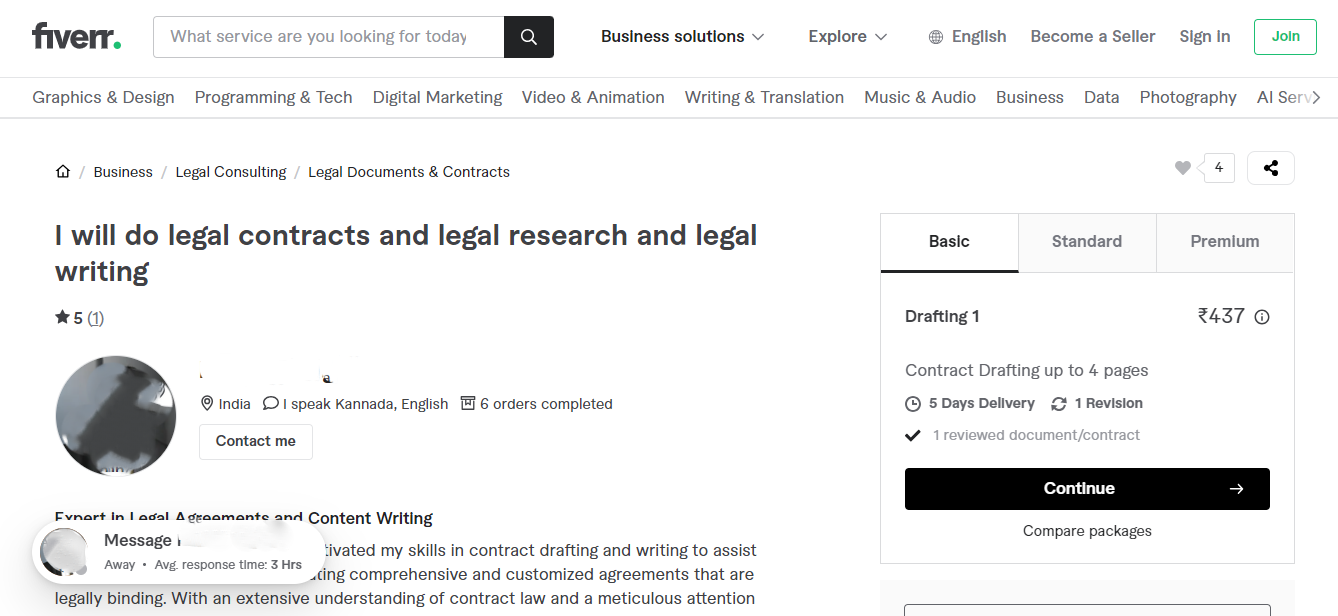










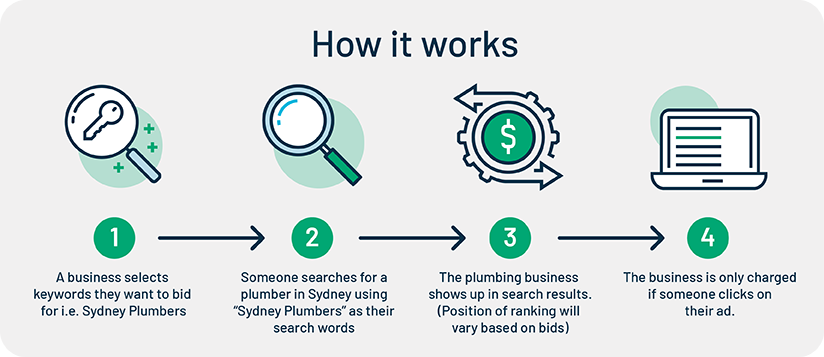



 Allow notifications





