Download Now
Home Blog Page 1451

Adultery As A Ground For Divorce Under Indian Laws

2

Adultery may be defined as the act of a married person having sexual intercourse with a person of opposite gender other than the wife or husband of the person. Personal laws all around the world condemn adultery and it is considered as a ground for divorce or separation. Even the Hindu Shastric laws which made no provisions for divorce, condemned adultery in unequivocal terms. Under the present Indian personal laws, adultery is laid down as one of the grounds for divorce or judicial separation.

The essential ingredients in an offence of adultery are that:

  1. There should be an act of sexual intercourse outside the marriage, and
  2. That such intercourse should be voluntary.

There has been a disparity between various judgments of the Courts regarding the extent to which circumstantial evidence can be termed as proof of adultery. Such that in the case of Banchanidde v Kamladas, the Odisha High Court held that the circumstances should be so compelling that the only irresistible conclusion can be adultery.

However, in the case of Subbarma v. Saraswathi, the Madras Court held that where an unrelated person is found with the wife after midnight, the same may be inferred to be an adulterous act. The Courts were faced with a dilemma in the case of Maclenna v. Maclenna, where the question was raised as to whether Artificial Insemination Donor (AID) being used by the wife without taking the consent of the husband can be ruled as adultery.

The English Courts rightly ruled in favor of the wife stating that AID cannot amount to adultery on the part of the wife. The burden of proof, however, always lies on the petitioner to prove whether the act of adultery actual took place or not.

Hindu Laws On Adultery As A Ground For Divorce

Adultery as a ground for divorce in India has been defined under Section 13(1) of the Hindu Marriage Act, 1955, as the act of having voluntary sexual intercourse with a person who is not the spouse of the respondent. Hence, it becomes essential for the petitioner to prove that she/he was indeed married to the said respondent and that the respondent had voluntary sexual intercourse with a person other than him/her.

The spouse who wants to file a divorce petition has to substantiate the statements with proper evidence. The Indian Courts time and again had stressed that adultery has to be proven beyond reasonable doubt. However, in the recent years, the Supreme Court is seen to be deviating away from such notions stating that proving beyond reasonable doubt is essential in criminal cases and not in civil cases. In the case of Dastane v. Dastane, the apex court held that there certainly is no necessity of the presence of proof beyond reasonable doubt where personal relationships are involved especially those between a husband and wife.

In the case of Ammini E.J. v. Union of India, the Kerala High Court held that the husband is in a favorable position with respect to it being a ground for divorce because the wife has to prove adultery along with some other aggravating circumstances and hence it is discriminatory towards the wife. The Court also ruled that the wife may file for divorce only on the grounds of adultery, without any other qualifying offence such as cruelty or desertion.

Before the enactment of the Marriage Laws, 1976, adultery was treated as a conduct of grave immorality. It was a thing of grave shame irrespective of the gender, however it wasn’t a ground for divorce. After the 1976 Amendment, the grounds for judicial separation and divorce are the same and it is a mark of great development in the Hindu Personal Laws.

Section 10 of the Hindu Marriage Act, 1995 defines adultery as a ground for judicial separation. The provision states that the parties to a marriage may file for a decree of judicial separation under any of the grounds mentioned in Section 13(1), irrespective of the marriage being solemnized after or before the commencement of this act.

In the case of Sulekha Bairagi v. Prof. Kamala Kanta Bairagi, both Section 10 and Section 13 of the Hindu Marriage Act. According to the husband, she used to visit the house of the co-respondent and was even found in a compromising situation with him and that she used to neglect her duties. In this case, the decision was taken in the favor of the petitioner on merit of the evidence provided, and judicial separation was granted. The above cases are mainly testament to the fact that cases such as these are indeed taken on a case to case basis, and decided on the merits of that particular case.

Muslim Laws On Adultery As A Ground For Divorce

Adultery, according to the Quran, is a severely punishable offence and is prescribed to be dealt with by way of stoning to death. But this is not the case in most democracies where the constitutions call for humane treatment of its citizens. The husband has every right to divorce his wife if he is capable of proving that his wife had an adulterous relationship. But the wife may only in circumstances of false accusations can either ask her husband to retract the accusations or divorce him under lian. However, if the husband retracts the claims and apologizes for the same in a prescribed manner, the wife’s claims subsists. In the case of Tufail Ahmad v. Jamila Khatun, the Allahabad Court has further explained that only such wives who are not guilty of adultery may use this as a ground for divorce.

The Dissolution of Muslim Marriages Act, 1939 provides little reprise as it states in Section 2(viii)(b) that where a man leads an infamous life or associates himself with women of evil repute, she can sue him on grounds of cruelty. This is as close as the prevalent Muslim law goes to the concept of adultery.

In the case of Zaffar Hussain v. Ummat-ur-Rahman, the wife of the plaintiff alleged that her husband had stated before several persons that she had illicit intercourse with her brother. The court held that if a Muslim woman is falsely accused of adultery and she can claim divorce on that ground. But at the same time the wife cannot file a divorce under Islam if the allegation of adultery is true and suit can be filed in case of an irregular marriage.

Christian Laws On Adultery As A Ground For Divorce

The law regarding divorce and judicial separation among Christians in India is contained in the Indian Divorce Act, 1869 and the Indian Christian Marriages Act, 1872. Section 22 of the Indian Divorce Act bars divorce mensa et toro, however, it makes provisions for a decree of judicial separation on the grounds of adultery.

The procedure for divorce in India under the Indian Christian Marriage Act is dual in nature. Firstly, the couple has to obtain an annulment from the Church and then they may approach court for a decree of divorce. However, under the Act the wife had to prove the presence of other grounds along with adultery such as such as, cruelty, change in religion, insanity, etc., whereas the husband only had to prove that his wife had indulged in an adulterous Act. Section 11 of the Act, however, provides that the adulterer has to be pleaded as co-respondent.  

The Bombay High Court in the case of Pragati Varghese vs. Cyril George Varghese, commented upon this and stating that this puts unnecessary pressure on the wife and is blatantly unfair, and allowed adultery as an independent ground. In the case of Ammini E.J. v. Union of India, the Kerala High Court held that a Christian woman having to prove the offence of cruelty or desertion coupled with adultery is violative of Section 21 of the Constitution of India.

The provisions for Judicial separation under the Indian Divorce Act allows Christian women to file judicial separation on the grounds of adultery. Section 22 of the Indian Divorce Act bars a decree of divorce, but states that a judicial separation may be obtained by both the husband and the wife on the grounds of adultery.

Special Marriage Act

The Special Marriage Act, 1954 recognizes adultery and states that if the respondent has after the solemnization of the marriage, had voluntary sexual intercourse with any person other than his/her spouse, it is a valid ground for divorce.

The Act has recognized adultery itself as an offence and no additional offence has to be proved in order to obtain a decree of divorce or judicial separation. The present position on the concept of burden of proof has also been relaxed under the Special Marriages Act, 1954.

In the case of Sari v. Kalyan, it was stated that adultery may be proven by a preponderance of evidence and need not be proved beyond reasonable doubt as prima facie evidence as to the act of adultery may not be present and circumstantial evidence will have to suffice.

Conclusion

Adultery has always been discouraged throughout the history of mankind. In India, till 1976, a petition for divorce on the grounds of adultery could be filed only when the spouse was “living in adultery”, but now a petition can be filed on the grounds of adultery even when there has been only on instance of voluntary sexual intercourse outside the marriage.

The Courts have taken a serious view of adultery and granted contested divorce in India taking into consideration various social conditions and circumstances of the party seeking divorce including the presence of children. Delay in filing of petition especially when there are children involved is taken lightly.

There is no steadfast rule that can be commonly used for all adultery-related cases. The court has the discretion to treat each case on its own merits and demerits. These might include children, society, familial considerations and also the economic status of the parties.

Download Now

Cryptocurrency: Japan’s Approach

0
Japan
Image Source: https://248qms3nhmvl15d4ne1i4pxl-wpengine.netdna-ssl.com/wp-content/uploads/2017/07/Bitcoin-bitcoins-yen-760x400.jpg

In this article, Joel Mathew, a student of School of Law, UPES discusses Japan’s approach to cryptocurrency`

Introduction

The last couple of years have made every major bank, accounting firm and even the governments of several countries research about the term Cryptocurrency. This was all because of the brain of one man Satoshi Nakamoto, who invented Bitcoin the largest cryptocurrency in the world right now with 1 bitcoin amounting to USD 7,658.97 that makes it INR 5,12,652.82, in the year 2008 and according to a report, there are 1565 and growing cryptocurrencies in the world as of 10th April 2018.

Bitcoin became a hot topic in the year 2014 due to the Mt Gox money laundering case. The leading Bitcoin exchange of the world situated in Japan was shut down and reported itself to be hacked as it lost around 8,50,000 bitcoins of customers and companies and at that time 1 bitcoin was almost equal to USD 450. Hence, money laundering and terrorism funding through VC (Virtual Currency) (cryptocurrency) was the major issue with which the governments and central banks of different countries had to deal with.

Another term which crept up along with bitcoin was Blockchain, it is nothing but a digital ledger in which transactions made in bitcoin or in other cryptocurrencies are recorded.

The Bank for International Settlements had stated that bitcoin could reduce the money issuance power of the central banks. Hence not only bitcoin but all the other cryptocurrencies have become a point to ponder upon for the government and central banks of several nations.

Japan’s Scenario

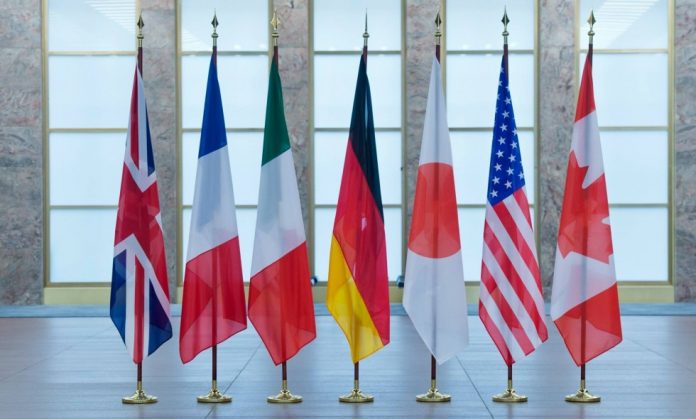
The Financial Action Task Force (FATF) at the 41st G7 summit at Elmau, Germany on the declaration made by the world leaders published guidelines that required virtual currency exchange to be registered and/or licensed. Following this, Japan implemented changes through proposing amendments in the Payment Services act and Prevention of Transfer of Criminal Proceeds Act.

As other countries in the world, Japan was also affected by the sudden flood of cryptocurrencies in the economy but Japan has proved itself to be a step ahead meanwhile all the other countries were dithered over the cryptocurrency. In the month of November 2016, it made bitcoin its legal payment method. More than 4000 stores in the country started accepting payment in bitcoins. This has lead to the establishment of ATMs that exchange fiat for bitcoin. People can now even pay their utility bills by bitcoin and for this, they are given a special discount

Post Year 2014

After the tragedy in the year 2014 (MTGOX collapse) the government of Japanese lawmakers amended the Payment Services act in order to prevent what happened in MTGOX.

Amendments in the Payment Services Act

Before this amendment, the laws regarding the virtual currency was not entirely clear. The main aim of the Financial Service Agency (FSA) was to make sure that through this amendment there is

  1. Proper registration of VC Exchange business in Japan.
  2. Prevention of the use of VCs for funding terrorist activities.
  3. Prevention of the interest of the customers.
  4. Prevention of money laundering.
Definition of Virtual Currency

This amendment gave the virtual currency a proper legal definition in Japan which is,

  1. a certain value that may be used to pay compensation for purchasing or borrowing of goods, or receiving services, against unspecified persons, which may be purchased from or sold to unspecified persons and are transferable by an electronic data processing system, however, that such value is limited to those recorded on an electronic device, etc. in an electronic form, and does not include Japanese or foreign currencies, or assets denominated in such currencies or,
  2. a certain value that may be exchanged reciprocally for a certain value specified in the preceding item with an unspecified person and that may be transferred using an electronic data processing system.
Definition of VC Exchange Business

The proposed amendment defined VC Exchange business as conducting or undertaking the following acts as a business:

  1. Purchase and sale of VCs or exchange of VCs with other VCs.
  2. Acting as an agent for the acts listed in item (i) of the act.
  3. Management of customer’s cash or VCs in relation to the acts listed in item (i) of the act.
Registration of VC Exchange Services

The firm which wants to start a VC Exchange business in Japan is required to register itself as VC Exchanger with the Prime Minister. This applies to foreign companies as well provided they are permitted by their homeland laws to conduct VC Exchange. A VC Exchange service provider who does obtain such registration can not make solicitations to the Japanese people.

Requirements to be fulfilled by the applicant

There are several other requirements that a firm, who are applying under the amended act to start a VC Exchange Business, needs to fulfil.

  1. The firm should have a status of Japanese joint-stock company i.e. a joint stock company under the Japanese law.
  2. It should have at least JPY 10 million capital and positive net assets.
  3. The form should have an internal body or a system to make sure that the company after starting such business complies with the relevant rules as stated in the act.
  4. In the case of the foreign VC exchange service provider, the company should have a representative person in Japan i.e. the person should be domiciled in Japan.
Regulations on the business of the VC Exchange Service Provider

For the prevention of investors and customers, the act states that the company while conducting business should make sure the following

  1. Safe administration of customer information
  2. Lawful use of undisclosed information which includes the sensitive data of the customers.
  3. Customers cash should be segregated from that of the company i.e. a proper account in the name of the customer so that it is identifiable that the account belongs to so and so customer.
  4. A Virtual Currency Exchange Service Provider in the event of any dispute with customers is required to seek a resolution to such dispute through financial ADR proceedings.
Supervision over the VC Exchange Service Provider
  1. The Company is required to prepare and maintain books and records regarding the Vc exchange services
  2. To prepare a report on the VC Exchange Services for each business year and submit the same to the Prime Minister accompanied by financial documents and certified by public accountant’s or audit firm’s audit report on such document.
  3. Power of the Prime Minister- He may order the VC Exchange Service Provider to submit reports or materials or have officials enter its office or other facilities and if the VC Exchange Service Provider does not fulfill the above-mentioned requirements for the registration and has obtained the registration through fraudulent means or has violated the Act or an order issued by the in the pursuance of the act the PM may revoke the registration or order the VC Exchange Service Provider to suspend all or part of its services for a specified period of time but the said time will not be more than six months.
Penal Provisions applicable to The VC Exchange Service Providers

Japan not only made the registration process full of formalities but has also made sure if such rules and formalities are not complied with then in that case proper punishment is given as

  1. There is an imprisonment for up to 3 years along with a work fine of up to JPY 3 million. For violating the registration rules, obtaining registration through fraudulent means and name lending.
  2. Whereas imprisonment for two years or a fine up to JPY 3 million or both for violating the obligation to segregate users money and virtual currency or violation of the order to suspend the VC Exchange Service.
  3. If the company fails to follow the orders given by the PM or fails to submit the report along with the attached documents for each business year the officials can be punished with an imprisonment for not more than one year or with a fine up to JPY 3 million or both.
  4. If a false statement has been given in the registration application or attached documents the there is a punished with an imprisonment of not more than six months or with a fine of JPY 5,000 or both.

All the imprisonment is along with required labour.

Amendments in the Prevention of Transfer of Criminal Proceeds regarding VC Act

In order to prevent or prohibit the use of VCs for terrorist activities

  1. The VC Exchange Service Providers are required to conduct KYC (know your customer) at the time of intake of the customer which includes the service provider should must verify the customer identification data, the purpose for which the transaction by the customer has been made and under some circumstances status of assets and income of the customer. The same should be used when the customer is making transactions which are to make sure the proper person making the transactions.
  2. Keep the records of the transactions made by the customer. This is where the blockchain plays an important role.
  3. The service provider must have customer identification records and maintain such record for seven years from the day on which the contract for specified transaction, etc terminates.
  4. The service provider has an obligation to report suspicious transactions to the relevant authority.
Blockchain regulations

It is the world’s leading software for management of digital assets. This acts as a ledger for the VCs making an account for every VC spent.

In Japan, the Japan cryptocurrency Association and Japan Blockchain Association have merged into a new self-regulatory organization following a request by the FSA (Financial Service Agency) to prevent coin hack.

After Amendment

Quoine, a company from Singapore were the first global cryptocurrency firm in the world to be officially licensed by the Japan Financial Services Agency. This rise in the exchanges helped some homegrown cryptocurrencies to develop. According to Forbes, Monocoin which is the homegrown digital currency of Japan, popular among the gamers is the world’s 35th largest cryptocurrency in terms of market cap.

Japan, as stated earlier in the month of November 2016 by another amendment in the Payment Services act, made bitcoin a legal form of payment. Flourishment of cryptocurrencies in Japan was not only due to the official stamp is given by the government but also due to the restrictive policy of the neighbouring countries as China and Korea had cracked down on cryptocurrencies and prohibited ICO.

Initial Coin Offering

ICO stands for Initial coin offering. It is done in order to collect/raise funds for a new cryptocurrency venture or in simple words it can be said that they are like shares which are brought in a new company by its investors. As in the case of Japan, we can see due to the virtual currency friendly regulations Japan has its native cryptocurrency namely Nem and Monocoin in the top 35 cryptocurrency in the terms of market cap.

Conclusion

According to a national daily of Japan, Japan Times, Japan has become a global leader in the development of cryptocurrency and due to this, the JPY amounts to 56.2 per cent of Bitcoin, or BTC, the most popular cryptocurrency, according to coinhills.com. Before this, the Chinese Yuan used to account for the largest until January 2017 but due to its restrictive policies, it went down. All credits for Japan’s position in the cryptocurrency market goes to its solid legal system which not only regularised the VC market but also gave it a boom.

This step of Japanese lawmakers is a boon or a bane for its economy will be answered with time but for the time being, JPY amounts to 56.2% of the BTC at the time when 1BTC is amounting to USD 7387.72. Seeing Japan countries like the USA are now regulating the VC Exchange business. The taxes on the BTC transactions are paying a large amount to the government of Japan (on every BTC investment USD 26 is received by the government). However, there is a risk of decline in the value of BTC if the transaction fee continues to be high.

Download Now

Understanding Court Martial

5

This article is written by Jeanie Mohanty, of KiiT School of Law, Bhubaneswar. This article describes court martial, its types, procedure and drawbacks.

The trial of a military personnel in military court  

The military personnel have different laws, rules and regulation for which they have different trials and procedure to impose punishment on the wrongdoer. The trial in the military court is known as a court martial. They have different court, different procedure and different members to execute the court martial other than the normal Indian judiciary.   

Court-martial is a procedure for trials of the military personnel for violating the military laws or making any military offences. It is similar to the civilians criminal trial proceedings but conducted in a military court. This is separately designed for the military personnel only (army, navy, marine, air force and at times coast guards), to try them for the violation of military discipline and other misconduct. There are twelve groups of people who can be trialled under court-martial or the military justice system namely the military personnel, members of a quasi-military organisation (public sectors working with the armed force), prisoner of military and war and even some specific civilians can be trialled under court martial despite the place of occurrence of the offence. Court-martial cannot trial civil proceedings.

When a person (in service) is accused to be an offender, the charges are investigated by his commander to find out the information regarding the offence, the culpability (severity) of the offence. Post-investigation the commander can let go of the accused, take action against him, give him non-judicial punishment, form charges against him or refer the case to the higher authority to form the charges. To try the charges of offences against a sailor and soldier, military or naval personnel are appointed by a commander.

The military personnel can be tried for all offences under the Army Act except for

  1. Rape,
  2. Murder and
  3. Culpable homicide not amounting murder of a civilian

These are to be tried by the civilian courts. But there are few exceptions to which the court-martial has a jurisdiction to try the case if the above-mentioned offences are committed in the following way;

  1. The course of employment or during an active service
  2. Any place outside India
  3. Any border or frontier post directed by the Central Government through notification.

Types of court martial

  • General court martial

This is for the most grievous offence, which is a felony in a civilian system. Before the trial under the general court-martial, a pretrial hearing is done known as ‘Article 32 hearing’ which is in a civilian system is done by grand juries to ensure that the charges are formed properly and it is supporting them. The trial can be heard by a military judge alone or a military judge and a panel of 5 members.

  • Only capital cases need a full agreement of all the deciding panel to pass the sentence.
  • Cases in which the punishment awarded is confinement for more than 10 years requires a majority of three-fourths to pass the sentence.
  • Any lesser crime needs two-thirds of a majority to convict the accused.
  • General court-martial can pass any punishment including death or which is prescribed in the court-martial manual and it should be according to the seriousness of the crime or offence.
  • District court martial  

A district court-martial can be initiated by any officer who has the power to initiate a general court-martial or any other authority who has been given the power to do so, as per the warrant prescribes issued under the Chief of Naval Staff. It must have an officer not less than a substantive rank of Lieutenant Commander as president and have the power to try any person who is subjected to the prescribed act of lieutenant rank or below or sailor. The deciding panel can pass any sentence under this but not exceeding the given authority against an officer for forfeiture of seniority in rank or forfeiture of time for promotion for a period and in case of a sailor only short imprisonment.  

  • Summary general court martial

A summary general court-martial can be initiated by any officer who has the power to initiate a general court-martial or any other authority who has been given the power to do so in his behalf, as per the direction in the warrant issued under the Chief of Naval Staff. For an active service, the summary general court-martial will be called by an officer commanding a flotilla or a squadron who should not be below the substantive rank of Commander. The officer can do so only when he feels that it is not possible to try the accused under general or district court-martial. A summary general court must have an officer not less than a substantive rank of Lieutenant Commander as president and have the power to try any person who is subjected to the prescribed Act and for any offence which is punishable under the act. The deciding panel can pass any sentence which is authorised.

  • Summary court martial

When the service holders are charged with minor offences it is reviewed by the summary court-martial, but cases of officers, cadets, midshipmen are not reviewed by summary court-martial. It is not reviewed by any military judge or attorney general rather by a commissioned officer who may not be a lawyer. The accused can deny for summary court-martial and request for any other type of court-martial. The accused can also appoint a civilian attorney general at his own expense to represent him. Except for Air Force, no other military personnel get a free representation of a military attorney. If the accused is found guilty, then he can be awarded a maximum punishment of 30 days confinement,  give up two third of his salary for a month or he may be decreased to the lowest grade salary.

Eligibility to conduct the trial under court martial

  1. The no. of members must be five or more but less than nine.
  2. All members must be a knowledge of the naval law.
  3. All members must be of a rank of lieutenant and above.
  4. All members must be of 21 years and above.

The Procedure of court martial  

  • Initiating charges

When any person in service violates the rules and laws of the military, he is brought to his commanding officer for clarification. If the commanding officer has sufficient reasons to believe that the service person has violated the prescribed law then he may apprehend and confine the accused up to 72 hours while he decides how to proceed, it is a pretrial confinement. The commanding officer may also choose not to proceed with any court-martial against the accused instead impose any non-judicial punishment. If the serviceman (accused) feel that the punishment is unjust he can appeal.

If the commanding officer chooses to proceed with court-martial then he has to present the accused or proceed with the procedure within 120 days of apprehension. A court-martial can also be called by the President, Secretary of defence or the Secretary of the military branch (to which the accused belongs). The authority who orders for the court-martial is known as the convening authority. The court-martial begins with reading out the charges to the accused in the presence of the commanding officer and a third officer (who is supposed to be neutral to the case), this is known as ‘Preferring the charges’. Both the parties are assigned with a military judge and legal representative to represent them during the trial. Both the parties, that is the accused and the prosecution has the privilege to investigate the facts of the case, collect information and documents then submit them to the court as evidence of their argument. The investigation may continue during any stage of the court-martial, unlike in civilian trial system.

  • Entering pleas

After initiating and preferring the charges, the accused is given a chance to give statements in support of him or against the allegations on him to prove his innocence. If the accused pleads guilty then the military judge will accept that only after he makes sure that the accused have properly understood the charges against him and the consequences. Provided the prosecution is not seeking the death penalty. Once the guilty plea is accepted by the military judge, the accused will be sentenced.

  • Proceeding to trial

If the accused is proved to be not guilty of the offence, then a panel will be chosen by the convening authority to decide the facts, mostly they are commissioned officers of a different unit and of a higher rank than the accused. The accused may also make a request for an enlisted member to join the panel. The panel takes an oath before the trial begins that their decision will be free from any kind of biasness and impartiality or any kind of influence from their commanding officers. Similar to civilian criminal trial, each side is given an opportunity to present their argument, witness and cross-examination of witnesses. The military judge asks the panel to apply the law and come to a decision. If the accused is declared guilty then either the military judge or the panel will pass the sentence according to the sentencing guideline in the manual.  

Appeals

  • In Summary court-martial, if the accused is not satisfied with the judgement or finds it to be unjust then he may appeal to the judge advocate to look into the legal and factual findings and the correctness of the sentence or if he refuses then the accused can appeal to the convening authority, if they also disapprove then the accuse may send the case to judge advocate general to review the case.  
  • In a General court-martial, when the sentence includes the death penalty, dismissal from the service or confinement for at least one year the accused can appeal in the Branch’s Court of Criminal Appeals. To review the fact, the correctness of the sentence and legal errors. When a sentence includes death penalty it is mandatory for the accused to appeal. If the branch court of criminal accepts the prevailing sentence then the accused can appeal in the Court of Appeals for Armed Forces and after that in the supreme court. The power to review the appeals is discretionary.

Territorial jurisdiction

Armed Forces Tribunal 2007, was passed by the parliament to empower the Armed Forces Tribunal to resolve the disputes and complaints of the people who are subjected to Army Act, 1950, The Navy Act, 1957 and The Air Force Act,1950. It also allowed this tribunal to provide appeals in case of miscarriage of justice.

Chandigarh and Lucknow Regional Benches have three benches each, whereas other Regional Bench has single bench each consisting of a Judicial member and an Administrative Member. A Judicial member is a retired High Court Judges and an Administrative member is a retired Armed Forces member who must have been in a rank of Major General or above that for three years and more. The tribunal proceeding will be in English and mostly follows the procedure practised in High Courts of India.

Sl. No.

Bench

States

1. Principal Bench New Delhi  
2. Chandigarh Bench Punjab, Haryana, J&K, Himachal Pradesh and U.T of Chandigarh
3. Lucknow Bench U.P., U.K. Chattisgarh and M.P.
4. Kolkata Bench West Bengal, Bihar, Jharkhand, Orissa and U.T. of Andaman and Nicobar Islands
5. Guwahati Bench N.E. Region
6. Mumbai Bench Maharashtra and Gujarat
7. Kochi Bench Kerala, Karnataka and Lakshadweep
8. Chennai Bench Tamil Nadu, Andhra Pradesh and U.T. of Pondicherry
9. Jaipur Bench Rajasthan

Rights of the accused

  1. The accused have the right to be informed of the charges against him.
  2. The accused have the right to be silent if he thinks that saying so will put him in trouble or held him guilty. No person can force him to appear guilty or ask him to prove himself guilty against his will.
  3. The accused have the right to defence counsel in case of General court-martial when the accused may face bad conduct discharge.  
  4. The accused have the right to protection against double jeopardy, that means the accused cannot be tried twice for the same offence. But the accused may be court-martialed and can again be tried under the civilian court for the same.

Drawbacks of court martial

  1. When a person in service commits murder or rape against a civilian under the specific circumstance the court-martial has the jurisdiction to try the case. At times the Commanding Officer or any higher authority impose very minimal punishment as compared to the offence up to the rank of Major.
  2. The accused has no legal aid during the trial due to which he can not appeal against an unjust punishment. If a Commanding Officer is awarding an imprisonment up to 42 days to havildar, he has no right to appeal against this punishment.
  3. The members of a court-martial or the deciding panel of the trial are not legally qualified nor trained regarding the sentencing of an offence.
  4. In summary general court-martial the former accused can be denied from a formal charge and legal assistance.
  5. The higher authorities conducting court-martial have unrestricted power to impose, cancel or decrease the punishment of the accused even in civil matters.
  6. The Judge Advocate is assigned under the administrative and functional control who are the same members who have called and reviewed the court-martial proceeding. Therefore a Judge Advocate is not an individual head from whom we can expect much justice.
  7. The court-martial has no jurisdiction to trial related to leave, posting and transfer problems, which is the core issue of the military personnel.
  8. The Armed Forces Tribunal has no jurisdiction to trial civil contempt, there have been many cases where the military as well the government authority have failed to take any action against the decision of the tribunal.

Can you go to Supreme Court against a court martial order?

In a landmark judgement, Armed Force Tribunal (AFT) ordered the defence ministry to pay a compensation of Rs. 4 crores to an officer who was court-martialed 26 years ago, the AFT also asked the Army to pay Rs. 1 crore in Army central Welfare Fund within four months and to restore the service of lieutenant SS Chauhan. The petitioner was in the Sixth Rajput Battalion, posted in Srinagar when he was court-martialed on November 4, 1991, after being declared as deserted and mentally disturbed. The order was approved by the General Officer Commanding-in-Chief, Srinagar then.

Chauhan was falsely dismissed on the ground of desertion and ill mental condition because during his service he had recovered 147 gold biscuits weighing 27.5kg in a search operation from a house in the presence of other soldiers. He handed over the biscuits to his senior officers but in return, the officers initiated a false case against him and dismissed him from service to make sure that the recovery of gold should be concealed from the government. Justice DP Singh and Air Marshal Anil Chopra quashed the court-martial of Chauhan and asked the defence ministry to restore Chauhan’s service and provide him promotional avenue up to the stage of lieutenant colonel to compensate the arrear of salary, pension benefit and rank. Keeping in mind the mental pain, loss and humiliation suffered by Chauhan (Petitioner).

Download Now

How court cases have become harassment for litigants in India

0
commissions for local investigations
Image Source - https://daimamunene.wordpress.com/category/supreme-court/

In this article, Krati Bhardwaj of New Law College, Bharti Vidyapeeth, discusses how court cases are a form of harassment to the litigants.

Introduction

“Delayed Justice Prolonged Harassment”

Whenever we hear the word ‘court’, the image of justice and equality form an imprint on our mind. But, one thing that leaves an everlasting impression on our minds is the harassment which we come across from the date of filing till the ultimate disposition of cases. The level of harassment could be understood from the 1984 Sikh riots in which the final decision is still pending and those seeking justice have died after waiting as long as 34 years. The government needs to be efficient in delivering justice to the citizen, after all they are not immortal.

Reasons for such harassment to litigants

1) Delay in delivering justice

Delivering justice is the ultimate aim of our Indian justice system but this seems to be a far-fetched reality due to delay in justice to the aggrieved. The number of legal cases pending is very large in which majority of the cases are minor in nature which does not involve complex technical know-hows. When these minor issues take such a long time then it can be easily deduced, how long the cases of greater concern will take.

There are following reasons leading to delay in delivering justice:

  1. A number of formalities: Somewhere between seeking justice and delivering justice, a lot of formalities regarding rules and regulations have to be complied with, which consumes a lot of time of the litigants. The judges have a lackadaisical attitude towards the case proceedings, which is why the judgements are delayed, as the case is dragged on and it lasts longer than it should.

  2. Corruption: Before proceeding any further, a lot of formalities have to be fulfilled. The concerned authorities who know the weakness of the aggrieved party try to take an undue advantage. Corruption hinders the process of court hearings and appeals as the person who has been wrongfully detained will have to pay to get a release from such detention. Sometimes the real culprit finds an escape through the court process by easily bribing the officials. In both the cases, the rights of the litigants are violated. Trial magistrate come across a large pool of cases everyday which they are unable to physically attend so sometimes they delegate the task to people who either have no knowledge about it or who finds a way to make money out of it. For instance, if a judge is occupied with some case he may delegate the work to stenographer who may take a bribe just to sign a piece of paper.

  3. Slow: Whenever any influential personality is trapped in a lawsuit our judicial system becomes very quick in providing remedy but when it comes to issues related to rape, scams, loss of life and property of general public our system becomes as slow as snail. This raises the question of authenticity in our judicial system. Although a lot of efforts are being made to bring reforms in this area, the pace is still slow. The filing of written statement can cause inordinate delay ranging from six to twenty four months. Delay caused in interlocutory application can range from five months to five years. The multiple number of interlocutory applications filed are dealt by the court properly.

2) Stagnant Laws and Rules

Changes are not made overnight but the stagnant laws and rules are followed blindly for even decades. For a reform to happen, it even takes a life of an innocent or when some incident comes into the limelight and catches the attention of the public.

  • In the case of Adultery, there is a dent in the law which says only the man could be charged for adultery and woman are portrayed as a victim. There is a need to modify this law to give equal status to men and women.
  • Considerable changes were made in the Juvenile Justice Act after the Nirbhaya gang-rape case which triggered the soul of many people.
  • After Kathua rape case, many ordinances are being approved by the Union Cabinet in POCSO Act.

There is a lot of pressure on our judiciary, so everyone is reluctant to new changes. It is difficult to bring transformation not only in laws, rules, and regulations but also in the mindset of the law framers.

3) Agony of undertrials

The prisoners in Indian jail are kept under trial until their case reaches the final judgment. They spend more time in jail than their actual term, if the case would have been decided on time they wouldn’t have to. In the process of defending themselves, they suffer not only in terms of money but they are also harassed in the name of justice. The pain and agony suffered are immeasurable.

4) Backlogs of pending cases

There are 18 judges per 10 lakh people as compared to 50 judges recommended by the Law Commission in its 1987 report which the Chief Justice of India had recently cited seeking an increase in the number of judges. According to the data put out by the Law Ministry in public domain, the judge to population ratio in India stands at 17.86 judges per 10 lakh people. Not only fewer judges and lack of infrastructure has resulted in backlogs but also the dragging of unnecessary cases to the court have led to this situation. For example, cheques and traffic challans, should not be taken to court unless there is some criminal intent because they choke the system in such a way. An alternate dispute mechanism should be set up to resolve this dispute. If a person is making frequent payments of insurance premium then they could opt for Electronic Clearing Service (ECS) which is smarter way than dealing with the bouncing of cheque.

5) Understaffed Judiciary

The number of cases pending is endless and to top that, there is an understaffed judiciary. The numbers are startling: against a perceived requirement of about 50,000 judges, the country has a judicial strength of a mere 18,000, while more than three crore cases are pending in various courts. In the Supreme Court, the current pendency is 60,260 for a Bench consisting of 31 judges. As many as 434 posts of High Court judges are vacant, while a docket burden of 38.68 lakh cases is stretching available infrastructure and resources. Our judiciary is not only understaffed but also equipped with inexperienced judicial officers. These crises are the loopholes in the current system of judiciary.

6) Ignorance among people

If you are not aware of your rights how can you ask remedy for the violation of your rights? Before bringing any case into the notice of the court the aggrieved person usually refer it to their family, friends, relatives or panchayat of that area. When the person finds no solution to their problem then they turn up for legal aid. They have no idea of filing the complaint or registering FIR. Later on, in the name of formalities and law, the litigants are deprived of their rights.

7) Judges Absenteeism

When the litigant reaches on the date given by the judge but finds the judge to be absent then he has no option rather than going back disappointed. This absenteeism is common because of the judges being overburdened by the cases due to which they are not present, which leads to delay in justice. And the repercussions are faced by the litigants.

8) High fees charged by Advocates

These days it has become a common practice by various advocates to charge hefty fees from the clients while the client is still deprived of the justice. The advocate does not reveal the actual status of the case since the client does not have any sort of knowledge about law, the lawyers use certain complex legal terminologies and fool the client and make money out of that.

9) Language of the court

All the judicial proceeding including evidences, in the lower court are recorded in local language of the state. When the judges of the high courts are transferred which also includes judges from outside state. The transferee judge who is not familiar with the local language faces difficulty in dealing with cases which are recorded in vernacular. Translation of such records will not only involve a lot of time and efforts but also hinder the speedy disposal of cases. It applies to litigants also who are unable to understand English which is used in High Court and Supreme Court which poses a problem for litigants. They solely have to depend upon the lawyer for any kind of assistance. This consumes a lot of time and money of the litigant as well as court.

10) Complex process

Every case involves filing application, bail, review and many other procedures which makes one case equivalent to ten cases. There is always a scope for ‘review petition’ and the option of ‘review of review’ is the last resort available, as a last appeal to review petition. Sometimes the judges are not provided with steno/type writers so they have to write the judgment themselves which consumes a lot of time.

Reforms needed to stop such harassment

1) Use of technology

In order to speed up the process of resolving the dispute in courts, our government needs to enhance the technology for efficiency and clarity inside and outside courtrooms. These technologies should be available to everyone, even the non-lawyers i.e people who have interest in such case. Since it takes a long time in the disposal of any case and they involve a lot of formalities. The documents which are required for a particular case and the further steps involved should be available at a click.

2) Adjudicating mechanism

Since our judiciary is overburdened with cases so there is a need to set up another adjudicating mechanism by the name of Tribunal, Commission, ADR, or known by some other name. This will help in distributing the workload of courts to other adjudicatory bodies. There are matters which can be solved with the help of arbitration more speedily than going through unending court proceedings. The transparency in the working of the courts will increase with the reduced workload.

3) Restructuring the system

There is a need to restructure the system by simplifying various complicated procedures, for instance, that of appointment and removal of judges. Judges of Supreme/High Court can be removed only through the process of impeachment. The judge must be guilty of ‘misbehaviour or incapacity’ by both Rajya Sabha and Lok Sabha. The rules of impeachment are most tortuous.

4) Litigants need to be more vigilant

Instead of completely depending on the lawyers the litigants should become more vigilant towards their rights. Most of the people are unaware of their rights so they completely rely on the guidance of the lawyers. Blaming lawyers for the irresponsible behaviour would not bring the justice to the litigant. Sometimes it’s the negligence of the litigant himself which causes such harassment.

5) Adjudication must be made affordable

Article 39A, of Indian Constitution, provides equal justice and free legal aid. This article promotes the objective of legal aid to the needy litigants and helps in securing the justice. The process of courts are not only time consuming but also money consuming. Access to justice should not run in the name of money.

Information Technology: A new horizon to the judiciary

Judges, lawyers, clerks, and court administrators are the eminent people in the process of delivering justice and are generally well educated. Our education system keeps evolving over time and in this era of rat race we need legal administrators to be equipped with “legal tech”. Technology has a huge role to play in every sphere and no doubt the presence of technology in law will enhance the justice delivery process and make it more efficient. Our legal administrators are quite reluctant to learn about computer technology. Once they are acquainted with the technology they will find it smooth to handle the work. The use of technology will optimize the work and help in saving the time and money of not only the litigants but also that of judges and lawyers.

IT will also help in the following areas :

  1. Recording court proceedings
  2. Storage of data for the administrative purpose
  3. Easy retrieval of information
  4. Easy access to law
  5. Cases can be managed easily
  6. Transparency in the system

E-court Initiative

Many judicial officers, senior officers from DoJ, NIC and central project coordinator who were connected with the e-court project participated in the conference held in New Delhi on 2nd and 3rd December, by the e-committee of the Supreme Court of India in association with the Department of Justice (DoJ) of the Government of India. The project was undertaken for the development of district and subordinate courts of the country. The major objective of e-courts Mission, Mode Project (Phase I 2010-15; Phase II 2015-19) is to make judicial system equipped with ICT by providing

  • modern hardware and connectivity
  • Facility of video conferencing (VC) and recording of witness through Video Conferencing
  • E-payment, electronic filing and use of other citizen-centric facilities
  • automation of work process in all courts
  • electronic movement of records from taluka/trial to appeal courts

India’s first e-court was established in Hyderabad High Court which uses digitized case records and reduce the use of paper considerably. The presiding judge gets an electronic case list to make digital notings on a computer.

Efforts to be applauded

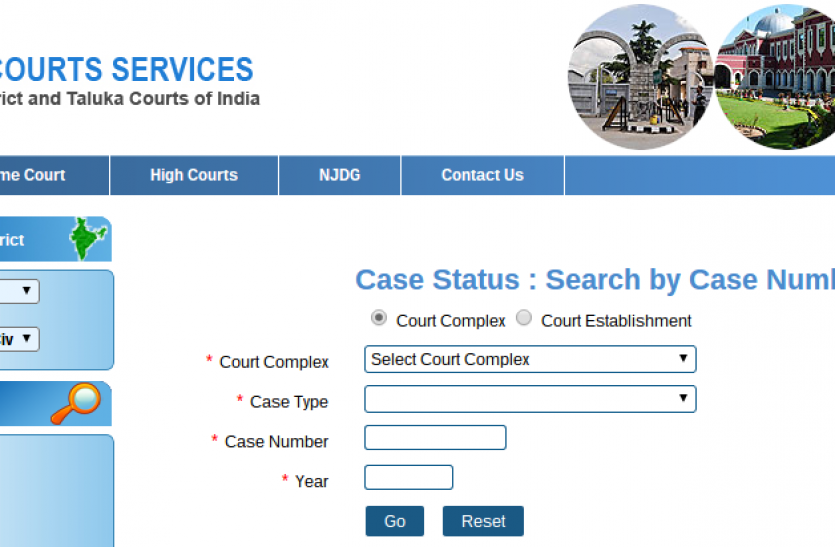
  • The mobile application (e-courts services) launched was not only helpful to the advocates, institution, organizations but common litigants have also availed the benefit of the app. This app can be easily downloaded from the Google play store or from the link given here.

  • With the help of Automated Mailing Service, the development of all the cases relating to a particular litigant and lawyer can be communicated with the single mail. Mails are being sent to the registered email id of the litigant and lawyer regarding the case status, filing registration scrutiny, next dates, cause list services.
  • SMS push service which has been made operational is more used by people in remote areas where there is lack of internet facilities. In order to know the case status, a person can send CNR no. to 9766899899.
  • Lately, Madras High Court introduced the e-court fee payment facility thus becoming first in south India and eighth in the country to introduce such facility.
  • The first “Women’s Court” was launched in Bengal to address the atrocities faced by women. By providing a safe environment to resolve the grievances of the women, the issues related to women’s marital affair, family problems, female trafficking and other such issues are tackled by the court.

NGOs Offering Legal Aid

Name and Address Area of Operation Contact No. Email-ID
Lex Alliance Foundation

A-414, Defence Colony, New Delhi – 110024, India

Child education, CSR activities, Women empowerment,Senior citizen care, legal aid to poor, rural area development 011-46543435

011-46543436

[email protected]
CLAP Legal Service Institute

Bimala Devi Memorial Building,

Plot No. 367, Sector-6,

Markat Nagar,

Cuttack – 753014,

Orissa, India

Accomplishment of Human Rights with Dignity, Democratic Development and Environmental Justice. 91-671-2363980/2365680 [email protected]
The NAZ Foundation

A-86, East of Kailash, 110065 New Delhi

HIV/AIDS and sexual health issues 91 11 41325042

91 11 40793157

[email protected]
Poor Man’s Legal Aid

F.H – 19, Swamiji Pally, Jyangra South Field, Baguihati, Kolkata- 700059, West Bengal, India

Help the depressed and poor segments of our society 09674643315 [email protected]


Conclusion

The much-abused rights of the litigants need to be reviewed so that the harassment caused to them can be reduced and there can be speedy redressal of their problems. Special courts and an expert committee should be set up to address the problem faced by the litigants. The problems faced are unending with the rapid change in the society. Governments should come up with latest ideas and initiatives as the justice coming after decades have no meaning left to it.

References

Download Now

Penal powers under the SEBI Act

1
SEBI Intermediaries
Image Source: https://bit.ly/2pKJ2fq

This article is written by Aritro Gon.

Introduction

The Finance Act 2018,[1] brought into effect, significant amendments to laws applicable to the securities market in India including major changes to the Securities and Exchange Board of India Act, 1992 (SEBI Act), the Securities Contract Regulation Act, 1956 (SCRA) and the Depositories Act, 1996. These amendments were mostly focused on increasing the penal powers of the Securities and Exchange Board of India (SEBI) with intent to provide an effective tool in the hands of the regulator to deter the market players from violating the law. However bonafide this intent may seem, it needs a fair assessment as to whether the increased powers are justified or are excessive in nature.

Penal powers under the SEBI Act

Penal powers are a necessity for the market regulators to effectively control and regulate the market. However, the scope and limits of these powers have been the subject of debate across jurisdictions. If the powers are too less, the regulator might prove to be ineffective. On the other hand, if the powers are excessive, the market players suffer as a result of unreasonable sanctions. Hence, there is a need to strike a balance between the regulatory powers and provide a reasonable breathing space for the market players.

In the year 2000, as an aftermath of the famous Harshad Mehta case, the Dhanuka Committee recommended vast powers to be conferred upon SEBI. It is pertinent to note, that the Committee itself warned against the abuse of such powers distinctively. It stated:[2]

“SEBI and its officers are often called upon to act both as Regulators and adjudicators of the first instance and consequently there is a considerable scope of mixing up of these rules and for enthusiastic interpretation and enforcement.”

It is important to note here, that the triggers to penal powers of SEBI, necessarily rest upon statutory violations. The Supreme Court of India, in the case of Swedish Match AB vs. SEBI,[3] held:“… the penalty is attracted as soon as the contravention of the statutory obligation as contemplated by the Act and the Regulation is established and hence the intention of the parties committing such violation becomes wholly irrelevant.

Power Of SEBI To Levy Penalties

SEBI is empowered to levy penalties after adjudication of the matter if it finds that any such statutory contravention has occurred. SEBI, in general practice, assesses factual circumstances and establishes whether or not an offense has been made by the assessee, and levies the penalty stipulated by the Act. However, it is argued, that the purpose of any adjudicatory proceeding, should not be a mere assessment of facts but must also be a determination of the gravity of the offense and imposing a penalty that is proportionate to the same. SEBI has time and again, imposed penalties at a flat rate in a mechanical, “automatic” manner.[4]

Hence we see, that even prior to the recent amendments by the Finance Act 2018, the unreasonable application and use of punitive powers by SEBI was criticized heavily. This provides for more reason to assess whether the increase in such powers, as discussed hereinbelow, is reasonable or not.

It is pertinent to note here that Section 179 and 180 of the Finance Act 2018 amended Section 11 and 11B of the SEBI Act respectively, thereby conferring the Board with the power to levy penalties. Prior to this amendment, Whole Time Members of the Board had been passing directions which were only remedial and preventive in nature and the imposition of penalties used to be the job of Adjudicating Officers, for which separate proceedings were conducted. The amendment seeks to allow Whole Time Member to impose penalties as well as remedial and preventive directions. It is submitted that this is a welcome step, as it will reduce multiplicity proceedings and effective use of resources.[5] However, it is pertinent to note here, that the amendment does not necessitate the penal proceedings to be carried out by the Board. Hence, the lacunae relating to multiplicity still exists for cases where the Board chooses not to pass any punitive direction. Whether SEBI still has the power to carry out separate adjudicatory proceedings in such cases for the imposition of penalty? The question remains unanswered.

Further, the Finance Act 2018 inserted Section 23GA to SCRA, which provides:

“Where a stock exchange or a clearing corporation fails to conduct its business with its members or any issuer or its agent or any person associated with the securities markets in a manner not in accordance with the rules or regulations and directions made by the Securities and Exchange Board of India, the stock exchange or the clearing corporations shall be liable to penalty which shall not be less than five crore rupees but which may extend to twenty-five crore rupees or three times the amount of gains made out of such failure, whichever is higher.”

By virtue of this provision, SEBI has been empowered to impose a penalty on Stock Exchanges and Clearing Corporations on failures to conduct its business with its members or any issuer or its agent or any person associated with the securities markets.[6] This amendment has been brought with an aim to serve as a deterrent towards violation law. However, it is submitted that the amendment fails to clarify the extent of the discretion that SEBI may have while imposing penalties under the section for the reason discussed hereinbelow.

The Supreme Court of India, in recent times, has been unclear as far as the discretion of SEBI with respect to punitive powers is concerned. The Supreme Court, in SEBI v. Roofit Industries,[7]  held that the Assessing Officer has no the discretion in deciding the quantum of penalty to be imposed thereby necessitating the strict application of the penalty as stipulated by the applicable penal provision in the statute. The applicable penal provision in the instant case was Section 15A(a), which provided that if any person who is required under the SEBI Act to furnish any document, return or report to SEBI, failed to furnish the same, he shall be liable to pay a penalty of “one lakh rupees for each day during which such failure continues or one crore rupees, whichever is less.”

This strict application of penal provisions led to an absurd situation where SEBI imposed enormous penalties for simple disclosure violations, without any regard for the nature of the transaction or for the factors laid down in Section 15J[8] for deciding the quantum of penalty to be imposed.[9]

Another bench of the Supreme Court, in the matter of Siddharth Chaturvedi vs. SEBI,[10] differed with the interpretation of the Court in SEBI vs. Roofit Industries, and held that if the interpretation provided by the Supreme Court in Roofit Industries case is followed, “it would be very difficult for Section 15A to be construed as a reasonable provision, as it would then arbitrarily and disproportionately invade the appellants’ fundamental rights.” The Court hence opined that this question deserves to be considered by a larger bench.

The legislators, in order to bring clarity over the matter, brought an amendment in the SEBI Act as well as SCRA through Finance Act 2016, thereby adding an explanatory clause after Section 23J of the SCRA which read:

“For the removal of doubts, it is clarified that the power of an adjudicating officer to adjudicate the quantum of penalty under sections 23A to 23C shall be and shall always be deemed to have been exercised under the provisions of this section.”

Hence, as far as the present law stands, the Adjudicating Officer has the discretion to decide on the quantum of the penalty based on the factors provided under Section 23J[11] of SCRA, and strict application of penal amount as stipulated under sections 23A to 23C is not required if the said factors are satisfied.

However, it is interesting to note that the Finance Act 2018, fails to amend the explanation under Section 23J to include the newly added Section 23 GA, which in effect, is also a penal provision. Hence, it is submitted, that this failure results in a huge ambiguity as far as the discretionary power of the Board in levying penalty under Section 23 GA is concerned. It is further submitted, that this failure might lead to a strict interpretation of the said Section, which might result in excessive penalties being imposed on Stock Exchanges and Clearing Corporations, even for small violations which might not reasonably warrant for such huge sanctions.

For instance, according to Section 43 of the Securities Contracts (Regulation) (Stock Exchanges And Clearing Corporations) Regulations, 2012, every recognized stock exchange and clearing corporation has to furnish to the Board, its annual financial statements and returns to the Board by the thirtieth of September of every year. This filing obligation lies on the Stock Exchanges and Clearing Corporations.

Further, Section 23J of the SCRA (which, in its present form is not applicable to Section 23GA), provides for the following factors to be kept in mind by the Adjudicating Officer while deciding the quantum of penalty:

  1. the amount of disproportionate gain or unfair advantage, wherever quantifiable, made as a result of the default;
  2. the amount of loss caused to an investor or group of investors as a result of the default;
  3. the repetitive nature of the default.

Now, for example, a Clearing Corporation “A” fails to abide by this filing obligation for some administerial reasons, and the filing is made at a date after thirtieth September of the concerned year. Now, because the explanation appended under Section 23J does not cover Section 23 GA, the adjudicating officer will not be able to consider any bonafide delay on part of A. Whereas, he will be forced to strictly apply the penal provision under Section 23GA and impose a penalty of at least five crore rupees, as stipulated by the Section. Hence, essentially, the hands of the Adjudicating officer will be tied as far as exercising his reasonable the discretion is concerned.

Therefore, we see that the strict application of Section 23GA will result in SEBI being forced to impose enormous penalties for simple filing violations. This might prove to be highly unfair to Stock Exchanges and Clearing Corporations acting in a bonafide manner.

CONCLUSION

In conclusion, it is submitted that however, the power to impose penalties on Stock Exchanges and Clearing corporations, as envisaged under Section 23GA of the SCRA, is a welcome step as it brings more transparency and answerability over the said market players, the provision can be made more fair and reasonable if;

  1. The ambit of Section 23J is broadened to include Section 23GA, thereby giving the power to SEBI officers to impose proportionate penalties in case of violation and avoid strict and unfair application of the newly added penal provision. Or;
  2. A comprehensive list of violations under SCRA and the proportionate penalties are set by the legislature. An umbrella penal provision is unfair to the parties at the receiving end.

[1] Finance Act 2018, Notified on 29.03.2018, http://egazette.nic.in/writereaddata/2018/184302.pdf.

[2] Uma Lahore, How to Train your Dragon- the discretion in SEBI’s Penalty Orders, Lakshmikumaran and Sreedharan, (27.05.2018, 1320 hrs.), https://www.lakshmisri.com/News-and-Publications/Publications/Articles/Corporate/how-to-train-your-dragon-the the discretion-in-sebi-penalty-orders.

[3]Swedish Match AB vs. SEBI,122 CompCas 83 (SC) (2004).

[4] See DLF IPO Case, SAT Appeal No. 221 of 2014.

SAT criticized the abuse of punitive powers by SEBI as SEBI imposed an extraordinary penalty of 860 million on the assessee along with a 3-year ban from the market under Section 15HA of the SEBI Act.

[5] Finance bill, 2018 proposes significant Amendments in Securities Laws, Corporate Professionals, (27.05.2018, 1450 hrs.), http://corporateprofessionals.com/finance-bill-2018-proposes-significant-amendments-in-securities-laws.

[6] Ibid.

[7] SEBI v. Roofit Industries, 2016 (12) SCC 125.

[8]Note: The language of Section 15J of the SEBI Act is exactly the same as Section 23J of the SCRA.

[9] Shashank Prabhakar, Finance Act amendments to the SEBI Act and the SCRA: Parliament Settles the Roofit Question, Bar, and Bench, (27.05.18, 1900 hrs.), https://barandbench.com/finance-act-amendments-sebi-act-scra-parliament-settles-roofit-question/.

[10]Siddharth Chaturvedi vs. Sebi, (2016) 135 SCL 106.

[11] Note: The language of Section 23J of the SCRA is exactly the same as Section 15J of the SEBI Act. The language of Sections 23A to 23C which lay down the penalties for offenses committed thereunder are exactly similar to the language of Sections 15A(a).

Download Now

All you need to know about The Law Commission of India

0
personal loan default
Image Source - https://sarkarijobnews.com/allahabad-high-court-recruitment/

In this article, Jeanie Mohanty, of KIIT School of Law has described about the Law Commission of India and its various reports.

Introduction

Law Commission of India is an executive body. It is established through an order of the Government of India. Its core function is to reform laws, comprises of legal experts assigned by the government to take good care of the laws, and create maximum peace, security and justice in the society. It also acts as an advisory body to the Ministry of Law and Justice. The tenure of each Law Commission is five years.  

Current Law Commission of India, 2018; 21st Law Commission

Formation 10.03.2016
Type Agency of Government of India
Legal status Ad-hoc and term based
Purpose Legal reforms in India
Location New Delhi
Chairman Justice Balbir Singh Chauhan
Full- time member Justice Ravi R. Tripathy and S. Siva Kumar
Part-time members Satya Pal Jain, Bimal N. Patel and Abhay Bharadwaj

How does the commission function

The commission consists of many staff among whom around twelve staffs are researchers at a different rank with a different experience. A smaller section of the group looks after the administration of the Commission’s operation. The commission meetings take place frequently and that is where the projects are initiated. Different issues are discussed, among which few important topics are chosen to work on. The required work which is to be done is identified and assigned to each member and the sources of data are also identified. Basically, an outline is formed for the research work regarding how to work and proceed. The commission meeting not only help in identification and working on the issue for research but also gives a unanimous decision of all the members and makes the work process easy.

Once the paper is ready it is circulated among all the required and interested group of people to get their views and comments on the paper along with the paper a questionnaire is also circulated to survey the reaction of the people on the same issue. The Law Commission always try to reach a wider section of people including professionals, academic institutes, and others for consultation while preparing the proposal for law reform. Workshop and seminars are also conducted to collect the critic comments and opinions regarding the planned reform.

Once all the data are collected Commission’s staff evaluates and organises the data in a chronological way for a proper introduction in the report which is prepared by either the Member Secretary or any Member or the Chairman of the Commission. After this, the proposed report is put forward in the Commission’s meeting and observed closely. Once the report and its summary are finalised, the Commision may proceed to prepare a draft regarding amendment or a new bill which may be attached to the report and the final report is forwarded to the Government.

The success rate of the commission always depends on their data collection, public view, and criticism. That is why the Commission always looks up to a wider section where the media plays a very important role in this. The Commission also welcomes the inputs and opinions from public or any person which is sent to the Member-Secretary.

Follow up

The Ministry of Law reviews the Law Commission report with the consultation of the concerned Administrative Ministries then submit it in the Parliament time to time. The reports are referred in courts, education or academics, public discussions and the Government departments act upon it according to the Government recommendation.

Development of Law Commision of India

Reforming laws is a continuous process its been in practice for long decades. In ancient times the custom and practices were the only laws prevailing in the society, gradually the codification of laws started and then the sanctions against the law. Earlier there was no uniformity in law, nor there was any check on the fairness of the decision passed. Therefore the law commission was set up with a motive to serve maximum justice to people and deliver fair and just decisions and bring more awareness about the laws. The Law Commision was constituted in the third decade of the nineteenth century by the Government to codify the branches of law and empowered it to recommend legislative reforms.  

Pre-independence

The First Law commission pre-independence was set up in 1834 under the Charter Act, 1833. The chairman of the commission was Lord Macaulay, within a period of fifty years the Indian Statute Book was enriched with a vast variety of legislation which then prevailed in English law but according to India’s condition.

There were four Law commission in India during the British Raj by the British Government

Established

Chairman

Members

Reports

First Pre-Independence Law Commission

1834 Lord Macaulay
  1. J M Macleod
  2. G.W. Anderson
  3. F. Millet
  1. Penal Code (2 May 1837)
  2. Lex Loci (role and authority of English Law in India) – 31 October 1840

Second Pre-Independence Law Commission

1853 Sir John Romilly
  1. Sir Lord Jervis
  2. Sir Edward Ryan
  3. R. Lowe
  4. J.M. Macleod
  5. C.H. Cameron
  6. T.E. Ellis
  1. Code of Civil Procedure and Law of Limitation (1859)
  2. Penal Code (1860)
  3. Code of Criminal Procedure (1861)

Third Pre-Independence Law Commission

1861 Sir John Romilly Initially

  1. Sir Edward Ryan
  2. R. Lowe
  3. J.M. Macleod
  4. Sir W. Erle
  5. Justice Wills

Subsequently, Sir W. Erle and Justice succeed by Sir W.M. James and J. Henderson. Later J. Henderson was replaced by Justice Lush.

  1. A code for Succession and Inheritance for Indians other than Hindus and Muslims (1865)
  2. Draft Contract Law (1866)
  3. Draft Negotiable Instruments Law (1867)
  4. Draft Evidence Law (1868)
  5. Revision of Code of Criminal Procedure (1870)
  6. Draft Transfer of Property Law (1870)
  7. Draft Code on Insurance (1871)

Fourth Pre-Independence Law Commission

1879 Dr. Whitley Stokes
  1. Sir Charles Turner
  2. Raymond West
  1. Code of Negotiable Instruments (1881)
  2. Code on Trusts Law (1882)
  3. Code on Transfer of Property and Easements (1882)
  4. Revised Code of Criminal Procedure (1882)
  5. Revised Code of Civil Procedure (1882)

Post-independence

Post-independence, the Indian Constitution gave a new direction to law reform towards the need for a democratic legal order with its Fundamental Rights and Directive Principles of State Policy in the society. According to Article 372, the pre-constitutional laws were to be followed until and unless they are repealed or amended. Though the parliament and others were already demanding Central Law Commission to revise and change the existing laws as per the changing society and the need of the country. The Government of India was in favour of the idea of setting up of such commission and it established the First Law Commission of India post independence in 1995, the Attorney-General of India then Mr. M.C.Setalvad became the Chairman of that Commission. Since then there have been total twenty-one Law Commissions in India post independence, each with a term of three years with different terms of reference.

Chairman
Report No.
Presented in
Title of Report

First Law Commission, 1955

Mr. M.C. Setalvad (First Attorney General of India) 1 1956 Liability of the State in Tort
2 1956 Parliamentary Legislation relating to Sales Tax
3 1956 Limitation Act, 1908
4 1956 On the proposal that High Courts should sit in Benches at different places in a State
5 1957 British Statutes Applicable to India
6 1957 Registration Act, 1908
7 1957 Partnership Act, 1932
8 1958 Sale of Goods Act, 1930
9 1958 Specific Relief Act, 1877
10 1958 Law of Acquisition and Requisitioning of Law
11 1958 Negotiable Instruments Act, 1881
12 1958 Income Tax Act, 1922
13 1958 Contract Act, 1872
14 1958 Reform of Judicial Administration

Second Law Commission, 1958

Justice T.V. Venkatarama Aiyar 15 1960 Law relating to Marriage and Divorce amongst Christians in India
16 1960 Official Trustees Act, 1913
17 1961 Report on Trusts Act, 1882
18 1961 Converts’ Marriage Dissolution Act, 1866
19 1961 The Administrator-General’s Act, 1913
20 1961 The Law of Hire-Purchase
21 1961 Marine Insurance
22 1961 Christian Marriage and Matrimonial Causes Bill,1961

Third Law Commission, 1961

Justice J.L. Kapur 23 1962 Law of Foreign Marriages
24 1962 The Commission of Inquiry Act, 1952
25 1963 Evidence of Officers about forged stamps, currency notes, etc. Section 509-A Cr.P.C. as proposed
26 1964 Insolvency Laws
27 1964 The Code of Civil Procedure, 1908
28 1964 The Indian Oaths Act, 1873

Fourth Law Commission, 1964

Justice J.L. Kapur 29 1967 Proposal to include certain Social and Economic Offences in the Indian Penal Code, 1860
30 1967 Section 5 of the Central Sales Tax Act, 1956, taxation by the States in the course of import
31 1967 Section 30(2) of the Indian Registration Act, 1908 – Extension to Delhi
32 1967 Section 9 of the Code of Criminal Procedure, 1898
33 1967 Section 44 of the Code of Criminal Procedure, 1898
34 1967 Indian Registration Act, 1908
35 1967 Capital Punishment
36 1967 Section 497, 498 and 499 of the Code of Criminal Procedure, 1898
37 1967 The Code of Criminal Procedure, 1898
38 1968 Indian Post Office Act, 1898

Fifth Law Commission, 1968

Mr. K.V.K. Sundaram 39 1968 Punishment for imprisonment for life under the Indian Penal Code
40 1969 Law relating to attendance of Prisoners in Courts
41 1969 The Code of Criminal Procedure, 1898
42 1971 Indian Penal Code
43 1971 Offences against the National Security
44 1971 The Appellate Jurisdiction of the Supreme Court in Civil Matters

Sixth Law Commission, 1971

Justice P.B. Gajendragadkar 45 1971 Civil Appeals to the Supreme Court on a Certificate of Fitness
46 1971 The Constitution (Twenty-Fifth Amendment) Bill, 1971
47 1972 The trial and punishment of Social and Economic Offences
48 1972 Some questions under the Code of Criminal Procedure Bill, 1970
49 1972 The proposal for inclusion of agricultural income in the total income
50 1972 The proposal to include persons connected with the Public examination within the definition of ‘Public Servant’
51 1972 Compensation of injuries caused by automobiles in hit-and-run cases
52 1972 Estate duty on property acquired after death
53 1972 Effect of the Pensions Act, 1871 on the right to sue for pensions of retired members of public service
54 1973 The Code of Civil Procedure, 1908
55 1973 Rate of Interest after decree and interest on costs under Section 34 and 35 of the Code of Civil Procedure, 1908  
56 1973 Statutory Provision as to the Notice of Suit other than Section 80, Code of Civil Procedure, 1908
57 1973 Benami Transactions
58 1974 Stature and Jurisdiction of the Higher Judiciary
59 1974 Hindu Marriage Act, 1955 and Special Marriage Act, 1954
60 1974 The General Clauses Act, 1897
61 1974 Certain problems with the power of the States to levy a tax on the sale of goods

Seventh Law commission, 1974

Justice P.B. Gajendragadkar 62 1974 Workmen’s Compensation Act, 1923
63 1975 The Interest Act, 1839
64 1975 The Suppression of Immoral Traffic in Women and Girls Act, 1956
65 1976 Recognition of Foreign Divorces
66 1976 Married Women’s Property Act, 1874
67 1977 The Indian Stamp Act, 1899
68 1977 The Power of Attorney Act, 1882
69 1977 The Indian Evidence Act, 1872
70 1977 The Transfer of Property Act, 1882

Eighth Law Commission, 1977

Justice H.R. Khanna 71 1978 Irretrievable breakdown of marriage as a ground for divorce
72 1978 Restriction on practice after being a permanent judge
73 1978 Criminal liability for failure by the husband to pay maintenance or permanent alimony granted to the wife
74 1978 Proposal to amend the Indian Evidence Act, 1872 so as to render Admissible certain statements made by witnesses before Commissions of Inquiry and other Statutory Authorities
75 1978 Disciplinary jurisdiction under the Advocates Act, 1961
76 1979 Arbitration Act, 1940
77 1979 Delay and arrears in trial courts
78 1979 Congestion of under trial persons in jails
79 1979 Delays and arrears in High Courts and other Appellate Courts
80 1979 Method of Appointment of Judges

Ninth Law Commission,1979

Justice P.V. Dixit 81 1979 Hindu Widows Remarriage Act, 1856
82 1980 Effect of nomination under Section 39, Insurance Act, 1938
83 1980 The Guardian and Wards Act, 1890
84 1980 Rape and allied offences-some questions of substantive law, procedure, and evidence
85 1980 Claims for compensation under Chapter 8 of the Motor Vehicles Act, 1939
86 1980 The Partition Act, 1893
87 1980 Identification of Prisoners Act, 1920

Tenth Law Commission, 1981

Justice K.K. Mathew 88 1983 Governmental Privileges in Evidence
89 1983 The Limitation Act, 1963
90 1983 The Grounds for Divorce amongst Christians in India
91 1983 Dowry deaths and law reform
92 1983 Damages in applications for Judicial Review Recommendations for legislation
93 1983 Disclosures of sources of information by mass media
94 1983 Evidence obtained illegally or improperly
95 1984 Constitutional Division within Supreme Court
96 1984 Repeal of certain obsolete Central Acts
97 1984 Section 28 of the Indian Contract Act, 1872: prescriptive clauses in contracts
98 1984 Sections 24 to 26 of the Hindu Marriage Act, 1955
99 1984 Oral and written arguments in the Higher courts
100 1984 Litigation by and against the Government
101 1984 Freedom of Speech and Expression under Article 19 of the Constitution
102 1984 Section 122(1) of the Code of Criminal Procedure, 1973
103 1984 Unfair Terms in contracts
104 1984 The Judicial Officers’ Protection Act, 1850
105 1984 Quality control and inspection of consumer goods
106 1984 Section 103A, Motor Vehicles Act, 1939
107 1984 Law of Citizenship
108 1984 Promissory Estoppel
109 1985 Obscene and Indecent Advertisements and Displays
110 1985 Indian Succession Act, 1925
111 1985 Fatal Accidents Act, 1855
112 1985 Section 45 of the Insurance Act, 1938
113 1985 Injuries in Police Custody

Eleventh Law commission, 1985

Justice D.A. Desai 114 1986 Gram Nyayalaya
115 1986 Tax Courts
116 1986 Formation of an All India Judicial Service
117 1986 Training of Judicial Officers
118 1986 Method of appointment to subordinate courts
119 1987 Access to Exclusive Forum for victims of motor accidents
120 1987 Manpower planning in Judiciary
121 1987 A new forum for Judicial Appointments
122 1987 Forum for National uniformity in Labour Adjudication
123 1988 Decentralization in Administration of Justice
124 1988 The High Court Arrears – A fresh look
125 1988 The Supreme Court – A fresh look
126 1988 Government and Public Sector Undertaking Litigation policy and Strategies
127 1988 Resource Allocation for Infra-Structural Services in Judicial Administration
128 1988 Cost of Litigation
129 1988 Urban Litigation – Mediation as alternative to Litigation
130 1988 Benami Transactions : A continuum
131 1988 Role of legal profession in Administration of Justice

Twelfth Law Commission, 1988

Justice M.P. Thakkar 132 1989 Need for Amendment of the Provisions of the Chapter IX of the Code of Criminal Procedure, 1973 in order to ameliorate the hardship and mitigate the distress of Neglected Women, Children and Parents
133 1989 Removal of discrimination against Women in matters relating to Guardianship and Custody of Minor Children and Elaboration of the Welfare Principle
134 1989 Removing Deficiencies in certain provisions of the Workmen’s Compensation Act, 1923
135 1989 Women in Custody
136 1990 Conflicts in High Court decisions on Central Laws – How to foreclose and how to resolve
137 1990 Need for creating office of Ombudsman
138 1990 Legislative Protection for Slum and Pavement Dwellers
139 1991 Urgent need to amend Order XXI, Rule 92(2),  Civil Procedure Code, 1908
140 1991 Need to amend Order V, Rule 19A of the Civil Procedure Code, 1908
141 1991 Need for amending the laws as regards power of courts to resolve criminal revisional applications and criminal cases dismissed for default in appearance
142 1991 Confessional treatment for offenders who on their own initiative choose to plead guilty without any bargaining
143 1991 Legislative safeguards for protecting the small depositors from exploitation

Thirteenth Law Commission, 1991

Justice K.N. Singh 144 1992 Conflicting Judicial decisions pertaining to the Code of Civil Procedure, 1908
145 1992 Article 12 of the Constitution and Public Sector Undertakings
146 1993 Sale of Women and Children: Proposed Section 373-A, Indian Penal Code
147 1993 The Specific Relief Act, 1963
148 1993 Repeal of Certain pre-1947 Central Acts
149 1994 Removal of certain deficiencies in the Motor Vehicles Act, 1988 (Act No. 59 of 1988)
150 1994 Suggesting some Amendments to the Code of Civil Procedure (Act No. V of 1908)
151 1994 Admiralty Jurisdiction
152 1994 Custodial Crimes
153 1994 Inter-Country Adoption

Fourteenth Law Commission, 1995

Justice K. Jayachandra Reddy 154 1996 The Code of Criminal Procedure, 1973 (Act No. 2 of 1974)
155 1997 The Narcotics Drugs and Psychotropic Substances Act, 1985(Act No. 61 of 1985)
156 1997 The Indian Penal Code

Fifteenth Law Commission, 1997

Justice B.P. Jeevan Reddy 157 1998 Section 52:Transfer of Property Act, 1882 and its Amendment
158 1998 The Amendment of the Industries (Development and Regulation) Act, 1951
159 1998 Repeal and Amendment of Laws: Part I
160 1998 Amendment to the All India Council for Technical Education Act, 1987 (Act No. 52 of 1987)
161 1998 Central Vigilance Commission and Allied Bodies
162 1998 Review of functioning of Central Administrative Tribunal, Customs, Excise and Gold (Control) Appellate Tribunal and Income-Tax Appellate Tribunal
163 1998 The Code of Civil Procedure (Amendment) Bill, 1997
164 1998 The Indian Divorce Act, 1869 (Act IV of 1869)
165 1998 Free and Compulsory Education for Children
166 1999 The Corrupt Public Servants (forfeiture of property) Bill
167 1999 The Patents (Amendment) Bill, 1998
168 1999 The Hire-Purchase Act,1972
169 1999 Amendment of Army, Navy and Air Force Act
170 1999 Reform of Electoral Laws
171 2000 The Biodiversity Bill, 2000
172 2000 Review of Rape Laws
173 2000 Prevention of Terrorism Bill, 2000
174 2000 Property Rights of Women: Proposed Reforms Under the Hindu Law

Sixteenth Law Commission, 2000

Justice B.P. Jeevan Reddy 175 2000 The Foreigners (Amendment) Bill, 2000
176 2001 The Arbitration and Conciliation (Amendment) Bill, 2002
177 2001 Law Relating to Arrest
178 2001 Recommendations for amending various enactments, both civil and criminal
179 2001 Public Interest Disclosure and Protection of Informers
180 2002 Article 20 (3) of the Constitution of India and Right to Silence
181 2002 Amendment to Section 106 of the Transfer of Property Act, 1882
182 2002 Amendment of Section 6 of the Land Acquisition Act, 1894
183 2002 A Continuum on the General Clauses Act, 1897 with special reference to the admissibility and codification of external aids to interpretation of statutes
184 2002 Legal Education & Professional Training and Proposals for amendments to the Advocates Act, 1961 and the University Grants Commission Act, 1956
185 2003 Review of the Indian Evidence Act, 1872

Seventeenth Law Commission, 2003

Justice M. Jagannadha Rao 186 2003 Proposal to Constitute Environment Courts
187 2003 Mode of Execution of Death Sentence and Incidental Matters
188 2003 The Proposals for Constitution of Hi-Tech Fast – Track Commercial Divisions in High Courts
189 2004 Revision of Court Fees Structure
190 2004 The Revision of the Insurance Act, 1938 and the Insurance Regulatory and Development Authority Act, 1999
191 2004 Regulation of Funds collected for Calamity Relief.
192 2005 Prevention of vexatious Litigation
193 2005 Transnational Litigation, Conflict of Laws, Law of Limitation
194 2005 Verification of Stamp Duties and Registration of Arbitral Awards
195 2006 The Judges (Inquiry) Bill, 2005
196 2006 Medical Treatment to Terminally Ill Patients (Protection of Patients and Medical Practitioners)
197 2006 Public Prosecutor’s Appointments
198 2006 Witness Identity Protection and Witness Protection Programmes
199 2006 Unfair (Procedural and Substantive) Terms in Contracts
200 2006 Trial by Media : Free Speech Vs. Fair Trial Under Criminal Procedure (Amendments to the Contempt of Court Act, 1971)
201 2006 Medical Treatment after Accidents and During Emergency Medical Condition and Women in Labour

Eighteenth Law Commission, 2006

Justice M. Jagannadha Rao

(1st September, 2006 – 28th May 2007)

Justice A.R. Lakshmanan

(28th May 2007 – 31st August, 2009)

202 2007 Proposal to Amend Section 304-B of the Indian Penal Code
203 2007 Section 438 of the Code of Criminal Procedure, 1973 as Amended by the Code of Criminal Procedure (Amendment) Act, 2005 (Anticipatory Bail)
204 2008 Proposal to Amend the Hindu Succession Act, 1956 as amended by Act 39 of 2005
205 2008 Proposal to Amend the Prohibition of Child Marriage Act, 2006 and other allied Laws
206 2008 Proposal for the enactment of new Coroners Act applicable to the whole of India
207 2008 Proposal to amend Section 15 of the Hindu Succession Act, 1956 in case a female dies intestate leaving herself acquired property with no heirs
208 2008 Proposal for the amendment of explanation to Section 6 of the Hindu Succession Act, 1956 to include oral partition and family arrangement on the definition of ‘partition’
209 2008 Proposal for the omission of Section 213 from the Indian Succession Act, 1925
210 2008 Humanization and Decriminalization of Attempt to Suicide
211 2008 Laws on Registration of Marriages and Divorce – A proposal for Consolidation and Reform
212 2008 Laws of Civil Marriage in India – A proposal to Resolve Certain Conflicts
213 2008 Fast Track Magisterial Courts for Dishonoured Cheque Cases
214 2008 Proposal for reconsideration of Judges Case I, II and III – S P Gupta Vs, UOI
215 2008 L. Chandra Kumar be revisited by Larger Bench of Supreme Court
216 2008 Non-Feasibility of the introduction of Hindi as the compulsory language in the Supreme Court of India
217 2009 Irretrievable Breakdown of Marriage – Another Ground for Divorce
218 2009 Need to accede to the Hague Convention on the Civil Aspects of International Child Abduction (1980)
219 2009 Need for Family Law Legislations for Non-resident Indians
220 2009 Need to fix Maximum Chargeable Court-fees in Subordinate Civil Courts
221 2009 Need for Speedy Justice – Some Suggestions
222 2009 Need for Justice-dispensation through ADR etc.
223 2009 Need for Ameliorating the lot of the Have-nots – Supreme Court’s judgments
224 2009 Amendment of Section 2 of the Divorce Act 1869 Enabling Non-domiciled Estranged Christian Wives to seek Divorce.
225 2009 Amendment of Sections 7, 7A, and 7B of Industrial Disputes Act 1947 Making Advocates Eligible to man Labour Courts and Industrial Tribunals.
226 2009 The Inclusion of Acid Attacks as Specific Offences in the Indian Penal Code and a Law for Compensation for Victims of Crime.
227 2009 Preventing Bigamy via Conversion to Islam – A Proposal for giving Statutory Effect to Supreme Court Rulings
228 2009 Need For Legislation to Regulate Assisted Reproductive Technology Clinics as Well as Rights and Obligations of Parties to a Surrogacy
229 2009 Need for the division of the Supreme Court into a Constitution Bench at Delhi and Cassation Benches in four regions at Delhi, Chennai/ Hyderabad, Kolkata and Mumbai
230 2009 Reforms in the Judiciary – Some suggestions
231 2009 Amendments in Indian Stamp Act 1899 And Court-Fees Act 1870 Permitting Different Modes of Payment
232 2009 Retirement Age of Chairpersons and Members of Tribunals – Need for Uniformity
233 2009 Amendment of Code of Criminal Procedure Enabling Restoration of Complaints
234 2009 Legal Reforms to Combat Road Accidents

Nineteenth Law Commission, 2009

Justice P.V. Reddi 235 2010 Conversion/reconversion to another religion – mode of proof
236 2010 Court-fees in Supreme Court vis-à-vis Corporate Litigation
237 2011 Compounding of (IPC) offences
238 2011 Amendment of Section 89 of the Code of Civil Procedure, 1908 and Allied provisions
239 2012 Expeditious Investigation and Trial of Criminal Cases Against 2012 Influential Public Personalities
240 2012 Costs in Civil Litigation
241 2012 Passive Euthanasia – A Relook
242 2012 Prevention of Interference with the freedom of Matrimonial Alliances 2012 (in the name of Honour and Tradition ): A suggested legal framework
243 2012 Section 498 A, IPC

Twentieth Law Commission, 2013

Justice D.K. Jain

(January, 2013 – October, 2013)

Justice A.P. Shah

(November, 2013 – August, 2015)

244 2014 Electoral Disqualifications
245 2014 Arrears and Backlog: Creating Additional Judicial (wo) manpower
246 2014 Amendments to the Arbitration and Conciliation Act, 1996
247 2014 Sections 41 to 48 of the Indian Succession Act,1925 – Proposed Reforms
248 2014 Obsolete Laws: Warranting Immediate Repeal (Interim Report)
249 2014 Obsolete Laws: Warranting Immediate Repeal (Second Interim Report)
250 2014 Obsolete Laws: Warranting Immediate Repeal (Third Interim Report)
251 2014 Obsolete Laws: Warranting Immediate Repeal (Fourth Interim Report)
252 2015 Right of the Hindu Wife to Maintenance: A relook at Section 18 of the Hindu Adoptions and Maintenance Act, 1956
253 2015 Commercial Division and Commercial Appellate Division of High Courts and Commercial Courts Bill, 2015
254 2015 The Prevention of Corruption (Amendment) Bill, 2013
255 2015 Electoral Reforms
256 2015 Eliminating Discrimination Against Persons Affected by Leprosy
257 2015 Reforms in Guardianship and Custody Laws in India
258 2015 Prevention of Bribery of Foreign Public Officials and Officials of Public International Organisations – A Study and Proposed Amendments
259 2015 Early Childhood Development and Legal Entitlement
260 2015 Analysis of the 2015 Draft Model Indian Bilateral Investment Treaty
261 2015 Need to Regulate Pet Shops and Dog and Aquarium Fish Breeding
262 2015 The Death Penalty

Twenty-First Law Commission, 2015

Justice Balbir Singh Chauhan 263 2016 The Protection of Children (Inter-Country Removal and Retention) Bill
264 2017 The Criminal Law (Amendment) Bill (Provisions dealing with Food Adulteration)
265 2017 Prospects of Exempting Income arising out of Maintenance Money of ‘Minor’
266 2017 The Advocates Act, 1961 (Regulation of Legal Profession)
267 2017 Hate Speech
268 2017 Amendments to Criminal Procedure Code, 1973 – Provisions Relating to Bail
269 2017 Housekeeping of Egg-Laying Hens
270 2017 Compulsory Registration of Marriages
271 2017 Human DNA profiling
272 2017 Assessment of Statutory Frameworks of Tribunals in India
273 2017 Implementation of United Nations Convention against Torture
274 2018 Review of the Contempt of Courts Act, 1971
275 2018 Legal Framework: BCCI vis-a-vis Right to Information Act, 2005

To view all the reports of Law Commission of India click here

The terms of reference of the Twenty-first Law Commission

1. Review or Repeal of absolute laws

  1. Identify repeal the laws which are no more in need or relevant.
  2. Identify the laws and the need to change them which are not in sync with the current economic condition and liberalisation.
  3. Identify laws which require change or amendment and make a suggestion for the same
  4. Consider the recommendation for revision or amendments by the experts in a wider sense with a view of coordination and harmonisation.
  5. Consider the references made by the Ministries, Departments through the Department of Legal Affairs, Ministry of law and justice in respect of legislation working on more than one Ministry or Department.
  6. Suggest quick remedies to serve justice to the citizens through law.

  2. Law and Poverty

  1. Identify the laws which are affecting the poor section in the society and conduct a post audit for socio-economic legislation.
  2. All necessary requirement and support must be taken to ensure that legal service is provided to the poor.

3. Keep under review the administration of justice to make sure that justice is delivered on time and it is secured;

  1. Eliminate delays, faster clearance of errors, reduce the cost of the procedure and make it economical but without infringing the basic principle that the decision should be just and fair.
  2. Simplify the procedure and eliminate the complexity that becomes a hindrance to achieving justice.
  3. Improve the standard of the justice administration.
  4.  Examine the present laws in the light of Directive Principles of State Policy, suggest the ways to improve, reform and suggest legislation if necessary to implement the Directive Principles and attain the objectives as per the Preamble to the Constitution.
  5. Examine the present laws in the view to promote gender equality and suggest amendments for the same.
  6. Revise the Central Acts of general importance to simplify them, and remove the deviations from the standard, inequality and conflicts.
  7. Recommend the Government to up-to-date the statute book, by repealing the laws, enactments or part thereof which are not in use and have been exhausted.
  8. Observe deliberately and convey the Government about its opinion regarding any law and judicial administration that may be particularly referred to it by the Government through the Department of Legal Affairs (Ministry of Law and Justice).
  9. Requests for providing research to any foreign country as referred by the Government through the Department of Legal Affairs (Ministry of Law and Justice) should be considered.
  10. Impact of globalization on food security and unemployment to be examined also suggest measures to protect the interest of the discriminated group of people.   
Download Now

Regulations on Cryptocurrencies in G7 Countries

0
Cryptocurrencies
Image Source: https://www.google.co.in/url?sa=i&rct=j&q=&esrc=s&source=images&cd=&cad=rja&uact=8&ved=2ahUKEwjpvZiN5vXbAhURWysKHZlvBZEQjRx6BAgBEAU&url=https%3A%2F%2Ffrontnews.eu%2Fnews%2Fen%2F12265%2FG7-countries-condemned-nuclear-tests-of-DPRK&psig=AOvVaw1VZjEDE_wHf4cc-F_uyAxA&ust=1530256032545073

In this article, Joel Mathew, a student of School of Law, UPES discusses the regulations on cryptocurrencies in G7 Countries.

Introduction

The rising value and use of cryptocurrency has raised the requirement for the need of regulations in this sector in order to make the best use of it and at the same time to keep a check on the same so has to minimize money laundering and terror funding which is a major threat arising due to this. After the guidelines published by the Financial Action Task Force (FATF) at the 41st G7 summit at Elmau, Germany it was compulsory for its members to enact regulations in order to prevent such activities. Japan was the first country in the world to amend their existing laws and properly implement the same in order to prevent such cases. Below is the description of various Anti-Money Laundering and Counter-Terrorism financing (AML/CTF) regulations enacted by G7 countries over the time to prevent such activities.

Canada

The government of Canada first reviewed its Proceeds of Crime (Money Laundering) and Terrorist Financing Act (PCMLTFA) in the year 2013 and proposed amendments which required the businesses dealing with the virtual currencies to register themselves with the Financial Transaction and Report Analysis Centre (FINTRAC) of Canada and implement an anti-money laundering complying system within the business. But what is important is that these amendments are still not in force. After the G7 summit held Elmau, the Canadian government is again reviewing PCMLTFA in order to update laws regarding money laundry and terror funding through cryptocurrencies. The process for amendment is still on the stage of drafting and will be up for public consultation once it is pre-published in the Canadian Gazette.

What should be noted is that the parliament of Canada was the first one to approve a national law on digital currency but due to its non-enforcement the country has lagged behind as compared to Japan who amended its laws after Canada as Japan has become the heaven for cryptocurrency trade.

France

In December 2013 Banque de France (central bank of France) published a report which stated that bitcoin and other cryptocurrencies cannot be considered as a real currency under the French law hence can not be used as means of payment.

As of now, France has stated to take steps forward to bring in a legal framework. The Finance Minister of France in the month of February 2018 stated that an ad-hoc committee has been asked to draft laws regarding the same. The said committee is to be lead by a former central bank official Pierre Landau.

Germany

As per the declaration made by BaFin, the German Federal Financial Supervisory Authority in the year 2013, the bitcoins are legally binding financial instruments that are within the meaning of units of account as per the Section 1(11) of the German Banking Act, but they are not expressly stated as legal tenders.

In February 2018 the ministry of finance stated that the German government won’t tax bitcoin transactions made for payments. However commercial handlings (such as the VC Exchange services) of the virtual currencies may require authorisation under KWG ( a guidance notice issued by the government on authorisation). Failure to obtain such authorisation amounts to a criminal offence.

Italy

The regulations in Italy are on the guidelines passed by the EU (European Union) which aims at harmonizing payment methods, increasing competition and facilitating market access.  On May 25, 2017, by passing legislative decree no.90 the government made necessary for the VC service providers to comply with the anti-money laundering laws. Earlier this year the official website of the Ministry of Economy and Finance announced that it is preparing a decree (law) with an aim to regularise crypto phenomenon in Italy. The draft defines the terms Virtual currency (VC) and VC Service Provider and which mainly is aimed to curb unlawful activities such as money laundering by defining when and how VC service providers should report their activity to the Ministry i.e. a proper report of the business of the firm in a financial year should be submitted to the ministry. Further the draft states that the data collected by the Ministry will be furnished to the Guardia di Finanza (Financial police) as well as to the Polizia Postale e Delle Comunicazioni (The Postal and Communication police) in order to make sure through proper investigation that the cryptocurrency transactions are not made for the activities such as money laundering and terrorist funding. The decree does not impose a tax on sellers and operators of the cryptocurrency, it just asks proper report to be sent to the ministry in order to tackle criminal activities. The draft is up for public consultation.

Japan

The land of the rising sun has now become the hub for cryptocurrencies. Since 2014 Japan has been a happening place for the virtual currencies. The famous MT GOX (first VC exchange of the world) collapse in the year 2014 made Japanese lawmakers implement the guidelines published in the 41st G7 summit at Germany. The Financial Service Agency of Japan amended the Payment Services Act and Prevention of Transfer of Criminal Proceeds Regarding VC Act. The main aim with which the mentioned Act was amended was to establish

  1. Proper registration of VC Exchange business in Japan.
  2. Prevention of the use of VCs for funding terrorist activities.
  3. Prevention of the interest of the customers.
  4. Prevention of money laundering.

This had a booming effect on the cryptocurrency in the country, Exchange services flourished which helped homegrown VC to flourish for example Monocoin, a popular VC among the gamers is in the top 35 cryptocurrencies in the world in terms of market cap. The taxes imposed on the BTC transactions are paying a hefty amount to the government of Japan (on every BTC investment USD 26 is received by the government). However, there is a risk of decline in the value of BTC if the transaction fee continues to be high.

United Kingdom

Till earlier this year there were no regulations regarding cryptocurrencies in the country but in March 2018, the Financial Conduct Authority (FCA) announced that it is working with the Bank of England and Treasury Department in order to frame laws to regularise cryptocurrencies in the UK. For the drafting, to meaningful, the Treasury Department previously launched an enquiry into blockchain and cryptocurrency technology, as the aim with which the regulations are formed is to provide adequate protection to the customers and businesses without killing innovation.

United States Of America

The Bank Secrecy Act puts an obligation on the financial institutions, MSBs,  to help the US government in detecting and preventing activities such as money laundering and terror funding. The help here means the institutions are required to keep the records of the transactions made by their customers and they are required to report any suspected activity which may be money laundering, terror funding and any other criminal activity. In the year 2013, the directions issued by the Financial Crime Enforcement Network (FinCEN) of the Department of Treasury made the virtual currencies to comply with the Bank Secrecy Act. FinCEN has described the individuals indulging in VC related activities as

  1. Users
  2. Exchangers
  3. Administrators

After the amendment of the regulations of Money Services Businesses (an earlier amendment) by the FinCEN, the money transmitters were included in the Money Services Business (MSBs). Then in the amendment in the year 2013, Exchangers and Administrators were defined as money transmitters, so now the VC Exchange service providers will have to register themselves as Money Service Businesses (MSB) which implies that the Exchange should register, file and maintain reports. This was the first step of the United States to regularise the VC transactions in the country in order to curb the criminal activities.

The regulation of the FinCEN did not consider VC as currency as it does not have a legal tender. It basically divides VC into two categories i.e.

  1. Convertible VC
  2. Non-Convertible VC

Convertible VC are those which can be a substitute to the real currency, VC such as Bitcoins are convertible VCs.

After the regularization of this sector by the Asian countries such as Japan and a prohibitory regulation by China, the United States has taken steps to regularise it, as after Japan, the USA handles the second largest volume of bitcoin i.e. 26 per cent (according to Cryptocompare).

In the USA the Commodity Futures Trading Commission regulates the virtual currencies as commodities and the Security and Exchange Commission also requires registration of any VC traded in the U.S. as it classifies it as security. Hence for the prevention of crimes such as money laundering and terror funding as per the guidelines published in the 41st G7 summit, the Financial Crimes Enforcement Network (FinCen) made necessary that the VC Exchanges and administrators register themselves as Money Service Business (MSB) being subject to the Bank Secrecy Act.

The area where the so-called superpower of the world lags is the proper implementation of these regulations as there have been cases where companies have been found undertaking VC exchange services without registration.

The Future of Cryptocurrency

We have seen reasonable approach from the members of the G7 in order to create a solid foundation for the development of the industry in the future and at the same time to comply with the guidelines published by the FATF aiming to prevent Money Laundry and Terrorism Funding. These developed nations have taken a positive step which means the cryptocurrency in the near future could be the common currency for trade which would make the other developing countries such as India to keep reserves of the same to trade internationally.


Download Now

All you need to know about renaming a City or State

0
renaming
Image Source: https://images.indianexpress.com/2017/08/mughalsarai-759.jpg

This article is written by Amit Garg of National University of Study and Research in Law, Ranchi. This article explains the procedure for renaming a city or state.

India is a vast and diverse country which has a large number of cities, towns, villages, states and union territories. Each place across the globe has a history behind its existence and history of each place fascinates the people to know more about each such city or state. The same set of theory goes for the name of each place. Every city or state has a history of the evolution of its name. There is a great probability that the city in which you live in was called by a different name than the present existing one. Similarly, the evolution of the name of a city or a state is a source of fascination for the many people. The study of names of a state or city or their name’s evolution over a period of time comes within the scope of study of etymology. Etymology in its simplest of meaning refers to the study of the origin of words and the way in which their meanings have changed throughout history.

Purpose

India after gaining independence from the British rule in 1947 found itself deeply clutched with the memories of its former colonial rulers who made a lot of changes in every sphere in order to diminish the identity of the nation whether it was in the form of names or be it physically. In order to free itself from the daunting memories of the colonial rule and to cherish a new identity created by the sacrifice of the millions of people which got the people their independence, India involved itself in a whole lot of series of action where the name of the states or the cities were modified. These changes brought out a sense of commonness and reminded the people of their freedom from the British symbols and relics.

The process of changing the name of cities and states across India was carried out in an irregular pattern. The demand for changing of the name was brought to the notice of the Parliamentarians through violent protests or through a mass campaign. Both ways were successful in gaining the attention of the Legislators.

Indian Legislature laid down broad guidelines for renaming a state or a city. To alter the name of a state or of a city, the central government and the state government has to necessarily follow these guidelines so that the process may be considered as democratically acceptable and it may represent the will of the majority. But the decision so taken on the basis of the view of the majority must not negate the vital role that the minorities play in every democracy.

Standard Procedure

The process of changing the name of a state is entirely different from that of a city. The process of changing the name of a state involves not only the state but it affects the Centre as well. But changing of name of a city involves only the state legislator. In our current discussion, we will deal with the procedure that the Parliamentarians or the State Legislators follow in order to change the name of a State or of a city.

Procedure for Renaming a City

Renaming of a city is a thoughtful task that it given to the State Legislators. To complete the renaming of a state, the State Legislator should follow a guideline that will rule the validity of a particular renaming done by the said authority. The procedure differs from state to state but regulations that need to be followed are –

  1. The first step involves raising of a request in form of a resolution by any Member of Legislative Assembly (MLA) which proposes the renaming of any particular city or street.
  2. On the basis of the request of the MLA, the issue would be deliberated upon and the consequences of the same shall be discussed upon. So, the second step involves the deliberation over the request of the renaming of the city or the street.
  3. The final step involves voting of the validity of the resolution. If there are majority votes in favour of the resolution, the said resolution shall be declared passed. If the majority of votes for a resolution are not achieved, the resolution shall fail. The majority here involves simple majority.

The State Legislation on the basis of the majority view shall make the necessary changes in the name of the state or city public. One example of the renaming of a city is the renaming of the Aurangzeb Road in Lutyens’s Delhi as Dr APJ Abdul Kalam Road. the resolution was raised by BJP MPs Meenakshi Lekhi and Maheish Girri and AAP’s trade wing secretary Vipin Rohilla. The resolution was unanimously passed by the New Delhi Municipal Council (NDMC).

Some of the instances of change in the name of the cities are:

https://lawsikho.com/course/certificate-real-estate-rera
click on the image
Old Name Located In New Name Year of Change
Suryapur Gujarat Surat 1520
Gauhati Assam Guwahati 1983
Madras Tamil Nadu Chennai 1996
Gurgaon Haryana Gurugram 2016
Mughalsarai Junction Uttar Pradesh Pt. Deen Dayal Upadhyay Junction 2018


There are hundreds of such instances where the name of the city or the street has been changed by the State Legislation. Each state follows its own legislation in order to rename a particular city or street within its jurisdiction.

A state assembly is not entitled to change the name of those streets or cities which do not fall within their jurisdiction. Any violation of the jurisdiction by an assembly will lead to the law being declared invalid or void.

Procedure for Renaming a State

One of the most cumbersome task for the Parliament is the procedure that needs to be followed in order to rename a state. The Constitution of India provides for the renaming of a state under Article 3 and Article 4.

The procedure of renaming of the state can be initiated by either the Parliament or the State Legislator and the procedure is as follows:

  1. A bill for renaming a state may be introduced in the Parliament on the recommendation of the President.
  2. Before the introduction of the bill, the President shall send the bill to the respective state assembly for expressing their views within a stipulated time. The views of the state assembly are not binding, neither on the President nor on the Parliament. But the process must not be skipped as it is of vital importance as any law so made will be affecting that particular state.
  3. On the expiry of the period, the bill will be sent to the Parliament for deliberation.
  4. The bill in order to take the force of a law must be passed by a simple majority.
  5. The bill is sent for approval to the President.

After the approval of the said bill, the bill becomes a law and the name of the state stands modified.

Some of the instances of change in the name of the states are:

Old Name New Name Year of Change
East Punjab Punjab 1950
United Province Uttar Pradesh 1950
Madras Presidency along with Hyderabad Andhra Pradesh 1956
Madhya Bharat Madhya Pradesh 1959
Pondicherry Puducherry 2006
Uttaranchal Uttarakhand 2007


There were a large number of changes made in the names of the states in India with the enactment of the Constitution of India. Considering the fact that the Constitution came into force from 26th January 1950, the states re-emerged from the colonial rule into the new post-constitution era by such enactment. In the colonial period, India was divided into princely states (governed by local bodies) and provinces (governed directly by British officials). The states were given new identity by the Constitution of India through the First Schedule. The First Schedule contains the list of all the states and union territories and their territorial extent. The re-emergence of states brought an end to the old provinces and princely states and these new states were created by the State Reorganisation Act, 1956. The states were formed on the basis of language. For e.g.: Travancore-Cochin was renamed as Kerala in the year 1956. Thus, most of the states were renamed after the enactment of the Constitution in the year 1950. There is no need of an amendment as under Article 368 of the Constitution of India for renaming a particular state or union territory or a city or a street. A normal legislation which falls within the meaning of Article 13 will suffice the need of renaming a state or a city.

There are still many proposals for the renaming of states and cities which are pending before the Parliament and the state assemblies of the respective states. Some such pending proposals are:

Existing Name Suggested New Name
West Bengal Bangla
Kerala Keralam
Allahabad Prayagraj
Bhopal Bhojpal


NOTE – The State used in the above discussion also includes Union Territories.

Conclusion

States are the territorial division of a nation’s land. In India, the states are formed on the basis of a law made by the Parliament and the Parliament is vested with the power of renaming such states. There is no need for an amendment to rename a state. The state here also includes Union Territories. The same changes must be made in the First Schedule of the Constitution. The state is further divided into cities and streets. The work of renaming the cities vests with the state assembly. President plays a very vital role in the regulation of activities of the Parliament and the state assembly for the purpose of the renaming of a state or a city.

Download Now

Judicial reforms of Warren Hastings and the advent of Adalat System

3

In this article, Akanksha Misra of Symbiosis Law School, NOIDA discusses the judicial reforms of Warren Hastings and the advent of Adalat System.

Introduction

After the Britishers had acquired the Diwani rights of Bengal, Bihar and Orissa in 1765, there came up the concept of Mofussils which was used to refer to the territories which surrounded the presidency towns that were brought under the control of Britishers. Though there was well established system of a judicial set up in the presidency town of Calcutta, Bombay and madras under the garb of Mayor’s court and Court of Governor-in-council but the same was required in these adjoining areas which were to be called Mofussils.

Judicial system in Mofussils

After the Diwani rights were attained by the colonial giant, the role of proper implementation had fell on the then governor of Bengal presidency- Warren Hastings, as his predecessors starting right from the times of Lord Clive had condoned the oppressions of Ryots by Zamindars and petty tyrants which was proving to be detrimental to the colonial administration in these areas. Keeping into mind such a corrupted set up, Warren Hastings went on to introduce reformative judicial measures because of the following reasons:-

1. Connection between Revenue and judicial administration:

Revenue administration was a crucial function for the Britishers, not to mention that it was one of the major source of their finances, but  to collect revenue it was essential that there was property in the provinces and the prosperity could be preserved only if there existed an order of peace so that people did not get distracted from their occupational works, specially those engaged in agricultural occupation. Such a state of peace would have given them impetus to improve so that in the end they will be in a position to meet the government dues. This peace and order again depended upon security of life and property which could have been ensured only if there was a proper judicial system in place, which at the time was absent.

2. No centralized judicial set up:

With the dissolution of the Mughal empire, and weakening of the Nawabs power in Bengal and surrounding areas, the only judicial set up which existed also broke down such that every person who had a local authority or power (Zamindars etc) began to exercise judicial power as well, in order to achieve self-aggrandizement. Now the Kazis were not selected on the basis of merit or character but on the basis of degree of favour that they forwarded to officials. And since they were not meritorious, they began to misuse their power as there was no system of checks placed on them.

3. Corruption in the courts:

Moreover, even the courts which were so had become corrupt as the courts used to charge commissions from the parties on the amount that used to be recovered by them by the help of court and this practice was against the very principle of natural justice as such practice made judges party to the cause they decided by making them a profiteer from the case. This practice was common also because of the lack of motive or incentive for the judges to act impartially. They did not even use to get a regular salary and thus adopted to such a bribe culture. It was highlighted by Arthur Keith that ‘courts were the instrument of power more than an instrument of justice’

4. Atrocities of Englishmen:

The incursion of the Englishmen made the judicial system even more worse. The company servants used to seize the lands or properties of any Indian against whom they used to have any kind of claim. Further, they even used to hold such an Indian as their prisoners, not releasing them until the claims or debts were paid. In doing so, the company servants did not even used to seek consent of the officers of the Nawab’s Government which at that time was too weak and thus, were forced to overlook such disputes.

JUDICIAL PLAN OF 1772:

Under the prevailing circumstances mentioned above, Warren Hastings went on to introduce a scheme of judicial administration in 1772 along side a system of revenue administration which went on to lay foundation of Adalat system in India.

Under this plan the territory of Bengal, Bihar and Orissa was divided into multiple districts and in each district, an English servant of company was appointed as the collector who was to be responsible for collection of revenue alongside having judicial powers.

Different courts in Adalat System: (in order of the hierarchy)

1. Small Cause Courts

These courts were present in each of the village or pergunnah and used to deal with small or petty cases. Decisions of these courts used to be binding up to the value of Rs 10. these courts were headed by either the village headman or the head farmer of the respective pergunnah.

2. Mofussil or district courts:

  • Mofussil Diwani Adalat- these courts used to be present in each district and had jurisdiction over the revenue and civil cases including the disputes related to marriages, inheritance, castes, debts, contracts, disputed accounts, personal properties, partnership and demand on rent. It used to have pecuniary jurisdiction of up to Rs 500 such that decisions of this court up to this amount was final. Collector of the district use to act as the judge of this court who use to work in assistance with the native law officers such as the Kazis and Pundits. These law officers used to assist the judge as the collector did not has the knowledge about the personal laws of the Hindus and the Muslims which was to be applied to different disputes which were presented before the court.
  • Mofussil Nizamat Adalat- these courts were also known as Fauzdari Adalats. These courts were also present in each district but unlike the mofussil Diwani Adalat, it used to deal only with the criminal cases. Further, it was not empowered to try cases involving death sentences or cases demanding forfeiture of property of the accused as such cases were to be submitted to Sadar Diwani Adalat for final orders. These courts were presided over by the Muslim law officers only. The Moulvi used to expound the law, while the Kazi and the Mufti used to give Fatwa and render the judgment accordingly. But alongside these officers of law, collectors also used to have an important role in these courts which was that of a supervisor. He used to see that all the necessary witnesses were heard, that the  cases were tried regularly and that the judgments were impartial.

3. Sadar or Provincial courts:

  • Sadar Diwani Adalat– this was the apex court for civil cases in the province. It used to have both the appellate as well as original jurisdiction as it not only used to hear appeals from Mofussil Diwani Adalat but also used to take up cases which involving dispute of over Rs 500. It used to charge five percent of the amount of dispute on each petition or appeal. It was presided over by the governor and his council, and was located in the presidency town of Calcutta. Its first sitting took place on 17th March, 1773.
  • Sadar Nizamat Adalat– this was the apex court for criminal cases in the province. Similar to Sadar Diwani Adalat, it also used to have both original as well as appellate jurisdiction. As mentioned above, it used to have specific jurisdiction to decide over matter of death sentence and forfeiture of property. In cases of death sentence, the death warrant was prepared by this Adalat and was to be signed by the Nawab as the head of the Nizamat. This court was presided over by Daroga-I-Adalat who used to act as the judge of this court. He was assisted by a Chief Kazi, a Chief Mufti and three Moulvies. Similar to Mofussil Nizamat Adalat, there used to be a supervisory authority in the form of Governor-in-Council who used to keep a check over the functioning of this court. It was earlier located in Calcutta but was later shifted to Murshidabad, where the Nawab resided, in order to reduce the effort which used to be there to get his signature in cases of death sentences. Another development which was seen later was the development of the office of Naib Nazim in which Mohd. Reza Khan was appointed, who was to work and give assent on behalf of Nawab.

Figure 1: Adalat System (lines depict the direction of Appeal)

Miscellaneous provisions under the plan to promote impartial justice:

All cases were to be  heard in open courts such that anyone was able to observe them. This ensured that the transparency was maintained and also helped in maintaining the trust of people in the judicial authority. Apart from this, all Adalats at the district level or lower level were to maintain records in the form of register of cases heard and decided such that the same were to be sent the Sadar Adalats. This was a major step which could have helped in curbing the misuse of power by the judges as they were under constant check of the apex courts and misdeed on their part could have come to light.

Introduction of new civil and criminal procedures and laws:

In case of civil procedure, a rough and ready procedure for hearing of civil cases was adopted under which, after the plaintiff had filed a petition of complaint, the defendant was to give answers (reply) after which the Adalat was to hear the parties viva voce and if necessary, evidence was to be examined. It was only after all this, a decree was passed by the court. Moreover, there was introduction of a new limitation period which was to be 12 years from the date of dispute such that any case being filed after that period would have been considered time barred. This provision can still be seen in our procedural codes. Further, a system of arbitration was also introduced to assist the functions of the civil  court.

In the case of criminal procedure and laws, focus was shifted towards introduction procedure and laws in order to prohibit dacoity and restrict the mutilation as a form of punishment. Dacoity was very rampant in the country and to reduce the same strict laws were made. Under these laws, a dacoit was to be executed on the conviction such that village shall be fined and the family member of the dacoit would be made slaves of the state. Mutilation was disliked by Warren Hastings as he believed that a criminal getting mutilated as punishment, instead of improving him as a person rather made him a permanent burden of the society. However these anti mutilation laws remained just in text but were not enforced in reality owing to the resistance which would have been shown by the Muslim law officers who were reluctant to deviate from the texts of the Muslim law.

An appraisal of the plan:

The plan of 1772 was appraised for its efficiency which was a creditable achievement for Warren Hastings, given the limitations of the available resources. Sir John William Kaye, had rightfully called him “the Infant Administrator” because keeping in mind the fact that company was still in its initial stage, it was big achievement for the governor of Bengal to implement such a system. This system was praised for being impartial and inexpensive along with being easily accessible to the public who did not have to travel to provincial courts thus saving their time and money. The old system of commission which was exacted by the judges from the parties was now replaced by a court fees which was to go government thus adding to revenue of the government while at the same time minimizing the bribe culture. With the beginning of the Adalat system the judicial powers of the Zamindars were also abolished thus putting an end to oppression of the farmers.

Defects of the 1772 Plan

1. Insufficient number of courts at village level (small causes courts)-

There were very less number of small causes court present in the village areas and even the courts which were there had pecuniary jurisdiction of upto Rs. 10 only which was too small in amount in many cases. Thus, a dispute of slightly greater amount had to be referred to district courts which again used to be expensive and time consuming for people living in these areas which was in great number as the means of travel was not adequate.

2. Concentration of too much power in the hands of collector

Too much power was concentrated in the hands of the collector in the district as they used to be the administrator, tax collector, civil judge and supervisor of criminal judicature which led to following issues:-

i) Party to the revenue cases- Since he was the civil judge along the tax collector, he used to be party to the dispute and thus it was against the principle of justice.

ii) Carrying their private trade- The collector also started carrying their own private trade as they were able to monopolise their trade through their powers for their own benefits even if it was to the detriment of people.

iii) Difficulty in supervision of collectors- It was difficult for Calcutta council to supervise and keep check on the collectors as they used to be preoccupied in their own work and also because the means of communication was poor.

JUDICIAL PLAN OF 1774

The defects of Plan of 1772 was apprehended not only by Warren Hastings but also by the company director who asked the governor and council to withdraw the collectors and search for an alternate arrangements and thus the Calcutta government went on to implement the new plan for collection of revenue and administration of justice on November 23, 1773, and put it in force in January, 1774.

Features of Plan of 1774-

1. Appointment of Amils/Diwans

The collectors were replaced by the Amils or Diwans who were appointed in each district. He was to act as revenue collector as well as judge of Mofussil Diwani Adalat.

2. Divisions

The territory of Bengal, Bihar and Orissa was divided into six divisions headquartered at Calcutta, Murshidabad, Dinajpur, Dacca and Patna such that each division used to have several districts under its command. For example- Patna division had the whole of bihar under it.

3. Provincial Councils

A Provincial Council consisting of 4-5 covenanted servants of the company was created in each divisions which had the following functions:-

i) Supervision of revenue collection– They were to supervise the collection of revenue by the Amils.

ii) Hear appeals from Mofussil Diwani Adalat– They used to hear appeals from Mofussil Diwani Adalat such that an appeal lie to Sadar Diwani Adalat if the dispute involved matter above Rs. 1000 in value.

Thus, it became link between Mofussil Diwani Adalat and Sadar Diwani Adalat and all cases irrespective of value were appealable in the Provincial Council.

iii) Court of first instance– It also had an original jurisdiction and used to act as court of first instance in the divisions where they were located such that cases arising in the division town(headquarters) could be directly referred to these courts.

It proved to be beneficial as an appeal system was created close to district adalats and thus supervision of the working of district judges was possible which was not in the previous case of governor and council.

Defects of the 1774 Plan

Just like the collectors, the members of the provincial council were also potentially mischievous and could have monopolised the trade within their jurisdiction. However, they were more distrustful in comparison to collectors because the collectors used to be junior servants and could have been controlled by the governor and council but these members used to the the senior members of the company having a status equal to that of any member of the council and thus the governor and council could not control their actions because of their pull and influence. Thus, people putting themselves at the mercy of the Provincial Council would not dare to raise their voices against their unjust treatment.

Conclusion

The system was said to be ahead of its time. Every minor deficiency was attempted to be rectified by the governor general of Bengal. The system so created was also assisted by the Regulating Act of 1773 which led to the creation of supreme court with an aim to separate the judicial administration from the revenue administration as both were very much connected since the same officers often use to have both the duties of revue collection and adjudication but still it was not achieved as per the expectations and thus an another attempt was made to eliminate the deficiency   in the form of reorganisation of the adalat system in 1780 which observed the official separation of the revenue and judicial administration. The Provincial Councils which were tasked with both revenue collection and imparting of justice were now limited to collection of revenue and handling of the revenue cases while all the judicial function handed back to diwan adalats which were established in each of the Provincial Councils as well that is, Calcutta, Murshidabad, Dacca, Burdwan, Dinapur and Patna.

Even after this reform, the adalat system was not able to achieve the perfection so desired by Hastings but the existence of such a system of judicial administration in itself was praiseworthy. This system further led to the system of courts which exist even today.

Download Now

3 Reasons Why Young Advocates Must Know How To Draft Contracts

2
contract of sale

I recently quit my job as an in-house counsel in a prominent media and entertainment company to try and pursue another passion – writing.

I have been writing ever since I can remember. My earliest memory from childhood was of making up poems about stars and other celestial objects. So, at the back of my mind, I always knew that I had to pursue writing seriously at some point in my career. And here I am giving it a shot.

It is an excellent change of pace for a compulsive planner like me. I had planned and mapped my entire life in my teens. It was going to be five years of law school, a series of great internships with the best criminal lawyers, and then a career on to becoming a successful litigator. Every moment in my life was mapped towards this dream.

I had done mostly litigation based internships throughout law school to become a litigating lawyer. I had interned with lawyers in Calcutta High Court and the Supreme Court. My passion towards litigation was so intense that I was interning with a civil lawyer during the day and a criminal lawyer in the evening! It was hard and involved a lot of commutes, but I felt it was worth it. I was living my dream!

Then, I graduated.

After graduation, I relied on all my old contacts to find a job that pays! The problem for freshers in litigation is that they lack experience (obviously), and therefore it is difficult finding a job that pays at all in the beginning. Finding an excellent senior as a litigation lawyer, someone who is willing to mentor and pay, is like finding a needle in a haystack. The good ones will not take you without good references and the ones who hire you will not pay!

So how do you make a living and follow your passion?


Firstly, I moved back home from Delhi after a series of infructuous interviews. It was a rookie mistake. I should have stayed and tried my luck for a few more months maybe. However, as any self-righteous individual, I did not want to take more money from my father. This, in hindsight, was another bad idea.

I joined a senior civil lawyer in the City Civil Court for about four months and no pay. The idea of following my passion for only learning lasted so long. I could not make it without a salary as I had a student loan dangling over my head. So I quit the job. Thereafter, I joined a litigation law firm to learn the job and secretly hoped to get in touch with the senior lawyers and impress them with my work! It seemed like a rational plan at the time. I would say it worked, but only for a while.

Some of the litigation firms in Kolkata pay well depending on your work. As luck had for me, mine did not. Soon, I was networking with the right people, and everything seemed more or less in order. As I realised that I wanted to litigate in the long run, I needed to aim for more. I needed to have other paying clients on the side because the firm would only revise my salary at year end. Through my referrals and contacts, I was getting paying clients, but they did not want to go to court. They needed someone to draft rental agreements or employment contract or a sale of property deed and the likes.  

This was when I realised that the first rule for a young lawyer is that you never say no to paying clients. So what do you do? You learn how to do the job at hand.

Contract drafting is not like a walk in the park. It takes diligence, knowledge and practice. Even with my writing skills and theoretical knowledge, I could only draft basic contracts. However, if you’ve ever dealt with a client, you’d know that different clients have different (and sometimes very particular) requirements. That meant I had to look up regulations and various laws from time to time. I had to do the extra work for the extra money to cover my expenses and student loan.

This was a silver lining for me as a young litigation lawyer who knows how to draft contracts. There were things that I learnt and did which helped me prepare for the next step in my career. I could not see it at the time. Here is a list I made so that you do not miss out on this option:

1. Convenient Way To Earn and Learn

I had relatives and referrals coming to me for drafting contracts. Initially, I was hesitant. Due to litigation, I never really had the opportunity to draft any contracts during my internships. I knew almost nothing about developing an air-tight contract or even a passable one. Today we have online courses available on contract drafting, negotiation and dispute resolution which are quite helpful not only for law students but also for working professionals who are under a time crunch.

But at the time, all I had at hand was DeSouza’s Forms and Precedents Of Conveyancing. Just like everyone else, I had to go online and search for templates of leave and license agreements, partnership agreements, the sale of property agreements, wills, etc. Anyone who came with any work of drafting, I took.

Initially, I was afraid while drafting these agreements. I was far from an expert, but the clients had real-life grievances and interests to protect. It gave me both a sense of responsibility and validation to be able to draft these contracts. These clients trusted me enough to get their work done and were paying me for it!

Procuring the templates is the easy way out if you’d like just to earn money on the side. If you don’t know anything about online template agreements let me warn you firsthand: they need a lot of modifications! It ensures that you fail in giving your 100% unless and until you’re astute and you make sure that your client’s interests are well-protected.

I had to learn labour laws such as Minimum Wages Act, Employees’ Provident Fund and Miscellaneous Provisions Act, etc. to be able to understand and structure an employment agreement. I did not know which laws were applicable, so I had to go through most of them until I figured it out. It was time-consuming.

What seemed like time wasted on studying about various laws while drafting came in handy when I had to comment on a labour dispute matter. My senior was impressed with my knowledge of labour laws and thereby started allotting me more matters. It was an enriching learning experience for me. I was learning and as well as earning on the side.

2. Increase in Clientele

One of my first clients wanted me to make him a sale agreement for a property. He was a businessman from the commercial area of Burra Bazar in Kolkata. I did not know much about him; I just took it as another drafting job. I drafted the agreement as well I could, and he made the payment. Six months later, he came to me with a dispute which arose with the sale. The party was refusing to pay the final instalment. He asked me for legal advice. I sent out a demand notice on his behalf citing the actionable clauses and told him, if needed I will talk to the buyer.

This dispute took much longer to resolve than I had ascertained. But, the client was so grateful that he referred some of his friends to me in similar dealings. He was happy with the fact that I did not give up on the client after the agreement was done. For me, it wasn’t such a big deal since I was perpetually in the chamber. Either swamped with firm work and doing contract drafting on the side, I used to be in office for longer hours than my colleagues. However, the fact that I remembered the client and helped him out with the dispute was a lesson in people management.

Your client will remember – both when you cater to them or snub them. You may be burdened with work, but the time you take out for your client is never wasted. It comes around differently and fruitfully in most cases.

3. Stepping Stone in Your Career

You can’t not only draft petitions and applications but also draft contracts as well. Which would mean that you understand the business and the needs of it. This isn’t quality or skill that everyone possesses, and if you do, you’d be sought after.

The reason I took up contract drafting while working as a Junior Advocate was to increase the amount of money I was earning to pay the bills and an education loan. I could have focused all my energies on litigation which was my goal. But I was not in the right financial position to make that decision. All that I had learnt improved my work and thereby my reputation at my day job.

Sure, it was hard work. I used to work every night on my laptop for the next day’s matters. Taking a few hours out to make extra money and learn more was like a bonus. In fact, I’d like to think that I was optimally utilising my time by drafting contracts on the side. In a matter of months, not only did it help in building my contract drafting clientele, but it also gave me more clients for litigation too. Eventually, I was getting clients for my firm! If that does not impress the bosses, I don’t know what may!

My interest in drafting contracts soon grew to surpass my interest in litigation. The financial aspect may have factored into my decision as well. I needed to make more money than I was currently making. It led me to take skill development more seriously, and I went on to intern with a company to learn corporate strategies and contract drafting. I was asked about contract drafting in my interview and thanks to my thriving side business, and I was able to show some hands-on experience. Maybe that’s why I was asked to strategise from day one on issues that were way beyond my pay grade.

The point is, no knowledge is wasted in the long run. This very corporate internship led me to my next job: working in the in-house legal department of an entertainment company. I had four wonderful, enriching years working for that company.

None of us can be too sure about where we might end up. We can make plans and work towards them, but things may change. We can take advantage of the opportunities as we go along and hopefully develop more skills along the way. Because our skill-sets and knowledge are what remains with us. We should keep them sharp by learning the most. If you’re interested in learning contract drafting from industry insiders, there are now year-long diploma courses on advance contract drafting that will help you get the best practical insights from lawyers who’ve been doing this for years! In fact, these courses will not focus on teaching you only through reading materials, but through webcasts (both live and pre-recorded) with industry panellists, drafting exercises that will not only be guided but also reviewed.

The choice is yours. Would you like to learn it the hard way, as I did? Or would you avail the opportunities that technology has now made possible?


Download Now
logo
FREE & ONLINE 3-Day Bootcamp (LIVE only) on

How Can Experienced Professionals Become Independent Directors

calender
28th, 29th Mar, 2026, 2 - 5pm (IST) &
30th Mar, 2026, 7 - 10pm (IST).
Bootcamp starting in
Days
HRS
MIN
SEC
Abhyuday AgarwalCOO & CO-Founder, LawSikho

Register now

Abhyuday AgarwalCOO & CO-Founder, LawSikho