Download Now
Home Blog Page 1452

How to Complain against a Lawyer to Bar Council of India and the State Bar Council

10

This article is written by Saksham Chhabra.

INTRODUCTION

As we all know that the requirement of lawyers in the recent time has risen unprecedentedly because of the constant interference of the government in the judicial matters due to the pendency of the cases. Although lawyers are there to represent the aggrieved party and their case through proper legal proceedings. Lawyers are regarded as the medium through which one can get the Justice without any Hindrance. Since the incorporation of the Judiciary system in India, it has been seen and now it has become a very common practice that lawyers instead of helping out the people in getting justice, are more inclined towards conning people and extracting the handsome amount of money from them.

INDIAN ADVOCATES ACT OF 1961

The Indian Law has evolved a lot with time and is the result of which the law has become so broad today and so is the condition of the lawyers in our country. The Indian Advocate act came in the year 1961 which set the guidelines for the lawyers in India as to their Qualifications and Disqualifications. This act was enacted to establish a base for the better delivery of justice to the people against whom any wrong is committed. One of the reasons to establish the act was that any person who starts practicing as a lawyer should be registered with the Bar Council of India so that there is no fraud and no unregistered lawyer is practicing in India.

In the early days, there was the practice of duping people by the lawyers and that is why the money involved in the profession is huge. But these days it has become a common thing to extract money from the clients who approach them in order to get justice. Many a times it is seen that lawyers are bribed by the other party to not fight the case properly and lose the case for a certain amount of money so that the culprit is not punished for his crime, which is done by majority of the lawyers and the victim is left to face all the problems and the process is costly and time-consuming.

WHAT IS BAR COUNCIL OF INDIA  AND STATE BAR COUNCIL?

Section 4 of the Indian Advocates Act of 1961 defines a Bar Council of India which shall consist of Attorney General of India(ex-officio), Solicitor General of India(ex-officio) and one member of every State Bar Council with a chairman and a vice-chairman at the top. The Bar Council of India has been established to regulate the legal functioning and legal education in the country by setting up a proper standard to which every legal institution has to adhere. The Bar Council also organizes its All India Bar Examination twice a year to test the qualifications of the people who have attained the law degree and to check their qualifications before practicing in the field of law, so that only the qualified lawyer get the license to get himself registered.

Also, as per the Section 3 of the Indian Advocates Act, 1961 with the presence of the Bar Council of India there should also be State Bar Council which should be present in every state of the country and can be different from other states as per the laws. Basically, state council works at a state level individually while the All India Bar Council works at the highest level regulating all the state bar councils in India. These are formed for quick redressal and better functioning of the law.

WHAT IS THE PROCEDURE TO COMPLAIN AGAINST A LAWYER?

Lawyers these days are very corrupt and money minded because of which they are involved in duping their clients and extorting money from them by charging hefty fees and delaying in proceedings and in many other ways, like not being present on the date of the hearing of the case. So seeing to the needs and legal rights of the people in the country there are respective provisions under the bar council as well as the state council for the punishment for any violation of the rules and rights of the people so for the benefit of the society at large. People can file complaints against such lawyers under the following authorities:

STATE BAR COUNCIL

An individual can file a complaint against a lawyer in the following manner as the law varies from state to state in an initial manner under the state bar council. As law varies from state to state where we have explained the state bar council of Delhi rules that govern such complaints:

STEP 1

A complaint against a lawyer has to be in the form of a plant which shall specify the complete details of the lawyer (against whom the complaint is made) such as the name, address, phone number, enrollment number of the advocate and any other detail that shall be required by the procedure of the state council with a colour photograph of the person complaining on the front page of all 35 copies. After which the 35 copies including the original plaint after verification by the complainant by signing each and every copy on the last page is to be submitted.

STEP 2

In the Plaint, the petitioner is also required to mention his personal details such as the Name, phone number, email-id of the person in case the authorities want to contact the person lodging the complaint.

STEP 3

The plaint is to be written either in Hindi or English or any other regional language of the state as directed by the Bar Council of India to the state authority. If the plaint is written in any regional language then it should be submitted with the copy of its translation in English in the Bar Council of India.

STEP 4

The authorities require the plaint to contain an affidavit on a non-judicial stamp paper of Rs 10/- which is required to be attested by the Oath commissioner or the Notary, to support the complaint.

STEP 5

The individual is also required to pay 500 rupees or more, depending upon the State where the case is filed as the complaint fee to the board with the plaint.

STEP 6

After the completion of all the above-mentioned procedures, the complaint will be considered in the meeting of the Disciplinary Committee of the State Bar Association and a notice will be served to the petitioner regarding the complaint and its further proceedings.

STEP 7

After that, the committee discusses amongst itself to understand, whether the complaint is required to be investigated as there are many people who file such complaints about wrong reasons. The committee then investigates into the matter and if it finds out that the lawyer is guilty of any such illegal or wrongful act then the Disciplinary committee of the State Bar Council chooses a particular date to hear the matter and serves a notice to both the parties to be present on the date of the hearing in the presence of the Advocate-General of the State.

PROVISO – If any party is absent on the hearing date then the courts have a policy to pass an exparte decree (it states that if either of the party is absent on the date of hearing of the case then the judge has the power to pass the decree in favour of the party present which is also called as Ex parte decree) and if both the parties are absent then the complaint will be rejected after which the petitioner will have to file a fresh complaint.

STEP 8

These proceedings are understood as Judicial Proceedings because of which section 193 and 228 of the Indian Penal code will be applicable to govern them. Similarly, the court where the proceedings will take place is regarded as the civil court, for which the Criminal Procedure will be applicable such as section 480, 482, and 485. On the fixed date the proceedings take place after which both the parties put forth their arguments before a judge and after hearing both the sides the judges decide the case and will give its judgment and some of them can be as follows:

CASE 1

The judge might dismiss the case if he does not find relevance and proper proof regarding the allegation imposed by the petitioner on the learned counsel.

CASE 2

The judge on hearing both the sides of the case may on evident proof finds that the allegations are correct then the Advocate can be punished and proper legal action can be taken against him.

CASE 3

The Judge can nullify the registration of the advocate under the All India Bar Council of India or may ban him from practicing in the future as the case may be. If the nature of the misconduct of the lawyer is low then the lawyer can be suspended from his office for certain period of time.

POWER OF THE STATE BAR COUNCIL

Every state has their own rules and policies to deal with such matters but according to section 35 of the Indian Advocates Act, 1961 if the committee sees that the complaint is not legitimate, it can dismiss the complaint in the first instance under this section and there is also a condition imposed by the council that the proceedings are required to be completed within a period of one year from the date from which the complaint was logged by the petitioner and if they are concluded after the said period then it will be regarded as illegal and will not be binding upon the respondent.  

BAR COUNCIL OF INDIA

The procedure to file a complaint is same as in the State Bar Council. The Secretary of the council has the power to call the petitioner any time if he is not satisfied with the plaint or anything. The complainant has to also pay a certain amount of fees to the Bar Council of India for the matter to be heard and then proper investigation takes place if the matter is considered important by the members of the committee, then it is registered. The bar council on proper investigation starts with the proceedings after which it can pronounce its decision under section 36/37 of the act and if the parties are not satisfied with the decision of the Bar Council of India then the party has an option to file an appeal in the apex court of the country against the order within a time period of 60 days from the date of order. There should be no situation wherein the party is not given a reasonable opportunity to be heard in the court in compliance of the order of the Bar Council of India.

POWER OF THE BAR COUNCIL OF INDIA

If the state bar council has passed an order under section 35 in Consent with the Advocate-General of the State then the aggrieved party can go to the Bar Council of India within a period of 60 days and can appeal to the Disciplinary Committee of the Bar Council of India and the committee has to listen to the appeal, and can give any order varying with the order of punishment of the State Bar Council but cannot change the order of the Disciplinary Committee. If the State Bar does not complete any proceedings under section 35 on time then the Bar Council of India can do the same under the Sub-Clause of Section 36 of the Act.

DIFFERENCE BETWEEN THE STATE BAR COUNCIL AND THE BAR COUNCIL OF INDIA

STATE BAR COUNCIL           BAR COUNCIL OF INDIA
1) It is affiliated to the Bar Council and works according to its rules and regulations. 1) It is the body which regulates the bar associations of

each state and frames the study of law.

2) There is no examination to get registered as an advocate under the State Bar Council 2) An exam (All India Bar Examination) takes place twice a year for the

registration as an advocate under it.

3) It is a narrower term when compared with Bar Council of India. 3) It is a wide concept as it covers the aspect of State Bar.
4) An appeal against its order can be made in the Bar Council of India 4) An appeal against its order can be made in the Supreme Court of India.
5) Secondary body works like the Bar Council of India to help and solve matters at their own level to save the time of the Bar Council of India. 5) Primary body sets the rule for other                                                                                                                                                                                                                                                                                                                                                                                                                                                                                                                                                                                                                                                                                                                                                                                                                                                                                                                                                                                                                                                                                                                                                                                                                                                                                                                                                                                                                                                                                                                                                                                                                                                                                                                                                                                                                                                                                                                                                                                                                                                                                                                                                                                                                                                                                                                                                                                                                                                                                                                                                                                                                                                                                                                                                                                                                                                                                                            bodies and lays down the policy to be followed for the advocates and by the State Bar

Associates.

CONCLUSION

As a law student personally believe that every citizen of this country whose rights are violated in such matters should be furnished with justice as soon as possible without any delay or problems. As Article 21 of our Indian Constitution grants every citizen of India the “Right to Speedy Justice” and if this is delayed or hindered due to any reason then it is a clear violation of the fundamental right of an individual. These cases are seen when lawyers, instead of providing justice to the clients are themselves extracting money from them and deceive them, which is a very bad scenario in India where people have so much faith in the Judicial System but in reality the whole system is corrupt. So we should be aware of what is going around and while selecting any such lawyer we should inquire as to while selecting one from the options available in the market, as the client is the customer of the lawyer and deceiving their customers has become the bread and butter of the lawyer.

Download Now

Initial Coin Offering- In which Jurisdiction is it legal?

0
Visible through the lobby window at the Hong Kong Convention and Exhibition Centre are skyscrapers of Hong Kong, and Victoria Harbour. ca. 1980-2000 Hong Kong, China

This article is written by Saksham Chhabra from UPES. In this article, Saksham discusses  Initial Coin offering and its legality in the various jurisdiction.

INTRODUCTION

Initial Coin Offering or ICO is an unregulated process through which funds are raised for a new cryptocurrency( a digital currency in which encryptions are used to regulate the generation of units and regulate the transfer of funds, functioning independently from a central bank) venture which basically states that raising funds which had been decumbent to scams and violations of securities of the law. It helps to provide unprecedented liquidity and efficiency in the capital formation while cutting down on the transaction cost. If the value of the token with time increases or decreases it states that the person who has invested his money has either made a profit or suffered a loss in the capital invested. This type of capital is even raised for a new firm for startups and blocked-chain company raise fund to aid in the development of their projects. Under an ICO some amount of the funds is exchanged for legal tenders or any other such cryptocurrencies in the form of Bitcoin and Ethereum.

EVOLUTION OF INITIAL COIN OFFERING

Bitcoin was first registered in the year 2008 and after which a paper written by Satoshi Nakamoto was published by the title -”Bitcoin: A Peer-to-Peer Electronic Cash system”. In 2009 the bitcoin network actually came into operation with Satoshi Nakamoto leading the head of the bitcoin’s block which had already been awarded 50 bitcoins and since then the ICO has been growing at very fast pace. The first time ever when ICO came into force and its first report was generated were in 2013. The event for raising funds was conducted for a period of one month and the report was conducted by the Mastercoin. The funds that were collected were beyond expectation amounting to approximately 5,000 Bitcoins which amounted to almost 500,000 dollars.

After its first successful launch in the year 2013, since then there has been a huge number of ICOs that have been conducted and these are being conducted now on a daily basis. It has been seen that the ICO has been growing at a very fast pace and in the year 2017, it raised amounts up to 1.25 billion in about 92 ICOs. When we talk about ICO we understand that it is quite identical to the concept of the IPO (INITIAL PUBLIC OFFERING) but when we study both of them we understand that the main difference between the two is that in IPO deals with investors while ICO deals with supporters who are keen to invest their money in new projects similar to crowdfunding event. Thus, ICO in its area and operations is quite vast and huge and is benefiting a lot of new firms and startups and the people in establishing themselves in the wide-open market.

ADVANTAGES OF INITIAL COIN OFFERING:

The advantages of bitcoins in the world economy are as follows:

  • Privacy: Unlike the bank transactions that we do, these transactions are quite private as if money through these transactions are either received or paid then you can only know the address of the individual to where you have sent the money but you will not get to know as to whom that account belongs to even though the transaction which in the case of bank transactions is easily known.
  • Speedy: Bitcoin transactions are very fast and are done at a very quick speed in comparison to banking channels which take a longer time to process. These transactions are done at a very minimal transaction cost which makes it economical as well.
  • Reliable: Bitcoin transactions are quick, efficient, secure and do not contain any consumer sensitive information( personal information) which automatically reduces the chances of fraud, theft and thus it is reliable.
  • Flexibility in Remittance: Remittance through bitcoins is very easy as money can be transferred to any person sitting in any part of the world with ease without any holidays or delay or any intermediaries.

DISADVANTAGES OF INITIAL COIN OFFERING:

The disadvantages of bitcoins in the global market are as follows:

  • Lack of Knowledge: Most of the population of the world is unaware of the process and functioning of bitcoins. Although more and more new companies and firms are coming up in this regard and have started accepting bitcoins but still this has to grow a lot from the network effects in order to gain the benefit.
  • Regulation by the government: the government at any point of time come in the scenario and put a ban on these bitcoins which would automatically lead to the closing down of these firms which lead to the seizing of the wallets which will make it difficult for the people to recover their money from their wallets.
  • Black marketing: Initially bitcoins were used as a mode for money laundering as people who were involved in these activities did not want to reveal their personal information which was a bane for the economy.
  • No Remedial Policy: there is no recourse or remedy for a person who has lost his wallet and there is no alternative way to get it except if you have backed it up with a backup phrase code which will help to recover the wallet. So, this is very risky.

LEGAL STATUS OF INITIAL COIN OFFERING UNDER VARIOUS JURISDICTIONS

The ICO has been a huge success since the time of its inception in the year 2008. ICO has grown tremendously in a very small period of time but the legality of this bitcoin and ethereum is a debatable topic. Bitcoins have been proved as a decentralized cryptocurrency. Thus, when we talk about the currency of a country we understand that it must be having the backing of the government while when we talk about bitcoins they are not backed by any authority. As it is not backed by a legal authority it generally violates the price that is existent in the market which is not good for the economy as a whole. There are very few countries in the world where the working of bitcoins is legal or partially legal, rest in many of the countries the operations and working of the bitcoins are illegal. The legality and illegality of the Bitcoins and Ethereum among various nations, is a big question as its legality and its use which has been discussed as below:

1) LITHUANIA

The Bank of Lithuania looks in the present after the final decisions in the cryptocurrency regulations and it try to generally discourage people to invest in this currency but in cases where the investors or a company wants to use and transact in bitcoins then as per its jurisdiction then the laws that regulate them are the Securities Exchange Board and the Anti Money Laundering policy comes into force .

2) AUSTRALIA

The legal status of bitcoins in Australia has not been defined yet as the government on the topic is silent and speculative. Instead of all the controversies and warning from the bank that there has been a massive outflow of the traditional system into the cryptocurrency system still it emerges as a popular among the people. The Australian government is taking a step closer in making ICO legal for the regulation of which there have been amendments in various laws and certain new laws that have been made which is are passed by the government will automatically give the authority to regulate the Digital Currency Exchanges(where the people trade with bitcoin, Ethereum and other cryptocurrencies) in the hands of AUSTRAC. Which will lead to the mandatory registration of each individual under it and an offence for the unregistered people to provide digital currency exchange services and they have also regarded as a taxable commodity.

3) GERMANY

Seeing to the concept of blockchains many german blockchain Startups want to implement the concept of ICO but there are no specific authority that has been established under the German law. In this regard the question arises before the BUNDESANSTALT FÜR FINANZDIENSTLEISTUNGSAUFSICHT (BAFin) has the power to grant permission regarding the regulation of the ICO by establishing of an authority.

4) EUROPEAN UNION

The ICOs are legally allowed in the country with the view that they have to adhere to the policies and regulations of the government such as the Anti-Money Laundering and the Know Your Customer(KYC). Also the European Securities and Market Authority (ESMA) because the high level of risk that is involved with the ICOs for the investors.

5) UNITED STATES

Under the Rule 506(c)[regulation D] which says that selling tokens to accredited investors in the United States without the tokens being registered with the US Securities and Exchange Commission.this act as an option under the exemption in the case if the attorneys conclude that there is high risk involved in the token. The US virtual currency regulates the working of the bitcoins with proper registration even if it is from the Securities and Exchange Commission.

6) PAKISTAN

The use of bitcoins in Pakistan is legal to the extent by the use of the individual but at its own risk as there is no authority to govern the policy and soon after the Indian Government had declared that they will convert the bitcoins into fiat currency the State Bank of Pakistan banned the use and trade of these bitcoins by the organizations and institutions.

7)NIGERIA:

In a recent announcement by the central bank of Nigeria in March this year it stated its stance on the cryptocurrencies as it is a gamble for the traders by issuing a warning. However, the country is showing its keen interest in adopting it and also introducing a legal policy for its regulation for which the Nigerian lawmakers have urged the regulatory authorities to speed up their efforts so that they can implement a new legal framework for the cryptocurrency.

8) ZIMBABWE

Earlier bitcoins were not permitted in the country by the local government authorities in Zimbabwe but after an amendment last year a Pan-African blockchain got the permission and license through one of its partners by the name Agri Bank to operate within the country. Later on earlier this year in may the director of the Reserve Bank of Zimbabwe announced and banned all the financial institutions to stop using or holding any type of cryptocurrency as to safeguard the integrity of the payment systems.

9) UNITED STATES

The use and exchange of the various initial coin offerings is legal under the jurisdiction of the United States. The authorities that regulate its functioning are the American Securities Exchange Commission and the ICO has also been defined as a security by the securities exchange act and securities act as an investment familiar in instruments and it is being used on a large scale in the nation.

10) MEXICO

Last year the lower house of Congress of Mexico passed the bill related to the cryptocurrency and now it just requires the consent and signatures on the bill by the president Enrique Pena Nieto. The Securities and Exchange Commission is also looking ahead to regulate the cryptocurrency space in the United States for which the government of Mexico is also looking forward to put the digital asset under the ambit of the rule of law. In the coming future with the assent of the president the Ico will become a legal framework in Mexico.

11) COSTA RICA AND NICARAGUA:

In a country like Costa Rica there is a concept of Quasi money under which the cryptocurrency can be placed but the policymakers are still analyzing its implementation. Although the government restricts it in the banking because of the risk involved with the digital currency but is assumed by the certain surveys that soon it will declared as legal by the government. While in Nicaragua the use of bitcoins is not illegal but there are no authority to regulate it.

12) ARGENTINA

Although the cryptocurrency is being used and regulated in Argentina but it has not been declared as the legal tender by the government of the country and it has been granted as the monetary status in the country by the national Constitution.

13) BULGARIA

The legal status of the bitcoins is still uncertain in the jurisdiction but it is gaining momentum and popularity with all its benefits because of which it was regarded to be taxable under various laws and provisions and it is regulated by the Payment Services Laws in the country.

14) CANADA

Bitcoins are treated as legal in the jurisdiction of Canada and they are mainly regarded as “intangible”in the country by the Personal Property Securities Act and is regulated by the Anti-Money Laundering Act.

15) CROATIA

The country declared the cryptocurrency legal in the year 2013 and is regulated by the Terrorist Financing Prevention Act and the Anti-Money Laundering Act.

16) BRAZIL

The Bitcoins in Brazil is not illegal but there is no authority appointed to govern its functioning in the country and still is a debatable topic in the country because of the drawbacks it has with its use,

17) United Kingdom

In the United Kingdom the cryptocurrency is regarded as the a “Foreign Currency” and tax is imposed upon the purchases and is it also subjected to capital gains and it is looked by the Financial Conduct Authority.

18) THAILAND:

Earlier the Initial Coin Offering was banned in the nation but the government changed its decision and removed the ban associated to it in the year 2016 and have given warning to the associated businessmen in the use of the digital currency.

19) TAIWAN

Following the footsteps of Japan, Taiwan has also the government will issue new regulations in the country later this year for the use of the cryptocurrency and its legal use for the betterment of the country.

20) SWITZERLAND

The Swiss government have accepted this type of digital currency as a mode of payment in their banking system and it is required to be within the ambit of the Anti-Money Laundering and CTF acts for better functioning by the Financial Market Supervisory Authority (FINMA).

21) SPAIN

In the country the cryptocurrency is looked as a mean of barter exchange for the people to ease their transactions that otherwise would have been difficult to perform.

22) RUSSIAN FEDERATION

The use of bitcoins etc are legal and it is regulated by the Central Bank of Russian Federation and because of the premature nature of these digital currency the government has declined to further put forth any kind of regulations for ICO.

23) SINGAPORE

The government have although released certain guidelines for the conduct and use of such currency but still there is a lot of uncertainty in the market for which the Monetary Authority of Singapore is looking into the matter and currently it is taxable in its jurisdiction.

24) SWEDEN

In Sweden the use and exchange of bitcoins is legal and it has been exempted under a taxable commodity and it is regulated by the Anti- Money Laundering and the CTF acts by the jurisdiction.

25) SLOVENIA

The increasing popularity in the country of the bitcoins have made the Securities Market Agency to come into picture and look into the regulatory framework for the interests and benefits of the society. The Bank of Slovenia is the regulatory authority of all the ICO transactions and the Prime Minister has also mentioned that they are trying to make Slovenia the blockchain hub of the European Union in the near future.

26)ROMANIA

The government has recognised the cryptocurrency as an opportunity as an advancement in the economy because of the advantages it has with it and but the government at this point does not have any sort regulating authority to govern it, but seeing to the amount these bitcoins carry the policymakers are thinking to construct certain regulating authority to protect the rights and interests of the people in this matter.

27) PHILIPPINES

The government authorities have seen it as a mode of remittance of payment but they even feel that the Anti Money Laundering(AML) and the KYC policy will be required to look into this matter and the companies who are dealing in cryptocurrency are supposed to register themselves.

28) HONG KONG(CHINA)

The jurisdiction in Hong Kong have recognised that some type of this currency can be treated as securities and and the government is looking forward to establish regulations for the same and implement on them as soon as possible.

29) LUXEMBOURG

The regulatory authority for the ICO in the country is called as Commission De Servellance Du Secteur FinanCier (CSSF). The CSSF up till now has not given or implemented any regulations as they have adopted the regulations of the IOSCO and the ESMA as they found them more comprehensive in this aspect.

30) NORWAY

The Central Bank of Norway has taken into consideration has given a broader aspect to the Bitcoins and as it is the regulatory authority for it in the country.

31) JAPAN

The use of bitcoins and other currency is legal in the country and seeing to the overwhelming response by the people. The Financial Services Agency is looking for regulations to improve the policies such as the AML/KYC as the risk involved is quite high.

32) ITALY

The cryptocurrency is legal but there are no specific regulation as to its private use by the people but the country is looking forward towards the future regulations that can be brought into the country.

33) ISRAEL

The country indulges in the use of cryptocurrency now for a long time and the policymakers are trying to become the powerhouse of these industry and expand its operations on a very large scale.

34) FRANCE

The cryptocurrency is legal in France and the policymakers are even planning to create legal framework for the same as much as to make france a big hub for all the other nations and they seek it as an opportunity in this century to become the leader in this aspect despite the risk the digital currency carries along with it.

35) FINLAND

The Financial Supervisory Authority regulates the working of the ICO in the country and looks after its legality in the domain but it also discourages the investors and other business to invest in the such currencies.

36) GIBRALTAR

The Gibraltar Financial Service Commission looks after the regulation of the legal framework in the country for bitcoins. They do not consider the cryptocurrency as a means of security as it is not properly protected by the securities law but it is a taxable commodity in the country.

37) UKRAINE

The use of cryptocurrency like bitcoins is legal and it is regulated by the National Bank of Ukraine has got the power to look after the legal affairs and framework for the same and a proper domain and policies are to be looked for the same at the next financial stability meeting in the month of August later this year.

REGULATORY RESPONSES TO ICO AROUND THE WORLD

DATE JURISDICTION AND REGULATOR RESPONSES
09/2017 Australia (Securities and Investment Commission) State the legality of an ICO depends upon circumstances and in some cases,”the ICO will only be subject of the general law.”
09/2017 Canada (Quebec Autorite des marches financiers) Still exploring the concept of bitcoins and its legality in the country
10/2017 Canada (Ontario Securities Commission) Approve the ICO of TokenFunder even after issuing warning against ICO earlier in the year.
01/2017 China (PBOC and other six regulators) The authority has banned its use in the country.
01/2017 China ( National Internet Finance Association) To warn the people regarding its use and trading.
10/2017 France (Autorite des marches financiers) They are still working on its regulations.
05/2017 German (Financial Supervisory Authority (BaFin)) Still Discussing about ICO and its regulations.
12/2017 Gibraltar (HM government) Publish the Financial Services Regulations 2017 with a bill for an act amend the Financial Services.
05/2017 Hong Kong (Securities and Futures Commission) Still regulating it as per the circumstances as the digital kensa are subjected to Securities law)
10/2017 Japan (Financial Services Agency) Clarify upon the Payment Services act or Financial Instruments Exchange Act may apply based on ICO structure.
10/ 2017 New Zealand (Financial Markets Authority) To release the specified guidelines on the current regulatory environment in respect to ICO.

CONCLUSION:

As we all know that everything in this world has some Pros and Cons with it and we have to deal with both the aspect of it but it is our view as to how we think and what is our approach towards a particular thing. Initial Coin Offering (ICO) is one the things that is a lot of discussion around the globe these days and there are altogether different views and opinions that we keep hearing from different people. Some people say that ICO is a Boon and some people say that it is a Bane but in my personal view, I believe that it is a boon because all the advantages and benefits ICO has as explained above is like so helpful for the development of a nation. Although it has some cons but I believe that those can be easily regulated and tackled and in the process the amount of welfare it will bring to the people is unimaginable. So, I believe it is one’s opinions towards anything but the approach is all that matters and ICO in my regard is a boon for the society at large and for the underdeveloped countries who are still developing will benefit a lot.

REFERENCES:

  1. http://www.livelaw.in/sc-notice-centre-plea-regulate-crypto-currency-read-petition/
  2. https://www.coindesk.com/information/what-is-bitcoin/
  3. https://www.theglobeandmail.com/report-on-business/a-guide-to-bitcoin-what-you-need-to-know-about-thecryptocurrency/article37379137/

Download Now

Importance of mooting

1
importance of mooting

This article is written by Saksham Chhabra of UPES (DEHRADUN) and Ayushi Kumari from Gujarat National Law University. This article is about what etiquette and manners a law student is expected to show while he is involved in one of the most renowned activities of a law school, which brings sparkles to a tiresome life in a law school.       

Meaning of the term “mooting”

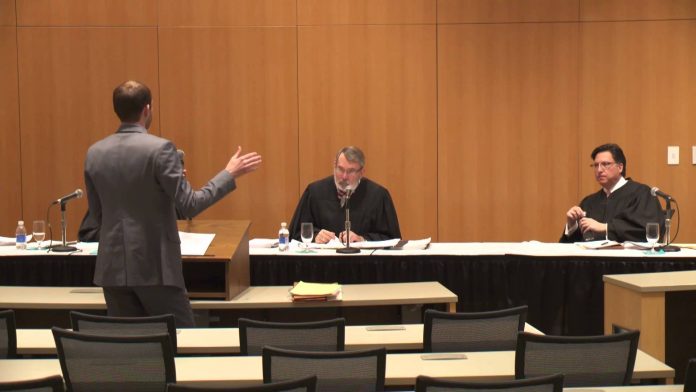
Mooting is a form of an Oral proceeding similar to that of a court proceeding practiced mainly in institutions and universities where law as a subject is taught to see that how efficient a student is in fighting an argument based on law. In this a proper court scenario is created where the students act like the Councilors (Advocates) presenting each side(Plaintiff and Defendant) on the basis of evidences and substantive questions of law argue with each other to prove their point in front of the judge who in the end will give his judgment in the same regard and will also declare the winner who has performed the best.

Also, while presenting their arguments the judge can question them on facts or question them on any of the legal concepts to check the aptitude and in prompt adaptability to the situation of the student. Mooting was earlier not practised as a subject by the universities in the law courses but now due to the scope and requirements of lawyers around the globe mooting in the form of “Moot Court” as a subject has been added to the curriculum of the students so that they get prepared and groomed in a proper manner as a lawyer before they complete their degree.

For a student who is going to become a lawyer in the near future, mooting is very important as an integral part of his education because it will help him and make his work easy and present in a real courtroom. It is the closest experience a student can get of a courtroom by studying in a university or college. Mooting is an exercise which helps a law student inculcate all the habits and understand all the policies and procedures that are followed in a court so as to prepare him for his future. For the same purpose, Moot Court Competitions are organized around the world so that different students from across the globe can come in contact with other to understand each and every dimension of the concept of mooting.

Concept of moot courts

In the earlier times, there was no concept of moot court and mooting when the law was taught in colleges etc. But due to the growing need and the development and advancement in the field of law and various interpretations as to the law was made the concept of moot court was started in the year 2012 by the joint operations of Essex Court Chambers and the Singapore Academy of law, so that the students who will become the backbone of the future law should have the practical and logical knowledge and implementation of law so that it should be easy as to when they start their career it is not difficult for them.

Moot Court basically means a replica of a real court where legal proceedings and trials take place and thus it is also known as a Mock Court where students who are studying law act as professional and take up all the responsibilities and duties according to their role to see their ability to think creatively and answer convincingly when questioned and show their oratory, writing and persuasive skills. Moot Court is a way a student is groomed as a proper lawyer. It is one of the modern methods of giving practical knowledge to the students by putting them in a hypothetical situation similar to that of a real court and then the two teams each on one side argue upon fictional cases and those questions of law with are debatable in reality and which have not been binded or are still the lawmakers are silent on some facts. Moot Court, now is one of the biggest and efficient sources from where people get the education and imbibe all the qualities and skill that a lawyer require.

Components of a moot

  • A Judge or a bench of Judges
  • A moot proposition (legal problem)
  • Representatives of the parties involved (counsels or team composition of representatives, generally consisting of 3 persons, two speakers and a researcher)
  • Court clerks.

Importance of mooting

Mooting helps in the overall development of an individual as a good and proficient lawyer and participating in Moot Court Competition regularly makes a student familiar with the proceedings that take place generally in real courtrooms. Thus, the advantages of mooting are as follows:

A) Networking

One of the important features of mooting is that it helps you to connect and socialize with so many people across the globe with whom you connect in the process of mooting. As students from different places and colleges come to represent themselves, it gives an opportunity to get the exposure to the outside world.

B) Researching and Writing  Skills

Participating in the moot court competitions helps you in enhancing your researching skills because it is your research on the basis of which you will be fighting your case and representing your side and it also helps you in framing a good moot court memorial on the basis of which the other team would raise objections and question you. This will also help in enhancing your skills as to how to adapt to prompt situations and how you tackle situations where you are at unease.

C) Building Confidence

Mooting helps an individual to build his confidence in communicating and putting his view in front of the people. It helps a person to build his confidence to such an extent that he does not fear to question or to speak in front of anybody and can fight cases efficiently.

D) Practical Knowledge

Mooting helps in giving the practical implication and knowledge to the students who are studying law in such a way which they will never find in the books and would be unaware of, as practical and theoretical knowledge are like two different sides of the same coin and to pass the hurdle you need to study both of them although both look same but are totally opposite in reality.

E) Team Work

Moot court competitions take place in the school or colleges who organizes it and the various teams from different colleges come and participate in the event. The team comprises of 3 students with one as the researcher and the other two as the speakers presenting their arguments on either side. This teaches the students to perform well when they are together in as a team and analyze what are their strengths and weakness, how can they work upon them to achieve maximum efficiency. It also helps to work with people who are different from you and it also teaches how to coordinate with each other.

Can mooting help you in your career?

Honestly speaking, Mooting is one of the most important things that help you in your career and your future growth as well. Mooting is one thing that inculcates a lot of habits and discipline that are requirements by many of the Law firms Recruiters and when a law student sits in a Job Interview, if your resume will display that you have done a different kind of moots then it will be very beneficiary as the employer will know that you have a good amount of knowledge in this field and you have experience and your chances of being selected will automatically go up. Mooting in today’s generation is something considered to be one of the most important factors which everybody looks after because if you are a good mooter, people will consider you important and knowledgeable. Also the exposure you get in mooting helps you to easily adjust in your future jobs which is quite important.

Types of moot court competitions

There are two types of moot court competition known as the National and International Moot Court competition. National Moot Court refers to a situation where the mooting takes within the country and students from all across the law schools from the country and participate in the competition, while on the other hand International Moot Court Competition is one which is organized where people from outside India are invited to take part in it and it happens on a large scale. Moot Court Competitions can be based on any law where civil or criminal etc as per any law that may be in news currently or any other. These types of different moots are really helpful for students to think deeply about the legal issues and have a proper understanding of the Law. One of the Competitions that is related to moot court is the Trial Advocacy Competition which is also held at such high levels. Mooting helps a student to understand what are his strengths and weakness and what he is required to work more upon which is helpful for him in the long term. 

What is the purpose of mooting?

The main purpose of mooting is to establish a good overview by the students of law and enhancing the legal skills. Mooting is a concept where there is a mooting proposition which is related to any law related subject which is given to all the teams in advance so that they can prepare for that in the form of a memorial which tests and helps them in their researching skills and sticks to the deadlines. It teaches the students how to work under pressure with the goal to give productive output. Mooting helps in understanding and developing and inculcating the capacity to argue passively before the judge. Mooting helps in raising your chances to be get hired for a job as well. As when you sit in a job interview the employer will look in your resume that if you have done mooting before then, the chances of you being hired in a company will be more as the employer will be willing to invest in you and train you as he wants higher productivity from skilled people. The purpose of mooting can also be defined as follows:-

A) Society Welfare

The society needs efficient lawyers, mainly judges and advocates so that the society can benefit at large due to the pendency of the cases in India. For the purpose to provide proficient individuals who are perfect in their field is not an easy task, for the same purpose mooting is really important to build such lawyers for the benefit the society at large, so that the problem of pendency of cases can be solved in the near future because if there will be efficient and good judges, the problem will be solved automatically.

B) Practicing

The main purpose of mooting is that to make you practice before actually becoming a professional and practicing in courtrooms about everything. If you have years of practice then it is easier for one to make a lot of clients because of his practice and knowledge one has gained in the field.

C) Experience

An important part of every individual’s life from which it grows is the experience he gains from the life that he gets and gaining experience will help in any profession because it is the experience that matters when the case or proposition is related to very controversial laws and topics and at that time the experience helps him as how to go ahead in the case. This is done by participating in different kind of moots by going to different cities meeting new people from various law schools and interact with them will definitely help you in understanding the law in a better way.

D) Creative thinking

When one participates in different kinds of moot court competitions in various places and colleges, there might arise situations that you have to play with words and mould the case in your favour then there comes the art of creative thinking which you are required to show and you have to think on your feet as you cannot be prepared for everything, as moot court is a place where you have to expect the unexpected. Thus, it will also help you to enhance your thinking in a better way.

E) Motivation

Lastly, students who participate first time in this kind of activities not only get the exposure but also the motivation to take part in a more comprehensive way and in other competition and moots as well. These kinds of Mooting competitions boosts up the morale of the students and helps them to talk passively and hence put forth their ideas in front of anybody if earlier they were hesitant to do so.

How to become a good mooter?

There are certain points that you can look into in becoming a good mooter:

  1. You must know your case well and when presenting your case before the judge you should be very particular about your behavior and must be aware of all the facts of the case.
  2. You should be well versed about the case and not read off your notes instead read pf the case.
  3. Make a Small list of all the points that you want to present in your case so that no point is left and it is easier than the judge is convinced.
  4. One should always try to have fun and a good interactive session with the judge as it will boost your morale and the judge will also take more interest in listening to your case.
  5. It is important that while presenting your case you should argue upon the facts rather than the law.
  6. Lastly, there are many courses and coachings that teaches how to become a good mooter such as this mooting course offered on the LawSikho (see more) which helps students to be perfect in their field.  

Etiquettes and manners

While entering the courtroom

  • Whether or not the judge pays heed to you, the person should bow before the judge the moment he enters the courtroom.
  • Unless anything, on the contrary, is provided, the sitting has to be done in a manner that the appellant must sit on the left, while the respondent must sit on the right, facing the judge.
  • When the judge enters the courtroom after you, one has to stand up, and when he (the judge) reaches his chair the counsels bow before him and then take their respective seats.
  • The first counsel is supposed to approach the platform and bow before the court/bench before beginning the arguments when the judge indicates so.

During oral pleadings

Now emphasising on one of the most, if not the most important phase of a moot, that is oral arguments in which the counsels as a speaker are required to adhere to a specific court language in which they make their arguments before the judge (or the bench). They are as follows:

  • Make sure to address judges with courtesy by using the terms “Your Honor”/”Your Excellency”/”Your Lordship.” Generally in India, we use Your Lordship (and Your ladyship to a female judge if there is any. Also, the counsel can ask the judges, if there are male and female judges, to refer to them collectively as your lordship. Generally, they do give the permission to be collectively called as your lordship, seldom does it happen that they don’t. That is why it is advised that one should ask beforehand how the bench would prefer to be addressed).
  • After seeking permission as to how the judge(s) want to be addressed as, the counsel usually begins the next statement by stating “May it please the Court/your lordship(s)…” 
  • While the counsel wants to agree or acknowledge what the judge(s) is saying, he should do so by responding “Indeed Your Lordship/ Much Obliged Your Lordship”.
  • If for making the corrections in the memorial you were holding the pen or the pencil in your hands, it should not be with you while you are speaking as keeping them in the hands or waving the pen/pencil while making the arguments as it can seem very disrespectful to the bench/judge(s).
  • As much as possible, one should avoid bodily motions such as shifting from one foot to another and making excessive hand gestures. Keeping one’s hands on each side may help to avoid this.
  • Instead of being forceful and confrontational, one should take a moderate and steady conversational approach. The counsel must engage in the proceedings while making the arguments instead of simply narrating them.
  • When the judges ask a question, try answering it completely to the best of your ability and do not put it off by saying you’ll get back to it later. Even if the Judge deviates the counsel from his track, the counsel should still always put the Judge’s lead first.
  • When a judge(s) tries asking anything and if one gets confused or does not understand something, one might ask a judge to explain or clarify it.
  • One can ask for a few seconds (like 10-15 seconds) from the judge(s) to recall a certain thing if it does not pop up immediately. It is advised that asking for a few moments to recall something correctly is far better than answering wrong immediately.
  • When the answer is unknown, plead ignorance by saying “the counsel pleads ignorance” and ask for a chance to make a calculated estimate.
  • If one makes a mistake, it is advised to gently clarify your position in front of the judge without becoming embarrassed, and never try to hide it. 
  • When you can back up your stance with a well-reasoned argument, you may respectfully disagree also.
  • You should readily accept the information rather than memorising the words and be ready to answer any questions that may arise. To do so, start by making counter-arguments from the opposing side, then look for counter-arguments that are well-reasoned.
  • When responding to a question, a slight pause is preferable. It will also assist you in mentally formulating the answer.
  • No matter what the issue is, always show deference to the Court.
  • Before moving on to the next issue or point one should get permission from the court.
  • Before you sit down, thank the Court when you’re finished or have run out of time.
  • If you require an extension of time or notice that many issues remain unresolved, calmly present your concerns before the Court and request permission for the same.
  • Memorize the first paragraph and the end paragraph, especially the prayer, wholeheartedly.
  • Maintaining eye contact in any conversation is referred to as one of the most important etiquettes. The same is true with mooting. While presenting your arguments, maintaining eye contact with the judge(s) shows the confidence of the counsel arguing. One should always try maintaining it.

Passing the information

  • To deliver information to the judges, supply it to the court clerk ahead of time, or, if necessary, transfer the material via the same court clerk multiple times in a discreet manner.
  • Use sticky notes to communicate information to the oralist without disrupting the court.

While leaving the court

  • One should get up and bow before the judge as he gets out of his chair. Before leaving the courtroom, first wait for the judges to leave. 
  • One should never face his back to the bench.

Speaking/communicating etiquettes during oral pleadings

  • When the session starts, begin by saying “May it please the Court, my name is ________ and I appear on behalf of ______. My submission will be addressed….”
  • Avoid using phrases like “we argue” or “it is our argument” while presenting arguments.
  • While asking for the judge’s statement say, “The counsel would be obliged if the Court would clarify the question.”
  • While requesting a judge to repeat, say, “The counsel is afraid he/she didn’t quite understand the Court’s concern.”  
  • If a judge asks a “yes” or “no” question, respond with “yes” or “no” first, then continue with your explanation. “Yes, Your Lordship, in fact…,” or “No, Your Lordship, rather…,” for example.
  • When politely disagreeing with a judge — “The counsel acknowledges the Court’s reasoning, however, it is my submission that… or the counsel want to propose/submit that…”
  • Instead of lying when the bench asks a question you don’t know the answer to, respectfully remark, “the counsel pleads ignorance.” This, however, produces a bad impression and should only be used as a last option.
  • If the time limit has expired, you may ask the Court to allow you to finish by saying, “Your Lordship, may I briefly conclude?”  If the Court says, “Yes,” then finish. Remember not to take advantage of this opportunity to introduce fresh arguments.
  • During rebuttals say “I will argue that….” and continue by saying “My opponent’s (or opposing counsel’s or learned friend’s) argument overlooks that . . .”
  • For final submission: ‘we submit’, ‘it is our submission’, or ‘it is submitted’ any of them can be used.  
  • At the end of your arguments advanced say  “That concludes my submission. May I be of any further assistance to the Court?” or “Unless the Court has any further questions, that concludes my submission (on behalf of) …”  
  • When submitting your arguments or making a reference to a previous argument, say “In my respectful submission…..”

Things that should be avoided by the mooters

While following certain etiquettes and manners, there are certain things that any and all mooters should avoid at all costs while they are making their oral pleadings.

  • Instead of being overly formal throughout your argument delivery, try to have a dialogue about it. However, refrain from using statements like “I believe, I feel, I think”, etc.
  • One should never answer a question without first thinking it through, or it will end up with two seconds of quietness for you. There’s also the risk that you will try to hide your flaws by bluffing, which should be avoided at all costs.
  • If you do happen to interrupt or speak over a judge, stop talking right away.
  • No matter what occurs or how ashamed you become, do not become enraged, confrontational, or leave the courtroom.
  • The worst thing you can do is not pay attention to the judges’ queries and fail to answer their concerns. Give it your undivided attention. 
  • Do not veer from the original plan. That isn’t to say you shouldn’t try to please the judge. If you’re distracted, try to respond in a way that makes sense and gets you back on track.
  • And lastly, one of the most important things is, don’t let on that you’re nervous. Your anxiety may affect the judges’ opinion of you, so just fake it until you make it, as the old saying goes.

Conclusion

We believe that mooting is one of the essential parts for a law student to get the proficiency in this field and one must do different kinds of mooting as the amount of exposure it gives to the students is tremendous plus the knowledge and experience gained by the students is also quite helpful as it will help them in the future when they will become lawyers and Judges of High Court and Supreme Court and will deliver justice. So, these kinds of mooting activities help a student to grow as an individual and also motivate them to come up and show their skills.


LawSikho has created a telegram group for exchanging legal knowledge, referrals and various opportunities. You can click on this link and join:

Follow us on Instagram and subscribe to our YouTube channel for more amazing legal content.

Download Now

Overview of Banking Ombudsman Scheme

0
Image Source: https://i.ndtvimg.com/i/2015-12/ombudss_650x400_71450796690.jpg

In this article, Utkarsh Nigam, currently enrolled in the Certificate Course in Investment & Banking Due Diligence at LawSikho discusses the Banking Ombudsman Scheme

Introduction

The Banking Ombudsman Scheme is like a fast track and inexpensive forum for the customers of the bank for resolution of their complaints regarding the services rendered by the banks in India. The Banking Ombudsman creates an onus through Section 35A of the Banking Regulation Act, 1949 to appoint a banking ombudsman, who is a senior official not below the rank of Chief General Manager or General Manager appointed by the Reserve Bank of India. The scheme came into effect from the year 1995 and presently the current operational scheme is Banking Ombudsman Scheme (amended up to July 1, 2017). The main aim of the scheme is to have a resolution scheme related to the services rendered by the banks in case the customer is not satisfied with the same and in cases where there is no solution provided by the banks for settlement of such complaints and disputes. The Banking Ombudsman Scheme extends to the whole country and covers the business of banking industry in the country that means all scheduled commercial banks, rural banks, cooperative banks will come under the purview of the scheme.

The Reserve Bank of India shall specify the jurisdiction or the territorial limits of the selected ombudsman. The ombudsman shall be responsible for receiving and considering the complaints filed by the aggrieved parties irrespective of the amount of money involved in the complaint. He will be responsible for the settlement of the dispute between the bank and the aggrieved party either by the process of mediation or conciliation or if necessary by giving an award to the concerned party if the circumstances require so. The appointed ombudsman has to submit a report to the governor of the Reserve Bank on 30th June of every financial year regarding the activities conducted through his office during the preceding financial year and also any other details as asked by the Reserve Bank.

The Banking Ombudsman Scheme allows an aggrieved customer to file a complaint of any nature regardless of any amount involved, in the complaint with the ombudsman.

Grounds on which complaints can be filed

Some of the grounds on which these complaints can be filed by the aggrieved customers are-

  1. Delay or non-payment of cheques, drafts, bills etc.,
  2. Non-acceptance of any notes or coins of the Indian currency without giving any sufficient cause,
  3. Charging some amount of commission for any service mentioned in the above point which the bank does not have the authority of,
  4. Non-payment or delay in payment of the inward remittances,
  5. Non-adherence in regards to the working hours of the banks,
  6. Delay or failure to provide a banking facility, earlier promised by the officials or the agents of the bank,
  7. Refusing to open deposit accounts without any valid reason,
  8. Delay or non-remittance of money or any other bank related matters regarding the non-resident Indians,
  9. Levying of any other additional charge without any previous intimation to the customers,
  10. Non-adherence to the instructions and guidelines given by the Reserve Bank in relation to use of ATM or Debit cards, like – Account debited but cash not dispensed by ATMs, Less cash dispensed by the ATM machine, Stolen cards, Account debited twice for one transaction done on the abovementioned factors,
  11. Non-adherence to the guidelines given by the Reserve Bank in relation to the Credit Card facilities provided by the banks, like – Wrong billings on the card, Charging of excess annual fees against the pre-stated fee, Unsolicited calls for add-on cards etc.
  12. Inappropriate approach by the recovery agents on behalf of the banks or not following the guidelines are given by the Reserve Bank in regards to the functioning of the recovery agents.
  13. Any other guidelines stated by the Reserve Bank.
  14. Non-adherence to the guidelines given by the Reserve Bank in regards to the Mobile or Internet Banking facility provided by the banks, like – delay or failure to effect online payment / Fund Transfer, unauthorized electronic payment / Fund Transfer
  15. Delay or refusal to accept payments towards taxes and other charges as directed by the Reserve Bank or the government,
  16. Delay in issuance or refusal to issue redemption of government securities,
  17. Forced closure of deposit accounts without prior notice or without any specific reasons for the delay in closure of any type of accounts held by the customer,
  18. Complaints on the grounds regarding non-observance of Reserve Bank guidelines on interest rates, refusing to accept applications for loans without a valid reasons or not disposing of the loan applications within the prescribed time or non-adherence to the provisions of the fair practices code for lenders as adopted by the bank or Code of Bank’s Commitment to Customers,
  19. Non-adherence to any other guidelines or any other instructions given by the Reserve Bank from time to time to the banks or their subsidiaries involved in the banking business in the country.

Procedure to register a complaint

Filing of the complaint

The procedure to register a complaint regarding any of the banks by the customers starts from the process of identifying the sort of deficiency of service from the list above mentioned.

Who can file the complaint?

The complainant may, himself or through an authorised representative make a complaint to the Banking Ombudsman within whose jurisdiction the bank is located. It should be noted that in cases of credit card complaints the complaint will be filed with the Banking Ombudsman within whose territorial jurisdiction the billing address of the complainant or the customer is located.

Details to be provided in the complaint

The complaint shall be made in writing or in electronic mode (in this case the print out of such complaint shall be taken as a record by the ombudsman) and shall be duly signed by the complainant or his representative in a specified form which shall state the name and address of the complainant, name and address of the branch or office of the bank against which the complaint has to be filed, the facts of the complaint including the quantum of loss caused to the complainant and the relief which is sought from the ombudsman through the complaint. The complainant is required to file copies of the documents if there are any, to support his claim of the complaint and for the complaint to be maintainable under subclause (3) of the abovementioned clause.

Onus on the complainant to go to the Bank first

The complainant has the onus to go to the bank first for the redressal of his complaint, therefore, no complaint to the ombudsman shall lie unless the complainant has approached the bank with his complaint in a written representation and the bank has rejected his complaint or the complainant hasn’t received any reply from the side of the bank within one month after the complaint has been received by the bank or the customer is not satisfied with the redressal provided to him. Also, the complaint with the ombudsman has to be filed within one year from the received reply from the bank or where no reply has been received by the bank then not later than one year and one month from the date of representation.  The complaint will not lie to the ombudsman in case if the same cause of action which was settled on merits by the Ombudsman in any previous case has been brought to him.

Directions issued by the Ombudsman

After the complaint has been filed to the ombudsman, he has the power to direct the bank, against which the complaint has been filed to furnish any information or certified copies of any documents relating to the complaint. The ombudsman has the responsibility to maintain the confidentiality of the information provided but is not barred due to the above clause from disclosing any information or document considered by him to be reasonably required to comply with any legal requirements or the principles of natural justice and fair play in the proceedings

Settlement of the complaint through mediation/conciliation

As soon as possible the banking ombudsman shall send the copy of the complaint to the branch office of the bank mentioned in the complaint by the complainant and initiate to promote a settlement of the complaint by agreement between the parties through mediation or conciliation.

If the complaint is not settled

In case if the complaint is not settled by agreement within a period of one month from the date of receipt of the complaint or from the period which is allowed by the ombudsman, the ombudsman after hearing the parties involved in the case, may pass an award or reject the complaint.

Duties of the Banking Ombudsman while dealing with a complaint

  • The Banking Ombudsman has to take into account the prevalent laws and directions, guidelines and instructions given by the Reserve Bank from time to time.  
  • The award given should accompany the reasons on which the award was given and also should contain the directions, if any, to the bank for any specific performance of the obligations in addition to the amount, if any, to be paid by the bank to the complainant as a compensation for the loss suffered by him due to the deficiency in service by the bank.  
  • Banking Ombudsman shall not have the power to pass an Award directing payment of an amount towards compensation which is more than the actual loss suffered by the complainant as a direct consequence of the act of omission or commission of the bank, or two million rupees whichever is lower.
  • The Banking Ombudsman may also award compensation in addition to the above but not exceeding rupees 0.1 million to the complainant, taking into account the loss of the complainant’s time, expenses incurred by the complainant, harassment and mental agony suffered by the complainant.

Appeal

The party to the complaint aggrieved by the award given by the ombudsman or by the rejection of the complaint may within thirty days of the date of receipt of communication of the award, may appeal before the appellate authority.

Conclusion

The banking ombudsman scheme is a tool in the hands of the customers of the banking industry that can be used by them whenever there is a deficiency in service on the part of the bank or when the customers are not satisfied with the services provided by the banking industry. The scheme has been a major benefit to the customers as it has given them the power to keep the banks in a check for the services they are providing.

Download Now

A critical analysis of the judgment – Intex Technologies (India) Ltd. and ors. vs. AZ Tech (India) and ors. (2017(70)PTC118(Del))

0

On 10.03.2017, A Division Bench of Delhi High Court pronounced a judgment whereby the Division Bench vacated the Single Judge order of interim injunction dated 24.12.2016 so granted to AZ Tech (India) and Ors., the Plaintiffs in the suit.

Brief facts:

The Plaintiffs claim to have been marketing and selling phones under the trademark ‘AQUA’ in India since 2009 and have also expanded into the market of phone accessories such as earphones, mobile chargers, USB cables and mobile batteries. The Plaintiffs claim that the mark ‘AQUA’ was randomly coined and is an arbitrary mark in application to mobile phones and merits trademark protection.

The Plaintiffs aggrieved by the act of adoption of identical mark and use as INTEX AQUA for identical goods by the Defendants/Appellants in the year 2012, filed the present suit. The Single Judge was pleased to pass an order for interim injunction in favour of the Plaintiffs on 24.12.2016. Intex technologies, The Defendants/Appellants, being aggrieved by the said order whereby the Single judge restrained the Defendants/Appellants from using the trade mark AQUA or any other deceptive similar trade mark in respect of cellular/mobile phones and their accessories, filed appeal.

Major issues involved:

  1. Whether mere prior use of the trade mark is enough to succeed in a passing off claim or is it the goodwill /reputation in addition to prior use which is essential for establishing a case for passing off?
  2. Whether added matters in the product are sufficient to dispel the likelihood of confusion in the minds of public at large?

Court observation

Issue-1:

Whether mere prior use of the trade mark is enough to succeed in a passing off claim or is it the goodwill /reputation in addition to prior use  which is essential for establishing a case for passing off?

Single Judge:   

“It is settled law that in order to succeed in a case of passing off, the Plaintiff must establish priority right over the Defendant(Para 43)

It is clear that in an action of passing off, prior user remains the ultimate test. Accordingly, for establishing priority at an interim stage it may not be necessary to show substantial sales or advertisements but, at the same time, sufficient enough for the courts to come to a strong prima facie opinion that there was a clear intention to adopt the mark for the particular goods” (Para 54)

Division Bench:

Insofar as the question of goodwill in the present case is concerned, we find that as on August, 2012, when Intex started selling its mobile phones under the mark, “AQUA”, it cannot be stated with any degree of confidence that the mark ‘AQUA’ had acquired a goodwill or reputation in respect of the respondents mobile phones. The property which is protected in an action of passing off is not the Plaintiffs proprietary right in the mark which the defendant allegedly misappropriates, but the goodwill and reputation of his business, which is likely to be harmed by the Defendants misrepresentation” (Para 19)

“Thus, insofar as this point is concerned we are of the view that AZ Tech has not been able to establish that it had a goodwill/reputation in India in the mark in August 2012 when Intex launched its product under the mark ‘AQUA’” (Para 20)

Issue-2:

Whether added matters in the product are sufficient to dispel the likelihood of confusion in the minds of public at large?

Single Judge :

“In the present case, learned counsel for the Defendants has primarily submitted that the use of the words ‘Intex’ in conjunction with ‘AQUA’ dispels the likelihood of confusion and consequently, no interim injunction should be granted” (Para 61)

“I am of the view that the usage of the word ‘Intex’ may not be sufficient to dispel the likelihood of confusion especially when ‘AQUA’ is being marketed as a separate sub-brand. This may even create an impression upon the public that the plaintiffs’ business has been acquired by the defendants and consequently, is not sufficient to disentitle the defendants from an interim injunction Learned counsel had also submitted that there is other added material, but has failed to substantiate on the same” (Para 62)

Division Bench:

“Insofar as the issue of added matter is concerned, there is no doubt that if the added matter is so prominent as to completely distinguish one product from the other, then there would be no case for confusion whether it be confusion proper or, initial confusion or reverse confusion. In the present case, we find that the mark “Intex” is as prominent, if not more, than the mark “AQUA” in the appellant’s product packaging (Para 26)

 Insofar as the question of initial interest confusion is concerned, that, in our view, does not arise in the facts of the present case. The added matter in the form of the word mark ‘INTEX‘ is so prominent and distinct as to dispel any chance of even an initial confusion. (Para 28)

“It is clear in the present case which is one of passing off, the appellant/defendant would escape liability inasmuch as the added matter is, in our view, sufficient to distinguish the appellant’s products from those of the respondents” (Para 29)

Analysis:

It is a landmark judgment and the Division Bench observations are path breaking in view of the fact that despite the Plaintiffs/Respondents being the prior adopter and user of the mark AQUA, the Division Bench went ahead and vacated the initial interim injunction so granted in their favour.

It is noteworthy that despite of Division Bench Judgment Century Traders vs. Roshan Lal Duggar & Co. AIR 978Delhi250, wherein the Court observed that “For the purpose of claiming proprietorship of a mark, it is not necessary that the mark should have been used for considerable length of time. As a matter of fact, a single actual use with intent to continue such use confers a right to such trade mark as trade mark “ and the Supreme Court Judgment S. Syed Mohideen vs. P. Sulochana Bai, 2016 (66) PTC 1 (SC) wherein the Supreme Court has observed that “essentially the right of the prior user is considered to be superior than that of any other rights,  being in the favour of  the Plaintiffs/Respondents, the Division Bench observed that the Plaintiffs/Respondents could not establish goodwill/reputation, a necessary ingredient of the tort of passing off, in India on relevant date i.e. August 2012,  when the Defendants/Appellants launched their product under the mark AQUA.

Hence, in view of such observation of the Division Bench, one is required to establish goodwill in the mark along with the claim of prior adoption and use on the relevant date i.e., the date on which the other party commences with the infringing activities under the impugned mark.

Download Now

Rajasthan Prevention of Mrityu Bhoj Act, 1960

0
mrityubhoj

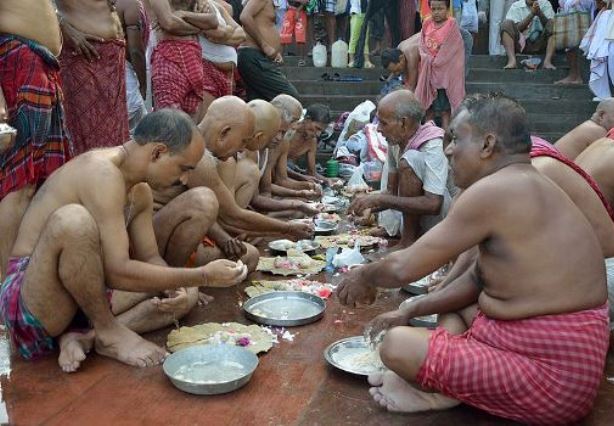
It does not seem very important for people who can afford a daily needs easily. The tradition of mrityubhoj surprised me when my far away relative died in Rajasthan and close relative of mine (some of were really educated), who were influencing their family (who can only afford a day meal) to organize a death feast: mrityubhoj.

How mrityubhoj is an unnecessary social practice that proves to be more a burden than anything else. The custom entails organizing large meals for relatives, friends and acaquaintances from all across, who come to pay condolences at someone’s death.

This tradition Is mostly takes place in Tier-II cities and mostly in villages of Rajasthan state.

I have seen farmers and bourgeois, who can ill afford even square a meal a day, struggling to hold mrityubhoj for upholding their social dignity and confirming to the societal values and norms. Not following the tradition might render them a social deviant before the society at large.

It is an expensive affair because you are feeding a huge gathering. It usually gives pain a lot to the person who organizes mrityubhoj for the villagers. It is astonishing to find that we are still stuck in time warp, so much so much so that poor people also take loans at times to perform this.

To discourage this practice, CHHAVI RAJAWAT(she has been consistently working for the betterment of her village soda in tonk district of Rajasthan) she is using here most potent weapon: dialogue “I visit grieving family consciously refuse to partake in the mrityubhoj, I even return if it is sent to my place. I tell them that do not have to do it just because that is how It has been for centuries.” I try reason with them- that we constitute the samaj or society & only we can bring about a change.

A tradition about which most people are unaware of its legal technicalities or may be they are aware but knowingly ignoring.

Legal Scenerio

An act to provide for the prevention of Mrityu Bhoj is named as:

Rajasthan Prevention of Mrityu Bhoj Act, 1960

(Act No. 1 of 1960)

  1. Short title, extent and commencement– (1) This Act may be called the Rajasthan Prevention of Mrityu Bhoj Act, 1960.

(2) It extends to the whole of the State of Rajasthan.

(3) It shall come into force at once.

  1. Definition– In this Act, unless the subject or context otherwise requires,-

(a) ‘Mrityu Bhoj’ means a feast held or given on the occasion of, or in connection with the demise of a person after any time for at any intervals and includes a Nukta, a Mosar and a Chahallum, and

(b) ‘holding or giving Mrityu Bhoj’ includes distribution of articles of food, prepared or unprepared, but does not include the feeding of the family people or persons of the pristly order or fagirs in pursuance of the performance of religious or secular rites, not exceeding in the aggregate one hundred person in number.

  1. Prohibition of Mrityu Bhoj– No person shall hold or give or join or take part in a Mrityu Bhoj in the State.
  2. Punishment for contravention of section 3– Whoever commits a contravention of the provisions of section 3 or instigates, abets or assists the commission of any such contravention shall be punishable with imprisonment of either description for a term which may extend to one year, or with fine may extend to one thousand rupees, or with both.
  3. Power to issue injunction– If a court competent to take cognizance of an offence punishable under section 4 is satisfied that a Mrityu Bhoj in contravention of the provisions of this Act has been arranged or is about to be held or given such court may issue an injunction prohibiting the holding or giving of such Mrityu Bhoj.
  4. Punishment for disobedience of injunction under section 5– Whoever, knowing that an injunction has been issued under section 5, disobeys such injunction shall be punishable with imprisonment of either description for a term which may extend to one year, or with fine which may extend to one thousand rupees, or with both.

Any contravention of the signature issued under section 5 of this Act has been made punishable upto one year or five upto Rs. 1000/- or both.

  1. Sarpanchas etc. bound to give information– (1) The Sarpanch and every Panch of a Gram Panchayat established under the Rajasthan Panchayat Act 1953 (Rajasthan Act 21 of 1953) and every patwari and lambardar shall be bound to communicate forthwith to the nearest magistrate competent to take cognizance of an offence punishable under section 4 or section 6 any information which he may posses respecting the commission of, or intention to commit, such offence, within the local limits of his jurisdiction.

(2) any such Sarpanch, Panch, Patwari or Lambardar failing to give the information required by sub-section (1) to communicate shall be punishable with imprisonment of either description for a term which may extend to three months, or with fine, or with both.

This section makes it obligatory upon a Sarpanch and every Panch or the Gram Panchayat, Patwari and Lambardar to give information for the offences U/s 5 of 6 to the nearest First Class Magistrate, if he fails to do so he can be also punished and convicted under this section upto 3 month or fine or both.

  1. Prohibition of borrowing or lending money– (1) No person shall borrow from, or lend to, any other person money or materials for the purpose of holding or giving a Mrityu Bhoj.

(2) Every agreement for the repayment of a loan advanced with the knowledge or having reason to believe that the loan so advanced will be utilized for the purpose of the holding or giving of a Mrityu Bhoj shall be void and not enforceable in a court of law.

  1. Jurisdiction and cognizance of offence– No court other than that of magistrate of the first class shall take cognizance of, or try, or try, any offence punishable under this Act.
  2. Limitation for prosecution– No court shall take cognizance of any offence under this Act after the expiry of one year from the date on which the offence is alleged to have been committed.

Reference :

  1. http://www.bareactslive.com/Raj/RJ105.HTM
  2. https://www.patrika.com/pali-news/learn-our-law-it-is-also-a-crime-to-go-to-death-2586148/
Download Now

Salient features of the Design Act, 2000

0
salient features
Image Source: https://bit.ly/2HrbetM

The article is written by Tushar Verma, currently enrolled in the Certification in Intellectual Property Law at LawSikho & by Richa Singh of Faculty of Law, Aligarh Muslim University. In this article, they has discussed all the provisions mentioned under the Design Act of 2000 and why is it necessary to have such laws in the country. It also discusses the new provisions of the Act which were absent in the earlier enactments and helped the proprietors in developing a secure market for their product. The article is compiled and updated by Subodh Asthana.

Introduction

In our day to day life, we encounter various objects which we can recognize by observing their design. Products which are artistically designed can grab the attention of the customer the moment they see it. These designs can take the form of Art, drawings, graphics etc. These designs may be created by professionals which includes engineered designs or architectures blueprints for any property, interior designs etc.

The term ‘design’ does not include any procedures such as mode of construction of an article. Earlier this Act was governed by Design Act, 1911. So as to bring the Design Act at par with International Law enactment of the new act came into being. Presently, design laws are maintained by the Design Act, 2000.

Intellectual property laws in India cover the rights related to trademarks, copyrights, patents, designs and geographical indications of goods. The basis of this Act was ‘first to file, first to get’ system which means that an innovator or owner of any design should file an application to register the same as soon as possible to prevent it from piracy and for claiming certain rights over that particular design.

https://lawsikho.com/course/diploma-entrepreneurship-administration-business-laws

Click Here

Design act 2000

Earlier this Act was governed by the Design Act, 1911. In order to bring the Design Act at par with the International law the enactment of the Design Act, 2000 took place. So, presently the design laws are regulated by the Design Act of 2000. It is an Act to consolidate and amend the law relating to the protection of designs. It was published in the Gazette of India and came into force on 12.05.2000. This Act is a complete code in itself and is statutory in nature. It extends to the whole of India.

Design act 2000 definition

“Design” means features of shape, pattern, configuration, ornament or composition of colors or lines which is applied in three dimensional or two dimensional or in both the forms using any of the process  whether manual, chemical, mechanical, separate or combined which in the finished article appeal to or judged wholly by the eye. 

What it does not include?

Origin and development of design act in India 

  • The origin of the Design Act in India traces back to the British period. 
  • The first Act that gave privileges and protection to designs was the Patent and Designs Act, 1872. This Act supplemented the Act of 1859 which was passed by the Governor-General of India to protect industrial designs and grant privileges to inventors.
  • The Inventions and Designs Act of 1888 repealed this Act of 1872.
  • The Act of 1888 was a reflection of the Designs Act of the United Kingdom. 
  • In the year 1911, the British government enacted a new law in the form of the Patent and Designs Act repealing all the prior legislations. 
  • In 1930, this Act was amended and the government came up with some changes in the process of registration of designs in which the concept of new and original design changed to the new or original design.
  • This legislation used to govern the matters related to both patents as well as designs.
  • In 1970, the Patent Act was enacted to deal with the matters of patent specifically. All the provisions regarding patents from this Act were repealed and it continued to deal with Industrial designs till 2000.
  • India became a member state of the WTO in the year 1995. Consequently, the Patents and Designs Act of 1911 was repealed and a new act called the Designs Act, 2000 was enacted in compliance with TRIPS (Trade-Related aspects of Intellectual Property Rights) to make design laws for the country.
  • This new Act was enforced on 11th May 2001. 

Salient features of design act 2000

  • India is a member of the World Trade Organization’s Paris Convention. It has signed the Patent Cooperation Treaty which allows all the signatories of the convention to claim priority rights.
  • Under the Act of 2000, Locarno classification has been adopted in which the classification is based only on the subject matter of design. Under the previous provisions, the classification was made on the basis of the material which has been used to make that material. 
  • The introduction of “Absolute Novelty” makes it possible to judge a novelty on the basis of prior publication of any article. This is applicable in other countries also.
  • As per the new law, a design can be restored which was absent in the previous enactment. Now, the registration of a design can be restored.
  • The Act allows the district courts to transfer cases to the high courts where the jurisdiction is present. It is possible only in cases where a person is challenging the validity of any registration. 
  • Laws regarding the delegation of powers of the controllers to other controllers and the duty of examiner are also mentioned in the new Act. 
  • The quantum of punishment is also enhanced under the Act in case of any infringement.
  • The secrecy of two years of a registered design is also revoked.
  • Provisions regarding the avoidance of certain restrictive conditions are also there so as to regulate anti-competitive practices in contractual licenses.
  • Whenever a license is brought within the domain of public records and that too publicly, the registration is likely to be taken into consideration. Anyone can get a certified copy of it in order to inspect the same.
  • The laws regarding the substitution of the application before registering a design are also mentioned in the new enactment.
  • Under new provisions, power has been given to district court to transfer cases to the high court where the court is having jurisdiction. This is only possible if the person is challenging the validity of the design registration.
  • Incorporates the provisions regarding delegation of powers of the controller to other controllers and duty of examiner.
  • Under the new provision, the quantum of punishment is also enhanced in case of infringement.
  • It revokes the secrecy of two years of a registered design.
  • It contains provisions for the avoidance of certain restrictive conditions so as to regulate anti-competitive practices within contractual licenses.
  • The registration is taken into consideration when it is brought within the domain of public records that too physically. Anyone can inspect the records and get a certified copy of it.
  • It contains provisions for substitution of the application before registering the design.

Objectives of design act 2000

  • The primary objective of the Design Act is to protect the designs.
  • The Design Act 0f 2000 is an Act to consolidate and amend the law relating to the protection of designs.
  • Its main objective is to protect new or original designs from getting copied which causes loss to the proprietor. 
  • The important purpose of design registration is to see that the creator, originator or artisan of any design is not deprived of his reward for creating that design by others copying it to their goods or products. 
  • An industrial design helps in drawing a customer’s attention and helps in increasing the commercial value of an article. Therefore, helps in expanding its market. 
  • There are many competitors who adopt evil ways to reduce the competition in the rival groups by exploiting the designs to their advantage. Thus, it is necessary to have laws to safeguard the interests of the owners of these designs. In order to fulfill this objective, the Design Act of 2002 came into existence.

What is design all about?

The term ‘Design’ under Design Act is defined as :

“Features of shape, any configuration, pattern, ornament or composition of lines or colours which is applied to Two dimensional or three dimensional or in both the forms using any process including manual, chemical or mechanical, separate or combined which in the finished article appeal to or judged solely by the eye.

It neither includes any mode of construction nor any trademark as defined under clause (v) of sub-section (1) of section 2 of Trade and Merchandise Marks Act, 1958. It even does not includes property mark as defined in section 479 of the Indian Penal Code or any artistic work as defined in clause (c) of section 2 of the Copyright Act, 1957.[1]

With reference to the Design Act, 2000 what are articles?

Under the provisions of Design Act, 2000, any manufactured object is known to be “article”. The object can be of any substance irrespective of artificial or natural. The article must be capable of being made and sold separately.

Essential Requirements for registration

Novelty and originality

A design can be considered for registration only if they are unique. A combination of previously registered design can also be considered only if the combination produces new visuals. In a case Hello Mineral Water PVT. LTD. v. Thermoking California Pure, a design of water dispenser having a cylindrical shape was not considered as new on the grounds that mere shape and form is not sufficient to prove novelty.

Design must be unique, a Prior publication is not acceptable

The design must not be a published one. If the design is already published than the design is not eligible for the publication. There should not be any tangible copy available already in the market if you are seeking registration of the design that is in digital format. Displaying of the design in any fashion show by the creator is the publication of that design. Secret and private use of the design does not amount to the publication and can be used for the experimental purpose.

It was held in Kemp and company v. Prima Plastics LTD. that disclosure of design by the proprietor to any third person cannot be claimed as publication provided that the disclosure must be in good faith.

Making application of design to an Article

The applicability of the design should be to the article itself. It can be informed of a three-dimensional figure. There are two-dimensional figures also included in this act i.e any painting or any graffiti on the walls or print on the bedsheets.

The design must not be contrary to the order and morality

The design must be registrable under the Design Act, 2000. It must not be prohibited by the Government of India or any institution so authorized. The design must be capable of registering under Section 5 of this act. The design which can cause a breach of peace and may hurt the sentiments of the people may not be allowed to get register.

What is to be considered to register under this Act?

Looking forward to registering a design under Design Act, 2000, one must ensure following features in your design which are:

  • The work must be capable of selling and made separately.
  • It must be original and new to the market. The plagiarised design will not be considered under this act.
  • It should be purely distinguishable from other designs.
  • It must not relate to obscenity or any material which is inappropriate.

Rights of the proprietor of the design

When a proprietor applies for the registration of the design he shall automatically get ‘copyrights in design’ for the period of 10 years from the date of registration. This period can be extended if the proprietor wants to continue with the design. The Design Act should not be confused with the Copyrights act because there are many products which can be registered under both the acts but their remedies cannot be sought in both the acts individually.

Who is entitled to seek Registration?

As per the provisions of Design Act, 2000 any proprietor who is seeking registration of a design which is original and unpublished previously in any country which does not seems to be contrary to any law and order of that country can file an application for registration. A proprietor as per Section 2(j) includes that person who

  1. is the author of that design
  2. acquired design for a valid consideration and
  3. Any person to whom the design has been devolved from the original proprietor.

In case there is more than one author than the design must be applied by the joint authors only.

Locarno classification

Locarno agreement is an agreement as per which the designs are registered under the Act. It classifies goods for the purpose of registering them which helps in Design searches. It divides designs into different classes which are mainly function-oriented. 

Procedure for registration of design in India

Chapter 2 of the Design Act deals with the registration of designs and the procedure to be followed for the same. The following steps must be followed:

  • An application for the registration shall be made in the patent office in the prescribed form along with the prescribed fee. The class in which the design is to be registered must be specified in the application and the article(s) to which it is to be applied. There are separate applications which need to be filed for each class of article.
  • The controller will give the application for examining it so as to check whether the design is capable of being registered or not. If everything seems perfect then the controller will accept the application and proceed further.
  • If there is any objection, then the applicant or his agent will be asked to make necessary amendments so as to register the design and nullify the objection.
  • If the objection does not get removed within three months after the hearing, the application will be withdrawn and it must be noted that 

Application for registration of designs

The application for registration of designs is given under Section 5 of the Design Act, 2000. 

  • The controller registers a design under this Act after verifying that the design of any person, claiming to be the proprietor, is the new or original design not previously published anywhere and is not against any public policy or morality. Provided that such a design should be capable of being registered under this Act.
  • The applications under the Act shall be filed in the Patent Office in the prescribed manner along with the prescribed fee for filling the form. 
  • The design should be registered in a specific class and not in more than one class. In case of any doubt regarding the class in which the design should be registered, the Controller will decide the matter.
  • The controller may even reject any design and not register it. In such a case, the person aggrieved may file an appeal before the High Court.
  • If any application is not complete within the prescribed time limit owing to the fault of the applicant then it shall be abandoned. 
  • A design when registered shall be registered as of the date of the application for registration.

A wide variety of items that can be registered under the Act include cutlery, dresses, etc. 

Items that cannot be registered as a design under the Act

  • Signs, emblems or flags of any country.
  • Size of any article, if changed.
  • Structures and buildings.
  • Integrated circuits’ layout designs.
  • Trade variations.
  • Any principle or mode of construction of any article such as labels, tokens, cartoons, cards, etc. 
  • Books, calendars, certificates, jackets, forms-and other documents, greeting cards, maps and plan cards, postcards, leaflets, stamps, medals, dressmaking patterns.
  • A mechanical contrivance.
  • Workshop alterations of components of an assembly.
  • Parts of any article which is not manufactured and sold separately.

Duration of the registration of a design

The total time for which a design can be registered is 15 years. Initially, it was 10 years, which could be extended for another 5 years by paying a fee of Rs. 2000 to the Controller but it should be done before the expiry of that 10 years period. The proprietor of any design may even file an application as soon as the design gets registered for such an extension.  

Appeal for cancellation of the registration of a design

The registration of any design can be canceled anytime after it gets registered by filing a petition for such cancellation in Form 8 along with a fee of Rs. 1,500 to the Controller. 

The grounds for such cancellation are as follows:

  • The design has been already registered in India previously.
  • It has been published in India or somewhere else before the date of registration.
  • The design is not original or new.
  • It is not registrable under the Act. 

Entitlement of registration under design act 2000

According to the Design Act of 2000, a proprietor who wants to get his design registered and it is original and is not published previously anywhere in any country and the one which does not seem to be clashing to any law and order of that country, can file an application for getting the design registered. A proprietor includes the persons who:

  • Is the author of the design;
  • Has acquired the design for a valid consideration and
  • Anyone to whom that design has been devolved from the original titleholder.

In case if there is more than one author of the design, then the design must be applied by the joint authors.

Copyright in registered designs 

After the registration of a design, the proprietor shall have the copyright of the design for 10 years from the date of registration. 

If you want to extend the copyright period for the second period of 5 years then before the expiry of the original said ten years an application must be filed in the Controller’s office along with the prescribed fee. 

Register of designs

A book named ‘Register of Designs’ shall be kept at the Patent Office which contains all the details regarding the registered designs such as names, addresses of proprietors of registered designs, notifications and transmissions of designs and other important information.  Such register must be maintained wholly or partly on computer diskettes or floppies as may be prescribed. 

Importance of Design

A design reflects someone’s intellect and creativity which afterward becomes a product. The design of any product makes a long-lasting effect on the consumers’ minds. A design helps the consumers to recognize any product. If a design is attractive then it adds value to the business of that product. Thus, in order to protect a design from infringement, it is necessary to get it registered under the Designs Act, 2000. A mechanism has been pre-determined by the government to fulfill this purpose. 

It adds value to the product and helps in gaining fair returns on investment. It gives you fair competition in the market. 

Infringement of design

Just like any other Intellectual Property, the designs are also prone to infringement and they can also be copied by the competitors or some other person. If a design has been copied then the owner of that design can claim damages and can also apply for an injunction so that the design cannot be used further.

If there arises any question regarding the ascertainment of infringement then the Court will directly look for the design from the point of view of an average customer. In other words, the Court will consider whether there is any confusion which is obvious or some material facts in the minds of the customers regarding the two articles. 

Industrial design infringement cases

In Disney Enterprises Inc. v. Prime Housewares Ltd., the international registration of industrial designs became a matter of conflict in India. A Mumbai based company Prime Housewares used to manufacture characters like Mickey Mouse, Donald Duck, etc. a suit was filed by the Disney enterprises for the infringement of their international registered designs.

The court held that the plaintiff’s trademark is protected but not the designs under the Indian law. An order was passed by the court for the infringement of the trademark of the enterprises. The Indian company was asked to deliver all the infringing material to the enterprises so that it could not be used further. 

Piracy of registered designs 

Section 22 of the Designs Act, 2000 deals with the piracy of registered designs. According to this section, any obvious or fraudulent imitation of a design which is already registered without the consent of its proprietor is unlawful. It also prohibits the import of any material which closely resembles a registered design.  

This section also provides that in case if a civil suit is brought against any piracy of a design, then the compensation shall not exceed Rs. 50,000 for the infringement of one registered design. The compensation is statutorily fixed so it serves a good ground for an interim injunction even before the trial commencement.  

In the case of Bharat Glass Tube Limited v. Gopal Gas Works Ltd., the respondents (Gopal Glass Works) had registered their design for diamond-shaped glass sheets and had a certificate of the same. The appellants started using this design for marketing. These designs were made in collaboration with a German company.

After knowing that the appellants are using their design, they moved to the Court. The appellants contended that the respondents’ designs were not new since the German company had been using it since 1992 and it was already published in the U.K. Patent Office so it lost its originality. When the matter went to the High Court on appeal then it restored the designs to the respondents.  When the matter reached the Supreme Court, it upheld the decision of the Calcutta High Court.

Conclusion

Design Act, 2000 brings about many changes which are observed in the features. When a developer develop something for example If an architect develops the structure of a building there is an expectation that my structure will not be infringed. Many designs are capable of providing the author with copyrights also.

In that case infringement of both cannot be claimed separately. The owner must have to choose which is more beneficial. High intellects are involved in making a design look good and have an everlasting impact. Government come up with a great policy of protecting designs. Moreover, these designs can also have a negative impact on the value of the business if infringed. A good design is always remembered.

If you want to know more about Design Registration and Procedure, please Click Here.

Download Now

All you need to know about Administrative Law

5
click above

In this article Tissy Annie Thomas of Vivekananda Institute of Professional Studies, GGSIPU discusses the various facets of Administrative Law.

Administrative law is the law that governs the administrative actions. As per Ivor Jennings- the Administrative law is the law relating to administration. It determines the organisation, powers and duties of administrative authorities. It includes law relating to the rule-making power of the administrative bodies, the quasi-judicial function of administrative agencies, legal liabilities of public authorities and power of the ordinary courts to supervise administrative authorities. It governs the executive and ensures that the executive treats the public fairly.

Administrative law is a branch of public law. It deals with the relationship of individuals with the government. It determines the organisation and power structure of administrative and quasi-judicial authorities to enforce the law. It is primarily concerned with official actions and procedures and puts in place a control mechanism by which administrative agencies stay within bounds.

However, administrative law is not a codified law. It is a judge-made law which evolved over time.

The growth of Administrative Law.

ENGLAND

In 1885 Albert Venn Dicey, a British jurist, rejected the whole concept of Administrative law. Hence, the numerous statutory discretionary powers given to the executives and administrative authorities and control exercised over them were all disregarded to be able to form a separate branch of law by the legal thinkers. Until the 20th Century, Administrative law was not accepted as a separate branch of law. It was only later that the existence of Administrative law came to be recognised.

The Lord Donoughmore Committee, in 1929, recommended for better publication and control of subordinate legislation. The principle, King can do no wrong, was abolished and the scope of Administrative law expanded by virtue of the Crown Proceeding Act in 1947 which allowed initiating civil proceedings against the Crown as against any private person.

In 1958, Tribunals and Inquiries Act was passed for better control and supervision of Administrative Decisions.

Breen v Amalgamated Engineering Union  [1971] 2 QB 175 was the first case wherein the existence of Administrative law in the United Kingdom was declared.

UNITED STATES OF AMERICA

In the United States of America, the existence of administrative law and its growth was ignored until it grew up to become the fourth branch of the State. By then many legal scholars like Frank Goodnow and Ernst Freund had already authored a few books on Administrative law.

It was in 1933 that a special committee was appointed to determine how judicial control over administrative agencies could be exercised. Thereafter, in 1946 The Administrative Procedure Act was passed which provided for judicial control over administrative actions.

https://lawsikho.com/course/diploma-entrepreneurship-administration-business-laws
Click Above

INDIA

The Mauryans and the Guptas of ancient India had a centralised administrative system. It was with the coming of the British that Administrative law in India went through a few changes. Legislations regulating administrative actions were passed in British India.

After independence, India adopted to become a welfare state, which henceforth increased the state activities. As the activities and powers of the Government and administrative authorities increased so did the need for ‘Rule of Law’ and ‘Judicial Review of State actions’.

Henceforth, if rules, regulations and orders passed by the administrative authorities were found to be beyond the authorities legislative powers then such orders, rules and regulations were to be declared ultra-vires, unconstitutional, illegal and void.

Reasons for growth of Administrative law.

The concept of a welfare state

As the States changed their nature from laissez-faire to that of a welfare state, government activities increased and thus the need to regulate the same. Thus, this branch of law developed.

The inadequacy of legislature

The legislature has no time to legislate upon the day-to-day ever-changing needs of the society. Even if it does, the lengthy and time-taking legislating procedure would render the rule so legislated of no use as the needs would have changed by the time the rule is implemented.

Thus, the executive is given the power to legislate and use its discretionary powers. Consequently, when powers are given there arises a need to regulate the same.

The inefficiency of Judiciary

The judicial procedure of adjudicating matters is very slow, costly complex and formal. Furthermore, there are so many cases already lined up that speedy disposal of suites is not possible. Hence, the need for tribunals arose.

Scope for the experiment

As administrative law is not a codified law there is a scope of modifying it as per the requirement of the State machinery. Hence, it is more flexible. The rigid legislating procedures need not be followed again and again.

Difference between Administrative law and Constitutional law.

There are significant differences between Administrative law and Constitutional law.

A Constitution is the supreme law of the land. No law is above the constitution and hence must satisfy its provisions and not be in its violation. Administrative law hence is subordinate to constitutional law. In other words, while Constitution is the genus, administrative law is a species.

Constitution deals with the structure of the State and its various organs. Administrative law, on the other hand, deals only with the administration.

While Constitution touches all branches of law and deals with general principles relating to organisation and powers of the various organs of the State; administrative law deals only with the powers and functions of the administrative authorities.

Simply speaking the administrative authorities should first follow the Constitution and then work as per the administrative law.

Administrative Law in India

Administrative law in India attempts to regulate administrative actions by controlling delegated legislation and subjecting administrative discretionary actions to judicial review. It also provides for the constitution of tribunals and their composition.

  • Delegated Legislation

When the functions of Legislature is entrusted to organs other than the legislature by the legislature itself, the legislation made up by such organ is called Delegated Legislation. Such a power is delegated to the executives/administrators to resolve the practical issues which they face on a day-to-day basis.

The practice of delegated legislation is not bad however the risk of abuse of power is incidental and hence safeguards are necessary.

There are three measures of controlling abuse of power through delegated legislation (as adopted in India)-

  • Parliamentary Control

Parliamentary control is considered as a normal constitutional function because the Executive is responsible to the Parliament.

In the initial stage of parliamentary control, it is made sure that the law provides the extent of delegated power. The second stage of such control involves laying of the Bill before the Parliament.

There are three types of laying-

Simple laying

In this, the rules and regulations made come into effect as soon as they are laid before the Parliament. It is done to inform the Parliament, the consent of the Parliament with respect to its approval of the rules and regulations made are not required.

Negative laying

The rules come into force as soon as they are placed before the Parliament but cease to have effect if disapproved by the Parliament.

Affirmative laying

The rules made shall no effect unless approved by both the Houses of the Parliament.

Procedural Control

Procedural control means the procedures defined in the Parent Act (Act delegating the legislating power) have to be followed by the administrative authority while making the rules.

It involves pre-publication of the rules so that the people who would be affected by the proposed rules know it beforehand and can make representations if they are not satisfied.

After pre-publication is done and once all the concerned bodies, persons and authorities have been consulted the rules are to be published in the official gazette so that the public is aware of the existence of the rules.

Judicial Control

The judiciary looks into the following aspects to determine the legal validity of the rules so made using the power so delegated-

  1. If the administrative legislation is ultra-vires the Constitution.
  2. If the administrative legislation is ultra-vires the Parent Act.
  3. If the administrative legislation is arbitrary, unreasonable and discriminatory.
  4. If the administrative legislation is malafide.
  5. If the administrative legislation encroaches upon the rights of private citizens derived from the common law, in the absence of an express authority in the Parent Act.
  6. If the administrative legislation is in conflict with another statute.
  7. Power of the legislating authority to legislate the rule.
  8. If the administrative legislation is vague.
  • Judicial Review

Judicial review deals with three aspects-

  • Judicial review of legislative action.
  • Judicial review of the judicial action.
  • Judicial review of administrative action.

When it comes to administrative law judicial review of administrative action becomes a vital part of it.

An administrative authority must have discretionary powers to resolve real-time issues. However, the decisions taken by exercising these discretionary powers must be reasonable. Reasonableness is the ‘Rule of Law’s’ response to the challenge of discretion. It brings discretionary powers closer to ‘rule of law’ ideas of transparency, consistency and predictability. Through the process of judicial review- administrative action and discretion are checked and controlled.

Judicial review ensures the legality of the administrative action and keeps the administrative authority within its bounds. The Court inquires if the administrative authority acted according to the law. However, the Courts cannot and do not substitute the opinion of the administrative authority with their own.

Courts, in a matter challenging administrative actions, hence look, if there was a failure in the exercise of the power of discretion, if there was an abuse of discretionary power, if there was any illegality and/or procedural impropriety.

  • Administrative adjudication – Tribunals.

Tribunals are constituted for speedier adjudication of disputes and settlement of complaints. In a tribunal, matters are adjudicated by a Bench comprising both judicial and non-judicial members. Tribunals are not, however, a substitute for Courts. In India, there are a number of tribunals which are constituted under the Central Acts. Some of the Tribunals are listed below.

  1. Administrative Tribunal- constituted under the Administrative Tribunal Act, 1985.
  2. Industrial Tribunal- constituted under the Industrial Dispute Act, 1947.
  3. Railway Rates Tribunal- constituted under the Railway Act, 1989.
  4. Claim Tribunal- constituted under the Motor Vehicle Act, 1939.
  5. Income Tax Appellate Tribunal- constituted under Income Tax Act, 1961.
  6. National Green Tribunal- constituted under National Green Tribunal Act, 2010.
  7. Competition Appellate Tribunal- constituted under the Competition Act, 2002.

In L. Chandra Kumar v Union of India, the Supreme Court had held that tribunals are the court of first instance in respect of the areas of law for which they were constituted. All the decisions of the Tribunals are, however, subject to scrutiny before the Division Bench of the High Court within whose jurisdiction the concerned tribunal would fall, through an appeal.

  • Lokpal and Lokayuktas Act, 2013

The Lokpal and Lokayuktas Act, 2013 is an anti-corruption Act which provides for the establishment of the institution of Lokpal which would inquire into allegations against public functionaries and matters connecting them. The Act provides for an investigation into complaints of maladministration. The office of the Lokpal is an equivalent to that of an Ombudsman.

The Act was a result of the massive public protest against corruption under the leadership of Anna Hazare.

The Lokpal is an officer of the Parliament having as his primary function, the duty of acting as an agent for the Parliament for the purpose of safeguarding citizens against the abuse or misuse of administrative power by the executive.

  • Right to Information Act, 2005

The Act provides for the right to information of citizens to gain access to information under the control of public authorities. The Act promotes transparency and accountability of every public authority.

The Act is essential as it keeps the citizenry informed and holds the Government and its agencies accountable to the governed.

What do we study under Administrative Law?

Topic Sub-topics
Evolution and Scope of Administrative law. Nature, scope and development of administrative law.
Rule of law and administrative law.
Separation of Powers and its relevance.
The relationship between Constitutional law and Administrative law.
Legislative Functions of Administration. Delegated legislation and its constitutionality.
Control Mechanism.
Sub-delegation.
Judicial Functions of Administration. Need for devolution of adjudicatory authority on Administration.
Problems of administrative decision making.
Nature of Administrative Tribunals.
Principles of Natural Justice.
Judicial Control of Administrative action Judicial review of administrative action.
Evolution of the concept of Ombudsman.

Evolution and Scope of Administrative law.

Nature, scope and development of administrative law.

As one begins to study the specifics of a particular branch of law it becomes important to know why and how the said branch of law came about.

Administrative law is a judge-made law which evolved over time. It is not a codified law. The need for it arose with the increase in administrative actions and its discretionary powers.

Rule of law and administrative law.

The concept of ‘rule of law’ is that the State should be governed by principles of law and not of men. Administrative laws ensures that ‘rule of law’ prevails despite the presence of discretionary powers vested in the administrators. Administrative law developed to restrict the arbitrary exercise of powers by subordinating it to well-defined law.

Separation of Powers and its relevance.

‘Separation of power’ is one of the basics on which the State machinery works. However, with the increase in administrative actions/powers, it is seen that the doctrine cannot be practised with rigidity. Every organ of the State is dependent on the other for smooth functioning, thus, the doctrine of separation of power cannot be exercised by placing the organs of the State in watertight compartments. There has to be a flexible approach while ensuring that no organ encroaches upon the functions of another.

The relationship between Constitutional law and Administrative law.

As every law of the State must satisfy the Constitutional benchmark, it is essential to know the relationship between the Constitutional law and the Administrative law of the State. Constitutional law is the genus and administrative law its species, hence the judge-made law must comply with the constitutional provisions.

Legislative Functions of Administration.

Delegated legislation and its constitutionality.

The Administrative authorities are delegated the power to legislate by the Legislature. Administrative law examines whether the power so delegated to the administrative authorities is permissible within the constitutional definition or not.

  1. Control Mechanism.

As the administrative authorities are given the discretionary powers to legislate delegated legislation; administrative law puts in place a control mechanism which keeps a check on the power so exercised by the authorities through-

  • Parliamentary control of delegated legislation,
  • Judicial control of delegated legislation,
  • Procedural control of delegated legislation.
  1. Sub-delegation.

When administrative authorities further delegate the power delegated to them it is called sub-delegation. However, such sub-delegation is allowed only when the Act delegating the power to the administrative authorities allows it. Administrative law ensures that sub-delegation of power is as per the law and that such a provision (of sub-delegation) does not make the administrator lethargic.

  • Judicial Functions of Administration.

Need for devolution of adjudicatory authority on Administration.

The judiciary of the State could not put in place a mechanism for speedy adjudication, moreover, there was a backlog of cases. Adjudicatory authority was hence devolved upon the administration to resolve the issue. However, it is not an absolute substitute of the judiciary.

Problems of administrative decision making.

Though the administration has been given adjudicatory authority to a certain extent, there are lacunas in the administrative adjudication. For instance, the procedure of a proceeding before an administrative adjudicatory authority is not defined, there is an unsystematic system of appeal, the decisions of the authority are not recorded and vesting of overlapping functions in the same authority are the problem in administrative adjudication.

Nature of Administrative Tribunals.

Thereafter, the nature of administrative tribunals is assessed. The Constitution, powers, areas pertaining to which a Tribunal shall adjudicate is defined.

Principles of Natural Justice.

Administrative law requires that the administrative adjudicatory authority adjudicates matters applying the principles of natural justice, which are namely-

    • Rule against bias: That no person should be a judge in one’s own case and that justice should not only be done but seen to be done.
  • Audi Alteram Partem: That every person has the right to be heard before a matter is adjudicated in his favour/against him.
  • Speaking order (Reasoned decisions)- That the adjudicating authority must provide the reason behind its decision. This is a newly evolved principle which aims at curbing arbitrariness on part of the adjudicating authority.
  • Judicial Control of Administrative action.

  • Judicial review of administrative action.

The judiciary keeps a check on the other organs of the State through judicial review. The grounds on which this power is exercised on the administrative authority are-

  • Abuse of discretion,
  • Failure to exercise discretion,
  • Illegality, irrationality and procedural impropriety.

Evolution of the concept of Ombudsman.

The concept of Ombudsman evolved to keep a check on the administrative action. An ombudsman is an independent officer of the Legislature who supervises the administration and deals with complaints against maladministration by the administrative authority. It is a check on the administrative bodies by the Legislature.

Conclusion

Administrative law is the law governing the Executive, to regulate its functioning and protect the common citizenry from any abuse of power exercised by the Executive or any of its instrumentalities. It is a new branch of law which has evolved with time and shall continue to evolve as per the changing needs of the society. The aim of administrative law is not to take away the discretionary powers of the Executive but to bring them in consonance with the ‘Rule of law’.


Students of Lawsikho courses regularly produce writing assignments and work on practical exercises as a part of their coursework and develop themselves in real-life practical skills.

LawSikho has created a telegram group for exchanging legal knowledge, referrals, and various opportunities. You can click on this link and join:

https://t.me/lawyerscommunity

Follow us on Instagram and subscribe to our YouTube channel for more amazing legal content.

Download Now

How to Tackle Hate Speech – Laws In India

0
Hate Speech
Image source: https://bit.ly/3m7pgnQ

In this article, Saksham Chhabra from UPES (Dehradun) discusses How to tackle Hate Speech Laws in India.

INTRODUCTION

When we talk about the hate speech laws in India we mean the laws that are established for the protection of the interests and rights of the people in the society. Hate speech is one of the serious concerns in a country like India as the Indian law does not use the term Hate Speech. These hate speech laws in the country have been established so as to punish anybody who is causing great distress or is violating the religious feelings of any individual so as to punish such persons so that such kind of activities do not happen again. These laws are quite stringent because any hate speech done on any grounds is a direct violation of the Fundamental Rights that have been guaranteed under the Indian Constitution but with certain restrictions. The article further acknowledges that the biggest problems of hate speech online are mainly in those countries where there is high Internet connectivity and this problem is also becoming more typical as more and more people are getting connected across the globe through the use of the technology.

WHAT DO YOU MEAN BY HATE SPEECH?

The term hate speech in the simple language means that any statement that is against or is violative to the religious beliefs, sentiments and faith of any person or a group of people in a community or which is in contradiction with the race, caste, religion, sex, disability, place of birth etc of an individual and is directly an attack towards the reputation of an individual. Hate speeches mainly refer to the speeches that involve any act of promoting fear, danger, violative actions, causing mental stress and tension in the mind of the person. There are certain laws that have been mentioned in the Constitution of India so as to prohibit the development of such kind of hate speeches and dispute among the people.

In countries like the USA the term has been specifically protected by various laws and provisions but in some countries, the law does not recognize the term hate speech. The ever growing technology through its various platforms have paved new ways for exchanging different views and methodologies as the freedom of speech holds an important value in any democracy for the public at large. It also gives rise to many new challenges and implications as to hate speech when people of different background and culture come into contact with each other through social media or any other platform.

HATE SPEECH AGAINST CASTE AND COMMUNITY

Verbal Abuse and targeting on the basis of the personal attributes of any particular communities in the society are now increasing day by day and are now becoming quite a common scenario. The hate speech in the context of community and caste means that defaming and using such ill-words against the people of different religion or caste. This Principle of Community states, “affirm the right to freedom of expression, promote open expression of our individuality and our diversity within the bounds of courtesy, sensitivity, confidentiality, and respect.” The most targeted by hate speech is the SC/ST, LGBT and the Muslim communities over the internet and this kind of activities may also result in criminal sanctions. Also, when, if any kind of hate crime is caused to any community and people among that community learn about that the initial reactions of the people are of anxiety, frustration and the feelings of vulnerability. This basically operates under the assumption all the speeches, words, expressions which are used to defame and degrade others are not directly protected so these kinds of words and phrases should be rightly addressed and debated upon so that the people are saved from any sort of disrespect.

SCHEDULE CASTE AND TRIBES(PREVENTION OF ATROCITIES )ACT,1989 AND RULES 1995

While discussing in the context of Dalits (SC) and Tribals (ST) this act came into force for the purpose to prevent any kind of barbarity and crime against the SC/ST and that is why this act is also known as the Prevention of Atrocities Act. The government while passing this act felt the need to safeguard the interests and to improve the socio-economic conditions of the SC/ST’s which are have not been protected properly under the constitution. The main purpose of this act is to deliver quick and speedy justice as per Article 21 and Article 14(right to equality) of the Constitution of India to all the citizens of the country and these fundamental rights must not get infringed for these (SC/ST) communities so that they can live with proper self-esteem, self-respect and dignity in the society by establishing new courts for the fast completion of the cases. Also, section 14 of this act talks about the speedy trial of the cases.

This act also helps in the protection of the SC/ST from any disability like denial of access to certain places affecting Malicious prosecution, political disability, economic and food sexual exploitation. It basically implies the reduction of crime against the SC/ST and to give them equal status and opportunity in the society.

WHAT IS RACIAL HATE SPEECH?

Racial hate speech basically means it the victim thinks that the incident was caused and carried out because of hostility(ill will) based upon the race or religion of that individual or acts which constitutes to illegal acts of racial discrimination. Racial Hate Speech can be caused in the form of verbal and physical abuse, bullying, threatening behavior or online abuse. Racial and religious hate speech and crimes are harmful to victims as they are targeted due to their personal identity, place of origin, color and their own beliefs/faiths that they follow. As Black and Minority ethnic victims as they are targeted as they belong to the minority groups and may face various kinds of discrimination. Racial hate speech may even give rise to hatred in the mind of the people in the form of terrorism. Thus, with the spread of education and removal of the Orthodox mindset that the people still have when we talk about the rural areas still follow this would result into the upliftment of the society and would help in the coming years to remove such kind of discrimination completely.

WHAT DO YOU UNDERSTAND BY ONLINE HATE SPEECHES?

Online hate speeches– Hate Speech online is a wide expression which involves the difference of opinions among societies and it just a clear example that how the upliftment of the technology can bring both threats and opportunities within its own ambit. This implies to the difficult task of the balancing between the various Fundamental Rights and Principles respectively, including the wide term Freedom Of Expression which has been stated under Article 19(a) of the Constitution of India. This covers the number of methods/ways by which hatred in the society can be constructed but not the full range of the social categories. Thus, the concept of hate speech can be regarded as the disagreement of thought among the people.

  1. These days online hate speeches have been coming up a lot and have become common due to the access and advancement of the technology which has made almost all the people around the world come in touch with each other with the help of the internet but the people instead of using the benefits of this they are much getting into the harsh side of such technologies such as hate speech as people believe that putting their view forth and commenting their opinion in front of millions of people on any social platform is their right as per article 19(1) (a)[1] but they do not know that they cannot hurt the religious sentiments of any person as the rights guaranteed under the indian constitution such as in article 19(2) which imposes certain amount of restrictions upon the right to freedom of speech and expression which has been time and again been checked and challenged in the apex court as India is a very conservative type of society in which there are so many religions so the laws are to be related in the context of the interests of all the people so as not causing stress in the minds of the people
  2. Hate speech is a broad and debatable term. Multilateral treaties between various countries such as the International Covenant on Civil and Political Rights (ICCPR) have desired to define its form.
  3. Multi-Stakeholders processes (e.g. the Rabat Plan of Action) have been involving themselves to bring greater clarity so as to identify hateful messages but still hate speech continues largely to be used in everyday discourse as a universal term, mixing substantial threat amongst the people and various individuals groups. The online and internet intermediaries websites that mediate online communication such as google, twitter, instagram etc have become advanced and have understood the term “hate speech” and had implemented various policies and rules on their applications that bind the users and allow the companies to limit to the certain forms of expression. The National and regional bodies have also initiated to promote the understandings of the hate speech that is much more rooted and prevalent in the local tradition.

WHAT ARE THE LAWS MADE FOR HATE SPEECHES IN INDIA?

There are many laws and provisions that have been established for the protection of the various religious beliefs and sentiments of the people o the country:

A) The Representation of People Act of 1951 (RPA):-The act was made so that the people who are being elected as the people’s representative are of high moral qualities and good character that are elected as it has been stated under the constitution in its article 324(Election Commission of India) has been protected, the (RPA) has set out certain standards of profound constituent quality and restricted certain demonstrations which defame the purity of the elections. In the domain of the continuous discourse gossip in India, the applicable sections of the RPA are such as Sections 123(3), 123(3A) and 125. According to Section 123 (3), advance for the sake of religion, station, group or dialect is a degenerate practice.

B) The Indian Law there are many provisions for the protection of the hate speech like under the Indian Penal Code, the Code of Criminal Procedure(CRPC) and by other laws which put limitations on the freedom of expression. Also, section 95 of the Code of Criminal Procedure,1908 specifically gives the government the right to declare certain publications “forfeited” if the “publication … appears to the State Government to contain any matter the publication of which can be penalized under Section 124A or Section 153A or Section 153B or Section 292 or Section 293 or Section 295A of the Indian Penal Code”(See more).

The various provisions that provide punishment and relief against hate speech are as follows:

  1. Section 153A of the Indian penal code says that: Whoever (a) by words, either spoken or written, or by signs or by visible representations or otherwise, promotes or attempts to promote, on grounds of religion, race, place of birth, residence, language, caste or community or any other ground whatsoever, disharmony or feelings of enmity, hatred or ill-will between different religious, racial, language or regional groups or castes or communities, or (b) commits any act which is prejudicial to the maintenance of harmony between different religious, racial, language or regional groups or castes or communities, and which disturbs or is likely to disturb the public tranquillity, shall be punished with imprisonment which may extend to three years, or with fine, or with both[2].
  2. Section 295(A) of the Indian Penal Code (IPC) states that: Whoever, with deliberate and malicious intention of outraging the religious feelings of any class of [citizens of India], [by words, either spoken or written, or by signs or by visible representations or otherwise], insults or attempts to insult the religion or the religious beliefs of that class, shall be punished with imprisonment of either description for a term which may extend to [three years], or with fine, or with both[3].
  3. Section 509 A of the IPC says that (word, gesture or act intended to insult a member of a particular race) would be punishable by three years or fine or both. It is important to note the similarities between this provision and the repealed Section 66A of the Information Technology Act, which sought to criminalize speech that was “grossly offensive,” having “menacing character,” or “causing annoyance..danger..insult..enmity, hatred or ill will.”[4]

CASE LAWS RELATED TO HATE SPEECHES:

  1. The Honorable Supreme Court in the case of Supdt. Central Prison v. Dr. Ram Manohar Lohia (See more) held that there does indeed have to be a compromise between the interest of freedom of expression and social interests, but we cannot simply balance the two interests as if they are of equal weight. Our commitment to freedom of expression demands that it cannot be suppressed unless the situations created by allowing the freedom are pressing and the community interest is endangered. The anticipated danger should not be remote, conjectural or farfetched. It should have proximate and direct nexus with the expression.
  2. The Hon’ble Supreme Court of India, in the case of Pravasi Bhalai Sangathan v. Union of India & Ors. (See more) observed that the matter of hate speech deserved deeper consideration by the Law Commission of India. Therefore, the Law Commission of India after taking in view the laws and various pronouncement on hate speech had submitted its Report No.267 before the Government of India in March 2017 for consideration. The Commission suggested amendments to the Indian Penal Code, 1860 by adding new provisions on ‘Prohibiting incitement to hatred’ following Section 153B of IPC and ‘causing fear, alarm, or provocation of violence in certain cases’ following Section 505 of IPC.
  3. One of the landmark judgment came in the matter of Shreya Singhal vs Union of India (See more).There were two women of Maharashtra who were arrested for expressing displeasure at a bandh called by the Shiv Sena in Mumbai after Bal Thackeray’s death in November 2012. The matter was taken up by lawyer Shreya Singhal. The expert committee, in its report, has stated that “representatives of the Ministry of Women and Child Development stressed upon re-introducing a renovated section 66A within the IT Act, incorporating suitable changes”. But, it goes onto say, other members of the committee advocated the line that with the IT Act being “commercial in nature”, it was important for an Act invoking punishment to amend the Indian Penal Code. The Law Commission, in turn, was acting at the behest of observations made by the Supreme Court in Pravasi Bhalai Sangathan v. Union of India (See more) in 2014. In this case, the Supreme Court exhibited judicial restraint and refused to frame guidelines prohibiting political hate speech, and had instead requested the Law Commission to look into it.

HOW TO TACKLE HATE SPEECH LAWS IN INDIA?

In the context of discussing the tackling of hate speech laws, we need to understand that Hate speech has been among the more complex issues with regard to the regulation of technology. The complication of restraining hate speech has to do with a number factors such as including the number of strong opinions in online speech, which are often offensive to certain groups, the networking between individual and group rights, and the strain between the values of dignity, liberty and equality. The range of actions which arise from such uses of the law which even include the banning of various books, criminal proceedings for political irony. Thus, it is difficult to tackle hate speech in a country with such a massive population and with people of different backgrounds and culture and with almost countless views and ideas which contradict with other groups of people and individuals. There are laws that have been made for such atrocities and seeing to the wider view of this in for the protection of the interests of the public at large the government is taking up actions to even make these laws even more stringent.

CONCLUSION

All the types of annoyance towards hatred should be treated with the same zero tolerance as these kinds of actions sometimes take place due to anger and frustration. Although free speech is quite valuable and important in the democracy of any country, it should be restricted only in exceptional circumstances like when it results in murder or violence. The most efficient way to dilute hatred is by the means of Education and Debate. Our prominent schools, public and social media figures have an important role to play in asserting such hatred, encouraging social benefits and helping to promote understanding and compassion with others. As it is rightly said by Desiderius Erasmus that “Prevention is better than cure” so in order to reduce and restrict hatred in the future we should start to built and imbibe the right education in us so that the chances of the occurrence of such kind of barbarity is curbed. Education and Debate not only seeks to prevent hatred in the first place, whereas illegalizing seeks to punish the culprit after he or she has already been involved in the hatred. Although there are many laws regarding hate speeches in the country like India but the laws should be more strict in penalising the person doing such kind of activities as the most precious thing for an individual are his religious sentiments and beliefs around which the life of an individual revolves and nobody can accept that anyone hurting their religious feelings.

REFERENCES:

  1. The Constitution of India bare act (bare act)
  2. The Indian Penal Code bare act(page 51)
  3. The Indian Penal Code bare act (page 105)
  4. The Indian Penal Code bare act (page 195)
  5. The Constitution of India(bare act)
  6. The Code of Criminal Procedure(bare act)
  7. The Prevention of Atrocities Act, 1989
  8. The Indian Penal Code
Download Now

Regulation of Designated Stock Exchanges in India

2
Designated Stock Exchanges

In this article, Varsha Jhavar pursuing Diploma in Entrepreneurship Administration and Business Laws from NUJS, Kolkata discusses on the regulation of Designated Stock Exchanges in India.

Introduction

Stock Exchange is a platform where the trading of securities happens in an organized manner. The securities may be shares or debts. The stock exchange has not been defined under any Act, but the commercial definition is generally accepted. Securities and Exchange Board of India, established in 1992, is the principal regulator of stock exchanges in India.

Securities are financial assets that are tradable and can be divided into three categories- Equity securities (stocks), Debt securities (bonds) and Derivative securities. The trading of securities can be done on an exchange or over the counter. So, basically stocks are a subset of securities. Securities are freely transferable, i.e., they can be transferred from one person to another without notifying the company whose stocks are being traded.

Some Terms clarified/explained

A stock exchange is a market where securities are bought and sold.

Designated stock exchange has been defined under Section 2(1)(d) of the Securities and Exchange Board of India (Issue and Listing Debt Securities) Regulations, 2008, as, “a stock exchange in which securities of the issuer are listed or proposed to be listed and which is chosen by the issuer for purposes of a particular issue under these regulations”. In case a stock exchange has trading terminals at more than one place in the country, one of them shall be chosen by the issuer as the designated stock exchange.

An issuer is a legal entity, i.e., the government, corporation or investment trust, which sells securities to the public, to fund its operations. The Investor is the person who invests or finances a company, by purchasing a part of the company, through the medium of stocks and becomes a part-owner of that company.

A company may raise funds by offering securities to the public when it is done it is called initial public offering. This kind of market is called Primary market. When these shares are further traded by the investors, the market is called secondary market.

The person or company which does the buying and selling of stock on behalf of another person or company is called stockbroker and the charge which he levies for the buying and selling of the stock is called brokerage charge.

The process of transition of an exchange from mutually-owned association to a shareholder held company.

History

In its initial days, the securities market was in the form of a co-operative society, where trading was conducted by members on a mutual basis. Then the Securities Contracts (Regulation) Act, 1956 was passed which corporatized and demutualised the stock exchanges. The trading continued according to the old system for a long time. By1991, the volume of stocks being traded reached to unprecedented levels. The Securities and Exchange Board of India (SEBI) was established as the apex body for regulation of stock exchanges in India in 1988. In 1992 another Act was introduced, which conferred the extensive range of powers on SEBI. SEBI set up in 1988, was made a statutory body in 1992.

Securities and Exchange Board of India

Share market is the one of the major pillars for the economy of a country. It is very important to control the share market in order to strengthen the economic condition of the country and thereby protect the rights of the investors. Keeping this thing in view, the Capital Issue (Control) Act, 1947 was enforced. But the Act failed to fully control the Share Market. In order to remove its drawbacks, Securities and Exchange Board of India (SEBI) was established in 1992.

The SEBI Act enumerates the powers with respect to regulating the stock exchange. The act has conferred a wide variety of powers to SEBI.

Some of the most important powers of SEBI with respect to regulating the Indian stock market are listed below:

Specifying rules and regulations

SEBI has the authority to specify rules and regulations to control the stock exchange. For example, the timings i.e. opening (9.15 am) and closing (3.30 pm) time of the market has been set by SEBI, and it retains the right to change the timing if required.

Providing licenses to dealers and brokers

Every dealer or broker requires a prior approval and license from SEBI to start distributing securities to investors. It also reserves the right to withhold or cancel the license of brokers and dealers not adhering to guidelines. 

Reviewing the performance of various stock exchanges

The regulating body is also responsible for the performances of various stock exchanges and bringing transparency in their functioning. 

Controlling mergers, acquisitions and take-overs of the companies

Some companies try to manipulate stocks and buy a majority stake in other companies with an intention of a take-over. SEBI controls and prohibits such movements if it is not in the interest of the company. 

Prohibiting unfair trade practices in the market

While SEBI has laid down specific guidelines that promote fair trade practices, many companies occasionally undertake activities that are not healthy for the market. SEBI has the power to prohibit such activities and take action against the parties involved in such a trade. Penalties may range from Rs 25 crores or 3 times the profits made out of such failure, whichever is higher.

Imposition of Penalties in case of violation

A number of acts / activities have been identified and declared to be punishable by SEBI. The same has been mentioned under various sections of the Act.

Stock broker activities

A penalty can be imposed in case a stockbroker defaults or fails in –

  1. Issuing in Contract Note, or
  2. Delivering any security or making payment of an amount due to an investor , or
  3. charges an amount of brokerage which is in excess of brokerage specified in the regulations.

The penalty may range from Rs 1 lac per day to Rs 1 crore depending on the type of default or failure.

Insider Trading

A person becomes liable of insider trading if –

  1. Deals of self or others on basis of unpublished / confidential price sensitive information, or
  2. Communicates any unpublished price sensitive information, or
  3. Counsels any person to deal in securities of any corporate on basis of unpublished price sensitive information.

The penalty can be very heavy is such cases going upto Rs 25 crores or thrice the profit made out of such insider trading activity, whichever is higher.

Non Disclosure of acquisition of shares and takeovers

Non Disclosure penalty is applicable if a person fails to –

  1. Disclose his total shareholding in a corporate body before acquiring further shares of the corporate body, or
  2. Makes a public announcement so are to acquire shares at a certain price, or
  3. Makes a public offer by sending an offer letter to the shareholder of the concerned corporate, or
  4. Makes payment of consideration to shareholders who sold their shares pursuant to the offer letter as mentioned earlier.

Here again, the penalty can be very heavy ranging from Rs 25 crores or thrice the profit made out of such Non Disclosure activity, whichever is higher .

Contravention of rules where no separate penalty has been provided

The Act has also specified the penalty for such instances wherein no specific or separate penalty has been provided. The penalty in such cases may go upto Rs 1 crore.

Broadly, for the purpose of clarity on regulatory aspects and other functions of the SEBI, one can divide the functions of SEBI into three parts:

Protective Functions:

  • To check unfair trade practices in respect to share / security market.  
  • To check insiders trading in shares / securities.
  • To provide education relating to dealing in securities to the investors.  
  • To provide a code of conduct relating to the security market.

Regulatory Functions (already enumerated earlier in detail):  

  • To regulate the business doing done in the share / securities market.  
  • To register and regulate the various venture capital funds.  
  • To carry out an audit of the share markets.  
  • To register and regulate the credit rating agency.

Developmental Functions:

  • To impart training to the various Intermediaries.  
  • To encourage self regulating organizations.  
  • To carry on research work.  
  • To publish various kinds of information for the education & convenience of all the parties operating in the capital markets.

Conclusion

The stock market as mentioned earlier is a barometer of the state of the economy for a country. It indicates the direction, the growth and overall health of the economy. All this is reflected on a real time basis, in the most transparent & non partisan manner, strictly on the basis of merits. Therefore regulating the performance and activities of the stock market, so that same may be conducted in an orderly manner, is of critical importance. The SEBI Act and the provisions incorporated in the Act are all a measure of the importance that has been placed on the orderly conduct of the stock market. Any violations are to be dealt with in a strict manner along with the provision of large and stringent penalties.

References:

  • A Study of Indian Stock Market Scenario with Reference to Its Growth (2017) Pankaj Srivastava & Mr. Ugrasen Imperial Journal of Interdisciplinary Research (IJIR) Vol-3, Issue-4, 2017 ISSN: 2454-1362
  • SEBI Act, 1992
Download Now
logo
FREE & ONLINE 3-Day Bootcamp (LIVE only) on

How Can Experienced Professionals Become Independent Directors

calender
28th, 29th Mar, 2026, 2 - 5pm (IST) &
30th Mar, 2026, 7 - 10pm (IST).
Bootcamp starting in
Days
HRS
MIN
SEC
Abhyuday AgarwalCOO & CO-Founder, LawSikho

Register now

Abhyuday AgarwalCOO & CO-Founder, LawSikho