Download Now
Home Blog Page 1493

Mohammad Adi Alvi: A BA LLB final year student from IMS Law College, Noida speaks on how Diploma course from NUJS is helping him

0

Currently, Mohammad Adi Alv is an Intern at Supreme Court of India under Retd. Justice. R. Singh.

My experience with iPleaders went on really nice while doing my Diploma in Entrepreneurship Administration and Business Laws. One of my friends referred me to do this course as it has benefitted him a lot.

I was really upset, when due to some portal issues, I did not receive my exam emails, however, the management from iPleaders allowed me to appear again which was of great help. This was a very significant approach for which I’ll always be grateful to iPleaders. The entire team of iPleaders is doing a brilliant job. I have gone through quite a few of their courses and their modules, they all are pretty thought provoking. All of them have been brilliantly designed with lot of practical approach.

The webinars are all full of practical information, though access is limited. But it helped.  Even the back-end team, tech-support and customer service team is very quick and helpful. I must say, they all are maintaining a very standard method of serving their students as far as imparting knowledge in Law is concerned. My overall experience was great throughout the course.

I still regret that due to lack of information from my end I missed out the opportunity of getting the permanent membership for ‘iPleaders Club’. But the Diploma course itself has served the major purpose of my legal career. It gave me lot of confidence, enhanced my strength and knowledge in the field of Law and business.

I’ll definitely advice this course to people who wants to gain a very sharp knowledge in both theoretical and practical aspect of Business Law.

Download Now

What do you think of the budget? Why do micro-entrepreneurs continue to be invisible?

2

This article is written by Ramanuj Mukherjee, CEO and Co-Founder at iPleaders.

In defence of the entrepreneurs who sell pakora and make tea: What I want from this budget.

The Prime Minister said that people who are selling pakora are also earning and must be considered to be employed. Many people are making fun of this. A former finance minister even compared selling pakoras to begging. The PM is not the first person to say this though. Few years back the Chief Minister of West Bengal was also much ridiculed after asking the youth to start shops that sell “telebhaja” – the Bengali equivalent of pakora, and also for calling it an industry.

Let’s inspect this attitude of middle and upper class Indians towards small businesses and the trades of the poor. The former finance minister’s comment reeks of the arrogance of middle class Indians who consider most physical work, and even trading, beneath them and do not respect labour. They belittle initiatives by the poor and common man and small entrepreneurs who in reality keeps the wheels of economy moving.

For once, I fully agree with the Prime Minister. Those of you who know me personally or follow me on social media, you may see me usually vociferously attacking many policies of the current government. However, more than being partisan, I am a pragmatic person. I want India to flourish.

It is quite obvious that India is not going to move ahead and take the place at the global table as a leader that we are demanding till the vast majority of the citizens are lifted out of poverty. I do not think it is going to happen because the government will come up with some brilliant scheme or a shiny new policy. It will happen as the poor toil there way up, inch by inch. The government has to just get out of their way, and not make it more difficult for them to do so.

It is inconceivable that at the current rate of job growth in the formal sector, all Indians are even going to have any productive work to do in formal economy. The informal sector is most likely going to make it work for crores and crores of young Indians who have been coming of age. If it fails, the formal sector is not going to be left untouched either. We have seen that after the demonetization and GST debacle. As the rural economy started crumbling, the formal economy started shaking in its boot.

The people who make tea and pakora, sell paan-bidi on makeshift roadside shops, start a garage on the highway, start a small eating joint on his balcony, buy an auto or car to drive other people around, or come up with some other ways of making money and provide for their family, create employment for another person or two, are the people on whom I am ready to pin my hope any given day. Big companies and well funded startups will fail, but these tiny entrepreneurs will fight till the last drop of blood, because for them it is a fight for survival, and sometimes a fight to climb out of the cesspit of poverty. Still, they are the most ignored and exploited people in India. They are not exactly piss poor enough to deserve the sympathy of the educated rich people. After all, they are not committing suicide under pressure of debt! They are smarter and more well off than that. They are also not donating to political parties like big business, and they can’t lobby either as by definition they are unorganized!

This informal sector accounts for more than 80% employment in this country. The IT industry crashing may leave a few thousand middle class people in need of jobs, but this informal sector crumbling will leave the country with a broken spine. It may take decades to recover from the ensuing chaos that will follow the informal sector failing in India. I don’t even want to imagine such a doomsday.

While government gives a lot of subsidies to big companies, in form of tax breaks, free or cheap land, cheap electricity, soft loans and other provisions, the informal sector entrepreneur is left to fend for themselves despite being the most important actor in our economy. In fact, they are often at a receiving end of bad or poorly implemented government policies. Just see how badly we hit them with demonetization and GST.

When the budget was announced today, I was only looking forward to hearing if the government is doing something for these tiny entrepreneurs. They are the only people who can save our country from economic doom and gloom. Rest of us are dependent on them. If they do well, we all will. I was hoping that the government will realise that too! Especially since the Prime Minister recognized the importance of the entrepreneurs who sell tea and make pakora.

However, you will notice that there is nothing in the budget for these people. There are a lot of sops for the poor people who are struggling to keep their heads above water. There are a lot of things for big companies. There is one good thing for MSMEs, reduction in the income tax rate for companies with upto 250 crores revenue. This is sort of good, but still this is good for much bigger businesses than the tiny entrepreneurs I am talking about. It won’t make much difference to them.

Could the government not make it income tax free for the micro-entrepreneurs who earn upto 10-12 lakhs per year? Or maybe a 5% income tax? That would have gone a long way. Oh, what a difference that could make, without denting income tax collection much. Most of these people do not pay tax anyway, and find creative ways to evade the tax man. What a great incentive it would have been then, to become an entrepreneur than a salaried person! Can you think of a better way to encourage entrepreneurship or respect the people who create jobs for the rest of us?

I wonder why the tiny entrepreneurs are invisible to the government, the think tanks and the media. It is probably because the middle class in this country has an iron grip over governance thanks to their privileges. We like the people who work jobs and earn salaries, and have some sort of inherent disrespect for people who do small trade like selling pakora and vending tea.

The country must change its mind. As a country we must stop worshipping the job holders and learn to respect the small time entrepreneur. Until we learn to change this thing about ourselves, we will never achieve our full economic potential as a country.

This budget, from that perspective, was another wasted opportunity.

Download Now

Roshni Patel: Legal Intern at Kaushal Shah & Associates speaks on how Diploma Course from NUJS helped her.

0

Being a person who breathes LAW, Roshni Patel is an aspiring Legal Professional; having experience in legal research, drafting legal documents, corporate compliance’s, due diligence, etc. Likewise, she is an enthusiast and keen on learning and exploring new fields and areas connected to law. She has attended seminars and workshops on Negotiation, ADR, RERA & and assisted in organizing RTI awareness programs. On her role as a student, Roshni is an active member of various committees within her college.

Here she shares her experience on Diploma Course from NUJS. I have completed LLB from Shri Vile Parle Kelvani Mandals Pravin Gandhi College of Law (W) Mumbai. Currently, I am a Legal Intern at Kaushal Shah & Associates. My interests were always on Corporate-Commercial Laws, M & A, Start-ups & Entrepreneurship. Was looking for a concrete course on Entrepreneurship Law. Came to know about NUJS Diploma in Entrepreneurship Administration and Business Laws in the website of NUJS.

The team working behind this great platform is iPleaders, I must say they are doing an amazing job. They are extremely helpful and innovative as far as the contents of the modules are concerned. Moreover, the course is very easy to access. One does not have to travel anywhere to attend the classes. A few webinars were extremely helpful as we had experts in relevant fields for a few topics.

The activities at ‘iPleaders Club’ were designed to benefit the lawyers so that they can keep themselves updated with the latest trends in law. The overview of the course is too practical; I must say that iPleaders made me love business laws. I’ll definitely recommend this course to others, because I personally felt that it’s very rare to find a course like this which can give such a practical vision to business laws.

Download Now

Jubair Bhati: Student of Law at Raffles University speaks on how Diploma from NUJS helped him

0
Jubair Bhati

Jubair Bhati is a ‘Prospective Member’ of International Institute of Space Law (IISL) and a Student Ambassador of LexisNexis India, shares his experience on Diploma with NUJS.


I have completed NUJS Diploma in Entrepreneurship Administration and Business Laws from iPleaders. My overall experience was good. The entire team of iPleaders is very accommodative. All of them are very quick in every response. Guidance through webinars was very innovative. They are full of practical information which plays a very important part in this course. These webinars helps to understand the course contents better. Though the contents are wonderful and explained in the easiest manner. All the modules are designed in such a way that it will help the students to acquire practical knowledge about Business Laws. It helped me to learn various practical aspects of business laws.

Currently, I got my Internship at Trilegal, Mumbai. I’ll always refer this course to my friends of same area of practice as it is the best doubt clarifying course on Business Laws I have ever come across.

Download Now

Shruti Patwardhan: Sr. Manager, Legal at Famy Care Limited speaks on how Diploma Course from NUJS helped her

0

Shruti Patwardhan is an experienced Legal Manager with a demonstrated history of working in the pharmaceuticals industry, over 13 years of experience. Skilled in Negotiation, Corporate Law, Fast-Moving Consumer Goods (FMCG), Management, and Intellectual Property. Strong legal professional with a C.S. focused in Company Secretary from Institute of Company Secretaries of India.

Over here she shares her experience on how Diploma Course with NUJS has helped her: My experience with iPleaders went really well while doing the course on Diploma in Entrepreneurship Administration and Business Laws. This was indeed an opportunity for me. Both theoretical and practical aspects of the course gave me lot of clarity.

The practical aspect of the course is very helpful in day-to-day legal battle as well. This course taught me a lot, cleared a lot of doubts on Business Laws. Quality-wise, contents are very educative and insightful. All the modules are brilliantly designed; webinars are very helpful and informative. The study materials are exceptionally good.

The entire unit of iPleaders, be it customer service or technical support, all of them are very helpful and quick. Overall it gave me a value addition to my career which is very satisfying for me. I’ll, of course, refer this course to others whoever wants to enhance their knowledge in Business Laws. I wish all the best to iPleaders for their future endeavours.

Download Now

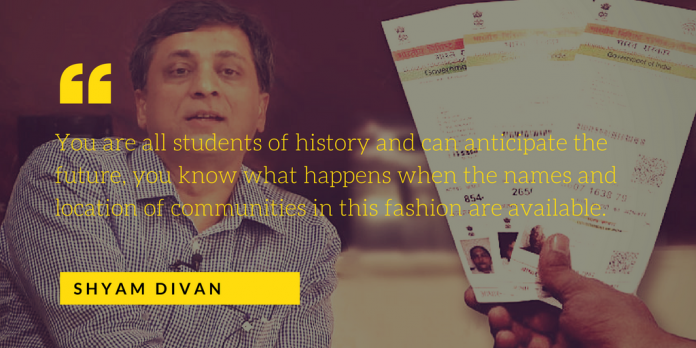
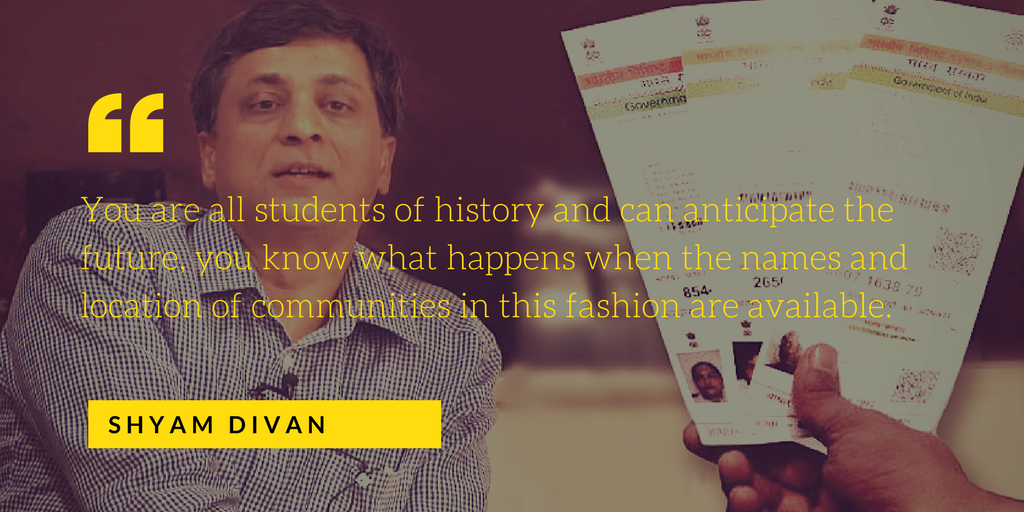
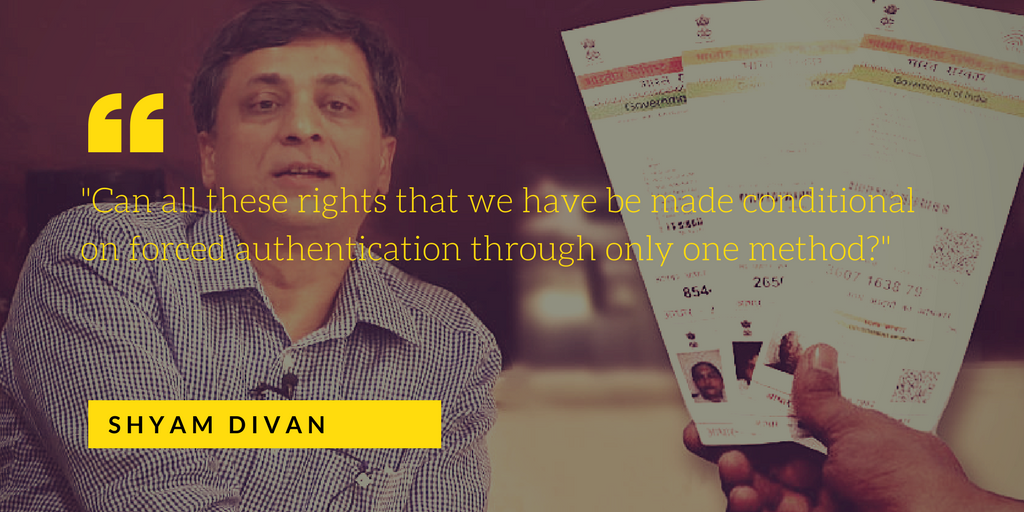
11 Statements by Shyam Divan on Aadhaar Case That Can Change The Way You Think

0

If you have been following the Aadhaar case, you must know by now that one of the Petitioner’s counsels, Senior Advocate, Mr. Shyam Divan is relentlessly fighting for the way the entire Aadhaar project has been implemented. On day 5 of the hearing Mr. Divan emphasized on 3 main arguments:

  1. Data Retention
  2. Denial by UIDAI of surveillance or tracking
  3. Good governance and rule of law

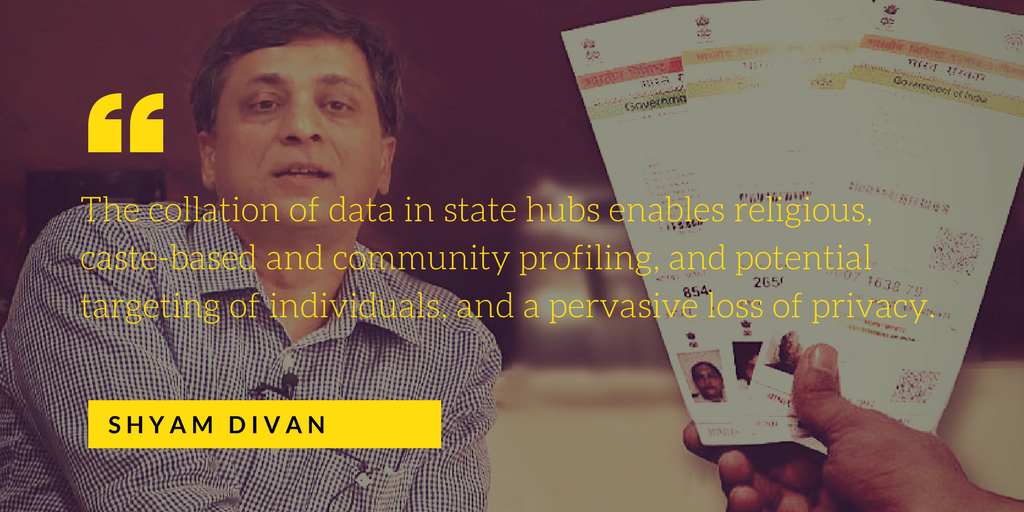
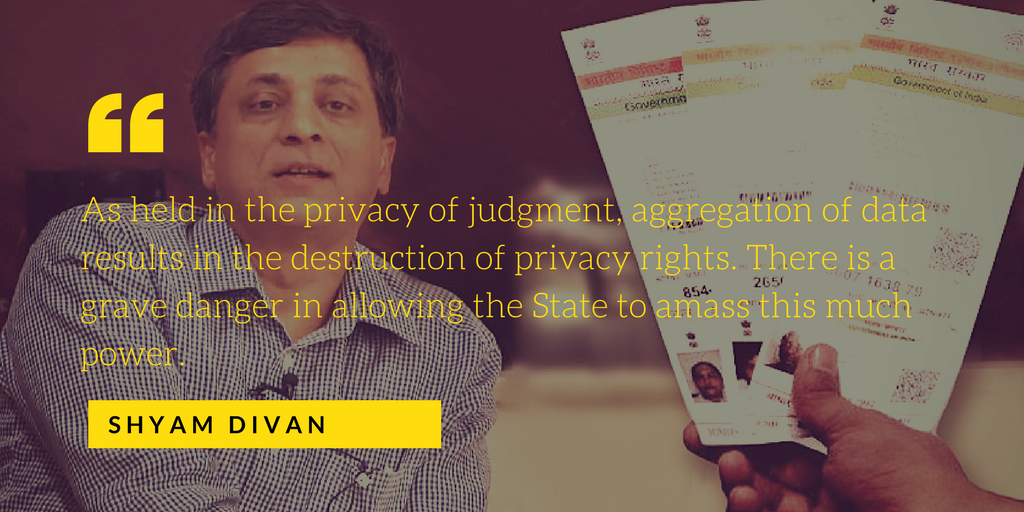
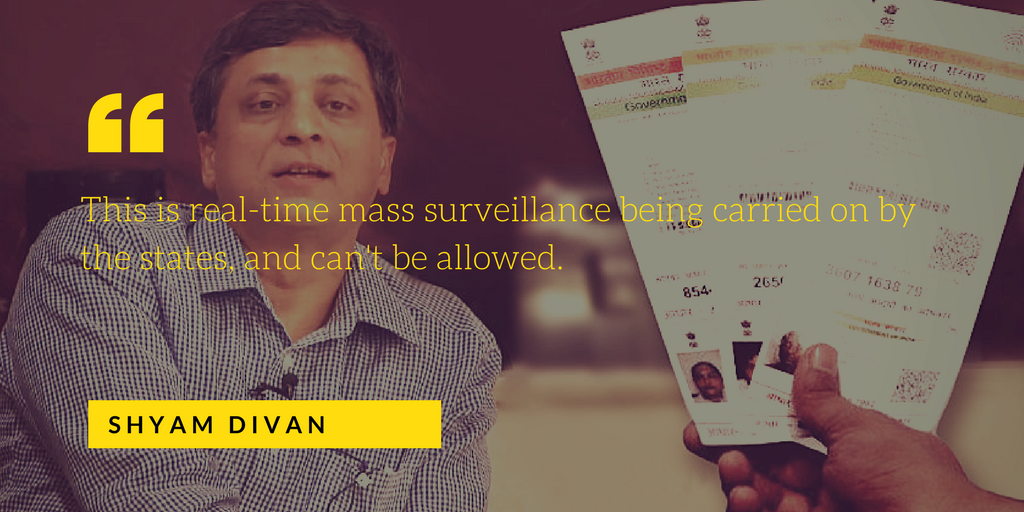
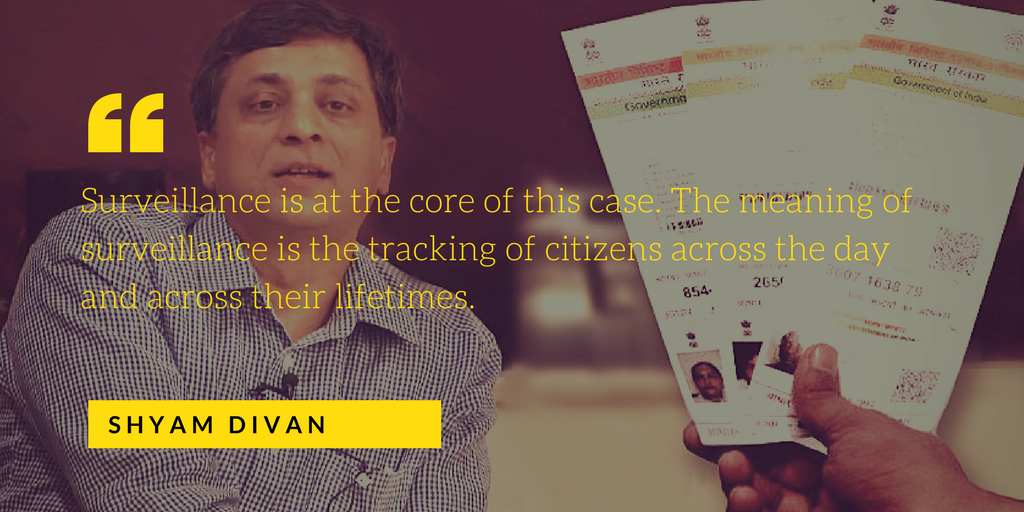
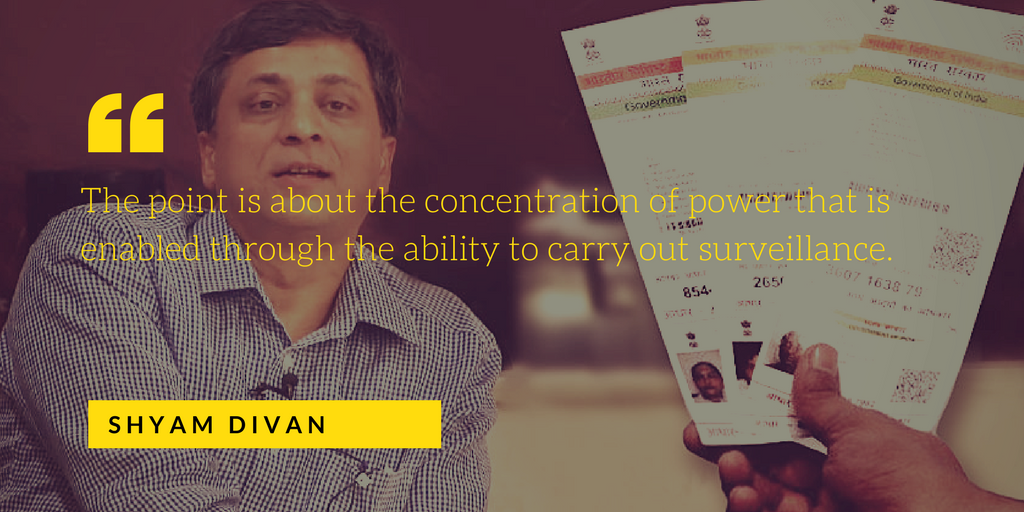
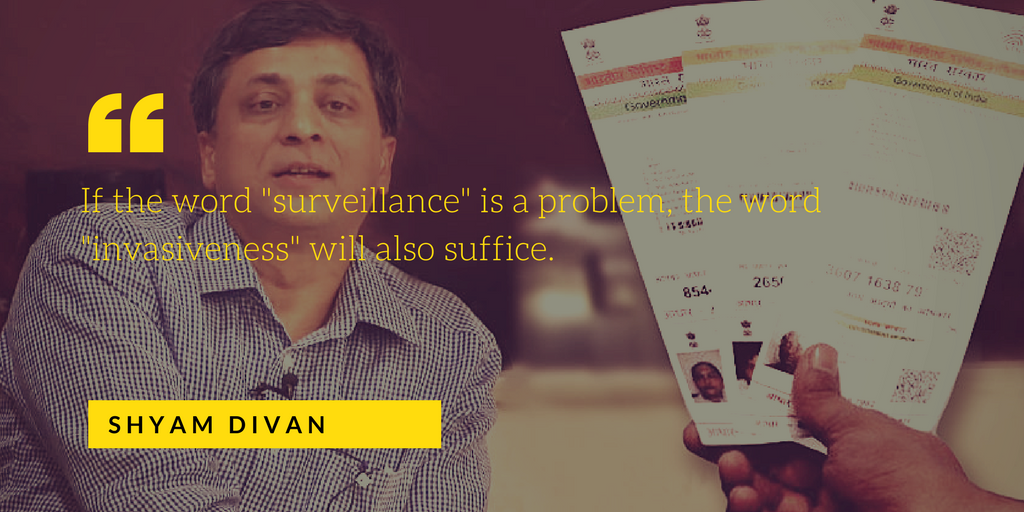
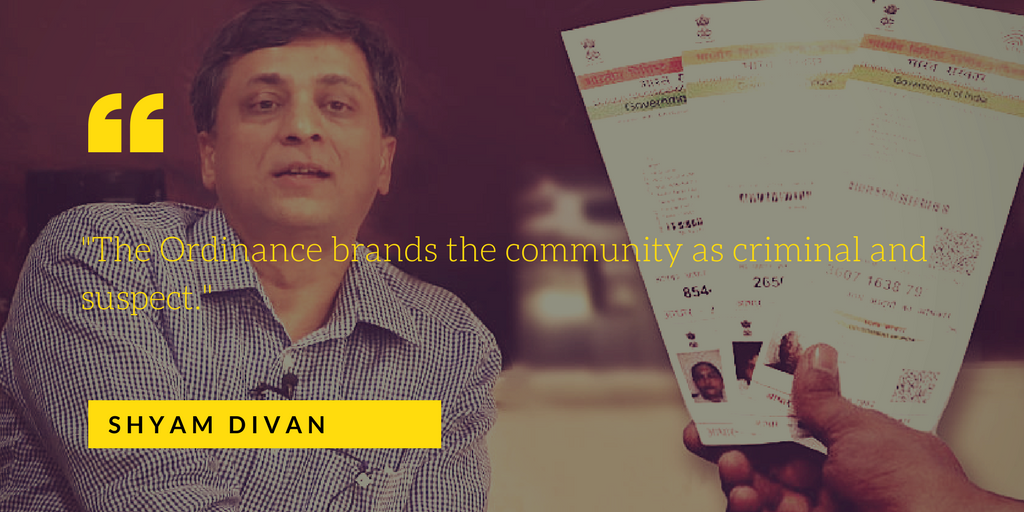
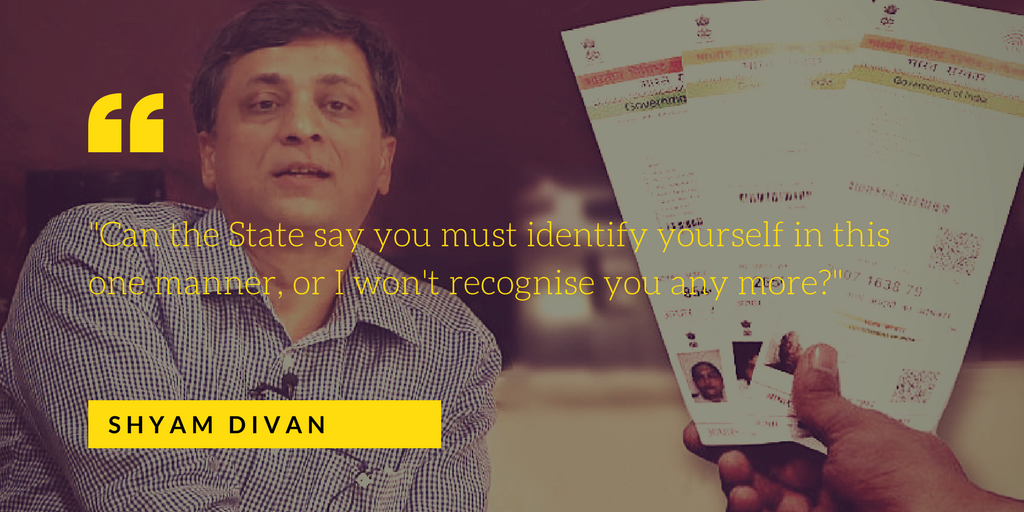
Mr. Shyam Divan on day 5 was as usual packed with some mind-boggling statements which can make anyone give a second thought about Aadhaar. Here are top 11 statements from Mr. Shyam Divan which are strong, powerful and immensely compelling :

#1 The repercussions of availability of communal/geogrophical data

#2 Potential targetting of the individuals

#3 Destruction of privacy rights

#4 Real-time mass surveillance

#5 Surveillance being the core of the case

#6 Mr. Divan on concentration of power in the hands of the government

#7 Mr. Divan on Aadhaar enabling surveillance

#8 Mr. Divan on invasion of privacy through surveillance

#9 Mr. Divan quoted Gandhi and said, “fingerprints were taken from criminals and this amounts to degradation”

#10 Mr. Divan on the requirement mandated by the government to identify yourself in only one manner and prerequisite of that procedure to require you to provide biometrics.

#11 Mr. Divan on individual and collective dignity.

Mr. Divan is undoubtedly one of the best lawyers and can be called a crusader for civil rights. After the privacy judgment, Aadhaar judgment whether in favor or against, will have a great impact on Indian legal scenario. It will be interesting to track the developments and everything that is going to unfold in the coming days. Stay tuned for more such updates on our facebook, twitter and blog https://blog.ipleaders.in/ 

background image courtesy : newsclick.in

Download Now

Raka Paul: Associate at LawNK speaks on how Diploma Course from NUJS has broadened her perspective in Business Laws

0

Raka Paul completed her 5 years B.A. LLB from Bangalore Institute of Legal Studies.

I enrolled for Diploma in Entrepreneurship Administration and Business Laws when I was in the 4th year of my college.

My experience with iPleaders was really good. I must say all the aspects of Business Law have been covered brilliantly in this course. I was always interested to do some sort of specialization in Corporate Law. Searched for various online law courses from quite a few institutes.

I came across Diploma in Entrepreneurship Administration and Business Laws in the website of NUJS. Course contents are fantastic and explained in the easiest language. Overall, I found this course based on a very logical and practical approach which will clarifies every possible doubts. I have a keen interest in IPR Law, and here I found the module on IPR has been interestingly designed. The structure of the course and the tests were very useful. The entire unit of iPleaders is very cooperative.

I was too unfortunate that I could not attend all the webinars as I was in the final year of my college. During that time I had to live a much undisciplined life because of my hectic schedule. But I still managed to complete this course in due time as it is absolutely application based. Moreover, the contents of the course material are such, that it will automatically grow an interest in you to explore the course till the end.

I would like to express my gratitude to iPleaders in this regard. Today I feel very satisfied to stand out of the crowd with a Diploma Course from NUJS along with a B.A. LLB degree at the same time. It has definitely broadened my perspective. I’ll be more than lucky if my success story inspires people to think about a little more something valuable in their life.

Download Now

Important Supreme Court Cases on Maintenance Rights

2
Cases on Maintenance Rights
Image Source - http://www.huffingtonpost.in/vandana-shah-/interim-maintenance-during-divorce-is-not-always-the-wifes-lega_a_21449406/
In this article, Hritik Sharma discusses Important Supreme Court Cases on Maintenance Rights.

Cases on Maintenance Rights

The basic Concept of Maintenance was introduced due to the situation where a spouse who is not independent financially, than the other spouse do have a responsibility to help him/her in order to make the living of the other possible and independent, as the Reason has been that the maintenance should be able to provide them to live the life as he or she was living before.

Following are the cases which have brought important changes to the laws related to maintenance.

Right to maintenance – Section 125 CrPc

Mohd. Ahmed Khan v. Shah Bano Begum

This Case’ judgement was claimed to be a milestone as it was a major step ahead of the general practice of deciding the judgement of the cases on the basis of interpretation of the personal law and also lay an emphasis on the need to implement the Uniform Civil Code. It also took a note of different personal laws and the need to give a recognition and it also addresses the issue of gender equality and perseverance in matters of religious principles.

Facts

  • The appellant-husband who was an advocate by profession was married to the respondent-wife in the year 1932, they had five children-three sons and two daughters.
  • In 1975, the appellant drove the respondent out of the matrimonial home.
  • In April 1978, the respondent filed a petition against the appellant under section 125 of the Code of Criminal Procedure, in the Court of the Judicial Magistrate Indore, asking for maintenance for herself and for her 5 children at the rate of Rs. 500 per month, in view of the professional income of the appellant which was about Rs.60,000 per year, the section puts a legal obligation on a man to provide for his wife during the marriage and after divorce too if she is not able to earn for herself.
  • Divorce Announced: In the month of November, 1978, the appellant did announced the divorce to the respondent by an irrevocable talaq and defended himself on the grounds of the Muslim Personal Law in India by stating that she had ceased to be his wife by reason of the divorce granted by him, required that the husband to only provide maintenance for the iddat period after the divorce that had not kept him under no obligation to provide maintenance for her after the completion of iddat period.
  • Iddat: The Iddat is the waiting period for a woman which must be observed, After the death of her husband or the divorce announced by her husband, before she can marry another man. The length of the iddat period is usually for three months, but in case the woman is pregnant, the period carries on until the birth of the child.
  • Supported the Petitioner: The Khan’s argument was supported by the All India Muslim Personal Law Board which argued that the courts cannot take the liberty of interfering in the matters coming under the Muslim Personal Law, contended further that it would be a violation of the Muslim Personal Law (Shariat) Application Act, 1937.
  • In 1985, After the acknowledgement of the detailed arguments, the decision was passed by the Supreme Court of India, Keeping its decision on the question whether Cr.P.C., 1973 which applies to all Indian citizens regardless of their religion, can be applied in this case.

Verdict

The then CJI, Y.V.Chandrachud upheld the decision of the High Court that gave orders for maintenance to Shah Bano under the Code of Criminal Procedure, 1973. For its part, the court did increase the sum of money to be given under the maintenance.

Whether Magistrate can grant Interim Maintenance

Savitri W/O Shri Govind Singh v. Shri Govind Singh Rawat

Under this case, the Supreme Court did come into the questions of the provisions that whether the Interpretation of the Cr.P.C. Provides the Provision for Interim Maintenance.

Facts

  • The petitioner filed a petition under section 125 of the Cr.P.C., 1973, before the Magistrate for an order against her husband directing him to pay the maintenance.
  • Thereafter, she filed another application for an interim order directing her husband to pay a reasonable sum by way of maintenance pending disposal of the main application. The Magistrate declined to take a call for an interim order due to reason that, there were no express provisions given Under the Code enabling a Magistrate to pass such order.
https://lawsikho.com/course/certificate-criminal-litigation-trial-advocacy
click above

Verdict

  • It has already been realized that there are no express provisions in the Code which give the authority to the magistrate to direct an interim order directing payment of maintenance pending disposal of an application for maintenance, and on the other hand, the code does not also expressly prohibits the making of such an order. The question is that whether such a power can be implied to be vested in a magistrate having regard to the nature of the proceedings under Section 125,
  • Under the Section: The Section 125 of the code confers power on a magistrate to direct a person having sufficient means but who neglects or refuses to maintain:
  1. His wife, unable to maintain herself; or,
  2. His legitimate or illegitimate minor child, whether married or not, unable to maintain itself; or,
  3. His legal or illegitimate child (should not be a married daughter) who did attain majority, and where such child is because of any physical or mental abnormality or injury is not being able to maintain itself; or,
  4. His father or mother, unable to maintain himself or herself, upon proof of such neglect or refusal, to pay a monthly allowance for the maintenance of his wife or such child, father or mother, as the case may be, at such monthly rate not exceeding five hundred rupees in the whole as such Magistrate thinks fit. Such allowance shall be payable from the date of the order, or, if so ordered from the date of the application for maintenance.

Interpretation

The above provisions’ interpretations show that they are intended to provide for a preventive remedy for securing payment of maintenance which can be granted quickly and in deserving cases. In the view of foregoing it is the duty of the court to interpret the provisions in Chapter IX of the Code, in such a manner that the decision given by the court keeping in mind about the enacted code on whose behalf the decision is being taken, would not defeat the very object of the legislation.

  • In the absence of express prohibition, it is appropriate to construe the provisions as conferring an implied power on the magistrate to direct the person against whom a petition is being filed under Section 125 of the code to pay some amount of money by way of maintenance to the applicant pending final disposal of the application.
  • It has been acknowledged to be quite common that applications made under section 125 of the code also take several months for being disposed of finally, and regularly to Reap the benefits of the proceedings under section 125, the applicant should be alive until the date of the final order and that the applicant can do in a larger number of cases only if an order stated for payment of interim maintenance is passed by the court.
  • Conclusion: The court concluded by mentioning that the Magistrate may insist upon an affidavit being filed by or on behalf of the applicant concerned stating the grounds in support of the claim for interim maintenance to satisfy himself that there is a prima facie case for making such an order.

What Amount will be reasonable for the Wife as Maintenance

Kulbhushan Kumar vs Raj Kumari & Another

The Maintenance was given to wife was determined by the court as the decision was taken keeping in mind about the situation, as the wife was receiving money from her father.

Facts

  • The appellant-husband and the respondent-wife were married in the month of May 1945. Sometime later, the husband did not want to live with the wife, and there was a complete estrangement between both of them. A daughter was born in August 1946.
  • In 1951, the respondent sent a registered letter claiming maintenance, on the behalf of herself and the daughter, and by the year 1954, she filed the suit for maintenance.
  • The High Court took into account of the fact that the appellant was a Reader in Medicine receiving a salary of about Rs.700 and more than Rs.250 per month by way of private practice. The date of the institution of the suit was fixed by the High Court for the payment of the maintenance to the respondent.
  • The High Court adjudged, fixed the maintenance payable to the respondent, under the Section 23(2) of the Hindu Adoptions and Maintenance Act, 1956, at Rs.250 subject to a limit of 25% per month of the income as determined by the income-tax authorities, and Rs. 150 as the maintenance of the daughter.
  • In this appeal to the Supreme Court by the respondent on the question raised for the allegiance of the maintenance payable to the wife.

Verdict

The Court Held that:

  1. Even if the wife had received some money from her father regularly, it can only be recognised as a gift, not as her income. Therefore, it could not be taken into an account under Section 23(2)(d) of the Act in determining the amount of maintenance;
  2. There was no evidence of her inheriting any property of her father on his death;
  3. The amount payable by way of maintenance depends on the facts of each case and the Judicial Committee, in Mt. Ekradeshwari v. Homeshwar, did not lay down any principle relating to the proportion of the husband’s ‘free-income’ which would be payable as maintenance to the wife.

In the circumstances of this case, no exception could be taken to the amount fixed by the High Court as well as the date, from which the maintenance would be claimable. In determining the limit at 25% of the ‘free income’ of the appellant, amounts payable towards income tax, compulsory provident fund, and other expenses for maintaining the car for professional purposes as allowed by the income tax authorities should be allowed as deductions from the husband’s total income.

Whether the wife is able to take the maintenance where her marriage is bigamous in nature

Badshah v. Urmila Badshah Godse and Another

The Supreme Court determined that a victim of a bigamous marriage is entitled to maintenance.

Facts

  • The respondents had stated in the petition that respondent No.1(the wife) was married to Popat Fapale. However, by the year 1997, she got divorced from her first husband. After getting divorced from her first husband in the year 1997,
  • By the Year 2005, she resided at the house of her parents. On demand of the petitioner for her marriage through mediators, she married him in the month of February 2005, as per Hindu Rites and customs. After her marriage, she resided and cohabited with the petitioner. For the first 3 months, the petitioner cohabited and maintained her nicely.
  • Get to Know about the Truth: After about three months of her marriage with petitioner, one lady Shobha came to the house of the petitioner and claimed herself to be his wife. On inquiring from the petitioner about the said lady Shobha, he replied that if she wanted to cohabit with him, she should reside quietly. Otherwise, she was free to go back to her parent’s house. When Shobha came to the house of petitioner, respondent No.1 was already pregnant from the petitioner. Therefore, she tolerated the ill-treatment of the petitioner and stayed along with Shobha. However, the petitioner started giving mental and physical torture to her under the influence of liquor. The petitioner also used to doubt that her womb is begotten from somebody else and it should be aborted. However, when the ill-treatment of the petitioner became intolerable, she came back to the house of her parents. The Respondent No.2, Shivanjali(Daughter), was born in the month of November 2005. After facing such Humiliation and Atrocities, the respondents claimed maintenance for themselves.
  • Denial by the Petitioner-Husband: While, the petitioner given a written statement, where he denied his relationship with the Respondent No.1 and Respondent No.2, as his wife and daughter respectively, he stated that he never entered into any matrimonial alliances with the Respondent No.1 in the month of February 2005 as claimed by the Latter, and even alleged that the respondent no.1 is trying to blackmail him, He also denied the cohabitation with the respondent No.1, and stated that he is not the father of the respondent No.2 either.
  • According to the petitioner, he had married Shobha on 17 February 1979 and from that marriage, he had two children i.e one daughter aged 20 years and one son aged 17 years and Shobha had been residing with him ever since their marriage. Therefore, respondent No.1 was not and could not be his wife during the subsistence of his first marriage and she had filed a false petition claiming her relationship with him.

Verdict

  • Based on these facts, the SC opined that there cannot be a denial of the benefit permitted in the form of maintenance to the respondent, as the petitioner is taking advantage of his own wrong,
  • As the fact to be emphasized, is that when the marriage between the respondent No.1 and the petitioner was solemnized, the petitioner had kept the respondent No.1 unknown about his first marriage. A false representation was given to respondent No.1 that he was single and was competent to marry respondent No.1. In Such Circumstances, can the petitioner be allowed to take any advantage any wrong done by him and turn around to say that respondents are not entitled to maintenance by filing the petition under Section 125, Cr.P.C. as the Respondent No.1 is not “legally wedded wife” of the Petitioner?
  • The Answer is Negative, as the purpose of Section 125 Cr P.C., respondent No.1 would be treated as the wife of the petitioner, going by the spirit of the Section 125 Cr.P.C.

Whether a wife has a right to get maintenance from her husband who is already divorced?

Shabana Bano v. Imran Khan

In this Case, the Supreme Court did come across the situation where the wife after getting divorced from her husband appeals for Maintenance.

Facts

  • The Appellant Shabana Bano was married to the respondent Imran Khan according to Muslim rites at Gwalior in the month of November in 2001.
  • Demand for the Dowry: According to the appellant, at the time of marriage, necessary household goods to be used by the couple were given. However, despite this, the respondent-husband and his family members treated the appellant with cruelty and continued to demand more dowry.
  • Threatening the Appellant: Sometime After, the appellant became pregnant and was taken to her parents’ house by the respondent. The respondent threatened the appellant that in case his demand for the dowry is not met by the appellant’s parents, then she would not be taken back to her matrimonial home even after delivery.
  • Appellant delivered a child in her parental home. Since even after delivery, respondent did not think it proper to discharge his responsibility by taking her back, she was constrained to file a petition under Section 125 of the Code of Criminal Procedure against the respondent in the Court of Family Judge, Gwalior. It was averred by the appellant that respondent has been earning a sum of Rs. 12 thousand per month by doing some private work and she had no money to maintain herself and her new-born child. Thus, she claimed a sum of Rs.3 thousand per month from the respondent towards maintenance.

Verdict

  • The court did hold that according to the Section 20 of the family act, which makes the situation crystal clear that the provisions of the Act shall have overriding effect on all other enactments in force dealing with the issue of maintenance,
  • The appellant’s petition under Section 125 of Cr.P.C. would be maintainable before the Family Court as long as the appellant does not remarry.
  • The Quantum of Maintenance which will be awarded, according to the Section 125 Cr.P.C. cannot be restricted for the Iddat Period Only.


LawSikho has created a telegram group for exchanging legal knowledge, referrals and various opportunities. You can click on this link and join:

https://t.me/joinchat/J_0YrBa4IBSHdpuTfQO_sA

Follow us on Instagram and subscribe to our YouTube channel for more amazing legal content.
Download Now

Bhargav K.S. – A 2nd year LLB student speaks on how NUJS Diploma Course was of great help for him

0

Currently, Bhargav K.S is pursuing LLB 2nd year.

So far my experience with iPleaders was good enough while dong the course on Diploma in Entrepreneurship Administration and Business Laws. I came to know about this course from an article in Lawctopus, I have gone through the course modules and found it very interesting. Enrolled it with an intension that it will give me an extra mileage to my career after I’ll complete my degree in LLB.

I was only 19 years old and was probably too young to get enrolled for this course as I did not have any exposure to Law then. But after the successful completion of the course it gave me loads of confidence. I am very happy with what I have scored in the exam. It altogether gave me a very new perspective. In this course the contents on Business Laws are brilliant; webinars are very helpful and informative. The study materials are exceptionally good and it had clarified lot of my doubts. The module I liked most is ‘Arbitration and Dispute Resolution’.

The entire team of iPleaders, be it customer service or technical support, all of them are very helpful and prompt. I am planning to enrol for Certificate Course in Real Estate Laws from NUJS soon hoping to enjoy the whole process once again the way I did while doing the diploma course.

Undoubtedly, if this course can give so much value addition to my knowledge and career as a student or as a fresher, then think of how it can work on the professionals who have vivid exposure in the field Entrepreneurship or Laws? I got an internship with G.P.R legal Solutions. I’m really thankful for that. I’ll not only refer this course, but will advice the Law aspirants to take this course as an opportunity. It’s immensely helpful.

Download Now

Rakesh Sharma: Managing Director of Dhanam Financial Services speaks on how NUJS Diploma course helped him

0

Rakesh Sharma is a legal professional and a Certified Financial Planner. He was working as a Chief Manager, Agricultural Finance with Kotak Mahindra Bank when he enrolled for NUJS Diploma in Entrepreneurship Administration and Business Laws.

Over here, Rakesh Sharma shares his experience on how Diploma Course with NUJS has helped him.

I have done B.Com and LLB. Currently, I have set up my own business and working as a Financial and Legal Consultant. While working with Kotak Mahindra Bank I was looking for an online course with the latest valuable contents to gain my knowledge in Business Laws. Came to know about NUJS Diploma in Entrepreneurship Administration and Business Laws after I did a search on Google.

Course contents are truly insightful. I am extremely thankful to the team iPleaders, the entire unit working behind this great platform. The course contents are excellent and very easy to understand, very practical approach & webinars are very informative which gave me a lot of clarity. All the modules have been brilliantly designed, however, with my few years of experience; I personally felt that the module on arbitration needs more updation. Provision of downloading options for course materials will be of great help.

Right now I am successfully running my own business as a Financial and Legal Consultant. This course definitely contributed a refined understanding to my knowledge for business laws. I’ll definitely refer this course to others.

Download Now
logo
FREE & ONLINE 3-Day Bootcamp (LIVE only) on

How Can Experienced Professionals Become Independent Directors

calender
28th, 29th Mar, 2026, 2 - 5pm (IST) &
30th Mar, 2026, 7 - 10pm (IST).
Bootcamp starting in
Days
HRS
MIN
SEC
Abhyuday AgarwalCOO & CO-Founder, LawSikho

Register now

Abhyuday AgarwalCOO & CO-Founder, LawSikho