I am an Associate Member of the Institute of Company Secretaries of India with 5+ years of experience. I am working as Senior Associate with S. C. Sharada & Associates, a Company Secretary Firm which offers Company Secretarial and Legal Consulting Services to entrepreneurs, start-ups, mid-size and large companies in their various growth phases across sectors viz. IT, ITEs, e-Commerce, retail, healthcare, education, engineering, manufacturing, not for profit etc.
All the modules of the course are amazingly designed, with the emphasis more on the practical knowledge. I have Life-time access to the course, however, would expect iPleaders to keep on updating the course details as per the industry standard as it’s too dynamic. Being a Company Secretary, I personally come across too many changes every day.
While working in my present organization, one of my senior was very insistent to me to do this course as he also did the same which has helped him a lot. All that I learned from Diploma in Entrepreneurship Administration and Business Laws is very relevant to me and it helps me in my practical work every day. I refer the course materials whenever there is a requirement. It gives a lot of clarity.
This course uses very simple and easy to understand contents which I’ll surely recommend to all those who wish to enhance their business law knowledge.
In this article, Hritik Sharma discusses how to lodge a complaint against electricity theft.
Introduction
Theft of electricity is the criminal practice of stealing electricity. It is a crime and is punishable by fines and/or incarnation. It belongs to the non-technical Losses.
Non-Technical Losses- Non-specialized losses which are caused by the activities of the outer influence framework and comprise fundamentally of Electricity Thefts and as well as by non-payment of bills by the customers.
As Due to the increment in the theft of electricity, India is on the run of losing billions of Rupees, in the year 2012, the World Bank assessed, that the electricity theft diminishes, India’s GDP by approximately 1.5%. An investigation by NDTV India also presumed that 40% of the electricity in India is unpaid.
How to report electricity theft
The Electricity Act, 2003
The offences and penalties related to Electricity Thefts are regulated under the Part 14 of the Electricity Act, 2003;
What constitutes Theft of Electricity – Section 135 of the Electricity Act,
Tapping Wire: – By Causing or Making Overhead or Underground Connections(For Instance Tapping Under Water Lines or Cables); or,
Tampering Meter:- Which can be done by Simply Installing or Using a Tampered Meter, or a Current Reversing Transformer, Loop Connection or Any other Device or Method which interferes with the Accurate or Proper Calibration, Registration, or Metering of the Electric Current or Otherwise Which results in a way where the electricity is stolen or wasted; or,
Damaging the Meter:- Damaging or otherwise Destroying of an Electric Meter, Equipment, or Apparatus, causes or allows any of them to be at the stage of being damaged which can be the reason of interference with the accurate metering of the electricity; or,
Usage:- Usage of electricity through a disturbed or a tampered meter; or,
Unauthorised Use:- The Usage of electricity for the accomplishment of other means, other than the purpose for which the usage of electricity is authorised.
Punishment
Confinement – extends to three years, or
Fine – Applicable, or With Both of them.
Conditions for Punishment and Fine: where the load abstracted, consumed or used or attempted abstraction or attempted consumption or attempted use-
The Usage which equals to or is less than 10 kilowatts,
On the account of First Conviction, the fine imposed shall be equal to the three times (not less than 3 times) of the financial gain due to the theft of electricity; and,
On the account of the Subsequent or Second Conviction the fine imposed shall be equal to the 6 times(not less than 6 times) of the financial gain due to the theft of electricity; and,
The Usage which is of more than 10 kilowatts,
On the Account of the First Conviction,
Confinement:- No Confinement;
Fine:- At least 3 times of the financial gain due to theft of electricity; and,
On the Account of Second or Subsequent conviction,
Confinement:- At least for 6 months to 5 years; and,
Fine:- At least 6 times of the financial gain on account of such theft of electricity; and,
If in the case of the second and subsequent conviction of a person where the load Consumed is more than 10 kilowatt, such person shall be debarred from getting supply or electricity for that period from any other source or generating station, for at least 3 months to the maximum period of two years.
click above
What steps can your Electricity supplier take on a complaint of electricity theft
Any Officer of the Supplier can be given an authority on the Behalf of the State Government may
Enter or Break Open and Conduct an Inspection, or Conduct a Search at any place or premises in which he has a reason to believe that the electricity is being or has been used in an unauthorised manner;
Conduct a search, seizure and remove all certain devices, instruments, wires and any other kind of article which has been or is being used for conducting unauthorised use of electricity;
Examine or seizure of any books of accounts or documents which he believes that such documents will be useful for any further proceedings in respect of the offence and allowance of making of copies of the seized documents;
The Place where the Search is being done, should be done under the presence of the Occupant of that place or any other person shall remain present on his behalf and a list shall be made which consisting of all the things seized in the course of the search and shall be delivered to the occupant or person who shall sign the list. Note: Between the Time of Sunset and Sunrise, no Inspection, Search and Seizure of any Domestic Places or Domestic Premises shall be conducted, except in the presence of an adult male member of the occupying such premises.
Punishment for committing theft of electric lines and materials
The Person is Said to be have committed the theft of electric lines and materials, Whoever with a Dishonest Intention;
Use of Means:- Of the Electric Wires and Lines, Without the Consent of the Supplier or the owner, the person does it by cutting or removing or taking away or transfers any electric line, material or meter from a tower, pole, or from any other installation or from a place of installation where it is legally or rightfully situated; or,
Possession:- Of Electric Lines and Wires, Without the Consent of the owner, and keeps it under his premises for his own gains;
Transportation:- Of the Electric Lines and Wires, Without the Consent of the owner by loading or carrying from one place to another for its own profit.
Punishment:-
Confinement:- 3 years (Maximum);
Fine:- Applicable; or Both.
(2). In the Situation of Second or Subsequent conviction,
Punishment:-
Confinement:- 6 months to 5 years;
Fine:- 10 Thousand Rupees.
Punishment for receiving stolen property – Section 137
Whoever, with a dishonest intention, gets any stolen electric line or material knowing or having reasons to believe that it is a stolen property.
Punishment
Confinement:- 3 years(Maximum); or, Fine:- Applicable, or Both.
Aiding and abetting power theft
As Mentioned in Section 150. Of the Electricity Act, 2003.
Whoever abets by the way of conspiring, instigating, or Engages with one or more persons in an offence of Electricity Theft Shall be Punished. The punishment is according to the Punishment provided in the Indian Penal Code.
If any Officer or any other employee of the board or the supplier enters into an agreement to do, or to abstain from doing, or conceals any act or thing related to the Electricity Theft, Shall be liable for;
Punishment–
Confinement- up to 3 years; or,
Fine- Applicable, or both.
If any person Acting as an Electrical Contractor, Supervisor or Worker abets the Commission of Electricity Theft and on his conviction for such act, should get his licence cancelled by the licensing authority.
Cognizance of the Electricity Theft and Further Investigation done by the Police Authority
As the Section. 151 explains the Instances when the Police have to recognise the Offence of Electricity Theft.
Notify the Police Authorities:- The Clause 1, states that the Police will notice the offence of Electricity Theft, when a complaint in writing is submitted to them by the Appropriate Government or the Appropriate Commission or any of their officer which are authorized by them or a Chief Electrical Inspector or an Electrical Inspector or an Authorized Officer of Licensee or Supplier or a Generating Company, and, also the Complaint for taking Cognizance for the offence of Electricity theft can also be provided to the Appropriate Court by the Authorised Personnel as mentioned above..
Beginning of the Investigation:- After the Complaint is Lodged, the police will begin with its investigation, according to the general law applicable to the investigation of any complaint, and shall have all the powers as available under the Code of Criminal Procedure, 1973.
Filing of Report to the Court:- After the Investigation, the report will be forwarded along with the complaint filed to the court for trial.
Compounding of the Offence of Electricity Theft
According to the Section. 152, a person who has committed the offence of Theft of Electricity, can give a sum of Money by way of compounding of the offence to any officer who is authorised to collect that sum of money will collect them.
Here is the Illustration as specified in the Table Below:
Serial No.
Nature Of Service
Compounding Amount
1.
Industrial Service
Twenty Thousand Rupees
2.
Commercial Service
Ten Thousand Rupees
3.
Agricultural Service
Two Thousand Rupees
4.
Other Services
Four Thousand Rupees
After the Payment of the certain sum of money is submitted, any person in custody in connection with the offence shall be set free and no proceedings shall be instituted or continued against such person in any criminal court.
Indian Penal Code, 1860 on Electricity Theft
In the case of Mosmat Swaran @ Swaran Manraw v. The State of Bihar, the Patna High Court stated for the Section 379, IPC, 1860 that– “Electricity theft cannot be considered to be a Movable Property. Thus, there cannot be theft thereof under the meaning of the Section 379-IPC, 1860.”
It is a theft as statutorily defined previously under section 39/44(now under section 135-136 of the Electricity Act,2003)of the Electricity Act, 1910 and basically the Section 379 IPC is referred only for the purposes of the punishment that is to be given, it is not a substantive offence punishable under the Section 379 of the IPC.
Offence of Electricity Theft – Bailable or Non-Bailable.
Now, According to the Section 151B, The Offences Explained in Section 135 to 140, in which the offence of Electricity Theft is explained and the offence of Abetment mentioned under the Act, will be Cognizable and Non-Bailable Offence.
How to Lodge Complaint against ongoing Electricity Theft
In order to Lodge a Complaint against Electricity Thefts, one can go to the nearest local offices of their respective electricity providing board/corporation in your respective states.
As there are different Electricity controlling and providing board, thus, their ways of lodging a complaint is different in each and every state, Like in Mumbai, as their Electricity providing board is known as BEST(Bombay Electric Supply and Tramway Company Ltd.), they can log on to their website.
Now, on the website you can fill details to file a complaint:
Full Name;
Address;
Building No./Floor;
Meter No./Adjacent Meter No./Account No.(if any);
Your Area of Suspect; and,
Any Relevant Additional Information.
Next is the Details of the informant, that means that not only the aggrieved party can file the complaint, it is for anyone who notices such thefts and can file a complaint against the same.
Complaint Description/Address(where the theft is taking place);
Whereas, there is also a provision for the ones who will be informing about the electricity thefts to their respective power corporations/boards respectively as it is an initiative to enclose the losses suffered by the electricity board.
Recently, the Nagpur MSEDCL announced for the 10% incentive for informing about the power theft.
Similarly, in Tamil Nadu, the Tamil Nadu Electricity Board has announced, about the 20% initiative to the informer from the fined amount that is maximum of rupees 20,000.
And even BEST, the Electricity board from Mumbai is providing 1% of immediate Monetary reward for the successful information given and subsequently, the 5% after the successful raid.
Details of the Electricity Boards of the Respective Cities for Lodging Complaints against Electricity Thefts.
Here are the websites as follows to report a Complaint against the Electricity Thefts;
The Investigation and The Enforcement under the Electricity Act, 2003
After the Filing of the Complaint against the Person who is indulged in the electricity theft, then the Procedure of Investigation is executed:
Assessment:
According to The Electricity Act,2003;
Section 126,
Here Section 126 explains the duties and the procedure used for assessment by the Assessing Officer;
Primary Assessment: Here the Assessing Officer will conduct an assessment of any place or premises, in which the inspection of the particular equipment, gadgets, machines, devices found connected or used, and as well as the inspection of the record maintained by the person will be done. After the end of the assessment of that particular place and person, if the assessing officer comes to a conclusion stating that such person was indulged in the unauthorised use of electricity, then he shall provisionally make an assessment to the best of his judgement that the electricity charges payable by such person or by any other person benefited by such use.
Issuance of an Order: The Order for a further assessment will be served upon the person in occupation or in possession or in charge of the place or premises.
Raising Objections: The person on whom an order has been served, is entitled to file any objections, against the regulatory assessment done by the assessing officer, who after giving a reasonable opportunity of hearing to such person, pass a final order of assessment within thirty days from the date of service of such order of regulatory assessment, of the electricity charges payable by such person.
Deposit: Such Person served with the order of assessment, may accept such assessment and deposit the amount assessed with the licensee within seven days of service of such assessment ordered upon,
Duration of Unauthorised Use: If the Assessing officer reaches the conclusion that unauthorised use of electricity has taken place, the assessment will be made during the entire period during which such unauthorized use of electricity has taken place and if however, the period during which such unauthorized use of electricity has taken place cannot be ascertained, such period shall be limited to a period of twelve months immediately preceding the date of inspection.
Section 127- Filing Appeal to the Appellate Authority.
Process for Filing Appeal: Any Person aggrieved by the final order which was made under section 126., may within 30 days of the issued order and to file an appeal in such form, which is verified by the State Commission as well as accompanied by such fee, to an appellate authority.
The Condition for Appeal: No Appeal Against an order of assessment made under the sub-section (1), shall not be entertained, unless the half of the assessed amount is deposited in cash or through a bank draft with the licensee and the evident document of such deposit has been enclosed along with the appeal.
Disposal: of the appeal after hearing the parties and passing the appropriate order and send the copy of the order to the assessing officer and the appellant.
Instances where the Offenders were Penalised for Electricity Theft
In Delhi, On May 14, 2013, The Accused Manoj Kumar was Held liable for the Offence of Electricity theft where a heavy fine of whereby he was directed to undergo Rigorous Imprisonment for a period of three years and to pay a fine of Rs. 6.72 Crores and in default of payment of fine to undergo simple imprisonment for a period of nine months, other than this the Appellant was debarred from getting any supply of electricity for a period of one year and further directed to pay civil liability assessed at Rs.2.10 Crore, which was to be payable with interest at the rate of 6% per annum from the due date of bill, that is, 7th January, 2008 till its realization.
In the State of Punjab,the Punjab State Power Corporation Limited (PSPCL), charged fine of Around Rs 1.5 crore realised on 500 households, commercial and agricultural consumers which were caught stealing electricity.
In the State of U.P., the court found Ram Singh, a resident of Aligarh, found guilty of pilfering electricity by tampering with the energy metre installed at his commercial establishment, The fine which was charged by the court was around Rs.2 lakhs and Simultaneously, the court has awarded a jail term of 2 years.
In South Delhi, Two Men was found guilty by the Court for the offence of Electricity Theft, and Rs. 25 Lakh of the amount was charged as a fine on them with an Imprisonment Sentence of 3 years.
Solution to Electricity Theft.
To curb the electricity theft, the focus is to be on the quality, quantity, reliability and the timings of the electricity supply in the rural areas.
While, the Union power ministry has also taken initiative, and they are suggesting a rationalization of the connection cost for the rural areas, to achieve the level of 100 percent metering across the nation.
There is also an introduction of a scheme named “Deen Dayal Upadhyaya Gram Jyoti Yojana(DDUGJY)”, under this scheme they have promised to provide free electricity connections to the people who are below poverty line.
The Central Government has already been pushing the idea of using “ the smart meters”- these are the advanced electronic measurement and control devices with two-way communication between the meter and the central system.
LawSikho has created a telegram group for exchanging legal knowledge, referrals and various opportunities. You can click on this link and join:
Working for the right organization is critical to an individual professional’s career growth; and general well-being. The importance of finding the right fit is further accentuated when you work in relatively lean teams of similarly skilled professionals.
In any recruitment/job-hunt process, the most important stakeholders are the job seeker and the employer, but often they are relegated to the background by intermediaries. Despite having access to multiple job boards, networking sites, recruitment agencies and consultants, job seekers grapple with obstacles such as the lack of transparency, the lack of control over the process, the absence of discreetness/confidentiality, and administrative inefficiencies, among other issues which generally leads to a lot of frustration.
In this article, we take a look at some of the problems that lawyers face in their job hunting process.
Overload of Choice
Today, there are a number of online job boards, blogs, social and professional networking platforms, which lawyers may use to find jobs. With a variety of options in front of us, it’s easy for anyone to get distracted and not know where to focus their energy or effort. There is a general aversion that law firms have with respect to putting out vacancies on a public forum and firms generally tend to place little, if not, no reliance on generic job boards/networking sites. Due to this, we often have a tough time identifying genuine job posts by actual employers and applying to them. Apart from these issues, most job-boards or networking sites don’t necessarily cater to the specific requirements of the legal fraternity.
One of the fundamental issues with job boards and networking sites is that they don’t always necessarily have accurate information. Whether its details about a job description or the person who’s posting it, the legitimacy is more often than not, questionable.
Inaccurate Job Descriptions
In the legal profession, we often tend to rely on the accuracy of job descriptions to help us decide whether or not a job would be an ideal fit for us, with respect to our skill-sets and choose to either apply for the role or opt against it. However, due to generic and uninformative job descriptions found on job boards/networking sites, we may not be able to assess whether or not a vacancy is genuine and relevant for us.
Furthermore, having a lengthy job description that is chock-a-block with a ton of information, does not guarantee that we will be able to decipher what is important to a potential employer and this may also act as a deterrent, rather than an incentive to apply. Whereas, if a job description is too short and does not convey what is required, we may choose to send out an application without actually understanding the nuances of a role, going on the assumption that since we fit the minimum requirements, there’s a good probability that we might be successfully recruited, which may be untrue and not really work in our favour.
Between irrelevant jobs (sometimes not even from the same discipline!), ‘generic job’ posts, and overlapping jobs posts where the same job is posted by the organization and a number of consultants, it is quite possible that a great match is simply not made because who has the time to find a needle in a haystack in the middle of our busy lives.
Lack of Information
When a job-seeker identifies a job/organization that he/she is willing to apply to, more often than not, there is not much information available publicly about the hiring process. Usually, a career’s page of an organization contains generic information with an email id, to which we, as job seekers, may send in applications, but nobody apart from persons in the organization themselves really know about the hiring process.
It is only natural that we would want to know the hiring process of an organization, so that we may be able to prepare for it better and actually be in a position to land the job, rather than just being clueless/assuming the steps that need to be taken and acting on it.
Radio Silence & No Feedback
Once a job application has been sent, the probability to not receive a response is greater than actually receiving one. It seems to have become standard practice that we, as job-seekers, do not receive a response if we have been rejected, or face a period of radio silence, i.e. no acknowledgement of receipt of the application, no intimation of the status of our application etc., which seems rather unfair to say the least.
The frustration involved in not receiving a response from an employer, be it negative or positive, is definitely real and understandable. Without feedback and any sort of intimation, it often becomes difficult for us to send in job applications elsewhere, because we may spend too much time waiting to hear back from a particular employer. This, in turn, could lead to the other vacancies being filled in the interim. We may not even submit applications elsewhere, due to fear of similar treatment and disappointment.
Unstructured Resumes
Before applying for a role, we generally tend to take a few minutes (if not hours), to re-draft our resumes and tailor-make them for the position we’re looking to apply to. Resumes are a reflection of everything we’ve accomplished professionally, on paper, and it’s often hard to articulate it in a manner, which is enticing to employers, while managing to showcase strengths, work experience, why we’re looking to move or why we believe, we may be perfect for the role, etc..
With no guide or industry standard to work with, it may end up taking a significant amount of someone’s time to be able to firstly, draft a resume and include all information they think is relevant and secondly, to make it presentable. However, this still does not guarantee that a job-seeker will see or get the desired result, i.e. get a favourable response or land a job successfully with a potential employer.
Consultants
This brings us to consultants. It can be argued that they eliminate the abovementioned difficulties by helping candidates and motivating them to apply for specific roles. It is hard to argue against this; but when we delved further and interacted with prolific users of such services we found out that apart from alleviating some of the obvious shortcomings of job boards and networking sites, they don’t necessarily add much value in the recruitment process.
Head-hunters may not be able to help a job-seeker in his/her job hunting journey due to their inability to offer any roles, apart from ones they currently have, which may not be what we’re looking for and secondly, due to certain restrictions placed on them by employers, such as inability to disclose the name of the employer, compensation, role they’re hiring for, etc., all the above information being something, we, as active job-seekers, would definitely want to know in order to take an informed decision by weighing the pros and cons. The opaqueness of the current system often leads to a frustrating and less than fruitful experience in most cases.
We at RecruVia – Our Attempt at a Solution
We at RecruVia ( www.recruvia.com) for instance, are trying to address the different pain points mentioned above, by providing a simple intuitive tech-based solution that caters exclusively to the needs of job-seekers in the legal services sector. RecruVia is a closed door recruitment marketplace tailor-made for the legal fraternity. We firmly believe RecruVia puts the power of information and process management into the hands of the people who really matter, while not colouring any opinion or judgment with a recruitment agency’s inherently conflicted views/suggestions, etc. The platform only intelligently but impartially streamlines the potentially overwhelming flow of information.
For a candidate, it may take 15 minutes to initially set up a profile, but in return, RecruVia’s algorithms will match key data points in a candidate’s profile to key requirements in job descriptions posted by genuine employers who sign on with us (not consultants), so that you only see jobs that are likely to be relevant and attractive for you. As a candidate, you can then apply for a specific job opportunity directly, in a discreet manner.
Using the inputs given by candidates, the platform also auto-generates resumes in a pre-set, standardised format, which can be viewed on the platform or downloaded as well. What’s more? Candidates are in control of which employer sees their profile and when. Candidates will also receive notifications about the actions taken on their profiles by employers, which helps reduce the opaqueness and provides more transparency. Our profile creation assistance and application system is also aimed at addressing tricky cover letter points, thus making the overall application process easier.
Conclusion
Given the criticality of finding the right job/finding the right candidate and since the existing mediums to achieve this is not perfect, we believe there is space for an impartial automated platform that allows candidates and employers to directly interact with each other in real-time on a platform that gives both stakeholders the tools and information required to make the right decisions with relative ease.
We trust that our peer professionals are more than capable of making the right decision if empowered with the right information and tools.
In this article, discusses the concept of Divorce in Islam and gives an explanation from Islamic jurisprudential perspective.
INTRODUCTION
ISLAM, in its long drawn history of about 1500 years, has evolved itself into one of the greatest of all religions with over 1.8 billion followers, known as ‘Muslims’. It is considered by far to be the most misunderstood and misrepresented religion, because of the sheer ignorance of its followers. ‘Nikah’ translated to ‘marriage’ is a contract underlying a permanent relationship based on mutual consent on the part of man and woman. It is one quintessence subject that is grossly misunderstood by the preachers of Islam. Marriages are considered to be sacred, apart from being religious, to the nature, and dissolution of nikah is a “sin” as per the Holy book of Quran. Islam disapproves of divorce to a great extent, and lays down proper modes and practices of dissolution, if at all necessary. ‘Triple Talaq’ is one such practice that originated in the pre-Islamic Arabia, also known as Jahillyha Period or the Time of Ignorance. This tradition was followed during the time of first Caliph Abu Bakr and for two years during the second Caliph Umar. However, the practice was abolished with the advent of Islam and Prophet Muhammad in Arabia. Prophet was of the view that when divorce is pronounced in one sitting, be it thrice or hundred times, it has to be treated as one. Nevertheless, it is still practiced in the modern times, though it blatantly disregards the basic human rights enshrined to each and every human.
DIVORCE IN ISLAM
Divorce is known as ‘Talaq’ in Islamic Law. It is not merely a word that fascinates others, but it dissolves the purest relationship between a husband and a wife. Talaq in its original sense means ‘repudiation or rejection of marriage’, but in Islam, it means a termination of the contract of marriage forthwith.
DIFFERENT FORMS OF DIVORCE IN ISLAM
At present in the Muslim Law, there are the following distinct modes through which a marriage can be dissolved and the relationship between a husband and a wife can be terminated.
Divorce by the unilateral act of the husband
A husband can unilaterally, without the wife’s approval, give divorce according to any of the forms approved by the Muslim Law. This is known as “Talaq” (Arabic) in Islamic Law, whose literal meaning is, “taking off any tie or restraint”. The pronouncement of Talaq may be either revocable, which is an approved form of divorce, or irrevocable, which is an unapproved form. A revocable form of “Talaq” gives a “locus poenitentiae” to the man, but irrevocable form leads to undesirable consequences without giving him a chance to reconsider the question.
This type of divorce is further classified as under:
Talak-e-ahsan – ‘Talaq-e-ahsan’ is a single pronouncement of ‘talaq’ by the husband followed by a period of abstinence, known as ‘Iddat’ which is ninety days or three menstrual cycles (in case, where the wife is menstruating). If the couple resumes cohabitation or intimacy, within the period of ‘iddat’, the pronouncement of divorce is treated as having been revoked. Therefore, ‘talaq-e-ahsan’ is revocable. However, on the third pronouncement of such a ‘talaq’, the couple cannot remarry, unless the wife first marries someone else, and only after her marriage with other person has been consummated and later dissolved (either through ‘talaq’ – divorce, or death). Amongst Muslims, ‘talaq-e-ahsan’ is considered as – ‘the most proper’ form of divorce.
Talak-e-hasan – ‘Talaq-e-hasan’ is pronounced in the same manner, as ‘talaq-e-ahsan’. Herein, in place of a single pronouncement, there are three successive pronouncements in a period of three months. If after the first two pronouncements, there is resumption of cohabitation within that period, the pronouncement of divorce is treated as having been revoked. If the third ‘talaq’ is pronounced, the marriage stands dissolved, whereafter, the wife has to observe the required ‘iddat’. As against ‘talaq-e-ahsan’, which is regarded as ‘the most proper’ form of divorce, Muslims regard ‘talaq-e-hasan’ only as ‘the proper form of divorce’.
Talak-e-biddat – This is effected by one definitive pronouncement of ‘talaq’ such as, “I talaq you irrevocably” or three simultaneous pronouncements, like “talaq, talaq, talaq”, uttered at the same time, simultaneously. In ‘talaq-e-biddat’, divorce is effective forthwith. The instant talaq, unlike the other two categories of ‘talaq’, is irrevocable at the very moment it is pronounced. Even amongst Muslims ‘talaq-e-biddat’, is considered irregular.
Divorce by mutual agreement
The type of divorce is instituted by wife and is known as ‘Khula’. It comes into existence when the wife makes an offer to the husband for the termination of the matrimonial alliance, with due consideration, and the husband accepts it. Where however both the parties mutually agree to dissolve the marriage, it is known as ‘Mubaraat’. Both of these forms of divorce come into existence with the consent of both the parties, husband particularly as without his consent the divorce would be incapable of being enforced.
Judicial divorce
The marriage can be dissolved by a petition filed by either party in the qadi court to obtain divorce, but they must have compelling grounds for obtaining divorce.
CONCEPT OF TRIPLE TALAQ
“Talaq, Talaq, Talaq”, when pronounced by the husband, the marriage automatically ends right away, making both the parties free from each other. This method of giving divorce by pronouncing the word “Talaq” three times by the husband is known as “Triple Talaq” or “Talaq-e-biddat”.
It is different from the practice of “talaq-ul-sunnat”, which is considered to be the ideal form of dissolution of marriage contract among Muslims.
In the practice of talaq-e-biddat, when a man pronounces talaq thrice in a sitting, or through phone, or writes in a talaqnama or a text message, the divorce is considered immediate and irrevocable, even if the man later wishes to re-conciliate. The only way for the couple to live together is, through nikah halala – which requires the women to get remarried, consummate the second marriage, get divorce, observe a three-month iddat period and return to her husband. After the pronouncement when divorce takes place, wife becomes totally separated from the husband in terms of responsibilities and relationship.
Triple talaq has been supported by the Hanafi school of law amongst Sunni Muslims in India for centuries. Sunni Muslims, which constitute a majority of Muslims in India, are the ones who practice triple talaq, as the Shias do not recognize it.
THE HOLY QURAN ON TALAQ
As per Muslims, Quran was revealed by God to the Prophet Muhammad over a period of 23 years. Shortly after his death, Quran was completed by his companions, who had either written it down or had memorized parts of it. Caliph Usman – the third, in the line of Caliphs recorded a standard version of Quran, which is now known as ‘Usman Codex’ and is treated as the original rendering of Quran, as other different compilations had differences of perception.
‘Verses’ 224 to 227 of the Section 2 of ‘sura’ II disapproves thoughtless oaths, thereby insisting on a proper solemn and purposeful oath, carefully observed. The above verses caution husbands from making an excuse in the name of God since God looks at the intention and not mere thoughtless words. It is in these circumstances, that ‘verses’ 226 and 227 postulates, that the husband and wife, in a difficult relationship, are allowed four months to see whether an adjustment is possible. It also prescribes reconciliation, but if the couple is against it, Quran ordains, that it is unfair to keep the wife tied to her husband indefinitely. It is in such a situation that Quran suggests that divorce is the only fair and equitable course. However, it is still recognized as the most hateful action, in the sight of God.
‘Verses’ 229 to 231 contained in ‘section’ 30 of ‘sura’ II allows divorce for the reason of mutual incompatibility, but cautions the couple to not act in haste, and repent thereafter. To prevent erratic and fitful separations and reunions, a limit of two divorces is prescribed. After the second divorce, the parties must definitely make up their mind, either to dissolve their ties permanently or to live together honorably, with mutual love. Reunion is not easy after the second divorce. ‘Verse’ 230 recognizes the permissibility of reunion after two divorces. When divorce is pronounced between the two parties for the third time, it becomes irreversible, until the woman marries another man and he divorces her (or is released otherwise from the matrimonial tie on account of his death).
As per the ‘Verses’ 232 and 233 of ‘section’ 20 of ‘sura’ II, the termination of the contract of marriage is treated as a serious matter for family and social life. It commends every lawful advice which can bring back those who had lived together, provided there is mutual love and they can live with each other on honorable terms.
Quran casts a duty on men to maintain their women. ‘Verses’ 35, contained in ‘section’ 6, of ‘sura’ IV, sets out the course of settlement of family disputes. It requires the appointment of two arbitrators – one representing the family of the husband, and the other representing the family of the wife, and dissolution must be mandated only after the possibility of reconciliation is explored.
‘Verses’ – 1, contained in ‘section’ 1 of ‘sura’ – LXV, endorses the view, that divorce is the most hateful, of all the things permitted, in the sight of God. It proscribes a husband from turning out his wife/wives from his house. Reconciliation is recommended at every stage, whenever possible. The first serious dispute between the couple is to be submitted to the family counsel, which must represent both sides. As per the ‘verse’, divorce must be pronounced only after the period of prohibitory warning. At each stage, there must be consideration and reconciliation is recommended till the last stage. ‘Verse’ 2 maintains that everything should be done fairly, safeguarding the interests of all. The parties must remember that such things have a bearing on all aspects of their life, and therefore, impress upon the parties, to fear God, and ensure that their determination is just and true.
The understanding of the above mentioned relevant ‘verses’ of Quran, reveals that nowhere it is clearly mentioned that triple talaq at a time will be considered three-talaqs and, hence is not in conformity with the unambiguous edicts of Quran and therefore, cannot be considered to be as the valid constituents of Muslim ‘personal law’.
MUSLIM PERSONAL LAWS IN INDIA
Sharia or Islamic Laws are the religious laws forming part of the Islamic tradition. It is derived from the writings of Quran along with the unwritten customs, which governs the Islamic society. Additionally, the Shariat is also based on the Hadith, (actions and words of the Prophet Muhammad as recorded by his companions).
‘Personal Law’ dealing with the affairs of those who profess Muslim religion is governed by the Muslim Personal Law (Shariat) Application Act which was passed in 1937 with the aim to formulate an Islamic law code for Indian Muslims. Section 2 of the Act states that “notwithstanding any custom or usage to the contrary, in all questions regarding intestate marriage, including talaq, ila, zihar, lian, khula and mubaraat, the rule of decisions in case where the parties are Muslims shall be the Muslim Personal Law (Shariat)”. It has done away with the unholy, oppressive and discriminatory customs and usages, under which the status of Muslim woman was disgraceful, to the extent the same was contrary to the Muslim ‘personal law’ (Shariat).
RECOGNITION OF ‘TALAQ-E-BIDDAT
The practice of ‘talaq-e-biddat’ as a means of divorce has been abrogated, through statutory requirements, the world over. The Arab states that have abolished the triple talaq include Algeria, Egypt, Jordan, Kuwait, Lebanon, Libya, Morocco, Sudan, Syria, Tunisia, United Arab Emirates and Yemen, along with southeast Asian countries like Indonesia, Malaysia, Philippines. Pakistan, Bangladesh, and Sri Lanka also have enacted laws against the Muslim divorce practice. The mere fact that most of the abovementioned countries that have either abolished or brought legislations against the archaic and intolerable practice of triple talaq are the ones having Islam as their official state religion is enough to conclude that the practice of triple talaq was not at all an essential ingredient of the Muslim sect.
CONSTITUTIONALITY OF TRIPLE TALAQ
The Muslim Personal Law (Shariat) Application Act, 1937 deals with the application of Sharia, which governs divorce in Muslims. Among the various forms of divorce, ‘talaq-e-biddat’ is considered to be the most detestable and draconian form of divorce, and is considered to be invalid and unconstitutional, as it is repugnant to the principle of natural justice and is against the fundamental rights enshrined in Part III of the Constitution.
Article 14 of the Constitution which talks about equality before the law provides that no person is above the law, it is the law which is supreme and every person is equal in the eyes of law, irrespective of gender or religion. The husband in case of giving triple talaq has unequivocal right to divorce the wife while the wife cannot do the same. When the marriage is undertaken by the mutual consent of both the parties, then it is unfair to dissolve it unilaterally, which is violative of the Article 14. Giving of such triple talaq is manifestly arbitrary as it does not recognize equality of status of Muslim women with that of men. Moreover, it is unreasonable as no reconciliation process is initiated before the divorce.
The wife doesn’t even have a right to resort to judicial proceedings which is also an unjust violation of the principle of natural justice. Triple Talaq distorts the fundamental rights enshrined in the Article 15 of the constitution which prohibits any form of discrimination. The obnoxious practice has given all the rights of divorce to men, leaving behind women as mere puppets at the hands of their husbands. Muslim women suffer on account of their gender.
Also, the practice of ‘talaq-e-biddat’ and divorce of women without proper reconciliation violates the basic right to live with dignity of every Muslim woman. The personal liberty of a person cannot be taken away by a law which is arbitrary, unfair or unreasonable. There must be some semblance of reasonableness when a law is trying to restrict someone’s right to personal liberty. Hence, the practice is repugnant to Article 21 of the Constitution.
So, it can be said from the above instances that triple talaq is ‘unconstitutional’ as it violates the fundamental rights of the citizens enshrined in the Part III of the Constitution.
SUPREME COURT ON TRIPLE TALAQ
On October 16, 2015, the Supreme Court questioned the Muslim personal law practices of marriage and divorce, and in a rare move, registered a suo moto public interest litigation (PIL) petition titled ‘In Re: Muslim Women’s Quest for Equality’ to examine whether arbitrary divorce, polygamy and nikah halala violate women’s dignity.
A five-judge Constitution Bench was set up to decide on the issue and they came up with the understanding that, the Holy Quran has attributed sanctity and permanence to matrimony, as per the verses of Quran. However, in extremely unavoidable situations, talaq is permissible. But attempts for reconciliation, and if it succeeds then revocation, are the Quranic essential steps before talaq attains finality. In triple talaq, this door is closed, hence, triple talaq is against the basic tenets of the Holy Quran and consequently, it violates Shariat.
Justice Kurian, one of the judges of the Constitution bench, noted that merely because a practice has continued for long, that by itself cannot make a practice valid if it has been expressly declared to be impermissible. He further stated that the whole purpose of the 1937 Act was to declare Shariat as the rule of decision and to discontinue anti-Shariat activities. Hence, no constitutional protection can be granted to triple talaq as it goes against the tenets of Quran.
Justice Rohinton F. Nariman and U.U. Lalit were of the view that, “given the fact that Triple Talaq is instant and irrevocable, it is obvious that any attempt at reconciliation between the husband and wife by two arbiters from their families, which is essential to save the marital tie, cannot ever take place. This being the case, this form of talaq is manifestly arbitrary in the sense that the marital tie can be broken capriciously and whimsically by a Muslim man without any attempt at reconciliation so as to save it. This form of Talaq must, therefore, be held to be violative of the fundamental right contained under Article 14 of the Constitution of India”. Therefore, the Shariat Act, in so far as it recognizes and enforces Triple Talaq is within the meaning of the expression “law in force” in Article 13(1), and must be struck down to the extent it enforces Triple Talaq.
After due consideration, the Supreme Court in a majority judgment of 3:2 set aside ‘talaq-e-biddat’ as a “manifestly arbitrary” practice and hence, “void”, “illegal” and “unconstitutional”.
CONCLUSION
Considering the facts that triple talaq is un-Islamic, negated by highly regarded Islamic scholars, that such a practice has been invalidated in many Muslim-majority nations and that it blatantly violates provisions of Constitution of India, the Supreme Court has taken a proactive role in banning the misogynistic practice of Triple Talaq, and has set forth a very strong example in the society. The verdict is monumental and historic, and it is not only the victory of women but more than that, it is the victory of Islam. Justice has not been meted out to the Muslim women for ages but now, the Muslim women in India will be able to enjoy their fundamental rights and the dangling sword of divorce over their head forever, will now be bygone tales of the past, thereby upholding the ideal of ‘women empowerment’ in the society.
I did B.sc in the year 1987, after that I did my M.A. in Social Administration. Completed my LLB as well. I am currently dealing with the Legal Department of Indian Army (mostly criminal cases). So, I have an idea about how the Law fraternity works. Lawyers, mostly these days, during interns does not pay (stipend) you properly, neither do they educate you properly on job and on top of that they make you work like anything. I’m a member of Lawctopus, from them I regularly get updates about the current scenario of Laws. I came to know about iPleaders from there. Otherwise, I never used to know what iPleaders is all about. And, what I found about them are absolute eye-openers.
My experience with iPleaders has been wonderful. I must say, it was a full utilisation of money spent. Spending 30K is nothing these days compared to what other institutions are providing us even if we spend lakhs of rupees. Course contents are absolutely brilliant. Wonderful composition of modules. Webinars are flooded with information. Faculty of iPleaders should be complimented for their marvellous hard work. Nowadays, the so called educational institutions should learn from iPleaders and NUJS that how courses on law should be designed. Their practical approach can do wonders even for the students or working professionals from non-law background.
Quality-wise, contents are very educative and practical. Module 6 and 7 are something new to me. Even after being from a Law background for such a long time, learnt something new from iPleaders. IPR has been very nicely covered, drafting exercises are very good. Overall, with iPleaders I find things are very innovative with real time practical explanations.
However, my constructive suggestion for iPleaders will be to give options for downloading the course contents or to provide hard-copy of materials for people like us, as we are not regular students who can spend long time on studies, or taking notes and practising exercises are very difficult for us. We hardly get any time to sit and study as we remain involved in other crucial things in our life. Even access to webinars is limited. So, how we can bank upon this short term access? I’ll be grateful if these areas of concerns get resolved. Rest all are simply fantastic.
I got to know about the course through an online advertisement. When I browsed through the website, I found some study material about the course in iPleaders which was really interesting.
I am not from a Law background, but I did this course for my understanding. The most interesting part was the way everything was presented and I got impressed just by going through the contents. All the modules in the course are designed with the emphasis on practical knowledge.
The concepts are explained in a very easy to understand language without any legal jargons. A person like me who is not from a legal background can also follow it easily. The videos are very helpful; however at times the quality is not up to the mark, lot of echo was there or it might be some technical glitch.
I have already recommended this course to several persons and will continue to recommend it to others apart from law students.
The article is written by Manpreet Singh. The article explains the journey from SICA to IBC and gives an overview of both the Acts.
HISTORICAL BACKGROUND – From SICA to IBC
In the wake of sickness in the country’s industrial climate prevailing in the eighties, the Provisions Act, 1985 commonly known as SICA.
The main objective of SICA is to determine sickness and expedite the revival of potentially viable units or closure of unviable units (Units herein refers to a Sick Industrial Company). The SICA, 1985 was enacted with a view to securing the timely detection of sick and potentially sick companies owning industrial undertakings, the speedy determination by a body of experts of the preventive, remedial and another measure which need to be taken with respect to such companies.
The Board of experts named the Board for Industrial and Financial Reconstruction (BIFR) was set up in January 1987 and functional with effect from 15th May 1987. The Appellate Authority for Industrial and Financial Reconstruction (AAIRFR) was constituted in April 1987.
The major constraint of the SICA was that it was applicable only to sick industrial companies keeping away other companies which are in trading, service or other activities. However, the overall experience was not satisfactory because of various factors including non-applicability of SICA to non-industrial companies and small/ancillary companies.
In view of this, the Insolvency and Bankruptcy Code, 2016 was notified on May 28, 2016.
NOTIFICATION OF NATIONAL COMPANY LAW TRIBUNAL UNDER SICA (SPECIAL PROVISIONS) REPEAL ACT 2003
The Repeal Act provides for the repeal of the Sick Industrial Companies (Special Provisions) Act, 1985 (SICA) and related matters. Therefore, the SICA is repealed with effect from 1 December 2016.
Due to this amendment, the Government notified that all the proceedings pending before the BIFR and AAIFR shall stand abated and will come to an end. However, it shall be open to the company whose appeal, reference or inquiry has abated to initiate fresh proceedings before the National Company Law Tribunal (NCLT). In accordance with the provision of insolvency code, within 180 days of the commencement of the insolvency code and to get the protection under section 14 of IBC 2016.
THE INSOLVENCY AND BANKRUPTCY CODE 2016
The Insolvency and Bankruptcy code, 2016 is an act to consolidate and amend the laws relating to reorganization and insolvency resolution of:
Corporate Persons
Partnership Firms
Limited Liability Partnership
Individuals
In a time bound manner for maximization of value of assets of such persons, to promote entrepreneurship, availability of credit and balance the interests of all the stakeholders including alteration in order of priority of payment of Government dues and to establish an insolvency and Bankruptcy Board of India, and for matters connected therewith or incidental thereto.
INSTITUTION UNDER INSOLVENCY AND BANKRUPTCY CODE, 2016
INSOLVENCY AND BANKRUPTCY BOARD OF INDIA (IBBI)
The board shall consist of following members who shall be appointed by the Central Government:
A chairperson
Three members not below the rank of joint secretary or equivalent, one of each to represent the Ministry Of Finance, Ministry of Corporate Affairs and Ministry of Law, ex-officio.
One member to be nominated by the Reserve Bank of India, ex-officio.
Five other members to be nominated by the central Government, of whom at least three shall be the whole time members.
INSOLVENCY PROFESSIONAL AGENCIES (IPAs)
These agencies are required to register with the Insolvency and Bankruptcy Board of India.
The IPA Regulations provides that only a company registered under Section 8 of Companies Act, 2013, with the sole object of functioning as an insolvency professional agency under the insolvency Code shall be entitled to be registered as an insolvency professional agency (“IPA”).
At present, the following few Insolvency Professional Agencies are registered under Section 8 of the Companies Act, 2013 and registered with Insolvency and Bankruptcy Board of India.
ICSI INSOLVENCY PROFESSIONAL AGENCY
Insolvency Professional Agency of Institute of Cost Accountants Of India.
Indian Institute Of Insolvency Professionals of ICAI.
INSOLVENCY PROFESSIONAL
No person shall render his services as insolvency professional under this Code without being enrolled as a member of an insolvency professional agency and registered with the Board.
Every insolvency professional shall, after obtaining the membership of any insolvency professional agency, register himself with the Board within such time, in such manner and on payment of such fees, as may be specified by regulations.
WHO CAN FILE AN APPLICATION BEFORE THE ADJUDICATING AUTHORITY?
Financial Creditors
Operational creditors
Corporate Applicant
HOW THE FINANCIAL CREDITORS FILE APPLICATION TO ADJUDICATING AUTHORITY
Financial creditors either by itself or jointly with other financial creditors may file an application to Adjudicating Authority in FORM 1 OF IBC for initiating corporate insolvency resolution process against a corporate debtor before the Adjudicating Authority when a default has occurred.
The Adjudicating Authority (NCLT) shall, within fourteen days of the receipt of the application, ascertain the existence of default from the records of an information utility or on the basis of other evidence furnished by the financial creditors.
HOW THE OPERATIONAL CREDITORS FILE APPLICATION TO ADJUDICATING AUTHORITY
Operational creditors may, on the occurrence of a default, deliver a demand notice of unpaid operational debtor copy of an invoice demanding payment of the amount involved in the default to the corporate debtor in FORM 3 OF IBC.
The corporate debtor shall within a period of ten days of the receipt of the demand notice or copy of the invoice bring to the notice of the operational creditor.
The existence of a dispute, if any, and record of the pendency of the suit or arbitration proceedings.
THE REPAYMENT OF UNPAID OPERATIONAL DEBT
After expiry of the period of ten days from the date of delivery of the notice or invoice demanding payment if the operational creditors do not receive payment from the corporate debtor or notice of dispute the operational creditor may file an application to Adjudicating Authority in FORM 5 OF IBC for initiating the corporate insolvency resolution process.
HOW THE CORPORATE APPLICANT FILE APPLICATION TO ADJUDICATING AUTHORITY
Where a corporate debtor has committed a default, a corporate applicant thereof may file an application to Adjudicating Authority in FORM 6 OF IBC for initiating corporate insolvency resolution process.
The corporate applicant shall, along with the application furnish the information relating to-
Its books of account and such other document relating to such period as may be specified; and
The resolution professional proposed to be appointed as an interim resolution professional.
PERSONS NOT ENTITLED TO MAKE APPLICATION
Corporate debtor undergoing insolvency resolution process; or
Corporate debtor having completed corporate insolvency process twelve months preceding the date of making application; or
Corporate debtor or financial creditor who has violated any of the terms of plan which was approved twelve months before; or
The corporate debtor in respect of whom a liquidation order has been made.
TIME LIMIT FOR COMPLETION OF INSOLVENCY RESOLUTION PROCESS
The process must be completed within 180 days of its commencement, one-time extension by a further period of 90 days may be allowed if Adjudicating Authority is satisfied.
DECLARATION BY THE ADJUDICATING AUTHORITY
Declare a moratorium;
Cause a public announcement;
Appoint an interim resolution professional.
This was all on the transition from SICA to IBC. Comment below and let us know your views on the insolvency laws of India and the journey SICA to IBC.
After the long-awaited Padmaavati judgment, the court with a short delay assembled to discuss perhaps one of the most important cases – Aadhaar, the result of which will be a landmark.
The Aadhaar bench reassembled with Mr. Kapil Sibbal, Senior Advocate, mentioning the petition on behalf of the state of West Bengal, challenging Aadhaar. The mentioning was allowed. And the petition was ordered to be heard along with all the other Aadhaar Matters.
With this order, Mr. Shyam Divan, Senior Advocate resumed his set of arguments. His main focus was the following contentions for today :
Issues related to fundamental rights.
Is consent involved in Aadhaar Enrolment?
Issue of enrolling agencies
Negligible legal framework
Issue of convergence
Nexus between right to privacy case and Aadhaar
Mr. Divan said that there are three problems.
The integrity of the process
The integrity of the information
Pervasive violation of the fundamental rights.
He addressed the issue about fundamental rights first. He divided it into three separate issues – privacy, autonomy, and compelled speech.
Mr. Shyam Divan showed the court the Aadhaar enrollment form. He pointed out that Firstly, there is nothing in the form that discloses that it is voluntary. Secondly, there is no mention of bio metrics. Thirdly, there is no verification or declaration.
He then brought the attention of the court to the enrollment form and stated that there is nothing on the form that shows the basis on which its information has been gathered. What was more pertinent to note was that there was no signature. He then raised a question the, “is the consent involved?”
Justice Chandrachud asked at this point whether there is an option to opt out? To which he replied with presenting an affidavit from a person stating that, “he had to get Aadhaar to get married and was told by the operator that he could not opt out.” He then raised a question asking, “How can the State compel anyone to part with anyone with such private information to another individual?” In Mr. Divan’s view, it is one thing to say that the state has set up a scheme and is asking for information. But where is the question of compelling one and give it to another private person?
Mr. Divan argued that The scheme by design is defective.
Justice Chandrchud asked whether it would make any difference if the private party in question is the agent of the state? To which Mr. Divan replied by saying that there is no question of delegating such a core sovereign function to any agency.
Mr. Divan then made a reference to a sting operation where a tv channel went to 3 enrollment agencies, and each of these agencies quoted a figure for revealing demographic information of the people who had enrolled with them. In his words,
“Everything about this process from the beginning to end is unconstitutional.”
Mr. Shyam Divan proceeded to read out the no objection fields from the enrollment form. He stated that there is no counseling even at this stage. UIDAI does not even have privity of contract with the enrollment agencies He continued to read the clause titled “consent,” which is just a declaration by the enrollee that the information he has furnished is correct. It was while the reading he pointed out that the union has not come up with the answer as to how many citizens have said no for further sharing of the information
He then brought to the attention of the court, to the forms of ID requirement to enroll. He raised concerns with the fact that at the time of verification, photocopies of these documents are retained.
Replying to Justice Chandrachud statement that we are always giving private information to private players, such as when getting a mobile connection, Mr. Divan said that “there is no problem per se, with an individual parting individual information. The point here is that we are asked to part information to someone we do not know about. And have no contractual relationship with. The point is that the private party is outside the control of UIDAR and they can use it for their own commercial purposes.”
As per him, the problem is that the process is compromised. And this is what distinguishes it from example the census act.
Moving ahead, Mr. Shyam Divan took the court through the affidavit of Mr. Nachiketa Udupa who was required to enroll with Aadhaar to get married. The software refused to register them when they stated that they were consenting to provide data.The affidavit went ahead to state that UIDAI should allow cancellation of enrollment for those who want to opt out.The affidavit further stated that the then Supreme Court orders were violated with impunity by state authorities.
Mr. Shyam Divan then moved to the statutory form (post act.)
The form said that enrolling in Aadhar is free and voluntary. However, he said that this becomes completely academic if the state were to have it for the purposes of a bank account, PAN card, government scholarships, etc. Mr. Divan informed the bench that RTI reply dated April 2015 revealed that the number of Aadhaar cards generated through the introducer system (used when there was no other form of identity) is 2, 19,000. This is 0.03%. Therefore this shows that a very small percentage of people did not already have a pre-existing id.
Mr. Divan resumed his arguments post lunch with the point regarding the integrity of the process. He categorically stated that his arguments are substantiated by a Rajya Sabha statement that in six years 34,000 operators were blacklisted. These operators tried to pollute the system by making fake Aadhaar cards. He quoted the updated figure as per TOI and ET as 49,000.
He then proceeded to discuss the issue of the registrar and their powers, in the context of a pre-statutory regime on the basis of a UIDAI document – The registrar handbook 2013. He stated that the registrars had been empowered to collect the demographic as well biometric data. The registrars are empowered to retain the data, subject to the fulfillment of their fiduciary responsibilities.
Mr. Divan then explained the concept of a verifier; The verifier is supposed to appointed by the registrars and verify the enrollment documents. Government officials are recommended for this. However, services of an outsourced vendor can also be used. Shyam Divan emphasized that this model obviously did not work. Given that, 49000 enrollment centers have been blacklisted.
It was at this point he explained that enrollment agencies are hired by the registrars. People interacting with the residents are called operators. Their main task is to carry out enrollment.A supervisor is employed to manage the enrollment agencies. The qualifications for these positions is 18+, preferably a graduate/+2 pass, comfortable with computers, preferable to have a prior experience of working at an Aadhaar enrollment center. Which are not enough to be entrusted with such huge responsibilities.
Justice Chandrachud then questioned, “if registrars can be only government agencies?” Mr. Divan replied that there is no such limitation, the registrar can be an independent body as well.
First mention of biometric
Mr. Divan took the court through a MoU between UIDAI and The Government of Delhi. It was a 2010 document, for implementation of the UIDAI program. Under this MoU, UIDAI has the mandated to issue identification based on the demographic and biometric information. The word biometric is seen for the first time in this MoU. Mr. Divan read the document as follows, “The UIDAI will be conducting proof of concept and pilot programs.” “UIDAI shall develop prescribed standards for the biometric fields.”
Mr. Divan pointed to Article 299 of the constitution and stated that MoU is not even a contract as per Article 299. There was absolutely no legal framework to support UIDAI.
As per Mr. Shyam Divan, “This is the palpable lack of integrity in this project for all these years. This denuded the rule of law and eroded governance. That is why you now have a situation of 49000 operators being blacklisted.”
It was here that, Justice Khanwilkar said that the Aadhaar Act, retrospectively validates this. Mr. Divan replied by saying, “you cannot have a retrospective validation of the violation of fundamental rights.”
Mr. Divan explained to the court how the iris scan system was by-passed through a batch in UP and how fingerprints were masked. He further took the court through how the authentication happens via multiple transactions in a day. And took them through the issue of convergence – the linking of the number of services on UID.
Right to privacy judgment and its impact
Mr. Divan finally addressed the privacy judgment by reading out the para 2 of the judgment, thus laying out the background of how the privacy case came into the picture in the first case. He then moved to Para 23 of the judgment, explaining the scope of “right to personal liberty.”
In the words of Mr. Shyam Divan, the procedure for deprivation of these rights must be “just, fair, and reasonable.”
He then discussed how the classic 1899 article on privacy by Warren and Brandeis beautifully explains how in the modern world, the scope of infringement of privacy is far magnified, which is mentioned in para 35 of the judgment.
Mr. Divan referred to para 23, 24, 27, 32, 35, 38 (right to be left alone) of the privacy judgment. Paras 41 through 96 (privacy under Article 21 and part 3 of the Constitution), inalienable rights under 120-121 and relies on 103 and 107 (the rule of law.)
Mr. Divan moved to a state that one of the contentions in their petition is that “in a digitalized world the government has to be an ally of citizens, not it’s adversary. The state must ensure that privacy interests are protected against, say, corporations.”
He pointed to that part of the privacy judgment which articulates the right to personal autonomy and says that decisions affecting an individual’s right are best left to an individual.
Mr. Divan referred to US vs. Jones, an American SC case, which is a part of the privacy judgment. The case dealt with putting a GPS system on the car. Mr. Divan relied on the judgment wherein it was observed that you no longer need physical interference, to violate privacy. Information about an individual’s transactions is enough to give a complete profile of an individual’s rights.
He then relied on the privacy judgment’s articulation on the right to informational self-determination an informational privacy.
Mr. Divan pointed to the part of the privacy judgment that emphasizes that privacy is not just a privilege of the elite. He stressed the importance of judicial review in order to protect an individual right.
The CJI asked Mr. Divan to read the para of the privacy judgment that relates to the age of information (para 306.) This para deals with the issues of data mining and data profiling, especially of major data.
With this, the bench rose. The hearing will now continue on Tuesday at 11:30 AM. For more such updates follow our twitter account, facebook page and of course our blog. Find live updates, most recent information on law and forums which can provide a solution to all your queries. For any doubts reach us at +91 11 3313 8901 or contact us through [email protected]
Lawyers Connect, after building up the largest network of Lawyers and CS in Pune and across India. Lawyers Connect is organising “LawyersConnect Fair, 2018/ https://www.lawyersconnectfair.info/ ” a unique event and happening first time in India.
Lawyers Connect Fair brings lawyers, legal consultants and Company Secretary with different expertise under one roof. It is for the first time in India, where common people or startups and business venture looking for legal remedy can consult more than one legal expertise thereafter appoint or delegate the work to the best and appropriate legal consultant.
The aim to organize Lawyers Connect Fair is to make the legal remedy easy, accessible and transparent. We firmly believe that any person seeking justice and legal solutions should have a right platform to appoint or delegate legal work to the best and appropriate lawyer.
Lawyers Connect Pune is scheduled on the 11 March 2018 at Hotel Crown Plaza, Pune. Feel free to contact +91-9294826616 to book the stall at the event.
Trust, looking forward to seeing you at Lawyers Connect Fair.
In this article, Karan Gehlot, Master of Laws, Queen Mary University of London discusses Multinational enterprises and tax administrations in India.
There is no doubt that in past several years there are many multinationals enterprises that have been paying very low taxes in countries where they have a high level of sales. With the advancement of technology and internet, many companies have started their business online. The problem arises where e-commerce business is providing goods and services in international countries and those services cannot be taxed when buyers and sellers are taxed when purchasing physically. Moreover, the major problem which has been faced by different countries is regarding digital content which sold via the internet. In practice, the EU will find it very hard to force the non-EU seller to pay EU taxes. There are many activities which are rapidly increasing because of which EU is facing loss.
THREE TAX ISSUES
Sales Tax
There is a general agreement that sales tax is ought to be charged in the country of consumption, the consumption normally takes place where the purchaser of things is. Until the internet came it was quite easy. In 1995 when the internet came, pretty much every e-commerce taxation was free of sales tax because of the way that whether the tax law rules applies or not. Tax law rules assumed that importers would be businesses, so there were good rules for taxing businesses, but they assumed that consumer wouldn’t import, so there were no rules on taxing consumers who imported [digital] things for their own consumptions physical items were taxed (if noticed as they were imported) but only if over a certain value. For instance, Amazon’s Jersey sales used this low-value exception. So, the result in 1996 and 1997 was that, if the person wanted to buy a CD or DVD if he bought if from UK seller, he has to pay VAT, if he bought from a non-UK seller the person didn’t have to pay tax at all.
Income Tax: The second problem is when do you tax an e-commerce foreign company?
For instance, there is Orinoco Ireland Ltd. doing business analysis (it is going to be taxed it in Ireland), but imagine Orinoco Ireland owns the Trademark i.e. “Orinoco.co.uk” and make sales from that. So, is that enough to give the UK power to play incorporation tax by saying that, it looks Orinoco is doing business from the UK, so the UK government will treat as if they earning money in the UK and will be charging corporation tax? In the physical world, it is pretty easy to find out, if the company is doing business because it will have staff, premises, systems etc. in the country then the government of that country will charge the person for the business which he has been doing there.
Transfer Pricing
The basic principle is that, if the person has got the deal between the related people (members of the group), then the tax purpose is to treat the price as a market value, not at the price what parties say. But, there are huge problems for e-commerce companies as most of the pricing is for Intellectual Property Rights, for example, Google California corporation Copyright is owned by Bermuda corporation, so every Google corporation has to pay a market value for using the Google Trademark. Market value is competitors i.e. more than one buyer and seller but in google there in no competitor. The only competitor is Amazon (one supplier and buyer). Therefore, there is no market.
APPLICABILITY AND ENFORCEMENT
Enforcement happens at the national border, so if the person imports well outside national border then there is a chance that the customs authority will stop the goods as its new port of goods and will charge VAT on it. Along with VAT, the customs officer also hands over the collection of VAT to the UK post office which charges the person 18.50 for the privilege of paying taxes. But, how do customs authority know whether the package coming is an import or a gift? In the United Kingdom, 2 out of 3 imports gets charged.
When e-commerce started the equivalents of Amazon was selling books and CD and the major problem was services of “Digital Products”, the big thing then was music downloads and presently it is movies i.e. NETFLIX.
In the area of the digital product, the way VAT law worked since changed is that services apply at the places where service supplier resides which is outside the EU, hence there is no VAT outside EU. So, initially, when digital services came there was no VAT, which resulted in many problems for Europe’s content in the digital industry, because ‘why would any person would buy from EU seller by paying 15-20 percent of VAT’ when they have an option of buying from US seller by paying no VAT. Therefore, a foreign company has 15-20 % of advantage over the local problem. Moreover, the new system requires foreign company to charge at buyer’s VAT rate, but this creates logistical and enforcement problems.
In addition to this, enforcement problems are severe in identifying and taxing supply of goods cross-border and there is no easy enforcement for digital products. The only thing State can do is to block the source of the product.
SOLUTION FOR BETTER TAX REGIME SYSTEM IN EU DIRECTIVES 2002
If the person is non-EU supplier digital product into the EU, the person has to register in EU country and collect VAT on all the supplies in an EU country and the person has a choice of the state of registration.
SUPPLIERS OBLIGATION: The supplier has a number of obligations. He has to identify where the buyer is coming from. Back in 2002, if the supplier spends a lot of money of geographic location, they can identify almost 70-80% where their customer is coming from. But still, 20-30 percent is wrong as the technology couldn’t do it reliably.
CONSUMER TO BE CHARGED AT COUNTRIES VAT RATE: If the buyer is the consumer, then the consumer would be charged at that country’s VAT rate. So, the supplier has to know all the VAT rates for all the 28 members state built into his technology. Every EU country has different VAT rates for different kinds.
COUNTRY OF REGISTRATION SHARES OUT TAX COLLECTED: That accounts for taxes for country registration. Suppose if the person is giving all the taxes to Luxembourg along with the tax records and Luxembourg share track records with everybody else. If it works, this would be a fair solution for all the countries to get their tax shares accordingly.
The problem from e-commerce perspective is that why would an e-business would have to pay taxes to Luxembourg. For instance, United States corporations do not like to pay tax and if the person has to obey too many supplier obligations, but why would he do that. The person would if because if he has a plan to set up a subsidiary in EU at some time or if he thinks that his global reputation will suffer by being the tax defaulter in the EU. BUT, if he has a market for 5% global sales and not following with tax laws then he is criminal in all 28-member state.
Taxing Foreign Jurisdiction: The one thing is clear that selling just to residents is not enough, the fact that, if the person has made some sale in other jurisdiction does not give a right to the country to tax the profit person has made there. The physical world principle was, a tax can only be collected if the person has made the sale through branch or agency because it had premises and staff to engage in the activity. But clearly, e-commerce does not require any branch or agency.
OECD MODEL TAX CONVENTION
OECD (Organization for Economic Cooperation and Development), deals with model tax convention. Article 5 of OECD, lays down that the person will get taxed if he has “Permanent Establishment” in the jurisdiction, that could be his branch or agency. Hence, OECD needed to extend the idea of permanent establishment to cope with e-commerce and other forms of automated trading. So, the drafters of OECD extended the definition to include the Sole use of Trading Equipment. For instance, if a bank sets up an ATM network in the country and the ATM network is for banks sole use than it has the permanent establishment. If it shares other banks ATM, then it’s not a permanent establishment. Therefore, Article 5 says, PE (permanent establishment) includes a server for e-commerce, if the person has exclusive use for e-commerce.
OECD TRANSFER PRICING GUIDELINES
BEPS: Base Erosion and Profit Shifting. Base Erosion means, fewer people to attack and Profit Shifting means, moving the profits to another country so it can’t be taxed. The countries are worried about BEPS.
The only way of dealing with BEPS is “profit split method”. This method is used to evaluate controlled transactions to determine if the allocation of profits and losses between the related parties were conducted at arm’s length based on the relative value of their contributions to the profit or loss. In other words, when the person looks at the profits and says they have not looked at royalties at all, but they actually allocate profits of trading to Intellectual Property assets and trading. For example, when Amazon sells the DVD, the tax authorities say that 90% of that DVD is based on DVD and 10% of it is based in Amazon. In practice there would be an agreement between tax authorities and Amazon, to have a specific number.
The second option is let’s not treat Intellectual Property as asset, but let’s treat it as Capital Investment: as we look at e-commerce business, it’s brands and Trade name are similar to shops that are physically present in commercial business, so if business invests in shops than they a particular tax treatment of capital investments and IP should be treated in the same way.
CONCLUSION
There is a real problem of tax and globalisation. Globalisation allows companies to compartmentalise, open subsidiaries to different places. On the other hand, an online stuff i.e. e-commerce creates a problem at larger extent. Therefore, there is a fundamental mismatch and tax laws are currently being wasted on geography. In my opinion, the world might get in next 50 years or 100 years’ times, it’s going to move away from taxes on a current basis. The only solution is global agreement on fairness and it would take 50 years for the world to work on a global agreement on fairness.
[1] Karan Gehlot, Master of Laws, Queen Mary University of London.




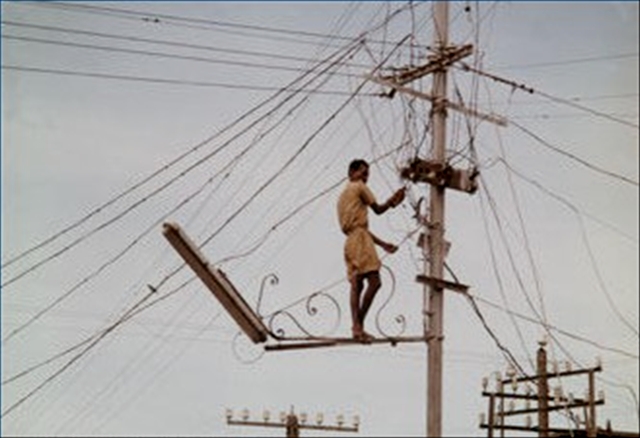





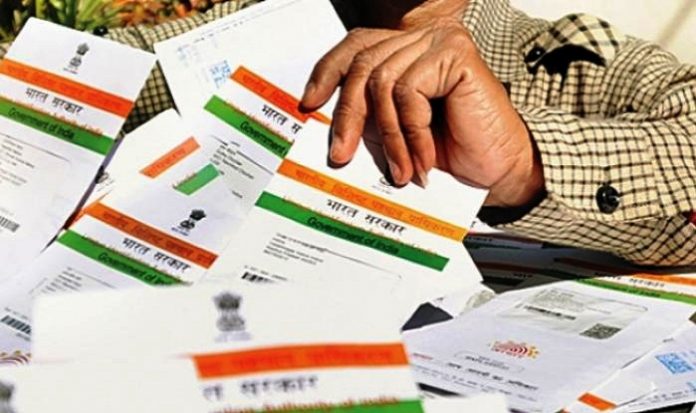





 Allow notifications





