Download Now
Home Blog Page 1565

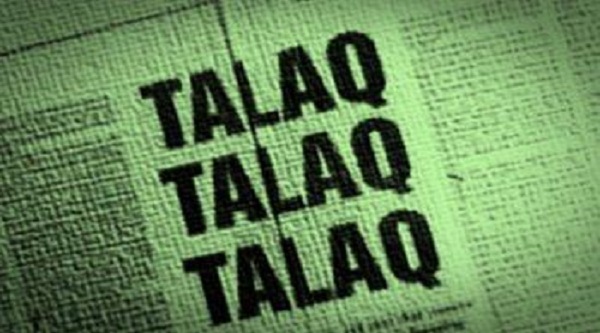
Judicial pronouncements on the issue of Triple Talaq in India

0
triple talaq

In this article, Akshay Sharma discusses important judicial decisions on the issue of Triple Talaq.

Introduction

  • Triple Talaq is one of the most controversial issues prevalent in the country till and the stand of the judiciary was never the same over the issue of Triple Talaq. It always keep changing which some courts upholding the validity of the Triple Talaq and some did not. Various Women Organizations for long have been fighting for the rights of the Muslim women and contending that the Triple Talaq is unconstitutional in nature and violates the Fundamental rights of the women.
  • The matter was not so voiced during the UPA regime from 2004-2014. But with the advent of the right wing Party at the Centre and BJP taking up vociferously the issue of Triple Talaq during UP elections, the issue took up pace these with the matter being heard by the Constitution Bench of Supreme Court and the Judgement being reserved.
  • This appeal also deals with the procedure of communicating triple Talaq and since it is appeal the Hon’ble Court didn’t discuss the legality of Triple Talaq.
  • “Divorce is most detestable in the sight of God; abstain from it, Divorce shakes the throne of the God.”[1] disapproved form of divorce is talaq by triple declarations in which three pronouncements are made in a single tuhr, either in one sentence. Such a talaq is sinful in Hanafi law.[2]
  • The law of divorce whatever its utility during the past, was so interpreted at least in Hanafi school that it had become a one sided engine of oppression in the hands of the husband.[3] As The Prophet of Islam did not favour the institution of talaq, the revocable form of talaq are considered as the approved and the irrevocable forms are treated as the “disapproved” forms.[4]

If he abandons his wife or puts her away in simple caprice, he draws upon himself the divine anger, for the curse of God, said the Prophet, rests on him who repudiates his wife capriciously. In other Islamic State, where the husband must satisfy the court about the reasons for divorce.

Judicial Pronouncement On Triple Talaq

Talaq-ul- biddat is sinful in the Islamic law

In the case of Rahmtullah v. State of UP[5], Hon’ble Justice Tilhari of the Allahabad High Court observed that;

“talaq-ul-bIddat, that is giving an irrevocable talaq divorce at once or at one sitting or by pronouncing it in a tuhr once in an irrevocable form, without allowing the period of waiting for reconciliation or without allowing the will of Allah to bring about reunion, by removing difference or cause of difference and helping the two in solving their differences, runs counter to the mandate of the Holy Quran and has been regarded as by all under Islam-Sunnat, to be sinful.”

In the case of Yousuf Rawther v. Sowramma,[6] Justice Krishna Iyer held that the triple Talaq is against the spirit of Holy Quran and that power of divorce is in the hands of the Muslim men. It is the misinterpretation which has led to the practice of the custom of triple Talaq.

Triple Talaq is a Unilateral form of Divorce

In the case of Mst. Zohara Khatoon v. Mohd. Ibrahim[7], the Hon’ble Supreme Court noted that, “there can be no doubt that under the Mohammedan law the commonest form of divorce is a unilateral declaration of pronouncement of divorce of the wife by the husband according to the various forms recognized by law. A divorce given unilaterally by the husband is especially peculiar to Mohammedan law. In no other law has the husband got a unilateral right to divorce wife by a simple declaration”

The Triple Talaq in this form not only makes Muslim women victims of arbitrary and whimsical decisions of their husbands, but being unilateral in nature, it also robs them of the liberty to choose the form of divorce they want.

Triple Talaq is unlawful

In Qur’an commentary of well-known author Ibn Kathir,[8] it is commented as follows

“Pronouncing Three Divorces at the same Time is Unlawful The last Ayah we mentioned was used as evidence to prove that it is not allowed to pronounce three divorces at one time. What further proves this ruling is that Mahmud bin Labid has stated as An-Nasar recorded – that Allah’s Messenger was told about a man who pronounced three divorces on his wife at one time, so the Prophet stood up while angry and said “The Book of Allah is being made the subject of jest while I am still amongst you?”  A man then stood up and said, “Should I kill that man, Messenger of Allah?”

In the recent case of Smt. Beena and Another v. the State of UP & others,[9], Justice Suneet Kumar of Hon’ble Allahabad High Court held that;

“The instant divorce (Triple Talaq) though has been deprecated and not followed by all sects of Muslim community in the country, however, is a cruel and the most demeaning form of divorce practiced by the Muslim community at large. Women cannot remain at the mercy of the patriarchal setup held under the clutches of sundry clerics having their own interpretation of the holy Quran. Personal laws, of any community, cannot claim supremacy over the rights granted to the individuals by the Constitution.”

Conditions of a Valid Triple Talaq

In the case of Sayid Rashid Ahmed v. Anisa Khatun[10], Justice Baharul Islam observed that, “Reasonability as an essential for Talaq; Reconciliation attempts by the elders or the well-wishers of the family to be of utmost importance before commencement of Talaq” and “ it may be effected” if the said effects fails. An attempt at reconciliation by two relations one each of the parties, is an essential condition precedent to talaq.[11]

Talaq should be preceded by the reconciliation attempts. In the case of Rukia Khatun v. Abdul Khalique Laskar,[12] it was held that Talaq was only to be pronounced after failed attempts between the husband and the wife, after each appointed an arbitrator to solve the dispute. Without reconciliation, the commencement of divorce is held to be in contempt with the saying of the Holy Quran. This observation was upheld by the Justice Badar Durrez Ahmad of the Delhi High Court in the case of Masroor Ahmad v. State (N.C.T of Delhi) & Another,[13] and he further held that;

“Reconciliation before the procedure of the divorce is of utmost importance and is in concurrence with the Holy Quran. It is of utmost necessity to follow the procedure of divorce as written in Quran and proper reasoning to be given before the commencement of the Divorce”

There Must Be A Reasonable Cause

The Hon’ble Supreme Court in the case of Shamim Ara v. State of UP,[14] held that the correct law of divorce as ordained by Holy Quran is that Talak must be for reasonable cause; and it must be preceded by an attempt of reconciliation between the husband and the wife by two arbitrators. Therefore, the factum of divorce is required to be proved by the husband including the condition precedent there. The Kerala High Court in the case of Mohammed Haneefa v. Pathummal Beevi,[15] denounced the practice of Triple Talaq and declared it as the “sufferings of monstrosity for Muslim wives”.

The correct law of Talaq as ordained by the Holy Quran is that Talaq must be for a reasonable cause and be preceded by attempts at reconciliation between the husband and the wife by two arbiters– one from the wife’s family and the other from the husband’s; if the attempts fail, Talaq may be effected.[16]

Triple Talaq must be Preceded by Process of Conciliation

Furthermore, in the case of Dilshad Begum Ahmedkhan Pathan v. Ahmad khan Hanif Khan Pathan & Anrs,[17], the Bombay High Court held that mere pronouncement of Talaq by the husband or merely declaring his intention or his acts of having pronounced Talaq is not sufficient and does not meet the requirements of law. In every such exercise of right to Talaq the husband is required to satisfy the precondition of arbitration for reconciliation and reasons for talaq.

In the case of Kunhimohammed v. Ayishakutty[18], the division Bench of the Kerala High Court after reviewing the earlier precedents and the authorities of Muslim law held that;

“Following the decision of the Supreme Court Shamim Ara (supra) and decision of the Division Bench in Ummer Farooque (supra), it is evident that compliance with the mandate of Ayat 35 of Sura IV that two arbiters must be appointed and an attempt for reconciliation by them must precede the divorce is an essential, non-negotiable and unavoidable pre-requisite.”

Hence, there are following conditions which need to be fulfilled before pronouncing the Triple Talaq;

  1. Conveying the Reasons for Divorce to wife;
  2. Appointment of Arbitrators;
  3. The Arbitrators resorting to conciliation Proceedings.[19]

Only after the failure of the reconciliation proceedings or a situation where it is impossible for the marriage, the husband can pronounce the divorce to the wife.[20]

Judicial Pronouncement upholding the validity of Triple Talaq

In the case of Saiyid Rashid Ahmed v Anisa Khatun,[21] the Court approved the views of Sir R. K. Wilson, in his digest of Anglo Mahomaden Law (5th Edition) that “triple talaq though sinful is a valid form of divorce under talaq-e-bidat.” The High Court in the case of In Re: Abdul Ali Ishmailji,[22] said that “talaq-e-bidat, which is effected by three repudiations at the same time, appears from the authorities to be sinful, but valid.”

The Court recognized talaq-e-bidat to be valid under law. Also, in the case of Sarabai v. Rabiabai,[23] the High Court viewed that “there can be no doubt that a talaq-e-bidat or irregular divorce is good in law though bad in theology.”

Furthermore, in the case of Amiruddin v. Musammat Khatun Bibi,[24] the High Court held that:

“Basically Sunna sanctions only two modes of divorce, but since the second century of the Mahomaden Era talaq-e-bidat has been recognized as a valid mode of repudiation and once pronounced cannot be revoked.”

In Masrat Begum v. Abdul Rashid Khan,[25] reference was made to Hedaya, Commentary on Islamic Laws by Shyakh Burhanuddin Abu-Bakr-al-Marghinan, which states that:

“If a husband gives three divorces at once, the thee hold good but yet the divorcer is an offender against the law.” The Hon‟ble Supreme Court in the case of Zohara Khatoon v. Mohd. Ibrahim,[26] observed that “unilateral declaration of pronouncement of divorce is the commonest form of divorce in Mahomaden Law and has to be accepted as being legal.”

In the matter of Amad Giri v. Mst. Begha,[27] the High Court observed that: “The talaq-e-bidat is the most prevalent form of obtaining divorce in India. Any changes in this respect cannot be brought about by judicial interpretations.”

Conclusion

Triple Talaq being a practice related to the Muslim community, the judiciary was always reluctant to decide upon the matter authoritatively and thats why there is such a huge disparity among the decisions of various courts. The solution to all these can be a decision by the Constitution Bench which heard the matter on a daily basis and reserved the judgement, with the pronouncement of this judgement the law regarding Triple Talaq can be settled for once and forever.

Suggested Readings.

The Tyranny of Triple Talaq – System of Divorce In Islam

The Dark Realities Of Triple Talaq

TRIPLE-TALAQ: UNCONSTITUTIONAL AND A CURSE TO THE SOCIETY!!!


References

[1] “AL-Talaqu indallah-I abghad al-mubahat”

[2] Da’aim II, 978; Fatmid law 204-206.

[3] Asaf A.A. Fyzee, Outlines of Muhammadan Law, Oxford India, page no-118, para-3

[4] Ibid, page no-120, para- 3

[5] 1994 (iz) Lucknow Civil Division, p. 463.

[6] AIR 1971 Ker. 261

[7] (2001) 7 SCC 740

[8] Vol.1, Page 640

[9] WRIT C No. 51421 of 2016, ALL

[10] AIR 1932 PC 25

[11] Jiauddin Ahmed v. Anwara Begum ,1981 1 GLR 358; Must.Rukia Khatun v. Abdul Khalique Laskar (1981) 1 GLR 375

[12] (1981) 1 Gau. L.R. 375

[13] 2008 (103) DRJ 137

[14] AIR 2002 SC 619

[15] 1972 KLT 512

[16] Pathayi v. Moideen 1968 KLT 763; A. Yousuf Rawther v. Sowramma, AIR 1971 Kerala 261

[17] LNIND 2007 Bom 61

[18] 2010 (2) KHC 64

[19] Kunhimohammed Kutty v. Ayishakutti, LNIND 2010 Ker 203

[20] Shammen Baij v. Najmunnisa Begum & others, LNIND 2006 Aug 193.

[21] Saiyid Rashid Ahmed v Anisa Khatun, (1932) 34 Bom LR 475.

[22] In Re: Abdul Ali Ishmailji, (1883) 7 ILR 180 (Bom).

[23] Sarabai v. Rabiabai, (1905) 30 ILR 537 (Bom).

[24] Amiruddin v. Musammat Khatun Bibi, (1917) 39 Ind. Cas. 513 (All).

[25] Masrat Begum v. Abdul Rashid Khan, (2014) Cr LJ 2868 (J&K).

[26] Zohara Khatoon v. Mohd. Ibrahim, (1981) 2 SCC 509.

[27] Amad Giri v. Mst. Begha, AIR 1955 J&K 1.

Download Now

Acquisition of a Listed Company – The procedure as laid down in the Takeover Code

1
listed companies

In this article Aishwarya Borgohain of University School of Law and Legal Studies, GGSIPU discusses Acquisition of a Listed Company – the Procedure as Laid Down in the Takeover Code.

Introduction

The Securities and Exchange Board of India (Substantial Acquisition of Shares and Takeovers) Regulations, 2011 (hereinafter referred to as the “Takeover Code”), is the Code of regulations that has brought the Indian legal framework further in line with international jurisprudence, emphasizing as it does the interests of public shareholders and investors, as well as the operation of the Indian securities market in a fair, transparent and equitable manner.

Acquisition – new scope within the Code

  • Definition of ‘acquisition’:  referring to the purchase by a party of the controlling interest in the share capital or assets and liabilities of the target company, the definition has now been provided in the Code by SEBI, and means directly or indirectly, acquiring or agreeing to acquire shares or voting rights in, or control over, a target company.
  • Direct and indirect acquisition: While the former refers to a situation where the acquirer directly acquires shares/voting rights or control over the target company, the latter refers to any acquisition or control over any company/entity that would enable a person to exercise or direct exercise of such percentage of voting rights or control, as would otherwise attract obligations to make a public announcement of an open offer.

Listed Company as under the Takeover Code

Provisions of the Code pertain to the ‘target company’, which means a company, including a body corporate or Central/State/Provincial legislation corporation, whose shares are listed on a stock exchange. Reference may be drawn here to the Companies Act, which similarly defines listed companies as those having their securities listed on any recognized stock exchange.

The Open Offer Process as laid down in the Takeover Code

Appointment of Manager to the Open Offer

  • Done prior to making of the public announcement
  • Manager must be a merchant banker registered with the Board, and not an associate of the acquirer
  • Acquirer may appoint a registrar to the offer, and shall engage other legal and financial advisors.

Public Announcement of Open Offer (‘PA’)

  • Acquirer and persons acting in concert (‘PAC’), holding shares in target company entitling them to exercise 25% or more (but less than maximum permissible non-public shareholding) shall be entitled to make such announcement.
  • PA contains details as may be specified, including:- name of acquirer and PAC, sellers, nature of proposed acquisition, consideration, offer price, mode of payment, and the offer size.
  • Made on the date of agreeing to acquire shares or voting rights in, or control over the target company
  • Publication of PA to all stock exchanges on which the shares of the target company are listed, which shall then be disseminated by the latter to the public.
  • Copy of the PA to be sent to the Board and to the target company’s registered office

Creation of Escrow Account

  • No later than two working days prior to the date of the Detailed Public Statement of open offer (‘DPS’)
  • Account may be in the form of cash deposited in commercial bank, bank guarantee, or deposit of freely transferable securities or equity shares.

DPS of Open Offer made

  • Contains justification for any differential pricing
  • Published by acquirer through manager, not later than 5 working days of PA
  • Not required if acquirer doesn’t succeed in acquiring the ability to exercise or direct the exercise of voting rights in, or control over the target company.
  • Publication in all editions of one English, Hindi, and regional daily (at the place of registered office of the target company) with wide circulation, and simultaneous copy to be sent to the Board, all stock exchanges where the target company’s shares are listed, and to the target company itself, which shall circulate it to its Board members.

Filing of Letter of Offer with the Board (‘LOO’)

  • The LOO Contains justifications for offer price for equity shares, for differential pricing, and full disclosures of all subsequent stages of acquisition.
  • Draft LOO filed by acquirer within 5 working days from date of DPS. The Board is to give its comments on the draft not later than 15 working days of its receipt If no comments are issued within such period, it shall be deemed that the Board has no comments. Any changes specified by the Board shall be carried out by the acquirer before dispatching of LOO.
  • Simultaneous copy of draft LOO is to be sent to the target company at its registered office address, and to all stock exchanges where shares are listed.
  • Manager to open offer shall simultaneously furnish a due diligence certificate to the Board
  • Dispatch of Final LOO: The LOO shall be dispatched to shareholders not later than 7 working days from receipt of any Board comments. However, the LOO shall not be dispatched if where local laws or regulations of any jurisdiction outside India may expose the acquirer or the target company to material risk of civil, regulatory or criminal liabilities.

Revision of Open Offer

  • In such event, the acquirer shall make corresponding increases to amount in escrow account, make announcements in all newspapers where DPS was made, and simultaneously inform the Board and all the stock exchanges, as well as the target company itself, at its registered office.
  • Upward revisions may be made by acquirer at any time before the last 3 working days before the tendering period commences.
  • Fees payable on shall be paid within 5 working days from date of such revision.
  • Value of escrow amount shall be computed on revised consideration calculated, in the event of upward revision.

Tendering Period

  • It refers to the period within which shareholders may tender their shares in acceptance of an open offer to acquire shares.
  • Acquirer issues advertisement one day before the commencement of the tendering period the schedule of activities for open offer, statutory and other approvals, and procedure for tendering acceptances, among other such material details.
  • This Period starts not later than 12 working days from receipt of comments from Board, and remains open for 10 working days.

Disclosure of Acquisition during the Offer Period

  • Made within 2 working days of receipt of intimation of allotment/ acquisition of shares or voting rights in target company
  • Made by acquirer and PAC, whose total shares/voting rights aggregate to 5% or more of such shares in the target company.
  • Disclosed to every stock exchange where shares are listed, and to the target company at its registered office.
  • Chapter V further provides for continual disclosures -made by every person and PAC holding shares entitling them to exercise 25% or more of voting rights in the target company, as on the 31st of March– and disclosure of encumbered shares, made by the promoter of every target company.

Post-Offer Advertisement

  • Issued by acquirer within 5 working days of offer period (contains details of shares tendered, accepted, date of payment of consideration.)
  • Published in all newspapers where DPS was made, and simultaneously sent to the stock exchanges, to the Board, and the target company.

Completion of Acquirer’s Obligations

  • Within 10 working days of the last date of the tendering period, the acquirer shall complete all requirements (including payment of considerations) under these regulations, and applicable law.

Payment of Consideration and Completion of Acquisition

  • The acquirer opens special escrow account with a banker, for the amount of consideration payable in cash, and empowers the Manager to the Offer to operate the account on his behalf.
  • Acquirer shall complete payment of consideration to shareholders within 10 working days of the expiry of the tendering period. Any unclaimed balances lying in such account at the end of 7 years from date of deposit shall be transferred to the Investor Protection and Education Fund.
  • The acquirer shall complete the acquisitions within 26 weeks from the expiry of the offer period. However, an extension may be granted by the Board in the event of extraordinary and supervening circumstances rendering such completion impossible.

Withdrawal of Open Offer

  • While withdrawals are generally not made, the Code provides certain exceptions, such as refusal of statutory approvals required for open offer, death of the acquirer, any condition stipulated in the acquisition agreement.
  • Such a withdrawal has to be announced in all the newspapers in which the DPS was made, and duly disclosed to the Board, all the relevant stock exchanges, and to the targeted company.

Finally, the Board has been given power to issue directions in case of violation of any regulations. These include, among others:

  • Directing disvestment of shares acquired in violation of these regulations
  • Directing transfer of such shares to the IPEF
  • Directing any person to cease and desist from acquiring control over target company without complying with requirements
  • Debarring any person who has violated the Takeover Code from accessing the capital market or dealing in securities


Download Now

Cyber crime and social media websites

0
cyber crime

In this article, Neha Susan who is currently pursuing Diploma in Entrepreneurship Administration and Business Laws from NUJS, Kolkata does an analysis of Cyber crime and social media websites.

INTRODUCTION

Social Networking sites have been in the limelight for more a decade.  These websites have created an epoch in the history of cyber space influencing netizens in their personal sphere as well as professional level. Today, there are not merely medium of communication to keep in touch with old and new friends but rather have become a public forum to voice opinions and mobilise people for a global revolution. Popular social networking websites include Facebook, LinkedIn, Instagram, Twitter, Orkut. The growth and impact of these websites at an exponential rate have attracted the cyber offenders to commit cybercrimes in social media posing threat to privacy of individuals as well as national security. National Investigation Agency through its sources has informed that every sixth cybercrime in India is committed through social media. There has been around 70% rise in cybercrimes annually between 2013 and 2015 according to data provided by National Crime Records Bureau (NCRB)[1].According to a report from Symantec, a security solutions provider, India ranked second among nations that were most targeted for cybercrimes through the social media in 2014, after the US[2]. Today cybercrimes are manifested in many forms to commit offences related to privacy, defamation, misrepresentation of identity, obscenity, cyber terrorism, etc.

INFLUENCE OF CYBER CRIMES IN SOCIAL MEDIA

“Cybercrime” is a combination of two terms “crime” with the root “cyber” derived from the word “cybernetic”, from the Greek, “kubernân”, which means to lead or govern. The “cyber” environment includes all forms of digital activities, irrespective of whether they utilise single network. Cyberspace is borderless as no Courts across the globe can claim jurisdiction. Any illegal act which involves a computer, computer system or a computer network is cybercrime.  Further, any offence taking place on the computer can be said to be a cyber-offence. The IT Act distinguishes between cyber contraventions and cyber offences.  Former is a violation of law or rule of procedure which may or may not attract a liability to pay a penalty as the offender faces civil prosecution. However, an offence is an act prohibited and made punishable by fine and/ or imprisonment as the offender faces criminal liability[3].

Primarily, cyber-attacks can be found in three forms. First, they attack electronic identity. With use of sophisticated malware tools, they get hold of sensitive personal information available in social media and other shopping websites; they steal credit information or create fake identity in social media. Second, attack on women and minors.  Child Pornography is an industry that thrives on the growth of the cyber space. Women and children are most frequently victimised compared to men by sharing obscene pictures or violent videos in virtual world harming their reputation. Youngsters are often lured by hoax messages and fake identities in social media and they fall prey to offenders in cyberspace as well as real world. Third, attack on infrastructures. Infrastructures are often easy targets of the cyber terrorism. These attacks on vital services can paralyse a nation by causing unprecedented impact on economy, health care, military, power and more[4].

The Oxford Dictionary defines a social network as “A dedicated website or other application which enables users to communicate with each other by posting information, comments, messages, images, etc.” This could be in form of social media websites, blogs, and chat rooms. Anonymity and fake identity are the hallmark of the cybercrimes. Lack of awareness among netizens, poor security features associated with these websites and overuse of social media has enabled cyber offenders to engulf these innocent people into fraudulent or any other criminal transactions.

Cybercrimes that are commonly prevalent in social media are cyber defamation, cyber obscenity pornography, cyber stalking, hacking, privacy infringement, internet fraud, unauthorized disruption of computer system through virus and using any person’s copyright[5].

IMPACT ON PRIVACY

Privacy involves the right to control one’s personal information and the ability to determine how that information should be obtained and used. “Right to Privacy” is recognised as Fundamental Rights under Article 21 of the Constitution of India which deals with the right to life and liberty. Although, right to privacy do not find explicit mention in Constitution, this has been recognised in various judicial pronouncements. However, the ramifications of right to privacy in virtual world are not settled issue.

The possible privacy infringement in social media can be illustrated through examples of Facebook and Orkut. Orkut once touted as the one of the first popular social networking site lost its shine when Facebook came into picture. Many have not deactivated their account and hence were available in public for exploitation of sensitive personal information. Public search option available in Facebook enables the personal information of users to be exposed to anyone who types the name in the search engine.  By opting ‘Public’ in privacy settings with respect to information as gender, networks, username , email id, phone number, pictures and videos poses a risk to the identity of the person. Further, use of applications and games available in social media runs a grave risk to identity of the person. These applications do not work in secure mode. They further seek access to all personal information.

Cyber-attack on social media is generally understood as an infringement of the Data Protection laws.  An individual’s details like name, address, interests, family, etc. are often available on various social media web sites. In India, data protection is governed by Sections 43A, 72A, 69 and 69B of the IT Act.

Section 43A widens the scope of data protection by inclusion of definition of “Sensitive Personal Data or Information”, and also imposes a responsibility for “Reasonable Security Practice” to be followed by the data handlers. In case of infringement, data handlers and cyber offenders can be slapped with an exorbitant penalty which may even exceed Rs. 5 crores.  Section 72A specifies liability for intermediary if he discloses “personal information” which he accessed while providing services under a contract and such disclosure was made with an intention to cause or knowledge that he is likely to cause wrongful loss or wrongful gain to a person. Sections 69 and 69B empower the State to issue directions for interception, monitoring and even collection of traffic data or information through any computer resource for cyber security.

LEGAL FRAMEWORK IN INDIA

Cyber Defamation

Cyber defamation refers to publication of defamatory content in electronic form. In order to determine cyber defamation, the Court has taken into consideration factors like time of occurrence, mode of publication and jurisdiction.  Being borderless, determination of jurisdiction is a difficult job. In Joseph Gutnick v. Dow Jones & Company Inc.,  the High Court  of Australia upheld that the place of publication (or the jurisdiction) is the place where the defamatory statement is made and that place is the one in which that particular information is downloaded and not where the statement is uploaded or where the publisher’s server resided[6].  Cyber defamation is punishable under Indian law by reading Section 499 of Indian Penal Code (“IPC”) and Section 4 of the IT Act. Earlier, cyber defamation was also recognised in S.66A which penalises the publication of information that is grossly offensive. However, this is struck by Supreme Court as it violates Article 19 (1) (a) of the Indian Constitution[7].

Cyber Pornography

Cyber pornography or cyber obscenity, which includes pornographic websites, pornographic magazines, provides an online medium for stimulating sexual behaviour. Earlier, the test of obscenity is the Hecklin’s test- ‘the tendency to deprave and corrupt those whose minds are open to such immoral influences’ is considered to be obscene[8]. In Ranjeet Udeshi v. State of Maharastra, the Supreme Court interpreted the word ‘obscene’ as that which is ‘offensive to modesty or decency, lewd, filthy and repulsive’[9]. Hence obscenity without a social purpose or profit cannot claim protection under ambit of the free speech. Further, in Ajay Goswami v. Union of India, the Supreme Court propounded that the test for judging a work should be that of “an ordinary man of common sense and prudence and not an out of ordinary or hypersensitive man[10]”.

ICANN (Internet Cooperation for Assigned Names and Numbers) have given formal recognition to cyber pornography with the recognition of ‘.xxx’ domain[11]. However, child pornography is deeply condemned across the world. Inspired by Article 9 of Convention of Cyber Crime, IT Act under 67B penalises child pornography. Cyber obscenity is criminal offence. It imposes a liability on offender on the basis of Sections 66E and 67. Section 66E protects bodily privacy by imposing punishment on the person who captures pictures of private parts of a person without consent. Publication and transmission of sexually explicit content in online medium is prohibited under Section 67A.

Cyber Stalking

This includes the acts to harass or contact another in pursuance of stalking another person by keeping anonymous identity using the electronic medium. The Criminal Law (Amendment) Act, 2013 adds a new section 354D to penalise stalking.

Fradulent Transactions And Misrepresentations

Impersonation is one of the most widely seen fraudulent transactions in social media. Social Networking websites are replete with fake profiles which are created with the sole purpose of taking out information and other personal details like bank account number, credit card number.

Virus Attack

Virus attack is generally executed by sending messages on social networking websites or asking the person to open the link the computer. Virus contamination destroys, alters, damages data residing in computer or cloud.          Section 43 (c) of the IT Act imposes liability upon the offender to pay compensation to the person who is affected by introduction of any computer contaminant or virus into any computer, computer system or computer network.

Hacking

Hacking is usually a premeditated process, where the hacker studies security features of the target and develop programs pursuant to it, to gain unauthorized access. In simple terms, hacking means trespass in virtual world. Section 43 of the IT Act imposes punishment for unauthorized access to a computer resource committed “dishonestly or fraudulently”. Here, the aggrieved party must prove mens rea.

OTHER PREVENTIVE MEASURES

In order to improve cyber security various precautionary steps can be kept in mind by netizens. These include:

  • Always avoid sending any photograph online particularly to unknown friends or strangers in order to avoid misuse of photographs.
  • Always update anti -virus software to guard against virus attacks.
  • Backing up files enable to prevent data loss due to virus attack.
  • Payment made for accessing games and applications in social networking sites must be made in secure payment system to avoid invasion of credit information.
  • Kids must be given awareness classes about the social media cybercrimes.
  • Security programme that gives control over cookies must be preferred.
  • Website owners and intermediaries must monitor traffic and regulate any abnormality on the website.

CONCLUSION

Cybercrimes have been menacing the social media since its inception. This is manifested in form of fraudulent transactions, hacking, virus attack, cyber defamation and cyber stalking. Even though India has effective laws to deals with these crimes, the conviction rate is negligible. Cyber Forensics is a growing area. It must be promoted to determine methods to detect Cyber Evidence. Further, necessary amendments must be made   in Indian law to be read harmoniously with IT Act in order to control Cybercrimes.

[1] Every Sixth Cybercrime In India Is Committed Through Social Media:NIA http://www.hindustantimes.com/india-news/every-sixth-cybercrime-in-india-committed-through-social-media-nia/story-KscgnwjcTZ0pzVeVaOiN6M.html (Last accessed on 26 February 2017).

[2] India ranks second in cyber attacks through social media Yuthika Bhargava April 22, 2015http://www.thehindu.com/news/national/india-ranks-second-in-cyber-attacks-through-social-media/article7130961.ece

[3] 4 Section 2(n) of the Code of Criminal Procedure, 1973 and Section 40 of Indian Penal Code, 1860.

[4] A Study on Cyber Crime and Security Scenario in INDIA Yougal Joshi1 , Anand Singh International Journal of Engineering and Management Research, Volume-3, Issue-3, June 2013

 http://www.ijemr.net/DOC/AStudyOnCyberCrimeAndSecurityScenarioInINDIA(13-18)48f66c6f-4d11-4f64-95ec-a3600f6cd9d3.pdf

[5] Legal Implications of Cyber Crimes on Social Networking Websites , Nikita Barman, International Journal of Scientific and Research Publications, Volume 5, Issue 12, December 2015 http://www.ijsrp.org/research-paper-1215/ijsrp-p4850.pdf

[6] Joseph Gutnick v. Dow Jones & Company Inc. [2001] VSC 305.

[7] Sreya Singhal v. Union of India AIR 2015 SC1523.

[8] Regina v.Hicklin (1868) 3 QB 360.

[9] Ranjeet Udeshi v. State of Maharastra AIR 1965 SC 881

[10]Ajay Goswami v. Union of India (2007) 1 SCC 169.

[11] “Here it comes: Porn sites to get .xxx”, Times of India, 26-06-10,

http://timesofindia.indiatimes.com/world/europe/Here-it-comes-Porn-sites-to-get-xxx-name/articleshow/6092763.cms

Download Now

Analysis of Section 66 A of the Information Technology Act

0
66 A

In this article, Neha Patankar who is currently pursuing Diploma in Entrepreneurship Administration and Business Laws from NUJS, Kolkata does an analysis of Section 66 A of the Information Technology Act in the light of the Supreme Court judgment

Introduction

Digital technology and new communication systems have made dramatic and drastic changes in our lives as most of the business transactions are being made with the help of computers. Business community as well as individuals are increasingly using computers to create, transmit and store information in the electronic form instead of old age paper documents as it is cheaper and also easy to store, retrieve and speedier to communicate. People are aware of the advantages but they are reluctant to conduct business or conclude transactions in the electronic form due to lack of legal framework. Since electronic commerce eliminated the need for paper based transactions, thus the need was felt to initiate e-commerce, therefore bringing legal provisions in order to get recognition for the same. The United Nations Commission on International Trade Law (UNCITRAL) adopted the Model Law on electronic commerce in 1996. India being signatory to it has to revise it laws as per the Model Law keeping into consideration the suitable amendments.

Objects and reasons

Business and consumers are increasingly using computers to create, transmit and store information in the electronic form. At present many legal provisions assume the importance of paper based documents which should bear signatures. The Law of Evidence is based upon paper based records and oral testimony. Since the electronic commerce eliminated the need for paper based transactions, hence to facilitate e-commerce the need was felt to bring urgent legal changes. The UNCITRAL adopted the Model Law in the year 1996 on electronic based communications. There is a need to bring suitable amendments with changing time in the existing law of our country in order to facilitate e-commerce. It is, therefore, proposed to provide legal recognition of electronic records and digital signature. It is also proposed to provide for a regulatory regime to supervise the Certifying Authorities issuing Digital Signature Certificates in order to prevent misuse arising out of transactions. It is also proposed to impose civil and criminal liabilities for contravention of the provisions. Thus, the changes were brought in order to satisfy the current needs of the country and to lessen the burden. But not all citizens use it for bonafide purpose some uses it for its malafide intention giving rise to cyber crime. Section 66 of the Information Technology Act 2000 (amendment 2008) speaks about cyber crimes. After (Amendment 2008) Section 66 A- 66F were added describing certain kinds of offences. Here in this Article we will be looking forward to Section 66 A specifically in the light of Supreme Court Judgements.

Illustrations related to Section 66 A

Basically, Cyber crime is an ‘unlawful acts in which the computer is either a tool or a target or both’. Section 66 A specifically talks about sending offensive messages. Certain illustrations which would clear the above stated are;

  1. Pooja is Sameer’s ex-girlfriend. After their breakup Pooja married Tapan, who is unaware of Pooja’s past relationship with Sameer. Angry over this issue , Sameer sends an email to Pooja, in which he threatens that unless Pooja gives him Rs. 1lakh, he will spread news that Pooja had been pregnant before marriage. Pooja does not give him the money. Sameer sends emails to all of Pooja’s friends and relatives telling the same.
  • If the information about Pooja’s pregnancy is true than Sameer will not be held liable under this section. If this information is false, then Sammer will be liable under this section.
  • This section also penalizes the sending of emails ( this would include attachments in text, image, audio, video as well as any additional electronic record transmitted with the message) for the following purpose
  • Causing annoyance or
  • Causing inconvenience or
  • To deceive or to mislead about the origin of the messages
  1. Sanjay sends emails to thousands of customers of the NatCash Bank. Thes emails request the receipt to click on a link and enter their online banking username and password at a website that appears to be that of the Bank but in reality is fake. Sanjay has spoofed the emails in such a way that they appear to have originated from the NatCash Bank official email address.
  • Therefore, he would be held liable under this section.

Summary of the Section 66 A

Herein below is the brief summary of the section 66 A in order to get a better understanding which is later in 2015 has been repealed by the Supreme Court in Shreya Singhal vs. Union of India.

Acts penalized under 66 A

  • Sending message which is offensive, menacing or false information circulated for generating hatred, ill-will, enmity, insult , injury etc. Or sending e-mails or other messages that mislead the recipient about the origin of such messages.

Punishment under 66 A

  • Imprisonment upto 3 years and fine.

Punishment for attempt under 66 A

  • Imprisonment upto 18 months and fine.

Punishment for abetment under 66 A

  • Imprisonment upto 3 years and fine.

Is 66 A Cognizable and Bailable

  •  Yes.

As stated this section has been repealed by Supreme Court landmark Judgement in Shreya Singhal vs. Union of India (2013) 12 SCC 73.

Facts of the case

  • Two girls Shaheen Dhaba and Renu Srinivasan were arrested by Mumbai police in 2012 for expressing their displeasure for a Bandh in the wake of Shiv Sena chief Bal Thackrey’s death.
  • They posted some comments on Facebook in a form of expressing their displeasure.
  • Further they were arrested under section 66 A of the Information Technology Act, 2000 but were released later.
  • It was thus decided to close the criminal cases against them yet the arrests attracted the widespread public protest.
  • It was felt that the police has misused its power by invoking section 66 A inter alia contending that it violates the freedom of speech and expression.
  • Therefore the Apex Court judgement came on a batch of petitions challenging the constitutional validity of section 66 A of IT Act on the grounds of it being vague and ambiguous and further being misused by the law enforcing authorities.

Analysis of the provision

Supreme Court in the case analyzed that the said provision is curtailing the citizen’s fundamental right of Freedom of Speech and Expression, the two cardinal pillars of democracy and it being a cognizable offence is widely misused by the police authority in various states to arrest innocent persons for posting critical comments about social and political issues and about political leaders on social networking site. The court felt that it was the time to erase the provision from the law book as it has gone beyond reasonable restriction imposed by the constitution with respect to freedom of speech and expression.

Judgement

  • The Court held that the provision of section 66 A is contemptuous to Article 19(1)(a) and thus is arbitrary in nature which breaches the right of citizens to express its opinion freely on the internet. The 123-page long judgement which extensively discussed Indian , US and English jurisprudence on free speech , the Supreme Court struck down Section 66-A of the Information Technology Act. Justice Nariman discussed the various standards which are applicable to adjudge when restrictions on speech can be deemed reasonable, under Article 19(2) of the Indian Constitution. It was also held that the section is unconstitutional on the ground that it takes within its sweep protected speech and considered the ‘chilling effect’ on speech caused by vague and over-broad statutory language as a rationale for striking down the provision. Further, the Court held that the ‘public order’ restriction under Article 19(2) of the Constitution would not apply to cases of ‘advocacy’, but only to ‘incitement’, specifically incitement which has a proximate relation to public disorder.

Analysis of the judgement

The judgement given in this case is important in the Supreme Court’s history as it has widen the scope of freedom of speech and expression in a way of right available to express oneself freely and thus limited the scope of state in restraining the freedom in only most of the exceptional circumstances.  Justice Nariman has highlighted that the liberty of thought and expression is not merely an inspirational ideal. It is also “a cardinal value that is of paramount significance under our constitutional scheme.”

Conclusion

Therefore, it can be concluded that striking down the provisions of the Information Technology Act in relation to section 66 A has not only widen the scope of the freedom of speech and expression but has also created a scope for posting pictures and comments against any person without any fear and restriction of punishment as the words such as offensive and menacing are vague and ambiguous and can be interpreted widely. Thus if a person so finds himself defamed can exercise his right by filing a complaint for defamation under section 500 of Indian Penal Code. Hence, Section 66 A provided an opportunity to genuine victims of cyber harassment to obtain immediate relief against content that may be insulting or injurious in nature, abrogation of which has now made Police authorities toothless in dealing with the growing menace of cyber bullying.


Download Now

Legal method of protecting and bequeathing your digital assets

0
digital asset

In this article, Mitali Shahane who is currently pursuing Diploma in Entrepreneurship Administration and Business Laws from NUJS, Kolkata discusses How to protect and bequeath digital assets?

Introduction

There goes an old saying “What remains permanent, is Change”. This perfectly suits the current scenario where we see a drastic and rapid enhancement in the legal phraseology with the introduction of new concepts. This term suitably co-relates in the century we live in as it is not wrong to say that 21st century is a technological world. Let’s take an example, A, wishes to protect and bequeath his property which is moveable as well as immoveable. However, he also holds certain properties virtually like Facebook accounts, bank passwords which might be used for funds transfer, etc. such accounts or passwords become your digital assets. There is no specific definition allotted to digital assets but as per our common parlance we may describe them as photographs, web sites, electronic accounts, social media accounts like Facebook, Twitter, LinkedIn, etc. and their respective passwords, email records and any other assets which exist in digital form[1]. The definition can extend to assets held personally like music and video files, medical records and any legal document or financial transactions in digitalized form. We one accumulates such properties it forms one’s digital estate[2].

There has been an increase in digital assets and the changing time has made inevitable to protect such assets as well. The term “digital assets” was coined in the 1990s which was used for trade secrets and any intellectual property in digital form[3].

Breaking the definition of Digital Assets

As described by Nathan Dosch, an estate planning and tax attorney at Nieder & Boucher “digital assets are any file on your computer in a storage drive or website and any online account or membership”[4].

We can categorize digital assets into following: devices, email, online accounts and other types of property.

Devices

Like computers, smartphones, tablets (IPads, Kindles, etc.) where personalized photographs, music and video files, important records like medical, legal, financial, business related are stored in such devices.

Email

There is a possibility that there may be exchange of certain messages virtually which may be useful for the legal heirs of the testator after his death. It may act as a “passkey” for the other online accounts[5]. One may have a backup of emails on the physical devices or cloud platform.

Online Account

Do you have a Facebook account? Do you make bill payments using the respective website account? Do you buy things online? Such type of accounts constitute your Online accounts. Social Accounts like Facebook, Twitter, LinkedIn, Youtube, etc. Financial or bank accounts for transacting money or transferring money, Sales and shopping online accounts on Amazon, Flipkart, Snapdeal, etc. and also business accounts.

Other Types of Property

Common types of property requiring a password for access include business computers and telephones, home security systems, voicemail, smartphones, and home computers[6].

The questions which are bound to arise may be “How to protect and bequeath the digital assets of a person? What is the importance of bequeathing the same? What are the problems faced by an individual or why is there a lacunae in the Indian legal system or why do we do not have laws to regulate the digital assets unlike moveable or immoveable properties? What are the possible safeguards?

Why bequeathing digital assets does become a “must”?

Consider this example as reflected in the analysis of Rachel Pinch for Wayne Law Review titled “Protecting Digital Assets After Death: Issues to Consider In Planning For Your Digital Estate”. A person named Justin Ellsworth (who was a Lance Corporal), while serving his term in Iraq died by a roadside bomb. He principally used emails to stay in contact with his parents. After his death in order to access the account, the parents approached Yahoo! Services. However, but due to its strict adherence to terms of service, they were deprived of the records. Therefore, the father of the deceased moved to the court wherein the Courts at Michigan demanded Yahoo! to release the email account. Let’s take another example for the same. Parents in Virginia wanted an access to their son’s Facebook account where they desired to hunt for reasons behind his son’s death. However, the same was denied citing privacy as the reason and due to the interference of the court, Facebook providers had to divulge the password settings and the records of his account were provided. Not only the social media accounts are of paramount importance of bequeathing the assets, but also the financial or business accounts. There may be persons who run a profit making website, which may help the legal heirs of the deceased. The businessmen may have some of his invoices or orders stored on Cloud which may help his legatees to access easily. Images, photos, letters, emails, etc. serve a valuable, for they add sentimental value to the account. If a person provides the password of his social media accounts like Facebook, it can be prevented from being hacked and wrongly used after the person’s death. Thus, bequeathing and protecting the digital assets in today’s time is of paramount importance not only when we see security or protection but also sentimentally.

Problems regarding Digital Assets

Firstly, the idea of digital assets should appeal the people and they should be motivated to approach such way of protection. People usually feel burdened with the procedure one has to undergo in order to organize and plan. Secondly, in USA states like Rhode Island, Connecticut, Indiana, Oklahoma, Idaho, etc. have regulations governing the estate planning of digital assets, but there needs a codification of the same, all the laws are scattered. States like New York, Hawaii, Maryland, North Dakota, New Hampshire, Massachusetts, Virginia and Oregon are debating on the point of introducing a legislation. Thus, no uniformity in the laws brings in ambiguity and people are not perturbed about the same.

A Lacunae in the Indian Legal System

Contrasting United States, India has no law for regulating the protection and bequeath of digital assets. The concept of digital assets is still in its nascent stage and not much awareness has been initiated by the government. We do have the Information Technology Act, 2000, however, the Act does not regularize digital assets. We have the Indian Succession Act, 1925 or Hindu Succession Act, 1956 for the Hindus for moveable and immoveable properties, but no express provision for the same has been formulated. The IT Act, 2000 does not give any clarity on its application for digital assets bequeathed through wills and testaments[7]. In such a situation the principles of intangible property and succession can be applied. There may be a possibility that digital assets may be in some other country, then the question of jurisdiction needs to be determined keeping the laws of that country, thereby revoke the same and if one hires a local digital service provider, the laws are silent about the same[8].

Safeguards

What are the safeguards a person can undertake to bequeath his property? Due to advancement in the technology online data can be accessed for a lifetime. One has the option of uploading all the passwords and documents. For example the application available on Windows, TrueKey[9] can serve a great purpose in such cases as it helps preserve passwords for every account used by the deceased. The number of accounts and the emails exchanged can be sent to the chosen contacts after one’s death. However, it has been suggested that one should bequeath the digital assets through the will route. Will would specifically specify the number of digital assets and to whom these assets have to be bequeathed by the executor. You can also disclose the passwords and divulging the documents by annexing the same. If no clear information is expressed, apply the Arm chair rule whereby the intention would be not to disclose the details of his digital assets[10].

Steps to bequeath and protect digital assets

Firstly what is recommended is to get your digital asset sheltered by a protection plan. Steve Parrish in an article to Forbes titled “Planning Steps to Protect Your Digital Assets”[11] described his experience with the same. It was the time when he bought Apple II and knew that he has to rely on the installer, customer service and repairman for protection, but appreciates the fact that the technical infrastructure is more enhanced therefore, recommends to adopt the same.

People are advised to make an inventory. There are many accounts which has crucial information which can either be professional, business or personal. The employees needs to be guarded. Have you stored the data in a device, whether on cloud or not is very important to know all of this. Thus, inventory helps you to locate the information stored on such accounts very easily and how the information is backed up. Always make sure that you regularly clean up your inventory for finding out an weakness Also, keep the option of making a list of the digital assets you have been retrieving. Cast a wide digital net when planning[12], jot every detail along with other usernames, passwords and answers to the security questions. It is very important to know the law of the land, therefore it is advisable to consult any lawyer for this matter. One should not forget that while bequeathing the said assets they are not compromising on the privacy. Be particular with the executor and what kind of access has to be given to which person. Ensure that the usernames, passwords and answers to the security questions are kept separate from the will. The advantage of maintaining passwords or usernames separately would help one to change the same whenever he decides. Don’t get the will registered as it might become open to the public and here the most paramount thing is to keep the privacy secured.

A distinguished lawyer Victoria Blachly, has said that the beneficiaries are well defined in the will itself. Be very specific about the persons whom you desire to handle a particular set of digital assets. It is also advisable to revisit the terms of service agreements which you had agreed upon while making an account, etc. Be informed of companies’ MO and it make the task of the person so executing easier[13].

It is suggested that a written permission is better and in certain cases one specifies the disposition of the properties as per his instructions only. For example Google’s Inactive Account Manager which enables the users to handle or control emails, photos or any other document stored on certain Google websites[14]. One authorize an agent or give to a trust and if they are personal nature one can bequeath the same through a will with specific illustrations[15].

Never forget to use online data protection which are made specifically for handling and protecting the digital assets.

Conclusion

Thus, at this stage when everything keeps changing, we should also change as per the walks of life. Such thing is not only restricted to people but also lawyers. We everywhere that minutest of the property can bring strains in blood relations, digital assets is another facet altogether. Not the people should be forwarding thinking but also the government who should also protect the interest of the public by regularizing digital assets which are to be bequeathed. India is moving at a faster pace with internet reaching the villages and it’ll not be that far to see every person possessing digital assets.

[1] Protecting Digital Assets After Death: Issues to Consider In Planning For Your Digital Estate, Rachel Pinch, Wayne Law Review, 2014

[2] Digital Estates: Handling Digital Assets In The Real World (With Forms And Resources), Susan Porter, The Practical Law, August 2013, http://files.alicle.org/thumbs/datastorage/lacidoirep/forms/TPL1308_Porter_thumb.pdf

[3] Ibid

[4] Ibid 2

[5] Ibid 2

[6] Ibid 2

[7] Bequeath your digital assets too, Krishnaveni Sivagnanam, BusinessLine, October 5, 2014, http://www.thehindubusinessline.com/portfolio/your-money/bequeath-your-digital-assets-too/article6473349.ece.

[8] Ibid

[9] True Key auto-saves and enters your passwords (https://www.truekey.com/#access-features)

[10] Ibid 7

[11] Planning Steps To Protect Your Digital Assets, Steve Parrish, Forbes, Feb 18, 2014, 08:43 AM, https://www.forbes.com/sites/steveparrish/2014/02/18/planning-stepsto-protect-your-digital-assets/#2ba554bcef0c

[12] Protecting Online Assets: 9 Ways to Safeguard Your Digital Legacy, Katy Steinmetz, Time, Nov. 29, 2012, http://techland.time.com/2012/11/29/digital-legacy-assets/

[13] Ibid

[14] Ibid 11

[15] Ibid 11

Download Now

Laws against Cyber Squatting

0
cyber squatting

In this article, Mayank Garg who is currently pursuing Diploma in Entrepreneurship Administration and Business Laws from NUJS, Kolkata discusses  What is Cyber Squatting? What are the laws against Cyber Squatting?

Introduction

A domain name is the human-friendly name of an internet address. URL is constituted as an actual technical name for a website. The coordination of all the websites or domain names is said to be done by Internet Corporation for Assigned Names and Numbers (ICANN). There are two levels of domain, i.e. top level and second level domains. At top level domains, it consists of two character abbreviations of the names of the country; for e.g., India’s ccTLD is “.in” but in a domain name, the label that precedes the TLD constitutes the second level domain; for e.g. “.com”.

Registration of domain names lead to the disputes which usually allege the infringement of trademarks. Anything bearing the mark is taken to be an indication of the reputation and goodwill of the company, the quality of product or service and the affiliation of the product/service with the company.[1]

Cyber Squatting

Cyber squatting- The most common domain name dispute relate to the crime of cyber squatting. Cyber squatting can be understood as the registration of a domain name that consists of a mark that is identical to or confusing similar to an existing trademark. Cyber squatting is constitutional only if the registration has been done in bad faith, that is, with the intention of selling the domain name at such a higher price to the owner of the trademark, or to create an impression of having some kind of affiliation with the owner of the trademark.

For e.g., in the case of Oberoi Hotels Pvt. Ltd. v. Arun Jose, oberoi hotels owned a trademark on the mark  “The Trident” and “Trident Hotels”, while Arun Jose had registered the domain name ‘tridenthoels.com’. The courts held that the domain name was held by the respondent in bad faith and hence he was responsible for cyber squatting.

Cyber squatting (otherwise called space hunching down), as indicated by the United States government law known as the Anti-cybersquatting Consumer Protection Act, is enrolling, trafficking in, or utilizing an Internet area name with lacking honesty purpose to benefit from the goodwill of a trademark having a place with another person. The cyber squatter then offers to offer the space to the individual or organization that possesses a trademark contained inside the name at an expanded cost. The term is gotten from “hunching down”, which is the demonstration of involving a surrendered or empty space or building that the squatter does not claim, lease, or generally have consent to utilize . A domain name generally comprises of the trademark of an organization or business a domain name has 2 essentials elements , for say the top level domain (TLD) such as .com, whereas second level (.co) and third level that may consist of a trademark . For example, www.trademark.co.com. In this “.com” is a top level domain, “.co” is a second level domain and “trademark” is a third level domain.

In the well-known case  of  Marks and  Spencers, the defendant registered enlisted trademark of mark and Spencers as “www.marks and spencers .com”  with the mala fide  aim to offer it at a higher cost to the legitimate proprietor . This demonstration in digital world  is regularly known as “CYBER SQUATTING”, comparably in UK , In the judgment of “One in a million case” the English court conceded injunction against cybersquatting  of domain  names including  Sainsbury, Marks and Spencer and English telecom the offense of cybersquatting   additionally  involves unjustifiable competition where a defendant  deliberately takes uncalled for favorable position of a well-known trademark to occupy movement to the area so that  the  legitimate trademark proprietor is constrained to pay the litigant a preposterous add up to exchange an domain name. In an English court judgment, it was held that whether the domain was registered by another person or which is deceptively similar to the famous trademark, the unfair competition may be assumed whereas in these cases deliberately the marks were registered and the motive lacked legitimate purpose that amounts to unfair registration.[2]

Yahoo Case

The other famous Yahoo case, the U.S. based yahoo Inc. suited the defendant in India who register a similar domain name Yahooindia.com and used [Yahoo India] as their trademark. The whole content of the website Yahooindia.com was very much similar to Yahoo Inc. The High Court of Delhi passed an order restraining the defendant from using Yahoo as their trademark or domain name and using the same code that infringe their copyrights. In the whole matter Indian Courts held that a domain name is very much entitled to the same protection as their trademark and observed the law of trademark that is applied to the virtual world as well.[3] , The practice that is come to be known as cybersquatting begun when most organizations were not sharp about the business openings on the Internet. Some entrepreneurial souls enlisted the names of understood organizations as area names, with the aim of offering the names back to the organizations when they at last woke up.  Panasonic, Fry’s Electronics, Hertz and Avon was among the “casualties” of cyber squatters.

Leading Judgments

Further, in the case of Tata Sons Ltd. V Monu Kosuri and others3, the defendant registered deceptively similar domain name containing the word ‘Tata’ in it. The court confirmed that the domain names are not just internet address and it must be protected. Hence, the court ordered an ad interim injunction in favor of the plaintiff. In another case Acqua Minerals Ltd v. Pramod Borse4 and others the defendant deliberately registered ‘Bisleri.com’ as its domain name. When the plaintiff who were actually owning the marks ‘Bisleri’ moved an action , the court passes an injunction holding that a domain name serves the same function similar to trademark and thus need a similar level of protection as granted to the trademark . A domain name also identifies a web page as a source of origin or various services that are in same manner as the associated brand name. Similarly, in Dr Reddy’s Laboratories Ltd v Monu Kosuri and others 5, the court held that the defendant’s domain name ‘Dr Reddy’s lab .com’ was deceptively very much similar to the trademark of the plaintiff. In Satyam Infoway v Sifynet solutions6, the appellant used ‘SIFY’ as a main component of its domain name as www.sifymall.com, www.siffy realestate.com on other hand the respondent infringed its domain name by using the same domain name. The Supreme Court held that appellant was entitled to injunction order to stop the respondent from using the domain names in dispute of it and held the respondent guilty of passing off.

Even when a trademark owner has registered a domain name with the particular gTLD, another party may register the same domain name or identical domain names with another gTLD. For e.g., in the case of NewsToday Printers and Publishers (P) Ltd. v. InetU, Inc., NewsToday printers registered the domain name of ‘newstoday.co.in’ in the ‘’.co.in’ domain, consisting of their registered trademark of ‘NewsToday’, while the respondent registered the domain name of ‘newstoday.com’ in the ‘.com’ domain. The court held that even though the domain name was identical or confusing similar to a trademark in which the complainant had rights, the complainant failed to establish that the respondent had no rights or legitimate interest in respect of domain name or that the domain name was registered in bad faith. The complaint was accordingly dismissed.

Another area of concern is that a large number of domain names can be created out of the same trademark by adding various prefixes and suffixes, even on the same gTLD. For e.g., in the case of Tata Sons Ltd. v. Ramadasoft,  though Tata Sons had registered the domain name ‘Tata.com’, the respondent registered the following variations of the domain names incorporating the trademark “TATA’. The court held that the domain name were held by the respondent in bad faith and hence he was responsible for cyber squatting.

Likelihood of Confusion Test

The traditional test of likelihood of confusion was first applied by the US courts in the case of Comp Examiner Agency v. Juris, Inc., where the defendant, which was the owner of the trademark ’JURIS’, found that  the name juris.com was being used by the plaintiff for the provision of legal services online. It sued the plaintiffs for the trademark infringement, while the plaintiff challenged the trademark of the defendants on the ground that the term juris was too generic, and therefore the trademark granted to it must be cancelled. The court founded further that te use of domain name ‘juris.com’ by the plaintiff ease likely to cause confusion or mistake as to the affiliation, connection or association of the plaintiff with the defendants. The use of this domain name therefore constituted trademark infringement and was causing irreparable harm to the reputation of the defendants, and also precluded the defendants from using a similar or confusingly similar domain name such as ‘juris.com’.

Cyber Squatting under the Lanham Act, ACPA

Anti-Cyber Squatting Consumer Protection Act of 1999 provides that a person will be liable for a civil action if

  1. Has a bad faith to profit from the mark; and
  2. Registers, traffics in or uses a domain name that is identical or confusingly similar to or dilutes a distinctive or famous work.[4]

In determining whether a person has bad faith intent described under subparagraph (A), a court may consider the factors such as, but not limited to-

  • The trademark or other intellectual property rights of a person, if any, in the domain name;
  • The extent to which domain name consists of the legal name of the person or a name that is otherwise commonly used to identify that person;
  • The person’s prior use, if any, of the domain name in the connection with the bona fide offering of any goods or services;
  • The person’s bona fide noncommercial or fair use of mark in a site accessible under the domain name;
  • The person’s intent to divert consumers from the mark owner’s online location to a site accessible under the domain name that could harm the goodwill represented by the mark, either for commercial gain or with the intent to tarnish or disparage the mark, by creating a likelihood of confusion as to the source, sponsorship, affiliation, or endorsement of the site;
  • The person’s offer to transfer, sell. Or otherwise assign the domain name to the mark owner or any third party for financial growth without having used, or having used, or having an intent to use, the domain name in the bona fide offering of any goods or services, or the person’s prior conduct indicating a pattern of such conduct;
  • The person’s provision of material and misleading false contact information when applying for the registration of the domain name, the person’s intentional failure to maintain accurate contact information, or the other person’s prior conduct indicating a pattern of such conduct;
  • The person’s registration or acquisition of multiple domain names which the person knows are identical or confusingly similar to marks of the others that are distinctive at the time of registration of such domains, or dilutive of famous marks of others that are famous at the of registration of such domain names, without regard to the goods or services of the parties; and
  • The extent to which the mark incorporated in the person’s domain name registration is or is not distinctive and famous within the meaning of sub-section (c).

Bad faith intent described shall not be found in any case in which the court determines that the person believed and had reasonable grounds to believe that the use of the domain name was a fair use or otherwise lawful.

There are major problems with the question of retrieving the domain names through court. Some of the problems that can be immediately identified are:

  • Issue of Jurisdiction– Trademark law is domestic, where as a central international authority controls domain name. As we can see, Municipal laws govern Trademarks; it has to be resolved by a domestic authority. In India, the trademark of a product or a company has to be registered as provided by the Trade Marks Act, 1999. This Act also provides for the dispute resolution mechanism.
  • When there is an infringement of a trademark, the Appellate Board has the power to decide the dispute. Other countries also have similar provisions to resolve trademark disputes.
  • His problem arises when the question of registration comes in. Registration and control of trademark is done under the domestic law whereas domain name is done by ICANN[5]an international domain name organization. The domain name central organization has its agents in different countries who issue domain names on the basis of first come first served principle.

As Internet is a worldwide network, and the website which is to be accessed can be infringed from anywhere in the world, the question arises whether a court can have jurisdiction over an infringer anywhere where the website is accessible. Courts in the United States[6] have taken jurisdiction over the matters of domain name infringement. The simple issue is if the individual owning the domain name resides within the jurisdiction of the court where the suit is filed, then the court can take cognizance of the offence and proceed against the individual concerned but if the individual is situated somewhere else, it is not possible.

The United Nations World Intellectual Property Organization (‘WIPO’) has proposed guidelines for resolving disputes concerning trademarks and for managing the Internet domain name process. WIPO[7] proposes that ICANN[8] establish a mechanism to give owners of famous or well-known trademarks exclusive use of their marks in some or all-generic top-level domains throughout a large geographic area. WIPO also recommends that ICANN[9] establish a dispute resolution procedure that would only handle allegations of cyber squatting.[10] In its interim report, the WIPO recommended dispute resolution for all intellectual property conflicts involving domain name registration.

The Indian Trademark Law and Legal Remedies

According to Section 135 of the Trade mark Act, 1999 legal remedies for suits for infringing registered trademarks or the passing of injunction, damages[11] or account of profits or delivery of goods or destruction of infringing goods. Section 103 provides penalty for the applying of false trademarks i.e. punishable with infringement of not less than 6 months and may extend up to 3 years followed by fine not less than Rs. 50000 extended up to 2 lacs. In case, if a mark is registered the common law remedy of passing off is available to the owner but in case in which his mark is registered, he also possess the statutory right to file the action for infringement under Trademarks Act 1999.[12]

Conclusion

Today the Internet has become such an integral part of the modern business environment inasmuch as it is a virtual world wherein buying and selling of goods and/or services takes place on a massive scale. The consumer avails the services on the Internet and certainly relates the same with the brand/trade/domain names. This leads to the creation/building of goodwill or reputation, which is an asset and if the services don’t meet the expected standards, it clearly affects the goodwill or reputation. Thus, more often than not the domain name is kept same as the trade name so that the ultimate consumer is aware as regards the source of the goods and/or services and expects the quality/standards maintained by the provider.

References

[1] Rastogi Anirudh, CYBER LAW, LAW OF INFORMATION TECHNOLOGY AND INTERNET, Lexis Nexis, pg. 322.

[2] Marks and Spencers and others v. one in a million, 1998 FSR 265.

[3] Yahoo INC v. Akash Arora, (1999) PTC 201

Tata Sons Ltd. v Monu Kosuri and others ,2001 PTC 619

4  Acqua Minerals Ltd v Pramod Borse and others

[4] “A person shall be liable in a civil action by the owner of a mark, including a personal name which is protected as a mark under this section, if, without regard to the goods or services of the parties, that person-

  • Has a bad faith intent to profit from that mark, including a personal name which is protected as a mark under this section; and
  • Registers, traffics in, or uses a domain name that-
  • In the case of a mark that is distinctive at the time of registration of the domain name, is identical of confusingly similar to that mark;
  • In the case of a famous mark that is famous at the time of registration of the domain name, is identical of confusingly similar to or dilutive of that mark; or
  • Is a trademark, word, or name protected by reason of section 706 of title 18 or section 220506 of title 36.”

[5] Internet Corporation for Assigned Names and Numbers.

[6] Panavision International v. Toppen, 141 F. 3d 1316, Zippo’s case, 952 Supp. 1124.

[7] http://ecommerce.wipo.int/domains/background.html. In April 1999, following the First Internet Domain Name Process, WIPO published its Report, “The Management of Internet Names and Addresses: Intellectual Property Issues”, focusing on the problems caused by the conflict between trademarks and domain names. The recommendations formulated in the Report have largely been implemented by the Internet Corporation for Assigned Names and Numbers (ICANN), and have resulted in the implementation of a successful administrative system for resolving domain name disputes involving trademarks, as well as a system of best practices for domain name registration authorities, designed to avoid such conflicts.

[8] The Internet Corporation for Assigned Names and Numbers (ICANN) is a technical coordination body for the Internet. Created in October 1998 by a broad coalition of the Internet’s business, technical, academic, and user communities, ICANN is assuming responsibility for a set of technical functions previously performed under U.S. Government contract by IANA and other groups.

[9] ICANN was established in September 1998 by the Clinton Administration to take over responsibility for the IP address space allocation, protocol parameter assignment, domain name system, management, and root server system, management functions. Andrew Terrett, The Internet, Law Society Publishers London, 2000, p. 159.

[10] http://wipo2.wipo.int/process1/6-12-2001.

[11] Where plaintiff could not prove losses caused due to unauthorized use of his domain name, court held that damages could be paid- Adobe Systems Inc. v. Rohit Rathi, 2008 (37) PTC 523 (Del).

[12] Section 27, Trade Marks Act, 1999.

Download Now

Overview of New York Arbitration Convention

0
one sided arbitration

In this article, Kriti Kothari discusses The New York Arbitration Convention also known as the Convention on the Recognition and Enforcement of Foreign Arbitral Awards.

The New York Convention

The New York convention also known as the Convention on the Recognition and Enforcement of Foreign Arbitral Awards was first adopted by the United Nations diplomatic conference on 10 June 1958 and was enforced on 7 June 1959. It is often considered as one of the most important treaties in the field of international trade law and has a great significance. It is often described as a foundation stone in the field of international arbitration. It requires courts of the contracting states to give effect to an agreement to arbitrate when seized of an action in a matter covered by an arbitration agreement and also to recognize and enforce awards made in other states, subject to specific limited exceptions. At present, the convention is signed by 156 state parties.

It was adopted mainly for promoting healthy business relations between the countries and to promote harmony and coordination among the states. Further it reduces the burden of the states to decide which laws to be enforced or the procedures of which countries to be followed during the process of the arbitration. Further it also establishes a minimum level of control which the contracting states can exert over arbitral awards and arbitral agreements. The two main actions which were taken by the New York convention are as follows:

Recognition and Enforcement of Foreign Arbitral Award

The first action is to recognize the awards made in the foreign territory and is defined under the Article 1 of the convention. It is the obligation of the states to recognize such awards and enforce them according to the Article 3 of the convention. The state who wants to seek the foreign arbitral award needs to submit the following documents before the court and it lies upon the interpretation of the court to decide that it falls under the scope of the convention or not. A state which needs to seek the enforcement needs to submit the following documents

  • The arbitral award
  • The arbitral document according to the article 4 of the convention

The state against whom the convention is enforced can object to the enforcement by submitting the proof of even one grounds of refusal of the enforcement which are mentioned in the Article 5 of the constitution. Now it lies on the discretion of the courts to enforce an award or not based on the paragraph 2 of the article 5 of the enforcement.

Referral to the Court by the method of Arbitration

Article II, paragraph 3, provides that a court of a Contracting State, when seized of a matter in respect of which the parties have made an arbitration agreement, must, at the request of one of the parties, refer them to arbitration.

Key features of the New York Convention

Few of the key features of the conventions are described below:

  • It creates a uniform international framework which enables various countries to establish strong trade and commercial relations and solve disputes with the help of arbitration. It achieves this by firstly requiring the signatory states to enforce the awards rendered in the signatory state and secondly by limiting the grounds on which the states may refuse recognition and enforcement.
  • The states who are a party to this convention are required to bind to the foreign awards and enforce them according to the rules and procedures established by the New York Convention.
  • The procedure is free from any complex procedures and charges. The states just need to submit to a competent court in the contracting state where the enforcement is sought.
  • The main provisions of the convention are as follows

Article I of the New York Convention

  1. This convention shall observe to the popularity and enforcement of arbitral awards made within the territory of a state other than the country in which the recognition and enforcement of such awards are sought and bobbing up out of variations between people, whether bodily or criminal. It shall also practice to arbitral awards no longer considered as home awards inside the nation in which their reputation and enforcement are sought.
  2. The term “arbitral awards” shall consist of now not best awards made by way of arbitrators appointed for each case but also the ones made through permanent arbitral bodies to which the parties have submitted.
  3. When signing, ratifying or acceding to this convention, or notifying extension beneath article X hereof, any kingdom can also on the basis of reciprocity claim that it’ll follow the convention to the popularity and enforcement of awards made handiest within the territory of any other Contracting state. it can additionally declare that it’s going to follow the convention only to variations arising out of prison relationships, whether contractual or not, that are taken into consideration as industrial below the national regulation of the country making such announcement.

Article II of the New York Convention

  1. Every Contracting nation shall understand an agreement in writing which the events adopt to submit to arbitration any or all variations that have arisen or which may get up between them in admire of a described prison courting, whether or not contractual or not, regarding a subject dependable to agreement by arbitration.
  2. The term “agreement in writing” shall include an arbitral clause in a settlement or an arbitration agreement, signed by way of the events or contained in an change of letters or telegrams.
  3. The court docket of a Contracting nation, while seized of an motion in a be counted in recognize of which the parties have made an agreement inside the meaning of this article, shall, on the request of one of the events, refer the parties to arbitration, unless it unearths that the said agreement is null and void, inoperative or incapable of being carried out.

Article III of the New York Convention

Every Contracting nation shall apprehend arbitral awards as binding and put in force them in accordance with the rules of process of the territory where the award is relied upon, underneath the conditions laid down within the following articles. There shall now not be imposed substantially greater exhausting conditions or better charges or charges on the popularity or enforcement of arbitral awards to which this conference applies than are imposed on the popularity or enforcement of home arbitral awards.

Article IV of the New York Convention

  1. To obtain the recognition and enforcement referred to inside the previous article, the celebration making use of for reputation and enforcement shall, on the time of the application, deliver:

(a) The duly authenticated authentic award or a duly licensed copy thereof;

(b) The unique settlement mentioned in article II or a duly licensed reproduction thereof.

  1. If the said award or agreement is not made in a professional language of the us of a in which the award is relied upon, the party making use of for reputation and enforcement of the award shall produce a translation of these documents into such language. the translation shall be certified with the aid of an professional or sworn translator or via a diplomatic or consular agent.

Article V of the New York Convention

  1. recognition and enforcement of the award may be refused, on the request of the birthday party towards whom it’s miles invoked, simplest if that birthday celebration furnishes to the able authority wherein the popularity and enforcement is sought, evidence that:

(a) The parties to the agreement cited in article II have been, under the law relevant to them, beneath some disability, or the said agreement isn’t valid under the regulation to which the events have subjected it or, failing any indication thereon, below the regulation of the united states of america wherein the award became made; or

(b) The celebration in opposition to whom the award is invoked changed into no longer given right note of the appointment of the arbitrator or of the arbitration complaints or was otherwise not able to present his case; or

(c) The award offers with a distinction now not contemplated by using or not falling within the terms of the submission to arbitration, or it includes choices on matters past the scope of the submission to arbitration, furnished that, if the choices on subjects submitted to arbitration can be separated from the ones now not so submitted, that part of the award which includes decisions on matters submitted to arbitration may be recognized and enforced; or

(d) The composition of the arbitral authority or the arbitral technique was not in accordance with the settlement of the events, or, failing such settlement, became now not in accordance with the regulation of the usa wherein the arbitration happened; or

(e) The award has not but emerge as binding on the parties, or has been set apart or suspended by using a competent authority of the country in which, or underneath the law of which, that award become made.

  1. Reputation and enforcement of an arbitral award will also be refused if the able authority in the usa in which recognition and enforcement is sought finds that:

(a) The concern rely of the distinction isn’t able to agreement via arbitration below the law of that united states of america; or

(b)The popularity or enforcement of the award would be contrary to the general public coverage of that usa.

Article VI of the New York Convention

If a utility for the setting apart or suspension of the award has been made to a able authority mentioned in article V(1)(e), the authority earlier than which the award is sought to be relied upon might also, if it considers it proper, adjourn the selection on the enforcement of the award and might also, at the software of the celebration claiming enforcement of the award, order the other birthday party to offer appropriate protection.

Article VII of the New York Convention

  1. The provisions of the prevailing convention shall not have an effect on the validity of multilateral or bilateral agreements regarding the recognition and enforcement of arbitral awards entered into by the Contracting States nor deprive any interested celebration of any proper he may additionally must avail himself of an arbitral award in the manner and to the extent allowed via the regulation or the treaties of the u . s . where such award is sought to be relied upon.
  2. The Geneva Protocol on Arbitration Clauses of 1923 [2] and the Geneva conference at the Execution of overseas Arbitral Awards of 1927 [3] shall give up to have impact between the Contracting States on their turning into bound and to the volume that they turn out to be certain, by way of this conference.

Article VIII of the New York Convention

  1. This convention shall be open till 31 December 1958 for signature on behalf of any Member of the United international locations and additionally on behalf of any other country that’s or hereafter turns into a member of any specialized organization of the United international locations, or which is or hereafter becomes a party to the Statute of the global courtroom of Justice, or any other state to which an invite has been addressed by using the overall assembly of the United nations.
  2. This convention shall be ratified and the tool of ratification will be deposited with the Secretary-standard of the United Nations.

Article IX of the New York Convention

  1. This convention shall be open for accession to all States stated in article VIII.
  2. Accession shall be effected by the deposit of an instrument of accession with the Secretary-popular of the united international locations.

Article X of the New York Convention

  1. Any nation might also, at the time of signature, ratification or accession, claim that this conference shall enlarge to all or any of the territories for the worldwide members of the family of which it’s far accountable. One of these announcements shall take impact while the convention enters into force for the nation concerned.
  2. At any time thereafter this kind of extension shall be made by using notification addressed to the Secretary-standard of the United international locations and shall take impact as from the ninetieth day after the day of receipt with the aid of the Secretary-trendy of the United international locations of this notification, or as from the date of entry into force of the convention for the state involved, whichever is the later.
  3. With appreciate to those territories to which this convention is not prolonged at the time of signature, ratification or accession, each nation concerned shall don’t forget the possibility of taking the vital steps so that you can increase the utility of this convention to such territories, subject, in which important for constitutional reasons, to the consent of the Governments of such territories.

Article XI of the New York Convention

In the case of a federal or non-unitary kingdom, the following provisions shall follow

(a) With recognize to the ones articles of this conference that come inside the legislative jurisdiction of the federal authority, the duties of the federal government shall to this quantity be similar to the ones of Contracting States which are not federal States;

(b) With respect to those articles of this convention that come inside the legislative jurisdiction of constituent states or provinces which are not, beneath the constitutional machine of the federation, sure to take legislative action, the federal authorities shall convey such articles with a favourable advice to the attention of the correct government of constituent states or provinces at the earliest possible moment;

(c) A federal state birthday party to this conference shall, on the request of every other Contracting state transmitted thru the Secretary-trendy of the United international locations, supply a declaration of the law and practice of the federation and its constituent devices in regard to any precise provision of this convention, showing the quantity to which effect has been given to that provision through legislative or other motion.

Article XII of the New York Convention

  1. This convention shall come into pressure at the 90th day following the date of deposit of the 0.33 device of ratification or accession.
  2. For every state ratifying or acceding to this conference after the deposit of the 0.33 instrument of ratification or accession, this conference shall enter into pressure at the ninetieth day after deposit through such country of its instrument of ratification or accession.

Article XIII of the New York Convention

  1. Any Contracting state can also denounce this convention with the aid of a written notification to the Secretary-general of the united countries. Denunciation shall take effect twelve months after the date of receipt of the notification by way of the Secretary-wellknown.
  2. Any kingdom which has made a declaration or notification underneath article X might also, at any time thereafter, by notification to the Secretary-widespread of the United international locations, claim that this conference shall cease to extend to the territory worried three hundred and sixty five days after the date of the receipt of the notification by means of the Secretary-preferred.
  3. This conference shall stay relevant to arbitral awards in admire of which reputation or enforcement proceedings were instituted earlier than the denunciation takes effect.

Article XIV of the New York Convention

A Contracting kingdom shall no longer be entitled to avail itself of the prevailing conference against different Contracting States besides to the volume that it’s far itself sure to apply the convention.

Article XV of the New York Convention

The Secretary-trendy of the United Nations shall notify the States contemplated in article VIII of the subsequent:

(a) Signatures and ratifications according with article VIII;

(b) Accessions according with article IX;

(c) Declarations and notifications below articles I, X and XI;

(d) The date upon which this convention enters into force in accordance with article XII;

(e) Denunciations and notifications in accordance with article XIII.

Article XVI of the New York Convention

  1. This conference, of which the Chinese, English, French, Russian and Spanish texts shall be equally proper, shall be deposited within the documents of the united international locations.
  2. The Secretary-trendy of the united international locations shall transmit a licensed copy of this convention to the States contemplated in article VIII.

The article was all about New York Convention and its main provisions. Hope the article explained all the provisions of the New York Convention and how it can be applied practically from a bird’s eye.

Suggested readings

Rules of Arbitration And The Role of Indian Council of Arbitration

The controversy underlying foreign seat and place or venue of arbitration


REFRENCES:

 http://www.newyorkconvention.org/

http://www.uncitral.org/uncitral/en/uncitral_texts/arbitration/NYConvention.html http://newyorkconvention1958.org/index.php?lvl=cmspage&pageid=10&menu=729&opac_view=-1

Download Now

Overview of Insurance Regulatory and Development Authority (IRDA) Act, 1999

0
Insurance Regulatory and Development Authority

In this article, Bhargav K.S from KLE Law College discusses Insurance Regulatory and Development Authority (IRDA) Act, 1999.

INSURANCE

Insurance is a contract. In which there is a full or partial financial compensation provided for the loss or damage caused by events which are beyond the control of the insured party.There are a wide range of insurance policy available. The most common types of insurance policies are based on automobiles, health, homeowners and life insurance policies. There are insurance policies available for specific needs such as medical malpractice, professional liability insurance etc.

INSURANCE REGULATORY AND DEVELOPMENT AUTHORITY

Insurance Regulatory and Development  Authority regulates and promotes the insurance and re-insurance industries of India. It was established by the Insurance and Regulatory and Development Authority Act,1999, an Act passed by the government of India. It’s headquarters is in Hyderabad which was moved from Delhi.

HISTORY OF INSURANCE IN INDIA

Insurance has a deep-rooted history in India. Insurance practices was found in the ancient Indian texts of Rig-Veda. Rig-Veda refers to the concept of ‘Yogakshema’ which means, ‘prosperity, well being and security of people’.

In India Insurance was also mentioned in the ancient writings of Kautilya (Arthasastra), Manu (Manusmrithi), Yagnavalkya (Dharmashastra) which states the re-distribution of resources after a God’s Act (Flood, earthquake)etc or during famine or epidemics. Ancient history has found traces of insurance in the form of marine trade loans.

Business in life insurance began with the establishment of Oriental life insurance company in Calcutta. In the nineteenth century, Bombay Mutual, Oriental and Empire of India began their business in the Bombay presidency. But in the nineteenth Century the whole insurance sector was dominated and controlled by the foreign insurance companies. Hence, Indian insurance company had to put up with strong competition from the foreign insurance companies like Liverpool, London Global Insurance etc.

The first statute which regulated the life insurance was passed in 1912. The Indian life insurance was passed in 1912. The Indian life Assurance Companies Act was enacted to help the government to collect all the necessary information regarding the life and non-life insurance business which is conducted by Indian and foreign insurers in India. There were unfair trade practices in the insurance sector due to a large number of competition among the insurance companies. Hence, the Government of India decided to nationalize the insurance business.The life-insurance sector was nationalized by an ordinance issued on January 19th, 1956. The life insurance corporation was established in the same year. The life insurance corporation absorbed 154 Indian,16 Non-Indian insurers, and 75 provident societies.

The Government passed the general insurance business Act in 1972 which nationalized the insurance sector,107 insurers were  grouped into four companies:-

1) National Insurance Company Ltd at Kolkata.

2) New India Assurance Company Ltd at Mumbai.

3) Oriental Insurance Company Ltd at New Delhi.

4) United India Insurance Company Ltd at Chennai.

The government set up a committee headed by the former chairman of the Reserve Bank of India governor R.N Malhotra to propose recommendation for the initiation and implementation of reforms in the Indian Insurance sector. The committee submitted a report in 1994 which recommended that the private sector be permitted to enter the insurance sector. It also recommended the participation of the foreign insurance companies but a joint venture was preferred with Indian partners. With the recommendation from the Malhotra Committee, the Insurance Regulatory and Development Authority (IRDA) Act was passed in 1999 by the Parliament of India. Insurance Regulatory and Development Authority is an autonomous body was set up to develop the Indian insurance authority.

The Insurance Regulatory and Development Authority (IRDA) opened up the Indian insurance markets in August 2000 by providing invitation for registration proposal. And the foreign companies were allowed to enter the Indian insurance sector with an ownership up to 26%.

The main aim of the Insurance Regulatory and Development Authority of India was to increase customer satisfaction with a variety of Insurance products and services and also promote healthy competition in the Insurance sector. IRDA also aimed at increasing the consumer choice and provide security in the insurance market in India.

The Insurance Regulatory and Development Authority has powers to regulate the insurance sector under section 144A of the insurance Act, 1938. The main objectives of the IRDA are the protection of Indian policy holders and also includes the registration of life and non life insurance companies.

IRDA increased the Foreign Direct Investment from 26 % to 49%.

STRUCUTRE OF IRDA

IRDA consists of ten-members with five full time and four part time members appointed by the Government of India. As of September 2016 the present authority is chaired by T.S Vijayan.

And it’s full-time members are :-

  • J Joseph
  • Nilesh sathe
  • R Iyer
  • Pournima Gupte
  • D Singh.

POWERS AND FUNCTIONS OF INSURANCE REGULATORY AND DEVELOPMENT AUTHORITY

The IRDA has the duty to promote and develop the growth of insurance and re-insurance business across India. The duties, powers, functions of IRDA has been mentioned under the section 14 of IRDA Act, 1999.

POWERS OF IRDA

  • IRDA determines the capital structure of all the companies.
  • IRDA stipulates the money to the companies which has to be deposited with the RBI.
  • Company’s balance sheet and Accounts have to submitted to the IRDA.
  • Only insurance business should be undertaken by companies.
  • IRDA will prescribe the investment of assets in the form of approved securities.
  • IRDA prescribes the nature of general insurance business.
  • Every financial year statement of investment should be submitted to the IRDA by insurance companies.
  • The insurance companies have to take a prior permission of the IRDA to appoint a chief executive officer .
  • Insurance agents should obtain licence from IRDA.
  • IRDA can levy penalty on companies which fail to comply with the rules and regulations.

FUNCTIONS OF IRDA

  • IRDA issues certificate of registration as well as modify, renew, withdraw and suspend registration that is deemed unfit.
  • IRDA protects the interests of the policy holders, they settle the disputes of insurance claims.
  • IRDA provides the proper qualification required for the insurance agents
  • IRDA promotes the efficiency of the insurance business.
  • IRDA also conducts the necessary information and also investigates organizations connected with the insurance business.
  • IRDA specifies the way in which the book of account has to maintained by the insurance companies.
  • IRDA regulates and controls the investment of funds by insurance companies.
  • IRDA supervises the Tariff Advisory Committee.
  • IRDA also fixes the percentage of insurance business in rural and social sectors.

DUTIES OF INSURANCE REGULATORY AND DEVELOPMENT AUTHORITY

1) Regulates the working of the insurance companies in the following ways:-

* Nature of the insurance business

* Persons to be employed.

2) Promotes the growth of insurance companies.Even the banks are also permitted to promote the insurance companies.Different kinds of policies and also different kind of insurances are also suggested by IRDA.

INSURANCE OMBUDSMAN

The main aim of the creation of the ombudsman is to settle the disputes between the insured and insurer. Judicial powers are given to the ombudsman to have a speedy settlement of the cases. Any complaint filed on the insurance companies will be settled by the ombudsman.

THE OTHER DEVELOPMENTS IN THE INSURANCE SECTOR

The establishment of the insurance repository system which helps policy holders to buy and maintain insurance policies electronically.

The insurance sector is massive industry with an expansion rate of 15-20% which constitutes to 7% to the whole GDP. Hence, a well developed insurance sector is a big boom for the whole economy of a country.

REFERENCE:-

1)www.investopedia.com

2)www.medindia.net

3)www.irda.gov.in

4)www.accountlearning.com

5)www.bankexamstoday.com

Download Now

Is access to Internet a Human Right?

0
idol

In this article, Joseph Gregory who is currently pursuing Diploma in Entrepreneurship Administration and Business Laws from NUJS, Kolkata discusses Is access to Internet a Human Right? 

Every human being is entitled to some basic rights. Human right is a generic term and it embraces civil rights, civil liberties and social, economic and cultural rights. Thus it can be said that all people have by virtue of being human certain rights, these rights are called Human Rights. The idea of human rights is bound up with the idea of human dignity. Chief Justice of India, J.S.Verma has stated, ‘human dignity is the quintessence of human rights’. D.D.Basu defines human rights as those minimum rights which every individual must have against the State or other public authority by virtue of his being a member of human family, irrespective of any other consideration.

Human rights have been classified by the United Nations into two kinds mainly,

1. Civil and Political Rights – those rights which are related to the protection of the right to life and personal liberty

  1. Economic, Social and Cultural Rights – those related to the guarantee of minimum necessities of the life to human beings.
  • In the current techno world, everything and anything is done with the help of internet from basic school project to research for your Ph.D thesis. Internet has become an integral part of everyone’s life. Unlike the earlier economic indicators – Food, Shelter and Clothing, many countries have included access to internet a basic indicator for Human Development Index.
  • A minute without internet is just practically but also mentally possible for the current generation. In such a situation, can Internet be considered a Human Right, a right which cannot be dispensed with or which defines basic dignified lifestyle.
  • According to International Covenant on Economic, Social and Cultural rights, article 11(1) states,

“The States Parties to the present Covenant recognize the right of everyone to an adequate standard of living for himself and his family, including adequate food, clothing and housing, and to the continuous improvement of living conditions. The States Parties will take appropriate steps to ensure the realization of this right, recognizing to this effect the essential importance of international co-operation based on free consent.” The term ‘continuous improvement of living conditions’ states any further needs which is required for good living conditions. Further article 15(3) states “The State Parties to the present Covenant undertake to respect the freedom indispensable for scientific research and creative activity.” Hence in this digital world, Internet is and should be a human right guaranteed to all.

In a recent resolution, A/HRC/32/L.20., passed by United Nations, the UN has declared that “online freedom” is a human right”, and one that must be protected. Further cementing this view, in July 2016 a declaration was issued indicating the importance of “applying a comprehensive human-rights based approach when providing and expanding access to internet and for the internet to be open, accessible and nurtured. The UN Human Rights Commission has also passed a non-binding resolution that effectively makes internet access a basic human right and any country denying it violates the human rights to its citizens. Unfortunately, India along with other countries opposed this stating that they are open to idea of internet access to all, but they want absolute control over it.

Right to Broadband: A Fundamental Right in many jurisdictions

The Right to Internet is also known as Right to Broadband, has been included as a Fundamental right in amongst many international communities. Former US President Barack Obama in 2015 said,

“Today, high-speed broadband is not a luxury, it’s a necessity.”

In Costa Rice, a 2010 Ruling by its Supreme Court said that technology has impacted the way humans communicate. It has become a basic tool to exercise democratic participation, education, freedom of expression, access to information and public services online and hence it includes fundamental right to access internet or World Wide Web. In Estonia, the government argued that internet is essential for life in the 21st century and massive accessibility programmed was launched. Further countries like Finland, Greece, Spain, France all have moved a step ahead and has brought access to internet under the fundamental rights of its citizens.

International Conventions ratified by India

India has ratified many international conventions relating to human rights, thus is under obligation to implement the rights stipulated to individuals. But unfortunately, India hasn’t chalked out policies and haven’t yet enacted them for citizens to avail of them. Of the many, India also ratified the two Covenants – International Covenant on Civil and Political Rights and Economic, Social and Cultural Rights. Unfortunately, only the human rights embodied in Part III of the Constitution, which is the fundamental rights, are enforceable in the courts in India. Further the Human Rights Commission’s mandate, established in 1993, cannot extend to those human rights which have been recognised in international treaties signed and ratified by India.

In a country where basic human rights are far from achievable, accessibility to internet is still a far-sighted concept, in other words still a long way to go. The push for the need to have internet access has not just been raised by social forums and the media but also by the courts as well.

In the case of Secretary, Ministry of Information and Broadcasting v. Cricket Association of Bengal (1995 AIR 1236) it was held that every citizen has a fundamental right to impart as well as receive information through the electronic media. A broad interpretation of “electronic media” can definitely mean Internet as well. Enough time has passed since the time Rajiv Gandhi first introduced computers, today everything runs and functions with Internet. In fact, the demonization move introduced by PM. Narendra Modi emphasized the need to push India into a digital country, a cashless country with digital money. The transition is taking place with railway stations and airports offering free internet, internet growth is booming. The growth trajectory of broadband penetration still in its nascent stage, private companies are skeptical about the returns on their investment, especially in the backdrop of the economic doldrums the country is experiencing. Our

In fact, the demonization move introduced by PM. Narendra Modi emphasized the need to push India into a digital country, a cashless country with digital money. The transition is taking place with railway stations and airports offering free internet, internet growth is booming. The growth trajectory of broadband penetration still in its nascent stage, private companies are skeptical about the returns on their investment, especially in the backdrop of the economic doldrums the country is experiencing. Our

Our policy makers, however, should have the vision to understand the potential that the rural market offers from the perspective of business as well as development of people. The Digital India Programme by Union cabinet aiming to achieve digital empowerment by connecting all gram panchayats by broadband internet, e-governance but yet the main ground for all this should be accessibility to all. India has the necessary resources to enforce this right. Unfortunately lack of infrastructure and high cost of Internet connectivity act as an impediment. Even with a high demanding consumer base,

Even with a high demanding consumer base, still the country’s cost per MB is very high, compared to the First World countries possessing fraction of India’s connected user. Hence there is a wide gap that has to be filled prior to declaration of right to internet as a human right in India much less a legal right. Fortunately, The National Telecom Policy 2012 has set a target of 175 million broadband connections by 2017, and 600 million 2020 at minimum 2 Mbps download speed and making available higher speeds of at least 100 Mbps on demand. The policy is also expected to look at ways to increase broadband penetration and convergence of various platforms like cable TV, optical

The policy is also expected to look at ways to increase broadband penetration and convergence of various platforms like cable TV, optical fiber, wireless connection through spectrum, VSAT and satellite. Currently, these platforms fall under different departments. Cable TV for example, comes under the Ministry of Information and Broadcasting, while satellite related issues are majorly governed by the Department of Space. With the new policy, DoT will have more control over various communication and broadcast technologies. While this might make it easier for a company to launch all these services in one go, it increases the risk of every communication medium being affected in case DoT comes out with bad policies in the future.

India ranks 130th in the HDI, lowest amongst the BRICS nations. With these figures, India still has lot of basic priorities to sort out before it begins its digitalisation move and hence the single answer to whether it is a basic human right or not is simply a big “NO”. Yet again, by increasing cyber knowledge and skills associated, India can set an example amongst developing countries as to how one can progress amidst tough constraints. The integration of rural economy with technology can bring the economic miracle like in Japan and China.


Download Now

Laws on Net neutrality in India

1
net neutrality

In this article, Jimsi Tassar who is currently pursuing Diploma in Entrepreneurship Administration and Business Laws from NUJS, Kolkata, discusses Laws on Net Neutrality in India

Net Neutrality Laws refers to Laws and Regulations which enforce the Principle of Net Neutrality. So, what is Net Neutrality Principle? Do we have any Laws in India, to regulate access to data and information on the internet?

Internet is defined in Wikipedia, as a global Networking Computer providing a variety of Information, and communication facilities, consisting of interconnected networks using standardized communication protocols. It is a Network of Networks that consists Private, Public, Academic, Business, and Government Networks of Local to global Scope, linked by broad array of electronic, wireless, and Optical networking Technologies. The ‘Internet Epoch’, which began in our lifetime, initially started as a small networking program with computation called the Arpanet for the USA military and developed by funded Research for US Defence known by the name of Advanced Research Project Agency ( ARPA), which later changed to Defence Advanced Research Projects Agency ( DARPA), and later could actually be traced to the last decades of the 20th century and over the last years, there have been numerous developments of Applications both in the form of Hardware and Software, to support such linkages set up and for easy access to such exchanges and information on the World Wide Web.

What ‘Neutrality’ means when we talk of Net Neutrality

Neutrality in this context means the easement of linkages, routes, and free access to any services or resources available on the internet provided by the third Party, and various other service providers, without any discrimination or hindrance from the Internet Service Provider or ISPS.

Net Neutrality is thus, a governing Principle for the Internet Service Providers. Net Neutrality of Internet Service Providers without preferential conduct towards certain Data, Websites and Programmes, domains etc, but being neutral, to have a free flowing internet service through its servers, and without having any authority or dictation over the Customer’s choice to have an access to any kind of information or service from any part of the world, either through Global Network or Local Network, available on the Internet.  The idea of Net Neutrality Principle is to have equal treatment of all data, without any preferential treatment of any data based on speed, inflow of data or access to the data.

Net Neutrality was coined as a terminology by Academician, Tim Wu, who stated that it was best defined as a network design principle. The idea is that a maximally useful public information network aspires to treat all content, sites and platforms equally. Most jurisdictions, including those that are said to have adopted a NN framework; however, do not explicitly define this term in their policy/regulatory framework.

In fact, the idea and the concept of Net Neutrality is a very recent phenomenon wherein, the whole communication processes that actually happened through Calls and Text Messages, Voice and Video calls, provided by the Telecom Companies worldwide, were extensively replaced by various internet services like Skype, Google Chat, Facebook, Twitter etc, due to invention of smart phones, these services became accessible. The Internet services have been possible with the Broadband Services that is a Service provided by the Telecom Companies. The governing principle of telecom companies for Tele services since its inception, has been very liberal without any control of the telecom providers on who a person makes a telephonic conversation or to whom a person sends a text messages and from where a person calls and for what reason or anything as such which is of no concern to the Service Providers of Telecom Services.

Also, the fact exist that, telecom companies and Tele communication service providers are only focussed on the tariffs and rates of the Service provided without controlling the traffic of calls or restricting the callers to communicate. Thus, this principle has been existing and forwarded to Broad band services too. With the advent of such internet voice and video calling services, the telecom Companies to recover the revenues from the loss from such Internet programmes and services, had taken up the steps to charge those services from such websites and domain services, and also make certain charges or profitable relationship based on partiality and Preferential grounds rather than being neutral to all the service providers, thus eventually, the Consumer bear the brunt of charged services if it is so, along with the internet service charges, which would be double charges or could also mean paying for the internet service as well as charges for accessing to the Website or domain service. Thus, this fact, and circumstances resounded a fast cry all over the USA, and Europe and also India.

The topic of Net Neutrality was largely debated on various Grounds world over, and with the involvement of three parties to the idea of Net neutrality

  1. The Consumers of Internet Service: who gain access to various information from the broadband Internet Services by paying the Internet Service Providers (ISPS) i.e Telecom Companies for the service, like the BSNL, Airtel and many other ISPS in India.
  2. The Internet Service Providers- Telecom companies: The service providers that has introduced Broad band services along with telecom services, and would like to charge service payment for the internet Provider services to the Domain and Website providing free calling and services to the Internet users.
  3. The Website and Application Providers: The Website could include any kind of services available on the internet like Social Media; Facebook, Twitter, Google Chat etc; E-Commerce and Marketing like Amazon, Flipkart, Snapdeal, Alibaba.com etc. The interest of the Service provider would be to protect itself from the effect of preferential spaces given by the Internet Service Providers, and especially the interests of the smaller investors and service providers who would want to protect their interests as against bigger service providers of bigger applications with global presence like Google, Wikipedia etc.

The Idea and concept of Net Neutrality thus have significance in the fields of Information Technology and the Rights of the “Netizens” to have the freedom of accessibility of the information as well to have the liberty of selecting the network or services to gain information and not being directed to access to information as per service selected not on the basis of liberty to choose, but due to the preferences and choices made by the Internet Service providers or the Telecom Services which could be possibly a very biased selective due to various reasons other than merit or preferences of the Customers, or any other reason which curtails the freedom and liberty of accessibility to Information available in the Public domain.

It has been found that, Internet is being used wide across USA, China, Europe and India.  So far, USA has been the country with the biggest online debate on the Net Neutrality with almost 3.7 million people participating on an online survey and discussion on Net Neutrality which is also adapted as ‘Open Internet Order’. However, there still has not been any landmark legislation on the same.

NET Neutrality Laws and Rules have been so far legislated in four countries

Chile

Chile is the first country to make Net Neutrality Provisions in its General Telecommunications Law in 2010. The opponents have shown discern on the blanket application of the Net Neutrality.

Netherlands

Netherlands is the second country to adopt Net Neutrality, in 2011. It bans Mobile Telephone operators from blocking or charging consumers extra for using communication services that are internet based, and therefore, the telephone operators raised charges overall to compensate for the revenue lost on the process.

Brazil

Brazil adopted a Net Neutrality Legislation on April 22, 2014 that bars the telecom companies from charging high rates to access the content requiring higher bandwidth, such as video streaming etc. Also, the Legislation puts a limitation on collecting of Meta data, and also holds the large Telecom Companies accountable for the security of Brazilian’s data, no matter where it is stored.  The law has dubbed Brazil’s legislation as Brazil’s, ‘Internet Constitution’. This remarkable legislation has been lauded globally, and makes global social network like Face-book and Google for subjected to Brazil’s laws and courts, therefore, it establishes that Service Providers are accountable for content published by Users, and must comply with Court orders to remove libel or offensive materials posted on their site or on the net.  Tim Burners Lee has lauded Brazil’s Internet constitution to be a balancing act between the freedom of internet and its decentralization, while balancing the rights and duties of Corporations, Government and the user of the internet.

The first big global debate started on Net Neutrality in USA when a service provider called the Verizon sought to ask extra charges on Netflix for streaming its movies. In USA, the Internet Service Providers (ISPS) are controlled by the Federal Communications Commission (FCC).  The FCC in USA had tried to control the Net neutrality by shutting down few services by the name of Comcast. However, in the year 2010, the US Court overrode such action of the FCC and issued certain rules as guidelines, very strictly there was no discrimination to be made between lawful Applications and Websites, and also, that there should be no charges taken up for such service/ application or website for generating revenue, even if such websites or applications are competing with the voice or video calling applications of the Telephonic Communications.

Opposition to Net Neutrality laws

There has been an alternate voice to Net Neutrality, wherein those opinionated against Net Neutrality Enforcement claim Regulation or Rules are unnecessary, as it is, that broadband services around the world, would never block content or degrade network performances as it would effects its own commercial benefits.

Also, it is consistently argued that, instead of any imposed discrimination by      the Broad band providers, the best solution is to encourage greater competition among such providers as it will increase the quality and also, increase its area of coverage, as it is currently limited in many areas. Therefore, the alternate view of those opposing any regulation or laws are based on sound understanding of world wide scope of Internet Service Providers with the ever increasing usage of net.

Net Neutrality in India

In India, there is no Legislation in place as such for Net Neutrality. There are no statutes or Legislations or Acts passed by the Parliament on Internet Service Providers and its authority over Freedom and liberty of the consumers. However, due to private players in the sector of telecom, there has been a need for independent regulations. Thus the Telecom Regulatory Authority of India was established with effect from 20th February 1997 by an Act of Parliament, called the Telecom Regulatory Authority of India Act, 1997, to regulate telecom services, including fixation/revision of tariffs for telecom services which were earlier vested in the Central Government. The main objective of TRAI is to provide a fair and transparent policy environment which promotes a level playing field and facilitates fair competition

In India, the first Public Debate on Net Neutrality started with Face-book and Skype going to be charged with certain service charges by the ISPS. There was widespread public debate online and with academicians etc.

In the consultation paper for possible regulations, TRAI recognised that while there are several definitions of Net Neutrality, the term is generally understood to mean the principle that Telecom Service Providers (TSPs) must treat all Internet traffic on an equal basis, without regard to the type, origin, or destination of the content or the means of its transmission. In recognition of the complex set of issues surrounding this concept and the diverse viewpoints on the subject, the Authority initiated a deeper enquiry into the various issues relevant to the subject.

As per TRAI reports, India has peaked more than 1 billion mobile phone subscribers, right after China. The newspaper reported that the Communication and Information Technology Minister Ravi Shankar Prasad comment, “It is a matter of great pride for us. It shows an empowered India and an engaged India and a tech-savvy India, it will mean more data, more government-to-government connectivity, more broadband.”- reports the Hindu.

Thereafter, following the first consultation, on February 2016, Telephone Regulatory Authority of India (TRAI) published a Regulation titled, the ‘Prohibition of Discriminatory Tariffs for Data Services Regulation, 2016, whereby different pricing rate for different services or for a certain type of services were allowed.

 Besides, the Regulatory and Facebook loggerheads, for Facebook to have attempted to divert from the idea of Net Neutrality Policy by bringing up social media debate on this announcement of free internet service in rural India.

Thus, TRAI brought in further Consultation for the engagement of public and authorities with expertise to bring forth policies on Net Neutrality and way forward in the context of India.

However, TRAI has so far been able to address the issue with two consultations and public consultation papers.

The TRAI consultation paper is on Public domain, and frameworks within which the Net Neutrality could be taken up as future course are the Regulatory Authorities: Telecom Regulatory Authority of India has been allocated the authority to regulate Licensing and all aspects of Regulation. The Telecom Regulatory Authority of India Act, 1997 (TRAI Act) confers direct responsibilities on the Authority on some aspects such as determination of tariffs and quality of services, while on others it has only recommendatory powers and the Licensing.

The Licensing for Regulatory structure

In India, issues of licensing and allocation of spectrum are dealt with by DoT while regulatory aspects are dealt with by TRAI. Moreover, the Telecom Regulatory Authority of India Act, 1997 (TRAI Act) confers direct responsibilities on the Authority on some aspects such as determination of tariffs and quality of services, while on others it has only recommendatory powers.  And the Licensing regime in India is divided into many licence service areas, and the boundaries of these areas may vary for different types of license. Therefore, within the boundaries of India, an end user may use data services while roaming across the Boundaries. Thus, Data services accountability could be a concern for policy makers.

Traffic Management Policies

Transparency of the Traffic Management Policies: Transparency is one of the main important aspects to be included in the Net Neutrality Regulatory Framework for they acknowledge that transparency obligations do impose both direct and indirect constraints on the ability of TSPs to engage in discriminatory conduct. Besides, the Quality of Service (QOS) requires to be maintained for the end consumers and the competition of the Internet Service Providers in the Market and most importantly, Transparency in information for the informed consent and informed choice of Service end user.

TRAI in its Consultation Paper has managed to address this concern of the disclosure procedures to be ascertained that would be provided by the Telecom Service to the Consumers for their informed choice. Disclosures to be provided to the Regulator of Internet Service and Information, Disclosure to be provided to the General Public.

In India, so far TRAI being the Regulatory Authority as mentioned in the Press Information Bureau Report, The Authority has therefore mandated the following in the Regulations:

  1. No service provider shall offer or charge discriminatory tariffs for data services on the basis of content.
  2. No service provider shall enter into any arrangement, agreement or contract, by whatever name called, with any person, natural or legal, that has the effect of discriminatory tariffs for data services being offered or charged by the service provider for the purpose of evading the prohibition in this regulation.
  3. Reduced tariff for accessing or providing emergency services at times of public emergency has been permitted.
  4. Financial disincentives for contravention of the regulation have also been specified.

TRAI would impose a fine of Rs. 50,000 per day, subject to maximum amount of Rs. 50 lakhs, for any violation of these Regulations, by the Internet service providers. An exemption, however, has been made for offering emergency services to the consumers.

TRAI rolled out a 2nd Consultation Paper on Net neutrality for public Consultation which is to be rolled back by the end of this February 2017.

Conclusion

Net Neutrality Laws and Regulation would be the most forth coming in the near future, with policy makers logging head on bringing forth Policies and regulations around it for balancing the interests of all the stakeholders along with the interest of the Governance and legal implications on any legal issues which relates to data security and storage in locations beyond the territorial jurisdiction of any Country.

Download Now
logo
FREE & ONLINE 3-Day Bootcamp (LIVE only) on

How Can Experienced Professionals Become Independent Directors

calender
28th, 29th Mar, 2026, 2 - 5pm (IST) &
30th Mar, 2026, 7 - 10pm (IST).
Bootcamp starting in
Days
HRS
MIN
SEC
Abhyuday AgarwalCOO & CO-Founder, LawSikho

Register now

Abhyuday AgarwalCOO & CO-Founder, LawSikho