Download Now
Home Blog Page 1566

Punishments for website defacement

0
defacement

In this article, Deepika Vasisht who is currently pursuing Diploma in Entrepreneurship Administration and Business Laws from NUJS, Kolkata, discusses Website Defacement and the punishment for it.

The greater part of the world is doing business online, vandals have been coerced to grow within the digital revolution. In lieu of defacing tangible property, hackers are now proficient of defacing the websites of businesses. Internet, which is open for exploration, unfortunately, has the potential to lead to exploitation. It may be used for stealing and destroying valuable information. The confidentiality, which is the most important aspect of various commercial and financial transactions, may easily be breached on Internet.

Understanding website defacement

Defacement is an act of defacing an instance of visibly marring or disfiguring something. An act of voiding or devaluing or nullification of the face value.  Website Defacement refers to any unapproved changes made to the outward form of either a single webpage, or an entire site. It is equivalent to drawing graffiti on a wall, only it happens virtually. Websites’ outward form change – pictures and/or words are scribbled across the defaced website. It’s kind of a vandalism in which a website is marked by hackers who are trying to make their mark and it’s a common type of cyber attack.

The subject matter of the defaced web page may be partially changed or may be fully replaced by another page or a hacker may inject code in order to add images, popups, or text to a page that were not previously present or insertion of harmful code with the intent of infecting the computers of explorer, thus making them vulnerable to viral attacks and other problems. In this way, website defacement is not only proficient of embarrassing an attacked business or organization on a visual level, but it may also create problem to its followers. It is because of this that these practices are illegal, and can lead to fines and/or imprisonment when the wrongdoer is apprehended.

Defacement mainly takes place on a famous website with large number of viewers. The vandalism usually contains images of the victim, which are mostly photo-shopped as a joke or to show hatred. The hacker then shows his pseudoname for publicity. The websites that have been defaced are coerced to go offline to undergo maintenance, causing a loss to the organization in the form of wasted time and effort. The defacement of a website will also harm the site’s explorer and provide the impression that the defaced website may not be safe and is incapable of protecting its own website. Defacements usually consist of an complete page. Sometimes, the Website Defacer makes fun of the system administrator for failing to maintain server security. Most times, the defacement is harmless and is only done to show off a system cracker’s skills or for Hacktivism; however it can sometimes be used as a distraction to cover up more sinister actions such as uploading malware or deleting essential files from the server. Website defacement is equivalent to drawing graffiti on a wall, only it happens virtually. Websites’ outward form change – pictures and/or words are scrawled across the defaced website.

How does an intruder deface a web page?

Once an intruder finds a security flaw on a website, he may use some specially designed penetration tools to attack the website.  For example, server ,the intruder may encash vulnerabilities on the operating system of the web server or find loopholes in the program codes of a web based application. In this way, the intruder can execute some specific codes hence, can obtain privileges to control the website, and destruct it. For this reason, all unnecessary program privileges in a system must be deleted in order to lessen the effect if the system has been intruded.

Common methods of Defacing

  • Via SQL injections – Attackers encash a vulnerability to insert malicious SQL statements in a website. It allows gaining administrative access. Another method of defacement is through FTP once the username and password are obtained.
  • Via compromised content management systems – In 2013, attackers compromised numerous websites hosted on publicly available subject matter management systems such as WordPress.
  • By gaining access to web servers – Attackers who obtain credentials to gain access to web servers can manipulate sites/pages hosted on these web servers.

Why Websites are Defaced

  • to fulfill their political objectives,
  • some hack the site of their competent to get the valuable and reliable information to get over them,
  • to deface a website for fun – to make joke out of site owners by finding website vulnerabilities and exploiting these to deface the website. These attackers “taunt” the site owners. Website owner’s reputation once their sites are defaced gets tainted
  • to deface a website as a means to protest a message or to propogate their cause. The Hackers may take down the pages of those with different beliefs or messages, or may replace their subject matter as a means to “expose” these opponents or make it seem as though the victim of the web defacement is actually with the hacker’s cause,
  • to engage in website defacement out of pure malice. For eg.,a hacker may choose to break into a website’s code and leave a message that indicates that the business affiliated with the page has been closed which will drive customers away. The longer such message stays up, the more people will see it and believe that this false information is true, thus, harming business.

Common targets of defacement

Religious and government sites are regularly targeted by hackers in order to display political or religious beliefs, whilst defacing the views and beliefs of others.

What are the potential threats you will face if a webpage has been defaced?

If the content if the web page has been defaced , the web page may spread some fake messages and by that trick explorer, spoil corporate images and reputation, or cause financial loss.They may also secretly tamper other subject matters like hyperlinks on a webpage. The hyperlinks could redirect users to a harmful websites and try to intrude user’s computer by downloading and installing malicious code such as Trojan Horse. This term has its origin in the word ‘Trojan horse’. In software field, this means an unapproved programme, which passively gains control over another’s system by representing itself as an authorised programme. The most common form of installing a Trojan is through e-mail.

What should you do to prevent web defacement?

  • configure web servers according to the security guidelines from the service provider and the organisation,
  • use strong passwords,
  • encrypt sensitive data during data transmission, processing or storage,
  • backup your data and programs regularly,
  • review the logo of computer systems everyday,
  • perform security assessment and audit regularly,
  • installing anti- malicious code software such as anti-virus software,
  • install firewall,
  • install latest security patches,
  • scheduling a weekly full scan and enabling Auto Update features of relevant softwares,
  • check system and application vulnerabilities on critical servers including web servers,
  • monitor for any unapproved changes on critical servers such as web server, DNS server, and database servers,
  • monitor for unexpected excessive load/traffic to web server & DNS servers
  • monitor for new webpage setup or new URL path accessed,
  • monitor for signs of communication with command & control servers from within your network,

It’s always a good idea to have someone looking out for the website and monitoring it regularly. There’s nothing more humiliating than getting to know that one’s website has been defaced days after the fact. By this point, countless explorer have seen the defacement and the owner been in the dark. Although the owner may not have the time to regularly check the website for signs of hacking, it’s smart to enlist the help of a service with the means to monitor at regular periods for defacement. This will allow any problems to be made swiftly so that a company will not be impacted by potential website defacement.

Punishment for Website Defacement

Computers work on operating systems, which are composed of millions of  codes. Due to human errors, if some loophole occurs, the cyber criminals use that to penetrate into the system. At the time of crime investigation, collection of evidence plays an important role. Collection of data outside the territorial extent is very difficult. This makes cyber criminals think that they are safe.

There are two main statutes that govern the online criminal liabilities are the Indian Penal Code, 1860 and the Information Technology (IT) Act, 2000. The IT Act, was passed and enforced on 17th May 2000.

Under Section 66 of IT Act,2000: Hacking with computer system is a cognizable act which is non-bailable and is triable by a first class Magistrate. This section is to protect the information residing in a computer resource and to protect the integrity and security of computer resources from attacks by unapproved persons seeking to enter such resource. The punishment of the offence under this section is imprisonment up to three years, or with fine up to Rs.2 lakhs or with both. The presence of a criminal intention will differentiate S.66 from S.43 of It Act, 2000.

For Tampering with computer source documents- Under Section 65 of IT Act,2000: Alteration or destruction of any computer source code when the source code is required to be kept or maintained as per law. Imprisonment extending up to 3 years or fine of 2 lakhs.

Conclusion

The very nature of cyber crimes itself brings with it the transboundary effects destroying the legislative wisdom. In India, since we don’t have a super legislation covering all forms of cyber crimes, becoming party to the respective international conventions and treaties is desirable so that we can implement those provisions by enacting relevant municipal laws in that regard.

References

www.wikipedia.com

www.geek.com

www.hackstation.org

www.techopedia.com


Download Now

Legal actions against negligence of Packers and Movers company

35
packers and movers

In this article, Kriti Kothari discusses What legal actions can be taken against a Packers and Movers company if they fail to deliver your goods safely?

Moving from one part of the country to another is not an easy job and involves tedious work. It involves a lot of tasks such as finding a new home in a completely unknown city or finding and getting children admitted in school or colleges and the list continues. One of the most complicated tasks is to shift all your belongings to one city to another. They are generally done with the help of huge loading vans and trucks and involve a lot of risk as some of the objects are brittle in nature and can be damaged easily during the shifting. There are risks of theft and robbery as well during the travel. Proper packing of the material by using proper packing material is also required. To solve all these problems and making the task easy for the people these days there are PACKERS AND MOVER companies which exist in the market.

WHO ARE PACKERS AND MOVERS?

  • Packers and movers are those people who will help you to pack your belongings and them move those belongings to the place where you want in the most safest and convenient way.
  • One of the most striking features of the packers and movers is that they accept the full responsibility of the belongings and if any damage is caused to the belongings it is them who need to recover those damages.
  • When these types of services started in India there were two different sets of people who used to deal with two different set of tasks that is one used to pack all your materials in proper kinds of packing materials and then the other was responsible for the transportation of those goods. However, with the time both of these services are provided by the same single service provider

There are generally two types of packers and movers which exist in the market. Firstly, the public or local packers and movers which help the local public to shift their belongings from one place to another when they shift their houses and secondly the industrial packers and movers who help the industries to shift their goods for various purposes from one place to another. Generally, a person should prefer using a professional company which provides these services as they provide better guarantee and insurance of your goods.

Misappropriation of goods during transportation

Several cases of theft and robbery have been reported by the people where the drivers of the trucks have misappropriated their belonging while shifting their materials and have fled away. However, a packers and movers company takes the full responsibility of your goods. However, there are problems with the packers and movers company as well. Several cases have been reported where there is a deficiency in the services on the behalf of packers and movers. In this case legal remedies are available to the people and are described in the further article.

Types of deficiencies on the part of Packers and Movers

There are certain deficiencies which can be observed on the part of the packing and moving services and before complaining about the company you need to recognize the deficiency so that you can claim damages in a better way:

Late Delivery of Goods

While hiring a packers and movers service you will always need to sign a contract in which the date of delivery of goods will be stipulated and if a company fails to deliver your goods on that particular date you have a complete right to sue or take action against the company. This is not a big deal if the local belongings of a person needs to be shifted but in the case of industrial transfer it is a serious issue as a minor delay of two to three days can lead to huge loss for the industries.

Lost or damaged goods

This is one of the most important areas of concern during the transportation of goods and needs to be dealt with utmost concern. People often report that the goods were broken after the delivery or goods are often misplaced in certain cases. This is a serious mistake on the part of the company as they take the responsibility of appropriating your goods properly and safely.

Extra delivery charges

It is often observed that the packers and movers company charge extra delivery charges when they deliver the goods even when it is nowhere mentioned in the contract signed by you and in some cases they already charge you for the services beforehand only. It is the responsibility of the customers to be aware of the terms and conditions which they have signed in the contract and not to get befooled by the companies.

Legal actions against Packer and Movers company if they fail to deliver your goods safely

If you have hired a packers and movers services and suffer from any such deficiency in the services provided by them then you can avail the following legal remedies:

  1. Before going for any legal proceedings or any legal suit the first step you should take to resolve your issue is to contact the company directly and ask them to solve their grievances. If they fail to do so or they do not pay attention to your queries then you should go for a legal procedure. One most important thing which you should keep in mind while communicating with the company is that always use a method of communication which can be used as an evidence in the court of law for further legal proceedings. You should try to contact them with the help of emails or written letters rather than telephonic conversations.

Filing of Consumer Complaint against packers and movers company

  • If the company does not pay attention to your grievances or does not pay you the damages then you can file a CONSUMER COMPLAINT under section 12 of the Consumer Protection Act 1986 in the consumer forum or can file a consumer complaint online.
  • The consumer forums were introduced in India keeping in mind that the consumer’s rights should be protected and they should not be discriminated.
  • It is clearly stated by the consumer court that the movers and packers company are a part of services under this act and one can approach the consumer courts to get the remedies.
  • Filing a consumer complaint is beneficial over legal proceedings as it includes less expenditure, as well as the time taken, is also less. One more advantage of filing a consumer complaint is that you need not hire an advocate to fight for your case and you can present your case on your own before the consumer forum.
  • There are consumer cells as well where cases can be solved with the help of mediation also which is very beneficial these days.
  • If you are not satisfied by the way consumer court works or are not satisfied with the decision of the court you can file a separate civil suit in the court of law. You can hire an advocate and send a legal notice to the company and then the proceedings will be held in the court. You can also file a consumer complaint and a case in the court of law at the same time. There is no bar to it.

Can a FIR be filed against Packers and Movers company alleging fraudulent intention

  • You can also file an FIR against the Packers and Movers Company at your nearest police station but generally the police does not file FIR in the cases related to unofficial enquiry but when a prime facie deceit is proved the police will lodge a FIR under section 421 of the Indian penal code under FRAUD. You can also file a consumer case and a FIR simultaneously.
  • If you have taken the insurance of the goods you can immediately claim for insurance from the insurance companies so that you can recover the damages easily. Claiming insurance is no bar to lodging FIR. You can lodge FIR for the insured goods as well.

These are few remedies which can be sought by the people if they are cheated by the movers and packers company or there is a deficiency in services on behalf of them.

Precautions

As it is rightly said that precaution is always better than care there are few precautions which can be taken before hiring a packers and movers company:

  • Always hire a registered company: You should always avail services from a registered company and which has a license to do so. Always check the credibility of the company. You can also check the reviews about the company on various online platforms.
  • Read the terms and conditions of the contract carefully The companies often try to mislead the customers by manipulating the contract which they sign and then discriminate the customers on the basis of it. You should always read all the terms and conditions of the contract and then sign the agreement.
REFRENCES:

http://www.indiacom.com/yellowpage/category-gyan/articles/packers-and-movers/packers-and-movers-introduction.asp?category=packers-and-movers

http://www.findmovers.in/moving-guide/how-to-file-a-complaint-against-movers-and-packers-company-22

Download Now

Legal implications regarding offensive messages on social media and on SMS

2
social media

In this article, Debmalya Banerjee who is currently pursuing Diploma in Entrepreneurship Administration and Business Laws from NUJS, Kolkata, discusses the legal implications regarding offensive messages on social media and on SMS

Today it’s an era of cyber world and there is massive expansion in the growth of technology. As Information Technology evolved it gave birth to the cyber space where internet provides unrestricted access and opportunities to any people to have access to any information, data storage at anytime with the help of high technology. This led to the inevitable misuse of technology in the cyber world and as a result giving rise to various “cyber crimes” at the domestic as well as in the international level.

The growth of Social Networking

As popularly known as “social networking” is the new fad in India and very few person could escape from its clutch. Consequently, this has also given rise to many legal issues as well. Most of these legal issues pertains to online acts or omissions that are resulting in giving rise to civil and criminal liabilities.

The age of Internet Today: A newly found freedom of Speech and Expression

At this jun, ture it is noteworthy that Article 19 (1) (a) of the Constitution of India, 1950 guarantees “Right to freedom of speech and expression”. This is a fundamental right guaranteed to all citizens of India. The freedom of expression is not an absolute freedom which anybody can claim to enjoy. It is always subject to certain reasonable restrictions which the State may impose in the interest of the citizen or the country.

Laws regulating contents on Social Media

Social media law India is regulated by the Information Technology Act which was enacted in the year 2000 to regulate, control and deal with the issues arising out of the IT. Social networking media is an “intermediary” within the meaning of Indian information technology act 2000 (IT Act 2000). Thus social networking sites in India are liable for various acts or omissions that are punishable under the laws of India.

Section 66A of the IT Act has been enacted to regulate the social media law India and assumes importance as it controls and regulates all the legal issues related to social media law India. This section clearly restricts the transmission, posting of messages, mails, comments which can be offensive or unwarranted. The offending message can be in form of text, image, audio, video or any other electronic record which is capable of being transmitted. In the current scenarios such sweeping powers under the IT Act provides a tool in the hands of the Government to curb the misuse of the Social Media Law India in any form.

However, in 2015, in a landmark judgments upholding the right to free speech in recent times, the Supreme Court in Shreya Singhal and Ors. vs Union of India, struck down Section 66A of the Information & Technology Act, 2000. The ruling which is being lauded by the common man and legal luminaries alike, found the Cyber law provision to be open-ended, vague and unconstitutional owing to the restriction it caused to the Indian citizens’ right to free speech.

The repeal of S.66A does not however result in an unrestricted right to free speech since analogous provisions of the Indian Penal Code (IPC) will continue to apply to social media online viz. Intentionally Insulting Religion Or Religious Beliefs (S. 295A), Promoting Enmity Between Groups On Grounds Of Religion, Race Etc. (S. 153A), Defamation (S. 499), Statements conducing to Public Mischief (S. 505), Insulting The Modesty Of A Woman (S 509), Criminal Intimidation (S 506), Sedition (S124-A), etc.

One of the important section that would be effective against posting offensive messages on social media would be invoking sec 499 and 500 of IPC. Under the IPC, the defamatory statement could be oral or written or in sign language or by visible representation and should be made/ published with intention to harm or with knowledge about its defamatory character (IPC, section 499). Thus, section 499, IPC is wide enough to encompass the publication and dissemination of defamatory content via electronic means. Defamation is punishable under section 500, IPC.

Further, the law against obscenity is a reasonable restriction on the “fundamental right to freedom of speech and expression”. Technology has expanded the ambit of the offence of obscenity. Today, obscene material (including pornography) is easily available at the click of a mouse and people can access it in the privacy of their homes. The Internet facilitates the creation as well as rapid transmission of such material across the world.  Legal regulation is complicated by the fact that there is no universally acceptable definition of obscenity. What is considered obscene material in one country may not be considered so in another. Technologically also, there is absence of effective filters to screen out objectionable material on the Internet.

The traditional law dealing with obscenity (including pornography) in India is contained in sections 292-294 of the IPC. Section 292, IPC prohibits sale, letting on hire, distribution, public exhibition and circulation etc., of obscene material. Section 293 provides enhanced punishment for sale etc. of obscene material to any person under the age of twenty years. Even an offer or attempt to do so is punishable. Publishing as well as circulating of obscene photographs of women is also punishable under sections 3 and 4 of the Indecent Representation of Women (Prohibition) Act, 1986. These provisions can also be used for punishing people who circulate obscene material in electronic form.

In view of the above, though sec 66A of the IT Act has been held unconstitutional by the apex court but still a victim of cyber offence would not be rendered remediless and could invoke the appropriate section and law to get desired relief.


Download Now

All you need to know about different types of E-Commerce Business in India

4
ecommerce

In this article, Bhawana Tiwari who is currently pursuing Diploma in Entrepreneurship Administration and Business Laws from NUJS, Kolkata, discusses Types of E-Commerce Business in India.

Introduction

Electronic commerce is popularly known as e-commerce. An e-commerce business model “enables a firm/individual to conduct business over an electronic network, typically the Internet.”[1] The biggest advantage of an e-commerce is that the size of the market gets enlarged, hence the business gets bigger and the consumers have better access to quality products and services. The consumer and seller or service provider interaction gets better and efficient.

With the better access to the Internet e-commerce is also taking a root in India; however, it is still in its infancy. The emergence of middle class with good purchasing power is also an important reason for the growth of e-commerce in India. In addition to this the schemes of government like Startup India, Make in India and Digital India and policies like cashless India are also affecting the e-commerce in India. In this assignment, we are looking into various e-commerce business models.

Types of ecommerce business model

There are various business models that can be followed in pursuance of the objective of the business and to achieve the desired results. These business models are as follows

  1. Online Subscriptions
  2. Exclusive Brand Stores
  3. Deals Websites
  4. Marketplace

We will look into these models one by one.

Online Subscriptions

These websites work like an offline subscription. Here the users can choose from subscriptions available on the website and subscribe according to their needs. The payment for subscription can be made online and also the recurring payments can be made in the same manner and the consumer can get the services.

Hence, online payment for the service is the pressure point here. This makes the services more accessible and easier payment options make it more attractive to the users.

In India magazines like Frontline can be subscribed online and so can the newspapers like The Hindu. Amazon.com has also started the monthly subscription service where it provides the consumers the option of monthly subscription with discounts from normal rates and the consumers can pay the subscription fees on their website.

Online Exclusive Brand Stores

Here the brands create their own online brand stores. The brand’s catalog is uploaded on the website where the consumers see it which is also available in their physical stores. Here the consumers get the advantage of shopping from their trusted brands online without having to visit the physical stores.

Examples of online exclusive brand stores are HP, Samsung, Peter England, Monte Carlo etc.

Deals Websites

there are various ecommerce websites which provide the best deals to the consumers. Such websites give the consumers various deals available on other websites or stores. For example coupondunia.in etc.

Marketplace

Here the consumers and sellers are provided with a platform to interact with each other. Based on this there are various websites with different models that they follow. These models are:

Business to Consumer (B2C)

This is the most common business model that usually people know about. Here the sellers of products or services, as well as the buyers of such products or services, are present on an online platform. Virtual stores give the consumers access to wider variety of products at cheaper rates. The best example for this is Amazon.in, Flipkart.com, Myntra.com, Snapdeal.com etc where the consumers can find almost anything be it books, electronic products like washing machines, USB storage devices, clothes, shoes or personal care etc.

In India the B2C model is growing at a fast pace, however, there are still various challenges. The major challenge is poor internet connectivity. Also most consumers do not posses credit cards. Most consumers still depend on cash on delivery mode of payment. In addition to this the ecommerce websites do not have very good customer services leaving the consumers doubtful about using these websites and apps.

Business to Business (B2B)

here both the parties are involved in business activities. Here commercial transactions take place between both the parties. The parties involved can be a manufacturer and wholesaler or a wholesaler and retailer.[2] In India the B2B model has 100% Foreign Direct Investment allowed through automatic route, unlike the B2C model. However, this model is still in its nascent stage in India. Online business transactions in India are limited and the market is less receptive. However, the experts do believe that this situation shall change in coming times and the B2B ecommerce space is expected to grow almost 2.5 times by 2020.[3]

Some of the ecommerce B2B companies in India are as follows[4]

  • com- this is the first B2B ecommerce company set up in India. The objective of the company was to empower the small and medium sized enterprises by making the raw materials accessible for them. The company deals in variety of things like hardware, medical supplies, electrical etc.
  • com- this B2B ecommerce space provides industrial goods and supplies. Its business is expanding exponentially.
  • com- this ecommerce space connects the manufacturers and the retailers thereby eliminating the distributors. It empowers the retailers to buy the products after registering their business. Credit facility is also available to the retailers.
  • com- this is subsidiary of IndiaMart which aims at providing raw materials for small and medium sized enterprises. It deals in hardware, lab supplies, handtools etc.
  • in- the company deals in buying and selling in bulk of the packaging materials.
  • in- it is based in United States of America. It is aimed at providing products in bulk and wholesale prices. The company deals in a variety of products like cleaning and laundry, mobile and accessories etc.

Consumer to Consumer (C2C)

Here both the parties are individuals undertaking a business activity on a platform. Here the individual can sell something they no longer need or can sell products made by them as they engage in a small home based business activity like bags or some handicraft items. The best example of this model in India is Ebay.in, OLX.com, Quikr.com etc.

OLX and Quikr are almost alike and provide a platform to the consumers to connect and buy and sell anything be it land, flats, paying guest facilities, mobiles, laptops, bikes, bicycles etc. The companies have become very successful and work as electronic classifieds.

Consumer to Business (C2B)

In this model the consumer sell their products and services to businesses. The best examples for this model are the job portals.

In India websites like Monster.com, TimesJobs.com etc can be put in this category. Here the consumer, the job seeker, puts her resume on the website in order to get a job offer from employers.

The ecommerce business models are selected by the companies as per their objectives, desired results and target consumers. There can be modifications done in these business models as per the requirement of the companies.

Conclusion

We have seen various types of ecommerce models that are prevalent and the examples of such models in Indian context. Indian economy is growing at a very fast pace and as such the new avenues like ecommerce is here to stay and grow in India. However, there are various challenges that must be overcome in order to make ecommerce efficient in India.

The major problem is poor e-infrastructure. The internet in India is still not very easily accessible. The penetration of internet is very low at 34.8% of the total population,[5] as compared to other countries. Also the ecommerce companies face logistic issues. As a start up this issue is more pressing. In addition to this the long held habit of Indian consumers to see and inspect what they are buying makes them doubtful of the ecommerce. Also the major part of ecommerce business is limited to the urban areas and excludes the rural areas and the major portion of the population is still rural hence, there is a need to make ecommerce inclusive of rural areas and population. Hence, there is a need to frame a strategy to make the Indian economy more conducive to the new and upcoming ecommerce market and accommodate in the economy.

However, recently ecommerce has seen a growth in India basically because of easy access to smart phones. Most of the urban population is on the internet and have access to at least netbanking and debit cards. Although even in the developing countries India lags behind many countries in ecommerce it is growing at a fast pace.

With the schemes like Startup India, Make in India and Digital India the future of ecommerce seem to be bright. The young entrepreneurs are making full use of technology to make their business plans success. Where the ecommerce space has ability to connect the young entrepreneur with the global market its importance cannot be neglected for long and will see improvement in the near future.

References

[1] http://www.investopedia.com/terms/e/ecommerce.asp last visited on 15th February 2017

[2] http://www.investopedia.com/terms/b/btob.asp last visited on 15th February 2017

[3]http://www.hindustantimes.com/business/now-investors-turn-to-b2b-e-commerce/story gTosGSG0dNzz9iyaL2A3iP.html last visited on 20th February 2017

[4]http://indianonlineseller.com/2016/08/6-business-to-business-b2b-online-marketplaces-in-india-worth-exploring/ last visited on 21st February 2017

[5] https://cluecommerce.com/blog/scope-of-ecommerce-business-in-india last visited on 20th February 2017

Download Now

Regulatory compliances to be taken care of while starting your own E-wallet

0
e-wallet

In this article, Anusha who is currently pursuing Diploma in Entrepreneurship Administration and Business Laws from NUJS, Kolkata, discusses Regulatory compliances to be taken care of while starting your own E-wallet.

I am sure most of you must have used an e-wallet to pay for a transaction, especially after the demonetisation. Advancement in technology, especially since the advent of ecommerce websites has brought online buying of commodities into the mainstream. The web based payment apps like paytm, freecharge, etc. allow users to pay for online purchases, travel tickets, movie tickets and even electricity bills. With payTm advertising itself with the jingle “paytm karo”, it is really evident that online payment is catching up in India.

For making online transactions easier, websites have payment gateways (in association with banks) which redirect the customer to enter their card/bank details and transfer the money to an account held in that bank. That money then is transferred to the merchant’s account. But now we don’t even need to do that because we can just store our money in an e-wallet and pay for our transactions. It won’t be inaccurate to say that internet banking, and specially e-wallets are truly making our transactions and in turn our economy, digital.

The first question that arises is: What is an e-wallet?

An e-wallet is like an online pre-paid account which enables you to store your money in it, just like a real wallet. The account is linked to your bank account from which you can easily transfer the money. The advantage of paying through an e-wallet is that it saves you from entering your card/bank details over and over again at the payment gateway, though you will have to enter the password for the e-wallet. Also, you can just enter the mobile number of the person you want to transfer money to and it’s done.

Everyone accepts payment through e-wallets now, from restaurants to the pani-puri wala and from the shopkeeper at the Sarojini Market to the autorickshaw driver. The emergence of e-wallets has made carrying cash around redundant.

With the popularity the e-wallets have nowadays and the push from the government to go cashless and digitalise the economy, there was a need for some guidelines to be put in place to regulate the e-wallets.

Statutes regulating set up and use of e-wallet

The Payment and Settlement Systems Act, 2007

  • Enacted on 20th December 2007 to provide for regulation and supervision of payment systems in India. Under the Act “payment system” includes the systems enabling credit card operations, debit card operations, smart card operations, money transfer operations or similar operations and hence covers e-wallets as well.
  • Section 3 of the said Act authorises Reserve Bank of India to regulate and supervise the payment systems in India.
  • Section 4 states that no person other than Reserve Bank shall commence or operate a payment system except after obtaining permission from the Reserve Bank.
  • Any person may apply for the authorisation from the Reserve Bank under Section 5 and the Reserve Bank may issue authorisation under Section 7 after being satisfied of inquiry (under Section 6) and the nine considerations enumerated in Section 7 itself, like terms and conditions of operation of the proposed payment system including any security procedure, the manner in which transfer of funds may be effected within the payment obligations under the payment system, the financial status, experience of management and integrity of the applicant, etc.
  • The application for authorization has to be made as per Form A under Regulation 3(2) of the Payment and Settlement Systems Regulations, 2008. The application is required to be duly filled up and submitted with the stipulated documents to the Reserve Bank.
  • Under Section 25, dishonor of an electronic fund transfer instruction due to insufficiency of funds in the account is an offence punishable with imprisonment or with fine or both, similar to the dishonour of a cheque under the Negotiable Instruments Act 1881.

The RBI Master Circular “Policy Guidelines on Issuance and Operation of Pre-paid Payment Instruments in India”

Released on 1st July, 2014 and updated in December, 2014 sets a comprehensive set of rules and regulations regarding pre-paid payment instruments in India.

  • The circular identifies three types of payment instruments in the country:
  • Closed system payment Instruments: These instruments are created by the entity for facilitation of payments to itself for services rendered by it. These payment instruments do not permit cash withdrawal or redemption and do not facilitate payments and settlements for third parties. Hence, they do not require approval of the Reserve Bank. Example: Ola Money.
  • Semi-Closed system payment Instruments: These provide financial services at a group of clearly identified merchant locations/establishments which have a specific contract with the issuer to accept the payment instruments. These instruments do not permit cash withdrawal by the holder. Example: e-wallets.
  • Open System payment Instruments: These payment systems allow fund transfer at any card accepting merchant location (point of sale terminals) and also permit cash withdrawal at ATMs. Example: Debit Cards.

Eligibility to issue prepaid payment instruments (PPI)

All banks who comply with the eligibility criteria can issue all categories of PPI. However, only those banks are allowed to launch mobile based PPIs which have been permitted to provide Mobile Banking Transactions by the Reserve Bank India.

NBFCs and other persons are permitted to issue only closed and semi-closed system payment instruments, including mobile phone based PPIs.

  • Foreign Exchange PPIs are exempted from these guidelines. The use of such payment instruments is limited to permissible current account transactions and subject to the prescribed limits under Foreign Exchange Management (Current Account Transactions) Rules, 2000.

Capital Requirements

Banks and Non-Banking Financial Companies complying with Capital Adequacy requirements prescribed by Reserve Bank are permitted to issue PPIs.

All other persons should have a minimum paid up capital of Rs. 500 Lakh and minimum positive net worth of Rs. 100 lakh at all times.

Applicant companies having FDI/FII are required to meet minimum capital requirement as applicable under Consolidated FDI policy guidelines of Government of India.

  • Only Companies incorporated in India are eligible to apply for authorisation from the Reserve Bank of India.
  • Know Your Customer (KYC), Anti-Money Laundering (Prevention of Money Laundering Act 2002) and Combating Financing of Terrorism guidelines issued by Reserve Bank of India are applicable to persons issuing PPIs.
  • Maximum value of any PPI shall not exceed Rs 50,000/-.

The following types of semi closed pre-paid payment instruments can be issued on carrying out Customer Due Diligence as detailed,

  1. upto Rs.10,000/- by accepting minimum details of the customer provided the amount outstanding at any point of time does not exceed Rs. 10,000/- and the total value of reloads during any given month also does not exceed Rs. 10,000/-. These can be issued only in electronic form;
  2. from Rs.10,001/- to Rs.50,000/- by accepting any ‘officially valid document’ defined under Rule 2(d) of the PML Rules 2005, as amended from time to time. Such PPIs can be issued only in electronic form and should be non-reloadable in nature;
  3. upto Rs.1,00,000/- with full KYC and can be reloadable in nature. The balance in the PPI should not exceed Rs.1,00,000/- at any point of time.

Transaction Limits

Though there is no separate limit on purchase of commodities using PPIs, transaction limits and monthly caps are applicable on fund transfers under Domestic Money Transfer Guidelines.

Validity

All PPIs issued in the country have a minimum validity period of six months from the date of activation/issuance to the holder.

In the case of non-reloadable pre-paid payment instruments, the transfer of outstanding amount at the expiry of the payment instrument to a new similar payment instrument of the same issuer, purchased by the holder may be permitted.

PPI issuers shall caution the PPI holder at reasonable intervals, during the 30 days’ period prior to expiry of validity period of PPI, before forfeiting outstanding balances in the PPI, if any.

The caution advice shall be sent by SMS/e-mail/post or by any other means in the language preferred by the holder indicated at the time of on-boarding the customer (sale of PPI). Further, the information about expiry period as well as forfeiture policy should be made known to the customer at the time of sale / reload of the PPI, and should be clearly enunciated in the terms and conditions of sale of PPI. Where applicable, it should also be clearly outlined on the website of the issuer.

Data Protection

For security of data and information, the provider must have in place adequate infrastructure and systems to prevent and detect frauds. A centralized database/MIS to prevent multiple purchases of payment instruments at different locations is necessary.

Customer Protection

All PPI issuers are bound to disclose all terms and conditions in clear and simple language comprehensible to the holders while issuing the instruments. These disclosures shall include.

  1. All charges and fees associated with the use of the instrument.
  2. The expiry period and terms and conditions pertaining to expiration of the instrument.
  3. The customer service contact details (telephone numbers and website URL).

The RBI circular has very comprehensively provided for the establishment of PPIs but does not provide for stringent security measures (as the security measures are left to the discretion of the parties). This leaves the information and data available with persons issuing PPIs open to infringement and clearly indicates that there is a need to strengthen data protections laws in India.

Download Now

What is International Credit Theft

0
international credit theft

In this article, Aishwarya Abhijit who is currently pursuing Diploma in Entrepreneurship Administration and Business Laws from NUJS, Kolkata, discusses cases involving international credit theft.

WHAT IS INTERNATIONAL CREDIT THEFT?

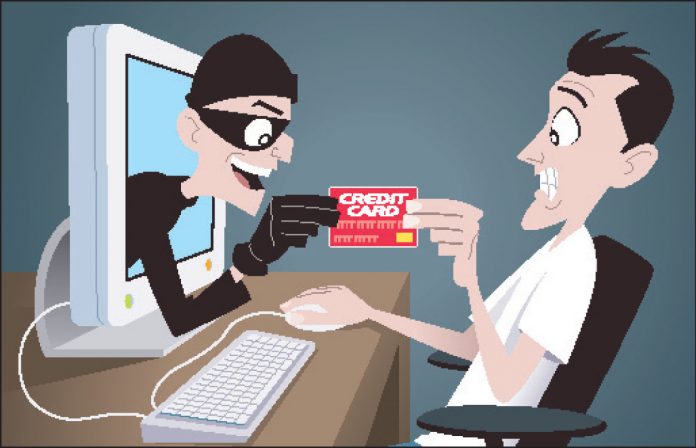
Global credit card theft has turned into an inexorably regular wrongdoing because of the ascent of the Internet, which makes it basic for individuals worldwide to take part in plans to get or utilize credit without appropriate approval.

Cases of global credit card theft can include:

  • Acquiring individuals’ close to home recognizing data and utilizing that data to open credit cards in another person’s name.
  • Acquiring credit card data from many individuals and utilizing that data to make buys or take loans. Phishing tricks are one approach to get credit card data. Skimming, or joining gadgets to card per users, is another basic approach.
  • Making false personalities with significant credit agencies utilizing invented or stolen Social Security numbers. Making little buys and paying off charges can bring about credit cutoff points being raised. Expansive aggregates of cash can then be charged on the cards and never reimbursed.

A credit card theft conspiracy gets to be distinctly global at whatever time stolen distinguishing data is imparted to individuals abroad, or at whatever time individuals from different nations take an interest in a plan to disgracefully acquire or utilize credit.  Stolen card numbers and recognizing data can be purchased and sold in underground sites by individuals anyplace on the planet. This implies a casualty’s close to home distinguishing subtle elements or credit data could be utilized by somebody a large number of miles away to buy items or acquire money.

Scenario of United States

The United States government assumes universal praise card extortion genuinely and will seek after forceful legitimate activity against people who are accepted to have been included in credit card extortion plans. In 2013, the FBI detailed that 10 people confronted a 25 check prosecution in light of one of the biggest worldwide credit card extortion plots ever charged by the U.S. Equity Department.

At the point when the administration speculates credit card extortion, government offices collaborate to recognize respondents and reveal confirmation of the charged plan. The Financial Fraud Enforcement Task Force was set up to “wage a forceful, facilitated, and proactive push to examine and indict monetary wrongdoings.” There are more than 20 government offices; 94 U.S. Lawyers’ workplaces, and state and neighborhood accomplices that have met up in the broadest coalition ever gathered to battle credit card theft.

The individuals who are charged can be arraigned by the Economics Crimes Unit of the U.S. Lawyer’s office and can confront various criminal allegations including bank extortion, connivance, wire theft, character extortion, and charges under the 1984 Credit Card Fraud Act.

Every offense could convey jail time, so it is essential to shield enthusiastically against the charges you confront. A New York criminal guard legal advisor can help raise safeguards to credit card extortion charges.

Worldwide credit card theft can challenge for prosecutors in the U.S. to effectively make legitimate move against. One issue is whether a litigant who is in a remote nation will be removed to the United States to stand trial. Battling removal is extremely normal.

Another issue is that if individuals in different nations remain outside of the United States when purchasing and offering card information, and no unlawful business goes through the U.S., the U.S. government will be unable to seek after charges under the Computer Fraud and Abuse Act. The Justice Department has requested that Congress correct the law to make it illicit for anybody anyplace on the planet to purchase or offer a stolen credit card that has been issued by a U.S. bank, regardless of where the exchange happens. Nonetheless, the law has not yet been changed.

A New York credit card guard attorney comprehends the laws that apply to global credit card theft, and additionally the escape clauses and issues with those laws that can make it more troublesome for prosecutors who follow individuals who purportedly took an interest in universal credit card theft. On the off chance that prosecutors can’t demonstrate past a sensible uncertainty that you disregarded the letter of the law, try not to be discovered liable of a theft offense.

Charges for International Credit Card Fraud In the US

The Credit Card Fraud and Abuse Act of 1984 was systematized in 18 U.S. Code Section 1029 and is ordinarily used to arraign the individuals who are included in worldwide credit card extortion. You can be charged under this statute for trafficking, having, as well as utilizing fake get to gadgets or gadget making hardware.

Global credit card extortion can likewise prompt to charges for:

  • Wire theft (18 U.S. Code Section 1343)
  • Bank theft (18 U.S. Code Section 1344)
  • Bothered wholesale fraud (18 U.S. Code Section 1028A)
  • Theft and related action regarding PCs (18 U.S. Code Section 1030)
  • Wire theft alone could prompt to 30 years detainment and a $1 million punishment when the extortion influences a monetary establishment.

INDIAN SCENARIO

Online Credit Card Payments – RBI elucidates the prerequisite for utilization of second level confirmation by dealers/sellers. Second level confirmation required where the hidden exchange is residential – i.e. between two Indian occupants.  Exchanges utilizing an Indian issued card, and between Indian occupants to be settled in Indian cash by an Indian procuring bank.

On August 22, 2014, the Reserve Bank of India (“RBI”) issued a directive1 (“RBI Directive”) clearing up the necessities for extra verification/approval for credit card exchanges. Because of the inquiries raised by the Association of Radio Taxis in a letter to the RBI prior this month, the RBI Directive indicates that the RBI ordered extra confirmation/approval prerequisites will apply, in each card not present (“CNP”) exchange, where an Indian credit card is utilized to pay for an exchange that is basically between two Indians.

Credit cards, with their birthplace in the mid-1900s, have been being used in India since the 1980s and have seen a monstrous development in the quantity of clients, and in addition, traders tolerating credit card installments in the course of recent years. The development of online administrations and commercial centers has given further catalyst to the utilization of credit cards for ordinary exchanges.

With both E-Commerce and telemarketing developing quickly in India, an expanding number of organizations, regardless of whether administration or item based, require installment on the web or through telephone – prompting to CNP exchanges.

A CNP exchange is basically one where the vendor does not have entry to the card being utilized in light of the fact that the client and the shipper/specialist organization are not physically in a similar area, making it troublesome for the dealer/specialist organization to confirm the personality of the client. There could be circumstances in which installments and exchanges are finished without the learning or approval of the genuine holder of a credit card. A CNP exchange would incorporate exchanges on the web, via telephone, over mail and so forth.

Noticing the developing number of episodes of credit card theft, particularly by means of online installment gateways, the RBI issued a notice in February 20092, commanding the utilization of an extra confirmation/approval framework (likewise alluded to as second level validation/3D check) for online CNP exchanges. The extra verification/approval was to be acquired utilizing data that was not obvious on the credit card itself, i.e. data known or accessible to the holder of the card however not imprinted on the card. One time passwords, web saving money passwords are cases of second level validation. Assist, banks were additionally required to set up an online ready framework which would advise the cardholder of any CNP exchange for INR 5000 or above. The prerequisite for this arrangement of extra verification, was additionally reached out to intelligent voice reaction (IVR) exchanges, normally did over phones, and the necessity for online alarms has been stretched out to all CNP exchanges.

CREDIT/DEBIT CARD THEFT: PUNISHMENTS, PENALTIES, AND CONSEQUENCES

The offenses identified with stolen credit cards have bit by bit expanded in the course of the most recent quite a long while on account of an expansion in credit card use over paper checks. At the point when credit cards were first picking up in prominence, the main credit card theft wrongdoing was taking a credit card client’s announcement out of the post box. The hoodlum would then utilize the individual’s credit card number to make false buys. Credit card theft has developed and today it includes more than simply taking a credit card proclamation from a letter drop. Luckily, the laws for credit card theft have extended and now incorporate more extensive applications, expanded disciplines, and more cover with different offenses.

A few respondents think they will stay away from indictment on the off chance that they just utilize a stolen credit card number rather than physically utilizing the credit card or check card. As a result of the development of credit card laws, credit card theft now incorporates the unapproved utilization of the real credit or check card and the unapproved utilization of the record number identified with the card, in addition to regularly the stick number. It doesn’t make a difference how a respondent got the credit card, the record number, or the stick number. The only thing that is important is he had the card number without approval.

A few states require that a litigant really utilize the card or record number to continue with a credit card theft offense. In any case, a few states will approve a conviction if a litigant simply has a credit card or check card with expectation to utilize it without approval. In these cases, the state won’t require a finished demonstration of utilizing the card. In the event that a state does not have a particular credit card theft statute, then they will have a fundamentally the same as, substitute charge of credit card mishandle. Moreover, in light of the fact that they are comparative in physical and electronic organizations, many states will apply an indistinguishable criminal statute to platinum cards from they do to credit cards.

The genuine punishments for credit card theft or mishandle differ by state. Disciplines run from a wrongdoing to a lawful offense. For instance, some credit card theft offenses in Connecticut are considered crimes. All credit card manhandle cases are considered lawful offenses in Texas. Notwithstanding these varieties, a few states will likewise improve discipline ranges if the credit card was stolen from an elderly person.

Despite the fact that credit/plastic theft is viewed as a crime in many states, the length of potential correctional facility time has a tendency to be far not as much as strike offenses since credit card theft is just coordinated toward property. Prosecutors every now and again utilize suspended sentences or conceded settlings as a strategy for gathering compensation for casualties of credit card theft. The measure of compensation can incorporate any charges caused from the utilization of the credit card and the measure of assets used by a casualty to clear up their credit history.

A respondent being accused of credit card theft is possibly subject to different charges. On the off chance that a state has other criminal codes for mail theft, fabrication, or fake utilization of distinguishing data, then many will approve the prosecutor to look for a conviction for each relevant statute.

Download Now

What is the liability of Facebook in India if a crime is committed through use of their service?

0
facebook

In this article, Aditya Arora who is currently pursuing Diploma in Entrepreneurship Administration and Business Laws from NUJS, Kolkata, discusses the liability of Facebook in India if a crime is committed through use of their service.

  • Under the Information Technology Act, 2000 the term ‘intermediary’ has been defined under as “intermediary”, with respect to any particular electronic records, means any person who on behalf of another person receives, stores or transmits that record or provides any service with respect to that record and includes Telecom service providers, network service providers, internet service providers, web-hosting service providers, search engines, online payment sites, online-auction sites, online-market places and cyber cafes.[1]
  • The amendment to the 2008 Information Technology Act has further clarified and widened the ambit of intermediary and now also includes telecom providers, internet providers, online payment platforms, online market places, web hosting service providers, etc. ISPs like Airtel, BSNL, Idea and social media websites such as Facebook, Google, etc. have now been included under the term ‘intermediary’ under the Act.
  • Since Facebook is a platform giving options to people to socialize, therefore it will be considered to be an intermediary for the purposes of determining its liability under the Information Technology Act. One of the famous examples outlining intermediary’s liability is the Baazee case where the CEO of the service provider was jailed for selling obscene MMS Clip on its platform, otherwise banned by law.
  • The Baazee case highlighted the extent of liability to which the online service providers can be exposed to. Though in this case the content was generated by a third party, intermediaries could still be held liable for offences committed by their users while using the services.
  • “The Delhi High Court while considering a petition to quash the criminal proceedings against Avnish Bajaj in this case, found that the website which hosted the MMS could be held to be liable for ‘Sale etc… of obscene books’ under Section 292 of IPC as well as Section 67 of IT Act, 2000 relating to publishing of information which is obscene in electronic form. “[2]
  • Section 79 of the old Act was vaguely drafted and its interpretation proved to be harsh on the intermediaries. Though the intermediaries were exempted only to the extent if they proved that they had no knowledge of the infringement or they had exercised all due diligence to prevent such infringement or offence, it made the websites liable even if constructive knowledge could be proved. This harsh approach led to the amendment of the old Act.
  • In the Information Technology Amendment Act, 2008, it states that “an intermediary shall not be liable for any third party information data or communication link made available or hosted by them”[3]

But such relaxation as seen in the amendment is subjected to a set of conditions:

  1. the function of the intermediary is limited to providing access to a communication system over which information made available by third parties is transmitted or temporarily stored or hosted;
  2. the intermediary does not initiate the transmission or select the receiver of the transmission and select or modify the information contained in the transmission;
  3. the intermediary observes due diligence while discharging his duties.

As a result of the amendment, it releases service providers such as Facebook, Google, Twitter of their liability as long as they satisfy the abovementioned conditions. These conditions also apply to ISPs such as Airtel, Idea, BSNL etc., thereby releasing them from the liability on fulfilling the conditions. This

This immunity, however, is not unlimited and the intermediary would loose such immunity if there is evidence that the intermediary has conspired or abetted or aided or induced whether by threats or promise or otherwise in the commission of the unlawful act.

Section 79 also introduces this concept “notice & takedown” under which it states that an intermediary would lose its immunity if upon receiving actual knowledge or on being notified that any information, data or communication link residing in or connected to a computer resource controlled by it is being used to commit an unlawful act and it fails to expeditiously remove or disable access to that material.

As mentioned above, Section 79 though provides protection to the intermediaries, they could still be held liable under Section 72A of the Amendment Act for disclosure of personal information of any person without their prior consent with the intention of causing wrongful loss in breach of a lawful contract. The Act, by the virtue of it being overridden in nature, prescribes imprisonment as punishment for such breach up to three years or fine up to five lac rupees or both.

Now let us examine various legal issues that will apply to Facebook as well its users in India

Defamation

In India, the reputation of a person is protected under section 499 of the Indian Penal Code. It includes anything in writing, electronically or published, which is not true and directed to offend an individual, will constitute to defamation. Section 500 of the IPC subsequently prescribes the punishment for defamation. Taking Facebook as an example of the social networking site, if an individual with over five thousand followers posts something defamatory pertaining to somebody with intention and such content is not even reviewed by the authorized personnel of Facebook since it is posted directly from the users page. Therefore, the issue will be with regard to the liability of Facebook for merely facilitating the platform. Under Section 4(4) of the Information Technology Rules 2011, the executives of Facebook will be held to be liable along with the user who posted such remarks, if Facebook fails to pull it down within thirty-six hours of the content being published on the platform.

Impersonation

The Information Technology Act also provides for protection of individuals from impersonation. According to section 66D of the Act, “Whoever by means of any communication device or computer cheats by impersonating someone else, shall be punished with imprisonment up to three years and shall be liable to pay a fine of one Lakh Rupees. If Facebook, by the virtue of being an intermediary does not remove the impersonating account as per the guidelines prescribed in the Act, then it would be held criminally responsible for the act and be liable for punishment, along with the individual who has committed the impersonating act, to have committed the offence of impersonation. Facebook subsequently will be unable to invoke the defences as laid down under section 79 of the Act.

Communal Hatred

Any individual who by using Facebook writes content as form of a post, which incites communal hatred and/or violence, will be held accountable under section 153A of the Penal Code, which punishes any individual or a group of individuals who incite communal hatred between two religious communities using words – either in spoken or written form. The punishment stipulated under this section is three years’ imprisonment with a fine. Facebook should remove such content from its servers once it is brought to its notice in order to be eligible to use the defence of section 79 of the Information Technology Act. If it fails to remove the content within the 36 hours stipulated as per the guidelines laid down in the Act, it will lose the protection offered under section 79. In such a situation Facebook may be held responsible as a contributing party and its executives may be charged under section 153A of the Indian Penal Code.

Obscenity

Any form of Pornographic content as well as any other obscene content, is prohibited in India. Therefore, any individual who publishes pornographic/obscene content via any social media platform will be punished with an imprisonment sentence of a minimum of five years, along with a fine of Rupees One Lakh as prescribed under the Act. Facebook is also obliged to take a note of such content being uploaded onto its social networking platform and should remove such offending content within the stipulated time limit in order to avoid prosecution, procedure of which is laid down under the Act.

Section 67 of the Act restricts publishing of electronic information in any platform which is considered to be obscene. “It prohibits any material, which is lascivious, or appeals to the prurient interest, or if its effect would tend to deprave or corrupt persons who are likely to read, see or hear the matter contained or embodied in it. After the 2008 Amendment of the IT Act in India was passed, sections 67A and 67B were subsequently added so as to specifically prohibit publishing or transmitting of material containing sexually explicit acts (depicting children, for example), in electronic form.”[4]

Conclusion

Facebook is considered to be one of the revolutionary social media platform with it being one of the most successful one in the networking sphere. With the biggest consumer base amongst all, it also gives immense responsibility to Facebook to regulate the content posted by its users. Therefore, Facebook should make every possible effort to abide by the laws of India, such as IT Act. Such legislations have been enacted in order to maintain law and order within the internet environment, because without any IT legislation, the internet would be unregulated and could result in social unrest, cyber terrorism etc, which if not stopped at the correct moment, could lead to undermining the very existence of the state.

[1] Section 2 (w) of the Information Technology Act

[2] Software Freedom Law Centre, “Intermediaries, users and the law – Analyzing intermediary liability and IT Rules”

[3] Section 79 of the Information Technology Amendment Act, 2008

[4] Rodney D Ryder and Ashwin Madhavan, Intermediary liability under Indian law, 2013

Download Now

All you need to know about Real Estate (Regulation and Development) Act, 2016

1
Real Estate (Regulation and Development) Act, 2016

In this article Harmish Patel discusses, All You Need To Know About Real Estate (Regulation and Development) Act, 2016.

Introduction

The Real Estate (Regulation and Development) Act, 2016, the historic point realty law to shield home purchasers from deceitful developers, become operational from 1st May 2017, nine years after it was imagined. The act was cleared by Parliament in March a year ago. Under the act, states needed to advise the reality guidelines and set up Real Estate Regulatory Authority (RERA) by April 30. Without telling the guidelines, the law won’t end up plainly operational. Notwithstanding, as on April 30, only 13 of the 32 states and Union regions, including Gujarat, Uttar Pradesh, Madhya Pradesh, Maharashtra, Odisha, Delhi, and Andhra Pradesh have informed the standards. Just a single state – Madhya Pradesh – has set up RERA while 9 others including Kerala, Maharashtra, Punjab, Rajasthan, Haryana, and Delhi have set up between time controllers. Lodging service authorities keep up that outstanding states have been coordinated to tell their tenets at the soonest.

Few important provisions of Real Estate (Regulation and Development) Act, 2016

  • It makes it compulsory for all manufacturers – building up a venture where the land surpasses 500 square meter – to enroll with RERA before propelling on notwithstanding promoting their venture. Developers have been given time until July 31 to enroll.
  • Not complying provisions will welcome up to the greatest detainment of 3 years or fine of up to 10% of the aggregate venture cost.
  • Developers should submit and additionally transfer extend points of interest, including endorsed format arrange, timetable, cost, and the deal assertion, that forthcoming purchasers should sign to the proposed controller.
  • Only designers who satisfy this exposure proviso would be allowed to promote their venture to imminent purchasers.
  • Real Estate Appellate Tribunals to be set up in each state.
  • As of now, the real estate area was to a great extent unregulated in India. In the event that a shopper had a dissension against an engineer, they needed to make rounds of purchaser or common courts. Presently, if there should be an occurrence of any grievance, the buyer can go to the real estate controller for redressal.
  • Developers should put half of the cash gathered from a purchaser in a different record to meet the development cost of the venture. This will put a check to the general practice by designers to occupy purchaser’s cash to begin another venture as opposed to completing the one for which cash was gathered. This will guarantee that development is finished on time.
  • The law is probably going to settle lodging costs. It will prompt improved activity in the part, prompting all the more lodging units provided to the market.
  • It will get rid of here now gone again later administrators from the Division and channelise venture into it.
  • Builders will likewise profit as the law has corrective arrangements for allottees who don’t pay contribution on time. The manufacturer can likewise approach the controller on the off chance that there is any issue with the purchaser.

The Real Estate (Regulation and Development) Act, 2016 (RERA) will at long run give India’s real estate segment its first controller from Monday, May 1, 2016. The act was passed by parliament a year ago and the Union Ministry of Housing and Urban Poverty Alleviation had given time till May 1, 2017, to detail and tell rules for the working of the controller. RERA looks to bring clearness and reasonable practices that would ensure the premiums of purchasers and furthermore force punishments on errant developers.

So what is RERA? Here is a glance at the real estate controller and how it will impact the real estate sector.

As indicated by RERA, each state and Union region will have its own controller and set of tenets to administer the working of the controller. Focus has drafted the standards for Union domains including the National Capital. While many states are still behind on timetable for warning of RERA principles, many have advised guidelines and a controller will begin working. Some of these states are Haryana, Uttar Pradesh and Maharashtra.

In spite of seeing a drop in the previous three years, the ticket costs are moderately high and inventories are heaping up. Low request is likewise adding to the decreased recuperation of venture by engineers. These reasons have stopped engineers from lessening the ticket costs.

RERA looks to address issues like deferrals, value, nature of development, title and different changes.

Delays in undertakings are the greatest issue confronted by purchasers. The reasons are numerous and the impact is tremendous. Since the most recent 10 years, many projects have seen deferrals of up to 7 years. Ventures propelled after the turn of this decade have confronted delays also. Some have keep running into obstructions even before a block was laid. The reasons incorporate redirection of assets to different activities, changes in regulations by experts, the earth service, national green tribunal and so on and different bodies like those included in foundation improvement and representing transport. In many spots, arrive procurement turns into an issue. Errant manufacturers regularly pitch activities to financial specialists without the endorsement of arrangements, unapproved increment in FAR, terrible nature of development, ventures stuck in a suit and so forth.

Key arrangements of RERA

  1. The promoter of a real estate advancement firm needs to keep up a different escrow represent each of their activities. A base 70 for each penny of the cash from speculators and purchasers should be stored. This cash must be utilized for the development of the venture and the cost borne towards the land.
  2. To give clearness to purchasers, developers should keep them educated of their other continuous tasks.
  3. RERA obliges manufacturers to present the first endorsed plans for their continuous activities and the changes that they made later. They likewise need to outfit points of interest of income gathered from allottees, how the assets were used, the course of events for development, fulfillment, and conveyance that should be ensured by an Engineer/Architect/practicing Chartered Accountant.
  4. It will be the obligation of each state controller to enroll real estate activities and real estate specialists working in their state under RERA. The points of interest of every single enlisted venture will be set up on a site for free.
  5. RERA discusses the nature of development in ventures. In the course of the most recent couple of years, purchasers have dissented about poor of pads. The controller will guarantee insurance to purchasers in this matter for a long time from the date of ownership. In the event that any issue is highlighted by purchasers before the controller in this period incorporating into nature of development and the arrangement of administrations, the engineer should amend the same in a matter of 30 days.
  6. Developers can’t welcome, publicize, offer, offer, market or book any plot, condo, house, building, interest in ventures, without first enlisting it with the administrative specialist. Moreover, after enlistment, all the notice welcoming speculation should bear the one of a kind RERA enrollment number. The enrollment no. will be given venture astute.
  7. In the wake of enlisting the venture, developers should outfit points of interest of their money related articulations, legitimate title deed and support reports.
  8. On the off chance that the promoter defaults on conveyance inside the concurred due date, they will be required to restore the whole cash contributed by the purchasers alongside the pre concurred financing cost said in the contract in light of the model contract given by RERA.
  9. On the off chance that the purchaser picks not to take the cash back, the manufacturer should pay month to month enthusiasm on each postpone month to the purchaser till they get conveyance.
  10. After developer enlists with the controller, a page will be made for the developer on the administrative expert’s site. The designer will be given login qualifications utilizing which it will transfer all the data with respect to the enlisted extends on the controller’s site. The number, kind of lots, plots and extends and their finishing status will be refreshed at a most extreme quarterly premise.
  11. To add promote security to purchasers, RERA orders that designers can’t solicit more than 10 for every penny of the property’s cost as a propelled installment booking sum before actually consenting to an enrolled deal arrangement.
  12. The controller will have the ability to fine and detain errant manufacturers in light of a case by case premise. The detainment can go up to a time of three years for a venture.

Conclusion

The Act is a positive change as far as expanding straightforwardness in the real-estate division, expanding responsibility of the promoters and engineers and building up proficient discussions for grievance review. This will thus prompt lower prosecution because of stringent principles and directions in the very degenerate part. Time bound endorsements and straightforwardness will likewise prompt more prominent stream of speculation both household and remote prompting lessening in cost of obtaining in the real-estate sector.Though it is a win-win circumstance for both the designers and the purchasers and will help the segment develop over the long haul, the inconsistencies in the Act should be desperately tended to. Encourage, the Act can’t be executed viable till the political hesitance in actualizing the Act is expelled which is a noteworthy detour. Consequently, the Act needs authoritative revisions by counseling the partners required as there is a tremendous extent of change combined with expelling any irreconcilable situation that the political class may have in the execution of the Act.

This was all on Real Estate (Regulation and Development) Act, 2016. What are your views on the Real Estate (Regulation and Development) Act, 2016? Comment below and let us know.

Suggested Reading.

Real estate industry and protection of consumer interests in India


Download Now

What legal actions can be taken against a person who attempts to break an idol in a temple?

1
idol

In this article, Anubhav Pandey discusses legal actions to take against person who breaks or attempts to break an Idol in a temple.

Idol, in the eyes of law, is a legal entity. A legal entity can sue as well as be sued. Therefore, there are legal consequences attached when someone breaks or either attempts to break an idol. Hence, let us look at the legal implications when someone damages an idol in a temple.

Legal status of an Idol

This must have come as a surprise to many of us, Lord Sri Ram fought the legal battle of Ayodhya (Ram Janmbhoomi case) through his representative and also emerged victorious. Under the Indian Judicial system, Idols have been given the status of a legal person.

Who is a juristic person? Does a juristic person have the right to sue?

Human beings can easily be made accountable for the wrongs they have done as well as can ensure their legal well-being. However, there are few non-living entities which cannot protect their own legal rights. Their legal rights are vested on others. These non-living entities are called artificial persons.

Idol of a God in a temple is an artificial person and can sue when someone tries to damage it. The caretaker of the Idol (Mahant) of the temple will sue on behalf of the Idol.

Therefore, answering the question, can a person who breaks or attempts to break an Idol at a temple be sued, the answer is Yes.

Which law applies when anyone attempts to break an Idol at the temple

Section 295 of the Indian Penal Code

The section clearly lays down that, when a person destroys, damages or defiles any place of worship or objects of worship held sacred, that is an Idol, will be punished with an imprisonment which may extend to two years along with a fine.

Therefore, maximum two years of imprisonment is the punishment when a person deliberately with the prior intention of insulting any class of religion breaks an Idol.

Will breaking of any Idol of God outside the temple will land you in jail

No. For satisfying the above penal provision the Idol must be inside the temple as well as regularly worshiped by the people or it should be in procession on festival occasions when the breaking takes place.

Therefore, breaking any Idol of God anywhere will not land you in jail. It might happen that during a normal shopping procedure an Idol of God might slip from your hand and gets broken. This will not land you in jail. Yes, when a person attempts to defame certain class of people deliberately making defamatory remarks on their religion will obviously land them in jail.

What will be the consequences when a person defames the Idol, hence the religion

Section 295 A of the IPC governs the situation where anyone deliberately does an act which outrages the religious feeling of a class by insulting its religious beliefs. Also, when a person intentionally by speaking, or by writing, or by using signs insults the religious belief of any class, such person will be punished by law for a term which may extend to three years with fine.

Therefore, when a person attempts to defame a religious class by defaming the Idol, section 295A of the IPC comes into action.

Section 296 talks of disturbing religious assembly. Therefore, when a person attempts to break the Idol or defame the Idol, he causes a disturbance to a lawful assembly gathered at the temple for the purpose of prayer. The punishment for this is imprisonment for one year or fine or both.

Section 298 of the Indian Penal Code might also apply where a person with the deliberate intention of defaming anyone’s religious feelings, utters words which downtrodden the religious sentiment of that person will be punished by law.

Idol theft

Indian temples are rich when it comes to antique idols. Protecting the same is the duty of law enforcement agencies. In any Idol theft case, the normal provision of theft as defined under the IPC will apply. Along with this, relevant provisions of Custom’s Act apply too.

Idol Wing of Tamil Nadu Police

The matter relating to Idol theft is such that Indian states like Tamil Nadu have a separate Idol Wing to look into such matters.

Primary functions of the Idol Wing CID

  • To investigate cases of theft of idols and antiques exceeding value of Rs.5 Lakhs.
  • To investigate idol theft cases referred to it by the State Government.
  • To co-ordinate in the investigation of important idol theft cases handled by the District Police
  • Collection of intelligence on nefarious activities of antique dealers and art collectors.

Who can file the case

In cases of Idol breaking or Idol theft, ideally, the person who will be filing the case will be the temple represented by its caretakers, or Trustees, where there exists a trust. If no one is taking action then any person belonging to the religion of whole Idol was sabotaged might also file a case on the basis of Section 296 and Section 298 of the Indian Penal Code.

What will be the legal consequences when a person breaks an Idol of a God kept in a residential home

As explained above, for satisfying the above penal provision the Idol must be inside the temple as well as regularly worshiped by the people or it should be in procession on festival occasions when the breaking takes place.

Important Judicial pronouncement on legal rights of Idols

An incident took place in Mumbai where water began to drip from the feet of the statue of Jesus. A rationalist thinker Sanal Edamaruku analysed the incident and gave an explanation of how the water from a nearby blocked drain was dripping from Jesus feet by the phenomenon of what is called the capillary action. He was held guilty under Article 295A of the IPC.

A person named Rajpal published an anonymous pamphlet called ‘Rangeela Rasool’ (Colourful Prophet). The pamphlet made derogatory and scurrilous remarks about the personal life of Prophet Muhammad and soon led to widespread unrest amongst Indian Muslims after gaining sufficient attention.  Since then judiciary has dealt at length with Section 295A, the much controversial issues surrounding freedom of speech and expression and blasphemy laws can be understood in light of the interpretation of the section by various courts in the country.

References

Sankaranarayanan Iyer vs Sri Poovananathaswami Temple; (1949) 2 MLJ 171

Pramatha Nath Mullick vs Pradyumna Kumar Mullick; (1925) 27 BOMLR 1064


Download Now

Regulations for collaboration between Indian and Foreign educational institutes

0
ugc

In this article, Dr.V.Ramprasath Manohar, who is currently pursuing M.A. IN BUSINESS LAWS, from NUJS, Kolkata, discusses Regulations for Collaboration between Indian and Foreign Educational Institutes.

Introduction

In the era of globalisation and liberalisation, collaboration between Indian and Foreign educational institutions is gaining the momentum in India. Hence, increased aspiration of Indian institution to have collaboration with foreign educational institution to improve their brand value and increased competition among foreign educational institutions to capture the vast Indian educational market have necessitated setting the framework of regulations for regulating such collaboration between Indian and Foreign educational institution. In this essay, an attempt is made to understand the framework of such regulations and its consequences.

Need for Collaboration between Indian and Foreign educational institutes

In the 21st century of knowledge, it is important to focus on higher education to improve the prosperity of nation. The largest aspiring youth population of India have to be provided with the quality higher education and cutting edge technical skills to compete effectively in global scale. Only few of the Indian educational institutions are being placed in world top class institutions. Indian education system has the advantages like high number of students, English as primary medium in higher education and autonomy of academic institutions etc. Whereas Foreign educational institutions have high technical knowledge, updated curriculum and effective content delivery system etc.  Hence, collaboration between Indian and foreign education institutions will lead to synergy between both Indian and foreign educational institutions in terms of academic and research and development.

Objectives of regulations for collaboration between Indian and Foreign Educational Institutions

The major objectives of regulations for collaboration between Indian and foreign educational institutions are

  1. Regulations are aimed at systematise and establish the framework for collaboration and facilitation of mutually beneficial collaboration
  2. Regulations are essential to safeguard the interest of students of India from any spurious foreign institutions.
  3. Regulations are aimed to ensure maintenance of uniform standards in quality of higher education in compliance to various statutory bodies in India.
  4. Regulations are aimed at preventing any non-accredited Indian and foreign educational institutional collaboration and thereby ensuring quality of higher education in India.
  5. Regulations are aimed at protection of national interest to prevent any anti-national academic curriculum, research and development in India.

Regulatory bodies and regulations for collaboration between Indian and foreign educational institutions

In India, UGC and AICTE are the regulatory bodies for regulating collaboration between Indian and foreign educational institutions.

AICTE is the regulatory body for regulating such collaboration in the field of Technical Education, Research and Training. AICTE has also issued guidelines for collaboration and twinning programme. This guideline prescribes various eligibility conditions, procedures for approving collaboration between Indian and foreign educational institutions.

Whereas, UGC is the regulatory body for regulating foreign collaboration of Indian universities and colleges other than technical institutions which are regulated by AICTE. For this purpose, UGC has recently repealed it’s 2012 regulations and enacted UGC (Promotion and Maintenance of Standards of Academic Collaboration between Indian and Foreign Educational Institutions) Regulations, 2016. The new enactment is brought out by UGC to enhance the qualitative and effective collaboration between Indian universities and colleges and foreign institutions.

Eligibility criteria for Collaboration as prescribed by UGC and AICTE regulations

UGC regulations 2016, section 3 prescribes the eligibility conditions of collaborating foreign institution as well as Indian institutions.

As per section 3(1) of the said UGC regulations, the foreign institution shall be accredited with the highest grade or threshold level accreditation in their homeland by accreditation agency. Similarly, AICTE guidelines also mandate that the foreign educational institution shall be accredited in their parent country.

As per section 3(2) of the UGC regulations, An Indian Educational Institutions with a grade not less than B grade and have experience of at least six years or have at least two batches of students graduating, are eligible to collaborate with foreign educational institution. Further, UGC guidelines prescribe that the collaborating Indian educational institution should have basic academic infrastructure, including laboratory and workshop facilities and library. However, AICTE regulations mandated that Indian education institution has to be approved by the AICTE with prescribed quality can collaborate with foreign educational institutions.

Further, both the UGC and AICTE regulations impose a condition that, Indian educational institution collaborating with foreign educational institution, shall publicly display academic requirements and details of collaboration programme. In order to safeguard the interest of national security and territorial integrity of India, any programme which is against national security and territorial integrity should not be conducted with foreign institutional collaborations. In order to safeguard the interest of students undergoing such collaborative programme, regulations place onus to redress the grievances of students on the Indian Educational Institution entering into such academic collaboration.

Procedure for approval for Indian and foreign educational institution collaboration

UGC regulation is recently amended to streamline and simplify the procedure of collaboration between Indian and foreign educational institution. Earlier, foreign educational institution had to apply for collaboration. Since, foreign educational institutions are not aware about the legal framework of India, foreign educational institutions are reluctant to collaborate. Therefore, it was amended in order to enable Indian educational institutions to initiate and apply for collaboration with foreign educational institutions. Indian educational institution has to prepare a draft MOU for collaboration and draft MOU is to be approved by UGC. Thereafter, Indian educational institution has to apply in a separate online portal with MOU of collaboration between Indian and foreign educational institutions. The approval for collaboration is valid for minimum two cycles of degree programme and it can be renewed thereafter to continue collaboration.

AICTE also mandates that a tripartite or bipartite MOU between collaborating institutions to be submitted to the council for approval of collaboration. NOC form the embassy of foreign institute’s parent country to be submitted for collaboration and twinning programme.

Further, UGC regulation mandates that students who enrolled for collaborative programme should undergo minimum two semesters in case of degree programme and one semester in case of post graduate programme in parent country of foreign educational institutions. AICTE regulation mandates minimum one semester study in foreign country campus.

Violations of regulations by collaborating institutions

As per UGC regulations, section 7 deals with violations of regulations by collaborating institutions. In case of any collaborating institutions violates the regulatory provisions and also terms and conditions of MOU, the approval of collaboration shall be revoked after hearing the institution. However, while revoking the permission for collaboration, the interest of students who have already enrolled for collaboration programme shall be protected. Further, UGC shall also take action under section 14 of the UGC act against violating institutions. In case, any Indian education institution indulged in false claiming of foreign institutional collaboration or else collaborate without necessary UGC approval, penal action shall be initiated against such institutions.

As per AICTE regulations, any foreign educational institutions which is violating the regulations or else failing to comply with the directions of AICTE, AICTE may withdraw the approval for collaboration. Further, such violations shall be intimated to external affairs ministry and their embassy for further action as per law of their country. The visa issued to employees of such institution may be withdrawn. Repatriation of funds from India to their origin country may be prohibited with the help of RBI.

Importance of regulations for collaboration between Indian and Foreign Educational Institutions

Regulations are important to establish the legal framework for collaboration and to safeguard the interest of students of India from any spurious foreign institutions. Regulations ensure maintenance of uniform standards in quality of higher education in compliance to various statutory bodies in India.

Critical analysis of functioning of regulations for collaboration

Over the years, functioning of regulations for collaboration between Indian and foreign educational institutions are not satisfactory. Prior to 2016 amendment of UGC regulations, UGC has not received any proposals from foreign university for collaboration. This is mainly due to cumbersome procedure or lack of awareness about the procedure of collaboration amongst foreign educational institutions. Further, uncertainty of policy regulations make the foreign university as reluctant.

UGC regulations are cautious approach towards collaboration between Indian and Foreign educational institutions. Previous instance of mushrooming of unhealthy collaborations are being averted by this cautious approach. In 2016 amendments, it was mandatory for both Indian and foreign educational institutions to have accreditation from the prescribed accreditation agencies.

Further, UGC regulations are having provision to safeguard the interest of students who are victim of any failure of collaborating institutions. But there is no detail mechanism on safeguarding the interest of students.

With respect to penal provisions of UGC and AICTE regulations, only withdrawal of approval of collaborations is provided. There are no stringent penal provisions like fine or imprisonment is not being provided in regulations.

Renewal of registration of collaboration after two academic cycles, this provision aimed at maintaining the quality of collaboration after initial approval of collaboration. However, without prescribed criteria for review and renewal of collaboration, this renewal will be arbitrary. Arbitrary procedure to renewal will deter the collaborating institutions from collaborations.

Comparative analysis of distinguished features of UGC Regulations (amendment) 2016 and 2012 regulations

The amendments in UGC (Promotion and Maintenance of Standards of Academic Collaborations between Indian and Foreign Educational Institutes) Regulations, 2012 was brought in 2016 and these amendments are effort to simplify and streamlining the effective collaboration between Indian educational institutions and foreign educational institutions. As well as these amendments are an effort to promote the quality of collaboration with the protection of students interest.

Importantly, 2016 amendment has limited the regulations to programme which are leading to award of degree. Whereas post graduate diploma programme were removed out of regulatory framework of collaboration between Indian and foreign educational institutions. Thus the scope of regulation is limited to only the critical part of higher education. Thus other programmes of higher education provide wide opportunity to collaborating foreign educational institutions to design and develop various collaborative or twinning programmes. Further, the burden of regulation of multiple courses by UGC was lessened. Thereby now, UGC regulatory efforts can be focussed on most critical part of higher education.

Further, 2016 amendment has brought in more focus on quality of higher education. The regulations 2016, has increased the eligibility criteria for quality accreditation requirements for collaboration. More stringent quality parameters were imposed both on Indian and Foreign educational institutions. Further, a subcommittee of experts in international education and jurisprudence is constituted in new UGC regulatory regime to scrutinize the applications of collaboration. This committee will bring in more expertise in scrutiny of application as well as it will enhance more transparency in regulations. Arbitrariness of regulatory body is being minimised by involving experts in subcommittee.

The process of regulations is streamlined with the use of online portal for approval of applications of collaborations. These online applications have to be disposed of within 60 days and the reasons for rejection have to be clearly mentioned. Thus arbitrariness, delay and corruption involved in approval of collaborations are being effectively minimised.

Further, protection of student’s interest is a high priority agenda of UGC regulations 2016. By imposing mandatory condition of minimum duration of study in foreign institutional campus, the quality of collaboration is addressed. For undergraduate programme, minimum two semesters should be spent in foreign university campus and in case of post graduation programme it is minimum one semester. Thus, minimum assured duration of exposure of Indian students in foreign country is being ensured. Thereby the collaboration between Indian and foreign educational institutions will lead to real improvement in quality of education to Indian students. In case of 2012 UGC regulations, there is no such minimum assured foreign exposure to students.

Challenges and scope for evolution of regulatory regime

Though, amended UGC regulations 2016 is a positive step towards enhancing the scope and application of regulation in the field of collaboration between Indian and Foreign educational institutions. But still, there is a great scope for leveraging the collaboration between foreign and Indian educational institutions. But, collaboration among the Indian and foreign educational institution are to be expanded in the field of academic content development, curriculum improvement, sharing of infrastructure, faculty exchange programme, student exchange programme and research and development.

Further, there are regulatory gaps in UGC and AICTE regulations. Such regulatory gaps have to be identified on continuous basis and there should be an innovative approach to resolve such regulatory gaps and failures over the years.

Regulations of collaboration between Indian and foreign educational institutions are mainly focussing on higher and technical education. Many of the professional institutions in the field of medicine, veterinary science, agriculture, horticulture need to be specially regulated to meet their specific requirements. Because, such institutions have their own unique needs and challenges of collaboration with foreign institutions. Therefore, ‘one size fit to all’ approach may not go in long way to address the diversified needs and challenges of collaboration between Indian and foreign educational institutions. In addition, collaboration in the area of primary and secondary education is rarely thought about it. Hence, regulations of collaboration in primary and secondary education are also to be evolved over the years.

Further, there is a growing demand for setting up of foreign educational institutional campus in India. So far it is not being allowed. However, in china and middle East countries, foreign educational institutions are allowed to set up their own campus. Though, Indian regulatory regime has no provisions for such regulations. But over the years, it is going to be an emerging trend in collaborations between foreign and Indian educational institutions. Such collaborations will bring more financial and technological resources from foreign countries to India and revolutionise the field of education in India.

However, free hand to foreign institutions and scrupulous collaboration will also have potential harmful impact on Indian educational institutions and also on Indian education system. Those potential disadvantageous aspects of collaborations to be continuously identified and regulations have to evolve dynamically to explore opportunities and to overcome challenges.

Conclusion

To conclude, collaboration between Indian and foreign educational institutions in higher and technical educations are being regulated by the regulations of UGC and AICTE respectively. These regulations aimed at improving the quality of higher education through collaboration and twinning degree programmes. The collaboration between Indian and foreign educational institution may lead to improvement in curriculum, content and its delivery, infrastructural availability, exposure to the Indian student and faculty. UGC regulations are amended in 2016 to meet the pitfalls of 2012 regulations. Overall, recent amendment in UGC regulations has attempted to streamline, simplify and efficient collaborations between Indian and foreign educational institutions with the more focus on improving quality of collaborations and protection of interest of students. However, the challenges and opportunities of collaboration are unlimited and it needs constant expansion and evolution of regulatory regime in an innovative manner but by always upholding the quality of education and interest of students and nation.

Reference

  1. UGC (Promotion and Maintenance of Standards of Academic Collaborations between Indian and Foreign Educational Institutes) Regulations, 2012
  2. UGC (Promotion and Maintenance of Standards of Academic Collaborations between Indian and Foreign Educational Institutes) Regulations, 2016
  3. AICTE regulations on collaboration & Partnerships between Indian and Foreign Universities / Institutions in the field of Technical Education, Research and Training
  4. aicte-india.org
  5. ugc.ac.in
  6. http://www.ugc.ac.in/pdfnews/3825480_Foreign-Collaboration-Regulations.pdf


Download Now
logo
FREE & ONLINE 3-Day Bootcamp (LIVE only) on

How Can Experienced Professionals Become Independent Directors

calender
28th, 29th Mar, 2026, 2 - 5pm (IST) &
30th Mar, 2026, 7 - 10pm (IST).
Bootcamp starting in
Days
HRS
MIN
SEC
Abhyuday AgarwalCOO & CO-Founder, LawSikho

Register now

Abhyuday AgarwalCOO & CO-Founder, LawSikho