Download Now
Home Blog Page 1564

Note on Dearness Allowance and its development in private sector

0
DA

Emergence of Dearness Allowance (DA)

The Dearness Allowance (DA) was introduced after the Second World War and was then known as the Dear Food Allowance. The Dearness Allowance is an allowance which is given to the employee against the price rise in a countries economy i.e. to mitigate the impact of inflation.

Concept of Dearness Allowance

  • At the time of inflation, the price of every commodity rises, and it becomes tough for the people to meet those hike in the price. To help the people, most of the public sectors give Dearness Allowance to its employees. These help the people to cope with the inflation period. Compensation to price rise is given in the form of DA (Dearness Allowance).
  • This allowance has been dealt with separately as it compensates the variation in the purchasing power of the salary. Apart from the dearness allowance, there are many other Allowance being paid to the Government employees.
  • Some of them are House Rent Allowance, Education Allowance, Risk Allowance, Transport Allowance, Compensatory Allowance and many more.

Fifth central pay commission and its recommendation on DA (Dearness Allowance)

  • The fifth Central Pay Commission recommended uniform neutralization of DA at 100% to employees at all levels. Conversion of DA into Dearness Pay each time the CPI increases by 50% over the base index with Dearness Pay counting for all purposes including retirement advantages and Dearness
  • Allowance including Dearness Pay being paid net of tax. The Commission did not favour the option of employing separate indices for each class of employee because of the sheer impractically of the task and therefore, recommended using the 12 monthly average of All India CPI (WI) with base 1982 for calculating DA.

How is Dearness Allowance calculated

The rate of DA is calculated in terms of the percentage increase in 12 monthly average of AICPI (base 19820 over the average index of 306.33 which was the reference base for the current scales of pay recommended by the Fifth Central Pay Commission.

The Fifth Pay Commission had recommended that DA should be converted into DP each time the CPI increases by 50% over the base index. The Government merged 505 of DA with the basic pay from 01.04.2004.

The formula for calculating the Dearness Allowance for the period from 1.07.2004

         12Monthly Average-306.33

   {   ~~~~~~~~~~~~~~~~~~~~ X 100}-50= percentage increase in prices

                306.33                                        (ignoring fractions and Inflation neutralisation at                                                                     1005 at all levels)

  • The relation of an employer and its employee is only for the wages or the salary which he is entitled to for the work he does. The wages may include house rent allowance but eventually, does not include any other Allowance.
  • The Dearness Allowance which is given to an employee depends on the discretion of the company. Most of the public sector units are bound to give Dearness Allowance with the salary of a person. The amount of Dearness Allowance to be given totally depends on the Government’s policy.

Private companies and Dearness Allowance

  • Whereas a private company is not bound to give Dearness Allowance. It is at their discretion and terms of contract with the employee to give D.A. A private company cannot be forced to give DA. Whenever D.A. is paid by the company, the same being part of its expenses, it can account for the same as its expenses and only the profit will get taxed.
  • Therefore apart from treating the D.A. as the company’s business expenditure, there is no other Income Tax Exemption. Private companies are profit maximising companies, unlike a public company which works for social welfare motive.

The concept of Dearness Allowance is a totally different concept unlike the other allowances being given to an employee. The amount of Dearness Allowance keeps on changing from time to time. It is done by the Government authority keeping in mind the position of the inflationary condition of the economy.

Every Government employee irrespective of their post and position are entitled to D.A. not only the salaried persons but the pensioners and their families are also entitled to D.A. The Dearness Allowance is not allowed during a pensioner’s time overseas if employment is undertaken.

However, the DA remains beneficiaries to overseas pensioners whilst the recipient is not employed. In the present world, many private companies also provide D.A. to its employees along with their salary. This assures the employees to meet their needs. The employees also gain confidence in the company and this in return makes them more motivated and hence resulting in the economic growth.

Reference

  • https://en.wikipedia.org/wiki/Dearness_allowance
  • http://www.gservants.com/dearness-allowance-calculator-for-da-from-january-2017/

Suggested Readings.

A Businessman’s Guide to Labour Laws in India


Download Now

Is it Legal in India to marry a girl below 18 years of age?

0
18

In this article, Shivendra Pandey answers the question, Is it Legal in India to marry girl a below 18 years of age?

Indian society has been plagued by the child marriage since a very long time. It has marred the Indian society at global level. In India due to different factors child marriages have existed for such a prolonged period such as ignorance, customs and traditions, beliefs, gender differences, low level of education and considering women as a financial burden. British first passed a law in 1929 which had penal provisions against males and parents encouraging child marriage. But it proved to be ineffective as the punishment and fine were non-deterrent. Later in the year 2006 a new legislation was passed enacted in the form of Prohibition of Child Marriage Act, 2006.

What does the present law state?

The new Act (Prohibition of Child Marriage Act, 2006) envisages preventing child marriages with enhanced punishments.

As per section 3(1) of the 2006 Act: 

“Every child marriage, whether solemnised before or after the commencement of this Act, shall be voidable at the option of the contracting party who was a child at the time of the marriage.”

Further Section (12) states the conditions under which a marriage with a minor is void:

“Marriage of a minor child to be void in certain circumstances.-

Where a child, being a minor-

(a) is taken or enticed out of the keeping of the lawful guardian; or

(b) by force compelled, or by any deceitful means induced to go from any place; or

(c) is sold for the purpose of marriage; and made to go through a form of marriage or if the minor is married after which the minor is sold or trafficked or used for immoral purposes, such marriage shall be null and void.

In simple terms it can be said that a girl in India can’t marry before the age of 18, and a boy before 21 as per the present laws. In the last few years this Act has been put to task to accommodate with the changing social conditions in the Indian diaspora. There are various Personal Laws vested with the citizens of different communities.

Legality of marrying a girl below 18 under the Hindu Marriage Act

Under the present Hindu Marriage Act (HMA), only the parties to a child marriage are punishable even if they had not consented to the union. The Act lacks any provision for punishing parents or guardians or people who solemnised the child marriage. A plea for annulment of marriage by the girl would be accepted only if she was married off before attaining the age of 15 and she challenges the marriage before attaining 18 years of age. However, there is no express provision to prohibit child marriage per se(which even makes such marriage void completely).

Marriage Under The Muslim Personal Law (Legality of marrying a girl below 18 under the Muslim Personal Law)

As Muslim law is uncodified in India. Due to which, its provisions have to be interpreted by Quran by scholars. Under the present Muslim law, there is no bar to child marriage. A guardian has a right as per Quran to get their child married. The married couple has also ‘option of puberty’ referred as “khayar-ul-bulugh” where they can repudiate the marriage after attaining puberty. However, such repudiation must come before they turn 18 and only if the marriage has not been consummated. Hence the age of marriage under Muslim law is the age of puberty that is 15 years. However, a marriage before children reaching age of 7 even if contracted by a lawful guardian, would be void ab initio.

https://lawsikho.com/course/certificate-criminal-litigation-trial-advocacy
click above

Marriage Under The Indian Christian Marriage Act (ICMA)

ICMA provides that a preliminary notice is to be issued 14 days prior to the marriage if the marriage is to be contracted between minors. After the expiration of the said period, the parties can go on with the marriage without the consent of their guardians.

Recent controversies regarding the Act

The biggest controversy is “What is the right age of consent?”. This question has puzzled the whole judicial system as well as the legislature. As there have been many instances where a minor (a girl below 18 years of age as per the law) has willingly decided to marry a major beaus (partner). There have been several cases where it was found that a minor had willingly chosen to marry and later his partner had to suffer legal consequences whereas such minor was considered innocent.

In India there are Personal laws provided to differetances has caused conflict between personal laws and the Marriage Prohibition Act (also referred as secular law) and  judicial pronouncements have time and again highlighted that there is an overriding effect of secular law over the personal law. However, still there are inconsistencies in the judgments of various high courts.

The Delhi High Court in Lajja v State held that

PCMA (Prohibition of Child Marriage Act) should prevail over personal laws. The same was reiterated by The Karnataka High Court in Seema Beghum v State in 2013. However later in 2014, Gujarat High Court in Yusuf Ibrahim Mohammad Lokhat v State of Gujarat held that:

According to the personal Law of Muslims, the girl no sooner she attains the puberty or completes the 15 years, whichever is earlier, is competent to get married without the consent of her parents”. This clearly gives the idea that according to the learned judges, the personal laws should be taken as a primary source to decide the cases of underage marriage.”

Recently in the year 2015, the Hon’ble Madras High Court declared that PCMA is applicable to every community and is not against the Muslim law. There are no judgements by Supreme Court to settle this point. Thus, there lies a state of ambiguity and irregularity that is yet to be resolved.

Law Commission’s view on legal status of marriage before attaining majority

18th Law commission headed by Justice A.R Lakshamanan in its 205th in the year 2008 Report suggested that marriage between boys and girls between the age of 16 and 18 years should be made voidable at the option of either party by a court decree. Further the commission suggested that the age sexual consent should be increased from 15 to 16 years regardless of marriage.

An amendment bill was introduced in the Lok Sabha in the year 2016 it is yet to be passed. A copy of the amendment bill is available at: <http://164.100.47.4/billstexts/LSBillTexts/AsIntroduced/5332LS.pdf>

Possible solutions

According to UNICEF, the best way to delay marriage among children is to retain them in school longer. As per the Indian law, a child is entitled to ‘free and compulsory education’ only upto 14 years of age and all around India there have been large no of dropouts of children from economically weaker backgrounds after the age of 14. It will be a remarkable step in if ‘Right to Education’ (RTE) is extended to all children of 18 years of age. This will help in bridging the gap between legal age for marriage and also reduce financial burden of parents to facilitate children to continue their education. Such youths would be much more mature and career oriented.  Child marriage is a menace to our society and just making laws is not enough effective implementation is the key for its success.

Suggested Reading

Laws On Child Marriage In India

LawSikho has created a telegram group for exchanging legal knowledge, referrals and various opportunities. You can click on this link and join:  

https://t.me/joinchat/J_0YrBa4IBSHdpuTfQO_sA

Follow us on Instagram and subscribe to our YouTube channel for more amazing legal content 


Download Now

Prevention of Cruelty to Animals (Regulation of Livestock Markets) Rules, 2017

0
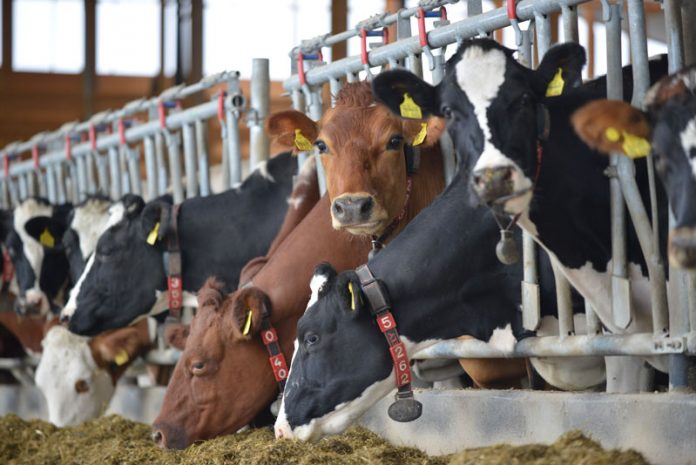
livestock

In this article, Anu Bhatnagar discusses the new Prevention of Cruelty to Animals (Regulation of Livestock Markets) Rules, 2017.

Introduction

Human’s ability to look after the animals have made an impression in the eyes of society that they can step forward towards civilization rather than just on hunting.

Humans devoted a good deal of energy to maximizing the worth of their new property. Management over breeding was significantly vital. Bound animals were mated with one another to provide offspring that were even additional valuable, whereas animals with undesirable properties were eliminated from the factor pool.

In result of this all animals were viewed as property, thereby all important decisions were started taking which had an economic and logistic basis. All other benefits like available meet and some other product under this activity were taken into consideration.

Meaning of ‘market’ under the new Regulations of livestock market Rules 2017

Market in an ordinary language can be understood as where supplier finds their potential customers with the aim of earning profit.

As a type of market, livestock markets are also those markets that provide a platform to the suppliers to sell their cattle to the buyers. Major areas in livestock sectors include dairy, fisheries and animal husbandry. This sector plays a prominent role in the development of socio and economic activities. Not only in particular sectors but also in the rural economy by an addition of useful employment and raising family incomes in the rural areas.

Despite being considered in small rural economy, Indian livestock industries have makeup for an important amount of livestock resources at the international platform.

Livestock in India: An Importance

  • Livestock in India goes on the far side to operate the food production.
  • Livestock Associate is providing important supply of manure for crop production and fuel for domestic use.
  • It’s a supply of minimizing use of non renewable energy.
  • Livestock, a very important supply of financial gain for the farmers and poor people in rural.

Benefits of livestock sector developments in India

  • It provides subsidiary occupation to individuals living in drought prone, hilly, social group remote areas wherever crop production isn’t comfortable.
  • It is proved to be boon for sustaining support of the landless and marginal farmers.
  • Husbandry sector provides massive self employment opportunities

Livestock Welfare Laws

In England and the US there were number of laws which were enacted in the 1800s. Its aim and objective of the said act was to protect animals from mistreatment, cruelty and abuse.

The first federal law called 24 hour law of 1873 was dealing with livestock protection and welfare. Its essential were that at least once every 24 hours of the travel, all the livestock which were being transported across the state lines must be rested and watered. The transportation medium at that duration was used to be done by rail around 2003.

Later on federal Animal Welfare Act was enacted in 1966 regarding the protection and welfare, but excluded livestock during the regulations enforceability.

Subsequently, another major legislation called Humane Methods of Slaughter Act of 1958 came into effect. The objective of this legislation was that there is a requirement of mandatory inspection at the slaughterhouse. Whatever techniques that associated or related with rituals or religion was excluded, in addition they excluded chickens as well.

All the enforcement regarding the said act for the protection as well as welfare of livestock was turned over to the U.S Department of Agriculture (USDA).

New Regulations regarding the livestock in India

Under the Prevention of Cruelty to Animals Act, a ban has been imposed on the sale and purchase of livestock from the market of animals by an inclusion and notifying of strict rules. By an incorporation of stringent rules, on 23rd may the government have notified the trade and transport of cattle to provide better protection and welfare of cattle. In addition to this, also stop smuggling activities.

There is a prohibition on the sale of cattle for the purpose of slaughter at the nationwide. Furthermore, they have included the Buffaloes in the definition enshrined under the rules that will likely affect the market of export (sale and purchase of meat) association.

The Ministry of Environment, Forest and Climate Change has brought these new norms which have been notified under Prevention of Cruelty to Animals (Regulation of Livestock Markets) Rules, 2017 on 23 May 2017.

Important points to remember under Regulation of Livestock Markets Rules

  • The new rules which have been notified by the central government on 23rd may ensures the welfare and protection of the cattle.
  • It contains 27 rules as per the notification and thereafter, the declaration in the official gazette they will come into force.
  • There are some important definitions which are given in discussed below
  1. Camels. Bullocks, cows, bulls, buffaloes, steers, calves and heifers are covered under the definition of Cattle as per notification. [Rule 2(e)]
  2. Animal market in an ordinary language can be understood as a place, sale-yard or any other platform at which the owner of the cattle bring animals from different places and keep them for sale. Moreover they arrange animas fairs and a pool of cattle for display, where visitors may come and purchase animals after completing the required conditions. [Rule 2(b)]
  3. better regulations and welfare that will be named as Animal market committee [Rule 2 (c)]
  4. Those activities which include hardships for an animal during the activity of trading shall be included under the prohibited practices. [Rule 2 (i)]

For the regulation and upkeep into the market there shall be a formation of an Animal Market Monitoring Committee, under the guidance of state Board. Subsequently, the member who will be part of the committee are named as below: [Rule 4]

  1. Dist. Magistrate or District. Collector –Chairmen
  2. Chief Veterinary Officer – Member Secretary
  3. Jurisdictional Divisional Forest Officer
  4. Jurisdictional Superintendent of Police
  5. A representative of the SPCA (Society for Prevention of Cruelty to animals)
  • Another stringent provision in these rules that whosoever who has been penalized under the said Act shall not be allowed to become a member for the above stated committees.
  • For the smooth performance of trade cattle activity and for the recognition of those animals markets which had been incorporated before the commencement of these Rules, now have an open gateway for registration within the three months and get an approval by move an application to the Committee within the stipulated time. [Rule 5]
  • For the formation of new Animal market the Rules of the act provides and laid powers in the hand of local authority in compliance with the District Animal Market Monitoring Committee [Rule 6]
  1. Perform due diligence when giving permission reading the establishment.
  2. Specify the jurisdiction
  3. Recognize the appropriate location or place for the animal market
  4. For the establishment of an animal market, there is an requirement of blueprint beforehand.
  • The rejection or selection of the new Animal Market blueprint shall be based on the discretion of the Monitoring Committee. In addition all registration shall be made to the committee. [Rule 6 (2)(3)].
  • All the major functions and management shall be dealt by the District Animal Market Monitoring committee.
  • There are some extra remedies that must be taken into consideration such as about the place where new Animal market has originated. Rules state that new animal market should not be situated within the 25km from the state border and from international border it shouldn’t be within 50 km. [Rule 8]
  • The monitoring committees have given an ample power under the notified rules that they can by their own action may cancel or remove the any trade cattle market, if they found any malpractices during that time period. This whole process shall be subject to the Natural justice.  [Rule 9]
  • After the establishment of new animal market there shall be proper inspection of premises as well as scrutiny of all accounts and records which will be done by the Recognized authorities under the Rules. [Rule 11,12]
  • For the benefit of the farmer, and also for agriculture purpose only healthy animals will be brought in the animal market. Because it was contended under the regulation of livestock market that the most of the time diseased as well as unfit animals are brought to the animal market, which are resulted in the threat of infectious disease among the healthier once.

Rule 14 of Regulations of livestock laid down various harmful and cruel activities  or practices which are prohibited are as follows

  1. There is prohibition of animal identification have legal and logical point. Say, for example processes like hot branding which is used during the activity may burn the skin or may cause everlasting hair damage.
  2. Horn-shearing and painting (such as chemical substances like lead) may resulted in cancer, whereas putting ornaments or other object may result into discomfort and distress to animals.
  3. All sorts of usage like color or chemicals must be prohibited.
  4. No equipments like nose ropes and nose pegs should be used. In addition, no other sufferings or inevitable pain must be given because of exposure.
  5. No animal must be kept away from food which may result into starvation.
  6. Though it is contended that the marks like nose-cutting or ear-slitting are an easy way to found their lost animals, but rules have prohibited the same.
  • A duty shows the accountability for particular cause one example could be like an owner towards their cattle such activities will include: watering and feeding of animals. For the proper regulation of the stated duty the responsibility will be fall upon the monitoring committee to provide proper arrangements regarding feeding and watering of animals.   
  • Major Duties shall be performed by the Member Committee termed as *Restrictions on sale of cattle to ensure that no young animal will be brought to the animal market.
  • All the necessary documents and other identification proofs must be provided to the Monitoring committee and assure them that no cattle shall be subject to slaughter.
  • Both seller and purchaser have to give an assurance (undertaking), which will state that ‘sold cattle are not subject for slaughter”.
  • Accommodation for fit and unfit animals shall be an additional duty of the member secretary. In addition if they found that unfit animals are in the market then they the Monitoring Committee shall render reasonable services for the same
  • There shall be construction of ramps and will be governed by the Animal Market committee.

Controversies Regarding the New Rules under the Regulations of livestock rules 2017 – At glance

Various opinions have been stated that particular new Rules an unsuitable or an appropriate law. It seems like the New Rules have banned the sale of cattle with the aim of imposing ban on slaughter activity. It has been contended that this move has deceptive intention and also includes camouflaging provisions with an intention to deceive the general people.

A Quick scan of the leading controversies

  • Rules intended to regulate and upkeep the market moreover to prevent cruelty and on the other hand imposing restrictions are not logically acceptable.
  • It is argued that the imposition of new Rules or a ban activity is opposing the parent act. for the stated contention it can be understood as, when the parent act comprehensively allows or permit an activity of slaughter of animals for their food (livelihood) then what is the point of implementing new Rules which states the ban on the trade of cattle for slaughter.
  • The definition of “animal market” given in Rule 2(b) is in question of conflicts because it is very difficult for traders to acquire animal from animal market.
  • Rule 22 (e)(iv) which has enumerated under Regulations of livestock rule 2017 which prohibits the owner of the cattle to sell outside the state without any prior permission, but it is not in consonance with the Article 301 of the Indian Constitution of India which  states that transaction related with trade and commerce shall be free throughout the territory.
  • By an enactment and notification of these new Rules, hue and cry has been done at large level. As it infringes the Article 19 (1)(g) of the Indian Constitution- the right to trade and practice. In addition Article 21 for Right to livelihood, Right to one’s food choices, right to privacy.

Issues and challenges in the livestock market

Since, according to the global report on meat exports, India is presently the world’s leader in meat exports of buffalos. With the pace of time it has increased with the rate 29% between 2007-08 and 2015-16, from Rs3,533 crore to Rs 26,685 crore (13,14,158.05 Metric Tons).

The major issue regarding the cattle trade is that, the new rules have made it difficult for the farmers those are likely to dispose their spent cattle to traders and then generally buy buffaloes from the owner (farmer) and then deliver them to the slaughter houses.

Another major concern is that these new rules have lengthy process with an inclusion of paperwork, undertakings, registration etc. for traders as well as farmers, with an objective to ensure that the cattle must not reach to the slaughter house.

Advantages of Regulation of Livestock Markets Rules

To eradicate some illegal activities such as smuggling and slaughter, the rules will ensure the traceability and safety of cattle.

New rule has given as assumption that this move may give benefit to the dairy industries.

The farmers due to the fall in the economic value of those cattle those are unable to give milk, especially those animals like buffaloes which are subjected to be slaughter for meat will recover this gap or to fill lost incomes there will be an inclusion of high rated milk prices. There is a rigorous process which prohibits farmers to deliver or transport the cattle.

Final thoughts

The Rules damage several by infringing their rights and profit none, except a few animals, upon whom no express basic rights square measure bestowed by the Constitution. This ostensibly man-vs-animal plot in impact sets men against men and has the potential to vitiate the harmonious atmosphere of our society

The prime focus of the regulation is to shield the animals from cruelty and to not regulate the present change oxen for slaughter homes. It’s envisaged that welfare of oxen dealt within the market are ensured which solely healthy animals are listed for agriculture functions for the advantages of the farmers.

Download Now

Internship Opportunity – Content Intern – LAWyersclubindia.com

0

LAWyersclubindia.com is looking for Content Intern for a duration of 2 Months/8 weeks.

job at a glance

  • Profile: Content Intern at LAWyersclubindia.com
  • Duration of internship: 2 Months/8 weeks

Work Description

  • Writing Articles on Law related Topics – Technical /Non-Technical for LAWyersclubinida.com
  • Researching and replying to unanswered queries in the Q&A section of LCI
  • Preparing content for social media as and when required
  • Connecting and nurturing the relation with industry experts and other writers
  • Inviting Guest Articles from the industry stalwarts
  • Taking interviews and preparing transcripts of those interviews
  • Calling for corporate communication
  • Collecting data and sending regular market feedback reports to the management
  • Any other content, writing or product sales related task can also be assigned

Products to look after

Required Qualification & Skills

  • Fresh Law graduates from a prestigious law school
  • Final year law students – 5 years law course
  • Graduates – studying three years law course
  • Company Secretary students – Professionals course
  • Excellent writing and communication skills
  • Highly fluent in English and Hindi
  • Passionate for writing and working in a startup culture
  • Highly Professional in conduct
  • Go getter and executors
  • Applicants must have their own laptop

Benefits & Compensation

  • Stipend: 5k per month in hand
  • 2 days office and 3 days’ work from home
  • Goodies and merchandise on good performance
  • High learning environment
  • Certification of Internship with a recommendation letter (on good performance)
  • Other corporate exposure and industry connect opportunities
  • Free coffee when in office
  • Excellent candidates will be also be given an opportunity to work as full time employee

Company profile

Interactive Media: Providing interactive platform for Finance,  Legal & Management through CAclubindia.com, LAWyersclubindia.com & MBAclubindia.com “Creating Knowledge Networks for millions of professionals”

Interactive Media is a fast growing online company which is connecting 2.2 million+ professionals from finance, legal & management fraternities. CAclubindia & LAWyersclubindia are the largest online platform in their respective fields with the name having becoming synonymous with professionals online. The company has recently also ventured into elearning space and has currently enrolled 30000+ students.

How to apply?

If you think you have the ability to think out of the box and not follow the usual, send us your CV at [email protected] with the subject Lawyersclubindia Internship or apply below.
www.interactivemedia.co.in/jobs
Location:
Regus, Elegance Tower,
Jasola District Center
New Delhi | India | 110025
(Near apollo hospital )
Nearest metro station – Jasola Apollo on violet line


Download Now

Ten factors to take care of before finalising the Seat of Arbitration

0
one sided arbitration

In this article, Sachin Vats of Rajiv Gandhi National University of Law discusses ten important factors to take care if before finalising the seat of arbitration.

INTRODUCTION

  • Arbitration is a hybrid form of dispute resolution as it blends elements of civil law and common law procedure while providing the parties with an opportunity to design the procedural rules under which their disputes will be resolved.
  • The Seat of Arbitration is the jurisdiction where the parties intend the law of arbitration to apply in their arbitrational agreement which is called as “lex arbitri”  i.e., the applicable procedural law of arbitration.
  • Arbitration is a leading form of dispute resolution between different business units as well as foreign investors and States. It is a consensual, neutral, binding, private and enforceable means of dispute resolution which is typically faster and less expensive than domestic court proceedings.
  • There are a few misconceptions with respect to the Seat of Arbitration. The Seat of Arbitration need not be the same as the governing law of contract or be based in the same place as the chosen arbitral institution. A Seat of Arbitration typically provides the framework underlying the Arbitration. It gives courts of the seats supervisory jurisdiction over the proceedings.

The Top Three Factors that make arbitration most desired Dispute Resolution are:-

  1. Speed.
  2. Flexibility.
  3. Confidentiality.

The Arbitration Law in India:-

The Indian Arbitration and Conciliation Act, 1996 is based on the  1985 UNCITRAL Model Law on International Commercial Arbitration and the UNCITRAL Arbitration Rules 1976. The Act is a composite piece of legislation. It provides for Domestic Arbitration, International Commercial Arbitration, enforcement of foreign award and conciliation.

Ten Things to take care of before finalising the SEAT of Arbitration

  1. Courts Intervention and Procedures

  • The identification of the seat of arbitration is one of the most important features of an arbitration clause. It determines the law of Procedures which the arbitration adopts. The intervention of the of the courts exercising jurisdiction over the seat also depends on it. Domestic Courts play a “Supervisory Role” over arbitration in their jurisdiction.
  • The role of the judicial intervention during arbitration is provided under section 9 of the Arbitration and Conciliation Act,1966. It provides interim measures to protect parties, their assets, interests and maintain status quo.
  • This power is mandatory, not subject to the parties autonomy. These powers are not available where the seat of arbitration is outside India or it has not been designated or determined.
  1. Safe-Option

Some seats of arbitration are safe options in terms of more “arbitration-friendly states”. The countries which are parties to the New York Convention allows the enforcement of arbitral award internationally. Another important point regarding safety is the “confidentiality”. When the arbitrations are seated in Hong Kong, London, Singapore then the parties are subject to a duty of confidentiality unless agreed otherwise. No such obligation is imposed on the parties in Paris and New York. Arbitration friendly States allow higher degree of procedural autonomy. It also offers supportive reliefs like interlocutory awards i.e., interim awards. “Paris” is considered as the safest place for arbitration but some prefer for New York due to non-legal factors.

3.Neutrality

It is one of the typically important factor. The ability to select a neutral state which is not the “Home” jurisdiction of either of the parties involved. It provides one of the key advantages over other affecting factors. But, it may lead to the reduction in the number of options available for the Seat of Arbitration. Thus, the essential part of an arbitration agreement is the parties’ consent to settle their disputes before one or more independent and impartial arbitrators of their choice, as opposed to bringing the dispute before a state court.

  1. Place of Arbitration

The section 20 of the Arbitration and Conciliation Act deals with the Place of Arbitration. The parties are free to agree on the place of arbitration. If it is not decided by the agreement then the Arbitral Tribunal will decide the place of Arbitration according to the convenience of the parties and circumstances of the case. The Tribunal can decide the place of Arbitration as it deems fit if it is not decided by the Agreement or the consent of the parties.

  1. Foreign Seated Arbitration

An Indian law is the part of the public policy of the country. Indian parties and Companies incorporated in India should not be permitted to derogate from the Indian Law. The Hon’ble Bombay High Court relying upon the judgment passed by the Hon’ble Supreme Court in the case of  “TDM Infrastructure Private Limited v UE Development India Private Limited”  has held that the intention of the legislature should be clear. The company cannot choose a foreign seat of legislation when the dispute is regarding the domestic issues derogating any of the Indian Laws but otherwise, they have the freedom to chose any seat of arbitration. Still, there is some controversy over this issue.

  1. The Supreme Court on Seat of Arbitration

The Supreme Court of India in the case of “Eneron India Ltd. Vs. Eneron Gmbh” (2014) settled the law regarding “SEAT Vs. VENUE” in the International Arbitration Proceedings. The Supreme Court relied finally on the judgments of various the Foreign and Indian Courts. the parties had agreed that the provisions of “Indian Arbitration Act, 1996” would apply to the arbitration proceedings. In the present case, venue was specified as London, the Courts of UK and India passed contra orders assuming jurisdiction because of the scope for interpretation in the recitals of the arbitration agreement. Finally, it was held that London is mentioned only as a “venue” of arbitration which, in the facts of this case cannot be read as the “seat” of arbitration

  1. Venue of Hearing Vs. Seat of Arbitration

The Seat of Arbitration may be independent of the Place or the Venue where the hearing or other parts of the Arbitral process takes place. The famous case of “Bharat Aluminum Co. Vs. Kaiser Aluminum Technical” (2012) commonly known as BALCO case differs between the two. The Seat of Arbitration is of vital importance as it has supervisory jurisdiction over the Arbitral process. The chosen Seat of Arbitration will remain unaffected of the geographical place where the hearings take place.

  1. Choosing a Wrong Seat

The parties may have to suffer a lot if they choose a wrong seat of arbitration. The choice of wrong seat of arbitration leads to delay in decisions. It increases the chances of parallel court proceedings. It provides the scope of challenging the award on broad grounds in local courts. The court proceedings may not be reliable or in a jurisdiction where the counterparty is very well-connected. So, all these factors may cause loss to the party concerned.

  1. Geographical Convenience

The geographical condition is an important consideration in terms of the convenience of the party. New York is a common seat of arbitration for the South American countries whereas London and Paris is preferred more in the Africa and the Middle-East. The countries like Hong Kong and Singapore are chosen in Asian context.

  1. Logistical Factors

There are many non-legal factors also which affect the selection of the Seat of Arbitration. The availability of the desirable hearing venue, well-trained translators and specialized lawyers operating at the Seat is essential. Many parties also see for the cultural familiarity, quality of transport and accommodation.  One practical issue worth considering is the convenience regarding language of the Seat of Arbitration. The issues related with stenographer, interpreters be satisfactorily dealt with.  The absence of bribery and the safety of the parties are other considerations which persuade the parties to choose a particular Seat of Arbitration over a number of options.

CONCLUSION

Arbitration is seen as one of the most important means of dispute resolution and has become the default choice for adjudication of commercial disputes. The ever growing economic sector in the country and expectations of huge foreign investments, in addition to the “ease of doing business” proposition of the government, must be complemented with sound, contemporary and favourable dispute resolution laws to further encourage and lead to the realization of such ambitious goals. The parties before choosing the Seat for arbitration must see an established high quality and sophisticated legal system.

London is the most preferred destination even now in the field of seat of arbitration followed by Paris and Geneva. other places in the list are Singapore and New York.

The present scenario in India about Arbitration is that most of the cases of arbitration take more than three years for the completion and the most time consuming activity is the constitution of the Arbitral Tribunal.

SINGAPORE is becoming world leader in ARBITRATION:-

Singapore is challenging established centres for Arbitration such as London, Paris and Geneva. The number of clients from India is increasing and they are opting for Singapore as the Seat of Arbitration. Case filings at the Singapore International Arbitration Centre have increased by more than 300 per cent in the past 15 years. Singapore also provides for other options than Arbitration. If Arbitration is too aggressive for any company then Singapore also offers Mediation and Conciliation Services.

Finally, it would be recommended that the parties should explore all the available avenues and draft a strategic manner of Dispute Resolution which sufficiently covers all the foreseeable issues.

Download Now

Applicability of Law of torts and General Defences

0
torts

In this article, Yash Kansal discusses the applicability of law of torts and general defences under law of torts.

Origin of Torts

The law of torts administered in India is a part of the common law which was firstly introduced in 18th century after establishment of Mayor’s Court in three presidency town of Calcutta, Madras, Bombay. These courts administered justice according to common law and statue of England. Being a part of common law the decisions under torts was based on previous judgments on various cases or according to ‘justice, equity, & good conscience’ i.e. based on rules of English law found applicable in Indian Society & circumstances.

Current applicability of Torts in India

The question arises whether the law of torts is applicable in India after independence or not?

It has also been held that Section 9 of the Code Of Civil Procedure, which enables a civil court to try all suits of a civil nature, impliedly confers jurisdiction to apply the law torts as principles of justice, equity & good conscience.”[1]

General Defences Available To Defendant

According to Salmond –  “ Tort is a civil wrong for which the remedy is a common law action for unliquidated damages and which is not exclusively the breach of contract or the breach of a trust other merely equitable obligation.”

As the definition states it is a civil wrong which results in legal damage (Injuria sine damno) or violation of legal right vested in the plaintiff with or without damage. The plaintiff files a civil suit against the defendant for reward of pecuniary damages in the form of compensation which is unliquidated in nature (not predetermined). Violation of legal right means where the person is legally bound  does not perform his/her obligation for example a nurse hired for taking care of child is liable for non-performance of his duty whereas injury suffered by child due to negligence of his parents having moral duty towards their child does not amount’s to liability under torts. A civil suit can be filed for the cases related to nuisance, negligence, assault, trespass, defamation, etc.

However following general defences are available to the defendant in his defence against tortious claims

  • Volenti Non Fit Injuira: It is the situation where the plaintiff himself agreed or consented to suffer harm. For example a person invites someone to attend party in his home cannot sue him for trespass. Similarly where the plaintiff himself took a lift from a jeep driver and later on suffered injuries or losses due to accident will not be entitle for any compensation (Padmavati v. Dugganaika) [2].
  • Inevitable accident: It means an injury due to an accident which could not be avoided by taking reasonable care on the part of the defendant. In the case of Stanley v. Powell [3] the defendant fires bullet from his gun to shoot a bird which diverts after striking an oak tree and injures the plaintiff. It was held that the injury was accidental and defendant was not liable.
  • Plaintiff the wrongdoer: It is the situation where the plaintiff is himself under a fault and cannot claim compensation. In Ponting v. Noakes [4], the plaintiff horse entered into defendant’s land and died after eating poisonous leaves of a tree.
  • Act of god: Here the injury suffered by plaintiff is due to natural force which is beyond the control of human being. The occurrence of event must be extraordinary in nature. For example in the case of Nichols v. Marshland [5] Four bridges of the plaintiff was washed away due to escape of water from the defendant’s reservoir by happening of extraordinary rainfall. However if the rainfall happened to be not an extraordinary nature then the defence under act of god is not available to the defendant (Kallulal v. Hemchand)[6].
  • Private defence: The law permits the use of reasonable force for the protection of personal life and property. But if the force applied is unreasonable then the defence is not available to the defendant. In the case of Ramanuja Mudali v. M. Gangan [7], the defendant a land owner for the protection of his property laid some electric wire which causes shock to the plaintiff crossing at night. The defendant had given no visible warning about such wire and he was held liable for the injuries caused to the plaintiff.
  • Necessity: If any act is done to prevent a greater evil or harm then it was not actionable even the damage is caused intentionally. In Cope v. Sharpe [8], the defendant entered into plaintiff’s land to prevent the spread of fire which was considered necessary to save from imminent danger and hence the defendant cannot be held liable.
  • Statutory Authority: Any damage caused by the act under a statue is not actionable. For example diversion of stream or river or construction of roads, dams, bridges by state (govt.) causing damage to plaintiff’s land or causing nuisance in surrounding does not amount‘s to any offence . In Hammer Smith Rail Co. v. Brand [9], the value of plaintiff property was depreciated due to noise, smoke & vibration caused by running of trains constructed under statutory authority. Hence it is not actionable.

References

[1] Union Carbide Corporation v. Union Of India , 1988 MPLJ 540 (ref. with Ratan & Dhirajlal ‘The Law of torts’ pg. 2)   

[2] (1975) 1Kam. L.J. 93 1975, A.C.J. 222

[3] (1891) 11 Q.B. 86

[4] (1849) 2 Q.B. 281

[5] (1876) 2 Ex D. 1

[6] A.I.R. 1958 M.P. 48

[7] A.I.R 1984 M.P. 103

[8] (1981) 1 K.B. 496

[9] (1869) L.R.H.L. 171

{ [2-9] with ref to Law of Torts by R.K. Bangia}

Download Now

Top 3 SEBI Orders under the Takeover Code in the year 2017

0
takeover

In this article, Syeda Muneera Ali of KIIT School of Law discusses Top 3 SEBI Orders under the Takeover Code in the year 2017.

What do you mean by a takeover?

The term ‘Takeover’ has not been specifically defined under the Securities and Exchange Board of India (Substantial Acquisitions of shares and Takeovers) Regulations, 1997, or in any of its subsequent amendments (primarily, 2002, 2011 and 2017). However, it may be understood generally that it includes an acquirer, who aims to take over the control or management of the company in a direct, or an indirect manner, whereby, if a substantial number of shares or voting rights of the target company are acquired, it results in the ‘Substantial Acquisition of Shares’.

The SEBI (substantial acquisition of shares and takeovers) regulations, 1997 specifically define the terms substantial quantity of shares and voting rights separately:

For any disclosures to be made by acquirer(s)

A person who, along with PAC (Persons acting in Consent), if any (referred to as ‘Acquirer’ hereinafter) acquires shares or voting rights is required to disclose the details of his shareholding to the target company within four days of acquisition, or within four days of receiving the information about share allotment, if the acquired share or voting right and any existing holding together entitles him to more than 5 per cent shares or voting rights of target company.

An acquirer is bound to disclose his aggregate shareholding to the target company, if he holds more than 15 per cent shares or voting rights of target company, within 21 days from the financial year ending March 31 and record date fixed for dividend declaration. Similarly, it is the duty of the target company to inform all stock exchanges with its share listings, within 30 days from the financial year ending March 31 and the record date fixed for dividend declaration.

For the purpose of making an open offer by acquirer

If an acquirer intends to acquire a certain amount of shares, which, together with his existing shareholding entitles him to more than 15 per cent voting rights, then s/he is required to make a public announcement (PA) to acquire at least  additional 20 percent of the voting capital of target company from the shareholders through an open offer before he can proceed with the acquisition.

Creeping limit of 5 per cent

An acquirer whose shares/voting rights of a target company is between 15 per cent and 75 per cent, is able to consolidate his holding up to 5 percent of the voting rights in any period of 12 months. However, if the acquirer intends to make any additional acquisition over and above 5 percent, it is required to make a public announcement to acquire at least 20 percent shares of the target company from the corresponding shareholders through an open offer.

Consolidation of holding

In the case an acquirer has 75 per cent shares/voting rights of target company, it is required that a public announcement is made, specifying the number of shares to be acquired through an open offer from the shareholders of the target company before any further acquisition can be made.

What is the origin of the SEBI Takeover Code?

The inception of SEBI was in the year 1992. SEBI’s existence was primarily to establish a regulatory body, that aimed to promote, develop and better the securities market, and strive to protect the interests of the investors in the said securities market. Hence, SEBI appointed a committee that was headed by P.N.Bhagwati, in order to study the effects of takeovers and mergers:

‘The confidence of retail investors in the capital market is a crucial factor for its development. Therefore, their interest needs to be protected, an exit opportunity shall be given to the investors if they do not want to continue with the new management., full and truthful disclosure shall be made of all material information relating to the open offer so as to take an informed decision, the acquirer shall ensure the sufficiency of financial resources for the payment of acquisition price to the investors., the process of acquisition and mergers shall be completed in a time-bound manner. disclosures shall be made of all material transactions at the earliest opportunity.’

In today’s competitive corporate world, the takeover of companies is a common and well-known business strategy. Therefore, in order to ensure a substantial amount of fairness, and the protection of the interests of small business, SEBI framed the regulations that provided for the Acquisition of Shares and Takeover of Listed Companies. This came to be referred as the ‘Takeover Code’. The SEBI Takeover Regulations, are applicable to the acquisition of the voting rights or control over the listed companies.

What are the highlights of the SEBI Takeover Code Amendment, 2011

Though there have been several modifications as per the 2011 amendment, some of the primary and significant highlights are:

  • Increase in the initial threshold limit from 15% to 25%.
  • Increase in the creeping acquisition limit from 15%-55% to 25%-75%.
  • Provisions of a voluntary open offer.
  • Recommendation on open offer by the board of the target company.
  • Increase in offer size from 20%-26%
  • Provisions related to indirect acquisition introduced.
  • New definitions introduced such as Enterprise value, Volume weighted average market price, the volume weighted average price, weighted average number of total shares, etc..
  • Abolition of non-compete fees.
  • Revision of fees.
  • Takeover code, 1997 included a company with any of its directors, or any person entrusted with the ‘management of the funds if the company’. the 2011 amendment widens the scope of such persons as may be entrusted with the management of the company.  

Exemptions by the Board

(1) The Board may for reasons recorded in writing, grant exemption from the obligation to make an open offer for acquiring shares under these regulations subject to such conditions as the Board deems fit to impose in the interests of investors in securities and the securities market.

(2) The Board may for reasons recorded in writing, grant a relaxation from strict compliance with any procedural requirement under Chapter III and Chapter IV subject to such conditions as the Board deems fit to impose in the interests of investors in securities and the securities market on being satisfied that,—

(a) the target company is a company in respect of which the Central Government or State Government or any other regulatory authority has superseded the board of directors of the target company and has appointed new directors under any law for the time being in force, if,—

(i) such board of directors has formulated a plan which provides for transparent, open, and competitive process for acquisition of shares or voting rights in, or control over the target company to secure the smooth and continued operation of the target company in the interests of all stakeholders of the target company and such plan does not further the interests of any particular acquirer;

(ii) the conditions and requirements of the competitive process are reasonable and fair;

(iii) the process adopted by the board of directors of the target company provides for details including the time when the open offer for acquiring shares would be made, completed and the manner in which the change in control would be effected; and

(b) the provisions of Chapter III and Chapter IV are likely to act as impediment to implementation of the plan of the target company and exemption from strict compliance with one or more of such provisions is in public interest, the interests of investors in securities and the securities market.

(3) For seeking exemption under sub-regulation (1), the acquirer shall, and for seeking relaxation under sub-regulation (2) the target company shall file an application with the Board, supported by a duly sworn affidavit, giving details of the proposed acquisition and the grounds on which the exemption has been sought.

(4) The acquirer or the target company, as the case may be, shall along with the application referred to under sub-regulation (3) pay a non-refundable fee of rupees fifty thousand, by way of a banker’s cheque or demand draft payable at Mumbai in favour of the Board.

(5) The Board may after affording reasonable opportunity of being heard to the applicant and after considering all the relevant facts and circumstances, pass a reasoned order either granting or rejecting the exemption or relaxation sought as expeditiously as possible: Provided that the Board may constitute a panel of experts to which an application for an exemption under sub-regulation (1) may, if considered necessary, be referred to make recommendations on the application to the Board.

(6) The order passed under sub-regulation (5) shall be hosted by the Board on its official website.

What are the top 3 orders by the SEBI board under the takeover code in 2017

SEBI is an institution that protects the interests of investors. Therefore, it has been reposed with various powers and functions. One of its various powers is that of the power to pass rulings, orders, etc., in the time of a dispute, whereby it determines the substantive rights and liabilities of the parties. The rulings, orders, etc., given by the SEBI may be challenged at the appellate forum, i.e., the Securities Appellate Tribunal (SAT).

The three most significant orders passed by SEBI, in terms of the takeover code in the year 2017, are:

In respect of Mr Anil T Jain, in the matter of Acquisition of shares of Refex Industries Limited, formerly known as Refex Refrigerants Limited. (WTM/GM/EFD/DRA III/10/FEB/2017)

Area of Dispute: Under section 11B of the Securities and Exchange Board of India Act, 1992 and Regulation 44 of the SEBI (Substantial Acquisition of Shares and Takeovers) Regulations, 1997 read with regulations 32 and 35 of the SEBI (Substantial Acquisition of Shares and Takeovers) Regulations, 2011.

Background: Refex Industries Limited (hereafter referred as Target Company/Refex) is a company registered under the Companies Act, 1956, with its office in Chennai, and its securities are listed on the Bombay Stock Exchange (BSE). An investigation by the SEBI showed that Mr Anil T. Jain (thereafter referred as ‘noticee’), a promoter and director of Refex, together with the promoter group, was holding 55% shares during the quarter ending on June 30, 2008, and September 30, 2008. On September 4, 2008, the noticee acquired 42 shares through an off-market transaction from Mr Anand Kalu Marathe. The dispute arises as the noticee had not made a public announcement of an open offer before acquiring the shares.

Therefore, on February 26th, 2016, SEBI issued a show cause notice to the noticee, however, received no response.

Order: The SEBI board, upon an assessment of the facts and arguments that were presented by the council for the noticee, concluded in the following manner:

(a) that there has been a violation of Section 11(2) on the part of the noticee, however, such violation was not intentional or for acquisition and was merely technicality.

(b) that there had been clear mitigating circumstances, due to the subsequent amendments to the takeover regulations, which further lessen the gravity of the situation.

The SEBI board disposed of the show cause notice, due to the fact that this was not a fit case.

Basically, to simplify, this situation it can be said that due to the subsequent amendment of 2011, the provisions that were valid as per 1997, have been overwritten and therefore, to some extent, nullified. Legally speaking, this principle may be referred to as ‘ex-post facto’ law whereby, a person cannot be held liable for something that was not an offence when committed.

In the matter of Proposed Acquisition of Shares and Voting Rights of Deep Industries Limited by Shantilal Savla Family Trust. (SEBI/WTM/SR/CFD-DCR/23 /03/2017)

Area of dispute: Under Regulation 11(5) of the Securities and Exchange Board of India (Substantial Acquisition of Shares and Takeovers) Regulations, 2011.

Background: The Shantilal Salva family trust (thereafter referred as acquirer, is a private family trust) sent an application to the SEBI in September, 2016, seeking an exemption from making an open offer in request to the proposed acquisition and the control of the shareholding and voting rights of Deep Industries Limited (hereafter referred as the target company). The target company is listed under the Companies Act, 1956 as of January 1991, with its office in Ahmedabad, Gujarat. The securities of the target company are listed on BSE and NSE. The ultimate beneficiary of the acquirers are the promoters and members of the promoter group of the target company.

Now, legally speaking, as per the regulation of the Takeover Code, 2011, any individual or persons acting in consent with the individual, is mandated to make a public announcement of an offer for acquiring the shares of such company (as per Regulation 3(2) of the SEBI Takeover Regulations).

However, the acquirer made the following points:

“The proposed acquisition is further to an internal reorganisation within the promoter family and beneficiary trusts is intended to streamline succession and promote the welfare of promoter family. The proposed acquisition would be a non-commercial transaction which would not affect or prejudice the interests of the public shareholders of the Target Company in any manner. The proposed acquisition would not result in a change in control and management of the Target Company. In any event, since the Acquirer has been set up for the benefit of the members of promoter family, the trustees of the Acquirer will exercise control only as part of promoter family. Therefore, regardless of whether the trustees exercise control in their personal capacity or as trustees, the promoter family would continue to be in control of the Target Company.”

Order: Keeping in mind all the situations and propositions made by the acquirer, the Order passed in exercise of powers conferred under Section 19 of the Securities and Exchange Board of India Act, 1992 read with Regulation 11(5) of the Takeovers Regulations, thereby granted exemption to the proposed Acquirer i.e. Shantilal Savla Family Trust from complying with the requirements of Regulation 3 of the Takeover Regulations in respect to its proposed acquisition/exercise of voting rights of the Target Company viz., Deep Industries Limited. There were 9 conditions that were to be fulfilled, in order for it to be applicable for exemption. All of these orders were pertaining to the smooth functioning of the company, and the scrutiny of the acquirer, in order to ensure efficiency and the legality of the situation.

The exemption granted, was limited to the requirements of making open offer under the Takeover Regulations and shall not be considered as an exemption from the disclosure requirements under Chapter V of the Takeover Regulations, the compliance with the SEBI (Prohibition of Insider Trading) Regulations, 2015, the Listing Agreement/SEBI (Listing Obligations and Disclosure Requirements) Regulations, 2015 or any other applicable Acts, Rules and Regulations.

To simplify the above situation, it can be said that though public declarations are mandatory in matters of acquisitions, there are some exceptional circumstances, whereby this mandate becomes an exception. In the given situation, this circumstance is the rearrangement of shares, instead of any form of change in the management or control of the company.

In the matter of proposed acquisition of shares and voting rights in Pudumjee Industries Limited (SEBI/WTM/SR/CFD–DCR/15/03/2017).

Area of Dispute: Under regulation 11(5) of the SEBI (Substantial Acquisition of Shares and Takeovers) Regulations, 2011.

Background: Pudumjee Industries Limited (“Target Company”) was incorporated under the Companies Act, 1956 (“Companies Act”) on December 31, 1965. The Registered Office of the Target Company is in Pune, and the shares of the Target Company are listed on BSE and the NSE. SEBI received an application from  Yashvardhan Jatia Trust (proposed acquirer), seeking an exemption in respect of the proposed acquisition and control of the shareholding and voting rights in the Target Company.

The reasoning behind such an exemption request, was stated as follows: “Shri Arum Kumar Jatia who is the father and natural guardian of the minor child is a single parent and the entire shareholding bequeathed to the minor child as well as those shares which are held by the minor child in his own name, is being managed by him, as the minor child’s guardian. Shri Arun Kumar Jatia is also the sole signatory of the Demat Account of Master Yashvardhan Jatia and in his absence, there is no other signatory to the said Account. It is felt that transfer of the said the said shares to the Trust would facilitate the better management of the shares entitled to and held by the minor child since there would be more than one signatory to operate the Demat Account. The proposed transfer of shares to the Trust, thus, emanate from the father’s concern and effort to spread the responsibility of securing the minor son’s future and financial interests among a group of trusted, close and immediate relatives. The shares bequeathed to Master Yashvardhan Jatia are currently being held by Executors of the respective wills.”

The proposed acquisition is only an arrangement wherein the shares of the minor beneficiary will be held by the Trust and therefore, it will not be prejudicial to the interests of the public shareholders of the Target Company.

Order: In exercise of the powers conferred under Section 19 of the Securities and Exchange Board of India Act, 1992, read with Regulation 11(5) of the Takeover Regulations, thereby granted an exemption to the Proposed Acquirer, viz. Yashvardhan Jatia Trust from complying with the requirements of Regulation 3(2) of the Takeover Regulations with respect to its proposed acquisition/exercise of voting rights in respect of the Target Company, viz. Pudumjee Industries Limited, by way of proposed transactions as mentioned in the Application. There were nine conditions that were to be followed, for the granting of the said application. Each of these conditions was stated, in order to ensure that there were compliance and efficiency, instead of a blatant disregard for the order passed.

The exemption granted above is limited to the requirements of making open offer under the Takeover Regulations and shall not be construed as exemption from the disclosure requirements under Chapter V of the Takeover Regulations; compliance with the SEBI (Prohibition of Insider Trading) Regulations, 2015; Listing Agreement/SEBI (Listing Obligations and Disclosure Requirements) Regulations, 2015 or any other applicable Acts, Rules and Regulations.

To simplify this situation, there was a grant of the exemption order, as this situation dealt with the assurance that the minor had his future and financial situation secured. However, in order to assure that such exemptions are not misused, there were conditions attached to the order, that would ensure the compliance of the said order in an efficient manner.

Conclusion

SEBI aims to ensure that there are fair and just practices of takeovers, which do not violate the rights and liabilities of the people. The SEBI ‘Takeover Code’, strives to ensure the same, in order for people to have faith and believe in the system of legality and respect the procedures of law. However, it is also in the understanding of SEBI that there are circumstances, where it is necessary to deviate from a norm. Such situations, however, need to be genuine and not fraudulent in nature. The SEBI Takeover Code is a well drafted and competent Regulation, that must be followed and respected, in order to ensure the applicability of its regulations.  

 

Download Now

Consequences of non-registration or non-compliance with GST in a business

0
Implementation issues in GST

In this article, Ashok Kumar Samal of Hidayatullah National Law University discusses consequences of non-registration or non-compliance with GST in a business

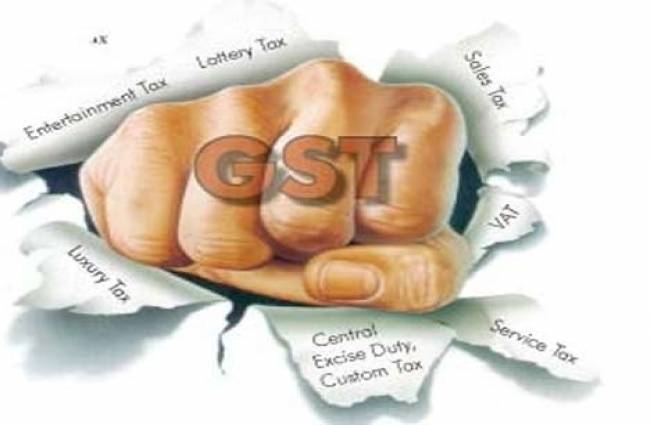
Goods and Services Tax or better known as GST is a simplified indirect and uniform tax structure applicable throughout India to replace taxes levied separately by the central and state governments. First, it was introduced as The Constitution (One Hundred and First Amendment) Act 2016, which followed the passage of Constitution 122nd Amendment Bill. GST Council is the governing body of GST.

The introduction of Goods and Services Tax in India is a gigantic step in the indirect taxation reform. The simplicity of the tax has various advantages such as:-

  • Simpler enforcement and administration;
  • reduction in the aggregate tax burden on goods/services;
  • Unrestricted intrastate movement of goods;
  • reduction in paperwork to a large extent.

The Central Goods And Services Tax Act was passed in 2017 and is composed of 174 Sections which provide in detailed clauses regarding registration, tax payment structure, the consequence of non-compliance with the Act etc.

Section 122-138 of the Central Goods and Services Tax Act, 2017 provide various regulations regarding the liability of taxable/registered persons under the act for any reasons such as non-payment of tax or non-compliance with the provisions of the act.

When Penalty is unspecified under the Act

Section 125 defines the clause that what shall happen in cases an offence is not mentioned under the act. For committing offences or contravening provisions of this Act for which no penalty has been provided under this Act, a person shall be liable to a fine of upto Rs. 25,000. Act shall be liable to a penalty which may extend to twenty-five thousand rupees.

Liability of a Taxable Person

Sub-clause 1 of Section 122 of the Act talks about cases when a taxable person shall be liable and will have to pay a fine of Rs. 10,000 or an amount equivalent to the tax evaded, whichever is more. The following are these cases:-

  • When he supplies any goods and/or services without issue of any bill;
  • When he issues an incorrect or false invoice;
  • When there is issuance of any bill or bill without supply of goods and/or services;
  • When he fails to pay the collected tax to the government within 3 months.
  • When he fails to deduct the tax in accordance with the provisions of this act.
  • When he takes or utilises input tax credit without actual receipt of goods and/or services;
  • When he fraudulently obtains refund of tax under this Act;
  • When he takes or distributes input tax credit in contravention of this act;
  • When he falsifies or substitutes financial records or produces fake accounts or documents with a clear intent to evade payment of tax due under this Act.
  • When he fails to register;
  • When he provides fake particulars at the time of registration;
  • Obstructs or prevents any officer in discharge of his duties under this Act;
  • When he suppresses his turnover leading to evasion of tax under this Act;
  • Upon failure to keep, maintain or retain books of account;
  • Upon supply, transport or storage of any goods which he has reasons to believe are liable to confiscation under this Act;
  • Upon tampering or destruction of any important evidence or document.

Liability of a registered person on supplying untaxed products

While Sub-clause 1 of Section 122 talks about the liability of a taxable registered/unregistered person, Sub-clause 2 talks about when a taxable and registered person is specifically liable for supplying products/services on which tax has not been paid or short-paid,

  • For reasons other than the reason of fraud or any willful misstatement for the purpose of evasion of tax, shall pay the higher amount between a fine of Rs. 10,000 or 10% of the tax evaded.
  • For reasons equal to fraud or any willful misstatement for the purpose of evasion of tax, shall pay the higher amount between a fine of Rs. 10,000 or the total amount of tax evaded.

A separate fine of upto Rs. 25,000 is applicable on any taxable person who:-

  • Works towards the aiding or abetting of any of the offences specified above;
  • Is in possession of any goods which he knows are liable to confiscation under this Act;
  • Receives any supply of services which he knows are in contravention of any provisions of this Act;
  • Fails to appear before the officer of central tax, when summoned for appearance.

Furnishing of Information

Section 151 talks about furnishing of information. It says that when any person is called upon by the commissioner for furnishing information or returns under the act, he shall mandatorily do so in any manner prescribed and Section 124 talks about the penalty for non-compliance with Section 151. It says that if any person required to furnish any information or return under section 151, without any reason fails to furnish such information or does so wilfully, or produces false information shall be liable to a fine upto Rs. 10,000.

Minor Contravention of the Act

Section 126 of the Act says that no penalty or fine shall be imposed for minor violation of procedural requirements or tax omissions. Then it goes on to define minor breaches and says that a breach will be considered minor in nature if the amount of tax involved is Rs. 10,000 or if the mistake in document is visible on the face of it. The fine imposed under this Act shall depend on the facts and circumstances and severity of breach of each case. It also says that everyone will be given a chance to justify their actions before imposing a penalty.

Waiver of Penalty

Section 128 specifies cases in which penalty may be waived. It says that the Government may, by notification, waive in part/full, any penalty mentioned in section 122 or section 123 or section 125 on the recommendations of the GST Council.

Transportation or Storage in Contravention

Section 129 says that in case of storage or transportation of any products in contravention of this act are liable to detention or seizure. They shall only be released on payment of the applicable tax and penalty equal to one hundred per cent. of the tax payable on such goods and, in case of exempted goods, on payment equal to 2% of the value of goods or twenty-five thousand rupees, whichever is less, where the owner of the goods comes forward for payment of such tax and penalty. Where the person transporting the goods fails to pay the amount of tax and penalty within seven days of such detention or seizure, further proceedings shall be initiated in seven days. When the seized products are perishable or hazardous in nature or their value is likely to deteriorate with time, the period of 7 days might be considerably reduced.

Contravention with an intent to Avoid Tax

Section 132. (1) Whoever commits any of the following offences with an inherent intent to evade tax shall be punishable with imprisonment for a term which may extend to six months or with fine or with both:-

  • Supplies any goods or services or both without issue of any bill, with the intention to evade tax;
  • Issues any bill without supply of goods in violation of the Act, which may also lead to wrongful utilisation of input tax credit;
  • Avails input tax credit using fake bill;
  • Collects any amount as tax but fails to pay the same to the Government beyond a period of three months from the due date;
  • Evades tax, fraudulently avails input tax credit or fraudulently obtains refund;
  • Falsified his financial records and documents or produces fake accounts;
  • Obstructs an officer employed under this act while discharging his duties;
  • Tampers or destroys any material evidence;
  • Fails to supply any information which he is required to supply under this Act;

If any person convicted of an offence under this section is convicted repeatedly of an offence under this clause he shall be punishable for the second conviction including every subsequent offence with imprisonment of term upto five years

It also specifies that all the punishments under this clause shall be non-cognizable and bailable.

Jurisdiction of Courts

Section 134 mentions that no court shall take cognizance of any offence punishable under this Act or the rules made thereunder unless it has been previously sanctioned by the Commissioner, and the lowest court that can try any offence under this act shall be the court of a Magistrate of the First Class.

Existence of Mens Rea shall be presumed

Section 135 says that any offence which has the mandatory requirement of a culpable mental state on the part of the accused, it shall be presumed by the court that such a mental state exists. The burden rests upon the accused to prove that he had no such mental state during the commission of such offence.

Who shall be liable in cases of a Company

Section 137 provides the answer to this particular question. It says that where an offence was committed by a person who is a company, every individual who was in responsibility for the conduct of the company at the time of the offence, shall be held to be guilty of the offence and can be convicted and punished accordingly.

Where an offence has been committed by a taxable person being a partnership firm or a Limited Liability Partnership or a Hindu Undivided Family or a trust, the partner or karta or managing trustee shall be deemed to be guilty of that offence and shall be liable to be proceeded against and punished accordingly.

If a person had no knowledge of the offence committed or exercised due diligence to prevent the commission of such offence he shall not be held liable.

Download Now

International conventions on Environment Protection ratified by India

0
environment

In this article, Aishwarya Borgohain put forth International Conventions on Environment Protection Ratified by India.

Introduction – Paving the Road towards Environment Day

Plans to protect air and water, wilderness and wildlife are in fact plans to protect man. – Stewart Udall

Now an often-repeated and much valued principle of policy and governance, environmental protection was hardly seen as an underlying consideration where industrial development was concerned. The ramifications, detrimental as they proved to be to the quality of the environment itself, were nevertheless alarming enough to act as an impetus to swift global action, formulated through various treaties and conventions.

International Discourse – the North-South Debate

This formulation of a framework of laws having cross-territorial applicability can hardly be said to have come about without challenges. Notably, discussions were divided on a ‘North-South’ basis, with the developed countries as the former adopting the position that all countries should protect their environments and reduce greenhouse gas emissions. The developing countries, as the latter, took the stance that the measures could slow their development and that the North should be primarily held responsible as it is responsible for a majority of the world’s current GHG emissions.[1] The governing view that has since emerged is that of Common but Differentiated Responsibilities and Respective Capabilities (CBDR-RC), keeping in mind the role of each state and its corresponding liabilities.[2]

India’s participation in Multilateral Environment Agreements and Implementation thereof

UN Framework Convention on Climate Change (UNFCCC), 1992

  • Aim: Stabilize GHG emissions, adopt CBDR approach to sustainable development.
  • Year of ratification: 1993 (agreement signed by India in 1992)
  • Implementation in India: Working groups constituted by THE Ministry of Environment and Forests (MoEF), NATCOM (National Communication) prepared by the Government, with GHG inventory being duly communicated.  Other measures include Establishment of the Technology Information, Forecasting and Assessment Council under the Department of Science and Technology, and formulation of the Participatory Forest Management Strategy of the Government of India

Montreal Protocol on Substances that Deplete the Ozone Layer (to the Vienna Convention for the Protection of the Ozone Layer), 1987

  • Aim: Reduction in the consumption and production of ozone-depleting substances (ODS), while recognizing differences in a nation’s responsibilities.
  • Year of Accession: 1992
  • Implementation in India: Commercial banks have been prohibited from financing investments with ODS technologies. Steering Committee on the Montreal Protocol has been formulated, as have Ozone Depleting Substances (Regulation and Control) Rules, 2000 (drafted by the MoEF)

India is a signatory to the Convention on International Trade in Endangered Species of Wild Fauna and Flora (CITES), 1973

  • Aim: control international commercial trade in endangered species
  • Year of Accession: 1976  Implementation: Trade is jointly regulated through the Wildlife (Protection) Act, 1972, the Import/Export policy of Government of India, and the Customs Act 1962

Basel Convention on Trans-boundary Movement of Hazardous Wastes, 1989

  • Aim: Reduce trans-boundary movement and creation of hazardous wastes
  • Year of ratification: 1992
  • Implementation: The Indian Hazardous Wastes Management Rules Act 1989 provides a statutory framework to give force to this MEA.

Convention on Biological Diversity, 1992

  • Aim: Addressing biodiversity conservation and sustainable usage, habitat preservation, and protection of indigenous people’s rights, and intellectual property.
  • Implementation: Wildlife (Protection) Act, 1972 enacted.

Other conventions India is signatory to includes International Tropical Timber Agreement and The International Tropical Timber Organisation (ITTO), 1983, and UN Convention on Desertification, 1994.

Cartagena Protocol on Biosafety

  • Aim: protect biodiversity from potential risks posed by living modified organisms (LMOs), resulting from modern biotech.
  • Year of ratification: 2003
  • Implementation: Conference of the Parties to the Convention (COP) reviews the implementation of the protocol; India held the sixth meeting of the parties (MOP) in 2012.

Prior Informed Consent (PIC), Rotterdam Convention

  • Aim: Promote international cooperation in trade of hazardous chemicals, to protect human health and environmental safety.
  • Year of ratification: 2005
  • Implementation: statutory backing for the same has been laid down in Hazardous Wastes (Management and Handling) Rules, 1989.

Development of Environmental Jurisprudence in India

  1.   Public interest litigation

Judicial activism in the field of environment law has played a considerable role, with cases such as L.K.Koolwal v. State of Rajasthan[3] upholding the Constitutional right to a clean environment, and the MC Mehta cases bringing to the fore the need for expanding the scope of locus standi in this arena of law.  

  1.  Polluter Pays and Precautionary principles

Expounding on the liability to be imposed, the Court interpreted in Vellore Citizens Welfare Forum vs Union Of India & Ors[4] that there is a two-pronged duty that operates – one to compensate the victim, and two, to restore the environment to its condition prior to degradation.  It highlighted the polluter pays principle in Indian Council for Enviro-legal Actions v. Union of India[5] as being imperative to sustainable development.

  1.  Absolute Liability

As propounded most famously in Union Carbide Corporation v. Union of India[6], inherently dangerous activities- that go beyond the scope of strict liabilities- alone impose a complete obligation, not subject to any exemptions.

India’s Statutory and Administrative Framework

Enactments that give force to these MEAs include:

  1. Environment Protection Act, 1985: It stands as an overarching act for environmental legislation in India. Various notifications have been issued within the ambit of this Act (notably Coastal Regulation Zone Notification, 1991, Revdanda Creek Notification, 1989, and the Taj Trapezium Notification, 1998.)
  2. Corresponding Environment (Protection) Rules, 1986 have been laid down, and The National Environment Appellate Authority Act, 1997 has set up the Authority for overhearing appeals in environmental cases.
  3. Water (Prevention and Control of Pollution) Act, 1974: regulates pollutant discharge, and provides for the setting up of non-compliance penalties; administration is done through the relevant State or Central Pollution Control Boards.
  4. Air (Prevention and Control of Pollution) Act, 1981, which aims to control the levels of air pollution, through measures such as specification of National Ambient Air Quality Standards (NAAQS), and empowerment of Boards to ensure compliance. The Air (Prevention and Control of Pollution) Rules were formulated soon after in 1982, to lay down the powers of officers under the Act, and the procedures to be followed.
  5. Atomic Energy Act, 1982 was enacted to deal with the issue of radioactive waste management, and the Hazardous Wastes (Management and Handling) Rules, 1989, provides a basis on which to manage and handle such wastes.
  6. Motor Vehicles Act, 1988: Aimed to address vehicular traffic and transportation of hazardous wastes.
  7. The Wildlife (Protection) Act, 1972, Amendment 1991, and The Forest (Conservation) Act, 1980, are two other statutes that have been adopted to provide measures for the protection of forests and fauna.

Forging The Way Ahead

India has been active in its participation on the international scenario, as seen from its activities on the ‘Global Tiger Forum’ (GTF), and the Like-Minded Mega-Diverse Countries (LMMDCs). The requirements themselves are ever-changing, and thus need the continuous of evolution of the law, which must duly keep pace. Consistent have been taken by the MoEF and various other Ministries to abide by, and give force to, the international commitments that the country has made.

Reference

More on climate and environment protection laws!

Legal Framework In India To Protect The Environment

Important Laws On The Protection Of Environment

How Do Environmental Laws Affect Us?


[1] Jesse Cameron-Glickenhaus, North-South Debate, ‘Green Issues and Debates: An A-to-Z Guide’, SAGE Knowledge; Accessed from http://dx.doi.org/10.4135/9781412975728.n83

[2] Articles 3 & 4, United Nations Framework Convention on Climate Change (UNFCCC) 1992

[3] AIR 1988 Raj 2, 1987

[4] WP 914/1991 (1996.04.26)

[5] 1996 AIR 1446

[6] 1992 AIR 248


Download Now

License, registration and other legal requirement for starting a homestay

4
homestay

In this article, Twinkle Jaiswal discusses License, registration and other legal requirements for starting a homestay.

Introduction

In India Guests are considered as ‘God’. Indians go out of their way to please them. There is a saying in India,’Atithi Devo Bhava’. Indian hospitality is great. Sadly, most visitors who come to India and stays in hotels never get an opportunity to experience true Indian Hospitality, as hotels are unable to provide them such hospitality. The result is that there is growing popularity of homestays in India.

With the aim of providing facilities of standardised world class services and a comfortable stay to the tourist, and to supplement the availability of accommodation in Metros and tourist destination, Ministry of Tourism classified fully operational terms of Bed and Breakfast/ Homestay facilities as “Incredible India Bed and Breakfast/Homestay Establishments”. The idea behind this concept is to provide a clean and affordable place for foreigners and domestic tourists including an opportunity for foreign tourist to stay with an Indian family to experience Indian customs and traditions and to relish authentic Indian cuisine.

Basis of classification under the Incredible India Scheme of BnB

  1. The Incredible India Bed and Breakfast/Homestay will be categorised as follows;
  • Gold
  • Silver

Homestays are divided into various categories, which differ from state to state. For instance, while the government of Kerala classifies homestays as Silver, Gold and Diamond, the government of Rajasthan only categorises them as Silver and Gold. The higher the category, the higher are the yearly fees varying from state to state, a homestay has to pay to the government.

  1. The Regional Classification Committee will inspect and access the Bed and Breakfast Establishment based on facilities and services provided by them.The details of the standards, facilities, services and the documents required for approval of such establishments will be as per these guidelines.
  2. The Incredible India Bed & Breakfast/ Homestay Establishments, once approved by Ministry of Tourism, will be duly publicised. A directory of all such approved establishments will also be prepared, so as to enable domestic as well as foreign tourists to live in a homely environment and to take advantage of the scheme. In addition, efforts will be made to organise short-term training in hospitality trade to those who would opt for such training.
  3. For obtaining license, the owner/promoter of the establishment along with his/her family must be physically residing in the same establishment and letting out minimum one room and maximum 6 rooms.
  4. The Incredible India Bed and Breakfast/Homestay Establishment is expected to maintain required standard.

Registration and licensing of Homestay.

The application must be sent along with requisite fee to;

https://lawsikho.com/course/diploma-entrepreneurship-administration-business-laws
click above
  • Regional Director (North), India Tourism, 88 Janpath, New Delhi – 110001.Tel: 011-23320005/8 (for States of Jammu & Kashmir, Himachal Pradesh, Punjab, Haryana, Uttranchal, NCT of Delhi, UT of Chandigarh and Uttar Pradesh except Agra and Varanasi).
  • Regional Director (West), India Tourism, 123 M. Karve Road, Mumbai -400020.Tel: 022-22033144 (for States of Gujarat, Chattisgarh, UT of Daman & Diu, Dadra Nagar Haveli and Maharashtra except Aurangabad).
  • Regional Director (South), India Tourism, 154 Anna Sallai, Chennai – 600002. Tel: 044- 28460193 (for States of Tamil Nadu and UT of Lakshwadweep).
  • Regional Director (East), India Tourism, “Embassy”, 4 Shakespeare Sarani, Kolkata -700071. Tel: 033 -22825813 (for States of West Bengal and Jharkhand).
  • Regional Director (North- East), India Tourism, Amravati Path, Christian Basti, G.S. Road, Guwahati -781007. Tel: 0361- 2341603 (for States of Assam, Tripura, Mizoram, Nagaland, and Sikkim). 6. Director, India Tourism, KFC Building, 48 Church Street, Bangalore – 560001, Karnataka. Tel: 080-25585417 (for the State of Karnataka).
  • Director, India Tourism, State Hotel, Khasa Kothi, Jaipur- 302001. Tel: 0141- 2372200 (for the State of Rajasthan)
  • Director, India Tourism, Sudama Palace, Kankar Bagh Road, Patna- 800020, Bihar. Tel: 0612-2345776 (for the State of Bihar).
  • Manager, Indiatourism, 191, The Mall, Agra- 282001, Uttar Pradesh. Tel: 0562-2226378 (for the city of Agra).
  • Manager, India Tourism, 15-B, The Mall, Varanasi–221001, Uttar Pradesh. Tel: 0542-2501784 (for the city of Varanasi). -6-
  • Manager, India Tourism, B/21B.J.B. Nagar, Bhubaneshwar -751014, Orissa. Tel: 0674-2432203 (for the State of Orissa).
  • Manager, India Tourism, Near Western Group of Temples, Khajuraho -471606, Madhya Pradesh. Tel: 07686-242347 (for the State of Madhya Pradesh)
  • Manager, India Tourism, VIP Road, 189, IInd Floor, Port Blair- 744103, Andaman & Nicobar Islands. Tel: 03192-236348 (for the UT of Andaman & Nicobar Islands).
  • Manager, India Tourism, 3-60-140, IInd floor, Netaji Bhawan, Liberty Road, Himayat Nagar, Hyderabad -500029, Andhra Pradesh. Tel: 040-23261360 (for the State of Andhra Pradesh).
  • Manager, India Tourism, Willingdon Island, Kochi -682009, Kerala. Tel: 0484-2668352 (for the State of Kerala).
  • Manager, India Tourism, Communidade Building, Church Square, Panaji -403001, Goa. Tel: 0832-2223412 (for the State of Goa).
  • Manager, India Tourism, ‘Krishna Vilas’, Station Road, Aurangabad – 431005, Maharashtra. Tel: 0240-2364999 (for the city of Aurangabad).
  • Manager, India Tourism, U Tirot Singh Syiem Road, Police Bazaar, Shillong -793001, Meghalaya. Tel: 0364-225632 (for the State of Meghalaya).
  • Manager, India Tourism, Sector ‘C’, Barapani Police Point, Naharlagun -791110, Arunachal Pradesh. Tel: 0360-2244328 (for the State of Arunachal Pradesh)
  • Manager, India Tourism, Old Lambu Lane, Jail Road, Imphal – 795001, Manipur. Tel: 03852-221131 (for the State of Manipur).

The applications were initially handled by the State Government, application now are accepted and handled at the district level itself. This makes easier for the establishment in small towns and rural areas. After submission of application form the representatives of the district government come in for a surprise inspection, following which a homestay is recognised and rated as per facility available. As homestay is not treated as commercial establishment in most states, no commercial luxury or service taxes are levied. The process of acquiring an electricity connection is the same as that of a home, so the taves vary from state to state. Once initiated, the application and registration procedure takes a few months, but the whole process takes a couple of years to be completed.   

Application format for an establishment of homestay.

1) Name of the(IIB&B) Incredible India Bed&Breakfast/ Homestay Establishment.

2) Category applied for

3) Name and address of the promoters/owners with a note on their background

4) Complete postal address of the IIB&B/ Homestay Establishment

a) Tel. no

b) Fax

c) E-mail

d) Mobile No. of the promoter

5) Distance of the IIB&B/Homestay Establishment in kms. from:

a) Airport

b) Railway Station

c) City Centre

d) Nearest main shopping centre

e) Nearest bus stand /scheduled city bus stop

6) Details of the IIB&B/Homestay Establishment:

(a)Area (in sq. metres) with title – owned/ leased (copies of sale/ lease deed to be enclosed)

(b) Revenue papers regarding ownership. Affidavit in case of co-sharer of house/land.

(c) Whether clearance obtained from the Police Authorities regarding the antecedents of the owner /owners and the proposed activity (copy to be enclosed)

(d)Number of rooms and area for each type of room in sq.ft. (single/double/suites)

e)Number of attached baths

(f)Details of public areas for the following facilities in sq. ft.

(i)Lobby/lounge

(ii)Dining space

(iii)Parking facilities

(g)Additional facilities available if any (not mandatory)

(i) Eco –friendly facilities

(ii)Facilities for differently abled persons

(h)Details of Fire Fighting equipment/ hydrants etc. if any

  1. Photographs of the building including interiors showing types of facilities available, bathroom, living room, bedroom, parking etc.
  1. Details of payment of application fee
  2. Check list details as per Annexure II

(enclose a copy of the checklist duly certified that the facilities are available in the establishment)

  1. Consent of acceptance of the regulatory conditions (please enclose a copy of the prescribed undertaking as per Annexure III duly signed by the owner of the establishment)

Other Legal Requirements.

If an establishment applies for classification/re-classification, it will have to be ready at all times for inspection by the Regional Classification Committee. No requests for deferment of inspection will be entertained.Classification will be valid for two years from the date of issue of orders or in case of reclassification from the date of expiry of the last classification provided that the application has been received within the stipulated time i.e. 3 months before the expiry of the last classification.

The application fees payable for classification/reclassification of IIB&B/Homestay will be as follows for the Govt. of India. The demand draft will have to be payable to

” Pay & Accounts Officer, Ministry of Tourism, New Delhi “.

Star Category For Classification/Reclassification

  • Silver Rs. 3,000
  • Gold Rs. 5,000

The rate of taxes for property, electricity and water to be paid for classified IIB&B/Homestay Establishments will be those prescribed by the appropriate authorities.

Challenges.

The entire process takes a couple of years but security is one of the most challenging issue. It is necessary to install CCTV cameras at the reception and records of guests must be maintained , photocopies of Identity Proofs must be taken.After all, homestay is a private property. All paperwork and procedure must be performed carefully in order to avoid any problem in the future.

Conclusion

As homestay is different from just renting a room because it entails owners to share their beliefs, experience and lives with the guests. The owner must provide the guest a memorable visit, so that they can share it with others. It is necessary to invest smartly in the homestay in order to provide all the facilities. The representative may come for surprise inspection, so it is necessary to maintain the standard. All the securities measures must be taken in order to avoid problems.  


LawSikho has created a telegram group for exchanging legal knowledge, referrals and various opportunities. You can click on this link and join:

https://t.me/joinchat/J_0YrBa4IBSHdpuTfQO_sA

Follow us on Instagram and subscribe to our YouTube channel for more amazing legal content 


Download Now
logo
FREE & ONLINE 3-Day Bootcamp (LIVE only) on

How Can Experienced Professionals Become Independent Directors

calender
28th, 29th Mar, 2026, 2 - 5pm (IST) &
30th Mar, 2026, 7 - 10pm (IST).
Bootcamp starting in
Days
HRS
MIN
SEC
Abhyuday AgarwalCOO & CO-Founder, LawSikho

Register now

Abhyuday AgarwalCOO & CO-Founder, LawSikho