Download Now
Home Blog Page 1728

The Strategy Of Brandjacking

0

In this Blog Post, Abhiraj Thakur, a student of NALSAR University of Law writes about a recent phenomenon in the corporate world, i.e.  Brandjacking.

Abhiraj

Brandjacking

As the name suggests, it is made up of combining two words: Brand + Hijacking. The social network, while bringing people together also makes them vulnerable to a large number of threats. As the technology is rapidly advancing, so are the different techniques through which people often engage in unscrupulous activities and misuse the global connection. Brandjacking is a relatively new term that for the first time came into limelight eight years back. In colloquial terms, brandjacking can be referred as an unauthorized takeover of someone’s online identity by some other person. Today many companies of the world are present on social media platforms such as Facebook and Twitter; they actively advertise their products on these platforms. Brandjacking occurs when a particular advertisement, feature, quality, etc. of a product is used by some unknown party to gain commercial benefit. The unknown parties make use of the ‘Brand name’ of foe company self-benefits. In many cases, brandjacking is done to make illegal benefits but many times it is done for other malicious and hostile reasons. The effects of brandjacking on the host company (brand jacked) are many; it may range from huge financial losses to facing the wrath of negative publicity and losing the consumer base in the long run. Thus Brandjacking today has become a major issue in the corporate arena.


Brand Assassins

There are many hacking communities today which carry out brandjacking on monetary terms, by charging the suitable fees these people infiltrate the account of the targeted company and manipulate it as desired by the customer. These people are popularly referred to as ‘Brand Assassins’. These people usually operate through intermediaries and so most often can avoid the clutches of Law.


Forms of Brandjacking


burgerking_hack

Total Takeover

This is the most common form of brandjacking that occurs today. It is also the most dangerous one. The total takeover is done through hacking into the account of targeted company; it is also done through phishing. The most famous instance of a total takeover was in 2013 when the Twitter account of Burger King was hacked and revamped with the branding of McDonald’s. This type of brandjacking is considered the most dangerous as because the damage is imminent as the messages from the hacked account are transferred immediately to the followers. As in the Burger King’s case, the advertisements and other promotional activities were rebranded as McDonalds and so it resulted in negative publicity for the brand.


Impersonation

Impersonation is done maliciously to bring losses to the targeted company. This is done by all together eliminating the account of the target and then setting up a new account is made taking distinct and unique features of the deleted account. The product is thus rebranded under a different name. This is done to gather huge consumer base in the short span of time, taking unfair advantage of the brand name of the targeted company.


Ways in Which brandjacking is done on different social media

hijack

Facebook: It is done by hacking the profile of target or making a new account. The brand assassins start carrying out activities under the umbrella of the fake account; these activities may include such as posting false reviews of the product, making false surveys for the brand or messaging the followers directly about the product. These fake accounts also start answering consumer queries; this causes huge losses to the company. In 2013, a fake a Facebook account in the name of ExonnMobil was opened that claimed to represent views of the company and started posting false allegations such as making under quality product on the company.

Twitter: It is done through fake tweeting on behalf on behalf of the company and using false hash tags. Also is sometimes seen that viral hash tags are made by hackers to lure a large number of consumers in a short span of time. In 2010 a fake Twitter account started posting fake tweets on behalf of British Petroleum, these tweets ranged from false allegations of corruption in the company to an official apology for Deep Horizon oil spill incident.

The problem with social media is due to time constraints people seldom go into the details of the news and mostly believe what they see on hand.


What to do when brand jacked?

If a company feels that it is brandjacking on a particular social site. It has the right to contact the servers of the site and get the account seized as soon as possible. Most of the social media houses today have the policy of seizure of account when found indulged in malpractices. For this to happen the Brand alleging to have been the brand jacked need to prove itself to be the genuine party.


Brandjacking and Indian Laws

There is no specific recognition of brandjacking under Indian laws as of today. However, the Indian courts on few occasions have dealt with allegations of brandjacking. In the case of Yahoo! Inc. v. Akash Arora and Another, The plaintiffs Yahoo Inc. alleged unauthorized usage of their domain name to provide internet related services and not the internet itself. The Delhi High Court ruled for Yahoo considering the usage of the domain name as unauthorized exploitation of the brand name of the company and granted then compensation. This case brought into highlight the need for specific laws in the country to protect Brand names on the Internet.

After that in many cases, the courts have recognized spamming. Phishing and other internet malpractices but not brandjacking. In cases dealing with usage of the brand name, the courts have awarded compensation for infringement of trademarks under the IP laws.

How to prevent Brandjacking?


Through Intellectual Property laws

Registering the product under copyright and trademark: It is the best method to avoid brandjacking. Having trademark for any specific aspect of the product makes any unauthorized usage of it a punishable offense under the IP laws in India. By the virtue of Section 2(1) of the Indian Trade Marks Act, 2000, one can have trademark registration of any “symbol/sign capable of distinguishing goods and services of one person from another, any word (including personal names), design, numerals and shape of goods or their packaging as trademark. Courts in India have accorded protection to product titles, advertisements and names under the trademark law in the past.

In the case of Star India Private Ltd. v. Leo Burnett India Pvt. Ltd, The plaintiffs star India alleged that a commercial made by the defendant company that of a detergent was very much similar to one of the then operating soap operas of the channel. Star already had copyright of the show and thus alleged infringement of copyright. This was the first case that dealt with character merchandising in India. The court did not award damages to the plaintiff as the courts are not aware of brandjacking. However, the jurisprudence has grown over past years. Also, new laws in the field of Information technology are helping to take strict measures to curb the practice of brandjacking. The 2008 amendment to the IT Act 2000 helps in taking down fake accounts operated in the name of the target company.

Through use of Search Engines and other protection software

Today there are many powerful search engines in the market that can help a corporate when brandjacking. These search engines can sort up and present all the references of a company’s name, product’s name over a particular period. This becomes helpful in stopping the rapid spread of false information on the internet. There is also software available that can accurately track down the sources of these references, and can prove helpful in finding the culprit. Some of such software are Social Sentry and Postrank.

Having Safety Precautions in Place

It is necessary for corporate of today have certain guidelines dealing with their presence on social media. Having an eagles’ eye on the people responsible for the brand presence of the company on the internet is necessary. Trusted hands shall be given this duty. Having knowledge of the extent of the presence of the company on different social networks is desirable. Many corporates today have active brand management units that look after and regulate the presence of the company on social media. Lastly having internal vigilance for a corporate is necessary.


 Effective Use of Social Media

Many companies active on social media platforms today try to build a community of followers. This is done to strengthen the brand name in the long run and have a network of loyal customers who can be in times of brandjacking help in mitigating the downfall of the brand.

Brandjacking

Conclusive remarks

Brandjacking is popularly called the ‘latest corporate crisis,’ in has caught eyes of many in recent times. In the fast-expanding era of internet, such practices pose threat free market practices. Today in our country we see new start-ups every other day, these start-ups are creations of human mind and sound application of skills and provide an incentive for the youth to do something new. Malpractices such as brandjacking can prove detrimental to this incentive if gone unchecked.

Download Now

Enforceability Of DPSPs Under The Indian Constitution

0

In this blog post, Pramit Bhattacharya, a student of Damodaram Sanjivayya National Law University writes about the scope of enforcement of Directive Principles of State Policies (DPSP) and looks into the relation between DPSPs and Fundamental Rights. The post further talks about the legislative intent of the framers of the Constitution regarding the issue of enforcement of DPSPs.

1451539_599879256736892_1144192258_n


There is no denying the fact that the responsibility of the development of the country lies with the government. And with the aim of development in view, the government forms certain policies. The Directive Principles of State Policy (DPSPs) act as the guiding steps for the government to forms the policies. The belief that the rulers and masters are responsible for the welfare of the society has been prevalent in India for a long time. The formation of the Constituent Assembly also took place amid such an environment. Article 36 to Article 51 which are enshrined in Part IV of the Constitution form the core of the DPSPs.[1] These Articles are to be taken into consideration by the government and the legislature when they carry out the legislative work. But the DPSPs are not enforceable, quite unlike the Fundamental Rights which are enshrined in Part III of the Constitution.

Directive-Principles-of-State-Policy

The DPSPs not only act as the guiding principles in making policy decisions, but they also lay down the objectives of India as a nation. The presence of the DPSPs makes India a welfare state.[2] The DPSPs encourages the government and the legislature to promote the welfare of the citizens and the society. Apart from this the DPSPs also seeks to ensure that there is economic and social democracy in our nation, as has been promised by the Preamble.[3] The main aim of the DPSP is to maintain a socialistic pattern in the society. The thing that is to be noted here is that the Constitution does not support any extremities like total socialism or total individualism.

The Nature of the DPSPs is explained by Article 37 of the Constitution. Article 37 states that the provisions given under Part IV of the Constitution cannot be enforced in the Court of law, but it is the duty of the government of the nation to consider these principles in the governance of the country because these articles are fundamental in ensuring good governance of the country. Non-enforceability of these articles in the Court does not make them useless. These principles have an educative value and also help the nation to maintain its “welfare state” status. These principles also help the Judiciary to interpret different statutes and also the Fundamental Rights which has been guaranteed by the Constitution. In the judicial pronouncement of Air India Statutory Corporation v United Labor Union,[4] the Apex Court opined that the DPSPs are the harbingers of the Right to Development. The Court considered the Principles as an integral part of the Constitution and stated that they are absolute to the fundamental human rights.


Relation of DPSPs with Fundamental Rights

session-3-fundamental-directive-principles-1-638

When talking about DPSPs, the main question which arises is that how compatible are they with the Fundamental rights which are enforceable in the Court of law through different kind of writs. There are several differences between the DPSPs and the Fundamental Rights-

  • On one hand where the DPSs act as the guiding principles in the formation of policies, on the other hand, the Fundamental Rights can be said to be a limitation of the powers of the Government. There are several Rights which has been guaranteed by the Constitution, which cannot be revoked even by the State.
  • The principle stated under Article 36 to Article 51 cannot be violated by the State or any individual since they are not enforceable. But if any Fundamental Right is being violated, a person can go to the Court of law to seek a remedy.
  • Any law which is in conflict with the Fundamental Rights can be declared void or unconstitutional by the Courts, but this is not the case with DPSPs.

When the question of priority arises between DPSPs and Fundamental Rights, there are several conflict over the issue. The judicial decisions have also been varying over the years. In the case of State of Madras v. Champakan Dorairajan,[5] the Apex Court stated that if any law is in violation of the Fundamental Rights, such law will be considered unconstitutional, but this stand will not be taken if any valid law contravenes the DPSPs. Thus, it can be said that Fundamental Rights were given more priority over the DPSPs. But this proposition was changed with the help of Constitutional (42nd Amendment) Act, 1976. The scope of Article 31C was broadened which stated that if any law is made to implement the DPSPs, it’ll not be held unconstitutional on the grounds that it violated Article 14 and Article 19. But again in the landmark judicial pronouncement of Minerva Mills v Union of India,[6] the broadening of the scope of Article 31C was struck down by the Court. The Court was of the opinion that the balance Fundamental Rights and the DPSPs have to be maintained as they are complimentary to each other, and the legislature should look into the harmonious construction of the two.


Framers of the Constitution and their views[7]

The enforceability of DPSPs is a very debatable topic. H. M. Seervai stated that if the Fundamental Rights were ever struck down by the Courts, the effects would be catastrophic. But this wouldn’t be the case if DPSPs were struck down.[8] Nevertheless, these Principles found their support within the Constituent Assembly with many notable figures like B. N. Rau, K. T. Shah, and B. R. Ambedkar defending the inclusion of the Directive Principles in the Constitution. B. N Rau believed that these principles, for the purpose of greater good, can occasionally invade individual rights. K.T. Shah and B. R. Ambedkar were also great supporters of the DPSPs and the looked at the principles from a Socialistic view.[9] The question which arises at this point is that when the Constituent Assembly, in a general sense supported the inclusion of DPSPs, why were they not made enforceable, and only included as guiding principle?

There are two reasons which can be stated as regards to this question. First of all, the Assembly feared that these Principles could become outdated with the change in time. Secondly, at the time of Independence and adoption of the Constitution, India did not have a lot of resources so as to make all the DPSPs enforceable. It was left to the government to follow then voluntarily.[10]

Enforcement of DPSPs?

Why the DPSPs were not made enforceable by the Constituent Assembly has been mentioned above. But non-enforceability of the Principles does not mean that they are of no use. Arguments have been given both in favor and against of making the DPSPs enforceable. Those who favor the enforcement of the Principles argue that enforceability of DPSPs will keep in check the autocratic tendencies of a government. The enforcement of the Principles can also help to unite India. For instance, Article 44 of the Constitution talks about a Uniform Civil Code. The Uniform Civil Code aims for uniform provisions of civil law for all the citizens of the country irrespective of their caste, religion or beliefs, much like the criminal law.

Those who are against the enforcement of the DPSPs say that the Principles need not be separately enforced as there are many policies and laws which already implement these principles indirectly. For instance, Article 40 of the Constitution which talks about Panchayati Raj was introduced through a constitutional amendment, and it is very evident that there are numerous panchayats in the country today. Article 47 speaks about raising the standard of living of the people in the society. For that too, various policies are in place. Similarly, there are other Articles also like Article 39(a) which speaks about providing adequate means of livelihood to the people, and Article 39(g) which states that government shall endeavor to prevent exploitation of children, for which the government has already introduced different policies. Another argument which has been given against the enforcement of the DPSPs is that it try to impose moral values on the citizens. It is important to understand that law and morals are separate things, and imposing morals on the citizens is not within the scope of the law. Too much moral values can sometimes impede the growth of society.


Concluding Remarks

There is still no clear cut answer as to whether the DPSPs should be made enforceable or not. Keeping in mind the position of the Principles, even without enforcement in the Court of law, it can be said that they are not useless. Making them enforceable will make the system too rigid, as certain Principle may change over time. They do keep a check on the anarchist ways of a government indirectly, not through Courts but through the citizens of the nation. The Principles stated in the Constitution often act as a yardstick to measure the effectiveness of a government. Also, these DPSPs are implemented through various other legislations and policies. If they are made enforceable, it may lead to abuse of these Principles. The Courts also supports the proposition that there should be a balance and harmonious construction between the DPSPs and the Fundamental Rights, which can be done even without enforcing the DPSPs.

Footnotes:

[1]http://indiacode.nic.in/coiweb/coifiles/p04.htm

[2]http://www.legalservicesindia.com/article/article/concept-of-welfare-state-and-its-relevance-in-indian-scenario-507-1.html

[3]http://lawmin.nic.in/olwing/coi/coi-english/Const.Pock%202Pg.Rom8Fsss(3).pdf

[4]AIR 1997 SC 645

[5](1951) SCR 523 (531)

[6]AIR 1980 SC 1789

[7]http://www.lawctopus.com/academike/scope-of-enforcement-of-dpsps/

[8] Constitutional Law of India (Volume 2), 1921

[9] Granville Austin, The Indian Constitution: Cornerstone of a Nation

[10]http://logos.nationalinterest.in/2014/07/constituent-assembly-debate-on-directive-principles-of-state-policy/

Download Now

Securitization In The International Market

0

In this blog post, Pramit Bhattacharya, a student of Damodaram Sanjivayya National Law University writes about securitization in the international market. The post discusses the advantages and issues involved in international securitization.

1451539_599879256736892_1144192258_n


Securitization has emerged as a growing trend worldwide. Many companies securitize their transaction to segregate the risks or illiquid into marketable securities. When securitization becomes international, there are a lot of issues involved. For instance, suppose, an Indian company raises fund in the Indian capital market itself to float its securities, then there will be no major issues. But if the same Indian company wants to float its securities in the US or European Capital market, it’ll not only have to comply with the law which is there in India, but it’ll also have to comply with the laws of the specific foreign capital market. With many companies going global, and the securities market in their own country not developed fully, they look to exploit the international market.

What is Securitization?

SMSF-Investment-Strategy

Securitization can be defined as a process through which risk and illiquid assets are liquidated into tangible and marketable securities. In this process, an entity deconstructs its assets and turns them into marketable securities. The process of securitization includes setting up of a separate entity known as a Special Purpose Vehicle (SPV). The assets of the company are then transferred to this SPV, and the SPV issues securities to and raises funds from the market.[1] These funds are procured from the market at a lower cost and investors also get the benefit of holding these securities at a lower risk. The assets are transferred to the SVP to reduce the chances of bankruptcy. The company which transfers the assets is known as originators. The assets are known as receivables and the entity which receives the assets are known asobligors. The transfer is done in such a way that it is considered to be a sale in the eyes of the law because in that case the assets are not shown any more in the originator’s bankruptcy estate. This ensures that the transferred assets cannot be claimed by the creditors in case of bankruptcy. Sometimes the assets are also transferred through secured loans, instead of a sale, which further reduces the cost of transacting.[2] The SPV should be an independent and separate legal entity from the originator. Special care should be taken to structure the SPV in such a way that the chances of the SPV going bankrupt are minimal. In the unfortunate case that the originator becomes bankrupt, the SPV should be sheltered.[3] After the SPV issue securities and raise funds, they transfer these funds to the originator company as consideration for the sale of the assets or the loan which has been taken.


Advantages of Securitization

 earn-more-money-this-year-800x453

Efficient Generation of Funds

By transferring the assets to an SPV, the originator separates its assets and liabilities, which enables it to raise the fund at a lower cost, as compared to the cost of issuing securities if the originator had done it directly.


Compliance with Capital-adequacy Standards

Compliance-adequacy standards are important in the case of financial institutions and banks. They are required to maintain risk-based capital. Thus, when any asset is transferred to the SVP, such as a secured loan, and it is shown as an asset in the financial statement of the bank, it would lower the capital level which must be maintained, and the bank or the financial institution would be able to raise funds effectively.


Compliance with maximum limit of debt

Many times, companies are restricted from securing debts beyond a specified limit. By transferring the assets to the SPV and then raising the debts through them, the company would be able to raise further debts without crossing the restricted limit.


Credit Exposure

When funds are raised through the SPV, they are also able to limit the credit exposure to risks.  The securitization of the assets and risks will help the entity in diversifying its portfolio and thereby reduce the risks associated with credit.


Cross-Border Securitization

dealing_in_different_currencies

Cross-border securitization is also known as international securitization. Cross-border securitization is generally done because of the opportunities provided by the international market. It is also done when the capital market of the originator company is not fully developed. The general structure which is followed in a cross-border transaction is that the originator has the headquarters in one country. The assets of the originator are purchased by a special purpose entity, belonging to the country where the originator wants to float its securities. Thus, the payers or the obligors are situated outside the country. The receivable are denominated in the same currency as the securities and then the special entity receives the payment directly from the payers. The distribution to the investors is also made by the special entity.[4]
 

Jurisdictional framework involved in Cross-border Securitization

When any cross-border securitization is undertaken, two things are to be considered. The first is to determine the jurisdiction of the transactions and the second is to determine the jurisdiction of the seeking the finances. There are various factors which affect these considerations, like tax implication in that nation, the stability of the government in the country, the services the country provided to the companies and investors, socio-economic status of the people living in the country, strictness of rules and regulation in the country, etc. For instance, the capital market in the US is an excellent source of raising finance because of the efficient pricing and diversified customer base. But the compliance level and disclosure levels are very high, which may not be possible for a company. Comparing this with the Capital Market in some of the European countries, it can be observed that their compliance and disclosure levels are not too high, and are flexible. But they have a limited investor base.

The second issue which the companies have to consider is to see the law applicable in a particular country. Ascertaining which law will be applicable in a case of cross-border securitization across which jurisdiction is crucial since different countries may have different laws relating to the capital market and the companies.


Issues involved in Cross-border Securitization


Commercial financial issue

It is important that the interest of the SPV is secured from the creditors of the originator.

  • Perfection – the phrase “perfection’ means protecting the interest of the transferee entity from the creditors of the transferor.[5] There are various ways in which the interest of the transferee company can be perfected. It can be through public notice system or notification.
  • Priority- Priority can be defined as a ranking of multiple claims against a specifically transferred asset. In the case of an SPV, priority means ranking the claim of the SPV higher than the claim of any other third party.
  • Commingling- one more risk in case of securitizationis that the proceeds received from the floating or securities and the originator’s own fund may be merged. In situations where the originator company is freely allowed to use the proceeds collected by the SPV for its own purpose, the law may find that the actions of the originator are in conflict with the claim of the SPV that they have a perfect interest in the funds.


Enforcement issues

Having a theoretical law is not enough for a company to go through with a transaction. It is important that these rights can be enforced also. When a legal system grants any rights, it is not necessary that they can be enforced also. In many cases, foreigners are not favored a bit less than the local citizens when it comes to the enforcement of rights. The originator and the SPV may have to submit to the jurisdiction of the country where they want to float their securities.[6]


Foreign Currency issue

In any international transaction, currency issues are always there. In the case of international securitization, the currency in which the investors buys the securities may be different from the currency in which the SPV repays them. So foreign exchange regulation have to be considered by the originator and the SPV before securitization. There is also a risk of fluctuation in the currency rates which the company may have to face.


Taxation issues

There are some major taxation issues which are involved in the case of international securitization.

  • Withholding Tax – Payments which are considered as interest may be considered for income tax purposes as withholding tax under certain jurisdictions. In case of international securitization, interest payment can take place in the following ways-
  • If the obligors who are in a different country pay interest for the receivable to the originator company, which is located in a different country, the payment made will be may be subjected to withholding tax, in the country in which the obligors are.
  • If the transfer of assets between the originator and the SPV is considered as a secured loan, the tax authorities may subject it to withholding taxes, and tax on interest paid on the loan will be collected from the company.
  • Taxation of the SPV- When the SPV collect the money of the securities, they can also be subjected to certain taxes.
  • Taxation of the investor- Investors can also be subjected to withholding tax in the case of international securitization. These taxes depends on the jurisdiction under whose authority the investor is residing.

Concluding Remarks

Securitization allows companies to raise funds at a lower cost and without going beyond the permissible level of debts. But when securitization is done internationally, the jurisdiction and law applicable in the particular country should be given special consideration. The socio-economic and political factors of the country should also be kept in mind before securitization. This will help the companies to carry out the process of securitization uniformly.

Footnotes:

[1]Claire A. Hill, Securitization: A Law Cost sweetener for Lemons, 74 Wash. U.L.Q, 1061 (1996).

[2]Peter Pantaloe, Rethinking the role of Recourse in the sale of Financial Assets, 52 Bus. L. R 159 (1996)

[3]Shenker&Colletta, Asset Securitization – Evolution, Current Issues and New frontiers, 69 Tax. L. Rev. 1369(1991).

[4]Yuliya A. Dvorak, Transplanting Asset Securitization: Is the Grass Green enough on the other side? 38 Hous. L. Rev. 541 (2001).

[5]Steven L. Schwarcz, Symposium: The Impact on Securitization of Revised UCC Article 9,74 Chi.-Kent L. Rev. 947, 953 (1999).

[6]Thomas C. Mitchell, The Negative Pledge Clause and the Classification of Financing Devices: A Question of Perspective, First Instalment, 60 Am. Bankr. L.J. 153 (1986).

Download Now

Contract With An Undisclosed Principal

0

In this blog post, Pramit Bhattacharya, a student of Damodaram Sanjivayya National Law University writes about the principle of undisclosed principal in a contract of agency. The post highlights the provisions under the law and also the rules which govern the rights and liabilities of the parties. 

1451539_599879256736892_1144192258_n


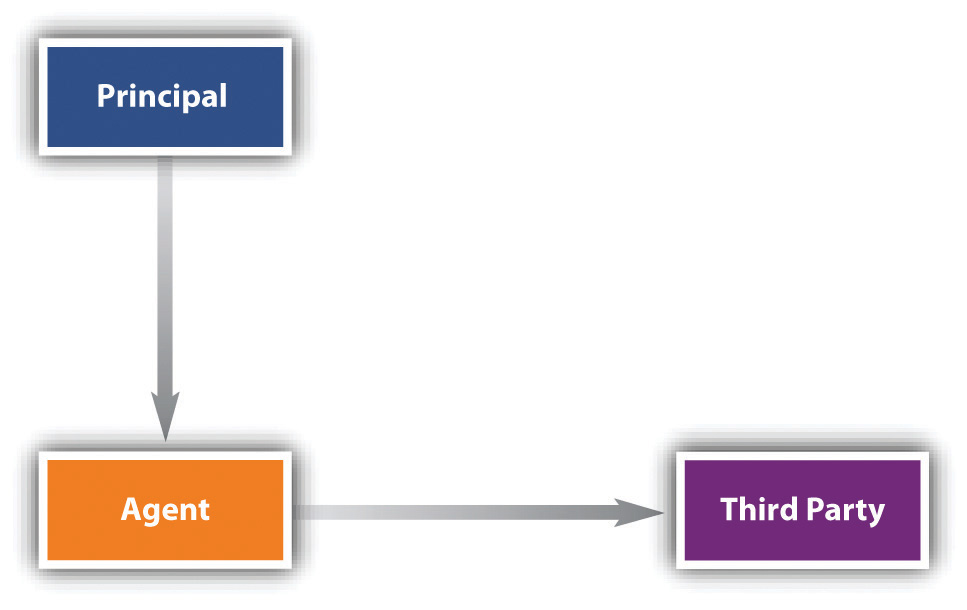
The principle of Agency is a special contract in which two parties enter, where one person, known as the agent has the authority to act on the behalf of the other known as the principal.  Undisclosed Principal is a concept which falls under the law of agency in contract law.


Undisclosed Principal

Under the law of contracts, the concept of undisclosed principal relates generally to the rights and obligations of the agent when he is working on the behalf of the principal. Under some cases, the agent may not disclose the name of the principal and the fact that, he is working on behalf of someone else. In such a case, the agent will be held personally liable for his action.

In the case of a disclosed principal, the agent does not bear personal liability for his action. The obligations arising out of the act of the agent falls on the principal. An undisclosed principal is a person who uses an agent to enter into negotiations and transactions, without his own identity being revealed. It seems as if the agent is acting on his own. So, if any dispute arises regarding the transaction, negotiations, or contract, the real principal will not be held liable.

In a case where there is an undisclosed principal, but later the identity of the principal comes to the knowledge of the opposite party, then the opposite party may choose to hold the principal liable because he is the one who has a real interest in the transaction.[1]

55_-_VAT_Agents__Disclosed_and_Undisclosed

The relationship could be explained with the help of an example. Suppose, X is the agent of Y, and X contacts Z to enter into a contract with him to sell his goods for the use of Y. But X does not disclose that he is Y’s agent, and it seems to Z that X is acting on his own accord. X keeps the identity of Y a secret. X and Z enter into a contract, for the sale of certain goods at a certain price. The agreement is entered in the name of X. as if he is the principal. If there is any subsequent breach of the contract, Z can hold X personally liable. In case Z had the knowledge that X is only an agent, and knew the identity of Y also, then Z cannot hold Y liable afterward, because he despite knowing the status of the parties, choose to continue with the contract, with X as a principal. But in case Z knew that X is only an agent, but did not know the identity of his principal, and if later discovers the identity of X’s principal, he may choose either to hold X (agent) or Y (principal) liable in the case of a breach.

Provisions under Indian law

An undisclosed principal is a person whose identity is known by the third party. In the eyes of the third party, the agent is the principal. There are some rights and liabilities which are imposed on the undisclosed principal by the law. These rights and liabilities are imposed on him, even when he is not made a party to the contact. The concept of undisclosed principal is an exception to the rule that only a party to the contract can be sued or can sue.[2]


Agent and Undisclosed Principal

The relationship between an undisclosed principal and agent is the same as that of the relationship between a disclosed principal and an agent. In a case where the principal is undisclosed, the agents act as a trustee. Even though the contract is entered into in the name of the agent, he is answerable to the principal. The agent is under an obligation to disclose to the principal about any benefit which has been earned, any payment which has been made, etc.


Third Party and Undisclosed Principal

Two conditions are to be satisfied before the undisclosed principal can enforce any right (or incur any liability, in case the third party subsequently gets to know the identity of the principal and choose to hold him liable)-

  • The agent must have an express or implied authority from the principal to enter into a contract with the third party
  • The agent enters into the third party not for his own benefit, but for the benefit of the undisclosed principal.

Rules governing rights and liabilities between an undisclosed principal and third party[3]

  1. Generally, an undisclosed principal can be sued by the third part, or he can sue the third party, except in some exceptional circumstances.
  2. An undisclosed principal remains liable towards the third party with regards price of services rendered or goods sold under the law of contract, even when it wasentered into in the name of the agent. He wouldn’t be discharged if he has instructed the agent to make payment to the third party and the agent does not make the payment.
  3. In case, the identity of the principle becomes known to the third party, and any subsequent breach takes place, the third party can choose either to sue the agent or the disclosed principle.
  4. There are a few cases where the disclosed principle can’t be sued by the third party in case of breach of a contract. There are cases where the identity of the parties is very material to the formation of the contract. For instance-
    • A contract which requires personal services or skills cannot be performed by an undisclosed principle. For example, a concert which is to be performed by a singer, or a show which is to be hosted by a host cannot be done by an undisclosed agent, because the third party enters into the contract on the basis of the reputation of the person.
    • Where a third party enters into a contract with the agent of the undisclosed principal to lend some money to the agent in the personal capacity, it cannot be enforced by the undisclosed agent.
    • Where the agent and the undisclosed principal is aware of the fact that the opposite party will not enter into a contract with the undisclosed principal, the undisclosed principal cannot use an agent to enter into the contract with the third party.

e89c3ecb4f0a749c64a99a8c1085687c

In a case where the principal wants the contract to be performed, he can do so only subject to the rights and the liabilities which subsist between the third party and the agent. In the case where the agent into a contract with a third party without disclosing the name of the principal and the third party is ignorant of the identity of the principal, and enters into the contract believing that the agent himself is the principal, the rights of the third party is protected. This is because he entered into a contract with the agent in good faith without having any idea that some other party is also involved in the contract. Section 232[4] of the Indian Contract Act stats that when the third party enters into a contract with the opposite party, without knowing or suspecting that he is the agent (who is acting on the behalf on an undisclosed principal, and portrays himself as the principal), then if the undisclosed principal wants the contract to be performed, he can enforce the contract only on the basis of the rights and obligation which is existing between the agent and the third party.

For instance, X owes Rs 1000 to Y. X then enters into a contract with Y to sell him goods worth Rs 2000. X enters into the contract on behalf of Z, whose name X does not disclose and enters into the contract as if he himself is the principal. Y has no knowledge about Z’s identity. In such a case Y can set-off the amount that X owes him and Z cannot compel Y to purchase the rice without setting off the amount of the debt.

Section 231 of the Indian Contract Act[5] states that the third party will have same rights against the principal as the party would have had against the agent if the agent were the principal. In a case where the identity of the principal is revealed before the contract has been executed, then the third party may refuse to perform his part of the contract if he can satisfactorily show that if he had known the identity of the principal, he wouldn’t have entered into the contract. Also, when the identity of the principal becomes known, the third party may choose either to sue the principal or the agent. But if the third party chooses any of the parties and fails to recover the damages, he cannot sue the other party subsequently. In the case where the third party is sued by the undisclosed principal or enters into any settlement with the third party, the third party can’t be subsequently sued by the agent. The law recognizes the fact that when the rights of the undisclosed principal are in question, he is at an advantage compared to the third party.


Footnotes:

[1]Violett v. Powell’s Adm’rs, 10 B. Monr. 347

[2]http://www.eaa.org.hk/en-us/Information-Centre/Publications/Agency-Law/-10-Undisclosed-principals

[3]http://www.lawctopus.com/academike/rights-liabilities-undisclosed-principal-agency/

[4]http://www.vakilno1.com/bareacts/indiancontractact/indiancontractact.html#182_8220Agent8221_and_8220principal8221_defined8211

[5]idid

Download Now

Will Elimination Of Subsidies Aid Economic Growth?

0

In this blog post, Pramit Bhattacharya, a student of Damodaram Sanjivayya National Law University tries to examine if subsidies can be eliminated in a country like India, given its socio-economic conditions.

1451539_599879256736892_1144192258_n


People who are in favor of subsidies give the argument that due to the subsidies provided, more goods are services are being produced in that particular sector, and more employment opportunities are being created. But the point which is almost never acknowledged is the benefits the society would have reaped if the money would have been spent otherwise or left in the pockets of the taxpayers.


Opportunity cost of subsidies

Here the concept of opportunity cost comes in. This concept of opportunity cost is instinctual, choosing between X and Y. In economic terms opportunity cost can be defined as expenditure in its highest alternative use. A small example of it can be given. Suppose a person has Rs 1000 in his pockets and spends Rs 800, on a party night that Rs 800 is no longer to buy him necessities like food or clothes. Now, on a bigger scale, a very similar example can be given. Suppose the government spends Rs 1000 crore in constructing a bridge that a very few number of people will use, that money is not available anymore to be spent on other services like healthcare, education and other policies which are on high priority. The economy is made up of a feedback mechanism and in such mechanism the parallel between households and the governments in not perfect and foolproof. But when there is a budget constraint, all spending decisions are traded off. In an ideal situation, the aim of the government is to plan its expenditure in such a way that the return to the society is roughly same as the spending. But this balanced is disordered by subsidies.

Subsidies-Indian-Scenario-and-road-ahead

Subsidies not only hurt the general governance of the society, but it also impacts the overall economic structure. Very recently, The World Trade Organization’s 2015 in its Nairobi Ministerial decided to scrap subsidies provided on cotton exports. Reacting to that, the Indian Government has stated that the eliminations of the subsidy will benefit Indian exports. According to the government, the scrapping of such subsidies creates a level playing field.[1] These statements reinforce the fact that elimination of subsidies helps in a larger way too. Talking about subsidies on fuel, these subsidies also cost Oil Marketing Companies a lot. According to a report, the under-recovery incurred by OMCs in the first quarter of the financial year 2014-15 itself was Rs 28, 690.74 crore.[2] Contrary to popular belief, the duty and the excise on fuels is not much. The price of fuels like petrol and diesel keeps on going up due to the subsidies provided on them.

The biggest problem of subsidies is that they decrease the surplus in a disguise. For example, consider a hydropower plant. The water used to produce electricity is also utilized by a farmer to irrigate his field. Now, when a cubic meter of water goes through the turbine to generate electricity, it has much higher value than irrigating the farmer’s crops. The government then comes up with a subsidy policy which allows him to pump out water from the reservoir at a minimal cost. This results in diverting the water from the water source to a lower value use, which in turn shrinks the surplus and the economy as a whole generates a smaller surplus.

Withdrawing of subsidies leads to a positive growth of the economy. And finally, the Indian government is also treading the lines of economic growth. The BJP government, after 18 months in power, withdrew the subsidy policy on LPG for those with an income of more than Rs 10 lakh. This is a wonderful step which will give a shot in the arm to the Indian Exchequer. The government made an LPG subsidy payout of Rs 40, 551 crore in the year 2014-15.[3] The government began the “Give it up” campaign urging well-off people to give up their subsidies on LPG cylinders under which some 57 lakh people opted out of their LPG subsidies.[4] The numbers were not really satisfactory, and hence, the government decided to go a step further by removing subsidization based on the income of households.

Category FY14 (Actuals) FY15 (Revised estimates) FY16 (Budget estimates)
Urea 38,038 50,300 50,500
Decontrolled fertilizers 29,301 20,667 22,469
Food 92,000 122,676 124,419
Petroleum 85,378 60,270 30,000
Interest 8,137 11,147 14,903
Other 1,778 1,632 1,520
Total 254,632 266,692 243,811

Government subsidies payment in Rs crore[5]


Effect of subsidies on efficiency

Granting of subsidies has its first order or static effects. Economic experts often say that subsidies create economic distortions, especially the subsidies which are used to promote any particular sector or industry. In such cases, resources are more often than not, diverted to less productive use, thereby reducing the economic efficiency. Those who are in favor of subsidies counter this view by contending that these subsidies serve other redistributive goals. But again what they miss out is that providing subsidies may have external effects, which were not anticipated.


Dynamic Effect of Subsidies

Over time, the benefit reaped from the subsidy policies capitalize into the least elastic form of production. Subsidies are transitional. It helps only that section of the society who can immediately take the benefits of the subsidies. The successor of these people ends up paying a higher price for the subsidized product.

The beneficiaries of subsidy programs become socially trapped also. Matters become worse when subsidization is used to support employment. Due to the subsidies being provided, people are more inclined to enter the profession, and mobilization in that form of profession stagnates. The amount of dependence on subsidies becomes an obstacle when it comes to making new policy reforms.


Distribution of subsidies

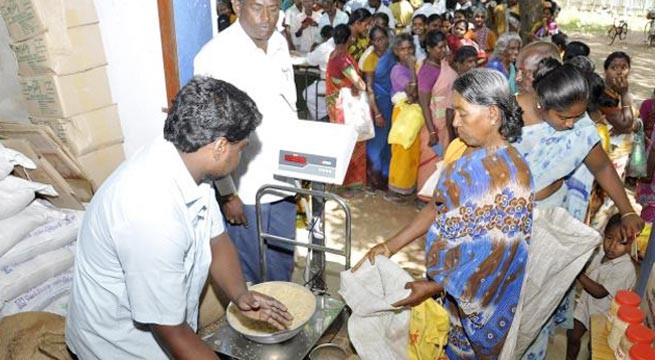
ration-shop-in-west-bengal-655x360

It is of no doubt that some subsidies do benefit some disadvantaged groups. But even in such cases, these subsidies benefit companies and richer people more. Ironically, the distribution consequences of subsidies are often the opposite of what had been really intended. The passage between the government and those who are intended recipient of the subsidy benefits is often more like a stream rather that a pipe which provides ample opportunity to other to dip themselves in the stream and reap the benefits of it before the actual intended recipient.


Effect on Environment

On the outset, subsidy policies may not harm the environment intentionally. But again, they do harm the environment in disguise. When talking about “environmentally harmful subsidies”, it often means subsidies which provide high incentives to heavy production, consumption, and transportation, which harm the environment. For example, if high subsidies are given in the fishery industry, to promote offshore fishing, it will lead to the depletion of important fishery stock. Talking about other industries, subsidies which offer incentives for higher production and consumption often lead to an increased amount of waste emission and discharge.

Political Motive and Subsidies

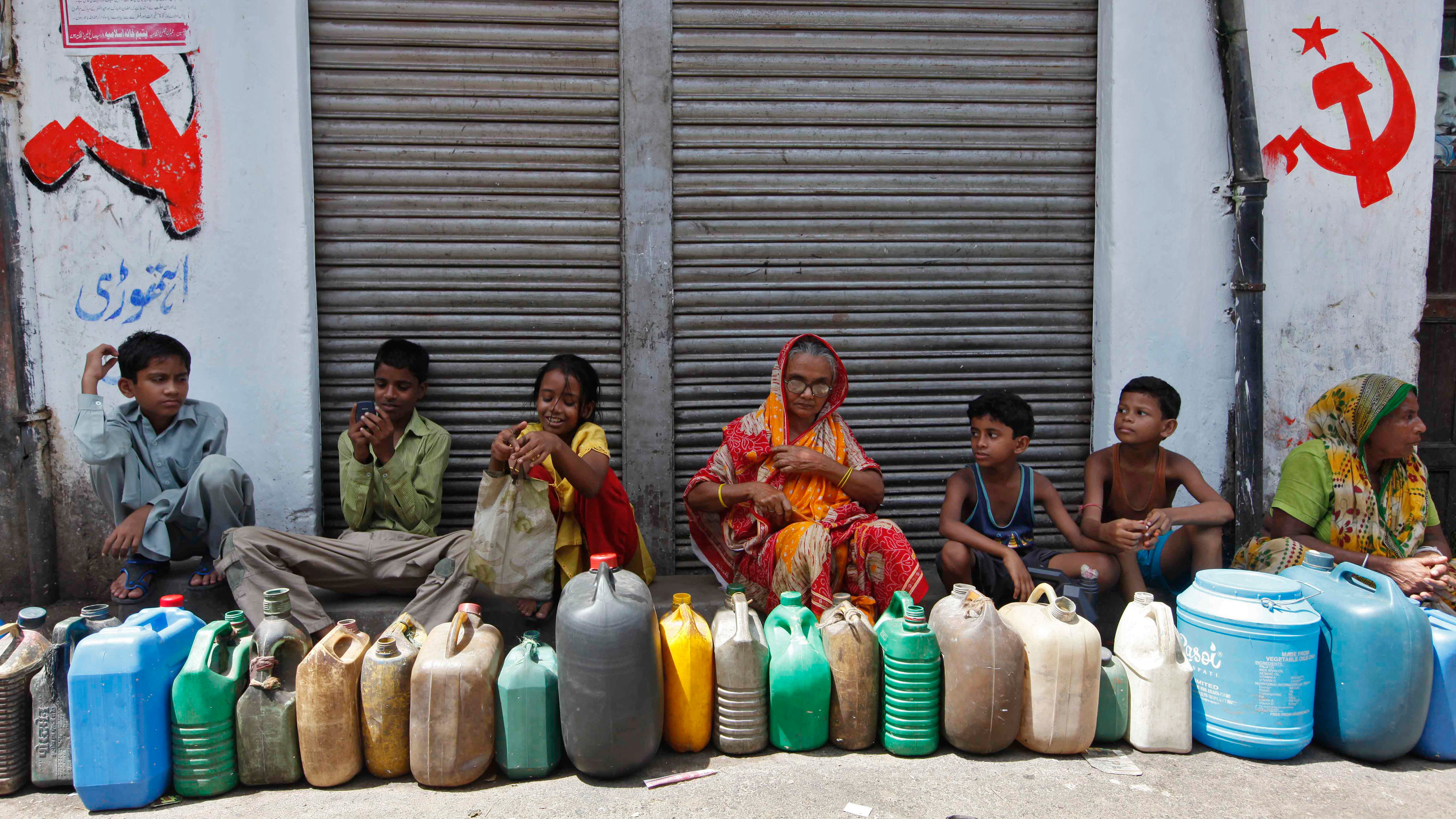
Kerosene

Various shortcomings of providing subsidies have been mentioned above. It is evident that the subsidy policies do more damage than good.  Still why do the government bring into play these kinds of policies? These answers can be found in political motives of the ruling government. They are often motivated to provide subsidies to a specific section of the society who may increase their vote banks.

Finally, the bureaucracy itself can present an obstacle. Government ministries rarely admit to having a vested interest in the continuation of the support programs they administer, but it is hard to imagine total disinterest being the norm. More subtly, the bureaucratization process often feeds a pervasive notion that the subsidized activity forms part of the natural order of things. Subsidies thus metamorphosize into entitlements, and any attempt to curb them becomes politically hazardous.[6]

An introspective approach regarding subsidies will lead to the fact that one of the main causes of India’s fiscal problems has been subsidies. There is no alternative source that compensates the losses accrued due to subsidies. In such a scenario, the question arises whether subsidies should be completely done away with?

Like every coin that has two sides, this question can also be answered in two perspectives. One perspective is that subsidies on food, fuel, etc. should be completely removed. This can be done by hiking the price in these sectors marginally and then remove subsidies in a phased manner. This would reduce the shock of elimination of the policy at one go. Over time, this would help the government in maintaining healthier fiscal balances and using its money to promote growth in key areas in the country. This, in turn, would help promote investment interests of the private sector as well as bring in long-term foreign capital. The combined effect would be long-term growth for the country.

The other view is that in a country like India, with a population of more than 120 crore, and half of them living in poverty, it is impossible to eliminate subsidies. Providing subsidies have become a part and parcel of the Indian economic structure. The missing link is a proper structure of distribution of subsidies between the government and the actual intended recipients. If the process is made water-tight, subsidies will cease to be a burden on the economy of the nation.

The fact that cannot be negated is that a significant number of people in the country are poor, and they do need governmental aid. On the other hand, the fact that subsidies are a burden also can’t be negated. But by keeping the prices low in a fabricated manner by providing subsidies, the government is not doing any good to the economy of the country. Therefore, the need of the hour is to get on with new policy reforms and start eliminating subsidy policies in a phased manner.

Footnotes:

[1]http://economictimes.indiatimes.com/news/economy/policy/elimination-of-export-subsidies-on-cotton-beneficial-for-indian-exports-says-government/articleshow/52013264.cms

[2]http://pib.nic.in/newsite/PrintRelease.aspx?relid=107321

[3]http://www.financialexpress.com/article/economy/tax-payers-earning-over-rs-10lyr-not-to-get-subsidised-lpg/184675/

[4]http://www.firstpost.com/business/ending-lpg-subsidy-for-the-well-off-a-welcome-move-will-kerosene-urea-follow-soon-2563840.html

[5]data:application/octet-stream;charset=utf-8,Category%2CFY14%20(Actuals)%2CFY15%20(Revised%20estimates)%2CFY16%20(Budget%20estimates)%0AUrea%2C38038%2C50300%2C50500%0ADecontrolled%20fertilisers%2C29301%2C20667%2C22469%0AFood%2C92000%2C122676%2C124419%0APetroleum%2C85378%2C60270%2C30000%0AInterest%2C8137%2C11147%2C14903%0AOther%2C1778%2C1632%2C1520%0ATotal%2C254632%2C266692%2C243811 – [5]http://www.firstpost.com/business/ending-lpg-subsidy-for-the-well-off-a-welcome-move-will-kerosene-urea-follow-soon-2563840.html

[6]https://www.iisd.org/gsi/effects-subsidies

Download Now

Provisions For The Print Disabled Under Copyright Law

0

In this blog post, Soumya Deshawar, a student of University of Petroleum and Energy Studies, Dehradun, analyzes the different aspects of fair use which have been provided as rights to the disabled people and the special provisions for them. The post also explains Digital Rights Management Systems, and how the disable people are being affected by it.

1394345_594314770623690_1874013676_n

Copyright Law, which protects the rights of many on one hand, has become a barrier to access information on the other hand. This particularly is prevalent in the developing countries. Many developing countries that have signed the internationally accepted Intellectual Property Agreements set down the minimum standards for the protection of copyright. Most of the countries have neither yet incorporated such requirements into their National Copyright Laws due to socio-economic and political reasons, nor have they taken any advantage of the limitations and exceptions allowed in such international agreements. This concludes that many developing countries have no provisions in their National Copyright Laws for persons who are visually or print disabled, resulting in the restriction or blockage of access to information for persons with sensory disabilities, thus overriding their fair use rights. Many of such disabled people are distant learners because of their inabilities.

“India Is First to Ratify the “Marrakesh Treaty” Easing Access to Books for Persons Who Are Visually Impaired” [1]

India became the first nation to approve the Marrakesh Treaty for facilitating access to the published works for blind people, the ones who are visually impaired, or are otherwise print disabled. Till date, more than seventy-five states, who are the members to WIPO have signed the Treaty that was adopted on 27th June, 2013 by means of a diplomatic conference that was organized by WIPO and was hosted by the Kingdom of Morocco in Marrakesh. This treaty will be taking effect after twenty ratifications are presented to WIPO. India was the first to officially notify WIPO of its ratification.

[WIPO Director General Francis, Gurry exclaimed, “We congratulate India on its ratification of the Marrakesh Treaty and hope this ratification will be the first of many. When the Marrakesh Treaty takes effect, the lives of people who are visually impaired around the world will be enriched.”

India’s Permanent Representative to the United Nations in Geneva, Dilip Sinha said, “India supports the Marrakesh Treaty for its human rights and social development dimension. The speedy ratification of the Treaty reflects India’s commitment to facilitating access to published works for the millions of blind, visually impaired and otherwise print disabled persons.” He further added “We hope other countries will follow India’s lead quickly so the Treaty can enter into force and we begin to see real and tangible benefits for the world’s blind and visually impaired community.”][2]

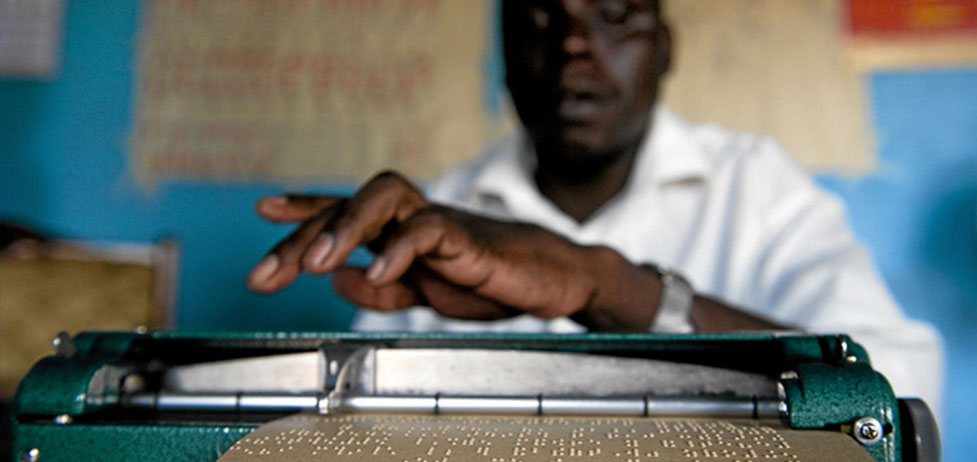
This treaty facilitates the access of published works to the persons who are blind, visually impaired, or in any other way, are print disabled and addresses the “book famine” by calling for its contracting parties to implementnational law provisions that authorize the reproduction, circulation and facilitating the availability of published works in  formats that are accessible. An example of such formats is Braille, through boundaries and exceptions to the rights of copyright holders.

blind1

This treaty also consists of provisions for the interchange of such format works that are accessible, across borders by institutions that attend to the people who are blind, visually impaired, and print disabled. It will synchronize limitations and exceptions so that these institutions can function across borders. The fast production of such works in accessible formats should elevate the total number of works existing so that it eliminates the replication and increases efficiency.

 The Treaty also intends to facilitate guarantees to authors and publishers that the system will not uncover their published works for any misuse or their distribution to any person other than the actual beneficiaries. The Treaty restates the prerequisite that the sharing of works to cross-borders, that have been created keeping in mind the limitations and exceptions, must be limited to certain exceptional cases which do not clash with the usual exploitation of the work and do not vaguely prejudice the legitimate interests of the right holders.

Background

There are some 285 million persons in the world who are blind and visually impaired as per the World Health Organization, out of whom, 90 percent reside in developing countries. A survey conducted by WIPO in 2006 revealed that less than 60 countries have limitations and exceptions sections in their national copyright laws that mark special provisions for the ones who are visually impaired.

The findings of World Blind Union conclude that, out of the millions of books published each year in the world, not more than 10 per cent are made obtainable in formats which are accessible to the people who are visually impaired.

Special Provision for Access to the Disabled


Compulsory License for the Disabled

Section 31B of the Copyrights Act, 2012 lays down provisions for the compulsory license in works for the help of the disabled. The Copyright Board, on a request for a CL by anyone working for the benefit disabled on the basis of profit or for the purpose of business shall dispose of such an application in a period of not more than two months from the date on which the receipt of application is provided.

The Compulsory License so issued must stipulate the means and format of publication, the term of the compulsory license and the number of replicas that may be provided including the royalty to be delivered.


Fair Use Rights for the Disabled

The clause (zb) lately added to the section 52(1) of Copyrights Act, 2012, provides for fair use of the published work for the benefit of the people who are disabled. It enables the adaptation, reproduction, issuance of copies or communication to the public of a work in any format that is accessible to the disabled to access the works comprising of sharing with any disabled person for personal use, educational purposes or research. These rights are available to all the people or organizations that are working for the benefit of the disabled persons.

Digital Rights Management Systems

drm

Digital technology has the potential to transform the lives of sensory-disabled people. For example, the synthesizers that convert text-to-speech allow the words displayed/typed on the screen to be read out loud and the images so displayed to be described orally. This allows the blind people to understand the text by hearing. Also, software that allows a computer to respond to the commands given orally, instead of written commands by keyboard or a mouse helps the visually impaired people to operate the computer with ease. Screen readers which decode the electronic text into Braille are also available.

Awkwardly, DRMs restrict the above activities. For instance, e-books from Adobe have the inbuilt capacity to be read out loud by a computer, but the owners of rights use technological protection methods to turn off this application by Adobe. These measures block the access for blind people, even when they have authentically purchased the original work. Such things override the exceptions provided by copyright laweven when no legal barriers exist, and create technological barriers. International IP agreements and national laws in some countries prohibit users from evading or bypassing measures for protection for legitimate access purposes.


Conclusion

People, who are sensory-disabled, should be authorized to transform material into accessible format or media without seeking copyright permission from the owner of rights, unless he is facilitating the suitable accessible version under the same terms and at the same time as to the normal sighted-persons.

Copyright laws should be able to protect the rights of persons who are sensory-disabled and not just create vehicles for seeking permission. They should be self-sufficient in providing appropriate limitations and exceptions to ease, and not restrict, the access to knowledge. Also, the balance between the rights of information-users and just demands of rights-owners must be reestablished. Only then can it be possible for the persons with sensory-disabilities to get a fair deal.

Footnotes:

[1]http://www.wipo.int/pressroom/en/articles/2014/article_0008.html

[2]http://www.wipo.int/pressroom/en/articles/2014/article_0008.html


Download Now

All You Need to Know About Distributing Dividends Among the Shareholders by a Company

0

In this blog post, Sakshi Bhatnagar of National Law University Odisha, Cuttack writes about what is the dividend, how it is distributed amongst preferential and equity shareholders, the various sources of dividends and what happens when dividends are not distributed.

AAEAAQAAAAAAAAUaAAAAJGQwYzM3MDFmLTYzOTUtNDdkMS04NjUyLTkzZTQ1MGFiZDc2MQ

What is a Dividend?

A dividend is that part of the profits of a company that is legally available for distribution to the shareholders of the company a return on the share capital which has been subscribed by a shareholder and is paid to the shareholders by the company. Dividends are only paid to the registered shareholders of the company and should not be paid in cash

Its articles of association should authorize the payment of dividends, and if it is not authorized, then the articles of association have to be amended accordingly. According to Section 51 of the Companies Act, 2013, the dividends have to be paid in proportion to the amount paid-up on each share.


Dividend Types and Dividend on Different Shares

Final dividend: A final dividend is that dividend which is declared at the annual general meeting of the company. It becomes an obligation upon the company once it has been declared in the meeting. It is declared only on the recommendation of the Board of Directors.

Interim dividend: This dividend is declared between two annual general meetings of the company by the Board of Directors. Section 123(3)[1] Authorizes the board of directors of a company to declare interim dividends during any financial year out of the surplus of the profits of the company.The amount of the dividend, including interim dividend, shall be deposited in a scheduled bank in a separate account within five days from the date of declaration of such dividend.[2] The amount of dividend, including the amount of the interim dividend, should be deposited in a scheduled bank in a separate account within five days from the date of declaration of such dividend where if the articles of the company do not authorize so, it has to be amended accordingly.[3]The dividends are to be given only to the registered shareholders, and no dividend is paid to the shareholders in case there is a failure in repayment of deposits by those shareholders.

dividend2Dividend on equity and preferential shares: A company which fails to comply with the provisions of Sections 73 and 74 shall not, so long as such failure continues, declare any dividend on its equity shares.[4] In the case of preferential shares, the dividends can either be in an amount calculated at fixed rate or a fixed amount, which has to be in consonance with the articles of association. The rights of the preferential shareholders in respect to dividends are subjected to three basic conditions- that the preferential dividends can only be paid if the company has sufficient profits, that a dividend becomes payable to the shareholders only when it is declared in the manner laid down in the Act and by the company’s articles, and there should have been a formal declaration.

Preference shareholders are not entitled to treat preference dividend as a debt and sue for its payment in the first instance[5].The preferential shares can be of two types-cumulative or non-cumulative. Since dividends are a subject of availability of distributable profits, cumulative preferential shares are those shares in which the arrears are accumulated for the financial years on which dividends are not given and are these accumulated arrears are given along with the dividends in a financial year where distributable profits are available. No such benefit of accumulated arrears is available to the non-cumulative preferential shareholders.

Preferential shareholders are given priority over the equity shareholders. The part of the distributable profit is given to the equity shareholders as dividends only after all the preferential shareholders are paid the dividends. In case no dividends are left after distribution amongst preferential shareholders, then no dividend is given to the equity shareholders for that financial year.


What Are the Sources of Declaring Dividends?

Section 123 of the Companies Act enables a company to declare its dividend only out of the profits of the company for that year or for any previous financial year after depreciation has been charged and kept undisturbed concerning the provisions of Schedule II of Companies Act, 2013. The dividends can also be declared out of the money provided by the Central Government or a State Government for the payment of the dividend by the company in pursuance of a guarantee given by that Government.[6]

depositphotos_69520483-Tax-documents-calculator-and-moneyA company shall transfer the appropriate amount of profits for that financial year into its reserves account before declaring any dividend, and a company is bound to declare its dividends only from free reserves.[7]In the case of Inadequacy or absence of profits in any financial year, according to the Rule 3 of Companies (Declaration and Payment of Dividend) Rules, 2014, a company can declare dividend out of surplus which is subjected to the following conditions:

(1) The rate of dividend declared shall not exceed the average of the rates at which dividend was declared by it in the three years immediately preceding that year:

Provided that this sub-rule shall not apply to a company which has not declared any dividend in each of preceding three financial years.

(2) The total amount to be drawn from such accumulated profits shall not exceed one-tenth of the sum of its paid-up share capital and free reserves as appearing in the latest audited financial statement.

(3) The amount so drawn shall first be utilized to set off the losses incurred in the financial year in which dividend is declared any dividend in respect of equity shares is declared.

(4) The balance of reserves after such withdrawal shall not fall below fifteen per cent of its paid-up share capital as appearing in the latest audited financial statement.

(5) No company shall declare shall declare dividend unless carried over previous losses and depreciation not provided in previous year are set off against profit of the company of the current year the loss or depreciation, whichever is less, in previous years is set off against the profit of the company for the year for which dividend is declared or paid.[8]


Unpaid Dividend Account

In case a dividend is declared by a company and is either not paid or not claimed by the shareholder within 30 days of the declaration, the company would then within seven days after the expiry of these 30 days, transfer the amount to unpaid dividend account. Capture

Section 124(4) states that any person claiming to be entitled to any money transferred under sub-section (1) to the Unpaid Dividend Account of the company may apply to the company for payment of the money claimed.[9] Such details of the transfer of money to the unpaid dividend account should be placed on the website within a period of ninety days from making a transfer in the account. The statement so published should mention the names, address and should also mention any other website which has been approved by the Central government.

According to the Section 127(6), the shares regarding the unclaimed dividends shall be transferred to the Investor Education and Protection Fund by the company along with a statement which would contain details as prescribed.


Offenses and Penalties

  • If a company fails to comply with any of the requirements of Section 124 of Companies Act, 2013 which deals with unpaid dividend account in case of unclaimed dividends, the company shall be punishable with fine which shall not be less than five lakh rupees but which may extend to twenty-five lakh rupees and every officer of the company who is in default shall be punishable with fine which shall not be less than one lakh rupees but which may extend to five lakh rupees.[10]
  • If a company after declaring dividends doesn’t give dividends to its shareholders within 30 days of announcement, then it shall be liable under Section 127 of the Companies Act, 2013 and every director if he is a known party to this default, would be punished with imprisonment that might extend to two years and the company would be liable to pay simple interest at the rate of 18% p.a. during the period for which such default continues.[11]

Gavel-Money_originalException to the Section 127 which talks about punishment for failure to distribute profits, lies in the proviso to the section which states that no offense is committed in the following situations:

  • In case the dividend couldn’t be paid because of the reason of operation of law
  • In case certain directions for the issue of dividends in a particular manner are given by the shareholder and such directions are not in consonance with the Act, and he has been informed of the same.
  • In case there is a dispute in regards to the rights of receiving dividend
  • In case such dividend has been adjusted lawfully against any due sum from the shareholder
  • In case the failure in paying a dividend or posting the warrant within the period under this section was not due to any default on the part of the company.[12]


[divider]

Footnotes:

[1] Companies Act 2013.

[2] S 123 (4), Companies Act 2013.

[3] Id

[4] S 123 (6), Companies Act 2013

[5] Evling v Israel & Oppenheimer Ltd (1918) 1 Ch. 101

[6]S 123 (1) (b), Companies Act 2013.

[7] See S 2(43); Companies Act 2013 for the definition of free reserves.

[8] Rule 3 of Companies (Declaration and Payment of Dividend) Rules, 2014.

[9] S 124(4), Companies Act 2013

[10] S 124(7), Companies Act 2013

[11] S 127, Companies Act 2013

[12] Id

Download Now

Duties of a Bailee in a Contract of Bailment

0

In this blog post, Sakshi Bhatnagar of National Law University Odisha, Cuttack writes about the duties of bailee in a contract of bailment and the various obligations on bailee in case the goods are not returned.

AAEAAQAAAAAAAAUaAAAAJGQwYzM3MDFmLTYzOTUtNDdkMS04NjUyLTkzZTQ1MGFiZDc2MQ


Introduction

Bailment is a common law term and involves the change of possession, i.e., delivery of goods or personal property by one person to another, but the ownership remains unchanged. Chapter IX of the Indian Contract Act, 1872 deals with the sections regarding the Contract of Bailment.

Section 148 to Section 171 lays down the definitions, nature of the contract of bailment as well as the rights, duties and liabilities of both the bailor and the bailee. Bailment, as per the Indian Contract Act, puts certain legal obligations on bailee at the time of redelivery or disposing of goods as directed by the bailor.

legal gavel and a business contract

Different sections of this Chapter IX provide for different duties of bailee about the goods bailed to him. Duties of Bailee also depend on upon the very object of the contract of bailment.The obligations of bailee on the goods bailed to him depend on the terms and conditions mentioned in the contract he has entered into. In other words, his duty towards the goods arises at that time when the purpose for which goods are bailed is completed. Such duties, if are not taken care of, may make the bailee liable (according to the contract). Also, there are certain bailment contracts which exempt the bailee from any obligation or liability.

Duties of Bailee

Duty to take reasonable care[1]:

Section 151 of the Contract Act provides that the bailee is under obligation to take care of the goods bailed to him as an ordinarily prudent man in his place would have taken under the similar situation. This means that the duty laid down by this section is general and uniform in nature. This section does not provide for any exceptional situations; rather it covers all the contracts of bailment. In Giblin v. McMullen[2], the court pointed out that “a gratuitous bailee is bound to take the same care of property entrusted to him as a reasonable, prudent and careful man may fairly be expected to take his property of the similar description.”[3] Therefore, the bailee is bound to take reasonable care whether the bailment is gratuitous or non-gratuitous. Additionally, the obligation of a bailee includes not only the duty to take all reasonable precautions to obviate the risks but also the duty of taking all proper measures for the protection of the goods when such risks had already occurred.[4] parcel11

The parties under the contract of bailment may insert any special provision increasing the responsibility of the bailee in respect of care to be taken against the goods bailed, but they cannot decrease the standard of care. Section 152, in this regard clearly states that one has to fulfill the requirement of reasonable care mentioned in Section 151 even if the contract has any special provision. The standard of duty cannot be reduced, as it would be unfair if bailee is not held liable for his negligence of not taking standard care. Even where he has contracted himself out of liability due to his negligence, the bailee has still to show that he took as much care of the pledged goods as an ordinarily prudent man as required by Section 151.[5]

https://lawsikho.com/course/diploma-advanced-contract-drafting-negotiation-dispute-resolution
click above

In Sheik Mohamed v. the British Indian Steam Navigation Co. Ltd.[6] The case, it was pointed out that a bailee’s liability cannot be reduced by any provision which is under the limit provided in Section 151; also it was held that any such contract which results in complete exclusion of bailee from liability in case of his negligent act is not valid.

In certain situations the standard of care of care is increased the i.e., special degree of care is required to be fulfilled. In Pitt Son and Badgery Ltd v Proulefco SA[7], a wool broker sold wool but retained it in his store. The store was wooden, old and surrounded by a fence with gaps large enough for a person to enter. The wool was destroyed in the fire caused by an intruder who entered through the gaps, and set light to the store from outside. It was held that the broker, as a bailee, was responsible for the loss; he was in breach of duty because the fence was insufficiently secure to keep out intruders.

Duty not to make any unauthorized use:

In a contract of bailment, the bailor transfers the goods to the bailee for some purpose, and the bailee is responsible for using the goods bailed according to the purpose of bailment. Section 154 of Indian Contract Act imposes liability on bailee if goods are not used authoritatively. Using goods beyond the conditions of a contract would make the bailee liable to bailor if due to such unauthorized act the bailor has suffered any loss or if goods are damaged. This implies that the bailee is not entitled to use the goods for personal benefits (unless the bailment for his use) by doing an unauthorized act. Even if the goods bailed are for his personal use, he is not authorized to let the goods be used by another person. Nevertheless, if the situation requires, the bailee may use these goods for preservation.[8] But in the other circumstances, he is required to have express or implied consent of the bailor to use the goods against the conditions of bailment contract.

Duty not to mix or part with the goods:

The bailee has to take certainly reasonable care while dealing with the goods of the bailor. One such responsibility includes his duty not to mix the bailor’s goods with his own or part of the goods. According to Section 155, if the bailee has mixed the goods with his goods and while doing so he had the prior consent of the bailor, then the bailor will have interest over the goods in proportion to the goods he has bailed. But this section specifically states that the bailee had the consent of bailor.

Section 156 and 157 speaks about the conditions wherein the bailor’s consent was not there while mixing the goods. In those situations wherein the goods are separable, the law imposes liability on the bailee for any loss or damage that the bailor might suffer due to such mixing. But if it is not possible to separate the goods, the bailor is entitled to claim reimbursement for the loss of goods.

Duty to return goods:

One of the essentials of a contract of bailment is that once the purpose for which goods are bailed is accomplished, the bailee has to return the goods back to the bailor or dispose of as per the direction of the bailor. Section 159 states that the bailor may ask for the return of loan at any point of time if the loan is provided gratuitously to him. And the bailee is under obligation to return so. However, he can claim compensation if he has suffered any loss from such act of bailor.

460574257_XSSection 160 provides that if the time of bailment has expired or the purpose is fulfilled, then the bailee is bound to deliver the goods as per the directions of the bailor without demanded by bailor, i.e., he has to be cautious about the delivery of the goods. There is an implied contract in a bailment to return the articles in a reasonable time after the purpose is served even if no time is stipulated for return.[9] The bailee is under a duty to return the goods bailed on the expiration of the period of bailment unless he can show good cause for not returning them.[10] Where an article is hired for use or a purpose but such article is unfit for such use or purpose, this is treated as a breach of warranty, and the bailee is not bound to return it to the bailor because the purpose cannot be accomplished. In such a case, the bailee may give notice to the bailor who is then bound to take it back.[11]

Section 165 says that in the cases involving more than one owner of the goods bailed, the bailee is under obligation to return it to any one of the owner or as per directions were given to him.

Obligations of Bailee if the Goods are not Returned

Section 161 clarifies the responsibility of bailee if he has failed to deliver the goods after the expiry of time or completion of purpose. The bailee is not liable if the delay in delivering the goods or disposal of goods is due to default of others. Unexplained failure to return the thing bailed is presumed to be by the bailee’s default;[12]And it would be presumed as his negligence. A bailee who refuses to give delivery, except upon some unjust or unreasonable condition, is by default.[13] Moreover, if the bailee fails to return or dispose of the good, then the bailee, at his risk, keeps the goods with him and if after that any loss or damage happens, the bailee would be held liable for the same. download

Duty to deliver increase or profit accrued from bailment:

Section 163 of ICA states that “in the absence of any contract to the contrary, the bailee is bound to deliver to the bailor, or according to his directions, any increase or profit which may have accrued from the goods bailed.” This section provides that if there is any gain with regards to the goods bailed, then such gain must be handed over to bailor along with the goods and bailee is not entitled to keep it with him. But the bailor cannot claim profit or increase before the completion of the purpose of bailment or before the expiry of time of bailment contract.

Conclusion

The bailee has to perform according to the obligations laid down in the contract of bailment and as per the law of the land. He is being inconsistent or negligent while performing his obligation or duty would make him liable under various provisions of law. In each contract of law, he has a certain uniform or fixed obligations to comply with, and he cannot part with those basic obligations even if a contract does not provide for any such obligations. These obligations are the essence of bailment contract. The obligations might differ depending on the facts but there are certain duties which are implied, and reasonable care is to be taken by the bailee. The bailee’s responsibility towards the goods bailed can be increased by way of providing provisions in that regard but it cannot be lowered down, i.e., he cannot repudiate his responsibility.


LawSikho has created a telegram group for exchanging legal knowledge, referrals and various opportunities. You can click on this link and join: 
 
https://t.me/joinchat/J_0YrBa4IBSHdpuTfQO_sA

 
Follow us on Instagram and subscribe to our YouTube channel for more amazing legal content


Footnotes:

[1] Section 151, Indian Contract Act 1872.

[2] Giblin v. McMullen, (1703) 2 Ld Raym 909.

[3] Id.

[4]Lakhichand Ramchand v. G.I.P. Rly. Co., (1912) 14 Bom. LR 165.

[5]Central Bank of India v. Grains and Gunny Agencies, AIR 1989 MP 28.

[6]Sheikh Mohamed v. The British Indian Steam Navigation Co. Ltd., (1908) 32 Mad. 95

[7]Indian Airline Corpn. v. Madhuri Chowdhury, AIR 1965 Cal 252.

[8]Fothergill v. Monarch Airlines Ltd [1980] 2 All ER 696, p 702.

[9]Chaturgun v. Shahzady AIR 1930 Oudh 395.

[10]Pollock and Mulla Indian Contract and Specific Relief Acts, Ed. 13th 2006, Section 160

[11] Isufalli v. Ibrahim, 23 Bom LR 403.

[12]Kush Kanta Barkakati v. Chandra Kanta Kakati AIR 1924 Cal 1056.

[13]GIP Rly v. Firm of Manikchand Premji, AIR 1931 Nag 29.

Download Now

E-contracts – What are Shrink Wrap, Click Wrap, and Browse-Wrap Agreements?

1
Two Computer Device and Hands in handshaking, Incernet Working Concept, Wireless Communication, Online Business

In this blog post, Sakshi Bhatnagar of National Law University Odisha, Cuttack writes about the different agreements that are included in eContracts. 

AAEAAQAAAAAAAAUaAAAAJGQwYzM3MDFmLTYzOTUtNDdkMS04NjUyLTkzZTQ1MGFiZDc2MQ


Introduction

The electronic or e-contracts help in making agreements and transactions electronically in the physical absence of the parties. It aims at making lawfully binding contracts at a much faster rate with the use of latest technology. The electronic transactions today are used for a variety of purposes including recognition of digital signatures and electronic records, filing income-tax returns, fillings forms for admissions, paying bills online and others.

Shrink wrap, clickwrap and browsewrap are common types of contracts used in electronic commerce.


What are Shrink Wrap Contract?

Shrink wrap contracts are boilerplate or license agreements or other terms and conditions which are packaged with the products. The usage of the product deems the acceptance of the contract by the consumer. The term ‘Shrink Wrap’ describes the shrink wrap plastic wrapping which coats software boxes or the terms and conditions which come with products on delivery.Shrink

PC programming organizations broadly depend on the utilization of “shrinkwrap” permit assertions in the mass business sector circulation of programming. “Shrinkwrap” assertions are unsigned permit understandings which state that acknowledgment on the client of the terms of the assertion is demonstrated by opening the shrinkwrap bundling or other

Bundling of the product, by utilization of the product, or by some other determined instrument.

PC organizations have for the most part chosen to permit duplicates of PC projects to end clients, instead of to offer those duplicates, for the accompanying central reasons:  To invalidate the “convention of first deal,” which holds that once a duplicate of a copyrighted work has been sold, the copyright holder’s rights in that specific duplicate are depleted, and the duplicate might be uninhibitedly exchanged, rented, loaned or generally arranged of. To put the client on notification of the terms of the guarantee, if any, made by the seller concerning the product, and to repudiate different guarantees as per the procurements of the Uniform Commercial Code (UCC). To force upon the exchange different terms and conditions through the permit assertion, for example, impediments on the allowable utilization of the product, constraints of obligation, the decision of administering the law, and other authoritative procurements.som

Since the permit, understanding bears the essential system by which programming merchants constrain the dangers and obligation emerging from the circulation of their items, the enforceability of shrinkwrap assertions is of awesome noteworthiness. The enforceability of these assertions has for some time been the subject of genuine uncertainty. Before 1996, just three cases had touched on the subject of the enforceability of shrinkwrap permit assertions. One of these cases expected without clarification that the shrinkwrap permit at issue, all things considered, was a contract of grip which could be enforceable just if the procurements of a state statute—which expressly made such permit understandings enforceable—were a substantial statute that was not appropriated by government law.


The other two cases concentrated on the guidelines of agreement arrangement under the UCC and their suggestion for choosing whether a shrinkwrap permit understanding oversees an exchange by any stretch of the imagination—very separated from principles concerning contracts of attachment—and, assuming this is the case, which of the terms contained in that are administering. In both cases, the court held that an authoritative relationship was framed between the product merchant and endless supply of requests for the product issued by means of phone, and the shrinkwrap permit assertion which the buyer saw surprisingly after the agreement had been framed was ineffectual under the UCC to change the terms of the beforehand shaped contract.


What are Click Wrap Contracts?


A clickwrap agreement is mostly found as part of the installation process of software packages. It is also called a “click-through” agreement or click-wrap license. It is a take-it-or-leave-it contract which lacks bargaining power. If a customer likes a product and wants to buy it or avail its service he clicks on ‘I accept’ or ‘Ok’ and if he rejects it, then cannot buy that product or avail that service. Click-wrap agreements can be of the following types: 1. Type and Click where the user must type “I accept” or other specified words in an on-screen box and then click a “Submit” or similar button. This displays acceptance of the terms of the contract. A user cannot proceed to download or view the target information without following these steps. 2. Icon Clicking where the user must click on an “OK” or “I agree” button on a dialog box or pop-up window. A user indicates rejection by clicking “Cancel” or closing the window.

The terms of service or license may not always appear on the same webpage or window, but they must always be accessible before acceptance.

https://lawsikho.com/course/diploma-advanced-contract-drafting-negotiation-dispute-resolution
Click Above

A clickwrap assertions is a kind of agreement that is broadly utilized with programming licenses and online exchanges in which a client must consent to terms and conditions before utilizing the item or administration. click wrap

The arrangement and substance of clickwrap understandings fluctuate by the seller. Be that as it may, the vast majority of clickwrap assertions require the assent of end clients by clicking an “Alright,”I Accept” or “I Agree” secure on a pop window or an exchange box. The client may dismiss the understanding by tapping the Cancel catch or shutting the window. Once dismisses, the client us not able to utilize the administration or item.

The odds are that you consent to clickwrap contracts all the time. These assertions commonly show up in an autonomous page when the client experiences an online enrollment procedure, for example, an email account creation, internet saving money login process, online buy, or another system establishment. Now and again these assertions are absurd, showing many pages of content in a small window that for all intents and purposes no client would take an ideal opportunity to peruse.

The term originates from therapist wrap gets that are likewise basic in the product business. The fundamental thought is that the client is given a notification saying something to the impact of “by opening this bundle, you consent to our terms and conditions…”

Clickwrap assertions allow the online organizations to have contracts set up with various clients without arranging with them exclusively. Moreover, clickwraps grant the organizations to spare electronic marks and fuse extra provisions that are not given by the present digital law.


Browse-Wrap Contracts

Browse-wrap agreements cover the access to or use of materials available on a website or downloadable product. Only if the person agrees to the terms and conditions on the web page, then he can access the contents of the web page. browse wrap

In most cases, the website or the browsewrap includes a statement that the user’s continued use of the website or the downloaded software manifests assents to those terms.[1] Many times, the terms mentioned in the browsewraps are explicitly displayed on the website but the existence of such browse wrap is hidden or not seen on the page.


Essentials of an Electronic Contract

  1. Offer: An offer has to be made to the consumers which are the first and the basic condition for making a contract. Many websites only allow the consumer to browse through its goods and services displayed on its website and allows him to choose from among the available options. This cannot be regarded as an offer as it is merely an invitation to offer to browse through the items and select any of their wishes. Once the person selects and item, then he is the one who is making an offer and according to the availability of the product or convenience, the website either accepts or rejects the offer of selling the particular product or service to the consumer. The consumer’s offer is said to be made when he places the products in the virtual shopping cart or basket of the website.
  2. Acceptance of the offer: This is the second stage after an offer has been made by the consumer after actually going through the invitation of the offer, i.e., the display goods and services of the website. There are various procedures of accepting offers namely, e-mail, website forms, or online agreements.
  3. Lawful consideration: For the enforceability of a contract there should be a lawful consideration, i.e., something in return for something. Suppose one offers to do something, then the other would accept it in return for something to make it into a lawfully enforceable contract provided that exchange of things is lawful.


Conclusion:

Contracts, as we all know, are governed by the Indian Contract Act, 1872, but the e-contracts are also governed under the Information Technology Act, 2000. Section 4 of the act talks about the legal recognition of the electronic records as Where any law provides that information or any other matter shall be in writing or in the typewritten or printed form, then, notwithstanding anything contained in such law, such requirement shall be deemed to have been satisfied if such information or matter is— (a) rendered or made available in an electronic form; and (b) accessible so as to be usable for a subsequent reference.[2]

It very well lays down that the electronic records are legally recognized by the IT Act 2000. The earlier Indian Contract Act, 1872 is supplemented in this context with the online transaction as an accepted and legally recognized the form of contract.


LawSikho has created a telegram group for exchanging legal knowledge, referrals and various opportunities. You can click on this link and join:  

https://t.me/joinchat/J_0YrBa4IBSHdpuTfQO_sA

Follow us on Instagram and subscribe to our YouTube channel for more amazing legal content 
 
 
References:

[1]http://law.stanford.edu/wp-content/uploads/sites/default/files/event/266730/media/slspublic/Kim_clicking_and_cringing.pdf

[2] Information Technology Act, 2000 assessed at http://www.dot.gov.in/sites/default/files/itbill2000_0.pdf

Download Now

Current Legal Issues with Having Special Laws for Khap Panchayats

0

In this blog post, Abhiraj Thakur, 1st year Student of NALSAR University of Law, Hyderabad, writes about the problems with currently undertaken attempts to have special laws for dealing with khap panchayats.


Abhiraj


The social menace of caste councils or Khap Panchayats which interfere and endanger the freedom of life and liberty of couples marrying within similar Gotra and different caste or religion has existed since a long time in our country. ‘Honor Killing’ has been defined as “incidents of violence and harassment caused to young couple intending to marry or married against wishes of community or family members.”[1] The offending acts taken up by these councils imperil the liberty of young couples in the name of honor and tradition. They adopt the means of ‘moral vigilantism’ and enforce their diktats by granting to themselves the role of societal guardians. Honor-Killing-India

The cause of such crimes lies in the belief that the consenting parties have brought dishonor and disgrace to the communities by breaching their long-standing traditional values. The thinking that the purity of the clan or community needs to be maintained at any cost be it killing of any human being forms the motive for these crimes. As far as India is concerned, incidents of honor killing are reported mostly from the States of Haryana, Uttar Pradesh, Punjab, and Rajasthan. The socio-politico outlook of Khaps is such that they have scant due for individual liberty and consider themselves outside the pale of law.


Inadequacy of Current Laws

The law of the land as it stands today does not directly hit the actions of such Khap panchayats, and the existing penal provisions fail to have a deterrence or sobering influence on their wrath.[2] Any effective attempt to oppose this socio-cultural evil rooted in authoritarianism and superstition necessarily address various dynamics including the nature of the problem, the inadequacy of present law and the wisdom of using penal sanctions for an otherwise lawful group of people aimed at amicably solving concerns for the society.

Many gruesome cases of honor killings in the past have raised the issue of having separate laws for Khaps. One such instance came during the Manoj-Babli case.[3] The trial court punished five people for a death penalty for murdering a couple marrying against the whims of their caste. The Session Judge is taking a strict stance at the menace of Khaps also handed out imprisonment to the Khap leader. The High Court, however, reduced the punishment to imprisonment ruing the lack of direct evidence against the accused. Had honor killing been a specific offense, the High Court would not have been compelled to reduce the sanction.


Problems with Proposed Legislative Reforms and Judicial Pronouncements

It is felt that such honor crimes can be checked by prohibiting such assembly for the purpose of condemning the marriage and taking a course of harassing them. To serve the purpose Government came up with draft legislation named ‘Prohibition of Unlawful Assembly (Interference with Freedom of Matrimonial Alliances) Bill, 2011′.[4] The Prohibition of Unlawful Assembly (Interference with Freedom of Matrimonial Alliances) Bill, 2011 has been the only serious attempt towards a legislative framework to curb the evil of honor crimes. At present, there is no special law and honor killing is treated as murder under Section 300 of the IPC. However, this severely restricts the ring of the crime and many co-accused presents in the unlawful assembly of caste assembly are often let off due to the absence of evidence for direct involvement.  The existing homicide law is insufficient to directly punish a gathering for such purpose. Khap-Panchayat

The Government of India instead of dealing with the entire issue in a comprehensive manner circulated a bill which seeks to include ‘honor killing’ as a separate category of murder under Section 300 of the IPC.[5] It also perpetrates to make the entire assembly liable for any fatwa issued by the panchayat.[6] The bill also seeks to shift the burden of proof on the side of the defense which is problematic in many ways.

The All India Democratic Women’s Association (AIDWA) had submitted a bill for a standalone legislation to be enacted for crimes in the name of ‘honor’ which also received support from The National Commission for Women. It is also relevant to mention that recently around 15 MPs have argued for a separate law on honor killing in the Rajya Sabha However, contrary views have also been expressed especially by legislators from Khap dominated areas for whom these Khaps stand as formidable vote banks.

The 232nd report of the Law Commission had suggested for a legislative framework on “Unlawful interference of caste panchayat with marriages in the name of honor” to make members of Khap liable for criminal intimidation by increasing the punishment provided under the IPC but The Law Commission fails to make the family members of the couples liable even if the crimes committed by them are same as that of Khap Panchayats. The suggested legislation only criminalizes offenses against married couples and not if they are merely living together. The suggestions as such seem to be conservative and unwilling to deal with the issue in totality.

To go with story 'India-social-marriage-caste,FEATURE' by Abhaya Srivasta In this photograph taken on May 5, 2014 Inder Singh More, the head of the 42-village Khap panchayat or local village council, speaks during a meeting in Hissar district of the northern state of Haryana. For as long as anyone can remember, villagers north of India's capital have lived under two sets of laws -- those of the government and another imposed by unelected but powerful men. Now in a sign of major reform coming to a corner of the country steeped in tradition, Haryana state's largest council has allowed couples from neighbouring villages to marry, even if they belong to different castes. AFP PHOTO/ SAJJAD HUSSAIN (Photo credit should read SAJJAD HUSSAIN/AFP/Getty Images)

Recently, in Arumugam Servai v. State of Tamil Nadu[7] The Supreme Court deprecated the practice of Khaps taking law into their hands and infringing upon the freedom of life and liberty of young couples. In yet another case, the Supreme Court stated- ‘There is nothing honorable in such killings, and in fact, they are nothing but barbaric and shameful acts of murder committed by brutal, feudal minded persons who deserve harsh punishment. Only in this way can we stamp out such acts of barbarism.’[8] However, a recent judgment of the Supreme Court is bound to have far-reaching consequences. It laid down the proposition that honor killing falls within the purview of ‘rarest of the rare cases’ hence deserving death penalties. It was observed that-“All persons who are planning to perpetrate honor killing should know that gallows await them.” Following this judgment, almost all convicted in an honor killing murders have been shown the death knot by the courts in subsequent cases. With utmost respect, the researcher is of the view that this is contrary to the established criminal jurisprudence which has been established by some cases which make death sentences only a last resort only in extreme aggravating and mitigating circumstances.[9] It is submitted that each case must be decided upon facts and merits, and no blanket approach can be imposed towards a consistent death sentence in each case. This rule is bound to create uncertainty in the law of the country.


Possible Solutions

It is thus observed that to check the high-handed and unwarranted interference by caste panchayats with otherwise lawful marriages, the current scheme of legislative and judicial initiatives undertaken are not up to mark. There is a need to punish the congregation of public for an unlawful purpose with a minimum punishment to create deterrence from forming a part of the assembly, However the government has adopted another line of having a separate provision for ‘honor killing’ underSection 300 of the IPC and shifting of burden is unnecessary and will prove futile in the long run.

 The Prohibition of Unlawful Assembly (Interference with Freedom of Matrimonial Alliances) Bill, 2011, needs to shift its focus on prohibiting acts rather than directly punishing them as being proposed. The emphasis of criminalization will make such a piece of social legislation difficult to implement. The social legislations with its emphasis on prohibition rather than criminalization have historically been more effective which can be emulated from colonial Sati and female infanticide laws. It has therefore become necessary to reassert an individual’s right to choose a partner in marriage or a relationship and to punish those who commit acts of violence against individuals exercising this choice through a comprehensive, standalone legislation so as to able citizens to cherish the rights undeterred provided by our Constitution makers.


[divider]

Footnotes

[1] 242nd Law Commission of India Report

[2] Dipankar Gupta, Tyranny of Cousins, 37(2) India International Central Quarterly 46, 50 (Autumn 2010).

[3] Murder Reference No. 2 of 2010 Criminal Appeal No.479-DB of 2010 and Criminal Revision No. 2173 of

2010.

[4] Prohibition of Unlawful Assembly (Interference with the Freedom of Matrimonial Alliances) Bill, 2011 (pending).

[5] Preamble, The Prevention of Crimes in the Name of ‘Honor’ & Tradition Bill, 2010.

[6] S 2(1), Prohibition of Unlawful Assembly (Interference with Freedom of Matrimonial Alliances) Bill, 2011.

[7] AIR 2011 SC 1859.

[8] Lata Singh vs. the State of U.P., (2006 5 SCC 475).

[9] Bachan Singh v. State of Punjab AIR 1980 SC 2; Machhi Singh v. the State of Punjab, AIR 1983 SC 957.


Download Now
logo
FREE & ONLINE 3-Day Bootcamp (LIVE only) on

How Can Experienced Professionals Become Independent Directors

calender
28th, 29th Mar, 2026, 2 - 5pm (IST) &
30th Mar, 2026, 7 - 10pm (IST).
Bootcamp starting in
Days
HRS
MIN
SEC
Abhyuday AgarwalCOO & CO-Founder, LawSikho

Register now

Abhyuday AgarwalCOO & CO-Founder, LawSikho