Download Now
Home Blog Page 1739

Madhav Shankar; An NLU Delhi final year student on why he enrolled for an online diploma from NUJS and how it is helping his career

0

13400904_852793561534019_1846925021_n

Madhav Shankar has interned with prestigious organizations like DPSA Legal; Delhi, Kanga and Co; Mumbai etc. He has also interned with some renowned lawyers. He has just appeared for his final year exams at National Law University, Delhi and has already got a placement at KNM & Partners, Delhi. Apart from his law career he is passionate about social causes especially related to access to justice and human rights.

He completed the NUJS Diploma in Entrepreneurship Administration and Business Laws in 2014. He had a very fulfilling experience with the course and has many good things to share about. So we decided to share it with you all as a success story. Over to Madhav.

I joined the NUJS diploma in Entrepreneurship Administration and Business Laws while I was in the 2nd year of my law school. My friends and seniors at college told me about this beneficial online law course from NUJS, some of them were already enrolled for it. So I thought of doing some research about the course online. I found the course structure and the syllabus of NUJS diploma course to be practical and wide based.

The course syllabus covered subjects such as taxation, employee management laws, incorporation law, negotiation etc. Webinars by industry experts were the best part of the course structure; one can get in-depth knowledge of the subjects from these webinars.  The NUJS diploma course has a very engaging and practical approach towards the subjects.  I especially found the modules on negotiation and drafting to be very practical and beneficial. This is something which would come handy at my work.

This course lays a strong foundation of the subjects; the knowledge gained from this Diploma is so practical that it would help me in my college studies, my internship interviews, my job interviews, and even judiciary.

I’ve mentioned this diploma in my CV and my Linked in profile. When I went for my interview I had questions around this diploma which lead to a conversation and I got to talk about the reason why I decided to do it. I have this feeling that having this diploma on my CV certainly gave me an edge over others.

In future, I might continue to work at a law firm or start my practice. I haven’t decided it yet but whatever I plan to pursue, this course would definitely help me in that. The modules are available online and it’s very easy to refer them. Even for this interview I had to study IPR law etc and the course modules were the only thing I referred, as they were all available at one place.

I would recommend this course to anyone who wants to have knowledge about business laws. It is not only for students even professionals who want to gain knowledge about diverse aspects of law can benefit from this course. Non lawyers can’t follow law books very well but this course is designed in a manner that people from non law backgrounds can also follow it easily. People with businesses and people who deal with client contract and legal compliances can benefit immensely from this course.


Download Now

3 Traits to look For In People That You Are Hiring or Planning to Work With

0
3 Traits to look For In People That You Are Hiring or Planning to Work With

4024532776_5016695650_mEveryone wants to succeed. Some people do better than others.

I started my professional journey quite early. Unlike most people around me, I did not wait to graduate to start that journey. It has been a little more than 7 years since that journey began. On the way, whatever I have experienced in different roles, including working as an employee, hiring, working as a consultant or a vendor, finding co-founders, service providers and business partners and teaching, made me realize that outcome of much of what we do depends on the kind of people we choose to work with. This learning has been accelerated since I started hiring for my current startup. The fate of any business is sealed by the kind of people who work for it – and as co-founders, we have to be extremely choosy.

The rule of being choosy about the people you work with applies to everyone, not just startup entrepreneurs. Which people do you choose to work with? No, it is not as simple as just betting on the smart people.

I will share a few things I consider while I am trying to decide whether or not I am going to work with someone.

Do they take responsibility for outcome?

Do you know someone who says “I can only try?” If you go to them with a task, while agreeing they will not assure you that the work will be done. Instead, they will just say that they will try their best. This is a very frequent problem with freshers and immature professionals. They don’t understand that as professionals a large part of our work is to own uncertainty and give certainty to other people. No one cares about how hard you try or how much work you put in, ultimately it all boils down to what results you have been delivering. Will you be willing to go under the scalpel of a hard working surgeon who says “I am not sure if I can stitch you back properly after I cut you open, but I will try my best”? Will you not prefer a doctor who takes responsibility for the outcome and tells you “don’t worry, just relax – I will take care of everything”?

No business gets paid to try. No businesses in the long run get rewarded just for efforts. A hardworking lawyer who cannot deliver results to a client will not grow his practice much – but is that surprising? Who would care about how hard that lawyer works? Don’t be surprised if the people who are afraid to own the outcome of their work lands up with low paying, low stakes jobs behind some desk where it is safe. We choose to work with people who take responsibility for the outcome of the work they are supposed to do, and doggedly follow their goal until the desired outcome is achieved.

People who take responsibility of the outcome rather than just promising effort are the ones to watch out for. They are the best people to work with.

People who stand behind a cause

Far too many are way too self-centred and narrow visioned to understand the power of a collective cause. People who can solidly stand behind a cause that is not of immediate interest to them are again, much more likely to be successful than the rest. They are more likely to work better in a team, and they attract other people like them to the project or venture they are working on. They often build strong professional and personal networks around themselves that contributes to their success and happiness in life.

As individuals, we are small and weak. We become way more powerful, even when acting as a lone warrior, when we stand behind a cause. Only few people take an approach like this to their career – but the ones who do often emerge as superstars.

People who can think long term

This is probably the most important factor. Most of us give in to immediate temptations, without calculating long term impacts. A huge number of people shift jobs when they are offered a small monetary raise, without considering repercussions. They do not plan their career and just go with the flow. Many people do not properly research before opting for a job opportunity. These are the people who cannot think long term, and you do not want them in important, decision making positions.

If someone shows the sign of thinking long term however, that is rare and must be aptly rewarded. They are much more likely to be able to act in the best interest of the projects they are working on as well as manage to succeed in the long run for their own selves.


Download Now

5 Reasons Why Law Students Should Learn Parliamentary Debate

0
5 Reasons Why Law Students Should Learn Parliamentary Debate

5 Reasons Why Law Students Should Learn Parliamentary DebateOne of my lasting regrets about my time in law school is not trying enough debating. I asked Sumaiya Saleem from UPES to write about why she thinks every law school student should go for parliamentary debating, and she wrote this awesome article. Over to Sumaiya.

For one second let’s go back to our law school, now there you see many people, some just mugging up books, some just busy is buttering anyone and everyone they can get their hands on. And then there are some who are just there to say the least. But amongst these stereotypes there is another breed of law students, the ones who catch everyone’s attention, these ones are the popular faces. My experience says that this breed consists of a lot of debaters.

A law student always has his plate full with serious stuff and there you have one of the most informal debating formats, the parliamentary debating. Here are five main reasons as to why law students should learn parliamentary debate:

Connecting Oratory with Intellect

The image of lawyers in India is clouded by vision of a great orator, speaking logic and law at the same time and winning hearts with his style. The parliamentary debate is a debating format providing students, a platform to gain these oratory skills in a conducive and informal atmosphere. For a budding lawyer, the biggest setback may be lack of confidence. Facing, opposing and convincing unknown people requires confidence which any parliamentary debate would equip them with. In a parliamentary debate, one has to look after the running time, collect various ideas and form a chain of thought so convincingly as to speak out in front of the adjudicators, bear the burden of proving the constructive put forward and refute the new points kept by the opposition, all together. Team work is an added quality which this debating format offers, from tolerating a team mate’s absurd notions about the motion to bearing the burden. Parliamentary Debating improves one’s speaking skills and enables them to instantly discuss important issues. It enhances a person’s intellect and increases his/her area of knowledge. A law student should be able to think of innovative ideas in the field of science, religions, politics, media or whatever the topic may be.

Learning the Thrill of Public Speaking

Parliamentary Debate is fun- While for some, parliamentary debate is about preparing oneself by researching deep about different current topics, for some it’s just about fun. Such people would even reach the venue with track pants and a hoodie on and start debating. Parliamentary debate comes to them as excitement and a challenge to form a chain of thoughts instantly, not to forget the fact that in PDs, what the first speaker says becomes the rule of the house. Such speeches are lively and attract attention of the audience. People tend to enjoy the nerve – wrecking extempore, using only the notes they have prepared during the preparation time. People start to like the thrill of thinking on their feet, forming chain of ideas and putting them in front of the adjudicators as convincingly as possible supported by relevant facts and examples. Each speaker has a responsibility of elaborating bullet points. Also, unlike various conventional debates, PDs are less complicated and less technical rather full of fun and thrill.

Expose Yourself to More People

No matter if one loses or wins a parliamentary debate, one doesn’t come back empty handed. The ceremony of shaking hands and expressing gratitude between the teams in the end of every session ensures good relations between them. This in turn creates bonds of friendships and sometimes just a little more than that (pun intended). The more people one meets and gets to know, the more one’s perception of looking at various issues formulates.

Creativity and Expression

Unlike the conventional debate where one has to speak what everyone agrees to, in parliamentary debate one speaks what one himself agrees with. One can rely and put emphasis on what is in one’s favor and then deny what is not. The key is how well you frame the ideas into sentences so the adjudicators get convinced. Here, another thing which comes into picture is one’s gestures and hand movements and body language. One should try to grasp what the adjudicator’s expectations are and act accordingly. A PD is all about expression. A logical expression of what you think is right. You are free in all senses to create situations, for example you can open the house in Bagdad at the time of a civil war. This adds all the more thrill to the debate.

The after party

The essence of a PD lies in the hip and informal atmosphere, the debate starts with a bang and ends with a louder bang. Yes the after party, the format of this party varies from state to state expending on the excise duty (pun intended). For most the party is full of fun and craziness. Once you’ve been to a PD and attended the after math, you rarely stop debating.

Debate till you drop and party till you debate again!

Cheers!

Download Now

5 Things I Have Learnt By Working As A Research Assistant For Authors

0
5 Things I Have Learnt By Working As A Research Assistant For Authors

5 Things I Have Learnt By Working As A Research Assistant For AuthorsThis article is written by Bhanu Tanwar 3rd year law student from National Law University, Delhi. Want to share your law school experience? Email your write up to [email protected]

I developed passionate interest in research activities when I was exposed to search engines like Manupatra and SCC Online. The quality of articles available there increased my knowledge manifold.

One of my senior who was planning to write a book asked me if I would like to research for his upcoming book and help him in searching new case laws concerning various issues. I was a little hesitant in taking up the responsibility of a researcher. He assured that my initial responsibilities would only include simple Manupatra searches for finding relevant case laws. Being a first year student I was happy and content to be engaged in something constructive. Following are the important lessons that I learnt from my work as a research assistant. However, every bit counts.

1) Simple Language leads to Better Understanding

The most amazing thing that I learnt by assisting an author is that a simple book, with complex content written in simple language can truly help a lot of people gain legal knowledge. Some basic legal knowledge is a must for all individuals. Legal awareness is the key to most problems and it is more convenient for a legally aware person to exercise his rights. These rights may be in terms of the very basic needs which are essential for survival. Hence, as far as law books for laymen are concerned, it is best if they are written in the simplest of language with footnotes which explain the meaning of each legal term. This would ensure that the idea’s of the book are easily communicated to the readers.

2) Prisoner rights are not just restricted to Prisoner’s

While researching case laws on prisoner rights, I came to know that children below the age of five years accompany their mother’s to the prison. A lot of people are not aware of this fact. On being informed, people are stunned to see the plight of the young children who stay in prisons. It was during my Prison Advocacy Project at college that I got a chance to visit the women prison at Tihar Jail, Delhi. I was a witness to the horrendous scenes of female prison. Though the Supreme Court has laid down guidelines for providing basic maternal facilities to pregnant prisoners as well as their children, the condition still remains the same.[1] This issue gathered most of my attention and in future I would like to work upon it in detail.

3) Reading helps in building interest

Our parents constantly emphasise on the importance of reading from our very childhood. However, this is what most children ignore. By working as a research assistant, I realised the fact that reading helps us to gain interest in the topic. Reading is infact the key to excellence in the legal profession. Reading helped me overcome the presumptions I had made about certain issues. While working as a research assistant, I gained a lot of interest in intellectual property rights. Intellectual Property Rights is often misunderstood by young students as a subject with least social relevance. However, reading articles and books about intellectual property rights of Indian and African tribes totally changed my presumption about IPR. IPR is very important in guaranteeing the basic rights with regard to providing livelihood to the tribes whose Intellectual knowledge is openly exploited by MNC’s who do not give any credit to the tribes.

4) Indulging in constructive work make life peaceful and happy

Working towards something which interests you makes you happier. I also learnt that appreciation is the key to get good work done. Further, I learnt that working for people who involve you in bringing about a difference is the greatest thing to do.

5) Embrace every opportunity that comes in your way

The first three years of our law school life are the most crucial years. I now realise how important it is to embrace every opportunity that comes by your way because no work is small. I learnt so much from the initial simple Manupatra searches. The brief case notes encouraged me to read judgements and the judgements encouraged me to read the newspaper articles concerning such issues.

I still continue to learn at every step.

Article is written by Bhanu Tanwar 3rd year law student from National Law University, Delhi

[1]Hussainara Khatoon v. Home Secretary, Government of Bihar, 1979 AIR 1360


Download Now

iPleaders Is Looking For A Webinar Co-ordinator

0

iPleadersLogo-Hi-Res_vectorized

We are a startup in the online education domain, working on projects of our own as well as in collaboration with top universities and government bodies for the last 4 years. At iPleaders, we work on transforming what training one can give to budding lawyers, law students, entrepreneurs, government officials and others who want to understand the law and use it to their advantage. We are working on access to justice for the last few years, and have made some real headway.  Things that were impossible 4 years back, are very much reality now. That’s how we work – away from the spotlights, cracking on the real problems and taking on things others think are impossible to change. You can read about us more on our website: http://ipleaders.in

Our blogs have the highest reach in India amongst all issue based legal blogs (news/job/internship websites). Check out http://blog.ipleaders.in and http://superlawyer.in. Through these, we are helping more than 1.7 lakh individuals a month as many lawyers and law students volunteer their time.

Our courses like these http://startup.nujs.edu and http://sexualharassment.nujs.edu has been widely acclaimed in media and elsewhere.

We are service providers to some of the top brand names like Samsung, Feedback Infrastructure, Agrocorp, JCB and other listed companies for legal compliance training.

We are also in the process of creating breakthrough technologies in the domain of access of justice that will change the face of legal industry in India in the coming years. We need highly capable and ambitious people to make this happen.

Now here is a position very essential right now to achieve the success of our dreams.


Designation – Webinar Coordinator


Experience – At least 2-3 PQE in the Litigation, Law Firms, LPOs, Academia


Essential Skills

  • Must have excellent communication skills
  • Must be willing to work in a challenging fast-paced work culture


OPPORTUNITIES

  • Creating value and adding knowledge to more than 1200 business law diploma students.
  • Work from home.
  • 3 hours a day for six days.
  • Opportunity to continuously make a difference in live of others.
  • Opportunity to conduct research.
  • Opportunity to build a great network with legal experts.
  • Opportunity to continuously train and develop yourself in research, networking and making a difference


Role of the person coordinating the webinar

  • Has to conduct six webinars every week.
  • To ensure the webinars happen on time promised to the students.
  • To make sure that the webinar adds value.

Salary range: 1.44 – 2.16 Lakhs per annum. We will provide high-quality training.

If you are interested in joining a rapidly growing startup, be part of the legal education and technology revolution in India, and make a difference, then this is the right opportunity. Mail  [email protected] with the subject line “Webinar Co-ordinator”.

Download Now

Cliklawyer, A Delhi-based Legal-Tech Startup Is Inviting Applications For Empanelment From Young Litigators Across India

0

IMG-20160418-WA0003

Young litigators journey can be challenging.

Cliklawyer, a technology-based platform for legal work related to recovery of money, contract enforcement and financial justice, is inviting applications for empanelment from litigators based in specific locations.

Cliklawyer was started in March 2016, and has enabled recovery of over INR 20 lakhs in a short period of 3 months. Cliklawyer enables lawyers to access and capture work from clients ranging from a variety of industries.

Started from Delhi, Cliklawyer wishes to extend the availability of legal experts to multiple locations (see below) across India.

The opportunity to access a consistent stream of legal work can be highly valuable in the journey of a young litigator. As an empanelled lawyer on Cliklawyer, you have the opportunity to access a new channel for receiving legal work on a variety of matters. Details of the empanelment are provided below.

Terms

Eligibility

Tier 1: Litigators of 1-3 years’ of experience.

Tier 2: Litigators with 4-5 years’ of experience

Locations

  • Mumbai
  • Bangalore
  • Kolkata
  • Ahmedabad
  • Pune

Duration

This is a 1-year empanelment, which is automatically renewable for a further period of 1 month. You can terminate this arrangement at any time by serving a 3-month notice.

Nature of work and legal fees

Majority of the work relates to taking up and contesting a case completely (i.e. drafting, filing and arguments) at the trial court level. All lawyers empanelled with us will be requested to operate at a pricing structure issued by us. We rely a lot on technology to standardize and make our operations efficient, which enables us to offer an extremely low pricing structure. For example, the cost of drafting a complaint to Magistrate: Rs. 5000/-, Drafting of summary suit: Rs. 5000, Drafting of a civil suit: Rs. 8000/-. You will be provided training on strategy and with templates. For a young litigator, this is an opportunity to have access to coaching as you develop in your effectiveness.

You are free to take your own matters, so long as your deliverables to Cliklawyer are not impacted.

In case you wish to terminate your arrangement with us, you can send us a 3-month notice.

How to apply

If you are interested, send an email along with your CV to [email protected] latest by 10th June 6 pm.

Download Now

Is Entrepreneurship A Good Career For Lawyers?

0

ramanuj avatar

By Ramanuj Mukherjee

The following interview was given by Ramanuj to a journalist. A part of what is written here was recently published in India Legal Online magazine. The rest, however, has never been published but it is such good information that we decided to share it here.

 (1) What is the job profile of a legal entrepreneur?

There is no fixed profile of course just like any entrepreneur. The challenge is to identify a problem that can be solved and then to deliver a solution reliably. A lot of challenges, people issues, regulatory issues, market challenges are bound to come up and the entrepreneur needs to solve them and expand relentlessly.

In my case, most of my time goes into creating new opportunities for my organisation and in making sure that the promises we made to our customers and students are delivered in reality.

(2) What kind of a person is suitable for this field?

Someone with leadership and problem solving skills and ability to envision a future that will inspire others, from employees, investors to customers. However in most cases people develop these skills on the job, no one is born with these skills.

(3) What is the range of expected remuneration?

The sky is the limit. You start small, sacrificing a lot – but legal entrepreneurs can earn crores on exiting a startup they have started.

(4) What is the scope of this line of work in the present scenario?

It is an exciting area, almost every week I am contacted by new people who have ventured into legal entrepreneurship recently. A number of my seniors and juniors from NUJS as well as alumni of many national law schools have started up, sometimes in legal domain and sometimes in unrelated areas. We have covered many such entrepreneurs’ insuperlawyer.in. Things have never been better for entrepreneurs. Seed funding is easily available, and it is possible to start and scale a business without external funding. It is possible to take on increasingly difficult challenges thanks to the kind of technology and infrastructure that has become ubiquitous now. This is an amazing time to work on solving the real problems faced by our people and organisations.

(5) What is your advice to young law graduates?

Do things that make a real difference in the world, and don’t run after CV material. If you invest even one hour every day for a real world project that you are passionate about, chances are that at some point you will be in a great position to do a startup. Don’t wait for graduation to do things. College is a great time to startup, because if you fail when you are young, it doesn’t hurt as much. You can build the foundation of your future empire in relative safety and low pressure environment while you are in college, so don’t miss out on that opportunity. Feel free to reach out to me if you think I can help.

Access to justice is very important and urgent in India right now, and only law practitioners alone won’t make a difference there. We need legal entrepreneurs and institution builders. Step up and make a difference.


Download Now

The Must-Know Family Law Summary

1


Family Law  


Why do we have Family Laws?

Family Laws encompass the broad set of rules that are in practice regarding family matters, such as marriage, divorce, inheritance etc. There are some legally enforceable rights and duties that arise when one gives legal validation to the status of interpersonal relationships.

The justification for having laws that affect the most private aspects of our life is to ensure protection of individual rights and to uphold certain norms that are essential to human dignity. Another reason is that laws act as agents of social change and may succeed in improving the status of individuals in society.


Where are the legal principles embodied in these laws derived from?

There are five broad sets of family laws in India – Hindu law, which governs all Hindus as also Buddhists, Jains and Sikhs; Muslim law for the Muslims; Christian law for the Christians; Parsi law for the Parsi’s and a secular law i.e. the Special Marriage Act. The religion-based laws are derived from religious texts. These laws have also been amended from time to time by parliamentary legislation.

Hindu law has been substantially altered on account of extensive legislation enacted post-independence. Christian and Parsee laws have been changed more recently in the last few decades through legislation. Muslim law has been the least modified and hence retains most of the text and interpretation of the times when its religious texts were written.


Hindu Law
family law - hindu

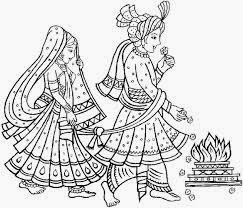
A Hindu marriage is treated as a sacrament and not a contract. For a Hindu marriage to have legal validity, it must mandatorily be registered under the Hindu Marriage Act. There are some other conditions that must be fulfilled for a Hindu marriage for being legally valid. If a marriage is not legally valid, or contravenes certain grave aspects of the law which are specified in the Act, the marriage is automatically null and void and annulment can be granted to it. There are also some marriages that are voidable at the option of either party to the marriage.

  1. The bridegroom must be at least 21 years of age, and the bride must have attained the age of 18 years. However, if the couple or either the boy or girl have not attained the minimum required age for marriage and yet get married, it is not void. The marriage is voidable at the option of either party.


  1. Another aspect of a valid marriage is that close family relations in the ‘uterine’ or consanguine lineage are said to be within degrees of prohibited relationship and the match should not fall within the prohibited degrees.

Under Hindu law, the ‘degrees of prohibited relationship’ refers to the proximity of the two individuals through their lineal ascendants and the law states that a match may not be made within those degrees.

Point of interest!

This provision has a scientific basis as it is known that the offspring’s physical and mental health may be affected by the proximity of the relationship. However, if the custom or usage of either party permits the relationship, it will not be treated as an invalid marriage.


–> Example: Akash and Mira are consenting adults who decide to get married. They have a simple ceremony and get registered at the Marriage Registrar’s office. However, it is found that through a long-lost relative, Mira and Akash were previously related as 4th cousins. (They shared a set of great-great-great grandparents) Their marriage will not be valid under the Hindu Marriage Act.

  1. It is important that neither party has a spouse living at the time of marriage, as bigamy and polygamy are prohibited and are treated as offences under Indian criminal law.


  1. Also, it is necessary that both parties be of sound mind and capable of giving consent, and they should not be unfit for marriage and procreation of children. The law adds that neither party should be subject to recurrent attacks of insanity and epilepsy.

The law provides that any marriage that violates these conditions is voidable and may be nullified at the desire of the affected party.

–> Example: Kishore and Neha were married in the summer of 1994. While they cohabited, Kishore observed that Neha displayed symptoms of mental illness, as sometime she spouted random words and also acquired a glazed look in her eyes. He realized that her insanity resulted in a voidable marriage and took another wife.

He has not committed bigamy. An annulment is a retroactive provision. A nullified marriage is considered never to have existed at all. It, unlike divorce, declares the marriage void ab initio. 

There are two events that confirm the completion of the marriage, one is the solemnization of the marriage that takes place during the customary rites and ceremonies practiced by the parties and the other is the registration of the marriage.

Till recently it was not mandatory to register marriages, but the plight of deserted women seeking maintenance and custody of their children, without proof of a valid marriage, prompted the Supreme Court to direct the Centre and states to amend the legislations accordingly. Prevention of child marriage, bigamy and ease of litigation are other positive outcomes from the registration of marriage.

Where rituals include the Saptapadi (seven steps by the bridegroom and the bride jointly before the sacred fire), the marriage is said to be solemnized once the seventh step is taken.


Laws Governing Matrimonial Disputes

The disputes that take place between the married couple, relating to issues that arise out of the practices and customs of marriage, are known as matrimonial disputes. These issues include withdrawal from the other’s society without reasonable cause, mental illness at the time of marriage, desertion of the spouse for a continuous period of 2 years etc., which result in different remedies, such as restitution of conjugal rights, annulment or divorce.

There are many types of reliefs available to couples suffering from matrimonial problems, which include restitution of conjugal rights, judicial separation etc.

  1. Restitution of Conjugal Rights

If either spouse has, without reasonable cause, withdrawn from the society of the other, the aggrieved spouse can approach the court for restitution of conjugal rights. This enforces the rights that derive from the wedded state of the couple. The court would expect the explanation of the defence of ‘reasonable cause’ from the defendant.

  1. Annulment

When either spouse makes an application to nullify the marriage, certain grounds have to exist. It is a procedure by which a marriage is nullified in that it is declared to have never existed at all. It is usually difficult to prove and not many cases have granted annulment as a remedy. However, it covers a range of situations, such as:

  1. Either party was already married to someone at the time of marriage
  2. The parties are not Sapindas of each other
  3. The parties are not within the degrees of prohibited relationship
    1. Dissolution

Before the codification of Hindu marriage laws, the position on dissolution of marriages was very rigid and did not allow dissolution except under certain specified grounds. However, after independence, the law provided for a few grounds on which a marriage could be legally dissolved. The procedure for doing so is known as a divorce.

A case for Judicial Separation would look into grounds of a similar nature to that of a case for divorce. But legal separation only entails physical separation for some time and does not change the married status of the parties. This is not the case with a divorce, where if a couple gets divorced, and intend to get back together, they must remarry.

Divorce:

Divorce is the procedure for dissolution of the marriage. If a couple or one of the parties feels that their marriage is over for reasons of desertion, adultery, bigamy or others as specified in the Act, they may approach the court to grant them a divorce.

A divorce is a momentous proceeding and it results in many upheavals in the married life of the parties. Consequent to a divorce, there are other issues such as custody of the children and maintenance to the dependents, such as the wife and children.


Maintenance in Hindu Law

Maintenance is an ancillary relief – in that it does not arise independently, but will be granted along with and as a consequence of relief such as divorce, custody, redressal of domestic violence.

Under Hindu Law, the wife has an absolute right to claim maintenance from her husband. But she loses her right if she deviates from the path of chastity. Her right to maintenance is provided for in the Hindu Adoption and Maintenance Act, 1956.

In assessing the amount of maintenance, the court takes into account various factors like position and liabilities of the husband. It also judges whether the wife is justified in living apart from husband. What is ‘justifiable’ is determined by reasons spelt out in the Act.

Maintenance pendente lite (pending the suit) and even expenses of a matrimonial suit will be borne by either, husband or wife, if the other spouse has no independent income for his or her support. The same principle will govern payment of permanent maintenance.


The Parsi Marriage and Divorce Act, 1936 recognizes the right of the wife to maintenance-both alimony pendente lite and permanent alimony. The maximum amount that can be decreed by court as alimony during the time a matrimonial suit is pending in court, is one-fifth of the husband’s net income. In fixing the quantum as permanent maintenance, the court will determine what is just, bearing in mind the ability of husband to pay, own assets of wife and conduct of the parties. The order will remain in force as long as wife remains chaste and unmarried.

The Indian Divorce Act, 1869 inter alia governs maintenance rights of a Christian wife. The provisions are the same as those under the Parsi law and the same considerations are applied in granting maintenance, both alimony pendente lite and permanent maintenance.

Laws of Inheritance


The laws of inheritance are diverse and complicated. The rules of distribution of property in case a person dies without making a will are defined by every Law of succession. These rules provide for a class of persons and percentage of property that will be inherited by such persons. It must be remembered that it is preferable that one should make a will to ensure that one’s actual intension is manifested.

The Indian Succession Act, 1925, defines a Will as follows:
“A Will is the legal declaration of the intention of the testator, with respect to his property which he desires to be carried into effect after his death.”
Important postulates of a will are as follows:

The documents purporting to be a Will or a testament must be legal, i.e. in conformity with the law and must be executed by a person legally competent to make it and it must be signed and attested, as required by law.


  • The declaration should relate to disposition of the property of the person making the Will.
  • A will becomes enforceable only after the death of the testator. It gives absolutely no rights to the legatee (the person who inherits) until the death of the testator. It has no effect during the lifetime of the testator.
  • The testator can change his will, at any time prior to his death, in any manner he deems fit. The essence of every Will is that it is revocable during the lifetime of the testator.

Codicil

A Codicil is an instrument made in relation to a Will, which explains or alters or adds to the declarations made in the Will. For all legal and practical purposes, it is to be deemed a part of the Will.

It is generally used to make certain modifications to the Will while leaving the other parts intact. Such as, if the testator wishes to change the name of the Executor or wishes to include a few more beneficiaries without altering anything else, he may make a codicil. The Codicil must be reduced to writing and the written document must be signed by the Testator and attested by two Witnesses.


Will

A will or testament is a legal declaration expressing the wishes of a person, containing the names of one or more persons who are to manage his estate and provide for the transfer of his property after his death. The person who prepares such a will is known as the testator.

A Will is a very important legal document as it denotes the wishes of a person who cannot be consulted again. If there is no will, or the will is found not to be valid, the property will be divided and transferred as per the rules of intestate succession. The Will contains a nomination of a person as the ‘executor’ of the Will. This executor will have to follow the instructions given in the Will and distribute the property in it accordingly. When a Will is being written, correct procedure requires the presence of witnesses.

The person who carries out the wishes of the testator after his demise is known as the executor.

Is it possible for the executor also to receive property or will it be a conflict of interest?
The Executor may be named as a beneficiary in the Will, but it is not allowed for a beneficiary to also be a Witness to the Will.
Probate: A probate means a copy of the Will, certified under the seal of a competent Court. This seal of the Court gives power to the person who is named as the executor in the Will, to carry out the instructions written in the Will and distribute the property within. It is the official evidence of an executor’s authority.
Does every Will need a Probate?

After the death of the person concerned, a proceeding may be initiated in court to determine the validity of the will that the testator may have created, known as a probate proceeding, which will satisfy the legal requirements. In most cases, during probate, at least one witness is called upon to testify or sign a “proof of witness” affidavit. If the will is ruled invalid in probate, then inheritance will occur under the laws of intestacy as if a will were never drafted.


Provisions for a valid Will:

  • For executing the Will the person must be fully competent, as much as he should not be a minor and should not person of unsound mind.
  • The Will has to be in writing and has to state that the person executing the same is making it out of his own free will and in a sound disposing state of mind.
  • It has to be signed by the executor of the Will and has to be attested by two witnesses at least.
  • However under the provisions of law the Will is not requiring in writing no required to be signed or attesting.

The Will under law is not required to be compulsory registered.
What is the effect of grant of a probate?

A probate granted by a competent court is proof of the validity of the will, and the right of the executor named in the Will to represent the estate of the deceased.
However, it only establishes the legal character of the Will and the executor and in no way decides upon the manner of distribution of the property, and does not even determine whether the property referred to is in existence.

–> Example: Ramlalji created a Will in which he gave all his property to his wife. This Will was challenged by his brother in the Court, and he demanded a probate. The Probate was granted and the Will was declared valid. However, of the property he had willed, one of them did not belong to him. When this was again challenged by his brother, Ramlalji’s widow countered that the Will had been declared valid by the court, and the suit was barred by Res Judicata.


The suit is not barred by Res Judicata because the Probate only grants validity to the form of the Will, not the substance.


Hindu Law of Succession

The Law of succession determines the manner of distribution of a deceased person’s property, in the event that there is no Will or equivalent document that declares the intent of the owner of the said property.

The Hindu Succession Act, 1956 is law that was passed by the parliament of India in 1956 to amend and codify the law relating to intestate or unwilled succession, among Hindus. It is hailed for its consolidation of Hindu laws on succession into one Act. The Hindu woman’s limited estate is abolished by the Act. Any property, possessed by a Hindu female, is to be held by her absolute property and she is given full power to deal with it and dispose it of by will as she likes. The Act was amended in 2005 by Hindu Succession (Amendment) Act, 2005.

Who does it apply to?

The Hindu Succession Act applies to all those who practice the Hindu religion as well as those who fall under the term Hindu within the Indian Legal system, including Buddhists, Jains, and Sikhs. This law of succession provides for the method of distribution of property (known as devolution) in case the deceased passes away without leaving behind a Will.

Dying without leaving behind a will is known as dying intestate.


Chapter Two: Islamic Law

Islamic Law

family-law- muslim

Iddat or idda is a period during which a woman is forbidden from remarrying. It amounts to a period of 3 menstrual cycles of the woman after divorce or dissolution of the marriage. After the death of the husband, it is a period of 4 cycles and ten days. The rationale behind this concept is to avoid confusion regarding paternity of any offspring the woman may have.

If the woman is found to be pregnant at the time of dissolution of the marriage or during her husband’s death, the period of iddat continues until she gives birth to the child.

Marriage

Nikah is an Arabic term which means ‘contract’ and is used to refer to marriage. So, for the marriage to be valid, both parties must be competent to enter into this contract and there must be an offer by one party, and an acceptance by the other, in the same sitting. The presence of witnesses is also required to make the marriage valid, and it may constitute two male witnesses, or one male and two female witnesses.

Similar to the Hindu codified concept of valid and void marriages, there are Sahih (valid), Batil (void) marriages. However, the concept of Fasid or irregular marriage in Muslim law is not like the concept of voidable marriage in Hindu law.

A marriage performed between two consenting adults who have fulfilled all the legal requirements with all the necessary formalities is a valid marriage.

Sahih: Once a valid marriage is conducted, certain legal consequences in the form of rights and duties flow from the relationship, such as, the legality of sexual intercourse, legitimacy of the children, and mutual rights of inheritance for both parties. The marriage also subjects the wife to the husband’s power of restraint of movement and public appearance.

Batil: When a marriage is performed without any regard to the rules laid down for a valid marriage, and is in violation of all the legal requirements, it is a void marriage. A void marriage is no marriage and no legal consequences such as rights or duties flow from it. Void marriages include those between people within prohibited degrees of relationship, or the second marriage of a married Muslim woman.

–> Example: Aisha married her second cousin, who is within the prohibited degrees of relationship, for the purpose of getting an American visa. A year later she married Jamal. This is not a void marriage as the first marriage was never validated. Her marriage to her second cousin was void ab initio and therefore did not render her marriage to Jamal void.


Fasid: A voidable marriage under Hindu law is valid until it is annulled, and no third person can take a stand regarding the matter. However, an irregular marriage under Muslim law is ineffective until the time of consummation.

The marriage may be terminated at any time, either before or even after consummation, by either party expressing the intention to do so.

But if it is terminated after consummation, the wife is entitled to dower and will be required to observe iddat.


Dower or Mehr: Mehr is conceptually understood as consideration for marriage. It is generally a sum of money or any other property that the bride or the bride’s guardian receives as consideration for the marriage.

Dower is an integral part of the marriage, and is not the same as dowry. In fact, the Dowry Prohibition Act explicitly prohibits mehr from the definition of dowry.


Dissolution of Muslim Marriages: 

A Muslim husband may divorce his wife by ending the marriage without giving any reason. He can pronounce the words ’talaaq’ three times which signify his intention to disown his wife. But he may also divorce by Ila, and Zihar which differ from talaaq only in form, not in substance.


Before 1939, a wife could not divorce her husband of her own accord. She could divorce him only if the husband had agreed to give her the right or on the grounds of false charges of adultery, insanity or impotency of the husband. But the Dissolution of Muslim Marriages Act 1939 lays down several other grounds on the basis of which a Muslim wife may get her divorce decree passed by the order of the court.


There are two categories of divorce under the Muslim law:

1) Extra judicial divorce, and

2) Judicial divorce


Point of Interest!

There is a unique feature to the dissolution of Muslim marriages. Despite the legislations that have been passed that have modified and reformed Islamic law, the arbitrary extra-judicial power of the husband to divorce his wife by pronouncing talaq three times still remains.


The pronouncement of talaaq gives a definitive end to the marriage and the couple is essentially divorced. But there also exist forms of repudiation of the marriage that amount to ‘constructive divorce’. A constructive divorce is one where the fact of repudiation is not specifically stated, but the husband takes an oath not to cohabit with his wife and does not do so for a period of 4 months, the marriage is understood to be dissolved. This practice is known as Ila. However, after the 4 months, if the couple cohabits, then the marriage is not considered dissolved.


There is another form of ‘constructive divorce’ known as Zihar, where the husband expresses his dissatisfaction with his wife by comparing her with anyone within the prohibited degrees of relationship, such as his mother or his sister. This comparison must be made in the light of the relationship they share.

The wife acquires a right to refuse cohabitation with her husband in such a case, and if the husband does not undertake a penance to reconcile with her, she can seek judicial divorce on those grounds.

–> Example: Javed was helping his wife Ada in the kitchen one day, and he remarked that she ought to learn how to make firni from his sister, as she had a very good recipe for it. Ada immediately took offence as she considered it to be Zihar and refused to cohabit with him. However, this does not amount to Zihar as he did not make the remark in the context of forbidding his wife to himself.

–> Example: Abbas learnt that his wife had stopped wearing the traditional headdress in public and had begun to dress provocatively. To teach her a lesson, he compared her to his mother and said she was as forbidden to him as his mother was. This is adequate to construe Zihar.


Before 1939, a wife could not divorce her husband of her own accord. She could divorce him only if the husband had agreed to give her the right or on the grounds of false charges of adultery, insanity or impotency of the husband. But the Dissolution of Muslim Marriages Act 1939 lays down several other grounds on the basis of which a Muslim wife may get her divorce decree passed by the order of the court.


Polygamy: Another unique feature of Islamic personal law is that a Muslim man is allowed to take up to 4 lawful wives and cohabit with them on condition that the previous wife / wives does not have an objection and can continue to live in the same house.

With regard to maintenance, a woman who refuses to cohabit with her husband for reasons of bigamy or polygamy is not entitled to maintenance.

If the divorce is initiated by husband he has to pay the woman any Mehr that remains unpaid. If the divorce is initiated by the wife, and the husband is found to be at fault by the arbiters she does not lose her Mehr. But if she cannot prove his fault, she has to return to her husband whatever Mehr amount she has already received. If the wife initiates the divorce without any grounds, this is called ‘khula’ and she must return whatever the husband has given her in consideration for the marriage.

There is no concept of ancestral property or rights by birth in Islamic law.

Muslim law recognises that persons may leave behind a will, but a will (unless ratified by all the heirs of the person leaving behind the will) is valid only to the extent of one-third of the deceased’s property. Insofar as it is valid, it is governed by the regular laws applicable to wills in India.

A Muslim wife cannot be dispossessed, even though she has to share with other wives if there is more than one wife. The widow gets a definite share. The male heirs, the sons, get twice the share of the daughters.

Residuaries: The residuaries are the final group of people who are entitled to the estate, if any, left after the sharers have received their respective shares. Of course, this is only a broad rule and there are several just and equitable exceptions to this rule.

Failing any Sharers or Residuaries, the next level of relations who would succeed to the estate of a deceased Muslim male or female, are a class of persons known as Distant Kindred.


Special Marriage Act


Although marriage is seen as a deeply religious and ceremonious affair by many, some prefer to get married in a way that is not governed by the religion-based laws. This is especially the case with inter-caste or inter-religious marriages as it is more convenient to retain one’s religion and marry legally than convert for the sake of a legally valid marriage under the religion-based acts. Under the Special Marriage Act, marriage is treated as a civil contract.

The main reason behind passing the Special Marriage Act, 1954 was to provide a special form of marriage for the people of India and all Indian nationals in foreign countries, irrespective of the religion or faith followed by either party.

Also, it does not entail any religious ceremonies or rituals but requires the registration of marriages and lays down the grounds for divorce.

Who can marry under this Act?

The principle aspect of marriage under this Act is that it is performed irrespective of caste or religion and provides for inter-caste marriages and extends to prospective NRI spouses as well.

What are the requirements for a valid marriage under the Special Marriage Act, 1954?

The boy and the girl need to give a written notice in a specific form that is available with the Marriage Registrar.

A notice is also to be sent to the district of residence of either of the parties by the marriage officer. The marriage performed under the Special Marriage Act, 1954 is a civil contract and accordingly, there are no rites or ceremonial requirements.
The solemnization may take place at the Marriage Office. The marriage is not binding on the parties unless each party states “I, (A), take thee (B), to be my lawful wife (or husband),” in the presence of the Marriage Officer and three witnesses.

What are the conditions for marriage under the Special Marriage Act, 1954?

  1. Each party involved should have no other subsisting valid marriage. In other words, each party should be monogamous.
  2. The bride groom must be 21 years of age; the bride must be 18 years of age.
  3. The parties should be competent in regards to their mental capacity to the extent that they are able to give valid consent for the marriage.
  4. The parties should not fall within the degree of prohibited relationship

Uniform Civil Code

Uniform civil code of India is a term referring to the concept of an overarching Civil Law Code in India. A uniform civil code administers the same set of secular civil laws to govern all people irrespective of their religion, caste and tribe. This supersedes the right of citizens to be governed under different personal laws based on their religion or caste or tribe. Such codes are in place in most modern nations.

The common areas covered by a civil code include laws related to acquisition and administration of property, marriage, divorce and adoption.

This term is used in India where the Constitution of India attempts to set out a uniform civil code for its citizens as a Directive Principle, or a goal to be achieved.

There has been a long-drawn debate in India over formulating and applying a Uniform Civil Code irrespective of religious leanings. But presently in India, issues under personal law such as adoption, maintenance, divorce etc. are governed by codes drawn from interpretations of religious texts.
Family Courts Act: For speedy disposal of disputes concerning family matters, the Parliament enacted the Family Court Act, 1984. The object of the act is to establish special family courts by state governments in every city or town with a population exceeding 1 million. One of the important aspect of the act is that it is a social and beneficent legislation. It was enacted with a view to amicably settle family disputes, with stress on conciliation and peaceful settlement of disputes.


Chapter Two: Other Family Laws


Dowry Prohibition Law

Dowry is a social malaise plaguing Indian society. In 2001 alone, there were seven thousand deaths of young women that were linked to their husbands or to members of his family. Experts on domestic violence have claimed that the actual number may even be higher. Such homicides have been tied to resentment over a dowry that is considered too stingy. In other cases, the husband’s family demands more goods after the wedding.

The demand of Dowry has been a highly prevalent practice in India, especially among the Hindus in North India. Dowry is a kind of valuable property that is given by the bride’s father to the groom upon marriage. With the Dowry Prohibition law in place, the number of dowry related incidents have decreased, but still occur in some parts of India.

The law criminalises anyone who gives or takes or abets the dowry transaction and prescribes a stringent punishment to those indulging in the practice.

Since the passage of this law, women have become more empowered and are encouraged to report any demand that the groom or his relatives may make for dowry.

Section 304B of the Indian Penal Code inserted a definition for ‘dowry death’ describing it as: the death of a woman caused by any burns or bodily injury or which does not occur under normal circumstances within seven years of her marriage.

For a woman’s death to be a dowry death, it must also be shown that soon before her death she was subjected to cruelty or harassment by her husband or any relative of her husband for, or in connection with, any demand for dowry. If this is proved, the woman’s husband or relative is presumed to have caused her death.

Whoever commits dowry death is required to be punished with imprisonment for a term which shall not be less than seven years but which may extend to imprisonment for life.
–> Example: Nonita was being harassed by her husband and in-laws for a high-end car and some appliances as dowry payment. She routinely suffered verbal abuse and beatings, but she did not reveal anything to anyone about the harassment. One day, a year after the marriage, she succumbed mysteriously to burns. It will be difficult to prove that she was subjected to harassment and died a dowry death.


–> Example: In 2003, Nisha Sharma cancelled her own wedding just before it was set to take place to Munish Dalal. His family allegedly demanded $25,000 at the wedding, and her father said he did not have that kind of money. The Dalals began to hurl abuses and quarrel with the Sharmas. Nisha called the police, and her father filed a complaint against the groom and his parents for demanding a dowry.


Domestic Violence Law

Countless women face abuse and cruelty at home at the hands of their spouses, physically, mentally and economically. Till the year 2005, remedies available to a victim of domestic violence in the civil courts (divorce) and criminal courts (in case of adultery) were limited. There were many shortcomings with the remedies that then existed:

(a) There was no emergency relief available to the victim;

(b) The remedies that were available were linked to matrimonial proceedings;

(c) The court proceedings were usually protracted, during which period the victim was invariably at the mercy of the abuser.

A law was passed in 2005 which sought to protect women from the violence they faced in their own homes. It was the first significant attempt in India to recognise domestic abuse as a punishable offence, to extend its provisions to those in live-in relationships, and to provide for emergency relief for the victims, in addition to legal recourse.

The law provides that if an abused woman requires, she has to be provided alternate accommodation and in such situations, the accommodation and her maintenance has to be paid for by her husband or partner.

The law, significantly, recognises the need of the abused woman for emergency relief, which will have to be provided by the husband. A woman cannot be stopped from making a complaint/application alleging domestic violence.

A woman who is the victim of domestic violence will have the right to the services of the police, shelter homes and medical establishments.

An injunction is a relief given by the Court to either party which is not the final relief and it does not bring the case to a conclusion. It includes relief such as custody and maintenance while the suit is pending.

She also has the right to simultaneously file her own complaint under Section 498A of the Indian Penal Code.

Section 498A of the Indian Penal Code says discusses cruelty being inflicted on a woman by her husband, and prescribes a punishment for the same.

In practice, cruelty is taken to include the demanding of a dowry. This section is non-bailable, non-compoundable (i.e. it cannot be privately resolved between the parties concerned) and cognizable (i.e. the police can arrest the accused without investigation or warrants) on a report from a woman or close relative.


–> Example: Ayesha Siddiqui is an educated housewife who got married a year ago. Her husband accused her of having an affair and the verbal anger turned into beatings. She filed a case under the Domestic Violence Act and got custody of her daughter and maintenance for herself and her daughter.


Point to be noted, milord!

This Act is solely intended for the protection of women from harassment and domestic violence. It automatically means that it is a powerful instrument to wield against a man, whether he is guilty or not. Any such complaint registered by a woman will be presumed to be genuine and it will be up to the man to prove that he has not harassed her. This may itself be a kind of malicious mental harassment for the man.


Adoption and Guardianship

When a couple or a parent adopts a child, they are undertaking to provide for it as they would their biological child. In a practical sense, this includes feeding and educating them, being responsible for them and being their legal guardian. Thus, there are laws that attempt to ensure that the child is secure, and is in good hands.

Even the laws concerning adoption of children are governed by the religion of the adopting parents. The Hindus – including the Sikhs, Jains etc. – need to comply with the provisions of the Adoption and Maintenance Act. This law prescribes the rules regarding adoption of children, such as who can adopt, the gender of the child etc.

The main feature of this Act is that any Hindu (who has attained majority, male or female, and is of sound mind) can adopt a child provided that the following conditions are met:
– If the person already has a biological or adopted child, the second (adopted) child cannot be of the same sex.

–> Example: Balu and Shalini lost their 6 year old biological daughter in a motor accident. They are free to adopt a child of either sex.
– The age difference between parent and adopted child (specifically, between adoptive father and adopted daughter, and adoptive mother and adoptive son) must be minimum 21 years. This is to prevent sexual abuse of the child by the adoptive parent(s).


Till recently, Muslims, Christians and Parsis had no adoption laws and had to approach the court only under the Guardians and Wards Act, 1890. The people professing those religions could take a child under the said Act only under foster care. Once a child under foster care becomes a major, he is free to break away all his connections. Besides, such a child does not have legal right of inheritance.

However, since 2000, the Juvenile Justice Act has provided for a means to process adoption petitions by non-Hindus.


Majority and Minority

Until a person has completed 18 years of age, he is a minor.
A ‘Major’ is a person having the care of the person of a minor or of his property or of both his person and property, and includes –

  • A natural guardian,
  • A guardian appointed by the will of the minor’s father or mother,

(iii) A guardian appointed or declared by a court, and

(iv) A person empowered to act as such by or under any enactment relating to any court of wards
–> Example: A person may be appointed by the court as a special guardian, having limited powers over the interests of the ward. A special guardian may, for example, be given the legal right to determine the disposition of the ward’s property without being given any authority over the ward’s person.

–> Example: Angad’s father passed away and appointed his younger brother as Angad’s guardian in his Will. The first person responsible for Angad’s care will be his mother, after which it shall be Angad’s father’s brother, as appointed by the Will.


Natural Guardians

A “Natural guardian” forms one of the categories which make up the definition of a major. The natural guardians of a child are his father and mother. However, there are a few nuances to this as well.

Until a person has reached 18 years of age he is a minor, the law provides for legal guardians who will look after his legal responsibilities and rights. Guardianship is a responsibility and this is an important consideration during numerous official procedures. Under the Hindu Minority and Guardianship Act (HMGA) different categories of people are responsible for minors essaying different roles in life.

For a son and an unmarried daughter, the father is the first Natural Guardian, after which it is the mother – provided that the custody of the child for the first five years of the child’s life will be with the mother. Conversely, for an illegitimate son or an unmarried illegitimate daughter, the mother is the first Natural Guardian, after which it is the father.

As to the exception evident from both the cases, in case of a married girl, her husband is her Natural Guardian.


Maintenance Under Muslim Laws

Islamic law did not have a provision that ensured the care and assistance of divorced Muslim women beyond the ‘idda’ period, calculated as 3 menstrual cycles.

Shah Bano, a divorced Muslim woman who had no means to support herself and her children, approached the courts for securing maintenance from her husband. Muslim Personal law did not contain the provisions to help her get maintenance. When the case reached the Supreme Court of India, seven years had elapsed.

The Supreme Court invoked Section 125 of Code of Criminal Procedure, which applies to everyone regardless of caste, creed, or religion.

Section 125 of the Criminal Procedure Code

The Supreme Court ruled that Shah Bano be given maintenance money, similar to alimony.

In 1986, the Parliament passed The Muslim Women (Protection of Rights on Divorce), Act 1986 that nullified the Supreme Court’s judgment in the Shah Bano case and instead, upheld the Muslim Personal Law although the law was gender-biased and regressive.


Point of Interest!

The political strife that was caused in India as a result of this judgement was evident in the speed with which the Government played vote bank politics. It forced the Parliament to amend the law to accommodate the interests of the Muslims who wanted to retain the strict, gender-biased rules on maintenance.


How did the Act nullify the Supreme Court’s judgment?

The Act basically mandated that every application for maintenance by a divorced woman under the Code of Criminal Procedure, which applies the maintenance law in a secular fashion, be disposed of in accordance with the provisions listed out.

According to the stated objects of the Act, where a Muslim divorced woman is unable to maintain herself after the period of idda, the Magistrate is empowered to make an order for the payment of maintenance by her relatives who would be entitled to inherit her property on her death according to Muslim Law.

Where a divorced woman has no relatives or such relatives, and does not have enough means to pay the maintenance the magistrate would order the State Waqf Board to pay the maintenance. The ‘liability’ of husband to pay the maintenance was thus restricted to the period of the iddat only.

The Act says that divorced woman is entitled to have a reasonable and fair provision and maintenance from her former husband, and the husband must do so within the period of iddat and his obligation is not confined to the period of iddat.
The Act further provides that a woman, if not granted maintenance can approach the Wakf board for grant that if she fails to get maintenance from her husband, she can claim it from relatives failing which, she can claim it from the Waqf Board.

All obligations of maintenance however end with her remarriage and no claims for maintenance can be entertained afterwards. The Act thus secures to a divorced Muslim woman sufficient means of livelihood so that she is not out on the streets without a roof over her head and without any means of sustaining herself.

–> Example: Salima is divorced from her husband Rizwan and has a 1 year old son; she remarries to Majid after the iddat period. However, the marriage is annulled due to irregularities. Even so, Salima cannot go back to receiving maintenance from Rizwan as the period of iddat is over, and she can receive maintenance only during that period.

–> Example: Mehrunissa applied to the Court for maintenance from her husband, and claimed a lump sum that she would need over a few years. She stated that the husband was obligated to pay during the period of idda, but that the maintenance amount could be claimed to cover any duration as long as it was fair and reasonable.


Protection to Divorced Women

Sub-section (1) of Section 3 lays down that a divorced Muslim woman is entitled to:

(a) A reasonable and fair provision and maintenance to be made and paid to her within the iddat period by her former husband;

–> Example: Shazeen is divorced from Mustafa, with a 7 year old son who has speech and hearing difficulties. She claims that she needs enough maintenance to take care of her son until he turns 25, as he needs that much time to be self-sufficient. This may be deemed a fair and reasonable request justification for maintenance.

(b) Where she herself maintains children born to her before or after her divorce, a reasonable and fair provision and maintenance to be made and paid by her former husband for a period of two years from the respective dates of birth of such children;

(c) An amount equal to the sum of mehr or dower agreed to be paid to her at the time of her marriage or at any time thereafter according to the Muslim Law and

(d) All property given to her before or at the time of marriage or after her marriage by her relatives or friends or by husband or any relatives of the husband or his friends.

In addition, the Act also provides that where a divorced Muslim woman is unable to maintain herself after the period of iddat the magistrate can direct her prospective heirs according to Muslim Law, to pay her a reasonable and fair maintenance, on the basis of her needs, her standard of living and how much her prospective heirs are likely to inherit from her.


If she has children, the Magistrate may direct them to maintain her. If they are unable to pay such maintenance, the magistrate can order her parents to pay maintenance to her.

In the absence of all these avenues, the magistrate may direct State Wakf Board functioning in the area in which the woman resides, to pay such maintenance as determined by him.


Point of Interest!

The Supreme Court ruled in the recent Danial Latifi v. Union of India case that the provision in question is Section 3(1)(a) of the Muslim Women (Protection of Rights on Divorce) Act, 1986 which states that “a reasonable and fair provision and maintenance to be made and paid to her within the iddat period by her former husband”. The Court held this provision means that maintenance is not limited for the iddat period but must be paid within that period.

Exercises

Legal Reasoning:

  1. Principle: A divorced woman or a widow cannot remarry during the period of idda/iddat that amounts to 3 months after divorce and 4 months and 10 days after the death of her husband. This is done to ascertain paternity of any child the woman may be carrying.

A Muslim woman was pregnant with a child when her husband passed away in an accident. She remarried during the period of iddat, and it was largely condemned as a void marriage. However, her child was miscarried, doing away with the need to ascertain paternity. Is the marriage valid?

(a) No, the validity of the marriage does not get affected by the status of the woman’s pregnancy.

(b) Yes, the logic behind which the concept has been propounded is no longer called for. Thus the marriage is valid.

(c) The marriage is not valid as she was pregnant when her first husband died.

(d) None of the above.

Ans: (a)

The Muslim Sharia law says that the woman should not remarry during the period of iddat, whether the reason behind the concept applies or not. Therefore, any marriage that has taken place during that period will be void.

  1. Principle: In certain unusual situations, the wife has the means to dissolve the marriage unilaterally. One of them is called the “option of puberty”. This is where the girl is married before puberty. When she reaches puberty, she has the right to accept or reject the marriage.

Hussein and Aaliya were both 13 when they were married, and neither of them had hit puberty. Aaliya reached puberty before Hussein and wanted to continue with the marriage. However, when Hussein reached puberty, he wanted to change his decision. Is it possible for him to do so?

(a) Yes, it is possible for him to do so, since the ‘option of puberty’ exists for those who have not yet reached puberty.

(b) No, it is not possible for him to do so, since the right is available only to women.

(c) No, it is not possible and he has to wait until he reaches the age of 21 before he can exercise his right of divorce.

(d) Yes, it is possible for him because Aaliya did not want to exercise that option but he did.

Ans: (b)

As the principle states, this is a right that is available to women unilaterally. Thus, the ‘option of puberty’ can be exercised only by women.

  1. Principle: A Will has to be signed by at least 2 witnesses. The beneficiary to the Will cannot be a witness.

Dhanpat Lal was on his deathbed and wanted to give his wealth and property to his family. He wrote out a Will, and it was signed by 2 witnesses. However, one of the witnesses was also a beneficiary to the Will. Is this a valid Will?

(a) The validity of the Will is not affected as one witness who is not a beneficiary has signed the Will.

(b) The Will will be brought before the Court for scrutiny into whether it can be given validity.

(c) Since a Will needs at least 2 (proper) Witnesses, it will result in invalidity of the Will itself.

(d) The Will is an instrument dictating a person’s desires, and so the technicalities will be overlooked.

Ans: (c)

It may be possible to take the Will to court and try to get a probate on it.  However, on the face of it, the understanding is that the Will cannot be considered valid.

  1. Principle: The Dowry Prohibition Act 1961 does not bar traditional giving of presents at or about the time of wedding, in the form of Stridhan. Thus such presents or dowry given by the parents is therefore not at all within the definition of the statute.

Anusha was getting married to Uday, and her father was showering her with presents and gifts. She did not want him to spend so much, so she began to refuse the numerous, opulent gifts she was receiving. Her mother-in-law persuaded her to accept saying that it would not be good to refuse. Is this Stridhan or Dowry?

(a) The Dowry Prohibition Act prohibits the giving, taking or abetment of dowry. Therefore, all 3 people are guilty.

(b) The gifts received from her father only amounted to a few expensive gifts. Thus, it was not Stridhan or Dowry.

(c) The gifts were given to the bride by her father as the separate property. Therefore it was not property.

(d) None of the above.

Ans: (c)

Thus, a woman’s property which she receives as a gift from her father and which is not an extension of gifts from the bride’s father to the groom’s father or the groom is called Stridhan and is not dowry.

  1. Principle: Under Hindu law of succession, if it is found that the Will is invalid or that the beneficiaries no longer exist, then the deceased’s property can be devolved according to intestate succession.

Once, the testator to a Will and all the beneficiaries passed away in a freak accident. One of the remaining family members suggested that they look for the Will of the beneficiaries to get a clue as to the devolution of property. Advice.

(a) The property is counted as residuary property and it goes to the State.

(b) The status of the property may be deduced by going through the Wills of the beneficiaries.

(c) The property devolves according to the law of intestate succession.
(d) None of the above.

Ans: (c)

On a simple application of the given principle, the answer may be arrived at. The premise of the laws of intestate succession is that it governs the situations where there is no Will or the Will is invalid or the beneficiaries to the Will no longer exist.

Logical Reasoning

  1. On what grounds may Muslim women be refused maintenance under Islamic law?

(a) For refusing to cohabit with her husband after he marries again.

(b) If the wife initiates the divorce or dissolution of marriage

(c) If she cannot prove that she has been a victim of cruelty.

Ans: (a)

If she can prove that she was not treated well after his subsequent marriage, she can still obtain maintenance.

  1. Which of the following does a victim of domestic violence have a right to under the Act?

(a) Right to free legal aid

(b) Maintenance for herself (and for her children)

(c) Separate accommodation away from her husband

(d) Security services on hire from the State

Ans: (b) and (c) are the rights that a woman suffering from domestic violence may get under the Act.

  1. Assertion and Reasoning:

Assertion: In most marriage laws, people cannot marry if they are within the prohibited degrees of relationship.

Reasoning: The scientific reason behind this is that inter-breeding within the gene pool will affect the offspring.

(a)

Ans:

The law has been put in place following a scientific analysis conducted by the scientists of yore. It is therefore, a clear nexus between the prohibition of marriage between closely related degrees and the law.

  1. Follow the progression:

The Hindu Marriage Act is applicable to Hindus, Sikhs, Buddhists and Jains.

The Muslim marriages follow the Sharia law.

Therefore,

(a) It must be that only marriages where the 2 parties are from different religions marry under the Special Marriage Act.

(b) It can be that any marriage regardless of the religions of the parties may be conducted under the Special Marriage Act.

Ans: (b)

The Special Marriage Act is an Act that does not require that the parties be of different religions who cannot marry under ecclesiastical law. The marriage can also be of two individuals who do not want to involve their religion in their marriage.

  1. A codicil is part of a Will.

A probate is issued by the Court upon a Will.

Thus, can a probate be issued on a Codicil?

Ans: Yes. Since the Codicil is a part of the Will but is separate from the Will, it may require its own validation. In which case, a probate may be granted on it.


Download Now

How Do Environmental Laws Affect Us?

0
Impact of Environmental Law on Corporate Governance

Environment


Why Do We Need Environmental Laws?

The Environment that surrounds us is the only source of our sustenance. We survive if the environment around us survives. The natural tendency of man in his relationship with nature is to take without giving and destroy without replenishing. This is leading to many problems not only for other flora and fauna, but for our own well-being and that of our descendants. It is only upon our initiative and insistence that the rampant degradation of the environment can be slowed down. This is why we have laws that aim at environment protection.


Where Are These Laws In Our Legal System?

Our Constitution, the paramount parchment, contains sufficient mention of the need to protect and preserve the environment. In the Constitution of India, it is clearly stated that it is the duty of the state to ‘protect and improve the environment and to safeguard the forests and wildlife of the country’. It imposes a duty on every citizen ‘to protect and improve the natural environment including forests, lakes, rivers, and wildlife’.


Point to be noted, milord!

In Maneka Gandhi v. Union of India, the Supreme Court said in its obiter dicta that the right to a clean environment was part of the right to life and liberty under Art. 21 of the Constitution.


References to the environment have also been made in the Directive Principles of State Policy as well as in judicial interpretations to the Fundamental Rights guaranteed by our Constitution.

While Article 48-A says: “The State shall endeavour to protect & improve the environment and to safeguard the forests and wildlife of the country.” Article 51-A deals with the fundamental duties of the citizen. Article 51-A (g) states: “It shall be duty of every citizen of India to protect & improve the natural environment including forests, lakes, rivers and wildlife and to have compassion for living creatures.”


It is not just the Constitution of India which makes references to the need to protect and preserve the environment. There are specific laws and rules laid down that address important issues that raise public concern. We shall discuss a few of those laws below.

Although some Acts that regulate forest usage and air and water pollution were existent, the framework of current Indian environmental laws was created as a response to the Bhopal Gas Tragedy in 1984.

The Environment (Protection) Act, passed in 1986, was supposed to set up a legislative, regulatory, and administrative mechanism in India to ensure that environmental violations were redressed, and the principle of polluter’s pays and administrative oversight conducted to ensure that industrial accidents such as the Bhopal Gas Tragedy did not occur again.


The Bhopal Gas Tragedy

The Bhopal Gas Tragedy is the world’s worst industrial catastrophe. It occurred on the night of December 2-3, 1984 at the Union Carbide India Limited (UCIL) pesticide plant in Bhopal, Madhya Pradesh there was a leak of methyl isocyanate (MIC) gas and other substances from the plant, resulting in the exposure of several thousands of people.

The government of Madhya Pradesh has confirmed a total of 3,787 deaths related to the gas leak. But other reports rack up an even greater number of unofficial deaths. The effects of the gas can be seen in the families even now, generations after the incident, in the form of genetic mutations and physical and mental disabilities.

Due to the poor environmental laws and the sad state of enforcement of the laws that existed, the victims of Bhopal are still seeking justice and the perpetrators of the crime have been let off with nominal punishment and in some cases, none at all.


Point of Interest!

In 2009, on the 25th Anniversary of the Bhopal Gas Tragedy, the question of trying Warren Anderson, the CEO of Union Carbide came up again. The media also shed light on the politicians who played a part in handling the situation at the time.

India has made a fresh request to the United States of America to extradite and try Warren Anderson who is living in hiding away from the clutches of the law.


Environment Protection Act

So, in a belated response to the disaster, the Environment (Protection) Act, passed in 1986, and the subsequent subsidiary acts and legislations were supposed to set up a legislative, regulatory, and administrative mechanism in India to ensure that environmental violations were redressed.

The Act ensures that its provisions and rules override any other law and it also gives the Central Government vast power to make rules under this Act. The Act endeavours to regulate pollution of the environment. To that end, it censures the emission or discharge of environmental pollutants in excess of the prescribed standards.

The Hazardous Waste Management Rules were notified under the Environment Protection Act, and they seek to regulate the manner of waste disposal and management to prevent pollution and contamination of the environment and of vital resources.

The Rules regulate a wide range of activities, by providing a list of hazardous items that are banned from import and export, and by also providing for registration of recycling equipment for environmentally hazardous material.


India is a Party to the Basel Convention on Hazardous Wastes. The basic objectives of the Basel Convention are for the control and reduction of transboundary movements of hazardous and other wastes subject to the Convention, prevention and minimization of their generation, and for active promotion of the transfer and use of cleaner technologies.


The objective of Environmental protection is not merely to preserve the attributes of the environment for future use. There is a distinct necessity to preserve and protect the environment for its own sake. We seek to protect it through a few other laws.


environment1

  1. Importance of Forest and Wildlife

Conservation of Forests

  • The Forest Conservation Act 1980 was enacted to help conserve the country’s forests. It strictly restricts and regulates the de-reservation of forests or use of forest land for non-forest purposes without the prior approval of Central Government.

In this Act, non-forest purposes includes tea or coffee plantations, forest clearing and excludes those such as that of reforestation or conservation.

  • The Indian Forest Act, 1927 consolidates the law relating to forests, the transit of forest-produce and the duty that may be levied on timber and other forest-produce.


  1. Biodiversity

The Wildlife Protection Act provides for the protection of wild animals, birds and plants, but gives varying degrees of protection to different categories listed under 6 schedules. The protection is given from destructive and exploitative activities such as hunting, taxidermy and collecting parts of the animal or bird as a token or ‘trophy’.

Schedule I and part II of Schedule II provide absolute protection -offences under these are prescribed the highest penalties. Species listed in Schedule IV are also protected, but the penalties are much lower.


III. Air and Water Pollution

For reasons of preventing air and water pollution, there exist the Air Act and the Water Act respectively, which contain similar provisions for rights and remedies.

The Acts prescribe the different regulatory authorisations required for different industries, and also seek to levy a cess. A cess is a kind of tax that is levied for a particular purpose.


Energy

Energy and the resources it is derived from have become a matter of serious concern with the growing awareness of climate change.

The primary goal is to replace non-renewable sources of energy with renewable sources and reduce our consumption to an extent where the reserves may be sustained for future generations. The nature of this aim for sustainable development is that it is less a goal to be reached, than one to be sustained.


The current Minister for Environment and Forests (MoEF), Mr. Jairam Ramesh has announced that India will source 20% of its energy consumption from renewable resources.


Mining

The problems that many have faced with the existent mining laws and regulations is that companies that obtain the right to mine do not fulfil the duties that come along with the right, such as the duty to rehabilitate those displaced due to the mining activities.

The draft Mines and Minerals (Development and Regulation) Bill, 2010, which proposes to replace the law that has existed since 1957, has many welcome and much-needed features to check the scourge of illegal mining, ensure that the industry is less destructive of the environment, and it includes all stakeholders in the profits produced.

It also proposes that a quarter of the net profits of the company go to those displaced by the mining, the land losers. The draft Act also lays emphasis on sustainable development. Among various provisions to enforce the principles of sustainable development and conservation of minerals, it provides for restoration of mining land to cultivability on closure of a mine.

Chapter Two: Environmental Rights

Remedies from the Courts

Even if there are no laws that provide for a particular grievance or do not address a particular concern, there are many ways to get a remedy from the Courts provided the cause of action is genuine and legitimate.

Now we shall discuss these various remedies and some of the cases that have incepted or implemented these instruments of justice.


Civil, Criminal and Constitutional Remedies

The polluter pays principle is based on equity, and it basically amounts to stating that whoever pollutes, or does any activity that would result in the pollution of the environment, must bear the costs of preventing or remedying that pollution.


This measure is actually based on a principle in economics known as the Coase theorem (after Ronald Coase) which discusses the importance of calculating the environmental costs of a venture and factoring it into the total expenditure, a method known as internalizing costs. Some enterprises seek to externalize costs and put the burden on society as a whole, thereby increasing social costs.


The polluter pays principle as interpreted by the court means that the absolute liability for harm to the environment extends not only to compensate the victims of pollution but also the cost of restoring the environmental degradation. Thus, the polluter is liable to pay the cost to the individual sufferers as well as the cost of reversing the damaged ecology.

–> Example: Hazar Dus is a company manufacturing toxic chemicals, and the factories release a lot of waste into the air and soil. Due to this, many health problems arise in the nearby village and the soil is rendered unfit for cultivation. Hazar Dus is liable to compensate the villagers for their health problems and for undertaking to make the soil fit for cultivation again.

Precautionary Principle

The precautionary principle states that: If an action or policy is suspected to cause harm to the public or to the environment, in the absence of scientific consensus that the action or policy is harmful, the burden of proof that it is not harmful falls on those taking the action.

This means that the person who wants to undertake the action has the responsibility to take all the precautions and verify whether the action will damage the environment.

–> Example: In a situation where an industrial company wants to undertake some infrastructural work by clearing forest land, we do not know what the impact of the move would be on the ecology and environment of the region. At those times, the burden is on the company to find out whether their actions cause harm and if not, to prove that they do not.


One of the important steps undertaken in order to comply with the requirements of the precautionary principle, is to get an environmental impact assessment done and obtain a no-objection certificate.


Environmental Impact Assessment: An EIA may be defined as a formal process to predict the environmental consequences of human development activities and to plan appropriate measures to eliminate or reduce adverse effects and to augment positive effects.


The EIA law was passed in 1994, which required that any project which may result in damage to the environment or pollution must seek for an impact assessment to be conducted by the Agency. This assessment is to be made in consultation with experts and the report is to be made publicly available before the Public Hearing.


Point of Interest!

National Green Tribunal Act, 2010


A new Act was passed by the Parliament which provides for the setting up of a Green Tribunal which will act as a fast track court for all environment related civil cases. But the Act has not been notified as yet.


The Writ Jurisdiction:
The Constitution of India has empowered the Supreme Court and the High Courts to issue orders as writs, like those of mandamus, habeas corpus, certiorari, prohibition and quo warranto. The writs of mandamus, certiorari and prohibition are generally used in environment matters as it is a quicker, and therefore, more effective remedy.

Another advantage of writs is that one can approach the highest Court directly and avoid an elaborate appeal process. Writs are filed against the State and elicit only a particular kind of remedy. As you must have studied, the writ of mandamus is a command to do, so the Supreme Court may command the concerned body to do a particular act – there is a positive duty to act.


–> Example: The petitioner filed a petition for issuance of a writ of prohibition, prohibiting the respondent from cutting bamboo in the Attappady area in Kerala. The Court looked into the evidence and determined that a writ of prohibition would be appropriate in that situation.


–> Example: The petitioner filed a petition for issuance of a writ of mandamus, directing the Administration to enforce the emission levels for motor vehicles. The Court determined on the basis of the representation made and the reports presented that a writ of mandamus would serve to resolve the issue.


Public Interest Litigation


Public Interest Litigation envisages legal proceedings for vindication or enforcement of fundamental rights of a group of persons or community, which are not able to enforce their fundamental rights on account of their capacity, poverty or ignorance of law. However public interest litigation cannot be resorted to satisfy personal grudge or enmity. Personal interest cannot be enforced through the process of court under Art. 32 in the garb of public interest litigation.


–> Example: In Subhash Kumar v. State of Bihar, the Court observed that Art. 32 is designed for the enforcement of fundamental rights. The right to life enshrined in Art. 21 includes the right to enjoyment of pollution free water and air for the full enjoyment of life. If anything endangers or impairs the quality of life, an affected person or a person genuinely interested in the protection of society would have recourse to Art. 32.


–> Example: In the case of M.C Mehta V. Union of India, a Public Interest Litigation was brought against Ganga water pollution so as to prevent any further pollution of the Ganga. Supreme Court held that petitioner although not a riparian owner is entitled to move the court for the enforcement of statutory provisions, as he is the person interested in protecting the lives of the people who make use of Ganga water.

Chapter Two: Remedies in Torts

Tort Law Applicable in Environmental Law
Nuisance, Negligence, Strict Liability and Absolute Liability
There are two kinds of nuisance, public and private. A public nuisance injures, annoys or interferes with the quality of life of a class of persons who come within its neighbourhood. A private nuisance is a substantial and unreasonable interference with the use and enjoyment of land.

A common law action for negligence may be brought to prevent environmental pollution. In an action for negligence, the plaintiff must show that (1) the defendant was under a duty to take reasonable care to avoid the damage complained of (2) there was a breach of this duty (3) the breach of duty caused the damage.


–> Example: In Ratlam Municipality v. Vardichand, The residents of a locality within the limits of Ratlam Municipality, tormented by stench and stink by open drains and public excretions by nearby slum dwellers moved the Sub-Divisional Magistrate under Sec. 133 CrPC to require the Municipality to construct drain pipes with the flow of water to wash the filth and stop the stench towards the members of the Public. The Municipality pleaded paucity of funds as the chief cause of disability to carry out its duties.

The Court also accepted the use of sec. 133 CrPC for removal of public nuisance.

 
Strict Liability
This rule was developed in an English case, called Rylands v. Fletcher, which holds a person strictly liable when he

  1. Brings or accumulates on his land something
  2. Likely to cause harm if it escapes, and
  3. Damage arises as a natural consequence of its escape.


–> Example: Roy brings a ferocious bear onto his farm, it escapes and causes damage to his neighbour’s property. Roy is strictly liable for the damage caused to his neighbour’s property.


–> Example: Hemant has a reservoir of water on his property. One day it overflows beyond capacity and goes on to the neighbour’s property. It does not cause any damage to his neighbour’s person or property. However, his neighbour Puja still tries to recover damages for the overrun. Hemant is not strictly liable to compensate Puja for any damages.


But ‘strict’ liability is subject to a few exceptions (1) an act of God (2) the act of a 3rd party (3) the plaintiff’s own fault (4) the plaintiff’s consent (5) the natural use of land by the defendant (6) statutory authority.


–> Example: Pritam owns an apartment building which he rents out to tenants. The tenants agree to the installation of central air conditioning in the building. The air conditioner malfunctions one day and begins to emanate toxic fumes. Pritam is not strictly liable for the damage caused to the tenants because they consented to the installation of the air conditioners.


–> Example: Mr. Mookerji has a reservoir in his house to collect rainwater. It is situated on the terrace, where the tenants of the house tend a small garden of valuable plants. A thunderstorm causes the cover of the reservoir to crack and the water overflows and destroys the garden. This is deemed to be excused from strict liability because the thunderstorm was an act of god, or vis major.


Absolute Liability
An increasing number of hazardous industries have come up all over India and although they have great social utility, the potential cost of environmental damage is an intimidating thought too. The doctrine of Absolute Liability was born in the Shriram gas leak case decided by Justice Bhagwati of the Indian Supreme Court.


While this case was being heard, the Bhopal Gas Leak case was pending in the Madhya Pradesh High Court. He propounded this model of liability so that he could influence the Bhopal Gas Leak case that was being decided around the same time.
It was held there that “an enterprise which is engaged in a hazardous or inherently dangerous industry, which poses a potential threat to the health and safety of the persons working in the factory and in the surrounding areas, owes an absolute duty to ensure that no harm results to anyone on account of hazardous or inherently dangerous nature of the activity which it has undertaken…”


The remedies available in case of such findings as those listed above, are damages and injunction.


–> Example: In a case which requires extensive investigation and collection of evidence, the Court may pass an injunction to decide on the rights and duties of the parties during this period.


The difference between Strict Liability and Absolute Liability is that while some defences may be used to escape liability under Strict Liability, there are no defences applicable to a charge of Absolute Liability, once the defendant is found guilty.


Therefore, while Absolute Liability is applicable only to hazardous or inherently dangerous industries, it has a very wide liability clause and imposes huge liability


Damages and Injunction
Damages are the pecuniary compensation payable for the commission of a tort. Damages may either be ‘substantial’ or ‘exemplary’. In the Shriram gas leak case, Oleum gas escaped from a unit of the building and injured a few Delhi citizens. The court observed that in such cases, compensation must be correlated to the magnitude and capacity of the enterprise because such compensation must have a deterrent effect.


Point to be noted, milord!

In practice, injunctive reliefs are more successful at reducing pollution and a temporary injunction may be followed by a permanent injunction.


Chapter Three: International Environmental Law

International Environmental Law


International Developments in Environment Protection

India has obligations under numerous international treaties and agreements that relate to environmental issues. As a contracting party, India must have ratified a treaty, that is, by adopting it as national law before it came into force, or by acceding to it after it has come into force. For a treaty to enter into force, the requisite number of countries must ratify the treaty, which then has the force of international law.

International institutions are generally not responsible for directly implementing and enforcing international environmental law, but they often play important monitoring, informational and diplomatic roles.

For example, the 1992 Convention on the Conservation of Biological Diversity (Biodiversity Convention) created a new international body, the Committee on Sustainable Development (CSD). The CSD lacks the power to bring enforcement actions against either governments or private parties, but it plays a role in implementing the Biodiversity Convention.

India is a member of several international conventions and treaties dedicated towards the protection and preservation of our natural world. The notable ones include, Convention on International Trade in Endangered Species (CITES), United Nations Framework Convention on Climate Change (UNFCCC), the Convention on Biodiversity, the Montreal Protocol etc.


Principle of sustainable development

The concept of sustainable development evolved through some world summits that were convened for the purpose of discussing the state of environmental degradation the world over.

The concept was floated to incorporate elements of ecology, economics and policy into the law and was first published in the Brundtland report. The definition of sustainable development was: “Sustainable development is development that meets the needs of the present without compromising the ability of future generations to meet their own needs. It contains within it two key concepts:

  • the concept of ‘needs’, in particular the essential needs of the world’s poor, to which first priority should be given; and
  • The idea of limitations imposed by the current state of technology and social organization on the environment’s ability to meet present and future needs.”


Intergenerational Equity: Intergenerational equity is among the newest norms of international environmental law. It can best be understood not as a principle, but rather as an argument in favour of sustainable economic development and natural resource use.

If present generations continue to consume and deplete resources at unsustainable rates, future generations will suffer the environmental (and economic) consequences. Therefore, we must all undertake to pass on to future generations an environment as intact as the one we inherited from the previous generation.


Common Heritage of Mankind: It is a principle of international law which holds that defined territorial areas and elements of humanity’s common heritage (cultural and natural) should be held of trust for future generations and be protected from exploitation by individual nation states or corporations.

At the UN Convention on the law of the sea, India was among the countries that ratified that there are some parts of nature that cannot have the nature of property, and belong equally to everyone. These aspects of nature, such as the sea bed, the moon, and the high seas are a common heritage of all mankind and everyone has an equitable responsibility towards its preservation.

Exercises

  1. Principle: In an action for negligence, the plaintiff must show that (1) the defendant was under a duty to take reasonable care to avoid the damage complained of (2) there was a breach of this duty (3) the breach of duty caused the damage.

Ans – All of the above


  1. A paper factory was using a set of materials which were reusable, but were not being reused and were instead being disposed of as waste. A former employee of the company sued the company on grounds of negligence and pollution to the environment. Is the company guilty of negligence?

(a) No, the company did not have a duty to recycle the material and was thus not negligent in its actions.

(b) The environment will be polluted due to accumulation of reusable waste.

(c) The former employee had a political motive behind suing the company. So the company cannot be held liable.

(d) The disposal of waste materials did not amount to pollution of the environment.

Ans: (a)

The logic of the precautionary principle would be defeated if businesses began to exploit the general lack of awareness amongst the public, and started to circumvent environment protection measures.


  1. Principle: The international covenants to which India is a signatory must be incorporated into our domestic laws, and this may be done under Art. 265 of the Constitution. Only then will they be binding upon the citizens.

If a Public Sector Undertaking does not follow the guidelines laid down by the United Nations Framework Convention on Climate Change, can a responsible citizen file a suit against the State for not following the UN Framework?

(a) Yes, because a Public Sector Undertaking is a component of the State.

(b) No, because the Framework Convention does not prescribe any punitive action, and only acts as a guideline.

(c) No, because the PSU is not flouting any domestic law, and is only running contrary to an international framework, which is not binding.

(d) Yes, because once we have signed an international convention it is binding upon us.

Ans – (b)


  1. Principle: The rule of absolute liability states that “an enterprise which is engaged in an inherently hazardous industry, which poses a potential threat to the health and safety of the persons working in the factory and in the surrounding areas, owes an absolute duty to ensure that no harm results to anyone on account of inherently hazardous nature of the activity which it has undertaken”

A paper factory that was situated in a relatively woody area suddenly caught fire due to faulty circuitry. It happened when there was nobody in the factory, so the damage was the loss of a section of the woods that the factory was situated in, and all the animals and birds in the trees. Is the paper company absolutely liable for the loss?

(a) The paper factory is not an inherently hazardous industry, thus the duty of care burden is eased on the factory.

(b) The loss is not quantifiable and so the paper company cannot pay the costs.

(c) The loss occurred to the State and the company is thus liable to pay the state government for the losses.

(d) The building was wrongly situated in a woody area.

Ans: (a)

The reason for the fire was the faulty circuitry, which was not a result of the nature of the industry. Thus, the burden of duty is less for the paper company. It will hence not be absolutely liable.


  1. Principle: The Precautionary Principle states: ‘the burden of proving that a venture is environmentally safe is on the person taking up the venture.’

Research has shown that companies pay more in damages, than they would have to if they took precautions to prevent the accident, as costs are now so high.  Therefore, since businesses value their profits, hazardous industries that might have such accidents will now install preventive environmental safeguards. Which one of the following, if true, most seriously weakens the argument?
(a) Businesses generally greatly underestimate the risk of future accidents.
(b) Businesses generally try to leave the burden of cleaning up after an accident to the public.
(c) Businesses treat fines that are levied against them as an ordinary business expense.
(d) Businesses are learning to exploit the public’s lack of awareness into protecting themselves.

Ans: (c)

In the following 2 questions, there will be an assertion and a reason provided. You have to decide whether the assertion is right, and then decide whether the reason provided for it is valid.


  1. Assertion: Slum dwellers moving to already congested areas may be ousted by the existing residents for public nuisance.

Reasoning: The Right to a Clean & Free Environment is a fundamental right under the Constitution of India.

(a) The assertion is right but is not a natural consequence of the reason.

(b) The assertion is not right, but the reason provided is a valid statement.

(c) The assertion and reason are both false and invalid.

(d) The assertion and reason are both right, but they are not linked to each other.

Ans: (b)


  1. Assertion: I can file a PIL for improving the roads in my brother’s village because people in his village are affected.

Reasoning: Public Interest Litigations are representative suits that must reflect the desires and interests of a section of the public, and must not be for personal gain.

(a) Both assertion and reason are right, but the assertion is not an effect of the reason.

(b) The assertion is not valid, but the reason provided is a valid statement.

(c) The assertion and reason are both false and invalid.

(d) The assertion and reason are both right, and the assertion is a natural consequence of the reason.

Ans: (d)

A Public Interest Litigation, as held in Subhash Kumar v. State of Bihar, must not be instituted for personal gain. Any suit against the State, which is in the interest of the public, whom the claimant represents, is a valid litigation.


  1. The Constitution protects our fundamental right to a clean and safe environment, except according to procedure established by law. In which of the following situations would this legal standard apply?
  • When your local municipality orders the clearing of trees for widening the road.
  • When the Parliament passes a law for building 7 new dams bypassing the need to get an environmental assessment of the projects.

(iii) When a judge orders that the regulations setting up an industry        must be eased, and development must be accelerated.

Ans: (ii) & (iii)

Although judicial pronouncements are not law per se, they are binding and may be enforced. The law of the Parliament, of course, falls under the standard. But it is doubtful if these laws must be passed.


  1. Solve the following:

If,

All cases of strict liability include an element of breach of duty of care, and

Some of cases of breach of duty of care may result in a finding of absolute liability.

Then, do some cases of absolute liability have elements of strict liability?

Ans: All cases of absolute liability have all the elements of strict liability, except that the exceptions do not apply to industries that may be absolutely liable.


Download Now

Intellectual Property Law – All You Need To Know

0


intellectual_property1


What Is Intellectual Property?

The theory of property was based on Locke’s labour theory which basically said: ‘any product of my labour should belong to me.’ Extending this logic, any product of my intellectual labour, ought to be considered my property and I should have the exclusive right to use it to my benefit. This concept forms the basis of intellectual property. But this property right differs from the property rights in real property to a great extent.


Why Do We Need Laws On Intellectual Property?

The concept of Intellectual Property is a typical example of ‘legal fiction’. This means that it would not have existed had there not been a law stating that it does.

In the absence of intellectual property rights, artists, writers, scientists and other creators of art and pioneers of science and technology will not be able to hold on to the benefits of their intellectual creations.

The law aims to release new ideas and advancements into the public domain bridled by reins, in the control of the creators. There are different laws, with varying rights and liabilities that cover the different types of intellectual produce.


Point of Interest!

The various laws that come under the umbrella of Intellectual Property Rights did not evolve together, and they are dissimilar in many aspects. But with International Agreements to promote the protection of intellectual labour, these rights are being viewed together. However, the distinction remains that the Industrial Rights are trademarks, patents, designs, geographical indications and a few others whereas copyright is a broader and less commercial right.

Intellectual propery

Copyright Law

Introduction And Overview Of Copyright

The technology of printing was invented and widely established in the 15th and 16th centuries. The modern form of copyright law first took shape in Europe, where governments attempted to regulate the output of printers.  Printing allowed for multiple copies of a work, leading to a more rapid and widespread circulation of information. Although that was a favourable outcome of the invention, allowing the dissemination of Bibles and government information, works of dissent and criticism could also circulate rapidly. Consequently, governments began to regulate the printing sector and required them to have official licences to trade and produce books. The licenses typically contained the exclusive right to print particular works for a fixed period of years, and enabled the licensed printer to prevent others from printing the same work during the period specified.

Nature of copyright: We shall try to understand the nature of the right by examining the following aspects of the right.

  1. Expression: It is a right granted over the expression of an idea, and not over the idea itself.

–> Example: So let us say Billoo has the plot of a play in his head and has not put it down in any form. At his friend’s birthday party, he discusses the plot with Shakeel, who then writes and publishes a play on exactly those plotlines.

Billoo will not be able to claim copyright over the idea and sue Shakeel for copyright infringement because copyright does not protect the idea.

–> Example: Taking Billoo’s situation further, let us say Billoo had indeed written a play and ‘fixed’ it in a medium. At his friend’s birthday party, he showed the play to Shakeel who was very impressed. Shakeel asked if he could borrow the copy so that he could read it intently. A month later, the play was published by Shakeel under his name.

Billoo would find it difficult to prove that the work was created by him, unless he could get witnesses to testify as such. Publication of a work results in registration of the work, and it thus becomes easy to validly prove that the work was created by him.


  1. Monopoly: Copyright is a monopoly right, for a limited period of time. A monopoly right granted by the law gives the monopoly holder (in this case the author of the work under copyright) a bundle of powers to prevent anyone else from reproducing, performing or making derivative works from the same and from communicating the work to the public.


What is a monopoly? A situation where there is only one source in the market for a particular good or service, either by default or by the force of law, as in the present case.

Salient features of Copyright Act: The copyright Act aims to strike a balance between the rights of the author and the public by providing the author with the sole rights over his work and then providing for the work to lapse into the public domain. The concept of the ‘public domain’ is very important because it is a vast pool of literary, dramatic, artistic, and musical works over which any member of the public may exercise any of the rights previously held solely by the creators of those respective works.

Subject matter of copyright: Literary work; Dramatic work; Musical works; Artistic works; Cinematographic films; Sound recordings; Term of copyright: The duration for which the author’s rights extend over his creation is for the rest of his life + 60 years (for his estate) before the work lapses into the public domain; Computer software and copyright protection.
Author and ownership of copyright: The author is the one who creates the work, and acquires copyright and a moral right over his creation. He is also the owner the work. However, if he decides to assign the copyright to someone else, or license the rights to the work, he loses that aspect of ownership. However, he does not lose his moral right over the work.
Rights conferred by copyright: Copyright is a right that is acquired naturally and immediately upon the creation of the work.


Communicating To The Public

The meaning of ‘communicating to the public’ is very wide. Distribution or exposure of the work to any members of the public, without the permission of the author is unauthorised ‘communication to the public’. This is a sole right of the author of the work.

–> Example: Neha plays the latest Lady Gaga song loudly on her speakers in her hostel room, and disturbs her neighbours. Her IP law teacher, who is also the hostel warden, warns her that along with disturbing the peace, she is also committing copyright infringement.

‘Communication to the Public’ includes loudly playing music in a hostel room which can be heard by others in the hostel.

–> Example: Kanak wanted to produce a play in his son’s school, and he chose ‘The Bottled Spider’. He contacted the playwright and informed him that they would be adapting his play. Without confirming the playwright’s consent, they went ahead with the production and put it up in front of an audience.

This amounts to copyright infringement as dramatic works are a subject matter of copyright and any mode of communicating the work to the public is the sole right of the author.

Time for a Box!

Shina sings a cover version of a very famous song and uploads it on youtube. Will it amount to copyright infringement or not?


Assignment, Transmission And Relinquishment Of Copyright:

When the holder of copyright assigns his right, it amounts to a complete transfer of the copyright. The person who assigns the right is called the ‘assignor’ and the person to whom the right is assigned is called the ‘assignee’. When a copyright in a work is assigned, the assignor gives up his rights and interests in the work to the assignee. This may come attached with certain conditions and restrictions, such as a time bound right, or a right over a territory, but the bottom-line remains that all of the rights that a copyright holder has, are transferred upon assignment.

Granting a license, in contrast, is to give the licensee a right or some rights to do something, which, in the absence of those rights would have been illegal. A license does not grant any rights or interests that are not specifically mentioned in the license. The person who grants the license is the licensor and the receiver of the license is a licensee. The nature of license is that the rights can exist simultaneously along with the copyright holder’s rights.
–> Example: Assignment of cinematographic work to assignee in Africa, and piracy begins there. The pirated works are smuggled to India and sold in the black market. The assignment was as to the copyright in Africa. Here the assignee in Africa has the right to sue the producers of the pirated works.

–> Example:  Shyam wrote a novel and published it, and it was a roaring success. He licensed the rights of distribution to a foreign publisher to market it in China. The book was rampantly pirated in the black markets of China and the publisher lost significant profits. The license to distribute the book does not necessarily include the right to sue. The holder of copyright has the right to sue, and the copyright was retained by Shyam in this case. He only licensed out the distribution rights.

Infringement Of Copyright

Copyright infringement is the unauthorized or prohibited use of works covered by copyright law, in a way that violates one of the copyright owner’s exclusive rights, such as the right to reproduce or perform the copyrighted work in public, or to make derivative works.

–> Example: Suppose Michael is a prolific singer and comes out with a hugely successful album, and following this success, Nishchay decides to perform a dance to the song for a school program. By playing the song in front of the public he has reproduced the work without the author’s permission and is thus infringing Michael’s copyright.


Fair Use

Not all use of copyrighted material amounts to infringement. There is a provision in the copyright act that exempts certain uses from being found as infringement. This the fair use provision. Whether a particular work falls under fair use or not depends on the nature of the use. The Act has laid down 4 factors against which the nature of the use may be evaluated. These are:

(a) The amount of copyrighted material being used

(b) The commercial nature of the use

Point to be noted, milord!

Safe Harbour Provisions

safe harbour is a provision of a statute or a regulation that specifies that certain conduct will be deemed not to violate a given rule. It is usually found in connection with a vaguer, overall standard. Analogously, “unsafe harbors” describe conduct that will be deemed to violate the rule.

 
Remedies Against Infringement Of Copyright

Infringement of copyright can give rise to civil or criminal remedies. Yes, infringement of copyright in a particular way may end up putting a person in prison. But most crimes and the corresponding punishments are civil in nature.

Additionally, there is no process of registration of the work, nor is there any standard for the work to be eligible for copyright. This means that as soon as you create the work, and put it down in a form – known as ‘fixing’ – that falls under any of the categories specified, it becomes a copyrighted work.

The remedies include injunction, damages, destruction of infringing copies, account of profit, etc.

any person who knowingly infringes or abets the infringement of the copyright in a work, or any other right conferred by the Act is said to have committed a criminal offence and in such cases copyright infringement, if proved, in a Court of Law, carries a minimum sentence of imprisonment of six months extendable to 3 years and minimum fine of Rs. 50,000 which can extend up to Rs. 2 lakh.

–> Example: In case of pirated copies of books being sold on the streets, it is not possible to get an account of profits made. Thus, the remedy that the copyright holder has in this regard is to avail damages and have the infringing copies destroyed.

–> Example: A person who knowingly allows a printing press for pirated books to be set up on his property is said to be knowingly abetting the infringement of copyright and is thus criminally liable for the same.

Chapter Two: Law of Patents

Patent Law

Patents are a form of monopoly granted to inventors or innovators for their idea. The justification is to promote research and further invention by providing an incentive to the inventors in the form of a monopoly over the making, selling or using of the product without the authorization of the patentee.

However, the idea has to be transformed to a product or an invention that will avail the patent. If X has a brilliant idea for air transport, and Y invents the product that will take the idea forward, Y gets the patent on the product. This product must satisfy certain conditions to be eligible for a patent, such as novelty, non-obviousness, industrial application.
Patents mostly cover the innovations and developments in various fields of technology, such as pharmaceuticals, biotechnology, computer hardware etc., and there exists a patent office in every country that has patent laws, which reviews the patent application to decide upon the eligibility for a patent.

–> Example: A group of scientists discover a fundamental law of physics that affects all electromagnetic forces. They cannot get a patent on this as it is a discovery and not an invention.

–> Example: A man invents a machine that carries out automatic and sustainable waste disposal. He will get a patent on the product as long as it is novel and non-obvious and has industrial application.


Prior Art: This constitutes all the information that has been made available to the public, in any form before a given date, which might be relevant to a patent applicant’s claim of novelty.

–> Example: For a particular invention in the nature of a tablet computer, the smartphone and the laptop computer would be the prior art that is relevant to examine while considering an application for a patent.


State of the Art: ‘State of the Art’ is said to be everything made available to the public by means of a written or oral description, by use, or in any other way, before the date of filing of the patent application.

–> Example: If I invented something and wrote about it for a scientific journal, and then applied for a patent, I would not be eligible for it any longer. This is because any kind of publication or dissemination of the information makes the granting of the patent redundant.


Eligibility Criteria

The review of the patent application is done in the patent office by the patent examiner, who uses 3 main criteria to determine the patentability. These 3 criteria are:
(i) Novelty

(ii) Non-obviousness

(iii) Industrial Application

 
The first requirement is that the subject matter is completely new, and is not known or recorded anywhere else in the world. This is a difficult standard in itself, in a world where there has already been considerable scientific and technological advancement.
The second requirement is that of non-obviousness, which means that the so-called invention must not be obvious to a person skilled in the art.
How does one determine what is ‘obvious’? It is a necessary but difficult assessment. Anything may appear obvious after the fact. When Sherlock Holmes solves a mystery, Scotland Yard marvels at how the solution was out there all along, and may dismiss it as an easy deduction. However, if that were so, why didn’t Scotland Yard solve the mystery themselves?


Therefore, some tests have been developed that try to make that determination. So, the Patent Office examines the application in the eyes of a person who is considered ‘skilled’ in the field in which the present invention is made.
The question is whether this person, with all the knowledge amassed so far in that field, could arrive at such an idea easily. Granted it is not an accurate test, and it could never be, it is the closest we can come to an objective assessment.
There is also another condition that the invention be suitable for industrial application: A patent right is basically an economic right. The inventor or innovator is given a right of monopoly over the market in that invention.
In India, a patent is granted for a period of 20 years after which the monopoly lapses.

Cross-licensing: A cross-licensing agreement is a contract between two or more parties where each party grants rights to their intellectual property to the other parties, in exchange for the license to use the other party’s intellectual property.

Point of Interest!

Orville Wright and Wilbur Wright had a patent on the ‘flying machine’, which they flew for the first time in 1903. During World War I, the US Government the U.S. government, pressurised the industry to form a cross-licensing organization, the Manufacturers Aircraft Association. The Manufacturers Aircraft Association was an early example of a government-enforced Patent Pool. It has been used as an example in recent cases, such as dealing with HIV antiretroviral drug patents to give access to otherwise expensive treatments in Africa.


TRIPS Agreement

The TRIPs is an international agreement among the member countries of the World Trade Organisation (“WTO”) on the trade related aspects of Intellectual Property Rights.

It came into being in the year 1995 and sought to standardise the laws and regulations related to intellectual property laws (in the fields of copyright, patents, trademarks, geographical indications, plant varieties [check if there are others]) and provide for a uniform degree of protection of intellectual property of the citizens of any member country in all other member countries.

Salient Features of TRIPS

It applies uniformly to all members of the World Trade Organization, and requires that there should be no discrimination between intellectual properties created by any citizens of the member countries to the TRIPs.

The Agreement provides for a minimum standard of protection for intellectual property, this means that the domestic laws of any country can provide for a higher degree of protection for intellectual property but cannot go below the standard prescribed by the Agreement.


Also, since the Agreement is among the members of the WTO, a member country that wants to air its concerns may approach the body that has been set up to address those concerns, the Dispute Settlement Body of the WTO.


TRIPS and Indian IPR

In the area of copyright and related rights (i.e. rights of performers, producers of phonograms and broadcasting organizations), the Agreement requires compliance with the substantive provisions of the Berne Convention.

The provisions of this Agreement affect our patent laws to a great extent, and the Indian legislature had to amend the Indian Patents Act by a significant degree to incorporate the provisions in the TRIPs agreement into domestic law.

The Indian Patents Act and the TRIPs Agreement

The Indian Patents Act was amended in 2005 to bring it into conformity with the TRIPs Agreement. Now, the term of patent and the criteria for patentability are as required by the TRIPs Agreement.

The TRIPs sets the minimum standards for patentability, so member countries may make the rules stricter than as laid down in the agreement.

Point of Interest!

The Section 3(d) Controversy

The TRIPs requires patents to be given for inventions in all fields of technology, but Section 3(d) of the Indian Patents Act has fallen into a grey area as regards this provision.

Section 3(d) of the Act says that if only a new use is discovered for a known substance, it cannot be patented.

This was done to prevent something known as ever greening. A patent holder may discover a new use for his product and then wait until the expiry of his first patent term so he may patent it again, providing its new use as the invention.

Novartis, a global pharma giant is fighting a case on the constitutionality of this provision in the Indian courts.


Compulsory License: When a technology or an invention is too important and essential in public interest or the nation at large, the Government may require the patent holder to compulsorily license his invention to make it widely available and accessible to the people.

(a) The reasonable requirements of the public with respect to the patented invention have not been satisfied; and

(b) The patented invention is not available to the public at a reasonable price.

(c) The invention is not worked commercially to fullest extent in territory of India.

The circumstances constituting “failure to meet the reasonable requirements” of public in respect of a patent, are inadequate manufacture in India or non-working of the patent on a commercial scale etc.


–> Example: The Indian Government recently commenced discussion on whether to issue compulsory licenses on essential medicines such as cancer drugs, which are unaffordable by the vast majority of the patients.

Chapter Three: Trademark Law

Trademark Law

A trademark is a distinguishing mark or sign that represents a particular brand or company. It is used to authenticate goods or services produced by the company and indicate to the consumers the origin of the goods or services.

This system also seeks to prevent others from using the same mark to pass off their own goods as those made by the company.

The objective of having a Trademark is to provide a distinct mark of origin of a class of goods, and to distinguish those goods from others that do not belong to the same brand. It also confirms that the goods have the same quality and standard as established by the brand, besides serving as a form of advertisement for the brand.

Now, we shall deal with the precise nature of the rights which a person can acquire in respect of a Trademark. A trademark is a negative right, like most intellectual property rights. It gives the right-holder the right to prevent others from using the same mark on goods that do not originate from the same brand. If any other company that makes similar goods uses a very similar mark that may deceive a customer into believing that they are of the same brand, the right-holder can go to court to ask that the company stop using that mark on its goods. The right-holder can also make a claim for damages on the profits that the other company has made by using that similar mark on its goods. The rationale behind this is that the customers were under the impression that the goods belonged to the right-holder’s brand, and thus there was a loss of actual business for the right-holder.


Registration of Trademarks: The marks are to be registered at the Patents and Trademark Office and the legal right on the mark lasts for 10 years, after which it can be continuously renewed for 10 year periods.


Transfer: The Rights in a Trademark may be transferred by Sale or Assignment or License. But this transfer does not amount to a transfer of goodwill.

Functions of a Trade Mark

  1. It identifies the product of its origin
  2. It guaranties its unchanged quality, and breeds goodwill.
  3. It advertises the products
  4. It creates an image for products.


What Is A Good Trade Mark?

Brand creators generally use a few pointers that make a good Mark. It should be distinctive, the best trademarks are invented or coined words. It should be easy to pronounce and remember; if it is a word mark and it should not be descriptive (such as ‘quick’ or ‘powerful’).

Selection of a geographical name is prohibited, as no one can have a monopoly right on it. (For that purpose, we have Geographical Indications) And, it should not belong to the class of marks prohibited for registration.


What Are The Types Of Trademarks That Can Be Registered?

Under the Indian trademark law the following are the types of trademarks that can be registered:

  • Product trademarks: are those that are affixed to identify goods.
  • Service trademarks: are used to identify the services of an entity, such as the trademark for a broadcasting service, retails outlet, etc. They are used in advertising for services.
  • Certification trademarks: are those that are capable of distinguishing the goods or services in connection with which it is used in the course of trade and which are certified by the proprietor with regard to their origin, material, the method of manufacture, the quality or other specific features
  • Collective trademarks: are registered in the name of groups, associations or other organizations for the use of members of the group in their commercial activities to indicate their membership of the group.


The regulatory authority for Trademarks is the Trade Mark Registrar within the department of the Controller General of Patents, Designs and Trade Marks. The police now have more robust powers in enforcing trade mark law, including, the ability to search premises and seize goods suspected of being counterfeit without a warrant. But these powers are tempered – or, from the perspective of rights owners, made much less effective – by the requirement for the police to seek the Trade Mark Registrar’s opinion on the registration of the mark before taking action. This adds to the delay and may result in counterfeit goods being removed or sold.

Infringement and Passing Off:


Infringement gives rise to a criminal remedy whereas Passing Off is a common law right.

The specific description of passing off is not given in the Trademark Act but the courts have drawn its meaning from common law that, if the infringement of trademark is done in such a manner where the mark is not only deceptively similar to the trademark of the other company but also succeeds in confusing the consumer, resulting in losses for the company.


–> Example: Boat is a match manufacturing brand that has a logo and design deceptively similar to the Ship matches. However, the matches are off poor quality and the brand does not take off. Ship sues Boat for passing off although it resulted in no losses for Ship. It will not succeed.


–> Example: Tantra is a registered brand of clothing which manufactures t-shirts with clever or catchy messages. Some people register Mantra as a brand of clothing which manufactures similar t-shirts. Tantra has a claim for trademark infringement against Mantra.


Differences Between Passing Off And Infringement
They are slightly different from each other:


Trademark Infringement Passing Off
Statutory remedy is available for infringement. The action for passing off is a common law remedy.


For an infringement action, one only needs to establish that the infringing mark is identical or deceptively similar to the registered mark In case of a passing off action, one needs to prove that the marks are identical or deceptively similar which is likely to deceive or cause confusion and result in losses to the company.


When a trademark is registered, registration is given only with regard to a particular category of goods and hence protection can be given only to these goods and action of infringement would be taken In a passing off action, the defendant’s goods need not be the same; they may be related or even different.


In an action involving infringement or passing off, a court may grant relief of injunction and/or monetary compensation for damages for loss of business and/or confiscation/destruction of infringing labels and tags etc.


Point to be noted, milord!

Where the conflict is between two parties where one party has been a prior user of an unregistered trademark which is very similar to a subsequent user of a registered mark, the priority is given to the party who was a prior user of the mark, as long as he was using it consistently.


Non-usage of the mark for a period of 5 years or more can result in cancellation of the mark if any aggrieved person makes such an application.

Geographical Indications

What is a Geographical Indication?

  • It must originate from a specific geographical territory.
  • It is used to identify agricultural, natural or manufactured goods
  • The manufactured goods should be produced or processed or prepared in that territory.
  • It should have a special quality or reputation or other characteristics

Some instances of Indian Geographical Indications include:

Basmati Rice: This type of rice has been grown in the foothills of the Himalayas for thousands of years. It has long grained and has its own aroma which enhances flavours, this can be attributed to the fact that special procedures are applied while growing and storing the grain. There was a dispute between India and the US recently over the fact that a patent had been granted to a US company for basmati rice, while a Geographical Indication protection already existed on it.

–> Example: Kanchipuram Silk Saree This garment merits a Geographical Indication because of its distinctiveness in fabric, manufacturing procedure, silk weaving traditions and many other factors.

Legal protection is available for geographical indications and this realm of law is governed by the Geographical Indications of Goods (Registration & Protection) Act, 1999.

Geographical Indications of Goods are defined as that aspect of industrial property which refers to the country or place of origin of that product. Typically, such a name conveys an assurance of quality and distinctiveness which is essentially attributable to the fact of its origin in that it is a defined geographical locality, region or country.

A Geographical Indication is accepted at the international forum as an Intellectual Property Right. They are covered in the Paris Convention on Industrial Property and the TRIPs Agreement.


Trade Secrets Law

With the increasing rivalry in every commercial and technological field, businesses must ensure that they adequately protect their business processes, technical know-how and confidential information from their rivals.

Like other intellectual property rights, trade secrets can be vital to a company’s growth and even critical for its sustenance as a business venture. But there is no specific law in India that governs trade secrets and thus businesses may not know how best to protect their confidential information.

What is a Trade Secret?

A trade secret refers to data or information relating to the business which is generally kept secret from the public and the owner reasonably attempts to prevent the spread, publication or dissemination of the information.

Trade secrets generally give the business a competitive edge over their rivals. Almost any type of data, processes or information can be referred to as trade secrets so long as it is intended to be and kept a secret, and involves an economic interest of the owner.

For example, a business may have certain software that it uses to compile and process relevant data that give it an edge over its competitors. This could be regarded as a trade secret.

The Agreement on Trade-related Aspects of Intellectual Property Rights (TRIPS) under the auspices of the World Trade Organisation lays down the following three criteria for regarding any information as undisclosed information (or trade secrets):

  • It must not be generally known or readily accessible by people who normally deal with such type of information
  • It must have commercial value as a secret
  • The lawful owner must take reasonable steps to keep it secret.

Customer lists, business information, employee details, financial records, data compilations, business plans and strategies, formulae, designs, drawings, algorithms et al, could all amount to trade secrets.

It is important to bear in mind that a trade secret need not be something that is novel nor should it have any real or intrinsic value to be protected. The only important requirement is that it must be a secret.


Traditional Knowledge

“Traditional knowledge” refers to knowledge systems, creations, innovations and cultural expressions which have generally been transmitted from generation to generation, as a ‘tradition’. They are seen to pertain to a particular group of people or a territory. Another aspect of its nature is that it is constantly evolving in response to a changing environment.

In short, it does not fit very snugly into the Intellectual Property paradigm, but many developing countries have successfully argued for its inclusion into the sphere of protected rights. The fact also remains that volumes of useful knowledge have been garnered through these traditional means.

It tends to be developed in a way that is closely related to the immediate environment in which traditional communities dwell, and to respond to the changing situation of that community.

The way Traditional Knowledge is created and processed may not be formally documented in the way that much scientific and technological information is recorded. The apparent non-systematic manner of creation of traditional knowledge does not diminish its cultural value or the value of its technical benefit.

The international agreement known as ‘Convention on Biodiversity’ (CBD) also notes the importance of Traditional Knowledge. India is a party to the CBD, and every party to the CBD is obliged and encouraged to:

  • protect and encourage customary use of biological resources in accordance with traditional cultural practices that are compatible with conservation or sustainable use requirements,
  • Develop and use indigenous and traditional technologies, in pursuance of the objectives of this Convention.

Some Western scientists were rediscovering already existent knowledge in medicine or therapy in the course of their research. For instance, two American scientists of Indian origin applied for a patent in the U.S. on the property of Neem to heal wounds. The Council for Scientific and Industrial Research objected to the patent and produced some Sanskrit literature as Prior Art.

A similar situation took place with respect to rediscovering the fungicidal properties of the Neem plant.

The Government of India observed with the Neem case and the Turmeric case, that a lot of undocumented traditional knowledge was being disregarded due to the publication requirement of ‘prior art’. This resulted in many patents on inventions and innovations that were part of traditional knowledge.

There is now a new initiative to compile and publish all the existing traditional knowledge in something known as the Traditional Knowledge Digital Library and allow open access to it, so that prior art searches may be conducted on it. This is to ensure that frivolous patents are not granted and purveyors of traditional knowledge are given due acknowledgements and benefits of their contribution.

Exercise

  1. Principle: In Patent Law, non-obviousness is one of the requirements for grant of a patent, along with novelty and industrial applicability. It is determined by whether the application made would be obvious when the existing prior art is taken into account.

Lokeya was the first company to develop a phone that also had a video camera facility. The technology for the phone was already existent, and so was the technology to produce the camera. Will Lokeya get a patent on the technology to combine the two, in the new product?

(a) Lokeya did not invent the technology for the camera or the phone, so it will not get the patent on the combination of the technologies.

(b) Lokeya invented the technology to integrate the two facilities and therefore, it must get a patent on the technology that has brought about the integration.

(c) Lokeya will not get a patent as the invention becomes obvious once the prior art of a camera and a phone are considered.

(d) Lokeya will get a patent as the invention is new, non-obvious and has industrial application.

Ans: (b)

Lokeya developed the technology that helped put the camera and the phone into one instrument. Since this invention is novel, non-obvious and has industrial applicability, it will get a patent.

  1. Principle: Copyright is given to original works, and the owner of copyright reserves the right to make adaptations or any other kind of derivative works or translations from the original work.

Kona Biswas published a book that contained excerpts of dialogues from her favourite English films and her descriptive analyses of the films themselves. Will she get a copyright on the work?

(a) No, the copyright rests with the scriptwriters of the films, who are the authors of the works she adapted.

(b) Yes, Kona will get a copyright on the work because she has added her own originality to the work.

(c) No, the copyright rests with the publisher of Kona’s book.

(d) Yes, Kona gets a copyright as to the extent of her original contribution.

Ans: (d)

  1. Principle: Products which have Geographical Indications must indicate a unique and distinctive nexus with the place of origin or manufacture. It is this aspect of the product that makes it eligible to get a Geographical Indication upon its name.

There are a particular brand of dolls being manufactured in many factories around Gandhinagar, Gujarat that do not possess anything distinctive about them. However, these dolls are mass manufactured in Gandhinagar, providing employment and they are marketed as ‘Gandhinagar girls’. Is it eligible for a Geographical Indication?

(a) The distinctive aspect of the dolls is that they are manufactured at a large scale in Gandhinagar providing employment to many residents of Gandhinagar.

(b) There is nothing geographically distinctive about dolls being mass manufactured in a factory. It could be done in any other geographical location as well.

(c) The words ‘Gandhinagar Girls’ are eligible for trademark protection, but the products are not eligible for Geographical Indication protection.

(d) None of the above.

Ans: (b)

As the dolls could be manufactured in any factory irrespective of its geographical location, the ‘Gandhinagar Girls’ do not merit Geographical Indication protection.

  1. Principle: Traditional Knowledge is sufficient to act as prior art to prevent patent applications on already existing knowledge.

There is a plant that grows in the islands of Lakshadweep which has excellent therapeutic properties and the tribes of the island use the plant for medicinal purposes, although they do not know how it works. A group of scientists conducting research on the island observe the usage of the plant and develop a drug from it, which they intend to patent. Will they receive a patent on the product?

(a) The scientists invented the drug as opposed to the tribal who were merely using it without knowing how it works.

(b) The tribal deserve a patent on the drug as they provided the building blocks for the development of the drug.

(c) The traditional knowledge that the tribes possessed acts as prior art, thus the application’s requirement of novelty is not fulfilled.

(d) The drug will be eligible for patent as the scientists worked out how the plant works and used it to invent the drug.

Ans: (c)

Logical Reasoning

  1. Premise: An invention may be patented if it satisfies the following criteria: (a) novelty (b) non-obviousness (c) industrial application

Based on this, which of the following will get a patent:

(a) A mathematical formula

(b) An improved version of an existing drug

(c) A new technology that results in waterproof glass

Ans: (b) and (c)

A new technology that results in waterproof glass is an invention that is novel, is non-obvious and has industrial application.

An improved version of an existing drug is not patentable under the Indian Patents Act but will be patentable based on the criteria mentioned above.


  1. Which of the following is an invention under the Act? Under the Act: (1) a new use of a known substance is not patentable (2) Software programs per se are not patentable (3) traditional knowledge that has been documented in some form.

(a) Roots used traditionally for therapy refined into medicine which have been documented in the Traditional Knowledge Digital Library.

(b) A birth control pill that does not cause hormonal imbalance.

(c) A software program that performs an essential function of security.

Ans: (b)


In the following 3 questions, there will be an assertion and a reason provided. You have to decide whether the assertion is right, and then decide whether the reason provided for it is valid.

  1. Assertion: In the Internet Age, the copyright laws need an overhaul.

Reasoning: Copying is an essential function to get any information, as a copy is made each time a page is opened.

(a) Both assertion and reason are right, but the assertion is not an effect of the reason.

(b) The assertion is not valid, but the reason provided is a valid statement.

(c) The assertion and reason are both false and invalid.

(d) The assertion and reason are both right, and the assertion is a natural consequence of the reason.

Ans: (d)


  1. Assertion: Ever greening is prohibited under Indian law, through the provision that prevents improvements upon patents from being patented.

Reasoning: A patent provides a limited monopoly, and if the inventor has not recovered his investment by the end of the monopoly period, it will result in losses for him.

(a) Both assertion and reason are right, but the assertion is not an effect of the reason.

(b) The assertion is not valid, but the reason provided is a valid statement.

(c) The assertion and reason are both false and invalid.

(d) The assertion and reason are both right, and the assertion is a natural consequence of the reason.

Ans: (a)

Although both statements are correct, the first statement is not an assertion based on the reasoning provided in the second statement, thus leaving us with option (a).

  1. Assertion: The Goodwill in a trademark cannot be transferred upon licensing out the trademark.

Reasoning: Goodwill is the reputation and reliability that a brand has built over time with its own hard work and a good track record.

(a) Both assertion and reason are right, but the assertion is not an effect of the reason.

(b) The assertion is not valid, but the reason provided is a valid statement.

(c) The assertion and reason are both false and invalid.

(d) The assertion and reason are both right, and the assertion is a natural consequence of the reason.

Ans: (d)

Goodwill does not get transferred along with the other rights in a trademark license because goodwill is a value that a brand accrues of its own accord, and it cannot be bestowed on the transferee.


Download Now
logo
FREE & ONLINE 3-Day Bootcamp (LIVE only) on

How Can Experienced Professionals Become Independent Directors

calender
28th, 29th Mar, 2026, 2 - 5pm (IST) &
30th Mar, 2026, 7 - 10pm (IST).
Bootcamp starting in
Days
HRS
MIN
SEC
Abhyuday AgarwalCOO & CO-Founder, LawSikho

Register now

Abhyuday AgarwalCOO & CO-Founder, LawSikho