

In this blogpost, Harsha Jeswani, Student, National Law Institute University, Bhopal, writes about what is federalism and compares between Indian federalism and USA federalism.

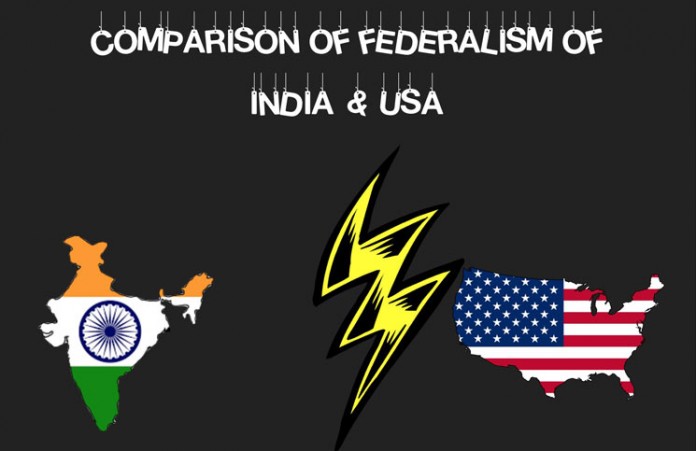
In this blogpost, Harsha Jeswani, Student, National Law Institute University, Bhopal, writes about what is federalism and compares between Indian federalism and USA federalism.

In this blogpost, Sudhi Ranjan Bagri, Student, National Law Institute University, Bhopal, writes about what is reference to High Court mean, what are the conditions under which refernce can be made and the powers and duties of the court when a case is refered to it.
Section 113 of the Code of Civil Procedure (hereinafter referred to as CPC), empowers a subordinate court to state a case and refer the same for the opinion of the High Court. Such an opinion can be sought when the court itself is doubtful about a question of law. The High Court may make such order thereon as it thinks fit. Such opinion can be sought by a court when the court trying a suit, appeal or execution proceedings entertain reasonable doubt about a question of law.
The underlying object for the provision for reference is to enable subordinate court in non-appealable cases the opinion of the High court and thereby avoid the commission of error which could not be remedied later on. Such provision also ensures that the validity of a legislative provision (Act, Ordinance or Regulation) should be interpreted and decided by the highest court in the state. The reference must, therefore, be made by passing of the judgment in the case.
Section 113 of the code provides:
Subject to such conditions and limitations as may be prescribed, any Court may state a case and refer the same for the opinion of the High Court, and the High Court may make such order thereon as it thinks fit:
Provided that where the Court is satisfied that a case pending before it involve; a question as to the validity of any Act, Ordinance or Regulation or of any provision contained in an Act, Ordinance or Regulation, the determination of which is necessary for the disposal of the case, and is of opinion that such Act, Ordinance Regulation or provision is invalid or inoperative, but has not been so declared by the High Court to which that Court is subordinate or by the Supreme Court, the Court shall state a case setting out its opinion and the reasons therefore, and refer the same for the opinion of the High Court.
Explanation.-In this section “Regulation” means any Regulation of the Bengal Bombay or Madras Code or Regulation as defined in the General Clauses Act, 1897 (10 of 1897) or in the General Clauses Act of a State.
Section 113 of the Code of Civil Procedure provides that reference should be made to the High Court only when the presiding judge has a reasonable doubt on the point of law or any usage having the force of law, and such reference needs to be decided for the proper disposal of the case. This makes it clear that the parties cannot ask the presiding judge to refer any question of law to the High Court.
The proviso which is attached to the Section states that only those questions must be referred to, whose decision is necessary for the proper disposal of the case in hand, and the Act/ordinance/regulation which is being challenged is in the opinion of that subordinate court is invalid or inoperative, but the same has not been declared by the Supreme Court or the High Court of that state.
The object behind this provision is to enable subordinate courts to do justice in cases which are non-appealable and thereby avoid the commission of error which cannot be remedied later on.[1]
“Reasonable doubt on a point of law” explained- A subordinate court can refer any question on which it entertains a reasonable doubt on a point of law. Any doubt would be called ‘a reasonable doubt of law’ if it has not been decided by the High Court of that jurisdiction, or if decided then some doubt has been thrown on the correctness of the same by a ruling of the Supreme Court.OBJECT
Section 113 of the civil code empowers a subordinate court to state a case and refer the same for the opinion of the high court. Such an opinion can be sought when the court itself feels some doubt about a question of law. The high court may make such order as it thinks fit. Such an opinion can be sought by a court when the court trying a suit, appeal or execution proceedings entertain reasonable doubt a question of law.
The underlying object for the provision for reference is to enable subordinate courts to obtain the opinion of the high court in non-appealable in the absence of a question of law thereby avoiding the commission of error which could not be remedied later on.
The right of reference is usually limited by the procedure laid down in Order 46 Rule 1[2]. The rule specifies the following procedure to be followed before any reference is made:
Questions of law can be divided into two classes:
Referring Court: The reference should be made only when the subordinate court entertains doubt on any questions of law. Further, such question must have actually arisen between the parties to the suit, and the court should have been called upon by the parties to adjudicate on the suit.[3] No reference can be made hence on a hypothetical question or to provide an answer to a point likely to arise in future.[4]
High Court: The jurisdiction of the High Court is consultative.[5] In dealing with the question referred to it, the High Court is not confined to the question referred it can consider a new aspect which may arise.[6]
The high court may answer the question so referred to it and send it back to the referring court to be disposed of in accordance with the law.[7] It may also refuse to answer the reference or even quash it.[8] The High Court, cannot however, make any decision on the merits of the case nor can it make any suggestions.[9]
The situation thus can be summarized as follows: the reference to the High Court can be made by any subordinate court within the jurisdiction of such High Court, and only those questions which deal with any point of law can be referred and not those who deal solely with the questions of fact. Further, only those questions related to law can be referred wherein the position of law is not clear, or where such subordinate court is of the opinion that any law or usage having the force of law is invalid but has not been declared so by any higher court. Only those questions can be referred whose adjudication is necessary so as to dispose of the case wherein such reference has been made.
[1] Chottubai v Bai Krishnan AIR 1941 Bom 365
[2] Garling v. Secretary of State ILR (1903) 30 Cal 458
[3] Banarsi v Krishna Chandra AIR 1972 Pat 49
[4] Ranganath v Hanumantha (1984) 1 Kant LC 243
[5] Delhi Financial Corporation v. Ram Pershad AI 1977 Del 80
[6] S.K.Roy v Board of Revenue AIR 1967 Cal 338.
[7] Order 46 rule 3 which states
[8] Order 46 rule 5 which states
[9] Municipal Corp. v Shivshankar AIR 1999 SC 2875

In this blogpost, Vernita Jain, Student, National Law Institute University, Bhopal, writes about what is zero-based budgeting, the process, advantages and disadvantages of zero-based budgeting.
ZBB is a process by a company prepares its budget to ensure more efficiency of the budgeting programme.
This process is different from traditional budgeting, as in this kind of budgeting a company starts preparing its budget from the scratch. In ZBB, a company examines all its expenditure and plans all the funding and radically redesign the budget based on its competitiveness and cost structures. Every year, in the beginning, the company forms a new budget and reviews every programme which does not include any previously authorized funds.[1]
This type of process requires the managers to provide explanations of all the expenditures, from the preceding year. Thus, it is assumed that a manager has an expenditure baseline of zero.
ZBB offers appealing possibilities for reducing costs while bringing additional value in the form of operational efficiency. The potential impact can be especially pronounced in the public sector, if with the help of ZBB, government forms an accurate budget and funding, then if any additional funding that is received can be utilized effectively and efficiently.
Additionally, ZBB by giving importance to each program and forcing the stakeholders to work in order to fulfil each and every objective that is fulfilled increases efficiency. These force the centres to identify their goals. Furthermore, this increases transparency, both internally and externally by creating a budget and baseline from zero
The private sector can benefit in the same ways. It helps in thinking conventionally and allocating resources by providing an explanation to each funding and prioritizing each.
The biggest examples of ZBB presently are the private equity firm 3G and AB InBev and Heinz. 3G has been announcing large deals as well as the aggressive use of ZBB.[2]
It can be very challenging for an organisation to complete a full ZBB cycle. The practice of the prioritizing program can be threatening to some managers and a source of the problem for departments with intangible outputs.
The drawbacks are
Bureaucracy: A large extent of training, examining and learning renders for completing the process of ZBB and requires additional staff.
Intangible justifications:. The areas with results that are not concrete and tangible in nature must be difficult to determine. It will be difficult to determine the exact amount of expenditure in the research and development activities.
Managerial time: The operational review mandated by zero-base budgeting requires a significant amount of management time.
Training: For the public sector in particular, it can be difficult to examine all of an organization’s programs within the limited time. The use of ZBB requires much training and the time required keeps on increasing each year.
Update speed: The budget based on the ZBB process is less likely to be continuous as it requires too many efforts.
Assessing Suitability: The process of ZBB in the public sector requires a small amount of savings in order to fulfil the complete process. They would also require sources to invest in the process. It may sometimes happen that, some of the organisations have money initially to start the process, but later on they may find it difficult to carry on with such a process as such a process might result in a risk of low investments.
The influence from the political parties and government officials render it difficult to conduct personal reductions, problems like this make the usage to the process of ZBB a little difficult.
The adoption of ZBB by the smaller agencies and NPO’s is most practical and common, as it helps them to examine their limited resources and work towards their specific outcomes. It seems unlikely that the government companies would benefit from ZBB process as such the process results in decreasing amount of returns as compared to the saving in the initial years.
This process of ZBB is beneficial for the private sectors as private companies do not face any restrictions compared to the government policies. But it is not necessary that if one process worked for one corporation than same can be beneficial for others too. Private corporations are likely to have a good amount of money which is required to be put at the initial stage of such process. The process of ZBB was successful in the case of these companies as it helped those increasing profits. The main reason that this process worked in the case of private companies is that private companies have human resources, cost, and training that is required for this process.[4]
Even though there are so many challenges to such process, both the government agencies and private organisations adopt certain measures.
The private companies can make a team containing advisors, consultants etc. which is specialized in the process of ZBB. In the case of government agency too, they can establish a team to review the programme on a regular basis.
Another way governmental organisations and private corporations can work is by applying ZBB irregularly or only in selective departments; this could benefit those departments who are suffering from certain finance or resource problem.
ZBB process is not cost effective in the case of many organisations. However, this process can turn out to be beneficial for some. For those who don’t see the benefit in ZBB, they have many other alternatives that are less costly and less time consuming. For example, organizations can examine alternative activities, methods, and technologies that may be less costly focus more on the underlying cost drivers and are more effective at enabling strategy. Organizational needs rarely merit a full ZBB exercise and improvement can be made without going to extremes.
[1] http://www.businessdictionary.com/definition/zero-based-budgeting-ZBB.html.
[2] http://www.bain.com/publications/articles/management-tools-zero-based-budgeting.aspx
[3] http://www.accountingtools.com/zero-based-budgeting.
[4]https://www2.deloitte.com/content/dam/Deloitte/us/Documents/process-and-operations/us-cons-zero-based-budgeting.pdf.

In this blogpost, Divyaish Srivastva, Student, Shri HCPG College, Varanasi, writes about the meaning of drafting, what is a draft, principles that govern drafting, the do’s and dont’s which need to be followed while drafting.
Drafting is a science and can be acquired only by long practice. In simple terms, drafting refers to the act of writing legal documents. The key feature of drafting is that it presents a brief knowledge about the significant facts of the situation or issue. Drafting demands a lot of skills combined with patience from the advocates. A properly drafted document aims at accuracy and truth.
The whole process of drafting should follow three drafts before it is ready to be presented before the authority. These drafts and their purposes are:-
In a general sense, it is an outline of a document or of something that needs to be done. One may prepare it as a rough sketch of a document from which a final document is prepared.
Terminology
Draftsman: One who draws documents like a will, gift deed etc.
Dragoman: One who interprets pleadings and other writings.
The process of drafting is generally governed by 4 principles:
Other physical characteristics include:-
Following set of rules should be followed: –

The draftsman should keep in mind that his words reflect the quality of the draft. And therefore, he must be very cautious about his choice of words. Following points should be kept in mind: –
DO’S
DON’TS
LawSikho has created a telegram group for exchanging legal knowledge, referrals and various opportunities. You can click on this link and join:
https://t.me/joinchat/J_
[1] lacking clarity or distinctness
[2] recording events in the order of their occurrence
[3] logical and orderly and consistent relation of parts
[4] Without much difficulty
[5] capable of being apprehended or understood

Karthick Raj is the founder director at Global Talent Hires, an organization dealing with leadership hiring across varied industries. He has done his MBA in HR from Bharathiar University and prior to starting up his venture; he was associated with top corporates like Serco, Concentrix & DS1 Technologies, where he was handling national level leadership hiring.
He completed the NUJS diploma in Entrepreneurship Administration and Business Laws in 2015. Over here he talks about his decision to take up an online diploma course after an MBA degree and a flourishing corporate career, his experience with the NUJS diploma course and how it helped his career so far. Over to Karthick.
At the time of joining the NUJS diploma in Entrepreneurship Administration and Business Laws, I was heading leadership recruitment at Serco. I always wanted to start up something of my own, even before starting my career and eventually landing up in HR. I wanted to start something of my own. So in 2015, I decided that the time has come and started up my company Global Talent Hires.
When I started my business, I was looking for a course which would help me in my long-term vision. Something which would empower me with the knowledge about, how to formalize a business in terms of legal aspects. I was searching the internet for a course like this and came across the advertisement of NUJS diploma in Entrepreneurship Administration and business laws. When I came to know that NUJS is providing a platform like this, to learn online. I decided to go for it.
I was very impressed by the course syllabus. I found this course to be blended towards my passion and what I wanted to learn, and this made me go for it. Personally, the most interesting topic for me was formulating a business and FDI. Foreign investments was also an interesting topic and in line with my business interest.
I liked the module on drafting also. However, I don’t use it much in my day to day work. I have a legal team which handles drafting for my organization as it’s a very critical area.
My expectations from this course are more than fulfilled. Before this course, I did not have much idea about how to see an investor, how I should approach an investor, what I should agree and what I should not, etc. This course has given me all necessary insight about these aspects. I have not invited any investor to invest in my startup yet, but I may look out for investors for my future ventures this knowledge would come handy then. As I plan to start two more ventures once my current venture stabilizes.
I have mentioned this diploma in my LinkedIn profile also. I would recommend this diploma course to entrepreneur and anyone wanting to start up a company. It is also beneficial for people who want a career related contract drafting.

In this blogpost, Nimisha Srivastava, Student, Gujrat National Law University, writes about the rights of an illegitimate child under the Hindu Law.

In this blogpost, Sudhi Ranjan Bagri, Student, National Law Institute University, Bhopal, writes about the importance of cooling off period in obtaining divorce and analyses a case on the same issue.
Not every marriage proves to be successful. Some marriages go on for a lifetime while some others may not lead to the same. Marriage is considered to be a religious act. The Hindu Marriage Act(hereinafter referred to as the Act), 1955, governs Hindus and some other religious groups, in the matters of marriage. Under the Act, some grounds for divorce have been enunciated.[1] One such grounds states, that when the couple thinks that the obligations under the marriage cannot be delivered, and the marriage needs to be dissolved, they can approach the court and file a petition stating the same, and the court after taking into consideration the facts and circumstance of the case and complying with the requirements of the provision, declare the marriage to be dissolved[2].
Under section 13B(2) of the Act, it has been provided that the court must not dissolve any marriage unless a period of six months has elapsed from the date of filing of such petition for dissolution of marriage.[3]
However, it has been held in various cases by Supreme Court and High Courts that such period of time is not compulsory to be observed, and if the situation demands so the marriage must be dissolved even before the expiry of the six months period.
The Article thus analyses the present situation in this regard, by discussing a judgment passed by the Gujarat High Court, on December 22, 2015.
Material Facts
Issue involved
The issue which needed to be decided by the HC was whether the cooling-off period can be waived off in certain situations or is it a strict rule that has to be followed regardless of the facts and circumstances of the case.
And, that whether the decision of the Lower Court, to reject the application was maintainable or needed to be reversed.
Judgment
The High Court while deciding the case discussed various relevant circumstances regarding the present case like the fact that the parties are residing separately more than 7 years, execution of divorce deed to obtain customary divorce, reason of urgency expressed on behalf of one of the spouses namely the wife, and held that such circumstances have not been taken into consideration by the trial Court.
The High Court held that though the trial court rejected the application of the parties to waive of the cooling period, by referring to the decision in the case of Jigneshkumar Dilipbhai Patel v. Principal Senior Civil Judge[5], but the applicability of the referred case hasn’t been considered.
The High Court thus relying on the above-mentioned circumstances, held that the parties need not observe the cooling-off period in this present case.
In cases where the divorce is being sought by mutual consent of both the parties, the provision by which such cases are governed is Section 13B of the Hindu Marriage Act, 1955. Under Section 13B(2) of the Act, it has been stated that where the second application for dissolution of the marriage must not be filed before the court until 6 months have elapsed from the date of the first application filed by the parties. So, this in the plain reading of statute appears to be of compulsory nature and seems that it has to be mandatorily followed before deciding the petition for divorce by mutual consent.
However, this is not the correct interpretation of the statute as this would clearly defeat the intention of the legislature. The Madras High Court in the case of K. Thiruvengadam v. Nil[6], held that the period of six months is not mandatory. The reason as given by the HC was that, if it is considered mandatory then the very purpose of the liberalised concept of divorce by mutual consent will be frustrated, especially when the parties have lived separately and there was no chance of a reunion.
The concept of mutual divorce is based on the assumption that the parties would file a petition for divorce by mutual consent only if such situations have arose which make the possibility of living together of the couple highly improbable, or even if the parties are made to live together for more time it would cause more harm than good to both the spouses.[7]
Another landmark judgment which was delivered by the Supreme Court in the year 2012, was in the case of Devinder Singh Narula v. Meenakshi Nangia[8] , wherein it was held by the SC that where the circumstances are such that continuing the ties of the marriage by applying Section 13B, of the HMA, 1955, would only continue the agony of the parties, then the marriage must be dissolved and divorce must granted to the parties.
Justice Altamas Kabir, while pronouncing the decision stated that “It is no doubt true that the legislature had in its wisdom stipulated a cooling period of six months from the date of filing of a petition for mutual divorce till such divorce is actually granted, with the intention that it would save the institution of marriage.” [9]
There have been cases where marriages have been revived during the cooling-off period, but that doesn’t mean that in every situation the cooling-off period must necessarily be said to be observed. The cooling-off period as mentioned by Section 13B of HMA, however, would not be favourable to be observed to the couple, in certain situation like if the couple has already been living separately, and there are no chances of revival of their marriage.
[1] Section 13
[2] Section 13 B
[3] Section 13B (2)
[4] C/SCA/20889/2015
[5] (2014) GLR 566
[6] AIR 2008 Mad 76
[8] (2012) 8 SCC 580
[9] See http://www.ibnlive.com/news/india/marriages-can-be-ended-before-cooling-period-sc-501773.html
Understanding mortgage is very important for understanding how banking and finance works. It is important to lawyers, bankers and businessmen. Here, Kunal Dey from College of Legal Studies, U.P.E.S, Dehradun explains a crucial aspect of mortgage.
The most common types of security in banking transactions is that of creation of mortgage over a immovable property, pledge of shares, hypothecation of or a floating charge over movable assets, book debts, personal guarantees by promoter companies and group entities. For the purpose of this article we shall keep our focus on the different types of mortgages that area created under the pretext of banking transactions and which can be considered to be the as the most beneficial form of mortgage from the perspective of a lender.
Mortgages are regarded to be as the most common form of security which is created over an immovable property. It can be defined as the process by which a transfer of an interest in a specific immovable property as security for the repayment for the money advanced or to be advanced by way of a loan, an existing or a future debt, or the performance of an engagement which may give rise to a pecuniary liability.
The person who is borrowing and transferring his interest in the immovable property to the lender is called the mortgagor and the lender, which might be a person or any entity, in whose favour the mortgage is created is called the mortgagee. The fund which is lent against the immovable property is called the mortgage money; the instrument through which the transfer is affected is called the mortgage-deed.
The notion that exists in banks is that more the amount of money that needs to be lent out; the higher should be the value of the security which shall be secured. In today`s world, where commercial banks consists of the main chunk of lenders, loan against property is considered to be the most viable form of security and is generally given as a percentage of the property`s market value, usually around 40% to 60%.
There are various methods of creation of mortgage of immoveable properties. The method which is generally adopted by the institutions/banks in India is mortgage by way of deposit of title deeds. We shall now assess the benefit of this equitable form of mortgage:-
This is also called in English law an equitable mortgage. It is a well established rule of equity that mere deposit of document of title without writing or without word of mouth, will create in equity a charge upon the property referred to. The phrase ‘equitable mortgage’ might have been formerly justified in India on the ground that it was an inchoate mortgage perfected by equity. Equitable mortgages or mortgages by deposit of title deeds were accepted in India as equivalent to simple mortgages after the Privy Council decision in Varden Seth v. Luckpathy, and this still the case in districts to which the TP Act has not been extended.
The requisite of a mortgage by deposit of title deeds involves the following steps:-
A debt;
A deposit of title deeds;
A declaration of a director of a company depositing its title deeds(if the mortgagor is a company)
An intention that the deeds shall be security for the debt.
The above three requisites have also been reiterated in a Calcutta case. Mortgages by deposit of title deeds created in favour of secured creditors notified in accordance with the provisions of the SARFAESI Act must also be registered with the Central Registry of Securitisation Asset Reconstruction and Security Interest of India. If the mortgagor is a company, certain authorisations are required, including:-
Passing of special resolutions of the mortgagor`s shareholders (Section 180(1)(a) Companies Act, 2013)
Board resolution of the mortgagor authorising the mortgagor to create the mortgage.
The company must then register the details of the mortgages with the Registrar of Companies within 30 days from the date of the mortgage. If security is created over immovable property situated in India in favour of a non-resident, prior approval of the Reserve Bank of India is required under the Foreign Exchange Management (Acquisition and Transfer of Immovable Property) Regulations 2000.
A mortgage by deposit of title deeds does not require any writing, But it is usual for the deposit to be accompanied by a memorandum in writing. If this writing is the contract of mortgage so that it creates the mortgage it must be registered and oral evidence to contradict it is not admissible. However, registration is not necessary if the mortgage is complete without the writing and the writing is merely a statement that the mortgage has been affected, or a statement of facts from which the contract of mortgage can be inferred. In Obia Sunadarachariar v. Narayanna Ayyar, the memorandum was merely a list of the deeds deposited, and it did not need registration, although it was deposited before the money was advanced. The necessary of registration thus depends upon the construction of the memorandum in the light of the surrounding circumstances, and if it is loosely worded the distinction is very fine.
There are three kinds of security that are recognised by the English common law, namely, the lien, mortgage and pledge. Equity, however, with its in personam jurisdiction, gave effects to various forms of security which were either invalid or unknown to the common law. It is not possible to clarify the subject without a detailed consideration of the intricate doctrines of the Courts of Chancery in England. It is an admitted position that the suit property came to be allegedly rented out/let out y the borrower after the creation if charge of equitable mortgage by him in favour of his son and hence charge of the petitioner Bank would prevail over the so called tenancy right of the present respondent and hence in any case the present respondent had no legal and/or better right, title and/or interest over the petitioner Bank, so long as the petitioner Bank realises its entire outstanding dues from the borrower either by attachment/sale-disposal of the said mortgaged immovable property belonging to the borrower under the provision of law. He has, therefore, submitted that the present respondent had no better right, title or interest as tenant over the admitted right, title or interest of the petitioner Bank as a mortgagee.
Equitable mortgages are the most recommended and popular form of mortgage as the risk of granting loan in such mortgage is lower than any other form because the loan is secured against the property. If anything goes wrong and the borrower fails to repay, the bank still has something as security of same or higher value (mortgagor`s property) to sell to cover the mortgage money lended.
In case of a mortgage by way of title deeds, the lender must institute a civil suit for the sale of the secured assets or sell the assets without court intervention under circumstances mentioned under Section 69 of the Transfer of Property Act, 1882. The Securitization and Reconstruction of Financial Assets and Enforcement of Security Interest Act 2002 (SARFAESI) has conferred powers on banks and financial institutions by overriding the provisions of the Section 69 of the Transfer of Property Act, 1882, through sub-section (1) of Section 13 of the said Act, if they are secured creditors (mortgagee) without the intervention of the courts. The provision of the Act has been made applicable exclusively to Banks and Financial Institutions as secured creditors to enforce their security interest with the motive of recovering their debts. This means that if the banks and financial institutions are secured creditors having lent against securities like mortgage of immovable property, charge, hypothecation they can take over and sell such securities after giving 60 days` notice to the borrowers so as to adjust the loan, without resorting to litigation in a competent court of law.
The period of limitation is 13 years as per Article 62 of the Limitation Act, 1963.
The transfer of an equitable mortgage falls under Section 54 of the Transfer of Property Act, 1882, and requires a registered instrument.
The law of mortgages of movables in India is still rather satisfactory. Before the Indian Sale of Goods Act was passed there were several cases in India in which it was decided that a mortgagor, who remains in possession of the goods, can pass a title to a bona fide purchaser for value, or to a pledge who takes possession of the goods free form the first mortgage. These judgments proceeded on the old Section 108 f the Indian Contract Act which provided that where a person was, by consent of the owner, in possession of the goods, any disposition of the goods, whether by sale or pledge, made by him to a bona fide transferee for value was binding on the owner. As under a mortgage, the whole property passes to the mortgagee, in law he is the owner and if the mortgagor, who has a bare equity of redemption, remains in possession with the consent of the mortgagee, the case is clearly one which would fall within the provisions of Section 108 and the first mortgagee`s rights would be naturally lost.
Section 108 of the Indian Contracts Act, 1872 has now been repealed and at present there is no provision either in the Indian Contracts Act, 1872 or the Sale of Goods Act, 1930 which governs these matters. On the other hand, Section 66(3) of the Indian Sale of Goods Act, 1930, expressly states that that the provisions of the Act relating to contracts of sale do not apply to any transaction in the form of a contract of sale which is intended to operate by way of mortgage, pledge, charge or other security. In the absence o any statutory provision, the accepted principle in the Indian Courts up to now is to follow the English common law.
In the case of Bank of Maharashtra v. Official Liquidator, the court held that in the case of hypothecation or pledges of movable goods, the creditor has the rights to take possession, to retain possession and to sell the goods directly without the intervention of the court for the purpose of recovery of dues. In United Bank of India v. New Glencoe Tea Co.Ltd. the bank lent money to the borrower on hypothecation of movables. The bank filed a suit for the decreetal amount in instalments extending over 7 years and only on default of three consecutive installements the bank could exercise the right of sale. The court held that the bank was entitled for a decree for sale and court could not allow instalments.
These cases thus highlight the rights of a bank as a mortgagee when movable property is involved.

In this blogpost, Sudhi Ranjan Bagri, Student, National Law Institute University, Bhopal, writes about the rights of a person arrested and important cases related to it.
Any person has to be treated as a human being, irrespective of the fact that such person is a criminal. The accused persons are also granted certain rights, the most basic of which are found in the Indian Constitution. The basic assumption behind these rights is that the government has enormous resources available to it for the prosecution of individuals, and individuals, therefore, are entitled to some protection from misuse of those powers by the government. An accused has certain rights during the course of any investigation; enquiry or trial of offence with which he is charged, and he should be protected against arbitrary or illegal arrest. Given below are some of the most important rights of an arrested person:
1. Right To Silence
The ‘right to silence’ has been derived from common law principles. It means that normally courts or tribunals should not conclude that the person is guilty of any conduct merely because he has not responded to questions which were asked by the police or by the court. The Justice Malimath Committee in its report was of the opinion that right to silence is very much needed in societies where anyone can be arbitrarily held guilty of any charge. As per the law of evidence, any statement or confession made to a police officer is not admissible in a court of law. Right to silence is mainly concerned about confession. The breaking of silence by the accused can be before a magistrate but should be voluntary and without any duress or inducement.
As per Article 20(3) of Constitution of India guarantees every person has been given a right against self-incrimination, it states that any person who has been accused of any offence, shall not be compelled to be a witness against himself. The same was again reiterated by a decision of Supreme Court in the case of Nandini Sathpathy v. P.L.Dani; wherein it was held that no one can forcibly extract statements from the accused and that the accused has the right to keep silent during the course of interrogation (investigation). The Supreme Court again in the year 2010, held that narco-analysis, brain mapping and lie detector test are in violation of Article 20(3) of the Constitution of India.
2. Right To Know The Grounds of Arrest
2.1) As per Section 50(1) of Cr.P.C., every person who is being arrested by any police officer, without any warrant, is entitled to know the full particulars of offence for which he is being arrested, and that the police officer is duty bound to tell the accused such particulars and cannot deny it.
2.2) As per Section 55 of Cr.P.C., when any person is being arrested by any police officer, who is deputed by a senior police officer, then such subordinate officer shall before making such arrest, notify the person to be arrested the substance of the written order given by the senior police officer specifying the offence or other cause for which the arrest is to be made. If this provision is not complied with, then the arrest would be rendered illegal.
2.3) if the person is being arrested under a warrant, then as per Section 75 of Cr.P.C, any person who is executing such warrant must notify the person to be arrested, the particulars of such warrant, or even show such warrant if needed. If the substance of the warrant is not notified, the arrest would be unlawful.
2.4) the Constitution of India also confers this right as one of the fundamental rights. Article 22(2) of the constitution provides that “no person who is arrested shall be detained in custody without being informed as soon as may be, of the grounds for such arrest nor shall he be denied the right to consult, and to be defended by a legal practitioner of his choice.”
3. Information Regarding The Right To Be Released On Bail
Any person who is to be arrested without a warrant and is not accused of a non-bailable offence has to be informed by the police officer that he is entitled to be released on bail on payment of the surety amount.[1] This helps persons who are arrested for bailable offences and are not aware of their right to be released on bail.
4. Right To Be Taken Before A Magistrate Without Delay
Irrespective of the fact, that whether the arrest was made with or without a warrant, the person who is making such arrest has to bring the arrested person before a judicial officer without any unnecessary delay. Further, the arrested person has to be confined in police station only and nowhere else, before taking him to the Magistrate. These matters have been provided in Cr.P.C. under sections 56 and 76 which are as given below:
Section 56 of Cr.P.C. states that “Person arrested to be taken before Magistrate or officer in charge of police station- A police officer making an arrest without warrant shall, without unnecessary delay and subject to the provisions herein contained as to bail, take or send the person arrested before a Magistrate having jurisdiction in the case, or before the officer in charge of a police station”.
Section 76 of Cr.P.C. states that “Person arrested to be brought before Court without delay- The police officer or other person executing a warrant of arrest shall (subject to the provisions of section 71 as to security) without unnecessary delay bring the person arrested before the Court before which he is required by law to produce such person”.
Further, it has been mentioned in the proviso of Section 76 that such delay shall not exceed 24 hours in any case. While calculating the time period of 24 hours, the time necessary for the journey is to be excluded. The same has been enumerated in the Constitution as a Fundamental Right under Article 22(2). This right has been created with a view to eliminate the possibility of police officials from extracting confessions or compelling a person to give information.
If the police officials fails to produce an arrested person before a magistrate within 24 hours of the arrest, the police officials shall be held guilty of wrongful detention.
6. Rights at Trial
6.1) Right To A Fair Trial
The Constitution under Article 14 guarantees the right to equality before the law. The Code of Criminal Procedure also provides that for a trial to be fair, it must be an open court trial. This provision is designed to ensure that convictions are not obtained in secret. In some exceptional cases the trial may be held in camera.
6.2) Right To A Speedy Trial by the Constitution of India
Though this right has not been specifically mentioned in the Constitution, however, the SC in the Hussainara Khatoon case has made it mandatory that the investigation in the trial must be conducted “as expeditiously as possible.”
In cases, wherein the maximum punishment that can be imposed is 2 years, once the accused is arrested, the investigation for the trial has to be completed within the period of six months or stopped on receiving an order from the Magistrate, unless the Magistrate receives and accepts, with his reasons in writing, that there is cause to extend the investigation.
7. Right To Consult A Legal Practitioner
Every person who is arrested has a right to consult a legal practitioner of his own choice. This has been enshrined as a fundamental right in Article 22(1) of the Constitution of India, which cannot be denied in any case. Section 50(3) of the Code also lays down that the person against whom proceedings are initiated has a right to be defended by a pleader of his choice. This starts begins as soon as the person is arrested. The consultation with the lawyer may be in the presence of police officer but not within his hearing.
8. Rights Of Free Legal Aid
The Supreme Court in the case of in Khatri(II) v. the State of Bihar has held that the state is under a constitutional obligation (implicit in Article 21) to provide free legal aid to an indigent accused person as is implicit in Article 21 of the Constitution . This right does not come into picture only at the time of trial but exists at the time when the accused is produced the first time before the magistrate, as also when remanded from time to time. The Supreme Court further states that failure on the part of the state to inform the accused of this right will vitiate the whole process of trial. Therefore, a duty is imposed on all magistrates and courts to inform the indigent accused of his right to get free legal aid. The apex court has gone a step further in Suk Das v. Union Territory of Arunachal Pradesh, wherein it has been laid down that this constitutional right cannot be denied if the accused failed to apply for it. It is clear that unless refused, failure to provide free legal aid to an indigent accused would vitiate the trial entailing setting aside of the conviction and sentence.
9. Right To Be Examined By A Medical Practitioner

Section 54 of Cr.P.C. enumerates this right. It states that:
Section 54 of Cr.P.C:- “Examination of arrested person by medical practitioner at the request of the arrested person- When a person who is arrested, whether on a charge or otherwise, alleges, at the time when he is produced before a Magistrate or at any time during the period of his detention in custody that the examination of his body will afford evidence which will disprove the commission by him of any offence or which will establish the commission by any other person of any offence against his body, the Magistrate shall, if requested by the arrested person so to do direct the examination of the body of such person by a registered medical practitioner unless the Magistrate considers that the request is made for the purpose of vexation or delay or for defeating the ends of justice.”
D.K. Basu v. State of W.B
Despite several attempts being made by issuing guidelines in various cases, to eradicate the possibility of the committing torture by the police officials, there were frequent instances of police atrocities and custodial deaths. Therefore, the Supreme Court, in this case, issued some guidelines which were required to be mandatorily followed in all cases of arrest or detention. Following are some of the important ones-
The Court also emphasized failure to fulfill the given requirements would render the concerned officer liable for contempt of court along with departmental actions, and such proceedings can be initiated in any High Court having the territorial jurisdiction over the matter.
[1] Section 50(2) of Cr.P.C.

In this blogpost Vernita Jain, Student, National Law Institute University, Bhopal, writes about the laws relating to bigamy and under what laws can a second wife claim maintenance in India
According to the marriage laws in India, a person cannot remarry while the first marriage is in subsistence[1]. In such cases, the second marriage contracted by a person is not legal and does not hold any validity in law.[2] But, even though the laws in India do not provide so, the practice of second marriage is very common in India however in such cases second wives do not have much rights in law.
The Hindu Marriage Act provides that a person can remarry only when neither of them has a spouse living at the time of their marriage.
Under the old laws i.e before the commencement of the HMA, a woman was not allowed to remarry until and unless her customs permit her. However, there was no such law for the men. Slowly, Hindu law was made Monogamous with various states bringing anti-bigamy laws.
Under the law, there was a bar against a woman marrying a second husband while her first husband is alive unless custom permitted her. There was no such bar against men, till some States passed laws for prevention of bigamous marriages, and introduce the principle of monogamy among Hindus.
In this entire stigma of the second marriage, the person who suffers the most is – the second wife. Legally invalid marriage coupled with the tag of a “cheater” by the society is very stressful for women.
Criminal Law
Under Section 494 of the IPC a person who has a spouse living at the time of his second marriage is liable to be punished and that his marriage is void. However, in the case when the first marriage of the person was declared void, the person cannot be held liable under this section.
However, in case, the person have conceded the fact that he is married, in such a case that person can be held liable for cheating.
Banshidhar v Chhabi Chatterjee[3]
“Woman to be legally married to petitioner – maintainability of claim under sec 488 – if petitioner on the date of marriage with the claimant woman had already a legally wedded wife, his marriage with the claimant – woman will be void under sec 11 of the HMA.”
Evidence Act
The Indian Evidence Act provides that in the presence of any probable facts, the person’s conduct and the happening of an event, such are used as the evidence to prove the existence of marriage.[4]
Rangnath Parmeshwar v. Pandirao Mali, it was held that if two persons are living as a married couple , then even when there is no prove to that effect, the marriage between them is presumed to be valid.
Proof of Second Marriage
In order to prove the second marriage, it is very important that the second marriage was done by all the rituals that are essential according to their customs and practices. Merely a confession that the person has married the second time is not enough. According to the Hindu customs, the performance of Saptapadi and homa are essential to perform in order to get married. A second marriage can be made void under S. 494 only when it has been solemnized with all the rituals and ceremonies.
Maintenance under Section 125 CrPC
A wife has the right to ask for the maintenance from her husband in the case of divorce under Section 125 of CrPC. If a person has treated that particular person as his wife, then that can be treated as a proof of their marriage.
In the case of, Mallika and Anr v. P Kulandi , it was held that in case the husband misrepresented his first wife’s death, his second wife, would have the right to maintenance.
Hindu Marriage Act
The law of maintenance has been given under S. 24 of the HMA. However, this law does not provide for maintenance to the wife of the second marriage but, in a catena of cases, the courts have given a wide interpretation to this section. Now, under S. 24 even a second wife can claim maintenance from her husband.
Similarly, under Section 25, HMA the provisions for permanent alimony has also been interpreted widely by the courts to protect the rights of the second wives. After the marriage is annulled, the second wife has the right to claim for maintenance.
In the case of Rajesh Bai v. Shantabai, a woman’s marriage was declared void because of the subsistence of any previous marriage of her husband. Court held that she also has the right to claim maintenance, under Hindu Adoption and Maintenance Act, 1956 (HAMA[5]).
Hindu Adoption And Maintenance Act
HAMA provides that the second wife can claim maintenance from her husband even after she abandoned him when she comes to know that her husband has another wife living.[6]
However, this line ‘any other wife living’ has been interpreted variously by the different High Courts. In the case of, Satyanarayana v. Sseetheramama, it was held that this phrase did not mean that the husband has to be living with his first wife. The existence of the first wife without any divorce is sufficient.
In a recent decision in July 2015[7], the Madras High Court held that the second wife of a person who is not legally married has the right to get a family pension of her deceased husband. In this case, a person remarried during the subsistence of his first marriage; thereinafter he lived with his second wife. However, he later took divorce from his first wife. After his death, his daughter from his first marriage claimed his pension and argued that, since his second marriage is void under S. 494 of IPC, she is entitled to the full pension of her father. After pondering upon the facts of the case, Justice D Hariparanthamam held that, even if the marriage was not valid, his second wife remained with him till last and that the second wife had already been given divorce. Given the above reason, the judge gave the second wife the right to the pension of her deceased husband.
The Bombay High Court Decision
Wife from a second marriage has to live with the “illegal” status in Indian society. In cases when the relationship didn’t work, the second wife is left without any maintenance and any share in the property of her husband. But in the recent decision of Chanmuniya vs Virendra Kumar Singh Kushwaha & Anr 2010, the Bombay High Court[8] has given a historic judgment. Justice A B Chaudhari said that even though there is no law that talks about providing maintenance to the wife of the second void marriage, but now the wife can ask for the maintenance and accommodation from her husband under the Protection of Women from Domestic Violence Act.
In this case, Ramaji married Manda, hiding the fact that he had a subsisting marriage. However, he treated Manda as his wife and had two daughters out of his second marriage.
“It is no doubt true that Ramaji had cheated Manda and had kept sexual relationships with her resulting in the birth of two children… despite holding that there had been close relationship between applicant and respondent and he treated her like wife and produced children, unfortunately, this court cannot help Manda for providing her maintenance, under the Hindu law. This is a fit case for Manda to have recourse to the provisions of the new beneficial Act — the Protection of Women From Domestic Violence Act, and proceed against her husband for claiming accommodation, maintenance.”
Supreme Court
In the landmark judgment decided by the Supreme Court on October 2013, it was held that in the cases of second marriage a second wife has the right to claim maintenance. If the husband has conceded that fact that he has a spouse living at the time of his marriage, from his second wife, he is bound by law to provide his second wife, with maintenance.[9]
Justices Ranjana P Desai and A K Sikri held that, “Provision of maintenance would definitely fall in this category which aims at empowering the destitute and achieving social justice or equality and dignity of the individual.”
Other options- annulment of marriage by the second wife
The HMA provides the right to second wife to get the marriage annulled[10]. Also, the second wife has the right to ask for the divorce under S. 13(1) of HMA. Under S. 13(1) of HMA, a second wife can ask for a divorce in case she finds that her husband has been already married.
A second wife has to suffer a lot due to the social stigma that is attached to the second marriage. The absence of legal recognition of her marriage is a lot of pain. Even though due to the judicial precedent that is available for the maintenance of the second wife, but the absence of the clear provision regarding the maintenance her claim for maintenance depends on the discretion of the judges.
The absence of such laws provides loophole in the Indian Law. These are easily exploited by the husbands to defend themselves. Therefore, there is a dire need to make strict and clear laws for second wives, so as to bring them some respite.
[1] S. 494 IPC.
[2] S. 11 of the Hindu Marriage Act.
[3] Banshidhar v Chhabi Chatterjee AIR 1967 Patna 27.
[4] Section 114 of the Indian Evidence Act.
[5] S. 20.
[6] S. 18 HAMA.
[7]http://timesofindia.indiatimes.com/india/Second-wife-also-has-legal-right-to-pension-says-Madras-HC/articleshow/47904255.cms
[8] http://timesofindia.indiatimes.com/india/HC-opens-maintenance-door-to-second-wife/articleshow/5866006.cms
[9] http://archive.indianexpress.com/news/second-wife-can-also-claim-alimony-in-some-cases-supreme-court/1184462/
[10] S. 11 of HMA along with S. 5(1) of HMA.






 Allow notifications

