Download Now
Home Blog Page 1793

Duties and role of director of a company

2

office-624749_1280

This article is written by Nikita Hora,  a final year student of Jindal Global Law School and Reporter and Communication Manager at LiveLaw 

DIRECTOR

A director is a person managing the company. Some other names of a director are managers or governors of the management. Section 741(1) provides the right to include any person occupying the position of director by whatever name they choose to. Thus, director is anyone occupying the role of director regardless of his title within the company. This could include a person who is not appointed to the broad, i.e., a de facto director. Section 285 provides that the acts of a director are valid regardless of any defect in his or her appointment and must hence necessarily apply to a de facto director. A director is also an officer of the company.

In Re Syke[1] a person who denied being the director  paid off a bank overdraft with the company’s name to the detriment of the other creditors where he had guaranteed the overdraft. He also went on trading with the company in a situation of inevitable insolvency. The court said that it was difficult to lay down one decisive test to understand whether or not a person is a de facto director. All the relevant facts relating to an involvement in a management must be considered.

However in State Secretary of Trade and Industry v Tolle[2] the woman who called herself a director was not regarded as such for the purposes of disqualification because based on the facts of the case she had no involvement with anything in particular and did not form part of the company’s real governance.

DUTIES OF DIRECTOR TO THE COMPANY

Duties of the director may be categorised into fiduciary duties which arise because directors are quasi-trustees of the assets of the company; and duties of skill and care which arise at common law and are an aspect of the law of negligence.

FIDUCIARY DUTIES

A director must account to the company any personal profits he may make in the course of dealing with the company’s property. For example, if a director buys shares in the company at par which he has sold at a profit, he must account for such profit. The reason for this is that there has been a conflict of interest in such a scenario. When a director in the course of his employment obtains a contract for himself, he is liable to account to the company for the profit he makes, even if it can be shown that the company would not necessarily have obtained the contract. The accountability arises from the mere fact that a profit is made by the director; it is not a question of loss to the company.

A director is not accountable for the profits for a competing business which he may be running unless the article or his service contract expressly so provides, but he will be accountable if he uses the company’s property in that business, or if he uses its trade secrets or induces the company’s customers to deal with him. A director is not allowed to use, either during or after service with a company, confidential information entrusted to him by the company.

A director may keep a personal profit if the company consents, but the consent must be given by the members in a general meeting and not by the Board and a resolution in the general meeting may be rendered invalid as prejudicial to the minority, if the director concerned controls the voting in the general meeting.

However, a director may take advantage of a corporate opportunity on his own account if his company considered the same proposition and rejected it in good faith. Directors must use their power for proper purposes that benefits the company and not to further their own interests.

In Industrial Development Consultants v Cooley[3], the director of IDC pretended to be ill owing to which IDC terminated his employment immediately and the director then obtained Eastern Gas Broad (EGB) contract for the four depots for himself. The court held that the director had acted in breach of duty and must account. He had tried and had persuades to change the mind of EGB so the company has incurred losses.

In Gencor ACP Ltd v Dalby[4], it was held that as a director has fiduciary duties, if he has made profits he will be held liable to account for it to the company. Whether the company would or would not have obtained the profit is irrelevant.

In Regal (Hasting) Ltd v Gulliver[5] the court held that directors will be liable to the company once it was established

  • That what the directors did relates to the affairs of the company to such an extent that it may be said to have been done in the course of their management and in utilisation of their opportunities and special knowledge obtained by them by virtue of being directors.
  • That what they did resulted in a profit to them.

These principles were laid down in Broadman v Phippis[6] and were followed in the above case as well.

DUTIES OF SKILL AND CARE

The director also owes a duty of care to the company in common law to not act negligently in managing its affairs. The standards are that of a reasonable man in looking after his own affairs. The UK standard of care is being derived from the law relating to wrongful trading by directors. Section 214 of the Insolvency Act 1986 provides for personal liability for directors in such amount as the court may decide in an insolvent liquidation as a contribution to the company’s debts. The section is based on negligence and the standard he ought to have but other directors are required to reach a level of competence to objective standards. Re City Equitable Fire Insurance Company[7] is a case that is concerned with the duties of directors where it was seen that the directors of the insurance company had left the management of its affairs almost entirely to the chairman and that was the main reason there was a perpetration of his frauds. It was held that in the company the directors have to follow the duties of care and skill in the course of employment.

With such fiduciary duties and skill and care duties, directors owe duty to the employees, shareholders, creditors and other outsiders.

DUTIES TO EMPLOYEES

The company has the power to make any provision for its employees which is ordinarily approved by an ordinary resolution. However, this does not apply if the memorandum or the articles contain a provision whereby the power can be exercised by a director’s resolution or a special resolution. A duty of directors towards employees complies with the requirement of employment law generally.

DUTIES TO SHAREHOLDERS

The director does not owe any contractual or fiduciary duties to members of their company, generally speaking. The Stock Exchange with consultation with CBI published a Model Code for Securities Transactions, to give proper guidance as to when it is proper for directors of listed companies to deal in the securities of the company. This Code received widespread acceptance and became part of the Listing Agreement.

There are times when the Director becomes an agent to the members for a particular transaction. Such a situation gives rise to fiduciary duties. In Gething v Kilner[8]it was held that in a takeover, the directors of the ‘victim’ company owe a duty to their shareholders to be honest and to avoid misleading. In Prudential v Newman[9], a shareholder will owe no duty individually for the damage caused by the directors as a result of negligent mismanagement.

DUTIES TO CREDITORS

In a solvent company the shareholder is taken as the general body which is regarded as ‘company’ when questions of the duty of directors arise. However, where a company is insolvent the interests of the creditors intrude. They have power through insolvency procedures, to control the company’s assets which are, in a practical sense, director assets and not the shareholders assets.

DUTIES TO OTHER OUTSIDERS

There is no fiduciary or contractual duty to outsiders if the company breaks its contract. When the directors make the contract on behalf of the company, they may be liable for the breach of warranty. In Weeks v Propert[10], the company borrowed money in excess of its borrowing power so that the loans were ultra vires. It was held that there was a breach of warranty against the directors. The directors are held liable when they have made an ultra vires contract with the connected person where the members did not rectify such contract. Such a contract would not bind the company and such connected person may bring a claim for a breach of warranty against the directors.

CONCLUSION

This paper discusses in brief what directors are along with the functions to be fulfilled by them. Directors are the people who manage the company. There are two basic duties of directors which are fiduciary duties and duties of skill and care. Directors also owe duties to the shareholders, creditors, employees and other outsiders. If a director breaches his duties, the company needs to ratify the breach or the company indemnifies that action of the director or the court has the power to grant relief to the director who has acted honestly and reasonably in all the circumstances to be excused. There is the Cadbury Report[11] which may be referred to in order to understand the director and his duties.

[1]Re Syke

[2] State Secretary of for Trade and Industry v Tolle

[3] Industrial Development Consultants v Cooley

[4] Gencor ACP Ltd v Dalby

[5] Regal (Hasting) Ltd v Gulliver

[6] Broadman v Phippis

[7] Re City Equitable Fire Insurance Company

[8]Gething v Kilner

[9] Prudential v Newman

[10]Weeks v Propert

[11] Cadbury Report

Download Now

Vinay Biradar, president of student council at Indian Institute of Foreign Trade (IIFT) on how he benefited from the NUJS Business law diploma course

1

IMG_1521

Vinay Biradar completed NUJS diploma in Entrepreneurship Administration and Business Laws in 2014 and is currently pursuing MBA from the prestigious Indian Institute of Foreign Trade (IIFT) in Delhi. He is also the president of student council at IIFT. We asked Vinay how the course helped him so far in his career, and what he told us was so interesting, that we decided to share it with all of you as a success story. Over to Vinay.

When I took up the course, I was working with Wipro as an ERP consultant. However, my real interest in the course was due to my involvement in a startup project. With 2 other friends, I started a business in education industry called Pinnacle Academy. At the time of joining the Diploma in Entrepreneurship Administration and Business Laws course in January 2014, I wanted to learn the intricacies of starting up a new business and how to take it to the next level. Learning how to structure my business right was a point of interest as well.

After this, I decided to study MBA, and I had mentioned this NUJS diploma course in my resume for the interview rounds. IIFT has a 3 stage selection procedure. At the final stage there is an interview. During the selection interview at IIFT, the professor asked me about the course. IIFT gives a lot of importance to entrepreneurship. The fact that I pursued this course along with a full-time job and also had a business on the side was really appreciated. There was a detailed discussion about the course and what I had learned. I believe this course helped me to make a difference and stand out amongst other contenders.

My company is dormant right now. Since all of the co-founders left to pursue MBA, we could not really put our lessons into action at that time, but the course really helped us to figure out what to do next. I plan to further utilize the knowledge gained from this course after completing MBA at some point as an entrepreneur. When we are ready to take our business to the next level I am sure this course would really help.

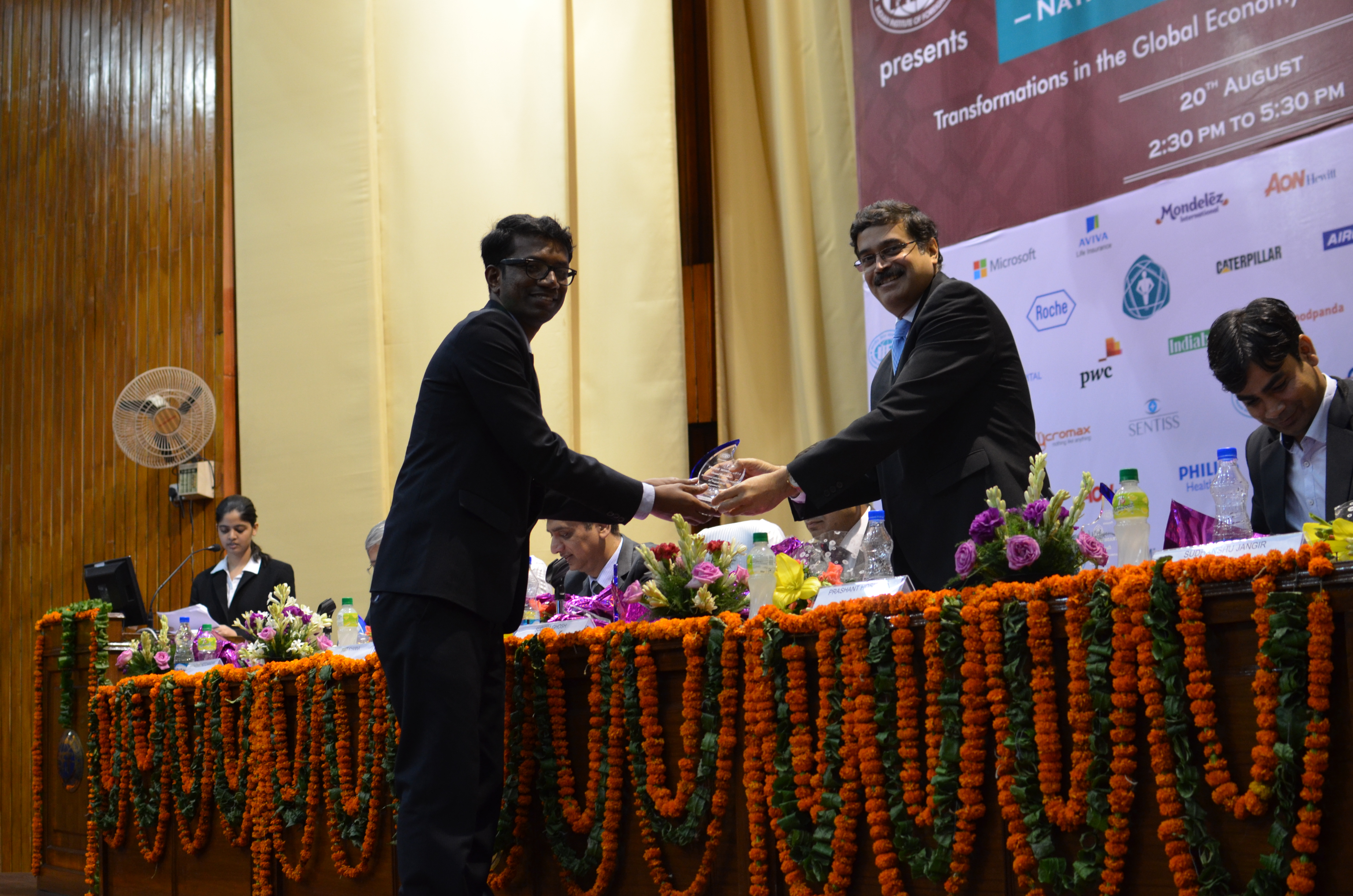
Recently the student council at IIFT organised a  business conclave "Trade Winds". Here Vinay is presenting a memento to Mr. Prashant Hoskote, Senior Director, Max India Group who spoke at the event.
Recently the student council at IIFT organised a  business conclave “Trade Winds”. Here Vinay is presenting a memento to Mr. Prashant Hoskote, Senior Director, Max India Group who spoke at the event.

I had a smooth and nice experience pursuing the course. The iPleaders team was supportive. In particular, I found the webinars to be really good. I learnt a lot from the webinars. Registering of a company, filing tax returns, understanding partnership and LLP, getting business licenses, these were very relevant for me. When we have to approach a lawyer also next time, I will not go with a blank mind but a fairly good idea about what I want from the lawyer.

I have a lot of interest in developing my leadership skills. Another very good opportunity I have received through the course is my selection as a member of an Indian delegation that is supposed to visit Pakistan at the invitation for the Sustainable Development Institute there. I consider myself very lucky to get an opportunity like this.

I believe that anyone who is looking to startup, or even regular students who has an interest in entrepreneurship, whether they are studying engineering, science, arts or commerce, this course will really help them to learn what they want to learn and also to stand out. The course fee is quite nominal and this is a unique course – so it is a nice opportunity to build a good profile. I also feel that the course will be very useful for business managers especially if a module on decision making for managers is included.

Download Now

Why Should You Consider Becoming a Teacher?

0
Why Should You Consider Becoming a Teacher?

Why Should You Consider Becoming a Teacher?

Why should you become a teacher? Some people do it because nothing else worked out. There are still others who genuinely like teaching and wants to do nothing else. The choice is straight if you fall in either of these extreme categories. If you don’t, like me, you should consider much better reasons for becoming a teacher.

You can take up the role of teacher almost anywhere – you can help others to learn and learn with them yourself in any social or professional situation; and since you would not have the identified position of a teacher, you would not take your role and your superiority for granted. You must win the respect of the students and retain it every day, at every instance. You must inspire them and help them to prosper. You must be a mentor who says “go ahead and do what you want, I shall take care of things if you mess up. Give it your best shot without fear.” Imagine what wonder this can do to your own psyche and your capabilities.

  • Being a teacher is an attitude. It requires you to learn on the job and then understand the process better than others so that you can develop it into systematic knowledge that can thereafter be transferred.
  • Becoming a teacher makes you an evergreen learner. It requires you to give up the pretense of being an infallible expert and let others question your learning.
  • Being a real teacher makes you realise that knowledge alone is of no use, knowledge management and knowledge sharing is what makes the difference. Becoming a teacher involves learning to communicate. It teaches one to understand the need of the audience and to be sensitive to the thought process of other human beings. Ever met a teacher who knew exactly what you were thinking? He has mastered the art of student perception – understanding the unspoken thought process of individuals that either supplicates or inhibits learning.
  • A teacher works hard to learn things better so that they can teach better, faster, more efficiently.

No matter who you are – manager, doctor, lawyer, salesman, accountant, entrepreneur, wife – you probably teach someone in the course of a normal day. Maybe your boss, clients, readers of your blog, project guide, or the arrogant physics professor or even the person on the street who doesn’t know how to behave – only way you shall succeed with them is by being a good, perceptive, earnest teacher. Think more like a teacher – treat those people who you need to win over as your students – they’ll call you a people’s person.

Download Now

Know This Law School: GNLU

1
Know This Law School: GNLU

This is being republished from A First Taste of Law.

Know This Law School: GNLU

In our chain of posts on “Know this law school”, next in line is GNLU, written by Nishant Sharma who is a student out there. Over to Nishant.

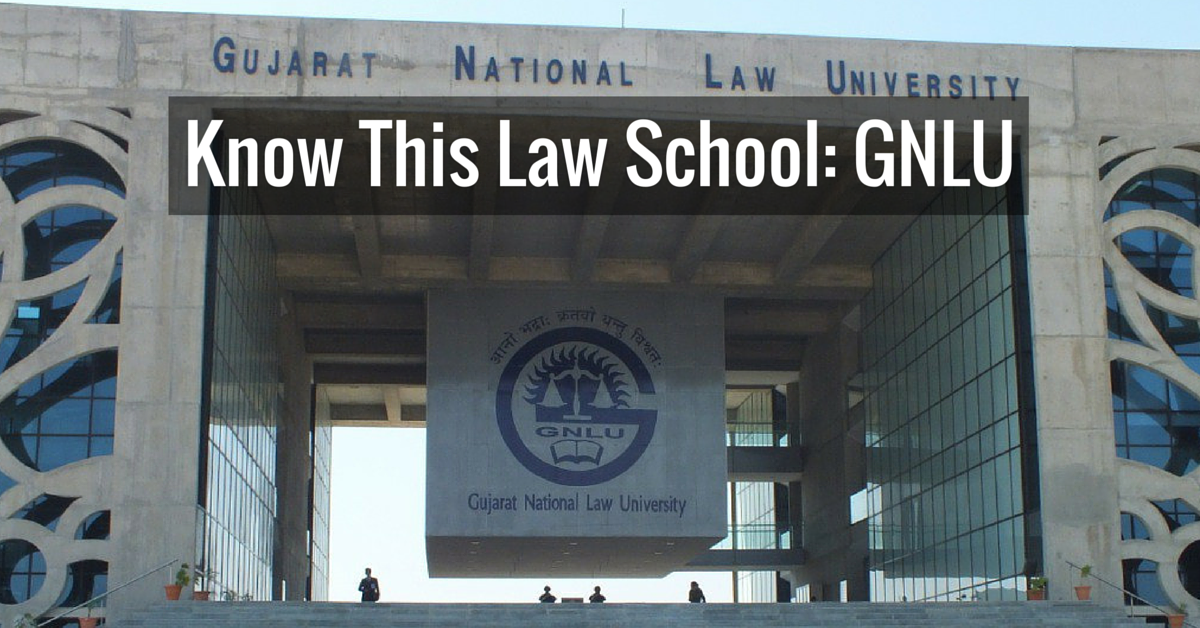
GNLU, Gandhinagar is one of the premier law institutes of the Country established in 2003 and has achieved considerable keeping in mind its nascent existence. Its popularity among the CLAT aspirants is noticeable. More on that – here.
Let us take a look at how GNLU fares on the basic criterion laid down:

Quality of Education

The GNLU faculty consists of the good, the bad and sometimes the downright ugly. Some of the Professors are inspiring and cause you to develop a deep interest in the subjects while other seem to be the run of the mill professors. The quality overall is pretty good. The good thing about the faculty is their readiness to interact and nurture the student. You can access the faculty page from here.
GNLU follow a two-semester system and the exams consist of the internals having a weightage of 40 marks (including projects, presentation, tests etc.) and an end term paper of 60 marks. In the 5 years integrated course, the University offers B(B.A)/LL.B (Hons.), (B.Com)/ LL.B (Hons.), (B.B.A), LL.B (Hons.), (BSW)/LL.B (Hons.) or Bachelor of Science (B.Sc.), LL.B (Hons.) along with LL.M. Also, for First Years, it is compulsory to learn at least one foreign language (though the rules do keep changing).
One good thing is that along with the academic work, the students get a lot of free time to pursue other non-academic activities and publish papers. This is in part due to the fact that every Saturday and Sunday is non-working.

Recruitment

GNLU is not the type of University where one is guaranteed placement even if one does not do anything noteworthy in the 5yrs of Law School. This is one harsh reality.
GNLU’s batch of 06-11 did exceptionally well at recruitment and had 15 students placed at Amarchand Mangaldas, one of the leading law firms in India. One of the qualms for students has always been that there has been a slight lack of interest from a few of the other top law firms.
A few of the toppers also opted to not sit for requirements and instead are pursuing LL.M. abroad. Thus, if you are reasonably hardworking, life in GNLU shouldn’t be too bad.

College Environment


GNLU has a student-friendly environment where a lot of work including organizing the Annual GIMC and other competitions is handled by students under the able guidance of the Faculty Convenors.

It also organizes its annual Intra-Fest ‘Pentagram’ every even semester (around Feb-Mar.) which sees wide participation from the student community. Due to infrastructure limitations (before the New Campus was inaugurated this January), the University had not organized a National Fest, but plans are on-going to have the same next semester.
The curfew time is 9:30 P.M., which is strictly applied for the girls at least. Amicable and friendly relations between seniors and juniors are the norm and ragging is strictly prohibited.

Infrastructure:

Yes, that is the Preamble to the Constitution!
If the above photograph is something to go by, the 50-acre campus is monumental in its own way. Though the hostel are not fully constructed yet and the students have to take a half-hour commute by bus from Sector 24 to Koba, Gandhinagar; they are slated to be constructed sometime this semester.
Thus, the new batch would get their residential hostels at the New Campus only. The reading room, library, Administrative Building are all State of the Art. More information on the campus can be accessed from here and here. Plans of constructing a gymnasium and a swimming pool etc. are also in the offing.
The hostel rooms, situated in Sector 24, Gandhinagar, are spacious and are given on dual occupancy basis. The hostel is in the center of the city and civic amenities are easily available. However, Gandhinagar is the place for the peace loving, so often students have to go to Ahmedabad, which is close to an hour away for recreation.
The new campus, however, is slightly closer to Ahmedabad and buses and jeeps are easily available, so commuting is not an issue. The Boys and the Girls hostel have minor issues from time to time, but otherwise it is smooth sailing.

The City:

As mentioned before, Gandhinagar is more for the peace-loving individual.
There are a lot of cheap places to eat and the city itself is relatively clean though sometimes it’s hard differentiating between the roads!
Gandhinagar has decent weather, with the extremes not being usually touched. However, it gets very hot around the month of May, which is luckily the time when the summer vacations begin.

PS. One of the worst things in case you are a Non-Vegetarian is that the Mess does not serve chicken, fish etc. at all. Thus, everyone has to instead shell out occasionally to eat outside.

So, here ends the dossier on GNLU, if anyone has any questions regarding the same, please feel free to ask!

Download Now

Measuring What You Are Doing On The Cutting Edge

0
Measuring What You Are Doing On The Cutting Edge

Measuring What You Are Doing On The Cutting Edge

This is not for everyone – but those who are taking initiative, walking their own path or working on cutting edge of something need to monitor their own progress ceaselessly. When you don”t have deadlines to meet or appraisals or bosses to set your goals and agenda, there is always a palpable risk of going in circles and not realizing.

Can you measure what you are doing? Can you measure what you want to do?

How can you tell if you are doing enough?

It is easy to feel busy and productive, and ignoring to measure whether you made any real progress.

Of course, to be able to measure progress you need to know where you have to get to, and how much time you have.

Are you ready to measure what you are doing yet?

Download Now

Branding v. Being

0
Branding v. Being

This is being republished from A First Taste of Law.

Branding v. Being

“I want to separate out the word personal from branding. I think a personal brand is a moment when you start to lie. Focus first on the personal and you beat up all the competition instantly. Just being honest, being yourself, doing the work, applying the daily practice for just a few months, and your personal self will come to life more than it ever has before. You’ll be honest with the people around you and that automatically beats all the competition because they’re too slick, too dishonest, too focused on their brands. You’re not focused on that anymore. When you come up with honest, sincere ideas for people, and you give rather than expecting to take, then you suddenly have separated yourself out from 99 percent of the competition. You win. And it’s that easy to do it.”


Recently, I came across this quote of James Altucher and got really impressed by it for some counted number of minutes.But then I wondered is this what personal branding is all about.

Wikipedia, though not a reliable source, suggest that the notion of personal branding is based on self-packaging. Further defined as the creation of an asset that pertains to a particular person or individual; this includes but is not limited to the body, clothing, appearance and knowledge contained within, leading to an indelible impression that is uniquely distinguishable.

So, can we say that personal branding is about being ostentatious? I hope not.

My perception of personal branding makes me think that it is more about building an image, or may be looking at yourself from a third person’s perspective and figuring out who would you like that XYZ to see you as and then strive to be what you want to look like.

But if, in the process, you realize that this is not what you are, chuck it immediately.

But if it’s working well for you, stick to it, act accordingly. Personal Brand is like a basic set of principles you live with, and may a tornado try to titillate you from your position, you just don’t move! Or maybe you can see it as a skeleton around which you build the flesh of your social/ profession/ personal life and until and unless you don’t fracture the skeleton, you can’t possibly do much about it.

Personal branding helps people in recognizing you with a particular set of characteristics.

Let people know you that way.

But then, is there a way where you can build yourself but not brand yourself?

The other way is to sway like the whiff of air, do whatever, and just be. And maybe, that would define you. And that would become you. You can be uncertain. You can change your ways anytime you please. You need not care about people’s perception about you is or will be.

People would then recognize you with your maverick ways. But then isn’t it again a way to brand?

Download Now

How to get compensation from Railways for poor service: 3 things every Indian must know

3

This article was written by Vaibhav Raaj, a PhD candidate at JNU who is also a freelance writer and independent researcher mainly on labour and agricultural issues.

Vaibhav Raaj_Profile_Lawsikho

The achchhe din juggernaut is continuing. The government has recently decided to sell train tickets at airplane rates. The government has claimed that this will help the railways to become profitable and at the same time provide premium services to its customers. We would like to thank NDTV for calling the bluff at least on this one.

Have a look at their report here.

It is no secret now that there is nothing premium about the services being offered by the railways. However, as the saying goes: every dark cloud has silver lining too. We will teach you how to take railways to task for 3 irritating things that happened to all of us while travelling in Indian Railways.

The experience so far is that even if you buy the costliest Premium tickets you can rest assured that you are highly likely to end up in one or all the three of the following possible unfortunate situations.

  1. There will be no water in the bathroom in any of the compartments.
  2. Someone would enter your coach without ticket and either harass you or steal something from you.
  3. Overcrowded trains and cramped berth can cause you an injury.

First of all I would ask you to pray that you do not land up in any of these situations. But then ever since God failed to punish Salman Khan for making so many bad movies one after the other, I have turned into an atheist. So I would urge you to brace for the worst and know your legal rights as a consumer against the railways. Following some important judgments of the Consumer court in matters pertaining to the railways, you should know the following

  1. You have a right to clean water in your train compartment

If there is no water in the railway compartment, the railways would be considered guilty of deficient service. If brought to the notice of the consumer court, the railway officials responsible can be strictly warned and even penalized for inaction.

Complaint: In a complaint directed against the South Eastern Railways, the National Consumer Dispute Redressal Commission granted a compensation of Rs. 10000 to a family that had to travel without water in the hot month of May. The appeal by railways was dismissed as this was a clear case of deficient service by the railways.

  1. Railways are bound to prevent unauthorized entry in reserved train compartments

Entry of unauthorized persons in a reserved coach is again considered deficient service. Most of the times untoward incidents of sexual harassment or theft occur when a crowd of local commuters boards a long-distance train. The coach is suddenly buzzing with people, especially men flaunting their political clout and waiting for the slightest provocation to break into a fisticuff. It is particularly uncomfortable for women. What is most unfortunate is that the ticket examiners very conveniently disappear during such stretches of the journey.

Despite this reality it remains a common occurrence in trains across India and the railways refuse to take any responsibility for the actions of such intruders. However we would want you to know that even if you somehow escape any unpleasant experience with such intruders, the mere presence of unauthorized persons in your coach is ground enough for you to sue the railways in the consumer forum. So if someone comes without a ticket and asks you to “thoda adjust” as he has to go till the next station and he is “staff”, you can call the TTE and ask him to remove that person from your berth. If the TTE refuses to help you out, you can directly approach the consumer forum with a complaint of deficient service against the railways.

Complaint: Two passengers travelling from Junagarh to Ahmedabad had their luggage stolen when they were asleep during the night of the journey. It was clear that the thieves were able to make unauthorized entry into the compartment with no security to prevent them. The National Consumer Disputes Redressal Commission held that it is the responsibility of the TTE to prevent anyone without a valid reservation to enter the train compartment especially during night hours. The Commission clarified that this ban on unauthorized entry applied to even the relatives of the authorized passengers entering the coach to see them off with a platform ticket. In response to the complaint the railways argued that as per the rules they are not bound to secure any luggage that has not been specifically registered with the railways. You need to have a receipt from the railways for a permission to carry the luggage if you want them to take responsibility for its protection during the journey.

However this defense by the railways did not stand before the Commission as it held the TTE and by extension the railways responsible for failing to prevent the entry of the thieves in the compartment. Therefore the theft occurred due to a negligence by the railways. The Commission awarded the complainants a compensation of Rs. 15000 along with an interest of 9% per annum.

  1. The passenger is allowed to approach the Consumer Forum besides the Railway Claims Tribunal

In the above case the railways also questioned the right of the passenger to approach the Consumer Forum. Rules from the Railways Claims Tribunal Act were cited to argue that any disputes of this sought were supposed to be addressed within and by the authorities of the railways.

You should understand that when faced with an aware passenger the railways will do all in their power to stop you from filing a complaint outside their jurisdiction. It often happens that your goods get stolen during a journey and the Railway Protection Force (RPF) and GRP make you run around citing lack of jurisdiction on the spot of the theft. If you face such harassment by the railway police or they refuse to take your complaint, you can definitely approach the consumer forum with your complaint.

The National Consumer Disputes Redressal Commission has very clearly stated that the train passengers are to be treated as the consumers of railways’ services. And therefore they have all the right to approach the consumer forum even if a remedy exists within the ambit of the Railway Claims Tribunal. While the forum cannot supplant the decisions of the tribunal, it can nevertheless give supplementary relief to the passengers as consumers.

So from now on, do not consider Indian railways as a legal blackhole where you cannot question their faults once you step out of the railway station. Every time you think you did not get the worth of your ticket money please feel free to approach the consumer forum. You will soon read an article from me on how to file consumer claims.


Download Now

Know this Law School: RMLNLU

0
Know this Law School: RMLNLU

This article is being republished from A First Taste of Law.

The next in line in “Know this Law School” post is on RMLNLU written by Madhurima Dutta who is in 2nd yr in RMLNLU.

RMLNLU

Over to Madhurima.

RMLNLU


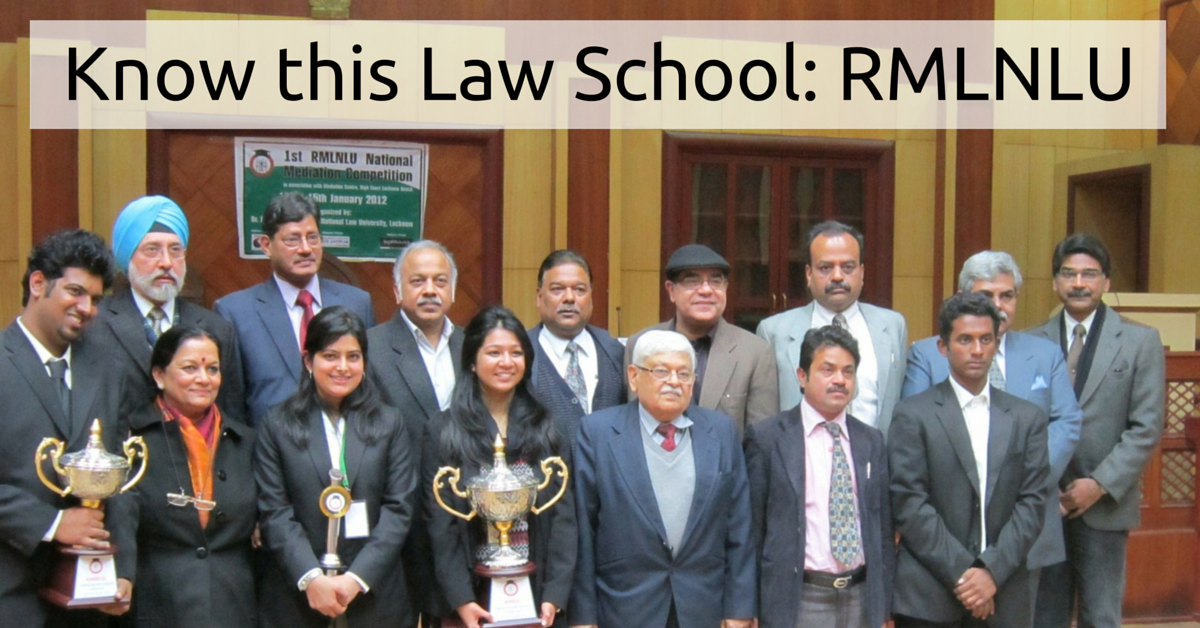
RMLNLU is one of the premier law institutes in this country which provides quality education and world class infrastructure. RMLNLU has done well in 2011 with a record number of placements for the first batch. If you are planning to build a career in law, RMLNLU can be a good option for you.

Quality of Education

As far as quality of education is concerned, though faculty is not the strongest point but RMLNLU has a decent faculty comparable to other law schools. Faculty members are active and regular participants in conferences and other activities. Most of the teachers are holding PhD degrees and are very interactive.
RMLNLU follows a two semester based structure which includes mid semester examination and end semester examination along with projects and presentations for every subject.
RMLNLU has been doing very well in various Parliamentary Debates and moot court competitions. In terms of exposure to such activities RMLNLU compares well with other renouned law schools.

Recruitment

Certainly it’s a budding but promising university. Students from the very first batch got placed in reputed firms and organizations with decent packages, while many others went for LLM and for judicial clerkship at the Supreme Court.

College Environment

RMLNLU has a student friendly environment where along with imparting knowledge overall student development is the main goal of this institute. RMLNLU is a ragging free campus where seniors and juniors share a healthy relationship. From the College administrative building to the hostel mess you will find everything is very well organized. The institute is highly disciplined with strict curfew timings.

Infrastructure

Infrastructure is the base on which a good Educational Environment can be built. The Campus spread over an area of 40 Acres is situated in a clean peaceful and pollution free environment within the city. RMLNLU is having centralized air-conditioned building with a seminar hall, moot court hall equipped with latest audio/ video facilities and a library with a huge number of books and Journals. If you are into sports, you are certainly going to like RMLNLU for its excellent Lawn Tennis Court, Badminton Court and Football ground. The college also boasts of a gymnasium, swimming pool (not yet functional) and a fairly decent canteen with catering from one of the best restaurant in Lucknow.
RMLNLU offers excellent residential facilities for students, staff & faculties. All the rooms are spacious and have been provided with separate beds, study tables and cupboards. Each floor has a facility for clean toilets and bathrooms. Hot water is provided during winters. Round the clock security is available. There is a dedicated warden in the hostel who stays round the clock in the campus to take care of all their problems. Living in the hostel campus is not only a comfortable experience for the students but also enables them to develop into independent and responsible human beings.

City

Lucknow is popularly known as ‘The City of Nawabs’ and known for its Kababs and Biryanis. A wonderful place for the foodies. The unique combination of its cultured grace, fine cuisine and newly acquired space is its most promising feature. And the most important thing, unlike other law schools RMLNLU is situated within the city of Lucknow. The campus is located in the South-West part of the Lucknow City and is around 3 km away from an airport and 7 km from the railway station which makes it very convenient to travel from any part of the country.


Download Now

Are you ready to work at a law firm?

2
Can You Serve a Client As a Budding Business Lawyer?

Can You Serve a Client As a Budding Business Lawyer?

A lawyer is of no use if he/she can’t serve a client. Consider the following reality scenarios, on the life of law students:

Reality 1: Recruitment in recession

Jay was a law student with impeccable “CV value” – he had great grades, internships, laurels at moot court competitions and publications to his name. Yet, recruitment season proved to be disappointing. Interviewed by a power manufacturer and a mining company, his inability to answer sector-specific questions let him down. He had even taken elective courses in subjects related to the firm’s business, yet although his concepts were clear – he failed to wrap his head around basic practical issues.

Reality 2: Life with, and without commercial law

Aditya and Ashwin, both diligent students, and eager learners made it to a mid-sized law firm in Mumbai, which had high-quality corporate work. Aditya was a quick learner with a sharp mind, and if given some time and resources, he could learn subjects fairly quickly.

At the law firm, however, Aditya was shocked by the kind of work pressure and timelines he faced and found it hard to cope. The vast amounts of information he had gathered at law school seemed abstract and difficult to apply to the ground level problems that required solving. His struggle to adapt to practical situations took him almost 18 months of struggle.

Ashwin simply did not have a clue of what to do and quickly lost hope and interest in his career as a commercial lawyer. He quit within a year and applied for an LLM program.

Aditya’s conclusion: After 18 months, Aditya realized that these skills need not necessarily be learned through experience, and wishes these were ‘taught’ systematically. In fact, today he is convinced that Ashwin was unable to give his law firm career a fair chance, due to lack of prior training. This was also the cause for his own struggle at work.

The above situations are familiar to most law students and lawyers. Colleagues, batchmates, seniors, or sometimes, juniors (and in some cases, it includes us) have faced them at some point or the other.

Most law firms today are struggling to find the right methods to train and motivate juniors. It’s a disconcerting fact that more than 40-50% of those who join law firms quit within the first 3 years. Where do these people go? I had no answer to this question when I was graduating. I still don’t. If you ask your seniors, you will realize that nobody knows what the answer really is.

If you ask around, you will see that most law graduates already have a preset plan when they join a law firm or soon after (higher studies, litigation, etc.). Unfortunately, the converse is not true, I have never met anyone who planned to quit initially, but later changed their plans and stayed back. This is a reality that requires investigation- how is it that jobs which people strive and struggle through law school to obtain are so quickly traded in for any other option?

Why do fresh law graduates quit law firms? Let’s analyze the exit syndrome before we see the answer.

What are your skills as a law graduate? As law graduates, we are all trained to read the law, read commentaries and cases to interpret it, and argue. But if you’re working in a company or a commercial law firm, you can’t afford to think of arguing on the law. Who are you to argue? A law graduate? There are advocates with greater domain knowledge and experience than you, and some of them are arguing cases on those issues live in courts. You are nobody to take calls on the law. That is the role of a judge, and only he is empowered to adopt it. Your argument can cost millions for companies and clients.

What are clients’ expectations? Clients don’t want legal arguments. Clients want certainty with the law, and they want to move ahead with their business in a safe manner with the minimal element of legal surprise. More than 95% of the work at a commercial law firm will require you to understand volumes of regulations, policies, orders, notifications. It will require you to perform filings, obtain permissions and consents, review documents (as an expert) and other practical tasks.

What are graduates thinking when they quit?
People quit, complaining that commercial work is not enjoyable, is repetitive and not rocket science. Maybe it’s not science, but did you want to be a rocket, scientist? Or do you want to be a smart, robust and creative thinker?

Is it fun to work at a law firm?

The question is subjective and its answer will differ for each person – you should read the clues below to find out your own answer. I have given mine at the end.

How would you feel if clients looked up to you for help in negotiating their deals?

How would your client feel about you if you drafted clauses that saved him and still managed to convince the other side that it protects their interest?

How would you feel if you were able to structure a complicated deal that everyone was struggling with?

How would it be to tell your peers that you are liaising with a regulator on a burgeoning commercial issue, such as the Vodafone tax case?

How would it be to listen to a senior counsel argue a case exactly as you briefed him a day before, in a hearing before a court?

I believe there is a unique thrill to each of the above, and somewhere deep inside us, and you may be able to identify with it. We are free to choose not to make it our career, but in a lot of cases, we seldom make a choice. We don’t even give it a fair chance.

Solving the Exit Syndrome

Survival of the fittest is still the rule. Adaptation is what you need to stay fit and survive.
You have to adapt your mind and see the broader picture as a commercial lawyer. This requires moving beyond the mundane tasks that you may be assigned, and see it as part of an exciting problem-solving an exercise. To a great extent, training can enlighten you to the approach required by a commercial lawyer, explain the kind of practical tasks you are required to perform, and shows you where to look. This will inspire you in small doses, to go out and do the bigger tasks when you start working. You will be able to see yourself improve drastically even at internships. You’ll know this from the way seniors perceive and treat you, and from their feedback.

What if there was a course that taught you how to get various licenses, incorporate businesses and draft and structure venture capital agreements?

When I was studying in law school, I wished that I had a glimpse of what life at a commercial law firm should be. I had interned at some of the top law firms, and wished that I could learn how transactions were done and discuss the impact of regulatory developments on transactions. Unfortunately, at each point, I had to scramble and look for the answers myself. I was happy to know, when I worked at a law firm, that some of the answers were absolutely correct.

This got me thinking – if more than 90% law students graduate to become commercial lawyers, shouldn’t there be something systematic that provides practical training on commercial law? Maybe teach REAL tasks that commercial lawyers perform?

I am happy to announce that NUJS, Kolkata has announced a 1 year course for law students on practical aspects of commercial law (taught on an online learning management platform).
Students of other disciplines who are interested in entrepreneurship would also find this course very useful. Centred around the emerging startup movement in India, the course aims to build a community of entrepreneurs well-informed in business law, and law students who can serve start-ups from college itself, and subsequently use the knowledge and experience for high-profile clients in law firms.

Those who successfully complete the course will get a diploma in Entrepreneurship Administration and Business Laws from NUJS. The first batch starts on July 15, 2012. Click here to find out how you can be amongst the first to learn practical business law skills, before you even graduate.

To view the syllabus, click here. For inquiries, write to [email protected] or call 011-331-38901.

.


Download Now

Is it important to negotiate?

0
Why Don't You Indulge In Negotiation?

Most of the times there are two kind of reasons – for why you may want to avoid negotiation.

Why Don't You Indulge In Negotiation?

1 – You are the one who has to pay in the end.

You want the work done. You don’t mind a little difference of opinion at the end, but not before the work is done. You are in control – you don’t mind negotiating at the end. You are happy to postpone the negotiation.

2 – You are afraid to confront the reality of discovering your market price.

Maybe you are afraid to hear a no. You don’t want to risk a rejection.

Bonus – You implicitly trust the person you have to negotiate with

There is one more reason for not negotiating – but it is very rare. You trust the person you should be negotiating with so much that you don’t feel any need to negotiate. You know the trusted person will give you the best deal anyway. If that is the case though, even the other person wouldn’t mind if you bring up the negotiation right away – he has nothing to lose. Don’t test the trust, negotiate wherever you can.

Do you wait for the other person to bring up the matter of negotiation? Do you try to avoid it? Why?

Avoiding negotiation does not make you look nice, it usually means that you are not sophisticated enough to negotiate. People who negotiate frequently and negotiate early usually have a huge advantage over the rest. It is the advantage of working in symmetric information situations. There is no conflict between being generous and being a good negotiator.

Not negotiating is not generous, it is being miserly with your effort and intention. Although many people spend their life trying to be nice, they end up being miserly with information and timely action and hurting people who work with them in the process.

Be wary of people who avoid negotiation, they are emotionally insecure and will be difficult to work with in the end.

Download Now
logo
FREE & ONLINE 3-Day Bootcamp (LIVE only) on

How Can Experienced Professionals Become Independent Directors

calender
28th, 29th Mar, 2026, 2 - 5pm (IST) &
30th Mar, 2026, 7 - 10pm (IST).
Bootcamp starting in
Days
HRS
MIN
SEC
Abhyuday AgarwalCOO & CO-Founder, LawSikho

Register now

Abhyuday AgarwalCOO & CO-Founder, LawSikho