Download Now
Home Blog Page 1799

Webinar on Black money law and FEMA implications on poker winnings in offshore wallets (Paid)

0

hhh

(Conducted in collaboration with GLaws & Pokerguru)

As per a recent Black Money Circular, amounts in e-wallets from gaming or poker winnings would count as undisclosed foreign assets and could be liable to tax accordingly (see here). This has really raised a lot of confusion in the online gaming industry in India. This is a very complex issue, and as an advisor, lawyer, poker player, owner of an online gaming portal, or simply a gaming enthusiast you may be interested in knowing about the technicalities of the new law.

We are organizing a special webinar with Mr. Sunil Kumar Agarwal, Senior Taxation Partner at AZB & Partners and former Additional Commissioner of Income Tax (who specialized in International Taxation) to discuss the effect of black money law and foreign exchange regulations on winnings in offshore wallets.  You can find out more about the expert here.

Date: The webinar will be organized on September 13, 2015, Sunday

Time: 11 am – 12:30 pm

Cost: INR 1020/-. There are only 60 seats.

Detailed agenda of the webinar:

  • Does depositing and withdrawing winnings on offshore/international online gaming, poker websites etc. through e-wallets such as neteller or directly amount to violation of Schedule I of FEMA Current Account Transaction Rules? Alternative structuring alternatives under FEMA.
  • Compliances under the new black money law with regard to gambling/betting winnings remitted through e-wallets/directly from such websites particularly having regard to the clarification given in the recent black money circular (see here).
  • Penalties under the legal framework, i.e. Black Money, Income Tax Act and FEMA and what you need to be wary of.
  • Taxation and disclosure of winnings from offshore/Indian poker and gaming websites when: (i) TDS is deducted by such websites and (ii) if no TDS is deducted. Possible ways to structure remittance of winnings to minimise taxation liability.
  • Taxation on winnings in physical casinos outside India when:
    • such winnings are taxed at source in that foreign jurisdiction and India has a DTAA with that country and
    • when India does not have a DTAA with that company.
    • Ways to structure channelising the winnings to minimise tax liability in India (for eg: channelising it through specific foreign entities or vehicles, incorporating an offshore entity, investing the money abroad etc.)

The webinar will be conducted in a virtual classroom environment and we will be able to address participant queries within the above time slot.

Steps for Registering

1. Visit – http://ipleaders.glaws.in/webinar-black-money

2. Click on – “Sign Up Now”

3. Make one-time payment of INR 1,020. On successful payment, you will reach a confirmation page from where you can register for the class.

Download Now

How to be prepare yourself to be effective during CLAT exam

5
CLAT-exam

Be excited, not worried. Here is your Armour For Your Nerves Before CLAT.  These are preparation techniques used by toppers – so you can safely try these.

CLAT-exam


Tips and Psychological Manipulation To Kill Your Negative Anxiety

Tension. Anxiety. Nerves. How do you deal with these things before an exam? Especially if it is an exam which is a gateway for you to a world you have been fantasizing about for a while now, for which you have prepared for months, and you want to be at your best during the two hours of the exam. Alert, feeling sharp and energetic. There are a dozen thing to worry about – length of the paper, difficulty level, strange GK questions. Last thing you want to come between you and your law schools dream is your own anxiety which may compromise your performance.

What’s the best way to deal with exam blues?

Look, no one likes exams much. That’s the natural order of things. Some of us are positively scared of exams. Acknowledge it to yourself. Realize how afraid you are. Don’t sweep it under the carpet, face it right now. And then tell yourself that it’s alright to be afraid. Some anxiety is productive. It can be used to propel yourself faster, harder. You have been waiting for this moment for a long time. You are going to fight it hard, you won’t give an inch without a fight. Channel your anxiety into a fighting spirit.

There are two things you can do to achieve the perfect mental state during a test.

First, rehearse. Take mock tests. Attempt to solve past years papers in less time than the allotted time. This practice of testing yourself under adverse conditions will make your nerves used to such pressure. You should even feel a little thrilled about the exam, as this is the one exam that is going to transform your life. From school to law school. Your way to a rich, fast-track lifestyle; or a key to your empowerment for changing the lives of others in a few years down the line.

See the big picture. Visualise where you want to be. Know in your heart that that is where you belong. Feel calm, feel at home with your dreams. Know that you will achieve them. CLAT is just a small step in the whole scheme. This battle will be won, there is no other way. Writing CLAT and doing well is just an eventuality.

In short, practice a lot (solve a couple of past years papers right now if you haven’t been doing that yet) and feel at home with the idea that you are destined to make it through to CLAT. Taking the exam and acing it is just a matter of course.

The second thing you can work on is really interesting. This draws on the strength of your subconscious mind and is a terrific hack to prepare your conscious mind to battle fiercely without feeling the pressure. Before sleeping every night from now on till before CLAT, as you lie in your bed, close your eyes and imagine being in the exam hall. Imagine the bell ring, and the feel the paper kept in front of you, waiting to be opened, waiting for you to start solving. Imagine the tip of your pencil touching the red and white mosaic of the OMR sheet. Feel the anxious tension, like you are about to be launched. Like you are about to be unleashed on the paper with all your alertness and attention, destroying the problems one by one. It’s a hard battle, but you know the ending of this story. You are winning.
Read the previous paragraph before you go to sleep tonight. And imagine this before you fall asleep. Your brain and mind will take care of the rest. Let me know if you get tensed or nervous while taking the real test after doing this on three consecutive nights.

Download Now

Looking for an intern in Delhi interested in working on women’s rights/ sexual harassment prevention

0
Looking for an intern in Delhi interested in working on women's rights/ sexual harassment prevention

internswanted-lrg

Some cutting edge initiatives around anti-sexual harassment laws are under way at iPleaders. We are looking for a law intern who is interested in working on human rights or women’s rights issues for at least 2 months on an extremely exciting project.

The work involves a high level of research, writing and planning. While it is different from working in a law firm internship or under a litigator, there is a lot of creativity and planning involved. The intern will learn legal writing, business development, project management skills for professionals and get first-hand exposure on how to devise legal strategy and identify solutions that clients need. Some filing work may also be available.

If you perform well here, we can assure you that sharing this experience itself will enable you to demonstrate an edge in later internships, interviews for jobs or higher education and in your career as a successful lawyer.

Applicants must be willing to work from our office only. If you are interested in applying, please write to [email protected]. A stipend of INR 3000 per month will be paid. We are happy to pay a bonus if the work is super-awesome!

P.S. We do not believe that sexual harassment and women’s rights are issues of interest to women only – men are specifically encouraged to apply to explore opportunities in this upcoming area.

Download Now

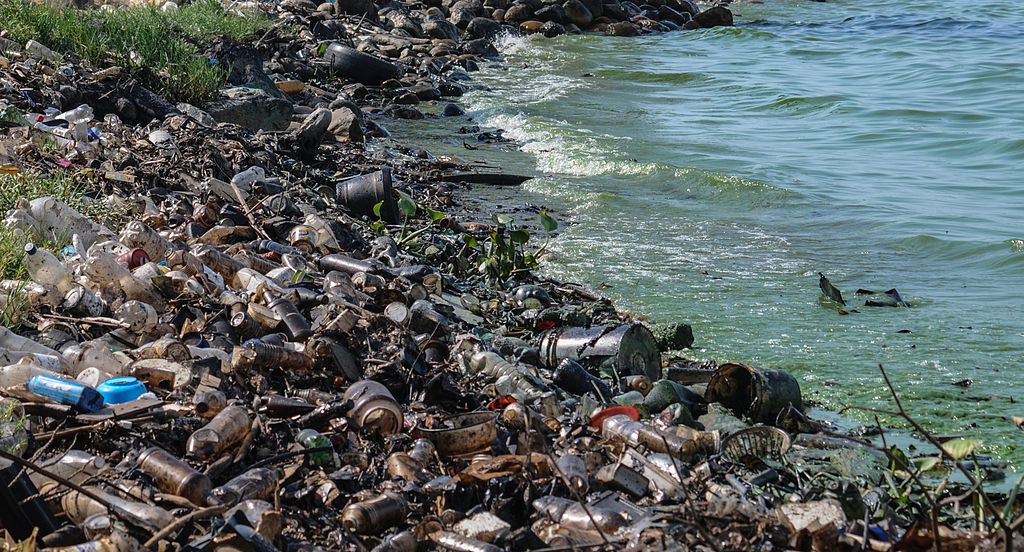
How And Where A Common Citizen Can File A Complaint Against Water Pollution In India

1
How And Where A Common Citizen Can File A Complaint Against Water Pollution In India

This article is written by Mayuri Khandelwal, a student of HNLU, Raipur.

A year after Prime minister’s massive 1,500 crore budget allocation to clean Ganga project the Supreme Court of India looked unsatisfied with the slow progress on cleaning the holy river. Ganga cannot be cleaned by simply pouring money into it. There needs to be ‘Janbhagidaari’ in order to curb pollution of the water bodies in India. Here lies the root of all the problem that India is facing to clean its waterbodies. Can citizen really challenge a firm which is polluting the water bodies? Being a responsible citizen of the country have you ever thought of filling a complaint against the pollution of the water bodies in your locality? If you think that cleaning Ganga is a big issue and common citizens won’t have to deal with it, how about the water that you drink at the railway station. Is the water supplied really safe for drinking? The Delhi high court concern over this issue shows the seriousness of the judiciary towards providing clean water to the citizens of the country. If the quality of water supplied is really low it will amount to water pollution and will infringe our fundamental right under article 21 of the constitution.

This question is important because it deals with our fundamental rights. The Supreme Court has held that right to environment is a fundamental right included in right to life under article 21 of the constitution of India.[1] Everyone has a right to enjoy clean surroundings and pollution of water bodies infringes this right. The State also has a duty to protect the environment as provided in article 51-A of the constitution. Even section 277 of the IPC (Indian penal code) makes polluting the water bodies’ crime. The text of the section states whoever volun­tarily corrupts or fouls the water of any public spring or reser­voir, so as to render it less fit for the purpose for which it is ordinarily used, shall be punished with imprisonment of either description for a term which may extend to three months, or with fine which may extend to five hundred rupees, or with both. Sec 278 states that whoever voluntarily vitiates the atmosphere in any place so as to make it noxious to the health of persons in general dwelling or carrying on business in the neighborhood or passing along a public way, shall be punished with fine which may extend to five hundred rupees. So the environmental rights and human rights are interlinked and inseparable, hence the people should be aware of the remedies available to them to enforce their right.

When did it all begin?

The human conference on environment held at Stockholm in 1972. Popularly called as the Magna Carta of human environment warned that the “natural resources of the Earth including air, water, land, flora and fauna and especially the representative sample of natural ecosystem must be safeguarded for the benefit of the present and future generations through careful planning or management as appropriate.” This marked the beginning of the environmental rights in the international arena. The need for environmental rights was first recognized in India seriously after the Bhopal gas tragedy although the water rights in India came into existence after the enactment of water act of 1974.[2]

This brings us to another very important question as to the history of water pollution suits in India. The first known case in this regard is Galstaun v. Dunia Lal in Calcutta where the plaintiff contended that due to the liquid effluents discharge by the plaintiff caused him health risk. He won the case and the damages had to be paid by the defendant. This case shows that more than 100 years back the people of India were as aware of their rights as they are now. Similarly in a case in the year 1926 the court ordered to stop two sugar factories that were operating at that point of time and releasing dirty water in the river and thereby causing water pollution. Though the only remedy available that time was under law of torts and the suit was filed for causing public nuisance. With advancement of law modern Indian citizen has multiple remedies against the polluter. Still there is a scope of improvement in law and the procedure needs to be less complicated. In the present scenario the law has advanced and have specific remedy for causing water pollution instead of filling case for public nuisance under the tort law. Post Stockholm conference on environment the laws in India have also been affected largely. Until then only government had the right to sue the polluter.

Citizen suit

The legal remedies available to the citizens with regards to Water pollution in India are limited as compared to countries like US, UK, Canada and Australia and are still in a developing phase. It was in the year 1986 after the coming of Environmental protection act that a citizen got the right to file a complaint under section 19 of the EPA and prosecute the polluter. But this is subjected to restriction that a pollution control board sample is only admissible by the court and the sample given by citizen unlike in U.S. was not admissible. In India, therefore you have to first complain to the PCBs (pollution control board) and cannot directly approach the court. Moreover a 6-month prior notice has to be given before filing the suit which gives ample time to the polluter to get way with the crime. By amendments later in the water act 1974 it has been made mandatory for the PCBs to disclose all relevant information which is needed by person filing suit against any pollutant.

 Citizen suits come in three ways. Firstly, an individual citizen can bring a suit against a citizen, corporation, or government body for engaging in conduct which the statute prohibits. For example, a citizen can bring a suit against the corporation under this act for illegally polluting a waterbody. Secondly, a private citizen can sue a government body for failing to perform a non-discretionary duty. For instance, a private citizen can file a complaint against the Environmental Protection Agency for failing to promulgate regulations that the act required it to promulgate. In third situation which is a less common form, citizens may file a complaint appealing to the court to grant an injunction to abate a potential imminent and substantial endangerment involving generation, disposal or handling of waste, regardless of whether or not the defendant’s conduct violates a statutory prohibition. This third type of citizen suit is analogous to the common law tort of public nuisance.

Public hearing- stop it before it starts

Under the environment impact assessment (EIA) public hearing is mandatory for some specified categories[3] of projects to get environment clearance.[4] Under this any person who is likely to be affected by the grant of environment clearance to the project can attend the public hearing and raise their concern in front of the relevant authority. The notification is given in the newspaper of such public hearing. However the amount of harm a project can cause to the environment is difficult to predict by an ordinary man before it starts specially its impact on water bodies which it may pollute in the near future.

The EIA processes are mostly undertaken through public consultation rather than participation. Public consultation means the process by which the concerns of the local people regarding the adverse impacts of a project are ascertained and taken into account in the EIA study. This concept was introduced legally in India in the form of ‘public hearing’ in the year 1997. Since then the public hearing process has been conducted as a compulsory step of environmental clearance for most projects and activities.

The role of the public in the entire environment clearance process is quite narrow in India. The process of public consultation starts at a very later stage when the EIA report is already prepared and when the firm is ready to show it to the authority for getting environmental clearance. When the public consultation takes place at such a late stage it misses some valuable issues and also the concerns of the general public. The community members also do not have any access to the final report of EIA so they do not even know whether the changes suggested by them and the reforms suggested are implemented or not. So as of now the public hearing is having various limitations and the purpose of it was to include more and more participation from the public and make it inclusive but it has rather become procedural in its nature.

The new notification was an opportunity for the government to overcome the weaknesses prevailing in the public hearing process but it turned out to be of no use. This provision can be misused to further limit the role of the public in the entire process.[5]

Cases in the past have shown that the objectives of public hearing have not been accomplished and the mission to involve people in the environmental clearing process has failed. Several means have been devised to keep the public away such as poor circulation of notice, politics, etc.

RTI and PIL – tools in the hands of public

Majority of cases before the court are writ petitions, by individuals acting on a pro bono basis.  PIL is a result of the relaxation of the locus standi rules while departing from the “proof of injury” approach.[6] These cases are concerned with the rights of the community as a whole rather than an individual. In cases of water pollution the PIL was first used in the case of Ratlam municipal Corporation v. Vardhichand[7] where the Supreme Court had introduced the concept of PIL for the first time and had stated that a responsible Municipal Council constituted for the precise purpose of preserving public health, cannot run away from its principal duty by pleading financial inability.

Right to information which is a fundamental right flowing from article 19(1) (a) of the constitution has been recognized by the supreme court in the environmental laws.[8] The way to lodge a complaint against water pollution appears to be quite simple. A person can file a petition obtaining documents on the suspect industries under the right of information provision and then file a PIL under article 32 and 224 of the constitution in the appellate courts seeking the remedy and prosecuting the pollutants.

 But this is not as simple as it appears to be. The procedure is quite complicated and costly. Firstly the RTI gets trapped in the procedural aspects. If we file an RTI to the pollution control board for obtaining information against any pollutant firm the PCB can deny giving such information under section 123 and 124 of the Indian Evidence act if it thinks it is in national interest to do so. Also placing a PIL needs a sum of 50,000 to be deposited in the high court and 1 lakh in the Supreme Court which is forfeited if you lose.

The judicial gateway for a common man to curb water pollution is limited to filling of PILs, public hearings, and under Citizen’s suits. It appears as if the citizens have been excluded explicitly from prosecuting the polluters. The remedies which are available also have many loopholes which are exploited by the polluters to get away with the punishment for environmental crimes.[9] The law needs to be more in favor of allowing the citizens to sue the water polluters as they have a better knowledge of the water pollution in their locality.

Hope for Speedy justice in cases of water pollution after the establishment of National Green Tribunal (NGT)

In 2010 after the enactment of national green tribunal act the cases relating to the Water (Prevention and Control of Pollution) Act, 1974 and The Water (Prevention and Control of Pollution) Cess Act, 1977 were transferred to the NGT. This was to ensure that the speedy trial of the cases related to environment degradation takes place. Now if a person has to file a case regarding water pollution he should approach the NGT which has been specifically made for the purpose of dealing with issues of this kind. The civil court has now lost its right to admit complaint regarding this issue. The rules of filing the complaint remains the same and there is no amendment in the procedure and the evidence required for the cases relating to water pollution. The NGT has insured only speedy trial for cases of pollution and environmental degradation but there is a need for reformatory changes in order to encourage more and more citizens to turn up for filling complaint against the water pollution. The sample given by citizens regarding water pollution should be accepted by the NGT to prevent the polluters take advantage of the loop hole in the procedure. The provision in the NGT Act that it can

So that’s all about the procedure to become a water-rights activist and cleaning many Ganga’s nearby.

[1]  Subhas V State of Bihar

[2] http://www.legalservicesindia.com

[3] 29 categories as specified in annexure 3 of the environment(protection) act 1986

[4] http://www.environmentallawsofindia.com/

[5] Industry and environment. http://www.cseindia.org/

[6] Role of Indian judiciary in addressing air and water pollution, justice Hima kohli

[7] AIR 1980 SC 1622

[8] State of Uttar Pradesh v Raj Narain

[9] Kanwaljit Kaur; (2000); Law and Disorder; Down to Earth; Society for Science and Environmental Communications; Vol 6; No. 23.

Download Now

Legal Education in India: What lies ahead?

0
book
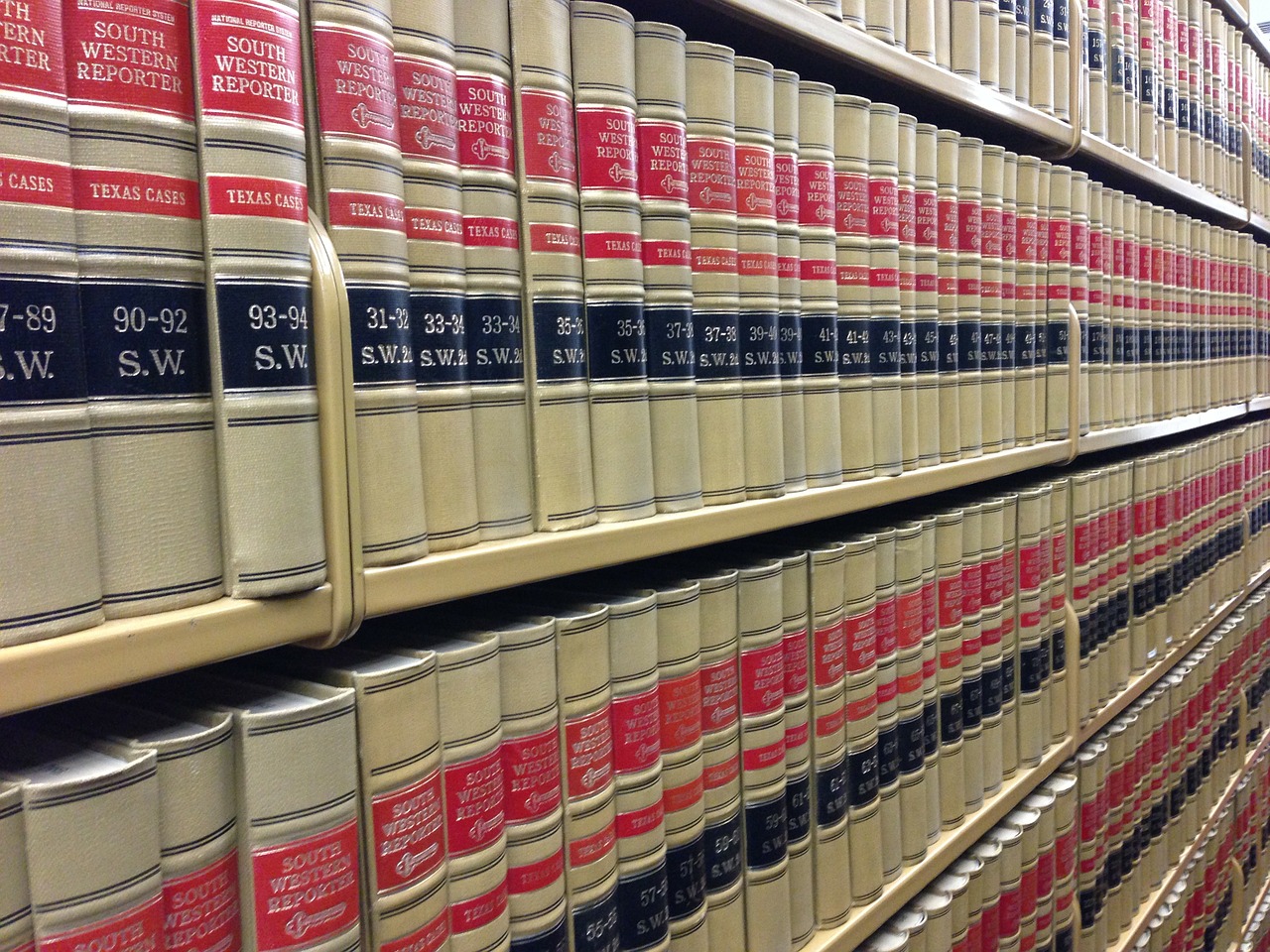
Image Source: https://bit.ly/2uiQIbF

law-books-291676_1280

This article is written by Bhavesh Guliani, a student of CLC, University of Delhi.

ROLE AND IMPORTANCE

Legal system in India has its deep roots in ancient Indian civilisations. At that time the sources of law were the holy books and were in the nature of religious statutes. However till date, law as a tool to reform our society is overlooked and needs to be reanalyzed. The role of law and lawyers has been indispensable throughout our history and modern times. All the major drastic reformations that took place around the world, be it the French revolution, American or Russian revolution or our own freedom struggle, it is conspicuous that figures from legal background were seen as prominent leaders. Thomas Jefferson, Danton, Abraham Lincoln and Lenin are some of the names out of many who inspired the world with their aberrant intellect. In our country the role of lawyers has not been any less momentous. From the person known as father of our nation to the first prime minister and president, most of the leaders of national freedom fight were lawyers. Strengthening the legal education system is the need to face new challenges that we face as a country. Today, the scope of legal education is not confined to imparting knowledge alone but to prepare and train students to be policy planners, business advisors or negotiator of any interested group which may be a foreign company or a collaborator or cater the needs of an association looking to merge or amalgamate.

Contentions and clarification

 The first step in the direction of organising legal profession was taken through the Regulation Act of 1773. Since then law has evolved to a great extent. Formal legal education came into existence with the establishment of first professorship of law at the government Ephistone College with the primary aim of equipping students so that they could help in the administration of justice and thus serve the interest of administration. Post independence, various commissions and committees have been formed for the development of legal education. Though considerable steps have been taken to review and improve the legal education, the approach of universities and colleges has been more or less the same. The focus still remains on the theoretical aspect than the practical and it will not be wrong to say that the brilliance of our lawyers and academics standards is a result of sheer work and extra efforts done by them. With the establishment of national law schools, the scenario seems to change a bit. With their academic rigour and focused training laying strong emphasis on project works requiring exhaustive researches, their graduates are more competent and well suited to meet the demands of domestic and global markets. On the other hand, the methods of teaching in 3 year colleges remain more or less the same. Because of their qualitative curriculum, the graduates of national law schools are preferred by premier global and national law firms paying hefty packages over the graduates of 3 year law colleges. Accreditation of colleges is another issue which needs to be resorted as standard of teaching as well as other facilities available to students should be the same in every college or else it will lower the regard for the profession by producing graduates who are incompetent to reason the intricacies which pertain to law as a profession.

Another factor responsible for the lacking skills in law students is the quality of education and skills taught in the institutions. The teachers are held at the upmost stature in the minds of students as they are the ones who disseminate knowledge. The teachers argue that the university and law schools do not provide the necessary incentives and distinctions which a law teacher deserves. The argument seems valid if we understand the fact that that if a person wants to teach in a subject other than law, the person needs a bachelor and a masters degree in that discipline but for a law teacher there is an additional three years before LLB or two years in case of an integrated 5 year law course. If we try to quantify the educational standard of a techer solely on basis of years spent into becoming one, then law teachers have an additionl 2 or 3 years worth of experience and regardless of that distinction, they are held at the same stature as other teaching faculty. It has an implication which suggest that those extra years spent are worth nothing when it comes to teaching and this attitude adopted by the universities disincentivises the teachers. If teachers are not taken care of then they are unable to perform their duties in the way they should and the entire structure of legal education becomes flawed. It would also be pertinent to take notice of the eligibility criteria of the teachers who teach in our law schools. For a person to be eligible to become a teacher they have to take either the national eligibility test (NET) or the state eligibility test (SET) depending the choice of law school that the person wants to join but at no point the exam ensures that the to be teachers are properly trained and possess the skills essential to teach law. A direct consequence of this flaw is that even if the teacher has an immense reservoir of knowledge, he or she will not be able to provide it to the class.

Over the years the standard of legal education has deteriorated in term of ethical standards which is an alarming issue because the standard of legal education is reflected in the bar and court rooms, where laws are interpreted and rights of parties determined. Law known as the noble profession is losing its esteem. The aim of a prospective lawyer should not be to mint money only, which is sadly the case today. In a recently held lawyers meet of bar council of India, the chairman Manan Kumar Mishra said that “30% of all lawyers in India are fake, holding fraudulent law degrees”. A more serious problem is the commercialisation of legal education with large number of colleges cropping up every year. As a result the number of graduates getting employed as soon as they graduate is insignificant to the number of graduates.

Explication and conclusion

Bar council being the regulating body of legal education in India has set certain compulsory standards in term of infrastructural facilities, admission criteria and the method of teaching for the colleges and universities imparting legal education. As a result, the 3 year colleges too are adopting a more practical approach of teaching by inducing case law study method in their classrooms and establishing moot court societies to give their students a taste of applied law. Although the work of bar council has been commendable till now to regulate law as a study, the approach should be to take steps to amend rules so that legal education imparted is combined with the changing needs and growing challenges of our country, while at the same time not compromising with ethicality. Law teachers need training today so that not only the teachers are able to create an interactive environment, but the students can further compliment it as it is only through engagement that there can be a synthesis of all perspectives. A proper accreditation system ensures uniformity of legal education all over the country irrespective from which university or college it is received. Legal internships should be incorporated as an essential part of academia because not only they help students in gaining practical knowledge and experience but also in making informed choice regarding their sphere in their prospective legal career.

Instances of legal practitioners in India can be recorded from the time of Manu Smriti and since then law has played a pivotal role in the socio-economic development of our country.  Lawyers being directly in contact with society, deal with its problems as part of their profession and initiate the process of social change. In a note on the reforms of legal education, BCI intends to establish a national level advanced training institute for training teachers so that newer and refined methods of implementation of legal education can be formulated and a minimum standard can be set for all the teachers to follow. Legal education which is part of general  education and forms the economical, social and political set up of a country cannot be left in isolation as it is imperative not only to produce good lawyers but to create a responsible society as well a country.

Download Now

Legality of recent ban on Pornography in India

4
Legality of recent ban on Pornography in India

prohibited-155486_1280

This article is written by Pujitha G., a student of  NLUO, Odisha.

Earlier this month, an outraged public and the media took to blogs, newspaper articles, SMS, television discussions and social media to vehemently discuss and criticise the government’s move to ban a definite number of 857 porn websites from being accessed by virtue of a July 31 order that directed for such ban. This move by the government was condemned and naturally, certain questions arose. Firstly, what was the government thinking when it sought to introduce such a ban? Secondly, does the government have the power and authority to invoke such a ban? Thirdly, what about our right to freedom of choice when exercised within limits? These were some of the basic questions that formed the basis of the angered contentions of the mass public.

Was the ban really introduced out of the blue? Perhaps not. In 2013, Kamlesh Vaswani, a lawyer by profession, filed a PIL before the Supreme Court that demanded for a separate law to govern online pornography since the general cyber laws were insufficient to curb the circulation of pornographic content and the PIL also sought a ban on access to such online pornography websites. “Nothing can more efficiently destroy a person, fizzle their mind, evaporate their future, eliminate their potential or destroy society like pornography,” wrote Vaswani in the petition filed. He argued that pornography encourages violence against women and it threatens the social security of the country. The Supreme Court rejected his demand for introducing a ban on pornography with Supreme Court Chief Justice H.L. Dattu stating that adults in India had the right to peruse pornographic material if they wanted to as long as they did it within the four walls of their homes. He further rightly said that such a ban would be a violation of Article 21 which safeguards a person’s right to personal liberty. However, in 2014, another Supreme Court Bench headed by the then Chief Justice R.M. Lodha, called for a combined effort between the Department of Telecommunication, Information and Broadcasting Ministry and Home Ministry to deal with the issue, especially the aspect of curbing access to child pornography which is an offence under section 67B of IT Act. He said that there must be a “synthesis between law and technology” to control the abundant availability of pornographic material on the Internet. Vaswani’s lawyer argued that the officials who ran these websites were guilty of offences under s. 292 of IPC (punishment for showing obscene materials) and s. 13 of Protection of Children from Sexual Offences Act (use of children for pornographic purposes).

At this point, the Union Home Ministry told the Court that they would ask the major social networking sites and search engines like Facebook, Google and Twitter to set up servers in India so that they could scan and monitor the content that is put up. This was to be done because most of the servers were overseas where the headquarters of these establishments were situated and thus the content was put up outside of India. This in turn creates jurisdictional issues that bar the Ministry from taking necessary actions in this regard, said Additional Solicitor General Nageswara Rao on behalf of the Centre. Justice Rohinton Nariman had also emphasized on the need for servers in India to efficiently tackle the problem of child pornography.

The Supreme Court, at this juncture, handed the responsibility to the Centre because the ISPs said they were not fully capable of making independent decisions to filter out and closely monitor every website without guidelines or directions coming from either the DoT or the Court. One of the major hurdles to this was that the definition of pornography is wide and cannot be given a restricted idea and blocking of websites without specific guidelines might result in certain medical and non-pornographic harmless adult humour websites getting blocked. “One man’s porn is another man’s art,” submitted the ISPs in their combined submission to the Court.

The Central government had then ordered for 857 websites that contained pornographic material to be blocked vide an Order dated 31 July as it was in contravention with section 79(3)(b) of the IT Act and it also violated “morality and decency”. This kind of unexplained and sudden blanket ban over a long list of websites was unwarranted for. Keeping aside the issue of whether the act of watching pornography is right or wrong, shouldn’t the government of a democratic country like India informed its people before executing such ban?

Another issue with such sudden blanket ban done without a proper filtering process is that it led to websites such as CollegeHumor, which is a website that shares videos and images with harmless adult humour and 9GAG, which is a social media platform for sharing of various forms of content to become inaccessible; where both of these websites being free from endorsing any pornographic content. The vague and ambiguous order by the government was clearly an intrusive move against one’s right to privacy and an unwarranted attempt at moral policing the country that is the fourth largest consumer of pornographic content, preceded by the United States, Britain and Canada respectively.

This ban also led to a lot of parallel debates cropping up regarding cultural intolerance. It was seen by many as another move towards cultural intolerance promoted by the BJP government. However, apart from the social shamming of this ban, the question that needs to be looked into is whether or not this ban has any legal backing?

The DoT reasoned out the ban by relying on section 79(3)(b) of the Information Technology Act, 2000. This section places an obligation upon the intermediaries or ISPs to act with due diligence and act in accordance with the orders given by the Court or government and subsequently attain immunity from any punishment for offensive content uploaded by a third party. Section 79(3)(b) states that in case of failure of the intermediaries to act upon any such order or notice received from the government or court or failure to remove or disable access to objectionable content in spite of having knowledge of its nature, they cannot be excused from their liability. Additionally, the Information Technology (Intermediary Guidelines) Rules, 2011 mandates that the intermediaries duly inform the users of the computer resources not to upload, promote, publish or display or contribute in any manner any information or images that is harmful, grossly vulgar, pornographic, hateful, radical, ethically objectionable  or blasphemous in nature.

The DoT’s response to the general argument of how the ban violates people’s fundamental right to free speech and expression is that hosting of porn sites affects the morality and decency and thereby justifies the ban to be an act imposing “reasonable restriction” upon such fundamental right since the State has the authority to do so under Art. 19(2) which allows the State to impose such restrictions “in the interests of the sovereignty and integrity of India, the security of the State, friendly relations with foreign States, public order, decency or morality or in relation to contempt of court, defamation or incitement to an offence”.

Earlier this year while the Supreme Court dealt with the issue of section 66A of IT Act which permitted the police to arrest people if their social media posts were understood to be offensive, it also looked into the scope of section 79(3)(b) and said that the intermediaries cannot block online content at its own whims and must only do so after orders from the government or court. The Court also added that such orders must fall within the purview of Art. 19(2) and orders ultra vires the scope of Art. 19(2) cannot find shelter under section 79(3)(b). This leads to the understanding that for the government’s ban to hold water, what must be seen is that whether such a ban is justified as a “reasonable restriction” as under Art. 19(2).

However, within a few days, on August 4th, the government gave into the public outrage and lifted this ban partially and issued another order for banning of only those websites that host child pornographic content online. The implementation of this vague and unreasonable order in the manner it is intended is yet to be seen since this imposes the duty of filtering child pornography from adult pornography upon the service providers who are now in a fix as to how to ensure such implementation.

To conclude, such a ban is almost impossible to execute owing to the fact that there are over 40 million websites that provide access to pornographic content for free. This ban lacks sufficient legal backing as it clearly indicates that the government was merely trying to justify its unsound blanket ban by seeking shelter under section 79(3)(b). However, the Supreme Court has previously stated that this section can be resorted to only if the subject matter falls under the purview of Art 19(2). Following the public fury and ardent criticism, the government has finally realised the deficiencies in its order thereby lifting the ban and people in the Kamasutra land can watch porn online again.

Download Now

My experiences with Delhi State Legal Service Authority (DSLSA)

1
My experiences with Delhi State Legal Service Authority (DSLSA)

This article is written by Siddharth Bansal, a student of Guru Gobind Singh Indraprastha University.

“You hear you remember, you see you memorize, you do you perceive” this brief although logical saying of our very own father of the nation, puts forward a clear inheritance from learning through experiences. The more you experience hands on activities, the more you explore the truth and tenacities.

This writing column will unveil number of experiences so experienced in working with Delhi State Legal Service Authority in realistic and comprehensive setting. The authority holds a motive “Access to Justice for All”. Reading a motive only in black and white present mere words written altogether. In order to understand the idea behind the motive set, it’s crucial to introspect the working scenario.

DSLSA is a comprehensive outlook which has tried to cover all the major spheres of society where legal aid is required under one domain. It is not only working for providing aid but also putting grave efforts in awareness programs to different spheres. It was found that the authority is concerned with all those people who are in urgent need of legal aid irrespective of age, caste, color, race or sex. The major benchmarks to set upon their shoulder is to sensitize the issues demanding great concern to look upon to flourish a crime free and safe foregrounds for a common man to survive with no fear and difficulties.

A visit to Child welfare committee was a wholesome experience to understand the rescue operations of an authority and to analyze their working schemes.

It has been seen that child missing, child trafficking, child kidnapping etc rates are rising on alarming rates and therefore it needs a serious attention to stop or lower down the rate at once. DSLSA is working on active grounds with number of officials who are on duty of constant looking out the children leftover, kidnapped, mishandled or facing any hampered problem. The concerned men at first ensure that the child has been in trouble and needs serious attention. It was investigated that railway stations, crowdy areas, slums, areas with lower rates of literacy, crossroads are more vulnerable to the same issue. Even now large cases of girl child leftover are on record in grave sense due to the mental set up of male dominance in the society.

The children are safely rescued and provided basic amenities for their survival. Medication is also there to improve the chronic cases. Not only the basic needs are fulfilled but vocational needs are also compensated in order to make children self sufficient in earning two meals a day by themselves vocationally. An interaction with the people working there also introspected a major role of financial aid given to the children each child has its details registered in writing and certain amount is being accumulated on their names which are supposed to be released with the attainment of 18 years of age by the child. In the meanwhile proper counseling and sensitization is on the go to make children physically, mentally and socially fit. In accordance with the fact so stated it can be rightly said that DSLSA is working with full cry over the issue but somehow is lacking behind in providing the desired values and mental requirements.

Another area of legal; aid by DSLSA comes within the pursuit of women. Today, we all know that women are no less than men in such a democratic arena but eventually it is crucial to witness the happenings behind the screen which is actually projected. Women today are the most vulnerable sector of exploitation, harassment, molestation and of course societal evil domination over their respect and existence. DSLSA fruitfully noticed the fact and providing a hand to the sector top make the situation some sort of in control. Visit to Gender resource centre provided the clear picture of the reality. Many women were rescued out of domestic violence, workplace harassment, social abuse, societal unjust, dowry victims, rape victims, leftovers, social abuse and much more.

The centre is envisaged with a 24*7 helpline number, which ensures a complete and comprehensive approach to the mercy sector if need any help. DSLSA ensures the initiative of counseling first of all to make the victims get over with the mental trauma. Women are provided proper medication if needed. Along with the basics they are provided homely environment where they are leading their lives in a social environment. In order to make them even more reliant many programs and schemes are scheduled for them in the centre on regular basis. Women from rural and unaware background are provided with wholesome information about their own rights and incentives which they can avail free of cost through proper channels of government in the cases of urgent need.

Proper setting is there in terms of providing vocation to them. This is the main objective of the centre to make the victims busy to get over with past and to provide skill to make them able earning persons. The centre not only get financial aid by the works but also makes the women self reliant. Eventually the effort taken by DSLSA in this regard is highly appreciable, for an instance there is a long way to go to come up with the realization of the aim.

 DSLSA is continuously progressing ahead to make general public aware about their own rights and duties as well. One can find the work quite complicated but the same is being made systematic by proper decentralization of major spheres. One of the most important experience was with the Juvenile home for boys. Although it was quite strange feeling at first to feel and realize that how children could commit crimes and why they are kept separately in juvenile homes? The question got cleared after entering the home and observing the working pattern so formulated by DSLSA in this respect. The very first moment I was told not to disclose my personal information in front of juveniles and so I did. Children there are given special identity and are called by that name only. They are allotted rooms, dormitories and even classrooms. The environment was so homely with the playground in the middle; a huge mess to eat together, classrooms to learn homogeneously, on the contrary everything was within the four walls.

Children are provided with psychological aid in order to replenish their mind with positivism before releasing to the outer world for safety concerns. There were cases when children do not show any kind of improvement in behavior then their cases are headed towards to Tihar jail for extended sentence as per government orders. Children are primarily provided with basic education to fulfill the cognitive demand in accordance with age. As far as the cases of tihar jail are concerned it was noticed during the visit that prisoners are mostly not aware of their case proceedings. DSLSA is working properly in safety regard but after the conviction, still there is a role to be played on their side to sensitize the prisoners for social good which is majorly lacking behind. An interaction with the prisoners concluded that government a procedure in court demands the bomb capital to spend and since many of them are not financially strong, their cases goes on pending and their sentence keeps on increasing. This point needs a grave attention to be paid by the authority to work on just and fair grounds. Just because they are criminals, such sort of menace can’t be tolerated after all they are in prison to improve their wrong deeds by the way of doing just and fair deeds during imprisonment. It was also evident that the prisoners are not getting exact amount as proposed by our judicial system. This ground reality is calling an urgent need to look upon the convictions and proceedings on fair grounds. On the plus footing, every effort is made by the authority to make improve the miserable life of this sector, if incorporated with technical know how, and then the fruit would be sweeter.

 DSLSA is not only working towards the rescue operations but also made an initiative of betterment via the channel of non profit organizations. All these rescue teams and places are found to be connected with NGO’s. These not only provide the platform to save the victim but also open up the new ventures to spread the awareness regime throughout. Multiple objectives are realized through such a plan. Financial support also gets replenished and justice is also made access to masses in one shot.

Every year on 9th November, DSLSA celebrates “Legal services Day”. This day sets up the benchmark in various spheres to motivate further and realize the real potential to raise the voice against the injustice. People are made aware through various courses of print media, air ventures, news in national dailies and much more. It is working in the oriented way to first educating the masses about their weapons hidden beneath their noses which they could use to defend themselves when being molested or exploited.

During working in this arena I came across to one more important step taken by DSLSA to further improve the situation in future prospects. Some model schools under government jurisdiction are opened with legal aid centre within where a virtual interaction between retired judges, advocates, practicing interns and students was scheduled on face to face mode. Keeping in mind the view that children are the creator of coming world the plan was formulated so that the mental setup and training could be started from the very foremost point of conception.

Once the roots get healthy, the whole tree flourish and blossom ahead. Students are provided with virtual talks on general issues in legal pursuit and are made aware of realistic proceedings. This ensured the abolition of superstitions and hampered myths about legal world in coming generations making the jurisdiction and its working more transparent and easy to understand for general public. Along with the talks questionnaires and general quizzes are also conducted to first of all check the current status of public awareness. Although the program was started near October 2014 although would be a great success if implemented in real and just manner.

DSLSA is also taking into concern the remote areas where there is quite difficult to reach people to make them aware. Students from various colleges and schools are trained to present nukkad nataks, street plays, skits etc, to make general public aware of the facts and their constitutional framework towards progression. Along with the plays and reaching out public mass media is also taken into use in the form of documentary films and radio broadcasting to reach out the huge mass in one go.

It was also evident while working with this authority that DSLSA remains involved in the celebration of national events at head start. Whether it be a women’s day or anti tobacco day or something else DSLSA never miss a chance to address general public large at once to bring a change worldwide.

While working, visits to courts also provided the scenario of practical proceedings in proper manner of legal services and interaction with judges also proved fruitful for future considerations. Visit to metropolitan magistrate and motor accidental claim tribunal envisages the transparency of legal framework in practical setup and hands on experience for better understanding.

As per the motto of DSLSA, “access to justice for all”, the authority is working with hitting on nail objectives to realize the same. Having proper helpline numbers and proper framework to rescue the needy is not enough to make the pursuit crime free and safe for everyone. A lot more has to be done to reconstruct the mental setup. Here, an urgent need of constructivism is called upon. DSLSA is taking number of steps to make people aware and they are realizing their aim also but there is still a gap to reach the changed and reconstructed society dreamt of. Only education will not work until and unless, the forgoing myths and misconceptions will be uprooted. Male dominance over females, exploitation of poor by riches, human trafficking, child marriages, child abuse, social abuse, molestation, harassment case, rapes and eve teasing and much more to go, well the list will go on and the same are crucial to be hit out of the society by the weapon of intelligence, modern outlook in terms of positive perspective and positive outlook.

On the concluding terms it can be rightly stated that Delhi State Legal Services Authority is working with utmost commitment towards their work although some areas are still lacking behind calling for urgent attention.

As a whole it is evident that authority can only frame laws, policies and can implement them, the major role to perceive the change is upon general public to reconstruct their mind in positive outlook. “Hand joined with another hand will make a chain; separate fists can’t be taken for granted.”


Download Now

How to write good blog posts

0
How to write good blog posts

This guide is made by  Shubhi Agarwal, a student of Lloyd Law School, Noida, on how to write good blog posts

Download Now

Internet of Things will change the world, but what does it mean to us Indians? A tech lawyer shares her views

1
Internet of Things will change the world, but what does it mean to us Indians? A tech lawyer shares her views

IMG-20150831-WA0002

Arijita Kakati, a lawyer specializing in technology, currently working at ELP Delhi.

The ‘Internet of things’ or IoT, sounds like a remote technological concept that has nothing to do with the common man’s reality. Similarly, forty six years ago, no one believed in the potential of the ‘internet’, which started within the confines of the US Military research wing. Today, the internet has permeated so deep into our lives that we cannot imagine not being connected to Google, Facebook, Twitter, Whatsapp, navigation maps, Viber etc. the ubiquitous presence of the internet in our lives is known to all of us. The IoT (Internet of Things) moniker, visualizes a world where everyday objects like cars, machines, toothbrush, watches, fridge and people will be connected through sensors and the internet. In the recent times, driverless cars have become a very popular topic of discussion. These cars are powered by the IoT technology and have become one of the most common examples of IoT in countries where they are allowed to operate. IoT seeks to make objects intelligent so they can operate on their own like Robots.

IoT and Government of India

The government of India has come up with a Draft Internet of Things Policy, to incentivize industries to develop IoT related technologies on numerous verticals like energy, water management, parking systems, waste management etc. However, IoT is still at a very nascent stage in India and most of the IoT related technology is confined to large scale enterprises, manufacturing sector, healthcare sector, logistics and agriculture. But soon it will be a part of our everyday lives. For example, civic authorities of some countries have adopted IoT technology to deal with issues related to parking by installing smart parking meters so that drivers can find parking spaces faster by using an app. Similarly, IoT has been used for waste management where smart metres have been installed to inform the authorities that the garbage collection dumps are full and needs to be collected and dumped rather than rotting for days without being collected. IoT technology is being used to manage traffic so commuters may be able to avoid traffic and take alternative routes to reach their destination.

Why is the Internet of Things important?

1# There will be no life without IoT

IoT will matter to all of us because it will connect people to things through networks.  Citizens are the greatest stake holders in the growth and development of this technology. IoT will impact our everyday life in every possible way. From the air we breathe through pollution monitoring systems to the route we take to our work to the groceries we shop IoT will be everywhere. Therefore, IoT is often referred to as the internet of everything.

2# Faster, safer, more convenient life

The objective of IoT is to simplify our lives, making things efficient, fast, convenient and accurate by replacing human decisions to that of decisions made by machines to get the most optimum results.  Take for example, in government services we are very dependent on the officer in charge to get our work done whether it is applying for a passport or a new gas connection. At times, we would have to wait for days or pay our way to get our work done. The IoT world seeks to change all of this. In the IoT world we will be applying for our passports, updating our government documents, refilling our gas etc. online with minimum human interference. Even when it comes to citizen security IoT can play a very important role.  IoT can make large cities like Delhi where police patrolling has not been the most effective solution in combating crimes much safer, through surveillance and response systems that are quick and effective.  So if tomorrow there is a burglary or a crime committed in an area the closest police station would receive a signal of the exact location of the crime on real-time basis through remote sensors.

3# we will get used to automation on a whole new level

We will constantly be connected; this means that networks will process, analyse, store and retain our information. Do you ever wonder how the lights of a hotel room switches off by itself when you leave the room? Don’t you think that automatic gates that open up on their own as soon as your car reaches the drive way are very cool? Wait till IoT becomes a reality on a large scale, and our daily lives will be more automated than ever.

4# Privacy concerns will be on all time high

So your network knows where you are staying, who you are meeting, what time you’ve arrived, which car you drive, etc. etc. because all this interaction between the sensors placed in your phone device and other devices will be retained and stored in the IoT networks. Thus, raising security and privacy concerns.

5# Expect much better services

With IoT, service delivery will be enhanced. For example, your car will be connected to the service centre to monitor the condition of the car so even before you have a breakdown your service centre will be informed and help will be on its way. Another example can be shopping, stores will have IoT enabled technology that will save you from standing in the queues and waiting for billing by automatically scanning your items and generating your bills. You will be able to pay these bills simply by tapping your credit cards in the merchant’s device. ICICI bank, in India has actually launched its NFC (Near Field Communication) technology card to make cashless payments. Now, rather than having a physical person swipe your card you will be able to tap your card and just walk away.

6 # Kejriwal’s dream come true

With reduced human interference in the services sector especially government services corruption will reduce significantly while delivering fast and improved services.

What should we know about the internet of things?

  1. Information campaigns- 80% or more people are un-informed about this technological revolution, which will change the way we communicate, work and live. People need to be provided with correct information on the use of IoT through collective efforts made by governments, enterprises, tech companies and groups of citizens by publicity campaigns. No one knew of ‘Net-neutrality’ till campaigns were launched through social media and other platforms to create an awareness of how the ‘Net-neutrality’ would impact all our lives. Similarly, no one believed that human activities can cause Climate Change and Global Warming till the time both public and private organisations, scientists, academics and intellectuals collectively mobilised information to the people.
  2. Economic accessibility- It would be unfortunate if the benefits of the IoT technology trickles down only to a certain class of people based on its affordability. The internet being the driving factor behind IoT technology the Indian government needs to find ways to raise our internet penetration rate from 19% to a globally competitive figure. Rural India should be able to utilise this technology as much as urban India. Village Panchayats must have access to reap the benefits of this technology for community development and other purposes
  3. Vulnerable world– IoT will expose consumers to a world of vulnerabilities. Our personal information like government documents, health information, profile, etc. will be tracked, recorded, stored, processed and used without our knowledge. Thus, exposing us to cyber attacks and raising fundamental concerns on privacy and security. For example, insurance companies may be able to access all the information and history of your car or health and base their insurance policies on minute nitty grities and offer their customers insurance premiums based on the information that we do not desire to share with our insurers. India still has her Privacy Bill, pending in the parliament, our cyber laws are incomprehensive and unable to catch up with technology. The legal framework to regulate the IoT world would be a specialised and sophisticated one calling for the participation of all the stakeholders, the citizens, NGO’s, start-ups, telcos, manufacturers etc.
  4. Effective disclosures– government, organisations and manufacturers would need to work together to reduce the exposure to vulnerabilities through publication of information on the risks associated with IoT and developing effective disclosure regimes for consumers in simplified language.
  5. Transparency– sectors using IoT technology on consumers must inform their customers on what information they are exactly collecting and the reason for seeking and retaining such information. For example, if our doctor needs to monitor my sugar levels or blood pressure through my wearable IoT device or sensor we need to be informed that only information related to address a specific concern is being monitored and such information will not be made available without our consent. We as consumers would also need to know what we are exposing ourselves to and who will be responsible for the leak of information.
  6. Changing nature of crime– since IoT seeks, to align the virtual world with the physical world by keeping us connected to its networks at all times. The nature of crimes committed in the IoT world would be significantly different from the crimes committed today. Cyber criminals would no longer attack the identities of their victims by hacking into individual systems through viruses, bugs, identity theft etc. in the IoT world criminals would target the devices and sensors that retain and store our information. This is a highly sophisticated system of hacking that targets everyone and anyone connected to the IoT world.
  7. Common language to combat cyber crimes- India needs to be pro-active in forming global alliances to develop IoT security standards for manufacturers of the devices, consumers, programming companies to reduce the risks of IoT.
  8. Develop skill set- we need to sensitise people at various levels on the use of this technology. For example, civic authorities should be trained to understand what a particular signal in their devices indicates or how to use a particular app to deliver a particular product or cater to a request. This is not a difficult task radio taxi companies like Uber, Ola, Taxi for Sure etc.have trained their thousands of drivers to use navigation maps on their phones, respond to a customer’s request for a cab or cancel a booking.
  9. Building trust– technology can be a boon or a Frankenstein, provided we know how to curb and control its ill effects. Fear, mis-information and distrust on the IoT technology cannot be the basis to stop a technological progress aimed at bettering our lives. Manufacturers of IoT devices as well as governments and programming companies would have to work together to build secure systems right from the designing and building phase to the phase of final implementation and use. Security systems of the products must be updated at all times through programming mechanisms. IoT devices and equipments must adhere to global standards safety and design.
  10. Right to choose is paramount– since IoT contemplates connecting us to networks and devices, we as consumers must have the final right to make an informed decision on whether to be in an IoT network or not. For example, if my doctor wants to monitor my health and needs constant updates on my health records, I should be able to have an option of whether I would like to get this done by opting into the IoT network where my doctor receives health updates on real time basis or whether I would like to make regular visits to the doctor without being a part of the IoT world. The consumer must have the final say on how they wish to share their information.

This article just seeks to provide basic information on IoT there are many aspects to this technological marvel that needs to be explored systematically.

Download Now

Psychology and Law

1
Psychology and Law

man-69283_1280

This is  written by Rimjhim Vaishnavi, a student of NUSRL

What is Psychology?

Psychology has been defined as a science which studies the mental aspect that determines human behaviour. In short, it studies the human mind and its effects on human behaviour. This  includes conative, cognitive and affective aspects. Psychological studies cover the conscious and unconscious states of mind. Over time, many things have been included under the ambit of psychology. In the legal realm, it is helpful in determining the veracity of witnesses, mens rea of a criminal while committing the crime and above all, what punishment should be granted to a person keeping in mind his psychological frame of mind. Psychology to some extent has started seeing a criminal as a person having a mental disorder and therefore suggests that such persons should not be punished and should rather be medically treated.

Hence, there are many pros and cons of psychology under legal studies for which it is sometimes appreciated and other times criticised. However, it has undeniably become an integral part of the legal system in this era.

Relevance of psychology in law

A legal system is necessary for the proper functioning of a society since it tries to solve numerous problems existing in the society in today’s times. Though some legal authorities do not consider psychology as a discipline relevant to law, it is relevant as law embodies the theories of behaviour. The legal rules, procedures and doctrines reflect the basic assumptions of human nature.

  • Psychology can help the present decision makers in making decisions by providing more accurate images and pictures of human perceptions and preferences.
  • It helps to check the veracity of witnesses, as eyewitnesses are often known to be influenced by or afraid of the accused.
  • It can also help in reducing false confessions by adopting peace models such as those that are highly used by the U.K. police.
  • Psychological studies include the examination of different areas which have legal and social significance.
  • It is based on the empirical and psychological research of legal institutions as well as law and focuses on legal psychology rather than clinically oriented forensic psychology.
  • Pronouncing judgements considering the psychological aspects of the accused’s mind ensures justice in its real meaning.

There are two units of psychology which influence law and justice: legal psychology and forensic psychology, which together form psychology and law.

Legal Psychology

Legal psychology deals with cognitive and social principles and their usage in the legal system. It is based on empirical and psychological research of law along with legal institutions. It is different from forensic psychology which is based on the clinical orientation on experimentation. The relevance of legal psychology can be seen in legal proceedings in different manners:

  • Academics and research– Legal psychologists basically conduct empirical research on new legal topics, which are yet to be popularised. They also work as mentors and guide the upcoming legal representatives.
  • Advisory role– Many a time it is seen that legal psychologists plays an advisory role in court systems. They advise the judges and legal decision makers on some psychological issues pertaining to the concerned case.

https://lawsikho.com/course/certificate-criminal-litigation-trial-advocacy

  • Trial consulting– Sometimes, legal psychologists also work for trial consulting. In some cases, a psychologist who works as an academician is called up as a trial consultant when their expertise is helpful in any particular case. Trial consultants play different roles such as picking up the jurors, performing mock trials, etc.
  • Policy making and legislative guidance– A legal psychologist’s work is based on empirical research and many a time there is a need to establish some policies based on empirical research. Hence, in those times of crises they help the state and national lawmakers.
  • Amicus briefs– Amicus briefs primarily means to provide opinions with a scientific backup and statistics. But the assistance which a legal professional provides in the form of amicus briefs is questionable.
  • Expert witnesses– Legal psychologists are well trained to handle legal issues even though they have no formal training. They are helpful in testifying the witnesses. They also test the memory of eye witnesses whereas the forensic psychologist particularly testifies the competency of the defendant.

Forensic Psychology

Forensic psychology means applying psychology in understanding crimes and other legal concerns. American psychologists have defined forensic psychology as the application of clinical specialties in the legal arena. The ones who are experts in forensic law help with legal proceedings in different manners:

  • Assessment of mental condition Forensic psychology helps in analysing the mental condition with regards to the insanity plea, which is a tactic adapted by people to avoid death sentence and imprisonment. Hence, forensic psychology helps in determining whether a person is really suffering from any mental disorder or not.
  • Prediction of violence and risk management– Forensic psychology also helps in determining whether a person has violent tendencies or not; this indicates the harm that can be inflicted by such person either upon himself or on others. This method is mainly applied when an accused is imprisoned or is set free.
  • Assessment of Child Custody in Divorce Determining the custody of a child after a divorce is the most crucial question and also a difficult decision to make as the child’s future is at stake. So the forensic psychologists analyse the couple and after evaluating the situation, they recommend to the judge or jury as to whom the custody of the child should be given.
  • Competency to stand trial– Since the trial process is too long and tiring, it cannot be handled by mentally or physically ill people. Hence, forensic psychology helps in determining who can endure the trial and who should be immediately sent for psychiatric treatment.

Criticism of Psychology

  • The most important and frequent criticism is that psychology is a science and science cannot grant certainty, whereas law requires certainty.
  • It covers or is helpful only in a few areas of law like criminal law, family law, etc.
  • The other criticism is regarding the work of a psychologist as amicus brief, where sometimes due to lack of training, amicus brief is just cited to support the personal beliefs of the psychologist. 

Conclusion

As it has already been seen through various instances, no legal system is perfect. However, psychology is a step towards making a legal system perfect. Any study which relates psychological principles with legal applications is considered as legal psychology. Where on one hand, forensic psychology provides knowledge about the mental state of accused and witness and also provides information regarding the treatment of those mentally ill accused; on the other hand, the legal psychologists in the form of researchers and academicians help in developing the legal system by providing new perspectives to legal issues and by providing different solutions to it. Hence, the role which psychology plays in the legal system modifies our legal system and helps in maintaining justice, equity and good conscience.


LawSikho has created a telegram group for exchanging legal knowledge, referrals and various opportunities. You can click on this link and join:  

https://t.me/joinchat/J_0YrBa4IBSHdpuTfQO_sA

Follow us on Instagram and subscribe to our YouTube channel for more amazing legal content 

 
Download Now
logo
FREE & ONLINE 3-Day Bootcamp (LIVE only) on

How Can Experienced Professionals Become Independent Directors

calender
28th, 29th Mar, 2026, 2 - 5pm (IST) &
30th Mar, 2026, 7 - 10pm (IST).
Bootcamp starting in
Days
HRS
MIN
SEC
Abhyuday AgarwalCOO & CO-Founder, LawSikho

Register now

Abhyuday AgarwalCOO & CO-Founder, LawSikho