

This article is written by Sreeraj.K.V, a student of Government Law College, Ernakulam, on the legal process involved in adopting a child in India.


This article is written by Sreeraj.K.V, a student of Government Law College, Ernakulam, on the legal process involved in adopting a child in India.

This article is written by Sabyasachi De, a student of Calcutta University.
Before enactment of the Indian Contract Act, the laws on the subject were not at all uniform all over the British India and these were extremely uncertain in its application. The Indian Law Commissioner observed that a Judge was, to a great extent, working without guidance of any positive law and upon a conviction that his decision would be such as he thinks to be in consonance with ‘justice, equity and good conscious’. In this backdrop, the Indian Contract Act was framed to ensure uniform practice of the rules and it came into force on 1st September, 1872.
Sec. 73 of the Indian Contract Act, 1872, deals with compensation for loss or damage caused by breach of contract. When a contract has been broken, the party who suffers by such breach is entitled to receive from the party who has broken the contract, compensation for any loss or damage caused to him thereby, which naturally arose in the usual course of things from such breach , or which the parties knew , when they made the contract, to be likely to result from the breach of it.
The parties to a contract may include therein, provision for payment of a sum of money by either party, if in breach of contract in stated, or any ways, to the other party as compensation for loss thereby caused. Such a provision is deemed to be a liquidated damages provision if it stipulates genuine pre-estimate of the loss, as contemplated by the parties, that would probably flow from the breach. But a similar provision is regarded as a penalty provision if it does not attempt to assess the loss that would cause on breach of contract, but is imposed as a threat and as a punishment in the event of breach.
Whether a provision is one or the other is a question of interpretation, the words used not being conclusive. If a provision is held to be one for liquidated damages, that sum is payable on breach without proof of loss. If it is held to be one for a penalty, the innocent party can only recover for loss proved, not exceeding the penal sum or may ignore the penalty provision sue for damages and recover for proved losses, either more or less than the penalty stated.
Parties may also provide that either or both may terminate the contract, or do some other act affecting performance, on payment of a specified sum, in which case the sum is payable, without question whether it is liquidated damages or penalty.
As per Black’s Law Dictionary, Liquidated damage is an amount contractually stipulated as a reasonable estimation of actual damages to be recovered by the party if the other party breaches. If the parties to a contract have agreed on liquidated damages, the sum fixed is the measure of damages for a breach, whether it exceeds or falls short of the actual damages. Liquidated damage is also termed as ‘stipulated damage’ or ‘estimated damage’ .
The amount recoverable in case of a penalty is not the sum named, but the damages actually incurred. The amount recoverable as Liquidated damages is the sum named as such . In construing these terms Judges will not accept the phraseology of the parties; They may call the sum specified ‘ liquidated damages’, but if the judge finds it to be penalty, he will treat it as such . (William R Anson, Principles of the Law of Contract, 470 , Arthur L. Corbin, ed 3 Am. Ed. 1919)
The distinction between a penalty and genuine liquidated damages, as they are called, is not always easy to apply, but the courts have made the task simpler by laying down certain guiding principles. In the first place, if the sum payable is large as to be far in excess of the probable damage on breach, it is almost certainly a penalty.
Secondly, if the same sum is expressed to be payable on a number of different breaches of varying importance, it is again probably a penalty, because it is extremely unlikely that the same damage would be caused by these varying breaches.
Thirdly, where a sum is expressed to be payable on a certain date and a further sum in the event of default being made, this later sum is prima facie a penalty, because mere delay in payment is unlikely to cause damage.
Finally, mere use of the word ‘ liquidated damages’ is not decisive, for it is the task of the court and not of the parties to decide the true nature of the sum payable.
(P.S. Atiyah, An Introduction to the Law of Contract, 316-17, 3rd ed. 1981)
Section 73 of the Indian Contract Act relates liquidated damages to breaches of contracts and not to torts. AIR 1927 Nag 75 (75). Claim on breach of contract comes under Sec. 73 and not tort.
Whether a particular act is a tort or breach of contract depends upon the nature of duty that is violated. Where the duty is imposed by law , the act of violation will amount to tort. On the other hand, if the duty is imposed by parties themselves, the act of violation will be a breach of contract.
The general principle which is embodied in Sec. 73 is that when there is a breach of contract, the party who suffers by the breach is entitled to recover compensation from the other party for the loss caused to him by the said breach.. AIR 1955 , Andhra 148(151) (DB) ; 1965 All LJ 969 (970).
Sec. 74 of the Indian Contract Act deals with compensation for breach of contract where penalty stipulated for.
When a contract has been broken, if a sum is named in the contract as the amount to be paid in case of such breach, or if the contract contains any
other stipulation by way of penalty , the party complaining of the breach is entitled, whether or not actual damage or loss is proved to have been caused thereby, to receive from the party who has broken the contract reasonable compensation not exceeding the amount so named, or as the case may be , the penalty stipulated for.
Ref. ILR (1975) Bom 580 (DB) , AIR 1982 Ker 281 (288) (DB), 1982 Ker LT 73
Liquidated damages must be the result of a genuine pre-estimate of damage and they do not include a sum fixed as a penal provision or threat .Ref. AIR 1954 Madh B 84 (86), AIR 1955 Pat 215 (221) (DB), AIR 1965 Andh Pra 33 (35, 36) (DB).
Ref. (1990) 2 Ker LJ 424 (426).
If the party complaining of the breach is in a position to adduce evidence whereby the court can arrive at the amount of reasonable compensation then without proof of such reasonable compensation the damages will not be decreed. In such circumstances, the amount mentioned in the contract would be amount to a penalty and such an amount is not receivable as reasonable compensation. But if the parties mention in the contract, a figure which is their pre-estimate of the actual damages and if the party complaining of the breach is unable to assess the compensation because the same cannot be calculated in accordance with the established rules in the facts and circumstances of the particular case, then the amount named in the contract itself would be considered as evidence of reasonable compensation. Under the circumstances, it becomes liquidated damages as is commonly known in English Common Law.
Ref. AIR 1973 Cal 550 (558, 559).
AIR 1981 AP 153 (DB) 1 Andh W R (HC) 393
1961 Jab LJ 141 ; 1960 MPLJ 1379.
AIR 1963 SC 1405 (1410, 1411) , AIR 1970 SC 1955 (1958).
AIR 1971 Raj 229 (231), 1971 Raj LW 194, ILR 1969(2) 482.
‘ Liquidated damages’ represent a sum fixed or ascertained by the parties in the contract , which is fair and genuine pre-estimate of the probable loss that might ensue as a result of the breach.
The English Law gives effect to ‘liquidated damages’ but relieves a party against ‘penalty’.
In the Indian Contract Act , no such distinction is observed. The Courts in India allows only ‘reasonable compensation ’ under sec. 74. Therefore, in India while parties to a contract may use the words ‘penalty’ or ‘liquidated damages’ interchangeably. The Court is not bound by the phraseology used for ‘equity looks for intent rather than to the form’. It must ascertain whether a sum is in truth a penalty or liquidated damage.
An Illustration :
A contracts with B to pay Rs. 1000 if he fails to pay B Rs.500 on a given date. A fails to pay Rs. 500 on that day. B is entitled to receive from A such compensation not exceeding Rs. 1000 as the Court considers reasonable.
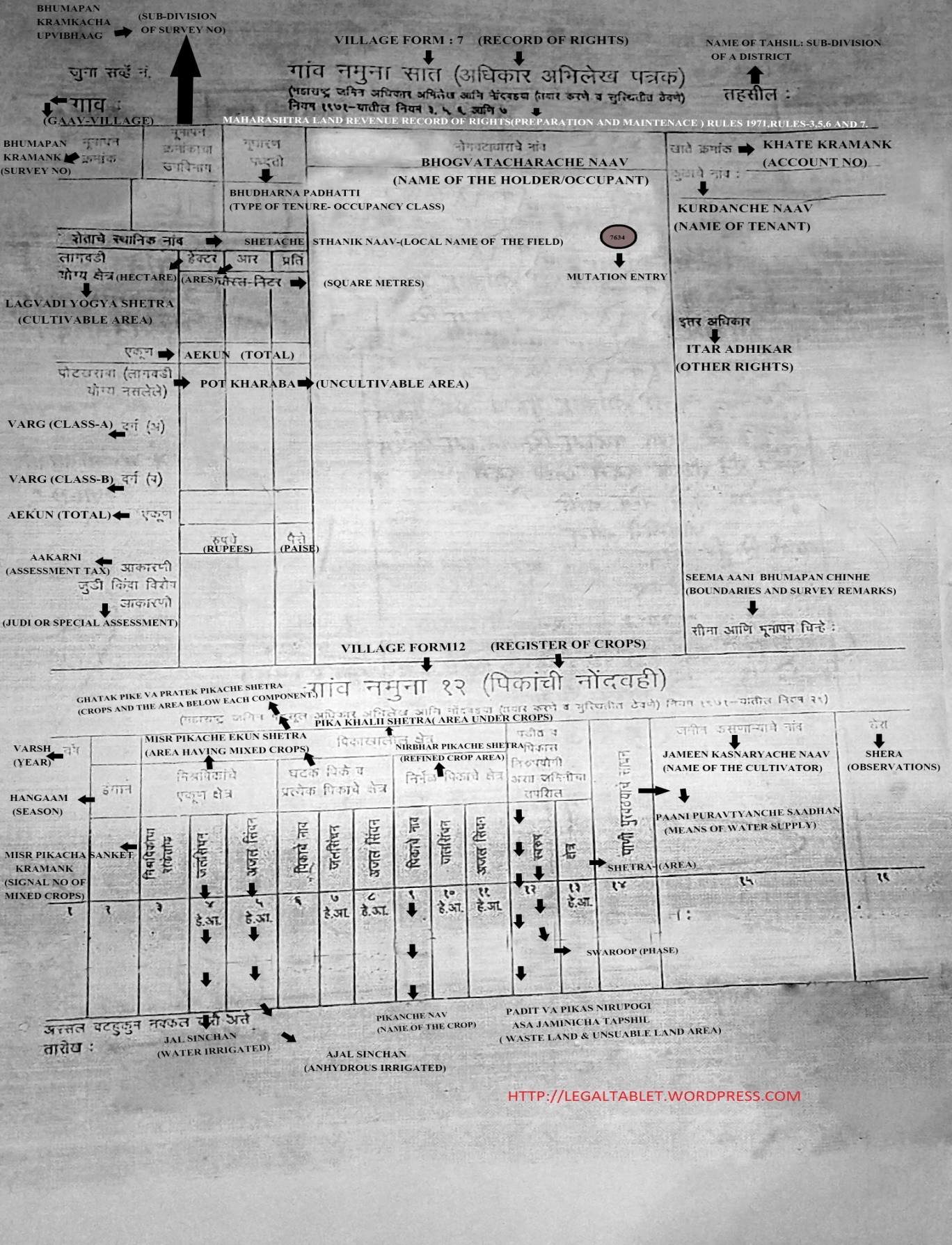

This article is written by Muddassar Bagadia, a student of Rizvi Law College, on 7/12 extract
INTRODUCTION:
The 7/12 extract, traditionally called as “Saath Baara Utara” (in Marathi language), is an extract from the land register of any district, maintained by the revenue department of the government in the state of Maharashtra.
It is a revenue document showcasing; Ownership, Occupancy, rights, liabilities and other agricultural aspects pertaining to a land, mainly the agricultural land, prepared for each respective village in which property is located. However, Non-agricultural land also has its own extract. Additionally, it is one of the basic documents of title that serves as an evidence of ownership of the agricultural land it represents. Though, not the conclusive proof of ownership and being indicative only. In rural areas, the ownership of a particular plot of land can be established on the basis of the so called extract, known as “Record of Rights” or “Record of Land Rights“. The number seven and twelve of the extract denotes the Village FORM numbers. The upper part of the extract denotes village Form: VII, which refers to record of rights, denoting the names of occupants, owners or mortgagees of the land or assignees of the rent or revenue, government lessees, tenants, the rights and liabilities of holders to pay revenue, other things which can be specified by the state government by making the rule and other details of the land, other than crop details. Whereas, the lower part of the extract, Form: XII refers to, register of crops, denoting the types of crop taken, figures of area under crops and fallow land.
ORIGIN:
The extract is named after, Section-7 (Continuance of requisition) and Section-12 (power to obtain information) of Bombay Land Requisition Act 1948. There are about 16 different Forms’ been maintained in each village revenue system and several other forms recorded as appended to the Maharashtra Land Revenue Record of Rights and Registers (Preparation and maintenance) rules 1971. All records maintained under various village Forms such as VII-XII, VIII-A, VI, VI-C etc.; are land records forming substantial part of land records department, required for maintaining and keeping the revenue accounts relating to a person from whom the land revenue is realizable. Although, Maharashtra Land Revenue Code 1966, does state about maintenance of record of rights under sections 148-159 of the act, however, does not express any provisions relating to such an extract directly. The Form no VII, called as record of rights is maintained in Form no. I, as appended under the said rules thereby. Whereas, on the other side, Form no. XII, which is register of crops, is been maintained in, Form no. XIII, appended under the aforesaid rules framed there in under MLR Code 1966.
CONTENTS:
The extract highlights information of the land by its Survey number and Hissa no, Name of the taluka or tahsil and Village in which the land is located, Name of all the persons (other than tenants) who are holders, Occupants, Owners or Mortgagees of the land or Assignees of the rent or revenue, Names of Government Lessees or Tenants including the tenants within the meaning of the relevant tenancy law, Nature and extent of their respective interest of such persons and the Conditions or Liabilities attached with respect to such land, Area of the land, Type of Tenure.
Format of VII-XII
(Whether alienated Land or un-alienated, if un-alienated, whether occupant class-1, class-2 or government lessee), Mutation numbers from the register of mutation, Khate no, Area of land fit for cultivation, Area of uncultivable land, Tax to be paid, Judi to be paid, Boundaries and Survey remarks, Crop Season, Type of crop taken, Type of cultivation – whether irrigated or rain fed, Name of the farmer other than owner if any. It also records loans extended to the land owner given by government agencies, including the purpose – such as loans or subsidies for buying seeds, pesticides or fertilizers, for which the loan was given, the loans could be given to the owner or the cultivator, other rights on the land, such as easement rights, details of charges of attachment and decrees under the order of civil court or revenue authorities, whether land classified as fragment under section 6 of the Bombay preventions of Fragmentation and consolidation on holding act 1947, If right is acquired by heir ship, names of heirs with whom land is not in actual possession and so on.
Furthermore, in the state of Maharashtra, the said extract issued by the revenue authorities reflecting all the above details of land is in the local language of the state i.e. Marathi Language, which makes it difficult for a person not proficient with the language to understand it. Additionally, the details of the land covered and mentioned in the extract are governed by vast range of laws, especially in relation to the ownership of land, Occupant class, whether a piece of land can be transferred or not and if transferable to whom it is transferable, whether prior permissions are required or not before the transfer from competent authorities and so on. Therefore, it is utmost important to understand the terminology and the laws governing to a land in such an extract even before a land is acquired.
ANALYSIS: VII-XII HOW READ?
Now, that we have summarized the above contents of the VII-XII extract, analysis of the each of them is essential in order to understand their respective meaning and how each should be understood in its clear and precise terms in relation to one another. Subsequently, also various laws applicable to a particular piece or the holding of a land and the restrictions on their transfer are to be noted along with its applicable provisions respectively. Analysis of form VII and XII is done in two parts VIZ- Part A and Part B Below: –
Occupant class- 1, persons classified into this class is free to transfer the agricultural land without the permission of collector in favor of a person who is an agriculturist. Whereas, persons classified under Class- 2 are the persons as tenants who had purchased the land under the provisions of the Bombay tenancy and agricultural lands act 1948, Lands granted by government to the schedule cast, schedule tribes, freedom fighters, members of army forces, ex-service men. This occupant class-2 is allowed to transfer only after the Collector’s permission. However, No sanction from the collector is required when land is to be mortgaged in favor of government.
As per section 149,150 and 151 of M.L.R code 1966, persons who have obtained right must inform to the talathi within three months period. However, exemption is been granted to inform talathi if the right is received through collector’s permission or registered documents.
For instance: Land purchased by a tenant under section 32-M of the Bombay tenancy and agricultural lands act 1948.
CONVERSION CHART :
| 1 ACRE = | 43,560 SQ.FT | 4046.85 SQ MT | 4840 SQ YARDS | 40 GUNTHA |
| 1 GUNTHA = | 1089 SQ.FT | 101.285 SQ MT | 121 SQ YARDS | 0.0249 Acres |
| 1 HECTARE = | 107639 SQ.FT | 10,000 SQ MT | 11959.8 SQ.YARDS | 2.47 ACRES OR |
100 ARES1 ARES = 1076 SQ FT 100 SQ.MT 0.024 ACRES1 SQ MT = 10.76 SQ FT 1 SQ YARD = 9 SQ FT
Various different entries in this column which must be carefully noted such as below:
Provided that, the total land held and cultivated personally by any of the parties to the exchange whether as an owner or tenant or partly as does not exceed the ceiling area as a result of exchange;
Where sanctioned for sale of land given in the circumstances specified in the clauses a, b, c, e, or if it shall be subject to the condition of the land owner paying to the State Government a nazrana equal to 40 times assessment of the land. In the case of portioned sanctioned under clause “j” it shall be subjected to the condition that they are allotted to each sharer shall not be less than the unit specified by the State Government under clause c of sub section I of sub-section 27.
However a recent amendment is been made to this section, published in the gazette of government of Maharashtra on 7th Feb 2014 which states for addition of a provision after the existing provision under the said section, the following provision shall be added, namely as – “Provided further that, no such previous sanction shall be necessary for the sale, gift, exchange, mortgage, lease or assignment of the land in respect of which ten years have elapsed from the date of purchase or sale of land under the sections mentions in this sub- section to the conditions that-(a) Before selling the land, the seller shall pay a nazarana equal to forty times the assessment of the land revenue to the government; (b)the purchaser shall be an agriculturist; (c) the purchaser shall not hold the land in excess of the ceiling area permissible under the Maharashtra agricultural lands(ceiling on holdings) Act, 1961. And (d) the provisions of the Bombay prevention of fragmentation and consolidation of holdings act 1947 shall not be violated.
In case of the land held by karta of a Hindu undivided family (HUF), the karta has all the powers to manage the family and its assets, being the head of the family. However, karta is not an absolute, independent, individual owner of the property. Each coparcener has a share, right, title and interest in the ancestral property. Thus it is essential for a buyer to know the individual share of each coparcener before buying such a land if their share is not mentioned in the VII-XII extract. Additionally, it is of utmost importance for a buyer with his diligence to find out whether the property or a land he is buying is ancestral (inherited) or self-acquired. In case of ancestral property, the karta’s identity and the reason for sale has to be enquired and getting in writing from the karta that he holds the consent of all the other coparceners of the family. Many times, coparceners may have received their share of the property but it is possible that they may not be satisfied with their share thus it is again essential to find out from such coparceners whether they are satisfied with their share or not. The eldest male member in three generations Great grandfather, grandfather, father and son – are called as coparceners. They have a definitive right to the ancestral property from the time of conception. After 2005, sons and daughter are also equal coparceners.
Thus necessary permission before sale of such land has to be obtained from the collector or state government as the case may be.
There are about two types of devasthan’s (I) Government Devasthan (entries which are recorded in village form. 3 and (II) Private Devasthan (These entries are not recorded in village form.3)
As per the public charity act, the punch committee is appointed on temple / darga. But on the record of VII-XII, only the name of god is recorded. It is not permitted to record the names of the punch committee on the extract. Land alienated register shows which lands in a village are owned by devasthan. Register is available at all tahsils, collector’s office and in the land alienation office.
It is not admissible to transfer or sale of the devasthan lands. However, under exceptional circumstances the land can be transferred with the pre-permission of government and approval of charity commissioner. Tenancy act may be applied to devasthan land but, if the devasthan trust had taken concession as per provision of section 88 , then for such tenant demand for purchase cannot be made under section 32-G of tenancy act. The name of God / Devasthan is usually shown under the occupant column and the name of vice-regent (Vahivatdar) is shown in the other rights column with an underline mark. Name of Pujari, Mahant, Mathadhipat, Trustee, Mutavali and Kazi entered in the other rights column are not considered to be the tenants nor can they file case of adverse possession in civil court. The hereditary rules are applicable to devasthan land but it could not be distributed in heirs nor could it be transferred from one family to another family.
Section 7 of the above lays down restrictions on transfer of fragments.
Transfer and lease of fragments – (1) No person shall transfer any fragment in respect of which a notice has been given under sub-section (2) of section 6 except to the owner of a contiguous survey number or recognised sub-division of a survey number. Provided that the holder of such fragment may mortgage or transfer it to the State Government or a land mortgage bank or any other co-operative society as security for any loan advanced to him by the State Government or such bank or society, as the case may be. (2) Notwithstanding anything contained in any law for the time being in force or in any instrument or agreement no such fragment shall be leased to any person other than a person cultivating any land which is contiguous to the fragment.
The above provision must be carefully noted before transferring any fragment land as defined and classified under the act.
For fixing ceiling areas lands have been classified in five classes as detailed below:
| CLASS OF LAND | CEILING AREA | |
| HECTARES | ACRES | |
| LAND WITH ASSURED SUPPLY OF WATER FOR IRRIGATION AND CAPABLE OF YIELDING AT LEAST TWO CROPS IN A YEAR | 7-28-43 | 18 |
| LAND WHICH HAS ASSURED SUPPLY OF WATER FOR ONLY ONE CROP. | 10-92-65 | 27 |
| LAND WHICH HAS UN-ASSURED SUPPLY OF WATER FOR ONLY ONE CROP. | 14-56-86 | 36 |
| DRY LAND SITUATED IN MUMBAI SUB URBAN DISTRICT AND DISTRICTS OF THANA, RAIGAD, RATANAGIRI, SINDHDURG, BHANDARA, GADCHIROLI, SIRONCHA TALUKAS OF CHANDRAPUR DISTRICT WHICH IS UNDER PADDY CULTIVATION FOR CONTINUOUS PERIOD OF THREE YEARS. | 14-56-86 | 36 |
| DRY CROP LANDS OTHER THAN ALL ABOVE LANDS. | 21-85-29 | 54 |
| MARATHI TERMS FROM THE EXTRACT – XII | ENGLISH CONVERSION OF MARATHI TERM | EXPLANATION (IF ANY) |
| 1. GAAV NAMUNA 12 (PIKANCHI NONDVAHI) | Village Form 12 (Register of crops) | Heading of the lower part of the extract. |
| 2. VARSH | Year | The year in which the crop is or was grown. |
| 3. HANGAAM | Season | The season in which the crop is grown I.E. Whether kharif or Rabi. |
| 4. PIKA KHALIL SHETRA | Area under crops | Total area of land covered by crops is mentioned and subdivided into various categories of crops such as Mishr pike (Mixed crops), Ghatak Pike (Crops and area below each component) and Nirbhar Pike (Refined crops). |
| 5. MISR PIKEACHE EKUN SHETRA | Area covered by mixed crops | Total area of land covered by mixed crops. |
| 6. GHATAK PIKE VA PRATEK PIKANCHE SHETRA | Exclusive crops and area under each crop | Total area of land covered by each exclusive crop. |
| 7. NIRBHAR PIKANCHE SHETRA | Area of Nirbhar crops (Refined Crops) |
Total area of land covered by refined crops8. PADIT VA PIKAS NIRUPYOGI ASA JAMINICHA TAPSHILInformation of unusable Land.
Total area of land waste land and unusable for crop cultivation.9. PAANI PURAVTYACHE SAADHANMeans of water supply.
Instrument for water supply10. JAMIN KASNYARACHE NAAVName of the cultivator.
Name of the cultivator other than farmer if any is mentioned here.11. SHERARemarks, comments or observationsAny other remarks or a particular character of a land is mentioned here.12. JAL SINCHANWater irrigatedWhether a land is water irrigated or rain fed is mentioned beneath this column.13. AJAL SINCHANAnhydrous irrigatedWhether a particular piece of land is cultivated with the help of a substance if it contains no water, for example, salts lacking their water of crystallisation.14. PIKACHE NAAVName of the crop.Names of the crop cultivated.
The 7/12 booklet is been maintained by the talathi at a village level, signed by the tahsildar on each page along with a round seal of tahsildar’s office on each page of the booklet.
Section 148-159, of Maharashtra Land Revenue Code 1966 lays down the provisions for maintaining the Record of Rights in every village. The extract is also governed by the rules made under (Maharashtra Land Revenue Record of rights and Registers (Preparation and maintenance) Rules 1971, rules – 3, 5,6,7,9 and 29.
Any person willing or desiring to obtain the said extract shall make an application to talathi under section-7 of Maharashtra (Inspection, Search and supply of copies of Land Records) Rules, 1970, stating the particulars of the land records and purpose for which the copy is sought for.
On the receipt of application under the above sub- rule, the talathi in charge of the record may grant the request, unless it is rejected under below sub-rule.
If the officer in charge of the record (not being talathi) considers that the record of which a copy is applied for, is of a confidential nature, or that the supply of the copy would be prejudicial to the public interest, he may record an order rejecting the application. Where talathi is in – charge of such record, he shall refer the application for the order of tahsildar.
Cement your knowledge on Real Estate laws by taking this course which is created by iPleaders in association with National University of Juridical Sciences (NUJS), Kolkata which is regularly ranked as one of India’s top three law schools.
LawSikho has created a telegram group for exchanging legal knowledge, referrals and various opportunities. You can click on this link and join:
https://t.me/joinchat/J_

Rajdeep Chatterjee is a Co-founder and the Chief-technical officer of indiangrahak.com and is a final year student of BBA from Techno India, Salt Lake, Kolkata. He was a student of the July 2014 batch of the Diploma in Entrepreneurship Administration and Business Laws. Rajdeep talks about his startup journey and his interaction with the course. Over to Rajdeep.
——————————————————————————————————
I co-founded indiangrahak.com in August 2014, it is an e-commerce platform which empowers and give online presence to all small retail grocery stores & supermarkets to reach out to their customers in a better way. Customers can place order online in simple steps and get their order delivered at their doorsteps from their nearby shop. For the shop keeper, indiangrahak opens up the world of analytics, new era marketing techniques & customer engagement all through his computers. India’s organized retail sector has been rapidly adopting e-commerce, while small shops have been left behind due to lack of know-how, limited resources, and operational complexity. There are an estimated 1.4 crore kirana stores and small shops that could benefit from e-commerce solutions in India.
Indiangrahak is already active in dozens of stores in Jamshedpur, Kolkata & Ranchi serving thousands of consumers since starting their pilot operations in august of 2014. They are seeing 30% month-over-month order growth rate and are looking to bring on many new stores in the coming months.
I was not aware about the course, however after several research and curiosity and interest about startups and entrepreneurship I came in contact with Mr. Ramanuj Mukherjee and Pallavi Pareek, who inspired me to take the course.
I wanted to build an effective organization structure and its various aspects and to avoid it irregularities I took up this course so that I can build successful business venture.
It was a great experience while pursuing this course, various Periodic Webinars conducted by iPleaders gave me opportunities to come in contact with those experienced mentoring personalities, their skills, and way to handle difficult situations and various entrepreneurship networks throughout the countries.
Raising investment – Angel rounds, VC & PE deals & Intellectual Property Rights are the most useful modules during the course
One of the first and most important requirements for setting up venture is the seed capital; this can range from a few thousand to crores, depending on the type and size of the venture, arranging funds is the main challenge for any startup this is where venture capitalists and angel investors come in these investors lend money and take a stake. This course has given me sufficient knowledge in the following areas – Angel investments and regulation of angel funds, Understanding non-disclosure agreements (NDAs), Transfer of shares, Dealing with multiple investors, Shareholders Agreements and how to negotiate them, Exit issues in investment transactions, Term Sheets, etc.
This course has given me valuable insights such as drafting various agreements with clients, dealing with clients, and also choosing right organization structure my own venture and was able to help other entrepreneur in structuring their new venture.
Skills I learned during the course structuring a company, appoint advisors and remunerate them, drafting Co-Founder’s Agreement, taxation of software product and SAAS companies, clear understanding of Shareholders’ Meetings, legal instruments, Shareholders’ Agreement, how to raise investments effectively, drafting employment agreement, Structuring ESOP& ESPS, How to avoid disputes and drainage of resources through courtroom battles, Data protection under Indian law, Cloud computing agreements, How to obtain copyright, trademark and patent registration in India.
Definitely student entrepreneurs studying in college will get a lot of benefits from this course. Interested students will be motivated like me to pursue their entrepreneurial journey keeping balance with various entrepreneurship network system, they can easily create a successful business venture without any hindrance.
In my future course of action the skills that I have acquired will help me to make right decisions and to take bold steps in my organization related to ins and outs before launching any pursuits. As a building cannot stand without basic foundation in a similar way no one knows where and how this course will stand as backbone while taking on-going steps in startup journey

We are a startup in the online education domain, working on projects of our own as well as top universities and government bodies for the last 3.5 years. You can read about us more on our website: http://ipleaders.in
Our blogs have the highest reach in India amongst all legal blogs except legal news/job/internship websites. Check out http://blog.ipleaders.in andhttp://superlawyer.in. Through these, we are helping more than 1 lakh individuals a month as many lawyers and law students volunteer their time.
Our courses like these http://startup.nujs.edu and http://sexualharassment.nujs.eduhas been widely acclaimed in media and elsewhere.
We are service providers to some of the top brandnames like Samsung, Feedback Infrastructure, Agrocorp, JCB and other listed companies for compliance training.
We are also in the process of creating breakthrough technologies in the domain of access of justice, that will change the face of legal industry in India in the coming years. We need highly capable and ambitious people to make this happen.
At present, we are looking for a very reliable and efficient person with some experience to take care of our accounts, taxation, cash etc. If this is not for you but you know someone suitable, please forward this link to them, and they will be grateful to you!
Salary range: 25,000-35,000 depending on qualification and experience. As a startup, we are happy to give equity to those who show long term commitment and contribute to growth of the business. We will provide high quality training and comfortable, homely and no-frills work environment.
If you are interested in joining a rapidly growing startup, be part of the legal education and technology revolution in India, and make a difference, then this is the right opportunity. Mail [email protected] with the subject line “Resume for accounts manager”.
Designation – Accounts Manager
Intelligent Legal Risk Management Solutions LLP (iPleaders), a Delhi based online legal education startup is looking for a suitable candidate for the role of Accounts Manager.
Qualification
Work Experience
Essential skills
Function Details

We have previously carried a post that discussed validity of whatsapp messages as evidence in a court of law. Also, a woman professional recently wrote about how whatsapp groups are becoming a virtual alternative to men’s washroom as far as many workplaces are concerned. There are no dearth of situations in which whatsapp has legal significance.
However, recently, a news item caught my eyes. It turns out that to crack the colaba masturbation case, where the Colaba police had only the picture of the accused to work with, and was under extreme pressure to find and arrest the person accused of misbehaving with a foreigner, they had to use whatsapp. I was so thrilled to read this, I went ahead and called my friends working in different state police forces, and even the CBI to ask them if they have seen any comparable use of whatsapp. What they told me was very interesting.
Here are some creative uses of the ubiquitous app by Indian law enforcement that you will find hard to believe!
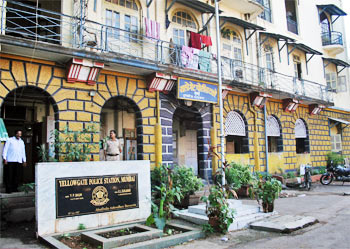
This is the most famous recent example. Mumbai police created a group called Eyes and Ears, to establish identity of a man who was accused by a foreigner of having musterbated at her. All they had was a photograph and absolutely no idea as to who it is. They added a large number of informers from Colaba to make that identification. Here is an NDTV report that confirms this.

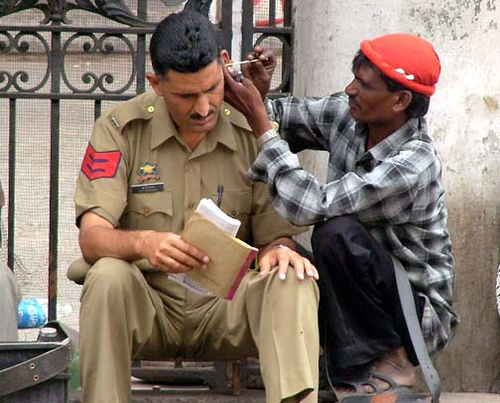
When they arrest an accused, one of the first thing police do is confiscate their phone. First they go through whatsapp messages to identify if there are any accomplices or incriminating conversations. If they have suspicion of any accomplices, they even send fake messages pretending to be the accused to see how those people react and sometimes even to trap them. This is over time becoming standing operating procedure for police all over India according to my friends who would not like to be identified.
Police has started to create whatsapp groups where they add informers, responsible citizens and sometimes people from civil defence organizations so that they can gather intel about emergencies quickly, or spread a message amongst a large number of people very quickly. This has proven to be a useful strategy in case of riots and insurgency in some states. This has been experimented with in jungle areas to stop poachers also, where police may have to collaborate with forest guards. In many cases, informal whatsapp groups have proven to be useful as information got broadcasted in a large group of people distributed in different locations seamlessly.
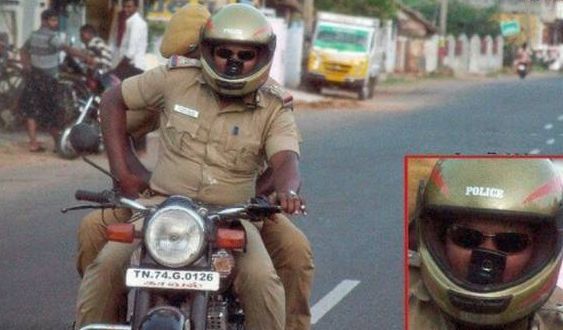
Police has not heard of Slack yet, but most officers now use smartphones. The young officers are also very comfortable using whatsapp. In many cases, for seamless communication and coordination amongst members of a team, whatsapp groups have become very useful and a method of preference.
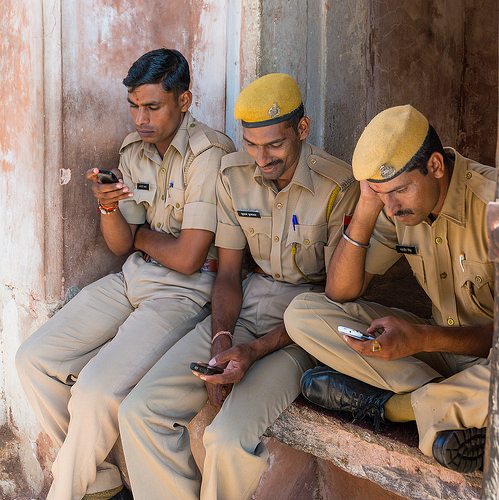
It is an ancient method for police to trap criminals by posing as customers looking to buy something illegal, like arms or drugs, and even trafficked women. There is an element of danger in meeting criminals in person under cover. In this age of technology, criminals have embraced technology which helps them to avoid unnecessary meetings. Hence, a lot of information gathering, bargaining, planning etc happen with the use of technology like whatsapp which makes physical meeting unnecessary. Realizing this, police officers also have started to use technology to trap criminals. They send whatsapp messages to criminals posing as buyers or suppliers – and that apparently works quite well!
However, one area this is extremely useful is apparently with paedophiles. In that case, police set up a fake profile of a young girl and use this to honeytrap known paedophiles against whom they have information but not enough evidence to build a case.
Have you heard or known any interesting stories about how law enforcement uses technology like whatsapp? Please share in comments.

This article is written by Nitesh Shrivastava, a final year law student pursuing BBA-LLB (Hons. in Corporate and International law) from ITM University, Gurgaon. In this article he writes on a practical guide to change authorised share capital of the company in India. He can be reached at [email protected]

This article is written by Dhruv Dikshit , a 1st Year Student of Faculty of Law, University of Delhi.
In a profession which requires constant learning, unlearning and relearning throughout, one cannot emphasize the critical importance of education. Keeping the said statement in mind, if we look at the unpleasant and troubled state of affairs of lawyers in India, it provides a picture which screams of a crisis in the sphere of legal education. A Few days ago, at Lawyers Meet 2015, held by Bar Council of India in Chennai, BCI chairman Manan Kumar Mishra said that “30% of all lawyers in India are fake, holding fraudulent law degrees”. Such an instance calls for an overhaul of the various levels that are together responsible for imparting legal education in India. The major factors that are associated in the manifestation of a successful lawyer are namely the teaching faculty in law schools; responsible for being the principle contributors, the curriculum; designed by the BCI but tweaked and implemented by the various universities in their own manner. Further, the various universities and law schools that crop up by the dozen every year are not even remotely close to the desired level of infrastructure, the employment of faculty and the facilities offered. Even if one of these aforementioned levels is not maintained properly, it can impede in a disastrous manner and distort educational foundation for future lawyers.
Teachers and educators are held at the upmost stature in the minds of students as they are the ones who are responsible for disseminating knowledge and guiding the flummoxed mind of a student. If teachers are not taken care of or they are unable to successfully educate, the entire structure becomes flawed from the very beginning. According to Prof. Mrs. Srividhya Jayakumar In charge Principal, VPM’s TMC Law College, there is a problem at both the planks i.e. neither the teachers are taken care of and incentivized properly nor are they able to perform the task of educating the students. For a person to be eligible to become a teacher they have to take either the National Eligibility Test(NET) or the State Eligibility Test(SET) depending upon the choice of law school that the person wants to join but at no point does the exam successfully train the people to become good teachers. It is just happens to be one of the inconsequential exams that one has to take in order to become a teacher. On the other hand, it is the teacher’s responsibility to create an environment conducive for students to learn. Mrs. Jayakumar argues that “at no point does the person gain the necessary passion and communication skills” pertinent for teaching via the exam. A direct consequence of this flaw is that even if the teacher has an immense reservoir of information and knowledge, he or she will be unable to provide it to the class. Further, as a consequence of a dull and a monotonous lecture even the most enthusiastic student will lose interest and will think twice before attending another lecture so as not to waste time and as a result, it is an involuntary loss of the student. Mrs. Jayakumar argues that “Law teachers need training” so that not only the teachers are able to create an engaging and an interactive environment, but the students can further compliment it as it is only through engagement between the teacher the class can there be a synthesis of all perspectives. At the same time there needs to be constant evaluation of the existing faculty. In a note on the reforms of legal education, BCI “intends to establish a national level advanced training institute for training teachers” so that newer and refined methods of implementation of legal education can be formulated and a minimum standard can be set for all the teachers to follow.
On the other hand the teachers argue that the university and law schools do not provide the necessary incentives and remuneration and distinctions that a law teacher deserves. For instance the most basic of all facts is that if a person wants to teach in a subject other than law, the person needs a bachelors and a masters degree in that particular discipline and he or she can very well pursue it but for a law teacher there is an additional three years before LLB or two years in case of an integrated BA LLB. If we try to quantify the educational standard of a teacher solely by the years spent into becoming one, then law teachers have an additional two or three years worth of experience and regardless of that distinction, they are held at the same stature as other teaching faculty which has an implication that suggests that those extra years are worth nothing and they are all the same when it comes to teaching. This particular attitude adopted by the universities disincentivises the teachers. Further, one can argue that there is ‘teacher crisis’ that is in play as the number of people who would want to become an academician in future is becoming fewer and fewer primarily because the remuneration offered to a law teacher on an average is not at all satisfactory.
Moving on to the issue of curriculum, there exists a problem in terms of the curriculum formulated by BCI and not being implemented properly at the level of universities. BCI has listed 21 compulsory papers and a hoard of optional papers, but the formulation of the syllabus is left to the universities which inevitably results in different and varied syllabi in the country but the law that is being practiced in the country is the same. As a consequence of that, there isn’t a minimum reliable standard of lawyers being produced in the country which creates a lopsided development of the law in India. Students graduating from top law schools are able to cope up with the legal system and provide a good quality of legal service but the ones who are graduating from a school which has not framed its curriculum rigorously fail to provide proper legal services as the knowledge that a lawyer requires has not been inculcated by him or her systematically thereby degrading the overall standard of lawyers in India.
Moreover, even if the curriculum is rigorous and interactive, the exams are not up to that level thereby leaving a loophole for students to exploit by not studying throughout the semester but studying via guides towards the end of the semester to clear the exam, contributing to the lopsided understanding of the law. The exam should ideally be designed to test the basic and the advanced concepts in a balanced proportion and should ideally be creative to test the entire mental faculty of the student, but what ends up happening is that the exam is quite basic and straightforward which eventually stagnates the standard of students’ comprehension and the ability to critically solve problems of the subject to only a superficial and a basic level.
Secondly, the curriculum should not be restricted to a theoretical platform. Internships under lawyers and law firms and various other organizations provide a whole different understanding of the profession. What a student ends up learning during internships cannot be learned in classrooms. It is also important from the perspective of finally being in a job after graduation. Lawyers and law firms essentially gamble by hiring students fresh out of law schools and to improve and substantiate their gamble, the student can and should accumulate skills via internships so that he or she can understand the nuances of the legal system and how it works on the ground level and not just in textbooks. Legal Internships should be incorporated as an essential part of academia because they help one gain practical knowledge and experience required to excel in their respective fields. Internships not only provide with a grounded reality, but also introduce the students to the various different aspects of law so that he or she can make an informed choice via filtering their interests and how those interests are employed in the industry. Students are often confused between litigation and the corporate sphere and it is best resolved by doing internships in both the areas to get a finer understanding of their decision vis-à-vis their potential.
Moving on to the infrastructural aspect of law schools, apart from a few of over 900 law schools in the country, the underdeveloped infrastructure is what hinders in a significant way. Access to online databases and journals and a fully functioning library with all the key books and more are few of the facilities that are absolutely critical for a holistic legal education. More than half of the law schools in the country do not have the said infrastructural facilities and more than that, proper classrooms in properly constructed buildings forms yet another facet that is often ignored by the law schools which is contradictory to the high tuition fee that the authorities charge. Due to lack of these facilities the students are mostly dissuaded and are unable to compete with the students who have such facilities in their college and as a result of that the primary level of learning is hampered to a great extent.
A more serious problem other than the infrastructure is the number of law schools that are cropping up by the dozen every year and the accreditation of such law schools. According to Legally India, “The Bar Council of India (BCI) affiliated 92 new law colleges in nine months last year, according to the law ministry’s 2014-2015 annual report, that number is nearly double the number of new colleges admitted in the entire 2012-13 year”. The absolute commercialization of legal education, where profit motive is the guiding factor, has detrimental effects on the legal community as a whole. The number of graduates that get employed as soon as they graduate is insignificant as compared to the total number of students who graduate. The bar exam results get worse every year. Legally India reports that “37% of those who took the All India Bar Examination in January 2012 failed it, and over 70% of retakers failed” and this number is getting worse every year despite the fact that the exam is an open book exam. This paints quite a scary picture of the legal community and all of this can be traced back to accreditation of the colleges and irregular inspections to keep a check on them.
Accreditation ensures a basic standard level of quality in the education one receives from an institution and it also ensures that degrees will be recognized for what they claim. Ideally all law colleges must be accredited as this would make possible consistent inspections of the quality of the academia, infrastructural facilities and the treatment and conduct of students vis-à-vis the college. Along with periodical inspections, it is the job of an accreditation organization to suggest guidelines for improvement of the existing infrastructure and faculty. University Grants Commission (UGC) and National Assessment and Accreditation Council (NAAC) together analyze and accredit various colleges and universities in India. It has been made compulsory by the government to get accredited by NAAC. The downside is no action is taken if an institution does not comply with the said rule. Therefore, this basically implies that institutions can get away with whatever they want to do or omit. National Knowledge Commission (NKC) in its report has argued that law institutions are far from desired standards. It has argues for a system that classifies colleges on the basis of facilities, courses, subjects, faculty, infrastructure etc. and for termination of law schools with below average standards. BCI has, in the 2008 rules on legal education, provided for an accreditation system/performance rating system by its Legal Education Committee on a voluntary basis. The accreditation will be valid for 5 years. BCI may conduct it on its own or assign it to NAAC. The classification system will supplement the process and make the colleges and institutions law abiding and accountable. Improvement of legal education is quite intricately associated with BCI and its efforts.
Hence, it can be concluded that the entire system encapsulating legal education needs an overhaul and a systematic transformation of the teaching faculty, the curriculum, the infrastructure and the management of new law schools. To cope up with the future requirements in the legal community it is important to facilitate quality legal education and values so that the student is able to adapt and learn and give back to the community thereby maintaining and simultaneously raising the standards.
Bibliography

By Padmaja
Disclaimer: This is a case study and not a narration of actual events. Readers are invited to share their point of view and similar experiences, if any.
Maya was working on a complicated proposal. The client, as usual, wanted to pay the earth and buy the moon. She noticed the LED display on her phone blink and picked it up. Another Whatsapp message. She opened it, sighed, and looked away. “What do I do? Who do I complain to? Even if there was somebody to complain to, what would I say…”
Maya got introduced to WhatsApp a couple of years back and got well and truly addicted to it about a year and a half ago. It was heady, like all addictions, to say the least. Sharing photos, videos, random jokes, meaningless banter at seemingly zero cost. Then came the WhatsApp groups. A group for batch-mates from college, another for women living in the neighbourhood, one for mothers from each daughter’s class. So on and so forth. Some useful information, but mostly useless banter and forwards. She liked being in touch with people and some of the jokes did bring the much needed occasional smile!
Sometime last year, a Whatsapp group of people she worked with was created. It seemed nice to get a personal connect with colleagues who lived and worked in different cities. Being a small consulting organisation, almost all her colleagues worked from home. They rarely met each other except at the client site occasionally. The work got done in remote and meetings were on the phone or the web. Soon all 20 odd men and women associated with the firm were on the Whatsapp group. People wished each other on birthdays, festivals etc. Some interesting professional and personal stuff was shared. But if there is a Whatsapp group, can the jokes and videos be far behind?
Maya looked at her phone again and wondered “Is this group a professional forum where the norms of professional décor are expected to be followed, or a personal forum where the people just happen to be colleagues?” Matters important to work were discussed at times and at other times, plain cafeteria conversations. Then at other times, men’s washroom conversation reared its head….objectionable forwards once in a while. Sample this:
Manager smiles, kisses n licks each finger one by one!!
Girl: U liked it!?!?
Manager: Oh yeah!!!!
Girl: Now go n tell your boss that there is no tissue in the toilet!!!!!!????????????
And then there were the images. A buxom, scantily clad woman exercising with a caption of “Happy Yoga Day”, some videos of bedroom conversations…The list could go on. It didn’t happen every day. Just once in a while, but enough for Maya to cringe. She also noticed that this was not done by all the men in the group.
True, such jokes were not targeted at her, they were sent to the group which had many women in it. She wondered if the other women found them as offensive and in poor taste as she did. A couple of them certainly didn’t, because they responded with encouraging emoticons (smiley faces, thumbs up, LOL, ROFL etc). May be they were thick skinned and laughed it off (much like women were expected to laugh off sexual advances by seniors in the past?). Or maybe she was just being too prudish and Victorian in her attitude. She could just picture some of the women she knew saying “Itna to chalta hai yaar!”
Maya scrolled up and down the chat again. There could be no denying that some of the stuff was downright offensive. “Would a male colleague (or a female colleague for that matter) be allowed to share such a joke in an office context verbally?” she wondered. “Would such jokes and comments be staple diet in an office party or get-together with a mixed gender gathering?” And what about the sexually explicit photographs and even more offensive videos which were brazenly shared on the group?
Maya did a bit of reading up on the Sexual Harassment Act of 2013. The legal definition of sexual harassment at workplace she read was as follows.
“As defined in the Supreme Court guidelines (Vishakha vs State of Rajasthan, August 1997) and subsequently adopted in the Sexual Harassment Act of 2013, sexual harassment includes such unwelcome sexually determined behaviour as:
Physical contact
A demand or request for sexual favours
Sexually coloured remarks
Showing pornography
Any other unwelcome physical, verbal or non-verbal conduct of a sexual nature, for example, leering, telling dirty jokes, making sexual remarks about a person’s body, etc
Any of the above done in a “workplace” constitutes sexual harassment. The last three happened unhindered on the Whatsapp group. Now the question in her mind was whether a WhatsApp virtual group constitutes a “work place”? The Act explained clearly what it meant by “workplace”. But all the descriptions were of a physical workplace. Would a virtual forum be considered a “workplace” under the law?
Maya knew that, today, sharing lewd jokes even in jest, a lighter mood or even in drunk stupor was not allowed in office premises or office gatherings and strict action was taken against offenders. It was not considered Ok any more for men to share double entendre jokes and comments anywhere in office premises where women employees were likely to be in ear shot. Why then, was it acceptable, for such jokes to be shared on a virtual forum like Whatspp? True, if Maya found it offensive, she could always opt out of the group. However, since the group was also being used to share professionally important information, she would lose out by exiting the group. Was the organisation then providing Maya with a non-threatening, gender sensitive and equal opportunity work space if it allowed such groups functioning unhindered and unregulated?
Could Maya, an ambitious woman professional, afford to take offence to this partly social interaction and still aim for professional success? Would her exiting the group not be looked at in poor light by the others? Her consulting assignments depended on her being on good terms with the whole group. And of course, networking has been established as an important ingredient in career progression – forums like LinkedIn were full of posts and remarks about the importance of “networking” and the wonders it did for one’s prospects.
“What recourse do I have?” Maya wondered. “Should I drag my employer to court? Can I file a PIL? And while I’m at it, make WhatsApp a guilty party since it has provided such technology in the first place. Enabling the creation of a virtual workplace which needn’t follow norms and decor of a physical workspace?”
Such experience and doubts are not unique to Maya alone. Although fictional, this is a grim reality which most of the women face on such virtual platforms. The way to combat it is through awareness and knowledge which can help you to fight the odds. National University of Juridical Sciences has come up with such a course that can update you and give you all the required knowledge to combat such issues. You can find the course here. If you want to know about the implementation of sexual harassment laws and how to go about it you can also take up this course.

This article is written by Rimjhim Vaishnavi, a student of NUSRL, on amount of foreign currency that can be carried while traveling to or from India.







 Allow notifications

