

This article is written by Ruchi Jain, a student of MATS Law School, Raipur, on the role of a company secretary under Companies Act, 2013.


This article is written by Ruchi Jain, a student of MATS Law School, Raipur, on the role of a company secretary under Companies Act, 2013.

Suyash Sinha graduated from College of Legal Studies, University of Petroleum & Energy Studies (UPES), Dehradun in 2014 and was part of the first batch of Diploma in Entrepreneurship Administration and Business Laws. He took the course when he was in his fourth year of his college. Currently he is working as an Associate with Shardul Amarchand Mangaldas & Co. in the Direct Tax team.
Suyash has extensively benefitted from the business law diploma from NUJS. Not only he could showcase his knowledge during his internship which ultimately helped him in getting a job in Amarchand Mangaldas, but he actually managed to advice startups even before he graduated from his college.
Over to Suyash
———————————————————————
I read about the NUJS Business Law Diploma one summer when I was surfing on Lawctopus. I went through the course curriculum that was planned but perhaps what motivated me to join the course most was the conviction and dedication to a more responsible legal knowledge imparting system that the founders wanted to create. I did some research and was reassured of their dedication to legal education. Moreover, at that point in time, nobody offered a good glance at the practical nuances of pursuing law as a career.
I joined the course’s first batch and at that time there were only a few modules on the online portal with promises of many interactive live and video sessions from people with a varied experience in the field of corporate law, all of which was delivered.
The course helped gain a keener insight of the issues that business face and understand how the whole legal industry actually revolves around the extant business needs. Thus, having a commercial understanding of issues was paramount.
Not being from a top-tier law school, I accept that it is quite hard to get a job at BigLaw. Having said that, it is only through internships that a law student like me could hope to get noticed and picked up. However, what is most important I feel, during the short stints you get at the internship programs offered by law firms, is to show that you really want what you are there to do. Moreover, basic human values do not get unnoticed. If you are sincere and honest towards your work, it shows. And I might add, is widely appreciated too.
This course has immensely helped me during my internship. Since the course provides a good insight into not just one or two but many areas of law and keeps you abreast with emerging issues in the field of law even if you do not read a lot otherwise, it provides a good compilation of all the things you need to know and show case your knowledge during your internship. Thumbs up to your team for that!
I have also had the chance to advice and work with some start-ups during the 4th and fifth year of law school and the most basic of questions that would be asked was related to incorporation. Should they form a company, or a partnership, LLP or perhaps a proprietorship to kickstart their business? That was the very first module for the batch I joined. The modules on structuring a business, raising investment, Intellectual property, taxation and institutional finance particularly were very helpful to me as well as to some of my friends whom I advised for their start-ups.
Consulting start-ups is an exhilarating experience because the energy all around is very different, there are changing needs, low capital threshold and it is very critical to find out the right entity structure to incorporate and draft contracts that suit the expected business model while keeping in mind the dynamic needs of a growing business. In fact, I would say all that experience from consulting startups have not gone waste. And what’s better than getting that experience first-hand at such an early stage of your career. If nothing else, it definitely helps you develop a well-informed understanding and perspective about a career in Entrepreneurship and legal consulting.
I had also attended the Contract drafting exercise conducted by iPleaders at Delhi. The exercise and discussion helped me understand how important it is to for an agreement to be worded correctly, and more importantly that it identifies and highlights the interests and intentions of your client.
(Editor’s note: The course currently conducts a drafting exercise as part of the course assessment scheme, which enables the students to apply their knowledge in a practical manner.)
I have mentioned about the Diploma in Entrepreneurship Administration and Business Laws it in my CV, and I believe it has had a positive impact on my recruiters. Infact, in some of the interviews we discussed at length about commercial understanding under different scenarios.
Currently I am working as an Associate with Shardul Amarchand Mangaldas & Co. in the Direct Tax team.
My work comprises of a good mix of Income-tax litigation and advisory. We represent our clients before tax authorities at different stages of appeal and even before the Income tax Appellate Tribunal. Besides representing clients on assessment and exemption related issues, I have also had the chance to advise my clients on a variety of issues related to tax residency, tax withholding, taxation of Charitable Institutions and taxation of perquisites etc.
Though my current profile keeps me on my feet. I enjoy the sense of responsibility and discipline that BigLaw instills in you. A good work ethic is the core of a good legal career and I plan to stick to taxation as my preferred field of practise. I have had the privilege of learning from some of the best minds in the legal industry and I plan to learn more before I decide to branch out
or move on.
However, I would love to work with start-ups as and when such opportunities arise, as I already mentioned I have enjoyed working with start-ups in the past. So that is definitely something I plan to continue doing in the foreseeable future.
I have been recommending this course to my peers and juniors, some of whom have even benefited from it. I would recommend it to anyone and everyone who wants to understand the legal issues revolving around different business. Be it law students, entrepreneurs, existing businessmen, management students or Engineering students. At the end of the day we are all working in some or the other industry and having a good understanding of your business and the industry practice along with regulatory guidance is pivotal for sustenance and success.
This article is written by Pragya, a student of New Law College, BVP, Pune.
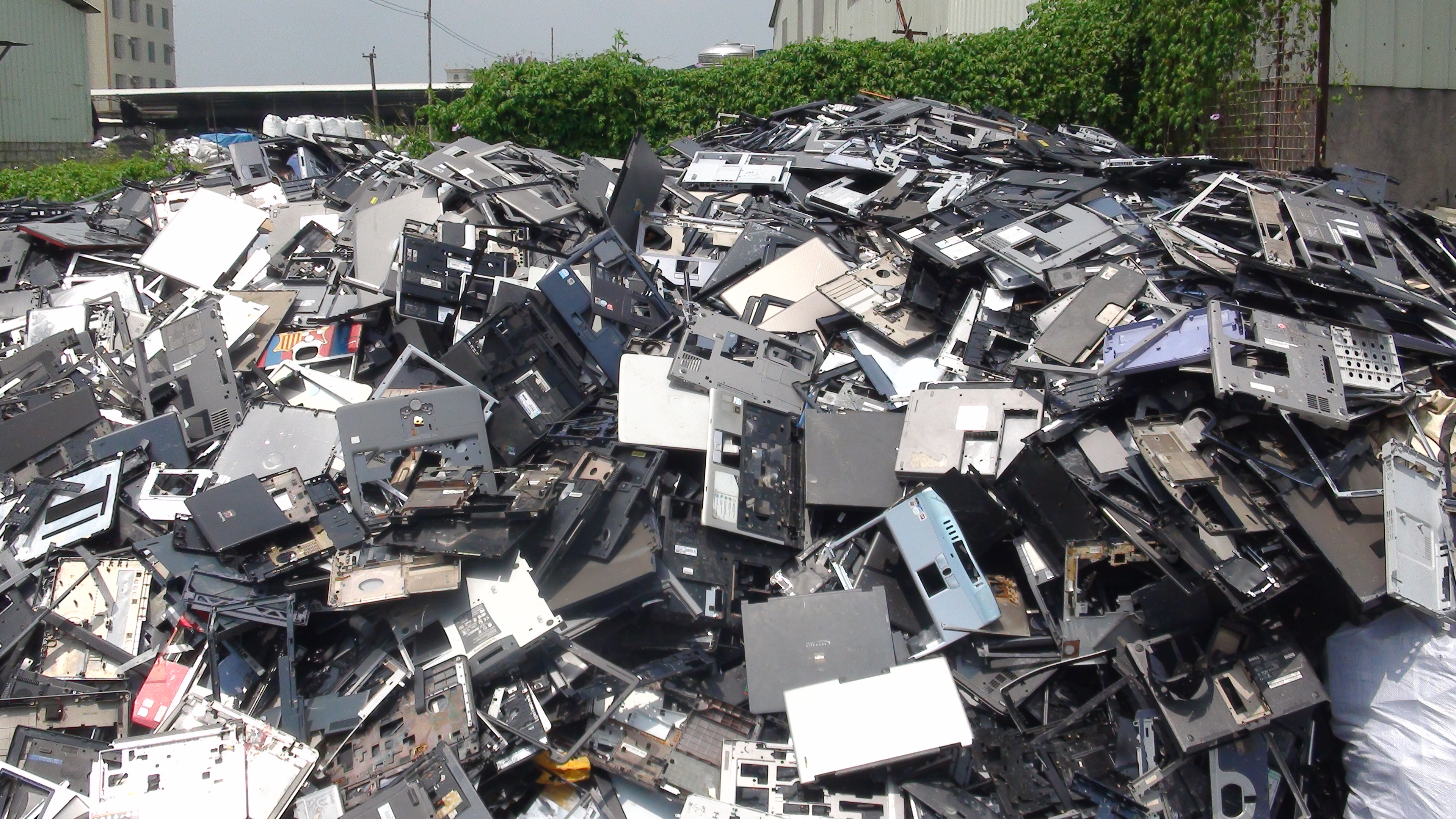
Advancements in information technology have brought changes in the ways of living in human civilization. The industrial revolution of 18th century threw open a new era of development. People have started organizing their lives in a better way. These developments have helped the human civilization to grow in a more efficient manner. Each coin has two sides- positive and negative. Every development has its pros and cons. These new developments in the information technology have also led to many serious health related problems and the problem of management of E-waste. The problem of E-waste is the most debated issue amongst the environmentalists. Both developed and developing countries are facing this problem and India is no exception. These hazardous wastes from the electronic sector pose a great threat to human civilization and it requires mutual co-ordination from all the people of society for its effective and efficient management.
According to the Basel Convention, wastes are substances or objects, which are disposed of or are intended to be disposed of, or are required to be disposed of by the provisions of national laws.[1] Wastes can be of various kinds like municipal wastes, household wastes, organic wastes, metallic wastes, bio- medical wastes, radioactive wastes and so on. People are required to discard these wastes in a proper manner as they pose a threat to environment and society. Radioactive wastes remain active for many years and they require special management. So, the management of waste is the concern of most of the developing countries.
One of the key global activities includes manufacturing and production of electrical and electronic goods (EEE).The major factor which contributes to the increased production and consumption of electrical and electronic goods is rapid economic growth and development in addition with urbanization and globalization. This rapid increase in consumption of electrical and economic goods has also lead to generation of E-waste which is very hazardous. E-waste which is also known as Waste Electrical and Electronic Equipment (WEEE) is one of the serious outcomes of the progress of Information Technology. The major issue with E-waste is that it has no standard definition. Every country has formulated its own definition.
In India, E-waste is covered in Schedule 3 of “The Hazardous Wastes (Management and Handling) Rules, 2003”. Under Schedule 3, E-waste is defined as “Waste Electrical and Electronic Equipment including all components, sub-assemblies and their fractions except batteries falling under these rules.”
The major cause of E-waste is the changing technology. Electrical and Electronic goods become obsolete by the change in technology. People tend to change them with changing technology. This has resulted in accumulation of large amounts of E-waste. For example- If I have bought a smartphone in the year 2014 and there are technological advancements in 2015 like an upgraded version of android or features like 4G, I will change my smartphone and buy a latest one.
The Information Technology Industry of India has seen a massive growth during the 1990’s. It has also intensified the problem of E-waste in India. Sixty-five cities in India generate more than 60% of the total E-waste generated in India. Ten states generate 70% of the total E-waste generated in India. Maharashtra ranks first followed by Tamil Nadu, Andhra Pradesh, Uttar Pradesh, West Bengal, Delhi, Karnataka, Gujarat, Madhya Pradesh and Punjab in the list of E-waste generating states in India. Among the top ten cities generating E-waste, Mumbai ranks first followed by Delhi, Bangalore, Chennai, Kolkata, Ahmedabad, Hyderabad, Pune, Surat and Nagpur. The problem of management of E-Waste in India is two-fold:-
Due to these irregularities the management of E-Waste in India is very improper. For example:- If there is a Supervisor of the Company who has no knowledge about the E-waste and there are obsolete computers lying in the company which are not in the working condition and cannot even be resold he will simply put them in the warehouse. This is the policy of ‘Out of Sight, Out of Mind’.
If the E-waste is not disposed of properly it can be very hazardous to the environment. E-waste comprises of many chemicals such as arsenic, cobalt, copper, lead etc. which can cause serious illness amongst people. For example- The Cobalt-60 radiation tragedy at Mayapuri in Delhi in which one person lost his life and six persons were admitted to hospital draws attention to the fact of the serious environmental issues arising out of the improper disposal of the E-Waste.
Although there are legislations to regulate the disposal and management of E-waste in India, there is no proper implementation of these legislations. The various legislations enacted by the Government of India are:-
Following Supreme Court directions, the states have notified a set of hazardous waste laws and built a number of hazardous waste disposal facilities in the last ten years. However, the CAG report found that over 75 per cent of state bodies were not implementing these laws.[2]
The problem of proper disposal and management of E-Waste requires the Government authorities to enact strict regulatory laws. The problem has reached at an alarming stage. There should be proper guidelines and the Government must enact a regulatory body to ensure proper implementation of such guidelines. The E-waste have to be disposed of properly else they will turn out into a menace killing a lot of people and causing serious health problems to many others.
[1] Text of the Basel Convention on the Control of Transboundary Movements
of Hazardous Wastes and Their Disposal, UNEP, Geneva, Switzerland, p.6,
[2] Research Foundation for Science, Technology and Natural Resource Policy Vs Union of India and Others, AIR 1995

This article is written by Yavanika Shah, a student of RGNUL, Patiala, drafting a step-by-step guide on changing name legally in India.

.jpg)
Harshit Tiwari is a student of UPES, Dehradun. This article was submitted as a part of a blogging contest which may lead to his selection as an iPleaders Energy Law Fellow. The fellow will be selected on the basis on engagement on these posts as well as quality of writing and research. We emphasise on engagement because it shows one’s ability to generate interest in an otherwise arcane subject like energy laws. The selected fellow will receive a paid internship with a boutique energy law firm in Delhi (stipend of INR 7000), an opportunity to be mentored by very senior lawyers and a free course worth INR 5000 from iPleaders. If you want to participate, write to [email protected] for instructions.
Time and again it has been rightly stated that the resources of India belong to the people of India and government’s role in this regard is that of merely a custodian. In consequence of this notion Government of India has come up with various policies to effectively govern and regulate this sector with primary motive of attracting the foreign/private investment, in addition to already existing public entities, dealing in exploration and production (E&P) of hydrocarbons. The idea behind private and/or foreign investment is the lack of availability of funds for investment in the high risk-high gain sector of Oil & Gas exploration.
The current policy in force, New Exploration and Licensing Policy (NELP), was conceptualised during the year 1997-98. The business model as iterated in Production Sharing Contract, requires capital investment for the development of the field and production of oil by the contractor. Therefore the risk is borne solely by the investors and not the government. Government is free from any requirement to invest. The role of government is limited to regulate and promote the level playing field for the stake holders and to increase the exploitation of natural resources while safeguarding the environment.
In the very first round of bidding under NELP the Krishna-Godavari basin gas block, KG-DWN-98/3 (referred to as KG-D6 block), was awarded to Niko Resources Limited (NIKO) and Reliance Industries Limited (RIL), together as a consortium. The participating interests were 10:90 in proportion. Subsequently the Production Sharing Contract (PSC) was inked and entered on April 12, 2000 between the consortium (with RIL as operator) and Government of India.
In the total contract area of about 7645 km2, around Nineteen (19) discoveries have been made. These discoveries comprise of One (1) oil discovery and Eighteen (18) gas discoveries made between 2002 and 2008.
The beginning: Government lays down a certain criteria for the prequalification of bidders to bid for the blocks or to participate in the bidding. Prior experience of the bidders plays crucial role in making the award. However, Reliance Industries Limited, despite of lacking any prior experience or even exposure in E&P sector was awarded the block which lead to few allegations of lowering of standards by the government to accommodate RIL.
The Gold-Plating: Gold-plating in simple words can be described as unnecessary increase in price of production while the utility remains constant. As Professor S.P. Sethi puts it, Gold-plating is selling a Tea worth INR 3/- in a silver cup instead of disposable one, leading to selling price of INR 150/- per unit. In the year 2004, RIL came up with a field development plan with estimated production of 40 mmscmd (million metric standard cubic meters per day) at the investment cost of $2.39 billion. Subsequently, in period of 2 years, RIL submitted a renewed estimate production of 80 mmscmd for an investment cost of $8.8 billion.
In brief, the production estimate merely doubled (2x), while the expenditure quadrupled (4x). This was clearly contrary to basic economics principle whereby, increase in production brings down per unit production cost.
A valid query which rises at this moment is how will the contractor benefit by investing unnecessarily more money than actually required?
Investment Multiplier: “The term investment multiplier refers to the concept that any increase in public or private investment spending has a more than proportionate positive impact on aggregate income and the general economy. The multiplier attempts to quantify the additional effects of a policy beyond those that are immediately measurable.”
In gist, more is the capital invested higher is the amount recoverable. PSC provides for 100% cost recovery for contractors in case of commercial discovery. This recovery amount is not payable by government of India; instead the contractor is allowed to sell gas or oil, whichever is discovered, of certain worth. This worth is calculated by use of investment multiplier. Under the PSC entered between RIL and UOI the investment multiple has been defined as IM = Gross Revenue/Gross investment. PSC states that as long as the IM is below 1.5, more than 80% of profit will belong to RIL and government will be entitled to less 20% of total profit. But, if the IM crosses 2.5 government will get 85% of total profits.
This has been acknowledged by Comptroller and Auditor General (CAG) in its report on performance audit of hydrocarbons Production Sharing Contracts wherein it concluded, “The private contractors have inadequate incentives to reduce capital expenditure– and substantial incentive to increase capital expenditure… so as to retain the IM in lower slabs.”
Non–relinquishment: Model Production Sharing Contract under NELP IX mandates relinquishment of “entire area (excluding Discovery and Development area)” at the end of 7 consecutive years of exploration period as per Article 4.1. This provision manifests the intention of government to allow a ‘time bound’ exploration. Thereafter at the expiry of period the rest of area (other than in which discovery is made) is forfeited back to the government.
This serves dual purpose. First, it prevents these resources from being merely hoarded by a private entity without tapping them; as was seen in coal and spectrum cases. Second, since the discoveries were made in neighbouring areas, it helps in getting better bids in the next bidding round for the same area due to increase in the probability of discovery in the relinquished area.
In the PSC signed between RIL and UOI the process of exploration was segregated into three parts. PSC provided for relinquishment of 25% of total area once the first two phases end. It further provided for another step of relinquishment at the end of 3rd Phase. After which the only area to be held by contractor was the one, where the commercially viable discovery has been made by it and which the contractor intents to develop. Remaining are as mentioned before needs to forfeited by government.
However, as per the CAG report, RIL notified the government of beginning of 3rd Phase in 2005 without relinquishing any part of the originally contracted area. As per the given notification the due end date of 3rd Phase was June 2007 which was extended by the government to July 2008. And throughout this time period RIL did not relinquish any area. It continued its hold over the entire 7645 km2 although the area in which the commercial tapping commenced, was of only 390 km2.
Thereafter the government decided to declare the entire area as ‘discovery area’ which in practical sense amounts to awarding RIL with rights of future exploration. However the ‘discovery area’ has been defined in PSC as that area from which contractor expects of producing commercial quantity of hydrocarbon, based upon the wells drilled by it. It is noteworthy here that, the contractor has drilled wells only in specific region which is in the North-West of the entire area, till 2010. In mid-2006, RIL was permitted by Directorate General of Hydrocarbon (DGH) to enter 3rd Phase without adhering to the requirement of relinquishment under PSC. DGH relied on the data presented by RIL which showed ‘continuity of discovery’. This step of government is a gross violation of PSC.
In this regard observation of CAG can be an apt concluding remark. It observed, “The
contractor’s opinion that petroleum was ‘likely’ to exist in the entire contract area and ‘could be produced after an exhaustive exploratory/appraisal programme’ is not in consonance with the PSC definition of ‘discovery area’ which is centred on ‘existence’ of petroleum, based on wells drilled in that par”. After this report of CAG, two Preliminary Enquiries (PEs) and a Regular Case (RC) has been registered by CBI against the apprehended collusion between RIL and DGH.
The committee was constituted by Government of India in May 2012 to examine the mechanism of PSC. It also aimed at suggesting structure and elements of the guidelines for developing a calculation formula to compute the domestically produced gas’s price. It was headed by the then Chairman of the Economic Advisory Council to the Prime Minister. Based on the formula suggested by this committee, government doubled the price of gas from $4.2/mmbtu (Million British Thermal Unit) to $8.4/mmbtu.
Interestingly, in 2004 a contract for supply of gas was signed between NTPC and RIL. Reliance has agreed to supply gas to the power plants of NTPC at $2.34 / mmbtu. But later RIL refused to supply at this rate and urged (pressurised) government to revise the price in 2007. Shockingly, government almost doubled the price to $ 4.2 / mmbtu. In the case ((2010) 7 SCC 1) that followed the apex court held that price fixed by the government shall be binding on all the parties.
The actual cost of production is much less than $2.34 / mmbtu and this is also evident from the fact that RIL had entered long term contracts with RNRL and NTPC for supply of gas at this rate itself for 17 years. NIKO also, had entered a long term contract of 25 years with the government of Bangladesh for the supply of gas at this very rate of $2.34 / mmbtu. It is quite reasonable to presume that even at this price, substantial profits were being made by contractor. And price increment demand and its acceptance had no valid grounds.
Former Principal Adviser Energy of Government of India, Shri Surya P. Sethi, thoroughly criticises the formula recommended by the Rangarajan Committee. To begin with, the fixing of price of domestically gas in dollar terms seems without any explanation especially, in the light of the fact that whole gas consumed internally. The fluctuation in the exchange rate has effectively added to the price of the gas.
In his article dated February 7, 2013 Shri Sethi says that numbers used for deriving the formula do not highlight the prices which the gas producers in the three markets covered obtain. “The absurdity of its formulation is best demonstrated by the inclusion of Japan that has no natural gas producer/supplier.” There were no attempts made by the committee to accurately figure out the actual figures or to reflect the price of gas at the well-head internationally. Several experts have admitted that maximum well-hear price of gas could not be above $ 1.43/ mmbtu. The price provided in this case i.e $4.2 /mmbtu is among the highest in the world.
The pro-RIL manner in which the handling of hydrocarbon resources is being carried-out, stinks of collusion between the private contractor and the government. Time and again laws were bent and rules were broken to accommodate the interest of RIL. In context of increment of the price government has come up with the argument that providing higher returns to the investors will attract even higher investment in the upstream sector which shall lead to higher domestic natural gas output.
This argument is fallacious in multi-fold manner. The drop in the country’s gas production despite of multiple price increments has been admitted by the government itself. Even in the KG-D6 basin itself the production has dropped down to around 27.44 mmscmd from the claimed 80 mmscmd. This drop is primarily the result of deliberate inadequate production in the block. Even at the present rate of $8.4/mmbtu there exists no way by which government can guarantee increase in gas availability. The only FDI was 30% stake acquisition made British Petroleum (BP). This too was made at the price at earlier price of $4.2 /mmbtu. Conclusively, it will be right to state that there existed practically no reason to re-double the price to $8.4 /mmbtu while the actual cost incurred is merely around $1.43/ mmbtu.
This increase in the gas price will cost approximately INR 54,500 Crore / year to a country where a vast majority dwells below poverty line.

Fatima Quraishi is a 2013 graduate from RMLNLU, Lucknow. She signed up for the first batch of the Diploma course in Entrepreneurship Administration and Business Laws offered by NUJS when she was in her final year at RMLNLU. She has earlier worked with Human Rights Law Network and clerked with a Supreme Court Judge. From her job interviews to LLM interviews, this diploma course has been a point of conversation during the interviews and how it helped her creating a good impact on the interviewers.
Lets hear from Fatima how this course helped her in her career and life.
Since the very first semester I had put a lot of emphasis on internships. I had 12 internships to my credit by the end of law school and I made sure I interned at a variety of places to understand what really gets me. My other motivation to get such exposure was to face the practical realities of law practice. After graduation I clerked with a Justice at The Supreme Court of India for a year and then worked for a public trust for a few months.
I quit my job last month and currently working on a roadmap for myself. I am utilizing this time to read, explore and plan my next course of action. In the past I’ve worked primarily in criminal and human rights law, which was a mix of women rights, labour rights, child rights and environment rights. I have also worked on cases that have caught media’s fancy.
I am currently planning to go to Fletcher School of Law & Diplomacy for a master degree. Once studies are over, I aspire to start my own organization based on the touchstone of policy-making and litigation.
I am proud to say that I belong to the first batch of the NUJS business law diploma course. One of my good friends selflessly introduced me to the course in my last year of college when things are dramatically competitive. This is crucial to mention as I was in the last year of law school when everybody aggressively tries to bag PPOs and do well at job interviews. What encouraged me to take up the course was the practical aspects of the course and the edge I aimed to get against my peers.
I was bit worried, if would be able to cope up with the rigour of the course. However, thanks to ‘the learn at your own pace’ format, I enjoyed reading it and was reasonably able to coordinate my academic schedule along with the course. The material created by the team used to be golden, most of the time it made me realize that even after studying that particular subject academically I am still unaware of the important details. The way the course is chapterised and worded is exceptional and gives another dimension to learning.
Even though I have not incorporated a company, or prepared contracts or worked in taxation till now. However, I have managed to advice friends on a family settlement, structuring of a non-profit and certain aspects of IT Act, based on the skills that I gathered in the course.
I have mentioned this course in my CV and interestingly, I have been asked about it in almost 95% of all the interviews that I’ve faced for job and master degree alike. This course creates an impact and in most cases it got the interviewers very interested in my candidature.
The course not only enriches one’s intellect with not just information but with practical based exercises which are very helpful while working in a professional setup. The topics which are covered are very interesting and there is no equal for such diverse course content in India currently.

This article is written by Pragya, a student of New Law College, BVP, Pune.
Imagine that you are professional from India, maybe from the IT industry. Imagine that your company has assigned you to a foreign project. You could even be a CFA or a business consultant a professor/ researcher. Chances are that you will make a lot of money and want to send some of it to India for your family. Of course, you can be employed directly in a foreign office/ branch of a company.
If you find yourself in a similar situation, you probably have a few questions in mind, like-
Hopefully this article can serve as a good starting point and make life a little easier for you.
The first question that will come to your mind is, “Am I a Non-Residential Indian ( NRI)?”. The answer is a qualified, “yes”. Any Indian citizen
The next question that you may have is, “Okay, so I am an NRI. How can I actually send money home?”. The answer to this question varies from case to case. Here are some of the options available to you.
An EEFC account means Exchange Earner’s Foreign Currency Account. . One of the major advantages of this account is that you’ll not have to pay any interest for any transaction in this account. This account can be maintained as a Current Account. You can credit all of your foreign exchange earnings to this account.
You can credit your honorarium, consultation fees, lectures fees and other similar things to this account.
The EEFC accounts also provide for hedging facilities. The account balances can be hedged. In simpler words it provides for risk reduction in the case of adverse changes in the exchange rates.
So, this is one of the better options to credit and utilize your foreign earnings in India.
For more information you can visit the following link:-
https://rbi.org.in/scripts/FAQView.aspx?Id=21
You probably have another question now, i.e.-
“How can I open an EEFC Account?”
The following steps can be followed for opening up an EEFC account:
If you want to use your foreign exchange earnings in India, then you should consider opting for a Non-Resident External (NRE) Savings Account . The advantage of this account is that you can enjoy tax-free interests in India. Your family is given the card and cheque book which will provide anytime, anywhere access to your account.
Funds in NRE account are freely and fully repatriable and the minimum balance that is to be maintained is Rs. 10000 only.
For more information you can refer to the following link:-
http://www.icicibank.com/nri-banking/bankAccounts/nre-saving-accounts.page?
The following steps can be followed for opening a NRE Savings Account:-
You can refer to the following link for frequently asked questions:
Hope this article has helped you to cater your needs and these are the best options you can have to credit your foreign earnings to India.
This article is written by Debolina Roy, a student of UPES Dehradun.
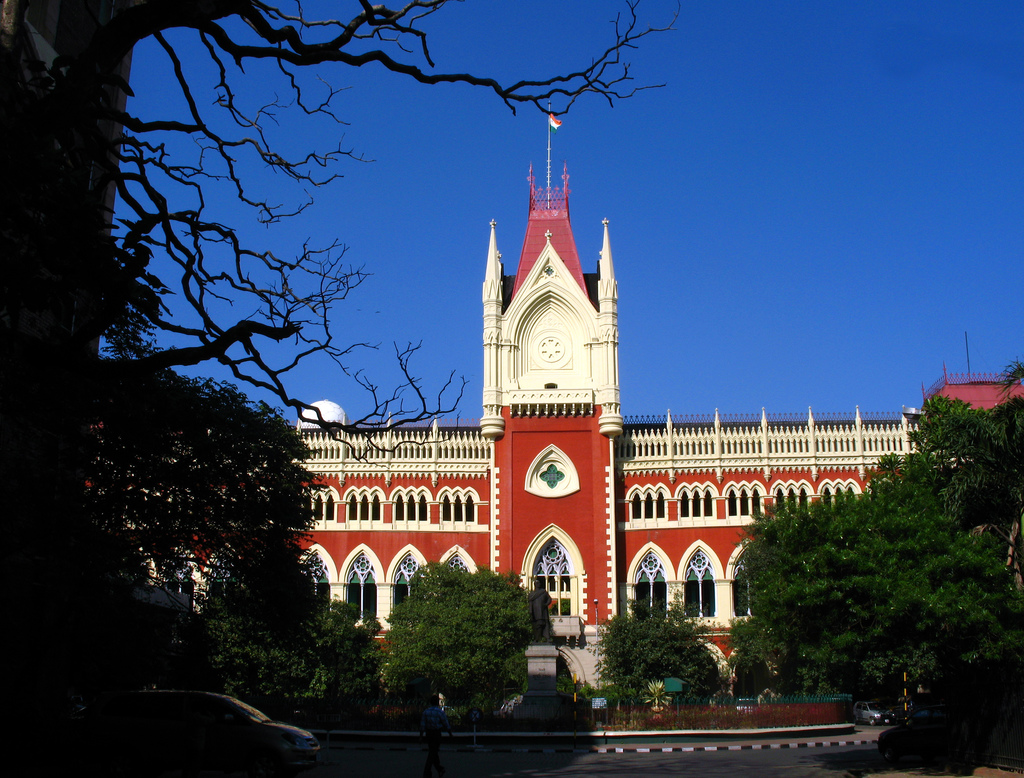
The National Judicial Appointments Commission Act, 2013, introduced in the Lok Sabha on August 11, 2014 by the Minister of Law and Justice, Mr. Ravi Shankar Prasad, in conjunction with the Constitution as 121st Amendment Bill, 2014, established the National Judicial Appointments Commission (NJAC). NJAC will be responsible for appointment as Chief Justice of India and other Judges of the Supreme Court (SC) and Chief Justice and other Judges of High Courts (HC). The NJAC Act was bought into force on 13 April 2015. However, new appointments to High Courts and the Supreme Courts are not being made because of the petitions filed against NJAC.
The composition will be, a six- member panel, headed by the Chief Justice of India and which will also include two senior most Supreme Court judges, Union Minister of Law and Justice and two eminent persons nominated by a committee comprising of the Prime Minister, CJI and Leader of Opposition in Lok Sabha or leader of the largest opposition party in the Lok Sabha. Whenever a vacancy arises in the SC or HC’s, the central government will make a reference to the NJAC and it will make recommendation for the appointment of such. A person cannot be recommended for the appointment if any two of its members do not agree to such recommendation. After such recommendation the President may require the NJAC to reconsider the recommendations made by it and if NJAC makes a unanimous recommendation after such reconsideration, the President shall make the appointment accordingly.
N.H. Hingorani, senior advocate of Supreme Court of India has written much about how the collegium system of judicial appointment is constitutional invalid. As per Article 124 (pre-amendment) in the Constitution of India, every judge of the Supreme Court shall be appointed by the President with the consultation of the Judges of SC and HC as seems necessary to the President and also the Chief Justice and similar in the case with the appointment of Judges in HC as stated in Article 217, where the President has to consult the Chief Justice of India, the Governor and also the Chief Justice of the HC for the appointment of the Judges. In the case of Supreme Court Advocated- on Record Association v. Union of India, it was held that the Chief Justice of India will have the primacy in all judicial appointments and no appointment can be made by the executive that is the President against the CJI’s assent. Thus, the collegium came into being, consisting of the CJI and four senior most judges of the Supreme Court of India. The collegium system has been criticized for its impracticality and opaqueness and improper implementation. Therefore, the government argued that the NJAC will bring an end to this problem of the collegium system and will strengthen the independence of the judiciary and not weaken it.
But the fact cannot be overlooked that NJAC is a pathway through which the executive gets its say in the appointment of judges in SC and HC and though the CJI and other eminent judges are included along with two other eminent person, the collective opinion of the three judges could anytime be vetoed out by the other two members. This clearly shows that the judges and CJI will lose their say in the appointment encroaching upon the independence of judiciary. The Constitution though has given power to the President for the appointment but only after the consultation of the CJI and in the present upcoming system the two eminent people is big question. Though the say of CJI’s opinion will be taken into consideration in the appointment of the ‘two eminent persons’ but the presence of Prime Minister and leader of opposition will have an upper hand. The person may know nothing about the working of the judiciary and their appointment by the politicians will be against the purity of judicial standards, which is the cornerstone of judicial independence, as said by the senior advocate Rajeev Dhavan.
A reform similar to this was recently tried out in France in a couple of Tribunaux correctionnels (criminal courts), introduced trial by a jury consisting of six members of the public and three magistrates. But in 2013, the socialist administration of Francois Hollande decided to scrap this reform because it was expensive, slowed down the judicial procedure and did not produce any significant change in results.
Similarly the present government of India is trying to introduce a reform consisting of the voice of eminent person but it may not be a good approach. Advocate Prashant Bhushan, counsel for Centre for Public Interest Litigation (CPIL) also had the opinion that making NJAC operational will be a cumbersome process, rules will have to be frames, jurists to be selected. Scraping the 22 year old collegium will be a change but according to my personal opinion it will be an encroachment upon the independence of judiciary, moreover the Parliament already has an upper hand in the removal of judges through the Constitution and granting power to make appointments even will be against the very nature of the concept of three branches of government – executive, legislative and judiciary and their independence. Though the Constitution provides with provision for the checks and balance within the three branches but does not give the power for any branch to take away the power of any other branch. The pros and cons are being brought up in the petitions lodged in this case and the judgment by the Supreme Court will surely be in the benefit for a future successful India.
This article is written by Raghav Nagar, a student of Campus Law Center, Delhi University.
We live in an age of unprecedented change. Humanity’s quest for technological development, has in turn paved the way for a plethora of inventions and innovations. As a result of which our life is substantially easier. One such new, though still nascent technology which has the potential to change the course of our daily lives is the Drone Technology.
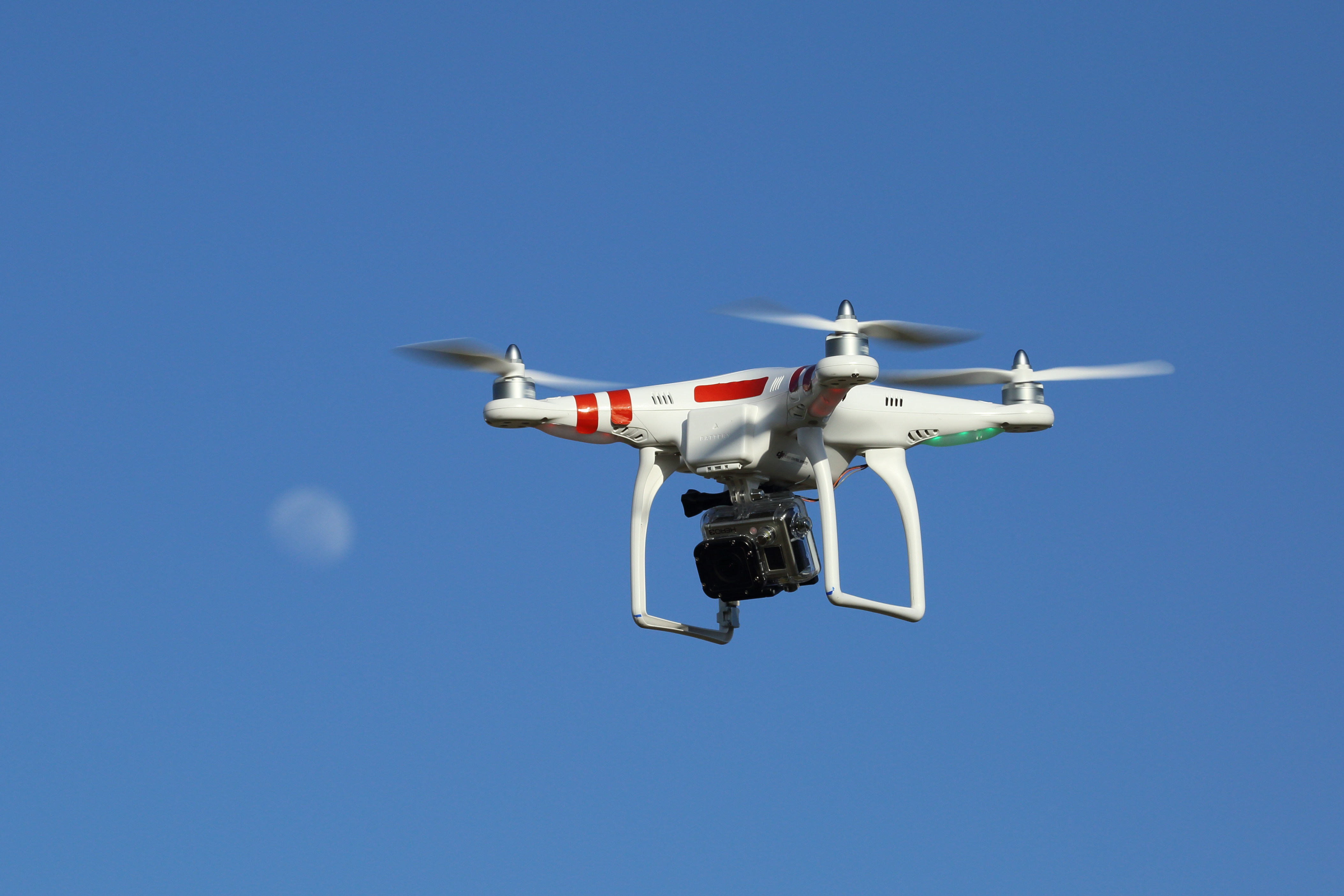
Any Unmanned Aerial Vehicle (UAV) which is autonomously or remotely piloted—either individually or in a networked manner—can be called a ‘drone.’ Drones, mainly UAV (Unmanned Aerial Vehicles) have been operational in the military sector for a long time. India operated its first drone in 1996 when the Army acquired an Israeli Searcher Mark I. In recent times there has been a marked increase in the use of drones for civilian and commercial purposes. An interesting example from India is that of a Mumbai eatery which delivered its order through a drone. Amazon (the e-retailer) introduced a service called ‘Prime Air’, through which it would’ve made deliveries by using drones.
But The Director General of Civilian Aviation (DGCA) however published a notice banning the use of such drones as there was no set policy to monitor their use. This technology will gain wide acceptance sooner or later and thus, there is a need to formulate a policy to govern the same.
Since banning the use of drones in 2014, the DGCA has not issued any new guidelines for the same as of June 2015. According to a statement by an official, the DGCA recently has initiated a process to formulate rules and regulation for drone operations in civilian areas. The DGCA has also stated that these rules will be ‘implemented in the coming months[1]’. What needs to be noted, however, is that the use of drones is not restricted only due to a lack of appropriate policies in India, moreover because the International Civil Aviation Organisation (ICAO) has not issued any recommendation or standards for the use of drones for civil purposes either.
The benefits of civilian drones are well known; in the sphere of agriculture, wildlife conservation, aerial photography, perimeter security and even remote monitoring of utilities such as transmission towers, pipelines, highways, railways, etc, The tracking of natural disasters and subsequent search and rescue operations are an extremely important aspect of drone use. As noted earlier in the example of Amazon, doorstep delivery of products is another viable use.
The drones in question are also useful for maintaining peace and security. They can be used for surveillance in crowded places and in monitoring high tension or even riot zones. The Delhi polices use of drones during the Trilokpuri riots is an excellent example of its utility.
On the other side of the debate, there are legitimate concerns among officials and experts of the aviation industry about the use of drones. Drones pose unique challenges as they can be used for intrusive surveillance and thus, to violate a person’s right to privacy. Further, battery failure or loss of navigational control could cause accidents. As aptly put by Mr. Amber Dubey, Partner and National Head of (aerospace and defence), KPMG “Given its multifarious applications and damage potential, ownership and operation of drones need to be licensed. Its size, capabilities, aerial route and end-use of collected data need to be monitored,”[2]
Some of the major concerns regarding the operational facility and capacity of drone use are:
Will each drone be issued a unique identification number or code?
The challenge is regarding the structure of the ATC (Air Traffic Controller) and the network of ground-based radars that are currently not equipped to track all kinds of drones, especially small and micro drones. Drones flying below 1,000 feet pose a challenge in this regard. Thus what is needed is are new generations of radar and communication systems technology which will able to detect and engage with drones of all specifications and dimensions in the civilian areas.
Since drones are increasingly becoming a part of the manned airspace, it is critical to give each drone a unique electronic code, akin to an Internet protocol address, for quick, easy and clear identification. There are two critical steps required to start this process. The first is to create a regulatory and policy framework where definitions of private, civilian and military airspaces are clearly defined for UAVs using functional specifications such as their flight envelope[3], purpose and loitering capacity[4]. The second is to train the ATC staff to understand the operational nuances and logistical requirements of different kinds of drones to ensure their effective management
Drone technology, being a new technology will carve out its niche in the sphere of transport and various other utility based services in the coming future. The burden of responsibility of the individual owners of these drones is an issue that needs to be addressed..Hence, a separate act by the government is needed to clarify and simplify the law regarding complex situations which may arise due to drone use.
Globally, Spain, Australia and New Zealand have already notified provisional norms for the civilian use of unmanned aerial vehicles (UAVs). The (US) Federal Aviation Administration (FAA) unveiled proposed regulations (for commercial use of small drones) in February, 2015. Since India already has an impetus in this field as it is a global giant in the software industry. The service capabilities of drones are greatly dependent on its software capabilities and Indian drone companies are in a unique position to harness India’s strength in this area. Also the Indian environment is in need of such a technology that will provide a push to the development process that has been instigated by the current government .The possible applications of drones in civilian and commercial sectors are immense and cannot be discounted in any manner.
Hence India needs to develop its own comprehensive policy and regulatory framework for drones so as to enhance its operational clarity. Also there’s an impending need to develop a manufacturing base for an indigenous drone industry. If India takes the initiative, it is quite reasonable to believe, that Drone technology will become a crucial part of India’s emerging digital economy.
[1]http://www.financialexpress.com/article/industry/companies/india-may-get-to-see-e-commerce-drone-deliveries-before-us/82457/
[2]http://indianexpress.com/article/india/india-others/regulator-set-to-clear-norms-for-commercial-use-of-drones/
[3] the range of combinations of speed, altitude, angle of attack, etc., within which a flying object is aerodynamically stable.
[4] In aeronautics and aviation, loiter is a phase of flight. The phase consists of cruising for a certain amount of time over a small region. The loiter phase occurs, for general aviation, generally at the end of the flight plan, normally when the plane is waiting for clearance to land.


This article is written by Apoorva Yadav, a student of JGLS, Sonepat.
Planning a holiday, can be as hectic as working from 9 to 5 in a Government office. One might think that a suitcase, passport, tickets are all that’s needed but what happens if you lose your luggage at the airport? Or if one of the travelling member has a serious medical condition? Or if there is an emergency at home and you need to cancel the rest of your trip and head back home? Would you be willing to let go of all the money that was used in booking the expensive hotels and services? I guess no. This is where your Travel Insurance company steps in, starts its work and take care of all kinds of contingencies which might occur during a domestic or international tour or holiday be it loss of document or medical emergency or even cheating by travel agents.
What exactly is a travel insurance and why does one need an insurance while travelling? It is basically a type of insurance which covers up medical expenses and lost luggage and other such losses that one might incur while travelling nationally or internationally. The insurance not only helps you with a lot of losses but some countries like Cuba will not let you in unless you have a travel insurance. Also, there is a sense of security and one’s family members are also at relief knowing that if something goes wrong, it would be covered by someone else. It gives a person more freedom while travelling. Even though a travel insurance does not keep one healthy or safe and the place where you might be planning your vacation might be safe and the risk level might be very low but sometimes there are instances where the losses are so huge that a person becomes broke and goes into debt for years.
Now there are various types of travel insurances in the market with different policies and which cover different losses. Buying a travel insurance can be one of the most tricky and confusing part of a holiday planning. But before going to buy a travel insurance one must keep in mind the kind of trip a person is planning to make. Is it a solo trip or a family trip? The place and duration of the trip and the previous medical condition of each and every member who is travelling with you. These aspects should be kept in mind since they play a crucial role in deciding the type on travel insurance one must chose.
So what exactly should one look for while buying a travel insurance? Following is a list of things that are necessary and one must look for before buying a travel insurance:-
Emergency medical expenses: The first and foremost thing is the emergency medical expenses that one might face during travelling. One should make sure that the travel insurance provides cover towards the costs for medical and surgical treatments that you went through during your trip. An exception that is usually there in this policy is that if your treatment is not that urgent and can wait until you finish your trip and head home then that would not be covered under this policy.
Personal Liability: This condition covers the expenses and costs that one is liable to pay to someone else during travel due to accidental bodily injury or if the property of the other person is damaged by the traveler.
Lost baggage: If your baggage is lost or destroyed or damaged during travelling then the expenses would be covered under the policy. You would be expected to list all the items and valuables that are lost/damaged/destroyed within a limited period of time. If the same happens in an airport then a written report is to be brought by the airlines and submitted to the insurance company.
Cancellation or Missed departure: This service comes in use when either one has to cancel his trip or cut it short due to circumstances. In such a case, the insurance covers the expenses of travel and accommodation whose money has been paid and is not refundable. In case a flight/train/boat is missed due to circumstances that are acceptable by the insurance company, then the expenses and accommodation or the extra time is also covered under such policies.
Delay/ Travel abandonment: If the travel plan is delayed or cancelled due to conditions like bad weather or other circumstances then the policy will reimburse the expenses. Now one should check the circumstances that are accepted by the company before getting overwhelmed and buying the insurance.
Money/Cash: Under this condition, if one looses or damages money or if a cheque or prepaid ticket is damaged or lost or stolen, then the insurance company is liable to cover the expenses. In case of theft, a local police report should be given as a proof.
Loss of Passport: This policy provides cover of expenses for additional accommodation and travel in case one looses passport till the time a new passport is issued.
Injuries during Sports: This section covers expenses that take place if one gets injured while playing a sport. The important thing to keep in mind here is that there are only a few sports that the policies cover. So one should look up the types of sports and activities that are covered by the policy.
Now we would look towards some of the things that are to be kept in mind while buying a travel insurance. These things play a major role and if not kept in mind, one could undergo huge losses.
Trip Duration: One should definitely look up the number of days for which the insurance is issued. There are some travel insurances that covers you only for a week or so and some that go on for one. Therefore one should keep in mind the duration of the travel insurance with respect to their own duration of the trip.
Excluded Destinations: There are a few countries or places that are not covered under certain travel insurances.
Pre-existing conditions: It is imperative that one is fair regarding the matter of any prior medical condition that one has. Despite the fact that it can be enticing to keep them calm to help push the expenses down or to accept that in the light of the fact one hasn’t had any issues lately but it is necessary to uncover the medical history because if the insurance company does not know about the fact that one is a heart patient and then later on during travel that same person has a heart attack, then the company will not pay for the expenses incurred because it has no prior history.
Alcohol and Narcotics: Even though the policy says that it would cover the expenses if one is liable to pay someone for a bodily injury or damage of an object but if the same is done while being intoxicated then it would not be applicable and your travel insurance would not cover such expenses.
Medical travel insurance and trip cancellation insurance are not the same: Trip scratch-off and travel wellbeing protection are two unmistakable administrations, Trip undoing spreads prepaid and non-refundable costs if ones arrangements are intruded on or crossed out. The five principle sorts of protection are for the most part sold in a combo of sorts. If one is needed, then it should be requested and asked whether there are motivators to move up to all or simply some. A thorough bundle spreads trip retraction and intrusion, clearing, medicinal and things, even flight protection.
Now since we’ve covered the terms and conditions, the last thing that comes is how to make a claim. If you make a claim, it is a very common thing that the travel insurance company no matter how good, will either avoid paying or will pay as less as possible. In order to ensure that you do get paid your claim, one should make sure you have all your receipts, necessary forms, and proper documentation because these documents will do nothing but help you make your claim quick.
The whole process might seem very complicated and baffling but there is nothing perplexing in it. In fact one can get a travel insurance online too. Therefore one does have to worry about going to the band and standing in the long line for hours and filling hundreds of forms and completing numerous formalities. The four best travel insurance companies according to www.reviews.com are-
HTH Travel Insurance reliably offered the absolute most moderate travel protection approaches of the considerable number of organizations. In case you’re going with others, their arrangements turn out to be considerably more reasonable, with uncommon rates being accessible to gatherings of five or more individuals voyaging together. HTH Travel Insurance additionally gives probably the most adaptable plans around by empowering you to choose your scope limits and your deductibles. On the off chance that you choose you needn’t bother with outing insurance scope, there’s additionally the choice to buy restorative just travel protection, which covers any crisis medicinal treatment you need while you’re out of the nation. Couple of other travel protection suppliers offer this kind of approach, so in the event that it sound speaking to you, you may need to investigate HTH Travel Insurance’s wide determination of arrangements.
WorldNomads.com is another travel insurance supplier that offered some exceptionally reasonable rates. In spite of the fact that their scope breaking points may not be as high as those of some different organizations, despite everything they give some strong excursion assurance and crisis medicinal and dental scope with the majority of their arrangements. Also, WorldNomads.com offers a portion of the best experience sports scope you’ll discover, settling on them an awesome decision on the off chance that you anticipate taking part in any of these higher-hazard exercises amid your excursion. The best news is that WorldNomads.com’s rates are significantly more settled than those you’ll discover with different organizations, so it doesn’t make a difference how far or to what extent you plan to be gone on the grounds that you pay the same expense whichever way
CSA Travel Protection additionally scores a spot on the rundown of shabby travel insurance agencies. They offer two diverse travel protection approaches to browse, both of which incorporate scope for outing dropping and intrusion, trek and things postponements, and crisis restorative and dental consideration. The Custom Luxe arrangement even gives rental auto protection at no extra cost. You can likewise buy discretionary Cancel for Any Reason scope with either arrange. Getting a quote from CSA Travel Protection is brisk and easy to do, so its justified regardless of your while to look at what they bring to the table you and your voyaging mates.
Allianz finishes the rundown of the least expensive travel protection suppliers, performing superior to anything normal. You can choose between single-outing and yearly scope relying upon how regularly you travel. On the off chance that you anticipate taking a few treks through the span of the year, a yearly arrangement could help you spare much more in light of the fact that it covers a boundless measure of excursions taken inside of a 12-month period. Another extraordinary thing about Allianz travel protection is that their arrangements aren’t as prohibitive as a few others in the business. They let you protect trips that cost up to $100,000 and there is no age restrict on their restorative scope, something which is generally unordinary among travel protection suppliers.
Apart from these, there are travel insurances for pets as well that provides a person with the losses that take place with respect to ones pet whether it is a dog or guinea pig.
In the end I would like to conclude by saying that there is a quote by J. R. R. Tolkien that says “not all those who wander are lost”, but in today’s world if you don’t have a travel insurance, you might just be lost.






 Allow notifications

