

This article is written by Ruchi Jain, a student of MATS Law School, Raipur, on how to file online FIR and criminal complaints.

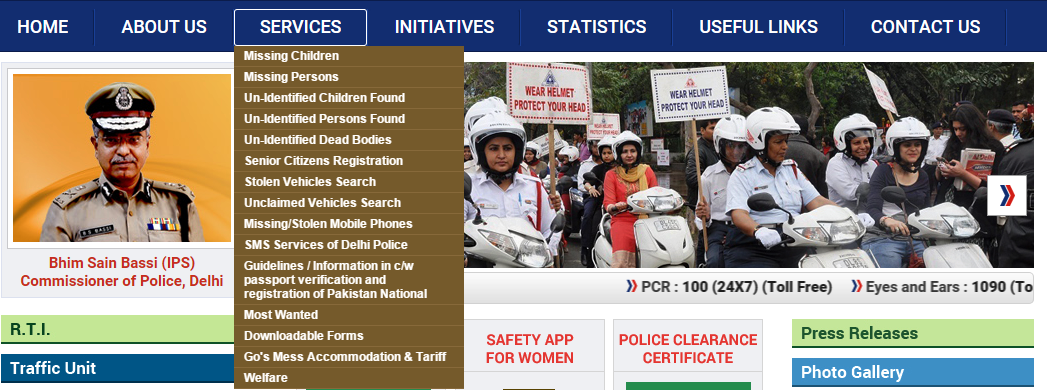
This article is written by Ruchi Jain, a student of MATS Law School, Raipur, on how to file online FIR and criminal complaints.


This article is written by Ayush Agarwal, a student of UPES, Dehradun.
Banking had always been root of a country’s economy and people living in it. To safeguard money, to earn a little interest income, to buy things which one cannot pay at present (credit facility), to hook big transactions in a safe and secured way and with many endless facilities, bank holds the big responsibility. One can see the importance of banking from the fact that the Government had been trying to introduce schemes for the development of bank and people operating and transacting through it.
Reserve Bank of India was incorporated in India in year 1935 by Hilton Young Commission and was nationalized in the year 1949. RBI being the national bank of India had been rendering service as a regulator and a parent bank for all banks in India. All banks giving banking service are being regulated by RBI.
No service could run without flaws and consumer complaints in it. To address complaints, disputes and grievances consumer needs a forum. A consumer cannot address each issue to the overburden judiciary and cannot go for the hectic process of filing each issue and summoning the bank for to address it. There was a need a forum to address the issue of the consumers, where they can freely, without much cost and without any hectic process of filing complaints can get speedy answer to the issue of the bank.
With the object to address this issue RBI introduced THE BANKING OMBUDSMAN SCHEME, 2006 Scheme is introduced with the object of enabling resolution of complaints relating to certain services rendered by banks and to facilitate the satisfaction or settlement of such complaints.
Grounds of Complaint:
Bank ombudsman can only be invoked when the facts of the case are not complicated and they can be addressed without supervision of the court. Section 8 of the Scheme specifies grounds on which a Complaint can be filed, the Banking Ombudsman has jurisdiction over deficiencies in baking which includes internet banking or other services, are as under:
Sub-section 2 lays down the grounds for the deficiency in baking service with respect to loans and advances. The jurisdiction will be as under:
What is the procedure of filing compliant?
Section 9 of the Scheme gives out the procedure of filing complaint with the Banking Ombudsman. Any aggrieved person, invoking above mentioned grounds can file a complaint in person or through an advocate. The complaint can be filed with Banking Ombudsman within whose jurisdiction the branch or office of bank complained against is located. The matters related to credit card and other type of centralized service, the jurisdiction of Banking Ombudsman is the billing address of the aggrieved person.
The complainant is required fill form (Annexure ‘A’ which can be accessed here) or filling an online application form which can be accessed here. The form needs to duly sign clearly admitting all circumstances, stating clearly:
Limitations to the filing complaint with Banking Ombudsman are:
Award by Banking Ombudsman:
The list of Banking Ombudsman in India can be found here. One can file complaint with the local Banking Ombudsman by making online application or written complaint. Now access to the relief had been made easy and one should avail the benefit without any delay.

This article is written by Tarun Gaur, a student of Nirma University
The Finance Minister Arun Jaitley, announced the implementation of MAT (minimum alternate Tax) on the FPI (Foreign Portfolio Investors). The government has tried assured investors that the revenue department will neither put up any new MAT claims nor will it act on the previous provisions until the three member committee headed by Mr A.P.Shah submits its report to the government. Although the government has tried to pacify the concerns of the Foreign Portfolio investors over the retrospective levy of the MAT, skittish
Minimum Alternate Tax (MAT) was first introduced in the Income Tax Act 1961, in 1987 by insertion of Section 115 J.This sectionsays that all companies have to pay a fixed percentage of their book profits as tax. In 1996, this provision was re-introduced in the form of insertion of a new section (115JA).The rationale behind the insertion was that it was only meant for the companies preparing their profit and loss account under the Companies Act, 1996.[2] Furthermore in the year 2000 the earlier introduced section 115JA was replaced by section 115JB, which talks about the MAT regime. The Finance bill of 2000 gives us an insight into the mind of the legislature for implementing this section.
As per the section 115JB of the Income Tax Act , if the income tax payable by any company on its “taxable income” under the normal provisions of the act is less than 18.5% of its book profits, then the company needs to pay MAT at 18.5% (plus applicable surcharge and education cess)[3]. This means that if the income tax payable by the company is less than the 18.5% of their book profits, then the company needs to pay the MAT instead of the normal payable tax amount.
Section 115JB of the current Income Tax Act emphasizes the working of the amount on which MAT is to be paid. The section says:
According to Foreign Portfolio Investors (FPIs), the MAT should not be paid to the government as they do not conductt theirbusiness in India and thus, are not required to maintain their books of accounts in India. Furthermore, the government is keen to implement the MAT scheme in a retrospective manner, that is to say that the government intends to claim the amount prior to April 1,2015. The government has already issued notices to 68 FPI’s to pay the amount (upto Rs 608 crores). What is more important to notice however is the fact that at the inception of the MAT, the government only had Indian companies in mind.Now the government is trying bring Foreign investors under the ambit of the MAT. This is aa clear contradiction of the governments previous policy This sudden change of stance of the government and trying to carb out the amount as tax is unacceptable to the FPIs.
In the current finance bill , the Finance Minister Mr. Arun Jaitley has proposed some relaxations regarding the taxes being levied on the FPI/FII. The Finance Minister has stated, “In order to rationalise the MAT provisions for FIIs, profits corresponding to their income from capital gains on transactions in securities which are liable to tax at a lower rate, shall not be subject to MAT.”
The question that concerns everyone is about the need for this amendment. Prior to the current budget, some references press reports had speculated that MAT might be applicable to . Only a few FIIs were given notice by the tax department asking them to pay MAT and also to provide the tax departments with valid reasons as to why they should not have to pay MAT on their profits. This inquiry by the taxman has created ambiguity in the minds of the investors and several representations were made to the Finance minister that the MAT should not apply to the FIIs. The response to the representations was termed out to be the reason for the introduction to the amendment. Therefore to make it more clear, the amendment was said to be a clarificatory amendment. The clarifications which were supposed to be made to the Finance Minister were
whether the MAT was to FIIs or not., The tax department claims that it has every right to claim MAT, and that FPIs are only exempted from the capital gains.
The reason that has come up that the behaviour of the government and the tax department officials , as in the initial period even the Finance minister boldly defended the demands and now it is contradicting. The government wants to apply MAT as they believe that domestic investors are avoiding taxes by investing through FPIs and taking over that money . The government’s stance is that since these investors are making profits in India thus they should paytheir share of tax. On the other hand, the FPI emphasise the fact that because the government is trying to implement MAT in a retrospective manner, it is difficult for FPIs to fulfil these claims asthe profit share has been already distributed among the investors . This is a legitimate argument asit is impossible for FPIs to take backprofits from their investors.
Another argument made by FPIs is this retrospective taxation will cause potential innvestors to lose faith in India and thus discourageFDI in India. Since the sole motive of the investors is to make profit, such unpredictable policy changes will deter foreign investments in the future.
The finance minister has publicly stated that the tax demands are based on the favorable ruling of the Authority for Advance Ruling( AAR) . The Authority for Advance Ruling was constituted to provide clarity on questions relating to the tax assessments in cases largely involving non-residents. The finance minister relied on the decision of AAR in the case of Castleton Investments and ZD[5], both of which were decided by the AAR in 2012. (Note-both the FPIs have filed Special Leave Petitions (SLPs) and the decisions are currently pending in the Supreme Court of India.) Although it seems that the tax department has refrained the Finance mInister from the other three decisions by AAR which says that the foreign companies are not entitled to pay income tax unless they have their permanent establishment in India.
Mauritius based Castleton had approached the Supreme Court against the ruling by the Authority of Advance Ruling in 2012 on the applicability of MAT on capital gains arising from the sale of shares.[6] The AAR held that income tax fails to make any distinction between the foreign and the Indian companies and thus the company is bound to pay the MAT. The AAR ruled that Castleton had transferred its shares from Mauritius to Singapore and was liable to pay MAT. The point to be noted is the fact that the decisions of the AAR are only clarificatory and persuasive in nature, they are not binding.[7]
There have been around eight judgements of the AAR and Income Tax Appellate Tribunal; which have reiterated that the if foreign a company does not have a place of business in India , then itcannot be liable for MAT. The question that now arises is ”Do FIIs/FPIs ‘conduct’ their business in India in the legal sense?” It is a well known and established fact that the FPIs do not maintain their books of accounts in India, nor arethey required to do so. They are also not considered as having ‘a place of business’ in India. These are two thing are important to determine the issue of liability under MAT.
There is no doubt that Foreign Institutional Investors have been in existance for atleast two years, yet all of a sudden, the Government wakes up and builds ammends the taxation system to make the FII/FPIs liable to pay the MAT. If it was in intention of the legislature to bring FIIs and FPIs under the ambit of MAT, why was this not done earlier? Foreign Investors have pumped $50 billion into the Indian markets since the election of Prime Minister Narendra Modi[8] in 2014, and this sudden and capricious change of policy by the government can only result in lower foreign investment inflows. Creating such uncertainity in the minds of the investors and thus damaging the appearant stability of government policies will not result in greater forein investment inflows. The concept of retrospective taxation is not new to only the current government however. The Vodafone tax case is another example of the so called tax terrorism. It seems that we must wait and see if Castleton and ZD will be victorious like Vodafone.
[1]Nidhi sinha,Why foreign investors are worked up about MAT,Livemint, May 23, 2015.
[2] Bipluv Jhingan,Amitav Singh,Applicability of MAT on FIIs: A Hot Potato,Taxguru, March 08,205.
[3] Nidhi sinha,Why foreign investors are worked up about MAT,Livemint, May 23, 2015.
[4]http://www.incometaxindia.gov.in/_layouts/15/dit/pages/viewer.aspx?grp=act&cname=cmsid&cval=102120000000037244&opt=&isdlg=1
[5] Ameet Patel, Partner, Manohar Chowdhry & Associates ,The History of MAT & FPI Taxation, Moneycontrol..com, April 27,2015.
[6]Deepshikha Sikarwar,Government, Castleton Investments agree to expedite Supreme Court hearings on tax row,THE ECONOMIC TIMES, APRIL 30,2015
[7] SANJAY VIJAYAKUMAR, The knotty issue of MAT, THE HINDU, APRIL 27,2015.
[8] SANJAY VIJAYAKUMAR, The knotty issue of MAT, THE HINDU, APRIL 27,2015.

This article is written by Yavanika Shah, a student of RGNUL, Patiala
The Non-Governmental Organisations (NGOs) are not-for-profit, voluntary citizens’ group which work on a local, national or international level, for causes like humanitarian service, social upliftment, etc driving
These NGOs solicit people/companies and organisations for fundraising to support their activities. Sometimes, people from abroad, i.e, the non-citizens offer the NGOs funds that are called as ‘Foreign Contribution’. In India, there are a certain number of restrictions for these NGOs to receive the funding from abroad.
The Foreign Contribution Regulation Act,2010 (FCRA) is the act that regulates the provisions of how these foreign contributions like donations, free international airfares or the hotel tariffs that are provided to the NGOs are to be transferred.
This act not only includes the registered NGOs as well as unregistered societies like Mahila Mandals.
The prime reasons for the implementation of this act are twofold:
Its stated purpose was – “to regulate the acceptance and utilization of foreign contribution or foreign hospitality by certain persons or associations, with a view to ensuring that parliamentary institutions, political associations and academic and other voluntary organisations as well as individuals working in the important areas of national life may function in a manner consistent with the values of a sovereign democratic republic, and for matters connected...”
Any Non-governmental Organisation which works for a definite cause, like Social issues, Political reform or research, Economic upliftment, Religious etc.
The act is regulated by the Ministry of Home Affairs, Government of India as it belongs to the category of the internal security legislation.
“An association of individuals, whether incorporated or not, having an office in India and includes a society, whether registered under the Societies Registration Act,1860 (21 of 1860), or not, and any other organisation, by whatever name called.’’
Although, it is nowhere mentioned in the statute for the association to be registered under the act, but it makes it mandatory to establish certain documentary evidence about the nature of work and the related activities carried on by the association.
There are two methods by which an NGO can be registered under the act:
(Apply under Form F.C 8)
(Apply under Form F.C. 1 A along with a letter of intent from the donor)
For over 40 years, Greenpeace has been the most influential powerhouse for driving the environmental movement all around the globe. Their campaigns have consistently been praised as well as has been criticised for numerous reasons. It won’t be wrong to call Greenpeace as one of the most controversial NGOs in the history of all times.
The very recent Greenpeace controversy started in the beginning of this year 2015 when its campaigner named Ms.Priya Pillai was barred from travelling to Britain where she was supposed to speak about the alleged violation of laws at the Mahan coal project in Madhya Pradesh.
Later, in February, the Union Government promised to withdraw the ‘Lookout circular’ issued against her if she does not ‘embarrass India’. Around this time itself, the Government even blacklisted 13 Greenpeace international activists from entering India on grounds of ‘security interests of the country’.
On April 7th, just a few days after the organisation questioned Prime Minister Modi’s launch of an air quality measurement index, the Ministry of Home Affairs had blacklisted 14 foreign donors of the organisation on the ‘prior approval’ category on the contention that the funds are used for “anti-India activities”.
Samit Aich, the Executive Director of Greenpeace India has stated, “We believe in the Indian legal system. A campaign is being waged against dissent, but we will not be cowed.”
Currently, Greenpeace India is preparing its formal response to the court’s decision to challenge the whole process carried against them.
“The question here is why are 340 people facing the loss of their jobs? Is it because we talked about pesticide-free tea, air pollution, and a cleaner, fairer future for all Indians?”,the Executive Director added.
What happens next is still to be seen after the final judgement comes.

This article is written by P. Lalita Sowmya Priya, final year student of law ( BA.LLB) from Vivekananda Institute of Professional Studies, IP University New Delhi.

This article is written by Kritika Khanijo, who is currently working as a Law Clerk-cum-Research Assistant at Supreme Court of India.
Imagine a group housing project, in which mostly collaboration agreements are entered into between the developer and owner of the land. The developer on the basis of the agreement to sell enters into buyer agreements with the purchasers for allotment of flats/villas in the group housing project. However the sale deed is not executed between the developer and the owner as some consideration was pending as per the agreement to sell. Even after the entire consideration is paid the owner does not execute a sale deed. On assurances advanced by the owner that the sale deed would be executed on the completion of the project, the developer continues with the construction. However on completion of the project and at the point when possession needs to be handed over to the buyers, the owner evades execution of the sale deed (a registered sale deed is necessary for transfer of title).
Precious time is lost in filing a suit for specific performance of the agreement and the Court adjudicates that the suit filed was barred by limitation. The buyers who have bought houses in the project are sent into a tizzy because they cannot be given title over their apartments, as the Developer himself does not have any title over the land. Welcome to the real estate tamasha of India!
This article deals with a scenario wherein the transferee (i.e. a developer in this situation) initially pays the earnest money stipulated under an agreement to sell (this is not a sale deed causing the transfer but a document stating that transfer will take effect in future) and subsequently possession of the property is handed over on that basis. A certain timeframe is agreed upon for the payment of remaining consideration and execution of the sale deed. Upon assurances by the transferor with respect to execution of the sale deed, the transferee pays the remaining consideration money. However despite the assurance of the transferor the sale deed is not executed. Thereafter the transferee files a suit to enforce the agreement to sell, called a suit for specific performance.
Interestingly, the time period for filing such a suit is 3 years from the time that the right to enforce the contract first accrued. This date is typically the date which is stipulated under the agreement to sell for the execution of the sale deed. If a specific date is not mentioned in the agreement to sell, the time period starts ticking from the time when the dispute over execution of sale deed first arises. If it is delayed, there are high chances that such a suit will be barred under law. The Court will typically decide that even though the agreement executed was valid and the possession was transferred to the transferee, the suit filed was barred by limitation.
A lot of these transactions are entered into by medium/small scale builders based on a certain level of trust. However one must be wary of the time limit in which they can legally enforce their rights.
One thing for sure is in their favour – they have possession. To legally recover possession the owner will have to file a suit. (This is very different from the suit of specific performance that would have been filed by the developer to compel the owner to legally effect the transfer of property). If such a suit is filed, the developer has an interesting option. As Section 53A of the Transfer of Property Act, 1882, as interpreted by various court decisions, the law provides a shield to the developer to remain in possession of the land against the owner.
The word stated in the provision is that of transferee, as it was not the intention of the legislature to discriminate between a plaintiff and defendant. The Supreme Court in Shrimant Shamrao Suryavanshi and Anr. v. Pralhad Bhairoba Suryavanshi by Lrs and Ors.[1] adjudicated upon whether a transferee was entitled to protect possession of a suit property obtained pursuant to the part performance of an agreement even if a suit for its specific performance was barred by limitation. The Court held that the Limitation Act would not extinguish the defense provided under Section 53A of the Transfer of Property Act and it was open for the transferee to take a plea of part performance in a suit for recovery of possession, though he may not be able to enforce that right through a suit or action. Even though the Supreme Court observed that the defense of part performance would be an empty vessel without the right to enforce that action, no attempt has been made to pour some logic into it. This makes the position in law incompatible as on one hand the protection of the transferee is protected under the plea of part performance while on the other hand the suit for specific performance is barred and therefore the lawful title vests with the transferor.
The Bombay High Court went further in one of its judgments,[2] where it held that a suit for perpetual injunction may be filed by the developer for protecting its possession, in case it cannot file a suit for specific performance. The suit for perpetual injunction permanently bars the owner from taking possession, irrespective of ownership status.
Ironically, there is no way in which lawful title to the land can also be taken. It’s almost like telling a child to keep a chocolate but never eat it. The Courts need to delve further and stich together this incongruous position in law.
Dealing in real estate? What other issues do you face? Feel free to write to us.
[1] 2002 (3) SCC 676
[2] Sadashiv Chander Bhamgare v. Eknath Pandharinath Nangude AIR 2004 Bom 378

What impact can you generate by seriously taking up a business law diploma course offered by NUJS? Can we help you to get a job at a top law firm, like one of the Amarchands?
We have contributed to the lives of a large number of our students through our online course along with their career development. You may have heard us claim that before – and may have wondered – how much can an online diploma course really help?
OK, let’s get down to that. We have decided to bring out a series of success stories that will inevitably inspire you to take up our course. Take our challenge – keep reading and you will see the point of signing up for this particular course even if you never considered it till now. Here is the first story, of a NALSAR student and how our career support program helped her with her quest to get a job at one of India’s top law firms.
Sravya Kopparapu from NALSAR 2016 batch signed up for the Diploma course in Entrepreneurship Administration and Business Laws offered by NUJS when she was in the 4th year at NALSAR. She is within the top 30% of her batch. She had already done 9 internships when we started to engage with her through the career assistance program. Sravya was one of first students who availed the in-person (online) mentoring facility offered to all students of the course.
It may sound quite abstract when we say that we’ll provide career assistance, as people tend to think that career assistance is meaningless unless we hand over a job on a plate to them. This does not work. The real challenge is to create value into your own profile, learn important skills and develop yourself as a professional. This is a journey that one has to undertake to become a good lawyer, and we assist our students on that journey in a way that is impactful and effective.
Sravya agreed to share her experience to demonstrate that the value of this course and the career assistance program is clear and measurable.
How did we help Sravya? Let’s hear it from her in her own words. Over to Sravya.
——————-
At the time of applying for the NUJS Diploma in Business Laws, I was seeking to understand the practical implications of the relevant laws. Although Law School does teach some of the applicable laws, the practical aspects are not covered in much detail as part of the course. The practical aspect plays a very important role while working at a law firm. Further, being the first person in the family to pursue legal studies, I needed guidance on how to get a start in the industry.
As the day zero recruitment session came closer, I started preparing for the interviews. Apart from legal knowledge, there are several finer aspects of interview preparation. At this point I got in touch with iPleaders as career support is provided to all students and alumni of the course by experts from iPleaders. I was provided a personal session on CV advice which helped me a lot. I was told about the shortcomings in both CV drafting and my understanding of the subject matter covered in my CV. I was advised to understand the basic details pertaining to mergers & acquisitions. I was provided guidance on how to prepare for interviews. When I was in need of such assistance, the diploma course had indeed come as a blessing.
The instructions had given me a direction to work towards my goal successfully in a structured manner. I carried out research in the relevant subject areas and studied the same to the extent that they were relevant to the subject matter covered in my CV. This indeed ensured my performance in the interviews.
The academics at NALSAR Law School and the timely assistance of iPleaders Team ensured that I could be placed with Amarchand & Mangaldas & Suresh A. Shroff & Sons (AMSS). Though this was my first interview, I was in a position to handle it confidently. The basic concepts discussed during the CV advising session played a great role in steering my confidence. I take this opportunity to thank the iPleaders team for the assistance as it has certainly enabled a planned approach to legal studies and enhanced my overall confidence in handling challenging situations in a methodical manner.

This article is written Diksha Chandok, a student of Amity Law School.
Travel, tourism and other consultants provide an extraordinary amount of services. The objective of this is to redress consumer faster and to discuss the role of travel agent and other consultants. This industry makes its services available to the consumers and continually discovering and inventing new products so as to attract consumers and filtering or refining them to satisfy consumers.
What are ancillary services?
Ancillary services in the tourism industry are those services which are available to customers by tour guides, entertainment providers, etc. The strategies and plan is to provide services which were promised by them and if they there are conditions or situations which were not foreseeable then to make some good alternative changes.
Travel agent/agent
According to the Guidelines for recognition by the Government of India Ministry of Tourism; Travel agent/agent is the one who looks into the requirements of tickets of air, railways, passport, accommodation, and entertainment related services etc.
According to RULES AND REGULATIONS OF THE TRAVEL AGENTS FEDERATION OF INDIA travel consultants can include individual, partnership firm, association or limited company.
Legal framework for consumers
Is the promise a part of the contract?
Exclusion clauses: Exclusion clauses are majorly found in contracts. These are included to exclude the right of party or restrict the rights. Illustration: if a party wants to limit his liability then he will include an exemption clause which limits the amount of damages. They usually work for the benefit of one party.
Section 2 (1) (r) of Consumer protection Act
We will discuss here the complaint of the unfair or restrictive trade practice. But before that we also need to know all things are included in unfair or restrictive trade practice.
What is unfair trade practice?
According to consumer protection act; it refers to trade practice which promotes the sale and supply of any products or goods, but it adopts any deceptive practice or method which includes:-
In Mahomed Desai v. Manager, Delhi Travel Development Centre,
In this case, person from Durban, South Africa came to India. He already made bookings with a travel agent (OP, who basically looks at all the travels and accomodation). The OP travel agency had already made all the bookings but despite that he paid extra and was made to stay in substandard hotel. His instructions were not followed and bookings were not made according to it. After some negotiation OP agreed to pay back some amount. But OP did not even give back the negotiated amount and this shows the malafide intention. OP duped the complainant. OP was guilty under deficiency and the Trade Practice Act:-
Damages
When a party has breached the promise, the other one is entitled to get various remedies for the breach. Damages may include:-


This article is written by Tarun Gaur, a student of Nirma University.
The recent arrests of seven FIFA officials in Zurich made by the Swiss officials on the request of the U.S. Department of Justice (DOJ) has made the world think of what could happen next. The arrests were made on May 27, 2015 in relation to the bribery and corruption charges, just few days before the Presidential elections that were supposed to take place in Zurich.
Federation Internationale de Football Association (FIFA), a non-governmental organisation formed in 1904 by a group of French men seeking to form an umbrella of various sports’ national bodies. In the inception, it was a European Club but gradually went on to include the rest of the world too. The aim of the organization has been to help and support the development of the game in various nations and also to take responsibility to organize international competitions, like the FIFA World Cup. FIFA also provides the rules and management of the game.
Earlier, there was a rivalry between the International Olympic Committee and the FIFA which led to the first World Cup organised by FIFA in Uruguay in 1930. The whole tournament was organised at a small scale which was hardly discussed in Britain, apparently the nation that founded the game in 1863; rather the birthplace of the sport. As of now, the competition is organised by FIFA once in every four years which is regarded as the most anticipated and watched sporting spectacle on the planet. The World Cup in France in 1998 had a cumulative audience of 37.4 billion worldwide.
The inception of FIFA was perceived as an Aristocratic, voluntary club which now functions as replica of United Nations – indeed there are more members in FIFA (209 members) as compared to the United Nations(193 members); FIFA has its own dreamy, utopian, rhetoric international equality and development to boost.
FIFA consists of 209 member associations and is organised into six regional confederations- approximately the world’s continents combined into the overall organisation of the game namely
These six confederations represent and serve the needs for their national associations. The FIFA congress meets every year and takes important decisions like the elections of the President at the headquarters in Zurich, Switzerland. The President and the regional head of the associations comprise the executive committee, organization’s decision-making body which decides the nation that will host the next World Cup.
On May 27, 2015, the FIFA officials who assembled in Zurich prior to the important Presidential elections were arrested by the Swiss officials at the request of the U.S. DOJ.
The U.S. DOJ had made allegations on the FIFA officials related to the broadcasting rights in the Western Hemisphere. Investigators charged that the officials from FIFA and CONCACAF (FIFA’s governing body in Central and North America) accepted bribes for sports marketing executives in exchange for broadcasting rights for the World Cup and other tournaments organised by the body. The allegations emphasised that these executives paid more than $150 billion as a bribe to acquire the broadcasting rights. This comes after years of intensive investigation taken up by the US on the alleging the FIFA authorities for corruption.
CONCACAF has its headquarters in Miami and many of the alleged crimes apparently took place on the US soil, which gives the US an authority to charge these officials and thus the DOJ got involved. The accused includes the current and former Presidents of CONCACAF among the 14 others charged. Attorney General Loretta Lynch said that, “The investigations uncovered FIFA’s bribery since 1990 and that they did this over and over, year after year”. The investigations were guided by the former executives who were secretly pleaded guilty in the same case acting as informants. They were also accompanied by the FIFA executive Chuck Blazer who was pleaded guilty in November 2014. The DOJ invoked RICO (Racketeer Influenced and Corrupt Organizations Act), 1970 which was enacted to restrict the organised crimes usually involving activities like money laundering, bribery, kidnapping, murder.
The Swiss Office of Attorney General is in favour of proceeding with the criminal investigation of the FIFA on the suspicion that there was money laundering in relation to the 2018 and 2022 World Cup venues. The voting done for deciding the venues was made by the FIFA executives way back in 2010, but was followed by allegations of corruptions, with the officials reportedly claiming that they had been offered millions of dollars in exchange of the votes.
Swiss officials are currently investigating the 10 FIFA executive members who were a part of the bidding procedure in 2010.
The current charges of corruption would not have been a surprise for the FIFA, as they have a long history of allegations but the surprise would be that the U.S. and Swiss authorities are finally cutting through the ice.
It all started in 1974 during the tenure of the FIFA president João Havelange, who made changes to the existing rules; brought the World Cup’s first corporate sponsors, increased the number of teams, thereby increasing the revenues of FIFA. During that period, Havelange took billions of dollars of bribe and was eventually removed and the post which was later taken by Sepp Blatter, who had managed to hold on to the post since 1998. Two executive members were apparently suspended from the voting procedure due to allegations related to bribery.
Also it was witnessed during the World Cup 2014, Brazil that there were various kinds of protests by the local residents claiming that the vast sum of tax payers’ money was spent by the government on building the stadiums. They had also spent around $11billion, which included $270 million on a stadium just to host four World Cup matches. The country had spent the money in creating and arranging all the venues whereas the profits were taken by FIFA which had sparked the main controversy. On being asked about a non-profit organisation having worth Billions of dollars in their bank accounts, “They are kept as reserves”, said Sepp Blatter. The individuals arrested were accused of taking bribes and kickbacks from different private firms in the bidding which included 2010 World Cup held by South Africa.
The Qatar bid, in particular drew furious objection by the critics highlighting the appalling record on the workers’ right and the Russia bid, due to the current Ukraine issue building up, but the Russian President was praising the FIFA President on not deviating from the decisions in the midst of all the pressure by the Worldwide authorities.
Amidst the entire allegation, FIFA hired New York prosecutor, Michael Garcia to probe into the world Cup corruption case.
The U.S. authorities recently claimed that they will be presenting more names in the FIFA corruption case and same has been indicated by the Swiss authorities who are simultaneously proceeding with the allocation of the of the World Cup venues in Qatar and Russia respectively. But it seems unlikely that the investigations undertaken by the Swiss authorities would change the World Cup venues, as stated by Sepp Blatter. Although there have been no allegations against the current FIFA President Sepp Blatter, but for how long can he stay safe, although he resigned from his post according to the sources. What is the fate of FIFA with no candidate for the post of President? A question the world is eager to get an answer of.

.jpeg)
This article is written by Pragya, a student of New Law College,BVDU, Pune.
Imagine a foreigner asking you for guidance about the legal issues related to tourism. You could be a travel agent, a hotel manager, or even a friend. If you do not have a clue about the procedures, formalities and the seemingly endless number of forms, this article is for you.
India is famous for its tourist hotspots and attracts a lot of tourists from across the world who come to see India and all the wondrous attractions. The good news is that getting a tourist visa is not all that difficult. The bad news is the seemingly endless barrage of legal formalities to comply with. The confusing nature of the Indian legal system doesn’t really help either.
This article is also useful for foreign tourists as it will help them understand the actual requirements and legal formalities. For example, if a foreign tourist wants to rent a villa in Goa and her broker tells her that as she is a foreigner, her verification will take 3000 rupees (Broker’s commission extra). Hopefully, by the end of this article, you, dear tourist, will be better informed.
(Hint- There is no such rule. You need to get a new broker. )
Almost everything that a foreigner needs to know in terms of compliance is based on the following-
While you don’t necessarily have to read these arcane laws, you need to pay attention to a few mandatory formalities. They are-
Based on our conversations with (the few) foreign nationals we have spoken to, it seems that the Foreigner Regional Registration Office (FRRO) is the most dreaded institution in the eyes of foreign tourists. The reasons for this apprehension range from the number of documents and forms that are needed to the implicit demand for “Speed Money” to actually move things along. Unfortunately, The Foreigner’s Registration is the procedure every foreign national entering into India absolutely must go through. The good news here is that as a foreign national, you can register yourself in the airport itself (assuming you have arrived by air).
Most foreign nationals must register themselves within 14 days of arrival into India. An exception to this are Pakistani nationals who must register themselves within 24 hours of landing in India. All Afghan nationals are required to register with the FRRO/FRO concerned within 14 days of arrival except those Afghan nationals who enter India on a visa valid for 30 days or less. This exemption is based on the proviso that the Afghan national concerned gives his/her local address in India to the Indian Mission/FRRO/FRO. The Afghan nationals who are issued visas with an ‘Exemption from police reporting’ are exempt from Police reporting and are not required to obtain Exit permission, provided they leave within the Visa validity period.
If the visa of the foreign national has special endorsement such as “REGISTRATION NOT REQUIRED IF EACH STAY DOES NOT EXCEED 180 DAYS” then they are exempted from registration at the FRRO.
Rule 14 of Registration of Foreigners Rules requires hotel-managers to follow some procedures. A register needs to be maintained by the management of the hotels. As a foreign tourist, you will also need copies of the Form C and Form F from Registration of Foreigners Rules, 1932. You can get them from any Foreigners Registration Office and online.
According to the Rule 14, every hotel-keeper needs to take down the name, nationality and signature (or thumb impression by which he/she, i.e. the foreigner, is accustomed to attest a document) on the arrival of a foreign national. The management of the hotel/guest house must inform the police of the arrival of the guest within 24 hours.
The visitor shall furnish all the documents as specified in Rule 14, such as passport, photographs, Identity proof etc. (Please see items 4 to 10 of the register to be maintained under Form F).
The visitor at the time of his departure from such hotel must furnish the particulars necessary for recording, in the said register, the date and time of his departure and the address to which he/she is proceeding.
According to the rule, a “Hotel” in this context includes any boarding-house, club, dak-bungalow (government guest house), rest house, paying guest-house, sarai or other premises of like nature.
There are some indigenous areas in India which are protected for security reasons. If you want to travel to these areas you need a restricted/protected area permit. Some of these areas are not tourist attractions (for example, a military research facility).
A foreign national is not allowed to visit the protected/restricted areas until and unless the Government is satisfied with the extra-ordinary reason to visit such areas.
An application has to be made to obtain the restricted/protected area permit with the concerned authority. If the powers have been delegated to such authority by the Government of India, then approval for such permission should be sent to Ministry of Home Affairs at least eight weeks before the expected visit for further approval.
Permission should not be issued to the nationals of Pakistan, Afghanistan, Foreign Nationals of Pakistani origin and China without the consent and approval of Ministry of Home Affairs.
The special instructions to be followed while issuing such permit:-
The following links can be referred for further information:-
http://mha1.nic.in/pdfs/ForeigD-FAQs-onPAPandRAP.pdf
http://www.immihelp.com/nri/protected-restricted-area-permit-india.html
Hopefully you are now more informed, and a little less intimidated by our laws. We hope that this article has been of some help to the foreign national who really wants to visit India, but has heard horror stories about the cumbersome legal issues. We hope that now, she, can start planning her vacation here.






 Allow notifications

