Download Now
Home Blog Page 1819

Live-in relationships and emerging legal issues in India

4

couple-437987_1280

This article is written by Vishakha Gupta, a 3rd year student of NUJS, Kolkata.

To great chagrin of the regressive population of India, live-in relationships are reaching heights of popularity. It provides the youth an opportunity to know their partner without engaging into a legally binding relationship with them. These easy-in easy-out relationships exclude the abhorrent mess of family drama and lengthy court procedures in case the couple decides to break up. Despite such on-the-face benefits, live-in relationships have been despised by a great majority of our country. It is palpable that the crowd which pronounces death penalty for pre-marital sexual intercourse would be wary towards the concept of live-in relationships as well.

If you want to ask your partner to move in with you, without undergoing the tedious wedding ceremonies, you should be aware of the legal scheme that surrounds the same.

What Constitutes a Live-in Relationship?

Amidst the long prevalent regressive attitudes of the Indian population, further elucidated by a lack of specific legislation on the subject, the judgment of Supreme Court in Indra Sarma
v. V.K.V. Sarma
(see the court judgment here) comes as a draught of fresh air. Though the case pertained to application of Domestic Violence Act, the Court went into a lengthy discussion on live-in relationships acknowledging their existence in society and explaining how certain provisions of Indian law would apply to them. However, this was not the first case to do so. Realising the gaining popularity of such relationships, Courts have readily taken note of their presence in society in the past as well.

There is no legislative definition or a strait jacket formula for a live-in relationship. It is popularly understood to be a domestic arrangement between two people in a romantic relationship. Sexual intimacy is also a popularly accepted but not a mandatory requirement of such relationship. Supreme Court has held that long and continuous cohabitation of man and woman as a husband and wife may raise a rebuttable presumption of marriage. Facts can be used to rebut or weaken this presumption. (Thakur Gokalchand v. Parvin Kumari (Supreme Court) see the court judgment here.

Five kinds of live-in relationships were identified by the Court in Indra Sarma case. Firstly, a domestic relationship between an adult male and an adult female, both unmarried. This is the most uncomplicated sort of relationship. Secondly, a domestic relationship between a married man and an adult unmarried woman, entered knowingly. Thirdly, a domestic relationship between an adult unmarried man and a married woman, entered knowingly. These two are the most problematic grey areas of recognizing live-in relationship. Moreover, the second type can lead to a conviction under Indian Penal Code for the crime of adultery. Fourthly, a domestic relationship between an unmarried adult female and a married male, entered unknowingly. Lastly, a domestic relationship between two gay or lesbian partners, which cannot be recognized a relationship in nature of marriage in India due to laws against homosexuality. Court has clarified that the above are merely illustrative.

Domestic Violence

Domestic Violence Act, 2005 was legislated as an attempt to protect women from abusive partners and family. As per Section 2 (f), the Act not only applies to a married couple, but also to a ‘relationship in nature of marriage’. The Supreme Court in D. Velusamy v. D. Patchaiammal (see the court judgment here) and Indra Sarma case has allowed live-in relationships to be covered within the purview of this legislation, subject to fulfillment of some additional criterion.

A woman under DV Act is entitled to claim remedy in case of physical, mental, verbal or economic abuse. In addition, remedies are conferred for alienation of woman’s property and restriction from use of facilities to which the abused is entitled. The abused has been granted several rights and protections under this legislation. If the Magistrate is convinced of domestic violence taking place, he can pass orders prohibiting the accused from:

“(a) committing any act of domestic violence;

(b) aiding or abetting in the commission of acts of domestic violence;

 (c) entering the place of employment of the aggrieved person or, if the person aggrieved is a child, its school or any other place frequented by the aggrieved person;

 (d) attempting to communicate in any form, whatsoever, with the aggrieved person, including personal, oral or written or electronic or telephonic contact;

 (e) alienating any assets, operating bank lockers or bank accounts used or held or enjoyed by both the parties, jointly by the aggrieved person and the respondent or singly by the respondent, including her stridhan or any other property held either jointly by the parties or separately by them without the leave of the Magistrate;

 (f) causing violence to the dependants, other relatives or any person who give the aggrieved person assistance from domestic violence;

(g) committing any other act as specified in the protection order.”

In addition, Magistrate can pass restraining orders, order accused to provide monetary reliefs to the abused, which includes medical expenses, reimbursement for loss of earnings or property and maintenance. The woman, in such cases is also allowed custody of her kids, and a right to claim compensation for any harm caused.

Velusamy case subserves a common law marriage to be same as a live-in relationship to constitute a ‘relationship in the nature of marriage’. The pre-requisites of such a relationship are:

(a) The couple must hold themselves out to society as being akin to spouses.

(b) They must be of legal age to marry.

(c) They must be otherwise qualified to enter into a legal marriage, including being unmarried.

(d) They must have voluntarily cohabited and held themselves out to the world as being akin to spouses for a significant period of time.

Indra Sarma case, on the other hand, enlists a number of criteria on basis of which a subjective analysis of the relationship should be undertaken by the Court in order to determine if it constitutes a live-in relationship under the purview of Domestic Violence Act. The grounds listed were neither strictly binding, nor exhaustive. They, however, provided an insight into the aspects which would bring live-in relationships under the definition of ‘relationships in the nature of marriage’. The guidelines are:

“(1) Duration of period of relationship

Section 2(f) of the DV Act has used the expression “at any point of time”, which means a reasonable period of time to maintain and continue a relationship which may vary from case to case, depending upon the fact situation.

https://lawsikho.com/course/certificate-criminal-litigation-trial-advocacy
click above

(2) Shared household

The expression has been defined Under Section 2(s) of the DV Act and, hence, need no further elaboration.

(3) Pooling of Resources and Financial Arrangements

Supporting each other, or any one of them, financially, sharing bank accounts, acquiring immovable properties in joint names or in the name of the woman, long term investments in business, shares in separate and joint names, so as to have a long standing relationship, may be a guiding factor.

(4) Domestic Arrangements

Entrusting the responsibility, especially on the woman to run the home, do the household activities like cleaning, cooking, maintaining or up keeping the house, etc. is an indication of a relationship in the nature of marriage.

(5) Sexual Relationship

Marriage like relationship refers to sexual relationship, not just for pleasure, but for emotional and intimate relationship, for procreation of children, so as to give emotional support, companionship and also material affection, caring etc.

(6) Children

Having children is a strong indication of a relationship in the nature of marriage. Parties, therefore, intend to have a long standing relationship. Sharing the responsibility for bringing up and supporting them is also a strong indication.

(7) Socialization in Public

Holding out to the public and socializing with friends, relations and others, as if they are husband and wife is a strong circumstance to hold the relationship is in the nature of marriage.

(8) Intention and conduct of the parties

Common intention of parties as to what their relationship is to be and to involve, and as to their respective roles and responsibilities, primarily determines the nature of that relationship.”

If these guidelines indicate a ‘relationship in the nature of marriage’, a complaint can be filed under the Domestic Violence Act. Whether a relationship meets the above mentioned tests is purely a question of fact and degree. The Court in IndraSarma case, has given detailed guidelines to gain an insight into the nature of relationship in comparison to earlier cases, where Court had given a vague requirement of ‘being akin to a marital relationship’. Moreover, Court has clarified that the listed guidelines are not exhaustive and are merely indicative, giving a wide ambit to scope of the Act.

Child out of wedlock

Couples living together for a long time develop a natural urge to have kids. However, live-in couples are not allowed to adopt kids as per the Guidelines Governing the Adoption of Children, 2011(see here) released by Central Adoption Resource Authority. Having a child out of wedlock creates a profusion of legal complexities, with respect to its maintenance rights, legitimacy or illegitimacy, inheritance rights of the child, and custodial rights in case of a split.

Legitimacy and inheritance rights of child

Legitimacy of children born out of wedlock presents a dilemma to the Indian Courts. Courts have been divided in this endeavor. Child out of a prolonged relationship is deemed legitimate (S.P.S. Balasubramanyam vs Suruttayan, see the court judgment here). Courts have not pronounced a uniform judgment with respect to shorter relationships. Further complexity is added with respect to Section 16 of the Hindu Marriage Act, 1955 which accords a legal status of legitimacy even to illegitimate children (those born out of wedlock) for the purpose of inheritance. Thus inheritance rights have been granted to children out of a live-in relationship, with respect to both ancestral and self-acquired property. [Parayankandiyal Eravath Kanapravan Kalliani Amma vs K.Devi 1996 SCC (4)76] Deeming a child legitimate for certain purposes and illegitimate for other has raised questions of equality in the Courts. Courts, in recent decisions have held that children out of wedlock will be legitimate (for example, Uday Gupta vs Aysha and Anr, see  the court judgment here).

Maintenance and custodial rights of children

Personal laws differ on their position on the right of children out of wedlock to maintenance. Hindu Law mandates the father to maintain the child, whereas Muslim Law has absolved the father of such obligation. Section 125 of the Criminal Procedure Code provides remedy to children who are unable to claim maintenance under personal laws. Section 125 provides a legal right to children, wives and parents to claim maintenance.

Lack of a special legislation governing live-in relationships is most felt with respect to custodial rights. Issue of custodial rights emerges when a couple decides to split. As there are no specific laws with respect to live-in relationships, Courts may decide these cases like marriage cases, if they are brought before them. Under personal laws, father is given the first right in case of a legitimate child, whereas mother is given the first preference in case of illegitimate child. However, this position has been overruled by the Supreme Court, and both, mother and father have been accorded equal rights over the child. Custody will be decided on the basis of facts and circumstances of each case. [Gita Hariharan v. RBI, see the court judgment here]

Maintenance of woman

Right of maintenance is granted to wives under all personal laws- be it Hinduism, Islam, Christianity, or Zoroastrianism. However, none of these religions recognize live-in relationships. Instead, an unmarried woman living with a man is considered unchaste. In absence of any remedy available to women engaged in a live-in relationship, Courts have extended the scope of application of remedy available under Criminal Procedure Code.

Section 125 of the Criminal Procedure Code accords a legal right to maintenance to wives. Malimath Committee Report and the 8th Law Commission recommended inclusion of women in a live in relationships within the purview of this Section. Supreme Court accepted this principle in Abhijit Bhikaseth Auti v. State Of Maharashtra and Others (see the court judgment here)and asserted that marriage in a strict form need not be shown to claim maintenance under Section 125 of the Criminal Procedure Code

Property

As live-in relationships are not recognized by any particular legislation in India, cohabitation rights are not granted to couples in such relationships. However, they may themselves enter into contract for the same. Thus, in case of death of either of the partners, the property devolves on his/her own estate and the partner cannot inherit the same in absence of a will to the contrary.

The Downsides

It is trite that although widely considered immoral, live-in relationships do not constitute an illegal act(Lata Singh v State of UP(Supreme Court), see the court judgment here). Though Courts have sympathized with live-in couples and conferred certain rights over them, there is no legislation explicitly recognizing the legal rights of such couples. Thus, a couple, at any given time will have to prove in great length the consistency and seriousness of their relationship to avail of the rights accorded to them by the Courts.

One must also be wary of possible frauds that can emerge out of a live-in relationship. There have been numerous cases of a woman alleging rape after years of living together (see Bangalore Mirror story here). Similarly, with courts raising a presumption of marriage in case of prolonged live-in relationships, right to property has been abused by the partners. There is no legal obligation for your partner to stick with you forever. He/she can walk out of the door at any given time.

So, if you are okay with the law as it is (or, as it not is) with respect to live-in relationships, ask your partner to move in today!


LawSikho has created a telegram group for exchanging legal knowledge, referrals and various opportunities. You can click on this link and join:  

https://t.me/joinchat/J_0YrBa4IBSHdpuTfQO_sA

Follow us on Instagram and subscribe to our YouTube channel for more amazing legal content 

 
Download Now

Licenses required for opening a microbrewery in India

107
microbrewery

This article is written by Vrinda Nigam, a student of Amity Law School, explaining the requirements for opening a microbrewery in India.image

INTRODUCTION

Most Indians are not really beer dipsomaniacs, they like their hard liquor more. But for those who are, nothing beats the freshly ‘crafted’ beer served at microbreweries. Sadly the prevalence of the culture of microbreweries is not much popular in India majorly because of challenges such as stringent state liquor laws, licensing issues, restriction of funds and lack of skilled labour for the highly technical job of brewing.

MICROBREWERY

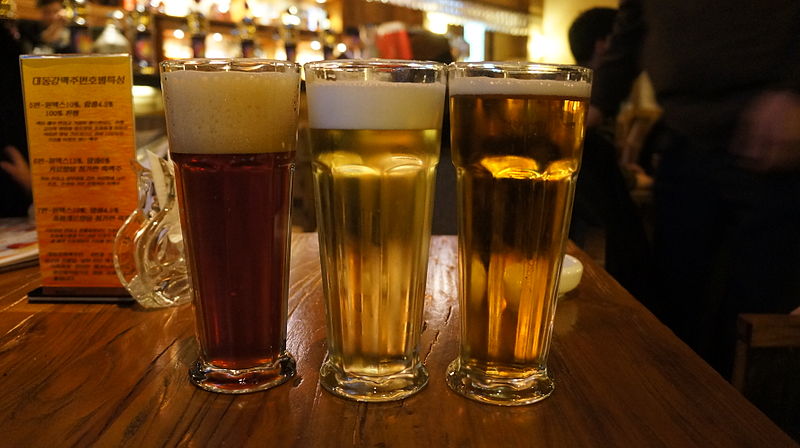
A microbrewery or craft brewery is a brewery that produces a small amount of beer. Exact definitions vary, but the terms are typically applied to breweries that are much smaller than large-scale corporate breweries and are independently owned. Such breweries are generally characterized by their emphasis on quality, flavor and brewing technique.

The market for microbreweries is still developing. Today, only 4-5 states have established microbreweries that are essentially resto-bars where one can consume fresh-off-the-tap beer that has been brewed in-house. These microbreweries produce between 5,000 and 50,000 litres of beer, a day. It takes about seven hours to brew each variety of beer using imported ingredients. None of it is bottled and there are no preservatives added in the process. Those who tasted the full-bodied beer offered at microbreweries abroad were left craving for freshly brewed stuff. A few decided to take matters into their hands, and set up their own microbreweries here in India. According to industry estimates, the market for such finely crafted beers currently ranges between Rs75 crore to Rs 125 crore microbeweries and it takes about Rs 6 crore on an average to set up a microbrewery., it takes about seven hours to brew each variety of beer using imported ingredients.

With liquor being a state subject, microbrewery operators have to obtain a separate licence from the excise department which is a very strenuous task to say the least. To make matters worse, there are only a handful of states such as Haryana , Karnataka and Maharashtra, Punjab and West Bengal that give out microbrewery licences.

THE LEGALITIES

Excise, License, tax, duty & other legal requirements:

https://lawsikho.com/course/diploma-entrepreneurship-administration-business-laws
click above

Up till now we only have 3-4 Indian states with complete excise policy, but Maharashtra and Haryana were the first ones in this field. Excise policies deal with any kind of narcotics or intoxicants in alcohol/liquor industry, for which they levy taxes on the production based on fixed set of standards and guidelines. Generally this is done on per bulk liter for packaged beer in cartons and for microbreweries where there is no packaging involved. These taxes are put over the weekly or monthly production and also depend on the alcohol by volume (ABV), which is fixed for a tax rate and goes up with increase in ABV, but generally ABV in beers in microbreweries is not allowed over 8%.

A microbrewery or a brewpub license is issued by the state excise government which allows the company to start operations in its microbrewery for commercial use. Earlier the price for this license was over around Rs. 10 lacs/ year which was similar to the normal commercial large scale breweries, however due to recent developments it has gone to as much as Rs. 25,000/ year. But these figures may vary from state to state, because the excise regulations are state regulated and not centralized. An average of Rs. I -2 lac/ year should be taken in to account while planning the investment of the project.

If the microbrewer aspires to outset a pub in the premise, he needs to apply for a separate bar license, so that it follows the established state regulations of the respected state where he wants to establish the brewery.

Importing fabrication equipments from a different state in India involves some excise over the stainless steel used and in case the equipments are imported from china, or some European countries, a custom duty will be levied upon the goods from 10-30% of the total purchase, depending on the nature of equipments, the shipment location and their use. In case of imported raw materials an excise also need to be paid for them along with the customs duty for the nature of materials that are used in the production of alcohol.

Other licenses required for the setup:

  1. Commercial Electricity line
  2. Commercial water line- Municipality/ under ground bore water
  3. Land registration/ Lease sanction
  4. Company registration
  5. Waste water disposal certificate from pollution control board
  6. Fabricated equipment quality certificate from third party inspection (loyds, SGS, etc.)
  7. Water quality testing certificate from quality control labs (SGS, etc.)
  8. Quality Control (QC) certificate of finished beer from govt. approved QC labs, on random inspection basis.

EXCISE POLICIES OF DIFFERENT STATES:

WEST BENGAL (came to force in 2007)

The rules laid down by the Excise Department of West Bengal are as follows:

Rule 79 provides that

“(1) Breweries may be established for manufacture of beer for—

(a) sale within West Bengal by wholesale;

(b) export outside West Bengal;

(c) supply out of India; and

(d) for all or any of the above purposes.’

Rule 80 provides that, “Any person desiring to obtain license to work a brewery or a micro-brewery in any place in West Bengal shall apply in writing to the Excise Commissioner with receipted original Challan showing deposit of a non-refundable application fee of Rs. 50,000/- for a brewery and Rs. 25,000/- for a micro-brewery. The provisions of rules 4 and 6 shall apply mutatis mutandis to such application for license.” in case of micro-brewery the fees as aforesaid shall be at the rate of Re.0.10 per bulk litre subject to a minimum of Rs. 30,000/-“

HARYANA

Haryana excise department provided for the following rules of microbrewery projects in clause 9.10 of the “Excise Policy for the year 2013-14 & 2014-15”

L-10C LICENSE FOR PROMOTION OF MICROBREWERY PROJECT: In order to promote healthy drinking habit of liquor with low alcoholic content a license in form L-10C is granted for retail and sale of beer to be manufactured by Microbrewery Project. The license shall be granted to holders of L-4 license which deals with ‘Retail vend of foreign liquor in a Restaurant’ and L-5 license which deals with ‘Retail vend of foreign liquor in a bar attached to a restaurant’ on payment of Annual License Fee of Rs. 2.50 Lac. The excise duty shall be charged on the basis of its daily installed capacity @ Rs 18 per Bulk Litre (BL).

KARNATAKA (came in force in 2010)

In 2010, it was one of the first states in the country to come up with corresponding rules and policies. The city now has only four microbreweries. The Karnataka Brewery Rules, 1967 was amended to allow bars, clubs and hotels to open microbreweries. Apart from a one-time permit fee of Rs 2.5 lakh, microbreweries are required to pay excise duty of Rs. 17.5 per litre. The excise department imposed a flat tax on 50 per cent of the installed. The Rules also specify that the minimum space between the floor and ceiling of the microbrewery should be 14 feet.

Excise minister MP Renukacharya said that micro-breweries were very popular in foreign countries as people preferred to savour fresh beer. “Bangalore is a fast developing global city, attracting huge visitors from abroad. Keeping these factors in mind we have decided to give micro-brewery licences for Bars (CL-9) Clubs (CL-4) Lodges and Hotels (CL-7) and Star Hotels (CL-6A),” he said.

MAHARASHTRA

For a microbrewery manufacturing upto two lakh litres of beer per

year a licence in FORM BRL shall be granted. the BRL licensee manufacturing beer upto two lakh litres per year in a microbrewery, shall be allowed to sell the beer manufactured in an unbottled and

unpackaged form in the premises.

To know more about the Maharashtra’s state excise policies you may refer to: https://stateexcise.maharashtra.gov.in/Pdf/Maharashtra_Excise_Manual_Vol-I.pdf.

CONCLUSION

Microbrewery in India is not a prevalent culture though, but people are gradually developing their taste towards freshly made crafted beer. Earlier, not much was known about beer as its market in India was not really expanded. As the time is passing by, people are acquiring more awareness and fondness towards beer. Freshly made beer is leading the charts as nothing beats crafted beer. Some handful of states in India such as Haryana, Karnataka, Maharashtra, West Bengal and Punjab has given licenses to run microbreweries. Despite of having such license, no trace of microbrewery can be found in West Bengal. Delhi being a metropolitan, still doesn’t have a license to run their own microbrewery. Proposals have been made to the government by five star hotels, malls and private individuals for granting the license of microbreweries in Delhi to which the government says that it will consider the said issue after the Delhi State Elections in February. While Punjab got its first microbrewery in 2013.

‘Microbreweries’ are not as such a distant dream it has become a reality now because steadily the states are granting licenses to run microbreweries  as the people are getting more interested in the beer culture. Some believe it to be an unexplored profitable business while some are just happy with consuming its fresh and diverse flavors.

For any query that you may have regarding any legal process related to setting up a microbrewery or its license, feel free to ask by commenting below.

LawSikho has created a telegram group for exchanging legal knowledge, referrals and various opportunities. You can click on this link and join: 

https://t.me/joinchat/J_0YrBa4IBSHdpuTfQO_sA

Follow us on Instagram and subscribe to our YouTube channel for more amazing legal content.
 
Download Now

Difficulty in filing government forms for visually challenged

0

Screenshot 2015-01-23 18.54.04

This article is written by Turab Chimthanawala.

Life is not easy for all, but when you have a disability the going becomes even tougher. However, if suitable modifications are made in the physical environment disabled persons  can excel in all spheres and can also outdo other ‘so-called’ normal persons. However, filing of forms on the MCA website which is an integral part of the working of any corporate professional seems to be impossible for visually handicapped persons.

I can say this from my experiences as a CS trainee. Neither of the assisting softwares namely MAGIc, JAWS, NVDA can be used successfully while using MCA forms. If I talk of screen readers like JAWS, it is not possible to navigate through the multiple items of the form  as it does not move from one item to another in sequential order. Luckily in my case since I have partial vision, I can magnify the forms but what about those who have no vision, it is almost impossible for them to fill such forms. In my case, a major hurdle is that keyboard is not supportive and we have to depend on mouse.    Prefill is  another problem where it is difficult to copy the details. Copying from one menu to another is a major problem

Another problem also faced is that there are certain blanks in the form which have to be filled. Now to understand which ones are to be filled manually and which ones are filled automatically  it requires a thorough experience of filling of forms, which is quite impractical due to the multiple forms and specially for a fresher like me. Of course fully-sighted people can take help of the blue colour (depicting manually filled items) and white colour (depicting automatically filled items), but for a partially sighted person like me it is far from easy to differentiate between the light blue colour and the white colour and thus causing me to repeatedly attempt to fill the white blanks to no avail.

One more hurdle I faced is that whilst the entire form gets enlarged, the dialogue boxes which pop up when something inappropriate is entered are in very tiny font.

In a post on Access India mailing list, I read that the Government is forming a committee to look into such websites. I hope some action is taken by the Government at the earliest.

I just pray and hope that the ‘Modi Wave’ which has influenced  virtually every  troubled sector  of the country looks into these matters as well. In fact, it was mentioned by the honourable PM in his ‘Man Ki Baat’ to focus on the welfare of the disabled, I hope that making government websites more accessible for impaired is on his agenda.

Download Now

Drone-ing out the Peace: Legality in International Law

0

This article is written by Vishakha Gupta, a student of NUJS, Kolkata.

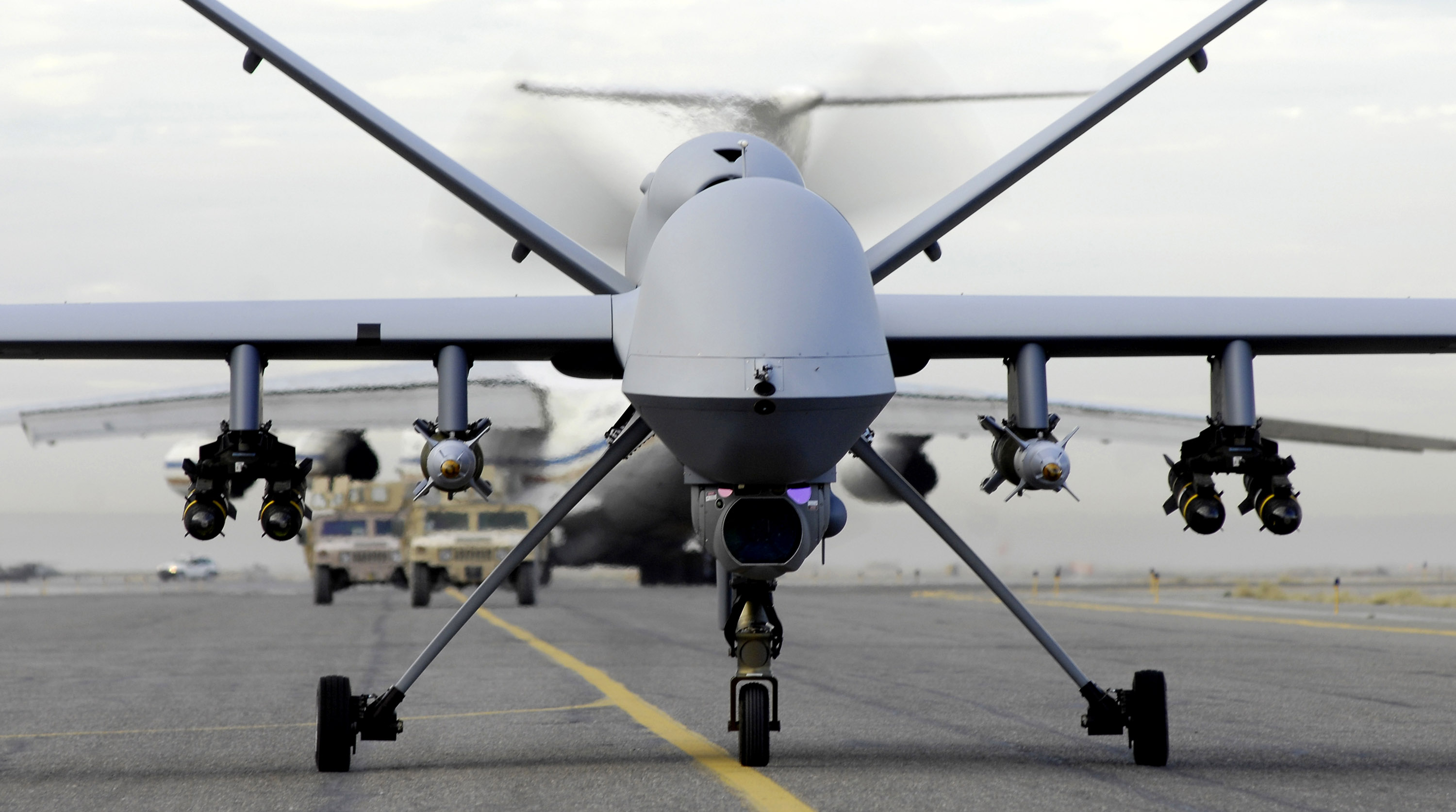
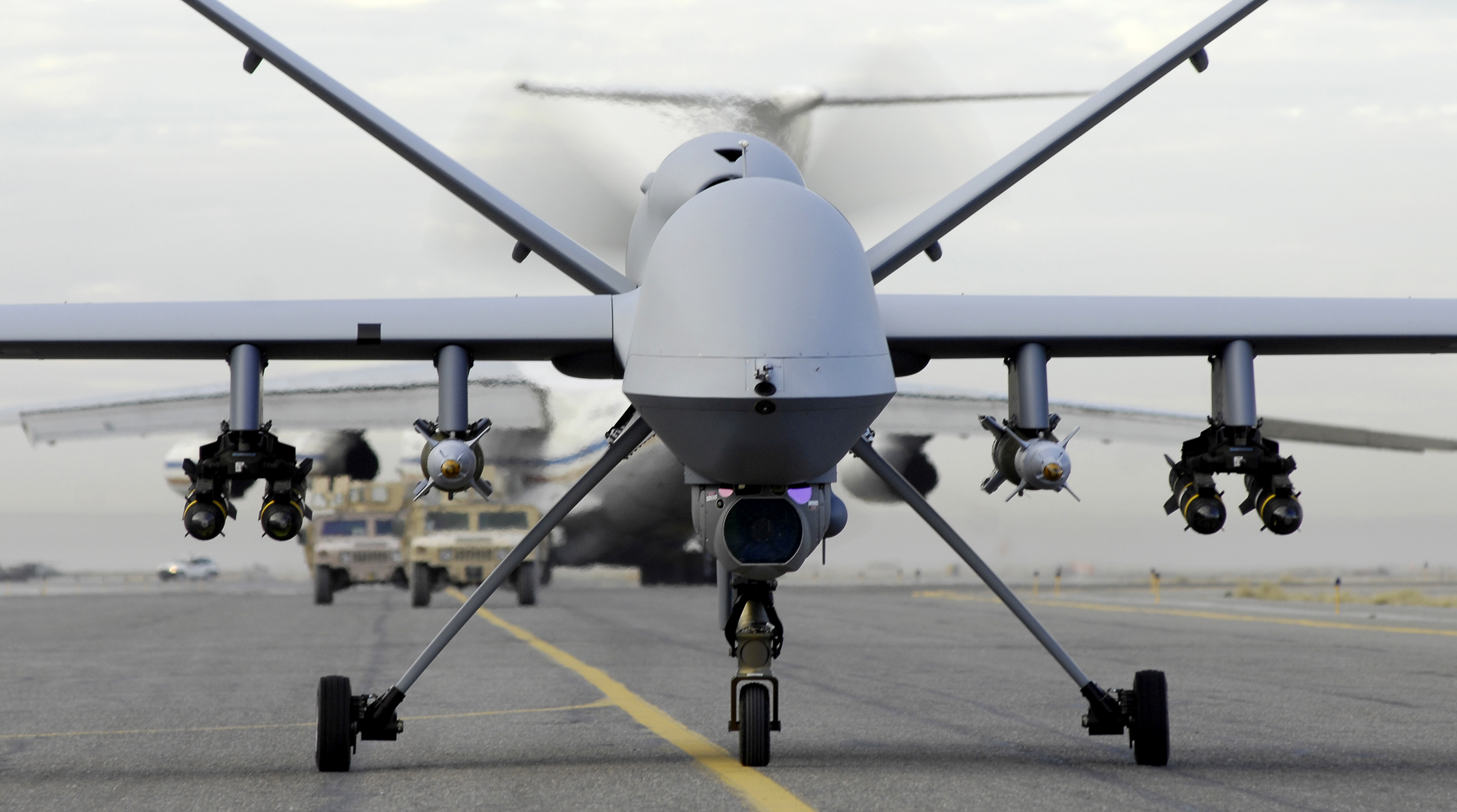
Since the dawn of industrialization, man has strived more and more to reduce his dependence on human labour and effort. Sophisticated machines have been invented in order to achieve this objective. This trend of industrialization has not neglected the defence forces of the countries. The latest innovation which may turn around the way armies work around the world is the Unmanned Aerial Vehicle, or UAV. Popularly known as the Drones, UAVs are remote controlled operated aircrafts which are used to conduct surveillance and launch missiles.

As of present, United States, United Kingdom, Israel, Turkey, France, Germany, India, Russia, China, Iran, among many others are in possession of active armed Drones. However, the most number of strikes have been conducted by United States in Pakistan, Yemen, and Somalia. Thus, the legality of Drones is best judged in view of the Drone attacks conducted by United States.

Why so serious?

The legality and moral acceptability of the Drones has emerged as a pertinent issue internationally, primarily due to the sheer number of Drone strikes over the years. Certain rough facts would formulate the gravity of the present situation. The first Drone strike by United States was on Yemen in 2002. Since then, 116 strikes have been reported from there.[1] Between 2004 and 2014, there have been 388 reported Drone strikes on Pakistan alone by the United States.[2]. Somalia was first hit in 2007. There have been approximately 6-9 strikes reported.[3] The above figures vary notably with every investigator, adducing the clandestine nature of the Drone strikes carried out by United States.

What further augments the solemnity of the situation is the modus operandi. The Drones function akin to professional killers- they kill at a command. They are unmanned and are operated by authorized men sitting in a control room. A U.N. Report by special investigator Philip Alston has revealed that such power to blow off places and people via a mere command on a remote generates a Playstation mentality in the personnel operating the Drones.[4] The bulk of power entrusted on the personnel is fearsome. Drones are being employed in great numbers chiefly because it negates the risk of death of the attacker country’s own men. The only people who suffer are those of the victim country. A further peril that subsists with respect to the employment of Drones in military warfare is that of incorrect information. Drones are released on basis of intelligence from spies and informants. Such intelligence includes the location and the local environment. A small error in the information transmitted may result in deaths of thousands of civilians, as the Drones are incapable of distinguishing between civilians and combatants.

The legality (or illegality) of Drones

There is no specific treaty, convention, declaration or judgment which declares the Drones to be illegal. Therefore, their legality is ascertained from the United Nations Charter, International Humanitarian law, and International Human Rights law. United Nations Charter is the foundational treaty to which every member of the United Nations has to adhere. International Humanitarian Law (IHL) comprises various treaties and conventions which propound international peace, and govern armed conflicts. International Human Rights Law (IHRL) derives recognition from United Nations Declaration on Human Rights and similar treaties, conventions and customary law. IHRL applies in absence of applicability of IHL.

Arguments for

Drone strikes have generated protests all around the world. The international community looked down in horror as thousands of people were bombed in Pakistan, Yemen and Somalia. However, it was not until 2012 that President Barack Obama formally acknowledged the attacks. Up till then, the Drone strikes were attempted to be kept secret from the world (possibly the worst kept secret ever). In 2001, the United States Congress enacted the Authorization for the Use of Military Force, soon after the 9/11 attacks. Under this statute, the Drone strikes deployed to combat terrorism are be legally valid under if the President has so consents.[5] Whether President Obama has consented to the strikes has not been ascertained.

Article 51 of the United Nations Charter prohibits the use of force except in case in exercise of “the inherent right of individual or collective self-defense if an armed attack occurs against a Member of the United Nations.” In the Nicaragua case, [1986 I.C.J. 94] the International Court of Justice has clarified that only “grave form of the use of force” may trigger the exception embedded in Article 51. The force used in self- defence should be proportional and necessary [The Oil Platforms (Iran v. U.S.) Case, 2003 I.C.J. 189]. United States, defending the strikes brings the same within the purview of Article 51. The stand of United States is that the Drone strikes fit in the confines of anticipatory self –defence against the acts of Al-Qaeda.[6]

IHL may be executed through the Geneva Conventions, which allow for targeted killings in tight boundaries in a case of an “armed conflict”. Such armed conflict may be ‘international armed conflict” or “non-international armed conflict”. The former is the conflict taking place “between two or more States”, and is regulated by Article 2 of the Geneva Convention; whereas the latter takes place on the territory of one State, governed by Article 3 of the Geneva Convention. In case of Article 2, the entire Convention applies; in case of Article 3, certain rules laid down in the article itself apply.  It has been widely accepted that United States and Al-Qaeda is not in an international armed conflict, as the latter has been a non-aggressive party after 9/11. United States and Al-Qaeda, however, do satisfy the Boskoski test of non-international armed conflict of an organization and intensity.[7] Both Al-Qaeda and United States have a command structure and organization, and the conflict and hostility between the two can definitely be classified as fulfilling the criteria of intensity.

In case of non- international armed conflict, United States must comply with hors de combat, i.e. not attacking persons injured, and those taking no part in the hostilities. United States asserts that it targets only the members of Al-Qaeda, and not the civilians, and thereby is in compliance with hors de combat.

Another issue is compliance with the principles of jus ad bellum (“right to go to war”) of necessity and proportionality, and those of jus in bello (appropriate conduct during war) of distinction and proportionality. Jus ad bellum and jus in bello are the two criteria for a Just War. Drone strikes as a counterterrorism technique fulfill the requirement of necessity. With respect to the death toll in 9/11 and imminent danger that Al- Qaeda constitutes, the test of proportionality is achieved. Lastly, as the Drones target only the terrorists, the principle of distinction is conformed to. The International Court of Justice has opined that “weapons that are incapable of distinguishing between civilian and military targets” are not recognized in international law. [Advisory opinion on Nuclear Weapons General List No. 95 (1995-1998)] The Court, however, did not expressly outlaw such weapons. Thus, even if Drones are incapable of distinguishing between combatants and non- combatants, they are not illegal.[8]

A component of IHRL is the International Covenant on Civil and Political Rights. Article 6 of the Covenant prohibits arbitrary deprivation of life. United States asserts that as Drone strikes are based on reliable intelligence, ICCPR is not violated.

Arguments against

The Drone strikes have caused havoc and killed thousands of innocent civilians in Pakistan, Yemen and Somalia. In a memo released in 2013 by the Justice Department of United States, President Obama contends that the Drone strikes were employed only where an imminent threat existed. In order to propound this argument, the definition and limits of imminent threat was irrationally twisted. The theory of self- defence and imminent threat as explicated in this 16-page memo was broader than any other theory that has been put forth yet.[9] This white paper has generated a huge unrest around the world, especially among the international legal scholars.

Self-defence under Article 51 of the United Nations Charter, as interpreted by the International Court of Justice has a very high level of applicability. It applies only in case of “grave form of use of force”. Such high levels have not been complied with by the United States so as to permit the applicability of the exception under Article 51. Though United States attempts to justify its actions as anticipatory or pre-emptive self- defence, the legality of anticipatory self-defence has not been agreed upon internationally till yet. United States has employed the Drones against two distinct terrorist groups- the Pakistan Taliban and the Al-Qaeda. Assuming that anticipatory self- defence is permissible under Article 51 of the Charter, United States can claim the same against Al-Qaeda only. Pakistan Taliban is guilty of attacks only in Paksitan and against its inhabitants.[10] The same holds for attack on Taliban in other countries as well.

As discussed above, one of the requirements of the Bokoksi test of non-international armed conflict is existence of organisation. It may be contended that Al Qaeda does not follow a traditional command structure, as the members do not wear uniforms, or carry arms openly. Moreover, Al- Qaeda does position its troops at the borders of the nations it seeks to attack. Therefore, Al Qaeda lacks the legitimacy to engage in armed conflict and is not entitled to its corresponding privileges under the prevailing international law. The same case is often made out for the members of the Central Investigation Agency or CIA, which is the chief intelligence- gatherer of United States, and has organised all the Drone attacks. CIA officers cannot operate as “lawful combatants” in an armed conflict as they are not members of a military chain of command, do not wear uniforms, and are not trained in the laws of war.[11]

Drone strikes do not fulfill the Just War criteria of necessity, proportionality and distinction. As there is no grave danger or immediate threat of another terrorist attack on United States, the Drone strikes are not necessary. The Drone strikes are not proportional to the danger that Al-Qaeda and Taliban constitutes. The number of deaths caused by Drones is inordinate with respect to the threat perceived. The unmanned Drones cannot distinguish between a lawful combatant and an innocent civilian, and therefore do not fulfill the requirement of distinction. The strikes may very possibly be based on incorrect intelligence received by the attacking country, which would lead to arbitrary attacks, violating Article 6 of the International Covenant on Civil and Political Rights. Killing of non-combatants also violates the principle of hors de combat under the common Article 3 of the Geneva Convention.

The Drone strikes in Pakistan, if conducted without the consent of elected representatives of Pakistan, violate its sovereignty as United States and Pakistan are not in a state of armed conflict between the two countries. However, post 9/11, United States wanted Pakistan to collaborate in combating terrorism and it is suspected that Pakistan has consented for the Drone strikes. The Pakistan government neither denies nor affirms the allegations. However, the Pakistan military has never attempted to shoot down the Drones. Instead, a Drone strike was launched from Pakistan’s own airbase.[12] Nevertheless, even if the attacked country has given consent, it does not waive the application of IHL and IHRL.

The final verdict?

Most of the international community is against the deployment of the Drones, considering the horrific massacres they have led to. Despite this, United States continues its efforts towards counter- terrorism through Drone strikes. The Playstation mentality, arbitrary deprivation of life, killing of innocent civilians make the Drone strikes morally unacceptable. However, the legal validity of such Drone strikes is still under debate as there has been no conclusive declaration, convention or treaty with respect to the same. This envisions a formidable future as United States’ use of Drones has initiated an arms race. A global divide between countries who possess armed Drones and robot armies and those who don’t is also anticipated. The development of Artificial Intelligence prognosticates a dangerous idea of unmonitored Drones. In absence of definite laws, and zero risk to operator, the employment of Drones is gradually rising, remodeling the war of armies into a war of technologies.

[1] Drone Wars Yemen: Analysis  (International Security, New America Foundation) http://securitydata.newamerica.net/drones/yemen/analysis

[2] Drone Wars Pakistan: Analysis  (International Security, New America Foundation) http://securitydata.newamerica.net/drones/pakistan/analysis

[3] Get the data: Drone wars (Bureau of Investigative Journalism)   http://www.thebureauinvestigates.com/category/projects/drones/drones-graphs/

[4] U.N. Doc A/HRC/14/24/Add.6 of 28 May 2010

[5] Jonathan Masters, Targeted Killings (CFR.org) http://www.cfr.org/counterterrorism/targeted-killings/p9627

[6] Andrew C. Orr, Unmanned, Unprecedented, And Unresolved: The Status Of American Drone Strikes In Pakistan Under International Law  44 Cornell International Law Journal  http://www.lawschool.cornell.edu/research/ILJ/upload/Orr-final.pdf

[7] Prosecutor v. Boskoski, Case No. IT-04-82-T, Judgment, at 78– 93 (Int’l Crim. Trib. for the Former Yugoslavia July 10, 2008)

[8] Andrew C. Orr, Unmanned, Unprecedented, And Unresolved: The Status Of American Drone Strikes In Pakistan Under International Law 44 Cornell International Law Journal  http://www.lawschool.cornell.edu/research/ILJ/upload/Orr-final.pdf

[9] Justice Department memo reveals legal case for drone strikes on Americans (NBC News) http://investigations.nbcnews.com/_news/2013/02/04/16843014-justice-department-memo-reveals-legal-case-for-drone-strikes-on-americans

[10] Sikander Ahmed Shah, War on Terrorism: Self Defense, Operation Enduring Freedom, and the Legality of US Drone Attacks in Pakistan, 9 Wash. U. Global Stud. L. Rev. 77 (2010).

[11] Afsheen John Radsan & Richard Murphy, Measure Twice, Shoot Once: Higher Care For Cia-Targeted Killing, 2011 University Of Illinois Law Review 4 (2011) http://papers.ssrn.com/sol3/PIP_Journal.cfm?pip_jrnl=1476509

[12] Michael J. Boyle, The costs and consequences of drone warfare 89 International Affairs 1,29 (2013)

Download Now

Tussle continues, Religious Sentiments vs Freedom of expression

3

jesuischarlie

This article is written by Mridul Gupta, a student of UPES.

Prolusion

There has been a tussle between religious sentiment and the freedom of expression. At times, the expression offends the other party so much that one might end-up in a casket. As we grow old we always, find an urge to express something about anything we could possibly think of, be it politics, science, morals, religion you just name it. Religion is something which is very personal to human beings, it so much related to is that we cannot part away from it. Every human living and breathing on the planet earth follows some religion or the other. As per me, religion is set of rules for motivating an individual, controlling the behavior of an individual and invoking in him the ideals of proper living. There are so many religions through-out this globe that it is impossible to enumerate them here. Some the major ones are Christianity, Islam, Hinduism. The conclusion is that we cannot detach ourselves from religion. It is certain that if one is following a religion he/she will develop a “religious sentiment” to a certain level. Those who follow their religion more strictly generally get offended easily when talked about that religion other-wise.

Freedom of Expression

Freedom is something which is as important to us as breathing itself. We have witnessed humongous battle for freedom, and it has no exclamation point yet. If we trace the history, we will see that “expression” is the key to influencing anyone, and I mean ANYONE. Great leaders have used it to perfection, Martin Luther King, Chankya, Narendra Modi, etc. being some of the examples as to how expression can trigger a change in the society. Freedom is a fundamental right as well. Looking into the Indian Constitution, Article 19 gives us the right to express ourselves freely.

Freedom of expression holds the same paramount importance in most of the states through-out the globe. Media is the body who has used this right to perfection. Media brings into the public domain what is happening in the world, state, town, neighborhood, etc. since, media such an important role it needs some extra privileges but what extent, depends on the circumstances. Media have a right to publish on matter possible because its work is to keep the society as wholly aware of what’s happening around them. This includes freedom to express the view regarding religion as well.  This also has its own repercussions, and we have witnessed it many times. One among them will be discussed here critically.

The French incident

A newsweekly in France (Paris to be precise) published some cartoons of different deities/ gods & goddesses in so-called bad light. The new paper called “CHARLIE HEBDO” as per some members of the community it was offensive and was belittling their religion. They got so offended that they even killed the cartoonist by open firing into the headquarters. WHAT A SHAME!   They think that they can do anything in the name of religion.

Why Cartoons?

If we look into the ideology of this newsweekly we will be able to see that it is “SATIRE” weekly. Now what does satire means? It means presenting a serious topic in a non-serious way by using parallelism. “ANIMAL FARM” being the classic example here, it is the biggest satire ever written. It used animals to depict great leaders of Russia and Germany, etc. The reason behind writing satire is that it hides the real meaning of the story presented remains esoteric. It is very important also. So, this is the reason Charlie Hebdo uses cartoons to present their stories.

The mind of the Cartoonist

Imagine you are a cartoonist or an artist rather, how could your portray your expression in the best possible manner? I think through the art you know, be it poems, songs, paintings etc. so for a cartoonist his best to express his views is through the cartoons he makes and as part of growing we are groomed in such a manner that we are made to believe that cartoons are funny and non-offending. So, the question that stands unanswered is that a simple cartoon offended someone so much that the offended part opened fire on the cartoonist!

Epicenter of the dialogue

Coming on the real scenario now, recently the Paris news weekly published some cartoons of Prophet Mohammad in their newspaper, supposedly it was offensive but the records show that a huge number of copies of the paper was sold much more than the general number. Juxtaposing isn’t it! It is not the first time this happened. The same thing took place in 2006 also, on February 9 it was published  Under the title “Mahomet débordé par les intégristes” (“Muhammad overwhelmed by fundamentalists”), the front page showed a cartoon of a weeping Muhammad saying “C’est dur d’être aimé par des cons” (“it’s hard being loved by jerks”). The newspaper reprinted the twelve cartoons of the Jyllands-Posten Muhammad cartoons controversy and added some of their own. Compared to a regular circulation of 100,000 sold copies, this edition enjoyed great commercial success. 160,000 copies were sold and another 150,000 were in print later that day. The Islamic community got offended by the blunt act of the publisher. The repercussion was that their office was destroyed by the fundamentalists and several organizations filed suits against the agency. But to the amusement of these the President (Nicolas Sarkozy at that point of time) of the country was in the favor of the press and their freedom of expression, subsequently the highest court of the land decided the matter in the favor of the news agency.

Reason Behind the decision

The Council for the news agency was able to establish that the reason behind the cartoon is correct and the depiction of the same is also reasonable. One the cartoons showed Mohammad with a bomb in his turban. The idea behind this was, the publisher wanted to attack the terrorists by showing so. They wanted to make them aware that Mohammad never supported violence, nor he ever took this recourse to establish anything.

Why do Muslims get offended whenever there is a depiction of Prophet?

In Islam, it is believed that there is a bar on showing the picture of Prophet. It is kind of blasphemy for them. They follow this rule very strictly and expect others to do the same so, whenever someone depicts Mohammad through picture they get offended and feel disrespected as well.

The question that arises here, is that- taking the law in their own hands and away offering death penalty to the depicter straight away is the order of the Prophet? Does he want every person who is not following the rules to be executed?

 I don’t think so, but the actions of some individuals portrays so.

The Sentiments

Every individual has certain set of sentiments and different individuals differently when their sentiments are hurt. The religious sentiments are among the most sensitive ones. But every country has a lex loci (law of the land) through which one can register his non-compliance or anger if he is hurt. Taking the gun shooting the other individual is not the solution. That’s exactly what the terrorists do and, we certainly do not want to be one of that.

The laws

Every state has its laws regarding as to freedom of expression. Some countries are liberal, some are not so liberal but, they allow this freedom to a certain extent. This means that it is necessary to have certain freedom regarding speech and expression. Apart from this it is also necessary to have checked on as to how this freedom is being used. If something is hurting the sentiments of the public at large within the sphere of the freedom over and over again, it definitely needs some attention.

The recent controversy

Charlie Hebdo is again in the lime light as it had again published some cartoons of Prophet Mohammad in their paper on as early as 7th January 2015. This had the repercussions as stated earlier, 2 men got into the office of the agency shot 4 men mercilessly and did ordered a lady employee to convert Islam. WHO ARE THEY! If it did not trigger anger in you as a rational being then there is something wrong with you. While doing this heinous act they were chanting “Allah-u-akhbar” this means God is great! How Paradoxical! Committing a heinous crime in the name of God. Is this a joke? Who are these men ordering someone to change their religion to Islam?

These questions have no answers.

The aftermath

After all this, a World-wide protest has broken out in the media raising their voice against these “CARE TAKERS” of the religion. As early as 11th January 2015 another attack was registered in Berlin, Germany as one the news agency had re-printed the cartoons the Charlie Hebdo in their news-paper, their office was under attack by arson. Burning objects were thrown in the office of the news agency, some staff was seriously injured. Following the attack was a gesture of support by the media through-out the world by a slogan “JE SUIS CHARLIE” meaning “I am Charlie”.

The Indian Perspective

India is the country standing 2nd in terms of population, just behind China. The population consists of roughly 125 odd crore people. And around 50 crore of them being Muslims. Imagine the aftermath that can take place if something like this happens here. We have witnessed this over and over again that individuals in order to fulfill their ulterior motives purposely disturb the religious sentiments of the general public. The most common being the “Hindu v Muslim”. We saw this in the scenario of Muzaffur Nagar riots in Uttar Pradesh.

Another example I would to bring to your notice of “SHIV SENA” in Maharashtra. If anything against their ideology or against their leader they attack the person or the whole office. They physically assault the people for expressing the views.

Freedom of press in India is another issue that needs attention, judiciary is trying hard to control the evils of media. In the absence of any strict laws the judiciary can only ask the media to refrain from something nothing else. The media is also considered to be the 4th pillar of the Indian Constitution (the reason behind this is still under the scanner).

As we have seen that how sensitive some individuals can be when something is portrayed relating to their religion and according to them it is not correct, we can imagine the aftermath that could follow if any Indian print media decides to re-print these pictures. It can lead to country wide riots, and that would be horrifying.

The Indian Laws

The Indian Penal code allows everyone to go for necessary injunctions/punishment in order to safe guard their sentiments and other personal things. One can file a case against the other party for offending the sentiments; subsequently the judiciary will decide the matter. What I am trying to highlight is that, the Indian legal system provides a proper channel through which one can right the wrong, not by taking out the gun and shooting the other party. But this doesn’t generally happen. One more perspective is that the object obscenity in the pictures, in some of the pictures Prophet has been shown in “objectionable clothing” or even without clothes as well, this could to obscenity as well. Under section 294 of the Indian Penal Code one can be punished for display of obscene objects. So these pictures can be used (if re-printed) for such punishment as well. Since these photos have not been re-printed in India as yet we are still unaware about the repercussions that could follow.

Conclusion

There are so many unanswered questions that drawn out:

Is the idea of expressing views in an unconventional manner incorrect?

Should the fundamentalists allowed to act as the care takers of any religion?

Does the media have an absolute right to freedom of expression?

Will the Charlie Hebdo incident be repeated every time a news agency tries publish something involving Prophet Mohammad?

All we need to do is to take some time out of our busy schedules and do some introspection. The tussle is still on and it seems that it is not going to end soon.

The views expressed in the article are those of the author.

Download Now

Save Trees in Delhi: Know the procedure to cut a Tree

9

45091559_425188666c_z

This article is written by Ayush Agarwal, a student of UPES.

Maybe you are walking on the road you and you see someone cutting trees planted in their premises. Is there something you can do about it?

Everyone reads and knows that the environment is getting depleted and they should do something about it, but no one knows what to. Saving what we have is the best and the easiest option. If you are in residing in Delhi then you have at least one option. The option is checking if the person cutting a tree has a proper permission. One needs to take the permission of the Trees Authority established under Delhi Preservation of Trees Act, 1994 to cut or trim any tree.

What is the act all about?

Delhi Preservation of Trees Act, 1994 was passed in order to save the trees planted in the National Capital of India from getting depleted due to human activities. The act aimed at keeping a check on cutting of trees by the owners of the trees on their land. The act gave birth to Tree Authority in the National Capital region of India for the preservation of trees.

Let’s look into some of the duties of Tree Authority which the act defines:

  • Preservation of trees under its Jurisdiction.
  • Undertaking critical study of the proposals of various departments and private bodies for construction of buildings, roads, factories, irrigation work, laying out of electric, telephonic, telegraph, and other transmission lines with regard to protection of existing trees and planting of more trees, whenever possible.
  • Also carrying out the census of existing trees and also obtaining declaration from all owners of occupants about the number of trees on their land.
https://lawsikho.com/course/certificate-course-in-advanced-civil-litigation-practice-procedure-and-drafting
Click Above

Restrictions imposed by the Act:

The law made a reasonable restriction on the owners of the trees. It is acting as a check on the number of trees you are having and then making you liable for the tree you cut. One can own a land but cannot own the environment.

Keeping this in mind the act restricts a person from cutting a tree or its branch. The act says that no person shall fell, remove or dispose of any tree or any forest produce in any land. Restriction is on the trees under your ownership or occupancy or otherwise. If you want to fell, remove or dispose a tree then you have obtain previous permission from the Tree Officer. Without proper permission one cannot do the act.

  • What if there is grave danger and the authorities cannot be informed immediately?

When if the tree is not immediately felled, then there would be grave danger to life or property or traffic then in these types of situations the owner can take an immediate action to fell the tree. The fact should be reported to the Tree Officer within twenty-four hours of such felling.

Want to cut, dispose or fell a tree? Procedure:

If a person desires to cut, dispose or fell a tree then the person has to make an application to the concerned Tree officer for permission. Such application (has to be accompanied by attested copies of such documents as prescribed in support of:

  • Ownership over the land.
  • The number and kind of trees to be cut.
  • Their girth measure.
  • The reason for cutting the tree.

After inspection, the Tree Officer may either grant permission in whole or in part or for the reasons recorded in writing.

When application cannot be turned down?

There are certain situations where the permission for the act cannot be denied by the officer. The situations which the Act specifies are:

  • When the tree is dead, diseased or wind fallen,
  • Is silviculturally mature, provided that the tree does not occur on steep slope,
  • Constitutes danger to life or property,
  • Constitutes obstruction to traffic,
  • The tree is substantially damaged or destroyed by fire, lightening, rain or other natural causes.

Unlike other application and cases in India, Tree Officer has to make his decision within 60 days of the receipt of the application. Failing to comply with the time period, the permission is assumed to be granted.

How many times permission can be obtained?

Permission is restricted to one hectare at a time. So the officer can grant permission only twice a year to any person in one area. This controls too many persons obtaining person to cut down the tree on the same land having providing unreasonable reasons.

Obligation to plant Tree:

The whole idea behind preserving the tree will fail if people without being imposed any penalty gets permission to cut, fell or dispose a tree because every person will come with some or the other ultimate reason to cut the tree down.

The Preservation of Trees act has mandated that any person obtaining the requisite permission to dispose or cut or feel the tree, is bound to plant such number and kind of trees in the area from which the tree is felled or disposed. The person should start the preparatory work in 30 days after taking the permission from the Tree officer. If the person fails to do so then the Tree officer has to make the tree planted and the officer can recover the requisite cost from the person.

So next time you see someone cutting a tree stop them (being a nature lover or human being) and ask whether he obtained the requisite permission and planted the tree or not.

Penalties and Procedure:

More than officer’s responsibility, it’s our responsibility towards nature to check whether someone is following the guidelines or not. If you really care about sustainable development then do report. Reporting will attract following penalties:

  • Seizure of Property: If the Tree officer believe that the offence has been committed under this act with respect of trees, then the officer may seize (i) tools, (ii) implements, (iii) any boats, (iv) vehicles, (v) animals or (vi) other conveyances used for the commission.
  • Power to arrest without warrant: Any tree officer or a forest officer not below the rank the rank of a Forest Ranger or a Police Officer.
  • Penalty: A person can be punished with one year imprisonment or fine exceeding to ₹1000 or both.

An individual may approach the Forest Settlement Officer, A.D.M. (HQ.), Tis Hazari, Delhi, with their claims for excluding the same in writing.

Your duty…Not specified but expected.

It is the duty of an individual to provide information regarding commission of forest offence which includes cutting of trees and killing of wild animals and also information regarding fires in Government forests. A control whom has been setup at the Divisional Head Quarter of every Tree Officer, where any complaint regarding Forest & Wildlife offence at Phone No 23923561/26094711/23361879/23378514.

A Tree Help Line has been set up to attend any complaints regarding felling or damaging the trees including lopping at Phone No. 23378513.

It is true that the person owns the land which make him ultimate owner of the property on the land. Tree is the part of the same land, then why a person is not reasonably allowed to cut the tree? Owing a land and owing the nature are two different things. You may own the tangible asset on the land but you cannot control its depreciation. One cannot own the oxygen he takes in and the oxygen comes from the trees. So how could a person suppose himself to be the owner of the tree?


LawSikho has created a telegram group for exchanging legal knowledge, referrals and various opportunities. You can click on this link and join:  

https://t.me/joinchat/J_0YrBa4IBSHdpuTfQO_sA

Follow us on Instagram and subscribe to our YouTube channel for more amazing legal content 

 
Download Now

Lets know about legal protections available to protect children from sexual offences

1

Adolescent_girl_sad_0001

image

This article is written by Vrinda Nigam, a student of Amity Law School, Delhi (IP University).

 INTRODUCTION

 We all perceive children as the symbol of innocence and carefree-ness, but what if a child bears an untold pain behind those innocent eyes? What if a child’s innocence is taken advantage of? Even before we point our fingers towards the government, we should ask ourselves if the common people including us, know about the existing laws for the purpose of protecting children? Are the parents, teachers or even the legal practitioners for that matter have sufficient awareness that is necessary to give effect to the laws that the parliament has drafted to protect children?

‘Study on Child Abuse India 2007’ which revealed that more than 53% of children in India have probably been sexually  abused and many have never shared the fact of this abuse with anyone. The legislature has done its bit of providing a statute which exclusively deals with sexual offences against the innocent mass of the society. But, what makes a statute alive is its awareness and implementation. Today, even most of the judicial officers and Public Prosecutors aren’t aware of the ‘Protection of Child from Sexual Offences, Act 2012’ (POCSO) and it is because of such lack of awareness that they refer to the ‘Indian Penal Code’ for sexual crimes against children which prescribes lesser degree of punishments for such offences. This does not provide complete justice to the child because of many loopholes that were found in the Indian Penal Code with respect to children. In order to understand what rights a child has regarding such heinous offences against them, it’s very important for all of us to understand the ‘POCSO’ act and then spread awareness all around in the society.

A DEEPER INSIGHT INTO POCSO

‘Child’ as defined by the POCSO Act, 2012 is a person who has not completed the age of 18 years. When  a person of such tender age faces cruelty of such level, it hampers the not only his childhood but also the innocence in his life.

 According to a study, following are some of the common mental effects of sexual assault and rape on children:

PTSD. Post-traumatic stress disorder (PTSD) is a mental health condition that is triggered by a terrifying event. Some common symptoms associated with PTSD are flashbacks, nightmares, severe anxiety and uncontrollable thoughts about the event. Many people who go through traumatic events have difficulty adjusting and coping for a while. But with time and support, such traumatic reactions usually get better.

Depression. Depression is more than common feelings of temporary sadness. Symptoms can include prolonged sadness, feelings of hopelessness, unexplained crying, changes in appetite with significant weight loss or gain, loss of energy or loss of interest and pleasure in activities previously enjoyed. Depression can affect a person’s outlook, which can lead to feelings of hopelessness. This, in turn, can impact his or her thought process and ability to make decisions.  In extreme cases of depression, people may even experience suicidal thoughts and/or attempts

Dissociation. Dissociation usually refers to feeling like one has “checked out” or is not present. In some instances of dissociation, people may find themselves daydreaming. But in situations where dissociation is chronic and more complex it may impair an individual’s ability to function in the “real” world, such as not being able to focus on work-related duties or being able to concentrate on schoolwork

The immediate physical effects a person can experience after a sexual assault or rape can include:

-Bruising, Bleeding (vaginal or anal)

-Difficulty walking

-Soreness

-Broken or dislocated bones

Possible prolonged physical effects of sexual assault can include:

-Sexually transmitted infections and diseases. There is a risk of sexually transmitted infection or disease, especially if the perpetrator didn’t use protection during the assault. Medical aftercare may be necessary to ensure that any infections and/or diseases are treated.

-Pregnancy. In approximately 5% percent of cases, rape results in pregnancy

  Earlier, before this Act was commenced all such cases which involved sexual offences against child, were to be dealt with the Indian Penal Code. But the increasing rate of offences against children and the loopholes that were found under IPC  paved way for developing and introducing provisions that could exclusively deal with sexual offences against children and overcome the shortcomings of the Indian Penal Code with respect to such offences.

IPC V/S POCSO ACT

BASIS:                             IPC                           POCSO Act
Gender Neutrality IPC does not provide gender neutrality as far as sexual offences are considered. It only deals with females as victims. POCSO Act provides complete gender neutrality. It give rights to both male and female child as victims.
Offences IPC doesn’t protect male victims or anyone from sexual acts of penetration other than “traditional” peno-vaginal intercourse. POCSO Act protects both male and female victims from sexual acts of penetration.
“Modesty” IPC lacks the statutory definition of “modesty” and it further does not protect the “modesty” of a male child. POCSO Act gives a statutory definition of “modesty” and it protects the “modesty” of both male and female child.
“Unnatural offences” IPC does not define and does not provide for unnatural offences. POCSO Act defines and provides for unnatural offences.

“Sexual Abuse”IPC only applies to victims penetrated by their attacker’s sex act, and is not designed to criminalize sexual abuse of children.POCSO Act not only applies to victims penetrated by their attacker’s sex act, but is also designed to criminalize sexual abuse of children.Intensity of penalties/ punishmentsUnder IPC sexual offences against children carry weaker penalties and punishments.

It is considered a compoundable offence.Under POCSO Act, sexual offences against children carry stronger penalties and harsher punishments.

It is considered a non- compoundable offence.

 POCSO Act, 2012 defines and deals with offences such as Penetrative and Non- Penetrative Sexual Assault, Aggravated Penetrative Sexual Assault when the victim is not mentally fit or if the offence is done by a trusted authority like a family member, police officer, teacher, or doctor and their punishments not being less than 7-10 years of imprisonment which may even extend to imprisonment for life or fine or with both. It also defines and deals with offences such as Sexual Assault, Aggravated Sexual Assault, Sexual harassment and using a child for Pornographic Purposes and their strict punishments which depends on the nature of crime and shall be dealt likewise with no arbitrariness. Abetment and attempt to commit such an offence have also been made punishable under this Act.

Sexual offences against children are a very sensitive issue and are thus dealt with complete sensitivity. Many-a-times it was seen that when women got raped or sexually abused, they were re-victimised and re-traumatised by the apprehensive and offensive questions that they had to face during the judicial proceedings. Thus, a need for special care for children had to be taken into consideration while in the course of their judicial proceedings. Therefore, the Act make provisions for avoiding the re-victimisation of child at the hands of the judicial system and thus, it provides for special courts that conduct the trial in-camera and without revealing the identity of the child, in a manner that is as child-friendly as possible. Hence, the child may have a parent or other trusted person present at the time of testifying and can call for assistance from an interpreter, special educator, or other professional while giving evidence. Above all, the Act stipulates that a case of child sexual abuse must be disposed of within one year from the date the offence is reported, providing speedy justice to these issues.

WHOM TO REPORT?

It is very much understandable that the conservative mindset of most of the Indians, disallow them to even accept the presence of the dark reality of sexual offences against the budding doves that are taking place in the society everyday. Today more than 50%-60% of children in India face or have faced some or the other kind of sexual abuse. This data clearly signifies that there is a strict need to report such mishappenings and thus the POCSO Act makes it a legal duty of every person who know or comes to know about such an offence being taken place with a child, must report to The Special Juvenile Police Unit or the Local Police.

CONSEQUENCES OF NOT REPORTING

 Knowledge about a crime makes it a legal duty of a person to report the offence. In case a person fails to report the offence, he may be punished for 6 months or with fine or both. Once the matter is reported to the police, it their responsibility  of making urgent arrangements for the care and protection of the child, such as obtaining emergency medical treatment for the child and placing the child in a shelter home, and bringing the matter in front of the Child Welfare Committee, if the need arise.

According to a study:

Children who have faced some amount of sexual abuse                          53%

Children who report having been sexually assaulted                                  6%

Cases where the abuser was in a relationship of trust with the child         50%

A STEP TOWARDS AWARENESS

The increased rate of sexual offences against children is a parameter to judge what the level of implementation of laws is. The sole reason that POCSO still remains an alien in the society is probably because of lack of awareness amongst the common people, also to an extent, even the judicial bodies and the public prosecutors.

Everyday we hear such brutal cases where a child is molested or raped or sexually assaulted by neighbours, teachers and even sometimes by a family member. Have you ever given a thought on why are these monsters easily targeting little children these days? A probable answer to it is that children are innocent and they don’t really know much about such sexual acts inflicted on them, due to which they get scared and fail to raise their voice against it.

 Its high time that we all come out of our shells and accept the presence of the evil which is destroying a child’s innocence and overall development completely. For all the parents who are reading this, it is very important for them to have a broader perception about sexual offences against children and talk to their children openly about it, ensuring the kids that if something happens with them which they don’t feel comfortable with, they must come and tell it to their parents without hesitation. Some parents also believe that such a thing would never happen to their child and for all those with like thoughts, prevention is always better than cure. If we break such barriers between the children and parents, children would be a little more alert when they are not in the secured presence of their parents. As it’s the parents who can make children understand such a sensitive issue with a little more carefulness making the child completely comfortable.

Schools may also play a major role in spreading awareness amongst the children because sometimes a child doesn’t feel comfortable in discussing such issues with their parents. Schools must have seminars on sexual offences against children and educate children about the bitter reality that unfortunately anyone of them might face and how to avoid it. Schools must also have special councilors who could deal with children and make them feel comfortable in talking about such issues.

CONCLUSION

Protection of children from sexual offences Act, 2012 is a ‘not so new’ member in the family of statutes, yet people hardly know about it. As crimes against the children are increasing, the future of this nation is at stake. Laws are codified to change the existing situation of society, but negligible difference has been made in the area of sexual offences against children. Rather it would be correct, saying that the situation is getting worse. The list of ones to blame is inexhaustive, as it includes most of the country’s judicial officers, advocates and the commoners. It is the lack of awareness about the POCSO Act making it easy for the criminals to escape the punishments they deserve. Let us all hold hands and pledge to not leave the children’s situation neglected. Let us all, together work towards spreading awareness about POCSO because it is this unawareness which leads a child vulnerable in the hands of such monsters. Spreading awareness about POCSO is a need of the hour because,knowledge is the lamp which enlightens the dark.

Sources:

-www.childlineindia.org.in

-www.joyfulheartfoundation.org

Download Now

Online Banking Scams: Are you a victim?

19


cyber cell police

Advocate Puneet Bhasin, Cyber Law Expert, Cyberjure Legal Consulting

[email protected]

If you are a victim of an online credit card scam, then you can seek redress and relief under cyber laws.  In the recent judgement of December 2014 by Adjudicating Officer, Information Technology Act, 2000 in the case of Bal Kishen Rai.v. PNB & Ors., the Court held , that even if a victim divulges his own password by mistake in a phishing scam to a cyber criminal, in case on internet banking, he is still protected by law, and in the light of the Indian Banker’s Code 2014 read along with recent RBI Guidelines  and the principles of the US Banker’s Code, in cases of Internet Banking Frauds and Credit Card frauds a victim’s liability is restricted to Rs. 10,000 only and the loss has to be borne by the Bank. This is a principle of US Internet Banking Law, which in this landmark judgement for the first time has laid the foundation of Indian Internet Banking Liability which is pro-consumers and completely protects their interests in cyber crimes.

Meaning of Online Banking Scams:

  1. Where your bank account is debited by an unauthorised online transaction.
  2. Where your credit card has been used without your authorisation for any transaction.
  3. Where you have given your transaction password to a scammer in response to a Phishing scam, which means you receive an email which resembles an email from a bank asking for your bank account details.
  4. Where you have divulged your OTP in a Vishing scam. A vishing scam is one where a person personates a banking official and contacts you to obtain your credit card information on the pretext of generating a new PIN for you, and in the process undertakes online transactions using your credit card data and cheats you into divulging your OTP so that he can complete the transaction.
  5. Where a cyber criminal uses a duplicate SIM card of your registered mobile number, and using your credit card data and due to duplicate SIM has access to OTP also.
  6. Where your SIM card is cloned. SIM card cloning can happen in hotels, shops and any place where you use your credit card for a transaction, and your credit card data is stolen and a cloned credit card is made.

If you are a victim of Online Banking, then you have legal recourse under the provisions of Section 43 of the Information Technology Act, 2000 which deals with unauthorised access along with legal recourse against the Bank under Section 43A of the Information Technology Act for failure to protect your sensitive information and passwords, with claim for compensation upto Rs. 5 Crores.

A victim can file a complaint of the cyber crime in the prescribed format before the Adjudicating Officer, Information Technology Act, 2000 with the prescribed application fees of Rs. 50 and requisite court fees. The duration for the disposal of cyber law matters is speedy and  is within 6 to 9 months of filing the complaint.

Disclaimer: The content of this article does not constitute legal advice, and does not create an Attorney-Client relationship between the author and the reader.

Download Now

Judiciary and inappropriate Budget allotment

4

Supreme_Court_of_India_-_200705

This article is written by Ayush Agarwal, a student of UPES.

Sathasivam former Chief Justice of India had in his farewell speech said “Budget allocation for judiciary is a serious concern. In so far as the Supreme Court is concerned, the government is not providing sufficient budget and, time and again, the Chief Justice has to intervene to seek sufficient allocation of Budget.

 When we think about the courts what comes into the mind is not the sound legal system and the set of sound rules and regulation which will help to access to justice, the first picture which comes into the mind is a whole lot of lawyers running to grab you for cases and splash of Indian Pan in every corner of the building. The institutions which impart justice and frame such rules and regulations for the upliftment of law and justice and indirectly the standard of the society, is so ill managed and not up to the mark.

When budget comes for the year the first thing which a common man looks into is the cuts which the government has made in the taxes, how much the rates of a ticket has risen and then comes the news pundit to comment on all the aspects. The highlight of the budget is also the allocation made to the defense sector of the India which generally tends to be around 10% of the whole of the budget. One thing which never gets highlighted in the budget is the amount which has been allotted for the Law and Ministry, to which every citizen of India is directly or indirectly related. The problem is not with the officials, it’s with the awareness among the masses. Statistics reveals the judiciary is slow in disposing off the cases, but no one sees to the reality that whether the ministry is actually allocating the appropriate resources to dispose these amounts of cases.

How said it is when the independent Judiciary had to request the finance minister for the grant of ₹45 Crore for the construction of additional building complex adjacent to Pragati Maidan.

Appropriations Need?

Let’s look into some of the segments where the Judiciary needs appropriations:

Disposing off the Cases: Statistics shows that the Judiciary is having 3,00,00,000 pending cases. To dispose these cases Judiciary needs to make appointments, to develop courts and the judiciary needs to run these courts. For all this there has to independent appropriation made.

Building Infrastructure: Judiciary does not only comprise of Supreme Court, High Court and District Court. It also comprises of Tribunals, Special Courts, Alternate Dispute Resolution Center and various other forms of Courts. Every courts needs fund to manage itself, to provide services and to change with the changing need of times. Funds allotted to the Judiciary are no way sufficient that the judiciary maintains and develops its infrastructure facilities.

Training Personnel: Judiciary needs appropriations to train its employees. Judiciary does not comprise of just quality judges and lawyers. There is large number of other people associated with the judiciary. To provide training to them, judiciary needs appropriations.

Technological Advancement: All courts are online now. Cases and Legislations are uploaded on the Court’s website as soon as they are delivered. So to manage these sites technical experts are needed to be hired. The Judiciary needs appropriations for this also.

There are many other sectors where the judiciary needs money to be spent. The question is whether Judiciary is having money to meet all the demands?

Let’s look into the Budget of the Year 2014-15

The budget in total allocates ₹2047 Crore to the judiciary, which counts to just 0.4% of the total budget for the year.

The budget which counts to ₹2047 crore does not solely comprise of the budget appropriated to the courts. Let’s look into the places where the allocation is actually made:

  • Administration of Justice: To administer Justice a total of ₹344.63 Crore has been allocated. The details of the expenditureincludes:
    • Expenses on National Judicial Academy- ₹10.74 Crore
    • Computerization of District and Subordinate Courts: ₹58.00 Crore
    • Special Courts: ₹5.00 Crore
    • Fast Track Courts: No Fund Specified.
    • Grants-in-aid to UTs without Legislature for infrastructural facility for Judiciary: No Fund Specified for the Current Year.
    • Other Expenditure: ₹ 173.09 Crores.
    • Strengthening of Access to Justice-India (SAJI): ₹5 Crore.
    • National Mission for Justice Delivery and Legal Reforms: ₹ 87.30 Crores.
    • Study of Judicial Reforms and Assessment Status: No fund is specified.
    • International Center for Alternative Dispute Resolution (ICADR): ₹5.50 Crores.
    • Assistance to State Governments for establishing and operating Gram Nyayalayas: No fund is specified for the current year.
  • Other administrative Expenses: Funds allocated for other administrative expenses amount to ₹73.46 Crores. Let’s look into the details:
    • Infrastructure Facilities for Judiciary: No allocation of Fund
    • Grand-in-aid to UT governments: No allocation of Fund.
    • Other programmes: ₹19.09 Crores.
    • Capital Outlay on Other Administrative Services: 54.37 Crores.
  • Total Secretariat: General Services which includes Department of Legal Affairs, Appellate Tribunal for Foreign Exchange (ATFE), Legislative Department, Department of Justice and others. In total of ₹94.71 is being allocated to this sector.
  • Total Organs of State Elections: Organs of State Elections are included in this budged, which includes Elections in the State, normal Election Expenses and Issue of Identity Cards to Voters. The budget allocated for total-organs of state election amounts to ₹526.63 Crore.
  • Total Fiscal Service: It includes expenses made for Income Tax Tribunal and National Tax Tribunal. The amount allocated for the Tribunals amount to ₹55.64 Crore.
  • For Development of Infrastructure Facilities of Judiciary (State and UT plan): For the development of Infrastructure of the Judiciary in all the 29 States the Central allocates ₹ 936 Crore under planned expenditure.

The budget allocation indicates the appropriation made by the Legislature to the Supreme Court of India. Supreme Court gets ₹134.36 Crore in total. This allocation includes:

  • Salaries and Travel Expenses made in respect of Hon’ble Chief Justice and other judges.
  • staff and officers of the Registry including the Departmental Canteen,
  • Charges for professional service towards personnel deployed for security and expenditure on establishment related needs including stationery, office equipments, and security equipments, maintenance of CCTV and printing of annual Report of the Supreme Court.

Actual allocation of the Budget by the Government

The central and the state government allocate the maximum of their budget for health and education and spends insufficient amount on Judiciary. Every ruling party in its manifesto for the election promises free schemes to the common public which mainly includes subsidizing government made goods, schemes for the elderlies and schemes for education of children and decreasing gap among rich and poor. The manifesto does not even consider judiciary important so as to organize funds or to make any establishment in the infrastructure of the judiciary.

Legislature has the authority to make new laws put the power to interpret new laws in the hands of Judiciary. Every year legislature makes in new laws for the country. New laws create floodgates of new cases into the judiciary. The mark of the pending cases goes up, if in these type of situations judiciary does not provide support of sufficient and fully furnished infrastructure and trained and sufficient personnel by the way of judges and staff, the blame on the judiciary would be again misplaced in the way that the judicial process is slow and then again the number of pending cases will be a highlighted issue.

Allocation of the bigger portion of budget in the segments other than judiciary amounts to parallel situation where judiciary is not able to discharge its functions in the way it is expected to do so.

Need of the Hour

Judiciary is one the independent wing among the three wings of the constitution. Every year the law making organ of the Constitution i.e, Parliament passes law and related cases gets bundled up with the cause list of the Judiciary. Now the picture of the pile exceeding to three crore is in the eyes of public and a well commented fact by the media and political party, but the sources and resources to tackle with such a huge number of cases is very much suppressed fact. The political discussion on the judiciary and pending matters relates to the vacancy in the court of Justice but if appointed then the judiciary needs to have appropriate funds to tackle such amount of loads. Is Judiciary given such liberty? That is the question of the hour.

What are expectations?

Chief Justice of India R.M. Lodha has said, “the negligible budgetary allocation being witnessed since the past few decades is grossly inadequate to meet the requirements of the judiciary such as setting up of new courts and to improve infrastructure to bring down the pendency from a staggering 3.3 crore cases.”

“Budget allocation is not even one per cent. It is 0.4 per cent. How do we construct more courts and improve infrastructure for speedy dispensation of justice? We are already overburdened,” he said, referring to the budgetary allocation in the 2013-14 even as Finance Minister Arun Jaitley was presenting the Budget for 2014-15.

Funds raised by Judiciary: Judiciary has three major sources of funds from within itself- court fees, fines imposed in criminal courts and costs imposed by courts. Presently the funds which are generated through these sources go directly into the government’s fund. Judiciary should be allowed to raise the fund raised through these resources.

Consequences

Constitution, the Supreme Law of the Land, is said to have three wings namely legislature, executive and judiciary. The independence of all three organs from the working of the other is the basic structure of the Constitution of India. Every organ needs labor and capital to run and to carry out its functions. Judiciary is immune from the legislature as interpreted by the Constitution. Is this true?

The funds and the expenditure to be made by the judiciary is being decided by the legislature in its budget plan of every year. The constitution has not made judiciary a completely free organ, it has given one string in the hand of the legislature. Despite of the many efforts made by the judiciary, the allocation of budget and the expenses made by the legislature over the judiciary has been all time low. The judiciary has been trailing over the legislature for the appropriate funds.

Study reveals that more than 18 States are not even spending 1% of the Budget allocated to Judiciary and the Government of the same states expect the Judiciary to dispose 3,00,00,000 cases in the click of time.

An officer associated with the survey report says, “Judiciary needs to be separately dealt with in the plans by the Planning Commission and separate allocation is necessary by the Planning Commission and the Finance Commission.”.

The report observes that, “Judicial independence cannot be interpreted only as a right to decide a matter without interference. It has become incumbent on the Central Government to make sufficient and appropriate provisions in the judiciary budget, keeping in view the central laws so as to share the burden of states.”

To this retired High Court Justice R S Sodhi says, “It is often seen that governments always brings in new legislations for better governance but they don’t realize its impact on the judiciary which is its implementing agency. The third pillar of democracy can’t be ignored in this manner.” “For the development of judicial infrastructure, the states should provide requisite resources to the judiciary without cutting/rejecting the demands made by it so that it is able to smoothly discharge its judicial functions.”

What should be done?

Without prejudice to judicial independence, the judicial allocation should be in a transparent and accountable manner, according to the requirements of each sector and all the individual courts. The internal allocation of budget should reflex caseload, importance and complexity and be clearly linked to a well-designed case and management strategy. The budget should be as such that it should be considered a mean to increase both judicial capacity and judicial accountability.

Let’s take example of country EL Salvador, Costa Rica and Honduras for instance these countires have made changes in their constitution in order to maintain fixed rates of their annual funding for the judiciary. In Costa Rica the judicial branch- which includes the judicial police and prosecution- receives 6% of public funds available which is far more from India which uses just 0.4% of the Budget.

It is important that the third organ of the Constitution i.e, judiciary should have partial control or have some substantive input into the expenditure of the budget allotted to it. The judiciary should be made responsible to present its own financial needs in a professional and competent manner, documenting its requirements and identifying what it considers to be its priorities for funding.

Download Now

Is your kid safe in school? Need for stricter regulation to prevent sexual harassment of children

0


 This article is written by Mridul Gupta, a student of UPES, Dehradun.

Sexual harassment at work place is so sensualized these days that we tend to forget about a very sensitive area, and that is child safety at the place of their study. We are so engrossed into the debate as to how make the work place safe that we are ignoring about the safety of our children. The recent case, that took place in Bangalore acted as an eye opener to the country as a whole, it opened our eyes nice and wide! A six-year-old girl got raped by a faculty in a school, “SCHOOL”! This threw open a chain reaction, incidents after incidents were reported in the news that small little girls being raped at schools.

At the school a six-year-old girl was sent to the detention room as a punishment, subsequently faculty members of the school found this as an opportunity to satisfy their “evil” and raped the innocent child. The faculty being the gym “instructors”! Yes, you read it correct INSTRUCTORS. A six-year-old, a small girl got gang-raped.

THE SNOWBALL EFFECT

STIGMA: Imagine that you are a parent and your 5-6-year-old comes and asks you, mom, WHAT IS RAPE? The trauma that a parent will have to undergo after learning about the incident is immeasurable. And the child is unaware about what has just happened to her/him, before even knowing that something wrong has taken place his/her life is ruined. Imagine the pain of growing old with the fact that you have been raped! You were used as an object to satisfy the evil of some psychopaths. Take 5 minutes off and think. Think that something like this can happen to your child when you will become a parent or this can happen to your child anytime if you are already a parent.

After hearing the news about such incidents many people think- ah! “My child is safe” I have admitted her in the best school of the city. For your information, you are heavily mistaken Sir! The School where the incident happened is also among the most reputed schools in the very modern city of Bangalore. One need to think very deeply into this matter, we need to be very particular as to whether the school is safe or not.

UNCERTAIN FUTURE: After such incidents the life of the child is ruined, it is next to impossible that the child would have a normal life after this. She will always in a state of fear, where she will look at every person with a doubt in her mind. These are among the very few examples that can be cited out here to give you an idea that how seriously we need take this matter.

POLITICS

The most common aspect of anything is POLITICS. As soon the matter came into the public domain the media caught hold of the Chief Minister at that point of time and came up with a video, showing the “Beloved” CM sleeping in the assembly. HOW SERIOUS! This appalled everyone. When he was asked for clarification his reply was- “don’t you journalists have anything else to show? Is this the only news?”  Now, I guess you must have understood the gravity of the situation. We all got an example of how irresponsible these “public representatives” can be. After going through all this menace, the state government came up with something positive; this would be discussed later.

THE SCHOOL

The school as usual tried to transfer the responsibility to someone else. The transferee being the instructors and the omnipresent SOCIETY! The management of the school instead of dismissing the principal and the instructors came to their support. As per my reasoning this is the worst act an organization can under these circumstances. The parents were disrespected and were sent out shamelessly by the school authorities when they tried to protest.

This callous behavior can be repeated at the school where your child is studying.

THE REAL ISSUE AND PROBABLE SOLUTIONS

The above example was to bring forth this very serious issue of child safety. The safety of the child at “study place” is of paramount important. In the debate about sexual harassment of workplace, we are ignoring this issue. It needs to be discussed and resolved simultaneously and it needs to be done very soon, we saw in our earlier example that cases after cases were registered no sooner than the incident of 6-year-old girl came into the public domain. Child safety needs to be discussed not only at the primary level but at all levels of schooling with special emphasis on the senior secondary schools, the reason being, at  that stage a girl or a boy are conscious enough to understand the seriousness of this humongous issue.

The Ministry of Woman and Child is dealing with the matter of sexual harassment very seriously and efficiently. The awareness programs and the incidents being reported have acted beautifully in making the people realize their rights and what actions they can take if something wrong happens to them. This was not the case a few years back. The people were oblivious to this heinous act, and were afraid to tackle it. Coming back to be the issue of Child Safety at Study place there are no strict laws or statutes not even guidelines are there. Frightening, isn’t it!  After many instances like cited above in various other cities, the different state governments are coming up with guidelines for the schools. Since we have a quasi-federal structure, the division of power empowers the state government to frame such guidelines.

These guidelines are not laws. We still need some strict law for child safety just like the Sexual Harassment Act. The only statute that somewhat deals with this matter is the Prevention of children against sexual offences (POCSO) Act  This issue is taking the shape very similar to sexual harassment at work place, like initially the Supreme Court issued guidelines in the famous “Visakha” case, and subsequently this Act into existence. In this issue, also the various state governments are coming up with guidelines. Given below are some highlights of various guidelines issued by different state governments in the country.

KARNATAKA GOVERNMENT GUIDELINES:

  • It is mandatory to constitute a “Child Protection Committee” in every school
  • Every school shall furnish the name of their school and address to the police station in its jurisdiction
  • The names and address of the teacher/staff working in the school will have to be registered in the police station and must be updated from time to time
  • CCTVs should be installed in every classroom, school premise capturing the whole school
  • Children help line toll-free 1098 must be available 24*7 and should be displayed in every classroom.

These are some of the main points; the full guideline can be read: http://www.schooleducation.kar.nic.in/pdffiles/ChildSafetyEng260714.pdf

DELHI GOVERNMENT GUIDELINES:

  • Every institution shall constitute or designate, from an existing Management Committee or otherwise, including the School Management Committee, a Child Abuse Monitoring Committee (CAMC) whose primary responsibility shall be prevention of child abuse and the monitoring and implementation of these guidelines within the institution
  • There shall be at least 2 parent-teacher meetings a year to ensure parents are aware of child protection policies and implement them within family environments as well.
  • Institutions should have standard and uniform training modules on sexuality and gender education where the thrust has to be the inculcation of respect for another person especially that of the other gender.
  • No candidate with a criminal record of sexual and/or physical violence will be recruited for any position within an institution. In furtherance of the same, all selected candidates must provide a signed affidavit to the institution that they have not been accused of offences under POCSO, the JJ Act and any other sexual and/or violent crimes under any other Act for the time being in force.

Full guidelines can be read here: http://delhi.gov.in/wps/wcm/connect/DOIT_DCPCR/dcpcr/what+s+new/guidelines+for+the+prevention+of+child+abuse

Conclusion

These are two state governments who have taken the initiative to give the guidelines. Many of the other state governments are either in the process of framing the guidelines or have already framed, all they need is to publish the same. The conclusion that can be drawn out here is that Child safety is as important an issue as sexual harassment at workplace. Being the youngest country of the world we need to ensure full safety and healthy growth of the coming younger generations. The youngest country i.e. India should also be the most productive as well, in order to be productive, education is necessary and keeping this in mind we need a solid law to maintain the place of education stigma free.

Download Now
logo
FREE & ONLINE 3-Day Bootcamp (LIVE only) on

How Can Experienced Professionals Become Independent Directors

calender
28th, 29th Mar, 2026, 2 - 5pm (IST) &
30th Mar, 2026, 7 - 10pm (IST).
Bootcamp starting in
Days
HRS
MIN
SEC
Abhyuday AgarwalCOO & CO-Founder, LawSikho

Register now

Abhyuday AgarwalCOO & CO-Founder, LawSikho