Download Now
Home Blog Page 1820

Sexual Harassment Law in India and Constitutional Challenges

1

sexual harassment clubs

This article is written by Anushka Trivedi, a student of UPES Dehradun.

“When your story doesn’t match the truth, don’t change the truth to match your story”

INTRODUCTION

In 1997, the Hon’ble Court of Supreme Court in Vishaka’s Case acknowledged for the first time sexual harassment at workplace and then laid down some guidelines called as Vishaka’s Guidelines and made it mandatory for the employers to comply the same and prevent the commission of any act of sexual harassment at workplace and had even provided for the procedure for the resolution, settlement and prosecution of any employee who had been found sexually harassing the women employee at workplace. The Guidelines issued was taken as a ‘Law’ as declared by the Apex Court of India. Though it was mandatory for all the employers to follow the guidelines but later it was observed by various courts that the guidelines were not strictly followed in many of the workplaces.

The increasing rate of women participation in workplaces made it necessary for the Legislature to enact Act focusing on prevention of Sexual Harassment at workplace as well as redressal to the same. The Act is named as, The Sexual Harassment at Workplace (Prevention, Prohibition and Redressal) Act, 2013.

The Sexual Harassment Act (Hereby called as an ‘Act’) was finally enacted in the year 2013 for the prevention of sexual harassment against women at workplace in the whole of India. The main objective of the act was protection of Women, prevention and redressal of sexual harassment complaints. Sexual harassment has been termed as a violation of basic Fundamental Rights of women under Article 14 and 15(3) that deal with Right to Equality and State shall not be prevented to make any special provision related to Women and Children respectively. And right to life and to live with dignity under Article 21 of the Constitution of India. Sexual Harassment is also considered as violation of the right to practice any profession or to carry on any trade, occupation or business under Article 19(1) (g) of the Constitution of India.

Internal complaints Committees:

The act made it mandatory for every employer to constitute a Committee which would be entertaining the complaints of aggrieved women. The members of the ‘ICC’ should consist of:  i) a Presiding Officer, ii) not less than two members from amongst the employees preferably committed to the cause of women or who have had experience in social work or have legal knowledge and iii) one member from amongst non-governmental organizations or associations committed to the cause of women employees.

Local Complaints Committees:

The act is also required to make local complaints committees for every district where the ICC has not be formed due to less than 10 workers.

Complaint procedure:

According to the Act, the aggrieved Women is required to make a written complaint of the same to the ICC or LCC within three months from the date of incident and when there are series of incidence then three months from the last incident. If the woman is unable to make a complaint in writing then proper assistance can be given by the presiding officer or any member of ICC or by the Chairperson or any member of the LCC.

According to the rules of the said act if a woman is unable to make a complaint due to her physical incapacity then the complaint can be made by her friend or her co-worker or any Officer of the National commission for Woman or State Women’s Commission or any person having the knowledge of the incident, with the prior written permission of the aggrieved woman.

click above

CONSTITUTIONAL CHALLENGES

In a recent order by the Central Administrative Tribunal (CAT), the court had questioned certain provisions of the Sexual Harassment of Women at Workplace Act, 2013. The CAT Bench comprising of Judges KB Suresh and PK Pradhan said,

“Section 4 and 7 of the Act can be termed as unconstitutional because once an adjudicatory body is to be determined as slanted in its sway; it destroys the fairness concept embedded in adjudication.”

Section 4 of the said Act makes it compulsory that at least two members among the Internal Complaints Committee, who are required to deal with sexual harassment cases in the workplace, must be “committed to the cause of women.”

Section 7 says that the Local Committee constituted under the said act the members of the same should be chaired among the “eminent women from the field of social work and committed to the cause of women”. Further in this regard, the Tribunal said that “if members of the committee of the adjudicatory committee are to be committed to an ideology, there mental frame will be such that it would give an opportunity for unwelcomed bias and their finding also will be in resonance of their personal commitment.”

The Central Administrative Tribunal highlights the misuse of the Act, after hearing the four Cases on sexual harassment complaints cases, the CAT had cautioned that the Act of Sexual Harassment is “Double-edged”.

1st Case is commonly known as Whistleblower Case:

In this case three women employees ostensibly used the Sexual Harassment law against the upright Store Officer of Kudermukh Iron Ore Company Ltd named T. Ramesh. He was newly transferred to Mangalore, and restricted the movement of contractors to ensure better inventory control. The company had thanked him for his efforts, as the Central Industrial Security Force had intercepted five Coal loaded trucks being stolen from the Company premises and by his efforts the Company was able to get them back.

Later, three women employee of that particular company filed a written complaint against him, stating that-1st women told that when she told Ramesh that she had lost her Mangalsutra, he remarked that she should wear the same inside. And this remark according to the Women Employee was computed as ‘Sexually Colored’.

2nd Women told that Ramesh use to sit close to her and put his hand on her chair while dictating letters to her, 3rd women made the complaint against the Ramesh stating that he use to remark’s about her as Riding Pillion with a male colleague of that Office only.

Ramesh after this had approached the CAT. The bench observed a conspiracy involving the women employees and contractors which had led to the “silly complaints” whose intentions were to silence the whistleblower.

The Bench said that:
“the proceeding of the Vishakas Committee were flawed and manipulated.”

The term ‘cause of women’ states that people who are appointed to be the member of the committee are from the very beginning gender biases. They have their mind setup to hear and give judgment in the favor of the women only. They are made to think that women are always correct and they should be privileged. There had been observation made by the CAT and many cases were found where the fraudulent complaints have been registered by the women against the innocent men. And the judgments by the committee are given in their favor only. The other party is not allowed to be heard. For eg. In the case which is commonly known as ESI Officer’s Case: This case was on P. Jagannath, a Senior Officer of the Employees State Insurance Corporation (ESIC), he had an unblemished record and was to retire soon. He had challenged his repeated transfers at the behest a Trade Union, which has been used by the women employee as a weapon against him.

The women employee complaint was that Jagannath had shouted on her when she had faced a problem in the Office. As she had not reported for eight days and when she returned back, she found herself to be marked absent in red ink by him. And his act was described as ridiculous strict on her part.

Though she had no intention to make a sexual harassment complaint but the authorizes had formed a Vishaka Committee, examined the two witnesses, and transferred him as a punishment.

When Trade Union observed punishment not to be enough, Jagannath was transferred to Chennai’s Branch. The Bench wondered what relevance the Vishaka’s Committee had in such a case, especially when the complainant’s behavior was unbecoming of a government servant, and could amount to forgery, which is a criminal offence. The entire hierarchy was terrorized and Jagannath was penalized by the Court and his transfer was cancelled and he was posted to his original place.

The court found the law ‘double-edged’ and allowed Jagannath to file for damages, if any incurred by him in the due course of such proceeding.

Another Case is commonly known as National Institute of Mental Health and Neuro Sciences Case (NIMHANS): in this case John Johnson, a psychiatrist at NIMHANS, Bangalore, had been accused of sexual harassment by an MPhil Student after he told her to wear her dupatta properly. Johnson explained that he had said so in the context of a discussion on methodology before students were allowed to test the Psychiatrist patients. And the girl was about to take the interview of a person having sexual problem so as a piece of advice he said that with no intention of sexually harassing her.

But the girl contented while complaining that he said so because he was annoyed by the shape and size of her breast and she had completed her interview she filed the complaint the very next day.

Two units of psychiatry were against each other and were having a long-standing rivalry between them. The complaint against the defendant was signed by five women students and was received by Dr. Reddemma, who was the head of department and was the member of the rival group even.

Later, a Vishaka Committee was formed ad inquiry commenced. That MPhil student did not take any part in that inquiry. Two other male testified it on behalf of Johnson. During the inquiry 2 out of 5 girls were outside the Kerala prior to and after the incident took place.

The bench requested the institute to secure the complainant’s presence but the girl refused to testify, by sending the e-mail to the registrar stating that she had no interest to assist the tribunal but want to stand by her original complaint.

The bench observed that “there is no way of establishing the provenance of this e-mail,” and quashed the proceedings against the Johnson.

Yet another case is commonly known as Live-in-or-Rape? Case: An employee woman in the postal department filed the written complaint against Palaniswami, which had further lead to his imprisonment for six months. She stated that the he had forced her to stay with him in the Government Quarter for two years and ‘raped’ her regularly. When she brought the same to the superintendent, he allegedly started molesting her. She then finally filed a police complaint.

The Vishaka committee recommended that he should be awarded Punishment. And even recommended ‘appropriate action’ against the superintendent. She had lived with Palaniswamy got her a job after a year of their starting the relationship. But later she found that he had planned to get married with the other women.

The bench observed that the girl might have hoped that the person will marry her, but later when she found him deciding to marry another girl she filed the complaint. She alleged that the acts of intimacy between both of them constitute rape against her. While Palaniswamy had alleged that she had taken 1.5 lakh from him and did not return him back. After he had been released on bail he was transferred far away on the recommendation of the committee. Challenging this, she had approached the CAT., the bench observed that the committee had done their work fairly and directed the committee to recognize the human element.

These cases shows how women misused the harassment law and how the committee made were gender biased and gave judgment in favor of the women, knowing that men were not guilty of the acts and there was no sexual harassment on their part.

The cases above mentioned are in violation of the principle of Natural Justice as the person who are appointed as the members of the Complaints Committees have a subject matter bias. As the Men are not allowed to give their explanation and if they are allowed also no consideration is given to their statement, the members are preplanned to give judgment in the favor of the Women only. So this violation has been observed by the CAT and they sought this type of violation by quashing the earlier decision and giving them the right to file the suit for any damages incurred by them. This type of conflicts had been observed many a times in sexual harassment cases even. As the members in the Vishaka committee have pre-conceived notion to give judgment in favor of women.

You can find out more about sexual harassment at workplace by taking up this course by National University of Juridical Sciences. You can also check out this course which will give you an in-depth insight on how to implement sexual harassment laws.

CONCLUSION

Sexual Harassment at the workplace is a universal problem. The Act had been formulated to protect the women from harassment at workplace, which has been recognized as an infringement of fundamental rights of a woman, under Article 19(1) (g) of the Constitution of India “to practice any profession or to carry out any occupation, trade or business”. Though the Act which had come into force in 2013 with the intention of protecting the rights of women, certain provisions of the act which seems to be biased and violates the principles of natural justice need to be amended at the earliest.

 
Get all the templates, formats, step by step guides, checklists and information you need related to employment laws in one place, free of cost. we have simplified compliances, record-keeping, contracts, policies, disputes and litigation for you. Never struggle with employment and labour law again in your life. Click here to download the  Legal handbook for HR managers.
 

LawSikho has created a telegram group for exchanging legal knowledge, referrals and various opportunities. You can click on this link and join:  

https://t.me/joinchat/J_0YrBa4IBSHdpuTfQO_sA

Follow us on Instagram and subscribe to our YouTube channel for more amazing legal content 

Download Now

Who owns the photos uploaded on Facebook? IP Infringement and removal

0
fake account

social-network-76532_640

This article is written by Ayush Agarwal, a student of UPES Dehradun.

Have you ever seen any of the related post ever when you are browsing Facebook:

“In response to the new Facebook guidelines I hereby declare that my copyright is attached to all of my personal details, illustrations, comics, paintings, professional photos and videos, writings, and expressions of all kinds, as my sole and exclusive intellectual property, as defined in the Berne Convention, and by US law, custom, and practice.. For commercial use of the above, my written consent is needed at all times and for all reasons, without exceptions.

(Anyone reading this can copy this text and paste it on their Facebook Wall. This will place them under protection of copyright laws.)

By this publishing, and henceforth forever, I notify Facebook that it is strictly forbidden to disclose, copy, distribute, disseminate, or take any other action against me on the basis of this profile and/or its contents. The aforementioned prohibited actions also apply to employees, students, agents and/or any staff under Facebook’s direction or control. The content of this profile is private and confidential information. The violation of my privacy is punished by law (UCC 1 1-308-308 1-103 and the Rome Statute), and such other national and international laws and treaties as may apply, and by tort and common law.”

Introduction

Interestingly posting of such posts on Facebook is meaningless and does not have any legal basis as the terms of browsing and accessing  Facebook is guided by the terms and policies of Facebook.

Facebook so called as social networking site has turned into a platform where you promote, share and create a virtual market for yourself. Every image and video that a person uploads can be shared and can be downloaded based on your accounts privacy settings on Facebook. You are open to the world at large on social networking site, people promote themselves by creating a page, where they upload, share, write and open world to read the content. What is if the images you are uploading are getting downloaded and shared and again uploaded with different signs? What is if the video you are uploading getting misused by someone else and the person is using your sign form their promotion? What is if the content uploaded is being copied or the same content is being used by some other person to gain profit?

Ownership of IPs

Let’s look into the terms and conditions of the Facebook which is specifically related to Intellectual Property Right.

If you look into the statement of Rights and Responsibilities, which is the principal act of the terms and conditions of the Facebook, helps us to understand the ownership of the content of that you upload on Facebook.

Facebook does not take the ownership of the content and information you post of Facebook, Facebook says that the person who is uploading the content and information on Facebook is the rightful owner of the content and information and can control how it is being shared through privacy and application settings on Facebook. The condition is:

  1. Subject to your own privacy and application settings, you grant Facebook (a) non-exclusive, (b) transferable, (c) sub-licensable, (d) royalty-free, (e) worldwide license to use any content that is covered by Intellectual Property rights that you post in connection with Facebook. This IP license ends when you delete the content or the account unless the content has been shared with others and they have not deleted it.

Copyright infringement

Copyright helps you protect your original work of authorship for example books, music, film, art. Copyright protects original expressions such as word or say images but provides no protection over facts and ideas, although it may also protect the original words or images used to describe an idea.

Reporting Copyright Infringements

Facebook believes that before complaining and filling out the form you may contact the person who has made the infringement.

A person having a Facebook account or a person having no Facebook account can also file copyright infringement. If you believe that someone is using your copyrighted work without your permission, then ( https://www.facebook.com/help/contact/208282075858952 ) follow this link and fill out the form.

You can also contact designated agent if you are not able to solve the dispute by following the link.

Facebook, Inc. Attn:

Facebook Designated Agent 1601

Willow Road Menlo Park,

California 94025650.543.4800 (phone)

650.560.6293 (fax)

[email protected]

Information needed while filing the complaint:

Information which you need to provide while filling the form is:

  • Complete contact information which will include full name, mailing address and phone number.
  • Complete description of the copyrighted work that you claim has been infringed.
  • Description of the content of the Facebook site which a person claims to be infringed.
  • Information which is sufficient so as to locate the material on the site, the best possible way to provide URL of the site leading directly to the matter.
  • A declaration that:
    • You are acting in good faith that the use of the content described above, in the manner you have complained of, is not authorized by the owner, its agent, or the law.
    • The information provided in the notice is accurate.
    • You declare, under penalty of perjury, that you are the actual owner or you are authorized to act on behalf of the owner of an exclusive copyright that is allegedly infringed.
  • At the end your electronic or physical signature.

What happens to submitted claims?

Facebook will process the claim which will result in removing the reported content on Facebook.

Information received by the other party: After the content is removed the party posted the content will receive warning which will inform them that the content they posted has been removed because of the notice of copyright infringement. The party will be supplied with information such as, (1) Complainant party’s content information, which will include (a) email address, (b) name of the organization or client and (c) content of the report.

If the party who has been alleged to made infringement believes that the content should not have been removed, the party may reach out to the other party and try to solve the dispute. If the content has been removed under the notice and counter-notice procedures of the United States Digital Millennium Copyright Act (DMCA), they will also be able to submit a counter-notification under the DMCA.

IP infringement by third party making the app

Some apps are third party made apps for example candy crush. Facebook does control the content made available through those apps. You may file a report on https://www.facebook.com/help/contact/500898053353352 .

 Trademark infringement on Facebook

A trademark is basically a word, slogan, symbol or design for example brand name, logo which distinguishes the products or service offered by one person, group or company from another. Trademark law seeks to prevent confusion among consumers about who provides or is affiliated with a product or service.

The owner of a trademark may claim rights to a trademark through registration with a recognized trademark office. In certain countries and in certain situations, rights for an unregistered trademark may be created through actual use of the trademark in commerce or business. Keep in mind that just registering a company with a government office or getting a business permit may not by itself create trademark rights.

A person having a Facebook account or a person having no Facebook account can also file for trademark infringement. If you believe that someone is using your copyrighted work without your permission, then ( https://www.facebook.com/help/contact/208282075858952 ) follow this link and fill out the form.

Information needed while filing the complaint:

The form is requires to be submitted with following information:

  • Complete contact information which will include full name, mailing address and phone number.
  • The specific word, symbol, etc. in which you are claiming for Trademark.
  • Basis of your claim of trademark right such as National or Community registration with registration number (if any).
  • The country or jurisdiction under which you are claiming for the trademark right.
  • The category of goods and/or services for which you assert rights.
  • Information which is sufficient so as to locate the material on the site, the best possible way to provide URL of the site leading directly to the matter.
  • Description of how you believe the content infringes you trademark.
  • If you are not the right holder, then an explanations of your relationship to the rights holder.
  • A declaration that:
    • You are acting in good faith that the use of the content described above, in the manner you have complained of, is not authorized by the owner, its agent, or the law.
    • The information provided in the notice is accurate.
    • You declare, under penalty of perjury, that you are the actual owner or you are authorized to act on behalf of the owner of a trademark that is allegedly infringed.
  • At the end you electronic or physical signature.

Information related to IP infringement by third party making the app and what happens to submitted claims? Is same as the infringement made under Copyright answers, answered above.

So if next time you are uploading anything on Facebook then know your rights. The best precaution is to edit your privacy settings and immune yourself from any intellectual property infringement. If someone is making interference with you intellectual property rights, then you know the procedure of filing complain now, make sure you make the appropriate claims.

Download Now

Ordinance making power of the President of India: A critical outlook

3
Ordinance making power

 This article is written by Anushka Trivedi, on ordinance making power of the President of India.

Download Now

India’s Worst Man-Made Disasters or Avoidable Disasters

0
Bhopal gas tragedy case study

This article is written by Suyash Srivastava, on India’s worst man-made disasters or avoidable disasters.

Introduction

Sipping a cup of ‘Tea in the morning’, when you open the daily; somewhere on the front page you notice a news spotlighting about climate change and environment impact. Frequently this negative impact on Earth’s environment turns into a catastrophe. “It’s very distressing to see that humans die due to human induced activities”. As a follow up, few government officials are held responsible for the disaster and an enquiry committee is being set up. Environmentalist and activists vocalize for making stricter laws to stop exploitation of nature. Government takes their irremissible stand and averts the situation by awarding compensation to the victim families. These are obligatory protocols which are followed throughout the world. We run away from taking responsibility and blame nature; calling it as ‘God’s will’. Is it only nature and not us?  The fact of the matter is every one of us is responsible for destroying our environment and giving rise to such situations. Earth cannot take more of human exploitation. Since the time of industrial revolution earth’s resources are being exploited like anything[1]! Lot of toxic and human waste is being dumped in our water bodies, fossil fuels are burnt and human garbage is buried inside land. Environment Protection in India and around the world was not taken seriously until recently. A series of man-made disasters have caused us to think over rampant development and exploitation of Earth’s resources. “Nature will treat us the same way we treat her”. Here’s how we’ve been treating nature and how it treats us back!

Bhopal Gas Tragedy

Union_Carbide_25_ans_lutte_justice_et_dignite

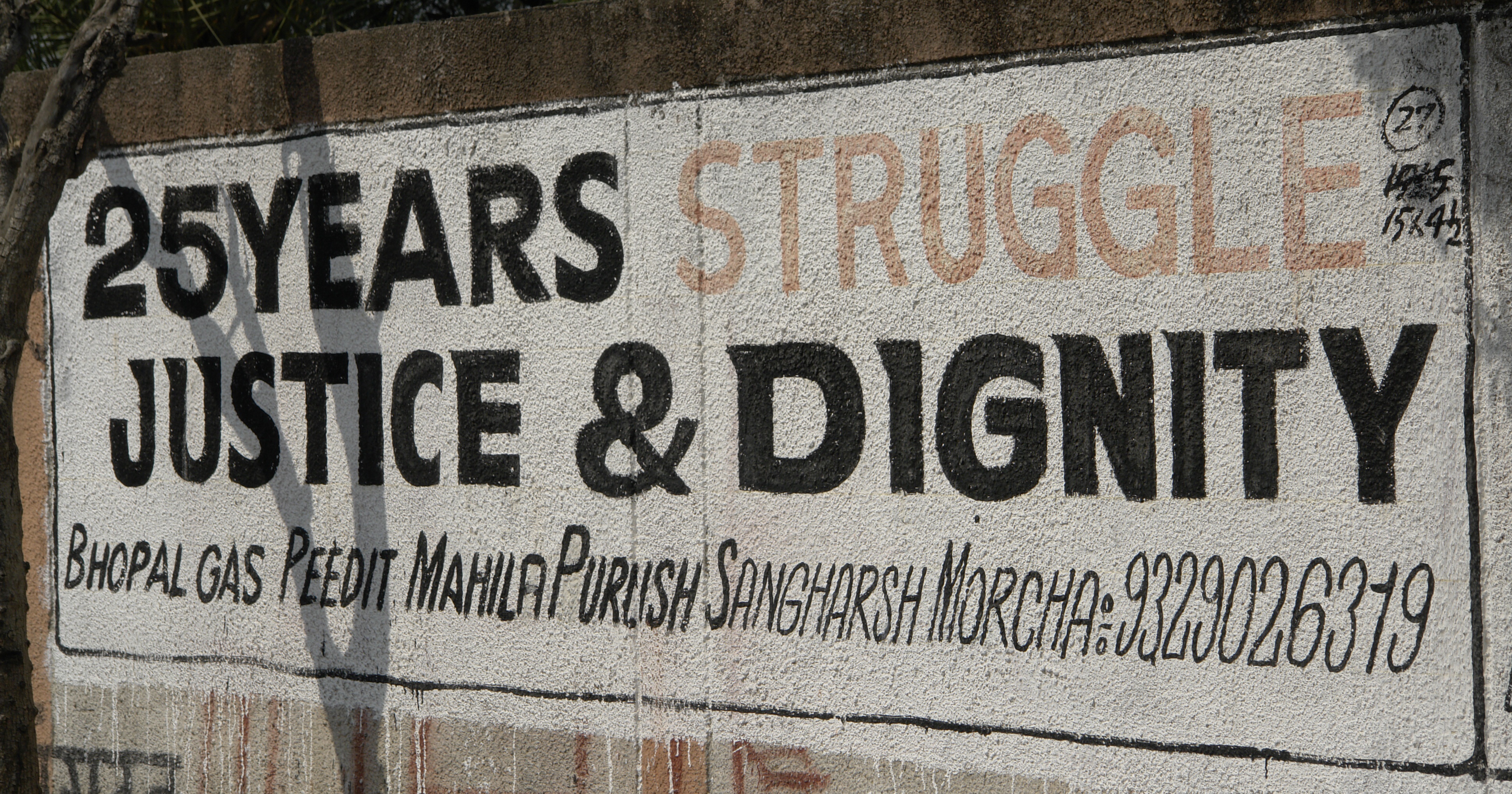
This year marks the 30th Anniversary of Bhopal Disaster victims.[2][3] [4]Imagine waking up in the middle of the night with your eyes and lungs burning. And there is literally no mode of communication and you’ve no idea as to what happened. So what do you do? You start panicking. First thing that comes to the mind is, ‘Pack your bags and ‘run’. But some run in the wrong direction and some don’t even realize they’re supposed to run. As a result over 500,000 people are exposed to Methyl Isocyanate gas and other chemicals.[5] Government records confirm a total of 3,787 deaths.[6] Many other thousands were temporary or permanently injured in the backwash. Forget about responsibility, not even a sense of morality was shown by management of Union Carbide Corporation. They immediately dissociated themselves from taking any responsibility. This was only the beginning of years of legal battle in which ethical implications of the disaster and tragedy victims were largely ignored. Following 3rd December 1984, environmental awareness and activism in India increased significantly. In a settlement mediated by Supreme Court in 1991, UCC accepted moral responsibility.

The site was closed in 1986. Following this Environment Protection Act was passed in 1986, creating Ministry of Environment and Forest which strengthened India’s commitment towards environment. [7]In Dec, 2008 Madhya Pradesh High Court decided that the waste should be incinerated at Ankleshwar in Gujarat. The decision was protested across all India by activists and environmentalists. Finally, on 8th June 2012, Incineration of Toxic Bhopal Waste agreed to pay $4.1 million to dispose of UCIL waste in Germany. [8]

Oleum Gas Leak

Just after Bhopal Gas Leak, M.C. Mehta V Union of India[9] case sprang up. The leakage happened in the heart of capital city. It was due to the aftermath of Oleum gas leak from Shriram Food and Fertilizers Ltd. Complex at Delhi. It created a lot of panic in Delhi when people were only recovering from the shock of Bhopal Disaster only two days go. Shriram Food and Fertilizers was set up in a dingle complex spreading in about 76 acres. Within a radius of 3kms it was thickly surrounded by colonies such as Punjabi Bagh, West Patel Nagar, Ashok Vihar, Karampura, Shastri Nagar and Tri nagar.[10] One person died and several else were injured.[11]

Maharashtra Floods of 2005

Every Mumbaikar remembers the unfortunate day of 26th July when Mumbai came to a ‘standstill’. At least 5,000 people died in the Maharashtra floods of 2005. It occurred just one month after the June 2005 Gujarat floods. [12]The floods were caused due to the eighth heaviest rainfall ever recorded in 24-hours which even continued for the next day. One of the factors aggravating the disaster was Antiquated Drainage System. The present storm-drainage water system in Mumbai was only capable of carrying 25 mm whereas the city received 993mm of total rainfall. Unlike South Mumbai, buildings in Northern Suburb were haphazard and without planning. Mangrove system which existed along Mithi River and Mahim Creek were being destroyed and replaced with construction.[13]Environmentalist and experts claims it to be poor preparedness of government authorities. A lot of illegal construction was done in lower lying areas of Mumbai. Authorities were not trained to deal with such situation. Drainage system was old and blocked with human garbage which caused the mishap.[14]

2010 Ladakh Floods

Flash floods have little to do with geology, and it is because of change in rainfall pattern due to global warming. [15]At least 255 people are reported to have died after a cloudburst and heavy overnight rains triggered flash floods, mudslides and debris flow in Ladakh region. The area is referred to as ‘cold desert’ which receives only 15mm rainfall in August month. On that unfortunate day of 6th August, 2010, the area is said to have received rainfall of at least 150mm and 250mm. More than 71 villages of the Leh were destroyed. People were unaware and totally surprised as the cloudburst happened sometime in night between 0012-0003. Jammu and Kashmir region has seen a lot of climate change in past couple of decades. Summers are more like drought which receives heavy downpour in installments. Which is strange and a matter of concern for our heaven?

https://lawsikho.com/course/certificate-criminal-litigation-trial-advocacy
click above

Maharashtra drought of 2013

Maharashtra witnessed its worst drought in past 40 years. The rainfall analysis of 2012 to 1972 for the month of June to October reveals that 17 districts that were mentioned as drought affected regions were hit very badly.[16] Indeed rainfall had been one of the contributors of drought. But the major contributory remained bad management of existing water resources, lack of proper policy of water distribution and more distribution of water to industries than to fields.[17]Millions of people were affected as 64 out of 355 were affected by the calamity. People were rendered jobless as their crops were destroyed and their cattle died hungry. It was a total mishap of government policies and environment impact.

North India Floods of 2013

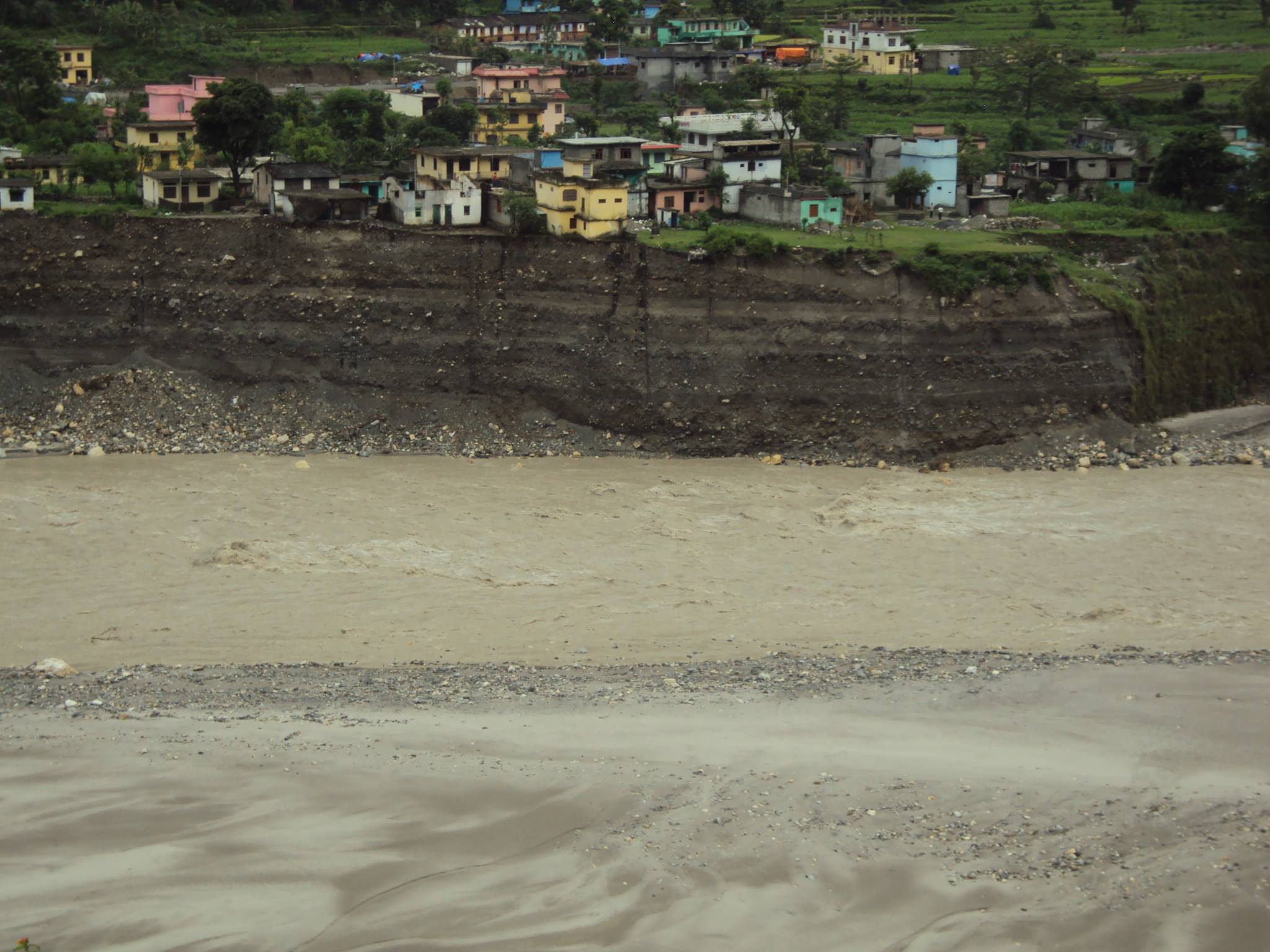
Many scientists says that our world will end either ‘by a lot of water’ or by ‘no water’. Nature is taking revenge by melting glaciers and drowning the world. With so many human induced activities and increasing population, there will be hardly any fresh water left in years to come.  The meditation retreat made famous by ‘The Beatles’; Uttarakhand also known as ‘Land Of Gods’ witnessed devastating floods and landslides, also known as 2013 North India Floods. It became the country’s worst natural disaster since 2004 tsunami, with more than 5,700 people presumed dead.[18][19]70,000 people were stranded for days due to destroyed livelihood. Lack of supply of food items, drinking water, transport etc. led to a total cut off of the area from the rest of the country. Majority of the roads disappeared and it took a lot of efforts from Indian Army to conduct search and rescue operations. [20]Environmentalist claims the true cause of tragedy to be damage of ecology. After Uttarakhand became a separate state in 2001[21], it saw a lot of growth in tourism. Many roads, hotels, shops and multistory buildings were constructed along ecologically fragile areas. Nature was exploited in the utmost manner possible. These man-made factors turned an extreme weather into a social catastrophe.[22]

Maline Landslide in Pune

Malin Landslide in Pune killed more than 100 people. The tragedy occurred on 30th July 2014 when landslide struck and wiped out village of Malin. This was the worst landslide of the year after Afghanistan landslide. [23]There are two types of landslides- naturally induced and human induced. The current landside was possibly due to human induced activities like road construction and farming as quoted by geologist Satish Thigale. Reports suggest that there was massive construction, deforestation and farming in the area which caused the landslide.[24][25][26] A Communist Party Of India statement quoted by Business Standard:[27]

The government had adequate warning in the past few years when smaller landslips had occurred and the flow of the backwaters of the nearby Dimbha Dam was one of the causes. But the government did not take any preventive measures. JCB machine (excavators) were being used on the hillside in the name of developing Adivasi land but (they were being used) in fact to serve the interest of a network of JCB machine owners, corrupt officers and leaders. The use of these heavy machines caused damage to the hillside. In spite of the strong opposition of adivasi to the use of machines, the government did not prohibit their use”.

India-Pakistan floods 2014

Even the recent tragedy in Kashmir valley is being increasingly looked at as a manmade disaster. [28]Jammu and Kashmir witnessed its worst flood in 60 years. Over 0.6 million people were stranded and about 200 were killed.[29] According to Bombay Natural History Society (BNHS) the disaster occurred due to increasing developmental activities and a severe loss of wetland habitat for various commercial activities. BNHS report that Dal Lake has reduced to just about 1200 hectares, which is almost half of its earlier spread. Chandra Bhushan, Deputy Director General of the Centre for Science and Environment quoted that:[30]

“The Kashmir floods are a grim reminder that the climate change is now hitting India harder. In the last 10 years, several extreme rainfall events have rocked the country, and this is the latest calamity in the series.

CSE researchers have compiled the list of such events which include: Mumbai floods of 2005, Leh cloudburst of 2010, Uttarakhand floods of 2014, followed by India-Pakistan floods this year. According to IPCC Assessment report (AR5), floods and droughts are likely to increase in India. India will get more rainfall but lesser number of rainy days.  By 2071-2100, intense heavy precipitation over most regions will increase.

Conclusion

These disasters are only a grim reminder that Earth cannot take more of human waste. If we don’t control our activities now, our coming generation in years will get to suffer. India is a still an under developed country which requires a lot of change in its environment laws and policies. India needs to make a stronger stand and give out a firm message at global level. Most of our industries still violate environmental laws and protocols. Our children need to be taught about sustainability and environment protection. A lot of change has taken place in past couple of years, like more and more planting of trees, concept of corporate social responsibility induced amongst companies, installation of garbage bins at many places, wide awareness programs amongst children and other class of people. But there are still millions of people unaware about environment impact and its consequences. A lot has been researched and written in this area. Change is positive and motivating, but it is not enough. Just becoming part of international conferences and protocols won’t bring about a change. Things need to be done at grass root level. “If not so then it will not be soon when human race becomes their own reason of extinction.” We must act soon and we must act now.


LawSikho has created a telegram group for exchanging legal knowledge, referrals and various opportunities. You can click on this link and join:

https://t.me/joinchat/J_0YrBa4IBSHdpuTfQO_sA

Follow us on Instagram and subscribe to our YouTube channel for more amazing legal content 



[1] http://www.historyworld.net/wrldhis/PlainTextHistories.asp?ParagraphID=ktt

[2] https://www.ccrhq.org/collaborate/events/30th-anniversary-bhopal-disaster

[3] http://www.bhopal.net/boston-commemorates-30th-anniversary-of-bhopal-gas-disaster-with-vigil-and-chants/

[4] http://www.ibtimes.co.uk/bhopal-disaster-30th-anniversary-facts-about-worlds-worst-industrial-tragedy-1477489

[5] http://www.mgrfoundation.org/UnionCarbideAtBophal.html

[6] http://en.wikipedia.org/wiki/Bhopal_disaster

[7] http://www.ehjournal.net/content/4/1/6

[8] http://en.wikipedia.org/wiki/Bhopal_disaster

[9] 1987AIR1086, 1987SCR(1)819

[10] http://www.legalserviceindia.com/article/l265-M.C.-Mehta-v.-Union-of-India.html

[11] http://en.wikipedia.org/wiki/M._C._Mehta_v._Union_of_India

[12] http://www.ndtv.com/photos/news/26july-2005-the-day-mumbai-stopped-11000

[13] http://en.wikipedia.org/wiki/Maharashtra_floods_of_2005

[14] http://greencleanguide.com/2013/11/18/global-warming-and-its-impacts-on-climate-of-india/

[15] http://www.downtoearth.org.in/content/flash-floods-are-man-made

[16] http://www.thehindu.com/news/national/other-states/maharashtra-drought-manmade-analysis/article4577079.ece

[17] http://www.ibtl.in/news/exclusive/2079/maharashtra-drought-2013/

[18] http://www.disaster-report.com/2013/06/himachal-pradesh-uttarakhand-flood-2013.html

[19] http://en.wikipedia.org/wiki/2013_North_India_floods

[20] http://www.bbc.com/news/world-asia-india-22963870

[21] http://www.euttaranchal.com/uttaranchal/uttaranchal_formation_milestones.php

[22] http://www.theguardian.com/commentisfree/2013/jun/28/india-floods-man-made-disaster

[24] http://www.firstpost.com/india/truth-behind-pune-village-landslide-deforestation-for-a-govt-scheme-1642715.html

[25] http://www.thehindu.com/news/national/other-states/pune-landslide-gsi-team-finds-cracks-on-the-ground-during-survey-of-malin/article6275688.ece

[26] http://www.livemint.com/Politics/bAYdKrnp7QiPdavKv2aLUJ/Pune-landslide-toll-rises-to-23-rain-hampers-rescue-efforts.html

[27] http://blogs.agu.org/landslideblog/2014/08/01/malin-landslide-pune/

[28] http://www.cseindia.org/node/5516

[29] http://www.thethirdpole.net/kashmir-floods-may-be-an-effect-of-climate-change/

[30] http://www.thethirdpole.net/kashmir-floods-may-be-an-effect-of-climate-change/

Download Now

Taxation issues in E-commerce ventures – An analysis of the Amazon tax issue in Karnataka

0

466605397_22014eddaa_z

With the advent of multiple e-commerce ventures in India, the Government is finding it difficult to adapt its existing rules to meet the requirement of newer kind of businesses – which often uses different structuring jugglery to circumvent the current legal frameworks. More often, certain regressive steps are taken by the government without taking into account how such directives can affect the business environment in the country or a particular state. For example, the recent ban by the Delhi Government on Uber has affected both the commuters in terms of non-availability of the public transport and left thousands of drivers without a job.

Recently, Amazon India landed into a regulatory soup, where the Karnataka tax authorities threatened to cancel the VAT (Value Added Tax) licenses of the sellers who store their products in the warehouse owned by Amazon. Interestingly, this was not an issue related to evasion of tax, but a clear case of mere interpretation of the law – on who is liable to pay for the tax. Such strict interpretation of law may destabilize the business model of Amazon – how it works and may become onerous for it to continue further business in India or atleast in Karnataka.

The Amazon business model

Before we analyse and interpret the legal provisions which deals with the case, it is important the Amazon’s business model in India. In India, Amazon, it operates under the URL “www.amazon.in”. Amazon identifies itself as an online platform and a facilitator between the sellers and the buyers, and in no way control the transactions that happens in the parties. Amazon to comply with the FDI regulations in India, does not buy the goods directly from the seller, but merely provides an online platform to display the goods. Once, a buyer purchases a good, Amazon will inform the seller about such purchase, either the seller has the option to use its own logistics to deliver the product or can choose the logistics services provided by Amazon.

Amazon also provides a service called “Fulfilled by Amazon” program, which constitutes 75% of the sales of Amazon in India. Under this program, the seller would store its products in one of the warehouses provided by Amazon, to reduce the delivery time. Amazon would use state of the art technologies, including data-mining and critically anlayse the available data to predict the popularity of certain products and store the same in the warehouse to have a quick turn-around time in providing the services to the client.

In both the case, Amazon would collect the money from the buyer, take a percentage of the sells proceeds as commission or providing the service, and would return the rest to the seller. In turn Amazon would pay Service tax to the Central Government and the sellers would pay the applicable VAT or sales tax directly. This issue has been previously clarified by an advance ruling by the tax authorities dated August 24, 2012 where it was held that Amazon “is providing an online retail distribution channel and the associated logistical services” and thus clearly providing services.

The tax issue in Karnataka revolves around this “Fulfilled by Amazon” service, where the Karnataka state authorities are claiming that Amazon should register itself under the state’s VAT laws and pay appropriate tax as applicable directly.

What is VAT?

Value Added Tax (VAT) is a state level tax that is charged on the value that is added to the goods before selling to the ultimate consumer. Example a person is preparing bread he sells the same to a distributor who packs the product and sells it to the customer. In this case the tax will be charged on the selling of unpacked bread (value added to common wheat) and on the packing (value added to the bread). The government charges tax on every value added to the product before it comes into the hands of the customer. Almost every state has a similar law in place on value added tax.

Legal analysis

The tax authorities slapped notice on the sellers who have listed Amazon warehouse as an additional place of business. Though, there is not rule fixing the limit on a maximum number of vendors that can register in a warehouse, a complete reading of other provisions of the law would reveal that such a registration need to manned by certain requirements in terms of having a separate place to keep the goods and have provision to display notice boards outside the premises of the warehouse. However, in case of Amazon, to optimize distribution, it would keep similar products belonging to different sellers at the same place, for example, a headphone of the same brand belonging to different sellers can be stored at the same place.

Moreover, the tax authorities are claiming that Amazon is acting as a dealer and is liable to pay VAT as per the provisions of the Karnataka VAT Act, 2005, as it is not merely a service provider but is providing value addition in terms of state-of-the art data analysis and prediction systems which helps in storing and arranging the products and is also acting as a commissioning agent as per the Karnataka VAT Act. However, Amazon has categorically stated that they are not a dealer as the legal ownership of such products is not transferred to Amazon and is merely acting as a service provider to provide fast delivery to the buyers.

Now if we analyze the position of Amazon as per the definition given, it seems to qualify as a dealer as Amazon is distributing the goods on behalf of the sellers. However, it seems like the tax department has overlooked the principle of “noscitur a socii”, where the terms “supplying and distributing” should be read taking into account the other adjacent words in the sections which would clarify the true meaning of the applicability of the provision.

Interestingly, going by the FDI rules, a foreign entity cannot engage in retail trade in India. So, if Amazon is identified as a dealer, it would not be able to continue its business in India.

The core issue to be understood out there is no tax evasion, but a mere case of who is liable to pay the tax. In the present case the government is getting the full tax, but it is only paid by the seller. The contention of the government is that it is Amazon who should be paying the taxes and not the seller. Government should consider amending its existing rules to meet the requirement of new industries like e-commerce sector and can have relevant guidelines in place, to avoid tax evasion.

Conclusion

The issue is basically because of the self-contradicting laws and loop holes in the same. There are many amendments lying before the various competent bodies. These amendments are of huge importance before the laws are very old and the scenario of E-commerce has grown big and complex. With the adamant of Foreign Direct Investment (FDI) in India things have become very complex and the obsolete laws are causing great difficulties. The above issue is yet to be resolved and is classic example of what happens when one has self -contradicting laws and is not changing with the pace with which its subject is changing.

 (with inputs from Mridul Gupta, a student of UPES)

Download Now

Standard form of Contracts and the law in India

4

document-428336_1280


This article is written by Sunil Yadav, a student of CNLU.

Legal system today has evolved from its past rules, evolution of law had provided a solution of the problems in the system adhering with demand and circumstances of modern day. Evolution has also led to the revelation of quandary in existing legal system. Envisioning within the ambience of standard form of contract, we encounter with similar kind of aspect which is a byproduct of evolution. In this technological age where contracts are made in thousands of numbers by a company daily. It has made difficult for the court to come at rescue for the weaker party. As in practical aspect general consumer or a person who signs a contract does not read terms and condition written in the contract. Even if they read it they don’t understand most of the things about the terms and condition of the contract, so it becomes difficult to protect the weaker party. Standard form of contract are done on national and international level, and same problem exists everywhere in the world, it must be solved for the better evolution of the legal system.

 Standard form of contract

Standard form of contract in lay-man term means ‘take it or leave it’ kind of contract, in this type of contract the other party is not in position to negotiate with the terms and condition laid down in the contract, party just have the option of either enter into the contract or forget about the   contract. Thus, the fundamental right to negotiate is affected by this type of arrangement popularly these type of contract are known as adhesion or a boilerplate kind of contract. Most common type of standard form of contracts are insurance company contract, on purchasing a washing machine, signing up for your e-mail, social networking sites, etc.

Legal Status of Standard form of Contract (SFC)

Indian contract system does not have any specific differentiation between SFC and general contract, as the SFC is a kind of contract which is govern by the laws provided for general contracts in Indian contract Act 1872. Due to heavy industrial development these kind of contract has become common and are executed in large numbers now a days. This had led to demand of formulation of fledge rules on standard form of contract to protect the rights of the weaker party in standard form of contract.

However, in many countries judiciary is empowered to apply the principle of natural justice and give good justice to the weaker party as it is in Israel there are certain provisions that may be cancelled by court of law. Apart from courts some legislature have also made laws related to this kind of contract. There are certain rules made by the legislature which seems to be unreasonable like in U.K, sec 3 of Unfair Contract Terms Act 1977 limits the ability of drafter on consumer or limits the provision of standard form of contract to the Drafter.

 Why people accept Standard Form of Contract?

  1. First reason why people accept SFC, they don’t read the contract clauses thoroughly as even after reading they don’t find it worthy of giving so much time in writing down the clauses.
  1. In certain contracts, there are clauses like if you accept the given terms and condition then they will tell the full terms and condition of the contract.
  1. SFC kind of contract the party generally focus on the price mentioned in the contract; he doesn’t really care about other different clauses which might be exploitative in nature.
  1. Manufactured pressure on the party is created by another party to sign SFC, earlier all the negotiation and the terms had been discussed orally and explained to them. So it becomes a kind of bounding on the party to sign the contract.
  1. The major point SFC’s are that they are take it or leave basis, so they don’t have any choice but to accept the contract.

Ways to limit exploitation from SFC

It is easy to exploit the party entering into standard form of contract, there are certain rules made to protect the interest of the weaker party. Specific procedure has been mention in order to protect the weaker party in SFC contract.

 Reasonable Notice

A reasonable notice must be given by the person delivering the document to give adequate information about the terms and condition laid down in the contract. This principle was propounded in the case of Henderson V. Stevenson from House of Lords. Case facts were that, a person buy a ship ticket on face of it only boarding place and arriving place was written on it but on its back side there were certain terms and conditions which party didn’t see nor anything was written on face of it to turn over and look at the back of ticket. Simple reason given by court was that a person cannot agree to a term if he had not seen it or is not told of it.

Notice of the terms and condition should be given before or at the time of contract when it is to be signed. As clearly said by Lord Denning it is duty of the party relying on a clause to its benefit to make it clear to other party the terms and condition of contract in the famous case of Thornton V. Shoe Lan Parking Ltd.

Contractual Document

For a standard form of the document, there must be a contractual document signed between the parties in order to make it enforceable in court. The basic problem lies between identifying the document as a contract document or as a receipt. Different between these two is, if the document clearly explains the express and implied a condition in the document then it is a contractual document if not then it is a receipt. The contract must be signed by the person accepting the terms and conditions mentioned in the document.

 Misrepresentation, Fraud, Mischief and other elements which makes a contract void should not present in the contract in order to make an agreement enforceable by law.

https://lawsikho.com/course/diploma-advanced-contract-drafting-negotiation-dispute-resolution
Click Above

Unreasonable or Unfair terms

Pointing out unreasonable terms in the contract can be one the protective safeguard for the weaker party. Unreasonable terms of contract can be said about those terms in the contract which contradicts the very purpose of the contract or are against the public policy. In Lilly White V. Mannu-Swami this principle has been clearly explained in the case. In this case the laundry receipt contained a condition that in case of loss or destruction of cloth only 15% money of the market price of cloth will be returned these clauses were held unreasonable from the court and was held that the clauses were against the public interest.

In an Indian financial case of Seven Day Adventists Vs. M.A Uneerikutty and Anr. MANU/ SC/3291/ 2006 it says that if any consideration of several clauses mentioned in the contract is unlawful then agreement itself is void and the decision of the court says that this type of cases are against the public policy, if any type of clauses violating public policy that contract is void. This doctrine is not only applicable to harmful cases but to the cases with harmful tendencies.

In the case of contract with the government certain points must be observed in order to prevent exploitation of the other party in the contract. As the decision from the government had been taken in bad faith. Decision is based on irrational or irrelevant consideration. Decision has been taken without following the prescribed procedure in the system. If these things are not followed diligently contract will be termed as irrelevant by the court and party will be protected by certain clauses against exploitation of contracted party.

Theory of Fundamental breach

It’s one of the tools to protect the weaker party from exploitation through this theory. What happens in theory there is a core or fundamental of the contract which is bounding on both parties to follow them and if that is not followed then there will be a breach of contract. In the case of breach of contract the weaker party will not be bound to follow the contract in case of breach of contract by other party. Test of fundamental breach of contract can be done through sec 11 of 1977 unfair contract act which says the contract will be void if it will not satisfy the reasonableness of the contract.

In case of Food Corporation of India Vs. Laxmi Cattle Feed Industries MANU/SC/8041/2006, Supreme Court held that in case of breach of contract, the plaintiff has to prove all the essentials of breach of contract. If the plaintiff is not able to prove, it will not be considered as breach of contract.

Exemption Clauses and Third Party

Under this clause we have to take a look at the doctrine of privity of contract which says that the contract is between the two parties who have contracted with each other and no third party is entitled to enjoy the right provided in the contract nor hold any liability.

As the third party does not hold any responsibility for the irregularity in the contract, he is not entitled to any benefit from the contract.

Ambit and authority of Contract Act

Under the Indian contract, there is no such form or condition which is binding on the parties. Parties may agree to contract in a particular mode which is not probihited under the law. Problem that is prevalent in the Indian context is that there is no such specific rule provided in Contract Act, different provision has been mentioned in different kinds of Act which govern activity of contract like specific provision of railways act, public transport control by the government. Different kinds of rules provided by the government to contract in coffee industry, tea plantation which is entered into by workers with the industry.

Conclusion

The standard form of contract are written in fine print with all the terms and conditions laid down clearly in the contract. In Indian context cases are entertained under the rules provided by Indian Contract Act, there is no any act only made to deal with standard form of contract specifically. In this type of contract weaker party can   easily be exploited and there is no specific rule for the prevention from this type of action by dominating party.

With the evolution of legal system the courts had found different kinds of method and tools to protect the basic right of the weaker party by applying the principles of natural justice, precedent of different cases helping in protecting interest of weaker section. As through transformation these kind of contract are made on daily basis in enormous number, that’s why proper scrutiny and providing a lengthy procedure will not work best thing can be done is to provide awareness about the rule so that the parties entering into the contract will read the clauses and try to understand and ask question on certain clauses if they are not able to understand it.

Take it leave it as it is the nature of the contract which leads to commencement of certain cases in court in which there is an immediate urge to provide justice to the weaker party who without knowing the specific clauses entered into the contract.


LawSikho has created a telegram group for exchanging legal knowledge, referrals and various opportunities. You can click on this link and join

https://t.me/joinchat/J_0YrBa4IBSHdpuTfQO_sA

Follow us on Instagram and subscribe to our YouTube channel for more amazing legal content 
 
Download Now

Flipkart and Amazon: Let’s know their Terms and Conditions

2

maxresdefault


This article is written by Ayush Agarwal of UPES Dehradun.

Flipkart, Amazon, Myntra are the most accessed e-commerce site among the Indian consumer. Rather preferring to go and buy products in the market, consumer prefer to order online and if they don’t find it appropriate, then they have an option  of getting replacement. With fantastic offers and easy availability of the products the online shopping is getting more popular among the consumers who have access to internet and especially for the one who don’t have time to go and buy the products from the market. Everyone accepts to the terms and conditions given by the site, but no one bothers to go through it. Let’s evaluate the terms and conditions of some of the online retail sites.

Platform for Transaction and Communication

Flipkart in the very starting of its policy specifies what Flipkart actually is. Flipkart terms itself as a Website rather a market where Users utilize to meet and interact with one another for their transactions. Flipkart excludes all the liabilities by specifying that Flipkart is not and cannot be a party to or control in any manner any transaction between the Website’s Users.

Important terms and conditions

Contract: All commercial/contractual terms are offered by and agreed to between Buyers and Sellers alone. Flipkart does not have any control or does not determine or advise or in any way involve itself in the offering or acceptance of such commercial/contractual terms between the Buyers and Sellers.

Representation: Flipkart does not make any representation or Warranty as to specifics (such as quality, value, salability, etc) of the products or services proposed to be sold or offered to be sold or purchased on the Website. Flipkart does not implicitly or explicitly support or endorse the sale or purchase of any products or services on the Website. Flipkart accepts no liability for any errors or omissions, whether on behalf of itself or third parties.

Breach of Contract: Flipkart is not responsible for any non-performance or breach of any contract entered into between Buyers and Sellers. Flipkart cannot and does not guarantee that the concerned Buyers and/or Sellers will perform any transaction concluded on the Website. Flipkart shall not and is not required to mediate or resolve any dispute or disagreement between Buyers and Sellers.

Warranty: Flipkart does not make any representation or warranty as to the item-specifics (such as legal title, creditworthiness, identity, etc.) of any of its Users. Flipkart advises to independently verify the bona fides of any particular.

Right, Title or Interest over product: Flipkart does not hold any right, title or interest, nor have any obligations or liabilities in respect of any contracts entered into between buyers and sellers. Flipkart does not take any responsibility for unsatisfactory or delayed performance of services or damages or delays as a result of products which are out of stock, unavailable or back ordered.

Bipartite contract: Flipkart is only providing a platform for communication and it is agreed that the contract for sale of any of the products or services shall be a strictly bipartite contract between the Seller and the Buyer.

Limitation of Liability: Flipkart shall not be liable in any special, incidental, direct or consequential damages in connection to terms of use, even if the concerned user has informed in advance about the possibility of damages.

Payment

While availing any of the payment method/s available on the Website, Flipkart will not be responsible or assume any liability, whatsoever in respect of any loss or damage arising directly or indirectly because of:

  1. Lack of authorization for any transaction/s, or
  2. Exceeding the preset limit mutually agreed by You and between “Bank/s”, or
  3. Any payment issues arising out of the transaction, or
  4. Decline of transaction for any other reason/s

Grievance officer

In accordance with Information Technology Act 2000 and rules made there under, the name and contact details of the Grievance Officer are provided below:

Mr. Chinnappa Karumbaiah Kuppanda

Flipkart Internet Private Limited

Ozone Manay Tech Park, #56/18 & 55/09, 7th floor,

Garvebhavipalya, Hosur Road, Bangalore- 560068

Karnataka, India

Phone: +91- 080-49083910

Email: [email protected]

Time: Mon – Sat (9:00 – 18:00)

Disputes (Resolutions) Policy

At Flipkart, has a Dispute Resolution process in order to resolve disputes between Buyers and Sellers.

Buyer Protection Program

Situations where Buyer Protection Program Works:

  1. In case of a dispute where the Seller is unable to provide a refund or a replacement, Flipkart will actively work towards reaching a resolution.
  2. The Buyer Protection Program covers Buyers who are unable to successfully resolve their dispute with the Seller or are not satisfied the resolution provided by the Seller.
  3. The Buyer can write to [email protected]if the issue with the Seller is not resolved. Flipkart’s Customer Support team will look into the case to check for possible fraud and if the Buyer has been blacklisted/blocked from making purchases on the Website. Only after verifying these facts, a dispute can be registered.
  4. In due course of resolution, Flipkart’s Customer Support Team will facilitate a conference call including the Seller and the Buyer.
  5. When a dispute has been raised, Flipkart may provide both the parties access to each other’s Display Names, contact details including email addresses and other details pertaining to the dispute. Buyers and Sellers are subject to final consent from Flipkart for settling the dispute.

If you are a buyer then you are subject to following restrictions:

  1. There is a limitation period of 45 days in which you have to file the complaint.
  2. The first step which a buyer should take is contact the seller to resolve the dispute. If the Buyer doesn’t hear from the Seller or is unable to resolve the issue with the Seller even after contact, a dispute can be raised with Flipkart by writing an email to [email protected]
  3. Buyers can make a maximum of 5 claims per year on Flipkart. If the claim was withdrawn, it is not counted. The coverage amount will be limited to ₹50,000.
  4. Buyers are not entitled to immediate refund of money or replacement of the product. Flipkart will be first verifying the dispute and will be processing the claims that are valid and genuine.
  5. Claims related to ‘Buyer remorse’ (i.e. instances where products are bought by the Buyer by mistake or where the Buyer chooses to change his/her mind with regard to the product purchased by him) will not be entertained through this program.
  6. (Disclaimer) Don’t initiate invalid or false claim or don’t provide incomplete or misleading information because flipkart reserves right to initiate civil and/or criminal proceeding against you in these cases.
  7. If there is a delay in shipment or delivery of the item by seller then you cannot file a complaint or entertain any claim from flipkart through this mechanism.

Amazon

Amazon.com is an American electronic commerce company with headquarters in Seattle, Washington. It is the largest Internet-based company in the United States. Amazon has recently started its e-commerce business in India.

E-Platform for Communication

By agreeing to the terms and conditions of amazon then you are agreeing to that fact that Amazon is an online platform that enables you to purchase products listed on the website at the price indicated therein at any time for any location, herein you further agree that Amazon is only a facilitator and is not and cannot be a party to or control in any manner any transactions on the website. Sale of products on the website shall be bipartite contract between you and the sellers in Amazon.in

Disclaimer

  • Amazon disclaims that he will neither be liable nor responsible for any actions or inactions of sellers nor any breach of conditions, representations or warranties by the sellers or manufacturers of the products and hereby expressly disclaim and any all responsibility and liability in that regard.
  • Amazon provides no ground for mediation or even does not provide any ground for resolving any dispute or disagreement between buyer and the sellers or manufacturers of the products.
  • Further Amazon expressly disclaims any warranties or representations (express or implied) in respect of quality, suitability, accuracy, reliability, completeness, timeliness, performance, safety, merchantability, fitness for a particular purpose, or legality of the products listed or displayed or transacted or the content (including product information and/or specifications) on the website.
  • Amazon does not take any warranty of content, information, software, products, services and related graphics on the website.
  • It has been clearly stated that amazon does not implicitly or explicitly support or endorse the sale or purchase of any products on the website. At no time shall any right, title or interest in the products sold through or displayed on the website vest with Amazon nor shall Amazon have any obligations or liabilities in respect of any transactions on the website

Governing law and Jurisdiction

Though operating in India, Amazon is not an Indian company, by agreeing to the terms and condition you agree that in case of any dispute you will be governed by laws of India and exclusive jurisdiction lies with the court of Delhi.

Buyer Dispute Program

When dispute arises between buyers and sellers, buyers should first contact sellers directly to try to find a solution. If the parties cannot resolve their dispute the Amazon Payments Buyer Dispute Program provides a mechanism to address the buyer’s complaint, including under the Amazon A-to-z Guarantee.

Guidelines to be followed before submitting a complaint

  • A complaint needs to be submitted within 30 days of making payment.
  • If the seller fails to offer a refund or exchange within 30 days of shipment, for any discrepancies in the item, the consumer can file coverage under the Amazon A-to-z Guarantee.
  • Circumstances in which the item delivered is considered to be “materially different”: (1)Wrong version or edition, (2)Item condition or details not as describe, (3)Wrong item, (4)Missing parts or components, (5)Defective item, (6)Damaged item

Please note that if disappointment with the satisfaction of the item will not be a ground under ‘materially different’.

  • Limitation Period: The consumer must wait for at-least 15 days from the date of purchase. From that point the limitation period extends to 75 days to submit the claim.
  • Requirements to Submit a Complaint: (1) The claim must be timely filed, (2) If you have received a materially different item, you must contact the seller within seven (7) days of receipt to request return information, (3) If your item becomes defective more than 30 days past the shipment date and it is under warranty, you must contact the manufacturer for repair or replacement, (4) If you paid by credit card and the issuing bank has initiated a chargeback, then you are not eligible for coverage.
  • Submit a Complaint: For submitting a complaint log onto your Amazon Payments account or by clicking here(https://payments.amazon.com/sdui/sdui/about?nodeId=6025).

Download Now

Sources of funding for seed stage startups

0

workstation-405768_1280

This article is written by Shome Bhattacharjee

Cash is the lifeblood of any business, whether it’s as high tech as an online retailer, or as seemingly mundane as running a grocery store. Without cash, a business dies; it’s as simple as that. The different sources all have their own pros and cons and are suitable for different stages at a start-up’s life cycle. To make sense of it all, we need to explore the fund flow cycle chronologically.

 So here is a brief and basic overview of some of the more popular sources of funding today in India. The following article is the first instalment of a series that explores the options available to a start-up through the different stages of its life, from product conceptualization and design (where the founder invests her own money as well as that from family and friends) all the way to an IPO (where funds are acquired from the public and institutional investors). The funding options, in terms of their applicability differ from industry to industry. For our purposes, we will take the life cycle of a typical tech startup.

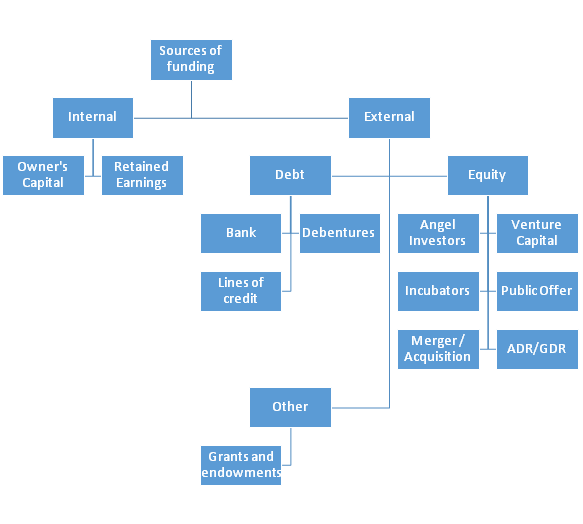
The following flow charts show the basic classification of sources of funds for a startup.

sources of funds

The above chart shows some of the funding sources available to startups in India. We will go through all of them chronologically

Stage 1 –Seed

This is the part of an entrepreneur’s path where she has a viable business idea. The viability of the idea may be evaluated through market research to see if the product or service has potential to work and if the same can be scaled up. The main emphasis at this stage is to give shape to the idea and develop a working prototype to show potential investors that the idea works.

Let’s take an example:

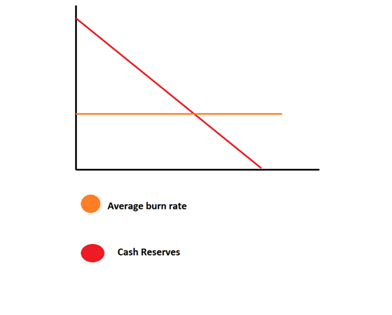
Suppose you decide that you want to build an online real estate agent business. Assuming you want to build a business similar to that of real estate brokers, as opposed to sites like 99acres.com, (I.e. provide a differentiated data, as opposed to an online advertising site), the first thing you need to do is build a database. Whether you go about it personally or hire someone else, whether you actually visit locations or use telephones and the internet, either way, you will have to spend some money. Even if you have registered your domain name and set up your website, you cannot depend on it to generate any cash yet, whether by way of commission on rent/sales or by way of advertisement (due to a lack of traffic). So, even as your business is not giving you any ready cash, you still need money in order to build it. There are always going to be some fixed costs that must be paid for. Thus, every day, you will need to spend a certain amount of money. The rate at which this money is spent is called burn rate.  As you can see below, assuming that the burn rate remains constant, you will eventually run out of cash reserves.

img 1

Here, as we have just seen, there is no revenue since the product has not been commercialized yet and thus the company cannot generate its own funds. The primary source of funding is the entrepreneur’s personal wealth. If required, additional capital may be acquired from:

1.1 Borrowed funds

·         FFF

The 3Fs, i.e., Friends, Family, and Fools (FFF in the above diagram). Friends and family do not invest in the product or the company as much as in the entrepreneurs. They put their money in the hands of the entrepreneur, not necessarily because they believe in her idea, but because they either believe in her, or feel obligated to help her.

·         Bank loans

In addition to the FFF, the entrepreneur may secure loans from a bank, mostly as a personal loan, as opposed to a business loan since neither the product, nor the business plan is ready. Thus, as far as bank debt is concerned, the entrepreneur may choose to post her own assets, such as her house or car, as collateral, or opt for a personal loan, at a higher interest.

1.2 Selling a stake

Apart from the previously mentioned sources of borrowed funds, an entrepreneur may also opt for funding by offering a small stake of the business to outside investors. The most critical question here is, “do I want the whole of a small cake, or do I want a part, albeit a large one, of a larger cake.”

There are two noteworthy options here:

  • Incubators

Incubators may be online or in a physical space. Incubators look for between 5-8% stake in a company and offer a small(er) sum of money compared to other sources. These help make a prototype, and further make a product out of the idea. Incubators offer entrepreneurs multiple things that are needed to start a business, for e.g., an office space, the services of professionals, such as lawyers or accountants, or even a room to hold meetings. Over and above these resources, which are shared by all the incubators, a startup will also have access to two very important things, networks and mentoring.

(Incubators may also provide infrastructural support to startups by charging a monthly rent instead of getting a stake in the company. While this varies from case to case, it may be worthwhile for an entrepreneur to consider such an arrangement.)

  • Angel investors

Angel investors are affluent or high net worth individuals who assist the next generation of startups. They are motivated, not only due to the financial returns they get, but also by providing valuable guidance to the startup. Angel investors look for returns between 20-30 times their initial investments. As a rule, Angels invest in businesses that they have experience in and thus a company would do well to take advantage of their experience. They understand the technology involved and invest in the intrinsic value of a firm’s idea, as opposed to making decisions based primarily on financial reports and statistics. Angels may invest as individuals, or collectively as Angel Funds (though it has become difficult to do so, thanks to the AIF Rules, 2012). Angels may look for board positions and may look to exit before IPOs or Acquisitions by selling their stake to Venture Capital funds. One important fact to consider is that the investors can help a company to secure VC funding since they have personal contacts, thus strategically, having an angel investor on board may make a lot of sense for the company to reach its objective.

Conclusion

Have you ever been to a restaurant and thought that you could probably make much better food than what you just ate? Maybe you can, maybe you can’t, but to actually turn that into a business requires a lot more knowledge and knowhow than just the recipe for the best biryani in the world.

This article was not written for a professional with a background in finance, it was written as a starting point for someone who has not had an education in finance, someone who passionately believes in her idea, but does not know how to start.  Even if you have great technical skills and are one of the best at what you do, you probably need to acquire a few more skills, at least a working knowledge of certain things. Hopefully this article will serve as a first step in that direction.

Download Now

Acid Attack and the Law in India

4

stop-acid-attacks

This article is written by Surbhi Agarwal, a student of UPES.

INTRODUCTION

Crime, Crime, Crime, everywhere the word crime has been fascinated. A small word ‘crime’ has created so much significance in the life of others that everyone has only one word in their mouth. Who are responsible for such crime? To whom we can blame? The simple answer we the people. Crime is not something which has been created by God; it is the creature of human being. Human beings are only responsible for the heinous crime which we face today. Crime is not something which is new for us but it’s just that the way of doing crime has been reformed. In urban Areas, there was a time when people use acid for household purpose but now the work of acid has reformed his way and used for destroying the life of people.

The acid throwing is the most vicious form of crime in the society. Acid attack has its steep rise in past few years and as usual the most of the victim are women and only women. The horrific act of attacking people with acid has been taking place across different parts of country. Man has chosen an alternative form of action to exploit the life of women. Hydrochloric acid and Sulfuric acid which are easily available in the market are used for acid attack which melts the skin and even bones of the victim. Acid attack is such a heinous form of crime which makes the life of the victim miserable.

Consequences

The most notable effects of an acid attack are the lifelong bodily disfigurement.  The acid attack is a form of violent assault by throwing corrosive substance onto the body of another person with the intention to disfigure the body. Mainly acid are thrown at the face of victim, burning them, and damaging skin tissue, often exposing and sometimes dissolving the bones. The long consequence of such type of attack is that it makes the person blind, as well as permanent scarring of the face and body. The acid attack makes the life of the person worse and it also affects their social, economic and psychological life.

The medical effects of acid attacks are extensive. Acid attack is not which can easily be recovered up, as the majority of acid attacks are aimed at face so, it depends upon the concentration of the acid and the period of time before the acid is thoroughly washed off with water or neutralized with a neutralizing agent. The acid attack makes our body paralyzed as it rapidly eat away our skin, the layer of fat beneath the skin, and in some cases even the underlying bones. Eyelids and lips may be completely destroyed, the nose and ears severely damaged.

Legal Effect of Acid Attack

Till recently there was not any specific law in India to deal with the cases of acid attack. The Section 326 of the Indian Penal Code which deals with voluntarily

Causing Grievous Hurt by Dangerous Weapons or Means was not so effective in dealing with this heinous form of crime because it does not include acid attack. The eighteenth law commission of India which was headed by Justice A.R. Lakshmanan then proposed a new section 326A and 326B in the India Penal Code and section 114B in the Indian Evidence Act.

The scope of the definition of section 326 is very narrow but it does not deal adequately with the issue of acid attack because:

  • It does not cover the various kinds of injuries inflicted because of an acid attack
  • The section does not cover the act of administering acid attack, i.e, planning it.
  • The section also does not specify who the fine should be awarded to
  • The section does not punish the intentional act of throwing of acid if no injuries occur

Further in cases of acid attack a presumption is incorporated in the Indian Evidence Act as Section 114B. The proposed Section 114B of the Indian Evidence Act shall read as under:

Presumption as to acid attack– If a person has thrown acid on, or administered acid to, another person the court shall presume that such an act has been done with the intention of causing, or with the knowledge that such an act is likely to cause such hurt or injury as is mentioned in Section 326 A of the Indian Penal Code. This section was introduced to give wide perspective to acid attack. Acid Attack was recently introduced as a separate offence under the Indian Penal Code through Criminal (Amendment) Act, 2013.

 According to the Section 326A of Indian Penal Code “Acid” includes any substance which has acidic or corrosive character or burning nature that is capable of causing bodily injury leading to scars or disfigurement or temporary or permanent disability. The long term consequences of these attacks may include blindness, as well as permanent scarring of face and body, along with far-reaching social, psychological, and economic difficulties. Section 326A and Section 326B of Indian Penal Code includes punishment which is given to an accused which read as follow:

Section 326A lays down the punishment for acid throwing. The minimum punishment is 10 years imprisonment. It can extend up to life imprisonment with fine.

Section 326 B lays down the punishment for attempted acid throwing. The minimum punishment is 5 years imprisonment. It can extend up to 7 years imprisonment with fine.

This amendment included punishment for those people who practice this heinous form of crime but the amendment was useless because after also people use to practice. So the best punishment will be tit for tat i.e., same thing should be done with those people who practice this crime. They should give realization by throwing acid on their face and on their family members. These will be the best punishment which can be awarded to them.

https://lawsikho.com/course/certificate-criminal-litigation-trial-advocacy

Today’s scenario in both National and International plane

Today, acid attacks are reported in many parts of the world. Since 1990s, Bangladesh has been reporting the highest number of attacks and highest incidence rates for women with 3,512 Bangladeshi people acid attacked between 1999 and 2013.[1] India is also now on high altering of acid attack after the case of Lakshmi. In 2000 in India there were 174 cases of acid attack but now it has taken a sudden rise. However, Bangladesh is the country which has highest number of cases in acid attack.

In most of these cases Hydrochloric and Sulphuric acid were used and all the victims were women. Though acid attack is a crime which can be committed against both man and woman but it has a specific gender dimension in India. Most of the reported acid attacks have been committed on women, particularly young women for spurning suitors. The victims in Karnataka were very young women between 16 and 25 years of age, and were attacked by men who were known to them. Mostly attacks took place in Public Places or at home.

Man who cannot face rejection take their ‘revenge’ by throwing acid in victim face so that the life of the person get destroy. Men throw acid on us with the intention of injuring or disfiguring our bodies, burn our faces, smash our noses, melt our eyes, and walk away as happy men. Men throw acid on us for taking revenge from us. Men emotions get hurted for ending relationships and for refusing sexual harassment, Sexual exploitation, proposals of marriage and demands for dowry. Since acid is so readily available across the counter in medical and other stores, acid attacks become a relatively cheap and effective way of committing acts of violence against women. Acid attack is common in Pakistan, Bangladesh, India, Afghanistan, Nepal, Cambodia, and a few other countries. All across the country, one can walk into a number of shops in rural or urban centers and purchase any amount of highly concentrated acid from shopkeepers, who barely raise an eyebrow when selling this highly corrosive substance to their consumers. Besides the use of concentrated acid in several industrial processes, highly concentrated sulphuric and hydrochloric acid is sold to the general public due to its multi-purpose usage, which is the real problem.

In countries like Pakistan, highly concentrated acid is used to remove lint from cotton seed, as it is a cheap way to obtain clean seeds ready to be replanted. The accessibility of acid not only encourages its use to perpetrate the crime of acid throwing, but the widespread use of acid by the rural populace also poses health hazards, causes accidents and has detrimental effects on the environment. All these factors provide a convincing enough argument for the government to find substitutes for the prevalent cotton seed treatment. In urban areas, it is a common household practice to use acid for cleaning or even drain-opening purposes. Promoting the use of safer cleaning agents would not prove very difficult, if government policies are put in place to deter their manufacture and sale. Sale licenses are issued for possession and sale of poisonous substances, including acids, under the Poison Act (XII) of 1919.[2]

Cases related to acid attack

As the crime of acid attack has increased from past, so to put a stop to the growing number of acid attacks the Supreme Court has put ban on selling acid.

After the leading case of Laxmi v UOI, the Supreme Court passed an order to put ban on selling of acid in shops. For preventing acid attacks, the Supreme Court has completely prohibited the counter sale of the chemical unless the seller maintains a recording of the address and other details of the buyer, and the quantum. Dealers can now only sell the chemical after the buyer showed a government issued photo identity card and after specifying the purpose of purchase. The seller should submit the details of sale to the local police within three days of the transaction. Acid should not be sold to any person under 18 and all stocks must be declared with the local sub-divisional magistrate (SDM) within 15 days. Undeclared stocks could be confiscated and the defaulter fined up to Rs.50, 000.  Acid attack is now a non-bailable and cognizance offence.

 Laxmi of 22 years old, who was an acid attack survivor was waiting for a bus in Delhi’s tony Khan Market in 2005, when two men poured acid on her after she refused to marry one of them, leaving her disfigured. Though the victim and her parents were poor they were fortunately helped by a benefactor who bore the medical expenses approximating to Rs. 2.5 Lakhs. However, even after 4 plastic surgeries the victim’s physical appearance remains horrific and many more surgeries would be required to make her physical appearance a semblance of what it was. The victim can of course never look as she did before the attack.

The Supreme Court directed all states to pay acid attack victim Rs. 3 lakh towards medical treatment and aftercare rehabilitation and Rs. 1 lakh within 15 days of an incident and the balance within two months thereafter. Alok Dixit, Founder of Stop Acid Attack says that the good thing that has come out of it is the compensation but that is for the girls who will be attacked in the future.

In Devanand  Vs. The State a man threw acid on his estranged wife because she refused to cohabit with him. The wife suffered permanent disfigurement and loss of one eye. The accused was convicted under Section 307 and was imprisoned for 7 years.

There are no official figures available but it is estimated there are 1,000 acid attacks a year in India. The people of India has become so hardened heart that they didn’t even think before pouring acid on the face of innocent women. The heart of Indian people has become black, they even didn’t think about their family members as they can also be the victim of same heinous crime, what they will do if their family members will suffer the same. The best punishment is tit for tat, the same should be done be the person who do with innocent women. They didn’t have any right to spoil the life of others. They will not get the lesson until and unless they will be placed in same pathetic condition.

Neighboring countries Bangladesh and Pakistan, too, have reported a number of cases of acid attack over the years. The reasons, more often than not, have remained the same across borders – easy availability of acid, and a spurned “lover” who wants to ‘teach a lesson’ to the girl. The number of cases in Bangladesh came down sharply after sale of concentrated acid was restricted in 2002. In India, acids are available in neighborhood provision stores at 10 or 15 rupees a litre.

A ban on the sale of acid in the retail market is the only solution to stop acid attacks. “Acid violence is a crime of vengeance. The change in the law will be effective only when implemented properly. There is also a need to build awareness among people who sell acid.” Making a law is useless until and unless people change their mind. Instead of implementing new laws mind of people should change first. India is trying to grapple with the problem of acid attack but there attempt will be failure unless no awareness has been raised among them.

CONCLUSION

An acid attack has long-lasting consequences on the life of the victim who faces perpetual torture, permanent damage and other problems for the rest of her life. Their living life becomes like a gutter; they become too traumatized and embarrassed to walk out of their house and carry out simple tasks let alone get married, have children, get a job, go to school, etc. Even if they are willing to pursue a normal life, there is no guarantee that society itself will treat them as normal human beings given their appearance and disabilities after an attack. They may not be able to work, or be able to find a job, and thus perpetually struggle to survive. Therefore, to curb attacks on women harsh punishment should be given to person so that they feel the same as the victim feels.

The Crime of an Acid attack is not on a small range, day by day the crime of acid attack is increasing so instead of making such useless law the government should take appropriate action which actual will help the victim.


LawSikho has created a telegram group for exchanging legal knowledge, referrals and various opportunities. You can click on this link and join:  

https://t.me/joinchat/J_0YrBa4IBSHdpuTfQO_sA

Follow us on Instagram and subscribe to our YouTube channel for more amazing legal content 
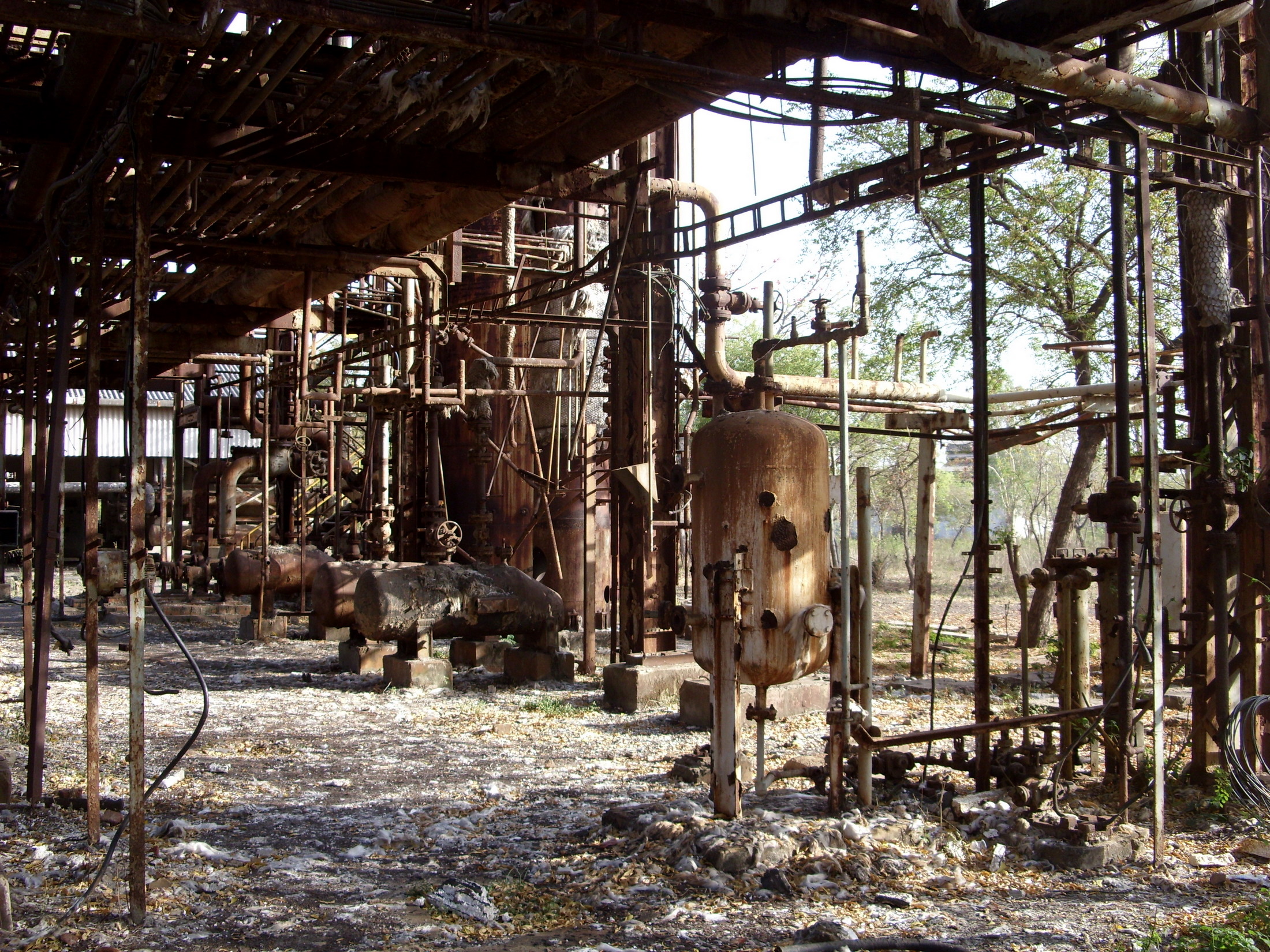


[1] http://en.wikipedia.org/wiki/Acid_throwing.

[2] Acid Sales Regulation by Syed Mohammad Ali

Download Now

How to claim compensation from the railways for accidents and loss of goods?

1

WAP-4_Class_locomotive_of_Indian_Railways

This article is written by Ayush Agarwal, a student of UPES.

My train got delayed’, ‘My goods were stolen’, ‘There was a change of my seat plan, and I didn’t get any information regarding the same’.

These are some of the common phrases used by common men while making their travel through Indian Railways.  With these common problems, there are some of the major isssues which has to be dealt by the railways like derailment of the train and untoward accidents.

Indian Railways has the largest network of railways across the world. It carries over 13 million passenger every day. With this large set of population taking up the task has several issues with respect to railways. The enactment under which the rights and duties of the railways are dealt with is the Railway Act, 1989. There are some common problem to which solution are not so common. The liability on the head of the railways has been lowered with the enactment of this act and the claim tribunal of the railways has helped to make application for the claim more stress-free.

Liability of Railways under the Act

The act established the liability of the railways under certain conditions. Section 124 of the Act deals with the conditions where railway is liable for the fault. The conditions in which railways are liable are:

An accident occurs:

  1. either a collision between trains of which one is a train carrying passengers.
  2. the derailment of
  3. or other accident to a train or any part of a train carrying passengers

Railways will be liable if such accident has caused only for loss occasioned by (i) the death of a passenger dying as a result of such accident, (ii) personal injury and (iii) loss, destruction, damage or deterioration of goods owned by the passenger and accompanying him in his compartment or on the train, sustained as a result of such accident.

The amendment act of 1994 made additions to section 124A of the Railways Act, 1989. This section added to the liability of the railways for the Untoward Incidents. The meaning to Untoward Incident as given under Section 123 of the Act includes, (i) the commission of a terrorist act within the meaning of sub-section (1) of section (3) of the Terrorist and Disruptive (Prevention) Act, 1987; or (ii) the making of a violent attack or the commission of robbery or dacoity; or (iii) the indulging in rioting, shoot-out or arson, by any person in or on any train carrying passengers, or in a waiting hall, cloak room or reservation or booking office or on any platform or in any other place within the precincts of a railway station; or (iv) the accidental falling of any passenger from a train carrying passengers. If accident occurs due to any of the above reason the railways authority will be liable to compensation.

The section also provides some of the situation where railways are immune from the liability to pay compensation. If the reason for the accident is (i) suicide or attempted suicide by him; (ii) self-infficented injury; (iii) his own criminal act; (iv) any act committed by him in a state of intoxication or insanity; (v) any natural cause or disease or medical or surgical treatment unless such treatment becomes necessary due to injury caused by the said untoward incident.

Whether a person can claim for the loss of goods which a person loses while he is carrying the goods with him in his own compartment?

No, a person cannot claim for the loss of his person goods unless and until the goods are being carried by the railway authority.

Section 97 of the Railways Act, 1989 talks about Goods Carried at owners risk rate.

It says that the railway authority is not responsible for any loss, destruction, damage, deterioration or non-delivery in transit of goods of the consignment carried at owner’s risk. To this provision there is an exception which says that the railways will be liable in the cases where such loss to the goods was caused due to some negligence on the part of the railway servants.

Can a person sue Railways for the delays?

If you are travelling by a train and it caused delay then a person can sue the authorities for the inconvenience, but the suit will not succeed. There railway authority will plea for Volenti non Fit Injuria, where the person has voluntarily taken risk by signing the ticket where it is written in small words that the railway authority will not be liable for any delay or cancellation of the trains due to unavoidable / avoidable conditions.

Where to file for a complaint?

Railway has its own  Railway Tribunal Act which came into force in the year 1987. Section 13 of the Act gives in the Jurisdiction, Power and Authority of the Tribunal. The powers configured under this Section are (a) relating to the responsibility of the railway administrations as carriers under Chapter VII of the Railways Act in respect of claims for-

(i) compensation for loss, destruction, damages, deterioration or non-delivery of animals or good entrusted to a railway administration for carriage by railway ;

(ii) compensation payable under Sec. 82-A of the Railways Act or the rules made thereunder; and

iii) in respect of the claims for refund of fares or part thereof or for refund of any freight paid in respect of animals or goods entrusted to a railway administration to be carried by railway and the claims under Section 124 of the Railway Act.

Application made with the prescribed fees will is the only requirement under Section 16 to be followed. There is certain limitation period to the filing of the cases. Section 17 talks about the limitation period. If cases of loss, destruction, damages, deterioration or non-delivery of animals or good the limitation period is three years, cases which fall under Section 124A the limitation period is one year and the cases in respect of the claims for refund of fares or part thereof or for refund of any freight paid in respect of animals or goods the limitation period prescribed is three year.

Cases under the claim tribunal can be fought in person, one does not need spend on legal representatives and the cases are decided on the basis of natural justice rather the principals of law.

Railway tribunal is present in only few of the states. Principal bench of the Tribunal is in Delhi and only 18 states are having Railway Tribunal at present. List of Tribunals can be accessed through http://www.rct.indianrail.gov.in/index1.jsp?filename=rct_benches.html .

Amendment under Railway Act (Amendment) Bill, 2014

At present, the provisions of section 109 of the Railways Act, 1989 provides that an application before the Claims Tribunal for compensation for loss of life or personal injury to a passenger, may be instituted against,- (i) the railway administration from where the passenger obtained his pass or purchased his ticket, or (ii) the railway administration on whose railway the destination station lies, or (iii) the loss or personal injury occurred.

The options made available for filing of claims are misused and claims against different railways are filed for the same loss or injury, resulting into filing of duplicate and false claims by the claimants causing loss to the exchequer. To prevent this, it is considered necessary that the railway under whose jurisdiction the loss or injury has occurred should as a rule be made a party amongst others, if any, before the Railway Claims Tribunal, so that the railway under whose jurisdiction loss or injury occurred can check, if the claim against such loss or injury has already been filed.

Under sub-clause (2) of clause (c) of section 123 of the Railways Act, 1989, accident cases of ‘the accidental falling’ of any passenger from a train carrying passengers has been included in the definition of ‘untoward incident’. Most of the cases of ‘the accidental falling’ arising out of falling down from train are because of negligence, carelessness and misadventure on the part of the passengers while entraining and detraining a moving train knowing that any accident may take place. However, railways are being made liable to pay compensation even when there is no fault on the part of railway. Therefore, cases of ‘accidental falling’ will be categorized separately under clause (aa) in section 123 to enable railways to ensure its liability when there is fault on its part and non-payment where there is no fault on its part in such incidents. Through the proposed amendments, the filing of duplicate claims, by making different railways as party for the same claim, could be avoided, and the settlement of compensation in train accidents and untoward incidents, where there is fault on the part of railway, will be expedited.

The act helps one to claim for the compensation one wants but a person cannot claim for the personal faults. Tribunals help one to claim for the loss he has suffered. The problem which tribunals face is the duplicity of cases. To avoid that, bill has been produced in the house. Claim under the Act is easy to claim for the fault of the Railway servants and not for the Personal Faults.

Download Now
logo
FREE & ONLINE 3-Day Bootcamp (LIVE only) on

How Can Experienced Professionals Become Independent Directors

calender
28th, 29th Mar, 2026, 2 - 5pm (IST) &
30th Mar, 2026, 7 - 10pm (IST).
Bootcamp starting in
Days
HRS
MIN
SEC
Abhyuday AgarwalCOO & CO-Founder, LawSikho

Register now

Abhyuday AgarwalCOO & CO-Founder, LawSikho