Download Now
Home Blog Page 1821

Aviation: Delay, Cancellation, Refund and Consumer Rights

9
aviation consumer rights

This article is written by Ayush Agarwal, a student of UPES, on delay, cancellation, refund and the consumer rights related to the aviation sector in India.

Let’s know about our aviation industry a bit.

The Indian civil aviation industry is on a high growth trajectory. India has a vision of becoming the third largest aviation market by 2020 and is expected to be the largest by 2030. Quoting Mr Tony Tyler, Director General and CEO of International Air Transport Association (IATA), “The world is focused on Indian aviation – from manufacturers, tourism boards, airlines, global businesses to individual travelers, shippers and businessmen… If we can find common purpose among all stakeholders in Indian aviation, a bright future is at hand,”

In India, air traffic in terms of aircraft movement and passenger traffic has increased during the last three years. The total aircraft movements and passengers have registered a compound annual growth rate (CAGR) of 3.3 per cent and 5.6 per cent respectively during FY11 to FY14. In the April-May period of the current financial year, aircraft movements and passengers have increased by 5 per cent each over traffic handled during the corresponding period of FY14.

The foreign direct investment (FDI) inflows in air transport (including air freight) during April 2000 to July 2014 stood at Rs 2,348.12 crore (US$ 383.63 million), as per data released by Department of Industrial Policy and Promotion (DIPP). Major investments and developments in the Indian aviation sector like IndiGo has signed a US$ 2.6 billion agreement with the Industrial and Commercial Bank of China (ICBC), SpiceJet Airlines has signed a contract with GE aviation to use GE’s Flight Efficiency Services (FES), Air Costa has made capital expenditure plan for about Rs 600 crore (US$ 98.04 million), L&T Technology Services has bought 74 per cent equity stake in Thales Software India Pvt Ltd, to strengthen its avionics business, The Tata Group and Swiss aerospace and defence firm Ruag Aviation plans to set up an aircraft manufacturing facility in Hyderabad, Telangana, Hindustan Aeronautics Ltd (HAL) has entered into a collaboration with IIT Kharagpur to establish a Faculty Chair.

Directorate General of Civil Aviation

Directorate General of Civil Aviation is an attached office of the Ministry of Civil Aviation. The Directorate General of Civil Aviation is the regulatory body in the field of Civil Aviation primarily dealing with safety issues. It is responsible for regulation of air transport services to/from/within India and for enforcement of civil air regulations, air safety and airworthiness standards. It also co-ordinates all regulatory functions with International Civil Aviation Organisation. The headquarters are located in New Delhi with regional offices in the various parts of India

Delay and Cancellation of Flights:

With the increase in per capita income and development of service sector in India there is rapid expansion of air services within India and on international routes to/from India and with the increase in the volume of passenger traffic,  so it has become necessary for the Government to take appropriate action to ensure appropriate protection for the air travelers in case of flight disruptions and, in particular, denied boardings, flight cancellations and delays without due notice to the passengers booked on the flight(s). Steps taken by the government in the aviation department, helps to strengthen the rights of the passenger and also helps to create an environment of harmony between the one taking the service and the one providing it. Office of the Director General of Civil Aviation has issued Civil Aviation Requirements, where in Series M Part IV, issued on 6th August 2010 and came into force on 15th August 2010, gives the requirements to be followed for facilities to be provided to passengers by airlines due to denied boarding, cancellation of flights and delays in flights. The rules can be accessed in here http://www.goair.in/upload/CAR.pdf .

Situations where is no obligation to pay:

The rules specify that the operating airline would not have the obligation to pay compensation in cases where the cancellations and delays have been caused by an event(s) of force majeure i.e. extraordinary circumstance(s) beyond the control of the airline, the impact of which lead to the cancellation/delay of flight(s), and which could not have been avoided even if all reasonable measures had been taken by the airline. Such extraordinary circumstances may in particular, occur due to political instability, natural disaster, civil war, insurrection or riot, flood, explosion, government regulation or order affecting the aircraft, strikes and labour disputes causing cessation, slowdown or interruption of work or any other factors that are beyond the control of the airline. Additionally, airlines would also not be liable to pay any compensation in respect of cancellations and delays clearly attributable to Air Traffic Control (ATC), meteorological conditions, security risks, or any other causes that are beyond the control of the airline but which affect their ability to operate flights on schedule

Facilities to be provided in cases of cancellation or delays:

Passengers shall be offered free of charge the following:

  1. a) Meals and refreshments in relation to waiting time,
  2. b) Hotel Accommodation when necessary (including transfers).

Denied Boarding:

It may happen some of the cases where the number of passengers, who have been given confirmed bookings for travel on the flight is more than the number of seats available. In this situation the airline must first ask for volunteers to give up their seats so as to make seats available for other booked passengers to travel on the flight, in exchange of such benefits/facilities as the airline, at its own discretion, may wish to offer, provided airports concerned have dedicated check-in facilities/gate areas which make it practical for the airline to do so.

If the boarding is denied to passengers against their will, the airline shall as soon as practicable compensate them in accordance with the provisions of in addition to refund of air ticket.

Cancellation of Flight

In order to reduce inconvenience caused to the passengers as a result of the cancellations of the flights on which they are booked to travel, whenever possible, airlines should endeavour to invariably inform the passengers of cancellations of their flights as far in advance as possible of the scheduled time of departure provided at the time of effecting his/her reservation, the passenger has given relevant contact information e.g. telephone number (landline or mobile), and/or fax number and/or e-mail id or in any alternate reasonable form requested for by the airline.

Passengers who have not been informed at least three hours in advance about the cancellation of the flight on which they were scheduled to travel,

  1. Airlines shall provide compensation for the inconvenience caused
  2. Refund the ticket prices in the event they do not wish to travel instead on an alternate or subsequent flight of the carrier concerned or on another carrier’s flight or if so desired by the passengers, provide them alternate travel opportunities at no additional cost; and
  • Additionally provide them facilities at the airport.

In the following cases, passengers are denied of the right to have compensation:

  1. They do not accept the alternate travel arrangements made by the airline; or
  2. The cancellations occur due to extraordinary circumstances beyond the control of the airline (as described above) even if all reasonable measures had been taken by the airline.

Delays in Flight

The airlines shall provide facilities in accordance with:

(a) If the passenger has checked in on time, and if the airline expects a delay beyond its original announced scheduled time of departure or a revised time of departure of:

  1. a) 2 hours or more in case of flights having a block time of up to 2 ½ hrs; or
  2. b) 3 hours or more in case of flights having a block time of more than 2 ½hrs and up to 5 hours
  3. c) 4 hours or more in case of flights not falling under sub-para (a) and (b)

When the reasonably expected time of departure is more than 24 hrs after the scheduled time of departure previously announced, the airline shall provide the facility to the passengers in accordance with the provisions mentioned above

An operating airline shall not be obliged to adhere to above-mentioned facilities if the delay is caused due to extraordinary circumstances which could not have been avoided even if all reasonable measures had been taken.

The burden of proof concerning the questions as to whether and when the passenger has been informed of the delay of the flight shall rest with the operating airline.

Compensation

The act gives in the financial compensation; it is indicated below that what amount shall be given only if the amount of tickets costs is higher than the compensation amount:

  1. a) Rs. 2,000/- or the value of the ticket whichever is less for flights having a block time of upto and including one hour
  2. b) Rs. 3.000/- or the value of the ticket whichever is less for flights having block time of more than one hour and upto and including two hours.
  3. c) Rs. 4,000/- or the value of the ticket whichever is less for flights having a block time of more than two hours.

If the cost of the ticket is less than the amount of compensation indicated above, the airline will be liable to compensate an amount equivalent to the ticket cost in addition to refund of air ticket.

Additionally, the passenger shall be offered the choice between the following:

  1. a) Refund of air ticket at the price it was purchased.
  2. b) A flight to the first point of departure.
  3. c) Alternate transportation under comparable/alternate mode of transport (whenever applicable), to the final destination.
  4. d) Alternate transportation under comparable/alternate mode of transport (whenever applicable), to their final destination at a later date at the passengers’ convenience, subject to availability of seats.

The affected passenger shall be the compensation alternatives listed in above para. Once the option has been selected the affected passenger will not have the option to switch to another form of compensation.

Refund of Tickets

Direction issued by Office of the Director General of Civil Aviation has issued Civil Aviation Requirements, where in Series M Part II, issue 1, DATED 22 May, 2008 effective forthwith deals with Refund of Airline Tickets to Passengers of Public Transport Undertakings. The act can also be accessed in here http://dgca.nic.in/rules/car-ind.htm provides:

A large number of complaints are regularly received which can broadly be divided into the following categories: (a) Delay in refund of unused ticket (b) The amount which is refunded by the airlines against cancelled tickets. (c) Policy of not to refund the ticket amount but to adjust against tickets to be purchased by the passenger for future travel in the same airline that too valid for a limited period of time.

These are some of the common problems faced by the consumers when their tickets get cancelled. To overcome these problems, some guidelines have been issued, which are:

  • In case of credit card payments, refund shall be made by the airlines within seven days of the cancellation to the account of credit card holder.
  • In case of cash transactions, refund shall be made immediately by the airlines office from where the ticket was purchased.
  • In case of purchase of ticket through travel agents, the arrangement for refund be left to the passenger and the travel agent.
  • Airlines shall necessarily return the PSF collected by them from the passengers on non-utilization/ cancellation of tickets.
  • Airlines shall refund any charges such as congestion charge, fuel surcharge etc., alongwith the refund of the ticket, unless these are clubbed with basic fares. Note: For the charges, surcharges levied by the airlines, the word ‘tax’ or ‘taxes’ should not be used.
  • When being offered tickets for future travel, passengers shall be allowed an option for refund of money instantly.
  • The airlines should indicate in an unambiguous manner the amount of refund of money admissible on cancellation of a ticket. For this purpose, the amount and its break-up may be indicated on the ticket itself or through separate form used for the purpose, and the policy and amount of refund shall also be displayed by the airlines on their respective websites.
  • In case of lost ticket coupons, the airlines shall take prompt action to refund the ticket amount after verification from their records.

Important cases

Air Deccan (Deccan Aviation Ltd) Vs. Dinesh B.V. & Anr -01/10/2013

Brief facts of the case are that Complainant no. 1/Respondent no. 1 and his mother, Complainant no. 2/Respondent no. 2 booked tickets with OP/petitioner for 19.11.2006 from Bangalore to Chennai.  Complainants got checked their luggage and got boarding pass.  After arriving in Chennai, they were unable to get their bag and on inquiry came to know that it was misplaced and accordingly airport authorities issued endorsement in that regard.  The said bag was containing valuable clothes and other articles, but could not be traced.  Alleging deficiency on the part of OP, complainant filed complaint.  OP-petitioner resisted complaint and denied allegation of missing of the bag and further alleged that complainant has not mentioned the weight of the alleged baggage and prayed for dismissal of the complaint.  Learned District Forum after hearing both the parties allowed complaint and directed OP to pay 400 US$ (Rs.15,804/-) along with Rs.1,000/- as litigation cost.

Saroj Diksha & ors v International Airport Authority of India – 01/02/2013

The case was filled by the petitioner before the Delhi State Consumer Disputes Redressal Commission before which the appellant alleged that the respondent failed to provide adequate medical facilities on the airport due to which her husband died on the way to AIIMS. After listing to the arguments from both the sides, Commission came to the conclusion that there was no medical fault on the part of respondent, but there was administrative fault on the part of the respondent where they were not able to provide adequate facilities on the airport to deal with such type of cases and also they provided with just one doctor. The compensation awarded was Rs. 35000.

Kingfisher Airlines Limited v Lata Sikri- 11/10/2012

Despite of having an OK/confirm ticket respondent was not allowed to board the ticket, the reason cited by the appellant was over booking. Appellant took care of the all the guidelines issued by DGCA(as discussed above) and provided her with next flight tickets, offered her return journey free of cost and paid for travelling expenses from airport to her home. Yet the respondent was allowed compensation of 30000/-. The reason cited for the order was:

“From the above, it is evident that the consumer fora are well within its rights to award compensation not only for the monetary loss or injury suffered by the complainant but also for injustice suffered by the consumer.  In the case in hand, going by the entirety of the facts and circumstances, we find that the fora below have done no wrong in awarding a compensation of Rs. 30,000/- to the respondent-complainant for the mental agony and harassment faced by her, besides, the return domestic ticket, which was offered by the petitioner-Airlines itself to the complainant in the very beginning.”

Air India v Dr. Mary Ramasamy & Ors. – 12/04/2012

Facts: In the present case respondent booked tickets of the flight from Chennai to Melbourne. By the time they reached airport, they came to know that their name does not appear on the list. To this appellant replied that the tickets were booked by the travel agent few days back. A confirmation male was send to the travel agent but agent did not reply to that. To this the authority cancelled the tickets. It was held under the judgment given by the consumer court that:

“In the case in hand, the complainants all of whom were women including minors had O.K. tickets in their possession and they could not imagine that on reaching the airport, they will be confronted with a situation that their tickets had been cancelled leaving them in a lurch because they did not belong to Chennai City and had come to Chennai from some interior part from Tamil Nadu and they had to travel further to Melbourne from Singapore by a connecting Quantas flight.  Information about the cancellation of their tickets must have come as a life time rude shock to them.  As a result of which they were on the streets of Chennai uptil the next flight which was 24 hours later.  It is not difficult to visualize the kind of mental harassment and torture complainants would have suffered during those hours.  They were certainly entitled for a better treatment from a National carrier like the Petitioner. From a conspectus of the entire circumstances, there is no escape from the conclusion that the petitioner/Airlines has not only committed  grave deficiency in service by cancelling the O.K./confirmed tickets of the complainants but the said act would also amount to adoption of malpractice or what is called unfair trade practice.  We wish that the petitioner/Airlines would stop such a practice forthwith.”

The respondent was allowed compensation of Rs. 25000/- with Rs. 5000/- litigation expenses.

So next time you travel through airways and your flight gets cancelled or gets delayed make sure you know your rights and ask for the services you deserve. You should get what you deserve as you are paying for it.


Download Now

Protection of Trade Secrets in India

0

 KFC_Home_Base

This article is written by Sumi Trivedi, a student of UPES.

Trade secrets are those invented formulas, practices, processes, designs, instruments, patterns, commercial methods or compiled information which are generally not known or reasonably ascertainable by others, and by which a business can obtain an economic advantage over its competitors.  Some International jurisdictions also refer such secrets as “confidential information”. A trade secret is an information which is not known to the general public, provides an economic benefit to the business over its competitors and is also the subject of reasonable efforts to maintain its secrecy.

India does not have a law governing the issues related to trade secrets of the companies.  Article 39 of TRIPS (Agreement on Trade Related Aspects of Intellectual Property Rights) provides a specific provision for the protection of undisclosed information which lays down that during the course of effective protection against unfair competition as provided under Article 10bis of the Paris Convention (1967), Members can protect the undisclosed information in accordance with clause 2 and clause 3 of the article. Clause 2 says that natural and legal persons have the possibility of preventing the information lawfully within their control from being disclosed, acquired or used by others without their consent in a manner contrary to honest commercial practices as long as such information is a secret which is not generally known to the common public or are not readily accessible to persons within the spheres which normally deal with the kind of information in question or has a commercial value or such information are subject to reasonable steps under the circumstances to be kept as secret. Clause 3 says that members if required, as a condition of approving the marketing of pharmaceutical or of agricultural chemical products, can protect such data against unfair commercial use. But, it is required to disclose such trade secrets if it is required for the welfare of the public and the protection of the people.

Measures to be taken for the protection of trade secrets

As the trade secrets are not known to the public at large, they are required to be kept as the confidential information and thus, it requires the owners of trade secrets are required to keep such information as confidential by formulating special procedures for handling it, and also requires some legal and technological security measures.

Legal protections include non-disclosure agreements (NDA) and the non-compete clauses. Employees undertake an agreement speaking about the nondisclosure of the confidential information provided to them, at the time of getting employed in the company. Non-disclosure agreements are the legal contracts between two parties which outline the confidential information, material or knowledge which the parties intend to share with each other but not with the third parties or the general public. These non-disclosure clauses could also be present in the employment agreements restricting the employees to use or disseminate, the company owned confidential information. Using such agreements are on the rise in India, being governed under the India Contract Act, 1872. Sometimes it is even required by the employee to undertake such a tie when there is an issue of the patentability of the technology developed by them. Such agreements are required to be stamped to be a valid enforceable document. Non-compete clauses could also be used for protecting such confidential information which gives the companies having trade secrets, an economic advantage over the other competing companies. Through such clauses, one party (who is usually an employee) is restrained from entering into any similar profession or trade in competition against the other party. As such clauses are the part of contract provisions, these are bound by traditional contractual requirements including the doctrine of consideration. The use of such clauses is that there is a possibility of such information being used by the employees, upon the termination or resignation of their jobs, in starting a competing business against the employer and gaining a competitive advantage over the company by exploiting their confidential information. Section 27 of Indian Contract Act has a general bar on any agreement that puts a restriction on trade. On this basis, it would appear that all non-compete clauses in India are invalid. However, the Supreme Court of India has clarified that some non-compete clauses may be in interest of trade and commerce, and such clauses are not barred by Section 27 of the Contract Act, and therefore valid in India.  Notably, only those clauses backed by a clear objective that is considered to be in advantage of trade and commerce survives this test. For instance, a co-founder of a startup who signed a non-compete clause can be held to it,  but if a junior software developer or a call center employee signs a non-compete clause with the employer the same may not be enforceable. Infringement of such agreements entered by the employee could also make them liable for a breach of contact entered by them and the payment of compensation to the employer.

Other than these, there are some related restrictive covenants which could be used in protecting such trade secrets. One of them is Forfeiture-for-Competition Agreement and Compensation-for-Competition Agreement which is an agreement by which an employee either forfeits certain benefits or pays some amount of money to engage in activities that are competitive with his former employer. Garden leave or gardening leave is also a restrictive covenant which describes the practice where an employee leaving a job – having resigned or otherwise had their employment terminated – is instructed to stay away from work during the notice period, while still remaining on the payroll. This practice is often used to prevent employees from taking with them up-to-date (and perhaps sensitive) information when they leave their current employer, especially when they are leaving to join a competitor.

  4423154583_cd0a41a4df

Steps that can be taken by the Employers

As there is no specific provision in India governing the undisclosed trade secrets, it is the responsibility of the owners to take stricter actions and formulate rigid provisions in order to protect these trade secrets so that they could not be exploited by the competitors so as to gain the advantage.

There shall be an obligation of the employees to abide by the terms of the agreements entered by them with the company before or during the employment period. It is required that such agreements have to be taken in consideration by the employees so that their actions could not harm the trade secrets of the companies.  Companies even try to find out each other’s trade secrets through a lawful method of reverse engineering, which generally involves a process which includes disassembling something in order to gain information or the technique involved in the production of the product. Potential unlawful method involves industrial espionage or spying for obtaining the information which could be considered as trade secrets or the confidential information. The importance of that illegality to trade secret law is as follows: If a trade secret is acquired by improper means (a somewhat wider concept than “illegal means” but inclusive of such means), the secret is generally deemed to have been misappropriated. Thus, if a trade secret has been acquired via industrial espionage, its acquirer will probably be subject to legal liability for acquiring it improperly. (The holder of the trade secret is nevertheless obliged to protect against such espionage to some degree in order to safeguard the secret.)

After a trade secret have been disclosed to any competing company, a few rigid steps that are required to be taken and are generally taken by the owners or the management of the companies are:

  • Suspension of the employee and a suit against him: The first step to be taken is the suspension of the employee, on whom there is an allegation for the disclosure of the trade secrets, from the company and investigate about the truth and if the employee is found guilty for such a disclosure, then he would be liable for breach of the agreement undertaken by him. He could also be made liable for compensating for the loss caused to the company
  • Suit against the company for copying the trade secrets: A suit can also be filed against the company which copied the trade secrets of the other company in order to take an economic benefit over the competing companies. If such a disclosure had been made by any of the misappropriating means, then a legal action could be taken against the company, in order to compensate for the disclosure of such trade secrets.
  • Re-taking of goods: The goods produced by the company which has used the trade secrets of the other company by a misappropriate means, then such produced goods shall be taken by them back, so that the company could not make any profit from such produced goods.
  • Injunction on the use of trade secrets: A decree from the court could also be obtained by the company whose trade secret has been disclosed to the other company by any means, for restraining the company from any further use of the trade secrets or the confidential information of the other company.
  • Proportion of the profits: A company can also ask for the share in the profits generated by the other company by using their trade secrets and the confidential information.

Conclusion

The laws related to this issue are clear and unambiguous. As there is no specific provision to govern the trade secrets in India, it has to be done by the owners and the Upper level managerial personnel so that these trade secrets and confidential information could not be exploited by the other competing companies. In order to overcome a problem arising from the disclosure of such information, rigid and stricter rules and procedures are required so that they could not be disclosed and used by the other competing companies. There is a much more practical approach towards trade secrets than a legal approach. So there is the requirement of a law by which the companies could be governed on an equitable basis and trade secrets of every company could be protected from being utilized and exploited by other competitors. A procedure has to be set to cope up with the situation which arises on their disclosures, but such a law shall be in compliance with the agreements entered by India relating to the intellectual property rights, with other countries, so that no discrepancy shall arise, while governing such issues.

Download Now

Getting divorced : 4 unusual grounds for seeking divorce which can make you go crazy

1

 13943302202_fce0b79ece_h

This article is written by Shreyas Jain, a student of UPES.

When people divorce, it’s always such a tragedy. At the same time, if people stay together it can be even worse.

            Time changes, and so do people. Marriage being regarded as the inseparable union of two individuals is history. A spouse, now, may seek a decree of divorce from his/her co-partner, “if things are not going well”. However, the grounds for such a petition (divorce) must be reasonable and most prominently, under the purview of law.

            Parties/spouses seeking divorce, sometimes, agree mutually for the same, therefore cutting the time of the proceedings in allotment of a decree of divorce in their favor. Though, the basic grounds for divorce are settled in the Acts such as:

  1. Hindu Marriage Act, 1955 (strictly applicable to Hindus)
  2. Indian Divorce Act, 1869
  3. Muslim Women (Protection of Rights) Act, 1986 (strictly for Muslim women only)
  4. Dissolution of Muslim Marriages Act, 1939.

Provisions in the above-mentioned Acts regarding ‘Divorce’ is more or less the same, consisting of the following basic grounds:

  1. Adultery: Having voluntary sexual relations with another male/female except the spouse.
  2. Impotency: Either of the spouses not capable of performing marital consummation i.e. sexual relation.
  3. Cruelty on the other spouse.
  4. Presumption of Death: The husband, if has died, or has not been heard for a particular time period.
  5. Mutual Consent: Consent of both the spouses for attaining divorce.

The basic principle of ‘divorce’ was not even considered to be a ‘moral’ ground in many countries prior to, when the Act for divorce was passed in countries such as Argentina, Chile, Vatican and several Muslim societies. Howsoever pure the relation is thought to be, between spouses, a divorce can always take place on reasonable grounds.

 Some unusual grounds for seeking divorce

            The idea behind establishing the grounds for divorce was NOT for the reason of separating two contented individuals, rather, separating two unhappy individuals. After validating the ground on which the divorce is to be seek, the Court is ought to provide every possible opportunity to the impugned couple so as to reconcile the marriage, as mentioned in the Section 23(b) of the Hindu Marriage Act, 1955.

The problem arises when attempts are made by the petitioner to seek a divorce decree on frivolous grounds, and the same are granted by the Judges as valid. Some of such cases are discussed below:

  • Japanese woman faces a suit of divorce over online ‘murder’:

The woman used the man’s username and password to log in to the game and carry out the virtual murder of her husband in a computer game ‘Maple Story’.
Maple Story players create and manipulate digital images called avatars – which represent themselves while engaging in relationships and social activities and fighting monsters. Needless to say the man contacted the police immediately. The embarrassed officers had to call him back when they looked it up and realized it was a real crime, and has been arrested on suspicion of illegally accessing a computer and manipulating electronic data.

  • Divorce from the “zombie” husband:

In 2007, Karen decided to divorce Joe, her husband of 26 years. Joe’s defense in the case was so simple, it was beautiful: He claimed that – “they cannot get divorced because their marriage was already dissolved over three years ago… when Joe “died”, temporarily! He claimed that after his heart stopped in 2004, this temporary death was enough to annul their marriage on the legal binding clause of “Till Death Do Us Part.” If that wasn’t enough, he cited two additional examples of his death, one more time in 2004 and once again in 2005.

            However, the petition of the “Zombie” was dismissed by the Judge

  • A somniloquy Divorce:

Akhtar, a Muslim gentleman from West Bengal uttered the word “talaak” three times in his sleep, which according to Islamic law, made him divorce his wife Sobena, who was sleeping right next to him. Akhtar consulted the local clerics and was told that he and Sobena were, in fact, now single and would remain so until they remarried.

  • Bird, a key witness in divorce:

Judge Agusto, who granted Mrs. De Gambos her divorce, overruled the attorney’s objections and let Bozo’s (a blabbermouth parrot) testimony stand, the first such ruling in the world, legal experts say. Incredibly, the 14-year-old parrot answered questions and identified photos during its testimony before Judge Manuel Agusto in a civil court here. The bird tended to repeat himself but presented convincing proof that his master, a businessman, had been unfaithful.

Such cases of divorce are no doubt evident, so as to prove them as a laughing riot for the public. Also, turn out to be a disgrace for the legal society, when referred as precedents in further cases. The Judges are considered as the prime dictator of law, therefore, must refrain from dictating such unreasonable judgments.

An important question arises here, as to – What is the extent to which an interpretation of a legal statute can be made by the judge, while making a judgment?

The ‘grounds of divorce’ as mentioned above are to be followed by the judges, though not strictly, but somewhat close to it. For example: a certain case, such as to come in the ambit of cruelty (as a ground), must prima facie show the cruelty on the part of the respondent.

In the cases of divorce by Mutual Consent, the motion for seeking a divorce by mutual consent is initiated by filing a petition, supported by affidavits from both partners, in the district court known as the First Motion Petition for Mutual Consent Divorce, this should contain a joint statement by both partners, that due to their irreconcilable differences, they can no longer stay together and should be granted a divorce by the court. After six months, the Second Motion Petition for Mutual Consent Divorce should be filed by the couple and they are required reappear in the court. A gap of six months is given between the two motions, so as to offer the estranged couple adequate time to reconsider their decision of dissolving their marriage. After hearings from the husband and wife, if the judge is satisfied that all the necessary grounds and requirements for the divorce have been met, the couple is granted a mutual divorce decree.

However, if either party withdraws the divorce petition within 18 months of the recording of the First Motion Petition, the court will start an inquiry. If the concerned party continues to refuse consent to the divorce petition, the court will no longer have the right to grant a divorce decree. However, if the divorce petition is not withdrawn within the stipulated 18 months, the court will pass a divorce decree on the basis of mutual consent between both parties.

Conclusion

The basic idea behind divorce is to refrain the spouses from unnecessary cohabiting together, when there is no affection left between them. It is better for two individuals to live apart peacefully than to live together violently. Though, the Acts regarding Marriages and Divorces are the result of the culture (mostly religious) prevailing in an area since a long time. The provisions in any of such Act are inscribed by way of ‘reasons’ coupled with a blend of ‘prevailing culture’ and ‘change in mindsets’ of people. That is to say, the amendments to the Acts must be done periodically, so as to upkeep the provisions of the same, so that the reasonability of the statutes remains intact and shall not be held on frivolous grounds.

Download Now

Guidelines and procedure of inquiry in case of misconduct by government employees in India

5
misconduct by government employees

This article is written by Sunil Yadav, a student of CNLU, explaining the guidelines and procedure of inquiry in case of misconduct by government employees in India.

Download Now

Thirty years of unhealed wounds: Bhopal Gas Tragedy

1

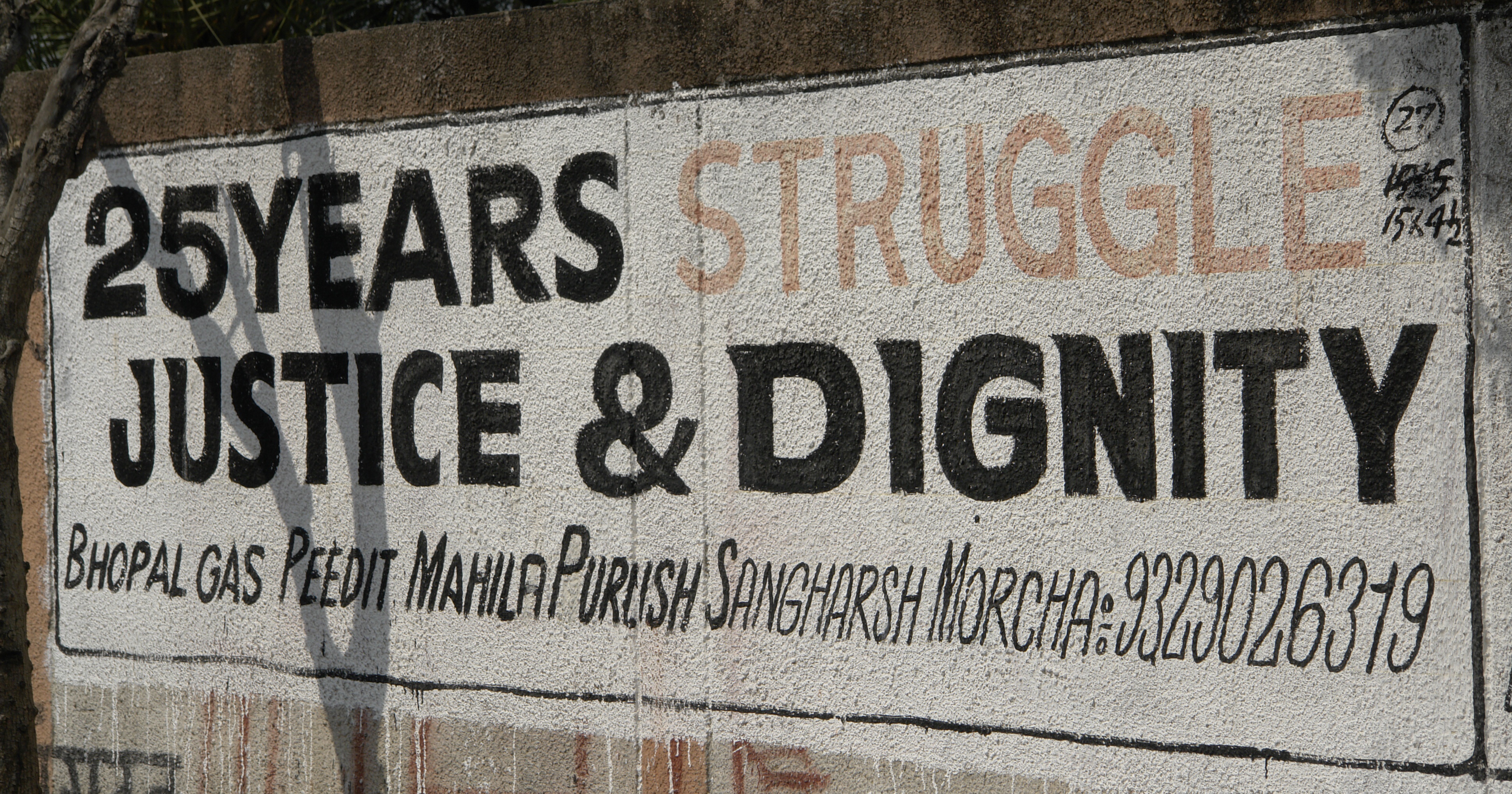
Union_Carbide_25_ans_lutte_justice_et_dignite


This article is written by Priyanshu Upadhyay, a student of Christ University.

Thirty years ago a rare and unpredictable rain brought nightmares for people of Bhopal and for whole India. This rain was not a natural one; rather it was a result of negligence on the part of Union Carbide India Limited (UCIL), a pesticide plant in Bhopal. Due to the negligence many people of Bhopal did not live to see the sun on the 3rd December 1984 and those who lived begged for their survival but did not find anyone who can wipe out their tears and help in their survival. Bhopal saw the world’s worst chemical and industrial disaster on the night of December 2 to 3, 1984. People of Bhopal were exposed to over 30 tonnes of deadly Methyl Isocyanate (MIC) gas from the UCIL factory which covered the whole city like a cloud and showered death on its people. The reasons for the disaster have been discussed a lot since thirty years and it was proved to be a clear case of negligence on part of the company but what about the victims, what about their families and the survivors? What relief did the victims and the survivors get from the side of the company or from the side of the Government?

Bhopal_Plant_5

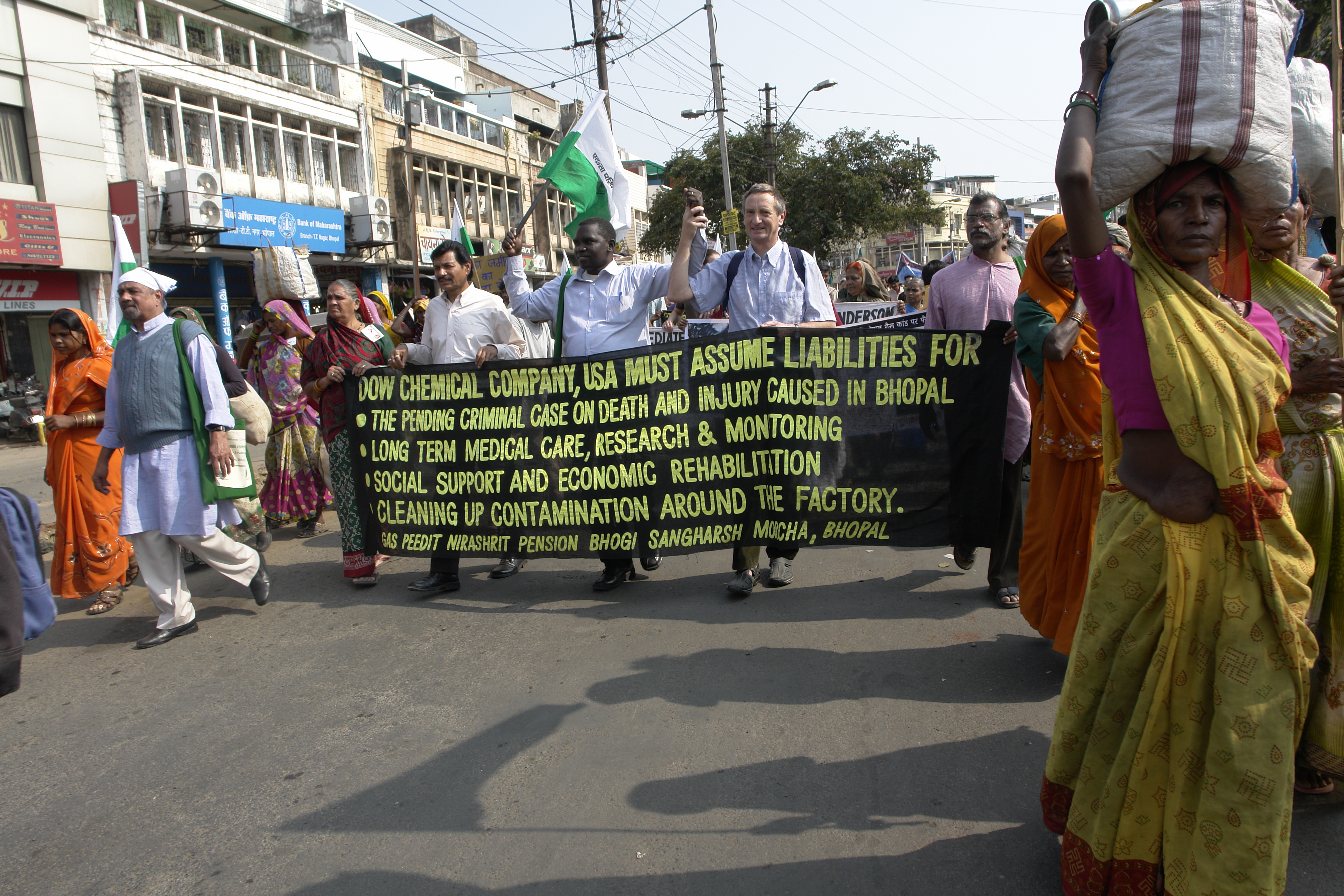
The answer to the above question is that they were survivors then, and they are survivors now. The only difference is that at that time, they begged for their life and at present they are begging for justice which is yet to be delivered. Union Carbide is absconding for the last 22 years, and Dow Chemicals has refused to appear before the court, the amount of compensation was declared but hasn’t reached the victims. So, how long will it take to decide a case which is of grave importance and for how long victims have to wait for their share of compensation?

The first blunder committed by the Government of India in this case was that it filed the suit against the Union Carbide Corporation (UCC) in the United States District Court. The disaster took place in India thus making the cause of action in India but still the case was filed in U.S. where UCC was situated. Although in May, 1986, the case was transferred by the U.S. court to India but still the reason behind filing the case in U.S. is unknown and ambiguous. The last decision in the case was delivered by the Supreme Court on 14th February, 1989 in which UCC was directed to pay US $470 million in full and final settlement of all the claims and liabilities which if calculated comes to around Rs. 10,000 per victim. So, this is the amount of compensation for which the victims and their families are waiting for 30 years, and no one knows for how long they will wait.

Dow_Chemical_banner,_Bhopal,_India

On the eve of the 30th anniversary of the Bhopal Gas tragedy, where on one side Narendra Modi was busy in bringing more and more foreign investment in India, on the other side the victims begged for justice against one such foreign company which heavily invested in India and was expected to be a great success. It is good to promote more and more foreign investment, but it is more important to protect the interest of the people of one’s own country. India is a diversified country where people from all sects and groups live. People also differ in their status and income level and so it is very important to take such steps which can benefit all and not any one. Any act done by any government should never disregard the interest of lower sections of society. The present plans and actions of government are no doubt good because they can quickly proliferate the Indian economy, but the government should also keep in mind that section of society who does not have any understanding of this economy.

Finally, time has come when the Government should take things seriously and act for execution of the award given in the case of Bhopal Gas Tragedy. Now, when India is in good terms with U.S., apart from all the important issues, the government should also try to discuss the graveness of Bhopal Gas Tragedy and should aim at reaching a consensus as soon as possible.

Download Now

Regulating Babies’ Factory in India – Surrogacy and the law

0

5619042577_06689b15d8_b

This article is written by Sunil Yadav, a student of CNLU.

What is Surrogacy?

Surrogacy is a process through which a woman agrees to carry a pregnancy and give birth to a child acting as a substitute for contracted party, who cannot or don’t want to be pregnant and produce a child. The word surrogate had its origin from Latin word ‘Surrogatus’ past participle of ‘Surrogare’ meaning substitute, that is, a person appointed to act in place of other. So, a surrogate mother is one who bears the child on behalf of another person who cannot or don’t want to carry child in her womb and give birth to child.Black law dictionary categorizes surrogacy in two classes – Gestational and Traditional Surrogacy.

Gestational Surrogacy- A pregnancy in which one woman (genetic mother) provides the egg, which is fertilized, and another woman (the surrogate mother) carries the fetus and gives birth to the child.

Traditional Surrogacy-  A traditional surrogacy is a kind of a genetically contracted motherhood as a surrogate mother is impregnated with the sperm of the intended father, and the child born shares the make-up of the commissioning father and surrogate mother.

There are two more types of surrogacy namely Commercial and Altruistic surrogacy.

Commercial surrogacy- It is a type of Gestational surrogacy in which the woman (surrogate mother) is paid for carrying a baby in the womb, and delivers it successfully to intended parents of child. Commercial surrogacy is often referred with different types of names such as ‘Wombs for rent’, ‘Baby Farm’ or ‘outsourced pregnancies’.

Altruistic Surrogacy- A pregnancy in which the woman (surrogate mother) bears the child for other party, but she is not paid financially for acting as a carrier of baby and delivering it successfully. But the hospital expenses and all other monetary needs in the process of carrying and delivering child is taken care by the future parents of child.

Legal Aspect of Surrogacy in India

 History of surrogacy in India can be look back when world’s second and India’s first baby Kanpuria popularly known as Durga was on 3rd Oct 1978 from IVF(in Vitro fertilization) since, then  the surrogacy laws has not evolved much, but the commercial industry has shown progress tremendously.

 Although surrogacy is legal in India, yet there is no codified law in India. Cases of surrogacy are governed with guidelines issued by ICMR (Indian Council of Medical Research), a new bill called ART (Assisted Reproductive Technology) was proposed in 2008 and it has been revised in 2010 and in 2012, but still the bills will be implemented in the country.

Surrogacy Contracts

The agreement between the surrogate mother and the desired party is done through the clinic from which parents choose to have a surrogate baby. The laws and other situation are provided to the patient as mentioned in guidelines of ICMR (Indian Council of Medical Research). But now different rules have been mentioned in ART (Assisted reproductive Technologies Bill) which clearly defines every possible aspect of surrogacy agreement and different complication of agreement. The Rights of Surrogate mother, Rights of Child, and Rights of party who want a surrogate mother.

Salient features of ART bill

Rights of Surrogate mother

A woman can act as surrogate for only five successful live birth including her own children. The child born will be the responsibility of the person or persons availing the facility of a surrogate mother, they are legally bound to accept custody of the child. If not accepted, it will be an offense according to the bill proposed.

No woman less than twenty one years old and not more than thirty five years old can act as a surrogate mother according to this bill, in case of failed embryo transfer woman will be paid financially on mutual consent between the parties, she cannot act for more than three embryo transfer for same couple.

All the information about the surrogate mother or potential surrogate mother shall be kept confidential and should not be disclosed. If the surrogate mother want to hide her identity with the potential parent of child, she is allowed to do that, in this scenario ART clinic will have to care of the confidentiality.

In the case after the birth of baby, if surrogate mother is not willing to give the child. It is clearly mentioned in the bill surrogate mother relinquishes all her rights on baby moment she enters into the agreement. She would have to handover baby to couple who contracted her to act as surrogate mother.

ART clinic will issue a certificate to woman which will say, she acted as surrogate for certain person or persons. In case of foreign couple seeking surrogacy in India, it is mandatory to appoint a local guardian who will take care of surrogate mother during and after the pregnancy. Child born will be handed over to the foreign couple or local guardian.

Gloomy features of Bill (Relating to surrogate mother Rights)

Surrogate mother don’t have any independent say in medical treatment process, nor have right to decide to abort the child in case of medical complications. In case of married surrogate mother consent of husband is compulsory, so in de-facto she don’t have any independent say in deciding agreement for surrogacy.

No provision talks about situation of death of surrogate mother during the pregnancy or while giving birth to child in case of surrogacy. Bill does not clarify, either family will get compensation or not, if yes then who will be entitled for compensation.

In case of miscarriage, nothing is written in the bill, do surrogate mother will be compensated, any extra service like counseling session or how clinic will help her to come out from psychological and mental agony.

Status of Child

Child born through surrogacy will have the same right as the child born through legitimate sexual intercourse. In case the child is born from the stored sperm of dead husband, the child will have the same right as in the case of a legitimate child born by sexual intercourse.

Child will not be entitled to access the information about surrogate mother, when he grows up but in case of some critical medical complications, when there is a need of physical verification the information can be shared with him.

For the citizenship of child born to a foreign couple through surrogacy. Although child is born in India, he will not be considered as citizen of India, citizenship will be of the nation from which the foreign couple belongs.

In specific scenario, if foreign couple get divorced before the child is born through surrogacy, the couple will be entitled of the child. This principle was formulated in Manji Yamada Vs Union of India case popularly known as Baby M case.

In case when there are no rules prescribed in the country to which the foreigner belongs government will issue identity document for child to exit the country without passport. This principle was established in Jan Balaz .V. Anand Municipality case and was further applied in Pearl Linda Van Buren Green Case in which the parents belong to different country from which one country didn’t have laws on surrogacy.

Why there is a need to enact a law?

There is an urgent need to implement ART bill after removing its gloomy features, as there is no codified law related to surrogacy in India. Bill has taken a lot of time since it was first proposed in 2008, revised in 2010, but it is still not approved by the parliament.

The surrogacy in India has evolved a lot and has taken a form of commercialization, which demands for certain restriction. If certain restrictions are not applied on this business, there will be exploitation of surrogate mother without any check. People’s indulge in these activity will get away easily as there are many open-ended guidelines in ICMR which can be interpreted to be in a comfortable situation.

There is ambiguity on certain issues which is faced by the persons who contracts for surrogate mother, as well as woman in India who is contracted to act as a surrogate mother. As the rules instructs, the foreigners who are contracting with surrogate mother in any country, they should be aware of law of land basically law relating to surrogacy of that country.

There are no proper guidelines for ART clinics, how they will carry out the process, now they are carrying out their business freely without too much check and restriction on them. After enactment of law for surrogacy in India. There will be proper structural organization of these of these clinics.

De-facto situation of surrogate women

The ground reality concerning the situation of surrogate mother is in a very miserable condition, as the woman who take up to act as surrogate mother generally belongs to rural background, and she don’t know anything about medical complications and laws related to surrogacy in India. She just do what her family instructs to do, who are generally guided by a baby broker, even the family members are not aware of all rules and specific circumstances of legal implications.

The surrogate women are treated as a bovine to produce baby, in reality ART clinic pays more attention to the person who wants a surrogate mother as they are going to churn out money from them. Rarely the women acting as surrogate are provided with all information, nor the clinic help them to understand and make them familiar with the process through which they have to undergo.

The surrogate mother only gets 1 to 1.5 % of total money charged by the commissioning parents. The Clinics don’t provide any accommodation charges to surrogate mother while she is going from the process of insemination and other medical examinations. The clinics don’t hold any responsibility if surrogate mother is not accepted back by the family members, right after the birth of the baby, they are left alone to survive on themselves.

In case of any discrepancies, how much compensation should be given to surrogate mother, there are no such guidelines to clinics and that’s why compensation amount varies from clinic to clinic.

Conclusion

Surrogacy in India has got many complication which needs to be figure out and deal in a lucid manner, the real concern should be to identify the misplaced priorities of the drafted bill, should be reconsider from the angle of surrogate mother. Many provisions to protect the rights of surrogate mother are introduced, but still after introducing such rules the problem still does not seems to find a solution. Government has to rethink and make certain rules which will protect the right of surrogate mother as well as the rights of potential parents of child who contracted with surrogate mother to fulfill their dream of having a child.

Download Now

Medical negligence in India

4
medical negligence cases

This article is written by Sunil Yadav, a student of CNLU, and Oishika Banerji of Amity Law School, Kolkata. This article provides an analysis of the ingredients that constitute medical negligence on part of the hospital that has come into consideration by means of various decisions by the Indian courts. 

Download Now

10 things every Indian should know about the Special Marriage Act,1954

86
Registration of marriage

Indian_wedding_Delhi

This article is written by Somya, a student of 4th yr. LLB from Bangalore Institute of Legal Studies. 

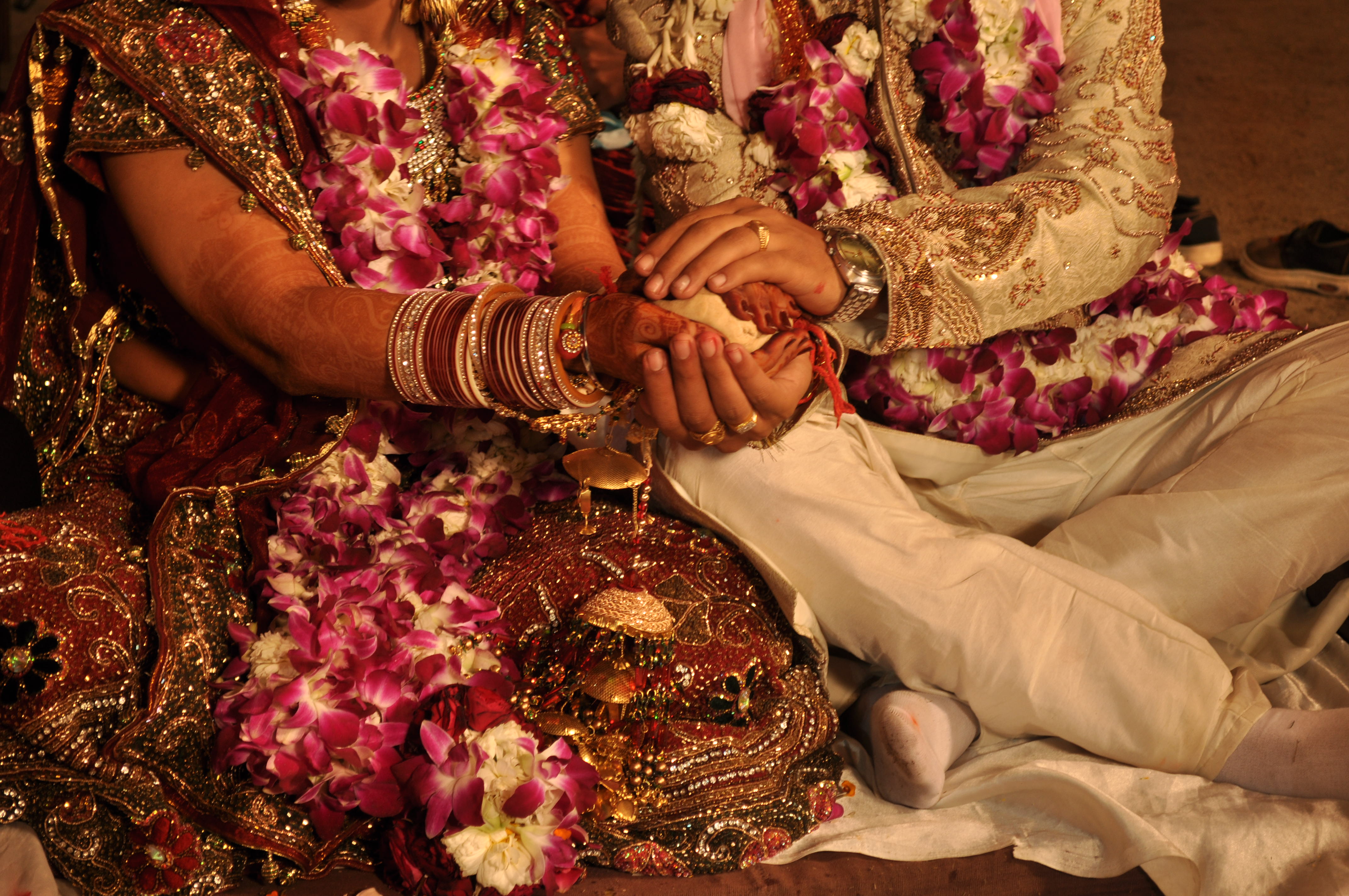
‘Marriage’ is considered a sacred institution in our Indian subcontinent.  It is an integral part of our culture. India is a diverse country and thus has people from a number of religions and cultures, residing here.

When it comes to marriages in India, arranged marriages are considered the best way to get a boy and a girl to tie the marital knot. Indian parents are the ones who take utmost interest in it, right from the girl or boy they want their child to get married to, till the date and time of marriage. This is so because there prevails this thinking that they are a lot wiser and experienced than their children, and will decide the best for them. Indians consider marriage as an auspicious culmination of two souls, that they decide every ritual of marriage according to the astrological positioning of the stars of the bride and the groom.

 Earlier, marriages were commenced where the bride and the groom were unaware of who they were getting married to, as every decision was taken by their respective parents and meeting of bride and the groom was not a practice that prevailed (though this was in the ancient times), now times have changed and every decision relating to marriage is taken by the bride and groom themselves.

 We are aware of the extent of influence that caste and religion have in our country. And when it comes to marriage, it is considered the most important criteria for a properly solemnized marriage. Parents select the prospective bride/groom for their children from the same caste as theirs. Inter-caste marriage is still considered a taboo in many places in our country. India follows a very rigid structure of the caste system. People are expected to marry within their caste and whoever marries out of their caste and defy the traditional barriers are shunned in the society. There are a number of honor killings reported every year (highest being in the states of Haryana) and unfortunately, they show pride in doing so. Thus there came a grave need for a law to safeguard the interests of  those people who rose above these caste and religious divides, to marry for love. So the Parliament enacted the Special Marriage Act, 1954 which provides for a special form of marriage for the people of India and all Indian nationals in foreign countries, irrespective of the caste and religion they follow.

https://lawsikho.com/course/certificate-criminal-litigation-trial-advocacy
click above

Now it is very important that every Indian should know at least some of the basic things about the Special Marriage Act. Let us discuss 10 of those things-

  1. Scope of the Act

The Special Marriage Act deals with inter caste and inter-religion marriages.

Inter-caste marriage is a marriage between people belonging to two different castes. Gone are the days when people used to marry blindly wherever their parents decided them to. Now the youth has its own saying and choice and they prefer getting married to someone who has a better compatibility with them rather than marrying someone who belongs to their caste or their religion. It is them who have to live with their partner for the entire life and thus caste or religion is not a matter of utmost consideration at all now. Love is a beautiful emotion and it should not be weighed with something like caste or religion. All religions are equal and marriage amongst it should not be a big deal. Caste or religion is conferred on us by birth and not by choice, then why are people of lower castes seen with shame and disdain? India is a diverse country and things like this that happens here, is a thing of pity. Thus, the Special Marriage Act is a special legislation that was enacted to provide for a special form of marriage, by registration where the parties to the marriage are not required to renounce his/her religion.


  1. Application of the Act

This information is the most important one for every Indian to know as it is through this that they can avail them. This Act covers marriages among Hindus, Muslims, Christians, Sikhs, Jains and Buddhists. This act applies to every state of India, except the state of Jammu & Kashmir. This Act extends not only to the Indian citizens belonging to different castes and religions but also to the Indian nationals living abroad.

  1. Requirements

As Indians believe in marriages with proper rituals, customs and ceremonies involving pomp and show & extravagant celebrations, the Special Marriage Act does not require any of them. The basic requirement for a valid marriage under this Act is the consent of both the parties to the marriage. If both the parties are ready to marry each other, that suffices it; here caste, religion, race, etc. cannot and do not act as a hindrance to their union.

For marriage under this Act, the parties need to file a notice expressing their intention to marry each other, with the Marriage Registrar of the district in which at least one of the parties to the marriage has resided for at least 30 days preceding the date on which such notice is being filed. The marriage is then said to be solemnized after the expiry of 30 days from the date on which such notice has been published. But if any person related to the parties objects this marriage and the Registrar finds it to be a reasonable cause of objection, then he can cancel the marriage on such grounds. For a valid marriage, it is also required that the parties give their consent to the marriage in front of the Marriage officer and three witnesses.

These are the basic requirements for a valid marriage under the Special Marriage Act, which every Indian must know.

  1. Conditions

The conditions required to be followed for this special form of marriage is not very different from the requirements of other normal marriages, which happen within the caste. These are the conditions to be eligible for a marriage under this Act: –

  • The bridegroom must be at least 21 and the bride must be at least 18 years of age at the time of marriage. This is the minimum age limit for a boy/girl to marry, respectively.
  • Both the parties must be monogamous at the time of their marriage; i.e. they must be unmarried and should not have any living spouse at that time.
  • The parties should be mentally fit in order to be able to decide for themselves e., they must be sane at the time of marriage.
  • They should not be related to themselves through blood relationships; i.e. they should not come under prohibited relationships, which will otherwise act as a ground to dissolve their marriage.
  1. Changes with the Emergence of Special Marriage Act in India

Since it is known that inter-caste or inter-religion marriages are still considered a taboo in our country the establishment of Special Marriage Act was a great urgency.

If we look at the positive side of these marriages, we can find that they have added to our national integrity. Unlike earlier times, nowadays people are attracted more to the opposite sex, belonging to other castes and seldom end up considering the communal side of it. People from higher castes tend to fall in love with people from lower castes and get married to them. What is important is the amount of love and affection between them regardless of the status and community they belong to. What we need to know is that Every Indian should change their mindset about the caste system in our country and appreciate marriages between different communities and religion. India is progressing with the increasing influence of education and thus they must know about the advantages of Inter-caste marriages too (yes there are advantages).

These marriages encourage equality amongst the citizens and as a result of it people try to interact more with each other and understand and respect each other and their differences. It sets an example for other people that how love and respect can create a free and happy generation, which is above the caste system and the evils of it.

  1. Legitimacy of children

A marriage is said to be void, where the conditions mentioned in point no.4 are not met with, and the children from such marriages who would have been legitimate if the marriage had been valid, shall be legitimate, whether such child is born before or after the commencement of the Marriage Laws (Amendment) Act, 1976 (68 of 1976), and whether or not a decree of nullity is granted in respect of that marriage under this Act and whether or not the marriage is held to be void otherwise than on a petition under this Act as mentioned in Sec.26 of the act.

  1. Application on succession Rights

Another important point that every Indian should have knowledge about SMA is that, the succession to property of persons married under this act or any marriage registered under this act and that of their children will be governed under the Indian Succession Act. But, if the parties to the marriage belong to Hindu, Buddhist, Sikh or Jain religions, then the succession to their property will be governed under the Hindu succession Act.

  1. Restriction on Divorce during 1st yr of marriage

Any person married under the Special Marriage Act, must know about this important provision of the Act. The parties cannot petition for divorce to the District court unless and until one year has expired from the date of their marriage as registered in the marriage books.  But, in cases where the court is of the opinion that the petitioner has suffered exceptional hardships or the respondent has shown exceptional depravity on their part, a petition for divorce would be maintained, but if any misrepresentation is found on the part of the petitioner to apply for divorce before the expiry of 1 yr, the court may if any order has been passed, state the order to take effect only after the expiry of 1 yr, as mentioned in sec. 29 of the Act.

  1. Can they remarry?

Talking, about the option of remarriage available to marriages of persons registered under SMA, one important thing that has to be paid attention is that, where the marriage has been dissolved and there is no right of appeal available, or there is no petition made for it in the required period, or appeal if presented is dismissed, then the parties may remarry, as provided by the Act.

     10. The general and legal Understanding

The general understanding is that only marriages in one’s own caste is sacred and auspicious while the legal aspects of it as discussed above, doesn’t make marriages under this act any less sacred or valid. Our Law under its provisions gives the right to every citizen to marry any person of their choice and have a happy life. But this opinion is supported as well as criticized by many. Some consider it to be valid, some not. The influence of arranged marriages over the love marriage has brought about this situation, which even after judgements and laws being passed more often in this respect, hasn’t brought about a major change in the mindsets of people who are in support and opinion of marriages within the religion and caste.

Conclusion

Hence, the above discussed general and legal aspects of Special Marriage Act, holds high importance not only for the people who have registered their marriage under the act but also to all the citizens of the country in order to have a better understanding of the law and treat the marriages between different castes and religions to be equally sacred and auspicious like the marriages between one’s own caste. With my article I assume to have made my point on Special Marriage Act which every Indian should know, and once they know, the country will surely become a better place to live with the crimes of honor killing and torture etc. to come to an end.


LawSikho has created a telegram group for exchanging legal knowledge, referrals and various opportunities. You can click on this link and join:

https://t.me/joinchat/J_0YrBa4IBSHdpuTfQO_sA

Follow us on Instagram and subscribe to our YouTube channel for more amazing legal content.

 
Download Now

The Curious Legal Case of Uber in India – Did Uber really violate any law?

1
Did Uber really violate any law?

This article was written by Saurabh Misra of HNLU in the course of his internship with iPleaders.

Did Uber really violate any law?

Introduction

On the night of 5th December, a 27 year old finance executive in Delhi was raped inside a cab she had booked using the popular taxi app Uber. Uber has been steadily gaining popularity as the safer alternative to regular taxis that ply our road; it declares ‘everyone is a private driver’. There is an assumption that because of smart phone apps and GPS you are safe. But the Delhi rape has shown us this is not the case.

Uber issued a statement after the incident and pledged to support and assist police during the investigation. They also said that In India they work with licensed driver partners to provide a safe transportation option with layers of safeguard such as driver and vehicle information and ETA sharing to ensure there is accountability to traceability of all trips that occur on the Uber platform.

There have been numerous instances in United States where Uber riders have faced such a situation[1] like alleged rape of 20 year old rider[2], sexual assault of a female passenger[3] . This incident has raised several important questions before us like.

  1. Is the operation of Uber legally valid in India?
  2. What is the extent to which Uber can be made liable for conduct of its drivers during the course of journey?


Is operation of Uber legally valid in India?

It is alleged that Uber, Ola and Taxi for Sure have been circumventing various rules and norms to become operational in India. After the recent horror of rape of a financial executive by an Uber cab driver, the Delhi Government has banned the services of Uber India in Delhi citing that Uber India is misleading the customers by offering them Taxis with All India permits that cannot ply in Delhi from point to point ferrying customers.  This implies that taxis plying with Uber in Delhi can be fined and impounded.

Transport officials have maintained that Uber did not have a rent-a-cab permit which requires them to have adequate parking space for their fleet and must contain a minimum of 50 cabs, and show experience in the passenger service sector.

The recent event has highlighted the fact that while registering drivers, services like Uber may not be really verifying their driver’s criminal history. In the instant case the driver did not have a license from the Delhi Transport Authority he had previous convictions.

While the Radio Taxi Scheme of 2006 which is alleged to have been violated by Uber, Uber may contend that it is not required to follow the Radio Taxi Scheme as it is not a radio taxi service. The Radio Taxi Scheme of 2006 specifies that the licensee must be either a Company under Companies Act, 1956 or a Society under the Societies Registration Act, 1860. Following are the key requirements of the scheme:

  1. Licensee should have adequate parking space for all taxies and office space (minimum of 1000 sq. ft.
  2. Adequate space for control room with radio communications
  3. Ten telephone lines
  4. Minimum fleet size would be 500 motor cabs
  5. Vehicle must be fitted with GPS/GPRS based tracking devices which must be in constant communication with the Central Control Unit while vehicle is on duty.
  6. It will also be the responsibility of the radio taxi licensee for quality of drivers, their police verification, employer control and supervision of drivers’ employee behavior.

What is unfortunate is that there is little that Uber has violated in terms of law as existing laws do not specify the extent to which a service like Uber should verify its drivers before registering them.

The uber model of ‘ride sharing’ has been a worldwide success because it uses technology to circumvent the laws to make cabs more easily available travelers. It is an opportunity for Indian legislators to deliberate the Draft Road Transport and Safety Bill 2014 which dealt with passenger transport through services as well. The loopholes of the existing transport laws which help in services like Uber to shy away from responsibility and liability should be addressed.

Terms and Conditions for Uber User

What services does Uber provide?[4]

Uber provides information and means to obtain transportation services offered by the third party transportation providers, drivers or vehicle operators which is requested through the use an application supplied by Uber application.

How is contract concluded between you and Uber?[5]

By using the application or service the person enters into contract with Uber. In order to be able to use the application or service we need to sign up with Uber, while signing up with Uber personal information, mobile phone number and credit card details are provided to Uber. Uber provides us with a personal account accessible with a password of our choice.

Liability of Uber

The quality of the transportation services requested through the use of the Application or the service is entirely the responsibility of the Transportation Provider. Uber will not be liable under any circumstances for the acts, actions, behavior, conduct or negligence on the part of transportation provider. The website furthers state that any complaints about the transportation provider should be therefore submitted to the transportation provider.

Uber itself does not provide any transportation services and uber is not a transportation carrier. Uber only acts as an intermediary between the customer and transportation provider.

From the terms and conditions it is very apparent that Uber wants to absolve itself from any liability in cases of injury or accident and to avoid responsibility for driver’s action. The terms and conditions mean that Uber will not be responsible for anything that happens to you on a ride.

We will find out that there is contradiction between terms and conditions and their safety claims. The terms and conditions of Uber clearly indicate that passengers accept a risk by using the service.

There is an attempt on part of Uber to portray itself as a ride matching services rather than transportation companies. This will help them in protecting themselves from legal actions.


Uber drivers are not there employees but independent contractors which protects Uber from liability. But if it is proved that Uber exercises a certain amount of control over its drivers and they are akin to employees. Such factors of control would include the ability to hire and fire, decide where there services are performed or provide them with specialized equipment.  The difficulty arises for Uber when it tries to assert more and more control as likelihood of characterizing them as employee would increase.

Background Check[6]

Uber website does not offer country specific details on how it runs a background check. However in United States there is three step screening process which includes county, federal and multi state checks. These checks go back to 7 years and there is regular monitoring of driver’s vehicle records to ensure ongoing safe driving. Following criteria are kept in mind while doing background check:

  • No drug related driving violations
  • No hit and Runs
  • No fatal accidents
  • No history of reckless driving
  • No Violent Crimes
  • No Sexual offences
  • No gun related violations
  • No resisting or evading arrest


The concerns over Uber screening process has been raised by its competitors as well. Rival operators such as Meru Cabs, Mega cabs Pvt. Ltd and Easy Cabs have maintained that Uber Uber ignored the processes most of the Companies follow.  It is also to be mentioned that there is a clear distinction between the safety regulations for radio taxi fleets and for aggregators like Uber, Ola.

In order to work for a radio tax company, a driver has to go through the long process of becoming a badge holder. Once a fleet taxi driver has his commercial license, he undergoes a police verification which can take three months. The police screening takes into account criminal records, driver’s permanent address. If a driver is approved by the police, the State transport authorities issue him a unique number making him a badge holder.

The aggregators have stayed clear of this regulation till now. The drivers only have a commercial license which does not ensure the quality of the driver or his background.

Conclusion

Uber was established in 2009 currently operates in 45 countries, 200 Cities and is valued at US $40 billion. These are astounding numbers    . In India it was first introduced in Banglore and has expanded to 10 Indian cities. Uber has been in news in United States for unethical behavior and business practices and the recent event and even in India it came under the scanner of RBI for flouting its norms. In the recent event also proper verification of the driver was not carried out by Uber, GPS was not installed on the vehicle, and the swift dzire in which the event took place was used by 3 drivers. This event has also provided an opportunity for law makers to regulate the aggregators and form a comprehensive code of conduct which ensures safety of passengers.

[1] http://firstbiz.firstpost.com/corporate/the-ugly-side-of-uber-exposed-in-us-heres-why-indians-should-also-care-108842.html

[2] http://www.washingtonpost.com/local/uber-driver-charged-with-raping-woman-in-dc/2013/03/14/2bbf4c8e-8cb0-11e2-9838-d62f083ba93f_story.html

[3] http://www.nbcchicago.com/news/local/Former-Uber-Driver-Charged-With-Fondling-Passenger-254799501.html

[4] https://www.uber.com/legal/ind/terms

[5] Id.

[6] http://blog.uber.com/driverscreening

Download Now

New amendements to labour laws will make compliance for startups and SMEs easier

0

12064449695_f80bb7aa3a_k

This article is written by Sunil Kumar Yadav, a student of CNLU.

Background

The much talked about The Labour Laws (Exemption from Furnishing Returns and Maintaining Registers by Certain Establishments) Amendment and Miscellaneous Provisions Bill was introduced into Rajya Sabha and the house passed the bill on 25th November and after the quick discussion in the Lok Sabha it was passed on 28th November 2014 by the Lok Sabha with the certain demanded amendments in the bill. The amendment was made to reduce compliance related to labour laws for small companies.

Major changes in the Bill

  1. The major point of the Amendments of the bill has been in introducing new definition to small establishment, increasing the ambit of small establishment. Earlier according to the definition small establishment were those which employed 10 to 19  workers but now the number of workers for small establishment has been extended to 40 workers. After this amendment more medium and large establishment will come under small establishment and they will all be exempted from filing the returns and maintaining registers.
  1. Another major point in the amendment is that now the establishment who need to furnish their returns and to maintain register. The facility has been provided to them that they can file their returns with electronic media like giving details of employee and returns in floppy, disk or now they can even e-mail their report to the department or they can provide the concern department with print out of the documents when demanded by the inspection officers.
  1. The coverage of the principal Act has been expanded from nine schedule Act to sixteen schedule Acts, the seven new act which has been added to increase the ambit are
  • The Motor Transport Workers Act, 1961(27 of 1961
  • The Payment of Bonus Act 1965(21 of 1965)
  • The Beedi and Cigar Workers (Conditional Employment) Act 1966 (32 of 1966),
  • The Inter-State migrant Workmen (Regulation of Employment and Regulation of Service) Act, 1979 (30 of 1979)
  • The Dock Workers (Safety, Health and Welfare) Act 1986(54 of 1986)
  • The Child Labour (Prohibition and Regulation) Act 1986 (61 of 1986)
  • The Building and Other Construction Work (Regulation of Employment and Condition of Service)  1996 (27 of 1996).
  1.  And the date of submission of the reports has been changed from 31st January to 31st March.
  2. The second schedule was amended and by this amendment the forms are simplified, so that the details of the workers can be easily filled in a synchronize manner. To make it more convenient the forms for the small establishment has been put in annexure B, C, and D and for the very small establishment the form E has been prescribed.

 These are the major clauses which had been dealt by this amendment and      government had tried to simplify the rules in for the small establishment which will at least give some relief from the official documentation.

Conclusion

Based on Economic census of Central Statistical Organisation there were around 418.27 lakhs such small establishment, comparing with the present scenario there will be much more establishment that they were in 2005. So the government don’t have any idea that how many such establishment are there nor they are aware that these establishment are regularly submitting their returns or not. In the given situation when there is no provision for the penal provision the amendment done can be highly detrimental for the government. And by increasing the number of employee most of the establishment will be exempted from furnishing return and maintaining register.

The new bill has made filing of returns through electronic media possible. This is expected to reduce maintenance of separate physical register and the documentation of the government. As the inspecting officials earlier used to create a lot of problems for the small establishment, due to which many establishment closed down. Now after amendment of the Act, the unwanted hurdles for small industries had been wiped out by the amendment.

There is another major problem which the government has fail to consider that is that there is shortage of man power for regular monitoring of implementation of laws, which generally occurs in every law implementation procedure but in this there are not even adequate and efficient human resource that is required to strengthening of enforcement machinery.

After the amendment there is an urgent need to fill in these issues from the government so that the objective of making the law will be fulfilled.

Download Now
logo
FREE & ONLINE 3-Day Bootcamp (LIVE only) on

How Can Experienced Professionals Become Independent Directors

calender
28th, 29th Mar, 2026, 2 - 5pm (IST) &
30th Mar, 2026, 7 - 10pm (IST).
Bootcamp starting in
Days
HRS
MIN
SEC
Abhyuday AgarwalCOO & CO-Founder, LawSikho

Register now

Abhyuday AgarwalCOO & CO-Founder, LawSikho