Download Now
Home Blog Page 1840

RIGHTS OF PERSONS WITH DISABILITIES BILL 2014: a review

2

disability rights

This article was written by Turab Chimthanawala from DrAmbedkar College, Nagpur while he was interning with iPleaders. Turab himself is visually challenged.

Disability primarily means an inability or a shortcoming in some respect. This may be visual disability, hearing disability, physical disability, mental disability etc. Sadly, until recently in India disabled persons were considered as ‘inferior’ to other so-called normal people. Forget helping and caring for such people, some insensitive and unscrupulous people even enjoyed making mockery and even taking advantage of such persons.  Handicapped persons were considered as a distinct class and could not easily mix with others. For instance a blind child could not find place in a normal school and had to be admitted to a blind school. Such an atmosphere worsened the plight of handicapped persons and resulted in further lack of confidence and mental agony.

The attitude towards handicapped persons is undergoing change in the recent years. This has happened to an extent due to broad minded thinking of people due to spread of education and deviation from age old customs and practices. The Government has also played its part by making reservations for handicapped persons in public sector jobs, state run educational institutions, reducing the passing cut off in competitive exams like UPSC, MPSC.  Some educational institutions have even introduced fee waivers for handicapped people.  Now, at airports wheel chairs and escorts are readily available for handicapped people.

In spite of all this a lot needs to still be done for the welfare and greater acceptability of the handicapped persons. Thus the UN has incorporated a convention on Rights of persons with physical disability in 2007 to which India is a signatory. The Rights of Persons with disabilities Bill, is part of India’s obligation towards the UN Convention on Rights of Disabled Persons.

History of the Bill

The government replace the Persons with Disabilities (Equal Opportunity Protection of Rights and Full Participation) Act of 1995 with the new Bill. . To set forth this task a committee was set up by the Ministry of Social Justice and Empowerment under Sadhna Kaur. This committee as required by the UN convention comprised of persons of different disabilities.

The committee prepared a draft bill in 2011 which was submitted to the ministry. The ministry in response to that or otherwise released a draft bill in 2012. However this draft was less comprehensive and inclusive than the 2011 draft. It faced serious reactions when the ministry notified it.

Thereafter, the bill mostly in its 2012 format was sent for circulation among the cabinet ministries and states. Some version of the bill was cleared by the Cabinet in December 2013.

I am collating merits and demerits of the bill from some newspaper articles below.

Merits of the bill (detailed reference in the Times of India)


  1. Firstly the bill clearly defines the term ‘disability’. For a person to be considered as ‘disabled’, he shall suffer more than 40& disability. This bill seeks to increase the reservation from 3% to 5% in public sector and also to reserve seats in higher educational institutions. At present, the reservation for the disabled is only 3% in the ratio of 1% each for the physically, visually and hearing-impaired persons. As per the new bill, the reserved quota will be extended by 2%, covering two new additional categories – mentally disabled and people with multiple disabilities.
  2. The bill also seeks to increase the number of disabled categories covered from 7 to 19 sub-categories, however this will take time as the Rajya Sabha seeks to set up a standing committee to look into this. If the chairman Hamid Ansari agrees to send the Bill to the parliamentary panel, then it won’t be passed during the current session. The decision to refer the matter to the standing committee was taken die to the demands of the CPM members in the Upper House.
  3. The new bill divides the broad categories into various sub-categories, thus including a large number of disabilities within its ambit. It includes even disabilities like sickle cell disease, thalassemia and muscular dystrophy besides autism, spectrum disorder, blindness, cerebral palsy, chronic neurological conditions, mental illness and multiple disabilities.
  4. The bill prescribes provisions to prevent disabled persons from being harassed while obtaining disability certificates and also lays down stringent punishment of six months to five years of imprisonment and a fine from Rs 10,000 to five lakhs for any violation of its provisions.
  5. Other positives of the bill include setting up National Commission for Persons with Disabilities, which will have statutory powers besides establishing a dedicated National Fund for Persons with Disabilities.

Demerits of the Bill

Some Disability Rights Organizations have however criticised the bill and suggest modifications in the bill.

  1. Some groups have opined that it is not in conformity with the UN Convention on Rights of Persons with Disabilities.(as per an article in The Hindu)

“The Chennai-based Disability Rights Alliance (DRA), a conglomerate of disability rights activists, says the Bill is “regressive and retrograde,” and does not adopt the United Nations Convention on the Rights of Persons with Disability (UNCRPD) in its true spirit. The DRA and several other organisations said Section 110 of the Bill provided that its provisions shall be in addition to, and not in derogation of, the provisions of any other law in force, which effectively meant that all laws which actively discriminated against persons with disabilities remained untouched. This violated the State’s obligation under the U.N. convention to take all appropriate measures, including legislation, to modify or abolish laws, regulations, customs and practices that constituted such discrimination .‘According to the UNCRPD, state parties are to grant an unconditional right to equality and non-discrimination to all persons with disabilities, on a par with others. In this Bill, the Right of Equality is curtailed under Section 3(3), which says the right against discrimination exists ‘unless it can be shown that the impugned act or omission is a proportionate means of achieving a legitimate aim.’” The terms “proportionate means” and “legitimate aim,” it said, are highly subjective and can perpetuate discrimination .Further, the statement said, and the UNCRPD lays down specific obligations of the State while discussing multiple discrimination faced by women with disabilities. States are obliged to take measures to ensure that they enjoy fully and equally all human rights and fundamental freedoms .However, the Bill fails to acknowledge these beyond a cursory “hat tip” in Section 3(2), which says the appropriate government shall take special measures to protect the rights of women and children with disability and also take steps to utilise the capacity of persons with disabilities by providing an appropriate environment. This is limited to “protection” of rights and not empowerment.”

From thehindu.com

  1. The bill also has been criticised as compared to its previous versions (extensive reference in an article in The Hindu) While the earlier version of the Bill lays almost equal emphasis on special schools (catering only to children with disabilities) and inclusive schools (catering to all children in a common environment), the new version appears to strongly support the integration of children with disabilities into an inclusive education framework. As per the new version all educational institutions funded or recognized by the government have a duty to provide inclusive education. While in theory this is the correct move and is mandated by the UNCRPD, this approach is risky since there is no transition plan to move a set up with adequate numbers of trained teachers and proper infrastructure. Without such a plan, it is likely that an entire generation of persons with some types of disabilities such as children who are deaf-blind (requiring specialized training) and children in wheelchairs (requiring accessible infrastructure) who join the ill-equipped mainstream school system immediately after enactment will be lost in the cracks and get no education whatsoever.

  1. Another serious criticism is that this new bill provides that reservation for persons with disabilities shall be only for the specific posts that are expressly identified by the concerned authority. Thus, even if a person is able to do the work required for a particular post, he will be ineligible unless it is specifically reserved. This is highly controversial and violates UNCRPD principles since it presumes, wrongly, that persons with disabilities can only perform some jobs or tasks.(extensive reference in an article in The Hindu]

Conclusion

The Disabilities Bill 2014 is a landmark in moving towards creating a better environment for the handicapped persons and will go a long way in enhancing the quality of life of such persons and ensuring that they enjoy all rights and liberties as citizens of a democracy. However, there is still much to be asked for. It is imperative that this Bill becomes codified as soon as possible after looking into some of the loopholes and then its provisions should be strictly followed and implemented.

Download Now

Introduction to basics of syndicated loans

0

syndicated loan

This article was written by Milinda Sengupta. If you want to improve your knowledge about practical aspect of financial laws, investment law and business law, head over to: http://startup.nujs.edu

Basics of Syndicated loan

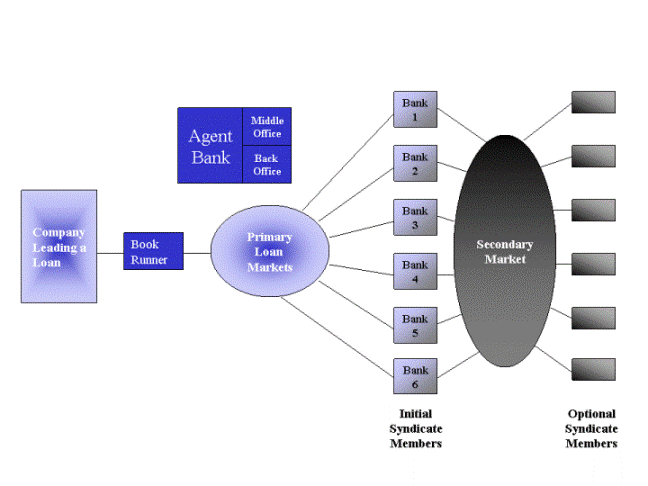
When a group of lenders collectively extend loan to a single borrower, using a similar terms and conditions, documentation etc administered by common agent, it is called a syndicated loan. The group of lenders is called syndicate. Generally, this loan is provided to corporations and government bodies because the amount to be lent is huge. Syndicated loans are primarily given by the banks, but these days a variety of investors are also involved in this loan lending institution such as mutual fund, insurance companies, pension plans and hedge funds.

Types of loan facilities provided by banks

1)      Term Loan– It is a loan from a bank for a specific amount that has a specified repayment schedule and a floating interest rate. Term loans almost always mature between one to 10 years. Repayment in this system could be at once at the end of the facility or in installments. Once a term loan is paid back by the borrower, it cannot be re-drawn.

2)      Revolving Loan– In this facility the borrower decides how often they want to withdraw and in what time intervals. Unlike a term loan, this facility allows borrower to re-draw, re-pay or drawdown the loan during the term of its facility. If a revolving loan made to re-finance another revolving loan and drawn by the same borrower in the same currency which matures on the same date as the drawing of the second revolving loan, is known as a “rollover loan”.

3)      Evergreen facility– A loan that can be extended after-pre set periods. Like a five year loan facility can be renewed and increased by further 5 years.

4)      Back stop facility– This loan is designed to be drawn only as the last resort for e.g. in situations like when a corporation is on verge of liquidation. It works as a back-up when other funding sources have failed. There is also a swing line facility, which gives the borrowers the “same day money.”

5)      General facility– Syndicated loan agreements could either be a term facility or may be revolving facility or they can contain combination of both or several of each type.

Parties to a syndicated loan

Borrower– The person or institution which is in need of a loan and initiates the process is the borrower.

Arranger– Generally one of the lenders (mostly a bank) who forms a syndicate. He communicates, negotiate and lure financial institutions to join the syndicate. Also suggests the borrower which facility it requires and help it in negotiating the terms of the facility.

Co-arranger– The first or initial group of lenders are called co-arrangers. They find more institutes to join the syndicate.

Agent– He is the one who looks after the day–to- day working and administration of the loan facility. He acts as an agent of the lenders not borrowers. He acts as a mediator between syndicate and borrower.  His duties are to set the loan agreement and for which it gets paid by the borrower. Agent has to ensure that the borrower has complied with every condition mentioned in the loan agreement and borrower is required to give all notices to the agent. The borrower and syndicate are required to make all payments (under the loan agreement) to the Agent. He then transfers that money back to the opposite parties.

Security Trustee- To secure the syndicate loan, a lender from the syndicate is usually appointed as a Security Trustee to look after the security on trust for the benefit of the lenders. Its duties are far more extensive than that of an agent.

Co- lenders- The co-lenders would normally constitute a group of banks or other  financial institutions who have contributed a percentage share towards the syndicated loan. Once these institutions have given their share of loan, and the syndicated loan agreement is signed; they usually take a more passive role in the project, relying on the competence of the Agent to further their interests.

Decision making panel-Usually the duty of making decisions in granted to a group of lenders in a syndicate to minimize the effort of consulting each and every lender. This group could be made of the lenders who hold maximum commitment i.e. who has given biggest loan in the syndicate.

Process of Syndication

Once the need of credit has been realized by the borrower then it should contact with the bank or money lending institution which could itself lend some money and work as an arranger to form a syndicate for the borrower. To appoint an arranger the borrower sends a Mandate letter (also called as a commitment) letter to the arranger.

The content of a Mandate letter is-

1)      An agreement to underwrite or use best efforts to arrange.

2)      Titles of arrangers, commitment amounts, exclusivity provisions.

3)      Duties of the lenders and conditions to their obligations.

4)      Syndication issues (including preparation of an information memorandum, presentations to potential lenders, clear market provisions, market flex provisions and syndication strategy)

5)      Costs cover and indemnity clauses.

Term Sheet– Before documentation, the terms related to financing or credit are included in term sheet. It is usually attached and signed with the Mandate Letter. Parties involved, their duties, roles and many important terms are included in it.

Project details and estimated Capital requirements– The arrangers have responsibility of making a syndicate and help borrower get the credit. They should be aware of the details of the project. Like-background of the promoters in detail, promoters contribution to the project, details about the project report and progress of the project.

Information Memorandum- Generally prepared by both, the arranger and the borrower and is sent to the potential syndicate members. The arranger assists borrower in drafting this memorandum. They mention the important description about the borrower business (mentioned above) and details of proposed facilities. It is a confidential document and all potential lenders that wish to see it usually sign a confidentiality agreement.  

The choice of sources of fund depends upon

i)                    Nature of the project.

ii)                  Estimation of the cost of the project.                      

There are three types of sources of money

Short term finance– When the funds are needed for 1 year. It can be made available by commercial banks, trade credit, public deposits etc.

Medium term finance– When funds are needed for 1-5 years. These funds are for buying new assets, working capital or expansion of the business. These are granted by commercial banks and all India Financial Institutions.

Long term finance- When funds are required for more than 5 years.

Preparation of Loan  application- Arranger should make sure that the client company has complied with all the necessary formalities. If there are more than one creditors, the application will be filed with one development finance institution and the company or the arranger will deal with only one institution termed as ‘lead institution’ . The project will be appraised and sanctioned under ‘single window’ concept method of dispensing of credit.

Syndicated Loan Agreement: The loan agreement in which the detailed terms and conditions of the facility is made available to the borrower. The agents have to follow up the sanction of the loan amount by the lender. The Appraising Institute (who appraises the project) takes the matter to its board of directors or its office may put the proposal with full appraisal note before the sanctioning authority for according necessary sanction.  Then the financial institution informs the applicant borrower of such sanction along with the detailed terms and conditional and arrangements of other lenders. The sanction letter mainly covers amount of loan, interest, commitment, charge security for the loan conversion option, repayment of loan etc.[1]

Different kinds of Fees for loans

1)      Arrangement fee- Fee paid to the bank for arranging syndication, which includes structuring, syndicating and negotiating the documentation.

2)      Underwriting fee- Underwriting fees is money collected by underwriters for performing underwriting services.

3)      Participation fee- Fee paid to the bank for joining the Syndicate process and is paid according to the commitment of the loan given by the bank.          

Annual fees

1)      Commitment fee- it is charged on undrawn element of either a term loan or revolving loan to compensate bank for the contingent liability. It usually half of the margin. Sometimes, it is also according to the level of utilization of the loan.

2)      Facility fee – It is charged on commercial paper standby or back-stop facilities. It is not like commitment fee and is payable in full amount regardless of the utilization.

3)      Management fee-  Fee paid to the lead manager or arranger.

4)      Agent fee- The fee paid to the agent for its services.   Details of these fees are usually put in separate side letters to ensure confidentiality. The Loan Agreement should refer to the Fee Letters and when such fees are payable to ensure that any non-payment by the borrower carries the remedies of default set out in the Loan Agreement.[2]

Download Now

5 things employers must do when they receive a sexual harassment complaint

0
complaints of sexual harassment must be dealt with seriousness


complaints of sexual harassment must be dealt with seriousness

This article was written by Rahul Bajaj of Nagupur University while he was interning at iPleaders.

The new Sexual Harassment of Women at Workplace Act of 2013 recognizes that equality of employment can be seriously impaired when women are subjected to gender-specific violence.

It, therefore, puts in place a robust and effective mechanism for dealing with cases of sexual harassment at the workplace. You can know more about the law and various compliances related to it by taking up this course which is created by National University of Juridical Sciences. You can also learn about implementation of sexual harassment laws by taking up this course.

This article seeks to analyze how an employer should deal with a complaint of sexual harassment.


Providing guidance and support:

If an employee complains of sexual harassment, the very first thing that an employer needs to do is to provide emotional support to the aggrieved woman. Women who are victims of such horrendous acts often experience a large array of emotions and don’t know how they should react in such a situation. Therefore, it is an employer’s responsibility to pay heed to the woman’s complaint and to discuss with her the possible ways in which the matter can be effectively dealt with. That being said, an employer should not impose his/her views on the aggrieved woman; he should just inform her about her entitlements under the Act.


Complaints to the internal complaints committee (ICC):

The employer must inform the aggrieved woman that, if she wants the ICC to conduct a formal inquiry, she must submit a written complaint within 3 months of the incident.

The internal complaints committee has the same powers as a civil court, so it can, inter alia, summon all parties that were involved in the incident in any way to interrogate them and ask the parties to produce all necessary documents. The employer must closely monitor the work of the committee in order to rectify any discrepancies that may arise. The employer should also ensure that the recommendations of the ICC are in accordance with the principle of natural justice. Similarly, if the woman wants to file a police complaint, the employer must do everything within his/her power to help the woman.

Compliance with report of ICC:

The Act states that the report of the inquiry must be provided to the employer within 10 days of completion of the inquiry. The report must also be submitted to all the concerned parties.

If the allegation against the respondent has been proven in accordance with Section 13 of the Act, the ICC shall advise the employer to take appropriate action in accordance with the provisions of service rules applicable to the respondent. The remedies may include termination of the respondent, deduction of penalty from his salary or wages, etc.

If the internal committee comes to a conclusion that it was a false or malicious accusation or that the witness has given false evidence or produced any forged or misleading document as laid down under Section 14, it may advise the employer of the complainant to take action in accordance with the provisions of the service rules. The employer is duty-bound to act upon the recommendations of the ICC within 60 days.

Maintaining confidentiality:

The employer must not reveal any information pertaining to the address of the aggrieved woman, respondent or witnesses, conciliation or inquiry, etc to any outsider. The employer must take all possible measures to safeguard the privacy of the aggrieved woman.

Helping the aggrieved woman to attain closure:

The employer should strive to help the woman in attaining closure in addition to implementing the recommendations of the committee. The woman may want, inter alia, to be transferred to another office, or may want an extended leave to come to terms with the trauma that an event of this magnitude unleashes. The employer must not hesitate to agree to such justified demands.

Conclusion

Various studies have shown that a major reason why acts of sexual harassment at the workplace go unchecked is because most employers, advertently or inadvertently, try to brush such matters under the carpet. Now, as never before, there is a dire need for employers to recognize their duty to provide a safe and enabling work environment to their female employees.

Download Now

Free Tool to Implement Anti-Sexual Harassment Law in India

0
End Sexual Harassment, visit http://endsexualharassment.ipleaders.in

I will share some important information on how to implement the entire Anti-Sexual harassment law effortlessly, within 48 hours. The toolbox can be used by any HR manager, legal department, Company Secretary or any other person who would be given the responsibility. If you want to jump straight to the toolbox, click here.
Here’s a little background:

According to International Labour Organization, more than 90% of Indian businesses are not in a position to effectively implement the new sexual harassment law passed in 2013. Most employers, despite having the goodwill to prevent sexual harassment at workplace and implementing the law, do not know how to actually implement the law. There are others who do not want to implement it because of the time and cost involved. At the same time, there are serious consequences of not complying, including a fine of INR 50,000.

What if implementing the law is made absurdly easy? What if there was a toolkit which can be used to become 100% compliant organization within one day? What if there was a toolbox which you could simply open and start implementing the measures mandated by law?

We created just that. Here’s a toolbox that can be accessed with a username and password, from the web as well as an android app.

EMPLOYER’S TOOLBOX TO END SEXUAL HARASSMENT

This is a step by step guide to implement the anti-sexual harassment law for Indian businesses. This tool will enable an organization to do the following:

1.  Set up an internal complaints committee to deal with sexual harassment complaints

2.     Create an effective policy against sexual harassment within the organization and make it a part of general employment policy and employment agreements

3.     Procedures to be followed in case of an unreported misconduct

4.     Notices to be displayed at workplace (samples and standard formats included)

5.     Comply with mandatory periodic sensitization requirements (organize workshops and seminars with training content provided by iPleaders)

6.     Train the members of your internal complaints committee on how to handle sexual harassment complaints, hearings and decision, how to evaluate evidence submitted by victim and accused and what kind of remedies can they award

7.     Understand when to file an FIR or assist a victim to file an FIR

8.     Provide interim relief to women victims of sexual harassment

9.     Comply with legal requirements by submitting annual reports on implementation of the law

10.  How to deal with false and malicious complaints of sexual harassment

11.  Take D&O insurances to protect officers or directors against sexual harassment

12.  We will keep it updated with the latest legal developments that you need to implement

As a part of this toolbox, an organization will get access to the tutorials on how to implement the law, and all the sample documents and formats that will be needed in the course of implementation and execution. A large number of scenarios are also covered with specific guidelines on how to handle them if they arise. There would also be a number of planned activities which can be used by HR professionals or other managers to sensitize the organization and its members.

Please note: Failure to comply with these requirements can lead to an immediate fine of INR 50,000 and double the amount for repeated/ continued non-compliance. The government is also authorized to cancel the business licenses in case of repeated offences.

What does the toolbox consist of?

1.    Tutorials – video and text based on how to implement the law

2.    Step by step process documents and checklists

3.    Sample notices, orders, complaints, annual reports

4.    Confidentiality policy

5.    D&O insurance related advice

6.    Sensitization package – training material, case studies, activities and role plays for legally mandated sensitization workshop for employees

7. Tutorials on how to conduct procedures by Internal Complaints Committee and how to evaluate evidence submitted by the accused and the victim

8.    Case studies

What is the cost?
INR 5000 per license per annum is the price we have decided to start with. One license will be enough for most organizations having a single branch or office. You need to take a license for every branch or office. You can know more about the law and various compliances related to it by taking up this course which is created by National University of Juridical Sciences. You can also learn about implementation of sexual harassment laws by taking up this course

The website of End Sexual Harassment is here:  http://endsexualharassment.ipleaders.in


Download Now

Why did India end up with an anti-sexual harassment law that is not gender neutral?

0


indian parliament

This article is written by Rahul Bajaj, a visually challenged law student from Nagpur University. Rahul wrote this article while interning at iPleaders.

Gender neutral laws have found acceptance in 77 countries including Denmark, Australia, Switzerland, the U.S., the U.K., etc, but the Indian Parliament has repeatedly refused to make the law against sexual harassment gender neutral in India. Currently the Indian law against sexual harassment protects only women.

The question whether the Sexual Harassment Act of 2013 and the Criminal Law Amendment Act should be gender neutral or not had many activists up in arms. It was also reportedly a cause of conflict between the Ministry of Home Affairs and the Law Ministry which led to an inordinate delay in the introduction of the anti-rape law.

However, the Sexual Harassment Act of 2013 that was finally passed by the Parliament takes it for granted that all potential victims are women. Here are the reasons that has been cited by ministries and parliamentarians:

Act of violence and power dynamics

The reason why the law is not gender neutral is because sexual harassment is viewed as an act of violence in the context of deeply entrenched power inequalities between men and women that have existed for centuries in our society. It was strongly felt that making gender neutral laws would only increase the aforementioned inequalities. Most studies show that sexual harassment usually begins with a man and is aimed at a woman. It was widely believed that a gender neutral law would make a mockery of this reality.

Fear of counter-complaints

Another challenge that was foreseen was that making the accused gender neutral would mean that complaints by women could be met with counter-complaints to get them to withdraw. As the odds are already heavily stacked against women, this would have made it even harder for them to secure justice.

Men, not boys

Another argument that was made in favour of making the law gender neutral was that the law would serve as a powerful tool to protect young boys from abuse. However, there was no basis to the argument because all young boys and girls are fully protected by gender neutral laws in the Protection of Children from Sexual Offences (POCSO) Act 2012.

Moreover, the socio-economic milieu in India is drastically different from the West because of the patriarchal nature of the society. As a result, men are often viewed as perpetual aggressors and women are considered to be weak and powerless.

Need for a gender neutral law related to sexual harassment

Many people believe that the Act undermines the basic truth that sexual harassment is neither about sex nor gender. It is only about power, and there is no reason why a woman in power cannot be as abusive as a man.

While it is true that more women are sexually harassed than men, this does not mean that men cannot be sexually harassed at all.

Cases of sexual harassment against men are not very prominently reported, so it is difficult to ascertain the ways in which men are victimized at work.

Furthermore, a man may also find it extremely embarrassing or humiliating to report a case of sexual harassment in a nation like India, where a man is, after all, supposed to be a MAN.

Men may not feel invested in the battle against sexual harassment

The downside of not having a gender neutral law is that many men do not feel invested enough in the new system to fight sexual harassment as they feel that the law is partial towards women and unjust in its refusal to protect men.

The civil society, men’s and women’s rights groups must engage in a constructive dialogue to make suitable amendments to the law to safeguard the interests of men. Such an amendment would go a long way in creating a society in which both men and women would be in a better position to understand each other’s unique challenge.

If you want to participate in the movement to stop sexual harassment at Indian workplaces, join us at http://endsexualharassment.ipleaders.in and access a free e-learning course to learn about your rights, duties and legal methods to bring perpetrators to justice. You can know more about the law and various compliances related to it by taking up this course which is created by National University of Juridical Sciences. You can also learn about implementation of sexual harassment laws by taking up this course.

Download Now

The psychology of Sexual Harassment

5
End Sexual Harassment
End Sexual Harassment http://endsexualharassment.ipleaders.in

This article is written by Rahul Bajaj, a law student at Nagpur University who has been interning at iPleaders at the time. I felt that we need to really get down to understanding what is sexual harassment all about at a psychological level to effectively counter it, as we work on http://blog.ipleaders.in/the-psychology-of-sexual-harassment, he wrote this very succinct and insightful article. Over to Rahul.

The last 3 decades have witnessed a new and sudden influx of scores of women in the labour force. More and more women are now opting for traditionally male-dominated professions. Even though the aforementioned developments have gone a long way in improving the status of women in the society, they have also brought a large array of problems pertaining to the safety of women in the workplace into the limelight.

As this article rightly points out, the entry of women into the labour force led to 2 major developments.

 On one hand, many men loathed female employees and perceived them as a serious threat in traditionally male-dominated workplaces. As a result, the women had to face overt discrimination, that is, they received less important job assignments, lower pay and did not get promoted and had to face sexual harassment.

The second reaction was to exploit the presence of women and make sexual favours and submission to sexual behaviours the sine qua non of employment. Succinctly put, women were asked to perform sexual favours to keep from being fired, demoted, or otherwise adversely affected at work.

As  this NYTimes article rightly points out, sexual harassment at the workplace has less to do with sex than with power. Men deliberately engage in sexual harassment and call attention to a woman’s sexuality in order to devalue her role in the workplace. As a matter of fact, men consider sexual harassment to be an effective way to keep women in what such men believe is their rightful place.

In India, sexual harassment is most frequently used as  a tool of patriarchy to frighten and devalue women  in occupations and workplaces where women are new and are, therefore, in the minority.

Various studies have shown that women who hold jobs traditionally held by men are far more likely to be harassed than women who do “women’s work.”

For instance, a 1989 study of 100 women working in a factory found that those who were working as machinists, a traditionally male-dominated job, said that they were  harassed far more than those women who were working on the assembly line, where generally more women are employed. It is pertinent to note that women in both groups approximately encountered  the same number of men at work.

The problem is further exacerbated by the fact that many men view sexual harassment as a mostly harmless form of interaction.

This can largely be attributed to the fact that many men entered the workplace at a time when innuendo and sexual teasing were extremely common, so they genuinely feel that there’s nothing wrong with it.

Another major problem is that many Indian men find it hard  to view women outside the realm of wives, daughters and mothers. As a result, they simply cannot view women as equal and competent members of society who should be treated with courtesy and respect.

In her book ‘Backlash: The Undeclared War Against American Women’, Susan Faludi suggests that male hostility toward women in the workplace is closely related to male attitudes about the “proper” position of a man in society. In her opinion, men often believe that it is their responsibility to provide for the family and they, therefore, use sexual harassment as an equalizer against women in power. They try to reassert control over women whom they view as their economic competitors.

In some cases, the situation is equally bad for women who opt for professions that are dominated by women.

Women working as secretaries, nurses, etc are often called demeaning names. Moreover, they are also made to believe that some amount of male domination and sexism is, in fact, normal.

The result of all these malpractices is that women are often subjected to pressure, degradation and humiliation and, therefore, find it hard to compete on a footing of equality with men in the workplace. Sexual harassment informally promotes what formal laws prohibit: discrimination on the basis of sex.

Want to fight sexual harassment? GO to this link, take a pledge and learn about your right and duties, and help others: http://endsexualharassment.ipleaders.in/

You can know more about the law and various compliances related to it by taking up this course which is created by National University of Juridical Sciences. You can also learn about implementation of sexual harassment laws by taking up this course.

Download Now

A brief history of battle against sexual harassment

0

Sexual harassment is a malady which has a large array of corrosive effects on business and workplaces – it undermines the rights and liberties of women and creates a hostile work environment. It can lead to a PR disaster for an employer (think Tehelka) and destroy the career of an accused. It can drastically reduce employee morale and affect productivity and loyalty of employees. Sexual predators may take advantage of organization’s culture and structure to engage in sexual harassment and create hostile work environment that damages a business’s reputation, profitability and internal workings. Read about psychology of sexual harassment: http://blog.ipleaders.in/the-psychology-of-sexual-harassment/

To understand sexual harassment in its entirety, it is necessary to view sexual harassment at the workplace from a historical perspective and look closely at the reasons which prompted the legislature to enact a law to combat this menace.

For centuries, sexual harassment has been a persistent and pervasive practice in most workplaces. Even in popular culture, depictions of sexual encounters and innuendos in the workplace has been pervasive and we can paint a pretty good picture of what it meant to be a woman in the workplace dominated by men from advertisements and movie scenes.

See this ad for example, from 1942:1942

From 1961:


add with sexual innuendo of penetration


Marilyn Monroe as secretary:

Marilyn Monroe in Monkey Business (1952)


Or this indie film poster from 2002:

Secretary


Think of all the James Bond movies that propagate the idea that women at workplace are hungry for manly attention and probably sex.

Moneypenny with James Bond


As Reva B. Siegel rightly points out in this article,  both slaves and domestic servants in the antebellum period in America were repeatedly subjected to sexual assault. Moreover, they were blamed for their own downfall as they were considered to be promiscuous by nature.

As Naina Kapur rightly observes in this article, in the 1980s, most women repeatedly emerged from the criminal justice system more humiliated, less empowered and with almost no sense of self left intact. This is epitomized by the gang rape of a tribal girl within the precincts of a police station in 1983, known as the Mathura case.

At the time of the incident, the girl’s boyfriend and family members were standing outside the police station. In its judgment, the Supreme Court of India described the girl as a “vicious liar” and stated that she was “habituated to sexual intercourse”. It further stated that the failure of the girl to ‘resist’ implied consent to the abuse.

In the 1980s, militant action by the Forum Against Oppression of Women (Mumbai) against the sexual harassment of nurses in public and private hospitals by patients and their male relatives, ward-boys and other hospital staff; of air-hostesses by their colleagues and passengers; of teachers by their colleagues, principals and management representatives; of PhD students by their guides, etc  received a lukewarm response from the trade unions and adverse publicity in the media (FAOW, 1991). Despite the sorry state of affairs, many women came forward to report cases of sexual harassment at the workplace.

In Goa, Baailancho Saad (‘Women’s Voice’) forced the chief minister, who allegedly harassed his secretary, to resign by organising demonstrations and protest rallies.

Before 1997, victims of sexual harassment were completely at the mercy of police officers who often refused to register such complaints. It is dismaying to note that there was no mechanism to hold such police officers accountable. Until 1997, women could lodge a complaint for sexual harassment at the workplace under 2 main  provisions of the Indian Penal Code, 1860: under S. 354 which pertains to the criminal assault on a woman to outrage her modesty, and S. 509 which pertains to the use of any word/gesture/act to insult the modesty of a woman.

The brutal gang rape of a Rajasthan state government employee brought the issue of sexual harassment at the workplace to the forefront of national public debate. The woman, who was a worker of the Women Development Programme, tried to prevent the occurrence of child marriage. The men who repeatedly raped her described her as “a lowly woman from a poor and potter community”. In the legal battle that subsequently ensued, the Rajasthan High Court did not hold the rapists responsible and the survivor did not get justice. Vishakha, a women’s rights group, vehemently opposed this decision and filed a public interest litigation in the Supreme Court of India. In its landmark decision in the case of Vishakha vs State of Rajasthan [1997(7) SCC.323] the Supreme Court recognized the absence of domestic law occupying the field and the need to formulate effective measures to check the evil of sexual harassment of working women at all work places. As a result, the SC issued a comprehensive list of guidelines about how employers should deal with cases of sexual harassment at the workplace. It also stated that these guidelines would only be applicable until the enactment of a law by the legislature to curb this menace.

Almost 10 years later, in 2007, the then women and child development minister, Krishna Tirath, introduced a bill known as the Sexual Harassment of Women at Workplace (Prevention, Prohibition and Redressal) Bill.

It is dismaying to note that this bill was approved by the Union Cabinet only in January 2010. It was tabled in the Lok Sabha in December 2010 and referred to the Parliamentary Standing Committee on Human Resources Development. The committee’s report was published on 30 November 2011. It was finally approved by the Lok Sabha in September 2012 and the Rajya Sabha in February 2013. The aforementioned data clearly shows the lackadaisical approach of the legislature while dealing with such a crucial issue of national importance. This delay can also be attributed somewhat to the failure of NGOs working for the rights of women in effectively asserting the rights of working women and lack of attention from the mainstream media and political parties.

Even after the law has been passed, it is an uphill battle – as most of India’s employers are far from implementing the law that has been made. Government has not taken any step yet to ensure that employers implement the law. The law, however, imposes an INR 50000 fine for non-compliance on employers. There are little resources and few experts available even for those employers who are willing to allocate resources towards implementation of the anti-sexual harassment law.

What could you do to make a difference?

If you are an employee (irrespective of your gender) in any Indian workplace, please visit http://endsexualharassment.ipleaders.in/ to learn about your rights and duties for free. You can also report violation or non-compliance by an employer (yours or any other) over here: http://endsexualharassment.ipleaders.in/report we would contact your employer and ask them to implement the law, and assist in the process.  We keep all our sources strictly anonymous. You can also take a pledge here to End Sexual Harassment and spread awareness about the cause.

If you are an employer, compliance professional or an HR professional in need of a simple solution to implement this law, please visit this page: http://endsexualharassment.ipleaders.in/employers-toolbox

You can know more about the law and various compliances related to it by taking up this course which is created by National University of Juridical Sciences. You can also learn about implementation of sexual harassment laws by taking up this course.

This article was jointly written by Ramanuj Mukherjee, co-founder of mass legal education startup iPleaders and Rahul Bajaj, a visually challenged law student at Nagpur University who is interning at iPleaders.

Download Now

Personal Insolvency and Bankruptcy in India: rationale and procedure

0

This article is written by Anumeha Karnatak,  a law student from National Law School, Bangalore during her internship at iPleaders.Personal bankruptcy in IndiaPersonal Insolvency is governed under two statutes in India which came into force way back during the British era. There is hardly any significant difference between the provisions under the Provincial Insolvency Act, 1920 and the Presidency Towns Insolvency Act, 1909 except that under the latter, the procedure is slightly more rigid and stricter than in the former. The term ‘insolvent’ has nowhere been defined under any of the legislations but in general, an ‘insolvent’ is a person who is unable to pay his debts or has committed an ‘act of insolvency’ and has been adjudged an ‘insolvent’ by an insolvency court.

Rationale behind the Insolvency laws

Before the aforementioned legislations were brought into force, every person who was unable to pay his debts was treated as an offender and put behind the bars. Both honest (not possessing any legitimate monetary means to repay the loan amount) and dishonest (possessing the necessary means but dealing with the property in unscrupulous or suspicious manner so as to appear broke) debtors were treated in the same manner. To protect the former category of debtors, insolvency legislations were brought into force. Today, insolvency laws serve two major purposes:

  • They seek to protect the honest and unfortunate debtor from facing criminal proceedings when he/she has agreed to surrender all the property in favor of the debtors.
  • They seek to protect the interests of the creditors by making sure that the property of the debtor is distributed among the creditors in such a manner that each is able to receive a fair and rightful share.

Acts of Insolvency:

Following are the ‘acts of insolvency’ as specified under the two legislations (except a few minor differences here and there, the acts of insolvency remain largely similar under both the Acts):

  • If, in India or elsewhere, he makes a transfer of all or substantially all of his property to a third person for the benefit of his creditors generally. Through this act, he shows his willingness to accord legitimate shares in his property to the creditors.
  • If, in India or elsewhere, he makes a transfer of his property or any part thereof, with an intent to defeat or delay his creditors. In such circumstances, the debtor deliberately and dishonestly tries to shield his property from the creditors in order to avoid making payments of debt.
  • If in India or elsewhere, he makes any transfer of his property or any part thereof, which would under this, or any other enactment for the time being in force, be void as a fraudulent preference, if he were adjudged insolvent. Fraudulent preference necessarily means giving preference, for certain ulterior motives, to one creditor over the rest while transfering property or making any payment of debt.
  • If with intent to defeat or delay his creditors, (i) he departs or remains out of India, (ii) he departs from his dwelling house or usual place of business or otherwise absents himself or, (iii) he secludes himself so as to deprive his creditors of the means of communicating with him.
  • If any of his property has been sold in execution of the decree of any court for the payment of money (under the Provincial Insolvency Act, 1920).
  • If any of his property has been sold or attached for more than twenty one days in execution of the decree of any court for the payment of money (under the Presidency Towns Insolvency Act, 1909).
  • If he petitions to be adjudged an insolvent.
  • If he gives notice to any of his creditors that he has suspended, or is about to suspend, payment of his debts. Through this act, he tries to inform his creditor(s) of his incapacity to repay the debts.

Insolvency Courts:

Under the Presidency Towns Insolvency Act, 1909, the High Courts of Bombay, Calcutta and Madras have been accorded the jurisdiction or judicial authority to try insolvency cases. Under the Provincial Insolvency Act, 1920, the same has been accorded to district courts but it is flexible in the sense that the state government can, if the need be, accord the jurisdiction to a lower court also. The orders of these courts are not full and final and can be appealed against in higher courts if the aggrieved party so desires.

Procedure:

Insolvency proceedings can be explained through the following points:

  • An insolvency petition has to be filed either by the debtor himself or a creditor of the debtor in an insolvency court.
  • For an insolvency petition to be accepted by the court, the amount of debt must be more than Rs. 500.
  • On the admission of petition by the court, a date of hearing is fixed.
  • An interim receiver is appointed by the court to take immediate possession of the property of the debtor. He continues to function till a regular officer is appointed.
  • On the date of hearing, the court if satisfied that the petition is reasonable shall make an order of adjudication.
  • After the passing of the ‘order of adjudication’, the debtor becomes an ‘undischarged insolvent’. After this declaration, all his property is vested in an officer called ‘Official Assignee’ under the Presidency Towns Insolvency Act and ‘Official Receiver’ under the Provincial Insolvency Act, appointed by the court to conduct insolvency proceedings.
  • It then becomes the Official Assignee’s duty to sell the property of the insolvent within a reasonable period of time.
  • Whatever money is generated in the form of sale proceeds is then distributed among the creditors.
  • After the process of distribution is completed, the insolvent is required to collect a certificate of ‘absolute discharge’ which is granted only when it is proved that the insolvency resulted due to misfortune and not because of any dishonest or unscrupulous behavior on part of the debtor. Another point taken into consideration is the behavior of the debtor during the insolvency proceedings which must have been satisfactory.
  • On the award of ‘absolute discharge certificate’, the remaining, unpaid debts of the debtor are cancelled and he cannot be forced or threatened by any creditor to repay the debt amount.

Sources:

  1. MC Kuchhal, MERCANTILE LAW, 493-500 (2008).
  2. Nirmal Singh, BUSINESS LAWS, 622-624 (2009).
  3. Provincial Insolvency Act, 1920.
  4. Presidency Towns Insolvency Act, 1909.
Download Now

Cosmetics Regulation in India – the law you need to know before getting into cosmetics manufacturing business

42
cosmetics regulation

This article on cosmetics regulation in India is written by Anumeha Karnatak, a student of National Law School of India University, Bangalore during her internship with iPleaders.     

Download Now

How Land Acquisition Act 2013 might affect infrastructural development in India

1

In a recent judgment, the Supreme Court gave implied validity to the retrospective provisions under 2013 Act which allow land acquisitions made under the 1894 Act to lapse under certain conditions.

800px-Delhi-Gurgaon-Expressway

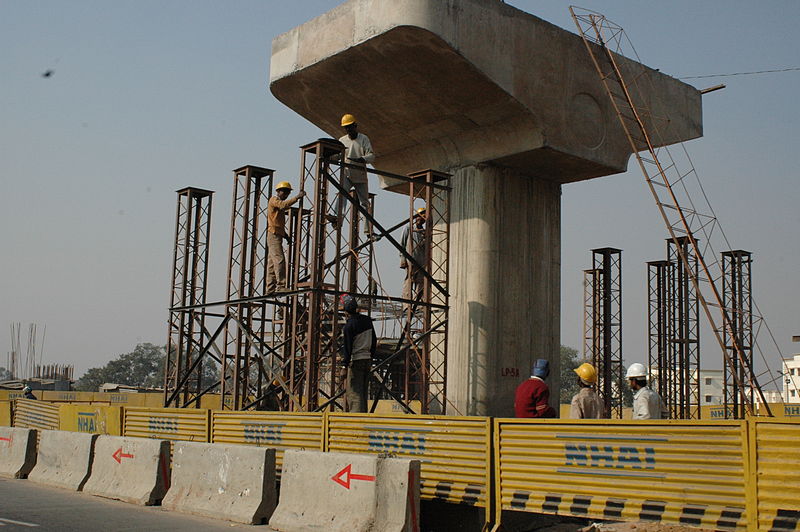
Land acquisition is a contentious and critical issue which has huge impact on the society and the people. In India, there had been incidences of societal and political protests and led to huge law and order problems on instances of land acquisition done for large infrastructural projects and land acquisition done on behalf of private entities. Land acquisition process has been delayed due to protests and lengthy litigation, most of which have aroused due to unsatisfactory compensation provided under the Act to the land owners. Moreover, under the 1894 Act, the interests of persons whose livelihood is attached to such land, like sharecroppers, land labourers were not taken into account.

Due to the changed socio-political scenario in the country, the Right to Fair Compensation and Transparency in Land Acquisition, Rehabilitation and Resettlement Act, 2013, was passed by the Parliament to provide increased compensation to the land owners and also provide for compulsory rehabilitation and resettlement for the land owners and livelihood earners from the land. The Act has made substantial changes to the process of land acquisition including conducting of a mandatory “Social Impact Assessment”, compulsory consent of 80 % of the land owners where the land will be acquired for private companies and bar on acquisition of irrigated multi-cropped lands except in exceptional situations. The land acquisition process will be more lengthy and costly under the new Act, making it difficult for private companies who want large patches of land for establishing their factories and manufacturing units.


What will happen to the ongoing land acquisition processes under the 1894 Act?

The 2013 Act came into force from 1 January 2014 repealing the 1894 Act. The crucial question that might be in mind of many that what will happen to the ongoing land acquisition processes. Will they lapse?  There might be situation where the award has been made but the same was not accepted by the land owners. What will happen to such land acquisition process? Will it be considered that the land acquisition process has completed under the 1894 Act or they lapse as well?

To avoid such confusion, Parliament has added a separate provision to deal with such cases. Section 24 of the 2013 Act deals with validity of ongoing land acquisition processes under the 1894 Act. The Section states the following conditions:

i) Where no award has been made under the existing Act, then the provisions related to determination of compensation, rehabilitation and resettlement under the 2013 Act will be applied.

ii) Where award has been made under the existing Act, then the provisions of the 1894 Act will apply as if the 1894 Act has not been repealed

The subsection 2 of Section 24 also states that in case where the award for acquisition of a particular land has been made atleast 5 years before the commencement of the 2013 Act and the physical possession of the land has not been taken or the compensation has not been paid, in such cases the land acquisition made under 1894 Act will deemed to have lapsed and the fresh land acquisition process need to be initiated under the 2013 Act, if the Government still want to acquire the land. Moreover, in a situation where a majority of land owner has not accepted the compensation given, all the beneficiaries of the land acquisition process will be compensated according the 2013 Act.


Supreme Court and its interpretation

On 24 January 2014, just 23 days after the notification of the 2013 Act, the Supreme Court delivered the first judgment under the Right to Fair Compensation and Transparency in Land Acquisition, Rehabilitation and Resettlement Act, 2013, giving implied validity to the provisions which allowed retrospective application of the compensation, rehabilitation and resettlement provisions to ongoing land acquisition processes under the old Act.[1]

The case dealt with acquisition of land for creating forest garden by Pune Municipal Corporation, wherein a notice for acquisition of land under Section 4 of the 1894 Act was made in 2004 and the award for the acquisition of land was made under Section 11 of 1894 Act on 31.01.2008 by the Special Land Acquisition Officer. Subsequently, notices were sent to the land owners to receive the compensation, but it was not accepted by the land owners and the entire award was deposited in the government treasury. The award was challenged before the Bombay High Court by the landowners on grounds of certain procedural lapses, including non approval of such acquisition by the general body of the corporation and non-compliances with the provision of Section 7 and 5A of the 1894 Act. The High Court upheld the contention of the land owners and quashed the land acquisition proceedings and ordered to return the land to the land owners.


The Court clarified the meaning of the expression “compensation has not been paid” in Section 24(2) of the 2013 Act to mean that compensation has not been paid in accordance with the procedure laid down in the Section 31 of the 1894 Act. Under Section 31, the amount can be either paid directly to the entitled persons or in case the amount cannot be paid as i) the affected person is unwilling to accept the compensation, ii) there is no person competent to alienate the land and (iii) there is dispute as to the title to receive compensation or as to the apportionment of it, the award amount need to be deposited by the Collector in the Court to which a reference under Section 18 can be made.

The Court also stated that the 1894 Act being an expropriatory legislation, the procedures mentioned under the Act has to be strictly followed. The Court held that as the award was made more than 5 years ago and the amount deposited in the government treasury cannot be equated with amount paid to the land owners in a manner as specified under section 31 of the 1894 Act and thus the land acquisition process is deemed to have lapsed.

How it might affect the infrastructural development in the country?

The 2013 Act has been drafted keeping in mind the sentiment of people and as a populist measure. No doubt the Act has replaced a draconian law which allowed acquisition of land for a very nominal amount with a more benevolent Act which provides the land owners with adequate compensation.

Infrastructural projects worth more than 7 lakh crore rupees are already struck due to governmental clearance and red-tapism under the old Act. The 2013 Act might affect the infrastructural development in India in a larger manner, which has more complicated and lengthier acquisition process which might delay existing approved projects. Provisions like “social impact assessment”, where gram sabhas will be involved might delay projects and increase red tapism. Having such cumbersome provisions might increase lengthy litigations which will inturn delay protects and increase costs.

India is looking to develop new “Smart” cities, for which the government need huge patches of land. Most of these cities are expected to be developed in PPP mode, and for acquisition of land for PPP projects needs consent and approval of 70 % of the land owners. Getting consent from such a huge majority might be impossible in many cases, and might led to abandonment of such projects which is expected to benefit a large number of people. Moreover, the new Act provides for providing a compensation amount of four times the current market value in rural areas and twice the market price in urban areas along with rehabilitation and resettlement benefits might increase the cost of projects. In case of group housing or planned development of cities, which are developed to house a large number of people at affordable price, might not be affordable for a common man as the overall cost of the project will increase due to increased cost of land.

This Act might affect the manufacturing industries in a significant manner, as the new Act requires consent of 80 % of the land owners for acquiring land for private purposes. Manufacturing units needs large tracts of land and acquiring such large amount of land might be a problem. Recent protests in Nandigram and Singur in West Bengal, Kalinganagar in Odisha and other parts of India due to acquisition of land for private purposes have made it evident that getting consent of 80% of the land owners might be difficult if not impossible for manufacturers to set up a plant.

Considering the retrospective provision which has been given implied validity by the Supreme Court, there is a chance of increase project costs and delays arising due to further litigation for application of the new provisions to the ongoing acquisition processes. Moreover the provision states that in case the award for acquisition of a particular land has been made atleast 5 years before the commencement of the 2013 Act and the physical possession of the land has not been taken, the land acquisition will considered to have lapsed and new proceeding under the 2013 Act has to be initiated, might again cause significant project delays and increased costs.


[1] Pune Municipal Corporation v Harakchand Misirimal Solanki CA 877 of 2014 (DOJ: 24/01/2014)


Download Now
logo
FREE & ONLINE 3-Day Bootcamp (LIVE only) on

How Can Experienced Professionals Become Independent Directors

calender
28th, 29th Mar, 2026, 2 - 5pm (IST) &
30th Mar, 2026, 7 - 10pm (IST).
Bootcamp starting in
Days
HRS
MIN
SEC
Abhyuday AgarwalCOO & CO-Founder, LawSikho

Register now

Abhyuday AgarwalCOO & CO-Founder, LawSikho