
Download Now
Home Blog Page 212

Difference between tort and breach of contract

0

This article is written by Pujari Dharani, a B.A.LL.B. student at Pendekanti Law College, affiliated with Osmania University, Hyderabad. The article talks about the differences between tort and breach of contract under various heads as well as the overlapping similarities. The article also discusses two important case laws which are related to the topic in question.

It has been published by Rachit Garg.

Introduction

Initially, the tort and the breach of contract were under the same branch of law and no such distinction was made between them. However, later, English courts differentiated these two civil wrongs on various grounds. Gradually, due to many judgements and case laws, the distinction became more elaborate and clear. Now, the law of torts and the law of contracts have become two separate branches of law. Both contractual liability and tortious liability are not governed by the same principles, but rather by entirely different sets of legal principles respectively. 

Understanding the concepts of ‘tort’ and ‘breach of contract’ separately as two different topics and distinguishing them is very essential for a law student. So, read this entire article and understand the differences between them.

Difference between tort and breach of contract

Meaning and definition

Tort

We know the law of torts is a separate branch of law. But, before knowing the concept and its definition, let us know the exact meaning of the word ‘tort’. The term ‘tort’ is French in origin and is derived from the Latin word ‘torture’ which means ‘to twist’. It conveys the meaning that those acts which are twisted i.e., not correct or straight are said to be a ‘tort’. With this, we can also make out that this word is synonymous with other English words such as ‘wrong’, ‘wrongful act’ and ‘civil wrong’. A person who commits a tort is called a ‘tortfeasor’ or ‘wrongdoer’. His wrongful act is termed a ‘tortious act’.

Coming to the definition part, a scientific definition of the word ‘tort’ has not yet been formulated. Also, no statute or law, in India as well as in foreign lands, defines this type of civil wrong. While a few legal scholars have tried to define it, they fail to lay down essential elements to constitute a civil wrong into a ‘tort’, as clearly laid in the case of ‘contract’. The reason for the non-existence of an exact definition is because of the composition of many torts, under the law of torts, which are largely different from one to another. Nevertheless, let us look into the most famous definitions of tort, given by popular legal scholars, which are as follows:

  • Salmond defined tort as “a civil wrong for which the remedy is a common law action for unliquidated damages and which is not exclusively the breach of a contract or the breach of a trust or other merely equitable obligation.
  • Winfield stated that “tortious Liability arises from the breach of a duty primarily fixed by the law; this duty is towards persons generally and its breach is redressible by an action for unliquidated damages.
  • Fraser said, “it is an infringement of a right in rem of a private individual giving a right of compensation at the suit of the injured party.

From the above definitions, we can draw out the following elements of tort:

  • Tort is a civil wrong.
  • In the commission of a tort, the duty imposed by law was breached by a wrongdoer. Here, the duty is to the general public as a whole, not a particular social group. Besides breach of duty, the wrongdoer is also said to have violated the right in rem of a private person.
  • The said breach of duty is recoverable and the remedy for the same is common law action for unliquidated damages. Thus, the injured party has the right to compensation.
  • Tort is neither a breach of contract nor a breach of trust nor any other similar obligations.

The above-stated elements are not exhaustive and specific. As already said, various torts have their own set of elements which may be absent in another tort. For instance, the intention is material to consider for constituting an act as the tort of deceit. Whereas the same is immaterial for the tort of defamation. But, the above elements indicate a few of the standard elements found in every given tort. 

By reading the above definitions and subsequent elements, we can make out that a ‘negative approach’ is followed to find out whether a wrong is a tort. In other words, a wrong is considered a tort if it is not a breach of contract, breach of trust or any other defined civil wrong. For better understanding, let us illustrate that a person has committed a wrong. Firstly, we should evaluate its nature i.e., whether the wrong is civil or criminal in nature. Once we find out that the wrong is a civil wrong, then we should find out whether the said wrong will fall under the category of any civil wrong like a breach of contract or breach of trust or any other equitable obligation. If it does not include any other specified and defined civil wrong, then it automatically falls under the branch of the ‘law of torts’.

Breach of contract

Salmond says, “a contract arises only out of the exercise of the autonomous legislative authority entrusted by the law to private persons to declare and define the nature of their mutual rights and obligations.

Indian Contract Act, 1872 provides an exact definition of contract in Section 2(h), which states that “an agreement enforceable by law is a contract.” The whole Act ensures that there is no ambiguity regarding the interpretation of the provisions regarding all kinds of contracts and their consequences. Due to the clear and unambiguous provisions, there are established sets of essential elements which should be fulfilled to be called a ‘valid contract’. To learn the essentials of a valid contract in detail, click here.

Coming to the definition of ‘breach of contract’, it was also clearly described in the case of Associated Cinemas of America Inc v. World Amusement Co. (1937). It is defined as “a breach of contract occurs when a party thereto renounces his liability under it, or by his own act makes it impossible that he should perform his obligations under it or totally or partially fails to perform such obligations.” It says that there is a breach of contract on one party to the contract if either of the following possibilities occurs:

  • A party fails to perform his duty in furtherance of the contract, or 
  • A party does an act which led to the impossibility of performance of the contract, or 
  • The party altogether refused to perform the contract.

If one party breaches the contract, the other party automatically be discharged from his contractual obligation to perform his part of the promise. To know more about the legal intricacies of the discharge of a contract, click here.

Differences

As mentioned earlier, a tort is a civil wrong. But, not all civil wrongs, such as breach of contract, breach of trust, etc., is a tort. Also, the stated definitions of tort clearly convey that the tort is not those civil wrongs which are termed as breach of contract and breach of trust or any other equitable obligations. Even U.K.’s Common Law Procedure Act, 1852 described tort as ‘a wrong independent of contract.’ The same definition was also adopted by the Limitation Act, 1963 by inserting the definition in Section 2(m).

As the contract and its breach are defined specifically and clearly, a tort is not defined exactly. Many legal scholars have given their version of definitions for tort. But, there is no one particular standard definition for tort due to its ever-growing nature. Likewise, there are no elements specified and fixed, fulfilling of which constitutes a tort as there in the case of a valid contract and its breach.

Origin of the concept

Tort

During primitive societies, there is no recognition between a tort and a crime. It is said that the law of torts originated from the Roman precept alterium non-laedere. This is a part of the juris precepta, the code of conduct governing members of a civilised community. This code of conduct was readily accepted by early English lawyers and prescribed remedies for violations of these duties. This led to the new body of laws which has grown as the modern law of tort. Thus, the English law of torts is a branch of English Common Law. The word ‘tort’ was first used in the case of Boulton v. Hardy (1597).

As previously mentioned, one tort is different from another tort, not just in the aspect of its ingredients but also regarding its origin. This is why there is no particular origin for the law of torts. However, it is said many torts have their origin in the writ of trespass and writ of trespass in the case. At first, a writ of trespass provided an effective remedy in the common law court to persons who were injured by serious injuries to their persons and property. The distinction between an action for trespass and an action of trespass in the case was that while the former lay for direct injury, the latter lay for indirect or consequential injury. 

In the course of time, common law courts allowed actions of trespass on cases for new kinds of wrongs such as defamation, nuisance, deceit, malicious prosecution, conversion of goods etc., because remedies in respect of these injuries had become necessary in view of the changes that were taking place in society.

Thus, these writs, which grant reliefs to the aggrieved persons, are credited not only for the origin of this branch of law i.e., the law of torts but also for various other wrongs and legal principles that are considered to originate from these writs. Thus, multiple torts were created and born from these writs independently and evolved separately. 

Here, it is pertinent to mention that the law of torts is a developing subject, it was grown for centuries and is still growing. Still, new kinds of torts are coming up due to various advancements in society and the ambit of this branch of law is growing day by day.

Breach of contract

Origin of the contractual relationship and its legal protections dates back to ancient times. Even in the English courts system, the royal courts took cases of this kind if ‘trespass on the case’ was alleged. As stated earlier, various other legal principles have originated from the writ of trespass and writ of trespass in the case, one among them is the law of contracts. 

India is also no exception. The making of agreements was prevalent even during Vedic and mediaeval periods. The principles governing such contracts are drawn from the Hindu scriptures like Vedas, Smritis, Srutis, Dharmashastras, etc. Also, during Chandragupta’s reign, two persons or groups used to enter into a contract in the form of ‘bilateral transactions’. Thus, the law of contracts further evolved during Muslim rule and was significantly formulated and enacted during the British period. The statutory enactment is named the Indian Contract Act, 1872.

Differences

The difference between tort and contract was recognised only in modern times. Until the sixteenth century, the type of suit for a breach of contract was not prescribed but its object was accomplished by an action of trespass on the case. The growth of trade and commerce, which led to the increase of litigation in contracts, made a special form of action. Here, the distinction between tort and contract has emerged.

The origin of the law of torts is different from the origin of contract law. When we look into the whole history of both branches of law, we can find out many differences between the law of torts and the law of contracts. The former is not codified, while the latter resulted in a statute enacted by the legislation. Additionally, the law of torts is an ever-growing area of the subject and changes increasingly by including new torts every now and then, whereas Indian Contract Act, 1872 witnessed comparingly lesser amendments.

Purpose

Tort

The concept of tort originated to recognise the wrongful acts done by a wrongdoer who infringed the legal rights of another person and caused damage to him. The first and main purpose of this branch of law is to acknowledge all those tortious acts where a wrongdoer, who has the legal duty imposed by law to not interfere with and violate the rights of other members of society, commits the said wrong. Through this concept of ‘tort’, the tortfeasor will be punished by the State, including paying compensation, for violating the legally protected interest i.e., rights of the injured party due to his or her commission of a tort is the second main purpose of this branch of law. 

For example, if the wrongdoer breached the duty to not tarnish the reputation of another person in society, he is said to have committed the tort of defamation. Similarly, if a seller, who has a duty to disclose every detail of a good, remains silent at the time of purchase of the good by the buyer, will constitute the commission of the tort of fraud. For such commissions, tort imposes legal obligations on the wrongdoer to compensate for the loss or harm suffered by the injured party due to the wrong done by the former. With this, the second purpose of the tort will be fulfilled i.e., to transfer the loss from the injured party to the other party who is the reason for causing that particular suffering.

The purpose of the law of torts is not so much to punish the tortfeasors but to accommodate the losses in modern living and to afford compensation for injuries suffered by one party as a result of the act of another. In a nutshell, this branch of law is aimed at the accommodation of conflicting interests of two individuals or groups to accomplish a desirable social result.

Breach of contract

Contracting and making agreements, either expressed or implied, with each other in modern society have become a new normal. A mere purchase of a good can be termed a contract. A breach of contract can cause a lot of losses to an individual. Hence, a legal framework is necessary to fix the sufferings of parties who suffered losses so that the general public can freely enter into the contracts to fulfil their financial goals and necessities. Law of contracts lays down various legal principles which the parties to the contract must follow. Thus, the main purpose of the codification of the law of contracts is to legally bind the parties to the contract and make them liable if caused any breach by not performing their respective duties and promises.

Differences

In the case of tort, the duty to not negatively interfere with another’s rights, which was imposed by law, is breached and considered as a commission of a tort and punished subsequently. Whereas, in case of breach of contract, the contractual obligations created and imposed by parties themselves, not by law, towards each other is breached by either of the parties to the contract, to which compensation through a grant of damages would be available as a recourse to the injured party. Besides this, the purpose of both branches is similar.

Furthermore, Professor Winfield said, “At the present day, tort and contract are distinguished from one another in that the duties in the former are primarily fixed by the law, while in the latter they are fixed by persons themselves. Moreover, tort duty is towards persons generally, in contrast it is towards specific persons or a specific person.

Types

Tort

The broad and ever-growing law of torts has been classified in many ways. One such classification is of three types: tort requiring intention, torts requiring negligence and the wrongs of strict liability. Also, torts are classified into two kinds, namely, actionable per se and actionable on proof of actual damages. However, the most relevant classification of the law of torts is:

  • Torts affecting the individual, including one’s reputation, such as assault, battery, false imprisonment, malicious prosecution, nervous shock, negligence and defamation (libel and slander);
  • Torts affecting the immovable property such as trespass to land and nuisance; 
  • Torts affecting the movable property such as trespass to goods, detenue (wrongful detention), conversion and slander of goods;
  • Torts affecting the family or domestic relations such as enticement or abduction, adultery, causing physical injury to a wife and seduction;
  • Torts affecting business relations such as inducement of breach of contract, intimidation, injurious falsehood, deceit or fraud, passing off, negligent and innocent misrepresentation; and
  • Certain miscellaneous torts like conspiracy, etc.

To study the above types of torts in detail, click here.

Breach of contract

The breach of contract is of two types because failure to perform or renunciation may take place when the time of performance has arrived or even before that. These are:

  • Anticipatory breach and
  • Actual breach

In actual breach of contract, non-performance of the contract occurs on the due date of performance, whereas it occurs before the due date of performance in anticipatory breach. For example, A contracted with B to supply 50 kilograms of rice to B on 1st April. Later, he failed to perform his promise on the due date i.e., 1st April. Here, he has committed an actual breach of contract. On the other hand, if A intimates B on 1st March itself regarding his inability to perform the contract on 1st April. Here, A committed anticipatory breach of contract.

To know more about the actual and anticipatory breach of contract in detail, click here.

Privity of contract

Tort

As already discussed, the commission of a tort is independent of the contract. And we also concluded that any civil wrong which is not a breach of contract or any other equitable obligation is said to be a tort. Hence, the parties to a suit, in case of an action for tort, are strangers to each other or at least there will be no contract between them. Therefore, a contract between the parties to the suit is not necessary for establishing a tort committed by the wrongdoer and seeking damages.

Till 1932, the rule of privity of contract, which was brought in by a judgement in Winterbottom v. Wright (1842), was necessary to prove even in case of an action for tort. Later, this fallacy was regarded as unreasonable and immaterial and stopped being used in 1932. In Donoghue v. Stevenson (1932), a customer suffered illness after consumption of ginger beer from an opaque bottle which contained decomposed remains of a snail. Here, the injured party filed a suit against the manufacturer even though there was no contract between them. There was a contract only between the manufacturer and the retailer but not with the consumers. The defendant pleaded the defence of privity of contract. However, the plea taken by the defendant was dismissed and judgement was made in favour of the plaintiff in spite of the absence of a contract. In this case, there are two scenarios, one is a breach of contract and the other is a lack of due care and negligence by the manufacturer. For both civil wrongs, two separate and independent cases can be filed. The former is available only for the party to the contract, while the latter is available for the injured person even if there is no contract between them.

For example, let’s take another example where a railway driver negligently drove due to which a passenger was injured. Here, the injured party can sue him for the injury he suffered either under the breach of contract as well as the railway employee’s tort of negligence. As this is the case where both the civil wrongs, i.e., breach of contract and tort of negligence, is committed by the wrongdoer, the injured passenger can go with either of the one. That means he or she can sue the tortfeasor even though there is no contract between them. Thus, the rule of privity of contract is not necessary for a civil action of tort.

Breach of contract

Breach of contract arises only when the parties to the suit have entered into a contract with each other and, subsequently, either of the parties failed to perform or fulfil the promise. To constitute a breach of contract in a civil court and claim damages for the same, submission of evidence which establishes the existence of a contract between the parties is necessary.

In addition, the doctrine of privity of contract mandates that only a person who is a party to the contract can enforce it. That is, it can not be enforced by any other person who is a stranger to the contract, although he or she is a beneficiary. As he or she is not a party to the contract, the individual can not seek rights under it.

Differences

When a case is filed for the commission of tort in a civil court, the parties to the suit will be strangers to each other. Sometimes, both of them know each other and can even be in a fiduciary relationship. But there will not be any contract between the aggrieved party and the tortfeasor. Whereas, in case of breach of contract, the story begins with the contract. That is, proving the contract is a prerequisite to constitute its breach and claim compensation, which is not the case for a tort.

In the case of a contract, the doctrine of privity of contract is strictly followed except in a few exceptional situations. Whereas, in the law of torts, this doctrine is not followed. It is not necessary that only the party to the contract can file a case against the wrongdoer. While in breach of contract, no stranger is allowed to sue a party to the contract for his or her failure to perform a promise or breach of contract.

Remedies

Tort

The famous legal maxim, that is, ubi jus ibi remedium says that “where there is a right, there is a remedy.” In other words, if a legal right which is conferred by law is violated, then he or she will be entitled to claim compensation for the loss he or she suffered from the party due to whom the happenings are caused. Apart from this, legal damages or remedy is one of the essential components in constituting a tort. 

However, not every wrongful act is actionable in a court of law. A few examples are cases involving acts of god, inevitable accidents, etc. In the law of torts, there is no hard and fast rule that only a wrongdoer is legally bound to compensate the injured party. Even the compensation, sometimes, may not be equitable to the loss suffered. It differs from case to case. It may be more or less. Hence, we can say there are many scenarios regarding the measurement of damages, a few among them are as follows:

  • In case of vicarious liability, the compensation was paid by another person who has not even committed a wrong. As the person is in the position of master, he is legally liable for all the wrongs committed by his or her servants.
  • In case of absolute liability, the convicted party is liable to pay a significant amount of damages through compensation.
  • In case of strict liability, the general rule i.e., breach of duty to take care and precautions leads to liability, is not followed. Indeed, liability arises if the disputed event caused loss or injury to the plaintiff, despite no negligence on the defendant’s side. Here, whether the defendant took reasonable precautions is immaterial. The same also applies to cases of absolute liability.
  • In the case of joint promisors or partnership firms, all partners are jointly as well as severally liable for the wrong done irrespective of the fact of who has committed and the intention of the individuals.
  • In case of contributory negligence, where the plaintiff himself or herself contributed negligence which caused the event in question, the plaintiff is entitled to a reduced amount of compensation from the defendant. That is, the plaintiff is granted relief only to the extent to which the defendant is responsible for causing that injury.

Coming to the type of remedies granted in case of damage caused by any tort, there are broadly two kinds of remedies, i.e., judicial remedies and extra-judicial remedies. Judicial remedies are further classified into three remedies which are as follows:

  • Damages
  • Injunctions
  • Specific restitution of property

In most cases, monetary relief, i.e., damages in terms of money, will be awarded to the injured party. But, sometimes, other kinds of relief are also provided. For example, in case of the tort of nuisance and subsequent serious consequences, a relief of injunction will be awarded by the court of law. In addition to this, if a person wrongfully loses possession of his property, he can either seek compensation or the recovery of the property itself. The former is damages, the latter is called ‘specific restitution of property’. The provisions for claiming specific restitution of damages are given under Sections 5, 6, 7 and 8 of the Specific Relief Act, 1963.

Furthermore, extra-judicial remedies are further classified into six remedies which are as follows:

  • Self-help or self-defence
  • Re-entry on land
  • Recaption of chattels
  • Distress damage feasant
  • Abatement of nuisance
  • Expulsion of trespass

To know more about the above-mentioned remedies, both judicial and extrajudicial remedies, click here.

Breach of contract

Remedies that can be used by the aggrieved party in the event of a breach of contract can be classified under three heads. The remedies are divided as:

  • Under the law of contracts
    • Rescission
    • Damages
  • Under the Specific Relief Act, 1963
    • Injunction
    • Specific performance
  • Under the Sale of Goods Act, 1930, some special remedies are-
    • Right of withholding delivery
    • Right of lien
    • Right of stoppage in transit 
    • Right to resale

Differences

When we look at various scenarios of torts, we will get to know that remedies in the form of damages are being imposed not on the party at fault, but on another person who is in the position of master to the person who committed the tort. Whereas, in case of breach of contract, damages are only imposed on the party who failed to perform the obligation, but on any other third party.

Damages

Tort

As already discussed before, the award of legal damages is the most common judicial remedy in the law of torts. Basically, the damage is an amount of money paid by the defendant to the plaintiff due to the decree of the court. This is very often used by the courts because it is impossible to undo the unlawful act committed by the wrongdoer. Hence, the courts generally evaluate and decide the sum of money, which is equivalent to the harm caused, that should be paid by the defendant to the plaintiff to which he or she may redress the loss suffered and attain satisfaction. Besides this, if a court granted damages, it is clear that the wrong is a civil wrong, not a criminal one.

Here, it is pertinent to note that the damages are unliquidated. That is, the amount of compensation is not predetermined by the parties to the suit, rather, it is at the discretion of the court to assess the amount of harm or loss suffered by the plaintiff and grant the damages accordingly. Provided that the court calculates the exact amount which was equivalent to the injury or harm suffered by the aggrieved party. Court ensures that the damages fixed are either more or less.

Breach of contract

A contract is based on a promise which is supported by some consideration. If the breach of contract happened, the remedy available is either specific performance or a grant of damages. The party, who was affected by such breach of contract, can bring an action claiming damages for loss suffered. The burden of proving the loss lies on the plaintiff or injured party.

Here, the damages granted are liquidated, and not unliquidated as in the case of tort. Generally, liquidated damages are those damages which are determined and agreed upon beforehand by the parties to the contract themselves. In simpler words, the parties to the contract, while drafting a contract should also be conscious of including those terms which prescribe the amount of compensation an injured party should receive from the party at fault in case the breach of contract occurs by the latter. 

Not just a genuine pre-estimate of the probable damage that is likely to result from the breach is considered as ‘liquidated damages’, but also includes those sums less than the amount of probable damage.

However, courts are at their discretion to even reduce the stipulated amount which was fixed by the parties to the contract. It was done to remove any arbitrariness while granting damages. 

Differences

As stated before, in the case of torts, unliquidated damages are granted. Whereas, in case of breach of contract, it is liquidated damages. This is one of the major differences between a tort and a breach of contract. As the amount of damages is stipulated in case of breach of contract, the same is not the case with tort. Because, in most of the torts, parties to the suit are not known to each other and, hence, there is no agreement between them as to the measurement of the damages. So, the role of determining the amount of compensation to be awarded to the plaintiff is held by the courts. Thus, the damages are unliquidated.

In torts, either general or exemplary damages or both can be awarded based on the facts and circumstances of the case. Whereas, in the event of a breach of contract, a grant of general damages is a rule and the award of exemplary or punitive damages is an exception. Those exceptions are in cases of breach of promise to marry and wrongful dishonour of cheque because of their criminal nature.

Examples

After the detailed reading of the above text, we understand clearly that there is a lot of difference between the legal concepts of tort and breach of contract. Now, let’s summarily discuss the above comparison between the two with the help of examples.

Let’s say a buyer promised to buy a seller’s property on one particular date. Subsequently, the buyer failed to perform his promise, i.e., he did not purchase that property on the said date. This is clear that the buyer breached the promise. Thus, he is liable for breach of contract and, due to which, his wrongful act is not considered a tort. 

Let us take another case where a neighbour, due to marriage, has hired DJ services which are being played even during night hours. Because of the nuisance created by the loudspeakers, people living in houses nearby are not able to sleep properly. Here, to evaluate whether the stated wrong is a tort or not, firstly, we should know whether it is civil or criminal. The facts of the present case show it is a civil wrong. Secondly, there is no contract or trust between people who hired DJ services and neighbours living nearby. Thus, there is no breach of contract or breach of trust. As the said wrong is a civil wrong and does not fall exclusively under breach of contract or breach of trust or any other category of civil wrong, it is a tort of nuisance. Thus, a tort is a civil wrong which does not belong to other types of civil wrongs.

Let us illustrate another situation where both tort and breach of contract exist. A hired a truck from B, a truck owner. Thus, there is a contract between A and B where the former agrees to return the object safely after usage of it. Later, A gave the truck to his friend, C, for some particular purpose. Because of the negligence of C, the engine of the truck got damaged. Here, there is no contractual relationship between B and C. In the present case, both A and C are liable for their respective wrongs. A was liable for breach of contract because of the failure to perform the contract. And, C was liable for the tort of negligence as he breached the duty, i.e., C omitted to take care.

Summarising the difference between a tort and a breach of contract

Basis of differentiationLaw of tortsBreach of contract
Codification of lawLaw of torts is not a codified law. It is a judge-made law.The law of contracts, including                provisions related to its breach, is codified.
Duty fixed byLawParties themselves
Duty is towardsEvery member of the society at large.Particular person or persons.
ConsentA tort is committed without or against the consent of the injured party.Parties enter into the contract willfully and with free consent, which is one of the essential elements of a valid contract. Its breach is against the will and interests of the parties.
Violation of rightA tort is a violation of a right in rem i.e., a right vested in some particular individual and available against the public at large.A breach of contract is a violation of a right in personam i.e., a right available against some particular person or party.
Right of third partyA third party is allowed to sue the wrongdoer for the tort committed by him, although there was no contract between the person causing injury and person injured.A third party is not allowed to sue the parties to a contract for the breach of contract, according to the principle of privity of contract. But, there are a few exceptional circumstances to this.
Privity of contractTo prove a tort, there is no need to establish privity of contract.To prove a breach of contract, the privity of contract between parties to the suit must be proved by the plaintiff.
MotiveIn tort, the motive is often considered.To constitute a breach of contract, the motive is not necessary to prove, as it is immaterial.
The measure of damagesIn tort, the measure of damages differs from each to each. Sometimes, it may be nominal damages. In other grave cases, it may be exemplary.In cases involving breach of contract, damages are always compensatory, not penal. However, in exceptional cases like a breach of promise to marry and wrongful dishonour of cheque, punitive damages are awarded.
Type of damagesIn the case of tort, the claim in the suit is for unliquidated damages, requesting the court to decide the amount at its discretion.In case of breach of contract, the suit is filed to seek liquidated damages which are already determined by the parties to the contract while entering into the contract. 
Exemplary damagesIt can be awarded based on the facts and circumstances of the case.The general rule in the law of contracts is to grant monetary compensation, either general, special or nominal damages, to the injured party. However, exemplary damages can also be granted in exceptional cases like a breach of promise to marry and wrongful dishonour of cheques.
Actual damagesIn tort, compensation granted may or may not be actual damages i.e., a person injured is entitled to receive damages even if he has not suffered any actual loss. In breach of contract, the injured party is entitled only to actual damages. That is, the compensation he or she receives equals the loss he or she suffered.
Special circumstancesDue to the special circumstances, injury or loss is caused, and the wrongdoer is liable for the special damages even if he or she does not have knowledge about the impact of those special circumstances.The party who breached the contract will be held liable only if he or she has knowledge or received intimation from the plaintiff that special circumstances would cause more damage to his or her interest.
No compensationThere is no case where compensation is not awarded despite the commission of tort unless another remedy is granted. Where there is a loss, there will be payment of damages by the defendant to the plaintiff.Restitution of benefits through compensation can not be done in case of void agreements and void contracts, as per Section 65 of the Indian Contract Act, 1872. 

Similarities between tort and breach of contract

Even if a tort is different from a breach of contract in many ways, we can still find a few similarities between them. Those are as under:

Both are civil wrongs

Both tort as well as breach of contract are civil wrongs. Thus, in both cases, civil proceedings will be initiated by the plaintiff against the defendant for the loss suffered by them respectively. Subsequently, in both scenarios, the essential remedy is the grant of damages, i.e., monetary compensation. In case of tort, the wrongdoer will pay compensation to the injured party for harm or loss caused by the former. Similarly, once the breach of contract is proved in the civil court and specific performance is not possible, the party who breached the contract and failed to perform his or her promise or set of promises will be held liable to pay the stipulated compensation to the injured party for the loss caused due to the breach of contract. 

Both are different from crime but has similar intersection

Both tort and breach of contract are different when compared with crime in various aspects ranging from its definition to its type of verdict, including remedy. That is, for civil wrongs like nuisance, trespass, etc., the remedy can be mostly in the form of monetary compensation. In other cases where circumstances are more serious, then reliefs like injunction can be granted. 

However, there is another side to the coin too. That is, some wrongs such as defamation, conspiracy, and adultery, among other wrongful acts, can be both torts as well as crimes. Likewise, a breach of contract can also be a crime due to the grave nature of the injury caused and other statutory provisions. For this, examples are ‘breach of promise to marry’ and ‘wrongful dishonour of cheque’. Both are said to be breaches of contract due to non-performance of promise by the promisor as well as crimes under the Code of Criminal Procedure, 1973 (CrPC) and the Negotiable Instruments Act, 1881 respectively. 

Whether it is a tort or breach of contract, if the criminal element is involved, then the aggrieved party is entitled to both civil remedies to receive compensation and criminal remedies to punish the wrongdoer for the crime he or she has done.

A wrong can be both tort as well as breach of contract

After the detailed reading, it is clear that tort and breach of contract are different from each other in many aspects, despite a few similarities. However, there are a few civil wrongs which can involve both tort as well as breach of contract. That is, in certain rare cases, both contractual liabilities along with tortious liability may arise from one event. 

Illustration

A, owner of a cow, delivered his cow to B for safekeeping, for which the latter agreed willfully. However, the cow died due to the non-feeding of food by B. Here, there is an element of negligence as well as breaking of his promise, which constitutes two civil wrongs, namely, the tort of negligence as well as breach of contract of bailment. 

In the above example, even if there are two civil wrongs committed by the wrongdoer, an injured party can either sue the convict for the tort of negligence or for breach of contract, but not both simultaneously. This is because the remedy for both cases is the same, i.e., compensation and claim both together would be unjust enrichment. Hence, the injured party can apt one right over the other.

Important case laws

Addis v. Gramophone (1909)

The case of Addis v. Gramophone (1909) is a very famous case law where a distinction is made between the breach of contract and tort. In this case, it was also observed those situations where exemplary damages could be granted.

Facts of the case

The defendant company, Gramophone, employed the plaintiff to manage his business at some stipulated remuneration along with commission on trade done. According to his employment contract, he could be dismissed with six months’ notice. After a considerable time, the plaintiff received six months’ notice from the defendant and, at the same time, another person was appointed to replace him. Because of this, the plaintiff was prevented from functioning as manager even during that six months notice period by the defendant company, thus, making him deprived of his commission. The plaintiff sued the defendant for exemplary damages due to the breach of contract, wrongful dismissal and mental pain suffered.

Issues of the case

  • Whether the defendant is liable for breach of contract or for tort?
  • Whether the plaintiff entitled to receive damages?

Court’s observation

In the present case, it was observed by the court regarding the distinction between tort and contract that a contract is a species of agreement whereby a legal duty is established and stipulated between the parties to it. It is a legal and contractual relationship in which the nature, content and consequences are determined beforehand and formulated by the agreement of the parties. The court observed:

…… by entering into a contract, the parties to it create for themselves rights and obligations and a breach of duty arising out of those obligations is actionable as a breach of contract, and when it is necessary to establish the existence and enforceability of the duty, prove and rely upon the contract, the only action that can be brought is an action for breach of contract and the breach of a duty of this kind is not a tort. Thus an action for wrongful dismissal of an employee is a breach of contract and not a tort.

Judgement

The House of Lords held that the defendant is liable for the breach of contract and must pay damages to the plaintiff for the loss suffered by him. It was also noted that the defendant infringed the right of the manager by not allowing him to do his job and subsequently earn a commission. Here, the defendant not only breached his contractual obligation but also prevented the plaintiff from exercising his right. Therefore, the plaintiff is not only entitled to receive such compensation, which is equivalent to his salary, but also a commission that he likely would have earned during the six months. Except these, the plaintiff is not entitled to receive other damages, i.e., for mental pain and loss of reputation.

Lumley v. Gye (1853)

Lumley v. Gye (1853) is an important case law in which ‘inducement of breach of contract’ is recognized as a tort. It is a most interesting case where a conspicuous example of malice is an essential element for constituting a tort.

Facts of the case

Johanna Wagner, a famous opera singer, had entered into a contract with Lumley, the plaintiff, to perform at his theatre for three months. There is a condition to this particular contract, i.e., Wagner should not give a performance or use her talent elsewhere during the said term unless the plaintiff agreed to it in writing. The plaintiff used to pay the highest remuneration in his theatre for her performance. The people were attracted to the songs sung by Miss Wagner. Many people went to the plaintiff’s theatre, which benefited him in terms of profits. 

Gye, the defendant, was the owner of another theatre. There was business rivalry and competition between Lumley and Gye. To attract the public, the defendant approached Miss Wagner to make a deal with her. Here, the defendant has full knowledge that there is a contract in force between Wagner and Lumley. With the malicious intention of injuring the plaintiff, Gye persuaded her to cancel the contract with Lumley. Also, he requested to enter a new contract with him to sing only in his theatre, for which he offered to give much higher remuneration than that the plaintiff had given. 

Later, Miss Wagner ended her contract with the plaintiff, entered into a contract with the defendant on much higher remuneration, and began to sing in the defendant’s operation theatre. This caused too much loss to the plaintiff. The plaintiff sued the defendant for causing him loss by inducing her to breach the contract.

Issues of the case

  • Whether the plaintiff suffered losses directly due to the defendant’s wrongful act?
  • Whether the plaintiff had a cause of action against a stranger to the contract for his wrongful act and sought damages?
  • Whether the defendant, Gye, be liable for the loss or damage suffered by the plaintiff, Lumley?
  • Whether there is any special damage, i.e., damage beyond breach of contract in the present case?
  • Is it necessary to prove the intention of the defendant to induce the breach of contract by the plaintiff?

Court’s observation

In the present case, the court observed that there are two instances, i.e., both tort and breach of contract. The former was committed by the defendant, Gye, and later was committed by Wagner. Here, the plaintiff need not choose or elect either of the wrongs to avail remedy because these two causes of action are distinct and consistent. That is, if the plaintiff availed one remedy, there is no restriction to avail remedy of other wrongs. But the only restriction here is that the plaintiff should not receive double compensation and the actual damages received by the plaintiff by one cause of action should be presented before the court in evidence during proceedings for the second cause of action so that the plaintiff will receive a reduced amount of damages.

The court also observed that the cause of action for a tort committed by the defendant, who is not the party that breached the contract but induced one of the parties to the contract to breach it, is maintainable.

Learned judge Wightman, J. observed, “It was undoubtedly prima facie an unlawful act on the part of Miss Wagner to break her contract, and therefore, a tortious act of the defendant maliciously to procure her to do so, and if damage to the plaintiff followed in consequence of that tortious act of the defendant, it would seem …. upon a general principle, that an action on the case is maintainable.”

Furthermore, Lord Justice Brett gave his opinion that “Merely to persuade a person to break his contract may not be wrongful in law or fact. But if the persuasion is used for the indirect purpose of injuring the plaintiff, or of benefiting the defendant at the expense of the plaintiff, it is a malicious act, which is in law and in fact a wrong act, and therefore an actionable act, if injury ensues from it.”

Here, the word ‘malicious’ means having a bad motive and intention to injure another person, which is unjustifiable in the eyes of law. The word is not used in its ordinary sense, and any persuasion of the breach because of which the defendant is satisfied with his ill feelings is not “malicious”, according to the court in the present case.

Judgement

The defendant, Gye, was held liable for interfering with the contract between Miss Wagner and the plaintiff, which is further termed as “tort of inducing breach of contract”. Thus, the court ordered the defendant to pay damages to the plaintiff for the loss suffered by her.

Regarding the burden of proof on the plaintiff to prevent the intention of the defendant to induce the singer for breach of contract, the court held it is not necessary to establish the said tort. A mere breach of promise by the contracting party and subsequent injury or damage to the opposite party is sufficient for an action of tort.

The court also announced that any stranger to the contract has a duty to refrain from doing such an act which maliciously procures a breach of contract. Here, the duty declared which is based on sound policy is imposed by law and, thus, should be followed by the general public. However, the judges made the principle exclusively limited to personal service.

Conclusion

With this, we can conclude that tort is different from breach of contract in many ways. Even the courts in past as well as the present distinguished those two from each other and adopted separate methods while dealing with them. As both are of different branches, one should not be confused while distinguishing them, especially when both instances are found in one case. 

Frequently Asked Questions (FAQs)

Are torts found in contracts?

Many legal authors, whether Indian or foreign, defined tort as an independent civil wrong which is not those wrongs that arise from a breach of contract or breach of trust or any other equitable obligation. Nevertheless, there are a few torts which are not apparently independent of the contract. These torts are also ‘torts founded on contract’.

A few examples of such rare torts are:

  • Inducing breach of contract
  • Intimidation
  • Conspiracy
  • Malicious Falsehood
  • Passing off

Is inducing breach of contract a tort?

It became the well-established rule that a third party should not interfere with a contract that was made by two others. Inducing a third party to breach the contract with the intention to create losses or damage to the other contracting party without lawful justification or excuse is a tort. Also, in Quinn v. Leathem (1901), Lord McNaughten said that “a violation of legal right committed knowingly is a cause of action and it is a violation of legal right to interfere with contractual relations recognized by law if there be no sufficient justification for the interference.”

For instance, let us say that A, a buyer, contracted with B, owner of the property, to purchase the land for Rs. 10 lakhs. C, a stranger to the contract, persuades A to not purchase the property by falsely disclosing that the property is government property. A, without checking the facts, believed C and failed to perform his purchase to buy the land. Here, C induced A to breach the contract by preventing him from performing the promise without lawful justification and, thus, committed a tort.

As per the rule of Lumley v. Gye, there are the following three elements to constitute the tort of inducement of breach of contract: 

  • There must be interference in the execution of the contract,
  • The interference must be deliberate, and
  • The interference must be direct.

References

  • “Law of Torts” by Dr. S.R. Myneni.
  • “The Law of Torts” by Dr. R.K. Bangia.
  • “Avtar Singh’s Law of Contract & Specific relief” by Rajesh Kapoor.

Students of Lawsikho courses regularly produce writing assignments and work on practical exercises as a part of their coursework and develop themselves in real-life practical skills.

LawSikho has created a telegram group for exchanging legal knowledge, referrals, and various opportunities. You can click on this link and join:

https://t.me/lawyerscommunity

Follow us on Instagram and subscribe to our YouTube channel for more amazing legal content.

Download Now

Prevention of Money Laundering Act (PMLA), 2002

0

This article is written by Nishka Kamath, a graduate of Nalanda Law College, University of Mumbai. It is an attempt to describe the Prevention of Money Laundering Act, 2002, commonly referred to as the PMLA, in great detail. It also has an overview of what is meant by money laundering, the common forms, the impact caused on nations, and so on. Further, an attempt is made to enlighten the readers on the important terms and provisions of the Prevention of Money Laundering Act, 2002, along with the way forward and the FAQs. 

It has been published by Rachit Garg.

Table of Contents

Introduction

It is not a fact unknown that money and crimes are interrelated. People commit crimes when money is involved; simply put, such crimes are committed for economic gains. One of these offences is that of money laundering. 

The individuals committing the offence of money laundering want their money to move freely in society without any threat that such money will eventually lead to the discovery of their illegitimate activities. Not only this, but the money thus laundered helps them escape the clutches of the police, as such funds are difficult to be confiscated by the authorities. With all such aforementioned issues of illegal laundering of money, there was a dire need of enacting a legislation to prevent such activities, and the Prevention of Money Laundering Act, 2002, was enacted.  

Money laundering : a brief overview 

To understand the Act better, let’s first take a look at what is meant by money laundering. 

What is money laundering 

Money laundering is defined as the process by which an illegal fund, perhaps, black money, obtained from illegal activities is disguised as legal money, which is eventually portrayed to be white money. This is done by passing the funds through several channels (the process is discussed in brief below). The money, thus laundered, is passed on through various phases of conversions and transfers to achieve a sort of deceptive legality and to eventually reach a legally acceptable institution, say for instance, a bank.

Common forms of money laundering 

The most common forms of money laundering are:

  1. Hawala system,
  2. Smuggling bulk amounts of money ,
  3. Fictional loans,
  4. Business involving cash-incentives,
  5. Round-tripping,
  6. Laundering Laundering that is trade centric, 
  7. Shell companies and trusts, 
  8. Real estate, 
  9. Fake invoicing, 
  10. Gambling, etc. 

Please note : The top money laundering cases can be accessed here.  

Impact of money laundering on development

The impact of money laundering on the development of a nation is as stated below: 

Increase in crime and corruption rate 

When economic offences like money laundering attain success, criminal activities gain profit, thus causing an increase in crime and corruption rates. Moreover, the use of illegitimate means to gain profit, like that of bribery also rises. 

Threat to reputation and international repercussions 

A country might have to face serious repercussions when its reputation gets tarnished or when it becomes known as a money laundering or terrorist financing haven. Further, even legal businesses and companies may have to face the repercussions of such illegitimate activities; for instance, their access to the world market may get narrower due to overly cautious inspections and system controls. 

Weakened financial institutions 

Illegal activities like money laundering and terrorist financing possess the ability to harm the peace and harmony of a country’s economic sector; further, they can also disrupt the stability of individual financial institutions in several ways. 

Compromised economy and private sector 

It is common for money launderers to use ‘front companies’ to launder money. Front companies can be defined as those companies that appear to be legitimate, thus engaging in a legitimate business, but in actuality are controlled by criminal minds. Such companies ‘co-mingle’ with the illegitimate funds thus obtained with legitimate funds to conceal the source from which the illegitimate money was obtained. 

All you need to know about the Prevention of Money Laundering Act, 2002

A brief history of Prevention of Money Laundering Act, 2002

Before the enactment of the PMLA, 2002, various legislations dealt unanimously with the problem of money laundering. Some of them are as follows:

The Prevention of Money Laundering Bill was put forward in Parliament in 1998. Further, the PMLA Bill was referred to the Standing Committee on Finance. The Standing Committee then handed out its report to the Lok Sabha in 1999. Later, in 1999, the Government introduced the Prevention of Money Laundering Bill, 1999, in the Parliament after including all the suggestions laid down by the Standing Committee. Further, the Bill received the assent of the President and came to be known as the Prevention of Money Laundering Act, 2002. The Act became enforceable on July 1, 2005. 

It is noteworthy that the PMLA was sanctioned as a response to India’s global commitment (Vienna Convention) to combat the issue of economic crimes like money laundering. The other conventions include: 

The main motive for enacting such a legislation was to combat the crime of legalising the economic gains obtained from illegal sources. This Act authorises the Indian Government and the police officials to seize any property that they have investigated to have been earned from illegal sources or by conducting any illegal activities. 

As the name suggests, the PML Act was enacted to intercept or obstruct the issue of  money laundering. Further, the motive was to seize any property bought or obtained by carrying out the crime of money laundering and for matters related to such an act. 

Objectives of the Prevention of Money Laundering Act, 2002

The Prevention of Money Laundering Act, 2002, was sanctioned with the aim of combating the issue of money laundering. Some of its objectives are as follows:

  1. To prevent and control the issue of money laundering.
  2. To confiscate or take into custody any property that is likely derived from or has involvement in cases of money laundering.
  3. To penalise the offenders with the offence of money laundering. 
  4. For appointing the adjudicating authority and appellate tribunal for taking in charge of matters related to money laundering.
  5. To make it obligatory for banking companies, financial institutions and intermediaries to preserve records or documents relating to financial transactions.
  6. To manage any other issues related to money laundering. 

Important terms to know under the Prevention of Money Laundering Act

Attachment 

The term ‘attachment’ under the PMLA is defined as the interdiction of transfer, conversion, disposition, or movement of property, as stated under Chapter III of the Act. 

Beneficial owner

The term ‘beneficial owner’ under Section 2(fa) of the PMLA means a person who either possesses or has command over a client of a reporting entity or an individual in place of whom a transaction is being directed, and includes an individual who exercises optimum effective power over a juridical person. 

Chit fund company 

Under Section 2 (h) of the PMLA, a ‘chit fund company’ is defined as a company controlling, conducting or managing, as foreman, representative, or in any other capacity, chits as defined in Section 2 of the Chit Funds Act, 1982.

Client 

Under Section 2 (ha), the term ‘client’ means an individual involved in an economic transaction or activity with a reporting entity. This also includes any individual on whose behalf the individual involved in the financial transaction or activity is acting. 

Corresponding law

Under Section 2(ia) of the PMLA, the term ‘corresponding law’ is defined as any law of another country equivalent to any of the clauses of the Act or those that manage the offences in that country, similar to any of the scheduled offences. 

Payment system

Under Section 2(rb) of the PMLA, the term ‘payment system’ means a system that authorises payment to be affected between a payer and a beneficiary, pertaining to clearing, payment, or settlement services, or all of them.

There is a further explanation given to this term, which says that, for the purpose of this clause, the term ‘payment system’ will include those systems that permit the following operations, amongst others:

  1. Credit card operations, 
  2. Debit card operations, 
  3. Smart card operations, 
  4. Money transfer operations, 
  5. Other similar operations. 

Payment system operator

Under Section 2(rc) of the PMLA, the term payment system operator is defined as an individual who performs a payment system, and such an individual will include his overseas principles. 

There is a further explanation given under the term, which says that overseas principal means-

  1. In case of an individual,  an individual residing outside India, who possesses, manages or supervises directly or indirectly, the activities or functions of payment system in India; 
  2. In case of an Hindu Undivided Family (HUF),  a Karta residing outside India, who possesses, manages or supervises directly or indirectly, the activities or functions of payment system in India;
  3. In case of a company,  a firm, an association of persons, a body of individuals, an artificial juridical person, whether incorporated or not, such company, firm, association of persons, body of individuals, artificial juridical person incorporated or registered outside India or existing as such and which possesses, manages or supervises directly or indirectly, the activities or functions of payment system in India. 

Person 

Under Section 2(s) if the PMLA, the term ‘person’ incorporates-

  1. An individual, 
  2. A Hindu Undivided Family, that is commonly known as HUF, 
  3. A company, 
  4. A firm,  
  5. An association of individuals or a body of individuals, whether incorporated or not, 
  6. Every artificial juridical person not coming under any of the preceding sub-clauses, and 
  7. Any agency, office or branch owned or controlled by any of the above persons mentioned in the preceding sub-clauses.

Proceeds of crime 

Under Section 2(u) of the PMLA, the term ‘proceeds of crime’ is defined as any property acquired or attained, directly or indirectly, by some individual by performing any crime or wrongdoing pertaining to a scheduled offence, or the value of any such property (or, where such property is taken or held outside the country, then the property equivalent in value held within the country). Later, modifications were made to the Section, and the term ‘or abroad’ was added to the definition of ‘proceeds of crime’.

Further, an explanation is added to avoid any sort of discrepancies, it states that ‘proceeds of crime’ include property that is derived or obtained from the scheduled offence but also includes any property that may directly or indirectly be acquired as a result  of any criminal activity having its relation to the scheduled offence. 

Property

Under Section 2(v) of the PMLA, the term ‘property’ means any property or assets of every description, whether corporeal or incorporeal, movable or immovable, tangible or intangible, and incorporates deeds and instruments evidencing title to, or interest in, such property or assets.

Further, an explanation is given under the said Section, stating that, in order to remove all doubts, it is stated that the term ‘property’ incorporates any type of property used in committing a wrong under this Act or any of the scheduled offences. 

Reporting entity 

Under Section 2(wa) of the PMLA, the term ‘reporting entity’ means a banking company, any financial institution, an intermediary, or an individual conducting a designated business or profession. 

Value 

Under Section 2(zb) of the PMLA, the term ‘value’ is defined as the market value of a particular property on the date it was bought by an individual, or if the date cannot be specified, the date on which such property is owned by the individual. 

Contracting state 

Under Section 55(a) of the PMLA, the term ‘contracting state’ is defined as any nation or location outside India  with respect to which pacts have been embodied by the Central Government with the government of such a nation by means of a treaty or otherwise. 

Important provisions under the Prevention of Money Laundering Act, 2002

Offence of money laundering (Section 3)  

The definition of money laundering is exhaustive enough to cover most of the instances of converting black money into white. The definition of money laundering is exhaustively covered under Section 3 of the PMLA. It says, a person is guilty of the offence of money laundering if he/she is found to have, directly or indirectly:

  • An attempt to indulge, or
  • Consciously assisted, or
  • With full knowledge is a party, or
  • Has an involvement in one or more of the below processes or activities associated with proceeds of crime, namely:
  • concealment, or
  • possession, or
  • acquisition, or
  • use, or
  • projecting as untainted property, or
  • claiming as untainted property.

In other words, any individual who has a direct or indirect involvement, or if he knowingly assists or is a part of the activity that is connected to such a crime, including its concealment, possession, acquisition, or use, and projects or declares it as untainted property, will be held guilty of the offence of money laundering. 

Punishment for money laundering (Section 4)

Under Section 4 of the PMLA, any individual who commits the crime of money laundering will be accountable to receive a punishment that involves rigorous imprisonment up to 3 years, which may extend to 7 years, and will also be culpable to pay a penalty. 

A point must be noted that, in case if the crime in question is related to any offence specifically mentioned under the Narcotic Drugs and Psychotropic Substances Act, 1985, the penalty may be extended to a rigorous imprisonment of 10 years instead of 7 years. 

Attachment, Adjudication & Confiscation

Attachment of property involved in money laundering (Section 5)

Section 2(v) of the PMLA defines the term ‘property’ as “any property or assets of every description, whether corporeal or incorporeal, movable or immovable, tangible or intangible, and includes deeds and instruments evidencing title to, or interest in, such property or assets, wherever located”.

Further, Section 2(d) of the PMLA defines the term ‘attachment’ as “means prohibition of transfer, conversion, disposition, or movement of property by any direction given under the provisions of the PML Act.” 

A point must be noted that under Section 5 of the PMLA, the power of attachment has been conceded to the director, the joint director, or any officer not below the rank of a deputy director. The person in authority can attach property for up to 180 days, if there is a cause to believe the property was obtained illegally or that the individual is in  possession of proceeds of crime and is charged with that crime, and proceeds of money are likely to be concealed or transferred.

Further, such attachment must be executed in a manner prescribed under the Second Schedule of the Income Tax Act, 1961. Moreover, the person in authority must record in writing the reasons they believe the property was obtained through illegal means. The reason must be sent in a sealed envelope to the adjudicating authority along with a copy of the attachment order. After attachment, the adjudicating authority will receive the complaint, which should be filed within 30 days. 

Adjudicating authorities (Section 6)

Under Section 6 of the PMLA, the Central Government is entrusted with the authority to appoint an adjudicating authority to exercise jurisdiction, powers and  authority conferred

by or under this Act. An adjudicating authority must consist of a bench of:

  1. A chairperson, and
  2. Two other members, out of which one individual shall have experience in the field of law, administration, finance or accountancy.

It is pertinent to note that, the individual will not be qualified to be assigned as a member of the adjudicating authority in the field of law unless he has the following:

  1. Has qualifications to be appointed as a judge of any district, or
  2. Has been a representative member of the Indian Legal Service and has held a post in Grade I of that service.

And the individual will not be qualified to be appointed as a member of the adjudicating authority in the fields of finance, accountancy, or administration unless he has the prescribed possession. 

Moreover, the adjudicating authority will not be obliged to act according to the terms laid down by the Code of Civil Procedure, 1908, but shall be guided by the principles of natural justice. Further, the adjudicating authority will be entrusted with the authority to have and follow its own procedure. 

Powers of the bench under the adjudicating authority 

As stated above, the bench may consist of a chairperson with one or two members. The benches of the adjudicating authority will sit in New Delhi and at other locations that the Central Government along with the chairperson may specify. Further, the Central Government has the authority to mention which areas shall be governed by the bench of the adjudicating authority via a notification. 

Further, the chairperson is entrusted with the authority to transfer a member from one bench to another. Moreover, if the chairperson, at any stage of the case or matter, believes that the essence of the case is such that it must be discerned by a bench involving two members, the chairperson can transfer the case to another bench. Additionally, the chairperson or members shall have a tenure of five years from the date of entering the office; however, any individual who has attained the age of 65 years will not be eligible to hold office. 

Salary of the bench under the adjudicating authority 

The salary and other allowances payable, along with other terms and conditions of service, to the bench and other members will be the same as prescribed, provided that there is no disadvantage after the appointment of the members. 

Vacancy under the adjudicating authority 

In case if there is any position available in the office of the chairperson or any other member, the Central Government is entrusted with the power to appoint another individual in accordance with the specifications of the Act. Further, the proceedings will thus commence from the stage where the vacancy was filled.  

Resignation, death or illness of any member of the adjudicating authority 

The chairperson or any other member can resign the office only after giving a proper written application. The application should be addressed to the Central Government. After the application is sent, the member has to serve a three months of notice period, unless his/her replacement is appointed, unless he is permitted to resign earlier than prescribed by the Central Government. 

In case there is a vacancy in the office of the chairperson because of the resignation, death, or illness of any member, the senior-most member will act as chairperson until a new individual is appointed to discharge such duties. 

Dismissal of any member of the adjudicating authority 

The chairperson, or any other member for that matter, cannot be dismissed from the office except by an order passed by the Central Government. The dismissal can be done only after giving the party the opportunity to speak, thus, following the principle of audi alteram partem

Adjudication (Section 8)

If any complaint is filed under Section 5(5) or an application is made under Section 17(4) or Section 18(10), the individual allegedly said to have been guilty of committing the offence of money laundering will be served with a notice of not less than 30 days asking him to submit proof the sources from where the income, earnings, or assets were obtained and to provide a reasonable justification for why the property must not be impounded. 

After hearing from the side of the party accused of the crime, the adjudicating authority will record its findings as to whether all or any of the properties are involved in money laundering or not. In case the adjudicating authority reaches a decision that the property in question is involved in money laundering, he shall state the reason and confirm it in writing about the attachment of the property, and in case if the property is already attached, it will continue until the order of trial becomes final. Then, if the individual is found guilty by the court, the attached property will vest in the Central Government. 

Vesting of property in the hands of Central Government (Section 9)

As stated above, when the court passes an order that the property obtained through money laundering has to be confiscated, all the rights and titles to the said property will lie in the hands of the Central Government, free from any encumbrances. 

Further, if the special court or the adjudicating authority becomes aware that any hindrances on the property or lease-hold interest have been created with a view to vanquish the clauses of the Act, it may proclaim that such hindrances or lease-hold interests are void. And if it is declared void, all the property will be vested in the hands of the Central Government free from any hindrance or lease-hold interest. 

Obligation of the banking companies, financial institutions and intermediaries 

Reporting entity to maintain records (Section 12)

Under Section 12, the financial institutions, banks and intermediaries have the following obligations to observe:

  1. To maintain records of all transactions and amount as stated in the rules, irrespective of the fact that such transactions were carried on in one go or there were series of transactions that had an internal connection to each other when such series occur within a span of thirty days.  
  2. To inform the director about any transaction within the allotted time. 
  3. To verify the identity of the clients in the manner thus prescribed. 
  4. To keep a record of all the documentation relating to identity of the clients and the beneficial owners, along with keeping record of account files and business transactions relating to the clients. 

Further, every piece of information recorded, furnished, or verified as mentioned above must not be revealed to the public at large. The records must be kept for a period of 5 years from the time the transaction took place. The Central Government is given the authority to exempt any reporting entity from reporting under Section 12. 

Power of directors to levy fine (Section 13)

Under Section 13, the director has the power to call for records from the bank, financial institutions, and intermediaries. Further, if the director, after a thorough investigation, discovers that the bank, financial institutions, and intermediary have not adhered to the conditions imposed under Section 12, he can levy a charge or fine ranging from ₹10,000 to  ₹100,000.

No civil or criminal suit can be filed against the reporting entity (Section 14)

Under Section 14, no civil or criminal suit can be filed against any bank, financial institution, or intermediary that provides information to the authority. 

Procedure and the manner in which information can be furnished. by the reporting entities (Section 15)

Under Section 15, the Central Government along with the Reserve Bank of India (RBI) lay down the procedure and manner in which information can be furnished to the reporting entity in order to enforce the laws laid down in the Act.

Summons, searches and seizures 

Power of survey (Section 16)

Section 16 of the PMLA deals with the power of surveys. It states that an authority has the capacity to enter any property or premises if they have reasons to believe that an offence of money laundering has been committed or if they believe that carrying out an investigation will give him an opportunity to look into the requisite records that might aid in determining whether any illegal activity was conducted under the Act or not. The authority has to mention the reason for carrying out the proceedings in writing, along with recording any statement of any individual present at the place of investigation if it is beneficial to the proceedings under the Act. 

Search and seizure (Section 17)

Section 17 of the PMLA has provisions regarding the power of the officials to search for and seize any property acquired through the offence of money laundering. Any director, joint director, or deputy director may entrust an officer subordinate to him to perform the following activity:

  1. To get and search into any building, place, vessel, vehicle or aircraft where the authority reckons that any records of such activities are reserved.
  2. To smash open any type of lock on any door, box, locker, safe, almirah where the keys are not accessible. 
  3. To seize any property obtained through such an investigation.
  4. To mark the records on the property thus obtained via investigation or to make an extract or copies of the document.
  5. To make a note on the inventory of records of the property. 
  6. To inspect and survey if any individual is on oath or is in possession or control of any record or property, in matters relating to any inquiry carried on under the PMLA. 

Moreover, in matters relating to a scheduled offence, a search can be carried out only after a report has been sent to a magistrate or if a complaint is filed by any authority that has been entrusted with the power to make inquiries in matters relating to a scheduled offence before a magistrate. In matters where the property cannot be seized, the authority has the power to make an order to freeze such property. After a property is searched and seized or frozen as per the order, the officer must forward a copy of the reasons so recorded, along with any material in his hands, to the adjudicating authority in a sealed envelope in a manner described in the Act. 

OPTO Circuit India Ltd. v. Axis Bank & Ors. (2021)

The Supreme Court in this case held that in cases where a proper procedure for search and seizure is not followed, the search and seizure will be said to be invalid and a stay order can be passed, thence. 

Further, the Apex Court said that the director or any authorised authority upon whom the power of search and seizure is vested must have a reasonable basis to believe that the individual has committed the offence of money laundering, and the same must be recorded in writing by the authority. Moreover, the Court said that the person in power has to adhere to the provisions laid down by the Act and follow proper procedure while searching for and seizing property. In the event of a failure to comply with the provisions, it would be presumed that due process of law was not followed. 

Search of persons (Section 18)

Section 18 that has provisions on the authority to search an individual states that if any authorised official has grounds to believe that any person has suppressed any person or anything under his custody, ownership, or control, any activity of a crime that may be helpful or relevant to any proceedings under the PMLA, the person in power will have the capacity to search such an individual and seize records of any such property. 

Power to arrest (Section 19)

Section 19, which deals with the power to arrest a person, states that any director, deputy director, assistant director, or any other officer has the power to arrest a person on behalf of the central Government by general or special order. An individual can be arrested by the concerned authority if such authority had on the basis of the proof has reason to believe that-

  • The individual is guilty of an offence punishable under the PMLA, and
  •  The reason for such a belief  has been duly recorded in writing.
Steps to be followed by the authority after arrest 

After the arrest, the authority has to follow the following measures:

  1. To inform the arrested individual about the reasons for the arrest.
  2. To share a copy of the detention order along with the material in his possession to the adjudicating authority. 
  3. To produce the individual held guilty of the offence of money laundering in front of the special court or judicial magistrate or a metropolitan magistrate as the case may be within 24 hours of the arrest. 

A plain reading of Section 19 of the PMLA would make it evident that there is no requirement under this Section to receive an arrest warrant from the court before taking the individual guilty of the offence of money laundering into custody. Simply put, if the provisions of Section 19 are met, the officer in authority can arrest the individual without a warrant. 

Please note: While arresting an individual for the offence of money laundering, it is irrelevant to consider whether such an offence is cognizable or non-cognizable under the PMLA. However, there are dissenting judgements of high courts on this matter, and the matter is now up for discussion in the Apex Court. 

Retention of property (Section 20)

Under Section 20 of the PMLA, any property that is expropriated during the investigation may persist to be in the possession of the official in power, or in case if such a property is frozen, it may persist to remain frozen for a period not going beyond 180 days from the date the official expropriated or froze the property in question. Further, once the property is frozen or seized for 180 days, it will be given back to the individual from whom it was confiscated or frozen; however, the adjudicating authority has the authority to keep possession or allow to continue to freeze the property even after 180 days if they have reasons to believe that the property is prima facie  involved in money laundering. Furthermore, after the order of seizure has been passed, the court or the adjudicating authority has to release all property other than the one having its involvement in the money laundering case.  

Retention of records (Section 21)

Under Section 21 of the PMLA, if the investigating officer believes that there is a rationale to prolong the 180 days term for seizure or freezing of records, he can do so under the PML Act. However, it must be noted that the copies of the records can be acquired on request. Further, on expiration of 180 days, the records must be returned to the individual from whom they were seized or the court or adjudicating authority ordered to freeze them; however, after passing an order of seizure, the adjudicating authority has the power to order the release of the records to the individual from whom such records were confiscated. Further, when an order for releasing the record has been made, the director or the officer in authority has the power to hold back the release of records for a period of 90 days from the date of the order if they have reasons to believe that such a record is important for making an appeal. 

Inter-connected transactions (Section 23)

Section 23 deals with presumptions relating to inter-connected transactions. It states that when the offence of money laundering has two or more inter-connected transactions and one or more transactions are shown to have their involvement in money laundering, then for the matter of adjudicating or confiscating the property, it will be presumed that the rest of the transactions carried on are inter-connected transactions. 

Presumptions & Onus of Proof (Section 24)

Section 24 of PMLA has provisions relating to presumptions and onus of proof. In this Section, the burden of proof lies with the individual who states that the proceeds of the crime alleged to be involved in money-laundering, are not so involved. The presumption against the accused or third party is good enough to detonate the onus of the officials under the PML Act. It must be noted that, the presumptions are absolute, and the burden to ascertain the same otherwise lies on such a person.

Cognizable and non-bailable offences (Section 45)

Under Section 45 of the PMLA, every offence punishable under the Act will be cognizable. Any individual who has been arrested for the offence of money laundering will not be released on bail or bond, unless a change has been provided to the public prosecutor to oppose the application of such a release. Further, if any opposition is raised by the public prosecutor, a bail can be granted only if the court feels that there are reasonable grounds to believe that the individual arrested is not guilty of any offence and that he will not commit any offence while he is out on bail. Furthermore, the person may be sent out on bail if the special court orders to do so in cases where- 

  1. the accused person is less than 16 years of age, 
  2. is a woman, 
  3. is sick or infirm, or 
  4. if the person is accused either on his own or along with other co-accused of an amount of money laundering that does not exceed ₹1 crore. 

The special court shall not take cognizance of any offence punishable under Section 4 of the PMLA, unless a complaint is made in writing by the director or any other officer of the Central Government or the state government authorised by a general or special order. Furthermore, no police officer will have the authority to carry out any investigations as such unless the Central Government permits him to do so specifically, by a general or special order. 

Offences of cross border implications 

Offences of cross border implications are scheduled offences covered under Part C of the Schedule of the PMLA, thus, PMLA will be applicable in such matters. Further, the crime of purposely making an endeavour to dodge paying tax under Section 51 of the Black Money (Undisclosed Foreign Income and Assets) and Imposition of Tax Act, 2015, is also included in the list of scheduled offences under PMLA, which is why, PMLA is relevant in cases relating to such an offence. 

Limitation period, if any relating to the PMLA 

There is no specific limitation period in respect to matters relating to money laundering, thus, the general law of criminal procedure will be applicable. Further, Section 468 of the CrPC states that there is no limitation period for any offence that attracts a penalty of more than three years; hence, for any wrong committed under the PMLA, there will be no limitation period applicable. So, the ED has the authority to initiate a proceeding after any number of years. Moreover, even the Financial Intelligence Unit (FIU-IND) has no limitation period under the PML Act for bringing an enforcement action for not adhering to the rules set by Reporting Entities (REs).

Offences under Prevention of Money Laundering Act, 2002

Under the Prevention of Money Laundering Act, 2002, any activity thus committed, as mentioned under Part A, Part B, and Part C of the Schedule of the Act, will result in a punishment under the said Act. The list of some of the offences listed under the Prevention of Money Laundering Act, 2002, is as follows:

Part A

Under Part A, several offences listed under the said acts are enlisted:

  1. The Indian Penal Code (IPC), 1860;
  2. The Narcotics Drugs and Psychotropic Substances (NDPS) Act, 1985;
  3. The Prevention of Corruption Act, 1988;
  4. The Antiquities and Art Treasures Act, 1972;
  5. The Copyright Act, 1957;
  6. The Trademark Act, 1999;
  7. The Wildlife Protection Act, 1972 and 
  8. The Information Technology Act, 2000.

Part B

Part B involves offences related to the aforementioned offences in Part A. The only difference is that such offences have a monetary value of a crore or more. 

Part C

Whereas, Part C handles issues related to trans-border crimes and reflects the dedication to resolve the issue of money laundering on a global level. 

Penalties under Prevention of Money Laundering Act, 2002

The authority has the power to initiate action against any individual found guilty of having committed the offence of money laundering. Some of the penalties are as follows:

  1. Freezing or seizing cash, bank accounts, investments, property and records and/or any attachment of any property that was bought via illegitimate means.
  2. This offence is punishable with-
  • A minimum of 3 years of  rigorous imprisonment and a maximum period of 7 years, or 
  • A fine. 
  1. If the crime of money laundering has drugs or any substances involved or has any relation to the  Narcotic Drugs and Psychotropic Substances (NDPS) Act, 1985, the penalty can go up to 10 years, along with a fine.

Authorities that can investigate under Prevention of Money Laundering Act, 2002

Enforcement Directorate

The enforcement directorate in the Department of Revenue, Ministry of Finance, the Government of India, has the authority to investigate matters of money laundering in India under the PMLA.

Financial Intelligence Unit- India (FIU-IND)

The Financial Intelligence Unit- India (FIU-IND) under the Department of Revenue, Ministry of Finance, is an autonomous body that reports directly to the Economic Intelligence Council (EIC). The EIC is headed by the Finance Minister. FIU-IND is a central agency with the responsibility of receiving, processing, analysing, and disseminating information in matters related to suspicious economic transactions. It is also responsible for:

  1. Corresponding and building up the efforts of national and international intelligence,
  2. Carrying out inquiries for pursuing the global efforts against money laundering and connected offences.

Agencies 

The scheduled offences are individually investigated by agencies mentioned under the respective Acts, for instance, the local police, CBI, customs departments, SEBI, or any other investigative agency, as the needs of the case may be. 

Criticism of Prevention of Money Laundering Act, 2002

Some provisions in the PMLA, 2002, are recognised to be quite problematic and controversial right from the beginning. They have often been in the spotlight or in the news, considering their competing interests with several acts. On numerous occasions, the courts have questioned the constitutionality of several provisions under the PMLA. 

Vast power vested in the hands of the authorities 

There are numerous challenges made in court to question the constitutional validity of the PMLA, 2002. The Act has had numerous shortcomings and disparities since its inception. There is no doubt that several amendments were carried out to close the loopholes, but the effort was not fruitful. The Act, in some cases, takes harsh steps and provides the authorities with vast power for combating the issue of black money in the nation, however, the provisions thus enacted should be made in the interest of the public instead of exploiting them, and thus the views of the courts on this subject matter will be highly awaited. 

Lack of transparency 

There is a lack of transparency in the ED under the PML Act. Even the Enforcement Case Information Report, commonly known as the ECIR, which is an equivalent of the FIR, is said to be an ‘internal document’ and not provided to the accused. The ECIR can be filed on the whims and fancies of the ED as opposed to the principles and practises set under the criminal procedure law. 

Bail 

The bail terms were dealt with under Section 45(1) of the Act. In the landmark case of Nikesh Tarachand Shah v. Union of India (2017), this draconian clause was proclaimed to be illicit as it was in violation with Article 14 and Article 21 of the Constitution of India and the principle “bail, not  jail” as an identical provision was enlisted in the CrPC, 1973, as well. Thus, an additional provision had to be dealt with in cases involving imprisonment of more than three years under Part A of the Schedule. Hence, Section 45(1) was said to be unconstitutional and was struck down. 

Attachment of property 

In the case of B. Rama Raju v. Union of India and Ors. (2019), a challenge was made to the constitutional validity of sections 2(1) (u), 8, and 23. The argument was based on the issue that property that is under the control of another individual other than the one charged under this Act can also be seized and attached to the case. The court also has the authority to attach property that was obtained via illegitimate means before the Act came into force. It was stated that the presumption under Section 23 is against the presumption of innocence in favour of the individual accused of committing such an offence. 

Thus, after thoroughly looking at the provisions and the purpose of the Act, the Court made a decision that the aforementioned provisions are not in violation of any of the fundamental rights of the Constitution, hence the Court declared the sections to be legitimate. 

Being used for ordinary crimes 

It has been alleged that PMLA is said to have been pulled into the investigation process of ordinary crimes, and assets of non-guilty victims have also been attached by the authorities. 

Rights being compromised 

PMLA was ratified in response to India’s global commitment (including the Vienna Convention) to fight against the issue of money wandering, however, it ‘s said that the rights have been “cribbed, cabined, and confined“.

Some provisions have no relation to narcotics or organised crimes whatsoever 

The PMLA was enacted with a view to counter the danger of money laundering, especially in matters related to the trade in narcotics. At present, the offences enumerated in this Act are exceedingly overbroad and, in several cases, have no relation to narcotics or organised crime. 

Amendments carried out in the Prevention of Money Laundering Act, 2002

The 2012 Amendment 

The PMLA (Amendment) Act, 2012, implemented the following changes: 

  1. The concept of ‘reporting entity’ was added. It included a banking company, a financial institution, an intermediary, etc.
  2. The 2002 Act had an upper limit of fine of up to ₹5 lakhs; however, the 2012 amendment removed such limitation. 
  3. The 2012 amendment provisional attachment and confiscation of property of any individual who had been involved in such activities.

The 2019 Amendment 

The 2019 Amendment brought with it a lot of changes. The Centre issued a circular on the same in 2019. Since the 2002 Act needed a revamp, the following amends were carried out:

  1. The ED had the authority to carry out any investigation in matters relating to money laundering. 
  2. One of the most noteworthy amendments are the removal of subsections (1) of Section 17 (search and seizure) and Section 18 (search of persons).
  3. Another noteworthy amendment was the introduction of explanation under Section 44. The explanation says that the jurisdiction of the special court while dealing with the offence of money laundering under this Act, during any investigation, enquiry or trial under this Act, shall not be relied upon any orders passed in respect of the scheduled offence. Further, the trial of both the offences by the same court shall not be read or considered as a joint trial.
  4. Moreover, an explanation under Section 45 of the Act makes it clear that the offences under the PMLA will be cognizable and non-bailable. Thus, the ED is now authorised to arrest an accused without warrant, provided some conditions are met. 
  5. Additionally, Section 3 of the Act was amended to make concealment of proceeds of crime, possession, acquisition, use, projecting as untainted money, or claiming untainted property as independent and complete offences under the Act. Such activities are said to be continuing offences until an individual enjoys the proceeds of crime.

Must know information on the Prevention of Money Laundering (Maintenance of Records) Rules, 2005

The Prevention of Money Laundering (Maintenance of Records) Rules, 2005, were passed by the Central Government with the inputs given by the Reserve Bank of India. The main motives of enacting the rules were as follows: 

  1. For keeping a record of the nature and value of transactions; 
  2. For keeping a track of the process and manner along with the time for providing information and verifying records related to the identity kf the clients of  banking companies, financial institutions and intermediaries.

Constitutional validity of several provisions of the Prevention of Money Laundering Act, 2002

Recently, in July 2022, the Hon’ble Supreme Court, in the case of Vijay Madanlal Choudhary vs Union of India (2022), upheld the constitutional validity of various provisions of the Prevention of Money Laundering Act, 2022, namely:

  1. Section 3, 
  2. Section 5, 
  3. Section 17, 
  4. Section 18,
  5. Section 19,
  6. Section 24,
  7. Section 44, 
  8. Section 45, and 
  9. Section 50.

The main issue in this case was whether the aforementioned provisions under the PMLA were constitutionally valid or not. Further, the other issue was whether provisions relating to arrest were against the provisions laid down in the CrPC or not. 

The Apex Court held that just because the provisions are not the same, this does not mean they are unconstitutional. Further, the Court held that the aforementioned provisions are legally valid. Moreover, the Court rejected the petitioners’ contention that the said sections are against any provision stated in the law. 

In matters relating to the constitutional validity of the aforementioned Sections, the Court opined the following, inter alia

  1. Section 3 has a wider scope and it is not restricted to the property as untainted. Thus, any activity connected with the proceeds of crime where the property is not disguised as untainted can still constitute an offence of money laundering. This conclusion was achieved by the Court by reading the word “and” as “or” in the aforementioned Section.
  2. Section 5 was also held to be constitutional as it provided a balanced setting to safeguard the interests of the public along with keeping a check that the proceeds of crime are available to deal with in the manner described under the PMLA. 
  3. Moreover, the Court held Section 19 to be constitutionally valid. It said there were no strict measures provided under Section 19 and that there was no arbitrariness or unconstitutionality in it. 
  4. Further, while referring to Section 50 of the Act, the Court asserted that the process laid down under the Section has to be treated as an investigation in its strict sense. It also pronounced that the ED authorities are not “police officials” as such.

Steps that can be taken against an individual involved in money laundering 

Any individual found guilty of money laundering can face the following repercussions:

  1. His property obtained via this illegal activity may be seized, freezed or confiscated.
  2. He may have to face rigorous imprisonment from three to seven years.
  3. He may be charged with a fine that has no limitation per se.

The new way forward  

  • Steps are needed to be taken to tackle the threat of cryptocurrency in cases of money laundering. 
  • There is a dire need to sensitise the society on the ill effects of money laundering. 
  • Financial institutions can implement measures like conducting risk assessment before launching any product in the market, business practice or before using any new or developing technology. 

FATF Recommendations

The FATF has an elaborate list of recommendations for combating the issue of money laundering; some of the suggestions are as follows:

  1. Risks can be identified and policies and schemes can be developed to alleviate the threat of money laundering and terrorist financing. 
  2. The offence of money laundering must be considered as a crime in accordance with the Vienna Convention and the Palermo Convention, thus making sure that the financial institution secrecy laws cause no hindrance to the implementation of the FATF recommendations.
  3. Apply preventive measures for the economic sector and other designated sectors.
  4. Measures like that of creating authorities’ powers and responsibilities (e.g., investigative, law enforcement, and supervisory authorities) must be taken along with other institutional measures. 
  5. The countries must have policies against money laundering and must have a separate designated authority that is responsible for implementing and carrying out such policies. 
  6. Providing legal help mutually in matters relating to money laundering and effectively conducting extradition requests on matters of money laundering and terrorist financing.

Conclusion 

Over the past decades, multiple policies have been implemented by nations to combat the issue of money laundering. Financial institutions as well as the governments of such nations have been persistently searching for new approaches to dealing with money launderers. Amends have been carried out from time to time to avoid the misuse of the loopholes in the law. Further, amends have been carried out to prevent the misuse of PMLA by government officials. PMLA can be referred to as a dynamic Act that will keep evolving over time considering the changes in society and a rise in awareness of the citizens. 

Banks, financial institutions, and other intermediaries play a key role in the world of economic crimes, which is why it is crucial that they receive proper training and guidance on how to determine and tackle the crime of money laundering. Usually, every employee working at a bank or any financial institution receives training on money laundering. Further, banks are legally obliged to report any activity, transaction, or series of transactions they find to be suspicious. Furthermore, with the aid of technology like special compliance platforms, companies and organisations can effortlessly conduct research on their customers and make sure that there is no fishy business going on. 

Frequently Asked Questions (FAQs) 

Where is the Prevention of Money Laundering Act applicable? 

The PMLA is applicable to the following: 

  1. Individuals, 
  2. Companies, 
  3. Firms, 
  4. Partnership firms, 
  5. Associations of individuals or incorporations and any agency, 
  6. Any office or branch owned or controlled by any of the aforementioned individuals. 

Who has the authority to control the Prevention of Money Laundering Act in India? 

The adjudicating authority is the authority assigned by the Central Government via a notification to exercise the jurisdiction, powers, and authority conferred under the PMLA. Further, the adjudicating authority has the power to determine whether any of the property attached or seized has been involved in money laundering.

Which Act will prevail if there is a clash between the provision of PMLA, 2002, and other Acts or legislations? 

Under Section 71 of the PMLA, the provisions of the PMLA will have an overriding effect, notwithstanding any incompatibilities in any other Act or legislation for the time being in force. 

What will happen to the proceedings instigated under PMLA, 2002, in case there is a death or insolvency of an individual against whom the suit has been filed? 

In matters where any property of an individual is linked under Section 8 and no appeal against such property has been filed, then, the legal representatives or the official assignee or the official receiver may file an appeal to the Appellate Tribunal or the high court or to proceed with the appeal before the Appellate Tribunal or the high court, instead of such an individual.

On whom will the onus of proof lie upon? 

Under Section 24 of the PMLA, an individual accused of the offence of money laundering, as discussed under Section 3 of the Act, whose property is attached and proceeded against, or seized, will have to prove that he is innocent. He can do so by revealing the sources of his income, earnings, or assets, out of which or by which he acquired the property thus attached for investigation. 

Will the statement recorded in front of the investigating office under the PMLA be acceptable evidence under the statute? 

Yes, the statement recorded before the investigating officer under the PMLA can be accepted as evidence, as such a proceeding under Sections 50(2) and 50(3) of the Act is a judicial proceeding that falls within the ambit of Sections 194 and 228 of the Indian Penal Code, 1860. 

Is PMLA a criminal law? 

Yes, the PMLA is a criminal law of the Parliament of India. It was passed by the NDA (National Democratic Alliance) Government in 2002 to combat the issue of money laundering and to seize any property or assets obtained through the wandered money. 

Who can lodge a complaint under the PMLA? 

The Enforcement Directorate, which plays the role of a prosecuting agency, has the authority to lodge a complaint under the PMLA in order to examine and investigate any allegations of money laundering of the proceeds of crime. These proceedings, therefore, have to be correlated to a separate criminal offence allegedly perpetrated by the individual, based on which the ED files its independent complaint under the said Act. 

References 


Students of Lawsikho courses regularly produce writing assignments and work on practical exercises as a part of their coursework and develop themselves in real-life practical skills.

LawSikho has created a telegram group for exchanging legal knowledge, referrals, and various opportunities. You can click on this link and join:

https://t.me/lawyerscommunity

Follow us on Instagram and subscribe to our YouTube channel for more amazing legal content.

Download Now

Important aspects of a tag along rights clause in a shareholders agreement

0

This article has been written by Anuj Mishra, pursuing a Diploma in Advanced Contract Drafting, Negotiation and Dispute Resolution; and has been edited by Oishika Banerji (Team Lawsikho). 

It has been published by Rachit Garg.

Introduction

There are various types of agreements, and once written, they can be used in a variety of contexts. When agreements are clearly written, the parties can better understand them and avoid misunderstandings. A shareholder’s agreement is a contract between a company and its shareholders. It defines shareholders’ rights and responsibilities, as well as clauses governing the company’s management and powers. This contract between the shareholders governs the conduct, rights, responsibilities, liabilities, and obligations and duties of each shareholder. To protect the interests of shareholders, regulations are in place to ensure that any transfer of shares takes place only with the consent of the parties involved. But not all safeguards are available to all shareholders. Drag-along and tag-along clauses are frequently found in shareholder agreements; one safeguards the interests of majority shareholders, the other those of minority shareholders. As a result, in order to protect his position and the investment, an investor needs certain rights to be outlined in the shareholding agreement. This article discusses the important aspects to consider while drafting a tag along rights clause in a shareholders agreement. 

An overview of the shareholder’s agreement 

The shareholders of a private limited company are granted rights under the company’s Articles of Association (or “AOA”) and the Companies Act of 2013. In general, private limited companies’ AOA gives shareholders access to a wide range of rights. These clauses are referred to as “pre-emptive rights.” The main goal is to prevent existing shareholders from being forced to accept a new shareholder they do not want. Usually, the remaining shareholders may buy the departing shareholder’s shares:

  1. According to their current shareholdings (barring any provisions in the agreement that specify a particular shareholder or shareholders as having priority);
  2. At a premium not less than the price paid by any prospective third-party buyer.

In addition to the points made above, the “drag along” and “tag along” clauses are a prime illustration of how to balance the rights of a majority shareholder and a minority shareholder. These rights are argued to be a crucial component of any term sheet or shareholders’ agreement involving the transfer of equity shares. The rights mentioned above are established during investment negotiations between the majority shareholder and minority shareholders of a company. Contractual terms like “drag along” and “tag along” have no place in the Companies Act, 2013. Similar concerns have been raised in Vodafone International Holdings BV v. Union of India (2012).

The principle of majority rule forms the foundation of shareholder democracy. To avoid oppressing the interests of the minority, the power of the majority must be restrained within a reasonable range. To maintain the balance of power, the Companies Act of 2013 grants certain rights to minority shareholders. The shareholders agreement may provide them with additional protections, luring regular investors to invest in the business.

The importance and key clauses of a shareholders’ agreement

The shareholder’s agreement is necessary as it defines the relationship between the different shareholders with their rights and commitments in the Company’s management, as have been stated previously as well. Being a key document in relation to a company’s affairs, it must always be in alignment of the company’s AOA. The most essential clauses that should be included in the shareholder’s agreement have been provided hereunder:

  1. Participation in critical decisions: The role of the investors must be clearly defined in the agreement under this clause. 
  2. Pre-emptive rights and anti-dilution: Willingness of existing shareholders to invest further gives birth to this clause. 
  3. Right of first refusal: This clause is a protective one for shareholders who object to transfer of shares. 
  4. Drag-Along and Tag-Along Rights: This clause being the essence of this article serves as a protective belt for minority groups of shareholders who are crowded with unwanted co-owners as a consequence of selling of holdings by majority shareholders. 
  5. Exit or termination clause: This clause deals with the aspect of a shareholder leaving the company under different scenarios.
  6. Dispute resolution: A dispute resolution clause is considered to be the last resort but is the safest way of disposal of any issues that arise.  

Tag along rights clause

When a majority shareholder decides to sell their shares, tag along clauses protects minority shareholders from being left behind. Selling 10% of a company to a minority shareholder would be challenging because most buyers prefer to purchase the entire company. As a result, minority shareholders might be compelled to sell their shares at a price that is significantly below market value or has no connection to it. Minority shareholders without tag along rights may find that their shares are worthless or worthless.

For example, Shyam is a startup’s minority investor. The business is doing well, but one of the majority shareholders is leaving and selling their shares to a third party. Shyam is hesitant to stay on as a new majority shareholder takes control. As a result, Shyam leverages the tag along clause in their shareholders agreement to negotiate the same terms in a sale with a third party buyer, enabling her to leave the business as well.

When a situation occurred that was beyond Shyam’s control, the tag along clause gave him options. To protect their interests, informed investors typically insist on including tag along obligations in the shareholders’ agreement. Nevertheless, significant shareholders frequently consent to include exceptions to a tag along rights clause in their agreements. It is in the minority shareholders’ best interests to make some concessions in their direction because it keeps the major shareholders engaged and motivated.

 Benefits of a tag along rights clause

  1. They protect the interests of minority shareholders because they are clauses in contracts. They ensure that their interests are protected in the event of a company sale.
  2. It enables the minority shareholder to profit from a compelling deal crafted by the majority shareholder, who has more clout during negotiations.
  3. For each of their shares, the minority shareholders receive the same consideration as the majority shareholder. This tag’s terms are also the same as those of the sale by the majority investor.
  4. It provides greater liquidity to minority shareholders.
  5. The rights that primarily benefit the minority shareholders are known as tag along rights, also known as “co-sale rights.”
  6. Even though the sale of private equity shares is strictly controlled, majority investors have the resources and expertise to make it happen. The option to take advantage of this is given to the minority shareholders.
  7. Tag along rights ensure that minority shareholders are treated equally with majority shareholders, despite the fact that they heavily favour majority shareholders by keeping them “locked in” to the business.

Enforceability tag along rights clause in India

In most contracts involving a merger, amalgamation, takeover, or any funding series, drag along and tag-along rights are required. Many types of transactions, such as mergers, acquisitions, or takeovers, as well as any other change in company control, trigger drag along and tag-along rights. According to the company’s ownership structure and the shareholders’ bargaining power, the majority shareholder’s percentage may change. It is usually between 51% and 75% of the total shareholding. Section 58 of the Companies Act of 2013 provides for the indirect enforcement of tag along rights clauses as it states that “to the extent that it relates to the transfer of securities, any agreement between two or more parties shall be enforceable as a contract’’. 

As a result, “tag along” clauses can be considered purely contractual in nature. Only the terms of a contract, not an act, give rise to them. The two landmark judgments that have been discussed hereunder are a reflection of the enforceability of tag along rights clause in India. 

V.B. Rangaraj v. V.B. Gopalkrishna (1992) 

In the landmark case of V.B. Rangaraj v. V.B. Gopalkrishna (1992), it was a settled law that the ‘shareholders agreement’ cannot be said to be outside the purview of the Article of Association of a company and therefore rights mentioned in the agreement must be in conformity with those mentioned under the AOA. Thus, the extent of the rights in the shareholder’s agreement are ipso facto restricted and clarified by their nature. Their existence is affected if the same goes beyond the foundational scope of AOA of a company. 

Vodafone International Holdings BV v. Union of India (2012) 

The above discussed concept was attached with greater clarity in another landmark decision of Vodafone International Holdings BV v. Union of India (2012). The Supreme Court had opined in this case that the judgement delivered in the case of V.B. Rangaraj v. V.B. Gopalkrishna (1992) is meant only for private limited companies. Further, in cases of public limited companies, the situation stands different. Whereas, the case for a public limited company is different. A shareholder’s agreement mentioning rights like drag along and tag along is applicable even if they are not confirmed by the article of association of the respective company, in cases of public company. This can happen only if the rights are getting enforced for the company’s benefits. Thus, to conclude, in India, it is clear that tag along and drag along rights are enforceable, provided they are in conformity with the AOA of the concerned company. And when it comes to public companies, they are applicable only if used in good faith. 

Conclusion

The legal status of drag along and tag along rights is extremely ambiguous. For these rights to be applied, the scenario must be crystal clear. Furthermore, these rights must be in accordance with the company’s ‘Articles of Association’. It must be stated in the company’s AOA that these rights are applicable and valid if they are mentioned in any agreement. Given the aforementioned, there would be no use in having an AOA since it would need to contain every clause from the shareholders’ agreement. It is advisable to include shareholders’ agreement clauses in AOA either by insertion or by reference until the Apex Court provides a clear explanation. Furthermore, it is evident that rights like first refusal, put/call options, and tag-alongs are enforceable in India.

Reference

  1. https://www.wallstreetmojo.com/drag-along-rights/

Students of Lawsikho courses regularly produce writing assignments and work on practical exercises as a part of their coursework and develop themselves in real-life practical skills.

LawSikho has created a telegram group for exchanging legal knowledge, referrals, and various opportunities. You can click on this link and join:

https://t.me/lawyerscommunity

Follow us on Instagram and subscribe to our YouTube channel for more amazing legal content.

Download Now

Biggest money laundering cases in India

0
Investigation Process in Money Laundering Matters

This article is written by Nishka Kamath, a graduate of Nalanda Law College, University of Mumbai. In this article, the author has discussed the most infamous cases of money laundering, along with the economic, social, and political impact caused by the issue of money laundering. Furthermore, different measures that can be implemented to combat the issue of money laundering, are also discussed in brief at the very end.

This article has been published by Sneha Mahawar.​​ 

Table of Contents

Introduction 

Louisa May Alcott rightly quoted, “Money is the root cause of all evil”,  and our country, India, is no stranger to several high-profile cases of money laundering. 

In this era, everyone is in the rat race to earn more and more money. While we have some individuals who use ethical and legal means to earn money, there are some who resort to unethical or illegal activities for financial gain. Vijay Mallya, Nirav Modi, Mehul Choksi, and Chandan Kochar- we have often heard about these individuals and their money laundering scams. To give legality to their money obtained illegally, they use different techniques, one of which is money laundering. 

In February 2022, India witnessed its biggest-ever banking fraud of around 22,842 crores involving ABG Shipyard Ltd. (discussed in detail below), which is a shipbuilding and repair company. In 2020, after an investigation, Rana Kapoor, the CEO, and founder of Yes Bank, was caught up in a financial fraud case wherein the ED attached properties worth 2,203 crores, including his personal property. This article is an attempt to discuss all such infamous money laundering cases in India. Let’s begin! 

Money laundering : an overview 

Before we dive deep into the biggest money laundering cases, let us have a look at the nitty-gritty of money laundering. 

What is money laundering 

Money laundering can be described as an offence wherein an individual or establishment passes illegal funds through complex channels to give it an appearance of legalised basis. The finances are passed on through various phases of conversions and transfers to reach a legally accepted institution. In short, the launderer looks for effective means to get their money ‘cleaned’ through any institution as it is the best option available. 

In simple words, money laundering means disguising illegal money as legal money. Such amounts are usually obtained by illegal means like corruption, fraud, cheating, tax evasion, etc. Generally, money laundering cases are influenced by politics, with their roots going all the way down to corruption. 

Interesting fact: As per UNODC, around 2-5% of the global GDP is laundered every year. That amounts to approximately $800 billion to $2 trillion laundered annually.

The process of money laundering 

Below is a brief discussion of the most common steps followed for such an activity.  

Illicit activity

The first and foremost step to money laundering is to have some illicit financial activity. 

Initial placement

This is the start of the money laundering process; here, illegal funds are transferred to a legitimate establishment or institution, say a bank. This process is carried out in such a way that there is no way any traces of such fraud occurring can be detected. Even though the number of scams is large, these funds are entered into these institutions in smaller batches to avoid any sort of suspicion. 

Layering

Next comes the process of layering. Here, any signs of criminal activity are eliminated via some complicated financial transactions. It may also involve transferring funds to banks or institutions of foreign origin that have confidentiality laws in place. As a result, the source of money is hidden behind the counterfeit transactions. This procedure assists in removing information about how and where these funds came from.

Final integration 

Lastly, the illegal amount thus converted is now legally available for use since the conversion is legitimate in the eyes of the law. Here, laundered funds enter the banking system again and are then used freely by fraudsters. Simply put, the laundered money is readded into the economy in a manner that allows it to be used and withdrawn in a manner that appears to be legal.

Pictorial representation of the process of money laundering 

Interesting fact: Around 90% of global money laundering cases go undetected each year. 

Forms of money laundering

Money laundering can take up several forms, some of them, inter alia, are as follows:

  • Structuring, also referred to as smurfing,
  • Cash-intensive businesses,
  • Bulk cash smuggling,
  • Trade-based laundering,
  • Shell companies,
  • Round tripping,
  • Gambling,
  • Black salaries,
  • Tax amnesties,
  • Transaction laundering.

Stats on money laundering cases 

In the last decade, the Enforcement Directorate (commonly known as the ED) has registered the highest number of money laundering cases, with the number rising as high as 1,180. Further, during the financial years between 2012–13 and 2021–22, the ED received a total of 3,985 complaints under the Prevention of Money Laundering Act (PMLA), 2002, and 24,893 under the civil law of the Foreign Exchange Management Act (FEMA), 1999.

Furthermore, the ED registered the following number of money laundering cases in the respective fiscal years-

  1. 221 cases in 2012-13,
  2. 209 cases in 2013-14, 
  3. 178 cases in 2014-15, 
  4. 111 cases in 2015-16, 
  5. 200 cases in 2016-17, 
  6. 148 cases in 2017-18, 
  7. 195 cases in 2018-19, 
  8. 562 cases in 2019-20, 
  9. 981 cases in 2020-21, and 
  10. 1,180 cases in 2021-22.

Interesting fact: 25 people have been held guilty by courts in India in matters related to money laundering, whereas more than 400 individuals have been arrested since the ED was empowered to investigate serious financial crimes that took place about 17 years ago.

Biggest money laundering cases in India

Now that we know what money laundering is, let us take a look at some legendary scams in India that everyone has heard of! 

Infamous money laundering cases in India

Commonwealth Games (CWG) scam

Year of scam- 2010

Amount of money involved- 70,000 crore 

Delhi, in 2010, saw one of the most notorious scams addressed as the Commonwealth Games (CWG) scam. Here, it was discovered that only half the amount received was used for Indian sportspersons, whereas, the other half was deposited in the accounts of individuals who had the power to do so. With this scandal, the Government of India is said to have incurred a loss of 70,000 crores. Under the CWG scam, the authorities hired companies that had overquoted the estimated budgets as opposed to those that had great offerings at great prices in addition to better services and equipment. Moreover, after the discovery of the scam, it was discovered that several suspicious transactions were carried on with non-existing partners, while the actual workers did not receive any timely payment, thus causing the misappropriation of funds.  

This scam can be said to be a planned act of corruption. Moreover, not only Mr. Suresh Kalmadia and two of his close associates, Mr. Lalit Bhanot and V.K. Verma, but also Sheila Dixit, were part of this scandal. 

The trial of all those accused in the Commonwealth Games (CWG) scam

Suresh Kalamdi was detained by the CBI and served around 10 months of imprisonment. He, along with his associates, was held guilty under several sections of the IPC and the Corruption Act. The most important sections of the IPC they were charged with are as follows:

  1. Section 120 (b) (criminal conspiracy),
  2. Section 420 (cheating), 
  3. Section 468 (forgery), and
  4. Section 471 (Using as genuine a forged document or electronic record).

Saradha Group financial scandal

Year of scandal – 2013

Amount of money involved- 2500 crores 

The Saradha scam, commonly known as the Saradha Group financial scandal, was a major financial scandal that took place in 2013. This scam occurred in 2013 when a Ponzi scheme by the name of Saradha Group, which was an umbrella company with a cluster of 200 private companies, broke down. In this case, a scheme was launched in the early 2000s by Sudipto Sen, promising high returns, and the amount was collected from several small investors. Agents who helped the company were paid a commission of over 25–40%, apart from other lucrative gifts. This scheme became popular because it promised high returns in a short period of time. It raised capital of around 2500 crores within a span of a few years, and the total number of investors rose as high as 1.7 million. The company, in order to gain fame and build up its brand value, used several marketing techniques, like celebrity endorsements. Further, in order to attract more investors, the company used to sponsor cultural events such as Durga Puja and invest in popular football clubs. The scheme, in no span of time, expanded to Odisha, Assam, Jharkhand, Chhattisgarh, and Tripura, and with this expansion, the number of investors increased noticeably. 

The investors in Saradha were rarely enlightened about the true nature of the investments. This scam worked in the form of a  Ponzi scheme where one investor’s principal and interest were paid to another investor as interest.

However, it was later discovered that the company’s inflow was lower than its outflow, after which the Supreme Court of India transferred all investigations related to the case and other Ponzi schemes to the Central Bureau of Investigation (CBI) in 2014. The investigation into this multi-crore Ponzi scheme has been ongoing since it came to light in 2013. 

Trial of the accused in the Saradha scam 

Several West Bengal residents, including Kunal Ghosh, Sudipto Sen, and Madan Mitra, are accused of participating in this Ponzi scheme. In 2013, in an 18-page confession, the founder and CEO of this scheme, Sudipto Sen, mentioned the involvement of TMC politicians in this scheme, including Mamata Banerjee. The police authorities filed several FIRs against the Saradha group, and several properties were confiscated and seized. A special SIT (Special Investigation Team) was set up by the West Bengal government for speedy investigation. Later, this case was moved to the CBI as ordered by the Hon’ble Supreme Court. 

Sudipto Sen has around 98 cases pending against him and has served more than 8 years in jail. Currently, Sudipto Sen and his close associate, Debjani Mukherjee, are in the custody of the CBI. 

Indian coal allocation scam or the Coalgate scam 

Year of scandal – 2012-13

Amount of money involved- 185,591 crores 

The coal allocation scam, commonly known as the “Coalgate scam,” was a political scam that included the illegitimate allocation of the nation’s coal to public sector entities (PSEs) and private sector companies that were not a part of Coal India Ltd. and Singareni Collieries Company Limited’s (SCCL) production plans by the then Prime Minister Manmohan Singh. 

This scam is one of the long-standing cases taken up by the CBI. It was a political scandal that engulfed the UPA (United Progressive Alliance) Government in 2012. Around 14 cases were lodged against individuals and companies, including  Naveen Jindal and his company JSPL, Kumaramangalam Birla, Congress MP Vijay Darda and his brother Rajendra Darda, JLD Yavatmal Energy Limited, AMR Iron & Steel Private Limited, and Vini Iron & Steel Udyog, inter alia

This scam became apparent when the Comptroller and Auditor General of India (CAG) made a statement that the Government of India allocated 194 coal blocks to public and private enterprises in an illegitimate manner between 2004 and 2009. However, these blocks were just allocated and not auctioned, causing a loss of 185,591 crores. The Supreme Court of India annulled the allocation of all 214 coal blocks given since 1993, and these blocks are to be reallocated now. 

Trial of the accused in the Indian coal allocation scam

The special CBI judge took cognizance of the offence under the following sections:

  1. IPC-
  1. Sections 120-B (criminal conspiracy), and 
  2. Section 409 (Criminal breach of trust by a public servant, or by banker, merchant or agent).
  3. Prevention of Corruption Act, 1988-
  1. Sections 13(1)(c) and
  2. Section 13(1)(d)(iii). 

The Court then issued summons to all the accused in this case, out of whom the two accused approached the Supreme Court, which granted interim bail against further proceedings. 

The 2G scam

Year of scandal – 2008

Amount of money involved- 176,000 crores 

One of the greatest scams in the history of independent India is the 2G scam. It has also been affirmed by the Times Magazine to be the second biggest example of the abuse of executive power- just a notch below Richard Nixon’s Watergate scandal. 

The 2G scam was discovered when the Comptroller and Auditor General (CAG) of India, in one of its reports, estimated a loss of 176,000 crores in issuing licences and allocating 2G spectrum by the Department of Telecom. 

CAG claimed that the government lost 176,000 crores because telecom operators were granted 2G licences at extremely low prices instead of conducting free and fair auctions. Further, the licences were granted to ineligible applicants who had repressed facts, divulged incomplete information, submitted forged documents, and used deceitful means to obtain licences and thereby gain access to the spectrum. 

In this scam, A Raja, along with 14 other individuals and three companies, namely, Swan Telecom, Reliance Telecommunications, and Uninor, were the prime accused. The primary accused, A. Raja, was said to have allocated airwaves and licences for mobile phone networks in exchange for bribes. In 2012, the Supreme Court annulled all 122 licences that were awarded in 2008, asserting that such licences must be allocated via auctions and fair bidding processes alone. The Court said this process of allotment was “unconstitutional and arbitrary.” 

Trial of the accused in the 2G scam

In 2012, the Supreme Court, in this case, levied a fine of 5 crores on each of the three companies—Unitech Wireless, Swan Telecom, and Tata Teleservices. However, in 2017, all the accused in this scam were declared not guilty, including the lead accused, A. Raja, by a special CBI Court. Moreover, a point must be taken into consideration that the appeal by the CBI against this judgment is pending in the Delhi High Court.

The Kingfisher Airlines case 

Year of scandal – 2007-2017

Amount of money involved- 9,900 crores 

This scam started in 2007 when Vijal Mallya’s company, titled Kingfisher’s Airlines, purchased a low-cost carrier, Air Deccan, that had been in the state of destitute for a long time. Unfortunately, Air Deccan faced major financial losses because of the ever-increasing oil prices. So, to keep his business in the market, Vijay Mallya borrowed huge amounts of money from multiple banks; sadly, in two years, the company was in debt for around 50% of its net worth. Kingfisher Airlines faced several losses, and Mallya defaulted on loans worth 9000 crores from several banks around 2013. Further, the  Serious Fraud Investigation Office (SFIO) found out that Kingfisher Airlines violated serious corporate ethics during its merger with Air Deccan. 

Moreover, it was found that the loans taken by Vijay Mallya were laundered overseas to various “tax havens.” He would transfer the amount of the loan received to inactive companies and would appoint dummy directors to serve this purpose. These companies were in seven countries, namely:

  1. United Kingdom,
  2. USA,
  3. Ireland,
  4. France, inter alia. 

Furthermore, it was alleged that Vijay Mallya diverted some loan money to fund his IPL cricket team- The Royal Challengers Bangalore (RCB), and his F1 racing team- Force India. All this occurred when the employees at  Kingfisher were not paid their remuneration for a whopping period of over 15 months. In March 2016, Mallya escaped to the UK from India. In February 2017, an extradition request was sent to India. 

Trial of the accused in the Kingfisher Airlines case

In 2022, a four-month prison sentence was awarded to Vijay Mallya by the Supreme Court of India for his bank loan default case. The bench, headed by Justice U. U. Lalit, also imposed a fine of ₹2000. Now, Mallya is living in the United Kingdom and is on a bail extradition warrant, which is executed by Scotland Yard. 

India’s biggest corporate scam

Satyam scan (Satyam computers scam)

Year of scandal – 2009

Amount of money involved- 7,000 crores 

Satyam scam, commonly addressed as India’s largest corporate scam or “India’s Enron Scandal,” revolves around B. Ramalinga Raju and his company titled “Satyam Computer Ltd.”, which was the fourth largest IT software exporter in the industry after companies like TCS, Wipro, and Infosys. Satyam Computers Ltd. was founded in 1987 by two brothers- Rama Raju and Ramalinga Raju. The company started with 20 employees and later hired around 50,000 and operated in more than 60 countries. The net worth of this company was as high as one billion dollars in 2003 and went on to cross two billion dollars in 2008. The promoters of the company, in order to attract more investors, manipulated several figures relating to revenues, operating profits, interest liabilities, and cash balances. Mr. Raju, the founder, would also create a number of bank statements to exaggerate the balance sheet with cash that had no existence whatsoever. 

This case or scam was exposed as early as 2009, when India was already in the middle of a recession. The company and its founder confessed to misrepresenting and manipulating accounts worth 7,000 crores in front of its board, stock exchanges, investors, and other stakeholders. 

Trial of the accused in the Satyam scam 

After Raju confessed to this scam, he was imprisoned and was further charged with the following offences:

  1. Criminal conspiracy, 
  2. Breach of trust, and 
  3. Forgery. 

Moreover, the auditor of the company- PwC, was held guilty of such a conspiracy, and his licence was cancelled for 2 years.  

Biggest money laundering cases in the banking sector in India

Punjab National Bank Fraud case 

Year of scandal – 2007-2017

Amount of money involved- around 11,400-13,500 crores 

This is one of the most publicised and controversial money laundering cases in the history of India which shook the entire nation. It is by far the biggest fraud ever detected by an Indian bank. This scam was orchestrated by diamantaires Mehul Choksi and his nephew Nirav Modi, who conducted such a huge scam with the assistance of over 50 employees from the Punjab National Bank of the Brady House branch in Fort, Mumbai. 

Here, bankers used fake Letters of Undertaking (LoUs) worth more than 10,000 crores, which were opened in branches of Indian banks for the purpose of importing pearls for a span of one year. The employees issued fake bank guarantees to help them secure billions in foreign credit. Nirav Modi and Mehul Choksi managed to get their first fraudulent guarantee in 2011, and from there, they got around 1200 more such fake guarantees in the next 74 months without anyone suspecting any fraudulent activity. As per these LoUs, banks were to be held liable in matters of default. In 2018, PNB filed a suit with the CBI on the charges that Nirav Modi obtained these LoUs from PNB without paying up the margin amount against the loans. Simply put, in case any of the companies failed to pay the debt, PNB would be liable to compensate for the same. 

Trial of the accused in the Punjab National Bank Fraud case 

The Indian authorities are trying incessantly to extradite Nirav Modi and Mehul Choksi in the money laundering case, to bring back to India these businessmen who were declared fugitive economic offenders. In March 2019, Nirav Modi was spotted in London, and Choksi was seen in Cuba. Nirav Modi is said to be in south-west London awaiting his extradition trial. Currently, in December 2022, Nirav Modi is said to have lost his appeal against extradition to India. He may also return to India to face a trial for the charges of fraud and money laundering. However, he can now appeal to the Supreme Court against the High Court’s decision in London. 

ABG Shipyard case

Year of scandal – 2012-2017

Amount of money involved- 22,842 crores 

In this case, a Gujarat-based firm, titled ABG Shipyard Ltd. (ABG SL.), was alleged to have defrauded a bank of 22,842 crores, which roughly comes to $3 billion. Around 28 banks were defrauded by this company, including the State Bank of India (SBI) and ICICI Bank. 

According to the CBI, ABG SL borrowed money from banks and used it for other purposes, such as investing in overseas subsidiaries and bringing assets into the name of affiliated companies. They also transferred money to numerous parties related to them or the company. However, with a forensic audit held by SBI with the assistance of Ernst and Young, it was discovered that there was a huge issue of money being laundered. They also found that such a scam took place over a period of five years, i.e., from 2012 to 2017. 

As per the investigation conducted by the CBI, ABG Shipyards primarily took loans from several banks and managed to divert funds that were used for other purposes, as mentioned above. Moreover, as per the audit report by the SBI, it was uncovered that the fraud took place through “diversion of funds, misappropriation, and criminal breach of trust, with an objective to gain unlawfully at the cost of the bank’s funds.”

In the FIR filed by the CBI in 2022, ABG Shipyard and ABG International Private Ltd. were charged with owning the following amounts of money:

ICICI Bank – 7,089 crores,

SBI – 2,925 crores,

IDBI Bank – 3,639 crores,

Bank of Baroda – 1,614 crores,

Punjab National Bank 1,244 crores, 

Exim Bank 1,327 crores, 

Indian Overseas Bank 1,244 crores, and 

Bank of India 719 crores, inter alia.

Trial of the accused in the ABG Shipyard case

While the fraud came to light in June 2019 after an investigation conducted by the Fraud Identification Committee of the SBI, it was not until November 2019 that the first complaint was made to the CBI. Later, in 2022, a charge sheet was filed against Rishi Agarwal and five other accused, along with 19 companies, including three based in Singapore. Rishi Agarwal, the former promoter of ABG Shipyard Ltd., was arrested by the CBI. But he was soon granted bail, considering the charge sheet was incomplete. 

ICICI Bank- Videocon case

Year of scandal – 2016-2022

Amount of money involved- 1,875 crores 

This case revolves around Chanda Kochhar, the former MD and CEO of the ICICI Bank and her husband Deepak Kochhar. A charge sheet was filed in November 2020 by the ED for transactions between Videocon Group and NuPower Renewables Pvt. Ltd., both of which were operated by Deepak Kochhar.

This fraudulent activity was discovered in 2016 when an investor named Arvind Gupta, who had invested funds in both ICICI Bank and Videocon Group, pointed out some suspicious activity between the two companies. He wrote letters to various authorities, including the Prime Minister and the Governor of the Reserve Bank of India, requesting an investigation into the conflict of interest; however, the case was not pursued until 2018, when another whistleblower raised similar allegations against Chanda Kochhar. A detailed investigation started then, and several authorities were involved in investigating the matter further. 

After a thorough investigation, the investigating authorities found out Chanda Kochhar had sanctioned loans worth 1,875 crores (which comes to an estimated $243 million) from ICICI Bank to Videocon Group. This was done to receive some sort of bribe from her husband’s business organisations. 

In September 2020, Chanda Kochhar and her husband, Deepak Kochhar, were arrested under the PMLA Act. Furthermore, the ED had attached movable and immovable assets worth Rs 78 crore as part of the recovery process. 

Trial of the accused in the Videocon case

In February 2021,  bail was granted to Chanda Kochhar by a special court in Mumbai; after this incident, Deepak Kochhar, too, was granted bail in March 2021 by the Bombay High Court. The CBI then arrested Videocon Group chairman Venugopal Dhoot for allegedly bribing Chanda Kochhar and her husband, Deepak Kochhar, in this scam. In addition, the Kochhars were arrested and questioned in connection with this fraud. In addition, the Kochhars were arrested and questioned in connection with this fraud. They are currently in the custody of the CBI. 

Yes Bank- DHFL case

Year of scandal – 2007-2017

Amount of money involved- 5,050 crore 

This case is centred around Rana Kapoor, the founder and former CEO of Yes Bank, and the credit facilities provided to Dewan Housing Finance Limited (DHFL) during his tenure at Yes Bank. Moreover, DHFL promoters- Kapil Wadhawan and Dheeraj Wadhawan, amongst others, were also involved in this criminal conspiracy. While working at the bank, Rana Kapoor allegedly provided multiple credit facilities to DHFL Bank for his own economic gain. The benefits he would receive in return for this favour, inter alia, included:

  1. Receiving bribes worth 900 crores (approximately USD 116 million) from the promoter of DHFL in the form of loans to a company wholly owned by Rana Kapoor’s daughters.
  2. A purchase of a bungalow in Delhi from the promoter of Avantha Group at a grossly undervalued price.

After this scam came to light, an extensive investigation was carried out, during which several abnormalities were noticed in the loans sanctioned by Kapoor for DHFL Bank. The ED affirmed that Yes Bank had bought debentures worth 3,700 crores between April 2018 and June 2018 from DHFL Bank, and the amount was transferred to DHFL. Further, DHFL sanctioned a loan of 600 crores to DOIT Urban Ventures Pvt. Ltd. (DUVPL), which was owned by Rana Kapoor and his family. This was done without adequate collateral. It was also discovered that just before sanctioning this loan, Yes Bank made investments in DHFL Bank. This clearly indicated there was a criminal conspiracy between Rana Kapoor, Kapil Wadhawan, and Dheeraj Wadhawan for receiving credit by pledging highly overvalued assets, as per the chargesheet. It was further revealed that there was no ongoing business in the DUVPL while the loan was proposed. On further investigation, it was disclosed that the entire amount was syphoned off by the Wadhawans without spending a single penny on the actual reason the loan was taken. Also, it was revealed that a major amount of money was syphoned by Rana Kapoor, who used this money to invest overseas. 

Consequently, in 2020, the ED attached Kapoor’s properties, which were worth 2203 crores, which comes to approximately $286 million. These properties also included the personal property of the Kapoor family. Rana Kapoor and his family have been arrested several times for further investigation into this case.

Trial of the accused in the DHFL case

All the accused in this scam were charged under various sections of the PMLA Act. In 2022, Rana Kapoor and his wife were granted bail, along with Gautam Thappar, the promoter of Avantha Group. Furthermore, two builders, Avinash Bhosale and Sanjay Chhabria, who had links with this case, were taken into police custody, and their assets, worth 415 crores, were attached in this bank-loan fraud case. Presently, they are in judicial custody.

Biggest money laundering cases in India that made headlines in 2022

The National Herald case

In the National Herald case, the interim president of Congress, Sonia Gandhi, and party leader, Rahul Gandhi, among others, were accused of some economic irregularities. The ED carried out raids in 12 places in the national capital and other places in matters relating to this case. 

In 2012, a complaint was filed before the trial court by a leader of the Bharatiya Janata Party (BJP) and advocate, Subramanian Swamy, on the pretext that some of the leaders of the Congress party were involved in some fraud and breach of trust in the acquisition of Association Journals Ltd. by Young Indian Ltd. (YIL) and that YIL took over the assets of the National Herald in a “malicious way”. Rahul Gandhi and Sonia Gandhi were summoned by the ED in a probe in relation to this case. The ED is carrying out an investigation into this case. Furthermore, in 2015 in relation to Swamy’s case, the Patiala House Court gave a prima facie finding on their guilt and they even had to sign a bail bond along with Motilal Vohra and Oscar Fernandes.

Sand mining case

In this infamous sand mining case, the ED conducted a raid on the property owned by Bhupinder Singh, alias Honey, the nephew of the former CM of Punjab, Charanjit Singh Channi. Honey was arrested under several sections, including Sections 3 (Offence of money laundering) and 4 (Punishment for money laundering) of the PMLA. They were brought into 14-day judicial custody in February 2022 from Jalandhar, Punjab. The ED confiscated more than 10 crores, gold worth more than 21 lakhs, and a Rolex watch worth 12 lakhs from his residence. This was one of the biggest raids in 2022. His uncle, Charanjit Channi, was also questioned by the ED in relation to the illegal sand mining case. Moreover, Bhupinder Singh, aka Honey, had already confessed that the money seized by the ED belonged to him and that he used to accept bribes from officials in exchange for choosing their place of transfer and postings.

Jharkhand mining case

In the infamous Jharkhand mining case, IAS officer Pooja Singhal, the secretary of the Department of Mines and Geology and the Managing Director of Jharkhand State Mineral Development Corporation Limited (JSMDC), who is also an aide to the CM of Jharkhand, Hemant Soren, had her property raided in a money laundering case linked to the alleged embezzlement of MGNREGA funds in the state’s Khunti and Chatra districts. An amount of nearly 20 crores was recovered from the officer and her Chartered Accountant, and an arrest was made against her in May 2022. Further, the ED also carried out a raid on Ranchi’s Pulse Hospital, owned by her husband, Abhishek Jha. 

School Service Commission (SSC) Recruitment scam 

While carrying out an investigation, the ED recovered around 50 crores in cash, along with some jewellery, from the residence of Arpita Mukherjee, the associate of former Bengal Minister Partha Chatterjee. Following Partha Chatterjee’s arrest, 21 crores in cash and jewellery were recovered from Arpita Mukherjee’s home. The investigation is still being carried on in this matter, and the ED is still looking out for properties related to both the accused. Upon further investigation, Chatterjee denied his involvement in the SSC scam and affirmed that the “money does not belong to him“. 

Chinese Visa case 

In the Chinese Visa case, Congress MP, Karti Chidambaram, was booked by the ED for several charges relating to money laundering. This case came to light after a nationwide search was conducted by the CBI at several premises linked to P. Chidambaram and his son Karti. 

An FIR was lodged against them and is based on the charges that Karti accepted a bribe if 50 lakhs were accepted from Vedanta Group to facilitate visas for 300 nationals of Chinese origin for a company working together with the Vedanta subsidiary on a power project in Punjab. 

Patra Chawl scam 

In the infamous Patra Chawl scam, Shiv Sena’s MP Sanjay Raut was alleged to be guilty of economic irregularities. He has been in the custody of the ED in this money laundering case. The ED raided Raut’s bungalow in Bhandup and seized approximately 11.5 lakhs from there. Further, a discovery of multiple documents and records that proved Raut paid 3 crores in cash to the seller for 10 plots of land in Alibaug was also made. The ED also alleged that Raut had tried to tamper with the evidence and influence the key witnesses in this case. 

Nawab Malik and Dawood Ibrahim’s scam

Nawab Malik, Maharashtra’s Minister and Nationalist Congress Party (NCP) leader, was the primary suspect in this infamous money laundering case. He was alleged to have links with fugitive gangster Dawood Ibrahim’s D Company. The investigation was carried on by the ED, and a chargesheet was filed before the Special PMLA Court in Mumbai. In the complaint, the ED made mention of Malik’s involvement with the D Company and affirmed he wanted to “usurp” the Goawala building compound in Kurla West in 1996. Malik is currently in the custody of the ED. 

Jammu & Kashmir Cricket Association Fund scam

In this scam, a supplementary chargesheet was filed by the ED against the former Chief Minister of Jammu and Kashmir, Farooq Abdullah. Here, there was some sort of syphoning-off of funds from the J & K Cricket Association (JKCA). This scam was carried out through multiple transactions to unidentified parties, including JKCA office bearers. These amounts were withdrawn without any reasonable justification. The ED launched an investigation based on a chargesheet filed against JKCA office bearers in 2018. After further investigations. The scam is said to be worth around 51.90 crores; however, the ED has already attached assets worth 21.55 crores.

Top money laundering case laws  

Chidambaram v. Directorate of Enforcement (2019)

Background of the case

This case, commonly referred to as the INX Media case, refers to one of the most notorious high-profile money laundering cases. The case revolves around the economic irregularities in the foreign exchange clearance granted to INX Media Group for receiving overseas investment in 2007.

Facts of the case

In March 2007, INX Media, founded by Indrani Mukherjee and Peter Mukherjee, tried to approach the Chairman of the Foreign Investment Promotion Board (FIPB) for permission for foreign direct investment (FDI) from three non-resident investors located in Mauritius. Two proposals were made, namely:

  1. To issue by way of preferential interest, non-cumulative, equitable and convertible for engaging in business for operating, creating some television channels. 
  2. Moreover, the Company also required permission to make a downstream investment to the limit of 26% as well as the outstanding equity capital of M/s. INX News Private Limited.

Out of these proposals, one was approved by the FIPB, and the other was denied; however, the company fraudulently carried out the other transaction, as well. This issue came to light when the income tax department asked for justification in 2008 from INX Media, after which they approached Karti Chidambaram to leverage his family name to avoid any penalty, thus entering into a criminal conspiracy. Karti Chidambaram was said to have an economic interest worth around Rs 3.5 crore. A case known as the ECIR case, under Section 3 of the PMLA, which is punishable under Section 4 of the PMLA, was lodged by the ED.  P. Chidambaram was arrested, and a bail application for the case was filed.

Issue 

  1. Whether bail should be granted to the appelant or not?
  2. Whether the Court, having found the merits of the case, consider the application filed for granting bail or not?

Judgment

After overturning the Delhi High Court’s order, the Supreme Court granted Chidambaram bail and ordered him to pay a surety bond of Rs 2 lakh along with two other securities. 

Union of India v. Hassan Ali Khan & Ors. (2011)

In this case, Hassan Ali Khan, a Pune-based businessman, was held guilty of charges of money laundering and depositing huge amounts of black money in banks of foreign origin. He was accused and arrested for having deposited around $8 billion in the Union Bank of Switzerland, amongst other Swiss banks. He was also facing allegations of owning five passports under distinct names each. He was also under the radar for any alleged terror links, as it is suspected that he had laundered money from an international arms trader Adnan Khashoggi. He filed several bail applications in several courts, including the Bombay High Court, the Hon’ble Supreme Court and the Special Court under the PMLA, but all of them were rejected. He has rejected all the allegations imposed upon him, further affirming he has no Swiss bank accounts and that some of his rivals could be behind the charges. However, he is currently in jail, considering the rejected bail applications. 

Laws that govern money laundering cases in India

In order to safeguard the integrity of the market and prevent such cases of money laundering, the Indian authorities have enacted multiple laws and regulations. Some of the acts are as follows:

Prevention of Money Laundering Act (PMLA)

Prevention of Money Laundering Act (PMLA), 2002

The PMLA Act, 2002, was enacted to discourage money laundering and provide for the confiscation of property in such cases. An individual found guilty under this Act shall have to face a prison sentence; further, his/her property can also be confiscated and seized in such matters.

The three main purposes of this act are as follows:

  1. Prevent and control the issue of money laundering.
  2. Confiscate and seize away the property of individuals involved in money laundering.
  3. Combat other issues related to money laundering in India.

Furthermore, the Act has provisions for punishment that can be rigorous in nature and can range from three to seven years behind bars. 

Prevention of Money Laundering (Amendment) Act, 2012

With this Amendment, the concept of “reporting entity,” which would incorporate a banking company, financial institution, intermediary, etc., has been added. Furthermore, the 2002 Act set a maximum fine of 5 lakhs for economic fraud, but the amendment removes that limit. Moreover, it contains a provision for the provisional attachment and confiscation of any individual involved in such illegal activities.

FEMA and FERA

The Foreign Exchange Management Act, 1999, and Foreign Exchange Regulation Act, 1973,  have been enacted with the motive of laying down some elaborative restrictions on the hawala market to preclude its usage as a means for money laundering activities and terrorism financing. The main motive for enacting these acts was to improvise on surveillance and preemptive measures instead of relying solely on rules and regulations for preventing money laundering.

Indian Customs Act, 1962

The Indian Customs Act, 1962, too, plays a crucial role in preventing money laundering by inflicting stringent punishments, including imprisonment, for offences under this Act, such as smuggling, inappropriate imports or exports, and wrong declaration of exports. 

The Income Tax (IT) Act, 1961

The Income Tax Act, 1961, establishes a framework for combating money laundering by penalising tax evasion. 

Criminal Law Amendment Ordinance, 1944

The Criminal Law Amendment Ordinance, 1944, has provisions related to certain crimes like that of corruption, breach of trust, and cheating; however, not all the crimes, like those in the Indian Penal Code, 1860, are covered in this Ordinance. 

Narcotics Drugs and Psychotropic Substance (NDPS) Act, 1985

The Narcotics Drugs and Psychotropic Substance (NDPS) Act, 1985, has provisions for the punishment of property or funds obtained from or utilised in the illegitimate trafficking of narcotic drugs. 

The Smugglers and Foreign Exchange Manipulators (Forfeiture of Property) Act, 1976 

Under the Smugglers and Foreign Exchange Manipulators (Forfeiture of Property) Act, 1976, there is a penalty for smugglers and foreign exchange manipulators for property obtained illegitimately and for similar matters.  

Other anti-money laundering policies 

Since banking channels seriously suspect money laundering activities, the Indian Banking Association (IBI) has taken the initiative to play the lead role in developing a code that is self-regulated. This code is enacted with the objective of preventing money laundering activities, especially in the banking sector. Most of these organisations have anti-money laundering (AML) policies to determine and prevent any activity involving money laundering.

Authorities responsible for investigating money laundering cases 

Authorities responsible for investigating money laundering cases in India 

There are several authorities responsible for carrying out investigations on matters relating to money laundering, namely: 

Financial Action Task Force (FATF)

The issue of money laundering is not confined to one nation, thus, it is a global issue. The G-7 formed the Financial Action Task Force (FATF) on money laundering to produce effective financial regulations and anti-laundering laws. It was established by the governments of the G-7 countries at their 1989 Economic Summit to monitor the progress of its members in implementing steps towards fighting money laundering. India is also a full-fledged member of the FATF and follows guidelines laid down by force. 

Interesting fact: The famous Forty Recommendations are given by the FATF.

Enforcement Directorate (ED)

The Directorate of Enforcement in the Department of Revenue, Ministry of Finance, is in charge of investigating offences involving money laundering. It is responsible for implementing laws related to finance and combating financial crimes in India. One of its main features include investigating offences of money laundering under the provisions laid down in the PMLA Act. 

Authorities responsible for investigating money laundering cases : a global perspective 

The Vienna Convention

Under the Vienna Convention, an object of creating an obligation for signatory states to prosecute money laundering from drug trafficking. 

The 1990 Council of Europe Convention

The 1990 Council of Europe Convention lays down a common criminal policy on money laundering. 

G-10’s Basel Committee statement of principles

The G-10’s Basel Committee statement of principles issued a document called “statement of principles” with which all the international banks of member states are obliged to comply. 

The International Organization of Securities Commissions (IOSCO)

The International Organization of Securities Commissions (IOSCO) motivates its members to take the requisite measures to fight the issue of money laundering in the securities and fund markets. 

The United Nations Office on Drugs and Crime

The United Nations Office on Drugs and Crime (UNODC)  proactively tries to detect and end money laundering.

The impact of money laundering : an economic, social and political scenario 

Economic impacts

Money laundering can have a dire effect on the economy of a country; some of the impacts, inter alia, are as follows: 

  1. It compromises with the legality of the private sector.
  2. It compromises the integrity of financial markets.
  3. There is economic distortion and unsteadiness.
  4. There is a loss of control of economic policy. 
  5. There is also a loss of revenue. 
  6. There is inconsistency in the exchange and interest rates due to out-of-the-blue transfers of funds.
  7. A detrimental effect is caused on the trade and international capital flows. 

Social impact 

The social impacts of money laundering, inter alia, are as follows:

  1. There is an upsurge in crime rates.
  2. It causes a decline in the process of human development. 
  3. The resources get misallocated.
  4. Money laundering affects the trust of the general public in their domestic financial institution. 
  5. Money laundering also weakens the moral and social position of society by exposing it to illicit activities like drug trafficking, smuggling, and corruption, amongst other criminal activities.

Political impact 

  1. It initiates political distrust and volatility.
  2. There is criminalisation of politics. 

The way forward 

There are several provisions laid down by the government for ceasing the illegal activity of money laundering. Individuals, organisations, and businesses involved in money laundering rely heavily on fraudulent exports to carry out such fictitious economic transactions. Such frauds are always carried on by spending on expensive art and paintings, stock markets, etc. Below are some of the major steps that can be followed to efficiently combat the issue of money laundering:

Collaboration

With the advancement of technology in matters related to money laundering, there is a dire need to address this issue with equally advanced anti-money laundering mechanisms like big data and artificial intelligence. Furthermore, both international and domestic stakeholders must work together to effectively strengthen data-sharing mechanisms in order to combat the issue of money laundering. 

Coordination 

Moreover, the investigation, prosecution, and conviction under the PMLA need several distinct elements to be successful. Also, for an accurate investigation, coordination and collaboration between the CBI, the Narcotics Control Bureau, the serious fraud investigation officer, and the ED are of utmost importance. 

Mutual legal aid treaties 

Furthermore, in cases of matters relating to cross-border money laundering, one of the most important ways to detect such fraud is via the provision of mutual legal assistance treaties with other states and the proper implementation of such treaties. It is noteworthy that India has such mutual legal treaties, especially for the purpose of asset recovery, with the United States of America, the United Kingdom, and the United Arab Emirates. 

Some other steps to combat the issue of money laundering 

  • The issue of money laundering may especially be seen in markets that are not well-organised or developed. Hence, such economic markets need to have robust controls and checks. 
  • The government of a country must develop and enforce policies that demotivate tax evasion by companies. 
  • The department of finance responsible for preventing such frauds (ED in India) must track and monitor all the money transactions or any activity they think is illegitimate, irrespective of whether it is related to production or consumption, to prevent any kind of illegal activity. 
  •  Improved due diligence by banks is yet another method to detect money laundering cases. 

Conclusion

The two root causes of the aforementioned economic scams and money laundering cases are corruption and greed. Greed can be a powerful tool for disrupting economies in matters related to money laundering. It not only harms economies by causing a lopsided demand for money, but it also destroys the private sector by encouraging cutthroat competition or the stagnation of thriving businesses that serve as fronts for money laundering.  

Even though our country has specific laws to address this issue, the aforementioned cases involved millions of dollars, indicating that our laws must be more stringent. Moreover, due to the complex technological improvements in the banking sector, there are even more complex methods adopted by fraudsters to indulge in fraudulent activities like that of money laundering. 

In this article, we looked at some of the biggest money laundering scams that shook the markets. As an investor, it is always advisable to stay vigilant of any such activities happening around you! Happy reading! 

Frequently Asked Questions (FAQs) 

What is PMLA? 

The Prevention of Money Laundering Act, 2002, commonly known as PMLA, is said to be a law helping combat the issue of money laundering in India. Moreover, there are multiple specialised government agencies, inter alia, that deal with the issue of money laundering like-

  1. The Reserve Bank of India (RBI), 
  2. The Securities and Exchange Board (SEBI),
  3. The Development Authority of India. 

What role does the SEBI play in preventing cases of money laundering? 

SEBI plays a major role in combating the issue of money laundering in India. SEBI introduced “Guidelines on Anti-Money Laundering (AML) Standards and Combating the Financing of Terrorism (CFT) /Obligations of Securities Market Intermediaries.” These guidelines are in accordance with the principles laid down under the PMLA. 

What sort of activities are considered as an offence of money laundering under the PMLA? 

Under the PMLA, any person who makes an attempt to engage in any activity that is related to the proceeds of a crime will be deemed guilty of committing a money laundering offence. 

Is there any penalty for any activity involving money laundering under the PMLA? If yes, what and how much? 

The punishment for money laundering ranges from three to seven years of rigorous imprisonment along with a fine. Furthermore, if an organisation or a corporation is found guilty of committing such an activity, every person in charge of the business will be held accountable for the activity and will be penalised by the Enforcement Directorate (ED) by way of legal proceedings. 

What role does the Enforcement Directorate play in the cases of money laundering? 

The Enforcement Directorate, commonly known as the ED, is an organisation of the Government of India that was created for enforcing economic laws and handling the issue of economic offences or monetary frauds. ED uses economic intelligence to enforce significant laws that are known to govern the fiscal development of India. 

References  


Students of Lawsikho courses regularly produce writing assignments and work on practical exercises as a part of their coursework and develop themselves in real-life practical skills.

LawSikho has created a telegram group for exchanging legal knowledge, referrals, and various opportunities. You can click on this link and join:

https://t.me/lawyerscommunity

Follow us on Instagram and subscribe to our YouTube channel for more amazing legal content.

Download Now

Overview of individual taxation in the United States of America

0
save taxes

This article has been written by Rajendra Utpat, pursuing a course on Personal Branding Programs for Corporate Leaders, and has been edited by Oishika Banerji (Team Lawsikho). 

It has been published by Rachit Garg.

Introduction

Every country has its own taxation system and therefore the USA is not an exception to it. Like every country, the USA levies income tax on income generated by its citizens and residents and it is enforced and administered by the Internal Revenue Service (IRS). In this article we will take an overview of the taxation of individuals in terms of how it is calculated, what are the inclusions in and exclusions from income, forms for return filings, due dates of filing and tax payment and consequences for non-filing return and non-tax payment, rates of taxation etc.

Individual taxation in the USA

It is necessary to note that the United States levies tax on its citizens as well as its residents on their worldwide income. Those who fall under the ambit of non-resident aliens are taxed on their US-source income alongside income that is connected with any US trade or business, subject to certain exceptions. 

Calculation of income

Calculation of taxable income is derived by following formulae. Finding out taxable income is the base for calculating tax on income of an individual.

ParticularsAmount in US $
Gross incomeXXX
Less-Adjustments(XXX)
Adjusted Gross Income (AGI)XXX
Less-Itemized deduction or standard deduction (XXX)
Taxable income before QBI deductionXXX
Less-QBI deduction(XXX)
Taxable Income XXX
Federal income taxes on taxable incomeXXX
Less-Tax credits(XX)
Add -Other taxesXXX
Less-payments(XXX)
Tax due or refundXXX

Inclusions in income

In general, the following types of income are included in the tax returns of US individuals:

  • Salary income
  • Interest from bonds, fixed deposits, saving bank accounts
  • Dividends on shares, mutual funds
  • State/local income  tax refunds
  • Alimony received or spouse support payments
  • Business income from a partnership, sole proprietorship, Scorp, etc
  • Capital gains from the sale of property, personal items
  • Withdrawal from Individual Retirement Accounts (IRA) 
  • Pension and annuity at the time of retirement
  • Rental income/loss from renting of business/personal property
  • K-1 flow through income/loss(income pass through partnership/S-Corp etc)
  • Unemployment income 
  • Social Security Benefits
  • Other income

Deductions from income to arrive at AGI (Adjusted Gross Income)

The following adjustments are made from gross income in calculating the adjusted gross income (AGI) of an individual:

  • Educator expenses;
  • IRA contributions;
  • Interest paid on a student loan for education;
  • Health insurance premiums;
  • Moving expenses are allowed now only to military persons;
  • 50% of self-employment tax;
  • Self-employed retirement;
  • Interest withdrawal penalty; and
  • Alimony paid,

Itemized and/or standard deductions

Taxpayers have the option to claim either Itemized or standard deductions which lowers taxable income. Following are some of the itemized deductions:

  • Medical expenses are subject to AGI limitations;
  • State/local on real property and/or income tax except for foreign tax;
  • Interest expenses (Home and investment);
  • Contributions for philanthropic purposes are subject to AGI limitations; and
  • Casualty/theft losses attributable to federal disasters are subject to AGI limitation.

Standard deductions

This deduction is allowed if an individual opts to not to take benefit of itemized deductions. Standard deduction varies according to tax filing status of an individual. Secondly, standard deduction amounts are linked to inflation adjusted figures. Figures are updated every year. For the calendar year 2022 standard deductions are as follows:

Filing status2022 tax year
Single$12,950.
Married, filing jointly$25,900.
Married, filing separately$12,950.
Head of household$19,400.

Qualified Business Income (QBI ) deduction

It is a newly introduced deduction in 2017 and became applicable for tax years beginning after December 31,2017. Many individuals, who conduct businesses in the form of sole proprietorships, partnerships, S corporations, trusts and estates may be eligible for a qualified business income deduction. It is quite a complex calculation and needs a separate article to explain the concept and hence details are not discussed here.

Returns

Form 1040, is the main federal income tax form people use to report income to the IRS, claim tax deductions and credits and calculate their tax refund or tax bill for the year. Four variations of the 1040 form (1040A and 1040EZ no longer exist):

  • Form 1040: This is the most common return used by Individual USA taxpayers.
  • Form 1040-SR: This form is used by taxpayers of the age of 65 and above.
  • Form 1040-NR: This form is for non-resident.
  • Form 1040-X: This form is for taxpayers who wish to amend previously filed form 1040. Form 1040 contains following schedules:
  1. Schedule 1

This can be used if the taxpayer has additional income, such as unemployment compensation, prize or award money, gambling winnings. Have any deductions to claim, such as student loan interest deduction, self-employment tax, educator expenses.

  1. Schedule 2

This is to be  used by taxpayers if they have to owe other taxes, such as self-employment tax, household employment taxes, additional tax on IRAs or other qualified retirement plans and tax-favored accounts, AMT, or need to make an excess advance premium tax credit repayment.

  1. Schedule 3

This is to be used by taxpayers if they have to claim any credit that they claim on Form 1040 or 1040-SR, such as the foreign tax credit, education credits, general business credit. Have other payments, such as an amount paid with a request for an extension to file or excess social security tax withheld.

  1. Schedule A (Form 1040), for Itemized Deductions

This schedule needs to give information about Schedule Itemized Deductions, including recent updates, related forms, and instructions on how to file. 

  1. Schedule B (Form 1040), Interest and Ordinary Dividends

In this schedule, taxpayers need to give information about income earned from interest and ordinary dividends.

  1. Schedule C (Form 1040), Profit or Loss from Business (Sole Proprietorship)

Here taxpayers need to report any profit/loss generated from the business.

  1. Schedule D (Form 1040), Capital Gains and Losses

Capital gain and or losses will be reported here by the taxpayer. Also taxpayers will report here sales, exchanges or some involuntary conversions of capital assets, certain capital gain distributions, and nonbusiness bad debts.

  1. Schedule E (Form 1040), Supplemental Income and Loss

This schedule is for information about Supplemental Income and Loss, Schedule E is used to report income from rental properties, royalties, partnerships, S corporations, estates, trusts etc.

Due dates for filing returns and tax payments

As most of USA taxpayers are calendar year filers the due date for filing returns is April 15 of the following year. For example, the return for calendar year 2022 will be filed on April 15, 2023. If the due date falls on a holiday, Saturday, or Sunday then it will be filed on the next business day.

Consequences for non-filing return and tax payment

If the return does not get filed in time then there is penalty from 5% to maximum of 25% unpaid tax for each month or part of the month. If the taxpayer does not pay the taxes in time then there will be a penalty of 0.5 % to maximum of 25% of unpaid taxes for each month or part of the month.

Rates of individual taxation

Rates of taxes for an individual again depend upon their tax filing status. Secondly, these rates are progressive in nature and are subject to change every year as they are inflation indexed. These rates vary from 10% to 37%.

Filing status

In the USA, an individual has to be careful about his/her filing status because it affects the rate of tax to be applied, standard deduction or itemized deductions  to be claimed, amount of tax credits if eligible etc. Also whether taxpayers married or divorced or widowed  affect filing status.

Filing status in USA 

There are five filing statuses in the USA, namely:

  • Single- This is for taxpayers who are unmarried or divorced and staying separately.
  • Married filing jointly-This is for married taxpayers. They can file joint returns with their spouse. If any one of the spouses passes away then still they can use this status for the tax year in which the spouse passes away.
  • Married filing separately- If married taxpayers wish then they can file married filing separately.
  • Head of household-This is for unmarried taxpayers who paid more than half of the cost of home expenses for themselves and a qualifying person living in a home for the half a year.
  • Qualifying widower-This is for taxpayers whose spouse died during one of the previous two years and dependent child. There are other conditions which need to be followed.

If taxpayers are not sure about their filing status, they can use the What Is My Filing Status?, which is an Interactive Tax Assistant tool of IRS.gov. This tool can also help taxpayers who are eligible for more than one status find the one that will result in the lowest amount of tax.

Tax credits

Tax credit is the amount that taxpayers can deduct from taxes they owe. There are three types of tax credits:

  1. Refundable- They are paid in full. An example is Earned income credit.
  2. Non-refundable-Non refunded but reduce taxes you owe. Examples of nonrefundable credit are: 
  • Adoption credit.
  • Lifetime learning credit.
  • Residential energy credit.
  • Work opportunity credit.
  • Child and Dependent Care Credit.
  • Other dependents credit.
  • Retirement Savings Contributions credit.
  • Child Tax Credit (CTC).
  • Mortgage interest credit.
  1. Partly refundable – No fully refundable. An example is American opportunity tax credit

Alternative minimum tax (AMT)

The Alternative Minimum Tax (AMT) is considered to be a separate tax system that requires some taxpayers to calculate their tax liability twice,

  1. Firstly, under ordinary income tax rules and regulations, 
  2. Secondly, under the AMT, and thereafter supposed to pay whichever amount is highest. 

The difference between the ordinary tax system and AMT is that the latter has fewer preferences and different exemptions and rates in comparison to the former. In regards to the USA, an individual AMT is to be imposed under a two-tier rate structure of 26% and 28%. If we take into account the tax year of 2021-2022, the 28% tax rate was applicable to taxpayers who were falling within the taxable income of above USD 199,900 (USD 99,950 for married individuals filing separately). Further, for the tax year of 2022-2023, the 28% tax rate applied to taxpayers with taxable incomes above USD 206,100 (USD 103,050 for married individuals filing separately). Thus, there was a rise in the slab of taxable income in 2022 from that of 2021.  It is necessary to note that the AMT is payable only to the extent it exceeds the regular net tax liability. AMT liability is determined by the foreign tax credit, to the extent of the foreign tax on the foreign-source AMT income (AMTI), which is also subject to certain exemptions. 

Medicare contribution tax

Since 31st December 2012, a 3.8% ‘unearned income Medicare contribution’ tax became applicable on the lesser of:

  1. The net investment income for the tax year of the taxpayer, or
  2. The excess modified adjusted gross income over a threshold amount belonging to the taxpayer (generally, USD 200,000 for single taxpayers and heads of households; USD 250,000 for a married couple filing a joint return and surviving spouses; and USD 125,000 for a married individual filing a separate return). 

The tax, in addition to the regular income tax liability, applies to all individuals who are subjects of the US taxation system and are not non-resident aliens.

State and local income taxes

The majority of the states in the USA alongside municipal authorities are responsible for imposing income tax on individuals who are either working or residing within their jurisdiction. While there are about 50 states who impose a personal income tax, states which are exceptions to the same are Alaska, Florida, Nevada, South Dakota, Texas, Washington, and Wyoming. Furthermore, New Hampshire and Tennessee (until 1 January 2021) tax only dividend and interest income. There are also a few states who impose an income tax at a rate exceeding 10%.

Conclusion

What we see above is just the tip of the iceberg of US taxation. As already mentioned, this subject is very vast and details about each of the items discussed above need separate articles for each one of them. 


Students of Lawsikho courses regularly produce writing assignments and work on practical exercises as a part of their coursework and develop themselves in real-life practical skills.

LawSikho has created a telegram group for exchanging legal knowledge, referrals, and various opportunities. You can click on this link and join:

https://t.me/lawyerscommunity

Follow us on Instagram and subscribe to our YouTube channel for more amazing legal content.

Download Now

Section 123 of Companies Act, 2013

0
minority shareholders

This article is written by Anjali Sinha, a legal professional. The article provides a detailed analysis of dividends, their sources, declaration, exceptions and supporting case laws. Further, it describes the declaration of dividends in connection with the Companies (Declaration and Payment of Dividend) Rule.

This article has been published by Sneha Mahawar.​​ 

Introduction 

Dividends can be paid out of profits from the current year, profits from prior years, or both. Let’s say that even if a company has lost money this year, it can still pay dividends if profits from previous years haven’t been distributed. 

Additionally, dividends may be paid out of the profits made in the current year even if the company has a negative balance in its profit and loss account at the beginning of the current year and earns a profit in that year, but the profit is insufficient to cover the losses of the previous year (i.e., the profit and loss account shows a negative balance after accounting for the profit of the current year).

Also, in case of non-payment of dividends shall be administered by SEBI in the case of listed public companies and public companies intending to list their securities on any recognized stock exchange in India.

Meaning of dividend

The dividend is the return on the share capital that shareholders subscribe to and pay to a company. Section 2(35) of the Companies Act of 2013 defines the term ‘dividend’ as “dividend includes any interim dividend”. A dividend, according to the dictionary, is a sum paid to creditors of an insolvent estate or an individual’s share of it as loan interest or profit. However, in business parlance, a dividend is the portion of the company’s profit distributed to its members.

There is a very minute difference between an interim dividend and a final dividend. While a final dividend is a liability for the company and can be enforced once it is declared by members of the general meeting, a declaration of an interim dividend by the board does not create a liability and can be cancelled at any time before the interim dividend is actually paid out. Even if a portion of the interim dividend has been deposited into a separate bank account, the cancellation can still be performed. The board has the authority to declare an additional interim dividend, and the interim dividend is not subject to the approval of the members at the general meeting. 

According to clause 81 of Table F of the Companies Act of 2013, the board may, subject to Section 123, pay interim dividends to members as it deems appropriate in light of the company’s profit.

However, the Department of Company Affairs issued a position regarding interim dividends, stating that the general meeting has the authority to approve dividends, and the board can pay interim dividends if authorised by the articles of association, subject to the company regularising interim dividends at the general meeting. However, these are not legally binding.

Declaration of dividend 

No specific power has been granted to the companies registered under the act to declare and pay any dividend. The power to pay dividends is a permanent existing characteristic in a company that is neither derived from the Companies Act, 2013 nor from the Memorandum of Association or Articles of Association. However, the manner in which the dividends are to be declared is regulated by the Articles of Association.

Clause 1 of Section 123 provides sources through which dividends can be declared or paid by a company. (Discussed in detail below).

Clause 2 of Section 123 provides that in accordance to Schedule II, depreciation shall be disbursed.

Clause 3 of Section 123 provides that the Board of Directors of a company may declare an interim dividend from the surplus in the profit and loss account or from profits generated in the current financial year, provided that it does not exceed the average dividend declared by the company during the preceding three financial years.

Clause 4 of Section 123 provides that the amount of the dividend must be deposited into a separate bank account within five days from its declaration.

Clause 5 of Section 123 provides that it must be paid out to the registered shareholder, and should be given in cash. A bonus issue may be issued if approved, but cash dividends can also be paid by cheque, or electronic means.

Clause 6 of Section 123 provides that if any provisions of Section 73 and 74 are not met, then no equity dividend can be declared until full compliance is resumed.

Dividend on preference share

Subject to the availability of distributable profits, a preference share carries a preferential dividend right in accordance with the term of issue and the articles of association. The preferential right to a dividend could be granted for a predetermined sum or a predetermined rate. It could or could not have a cumulative effect.

Prior to any dividend being paid on equity shares, preference shares may carry a fixed dividend. Shareholders of the class with priority are entitled to their preferential dividend prior to any dividend paid to shareholders of the other class if there are two or more classes of preference shares.

However, there are three conditions attached to these dividend rights. 

  • First, because preference shares are a part of the company’s share capital, preference dividends can only be paid if the company has made enough money.
  • Second, a dividend can only be declared in accordance with the act and the company’s articles before it is distributed to shareholders.
  • Thirdly, a formal declaration ought to have been made.

The preference dividend cannot be treated as a debt by preference shareholders and they cannot first sue for its payment. However, even if the preference dividend has not been declared, the preference shareholder can sue for it if the articles stipulate that the company’s profit will be used to pay the preference dividend.

Dividend on equity share

The rights of the various classes of equity shares must be taken into consideration when paying dividends on equity shares. After all dividends on preference shares have been paid, equity shareholders cannot receive dividends on their shares.

The preference dividend is fixed and cannot be increased, regardless of how large the company’s profits may be, unless the preference shares carry the right to participate in surplus profits. Even though the equity shareholder ranks second in preference to the preference shareholders, he enjoys the privilege of a higher dividend.

Therefore, with the exception of the circumstances described above, the equity shareholders may receive a dividend for the entirety of the company’s remaining profits following the payment of the preference dividend either immediately or in subsequent years.

Sources of dividend

There are three sources of dividend as per Section 123(1):

  1. Out of the profits of the company of the present year, after providing for depreciation.
  2. Out of the profits of the company for any previous financial year, after providing for depreciation.
  3. Any received for the payment of dividend from the Central Government or State Government.

Who is eligible to receive a dividend

A dividend on a share must be paid to the registered shareholder or his bankers. When a dividend is payable, it must be distributed within 30 days of the declaration under Section 127 of the Companies Act of 2013. 

In accordance with Section 127 provision, dividends are not required to be paid within 30 days in the following circumstances:

  • when a shareholder has given the company instructions regarding the dividend payment but these instructions cannot be followed;
  • in cases where the right to receive dividends is in dispute;
  • in cases where the dividend has been lawfully adjusted by the company to offset any shareholder-due amount.

Revocation of dividend

Once declared, a dividend, including an interim dividend, becomes a debt and cannot be revoked without shareholder approval. A dividend that is declared and distributed to shareholders cannot be altered by a subsequent resolution.

However, if a dividend was declared fraudulently, the directors would be justified in withholding the dividend. The directors are personally liable and accountable to the company if a dividend declared fraudulently is paid.

Directors, shareholders, and auditors are all responsible for improper dividend payments. In the event that an improper dividend payment results in a loss for the business, the directors are generally responsible for paying it back. They must compensate the business for the loss, for example, if they paid dividends out of capital. 

On the other hand, if a shareholder knows that a dividend is paid out of capital, he or she is responsible for covering the company’s loss, and the directors can get back the dividends. The directors can be prevented from paying an improper and illegal dividend at the request of any shareholder (Hoole v. Great Western Railway Co. (1867) 3 Ch.) App. 262)

Exceptions

Depreciation must be provided in accordance with Schedule II in order to calculate the dividend profit. The Companies Act of 2013 mandates the inclusion of depreciation in profit calculations. However, the Companies Act of 1956 gave the central government the authority to allow dividend payments without depreciation. 

In addition, the statement of profit and loss account may accept additional depreciation that is required solely as a result of asset revaluation. Therefore, the Companies Act of 2013 takes depreciation into account, which might be done to safeguard the lender’s interests.

Before declaring a dividend under the Companies Act of 1956, profits had to be transferred to the general reserve. However, the first provision to Section 123(1) of the Companies Act of 2013 states that the company can transfer profits to reserve at whatever rate it chooses before doing so.

However, despite the fact that it is not required, the board of directors is required by Section 134  of the Companies Act of 2013 to provide specifics regarding the amount, if any, that the business intends to carry into its reserve. The board of directors must also file a director’s responsibility statement in accordance with Sections 135(3) and 135(5). As a result, even though the board of directors now has the option of putting the profit into reserves, they will have to use it wisely and in the company’s best interest.

Therefore, with the exception of requiring depreciation prior to declaring a dividend, the concept of dividends has been completely liberalised, which has proven to be a legislative and judicial boon to the business sector.

Case laws 

Commissioner Income Tax v.  Aatur Holdings P. Ltd. [(2008) 146 Comp Cas 152 (Bom)]

In this case, it was determined that a person is not entitled to the dividend simply because they may have purchased or received shares. However, the shares must not have been registered in their names in the company’s books of account. According to Section 27 of the Securities Contracts (Regulation) Act, 1956, only registered shareholders are eligible to claim dividends, and the dividends must be paid out by the company in their names.

N. Kumar v. M. O. Roy, Assistant Director, S.I.F.O [(2007) 80 SCL 55(MAD)]

Fact

In this case, a company declared a dividend on September 19, 1966, but failed to distribute it within the stipulated time frame. On August 23, 2006, a complaint was filed against the business and its directors for violating Section 207 of the Companies Act of 1956. 

Issue

A director argued that because he had resigned prior to the declaration of the dividend, he could not be blamed for violating Section 207. 

Judgment 

The court held that the director did not have full-time oversight of the company’s operations. Under Section 207, the director could not be held vicariously liable for the violation, so the proceedings were likely to be thrown out against him.

Swadeshi Cloth Dealers Ltd. v. Raghunandan Neotia (1964) 34 Comp. Cas. 570 (Cal.)

Facts

A general meeting of the shareholders was held on March 30, 1960 and during the meeting, a resolution was passed recommending dividends for different years:

  • 31st March, 1961 at Rs.10/- per share.
  • 31st March, 1962, at Rs. 80/- per share.

Issue

Firstly, the resolution passed and meeting held was said to be illegal and ultra vires of the Companies Act and secondly, the question arises whether the dividends could be decided only at annual general meeting?

Judgment 

In this case, the Calcutta High Court ruled that the Act’s provisions, taken together, require dividend declarations to be made at annual general meetings. No dividends for previous years can be declared if the amounts were closed at an earlier annual general meeting.

Kantilal v. CIT, 26 Comp. Cas. 357 (Bom.)

The Bombay High Court ruled that the law is clear and well-established that only the company’s shareholders can declare a dividend. Typically, dividend declaration provisions are included in a company’s articles. These will follow the format of Regulations 85-94 of Table “A” of the Act’s Schedule I. According to Regulation 85, the general meeting has the authority to declare a dividend, but it cannot declare a dividend greater than the amount recommended by the Board. 

However, the company cannot declare a second dividend for the same year if a dividend is so declared at the general meeting. The Board of Directors is authorised to declare an interim dividend in accordance with Act under Section 205(1A). Therefore, the Board may declare an interim dividend if the articles do not expressly state otherwise.

Conclusion 

Section 123 of Companies Act of 2013 is in connection to Section 205 of the Companies Act of 1956. It aims to say that a company must pay dividends at a general meeting for any financial year from profits from that year or any previous year or years after accounting for depreciation or from money provided by the Central Government or State Government for dividend payments. A company cannot pay dividends from reserves other than free reserves. However, a certain percentage of the profit may be transferred to the company’s reserve prior to the declaration of any dividend.

In the event of insufficient profits or no profits at all during any fiscal year, a dividend may be declared from accumulated profits transferred to reserves in accordance with the Central Government rules. According to the provision, the depreciation must be paid out in accordance with Schedule II of the Act. 

Frequently Asked Questions (FAQs)

Can a dividend be paid out of the assets of the company?

Dividends cannot be paid out of the assets of the company and generally, can be declared only out of the profit available for the purpose.

What is prescribed under Schedule XIV for the rates of depreciation of various assets under the ‘straight line method’?

Schedule XIV provides the rate of depreciation of various assets under the straight line method for single shift, double shift and triple shift basis.

Can dividends be paid in cash and kind?

According to Section 205(3), dividends can be paid only in cash and not in kind.

References 


Students of Lawsikho courses regularly produce writing assignments and work on practical exercises as a part of their coursework and develop themselves in real-life practical skills.

LawSikho has created a telegram group for exchanging legal knowledge, referrals, and various opportunities. You can click on this link and join:

https://t.me/lawyerscommunity

Follow us on Instagram and subscribe to our YouTube channel for more amazing legal content.
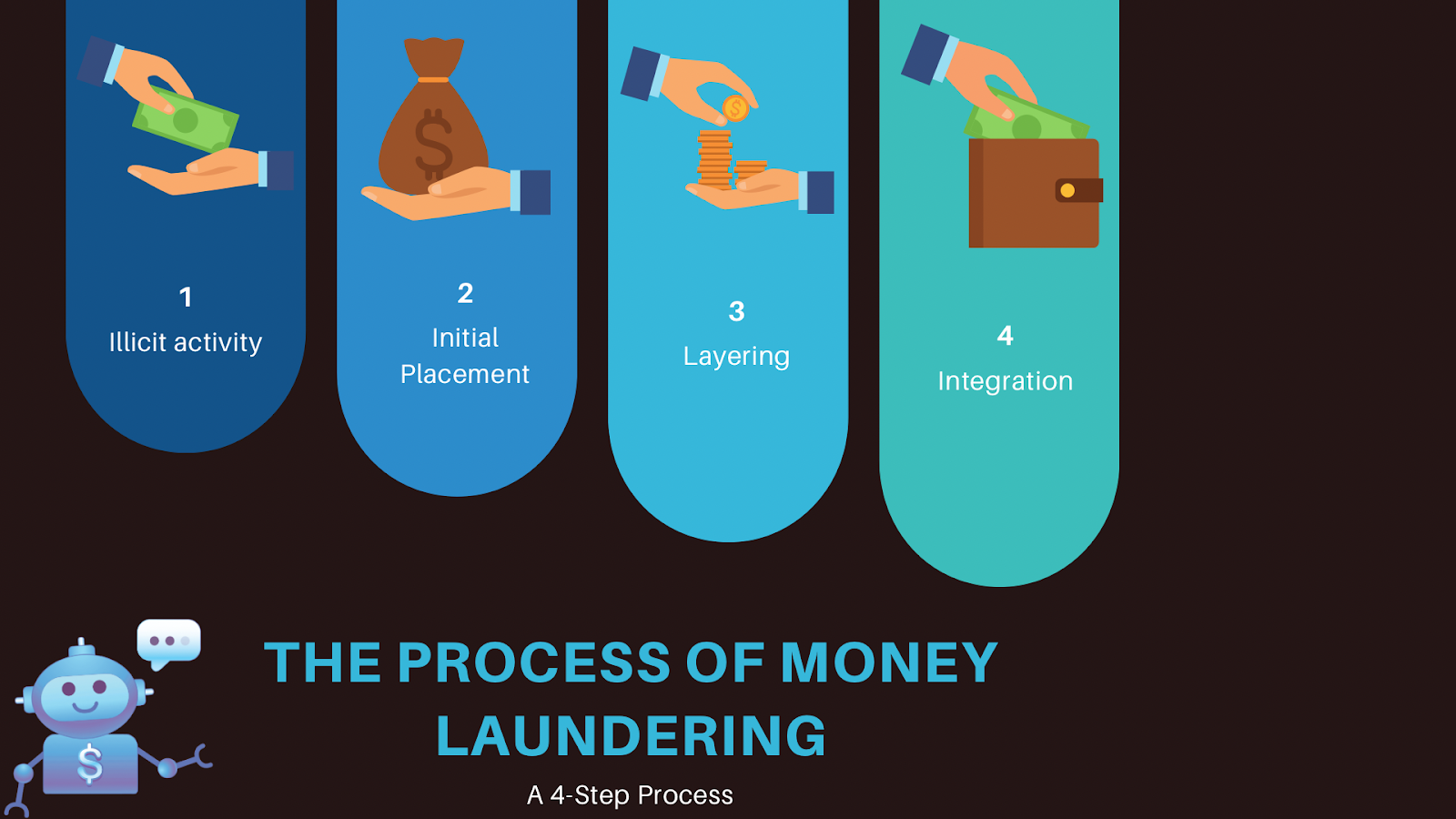
Download Now

Performance of a contract under Dutch Business Laws

0

This article has been written by Dandangi Yaswanth Kumar, pursuing Diploma in Advanced Contract Drafting, Negotiation and Dispute Resolution, and has been edited by Oishika Banerji (Team Lawsikho). 

It has been published by Rachit Garg.

Introduction

A contract is an essential commodity for both corporate entities and normal people. The Dutch Contract Law is governed under the Dutch Civil Code. Dutch contract law is generally regarded as balanced and well-developed. Good faith, reasonableness and fairness are the most essential principles of the Dutch Contract Law and each party must behave according to these principles and follow them as the principle of natural justice. This article discusses the performance of a contract under Dutch business law, highlighting on the governing contract statutes in the Netherlands (Dutch) as well. 

How are contracts formed 

Offer and acceptance are the two most vital elements of a contract under Article 6:217. There should be a valid offer from a party who is capable and there should be acceptance from the other party. An offer can be of four types. They are as follows:

a)   Valid;

b)   Voidable;

c)   Null;

d)   Void in accordance with the rules for more-sided juridical acts.

One party while making an offer must prescribe a reasonable time for the acceptance of the offer made to the other party. In the case of an oral offer acceptance must be given immediately, and in the case of a written offer acceptance can be given instantly or later on according to the agreed time period between the parties. And when a party rejects the offer then the offer does not exist. For example, if ‘A’ orally offers to ‘B’ to sell his book, then, ‘B’ must give his accept to the offer instantly, else the offer will be terminated, and where in case of an offer in written form, ‘B’ can either give his acceptance immediately or later on as and when the time period agreed between both ‘A’ and ‘B’. Where, ‘B’ rejects the offer made by ‘A’, whether an oral or written offer, the offer ceases to exist.  

Position of an offer when a party dies 

If an offer is made, and when either of the party is dead or becomes legally incapable to perform juridical acts, then, the offer does not lose its force and it is also applicable when either of the party is in a fiduciary administration. For example, ‘A’ made an offer to ‘B’ to sell his house, and when either of them is dead the offer stands still and does not cease to exist, and the same happens when either of them becomes legally incapable to perform juridical acts or involved in fiduciary administration.

Delay in acceptance 

When there is a delay in giving acceptance to the offer, the acceptance can be valid. And, when the offeror understands that the other party was not clear of this delayed acceptance, then, the said acceptance is valid, until and unless the offeror informs the same to other party. For example, ‘A’ makes an offer to ‘B’, and ‘B’ gives his acceptance through a letter to ‘A’, then such acceptance can be considered as a valid acceptance, even though there is a delay in giving such acceptance.

And, where in case, when ‘A’ makes an offer to ‘B’, and when ‘B’ gives his acceptance to the offer made by ‘A’ beyond the time period and ‘A’ is aware of this situation and then, the said acceptance is valid when ‘A’ informs the same to ‘B’. When a party makes an offer and the other party must accept the same and if there is or are any changes in the offer or conditions or obligations then it will transcend the previous offer and emerge as a new offer and it is deemed as the dismissal of the previous offer. When the parties perform their obligations, they must be certain and they should be strictly bound to the contents of the contract.

For example, ‘A’ offers ‘B’ to sell his white horse, and when the time arrives for ‘A’ to perform his obligation, he must give his white horse to ‘B’ and should not give any other, and if he does then the offer deemed to be dismissed and in the place of that offer, a new offer will emerges.

What does the performance of the contract mean

Performance of the contract can be understood to be a discharge of parties from their obligations that are said to be assumed by them during the time of formation of the contract. The performance of the contract comes with different types. While it may be part performance, it can also be of substantial performance. In Dutch, the law of the contract is contained in the New Civil Code. This Code spells out different sets of obligations under a contract alongside providing how the same can be discharged. The New Civil Code is a derivation of the Old Civil Code, therefore, the applicability of the New Code is extended to those cases that were subjected to the ambit of the Old Code. 

It needs to be borne in mind that the general rule, as provided under the Civil Code, states that the legal effect of a contract is subject to the agreement entered by the parties in the contract. The contract may also be brought about by means of legal operation, the existence of customs and the need to implement reasonableness and fairness. Agreement between parties is relevant in accordance with that court shall interpret the contract. 

Reasonableness and fairness

The application of the principle of good faith is based on the determination of different obligations of the parties who have entered the contract. The legal duties of the parties are structured in such a way. In this genre, the aspect of reasonableness and fairness is important for implementation along with the underlying principles of the contract. They basically ensure the contract is legally sound and has sustenance before the court of law thereby eliminating any kind of prejudice on the party’s part. If any terms of the contract goes against the principles of reasonableness and fairness, the same is subject to be set aside. 

Estoppel and waiver

The concept of estoppel developed in the case of Central London Property v. High Trees (1947) where the decision was developed by Lord Denning. Unlike waiver, estoppel is not catered for under the Dutch Civil Code. Estoppel can be understood as a common law doctrine that vests a party with fundamental rights and the same is governed by rules. It is in estoppel where the right is created and the same right when lost is known as a waiver. The waiver is a frequent sight in creditor-debtor relationships. The line of difference that can be drawn between waiver and estoppel is not simple and the difficulty that arises is presented by the application of the two. Estoppel is referred to as a doctrine of equity and therefore works in the principles of fairness.

Invalidity of a contract 

Under Dutch Contract Law, a contract may be annulled due to the mistake of parties under the following circumstances:

  1. When one of the party gives false information or misrepresentation;
  2. When the party knew or ought to have known about this mistake and he failed to inform the same;
  3. When both the parties enter into the agreement on the basis of this mistake.

When there is a mistake of representation or another kind, the mistaken party or the other party must inform the same else the contract will be void. When the contract is on the basis of mistake due to its nature then the mistaken party will be barred from rescinding the contract.

For example, ‘A’ offers to ‘B’ that he will sell his car, but the car belongs to ‘C’, here ‘A’ gives false information and represents himself as the owner of the car belonging to ‘C’, and in this case the contract will be annulled on the basis of misrepresentation on the part of ‘A’. A contract is void when either of a party is having no legal capacity, minor, lunatic, or any other obligation prescribed by the law.

For example, ‘A’ offers ‘B’ to sell his bike, but here ‘A’ is a minor, then, the contract between ‘A’ and ‘B’ is void, but ‘A’ enters into a contract with the prior approval or permission from his guardian.

Separate liability or joint and several liabilities of the parties 

Where there are two or more parties entered into a contractual relationship to perform the similar obligation, then, each party will be liable to perform to his part of the obligation and does not perform beyond his obligation, until and unless from the law, common practice or a juridical act results that they are liable for unequal parts or that they are joint and several liable. If the contractual performance is undividable, then, each party will be liable to the whole obligation, like if a partner is liable for the whole debt made by another partner in a partnership firm.

Breach of a contract

Under Dutch Contract Law breach of contract is referred to as the non-performance of a contract or contractual obligations. There are certain remedies for non-performance or breach of a contract, that the failure in the performance of a contract is divided into two types. They are

  1. Attributable failures;
  2. Non-attributable failures.

Attributable failures

When a party fails to perform his obligation as mentioned in the contract then, it is considered that the contract is breached and the former will be liable to pay the damages to the other party. For example, ‘A’ make a contract with ‘B’, that he will supply 100 oxygen cylinders with good quality to ‘B’ within 5 days, and later, ‘A’ supplied the 100 oxygen cylinders within the stipulated time but with poor quality then, ‘A’ is liable to pay damages to ‘B’ or not fulfilling the contractual obligation.

Non-attributable features 

When a party is hindered from performing his contractual obligation, and there is an impossibility in performing the contractual obligation like Force Majeure, Tsunami, earthquake, lightning, Covid-19, etc., then the other party may ask either to perform the contractual obligation or to terminate the contract.

For example, ‘A’ agrees to sell his horse to ‘B’ and executes a contract, and in the contract ‘A’ mentioned he will deliver the horse within 10 days of the enforcement of the contract, and just before the day of delivery there was a huge storm and the horse died due to lightning. In this instance, ‘B’ can either ask ‘A’ to deliver him another horse or to terminate the contract.  

Remedies for breach of a contract 

When a party fails to perform his contractual obligation i.e., attributable failure, then the other party can seek the following remedies. They are:

a)   Specific performance;

b)   Specific performance with damages;

c)   Rescission of the contract;

d)   Cancellation and restitution;

e)   Termination of a contract with damages.

Specific performance

When a party fails to perform his contractual obligation then, the other party may approach the court of law and seek an order for specific performance of the contract i.e., the party may ask the court to make the failed party perform his contractual obligation.

Specific performance with damages

When a party breaches the contract, the other party may approach the court of law and seek an order for specific performance of the contract with damages due to the failure of the contractual obligation on part of the latter.

Rescission of the contract

When both parties agreed to terminate the contract agreed by both of them, then both parties are not obliged to perform the contract. And if any of the parties breaches the contract, then, the other party may terminate the contract and may or may not ask for the damages.

Cancellation and restitution

When a party breaches the contract, then, the other party may terminate the contract and may sue the former for restitution if the latter has given some benefit to the former.

Termination of a contract with damages

When a party breaches the contract, then, the other party may terminate the contract and may sue the former for damages.

Conclusion 

As we come to the end of this article, it is ideal to state that the performance of a contract is made either wholly or partly. It is the court that gives meaning to the contract by means of interpreting them in accordance with the party’s terms. Performance of the contract is necessary for executing any contract whatsoever, provided the same is done on grounds of reasonability and fairness. 

References 

  1. https://studycorgi.com/the-dutch-business-law-the-performance-of-a-contract/.

Students of Lawsikho courses regularly produce writing assignments and work on practical exercises as a part of their coursework and develop themselves in real-life practical skills.

LawSikho has created a telegram group for exchanging legal knowledge, referrals, and various opportunities. You can click on this link and join:

https://t.me/lawyerscommunity

Follow us on Instagram and subscribe to our YouTube channel for more amazing legal content.

Download Now

Impact of GST on the Indian economy

0

This article has been written by Manoj Purohit and has been edited by Oishika Banerji (Team Lawsikho). 

This article has been published by Sneha Mahawar.​​ 

Introduction

Before 2017, the people of India used to pay several indirect taxes for every transaction, such as purchasing, selling, manufacturing, retailing, marketing, etc, in the form of Value Added Tax (VAT), excise duty, service tax, central sales tax, entertainment tax, luxury tax, sales tax, etc. Former Union Finance Minister, P. Chidambaram, in his budget speech for 2006-07 broached the concept of ‘Goods and Service Tax’ (GST). On 29th March 2017, the GST Bill was passed by both houses of the parliament, followed by which on 1st July, 2017, the same had come into effect. GST is a single indirect tax proposed to replace all other indirect taxes, thereby reducing the burden of paying different indirect taxes. The introduction of GST facilitated the elimination of the cascading effect of indirect taxation and the concept of double taxation, thereby introducing a uniform regime governing indirect taxation in India. GST has been responsible for pushing the economy a step closer to a common market that involves the free movement of capital and services, making room for doing business in an easier way. This article aims to provide insight as to how GST has had an impact on the Indian economy and deliberates upon the need to revise GST rates and amendments that need to be made.

Impact of GST on the Indian economy

When studying the impact of GST on the Indian economy, it is pertinent to note that both sides of the coin (pros and cons) need to be taken into account. The primary objectives with which GST was introduced are: 

  1. Elimination of the confusion surrounding the number of indirect taxes that were required to be paid by the taxpayers. This also involves the removal of the cascading effect of taxes. 
  2. GST aims to increase the number of taxpayers in the nation, which will help in the development of the nation’s economy. 
  3. The promotion of a corruption-free nation and diminishing tax evasion rates are also counted as objectives of GST. 

The introduction of GST had an impact on the Gross Domestic Product (GDP) of the nation. The growth rate of GDP was 8.95%, which was a 15.54% increase followed by a latter decline of 10.33%, 2.72% and 0.34% in 2019, 2018 and 2017, respectively. Key reasons for the growth of the GDP of the nation after the introduction of GST are summarised in the following pointers:

  1. The various tax rates on a single transaction were removed and a uniform taxation system was introduced by which tax implementation became simplified. It seemed simple across the nation.
  2. It reduced the cost of transactions. For example, initially, there were more than 10 types of taxes that were levied on a single transaction. People were facing problems and business was not booming because of this.
  3. After the introduction of GST tax payment got simplified and people were encouraged to take up business by paying a unified tax. Even though the tax amount that was paid before and after GST did not have much difference it felt simpler for people to pay a single tax in place of more than ten types of taxes.

As a result, more goods and services were manufactured in the country leading to an increase in net exports. If a country exceeds its exports it means that the country has a trade surplus with a high level of output of goods from manufacturers by which employment is increased. When the country is exporting more it also initiates the funds flow into the economy thereby contributing to economic growth. This has made foreign exchange rates more favourable. 

Positive Impact of GST on the Indian economy  

It is significant to know that GST is levied at the stage of supply of goods and services across India, thus, GST is levied on the taxpayer when the goods or services are consumed. There are three types of GST-

  1. CGST (Central Goods and Services Tax) which is collected by the Central Government on the intrastate sale of goods and services. 
  2. SGST (State Goods and Services Tax) which is collected by the State Government on intrastate sales.
  3. IGST (Integrated Goods and Services Tax) is collected and shared by both central and state governments when the supply of goods and services is supplied from one state to another. It also applies to imports and exports.

The positive impacts of GST on the Indian economy have been listed hereunder:

  1. Simplified tax structure: Single tax and easier calculations of the same have made GST provide India with a simple tax structure. The buyer upon paying for the product purchased, gets a clear idea as to what amount of tax he has paid. 
  2. Support for small and medium enterprises: It is to be noted that the GST amount to be paid depends on the annual turnover and size of the firm. This has been a reward for small and medium enterprises. 
  3. More funds for production: GST has been successful in reducing the total taxable income, thereby adding to more funds for production. 
  4. Enhanced operations throughout India: There has been a boost in operation throughout India because of the single unified tax system making it easier for goods transportation across India. 
  5. Increased volume of export: Reduction in customs duty on goods have facilitated a rise in the volume of export. Production units have also been saving money while producing goods following the introduction of GST. 

Negative impact of GST on the Indian economy

The negative impacts of GST on the Indian economy have been listed down hereunder: 

  1. Negative impact on the common man: GST being an indirect tax is recovered by means of rising the selling price. This in turn affects middle and lower-middle-class people and therefore has a negative impact on the common man. 
  2. Negative impact of GST on the market: In general, firms continue to face issues with input tax credit systems thereby failing to manage working capital requirements in an effective way. This is what led to GST having a negative impact on the market. 
  3. Negative impact of GST on unemployment: Following the implementation of GST (July-2017), the unemployment rate had risen from 3.39 to 6.06 % during the period July 2017 to February 2018 in India. With business building being easier, self-employment is on rise but only for those who can afford it. 

Impact of GST on Consumer Price Index (CPI)

Consumer Price Index or CPI signifies the measure of changes in the price level of a basket of consumer goods and services bought by households. The impact of GST can be calculated by taking into consideration the total CPI. The CPI was expected to be around 3.24% when the Government of India had introduced GST in the nation. The Government assumed that purchasing power of the consumers shall increase because they would be paying only unified tax and not different taxes on goods and services. In reality, the CPI turned out to be 4.61%. By this we can say that the CPI moved up by 1.37%.

But the CPI cannot be considered as the only measure to indicate the effects of GST on the economy as it can also be considered as one of the reasons where the economy’s purchasing power might have decreased. GST has generated a huge income for the Government in direct as well as indirect ways. It is ideal to note that statistics do indicate that the purchasing power of consumers has been affected after the introduction of GST. Thus, inflation rates in the economy are increasing. This might be due to various reasons and not just because of the concept of GST, as it has various advantages for the economy. GST has proved to be beneficial to the economy in various other ways and has proved to be effective to the economy.

Impact of GST on the common man’s pocket

With the introduction of GST in the Indian taxation system, purchasers of goods and services now have to pay more taxes on goods and services they buy. But, the long-term benefits of GST for the common man are plentiful. The decrease of taxes that are payable by consumer goods producers like FMCG and the automotive sector, led to a decrease in commodity prices. This further allowed more consumers to avail its services.  A fall in prices is directly proportional to surge in demand thereby boosting the production cycle in terms of profit gain. Both the buyer and the seller in such scenarios get to secure a fair monetary share thereby further contributing to economic growth. Further, a production boost makes room for more employment and an increase in income. With the advent of GST, scope for black money and corruption practices have been relatively curbed thereby securing the common man’s money in India.  

Should GST rates be revised

The Government of India has been vested with the authority to revise the rates of GST from time to time according to the conveyance of the people. The need for GST rates to be revised can be taken into consideration on the following products like the daily essentials. Processed food, almonds, preparation of vegetables, nuts, fruits, other parts, ghee, and butter have tax rates of 12% which can be reduced because they are essential for human life. The tax rates on luxuries can be increased because the consumers would not look at the price bands before purchasing luxuries. It can be increased on tobacco as it is harmful to health and is tax-yielding goods.

The new GST rates introduced in India have been categorised into four different groups, namely, 5% GST, 12 % GST, 18% GST, and 28 % GST. The same has been represented in the table hereunder: 

ProductsTaxation rates
MilkEggCurdLassiUnpacked foodgrains and paneer0%
SugarPackage PaneerCoffee BeansDomestic LPGSkimmed MilkCashew Nuts5%
ButterGheeProcessed FoodAlmondsMobile12%
Hair OilCapital GoodsToothpastePastaComputers18%
Small carsConsumer Durables (AC & Fridge)Luxury and Sin Items28%

Currently, consumers have to pay more tax on a majority of goods and services they purchase. It is likely that the government by means of taxes, will make more money due to an increase in the number of taxpayers. The Government’s fiscal deficit is also likely to stay in check. Exports would also rise along with the rise of FDI (Foreign Direct Investment). 

Conclusion

GST has both positive as well as negative impacts on the economy. It facilitates economic growth by being transparent and creates loss over a few sectors by the increased prices of the commodity but the ease of doing business has been helped by a unified taxation system in the country. Thus, how GST is viewed in terms of the Indian economy depends on person to person. 

References 


Students of Lawsikho courses regularly produce writing assignments and work on practical exercises as a part of their coursework and develop themselves in real-life practical skills.

LawSikho has created a telegram group for exchanging legal knowledge, referrals, and various opportunities. You can click on this link and join:

https://t.me/lawyerscommunity

Follow us on Instagram and subscribe to our YouTube channel for more amazing legal content.

Download Now

Bayer Corporation vs Natco Pharma Ltd : a case analysis

0

This article has been written by Nishant Kumar, pursuing Diploma in Advanced Contract Drafting, Negotiation and Dispute Resolution and has been edited by Oishika Banerji (Team Lawsikho). 

It has been published by Rachit Garg.

Introduction

Bayer corporation vs Natco pharma Ltd (2013) is a landmark case in the history of the long-standing disputes over compulsory licensing in the pharmaceutical sector of India. Compulsory licensing is considered to be the grant of licence to a third party for a patented drug by the government without the consent of the patentee. 

Bayer corporation is a global pharmaceutical company, it deals with the making of Aspirin drugs. Whereas Natco pharma is an Indian pharmaceutical company that deals with the production and manufacturing of cheap and affordable drugs. The reason for the dispute between the two companies was a drug named Nexavar “Sorafenib tosylate” which is used to treat kidney cancer. 

In this case, it has been discussed how Natco pharma filed an appeal for the grant of compulsory licence for the drug “Nexavar” of Bayer corporation before the Intellectual Property Appellate Board (‘IPAB’) and after a long range of disputes at the end, India’s first compulsory licence was granted to Natco pharma. This article provides a case analysis of this landmark decision. 

Bayer Corporation vs Natco Pharma (2013)

Bayer Corporation vs Natco Pharma (2013) was the first case in India in which a compulsory licence was granted to Natco Pharma for a Kidney cancer drug named “ Nexavar”. Natco’s application for a compulsory licence for Nexavar was filed before the Controller General of Patents in 2011 in accordance with Section 84(1) of the Indian Patents Act, 1970. The judgement that was delivered on March 9, 2012 stood in favour of Natco as the licence was granted and against the same, Bayer had appealed before the IPAB. Bayer sought a stay on the decision of the Controller but the same was not entertained as IPAB’s decision stood in alignment with that of the Controller. 

Brief facts of the case 

Following the grant of the compulsory licence, Natco was directed by the Controller to manufacture and sell the patented drug thereby paying a royalty at 6% of its net sales of the patented drug under its brand name, to the original patent holder. The drug was allowed to be sold at a price of Rs.8800/- for 120 tablets for a month-long treatment. The grant of compulsory licence to Natco was considered to be non-exclusive, non-assignable and for the balance term of the patent. Being aggrieved to the afore-mentioned order, the appeal was sought by Bayer before the IPAB who on 4 March 2013 had upheld the order dated 9 March 2012 of the Controller thereby granting the compulsory licence to Natco. The only difference that was noticed in the judgement was a rise in the royalty payable by Natco to the petitioner (6 to 7% of the sales of the patented drug), under its brand name. The timeline of events that have taken place concerning this case has been provided hereunder: 

  1. 1990: A drug named Sorafenib Tosylate was invented by Bayer Corporation.
  2. 1999: A patent application was made by Bayer in the United States.
  3. 2000: Bayer filed a PCT International Application (Patent Cooperation Treaty).
  4. 2005: Bayer had launched the drug (Gleevec) and was selling it under the name “Nexavar”.
  5. 2008 (March): Patent was granted to Gleevec in India to Bayer.
  6. 2010: The generic version of the drug was being sold by another drug manufacturer, M/S Cipla.
  7. 2011 (July): Natco had then applied for a compulsory licence before the Controller of Patents to manufacture and sell a generic version of Nexavar in accordance with Section 84(1) of the Indian Patent Act, 1970 (amended in 2005).
  8. 2012 (March): Natco was granted the first compulsory licence in India thereby initiating the sale of a generic version of Nexavar.
  9. 2012: Further, in the same year, Bayer had appealed against the decision of the Controller, before the IPAB, which further went before the Bombay High Court with the contention that the order delivered stands in detriment to the international patent system thereby being responsible for endangering research work.

Issue of the case

The issue of this case was whether compulsory licences be granted to a generic medicine producer while the same is already patented and used by a registered user. The issue had resulted in many big questions before the pharmaceutical sector as have been pointed out hereunder.

  1. Whether Bayer Corporation had failed to abide by the reasonable requirements of the public with regard to the drug?
  2. Whether Nexavar was made unavailable to the public at a reasonably affordable price, thereby making it accessible?

As we have understood previously, the concept of compulsory licence has been given a green signal under the Trade related aspects of Intellectual property rights agreement (TRIPS), which is an international agreement establishing a uniform series of rules and regulations concerning intellectual property rights. The grant of compulsory licence reflects proof of the exception that has been introduced under the TRIPS agreement. In accordance with the patent laws in India, the provisions of compulsory licensing range from Sections 84, 86, 89 to 93. This regulation has been given room to aid the government in improving access to the invention that is being enjoyed by the patent holder. The compulsory licence also helps in limiting the misuse of the monopoly rights that are attained by the patent holder upon being conferred with registration for his invention. 

Contentions of the parties 

The arguments that were extended by the petitioner and the respondent, have been provided hereunder.

Arguments submitted by the petitioner 

Natco Pharma argued that Bayer was failing in its arguments under Section 84 (b) of the Indian Patent Act,1970. This was because the company was offering the drug at an unaffordable high price to the public thereby restraining access to the same. Natco Pharma was of the opinion that if they are granted a compulsory licences, they can resolve the issue of accessibility and affordability when it comes to public need and welfare in terms of medicines. 

Arguments submitted by the respondent 

The argument from the side of Bayer corporation was that they believed that this whole trend of issuing compulsory licences violates Section 83 of the Indian Patents Act,1970 as it degrades research and development. They not only believe this to be against the nature of businesses but they also believed it to be against many international treaties as it violated Article 27.1 of the TRIPS agreement of which India is also a part. Another prime contention raised by the respondent was a restriction in the process of research and development that will be initiated if a compulsory licence is given its way. 

Judgement of the case

Ratio Decidendi – “The court ‘held’”

The final judgement of the controller of the patents was to grant a compulsory licence to Natco Pharma for the drug “Nexavar”. The controller gave his judgement under Section 84 of the Patents Act of 1970 because Bayer wasn’t able to meet any of the requirements of the section. 

  1. The first requirement given in Section 84 (1)(a) was not being fulfilled as the reasonable requirements of the public were not being fulfilled with regard to this drug.
  2. The second requirement given in Section 84(1)(b) was the main issue as the price of the drug was unaffordable by the majority of the public and this is a big issue to address as in India the biggest problem is of affordability as only a very minor percentage of the population is actually privileged to afford these costly medicines and benefit from them while the majority of them cannot. 
  3. The third requirement given in Section 84(1)(b) that wasn’t fulfilled was that the patented invention shall be worked in the territory of india.

Also, the controller rested heavy weight on Article 5(A)(2) of the Paris Convention to justify his reasoning i.e each country has the right to grant a compulsory licence to benefit the general public. There were also many requirements set by the controller which cannot be breached by Natco, for example, the monthly treatment price of the drug should not exceed the limit of Rs.8880/-. Bayer has to pay 7% of the medicines net sale etc. 

Obiter dicta

The court observed that there would always be a play of Audi Alteram Partem i.e both sides would be heard and the IPAB also stated that before filing for the compulsory licence both parties should make significant efforts and settle terms for a potential voluntary licence. The IPAB also made a remark when CIPLA was in the picture that the sales of the first party can only be shown and not of any other party. 

Conclusion

There is no doubt that this was a landmark case and it was focused on the welfare of the people but was the problem really solved from its roots? Didn’t it affect India in any negative manner? Wouldn’t it influence foreign investments in India and hamper the economic condition?

These are all the questions that were left behind with this judgement. Because the main problem wasn’t just granting compulsory licences to the third parties it was to ensure that in each and every circumstance the benefit of the people and the society is favoured. Suppose in this case the licence was granted to Natco pharma but will now won’t it affect their will to spend tons of money in research and development and create a new drug so that its licence is also given to some other company. So the problem here to be solved was to create a balance between the welfare of the people and also the economic interests of the country. 

After all this lets put some light on the “Doha Declaration”. The aim of the Doha Declaration was to achieve reform in the international trading system by reducing trade barriers. This case was the one which motivated others to file for compulsory licences but to date, we have not seen a second in that race. 

References

  1. http://nujslawreview.org/wp-content/uploads/2016/12/mansi.pdf.
  2. https://www.linkedin.com/pulse/natco-pharma-ltd-vs-bayer-corporation-landmark-case-mukesh-kumar/

Students of Lawsikho courses regularly produce writing assignments and work on practical exercises as a part of their coursework and develop themselves in real-life practical skills.

LawSikho has created a telegram group for exchanging legal knowledge, referrals, and various opportunities. You can click on this link and join:

https://t.me/lawyerscommunity

Follow us on Instagram and subscribe to our YouTube channel for more amazing legal content.

Download Now

Section 152 of the Companies Act 2013

0

This article is written by Vishwendra Prashant, a student of BBA LL.B at ICFAI University, Dehradun. This article discusses the different positions of the directors, and the appointment of directors under Section 152 of the Companies Act 2013. It also deals with some important rules that companies must follow for appointing directors, along with case laws.  

This article has been published by Sneha Mahawar.​​

Introduction

Companies are artificial beings, invisible, intangible, and exist only in contemplation of law. They have neither minds nor bodies. However, companies act through living persons as they have knowledge, objectives, and hands. Therefore, human agents must entrust themselves with the company’s business. Such human agents are known as directors. 

In common parlance, directors determine and implement the company’s policies. The Companies Act 2013 does not contain an exhaustive definition of the term ‘director’. 

Who is a director

As per Section 2(34) of the Act, directors are members of the board of directors in the companies. The board of directors means the collective body of directors of the companies [Section 2(10)]. Moreover, Section 149 provides that private companies must have at least three directors, while private companies must have at least two directors. One person companies have at least one director. Companies may have a maximum of 15 directors. Companies have to pass a special resolution in case of more than 15 directors.

A director is a professional individual hired by the company to direct its affairs. But, in the case of Moriarty v. Regent’s Garage Co. (1921), the Court held that directors are not servants of the companies. They are the officers of the companies. 

Position of a director

Directors may act as agents, trustees, and managing partners.

Directors as agents

The landmark judgment in Ferguson v. Wilson (1866) acknowledged that the directors are agents of companies as per law. The Court said that companies are not living persons; only directors can run the companies. Moreover, the relationship between directors and companies is like principals and agents.

When the directors sign on behalf of companies, the companies are liable, not the directors. In the case of Kuriakose v. PKV Group Industries (2002), the director was not liable in a suit against a private chit-fund company. Moreover, attachment of the managing director’s property was not permissible. 

The directors are the agents of companies and not of their individual members.

Directors as trustees

Directors are not exactly trustees, yet they act as trustees because:

  1. They are trustees of companies’ money over which they exercise control, properties, and powers. They have to refund any money improperly paid away. Moreover, they are bound to exercise their powers in the interest of companies and shareholders.
  2. Directors manage the affairs of the companies for the well-being of shareholders. Their duty is to perform wholly and entirely because the nature of their office is an office of trust.
  3. All their powers are powers in trust. They must exercise such powers in good faith for benefit of companies as a whole. These powers are as follows:
  1. To make calls;
  2. to forfeit shares;
  3. to issue further capital;
  4. general powers of management;
  5. to accept or refuse a transfer of shares.

The case of Percival v. Wright (1902) pointed out that directors are trustees of companies and not shareholders. Moreover, the case of Peskin v. Anderson (2000) reiterated that directors are not agents or trustees of shareholders and have no fiduciary duties to them.

Directors as organs of companies

Directors and companies are like brains and bodies respectively. However, in the case of Bath v. Standard Land Co. Ltd. (1910), the Court held that the board of directors is the brain of the companies and companies act only through them. 

Directors and managers represent the directing minds or wills of the companies. They control the activities of the companies. As per the law, their state of mind is the state of mind of companies. Therefore, the acts or intentions of directors and managers are the acts or intentions of the companies.

Appointment of a director as per Section 152 of the Companies Act 2013

Section 152 of the Companies Act 2013 came into force on 1st April 2014. As far as the appointment is concerned, this Section deals with the following:

  1. Appointment of first directors; and
  2. appointment of directors at general meetings.

Appointment of first directors

Section 152(1) of the Act provides for the appointment of the first directors of the companies. The first directors hold their offices from the date of formation of the companies.

As per Section 152(1), the Articles of Association of Companies have provisions through which the companies appoint the first directors. Where the articles do not provide such provisions, the companies consider the following persons as first directors:

  1. One-Person Companies: Individuals being members.
  2. In other circumstances: Individuals who subscribe to the Memorandum of Associations of companies.

The first directors hold their offices until the members appoint directors as per the provisions of Section 152.

Where, for any reason, for example, death, the first directors do not assume their offices, the subscribers of the Memorandum (who will then be only members) have to convene meetings for the appointment of directors.

Appointment of directors at general meetings

According to Section 152(2), the companies appoint directors in general meetings except where the Act provides otherwise.

However, in the case of public companies, shareholders appoint two-thirds of the total number of directors. They appoint the remaining one-third of the members as per the Articles of Association in general meetings.

In the case of Swapan Dasgupta v. Navin Chand Suchanti (1988), the Calcutta High Court held that the Articles of Association of private companies prescribe methods to appoint directors. If the articles do not specify such methods, the shareholders appoint directors in general meetings. 

Applicable Rules

As far as the appointment of directors is concerned, these are the rules that the companies have to follow:

  1. Persons who want to be directors of any company must have Director Identification Numbers (DINs). Otherwise, they are not eligible to be directors [Section 152(3)].
  2. Companies must follow the Companies (Appointment and Qualification of Directors) Rules, 2014. The Rules of 2014 also provide the procedures for the allotment and revocation of DINs. 
  3. All the proposed persons who want to be directors must furnish their DINs and declarations that they are eligible to become directors under the Act. They furnish such information in general meetings. [Section 152(4)]
  4. The persons appointed as directors must give consent to hold offices as directors. Otherwise, they are not entitled to act as directors. Moreover, they must file such consent before the Registrars within 30 days of their appointment. [Section 152(5) of the Companies Act, 2013 & Rule 8 of the Companies (Appointment and Qualification of Directors) Rules, 2014]
  5. If the companies hold general meetings for the appointment of independent directors, there would be explanatory statements, in addition to the notices of meetings, that the persons fulfill all the conditions given in the Act for such appointment. [Proviso to Section 152(5)]
  6. As per Rule 3 of the Companies (Appointment and Qualification of Directors) Rules, 2014, all the listed companies and public companies must appoint at least one woman director.
  7. Rule 9 deals with applications for allotment of DINs before appointment in the existing companies.
  8. Rule 17 provides that all companies have to keep registers of their directors. These registers must have particulars such as DINs, full names of directors, their parents names, their spouses’ names (if married), etc.

Retirement of directors

According to Section 152(6)(a), the Articles of the Association of Companies prescribe the retirement of all directors at the Annual General Meetings (AGMs). Otherwise, the directors of public companies retire through rotation. At least two-thirds of the total directors (i.e., rotational directors) are liable for retirement. They may be eligible to be directors in general meetings. 

The remaining directors are appointed as per the Articles of Association in general meetings [Section 152(6)(b)].

One-third of the rotational directors retire annually in Annual General Meetings (AGMs). If their number is neither three nor multiple of three, the number nearest to one-third, retire from office. [Section 152(6)(c)]

Examples:

  1. Let’s consider that Company ‘X’ has 9 directors. Then, 

Number of directors liable to retire by rotation (rotational directors)= ⅔*9= 6

Number of directors to retire= ⅓*6= 2

  1. Let’s consider that Company ‘Z’ has 12 directors. Then,

Number of rotational directors= ⅔*12= 8

Number of directors to retire= ⅓*8= 2.66= 3 (Upper round off) 

  1. Let’s consider that Company ‘C’ has 15 directors. Then, 

Number of rotational directors= ⅔*15= 10

Number of directors to retire= ⅓*10= 3.33= 3 (Nearest round off) 

The directors who were appointed first and held their offices for the longest period will retire first in the AGMs. When persons were appointed as directors on the same day, they would retire through mutual agreements or a lot. [Section 152(6)(d)]

Examples:

  1. Let’s consider that a company has three directors A, B, and C. ‘A’ was appointed on 30th November 2020. ‘B’ was appointed on 15 December 2020. ‘C’ was appointed on 25th January 2021. Here, director ‘A’ will retire.
  2. Let’s consider that there are three directors X, Y, and Z. ‘X’ and ‘Y’ were appointed on 1 March 2022. ‘Z’ was appointed on 4 March 2022. In this case, directors ‘X’ and ‘Y’ will have to decide through mutual agreement or a lot for retirement.

The Delhi High Court in B.R. Kundra v. Motion Pictures Association (1976) held that directors must not prolong their tenures by not holding meetings on time. However, retiring directors are eligible for re-election.

Reappointment of directors

Companies may fill the vacancies by appointing the retiring directors or other persons in the same AGMs where directors retire. [Section 152(6)(e)]

As per Section 152(7)(a), the general meetings may also resolve that the companies would not fill the vacancies. If the meetings do not decide anything, companies have to adjourn the meetings for a week. If a national holiday is on that day, the companies hold meetings the next day.

According to Section 152(7)(b), if the companies do not make appointments at the reassembled meetings also, nor there are resolutions against the same, the companies would re-appoint the retiring directors except in the following cases:

  1. Where the companies put to vote for appointing a particular director, but they lost the resolution.
  2. Where the retiring directors have, in writing, addressed the companies or its Boards and expressed their unwillingness to continue.
  3. Where the retiring directors incur disqualifications.
  4. Where specific or ordinary resolutions are necessary for their appointments through any provisions of the Act. 
  5. A motion to appoint two or more persons as directors by a single resolution, if passed without unanimous consent, being void under Section 162, shall not have the effect of reappointment of rotated-out directors.

The explanation to sub-section (7) says that for this section and Section 160, retiring directors mean directors retired by rotation.

Disqualifications of directors

According to Section 164 of the Companies Act 2013, a person is incapable of being a director in the following cases:

  1. He is of unsound mind. The Court of competent jurisdiction must certify this fact;
  2. he is an undischarged insolvent;
  3. he has applied for adjudication as an insolvent and his application is pending;
  4. he has committed any offences that are against moral values. Or, he is punishable by at least six months of imprisonment. Or, five years must not elapse from the date of the expiry of the sentence. Moreover, if he is punishable by at least seven years of imprisonment, he can not be a director in any company;
  5. the Court has passed an order to disqualify him from being a director;
  6. he has not paid his calls in respect of any shares of the company held by him, and six months have elapsed from the date fixed for payment;
  7. he is a convict of an offence dealing with party transactions under Section 188 during the last five years;
  8. he does not comply with the requirement of the Director Identification Number. [Section 152(3)].

Related Case laws

Ramaswamy Iyer v. Brahamayya & Co. (1966) 1 Comp LJ 107

In this case, the Madras High Court held that the directors are trustees for the companies. They are liable as trustees for the following:

  1. Power of applying funds of the companies; and
  2. misuse of their powers.

Cardamom Mktg Co. v. N. Krishna Iyer, (1982) 52 Comp Cas 299 (Ker.)

In this case, the Court held that the meetings of the companies must be validly constituted.

Vineet Kumar Mathur v. Union of India [1996] 20 CLA 213 (SC)

In this case, the Supreme Court held that directors as agents make the companies liable even for contempt of Court.

Indian Overseas Bank v. RM Mktg (P) Ltd., AIR 2002 Del 344

In this case, the Court held that if the companies take loans and the directors have not given any personal guarantees to the creditors, the directors are not liable.

H.P. State Electricity Board v. Shivalik Casting (P.) Ltd. [2003] 115 Comp Cas 310 (H.P.)

In this case, the Court held that if the directors furnish sureties in their capacities and not for and on behalf of companies, then the companies cannot be sued for amounts of sureties.

Dale & Carrington Investment (P.) Ltd. P.K. Prathapan [2004] 54 SCL 601 (SC)

In this case, the Court held that directors have to act with utmost good faith, care and skill, and due diligence in the interest of the companies.

Usha Chopra v. Chopra Hospital (P) Ltd., (2006) 130 Comp Cas 483 (CLB)

In this case, the Court held that incorporation makes subscribers the first directors of the companies. The first directors, howsoever appointed, hold offices only up to the date of the first Annual General Meetings of the companies.

Raj Shekhar Agrawal v. Union of India, 2015 SCC OnLine Del 12357

In this case, the Court held that there are procedures for appointing directors. Even if directors are not appointed by following such procedures, promoters would have no right to act as directors.

Conclusion

The directors of the companies are like their brains. They play vital roles in the growth and development of companies. However, the success of the companies depends upon the competence and integrity of the directors. Therefore, the management of companies should be in the proper hands.

The companies appoint the directors in the general meetings, and they retire in the Annual General Meetings. In other words, directors retire through rotation or after completion of the stipulated term. Therefore, the companies inform their directors about the retirement process.

However, companies reappoint retiring directors based on their performance. They may reappoint new directors as well to fill vacancies.

Frequently Asked Questions (FAQs)

What are private and public companies?

Section 2(68) of the Companies Act 2013 defines private companies. As per the Section, these companies have a minimum paid-up share capital of Rs 1 Lac. They don’t have the right to transfer shares. Moreover, these companies have a minimum of 2 members and a maximum of 200 members.

Section 2(71) of the Act defines public companies. As per the Section, public companies are those companies that are not private companies. They can transfer shares. Moreover, these companies have a minimum of 7 members, and there is no limit to the maximum number of members.

What are the Articles of Association (AOA) and Memorandum of Association (MOA)?

Section 2(5) defines the articles of the companies. However, Articles of Association are the bylaws or rules and regulations that govern the internal management of the companies. They are like the partnership deed in a partnership. They set out provisions for how companies would run.

Section 2(56) defines the memorandum of the companies. The Memorandum of Association contains the name, address, capital, objects of the companies and liabilities of their members. Therefore, it is the primary document of the companies. It is also called the Charter or Constitution of the companies. 

What do you mean by general meetings? What are the types of general meetings? Explain in brief.

The Companies Act 2013 has no definition of general meetings. However, companies conduct such meetings for transacting lawful businesses, voting, entertainment, etc.

There are two kinds of general meetings:

  1. Annual General Meetings

Section 96 of the Act deals with Annual General Meetings (AGMs). All the companies must call at least one meeting of their shareholders each year. The gap between two consecutive AGMs should not be more than 15 months. A failure in this respect would invite consequences under the Act.

The shareholders should come together once a year to review the functioning of the companies. Moreover, some directors would retire and come up for re-election.

  1. Extraordinary General Meetings

Section 100 deals with extraordinary general meetings. All general meetings other than AGMs are known as extraordinary general meetings (EGMs). The Board may, whenever it thinks fit, call such meetings. The EGMs also become necessary on requisition.

What are independent directors?

According to Section 149(6), independent directors are directors other than managing directors, whole-time directors, or nominee directors. Such directors don’t have relationships with the company’s directors. They hold offices for five years on the Board. They remain eligible for reappointment when the companies pass special resolutions.

What are rotational and non-rotational directors?

Rotational directors are those directors who retire by rotation in AGMs every year. The companies appoint such directors in the general meetings.

Non-rotational directors are those directors who do not retire by rotation. Independent and nominee directors are non-rotational directors. The companies appoint such directors in the general meetings and according to the AOA.

What are the procedures for the resignation of directors?

The directors who want to resign must give notice to their companies. According to Rule 15 of the Companies (Appointment and Qualification of Directors) Rules, 2014], the companies have to inform the Registrar within 30 days of receipt of the notice. Moreover, the companies have to post the information on their websites.

According to Rule 16, the directors must forward copies of the resignation to the Registrar within 30 days of resignation. The notice of resignation must have reasons for the same.

What are Director Identification Numbers (DINs)? What is the procedure for the allotment of DINs?

Director Identification Numbers (DINs) are the identification numbers allotted to individuals who want to be directors. They have to make applications as stated in Sections 153 and 154 of the Companies Act 2013.

The Central Government allots DINs under Section 154 within one month of receipt of the applications under Section 153.

What is the validity of DINs? How many DIN can a director have?

DINs have lifetime validity. A director can have only one DIN. However, he can become the director of two or more companies. 

References 


Students of Lawsikho courses regularly produce writing assignments and work on practical exercises as a part of their coursework and develop themselves in real-life practical skills.

LawSikho has created a telegram group for exchanging legal knowledge, referrals, and various opportunities. You can click on this link and join:

https://t.me/lawyerscommunity

Follow us on Instagram and subscribe to our YouTube channel for more amazing legal content.

Download Now
logo
FREE & ONLINE 3-Day Bootcamp (LIVE only) on

How Can Experienced Professionals Become Independent Directors

calender
28th, 29th Mar, 2026, 2 - 5pm (IST) &
30th Mar, 2026, 7 - 10pm (IST).
Bootcamp starting in
Days
HRS
MIN
SEC
Abhyuday AgarwalCOO & CO-Founder, LawSikho

Register now

Abhyuday AgarwalCOO & CO-Founder, LawSikho