Download Now
Home Blog Page 283

Find credible sources or references

0

Cite reliable peer-reviewed or scholarly articles in papers

When writing an academic paper or a piece that requires scholarly citations, use these tips to figure out if a source is appropriate.

Knowing which publications are reliable as an essay writer site and which may not be can help in writing a paper or article that needs to have references from trustworthy sources. By searching for some telltale signs of credibility, it is easy to pick out the good from the bad.

Websites as academic references

In general, unless a paper is specifically focused on public opinion or popular culture, it is not recommended to include blogs, public commentary, unreferenced articles, or general information from “.com” sites.

The most reliable sources for appropriate information on the internet will come from “.gov” or “.edu” sites, or sites specifically devoted to scholarly writing such as websites of scientific journals, well-known encyclopedias, and archival sites that include referenced newspaper articles or official publications.

If the research paper involves explaining official positions on political, ethical, or special interest group issues, websites of organizations that end in “.org” or “.net” can be very helpful, but should not necessarily be represented as unbiased sources. Many websites with “.org” exist to promote a particular viewpoint or to advertise a cause and should be cited as such.

What is a scholarly source

The surest way to determine whether an article can be considered scholarly is to determine where it was published. The most credible types of publications are peer-reviewed journals, official government publications (including census information), and books from peer-reviewed or reputable publishing companies (think Oxford, Harvard, or Yale University presses).

If it is unclear from the title of the journal or the name of the publisher whether it is peer-reviewed, try checking the website of the company in the informational section. This should include background on the editorial review process and publication standards. 

An excellent place to start the search for scholarly sources is Google Scholar, which primarily returns sources from peer-reviewed journals. One handy feature of this service is that it also displays information on the number of times the paper has been cited and how recent the publication is. Both may be useful in determining the relevancy or quality of the source.

Borderline references for academic papers

Depending on the preferences of the professor or the details of the writing assignment, sources may be considered unreliable if they are older than five or ten years (though this may vary by field – scientific information should generally be as recent as possible).

In addition, some teachers will not accept general newspaper articles, unless the assignment is on current events or media coverage of the topic. The same goes for magazine articles, though in some specialty magazines the feature articles are often well-referenced and written by experts in the field. When in doubt, however, ask an essay editing service for assistance or the professor for clarification or approval.

Final tips for citations

The best way to gather lots of reputable sources for citation is to review the references in the scholarly articles that the search has already identified. Look up the references that seem most relevant to the topic and take note of names that appear more than once, as this may indicate that the scholar is a leading source for other researchers.

Review each paper thoroughly before citing it to make sure that any information attributed to it is contained in the source. If possible, avoid citing sources that do not have references or a named author. Identifying reputable sources becomes easier with practice, so start the search early.


Students of Lawsikho courses regularly produce writing assignments and work on practical exercises as a part of their coursework and develop themselves in real-life practical skills.

LawSikho has created a telegram group for exchanging legal knowledge, referrals, and various opportunities. You can click on this link and join:

https://t.me/lawyerscommunity

Follow us on Instagram and subscribe to our YouTube channel for more amazing legal content.

Download Now

Important amendments of the Indian Constitution

0
Image source - https://bit.ly/30XbPgM

This article has been written by Khyati Basant, pursuing BBA LLB from Symbiosis Law School, NOIDA and Ishani Samajpati, pursuing B.A. LL.B. (Hons) under the University of Calcutta. This article consists of a depth view of the major amendments that have been done to the Indian Constitution so far.

Table of Contents

Introduction

The Constitution of India is the largest Constitution in the world. India’s Constitution is the supreme rule of law. The document sets out the framework for the demarcation of fundamental political code, structure, procedures, powers, and responsibilities of government institutions and sets out fundamental rights, guidelines, and citizens’ duties. The chairman of the drafting committee, B.R. Ambedkar, is generally regarded as the chief architect. The Constitution declares India to be a sovereign, socialist, secular, democratic republic, ensuring justice, equality, and freedom for its citizens, and endeavoring to promote brotherhood.

The original Constitution of 1950 is stored in the Parliament House in New Delhi in a helium-filled situation. During the emergency the words ‘secular’ and ‘socialist’ were added to the preamble in 1976. It was adopted by the Indian Constituent Assembly on 26 November 1949 and took effect on 26 January 1950. Article 368 of the Indian Constitution lays that the government can amend the Constitution. There are two types of amendment procedures – (i) Rigid and (ii) Flexible. Under the rigid system, it is very difficult for the people to amend the Constitution. This is followed by the Constitution of the U.S, Canada, and Australia. Whereas, the flexible procedure is where the amendment can be done in the Constitution. 

This image has an empty alt attribute; its file name is 6804d31b-21f2-4d08-8a45-39828106efed-1024x575.jpg

The Indian Constitution is both rigid and flexible, i.e. hard to amend but virtually flexible. In compliance with Article 368 of the Indian Constitution, a provision must be made in any of the houses, which must be passed by a large majority or by a simple majority later. If a vote approves the resolution, it will be submitted to the president for his assent. In 70 years of Indian Independence, the Constitution has been amended 104 times. Starting with 395 Articles and 8 Schedules, it now stands at more than 450 Articles and 12 Schedules – arising from 104 amendments.

Constitutional amendment in India

The constitutional amendment procedure reflects the desire of the constituent legislative assembly to put in place a dynamic document. The Constitution of India provides for three distinctive amending procedures which combine flexibility and rigidity.

  • Amendment by simple majority: Certain provisions can be changed by a simple majority, almost like passing an ordinary law. For instance, creation of new states, alteration in the size of states, qualification of citizenship etc.
  • Amendment by the special majority: A majority of 2/3rd members for voting is required under Article 249. To pass Rajya Sabha resolutions for making laws in the State list requires a special majority. 
  • Amendment by special majority and ratification by at least one half of the State Legislatures: This includes the provisions, for instance election of the President, list of subjects in the Seventh Schedule, the relationship between Centre and States etc.

This image has an empty alt attribute; its file name is 115b4fc8-e91d-4ed8-9656-d3027328cd41-1-1024x575.jpg

Amendment of Indian Constitution – Article 368 

Article 368 of the Constitution which deals with the amendment by the special majority and ratification lays down that Parliament can add, vary or repeal any provision of this Constitution in accordance with the procedure laid down. 

Article 368(2) lays down that an amendment may be initiated in either House of Parliament. It has to be passed by a majority of the total membership and also by a majority of not less than two-thirds of the members of that House present and voting.

Article 368 of the Constitution of India provides for a special majority and ratification by state legislatures for amending the following articles.

Under Article 368 of the Indian Constitution, the Parliament is empowered to amend it and its procedures. Amendments to the Indian Constitution are not easy to produce and require compliance with other provisions. Article 368 grants Parliament some powers allowing it to amend it while keeping its fundamental form just the same. Article 368 of the Constitution of India cites two types of amendments to the Constitution of India. The form of amendment is by a simple legislative majority (Lok Sabha & Rajya Sabha), the second type of amendment is by a special parliamentary majority, and the third type is with the approval of a special majority and by half the total state. 

Reason for Amendment Procedure by Article 368

Time is not static, it’s continuing to change. The Constitution needs to be revised. People’s social, cultural, and political situation is starting to shift. If the constitutional changes were not made, we would not be able to encounter the future difficulties and it would become a hurdle in the path of development. There is an explanation of why our founding fathers made the Constitution as robust as it is today. It is to ensure the plans are changing with the country’s growth. Therefore, according to Article 368, Parliament’s powers to amend the Constitution are unlimited in respect of parts of the Constitution that it wishes to amend.

The basic structure of the Indian Constitution

In the Kesavanand Bharati case of 1973, the Supreme Court ruled that the Parliament could not change certain provisions which constitute the basic constitutional framework. Constitutional ideologies which are essential to constitutional survival. Some examples are Free and Fair Election, the nation’s Federal nature, Judicial Review, and Power Separation. It notes that some basic legislative frameworks and founding values constitute the foundation of the Constitution. These cannot be touched by anyone. 

This image has an empty alt attribute; its file name is 0af95527-0fe5-448a-ac5c-9e8446309b4d-1024x575.jpg

Major Amendments in the Constitution 

First Amendment, 1951

  • The Constitution (First Amendment) Act, 1951 empowered the State to make special provisions to advance socially and economically backward classes.
  • Savings legislation allowing for the purchase of estates, etc.
  • Added Ninth Schedule to protect from judicial review the land reforms and other legislation included in it. Articles 31A and 31B were added after Article 31, respectively.
  • Three more reasons for restricting freedom of speech and expression have been added: public order, friendly relations with foreign states, and incitement to an offence. It also made the restrictions ‘reasonable’ and, therefore, in nature, justiciable.
  • Issues in the cases included freedom of expression, possession of Zamindari estate, State trade monopoly, etc. These laws breach property rights, freedom of speech, and equality before the law.

The Constitution (2nd Amendment) Act, 1952

  • The ratio of representation of members to the population in the Lok Sabha was readjusted by relaxing Article 81(1) which states that 1 member can represent even more than 7.5 lakh people.
  • This amendment removed the upper population limit by amending Article 81 of the Indian Constitution.

The Constitution (4th Amendment) Act, 1955

  • This amendment fixed the ratio of compensation to be given for the compulsory acquisition of private property.
  • Stated the fixing of maximum limits or holding of agricultural land that may be owned or occupied by any individual.
  • Authorised the states to have full control over mineral and oil resources. The powers of cancellation or modification of the terms and conditions of any related licenses, mining leases and similar agreements were also handed over.
  • Authorised the state to nationalise any commercial or industrial undertaking.
  • Included some more Acts in the Ninth Schedule.
  • Amended Article 31(2) with regards to acquisition or requisition of public property and transfer of the ownership or right to possession of any property to the State.
  • Extended the scope of Article 31 A (savings of laws).

The Constitution (7th Amendment), 1956

  • Second and seventh schedules have been revised.
  • The current division of states into four divisions (i.e., Part A, Part B, Part C, and Part D states) was repealed and reorganized into 14 states and 6 federal territories.
  • Extended high court authority to union territories.
  • Provided for two or more States to establish a common high court.
  • Provided that additional and acting High Court judges are appointed.
  • Implementing the State Reorganization Committee recommendations, and implementing 1956, State Reorganization Act. Linguistic reorganization of States. Class A, B, C, and D discontinued. 

The Constitution (8th Amendment) Act, 1959

  • This amendment amended Article 334 of the Constitution.
  • Extended the period of reservation of seats for the Scheduled Castes and Scheduled Tribes and the Anglo-Indians in the Lok Sabha and the State Legislative Assemblies.
  • Earlier, the reservation period was for ten years. Through this amendment, it was extended upto twenty years.

The Constitution (9th Amendment Act),1960

  • Facilitated the cession to Pakistan of the Berubari Union Indian territories (located in West Bengal) as provided for in the Indo-Pakistan Agreement (1958). Schedule 1 of the Constitution was amended.
  • Adjustments to Indian territory as a result of an agreement with Pakistan. After this Union referred the matter to SC, which ruled that the Parliament’s right to decrease a state’s area (under Article 3) did not include the cession of Indian territories to a foreign government. Indian territory can therefore, only be ceded to a foreign State by amending the Constitution pursuant to Article 368.

The Constitution (10th Amendment Act), 1961

  • Incorporation as a Union Territory of Dadra, Nagar and Haveli, as a consequence of the acquisition from Portugal.
  •  It amended the Constitution under Article 240.

The Constitution (11th Amendment Act), 1961

  • Changed the Vice President ‘s election procedure by providing for an electoral college, rather than a joint parliamentary meeting of the two houses.
  • Provided that on the ground of any vacancy in the appropriate electoral college, the election of the President or Vice President can not be challenged.

The Constitution (12th Amendment Act), 1962 

  • Goa, Daman and Diu were incorporated as Union Territory in the Indian Union.
  • It amended the Constitution under Article 240.

The Constitution (13th Amendment Act), 1962

  • Formation of Nagaland State, with special protection provided for in Article 371A.
  •  Article 170 of the Constitution was modified.

The Constitution (Fourteenth Amendment) Act, 1962

  • The French establishments of Pondicherry, Karikal, Mahe, and Yanam became territories of India with the ratification of the Treaty of Cession by both the Government of India and France.
  • The territories were together named as Pondicherry and the number of representatives in Lok Sabha from Pondicherry was increased.
  • Further, it provided for Legislatures and Councils of Ministers in the Union territories of Himachal Pradesh, Manipur, Tripura, Goa, Daman and Diu and Pondicherry.

The Constitution (15th Amendment Act), 1963

  • Enabled the High Court to issue writs to any person or authority even outside the jurisdiction of its terrorist if the cause of action arises within its territorial boundaries.
  • High court judges increased their retirement age from 60 to 62 years.
  • Provided that retired high court judges are appointed as acting judges of the same court.
  • Provided the compensatory allowance for the transfer of judges from one High Court to another.
  • Allowed the retired High Court judge to act as the Supreme Court’s ad-hoc judge.
  • Provided for the age determination procedure of the judges of the Supreme Court and the High Court.

The Constitution (Sixteenth Amendment) Act, 1963

  • Amended Article 19 of the Constitution and empowered the states to restrict the rights to freedom of speech and expression and peaceful assembly in the interest and sovereignty of India.
  • Amended Article 84 and Article 173 for the qualifications of members of Parliament and Legislature of State respectively.
  • Included sovereignty and integrity in the oaths or affirmations for the members of the legislatures, ministers, judges and CAG of India.

The Constitution (Seventeenth Amendment) Act, 1964

  • Amended Article 31A and provides that the acquisition of any land under personal cultivation by the state shall be held unlawful without payment of compensation equal to the market value.
  • Amended the Ninth Schedule and added 44 state acts relating to land matters.

The Constitution (Eighteenth Amendment) Act, 1966

  • Through the amendment of Article 3 of the Constitution, this amendment clarified that the power conferred on the Parliament also includes the power to form a new state by uniting part of any state or Union territories to any other.
  • Created the new states of Punjab and Haryana.

The Constitution (Nineteenth Amendment) Act, 1966

  • Article 324(1) of the Constitution regarding superintendence and control was amended
  • Appointment of an election tribunal to settle disputes regarding the Parliament or state elections was abolished.
  • The amendment also enabled the trial of election petitions by the High Courts.

The Constitution (Twenty-first Amendment) Act, 1967

Sindhi language was included in the Eighth Schedule to the Constitution. The significance of this amendment was that though Sindhi was not a regional language in India, it was one of the important languages in undivided India. Hence, Sindhi language was included in the Eighth Schedule as the 12th language.

The Constitution (24th Amendment Act),1971

  • Affirmed Parliament’s authority, by amending Articles 13 and 368, to change every aspect of the Constitution including constitutional rights.
  • Made it compulsory that the President give his approval to a Constitutional Amendment Bill.
  • The Twenty-fourth Constitutional Amendment Act was introduced in reaction to the Supreme Court’s Golaknath decision (1967), which ruled that the Parliament has no authority to revoke constitutional freedoms by amending the Constitution.

The Constitution (Twenty-fifth Amendment) Act, 1971

  • The fundamental right to property was curtailed. It became a constitutional right by the amendment of Article 31, now removed.
  • The amendment specifically stated that any legal authority can take the acquisition or requisition of a property after the payment of proper compensation.
  • Through the insertion of new Article 31 C, it provided that any law passed under Directives of State Policy in Article  39(b) and (c) cannot be challenged on the ground that it removes or reduces any of the rights as provided under Article 14, 19 or 31.

The Constitution (Twenty-seventh Amendment) Act, 1971

  • The then Union Territory of Mizoram was contemplated into the scheme of reorganisation of the north-eastern areas. Through the amendment, Article 239A dealing with the creation of local legislatures or Council of Ministers or both for certain Union territories, Mizoram was conferred the power to have a legislature and Council of Ministers.
  • A new article, 239B was inserted which provided the power to enforce Ordinances during the recess of the Legislature.
  • Another new article, 371C was added which provided special powers to the State of Manipur.

The Constitution (26th Amendment Act), 1971 

The Constitution (31st Amendment Act), 1973 

  • The seats in Lok Sabha were increased from 525 to 545. 
  • This was done because of the increase in the population of the country.
  • In the 31st amendment of the Indian Constitution, Article 330 of the Indian Constitution, which provides the reservation of seats in the Lok Sabha for Scheduled Castes and Scheduled Tribes was held inapplicable for the tribal areas of Assam, Nagaland, Meghalaya, Arunachal Pradesh; and in Mizoram due to their significant tribal population.
  • Article 332 regarding the reservation of seats in Legislative Assemblies in states was also held inapplicable in the tribal areas of Assam, in Nagaland and in Meghalaya.

The Constitution (Thirty-second Amendment) Act, 1973

  • The amendment provided special provisions in respect of admission to educational institutions and public employment, especially in civil services and the constitution of an Administrative Tribunal with jurisdiction to deal with disputes and grievances regarding public services.
  • Provided a provision to establish a Central university in Andhra Pradesh.
  • Amended the Seventh Schedule of the Constitution.

The Constitution (Thirty-third Amendment) Act, 1974

  • Amended Article 101 and Article 190. 
  • Provided that the resignation of the members of Parliament and the state legislatures should be handwritten and addressed to the Chairman or the Speaker. The resignation should only be accepted by the Speaker/Chairman only if he/she is satisfied that the resignation is voluntary or genuine. If not, the resignation shall not be accepted.

The Constitution (Thirty-fifth Amendment) Act, 1974

  • Sikkim was associated with the Indian Union. 
  • The Tenth Schedule was added which provided the terms and conditions in regards to the association of Sikkim with the Indian Union in this amendment.

The Constitution (36th Amendment Act), 1975

  • Sikkim became the 22nd state of Indian Union. 
  • The 10th schedule was omitted. 

The Constitution (37th Amendment Act), 1975

  • Parliament passed it on April 26, 1975, to make way for a Legislative Assembly and a Council of Ministers for Arunachal Pradesh, the north-westernmost Union territory of the country.

The Constitution (Thirty-eighth Amendment) Act, 1975

  • Articles 123, 213, 239B, 352, 356, 359 and 360 of the Constitution with regards to various powers and control of the President were amended.
  • The amendment of Articles 123, 213 and 239B in regards to the promulgation of Ordinances President, Governor or Administrator respectively when the legislature is not in session is final and conclusive, not justiciable and cannot be questioned in a court of law, as provided by the amendment.
  • Under this amendment, the power to declare an emergency by the President under Article 352, the power to run the government under Article 356 and the power to declare a  financial emergency under Article 360 is final and conclusive and non-justiciable on any ground.
  • Provided the President with the power to declare a national emergency on different grounds simultaneously.

The Constitution (39th Amendment Act), 1975 

  • The Bill was passed on August 7 by the Lok Sabha, and on August 9, 1975, it received presidential assent.
  • The Act places in court the election of a person holding the office of Prime Minister or Speaker to Parliament, and the election of President and Vice-President, beyond challenge.
  • In the case of the State of Uttar Pradesh v. Raj Narain 1976 (2) SCR 347, Article 329A was struck down by the Supreme Court for breach of the basic structure.

The Constitution (40th Amendment Act), 1976 

  • The Parliament was allowed to determine from time to time the borders of the territorial waters, the continental shelf, the Exclusive Economic Zone (EEZ) and India ‘s maritime zones.
  • Included in the 9th Schedule 64 more Central and State laws, mostly concerning land reforms.

The Constitution (42nd Amendment Act), 1976

  • In the Preamble, three additional terms (i.e. socialist, secular, and integrity) were included.
  • The 42nd amendment is the most comprehensive amendment in the history of Indian Constitutional Amendments. It consisted of 59 clauses and carried out so many changes that it has been termed as a “Mini Constitution”.
  • The citizens have added fundamental duties (new part IV A).
  • The President was made bound by the cabinet ‘s advice. Except for administrative and other matters tribunals (Added Part XIV A).
  • Froze the Lok Sabha seats and the state legislatures on the basis of the 1971 census up to 2001 — Population Management Mechanism. The constitutional amendments were made without judicial review.
  • The Supreme Court and high courts had curtailed the power of judicial review and written jurisdiction. Raised Lok Sabha tenure and state legislatures from 5 to 6 years.
  • Added three new guidelines, namely equal justice and free legal assistance, employee participation in industry management and environmental protection, forests and wildlife.
  • Facilitated declaration of a national emergency within a portion of India’s territories. Extended the one-time period of the law of the President of a State from six months to a year.
  • Empowered the Center to deploy its armed forces to deal with a serious law and order situation in any state.
  • Shifted five subjects from the state list to the concurrent list, namely education, forests, wildlife and bird protection, weights and measures and the administration of justice, constitution and organization of all courts except the Supreme Court and the high courts.
  • The Parliament was empowered to determine the rights and responsibilities of its members and commissions from time to time. Established for the development of the Judicial Service of all India.

The Constitution (43rd Amendment Act), 1978

  • This Act repeals the egregious fundamental clauses (42nd Amendment) legislation enacted during the Emergency. It restores civil liberties by deleting Article 31D which gave Parliament powers to curtail even legitimate trade union activity under the guise of anti-national activity prevention legislation.
  • The new law, which, in accordance with the Constitution, has been ratified by more than half of the States, also restores legislative powers for the States to provide adequate provision for anti-national activities consistent with the fundamental rights. The Legislation also restored the judiciary to its rightful place.
  • The Supreme Court will now have the power to invalidate state laws, a power which the 42nd Amendment Act takes away. The High Courts would now be able to resolve the question of the statutory legitimacy of Central Legislation requiring citizens residing in remote areas to seek timely justice without having to come before the Supreme Court.

The Constitution (44th Amendment Act), 1978 

  • Replaced the term ‘internal disturbance’ with the term ‘armed rebellion’ concerning the national emergency.
  • Has made the President declare a national emergency only on the cabinet ‘s written recommendation.
  • Has rendered some constitutional provisions for a national emergency and the law of the Constitution.
  • Deleted the right to property from the Fundamental Rights register, and made it a legal right instead.
  • Provided that, during a national emergency, the fundamental rights guaranteed by Articles 20 and 21 can not be suspended.
  • The original term of the Lok Sabha and the state legislatures (i.e., 5 years) was restored.
  • Restored the rules in Parliament and state legislatures on quorum.
  • Reference to the British House of Commons in the parliamentary privileges provisions were omitted.
  • Gave fundamental immunity of the publishing of truthful accounts of legislative trials and state assemblies in a journal.
  • The President was allowed to give the cabinet ‘s recommendations back once for reconsideration. The reconsidered opinion, however, is to be binding on the President.

The Constitution (Forty-sixth Amendment) Act, 1982

  • This amendment provided the states the measures to prevent the avoidance of tax in various ways.
  • Assigned the states to collect the levy of tax on the consignment of goods at the place of business in inter-State trade or commerce.
  • Specified restrictions and conditions in regard to the system of levy, rates and other incidents of the tax on the transfer of goods involved in the execution of a works contract, on the delivery of goods on hire-purchase or any system of payment by installments and on the right to use any goods. 

The Constitution (Forty-seventh Amendment) Act, 1984

  • This amendment included 14 land reform acts of various states of Assam, Bihar, Haryana, Tamil Nadu, Uttar Pradesh, West Bengal, Goa, Daman, and Diu in the Ninth Schedule.

The Constitution (Forty-ninth Amendment) Act, 1984

  • Provided constitutional sanctity to the autonomous District Council of Tripura.

The Constitution (Fiftieth Amendment) Act, 1984

  • Through this amendment by means of Article 33, the government was empowered to restrict the fundamental rights of the persons employed in armed forces, intelligence organisations, and telecommunication systems set up for the purposes of any Force, bureau, or organisation to ensure discipline and proper discharge of duty.

The Constitution (52nd Amendment Act), 1985

  • Provided for disqualification on the ground of defection of parliamentary members and state legislatures, and added a new Tenth Schedule containing the details in this regard.
  • It introduced anti-defection laws through the addition of a new Tenth Schedule in order to prevent the mischief of political defections lured by power or material benefits.
  • The 52nd amendment was unanimously adopted by both houses of Parliament.
  • The Act made defection of another party unlawful after elections. Any member who defects after elections to another party will be disqualified from being a member of parliament or a legislature of the state.

The Constitution (58th Amendment Act), 1987 

  • Provided for an authoritative text of the Constitution in Hindi language and gave the Hindi version of the Constitution the same legal sanctity.
  • This calls for special provisions for reserving seats for Scheduled Tribes in Arunachal Pradesh, Nagaland, Mizoram and Meghalaya states. Upon amending Article 322 the seating change was suspended until 2000 A.D.

The Constitution (61st Amendment Act), 1989 

  • Reduced the voting age for Lok Sabha and state legislative assembly elections from 21 years to 18 years.
  • That was explained by the then Prime Minister Rajiv Gandhi as an expression of the full faith of the government in the country’s youth. The youth are educated and knowledgeable, and therefore, lowering the voting age will provide the nation’s unrepresented youth with an ability to let their emotions out and encourage them to potentially become part of the democratic process.

The Constitution (62nd Amendment Act), 1989 

  • It called for the extension for another ten years of reservation of seats for the Scheduled Castes and Tribes in Parliament and State Legislatures and reservation for election for the Anglo Indian population.

The Constitution (65th Amendment Act), 1990

  • Article 338 of the Constitution has been amended to establish a National Commission for Scheduled Castes and Scheduled Tribes consisting of a Chairperson, a Vice-Chairperson and five other members appointed by a warrant under the Chairperson ‘s control and seal.

The Constitution (69th Amendment Act), 1991 

  • The Act of Parliament was to award Delhi Statehood as the ‘Delhi National Capital Territory’. This also provides for Delhi with a 70 member assembly and a 7 member ministerial council.

The Constitution (71st Amendment Act), 1992 

  • The amendment enables the inclusion of Nepali, Manipuri, and Konkani into the Constitution’s Eighth Schedule. The number of languages in the Eighth Schedule ascends to 18 with the inclusion of these three languages.

The Constitution (73rd Amendment Act), 1992

  • On 22 December 1992, the Parliament passed the Seventy-third Constitutional Amendment Act, 1992, which was notified by the Central Government via the Official Gazette on 20 April 1993, when it was rectified by the legislators of the State and authorised by the President of India. The Panchayati Raj institutions have now become constitutional Legitimacy. 
  • Since Part VIII of the Constitution, a new section IX was added to the Constitution, with the inclusion of the powers and duties of Panchayati Raj Institutions in Article 243A and the fresh schedule called the Eleventh Schedule. The Act provides for Gram Sabha, a Panchayati Raj three-tier model, reservation of seats for SCs and STs in proportion to their population, and reservation of one-third seats for women.

The Constitution (Seventy-fourth Amendment) Act, 1992

  • Granted constitutional status and protection to the urban local bodies. 
  • Part IX-A was added under the Amendment as the municipalities
  • A new Twelfth Schedule was introduced which contains 18 functional duties to be executed by the municipalities.

The Constitution (76th Amendment Act), 1994 

  • This Amendment Act increases the reservation limit for government employment and admission seats in educational institutions to 69 per cent in Tamil Nadu in favour of socially and educationally deprived classes. Additionally, the Amendment Act was included in the Constitution’s Ninth Schedule to exempt it from the jurisdiction of judicial scrutiny.

The Constitution (77th Amendment Act), 1995 

  • This amendment has added a new clause (4-a) to Article 16 of the Constitution which empowers the State to make any reservation provisions in favour of SCs and STs in promotions in government jobs where it is of the opinion that they are inadequately represented in state services. This was done to nullify the effect of the judgment of the Supreme Court in the case of the Mandal Commission (Indra Sawhney vs. Union of India), in which the Court held that quotas on promotions can not be made.

The Constitution (80th Amendment Act), 2000

  • The Constitution (Eightieth Amendment) Act, 2000, introduced an alternate scheme for the distribution of taxes between the Union and the Province, based on the recommendations of the Tenth Finance Committee. Under the current income-sharing arrangement between the Union and the States, 26% of the total revenues of Federal taxes and duties are to be transferred to the States instead of their present portion of income tax, excise duty, special excise duties, and exemptions instead of taxes on rail passenger fares.

The Constitution (81st Amendment Act), 2000 

  • Under this amendment, the unfulfilled vacancies of one year reserved for the Scheduled Castes and the Scheduled Tribes in compliance with the clause of Reservations made pursuant to Article 16 of the Constitution shall be regarded to be a distinct class of vacancies to be filled in every following year or year and these class of vacancies shall not be counted in accordance with the vacancies of the year in which they were filled to decide the limit of a quota of fifty percent against the existing number of vacancies of that year.

The Constitution (Eighty-Second Amendment) Act, 2000

  • This amendment restored the relaxation in respect of qualifying marks and standards of evaluation in matters of reservation in promotion in public services.
  • Paved the way to make any provision in favor of it.

The Constitution (84th Amendment Act), 2001 

  • The Act revised the terms of Articles 82 and 170(3) of the Constitution to readjust and rationalize the geographical constituencies of the States without altering the number of seats allotted to each State in the House of People and Parliamentary Assemblies of States, including Scheduled Castes and Scheduled Tribes Constituencies, on a population-based basis determined in the 1991 census to remove the gap created by unequal population/electoral growth in different constituencies.

The Constitution (86th Amendment Act), 2002

  • In order to make the right to free and compulsory education a fundamental right, the Act inserts a new Article, namely Article 21A, which confers the right to free and compulsory education on all children aged between 6 and 14 years. The Law amends the Constitution in Part-III, Part -IV, and Part-IV (A).
  • One of the most critical changes, with the aid of government support, the government forced private schools to accept 25 percent of their class size from socially vulnerable or deprived classes in society by a random allocation process. This move was taken to seek to offer quality education to everyone.

The Constitution (88th Amendment Act), 2003 

  • Service tax collected and appropriated by the Union and States, levied by the Union. The Act amends Articles 268, 270 and VIIth schedule. 

The Constitution (Ninety-first Amendment) Act, 2003

  • This amendment sought to limit the number of Council of Ministers, to debar defectors from holding public offices and to strengthen the anti-defection laws introduced by fifty second amendment.
  • The total number of ministers including the Prime Minister in the central council of ministers shall not exceed 15% of the total strength of the Lok Sabha, as laid in Article 75(1A)
  • A member of any house of Parliament disqualified under defection is also disqualified to get an appointment as a minister, as provided in Article 75(1B)
  • In the council of ministers in the state, the total number of ministers, including the Chief Minister, shall not exceed 15% of the total strength of the legislative assembly of the state. But the total number of ministers shall not be less than 12, as provided under Article 164(1A)
  • A member of any state legislative assembly who is disqualified on the ground of defection shall also be disqualified for the appointment as minister under Article 164(1B)
  • Under Article 361B, a person disqualified on the ground of defection is also disqualified from holding any remunerative political post, office wholly or partially.
  • The provision of the Tenth Schedule regarding anti-defection law that provided provisions of exemption from disqualification in the event of split by one-third members of the legislature has also been deleted by the amendment. It implies that a defector has no defence on grounds of splits.

The Constitution (92nd Amendment Act), 2003 

  • The amendment encourages the inclusion of Bodo, Dogri, Maithili, and Santhali into the constitution’s VIIIth Schedule. The number of languages in the VIIIth Schedule ascends to 22 with the inclusion of these four languages. 

The Constitution (95th Amendment Act), 2010

  • The amendment aims to expand the quota of seats in the Lok Sabha and States for SCs and STs, legislatures from 60 to 70 years.

The Constitution (96th Amendment Act), 2011

  • Replaced Odia for Oriya in Indian Constitution 8th Schedule.

The Constitution (97th Amendment Act), 2012

  • Added the words “or cooperative societies” in Article 19(l)(c) after the word “or unions” and the insertion of Article 43B i.e., Promotion of cooperative societies and added Part-IXB i.e., Co-operative societies. The amendment aims to promote cooperative economic activities which in effect support rural India develop. It is required not only to ensure the independent and democratic operation of cooperatives but also to make the management accountable to members and other stakeholders.

The Constitution (99th Amendment Act), 2014

  • It called for the setting up of the National Judicial Commission.
  • This amendment replaced the collegium system of appointment of judges with National Judicial Appointment Commission (NJAC) for the appointment of judges.
  • Amended Article 124(2) regarding the appointment of Supreme Court judges and added Article 124A, 124B and 124C describing the constituent members, functions and Parliament’s power. The members of NJAC included the Chief Justice of India, two senior Supreme Court judges, Union law minister and two other nominated persons. The function included appointment and transfer of judges which is to be regulated by the Parliament.
  • Article 127, 128, 217(1), 222, 224 and 231 was amended and the power was transferred to the NJAC instead of the President or the Chief Justice in connection with appointment of judges.
  • In the case of Supreme Court Advocates-on-Record Association and another v. Union of India (2016),the constitutionality of this amendment was challenged. The Hon’ble Supreme Court held that  the amendment violated the doctrine of Separation of Power and the independence of judiciary. It also restored the previous system of collegium and subsequently held the amendment null, void and unconstitutional.

The Constitution (100th Amendment Act), 2015 

  • Exchange of other enclave lands with Bangladesh. Conferring citizenship rights to enclave residents arising from the signing of the Treaty of Land Boundary Agreement (LBA) between India and Bangladesh.

The Constitution (101st Amendment Act), 2016

  • Goods and Services Tax (GST) commenced on 8 September 2016 with the enactment and subsequent notices of the 101st Constitution Amendment Act, 2016.
  • The constitution incorporated Articles 246A, 269A, and 279A. The amendment allowed amendments to the constitution’s 7th cycle. Union List entry 84 earlier contained duties related to cigarettes, alcoholic liquors, marijuana, Indian hemp, medicines and drugs, medicinal and bathroom arrangements. Petroleum oil, high-speed gasoline, engine spirit (petrol), natural gas, and air turbine power, cigarettes, and cigarettes goods should be listed following the amendment.
  • Entry 92 has been removed (newspapers and ads published therein), they are now under GST. Entry 92-C (Service Tax) is now deleted from the list of unions. Entry 52 (entry tax for in-state sale) has now been removed from the State register.
  • Entry 54, Taxes on the export or purchasing of products other than newspapers, according to the provisions of Entry 92-A of the List I have now been supplemented by Taxes on the selling of petroleum oil, high-speed gasoline, motor spirit (petroleum), natural gas, aviation turbine fuel and alcoholic spirit for human consumption, but not including the sale or distribution in the form of inter-State commerce or commerce Reference 55 (Taxes on Advertising) was omitted. Entry 62 (Luxury taxes, including taxes on entertainment, entertainment, betting and gambling) has now been replaced by these taxes only to be levied by local authorities.

The Constitution (102nd Amendment Act), 2018

  • The bill seeks to give the National Commission on Backward Classes a constitutional status. It seeks to insert into the constitution a new Article 338B which provides for NCBC, its mandate, composition, functions, and various officers. Inserted a new Article 342-A that empowers the President to notify that state/union territory ‘s list of socially and educationally backward classes.

The Constitution (103rd Amendment Act), 2019

  • Two constitutional freedoms were changed: Articles 15 and 16. It makes provision for advancing the economically weaker sections of society. A significant 10 per cent of all government positions and college seats will also have a quota beyond the high-income class for voters. This bill is drafted with a commitment to enforce Article 46 of India’s Constitution, a Directive Principle which urges the government to protect the educational and economic interests of the weaker sections of society.

The Constitution (104th Amendment Act), 2020 

  • This expanded seat quotas in the Lok Sabha for SCs and STs, and state legislatures.
  • Amended Article 334 to extend the reservations of seats for Scheduled Castes and Scheduled Tribes in Lok Sabha and State assemblies.
  • However, it did not extend 2 reserved seats in Parliament and 1 for the legislative assembly for Anglo-Indian communities under Article 331.

The Constitution (One Hundred And Fifth Amendment) Act, 2021

  • The 105th amendment was introduced based on the Supreme Court ruling in the Maratha reservation case which had by a 3:2 majority.
  • A list of socially and economically backward classes (SEBCs)should be prepared and maintained by the Central government under the central list.
  • This amendment seeks to restore the power of states and Union Territories to identify socially and economically backward communities (SEBCs) and maintain a separate list of other backward communities other than the central list.
  • Inserted Article 366(26C) and 338B with regards to the above.

Conclusion 

Though young, over those seven decades, the Indian Constitution has undergone tremendous change. Such amendments have modified main elements of the constitution, such as human freedoms, federalism, political participation, judicial scrutiny, etc. Such amendments were not usually introduced to strengthen constitutional rights. India’s constitutional trajectory over the past seventy years — the weakening of our fundamental freedoms, the reforms made to our political structure, the role of fundamental degradation played by numerous institutions, and the struggle to defend the constitutional ethic. This democracy has its backbone in the Constitution.

Although having provisions to amend the constitution was progressive to the fathers of our nation, it is important that such provisions are not misused. Misuse could lead to undue legislative or executive authority that could rip apart the fabric of our society. Indians may not always know all the procedural details of this lengthy and imperfect document, but they know the core — that it’s not the whims of political greed that govern them, but the constitutional words. And on Republic Day, this is worth celebrating.

Article 368 is vague on whether or not the parliament has the right to change the basic structure, but this still does not mean this Article 368 imposes the restriction on the modification of the basic structure and Part III of the Constitution. The First Amendment, crafted by the Constitution’s framers, set the tone for the future. It was clear that, if there were good intentions, it was acceptable to use Constitutional amendments to remove government constraints. The conditions that led to 104 institutional changes and hundreds of interpretational amendments will make one miserable. Nevertheless, the Constitution lasted seven decades despite various attacks by Parliament and the judiciary. 

References 

  1. https://www.drishtiias.com/to-the-points/Paper2/major-constitutional-amendment-part-1
  2. https://www.drishtiias.com/to-the-points/Paper2/major-constitutional-amendments-part-2
  3. https://www.jagranjosh.com/general-knowledge/important-amendments-to-the-constitution-1292048897-1
  4. https://www.thebetterindia.com/130232/constitutional-amendments-india-constitution/
  5. https://www.civilsdaily.com/prelims-spotlight-important-amendments-in-the-indian-constitution/
  6. https://www.sscadda.com/ga-notes-on-amendments
  7. https://www.livemint.com/news/india/five-life-lessons-from-india-s-constitution-11579792540983.html

LawSikho has created a telegram group for exchanging legal knowledge, referrals and various opportunities. You can click on this link and join:

https://t.me/joinchat/J_0YrBa4IBSHdpuTfQO_sA

Follow us on Instagram and subscribe to our YouTube channel for more amazing legal content.

Download Now

Phishing attacks

0
Phishing scams

This article has been written by Nandini Mukati of SLFJPS, National Forensic Sciences University, Gandhinagar. This article provides detailed information about phishing attacks and its types.

This article has been published by Sneha Mahawar.

Introduction

People are increasingly sharing their private records online as the internet becomes more widely used. As a result, fraudsters have access to a large number of personal documents and financial transactions. Despite the fact that technical security measures are improving, phishing remains one of the cheapest and easiest ways for cyber thieves to obtain access to critical data. Victims might put their company’s security at risk and expose themselves to identity theft simply by clicking a link. Personal information, such as usernames and passwords, as well as financial information, such as credit card numbers, could be compromised.

Phishing attacks occur when a person sends a fake message that appears to come from a trusted source. Email is the most used method of communication. The purpose is to steal sensitive information such as credit card and login information, or to infect the victim’s computer with malware. Phishing is a frequent sort of cyberattack that everyone should be aware of in order to stay safe online.

What is a phishing attack 

Phishing is a type of social engineering assault that is commonly used to obtain sensitive information from users, such as login credentials and credit card details. When an attacker poses as a trustworthy entity and convinces a victim to open an email, instant message, or text message, they are engaging in social engineering. After then, the recipient is duped into clicking a malicious link, which can result in the installation of malware, the freezing of the machine as part of a ransomware assault, or the disclosure of sensitive information.

The consequences of an attack can be disastrous. Unauthorised purchases, money theft, and identity theft are all examples of this for individuals.

Phishing attacks are frequently employed as part of a wider attack, such as an Advanced Persistent Threat (APT) event, to create a foothold in business or governmental networks. Employees are compromised in this scenario in order to go beyond security perimeters, disseminate malware inside a closed environment, or get privileged access to protected data.

An organisation that is the victim of such an attack usually suffers significant financial losses as well as a loss of market share, reputation, and consumer trust. A phishing attempt, depending on its extent, could turn into a security catastrophe from which a company will have a tough time recovering.

Some real-world examples of phishing

  • Operation Phish Phry (2009): Operation Phish Phry was dubbed the greatest worldwide phishing investigation ever by the FBI in 2009. Hundreds of consumers of banks and credit cards received official-looking emails leading them to bogus financial websites. Victims filled out bogus forms with their account numbers and passwords, providing the attackers easy access to their personal information. The con artists were really well-organised. When it comes to ambitious, wide-scale cyberattacks, then-director Robert Mueller used it as an example of how large organised criminal syndicates are indistinguishable from nation-state actors. There is just no way to determine who the true perpetrator is until the investigation is completed. It was clear from the beginning that Operation Phish Phry would be a large-scale undertaking. The FBI eventually charged over 100 people, with over half of them being apprehended outside of US soil thanks to Egyptian National Security Officials’ Cooperation.
  • Google under phishing attack (2017): Users of the Google email service “Gmail” allegedly received a legal notice from the Gmail team asking them to update their account name, password, occupation, birth date, and country of residence within seven days of receiving the warning, with the warning that if they did not update their details within seven days of receiving the warning, their account would be permanently lost. However, a Google official denied receiving any such legal letter, claiming that personal information was obtained through a phishing attack known as spoofing or password phishing.
  • The Ukrainian Power Grid Attack (2015): The attack on Ukraine’s electrical grid in December 2015 was a watershed moment in the country’s history. It was the second time malicious firmware was created with the intent of harming physical machinery, the first being Stuxnet, which was deployed by the US and Israel to shut down Iranian nuclear centrifuges in 2009. Unlike Stuxnet, however, the Ukrainian malicious firmware attack began with an email phishing attack. It was also the first to employ automatic, scalable malicious firmware updates, allowing a small group to take down several sites at once. For months before the attack, Russian cyberintelligence operators had access to the power plant’s data and facilities and meticulously planned every stage of the strike for maximum effect. Because cybercriminals may develop custom-coded malicious software for electrical power station nodes, they can potentially override anything on a network, from printers and refrigerators to planes and airport communications towers, provided they have access to it. A single blunder made by a power plant employee led to this historic cyberattack. It might have been avoided totally with comprehensive phishing prevention and training.
  • ICC World Cup (2011): Internet users in the host countries, particularly India, Bangladesh, and Sri Lanka, where the World Cup matches were taking place, had been targeted by fraudsters. The phishing attacks were clearly focused on India, which was hosting 29 World Cup matches. A phishing attack against a financial institution is related to the modus operandi. Through a similar-looking bogus website of the event’s organisers, the scammers attempted to attract victims with exclusive bargains and packages for the event’s grand finale. In order to purchase tickets and packages, users were asked for credit card information as well as personal information. The victim’s internet banking account was then hacked, resulting in financial losses.
  • The Target/FMS Scam : The Target Data Breach, which compromised 110 million customers, including 41 million retail card accounts, was one of the year’s biggest news events. Few news outlets covered the breach at the time, but the entire findings of the probe are now available. Target was not directly attacked by cybercriminals, as it turns out. They targeted Fazio Mechanical Services (FMS), a third-party HVAC company with trusted access to Target’s servers. It was trivial to acquire entire access to Target’s servers after compromising FMS. The message is clear: trusting links must be reviewed by an independent expert. Someone in your firm should consider if keeping a trusted link is worth the potential security risk.
  • Reserve Bank of India (RBI) Phishing Scam (2012): In a first of its kind phishing attempt, scammers had targeted the Reserve Bank of India. The phishing email, which had purported to come from RBI, promised the targeted public, prize money of Rs.10 lakhs within 48 hours if they clicked on a link that took them to a website that looked exactly like the RBI’s official website powered with the same logo and web address. After that, the user was prompted to give personal information such as his password, I-pin, and savings account number. The RBI, on the other hand, issued a warning about the fake phishing e-mail on its official website. The Reserve Bank of India has been warning the public about unscrupulous persons operating under the name of the RBI and scamming the general population on a regular basis. These criminals forge RBI letterheads, send emails purporting to be from RBI officials, and entice consumers with fraudulent offers, lottery winners, and remittances of inexpensive foreign cash from outside. The general public is pressured to pay money in the form of currency transaction fees, foreign currency conversion fees, and prepayment, among other things. As part of its ‘Public Information Campaign,’ the RBI has been spreading awareness about bogus emails through different methods such as sending SMS to members of the public, outdoor advertising, and telecasting awareness videos.
  • IT department phishing scam (2016): An email pretending to be from the Income Tax Department convinced the user, qualified for an income tax refund based on his most recent yearly calculation, and then asked for his PAN CARD number or credit card information. To the Computer Emergency Response Team-India, better known as the CERT-In, the department has reported over 100 phishing emails and hacking attempts through phoney websites and links. The CERT-In has been informed that these emails are a serious concern for taxpayers and the Income Tax Department, as this malicious Internet assault directly dents the taxman’s efforts to effectively engage with the taxpaying public in a paperless and non-adversarial manner, as well as deters an individual from conducting safe e-transactions. The threat of phishing emails has grown to the point where the Central Board of Direct Taxes (CBDT) issued a statement and public advisory assuring taxpayers that they will never be asked for sensitive financial information such as PIN numbers, passwords, or credit or debit card information.

How did phishing get its name

The phrase “phishing” was first recorded in Koceila Rekouche’s cracking toolkit AOHell in 1995, however, it’s probable that the term was first used in a print version of the hacker magazine 2600 prior to that. Phishing hasn’t always been as ubiquitous and well-known as it is today. Despite the fact that the technique began about 1995, ordinary people were not aware of it until nearly a decade later. That isn’t to say that phishing hasn’t always been a force to be reckoned with. It is vital to have a rudimentary awareness of the history of such scams in order to prevent becoming a victim of one.

Phishing scams entice consumers to hand over sensitive information by using counterfeit emails and websites. It’s no surprise that these ruses are known as “phishing.” There’s also a valid reason why the phrase is spelled with a “ph” rather than a “f.” Phreaks were a term used to describe some of the first hackers. The examination, testing, and analysis of telecommunication networks is referred to as phreaking. Phreaks and hackers have long had a symbiotic relationship. Phishing scams were linked to these underground communities using the “ph” spelling.

The evolution of phishing

Phishing hasn’t altered much since its AOL glory days in many aspects. Phishers shifted their focus to online payment systems in 2001. Although the initial attack on E-Gold in June 2001 was deemed unsuccessful, it did sow a crucial seed. If you weren’t paying attention, phishers registered dozens of domains in late 2003 that looked exactly like reputable sites like eBay and PayPal. They sent out fake emails to PayPal customers using email worm tools. Customers were directed to counterfeit websites and prompted to update their credit card information and other personal information.

Phishers were experiencing a large wave of success by the beginning of 2004, which included attacks against financial sites and their consumers. Victims’ personal information was collected through pop-up windows. Approximately 1.2 million customers in the United States lost $929 million as a result of phishing between May 2004 and May 2005. Phishing costs businesses over $2 billion per year and is now considered a fully structured black market activity. On a global scale, specialised softwares capable of handling phishing payments are increasing, thereby offloading a significant risk. Organised crime gangs use the software in phishing attacks.

How does a phishing attack work

Phishing takes advantage of the human component to go beyond technological security measures. Technical security safeguards could be rendered worthless as a result of this attack approach. Spear phishing attacks may allow attackers to obtain access to a company’s systems while the company is unaware. These attacks spread malware that allows the attackers to take control of the victim’s computer. This gives an attacker from the outside remote access to the internal network.

Furthermore, as a result of attacks, attackers frequently get access to users’ credentials. With these credentials, you can gain access to restricted systems or data. Using privileged access from compromised computers or credentials to an organisation’s systems, many technological security safeguards can be evaded. As a result, attackers may be able to pivot and escalate their access to other systems and data. In the end, this might lead to a total compromising of an organisation. This could involve consumer and staff data theft, source code leaks, website defacement, and so forth.

insolvency

What are the different types of phishing attacks

What is spear phishing

In contrast to random application users, spear phishing targets a specific person or company. It is a more sophisticated form of phishing that necessitates specific knowledge of an institution, especially its power structure. An attack could look like this:

1. A culprit looks for the identities of personnel in a company’s marketing department and acquires access to the most recent project bills.

2. Posing as the marketing director, the attacker sends an email to a departmental project manager (PM) with the subject “Updated invoice for Q3 campaigns.” The wording, style, and logo are all identical to the organisation’s normal email template.

3. A link in the email goes to a password-protected internal document, which is actually a forgery of a stolen invoice.

4.  In order to access the document, the PM is asked to log in. The attacker obtains complete access to sensitive portions of the organisation’s network after stealing his credentials.

Spear phishing is a successful way for performing the first stage of an APT because it provides an attacker with valid login credentials.

What is whaling

Whaling is similar to spear phishing, except that instead of targeting any person within a firm, scammers target senior executives (or “the big fish,” as the term implies). This includes the CEO, CFO, and any other high-ranking executive who has access to more sensitive information than lower-level personnel. To hook their victims, these emails frequently exploit a high-pressure circumstance, such as relaying a statement from the firm being sued. This tempts recipients to click on the malicious link or attachment in order to learn more.

What is smishing

SMS phishing, often known as smishing, is a phishing attempt that uses text messages rather than email. They operate similarly to email-based phishing attacks: Attackers send texts with malicious links from what appear to be reputable sources (such as trusted businesses). Links could be disguised as a promotional code (20% off on your next order!) or an offer to win something, such as concert tickets.

What is vishing

Vishing, otherwise known as voice phishing, is similar to smishing in a manner that here a phone is used as the mode for an attack, but instead of exploiting victims via text message, it’s done with a phone call. A vishing call often relays an automated voice message from what is meant to seem like a legitimate institution, such as a bank or a government entity. 

Attackers might claim you owe a large amount of money, your auto insurance is expired or your credit card has a suspicious activity that needs to be remedied immediately. At this point, a victim is usually told they must provide personal information such as credit card credentials or their social security number in order to verify their identity before taking action on whatever claim is being made.  

What is email phishing

Phishing through email is a numbers game. Even if only a tiny number of receivers fall for the scam, an attacker who sends out thousands of bogus communications can obtain valuable information and money. As previously mentioned, attackers employ a variety of strategies to improve their success rates.

For one thing, they’ll go to considerable pains to make phishing messages look like real emails from a fake company. The mails appear to be real because they use the same language, typefaces, logos, and signatures.

Furthermore, attackers will frequently aim to compel users to act by instilling a sense of urgency. As an example, as previously demonstrated, an email may threaten account expiration and set a countdown for the receiver. The user becomes less diligent and more prone to errors as a result of the pressure. Finally, links inside messages look exactly like their legitimate counterparts, although they usually feature a misspelt domain name or additional subdomains. 

The URL myuniversity.edu/renewal was replaced with myuniversity.edurenewal.com in the preceding example. The similarities between the two addresses give the sense of a secure connection, making the recipient less aware of the attack.

What is search engine phishing

Hackers use search engine phishing to create their own website, which is then indexed by legitimate search engines. These websites usually advertise low-cost products and amazing pricing in order to entice naive online shoppers who come across the site while searching on Google. Consumers who click on it are frequently prompted to register an account or enter their bank account information in order to complete a transaction. Scammers will, of course, grab this personal data and use it for financial gain or identity theft.

What is social media phishing

Social media phishing occurs when attackers utilise social networking sites such as Facebook, Twitter, and Instagram to gain personal data from victims or to trick them into clicking on harmful links. Hackers may build phoney accounts impersonating someone the victim knows in order to trick them into falling into their trap, or they may impersonate a well-known business’s customer service account in order to prey on victims who contact the brand for help.

What is cryptocurrency phishing

Crypto phishing, like ordinary phishing, occurs when scammers contact potential victims and persuade them to transfer funds or provide their passwords for currency wallets. Crypto phishing can occur via email, SMS, social media, and chat.

One of the most well-known recent cases involved a 17-year-old Florida scammer who hacked the Twitter accounts of celebrities such as Bill Gates, Elon Musk, Barack Obama, Joe Biden, and others and used them to persuade crypto investors to send him money to capitalise on a sure-fire investment – and bilked people out of $100,000 in cryptocurrency.

Provisions for phishing under Indian Law

Phishing is a somewhat novel concept, having been unheard of only a few years ago. However, the number of phishing incidents in India has recently increased, with the unsuspecting public falling prey to the diabolical design of fraudsters. In India, the most typical form of phishing is an email posing as a bank, asking you to confirm your personal information/login details for some fictitious reason, such as the bank upgrading its server. Needless to say, the email includes a link to a phoney website that seems identical to the real one. Customers who mistakenly believe it is from the bank provide the requested information, which is then sent to identity fraudsters.

Under the Information Technology Act 2000, phishing is a serious offence. This act was amended in the year 2008, which added a few new provisions and solutions that give a scope to deal with the phishing activity. 

  1. Section 66: The phisher has gained access to the victim’s account, which will not be feasible unless and until the fraudster fraudulently makes changes to the victim’s account on the bank server, such as deletion or alteration of information/data. As a result, this behaviour is explicitly covered and penalised under Section 66 of the IT Act.
  2. Section 66A: Any person who communicates information that he knows to be false but does so with the aim to harm a victim is subject to the penalties set out in Section 66 of the IT Act.
  3. Identity theft is punishable under Section 66C. According to the provision, “Whoever, fraudulently or dishonestly make use of the electronic signature, password or any other unique identification feature of any other person, shall be punished with imprisonment of either description for a term which may extend to three years and shall also be liable to fine which may extend to rupees one lakh.”
  4. Furthermore, Section 66D of the Information Technology Act, 2000  deals with the penalties for cheating by impersonating someone else and using a computer resource.

Phishing is a serious worry in today’s e-commerce industry in India, as there is no one-size-fits-all solution to prevent phishing attacks. However, it has been observed that in the majority of phishing scams around the world, notably in India, the hacker is successful due to misinformed, gullible customers. As a result, in addition to mitigating or preventative measures, customer education and awareness are critical in combating the threat of “Phishing.”

  1. Section 77B of the IT Act, 2000 makes all sections of the IT Act, 2000 that are related to phishing scams bailable (Amendments 2008). This is most likely due to the fact that no one knows who the genuine criminal is. There is always a translucent screen in front of the phisher that masks their identity, and there may be cases where the wrong person is convicted for a crime they did not commit, which is why the charge should be made bailable. Phishing can also be prosecuted under the Indian Penal Code,1860 for cheating (Section 415), mischief (Section 425), forgery (Section 464), and abetment (Section 465), abetment of a thing (Section 107).

Judicial perspective

Here are a few significant judicial decisions.

Shreya Singhal v. Union of India (2015)

In this case, the Supreme Court of India has ruled that Section 66A of the Information Technology Act of 2000 is completely unconstitutional. The Petitioners argued that Section 66A was unconstitutionally vague and that its intended protection from annoyance, inconvenience, danger, obstruction, insult, injury, criminal intimidation, or ill-will fell outside the scope of permissible restrictions under Article 19(2) of the Indian Constitution. The Court concluded that the prohibition against disseminating material through a computer resource or a communication device with the intent to annoy, inconvenience, or insult did not come under any reasonable exceptions to the right to freedom of expression. It went on to say that because the provision didn’t define phrases like discomfort or annoyance, “a vast quantity of protected and innocent speech” may be reduced and that its scope was too broad and unclear.

Nasscom v. Ajay Sood & Others  (2005)

In this case, the Delhi High Court found phishing via the internet to be a criminal act in the case of the National Association of Software and Service Companies vs. Ajay Sood & Others, handed down in March 2005. On the subject, a cybercrime case study was completed.

In order to set a precedent in India, the court defined phishing as “a type of internet fraud in which a person impersonates a legitimate organisation, such as a bank or an insurance company in order to extract personal data from a customer, such as access codes, passwords, and other sensitive information.”Personal information obtained by misrepresenting the legitimate party’s identity is frequently exploited to the benefit of the collecting party.

Despite the fact that there is no specific legislation in India that criminalises phishing, the Delhi High Court declared it to be an illegal act, defining it as “a misrepresentation made in the course of trade, leading to confusion as to the source and origin of the email, causing immense harm, not only to the consumer, but also to the person whose name, identity, or password is misused.” The court ruled that phishing is a form of impersonation that tarnishes the Plaintiff’s image.

The National Association of Software and Service Companies (Nasscom), India’s top software association, was the Plaintiff in this lawsuit. The defendants ran a placement firm that specialised in headhunting and recruitment. The defendants created and sent emails to third parties in the name of Nasscom in order to gather personal data that they could exploit for headhunting reasons.

Plaintiff’s trademark rights were recognised by the high court, which issued an ex-parte ad interim injunction prohibiting the defendants from using the trade name or any other name that is confusingly similar to Nasscom. The defendants were also barred from claiming to be affiliated with or a part of Nasscom, according to the court. A commission was constituted by the court to undertake a search warrant at the defendants’ residence. The court-appointed local commissioner took custody of two hard drives from the laptops from which the accused sent fake emails to various parties. The problematic emails were then extracted from the hard drives and presented in court as evidence.

During the course of the cyberlaw lawsuit in India, it became obvious that the defendants, in whose names the infringing e-mails were sent, were false identities constructed on the defendants’ orders by an employee to prevent detection and legal action. After the fraudulent act was discovered, fictional names were removed from the list of defendants in the case.

Following that, the defendants agreed to their illegal actions, and the parties reached an agreement by recording a compromise in the court proceedings. According to the terms of the settlement, the defendants agreed to pay the Plaintiff Rs1.6 million in damages for infringement of the Plaintiff’s trademark rights. The hard drives seized from the defendants’ premises were also ordered to be handed over to the Plaintiff, who would be the rightful owner of the hard discs. This case achieves two significant milestones: it places “phishing” within the scope of Indian law, despite the lack of explicit legislation; and it dispels the myth that there is no “damages culture” in India for infringement of intellectual property rights. This decision supports IP owners’ faith in the Indian court system’s ability and desire to safeguard intangible property rights, as well as sending a strong message to IP owners that they can do business in India without surrendering their intellectual property rights.

Punjab National Bank v. Poona Auto Ancillaries Pvt. Ltd. (2018)

A major argument raised in the Poona Auto Ancillaries case is the police department’s carelessness in dealing with cyber crimes like phishing, which resulted in a loss of over Rs. 45 lakhs in this case. As a result, the Bombay High Court ordered the Maharashtra Police Department to hold specific training seminars for all staff assigned to cybercrime units. According to media reports, police officers in several Indian states are increasingly depending on private cyber forensics businesses to assist them in dealing with cybercrime, which is a good step done by law enforcement agencies. However, it was noted that entrusting a private corporation with sensitive data might be difficult, which provides them with even more motivation to build an effective team of cyber security experts within the law enforcement agency.

A nodal entity called the Indian Computer Emergency Response Team (CERT-In) has been established as part of the Ministry of Electronics and Information Technology initiatives to deal with cyber security issues such as phishing. CERT-In processed 208456 cases in 2018, including 454 phishing cases, according to their most recent annual report. In 2020, CERT-In also published a warning about a potential phishing assault during the COVID-19 worldwide pandemic. The authors believe that CERT-In should engage in similar grassroots sensitization efforts to raise awareness about crimes like phishing. This will help people be more cautious while disclosing sensitive personal information.

Protections available in foreign jurisdictions

1. Computer-related forgery, such as the use of forged emails; 

2. Unauthorised access to all or part of a computer system, such as access by phishers who hack a system to display a phishing website or webpage; and 

3. Computer-related fraud, such as the fraudulent use of data obtained from the victim that results in property loss, such as fraudulent e-mails that obtain personal financial information.

In the United Kingdom, the Fraud Act of 2006 addresses the misuse of technology through offences such as phishing, which inevitably include deception and fraud. Other UK legislation used to combat cybercrime include the Computer Misuse Act,1990 and the Network and Information Systems Regulations, 2018. The United Kingdom is also a signatory to the Council of Europe’s Cybercrime Convention.

Protect against phishing attacks

Many phishing emails are likely to be blocked by your spam filters. Scammers are continually trying to circumvent spam filters, so adding extra levels of protection is a good idea. Here are four things you can do right now to guard against phishing attempts.

 Steps to protect yourself from phishing- 

  1. Use security software to keep your device safe. Set the software to automatically update so that it can handle any new security threats.
  2. Set software to update automatically on your phone to keep it safe. These updates may provide crucial security protection.
  3. Multi-factor authentication is a good way to keep your accounts safe. Some accounts provide additional security by needing two or more credentials to log in. Multi-factor authentication is the term for this. There are two types of additional credentials you’ll need to log in to your account:
  • Something you have, such as a passcode or a security key obtained through authentication software.
  • Something about you, such as a scan of your fingerprint, retina, or face.

If scammers do gain your login and password, multi-factor authentication makes it more difficult for them to log in to your accounts.

  1. Backup your data to keep it safe. Make a backup of your data and make sure it’s not connected to your home network. You can store your computer files on an external hard drive or in the cloud. Also, make a backup of your phone’s data.
  2. Go to IdentityTheft.gov if you believe someone has your personal information, such as your Social security number, credit card number, or bank account number. You’ll find detailed instructions based on the information you’ve lost there.

Update your computer’s security software if you suspect you clicked on a link or opened an attachment that downloaded malicious software. Run a scan after that.

Effect of a phishing attack

New Ponemon Institute study report of 2021 reveals average phishing costs soar to $14.8M annually, nearly quadrupling since 2015.

Key findings from the 2021 cost of phishing report include: 

  • Loss of productivity – One of the most expensive consequences of phishing is productivity loss. This equates to 63,343 wasted hours per year in an average-sized U.S. firm of 9,567 employees. Phishing attacks cost each employee on average seven hours per year, up from four hours in 2015.
  • A significant organisation’s annual cost of Business Email Compromise is approximately $6 million. Illicit payments to BEC attackers total $1.17 million per year.
  • Ransomware costs large businesses $5.66 million each year. The paid ransoms account for $790,000.
  • On average, security awareness training cuts phishing costs by more than half.
  • Since 2015, the cost of removing malware infestations has more than doubled. In 2021, the average overall cost of resolving malware attacks will be $807,506 up from $338,098 in 2015.
  • Since 2015, the expense of credential breaches has risen considerably. As a result, businesses are paying more money to respond to these threats. From $381,920 in 2015 to $692,531 in 2021, the average cost of containing phishing-based credential compromises has grown. Over the course of a year, organisations encountered an average of 5.3 compromises.
  • The most likely maximum loss scenarios should be considered by business leaders. BEC assaults, for example, may cost businesses up to $157 million in business disruptions if they aren’t prepared. Data exfiltration caused by malware could cost firms up to $137 million.

Conclusion

Phishing is a big issue all over the world in the existing e-commerce ecosystem, and it will continue to be so because new internet users lack awareness. Phishers frequently take use of human weaknesses in addition to technological advantages (i.e., technical vulnerabilities). It has been discovered that age, gender, internet addiction, user stress, and a variety of other factors influence people’s vulnerability to phishing. In parallel, phishing has evolved beyond gaining sensitive information and financial crimes to include cyber terrorism, hacktivism, reputational damage, espionage, and state-sponsored attacks. New sorts of phishing mediums such as voice and SMS phishing are on the rise in addition to classic phishing channels (e.g., email and online). Furthermore, social media-based phishing has grown in popularity in tandem with the expansion of social media. As a result, client education and awareness, in addition to mitigating or preventative measures, are crucial in addressing the “phishing” issue. To tackle the menace of phishing, law enforcement agencies, legislators, and the private sectors should work together and coordinate their activities. Continuous security awareness training is critical for avoiding and reducing the impact of phishing attacks. Developing effective anti-phishing measures that prevent people from being exposed to the assault is also an important step in countering these attacks.

References


Students of Lawsikho courses regularly produce writing assignments and work on practical exercises as a part of their coursework and develop themselves in real-life practical skills.

LawSikho has created a telegram group for exchanging legal knowledge, referrals, and various opportunities. You can click on this link and join:

https://t.me/lawyerscommunity

Follow us on Instagram and subscribe to our YouTube channel for more amazing legal content.

Download Now

Special trade terms (incoterms)

0
International trade

This article is written by Tanvi Trivedi, pursuing a Diploma in Contract Drafting. This article has been edited by Ojuswi (Associate, Lawsikho). 

This article has been published by Sneha Mahawar. 

Introduction

INCOTERMS (International Commercial Terms) are a collection of trade definitions issued by the International Chamber of Commerce (ICC) that are internationally recognized. The terms establish a buyer’s and seller’s trade contract obligations and liabilities. They specify who is responsible for paying freight, insuring commodities in transit, and covering any import/export charges. They are extremely useful because, once an importer and exporter have agreed on an INCOTERM, they can trade without debating obligations for the costs and risks covered by the term.

The primary goal of Incoterms is to accurately specify the duties and expenses of two parties. The seller and buyer negotiate a sales contract in which they must carefully evaluate all aspects of duty, delivery, tax, and, in some cases, insurance. Besides that, incoterms are crucial when it comes to risk transmission. If they are not used appropriately, the passage of risk may be missed. Hence, both the buyer and the seller may suffer losses.

Furthermore, Incoterms are a critical source of information for everyone participating in the delivery process. There would be a lot of uncertainty and misunderstandings between forwarders, carriers, and even banks.

The Incoterm specifies when the seller’s expenses and risks are passed to the buyer. It’s also critical to remember that not all rules apply in all situations. Some include any means or ways of conveyance. All means of transportation (road, rail, air, and sea) cover FCA, CPT, CIP, DAP, DPU (replaces DAT), and DDP. Sea/Inland waterway transport (Sea) includes FAS, FOB, CFR, and CIF.

Classification of incoterms

Two categories help us differentiate the eleven Incoterms. 

  1. Incoterms based on the Mode of Transport
  2. Incoterms based on the Point of Delivery

Incoterms based on the Mode of Transport

The first group splits the incoterms even further into two categories:-

 Incoterms based on the Mode of Transport:-

  1. Multimodal Transport: It includes seven incoterms and businesses can use them for any means of transportation. They are EXW, FCA, CPT, CIP, DAT, DAP, and DDP.
  2. Sea and Waterways Transport: Businesses cannot use the same incoterms for ships, barges, and boats. These cover both inland waterways and seas. The main reason behind them is the fact that ports are both the place of delivery and the endpoint of the process. They are FAS, FOB, CFR, and CIF.

Incoterms based on the Point of Delivery

Incoterms based on the Point of Delivery:-

  1. Group E: It solely contains the EXW Incoterm and puts the seller under the least degree of financial strain. He just has a bare minimum of responsibilities, and the point of delivery is his address – work office or warehouse. Following that, the buyer has responsibility for the remaining transportation.
  2. Group F: This group has three incoterms: FOB, FAS, and FCA. This time, the seller has a considerable burden of liabilities. He must pay for the products’ insurance until they are free on board or until the carrier takes over the shipment. In addition, he must provide the buyer with the bill of lading and other essential documentation.
  3. Group C: It comprises 4 incoterms: CFR, CIF, CPT, and CIP. Similar to the last one, the seller now needs to pay additional expenditures that occur after the buyer undertakes the risk. These include freight or transport rates, as well as Cargo Insurance premiums (CIF and CIP).
  4. Group D: It contains three incoterms: DAP, DPU, and DDP. The vendor is given even more obligation in this category. Furthermore, the final destination — for example, the buyer’s warehouse – is the point of delivery. If the contract specifies that the delivery shall take place somewhere else, the seller completes the delivery when he transfers the products to the buyer’s collecting vehicle.
arbitration

Incoterms 

The following are the incoterms defined:-

  1. EX-Works (EXW): The EXW Incoterm imposes the bare minimum of responsibilities on the seller. More specifically, the seller is merely expected to deliver the items to the buyer at a defined site of delivery, which is generally the seller’s place of business but can be any specific location such as a warehouse, factory, etc., and within the agreed period mentioned in the contract. The seller doesn’t need to load the products into a specific truck or clear the goods for export. If the site of delivery is not stated in the contract, or if many locations are possible, “the seller may choose the spot that best fits its purpose.” In general, the seller bears all risks of loss or damage to the products until the goods are not delivered as described in the sale contract. Such risk is immediately transferred to the buyer once the product is delivered. The same is true for any expenditures associated with the goods – the costs are to be borne by the seller until the goods are delivered, and thereafter by the buyer.
  2. Free Carrier (FCA): The following is how goods are delivered under the FCA Incoterm:-

(i) When the designated site of delivery is the seller’s premises, the products are regarded as delivered when they are put into the buyer-arranged vehicle.

(ii) When the named place of delivery is elsewhere, such as a warehouse or factory, the goods are deemed delivered when the following conditions are met: they arrive at the named place after being loaded on the seller’s vehicle, are ready for unloading from the seller’s vehicle, and are placed at the disposal of the carrier nominated by the buyer.

  1. Carriage Paid To (CPT): The goods are delivered under the CPT Incoterm when they are delivered by the seller to the carrier at the agreed location or are obtained by the seller to be so delivered. In this regard, the seller is required to contract for the carriage of the products from the point of delivery to the point of destination at its own expense. The presence of a carriage contract has no bearing on the transfer of risk from the seller to the buyer at the moment of delivery, i.e. when the goods are handed over to the carrier. However, if the seller incurs costs related to unloading goods at the location of destination under the carriage contract, it must cover them unless otherwise agreed.
  2. The CPT Incoterm also mandates that the seller clear the items for export, when appropriate, and take all risks associated with it. However, the seller is under no such responsibility to import. Neither the seller nor the buyer is obligated to enter into an insurance arrangement.
  3. Carriage and Insurance Paid (CIP): The seller has the same obligations under the CIP Incoterm as under the CPT Incoterm, namely, to hand over the goods to the carrier contracted by the seller and to clear the goods for export, with the addition of an obligation to contract for insurance to cover against the buyer’s risk/damage to the goods from the place of delivery to, at the very least, the place of destination. Once a contract is signed, the seller is obligated to furnish the buyer with the insurance policy or certificate.
  4. Delivered at Place Unloaded (DPU): The DPU Incoterm is a new element of the 2020 Incoterms, replacing the DAT Incoterm (Delivered at Terminal) introduced under the 2010 Incoterms, which had superseded the DEQ Incoterm (Delivered ex Quay) established under the Incoterms in 2000.

According to the DPU Incoterm, the seller delivers goods to the buyer when the goods are unloaded from the vehicle and placed at the buyer’s disposal at the place of destination or the agreed point within the place of destination if any. It is the only Incoterm requiring the seller to unload goods at the destination. Under the DPU Incoterm, the location of delivery and the place of destination is the same. Therefore, the seller carries the risk until the products are unloaded at the destination.

Furthermore, the seller agrees to negotiate a carriage contract or arrange transport at its own expense. It is also obligated to clear the products for export. However, no such duty exists for imports. The buyer is obligated to help the seller in getting essential documents for export clearance requirements at the seller’s expense.

Unlike the CIP Incoterm, the seller (or buyer) is not required to contract insurance under the DPU Incoterm.

  1. Delivered at Place (DAP): In contrast to the DPU Incoterm, this Incoterm is typically used when the parties do not want the seller to incur the risk and cost of unloading. The goods are deemed delivered by the seller to the buyer under the DAP Incoterm when they are placed at the buyer’s disposal on the vehicle, ready for unloading at the place of destination or an agreed location within such place if any. Unlike the CPT/CIP Incoterms, the DAP Incoterm specifies the same place of delivery and destination. As a result, the seller bears the risk until the goods are delivered to the buyer at the point of destination. 

Although it is essential to negotiate a carriage contract or arrange for the carriage of the goods at its own expense, as well as clear the items for export (not import), the seller is not obliged to unload the goods from the vehicle at the destination. Furthermore, neither the seller nor the buyer is obligated to sign an insurance contract.

  1. Delivered Duty Paid (DDP): The seller is deemed to have delivered the goods to the buyer under the DDP Incoterm if they are placed at the buyer’s disposal, cleared for import, on the approaching vehicle, ready for unloading at the place of destination or an agreed location within such place, if any. The DDP Incoterm places the most obligation on the seller because it is the only Incoterm that requires the seller to clear imports.

The DDP Incoterms, like the other Incoterms, requires the seller to finalize the carriage contract or otherwise arrange the transport at its expense. However, no insurance contract is necessary from the seller/buyer.

  1. Free Alongside Ship (FAS): As per the FAS Incoterm, the seller delivers the products when it either deposits them alongside the ship/vessel identified by the buyer at the designated port of shipping or procures the goods so delivered. When the goods are alongside the ship, the seller transfers the risk of damage to the buyer. The seller guarantees that the goods will be cleared for export rather than an import. The seller is not required to get into a carriage contract. In turn, the buyer is responsible for all transportation costs from the designated port of shipment.
  2. Free On Board (FOB): The goods are regarded to be delivered by the seller to the buyer under the FOB Incoterm when they are delivered on board the ship nominated by the buyer at the stated port of shipping or when the seller procures the goods thus delivered. As a result, once the goods are loaded aboard the ship, the risk of loss or damage to the products is transferred to the customer. The seller must clear the products for export rather than import.

As with the case of FSA Incoterm, the seller is under no duty to execute a carriage contract. The buyer is responsible for all costs associated with transporting the items from the stated port of shipment.

  1. Cost and Freight (CFR): The seller delivers the goods to the buyer by placing them on board the ship or obtaining that they are so delivered, as per the CFR Incoterm. As a result, the risk of loss or damage to goods is transferred to the buyer when the products are loaded onto the vessel at the port of delivery, rather than the port of destination, as in the case of the above-mentioned FOB Incoterm.

Regardless of whether the risk is transferred at the port of delivery, the seller is required to negotiate a contract of transport of the goods until the port of destination. Unless otherwise agreed, the seller shall also cover all costs associated with offloading at the port of destination as a result of the transport arrangement. No insurance contract is essential from either the seller or the buyer.

  1. Cost Insurance and Freight (CIF): The CIF Incoterm is very similar to the CFR Incoterm :

(i) the goods are to be delivered under the CIF Incoterm when the seller places them on board the ship or procures them to be so delivered; 

(ii) although the risk is transferred at the port of delivery, the seller is required to conclude a contract of carriage of the goods until the port of destination; 

(iii) the seller must bear all costs related to unloading at the port of destination; and

(iv) the seller is required to clear the goods for export rather than an import.

The main distinction between CIF and CFR is that the CIF Incoterm requires the seller to complete insurance covering the buyer’s risk of loss/damage to the goods from the port of shipping to, at the very least, the port of destination.

new legal draft

Conclusion

Taking the preceding facts into account, it is evident that Incoterms can facilitate international trade; nevertheless, while selecting an Incoterm, several factors must be considered. These specific commercial words should only be used for the sale of commodities and not for the selling of services.

Before adding an Incoterm into a contract, the parties must ensure that the Incoterm fits all of their expectations and needs in the following areas:-

• Will transportation be via sea or inland waterway?

• Should the seller or the buyer bear the bulk of the risk of loss/damage to the goods? At what point in the delivery process should the risk be transferred from the seller to the buyer?

• Is it necessary to utilize the services of a carrier? If so, who should be obligated to execute a carriage contract — the seller or the buyer?

• Should the seller be responsible for the products’ unloading?

• Is it necessary to sign an insurance contract?

Therefore, Incoterms provide parties with the chance to explain their duties through the use of globally recognized contractual standards, reducing the likelihood of cross-cultural misunderstandings, contractual ambiguity, and conflicts.

References


Students of Lawsikho courses regularly produce writing assignments and work on practical exercises as a part of their coursework and develop themselves in real-life practical skills.

LawSikho has created a telegram group for exchanging legal knowledge, referrals, and various opportunities. You can click on this link and join:

https://t.me/lawyerscommunity

Follow us on Instagram and subscribe to our YouTube channel for more amazing legal content.

Download Now

Right to be informed

0

This article is written by Vedika Goel of OP Jindal Global University, Haryana. This article discusses the importance of the right to be informed along with a brief of different perspectives associated with it. The article also undertakes a brief study of the Right to Information Act, 2005.

It has been published by Rachit Garg.

Introduction 

The right to information is indispensable as it forms the bedrock of trust between an individual and a government. It is pertinent to note that over 90 countries have acknowledged it as one of the crucial rights of the modern human race. It is a basic human right to demand information from the government and for the consumers to have information on the product or service they intend to buy. Democracy is based on the very idea of consent and this consent can only be present if the government authorities are transparent and the citizens are kept informed about the activities of the authorities. 

This article discusses various perspectives of the right to be informed. The article also discusses the Right to Information Act, 2005 which has been instrumental in giving the right to information a legal backing in India.

What is the right to be informed

Right to be informed simply means being transparent and allowing someone to access the information that it requires. Right to be informed can be seen from different perspectives. For instance, the consumers must have the right to be informed about the product or service that is being bought by them. Not only this but the citizens also have the right to know how their personal data is used by the government. A citizen should be able to access any information that it may require from any public authority.

Importance of the right to be informed 

new legal draft

Right to be informed comes from the basic idea that people should be at the centre of governance in a democratic country. In a participative democracy, it becomes crucial to ensure accountability as well as transparency for good governance. It also gives the citizens a sense of confidence and trust towards the government authorities. If access to information is denied, citizens might feel alienated and powerless. This undoubtedly goes against the spirit of a democratic country. Without information, citizens are not only denied their basic rights but are also denied the opportunity to make an informed choice. It is also believed that the right to information can act as a safeguard against corruption.

Right to be informed as a consumer right

Right to be informed is one of the most important consumer rights. This means that all details regarding the quality, price, quantity, ingredients/contents, side effects, purity and potency must be provided or made available to the customer. This is expressly defined as right to information under the The Consumer Protection Act, 1986. Therefore, before customers proceed to buy the good or service, they have the right to know all the information related to it. The main objective of providing such information to the customers is to protect them from unfair trade practices. A customer will also be able to make an informed choice regarding the good or service. For instance, a consumer must be made aware of the contents as well as the potential side effects of a pharmaceutical drug. Without knowing the quality, ingredients, purity, and other factors associated with the product or service, a consumer might not be able to make the right choice. The right information will also prevent the consumer from falling prey to high-pressure selling techniques that are commonly used in markets.

The consumers can get information through different types of sources. These may include the following:

Labels

A label can be described as a tag that is mainly attached to the product. A label must ideally contain elaborate information that describes the product. A label may contain information such as ingredients, nutritional information (calorie count, sugar contents, protein content etc), expiry date, or ‘use-by’ date. An ideal label must also contain details pertaining to the name and address of the manufacturer, processing techniques, health claims, date of manufacturing, batch number, and quantity. Therefore, a label should act as a source of information for the customers. It must be ensured that a label does not mislead a customer, i.e., it must not make any statement or claim that is false or misleading to the customers.

Advertisements and electronic media

Advertisement is a powerful technique to make a product known to the customer. It keeps the customers informed about the availability of the product in the market. Effective advertising ensures that a customer is aware of the product’s details pertaining to its safety, nutritional information, and even potential side effects. Moreover, other sources like newspapers and magazines are also good sources to access any additional information on the product.

Official records

A citizen has the freedom to seek information from any public authority. A citizen charter is a written document that includes a declaration of the standard, accessibility as well as transparency by the service provider. Public undertakings must use the citizen charter to keep the information transparent and accessible to the consumers. A consumer can seek information on proper use or even the risks associated with a particular product. It must be ensured that there is a free flow of information from the public undertakings to the customers at all times. It is the right of the consumers to request for any information they might need before buying a product or service.

Right to be informed under the Right to Information Act, 2005

The Right to Information Act, 2005 was enacted with the objective of providing information to the citizens by the public authorities. It is directly derived from Article 19 of the Constitution of India which provides the fundamental right of freedom to speech and expression. The underlying idea is that one cannot form a free opinion or speech without knowing how the government and public authorities operate or function. It also entitles the citizens to receive information on public authorities. This not only creates a fear in the minds of those authorities who have corrupt motives but also creates a sense of transparency between the citizens and the public authorities. Any administrative action or even a quasi-judicial judgement taken by such authorities that directly impact or affect the citizens can fall under the purview of this Act. Under this Act, the authorities are also bound by a time limit of 30 days to provide the requested information. Moreover, if the information is denied by the authorities at any time without a justified cause, the citizens have the right to approach the appellate courts to enforce their rights under this Act. Some of the important considerations under this Act are as follows:

Kind of information that can be accessed

Under Article 2(f) of the RTI Act, 2005, the citizen can access various types of information. This information may include materials such as E-mails, circulars, memos (in the form of correspondence), advice given in official matters that form a part of the record, orders issued by authorities, press releases and reports on official matters, opinions given by government officials in official public dealings or matters, logbooks of any official public authority, models of any official projects undertaken, official contracts entered into by the public authorities, circulars notifying public policy decisions, etc.

Maintenance of public records

Section 4 of the Right to Information Act, 2005 requires the public authorities to maintain records and publish the name of the officer who would be required to give information within 120 days. This information may include the following-

  • Powers and duties of the officers along with its employees.
  • Categories of documents held by the officials.
  •  The procedure that may be followed in the decision-making process. 
  • Details of an organisation including its functions and duties.

Circumstances in which information can be denied/exemptions

It is important to note that along with giving the citizens the right to information, this Act also gives a list of circumstances wherein the information requested can be denied. Section 8 provides for such exemptions from disclosure. Some of the exemptions include disclosures  that affect the sovereign integrity of India along with an impact on the strategic and economic interests of the state and its relation with foreign states. It also exempts certain information that is expressly barred by the court or tribunal including information that can endanger public safety, and life or is against security reasons. This section also prohibits the disclosure of information that can hamper the investigation process of offenders or accused persons. Moreover, information such as trade secrets, Intellectual property rights that could have a bearing on the competitive power of third parties is also prohibited from disclosure. 

Important case laws on Right to Information in India

In the case of S.P Gupta v. Union of India (1981), the Supreme Court held that citizens have the right to access information from public authorities and the public must be authorised to have access to certain public transactions. Further, in the case of RP Ltd. v. Indian Express Newspaper (1988), the Supreme Court clearly held the right to information as a basic right under Article 21 of the Indian Constitution. In the case of R.K Jain v. Union of India(1993), the Supreme Court held that information pertaining to sanctions, and penalties against an employee is not information that is required for public interest but is a matter that must stay between the employee and the employer. 

In the landmark case of Pinki Ganirewal v. Union Public Service Commission(2010) wherein the petitioner had requested the selection list of certain deputy directors by the Service Commission. The personal information of the selected candidates was rejected by the Commission and the Supreme Court held this to be a ‘grave error’. The court reasoned that this information was in the public interest and therefore should not have been denied. The court also opined that the benefits of such information outweigh the harm. However, there have also been instances where the courts have denied the right to information to citizens. In the case of Central Board of Secondary Education v. Aditya Bandopadhyay(2011), the Supreme Court held that students have the right to be informed regarding the evaluation of answer sheets and that an examining body and a student are not under a fiduciary relationship. In the recent case of the Central Public Information Officer, Supreme Court of India v. Subhash Chandra Agarwal(2019), the Supreme Court directed the Central Public Information Officer to furnish details of information regarding the collegium decision process and the personal assets of the judges.

Right to be informed under GDPR 

GDPR(General Data Protection Regulation) of the EU aims at providing information to people regarding what is being done with their personal data. The information provided must be clear as well as concise. Articles 13 and 14 of the GDPR provide the list of information to which a person must have access. This information is also known as ‘privacy information’. The processing of information regarding personal data should always be fair, transparent and lawful. The right to be informed under Articles 13 and 14 is an integral part of an organisation’s obligation to be transparent. The underlying principle of transparency is that information regarding personal data should not only be accessible but also comprehensible. When personal data is collected from an individual, it can access various types of information. This may include the following-

  • The details of the data collector to whom the personal data is given. 
  • The purpose for processing the data. 
  • The legitimate interests of the third party or controller or any other recipients. 
  • The retention period (the time limit for which the personal data can be held) or the standard used to determine the retention period.
  • In case the processing is based on consent, information on the right of withdrawal of such consent must also be given.
  • Right to lodge a complaint with a supervisory authority.
  • The possible consequences of failure to provide the personal data, i.e., whether the obligation to give personal data is statutory or contractual.
  • Existence of other rights such as the right to data portability, right to rectification, right to access, right to object, right to restrict processing etc.

Conclusion 

The right to be informed is the most fundamental in ensuring good governance. Every citizen has the right to information, i.e., the right to be informed. The Right to Information Act, 2005 was one of the biggest steps taken by the Indian legislature toward keeping the citizens informed about the activities of the government. It makes the government more accountable for its actions. Consumers must also be fully aware of their right to be informed about the ingredients, shelf life, expiry, manufacturing, safety warnings, and other important details regarding the product or service they are intending to buy. Therefore, the right to be informed can be understood from different perspectives. 

Frequently Asked Questions (FAQs)

Is the right to be informed legally recognised in India? 

The right to be informed is legally recognised under the Right to Information Act, 2005. The Consumer Protection Act of 1986 also recognises the right to information as a legal right of consumers.

Are there any restrictions under this right?

Not every kind of information is required to be disclosed. Section 8 of the Right to Information Act, 2005 lists out certain categories of information that cannot be disclosed.

How can consumers get information about the product/ service?

Labels are a good source of information. Every product must have a label to ensure that consumers are informed about the good. However, there are other sources such as advertisements, newspapers, electronic media, and official records from which more information can be accessed.

References 


Students of Lawsikho courses regularly produce writing assignments and work on practical exercises as a part of their coursework and develop themselves in real-life practical skills.

LawSikho has created a telegram group for exchanging legal knowledge, referrals, and various opportunities. You can click on this link and join:

https://t.me/lawyerscommunity

Follow us on Instagram and subscribe to our YouTube channel for more amazing legal content.

Download Now

All about the arbitral tribunal

0

This article has been written by Mudit Gupta, currently pursuing BBA.LL.B (hons.) from the University of Mumbai Law Academy. This article discusses all the necessary details about the Arbitral Tribunal, its composition, its role, its powers, and other related topics.

It has been published by Rachit Garg.

Table of Contents

Introduction

Justice delayed is justice denied.” 

As per the strategy paper given by Niti Aayog in 2018, there were 29 million cases pending in Indian courts, and at that time it was said that it would take more than 324 years to clear that backlog with the number of judges that were appointed. Now the pendency has risen to 44 million cases and there are only 21.03 million judges over 1 million people in  the country. These statistics are somewhat worrisome. Considering such a situation, people nowadays are considering alternate ways of dispute resolution and ‘arbitration’ is one such way.

Arbitration is an alternative method provided for dispute resolution in civil matters. It is a way in which a dispute is decided by private individuals appointed and not the judicial officers appointed to the courts and tribunals of the country directly. These private individuals are called arbitrators, and they are quasi-judicial officers. However, all the matters cannot be decided by way of arbitration. Such matters involve matters related to crimes, matrimony, insolvency and winding up, guardianship, tenancy, testamentary matters, trusts, etc. This bifurcation is made by keeping in mind the kind of right affected, i.e., ‘right in rem’ or ‘right in personam’ and also the jurisdiction of special courts and the analysis of public policy.

Whenever a dispute arises between two parties and they decide to resolve the dispute through arbitration, an arbitral tribunal is to be set up. An “arbitral tribunal” means a sole arbitrator or a panel of arbitrators. Their task is to adjudicate and resolve the dispute and to provide an arbitral award.

In this article, all the details and information about the arbitration tribunals are discussed.

Composition of Arbitral Tribunal

Chapter-III of the Arbitration and Conciliation Act, 1996 talks about the composition of the arbitral tribunal. 

The provisions which are discussed in detail in Chapter-III are mentioned below-

  1. The number of arbitrators
  2. Their appointment
  3. Power of the Central Government to amend the schedule
  4. Grounds on which the appointment of the arbitrator can be challenged
  5. Procedure to challenge the appointment
  6. Failure or impossibility on the part of the arbitrator to act
  7. Termination of the mandate and substitution of the arbitrator

The number of arbitrators should be odd and not even. It helps in determining the clear majority of the tribunal and avoids any sort of discrepancy in that regard.

Also, the Arbitration and Conciliation (Amendment) Act, 2019 provided for the establishment of the Arbitration Council of India with the view of promoting the other alternative dispute redressal mechanisms such as arbitration, mediation and negotiation. Also, the composition as well as the functions of the council were provided in the same amendment Act.

Composition of the Arbitration Council of India

It consists of a Chairperson who is either:

  • A judge of the Supreme Court 
  • A judge of a High Court 
  • Chief Justice of a High Court
  • An eminent person with expert knowledge in the conduct of arbitration.  

Other members will include an eminent arbitration practitioner, an academician with experience in arbitration, and government appointees.

Selection of arbitrators

In the same amendment Act, the provisions regarding the selection of arbitrators were also modified. A person of any nationality can be an arbitrator in a case unless specifically provided in the agreement. As per the new provisions, if the parties or the two arbitrators(in the case of three arbitrators tribunal) are not able to appoint the required arbitrator then the Supreme Court and High Courts have the responsibility to designate arbitral institutions as per their respective jurisdictions. Parties to the dispute approach the courts for the appointment of arbitrators to decide upon the dispute at hand. Appointments for international commercial arbitration are made by the institution designated by the Supreme Court. For domestic arbitration, appointments are made by the institution designated by the concerned High Court. If a situation arises in which no arbitral institutions are available, then the Chief Justice of the concerned High Court may maintain a panel of arbitrators to perform the functions of the arbitral institutions.  An application for the appointment of an arbitrator is required to be disposed of within 30 days, and the appointment of the arbitrator should take place.

Also, as per the Arbitration and Conciliation (Amendment) Act, 2021, the previously provided qualification criteria were removed and replaced with a provision that the qualifications, experience, and norms for accreditation of arbitrators were to be specified under the regulations.

Removal of arbitrators

The provisions for the removal of arbitrators are mentioned in Section 12(3). As per Section 12(3), if the circumstances suggest that a person is either related to the parties or has a self-vested interest in the dispute and will not be able to be impartial in the proceedings, then removal proceedings can be initiated against the arbitrator. Also, an arbitrator can leave the case in between in case of some special circumstances in which he is not able to act according to the needs of the case and in that case a new arbitrator is appointed. An arbitrator can also be removed if he/she misconducts in the proceedings in any manner.

Role of arbitrators in arbitration

Now, talking about the role of an arbitrator in an arbitral proceeding, it is the same as that of a judge in a judicial proceeding. An arbitrator plays the role of a private judge. They are appointed by the arbitral institutions and their main roles include the following:

  1. Interpreting and applying the rules and laws applicable to arbitration
  2. Managing the scope of investigation so that all the evidence and witnesses are verified extensively
  3. Conducting the arbitration hearing in which testimonials of both the parties are submitted
  4. Analysing the evidence and testimonials thoroughly
  5. Making a decision to resolve the dispute
  6. Declaring the arbitral award

While performing all the above functions within the capacity of an arbitrator, he/she has to be impartial and should disclose all the facts required to be known by the parties before the start of the proceedings.

arbitration

Powers of an arbitrator in India

Now, let’s discuss the powers provided to the arbitrator. The Arbitration and Conciliation Act, 1996 provides some powers to the arbitrator to assist him/her in delivering the award. These measures can be taken by the tribunal to facilitate the delivery of arbitral awards in the concerned dispute. These powers include the following provisions-

Power to administer an oath to the parties and witnesses

The Arbitration and Conciliation Act, 1996 provides arbitrators with the power to administer an oath to the parties and all the witnesses. He can also issue interrogatories to the parties if he/she finds it necessary to do so. This function is available to the arbitrator because he/she acts as a quasi-judicial officer.

Power to take interim measures 

Section 17 of the Arbitration and Conciliation Act, 1996 provides the power to the tribunal to take an interim measure when a party to the dispute approaches the tribunal for the same. The interim measures that can be taken by the arbitration tribunal include the following:

  1. Appointment of a guardian for a minor or person of unsound mind for the purposes of arbitral proceedings
  2. Preservation, interim custody, or sale of any goods which is the subject-matter of the arbitration agreement
  3. Securing the amount in dispute in the arbitration
  4. Interim injunction or the appointment of a receiver
  5. Such other interim measures of protection as may appear to the arbitral tribunal to be just and convenient.

The power to grant interim relief by the arbitral tribunal and enforcing them as orders of the courts ensures that the relief granted by tribunals is not ambiguous and holds an impartial value. The parties no longer have to engage in the tedious process of approaching the courts for effective interim relief, which contributes to increasing the convenience for the parties opting for arbitration and strengthens the appeal of arbitration in India.

Power to proceed ex-parte

The arbitration tribunal has the power to proceed ex parte (an order which is given in absence of one of the parties caused on their own will) if any of the following conditions arise-

  • In cases where the claimant fails to submit or communicate their statements as per Section 23 of the Arbitration and Conciliation Act, 1996;
  • In cases where the respondent fails to submit or communicate their statements as per Section 23 of the Arbitration and Conciliation Act, 1996; and
  • In cases where, any of the parties to the dispute fails to appear at an oral hearing or to produce the document or any sort of documentary evidence asked by the tribunal.

Although it is to be noted that an arbitration tribunal cannot pass an ex parte order on the mere filing of an interim application as the Arbitration and Conciliation Act, 1996 mandates sufficient advance notice for any hearing.

Power to appoint an expert

Section 26 of the Arbitration and Conciliation Act, 1996 authorises the arbitral tribunal to appoint one or more experts to assist him on a specific issue if he finds it necessary in any case. 

The arbitrator also has the power to give any relevant information, documents, or property to the experts for the purpose of inspection. If necessary, then the arbitrator also has the power to appoint the expert as a participant in a hearing.

There is only one condition to be satisfied to exercise this power, which is that the expert must have to show the parties that he has expertise in matters related to this case.

Power to make awards

An arbitral award is similar to a judgement of the court. It is based on the interpretation of the facts and evidence by the arbitral tribunal. The decision of the tribunal is what resembles an arbitral award. 

The main motive of the arbitral proceeding is the determination of the arbitral award and the power to declare it lies with the arbitral tribunal. However, the rules applicable in an arbitration proceeding are to be verified on the basis of the below-mentioned provisions:

  1. In matters related to international commercial arbitration, the dispute shall be decided according to the rules of proceedings which are decided by the parties, but if they fail to decide upon the rules, then the arbitrator himself decides them and they become applicable.
  2. In other matters, the arbitral tribunal shall have the right to decide the rules which are in accordance with the substantive law. 

Declaring an arbitral award is not only a power conferred on the arbitral tribunals but also a duty on their part to assess all the information related to the dispute and then decide upon the same.

Expenses of arbitral tribunals

As the Arbitration and Conciliation (Amendment) Act, 2019 provided that the appointment of the arbitrators is to be made by the arbitral institutions assigned by the Supreme Court or the High Court and all the decisions regarding the matters of expenses is to be made by the assigned institution as per Section 31A of the Act.

The expenses are to be borne by the unsuccessful party as per the award. This rule can be changed in certain cases where the court or arbitral tribunal may make a different order for which they have to record the reasons in writing.

Expenses for the matter of arbitration proceedings as per the Indian Council of Arbitration, which is one of the institutions, include the following-

  1. The fees and expenses of the arbitrators and witnesses
  2. Administrative and secretarial expenses
  3. Expenses on the travel of the arbitrator and others concerned
  4. Stenographic, translation, and interpretation charges
  5. Stamp duty on an award
  6. Expenses of witnesses
  7. The cost of legal or technical advice
  8. Other incidental expenses arising out of or in connection with the arbitration proceeding or award.

Jurisdiction of arbitral tribunals

Arbitral tribunals don’t exercise statutory jurisdiction. They define their jurisdiction as per the needs of the parties involved in the dispute. 

Section 16 of Chapter-4 of the Arbitration and Conciliation Act, 1986 talks about the provisions regarding the jurisdiction of the arbitral tribunal. It basically says that an arbitration clause will be valid even if the contract is held void. It is to be read as another agreement. It also provides for the provisions of interim orders and the power of the arbitral tribunal to make them as per Section 17 of the statute.

Functions of arbitral tribunals

As per Section 2(1)(d) of the Arbitration and Conciliation Act, 2019, an arbitration tribunal refers to a sole arbitrator or a panel of arbitrators. These people have quasi-judicial authority because they act as private judges in civil matters. So, under this capacity, they also have some functions to perform, which are as follows:

To fix time and place for the arbitration proceedings

It is the duty of the tribunal so assigned to finalise the place and time for the proceedings as per the convenience and consent of the parties to the dispute. But after the finalisation of the time and place, it is the duty of the parties to produce themselves for the proceedings, otherwise the tribunal can give an ex parte order.

To decide upon the liability of arbitration-related expenses

It is the duty of the tribunal to decide upon the liability of the expenses of the arbitration proceedings and then give the verdict on the issue with valid reasoning on their part.

To manage the scope of investigation

It is one of the most critical functions of the arbitration tribunal. An arbitration tribunal should analyse all the evidence and witnesses to be sure of the circumstances and then take a stand on the basis of which the arbitral award is given by the tribunal.

To maintain the secrecy of the case

There is an obligation for the arbitrators in the tribunal to maintain the secrecy of all the facts in order to maintain the trust values defined, intact. 

But at the same time, as per Section 12 of the Arbitration and Conciliation Act, 1996, they have to disclose some facts to the parties so that no sense of partiality is found in the delivery of the award.

To determine the rule of procedure

According to Section 19 of the Arbitration and Conciliation Act, 1996, the arbitration procedure is not bound by any code of procedure. The arbitration organisation assigned the task of  setting up the tribunal for a particular arbitration case defines the rules for conducting the arbitration proceedings. Most of these rules are pre-defined by the organisation, and some rules are interpreted during the course of the proceedings. These have to comply with the other laws of the country.

Duty to interpret or correct the award

According to Section 33 of the Arbitration and Conciliation Act, 1996, it is the duty of the arbitral tribunal to correct or interpret the award passed by the tribunal assigned, within 30 days from the date of receipt of the application for the same. It can be done in the following two cases:

  1. A party with the notice to the other party may request arbitration tribunal to correct any error of the sort of typographical, computation, clerical, or any other error of similar nature;
  2. A party may, with a notice to the other party, request the tribunal to interpret any specific part or parts of the award again.

As per this section, the tribunal may correct any error of the award on its own initiative within thirty days from the date of the arbitration award.

Laws governing arbitral tribunals in India

In case of domestic arbitration in India, the Arbitration and Conciliation Act, 1996 is the main law regulating the arbitration proceedings in India. Also, along with the Act, all the proceedings must be in lieu of the procedural and substantive law of India.

The arbitral tribunal, while deciding a dispute, has to comply with these provisions in order to pronounce an arbitral award that is maintainable.

In India, the Code of Civil Procedure, 1908 along with the Arbitration and Conciliation Act, 1996, which is based on UNCITRAL model text, provide for the basic rules and regulations to be followed by the arbitration tribunal during the proceedings to grant an arbitral award.

Laws governing arbitral tribunals in the international sphere

In case of international commercial disputes which are to be settled by way of arbitration, there are at least five systems of law that are relevant to be considered during the process and for deciding the outcome of the arbitration. These systems are as follows:

Governing law of the agreement

The law governing the other provisions of the agreement, which the parties have agreed upon and subsequent breach of which results in the initiation of the proceedings.

Governing law of the Arbitration Agreement

The law governing the arbitration clause or arbitration agreement determines various other provisions for the proceedings of the arbitration.

Governing law for the arbitration proceedings

Any specific law to be considered as per the agreement for the purpose of proceedings and deciding the dispute is to be taken into account beforehand.

The UN Working Group, which also drafted the UNCITRAL Model Law on International Commercial Arbitration, started with the assertion that when the parties have not expressly provided for any law to determine the substantive validity of the arbitration agreement itself, then the law of the seat of the Arbitral Tribunal must apply for the same.

Governing law for defining the capacity of parties to sign and get into an arbitration agreement

Laws defining the capacity of the parties under which they have contracted with each other are to be considered as these provisions can have a very important role to play in deciding the dispute.

Governing law for the land of enforcement of arbitral award

The laws of the territorial area in which the arbitral award will be enforced have to be taken into consideration by the tribunal to primarily decide the kind of compensation to be provided as per the arbitral award.

Major arbitration centres in the world

There are many centres in the world that assist in the delivery of justice in arbitration cases. Some of the most prominent arbitration centres are mentioned below with a brief account of their  details. All of these centres have some predefined rules and are responsible for assigning the tribunal for arbitration proceedings.

The High Court assigns the institution to the parties to the dispute in cases of domestic arbitration, whereas in the case of international commercial arbitration, the institution is assigned by the Supreme Court of India.

International Chamber of Commerce International Court of Arbitration

The International Chamber of Commerce’s International Court of Arbitration was established in Paris in 1923. It is generally described as the world’s leading international commercial arbitration institution.

The ICC’s International Court of Arbitration is not a tribunal or a court and does not itself decide disputes or act as an arbitrator. It is rather an administrative body that acts in a supervisory and appointing capacity under the rules of the International Chamber of Commerce.

ICC India is one of the most active chapters of the ICC, the world’s apex business organisation. In its fold, it has a large membership of corporations, chambers of commerce, trade and industry associations, consultancy organisations, law firms, etc.

London Court of International Arbitration

The London Court of International Arbitration was founded in the year 1892. It is one of the world’s leading international institutions for commercial dispute resolution. 

It provides efficient, flexible, and impartial administration of arbitration and other ADR proceedings such as negotiation,mediation etc., regardless of location, and under any system of law.

This centre levies administrative expenses on an hourly basis for the services of the arbitrators.

The London Court of International Arbitration, India started its operations in 2009. Its purpose was to promote the use of arbitration and other ways of dispute resolution through an Indian arbitral institution which would offer institutionally administered arbitration based on India-specific rules. 

Permanent Court of Arbitration

This institution was established by the Hague Conventions of 1899 and 1907 for the Pacific Settlement of International Disputes and is focused particularly on international arbitration involving states and similar entities. 

The Permanent Court of Arbitration has a three-part organisational structure consisting of an Administrative Council that looks after its policies and budgets, a panel of independent potential arbitrators known as the Members of the Court, and its Secretariat, known as the International Bureau, headed by the Secretary-General.

Singapore International Arbitration Centre

It is one of the most trusted arbitration institutions and was established in 1991. Since its inception, it has provided third party dispute settlement services to its clients, and now they have a panel of more than 500 arbitrators hailing from over 40 jurisdictions all round the world.

The Singapore International Arbitration Centre Rules provide a state-of-the-art procedural framework for efficient, expert, and enforceable resolution of international disputes of all sizes and complexities involving parties from diverse legal systems and cultures.

The largest number of non-Singaporean clients for the institute hail from India and China. Its rules are based largely on the UNCITRAL Rules.

Indian Council of Arbitration

This institution was established in 1965 as a specialised arbitral body at the national level under the initiatives of the Government of India and apex business organisations like Federation of Indian Chambers of Commerce and Industry (FICCI), etc. 

This institution is based in New Delhi, and the main objective of the Indian Council of Arbitration is to promote amicable, quick, and inexpensive settlement of commercial disputes by means of arbitration and conciliation, regardless of location.

Conclusion

The dispute resolving system of arbitration is proving to be very handy in the domestic as well as international arenas as the delay caused by the conventional court procedure for the relief delivery system is a big problem and the third party justice delivery system is proving to be handy. Most of the matters of civil nature are now being dealt by the way of arbitration with the consent and the will of the parties, and this is helping to resolve the matters in a much more feasible manner. 

The provisions regarding the alternative ways of dispute resolution are evolving with time, especially in India. With the growth of arbitration proceedings in India, which might help in solving the unwanted condition of court burden in the coming few years, new institutions are providing their services to India.

Let’s hope that the problem gets solved, and that the situation gets better with time and the justice delivery system becomes much more efficient and effective with these alternative ways of doing  the same.

Frequently Asked Questions

Till what time can a plea against the jurisdiction of the arbitral tribunal be filed?

It can be filed before the submission of a statement of defence.

Can the arbitration procedure be fast tracked in India?

Yes. Section 29B of the Arbitration and Conciliation Act, 1996, provides provisions for the same. 

What is the time period provided for fast track arbitration?

Time limit provided for the same is 6 months.

Is the Arbitration and Conciliation Act, 1996 based on UNCITRAL Model Law?

Yes, the statute is based on the UNCITRAL Model Law.

What is the time limit as per the Arbitration and Conciliation Act, 1996 for giving the award for International commercial arbitration?

There is no stringent time limit, but tribunals are asked to dispose off the matters within 12 months.

What is the time limit for the completion of written submissions?

The time limit for the completion of written submissions is 6 months.

Can an arbitration institution be selected by the parties at the time of making the contract?

No. It is to be assigned by the High Court and Supreme Court.

Can an arbitral award be appealed?

Yes. Provisions regarding the situations under which the same can be done are provided in Section 37 of the Arbitration and Conciliation Act, 1996.

References


Students of Lawsikho courses regularly produce writing assignments and work on practical exercises as a part of their coursework and develop themselves in real-life practical skills.

LawSikho has created a telegram group for exchanging legal knowledge, referrals, and various opportunities. You can click on this link and join:

https://t.me/lawyerscommunity

Follow us on Instagram and subscribe to our YouTube channel for more amazing legal content.

Download Now

Section 304B IPC

0
Section 120A

The article is written by Tejaswini Kaushal, a student at Dr Ram Manohar Lohiya National Law University, Lucknow. This article deals extensively with Section 304B IPC, 1860 which is the provision in Indian law governing the socio-legal menace of dowry deaths. This article discusses the dowry system as well as the legal remedies for dowry death.

This article has been published by Sneha Mahawar.

Introduction 

Marriage in India is steeped in tradition, with deep-rooted cultural beliefs and practices passed down through the generations by word of mouth and, in some cases, with the passage of time. However, there is one tradition in India that persistently refuses to reform, which is the dowry system. It dates back to mediaeval times when a pride’s family gave her a gift in case or kind to ensure her autonomy after marriage. It became the only legal means to marry during the colonial period, with the British making dowry a necessity.

A dowry is the transfer of parental property, gifts, or money when a daughter marries. Dowry is distinct from the related terms bride price and dower. The dowry is the wealth sent from the bride’s family to the man or his family, ostensibly for the bride, whereas the bride price or bridal service is a contribution by the groom or his family to the bride’s parents. Similarly, the dower is the property that the husband bestows on the bride at the time of marriage and which she retains ownership and control over. 

Since dowry as a system is regressive and oppressive in its true form, the Dowry Prohibition Act of 1961 was designed to make it illegal to give or receive a dowry, as well as other connected offences. By virtue of Section 304B, a new offence known as dowry death was incorporated into the Indian Penal Code (IPC) in 1986. The provisions of Section 304B are more rigorous than those of Section 498A of the IPC.

Dowry system in India

The bride’s family delivers jewellery, cash, or other assets to the bridegroom, his parents, or relatives as a condition of the marriage in India’s dowry system. Dowry arose from India’s imbalanced inheritance laws, and the Hindu Succession Act, 1956 needs to be modified to prevent girls from being routinely disinherited. Dowry is essentially a cash payment or a gift given to the bridegroom’s family in exchange for their pride, and it comprises cash, jewellery, electricity, furniture, bedding, crockery, and other household items that the newlyweds use to build up their home.

The dowry system is supposed to burden the bride’s family financially. In some cases, the dowry system has been linked to crimes against women, ranging from emotional abuse to physical harm, and even deaths in extreme cases.

Dowry is a demand for property or valuable security having an inextricable nexus with the marriage, as defined by the Dowry Prohibition Act. It is a consideration from the bride’s parents or relatives to the groom or his parents or relative to the groom or his parents and guardian for the agreement to wed the bride to be.

The Dowry Prohibition Act of 1961, as well as Sections 304B and 498A of the IPC, have been formulated with the sole aim of fighting this menace. Despite the fact that these Indian dowry legislation has been in place for decades, they’ve received a lot of flak for being ineffectual. The practice of dowry killings and murders persists unabated in many regions of India, adding to enforcement issues. Section 498A of the IPC requires the bridegroom and his family to be instantly detained when a woman complained of dowry abuse. The provision was routinely misused, and the Supreme Court declared in 2014 that arrests may only be done with the authority of a magistrate. Therefore some loopholes in these provisions still need proper review.

Reasons for the demand of dowry

The practice of dowry in India has been attributed to several factors. There are both economic and social issues to consider.

Economic constraints

There are several economic elements that contribute to the dowry system. The bride’s economic situation and inheritance systems are two examples. Some argue that economics and poor legal systems in the area of inheritance put women at a disadvantage, with inheritances going to sons solely. As a result, women are completely reliant on their husbands and in-laws. And even when she marries, the husbands only get the dowry. 

Daughters and sons in Hindu families were given equal legal status in India in 1956 through the Hindu Succession Act. The Hindu Succession Act applies to Sikh and Jain households as well. Dowry provided women with economic and financial stability in their marriages in the shape of marble goods, at least in principle. This prevented the disintegration of the family’s fortune and offered protection to the pride at times. The practice may also be employed as a form of pre-mortem inheritance, as once a woman receives moral gifts, she may be removed from the family estate. Dowry has become a significant financial hardship for many families, and the demand from the groom can leave them penniless. Over time, the demand for dowry has grown.

Social determinants

In a marriage, this is advantageous, as it reduces the likelihood of a dowry over the bride price system. The structure and kinship of marriage in areas of India contribute to dowry. In the north, marriage mainly follows the apatri local (lives with husband’s family) system.

The groom is a family member who is not linked to the bride’s family. Due to the seclusion of the bride’s family after marriage as a type of pre-mortem inheritance for the bride, this system fosters dowry.

Marriage is more commonly performed inside the bride’s family in the south, for example, with near relatives or cross-cousins, and at a closer physical distance from her family. Furthermore, brides may be able to inherit the land, making them more susceptible.

While India has made progress in terms of women’s rights, women continue to be treated as second-class citizens in their families. The dowry system, as well as how much discretion a woman has over her marriage, are influenced by a woman’s education, money, and health.

Types of dowry crimes in India

Dowry is said to be a prominent factor in India’s observed violence against women. Physical brutality, mental torture, and even the murder of brides and young girls before marriage are among the crimes committed. Cruelty (including torture and harassment), domestic violence (including physical, emotional, and sexual assault), suicide abetment, and dowry death are the most common forms of dowry crimes (including, issues of bride burning and murder).

Cruelty

A sort of dowry crime involves abuse or harassment of a woman with the goal of getting her to comply with a demand for property or valued security. To coerce the woman or her family to comply with dowry demands, the cruelty might take the form of verbal attacks or be accompanied by beatings or harassment. In many cases, the cruelty may even lead the woman to attempt suicide, which is why anti-dowry laws in India have made it illegal.

Domestic violence

Domestic violence encompasses a wide range of threatening and abusive behaviours, including physical, emotional, financial, and sexual assault, as well as intimidation, isolation, and coercion. Domestic violence is reduced and women’s rights are protected through legislation such as the Protection of Women from Domestic Violence Act, 2005.

Dowry murder

Dowry deaths and dowry murder refer to a bride’s suicide or murder by her husband and his family shortly after the wedding because they are unhappy with the dowry. It usually comes after a string of previous domestic violence from the husband’s relatives.

The majority of dowry killings occur when a young woman, unable to handle the harassment and abuse, hangs herself or consumes poison. Bride burning is another kind of dowry death, in which brides are doused with kerosene and set fire by the husband or his family. The provision for cases like these lies in Section 304 of the IPC.

Dowry deaths in India 

Mahatma Gandhi rightly observed that “Any young man, who makes dowry a condition to marriage, discredits his education and his country and dishonours womanhood”. Yet regardless of centuries of development and modernisation, dowry remains to be a national phenomenon in India. 

According to figures issued by the National Crime Records Bureau, despite strict rules against dowry and associated offences, as well as ongoing efforts against the threat, deaths connected to the evil have grown over the past 12 years. Between January 1, 2001, and December 31, 2012, 91,202 dowry fatalities were registered in the nation. A total of 84,013 offences were charged and sent to trial as a result of this.

The biggest number of dowry fatalities were found in Uttar Pradesh (23,824; 19,702 taken to trial) and Bihar (13,548; 9,984 sent for trial), respectively. In Uttar Pradesh, the conviction rate was consistently over 50%, while in Bihar, it was about 30%. In every state, the number of acquittals was consistently higher than the number of convictions. In most years, the death toll in Uttar Pradesh exceeded 2,000. It was above 1,000 in Bihar. In the early years of the survey, the count in Madhya Pradesh fluctuated around 600 but eventually soared to 800 or more. In Delhi, 1,582 people died over a 12-year span. There were no dowry fatalities recorded in Nagaland or Lakshadweep during this time period.

More than 7.1 thousand dowry deaths were reported in India in 2019. In India, there is an increasing trend of dowry killing, with 19 women killed or forced to commit suicide per day as a consequence of dowry-related harassment by 2020. 

According to National Crime Records Bureau’s (NCRB) records, a woman dies of dowry in India every hour on average, with the annual total reaching upwards of 7000. There were 6,966 dowry fatalities registered last year, with 7,045 victims. This was a gradual reduction from the previous year when the figure was 8.5 thousand. Another statistic demonstrates the actuality of our society and laws, as well as the legislative and judicial system’s inadequacy.

Recent cases of dowry deaths in India

Dowry remains rampant in modern India as well, with many alliances and marital relations getting influenced by how much the girl brought into the groom’s family as dowry. The rules of the game in Indian marriages haven’t changed throughout the years, and are now known as “gifts to the bride.” Most major of some of the dowry deaths in the past decade are as follows:

  1. In 2014, Neha Yadav, 29, was set on fire by her in-laws in front of her 5-year-old son. She suffered 45% burn injuries and died as a result of her injuries.
  2. In an incident in 2018, a newly-wed Ganga was forced to commit suicide at her marital home only 72 days after her marriage to Raju Mitra, the major cause being a demand for additional dowry money. She hung herself in the house, and traces of damage were discovered on the body of the dead, including a ligature mark, swelling on the back of the head, and bruise marks on the left palm of the deceased, according to the investigation. The court dismissed the ‘absurd’ claim that the woman committed suicide because she was dissatisfied with her husband’s financial situation, and went on to say that consistent evidence on record demonstrates that she was physically and emotionally abused at the matrimonial home over dowry demands, therefore held the husband guilty (Raju Mitra & Ors. v. State of West Bengal (2022)).
  3. A 27-year-old woman from Kerala, named Thushara, was starved to death for dowry in 2019. According to authorities, the woman was refused food for three weeks and was made to sustain only on soaked rice and sugar syrup. She weighed barely 20 kg at the time of her death and the authorities described her physical appearance as that of a “bag of a skeleton”.
  4. A 40-year-old man from Gujarat was arrested in Ahmedabad in 2020 for sexually assaulting his 14-year-old daughter and torturing his wife for dowry.
  5. Vismaya V Nair, 22, was discovered dead at her in-laws’ residence in June 2021, reportedly by suicide as a result of dowry harassment and domestic violence. An audio tape revealed Vismaya sobbing and talking about the harassment during a phone call with her father, indicating that she was subjected to extreme torment by her husband.
  6. Rashika Agarwal, 25, had died in early February 2022 at her in-laws’ home in an affluent Kolkata neighbourhood. Her relatives claimed that her husband and others mistreated her and that they paid a dowry of Rs 7 crore.
  7. Ayesha Banu, a 24-year-old Ahmedabad resident, made a video message before jumping into the Sabarmati River and ending her life on February 25, 2022. Ayesha said she was being harassed by her Rajasthan-based husband and in-laws about dowry.

Harassment and fatalities related to dowry span all social, economic, educational, and religious lines. Even though dowry was rendered illegal decades ago, it is still a crime that is seldom reported to the authorities. And unless it results in fatalities, the practice does not elicit widespread anger or public discussion. This causes this practice to continue unhindered and unquestioned.

Essentials of dowry death

To establish a case of dowry death, a woman must have died of burns or other physical injuries or “otherwise than under normal circumstances” within seven years of her marriage, according to Section 304B. She should have been subjected to brutality or harassment by her husband or in-laws in connection with a dowry demand “soon before her death.”

The essentials can be listed as follows:

  1. Under normal conditions, a woman’s death should not be caused by burns or bodily harm.
  2. Within seven years of her marriage, she should have died.
  3. Her spouse or any of her husband’s relatives must have treated her cruelly or harassed her.
  4. Any demand for dowry should be accompanied by or accompanied by such brutality or harassment.
  5. Such brutal treatment or harassment should have occurred prior to her death.
  6. If a woman dies as a result of the circumstances described above, the husband and his relatives will be believed to have caused a dowry death and will be held accountable for the offences until they can be proven differently.

The term “dowry” is defined in the Dowry Prohibition Act of 1961, not in the IPC. Hence it is specified in the statutory provision that for the purpose of Sub-section 304B, dowry shall have the same meaning as in Section 2 of the Dowry Prohibition Act (1961). It has been defined as any property or valued security granted or promised to be given directly or indirectly, according to the act:

  • by one party to a marriage to the other party to a marriage, or 
  • by one party to a marriage to the other party to a marriage or by one party to a marriage.

In connection with the marriage of the said parties, by the parents of either party to the marriage, or by any other person to either party to the marriage, or by any other person at or before, or any time after (on three occasions).

However, dowry does not encompass customary contributions that are common in diverse communities, such as those made at the time of a child’s birth. Both giving and receiving dowry are illegal.

In addition to the Dowry Prohibition Act of 1961, several other stricter provisions that have been enacted, include:

  • The Indian Penal Code (IPC) now includes Sections 304B (dowry death) and 498A (cruelty by a husband or his family) post its amendment.
  • The Indian Evidence Act (IEA) has been amended to include Section 113B (presumption of dowry death) in order to eliminate or at least reduce the horrific act of the dowry system and related fatalities.

Nature of the offence under Section 304B IPC

The offence of dowry death is criminal in nature and is regulated by the Indian Penal Code (IPC), 1860. The IPC covers the substantive provisions while the procedural aspect is provided by the Indian Evidence Act (IEA), 1872 and the Code of Criminal Procedure (CrPC), 1973. The offence under Section 304B is:

Cognizable

A cognizable offence is one for which a police officer may arrest without a warrant in line with the First Schedule or any other legislation in effect at the time. The majority of cognizable offences are of serious nature. 

Non-bailable

Non-bailable offences are serious crimes for which bail is a privilege granted solely by the courts. When a person is arrested and brought into jail for a serious or non-bailable offence, he or she does not have the right to seek bail.

Non-compoundable

Compoundable offences are ones that can be compromised, meaning that the complainant can agree to drop the charges against the accused, whereas non-compoundable offences are the more serious kind that does not allow the parties to compromise.

Tribal by Court of Session

The Criminal Procedure Code does not define the term “trial”. The trial may be characterised as a form of investigation to determine the accused person’s guilt or innocence. Matters involving warrants can be heard by either the Court of Session or a Magistrate, but summons cases can only be heard by a Magistrate. The Court of Session does not directly take cognizance of the cases. Rather, the cases are committed to the Court of Session by the Magistrate under Section 209 of the Criminal Procedure Code if they are exclusively triable by the Session court. It should be observed that the Session Court hears cases involving crimes punishable by more than seven years in jail, life in prison, or death. 

Punishment for Section 304B IPC

Penal provision 

Anyone who commits dowry death is punishable under Section 304B (2) of the IPC with a term of imprisonment of not less than 7 years, which may extend up to life imprisonment.

Provision for evidence for dowry death

Presumption of dowry death under Section 113B of the Indian Evidence Act, 1872

When the inquiry is whether a person has committed the dowry death of a woman and it is established that such woman was exposed to cruelty or harassment by such person shortly before her death for, or in connection with, any dowry demand. The court will assume that this individual was responsible for the dowry death. For this provision to apply, dowry death has the same meaning in this provision as it does in Section 304B of the IPC.

This concept may be illustrated by utilising the following cases:

  1. In the case of Hansraj v. State of Punjab (1984), where the Supreme Court decided that the word “normal conditions” appears to indicate that it was not a natural death.
  2. In the case of Rameshwar Dass v. State of Punjab (2008), where the Supreme Court decided that a pregnant woman would not commit suicide until her relationship with her husband deteriorated to the point where she felt obliged to do so and that the accused is liable to be convicted if he fails to show his defence.
  3. In the case of Sher Singh @ Partapa v. State of Haryana (2015), where the two-judge bench of the Supreme Court utilised this principle while dealing with a matter concerning Section 304B. The judges held that even by a preponderance of the evidence, the prosecution can discharge the initial burden of proving the elements of Section 304B. The preliminary presumption of innocence is supplanted by an assumption of guilt of the accused, who is then required to produce evidence attempting to remove his guilt, beyond a reasonable doubt, once the participation of the concomitants is established, demonstrated, or proved by the prosecution, even by the prevalence of possibility.

Elements needed to get relief under Section 304B IPC

  1. The primary element that an accused can show to prove his innocence is the fact that there never existed a demand for dowry. If the plaintiffs are unable to procure and furnish sufficient evidence to show that the death occurred post the demand of dowry by the husband, then no case of dowry death exists.

In the case of Appasaheb v. State of Maharashtra (2007), the wife succumbed to death after ingesting poison. There was proof from her parents that she had been subjected to ill-treatment and physical and emotional torment as a result of bringing in less money. The High Court affirmed the conviction of the trial court. Both witnesses testified to ill-treatment as a result of household circumstances. There was a need for money to cover expenditures, but there was no proof of dowry demand. Since there was no display of a demand for dowry, which is an essential factor for dowry death, the conviction was overturned.

  1. The accused will also get relief in case the plaintiffs are unable to establish proper communication of the demand of dowry death to the wife or her family. 

In the case of Sumunt Ojha v. State of Bihar (2009), there was no evidence that the husband made a demand or that he treated his wife cruelly or harassed her, whereas the only piece of evidence that has come on record is the statement made by the deceased woman’s brother, that a demand was made by the deceased woman’s father-in-law just four days prior to the occurrence, which is doubted for the reasons stated in the order.

If a dowry demand is made, it is assumed that the demand would be relayed to the person from whom the dowry is expected, i.e. the woman’s father or guardian. In this case, no such communication was made to the father, and even PW 11’s testimony does not reveal that his son conveyed the demand to him. It would also be assumed that after making a demand, the erring party would spend some time before taking any further action. It cannot be stated that the victim would be exposed to mistreatment by her in-laws because she made a demand four days before her death.

Therefore, the appellants were wrongfully convicted under the Indian Penal Code Section 304B. There must also be a conviction under Section 498A of the Indian Penal Code to be convicted under Section 304B.

A similar observation was made in Nepal Singh v. State of Haryana (2009), the woman committed herself after the trial court acquitted her of charges that her husband and in-laws sought a large dowry. The High Court intervened in the verdict, and she committed suicide within seven years of their marriage. The deceased informed her parents about the dowry demand, otherwise, her in-laws would refuse to let her enter their house. The person who finalised the marriage never confirmed any dowry demand. There was never any money exchanged. There was no evidence of dowry demand, and the appellant’s father submitted a notification of his son’s death shortly after it occurred. Simply stating that something must have occurred that caused the dead to commit suicide is not a legitimate plea, and the conviction was overturned.

  1. It is also required by the plaintiffs to prove doubt beyond a reasonable level for the accused to be convicted. For instance, in the case of Raman Kumar v. State of Punjab (2009), the husband and mother-in-law were accused of pouring kerosene on themselves and being burned alive. The defence claimed it was an accident. The victim’s letter did not offer proof of the dowry demand and the husband was convicted based on an unproven charge. and the irrational order is rescinded Although no statements were made throughout the inquiry, the High Court’s decision was hazy and lacking in reasoning. The prosecution was unable to establish guilt beyond a reasonable doubt. The conviction was subsequently overturned.

Similarly, in the case of Kuljit Singh & Anr. v. The State of Punjab (2021), the Hon’ble Supreme Court observed that the trial court had not referred to any specific instances where the appellant No.2, namely, the deceased’s mother-in-law, had been ascribed any specific role in making the demand and inflicting cruelty, except for making vague statements to the effect that the husband and in­laws of their daughter had made a demand for dowry and inflicted cruel treatment. According to the statement recorded under Section 313 of the Cr.PC, appellant No.2 (Raj Rani) denied any involvement and claimed that she was not there at the house when her daughter-in-law died. Though the existence of appellant No. 1 (Kuljit Singh) was proven, no mention was made of appellant No. 2 (Raj Rani). Apart from that, there is no particular proof that appellant No.2 made such demand or that she committed cruelty in response to such a demand.

Finally, the Hon’ble Supreme Court granted the appeal in part, holding that the aforesaid evidence is insufficient for a conviction under Section 304B of the Indian Penal Code, and acquitting accused no. 2. (Raj Rani).

  1. Furthermore, any individual whose marriage to such a husband or wife has been declared invalid by a court of competent jurisdiction is not guilty of bigamy. It would be appropriate to interpret the term “husband” to include a person who enters into a marital relationship and, under the guise of such proclaimed or feigned status of the husband, subjects the woman to cruelty or coerces her in any manner or for any of the purposes enumerated in the relevant provisions Section 304B/498A, regardless of the legitimacy of the marriage or the limited purpose of Sections 498A and 304B.

In a situation like this, an interpretation known and accepted as purposive construction must be used. The lack of a definition of “husband” to specifically include such persons who contract marriages only apparently and cohabit with such women, in the purported exercise of his role and status as a husband, is not sufficient to exclude them from the scope of Section 304B or 498A of the Indian Penal Code when considered in the context of the legislation enacting those provisions. This was held in Koppisetti Subbharao @ Subramaniam v. State of Andhra Pradesh (2009).

  1. The above-mentioned case had also formulated the concept that dowry has primarily to do with marriage. Dowry refers to a series of requests made in connection with a marriage. Only dowry will not be demanded if the legitimacy of the marriage is being investigated. This is not a dowry demand. Sections 498A and 113B are considered in terms of their scope.
  2. To show guilt and cruelty, the evidence must be produced by the plaintiffs to create a presumption of dowry death. If the same is not proved, the accused will be allowed to go scot-free since no claim under Section 304B gets formed. In the case of Hazarilal v. State of Madhya Pradesh (2007),  the appellant spouse was found to be financially supporting the deceased’s father, hence there was no need for a dowry claim. The High Court acquitted him, but found him guilty under Section 498A of the Indian Penal Code, stating that after giving birth to a child, she would not have considered suicide unless she was being hounded for dowry. The High Court found that there had to be a motive for the accused appellant’s suicide and convicted him. Hence, the conviction was set aside.
  3. The case of Kaushik Das v. the State of Tripura (2008) lays down another instance where the accused was allowed to be released. Because there were no direct eyewitnesses against the accused-appellant in this case, the question was whether the accused-appellant might be convicted under Section 304B of the Indian Penal Code given the aforementioned facts and circumstances. Section 113B of the Evidence Act, which allows for a presumption that the Court may draw in specific situations, has taken care of such a problem. To use Section 113B of the Evidence Act, when the question is whether a person has committed the death of a woman and it is shown that such woman was subjected to cruelty or harassment by such person shortly before her death for, or in connection with, any dowry demand, the Court shall presume that such person had mused the dowry death of his wife.

Dowry death has the same meaning in this provision as it does in Section 304B of the Indian Penal Code. This Section’s application is contingent on the occurrence of specified facts. First and foremost, it must be demonstrated that the woman was exposed to abuse or harassment by someone shortly before her death, for or in connection with any dowry demand. In light of the facts and circumstances of this case, as well as the evidence presented, the Court was not convinced that:

  • The Appellant’s wife died of a burn injury in unusual circumstances within seven years of her marriage, and
  • She was subjected to cruelty and harassment by her husband accused-appellant in connection with a dowry demand.

When suspicion emerges, the accusing finger might be directed at the individual who was present at the time and location of occurrence. Because the accused-appellant was present at the time of the accident, there is no valid assumption that he was responsible for it, implying that he committed the offence under Section 304B of the Indian Penal Code.

Even if the case is considered an accident or an instance of a woman’s unnatural death, the accused-appellant cannot be found guilty of the charge under Section 304B of the Indian Penal Code, and no presumption can be established against him under Section 113B of the Evidence Act. Hence, no case was made out against the accused.

  1. Earlier the accused could also make use of the ambiguity in the phrase ‘soon before death’, but post the Satbir Singh & Others v. the State of Haryana (2021) judgement this loophole has been removed by the Supreme Court. The phrase ‘soon before’ as used in Section 304B cannot be understood to mean ‘exactly before’, the judgement stated. 

Landmark cases on Section 304B IPC

Kamesh Panjiyar @ Kamlesh v. State of Bihar (2005)

In this case, the Supreme Court stated the key ingredients of dowry death (Section 304B, IPC) as follows:

  1. A woman’s death should be caused by burns, physical harm, or some other unusual event.
  2. She should have died during the first seven years of her marriage.
  3. Her husband or a relative of her husband must have treated her cruelly or harassed her.
  4. Such cruelty or harassment should be in response to or in conjunction with a dowry demand.
  5. It must be proven that the woman was subjected to such brutality or harassment shortly before her death.

Facts of the case

In this case, the appellant and the deceased, Jaikali Devi, married in 1988. A dowry of Rs 40000 was paid at the time of the wedding. The groom’s side desired a she-buffalo for her second Bidai. The requirement was not met. The dead had previously expressed her dissatisfaction with her spouse and other members of his family’s mistreatment and torture.

Sudhir Kumar Mahto, her brother, heard various rumours in the area about the deceased’s murder on November 28, 1989. (her sister). He then travelled to the appellant’s village with his father, brother, and uncle. Her sister’s (dead) body was on the verandah, and there was blood gushing out of her lips. There were also a few markings on her neck indicating violence.

During the Sessions Court hearing, it was noted that this was not a case of natural death. Her spouse was sentenced to 10 years in jail after the Court found him guilty under Section 304B of the Indian Penal Code. He subsequently took his case to the Supreme Court.

Judgement of the Court

The conviction was affirmed by the High Court. However, the sentence was reduced to seven years. He then took his case to the Supreme Court. According to the Supreme Court, a combined reading of Section 113B of the Indian Evidence Act and Section 304B of the Indian Penal Code establishes that there must be some material or proof to prove that the victim was subjected to cruelty or harassment shortly before her death.

Reema Aggarwal v. Anupam (2004)

The legitimacy of dowry demand in an invalid marriage was addressed in this case. The Supreme Court ruled that the idea of dowry is tied to marriage, and therefore dowry death regulations only apply to married people. It was also noted that if the legitimacy of marriage is illegal in and of itself, the dowry demand in an illegitimate marriage would be legally unrecognisable.

This is a watershed moment in the understanding of the term “husband” under Sections 498A and 304B of the Indian Penal Code, 1908.

Facts of the case

On January 25, 1998, the petitioner and the respondent married. The petitioner was taken to the Tagore Hospital in Jalandhar on July 3, 1998, after forcefully consuming a deadly drug. The I.O. questioned the appellant to record her statement as follows:

  1. That she was harassed by her husband, mother-in-law, father-in-law, and brother-in-law (respondents nos. 1, 2, 3, and 4) for bringing insufficient dowry after her marriage to respondent no 1. She further revealed that both the petitioner and the respondent were in their second marriage.
  2. They forced her to ingest a dangerous acidic chemical to end her life, which caused her to vomit and pass out.

The police filed an FIR and charge sheet, following which charges were drafted under Sections 307 and 498A of the Indian Penal Code (IPC). The case was heard in front of the Hon’ble trial court. The learned trial court found the accused people not guilty and ruled in their favour. The State of Punjab then sought a leave to appeal against the accused’s acquittal before the division bench of the Punjab and Haryana High Court. However, the request for leave to appeal was denied and the case was dismissed. The appellant filed a criminal revision petition in light of the dismissal, which was likewise dismissed. Hence, an application was filed with the Supreme Court of India.

Judgement of the Court

The Supreme Court’s view, in this case, was as follows: 

  1. The liberal method of interpretation is to be used in evaluating a husband and wife’s relationship in cases when societal evil is being addressed. On the other hand, when it comes to deciding civil rights amongst them, stringent interpretation should be used.
  2. It is critical to interpret the legislation realistically rather than pedantically. The goal of the legislation must be understood in order to read the language in context.
  3. The appellant filed a criminal revision petition in light of the dismissal, which was likewise dismissed. Thus, an application has been filed with the Supreme Court of India. Any individual who, as a declared husband, treats the woman with cruelty in respect to dowry under these sections is referred to as a “husband” under Section 498A or 304B of the IPC.
  4. The Supreme Court remanded the case to the High Court for a merits hearing, stating that the High Court’s dismissal of the grant of leave and criminal revision petition was unreasonable.

The Court went on to say that understanding the intent of any statute is critical.

For example, the main factor in committing Bigamy under Section 494 of the IPC is “marrying” again within the lifetime of the husband or wife, but the key ingredient under Section 498A is cruelty to the woman concerned. The focus is on “marrying” under Section 494 IPC as opposed to cruelty to a woman under Section 498A. Similarly, the focus of the Section 304B offence is “Dowry Death.” Each segment has a distinct thrust or crucial component depending on who is doing the crime. The language used in this Section can be interpreted to mean not just people who are legally married, but also those who have experienced some sort of marriage and hence appears to be the husband. The court decided that the presumption of extended cohabitation could not be used simply because the parties were unable to establish that they had undertaken the appropriate rituals to form a legitimate marriage.

Bachni Devi v. State of Haryana (2011)

This case examines the concept of dowry demand. The Supreme Court declared in this case that any demand for property or valued security that is in any way related to marriage constitutes dowry demand.

Facts of the case

In May 1990, Kanta Devi, the deceased, married the accused. The deceased’s mother-in-law (accused 1) went to her father’s house after two months of marriage and demanded a motorcycle because her son (accused 2) wanted to establish a house milk vending company. However, because the deceased’s father was destitute, he expressed his inability to meet the demand.

Following that, the deceased’s husband and mother-in-law began harassing her and warned her father that if he would not stop pestering her, he would be killed. Following that, the deceased’s husband and mother-in-law began tormenting her and told her father that unless he gave her a motorcycle, they would not allow Kanta Devi to live in the matrimonial home.

Five days before Rakshabandhan, the deceased’s husband took her to her father’s house, left her there, and returned to his house the same day.

The deceased notified her father about her husband’s and mother-in-law’s harassment and mistreatment. However, two days before Rakshabandhan, Kanta was abducted from her parent’s home by her husband, who said that his brother’s engagement had to be fulfilled. Her husband’s statement was completely false.

Other locals notified the deceased’s father that Kanta had died after around eight days (on August 12, 1990). When her father and some other people went to the house of accused 1 and 2, he discovered Kanta’s body lying in the room. And, because Kanta’s death looked to have occurred under unusual circumstances, the deceased’s father launched a lawsuit.

Judgement of the Court

Her mother-in-law and husband were found guilty of violating Section 304B of the Indian Penal Code by the Trial Court. They were sentenced to seven years in solitary confinement. When the High Court heard the appeal, it agreed with the Trial Court, and the case was dismissed.

The case was then taken to the Supreme Court for review. The Supreme Court ruled that any demand for property or significant security with a connection to marriage is a dowry demand. It makes no difference what the cause or rationale for such a demand is. The accused harassed the dead when her father refused to comply with the demand, according to the report. Therefore, dowry death is defined as harassment that causes the deceased to commit suicide.

Hence, the Supreme Court dismissed the appeal and accused 1 was given two months to surrender in order to serve her sentence in jail. In addition, the Court said that in dowry death cases, direct proof is not always necessary. Furthermore, the defence did not present any evidence to explain the deceased’s neck injuries. Therefore, the husband’s conviction under Section 304B was warranted.

Rajinder Singh v. State of Punjab (2015) 

The word “soon before death” was defined by the court in this case. In this case, the Punjab-Haryana High Court noted that time delays might vary depending on the circumstances. What is required, however, is that the dowry demand continues to be a source of death for the married woman.

Facts of the case

In 1990, the deceased Salwinder Kaur married the appellant Rajinder Singh. She died four months after her marriage after ingesting a pesticide (Aluminium Phosphide).

In court, the deceased’s father testified that her husband had wanted money for the house’s construction. And he couldn’t offer the money at the moment. He had, however, given his daughter a she-buffalo to go to her in-laws’ house. Her daughter was then mistreated again around 7-8 months later. He assured his accused son-in-law that he would pay the money when the crop was harvested.

Judgement of the Court

Karnail Singh (the deceased’s father) told the lawyer that his daughter (the deceased) had made no complaint within the first year of their marriage. After reviewing the evidence, the Trial Court found the appellant (the deceased’s spouse) guilty under Section 304B and sentenced him to seven years in jail.

The conviction was also maintained by the Punjab and Haryana High Court. According to the Court, what is to be seen are not days or months, but instead, it is important to remember that the word ‘soon’ does not indicate ‘instant.’ Hence, the appeal was dismissed.

Satbir Singh & others v. State of Haryana (2021)

In this case, the Supreme Court clarified the term ‘soon before’ and provided standards for trial courts to follow while recording the accused’s statement, therefore doing away with a major loophole in this Section. 

Facts of the case

On July 1, 1994, the accused (appellant no. 1) married the dead. After almost a year, on July 31, 1995, at 4:00 p.m., the deceased’s father received word that his daughter (dead) had been admitted to the hospital. When the father and son arrived at the hospital, they learned that his daughter had died from terrible injuries. According to the doctor, traces of kerosene were discovered on the corpse of the dead. Due to burn injuries, 85 percent of the body was harmed. According to the witnesses, the deceased was subjected to dowry harassment and brutality.

The trial court handed down its decision on December 11, 1997, finding the accused guilty of cruelty under Sections 304B and 306 of the Indian Penal Code. The defendants took their case to the High Court, but it was rejected on November 6, 2008. The Punjab and Haryana High Court affirmed the lower court’s decision to convict. It had to be determined whether the Trial Court and the High Court’s convictions of cruelty under Section 304B of the IPC were correct, and if the allegation of abetment of suicide under Section 306 of the IPC, under which the accused was imprisoned, was correct or not.

Judgement of the Court 

The Supreme Court held that the expression “soon before death” cannot imply “exactly before death.” The Bench went on to say that there must be a direct and ongoing relationship between the dowry death and the husband’s and his relatives’ cruelty or harassment. The Bench made the aforementioned findings while dismissing an appeal filed by an accused guilty of an offence under Section 304B who was appealing a previous judgement.

State of Bihar v. Nasruddin Mian @ Lallu (2021)

This case is a landmark for specifying how not to write judgement in dowry death cases. The Patna High Court laid down guidelines for courts on how a dowry death case may be analysed and adjudicated. 

Facts of the case

Abdul Jabbar, the dead Sanjeeda Khatoon’s father. Sanjeeda Khatoon, his 23-year-old daughter, was married to Nasruddin Mian @ Lallu @ Nasiruddin Ahmad on 10.08.2003, according to his report to the S.H.O. of Thawe Police Station. Although he donated clothes and accessories as a wedding present in his capacity, the accused individuals demanded a motorbike. However, his daughter’s ‘bidagari’ was conducted on the promise of a motorbike after a while. Nasruddin Ahmad, his Deyadin (sister-in-law) Salamu Nesha, and his father Maqsood Alam, he said, tortured the dead in exchange for a Hero Honda motorcycle as dowry. He claims that on the evening of March 20, 2007, he learned that the aforementioned accused people had killed his daughter on March 17, 2007, by poisoning her food in response to the non-fulfilment of a motorbike demand, and buried her body without alerting him or his family members.

Judgement of the Court

In-State of Bihar versus Nasruddin Mian, the High Court of Patna held that the Supreme Court has frequently concentrated on the same point, namely, that courts and judges must conduct a dispassionate review of evidence. And that courts and judges should not be motivated by the horror of the crime or the character of the offender when giving judgement.

The following statement was given by the High Court of Patna when the Bench was hearing an appeal against the conviction and sentencing orders issued on the 26th and 29th of March 2019. The husband and sister-in-law of the dead wife were sentenced to prison for dowry death by the Trial Court.

According to the High Court of Patna, there was no charge under Section 306 of the IPC once the charge was altered, and the Trial Court had no chance to record such findings under Section 306 of the IPC. The High Court of Patna further considered that legally acceptable evidence was not present because the prosecution had failed to establish the motive beyond a reasonable doubt that it was a case of murder, and the Trial Court had convicted the appellants under Section 302 of the IPC only on the ‘moral ground’ that the wife had died in her matrimonial home. Subsequently, on the 26th and 29th of March 2019, the judgments and sentences were overturned. It was also proposed that the appellants be freed.

arbitration

Difference between Section 304B IPC and Section 498A IPC

Sections 304B and 498A are not mutually exclusive and represent different levels of seriousness in related crimes. These rules deal with two separate offences, however, they frequently overlap. True, ‘cruelty’ is a shared element in both parts, but this must be demonstrated. Section 498A was introduced in 1983 in response to an increase in the number of incidents of dowry harassment and cruelty. After just three years in 1986, the legislature had to create a new provision, Section 304B, dealing with dowry. True, “cruelty” is a common factor in both Sections, and the prosecution must establish it. The definition of “cruelty” is given in the explanation of Section 498A. 

There is no similar clarification in Section 304B concerning the definition of “cruelty,” but given the common backdrop to these offences, the definition of “cruelty of harassment” will be the same as that specified in Section 498A, where “cruelty” by itself is an offence punishable. The “dowry death” is punished under Section 304B, and it must have transpired within seven years of the marriage. Section 498A makes no mention of such a period, and the husband or his family might be held guilty for “cruelty” to the woman at any point after the marriage.

Difference in elements

The following are the main requirements for 498A to be applicable: 

  1. The woman must be married,
  2. She must have been exposed to cruelty or harassment, and 
  3. The cruelty or harassment must have been perpetrated by the woman’s husband or a relative of her husband. 

The word ‘cruelty’ also covers ay wilful acts which are of such a nature as are likely to drive the woman to commit suicide, any ‘wilful’ conduct which is likely to cause grave injury to the woman, or any ‘wilful’ act which is likely to cause danger to life, limb or health whether physical or mental of the woman. Furthermore, the term ‘harassment’ is devoid of the phrase ‘cruelty,’ and it is penalised in the following situations:

  1. Where the harassment is aimed at coercing the woman or anyone associated with her to fulfil any unlawful demand for property or valued security,
  2. When the harassment is based on her or anyone associated with her failing to meet such demands. It is self-evident that not all acts of cruelty or harassment are criminally punishable under Section 498A. This legislation deals with four categories of cruelty consisting of circumstances of physical violence and infliction of damage likely to cause grave injury or risk to life, limb, or health,
  3. Harassment with the intent of compelling the woman or her relatives to provide some property, or 
  4. Harassment because the woman or her relatives are either unable to succumb to the demand for additional money or refuse to give some portion of the property.

These elements are comparatively different from those of Section 304B, which have already been listed above.

Judicial rulings on the issue 

In Shanti v. State of Haryana (1990), the Honourable Apex Court decided that Sections 304B and 498A are not mutually exclusive. Two different offences are identified and addressed. If a case is formed, a person who has been accused and acquitted under Section 304B can be convicted under Section 498A without the need for a charge to be framed. The Supreme Court has ruled that in order to convict someone accused of causing dowry death, the prosecution must present evidence proving that the dowry demand was accompanied by acts of harassment and cruelty. The prosecution must establish, besides the demand for dowry, harassment or cruelty committed by the accused to the dead soon before her death for the court to draw the inference that the accused caused the dowry death. In the ruling, Justice A.K. Patnaik and Justice S.J. Mukhopadhaya of the Supreme Court said In any instance, to declare an accused guilty of both the offences under Sections 304B (dowry death) and 498A (cruelty), IPC, the prosecution must establish beyond a reasonable doubt that the deceased was subjected to cruelty or harassment by the accused. The Supreme Court stated that because the prosecution was unable to show this element of harassment or cruelty beyond a reasonable doubt, none of the crimes under Sections 498A and 304B, IPC has been made out by the prosecution. 

In the matter of Sunita Malik v. Inder Raj Malik (1986), a Delhi High Court opined that Section 498A of the IPC differs from Section 4 of the Dowry Prohibition Act in that the latter punishes the mere demand of dowry without requiring the presence of an element of cruelty, whereas Section 498A of the IPC punishes an act of cruelty committed against a recently married woman.

In Satvir Singh and Ors v. State of Punjab and Anr (2001), the Supreme Court declared that in dowry death cases, the conditions of harassment and cruelty to the victim must be shown soon before her death. The phrase “soon before death” appears in Section 304B of the IPC and is associated with the concept of a proximity test. There is no indication of a time frame, and this expression is undefined. The courts will establish the period soon before based on the facts and circumstances of the case. Normally, the phrase ‘soon before’ would suggest that there should not be much time between the harassing or cruel behaviour and the deceased’s death. Based on the proof required under Section 304B, the court must assume that the accused was responsible for the dowry death. 

In the case of Atmaram v. State of Maharashtra (2013), a woman was intentionally harassed by her husband and his family. Clause (a) of Section 498A deals with exacerbated types of cruelty that inflict grave damage, according to the Supreme Court, and her husband was found guilty of cruelty. 

The court in Shobha Rani v. Madhukar Reddi (1987) defined cruelty and gave it a new meaning, cruelty when awarding a divorce to the woman on the basis of dowry demand. 

According to the explanation of Section 498A, any wilful act that is likely to push a woman to commit suicide is considered cruelty. Cruelty is defined as purposeful action that is likely to inflict serious injury or risk to a woman’s life, limb, or health (whether mental or physical). Harassment of a woman with the intent of forcing her or anybody associated with her to comply with any unlawful demand for property or valued security would also be considered cruelty. 

Analysis

The offence of dowry death, as defined in Section 304B of the IPC, does not fall into any of the categories for which the death sentence is provided under the Penal Code. Murder and dowry death is not the same thing. The death of a bride may come under both the categories of murder and dowry death, in which case, depending on the facts and circumstances of each case, a death sentence may be imposed for committing the offence of murder. The Indian Penal Code specifically mentions the punishment for Dowry Death. It is specified in Section 304B of the Indian Penal Code, where Subsection (2) states that Dowry Death is punishable by “imprison­ment for a term not less than seven years but which may extend to imprisonment for life.” It’s crucial to think about what would happen if both Sections 498A and 304B are changed. It would, in general, serve a two-fold purpose in reducing the threat of cruelty.

Current legal developments in Section 304B IPC

Gurmeet Singh v. State of Punjab (2021)

In this case, the latest appeal was filed against the High Court’s judgement dismissing the appellants’ appeal and upholding the High Court’s judgement of conviction under Section 304B IPC with a sentence of seven years’ imprisonment and a fine of Rs. 5000/-. The prosecution claimed that the complainant’s dead – daughter was engaged to the appellant in 2004. The complainant then travelled to Abu Dhabi, and the marriage between the appellant and the dead was solemnised during his absence. A kid was born out of wedlock in 2006, and when the complainant returned in 2007, the dead confessed that she had been brutally attacked for dowry by her in-laws and husband-appellant.

The complainant was said to have handed the appellant a gold chain before returning to India later in 2008. The appellants had made a demand for the vehicle, but it had not been met this time. The deceased drank poison and died on the same day in 2008, little more than a month after the appellant returned.

The Trial Court found the appellant, his father-in-law, and his mother-in-law guilty of violating Section 304B and sentenced them to seven years in jail and a fine of Rs.5000/- each. The High Court affirmed the Trial Court’s ruling, prompting the appellants to take their case to the Supreme Court.

After hearing both parties and reading Sections 304B IPC and 113B Evidence Act, as well as the recent judgement of Satbir Singh vs. the State of Haryana, the Hon’ble Supreme Court held that all of the elements of Section 304B IPC were met, namely, the death occurred due to dowry demand within 7 years of marriage and the deceased was harassed by her husband and in-laws shortly before her death. As a result of Section 113B of the Evidence Act, there is a presumption of causation against the accused, and the accused-appellant must refute this statutory presumption.

The defence of the accused that the deceased and they were in a cordial relationship and the deceased even helped in the mother-in-law’s treatment of cancer was found to be forged by the trial court on a thorough examination of records and witnesses therefore the supreme court held, such a decision did not require interference. The supreme court further held that the defendants failed to prove their contention that the deceased was suffering from depression. Therefore, the appellant failed to make out a case for us to interfere in the concurrent opinions of the Courts below, convicting the accused-appellant under Section 304B, IPC.

The appellant further submitted that a conviction under Section 304B of the IPC cannot be upheld without a conviction under Section 498A of the IPC. Although cruelty is a common thread in both counts, the Supreme Court concluded that the components of each violation are unique and must be shown individually by the prosecution. If a case is proven, both parties can result in a conviction.

In conclusion, the court held that the High Court and Trial Court did not make any mistake in convicting the appellant under Section 304B, IPC since the appellant failed to fulfil the burden under Section 113B, Evidence Act.

Satbir Singh v. State of Haryana (2021)

This case has been a landmark verdict and its facts and judgements have been discussed above. In a nutshell, the following were the major directions given by the Supreme Court in this matter:

  1. “Soon Before”- the phrase does not imply ‘immediately before’ under Section 304B of the IPC.

The phrase ‘soon before’ in Section 304B I.P.C. cannot be understood to indicate ‘exactly before,’ according to the Court. The Court found that the facts of cruelty or harassment vary from case to case and that ther.e is no one-size-fits-all methodology for defining the word “soon before” and what falls under it. 

  1. Section 113B of the Indian Evidence Act of 1872 establishes a presumption

A presumption of causation against the accused arises under Section 113B of the Evidence Act when the prosecution proves that “immediately before the death of the woman she was exposed to cruelty or harassment by such person for or in connection with any demand for dowry.” Following that, the accused must refute the statutory presumption.

  1. Other guidelines are provided by the Court Trial courts when interpreting Section 304B I.P.C. 
  • The legislature seeks to minimise the social evil of bride burning and dowry demand by including this Section.
  • The application of rebuttable presumption under Section 113B places a larger burden on judges, defence attorneys, and prosecutors. In the instance of dowry death, judges must use special caution while conducting criminal cases.
  • Courts should not record the accused’s statements under Section 313 Cr.P.C. in a casual or superficial way. The accused’s examination under this clause cannot be viewed as a formality, and the judge should ask the accused meaningful questions about his defence. The audi alteram partem concept is included in this rule, which allows the accused to explain the incriminatory evidence brought against him. Therefore, the court has a responsibility to interrogate him fairly, cautiously, and carefully.
  • The court must provide the accused with incriminating circumstances and demand an explanation from him.
  • The accused’s lawyer should also prepare his defence carefully, taking into account 
  • According to Section 232 of the Criminal Procedure Code, if the judge determines that there is no proof that the accused committed the crime after obtaining evidence, questioning the accused, and hearing the prosecution and defence, the court may order the accused’s acquittal. 
  • The Courts must use this discretion as a best-efforts responsibility. If the offender is not acquitted under Section 232 Cr.P.C., the court will schedule hearings for “defence evidence.” The accused will be required to present his evidence in accordance with the method outlined in Section 233 of the Criminal Procedure Code. This is a crucial right that the accused has.
  • Other crucial factors, such as the right to a timely trial, must be weighed as well. The Supreme Court issued a warning to the trial courts. The Court admonished the trial courts not to allow the aforesaid provisions to be utilised as a delay tactic.
  • When sentencing and inflicting appropriate punishment, this Court’s guidelines must be observed.
  • In circumstances where family members who had no active participation in the conduct of the crime and who live in different locations are wrongly implicated, the courts must exercise caution.

Devender Singh & Ors. v. State of Uttarakhand (2022) 

While restoring the conviction and sentence of a man and his father in this dowry death case, the Supreme Court held that seeking money for the construction of a house constitutes a “dowry demand” that is punishable under Section 304B of the Indian Penal Code. Section 304B was put into the IPC to address the social evil of dowry demand, which has reached worrisome proportions, according to a bench led by Chief Justice NV Ramana and composed of Justices A S Bopanna and Hima Kohli.

It cannot be maintained that if the wording employed in the clause is ambiguous, it should be interpreted rigidly since it would negate the purpose of the rule, it stated. They claimed that, in light of the clause (Dowry Act) that defines the term “dowry” and includes any sort of property or valuable security, the High Court made a mistake by ruling that a demand for money for a home building cannot be considered a dowry demand.

The Supreme Court ruled that interpreting a statute in a way that contradicts the legislature’s meaning should be avoided in favour of interpreting it in a way that advances the goal of the legislation, which is to eliminate social evils like dowry demand. In this context, the term ‘dowry’ should be given a broad definition to include any demand made on a woman, whether concerning a property or valued security of any kind. It was said that any strict interpretation would tend to negate the true purpose of the provision.

The Supreme Court was hearing an appeal filed by the Madhya Pradesh State Government against a High Court decision that overturned a man’s conviction and sentence for committing suicide at his wife’s matrimonial home under Sections 304B (dowry death) and 306 (abetment to suicide) of the Indian Penal Code. The Supreme Court stated that, after considering the evidence presented by the prosecution, it has no difficulty in concluding that the trial court’s analysis was sound and that the respondents deserved to be convicted under Sections 304B and 498A of the Indian Penal Code.

Conclusion 

In today’s culture, dowry is both a source of joy and a source of a curse. It also brings satisfaction to the husband and his relatives, who receive cash, expensive clothing and kitchenware, furniture, and bedding materials, among other things.

However, it is a burden for the bride’s parents, who must incur significant expenses to meet the bridegroom’s party’s outrageous expectations. Even after marriage, dowry expectations do not go away. In certain cases, the bride’s in-laws are willing to subject the bride to harassment, insults, and mental and physical torment.

When the bride’s parents are put under additional pressure, their precious daughter frequently has no choice but to commit suicide in order to prevent more insult and torment at the hands of her husband’s family. Furthermore, when brides are burned to death, the evidence is generally destroyed in the flames. Both recent and historical judicial precedents act as a beacon of hope in tackling this menace effectively, yet it is essential that the implementation of these provisions must be performed as dedicatedly as expected. 

Frequently Asked Questions (FAQs) 

  1. What are the legal provisions in India for the crimes related to dowry in India?

Section 304B (dowry deaths) and 498A (cruelty) of the Indian Penal Code,1860 as well as the specific legislation of Domestic Violence Act, 2005 may be made applicable in cases of dowry crimes. 

  1. What are the essential elements for dowry death under Section 304B?

The essential elements to prove dowry death are listed as follows:

  1. Under normal conditions, a woman’s death should not be caused by burns or bodily harm.
  2. Within seven years of her marriage, she should have died.
  3. Her spouse or any of her husband’s relatives must have treated her cruelly or harassed her.
  4. Any demand for dowry should be accompanied by or accompanied by such brutality or harassment.
  5. Such brutal treatment or harassment should have occurred prior to her death.
  6. If a woman dies as a result of the circumstances described above, the husband and his relatives will be believed to have caused a dowry death and will be held accountable for the offences until they can be proven differently.
  7. What is the nature of the offence of dowry death?

The offence under Section 304B is cognizable, non-bailable, non-compoundable and subject to trial by Sessions Court.

  1. What are the penal repercussions for convicts of dowry death?

Anyone who commits dowry death is punishable under Section 304B (2) of the IPC with a term of imprisonment of not less than 7 years, which may extend up to life imprisonment.

  1. What is the provision for evidence in cases of dowry deaths?

When the inquiry is whether a person has committed the dowry death of a woman and it is established that such woman was exposed to cruelty or harassment by such person shortly before her death for, or in connection with, any dowry demand. The court will assume that this individual was responsible for the dowry death, and the burden of proof to prove themselves innocent shifts to the accused.

References


Students of Lawsikho courses regularly produce writing assignments and work on practical exercises as a part of their coursework and develop themselves in real-life practical skills.

LawSikho has created a telegram group for exchanging legal knowledge, referrals, and various opportunities. You can click on this link and join:

https://t.me/lawyerscommunity

Follow us on Instagram and subscribe to our YouTube channel for more amazing legal content.
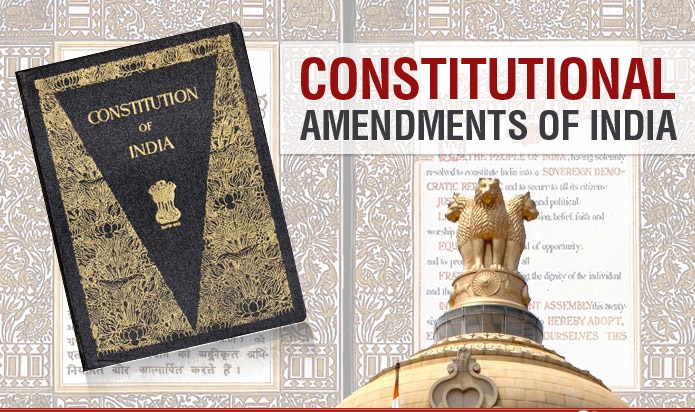
Download Now

Succession Certificate

0
Rights of Outgoing Partner

This article is written by Sonakshi Phore, an advocate, who passed out from Guru Gobind Singh Indraprastha University (GGSIPU), New Delhi(2020)pursuing a Certificate in Legal Drafting. This article has been edited by Ojuswi (Associate, Lawsikho). 

This article has been published by Sneha Mahawar. 

Introduction

The provision of succession certificate is stated in the Indian succession act, 1925 with the types of property, be it movable or immovable of the deceased person.

A Document issued by the competent court (civil) with appropriate jurisdiction, whether in terms of territory or pecuniary, to the rightful heir of the person who died intestate can be termed a succession certificate. This certificate authorizes the successor to realize the debts and securities of the deceased person. This certificate is valid everywhere in the country. The importance of such a certificate differs with the kind of property, as movable property is of less importance as compared to immovable property.

Legal heirs can claim the properties of the person, who died intestate, with the succession certificate and it can be used as primary evidence of such. The classes of legal heirs are mentioned in The Hindu Succession Act, 1956 for Hindus. Whereas The Indian succession act is applicable irrespective of the religion.

Rights of a certificate holder

  1. Through the succession certificate, any person being a legal heir can claim the assets and properties of the deceased. 
  2. To be the person who releases the debts and securities owed to or payable on behalf of the person who died.
  3. The holder shall also inherit the person’s debt and liabilities.

Who can apply for a certificate

  1. Spouse of the deceased.
  2. Children of the deceased. (Irrespective of gender)
  3. Parents of the deceased.
  4. Siblings of the deceased.

How to obtain a succession certificate

The role of the civil court comes into the picture, when the legal heir wants to obtain the succession certificate, The jurisdiction needs to be kept in mind, this can be ascertained by checking where the properties are situated. Names of all heirs and details about time and place of death should be specially and correctly mentioned in the application. Legal heirs are also bound to produce a death certificate. Once the petition is received, the court issues a notice in the newspaper, especially the local ones along with notice to respondents and if more than one, to all respondents. Within the period of 45 days from the issuance of a notice, the objection (if any) can be raised with necessary documentary proofs.

On the expiry of the time, if the court does not receive any responses and no one contests the petition, the court passes an order on the succession certificate in favour of the petitioner. For issuance of the certificate, the court levies a particular but reasonable percentage of the value of the estate as the court fee for granting of certification. This must be paid in the form of judicial stamp papers of a sufficient amount, after which the certificate shall be typed, duly signed, and delivered.

Validity of succession certificate

The succession certificate is valid anywhere within India. However, where a certificate has been granted in a foreign country, by an Indian representative (as appointed by the union government), if the certificate is properly stamped as per prescribed rules, then only the certificate will stand valid.

new legal draft

Effect of the certificate

If such payments, mentioned in the certificate, are made with bonafide intentions then this certificate will provide protection to all parties paying debts. Such payments shall be legally valid, and no further objections can be raised. 

There is a separate provision for determining who all will fall in the category of legal heirs. Many times this question arises regarding the relation of caste and the time frame for succession certificate, but the truth is that there is no time limit prescribed for such and no relation of caste mentioned. The succession certificate, when issued by the court after all due procedures, comes into the category of a valid document.

There is also an alternative for the succession certificate, which is known as the legal heir certificate along with other documents. The procedure of succession certificate is time-consuming in comparison to others, therefore a legal heir certificate is preferred. Both can be used in establishing inheritance and aiding in the transfer of assets.

Section 381 of the act, states the effect of the certificate. The succession certificates endeavour to afford protection to the parties paying debts. Subject to the provisions of this Part, the certificate of the District Judge shall, with respect to the debts and securities specified therein, be conclusive as against the persons owing such debts or liable on such securities, and shall, notwithstanding any contravention of section 370, or other defects, afford full indemnity to all such persons as regards all payments made, or dealings had, in good faith in respect of such debts or securities to or with the person to whom the certificate was granted.

Section 376 of the Indian succession act, states that a District Judge may, on the application of the holder of a certificate under this Part, extend the certificate to any debt or security not originally specified therein, and every such extension shall have the same effect as if the debt or security to which the certificate is extended had been originally specified therein.

Restrictions

Below mentioned pointers are the situations in which no succession certificate can be granted:

  • When Section 370 (1) of the Indian succession act applies, a succession certificate shall not be granted under this Part with respect to any debt or security to which a right is required by section 212 or section 213 to be established by letters of administration or probate.
  •  If Section 212 of the Act applies, no right to any part of the property of a person who has died intestate can be established in any Court of Justice unless letters of administration have first been granted by a Court of competent jurisdiction.
  • When Section 213 of the Act applies that is Survival of powers on the death of one of several executors or administrators. Upon the death of one or more of several executors or administrators, in the absence of any direction to the contrary in the Will or grant of letters of administration, all the powers of the office become vested in the survivors or survivors.
  • Also, nothing can prevent persons of other religions including the Christians to get the succession certificate and they can also get the benefit of such certification. There is a mindset that these provisions mentioned in the Indian succession act are only related to the Hindus, but the governance of uniform laws prevails over personal or provisions of family law.

Succession certificate and wills

Will plays a major role in the issuance of a succession certificate if a person dies intestate, In this case, only a succession certificate will come into the picture. If he otherwise dies leaving a will behind then the importance and requirement of a certificate will automatically become secondary. Because of the existence of a will, the entire estate shall vest on the executor, followed by instructions in the will. The provisions of section 370 of the Indian succession act state that no probate or LOA that is a letter of administration shall be granted under this Part with respect to any debt or security to which a right is required by section 212 or section 213 to be established by letters of administration or probate: Provided that nothing contained in this section shall be deemed to prevent the grant of a certificate to any person claiming to be entitled to the effects of a deceased Indian Christian, or any part thereof, with respect to any debt or security, by reason that a right thereto can be established by letters of administration under this Act. 

Wills are more accurate and not confusing as it mentions the exact things and on the other hand, the succession certificate is time-consuming because of its requirements and other proper procedures. The procedure followed by banks and other financial institutions in absence of a will is also based upon the succession certificate.

Case laws

In the case of Muthia vs Ramnatham, 1918 MWN 242, it was held that when the court grants the certificate, then the holder recovers the title through it and when the payment is made for the remaining amount of debt of the deceased and e, it is considered as a good discharge of debt. In the case of Srinivasa vs Gopalan, it was held that ” where any question arises regarding the debt belonging to the person died intestate cannot be decided merely on application of such.

Paramananda Chary vs Veerappan, AIR 1928 Madras 213: 82 IC 604 gives clarity about the conclusiveness of successive certificates which is clearly against the debtor. Also, if there is any person who claims to be the legal heir of the deceased, it does not lead to the invalidation of the succession certificate.

In the case of Ganga Prasad vs Mt. Saeedan, the concept of “good faith” has been discussed with respect to section 381 of the Indian succession act, which protects the debtors by providing full indemnity to the persons liable to pay the debts. For identification of legal heirs of deceased persons, one needs the legal heir certificate whereas the need for succession comes into the picture where it is necessary to establish the authenticity of the person claiming to be legal heirs and authorised then to pay off debts, liabilities, and other securities that the deceased was liable to pay.

Conclusion

As per the above facts and provisions under the Indian Succession Act, we can say that a succession certificate is for providing speedy remedy and quick decision in succession matters and is valid all over India. Upon fulfilling the necessary conditions, one can get a succession certificate. 

References


Students of Lawsikho courses regularly produce writing assignments and work on practical exercises as a part of their coursework and develop themselves in real-life practical skills.

LawSikho has created a telegram group for exchanging legal knowledge, referrals, and various opportunities. You can click on this link and join:

https://t.me/lawyerscommunity

Follow us on Instagram and subscribe to our YouTube channel for more amazing legal content.
Download Now

Franchise Agreement

0

This article has been written by Ayush Tiwari, a student of Symbiosis Law School, NOIDA. This article explains what a franchise agreement is, its uses, and the pros and cons of a franchise agreement. 

It has been published by Rachit Garg.

Table of Contents

Introduction

With the emergence of globalisation and liberalisation, firms have adopted a variety of business models in order to survive and thrive. One of the lucrative business concepts that involves both domestic and foreign participants is franchising. There are numerous forms of franchising systems in operation, such as dealer agreements, marketing agreements, trademark-usage agreements, product distribution agreements, production agreements, and so on. 

A franchise agreement is a legally binding contract between both parties to the franchise relationship. A franchise agreement is required to assume control of a franchise as a franchisee.

A franchise agreement safeguards both parties. It protects both you as the franchisee and the franchisor’s brand. When purchasing a franchise, you will be making a significant financial investment. A written agreement grants you rights that can help protect your investment in your firm.

What is a Franchise Agreement

A franchise agreement is a legally enforceable contract between a franchisor and a franchisee. These agreements authorise a franchisee to open a franchise site while also granting the ability to use franchise-specific resources such as branding, business methods, and supplier sources. A franchise agreement, like any other contract, is intended to define precise conditions for the parties’ relationship. These agreements provide safeguards and duties that benefit both parties.

Franchise agreements define the limitations within which franchisees can operate and clarify any financial commitments they have to their franchisors. They also often provide greater safeguards to franchisors than to franchisees. Typically, these types of agreements are unilateral in nature. Even if you’re not a lawyer, one can see that the contract is drafted from the franchisor’s point of view. One of the primary goals of a franchise settlement is to protect the franchise system as a whole. This includes the brand, the integrity of the operating system, and the conduct of franchisees within the mix.

Many mandatory tasks are often included in the franchise agreement. There are a lot of rules mentioned in it. This is advantageous since one expects to be advised on how to operate the firm. It should clearly explain the actions that one must execute on a regular basis. These principles may also assist you in seeing and prioritising aspects of your business in order to achieve success.

Many actions are also prohibited by the franchise agreement. These actions may often be self-evident, such as non-compete provisions. It certainly makes sense for the franchisor to legally safeguard their investment as they prepare to reveal their various secret techniques, products, and services to you. This is also crucial to you since it will safeguard your interests when the franchise expands and adds new franchisees.

Many of the additional criteria that specify course of action in cases of variations in behaviour are in place to protect the entire group’s integrity as well as to reign in franchisee members’ acts that go beyond the franchise’s goal. In other words, such constraints should be imposed, and they should be both specific and broad in scope. This helps the business to expand in a healthy way while also preventing injuries and adverse effects on all the franchisees in the system.

Various statutes that govern a Franchise Agreement in India

While there are no explicit franchising laws in India,  there are a variety of rules and regulations that can be used for franchising. These laws cover topics like competition, consumer rights, intellectual property, labour, property, and taxation law.

The Competition Act, 2002

The Competition Commission of India was established by the Competition Act in 2002, although it did not take effect until 2009. The Act’s objectives are to promote fair competition and trade, protect consumers, and prevent anti-competitive arrangements and practices that harm competition in India. The Competition Act in franchising strives to guarantee that tie-in arrangements, exclusive supply and distribution agreements, and resale price maintenance do not stifle competitiveness, as well as to prevent large franchises from forming a monopoly in the market.

The Indian Contract Act, 1872 

This Act is the mother legislation that governs the essential components of the franchisee-franchisor agreement. It controls all the elements of franchise contracts, including franchise offer, acceptance, consideration, validity, breach, and termination. The statute also assures that the parties freely consent and are legally competent to contract.

The Income Tax Act, 1961

The Income Tax Act governs the tax aspects of a franchisee firm. The income tax legislation requires every corporation that benefits from Indian soil to pay the required taxes. This regulation also governs the technique of international franchising. In India, all royalties and franchise fees are taxed at the respective rates.

The Consumer Protection Act, 1986

This Act was formulated with the consumer’s best interests in mind. Consumers now have the ability to submit a complaint against both the franchisee and the franchisor under this statute. A consumer has the right to make a complaint against the unit if there is a defect in the product or service. The Consumer Protection Act shields customers from unfair business practices.

Intellectual Property Laws

In India, Intellectual Property Rights (IPRs) are protected by four acts: the Copyright Act (1957), the Patents Act (1970), the Trademarks Act (1999), and the Designs Act (2000). These rights are critical to the franchising industry’s existence because they safeguard trademarks, patents, and design rights and permit third parties to be sued for violation of these rights.

The Foreign Exchange Management Act, 1999

When foreign cash or assets are involved, this Act comes into play. The Act governs all multinational brands with franchises in India. It is also in charge of foreign currency payments. The Indian government is aiming to simplify legislation so that multinational businesses may operate franchises in India without too much difficulty. 

Trade Secret laws 

Given the value of trade secrets to a franchise system and the risk of loss if a single individual involved with the franchise fails to take reasonable efforts to keep them secret, franchisors and franchisees must take steps to preserve the franchise system’s trade secrets. There is no specific legislation governing trade secrets in India, the Indian Contract Act by means of principles of equity and action for breach of trust helps protect trade secrets. 

What should a standard franchise agreement include

The format of the contract varies from one franchise system to another. Every agreement will vary in type, language, and content. They also have a covenant, which defines a promise, proper, or responsibility that the franchisee or franchisor owes to the opposite, or that provides advantages to the franchisor or franchisee.

1. Basis of the agreement

This section acknowledges both the franchisor’s and franchisee’s goals, as well as what each party expects to gain from the agreement. It expressly indicates that the franchisee wishes to open a franchise location and that the franchisor wishes to grant them permission to do so.

2. Grant of a franchise

The “Grant” section informs franchisees that the franchisor is granting them a limited, non-exclusive, non-transferable licence to use the franchisor’s emblems, logos, service marks, and method of operation for the duration of the franchise agreement. The franchisee does not obtain ownership of the marks or system, and the franchisor has the right to terminate the franchisee’s grant of license at any moment if the franchisee violates the agreement.

3. The agreement’s duration

The term of the franchisor-franchisee relationship is the time period of the agreement. Franchisors often provide franchise opportunities for five to 10 years. One of the most crucial components of the agreement is the duration of the connection. It can also be extended if the relationship between the parties is good and they both want to continue working together.

4. Fee for franchising

The amount that the franchisee must pay is also specified in a franchise agreement. Franchisees often pay the franchisor an initial and ongoing fee when they first join the franchise system. There is a slew of extra costs spelt out in the contract. The franchise fee is the money that a franchisee pays to the franchisor in exchange for the right to utilise the brand name, logo, and other aspects of the brand.

5. Operations management

Another item that must be clearly stated in a franchise agreement is the franchisee’s company operations. One of the most significant benefits of owning a franchise is that you may benefit from the franchisor’s knowledge and expertise. As a result, it’s critical to include all relevant details concerning the franchisor’s level of assistance as well as the franchisee’s additional duties. This covers things like purchasing goods or services, adhering to the franchisor’s operating requirements, and account administration, among other things.

6. Services provided by franchisor

While not all franchisors may repeat their pre-and post-opening services in the franchise disclosure form, appropriate drafting principles would demand that these problems be reiterated in the franchise settlement. This, together with the franchisor’s services provided inside the franchise settlement, eliminates the threat of litigation as a way to incorporate rights in the contract that are not explicitly mentioned.

7. Safety of Intellectual Property

Franchisors grant a temporary licence to the franchisee regarding the specifications of the product that make up its private, confidential, and trade-secret data, which is specified by specific wording from the franchisor. It then specifies the limitations on the franchisee’s use of such information.

8. Training

A franchisee must appoint a representative who will assume managerial duties for the franchise site under the “Training” part of the franchise agreement. The franchisee will then request that the general manager attend and finish a training programme. If the franchisor believes the manager already has adequate experience, they may waive this provision of the agreement.

9. Advertising

The franchisor’s commitment to assist franchisees with marketing and advertising should be included in the agreement. Unfortunately, some franchise agreements place greater demands on franchisees than they do on franchisors. In certain franchises, the franchisee is obligated to spend a particular proportion of their revenue on local advertising, while the franchisor is astonishingly free of such requirements.

10. Limitations relating to defaults and damages 

Every franchise agreement will include a list of franchise settlement breaches that will very certainly be treated as a breach. These infractions may also be divided between those that result in the franchise agreement being terminated quickly with no treatment provided and those that result in treatment being provided.

11. Obligations upon expiration 

Once the franchise relationship has ended, either because the time period has naturally ended or not been renewed, or because the franchisee’s affiliation with the franchise system has been terminated due to a breach, it is common for the contract to list a series of steps which the franchisee should take to “de-identify” the business and the franchisee’s affiliation with the franchise system.

12. Royalties

The franchisee does not have the ability to set off any royalties owed to the franchisor under this clause. It further states that the franchisee cannot withhold any money owed to the franchisor based on the franchisor’s perceived nonperformance.

13. Quality assurance

The franchisee commits to maintaining and running their franchise according to the standards and specifications included in the operations manual in the “Quality Control” portion of the franchise agreement, with the knowledge that the franchisor may amend such stipulations at any time.

14. Indemnification

Every franchise agreement will include an indemnity clause, which states that the franchisee shall reimburse the franchisor for any losses incurred as a result of the franchisee’s carelessness or malfeasance. The covenants are nearly invariably one-sided and in the franchisor’s favour, implying that the franchisee, not the franchisor, is responsible for the day-to-day running and upkeep of the business. An in-term covenant, as the name implies, prevents a franchisee from competing against the franchisor and other franchisees while the franchise settlement is being negotiated.

15. Geographic restrictions 

In some cases, this covenant applies to all franchised, company-owned, and affiliate-owned businesses in a specific geographic area. After the franchise settlement ends or is terminated earlier owing to a breach of the agreement, the former franchisee is covered by a post-term covenant. 

16. Insurance

Every franchise agreement will stipulate that the franchisee gets insurance to support its business activities. Every franchisee’s insurance policy would demand that the franchisor be identified as a “further insured,” which means that the franchisor receives the same protection as the franchisee but does not pay for it.

17. Restrictions and non-compete covenants

A non-competition covenant is one that prohibits a franchisee from starting a business that competes with the franchised business. The covenant is usually divided into two parts: an “in-term” covenant and a “post-term” covenant. While the franchise settlement is in progress, an in-term covenant prevents the franchisee from competing against the franchisor and other franchisees.

Types of franchise agreements

Agreement for a Single-Unit Franchise

The franchisee, by means of the agreement, is granted the right to open and run a single franchise unit under a single-unit agreement. This is the most basic and often used type of agreement. These franchise agreements are particularly appealing to new franchisors because they provide a simple method to engage in the process of franchising. If a franchisee succeeds over time, the franchisor may consider increasing the contract to cover more units.

Agreement for a Multi-Unit Franchise

A multi-unit agreement is a contract that allows a franchisee to open and run many franchise locations. A multi-unit setup isn’t restricted to a certain geographical area. Franchisees may have locations in various parts of a city. In other circumstances, these franchise agreements include deadlines, requiring the franchisee to follow a set of guidelines for creating a certain number of units. The franchisor may have the authority to engage with other interested parties if the franchisee fails to achieve the agreed-upon timeline.

Area Development Franchise Agreement

A franchisee who is also an area developer has the right to open many units in a certain region at the same time. In contrast to the multi-unit agreement, the franchisor provides the franchisee exclusive rights to develop that region in the area development agreement. For example, a franchisee may contract to open 5 units in a certain region over the course of five years. That franchisee has exclusive rights to that region, and other units cannot be opened there during the contract time.

Master Franchise Agreement

The master franchise agreement has more rights than an area development agreement. The master franchisee, in addition to having the right and responsibility to open and run a specified number of units in a defined region, also has the ability to sell sub-franchisees to other persons inside the territory. It’s similar to being a franchisor, but only in a limited geographic area. For example, you continue to receive excellent assistance from the membership (the primary franchisor), but in your area, you assume many of the franchisor’s functions and responsibilities, such as providing support and training. However, because you are working as a franchisor in the area, you are entitled to receive fees and royalties from the franchisees inside the territory.

Advantages and disadvantages of a Franchise Agreement 

Advantages to a franchisee

Assistance in doing business

The franchisee receives business support from the franchisor, which is one of the advantages of franchising. The franchisee may obtain practically a turnkey company operation depending on the conditions of the franchise agreement and the structure of the organisation. They may be provided with the brand, equipment, materials, and marketing strategy. In short, they provide each and everything one needs to start or run a business.

Other franchisees may not provide everything, yet all franchises offer the franchisor’s expertise and insight. The franchisee has access to a deep reservoir of business help to guide them through the process of owning and managing a firm, whether that information is kept in a searchable, digital knowledge base or just a phone number to reach the franchisor directly.

A lower rate of failure

Franchises, on average, have a lower failure rate than sole proprietorships. When a franchisee purchases a franchise, they become part of a brand name as well as a system that will provide them with assistance and advice, reducing the likelihood of their going out of business. Furthermore, because franchisees have previously established their business model, you may be confident that the items or services you’ll be delivering will be in demand.

Profit

Franchises, on average, make more money than individually owned firms. The majority of franchises have well-known brands that draw in a significant number of individuals. As an outcome of its popularity, profits rise. Even franchises with a high franchise fee require a significant capital investment to get a favourable return on investment. 

Built-in customer base

Finding consumers is one of the most difficult tasks for any new business. Franchises, on the other hand, come with an established brand and a dedicated clientele. Even if you’re building the first franchise location in a small town, chances are that potential customers have heard of the brand through TV ads or by travelling to bigger cities.

Disadvantages to a franchisee

Capital investment

While the franchise fee provides a lot of benefits to the franchisee, it may also be expensive—especially if you’re joining a well-known and lucrative business. While this normally leads to increased profits, it can be challenging for a small business owner to raise the required capital.

Even if you select a low-cost franchise, you’ll almost certainly need to invest some more funds. Though this may appear to be a disadvantage of franchises, it is vital to weigh the potential against the initial investment and strike the right balance for your business. Also, keep in mind that there are franchise financing options to help you with your capital investment.

Possibility of confrontation

The franchisee has little capacity to enforce the agreement without an expensive court struggle. The intimacy of the commercial connection between franchisor and franchisee is ideal for conflict, whether it’s due to a lack of support or just a clash of personalities. A franchisor should screen all possible franchisees before getting into business with them. As for the franchisor, one should take advantage of this chance to acquire a sense of the franchisor’s personality and management style.

Limiting regulations

While a franchisee can be their own boss, individuals do not have total control over their business and are unable to make decisions without contacting the franchisor.

The most significant disadvantage that most franchises face is that they must abide by the terms of the franchise agreement. The franchisor has some control over the majority of franchise operations and also franchisee decisions.

Lack of financial privacy

A lack of privacy is another downside of franchising. The franchise agreement will almost certainly state that the franchisor has complete control over the franchise’s financial ecosystem. Franchisees may view the lack of financial privacy as a negative of owning a franchise; but, if you embrace financial guidance, it may be less of a problem.

Advantages for a franchisor

Efficient growth

Opening a business’s first location is both expensive and time-consuming. It can be nearly as tough to open a second unit. When that load is shared with another business owner, the process becomes more efficient and the initial business owner is relieved of responsibility.

When it comes to expanding your small business, a franchise may make the process of adding several locations much easier.

Increased brand recognition

Increased brand recognition is one of the numerous advantages of franchising. The more locations a company has, the more people are familiar with it. The more these clients learn about and adore the brand, the more profitable and successful it will be. Increased brand recognition for a multi-location franchise may be a win-win situation for both the franchisor and the franchisees.

Reduced risk 

One of the most important advantages of a franchise agreement for the franchisor is the flexibility to expand without greater risks. The franchisee assumes the debt and responsibility of building a unit in the franchise’s name, the franchisor reaps all of the benefits of a second location without taking on the risk.

Access to capital

The expense of growth is one of the most significant hurdles to small business expansion. While there are a variety of business financing choices available, they don’t always work out. Franchising your business will take some effort and money on your part, but it has the potential to pay you handsomely in the form of franchise fees.

Disadvantages to a franchisor

Loss of complete brand control 

When business entrepreneurs start their own company, they have total control over their brand and every decision made inside the company. But, after building a franchise, they lose absolute authority over their business. For example, Nike has a lot of stores around the world that are owned by franchisees. They cannot take decisions regarding the whole company without considering the franchise owners.

Increased risk of legal disputes

When you engage in a strong commercial relationship with another person, you put yourself at risk of legal disputes. While a well-drafted and lawyer-approved franchise agreement should reduce the likelihood of legal conflicts between the franchisor and franchisees, they nonetheless exist.

Risks involved in the franchise business

Over-demanding franchisor

A franchisor may cause trouble for a franchisee by demanding payments that aren’t necessary at times. It is a significant risk in the franchise industry since the franchisee is compelled to pay royalties and other fees as requested by the franchisor. A Franchise Agreement will come to your rescue at this moment.

Only those payments to the franchisor that are specified in the Franchise Agreement must be made.

Franchise company revenue is underreported

Franchisees who underreport their revenue or sales to the franchisor are guilty of underreporting. A few contracts provide that the franchisee may be subjected to a surprise audit by the franchisors. Others are opposed to the surprise visit clause.

Some franchise agreements enable the franchisor’s representatives to look at only a few particular papers, while others allow them to look into the franchisee’s personal tax returns and house mortgages. Underreporting of sales can result in the loss of a franchise license, according to most franchise agreements. Most franchise agreements include a termination clause that cites underreporting of sales and revenue as a method of termination to preserve the franchisor’s interests.

When the franchisor refuses to provide the necessary oversight

Any franchise’s performance is determined by two criteria.

  • First and foremost, it is contingent on the franchisee’s efforts.
  • Second, it is subject to the franchisor’s oversight and direction.

If a franchised unit does not get the necessary supervision from the franchisor, the franchisee’s rights may be protected by the Franchise Agreement’s non-performance clause.

A franchise agreement that isn’t well-documented

For both the franchisor and the franchisee, it is nothing less than a disaster. Few franchisors are disinterested in paying attention to their training curriculum’s manuals, agreements, and rules. A franchisee purchasing such a franchise may be able to abuse the franchisor by using the terms of a poorly worded franchise agreement.

Difference between a Licensing Agreement and a Franchise Agreement 

Licensing is an arrangement between two parties in which one party (licensor) sells the rights to utilise its intellectual property or produce the licensor’s products to another party (licensee) in return for a royalty.

Before entering into a legally enforceable agreement, it’s important to understand the distinctions between these two commercial agreements.

While some business owners may consider licencing to be a less expensive option than franchising, however, it seems that the above premise is incorrect. These two forms of agreements have quite distinct legal implications and are used in different situations. Businesses that might make ideal franchises are not always good for licencing agreements, and vice versa. Let us take a deeper look at the differences between licencing and franchising.

  • Licensing is a contractual agreement in which a firm (licensor) provides the licensee with the right to utilise intellectual property or create a company’s product in exchange for a stipulated price (royalty). A franchise is a commercial relationship in which the franchisor allows the franchisee to do business as an independent branch of the parent company using the franchisor’s business model, brand name, or method in exchange for a fee (franchisor).
  • Licensing does not necessitate registration, but franchising necessitates registration.
  • Under franchising, the franchisor provides complete training and assistance to the franchisee, which is not available in licensing.
  • The licensor has authority over the licensee’s use of intellectual property, but not over the licensee’s company. The franchisor, on the other hand, has a lot of power over the franchisee’s company and processes.
  • The licensee is bound by the conditions of use established by the licensor in the licensing agreement for the licensed product. The licensor, on the other hand, has no control over the licensor’s company. On the other hand, the franchisor has extensive influence over the franchisee’s company in terms of service quality, marketing and sales techniques, and so on.
  • Licensing is a one-time transfer of property or rights, whereas franchising requires the franchisee’s continuous help.
  • Licensing allows for a significant amount of pricing negotiation. In franchising, on the other hand, there is a uniform pricing structure.

Difference between a Distribution Agreement and a Franchise Agreement

A distribution agreement is a legally binding contract between a supplier and a distributor in which the distributor purchases and sells items from the supplier in order to sell them to retailers and/or consumers directly. As a result, the distributor does not hold any stock in the firm.

The distribution agreement describes the parties’ rights, expenses, area, and obligations in respect of product distribution.

Three significant differences

The method of operation

The franchisee is allowed and encouraged to utilise the franchisor’s trademarks and brand name in ordinary business procedures. Instead, the distributor does business under its own identity. It acts as a product reseller and does not conduct business on behalf of the firm that manufactures the items

The degree of control

The franchisor has far more influence over the franchisee and the franchisee’s management of the franchised firm than a supplier has over the operations of a distributor.

An excellent example is a franchisor maintaining continuous quality control over its franchisees, frequently through an operations manual, marketing strategies, inspections, and other processes to guarantee brand standards are maintained across the network.

Payments

In most cases, a franchisee pays an initial fee and a continuing royalty to the franchisor in exchange for the right to operate the business under the franchisor’s name, whereas a distributor pays for the items purchased from the supplier.

Frequently Asked Questions (FAQs)

What is a franchisee?

Any corporation with a parent company that offers a fundamental business strategy and brand name is referred to as a franchisor. A franchisee is a third party who borrows the parent company’s values and brand image. While the franchise is owned, operated, and managed by people, the bigger parent firm, which is generally an MNC, oversees the entire process.

What role does the Consumer Protection Act of 1996 play?

This Act is written with the consumer’s best interests in mind. Consumers now have the ability to submit a complaint against both the franchisee and the franchisor under this statute. A consumer has the right to make a complaint against the unit if there is a defect in the product or service. Consumers are protected by the Consumer Protection Act from unfair trade practices.

What does the Foreign Exchange Management Act of 1999 do?

This statute kicks in when there is foreign cash and foreign assets involved. With this Act, international businesses such as Taco Bell, Mcdonald’s, and Nike may control and manage their franchises in India. The Indian government is working on rules that would make it easier for multinational businesses to create and manage franchises in India.

A sample Franchise Agreement

This Agreement (hereinafter referred to as the “Agreement”, which expression shall include all amendments made thereto from time to time) is made at …….. on this day of ….., 20.… by and BETWEEN_________________, a company incorporated and registered under the provisions of Companies Act, 2013 and having its Registered Office at _____________________ India, hereinafter referred to as the “Franchiser” which expression shall unless repugnant to the context or meaning thereof include its successors and assigns of ONE PART.

And

___________________ a proprietary firm having its ________________, and represented by _________________, S/o ___________________, aged about __________years, hereinafter referred to as the “Franchise” which expression unless repugnant to the context or meaning thereof be deemed to include, legal representative, executors, administrators, successors and permitted assigns of the

OTHER PART, each a party and collectively referred to as parties. Both parties as above have expressed a desire of entering in to a franchise agreement to meet their respective objectives, which are set out here in below,

a)    __________on its part has entered into the business of _______________and is interested in furthering this business through “Franchise” (Conductor) operated

Signature:                                                                                   

 _________outlets on national basis maintaining a uniform standard facilities and services including uniformity in the charges levied from the customers for rendering the specified services.

b)“Franchise” on his part is interested in entering into the business of operating as a service provider through their cyber cafe outlet and thus carrying out the business of providing services to the customers.

c)___________ is desirous of appointing “Franchise” to conduct, manage and operate the services through the ____________ as per the uniform norms set up by _____________ in respect of nature of services and cost of services to the customer.

d)“Franchise” is desirous of taking over the services offered by _______________, for the purpose of its operations and management to carry out business on the terms and conductions contained herein.

e)The purpose of this Agreement is to set forth the terms and conditions under which the parties to the Agreement shall conduct themselves during the substances of Agreement.

NOW, THEREFORE, the parties, in consideration of the convents, undertakings, and commitments set forth therein hereby mutually agree as follows,

Section 1: Definitions and Interpretations

For the purpose of this agreement, the following expressions shall bear the respective meaning set forth below, Details of terminology for the services to be provided

Section 2: Grant of the Franchise

1. The “Franchise” warrants and represents to ______________ that it is a company/firm, validly existing and in good standing under the laws of Republic of India and has all requisite power and authority to enter into this agreement with ______________. All the obligations of the “franchise”

Under this agreement, the legal, valid, and binding obligations are enforceable  per its terms. No proceedings are pending against the franchise, which may have an adverse effect on the ability of the franchise to perform and meet its obligations under this agreement.

2. On consideration of the “Franchise’s” applications and relying on such assurances and representations that “Franchise” has made to _____________, _____________ appoints the franchise as a franchise on the terms and conditions set forth in this agreement and in the website.

3. There is no product and/or service and/or territorial exclusivity granted to “Franchise” as part of this Agreement by ______________ may give such right or a similar right to persons other than “Franchise” to sell _________________products and services anywhere including the geographic, area surrounding the premises.

Section 3: Services, Terms & conditions

1. __________ would provide their entire range of services on their own. or through the service providers, which includes online ads, offline ads, value-added services and premium services to the “Franchise”.

2.     “Franchise” will act as a single point e-hub for all the services provided by _______________falling within the purview of this agreement.

3.  The entire business being on pre-payment basis, ______________will supply all the services based upon requests from “Franchise” up to limits available for “franchise”. Such limits will be equivalent to the funds available from “Franchise” with _________________at any point in time and will keep reducing with every transaction corresponding to the value of the transaction. __________________ will enhance the limit of Franchisee. From time to time, it receives amounts from “Franchise”.

4. ________________ and ”Franchise” shall conduct their business at all times, per the applicable statutes, regulations, and notification issued by the government or any other statutory authority.

Section 4: Confidentiality

1.   “Franchise” shall keep all information of confidential nature received from the __________ in whatever form as strictly confidential and shall not disclose it to third parties without the prior written consent of __________ during the term of this agreement.

2. “Franchise” agrees not to disclose revenue without ___________________’s prior written consent.

Section 5: Limitation of liability

The Parties shall not be liable for any incidental, special, indirect or consequential damages arising out of or relating to this Agreement.

Section 6: Terms

This Agreement comes into force on the date of signing this Agreement and shall continue for one (1) year after this date. This agreement may be extended on the mutual agreement of both parties, unless earlier terminated per the agreement by paying a renewal fee to ____________________ by “Franchise”.

Section 7: Termination

1.   This agreement may be terminated by either party at any time, without assigning any reason by giving prior written notice of ninety (90) days.

2.   _________________ shall be entitled to terminate this agreement, with immediate effect upon happening of one or more of the following:

3. Failure of the “Franchise” to provide the services to the customers as per the expectations of _____________________

Section 8: Applicable Law

This agreement is governed by and constructed per the laws of India.

Section 9: Dispute Resolution and Jurisdiction

1. Any dispute, controversy or claims arising out of or relating to this Agreement or the breach, termination or invalidity thereof, shall be settled by arbitration per the provisions of the [Indian] Arbitration and Conciliation Act, 1996.

2. The arbitral tribunal shall be composed of three arbitrators, one arbitrator appointed by ________________, a second arbitrator appointed by “Franchise” and a third arbitrator to be appointed by such arbitrators.

3. The place of arbitration shall be at _____________ and any award whether interim or final, shall be made, and shall be deemed for all purposes between the Parties to be made in _________________

4. The arbitral procedure shall be conducted in the English language and any award or awards shall be rendered in English. The procedural law of the arbitration shall be Indian law.

This Agreement has been executed on the date set forth herein in two (2) copies of which the Parties have taken one each.

SECTION 10: FORCE MAJEURE

If either of the parties to the Agreement is prevented from the performance of this Agreement by force majeure such as government action or inaction, war, serious fire, flood, typhoon, earthquake, other natural calamities or other forces beyond the control of the parties, the time for the performance of the Agreement shall be extended by a period equal to the effect of those causes and neither party shall be responsible for loss or damages due to the delay.

The party so prevented by force majeure shall notify the other party by telex, cable or fax as soon as possible from the time of the occurrence of the force majeure.

For ____________________                                  For________________________

Authorized signatory                                                           Authorized signatory                                                  

Witness 1                                                                             Witness 1                                        

Signature:                                                                            Signature:

Name:                                                                                  Name     :

Address:                                                                              Address  :

Witness 2                                                                            Witness 2

Signature:                                                                           Signature:

Name:                                                                                 Name:

Address:                                                                             Address:

References


Students of Lawsikho courses regularly produce writing assignments and work on practical exercises as a part of their coursework and develop themselves in real-life practical skills.

LawSikho has created a telegram group for exchanging legal knowledge, referrals, and various opportunities. You can click on this link and join:

https://t.me/lawyerscommunity

Follow us on Instagram and subscribe to our YouTube channel for more amazing legal content.

Download Now

Plato’s theory of justice

0
Independence of judiciary

This article is written by Monesh Mehndiratta, a student of BA LLB, Graphic Era Hill University, Dehradun. This article explains the Theory of Justice given by Plato. It further highlights the criticism and the Socratic influence on Plato. 

This article has been published by Sneha Mahawar.

Introduction 

Plato was the son of noble parents and was born in 427 B.C. He was highly influenced by Socrates. He received his education from his master, Socrates, and later went on a journey to observe the ways of life of people and social and political structures. He also established an institution named the Academy or Gymnasium. He gave various theories on the most important subjects and wrote the famous “The Republic.” While interpreting the nature of justice, he followed the dialectic method. In this method, a person talks with an expert and then tries to understand his ideas, assumptions, and concepts so that he can come to a conclusion and form his own concepts or theories. Plato went on a journey to understand the ways of life of people by conversing with them and understanding their thoughts. The theory given by Plato is also called the theory of social justice because Plato pointed out that the state was a means for the whole of society. Before giving his own theory, Plato evaluated some theories on justice prevalent during his time. 

Evaluation of theories by Plato

Plato evaluated certain theories of his time on justice and found loopholes in each, and subsequently presented his ideas. The theories are:

Traditionalism 

This theory was given by Polymarchus. According to this theory, justice means giving a man what is good for him. In simple words, it means gains to the friends and evils to the enemies. However, Plato criticized this theory on the ground that it is hard to differentiate between friend and enemy, and so on this basis we cannot decide our conduct towards people. For example, treating someone the way they treat us is what this theory says. 

Radicalism 

This theory was supported by the Sophists, and according to the theory, justice is in the interest of the stronger. One should act as per his capacity and strength and achieve what is possible. It also meant that since the state is the strongest of will, whatever is done by the state is just, and thus, justice is the will of the ruler. One who has power or authority can make justice work according to their whims. Plato argued that:

  • This theory cannot explain the different behaviors and activities of different rulers in different times and the concept of  justice varied from place to place. 
  • It does not give any universal idea of justice. 
  • It is not a rational principle.  
  • It cannot guide a person who wants to achieve justice in his own way. 

Pragmatism 

Glaucon gave this theory, followed by the theory of Social Contract by Hobbes and Rousseau. This theory states that justice is the child of fear and born out of tradition. The people who suffered injustice at the hands of strong people decided as a result of the social contract that they would never do injustice nor tolerate it. For example, punishing a criminal will create fear in his mind and thus, in this way justice will be served to the sufferer. Also, a victim who suffered a loss will probably not commit the crime as he suffered the pain himself. However, Plato opposed this theory by saying that any contract between people is tacit and implied and that if a law is obligatory, one accepts it because it is not imposed by force. Also, people were under the misconception that the state resulted from a social contract between the ruler and the general public.

Rationalism 

Justice, as seen by Socrates, is an art. The ruler tries to bring justice by removing the defects from the general public. Since Plato was highly influenced by Socrates and his ideas, he gave the ‘rule of king’ for achieving the ideal of republic. What Socrates tried to say is that not everyone can rule or serve justice. One who knows how to deal with the interests of the people and works for their benefit in a welfare state can be a ruler. 

Plato’s Theory of Justice

His work discusses the concept of justice, its characteristics, and how it is dispensed in society. He developed his theory based on the imagination of an ideal state and not on any actual survey of any particular area, making it mostly philosophical. Many criticized his idea of justice, but for some, it was a torch bearer in this regard. 

Quality of soul 

According to Plato, in a society different classes must be given what is due to them and that no class shall be allowed to dominate other classes. To him, justice is the quality of the soul. It does not depend upon any external source or power and is the voice of conscience of the man. He stated that human personality is a result of three tendencies: knowledge, physical tendency, and spiritual tendency. The tendency of spirit should rule the other tendencies. In a society, people with high spiritual tendencies must rule the state and follow the ideals of reason, justice, courage, and temperance. Justice means harmony among the people and between people and society. 

Organic theory of society 

Plato considers justice as an ethical concept and stresses on following one’s duties with morality. His theory of justice on the basis of organic theory of society resulted in totalitarianism which infringes all the freedom of a person. In his ideal republic, guardians were given the power to rule and people could not criticize them in any way. This concept is, however, against the principles of liberty in a democracy. He tried to create an ideal society with the help of social justice but could not do so as it created practices that contradicted his idea. 

Integral approach 

Plato opted for an integral approach that analyzes all the attributes of the personality of a person and the body politic. It aims to achieve justice for every individual in every class of society. Talking about the varna system in India or a hierarchy in any society, he said the concept was opposite to his initial idea of justice.

Characteristics of justice 

Social stratification 

  • His theory of justice is based on the social stratification given by him. On the basis of elements of soul, he gave three social stratifications namely:
    • Guardians 
    • Soldiers
    • General people like artisans, farmers, etc. 
  • Justice meant fulfilling all the duties by people belonging to each social strata without interfering in the duty of another. 

Innate tendency

  • According to Plato, Justice is innate.
  •  It is the quality of soul and voice of one’s conscience. 

Functional specialisation

  • He classified society into three classes:
    • Cognitive represented by guardians
    • Conative is represented by soldiers. 
    • Affective which was represented by the general public. 

Philosopher King 

  • He believed that justice was possible only if the state was ruled by a philosopher. 
  • He considered philosophers the wisest among all. 

Communism 

  • He suggested the communism of women and property among guardians and soldiers. 
  • This was done to keep them away from any kind of emotions, worries and envies. 

Universal 

  • He considered the principle of justice universal. 
  • It is the same for everyone in any place or society at any time. 

Moral concept 

  • His concept of justice is not jural but moral. 
  • While achieving justice, it is mandatory to fulfill the moral obligations and not jural duties. 

Freedom of women and education for justice  

  • He said that in order to achieve justice, it is necessary to provide freedom to women. 
  • They should be given equal rights to participate as men. 
  • He suggested an advanced scheme of education to help people realize the importance of justice. 

Types of justice 

Plato classified justice into 2 types, which related to each other to a great extent. 

  • Individual justice 
  • Social justice 

Individual justice 

  • Justice, according to him, is the spirit that helps the individual to fulfill his duties. 
  • There are three elements in the human mind:
    • Reason 
    • Spirit
    • Appetite 
  • Wisdom is the virtue of reason; the courage of spirit; and temperance, which is of appetite. 
  • Justice maintains harmony among the three. 
  • He believed that each part of the human mind must be satisfied so that there is harmony in every part. 
  • People who are harmonious can create a harmonious and peaceful state. 
  • According to him, when a person is able to serve all his needs according to his virtue, spirit and appetite, he would be satisfied. For example, the basic needs of an individual in the contemporary world are to have a stable job with good pay, own a house, and a family. He would be satisfied and live a decent life. 

Social justice

  • It is dependent on individual justice. A society where there is individual justice can achieve social justice. 
  • Like the three elements in an individual, there are three types of men in society:
    • Rational: these have strong reasons or rationale. 
    • Spiritual: these are strong in spirit and active. 
    • Passionate: neither strong in reason nor in spirit and are controlled by the other two. 
  • He classified people in society and gave a 3-fold functional social stratification. 
    • Philosophers 
    • Soldiers 
    • Artisans, farmers, etc. 
  • He believed that man should carry on the activity which is best suited for him. 
  • Where in a society, people belonging to each strata fulfill their duties honestly without disturbing and interfering with people in other strata, social justice is achieved. 
  • He recommended that philosophers must rule the state as they are wisest of all and wisdom is the virtue of the ruler and justice is the virtue of the wise. 
  • He considered individuals as a complex whole and not a single unit. His aim must not be a personal pleasure but should realize the importance of satisfaction which results in the harmony of all his parts. 
  • This theory can be easily related to the caste system in India.  In earlier times, people in India used to believe that a son of Brahmin must be a Brahmin and a son of Kshatriya must only fight for the country. So, if analysed this theory says that if people belonging to different castes perform their functions without interfering with the work of a person belonging to another caste, then social justice will be achieved.

Criticism of Plato’s Theory of Justice

  • Plato laid more emphasis on the duties rather than the rights enjoyed by the people in a society. Rights keep the society united and bring solidarity among the people. Thus, both rights and duties are important and interconnected in a state. 
  • He gave enormous powers to the philosopher-king but failed to realize the principle that absolute power corrupts absolutely. Thus, even the wisest king can become corrupt if given absolute powers. 
  • He divided society on the basis of tendencies of the personality. But heredity is not solely responsible for personality traits. As a result, he laid the foundation of such a system of education in the society which develops one-sided personalities and does not give any importance to the environment which is yet another important feature responsible for the personality of a person. 
  • The theory given by Plato lays the foundation for facism according to which each citizen is expected to show loyalty towards the state. On the other hand, modern thinkers suggest that the state must not be given absolute powers which might also curb the rights and freedom of people in a society. 
  • He considered guardians above law. What Plato calls justice is the dictate of guardians in the state. His theory does not provide a reasonable basis for law and justice cannot be dependent on personal will and conscience. He also neglected to differentiate between moral and legal obligations. 
  • His concept of justice is passive and cannot form a basis for jural regulation. He does not provide any solution if there is any conflict between the desire and duty or duties and rights. 
  • He laid too much stress on the unity of state and thus, gave absurd ideas of communism of women and abolition of marriage and family. 

Influence of Socrates on Plato 

Socrates was the teacher and master of Plato. His image never faded from the mind of Plato and was highly influenced by his master, so much so that it is reflected in his work. The ideas of Socrates can be easily determined by the ideas of Plato and his thinking. 

Virtue is knowledge

Socrates considered virtue and knowledge synonymous with each other. According to him, if knowledge has no impact on the conduct of a person, it is useless and meaningless. On the ideas of Socrates, Plato developed his concept of a philosopher-king in the Republic. Thus, both Plato and Socrates do not differentiate between ethics and politics. 

Theory of reality 

Socrates believed that the virtue of a thing is not in its existence but in its fulfillment. On this basis, Plato gave the idea that the world of ideas is more real than the world of things. 

Theory of knowledge 

Socrates divided knowledge into 2 types: casual and true knowledge. The latter is self-knowledge and is concerned with the conduct and character of an individual and influences the total personality of an individual. 

Philosophical method 

Socrates invented the question-answer method for philosophical discussion, which was followed by Plato to prepare his dialogues. With this method, a person asks questions to thinkers and analyzes their thought processes, and then comes to a conclusion with the help of constructive criticism. 

Art of government 

Socrates considered the ruler as a philosopher. However, this was different from what the Sophists believed. 

  • According to the Sophists, the world is mechanical, but for Scorates it is purposeful. 
  • Sophists believed that goodness is an art and can be achieved by specialized knowledge but Socrates considered it an innate power of man. 
  • The theory of knowledge presented by Socrates is very much different from what Sophists gave. 
  • The Sophists considered that social rules are not based upon natural law and are man-made, while Socrates kept traditional laws above man. 

These ideas of Socrates highly influenced Plato, so much that his work entirely revolves around the thinking and teachings of his master, Socrates. 

insolvency

Analysis of Plato’s Theory of Justice

Plato was first a philosopher and then a political thinker. His political philosophy is mostly based on social philosophy. However, he does not provide any reasonable and just basis for the law in the state. He mainly connects his theory with morality rather than legality. He believed that justice could be achieved if all the people belonging to different social strata fulfilled their roles and duties in society. However, the society Plato talked about is not legal as it is not based upon the legal rights of individuals. Justice, according to him, guides men in the fulfillment of their duties. The concept is closely related to the self-control of an individual. 

This theory does not find its existence in the present society. Society today is driven by legal rights and duties. People are aware of their power, rights, and duties. Countries mostly follow the democratic system of government where the real power vests with the citizens to choose their representatives who form the government. The President, or the ruler, in the words of Plato, is not given absolute power nor is he an expert in philosophy. There is a system of checks and balances in the society given by the Constitution of each country which is the supreme law of the land. The idea of justice as given by Plato is very much different from what is observed in the present society. 

There are laws for each and every field and one who commits an offence by doing something prohibited by law is punished by the state according to the law and procedure are given in the statutes and Constitution. The citizens of a state enjoy fundamental rights which are not absolute and have reasonable restrictions. Unlike the classification of people given by Plato, there is no such classification in society based on personality traits or tendencies. Every person can do any work or choose any occupation. Thus, the idea and concept of justice given by Plato no longer exist in society and has become obsolete. 

Conclusion 

It can be concluded that Plato was highly influenced by his teacher, Socrates, which is visible in his work. He gave various theories on various subject matters. His theory of justice is based upon his own imagination of an ideal body politic or state, which is utopian and hard to find in the real world. Thus, when compared with today’s society, his idea of justice does not prevail. 

Frequently asked questions (FAQs)

What is the famous work of Plato?

The Republic is the most famous work of Plato. The idea of this book is based on the theory and learning of his master Socrates that virtue is the knowledge making it evident that Plato was highly influenced by his master and followed his teachings and learnings. He has 35 dialogues and 13 letters under his name which are mostly philosophical. All the writings of Plato indicate that he was a philosopher and dialectician and showcased the power of logical analysis along with abstract thought through poetic imagination and deep feelings. 

In what types did Plato divide justice?

He divided justice in 2 types:

  • Individual justice – According to him, when a person is able to serve all his needs according to his virtue, spirit, and appetite, he would be satisfied. For Example, the basic needs of an individual in the contemporary world is to have a stable job with good pay, own a house and a family, he would be satisfied and live a decent life. 
  • Social justice – He believed that man should carry on the activity which is best suited for him. Where in a society, people belonging to each strata or class or whatever is the division in the society, fulfill their duties honestly without disturbing and interfering with people in other strata, social justice is achieved. 

What is the classification of people given by Plato in a society?

He classified people in the society and gave 3-fold functional social stratification. 

  • Philosophers – these are experts in knowledge and can rule the state easily. They are the wisest of all according to Plato.  
  • Soldiers – these are physically strong and emotionally and spiritually stable and must protect or guard the country. 
  • Artisans, farmers, etc. – the people left after classifying in the above two categories are put in this category and have talent related to art, culture, farming and many more activities. 

What are the 3 elements of the human mind?

  • Reason – it means to have  strong reasoning power and is termed as rational by Plato 
  • Spirit – this means that people who have spirit as the element are spiritually strong and thus, active. 
  • Appetite – the majority of people are neither strong mentally or physically but have passions and talents. According to Plato, such people are to be controlled by the other two categories of people. 

References 


Students of Lawsikho courses regularly produce writing assignments and work on practical exercises as a part of their coursework and develop themselves in real-life practical skills.

LawSikho has created a telegram group for exchanging legal knowledge, referrals, and various opportunities. You can click on this link and join:

https://t.me/lawyerscommunity

Follow us on Instagram and subscribe to our YouTube channel for more amazing legal content.

Download Now
logo
FREE & ONLINE 3-Day Bootcamp (LIVE only) on

How Can Experienced Professionals Become Independent Directors

calender
28th, 29th Mar, 2026, 2 - 5pm (IST) &
30th Mar, 2026, 7 - 10pm (IST).
Bootcamp starting in
Days
HRS
MIN
SEC
Abhyuday AgarwalCOO & CO-Founder, LawSikho

Register now

Abhyuday AgarwalCOO & CO-Founder, LawSikho