Download Now
Home Blog Page 1501

Are Fundamental Rights unconditional?

1
fundamental rights

This article is written by Deepanshi Sharma.

What are Fundamental rights?

Fundamental rights are the basic human rights that are guaranteed to the citizens of India (to all people in case of article 14) by the Indian Constitution. They act as a limitation to the power of the State. These rights are highly revered and any law that is found to be in contravention of them can be challenged in the Supreme Court by the virtue of article 32 of the Constitution, and subsequently struck down to the extent of the inconsistency. The Supreme court can also pass any appropriate order, direction, or writ for the enforcement of these rights. Similar powers are present with the High Courts under article 226 as well.

In case of violation of the fundamental rights, the Courts can be approached not only by the aggrieved person but by any public-spirited person or social action group, acting in good faith, for the socially and economically disadvantaged people who otherwise cannot approach the Court (Subhash Kumar v state of Bihar). This can be done through a simple letter as well (State Of Himachal Pradesh vs A Parent Of A Student Of Medical College). Therefore these rights can be enforced relatively easily. Moreover, a fundamental right cannot be given up by individuals through their own consent. In Behram Singh v State of Bombay, it was held that they are provided not only for benefit of the citizens but on the grounds of public policy as well.

However, can fundamental rights be amended/changed by the legislature?

The Basic Structure Doctrine

A thirteen-judge bench in Keshwananada Bharti v State of Kerala, overturning the landmark judgment of Golak Nath, I.C. v State of Punjab, held that any part of the constitution can be amended, abrogated or abridged without changing the basic foundational values and structure of the constitution. However, a definitive list of what constituted the basic structure was not declared.

The Court in Indira Nehru Gandhi, Smt. v Rajnarain noted that whether any particular part of the constitution forms a part of the basic structure, or not, has to be judged individually as it comes before the court. Post this, several features have been declared as a part of it in different cases. For instance, the Minerva Mills Case declared a constitutional amendment which removed the limitation imposed on the power of the legislature as unconstitutional. It held that limited amending power is part of the basic structure of the constitution and thus, cannot be altered.

Fundamental Rights as Basic Structure

A nine-judge bench in I R Coelho v Union of India recalled the importance given to the articles 14, 19 and 21 in various precedents, including by Justice Chandrachud in Minerva Mills Case. It noted that these three articles have been considered as the part of the basic structure in the Indian Constitutional History. Since the inclusion of a law in the 9th schedule resulted in the abrogation of article 32 of the constitution, it effectively removed such a law from being tested against article 14, 19 and 21 and thus were held to be in contravention of the basic structure doctrine.

Along with enlarging the idea of the basic structure doctrine to include these three Fundamental right, the Court held that any law has to satisfy the direct impact and effect test which judges the effects of such law on the basic structure of the Constitution.

Therefore, the essence of these Fundamental Rights cannot amended, abrogated or abridged. However, are these rights themselves absolute?

Fundamental rights are not absolute

Right to Equality

It is incorrect to say that all laws have to be made applicable to everyone uniformly owing to the right to equality. The concept of equality envisioned in the Constitution necessitates giving consideration to the social and economic inequalities present in the society (para 100, St. Stephen College v University of Delhi). To elevate these, the State, through legislation, are entitled to make reasonable classification to treat differently placed people differently (State of Bombay v Balsara).

Doctrine of Reasonable Classification

While article 14 prohibits class legislation, it does not prohibit classification for the purpose of ensuring equality to those who, by virtue of nature, attainment or circumstances, are differently positioned. For this purpose, differential law based on reasonable classification is permitted. A classification to be considered reasonable has to satisfy two tests-

  • Intelligible Differentia: The classification must be made on an intelligible differentiating factor which distinguishes persons or things that are included in a group from those who are left out.
  • Reasonable nexus with the object: The classification must have a reasonable nexus with the object that such a statute aims to achieve. Such an aim, needless to mention, should be lawful in nature (Das J. in State of W.B. v Anwar Ali Sarkar)

Ps. Article 14 is a general provision and therefore, has to be read with all other provisions in Part III of the Constitution.

Special Law for Women and Children

Article 15(3) provides an exception to the rule against discrimination in article 15(1) and 15(2) (Dattaraya Mootiram v State of Bombay). This sub-section carves a place for special laws to be made for the benefit of women and children. For instance, an act mandating provision of maternity leave to women, or one for reservations for women in public employment [Government of A.P. v P.B. Vijaykumar; even beyond 50% (Taguru Sudhakar Reddy v govt of A. P.] would not be a contravention of the prohibition against discrimination.

Special Law made for Social and Economically Backward Classes, Scheduled Castes, and Scheduled Tribes

Aiming to correct the historic discrimination that some classes/groups of people have had experienced or still experience, the Constitution allows positive discrimination for their benefit in Article 15(4).

Added in the First Amendment, this subsection is another exception to the rule against discrimination. It provides the State with the power to make special laws for the Backward classes, Scheduled Castes and Scheduled Tribes. It is also an exception to Article 29(2) that prohibits denial of admission into any public educational institution based on religion, race, caste or language (M. R. Balaji and Ors. v State of Mysore). However, it must be ensured that policies undertaken under this section, if compensatory and protective discriminatory in nature, are reasonable and consistent with the public interest (Preeti Shrivastava Dr. v State of M.P.).

Furthermore, article 16 (4), (4A), and (4B) make it possible for the state to make reservations in appointments in the public sector for those “backward classes” [emphasis] which are not adequately represented in such services.

While the case of Indra Sawhney mentioned that reservations cannot be made in respect of promotions, it held that short of reservations, special provisions could be made to facilitate promotions of members of such backward classes.

Right to Freedom

Article 19 grants the right to speech and expression, to assemble peacefully without arms, to form unions and association, to move freely throughout India, to reside and settle in anyplace such, and to practice any profession, occupation, trade or business. However, these rights given under Article 19(1) can be restricted by law made by the state under respective conditions mentioned in the clause 2 of the same article.

Reasonable Restrictions

Owing to the addition of word “reasonable” by the first amendment, such restrictions have to be within reasonable limits. These restrictions should be reasonable in substance as well as in the procedure laid in such a law. For instance, the procedure for carrying out such law should be in consonance with principles of natural justice. Moreover, the reasonability of the restriction should be judged from the aspect of the general public’s interest (Mohd. Hanif Quershi v State of Bihar)

Grounds for restriction in article 19(2)

Reasonable restrictions on freedom can be placed for the following purposes:

  • Sovereignty and Integrity of India (added in the sixteenth amendment): To guard against attack on the territorial sovereignty and integrity of India (not the constituent states, as per Romesh Thapar v State of Madras)
  • Security of the State: To guard against the use of freedom to overthrow, wage, or rebel against the government. This includes restriction of indirect actions towards these aims, for instance, incitement.
  • Friendly relations with foreign nations (first amendment): To restrict the speech of individuals that can hamper friendly relations of India with a foreign state.
  • Public order (first amendment): To preserve public order or “public peace, safety and tranquility” (Central Prison v Ram Manohar Lohia). Restriction on indirect acts, which have a tendency to lead to disorder is also within the scope of this restriction as long as there is a reasonable and direct nexus of the restricted act with the objective of maintaining public peace.
  • Decency and morality: To protect and promote public decency and morality.
  • Contempt of Court: To prevent contempt of court as defined in section 2 of the Contempt of Court Act. Such contempt of court has to be manifest, malicious, and substantial in nature (E.M.S. Namboodiripad v T.N. Nambiar).
  • Defamation: To prevent defamation as it results in hatred or ridicule of another citizen.
  • Incitement of an offence: To prevent speech that results in incitement to commit a crime and violate another person’s rights.
  • Sedition: To prevent all those actions that lead to disturbance to the tranquillity of the state. However, criticism of the existing system and expression of a desire for a different system of state does not amount to sedition. The expression has to be judged based on the intention and likelihood of inciting disorder. (Nihrindu v.Empror the; Kedar Nath v State of Bihar)

Right to Life

Limited by the “procedure established by law”

Article 21 ensures right to life and personal liberty. However, it is immediately followed by the words “except according to procedure established by law”. This creates the possibility of limitations on various rights that come under the right to life and liberty. For example, punitive detention is a limitation that can be placed on the right to liberty. However, this right cannot be limited in any way except by following the procedure that is laid down by the act that prescribes such detention.

The limitation can only be placed by a law that has been enacted by any competent legislature and such procedure has to be “just, fair, and reasonable”. Also, the validity of the procedure established has to be judged against Article 14 (therefore, reasonability is requisite) as well as Article 19 as these rights are not exclusive of each other (Golden triangle rule) (Maneka Gandhi v. Union of India).

It is also important to note that while the right to life includes several other rights, it does not include the right to die (Aruna Ramchandra Shanbaug v Union Of India).

Religious Freedom

On the grounds of Public order, Morality, and Health

While Article 25 provides for equal right to profess, practice, and propagate any religion, such freedom cannot be used to do acts which are harmful to public order, health, and morality (Ramjilal Modi v. State of UP). For instance, creation of hatred among groups while practising religion, which can have possible ramifications over public order as well as health, was held to be outside the scope of freedom of religion (Subhash Desai v Sharad J. Rao)

While converting is permissible and within the scope of this freedom, conversion for the purpose of taking the benefit of polygamy that was allowed in another religion, while a marriage in the previous one subsisted, was not held to be valid in the case of Lily Thomas v Union of India.

Similar conditions restrict the freedom to manage religious affairs under Article 26 as well.

Limited by other Fundamental Rights

Presence of this phrase in Article 25 (only) results in positioning the Freedom to Religion on a lower niche than other Fundamental Rights. To exemplify, playing of loud preachings was considered to promote noise pollutions and conflict with other people’s liberty to not hear such preachings (Church of God v. KKR Magestic Colony Welfare Ass.).

Conclusion

While the Fundamental Rights are an integral part of the Constitution, it would be incorrect to term them as unconditional. These rights, by the Constitution itself, are restricted by conditions which aim to balance the individual freedom and rights to the necessity of public good and welfare.


Download Now

Right to residence in Matrimonial Home

0
drones

This article is written by Deepanshi Sharma. The article discusses the right to live in a matrimonial shared household.

Who can claim under the Domestic Violence Act

The Protection of Women From Domestic Violence Act, 2005 (hereinafter referred to as the Act) protects all women in domestic relationships who are living alone or together or have lived, at any point of time, in a shared household with the respondents. A domestic relationship includes a relation by blood, adoption, marriage as well as relationships in nature of marriage. Members of a joint family also come within the meaning of a domestic relationship under the Act. While all other relations can be easily deciphered, a relation “in the nature of marriage” needs further clarification.

In the case of Indra Sarma v V.K.V. Sarma, the apex court noted that to understand if a couple is related in a “nature of marriage” due regard has to be given to all the interpersonal facets of this relationship. The case laid a non-exhaustive list of factors that contribute to such a relationship which included the duration of the stay, financial relation supporting each other, the entrustment of responsibilities, sexual and emotional intimacy and most importantly, acts of socialising in public as a husband and wife. As a result, some cases of “live-in relations” (not all of them) would be included in it (Velusamy vs. D. Patchaiammal, para 34). Based on these factors, a woman and a man residing together would, or would not, qualify as being in a relationship in the “nature of marriage”.

What is a “shared household”?

Every woman has a right to live in the shared household according to section 17 of the Act. A shared household as defined by the Act includes a household which is-

  • Owned and rented jointly by the aggrieved woman and the respondent (related person); or
  • Owned and rented separately by the aggrieved women and the respondent, but in respect to which the aggrieved women or the respondent has an interest, title, right, or equity; or
  • Joint family’s home in which the respondent is a member, even without the aggrieved person or respondent having any interest, right, or title in it such a house.

A shared household, therefore, does not have to be owned or co-owned by the person who has been violated.

Although the definition of a “shared household” is worded very loosely, the Supreme Court in S.R. Batra and Anr. v Smt. Taruna Batraheld that this definition has to be given an interpretation that does not lead to absurdity. The Court held that a “shared household” would not include the house owned by the parents of the husband in which the aggrieved happened to live.

In a matrimonial setup

In India, there is no law which deals specifically with a matrimonial house. Therefore, a matrimonial house is neither defined nor is there any right regarding it per se. However, owing to the general right to a shared household under the Act, a wife has a right to reside in the shared household with her husband. This would imply that there is a right to live in a house owned/rented by the wife and husband (together or separately), or a house in which the husband has a right, title or interest in, including the joint family house in which the husband is a member.

However, the right to reside would not extend to a house owned/purchased by the parents or relatives of the husband as he has no subsisting right in it. For instances, houses owned (not inherited) by the mother-in-law or sister-in-law would not be a shared household.

Allowing the wife (or husband) to stay in such a house is purely at the discretion of the house owners. Parents-in-law have no obligation to give residence to their daughter-in-law in a house owned by them. Therefore, a claim to reside in a house owned by the in-laws/relatives of the husband is bound to fail.

Denial of residence in the shared household is domestic violence

Right to live in the shared household is an economic right of women. Denial of access to such a shared household by any action, omission/commission, or conduct of the husband/male partner or any of his relatives is considered to be economic abuse according to the Domestic Violence Act (section 3 explanation 1(iv)(c))

Right to reside in a shared household during a divorce proceeding

The right to live in the shared household subsists as long as the domestic relationship is present. A divorce is the dissolution of the marital relationship. Therefore, the right to live in a shared household would naturally come to an end from the time of divorce. However, anytime before such divorce, the protection from domestic violence would exist, including the right to stay in the shared household.

Whom to approach if you face/find out about domestic violence/forced eviction from the shared household

Contact the Protection Officer

Every district in India has at least one person designated as the Protection Officer who works solely for the purpose of handling and enquiring about the cases of domestic violence. The Protection Officer works under the control and supervision of the Magistrate. The post is mostly given to women to guarantee easy communication.

Any person who believes that domestic violence is happening/has happened/is about to happen should provide such information to the Protection Officer. No suit or proceedings can be initiated against the person who informs the Protection Officer about domestic violence in good faith.

To know the contact details of Protection Officers of each city, click here.

Contact a registered society working for women’s rights

Many registered societies or companies work for the objective of protecting the rights and interests of women through provision of legal aid, medical or financial assistance et cetera. These societies, if registered with the state government as service providers, have the power to record domestic incidents and forward it to the Magistrate or Protection Office, get the aggrieved person medically examined, and ensure her residence in a shelter home.

A Magistrate or a police officer

A Magistrate or a police officer can also be approached to give information about a domestic incident.

Reliefs that can be claimed in case of expulsion from shared household

Residence order

In case of forced removal from the shared household or refusal to allow entry into such household, the aggrieved party can apply for a residence order. This can be done with the help of above-mentioned authorities.

On such application, the magistrate may pass an order of any of the following discussed below.

  • Restraining the opposite party from forcing the aggrieved party out of the shared household, or from her stopping her access to it;
  • Directing the opposite party to remove himself from the shared household (This can only be passed against a male respondent);
  • Restraining the opposite party or any of his/her relatives from entering a portion of the shared household where the aggrieved person resides;
  • Restraining the opposite party from selling or dispossessing the shared household or restricting its free access;
  • Restraining the opposite party from renouncing his right in the shared household without the Magistrate’s permission;
  • Directing the opposite party to get an alternative accommodation of the same level as the shared household, or pay the rent for the same (if circumstances require so); Or
  • Any other additional conditions or order that the Magistrate believes is reasonably necessary.

In additions to these, the magistrate can also direct the officer-in-charge of the nearest police station to grant protection to the aggrieved women, or provide assistance to her, or the person who applied on her behalf, for its implementation.

Shelter home

The aggrieved women shall also be provided with a safe shelter home upon her request to the Protection Officer or the service provider. This does not exhaust her possibility of availing any other of the reliefs available.

The shelter home has a duty to provide shelter on the order of these authorities.

Other reliefs that can be claimed against domestic violence

Protection order

The Magistrate on being satisfied that domestic violence has taken place/is taking place/is about to take place can pass a protection order in favour of the aggrieved person. The magistrate can restrain the respondent from:

  • Committing domestic violence;
  • Aiding or abetting domestic violence;
  • Entering the place of employment, or school in case the aggrieved is a child, or any other place frequently visited by the aggrieved person;
  • Attempting to communicate with the aggrieved person in any possible way;
  • Alienating any assets, operate any bank accounts or lockers used/held/enjoyed together by the aggrieved person and the respondent, or singly by the respondent, without the permission of the Magistrate;
  • Causing violence to the aggrieved person, her dependants, relatives or anyone who provide her assistance to handle the domestic violence; or
  • Committing any other action as specified in the protection order.

Custody order

Temporary custody of the child can be provided to the aggrieved party or the person who makes the application on her behalf at any stage of the hearing. The magistrate shall refuse any visits if he is of the opinion that such a visit would be harmful to the interest of the child/children. However, if it is not the case, specific rules regarding visits by the respondent may be given in the custody order, if necessary.

Monetary relief

An order for a reasonable, fair, and adequate relief to meet the expenses or losses incurred by the aggrieved party, her kids, or relatives due to the domestic violence. Such losses may include-

  • The loss of earnings;
  • The medical expenses;
  • Loss due to destruction, damage or removal of any property from the control of the aggrieved person;
  • Maintenance for the aggrieved party as well as her children, including or in addition to maintenance provided under the Criminal Procedure Code.

Ps. losses for which relief can be claimed are not limited to the mentioned list.

Compensation

In addition to the above-mentioned reliefs, the Magistrate can order the respondent to pay compensation for the injuries caused. Such injuries include, among other things, mental torture and emotional distress due to domestic violence.

Alternative claim under The Hindu Adoption and Maintenance Act

Under The Hindu Adoption and Maintenance Act, a Hindu wife can claim maintenance which includes, among other things, residence from her husband during her lifetime. This right to claim maintenance subsists even if she is living separately from her husband if he-

  • Is guilty of abandoning her without a reasonable cause and without her consent or against her wish;
  • Is guilty of willfully neglecting her;
  • Has treated her with cruelty, which caused her to leave due to a reasonable apprehension of harm or injury;
  • Is suffering from violent form of leprosy;
  • Has any other living wife;
  • Keeps a concubine in the house where the wife was living, or habitually lives with a concubine somewhere else;
  • Has changed his religion from Hinduism;

Or there is any other cause justifying her living separately. However, if the wife is unchaste or has converted into another religion, she would not be entitled to separate residence and maintenance from her husband.

Download Now

Petty acts which are punishable offences

0
Muslim Marriage Law Bill, 2017

This article is written by Deepanshi Sharma of JGLS. The article discusses petty acts which are punishable offences under law.

Introduction

Awareness of law is integral as ignorance of the law is not a defence in judicial proceedings. Following is a list of some offences that one might commit or witness without realising the culpability attached to them.

P.S. The author does not consider the offences listed below as petty. The inclusion of the offences in the list is based on the routine occurrence of such acts.

Needlessly pulling the emergency alarm chain in a train

Use of the means of communication given in a train, which is only meant for communication between passengers and the staff, without a reasonable cause, is punishable with an imprisonment of up to one year and/or fine of one thousand rupees by the virtue of section 141 of the Railways Act.

For unnecessarily using the emergency chain, the section specifically prescribes a minimum fine of rupees five hundred in the first conviction and imprisonment of three months in case of subsequent convictions.

Downloading or uploading pirated movies, music or software

Downloading or uploading (or infringing in any other manner mentioned in section 51 of the Copyright Act) of copyrighted content without the authorization of the owner of the copyright is a criminal offence punishable under section 63 of the Copyright Act, 1957. Doing this attracts a minimum imprisonment of six months and a minimum fine of fifty-thousand rupees. The punishment may be increased to imprisonment for up to three years and a fine of two lakh rupees.

Damages can also be imposed, under section 55(1) of the Act, on those who knowingly infringe copyrights of another.

However, such infringement of copyrighted matter can be justified as a “fair use”, if used only for private purposes [section 51(1)(a)]

Use of crash guards on cars or two-wheelers

Installation of crash guards, a.k.a. bull guards, on vehicles is an offence under section 52 of the Motor Vehicles Act, 1988. The Ministry of Road Transport and Highways has ordered the transport commissioners of all states and union territories to take actions against the unauthorized use of such fitments through a notification (dated 07/12/2017).

The notification mentioned that addition of a crash guard poses threat to the safety of the pedestrians and such use is prohibited under section 190 of the Act with a penalty of rupees one thousand on the first offence and rupees two thousand on subsequent counts. Sale or delivery of vehicles with such fittings also attracts a punishment of up to five thousand rupees under section 191 of the Act.

Smoking in public places

Public smoking is punishable in India under section 4 of the Cigarette and Other Tobacco Products Act, 2003. Under this Act, a public place is defined to be any place that the public has access to including an “auditorium, hospital buildings, railway waiting room, amusement centres; restaurants, public offices, court buildings, educational institutions, libraries, public conveyances and the like…”. A penalty of up to two hundred rupees can be imposed for the violation of this rule.

Moreover, The Prohibition of Smoking in Public Places Rules, 2008 places responsibility on the owner, proprietor, manager, supervisor, or in-charge of public places to ensure that no person smokes on their premises. Failure to comply with this responsibility or report such violation can lead to a penalty under rule 3(3) of the Act.

Driving or riding a bike without a helmet strapped

Not wearing a protective gear while driving or riding a motorbike in public spaces is an offence under section 129 of The Motor Vehicles Act, 1988. The section also makes it an offence if the gear has not been securely fastened to the head of the wearer with the help of straps or other fastenings provided. The punishment for violation can be up to one hundred rupees on the first offence and three hundred rupees on subsequent violations (section 177). An exception has been provided for Sikhs who wear a turban while driving.

Voting as another person or voting twice at the election

Voting for an election under the name of another living, dead or fictitious person or voting twice under one’s own name in the same election is a punishable offence (called personation at elections) under section 171D of Indian Penal Code. The section also covers abetment to personation. Committing this offence can be punishable by imprisonment for up to one year and/or fine.

This section does not apply to those who are authorised to vote as a proxy for another voter as long as she/he votes for the authorised voter only. For instance, section 20(8)a/b of the Representation of the People Act, 1950 Act read with section 60 of the Representation of People Act, 1951, allows the government to authorise proxy voters for armed personnel.

Possessing multiple PAN cards

Applying for or possessing more than one permanent account number is impermissible under section 139A(7) of the Income Tax Act. Violation of this may attract a punishment of up to ten thousand rupees by the assessing officer under section 272B of the same Act. A similar fine can also be imposed for quoting a false permanent account number in documents.

For information about the procedure to surrender a PAN card, click here.

Corporal/physical punishment in school

A person who, having control over a child (aged up to 18 years), brings physical or mental suffering to her/him can be punished under section 75 of the Juvenile Justice Act 2015 with an imprisonment for over three years and/or a fine of one lakh rupees. In case such suffering is inflicted in schools or other organisations which are trusted with care and protection of the child, the punishment can be increased to a rigorous imprisonment for five years and/or a fine of five lakhs rupees (second proviso)

Infliction of any kind of physical punishment or mental harassment in school on children ageing six to fourteen years of age is also prohibited under section 17 of the Right of Children to Free and Compulsory Education Act, 2009. This can result in disciplinary action under the service rules applicable to such person.

Stalking women

Unreasonably or unjustifiably following a woman or trying to make contact with her, despite a clear indication of her disinterest, is an offence under section 254D of the Indian Penal Code. The section also entails the possibility of abuse through technology if it results in fear of violence or disturbs the mental piece of the woman. The punishment on the first conviction includes imprisonment for up to three years along with fine and can be increased to up to five years of imprisonment along with fine on subsequent counts.

Trespassing into a stranger’s house

Entering a house or remaining inside it, without authorisation, to commit an offence, intimidate, annoy or insult the person in possession of such a house is a penal offence (section 41 r/w section 442 of the Indian Penal Code). The punishment includes imprisonment for up to one year and/or fine of one thousand rupees (under section 448 of IPC)

For more information on trespass and how to deal with trespassers over your property, click here.

Throwing stone/wood/or any other thing at a train

Section 150 of the Railways Act, 1989 makes throwing a stone, wood or any other object at or across any railway punishable by imprisonment for life or rigorous imprisonment for up to ten years.

Also punishable under the same section is:

  • Displacing/loosening of the rail, sleeper or anything related to railways; or
  • Turning/moving/unlocking/diverting any of its machinery; or
  • Making, showing/hiding, or removing a signal or a light near a railway; or
  • Anything that is done with the intent or knowledge of endangering the safety of the people travelling in the railways.

If any of these acts are done with the intention to cause death and the action results in the death of any [emphasis] person, the punishment can be increased to death penalty or imprisonment for life. Having knowledge that such an act would cause the death of a person in all probabilities, or is likely to cause death also warrants a similar increase in punishment.

Download Now

Medical Devices Rules, 2017 – Key Highlights

0
Medical Devices Rules
Image Source - https://www.sciencebuddies.org/science-fair-projects/project-ideas/HumBio_p045/human-biology-health/pills

India being one of the largest markets for medical devices in the world with over 800 medical devices manufactured in India irrespective that it is still being dominated with imported products. The regulatory framework in India regarding medical devices was heavily regulated by the framework applicable to drugs i.e. Drugs and Cosmetics Act, 1940 and its rules thereof Drugs & Cosmetics Rules, 1945 which entails with only 15 types of medical devices under the head of “drugs” and rest was unregulated.

In order to regulate and promote this industry Government not only come up with 100% FDI but has also introduced “The Medical Devices Rules, 2017” which were notified under the Drugs & Cosmetics Act, 1940 on 31st January 2017 and are proposed to come into effect from 1st January, 2018 and are in conformity with the Global Harmonization Task Force (“GHTF”). This article aims to analyze the aspects and what changes it had brought down which might affect the concerned group of authorities in the market.

Objective

Prior to the introduction of these rules, medical devices are also being governed by the robust legislation of Drugs and Cosmetics Act, 1940 with no insight regarding the process and procedure of medical devices. Therefore, this can be the main objective and intention of legislature behind enacting such rules to distinguish medical devices from pharmaceuticals for the purpose of regulation.

These rules would not only classify the medical devices from specified drugs but these will also ease the ability to obtain a license, to conduct clinical trials. The second most objective of these rules is to provide a more conducive environment for local manufactures to set up Industries in India, so that the PM’s initiative of ‘Make in India’ can get a clear path to be fulfilled.

Thirdly, a clear set of laws and regulations would increase the interest of foreign investors to make India a hub of medical devices which would only satisfy the investors but also consumers as well, who will now be assured for the quality of these products manufactured in India.

In the press release dated Feb 2nd 2017, the Health ministry stated that, “these rules coupled with other measures, taken by the government in the recent past, are expected to sharpen the competitive edge and provide incentives to firms to become more efficient, innovative, and competitive. All this will support entrepreneurship, market entry and economic growth that, in turn, would produce high-paying, high-quality jobs”.

Broad Structure of Rules

This rule broadly consists of 97 Rules with 1 saving clause, 8 schedules with over 40 forms which broadly includes all the parameters, requirements, procedures, fee applicable, documents requirements for acquiring or registering for the medical device company or procuring the import/export/manufacturing license.

As discussed earlier these rules have been framed on the lines of the guidelines formulated by GHTF guidelines and in consonance with this these rules classify medical devices into 4 categories based on associated risks from Class A with low risk devices to Class D being the highest. Following given some examples of these examples associated with their risk factor:

  • Class A – Cotton wool, Examination gloves, enema devices, bandages etc.
  • Class B – anesthesia breathing circuits syringes and sets for infusion pumps etc.
  • Class C – removable dental prosthesis, urethral stent, contact lens, harmodializers etc.
  • Class D – dedicated disposable cardiovascular surgical instruments, angioplasty balloon catheters, spinal needles etc.

Single Window Clearance

All applications for import, manufacture, sale or distribution and clinical investigation, whether to be accessed by the DGCI or State licensing authority, will have to make through a single online portal of the central government. This would not only benefit the manufactures but would also be an successful initiative in the PM’s ‘Digital India’ initiative.

New thresholds for Residual shelf life

The 1945 Rules prescribes that all imported products should have a minimum residual shelf life of 60% on the data of import which became an issue for importers of short claimed shelf life. The new rules have relaxed these norms with short shelf life. Any medical device, whose total shelf life claim is:

  1. Less than 90 days, will be allowed to be imported if it has more than 40 % residual shelf-life on the date of import.
  2. Between 90 days and 1 year, will be allowed to be imported if it has it has more than 50 % residual shelf-life on the date of import.
  3. Is more than 1 year, will be allowed to be imported by the licensing authority if it has more than 60 % residual shelf-life on the date of import.

A new Framework for Clinical Investigation

With the outset of these new rules, parliament has also introduced a new regulatory framework for clinical investigation this will guarantee the quality of these devices. Below mentioned is some of the interesting provision of this new framework:

  1. A fixed timeline of ninety (90) days has been prescribed for the licensing authority to arrive at a decision on application for permission to conduct clinical trial.
  2. After obtaining permission to conduct clinical trial, the first subject is required to be enrolled within one year.
  3. New concepts of Pilot Study (i.e. exploratory study) and Pivotal Study (i.e. confirmatory study) have been introduced with respect to approval of investigation medical device.
  4. New concept of “substantial equivalence” to predicate devices has been introduced with respect to approval of medical devices other than investigational medical devices.
  5. The clinical performance evaluation of In Vitro Diagnostic Devices is now part of the regulatory framework.
  6. Any institute, organization, hospital run or funded by the Central Government or the State Government is exempted from payment of fees for conduct of clinical investigation.
  7. Academic clinical trials do not require prior approval of the licensing authority for its initiation if the data generated during the study will not be used for obtaining manufacturing or import license.

License & no need for renewal

The best part of these new rules which they have incorporated is that the licenses would be issued to the manufacturers and importers in perpetuity until they are surrendered or cancelled. However, there is a mandate to pay the renewal every 5 years.

The pre-requisite mentioned under the device rules to obtain the manufacturing license needs to followed and as these are regulated by both Central & state governments. The device type Class A or B application needs to be submitted to the state licensing authority whereas the device type Class C or D application needs to be submitted to the central licensing authority and all these applications will be made through a single online portal of the central government. With the new set of rules, the new system might cause a problem to the manufactures onsite but will turn out to be advantageous for long duration.

Labeling

Earlier, the only regulatory framework for the purpose of labeling was The Legal Metrology (Packaged Commodities) Rules, 2011 but now with the outset of these new sets of rules. The manufactures/sellers need to abide with both of them. The Devices Rules prescribe the contents of the label such as name of the medical device, month and year of manufacture and expiry, the manufacturing license number etc except the devices which are meant to be exported.

Major Drawback

In regard to the rule of interpretation of statutes the rules cannot be bind over the statute. Similarly, as per the Drugs & Cosmetics Act, 1940 where they have mentioned the definition of medical devices under the head of drugs would have the effect that the medical device would still be i.e. after these rules come under the effect the medical device would continue to be tied up with the definition given in the act and would be continue deemed to be drugs only until any further notification. Similarly, the repercussions of this would also be on the Drugs (price control) order,2013 which had been issued under the Essential commodity act wherein they have notified drugs under the essential commodity and drugs as per the act includes medical device. Therefore, medical device would be subjected to limited price control. The government should have separated the definition of medical devices from the definition of drug, this inadvertent tragedy can be avoided.

Conclusion

In the scenario of ‘Digital India’, ‘Make in India’, such new initiative are highly appraised. These would not regulate the whole structure holistically but also would bring more clarity in this segment which can attract more investors in one of the fastest growing medical devices markets in the world. Lastly, such important measures to encourage compliance to safety standards among stakeholders in the industry, the government may provide some more incentive schemes for this industry to adopt safety norms and a new rise in this field.

Download Now

Legal Compliance for setting up a Tea Garden

0
tea garden setup
Image Source - https://www.tripadvisor.in/Attraction_Review-g304557-d3705683-Reviews-Tea_Garden-Darjeeling_Darjeeling_District_West_Bengal.html

In this article, Akanksha Mathur of National Law University, Delhi talks about the permissions, licenses, registrations and clearances necessary to establish a tea garden.

The Indian tea industry is one is the oldest and largest in the world, accounting for 31% of global production. It is extremely labour intensive and is the largest employer in the country after the Indian Railways. The tea industry has always enjoyed the government’s support due to its status as a mass employer. Thus, the government has often provided international support to the industry by lobbying extensively with the WTO and passed resolutions to provide domestic support to it.

Anyone looking to set up a tea garden, then, would have to comply with a number of laws and regulations.

Regulatory Authorities

The tea industry, under an Act of the Parliament, is under the control of the Union government. A number of authorities have been set up to regulate the tea industry in India.

  • Tea Board of India

The Tea Board of India is a regulatory agency established by the Government of India through Section 4 of the Tea Act, 1953. It aims to promote the domestic trade, export, cultivation and processing of tea in India. Its genesis dates to colonial India, when the Indian Tea Cess Bill was  passed in 1903.

The Tea Board is separated into a number of standing committees, such as the Executive Committee, the Development Committee, the Labour Welfare Committee, Export Promotion Committee and the Licensing Committee.

The Tea Board of India is responsible for-

    • Issuing a wide number of licenses to tea manufacturers and sellers
    • Assigning certification numbers to exports by tea merchants
    • Endorsement of production and productivity of tea
    • Financial support to research organisations
    • Monitoring advances impacting health, such as those in packaging
    • Coordinating between research institutions, tea traders and government bodies in order to ensure support to global tea trade.
  • Trustea

Trustea is an initiative led by the Tea Board of India and jointly funded by The Sustainable Trade Initiative (IDH), Hindustan Unilever Limited (HUL) and Tata Global Beverages Limited (TGBL).

It aims to develop and implement a sustainability code for the Indian domestic tea market and transform the Indian tea industry is based on industry realities and globally accepted sustainability principles.

  • FSSAI

The Food Safety and Standards Authority of India (FSSAI) is the apex statutory authority created for laying down scientific standards for the manufacture, processing, storage, importing and distribution of different food products in the country. Established under the Food Safety and Standards Act, 2006, it is tasked with ensuring the availability of safe and wholesome products for consumers.

Regulations Governing Tea Gardens

Tea Act, 1953

The Tea Act, 1953 was enacted to provide for the control of the tea industry by the Union Government in pursuance of certain international agreements.

It established control over the cultivation and export of tea from India. The primary regulatory authority for tea in the country, the Tea Board of India, was set up under this Act, and a customs duty was levied on the tea exported from India.

Regulatory Provisions

A number of regulatory provisions have also been passed by the government under the Tea Act.

  • The Tea (Marketing) Control Order, 2003

    • The Tea (Marketing) Control Order of 2003 was the successor to the Tea (Marketing) Control Order, 1984. According to the TMCO 1984,-
      • No person can carry out manufacturing activities except under valid registration from the Tea Board for a unit controlled and operated by him.
      • Shareholders such as manufacturers, brokers and auction organisers were required to obtain a license or registration before participating in or conducting auctions.
    • The TMCO 1984, however, did not provide for registration of buyers, quality adherence or sharing of sale proceeds between manufacturers and tea leaf suppliers. Thus, the TMCO 2003 was passed, containing the following features-
      • Registration of buyers and manufacturers of bulk tea with earlier provisions for registration of manufacturers of loose tea licensing of brokers and auction organizers.
      • Cancellation /suspension of registration of buyers with earlier provision for cancellation of registration of manufacturers;
      • Adherence to quality standards of tea as laid down under PFA Act 1954 by manufacturers /buyers and brokers.
      • Fixation of price sharing formula for sharing of sale proceeds between the manufacturers and tea leaves suppliers based on the sale proceeds of made tea.
      • Provisions for the sale of made tea outside public auction by registered manufacturers to registered buyers (including consignee or commission agent) except sale through own retail outlet or brokers directly to consumers.
      • Provision for drawing of a sample from suspected tea to ensure its conformity to the PFA standard.
    • The Tea Board was allowed to issue directions to increase the efficiency of the public auction system.
    • This Order allows for the registration of-
      • Tea Manufacturers Unit
      • Buyers
      • Auction Organizer/Broker
    • An amendment was also made to-
      • To register manufacturer and buyer within 90 days from 1.1.2003 instead of 60 days stipulated earlier.
      • To reduce the licence fee /registration fee by 50%.
      • To change the periodicity for the submission of return by buyers from monthly to quarterly.
  • The Tea (Distribution & Export) Control Order, 2005

The Tea (Distribution & Export) Control Order, 2005 was issued under the Tea Act, 1953. The Order allows for-

    • Issuance of Exporter and Distributor Licenses
    • Issuance of Certificate of Origin for teas designated as Geographical Indication
    • Issuance of Non-Preferential Certificate of Origin
    • Empanelment of Inspection Agencies
    • Provision for the suspension or cancellation of these licenses
    • Other regulatory provisions to be complied with by these licensees.
  • The Tea Waste (Control) Order, 1959

    • The Tea Waste (Control) Order, 1959 was issued in order to check the misuse of tea waste and regulate its disposal for gainful purposes. Tea Waste Licenses are issued after investigation and scrutiny to bonafide buyers and sellers of tea waste.
    • No person can purchase, hold, sell or offer for sale any tea waste except in accordance with the terms of the license granted by the Tea Board under this Order.
  • The Tea Warehouse (Licensing) Order, 1989

The Tea Warehouse (Licensing) Order, 1989 allows for the issuance of Tea Warehouse Licenses by the Licensing Branch.

Licenses Required

The Licensing Branch of the Tea Board of India is responsible for implementing various statutory and regulatory orders issued by the government. It also guides the tea industry with respect to different fiscal policies and legislation and issues several licenses.

  • Business License

No distributor or exported can conduct trade in tea without a business license granted under the Tea (Distribution and Export) Control Order, 2005.

    • Application

The exporter or distributor has to apply to the Licensing Authority through Form A.

      • A business license is valid for a period of three years from the date of its issue unless it is cancelled or suspended.
      • It may also be renewed for another period of three years.
      • A fee of Rs. 1000 is required to be paid for the issue of a business license.
    • Permanent License

A licensee wishing to convert their license into a permanent business license has to apply to the Licensing Authority through Form B three months before the expiry of their license.

A business license can be converted into a permanent business license on receipt of the application if-

      • the business licensee is an exporter;
      • such business licensee has not violated any provisions of the Tea Act, 1953 or Tea Rules, 1954 or Tea Board Bye-Laws, 1955 or any Order made under the Act; and
      • the volume of export of tea by the exporter holding the valid business license during the last three years was not less than 1,00,000 kgs annually.
    • Activities a business license is not required for

A business license is not required for tea exported-

      • By or on behalf of the Central Government or the Tea Board;
      • By means of a postal parcel;
      • As personal effects of passengers;
      • For any non-commercial purposes;
      • As samples to foreign buyers;
  • Exporter’s License

Any person who wishes to trade in tea as an exporter requires an Exporter’s License under the provisions of Tea (Distribution & Export) Control Order, 1957. The licensing fee to be paid for the issue of an Exporter’s License is Rs. 100/-. Under certain amendments made to the Order in 1993, 1995 and subsequently with effect from 2000-

    • An Exporter’s License, unless suspended or cancelled, is valid for 3 years from the date of issue.
    • Every licensee who is an exporter who wishes to convert his license to a Permanent License has to apply to the Licensing Authority through Form CA three months before the expiry of the license.

The License can be converted to a Permanent License if-

    • The licensee is a regular exporter and exports sizeable volume of tea in each year, and
    • Such Licensee has not violated any of the provisions of the Tea Act or Tea Rules, 1954 or any of the Tea (Distribution & Export) Control Order, 1957.

The Permanent License is granted under Form CB with no payment of a license fee.

  • Distribution License

Under the Tea (Distribution & Export) Control Order 2005, no distributor can distribute imported tea except under a valid Distributor’s License. The fee for its issuance is Rs. 2500/-.

  • Certificate of Origin

The Tea Board also grants Certificates of Origin for tea produced in specific areas of Darjeeling, Assam, the Nilgiris that has been designated as Geographical Indication and is proposed to be exported or distributed.

The Certificate of Origin is granted to those who wish to obtain one under clause 5A(2) of the Tea (Distribution & Export) Control Order, 1957.

The fees required for a Certificate of Origin is Rs. 100.

  • Tea Waste License

    • The granting and renewal of a Tea Waste license is made under the provisions of the Tea Waste (Control) Order, 1959. No person can purchase, hold, sell or offer for sale any tea waste except in accordance with the terms of the license granted.
    • The License is granted in order to regulate the disposal of tea waste for gainful purposes. It is issued after investigation and scrutiny to bonafide buyers and sellers.
    • It remains valid upto 31st December of the year of issue unless cancelled or suspended and can be renewed each year.
    • The fee for granting of a new license is Rs. 100/- and Rs. 50/- for renewal.
  • Registration-Cum-Membership Certificate (RCMC)

    • Every registered exporter of tea is required to be registered with the Tea Board to obtain a Registration-cum-Membership Certificate under the Export-Import Policy.
    • These were earlier issued free of charge. Now, however, a fee of Rs. 5000/- is levied on the issuance or renewal of the RCMC by the Tea Board.
  • Tea Warehouse License

The Tea Warehouse License is issued under the Tea Warehouse (Licensing) Order 1989 by the Licensing Branch.

    • An application can be made to the Licensing Authority through Form A with the payment of a fee of Rs. 1000/-.
    • A license issued is valid for a period of three years from the date of issue.
    • It may also be renewed for a period of one year on the payment of a fee of Rs. 200/-.

There are certain specifications that the warehouse must conform to for the issue of this license-

    • Shall be fit for tea storage;
    • The walls and the roof may preferably be made of bricks and well plastered, or be made of tins or asbestos, but in any case, the walls and roof must be damp-proof and leak-proof;
    • The floor shall be of pucca construction, properly-cemented and damp-proof ;
    • It shall be properly ventilated, but at the same time protected against pests, rodents, birds and insects ;
    • There shall be adequate lighting arrangements and electrical fittings should be maintained in good condition ;
    • There shall be adequate number of gates of appropriate size for easy ingress and egress of tea chests ;
    • The entry/exit gates shall have leak-proof covered sheds to protect against rain damage at the time of loading/unloading of tea chests ;
    • The doors and windows shall be properly secured for the safety of the stored goods ;
    • where the warehouse will store teas other than owned by the licensee, there shall be adequate space for parking /manoeuvring of the vehicles carrying teas. The approach road shall be properly maintained and shall have adequate number of fire-fighting equipments ;
    • The warehouse shall store only tea and other materials connected with the storage, blending and packaging of tea. Anything which may adversely affect the quality of tea shall not be kept in the warehouse ;
    • The hygienic condition of the surrounding area adjoining the warehouse shall be properly maintained;
    • No new construction shall be undertaken in an area prone to waterlogging. The existing warehouses shall take proper precaution against entry of water due to sudden heavy rainfall ;
    • The workers engaged in the manual blending of tea shall wear clean dresses and shall not have any contagious disease.
    • The warehouse must have an adequate number of supervisory, clerical staff and workers depending upon the nature of the business carried out therein and commensurate with the volume of business handled.
    • The Warehouse storing teas not belonging to the licensee shall have the following-
      • Adequate number of watch-and-ward staff ;
      • Adequate number of weighing scales proportionate to the volume of business which the warehouse is capable of handling. Such scales in operation shall be maintained properly to ensure correct reading of weights ;
      • Shall use dumping pads made out of appropriate materials to avoid damage of tea chests while dropping on the floor ;
      • Shall not stock too high which may cause damage to the chests and leave enough space between two rows of stacking for smooth movement of workers and easy identification of chest markings ;
      • There shall be adequate space for office, for receiving, delivery and sorting of teas, for the brokers to draw samples and for blending/packaging of tea, wherever such operations are applicable.

Registration

  • Ownership

The ownership or any change in ownership of a tea factory has to be registered with the Tea Board of India under the TMCO 2003.

  • Auction Organiser/Broker

    • Auction Organizer

The TMCO 2003 also stipulates the no organizer or tea auction can organize, hold or conduct a public tea auction except under a licence obtained from Tea Board. Such licence is renewed every year and this valid up to 31st December each year.

The fee for issuance of a new license is Rs. 2500/- and Rs. 500/- for renewal of license.

    • Broker

No person can broker any public tea auction except under a licence obtained from the Tea Board. Such licence is also valid up to 31st December of each year and is renewable each year.

The fee for issuance of a new license is Rs. 2500/- and Rs. 500/- for renewal of license.

  • Tea Manufacturing Unit

The TMCO 2003 stipulates that no manufacturing activities can be carried without registration or a license from the Tea Board.

A Tea Manufacturing Unit is registered with the submission of an application, along with the payment of a fee of Rs. 2500/-.

  • Manufacturers of Tea with Added Flavour

    • The sale of flavoured tea had earlier been banned in the domestic market and was only allowed following the Supreme Court’s decision in Nilgiris Tea Emporium vs. Union of India and Ors.
    • Consequently, the PFA Rules 1955 were amended by the government to allow the sale of flavoured tea by registered manufacturers in a packed condition with a declaration of the level.
    • The Licensing Branch of the Tea Board is responsible for granting this license.
  • Buyers

Under TCMO 2003, no buyer with a place of business in tea in India can buy tea from any public tea Auction licensed by the Tea Board or directly from the manufacturer of tea except under a valid registration obtained from Tea Board. The registration Certificate once granted by the Tea Board remains valid unless cancelled.

  • Plantation Labour Act, 1951

Within 60 days of commencement, registration is also required for a tea plantation under the Plantation Labour Act, 1951 to the Labour Bureau under the State government.

Permits Required

  • Permission for Planting Tea

A permission for the planting of tea is issued to newcomers by the Licensing Branch, along with the recording of any change in ownership of the tea estate.

  • Permit for Extension and Replacement Planting

Permits for Extension and Replacement planting of te are issued by the Licensing Branch to existing tea estates under the Tea Act, 1953 and the Tea Rules.

Environmental Clearances

Under the categorisation of industries issued by the Environment Ministry-

  • Instant tea has been categorised as an ‘Orange Industry’.
  • Tea processing has been categorised as a ‘Green Industry’.
  • Tea blending and packaging have been categorised as a ‘White Industry’.

While White Industries are not required to seek any environmental clearances, Orange and Green Industries are required to get cleared by the Environment Ministry.

Thus, any tea processing unit and manufacturer of instant tea will further have to seek environmental clearances.

FSSAI Guidelines

The Food Safety and Standards Authority of India (FSSAI) has issued exhaustive guidelines about the sale of flavoured and Kangra tea, the labelling for tea products, the composition of tea and the testing and approval of products.

  • The product shall have the characteristic flavour free from any off-odour, mustiness, and taint. It must not include living insects, dead insects, molds, insect fragments and rodent contamination that is visible to the naked eye. The product shall be free from added colouring, harmful substances, and extraneous matter.
  • The tea may contain natural flavours and natural flavouring substances, which are flavour preparations and acceptable for human consumption only if it is obtained by physical processes from the plant origin, either in their natural state or after processing for human consumption in packaged tea only.
  • Tea used in the manufacturing of the flavoured tea shall conform to the standards of tea. Also, the tea containing added flavour needs to bear a proper label declaration as provided in the regulation. If the tea manufacturer is providing flavoured tea, then they must register with the Tea Board before marketing flavoured tea.
  • The tea manufacturers must make sure that the tea is packed and labelled in accordance with FSSAI regulations, whose labelling requirements are extremely stringent. If the requirements are not fulfilled, the manufacturer will be liable for penalties mentioned under the FSS (Packaging and Labelling) regulation, 2011.
  • The label must bear all the relevant and important information before it is ready for sale in the market in a clear, prominent and easily readable format for the consumers. The package must carry a label with the information mentioned below:
    • Common Name of the Product
    • Name and address of the manufacturer
    • Date of manufacturing
    • Expiration Date and Best Before Date
    • Net Weight of the content by volume, weight or count
    • Ingredients details with additives
    • Packaging Codes/ Batch Number
    • Country of origin for imported food

A detailed list of the provisions can be found here.

Subsidies By The Tea Board

The Tea Board of India also offers various subsidies to planters of tea for plantation development, quality upgradation and product diversification, market promotion, research and development, welfare of tea garden work force, small growers development and programme for tea regulation for overall protection, growth and sustenance of the Indian teas. Further details about these subsidies can be accessed here.

It also offers loans and other subsidies to planters under the Special Purpose Tea Fund Scheme.

There are, thus, a number of legal rules that a person will have to comply with in order to set up a tea garden.

References

  1. http://www.teaboard.gov.in/pdf/annual_report/Chapter%207.pdf
  2. http://www.teaboard.gov.in/pdf/Tea_Board_Annual_Report_2015_16_pdf3913.pdf
  3. http://old.fssai.gov.in/Portals/0/Final_Regulations_2010.pdf
  4. https://enterslice.com/learning/fssai-guidelines-tea/
  5. https://www.vakilno1.com/bareacts/tea1953/tea.html
  6. http://www.teaboard.gov.in/pdf/policy/Tea_Distribution_Export_Control_Order_2005.pdf
Download Now

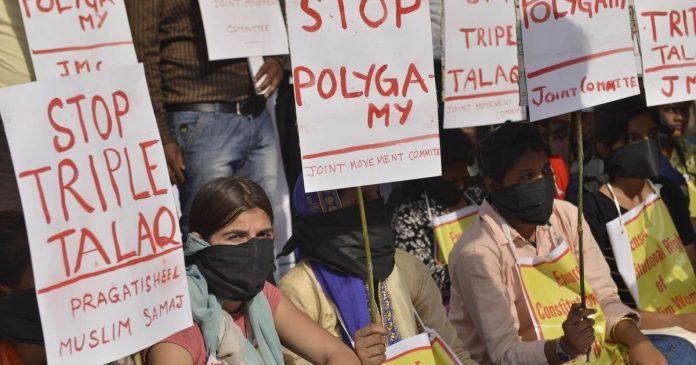
Current status of Triple Talaq – Resolving the doubts and queries

0
current status of triple talaq
Image Source - https://scroll.in/article/839259/on-triple-talaq-supreme-court-must-uphold-constitutional-values-not-religious-ones

In this article, Mansi Agnihotri discusses the current status of triple talaq and also resolves the doubts and frequently asked questions on the issue.

Triple talaq became a major concern in the recent year. The recent judgment though concreted that triple talaq is unconstitutional but raised a number of doubts in the minds of people. Before clearing the ambiguity lets understand talaq as per Shariat act.

Understanding the concept of talaq

Talaq is classified on the basis of pronouncement into two i.e

a) Talaq-ul-Sunnat (revocable) and;

b) Talaq-ul-Biddat (irrevocable) which is further subclassified in talaq Ahsan (most proper) and talaq Hasan (proper).

So as per Shariat act, the triple talaq doesn’t exist in the form as the usage was modified by the king Omayad in the second century as per the convenience. Thereafter the Muslim males started misusing it to prove their dominance over women.

It is the talaq-ul-Biddat which is in the canvass and it is regarded as the disapproved form of talaq. This form of talaq is in contrast to the ideology of the Prophet. Here the husbands could break the sacred relation merely by pronouncing talaq three times and there is no possibility of reconciliation. Prophet always opposed irrevocable talaq as he believed talaq is an evil and people must pursue the revocable one as there is an option of gaining back the pious relationship. Also, it is a unilateral divorce and is against the gender jurisprudence.

However, this modified version left women in the cage of insecurity as men started pronouncing talaq even on the trivial matters. This led to the campaign by the Muslim women to ban ‘triple talaq’ and ‘nikah Halala’ by the ‘Bhartiya Mahila Muslim Andolan’. But ‘All India Muslim Personal Board’ a Non-government organization which aims to educate Muslim retorted and claimed that this is a question of religion and it is unIslamic to distort anything which is enumerated in the Shariat. As per them, such a thing will injure Islam.

This dispute reached the platform of the court and thereafter the five judges bench examined whether the ‘islamic divorce practice’ is fundamental to religion or not and passed the judgment and held triple talaq as unconstitutional.

Shia law

The Muslim religion got bifurcated into two major communities after the death of the prophet. This also led to the differentiation in various customs. It is material to mention that Shia laws don’t recognize talaq-ul-Biddat or the instantaneous talaq. Hence this judgment establishes no effect on Shia community. This talaq-ul-Biddat is followed only in the Sunni community of Hanafi school and Hanafi Sunnis comprise around 90% of the Muslim population in India.

Judgement is not Against Islamic Religion

This judgment is not against any institution, organization nor it is against the religion of Islam. Rather, the true meaning and spirit of the Quran have been outlined on the anvil of individualism, the rule of law and human rights enunciated in the constitution. It is a judgment in favor of justice based on women rights on humans right that has been denied to Muslim women for centuries despite Quranic provisions relating to gender and spousal equality in wedlock and beyond. The Quran does not sanction triple talaq in one go. According to Islamic scripture, the word talaq is spoken thrice over a period of three months. In such a manner, it demands time and patience in executing a divorce in the hope of making the union possible knowing that the couple is bound to have differences. This Quranic procedure has been laid down with a rationale to establish that marital coverture cannot be terminated in a state of sudden provocation, rage or whims.

Current status of Triple Talaq

Is Triple talaq still legally effective?

  • The supreme court in the judgment paralyzed triple talaq by declaring it as unconstitutional. This means that no more these three words will be able to invalidate the marriage. Through this, an armament has been provided to the women to guard themselves against this barbaric law. The supreme court focuses on to liberate women from the coercive chains set by the males. But since the judgment is full of jargons and legal sections it is way beyond the understanding of the layman. since there is an extreme illiteracy among the Muslim women Muslim (around 42.7% according to the census of India 2011), we can imagine that almost half of the women are illiterate therefore women who have been the victim of it are in doubt as what should they do. Also because of the illiteracy, many of them are still unaware of the changed scenario.

Status before the judgment

  • It is significant to state that the sketch before the passing of the judgment was very gloomy, the husbands were very inhuman against their wifes. In many cases husbands pronounced triple talaq for flimsy reasons and later regretted. Upon which they asked the wifes to go through ‘Nikah Halala’ so that they could remarry, because of illiteracy and social bounds women’s had no recourse available except to go through it. The custom of “nikah Halala” was so harsh that it ripped off the soul of the women. In many reported cases, the husband at first forced the wife to go through ‘nikah Halala’ and later refused to remarry. This left women in shock, but they were amputated by the custom to take any step.

Is the custom of ‘Nikah Halala’ still prevalent?

  • It is crucial to enumerate that because the supreme court has solidified in his verdict that the talaq-ul-Biddat or the instantaneous form of talaq is invalid,it means that it cannot pose any effect over the marriage in any way, therefore the wifes cannot be forced to go through the process of nikah Halala, even if the husband pronounces triple talaq or talaq-ul-Biddat.

Has the practice discontinued?

  • It would be impractical to state that after the release of the judgment the practice has ceased completely. As per the minister of law, Mr. Ravi Shankar Prasad, there has been around approximately 66 reported cases from various parts of the country after the release of the judgment on the 22nd of August 2017. It can be ascertained that there is a possibility of many cases which might have gone unreported. So it can be concluded that many might be practicing it in the dark. But after the release of the judgment, one thing is for sure that the women have got encouraged and have gained the strength of standing against this barbaric and inhuman act of the men.
  • The practice of triple talaq is heavily assimilated in the Muslim culture, and it is difficult to immediately wipe it. As the abovementioned para states that statistics of the reported cases after the release of the judgment. So there is a need of educating the Muslim women in this regard so that they can speak against it. It is suggestive that the victim must build the courage and must either contact the police or some women-oriented NGO, but she must not suffer it silently.

What about the validity of ‘other’ form of talaq such as talaq-e-Sunnat, khula, etc?

  • It is pertinent to mention that it is ONLY ‘talaq-ul-Biddat’ which has been declared as unconstitutional and not any other form talaq. As there are numerous forms of talaq which the Shariat law has defined, and no other except for talaq-ul-Biddat or instantaneous talaq has got nullified by the court. It means that the rest of the practices such as khula, talaq-e-Sunnat is still constitutional and therefore if the husband or the wife practices any other form of talaq which the Shariat enumerates then it shall affect the marriage.

What about the other barbarous practices such as ‘nikah Halala’?

  • Although it is a strong step taken by the court to take away the force of law from the practice of talaq-ul-Biddat, the holistic approach is still lacking as a lot of problems still needs the judicial address. Customs such as nikah Halala, have not yet received any address from the court of law. It is needed that other practices such as polygamy, minors marriage or marriage with huge age gap must also be looked up by the court.

Does DAR-UL-QAZA stand with this verdict?

  • DAR-UL-QAZA refers to the Islamic family courts. It is a forum of mediation. If the parties agree then the forum can act for arbitration as referred in the Shamim ara and the recent judgment. After the release of the landmark judgment, the DAR-UL-QAZA is not entitled to validate the instantaneous or unilateral talaq. Although the Islamic court is empowered to facilitate the amicable settlement of khula. However, the recent judgment falls short of devising a mechanism which the other Muslim countries have implemented for declaring the divorce. Therefore it is suggestive that the dar-ul-Qaza must be empowered to allow divorces of irrevocable nature.
  • The supreme court in Shamim Ara case (2002), the talaq must be for reasonable cause and attempts of reconciliation must be taken by the families of the husband and wife. And because the instant talaq doesn’t offer the conciliation, it shall not be appropriate.

Is pronouncing triple talaq an offence?

  • It is fundamental to mention that the judiciary has only the role of reviewing the law but the law is primarily made by the legislature. Therefore until unless the government doesn’t support and brings amendments in the personal law, nothing much will change. It is required that the government must frame the laws to eliminate the practice and it seems that the government is quite interested in eradicating the cruel practice as the Lok Sabha on the 28th of December is all set to propose a bill on triple talaq based on the supreme court judgment. The bill focuses to make the husband liable for the criminal offence if he utters talaq three times at one time with the intention to invalidate the marriage. Law minister has confirmed that Muslim women (protection of rights of marriage) bill, is listed for introduction on the 28th December. The bill has been prepared by inter-ministerial headed by Rajnath Singh to make triple talaq or talaq-ul-Biddat invalid instantly in any form whether written, spoken or electronic communicated shall be punishable with the imprisoned up to three years.
  • It further enunciates that the husband could also be fined and quantum of fine would be decided by the magistrate hearing the case. The proposed law not just offers to the victim to approach the magistrate against the husband but also to seek “subsistence allowance” for herself and minor children.

NOTE – Subsistence allowance means the women may seek the action for the maintenance of herself and her ‘minor children’ from the husband. The women may also seek the custody of the minor children from the magistrate. The magistrate shall take a final call and his decision shall be final.

Is the bill comprehensive?

  • Though the government has exhibited the intolerant approach towards this taboo by making it a NON-BAILABLE and COGNIZABLE OFFENCE and attaching a penalty and imprisonment up to three years. But it fails to submit alternative methods to it. The bill must provide the procedure of divorce which is not cruel to either party. They must adopt talaq-e-Ahsan which is regarded as the most proper method of divorce and was also professed by the Prophet. Further, it must also involve reconciliation and mediation between husband and wife lasting for minimum 90 days.
  • Bhartiya Muslim Mahila associations the forefront association to battle against triple talaq has developed a method of divorce based on Quran. The proposal has been prepared and has been sent to the government. Now the rest lies with the parliament to accept it or reject it, whatever they opt it must be hard enough to eliminate it from Indian society.

Conclusion

  • The government has shown a stern and an uncompromising attitude towards felonious practice involving extreme harassment onto the women. However, it is required that the government must bring into limelight the policies curbing this menace as soon as possible. Apart from this looking at the illiteracy level and the dominance over the women, it is required that the government must allocate the responsibility over to some organisations which must work to educate the women about various laws that have been enacted to protect their rights and to encourage them to speak against the undue behaviour of the husbands.
  • The government must try to incorporate various other practices which harm the respect of the women. Practices such as ‘nikah Halala’ one of the most outrageous practices involving the illicit desire of the religious leaders must be amputated as soon as possible. Other practices such as polygamy, minors marriage, mental and physical harassment of the wife, forced sex by the husband, marriage with huge age gap must be curbed.

This was all about the Current status of Triple Talaq. Comment below and let us know your views on the current status of Triple Talaq

Download Now

What is your definition of success?

0
job opportunities for law students after graduation
Image Source - http://bryantarchway.com/what-is-the-true-meaning-of-success/

This article is written by Ramanuj Mukherjee CEO at iPleaders.

Why most people never succeed – they got the wrong definition of success

You need to reconsider how you define success for yourself. Very often, we get it wrong, or we forget what success really means. It’s a tricky one.

Success usually comes in disguises every day. Then one day, it ditches the disguise and shines for everyone to see.

What are its disguises? Hard work. Investment. Difficult decisions. A half chance. A failure followed by more work. Uncertainty.

I know, that sounds like trouble, not like success. Success is standing on the podium, driving an exclusive car, chilling on a 5 star private beach, money in your pocket. Wrong. Success is not any of those things. These are some of the benefits of consistent success. Sure, these signs show up after some time if you want them in your life. However, if you chase these mirages of success you will probably never make it. Most people chase those things and miserably fail. It’s a trap. It’s a damn good trap though, and most of the people you know will remain caught in that trap.

In the new year, let’s define what success really is for us. For me and you.

Let’s say you want to be a world champion. Is success standing on the podium or a victory lap? Is success million dollar endorsement deals? Sure these are some rewards of success. However, real success is getting up on time, hitting the gym, going for a run, sticking to a difficult diet, push your boundaries even when your body hurts and your mind craves to just give up.

Your mind says “I had a hard day, now I want a beer and watch some television”. But you don’t do it, because that’s not how champions are made. You hit the bed early, after a disciplined meal. That is success.

Every moment you don’t give in to your nature but strive for greatness, every step you take in that direction, is success. Every time you give in to your base nature, that wants you to remain comfortable, not take risks, to give up and chill, and you can’t shake yourself out of it immediately – that’s failure.

And sure, we will fail a lot. I go to bed late, that is where my failure starts. Then I end up waking up late, miss my morning meditation, miss going for a run, all those are failures. But then I seize the day, sit at my desk and start working. I tell anyone who interrupts me that I am not available. That’s success. If I manage to follow the amazing routine I have made for myself, that is success. Every time I get distracted from my work but catch myself at it, it’s success.

If I can do what makes sense again and again, over time, the money, the recognition, and everything else I want will follow. Success is mastering ourselves. When we succeed within, rewards are just for the picking.

And that is why most people never get to enjoy true success. They want the glitzy, rich, comfort of instant success. When they are presented with opportunities that require them to work and struggle for months and years they do not opt for it.

If you know someone like that, just ask them. When is a champion born? Is a champion created on the podium, with cameras clicking away, with a medal around their neck or a cup in their hands? Or is a champion born when someone decides to wake up at the crack of dawn and sweat it out on the track, on the court, at the field or the gym? Is a champion born when a bottle of champagne is opened and sprayed or when someone overcomes the desire to drink some nice wine or even chai and opt for water instead? Is the champion born when they manage to overcome the temptation and inborn human laziness with sheer willpower and desire to succeed or when they buy a big beach house in a posh locality?

I understand you can’t wait to get to the fun part of success, the rewards, but first be ready to put in what the vast majority of people are not ready to put in. Day in and day out, you need to score success and victories over yourself. You have to do the right thing that is hard to do rather than the easy thing that is so tempting and so easy.

Revolutions are silent. A lot happens under the water, in the cover of the dark, when nobody notices – and then one day it comes out, and marches to inexorable victory.

May 2018 be your year for silent revolution and relentless success. What actions are you going to take? Will you wake up at the crack of dawn? What temptations do you need to conquer? What battles will you fight within yourself and win?

If you want to be a champion lawyer, here are some successes you must pursue every day:

  1. Reading and learning: There is no amazing lawyer without a great reading habit. Knowledge is the biggest weapon in the repertoire of a lawyer. You must keep acquiring new knowledge and update yourself constantly. Of course, what you are reading matters a lot. There is a difference between reading a newspaper, a legal textbook and course material. You must also make time everyday to learn from other good lawyers around you. Here is a list of 10 amazing business books that every lawyer should read. Here is a list of 30 books recommended by ABA to American lawyers. I will solemnly recommend them to Indian lawyers too.
  2. Share and demonstrate your expertise: you succeed as a lawyer when other people discover your expertise. It can happen in the courtroom as other lawyers and judges are impressed by your work, or as you share a video on youtube explaining a complex matter in a simple way, or write a book on an important legal area that are read used by many other lawyers, or by contributing articles to platforms like this. Whatever you do, do it frequently and regularly. Here is Arvind Datar on importance of writing and legal scholarship.
  3. Acquire new skills: Knowledge and skills are very different. Knowledge is read, heard, shared, but skills are learnt and passed on. A lawyer has to acquire new skills as career grows. It can be how to assist your senior, how to draft contract, how to research, how to frame arguments in the beginning, but as you grow in age, practice and stature you must learn new skills like financial management, hiring and performance management of the lawyers and other staff that work under you, how to build new practice areas, how to expand into new cities, how to use the internet to grow your practice – anything that may take you forward. What skill will you focus on in 2018?

Please share your thoughts in reply. I promise to read each of the responses.

Download Now

What to do if you do not have money to contest a divorce case?

0
divorce case india

In this article, Akanksha Mathur of National Law University, Delhi discusses how one can get a divorce even with limited financial resources. 

Divorce can be a very expensive affair. It requires money to be paid at every step and takes years to get resolved. Moreover, in Indian society, it is often the women in a marriage who are often left without economic support when all economic resources are withdrawn during divorce proceedings.

Since the very procedure of divorce is extremely expensive, it is crucial to understand it in order to have a knowledge of where the money is going and how to save on it.

What is Divorce?

A divorce is the legal termination of a marriage by a court or any other competent body. It is a dissolution of marriage through a legal action before the death of either of the spouses.

Laws Governing Divorce in India

The laws for divorce in India are invariably linked to religion.

  • For Hindus, Buddhists, Sikhs and Jains, divorce is governed by the Hindu Marriage Act, 1955
  • For Muslims, the Dissolution of Muslim Marriages Act, 1939 contains provision for divorce
  • Parsis are divorced by invoking the Parsi Marriage and Divorce Act, 1936
  • For Christians, the Indian Divorce Act, 1869 is followed
  • All civil and inter-community marriages are governed by the Special Marriage Act, 1956.

Legal Grounds for Divorce

Divorces proceeding are of two kinds-

  • Divorce through Mutual Consent

For a divorce through mutual consent, both the husband and wife must agree to a divorce. It is a much better alternative as it is relatively inexpensive and not as traumatic as a contested divorce. For a petition for divorce by mutual consent to be accepted, the couple have to-

    • Be separated for a period of a year or more before the divorce proceedings can begin under Section 13 B of Hindu Marriage Act, 1955 and Section 28 of the Special Marriage Act, 1954 and be separated for at least two years under Section 10A of Divorce Act, 1869
    • Prove that they are not able to live together
    • Reach a consensus on the matter of alimony or maintenance. There is no maximum or minimum figure prescribed by law.
    • Mutually agree on the custody of the child necessarily. Child custody can be shared, joint or exclusive.
    • Reach a decision on the division of property between them, including the movable and immovable property.
    • Decide how litigation expenses are to be divided, particularly if one spouse is financially dependent on the other.

A divorce by mutual consent takes around 6 to 18 months.

  • Contested Divorce

    A contested divorce takes place when one of the spouses wants to get a divorce and the other doesn’t. It is an extremely expensive process involving hefty litigation and should be avoided if at all possible.

    There are specific grounds only under which a petition for divorce without mutual consent can be made. The general grounds for contested divorce are-

    • Cruelty, which may be physical or mental. According to the Hindu Marriage Act, 1955, one spouse’s mind must have a reasonable apprehension that the other spouse’s conduct is likely to be injurious or harmful.
    • Adultery, i.e. consensual sexual intercourse outside of marriage. A man who commits adultery can also be charged with a criminal offence, but not a woman. Divorce as a civil remedy is available to both spouses.
    • Desertion, which must be intended and have lasted for a continuous period of two years under the Hindu Marriage Act, 1955. Desertion as a ground is not available under the Indian Divorce Act, 1869 to Christians.
    • Conversion, under which divorce can be sought by a spouse if the other spouse converts to another religion.
    • Mental Disorder, to such an extent that the normal duties of married life cannot be performed.
    • Communicable Disease, which allows the granting of a divorce if a spouse suffers from a communicable disease such as HIV/AIDS, syphilis, gonorrhoea or a virulent and incurable form of leprosy.
    • Renunciation of the world, where a spouse renounces his/her married life and opts for sanyasa, allowing the aggrieved spouse to obtain a divorce.
    • Presumption of death, when a spouse has not been heard of as being alive for a period of at least seven years, by such individuals who would have heard about such spouse, if he or she were alive.

Contested divorce proceedings can go on for a period of 18 to 24 months.

Divorce Procedures in India

  • Divorce through Mutual Consent

    A divorce through mutual consent may be filed under Section 13-B of the Hindu Marriage Act, 1955.

    • Filing of the Divorce Petition

      Firstly, a divorce petition is required to be filed by the two spouses at-

          • The last place of residence
          • The place of marriage
          • The place where the wife currently lives
    • Granting of the First Motion

      After filing the petition, the parties must record their statement in front of a judge in the district court. These must state their free consent to the divorce, their reasons for it and the terms agreed to between them, along with information on the period of separation. Once the statements have been heard, the judge grants the First Motion.

    • Cooling-Off Period

      What follows is a period of 6 to 18 months during which the parties are expected to attempt reconciliation before the filing of the second motion. The parties must wait for a minimum period of 6 months.

      If either spouse is shown to be uncooperative in reconciling, the judge may disallow mutually consented divorce.

      The 6-month cooling-off period may also be waived off if the court believes that there is no scope for the parties to live together.

    • Second MotionAt the end of the cooling-off period, if the parties remain unreconciled, they can file the Second Motion, and the judge will dissolve the marriage.
  • Contested Divorce

    A contested divorce is provided for under Section 13 of the Hindu Marriage Act. A case for contested divorce must fall under one of the above-mentioned grounds to be accepted by the court.

    • Divorce Petition

      A divorce lawyer prepares a Divorce Petition on the basis of the facts and circumstances. This petition has to be accompanied by relevant documents such as documents for proof of marriage, proof of allegations and supporting documents such as affidavit signed in the presence of an authorized Oath Commissioner or Notary.

      The Divorce Petition is then filed in the appropriate court and is normally heard within 7-10 days of filing, subject to the workload of the court.

    • Hearing

      • Admission of the Petition in Court

        Before the divorce proceedings can begin, a hearing is conducted to decide whether the petition can be admitted by the court. The Judge studies the petition and hears the opening statements from the counsels regarding the allegations and the grounds on which divorce is sought.

        If the court is satisfied on a preliminary level that the case carries weight, a notice is served to the opposite side.

      • Reply

        On the next day of the hearing, the opposing side is to appear in person and file its reply, along with a reply to any application for custody or maintenance filed along with the Divorce Petition.

      •  Mediation

        The Court initially attempt to resolve the dispute by directing the case for mediation. The mediation process attempts to shorten litigation and resolve the underlying issues sooner. A detailed article on the mediation process can be found here. In case the mediation process fails, the divorce proceedings are continued.

      • Recording of Evidence

        This is the most crucial part of the proceedings and can make or break a case. It involves the framing of issues, recording of evidence, examination and cross-examination of the petitioner and supporting witnesses, followed by that of the respondent. It takes a lot of time and hearings.

      • Decision

        The recording of evidence is followed by the final closing arguments by both the parties. The Court then sets a date to pronounce its decision.

    •  Appeal

      The parties can also file an appeal against the Court’s Order within a period of three months if the find the Court’s decision unacceptable.

How Much Does It Cost to Get a Divorce?

  • Divorce by Mutual Consent

The cost of filing a petition for divorce by mutual consent is Rs. 250/-, with the main cost being advocate fees. The advocate fees vary greatly, and a mutual consent divorce can end up costing from Rs. 5000 to Rs. 50,000 based on the complications of the case and the lawyer’s experience.

A comprehensive list of the various factors affecting a lawyer’s fees can be found here.

  • Contested Divorce

While the fee for filing a divorce petition is Rs. 250/-, the main cost for a contested divorce is the fee of the advocate. Since contested divorce often involves quite complicated issues, it takes a long time, usually a number of years to get resolved. An experienced lawyer can charge anywhere between Rs. 3000-Rs. 7000 for a single appearance.  

What to Do If You Do Not Have Money to Contest a Divorce Case?

In the Indian context, women are often left with little to no economic support on the withdrawal of household finances when divorce proceedings are initiated. In such cases, the first crucial step that must be taken is to start setting aside money whenever the decision to obtain a divorce is arrived at.

The following options can allow a person to obtain a divorce with little to no money.

Legal Aid

The Indian Constitution has provides for a right to legal aid, under which citizens are entitled to free legal aid by the government. Free legal aid can be sought from the National Legal Services Authority (NALSA), various State Legal Services Authorities or District Legal Services Authorities, which were set up under the Legal Services Authorities Act, 1987.

Under Section 12 of the Legal Services Authorities Act, 1987, the following people are eligible for legal aid-

  • member of Scheduled Caste or Scheduled Tribe;
  • a victim of trafficking in human beings or beggar as referred to in Article 23 of the Constitution;
  • a woman or a child;
  • a person with disability as defined in Section 2(i) of the Persons With Disabilities (Equal Opportunities, Protection of Rights and Full Participation) Act, 1995;
  • a person under circumstances of underserved want such as being a victim of a mass disaster, ethnic, violence, caste atrocity, flood, drought, earthquake or industrial disaster;
  • an industrial workman;
  • a person in custody, including custody in a protective home (Section 2(g) of the Immoral Traffic (Prevention) Act, 1956), or in a juvenile home (Section 2 (j) of the Juvenile Justice Act, 1986), or in a psychiatric hospital or psychiatric nursing home (Section 2(g) of the Mental Health Act, 1987);
  • a person who receives an annual income less than rupees nine thousand or such other higher amount as may be prescribed by the State Government, if the case is before a court other than the Supreme Court, and less than rupees twelve thousand or such other higher amount as may be prescribed by the Central Government, if the case is before the Supreme Court.
  • How To Apply for Legal Aid

    • An application can be made by any person in need of free legal services to the concerned authority or committee by sending in a written form or filling the forms prepared by the authorities, briefly stating the reason for seeking legal aid. The application is available free of charge.
    • It can even be applied for orally to an officer or a paralegal volunteer of the concerned legal authority.
    • A person can even apply for legal aid to any institution by filling up the online Legal Aid Application form provided by NALSA and uploading the necessary documents. The application is forwarded by NALSA to the concerned authority.
    • The online application form can be accessed from here. In case a form has already been filed, you can check its status here.
    • The action taken on an application varies from providing counselling or legal advice to the parties, to providing a lawyer for representation in a court of law.

Indigent Suit

If a person does not have sufficient means other than property exempted from attachment in the execution of a degree to enable him to pay the prescribed fees, he can fill an application along with the suit for permission to file the suit as an indigent person. It is also known as a pauper application, and exempts payment of even the court fee. The state government can also provide free legal services to an indigent person.

Mediation in Divorce Proceedings

Another wise option to save on expenses during divorce proceedings is to opt for mediation. Mediation is an alternative method of resolving disputes which allows for the resolution of the underlying issues behind divorce in a manner that takes less time, less money and gives the parties more control over their divorce proceedings with the assistance of a neutral third party.

Application for Maintenance Pendente Lite/Alimony Pendente Lite

If an application for maintenance is filed in Court during the divorce proceedings, the Court would first decide on the application in order to ensure the financial security of the spouse while the proceedings continue.

Both the Hindu Marriage Act and the Indian Divorce Act provide for maintenance/alimony pendente lite. Under Section 24 of the HMA and Section 36 of the IDA, a spouse can apply for maintenance during the pendency of the divorce proceedings. On the application of the husband/wife, the court can order the respondent to pay the petitioner for the proceedings, along with a monthly sum that the court deems reasonable. This application is disposed of within 60 days of serving notice and ensures income to the parties during the divorce proceedings.

Is a lawyer needed for a divorce?

Divorce proceedings in India are carried out in accordance with the Family Courts Act, 1984, the Code of Civil Procedure or the Rules framed by the relevant High Court. None of these requires or mandates a lawyer to be engaged in the divorce proceedings. Since the cost of filing petitions for divorce in the courts is generally less, a good option for someone with limited means is to seek a divorce through mutual consent without engaging a lawyer.

However, a lawyer may also prove to be beneficial if certain complications arise during the divorce proceedings.

Moreover, since a divorce without mutual consent is a long drawn-out legal battle requiring allegations to be proved through evidence and documents, it is highly advisable to engage a competent lawyer.

It is advisable for a person to fight their own divorce case?

It is an undisputed fact that a divorce is both, mentally and emotionally taxing. In such a situation, the only thing one wants to do is have someone else handle the brunt of it.

However, there is not any aspect of a divorce that a person cannot handle on their own. When going for a divorce by mutual consent, parties can completely avoid the legal system by going for a Marital Settlement Agreement (MSA), which even goes on to be attached to the judgement of the court. Parties can negotiate an MSA on their own. It also gives them control over the terms and conditions of their divorce.

It, however, is advisable to refer to a lawyer for advice, without retaining one.

A guide for going through the divorce proceedings without retaining a lawyer can be found here.

References

  1. https://vakilsearch.com/advice/divorce-in-india/
  2. https://www.lawfarm.in/question/is-it-necessary-to-appoint-a-lawyer-in-a-divorce-proceeding
  3. https://vakilsearch.com/advice/divorce-by-mutual-consent/
  4. http://prashantghai.com/procedure-contested-divorce-hindu-marriage-india/


Download Now

Laws you must know to handle police harassment in India

0
Police Harassment
Image Source - https://grumpajoesplace.com/2014/12/12/police-harassment-answered/

In this article, Hritik Sharma discusses Laws you must know to handle police harassment in India.

Introduction

Various petitions complaining about the harassments are being reported and filed before the courts seeking directions to abstain the police authorities from harassing people in the shade of doing the investigation.

And one of the primary reason has been that the Police Authorities does take a benefit on the part of the common people as they don’t have the knowledge of the provisions which are providing them remedies in each of the situations.

As to keep yourself safe from being a victim of such harassments keep a take of the laws which are being stated or under which the work is done.

What is an Investigation

Under Section 2(h) of the Code of Criminal Procedure Investigation is defined as, “investigation” includes all the proceedings under this code for the collection of evidence conducted by a police officer or by any other person (other than a Magistrate) who is authorized by a Magistrate in this behalf.

Here it ends with the formation of the opinion as to whether on the material collected, there is a case to place the accused before a Magistrate for trial and if so, taking the necessary steps for the same by filing of a charge-sheet under Section 173, Stated under the case Union of India v. Prakash P. Hinduja.

A three-judge bench in H.N.Rishbud v. State of Delhi, while indulged in an investigation, has stated that under the Code, Investigation consists generally of the following steps:

  1. Proceeding to the Place,
  2. Detection of the Facts and Situation of the case,
  3. Discovering and Arresting the Suspected offender,
  4. Gathering the Pieces of evidence relating to the commission of the offensive act which may consist of:
  • The investigation of numerous people (including the accused) and the markdown of their statements into writing, if the officer thinks fit about it.
  • The exploration of places or apprehension of things considered necessary for the investigation and to be produced at the time of the trial.

Formulation of the opinion as to whether the material gathered there is a case to place the accused before the Magistrate for trial and if so taking necessary steps for the same by filing a charge sheet under Section 173. In Adri Dharan Das v. the State of W.B., it has been stated that:

“Arrest is a part of the procedure of investigation expected to get many purposes. The accused may have addressed the insights about the different points of intention, planning, commission and impact of the crime and connection of other people, if any, in the crime.”

More Cases Exploring the Dimensions of Investigation

Cases Judgements/ Interpreting the dimensions of the Term “Investigation”
Niranjan Singh v. the State of U.P. The Investigation is not an inquiry or a trial before the court and because of which the Legislature did not consider any inconsistency in an investigation as of ample importance to impair or otherwise form any affliction or in the inquiry of the trial.
State of Bihar v. J.A.C.Saldanha There is a clear-cut and well separate circumvent purview of activity in the field of crime detection, punishment, and further investigation of an offence is the field exclusively reserved for the executive in the Police Department.
S.N.Sharma v. Bipen Kumar Tiwari The Police Official Power to investigate is self-reliant, hence there is no control of the magistrate, over the Police.

Recently in the case A.N. Lalman Lal v. State of Tamil Nadu, the High Court of Madras, a Single Judge comprising of Hon’ble Justice M.S. Ramesh, addressed a petition filed under Section 482 of Code of Criminal Procedure Code, pleading to the court about directing the Police(Respondent), to not harass the petitioners under the guise of investigation.

The Court accounted that the Investigative Officers powers are not restrictive in the terms of the enquiry either about a non-cognizable offence or a cognizable offence but it is needed to be checked that whether such powers are legitimately exercised.

The Court observed, though the Code of Criminal Procedure empowers the Magistrate to be a guardian in all the stages of the police investigation, there is no power which allows him to interfere with the actual investigation or the mode of investigation.

The Court held that it’s exercising powers’ under Section 482 of the Criminal Procedure Code would not definitely allow it to interfere with the investigation conducted by a police officer but, it would also not neglect the instances of harassment under the guise of an investigation by the police. It is needed to be kept under the criteria that the word “harassment” does have a very wide meaning and hence, the word “harassment” is different from the view of petitioners and from the view of the respondents that they thought it to be “harassment”.

Guidelines Issued by the Court

The court issued the following guidelines to circumvent such situations of the harassment which can take place while the investigation is under process:

  1. When there is a Situation where any person is summoned by the reason of being named in the complaint or any witness to the incident complained of, The Duty of the police officer is to summon such person through a written summon under Section 160 of the Code of Criminal Procedure, Specifying a particular date and time for appearing before them for certain investigation.
  2. There should be a Recording in the Daily Diary/ Station Diary/ General Diary of the Police station about the minutes of the investigation.
  3. The Police Officer should not indulge in any kind of harassment done to the people while doing any investigation.
  4. The Guidelines decided for the preliminary enquiry or registration of F.I.R. by the Hon’ble Supreme Court in Lalita Kumari v. Government of Uttar Pradesh and others shall be strictly followed;

There are the Guidelines Specified by the Court are being Stated as follows:

  1. Registration of FIR is compulsory, stated in Section 154 of the CrPC., if the information reveals commission of a cognizable offence and no preliminary inquiry is permissible in such a situation;
  2. If the information gathered does not reveal a cognizable offence but it shows a demand for an inquiry, a preliminary inquiry may be conducted only to ascertain whether a cognizable offence is disclosed or not;
  3. If the inquiry discloses the commission of a cognizable offence, the FIR must be registered. In cases where preliminary inquiry ends in closing the complaint, a copy of the entry of such closure must be delivered to the first informant immediately and not later than one week.
  4. The Officer cannot omit or avoid his duty of registering about the offence committed if it is revealed as cognizable. An Action must be taken against culpable officers who do not register the FIR if the information received by him discloses a cognizable offence;
  5. The purview of a preliminary inquiry is not to verify the truth or otherwise of the information received but only to confirm whether the information reported reveals any cognizable offence.
  6. As the General Diary/ Station Diary under which all the information are being recorded can be used to state that whether the collection of information reveals that a certain offence is cognizable and whether the relevant information is leading the police to report an FIR, or leading to an inquiry.

Here in the case, The issue which arises for consideration was whether a police officer is bound to register a First Information Report (FIR) upon receiving any information relating to commision to a cognizable offence under Section 154 of the code of Criminal Procedure, 1973 or do the police officer has the power to conduct a preliminary investigation in order to test the accuracy of such information before registering the issue.

A Writ petition was filed under Article 32 of the Constitution, by one Lalita Kumari being a minor at that time filed the same through her father, Shri Bhola Kamat for issuance of a writ of Habeas Corpus for the directions to be taken against the respondents herein for the protection of his minor daughter who has been kidnapped. The objection was that on date 11/May/2008, a written report was submitted by the petitioner before the police officer-in-charge of the police station concerned who didn’t take any action about the same. Consequently, when the Superintendent of Police was moved, an FIR was registered. According to which the petitioner, consequently states that the measuring steps were not taken either for apprehending the accused or for the recovery of the minor girl child.

How do I handle Police harassment in India?

  • Never indulge in a fight with a police officer, despite being the fact that you know that the police officer is wrong, Just be Calm, Polite and Humble all the time.
  • Whenever there is a situation where a victim is needed to go to a Police Station to Complain Against a Police Officer, always take a lawyer with you.
  • If there is a need to file a complaint against a Police Officer, over his misconduct, the victim should file it in the commissioner’s office in the city.
  • Whenever, A police officer does not file FIR , the victim may send the substance of the information, in writing and by post to the Superintendent of Police concerned, who after getting satisfied that such information discloses the commission of a cognizable offences like Murder, Theft, Robbery, shall either investigate the case himself or he can direct an investigation to be made by any police officer subordinate to him.
  • If the complaint filed to the Superintendent of Police still does not result in your favour, the victim can make a visit to the nearest Magistrate and can get his complaint registered. After which, the magistrate will order to the police to register the FIR.
  • If a person being the victim of the misconduct because of the omission of a duty of a police personnel, which can be any violation of duty or wilful breach or neglect of any rule or regulation, shall be liable to be punished under section 29 of Indian Police Act,1861 with,
    • A penalty up to 3 months’ pay; or
    • Imprisonment up to 3 months; or
    • Both penalty and imprisonment.
  • If a Police Personnel summons you to be present at the police station, always go but with a lawyer.
  • A Victim can even make complaints to the Jurisdictional DCP, whenever, a police personnel was impolite to you.
  • Never make an argument over a law to a police personnel unless you are a lawyer.

Police Complaint Authority (PCA)

The Police Complaint Authority was created in 2006, After the SC directed all States to begin a reformation in their Police, After the Judgement in the Prakash Case, The SC of India given the directives for structural reform of the police, by establishing Police Complaints Authorities at the state and District level, with immediate effect. The Decision was to be Primarily due to increment in huge number of Complaints against the police and the lack of Accountability, as well as the intention behind setting up police complaints authorities was to make sure that a local mechanism expert in handling a wide scope of complaints against the police, including the most serious, was readily available to the public at large.

Complaints which can be filed with the Police Complaints Authority

The Authority shall investigate into accusations of “Serious Misconduct” against the police personnel, as detailed on a complaint received from any of the following:

  1. A victim or any person on his/her behalf;
  2. The National or the State Human Rights Commission;
  3. The police; or
  4. Any other source

By the word “Serious Misconduct”, it states the coverage of the offences;

  1. Death in police custody;
  2. Grievous hurt, as defined in section 320 0f the IPC,1860;
  3. Rape or attempt to commit rape;
  4. Arrest or detention without due process of law;
  5. Extortion;
  6. land/house grabbing; or
  7. Any incident involving serious abuse of the authority.

The Authority may also investigate before referring to the complaint as filed, only after getting satisfied with the truth of the complaint.

How to File a Complaint with the Police Complaint Authority

  • A Complaint can be filed in PCA, on your own and in an authority existed in your nearby area/district.
  • The complaint can be filed by any other person who has witnessed any misconduct committed by the police.

To file a Complaint

First of all, you should make a contact to PCA and ask for a prescribed Format in which a person can submit the complaint. A person can send a complaint via Post, Fax or submit it in person.

Note: The complaint is needed to be filed or lodged as quickly as possible after the incident.

The Complaint should be in writing and must include:

  • Name
  • Address
  • Contact Details

You need to describe the incident like;

  • What Happened;
  • When it Happened;
  • Against whom you are complaining about, describing the name, address of the police station where the police official exists;
  • What was said or done;
  • Whether someone else was present at that time, who witnessed the incident when it was taking place and if any contact details you have of them.
  • Describe the Loss or Damage incurred by you.

You can also attach any relevant documents which can make your complaint stronger, Documents Like:

  • Photographs showing of the Incident, or
  • Photographs of the Injuries or Damage incurred;
  • Medical Report or any Certificate issued by doctor subjecting the nature of the injuries if any inflicted upon;
  • Evidence of Station Diary.

Prior to the Submission of the complaint, always keep a copy of the complaint and the documents, and in case you have submitted it in person always take a receipt with a date stamped on it as a record, and if you submit your complaint by registered post, always keep a receipt of the same safe. As all these receipts and the copies will work as a proof to acknowledge that you have sent the application being sent by the authority.

Conclusion

In the end, it states that no one is above the law, and all the citizens are equal under the eyes of the law.

And whenever people face such kind of Atrocities they should always keep in mind that there is a need to have a self-awareness of the laws as the remedies provided to them or whenever facing such kind of situations always consult a Lawyer,

Apart from all of this, there is also a provision under Article 226 of the Constitution of India, to file a writ petition in the High Court,

The Court here issued the guidelines, as needed to be recorded to create a level of transparency in their work while addressing the same whenever, there is state of conflict founded and by abiding through Chapter XII of the Code of Criminal Procedure and the Police Act which explicitly states that every activity related to investigation and as well as the other activities should have a written record in the police diary or general station diary.

By abiding through the Guidelines here the Police Officials not only create a level of transparency as well as it will create a faith on the Police Authorities as well as it will deplete the amount of time which is given by the court, to entertain such kind of cases which are just being created because of misconducts on the behalf of a Police Personnel, as well it will give opportunity to the court to address more cases which require much more important time of the court.

References

Cases

  • Union of India v. Prakash P. Hinduja- AIR 2003 SC 2612
  • H.N.Rishbud v. the State of Delhi- AIR 1955 SC 196
  • Adri Dharan Das v. the State of W.B- 2005(2)ALD(Cri)67
  • Niranjan Singh v. the State of U.P- AIR 1957 SC 142
  • State of Bihar v. J.A.C.Saldanha- AIR 1980 SCR 326
  • S.N.Sharma v. Bipen Kumar Tiwari- AIR 1970 SC 786
  • Lalita Kumari v. Government of Uttar Pradesh- WRIT PETITION (CRIMINAL) NO. 68 of 2008
  • Prakash Singh and Others v. Union of India- Writ Petition 310 of 1996
Download Now

What to do if your employer refuses to pay gratuity?

15
pay gratuity

In this article, Sanghamitra Sengupta discusses steps to take when your employer refuses to pay gratuity.

Understanding Gratuity

It has always been rightly said that loyalty is a trait that must be awarded. Employers also believe in this principle and show gratitude to their retired employees for their service by giving them gratuity, a monetary payment. It is basically a type of a ‘retirement benefit’. But, an employer is not bound to pay gratuity to every employee post-exit. An employee must have worked with the employer for a minimum of 5 years to avail this benefit. The reason for exit from the job does not matter as the reason could vary from something as natural as age to something caused due to his own volition such as a better job opportunity.

Is gratuity available in both public and private sector?

Yes. In India, it is mandatory for every employer, be it in the public sector or private sector, to pay his employee gratuity provided the employee has completed 5 continuous years of work.

Is there any law that protects my right to gratuity?

Yes. Payment of gratuity is ensured by The Payment of Gratuity Act, 1972, thus making it mandatory under a statute. The act is applicable to every legal place of employment such as mines, factory, shops, oil field, plantation, railway company, and ports. But, it must be noted that these employments must have had or have at least 10 employees, on any day of the preceding one year.

What happens if I die before completion of 5 years of service?

An employee is entitled to gratuity payment even in the case of death. In the case of death, 5 years of continuous service will not have to be proven and the gratuity will be awarded to the nominee. In case of absence of nominee, the legal heirs of the deceased employee will receive the gratuity. It must also be noted that sometimes 5 years of service is not completed due to disablement, meaning, permanent inability or incapacity to do the work which one was capable of doing before an accident or disease. In case of disablement, gratuity is paid even if 5 years of service is not rendered.

How many days must I wait for to receive my gratuity payment from my employer?

  • Before we delve into the laws, you need to remember that every employer gets 30 days post your resignation, retirement or firing from the job to pay you gratuity.
  • You or anyone authorized by you can send an application to the employer for payment of the gratuity in these 30 days.
  • An application must be made to the employer within 30 days of exit from job to the employer in Form ‘I’.
  • A nominee of the employee who is entitled to gratuity on behalf of the employee from the employer has to give an application to the employer within 30 days of exit from work, in Form ‘J’.
  • After receiving this application, your employer is bound to respond to this application within 15 days. The employer must verify the application and if the claim is found to be admissible based on this verification, he must issue a notice to you, in Form ‘L’ notifying the calculated amount of gratuity which will be awarded by him.
  • The employer must also fix a date in this notification which cannot be after the 30-day term stipulated by the act. This notice must be forwarded to the controlling authority having jurisdiction in that area.
  • The provision of an application to the employer does not imply that his liability to pay gratuity starts only when you send an application as an employer is bound to pay gratuity regardless of an application from the employee.

After completion of 30 days, can I make my employer pay extra gratuity?

After completion of 30 days, the employer has to pay you not only the gratuity amount but also simple interest incurring on it. This simple interest rate cannot exceed the rate imposed by the Central Government though.

Where can I report in case of non-payment of gratuity

  • Section 3 of the Payment of Gratuity Act, 1972 provides for a ‘Controlling Authority’. Different areas have different controlling authorities that ensure the effective administration of this act. The act gives the controlling authority the status of a ‘quasi-judicial’ body which implies that it is empowered to adjudicate disputes arising out of non-payment of gratuity.
  • The Controlling Authority may issue a notice in Form ‘O’ to both the applicant employee and the employer. The two parties will then have to appear before the authority on a specified date, time, and place, given in the notice.
  • If the employer fails to present himself or an authorized person before the authority, the authority may proceed to hear the case and determine the employee’s application ex parte.
  • If the employee fails to appear before the authority on the specified date, then the application will be disposed of.
  • The authority, on hearing the case and examining the facts may pass a direction and issue a notice to the employer if it is established that employee is entitled to gratuity. A notice is served to the employer in Form ‘R’.  
  • Generally, an Assistant Labour Commissioner of a state is appointed as a controlling authority in a state with the hearing taking place in the office of the Labour Commissioner. If you have been denied gratuity payment by your employer, you can file a complaint under Section 8 of the act, against the company. The controlling authority, on hearing both sides, if satisfied with the employee’s stance, can direct the employer to pay the gratuity that is due along with the interest on it.
  • If an employer fails to pay gratuity amount along with interest 30 days after the controlling authority has directed it to do so, the appropriate government, be it Central Government or State Government, whoever is concerned with the employing organization, will authorize the controlling authority to start prosecution against the employer, within 15 days.

The forms can be accessed here.

Benefit of Condonation

An employer cannot deny gratuity to the employee on the ground of limitation. No doubt, there is a specified period of 30 days for an employee to file a notice to the employer but a claim for gratuity will never be invalid solely because it was not presented within the specified time. An appeal against the order of the Controlling Authority, however, has to be filed within the specified time and cannot be condoned.

What is the punishment imposed on my employer if he refuses to pay gratuity?

  • Section 9 of the act provides for all penalties that can be imposed on your employer by the Controlling Authority. Your employer will be liable for imprisonment for non-payment of gratuity – up to 6 months which may be extended to 2 years if the controlling authority deems it necessary.
  • It is not necessary for the employer to be imprisoned for 6 months as, if the controlling authority is of the opinion that a lesser term of imprisonment would suffice, the provision of 6 months of imprisonment would not be applicable.
  • A penalty amounting to imprisonment of 6 months could also be imposed on your employer if he knowingly makes a false statement or representation to avoid payment of gratuity.

Gratuity Insurance

Under Section 4(A) of the Payment of Gratuity Act, 1972, every establishment that is bound by law to pay gratuity must get a gratuity insurance. This compulsory insurance will ensure that there are sufficient funds available with the establishment to pay employees their much-deserved gratuity. There are plenty of Indian banks that offer gratuity insurance to employing establishments, helping banks maintain a sufficient fund as well as earn gains on the invested money.

However, this law takes a turn because it only becomes mandatory when the government releases a notification with regard to the insurance in the Official Gazette. So far, there has not been any notification. However, states are forming their own compulsory gratuity insurance rules.

As far as employees are concerned, this insurance is highly beneficial to them for it ensures that in times of a financial crisis or economic losses, the company will still have to pay gratuity to the employee. The employer cannot justify nonpayment of gratuity by citing bankruptcy or financial losses. The rule of compulsory gratuity insurance was introduced to safeguard employees in all sorts of situations, even when their employer has to shut down the establishment.

Payment of Gratuity after death

Gratuity can be received by the employee’s legal heir, in case of death of the employee. Gratuity received by the employee’s legal heir will be taxable under the head “Income received from other sources”. The legal heir must give an application to the employer, demanding gratuity payable to him, in “Form K”.

Gratuity is most definitely exempted from tax up to a certain limit, as per Section 10 (10) of the Income Tax Act. Section 10 (10) basically divides employees into three categories for the purpose of exemption of taxation on gratuity. The categories are:

  • Government employees: Gratuity received by government employees is not taxable
  • Employees covered by Payment of Gratuity Act: total gratuity that is exempted from taxation is the least of these 3 amounts- 15 days salary for each completed year of service provided the employment is more than six months OR INR 3,50,000, OR the gratuity actually received. Gratuity received in excess of the least of the amounts mentioned here will be taxed.
  • Other employees: Total gratuity that is exempted from taxation is the least of these 3 amounts- Half month’s average salary for every completed year of service OR INR 3,50,000 OR the gratuity actually received.


LawSikho has created a telegram group for exchanging legal knowledge, referrals and various opportunities. You can click on this link and join:

https://t.me/joinchat/J_0YrBa4IBSHdpuTfQO_sA

Follow us on Instagram and subscribe to our YouTube channel for more amazing legal content.
Download Now
logo
FREE & ONLINE 3-Day Bootcamp (LIVE only) on

How Can Experienced Professionals Become Independent Directors

calender
28th, 29th Mar, 2026, 2 - 5pm (IST) &
30th Mar, 2026, 7 - 10pm (IST).
Bootcamp starting in
Days
HRS
MIN
SEC
Abhyuday AgarwalCOO & CO-Founder, LawSikho

Register now

Abhyuday AgarwalCOO & CO-Founder, LawSikho