Download Now
Home Blog Page 1508

Where to lodge a complaint if your social media account gets hacked?

7
Social Media account

In this article, Shubham Prakash discusses Where to lodge a complaint if your social media account gets hacked.

Introduction

In the age of the cyber world as the use of computers developed and became more popular, there was a manifold increase in the growth of technology as well, and the term ‘Cyber’ became more conversant to the general public. The growth of Information Technology (IT) gave rise to the cyberspace where internet provides ample amount of opportunities to the people to gain access to any stored data or information or analyze the data with the use of modern technology. Due to an unprecedented upsurge in the number of citizens, the misuse of knowledge and technology in the world of cyberspace was gripping up which subsequently gave rise to cybercrimes at the national as well as international level.

Though the word Crime in its general meaning means “a legal wrong that can be followed by criminal proceedings which may result into punishment” on the other hand Cyber Crime is “unlawful acts wherein the computer is either a tool or target or both”.

Hacking

If someone asks that what is one the most dreadful fears of today, the answer will be “this username and password does not match”. Whenever we misspell our password, we have a latent fear that our account has been hacked by someone. We have all encountered experiences when our friends post on Facebook saying that their account has been hacked and the “hacker” is posting things (mostly objectionable) from their profile.

It’s not a hidden fact that the internet gives us the uncontrollable amount of powers. It is nothing less than a second identity, and when someone steals then it is no less than an offence of theft. It can happen that sometimes our email accounts are hacked by viruses and this is generic without attributing any special reason, for example, just by clicking a link on a website, it starts posting on your behalf. These cases are mostly of less serious nature and can be remedied by changing passwords. The crux of the problem lies when the account is backed by a third person who does so with a mala fide or bad intention, like revenge, hatred or sadistic pleasure or any other reason. The problem reaches to its pinnacle when the accounts of popular public figures get hacked and their confidential information is leaked to the general public or even worse when the hackers post on their behalf to the fans that take their word as gospel.

Account Hacked! Follow the steps given below

Now, the most important question which arises is that how does an account get hacked? There are a lot of ways to hack into an account, like an email account or any social networking account like Facebook, Twitter, etc. The first and the most common would be, when one discloses his or her password to another person, this usually is one of the most common ways which is used by people for taking revenge. Another negligence which people usually do is forgetting to log out from public computers. The more technologically advanced way of hacking is Phishing, Cookie Hijacking and Keylogging. Phishing is, when a person provides information about oneself (name, address, passwords, bank details etc.) on the false belief that the information has been sought by a valid website, wherein actual reality it is a fake one, which looks exactly like the original one but created to use the information provided, for identity theft. Cookie Hijacking is the process of using the user data stored on someone’s computer to get information about their online accounts. Keylogging is a more sophisticated means of hacking, where the hacker with the use of certain software and hardware can know your passwords by the keys you type on your computer.

How to get account blocked by legal means?

If somebody has hacked your social media account, then it is the duty of the concerned person to get the account blocked as earlier as possible, so that it is not misused. If a hacker has automatically logged in to your social media account (facebook), then the person should not worry. They should directly go to the menu, select the settings and answer those security questions which they were asked at the time of creating the account. The social media account will provide the person with all the location from where the hacker logged in. If the people see that he or she has not logged in from that location then there they can click on End Activity in order to end the session. The hacker will be logged out temporarily and the person should change the password as fast as possible. Then the person should directly go to the help page and click on ‘I think my account was hacked or someone is using it without my permission’ and then click on secure it. Then finally your account will get secured.  

Can I take legal action against the hacker?

If you are thinking that this post will only advice you to keep your password protected, then you are highly mistaken because the Information Technology (IT) Act of 2000 does provide legal remedies to sue a hacker.

Section 66 of the Information Technology Act deals with the offence of “hacking with a computer system”- ‘whoever with the intention to cause or knowing that is likely to cause’, which means that mens rea is needed in order for this to be an offence. The act is of causing misfortune and harm wrongfully, to all individuals at large or to a particular individual specifically by changing any data without the individual’s assent or knowledge. The access to the account must be secured by the unscrupulous means and should make some serious damage to the person. Sub-section (2) expresses that the punishment would be detainment of up to three years or a punitive fine of up to two lakhs or both. This demonstrates the Indian courts do consider the wrongdoing of hacking seriously and the punishment is practically identical to robbery. 

Similarly, Section 66C of the Act deals with the Punishment for identifying theft. According to this section, the dishonest or inappropriate use of an electronic signature or password could result in imprisonment of either description for a term, which may extend to 3 years and fined up to 1 lakh rupees.

The next important question of where to file a complaint: most states have their cybercrime cell websites, where you can file a complaint, with the required documents. A simple Google search can help you to locate the contact details of the correct cyber crime cell that is designated for your jurisdiction. In addition to this, any person can reach their nearest police station for the addressable of their grievances.

Procedure

In India, there are many cyber cells where a person can lodge a complaint about cybercrime. The person has to write an application containing the name, address, e-mail and telephone number which has to be filed before the head of the cyber cell department. They have to submit documents to the head of the cyber cell. The documents that need to be submitted are:

  • Server logs – When an application for complaint is filed on the website the server files and log files get automatically opens the list of the activities that need to be performed.
  • Soft and hard copy of defected files – The material of tempered statement is considered as a piece of substantial evidence, which is submitted by the person against whom the cybercrime has been committed.
  • A hard copy of an original page and the tarnished page – In order to make work easier for the cyber cell, it is necessary to submit the hard copy of an original page and tarnished page which can help to locate material of tempered statement.
  • It is important for the informant to disclose all the details of the person who has accessed his or her account by using his password and the computer through which he signed in.
  • It is important to disclose all the details so that they can control the mechanism of cybercrime.
  • A person whose account has been hacked can give the details of the person whom he suspects to have committed the said offence i.e. hacking.
  • It is important for the informant to give as much information and evidence so that the head of the cyber cell can investigate the case easily.

The online lodging complaint on the website has made work easier for the informant as well as for cyber cell. After filing the complaint the informant can check the current status of the case.

Social Media Account got hacked while you are on a vacation – Follow these steps

Let’s consider a situation where a person is in Goa for a vacation but lives in Ranchi and the account gets hacked? Where will they lodge a complaint?

Solution: The person can file a written complaint with the immediate cyber cell in the city. The IT Act, 2000 provides that a cybercrime has global jurisdiction which means that the person can report in any cybercrime irrespective of the place where the act was committed. At the time of reporting the person should provide the head of cyber crime cell with their full name, contact details and mailing address along with their application.

If cyber crime cell is not available?

If the cyber crime cell is not available then a complaint should be made to police in consultation with legal counsel and should provide with the necessary documents depending on the nature of the complaint.

  • The person would file an F.I.R. ion the police station u/s 154 of Code of Criminal Procedure, 1973 (hereinafter referred as CrPC) and if there is non-acceptance on the behalf of the police, the complaint can be made to the commissioner or judicial magistrate of that city.
  • The cybercrime is an offence covered under Indian Penal Code, 1860 (hereinafter referred as IPC), then the police can arrest a person without a warrant as it is a case of cognizable offence. The investigation will start and a charge sheet will be u/s 173 of CrPC and which will be submitted to the court and the trial would be.

Conclusion

If you think that the Indian legal system has not taken steps to prevent cybercrime, then that opinion should be altered. The question is how effective is the crime control system. There are laws, but is the police-force adroit enough to combat terrorists who are up to date in cybercrime warfare? Can these same provisions apply to criminals that infiltrate government security systems and cause significant grave danger to the country? With most of the classified data being kept and processed online, the cyber cell has to be more alert and cautious in order to combat this new threat. For this, they need to employ experts from the cyber field who are well-versed to deal with cyber crimes. Cybercrime is not just hacking Facebook or E-mail accounts, it goes much deeper and to serious incidents which can have far-reaching consequences for an individual person or a nation as a whole. As for people like us, we should keep our friends close and our online accounts closer.

Download Now

How to file a complaint against Media Misreporting

1
Media Misreporting

In this article, Mayank Vats discusses how to file a complaint against media misreporting.

Introduction

In today’s era, it is not very rare to witness someone or something being lambasted without any flaw or defect as an outcome of some erroneous media reporting. Instances of media misreporting have enabled many reputable and prestigious people to be arraigned without any upright reason. Media misreporting also has the potentiality to make public at large believe and accept an untrue fact. But there are provisions in order to make a complaint against media misreporting which certainly tends to ensure that the most authentic and accurate information reach out to the public. However, for a complaint against any media report to be acceptable, the report or the offending item must violate the code of practice of media. If the item which is viewed and complained as an offending item is not breaching and is in accordance with the Code of Practice then it would not be counted as media misreporting. Media could be in any form such as broadcasting media like television or radio, print media like newspapers or magazines or social media such as internet blogs, website etc.

Complaints against Media Misreporting Involving Newspapers (Print Media)

For registering complaints against newspaper media one can write to the “Press Council of India”. There is a specified period of time for registering a complaint. Although, it is requisite to put it in writing to the editor primarily regarding the complaint before it can be filed with the Press Council of India. In order to get the prime concern, one can do a few things, some of them are:

  • Try to contact or write to the editor personally and instantaneously. Most of the publishing houses and newspapers have separate sections for viewers to figure out the flaws and loopholes. The newspaper acknowledges and apologizes for the mistakes. A person against whom any misleading statement has been published by the newspaper could ask for an apology from the concerned newspaper.
  • Wait for the response from the editor. If he/she does not receive a response in an equitable time period which might depend on the gravity of the flaw as well as its consequence on the reputation or work of the person concerned, he/she can blog regarding it or ask a friend who has a blog and after that he/she can share the same on social media as well.
  • If the editor is not replying and the person who intends to complain regarding any misreporting by the newspaper does not have a blog, he/she can take an online version of the item (if available) and share the same on various social media platforms with tagging the concerned media house and adding most suitable hashtags. One can expect a quick response after this for the reason that all the publication houses are very much concerned about their public image and certainly want to ensure a nice image on social media.
  • One may file a legal case as well if the error or flaw is paramount and the concerned media house is not replying within a reasonable time period. However, it is also necessary for the person to contemplate that such an action could take time and a lot of struggle from his/her own end.
  • One can contact on the below-mentioned details in order to register a complaint against any media misreporting which concerns newspapers or any other source of print media:

The Secretary,

Press Council of India,

Soochna Bhavan, 8-C.G.O. Complex, Lodhi Road, New Delhi-110003

Phone Numbers: (011) 24366403/24366745 (Extn. 319 & 320) Telefax: (011) 24366405/24366745 (Extn. 224)

Email: [email protected]

Website: http://presscouncil.nic.in

Complaints against Media Misreporting Involving Broadcasting Channels

One who intends to file a complaint against media misreporting put on a show by any broadcasting channel, he/she needs to send the complaint to “News Broadcasting Standards Authority” which is in New Delhi. However, it is necessary for a person to file a formal complaint to the broadcaster initially before proceeding towards the NBSA (News Broadcasting Standards Authority). It is necessary for a person to file the complaint in writing, either in English or Hindi language and should embrace the following things:

  • Copy of the complaint letter consigned to the broadcaster;
  • Copy of response sent from the concerned broadcaster
  • Name and address of the broadcaster.
  • Specific details of the story, news item or program.
  • Date, time and channel of broadcast.
  • A brief compendium of the aggravation of the complainant specifying the provision of the Code that has been violated.
  • All the appropriate and suitable documents with the potentiality of assisting the complaint.

It is a must to incorporate all the above-mentioned specifications. To support the complainant, a ‘Complaint Form’ is obtainable on the website at www.nbanewdelhi.com or it can also be availed from the NBA (News Broadcasters Association) office. For the complaints concerning social media, one can file his/her complaints online through the website of the concerned social media platform. Furthermore, If a person wants to register a defamation case or anything alike, he/she can walk up to a lawyer who could help his/her filing a case in the court.

  • One can contact on the below-mentioned details in order to do any communication with the authority which concerns news channels or any other source of broadcasting media:

News Broadcasting Standards Authority

C/o News Broadcasters Association

Mantec House, C-56/5, 3rd Floor, Sector 62

Noida – 201 301

Tel./Fax: 0120-4129712

Email: [email protected]

How and Where to Lodge a Complaint about Media Misreporting

Before filing a complaint we must know that media misreporting against the press and with regard to the oppression to press freedom. Decide, where you have to file a complaint and then go ahead with the complaint.

The procedure for filing a complaint against the press is as follows:-

  • Any person can lodge a complaint with the Press Council against a newspaper for a breach of the recognized ethical canons of journalistic propriety and taste.
  • The complainant need not necessarily be the one who is affected by the media misreporting. He may not be directly involved or aggrieved.
  • The alleged breach may be in publication or nonpublication of a news item or statement, or other material which involves usage of cartoons, gifs, photographs, strips etc. which are published in a newspaper.
  • Cases can also be initiated by any member of the public against any professional misconduct or misbehavior by an editor or editor’s team, a working journalist, a staff of a newspaper or engaged in freelance work.
  • There can also be a complaint against any matter transmitted by a news agency by any means whatsoever.
  • According to the Press Council of India, the Press Council (Procedure for Inquiry) Regulations, 1979, the complaint shall be lodged within a specific time frame.
  • If the publication has been made in dailies, news agencies, and weeklies, then the complaint should be filed within 2 months.
  • If the publication is regarding other matters then the complaint needs to be filed within four months of such publication.
  • The extended clause to which says that provided that a relevant publication of an earlier date may be referred to in the complaint.

Procedure for lodging complaint

For filing a complaint you must write directly to the Inquiry Regulations department. The complaint must be addressed to the editor of the newspaper drawing his attention to what the complainant considers to be a breach of journalistic ethics or an offense against public taste. Prior reference to the editor affords him an opportunity to deal with the matter in the first instance and thus allows the respondent to take such remedial action as he might consider appropriate before the complaint is lodged with the Council.

The rule is necessary because it acquaints the editor with the identity of his accuser and the details of the complaint. It is conceivable that in some instance the complainant has been wrongly informed or has misinterpreted the facts. In others, it may be a case of the inadvertent error which the editor is only too ready to admit or correct. If the person who is about to complain or the would-be complainant is satisfied, that would be the end of the matter. Thus negotiation solves the problem.

If the complainant desires to proceed with the complaint, then he should enclose with his complaint copies of correspondence with the editor, if no reply has been received from the editor, the fact should be mentioned in the complaint.

When we talk about the Complaint regarding the oppressed to press freedom then the procedure is as follows:-

  • A Newspaper, a journalist or any institution or individual can complain against Central or State Government or any organization or person for interference with the free functioning of the press or encroachment on the freedom of the press. Such complaints should contain full particulars of the alleged infringement whereupon the Council shall follow the procedure of inquiry set out hereinabove so far as may be.
  • The opinion expressed by the Council subserves two useful purposes, namely
  • That any abuse of press freedom does not pass without anybody noticing it or raising a finger of protest, and
  • That the press should not in its own interest indulge in scurrilous or other objectionable writings which include those which have been considered below recognized standards of journalistic ethics by a fair-minded jury like the Council constituted of the press itself, for it would lead to the very loss of the much-prized freedom of the press.

Essential Features of Complaint against Media Misreporting

  • The one who intends to make a complaint against any media misreporting should initially contact the editor or director or any person having an authority of the concerned media body. A just and fair proceeding from both the parties can have a potentiality of bringing in an expeditious and reasonable resolution by way of clarifications, simplifications, publication of a letter to the editor or the director, or an explanation, apology, and rectification.
  • The person who intends to file a complaint against media misreporting is expected to unveil that he/she has been personally and immediately concerned and embroiled in, and/or attacked or influenced by the item or recital in dispute. Under some specific situation or set of circumstances, a third party can also be allowed to make the complaints in good faith.
  • The complaint must be filed in writing with the “Complaint form’. There is no fees or charged for getting or submitting the complaint form.
  • Complaints with the following elements can be rejected:
  1. Complaints which do not violate the Code of Practice.
  2. Complaints which intend to elevate issues which could possibly lead to the further invasion of the seclusion and isolation of those reported on.
  3. Complaints which become visible to mirror malicious, frivolous or trivial concern to a large extent.
  4. Complaints which comes out from an item or story which does not hamper the complainant in a direct manner.
  5. In the instances where both the parties involved in the complaint arrive on an agreement, the matter could be closed.
  • The concerned authority initially has four options which are:
  1. Validate the complaint.
  2. Reject the complaint.
  3. Make settlement stating that the measure the media outlet has come up with is an abundant remedial step to get the complaint resolved.
  4. Make a call for more suitable and relatable information.
  • The Press Council of India and the News Broadcasting Standards Authority always target to judge a complaint in a sufficiently good, reasonable and fair manner. In the cases of justifiable and fair complaints, the most considerable penalty that can be levied is to deliver an unprejudiced judgment against the media outlet. The media outlet is pressurized and pushed to publish, broadcast or post the decision, with the required importance, and it may also be outlined on by other media bodies.
  • If the violation is specifically serious and grave and/or forms part of a pattern of behavior, the concerned authority can also make the mention of the editor or the director or any authorized person publisher or owner of his/her own outlet.
  • Decisions of the media misreporting cases might be used for guidance and reference in subsequent cases. Any pronouncement of decision delivered by the council could be used for enlightenment and direction in the succeeding cases.

Can I Directly Approach the Court?

  • It is an undeniable fact that instances of media misreporting have the potentiality to give a bad image and fame to any person against whom the misreporting is done which could certainly be viewed as defamation. For defamation one can easily approach the court directly. However, there are some fundamental necessities in order to file a successful defamation suit.
  • In order to file a successful suit against media misreporting which could lead to defamation, there must be the presence of defamatory report or matter. Defamatory content includes any such content in the report which has the probability of giving a bad or negative name and fame to any person without any substantial reason.
  • In addition, the applicant or the person who is filing the suit must be recognized and distinguished in the defamatory media misreporting. The matter of the reporting must specify the name of the person filing the suit some way or the other in an undeviating manner.
  • Nonetheless, there should also be the presence of the publicized statement which could lead to defamation either in written or in oral form.

Which Court to Approach?

  • Instances of media misreporting which might lead to defamation are both criminal as well as civil offense. Likewise, cases concerning media misreporting could be filed in both civil and criminal courts.
  • In a civil suit, if all the essential conditions which are mentioned above in the article are fulfilled, a defamation suit comes into existence. However, it is expected from the end of the defendant to plead a privilege or opt for a defense.
  • Under Civil Law, defamation comes under the bracket of Law of Torts, which levies punishment in the way of damages presented to the person filing the claim.
  • In a criminal case, the intention to defame is a very vital element. The awareness regarding the report is likely to defame or is defamatory becomes crucial in the cases where the intention is absent. All these things must be beyond reasonable doubt.
  • In criminal law, defamation is non-cognizable, compoundable and bailable offense. Therefore, it is not possible for the police to start an investigation of defamatory media misreporting without having a warrant from the magistrate. The accused in such cases possess the right of seeking bail.
  • Furthermore, the charges imposed can be withdrawn if the victim and the accused come upon a compromise to that effect. It is possible even without the permission of the court. Section 499 of the Indian Penal Code talks about defamation as a criminal offense. In addition, Section 500 of the Indian Penal Code talks about punishment which can extend up to an imprisonment for a term of two years, or with fine or both.

Paid News and paid Opinion Polls and Exit Poll

First of all, it is a well-known actuality that it is very difficult to ascertain whether any news is paid. Similarly, It is also very difficult to question the authenticity of Opinion and Exit Polls. Though, there are certain provisions one could opt for in order to file a complaint against any paid news or erroneous opinion or exit poll. There are certain procedures available which have the potentiality to address these issues, which are:

  • Complaint to the Press Council of India.
  • Complaint to the News Broadcasting Standards Authority.
  • Complaint to the Indian Broadcasting Foundation.
  • FIR under sections 153 and 295 Indian Penal Code, If the paid news could be considered as hate speech.

Remedies Available for Media Misreporting

Mentioned below are the remedies a person could attain if he/she goes on to file a complaint against any kind of genuine media misreporting:

  • Compensatory damages, which means the money to reinstate the person in the position he/she would have been in if the misreporting had not happened and his/her reputation had not been harmed.
  • An injunction to discontinue the publication.
  • A retraction or a correction
  • The complainant or the plaintiff might as well be presented with punitive or exemplary damages, which are aforethought not to compensate the complainant or the plaintiff but to give punishment to the defendant who has performed in evident overlook of the complainant’s rights.

Some Well-Known Cases Concerning Media Misreporting

  • Justice P B Sawant, former judge of the Honourable Supreme Court of India had sued Times Now for erroneously putting on the show his photograph in a report on the 10th Day of September 2008, about a person with a phonetically alike sounding name supposedly involved in the Provident Fund scam of multi crores. The trial court in Pune had ordered the suit for Rs100 crore against the TV channel.
  • The Delhi High Court sought a reply from the end of Arnab Goswami on the plea filed by Congress MP Shashi Tharoor for stopping Republic channel from misreporting on the death of his wife. The High court said that Goswami and the Republic Channel must respect Shashi Tharoor’s right to silence. While hearing the case, Justice Manmohan opined that Goswami, as well as his news channel, are allowed to put up stories conveying the facts concerning the investigation of the death of Tharoor’s wife but they must not call him a ‘criminal’.
Download Now

Acquittal and Honorable acquittal

0
Honorable acquittal

In this article, Vasanth Ravichandran discusses the difference between Acquittal and Honorable acquittal.

Let us analyze the meaning of the term “Honorable acquittal” – a term coined by Indian jurisprudence. There exists a thin line between “acquittal” and “Honorable acquittal” which would be dealt in brief below. Further, we also focus on the remedies available to a person who was not honourably acquitted even when he is entitled to. Reference to some judicial pronouncements is also made so as make it authoritative.

Simpliciter acquittal and acquittal by extending the “benefit of doubt”

The trial court after giving due consideration to the evidence placed on record and examining the witness may do any of the following

  • Convict the person.
  • Acquit the person unconditionally. In other words, it is a simpliciter acquittal.
  • Acquitting the person by extending the “benefit of doubt” or due to the failure on the prosecution side to prove the guilt “beyond reasonable doubt”.

In this regard, it would be commonsensical to quest for the reason behind the incorporation of the words “beyond reasonable doubt” and “benefit of doubt” while acquitting a person without which we cannot fully appreciate the distinction between acquittal and honorable acquittal.

At this juncture, it is worth referring to certain Articles of “The Universal Declaration of Human Rights”. Article 11 (1) provides that everyone charged with penal offences has a right to be presumed innocent until proved guilty according to law in a public trial at which he has had all the guarantees necessary for his defense. Further, Article 14(2) states that everyone charged with a criminal offence shall have the right to be presumed innocent until proved guilty according to law. Besides, Article 6(1) of “Convention on Civil and Political Rights” states that every human being has the inherent right to life. This right shall be protected by law. No one shall be arbitrarily deprived of his life. Article 9(1) says that everyone has the right to liberty and security of person. No one shall be subjected to arbitrary arrest or detention. No one shall be deprived of his liberty except on such grounds and in accordance with such procedure as is established by law. Article 14(2) envisages that everyone charged with a criminal offence shall have the right to be presumed innocent until proved guilty according to law and shall be entitled to minimum guarantees detailed therein. Thus, great emphasis has been added to the age old maxim “innocent until proven guilty”. The Hon’ble Supreme Court in Bachan Singh vs State Of Punjab (1980 (2) SCC 684) has held that the above requirements of these clauses are substantially the same as the guarantees or prohibitions contained in Articles 19 and 21 of our Constitution.

Thus, the onus lies on the prosecution to prove the guilt of the accused beyond reasonable doubt except in the cases of insanity or statutory defense taken up by the accused. Further, from those set of facts narrated supra, it can also be inferred that the criminal courts can very well make use of the term “beyond reasonable doubt” and “benefit of doubt” while acquitting a person even though those words are not precisely defined under Indian Evidence act or any other procedural laws in force.

Understanding the concept of “Honorable acquittal”

The term “Honorable acquittal” is nowhere defined under our laws and it is the invention of Indian judiciary.

The factum of acquittal and the distinction between ‘honorable acquittal’ and ‘acquittal on benefit of doubt’, has been explained by the Division Bench of Madras High Court in W.A.No.1287 of 2008, dated 02.09.2009. The relevant portion is extracted below

“……..In the absence of any definition in the code of Criminal Procedure, it is very difficult to define what is the meaning of the words “honourable acquittal”. Again it depends upon the facts and circumstances of each case. The Court could reasonably presume that if an accused is acquitted or discharged because of some technicality not having been complied with or on the ground that though there is some evidence against him, he must be acquitted by giving the benefit of doubt, it may not amount to an honourable acquittal. On the other hand, if an accused is acquitted after full consideration of evidence because the prosecution witnesses are disbelieved and the prosecution has miserably failed to prove the charges, it would amount to an honourable acquittal. In the event the Court while acquitting an accused neither say that the case against him is false nor does it say that the accused has been acquitted on the ground of benefit of doubt, then the acquittal may be honourable acquittal or acquittal of all blame.”

Further, The Hon’ble Supreme Court in Deputy Inspector of Police and ors Vs. S. Samuthiram, (2013) 1 SCC 598 had the opportunity to discuss in brief about the “Honorable acquittal”. The said Judgement inter alia reads as follows:

“…. The meaning of the expression ‘honourable acquittal’ came up for consideration before this Court in Management of Reserve Bank of India, New Delhi v. Bhopal Singh Panchal (1994) 1 SCC 541………… It is difficult to define precisely what is meant by the expression ‘honourably acquitted’. When the accused is acquitted after full consideration of prosecution evidence and that the prosecution had miserably failed to prove the charges levelled against the accused, it can possibly be said that the accused was honourably acquitted”

Thus, from the findings of the courts extracted above, it can be apparently inferred that if an accused is acquitted not because of the fact that he is innocent but owing to the failure on the part of prosecution to prove the guilt with sufficient evidence, it would not be considered as Honorable acquittal. In other words, if an accused is acquitted by extending the benefit of doubt, then it would not amount to Honorable acquittal. But, on the other hand if an accused is acquitted after giving full consideration to the evidence placed on record and if the court is of the opinion that prima facie no case is made out against the accused, it may very well come within the ambit of the term “Honorable acquittal”.

One interesting thing to note in “honorable acquittal” is that even if we apply the principle of “preponderance of probability” charges cannot be proved against the accused.

Remedies available to person who has not been “Honorably acquitted” even when he is entitled to the same

The next question which arises for consideration is when a criminal court instead of acquitting an accused simpliciter, if inappropriately employs the term “acquittal by giving benefit of doubt” or “acquittal as there is no proof beyond reasonable doubt”, “What is the remedy available for the accused?

When a finding recorded in an order is adverse to his interest and contrary to law, the aggrieved person should not be left in lurch without a remedy. He should not be made to carry the stigma about his character throughout his life. This would certainly result in civil consequence as it relates to his moral character. Therefore, he has an incumbent right to get such adverse findings expunged.

The Division Bench of Madras High Court in M.Krishnan Vs. The State of Tamil Nadu reported in 2014 (3) MWN (Cr.) 203 (DB) has held that accused cannot go for an appeal seeking to change the acquittal into “Honorable acquittal”. Only the state (the prosecution side) or the victim has the right to prefer an appeal against the order of acquittal.

Now, Section 401 (4) of Code of Criminal Procedure (hereinafter referred to as “code”) provides that person will not have the right to revision if he has the right to appeal. This can also be understood in such a way that a person who has no right to appeal has the right to revision provided it falls within the parameters set forth under section 397 of the code. If we scrutinize the said provision, it states that the High court has the power to call for the records and examine the records of the inferior courts and verify the legality of the findings or orders passed. Here if a person is aggrieved by the adverse findings made by the court, then he can very well exercise Revision Jurisdiction of High Court and get the adverse remarks expunged. This view has been observed in Crl. R.C No. 684 of 2014 by the Hon’ble Madras High Court wherein the court had allowed a revision application filed by the petitioner seeking to remove the adverse findings in the order made by trial court wherein he was acquitted by extending the “benefit of doubt” even though there is no evidence to prove his guilt.

Download Now

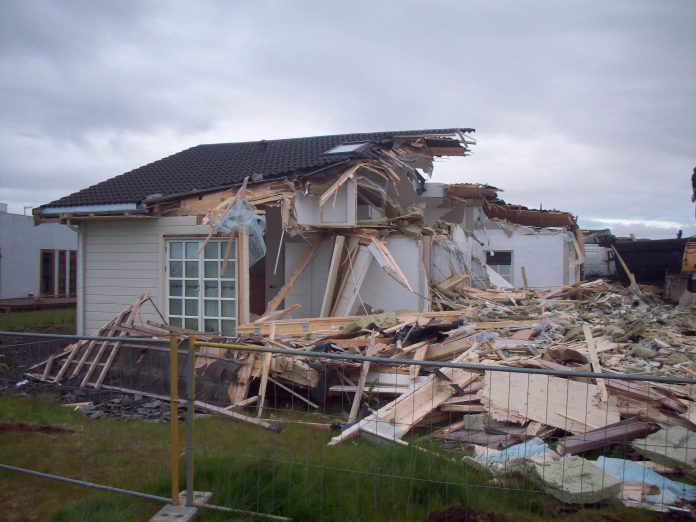
What to do after receiving a notice of demolition of house by DDA

0

In this article, Raghav Ajmera discusses steps to take after receiving a notice of demolition of house by DDA.

Introduction

Demolition of the illegal buildings or the slums is a necessary thing to do. Demolition is not an easy task to perform. Prior to demolition, there are process and steps that have to be performed by the authority concerned. The proper details regarding the time, date of demolition should be communicated by the legitimate authority to the persons staying in the building for proper evacuation. Demolition can be done by anyone it can be either by the owner of the property or by the authority trying to abolish the illegal acquisition.

Meaning of Demolition

Demolition is the pulling down of buildings and other manmade structures. The process of demolition takes place to remove the illegal construction, or to reuse the abandoned buildings. For the smaller buildings such as houses with two floor or three floors, the demolition process is very easy. The building is torn down either manually or with the help of machines like cranes or bulldozers. Larger buildings may require the wrecking balls which are basically heavy swung by the crane to the side of the larger buildings. According to the reports, The tallest planned demolition of a building was the 47-story Singer Building in New York City, which was built in 1908 and torn down in 1967–1968 to be replaced by  One Liberty Plaza.

Necessary permits before starting demolishing activity

Before demolition of a building, the authority needs to obtain necessary permits, submitting necessary notifications, disconnecting utilities, rodent baiting and the development of site-specific safety and work plans. There are four methods which can be used as a method to demolish a building, but all the four factors depend upon the locality, size, and its material. Demolition basically is the tearing down of a building.

Implosion

Implosion is the violent bursting inwards which make the structure on its own footprints. It is a very fast process in which the collapse takes only a few seconds. For a proper implosion to take place, the authorities first need to study the blueprints of that particular building and should do the proper assessment regarding what parts and structure of the building should be blasted. The final step is to decide what type of explosive to be used according to the locality of the building.

High reach arm

The procedure of high reach demolition is used for the large buildings where the implosion method is not suitable. The implementation of this begins when a building is greater than 20 meters. The high reach machines are equipped with the different tools that are suitable for the demolition. There is some factor which may affect the demolition process

  • Structure height
  • Site conditions
  • Structure shape, and
  • Structure location

Demolition method: Crane and ball

One of the oldest and most used methods for demolition is with the help of wrecking ball tied up to a crane which weighs around 13,500 pounds to demolish the big structures. In this process, the ball is either dropped onto the building or swung to the sides of the building, but this method cannot be suited for all demolition process majorly because of the location of the structure or building. It has some limitations :

  • Highly experienced and skilled crane operators should execute this task of demolition.
  • Controlling the swing of the crane because if it misses the target, then it may end up in demolishing some other building.
  • This form of execution or demolition creates noise, vibration and lots of dust.

Selective Demolition

It is also known as strip-out This method is in relation to the recycling process. Selective interior/exterior demolition is recycling of wood, bricks, metals and using them in the new structure with the old ones. This method’s main purpose is to recover the maximum amount of primary and secondary reusable and recyclable material.

Rights of easement

The right to easement covers under the Indian Easement Act, 1882. It’s basically a non-possessory right which is used to enter into the real property of another. Easements usually are continuous or discontinuous, apparent or not apparent. An easement may be temporary or permanent depending upon the interruption. If a person gives or dedicates the right to occupy the outside part of his house for the passing and repassing. This right is not an easement.

Delhi development authority

The authority plan and work for the future of Delhi. The authority works according to the change of time. In 1962, a master plan was formulated by the DDA which ensured the balanced development of city with respect to both residential and corporate development. It works according to the Delhi Development Act, 1957.

The Delhi Development Act, 1957

An act to provide for the development of Delhi. It extends to the whole of [National capital territory of Delhi]. It was enacted by the parliament in the 8th year of the Republic of India.

What happens when a notice of demolition of house is served by the DDA – Section 12 of the Delhi Development Act

  1. Where any development has been carried out not in accordance with the master plan or zonal development or without the approval or sanction(referred to in section 12) or against the conditions which are subject to approval or sanction;
  • In relation to a development area, any officer of the Authority empowered by it in this behalf,
  • In relation to any other area within the local limits of a local authority, the competent authority thereof,

2. In addition to any prosecution that may be instituted under this Act, make an order directing that such development shall be removed by demolition, filling or otherwise by the owner thereof or by the person at whose instance the development has been commenced or is being carried out or has been completed, within such period (not being less than five days and more than fifteen days from the date on which a copy of the order of removal, with a brief statement of the reasons therefor, has been delivered to the owner or that person) as may be specified in the order and on his failure to comply with the order, the officer of the Authority or, as the case may be, the competent authority may remove or cause to be removed the development and the expenses of such removal shall be recovered from the owner or the person at whose instance the development was commenced or was being carried out or was completed as arrears of land revenue: PROVIDED that no such order shall be made unless the owner or the person concerned has been given a reasonable opportunity to show cause why the order should not be made.

Where any development has been carried out not in accordance with the master plan or zonal development or without the approval or sanction (referred to in section 12) or against the conditions which are subject to approval or sanction and the competent authority has failed to remove or cause to be removed the development within the time that may be specified in this behalf by the [Lieutenant Governor] of the [National Capital Territory of Delhi], the [Lieutenant Governor] may, after observing such procedure as may be prescribed by rules made in this behalf, direct any officer to remove or cause to be removed development and that officer shall be bound to carry out such direction and any expenses of such removal may be recovered from the owner or the person at whose instance the development was commenced or was being carried out or was completed as arrears of land revenue.

[(2A) Any person aggrieved by the direction of a [Lieutenant Governor] under sub-section (I-A) may appeal to the Central Government within thirty days from the date thereof, and the Central Government may after giving an opportunity of hearing to the person aggrieved, either allow or dismiss the appeal or may reverse or vary any part of the direction.]

(3) The decision of [the Central Government on the appeal and subject only to such decision] the order under sub-section (1) or, as the case may be, the direction under sub-section (1-A), shall be final and shall not be questioned in any court.

(4) The provisions of this section shall be in addition to and not in derogation of, any other provision relating to demolition of building contained in any other law for the time being in force.

Who has the power to stop development?

  1. Where any advancement in any region has been initiated in contradiction of the end-all strategy or zonal improvement design or without the consent, endorsement or authorize alluded to in area 12 or in repudiation of any condition subject to which such authorization, endorsement or authorize has been conceded –
  • In connection with an improved range, the Authority or any officer of the Authority enabled by it for this sake,
  • In connection with some other territory inside the neighbourhood furthest reaches of a nearby specialist, the equipped expert thereof,

2. may, notwithstanding any arraignment that might be founded under this Act, make a request requiring the advancement to be stopped on and from the date of the administration of the request, and such request should be consented to in like manner.

3.Where such advancement isn’t ceased in compatibility of the request under sub-segment (1), the Authority or title officer of the Authority or the skillful expert, by and large, may require any cop to expel the individual by whom the improvement has been initiated and every one of his collaborators and labourers from the place of advancement [or to grab any development material, instrument, apparatus, framework or different things utilized as a part of such development] inside such time as might be indicated in the demand and such cop should consent to the order likewise.

Appeals regarding the demolition

Appellate Tribunal (Section 31B)

The Appellate Tribunal or Appellate Tribunals constituted under section 347 A of the Delhi Municipal Corporation Act, 1957 (66 of 1957), shall be deemed to be the Appellate Tribunal or Appellate Tribunals for deciding appeals under section 31C, and the provisions of section 347A and section 347C of the Delhi Municipal Corporation Act, 1957, and the rules made thereunder, shall, so far as may be, apply for the purposes of this Act as they apply for the purposes of that Act.

Appeals (Section 31C)

  1.  Any person aggrieved by any of the following orders made under this Act may prefer an appeal to the Appellate Tribunal, namely:
  • An order of the Authority granting or refusing to grant permission for development under sub-section (3) of section 13.
  • An order of the Authority or the local authority disposing of any land under section 21. An order of the Authority in the course of dealing with any land developed by it under section 22.
  • An order of an officer of the Authority or the competent authority made under sub-section (1) of section 30, for the removal of any development.
  • An order of the Authority or an officer of the authority, or the competent authority made under sub-section (1) of section 31, for discontinuing any development.
  • An order of the Authority or the competent authority made under section 31A, directing the sealing of any development.

2.An appeal under this section shall be filed within thirty days from the date of the order appealed against:

PROVIDED that the Appellate Tribunal may entertain an appeal after the expiry of the said period of thirty days if it is satisfied that there was sufficient cause for not filing it within that period.

3. An appeal to the Appellate Tribunal shall be made in such form and shall be accompanied by a copy of the order appealed against and by such fees as may be prescribed by rules.

Can you file a suit for an injunction seeking a pause on demolition activity?

The Supreme Court had ruled that granting against temporary injunctions against the demolition of unauthorized constructions on the grounds of sympathy and hardship would amount to illegality as when the order of demolition was issued the development authority reviewed the whole structure. The ruling of the court came on a petition filed by tenants who were inducted as tenants in Moonim compound. Unauthorized shops built in Greater Mumbai by M/s Global Marketing who had bought it from Abdullabhai Faizullabhai Private Ltd. vide deed of assignment dated Sept. 21, 2000, for a consideration of Rs.18 lakhs on ‘as is where is basis.’ It was the sole responsibility of the assignee to obtain tenancy /occupancy /possessory rights of the assignor in respect of the said property and to continue to use and enjoy the said property and to continue to use the on terms and conditions CPWD may stipulate.

How much time is given to take your belongings out of your home before demolition

  • Before demolition of any building, a prior notice by the corporation has to be shown to the occupier.
  • Only when the court permits then only the demolition can take place.
  • However, when the notice is served then the occupier have time to go to the court ask for a stay order, and the stay order always depends upon the circumstances of the case.
  • Opportunity is given to the occupier to file their reply to the show cause notice.

Conclusion

Demolition usually takes place to remove construction which is not made according to the guidelines or rules prescribed by the authority of the area and thus marked as illegal construction or illegal acquisition by people over the property which does not belong to them.

Download Now

Ten biggest tax havens and whether Indians can benefit from them

0
tax haven

This article is written by Raghav Ajmera.

Introduction

Tax havens are countries or foreign jurisdiction that offers favorable tax and financial secrecy to its customers investing from outside their border. There are roughly 45 tax havens today in the world among which Switzerland tops the rank. Because when it comes to financial information of clients the country implements a high level of secrecy. The tax havens are those countries which have a low tax rate with respect to foreign investment. There are both positive and negative effects of tax haven countries. The primary aim of tax haven countries is to attract foreign investors. If companies have paid taxes in the tax haven jurisdiction, then companies can avoid taxes in the home jurisdiction.

Meaning

A tax haven is a jurisdiction with low tax regime which provides individuals and businesses opportunities of tax evasion. Some of its definitions only focus on tax but it has other definitions too. It refers to the country or jurisdiction which maintains the system of financial secrecy, which enables foreign individuals to hide their assets and income in their home jurisdiction. As of February 2008 the Organisation for Economic Co-operation and Development (OECD) there are three factors to identify whether the jurisdiction is tax haven or not:

  • Lack of transparency – A lack of transparency in operation of the legal or administrative provision is another factor to determine the tax havens.
  • It must have a low rate of taxation – Tax havens impose nominal taxes as a place to be used by non-residents to escape high taxes in their country of residence.
  • Laws to protect financial information – This is the most vital feature of a tax haven as it protects the financial information of the investor with a high level of supremacy.

The tax haven countries are generally smaller in size, commonly below 1 million in size. Tax haven countries have a mean government index of 0.73 which is quite higher than that of the non-tax haven countries. (Dharmapala and Hines, 2006) Tax haven countries are beneficial for both the countries that are the host country as well as the companies and individuals maintaining accounts in them.

What is common among these Tax havens?

Every tax haven country stands for the same meaning and therefore having the same characteristics. These characteristics are the things to determine whether the country is a tax haven or not. Some of the characteristics are :

  • Very stringent regarding the privacy laws,
  • Secrecy laws and Nondisclosure policies are very strict,
  • Do not release account information to other governments and law enforcement agencies,
  • Do not have any financial information exchange policies except where drug trafficking and terrorism are suspected,
  • Most of these Tax Havens have a legal system based on the British common law.

Why hasn’t this been curbed?

The tax evasion is not a good thing to perform. This is simply giving fewer taxes in other jurisdiction so that the individual need not need to pay it in their home jurisdiction. It has not been curbed because of some of the following reasons that are :

  • Internet and communication technology improvement has created a connection to the people across the globe which has improved the way for more investment.
  • Tax havens thrive in the financial services sector.
  • Several nations have largely escaped the global crackdown on tax havens and are not on OECD’s blacklist.

Top tax havens

Switzerland

Switzerland ranks number one in the list of top 10 tax havens. One-third of the world’s private fortune resides in Swiss banks. Banking is the pillar of its economy – 11% of GDP in 2006 as against 5.8 percent in 1990. In Switzerland, bank secrecy is among the strictest in the world. It is also because of the fact that the bank accounts operated in the country are also managed and operated on a massive scale. The share of assets and investments made in Switzerland by resident and non-resident clients is roughly equal. Various tax exemptions/reductions are available to Swiss companies doing business abroad, or foreign persons resident in Switzerland.

Benefits from Switzerland

  • Low tax rates

Switzerland provides low tax rates for the investors investing their fund in the country which helps in avoiding the taxes in their home jurisdiction.

  • Financial secrecy

Switzerland provides a high level of secrecy to customers regarding their financial assets. It is not easy to get financial information about the customers. Their banking rules and policy are very strict.

The Cayman Islands

The Cayman islands situated in the western part of the Caribbean sea compromises of three different islands. There is the Grand Cayman, the Cayman Brac, and the Little Cayman. These islands are located northwest of Jamaica and to the south of Cuba. In the Cayman Islands, people who are looking to pay a minimum amount of tax or no tax gets a full package. Here they do not have to pay for personal income taxes, capital gains, corporate taxes. The country does not even withhold tax on foreign clients.

Benefits from The Cayman Islands

  • Income tax

Here the people do not have to pay income taxes. Income tax is usually imposed on people or entities with respect to their income or profits

  • Capital gain tax

It is the tax on the capital gains, the profit realized on the sale of a non-inventory asset. Here you do not have to pay the capital tax.

  • Corporate taxes

It is the tax imposed on a company. It is the direct tax imposed on the companies according to their income or profits. Here you are free from paying corporate taxes.

Luxembourg

Luxembourg has a stable and high-income market economy which features moderate growth, low level of inflation. Everyone is aware of its bank secrecy laws and its reputation as a tax haven. In April 2009, it led to the addition of Luxembourg in the “grey list” of nations with questionable banking arrangements by the G20. According to the Tax Justice Network report, the country got a Financial Secrecy Index value of 1,621.2 and a Secrecy Score of 68.

Benefits from Luxembourg

  • Financial secrecy

Every investor investing in a tax haven country looks for a high level of secrecy regarding their financial assets and also this is the major attribute of any tax haven country. Luxembourg provides a high level of secrecy to its customers.

Hong Kong

The 13th most traded currency in the world is the Hong Kong dollar as of 2016. The vital feature of the country is low taxation and free trade. Hong Kong is a place for the people who don’t want to pay their taxes and investor deposit their money in large amounts in the offshore account. The stock exchange market of Hong Kong is the seventh largest in the world. The sales taxes, capital gains, and payroll taxes are not to be paid by the clients here.

Benefits from Hong Kong

  • Low tax rate

The investor here gets the benefit of low tax rate regarding their financial investments. People try to invest more in this regions.

  • Free trade

This kind of policy is followed by some international markets in which countries’ governments do not restrict imports from, or exports to, other countries.

United States of America (USA)

The states of Nevada and Wyoming are the two major contributors to the increasing problem of tax evasion in the USA. Capital gains, gift tax, personal income tax, and inheritance tax are not there in Nevada. The corporate taxes, inventory taxes, unitary taxes, gift taxes, estate taxes, personal income taxes, franchise taxes, and inheritance taxes are not there in Wyoming.

Benefits from the USA

The investors or the organizations here do not have to pay the capital taxes, gift tax or the inheritance tax which attracts hundreds of people to invest their money in these tax havens. The tax havens have helped in a major economic development of the country. With respect to investment, tax policies are obviously capable of affecting the volume and location of FDI

Singapore

Singapore also was known as the lion city. Singapore is considered the best-suited option for the opening of offshore bank accounts. This is one of the major reasons why Singapore was graded with a Financial Secrecy Index value of 1,118 and a Secrecy Score of 71 by the Tax Justice Network. Singapore has the world’s eleventh largest foreign reserve because of its location, skilled workforce, low tax rates, advanced infrastructure.

Benefits from Singapore

This country is considered the best option to do an investment in the tax havens as it has a good level of financial secrecy with low tax rates. The tax rates are as low as possible that is why it attracts customer to invest their money.

New Jersey

Jersey houses a great number of banks offering offshore accounts to foreign clients. Offshore banking and investments have been a part of the bailiwick underground economy. In the Tax Justice Network report, Jersey got a Financial Secrecy Index value of 750.1 and a Secrecy Score of 78.

Benefits from Jersey

  • Financial secrecy

This country offers a high level of financial secrecy to its customers which is very beneficial. Every customer hiding their taxes from their home jurisdiction searches for the country with the most level of secrecy.

Germany

Germany has made easy for the people to open offshore bank accounts which led to the increasing number of bank accounts opened by people so that they can evade their taxes but the good thing is that the country has implemented more and more stricter policy to reduce the problem. As per the Tax justice network report, Germany got a score of 669.8 for its Financial Secrecy Index value, and a Secrecy Score of 57. It is the third world largest exporter of goods having the largest economy in Europe.

Benefits from Germany

  • Tax evasion

This country helps in the evasion that is not paying taxes or paying low taxes also having the low-level corruption. The country has large capital stock.

Bahamas

The Bahamas as everyone is aware is another top tax haven. The main reason behind the Bahamas being the tax haven is that they lack capital gains tax, inheritance tax, personal income tax, and gift tax. It was revealed in the Panama Papers that The Bahamas is the jurisdiction with the most offshore entities or companies. It’s banking and international financial services, accounts for some 15% of GDP.

Benefits from Bahama

The Bahama is one of the richest countries. It has the most number of shore accounts of companies or entities. This country attracts foreign investment not only because income earned locally is taxed at favorable rates, but also because tax haven activities facilitate the avoidance of taxes that might otherwise have to be paid to other countries.

How Indians can benefit from these tax havens

The tax havens are increasing inequality, poverty, reducing the financial market and thus promoting corruption. The tax havens have affected the world socially and economically. Tax haven cannot be a benefit to the Indian economy. The size in which tax haven causing danger to the Indian economy can be determined from the fact that Mauritius which is a small country with an economy 1/100th the size of the Indian economy is one of the major exporter of foreign capital to India (Approx 43% of the Indian FDI). This part states why tax haven is a great danger to India than other developed countries. There are a couple of instances which determines why it is a threat to India and not to other developed countries.

  • According to reports the amount of money stashed away from India between 2002- 2006 is estimated to be the US $ 27.3 billion annually. For these five years, the total sum would be US$136.5 billion. The major fact is that this data is only of five years. The figure for the amount lost from 1991 (when India liberalized and foreign investment started pouring in) till date would be several times this figure. But this loss in tax revenue is far more serious for India than other rich countries. This is because when such phenomenon occurs in India they cannot retaliate due to the inefficient and weak tax collection system, taxes on immobile tax items are difficult to collect and identify. Hence the loss of capital gain tax in India. Now if we look into the other developing countries case when above such factor occurs they increase the tax on immobile items and reduces the tax on mobile capital. Just by looking at the numbers it can be identified that it is not a benefit to the Indian economy.
  • A major concern to the Indian economy is the use of tax havens for the undercover financing of terrorist activities.
  • Another major consequence of tax havens which is not a benefit to the Indian economy is that they are the contributors to the weakening of the quality of institutions, bureaucracy, and political system. This is all because of lack of effective law policies and enforcement which means that the politicians can take advantage and opportunities provided by the tax havens in concealing their money obtained by illegal means and crimes.
  • Since it can be concluded that tax havens are a hindrance to the growth of India.

Conclusion

The available instances state that tax havens are a real threat to the Indian economy as they weaken our national and political setup, also deteriorate our taxes, undermine our national security. Tax havens basically are jurisdictions with a minimal tax liability. These nations have a very extreme level of secrecy regarding the financial information of the businesses or individuals. The tax havens reduce the overall efficiency of financial markets and thus starts the crime of tax evasion. The countries around the world have to join the hands together and curb this problem faced by them. 

Download Now

Legal Actions to Take against a Doctor For Wrong Treatment

4

This article is written by Leepakshi Rajpal.

Introduction

This article talks about the legal actions that have to be taken against a doctor if he treats his patients the wrong way or gives them the wrong medicines. This comes under medical negligence because it is the breach of the duty of care on the part of the doctor and the patient has no fault in it. Apart from that, the doctor acted negligently because of which the harm or damage was caused to the patient. So, this all will be dealt by us in detail in the following article and make sure you read it, so that next time you go to a doctor and he treats you wrong, you got to show him his negligent act in the court and that you can sue him for that.

In India, we have been noticing now and then that the medical negligence is paving its way in our medical system and the doctors are not careful regarding their own actions and treatment they do. Apart from that we also need to consider that this article publishes in context of the Patient’s rights and which imbibes in it the essence of human rights and right to life all over the world. This trend of medical negligence is visibly making a difference as we can see that there are so many cases pending in the court regarding the medical negligence and that people of our country have become aware of their rights towards the medical negligence conducted over them or their loved ones. The patient-centered initiative has led the doctors to realize the importance and vitality of their duty and the duty of care as well. When we talk about this initiative it should also be considered with regards to the economic development and advancement of the country and this initiative has proved to be a great one especially considering the spending by the State and the maximum private investment in the field of healthcare. The efforts of the Supreme Court in constitutionalizing the right to health as a fundamental right is an achievement in itself. The adjudicating process of criminalizing the medical negligence is a growing process and be it a consumer forum or the civil or criminal court. It is principles relating to negligence, vitiated consent and breach of confidentiality. However, it is equally vital to understand the needs of the patient and that the patients right will not be sacrificed at the cost of professional integrity and autonomy of the medical practitioner. What we need today is a right balance between the both failing to recognize which will be lethal and devastating.

Procedure For taking a Legal Action

When you are confused as to when and where to go. Follow these steps:-

When we talk of medical negligence, the thrust of tortious liability arises and the victim can receive compensation for the injury or loss suffered by him. The liability can be civil as well as criminal but here we are talking about civil liability. There are two purposes of the tortious liability:-

  1. The first reason is that it provides compensation in terms of money to those injured as a result of the negligence of doctors or hospitals, thereby operates as a source of indemnity.
  2. Secondly, the reason is that the court imposes sanctions on the guilty professionals, so it functions as a deterrent to the future negligent behavior.

The writ jurisdiction of the high courts has smaller jurisdiction as compared to the scope and dimension of the law of torts in relation to the medical malpractice. The victim may move to the Supreme Court or the High court under the Constitution only when there is infringement of the “right to life” envisaged in Article 21 of the Indian Constitution, but when it comes to the medical malpractice by a private health provider, neither the Supreme Court or the High court have jurisdiction over the same. Whereas the civil court may exercise its jurisdiction over the government as well as private health care providers under the tort law. Any person or his family member may institute a suit claiming damages in the court specified herein. According to the procedure law, an action for negligence where the total compensation claimed is less than fifty thousand rupees will fall under the jurisdiction of the Civil Judge (junior division). If the amount of compensation exceeds fifty thousand, the litigation has to be instituted in the civil court (senior division). An appeal lies to the District Court from the order passed by the Civil Judge (senior division). An appeal may also be preferred in the High court of the State concerned, besides preferring the appeal in the Supreme Court.

What is Medical Negligence?

The medical profession is a noble profession and is not only considered to be one. It helps in preserving life, and sometimes, it is not because that you were to be saved from death but it is because of the doctor that your life is saved. A patient generally approaches the hospital with a view that the doctor will cure him or save him from the disease he or she has been suffering from. This happens when the doctor has a reputation and based on that reputation, his clients are built up in the market. A doctor figures in the scheme of the god as he stands to carry out his command. When we consider the expectations of the patients that are admitted, they are two-fold and have two phases. First is that the doctors and the hospitals provide the medical treatment to the patient with the knowledge that they have and the skills that they possess. Second is that the doctor or the medical practitioner will not do anything that risks the life of the patient or causes him to die because of the negligence. But it is always said that it is not always that a doctor can save your life, if it is so and they feel that the patients lie can be risked, they take the consent form from either the patient or the family members of the patient so that they are not at fault, however, provided that they perform their duty with the reasonable duty of a care. The patient, therefore, expects a doctor to reasonably take care of him in the course of his duty towards the patient so that no negligence causes the patients life to death. It is because his negligent act can lead to the death, or any serious harm or injury is caused to the patient which will damage not only the patient but also the reputation of the doctor and the hospital at large. The doctor also needs to obtain information which is essential for the treatment of the patient and also needs to inform the patient and take his prior consent before performing a major treatment or a surgery or payment of a fee. It is human that sometimes negligence can happen but a doctor in his course of duty cannot be negligent because it is his duty to take care and failure to perform his duty can lead to death or harm to the patient. This liability can also be divided into parts, tortious or criminal. A tort is a civil wrong and when the doctor fails to perform his duty towards the patient then he fails to perform contractual obligations. Therefore when the patient’s right to receive medical advice from the doctor is the contractual relationship between them. What constitutes the contractual relationship is the right to receive the medical attention, form of consent and the payment of a fee. There can be other factors as well but they were mentioned to name a few.

In the case of Dr. Laxman Balkrishna Joshi Vs. Dr. Trimbark Babu Godbole and Anr., AIR 1969 SC 128 and A.S.Mittal v. the State of U.P., AIR 1989 SC 1570, it was held that when a patient goes to the doctor for medical treatment or consultation, the doctor owes a duty to the patient. Those duties are

  1. Duty of
  2. Duty of care in deciding the kind of treatment
  3. The duty of care in the administration of treatment being given.

If any of the above articles are breached then the duties give a rise to the cause of negligence and the patient may recover damages from the doctor in such circumstances. In the above case, the court observed that the negligence has many manifestations, which is that it may be active negligence, collateral negligence, comparative negligence, concurrent negligence, continued negligence, gross negligence, criminal negligence, hazardous negligence, willful negligence, or negligence per se. The definition of the negligence according to the Black’s Law dictionary is the “conduct, whether of action or omission, which may be declared and treated as negligence without any argument or proof as to the particular surrounding circumstances, either because it is in violation of the statute or valid municipal ordinance it can be said that without hesitation or doubt that no careful person would have been guilty of it or that in an ordinary course of manner, the act could not have been committed.  https://www.ncbi.nlm.nih.gov/pmc/articles/PMC2779963/

Tests of Bolam and Bolitho

In Medical Negligence, as far as the law of negligence is concerned the medical profession is in a privileged position because it is recognized that the medical opinion may differ from doctor to doctor. Accordingly, it is sufficient that if a doctor surgeon, midwife or a nurse follows a practice that is adopted by a body of medical opinion, be it the doctor or the hospital. If there is such a body of medical opinion and it is followed then the medical practitioner will not be liable for any adverse outcome despite the existence of another medical practice that would have adopted a different course which could or would have produced a better outcome. This is the Bolam Test.

The reason why this is called the Bolam test is that of the case of Bolam v. Friern Hospital Management Committee (1957) 2 All ER 118. It established that in order to determine whether the defendant has fallen below the standard of care that is required to be taken, and that the regard must be shown to a responsible medical opinion, and to the fact that reasonable doctors may differ. A Practitioner who complies with the current practice and is not negligent is believed to be doing so merely because of the existence of the body of opinion which would have a contrary view.

In the Bolitho test, i.e. in the case of Administrarix of the Estate of Patrick Nigel Bolitho v City and Hackney Health Authority (1997) 4 All ER 771, it was held that the doctor could be held liable for the negligence in respect of diagnosis and treatment despite a body of professional opinion who is sanctioning his conduct where it had not been shown to the judge that the body of the expert opinion relied on the reasonable or responsible degree of care which any other person would have taken with respect to the work so provided. In the vast majority of the cases, the only thing that distinguished experts in the field were a particular opinion would demonstrate the reasonableness of the opinion. However, if in certain cases if it is proved that the reason that was given was not a logical on then the court or the arbitrator decides as to whether the negligence existed or not at the very first place. It is for the court to decide whether the requisite logical basis for a defendant’s expert medical opinion is absent.

The legal aspect of the whole case that arose was that what is reasonableness, illogical or irresponsible.

  1. It does not matter whether it is a minority view or not, just being the minority cannot be illogical in accordance with the Bolitho test.
  2. If at all there arises a doubt regarding the professional approach of the expert team then the court itself determines the logical and the legal part involved.
  3. When a person who prefers to be out of the box and has an out of the box idea and considers to be a fact, then the court also looks into these kinds of cases
  4. A practice is illogical if there was a clear precaution mentioned or there was a notification of the same indicating that the person should take precautions. However, if there are risks attached to the precaution and one body of medical opinion differs from the other person then the court determines the balance of risks involved. The precaution that should be mentioned is the clear precaution and not a mere indication one. Then the judgment is passed on the basis of the balance of risks and the logical opinion that the board has.

Bolitho test also offers symmetry and balance between the plaintiff and the defendant’s expert evidence. The defendant’s expert has only to persuade the court that his views are capable of withstanding what the logical arguments are and not satisfy the court of the same whereas the plaintiff has to satisfy the court as to the logical analysis of the argument. However, the plaintiff has to support both the things.

When does the Liability Arise?

The liability of the doctor arises not when the patient has suffered an injury, but when the injury has resulted due to the conduct of the doctor. So, for instance, I go to the doctor, and the doctor while applying the bandage and cutting it off, cuts off the tissue of my skin, then that is where the liability of the doctor would arise because he did not take care or he was negligent enough and fell below the reasonable care. In other words, the doctor is not liable for every injury, he is only liable for that injury which has been caused by the doctor himself. In other words, the doctor is liable for only those that are a consequence of a breach of his duty. Hence, once the existence of a duty has been established, the plaintiff must still prove the breach of duty and the causation. In case there is no breach or the breach did not cause the damage, the doctor will not be liable. In order to show the breach of duty, the burden on the plaintiff would be to first show that what is considered as reasonable under those circumstances and then that the conduct of the doctor was below this degree. It must be noted that it is not sufficient to prove a breach, to merely show that there exists a body of opinion which goes against the practice/conduct of the doctor.

When it comes to the causation part, the court has held that it must be shown that of all the possible reasons for the injury, the breach of a duty of the doctor was the most probable cause. It is not sufficient to show that the breach of duty is merely one of the probable causes. Hence, if the possible causes of an injury are the negligence of the third party, an accident, or a breach of a duty of the doctor was the most probable cause. It is not sufficient to show that the breach of duty is merely one of the probable causes. Hence, if the possible causes of an injury are the negligence of a third party, an accident, or a breach of duty care of the doctor, then it must be established that the breach of duty of care of the doctor was the most probable cause of the injury to discharge the burden of proof on the plaintiff.

Normally, the liability arises only when the plaintiff is able to discharge the burden on him of proving negligence.The following are the necessary conditions of the principle of res ipsa loquitur.

  1. Complete control rests with the doctor.
  2. It is the general experience of mankind that the accident in question does not happen without negligence. This principle is often misunderstood as a rule of evidence, which it is not. It is a principle in the law of torts. When this principle is applied, the burden is on the doctor/defendant to explain how the incident could have occurred without negligence. In the absence of any such explanation, the liability of the doctor arises.

Normally, a doctor is held liable for only his acts (other than cases of vicarious liability). However, in some cases, a doctor can be held liable for the acts of another person which injures the patient. The need for such a liability may arise when the person committing the act may not owe a duty of care at all to the patient or that in committing the act he has not breached any duty. A typical example of a case where such a situation may arise is in the case of a surgery. If a junior doctor is involved as part of the team, then his duty, as far as the exercise of the specialist skill is concerned, is to seek the advice or help of a senior doctor. He will have discharged his duty once he does this and will not be liable even if he actually commits the act which causes the injury. In such a case, it is the duty of the senior doctor to have advised him properly. If he did not do so, then he would be the one responsible for the injury caused to the patient, though he did not commit the act.

Situations where liability does not arise

A liability of the doctor may not arise in the following circumstances:-

  • The fact may be that the doctor has a valid defense for the injury being caused to the patient.
  • Or the case may be that there is no breach of duty of care
  • The error of judgment can be either due to mere error of judgement or error of judgement due to negligence, which means that the time when the doctor took the decision, the decision was not wrong, however it was only wrong with a course of time, and that it turned out to be wrong later on.

What constitutes Medical Negligence?

Medical negligence is not only constituted by the failure of an operation or the side effects of the operation because negligence and especially medical negligence is defined in the sense of the breach of the duty of care, and hence the duty of care not in its literal sense but in its golden sense, that the operation or the surgery is happening because of the doctor himself. Therefore, it is necessary for the harm to be caused by the doctor himself, for instance, if the doctor gives his patient poison instead of the medicine because they looked alike. So, in such a circumstance, the medical negligence is of the doctor that it was because of whom the patient died, had it happened that the patient itself was in comma and the medicine that the doctor gave was right but it reacted in his body differently and he dies, then the doctor would not have been medically negligent.

In the allegation of negligence in a case of wrist drop, the following observations were made. Nothing has been mentioned in the complaint or in the grounds of appeal about the type of care desired by the doctor in which he failed. It is not said anywhere what type of negligence was done during the course of the operation. Nerves may be cut down at the time of operation and mere cutting of a nerve does not amount to negligence. It is not said that it has been deliberately done. To the contrary, it is also not said that the nerves were cut in the operation and it was not cut at the time of the accident. No expert evidence whatsoever has been produced. Only the report of the Chief Medical Officer of Haridwar has been produced wherein it said that the patient is a case of post-traumatic wrist drop. It is not said that it is due to an operation or the negligence of the doctor. The mere allegation will not make out a case of negligence unless it is proved by reliable evidence and is supported by expert evidence. It is true that the operation has been performed. It is also true that the Complainant has many expenses but unless the negligence of the doctor is proved, she is not entitled to any compensation.

Procedure to Register Complaint of Medical Negligence

When a patient suffers from the medical negligence he is definitely seeking for the compensation or the remuneration in return. When a doctor is the authority to take care of the patients then he should be best at his skill because the skill and the knowledge and the role of a doctor involve noble practicing. A reasonable degree of care is required to be taken, which means that the care is neither a very high amount of care nor very little which means care which any other doctor would have taken while performing his duty. This is what the law requires it to be. You can file a complaint in only certain circumstances which are mentioned below:-

  1. When there is damage to the organ due to negligence
  2. When wrong treatment is done due to the wrong diagnosis
  3. When the money receipt or the prescription summary or the tests reports are not provided
  4. When the treatment was chosen is not accepted by the medical norms
  5. When the doctor performs an action which is res ipsa loquitur
  6. Medical negligence will be proved in case all the three requirements are proved to be true
  7. Government hospitals can be made liable if the contribution of such negligence is from the employee of the hospital and then the hospital can deduct the amount of compensation from the salary of the employee.
  8. The hospital can also be negligent is it is a case of non-availability of oxygen cylinder either because of the hospital has failed to keep available a gas cylinder or because of the gas cylinder being found empty.

Duty of care towards patients – Private hospital vis-a-vis Government Hospital

This part of the article talks more about whether malpractice is done more by the government hospitals or the private hospitals. As to this, the answer remains that depends upon the circumstances in which the doctors say, but what you can do is consider the various factors before choosing either the government hospital or the private hospital.

Five things to consider while making a discussion whether to consult a private hospital or go to the government ones.

  1. The number of facilities – The number of facilities that a government hospital provide will be less as compared to the private ones, considering the Indian scenario, but when we look at the foreign scenario, be it in US or Singapore, the medical facilities that a government hospital provides is way better than any other hospital. The queues in the government hospital in India do actually take a lot many lives, and the quality delivered can also be questioned. Therefore, chose before you land into more trouble than you are actually engaged in.
  2. The Size of the Facilities – When you go to a hospital obviously, you look for the number of facilities available and at what scale, therefore when you go to a private hospital the amount of the facilities you may receive will definitely be higher than that of the government hospitals. When a person goes to government hospital then the accommodation and other facilities will be different and may not match up to the expectation of the people especially in India.
  3. Quality of Professionals and Prevalence of Medical Negligence – When you go to a government hospital you may not find as qualified doctors as in the private hospitals because private hospitals offer specialised doctors who are more trained in a specific field rather than being a general physician, which in turn raises the quality of the service that they provide. When it comes to the part of the medical negligence, one thing to consider is that negligence can be done by both private as well as the government hospital doctors but what is important is that as a patient you must check whether the hospital or the doctor you are approaching has a record of medical negligence.
  4. Cost of Healthcare – The cost of healthcare is also an important factor to consider whether the treatment or the medical facility you are opting for, is pocket-friendly or affordable for you. Chose the one that meets your requirement at the best possible price and fits in according to your own needs.
  5. What time and stay time – This is an important factor to consider while we wonder as to whom to chose and whom not to. This means that you must take a note of what time the doctor gives you as an appointment and what time you meet him, which means the difference between the appointment time and the appointment is to be considered.

Free Medical Care and Medical Negligence

We usually witness that medical negligence is something very prevalent in the society and when we discuss medical negligence we must also discuss that there are so many free health camps and medical care that is being provided. What is the rate of negligence in such circumstances? To dive into the matter, the court, however, has adopted a restricted approach towards the free medical health care that is being provided by the hospitals and other institutions of the country. It has distinguished between the circumstances in which the services are rendered free of charge to everybody irrespective of any discrimination. These services are aimed at eliminating the paucity of the medical services to the backward class and hence, accomplish their goals by providing the free medical health care to the people who cannot afford them. The people to whom the services are provided are known as the beneficiaries and they are also covered under-consumers of the Consumer Protection Act under section 2(1)(d).

The court has also held that the salary paid by the government to the doctors providing these services in such institutions cannot be regarded as the payment made on behalf of the person availing of the service. Nor can it be considered that such payments coming from the taxes are made for the benefit of the person using the service.

Conclusion

There are cases, therefore, which involves the negligence on the part of the doctor and also, where it may seem to be such that the negligence exists on the part of the doctor but it may not be the case, therefore you must be careful to determine whether the liability has arisen or not and if yes then which liability in negligence, civil or criminal which can be found on the link mentioned https://blog.ipleaders.in/negligence-criminal-civil/. Be careful and be healthy.

Download Now

Analysis of pendency of cases in Supreme Court

0
pendency

This article is written by Astha Mishra*. Pendency of cases in Supreme Court

Abstract

The problem of pending cases before the apex court of the country is a well-acknowledged reality of the working process of the Supreme Court of India. With the Independence of the country in 1947 and the establishment of the judiciary in 1950, the latter still awaits its independence in the true sense. The trend of the misuse of the appellate jurisdiction of the Supreme Court has resulted in the backlog of 2 crore cases pending before it for disposal and hence demands urgent attention for a new model of reform to ease the insurmountable roadblock. The author has analyzed the models as recommended by the Law Commission of India in its 229th Report, to reduce the workload of the Supreme Court and has concluded with non-feasibility of these models, as they would lead to the evasion of the very character and spirit of the Supreme Court.

The paper analysis statistical data of the pending cases, appeals filed and dismissed by the Supreme Court and thus makes a core claim regarding the genesis of the problem i.e. the indiscriminate filing and acceptance rate of the Special Leave Petition[1] (SLP). Based upon the presumption that a huge pile of cases, appealed from the High Courts in the form of SLP are a part of the decisions of the tribunals, in addition to the provision of filing of petitions directly from the decision of the tribunal, tribunals are a major contributor to the SLP’s filed before the Supreme Court. The paper thus suggests that in order to curb the menace of indiscriminate filing of SLP’s the composition and functioning of the tribunals needs to be revisited. Thus there is a need to revisit the objective with which the tribunals were established, to reduce the piling up of cases before the Supreme Court.

Introduction

Trash and nonsensical petitions are increasing. No. This has to stop and only this way (imposing heavy costs) it can stop. For years we have not done it. See if you have a good cause we are with you but not for such petitions which take away judicial …” Former Chief Justice of India. JS Khehar

The Supreme Court of India or rather the apex court comprising of 31 (30 judges+1 CJI) judges is the last resort for any aggrieved person to seek justice in India. It was established with the idea of being a Constitutional court tasked with the protection of fundamental rights, matters seeking either interpretation of the Constitution or involving a substantial question of law, adjudication of Centre-State and Inter-State disputes. The lower Courts and the High Courts were considered competent for a dispensation of justice. However, Supreme Court was given residuary power to grant special leave to appeal from any judgment of any Court or Tribunal in exceptional cases where there was an apparent miscarriage of justice.

But lately, it has lost its original character(of being a Constitutional Court) by a vast self-enlargement of its jurisdiction making itself a general court of appeal by routinely entertaining special leave petitions between litigants which do not involve important Constitutional issues or issues of law of general importance.

Thus the study concerns one of the thorny aspects of the Supreme Court’s appellate jurisdiction conferred under Article 136 of the Indian Constitution.[2]

The Present Crisis

The Constituent Assembly provided that the Supreme Court, like Supreme Courts in other jurisdictions, would be a small, compact court of the Chief Justice and not more than seven judges unless Parliament otherwise provided. From 1950 to about 1990, the Supreme Court generally retained this character comparable to the character of Supreme Courts in other jurisdictions. Special leave to appeal from a decision of a High Court or tribunal was sparingly given in the discretion of the Court. The composition of the Court was of benches of three judges, and five judges and, exceptionally, benches of seven judges and even 13 judges, as in the famous case of Kesavananda Bharati, decided important cases.

The latter part of the twentieth century witnessed a vast extension of government operations. This resulted in the demand of early address of grievances and thus led to the creation of various adjudicatory bodies outside the regular judicial hierarchy. These bodies functioned simultaneously with the court adjudicating disputes between the individuals and administration. As innumerable adjudicatory bodies function outside the judicial hierarchy it was extremely desirable to constitute a forum to correct misuse of power or procedural irregularities committed by such bodies. In this context the role played by the Supreme Court under Article 136 became significant.[3]

It may, however, be pointed out that this Court was never intended to be a regular court of appeal against orders made by the High Court or the sessions court or the magistrates. It was created as an apex court for the purpose of laying down the law for the entire country and extraordinary jurisdiction for granting special leave was conferred upon it under Article 136 of the Constitution so that it could interfere whenever it found that law was not correctly enunciated by the lower courts or tribunals and it was necessary to pronounce the correct law on the subject. This extraordinary jurisdiction could also be availed by the apex court for the purpose of correcting grave miscarriage of justice, but such cases would be exceptional by their very nature. It is not every case where the apex court finds that some injustice has been done that it would grant special leave and interfere. That would be converting the apex court into a regular court of appeal and moreover, by so doing, the apex court would soon be reduced to a position where it will find itself unable to remedy any injustice at all, on account of the tremendous backlog of cases which is bound to accumulate.”[4]

Possible Models for Reducing the Workload of the Supreme Court of India

The possible models as proposed by the law commission recommends either the division of the existing Supreme Court into various benches or the setting up of cassation benches in four corners of the nation.

CONTENTION I

The 95th report of the Law Commission, 1984 proposed the setting up of a Constitutional Division and a legal division (public law, civil, criminal division) within the Supreme Court. The proposed model would lead to the bifurcation of the existing functions of the Supreme Court with different divisions catering to different functions; such a division would lead to the setting up of constitutional, public law, civil and criminal division within the Supreme Court. Thus the Constitutional Bench would deal with cases involving a substantial question of law of importance for the whole nation, cases involving interpretation of the constitutional and appeals under Article 32 and 226 of the Indian Constitution.

Argument I

  1. Sir B.N. Rau, the Constitutional Advisor at the time of the framing of the Constitution met Justice Felix Frankfurter of the U.S. Supreme Court, he was advised by Justice Frankfurter that the Supreme Court should sit en banc so as to lend finality and authoritativeness to its judgment, also that the jurisdiction exercisable by the Supreme Court should be exercised by the full court and thus the highest court of appeal should avoid sitting in divisions. This would further ensure that there is uniformity while deciding the substantial question of law and thus avoid conflicting opinions on the same point of law by different benches.

The Drafting Committee of the Indian Constitution adopted the practice in the U.S. Supreme Court of not sitting in divisions (while the same is not completely adopted as generally Supreme Court benches are of 2-3 judges) and how the judges of the Supreme Court of the U.S. attached the greatest importance to this practice.

CONTENTION II

Article 130[5] of the Indian Constitution administers the seat of the apex court i.e. Supreme Court of India. The said provision empowers the Chief Justice, with the approval of the president to appoint any place other than Delhi where Supreme Court shall sit. This signifies that the founding fathers contemplated the creation of multiple benches of the Supreme Court. Thus there has been a demand to set up four cassation benches in Delhi, Kolkata, Mumbai and Chennai/Hyderabad along with a Constitutional bench at Supreme Court at Delhi. Further, a court of cassation is the judicial court of last resort and has the power to quash or reverse decisions of the inferior courts and thus would reduce the backlog of cases.

Argument I

That it would facilitate justice to the poor section and to those who are physically disabled, who are unable to be bear the cost or cannot approach the Supreme Court that sits in Delhi.

Counter Argument I

  1. The Law Commission of India in its 125th report had said: “The Supreme Court sits in Delhi alone. As quoted by Chief Justice of India K.G. Balakrishnan “Most people and those associated with the Supreme Court feel that once the Supreme Court sits elsewhere the identity of the institution is lost.” The mere reason why the provision was incorporated in the Constitution was for the ease of the movement of the Supreme Court if there was a change in the place of the capital of India.[6]
  2. If the Supreme Court had followed its own prescribed principles in the application of Article 136, that is, utilizing Article 136 in rare and exceptional cases, the High Courts of various states would in most cases be the last court for the large majority of litigants as the Supreme Court would only focus on the most important cases and steer the legal interpretation process of the country. In such a scenario, there would never have been any debate for or even a need for four regional appellate courts over the existing High Courts. It appears to be only an ad hoc measure to cure the malady of pending cases before the Supreme Court.
  • In terms of a principle, it needlessly adds one more stage to the hierarchy amongst the judiciary already embedded in the Constitution thus delaying the process of justice. The High Court along with the Supreme Court are courts of record (See, Articles 129 and 215 of the Constitution) and are considered as superior courts. The role envisaged by the regional Supreme Courts should be fulfilled by the High Courts.

Thus both the models to reduce the workload of the Supreme Court appear to be not feasible. The concept of dividing the Supreme Court suffers from the serious malady. A system of this nature may lead to the creation of an informal hierarchy amongst the judges of the Supreme Court, a situation which is highly undesirable and which may pose a threat to the unity and solidarity of the judges of the highest court of the land.

Statistical Data Analysis of the Workload

“Sometimes, we judges feel that when a case comes before us and we find that injustice has been done, how can we shut our eyes to it. But the answer to this anguished query is that the judges of the apex court may not shut their eyes to injustice but they must equally not keep their eyes too wide open, otherwise the apex court would not be able to perform the high and noble role which it was intended to perform according to the faith of the Constitution makers.” Former Chief Justice of India –P.N. Bhagwati

From the data available on the Supreme Court website, for 46,740 cases in 2014, broken down by case type as follows: Table 1. Number of case details collected by case type in the Supreme Court-

Type Total
SLP (civil) 22,018
SLP (criminal) 9,223
Civil appeals 7,290
Review petitions (civil) 2,136
Criminal appeals 2,044
Transfer petitions (civil) 1,683
Writs (civil) 1,045
Review petitions (criminal) 684
Transfer petitions (criminal) 398
Writs (criminal) 219
TOTAL 46,740

These figures do not represent the total number cases filed in each category since civil appeals of 2014 include Special Leave Petitions(SLP) where “leave” has been granted, and which are therefore not fresh matters and thus it implies that the number of SLP is far more than anticipated.

Table 2: Number of fresh cases filed in the Supreme Court in 2014 by case type:

Type Total
SLP (civil) 22,018
SLP (criminal) 9,222
Civil appeals 1,470
Review petitions (civil) 2,135
Criminal appeals 78
Transfer petitions (civil) 1,682
Writs (civil) 1,044
Review petitions (criminal) 683
Transfer petitions (criminal) 397
Writs (criminal) 219
TOTAL 38,948

*Since the data in each of these categories were collected between September and November, 2015, the pendency figures may have changed subsequently.

Table 3: Pendency of cases for which data was collected (as of November, 2015)

Category Pending Disposed Total
SLP (civil) 7,129 14,888 22,018
SLP (criminal) 1,739 7,483 9,223
Civil appeals 2,182 5,107 7,290
Review petitions (civil) 96 2,039 2,136
Criminal appeals 813 1,230 2,044
Transfer petitions (civil) 436 1,246 1,683
Writs (civil) 262 782 1,045
Review petitions (criminal) 34 649 684
Transfer petitions (criminal) 74 323 398
Writs (criminal) 36 183 219
TOTAL 12,801 33,930 46,740

Circumspect Usage of the Jurisdiction Under Article 136

One of the persistent myths that Supreme Court advocates and practitioners hold on to is that the Supreme Court dismisses a vast majority of SLPs (usually in the range of 80-90%). The number of SLPs, both criminal and civil, vastly outstrips the numbers of civil and criminal writ petitions. Whereas 33,357 SLPs were filed over the course of 2014, only 1,287 Writ Petitions were filed in the same time period. Thus, while SLPs accounted for 67.44% or more than two-thirds of the cases filed in the Supreme Court, Writ Petitions accounted for only 2.6% of the cases filed in the Supreme Court.[7]

Interestingly, the Supreme Court is as likely to hear an SLP in detail as it is a Writ Petition and thus consumes a lot of time of the Supreme Court even if they are eventually dismissed. From the above available data, it is quite evident that the major contributor to the SC’s docket is SLP.[8]

Reference of Tribunals in Article 136 of the Indian Constitution

As the case has been, there is a huge pile of SLP’s pending before the apex court and is a major contributor to the backlog of cases. Article 136 reads thus:

“ Notwithstanding anything in this chapter, the Supreme Court may, in its discretion, grant special leave to appeal from any judgment, decree, determination, sentence or order in any cause or matter passed or made by any court or tribunal in the territory of India.”

Based upon the judgment delivered by the Supreme Court in L. Chandra Kumar v.UOI,[9] it is presumed that a huge pile of cases, appealed from the High Courts in the form of SLP are a part of the decisions of the tribunals, in addition to the provision of filing of petitions directly from the decision of the tribunal, tribunals are a major contributor to the SLP’s filed before the Supreme Court.

Establishment of Tribunals in India

A vast extension of governmental operations occurred in the twentieth century. This resulted in disputes needing adjudication which led to the creation of various adjudicatory bodies outside the regular judicial hierarchy. Side by side with courts these bodies carried on adjudicatory functions and powers conferred by legislation to adjudicate disputes between individuals inter se, or between individuals and administration thus resulting in the government of India to be one of the parties in almost all cases.

In India, innumerable Tribunals have been set up from time to time both at the centre and the states, covering various areas of activities like trade, industry, banking, taxation etc. The question of the establishment of Tribunals was to provide speedy and inexpensive relief to the government employees relating to grievances on recruitment and other conditions of service. Due to their heavy preoccupation, long pending and the backlog of cases, costs involved and time factors, Judicial Courts could not offer the much-needed remedy to the government servants, in their disputes with the government. The dissatisfaction among the employees, irrespective of the class, category or group to which they belong, resulted in the establishment of the tribunals.

Advantages of the tribunals are as follows-

  • Appropriate and effective justice.
  • Flexibility
  • Speedy – It is interesting to note that a case is disposed by administrative tribunal only within two years. The High Court may take three years to dispose of the appeal. The Supreme Court may take another three years for disposal of the appeal. The minimum period for disposal of a case thus becomes eight to ten years. By that time either the employee might have retired from service or the case becomes infructuous. Moreover, the Court may also remand the matter for fresh disposal to the tribunal.
  • Less expensive

Limitations of the Tribunals are as follows-

  • A Tribunal has the same jurisdiction, powers, and authority, as those exercised by the High Court, in respect of “Contempt of itself” that is, punish for contempt, and for the purpose, the provisions of the contempt of Courts Act 1971 have been made applicable. This helps the Tribunals in ensuring that they are taken seriously and their orders are not ignored.

Technical Flaws in the Functioning of Tribunals

Section 14(1) of the Administrative Tribunal Act vests the Central Administrative Tribunal to exercise all the jurisdiction, powers and authority exercisable by all the courts except the Supreme Court of India under Article 136 of the Constitution. Thus implying that they are equally capable of rendering a fair judgment.

What is being proposed is setting up a hierarchy of tribunals so that neither they are abolished by the state governments as a mere unnecessary tier, eventually increasing the workload of the High Court nor do they lead to the frivolous filing of appeals in the Supreme Court.

A decision rendered by the tribunal was appealable –either in the Supreme Court or in the High Court. After the Supreme Court rendered its judgment in L. Chandra Kumar’s case[10] the position was cleared and it was held by a bench compromising of seven judges that the decision of a tribunal was appealable before a division bench of the High court before an appellant approached the Supreme Court. But this alternative remedy available to the appellant may be waived by him and under exceptional cases of gross injustice Supreme Court may on its discretion entertain the appeal as a Special leave petition. This led to two repercussions-

  1. After the said judgment was delivered the decision of the tribunals were challenged in the respective High Courts. This led to the abolition of many tribunals by the respective state governments as it was reasoned that the very objective behind the establishment of administrative tribunals is defeated if all cases adjudicated by them have to go before concerned High Courts and thus it merely added one more tier in the judicial hierarchy and led to the delay of justice.

Another repercussion of the L. Chandra Kumar’s case was that it added to the backlog of cases in the High Courts, which already were working under pressure. Though a tribunal has similar power as to those guaranteed under the Constitution to the High Court’s yet subjecting them to the High Courts and thus undermining their authority frustrated the functioning and the purpose of their establishment.

  1. Secondly, an appeal would lie in the Supreme Court of India under Article 136 challenging the decision of the tribunals. This has made the apex court an ordinary court of regular appeal thus adding to their workload and the number of pending cases. Though Supreme Court under Article 136, has jurisdiction over the decisions of the Tribunals, as a matter of right, no person can appeal to the Supreme Court. It is discretionary with the Supreme Court to grant or not to grant special leave to appeal but this discretion is being exercised in far too many cases.

Reforms That Need to be Introduced to Curb the Menace

  1. The tribunal consists of members and heads that may not possess any background of law. Hence it was recommended that it shall be manned by a retired Chief Justice of a High Court or a retired Judge of the Supreme Court of India.[11]
  2. One of the main features of the Indian Constitution is judicial review. There is a hierarchy of courts for the enforcement of legal and constitutional rights. One can appeal against the decision of one court to another, like from District Court to the High Court and then finally to the Supreme Court, but there is no such hierarchy of Administrative Tribunals and regarding adjudication of service matters, one would have a remedy only before one of the Tribunals. This is in contrast to the French system of administrative courts, where there is a hierarchy of administrative courts and one can appeal from one administrative court to another. But in India, with regard to decisions of the Tribunals, one cannot appeal to an Appellate Tribunal.
  • An appeal on substantial questions of law and fact may lie to the proposed Appellate forum, against the decision of the Central Administrative Tribunal. An appeal may lie against the decision of the proposed appellate forum to the Supreme Court. When a right to appeal is contemplated to the Supreme Court against the decision of the proposed Appellate Administrative Tribunal, one cannot have recourse to the writ jurisdiction of the High Court under Article 226/227 of the Constitution.[12]
  1. Tribunals do not rely on uniform precedence and hence may lead to the arbitrary and inconsistent decision.

Therefore for the proper functioning of the tribunals, these loopholes need to be amended so that in turn it can lead to the lessening of the burden, via Article 136, on the Supreme Court. These disparities have led to the situation where a large no. of SLP’s is being filed before the SC.

Conclusion

The thorny aspect of the functioning of the Supreme Court in granting and entertaining Special leave has to lead to a huge pile of pending cases before it. This has further delayed the process of justice and made it more extensive. The idea with which administrative tribunals were established is gradually fading away. The non-obstante clause of the Article 136[13] makes it special by making it illimitable by other provisions in the chapter.[14]

Though the Court agrees that appellate jurisdiction under Article 136 cannot be whittled down by any statutory provisions, the Supreme Court itself has limited it’s the jurisdiction in L. Chandrakumar v. The Union of India.[15] The reason for such negation is that an appeal by special leave is too costly and inaccessible and the docket of the Supreme Court is crowded with decisions of tribunals that are challenged on relatively trivial grounds and it is forced to perform the role of a first appellate court[16]. Thus the Court has overburdened the High Courts with appeals from various tribunals and defeated the very purpose for which the tribunals constituted. The power under Article 136 is a basic feature of the Constitution. Such an extensive appellate power in respect of tribunals exists in no other comparable jurisdiction.[17] In this context, it has become necessary to analyze the exercise of the jurisdiction while admitting and hearing the appeals directly from tribunals and the need for making the tribunals more effective.

References

*III Year, National University of Study and Research in Law, Ranchi. The author can be reached at [email protected]

[1] Herein referred as SLP.

[2] Article 136 reads thus:

(1) Notwithstanding anything in this chapter, the Supreme Court may, in its discretion, grant special leave to appeal from any judgment, decree, determination, sentence or order in any cause or matter passed or made by any court or tribunal in the territory of India.

(2) Nothing in clause (1) shall apply to any judgment, determination, and sentence or order passed or made by any court or tribunal constituted by or under any law relating to the Armed Forces.

[3] See M.P Jain. Supra n. 5 at 239.

[4] See, e.g., Jamshed Hormusji Wadia v. Board of Trustees, Port of Mumbai, (2004) 3 SCC 214, 244. See also Bihar Legal Support Society v. Chief Justice of India, (1986) 4 SCC 767.

[5]The Supreme court shall sit in Delhi or in such other place or places, as the Chief justice of India may, with the approval of the President, from time to time appoint.

[6] V.N. Shukla,Constitution of India p 268.

[7] See Nick Robinson, Supreme Court Quantitative Analysis, A Quantitative Analysis of the Indian Supreme Court’s Workload, December 13, 2012, Journal of Empirical legal Studies, available at <SSRN:hhtp://ssm.com/abstact=2189181 or http://dx.doi.org/10.2139/ssm.2189181>(“ Nick Robinson Quantitative Analysis”); p.15 of the consultation paper.

[8] http://www.vidhilegalpolicy.in,2016, ADDRESSING ISSUES OF BACKLOG AND REGIONAL DISPARITIES IN ACCESS, TOWARDS AN EFFICIENT AND EFFECTIVE SUPREME COURT, by Vidhi –centre for legal study.

[9] L. Chandra Kumar Vs UOI (AIR 1997 SC 1125). The judgment laid down that before approaching the Supreme Court an appeal from the decision of the tribunal shall lay to the division bench of the respective High Court. No appeal would lie directly to the Supreme Court under Article 136 of the Indian Constitution.

[10] L. Chandra Kumar Vs UOI (AIR 1997 SC 1125).

[11] 162nd Law Commission Report (1998) on a review of functions of Central Administrative Tribunal and Income Tax Appellate Tribunal.

[12] Ibid.

[13] Article 136 begins with the non-obstante clause, viz. “Notwithstanding anything in this chapter” which means all the provisions in Chapter IV, part V of the Constitution.

[14] Ibid.

[15] AIR 1997 SC 1125, In L.. Chandrakumar, the Court declared cl. 2(d) of Article 323A and 3(d) of 323B of the Constitution unconstitutional compelling the aggrieved party to approach the division bench of High Court under Articles 226/227 and from there to the Supreme Court under Article 136 thus restricting the scope of Article 136 to approach the Court directly from the orders of tribunals which was vested in it by the Constitution.

[16] 32 Ibid. at 1154, Tribunals are special courts and presiding officers are experts in certain jurisdictions.The primary reason for the creation of tribunals is the lack of expertise of judges of ordinary courts. On this very reason, L. Chandra Kumar is suspect and ought to be rejected.

[17] The Supreme Court of Canada has wide powers, including the power to grant special leave to appeal. But it seems that the jurisdiction as regards tribunals is available only in respect of certain specified categories. See J. Noel Lyon and Ronald G. Atkey (eds.), Canadian Constitutional Law in A Modern Perspective (2nd ed., 1970), p. 287.The Privy Council has the power to grant special leave to appeal from ‘any judgments, sentences, decrees or orders’ or ‘any court of justice within any British colony or possession’ under Section I of Judicial Committee Act, 1844. But its jurisdiction could be taken away by express words or necessary intendment in a statute. See Theberge v. Laudry (1878) 2 App. Case. 102. Moreover, Privy Council seldom exercises the power. See Senanayake v. Navaratna, (1954) 2 All E. R.805 (election appeal). For the view that special leave to appeal will not be granted from the decision of a statutory tribunal if it was never the intention to create a tribunal with the ordinary incident of appeal to the Crown, See Halsbury’s laws of England (1V edn.) vol. 10, p. 3s65.

Download Now

How to report incidents of drug trafficking in your neighborhood

3

In this article, Shubham Prakash discusses How to report incidents of drug trafficking in your neighbourhood.

Introduction

The term ‘drug’ is defined in medicine as any substance which helps in the prevention or curing the disease of a people. It generally protects the physical and mental welfare of an individual. In pharmacology, it is defined as any chemical agent who alters the biochemical or physiological process of tissues and organism. Under Single Convention on Narcotics Drugs, 1961 the ‘drug’ includes any substance which is listed in Schedule I and II of the Act.

According to United Nations Office on Drugs and Crime (UNDOC)[1] drug trafficking is an illegal way of carrying a trade which involves the cultivation, manufacture, distribution and sale of substances that are subject to drug prohibition laws. It generally includes carrying the trade of opium, heroin, cocaine, cannabis and other chemical and pharmaceutical drugs. The UNDOC controls, monitors and researches on these illicit drugs, so that the person who is supplying such drugs should be punished which will lead to less use of these drugs. Although drugs are used in medicine like antipyretics, analgesics, antibiotics etc., these are prescribed by doctors in a limited quantity. Drug trafficking racket is a criminal act, which is planned and organized by a single or a group of people to carry out a form of business of drugs, in order to earn illegal money.

Laws relating to prohibition of Drug trafficking

The government prohibits the use of production and supply of drugs, except the license which is granted under the law. The substance which is considered as drugs under the adherence of international treaty like Single, Conventions on Narcotic Drugs 1961, the Convention on Psychotropic Substance 1971 and the United Nations Convention against Illicit Traffic in Narcotic Drugs and Psychotropic Substances 1988.

In order to file a report for the drug trafficking racket, the law applied is Narcotics and Psychotropic substance Act, 1985.

Narcotics and Psychotropic substance Act, 1985

The Act gives power to the Central Government to make rules for state governments. There are different rules for the central government and state government. If there is any illicitly using of drugs the report will be filed against the same and will be punished under the act. The Act prohibits:

  • Any person from cultivating or producing opium, poppy, cannabis and coca- plants.
  • Provided that they have authority to produce, manufacture, sale or purchase if it is required for the medical purpose as per the order was given by the government on the licensed substance.

Offences and Penalties

Offence Penalties Provision/ Sections
If the products like opium, cannabis or coca- plants are cultivated without license Rigorous imprisonment up to 10 years and fine up to Rs. 1 lakh Opium- 18(c)

Cannabis- 20

Coca- 16

If there is misappropriation on the part of the farmers to use of licensed product like opium Rigorous imprisonment up to 10 to 20 years and fine up to Rs. 1 to 2 lakhs (in spite of any quantity) 19
If there is a production, supply, sale or purchase of drugs ·       For Small quantity there is rigorous imprisonment up to 6 months or fine up to Rs 10, 000 or both

·       For more than small quantity but less than commercial quantity there is rigorous imprisonment of up to 10 years and fine up to Rs. 1 lakh

·       For Commercial Quantity there is a rigorous imprisonment of is 10 to 20 years and fine up to Rs. 1 to 2 lakhs

Opium- 18

Prepared opium- 17

Cannabis- 20

There is a preparation of manufactured products- 21

Psychotropic substances- 22

If there is trade of narcotic drugs and psychotropic substance ·       For Small quantity there is rigorous imprisonment up to 6 months or fine up to Rs 10, 000 or both

·       For more than small quantity but less than commercial quantity there is rigorous imprisonment of up to 10 years and fine up to Rs. 1 lakh

·       For Commercial Quantity there is a rigorous imprisonment of is 10 to 20 years and fine up to Rs. 1 to 2 lakhs

23
If there is a trade of NDPS outside India and supplied to another person. Rigorous imprisonment up to 10 to 20 years and a fine of Rs. 1 to 2 lakhs (in spite of any quantity) 24
If the person knowingly allow the use of one’s premises for keeping the NDPS Rigorous imprisonment up to 10 to 20 years and a fine of Rs. 1 to 2 lakhs (in spite of any quantity) 25
If a person contravenes an order made under section 9A- to control and regulate controlled substances Rigorous imprisonment up to 10 to 20 years and a fine of Rs. 1 to 2 lakhs 25A
If a person finance illicit traffic and harboring offenders Rigorous imprisonment up to 10 to 20 years and a fine of Rs. 1 to 2 lakhs 27A
If a person attempts to commit an offences Rigorous imprisonment up to 10 to 20 years and a fine of Rs. 1 to 2 lakhs 28
If a person commits abetment and criminal conspiracy Rigorous imprisonment up to 10 to 20 years and a fine of Rs. 1 to 2 lakhs Abetment and criminal conspiracy- 29
If a person prepares to commit an offence Half the punishment for the offences 30
If a person keeps on repeating the same offence One and half times the punishment for the same offence. Death penalty in some cases. 31

Death Penalty- 31A

If a person consumes a lot of drugs ·       In case of Cocaine, morphine, heroin-Rigorous imprisonment up to 1 year or fine up to Rs 20,000 or both

·       In case of other drugs- Imprisonment up to 6 months or fine up to Rs. 10,000 or both

·       If the person addicts the volunteering for treatment to enjoy the immunity from prosecution


27

Immunity from prosecution- 64A

Punishment for offence for which no punishment is provided Imprisonment up to six months or fine or both 32

How to report – Procedure to lodge a complaint with the Narcotic Control Bureau (NCB)

The report should be made to the concerned officers of Central excise, narcotics, customs particular department who has been empowered by the government to enforce the NDPS Act. The concerned officer makes a report start the process of investigation. According to 36-A(4), the concerned officer has to complete its investigation within 180 days. The legislature has given power to Special Court to exceed the time period from ‘180 days’ to ‘One year’ seeing the facts and circumstance of the case.

Search

  • According to S. 41(2) of NDPS Act, 1985 a gazetted officer can direct any subordinate officer to search the place where there is s suspicion that drugs would be found.
  • According to S. 42 of NDPS Act, 1985 any officer of superior rank to sepoy, peon or constable can search a place without a warrant. They also have the power to search any person between sunset and sunrise under certain circumstances.

Seizures

  • According to S. 42 of NDPS Act, 1985 any officer of superior rank to sepoy, peon or constable can seize the drugs like opium, heroin, cocaine, cannabis etc. used for manufacturing or producing substance. These drug substances can be taken as a conclusive evidentiary material.

Detention, search and arrest of a person

  • According to S. 42(1)(d) of NDPS Act, 1985 any officer empowered under section 41 and 42 can detain, search and arrest any person if he has a reason to believe that such person has committed the said offence is punishable under this Act.

Public Places

  • According to S. 43 of NDPS Act, 1985 any officer of the departments can search, seize and arrest in public places.

Conveyances

  • According to S. 49 of NDPS Act, 1985 any officer authorized under section 42 can stop, search, rummage and examine any animal or conveyances. They have the power to stop the animal or conveyances and if they fail to stop them legally then they can fire such animal or conveyance.

Power with respect to illegal crops

  • According to S. 48 of NDPS Act, 1985 any gazetted officer empowered under section 42 (or a magistrate) can destroy the cultivated opium, heroin, cocaine, cannabis etc.

Power to call for information

  • According to S. 67 of NDPS Act, 1985 any officer empowered under section 42 during the time of enquiry:
  1. Can call any person for giving information about illicit drugs,
  2. Can ask for any person to deliver any documents required for enquiry, and
  • Can examine any person acquainted with facts and circumstances of the case.

Other agencies under NDPS Act, 1985

The Narcotic Control Bureau (NCB) is responsible for the band of illegal cultivation of drugs through the country. The NCB administrates the illegal trade of drug trafficking by following the provision of NDPS Act, 1985. The Department of Revenue which falls within the domain of Ministry of Finance looks into the matter of Opium Act, 1878 and the Dangerous Drugs Act, 1930.

The enforcement agencies like Border Security Force, Customs and Central Excise, Directorate of Revenue Intelligence, Central Bureau of Narcotics and Central Economic Intelligence Bureau are involved in administrating the NDPS Act, 1985. These state agencies generally include Police, Excise and Drugs Control Department. In order to have an effective implementation of NDPS Act, 1985 the agency coordinate with NCB and deals with the international and regional trade of drug trafficking.

Suggestions

  • The public policy should be taken into consideration and putting healthy safety as the first requirement which has been failed due to excessive use of the drugs.
  • The drugs should be used in a medicine inequitable access which is essential for medicine.
  • The law should be made in such way that the people should stop using the drugs and those who are using for the medicinal purpose should not be given compulsory treatment.
  • It is important to stop the criminal organization because they are the one who is producing and supplying drugs to the people.
  • The use of drugs like cannabis and coca leaf should be experimented in legal regulating markets before using in medicine.

Cross-Border Drug Trafficking – How to report information on Import or Export of Drugs

There has been an illegal trade that has been carried out between India and USA, where India is the main supplier of drugs. They frequently trade in an illegal practice of drugs with Turkey. Many countries have followed the ‘80/20 Rule’ which is also known as Pareto Principle which states that “for many events, roughly of 80% of the effects comes from 20% of the causes”. This rule came into existence in the year 1981 which was applied in the case of limited nations who carry the illicit trade of opium in order to get the price for the opium. The idea was to import the 80% of opium form the original source like India and Turkey in the country like USA and rest 20% from the country like Australia, France, and Italy etc. But the same rule was reviewed and it came down to 60/40 ratio. India and Turkey have not shown much interest in the new trade practice rule but Japan has acted as a ‘traditional supplier countries’ in purchasing opium form USA.

Carrying illegal trade of drugs with neighbouring countries

The import and export of opium and cannabis have become a vulnerable problem for the country like India and Pakistan. The illegal trade practice that has been carried out between these two neighbouring is known as ‘Golden Crescent’. The same concept of ‘Golden Crescent’ has been depicted in the movie Udta Punjab, where the illegal trade of drugs has been carried out in the border state (Punjab) of India via Pakistan.

Conclusion

It is a duty of an individual to not get scared and file a report for the matter related to drug trafficking because it is affecting the society as a whole. An individual should report the matter under the NDPS Act, 1985 and the rule of law should be followed before punishing a person who has been engaged in drug trafficking. Drug trafficking is such a critical matter that should be dealt by the official government carefully and at the same point in time, they have to follow the law.

[1] United Nations Office on Drugs and Crime (UNODC) is a United Nations office at Vienna which was established in the year 1997 in order to control and prevent the drugs by combining with United Nations International Drug Control Program (UNDCP). It is a member of the United Nations Development Group and was renamed in the year 2002 as United Nations Office on Drugs and Crime.

Download Now

How does the Indian Parliament function

1
Indian Parliament

In this article, Mayank Vats discusses How does the Indian Parliament function.

An Outlook of the Indian Parliament

  • The parliament of India is unquestionably the articulation of the trust and confidence that the people of India have in the essence of democracy. These are nothing but the involvement and contribution of the people in the decision-making method and government by concurrence. The Parliament in our framework has colossal powers for the reason that it is the representative of the people of India collectively. The way election for parliament is conducted is not very different from the way it is done for the state legislature.
  • As per the provision of Article 79 of the Constitution of India, the council of the Parliament is comprised of the President and two Houses are known as the Council of States (Rajya Sabha) and the House of the People (Lok Sabha).
  • Article 74(1) of the Constitution has the provision which states that there shall be a Council of Ministers with the Prime Minister as its chief to help and assist the President, who is expected to exercise his/her functions according to the advice of the council of ministers and the Prime Minister. The true executive power is therefore vested in the Council of Ministers with the Prime Minister as the head.
  • The Parliament is formed of two houses namely Lok Sabha and Rajya Sabha which are formulated with Members of Parliament, who come up with progressive bills and make intensifying laws, though many would argue that this is a theoretical and ideal role of the Parliament of India.
  • The Lok Sabha which is the lower house of the Parliament of India and also the house of people is usually elected once every five years and the election for the same is known as the “The General Elections” The country is allocated into many constituencies based upon the population of all the areas of the country. Each of these constituencies elects a representative who would be representing all the people of the respective constituency on the floor of the Parliament. The candidates who go on to fight the elections generally belong to different political parties. After winning the election successfully the candidates get designated as Members of Parliament or the MPs. These MPs collectively form the Parliament of India.
  • The Rajya Sabha works mainly as the council of the states of India in the Parliament. The Rajya Sabha can also start legislation and a bill which is passed by the Lok Sabha is required to be passed by the Rajya Sabha in order to be considered as a law.
  • Rajya Sabha has an important role in altering and reviewing (if they are needed) the legislation passed by the Lok Sabha. The members of the Rajya Sabha are elected by the elected members of the Legislative Assemblies of various states who are known as Members of Legislative Assembly. In total there are 245 members in the Rajya Sabha in which there are 233 elected members plus 12 members who are nominated by the President of India.
  • Once the election for the selection of the representatives of the people of India is over and the Members of Parliament are selected, the parliament goes on to get engaged in the performance of some important and significant functions which include making of laws and introduction of required amendments through bills and ordinances.
  • The Parliament tends to make sure that the bureaucracy of the central government works properly. The parliament of India also allocates the financial resources by formulating the budget of the central government and keeping a track on it.

How are the Members of the Parliament Elected

The members of the parliament are elected in different ways. There are two houses of the parliament and the election procedure for both of them are different.

Rajya Sabha

It is the upper house of the Parliament. It has not more than 250 members and they are elected by the people indirectly as they are elected by the Legislative Assemblies of the various states. Every state is allotted a number of members and there should be no member below the age of thirty years. Twelve members of the Rajya Sabha are nominated by the President. These twelve people are generally the ones who have a distinction in the fields of literature, art, science and social service. Rajya Sabha is a permanent body and is not subject to dissolution but one-third of its members retire every two years.

Lok Sabha

Lok Sabha means that people’s union, which itself signifies that it is a body of representatives of the people. Its members are directly elected, normally once in every five years by the adult population who are eligible to vote. The minimum qualifying age for membership of the house is twenty-five years and the present number of people in the Lok Sabha is 543+2 (who are nominated by the President of India).

How the Government is formed

  • The Parliament in India is composed of three vital components which are the President, the Rajya Sabha and the Lok Sabha. Once the Lok Sabha elections get over, a thorough list is formed which conveys how many MPs are from each political party.
  • For a political party to form the government, they must have a majority of elected MPs. Since there are 543 elected (plus 2 nominated) members in Lok Sabha, to have a majority a party should have at least half the number which means they must have 272 members or more.
  • The Opposition in Parliament is constituted by all the political parties which stand against the party/parties which form(s) the government. The party with the largest number of MPs or the party with the maximum strength is called the Opposition party.
  • One of the most crucial tasks of the Lok Sabha is to decide on the executive of our country. The executive is a category of people who work collectively to execute the laws passed by the Parliament.
  • The Prime Minister of India is the head of the ruling party in the Lok Sabha as well as the executive. Out of the Members of Parliament who support and stand in the favor of the Prime Minister, the Prime Minister selects the council of ministers to work with him/her to execute the policies and governance. After being appointed as ministers, they take charge of different ministries or areas of functioning of the government such as defense, education, health, finance, etc.

Powers of the Indian Parliament

Parliament can Advise, Direct and Communicate to the Government

When the parliament is in session, it begins with a question hour. The question hour is a salient procedure via which MPs can extract information about the functioning of the government. This is a very crucial mode through which the Parliament gets to have supervision over the executive. By asking questions the government is warned about its flaws and imperfections and also becomes aware of the way of thinking of the people through their representatives in the Parliament which are the Members of the Parliament. Asking questions of the government is a crucial task for every MP. The Opposition parties also play an important role in the proper functioning of the democracy. They highlight loopholes in various programmes and policies of the government and deploy well-liked support for their own policies.

Legislative Functions of the Parliament

  • The foremost work which the Parliament gets engaged in is to make rules and regulations for good governance of the country. It possesses exclusive powers to make laws.
  • The constitution also provides certain powers to the parliament to make laws on the subjects enumerated in the State list under some irregular circumstances which include situations
  1. When Rajya Sabha passes a resolution to that effect,
  2. when a proclamation of national emergency is in effect,
  3. when two or more states make a collective appeal to the parliament,
  4. when it is essential to give effect to international conventions, agreements, and treaties,
  5. when President’s Rule is in the performance in the state.
  • Every single ordinance issued by the president must be endorsed by the Parliament within the time period of a month and a half after its reassembly. An ordinance becomes nonfunctional if it is not approved by the Parliament within the said time period.
  • The Parliament of India forms and passes laws on all subjects which are enlisted on the Union List. It can establish laws on subjects listed under the Concurrent List as well. In cases where there is any dispute or overlapping in the provisions which are existent in the Union and State enactment, the Union law succeeds. In cases when an emergency has been proclaimed, the Parliament of India can also pass laws on subjects that come under the bracket of the State List.

Executive Functions of the Parliament

The Parliament of India performs supervision over the Executive through question-hour, zero hours, half-an-hour discussion, short duration, calling attention motion, censure motion and contrasting discussions. In addition, it also supervises the movements and actions of the Executive with the aid of committees like committee on government assurance, the committee on subordinate legislation, the committee on petitions, etc. The Lok Sabha as well can indicate the need of confidence in the government in some observable ways such as by not passing motion of thanks on the President’s inaugural address, by dismissing and declining the money bill, by passing a censure motion or an adjournment motion, by outvoting the government on an imperative issue or by passing a cut motion.

Financial Functions of the Parliament

The parliament possesses powers over the control of the financial matters. It operates in two stages, namely the “budgetary control” which means that the parliament would have control before the appropriation of grants through the enactment of the budget and “post-budgetary control” which means that the government would exercise control after the appropriation of grants through the three financial committees. The Parliament of India has some exclusive powers to provide sources and ways via which revenue has to be raised for public services. For that, it imposes taxes and also safeguards that the money authorized for expenditure to different departments of the government has been spent on the endorsed aspirations.

Legislative Functions of the Parliament

The Parliament comes up with an act of amending the constitution through three modes which are:

(i) By simple majority

(ii) By special majority; and

(iii) By special majority with the assent of half of all the state legislatures.

The Parliament has the power to amend any provision of the constitution except the ‘basic features’ of the Constitution. This was prevailed by the Apex Court of India in the well-known case of Kesavananda Bharati Case(1973) and stated again strongly in the Minerva Mills case(1980).

Judicial Functions of the Parliament of India

The Parliament is endowed with some competence of the utmost importance to perform certain judicial functions. These powers of performing the judicial functions enable the parliament to have a power of impeaching the President of India for acting against the provisions or not acting in accordance with the Constitution of India. The Parliament also holds the power to detach the Vice-President from his office for not performing his/her duties in accordance with the constitution of India. The Parliament of India can recommend the removal of judges (including Chief Justice of India, Chief Justice of High courts) Chief Election Commissioner, Comptroller and Auditor General to the President. In addition, the Parliament of India also has the power to mete out punishment to its members or outsiders for the breach of its privileges or its contempt.

Electoral Functions of the Parliament of India

The Parliament of India participates in the elections of the President and Vice President of India. All the Members of the Parliament goes on to vote for the election of the President and the Vice President of India. The Lok Sabha which is also known as the house of the people and the lower house of the Indian Parliament elects its speaker and Deputy Speaker and the Rajya Sabha which is also the council of states and the upper house of the Indian Parliament elects its Deputy Chairman.

The Essential Functions of the Parliament of India

There are many other salient functions of the Parliament of India such as the following:

  • Parliament of India serves as the highest deliberative body in the nation.
  • It engages in the discussion of varied issues having national and international significance.
  • The Indian Parliament gives assent to all the three kinds of Emergency which are National Emergency, State Emergency and Financial Emergency which are proclaimed by the President of India.
  • The Parliament can also make or remove the state legislative councils on the advice of the concerned state legislative assembly.
  • The Parliament also performs the function of increasing or decreasing the area, alter the boundaries or rename the states of Union of India.
  • The Parliament of India is also responsible for regulating the jurisdiction and organization of the High Courts and Supreme Court of India and also owns the power of establishing one common high court for two or more states of India.
  • The system of the Parliament of India puts together the legislative and the executive organs of the state as much as the executive power is exercised by a group of Members of the Legislature who control a majority in the Lok Sabha.
  • To come up in a more specified manner the government functions through different ministries under the control of different Ministers. The Indian Parliament has provisions for the Ministers and considers them accountable to the elected representatives of the people. The Ministers could be Member of either of the two Houses of the Parliament. The true implementation of the policies of the government as determined by the Parliament is carried out by the bureaucracy supervised by a Secretary of the Department.
  • The Parliament has provisions for the forum by way of which it is shielded that the Cabinet stays in power only as long as it possesses majority support in the Lok Sabha which consists elected representatives of the people. It is one of the most vital and essential duties of the Parliament to bring about consultations, deliberations and reproving analysis of the functions of the government departments.
  • The discussions safeguards that the flaws in terms of performance are brought to notice of the Ministers and through them the collective executive machinery functions in a good manner.
  • The existence of opposition is also necessary as it certainly ensures that the entire population of the country gets to know about the other substitute and possible thoughts.
  • The Indian Parliament is the strongest organ as far as the information about the performance of the duties and tasks of the government is concerned. The information presented in the Houses is reliable and dependent and it is obligatory for the ministers to provide information on affairs concerning government when so wanted and preferred by the members.
  • The power to amend the Constitution vests with the Parliament. It is essential for the constitutional amendments to be passed by each house by a majority of the total membership and by the two-thirds majority of members present in voting as well.
  • In some cases, amendments need ratification from half of the Legislative Assemblies of the States.
  • The Parliament of India can as well penalize a person for defamation or contempt of the House.
  • The Indian Parliament also possesses a power to form new states or make changes in the boundaries of the states which are in existence by legislation.

Parliamentary Procedures

When we talk about the parliamentary procedures, we must also take into consideration that the parliament is divided into two major bodies, they are Rajya Sabha and Lok Sabha. Apart from these two houses we also have President as the head assisted by the Prime Minister and his council of ministers. Let us discuss the procedures in detail. The functioning of the Rajya Sabha is divided into majorly pre-lunch and post-lunch sessions which again have two parts each. The pre-lunch session includes the Zero Hour and the question hour while the post-lunch session includes the Debates and the Legislative business meetings which includes all kinds of discussions relating to the national and the state needs.

  1. The Zero Hour- The question that arises is that what is zero hour. The answer to this is that the Zero hour is the hour in which the most important and urgent matters are raised and addressed. The MPs have to give notice before 10 am to the chairman on the day of the sitting about such a question that needs to be raised. The notice that is given by the MP should also state the subject and the urgency to be raised in the zero hours. After this, the Chairman decides whether to allow the matter to be raised or not.
  2. The Question Hour- Now that we have understood what the zero hour is, let us take into look what the question hour is all about. The question hour is the transparency technique of the parliamentarians. This question hour is from 12 pm to 1 and it is used to hold the government accountable for their actions. Everything relating to the policies, and the other details have to be put up in this hour so that there remains the essence of democracy while the policies are framed and also remains the accountability and the transparency and accountability among the members of the parliament.
  3. Debates- This part of the procedure and the functioning of the parliament is the essence of the parliament functioning. The intellectual phase of the parliamentarians begins here at this stage. The parliamentarians debate regarding the policies to be made for the future prospects and the ongoing policies.
  4. Types of Debates- In the post-lunch session, there are types of debates that take place such as the short-term discussions, half an hour discussions and the special mention discussions and the motions afterwards are the key to the Indian Parliament.
  5. Legislation- Legislation is an important part of the Parliamentarians and Legislations are the reason for the law being in force. This is also an important part of the parliamentary function.
  6. The Law-Making Process- all the bills and the ordinances will be formed and discussed in the house of the parliament and once the bills are approved by both the houses, the act is formed and then the law comes into being.
  7. The Calling Attention means that when the member of the parliament feels that another member needs an urgent attention to a matter concerning the nation it can call upon the member with the special feature so introduced in the procedures of the Parliament.

Sessions of the Parliament

There are different sessions in the parliament. The parliament has three sessions in a year. They are as follows:-

  1. Budget Session
  2. Monsoon session
  3. Winter Session

It is during these sessions that the parliament meets and decides on various issues. On an average, the Parliament meets for eighty-five to one hundred and five days in a year. However, the parliamentary committees meet throughout the year.

Special Powers of the Parliament

When we talk about the powers of the parliament, we should definitely take into consideration the division of the parliament into Lok Sabha, Rajya Sabha, and the President.

  • Special Powers of the Lok Sabha- The Lok Sabha enjoys a lot of special powers which we might not even be aware of. The responsibility with the collective note is a thing to be considered and the Lok Sabha enjoys special powers with respect to the “Collective Responsibility” of the government in the financial matters. All the financial bills and the money bills are passed by the Lok Sabha and not the Rajya Sabha. The Indian Constitution provides that the Council of Ministers shall be collectively responsible to the Lok Sabha and the power to control the finances also lies with the Lok Sabha.
  • Special Powers of the Rajya Sabha- the special powers to the Rajya Sabha include that the Rajya Sabha is allowed to make law on any subject if the Parliament agrees with not less than a two-third majority that the nation needs a law on that particular subject as stated under Article 249 of the Indian Constitution. Also, under article 312 of the Indian Constitution, the Rajya Sabha with not less than two-thirds majority present and voting, can create an All India Service if it believes it to be an urgent need. The Rajya Sabha enjoys the benefit of a doubt in case of the proclamation of emergency and it has the power to proclaim it.

Conclusion

  • The Indian State and the Public Institutions of India unquestionably need wide-ranging ameliorates, however, the Indian Parliament is facing an even more unnerving challenge. The Parliament is gradually becoming a little fruitless in providing supervision over the executive branch of the government.
  • We are well aware that the inaccurate performance of the legislative branch of government is always probable to be greatly politicized. Parliament is arguably a political entity that represents brokers deals, constituent interests and advocates views in an adherent way.
  • Nevertheless, even relative to these finite suppositions, one would anticipate the miscalculated function to be more powerful in an age where there are extensive disappointment and dissatisfaction with government and resource shortage is critical rather than the converse.
  • Additionally, there is an indefinite polarity between the tangled desires that contemporary legislation places upon Members of the Parliament on the one hand, and their limit and slant for going to that legislation on the other.
  • Furthermore, the abundance of political parties in Parliament, the majority of which are institutionally powerless, has generously expanded the obstructions to aggregate activity. While parliamentary democracy stays vigorous, there are notable institutional challenges facing the Parliament.
  • There have been sweeping revamps in the anatomy of governance globally that are effectively transferring huge strengths and legitimacy to non-elected institutions. The power, honor, and authority of and trust in the efficacy of institutions that are not subject to popular authorization like transnational institutions, market regulators, courts, utility commissions, independent central banks and independent human rights commissions are exceptional.
Download Now

Approach of Family Court in settling Matrimonial Disputes

3
matrimonial dispute

In this article, Divya Chowdary discusses the approach of Family Court in settling Matrimonial Disputes.

Introduction

Marriage is a sacred institution. it is the very foundation of a stable family and civilized society. It accords status and security to the parties and their offspring. When a wedding takes place between two individuals, they bring in different goals into the marriage. Some of these goals relate to the experiences they have had while growing up, previous relationships, etc. These goals keep changing throughout the life of the marriage. This leads to disagreements over how the marriage should function. When such disagreements become persistent, they give rise to envious attitude, suspicions, and strife. How strongly a person feels about their goals, depend on their priorities which in turn are influenced by a person’s self-interests. These self-interests create hindrance in resolving differences and in taking any step towards an agreement.

Due to unfulfilled needs and desires, matrimonial disputes occur which can ruin one’s life and can’t be restored again very quickly. It leaves a profound impact on the life of people having marital disputes which leads to divorce. Marital conflicts are inevitable. They are not just a difference of opinion, rather, are a series of events that have been poorly handled to damage the marriage relationship deeply. Everyone has their personal preferences and self-interests. If the marriage relationship is to succeed, ideals of compromise and sacrifice need to be practiced. But it is not always right to give in. The marriage relationship grows stronger and healthier only when couples lovingly share and discuss their interests and show a willingness to sacrifice for each other.

Marital conflicts in India

Family and marriage have been considered the two most significant institutions of society. The preservation of family is essential for it is considered to be the fundamental and vital unit of the social organization. Its importance lies in the fact that it influences the behavior of children in this social era. In India, from time immemorial, marriage is considered to be a perpetual and sacred bond. Earlier, it was the norm to understand marriages to last for an eternity, and it worked as a bulwark against social vulnerabilities.

Stages of marital discord

  1. Ignorance: Couples who are newly married and haven’t learned how to successfully resolve their differences try to settle things by avoiding confrontation. They try to avoid the problem and never discuss it. This pattern persists for a long time, and eventually, the attitude begins to shift towards the next stage.
  2. An assertion of Demands: After a considerable period, couples realize that this attitude has contributed to their misery and suddenly begin demanding the fulfillment of their needs. They start voicing their thoughts and opinions at every opportunity. But unfortunately, this stage doesn’t work either and creates further strife between husband and wife.
  3. Compromising and Negotiating: As the couple begins to face other pressures and demands due to the nature of a marital relationship, such as time management tensions, hectic schedules, stress from their parenting responsibilities, financial burdens, etc. it coerces them to negotiate and compromise. Consequently, the also begin to question their compatibility.
  4. Resignation: It is natural to feel exhausted due to such unending conflicts, and also feel hopeless about resolving these conflicts. It is at this stage that couples feel the need to go for expert marriage guidance, or as a worst-case scenario, seek some legal remedy.

Changing profile of marital discord

A Hindu marriage was considered to be an indissoluble tie between the husband and the wife. With the emerging strains and challenges, we see a transformation in this view. This change is due to growing discontent among the younger generations, communication-gap, changing roles of husband and wife, and tensions of fast life. This has an adverse impact on the relationship of married couples which leads them to seek legal help in solving their marriage problems. By the time people get to the lawyer’s office, they have usually made up their minds to get a divorce, but few people do change their minds and want to give their marriage one last chance. In that case, what is essential is that both parties should listen and acknowledge what the other person has to say.   

Marriage as an institution was popularised in the period of ancient history. During prehistoric times, there was nothing called “marriage.” The Caveman simply dragged the woman of his choice to mate with and procreated. Despite the absence of rituals and ceremonies, the caveman was as possessive about his woman as today’s husband. As the world became civilized, human beings realized that primitive ways had to be discarded and a more sophisticated way of mating had to be adopted. This brought about a kind of selectivity and sticking around with one partner, thus developing the system of marriage. Much later, rules and laws of marriage and societal norms began to appear. Monogamy was imposed on men, and women were given legal rights against bigamy, but even then she was still the inferior partner who rarely had a say in important matters. With the passage of time, the very concept and meaning of marriage changed. A large percentage of women joined the workforce and became financially independent. With the breakup of joint families and the advent of nuclear families, the pressure on working couples grew tremendously. An increasing number of marriages ended up in the divorce courts.

Concept of Marriage

Marriage is one of the universal social institutions. It is intimately connected with the organization of family. In fact, family and marriage are complementary to each other. As Gillin has said, “Marriage is a socially approved way of establishing a family of procreation,” and Westermark has remarked that “Marriage is rooted in the family rather than the family in marriage.”  Duncan Mitchell’s “A Dictionary of Sociology” has defined marriage as “a socially sanctioned sex relationship involving two or more people of the opposite sex, whose relationship is expected to endure beyond the time required for gestation and the birth of children.”

Marital Problems  

Conflict in marriage is inevitable, whenever two people get together eventually some of the belief systems and personal habits of one will annoy the other, regardless of the degree of love. In healthy relationships, couples learn to accept and resolve a conflict. But in case of unhealthy relationship marital conflicts arise due to several reasons. When there is a conflict between role performance and role expectation of the spouses it leads to maladjustment of husband-wife relationships and marital disruptions, as a consequence.

Reasons for matrimonial disputes

Marital conflicts can be about virtually anything. Couples complain about sources of conflict arising from verbal and physical abuse to personal characteristics and behaviors. Marital dissatisfaction, extramarital sex, problematic drinking, or drug use are other reasons for conflicts.

Some of the most prevalent reasons for Divorce in India are –

  • Infidelity: Infidelity is involved in about one divorce out of five. But if there is another man or woman in a partner’s life, then he/she is not in a committed relationship, and there is a problem with the marriage.
  • Domestic Violence: Domestic violence is a pattern of violent and undesirable behavior (both physical and mental) of one member of the family towards another. This creates unwanted tensions in the relationships of couples in the family.
  • Control: Exerting unnecessary Control and wanting to “get things done your way” is not a gender-specific marital problem. It is one that can kill a marriage.
  • Finances: If one spouse is a spendthrift and another is a saver, conflicts are bound to arise. Different financial strategies and philosophies can cause conflict in a marriage.
  • Lack of Commitment: Sometimes, men do fail to develop a strong sense of commitment and sincerity towards their marriage and spouse. The reasons for this deficiency may vary from person to person. Such an attitude inevitably dilutes the marital cohesion and may culminate in marital conflict.
  • Lack of Communication: In today’s busy social and professional setup, spouses rarely get ample time to communicate with each other. People often fail to keep track of their marital life, and a sense of disillusionment creeps into their marriage. Many times, such emotional and psychological cynicism may induce a man to seek a divorce.

Matrimonial reliefs

Divorce

The term divorce comes from Latin word ‘divortium’ which means to turn aside; to separate. Divorce is the legal cessation of a matrimonial bond. All the personal laws in India provide for divorce under specific grounds and conditions.[1] Though there are different acts governing people belonging to different religions, the grounds provided for divorce are more or less the same, with minor variations though.

Dictionary defines divorce as “the legal separation of man and wife.” The New Brittanica – Webster Dictionary defines divorce as “a complete legal dissolution of marriage. “Interestingly, however, marriage has a much broader definition. Brittanica – Webster defines marriage as “the institution whereby a man and a woman are joined in a special social and legal relationship to make a home and raising a family.” Thus, it is interesting to see that marriage is viewed as a legal and social union of two people; however, divorce is merely considered as the legal termination of the said marriage. These definitions in and of themselves highlight one of the underlying problems that occur when a couple chooses to divorce. Namely, although the legal system is equipped to deal with the legal issues that the couple faces when divorcing, it does not address nor is it equipped to deal with the social and emotional issues that confront the couple. Once the emotional or social problems are dealt with, it resolves the legal issues that are much easier. Taking it a step further, what most people are arguing about is not legal or financial issues, but rather arguments fueled by their desire to get some form of revenge for a perceived wrong by the other spouse. Once each of the participants is helped and supported to resolve the emotional and social issues, they are in a much better position to efficiently deal with the legal and financial matters.

Divorce in India

The phenomenon of divorce is not new to India; it has existed at all times in known history. But it was resorted to only in extreme cases where there was intolerable cruelty, desertion, mental illness, impotence/infertility, and infidelity. But it is no longer so. The social stigma attached to divorce is also diminishing. Divorce is no longer a dirty word. Divorced people are no longer looked down and judged by the society.

Judicial separation

It was added by the Marriage Laws (Amendment) Act of 1976. It merely implies legal separation without divorce. It is a sort of a last resort before the legal breakup of the marriage, i.e., divorce. The reason for the presence of such a provision under Hindu Marriage Act is that the tensions, strain, and anxiety of everyday life should not result in the abrupt breakup of a marital relationship. There is no effect of a decree of judicial separation on the subsistence and continuance of marriage, the effect, however, is on their co-habitation. As soon as a decree for judicial separation is passed, a husband or a wife, whosoever has approached the court, is under no compulsion to live with his / her spouse. The aggrieved party to the marriage may present a petition on any of the grounds stated in the provisions for divorce under section 13 of the Hindu Marriage Act 1955, praying for a decree of judicial separation. If there is no resumption of cohabitation between the parties to the marriage for one year or upwards after the passing of the order for judicial separation, the couple may apply for divorce.

Restitution of conjugal rights

The right or entitlement to consortium is the most significant component of marital bond. When one spouse leaves the other or withdraws or abandons the company of the other without any reasonable cause, the aggrieved spouse may seek court intervention. The idea behind relief by way of restitution of conjugal rights is to aim to restore a relationship which has got estranged for whatever reasons. This remedy has been statutorily provided under all personal laws, viz. Section 9 of Hindu Marriage Act, Section 32-33 Divorce Act, Section 36 Parsi Marriage, And Divorce Act and Section 22 of the Special Marriage Act. While the Muslim law has no statutory provision but, from texts and principles of Mullah, it means right to stay together. If either the husband or the wife, without reasonable excuses, withdraw from the society of the other, the aggrieved party may approach the Court for restitution of conjugal rights. The following will have to be proved:-

  • The withdrawal by the respondent from the society of the petitioner (aggrieved party).
  • The withdrawal is without any reasonable cause or exclusive or lawful ground.
  • There should be no other legal ground for refusal of the relief.
  • The court should be satisfied with the truth of the statement made in the petition.

Matrimonial dispute resolution – Family courts

The need to establish the family courts was first emphasized in India by the late Smt. Durgabai Deshmukh, after a tour of China in 1953, where she studied the working of family courts. She discussed the subject with some judges and legal experts and then proposed to set up family courts in India to Prime Minister Jawaharlal Nehru[2]

Another reason for setting up of family courts was the mounting pressures from several women’s associations, welfare organizations, and individuals for the establishment of such courts intending to provide a forum for speedy settlement of family-related disputes. Importance was laid on a non adversarial method of resolving family disputes and promoting conciliation And securing a prompt settlement of disputes relating to marriage and family affairs.

“In view of the increasing number of marital disputes the Supreme Court has directed all the Family Courts in the country to dispose of matrimonial disputes expeditiously and that the delay in adjudication by the Family Courts will not only be considered against human rights but also in contravention to the basic embodiment of dignity of an individual.”[The Hindu]. It came to the notice of the Court that on certain occasions the Family Courts have been granting adjournments in a routine manner resulting in victimization of the aggrieved party. Such decisions counterfeit the purpose of the law. A Family Judge is expected to be efficient in the disposal of such matters as they are delicate and sensitive issues about the marriage.

The family courts are specialized as civil courts, which deal exclusively with the dissolution of marriage; declaration of the matrimonial status of any person; declaration of ownership of properties of the parties concerned; interim order of injunction arising out of marital relationships; declaration of the legitimacy of any person, or guardianship of a person, or the custody or access of any minor and suits for maintenance. The family courts entertain the applications for grant of decree of divorce under the various Acts like Dissolution of Muslim Marriage Act, 1939, Muslim Women (Protection of Rights on Divorce) Act, 1986, the Parsi Marriage and Divorce Act, 1936, the Divorce Act, 1869, the Special Marriage Act, 1954, Foreign Marriage Act, 1969, etc. [3] Any dispute that arises in a marriage between the parties irrespective of their caste or creed and validity of marriage, falls under the jurisdiction of the family courts.[4]The family courts can also entertain petitions on property disputes between the parties to a marriage.[5]The Family court entertains suit for partition of the property between parties to a marriage[6]. A suit filed by wife for return of gold ornaments, cash etc., given at the time of marriage even after death of husband being one arising out of marital relationship though not between parties to marriage[7]. The family court can also pass orders or injunctions in the circumstances arising out of a marital relationship.[8]

The matrimonial litigation is a traumatic experience in the lives of parents and their children. Apart from emotional problems, it creates many legal, social and practical complications. It is unfortunate; however, the only way available to parties to obtain “relief” from an unhappy and intolerable relationship sometimes is by subjecting themselves and their spouses to the hazards of ordinary court procedures[10].

The Family Courts Act, 1984 was part of the trends of legal reforms concerning women. The Act was expected to facilitate satisfactory resolution of disputes about the family through a forum supposed to work expeditiously in a just manner and with an approach ensuring the maximum welfare of society and dignity of women. Prevalence of gender biased laws and oppressive social practices over centuries have denied justice and fundamental human rights to Indian women.

Hindu Marriage Act

The underlying forces of change have given a new meaning to the causes of disharmony. It is not so that factors such as incompatibility of personalities were not in existence in the past, but what is new is that the tolerance threshold has decreased and the egos of individuals have risen remarkably. Keeping in view the high rate of marital discord, several matrimonial reliefs have been provided in the Hindu Marriage Act, 1955. Some of them are the restitution of conjugal rights under Section 9; Judicial separation to help cool down tempers under Section 10; classification of marriages into void under Section 11 and voidable under Section 12 for nullity of legally irregular marriages, and finally, divorce under Section 13 of the Act. Provision has also been made to help the victim spouse for maintenance pendente lite and expenses of proceedings under Section 24, permanent alimony and maintenance under Section 25.

The following are the grounds for divorce in India mentioned under section 13 of the Hindu Marriage Act, 1955.

Adultery

The act of indulging in any sexual relationship including intercourse outside marriage is termed as adultery. In Veena Kalia v. Jatinder Nath Kalia[11] the husband after marriage went abroad for studies leaving his two minor daughters and his wife in India. For twenty-three years, they lived apart, and the husband contracted a second marriage there. He had three children out of the second marriage. He was thus, guilty of cruelty, desertion, and adultery. The wife got a divorce on these grounds, and the husband was ordered to pay her maintenance of Rs. 10,000 per month. The court also ordered him to deposit Rs. 10 lakhs in the court towards for expenses of his daughters’ marriages.

Cruelty

A spouse can file a divorce case when he/she is subjected to any mental and physical injury that causes danger to life, limb, and health. Certain instances, such as denying food, continuous ill-treatment and dowry-related abuses, perverse sexual act and the like are included under cruelty. In Smt. Arati Mondal v. Bhupati Mondal [12]the Calcutta High Court held that the act of deprivation of conjugal right on the part of the wife toward her husband is worst form of cruelty. In another case of Smt. Mamata Dubey v. Rajesh Dubey [13]the court held that constantly accusing the husband of having an adulterous relationship with others which proved later to be false and sending the family members to jail under Section 498-A of I.P.C. amounts to cruelty.

Desertion

If one of the spouses voluntarily abandons his/her partner for at least two years, the abandoned spouse can file a divorce case on the ground of desertion. In Smt. Sunita v. Ramesh Kumar [14] a petition was filed on the grounds of desertion and cruelty by the wife. In this case, after marriage, the parties lived together only for about a week. After that, the wife joined the company of the husband nearly after six months and stayed there for about five days only. She falsely involved the husband and his family members in a number of criminal as well as civil cases. The Panchayat settled the matter of separation, still, no effort was made by the wife to join the matrimonial home. In most of the criminal cases, she was not able to substantiate the claims made by her. The court held that, in such cases, grant of divorce on the ground of desertion and cruelty would be proper.

Conversion

In case either of the spouse converts himself/herself into another religion, the other spouse may file a divorce case based on this ground.

Mental Disorder

A mental disorder can become a ground for filing a divorce if the spouse of the petitioner suffers from incurable mental disorder and insanity and therefore cannot be expected from the couple to stay together. In Harmanjit Kaur v. Bhupinder Singh Gill [15] the appellant had a mental disorder (Schizophrenia) since before her marriage, and this fact was not disclosed to the respondent. According to the medical advice, the disease is incurable, and she might become a danger to the husband and also to the child. Therefore the court granted the divorce.

Leprosy

In case of a ‘virulent and incurable’ form of leprosy, a petition can be filed by the other spouse based on this ground.

Venereal Disease

If one of the spouses is suffering from a severe disease that is easily communicable, a divorce can be filed by the other spouse. The sexually transmitted diseases

like AIDS are accounted to be venereal diseases. The other forms of venereal diseases include Syphilis and Gonorrhea; and of these two, former is considered to be more dangerous. Congenital syphilis is not a disease in a communicable form and is thus not considered to be a ground of divorce.

Renunciation

A spouse is entitled to file for a divorce if the other renounces all worldly affairs by embracing a religious order. A person enters into holy or religious order when he undergoes the ceremonies and rites prescribed by the order which he enters. Unless these ceremonies are endured, it will not amount to entering into holy order. But if a person enters into a holy order and comes home or resumes cohabitation after entering into the holy order, the ground will not be available because though he has entered a religious order, he has not renounced the world.

Not Heard Alive

If a person is not seen or heard alive by those who are expected to be ‘naturally heard’ of the person for a continuous period of seven years, the person is presumed to be dead. The other spouse should need to file a divorce if he/she wants to remarry.

No Resumption of Cohabitation

It becomes a ground for divorce if the couple fails to resume their cohabitation after the court has passed a decree of separation.

Under section 13(2) following are the grounds for divorce in India on which a petition can be filed only by the wife:-

  • If the husband has indulged in rape, bestiality, and sodomy.
  • If the marriage is solemnized before the Hindu Marriage Act and the husband has again married another woman in spite of the first wife being alive, the first wife can seek for a divorce.(Bigamy)

A girl is entitled to file for a divorce if she was married before the age of fifteen and renounces the marriage before she attains eighteen years of age.

If there is no cohabitation for one year and the husband neglects the judgment of maintenance awarded to the wife by the court, the wife can contest a divorce.

Under section 13B of Hindu marriage act 1955 the Marriage Laws (Amendment) Act 1976 provided for a new theory of divorce known as “Divorce by mutual consent.” Divorce by Mutual Consent as the name suggests is when both parties, i.e., husband and wife come to a mutual understanding that the marriage is dissolved amicably.

Muslim Marriage Act

When the marital dispute worsens, the ties between husband and wife start weakening. Then if the wife becomes disobedient, arrogant and negligent of her duties and her husband’s rights and virtues, Islam states certain remedies which are not legal remedies. This does not include divorce. Firstly, advise the wives [then if they persist] forsake them in bed and [finally] strike them. But in today’s rational world it somehow does not seem appropriate. Thus, Muslim law also provides for the remedy of Divorce.

The divorce under Muslim law is of two types:-

  1. Extra judicial divorce
  2. Judicial divorce

The extra judicial divorce consists of following divisions:

By husband: Talaq, Ila, Zihar

By wife: Talaq-i-tafweez, By mutual consent-Khula, Mubarat

Talaq

Talaq -e-Ahsan: It consists of a single pronouncement of divorce. It is irrevocable even after expiration of period of iddat.

Talaq-e-Hasan: It is affected when the husband repudiates his wife during a Tuhr (period of purity) in which he has not had carnal connection with her and he repeats the repudiation during the next two tuhrs which makes the divorce final and irrevocable.

Talaq-ul-Biddat: Three pronouncements are made in a single breadth. It becomes irrevocable as soon as it is pronounced. It is considered to be the worst form of divorce.

Ila: If a husband after having attained puberty, swears by god not to have sexual intercourse with his wife for a period of four months or for any unspecified period, he is said to make Ila.

Zihar: If husband compares his wife to his mother or to a female within prohibited degrees of relationship, the wife has right to avoid him until he has performed penance for his sin.

Khula: Khula is separation by putting an end to the matrimonial bonds and rights. It is that right in which the wife agrees to give a certain amount of consideration to the husband for her release from the marriage ties.

Mubarat: Mubarat is the dissolution of marriage by mutual agreement. There is mutual desire for the separation of spouses in this kind of divorce. The offer may be made by any party either husband or wife.

Talaq –e-Tafweez: A husband may delegate his power of talaq to his wife. An agreement is made before or after marriage providing that the wife is at liberty to divorce herself from her husband under certain specified conditions. It is valid, provided that such power is not absolute and unconditional and that the conditions are reasonable and not opposed to law.

The judicial divorce consists of:-

  1. Dissolution of Muslim Marriage act, 1939.
  2. Lian
  3. Fask

Dissolution of Muslim Marriage Act

An Act to consolidate and clarify the provisions of Muslim law relating to suits for dissolution of marriage by women married under Muslim law and to remove doubts as to the effect of the renunciation of Islam by a married Muslim woman on her marriage tie. Whereas it is expedient to consolidate and clarify the provisions of Muslim law relating to suits for dissolution of marriage by a woman married under Muslim law and to remove doubts as to the effect of the renunciation of Islam by a married Muslim woman on her marriage tie.

Lian: When the husband charges the wife with charges of adultery, and later the charges are proved false, the wife is entitled to sue and ask for a divorce. The mere charge won’t dissolve the marriage automatically; it is only after the decree that the marriage is dissolved.

Fask: Muslim law allows a lady to approach a qazi for dissolving a marriage under following conditions:

  1. If the marriage is irregular.
  2. If the marriage was within prohibited degrees etc

Under section 2 of this Act, a Muslim woman can seek divorce on the following grounds for divorce in India:-

  • The husband’s whereabouts are unknown for a period of four years.
  • The husband has failed to provide maintenance to the wife for at least two years.
  • The husband has been under imprisonment for seven or more years.
  • The husband is unable to meet the marital obligations.
  • If the girl is married before fifteen and decides to end the relationship before she turns eighteen.

Alternative methods of conflict resolution

A few alternatives to legal remedies could be:-

1) Mediation is a form of Alternative Dispute Resolution (ADR) which aims to assist two or more disputants in reaching an agreement. The content of that agreement is determined by the parties themselves rather than accepting something imposed by a third party. Mediators are those impartial professionals who use appropriate techniques and skills to open or improve dialogue between disputants, aiming to help the parties reach an agreement on the disputed matter.

2) Marriage Counseling is also an excellent way to figure out what to do. The marriage counselor will ask questions that help one think more clearly about what is going on and what he/she wants. The marriage counselor will help the parties to communicate better with each other and provides innovative ways to resolve conflicts. Divorce is a potential minefield regarding the impact it can have on the parties, their children and their extended families. Counseling should be one method to overcome the problem of matrimonial disputes as the study showed that after counseling, couples became more confident and had a greater sense of responsibility. Divorce counseling is often a useful means of ending the marriage peacefully, and is usually encourage when one of the parties, typically the non-initiator of the divorce, requests marriage counseling. In divorce counseling, the initiator is provided with a safe setting to tell the other spouse why her decision is irrevocable. And the spouse gets a safe place to tell the initiator his feelings about the divorce and the relationship. An experienced counselor can help to keep the discussion off guilt and blaming and help the couple conclude that the marriage, however disappointing, is over.

Premarital counseling, a specialized type of therapy usually provided by marriage and family therapists, is believed to offer benefit to all couples who are considering a long-term commitment such as marriage. Typically, the goal of premarital counseling is to identify and address any potential areas of conflict in a relationship early on, before those issues become serious concerns, and teach partners effective strategies for discussing and resolving a conflict.

Impact on children

Divorce is a very painful arena for someone’s life as it disturbs the whole life of two partners, and is even more painful if they have children. Besides, the children’s interests are often ignored when the parents are engaged in bitter courtroom battles. Unhealthy relationships and marriages not only have significant negative consequences for each member of the couple but also have a considerable impact on their children. Contrary to popular belief, children who grow up witnessing such aggression between their parents do not become accustomed to this fighting but instead become more sensitive to it. This means that the slightest hint of aggression or hostility sparks a sharp increase in cortisol levels and cardiac stress in these children. Also, children who are exposed to chronic stress such as repeated, unresolved marital conflict exhibit symptoms that parents can detect. Infants tend to cry more than usual and have more feeding problems than before. Sometimes infants can have a sharp change in their sleeping patterns as well. Post-potty trained young children may regress to a loss of bowel control and may also cry more than usual. Some things which affect children during marital conditions are:

  1. When there is conflict in the family, a large number of parents/guardians spend little time discussing academic issues with their pupils.
  2. Most pupils do not confide to their peers when their parents are fighting.
  3. More female pupils have average or poor academic performances since they are more exposed to conflicts/violence.
  4. School attendance for pupils who are experiencing conflict is weak, and this negatively affects the teacher-pupil relationship.
  5. Pupils from violent homes do not have all their school needs met by their parents, have poor relations with peers and are rarely in school.
  6. School counselors play a significant role in pupils’ academic performance and relation with peers.

How to deal with children after a divorce

After divorce, many experts recommend following points to remember while handling small kids

  1. Be Honest: Child should know what is happening, some people do not tell their children which is wrong, this hiding attitude makes the child stressful.
  2. Assure them it will be fine: It is your duty to assure the child that it will be fine in the future, explain them heartily so that they can understand the problem.
  3. Let them know it is not their fault: Most children blame themselves in some way for what has happened. For example, they may think that this may not be happening had they been well behaved. Do not tell them the ins and outs of the divorce, but do make sure you tell them that in no way this is their fault and you both still love them very much.
  4. Come to Agreements with your ex-partner: Talk to your ex-partner about your children and come to agreements together about the things you will both do to make sure the process, however amicable, does not scare your children however unpleasant the divorce may be. For example, decide that you will never put each other down in front of your children. Even though you are not together, you must show a united front.

Welfare of children

Whatever the statutory position or law; the fact remains that the predominant consideration is the welfare of the child.[1] As observed by the supreme court in Jacob v. Jacob,[2]The children are not mere playthings for their parents. Absolute rights of the parents over the destinies and lives of their children has in the modern changed social conditions, yielded to the consideration of their welfare as human beings. The welfare of the child is to be measured by money or by physical comfort only. The word ‘welfare’ must be taken in its broadest sense. The moral and religious welfare must be considered as well as physical well being.

However, material considerations have their place they are secondary matters. More important are the stability, security, the loving and understanding care and guidance, the warm and compassionate relationships that are essential for the development of the child’s character, personality, and talents.

Suggestions for marital issues

Following are the suggestions specified in the light of findings of the study:

  • The marital problems occur due to unfulfilled basic needs, misunderstandings, alcohol addiction, dowry demand, ego problems, and difference of opinion. Thus all the above complaints disturb the entire family. To avoid the above circumstances it is necessary to develop understanding, sympathy, like a sense of humor and attitude of ‘give and take.’
  • Counselling can play an important role to improve mutual understanding and healthy relationship.
  • Family issues should not be discussed in front of neighbors, friends or any.
  • Due to role conflict, marital conflicts occur, awareness of roles and responsibilities and its performance is an essence of preventing marital strife.
  • Social work techniques like crisis intervention; community intervention etc. can be applied. Non-governmental organizations must be involved in this process.
  • Family organization programs should be conducted to prevent family disorganization.
  • The counseling centres should concentrate on the improvement of interpersonal relationship. Marital therapy & family therapy should be emphasized.
  • Awareness & adjustment pattern can be explained to the couples through premarital counseling.
  • A social worker can help these families or couples by playing the role of facilitator, and a guide.

Conclusion

Divorce leaves a profound impact on parties and their families. It also jeopardizes the future of children as it is the most painful event in their lives. So, the main aim of the legal system should be to minimize the divorce situations. Marital conflict happens when the need, desires, wants of the couples remains unfulfilled, when one of the peoples’ self-interests becomes his or her only consideration. It is through adjustment and willingness to sacrifice for each other that will lead to the re-establishment of friendly relationship. Thus, preservation of marriage should be considered a priority for it is the basic and one of the essential institutions of the society.Problems come to make us strong, so it’s up to us whether we give up before them or take a stand to bring positivity into our lives.


Download Now
logo
FREE & ONLINE 3-Day Bootcamp (LIVE only) on

How Can Experienced Professionals Become Independent Directors

calender
28th, 29th Mar, 2026, 2 - 5pm (IST) &
30th Mar, 2026, 7 - 10pm (IST).
Bootcamp starting in
Days
HRS
MIN
SEC
Abhyuday AgarwalCOO & CO-Founder, LawSikho

Register now

Abhyuday AgarwalCOO & CO-Founder, LawSikho