Download Now
Home Blog Page 1563

iPleaders Crowdfunding Campaign – Get Upto 5x Your Investment

0
iPleaders

9 Days to Get Upto 5x Your Investment and Take Legal Education to the Next Level

Hi everyone,

When we started with the vision of making law accessible 5 years back, you supported the vision, trusted and believed that law can be used by anyone in their career and life. Even if you didn’t ever take our course, you sent us your encouraging opinion and feedback. That really made a huge difference and enabled us to deliver on our vision. We have been able to create some wonderful products on business laws, anti-sexual harassment, real estate, industrial and labour laws, transfer pricing and a masters course in collaboration with NUJS.

Today, we are taking the next bold step to realize this vision and take practical learning to the next level. Most of our courses so far have been university certified. However, skill-based legal education makes a direct, immediate and a powerful difference in your life and career, and expands beyond the realm of university-certified courses as well. The courses we are developing now will demonstrate this and expand the vision.

We are running a crowdfunding campaign till 18th June to support the launch of our next set of breakthrough products. We want your support in this stage of the mission of making access to justice available through legal education by contributing to it.

You can participate by contributing INR 1000 or a multiple of it. As a contributor to this campaign, you will earn a badge corresponding to your contribution (Supporter, Ambassador or Early Adopter), which carries 3 times the worth of your investment in the form of credits. If the vision speaks to you and you really love what we are upto, we invite you to be our Evangelist and invest INR 5000. As an Evangelist, you’ll get 5 times the value of what you contribute. You can use your credits to take up the courses listed at the bottom of this email, or any other courses we launch on http://courses.lawsikho.com in the next 2 years.

Here’s how the discount works

Consider you invest INR 2000, you get 6000 credits. 1 credit is equal to INR 1. Consider you want to purchase Ace Your Internship, the full price of which is INR 7000 and discounted price is INR 5000. You can get access to the course / bootcamp for 5000 credits. You will have a balance of 1000 credits with which you can purchase another course of INR 1000. If you are an Evangelist and you invest INR 5000, you get 25,000 credits.

Till when can you choose the courses you want to take up?

You can enrol in any number of courses till your credits corresponding to your investment are exhausted over the next two years. After you contribute, we will send you a form on June 20th, when you can choose the courses you want to take up. You can choose those courses or use your credits for future courses that we launch on http://courses.lawsikho.com over the next 2 years. We will keep track of your credits from our side.

How can you invest?

If you’ve made a decision, proceed to contribute here. You will be taken to our page on Catapooolt (the crowdfunding platform) and your payment will be made through PayUMoney.
Note: This offer is only valid for 9 more days (June 18), or until the first 300 people invest INR 1000, whichever is earlier. This is a one-time offer only for you, and we will never have this deal again. 

Here’s the question you need to think about

If this is the one action you can take now to make law and justice truly accessible in the country through legal education, would you want to contribute? 

If you want to speak to someone and figure out whether this is for you, call us on 011-39589412 or write to [email protected]. Reme

Which courses can you take up? 

You can take up the courses listed below, which are either currently available on our Lawsikho platform (http://courses.lawsikho.com) or scheduled on our 12 months’ roadmap. Since you can use your credits for 2 years, we will inform you when a new course is launched on http://courses.lawsikho.com, so that you have an opportunity to consider taking that up as well. To participate, make sure you contribute through the link above.
  1. Online Certificate Course in Intellectual Property Law- (Full Price) Rs. 5,000 – (Discounted price) Rs. 3,000
  2. Online Certificate Course in Investment & Banking Due Diligence  (Full Price) Rs. 5,000 – (Discounted price) Rs. 3,000
  3. Nani Palkhivala Law Practice Management Course- (Full Price) Rs. 1,000 – (Discounted Price) Rs. 1,000
  4. Certification on FCRA and Regulation of Foreign Donations in Non-Profit Sector- (Full Price)  Rs. 5,000 – (Discounted price) Rs. 3,000
  5. Online CLAT preparation course – Advanced Legal Reasoning and Legal GK- (Full Price) Rs. 7,999 – (Discounted price) Rs. 5,000
  6. Online Certificate Course in Commercial Contract Law, Drafting and Negotiation- (Full Price) Rs. 8,000
  7. Online Certificate Course in Technology Contracts – (Full Price) Rs. 8,000 – (Discounted price) Rs. 3,000
  8. Mooting School – become a champion mooter in 3 months– (Full Price) Rs. 5,000 – (Discounted price) Rs. 3,000
  9. How to file FIR – (Full Price) Rs. 1,000 – (Discounted price) Rs. 500
  10. How to file RTI- (Full Price) 500.

Next 12 months’ roadmap

  1. Certification on GST (Goods and Services Tax) India- (Full Price) Rs. 8,000- (Discounted price) Rs. 5,000. Launch Month: October 2017
  2. Certification on Legal Risk Management- (Full Price) Rs. 5,000- (Discounted price) Rs. 2,000 Launch Month: April 2018
  3. Certification on E-commerce, Fintech and Law- (Full Price) Rs. 5,000- (Discounted price) Rs. 3,000. Launch Month: February 2018
  4. Insolvency Laws Exam Course- (Full Price) Rs. 5,000- (Discounted price) Rs. 3,000 Launch Month: July 2017. 
  5. Drafting for Litigators- (Full Price) Rs. 8,000- (Discounted price) Rs. 5,000 Launch Month: December 2017. 
  6. Ace Your Internship – (Full Price): 7000 (Discounted Price): INR 5000 Launch Month: August 2017
  7. Certification in Corporate Governance – (Full Price) Rs. 5,000 – (Discounted price) 3000 Launch Month: August 2017

Till when is this offer valid?

This is a one-time offer and is valid till we raise INR 3,00,000 of crowdfunding (first 300 of you if you invest INR 1000) or by June 18th, whichever is earlier.

How will you get access to the courses? 

Once you make the payment, you will receive an email from PayUMoney and registration details from Catapooolt. iPleaders team will send you an email with a Google form so that you can choose the courses that you are interested in taking up.

How long do you have access to each course for?

You have access to each course for a period of 1 year after subscription to that course.

Will you get physical copy of certificates?

All courses except CLAT, Insolvency Exam (Test Prep Courses) and RTI, FIR and Law Practice Management involve dispatch of physical certificates. Physical certificates will be despatched by iPleaders every quarter, to those who completed their test in the previous quarter.

For more details, call us on 011-39589412 or write to: [email protected].

Thank you for being willing to take a leap of faith, trying something new out, trusting and believing that something new that will improve the quality of our lives can truly exist.
Thank you
 
Best Regards,
Abhyuday Agarwal,
COO, iPleaders

Download Now

Legal actions to take on being harassed by a police officer

5

In this article, Abhinav Arya of Amity Law School, Lucknow discusses Legal actions to take on being harassed by a police officer.

Introduction

In every democratic country and in federal form of government there is a checks and balance system , Every wing checks the other so that they stay within the frame of law. Nobody is above the law whether he is a police officer or a common man everyone comes under the law. If any person is being harassed by police officer unnecessary, there are legal actions that can taken on him.

Obtaining an effective remedy for complaint against the police has been an arduous, daunting and time consuming.There are total 54,916 complaints reported in the country in the year 2015 according to the National Crime Bureau (Ministry of home affairs) from which only 16,308 inquiry was instituted and Only 5526 case was registered against them, and only 1122 Police personnel sent up for Trial during the year from which the convicted police personnel is only 25.

NCRB Reports that there were 30 deaths in police custody in 2015 and 67 deaths of people who were in Police custody without judicial sanction. Both under the constitutional provisions and statutory law the police only have a maximum of twenty-four hours in which they can keep someone in custody without Magistrate’s order and continued scrutiny.Deaths in police custody are already a major source of concern, and it is shocking that there were even higher numbers of deaths in potential cases of illegal custody by the police

The NCRB statistics reveal the poor quality of police accountability in India. Of the total complaints registered against police officers in 2015, departmental, magisterial and judicial inquiries were instituted in only about 46 per cent of the complaints. Of the total complaints filed against police officers, 51.2 per cent remained uninvestigated because they were discovered to be untrue or were just simply unsubstantiated. As before, there is no explanation regarding the steps that were taken, if any, before it was decided that these complaints were to be disposed. In 2015, 1,122 cases against police officers were sent for trial.Of these, 115 cases, or 10 per cent, were either withdrawn or disposed, while 92 trials were completed. Of these, 67 police personnel,  were acquitted, while police personnel,25 were convicted. No explanation is given for the tremendous imbalance in the high rate of acquittal and low rate of conviction of police officers.

This statistics showing that how serious this issue has become and it is growing day by day.

What legal action can be taken by a victim?

There are several remedies available to a victim of police misconduct or abuse.

  • Any victim of police abuse : Can register a First Information Report(FIR) against the errant officer at any police station;
  • If his complaint is not accepted (which is most often ) he can send complaint to the District Superintendent of police who will then look into the matter and order the registration of the FIR .
  • If both these avenue do not produce results the victim can go to the nearest Magistrate and his complaint registered.The Magistrate will then order the police to register the FIR;
  • The Victim can even send his complaint to the National Human Rights Commission or the state human rights commission if there is one in his or her state.

PCA (Police Complaint Authority)

In 2006, The Supreme Court of India in the case of Prakash Singh & Ors gave a landmark judgement directing all state government and Union government to reform the way police forces functions all over the country. PCA is also a part of the directive to set up a Police Complaint Authority in all the states.

The court directed the setting up of the both state level and district level police complaints authorise so that they would be easily accessible for all. This was ensure that complaints against officers of the rank of Superintendent of Police and above could be made to the state PCA an complaints against officer of and below the rank of Deputy Superintendent of Police could be made to the district level PCA. This was also to ensure that people living all over a state would have easier access to a complaints body without having to travel to the state capital.

The Police Complaints Authority shall inquire into the complaints of serious misconduct against police personnel either `suo motu` or on a complaint received from a victim or any person on his or her behalf.Even complaints by National Human Rights Commission would be taken up by the PGC

This is a redressal mechanism that exists; only that few people know about it. Worse, only 18 states have established PCAs through legislation or government orders: Assam, Arunachal Pradesh, Jharkhand, Meghalaya, Bihar, Chhattisgarh, Goa, Gujarat, Haryana, Himachal Pradesh, Kerala, Maharashtra, Rajasthan, Sikkim, Tripura, Orissa, Punjab and Uttarakhand.

According to the Commonwealth Human Rights Initiative (CHRI), none of the state governments that have set up PCAs have complied with the court’s directive in its entirety. So, most PCAs suffer from a number of deficiencies including reduced powers, limited mandates and inadequate funding. Nevertheless, where they do exist, these PCAs provide an additional recourse for persons affected by police misconduct. Their structure and composition to some extent makes them independent, though not totally so. Moreover, unlike other commissions, they exist solely to look at complaints against the police and have no other mandate.

What can you Complain About?

You can complain any misconduct by any police officer to the PCA. Any Serious misconduct is any act or omission by a police officer that leads to or amounts to:

  • Death in Police Custody
  • Grievous hurt while in custody
  • Rape in Police custody.

If a district PCA exist in your area, You can complain to them like listed below:

  • Extortion by a police officer
  • Land/House grabbing by a police officer; and
  • Any incident involving serious abuse of authority by a police officer.

Who can lodge a complaint?

PCA can enquire any serious misconduct against the police on its own or when it receives complaint  from:

  • A victim or a person complaining on his behalf; this could a friend or a family member.
  • Any person who has witnessed any misconduct being committed by the police; and
  • Any other source.

How you can file a complaint?

To file a complaint with the Authority you should contact first PCA for any prescribed format if any.Till now only Odisha have only specific prescribed format.The Person Can put a complaint by any medium like writing and send it by Post or Fax or submit it in person. The complaint should be lodged ASAP after the incident taken. The complaint should be in writing and must include :

  • Your Name
  • Your Address
  • Your Contact details/Phone numbers.

You need to mention

  • What happened;
  • When it happened ;
  • Who you are complaining about, which includes the name and destination of the police officer.
  • What was said or done;
  • Whether anyone else was there whilst the incident happened (witnessed) and how to contact them(If you this )
  • If you were hurt or if anything got damaged

Some important and relevant document that you can attach along with your complaint, which will add more weight to your complaint. These documents can be:

  • Photographs showing Injuries
  • Any prior complaints lodged before the police or any other forum and evidence which
  • shows that no steps have taken on these complaint.
  • Proof of daily diary entry
  • Medical report or any certificate issued by a doctor disclosing the nature if injuries;

If you hand deliver your complaint, keep a copy of the complaint and the papers you have submitted , as well as date stamped receipt with you as a record. If you send your complaint by registered post, always ensure to send it by registered post AD. The acknowledgment receives received will give you proof of your application being sent by the Authority.

Conclusion

This Shows that No one is above the law, If any government officials also misuse his power then he have to face the consequences. If after filing a complaint you can’t a getting a fair hearing you can seek a review of the hearing and/or decision by invoking the writ jurisdiction of the High Courts under Article 226 of the Constitution of India. The principles of natural justice include the notion of procedural fairness. Law is same for all citizen of India no one above from them, no one can go beyond the law.

Suggested Readings

Remedies Against Illegal Action by Police

What To Do If A Traffic Police Harasses You

Things To Do If Harassed By The Police

LawSikho has created a telegram group for exchanging legal knowledge, referrals and various opportunities. You can click on this link and join:

https://t.me/joinchat/J_0YrBa4IBSHdpuTfQO_sA

Follow us on Instagram and subscribe to our YouTube channel for more amazing legal content 


References

Prakash Singh V/s. Union of India, 2006 8 SCC 1.


Download Now

Can political parties be made accountable for poll promises?

0
political parties

In this article. Syeda Muneera Ali of KIIT School of Law discusses whether a political party can be made accountable for poll promises or not?

Introduction

The concept of politics in India is a rather topsy-turvy one. There are several sects of people, who are a part of politics, for several reasons and motives. From having an unimaginable power to fulfilling personal and religious agendas, the motivational drive for being a part of politics varies from party to party and more importantly, individual to individual.

The fact that India struggles with thousands of illiterate and uneducated voters, is a challenge of its own. It becomes easier for political parties or individuals to make absurd promises and get out of fulfilling these promises in the long run. For example, if a politician promises people below the poverty line, two square meals a day, it more likely than not, that these desperate people would readily vote for the said political party. However, the unethical part comes into the picture when the same politicians revert their statements and sadistically succeed in manipulating and cheating the voters. Due to the lack of education, and resources, these voters are left with no possible choice, but to suffer.

It has been an everlasting tradition in India, for political parties to make promises, in order to lure the voters. This practice, though common in India, is an extremely undesired and unethical one. It is unfair for political parties to manipulate innocent, and often reluctant voters, into voting for their political parties, and in return, give them monetary or materialistic benefits. Moreover, more often than not, political parties have a rather improper way of representing their promises. Let us take a hypothetical example:

Person ‘A’ from Party ‘XYZ’, promises to eradicate poverty from a locality called Neb Sarai in Delhi. Hoping to have a better life, several people from underprivileged families voted for this person. After winning the election, ‘A’ relocated several underprivileged families to a locality that is worse than the previous one.

Such an act of misrepresentation is often seen in India, and ultimately leads to a loss of faith amongst voters, and the toll of voters is significantly reduced. It is now crucial for political parties to step up and fulfil their promises, in order to ensure that voters have faith and confidence in the system of Democracy.

Are political parties legally liable to fulfill their promises?

Before an election, political parties are asked to prepare election manifestos. An election manifesto is a published document, that is a representation of what an individual, group or party aims to achieve or its motives. In most cases, it is a declaration of the political ideologies and the publically established opinion of the said political party. These manifestos are generally published, as well as publicised by those declaring it. Furthermore, Lord Denning, sitting in the House of Lords observed in Bromley London Borough Council Vs. Greater London Council, 1982, that, “A manifesto issued by a political party – in order to get votes – is not to be taken as gospel. It is not to be regarded as a bond, signed, sealed and delivered.” Though there is no legal remedy for broken promises by political parties, this issue has been constantly debated by the Indian Courts.

In 2015, a PIL filed by advocate Mithilesh Kumar Pandey was rejected by a bench of Chief Justice HL Dattu and Justice Amitava Roy, who then questioned the legality behind the idea of making political parties accountable for their political promises. The Supreme Court of India further explained that it was not the court’s job to adjudicate matters of unfulfilled promises at the time of elections, as they are not legally bound to do so. The petition was, therefore, dismissed on the grounds of ‘no merit’. However, more recently in 2017, Chief Justice of India Jagdish Singh Khehar, said that electoral promises routinely remain unfulfilled and political parties must be held accountable for them.

Why should political parties be held accountable for their poll promises

Political parties in India have often been involved in several promises that may be practically impossible to achieve. However, their constant assurance often lead to people believing in such absurd and unattainable promises. Such immoral ways of attaining votes are often extremely cruel and unethical. Such repeated actions often lead to a general distrust amongst people, who eventually stop believing in political ideologies. This often defeats the purpose of an efficient, democratic election, as people are more inclined towards treating elections and election promises as a burden, as opposed to it being a right. To explain this concept, let us take an example:

Year after year, party ‘ABC’ had promised that they would strive to eradicate caste-based violence from the country, thereby leading to them receiving a large number of votes from lower castes. Once elected, the very same party was caught practising caste-ism in a remote village.

It is important to understand that such a situation could lead to two outcomes:

  • (a) the people would stop having faith in the said party, thereby leading to them changing their preferred party, or,
  • (b) people losing faith in the entirety of the election system of the country, which would lead to people abstaining from casting their votes. What should be concerning, is that both these situations are distressing people, in some form or another.

It is therefore important for political parties to be accountable for their promises and their actions. Releasing political parties from being accountable for their promises would eventually lead to a disruption of justice, and pave a steady path for incompetence and malified intentions.

Why should political parties not be accountable for their poll promises?

Political scenarios in India are excessively complicated. India constantly battles several important and essential problems, that need urgent and great attention. Political parties often strive to meet the demands of people and provide them with the justice they rightly deserve. However, it is important to understand that whilst parties try to make good of their promises, it often becomes difficult and nearly impossible to fulfil all of these promises. Making a political party legally accountable for all their promises would lead to parties only focusing on one problem at a time, whilst voluntarily choosing to ignore the other problems.

An ignorance of solutions to some problems, whilst preferring to resolve the others may lead to an increase in the inefficient eradication of the untouched problems. Furthermore, legal accountability would often lead to several legal consequences, that may be a burden on the state and central funds, and in extreme scenarios, lead to disastrous decisions.

The idea that political parties should be held accountable for their poll promises may be a good one, but, it isn’t an efficient one.it would eventually lead to ideologically and intellectually guarded decisions and declarations, that would defeat the entire concept of all-round development in India or a particular state.  

Is it preferred for political parties to be accountable?

India is a developing country, that needs to grow as a country in a unified manner. Politicians and political parties work for the betterment of our country, and it is essential for people to let them do so. However, making someone unaccountable for their words and promises negatively encourages them to make more unfulfilled and absurd promises. It also leads to lies and deceit.

The current scenario of not holding political parties accountable, or not compelling the ruling parties to fulfil their promises, is reducing the election manifestos into a mere document, filled with rhetorics, that feed gullible and innocent voters. It is indeed, a devious way of gaining political power, and thereby deceiving the very same people who tried giving them a chance by innocently believing in their tactics.

It is, therefore, important for political parties to be made accountable for their promises, and convert, what is a mere morality, into a legal responsibility. Furthermore, such electoral promises should be made legally binding, if not constitutionally binding. A strict legal accountability would lead to a strict sense of obligation on the part of political parties to fulfil their promises.

The High Courts of states and the Supreme Court of India, should strive to create a better situation for the voters, and ensure that India does not appreciate false promises. There must, therefore, be some legislation, that holds political parties or individuals from political parties liable for non-fulfilment of their promises, that they so confidently declare. The people of India, i.e., the voters need to keep a track of political parties who make promises and fail to fulfil them, and it is important for the people to express their discontent in a legal and efficient manner.

One major advantage of holding people accountable for their promises is that it would lead to people being responsible for their actions. It is possible that this would lead to an eventual confidence in the fact that those who would join politics or a particular political party, would actually work for the betterment of the society, rather than those who join politics for perks and privileges. It might also lead to a betterment in the quality of our politicians, and create a path of growth and development, instead of deceit and unfulfilled promises.  

Conclusion

Political parties in present times are free to make as many promises as they desire, without any legal obligation to actually fulfil these promises. However, in a democracy like India, it is important for people to be accountable for their promises and not be free of consequence. If the common people of India are liable for their promises in the court of law, why should the people who rule the country, and the people who aim to rule the country, be exempted from such liability?

Suggested readings

A Quick Guide On How To Establish A Political Party In India

All You Need To Know About Funding Of Political Parties In India

Law related to donation by companies to political parties in India

References:

  1. http://timesofindia.indiatimes.com/india/poll-promises-routinely-unfulfilled-parties-must-be-held-accountable-cji-khehar/articleshow/58080911.cms
  2. http://indianexpress.com/article/india/electoral-reforms-remain-unfulfilled-political-parties-must-be-held-accountable-cji-khehar/
  3. http://jcil.lsyndicate.com/wp-content/uploads/2016/03/A-CRITICAL-ANALYSIS-OF-DISTRIBUTION-OF-ELECTION-FREEBIES-Kunal-Shreya.pdf
Download Now

Six Points an entrepreneur running a Software Startup needs to know about GST

0
gst

In this article, Hardik Khatri discusses Six Points an entrepreneur running a Software Startup needs to know about GST.

INTRODUCTION

The long awaited GST(Goods and Service Tax) Law is ready for a July 1, 2017 launch, this bill will change the whole concept of how the indirect taxes are levied across various sectors. Every business needs to deposit some taxes other than the Income Tax, these some taxes are called as Indirect taxes such as VAT, Excise duty, Service tax etc. From now on these Indirect taxes will be replaced by a whole new tax which is known as GST, this will not only help the businesses but would also help new businesses oftenly called as Startups as well and buyers too, GST will affect them in a positive way as they don’t have to go through that old method of Double Taxation when instead they can pay the taxes at once. This type of Indirect Tax will be levied on the supply of goods and services and like previous Indirect taxes this will be imposed by Centre as well as State by the recommendation of an institution called as GST council. So now we will discuss everything that an entrepreneur running a Software Startup needs to know about GST.

Understanding GST

GST is an Indirect Tax and focuses on removing all kinds of Tax Barriers not just for the businesses but also for the buyers and will thus create a single tax system. Now what exactly is GST has been discussed below by help of an illustration:

Let’s say a person is looking to buy a Parker Pen and the product will go through the 4 step chain of Manufacturer, Wholesaler, Retailer and consumer.

Current Tax System

Firstly the manufacturer incurs the cost of manufacturing which is Rs 50 and 10% is included in it, then adds a profit margin of Rs 50 and sells it to wholesaler at a price of Rs 110(5+5 as tax)

Secondly the wholesaler adds a profit margin of Rs 20 and further 10% as tax and further sells it to the retailer at a price of Rs 143.

Thirdly, the retailer sells it to the final buyer by adding a profit margin of Rs 30 and 10% tax is included which makes the price of the pen at Rs 190.3. now total tax paid is Rs 40.3

GST System

Firstly, the manufacturing cost of the pen is again Rs 50(along with 10% tax) and manufacturer adds profit margin of Rs 50 so 50+50 = 100 and adding 10% to it the result is 110. But Rs 5 tax is already been paid so effective tax needs to be paid by the wholesaler is Rs 5(Rs 10-5).

Secondly, the wholesaler further adds a profit margin of Rs 20 which brings the sale price of the pen to Rs 120 and at 10% rate of tax the amount to be paid is Rs 12 but Rs 10 has already been collected so retailer will pay only Rs 2.

Thirdly, the retailer further adds the profit margin of Rs 30 which brings the sale price to Rs 150 and at 10% rate of tax the tax to be paid is Rs 15 and further the retailer sells the pen to the final buyer which is the consumer at the sale price of Rs 165(150+5+5+2+3).

So the final price of the pen is Rs 165 and the consumer would have to pay Rs 15 as tax which is quite low as compared to the Current Tax System and it has also eliminated the cascading effect.

Registration

As GST will be replacing a lot of Indirect taxes from 1st July 2017 so it is essential for the existing businesses to migrate to GST and as for the newly set up businesses the registration is not mandatory but in some cases it is. Further for existing businesses if the aggregate turnover is above Rs 20 lakhs then it is required to get registered under GST. This limit is Rs 10 lakhs for the businesses being carried out in the North eastern states[1]

Will a Startup be covered under GST?

The good news for the Startups is that it will not come under the ambit of GST, However, there are certain rules regarding it

  • If the aggregate  turnover of your Startup is less than ₹ 20 lakhs, then you have a choice whether you want to register or not. Now the question arises whether you should register for GST or not?
  • The essentials of Section 24 would also have to satisfy which will be discussed at a later stage.

Whether you should register for GST or not? If yes then what will be the duties?

The ideal answer to this question is Yes because if you are not registered then you cannot legally charge GST on your services and if the customers who are registered under GST and are looking to take services from your Start-up then they would not take services from you as they would like to do it from a business registered under GST. Secondly if the business is registered under GST then you have to fulfil certain obligations and submit the records to the Government. However the business can get registered under GST voluntarily[2].

All your sales are need to be on an invoice which has a specific format and contains description of your goods/services, value, quantity, rate and the amount of tax charged, registration number.

  • You need to submit the records of all your purchases and sales every month and all the transactions are needed to be uploaded on an online portal called GST Network. And the taxes are needed to be paid as per the calculations.

Procedure For Registration (Section 25)

This provision talks about the basic procedure that has to be followed in order to register under GST, discussed below are the points to be kept in mind while registering under GST:

  • Every person who has to register under section 22 and 24 has to do so within 30 days from the date on which he is eligible to get registered.
  • A Person will be granted a single registration in the state or union territory and if there are multiple businesses in the state then a separate registration may be granted.
  • Although a person always may not be liable to get registered under section 22 and 24 still if the person wants to register he can go ahead and do so voluntarily.
  • Every person must be having a PAN in order to register.

Process for Migration

Whether the business is active and then the registration is to be sought than the business has to migrate from existing tax system to the GST, so how it can be done here’s a detailed analysis of it:

Firstly, you have to open an account on the GST website and necessary details have to be filled such as PAN, Mobile No, Email ID on the GST Network.

Secondly, The form GST REG 02 is required to be filled and the required documents have to be uploaded which are as follows:

  • Photograph and details of Promoter, partner and director
  • Proof of Constitution of Business
  • Proof of principle place of business
  • Bank Account details
  • Details of Goods and services so supplied

Thirdly, once the filling and submission of the form is completed it has to be forwarded to the respective officer who will then examine it and the GST registration will be given if everything is in order. However if there are any deficiencies found in the application then it has to be communicated to the applicant within 3 working days, to which the applicant has to reply within 7 working days by FORM REG04.

Fourthly, the certificate of the registration shall be granted to the applicant through FORM REG 06.

Advantages

Ease of Starting Business

Under the current tax regime starting a business can prove to be quite hectic like obtaining a VAT registration number and complying with various state laws if the business is giving its services in different parts of the countries. This law will bring about transparency and uniformity in starting a business.

Continuous and efficient flow of goods and services

Startup neither have logistics nor funds so they procure goods through Interstate sales on which they are liable to pay Central Sales Tax. GST will also make the flow of goods faster as the time which was wasted earlier in passing through check posts will be saved.

Promoting the New Businesses

As has been discussed above that the new businesses will be given an exemption if the aggregate turnover of the business is less then Rs 20 lakhs then it is not mandatory for the business to pay GST, however there are certain exceptions to this rule which will be discussed later.

Single location Supplier

When the Startup is located at a particular place and is providing the services from that place then the place or location can be registered under GST. And so the taxes can be paid based on whether the recipient is having its location inside the state or outside.

GST Tax Model                

Our country will follow a Canadian model or dual model of GST which is Central GST and State GST. Our country being a federal country will follow this model like Brazil, Canada etc. Like the taxes such as VAT collected by the state will take the form of SGST and would still be collected by state and taxes such as CST (Central sales tax) will take the form of CGST. Meanwhile IGST is the combination of CGST as well as SGST and is collected by the CGST. Here is an image which shows us how the GST model is:[3]

Benefits

  • Reduction in the transaction cost
  • Reduction in number of taxes from the economy
  • It will remove the current cascading effect of the taxes.

Compulsory Registration in several cases (Section 24)

There are certain cases where the registration is mandatory even though Section 22 specifies the limit of having an aggregate turnover of above Rs 20 lakhs yet this Section 22 will be undermined and the businesses have to make sure that they don’t fall under the ambit of Section 24 because if they do then the benefits given under Section 22 won’t be enjoyed by the Businesses. Here are few cases where the registration under GST is mandatory.

  • It includes every person who is supplying services via e-commerce.
  • Also includes every interstate taxable person who is involved in supply of goods
  • Persons who are required to pay the taxes under Section 9(5) Central Goods and Services Tax Bill, 2017
  • Persons who make the taxable supply of goods as an agent or by any other way.
  • Any other such person as may be notified by the Government onto the recommendations made by the GST Council.
  • Persons who are required to pay tax under reverse charge, Reverse charge is a charge which the recipient of the goods and services pays in respect of such categories as may be prescribed by the government[4].
  • Every person which is supplying services in the form of Online Information from outside India to a person in India.

So if your startup comes under any of the points mentioned above then it is mandatory for you to register under GST as you are liable to do so and you need to pay taxes according to the rates fixed by the GST council. Meanwhile the GST Council in its recent meeting fixed the prices of common used goods under the four slabs fixed by itself which are 5%, 12%, 18% and 28%, this means that the taxes will be charged under these four slabs and not outside it, So the highlights of the meeting held on 24th may 2017 as well as meeting held on 3rd June 2017 are as follows:

  • There shall be no tax on these items: Jute< fresh meat, eggs, natural honey, bread, salt, milk, butter milk, curd, printed newspapers, handlooms etc.
  •  Items such as edible oil, sugar, tea, coffee, apparel below 1000, footwear below 500, skimmed milk powder, branded paneer, frozen vegetables, medicines, kerosene, spices, Railways, AIr transport and Restaurants will attract a tax rate of 5%.
  •  Cheese, Ghee, Packaged dry fruits, namkeen, sewing machines, cell phones, agarbatti, umbrella, fruit juices etc will come under 12% mark. And services such as Non AC hotels, business class air tickets and fertilisers as well under ths category.
  • Footwear costing more than 500, biscuits, Pasta, cornflakes, Tce cream, sauces, soups, cakes, camera, speakers, monitors, preserved vegetables, mineral water, notebooks, steel products and services such as IT services, Branded garments, AC hotels serving liquor, telecom services will fall here under 18% category.
  • Pan Masala, paint, deodorants, shaving creams, after shave, shampoo, sunscreen, bidis, chewing gum, water heater, dishwasher, ATM, vending machine, washing machine, automobiles, vacuum cleaner, motorcycles, chocolate not containing cocoa and services such as 5 star hotels, Cinema etc will attract 28% rate of tax.
  • Gold and other jewellery will be taxes at the rate of 3%.

The best online course which will help you comply with the upcoming GST framework.

CERTIFICATION ON GST (GOODS AND SERVICES TAX) INDIA

Conclusion

Since GST will be active from 1st july 2017 the whole country is waiting for it to be applicable while some are opposing the law specially the opposition parties which are in favour of the negatives of GST, But as has been discussed the major problems such as Cascading Effect of the taxes will be removed and there will be ease of doing business in the country these points hold much more value than the criticism of the opposition parties. The GST move will also curb the problem of corruption and black money as there are persons who don’t report each and every transaction and they save taxes such as VAT, Octroi duty etc. And as there is usage of PAN, Aadhar card required for filing GST returns so it will help the Income Tax departments to track each and every transaction.

Suggested readings

What is GST? All that you need to know about GST

Essential Features of GST

References

[1] Section 22, Central Goods and Services Tax Bill, 2017

[2] Section 25(3), Central Goods and Services Tax Bill, 2017

[3]How to, August 15, 2016, What is GST Dual Model?

Available at https://www.youtube.com/watch?v=AS42zdr32GU

[4] Section 2(85), Central Goods and Services Tax Bill, 2017


Download Now

Opening a cyber cafe – Licensing and Registration requirements

15
cyber cafe

In this article, Harmish Patel discusses the required licensing and registration for opening a Cyber Café in India.

Today, Internet is one of the best inventions in the history of Information Technology sector. The use of Internet has been increased by leaps and bounds in the world. India has maximum number of Internet users after China which makes India 2nd most Internet addicted nation. Internet has made life of the person easy because it provides users with a wide range of Information through its different sources.

Cyber Café

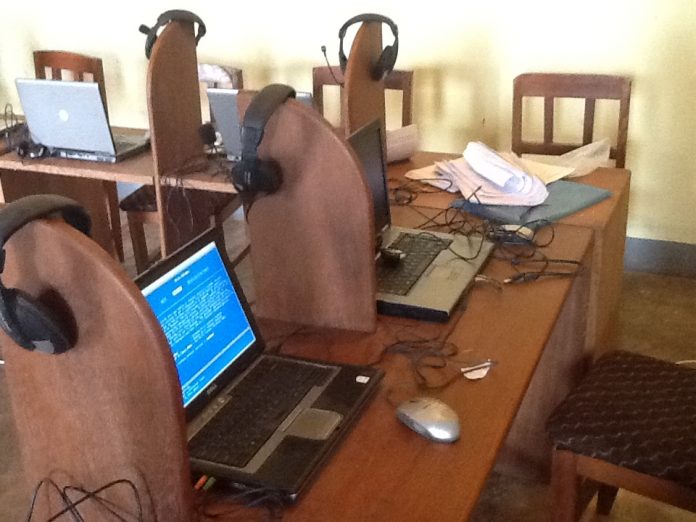
Cyber Café or Internet café has been started with the intention to provide internet services and other services to its users. It is the place where you can access the Internet, play games, view your emails, chat with relatives and friends, access videos etc. Cyber Café has become one of the businesses nowadays where you are charged in exchange of the services. These businesses also provide drinks and snacks, so the name “café” is attached in it. These café has several computer stations connected to LAN. There are hotels, resorts and ships which provides internet access to the guests. Our own pc and laptops can be also used by connecting it to cyber cafe’s LAN via wireless connection. Cyber Café’s also gives training to the person who does not know the usage of internet and other activities available there. Cyber Café is also defined under Information Technology Act 2000and rules and regulations are been mentioned under Information Technology Rules 2011.

Steps to be followed for running Cyber Café business in India

Registration of Cyber Café

(1) All cyber cafes shall be registered with a URN (Unique Registration Number) through an agency called as registration agency has been notified by the state Government in this regard. The requirements of registration shall include:

(i) Name of establishment.

(ii) Address with contact details including email address.

(iii) Whether individual or partnership or sole proprietorship or society or company.

(iv) Name of owner.

(v) Date of Incorporation

(vi)  Whether registered or not (if yes, copy of registration with Registrar of Firms or Registrar of Companies or Societies).

(vii) Type of service to be provided from cyber café.

Officer is appointed by the registration agency to inspect the registration of the cyber cafe. It is the duty of the director to give each and every details to the registration agency so that the details of the cyber café are been made available on the website of the registration agency. The detailed process of registration that is followed by the state government is also notified by the central government.

Identification of User

(1) The Cyber Cafe should not allow any person to access the services of cyber café without the identity of the user. The user has to produce certain documents before having the access to the services of the cyber café so that proper identification of user is known. Such documents are as follows:

(i)  Identity card issued by any School or College.

(ii) Photo Credit Card or debit card issued by a Bank or Post Office.

(iii) Passport or

(iv)  Voter Identity Card or

(v) Permanent Account Number (PAN) card issued by Income-Tax Authority or

(vi)  Photo Identity Card issued by the employer or any Government Agency or

(vi)  Driving License issued by the Appropriate Government or

(vii) Unique Identification (UID) Number issued by the Unique Identification Authority of India (UIDAI).

Log Register

(1) After the identification of the user and any person associated with him has been established as per sub-rule (1) of rule 4, the Cyber Cafe shall register and maintain the required information of each user as well as associated person in the log register for a minimal period of one year.

The Cyber Cafe shall maintain an online version of the log register. This online version of log register shall be checked by using digital signature. The log register should contain details which are as follows:

(i) Name

(ii) Address

(iii)  Gender

(iv) Contact Number

(v) Type and detail of identification document

(vi) Date

(vii) Computer terminal identification

(viii) Log in Time

(ix) Log out Time

A monthly report of log register including date wise details and use of computer resource shall be prepared and there shall be submission of hard copy and soft copy to the agency of registration or person as pointed out by the registration agency by the 5th of every month.

It becomes the responsibility of the cyber café owner for protecting and to keep backups for log records of each access by the user, for at least one year. The backups should include the following:

  • History of websites accessed by user using computer resource at cyber café.
  • Logs of proxy server installed at cyber cafe. Cyber Cafe may refer to “Guidelines for auditing and logging – CISG-2008-01” prepared and updated from time to time by Indian Computer Emergency Response Team.

Cyber cafe shall ensure that log register is not changed and it is been maintained in a secure manner for a period of at least one year.

Administration of Physical Layout and PC asset

  1. Partitions of Cubicles put inside the Cyber Cafe, should not surpass four and half feet in range from the floor level.
  2. The screen of all PCs introduced other than in Partitions or Cubicles should be confronted ‘outward’, i.e. they should confront the regular open space of the Cyber Cafe.
  3. Any Cyber Cafe having work areas or segments might not enable minors to utilize any PC asset in desk areas or allotments aside from when they are recognized by their gatekeepers or guardians.
  4. All time checks and servers introduced in the Cyber Café of the PC framework should be coordinated with the IST (Indian Standard Time).
  5. All the PCs in the cyber cafe might be furnished with the monetarily accessible security or separating programming in order to maintain a strategic distance from quite far, access to the sites identifying with erotica including kid smut or disgusting data.
  6. Cyber Cafe should take vital measures to guarantee that their PC asset is not used for any unlawful action.
  7. Cyber Cafe might show on the PC that review the explicit destinations on PC is prohibited and one ought to do nothing which is against the law or illicit.
  8. Cyber Cafe should make essential measures to not permit the client from meddling with the PC framework settings.
  9. Client personality data and log enlist ought to be kept up by cyber bistro in a secure way.
  10. Record of the cyber bistro’s staff might be kept up for 1 year legitimately.
  11. Cyber cafe might not abuse or change the data in the log register.[ Information Technology Rules-2011]
https://lawsikho.com/course/diploma-entrepreneurship-administration-business-laws
Click Above

Investigation of Cyber Cafe

Registration organization chooses the officer to check or investigate cyber cafe and the PC asset of system set up in that, whenever to check whether the cyber bistro is working as indicated by the principles specified or not. Inspecting officer have the privilege to check each related registers, reports and any important data to the reviewing officer on demand.[ Information Technology Rules-2011]

Licenses expected to open Cyber Café

  1. Enlistment of business name with state government, if necessary. A DBA (Doing Business As) is required at whatever point you are leading business under a name other than your own. Enrolling a DBA name is commonly done through state government or area agent’s office.
  2. Deals assess permit. This can be acquired from your state Department of Taxation and Finance. You should keep legitimate data on the things sold and their sum and the business charge that was gathered…
  3. Government charge ID number. You should record a different assessment form for your business and along these lines should have an elected duty ID number. You can discover the shape online at www.irs.gov.
  4. Acquire building permits. Check with your neighborhood region for the sorts of grants required. Get a legitimate counselor in the event that you don’t know how to round out the structures—better to pay little expenses in advance and have genuine feelings of serenity than to have costly intricacies down the road.[ http://www.wikihow.com/Set-up-an-Internet-Cafe]

Setting up Hardware parts

Equipment parts:

  1. Chip: 1 GHz 32-bit (x86) or 64-bit (x64) processors will for the most part useful for the PCs. On the other hand, you could pick present day processors (no less than 800 MHz).
  2. Hard plate: Adequate hard circle storage room. Aside from that, there ought to be space for your clients.
  3. Memory: PC ought to have a base 510 MB memory.
  4. Screens: The favored screen sizes are 12-17 inches.
  5. 100 Mbps organize card: The system cards give quick Ethernet rates to your top notch review PCs. They aid smooth record sharing, printers, email and advancing Voice over IP (VoIP) as an administration so clients can call their companions or relatives at a far prudent rate.
  6. Video card: The visual experience when taking a gander at pictures, playing diversions or watching recordings is controlled by the video card
  7. Sound card: This is a standout amongst the most critical elements of cyber bistro, sound card is essential for PCs to create better nature of sounds.[ http://ccaoi.in/]

Conclusion

In this way, Cyber Café demonstrates helpful to the individuals who don’t have the web association at home. In India many individuals go to Internet bistro to complete their everyday online exercises. Web cafes, or cybercafés, are spots that give administrations of web and different exercises and consequently clients need to pay them according to the time they have gotten to the administrations. Web cafes can be set up in genuine eating/drinking foundations, voyage ships, or different sorts of areas. Other than utilizing the PC workstation, you may likewise have the capacity to print or sweep reports, contingent upon the Internet cafe. Yet, today the matter of Cyber Café has been declining in light of the fact that individuals get access of web at home, as they have the wide band association at home. Building up the cyber bistro is not a major ordeal, it has less prerequisites as contrast with different organizations however proprietors must be more secure on the grounds that cyber wrongdoing is been expanding in present day world.


LawSikho has created a telegram group for exchanging legal knowledge, referrals and various opportunities. You can click on this link and join:  

https://t.me/joinchat/J_0YrBa4IBSHdpuTfQO_sA

Follow us on Instagram and subscribe to our YouTube channel for more amazing legal content 


Suggested Readings

All You Need To Know About Cyber Laws In India

Legal framework governing spamming on the internet

Laws on Net neutrality in India

Download Now

Advantages and Disadvantages of Financial Investment

0
financial investment

In this article. Harmish Patel put forth the Advantages and Disadvantages of Financial Investment.

Introduction

Financial investments are made with the future desire of making just financial returns as far as income from the organization in which investment is being done. In the event that a private value speculator purchases a stake in a portable assembling organization the thought process behind this will be to financially benefit from the profit paid out by the investee organization. In vital investment speculator looks forward for substantially more as contrast with the financial investment.

Private value speculators, Venture industrialist and blessed messenger financial specialists are the financial specialists and their rationale behind making investments is procuring benefit through profit and energy about their incentive throughout the years.

A financial investment is a benefit that you place cash into with the expectation that it will develop or acknowledge into a bigger total of cash. The thought is that you can later offer it at a higher cost or acquire cash on it while you possess it. You might be hoping to develop something throughout the following year, for example, setting something aside for an auto, or over the course of the following 30 years, for example, putting something aside for retirement.

How you contribute these cash can be altogether different. Time assumes a critical part in breaking down financial investment. Additional time traverse you have, the more hazard you take, and the more potential for profiting! It is vital to note that there is additionally a monetary meaning of financial investments that arrangements with how organizations put resources into items, hardware, plants, representatives, and inventories.

We should take a gander at a couple key terms worth knowing with regards to financial investments.

  1. Appreciation means increment in fiscal esteem. For instance, you purchase an offer of stock for $10, and after a year it is worth $15; the stock has acknowledged $5.
  2. A profit is an appropriation of a part of an organization’s income, chosen by the governing body, to a class of its shareholders. Profits can be issued as money installments, as offers of stock, or other property… For instance, you put resources into Microsoft stock, and it might pay you a profit of $5 an offer. On the off chance that you claimed 500 offers you would get paid 500 * $5 which is $2,500!
  3. The rate of premium is generally communicated as a yearly rate of the foremost, and is affected by the cash supply, monetary approach, sum being acquired, financial soundness of the borrower, and rate of swelling. The two sorts of intrigue are straightforward intrigue and self multiplying dividends. For instance, you may have $10,000 in government reserve funds securities that compensation 5% intrigue every year; that indicates $500 a year!

Financial Investment

Definition

A financial investment is a benefit that you place cash into with the expectation that it will develop or acknowledge into a bigger entirety of cash. A couple of the most widely recognized sorts of financial investments are CDs and bonds, which pay enthusiasm to the proprietors. Financial investment alludes to setting aside a settled measure of cash and expecting some sort of increase out of it inside a stipulated time span.

Sorts of Financial Investments

An individual can put resources into any of the accompanying given beneath:

  • Mutual Funds
  • Fixed Deposits
  • Bonds
  • Stock
  • Equities
  • Real Estate (Residential/Commercial Property)
  • Gold/Silver
  • Precious stones

Qualities of Financial Investment

  1. The financial specialist won’t be occupied with maintaining the business – in any event the length of organization is beneficial and he is acquiring the normal profits for investments. In the event that a financial speculator observes the promoters to be ineffectual then the financial specialist may try to name distinctive supervisors to run the organization.
  2. The speculator depends to a more prominent degree on the current administration themselves, dissimilar to key financial specialists.
  3. For the above reason they additionally need proceeded with nearness of the current administration of the organization. They for the most part don’t give an exit to the authors or existing administration. They additionally would not be occupied with a controlling stake typically.
  4. Usually they don’t buy shares from the current shareholders, yet purchase shares which are newly designated along these lines infusing reserves into the organization as development capital instead of giving ways out to the current shareholders which does minimal great to the soundness of the organization.
  5. Financial financial specialists want that your business ought to in the long run get gained by a vital speculator or it ought to make an open issue of its offers.
  6. Financial speculators put resources into number of organizations realizing that a portion of the investments will turn sour while the other may do to a great degree great. They likewise attempt to request certain rights which will guarantee that they can purchase greater stakes in the organization if the organization perform well.

Sorts of Financial Investments

Bonds

Converged under the general class called ‘settled pay’ securities, the expression “bond” is ordinarily used to allude to any established on obligation. When you purchase a security, you are giving credit (loaning) out your cash to an organization or government. Consequently, they consent to give you enthusiasm on your cash and in the long run pay you back the sum you loaned out.

The primary fascination of bonds is their wellbeing. On the off chance that you are purchasing bonds from a consistent government, your investment is for all intents and purposes ensured (or “chance free” in contributing speech). The security and steadiness, be that as it may, included some major disadvantages. Since there is little hazard, there is minimal potential return. Therefore, the rate of profit for securities is by and large lower than different securities.

Stocks

When you purchase stocks (or ‘values’), you turn out to be somewhat a proprietor of the business. This gives you a privilege to vote at the shareholder’s meeting and enables you to get any benefits that the organization assigns to its owners–these benefits are alluded to as profits.

While bonds give a consistent stream of wage, stocks are unstable. That is, they vacillate in an incentive every day. When you buy a stock, you aren’t ensured anything. Many stocks don’t pay profits, profiting just by expanding in esteem and going up in price–which won’t not occur.

As contrast with bonds, stocks give moderately high potential returns. Obviously, there is a cost for this potential: you should accept the danger of losing a few or the greater part of your investment.

Shared Funds

A shared store is a mix or blend of stocks and bonds. When you buy a shared reserve, you are pooling your cash with various different financial specialists, which thusly empowers you (as a component of a gathering) to pay an expert administrator to choose particular securities for you. Common assets are good to go up on account of a particular methodology, and their territory of center can be about anything: extensive stocks, little stocks, bonds from governments, bonds from organizations, stocks and bonds, stocks in specific enterprises, stocks in specific nations, and the rundown goes on.

The essential favorable position of a common store is that one can contribute one’s cash without the time or the involvement in picking investments.

Elective Investments: Options, Futures, FOREX, Gold, Real Estate, Etc.

There are two fundamental securities: value and obligation, also called stocks and securities. While many (if not most) investments can be categorized as one of these two classes, there are numerous option vehicles, which speak to more confounded sorts of securities and contributing techniques.

The uplifting news is one presumably don’t have to stress over option investments toward the begin of your contributing profession. They are by and large high-hazard/high-remunerate securities that are significantly more unpredictable than plain old stocks and securities. Yes, there is the open door for huge benefits, yet they require some specific information. So in the event that one doesn’t realize what they are doing, you could get yourself into a great deal of inconvenience.

Advantages of Financial Investment

Financial investments are right now the most mainstream investment vehicle and give a few favorable circumstances to speculators, including the accompanying:

Advanced Portfolio Management

one need to pay an administration expense as a major aspect of the expense proportion, which is utilized to employ an expert portfolio supervisor who guides you in purchasing and offering stocks, bonds, and so forth. This is a generally little cost to pay for help in the administration of an investment portfolio.

Dividend Reinvestment

As profits and other premium wage is pronounced for the reserve, it can be utilized to purchase extra offers in the common store, in this manner helping your investment develop.

Risk Reduction (Safety)

A decreased portfolio hazard is accomplished through the utilization of diversification, as most shared assets will put resources into somewhere in the range of 50 to 200 distinct securities – relying upon their core interest. A few record stock common finances claim at least 1,000 individual stock positions.

Convenience and Fair Pricing

Shared assets are normal and simple to purchase. They ordinarily have less or low least investments (some around $2,500) and they are exchanged just once every day at the closing net resource value (NAV). This dispenses with value change for the duration of the day and different arbitrage openings that informal investors hone.

Odds of Good Returns in Short Time

Indeed, even in the past individuals have increased great profits for their securities exchange investments, and they generally have a decent opportunity to acquire enormous benefits when one choose to put resources into securities exchange. In this way, when you put resources into securities exchange India, in spite of the fact that you put yourself at a ton of dangers, you are likewise in a position to acquire great returns in a brief timeframe.

Minority Ownership

All things considered, it sounds like a misrepresentation, yet when one put his/her cash in a rumored organization’s stocks, one moves toward becoming turned into a section proprietor of the organization, regardless of however littler offer they have.  One can enhance remaining in the market by placing cash in various organizations. In addition, you can exit at whatever point you need to.

Disadvantages of Financial Investment

However, there are also disadvantages of financial investment, such as the following:

  1. High Expense Ratios and Sales Charges
    if you’re not paying attention to mutual fund expense ratios and sales charges; they can get out of hand. Be very careful when investing in funds with expense ratios higher than 1.20%, as they will be considered on the higher cost end. Be wary of 12b-1advertising fees and sales charges in general. There are several good fund companies out there that have no sales charges. Fees reduce overall investment returns.
  2. Management Abuses
    churning, turnover and window dressing may happen if your manager is abusing his or her authority. This includes unnecessary trading, excessive replacement and selling the losers prior to quarter-end to fix the books.
  3. Tax Inefficiency
    Like it or not, investors do not have any choice when it comes to capital gain payouts in mutual funds. Due to the turnover, redemptions, gains and losses in security holdings throughout the year, investors typically receive distributions from the fund that are an uncontrollable tax event.
  4. Poor Trade Execution
    if you place your mutual fund trade anytime before the cut-off time for same-day NAV, you’ll get the same closing price NAV is for buy or sell on the mutual fund. For investors searching for faster execution times, maybe because of short investment horizons, day trading, or timing the market, mutual funds provide a weak execution strategy.
  5. Volatile Investments
    Investment in BSE is subjected to many risks since the market is volatile. The shares of a company fluctuate so many times in just a single day. These price fluctuations are unpredictable most of the times and the investor sometimes have to face severe loss due to such uncertainty.
  6. Brokerage Commissions Kill Profit Margin
    Every time an investor purchase or sells his shares; he has to pay some amount as a brokerage commission to the broker, which kills the profit margin.
  7. Time Consuming
    Investment in NSE is not as easy as investing in a lottery as you have to complete many formalities in the process and hence is time consuming..

Conclusion

Therefore Financial investments are made with the future expectation of making only financial returns in terms of cash flow from the company in which investment is being carried out. The investor relies to a greater extent on the existing management themselves, unlike strategic investors. The term “investment” can be used to refer to any mechanism used for the purpose of generating future income. In the financial sense, this includes the purchase of bonds, stocks or real estate property. Additionally, the constructed building or other facility used to produce goods can be seen as an investment. The production of goods required to produce other goods may also be seen as investing.

There are both pros and cons while investing in financial market but one have to take this risk to invest money in different forms to secure their future.

Suggested reading

Financial investment solutions for Non-Residential Indians


Download Now

Law School Rankings and How to choose the right law school

3
law school

This article is written by Ramanuj Mukherjee, a former NUJS graduate who topped law entrance back in 2006, founded CLAThacker.com in 2008 and helped hundreds of law aspirants to crack CLAT. He has recently launched the first comprehensive online course for Legal Aptitude (CLAT) with a revolutionary new approach that can help you to score high effortlessly. If this is not relevant to you, please forward to someone who may find it useful.

India Today, Outlook magazine and many others come up with their annual law school rankings and sell a lot of magazines to anxious parents as well as advertisers who cash in on those parents with large, expensive ads.

However, given that you are a smart, discerning person who know about us and read our mails, how seriously should you take those law school rankings?

Back in 2011, when I was just beginning my career as a lawyer at one of the country’s best law firms in Mumbai, thereby putting an end to my 4 year long career as a law entrance/CLAT coach and mentor, I wrote an article on this subject. The title of this article was “Law school rankings are for idiots.” The article was an instant hit and was read by over 11,000 people.

Therefore, you can understand what my sentiment with respect to most law school rankings will be. I also refuse to come up with my own rankings any more. After 5 years of working on legal education, teaching law online to thousands of lawyers, law students and professionals, and seeing many young law students and law graduates achieve greatness in their chosen path, I am certain more than ever that these rankings matter the least.

Alright, but then how should I choose which law school to go to given my choices?

I am rewriting my old article a bit, so that it is updated for now!

What is law school ranking all about?

Law school ranking is all about perpetuating a myth. It’s all about getting the law students of various colleges worked up about their position and they fighting tooth and nail with each other on comment boards of various online publications. It is also about making money by carrying full page advertisements by (mostly private) colleges who need to fill their seats one way or the other. Do not fall for these scams.

To understand the sinister design behind these rankings, you must consider the origin of these ranks.

There was a time, when there was only one law school, an experiment by a maverick visionary. This was the case for one whole decade as that law school struggled in Bangalore hidden away from public eye to prove itself as a successful model of legal education of the new India.

Then one of the professors from the bangalore law school set up one more in Hyderabad in 1996. Rankings were not relevant – people knew these are the only two law schools, both good with the first one having some advantage. There were few takers anyway, those who were smart enough to see the potential got into the one that they managed to get admitted to.

Then NLIU was started in Bhopal in the same format, largely unnoticed – and it had a terrible admission procedure. It was not remarkable, at least not for the first decade of its existence. I understand many NLIU alumni will vehemently disagree, but according to my understanding and observation it never quite matched up to NLS Bangalore or NALSAR Hyderabad, but is a pretty decent law school by its own right. Goes without saying, many alumni from NLIU has achieved amazing heights nevertheless.

In 1999, the same maverick visionary Dr. Menon came and did a slightly different experiment in Kolkata, when he was invited to start a law school there by late Jyoti Basu, the erstwhile Chief Minister. Within few years NUJS students left a mark in every aspect of academics and professionalism, like the first two law schools. Till this point, no one clamoured over rankings of law schools.

Soon the 2nd VC of NLS Bangalore Dr. N.L. Mitra built another law school in Jodhpur, and introduced his trademark work ethics and great intellect. NLU Jodhpur kind of gave the older law schools a run for their money in many areas in it’s earlier days. It’s fortune has varied since then as other VCs who follower Dr. Mitra failed to keep the standards as high as it used to be. Still, it is considered amongst the very best.

Each of these places were great because the people there worked hard to make them great. The faculty, the administration and the students toiled to excel. They did very, very well.

Copycats

Then the model was copied everywhere. Too many law schools mushroomed, not all of them were good. State governments threw money at these new National Law Universities. Many of them had great infrastructure, much better than the original law schools, but still didn’t find the great leadership or the sweet spot of building a great culture. And this was the time when the national media realised what a great opportunity higher education is for business – even the poorest of poor will spend last penny of their hard earned money to send their child to a good school, and then they will borrow more. This was a ripe market.

The vultures descended

Magazines started to come out with ranks to make the job of the parents easy – it started with India Today. What random rankings! And the rankings changed every year – like TRP of TV serials. If this year Amity is the best law school in the country (I think that was the case in 2004 or 2005, when i was preparing to get into NUJS), then next year it is Symbiosis. NUJS did not even make it to the rank list until 2007.

I always wanted to meet the people who trusted those rankings and joined a law school based on that information. I would love to hear what they have to say about India Today rankings now. Well, that legacy is being continued.

I said so in 2011 in CLAThacker.com, and since then almost all serious legal publications have agreed. From LegallyIndia to Lawctopus, everyone has called the law school rankings a joke at some point or the other.

In 2011, according to a ranking by The Week, NUJS was ranked 13th and NUALS was ranked 2nd. Some NUALS students were elated about this, not that this was their fault, but what a sad joke. I graduated in 2011 from NUJS, I got 4 job offers of over 14 lakh per annum each. My batchmates had abundance of such offers.  First graduating batch of NUALS, or even those who joined in 2011 and graduated in 2016, would have had a very different story to tell. Here is a report on recruitment of NUALS 2016 batch, those who got into NUALS seeing the 2nd best law school in the country report from India Today. 16 out of 21 got through to any campus placement jobs at all, with none in the top 6 law firms which are the best paying jobs.

Compare this, yourself, with NUJS 2014 and 2016 batches. You will at once know what is the worth of that India Today ranking.

Are there any sensible rankings?

The first sensible ranking I saw anywhere was at LST, by Sachin Malhan. And the ranking has not really changed since then. Rankings don’t change, by definition. Guess why?

There is no tangible way of measuring a law school’s success. Not even by seeing who wins MPL. Not by looking at how many Rhodes Scholars have come out a stable. Not even by counting the number of successful entrepreneurs or senior counsels.

I am better than you: rankings to fuel egos

In reality, law school rankings are myth, passed down from generation to generation. NLSIU is the best. Then NALSAR. Then NUJS. Then NLUJ. Hold on, maybe NLUD is better.

Sorry, stop right there. We have already done enough of that and misguided too many young law aspirants.

After seeing the law schools for 5 years, and then another 6 years in the legal industry,  after seeing what happens before, after and within the walls of law school, I can vouch for the fact that these rankings make no sense. This is just vanity. One up-manship which has no meaning and no value.

If NLS was better than NUJS or even NLUJ in any measurable, intelligible and substantial way, then the recruiters would have recruited only from NLS and not make it a point to visit NUJS and NLUJ also. Then you could predict that everytime NLS teams meet others in a moot NLS will always win. Or that there would be things that only NLS kids can do and no one else. These rankings are mostly irrelevant and not of any use to anyone.

Even recruiters don’t look at them. If you are a law student or law aspirant, why should you?

Why would you let anyone else tell you or make you think that you will become a lesser lawyer because you couldn’t get through to a certain law school?

What should you look at while choosing law schools?

Am I saying that there is no intelligible way of choosing a law school over another? No, that’s not what I am saying. I am just saying don’t fall for self-perpetuating myths. What should you consider before choosing a law school? Here is a list of things you should think of before deciding to go to a law school.

  1. Fee. Spend as less as possible. Some law schools are much costlier than others. Factor that into your decision.
  2. Recruitment is the touchstone. See what has been the recruitment stats in recent years from LegallyIndia.com. If recruitment has not happened yet, take into account the possibility of recruitment. For instance, colleges like KIIT and UPES already have a bunch of recruiters hiring engineers and managers from the campus, and they are likely to have decent recruitment for the law students too. This might be better than some National Law Universities which completely fail with respect to recruitment. For instance, a glance at LegallyIndia reports will tell you that CNLU, NUSRL, RMLNLU etc have been really struggling with respect to recruitment over the years.
  3. Academic culture or the lack of it – this one is tough. Let me help here – I saw a real, impressive academic environment in NLS in my time. Those guys really breathed and lived law in the campus. People respected the law students who debated, wrote and quarrelled about laws. Most of the other colleges lacked such a strong academic culture. I have heard NLUJ had it when Prof. Mitra was there. NUJS, NALSAR and NLUD have got a better academic culture than the others. It takes a strong academically respected VC, supported by young and energetic law faculty to create that kind of academic culture. The students thrive in such environment and work hard to achieve larger than life results. If there is only one reason that NLS is still somewhere ahead of the pack, or that NLU Delhi has risen fast amongst the ranks of law schools, then this is the reason. If you are reading this many years later after this was written, and have found a law school with a good academic culture, go for it. Don’t think much.
  4. Quality of life is super important. Even if the academics suck, you have a chance to be a good student, a hardworking person, a self made man or woman and do well in life. But a bad quality lifestyle is soul destroying. There is no cure for that. How is the hostel? What sort of amenities are there? Is the place far away from the city? The fact that NUJS is right in the middle of the city, in quiet yet convenient Salt Lake, made my life easier and happier. You should hear the people living in Nagarbhavi complain. Things have improved compared to before, still.
  5. Is the place you are going to liberal in spirit? This also goes into fundamental making of a person. Is the place full of conformists? Does the institution encourage diversity and individuality? Also, imagine a place that allows you to go out only for two hours in a day. That’s NLUD, and despite all its goodness, I shall avoid it for that reason alone. Same for NUALS, where the authorities insist that students wear blazers to class, not to forget the uniform. My life would have been very different had I not been able to go out of the college. For instance, I would not have taught hundreds of students for thousands of hours, training them for CLAT, or just teaching speed reading. I would not have surveyed the Kolkata food and drinks scene like I did. I would not have been able to attend Startup Saturdays, meet entrepreneurs and start a legal risk management company while I was still in college. That’s the kind of miracle that giving freedom and liberal approach brings about.
  6. New institutes are better than failed institutes. I will trust a law school which has a clean slate and a good plan, a good VC rather than one which has failed in delivering what it originally promised. There are several of them. Go through recruitment stats, or even the reports of complaints and dharnas by students and you will know who they are. There are many so called National Law Universities that I am not recommending to my students any time soon, at least until they get a good VC or have at least one good recruitment cycle. I shall rather trust newer institutions with VCs with good track records of institution building over the ones who have unreliable leaders at helm. That way, Jindal Global Law School or Lloyd Law School may trump many National Law Universities. Go for newer institutes that show some promise and good measure of planning so far.
  7. Closer to home, the better. Can you go back home quickly if needed? Home is a great support system everyone deserves but only few gets. One great thing about NUJS is that it does not insist on you to stay in hostel. Guess what? The day scholars’ average CGPA is a notch higher than the rest of the college.
  8. No, there are no other considerations. Faculty is more or less similar everywhere – and quality of faculty drastically changes. NUJS had worse faculty than HNLU in my first year, and by my 4th year it had the very best thanks to legendary Prof. M.P. Singh. It’s something you can neither foresee nor control. Don’t bother.

And remember, law school rankings are self perpetuating myths. Take a decision based on what really works for you, not based on myths people have been propagating. In the end of the day, it is all about what you do with what you have, which has no ceiling, and no floor.

If you want to become an extraordinary lawyer, you can do it from anywhere. I run a company called iPleaders, which helps law students to get access to top legal professionals and acquire very advanced skills that ensure that they get the best jobs and opportunities. You can see some of these online law courses here. We also partnered with NUJS to launch these courses which have helped thousands of law students, law graduates, managers, consultants, CEOs, even IAS officers to learn practical aspects of law and become great with various aspects of law.

If you know someone who is interested in cracking CLAT or studying law, share this mail with them and also a link to this amazing online course for cracking CLAT that can help them to get a great CLAT score.


Download Now

Who must not pursue an online master’s degree

0
master’s degree

This article is written by Ramanuj Mukherjee, Co-Founder and CEO of iPleaders, mbl.nujs.edu, startup.nujs.edu.

My parents never interfered much in my education. Mostly they allowed me to study what I wanted to study. The one time they were really upset was when I decided to study law instead of medicine, but once my fate was sealed after a crusade in that regard, they went back to being ambivalent about my career choice. Do what you want, we are there to support you. They didn’t always say it aloud, but I knew it.

There was one exception though. They keep telling me: when will you do your master’s degree? You can do it in law, or management – whatever, you should go for it.

I do not feel it is very relevant in my line of work at the moment (though many may disagree, I am after all CEO of an education company). What I need to learn I learn on the job. And it’s often hard, often crushing, many a times magnificent. I believe mostly in learning through practical exposure than academic pursuits, but even then, someday, I think I will want to get that master’s degree. I just know it in my guts.

Well, most people in the world will never do a master’s degree. It is only a small percentage of the population, till now, that got around to pursuing a master’s degree.

It’s not just that it is difficult to get the right course or get through the right university. It is hard to do a master’s degree because it is the choice between earning a lot of money in a year or two or completely sacrificing it for an academic pursuit that may or may not financially pay off.

When your job is going well, you are rising fast, do you really want to interrupt the home run for a year or two in order to get that degree?

If you have the home loan or car loan to pay off, can you really take off from your practice for a year or two to attend college all over again?

It’s a different thing if things are not working well on the professional frontier and you want to take a rain check: probably taking yourself out of the professional world and planting yourself in the academic world for some time is not such a bad idea.

However, till now, higher education was the prize of a privileged few, and many of those who would have liked to do it had to keep out due to many constraints.

Well, that is changing quickly with emergence of online education. Top universities around the world are now offering higher education, including master’s degree, online. That has changed the game.

How amazing is it that you don’t need to leave your work, or practice, to pursue a highly rewarding master’s degree course online?

NUJS, Kolkata has been a leader in online education in India, and even in the world as far as legal education is concerned. We are also proud to be running India’s most successful and popular online Master’s Degree course in Business Laws – taken up by MDs, CEOs, IAS officers, judges, Advocates on Record of the Supreme Court, law professors, law firm founders and partners and many upcoming business leaders and legal eagles.

However, keep in mind that if your ultimate goal is to teach in a law school, or pursue a PhD from a prestigious institution, you would probably do better to get your master’s degree in a traditional university by attending lectures full time. If you do your master’s degree through online or distance mode, irrespective of whether such a course has recognition of UGC or not, you will not benefit from such a course. Indian academia is very staunchly against recruiting teachers or research scholars who pursued master’s through distance or online courses. This is how it stands as of now, though it may change in the future. However, today if you ask me, I will strongly suggest that if you have academic ambitions, do not do your master’s degree online or through a distance course unless you already have one master’s degree done through a regular course or plan to get another master’s degree soon through a regular course requiring full time attendance.

There are many law teachers from some of the most prestigious law schools and colleges who are pursuing our online Master’s courses from NUJS in order to learn more practical insights from the industry for the benefit of their students, and we humbly welcome them.

If your career and future lies in the industry, legal or otherwise, we welcome you to join our next batch, the last date of enrolment for which is 30th June. The batch begins from 7th July, and we can’t wait because some amazing people are already part of the batch.

Here are the specializations available

  1. M.A. IN BUSINESS LAWS WITH SPECIALIZATION IN M&A, INVESTMENT AND INSTITUTIONAL FINANCE
  2. M.A. IN BUSINESS LAWS WITH SPECIALIZATION IN INTELLECTUAL PROPERTY AND CYBER LAW
  3. M.A. IN BUSINESS LAWS WITH SPECIALIZATION IN CORPORATE GOVERNANCE AND STATUTORY COMPLIANCES
  4. M.A. IN BUSINESS LAWS WITH SPECIALIZATION IN DRAFTING, NEGOTIATION AND DISPUTE RESOLUTION
  5. M.A. IN BUSINESS LAWS WITH SPECIALIZATION IN BANKING, INSURANCE AND FINANCIAL SERVICES
  6. M.A. IN BUSINESS LAWS WITH SPECIALIZATION IN SECURITIES AND CAPITAL MARKETS
  7. M.A. IN BUSINESS LAWS WITH SPECIALIZATION IN INTERNATIONAL TRADE AND CROSS-BORDER TRANSACTIONS
  8. M.A. IN BUSINESS LAWS WITH SPECIALIZATION IN COMPETITION LAW
  9. M.A. IN BUSINESS LAWS WITH SPECIALIZATION IN ENERGY LAW

Seats will fill up fast, so please hurry if you are interested. If you have any questions, feel free to call us on 011-3313-8901.

All the best! Let me know what you think about doing a master’s degree online even if you are not interested in our courses. Just hit reply to this, I reach each and every one of them.

Download Now

Job opportunity – Programme Associate cum Secretary for the Director’s Office – Institute of CSR & Management-Delhi (ICSRM)

0
icsrm

Institute of CSR & Management-Delhi (ICSRM) is looking for Programme Associate cum Secretary for the Director’s Office. 

job at a glance

JOB PROFILE

  • Post: Programme Associate cum Secretary for the Director’s Office.
  • Graduate: Added qualification will get advantage.
  • Conversant to taking dictation in long-hand
  • Good in English
  • Working knowledge of Hindi
  • MS Office, familiar with Preparation of PPT, Graphs in Excel, Report Preparation.

RESPONSIBILITIES AND CONDITIONS

  • Will be responsible to all programme related to academic project documentation, provide support to Director, related to Institute and its allied affairs.
  • Also responsible for the Office administration and its supervision.
  • Communication on behalf of institution as entrusted by the Director.
  • Professionally engage in documentation and programmatic activities.
  • Office timing is 9:30 am to 5:30 pm (Monday-Saturday).
  • Tax and other deductions are applicable as per the Govt. norms.
  • Confidentiality need to be maintained as under non-disclosable agreement applies to hard and soft documents in all nature.

EXPERIENCE

  • Minimum 3-5 years’ experience.

EMOLUMENT

  • Would be entitled to get Rs. 22,000/- to Rs.25,000/- (depending upon the experience) consolidated per month.

AGE

Age should not be more than 35 years.

About Institute of CSR & Management-Delhi (ICSRM)

‘Institute of CSR & Management – Delhi, (ICSRM)’ initiated a process to strengthen the formal and informal synergies of Business and Community through Corporate Social Responsibility (CSR).  In the present context, CSR being emerged as one of the major business instruments; it ignited several dimensions of opportunities and innovations for our next generations.  This is the first Institute of its kind would be dedicated towards institutionalizing higher learning and policy areas of CSR in India.

We are a reputed and respected group, setting up a Higher Learning Institution under UGC and AICTE.  The Institute is based in Delhi.  Institute has already formed its Governing Council and Advisory Council.

Vision

To be the Leader in CSR Higher Learning in India and South Asia.

Mission & Purpose

To create CSR professionals as a missionary project.

To undertake research and projects in the fields of Business & Community Development.

To act as a Think Tank on CSR and its related areas.

How to apply?

Send us your CV at [email protected]

Interested applicants can contact at:

Camp Office: Thapar House, N-161, UG-1,

Yusuf Sarai, New Delhi-110049

Tel: 011-41004497

Download Now

What are Trade Secrets? How one can claim protection?

1
trade secret

In this article, Rishabh Saxena of NUALS answers the question on What are Trade Secrets? How one can claim protection?

Introduction

The concept of trade secret is not new in Indian subcontinent but which has not been dealt properly in the past. The domain of trade secret is pretty much wide as it fits into extensive framework of contract, competition, and Intellectual Property Rights. If the trade secret is leaked the present law is inconsistent in providing remedies properly. Over the years, Companies lost billions of dollars. Generally, trade secrets are considered as part of Intellectual Property Rights but varies according to jurisdiction.  

What are Trade Secrets?

Any information confidential in nature and involve economic interest of the owner in obtaining an economic advantage over competitors considered a trade secret. Trade secret in common terms protects technological and commercial confidential information not generally known in the trade and prevents unauthorized access by others. North American Trade Agreement (NAFTA) defines a  trade secret as “information having commercial value, which is not in public domain and for which reasonable steps have been taken to maintain its secrecy.”  Generally speaking, a trade secret is usually defined in broad terms and includes or refers to a practice, manufacturing process, sales method, distribution method, consumer profiles, advertising strategies instrument, design, lists of suppliers and clients or a compilation of data or information related to business not commonly known to the public and which the owner reasonably attempts to keep secret and confidential.

However, there are three main factors, which can be component in all such definitions. They are:-

  • It should not be generally known or easily accessible by people who normally deal with such type of information.
  • It must have commercial value as a secret; and
  •  The lawful owner must take reasonable efforts to maintain its secrecy.

Trade Secrets are being part of Intellectual Property Rights can be significantly valuable to a company’s growth and sometimes even for its survival. A trade secret protects from exploitation by those who obtain the information unauthorized either obtain access through improper means or through those who know improper means or by doing illegal practices in respect of confidential information include industrial or commercial espionage, breach of contract and breach of confidence.

Generally, Every business has at least some trade secrets, they are quite delicate because they protect information and resources that are secret, which means the protection is lost if and when other forms of intellectual property protection are available, like patent or copyright protection, one should carefully taken into consideration the character of relying only on trade secret protection.

Well known examples of trade secrets include the formula of Coca-Cola since one of the ingredient may have been cocaine, instead of patenting its formula company choose to brand the recipe as trade secret and the decided to keep the recipe as confidential information and the secret ingredients for KFC’s original recipe were kept in Colonel Sander’s head. He eventually wrote the recipe down, and the original handwritten copy is in a Kentucky Few selected employees know the recipe, and are bound by a confidentiality agreement.

Infringement of Trade Secrets

A company has a right to protect its confidential information or trade secret and keep others away from misappropriating and using his trade secrets. However, most often infringement is done by former employees by misappropriating confidential information sometimes result in corporate espionage, using such information for new businesses or for new employers. Trade secret protection continues as long as requirement of protection serve some value to the company or the owner. Owner of the trade secret need to take few reasonable steps to protect it from infringement or breach, the protection is lost if failed to do keep the information secret.

There are quite a few points which can be useful in protecting the confidentiality of information  or trade secrets:

  1. If you are disclosing information to a third party like consultants and vendors about a trade secret, you should get confidentiality agreement signed by that party prior to disclosure of such important information.
  2. People who can access to such confidential information should be limited in number.
  3. Ensure that all the employees should sign a non-disclosure agreement, which would provide that they have to maintain confidential specific information that is known to them.
  4. Maintain a clear record of all business activities and deals that may contain any confidential information.

Present Scenario of protection of trade Secret in India

Protection of trade secret in India has not been a subject of much discussion in the past but currently, trade secrets a recognized form of Intellectual Property Rights, although there is no specific dedicated legislation in India to protect trade secrets and confidential information. Indian courts continue to enforce these under contractually or under common law action of breach of confidence, which in effect amounts a breach of contractual obligation also protects trade secrets on the basis of principles of equity. Giving emphasizes on this, the Calcutta High Court in the fairfest Media Ltd V. ITE group Plc and Ors, stated that “the essence of this branch of law whatever the origin it may be,, a person who has obtained information in confidence is not allowed to use it as springboard for activities detrimental to the person who made the confidential communications. In Niranjan Shankar Golikari v. The Century Spinning & Mfg. Co. Ltd. Supreme court upheld that an injunction to enforce negative contract, which is restricted as to time,  can be issued in order to  protect the employer’s interest.

In India, a person can be contractually bound not to disclose any information that is revealed to him in confidence otherwise it would be breach of confidence. The Indian courts have upheld a restrictive clause in a technology transfer agreement, which imposes negative contract on licensee not to disclose or use the confidential information received under the agreement for any other purpose than the agreed in the said agreement. John Richard Brady and Ors. V. Chemical Process equipments P. Ltd. and Anr. Process equipments P. Ltd. and Anr. In which the defendants had got the drawings if the fodder production unit from the plaintiff for a limited purpose of providing a certain part required in the plant. In this Delhi High Court invoked a wider equitable jurisdiction and awarded injunction even in the absence of the contract. That means the situation of protection of trade secret is still unclear in India. In the matter of Gopal Paper Mills Ltd v. Surendra K Ganeshdas Malhotra, the Calcutta High Court upheld the restrictive clause in an employment contract, imposing constraints on the employee preventing him from misusing or revealing the confidential information and trade secrets acquired during the tenure of his employment. The Legislation thus provided a remedy to organizations from third party disclosure of confidential information and trade secrets in the form of injunction against the employee.

Basically, a remedy available to the owner of trade secrets is to obtain an injunction preventing the licensee from disclosing the confidential information and return all confidential or proprietary information compensation for any losses suffered due to disclosure of trade secrets. The Indian case laws have tried to address various features of trade secret protection whether it is defining trade secret/confidential information or the basis under which trade secrets can be protected or the scope of remedies can be provided. Indian courts have drawn extensively from English case laws, they are now increasingly relying upon the growing body of domestic jurisprudence on trade secret protection.

Why proper mechanism on Trade Secret Protection is need of the hour in India

Protection of trade secret is really important and proper policy is need of the hour as it is the fundamental to innovative ideas or steps. Foreign companies who are eager to invest and ready to set up Research & Development facilities in India are having only apprehension of insufficient statute that specifically governs the protection of trade secret and this inadequate legal framework creates uncertainty over the circumstances under which trade secret can be protected and judicial relief would be available  in Indian courts. Foreign investors want to be assured of the protection of their trade secrets, so that they can do business in India. A proper effective law further enhance the security in our own industry.

Proposed Legislation in India for the Protection of Trade Secret

In the year of 2008, second term of UPA regime, the Department of Science and Technology, as the part of  the Ministry of Science and Technology, published draft legislation titled “The National Innovation Act of 2008” to facilitate public, private or public- private partnership initiatives for building an innovation support to encourage innovation and to codify and consolidate the law of confidentiality in aid of protecting Confidential information, trade secrets and Innovation. Trade secrets would have been regulated under Chapter VI, titled “Confidentiality and Confidential Information and Remedies and Offences.” the current status of this Act is still unclear.

What India needs is to enact a law similar type of law as in U.S. where The Uniform Trade Secret Act, 1979, and The Economic Espionage Act, 1996 enacted in an effort to provide proper legal framework to protect trade secrets.

How trade secret can be protected?

Contrary to patent and trademark, no registration procedures are involved for the protection of a trade secret, that means trade secrets are protected without any procedural formalities and there is no specified time limit within which the secret may be protected. Subsequently, a trade secret can be protected for an unlimited period of time. When a trade secret is leaked out, this can be taken to the court as an action of breach of confidence because this leak of the secret is unfair to the business and may have harmful consequences to the enterprise.

Not all information can be considered a trade secret. There are certain conditions for the information to be considered a trade secret which varies from country to country. The Trade-Related Aspects of Intellectual Property Rights (TRIPS Agreement) recognizes trade secret as confidential information but doesn’t provide any mechanism for its enforcement. However, Article 39 of the TRIPS agreement tries to ensure protection against unfair competition. TRIPS makes it obligatory on member states to ensure protection of undisclosed information under article 39 of the agreement (India is a member state of TRIPS  agreement).

Article 39: Natural and legal persons shall have the possibility of preventing information lawfully within their control from being disclosed to, acquired by, or used by others without their consent in a manner contrary to honest commercial practices so long as such information

  • is secret in the sense that it is not, as a body or in the precise configuration and assembly of its components, generally known among or readily accessible to persons within the circles that normally deal with the kind of information in question;
  • has commercial value because it is secret; and
  • has been subject to reasonable steps under the circumstances, by the person lawfully in control of the information, to keep it secret.

The TRIPS agreement also requires member states to provide effective remedies for trade secret misappropriation including:

Injunctions

Article 44 of TRIPS agreement says, The judicial authorities shall have the authority to order a party to desist from an infringement, inter alias to prevent the entry into the channels of commerce in their jurisdiction of imported goods that involve the infringement of an intellectual property right, immediately after customs clearance of such goods. Members are not obliged to accord such authority in respect of protected subject matter acquired or ordered by a person prior to knowing or having reasonable grounds to know that dealing in such subject matter would entail the infringement of an intellectual property right.

Damages

Article 45 provides,

  1. The judicial authorities shall have the authority to order the infringer to pay the right holder damages adequate to compensate for the injury the right holder has suffered for an infringement of that person’s intellectual property right by an infringer who knowingly, or with reasonable grounds to know, engaged in infringing activity.
  2. The judicial authorities shall also have the authority to order the infringer to pay the right holder expenses, which may include appropriate attorney’s fees. In appropriate cases, Members may authorize the judicial authorities to order recovery of profits and/or payment of pre-established damages even where the infringer did not knowingly, or with reasonable grounds to know, engage in infringing activity.

Other Remedies like prevent further infringement and preserve evidence

Article 46 provides, In order to create an effective deterrent to infringement, the judicial authorities shall have the authority to order that goods that they have found to be infringing be, without compensation of any sort, disposed of outside the channels of commerce in such a manner as to avoid any harm caused to the right holder, or, unless this would be contrary to existing constitutional requirements, destroyed. The judicial authorities shall also have the authority to order that materials and implements the predominant use of which has been in the creation of the infringing goods be, without compensation of any sort, disposed of outside the channels of commerce in such a manner as to minimize the risks of further infringements. In considering such requests, the need for proportionality between the seriousness of the infringement and the remedies ordered as well as the interests of third parties shall be taken into account. In regard to counterfeit trademark goods, the simple removal of the trademark unlawfully affixed shall not be sufficient, other than in exceptional cases, to permit release of the goods into the channels of commerce.

Download Now
logo
FREE & ONLINE 3-Day Bootcamp (LIVE only) on

How Can Experienced Professionals Become Independent Directors

calender
28th, 29th Mar, 2026, 2 - 5pm (IST) &
30th Mar, 2026, 7 - 10pm (IST).
Bootcamp starting in
Days
HRS
MIN
SEC
Abhyuday AgarwalCOO & CO-Founder, LawSikho

Register now

Abhyuday AgarwalCOO & CO-Founder, LawSikho