Download Now
Home Blog Page 1573

Non essential freebies in elections and state resources

0
In this article, M.Karpagam of School Of Excellence in Law Tamil Nadu Dr.ambedkar Law University Taramani, Chennai discusses Non essentials freebies in election and state resources.

In this article, M.Karpagam of School Of Excellence in Law Tamil Nadu Dr.ambedkar Law University Taramani, Chennai discusses Non essential freebies in elections and state resources.

Do non essential freebies amount to frittering away of state resources

India is a democratic country as enshrined in the preamble of our constitution which is ensured through the elections in which people select their representative. Issuing election manifesto is important for those who desire to come to power. These election manifestoes are to reflect what the parties participating in the election intend to do if they are opted by people. But these manifestoes are highly misused by these political parties. Though the supreme court ruled in favour of Tamil Nadu in Subramaniya Balaji’s case in which the legality of freebies were contested the supreme court was of the opinion that providing freebies though not against public policy it shakes the very concept of ‘free and fair election’ which is considered to be one of the basic structure of our constitution.

Though its legality cannot be questioned providing non essential freebies poses a great threat to the economy of the state. State government usually gets is source of income from primary, secondary, service sectors and from various taxes which people pay. What freebies are non essential is a question to be considered. As the response of the political parties in providing freebies is justified by vocalising that those are for welfare of the people who could not afford by themselves. This intention of the political parties is not reflected in the manifesto which is given frivolously in strife with other parties with an urge to win the election.

For contention, we could consider those which are essentially needed for the basic standard of living for the people who could not afford, be considered essential freebies like mid-day meals, rice in ration, uniform and books for students of government schools.

Freebies could be considered essential when reaches those who are really in need. These distribution of freebies can only be implemented from the state resources which is already limited for other uses of the state. Depleting the sources of the state for the promises given by the political party can no way be justified. This utilisation of state resources for those non essential freebies further places constraints on the economy of the state. It further increases the debt already borrowed by the state.

The freebies provided by the Tamil Nadu state government like colour television, laptops, and other household schemes cost the government around 11561 crores. These money could be used for other purposes which would better increase the welfare of the state and that of the people or this could have been used to clear the outstanding loans of around USD600 million got by the government for urban development project from the world bank.

The above is just an example of one of the state that erodes off its state resources by giving freebies this is the similar condition with many other states of the nation. Though the state purports to provide freebies it has to frame implementation process as such it would reach those in need. Because of this lack of non implementation mechanism even the essential freebies could even become non essential which is the wasting of the state resources unnecessarily for example in the above example of state of Tamil Nadu the government gave colour television and other home appliances on the bases of ration card holders. There was many implementation defects like some areas of the state received while people in other areas did not receive or they received twice. Looting of these freebies given by the government by the intermediate politicians renders all the essential freebies non essential and fritters away with state resources.

Political parties manifesting for elections should think better alternate for freebies for instance instead of subsiding loans given for education they can provide for employment to those unemployed who could work can discharge the loans this in tuen would raise their standard of living and also increase the income of the state, similarly with those of the loans of farmers the state can provide them with better qualities of seeds and water which would render a good yield for them to discharge their loans and would further increase the income from the primary sector. The 2016 election manifesto of the present tamil nadu government which promises to provide mobile phones for the ration card holders is totally inefficacious as this is the hi-tech generation where mobile phones are in the hands of all. this money which is ought to be spent on mobile phones could be uses to install CCTV cameras in all the police stations of the state which would decrease the rate of crimes like custodial death, custodial harassment and would also increase the efficiency of the policemen which would to some extent stabilise the law and order of the state which would increase the welfare of the people.

Political party which comes to power after giving list of freebies utilise state resources for providing them and increase the financial constraints of the state and leave their office after 5 years without proper foresight of what would be the status of the state after they leave the office. This financial constraint, in turn, reflect back to the people in the form of inflation, increased taxes etc by the subsequent government.

Election commission should take cognisance of the situation and issues guide guidelines in respect to freebies in election manifesto as urged by the supreme court in Ssubramaniya balaji case. The scope of guidelines in mode of conduct of elections with respect to manifesto particular with respect to freebies should be more stringent and it would be better if election commission would issues order to political parties to stop the issuance of freebies to people.

To conclude we the people should be cautious in choosing our representative. There must be awareness among people that providing freebies would burden them as the state resources get depleted. As it is difficult to ascertain and demarcate essential from non essential freebies it is better off to take this concept of providing freebies and political parties can promise to bring better policies for the people which in turn would give them an intellectual choice to choose which would strengthen the concept of democracy.

Download Now

Legal steps to take when someone creates your revenge porn

2
revenge porn

What to do when someone publishes pornographic image or video of yours over the internet? What are the legal steps to take? Which law governs the distribution of such pornographic content popularly know as revenge porn?

Laws governing the issue of revenge porn in India

In India, there is no specific separate legislation dealing with pornographic content. Mostly crime related to pornography are covered under the sections of Information Technology Act and Penal laws (Indian Penal Law and Code of Criminal Procedure).

Laws governed by the Information Technology Act relating to revenge porn in India

Where a person intentionally captures, uploads content on the website, or share via any device private areas of a person thus violating their right to privacy and that too even without their consent are liable for punishment for a jail term upto 3 years along with a fine of a maximum two lakh rupees. Therefore, when a person electronically sends a visual image via the internet which breaches a person’s right to privacy with an intent that it will be viewed by the public at large, such person is liable for the offense of breaching the privacy of others. Now, what does privacy means? What is private area of a person? It is a broad generalisation which means, naked body, undergarment clad genitals, buttocks or breast of a female. This offense is not only limited to publication but even capturing of images, making a videotape, or by recording through any means. This is a threat to privacy of a person. A person can have a reasonable expectation that,  he or she could disrobe in privacy, without being concerned that an image of his private area was being captured or any part of his or her private area would not be visible to the public, regardless of whether that person is in a public or private place. Hence, if someone creates your revenge porn this provision along with several other provision of IT Act and IPC is there to compensate you.

Sexchat (audio or video) and its publication over the internet and breach of privacy. Legal recourse to revenge porn.

Partners often in their relation establishes sexual relations over facebook messages, online video chats. Cases of extortion or blackmailing is very often observed based on these facts. What is the legal position where both the partner intentionally enter into sexchat and one among these illicitly records or captures such chats or video or images? What if such chats are used as a revenge later?

The above legal provision explains the legal point in these types of cases. Though, the couple entered willingly and established sexual relation over the phone or video whatever the mode is, but, such images are not captured with the permission of other. Therefore, it comes under breach of privacy.

Punishment for publishing or transmitting obscene material in electronic form

When anyone, publishes or transfers any material in an electrical form which has the tendency to deprave or corrupt people who are likely to see or read or hear such matter, it is a punishable offence for a term upto 3 years along with fine upto 5 lakh rupees. Therefore, in situations like above the offender will still be punished as the consent was their but limited till the viewing of the receiver and not of publication.

What if, someone willingly gave the other their nude images (or whatever which breaches one’s privacy as defined above) and the other malafidely published it over the internet

Anyone who publishes or transmits in electronic form any material which contains sexually explicit act or conduct is to be punished for a term upto 5 year along with fine upto INR 10 lakhs. If a person willingly gave his/hers nude or private image and such image is published without consent of the sender, in such cases this provision will come into action. Most of the cases on revenge porn is based on such facts.

Revenge porn in cases where victim is a child

  1. A person is said to be involved in child pornography in these following cases
  2. Anyone who publishes or transmits material in an electronic form which depicts children engaged in sexually explicit act or conduct .
  3. Creates text or digital images, collects, seeks, browses, downloads, advertises, promotes, exchanges or distributes material in any electronic form depicting children in obscene or indecent or sexually explicit manner
  4. When any person entices a child to go for online relationships with one or more children for sexual act
  5. Facilitates abusing children online.
  6. Where a person is involved in such offence, he/she will be convicted for upto 5 year jail term along with 10 lakh fine.

Therefore, in cases where the offender creates a porn out of revenge of a children (below 18 year) in such cases more severe punishment is provided by the law.

These are the following situation which will not come under the purview of revenge porn in cases of child pornography

  1. Content of the above legal provisions does not extend to any book, pamphlet, paper, writing, drawing, painting, or representations or figure in electronic form where
  2. Such publication is made for public good in the interest of science, literature, art or learning or other objects of general concern.
  3. Which is used for religious purposes

Legal recourse available against revenge porn in Indian Penal Code (IPC)

Voyeurism (capturing or watching a person private act where such person is unknown of happening of such act)

In hotels or changing room or public toilets, instances of hidden camera being placed is often observed. In many a time the offender keeps a track of whereabout of the victim and record such private instances and later threatens to publish it on web.

Any man who watches, or captures the image of a woman engaging in an act where  the circumstances, would reasonably be expected to provide privacy and where the victim’s genitals, posterior or breasts are exposed or covered only in underwear, or the victim is using a lavatory, or the victim is doing a sexual act that is not of a kind ordinarily done in public. In such circumstances where she would usually have the expectation of not being observed such image will be punished with a term not less than 1 year and upto 3 years along with fine.

Does publication of revenge porn amounts to defamation

For filing a charge for defamation, the following three ingredients must be true.

Presence of defamatory content. In cases of revenge porn, one can easily contend and it is prima facie (at the first instance) visible that such act of publication degraded the reputation of the victim. Hence, in cases of revenge porn such defamatory content is presumed.

Secondly, content should refer to a particular person and it should be very easy for others to infer, who is in the defamatory image or video.

Thirdly, publication. If a person creates a revenge porm and keeps it to himself, then this section of defamation cannot be invoked by the victim. Yes, if the offender published it over the internet then no defense is applicable. If held guilty of defamation the alongwith a fine a jail term for maximum two year.

Criminal Intimidation and revenge porn

When a person threatens another of doing harm to his person, reputation or property or to the person or reputation of any one in whom that person is interested, with intent to cause harm to that person commits criminal intim­idation. A threatens B that, if, B tried to avoid A, A will publish nude images of B over the internet. This is an example of criminal intimidation.

Concluding

An understanding of these provisions makes the following conclusions about the law of cyber pornography in India extremely clear:

  1. Viewing Cyber pornography is legal in India. Merely downloading and viewing such content does not amount to an offence.
  2. Publication of pornographic content online is illegal.
  3. Storing Cyber pornographic content is not an offence.
  4. Transmitting cyber pornography via instant messaging, emails or any other mode of digital transmission is an offence.


Download Now

How to find the practice area best suited for a lawyer

0
practice area best-suited for a lawyer.

Mario Puzo rightly said A lawyer with a briefcase can steal, more worth than thousand men with guns. There is a little twist to the above quote, A lawyer with a briefcase can only steal more than a thousand men with guns provided the language inside that briefcase is heavier than the bullets in the gun. Deciding which practice area is best-suited for a lawyer is a difficult choice. Let us understand how to find the  How to find the practice area best-suited for a lawyer.

factors which one keeps in mind while deciding a practice area are,

  • Prestige involved in the field,
  • Personality and Work Style – Knowing Yourself and your work,
  • Future Geographic Considerations – Where Do You Want to Live? What Will Work for You and Your Family? And,
  • Financial stability.

How to find the practice area best-suited for a lawyer

Till about twenty years ago, law as a career option was not much of a choice and was more or less at the bottom of the choices available to a person thinking of a career. Today, the position is different. Today, a career in law is a very attractive proposition, so much so that an entrance test has had to be introduced for the purpose of admission into the law colleges and universities. Why is this so and what has caused such a change in attitude so that a career in law today is considered by many to be a better choice than a career in engineering or medicine?

One of the main reasons for the change in attitude are the vast opportunities that are now available in a law career on account of technological advances and the shrinking and blurring of boundaries of trade and commerce. Commerce has become global and with such globalization, trade agreements at an international level among international players have become common. With information exchange possible within minutes, commercial contracts and agreements are reached quickly without the parties or their lawyers having to undertake long travel.

Gone are the days when the practice of law was confined to a regular courtroom for the redress of grievances at different hierarchical levels. Formerly, among the major statutes broadly governing civil society were the Transfer of Property Act, the Code of Civil Procedure, the Evidence Act, the Code of Criminal Procedure, the Indian Penal Code, the Indian Succession Act, the Specific Relief Act, General Clauses Act, etc.

The present generation of laws involves varied areas of specialization. Tax laws, labour laws, laws relating to co-operative societies and consumer protection — these are some of the areas of diversification and specialization, which have been compartmentalized and are dealt with differently.

Then there are the various Tribunals. Ever since the introduction of Articles 323A and 323B in the Constitution by the 42nd Constitutional amendment, in addition to the Courts, various statutory Tribunals have been established, each dealing with different subjects and having their own sets of advocates and Bar Associations. There are Industrial Tribunals and Labour Courts, which are in existence from before the 42nd Amendment, Income Tax and Sales Tax Tribunals, Customs and Excise Tribunals, Co-operative Tribunals, the Consumer Tribunals, Administrative Tribunals, Land Tribunals, Military Appellate Tribunal, Competition Commission, Electricity Appellate Tribunal, etc. administering the laws relevant to them, each having its own Bar Association comprising advocates having specialized knowledge of the particular subject relevant to their practice.

Mediation as an area of practice

Prestige

“Lawyers can be peacemakers, mediation is an opportunity and the horizons of legal practice are widening” and as narrated by the Father of our Nation, Mahatma Gandhi, that the “true function of a lawyer, is to unite the parties riven asunder”. In a Mediation well conducted, a sort of miracle happens. There is a resumption of a heretofore broken dialogue”. Mediation and Conciliation is one of the steps in the Alternate Disputes Redressal system, shortly known as “ADR” for speedy dispensation of justice. The Alternative System of Redressal of Disputes by mediation is a boon to the litigant public. Partition suits, matrimonial disputes, matters pertaining to Trust, etc., can be referred to mediation so that the disputes could be resolved within a reasonable time.  Section 89 of the Code of Civil Procedure made it possible for judges to refer appropriate matters to mediation and conciliation.

There might be a Rupees 10 Crore partition case in one mediation room, while in the adjoining one, will be a dispute over a two feet passage in a Slum Clearance Board Development.

Personality and Work Style – Knowing Yourself and your work

Lawyers representing clients in mediation actively promote settlement. We are tapping into a long felt need of the legal community to use their legal knowledge and experience in a different, more humane way to bring good resolution. Lawyers can be peacemakers, mediation is an opportunity not threat, and the horizons of legal practice are widening. Finding practice area best-suited for a lawyer is not that difficult. 

Future Geographic Considerations – Where Do You Want to Live? What Will Work for You and Your Family?

Mediation is not confined to the Courts. It is essentially an informal process and has much application outside the Court sector. Individual and family disputes are eminently suitable for this process. Village panchayats and resident associations can use it to settle local conflict. Companies in private and public sector, banks and insurance outfits, trade guilds and industry federations are all potential users. Religious bodies, which unfortunately see so much conflict now, will find the underlying harmony appealing. Communal clashes cannot be resolved by any method other than dialogue. Inter-State disputes such as sharing of rivers can resolved by dialogue and consensus, rather than litigation. Schools can use it to handle disputes amongst children. To learn that conflict can be resolved well, and by the disputants, is an invaluable social lesson for children, and adults too.

Mediation is strikingly different from the adversarial process. Here, it is the disputing parties who arrive at the decision which ends the dispute. The Mediator is a facilitator who opens up communication, encourages parties to look to their long-term interests, the shortcomings of their case and the lack of good alternatives to an amicable settlement. The process is completely voluntary and a party has the right to terminate the mediation at any time. It is therefore risk-free. The process also respects confidentiality. As opposed to a legal proceeding which largely excludes the litigants in the decision-making process, mediation witnesses the participation of the parties themselves even when they are accompanied by their lawyers. Again, while the litigative process works on adversarial lines, with charges and accusations being routine, mediation serves to bring out more cooperative behavior from parties. Mediation brings savings in cost and time. It salvages relationships and works to achieve sustainable solutions. Of course, many cases can only be resolved by litigation but several can be better handled by mediation.

Mediation include personal and family matters, contracts and civil disputes, property and partition suits, company petitions and arbitration cases. Most of the cases are complex ones. They involve substantial issues of fact and law to be gone into, underlying interests and solutions which do not emerge easily. There is magnitude in terms of people and money involved. For example, a company winding up matter involved claims of 430 workmen which required both overall settlement figures as well as claims of each workman to be gone into. The resolution ended a 16-year dispute and the workmen benefited by a substantial increase of the compensation.  

Financial stability

Why a lawyer may prefer mediation as a profession? It entrusts the responsibility of being in charge of the process, moving parties from dispute to settlement.  Mediation is completely a new area of practice opening up for exercise of their skills and knowledge of law. Mediation is often beneficial than court process and the lawyer also benefits, they come with their clients to the mediation sessions and often aid settlement. They, benefit by having satisfied clients and are also able to earn their professional fees.

There is no need for conflict between the conventional adversarial litigative system and the less formal processes like mediation. The adversarial system is needed for a large body of cases — such as development of constitutional law, legal interpretation, declaration of rights, statutory violation and enforcement. But many cases are essentially not about rights nor about injustice, though they are dressed up as such so that a court may take cognizance of them. This was first part on How to find the practice area best-suited for a lawyer This might be the practice area best-suited for a lawyer.

Arbitration as an area of practice

Justice through court mechanism requires money and time. For a common man, court is where justice is delivered to him. To cope with changing scenario India modified its Arbitration legislation to provide a push to changing environment of business and commerce. People are entering more into contractual relationships owing to complex nature of businesses today. Therefore, commercial arbitration has increased significantly.

Personality and Work Style – Knowing Yourself and your work

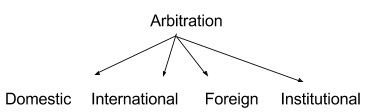
Arbitration means any arbitration whether or not administered by permanent arbitration institution. Arbitration can be defined as, a process in which disputes between legal rights of two or more person is settled judicially and with a binding effect.
practice area best-suited for a lawyer.

Domestic arbitration takes place in India where, the terms of contracts, arbitration proceedings, are all governed by Indian laws. Another condition could be when the cause of action for the dispute arises wholly in India, or where the parties are subject to Indian jurisdiction. The practice area best-suited for a lawyer.

A foreign arbitration is when an arbitration is conducted in a place outside India and the resulting award is to be enforced as a foreign award. The proceedings and the procedure are decided by the parties entering into a contract. It can be of various types, such as domestic arbitration, international arbitration.

This might be the practice area best-suited for a lawyer. In this arbitration the parties decide arbitration tribunal that will settle their dispute.

International Arbitration takes place either within or outside India. Applicability of either foreign laws or party is required in International Arbitration. The law applicable to the conduct of the arbitration and the merits of the dispute may be Indian Law or foreign.

An Institutional Arbitration is laid down as per the rules of any established arbitration organisation. In this, the parties choose to go with the rules as set up by these institutional arbitration organisation. At times Institutional Arbitration organisation functions as fully administered arbitration centers. E.g, ICC Arbitration.

Future Geographic Considerations – Where Do You Want to Live? What Will Work for You and Your Family?

If one is interested in settling in India, then Domestic Arbitration will serve as cake in the platter. Looking from the perspective of going abroad, an arbitrator might have to make frequent foreign trips when associated with International or foreign arbitration. This might be the practice area best-suited for a lawyer. Taking a look at the present situation, if foreign law firms are allowed to administer full-fledged in India, the prospect of arbitration will further boost.

Financial stability

Venues of arbitration are expanding immensely for lawyers in today’s world. In fact, arbitration is going to offer the maximum chance of expansion and growth in the field of law, as it will witness unprecedented growth. Overseas, arbitrators have this repute required in a profession and also are paid well but the situation in India is different. Lawyers often take part in arbitrations provided they have leisure time. Because the earning is meager when compared with litigation. This was the second part on How to find the practice area best-suited for a lawyer. 

Medicine law as an area of practice

Both Medicine and Law are the oldest and true models of professions. Medicolegal is the term, which incorporates the basics of two sister professions, Medicine and Law.
practice area best-suited for a lawyer.

Personality and Work Style – Knowing Yourself and your work

Take the example of a physician, a physician might get summoned by the court as a witness in a suit involving medical negligence. He might get summoned on other occasions as well, when a person injured with a gunshot is admitted informing police is necessary and thus he is summoned for the same. Another important duty imposed on physician is to preserve physical evidence for the benefit of a law enforcement agency.

Growing health infrastructure in India proposes a greater responsibility to doctors too. Work of a lawyer is to deal with laws related to medical practices.

Law of confidentiality

There exists a fiduciary relationship between doctor and client. A client entrusts all his information upon his doctor with utmost faith. There are situations where this client-doctor relationship is misused. In such a situation a lawyer well versed with the functioning of medical agreement clauses as well as substantive law comes handy. Also there are cases where consent of patient is involved. A doctor at times have to take hard and fast decisions which require high level of professional prudence. If results are negative then he might have to face legal consequences. Here a lawyer who knows of the business is needed the most. This might be the practice area best-suited for a lawyer.

Forensic medicine

Matters dealing with Autopsy, fingerprinting etc are dealt under Forensic medicine. Forensic lawyers draw conclusions and bring support to court cases by bridging a connection between forensic science and law.  As per When the Court has to form an opinion upon a point of foreign law or of science or art, or as to identity of handwriting or finger impressions, the opinions upon that point of persons specially skilled in such foreign law, science or art, or in questions as to identity of handwriting or finger impressions are relevant facts. Lawyers having knowledge of forensic medicine serves as a bridge between experts and judge.

Medical Negligence

In cases involving medical negligence the victim can file a complaint to the state consumer court also and there can be a criminal suit filed by the patient against the hospital or the doctor himself. If the main aim of the patient is to seek a monetary compensation then, he/she should file a complaint in the consumer court so that, the case can be finished at the earliest possible. This might be the practice area best-suited for a lawyer. When a lawyer knows the intricacies involved in operation or medicine he might be able to defend the hospital or sue it on the basis of his medical knowledge.

Future Geographic Considerations – Where Do You Want to Live? What Will Work for You and Your Family?

Chances of settling abroad are minimal. One needs to know the law of the land. Therefore, if you are thinking settling abroad, this is not your area of practice. There are institutions which provide information on medicolegal jurisprudence. Institute of Medicine & Law (IML) provides education, information, and services in medical laws. IML’s information and analysis is real-time, accurate, actionable and is delivered to doctors, hospitals, and lawyers on multiple platforms using the latest in technology.

Financial stability

Medical cases in India are very hard to win and therefore, there are a lot of challenges faced by the victims of the negligence. These challenges include that how can a complainant prove the doctor’s negligence? Another challenge involved is how to get a qualified lawyer? Compensation involving medical negligence are high and so is the fees. If one is an established lawyer, as the saying goes, sky is the limit. This was the third part of How to find the practice area best-suited for a lawyer. 

Corporate Social Responsibility as an area of practice

This is a new field of legal jurisprudence in India. It is a boon for lawyers who want to get involved with corporates but are not willing to choose commercial hardcore law. It is an underdeveloped area of law. One, quoting Steve jobs, “Crazy one”, who desires a change in the society, in the structural functioning of legal system, are best-suited for this job.

Personality and Work Style – Knowing Yourself and your work

CSR is fixed amount from the profit of big corporates or business houses which they need to devote for social causes. What is the role of a lawyer in CSR? The role of the lawyer is to advise the company on fulfillment or non fulfillment of laws. Therefore, if a company eligible as per CSR laws defaults with the 2% amount to be given as CSR, then what will be the legal consequences? This might be the practice area best-suited for a lawyer. CSR and law are not mutually exclusive but are in fact interrelated concepts.

Lawyers can advise the company on CSR program under provisions of the Companies Act. Lawyers can play a significant role in CSR because of their expertise in understanding of law and because of their legally protected role as confidential advisors or client-attorney relationship. Also, lawyer functions as an intermediary between the company and any third parties involved in CSR implementation. By appointing a lawyer as the head of CSR department, company can ensure control over the information flowing from CSR due diligence.

Other work includes

  • SWOT-analysis of a given company in relation to CSR;
  • Designing of  CSR policies of the companies.
  • Formulating a strategy for the company to look into their CSR problems effectively.
  • How cost-cutting is to be done and less money is to be spend over CSR.
  • Formulating strategies on how to respond on media or NGO.

Future Geographic Considerations – Where Do You Want to Live? What Will Work for You and Your Family?

A CSR lawyer’s knowledge will only be helpful and practical if he is based in India. There might be frequent court visits and media appearances. Therefore, to manage the affairs one needs to reside close to these affairs. When appointed as a lawyer of an international company one might have to make frequent abroad trips to meet the directors of the company and discuss the details.

Financial stability

For CSR, lawyers need a leadership skill by seeing, then working for, a vision of more equitable, multi-stakeholder outcomes that respect everyone’s rights and creatively accommodate them in the long-term interests of the company and its stakeholders. As an in-house counsel for the company, one might earn in lakhs. There is financial stability as company recruits their team of lawyer who work on these issues. Often empanelling of lawyers is also seen by business houses. 

This was all on How to find the practice area best-suited for a lawyer. What are your opinions on How to find the practice best-suited area for a lawyer? 

 

Download Now

How to get money back from a friend legally in India

5
How to get money back from friend legally

Want to know the legal procedure of getting back the money which you lend to your friend? Let us see how to get money back from friend legally. 

Using a promissory note to lend money

The loan given to a family member or a friend is usually unsecured as it is defined by loosely bound terms and conditions. A “promissory note” is an instrument in writing (not being a bank note or a currency note) containing an unconditional undertaking, signed by the maker, to pay a certain sum of money only to a certain person, or to the bearer of the instrument. An example of promissory note is, I promise to pay B or order Rs. 500, I acknowledge myself to be indebted to B in Rs. 1,000, to be paid on demand, for value received. I promise to pay B Rs. 500 seven days after my marriage with C.

A promissory note includes simple terms and conditions. It does not include specific clauses. It is a legitimate legal document as per Negotiable Instrument Act, 1881 and is accepted by the court in a case of dispute. Sample promissory note attached in Annexure 1

Using a loan Agreement to lend money

Loan agreement consists of multiple terms and conditions such as the purpose of loan, loan amount, loan interest rate, loan term, loan security and any such special terms and conditions as mentioned by the party to an agreement. You are reading Loan agreement makes the formulation of loan more formal. Parties can opt for various clauses rather than just a promise to repay the loan as it is in the promissory note.

A letter should be sent to the debtor containing important details and specifics. This should include information concerning the debt, for instance, how the debt was incurred, the original amount of the debt, when the last payment was made, and the current amount that is due to be paid back.

How to get money back from friend legally

Step1: When can you go for legal remedies

Court can be approached where a person lends money to his friend or relative as a debt subject to repayment by the borrower with or without interest when-

  • The sum which is to be recovered is wholly a debt in a fixed amount and not any sort of penalty arising out of any other engagement.
  • The debt given is contracted either through a promissory note or loan agreement as explained above.
  • This remedy to get back your money from your friend or relative also applies to cases where a third party has given a guarantee on the money which you lent to your friend or relative.

Step2: Court where suit for recovering money can be filed

One can move to High Court, City Civil Court including Civil judge Junior Division court, Court of Metropolitan magistrate, also Court of small causes.

Step3: Ensuring there is no triable issue present

Where a lender of money wants to get his money back from his friend or family he can file a summary suit. How to file a summary suit will be explained later. It is important to ensure that there is no triable issue present, otherwise, leave will be denied.

Triable issue is present in the following cases-

  • Where there is a dispute on the promissory note or loan agreement. Example, where there is a dispute between parties. Where a party refuses to accept the fact of borrowing the money.
  • Where there is uncertainty on the amount which was given as debt.
  • Where the facts are very complex which requires cross-examination of the person lending the money.

When you had given money on a promissory note to your friend for starting a business and friend refuses to return it afterward, in such cases you can recover your money under the procedure as explained here.

Step4 Filing a summary suit

A summary suit consists of two important declarations by the person filing it (here the person who gave the loan), namely

  • A specific vow that the suit is filed under the order 37 of CPC, (Summary Suit)
  • No relief which is beyond the ambit of the order is asked as a final relief ( Explained later).

Step5 Summoning the defaulter

  • After drafting of the summary suit, next step is summoning the defaulter. Annex 2. The following document is required along with summons- a copy of the plaint along with all the annexures.
  • After receiving the summon, the defaulter’s appearance is required in the court within 10 days of issuing of summons either personally or through an advocate.
  • Defaulter has to file in court an address for service of notice on him.
  • In the case where the defaulter does not show up, the allegation in the plaint will be deemed to be admitted by the defaulter naturally and the borrower will be asked to pay the money back with or without the interest as mentioned in their agreement.
  • After appearing in the court as per above-mentioned procedure, it is the duty of the borrower to issue a notice to his friend or relative from whom he borrowed money stating that he made his appearance in the court. 
  • After such notice, the lender will have to send another summon, including the amount of money given, date on which loan was given and other such details. The lender will have to mention that as per his belief there lies no defense to the suit.
  • Then again, a reply to the summon must flow from the borrower’s side within 10 days, that either he accepts the allegation or there exists a defense from his side. It is up to the court to decide on the excuse and whether to allow such defence or not.

Step 6 Court look into these things while granting a leave to defence

  • If the borrower satisfies the Court that he has a good defence to the claim on the basis of its merits. He gets a chance to present his case before the court.
  • If the borrower has no defense or the defence set up is based on illusions or sham or are practically superficial, then the case will go in favour of the money lender.

Step 7 Where the borrower do not reply to summons or fails to appear before the court

In such cases, Court ordinarily notifies the borrower and provides him with some time to reply. After such notice by court, if the borrower further does not show up, the case goes to the lender. But if the borrower shows up, he has to file further affidavits explaining his cause.

Where the suit is about to get initiated in the civil court, the borrower is asked to deposit certain security before the beginning of any proceeding.

Non-repayment of loan might amount to a Criminal breach of trust

When a person entrusted with a property, dishonestly misappropriates or converts the property for his own use, he commits the crime of criminal breach of trust. Thus, when a person grants a certain amount as a loan to another, he entrusts that property to the borrower and when the borrower misappropriates with the money and does not repay it, in such cases borrower commits the crime of criminal breach of trust. Dishonesty is when, a person uses the entrusted property with an intention of causing wrongful gain to himself or wrongful loss to the owner of the said property. A careful examination is required before going for criminal reliefs as in the majority of the cases of non-repayment of loan, reliefs granted are civil in nature.

Conditions required for criminal breach of trust

  • The accused must be vested with the loan amount.
  • The accused must dishonestly convert the loan amount as his personal property forever.
  • Dishonestly use or disposing of that property.

Non-repayment of loan might amount to Cheating

When a person dishonestly induces another person by deceiving him to either deliver any property to any person, including himself, or to make, alter or destroy the whole valuable security or any part of a valuable security, or anything which is signed or sealed, and which is capable of being converted into a valuable security, he has committed the offence of cheating.

Non-repayment of loan by a friend will only amount to cheating if the following conditions are fulfilled

  • In determining the question it has to be kept in mind that the distinction between mere breach of contract and the offense of cheating is a fine one.
  • It depends upon the intention of the accused at the time of inducement which may be judged by his conduct.
  • Mere non-repayment of loan cannot give rise to criminal prosecution for cheating unless fraudulent or dishonest intention is shown right at the beginning of the transaction that is the time when the offence is said to have been committed.
  • Therefore, it is the intention which is the gist of the offence.
  • To hold a person guilty of cheating, it is necessary to show that he had fraudulent or dishonest intention at the time of making the promise.
  • His mere failure to repay the amount will not amount to cheating.
  • If the intention to cheat has developed later on, the same cannot amount to cheating.

Cheating is punishable under Section 420 of the Indian Penal Code, 1860. The offender shall be punished with imprisonment, simple or rigorous, for a term extending up to seven years, and shall also be liable to pay fine.

Dishonest and fraudulent intention must be established to make the defaulter liable of a criminal offence, whether criminal breach of trust, or cheating. Failure to do so would leave the debtor with a recourse to approach a civil court only.

In a case where the defaulter has no intention to repay the debt but has agreed to the terms of repayment with a malicious intention to induce the debtor to part away from his property, he has committed the offence of cheating.

Within how much time can debt be recovered?

The period of limitation for a suit based on a promissory note payable on demand and not accompanied by any writing restraining or postponing the right to sue is three years from the date of the promissory note.  a promissory note in which no time for payment is fixed, the time begins to run from the date of the promissory note.

The period of limitation as three years for the suits for recovery of money lent under an agreement that it shall be payable on demand

Annexure 1

Sample Promissory note

I, Sri____________________________ S/o____________________________              promise to pay Sri_______________________ S/o Sri__________________________ or order, on demand, the sum of Rs________ (Rupees______________________________ only) with interest at the rate of _______ per mensem/ annum from the date of the loan taken, for value received/

Place :

Date: Signature

This was all on How to get money back from friend legally. Did the article on How to get money back from friend legally proved to be useful in any way? Comment below and let us know. 

Download Now

A comparative analysis of family law in Islamic Countries

0
Islamic Countries

Family Law in Islamic Countries

Every Islamic nation has a different approach to treating women. This article is an enumeration on the legal status of women in some important Islamic Regions. Family law in Islamic countries generally follows the prescriptions of scriptures. The situation of women in Islamic countries is raising profound questions regarding women’s social roles and rights, resulting in conflicting opinions. In order to understand this diversity one needs to know the Islamic legal order particularly in matters of family and social life. Below is a brief elaboration on the provisions pertaining to marriage and divorce in some of the Islamic countries.

African and European Context

Algeria

In Algeria, the minimum age of marriage is lower for women (18 years) than for men (21 years). There is inequality right at the stage of conclusion of a marriage contract. The conclusion of the marriage contract is impossible for a woman without the involvement of a guardian who is her father or close relative. Although there is a provision that no guardian can stop his ward from marrying if, she so wishes or compels her to marry against her consent.  However, this provision is weakened by an additional clause permitting the father to prevent a marriage of his daughter if this is in her best interest. As per the Family Code of Algeria, the wife must obey her husband, regard him as the head of the family and respect his parents and relations. The wife also has a duty to obey and duty to seek permission before leaving the home. Husband’s duty is to provide maintenance and all amenities to his wife and this entitles him to prevent her from working. In matters of dissolution of marriage, the husband can dissolve the marriage without giving any reason or justification. Such dissolution shall take place from the time it is recorded with the court of jurisdiction of the locality if not effected before a judge. In case of abuse of this right by a husband, a judge shall award damages to a wife. However, a wife cannot dissolve the marriage. Nevertheless, wife can obtain separation from her husband in return for some compensation. However, she needs to obtain consent from husband for such dissolution of her marriage.  In matters of child custody, mother has custody of the child until the age of 16 for boys and 18 for girls; the guardianship belongs to the husband who takes almost all decisions regarding the life of children. Moreover, a woman who remarries after a divorce usually loses her custody.  These legal facts make it clear that the Algerian women are in an inferior position and hardly have any say over their husband.

Egypt

On the other hand, Family Law of Egypt permits women to conclude her marriage contract herself, without the involvement of a guardian. The guardian has a right to apply for the annulment of a marriage on the ground of unsuitability of a husband, if no children are born out of this marriage. Polygamy still exists. The wife is obliged to obey her husband in return for maintenance, which is the obligation of a husband. Husband can unilaterally dissolve the marriage without requiring him to present a case before a judge or court. However, modern legislation nevertheless requires official registration of dissolution of marriage. Woman can also request for separation or divorce on certain grounds prescribed by law. In case of polygamous marriages, in order to obtain divorce a woman has to prove that the polygamy of her husband really results in moral or physical harm to her. Final decision however rests with the Judge. The custody of young children is usually given to women. However, a women’s right to custody terminates when a minor boy reaches the age of ten and when a minor girl reaches the age of twelve. After these ages, the judge may allow a boy, until the age of fifteen, and a girl until she marries, to remain in the custody of the woman without payment for custody, if it is in their interests. Thus, the legal position of women in Egypt is reformatory as per the changing social needs.

Mauritania

In Mauritania, marriage contract for a woman is not possible without a male guardian. In case of divorce, husband has a unilateral and unconditional right to dissolve marriage. Guardianship of the mother lasts till marriage for girls and till the age of majority for boys however if better interest of the child so require, the guardianship of the mother with respect to her son can be limited by a decision of a judge till the age of 7. Women do not have the same rights as men in the area of transfer of the nationality to children when they are married to foreigners so much so with regard to the possibility of conferring their nationality to their foreign husbands. Thus, the status of women is same as in Algeria.

Morocco

In Morocco, men and women of 18 years can establish a marriage contract. Women do not have a right to choose her domicile since it is husband who decides about the place of the domicile.  It also does not allow the woman married to a foreigner to transmit her nationality to her children as it is possible for a man.  Woman can conclude her marriage contract without the intermediary of her guardian. Dissolution of marriage is possible for a woman only by a decision of a judge. On dissolution of marriage husband should pay maintenance. In contrast, the wife enjoys complete freedom of disposition of her property during the marriage and upon its dissolution without supervision by the husband, the husband having no jurisdiction over his wife’s property. The custody of the child is based on the principle of welfare of the child. Husband is no more declared the head of the family. These unique features make the position of women much more superior and higher especially in property matters. None of the Islamic Countries confer such liberal powers upon women.

Niger

In Niger, married women do not enjoy the right to choose their residence and domicile as in case of unmarried women.  Husbands have an exclusive right to make a choice about the place of the marital home. The unilateral extra-judicial dissolution of marriage by a husband is not restricted in any way except for the requirement of registration, which at least allows divorced women to have definite knowledge about their status. Women can apply for a divorce only on certain restricted grounds or in return for compensation. The extra-judicial dissolution of marriage by husband without the interference of court is totally unfair and unjust since the wife is absolutely at the mercy of the husband.

Unlike Morocco, the Personal Status Code of Tunisia considers husband as the head of the family. However, both spouses have a common conjugal domicile, which does not prevent either of the spouses to have a distinct temporary domicile if necessary. In matters of dissolution of marriage, wife has custody of children and husband is the guardian of the children. Guardianship may be withdrawn from the father in favor of the mother if he abandons his home and has no known address or for any other reason likely to affect the interests of the child. Polygamy is prohibited. There is equality between men and women with regard to the dissolution of marriage.

Libyan Personal Law

The Libyan Personal Law restricts the rights of guardian in as much as he is forbidden from forcing his ward to marry or prevent her from entering into a marriage. Husband has a duty to maintain his wife and wife should obey him. The husband has unilateral right to dissolve the marriage with courts permission and damages may be awarded to an arbitrarily divorced wife. A wife may seek divorce on such grounds as non-maintenance, disappearance of the husband or a defect in her husband, as well as if the marriage is unstable. However if she is unable to prove that she has suffered damage from her husband, she loses her right to maintenance. With regard to the custody and guardianship of children, the situation in Libya is the same as in many other Muslim countries.  The woman has custody of young children upon divorce, but the guardianship goes to a man. Women will have the custody of boy child until puberty and girl child until the age of marriage. Thus, the situation in Libya is certainly not satisfactory and progressive.

Turkey

In Turkey, the family is based on equality between spouses. Women are granted equal rights to property acquired during marriage. The minimum age for marriage is 18 (17 with parental consent). In cases of forced marriage, women have right to ask an annulment within the first 5 years of marriage. Turkish law allows divorce with a settlement agreement made between the husband and wife. Under Turkish law, the grounds for divorce are as follows: disloyalty, committing a crime against the life of the spouse, addiction to drugs or alcohol, cruelty/affront/insult, crime and infamous conduct, abandoning the spouse, mental illness, just and reasonable cause for divorce and domestic disturbance. With regard to child custody, right of non-custodial parent is limited to visitation rights, which are arranged by the court in most cases together with divorce verdict. However if things are not going well for the child, custody can be turned over to other parent. To contest custody there is no specific ground but every case is considered individually. Welfare of the child is considered a top priority. Thus, position of Turkish women is much better as compared to other countries.

Asian and the Middle East Context

From an Asian and Middle East context the situation is not much different as that in Africa and Europe. The Malaysian personal law prescribes minimum age of marriage for men at 18 and 16 for women. The low age of marriage can be exempted if a judge grants his written permission.  Women can dissolve a marriage concluded by her guardian before she attained the age of 16, if she is below 18 years of age and the marriage was not consummated. Wife owes obedience to her husband in return for maintenance. There are restrictions on rights of women as to her freedom of movement, free choice of profession etc. Unilateral dissolution of marriage by husband outside the court and without the permission of the court can be approved by the court ex post facto. Women can request for divorce before a court on the following grounds prescribed by law. Husbands disappearance for over one year; failure to maintain for at least three months; failure to perform marital obligations for at least one year; continued impotency; mental illness lasting for at least two years; leprosy or transmittable venereal disease; cruel treatment; the husband’s refusal to consummate the marriage for four months; invalidity of the consent of the wife. Islamic law applicable in Brunei is quite similar to that in Malaysia. However, as compared to Malaysia, Brunei is more conservative.

Pakistan

In Pakistan, age of marriage is 18 for boys and 16 for girls. Pakistan reserves the right of the women to transfer their nationality to their foreign husbands. However, the inequality, which relates to the right of Pakistani women to transfer their nationality to children by women married to a foreigner, was abolished in 2000.  The husband can unilaterally divorce his wife without courts intervention. Wife is entitled to maintenance. The wife’s right to apply to a court for divorce is quite large, as she can ask for divorce if she dislikes her husband. However, a wife who sues for divorce is not entitled to maintenance. With regard to the guardianship and custody of children, the wife is regarded as natural custodian, whereas the husband, the natural guardian of children. However, in all cases the deciding principle is the welfare of the child. Pakistan has thus adopted a unique approach as compared to other Islamic nations by conferring on women the right to divorce their husband in case if they do not wish to continue the marital bond.

Bangladesh

In Bangladesh, the dissolution of marriage is possible for a man without showing any reason and without his wife’s consent while the wife can unilaterally dissolve the marriage only if she is delegated the authority to do so by her husband at the time of marriage generally in the marriage contract. The wife can also seek dissolution of marriage through a court on certain reasons prescribed by law The dissolution of marriage can only be effective if the husband agrees and actually grants the divorce to his wife. The role of a judge or court is merely limited to procedural aspects. With regard to child custody, mother is not regarded as the guardian of her children. She is only entitled to the care and custody of young children. However, welfare of the child is considered a subject of paramount interest. This makes the society more male dominant wherein the female has no say in family matters.

Maldives

In Maldives, minimum marriage age for both men and women is fixed at 18 and husband can unilaterally dissolve the marriage but only before a court. Woman is given priority of guardianship of children until the age of seven in case of dissolution of marriage. However, the court can give the guardianship either to the father or to the mother taking into consideration the preference of the child. Women are free to choose a profession or occupation unlike in the case of Malaysia. The legal status of women in Maldives is stronger as compared to Malaysia and Algeria.

Bahrain, Oman and the United Arab Emirates

The Middle East Countries viz., Bahrain, Oman and the United Arab Emirates do not have a codified personal law and hence there is no official publication of courts decisions. In Saudi Arabia, there is discrimination against women in almost all the spheres, such as politics, employment, education, family, private and public life. The Personal Law is not codified and hence it adopts the Islamic interpretation of laws from other States. This makes it more difficult and the complexity cannot be rectified even with recourse to other national legislations.

Jordan

The Jordanian Family Law permits women in the marriage contract to reserve their right to freedom and not to follow their husband. The wife has an obligation to take care of the family, the children and home and it is the husband’s duty to maintain her. Wife also has a right to request separation from their husband on specific grounds. However, the right to terminate the marriage herself can be exercised by a wife if the marriage contract expressly provides for it.  Custody of young children is with their mother until the age of puberty but guardianship is with the father. Women can also include in their marriage contracts provisions guaranteeing them the right to choose and exercise their profession without their husband’s consent. Women are allowed to obtain their passport without having to obtain consent of a father or guardian. This makes it clear that Jordan is more liberal as compared to Algeria.

Syria

In Syria, women have right to marry without a male guardian’s consent. However, the guardian has the power to request the annulment of a marriage concluded if the condition of suitability of the husband is not fulfilled. Syria approves unilateral divorce by the husband in exchange for maintenance. It also approves divorce on certain grounds on the request of the wife. Child custody is regulated. Polygamy is still allowed under some conditions. Thus in certain aspects Syria is still traditionally conservative.

Kuwait

Kuwait has established equality between men and women with regard to guardianship, ward ship, trusteeship and adoption of children. The minimum marriage age is 15 for girls and 17 for boys. The husband is obliged to maintain his wife and wife to obey her husband. The principle forms of dissolution of marriage known in other Muslim States are also available in Kuwait. The custody of children is attributed to their mother until the age of puberty for boys and age of majority or marriage for girls. However, the national legislation of Kuwait contains no procedural regulations, which are used in other Muslim States to protect women at least from gravest forms of misuse by a husband of his rights. Nevertheless, Kuwait seems to have a liberal legal structure for women.

Iraq

In Iraq, nobody can compel any person whether male or female to marry against his / her consent. A marriage contract under compulsion is void if no consummation has occurred. Similarly, marriage of anyone who has the legal capacity for marriage cannot be prevented. The right to acquire, change or retain their nationality is not guaranteed to men and women on equal terms. The Nationality Law discriminates women with regard to the right of women married to a foreigner to transmit their nationality to their children and foreign husbands. In addition, residence of a married woman is with her husband and of an unmarried one with her father. The grounds for and procedures of the dissolution of marriage are not on equal terms. Man can have more than one wife. The husband can initiate divorce. Wife has the right to initiate divorce only if this right was giving to her in the marriage contract.  Both men and women can request judicial separation. The age of marriage for men and women is fixed at 18 years. The wife is obliged to obey to her husband in return for maintenance. A wife leaving the marital home without her husband’s permission or lawful grounds is not entitled to maintenance as does an imprisoned wife or a wife who refuses to travel with her husband without a lawful cause. This clearly reveals the fact that a woman has no freedom to choose her own place of residence or domicile and further she has no freedom of movement. Men has a unilateral right to dissolve the marriage which needs to be confirmed by a court or at least registered by a judge and damages are awarded to an arbitrarily divorced wife. Either of the spouses can request a judge to dissolve the marriage if one of the spouses causes so much injury to the other or to their children and that the common life becomes impossible; if one of the spouses commits adultery; if the marriage was contracted before both spouses reached the age of 18 and without judicial authorization; if the marriage was concluded by force and outside of a tribunal and if the husband marries a second wife without an approval from a court. The following are the additional grounds allowing a request for separation by a woman: if the husband is sentenced to imprisonment for three years or more, even if he is able to provide for his wife and children during this time; if the husband abandons his wife without a justified cause for two years or more; if after a conclusion of marriage contract and before the consummation of a marriage the husband does not come to celebrate the marriage two years after the conclusion of marriage contract; if the wife discovers that her husband is unable to fulfill his marital duties (sexual incapacity); sterility of the husband; if the husband does not pay maintenance as required by a decision of a court; if the husband does not maintain his wife without a valid reason. The custody of children until the age of 10 is with the mother.  During this time, the father has visitation rights and may supervise the conditions of living and education of his children. If the interests of children so require, the custody of the mother may be extended until the child completed the fifteenth year. A child of fifteen years of age shall choose him or herself to live with either of the parents, or with another relative. The actual guardianship is granted automatically to the father. Thus, although the Iraqi Personal Law contains some discriminatory provisions, it is relatively progressive as compared to the laws prevalent in other Muslim countries of the region.

Conclusion

In general, out of more than forty States of the world with legislation which incorporates or at least reflects to some extent Islamic laws and customs, thirty-six are parties to the Convention on the Elimination of All Forms of Discrimination against Women with substantive reservations. Any real improvement concerning the situation of women in the Islamic countries cannot be attained exclusively through constant legislative reforms. Today, Muslim women all over the Islamic countries face several challenges due to the strong influence and impact of westernization making it more difficult for them to realize their aspirations and desires to live in a liberal modern world. Hence, in order to bring a change, Islamic feminism and parallel changes in societal attitudes are as important as legal reforms.

Suggested Readings.

What Every Indian Should Know About Muslim Law

How Muslim Women Can Divorce Her Husband As Per The Muslim Law


Download Now

Overview of regulatory regime over banking companies in India

0
banking

In this article, Aakash Gosain discusses regulatory regime over banking companies in India.

Regulatory regime over Banking Companies

Regulatory regime over banking companies means the regulation of control over banking companies. In India, banking companies are regulated by Banking Regulation Act, 1949 and Reserve Bank of India Act, 1934.

Reserve Bank of India holds the status of apex bank of India it is empowered to supervise the functioning of all the banks in India. Only  Reserve Bank of India has the power of printing of currency notes.

Why is there a need of regulatory regime over banking companies

Since India has very large geographical area and population, it also has huge no. of banks which are needed to be regulated to keep the economy stable. If the banks are not regulated it would create imbalance in the economy.

How are banking companies regulated in India

Regulatory regime exercises its control on banks in followings ways

  • RBI (Reserve Bank of India) decides the rate of interest charged on loans.
  • RBI (Reserve Bank of India) decides the rate of interest given on FDRs which usually is higher for senior citizens.
  • RBI (Reserve Bank of India) decides the Statutory Liquidity Ratio (SLR) which a commercial bank has to maintain in order to control the expansion of credit.
  • RBI (Reserve Bank of India) decides the Cash Reserve Ratio (CRR) it is the ratio of cash which the bank has to deposit to RBI without and interest.
  • RBI (Reserve Bank of India) decides the withdrawal limit from ATM.

All the above-mentioned points are needed to be checked to ensure smooth running of the economy.

Central Government implements its financial policy through the regulatory regime

Recently our Central Government has undergone the policy of DEMONETISATION of Rs. 500 and Rs.1000 notes which mean that the currency notes ceases to have the legal tender. Demonetisation was a step against black money government has carried its policy through RBI.

RBI had restricted the withdrawal limit of cash from banks and had also converted the old currency notes.

Demonetisation process was carried out in a very effective manner by banks throughout the India which could not have been possible without the regulatory regime over banking companies.

Regulatory regime prohibits the banking company to indulge in trading

U/S 8 of BR Act, 1949 banks are not allowed to indulge in the practices of trading of goods. Bank Regulation Act, 1949 permits a bank to do trade of securities, bills of exchange and other negotiable instruments but not of any goods directly or indirectly through barter system.

Reserve Bank of India controls inflation and deflation in the economy

Inflation is a situation in an economy where the demand increases and supply decreases, this leads to rise in value of goods which reduces the purchasing power of the people. To control such situation the RBI sells the securities held with it by the commercial banks. This step by RBI reduces the cash lending power of banks which leads to increase in rate of interest on lending money by bank. This causes the decrease in demand as the people will opt to savings. In this way inflation is controlled by the RBI.

On the other hand in situation of deflation, demand decreases which increases the supply. This reduces the value of goods causing an increase in purchasing power of people. To control the situation the RBI buys the securities from commercial banks which increases their cash lending capacity which further results in fall in interest rate on lending money by bank. This causes people to spend money rather than saving it, which helps to increase the demand and making the market stable. Controlling of Inflation and Deflation is one of the most important regulatory measure performed by RBI.

Supervision and Control

Reserve Bank of India for better supervision and control over banking companies has constituted a separate board viz. “The Board for Financial Supervision”. This board meets on monthly basis it has power to constitute sub-committees.

RBI regulates the licensing of banking companies

U/S 22 of BR Act, 1949 a company to function as a banking company must hold a license of banking issued by Reserve Bank of India.

Board of Directors and Chairman

Section 10A of BR Act, 1949 says that every banking company shall have the board of directors who shall have special knowledge and practice experience in banking field and a Chairman.

If RBI is of opinion that composition of the board of directors of any banking company does not fulfil the requirement of the provisions of BR Act, 1949 it can after giving such banking company an opportunity of being heard, directs the banking company to re-constitute the board of directors.

RBI as lender of last resort

Usually, banks perform the function of lending money to people, but in a situation where bank runs out of cash and does not have left cash for its operation, then RBI comes to rescue the bank from such crisis. RBI  lends loans to the bank so that bank could operate.

Amalgamation of Banks

BR Act, 1949 regulates the process of amalgamation of banking companies. The banking companies planning to amalgamate shall have to create a draft copy of scheme of amalgamation covering terms and conditions, such draft should be approved by the resolution passed by members of banking companies. RBI holds the power of sanctioning the draft, once the draft is sanctioned by RBI then the assets and liabilities of banking companies are amalgamated.

Submission of returns by banks

Every bank in India as a measure of regulation has to prepare and submit returns of liquid assets, unclaimed deposits, balance sheets, liabilities, e.t.c  to the Reserve Bank of India under provisions of BR Act, 1949 and RBI Act, 1934.

The returns sent by the banks are analyzed by Reserve Bank of  India this is kind of a measure through which RBI gets to know about the performance of the bank in the economy.

Conclusion

The conclusion derived from above article is that, that regulatory regime over banking companies plays very important functions for maintaining equilibrium in the economy of a country. Regulatory regime lays the uniform code of conduct which the banking companies has to follow, the uniform code helps in maintaining balance and stability in the economy, without following it no economy can ever boom. Without the provisions of regulatory regime over banking companies, the economy would not and could not grow.

References

  • The Banking Regulation Act, 1949
  • Reserve Bank of India Act, 1934
Download Now

The role of SEBI in regulating the primary market for securities

0
SEBI

In this article, Sagrika Tanwar discusses the Role of SEBI in regulating the primary market for securities.

Securities and Exchange Board Of India [SEBI] is a regulator of securities market in India. Initially, it was formed for the purpose of observing the activities afterward in May 1992, Government of India granted legal status to SEBI. What is the function of Primary Market under SEBI? What is the role of SEBI? What is the process of issuance of securities? Role of SEBI in eliminating insider trading?

Functions Of Primary Market Under SEBI

  • Primary Market facilitates capital growth by encouraging individuals to convert savings into investments.
  • Primary Market being the part of Capital market also issues new securities.
  • Government or Public sector institutions and companies can obtain funds in exchange of a new stock or bond issues via an investment Bank or financial Syndicate of securities dealers.
  • It encourages Initial Public Offerings [IPO]

Role of SEBI

Protecting the interest of investors

  • SEBI ensures that the investors do not get befooled by misleading and false advertisements. In return, SEBI issued guidelines so as to protect investors and also ensured that the advertisement is fair and concise.
  • Regulation of price rigging: Price rigging refers to manipulation of prices by way of fluctuating the prices with the object of inflating and depressing the market price of securities.
  • SEBI make efforts to educate investors so that they are able to make choices between the offerings of different companies and choose the most profitable securities.
  • SEBI has issued guidelines to investigate cases of fraud and insider trading. Adding to this the provisions for fine and Imprisonment.

To ensure Development activities in Stock Exchange

  • E-Trading: Concept of E-trading have been introduced few years back by SEBI to eliminate the discomfort. It simplifies the process of buying and selling of securities.
  • The initial public offering of Primary Market (which is a part of Capital market) permits through stock exchange.
  • SEBI promotes training of intermediaries of securities market with the object of smooth functioning.

Regulate the business of stock exchange and activities of stock exchange

SEBI introduced proper Code Of Conduct applicable to everyone who is a part of the process of buying and selling of securities, stock exchange, etc. Following are the areas of concern:

  • Rules and Regulations to regulate intermediaries such as Broker, underwriters, etc.
  • Registers and Regulates the working of merchant Bankers, sub-brokers, stock-brokers, share transfer agent, trustees, etc.
  • Registers the working of mutual Funds.
  • SEBI regulates turnover of the companies.
  • It also conducts inquiry and audits.

To Regulate Insider Trading

Insider Trading have been a problem since the introduction of the Market dealing with buying and selling of securities, stock exchange, etc. An Insider is a person or a group of people having first- hand knowledge about the internal issues and Ups and downs of a company. The moment insider gets to know about the loss which is going to occur, the shares under insider’s name are sold immediately. Hence, company suffers a huge amount of loss.

https://lawsikho.com/course/diploma-companies-act-corporate-governance
Click above

Process of Issuance Of Securities

Preparation of Prospectus

The prospectus must contain following information:

  • Name
  • Address
  • Registered Office
  • Names and Addresses of
  • Company Promoters
  • Managers
  • Managing Directors
  • Director
  • Company Secretary
  • Legal Advisor
  • Auditors
  • Bankers

It also includes information related to project, plant location, Technology, collaboration, products, export obligations, etc. Intermediaries includes underwriters and Brokers are separately appointed by the company to sell the minimum number of shares. Prospects issued by the company must be approved by SEBI. A company offers minimum of 49 percent of the amount of shares to the public.

Following mentioned are the ways of issuing stocks in Market,

  1. Initial Public Offering [IPO]

When a company make public issue of shares for the very first time it is referred to as Initial Public Offering. Process of Initial public offering as per the guidelines of SEBI includes: Firstly, issuance of prospectus is the first and foremost task, the prospectus must include every detail about the company and about the issue; Secondly, issuance of share Application Forms by the intermediaries (underwriters and brokers); Thirdly, brokers make a list of orders collected from clients and then place orders with the company; Fourthly, company then begins with the allotment of Shares with the help of stock exchange. After the Allotment procedure share certificates are delivered to the investors or credited to their respective Demat Accounts. Investors Must be vigilant about additional offers and tempting IPO which company offers.

Factors must be kept in mind while studying an IPO offer document

  • Promoter
  • Performance
  • Prospects
  • Price
  1. Private Placement

The securities are offered for sale privately to some specific individuals and other institutions. No prospectus is issued to cut the cost and time involved in the process of allotment and issuance. This method is very popular among investors these days. This way, shares are concentrated in few hands only. Thus this increases the price temporarily  and is sold to the small and common investors.

  1. Offer For Sale

Process of offer for sale is somewhat similar to private placements. Stock Brokers negotiate with companies regarding the price and terms and conditions bsed of which the shares are being issued. After negotiation, intermediaries buy shares from the company. Securities are then sold to the investors at a higher price to earn some extra profit. This method is adopted to save time and cost of the process.

  1. Bought out deals

Bought out deals are those deals wherein a company in order to introduce its shares to the market sells all its equity shares to a single broker. The sale under Bought out deals is similar to that of Offer for sale.

  1. Right Issue

Right issue is made by a company to its existing shareholders in proportion to the number of shares that they posses.

Guidelines by SEBI,

  • Only Listed company can make right issue.
  • Right can be made only in respect of fully paid up shares.
  • Company will have to make announcement before such issue and this cannot be withdrawn.
  • The right issue should be open for minimum period of 30 days, and maximum up to 60 days.
  • Company will have to make an agreement with the depository to issue the shares in Demat form.
  1. Bonus Issue

Extra Bonus received is treated as a part of Profit under Share Capital and thus it is divided between the shareholders of a company.

  1. Book- Building

Under normal circumstances, brokers are the intermediaries through which shares are allotted whereas under book building process feedbacks of the investors are taken for the fixation of price of the shares

Conclusion

SEBI in one of the important body which regulates both Primary as well as Secondary Market. Above written Article is based on Primary market which deals with issuance of new securities and deals with certain issues related to Primary market. SEBI encourages both growth and development of the security market and act as a watchdog.


LawSikho has created a telegram group for exchanging legal knowledge, referrals and various opportunities. You can click on this link and join:  

https://t.me/joinchat/J_0YrBa4IBSHdpuTfQO_sA

Follow us on Instagram and subscribe to our YouTube channel for more amazing legal content 

 
Download Now

All you need to know about the Madhya Pradesh Shops and Establishment Act

0
Madhya Pradesh Shops and Establishment Act

In this article, Ved Prakash discusses the provisions of Madhya Pradesh Shops and Establishment Act.

The act came into force on 1958 by the government of Madhya Pradesh to regulate conditions of work and to provide statutory obligation for the employers and the rights of the employee in an unorganized sector of the employment and others establishment in their jurisdiction.

Also to regulate the condition of work and employment and therefore to secure maximum benefits for the employees working in the various category of establishment viz; shops commercial establishment residential hotels, restaurants eating houses theaters and other places of public amusement or entertainments are mainly protected by the provisions of this act.

Registration of establishment under the Madhya Pradesh Shops and Establishment Act

Each establishment to which this Act applies shall be registered in accordance with the condition of this section. In thirty days from the date on which this Act apply to an establishment, its employer shall send to the Inspector of the region concerned a report, in the prescribe form, together with such fees, as may be prescribed, containing –

  1. The name of the owner, the manager and the person hold position of management if any;
  2. The postal address of and the day of opening the business by the establishment;
  3. The name, if any, of the organization;
  4. The kind of the establishment, i.e. whether it is a store, commercial establishment, residential hotel, café, eating house,theatre,  or other places of public enjoyment or entertainment;
  5. Such other information, as may be approved.

On receiving of the testimonial and the cost, the Inspector shall, on being pleased about the accuracy of the statement, record the establishment in the register of establishment in such manner as may be prescribed and shall issue in the agreed form, a registration certificate to the owner. The registration certificate shall be prominently display at the enterprise.  In the occurrence of any doubt or difference of opinion between an employer and the Inspector as to the kind to which an establishment should belong the Inspector shall refer the subject to the Labor Commissioner who shall, after such investigation as he thinks proper, decide the category of such establishment and his choice shall be final for the purposes of this Act. The Government may, by notice, require renewal of registration certificate issue under this act at such intervals not being fewer than five years, and on expense of such fee as may be prescribed. The registration fee and the restoration fee shall not exceed ‘[two hundred and fifty rupees] per establishment. The employer shall, within ten days of his finishing the establishment, inform to the Inspector in writing accordingly

Status of Shops and commercial establishment under Madhya Pradesh Shops and Establishment Act

The Government may fix dissimilar opening or closing hours for dissimilar classes of shops and commercial establishment or for different region or for different period of the year.

According to this act, no person shall bring on in or nearby to a street or a public place the trade of any supplies before the opening and after the closing hours fixed under sec. 9 for the shops trade in the same category of goods in the region in which such lane or open place is place . if any person does not follow previous provision, shall be liable to have his goods seized by an Inspector. The goods detained shall be return to the people from whom they were detained on his depositing rupees ‘[50] as security for his appearance in the Court. If the person fails to formulate the deposit, the goods detained shall be formed without wait before a Court, who may provide such guidelines as to their temporary custody.

 No worker in any shop or commercial organization shall be mandatory or allowed to labor for more than 48 hours in a week. No worker shall be compulsory to work — (i) in any shop, for more than nine hours on one day; (ii) in any commercial organization, for more than ten hours on one day.

Each shop and commercial organization shall stay closed on one day of the week. The owner shall fix such day at the start of the year, inform it to the Inspector and identify it in a note prominently display in a prominent place in the shop or commercial organization. The owner shall not alter such day more frequently than once in three months shall inform the change to the Inspector and make the required change in the notice in the shop or commercial organization. It is Provided that where any shop or commercial organization comes after the beginning of any year within the purview of this Act, for the first time the owner shall also fix such day of the week on which the shop or commercial organization shall stay closed and inform it to the Inspector within one month.

Residential hotels and Restaurant under the Madhya Pradesh Shops and Establishment Act

In spite of anything contained in any other enactment for the time being in force, no café or eating-houses shall be opened before 5 a.m. and be kept open till 1-30 a.m. It is Provided that an worker in such café or eating- house may be mandatory to start work not before 4-30 a.m. and shall not be compulsory to work later than 2 a.m. it is Provided in this act that any consumer who was being served or waiting to be served at the dying hour of such café or eating-house may be served in such café or eating-house during the half-hour directly following such hour.

 No worker in any residential hotel, café or eating-house shall be mandatory or allowed to labor for more than 48 hours in a week and nine hours in one day. The spread-over of an employee in a residential hotel, café or eating-house shall not go beyond fourteen-hours:

All worker in a residential hotel, café or eating-house shall be given at least one day in a week as a holiday. It is Provided that nothing shall apply to an worker whose total period of service in any week is less than six days.

Theaters or other places of public amusement or entertainment under the Madhya Pradesh Shops and Establishment Act

According to this act no theatre or other place of public enjoyment or entertainment shall, on a day, be closed later than 1 a.m. After the hour set for the closing of shops under section 9, no goods of the kind sold in shop shall be sold in any theatre or other place of public enjoyment or entertainment excluding for use on site.

No worker in a theatre or other place of public enjoyment or entertainment shall be compulsory or permitted to work for more than 48 hours in a week and nine hours in one day. The spread-over of an worker in a theatre or other place of public enjoyment or entertainment shall not go beyond twelve hours on a day. It is Provided that the Government may raise the spread-over period question to such form as it may impress whether generally or in the case of a exacting theatre or other place of public enjoyment or entertainment.

The owner shall provide each worker in a theatre, or other places of public enjoyment or entertainment an identity card which shall be kept by the worker when on job and shall be produced on require by an Inspector.

Employment of children, young persons, and women under the Madhya Pradesh Shops and Establishment Act

No child shall be mandatory or allowed to work whether as an worker or otherwise in any organization in spite of that such child is a member of the family of the owner. No young person or women shall be compulsory or allowed to work whether as an worker or else in any organization before 7 a.m. and after 9 p.m. in spite of that such young person or women is a member of the family of the owner.

Leave with pay and payment of wages under the Madhya Pradesh Shops and Establishment Act

A worker shall be deemed to have completed a time of twelve month’s constant service in an organization in spite of any break in the service during those twelve months brought about by illness, accident or authorized leave not more than ninety days in the total for all three, or by a lockout or by a strike which is not an illegal strike, or by irregular periods of involuntary joblessness not exceeding thirty days in the total, and authorized leave shall be deemed not include any weekly holiday allowed under this Act which occur at the start or end of an break brought about by the leave. Any Inspector may institute proceeding on behalf of any worker in an organization to which this Act applies to get better any sum compulsory to be paid by an owner which the employer has not paid.

Amendment of the Payment of Wages Act —[in spite of anything contained in the Payment of Wages Act 1936 (No. IV) the State Government may, by notice, express that subject to the provisions of subsection (2) all or any of the provisions of the said Act shall apply to all or any organization or to all or any rank of workers to which or whom this Act for the time being applied.

Enforcement and inspection under the Madhya Pradesh Shops and Establishment Act

According to this Act, it shall be the responsibility of each local authority whom the Government may by order empower in this behalf to put in force within the region subject to its control, the provisions of this Act, subject to the power of the Government. The local authority empowered may by order delegate any of the powers and functions (other than the powers of making bye laws), exercisable or performable by it under this Act to any of its officer.  An order empowering a local authority may at any time cancelled by the Government.  To enable Government to exercise useful control over a local authority in the performance of the duty entrusted to it under this Act, Government may approve any officer, not below the rank of a labor officer, to direct the enforcement of this Act within the region subject to the jurisdiction of the local authority and for this point such officer shall have all the control of an Inspector.

Offences and Penalties under the Madhya Pradesh Shops and Establishment Act

If in any organization there is any breaking of any section, rule or order for which no exact punishment is provided in this Act; the owner and the manager shall, on conviction, both be punished with fine which shall not be less than [50 Rs] and which may extend to [500 Rs.

if the breaking of the provisions of section 6 is continued after the end of the tenth day after conviction, the owner shall on conviction be punished with a extra fine which may extend to fifty rupees for each day on which the contravention is so continued;

If any owner or manager with plan to deceive, makes or causes or allows to be made, in any register, documentation or notice agreed to be maintained under the provisions of 31 this Act or the rules made thereunder, on entry which, to his information, is false in any material particular, or intentionally omits, or causes or allows to be omitted, from any such register, record or notice, an entrance which is mandatory to be made therein under the provisions of this Act or the rules made thereunder, or maintains or causes or allows to be maintained more than one set of any register, record or notice except the office photocopy of such notice, or sends or causes or allow to be sent, to an Inspector any information or notice approved to be sent under the provisions of this Act, or the rules made thereunder which to his information is false in any material particular, on conviction, be punished with imprisonment not exceeding. This act provides us the Penalty for obstructing Inspector. The Executive Magistrate takes trial of the cases which filed under this act. No Court shall take cognizance of an offence under this Act or any rule or order made thereunder unless complaint thereof is made within three months of the date on which the assumed commission of the offence came to the information of an Inspector.

No owner shall give out with the services of an worker who has been engaged for a period of three months or more excluding a reasonable cause and without giving such worker at least one month’s notice or wages in lieu of such notice. It is Provided that such note shall not be necessary if the services of such workers are dispensed with on a charge of bad behavior supported by acceptable evidence recorded at an enquiry held by the owner for the reason.

Conclusion

Thus, this act was enacted for the welfare of the society and to control the working of the shops, commercial organizations restaurants and eating houses and residential hotels. This act provides the way for establishment in a legal manner. According to some calculation, the establishment of the shops and others has raised and which gives a raise in the employment sector. So this act provides a way towards the development of society.

Download Now

An overview of the Prevention of Corruption Act

0
PREVENTION OF CORRUPTION

In this article, Diksha Chaturvedi discusses how the Prevention of Corruption Act, 1988 came into being and also the provisions of the case along with few important ruling of the court on countries biggest scam.

“Corruption is a tree, whose branches are of an immeasurable length; they spread everywhere.” – Beaumont and Fletcher

Corruption is a worldwide phenomenon. It has become the part of our daily life. It is detestable as it has entered the very roots of our society. Corruption, nepotism, dishonesty is increasing rapidly.

Santharam Committee


It was created by Central Government in 1960. The chairman of the committee was K. Santhanam. This committee gave its report in 1962. The committee observes that “Corruption cannot be eliminated or reduced unless preventive measures are been taken and implemented in a proper manner. Preventive measures must include administrative, legal, social, economic and educative measures.” On the recommendations of this committee, central government set up Central Vigilance Commission in 1964 for looking into the cases of corruption against central government.

Recommendations by the committee

  • A thorough study has to be done of each department, undertaking or ministry. The study should also mention preventive measures to be taken.
  • Citizens should be educated and made aware of their rights and responsibilities. They should know how the government operates.
  • Various facilities such as housing, medical etc. should be given to the employees. There must be an increment in their salaries.
  • Recreational activities should be conducted for the employees of each department.
  • Companies and businessmen are required to keep detailed accounts of expenditure.
  • Administrative officers should be selected with due care. Only those who satisfy the requirements to the fullest must be appointed for the key posts.
  • The government servants cannot accept any private commercial employment for two years after retirement.
  • Administrative delays should be reduced to avoid corruption practices.
  • The licenses and permit system along with taxation laws must be reviewed.
  • The higher authorities should make sure that laws are properly enforced.
  • Media should play a positive role in encouraging honesty and discouraging corruption.

PREVENTION OF CORRUPTION ACT

The Prevention of Corruption Act came into force in September 1988. It inculcated provisions of Prevention of corruption Act, 1987, Indian penal code, the Criminal Procedure Code and the Criminal Law Act, 1952. After and during Second World War corruption amongst the officers and public servants considerably increased and the provisions of IPC and CrPC were inadequate to cope up with this situation. So for this matter the Prevention of Corruption Act, 1947 was passed. Under this Act special judges are being appointed by the Central and State Government. Special Judge should be a Session Judge or an Additional Session Judge or Assistant Session Judge under the Code of Criminal Procedure, 1973.

The Criminal Procedure Code declares the offences against the public officer as non-cognizable, but under this act it is obligatory for the court to make certain probability of guilt against the accused. The investigation has to be taken by Deputy Superintendent of Police. This act has shifted the burden of proof from prosecution to the accused.

The act has redefined the meaning of ‘public servant’. The ‘public servant’ as per the definition includes any person in service of a government and in the pay of the government, or its department, its companies or any undertaking or control of the government. The act extends to whole of India except Jammu and Kashmir. MP’s and MLA’s have been kept out of this act. When it comes to the trial of public servants it is conducted by special judge and the appeal lies before the High court and then before the Supreme court. If the offences against the public servant have been proved, it is punishable with imprisonment of not less than six months which may extends to five years. Misappropriation, abusing official position, misappropriate to income, obtaining a pecuniary advantage etc. are being taken as offences under this act.

The central government has setup up the following four departments as anti-corruption measures

Administrative Vigilance Division in the department of Personnel and Training.

It was set up in the Ministry of Home Affairs in August 1955 to take measures for Anti-corruption. Under this scheme each department was required to nominate a member of not less than Deputy Secretary’s status to be the Chief Vigilance Officer of the department. He was assigned to deal with all the vigilance matters under his control. They formulate and implement the policies of central government in the field of vigilance, integrity in public services and anti-corruption.

Central Bureau of Investigation

The Central Bureau of Investigation is constituted under the Government of India, Ministry of Home Affairs Resolution No. 4/31/61-T, dated the 1st April, 1963. The investigation work is done through S.P.E. Wing of the C.B.I. which derives its Police powers from the Delhi Special Police Establishment Act, 1946 to enquire and to investigate into certain specified offences or classes of offences pertaining to corruption and other kinds of malpractices involving public servants with a view to bring them to book.

Domestic Vigilance Units in the Ministries /Departments /Public undertakings/ nationalized banks

Central Vigilance Commission

The Central Vigilance Commission was setup in 1964 by the recommendations of Santhanam Committee. It is a non-statutory body and its jurisdictions and functions can be amended by government. It takes cases where gazetted officers of central government, union territories, officers of PSU’s and nationalized banks are held for corruption. It works as an autonomous and advisory body. It is headed by Central Vigilance Commissioner, assisted by a Secretary, five branch officers and eleven Commissioners for Departmental Inquiries.

PROMINENT CASES

  1. Ketan Desai
    The CBI has recently arrested the president of Medical Council of India, Ketan Desai and three other for accepting a bribe to permit Patiala-based Gyan Sagar Medical College to recruit a fresh batch of students without having adequate infrastructure.
  2. 2G Spectrum Scam
    The CBI is conducting the trial under this act. Under this scam Telecom spectrum was allotted by UPA Government at throwaway prices to companies by corrupt and illegal means.

Suggested readings.

What Are The Anti-Corruption Laws in USA and UK

Central Bureau of Investigation


References

Prevention of Corruption Act, 1988


Download Now

Pendency of cases in India and how the Indian Judiciary is coping with the problem

1
pendency of cases

In this article, Ashish Pratap Singh discusses Pendency of cases in India and how the Indian Judiciary is coping with the problem?

The pendency of cases in Indian Courts is not a new phenomenon to read or to discuss. But coming out of the problem, the Indian Judiciary along with the legislative and the executive wing is trying to overcome the situation.

The following article not only covers the reasons for pendency of cases but also put forths the solutions through which the judiciary, executive, and the legislature are trying to overcome the above problem. Let us take a look at reasons for pendency of cases and how the judiciary is coping with the problem.

Reasons for pendency of cases

Reason 1 Judiciary not having sufficient number of judges

The most prominent reason for the pendency of cases is the inadequate representation of judges in the Indian Judiciary. The number of judges is way less than required. The essential purpose of justice cannot be met if we do not have the required judges to decide the case. The problem lies not only at the subordinate level of the judiciary but also in the higher judiciary.

The vacancies existing at the Courts, both lower and the higher are not duly filled. With an already low proportion of judges is to a number of cases, the Indian judiciary is lacking the minimum basic requirement of judges strength. Vacancies of judges effect drastically the pendency of cases. Both are in fact inversely proportional to one another.

Various judges of the Apex Court have addressed this issue. The former Chief Justice of India, Retd. Justice T.S. Thakur spoke about government’s inaction in raising the number of judges.  In the same scenario once, then Chief Justice of India H.L. Dattu suggested that a deadline of five years has to be set to make sure that trial cases do not go too longer. According to

According to Law Minister D V Sadananda Gowda in 2016 there were four vacancies in the Supreme Court and as on 10th November 2015 there were 426 vacancies in the High Courts. Total approved Strength in High Court is 1,029. There are vacancies in subordinate courts too, with the total strength of 20,358 only 15,360 were occupied and rest were held vacant.

A brief study says we have 13 Judges per 1 million people in our country, where as the need is of  50 Judges per 1 million people. But this is not the first time we are facing this issue, in 1987 too, Law Commission recommended increasing the number of judges from 10 Judge per  Million to 50 Judges per million. The result of not taking the recommendation seriously has resulted in Three Crore pending cases and still we are not learning from our prior mistakes which will further result in more pendency, further then Law minister D.V. Sadananda Gowda had in the beginning of 2016 said that to cope up with the problem of pendency of cases his government will prepare a National Litigation Policy that will bring down the number of cases.

Reason 2 Filing of false cases

The second big reason for the pendency of cases in Indian courts is filing false cases with malafide intent for causing unnecessary troubles to others. Yes, I am trying to draw your attention towards filing of fake cases in order to solve vendetta. There is filing of case, then there is investigation of the same, and if proofs are available or not the continuity or discontinuity of the same depends but due to all this, the precious time of court is already unnecessarily wasted. And as a result of all this there is a delay in justice.

Delhi Commission of Women (DCW) exposed shocking statistics that 53.2 per cent rape cases filed between April 2013-July 2014 in Delhi were found ‘false’. The report says that between aforesaid dates the number of rape cases filed in Delhi were 2,753 out of which, only 1,287 cases were found to be true, and remaining 1,464 cases were found to be fake. Report further revealed that between June 2013 and 5th December 2013, the number of false cases were 525 and in between January 2014 and July 2014, the number of false rape case were 900. This is the story of Delhi, National capital of India with the population of 18.98 Million.

Reason 3 Unnecessary delays caused because of administrative apathy

Third reason according to me for the pendency of cases in Indian courts is the rise in misuse of law. For an instance, the report of one of the renowned National newspapers of our nation, there are approximately 1 lac. Cases of dowry filed every year out of which 10 per cent are found false.

Then at times there are situations when counsels try to play their card, they either request for giving further date by giving various reasons or they are not present so that they get next date for hearing due to which there is unnecessary delay in case proceeding. Counsels try to extract more time for preparation of cases.

Reason 4 Inadequate Infrastructures of the subordinate courts in India

Day by day people are getting aware of law and are becoming literate, number of cases filed every year is increasing. According to the National Judicial Data Grid website as on December 31, 2015 2.6 Crore cases are pending only in lower courts of which 41.38% cases have been pending for less than two years and 10.83% have been pending for over two years.

Steps taken by the judiciary to deal with the issue of pendency of cases

Alternate Dispute Resolutions

Several High courts have established arrear committees  to deal with the problem of pendency. Lok Adalats are being held and cases are resolved quickly there.  In 2015, 44 lakh cases were cleared in Lok Adalat itself. Apart from mega Lok Adalats, weekly and monthly Lok Adalats are also being held.

Fast Track Courts was the first implemented solution to the problem of pendency of cases. Out of 36 lakh cases that were once transferred to Fast Track Courts, near about 30.7 Lac have been disposed of. Setting up E-courts and fast track courts can escalate the process of clearing out pending cases. Judicial Infrastructure needs to be given equal importance as well because even if the 20,502 posts of judges in the subordinate judiciary are filled, we’ll need almost 4000 extra courtrooms to accommodate them. These small steps will somehow reduce the pendency of cases and will surely add up to the strengthening of judiciary in the nation.

Legislatures initiative: Scrapping of redundant laws

It was found that obsolete and redundant laws not only create confusion among citizens but also increase pendency of cases, as there are various views from various people. Hence government has emphasized on the e-courts project and has already computerized 13,273 courts. Government is focusing on building of more court halls. At present 2,600 new court halls are under construction. Currently near about 15,500 court halls are available. The Commercial Courts Act has also been passed in order to solve commercial disputes in time bound manner.

Reference

http://indianexpress.com/article/explained/study-shows-pendency-of-cases-longest-in-allahabad-hc-shortest-in-sikkim-2970050/

http://timesofindia.indiatimes.com/india/high-level-disaster-meet-to-focus-on-resilient-infra/articleshow/57763042.cms

http://www.legallyindia.com/tag/pendency

http://www.oneindia.com/feature/problem-of-pendency-of-cases-in-india-2080046.html

http://www.business-standard.com/article/international/state-of-indian-judiciary-rising-pendency-of-cases-and-workload-of-judges-116081600024_1.html


Download Now
logo
FREE & ONLINE 3-Day Bootcamp (LIVE only) on

How Can Experienced Professionals Become Independent Directors

calender
28th, 29th Mar, 2026, 2 - 5pm (IST) &
30th Mar, 2026, 7 - 10pm (IST).
Bootcamp starting in
Days
HRS
MIN
SEC
Abhyuday AgarwalCOO & CO-Founder, LawSikho

Register now

Abhyuday AgarwalCOO & CO-Founder, LawSikho