In this article, Arpit Srivastava discusses the important clauses of DTAA.
Important Clauses of DTAA (Double Taxation Avoidance Agreement)
DTAA (Double Taxation avoidance agreement), as the name suggests is a treaty signed between two or more countries to avoid double taxation for the same income. DTAA is applicable to cases where a Taxpayer earns in one country whereas resides in another country. However, it is not always necessary to act as per DTAA, under section 90(2) of the Income Tax Act, 1961 states that where Central Government has entered into an agreement with any other country for the benefit of tax relief or avoidance of Double Taxation then the provisions of this Act shall be applicable to the extent they are more beneficial to the assessee. It means if a particular provision of Income Tax Act is more beneficial to the person than DTAA then it is up to the person to choose any of the two.
Important clauses of Double Taxation Avoidance Agreement
Every treaty is different and contains somewhat different provisions but herein some provisions of Indian treaty are discussed.
ARTICLE 1 Applicability
It talks about the applicability of this treaty to the person resident of either or both the contracting states. It is not applicable to the person who is non-resident of both the contracting countries. There is some ambiguity on the applicability of India-UK DTAA. In India partnerships are treated as taxable entity whereas as per the domestic law of UK partnership firms are not taxable unit. Thereby creating ambiguity and leading to uncertainty in the tax outcome. Calcutta High Court in the case of P&O Nedlloyd Ltd & Ors (W.P. no. 457 & 458 of 2005) held Indo-UK partnership firms are eligible for benefit under DTAA. The court was right in doing so as the impact of the said ambiguity is most of the firms seek for grossed-up reward or stay away, which ultimately raises cost for Indian entities.
ARTICLE 2 Taxes covered
Under this only Direct Taxes are covered i.e. taxes imposed on capital and income. As held in the case of Harshad Shantilal Mehta vs. Custodian (231 ITR 871 (SC)) tax does not include interest or penalty.
ARTICLE 3 General Definitions.
According to the definitions DTAA is applicable to only ‘persons’. Term ‘persons’ includes individual, an estate, a trust, a partnership, a company or other taxable entity. Now the complex issue in this regard can be with respect to joint ventures, partnership etc. certain countries treat partnerships as distinct transparent entity and levy taxes on the partners whereas in India partnerships are treated as taxable entity. It also covers general definitions like definition of fiscal year, enterprise of a contracting state, tax. Here tax means tax of either country. Indian tax would mean as defined under Income Tax Act, 1961.
ARTICLE 4 Residents.
Resident would mean any person who is liable to pay tax due to his domicile, place of management, place of residence or any other criteria. The person is liable for paying taxes under the laws of the contracting states. In case of Dual resident, tie-breaker rules shall apply. Under this rule the residence for the purpose of the treaty is being determined by his economic and personal ties like his permanent home, citizenship etc. While in case of others it is decided by POEM (Place of Effective Management). There can be many places for management but there is always one place for effective management. In the case of Joint director of income tax (international taxation) vs. cma cgm sa france (2009 27 SOT 367) the assessee was engaged in transportation by ships operated by other enterprises under the slot chartering arrangement. Mumbai ITAT held the income earned by assessee through these activities is taxable only in the state of Residence and therefore, such income will be exempted from income tax. There are many controversy surrounding residents of a contracting state like resident of UAE are not liable to pay tax under domestic law so whether they will be resident for claiming benefit under tax treaty? AAR in the case of MA Rafik (213 ITR 317) broadly construed the term ‘resident’ and observed ‘liable to pay’ cannot be equated with ‘actual payment of tax’ therefore the taxpayer will be eligible for benefits under the India-UAE treaty.
ARTICLE 6 Income from Immovable property.
Under this Article income from livestock, agriculture and forestry is included. In case of Immovable property the primary right is with the state where primary right is included.
ARTICLE 10 Dividend.
First right to tax dividend is with the country where recipient resides. However, dividend may also be taxed where the company paying the dividend resides as per the law of that country. Section 9(1)(iv) states the dividend paid by an Indian company to a nor-resident shall be deemed to accrue in India. Term ‘dividend’ would mean income from shares, jouissance share, jouissance right, founders shares, mining shares. Generally, dividends are received by a person out of the profit of the company which have already taxed, therefore if dividend is gain taxed then it will be double-taxation and that is the reason dividends are not taxed generally. Another question that may arise is whether tax-treaties will override the principles of Income tax Act? It is a well settled principle that tax-treaties will have overriding effect over Income Tax Act.
ARTICLE 11 Interest.
Interest is taxed where the recipient of the interest resides. However, the interest can be taxed by the contracting state where it arises as per the laws of that country. Term ‘interest’ would mean income from debt-claims, income from bonds or debentures, income from government securities. Penalty charges levied for late payment shall not be covered under the term ‘interest’.
ARTICLE 12 Royalty and fees for Technical Services.
Royalties and fees arising from technical services shall be taxed where the recipient of such royalties or fees resides. However, such Royalties and fees can be taxed by the country where it arises on the law of that state. If the recipient is the beneficial owner of the fees and royalties for technical services then the tax shall not exceed 10% of the gross amount of royalties and fees.
Term ‘royalties for technical services’ would include payment of any kind received in relation with use or right to use any copyright of literary, scientific or artistic work. It also includes cinematographic film or tapes. This definition does not include ‘other like right or property’. In one of the ruling of AAR i.e Airport Authority of India (A.A.R. No. 819 of 2009), it was held that income from royalties are taxable in India irrespective of the fact whether the non-resident has place of residence or business in India.
Term ‘Fees for technical services(FTS)’’ would include payment of any amount concerning services of technical, managerial or consultancy nature. It does not include payments for services mentioned in Article 15 of the agreement. DTAA provides for a case which states until and unless non-resident makes available the technical knowledge, skills, experience involved no question of FTS is involved. In the case of CIT and Another vs. De Beers India Minerals P. Ltd. (2012 346 ITR 467) it washeld a foreign company from Netherland conducted a geographical survey and provided maps and data to the Indian company while the technical knowledge was not made available to the Indian company. The court held that photographs and maps cannot be considered technology made available and therefore it won’t be considered for Fees for technical services.
For the purpose of this Article royalties and fees shall be deemed to arise in the contracting state where the payer is resident of that country, state itself, a land, a local authority or a political sub-division.
DTAA differs from country to country. Some DTAA have articles dealing with FTS (e.g. Cyprus) some have phrases like managerial, technical and consultancy (e.g. Norway, Italy, Japan) while some DTAA do not have FTS article (e.g. Mauritius, UAE). In the case of National Organic Chemical Industries Ltd v. Dy.CIT [(2005) 96 TTJ 765 (Bom.)], it was held that even if FTS has accrued but not paid then no question of taxability will arise. The reason for the same is under article 12 of Indo-french DTAA both the conditions of accrual and payment are to be satisfied in order to tax FTS. The same is being stated in the case of CSC Technology Singapore Pte. Ltd. vs. ADIT (2012-LL-0217-40). FTS is taxable on the basis of payment and not on the basis of accrual. In simple terms the income accrued to a foreign company cannot be taxed in source country unless the amount is received by the foreign country.
Another controversy in this regard is how FTS should be taxed in the absence of specific article in Tax Treaty. Observation in this regard has been made by AAR in the case of In re: Lanka Hydraulic Institute Ltd [(2011) 337 ITR 47 (AAR)]. Here it was held that in the absence of specific article for taxation, the payment would taxable under article 22 i.e Other Income. It is true that Indo-Lanka treaty do not have specific article for fees for technical services and therefore provision of Article 22 will apply where it is clearly mentioned that if item of income of a resident is not expressly mentioned in any of the articles then he will be taxed only in that state where he is subjected to be taxed.
ARTICLE 13
Capital Gain with respect to immovable property will be taxed by the country of source i.e. where the property is situated. In case of movable property forming part of business property of a Permanent Establishment shall be taxed by the country of Permanent Establishment. In case of movable property excluding shares, tax shall be levied by the country of residence and in case of shares, tax shall be levied by the country where the situs of the company is located. Under India-Mauritius DTAA capital gains on sale of shares taxable only in Mauritius but no tax on capital gains in Mauritius as per their domestic law, so there is flip-flop treatment by government and no clarity yet on this regard. Vodafone International holdings vs. Union of India [(2012) 6 SCC 613] is a landmark case on capital gains where Supreme Court quashed the order of High Court demanding Rs 12,000 crore as capital gain tax. Court held that the revenue authorities cannot impose tax on an offshore transaction that took place between two non-residents companies but having controlling interests in an Indian resident company.
ARTICLE 14 Independent Personal Services
Income from professional services or any other activities of an independent personal shall be taxed by country of residence i.e where these services are performed by the independent personal.
Term ‘Professional Services’ would include independent literary, artistic, scientific, teaching or educational activities, independent activities of surgeons, physicians, engineers, lawyers, dentists, accountants etc.
ARTICLE 15 Dependent Personal Services
Such services shall be taxed by the contracting state where they were exercised.
ARTICLE 17 Artists and Sportsperson
Income derived by Artists or sportsperson shall be taxed by the country where they exercised such activities. Those activities might include working as an entertainer, working in theater, motion picture, television, radio, performing as musician etc.
ARTICLE 22 Other Income
It includes income which are not covered under other articles and such incomes shall be taxed by the country where it arises.
ARTICLE 23 Elimination of Double Taxation
One is Exception Method under which there is allocation of exclusive right to tax while other is Tax credit Method which includes provisions for giving credit to taxes paid in the originating state by the resident state.
ARTICLE 24 Non-Discrimination
Under this the nationals of the contracting state shall not be subjected to any taxation requirement in other contracting states which are more burdensome.
DTAA is intended to make this country an interesting destination for investors by providing relief on Dual taxation. For the people of this country to foster, economy must grow and with DTAA agreements with different countries significant betterment is done in this regard. Between year 2000 and 2015, Mauritius accounted for one-third of the total FDI flow in India i.e. $93.65 Billion. DTAA provide fundamental guidelines for cross-national flow of income and it is instrumental in lowering the administrative cost of taxation.
In this article, Arpit Srivastava discusses Regulatory framework on corporate governance in India.
We all are aware of Satyam scam which is the India’s Biggest corporate scam. The scam is all about corporate governance and it is regarded as the ‘Debacle of the Indian Financial System’. Ever since this scam the concern for good corporate governance has increased phenomenally. The Cadbury Committee defined Corporate Governance as “the system by which companies are directed and controlled” in its report called Financial Aspect of Corporate Governance published in the year 1992. In general words Corporate Governance means set of rules and regulations by which an organization is governed, controlled and directed. It is conducted by the Board of Directors or the concerned committee for the benefit of the company’s stakeholders.
In order to ensure good corporate governance in India many Regulatory frameworks are introduced.
The Companies Act, 2013
The new Companies Law contains many provisions related to good corporate governance like Composition of Board of Directors, Admitting Woman Director, Admitting Independent Director, Directors Training and Evaluation, Constitution of Audit Committee, Internal Audit, Risk Management Committee, SFIO Purview, Subsidiaries Companies Management, Compliance center etc. All such provisions of new Company Law are instrumental in providing a good Corporate Governance structure.
Few provisions are:-
Section 134, which mandates to attach a report to every Financial statement by Board of Directors containing all the details of the matter including the statement containing director’s responsibility.
Section 177, which requires Board of Directors of every listed company or any other class of committee to constitute an Audit Committee. It also provide the manner to constitute the committee.
Section 184, which mandates the Director disclose his interest in any company or companies, body corporate, firms, or other association of Individuals. The director is required to disclose any such interest at the first meeting of the board and if there is any change in the interest then the first meeting held after such change.
Securities and Exchange Board of India (SEBI) guidelines
SEBI is a regulatory authority established on April 12, 1992. SEBI was established with the main purpose of curbing the malpractices and protecting the interest of its investors. Its main objective is to regulate the activities of Stock Exchange and at the same time ensuring the healthy development in the financial market. In order to ensure good corporate governance SEBI came up with detailed Corporate Governance Norms.
As per the new rules the companies are required to get shareholders approval for RPT (Related Party Transactions), it established whistle blower mechanism, clear mandate to have at least one woman director in the Board and moreover it elaborated disclosures on pay packages.
Clause 35B of the Listing Agreement is being amended by the regulatory authority. Now as per the amended clause, Listed companies are required to provide the option of e-voting to its shareholders on all proposed or passed at general meetings. Those who do not have access to e-voting facility, they should be provided to cast their votes in writing on Postal Ballot. There was the need to amend the provision so that the provisions of the listing agreement can be aligned with the provisions of Companies Act, 2013. By doing so an additional requirement can be provided to strengthen the Corporate Governance norms in India with respect to Listed companies.
Clause 49 of the Listing Agreement was also amended by SEBI in order to strengthen the Corporate Governance framework for Listed companies in India. The revised clause forbids the independent directors from being eligible for any kind of stock option. Whistle blower policy is also added in the revised clause whereby the directors and employees can report any unethical behavior, any fraud or if there is violation of Code of Conduct of the company. By the amendment Audit Committee is also enhanced, now it will include evaluation of risk management system and internal financial control, will keep a check on inter-corporate loans and investments. The amendment now requires all the companies to form a policy for the purpose of determination of ‘material subsidiaries’ and that will be published online.
SEBI also implemented various Regulations for effective working of the companies, few of these Regulations are as follows-
SEBI (Issue of Capital and Disclosure Requirements) regulation, 2009. This Regulation contains provisions for public issue wherein the issuer shall satisfy the conditions mentioned under the regulation, it also contains provisions regarding restriction on right issue. It also contains provisions regarding listing of Securities on stock exchange wherein in-principle is to be obtained by the issuer from recognised stock exchange.Part A of schedule XI of this regulations talks about disclosure in Red Herring prospectus, Shelf prospectus, and Prospectus wherein it is the duty of issuer to ensure that all material information and reports were submitted prior to the issue.It also makes it very clear that underwriting obligations would not be restricted to any kind of minimum subscription level but it would be applicable to the whole issue. All such rules are instrumental in ensuring good corporate governance.
SEBI (Listing obligations and Disclosure Requirements), 2015. The LODR Regulations were notified with the aim of simplifying the existing provisions of listing agreements for different segment of capital markets like convertible and non-convertible debt securities, equity shares etc. it requires all listed entities to make disclosure and abide by the provisions of these regulations. Listed entities shall ensure that directors, KMP or any other person related to the company shall adhere to the responsibilities assigned to them under this regulation. The intent here is to ensure that once the shares of a company is listed on a Stock Exchange they are easily accessible to the normal public. The company secretary who will be the ‘Compliance Officer’ of the company shall ensure compliances and should also provide the ‘Compliance certificate’ to Stock Exchanges. Listed companies shall have a policy for ‘Preservation of Documents’ approved by Board.
SEBI (Prohibition of Insider Trading) Regulations,2015. Insider trading per se is not a violation of Law but what is prohibited is trading by an insider on the basis of Non-public information. To prevent such trading SEBI came up with this regulation. Under this, the restriction is corporate insiders who arrive at trading decisions by using the price sensitive information directly or indirectly. Under this the disclosure mandated at two different levels, one is the immediate disclosure of material facts while the other is regarding disclosure of transactions undertaken. While the former prevents insider trading, the latter reveals the insider trading. Under this Insiders may be restricted from dealing in securities for a specific time period in order to prevent them taking advantage of any material information before the shareholders or public. A condition can be imposed upon the insiders to obtain a prior approval before dealing in securities of a company.
SEBI came up with many other regulations like Regulation on Fraudulent and Unfair Trade Practices, Regulations on Substantial Acquisition of Shares and Takeovers, Issue of Sweat Equity etc. The main aim behind coming up with such Regulation, rules etc is to ensure good corporate governance in a company.
Standard Listing Agreement of Stock Exchanges
It is for all those companies whose shares are listed on Stock Exchange. All companies are required to file the listing agreement of the Stock exchange where its shares are listed.
Accounting standards issued by the ICAI (Institute of Chartered Accountants of India)
ICAI is a statutory body established by Chartered Accountants Act, 1949. It issues accounting standards for disclosure of financial information. Section 129 of the Companies Act, 2013 states that financial statements of a company shall comply with the accounting standards notified under section 133 of the Act. it also states that the financial statement shall give true and fair view of the state of affairs of the company. Section 133 states that Central government may prescribe the accounting standards as recommended by ICAI. accounting standards are provided so that good corporate governance can be ensured in a company. Some accounting standards issued by ICAI are: Disclosure of Accounting policies followed in preparation of Financial statement, Determination of values at which the inventories are carried in a financial statement, cash flow statements for assessing the ability of an enterprise in generating cash, standard to ensure that appropriate measurement bases are applied to provisions and contingent liability, standard prescribing accounting treatment of cost and revenue associated with construction contracts.
Secretarial standards issued by ICSI (Institute of Company Secretaries of India)
It is an autonomous body constituted by the Company Secretaries Act, 1980. It is a body to regulate and develop the profession of Company Secretaries in India. It issues secretarial standards as per the provision of the Companies Act,2013. Section 118(10) of the Companies Act states that every company shall observe secretarial standards specified by Institute of Company Secretaries of India with respect to General and Board meetings.
Secretarial standard-1 on Meeting of the Board seeks to prescribe a set of principles for conducting meetings of Board of Directors. These principles are equally applicable to the meetings of committees as well.SS-1 principles are applicable to the Meeting of Board of Directors of all companies except one person company.
Secretarial standard-2 prescribes a set of principles for conducting and convening general meetings. This standard also deals with the procedure for conducting e-voting and postal ballot. SS-2 is applicable to all types of General meetings of all companies except one person company incorporated under the act. The principles in SS-2 are applicable mutatis-mutandis to meetings of creditors and debenture holders moreover it also prescribes that any meeting of members or creditors or debenture-holders of a company under the direction of CLB (Company Law Board), NCLT (National Company Law Tribunal) or any other authority shall be governed by the provisions of this standard.
Apart from some initiatives for Corporate Governance as discussed above, few other initiatives were also taken like-
Setting up IEPF (Investor Education and protection Fund) for protection of the interest of the investors and promoting investors awareness.
Empowering investors with the help of VO’s, NGO’s, Investor Association etc by educating them and providing relevant information.
Launching websites like www.investorhelpline.in and www.watchoutinvestors.com .
Setting up NFCG (National Foundation for Corporate Governance) in partnership with ICAI, ICSI, CII with the vision to foster the culture of good governance and to set a framework related to best practices, ethics and processes. Under NFCG a core group on Corporate Governance norms is constituted for Institutional Investors and ID’s. Core group on Corporate Social responsibility is also constituted under NFCG.
As per the SEBI committee the objective of Corporate Governance is maximization of shareholders wealth and at the same time protecting the interest of other shareholders. As per the Report on Corporate Governance initiative in India by OECD (Organization for economic Co-operation and Development) the Government has renamed the Ministry to “Corporate Affairs” from “Company Affairs”. The vision behind renaming the Ministry is to become a part for initiating Corporate Reforms in the country by ensuring Good Governance and Enlightened regulation and to facilitate effective investor protection and Corporate functioning.
Development of rules and norms is an important step but only the first step to ensure good corporate governance. Journey is long but serious efforts from Indian government and SEBI will always remain instrumental in dealing with the problem of Corporate Governance. Amendment brought in the Companies Act, various initiatives taken up by the government, standards issued by ICAI and ICSI provides a regulatory framework for curbing the malpractices and ensuring the rights of the investors.
LawSikho has created a telegram group for exchanging legal knowledge, referrals and various opportunities. You can click on this link and join:
In this article, Aavish Kant discusses Employers obligations towards Employee.
Employers obligation towards Employee
Every employee, labour or workman at the workplace has been granted many rights and privileges by different statutes under law, the same rights result in corresponding duties for the respective employers, thus along with rights to employees, law has also assigned certain duties to the employers in order to ensure a harmonious relationship between the employers and employees and increase the efficiency of work at the respective workplace.
In order to closely get to know the duties of the employer, one needs to look into the following aspects
Employer’s obligation towards contract labourers
Employer’s obligation towards women
Employer’s obligation in case of hazardous industries
Employer’s obligation in General
EMPLOYER’S OBLIGATION TOWARDS CONTRACT LABOURERS
The Contract Labour (Regulation and Abolition) 1970, lists down the provisions that assign duties to the “Principal Employer” towards the contract labourers. Principal Employer is any person who controls or supervises the establishment.
An important point that must be noted is that this Act shall cover only that establishments which have employed 20 or more contract labourers in any day of the preceding 12 months.
DUTY TO ENSURE THE PRESENCE OF A REPRESENTATIVE
The employer has a duty to ensure that a representative is present during the distribution of wages. The representative is duty bound to check if all the wages is distributed by the contractor without any error or discrepancies, in case of any discrepancy in any such distribution, the principal employer shall step in and make good any error in distribution of wages, by paying off the default wages out of the amount payable to the contractor or as a debt that is payable by the contractor
DUTY TO PROVIDE FOR BASIC AMENITIES
The employer has the duty to ensure and provide all kinds of basic amenities to all the contract labourer or workers present in the establishment. These facilities shall include Rest Rooms, Canteen, First Aid Facilities, Drinking Water and Toilet Facilities.
MISCELLANEOUS DUTIES
The employer also has the duty to keep a check on the contractor and his operations and his history, he also has the duty to check if the contractor possesses a valid licence or registration under the act.
DUTY OF THE EMPLOYER TOWARDS WOMEN
Section 19 of the Sexual Harassment of Women at Workplace (Prevention) Act 2013 lays down the duties of the Employer to ensure protection of his or her women employees –
The Section lays down the basic obligations which the employers need to follow to ensure the safety of the female workforce, these obligations include
Providing a safe working environment for women,
Setting up committees which cater to women,
Organising awareness programmes for women safety,
Displaying on the notice board the consequences of crime against women or
Assisting the woman employee if she want’s to file a complaint against any act of sexual harassment.
Apart from this the Employer also has the duty to grant maternity benefits to his pregnant employees. The obligations as per the maternity benefits acts are as follows –
No employer shall employ a woman within six weeks of her delivery or miscarriage.
No employer shall allow a pregnant woman to do any arduous work which require long hours of standing or likely to interfere with her pregnancy.
Employer shall be liable to pay the payment at the rate of average daily wage for the period of her actual absence. This period might include any period preceding the day of delivery, actual day of delivery or any following the delivery. On contravening these conditions the employer shall be punishable with imprisonment for a period of three months which might extend to one year and with fine ranging from two thousand to five thousand.
On receipt of the notice from any woman claiming maternity benefit under the Act, the employer shall allow the woman to absent herself from the work.
The amount of maternity benefit for the period immediately preceding the expected dates of delivery shall be paid in advance to the woman on production of the proof that she is pregnant. That amount should be paid within forty-eight hours of production of such proof.
If woman entitled to maternity benefit dies before receiving it then the amount shall be paid by employer to the person nominated by that woman for receiving such benefit.
Employer shall provide the concerned woman with the medical bonus as mentioned under the Act.
If a woman is absent from the establishment in accordance with the provisions of this Act then it unlawful on the part of the employee to dismiss or discharge her from the employment. On contravention of this punishment for employer is imprisonment for three months and it might extend up to one year and with fine ranging from two thousand to five thousand.
Employer is required to provide information regarding the names and addresses of the women employed, applications or notices received from them under the Act and payment made to them to the inspector appointed under this Act.
Every employer shall maintain registers, records and muster-rolls as may be prescribed.
DUTY OF EMPLOYERS IN CASE OF HAZARDOUS INDUSTRIES
The INDUSTRIAL EMPLOYMENT ( STANDING ORDER ) RULES 1946, lay down the duties of the Employer in case of Hazardous Industries.
According to Rule 2A of the statute,
The employer in case of a COAL MINE shall have the following duties –
Medical Aid
Railway Facilities
Declaration of the process of filling vacancies
Declaration of the process of transfers
Production of Service Certificate
The employer in case of any establishment not being a coal mine shall have the following duties-
Publish working times, wage rate and holidays
Notify the workers of any change in Shift Working
Paying wages regularly
Granting leaves on application or casual leaves
Stopping work in case of any kind of mishap or fire, catastrophe, the breakdown of machinery or stoppage of power-supply, epidemics, civil commotion or other cause beyond his control, stop any section or sections of the establishment, wholly or partially for any period or periods without notice.
Entitle every permanent Worker a service certificate upon termination of employment
Medical Examination of workers at own expense
Follow all the regulations laid down under the Standing Orders
GENERAL DUTY OF THE EMPLOYERS
The employer also has some general and basic duties towards the employees. The following are the general duties which every employer owes to his or her employees
Duty to allow paid leaves to the employees
Duty to pay the employees without any discrimination
Duty to pay gratuity to any employee who has rendered his services for five years
Duty to maintain an employee provident fund, that is a retirement benefit available to all the salaried employees
Duty to insure the employee under the Employee State Insurance Act 1948
The employer has the duty to insure the employee in case of any injury or miscarriage that may happen in the course of employment
Duty to strictly comply by the 9 hour rule laid down by the Shops and Establishments act of every state.
The Shop and Establishments Act of every state has fixed the maximum no. of working hours 9 hours a day and 48 hours a week
Duty to enter into an Employment agreement with the employee
CONCLUSION
In addition to all the above duties and obligations the employer cannot escape from the basic duty of protecting the rights of the employees, be it permanent or contractual. Fulfilling and protecting the rights of the employees and the workmen who contribute towards the interests of the employer.
“The way your employees feel is the way your customers will feel.”
In this article, By CA Jigar Shah, with inputs from Annkur P Agarwal discusses Five things to do before GST comes in.
As GST implementation date approaches it is time that businesses get ready for it. There are few important things that businesses need to take care of before the implementation date to be GST ready.
Understanding compliance requirements
GST is a compliance driven law, at least 37 returns are to be filed by regular assesses. There is a composition scheme which can be availed by specified categories of businesses. There are separate returns for Input service distributors, e-commerce operators and so on and so forth.
First step towards GST will be to understand the compliances which the business has to follow. Businesses would have to determine how many GSTN registrations their operations would need, which filings would be applicable to them along with their frequency and what channels to keep tab of for regular GST related updates.
Setting up processes in order to ensure compliance
Compliance in GST is very critical, primary reason for the same is that filings done by supplier will be cross verified with filings done by purchaser. Further, input tax credit (tax set off) of the purchaser is dependent on the filings done by supplier. The matching of invoices and reversal of input tax credit will be automated by GSTN (GST Network).
This calls for setting up of very strong internal control systems along with appropriate standard operating procedures in order to ensure accurate and timely filings of returns. Government is expecting that taxpayers would leverage technology to run their business like never before!
Training your staff and vendors for GST requirements
There is a huge shift in the indirect tax structure of our country. Everyone is required to unlearn and learn again everything from the scratch. It is very important that your staff, especially the finance department is ready to deal with new changes.
There are several easy ebooks, free & paid training modules and regular events conducted in every city. It is highly advised that accounting & finance staff within businesses should start attending these sessions as early as possible.
Given that delayed or erroneous filings by your vendors can affect your Input Tax Credits, it is advised to keep in sync with them on their preparedness for GST.
Getting the right compliance software
With so many returns to be filed and heavy repercussions of non-compliance, automation is the key. Finding the right compliance software will be the most critical activity that your organization will have to do. Software which is scalable, easy to use and the one which can do effective reconciliation of mis-matches shall be the right choice for the business. Most businesses would need two kinds of softwares for their GST needs, a GST compliant accounting software (say Tally) and a good GST returns filing & reconciliation software (eg: SahiGST).
With the formation of GSTN – which is a private body managing the technology backbone of GST in India, government has taken the tax system totally online & digital. This time around you should expect global standard products & tax compliance infrastructure.
Aligning with your tax filing professionals
In an independent survey it was seen that 22% of serious businesses do their indirect tax filings themselves. Leaving about 78% businesses to rely totally on CAs & other professional tax filers. It is expected that the number of companies filing their returns themselves would increase, partly due to effective digitisation by Government and partly due to increase of compliance process & reconciliation.
As compliance in GST increases, scope of work of your Chartered Accountant will also increase. Business will have to revisit their decision to have in-house accounting/processing of returns vs outsourcing it to a chartered accountant. Proper cost benefit analysis will have to be done before arriving at the decision.
Businesses that choose to do their filing themselves would need a strong domain backup from their CA to make sure they are compliant. And the ones choosing to outsource their work to a CA or tax professional would need to ensure that they are well aligned in terms of sharing data, managing reconciliations and keeping tab on input tax credits.
In this article, Aishwarya Kantawala who is currently pursuing M.A. IN BUSINESS LAWS, from NUJS, Kolkata, discusses Top 10 changes The Agreement on Trade-Related Aspects of Intellectual Property Rights (TRIPS), brought to the IPR regime in India.
On 1 January 1995, The Agreement on Trade-Related Aspects of Intellectual Property Rights (TRIPS) came into force. This was to be implemented within 6 years i.e 31 December 2000 for developed countries and within 10 years for developing countries i.e. 31 December 2004. India being a developing country had a 10-year window for such a step. As a member of the World Trade Organization since 1 January 1995 and of GATT since 8 July 1948, India was bound to comply with all the instruments and annexes of the TRIPS agreement. As a wave of change occurred in the World Trade Organization intellectual property policy, India had to follow the same to conform.[1]
The TRIPS agreement stands for ‘AGREEMENT ON TRADE-RELATED ASPECTS OF INTELLECTUAL PROPERTY RIGHTS’ this was to reduce distortions and impediments to international trade,promote effective and adequate protection of intellectual property rights, ensuring measures and procedures to enforce intellectual property rights, prevention of barriers for enforcement, facilitating legitimate trade etc.[2] Confusion arose due to lack of principles and standards governing intellectual property rights, difference in national legal systems.
The agreement provides flexibility in Article 1 for countries to implement laws beyond what is mentioned in the agreement, as long as there is no contravention between the same. In addition, it allows the members for themselves to determine appropriate method of implementing the provisions of the Agreement within their own legal system and practice.[3] Further, Article 2 clears any doubt arising that existing obligations that such signing members have to previous conventions will not be derogated i.e. the effect of signing other treaties remains intact. [4]Article 7 contains the objective of the agreement which is for the protection and enforcement of intellectual property rights. This ought to contribute to the promotion of technological innovation and to the transfer and dissemination of technology, to the mutual advantage of producers and users of technological knowledge and in a manner conducive to social and economic welfare, and to a balance of rights and obligations.[5][6]
The following paper will focus on the types of intellectual properties that exist in India and the relevant changes brought by the TRIPS agreement in 1995. The data will be distributed according to the kinds of Intellectual Property Rights for example, copyright, trademark, patents etc. The changes made to the 1995 existing Intellectual Property Regime in consonance with The Agreement on Trade-Related Aspects of Intellectual Property Rights (TRIPS) is as follows-
Copyright Laws
In, Part II of The Agreement on Trade-Related Aspects of Intellectual Property Rights (TRIPS) is titled standards concerning the availability, scope and use of intellectual property rights Section 1 is Copyright and Related Rights. Some important provisions are as follows, Article 9 (2) adds that Copyright protection shall extend to expressions and not to ideas, procedures, methods of operation or mathematical concepts as such. [7] Article 12 stresses upon the term of protection which other than a photographic work or a work of applied art, is calculated on a basis other than the life of a natural person, such term shall be no less than 50 yearsfrom the end of the calendar year of authorized publication, or, failing such authorized publication within 50 years from the making of the work, 50 years from the end of the calendar year of making.[8]
click above
The amendment of digitization
The Copyright Act, 1957 was amended in 1999 to meet the requirements of the TRIPS agreement wherein Article 10 dealing with Computer Programs and Compilations of Data stated that the source or object code, shall be protected as literary works under the Berne Convention (1971), compilations of data or other material due to selection or arrangement of their contents constitute intellectual creations[9], was included. Hence, the Indian Legislature in the Copyright Act, 1957 included Section 2(d)(vi) being ‘an author means in relation to any literary, dramatic, musical or artistic work which is computer-generated, the person who causes the work to be created.’ Also, Section 2 (ffb) defined a computer as that which includes any electronic or similar device having information processing capabilities. And Section 2 (ffc) interpreting a computer programme which means a set of instructions expressed in words, codes, schemes or in any other form, including a machine readable medium, capable of causing a computer to perform a particular task or achieve a particular result.[10]The changes were initiated due to the rapid increase in digitization and computer based revolution wherein intellectual property could be addressed in a different format altogether.[11]
Hiring to commercial rental
Article 11 stipulates Rental Rights which shall be possessed by authors and their successors to authorize or to prohibit the commercial rental to the public of originals or copies of their copyright works.[12] On interpretation, this clearly means that the right to allow commercial usage of the said copyright work should lie with the authors and their successors as the work belongs to them. This inwardly led to amendment of Section 14 (b) (ii), Meaning of Copyright in case of a computer programme of the Copyright Act, 1957 being an addition of ‘to sell or give on commercial rental or offer for sale or for commercial rental any copy of the computer programme: Provided that such commercial rental does not apply in respect of computer programmes where the programme itself is not the essential object of the rental.’ [13] The term ‘hire in Section 14 (b) has been substituted with ‘commercial rental.’ Essentially a technocentric tide led to the evolution of computer programmes not only being considered as copyright worthy, but also for commercial usage of the same. Today, we same major software, games, documents coveted with stringent copyright protection.
Trademark Laws
Section 2 of the TRIPS agreement focused on Trademarks, Article 15 defines trademarks as any sign, or any combination of signs, capable of distinguishing the goods or services of one undertaking from those of other undertakings, shall be capable of constituting a trademark. Such signs, in particular words including personal names, letters, numerals, figurative elements and combinations of colors as well as any combination of such signs, shall be eligible for registration as trademarks.[14] This brought about the definition of Trademarks in Section 2 (zb) as a mark capable of being represented graphically and which is capable of distinguishing the goods or services of one person from those of others and may include shape of goods, their packaging and combination of colors. [15] Where signs are not inherently capable of distinguishing the relevant goods or services. The agreement tried to initiate member countries to make registration of trademarks on the basis of distinctiveness, through usage with an option that signs should be visually perceptible. Further, the agreement mentioned strict compliance of registration with the provisions of The Paris Convention (1967). Article 16 (2) of the TRIPS agreement, states that Article 6 of the Paris Convention (1967) shall apply, mutatis mutandis, to services. In determining whether a trademark is well-known, members shall take account of the knowledge of the trademark in the relevant sector of the public, including knowledge in the Member concerned which has been obtained as a result of the promotion of the trademark. Article 16 (3) states that Article 6 of the Paris Convention (1967) shall apply, mutatis mutandis, to goods or services which are not similar to those in respect of which a trademark is registered, provided that use of that trademark in relation to those goods or services would indicate a connection between those goods or services and the owner of the registered trademark and provided that the interests of the owner of the registered trademark are likely to be damaged by such use.[16] Service marks were incorporated as trademarks in The Trademarks Act,1999
The Trademarks Act, 1999
In 1958, the Trade and Merchandise Marks Act was passed, dealing with conditions for registration, procedure and duration for registration, effect, assignment, transmission, usage, rectification, certification, offences, procedures etc. in a span of 10 chapters. This was replaced by The Trademarks Act 1999 which includes protection of well-known marks, multi class registration, service marks, increasing of the renewal term of registration to 10 years, certification marks, infringements, passing-off actions etc. The act has also included provisions for the registration of trademarks for services. This is in strict compliance with Article 16 of the TRIPS agreement.
Patent Laws
The British Era brought along an interesting concept of patents wherein The Patents Act, 1970 was enacted, which prohibited product patents on medicines. The TRIPS agreement included some changes which resulted in India amending the Patents Act 1970, thrice. The first two amendments in the patent legislation occurred in the years 1999 and 2002, this was to accommodate features such as ‘exclusive marketing rights’ (EMRs) and to extend the patent protection for the 20 years respectively. In 2005, the Patents Act 1970 was amended for the third time. Immediately after this amendment the scientific, technocentric and entrepreneurial communities geared up for powerful deliberation.
The Patents (Amendment) Act, 1999 this was sparked by Article 65 which stresses that during the compliance transition period, the members availing the delay for reasons such as structural reform, preparation, implementation etc. must ensure that it does not result in inconsistency with the provisions of the agreement.[17] Indian legislators decided to amend the patent act by introducing Exclusive Marketing Rights (EMR). However, the assent of the parliament a necessary requisite was not fulfilled which led to the lapsing of this notification. India then faced a dispute from the European Union at the Dispute Settlement Body (DSB). This body passed a judgement against India following which the 1st Amendment was enacted which introduced the EMR provisions for 5 years or till the product patent is granted or patent application is rejected, whichever is earlier and the mailbox procedure for patent applications claiming pharmaceutical and agro-chemical products retrospectively from 1st January 1995. India availed this 10-year period up to December 31st of 2004, to ament its law relating to pharmaceuticals, agro-chemicals, food, microorganisms etc. [18]
Patent Mailbox
The agreement includes Articles 70(8) which established a mailbox system. This is basically for countries that do not provide any product patents for pharmaceuticals and agrochemicals on January 1995 in accordance with article 27, have to provide a means for the acceptance of applications for product patents.[19] Hence, this targets countries that have inadequate or inexistent mechanisms to register product patents, and that patent appliers should not in the process of establishment of such mechanism have troubles or deficiency. Hence, these applications would be examined only from the date of January 2005 (10-year period ends) and such will be held valid in a ‘mailbox.’ The mailbox system ensures a facility for the interim protection until the product patent facility is introduced. This was a developmental step for Indian product patents. The Patents (Amendment) Act 1999, had the objective to remove exclusion of product patents in the area of food, medicine and drugs. Section 5(2)[20] was introduced which provides for filing of applications for patent in the field of drugs, medicines and agro-chemicals. These applications were kept pending in the mailbox or black box. [21]
Exclusive Marketing Rights
Article 70(9) provides for ‘exclusive marketing rights (EMR)’ to the applicants. During the transition period after the compliance mandates from the TRIPS agreement, EMR’s were to be granted for 5 years from the date of which a marketing approval is obtained or on grant or rejection of the product patent, either being of lesser time. Hence, India would be granting exclusive marketing rights to applicants, 1st January 1995 onwards. The criteria for granting such rights is as follows-
A product patent has been granted in any WTO country
A patent application has been filed in any WTO country on or after January 1995
Marketing approval has obtained in that country
An application for a product patent should have been filed in India on or after January 1995 under the mailbox facility under article 70(8).[22]
This clearly means that Indian Legislators had 10 years i.e. till January 2005 to create laws for protecting product patent rights, however during this period to prevent deprivation of such future patent holder’s rights. Only if the application is mailboxed can one acquire exclusive marketable rights. During this period, the inventor of a pharmaceutical product may obtain exclusive marketing rights. Henceforth, if such future patent holders are being granted an exclusive right to distribute, sell and promote their product, this would be covered only for 5 years following which competitors would have the opportunity to take advantage of the lapse of exclusive marketing rights of future patent holders till January 2005. This eventually would prove to be contrasting to its purpose to protect such holders.
European Union vs India
After the achievement of the amendment in 1999, a dispute was raised by the United States of America and the European Union, the body administering the dispute was namely, the World Trade Organisation’s Dispute Settlement Body (DSB) regarding the absence of patent protection for pharmaceutical and agricultural chemical products or formal systems in India that permit the filing of patent applications for pharmaceutical and agricultural chemical products and that provide for the grant of exclusive marketing rights for such products.[23] India put forth arguments, that obligations under international treaties did not amount to binding the domestic law, this being fallacious because member countries have to comply with every single policy formed as signatories to a particular international treaty. Further, they argued that implementation of a treaty does not require fresh legislative or executive action if existing administrative regulations or statutory or constitutional provisions permit the implementation of the treaty in question. However, India back then did not have an absolute mechanism as required internationally, further the absence of product patents for agricultural and pharmaceutical patents itself resulted in void arguments. The Panel ruled against India holding non-compliance of the obligations under Article 70(8)(a). The panel marked the absence of a system to grant of exclusive marketing rights.[24] On appeal India addressed the Appellate Body of the World Trade Organisation however it upheld the findings of the Panel.[25]
Post- Dispute Amendment in 2002
After the dispute as mentioned in paragraph 6, India was let with no choice but to amend its Patents Act in 1999, this was inwardly to not attract trade sanctions and eventual international humiliation. This led to the second amendment in 2002. The Patents (Amendment) Act, 2002 came into force on 20th May 2003. Article 27, stated the need for availability of patents for inventions in terms of products or processes within all fields of technology with certain requisites such as novelty, involves an inventive step and is capable of industrial application. [26]The inclusion of ‘inventive step’ in the TRIPS agreement, as mentioned earlier instituted the introduction of this in the Patents (Amendment) Act, 2002, Section 2 whereby clause (j) was substituted, with clause (ja) being inventive step means a feature that makes the invention not obvious to a person skilled in the art. [27]This embodies uniqueness not always discoverable to any other person skilled in the art, making the invention distinct and unusual, this is to evict any mainstream or standard or conventional inventions i.e. it should not be ‘obvious.’
Extension of term of patent
As per TRIPS, Article 33, the Term of Protection was set at twenty years counted from the filing date.[28] Consequently, Section 53, of the Patent Act was amended where the patent was to be twenty years from the date of filing of the application for the patent. Further, that the patent right due to non- payment of renewal fee or on the expiry of the term of patent would not be entitled to any protection.[29] This being a simple yet important amendment is self-explanatory, imploring the state to protect its patent holders as much as it can.
Deferred Examination System
This system was introduced by the TRIPS agreement and incorporated in the Patent Act, in Section 9(b) whereby applications for patents shall not be open to the public for a period of eighteen months from the date of filing or date of priority, whichever is earlier as that a patent application would not be examined unless a request for examination is filed with the Patent Office to initiate examination proceedings.[30] The procedure to file examination proceedings requires the applicant to file a request with the patent office, and does not automatically lie as an application. Further, this eighteen-month period is open to the public for any such objections or oppositions that may have arisen as a form of infringement, ecological disaster, against public order, against morals etc. Essentially, just like in the case of any other trademarks such period is available to invite public involvement.
Patentability of Microorganisms
Microorganisms were made patentable according to the TRIPS Agreement. India’s patent law introduced in second chapter being ‘Inventions Not Patentable’ Section 3, clause (j) whereby plants and animals in whole or any part thereof other than microorganisms but including seeds, varieties and species and essentially biological processes for production or propagation of plants and animals; [31]Hence, by excluding microorganisms from what is not patentable, microorganisms were automatically patentable in India from 2002.
Seeking of permission of Indian residents to patent outside India
Section 39 was reintroduced in the Patent Act wherein residents could not apply for patents outside India without prior permission. Residents were required to seek a written permit in the manner prescribed and granted by or on behalf of the Controller. Further, the patent had to first be applied in India not less than 6 weeks before the application outside India. If the invention is relevant for defense purpose or atomic energy, the Controller shall not grant permit without the prior consent of the Central Government. [32]
Third amendment in 2005
Lastly, there was a third amendment in 2005 being the last to be completely compliant with the TRIPS agreement, therefore Section 5 which created the mailbox for granting of product patents was deleted as now the Registry was equipped to deal with such patents. Also, exclusive marketing rights granted of 5 years was repealed. This was due to the equipped mechanism of the Patent Registry by 2005.
Although, the legislation took 10 years the last amendment was in 2005, with Patents Acts Rules, 2006 surfacing to provide wider clarity. Currently, Kolkata is the head patent office with branches in Chennai, Delhi and Mumbai. The administration is taken care of by the Controller General of Patents, Designs, Trademarks and Geographical Indications. Territorial jurisdiction lies with individual officers for receiving patent applications and is empowered to deal with all sections of Patent Act.[33]
Other Legislations
The TRIPS agreement, mandated certain requirements which gave rise to the following legislations-
This has worked in favor of the Intellectual Property Regime in India, offering widespread understanding and mechanisms to deal with ever interesting disputes.
LawSikho has created a telegram group for exchanging legal knowledge, referrals and various opportunities. You can click on this link and join:
Follow us on Instagram and subscribe to our YouTube channel for more amazing legal content
Bibliography
Agreement on Trade-Related Aspects of Intellectual Property Rights, Apr. 15, 1994, Marrakesh Agreement Establishing the World Trade Organization,1869 UNTS 299; 33 ILM 1197 (1994) http://www.wipo.int/treaties/en/text.jsp?file_id=305907
Malik, Parmod. “Implications of TRIPs Agreement on India with Special Reference to Pharmaceutical Sector.”Online International Interdisciplinary Research Journal VI (2013): 531-39. Nov. 2013. Web.
HV, Sandhya. “INFLUENCE OF TRIPS ON INDIAN PATENT LAW.” (n.d.): n. pag. 2014. Web.
Raju KD. ” WTO-TRIPS Obligations and Patent Amendments in India: A Critical Stocktaking.”Journal of Intellectual Property Rights9 (2004): 226-41. National Institute of Science Communication and Information Resources. Amity Institute of Global Legal Education and Research, 2004. Web. <http://www.niscair.res.in/sciencecommunication/researchjournals/rejour/Jipr/Fulltextsearch/2004/May 2004/JIPR-vol 9-May 2004-pp 226-241.htm>.
World Trade Organization.India – Patent Protection for Pharmaceutical and Agricultural Chemical Products. Rep. no. 98-3091. WTO, 1998. Web. <https://www.wto.org/english/tratop_e/dispu_e/79r.doc>.
Rill James F and Schechter Mark C, International antitrust and intellectual property harmonisation of the interface,Law and Policy in International Business, 34 (4) 2003, 783
Bhattacharya Swapan K,TRIPS, Indian Patents (Amendment) Act and India’s Agenda in the Next Ministerial Meeting at Mexico (Indian Institute of Public Administration, New Delhi), 2002, p 4
Bhatnagar, Jaya, and Vidisha Garg. “Patent Law in India – Intellectual Property.” Mondaq, 13 Dec. 2007. Web. <http://www.mondaq.com/india/x/54494/Patent/Patent+Law+in+India>.
The Copyright Act, 1957
The Patents (Amendment) Act, 1999
Trademarks Act, 1999
The Designs Act, 2002,
Geographical Indications of Goods (Registration and Protection) Act, 1999,
[14] Section 2: Article 15, The Agreement on Trade-Related Aspects of Intellectual Property Rights (TRIPS), 1995
[15] Trademarks Act, 1999, Section 2 (zb) (i) in relation to Chapter XII (other than section 107), a registered trade mark or a mark used in relation to goods or services for the purpose of indicating or so as to indicate a connection in the course of trade between the goods or services, as the case may be, and some person having the right as proprietor to use the mark; and (ii) in relation to other provisions of this Act, a mark used or proposed to be used in relation to goods or services for the purpose of indicating or so as to indicate a connection in the course of trade between the goods or services, as the case may be, and some person having the right, either as proprietor or by way of permitted user, to use the mark whether with or without any indication of the identity of that person, and includes a certification trade mark or collective mark;
[16] Section 2: Article 16, The Agreement on Trade-Related Aspects of Intellectual Property Rights (TRIPS), 1995
[17] Section 5: Article 65, The Agreement on Trade-Related Aspects of Intellectual Property Rights (TRIPS), 1995
[24] Rill James F and Schechter Mark C, International antitrust and intellectual property harmonisation of the interface, Law and Policy in International Business, 34 (4) 2003, 783
[25] Bhattacharya Swapan K, TRIPS, Indian Patents (Amendment) Act and India’s Agenda in the Next Ministerial Meeting at Mexico (Indian Institute of Public Administration, New Delhi), 2002, p 4
[26] Section 5: Article 27, The Agreement on Trade-Related Aspects of Intellectual Property Rights (TRIPS), 1995
In this article, Himanshi Srivastava of Amity Law School (Lucknow) discusses Legality of Poker in India.
Legality of Poker in India
Justice AS Bopanna of the Karnataka High Court in a matter concerning arrests and raids in various Bangalore clubs for organizing poker games observed, “Having taken note of that in respect of the game of poker if played as a game of skill, license is not contemplated and further keeping in view the fact that permission in this case had been obtained in that regard, the petitioner would be entitled to conduct such games provided, the same is in accordance with law”. The order further directed the Police not to interfere with lawful activities of the club.
In this historic observation passed by the Karnataka High Court in Indian Poker Association v. State of Karnataka, (WP Nos. 39167 to 39169 of 2013) the Court ruled that playing skill games like poker in recreational club is permitted and no license is required for the same on 8th October 2013.
Despite the limited applicability of the High Court verdict, the decision is a welcome first step in recognizing poker as a game of skill and would open floodgates for online and offline poker especially in Karnataka.
As per Indian Constitution, gambling comes within state subject and therefore the central act is applicable in all the states which do not have any particular gambling laws.
The Public Gambling Act of 1867, which applies to all of India, makes it a crime to either run a “public gaming house” or to even be present at one, and provides criminal penalties for both”.
The fact that this law is still in effect after almost 150 years tells us that this isn’t the most progressive country when it comes to gambling and that it is certainly true. One of the things they do distinguish between is something that does play a big role in contemporary gambling law though, and that’s the distinction between games of skill and games of chance, with only it falling under the law.
According to the Supreme Court of India, while games of chance are illegal, games that are based upon preponderance of skills are not. The landmark judgment here involved betting on rummy games, although it is assumed that poker would be a game of skill as well as under criteria.
This is especially likely since with rummy the court found that the falling of the cards, even though it does not involve an element of chance, did include the impact of skill enough for them to determine that rummy is involves a preponderance of skill, which is the criteria they were looking for to exclude it as a game of chance.
This is exactly how poker works as well as though. In the above mentioned case[1] the matter came before the Madras High Court in India who ruled that the impact of skill element of poker indeed did not make it a game of chance and therefore illegal. The Supreme Court has yet to rule on this but it is likely they will agree, and this may end up having a significant impact on poker playing in India should be the decision to go the way poker players hope.
Live Poker in India
Legal Gambling in India is limited to playing the lottery, in most of the states, as once again individual states do have the power to make their own legislation. To put it simply, the general laws of India concerning gambling apply unless a state specifically sanctions it. So most have sanctioned lotteries, which would otherwise certainly qualify as a game of chance, but they can still be permitted if the law provides it.
The other States with more expansive gambling, Sikkim, even has licensed online gambling and online poker. It is up and running as well, and features several licensed poker sites, the largest of which is adda52.com which even has a team of sponsored Indian poker pros.
Online Poker in India
It is felt that it is legal for online poker players to play on legal poker sites in India, but the rub here is that it isn’t all that clear what would constitute a legal online poker site in India, and remains a grey as far as the law is concerned.
This is what is going on right now, as online poker players in India are just playing poker and generally don’t worry about whether or not it is illegal or not. While the legal system work out whether or not it is legal for them to do so or not, because no one is worried about this reality.
This is a huge potential market and is relatively untapped, and as the years go by it’s likely that India will continue to capture bigger and bigger slice of the online poker pie as they move up the rankings.
State Legislations on gambling practices
Seventh Schedule Entry 34 List II of the Indian constitution gives the ability to State government to choose the laws with respect to betting. It can disallow or allow betting in their state. Because of this liberal law different states have an alternate arrangement with respect to different betting recreations. In addition, there are diverse methodologies for various sorts of amusements.
Laws in Nagaland
Nagaland has as of late acknowledged and passed The Nagaland Prohibition of Gambling and Promotion and Regulation of Online Games of Skill Bill, 2015 which forbids any type of betting in the state. Nonetheless, even this bill carries on an extent of “Recreations of Skill”. Be that as it may, to wager on these amusements on the web, the association needs to take a permit from the State Government. On the off chance that anybody is discovered leading unlawful business, i.e. offering with no permit, the individual would be at risk for a fine of Rs. 20 lakhs which would be trailed by a detainment of 6 months if not cured further.
Laws in Maharashtra
In Maharashtra, betting is denied by the State government. Bombay Prevention of Gambling Act, 1887 was passed by the administration to direct betting practices in the state. Nonetheless, area 13 of the demonstration leaves an extent of diversions of negligible aptitude. Segment 3 of the Act leaves the extent of a stallion race and canine races however race course needs to get a permit from the state government.
Laws in Goa
In Goa betting is admissible. Area 13A of The Goa, Daman and Diu Public Gambling Act, 1976 licenses betting in Goa, Daman and Diu however lodgings require consent from the state and they likewise need to pay a repeating and non-repeating charges for the same. The Act precludes normal gaming house in Goa, Daman and Diu. The individual who opens a typical gaming house can be detained up to 3 years and can be subject for a fine of 5,000 rupees. The comparative discipline stretches out to the person who is discovered gaming in like manner gaming house.
Laws in Sikkim
Sikkim has liberal laws contrasted with Maharashtra. The Sikkim Regulation of Gambling (Amendment) Act, 2005, grants the state to offer permit to a person who is occupied with working betting and to approve some betting house. The State has through Sikkim On-line Gaming (Regulation) Rules, 2009, made recreations like Roulette, Black Jack, Pontoon, Punto Banco, Bingo, Casino Brag, Poker, Poker Dice, Baccarat, Chemin-de-for, Backgammon, Keno, and Super Pan 9 legitimate. These amusements can be lawfully played on the web however the administrator needs to get a permit from the State government. The standards likewise indicate that the diversions must be protected, secure and reasonable.
Online Gambling Regulations
Indian law plainly denies betting in an online stage. It is controlled by Information Technology Act of 2000. The Intermediary Guidelines (Rules) 2011, distributed under this Act directs betting practices by middle people, which incorporates telecom specialist organizations, arrange specialist organizations, web access suppliers, web-facilitating specialist organizations, web search tools, online installment locales, online-closeout destinations, online-commercial centers and digital bistros. Area 3(2) (b) of the said Rules, restricts any practice which is identified with or which supports washing and betting.
The Public Gambling Act of 1867 does not talk about online gambling.
One choice, an individual has is to wager on online sites Bet365 and Dafabet which are facilitated in worldwide locales. These sites permit store in Indian monetary standards. As these sites have their workplaces in outside nations like the UK, they are not administered by Indian laws identifying with web based betting. In any case, there is as yet a danger of illicit cash exchange. The Payment and Settlement Act, 2007 licenses Reserve Bank of India to manage all on the web and electronic method of exchange. They have the expert to make standards and directions with respect to all the installment methodology.
Alongside the above-expressed act, Foreign Exchange Management Act (FEMA) 1999 controls exchanges. Nonetheless, it manages universal exchanges. Accordingly, if an individual is attempting to make a worldwide exchange, other than in Indian cash, it needs to agree to FEMA controls. In this way, web based betting despite the fact that is not explicitly denied is managed by different specialists. One can attempt to bypass these directions anyway it would be an unsafe decision.
Conclusion
In a real sense, the Public Gaming Law of India truly is just a law on paper, at any rate since the Indian Constitution gave singular expresses the privilege to choose these matters all alone, yet the way that the gatherings are battling this out in the courts shows this does make a difference.
LawSikho has created a telegram group for exchanging legal knowledge, referrals and various opportunities. You can click on this link and join:
Adultery is not only a crime in India but also a valid ground for divorce in all personal law of India. What to do when someone’s spouse commits adultery? What are the laws regarding adultery in India? What are the steps taken and the legal procedure to prove adultery in India? How to collect evidence, what is approved as evidence under court of law in India to prove adultery? Can one hire a private detective to prove one’s spouse adulterous act? If yes how does the law functions on this? A detailed information on what is adultery and steps required to get a divorce on the ground of adultery in personal laws of India.
Law governing adultery in India
Adultery is understood as a voluntary sexual action by a married person with another married or unmarried individual. Almost every religion condemns it and treats it as an unpardonable sin. Indian Penal Code[1] (IPC) perceives adultery as a consensual sexual intercourse between a man, married or unmarried, and a married woman without the consent or connivance of her husband. Only a man can be prosecuted for the offence of adultery under the IPC. An adulteress “wife” is absolutely free from criminal responsibility. A women cannot even be punished for “abetting” the offence. Adultery law, assumes that the “wife” was a hapless victim of adultery.
A man can only be prosecuted for the offence of adultery only when, the aggrieved husband makes a complaint in court. Procedure regulating criminal law[2] says, a court cannot take matter relating to adultery unless the “aggrieved” husband makes a complaint. Making it more simpler, here is a detailed step-wise functioning of law on adultery in India.
Making it more simpler, here is a detailed step-wise functioning of law on adultery in India.[3]
Suppose A and B are married couple and A’s wife is indulged in a sexual relation with C without A’s knowledge. B can be prosecuted for adultery provided a formal complaint is lodged by B’s husband A. Here is how law will treat C.
C is a seducer and the married woman, B, is merely his hapless and passive victim,
C trespasses upon another man’s, A’s, marital property e his wife, B, by establishing a sexual liaison with the married woman with her consent but without the consent of husband.
A, the husband of the adulteress wife, B, is an aggrieved party and he (in some cases a person who had care of the married woman when the adultery was committed), therefore, is authorised to make a formal complaint.
Say when C was at the time of committing adultery married with D. Wife of the man, who had consensual sexual intercourse with another woman, married or unmarried, is not deemed to be an aggrieved party and is not eligible from making a formal complaint against either her husband or the adulteress woman.
A married man, with impunity, may seduce and establish sexual liaison with an unmarried woman, a widow, or a divorcee (as this is not covered as adultery) even though such a sexual link is equally potential to wreck the marriage between him and his wife and an eligible ground for divorce.[4]
Women and the offenses relating to adultery? Is adultery a crime for women under the Indian Penal Code? Who are not excluded under the adultery law?
No. adulteress “wife” is absolutely free from criminal responsibility. A sexual act with consent between a married or unmarried man and an unmarried woman or a divorcee or a widow, therefore, does not come within the ambit of adultery. It also holds the man and not the adulteress wife of another man, who has been unfaithful to her husband, solely responsible for the sexual liaison. Although this is a solid ground for divorce as explained in the later part of the article.
Personal law and adultery. Whether adultery is a ground for divorce in personal laws of India? 125crpc
Adultery, a ground for divorce under Hindu Marriage Act, 1955
For understanding, adultery as a ground for divorce under Hindu law, it is important for us to treat adultery by this general definition. Voluntary sexual intercourse between a married person and a person who is not their spouse. A Hindu man, as well as women, can seek divorce on the ground that his wife or her husband as the case may be, is adulterous as per the provision of Hindu Marriage Act, 1955.
There is a provision in Hindu Marriage Act which says, a complaint either by the husband or the wife can be presented before the court alleging that, the other party has, after the solemnization of the marriage, had voluntary sexual inter-course with any person other than his or her spouse. Therefore, having sexual intercourse voluntarily with someone else other than one’s spouse (Adultery) is a valid ground for divorce under the Hindu Marriage Act. A single act of voluntary sexual intercourse by a marriage partner with any person other than their spouse is a ground for a decree of divorce under the provisions of the Hindu Marriage Act,1955[5]. The birth of a child during the marriage is conclusive proof of legitimacy unless it can be shown that the parties to the marriage had no access to each other at any time when they could have been together. The contention that, wife has been living separate from him since June, 1973 and she gave birth to a child on 1st May, 1974 and therefore it must be held that the wife had voluntary sexual intercourse with a third person, proved to be a valid ground for divorce on the satisfaction of several other considerations.[6]
Adultery a valid ground for divorce under the Muslim personal law
When a Muslim woman is accused of adultery
Lian (a mode of dissolution of marriage by married woman when accused of adultery)
It is an allegation of adultery to the wife by the husband which entitles her to file a suit for dissolution of the marriage and get a divorce if she proves the charge to be false. According to the Muslim law, till a decision is passed by the Judge, the marriage subsists and there are mutual rights of inheritance if either should happen to die before the decree is passed. In order to dissolve such a marriage under the doctrine of lian, the court has got to determine judicially whether a charge of adultery was or was not unjustly made and whether husband has retracted from the allegations or not. The Muhammadan law of evidence being no longer in force and the ordinary Civil Courts having taken the place of Qazis, these Courts are the authorities which should make a decree for dissolution of marriage on being satisfied according to the ordinary rules of evidence that a false imputation was made by the husband, it is unnecessary to comply with the formalities of lian according to the strict Muhammadan law. Where a Muhammadan husband falsely accused his wife of adultery and on the wife’s bringing a suit for the dissolution of the marriage he admitted the falsity of the charge but attempted to justify his making the charge at the time, it sufficient for presuming that husband has retracted from his allegation.
When a Muslim man is accused of adultery
In Islam that zina (unlawful sexual relationship) is haraam and is a major sin. According to the Dissolution of Muslim Marriage Act, 1939 A woman married under Muslim law is entitled to obtain a decree for the dissolution of her marriage on the grounds that, her husband associates with women of evil repute or leads an infamous life. Adultery as a ground for divorce is nowhere mentioned in the act, but interpretations of the above section tell that if a muslim man is indulged in adultery it will be valid ground for divorce.
Provision for divorce on the grounds of Adultery in special Marriage Act
When it comes to adultery, Special Marriage Act, 1954 is similar with Hindu Marriage Act. The act gives divorce rights to both husband and wife on the ground that the other partner in a marriage is in voluntary sexual relation with someone outside the marriage. In any proceeding for divorce or judicial separation or restitution of conjugal rights, the respondent may not only oppose the relief sought on the ground of petitioner’s adultery but can also make counterclaim for any relief and if the petitioner’s adultery is proved, the court may give to the respondent any relief which he or she would have been entitled to.
What are the valid pieces of evidence for proving of adultery in India?
Not statutory but still these presumptive grounds are accepted by the court to prove adultery.
Circumstantial evidence,
Contracting venereal disease,
evidence of visit to houses of ill-repute,
admissions made In previous proceedings,
confessions and admissions of the parties. Mere suspicion is not sufficient.
What to do if my spouse is committing adultery?
Before any steps, first, it is important to know what are the instances which can be covered under the law of adultery and what are not.
Step 1: Ensure that the act is adulterous. The following are examples of adulterous act
Child born beyond the period of twelve months after the cessation of marital consortium between the spouses.
Admission of adultery by wife or the husband.
Testimony of witnesses not interested in the matter that they had seen the man or the women committing adultery and other situations.
What is not adultery
Sexual intercourse is important.
Situations where breast of the wife was in the hands of another person, is not sufficient to prove adultery.
The mere fact that some male relation writes letters to a married woman does not necessarily prove that there was an illicit relationship between the writer and recipient of the letters and other situations.
Step 2: Appointing private detective for evidence.
Messages on Whatsapp, Facebook, even Google Talk are now easy evidence permissible in court. In order to gather evidence as proof against your partner’s crime of adultery one can appoint a private detective. Now it is a latest trend to hire a private detective, to collect evidences including photographs, video, and more. Private detective may charge an amount equivalent to somewhat between INR 10000 – INR 50000.
Step 3: After collecting evidence, one should contact a lawyer to be further sure that the evidence amounts to adultery.
Step 4: Approaching the court
In cases where a woman wants her husband to be penalised, she can file a case under section 497 of IPC read with Section 198 CrPC as mentioned in the 2nd paragraph of the blog. In case for divorce where marriage is solemnized as per Hindu customs or through Special Marriage Act both the husband and wife can approach family court and file a petition for divorce.
Step5: Talk it out with your spouse. Go for Divorce through mutual consent.
It is always advised by the lawyers that first step should be to talk to the wife about the issue and ask for divorce through mutual consent. If agreed, the matter won’t take long time and also maintenance amount differs. If wife is ready for a mutual divorce here is the procedure:
Step 1 Both the parties need to file together, a petition seeking divorce before the District court.
Step 2 Before filing of the petition, married couple should make sure that they are living separately for a period of one year or more. After petition is allowed, parties are required for filing of statement. If any party is not available, any such family member of such party may file the statement on his behalf. Once this is done, ‘First motion’ is established.
Step 3 Couple seeking divorce by mutual consent will have to give reason why they are not able to live together and mention in the petition that they have not been able to live together and that they have mutually agreed that the marriage should be dissolved.
Step 4 Court after a period of 6 months and not more than 18 months (cooling-off period) will give a date for listening to the parties. If the case is withdrawn or the parties does not move to court at the given date(s), the petition stands canceled. After hearing to parties and on being satisfied court may pass a decree of divorce declaring the marriage to be dissolved.
Paper requirement: Income Tax returns( 3 years), details of present income, birth and family details and the details of the assets
Step6: Divorce through contest
Since the divorce sought either by the husband or the wife will not (in most of the cases) be mutual, one will have to take the matter through contest. Divorce through consent is a long process. The steps involved are:
Step1 Divorce petition to be filed in the family court.
Step2 The court will send a copy of the petition to the spouse.
Step3 Since mode of divorce is contested, one should be prepared for the time and mental trauma and lengthy court procedure.
Step4 If divorce is granted, court will further give a 6-month time span for reconsidering thing and also maintenance will be decided.
Maintenance provided when divorce is on grounds of adultery
A Hindu wife shall be entitled to live separately from her husband without forfeiting her claim to maintenance- If he keeps a concubine in the same house in which his wife is living or habitually resides with a concubine elsewhere. The wife who is charged under the allegation of being indulged in the adulterous activity cannot be made liable to enjoy the ripen fruits of the Maintenance. No wife shall be entitled to receive an allowance from her husband under this section if she is living in adultery, or if, without any sufficient cause or reason if she refuses to live with her husband or if they are living separately by mutual consent.[7]
The area of law which has its ambiguity maintained is called grey area in law. Incest in India is a grey area in law. There is no penal provision which explicitly deals with incest as an offence. Personal law do have an assertion on prohibited incestuous relationship. Marriage, inheritance law does prohibit relationship developed out of incest. Is incest a crime in India? Is incest illegal in India? What is the position of children born out of the incestuous relationship in India? What are the legal provisions regarding the incestuous relationship in India? A detailed blog on every legal point one should know about incest in India.
Is incest a crime in India?
No. Incest is nowhere defined in the penal provisions of India. Therefore, if individuals are involved in incest, they cannot be punished for a crime of incest, although, the may be punished for any other legal ground such as adultery or sodomy or rape. Incest is, the crime of sexual relations or marriage taking place between a male and female who are so closely linked by blood or affinity that law prohibits such activity. When anyone enters into an incestuous relationship willingly, it is not an offence, per se the penal provision of India. Thus, there is no offence called incest as per the Indian Penal Code. Provisions of personal laws which condemn incest.
Hindu personal laws prohibiting marriage between incest
In Hindus, marriage between prohibited degrees of relationship and sapindas is prohibited. Sapinda means, ‘connected by particle of the same body. After the fifth in the mother’s line and seventh in father’s line Sapinda relationship ceases to exist. Where there is sapinda relationship between a boy and a girl they cannot marry. Marriage will be considered as incest if it takes place between relations of sapindas. Therefore, incest marriage among Hindus is prohibited. Here is a detailed explanation of Sapinda relations.
X is the common ancestor and is to be taken as first generation. The right side represents father lineage and left side mothers. S2 and d2 cannot marry each other as they are in the prohibited degree of sapindas. D6 and s7 can marry as they are not within the prohibited degree of sapindas but once they marry the lineage of sapinda again will start from them and continue further in the same manner. Sapinda relationship computes upwards either through the mother or the father or both and the person concerned is always counted as one degree. The provision of Sapinda relationship has a scientific basis too. It is biologically proven that, relationship between sapinda might result in offspring being born as deaf and dumb or physically handicapped.
According to the Hindu Marriage Act, two people cannot marry if they are within prohibited degree of relationship. Prohibited degree of relationship including both half blood or full blood as well as illegitimate child or in the present context incest and is when, one is a lineal ascendant of the other, if one was the wife or husband of a lineal ascendant or descendant of the other, if one was the wife of the brother or the father’s or mother’s brother or of the grandfather’s or grandmother’s brother, if the two are brother and sister, uncle and niece, aunt and nephew, or children of brother and sister or of two brothers or of two sisters. First cousin or cross-cousin marriages among Hindus is prohibited as it comes under the ambit of sapinda relations. Section 5 of the Hindu Marriage Act bans, among other things, marriage between a brother and sister, uncle and niece, aunt and nephew, or children of brother and sister or of two brothers or of two sisters. The marriage is void, unless the custom of the community permits it.
Muslim personal law on incest
In Muslims person who comes within blood relationship or relationship considered as prohibited degree are not allowed to marry.
Consanguinity prohibits a man from marrying the following due to their belongingness with respect to blood relations. A man is not allowed to marry the following, His mother or grandmother (however high so ever), his daughter or granddaughter (how low soever), his daughter or granddaughter (how low soever), his niece or great niece (how low soever), his aunt (father’s sister or mother’s sister) or great aunt (how high so ever). Therefore, it is clear the marriage within the above-mentioned blood relatives or incest in strictly prohibited in Muslim marriage. Hence, in Muslims it is forbidden for men to marry their sisters, foster sisters, step sisters, mother’s, mother’s sister’s, father’s sister’s, brother’s daughter, sister’s daughter, step-daughters and this is considered as incest.
In Muslim law, a son is legitimate only if the offspring is begotten by a man and his wife or a man and his respective slave; any other offspring is known as ‘Zina. First cousin marriage is allowed in Muslims and is not considered as incest in India.
Special Marriage Act on incest?
Just as personal laws, close blood relations are within prohibited degree of relationship. Relationships including relationship where people are descended from a common ancestor but by different wives. Or when they are descended from a common ancestress but by different husbands, illegitimate blood relationship (in the present context incest) are within the prohibited degree of relationship. Further, a man cannot marry, mother, daughter, son’s or daughter’s daughter, and all those relations where they are too closely connected with blood as mentioned in schedule 1 part 1. In the same way a woman cannot marry such close blood relation as covered under Schedule 1 part 2 of the Special Marriage Act, 1954.
Cousin marriages in South India. Is it incest? Which law covers this issue?
In southern India, there are communities which practice consanguineous marriages. Marriages never take place between members of the same Gotra. Therefore, a brother cannot marry his own sister but can marry his first cousin. Based on the same principles uncle-niece marriages persists in southern India. A daughter in law refer to her mother in law as Mamiyar (wife of my mother’s brother). Among Telugus, there is a distinction between first cousin marriages. Telugus consider two further bifurcations as parallel cousin and cross cousin and allow marriages of cross-cousin (each of two cousins who are children of a brother and sister) only. Hence, in southern India, few marriages take place out of incest, but it is not illegal as it is their custom.
Inheritance rights of children born out of the incestuous relationship in Hindus.
Incest marriage among Hindus in no marriage at all. A child born out of incest is an illegitimate child. An illegitimate child has no rights in father’s property. Under section 125 CrPc, a father is liable to maintain his illegitimate child. Illegitimate children are deemed to be related by illegitimate kinship to their mother and to one another, and their legitimate descendants are deemed to be related by legitimate kinship to them and one another, hence, can inherit mother’s property or illegitimate brother’s or sister’s property. There are no specific provisions provided as to what would be the inheritance rights of a child born out of incest.
Inheritance rights of children born out of the incestuous relationship in Muslims.
In Muslim, marriage between first cousin is not considered incest or illegitimate. Keeping this in mind and moving further, what are the rights of inheritance possessed by a child born out of incest? A child born out of incest will be considered as an illegitimate child. Under Muslim personal laws, an illegitimate child has no rights over his father’s property. Under the Hanafi law, the mother and her illegitimate children have mutual rights to inherit property. Child gets inheritance rights not only over mother’s property but also in all the property to which mother is related to. If an illegitimate person leaves a mother, a daughter, and father, the daughter will get ½ and the mother 1/6th; the remainder would revert to them. The father would be excluded.
The prohibition of incest can be found at the dawn of culture. It is culture itself, said Levi Strauss. Rape and incest are the severest form of barbarity inflicted on women and girls. Hilberman, a psychiatrist, has termed rape as the “ultimate violation of self. The Code of Hammurabi prohibited it in 1750 BC. A shocking fact and stark reality is that the incidents of incest are widely prevalent in society. We usually do not talk about the sexual abuse of children and the incidents ofincest, but it is no secret that they exist in society. RAHI (Recovering and Healing from Incest), a Delhi based organisation, working on the issue of child sexual abuse, where the following findings were reported. 1704 rape cases registered in the capital in the first 10 months of 2014, 215 were cases of incestuous rapes. More disturbingly, in 43 cases it was the father who committed the crime and in 27 cases it was the brother.[1]
LawSikho has created a telegram group for exchanging legal knowledge, referrals and various opportunities. You can click on this link and join:
With the blessings of Information and Communication Technology, the digital age is benefiting billions across the world. The entire world has become a global village. Internet has proved to be the greatest invention to mankind. However, the transcendental jurisdiction of Internet has caused the major threat to the society in the form of cybercrimes. Women and children are the main victims of this transgression. According to Jeet Shobhana, “we have 52 million active internet users in India which reached at 71 million in the year 2009. Among them working women net users are 8 percent and 7 percent non-working women in the year 2009 and 37 percent usage of all users accessing internet through cyber café.” This paper attempts to address the gravity of cyber obscenity as a gross violation of women’s liberty and freedom. It tries to address the judicial meaning and interpretation of the term, ‘obscenity’; loopholes concerning the law on the subject and provides suggestion thereto
Indian Constitution gives equal status to women by conferring upon them right to equality under Article 14. This right is further improved upon by conferring special provisions under Article 15 (3) of the Constitution by providing reservations to women in matters of employment and education. In 1992, the Constitution was amended to reserve 33 percent of the seats in favour of women in panchayats and municipalities. These legal provisions are regarded as a major step for the socio-economic empowerment of women in India. Nevertheless, the status of equality has been still a myth to millions of women. Even today, they are victims of various forms of violence or harassment within houses, in the educational field and at work places. Further, with the advent of technology, the victimization of women has increased posing a major threat to the security of their person as a whole in the form of cybercrimes. We are now in the midst of a third major revolution in human civilization. First there was the agricultural revolution, then the industrial revolution and now we are in the information revolution.
Online gender harassment
India enacted its Information Technology Act in 2000 and thereafter amended the said Act in 2008 to combat cybercrimes. However, issues pertaining to online sexual abuse of women still remains untouched under the said Act. Cyber spaces have become havens for cyber criminals. Women are the most vulnerable targets in the internet. They have been victimized more specifically in the social networking websites. Apart from women, there are millions of men and children who are also the victims of cybercrimes. The major type of cybercrimes which are directed against women are harassment via emails, cyber stalking, cyber pornography, obscenity, defamation, morphing and email spoofing. Various factors could be attributed towards online victimization of women. In majority cases, offenders target the victim for sexual purposes. Cyber sexual abuse can even be witnessed in the form of cyber pornography or cyber obscenity. Cyber obscenity includes pornographic websites, pornographic online magazines and the internet to download and transmit pornographic pictures, photos and writing. The photographs of women are used, morphed and distributed in the internet with obscene postures. The offender may even part messages using filthy language. Cyber obscenity can even be practiced by way of hacking the victim’s profile. The original photographs posed in the original profile are morphed and the profile name and information, as well as the morphed photographs, are used to send obscene messages to the victim’s friends or to the general public. The offender may hack her profile and send open invitations for having sex with her. Even the pornographic materials can be reproduced more easily on new media like hard disks and CD-ROMs.
Incidents of online abuse
In India’s first case of cyber stalking was reported in the year 2000 wherein the Crime branch arrested Manish Kathuria, a 30 year-old-software engineer for harassing a woman by chat on internet. He used obscene and obnoxious language and distributed her residence phone number inviting people to chat with her on the phone. As a result of which the lady kept getting obscene calls from everywhere and people promptly talked dirty with her. In the state of shock, she called the Delhi Police and reported the matter. The Police traced the culprit and slammed a case under Section 509 of the Indian Penal Code for outraging the modesty of the woman. Women’s photographs were flashed on porno portals along with their mobile numbers. In 2008, a fast track court in Chennai sentenced a well-known orthopedic surgeon to life imprisonment in a case relating to taking obscene pictures of women and uploading them on the Internet. The doctor manipulated his women patients in various ways forcing them to exhibit sexual poses before the camera.
Furthermore, offence of cyber obscenity is not just restricted to women as its victims, but children have also become a part and parcel of it either as culprits or as victims. In Delhi, a School student was teased by his class mates for having a pockmarked face. He was tired of the cruel jokes so he decided to get back at his tormentors and scanned photographs of his classmates and teachers, morphed them with nude photographs and put them on the website that he uploaded onto a free web hosting service. The father of one of the class girls featured on the website came to know about this and lodged a complaint with the Police who took immediate action. Few years back, the Hindustan Times broke the disturbing story about an explicit MMS being circulated among students of Delhi’s top schools. This clip showed a Class XI student performing oral sex on her classmate. The video had traveled widely over the Net, through MMSs and was available in CDs in shops across Delhi. It had triggered shock and moral outrage among parents and generated debate over the propriety of allowing cell phones in schools. The above cited illustrations clearly reveal the fact, how easy accessibility of digital technology to children have proved to be a greatest disadvantage of Information technology.
Law pertaining to electronic media and cyber obscenity
Concerning the law pertaining to the offence of cyber obscenity, S.67 and S.67A of the Information Technology Act, 2000 are the first provisions dealing with obscenity on the internet in India. These sections deal with obscenity in electronic spheres and provide punishment for publishing or transmitting obscene materials in electronic form. Punishment for publishing or transmitting of material containing sexually explicit act etc., in electronic form extends from three to seven years of imprisonment and fine ranging from five to ten lakh rupees. However, it must be noted that the test to determine offence of cyber obscenity as per the Information Technology Act, 2000 has identical ingredients as provided under Section 292 of the Indian Penal Code, 1860. Even the term ‘indecency’ can be interpreted so as to fall within the preview of the definition of obscenity. Also, the legal understanding of pornography and obscenity have often overlapped with each other.
The Code in specific does not lay down any test to determine obscenity. It merely prohibits the sale or distribution or exhibition of obscene words, etc. in public places. Hence, this test would involve investigation of whether the tendency of matter charged as obscene is to deprave and corrupt those whose minds are open to such immoral influences and into whose hands a publication of this sort is likely to fall. This test is similar to the test put forth in the ruling of R. v. Hicklin wherein, the Court held that “a publication or content is obscene if it tends to produce lascivious thoughts and arouses lustful desire in the minds of substantial numbers of that public into whose hands the book is likely to fall. Hence, the freedom of speech and expression are restricted in the interest of decency and morality.” However, the Supreme Court is of the opinion that there is no fixed standard to determine what is moral and what is decent. The standard of morality varies from time to time and from place to place. The Courts observation cannot be discarded since birth control which was once considered immoral is now considered moral and a means to control over population. Similarly, kissing or hugging scene in Indian cinema has now come to be tolerated by urban viewers but countryside viewers still do not approve such film scenes.
The Supreme Court again in the year 2007 while recognizing the right to adult entertainment, reviewed the position of law on obscenity and summarized the test regarding obscenity. As per this test the picture of a woman in nude/semi-nude is not per se obscene unless there is something in it which would offend the taste of an ordinary decent minded person. The court was more referring to the content. In the sense, the content is regarded as obscene only when treatment of sex becomes offensive to public decency and morality, judged by the prevailing standards of morality in the society. The Court did not define pornography, neither did it explain the meaning of sexually explicit content, but from the explanation for understanding the meaning of obscenity, it is clear that not all contents which have some sexual flavor can be regarded as obscene. In this way, the meaning or interpretation of obscenity can be subjective depending on the culture. Even the definition of ‘decent minded person’ would also differ as per culture. In this way, obscenity can take various shades. Cyber obscenity being one among several others. According to Citron, cyber hate speech and verbal sexual abuse targeting women is more distressing than other forms of online offences
Although film and media is a part and parcel of the right to exercise freedom of speech and expression as per Article 19 of the Constitution, the obscene scenes in several Indian movies have attracted the attention of social activists who claim that it is an infringement of women’s right. They activists claim that by wearing vulgar clothes and by performing obscene scenes the modesty of woman is at stake. According to them, obscenity in cinema serves no social purpose. Nevertheless this debate, several girls who wish to be a part of Indian cinema meet producers, directors, camera men who assure them that they will give them a break and then in the process they are sexually exploited. Casting couch syndrome is common in the film industry. One such illustration on the subject was a case of a lady who was assured a break in a movie only if she entertained a man. The man being a close friend of the producer. Accordingly, she entertained the producer’s friend in a hotel room. When they were engaged in the act, a blue film was shot and in turn the same film was exhibited in theaters. When she came to know that the blue film was released in theaters she filed a suit in the court for defamation. Thus, obscenity on a whole was prevalent even before the arrival of cyber age. The only difference being, arrival of cyber age provided wider scope for distribution of obscenity in few seconds. Cyber obscenity has not overruled or defeated obscenity in general. Obscene events and incidents do take place even outside the preview of cyber world.
Sometime back there was a news item in a popular news channel wherein an actress was asked to wear a mini skirt and climb the ladder for shooting a particular scene. She was assured for no obscene scenes. Accordingly, she climbed the ladder. But the director knew exactly from which angle the scene had to be shot. So he started shooting the scene from the bottom of the ladder when she started climbing the ladder. She filed a complaint to the Police stating that the director had fraudulently shot the obscene scene. Women activists had made a hue and cry out of this issue.
In 2008, the Indecent Representation of Women (Prohibition) Act came into effect to include such acts of representation of women, which did not fall within the ambit of obscenity. But matters pertaining to cyber obscenity are still not included in the said Act. The Act focuses only on print media. It does not have sufficient powers to deal with the electronic media, the internet and mobile phones. This shows online sexual abuse or harassment is not taken that seriously as other forms of abuses. Till today the legal trend in this sphere has proved to be ineffective in assuring fair justice to women. Even the judiciary has not adequately considered the ways in which woman can be abused and subjected cyber obscenity. Thus, the victimization of women still continues in silence.
Legal impediments towards the safety of women
The main reason for the increased number of cyber-crimes against women in India is mainly due to lack of legal security. The State and law enforcement authorities are accountable to take effective measures to curb cyber obscenity. Stringent laws and implementation procedures need to be introduced. Debarati and Jaishankar have written extensively on cyber socializing and victimization of women in India. According to them, at times there are not enough female cyber cells, no female judges and female cops to deal with the situation. Also, most such crimes go unreported because women either fear or feel embarrassed to report their case to the police on account of family prestige and societal stigma. Humiliation, mental torture, stress, depression aggravates the situation. On account of delayed justice, people have lost faith in the law enforcement authorities. Lack of legal awareness makes it more complex. Further, most women overlook the privacy rules and regulations listed on the social networking websites. In fact, women can help regulate cyber obscenity by becoming vigilant about their rights and by ensuring safety measures prescribed by the various social networking websites. Popular websites like for instance, Facebook, in their privacy policies provide wide options to exercise all the safety measures like locking the album, hiding profile visitors, banning unwanted contacts, removing unwanted messages from one’s scrapbook for users etc. At the same time, one should also bear in mind that, most of the popular websites declare their privacy policies that they will not take any responsibility for any sort of harassment caused to the users by other users. They provide safety tips in the menu bar and warn the users that their profile may be deleted if it is reported that they are harassing other users by creating hate operations and soliciting pornography. Therefore, women should register on the social networking websites only after reading the privacy policies or after being aware of the safety precautions of such websites. In most cases, negligence serves as a root cause for women being often trapped and victimized in incidents of cyber obscenity. Majority of the women join the social networking websites without checking the safety regulations. Situation worsens when the abuser is anonymous, leaving no scope to trace who he is and why is he abusing. Laws in India do not directly acknowledge many of the offences like cyber bullying, cyber eve teasing, cyber harassment, cloning of profile etc. in the Information Technology Act, 2000. The ignorance and less importance does prevail even under the Public International Law. The Convention on Cybercrime, also known as the Budapest Convention on Cybercrime or the Budapest Convention, is the first international treaty trying to address cyber crime by harmonising national laws, improving investigative techniques, and increasing cooperation among nations. However, is does not include any provisions pertaining to cyber obscenity in relation to women. Thus, generally the lack of uniform or universal laws, covenants and rules have boosted the growth of online women harassment.
Conclusion
In conclusion, it can be stated that proper implementation of laws along with public awareness and education of women concerning their rights and legal remedies can play a crucial role in eradicating cybercrimes from our society. Such crimes cannot be curbed solely by enacting laws. Also, only looking from the angle of protection of the social mores would also not suffice. The digital technology has grown faster than the laws governing the technology. Hence the existing laws fall short to tackle the situation. The menace of cybercrime is not just restricted to India, but to the whole of world. Hence, there is a need for coordinated and integrated effort on part of the world community.
In this article, Rishabh Saxena throws an insight on Alternative Dispute Resolution (ADR) as an alternative recourse to litigation.
Introduction
Indian judiciary is one of the oldest judicial system, a world-renowned fact but nowadays it is also well-known fact that Indian judiciary is becoming inefficient to deal with pending cases, Indian courts are clogged with long unsettled cases. The scenario is that even after setting up more than a thousand fast track Courts that already settled millions of cases the problem is far from being solved as pending cases are still piling up.
To deal with such a situation Alternative Dispute Resolution (ADR) can be helpful mechanism, it resolves conflict in a peaceful manner where the outcome is accepted by both the parties.
One of the most important feature of ADR is it resolves dispute in cost effective manner, less time consuming and produces desired result.
Alternative Dispute Resolution
The concept of Alternative Dispute Resolution (ADR) mechanism is capable of providing a substitute to the conventional methods of resolving disputes. ADR offers to resolve all type of matters including civil, commercial, industrial and family etc., where people are not being able to start any type of negotiation and reach the settlement. Generally, ADR uses neutral third party who helps the parties to communicate, discuss the differences and resolve the dispute. It is a method which enables individuals and group to maintain co-operation, social order and provides opportunity to reduce hostility.
Importance of ADR in India
To deal with the situation of pendency of cases in courts of India, ADR plays a significant role in India by its diverse techniques. Alternative Dispute Resolution mechanism provides scientifically developed techniques to Indian judiciary which helps in reducing the burden on the courts. ADR provides various modes of settlement including, arbitration, conciliation, mediation, negotiation and lok Adalat. Here, negotiation means self-counseling between the parties to resolve their dispute but it doesn’t have any statutory recognition in India.
ADR is also founded on such fundamental rights, article 14 and 21 which deals with equality before law and right to life and personal liberty respectively. ADR’s motive is to provide social-economic and political justice and maintain integrity in the society enshrined in the preamble. ADR also strive to achieve equal justice and free legal aid provided under article 39-A relating to Directive Principle of State Policy(DPSP).
Few important provisions related to ADR
Section 89 of the Civil Procedure Code, 1908 provides that opportunity to the people, if it appears to court there exist elements of settlement outside the court then court formulate the terms of the possible settlement and refer the same for: Arbitration, Conciliation, Mediation or Lok Adalat.
The Acts which deals with Alternative Dispute Resolution are Arbitration and Conciliation Act, 1996 and,
The Legal Services Authority Act, 1987
Advantages of Alternative Dispute Resolution
Less time consuming: people resolve their dispute in short period as compared to courts
Cost effective method: it saves lot of money if one undergoes in litigation process.
It is free from technicalities of courts, here informal ways are applied in resolving dispute.
People are free to express themselves without any fear of court of law. They can reveal the true facts without disclosing it to any court.
Efficient way: there are always chances of restoring relationship back as parties discuss their issues together on the same platform.
It prevents further conflict and maintains good relationship between the parties.
It preserves the best interest of the parties.
Various modes of Alternative Dispute Resolution
Arbitration
The process of Arbitration cannot exist without valid arbitration agreement prior to the emergence of dispute. In this technique of resolution parties refer their dispute to one or more persons called arbitrators. Decision of arbitrator is bound on parties and their decision is called ‘Award’. The object of Arbitration is to obtain fair settlement of dispute outside of court without necessary delay and expense.
Any party to a contract where arbitration clause is there, can invoke arbitration clause either himself or through their authorized agent which refer the dispute directly to the arbitration as per the Arbitration clause. Here, arbitration clause means a clause that mention the course of actions, language, number of arbitrators, seat or legal place of the arbitration to be taken place in the event of dispute arising out between the parties.
What is the procedure to be followed once the arbitration clause is invoked?
Initially, applicant initiates an arbitration by filing a statement of claim that specifies the relevant facts and remedies. The application must include the certified copy of arbitration agreement.
Statement of claim is a written document filed in the court or tribunal for judicial determination and a copy also send to the defendant in which claimant described the facts in support of his case and the relief he seeks from the defendant.
The respondent reply to the arbitration by filing an answer against the arbitration claim of claimant that specifies the relevant facts and available defenses to the statement of claim.
Arbitrators selection is the process in which the parties receive lists of potential arbitrators and select the panel to hear their case.
Then there is the exchange of documents and information in preparation for the hearing called ‘Discovery’.
The parties meet in persons to conduct the hearing in which the parties present the arguments and evidences in support of their respective cases.
After the witnesses examined and evidences are presented, then there in conclusion arbitrator gives an ‘Award’ which is binding on the parties.
Now the intricacies of the proceedings vary with the arbitration agreement. For example, there could be a timeline which must be followed. This timeline would be stipulated in the agreement.
Section 8 of Arbitration and Conciliation Act, 1996 provides if any party disrespects the arbitral agreement and instead of moving to arbitration, moves that suit to civil court, other party can apply the court for referring the matter to arbitration tribunal as per the agreement but not later the submission of the first statement. The application must include a certified copy of arbitration agreement and if courts satisfy with it, the matter will be referred to arbitration.
Mediation
Mediation is an Alternative Dispute resolution where a third neutral party aims to assist two or more disputants in reaching agreement. It is an easy and uncomplicated party centered negotiation process where third party acts as a mediator to resolve dispute amicably by using appropriate communication and negotiation techniques. This process is totally controlled by the parties. Mediator’s work is just to facilitate the parties to reach settlement of their dispute. Mediator doesn’t impose his views and make no decision about what a fair settlement should be.
The process of mediation works in various stages. These are,
Opening statement
Joint session
Separate session and,
Closing
At the commencement of mediation process, the mediator shall ensure the parties and their counsels should be present.
Initially in the opening statement he furnishes all the information about his appointment and declares he does not have any connection with either of parties and has no interest in the dispute.
In the joint session, he gathers all the information, understand the fact and issues about the dispute by inviting both the parties to present their case and put forward their perspective without any interruption. In this session, mediator tries to encourage and promote communication and manage interruption and outbursts by the parties.
Next is separate session, where he tries to understand the dispute at a deeper level, gathers specific information by taking both the parties in confidence separately.
Mediator asks frequent questions on facts and discusses strengths and weaknesses to the parties of their respective cases.
After hearing both the sides, mediator starts formulating issues for resolution and creating options for settlement.
In the case of failure to reach any agreement through negotiation in mediation, mediator uses different Reality check technique like:
Best Alternative to Negotiated Agreement (BATNA)
It is the best possible outcome both the party come up with or has in mind. Its suitable situation as each party thinks about their most favorable scenario looks like.
Most Likely Alternative to Negotiated Agreement (MLATNA)
For a successful negotiation the result always lies in the middle, mediator after considering both the parties comes up with most likely outcome. Here result is not always in the middle but little left or right of the center depending on negotiation situation.
Worst Alternative to Negotiated Agreement (WATNA)
It the worst possible outcome a party has in their mind for what could happen during negotiation.
It may be helpful to the parties and mediator to examine the alternative outside the mediation(specifically litigation) and discusses the consequences of failing to reach agreement like: effect on the relationship of the parties or effect on the business of the parties. It is always important to consider and discuss the worst and most probable outcomes, it’s not always people get the best outcome.
Mediator discusses the perspective of the parties about the possible outcome at litigation. It is also helpful for the mediator to work with parties and their advocates to come to a proper understanding of the best, worst and most probable outcome to the dispute through litigation as that would help the parties to acknowledge the reality and prepare realistic, logical and workable proposals.
Conciliation
Conciliation is a form of arbitration but it is less formal in nature. It is the process of facilitating an amicable resolution between the parties, whereby the parties to the dispute use conciliator who meets with the parties separately to settle their dispute. Conciliator meet separately to lower the tension between parties, improving communication, interpreting issue to bring about a negotiated settlement There is no need of prior agreement and cannot be forced on party who is not intending for conciliation. It is different from arbitration in that way.
Actually, it is not possible for the parties to enter into conciliation agreement before the dispute has arisen. It is clear in Section 62 of The Arbitration and Conciliation Act, 1996 which provides,
The party initiating conciliation shall send to the other party a written invitation to conciliate under this part, briefly identifying the subject of the dispute.
Conciliation proceedings shall commence when the other party accepts in writing the invitation to conciliate.
If the other rejects the invitation, there will be no conciliation proceedings.
Above provision clearly states conciliation agreement should be an extemporary agreement entered into after the dispute has but not before. Parties are also permitted to engage in conciliation process even while the arbitral proceedings are on(section 30).
Lok Adalat
Lok Adalat is called ‘People’s Court’ presided over by a sitting or retired judicial officer, social activists or members of Legal profession as the chairman. National Legal Service Authority(NALSA) along with other Legal Services Institutions conducts Lok Adalats on regular intervals for exercising such jurisdiction. Any case pending in regular court or any dispute which has not been brought before any court of law can be referred to Lok Adalat. There is no court fees and rigid procedure followed, which makes the process fast. If any matter pending in court of referred to the Lok Adalat and is settled subsequently, the court fee originally paid in the court when the petition filed is also refunded back to the parties.
Parties are in direct interaction with the judge, which is not possible in regular courts. It depends on the parties if both the parties agree on case long pending in regular court can be transferred to Lok Adalat. The persons deciding the cases have the role of statutory conciliators only, they can only persuade the parties to come to a conclusion for settling the dispute outside the regular court in the Lok Adalat. Legal Services Authorities (State or District) as the case may be on receipt of an application from one of the parties at a pre-litigation stage may refer such matter to the Lok Adalat for which notice would then be issued to the other party. Lok Adalats do not have any jurisdiction to deal with cases of non-compoundable offenses.
Students of Lawsikho courses regularly produce writing assignments and work on practical exercises as a part of their coursework and develop themselves in real-life practical skills.
LawSikho has created a telegram group for exchanging legal knowledge, referrals, and various opportunities. You can click on this link and join:











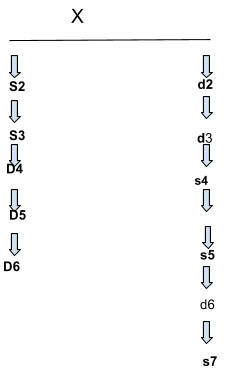
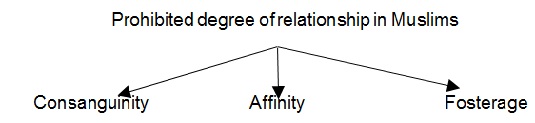



 Allow notifications





