Download Now
Home Blog Page 1597

What To Do When My Tenant is Neither Giving The Rent Nor is Vacating My House

10
What to do if tenant isn't paying rent

In this blog post, Pravesh Naveriya from RDVV, Jabalpur, talks about your options if your tenant is not paying you any rent or is vacating your house.

There are a large number of people who are living in rented houses in India. It is quite obvious that when such a large population will live for rent, there are a number of problems and issues which are to be dealt with regarding rents, rented houses and properties.

Among the many problems which a landlord faces while renting his house, the biggest and the most frequent problem is when the tenant refuses to pay or is always late in paying the rent. Another problem with the rented houses is that when the tenant neither pays the rent nor is vacating the house so that the house can be rented to a new tenant.

Download Now

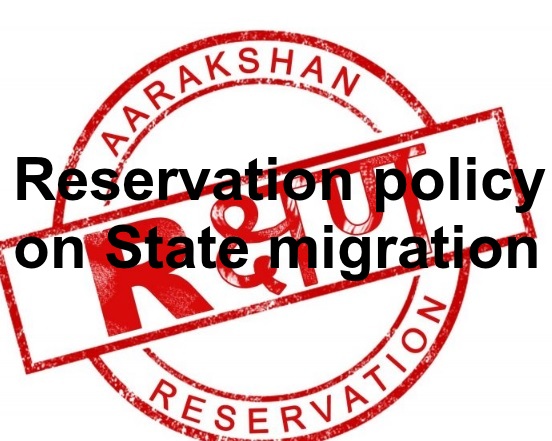
Reservation benefits to OBCs, STs, and SCs who have migrated to other states

13

Reservation sta

In this article, Anubhav Kumar Pandey talks of reservation benefits to OBC, STs, and SCs who have migrated to other states.  

Reservation and issues relating to the reservation are one of the most heated topics of discussion. There are huge hue and cry and lots of confusion.

  • Reservation provides opportunity in the form of employment, job, and other such benefits but what about when a person migrates from one Indian state to the other?
  • What is the reservation policy on state migration? Can STs, SCs or OBCs, who have migrated to other state get job and employment benefits through reservation schemes? Here is an answer to this question.

Whether a person belonging to an SC or ST in a particular State will be entitled to employment benefits in any other state

Examination conducted by central authorities such as UPSC invites application from all part of the country. In these examinations, anyone, from any state can apply, and they will be eligible for reservation as per the central guidelines. In an examination conducted by state PSC’s, the complication arises when SCs, STs, or OBC from one state applies for the posts in another state in the same category. There can be situations where STs of state A do not come under the list of reserved category of ST for state B.

  • Merely because a given caste is specified in State A as a Scheduled Caste does not necessarily mean that if there is another caste bearing the same nomenclature in another State the person belonging to the former would be entitled to the rights, privileges, and benefits admissible to a member of the Scheduled Caste of the latter State.[1]
  • It depends on the nature and extent of disadvantages and social hardships suffered by that caste, tribe or class in that State which may be totally non est in another State to which persons belonging to it may migrate.
  • Coincidentally it may be that a caste or tribe bearing the same nomenclature are specified as scheduled tribe in both the States but the considerations by which they have been specified may be totally different.
  • Right to migration or right to move from one part to another is a right given to all. To Scheduled Castes or Tribes and to non-Scheduled Castes or Tribes as well.
  • But when a Scheduled Caste or Tribe migrates, he does not and cannot carry any special rights or privileges attributed to him or granted to him in the original State specified for that State or area or part thereof.
  • If that right is not given in the migrated State, it does not interfere with his constitutional right of equality or of migration or of carrying on his trade, business or profession. Neither Article 14, 16, 19 nor Article 21 is denuded by migration, but he must enjoy those rights by the law if they are otherwise followed in the place where he migrates.
  • A Scheduled Caste or Tribe of one State is so determined to be entitled to all the privileges and rights under the Constitution in that state only.
  • Otherwise, one has to bear in mind that if reservations to those who are treated as Scheduled Caste or Tribe in Andhra Pradesh are also given to a boy or a girl who migrates and gets inducted in the State of Maharashtra or other States where that caste or tribe is not treated as Scheduled Caste or Scheduled Tribe then either reservation will have the effect of depriving the percentage to the member of that caste or tribe in Maharashtra who would be entitled to protection or it would denude the other non-Scheduled Castes or non-Scheduled Tribes in Maharashtra to the proportion that they are entitled to. [2]

Therefore, different state and Union territories have a different list of tribes and caste included in their list and only these categories or castes or tribes can avail the benefits provided by reservation.

Hence, if you have migrated from one state to the other do check before applying for the job or for educational benefits, whether your tribe or caste comes under the same category in the state where you are applying.

Whether a candidate belonging to an SC/ST category in his original state on his migration to another state can get reservation benefits in educational institutions

  • The law on this point is also similar to the above question. A person belonging to the SC or ST community of one area, say where he is inhabitant of, will get reservation rights and benefits given to the SCs or STs community of that area only and on migration the same person will get excluded from the benefits given to the SCs or the ST community of the migrated state.
  • If the state where the SC or ST is migrating also provides for reservation benefits to the SC or ST community of the migrating people, then things will go simple and the person migrating will be eligible for reservation benefits.
  • A man does not cease to belong to his caste by migration to a better or more socially free and liberal atmosphere. But if sufficiently long time is spent in a socially advanced area then the inhibitions and handicaps suffered by belonging to a socially disadvantageous community do not continue, and the natural talent of a man or a woman or a boy or girl gets the full scope to flourish.

The provision in the case of All India Services or examinations

https://lawsikho.com/course/certificate-criminal-litigation-trial-advocacy
click above

In case of All India Services, Central Civil Services or admission to an institution run wholly by the central government, the members of the SCs, STs, OBCs or perhaps any reserved category are entitled to get reservation benefits irrespective of the state of which they are inhabitants of or the state to which they have migrated to. [3]

Do OBCs who migrate to another state are eligible for reservation benefits in the migrated state

  • Castes or groups such as OBCs, STs or OBCs are specified in a given State or Union Territory, which means that such caste will come under the category of SC, ST or OBC under that state or union territory for which it is specified only.
  • Merely because a given caste is specified in one state belonging to OBCs does not necessarily mean that if there is another group belonging to the same nomenclature in other State and a person belonging to that group is entitled to the rights, privileges, and benefits admissible to the members of that caste.
  • Moreover, the Government of India have also issued instructions from time to time in this regard which indicated that a person belonging to OBC on migration from the State of his origin in another State where his caste was not in the OBC list was entitled to the benefits or concessions admissible to the OBCs in his State of origin and Union Government, but not in the State to which he has migrated.[4]

Provision for reservation where a person moves from one area to the other within the state

If a person from  SC, ST, OBC, or perhaps any reserved community moves from one region of his state where his community scheduled to another part of the same state where his community is not scheduled, the benefits which he will get through reservation will sustain in such cases.[5]

To read more about reservation visit https://blog.ipleaders.in/reservation-policy-india/

LawSikho has created a telegram group for exchanging legal knowledge, referrals and various opportunities. You can click on this link and join:

https://t.me/joinchat/J_0YrBa4IBSHdpuTfQO_sA

Follow us on Instagram and subscribe to our YouTube channel for more amazing legal content.


[1] State of Uttaranchal v. Sandeep Kumar Singh, (2010) 12 SCC 794.

[2]Marri Chandra Shekhar Rao (1990) 3 SCC 130

[3] (2009) 15 SCC 458

[4] Dsssb vs. Vikas Kumar, as taken from https://indiankanoon.org/doc/32574045/

[5]http://www.gconnect.in/orders-in-brief/reservation/frequently-asked-questions-on-scstobc-reservation-policy.html

Reservation benefits to OBC, STs, and SCs who have migrated to other states

Download Now

What To Do When My In-laws Harass Me

13
GST

In this blog post, Pravesh Naveriya from RDVV, Jabalpur, talks about the steps you can take if you suffer harassment by in-laws.

The worst part of being harassed by in-laws is that the victim himself or herself feels that it is something that should not be discussed with anyone. This makes the situation even worse. One more wrong perception which ruins the situation is that it is only women who are being harassed but it is something which is not true. Even a man may be harassed by his in-laws.

Download Now

What To Do When a Stranger Starts Construction Over My Property

0
Criminal trespass and construction on private property

In this blog post, Pravesh Naveriya from RDVV, Jabalpur, talks about the steps you can take if a stranger starts construction over your property.

Has your neighbor started construction in your backyard? Does a stranger visits your place quite frequently? Is someone claiming your property to be his? Is anyone planning to do construction in your property forcefully? And you are afraid that your property will become his? These are the circumstances in which a man may come and start feeling helpless. Then you need to know certain points regarding the circumstances which may help you while dealing with the situation.

Is It An Offence

Yes, claiming a property to be yours or doing any kind of construction on the property which is someone else’s property is an offence in India. There are provisions in the Indian Penal Code and the Civil Procedure Code, which deal with the crimes related to property. It is a punishable offence to start construction or even enter a person’s property without his or her consent. The provision of law which refrains a person from entering someone else’s property without his or her consent is trespass.

Trespass

  • If someone tries to interrupt you while you are within the territory of your property may be arrested for trespassing.
  • Trespass in simple words, is disturbing a person or even entering a person’s property by an unauthorised person, without or against his or her consent.
  • Trespass are of three types – trespass of person, trespass of chattel and trespass of land or property.
  • Trespass of person is an act in which a person without any authority or the consent of the aggrieved person, disturbs or intervenes the person from doing what he was doing before he was interrupted.Trespass of person has been explained in the law of torts.
  • Trespass of chattel is an act in which a person without any authority or the consent of the aggrieved person, disturbs or intervenes with the privately owned movable property of the person. Trespass of chattel has been explained in the law of torts.
  • Trespass of property or land is an act in which a person without any authority or the consent of the aggrieved person, disturbs or intervenes with the property or land of a person. Trespass of land has been explained in the law of torts as well as in the Indian Penal Code(IPC). It is a punishable offence.

Criminal Trespass

  • Trespass of property of a person without his consent, by another person without authority, has been defined as criminal trespass under Section 441 of the Indian Penal Code, 1860.
  • As per the Section, if any unauthorised person enters upon the property of another person, without his consent then he shall be punished for criminal trespass.
  • The punishment of criminal trespass has been defined in Section 447 of the Indian Penal Code.
  • If a stranger has started construction on your property then, he shall be liable for punishment under criminal trespass.
  • The punishment for criminal trespass is imprisonment which may extend to 3 months or fine which may extend to 500 rupees or both.
  • Cognizable
  • Bailable
  • Compoundable
  • Finable up to 500 rupees
  • Imprisonment which may extend to 3 months.

House Trespass

  • Criminal trespass upon the backyard or any other part of the property which is in someone else’s possession is called house-trespass.
  • House-trespass is a more precise term as compared to criminal trespass. Criminal trespass is intervention upon any property which is not in your possession whereas house-trespass is the criminal trespass of someone’s house or any portion of his house.
  • Every house-trespass is criminal trespass but every criminal trespass is not house-trespass.
  • House-trespass has been defined in Section 442 of the Indian Penal Code and the punishment for house has been defined in Section 448 of the code.
  • The punishment for house-trespass is imprisonment for a term which may extend to one year or fine which may extend to 1000 rupees or both.
  • Cognizable
  • Bailable
  • Compoundable
  • Finable up to 1000 rupees
  • Imprisonment which may extend to 1 year.

Suggested Reading: Everything You Need to Know About Trespass

Remedies Available

  • The first move you should make if anyone starts construction over your property is try to stop him from doing it.
  • The law gives each person a power and a right to protect your property by using appropriate measures.
  • Sections 103 and 104 of the Indian Penal Code allows a person to cause grievous hurt or even kill a person in order to protect your property.
  • But these powers shall only be used when it becomes necessary to use it.
  • If a person causes grievous hurt or kill a person while protecting his property and he has used it in a situation under which he was justified to do it, he shall not be punished for killing or for causing grievous hurt to that person as he has not committed any offence because what he did will be covered under private defence.
  • The remedies which are available to you if a stranger starts construction on a property which is in your possession are to get an injunction order for stopping the construction, and you can also claim for the damages which you have suffered due to the construction.

Injunction

Injunction is the order which is passed by a court to either stop or restrain the defendant from either starting or stopping to do something. In other words, an injunction is the order of a court which demands a person to either perform an act or refrain from doing an act. Injunctions are broadly divided into two types, temporary and permanent.

Permanent and Temporary Injunction

  • A permanent injunction is passed as the final order restricting the defendant from doing any act.
  • A temporary injunction is an injunction which is passed by the court to make sure no further act is done related to that property or work temporarily.
  • If a stranger starts construction on the property of a person then he can approach the court and file an application under order 39 rule 1 and 2 of the Code of Civil Procedure to get an order of temporary injunction.
  • The court after examining the application will ask the defendants to file their reply on the case. The court after examining their reply may either reject the application or accept it.
  • If the court has accepted the application then it shall make an order of temporary injunction, ordering the respondent to stop the construction work on that particular property.

Ex-parte Injunction

  • It is a general rule that no order shall be passed without hearing both the parties or in other words it is compulsory that both the parties are given appropriate opportunity of being heard before any order is passed. But there are certain exceptional cases in which a leave is given to this rule.
  • One of the exceptions is an ex-parte injunction order.
  • An ex-parte injunction order is an order of injunction which is passed by the court without hearing both the parties.
  • In case the defendants are not replying, or the applicant feels that by the time the reply shall come, he will bear a huge loss, and if the court is also satisfied with his contention, then the court may pass an ex-parte injunction order under order 39 rule 3 of the Code of Civil Procedure.
  • It happens very rarely and the burden of proof is upon the applicant to prove that his case comes under the definition of exception provided under the law.

Suggestive Reading: What to do About Unauthorized Construction on Ancestral Property

Damages

Damages are means through which a person is supposed to get approximately what he has lost. There are certain offences for which no damage or compensation can give what is lost but on the other, hand there are certain injuries for which an amount of money can compensate the loss. One such offence is trespass.

  • If someone trespasses upon the property owned by you then you may approach the court and ask for the damages which you have suffered.
  • Damages, in other words, is the compensation which the court asks the defendant to give to the plaintiff for the loss which he has suffered.
  • If a stranger has constructed or demolished any part of your property, then he is liable to compensate you in the form of damages.
  • The amount of damage depends upon the loss which you have suffered.
  • Damages are given for both physical as well as mental losses suffered.
  • The amount of physical loss is usually calculated by calculating the present value of the land upon which you have suffered the loss.
  • Calculating a mental loss is a more complex matter, for this, the court has to go through the case thoroughly as see that the loss is of what impact and then decide an amount to be paid as damages.

Conclusion

If a stranger starts construction over your property then firstly you yourself have a right of private defence of your property. Apart from this, you can also approach the court and ask for a temporary injunction order to stop the construction and can also claim damages for the loss suffered.

What are your views on this? Feel free to comment below & share the article.

Download Now

What To Do If My Brother Starts Construction on My Ancestral Property Without My Consent

2
Construction on ancestral property without consent

In this blog post, Pravesh Naveriya from RDVV, Jabalpur, talks about the process to follow if your brother starts construction on your ancestral property without your consent.

In our country, most of the people are either not aware of the laws related to division of property or even if they are aware they wait for the right time to make a will, which unfortunately never comes. If each and every person of the country starts making a will, then at least half the burden of the civil courts will be relieved. Most of the matters in the civil courts of the country are there because the ancestors haven’t made a will and the legal heirs are fighting over their property rights.

Download Now

What Are The Labour Laws that Apply to The Indian Information Technology Industry

7
Labour laws for the Indian IT industry

In this blog post, Pravesh Naveriya from RDVV, Jabalpur, talks about the various labour laws applicable to the Indian information technology industry.

Labour laws are the laws which deal with the employment and labour related issues. Labour laws deal with the disputes between the employer and employee, regarding wages, pension, insurance of employees etc. In India labour Laws are also known as Industrial Laws or Employment Laws due to the fact that it deals mostly with the employment, wages and termination issues of labours working in industries.

Download Now

Laws and Rules of Importing Gold and Electronics From Dubai to India

1
Laws of importing gold from Dubai to India

In this blog post, Pravesh Naveriya from RDVV, Jabalpur, talks about the laws of importing gold and electronics from Dubai to India.

Indians are very fond of gold. As per a report, Indian women have around 11% of the world’s gold which is more gold than the reserves of USA, the IMF, Switzerland and Germany combined. And this is just the amount of gold which is as per the records. There is huge amount of gold which is not reported or billed. Adding that amount would very easily justify the reason that why after the Indian government had increased its import duties, the gold trade of the United Arab Emirates has gone down by 60%. Not only this, gold is the second largest traded commodity of India only after the mineral fuels which signifies that how important is gold for Indians.

Download Now

How to Get Child Custody in India

2
Child custody in India

In this blog post, Pravesh Naveriya from RDVV, Jabalpur, talks about child custody in India.

Child custody is one of the most emotional topics that the judiciary is supposed to deal with, almost every day. In legal terms, child custody is the process of allotting a right to one of the parent to have over the other regarding their child either during or after the decree of divorce or judicial separation is passed. The parent who gains the custody of the child is supposed to keep the child under his/her guidance and care, and the other parent, if he wants, can only approach/meet the child as per the guidelines of the court.

Download Now

How Can You Get Your FIR Quashed

5
how to quash the FIR

In this blog post, Pravesh Naveriya from RDVV, Jabalpur, talks about the process to get your FIR quashed.

A law is made for the benefit of the people. A law is made to protect people and especially the ones which have been suppressed by the dominating ones. The law tries to fill the gap between the dominating and the dominated. The laws are made keeping in mind the interest of all the people but there is a special consideration for the weak and suppressed people. There are number of laws which very clearly indicates that they have been made for the benefit of one or two specified classes of people. The examples of these are a long list which includes the harijans, women, minorities etc.

Download Now

What to do if NRI husband or wife is harassed by spouse or in-laws

4

NRI matrimonial disputes

Mostly there arise two types of disputes relating to an NRI marriage.

  1. First, where the NRI bridegroom marries an Indian girl, takes a certain amount of money as dowry and ultimately fly away abroad leaving behind his wife in India.
  2. Second, cases where both the husband and the wife being Indian married abroad. After their marriage, they develop issues such as extra-marital love affair of any of the spouses within the marriage, ill-treatment, harassment within the marriage. Thereof, either the husband or the wife travels back to India and files a suit in an Indian court.

Parallel matrimonial petitions, one in the foreign country where the couple is residing, and another in India by the parties is very common.

Who is an NRI and what is an NRI marriage

A person holding an Indian passport and temporarily emigrated to another country for a certain period is called an NRI. ‘NRI marriages’ generally means a marriage between an Indian woman and an Indian man who is residing in another country,(NRI- non-resident Indian), either an Indian citizen (when he would legally be an ‘NRI’) or as citizen of that country (when he would legally be a PIO- person of Indian origin).

For more on Frauds and problems relating to NRI marriage, please visit https://blog.ipleaders.in/issues-in-nri-marriages/

Which law applies in Non-resident Indian marriage

Various laws governing NRI marriages are Hindu Marriage Act, 1955, Special Marriage Act, 1954, The Foreign Marriage Act 1969 and other personal law through which both the spouses are governed. The law under which the parties have married is the law which will govern the marriage disputes. Other rights relating to matrimonial alliances such as inheritance and succession, adoption are also regulated by the same family of law.

Interestingly, depending on the laws of the country where the couple resides, even the laws of that country may apply to marriage, divorce and all other sorts of disputes.

What to do if NRI husband or wife is harassed by spouse or in-laws

Provisions of Sections 3 and 4 of the Indian Penal Code comes for rescue in cases where an NRI husband or wife is harassed by spouse or in-laws in a foreign land. Section 3 gives criminal jurisdiction to the courts to try for an offense committed by a person beyond the territory of India provided such person is subject to Indian laws. This sections also applies to those who are covered by any special law bringing them under Indian jurisdiction such as Hindu Marriage Act 1954 or Special Marriage Act.

Section 3 of the Indian Penal Code says, “Any person liable, by any Indian law, to be tried for an offense committed beyond India shall be dealt with according to the provisions of this Code for any act committed beyond India in the same manner as if such act had been committed within India.”

What to do.

There are cases where in-laws while sitting in India exerts pressure for dowry on their daughter-in-law living abroad. In such cases, Section 108 of the Indian Penal code says, “A person abets an offense who, in India, abets the commission of any act within and beyond India which would constitute an offense as if committed in India.”

Here is a stepwise solution on, what to do if NRI husband or wife is harassed by spouse or in-laws.

Step 1 First and foremost, you must not come under pressure to accept the demand for dowry or any other unreasonable demand made by or on behalf of your NRI/ PIO husband to end your ill-treatment, abuse or desertion.

Step 2 You can approach the nearest Indian Embassy/Consulate for assistance/advice, to file a complaint with the local police about harassment, abandonment, ill-treatment, etc.

Step 3 The Indian Embassy/Consulate can assist in providing contact details of local NGOs, approach the local police, contact your family/friends, etc. who could help you.

Step 4 The Indian Mission can be contacted for initial legal/financial assistance to file a case against your husband in the foreign country.

File the police complaint locally and try to solve the problem with the help of local authority first.

Step 5 As the NRI holds the Indian citizenship they can file for cases under the Indian Penal Code for 498A, or other such penal provisions in the Indian Court.

Step 6 Indian courts are competent to entertain such pleas. Therefore, do not be afraid of legal issues while filing the case.

https://lawsikho.com/course/certificate-criminal-litigation-trial-advocacy

Can NRI file for a divorce in the USA

Couples married in India and living in the USA can seek divorce in the USA. The decree of divorce awarded by the US courts is valid in India. However, the Indian law does not permit ex-parte decree. For the US divorce decree to be valid in India, both of partners should have either contested the divorce or should have mutually consented to divorce in the US Court.

Steps taken by the Indian police to tackle cases of harassment faced by NRI living abroad

Indian state police such as Punjab police have opened an online portal to give solutions to these problems.

Here is the link to the website http://nripunjabpolice.com/index.php

Nri marriage dispute

Filing a case in India from abroad through a lawyer. Special Power of Attorney

Special power of attorney (SPA) can be used by a person living abroad to file a divorce case in India. SPA gives the power to an advocate to act legally on your behalf. The process for creating Special Power of Attorney is as follows-

Step 1 Drafting the deed on plain paper.

Step 2 Getting the deed attested from the Indian Embassy or the Consulate.

Step 3 Signing of all the pages by the person making the Special Power of Attorney.

Step 4 Posting your notarized Special Power of Attorney to a trusted person in India through a registered post.

Step 5 The trusted person can get the Draft registered as a Power of Attorney by the appropriate government.

Special Power of Attorney can be used only to file the case. Both the party should be physically present in the court during the respective hearing. As explained in the later part of the article, Indian Court can order to confiscate the passport in case of non-adherence to the summons.

Do’s and don’t’s: NRI marriages

Do’s

  • Do check the NRI groom’s personal information particulars such as:
  • Marital status: if he is single, divorced, separated, Employment details: qualification and post, salary, address of office, employer and their credentials, Immigration status, type of visa, eligibility to take spouse to the other country
  • Financial status, Properties said to be owned by him in India, residence address, family background, Visa, passport. Voter or alien registration card, Social Security number.
  • Insist on a registered marriage along with the religious marriage to be solemnized in India with adequate proof like photographs etc.

Don’t’s

  • Do not take any decision in haste and do not get pressurized to do so for any reason whatsoever.
  • Do not make matrimony a passage to greener pastures abroad by falling prey to lucrative schemes to migrate to another country or promises of getting a green card through marriage.
  • Do not finalize marriage matters, without meeting the family or over a long distance, on the phone or through e-mails.
  • Do not get pressurized in taking impulsive decisions of a marriage proposal with an NRI just because it appears too perfect to be true.
  • Do not negotiate your daughter’s marriage via a bureau, agent or middleman or trust them blindly
  • In case matrimonial negotiations take place via matrimonial sites, verify the details and authenticity of particulars submitted about the groom.
  • Do not finalize matters in secrecy – publishing the proposal among the near and dear ones, friends and close relatives could help you in getting vital information which you may not be able to collect otherwise.

Do get your marriage registered in India

It is advised to get your marriage registered with a Registrar of the Indian Court. Marriage certificate helps to settle out disputes in numerous ways. Before leaving the country with your NRI/PIO husband or wife, do get the marriage registered in the office of the Registrar in an Indian court.

Is there any governmental scheme to help women who have been abandoned by their husband

Yes. The Ministry of External Affairs, Indian have come out with a plausible solution to this problem. There is a scheme on  “Legal and Financial Assistance to Indian Women Deserted by their Overseas Indian Spouses.” The scheme is a welfare measure to support women of Indian origin who have been deserted by their overseas Indian spouses fraudulently, through the Indian Mission abroad with their empanelled NGOs, lawyers, etc.

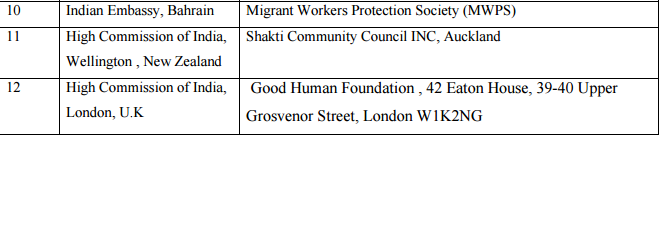
The list of organization empanelled with the Indian mission abroad to provide legal/financial help to Indian women deserted by their overseas spouse


NRI marriage dispute

(Courtsey: http://ncw.nic.in/pdfReports/Background_Note_Seminar_Issues_Relating_to_NRI_Marriages.pdf)

Is there any provision of cancellation of passport

Rajiv Dayal v. Union of India & Ors. is another judgment which shows that the wife also has an available remedy under Section 10 of the Passport Act of impounding and/or revocation of the passport of her NRI husband if he failed to respond to the summons by the Indian courts.

NRI and their appearance before the Indian Court

Section 105 of Criminal Procedure Code (Cr.P.C.) provides for reciprocal armaments to be made by Central Government with the foreign governments about the service of summons/warrants/ judicial processes.

Process of service of summons outside India

  1. India has ratified The Hague Convention and summons are issued accordingly to the rules of this convention.
  2. It is the responsibility of the judiciary to forward the Summon to the concerned authority of the state outside India.
  3. The Central Authority on receiving the summon from the proper judicial authority in India shall make required arrangements to forward the summon to the concerned person.
  4. Upon the completion of the entire process, a letter will be forwarded to the applicant stating, method, place, date, service and the person’s name to whom summon has been delivered.
  5. If the entire process is not complete, the Central Authority, along with reasons forwards a letter of the same.

The following case throw some light on the issue where an NRI husband or wife is harassed by spouse or in-laws

  • Venkat Perumal v State of Andhra Pradesh is a judgment passed by the Andhra Pradesh High Court on an application filed by an NRI husband for quashing of the proceedings of the wife’s complaint in Hyderabad under Section 498 of the IPC against matrimonial cruelty meted out to her.
  • She had alleged that she was subjected to harassment, humiliation, and torture during her short stay at Madras as well as the US and when she refused to accept the request of her husband to terminate her pregnancy, she was dropped penniless by her husband at Dallas airport in the US and she returned back to India with the assistance of her aunt and on account of the humiliation and mental agony she suffered miscarriage at Hyderabad.
  • The High Court held that the offense under Section 498-A of IPC is a continuing offense and the mental harassment on the wife had continued during the stay with her parents at Hyderabad. The court therefore rejected contention of the husband that sanction of the Central Government, as contemplated under Section 188 of the Code, is required to prosecute and held that even otherwise, it is not a condition precedent to initiating criminal proceedings and the same can be obtained, if need be, during trial and hence, it could not be said that the proceedings were liable to be quashed on that ground.

The Court also refused to influence its decision with the divorce decree from the US court produced by the husband since in any case the FIR had been lodged by the wife before the UC court’s decree.

Satisfied with the above information? Feel free to comment below if you wish to add into the knowledge. Do comment and share.

LawSikho has created a telegram group for exchanging legal knowledge, referrals and various opportunities. You can click on this link and join:  

https://t.me/joinchat/J_0YrBa4IBSHdpuTfQO_sA

Follow us on Instagram and subscribe to our YouTube channel for more amazing legal content 

 

Download Now
logo
FREE & ONLINE 3-Day Bootcamp (LIVE only) on

How Can Experienced Professionals Become Independent Directors

calender
28th, 29th Mar, 2026, 2 - 5pm (IST) &
30th Mar, 2026, 7 - 10pm (IST).
Bootcamp starting in
Days
HRS
MIN
SEC
Abhyuday AgarwalCOO & CO-Founder, LawSikho

Register now

Abhyuday AgarwalCOO & CO-Founder, LawSikho