Download Now
Home Blog Page 1711

Which Companies are Required to File VAT in India?

1
This article is written by Aakansha Bansal, a student pursuing her Diploma in Entrepreneurship Administration and Business Laws from NUJS, Kolkata, and  Arkadyuti Sarkar, a student of B.A. LL.B from Shyambazar Law College under the University of Calcutta.

What is VAT?

 The Value Added Tax (VAT) in India is a state level multi-point tax on value addition which is collected at different stages of the sale. It is a compulsory payment to the government under any law. It can be charged by governments on goods, income or any activity. VAT is an indirect tax, i.e., the person paying the tax passes on the burden to another person. As Income tax is a tax on income and Service tax is levied on services, while Value Added tax is levied on sales.

Input Tax Credit (ITC)

 VAT is imposed at each stage of sales on the entire sales value and the tax paid at the earlier stage is allowed as set off. This credit availability is called as input tax credit.

VAT = Tax collected on sales – Tax paid on purchases

OR

Output tax – Input tax

VAT Registration

Registration is the process of obtaining a unique number for a dealer from authorities under VAT Act.

Eligibility: Any dealer whether a trading or manufacturing business, a sole proprietorship or a partnership firm or a private limited company whose annual turnover is above Rs. 10 lakhs (Rs.20 lakhs in case of Delhi)  is under compulsion to get registered with the VAT department. This limit can be reduced or increased by the State law.

VOLUNTARY REGISTRATION: A dealer not under compulsion may also obtain registration. The dealer will avail the benefit of issuing tax invoice and passing on the credit of taxes paid by on purchase of goods.

Procedure of VAT Registration

 The following procedure is required to be followed for registering under VAT Act –

  • Submit an application for VAT in Form 1 with the following documents – download

    • CST registration certificate
    • Professional tax registration certificate
    • Address proof and ID proof and four photographs of the Partner/Proprietor/Director
    • PAN No. and Bank No. of the Partner/Proprietor/Director
    • Copy of the rental agreement of the place of work
    • Details of business activities
    • Partnership Deed in the case of a partnership firm and MOA and AOA in the case of a private limited company.
  • The concerned authority will then inspect the place of business within a specified time.
  • After the inspection and on the payment of a prescribed fee to the local office, a TIN number and a VAT Registration Certificate will be allotted.
  • The Act may contain provisions relating to suo moto Registration of a dealer. If the competent authority gets to know after the conduction of inspection or inquiry that the dealer who is liable to register for VAT has failed to inform the competent authority of his liability to be registered, then it may proceed to register such person under the VAT Act.
  • TIN Number is different for different dealers, and it facilitates cross-checking of information. It ensures that there is no bogus or fraud invoices and other tax compliances.

Remember registration enables the entity to avail the benefit of Input Tax Credit. This is however not true in the case of certain purchases.

Exceptions to Input Tax Credit

Input tax credit shall not be allowed on the purchases of goods which are –

  • Utilized in the manufacture of Exempted goods (exempted goods are those goods on which VAT is not charged, for example, Fundraising event, education, and training, etc.)
  • From a registered dealer opting for the Composition Scheme*.
  • Imported from Outside India.
  • Where the purchase Invoice is not available.
  • Included in the Negative List.
  • For Personal Use.
  • From Unregistered dealers as they are not empowered to issue VAT invoice.
  • Where the amount of Tax is not shown separately on the invoice*.
  • From other States.

Tax Invoice

For effective implementation of VAT, the invoice is mandatory. The whole structure of input tax credit is based on tax invoice, without which credit cannot be claimed. vat_calc

  • Contents of tax invoice should include –
    • Seller’s Name, Address, Phone number.
    • TIN
    • Tax Invoice Number
    • Date of issue of invoice
    • Buyer’s Name and Address
    • Buyer’s VAT Registration No. if any
    • Quantity, Description of goods, Price Per Unit, Value, VAT Rate
    • Amount of tax
    • Total amount payable and Signature of the selling dealer or his authorized employee.

Exempt Business

If the company is engaged in the selling of exempted goods only, then it would be an exempted business and it would not be registered under VAT and also it cannot avail any input tax credit on its purchases.

However, if the company sells, leases or lets any commercial land or property, then it has an option to waive the exemption and charge VAT at the standard rate. This is called ‘opting to tax land and buildings.’

Partly Exempt Business

An entity is partly exempt when it is registered under the VAT Act and incurs VAT on any item that is used to make exempted goods.

Special Economic Zones (SEZ)

Special Economic Zones have been established by the Government to grant incentives to exports of services and goods. These areas are specifically defined as duty-free areas. These zones are to be treated just like a foreign territory and therefore, services and goods going to any specified areas located in these Zones are treated as exports. The government has exempted all taxable goods provided to a developer of the special economic zone or units located in the Special Economic Zone. Hence, units situated in these zones are exempt from the ambit of VAT.

SEZ, STP, EHTP, and EOU are being set up to promote industry and create an industrial base. Sales to these units are treated at par with exports and therefore goods sold to them are zero rated to promote exports.

Who will not be covered by VAT? 

Small Dealers: Value Added Tax will not cover businesses whose turnover is less than a certain limit. As per White Paper, VAT Act should be so designed that high taxpayers should not be spared from paying more tax, and the small dealers should be free from hassles of compliance procedures.

Dealers with limited turnover would have the option to pay a lump sum amount based on its total turnover at the specified rate as low as 0.25%. For example, in Odisha, a trader having an annual turnover of less than Rs. 2,00,000/-  will not be covered under VAT, and the general tax rates will not be applied.

Composition Scheme

The conditions for a composition scheme include:

  • Turnover of dealer should be within Rs. Ten lakhs to Rs. 50 lakhs.
  • Such a dealer would have the option to pay a fixed amount of tax based on its gross annual turnover at the fixed rates (0.25%).
  • However, following sales are not eligible for the composition scheme of VAT Act, because other Acts apply to them.
  • A manufacturer or a dealer who sells goods in the course of inter-state trade. This is because the provisions of Central Sales Tax (CST) will apply to it. Coins-stacked-up

  • A dealer who sells goods in the course of import or export out of India, i.e., whose goods cross the boundaries of India. This is so because Custom Duty is payable on it.
  • A dealer is transferring goods to the branch. Since it is not Sales and therefore no VAT shall be applicable or payable on it.
  • Any other activity on which VAT Act is not applicable.

Advantages: 

  • It simplifies the calculation.
  • A small tax would be payable.
  • Return is filed less number of times.
  • Simple records are required to be maintained.

Disadvantages: 

  • No input tax credit can be availed.
  • Dealers choosing Composition Scheme cannot issue tax invoices.

For example, B follows a composition scheme, and his total turnover is Rs. 20,00,000/-. General tax rates would not be applicable to him, and he is required to pay Rs. 5,000/- (VAT @ 0.25%).


VAT and its Types

The Value Added Tax (VAT) is an indirect multistage tax that is charged as a proportion to the value-added on each stage commencing from the production of the good to its purchase by a consumer.

The following are the steps involved in the taxation of goods under the VAT system:

  1. The raw materials, in general, pass through various stages and processes of the production and distribution, and its entire burden lies upon the final purchaser.
  2. The first manufacturer’s output becomes the second manufacturer’s input who then further processes it prior to supplying it to the third manufacturer. This process continues until the emergence of the ultimate product.
  3. The final good so produced goes to the distributor or wholesaler, who then sells it to the retailer.
  4. The retailer then sells the product to the final buyer/consumer.

Usually, the manufacturer or retailer is capable of claiming tax credit but that is not the case for the final purchaser.

https://lawsikho.com/course/advanced-corporate-taxation-gaar-mat-tds-dtaa
                    click above

VAT is usually imposed by application of 3 methods

  • Addition method

In this method, the VAT is levied on the value of addition made by a manufacturer/dealer, including the profits charged by him. Value of addition includes: 

  • Wages;
  • Salary;
  • Power;
  • Electricity;
  • Rents;
  • Depreciation in the value of capital goods,
  • Manufacturing;
  • Trading;
  • Marketing expenses;
  • Capital interests and so on.
  • Credit invoice/invoice based method

This method is a widely used method in almost all nations excluding Japan. Here the sales transactions are taxed with the customer being informed of the VAT on the final transaction. The businesses may obtain a credit for the VAT paid on input materials and services.

  • Subtraction/account-based method

In this method at the end of the reporting period, a business calculates the value of all taxable sales and deducts the sum of all taxable purchases and the VAT rate is applied to the difference. This method is presently used solely by Japan.

Features of the VAT system

  1. VAT is an indirect multistage tax or multipoint tax.
  2. VAT is levied upon value addition to the goods, i.e. (wages+interest+costs+profits).

The additional value is measurable by deducting the purchase price of inputs from the selling value of the goods.

  • It is immaterial for the application of VAT whether the buyer is a dealer of goods or a consumer.
  • VAT makes the promotion of neutrality, such as-
  1. making a decision for the purchase of goods,
  2. deciding the production techniques of goods,
  3. deciding the nature of the organization.
  • VAT is a single tax and there is an absence of any education cess or surcharge.
  • VAT rates are mostly uniform throughout the nation.
  • The invoice has an imperative document for VAT.
  • VAT is inapplicable on a seller with less than 5 lacs of annual sales turnover.
  • Under the VAT system, credit of input taxes is only permitted if proper records are kept and maintained with respect to various capital goods input.
  • VAT has ensured transparency because it shows the amount of VAT paid to the buyer on sales.
  • VAT helps in deciding its rates of fixation. It also shows the Government the amount of tax collected at each and every stage, initiating from the production to sales.
  • VAT is inapplicable on exportation, but the exporter can obtain refundment of input tax credit.
  • In VAT there is no scope of tax evasion and therefore it generates a higher amount of revenue, in comparison to other forms of taxation.

VAT Calculation

VAT = Output Tax – Input Tax.

Output tax is the percentage of the selling price accrued by the seller from the selling of the final good.

Input tax is the percentage of cost price paid by a buyer for acquiring essential raw materials for producing the final goods.

For example – John is a carpenter who purchased wood Rs 2000 and paid an input tax of 10% = Rs 200.

He made a wooden table out of the purchased wood and sold it for Rs 3000. On this, he collected an output tax of 10% on the selling price, i.e. Rs 300.

Therefore, the final VAT payable: Rs 300 – Rs 200 = Rs 100.

Advantages and Disadvantages of the VAT system

Advantages

  1. Reduced tax evasion and increased tax compliance.
  2. VAT is simple and thus brings certainty.
  3. VAT is transparent as the amount of VAT levied is clearly displayed on the bill or invoice.
  4. Cheaper exports in case of exportation.
  5. VAT is refundable.
  6. VAT has a better accounting system as the record of tax paid on purchases are required maintenance.
  7. VAT is tax neutral as there is no distinction between labour-intensive industries and capital-intensive industries since the input of both capital products and purchases is available.

Disadvantages

  1. Although mentioning in the invoices reduces tax evasion, yet it is still possible through the generation of fake invoices.
  2. Increased compliance cost, because of the maintenance of purchase and sell records.
  3. This system has distortion as it is improperly due to several exemptions/concessions.
  4. VAT being a consumption-based taxation system leads to higher tax collection by the State consuming more rather than the State making higher production.
  5. Being taxation on the expenses, it is regressive in nature. The poor are more affected by this as they incur more expenses compared to the rich. 

VAT Rates in India

The VAT Rates in India differ based on the type of goods and from one State to another. Thus, it is important for the Entrepreneur to be aware of the State’s VAT regulation. However, VAT Rates in India can be categorized into 3 main parts, which have uniformity in many States.

NIL VAT Rate

In many states, the items sold by the unorganized sector in natural or unprocessed format, and basic goods for the poor are listed under the VAT exemption category. Some of the items capable of availing VAT exemptions in many States include-

  • Aids used by handicapped persons,
  • Glass or plastic bangles,
  • Condoms,
  • Firewood,
  • Khadi,
  • Salt, etc.

1% VAT Rate

In many states, 1% / 2% VAT rate is applicable to precious stones, metals like silver, gold, and platinum, bullions, jewellery, etc.

4% or 5% VAT Rate

Many states have adopted a VAT rate of 4% or 5% over a large number of products related to basic necessities. Some of the goods included in this category in many of the States including coffee, coir, cotton, edible oils, medicines, drugs, agricultural implements, etc.

General VAT Rate

In addition to the above VAT Rates, many states also have other VAT levels that rely upon the Goods. Very high VAT Rate of over 20% is generally levied for goods such as imported liquor, cigarettes, etc. Many states have a VAT rate of around 12.5% applicable to the goods which cannot be categorized under any of the previous heads. These categories of goods not falling in any of the other categories are usually taxed at 12.5% / 14% / 15% depending on the State levying it.

VAT on imports and exports

Customs Duty

Customs duty is the tax levied on the importation and exportation of a good or goods to or from India. The government uses this duty to generate its revenues, safeguard domestic industries and regulate the movement of goods in the economy.

The rate of customs duty varies based on the place of the production of a particular good and the purpose of its production.

The following are the different types of customs duty:

  1. Basic customs duty – this duty is imposed on the value of the goods at a specific rate. The duty is fixed at a specified rate on an ad-valorem basis, i.e. its imposition is based on the transactional or proprietary value and is imposed during the time of transaction. The Central Government is entitled to the right of exempting any goods from the tax.
  2. Countervailing duty – This duty is imposed by the Central Government when a Country is subsidizing the exporters who are exporting goods to India. This amount of duty equals the subsidy paid by them.
  3. Additional Customs Duty – For equalizing the imports with local taxes like service tax, VAT and other domestic taxes, a special countervailing duty is imposed on imported goods. Hence, is imposed to bring imports on an equal track with the goods produced or manufactured in India. This is to promote fair trade & competition practices in our country.
  4. Safeguard duty – For safeguarding the domestic industries from the effects of imported goods, the Government imposes safeguard duty on certain imported items. This tax is collected on the basis of the loss incurred by the domestic/ local industries.
  5. Anti-dumping Duty – Often, large manufacturers from abroad may export goods at very low prices compared to the prices in their domestic market. Such dumping is often intended towards crippling the domestic industry or to dispose of the excess stock. This is known as goods dumping. 

For the prevention of these sorts of dumping activities, the Central Government can impose anti-dumping duty up to the margin of dumping on certain items, under Section 9A of Customs Tariff Act, if the dumped goods are being sold at a lesser price than its normal value. Levy of such anti-dumping duty is allowed as per the agreement under the World Trade Organization. Anti-dumping action can be taken solely if there is an Indian industry producing a resembling form of good.

Imports

Usually, goods are imported into India after the payment of the customs duty. Therefore VAT is inapplicable on imported goods until and unless such goods are being sold in the Indian Market.

For example – Mr Rajan, a resident of Tamil Nadu, imports a smartphone into India from the U.S.A, priced at Rs 30,000 INR. Now for the smartphone, if there is a customs duty of 20% then Mr Rajan shall have to shell out 36000 INR. However, if he wants to resell the smartphone in the market of his State where the VAT rate is 15 %, the selling price will amount to 41,400 INR. 

Exports

No VAT is charged on the exportation of goods from India as Customs duty is already levied on the products being exported outside India.

For example, If Mr Singh decides to export 10 kg of apples to the United Kingdom which costs a nominal price of 120 INR/ Kg then the price shall amount to 1200 INR. Now if there is a customs duty of 5 % on such export then the price shall amount to 1260 INR which he shall have to pay the customs. Here, no VAT shall be imposed on the apples as they are not going to be sold in the Indian Market. 

Conclusion

The VAT Act of all the states prescribes certain limit of annual turnover. If the annual turnover of the dealer exceeds the prescribed threshold limit, then he is required to register himself under VAT. The threshold limit varies from State to State.

Also, Registration may be done voluntarily or compulsorily. A dealer may choose to be voluntarily registered as he will then be allowed to avail the benefit of Input Tax Credit (ITC).

If the dealer is liable to register himself under VAT but fails to get himself registered then the competent authority after conducting the survey, inspection or inquiry may on its motion proceed for the registration of the concerned dealer.

The Act also prescribes for the relaxation available to the small dealers and the one opting Composition Scheme.


LawSikho has created a telegram group for exchanging legal knowledge, referrals and various opportunities. You can click on this link and join:


Follow us on Instagram and subscribe to our YouTube channel for more amazing legal content.

Download Now

Legal Source of IFRS in India

0

In this blog post, Balaji AG, a qualified ACA, ICWA, ACS and CIMA (UK) Industry Consultant and a CFO of a Listed Company for over five years, and who is currently pursuing his Diploma in Entrepreneurship Administration and Business Laws from NUJS, Kolkata, analyses the International Financial Reporting Standards as a legal source in India. 

AGB Professional


Background

Companies Act, 1956/2013 provides the basic requirements relating to financial reporting of all companies incorporated under the act. Under the Companies Act 1956, every profit & loss account and balance sheet shall comply with the accounting standards.  Accounting standards are issued by the Institute of Chartered Accountants of India (ICAI). Securities and Exchange Board of India (SEBI) protects the investors and regulates the securities market.  Listed companies are required to comply with the various provisions of the listing agreement issued by SEBI.  Listing agreement provides for compliance with accounting standards issued by ICAI.

The Insurance Regulatory and Development Authority (IRDA) regulates financial reporting requirements of Insurance Companies.  Insurance Companies and their auditors are required to comply with the requirements of the IRDA regulations of 2002 “Preparation of Financial Statements and Auditor’s Report of the Insurance Companies”.  IRDA regulations require compliance with the accounting standards issued by ICAI.

The Reserve Bank of India (RBI) is the central bank of India.  The Banking Regulation Act, 1949 empowers the RBI to regulate the financial reporting of entities in the financial sector like banks, financial institutions, etc.  RBI has issued circulars requiring banks to comply with the accounting standards issued by ICAI.IFRS

From the above, it is clear that the accounting standards issued by ICAI need to be complied with when preparing financial reporting statements of incorporated companies, banks, insurance companies, etc.

ICAI set up the Accounting Standards Board (ASB) in 1977 to prepare accounting standards. ICAI became one of the associate members of the International Accounting Standards Committee (IASC) in June 1973.  ICAI also became a member of the International Federation of Accountants (IFAC) since its inception in October 1977. While formulating accounting standards in India, the ASB considers International Financial Reporting Standards (IFRS) and tries to incorporate them in the accounting standards issued by it to the extent relevant, in the light of laws, customs, practices, business environment prevalent in India


Convergence Process of IFRS in India

India opened up its doors for international investments to flow in the year 1991.  As businesses expand across borders, they are increasingly recognizing the benefits of having a commonly understood financial reporting framework, supported by strong globally accepted standards. The benefits are numerous and include:

  • Greater comparability of financial information for investors;
  • Greater willingness on the part of investors to invest across borders;
  • Lower cost of capital;
  • Higher economic growth etc.,

However, before these benefits can be fully realized, there must be greater convergence to a single set of globally accepted high-quality accounting standards.  International convergence is a goal that is embraced in the mission of the International Federation of Accountants (IFAC) and shared by IFAC members.

ICAI being a member of IFAC since its inception has recognized in its Preface to the Statements of Accounting Standards that:

“ICAI, being a full-fledged member of the International Federation of Accountants (IFAC), is expected, inter alia, to actively promote the International Accounting Standards Board’s (IASB) pronouncements in the country to (or “intending to”)  facilitate  global harmonization of accounting standards. Accordingly, while formulating the Accounting Standards, the ASB will give due consideration to International Accounting Standards (IASs) issued by the International Accounting Standards Committee (predecessor body to IASB) or International Financial Reporting Standards (IFRSs) issued by the IASB, as the case may be, and try to integrate them, to the extent possible, in the light of the conditions and practices prevailing in India”.IFRS (1)

The accounting standards issued by ICAI are by and large in conformity with the IFRSs. The Council of ICAI at its 259th Meeting held in May 2006 expressed the view that the IFRS may be adopted in totality at least for listed and large entities.  The Accounting Standards Board of ICAI, at its 127th meeting held in August 2006 considered the matter and supported the council’s view that there would be several advantages of converging with IFRS.

The Board decided to constitute a Task Force to prepare the Concept Paper on Convergence with IFRSs with the objective of exploring:

  • the approach for achieving convergence with IFRSs, and
  • (ii) laying down a road map for achieving convergence with IFRSs to (or “intending to”) make India IFRS-compliant.

Under the concept paper issued in October 2007, the convergence strategy proposed was that IFRSs should be adopted for public interest entities such as listed entities, banks and insurance entities and large-sized entities from the accounting periods beginning on or after the 1st of April 2011.  In respect of entities other than public interest entities (termed as ‘small and medium-sized entities’ (SMEs)), a separate standard for SMEs may be formulated based on the IFRS for Small and Medium-sized Enterprises when finally issued by the IASB, after modifications, if necessary.

Convergence proposed under the concept paper means adoption of IFRS with additional disclosures that are considered necessary for the local environment or removal of an optional treatment, where necessary.

The format of converged accounting standard proposed under the concept paper was that IFRSs should be issued as Indian ASs, which would be considered IFRS-equivalent. To facilitate reference to the existing Indian Accounting Standards, along with the IFRS number, in the brackets, the existing Accounting Standard number may also be given.

ICAI made a public commitment of convergence to IFRS before the 31st of December 2011. This announcement leads to the government announcing the same commitment of converging by the end of 2011 a year later from the announcement by the ICAI. Even during its inception, the aim of convergence was not to fully conform to IFRS but rather to modify the standards for acclimatization to India’s business environment. Factors such as the legal and regulatory environment, economic conditions, industry preparedness and practice as well as the removal of some options permitted under IFRS were implemented to create a sense of compromise between IFRS and the way business is done in India.


IFRS converged Indian Accounting Standards Implementation


Indian Accounting Standards (IND-AS) were issued by the Accounting Standards Board of ICAI.  The IND- AS are named and numbered in the same way as the corresponding International Financial Reporting Standards(IFRS).  National Advisory Committee on Accounting Standards (NACAS) constituted under Section 210A of the Companies Act, 1956 recommend these standards to the Ministry of Corporate Affairs (MCA).

Business Couple with Flags Globe Original Vector Illustration

The Ministry of Corporate Affairs notified these standards on February 25, 2011.  The Press note issued in this regard indicated “In pursuance of G-20 commitment given by India, the process of convergence of Indian Accounting Standards with IFRS has been carried out in Ministry of Corporate Affairs through the wide-ranging consultative exercise with all the stakeholders. Thirty-five Indian Accounting Standards converged with the International Financial Reporting Standards (henceforth called IND-AS) are being notified by the Ministry and placed on the website.  These are: IND ASs 1, 2, 7, 8, 10, 11, 12, 16, 17, 18, 19, 20, 21, 23, 24, 27, 28, 29, 31, 32, 33, 34, 36, 37, 38, 39, 40, 101, 102, 103, 104, 105, 106, 107 and 108. The Ministry of Corporate Affairs will implement the IFRS converged Indian Accounting Standards in a phased manner after various issues including tax related issues are resolved with the concerned Departments. It would be ensured that the implementation of the converged standards in a phased manner is smooth for the stakeholders. The Ministry will notify the date of implementation of the IND AS at a later date”.

2013 saw the Indian government adopting a new Companies Act to facilitate the various new provisions convergence to IFRS required. To resolve issues of tax, the Ministry of Finance drafted Tax Accounting Standards to account for the conflicts between accounting and taxation.


Central Government through notification dated 16 February 2015, in exercise of the powers conferred by Section 133 read with section 469 of the Companies Act, 2013 and sub-section (1) of Section 210A of the Companies Act, 1956, in consultation with the National Advisory Committee on Accounting Standards, has issued the Companies (Indian Accounting Standards) Rules, 2015 which lay down a roadmap for companies other than insurance companies, banking companies and non-banking finance companies (NBFC) for implementation of IND-AS converged with IFRS. The Rules would come into force from the 1st day of April 2015.

Financial year Mandatorily Applicable To
2016-17 Companies (listed and unlisted) whose net worth is equal to or greater than 500 crore INR
2017-18 Unlisted companies whose net worth is equal to or greater than 250 crore INR and all listed companies or companies in the process of listing
2018-19 onwards When a company’s net worth becomes greater than 250 crores INR


It is also applicable to holding, subsidiaries, joint ventures, or associates of companies covered above from the respective year.

On the 18th of January 2016, the MCA issued a road map for the applicability of IND-AS for banking companies, Insurance Companies, and NBFCs.  Banks, Financial Institutions, Insurance companies and NBFCs with a net worth of over Rs. 500 crores are required to prepare financial statements under the IND-AS for accounting periods beginning from 1st April 2018.

Download Now

Legal Framework In India To Protect The Environment

0
environmental law

In this blog post, Sunidhi, a student of the Rajiv Gandhi National University of Law, Patiala writes about the legal framework in India to protect the environment. The blog post explains the constitutional provisions, statutory provisions, and judicial principles to protect the environment.

7

Introduction

From Colonial period to the Stockholm Conference[1], no significant endeavor had been made regarding the protection of the environment. This period has exerted more pressure on resources for the development of infrastructure with little or no concern for the environmental. The Stockholm Conference can easily be said to be the landmark in catalyzing India’s attempts to maintain the wholesomeness of the environment. This conference is of particular significance to India as it expressed the policy concern of our country on environmental protection, as a member state, and at the same time, it influenced the process of environmental management in the years to come. Presently, in India, more or less, 200 legislation deal directly or indirectly deal with environment pollution and degradation.


Constitutional aspects of environmental law

environmentallaw

The supreme law of the land, the Indian Constitution, exhibits a keen interest in conservation of the environment. The Preamble of the Constitution declares that the State is under an obligation to fulfill the basic aim of socialism i.e. to provide a decent standard of living to all, which can be possible in a pollution free environment. Thus to constitute a socialistic pattern of society, the important aspect of environmental protection cannot be overlooked.[2]

Part III of the Indian Constitution deals with fundamental rights. Also, these rights are enforceable in the court of law (Art. 32). In an ample number of cases, the Supreme Court has held that clean environment is essential to bring some value to life. In many judgments, the Supreme Court has held that “right to life is a fundamental right under Article 21, and it includes the right of enjoyment of pollution free water and air for the full enjoyment of life.”[3] It also added that “if anything endangers or impairs that quality of life in derogation of laws, a citizen has a right to have recourse to Article 32 for removing the pollution of water or air, which may be detrimental to the quality of life.”

Part IV of the Indian Constitution i.e. the Directive Principles of State Policy deal with the environment in Article 47. It directs the state to improve the standard of living and general well-being of the public. To fulfill this constitutional goal, it is necessary that the state should provide pollution free environment. These provisions are incorporated in the Constitution of India by the Constitution (42nd Amendment) Act, 1976. Article 48-A, thus added to the Directive Principles states that it is the duty of government to safeguard the environment i.e. the forests and wildlife. The chapter on Fundamental Duties states that it is the duty of every citizen to take care of and safeguard the natural environment.


Statutory control of environmental pollution

The Water (Prevention and Control of Pollution) Act, 1974 is one of the major laws relevant to the environment as the first of its kind after the Stockholm Conference. It provides for ‘the prevention and control of wholesomeness of water, and also for establishing and conferring appropriate powers upon Pollution Control Board, established for the purpose of achieving the above set purpose.

The Air (Prevention and Control of Pollution) Act, 1981 was enacted as a follow-up of the Stockholm Conference and was enacted for taking appropriate steps for preservation of natural resources of the earth, which among other things include preserving the air quality and control of air pollution. The Act contains a definition clause, which attempts to bring all aspects of air pollution, including noise, within its fold.

In 1986, following the catastrophe of Bhopal, Parliament was roused to address every single environmental issue by enacting a special legislation viz, Environment (Protection) Act, 1986. Under this, the central government has the responsibility for deciding the standards for accident prevention and handling of hazardous waste, oversight of investigations and research on pollution issues, onsite inspections, the establishment of laboratories, and collection and dissemination of information. In this legislative effort, an attempt was also made to control the environmental pollution in a holistic manner instead of sectoral/piecemeal approach.

eia_logo_small

The modern technological state intensifies the conflict between environmental values and developmental requirements. Legal strategies are necessary to reconcile this conflict and to augment sustainable development. It is very important that repercussions of projects at all levels be analyzed before execution. Environment Impact Assessment (EIA) examines these consequences and predicts future changes in the environment. It guides administrative agencies to balance conflicting social values and environmental quality. It helps them to make the best choice among various available options. EIA foresees and avoids potential dangers. Prevention is ecologically benign, and also economically viable.

EIA may be classified into two categories viz, the mandatory model and the discretionary model. In the mandatory model, public participation and judicial review are integral parts of mandatory model making it an important tool in protecting and managing the environment. Whereas, in the discretionary model, public participation is not allowed as a matter of routine; it is an exercise controlled and allowed by administrative expediency and requirement.


Judicial approach towards environmental protection

The constitutional and statutory provisions have been supported by judicial principles in the enforcement of the law about environment protection. The courts have developed principles and strategies that have done an appreciable job.


Polluter Pays Principle

polluter-pays-principle-extra_large

The formulation of certain principles to develop a better regime for protecting the environment is a remarkable achievement of judicial review in India. According to the Polluter Pays Principle, the polluter is accountable for repaying and repairing the harm brought by his/her activities. The polluter has an absolute liability of hazardous and inherently dangerous objects brought by him/her, and this sets a high water mark of the development of this principle. Despite its deterrence impact, it is limited in the sense that it can be applied only at the remedial stage i.e. after pollution has taken place.[4]


Precautionary Principle

The Precautionary Principle rests upon the preventive aspect of environmental law. The discharge of pollutants, which are potentially harmful, must be controlled, even in the absence of specific data concerning it.[5] It involves apprehension of environmental harm and taking up of effective measures to avoid it or choosing the less environmentally harmful activity.[6] The Preventive Principle rests on the maxim, ‘prevention is better than cure.’ Complete prevention of environmental pollution is not possible; if any industry is responsible for river pollution, the chances of restoring the prior condition is impossible. Pollution should, therefore, be controlled at primary level.[7]

Public Trust Doctrine

According to the Public Trust Doctrine, the State is the trustee of all natural resources which are by nature meant to benefit the public in large. The State as a trustee is under a legal duty to protect the natural resources. In MC Mehta v. Kamal Nath[8], the Supreme Court did not hide its ire in extending facilities by permitting a motel to deviate the flow of a river and using the forest for non-forest purpose. The Supreme Court is approving this doctrine imposing on the model the responsibility of restoring the environment and ecology of the area.


Public Interest Litigation

Public Interest Litigation has played a unique role by which people belonging to different walks of life, and especially the downtrodden are getting social justice from the Supreme Court as well as the High Courts. It is because of this new strategy of Pro Bono Litigation that the poor and the downtrodden have been able to seek justice from courts.[9]

Rural Litigation and Entitlement Kendra v. State of UP[10] can be said to be a harbinger of the new trend. When the limestone quarries in the Mussoorie Hills range were found to be creating an imbalance to ecology and a hazard to a healthy environment, the court in PIL by the Kendra, ordered a major part of the quarrying activities to be closed down.

14TH_RIVER_GANGES_754203f

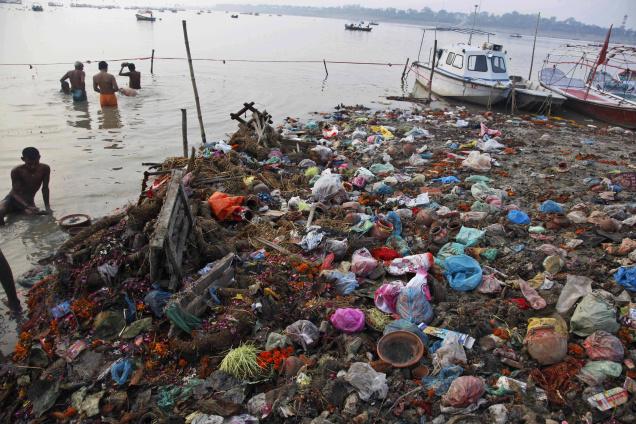
The series of PIL cases instituted by a public-spirited lawyer, Mr. MC Mehta, in the Supreme Court set a glorious precedent. In MC Mehta v. Union of India[11], the way of PIL challenged discharge of effluents by tanneries and chemical industries into river Ganga, and the court ordered those tanneries are not having pre-treatment plants approved by the pollution control board to stop their discharge of trade effluents.

The scenario of environmental litigation is very vibrant in India due to the applicability of Locus Standi of applicants approaching the court by way of PIL.


Footnotes:

[1] 24th UN General Assembly conference on Human Environment, 1972.

[2] K.S. Dakshinamurthy in ‘Politics of Environment’, published in ‘Economic and Political Weekly’ Vol. XXI  No. 18 dated May 3, 1986, at p 733.

[3] Subhash Kumar v. the State of Bihar, AIR 1991 SC 420 & Maneka Gandhi v Union of India, AIR 1978 SC 597.

[4] Dr. Sukanta K. Nanda, Environmental Law, Central Law Publications, 2007, p 300.

[5] Gurdip Singh, “Legal Status of Precautionary Principle in Environmental Jurisprudence,” 2000, p 35.

[6] Andhra Pradesh PCB v MV Nayudu, AIR 1999 SC 812.

[7] Rosalind Malcom, A Guidebook to Environmental Law, Sweet & Maxwell, 1994.

[8] MC Mehta v Kamal Nath, (1997) 1 SCC 388.

[9] Parmanand Singh, Vindicating Public Interest through Judicial Process: Emerging Trend & Issues, 19, Indian Bar Review (1983) at 688.

[10] Rural Litigation and Entitlement Kendra v the State of UP, AIR 1985 SC 652.

[11] MC Mehta v Union of India, 1992 SUPP (2) SCC 633.


Download Now

What Stops Human Rights Commission From Working Properly?

0

In this blog post, Sunidhi, a student of the Rajiv Gandhi National University of Law, Patiala discusses how the Human Rights Commissions have failed to bring desired results of protecting the human rigths of the citizens of India.

7


Introduction

Human rights are those rights which every human being is entitled to by virtue of them being a human being. These are the basic rights that every human being is entitled to without any discrimination by caste, creed, color, sex, etc. These are those basic rights without which no individual can lead a dignified life. These rights are inalienable.

All the human rights, whether civil, political, economic or cultural, are interdependent and indivisible. The advancement in one will directly lead to advancement in another. Similarly, derivation of one right will automatically lead to deprivation of many other rights.


Human Rights Commission

national-human-rights-commission

Universal Declaration of Human Rights (UDHR), 1948 is the landmark document on Human Rights. It was the first document to put human rights in black and white. There are many other international documents supporting human rights, and most of the states have ratified such documents.

To protect human rights, the Indian Parliament passed Human Rights Protection Act, 1993 and under this Act, a provision was made to establish Human Rights Commissions (HRCs) in India. The Act made provisions for State Human Rights Commissions and one National level HRC, for those states where there is no State HRC. Although, the Indian government succeeded in creating HRCs, it failed to give them appropriate powers to function properly and stop human rights violation in India.


Lack of power

The Human Rights Commission of India is the powerless organization which is duty bound to stop human rights violation but has no power to stop it.

Human-Rights

  • The main problem of the Human Rights Commission is that they can only make a recommendation to the government. For example, they can only recommend that a criminal case should be filed against the accused, the departmental inquiry should be instituted against government official if he/she is delinquent in performing his/her duties or granting compensation to the victim. Also, it is not binding on the government to adhere to the recommendation of the commission. In the majority of the cases, government either partially adheres to their recommendation or out right neglects it. Therefore, it should be given adequate power to institute a suit against the accused and punish government officials for their inefficiency.
  • As per the Act, the Commission cannot take cognizance of a matter if the time gap between happening of an event and filing of the complaint is more than one year. In a country like India where there is widespread unawareness, how can this law be beneficial to the public. The time span should be increased so that the general public can benefit from what is meant for them. Also, the Act can serve its purpose.
  • 55% of cases in the HRCs are filed against police officials. Civil society groups should be mobilized to keep a check on the efficient working of police officials and their misbehavior with the civilians. Also, there is a need to implement a new Police Act as the present police act belongs to the year 1861. It was made by Britishers to oppress Indians. Hence, a new Police Act should be drafted according to the changed scenario.
  • The Human Rights Commission has no authority to investigate matters where army officers are the culprits of human rights violation. Human rights are basic rights essential for survival, then how can army officials be allowed to violate such rights? Therefore, they should also be brought under the ambit of the Human Rights Commission.
  • Most of the Commissions do not have all the 5 members to run it. This hampers their working. For example, at present Punjab State Human Rights Commission is running without a Chairperson. As a result, it fails to operate because the bench cannot decide a case in the absence of a chairperson. This leads to delay in delivering justice. Therefore, the succeeding Chairperson and other members should be appointed before the existing member retires. This will bring efficiency to the appointment of the Chairperson and other members and would not hamper the working of the Commission.
  • The commissions are not provided with required funds, and this directly affects their working. Most of the funds provided to the commission are spent on office expenses and in the salaries of the members. The funds, therefore, are not used for what they are meant. To avoid this, commissions should be provided with enough funds for the sole purpose of existence. The salary and other maintenance expenses of members should be paid separately out of government funds.
  • These commissions work in a bureaucratic way. For example, the staff appointed for these commissions is the retired government officials. So, this develops a hierarchy in the organization system in HRCs. Young blood should be infused in such commissions who can bring fresh perspective in this changed scenario.
  • The second highest number of cases registered with HRCs is women related. Therefore, one of the members should be a woman.
  • The Act specifies that the retired judges should be appointed as chairpersons. The result is any judge whether he is experienced in human rights or not may become a chairperson. Therefore, only those judges should be appointed as chairpersons who have at least 10 years of working experience in human rights.
  • A bureaucrat fills the non-judicial member’s post. This position should be reserved for human rights activists who have at least 10 years of working experience in human rights.
  • The service matters are excluded from the jurisdiction of HRCs. This is the hub where humans face discrimination the most. Therefore, this should also be covered under the jurisdiction of HRCs.
  • HRCs do not take cognizance of private party disputes. Sometimes, these are the most heinous cases of human rights violation. For example, a rape survivor files a case in HRC for violation of her human rights but because she has not filed a police complaint, her case will be not be heard. Therefore, a very serious case will be rejected, and this defeats the basic purpose of the commission.

Hence, the Human Rights Commission should be given adequate powers so that they can serve the basic purpose for which they are established.

Download Now

Responsibilities Of Foreign Directors In A Foreign Company

0

In this blog post, Disha Mohanty,  a student pursuing her LL.B (5th year) from National Law University, Odisha and a Diploma in Entrepreneurship Administration and Business Laws from NUJS, Kolkata, lists the responsibilities of foreign directors in a foreign company. 

IMG_20160720_144621


Introduction

With the onset of the Companies Act 2013, there is a paradigm shift concerning what will construe as the requisite requirements for the appointment of a director in keeping with the responsibilities ascertained therein with a foreign company, in concurrence with the RBI approval based requirements devised through FDI compliance. The requirements to be complied about foreign companies will be applicable only for the foreign companies which fulfill the terms stated[1] under Section 379[2] of the companies act as per Chapter XXII. In case of absence of a foreign director, an alternate director (who must be a resident Indian) can take his/her place for not more than three months.

The Board of Directors

It must be stated at the very beginning that it is mandatory for every foreign company in India to have at least one Indian director on board,[3] who must reside in the country for at least one hundred and eighty days in the previous year[4], so as to enable compliance with the statutory requirements due to the previously common practice of all the directors being stationed outside India and hence, resulting in compliance issues? The section also includes the mandatory requirement for having a female director on board. It is also necessary for every foreign company to file Form FC-1 preferably within 30 days from the date of commencement of business in India, which must include a declaration stating that the director has not been debarred from running a business in India and abroad[5]. While the foreign director will require getting a Digital Signature and Director Identification number in keeping with the Indian provisions, in addition to the approval acquired from the respective embassy consuls, however, it is not mandatory to acquire a PAN for the same. Additionally, unlike the Indian rule, foreigners won’t require a proof of their father’s name for the documents as mentioned abovedirectors-insurance

Additionally, it may also be mentioned herein, that the range of companies coming under the category of Foreign companies has notably increased with the most specific relevant addition being that of including businesses being carried out in the electronic mode also being included under the ambit of the Companies Act, even if the main server is not located in India, considering the number of e-commerce portals which are plying in India within the past decade, in reference to Rule 2(c)[6] which requires any business having a place of business in India to register therein and accordingly  comply with the financial requirements and reporting compliances[7] .

Duties of the Board of Directors

It must be noted that though directors can exercise the option to attend board meetings via video conferencing, it is necessary for every director to attend at least a meeting physically in person, for every 12 months.[8] Also while the requirements for the requisite number of directors remain the same for foreign companies as in India, this privilege does not extend to foreigners opening a One Person Company, which requires only one director.[9] It must be noted that foreign companies post the 2013 amendment can engage in mergers with Indian companies.BrdDirectors

Directors in foreign companies also have to file accordingly a Director Responsibility Statement which states that the director has accordingly devised a system to ensure the compliance of the company concerning the applicable laws which should be operating efficiently and must be adequate reasonably.

It is also additionally the director’s responsibility to ensure that that in cases wherein the net worth of the company is more than Rs 500 crores, or if the turnover is exceeding Rs 1000 crores, or has a net profit exceeding Rs 5 crores the company must constitute a Corporate Social Responsibility Committee (two members, one of whom must be a resident director) who must accordingly devise CSR policies and implement them, utilizing at least 2% of the average net profit made by the company in question in the preceding three financial years in accordance with the terms of the CSR policy. This rule is applicable only to those foreign companies which have business operations in India. It is necessary to mention the actions and utilization of monetary resources as per the policy must be mentioned in the annual report.

The directors are bound by the same responsibilities as their Indian counterparts concerning declarations about Related Party Transactions. It is also necessary for the directors to ensure that the activities undertaken by the company are strictly within the purview of those activities approved by the RBI and are in compliance with the terms and conditions mentioned in the approval, which is to be issued by the appointed Chartered accountant of the company by means of the Annual Activity Certificate. Foreign companies are on the whole permitted a limited list of activities in concurrence with the restriction that allows only those activities which are undertaken by the parent company

With regard to raising capital of the company publicly,  it would require issuing of a prospectus in keeping with Rule 11[10], with the directors treating the prospectus for all purposes to be an Indian prospectus.

It is also the responsibility of the foreign director to file the annual returns of the foreign company namely FC-4 as per Section 389 of the Act, [11]within sixty days from the last day of its financial year with a requisite fee to the Registrar of the Company (RoC)[12].  The director also has the responsibility to ensure compliance with the audit requirements applicable especially if the company is about to undergo liquidation or wind-up and subsequently must notify the authorities pertaining to the ceasing of the existence of the company, in addition to approving the balance sheet and profit and loss account of the company.[13]

In accordance with the fact that the prospectus of a foreign company here will be treated as if issued by an Indian company, it is the director’s responsibility to ensure compliance with SEBI (Issue of Capital and Disclosure Requirements) Regulations, 2009 with regard to declaration of material contracts disclosing details pertaining to the remuneration/appointment of the director two year prior to the issuing of the prospectus in addition to the other requirements pertaining to IDR. board-meetingDisclosure of interest also extends to foreign directors as a responsibility owed towards their company. It is also their duty to partake in the responsibility pertaining to the preparation of annual reports which must include the grounds mentioned under business responsibility reporting if the company in questions is within the top 100 companies by market capitalization[14]. It is also the responsibility of the director to register the charges on the property regardless of whether it is located in India or outside.[15]

Considering that foreign companies are also subject to the same norms for debentures, it is the director to ensure the compliance with Indian law. With regard to remittance of profits, it is the director’s responsibility to ensure the remittance only after the payment of the applicable taxes as per Indian law.

Further concerning mergers, foreign companies are permitted to merge with Indian companies; this would bring the company in questions within the ambit of the Competition Act, subject to MoU based on Central Government approval. And accordingly, make it the director’s liability subject to his/her involvement with the merger in question. If a company is incorporated in Singapore, then it is a necessity to ensure that at least one director of Singaporean nationality be on the board of the company in India. Languages, however, will at no point serve to be a barrier to the appointment of the foreign director in the company.

It is also the director’s responsibility to ensure the compliance with the laws of the country where the company has been incorporated and according to whose laws the articles of association and memorandum of the association have been drafted accordingly, and in general has a fiduciary duty to the company. Non-compliance with the responsibility as mentioned above will lead to the liability falling on the director as per Indian provisions.

In general, while foreign directors have a responsibility to ensure compliance with the laws of their parent company’s country and Indian laws. Concerning Indian laws, the emphasis is primary in relation to tax compliance, and primary company bye-laws pertaining to the functioning of the country which in addition to company law includes the relevant labor, employment laws, based on the activities of the company and intellectual property laws compliance. The emphasis lies on procedural compliance especially with compliance and maintaining that the activities undertaken by the company are strictly those which are permitted and with prior approval. On the whole, while the laws in question place a considerable amount of increased liability on the director in question, which is necessary to ensure at least a particular degree of business responsibility and increased compliance with Indian procedural requirements.


[divider]

Footnotes:

[1] http://www.arkayandarkay.com/registration-of-foreign-companies/

[2] Section 379, Companies Act 2013

[3] Section 149(3), Companies Act 2013

[4]http://www.mondaq.com/india/x/284280/Corporate+Governance/Directors+under+Companies+Act+2013+is+it+old+wine+in+new+bottle

[5] http://taxguru.in/company-law/foreign-company-establishment-compliances-companies-act-2013.html

[6] http://taxguru.in/company-law/foreign-companies-companies-act-2013.html

Rule 2 (c), Companies (Registration of Foreign Companies) Rules, 2014

[8]http://www.mondaq.com/india/x/435008/Corporate+Commercial+Law/Key+Provisions+In+The+Companies+Act+2013+Affecting+The+Foreign+Residents+Doing+Business+In+India

[9] Supra n. 5

[10] Companies (Registration of Foreign Companies)  Rules, 2014

[11] http://www.mca.gov.in/MCA21/dca/help/instructionkit/NCA/Form_FC-4_help.pdf

[12] Annexure to Companies (Registration Offices and Fees) Rules, 2014

[13] http://www.samvadpartners.com/wp-content/uploads/2013/06/Roles-Responsibilities-and-Liabilities-of-Directors-in-India.pdf

[14] http://economictimes.indiatimes.com/markets/stocks/earnings/companies-act-from-now-on-annual-reports-wont-be-about-just-numbers/articleshow/49252759.cms

[15] http://www.charteredonline.in/2016/06/foreign-company-under-companies-act.html

Download Now

Critical Analysis Of The Principle of Res Ipsa Loquitor

0

In this blog post, Disha Pareek, a student of RGNUL, Punjab, critically analyses the principle of Res Ipsa Loquitor. 

Untitled

Res Ipsa Loquitor is a legal term which means ‘the thing speaks for itself.’[1] It is a very popular doctrine in the law of torts; it is circumstantial or indirect evidence which infers negligence from the very nature of the accident that has taken place and there is the absence of direct evidence against the defendant. Res Ipsa Loquitor is applied when it can be said that without the defendant being negligent, the accident would not have happened.


Background

Accidents happen all the time and many a time, it is because of someone’s negligence. And in the law of torts, to prove somebody’s negligence, the burden of proof is on the plaintiff, that is, someone who is the victim of the tort. It becomes really difficult to prove that the defendant was at fault and also to gather evidence against his act or omission. Therefore, keeping this in mind, the principle of Res Ipsa Loquitor came into force under which a plaintiff can use circumstantial evidence to establish negligence.


Elements of Res Ipsa Liquitor

Before claiming the tort of Res Ipsa Loquitor, a plaintiff must meet a few requirements to claim compensation

  • The event that caused injury to the plaintiff does not occur unless someone has acted negligently.
  • The evidence adduced rules out all the possibilities of the fault of the plaintiff or third party.
  • There is a duty of care of defendant towards the plaintiff which he breached.


Development of the principle

11-Liz-Collini.-Untitled-RES-IPSA-LOQUITUR-800x398

The roots of the principle are in common law countries, which are England in the case of Byrne v. Boadle. The facts of the case were that in 1863 in England, a barrel of flour fell from a two-storey building and hit the plaintiff’s head, but the plaintiff could not acquire direct evidence against defendant to allege negligence on his part. But the court held the judgment for the plaintiff and opined that the circumstances were different in this case, and there could be a presumption of negligence.


Distinction between Res Ipsa Loquitor and prima facie

Prima facie evidence just tends to prove if a certain circumstance could or could not have occurred. It is not conclusive in nature and hence, is true only till it is rebutted and so in any given case, it just tends to state that for a given situation there is enough evidence to prove the liability but does not prove the liability of it. But Res Ipsa Loquitor states that facts are evident of the liability as there cannot be any other probable cause for the same.

Hence, the keynote difference between the key doctrines states that while prima facie aims at providing the evidence to prove liability, Res Ipsa Loquitor states that it is reasonable that liability lies with the defendant and hence, no further evidence is required to be furnished. But both the doctrines are rebuttable in the sense that the defendant may prove the case in opposite to the stated evidence and hence negate the applicability of the doctrines.


Essentials of Res Ipsa Loquitor


  • Inference of negligence

For the element of Res Ipsa Loquitor to be made applicable in any case, the accident should be such as which could not have happened if ordinary course of things had happened without negligence. For instance, a barrel of flour cannot randomly fall on someone’s head if the party is reasonably careful. And also, a Clock tower in the heart of the city will need extra care and if it falls and causes injury to several people, the defendants will but obviously be held liable for the same under this principle. In such cases, direct evidence of proving negligence is not important, but the plaintiff has to establish a prima facie case, either by direct or circumstantial evidence of defendant’s negligence.

  • Exclusive control by defendant

proving-medical-negligence

The thing that has caused the damage must be under the direct control of the defendant or his representative. It is not always necessary that all the circumstances are under the defendant’s control, but if the events leading upto the accidents were under the control of others besides the defendant, then the mere happening of the accident is insufficient evidence against the defendant. For instance, if a surgeon at the time of the operation leaves a mop inside the patient’s abdomen, here the doctor had exclusive control over the patient’s health and so, therefore, he would be liable under the principle of Res Ipsa Loquitor.


  • Freedom from Contributory Negligence

The third essential for the principle is that the plaintiff or any third party did not cause or contribute to the injuries suffered by him. If it is found that the plaintiff or third party contributed to the act that caused damage to the plaintiff, then the principle shall not apply.

Once these elements are established, there is a possibility that courts treat it as a possible assumption of negligence on the part of the defendant. Normally, following this the jury in question presumes that the defendant is liable. The jury, however, is not bound to presume such things. In such cases, the burden of proof is on the defendant that he was not negligent. Thus this principle is rebuttable and if the defendant can successfully rebut the claim of negligence, he will win the case. Otherwise, he shall be made liable.

Landmark case-laws


  • Scott v. the London and St. Katherine Docks Company[2]

The facts of this case were that plaintiff was an officer of Customs. He was instructed to go from the East Quarry to Spirit Quarry by his surveyor. There were warehouses on the Spirit Quarry. He went to the entrance of one of the warehouses to find Mr. Lilley, the Surveyor. He was told that Mr. Lilley is in another Warehouse. He went to the first door to meet upon the Quarry. He went into the Warehouse and met a labouring man about two yards within warehouse. He enquired from the Labourer about Mr. Lilley, and he was informed that he could find Mr. Lilley in the next doorway. In passing from one doorway to another, six bags of sugar fell upon him, and he suffered injuries as the servants of the dock company were lowering the bags of sugar. Except plaintiff, there was nobody else on the spot of the accident. There was no warning signal and no fence or barrier. The majority of the Court came to the conclusion that falling of bags of sugar on the plaintiff itself is not reasonable evidence of negligence and directed the case for a new trial.

  • Rampeary and Another v. Jai Prakash and Another[3]

In this case, the injured/plaintiff was a minor girl about nine years who was passing by the road on its left side along with her mother. Defendant was playing in the middle of the road. Another defendant was sitting on the rod of the cycle. Suddenly, the cyclist turned his cycle on his wrong side (to his right side) and collided with the minor as a result of which she suffered compound fractures in two of her bones in the right leg with other bleeding injuries.

The pleadings of the minor were that she suffered injuries due to negligence on the part of the cyclist and defendant No.2, and they are liable for damages. Both the defendants denied the contentions. Trial Court discussed the entire evidence and decreed the suit for the sum of Rs.567/-. The Ld. First Appellate Court set aside the judgment of Ld. Trial Court and dismissed the suit by holding that the plaintiff failed to lead satisfactory evidence of negligence which can be said to be a proximate cause of accident and injury to her.  However, the Ld. First Appellate Court awarded her Rs.300/- towards expenses for her treatment. The injured/plaintiff approached Hon’ble Patna High Court. Hon’ble Patna High Court (Second Appellate Court) set aside the judgment of Ld. First Appellate Court and remanded the case for fresh decision.

  • State of Punjab v. Modern Cultivators, Ladwa[4]

The facts of this case were that plaintiff Modern Cultivators suffered losses due to flooding of its land as a result of a breach in a canal belonging to the State of Punjab. The Trial Court awarded damages and decreed the suit which was upheld by the First Appellate Court and in Second Appeal by Hon’ble High Court. However, High Court reduced a number of damages. Both the parties approached Hon’ble Supreme Court. The Hon’ble Apex Court held the defendant was negligent by applying the rule of Res Ipsa Loquitor.

Footnotes:

[1] Available at  http://dictionary.law.com/Default.aspx?selected=1823

[2](1865) 159 E.R. 665

[3](2 Camp. 79)

[4]1965 AIR 17, 1964 SCR (8) 273


Download Now

Legality Of Talking On Hands-free Or Bluetooth While Driving

6

In this blog post, Sunidhi, a student of the Rajiv Gandhi National University of Law, Patiala has written about the legality of the use of hands-free device or Bluetooth for taking calls while driving in India.

9

Introduction

Every year, nearly 1.4 million people have been killed because they are wireless customers and their over-bearing habit of using cell phones while driving. In India, an estimated 1.35 lakhs people died due to road accidents in 2010, which is approximately 10% of road accident fatalities worldwide and these figures are the highest in the world.[1]

India has the highest number of road accidents in the world. India has earned a dubious identity with over 1,30,000 road accidents in a year. India has overtaken China in the tally of the worst road mishaps.

Section 184 read with Section 177 of the Motor Vehicles Act, 1988 prohibits the use of the phones while driving and makes it a punishable offense with a term of six months or with a fine. It has not been expressly stated in the Act; therefore, an executive order was passed for the same.

Why is talking on the phone an offense?

young-driver

One out of four road accidents is caused due to distractions caused by mobile phones. Today, the use of mobile phones has become a great trouble. People talk on the phone while driving; this distracts them, and they drive recklessly. This leads to increased road accidents as the whole of India has access to mobile phones today.

The act of talking on the phone distracts the mind. The larger portion of the brain concentrates on the phone and lesser portion on the driving. The result is that the concentration of the human brain is diverted from the road. The brain fails to take timely and logical action. Hence, the number of road accidents or crashes has increased. The main reason for penalizing this offense is to avoid brain distractions to keep a control on the number of ever increasing road accidents in India.


According to Indian Police

“Don’t talk on the phone while you’re driving; the police say it’s a crime. Any form of cell phone use is forbidden,” says BK Upadhyay, Joint Commissioner (Traffic), Mumbai. The police say that although the legal system of India is technologically a little behind, but this practice of punishing those found using mobile phones, in any way, is justified because it is for the welfare of the public only. This practice is to bring the road accidents under control. This practice if followed in many states of India such as Maharashtra.[2]


Is it legal to talk on hands-free device or Bluetooth?

voyagerpro_ls21

According to Section 184 of the Motor Vehicles Act, 1988, whoever drives a vehicle in a manner that is dangerous to the public shall be held liable for such act of recklessness. Section 177 of the said Act describes the punishment for this offense. The punishment for this may be a term of six months or fine up to Rs 1000. In the case of second-time offenders, the maximum fine charged is Rs 3,000 and a term extending up to 2 years.

The reason behind this law is to stop the use of mobile phones while driving because the use of mobile phones distracts the brain. The brain loses its ability to understand the situation and take timely action when suddenly another vehicle, person or animal appears before the driver. Therefore, it does not matter whether the distraction caused by the mobile phone was because of holding a handset, using Bluetooth or wearing the earphones.

https://lawsikho.com/course/certificate-course-in-advanced-civil-litigation-practice-procedure-and-drafting
Click Above

The intention for this enactment was to stop the drivers from recklessly driving their vehicles. However, the law does not specifically say that use of Bluetooth or hands-free is prohibited. This is the gray area of law but reading the law with the intention of its legislation, it can easily be concluded that the use of Bluetooth or hands-free cell or reading and sending text messages is strictly prohibited, as allowing it will defeat the provisions of the law.

Anything that is not legal is illegal. The provisions of Section 184 of the Motor Vehicles Act, 1988 specifically prohibits driving in a manner that is dangerous to public safety. The use of cell phones, in any way, either as a handset or hands-free cell, is dangerous to public safety, and many studies have proved this. One such study has been quoted above. Therefore, by applying the analogies, it can be observed that use of cell phones, whether as a handset or hands-free device is illegal.

The Law Commission of India in 2009 suggested that the 28 years old law should be amended to meet the needs of the changing scenario. It should specify that whether hands-free devices can be used or not while driving. However, there is no restriction on the use of mobile phone in any form whether handset or hands-free device by the other occupants of the vehicle.

The law, therefore, on the use of hands-free device or Bluetooth while driving forms part of the gray area of the Indian Motor Vehicles Act, 1988. This issue will remain debatable until the time a specific law is enacted concerning this.


LawSikho has created a telegram group for exchanging legal knowledge, referrals and various opportunities. You can click on this link and join:  

https://t.me/joinchat/J_0YrBa4IBSHdpuTfQO_sA

Follow us on Instagram and subscribe to our YouTube channel for more amazing legal content 


Footnotes:

[1] Mobile Phone Accidents – Experience Of India, The Journal of Transport and Telecommunication Institute,Volume 13, Issue 3 (Jan 2012).

[2] Available at http://www.dnaindia.com/mumbai/report-is-handsfree-cell-talk-a-traffic-offense-2039068.


Download Now

Rakshitha, a practicing lawyer on why she did the NUJS diploma course and how it is benefiting her

0

rakshitha

Rakshitha V. N is currently a practicing lawyer at Karnataka High Court and deals in civil matters. She has done her LLB from University Law College, Bangalore University and has interned with many prestigious law firms.

She completed the NUJS diploma in Entrepreneurship Administration and Business Laws in 2015. Over here she talks about her experience with the NUJS diploma course, and how it helped her career so far. Over to Rakshita.

I joined the NUJS diploma in Entrepreneurship Administration and Business Laws while I was in the final year of my law school. I found this course while searching the internet. I was gearing up for my corporate internship at that time and wanted to strengthen my hold on business and corporate laws.

I was confused and didn’t know what to choose as my career; corporate law or litigation.

So, I wanted to try out both before deciding on the best option for me. I wanted to go for a corporate internship so that I get an actual feel of what to expect in a corporate law career. So that I could make an informed career choice. I did this course while I was interning and the learning from this course helped me in my corporate internship.

I was very impressed by the course syllabus; it was very extensive and covered almost everything I wanted. This has helped me gain knowledge about sections I was not much aware of; sections which I hardly came across in my law school.

My college curriculum didn’t cover all this and I found it to be very knowledgeable. This course has helped me in my college studies also, as many of the aspects and topics covered in this diploma course were part of my final year course syllabus. Having advance knowledge of these gave me an edge over others and made it very easy for me cope with my law school studies.

I especially found the modules on IPR and Company Laws to be very informative. Webinars were another aspect of this course which I appreciate a lot; webinars with industry experts gave us practical insight into various topics. The webinar on ‘How to go about a show cause notice’ was the most beneficial webinar as per me. Show cause notice is the first step of litigation and this webinar helped me clear my concepts.

I’m unable to utilise much of my learning from this diploma course, as I’m into litigation and civil matters, but this course has certainly enhanced my knowledge and skills. Even in litigation the drafting skills acquired through this course are proving to be very useful.

In future, I plan to go for an LLM. If that happens, the knowledge gained through this diploma course would be very helpful.

I would absolutely recommend this course to other people. Especially law students; they can get their concepts cleared and gain the basic knowledge of law through this course. Having a strong foundation is very important at this stage, as this is the time when people make the career choices which they have to live with for the rest of their life.

Download Now

Devina Ogale, a final year law student pursuing CS, on how she benefited from the NUJS diploma

0

IMG-20160623-WA0024

Devina Ogale; a fifth year law student at ILS Law School, Pune signed up for the Diploma course in Entrepreneurship Administration and Business Laws offered by NUJS when she was in the 3rd year of her law school. Devina is also pursuing CS professional level. She has interned with established lawyers like Kranti Sathe, who is a celebrity family lawyer and has fought divorce cases for many Bollywood personalities. She has also interned with Dhaval Vussonji and Associates, a law firm in Mumbai wherein she dealt with corporate law related matters. She is passionate about social causes and has interned with various NGOs also. She cherishes her time spent at Jeevan Foundation the most; An NGO at Chembur, Mumbai which deals in Human Rights protection. She has always excelled in her chosen fields, she was felicitated with the Achievers Award; for her all round performance in the Diploma course by NUJS. Let’s hear what Devina has to say about the course. Over to Devina:

I joined the NUJS diploma in Entrepreneurship Administration and Business Laws while I was in the second year of my law school. I had first come across the NUJS diploma course in my college, as this diploma course is quite popular in my college. Then I looked it up over the internet and really liked the curriculum and syllabus. I decided to take up this course because it provided the in-depth practical knowledge of different laws which I was looking for. My seniors and batch mates, who had completed the course, recommended it highly, further encouraging me in my decision to pursue the course.

This course is a perfect mix of substantive laws and procedural laws. The course explains the concepts in detail with proper reasoning.  The language is easy to understand and brings clarity about the concept. The course explains the procedures in well-defined steps and makes it easy to comprehend, even if a person is not from a law background.

The course also helped me in my CS studies; where we have an exam on drafting.  The drafting exercises of the NUJS diploma course provided me with the format, language and important points to be included while drafting. I referred the drafting module in the diploma course as it was simplified; examples like nondisclosure agreement and partnership deed etc were defined and explained very nicely in it. The format for drafting, important points to be included all this information was provided in a very structured manner. I completely relied on the diploma material for the drafting exam of CS course.

The drafting exercise in the course also helped me develop my drafting skills. The Model agreement provided in the course is very compact, every clause and minute details are covered in it. If I ever have to draft a partnership agreement or an LLP agreement, I would be referring it. It has given me the much needed practical knowledge.

Apart from drafting. Modules that I personally found extremely beneficial, were the module on Foreign Exchange and the IPR module. These were very knowledgeable and interesting.

The syllabus and study material is also structured in a way in which one can find answers to specific questions about the law easily, which often comes in very handy. Every concept is explained in a practical manner with examples and case studies.

This course has definitely helped me prepare for Law school studies as well as for my CS. My final year syllabus includes company law and drafting. Since I have already covered these in my diploma I have a better understand of this compared to my classmates and it gives me an edge over others in my class.

I have even mentioned this diploma in my CV. Although I have not appeared for many interviews. I’m sure this leaves a positive impact on my profile and gives me an edge over others. I strongly feel that this course has added value to my profile.

I plan to work for a year or so after my law school to gain practical exposure and after that, I plan to do my LLM. Having my basics cleared through this course would certainly help me in my CLAT and LLM studies also.

I would be happy to recommend this diploma course to anyone. I have already recommended it to many of my classmates and friends.  I personally feel there are certain aspects of law which every person should be aware of so that no one takes advantage of them, especially people who are into business, entrepreneurs, and aspiring entrepreneurs. In a way, this course is beneficial for anybody who wants to get basic knowledge about law.


Download Now

The Emerging Sports Law In India

1

In this blog post, Disha Pareek, a student of RGNUL, Punjab gives an overview of the laws and the government authorities as well as autonomous agencies that regulate the field of sports in India.

Untitled

Sports law in general

India being a unity in diversity is also a home to a diverse population which is fond of several sports. The work of administration and funding of sports is in the hands of the Ministry of Youth Affairs and Sports, which is headed by a cabinet minister and managed by the National Sports Federations. Sports law is one of those fields of law is law that is applied in the field of sports, physical education and its related areas. It is a pure law as opposed to theoretical law and is concerned with how law in general interacts with the activity known as Sports[1]

Sports have always been a form of recreation, but sports have evolved, and India is considered as one of the best places to hold international sports events. In this scenario, a need was felt to regulate the laws in the field of sports and to eradicate the grey areas. Even the United Nations, in its resolution 58/5 adopted by its General Assembly in 2003, has recognized sport as a means to promote education, health, development and peace[2] and therefore, a state should have an interest in sport-related matters.


Everything about sports legislations in India

2015-Sports-Law-email-250px

Per se, there are no central or state legislation to regulate sports in India; the Ministry, which was set up by the government was responsible for achieving excellence in different sports events which were conducted in India and also to build a good infrastructure for sports. By and large, the administration of sports activities is in the hands of autonomous bodies, such as Sports Authority of India (SAI), Indian Olympic Association (IOA), Hockey India (HI) and Board of Control for Cricket in India (BCCI).

These governing bodies are recipients of government’s aid and are also registered under the Societies Registration’s Act of 1860.[3]

The following govern the whole of the Sports Law:

  • National Sports Policy, 1984/2001

The main objective behind enacting this was to raise the standard of sports for the reason that it was degrading due to corruption, betting, etc. It was later realized that the Bill of the year 1984 was incomplete, and its implementation was not complete, and in a bid to revise the bill the same was reformulated in the year 2001.

The guidelines are three-fold:

  • Firstly, to earmark the areas of responsibilities which different agencies have to undertake to develop and promote sports.
  • To lay down the procedure to be followed by the autonomous bodies and federations to make the assistance and aid by the government available.
  • And also identifying the sports federation that is eligible for coverage under these set guidelines.

It was only after this policy that the lawmakers realized the importance of sports and therefore ‘Sports’ was included in the Constitution in the State list of the Seventh Schedule (Entry 33). The central government by the provisions of this policy aims to achieve excellence in sports on the national and global plane and collaborates with the state government and other agencies to achieve it.


  • Sports Law and Welfare Association of India

It is a non-profit national organization that aims to understand, and work for the advancement of ethical sports law in India for promoting sports. The primary task of the organization is to provide consultancy services on different matters like Indian sports policy, sports injuries, health and safety in sports, IP issues in sports, etc. It also provides a forum for legal practitioners who represent different people, to set up rules for ethics for sports persons.

  • Sports Authority of India

clip26538

The Sports Authority of India (SAI) is an apex National Sports body set up in the year 1984 by the Ministry of Youth Affairs and Sports for broad-basing and bringing excellence in sports across India as a whole. It is located across 9 regions at Bangalore, Gandhinagar, Chandigarh, Kolkata, Imphal, Guwahati, Bhopal, Lucknow and Sonepat; and two Academic institutions like Netaji Subhash National Institute of Sports (NSNIS), Patiala and Laxmibai National College of Physical Education. It also accounts for academic programs like coaching and physical education awareness programs.[4]


  • The Sports Broadcasting Signals (Mandatory Sharing with Prasar Bharati) Act

This Act was passed in the year 2007; its main objective was to provide access to listeners and viewers so as to encourage a larger audience. It shall cover the sporting events which are of national importance through mandatory sharing of sports broadcasting signals with Prasar Bharati and for matters related to it. The Act provides that no content right owner or holder or television or radio broadcasting service provider can carry out a live TV broadcast of important national sporting events. For doing this, it has to share its live broadcasting signal simultaneously (except advertisements) with the Prasar Bharati.

Role of different stakeholders


Ministry of Youth Affairs and Sports

logo1

  • To lay down the conditions for eligibility of National Sports Federation to get recognition
  • The conditions that have to be fulfilled by NSFs and other agencies if they wish to acquire government aid and support.
  • To provide assistance to the NSFs if they carry out long-term development program.


National Sports Federation

The responsibility for the complete management, direction, supervision and regulation of the discipline and promotion, development and sponsorship of the discipline is on National Sports Federation. They are expected to discharge these responsibilities in consonance with the principles laid down in the Olympic Charter or the Charter of the Indian Olympic Association in compliance with Government guidelines applicable to NSFs.


SAI

For providing the necessary support to NSF for the identification, training, and coaching of sportspersons, also to improvise infrastructure, equipment, and such other facilities, the SAI plays a significant role. Further SAI will also be responsible for releasing funds to NSFs against proposals approved by the Government.  The release of funds to IOA shall, however, continue to be made by the concerned Ministry.[5]

national-anti-doping-agency

National Anti-Doping Agency


The centre has set up a National Anti-Doping Agency (NADA) as an autonomous body. It consists of persons from government and non-government agencies, scientists as experts and also members from IOA. In the recent past, the controversy surrounding the intake of dope by sports persons is prevalent and in this light, NADA was set up. It shall carry out ‘in competition’ and ‘out of the competition’ testing on the sportsman. NADA helps in the regulation of sports activities so that it can be corruption-free and non-controversial.

Sports law of United States of America

The U.S.A. has a very systematic law for sports. They have not provided with single legislation, but have divided it into 3 categories-:


  • Amateur sports

It includes athletic activities from high school athletics to organize inter-collegiate or international competitions which are often organized and managed by groups that make rules for eligibility and competition, and courts do not interfere with the actions of these groups as long as they abide by the rules. The Amateur Sports Act of 1978 created the Athletic Congress, a national body for governance of amateur athletes, which administers a fund that allows amateur athletes an option to get funds and sponsorship payments and also not lose their amateur status.

  • Professional sports

In the case of some professional sports activity, most sports leagues do have a standard player’s contract, and that shall be the guiding force behind a contract between players and owners.

  • International sports

The two main international sports events include the Olympics, sponsored by the International Olympic Committee, and the World Cup, which is sponsored by FIFA. The United States has done the charting of the United States Olympic Committee (USOC) in the year 1950.


Grey areas in sports law in India

SLaw

The realm of sports law is new in India and time and again, there has been an in-depth inquiry and research into this. Despite having several federations and independent bodies in India, our country lacks a good sports system, and it fails in every major event due to a precise and uniform law for sports. Firstly, there is no single body or legislation under the umbrella of which the ministry, and different sports federation, primarily the National Sports Federation would come.

In recent past, the dark sides of the competitive world has come to be known which depicts the maladministration of the sports law, such as the Olympic Games Scandal related to bidding, the recent IPL scam, FIFA scandal and allegations of sexual assault, etc. are few of those scandals.

The major loopholes which our sports law face include labour and employment issues, drug use, broadcasting rights, sports injury and the concurrent liability, harassment in sports, etc. The constant failure of India in different sports events is an indication of widespread corruption and poor infrastructure and therefore, the need of the hour should be to enact a proper legislation and forum to ease the activities of sports in India.

Conclusion

Given the close relation of sports with national pride and the kind of influence it has on the mind of the nation, the state has the most important role to play. It is very clear that the existing model has not succeeded in achieving its objective and it is time for a new model to be made. Also, it is quite clear that our culture and our attitude towards sports is the biggest hindrance in improving sporting standards.

Footnotes:

[1] Available at http://www.asser.nl/sportslaw/about-the-centre/community/national-sports-law-associations/sports-law-welfare-association-of-india-india/

[2] Sport for Development and Peace, UN General Assembly Resolution, 3 November 2003

Available at http://www.un.org/wcm/content/site/sport/home/resourcecenter/resolutions/pid/19431

[3] Available at http://www.delhi.gov.in/wps/wcm/connect/98f8250046a2ddbd902e915d9d3d91ee/Registration+of+Societies.pdf?MOD=AJPERES&lmod=-299975412

[4] Available at https://en.wikipedia.org/wiki/Sports_Authority_of_India

[5] Available at http://yas.nic.in/sites/default/files/File918.compressed.pdf


Download Now
logo
FREE & ONLINE 3-Day Bootcamp (LIVE only) on

How Can Experienced Professionals Become Independent Directors

calender
28th, 29th Mar, 2026, 2 - 5pm (IST) &
30th Mar, 2026, 7 - 10pm (IST).
Bootcamp starting in
Days
HRS
MIN
SEC
Abhyuday AgarwalCOO & CO-Founder, LawSikho

Register now

Abhyuday AgarwalCOO & CO-Founder, LawSikho