In this blog post, Rebecca Furtado, an Instructional Analyst and a Lawyer who is currently pursuing her MA from Indira Gandhi National Open University, New Delhi and a Diploma in Entrepreneurship Administration and Business laws from NUJS, Kolkata, discusses the Indian tax structuring for outbound investments from India to the Middle East.
Today, the world is changing faster than a caterpillar turning into a butterfly. Change in the world does not signify only technological growth but also caters to growth regarding the economy and the market. Economic and financial growth has broken up the borders and has grown by leaps and bounds. A major development in the field of taxation and finance includes the introduction of global finance and active participation of investors in the global economy irrespective of nationality or creed. Technological advancement and the opening up of global borders have led to the transmission of data at a much higher rate which has led to an increase of participation of individuals or leading corporate in the global financial market.
Apart from markets, primer financial firms or corporate houses have been compelled to structure their business with efficiency to sustain the competitive edge amongst corporate competitors. Tax structuring then goes beyond these national borders to sustain the business and to provide a continuous flow of monies back into the economy.
Over the last few decades, Indian companies have actively participated in the acquisition and investments process abroad. A report suggests that the number of outbound investments has increased by nearly fifty percent and particularly over the last decade. While gaining approval for the investments, most people would rather choose the automatic route rather than the approval route.
Tax systems are neutral when they do not influence the economic choices of the taxpayers on cross-border transactions.[1] Most developing countries prefer capital import to ensure a rational proportionality between the investment decisions of both domestic and foreign accounts. The flow of capital, investment and trade learning requires businesses in this fast changing world to exploit emerging opportunities and to provide a quick response to international competition.
Structuring a business means constructions of layers to ensure smooth and efficient transactions. While structuring a business, it’s pertinent to avoid the creation of double taxation methods. Taxation ensures the collective money going into the treasury.
Indian tax system provides for Unilateral and DTAA relief on foreign taxes paid by Indian residents. However, it has been reported that only 40 or 50 percent of the earnings reach the Indian parent due to the repatriation of dividends back into the country. An important cause is the double taxation method both applied by the Indian Company and its foreign subsidiary.
While looking at the Middle East, taxes are imposed only on oil, gas and petrochemical companies. Taxes are structured by government concession agreements and in agreements with the rulers of the Middle East. The Middle East does not impose taxes on withholding. A good structure minimizes or defers taxes on the global scale lawfully to meet business needs and objectives of any monetary transactions.
In this blog post, Nabarun Roy, Superintendent of Central Excise and Customs, Export Refund Section, Central Excise, Kolkata – I Commissionerate, Kolkata under the Dept. of Revenue, Ministry of Finance, Government of India, who is currently pursuing a Diploma in Entrepreneurship Administration and Business Laws from NUJS, Kolkata discusses Double Tax Avoidance Agreements and focuses on the topic ‘Should withholding tax be deducted for Facebook ads, AWS and other offshore suppliers?’
Introduction
An offshore supplier is a firm enrolled or joined outside the nation where it has its fundamental workplace and operations, or where its chief speculators live. The Indian Constitution has engaged just the Central Government to exact and gather charges. Each individual whose aggregate pay surpasses the most extreme exception limit should be chargeable to the pay tax at the rate or rates recommended in Income Tax Act.
The income tax to be paid by the individual is resolved on the premise of his private status. An individual can be termed as a “resident” on the off chance that he stays for the recommended period in the previous year (1st April to 31st March) either for 182 days or more or 60 days or progressively and has been in India in total for 365 days or more in four years, before earlier year. Any individual who does not fulfill this necessity is termed as a ‘non-resident’.
Where any installment is to be made to a non-resident, the payer is obliged to deduct at source. According to Section 195 of the Income Tax Act, a commitment to the individual in charge of the instalment has to deduct charge at source at the season of installment or the season of the credit of the wage to the record of the non-resident.
On the off chance that the payment would not be taxable, the individual in charge of making such installment may make an application to the officer to decide the suitable extent to which it should be chargeable to tax. The expense is required to be deducted just on the taxable extent.
The tax is to be decreased at the rate endorsed in the Act or any rate indicated in Double Taxation Avoidance Agreement, whichever is more useful to the assessed. Any individual making an installment to any non-inhabitant might be at risk to deduct charge at the rates determined.
Direct Tax: A tax that is paid straightforwardly by an individual or association on a substance on which it is imposed. A citizen pays an immediate duty to an administration for various purposes, including genuine property charge, individual property charge, salary imposes or assesses on resources.
Income Tax: An expense that administrations force on money related salary produced by all elements inside their purview. Income tax is a key wellspring of assets that the administration uses to reserve its exercises and serve people in general.
Indirect Tax: Government needs to perform numerous capacities in the release of its obligations like framework advancement, well-being, instruction, resistance of the nation, evacuation of destitution, upkeep of lawfulness, and so on. To meet these necessities, immense measure of capital is required. The administration gathers cash from open through a wide assortment of sources i.e. expenses, fines, additional charges and duties. Roundabout Tax is an expense that builds the cost of a decent with the goal that buyers are paying the assessment by paying more for the items.
1) Service Tax: Service Tax is a type of circuitous assessment forced on determined administrations called “taxable services.” The goal behind demanding administration expense is to diminish the level of power of tax collection on assembling and exchange without compelling the legislature to trade off on the income needs.
2) Excise: Central Excise obligation is a roundabout assessment which is required and gathered on the products/items fabricated in India. The Central Excise Act, 1944 and other associated rules which accommodate toll, accumulation, and associated methodology.
3) VAT: VAT is an expense on the quality option and a multi-point charge, which is collected at each phase of the offer. It is gathered at the phase of production/resale and considers refunding of expense paid on inputs and buys.
Withholding Tax is a commitment on the payer to withhold charge at the season of making installment under indicated head, for example, rent, commission, pay, proficient administrations, contract and so on at the rates determined in assessment administration. The withholding charge procurements are in the way of apparatus procurements appropriate to the payer of the salary to empower simple gathering and recuperation of duty and are free of the charging procurements which are pertinent to the beneficiary of the organization.
VAT on Facebook ads: Whether VAT is to be charged on Facebook ad purchases will depend on whether the ad is purchased for business purposes and the country of your residence.If the business’s billing address is outside of the European Union, there won’t be charged VAT.[1] It is to be noted that Facebook has its headquarters in Ireland. India and Ireland have entered in DTAA (explained later), and one of provision looks as below:
Business Profits (Article 7)
“Under this Article, each contracting state agrees not to tax the business profits of an enterprise of the other state unless the enterprise has a permanent establishment in that other state. If there is a permanent establishment, the other state may tax only the profits attributable to the permanent establishment. The article sets out the rules by which the profits of a permanent establishment are to be attributed.”
Country
Date of Signing
Income Tax
Corporation Tax
Capital Gains Tax
Ireland
06 Nov 2000
01 Jan 2002
01Jan 2002
01 Jan 2002
India has marked DTAA with numerous nations. The point is to maintain a strategic distance from twofold tax assessment of same income. The bargain can be respective, that is, apply to just the two nations being referred to, or multilateral. These settlements benefit organizations and people who procure in nations other than their nation of home given such a game plan exist between their nation of living arrangement and the nation/nations where their wage sources are.
The advantages of DTAA are lower withholding (charge deducted at source or TDS), exclusion from assessment, and credits for expenses paid on the doubly-exhausted wage that can be enchased at a later date. An aggregate of 85 nations as of now have DTAA concurrences with India. The following nations have Double Taxation Avoidance Agreement with India.TDS rates on interests are recorded beneath. (Recorded one after another in order)
Sl No.
Country
TDS Rate
1
Armenia
10%
2
Australia
15%
3
Austria
10%
4
Bangladesh
10%
5
Belarus
10%
6
Belgium
15%
7
Botswana
10%
8
Brazil
15%
9
Bulgaria
15%
10
Canada
15%
11
China
15%
12
Cyprus
10%
13
Czech Republic
10%
14
Denmark
15%
15
Egypt
10%
16
Estonia
10%
17
Ethiopia
10%
18
Finland
10%
19
France
10%
20
Georgia
10%
21
Germany
10%
22
Greece
As per agreement
23
Hashemite Kingdom of Jordan
10%
24
Hungary
10%
25
Iceland
10%
26
Indonesia
10%
27
Ireland
10%
28
Israel
10%
29
Italy
15%
30
Japan
10%
31
Kazakhstan
10%
32
Kenya
15%
33
South Korea
15%
34
Kuwait
10%
35
Kyrgyz Republic
10%
36
Libya
As per agreement
37
Lithuania
10%
38
Luxembourg
10%
39
Malaysia
10%
40
Malta
10%
41
Mauritius
7.50-10%
42
Mongolia
15%
43
Montenegro
10%
44
Morocco
10%
45
Mozambique
10%
46
Myanmar
10%
47
Namibia
10%
48
Nepal
15%
49
Netherlands
10%
50
New Zealand
10%
51
Norway
15%
52
Oman
10%
53
Philippines
15%
54
Poland
15%
55
Portuguese Republic
10%
56
Qatar
10%
57
Romania
15%
58
Russia
10%
59
Saudi Arabia
10%
60
Serbia
10%
61
Singapore
15%
62
Slovenia
10%
63
South Africa
10%
64
Spain
15%
65
Sri Lanka
10%
66
Sudan
10%
67
Sweden
10%
68
Swiss Confederation
10%
69
The Syrian Arab Republic
7.50%
70
Tajikistan
10%
71
Tanzania
12.50%
72
Thailand
25%
73
Trinidad and Tobago
10%
74
Turkey
15%
75
Turkmenistan
10%
76
UAE
12.50%
77
UAR (Egypt)
10%
78
Uganda
10%
79
UK
15%
80
Ukraine
10%
81
United Mexican States
10%
82
USA
15%
83
Uzbekistan
15%
84
Vietnam
10%
85
Zambia
10%
DTAA is a viable money related understanding that is gainful to both the citizen and also the separate duty gathering dominant presences in different nations. Under the tax collection administration, the Delhi High Court in Linde AG held that the consortium amongst Linde and Samsung was not shaping an Association of Persons, and the agreement between them was distinct. The High Court held that offshore supply was not assessable in India since the property was exchanged outside India and the agreement was not bringing about a business association in India. [2]
Supreme Court clarified that withholding tax is not to be levied when the income has no territorial nexus with India or is not chargeable in India: Samsung WHT decision in the case of GE India Technology Centre Private Ltd v. CIT (9th September 2010).[3] The landmark decision of the Supreme Court in GE India Technology essentially overrules the Karnataka High Court’s Samsung choice and gives respite from the required TDS instalment and derivation on outside settlements without any India nexus.
The Supreme Court of India has held that any installments made to non-occupants will be liable to withholding assess just when such installments are chargeable to impose in India in its 9 September 2010 judgment maintained on account of GE India Technology Centre Private Ltd v. CIT.
In this blog post, Arvind Radhakrishnan, a partner at Synacrity Advisors LLP and a student pursuing a Diploma in Entrepreneurship Administration and Business Laws from NUJS, Kolkata, describes how the shares in a private company belonging to a deceased shareholder can be transferred to the legal representative of that shareholder.
Key Differences
While used interchangeably by many a layman, “transfer” and “transmission” of shares have very distinct legal implications in Indian law. Specifically, under Section 56, Rule 11, of the Companies Act, 2013, differences between the terms are clearly laid out, and to provide context for this article, are outlined below (Source: Surbhi S., 2015[i]):
Chief amongst the differences described is the fact that Transfer of Shares is a voluntary act, whereas a Transmission of Shares occurs under normal operation of law. As a result, executing a Transfer of Shares involves a more detailed process, whereas a transmission occurs naturally after insolvency, lunacy, death or as a result of inheritance by the next generation. In both cases, the private company shares of a member can be transferred or transmitted to a legal representative, but under a transfer of shares agreement, the recipient is known simply as a transferee, whereas the member is known as the transferor.
With this backdrop, the procedure for the transfer of shares can now be illustrated. A note must be made at this stage to state that the procedure described below applies only to Private Company shares.
As per the Companies Act, 2013, there is an 8-step process to follow to execute a transfer of shares. This is laid out in Figure 1 below, but as an outline, it involves the transferor first intimating the company of his/her intention to transfer shares upon his/her death, followed by a valuation exercise and an offering to existing shareholders for said shares. Should no existing shareholder want to avail this option, the transferor’s shares can then be offered to a legal representative of the owner. Only at this point can the company’s Board of Directors register this claim and pass a resolution to transfer the shares.
Figure 1 – Basic Procedure for Transfer of Shares in a Private Company to 3rd Party/Legal Representative of Deceased Shareholders
Own Image, but Adapted from CS Ankur Garg, 2014; 180 words.
Again, note that this procedure applies only to transfers of shares in a Private Company. Public Company Share transfers follow a separate legal procedure.
Main Provisions related to Transfer of Share (Adapted from CS Ankur Garg, 2014)
An instrument for Transfer of Share is compulsory: Companies are not allowed to register a transfer of its shares from or to any party without first receiving a duly stamped and executed proper transfer deed as per Section 56, Rule 11 of the Companies Act, 2013. This transfer deed is available in Form SH.4. Specifically, this relates to the Companies (Share Capital & Debentures) Rules, 2014, and this must be stamped and executed by or on behalf of both the transferor and the transferee, specifying both their names, addresses, and occupations. This form along with the certificate of shares must be delivered to the company as a first step to the share transfer process. If no share certificate is in existence, a letter of allotment of shares can be used instead.
The period for deposit ofInstrument for Transfer: A fixed period of 60 (sixty) days from the date of execution by or on behalf of both the transferor and the transferee is applicable within which the instrument of transfer of shares must be delivered to the company.
The value of share transfer stamps to be affixed on the transfer deed: As per Notification No. SO 130(E), dated 28-01-2004 issued by the Ministry of Finance, Department of Revenue, New Delhi, applicable stamp duty for the transfer of shares is 25 paise for every Rs. 100 or part thereof of the value of shares transferred. This amount must also be borne by the transferor.
Time limit for issue of certificate of transfer (Section-56(4)): As per the Act, it is stipulated that “Every company, unless prohibited by any provision of law or of any order of any Court, Tribunal or other authority, shall, within One Month deliver, the certificates of all shares transferred after the application for the registration of the transfer of any such shares, debentures or debenture stock received.”
Private company shall restrict right to transfer its shares: Section 2(58)(i) of the Companies Act, 2013 provides that the Articles of a private company shall restrict the right to transfer the company’s shares in some cases, especially if the entire shareholding of a private company may be owned by a family or other private group. However, there are exceptions to this, as described in Point 6 below, which explicitly allows for the transfer to one’s legal representatives.
Restriction upon transfer of shares is in private company are not applicable in the following cases:
On the right of a member to transfer his/her shares cannot be applicable in a case where the shares are to be transferred to his/her representative(s).
In the event of the death of a shareholder, legal representatives may require the registration of share in the names of heirs, on whom the shares have been devolved.
Note that Restriction should not be in the form of Prohibition and Restriction can only be as indicated in the Articles of Association.
Time Limit for Refusal of Registration of Transfer: The company has a window of 30 days from the date on which the intimation of transfer is enacted, within which it can exercise its power to refuse the registration of transfer of shares. This intimation can be by way of mere intimation or delivery of the instrument of transfer, as the case may be.
Time Limit for Appeal against refusal to register Transfer by Private Company: If the company refuses a transfer, then as per section 58(3), a transferee of shares has 30 days (from the date of receipt of the notice from the company) within which it may appeal to the Tribunal against the refusal. If no notice has been received, the transferee has a period of 60 days from the date on which the instrument of transfer or the intimation of transmission, as the case may be, was delivered to the company to appeal the same.
Non-compliance Penalties: If any default is made in complying with the provisions related to the transfer of shares, the company shall be punishable with fines of not less than INR 25,000/- but which may extend to INR 5,00,000/- in total. Also, every officer of the company who is in default shall be punishable with fines of not less than INR 10,000/- but which may extend to INR 1,00,000/-.
Provided the above tenets are abided by, a transfer of shares in a Private Company to the legal representative of Deceased Shareholders is allowed under the Companies Act, 2013.
In this blog post, Angela D’souza, a student pursuing her LL.B (4th year) from School of Law, Christ University, Bangalore and a Diploma in Entrepreneurship Administration and Business Laws from NUJS, Kolkata, provides the steps for the appointment of a new director on the death of an existing director.
A corporation is an artificial being, invisible, intangible and existing only in the contemplation of law.[1] This means that a company is devoid of a body or mind. This absence makes it necessary for a corporation to function through living persons. A corporation essentially functions through individuals known as directors.
Who is a Director?
Section 2(34) of the Companies Act, 2013 defines a director as a director appointed to the Board of a Company. Therefore, any individual appointed to the Board and thus responsible for the functioning of the company is said to be a director. They are professional men hired by the company to direct its affairs.[2]
The success of any corporation is heavily dependent on the caliber and integrity of its directors. It is for this reason that Section 149 of the Companies Act, 2013 provides that every company shall have a Board of Directors consisting of individuals as directors.[3]
However, the role of a director is not limited to directing the company’s affairs. A director is an agent of the company. He also acts as a trustee and is the primary organ of the corporation.
Appointment of a New Director in case of Death of an Existing Director
Since the success of any corporation is heavily dependent on the caliber and integrity of its directors, the management of the company should be placed in responsible hands. As a consequence, the appointment of directors is strictly regulated by law.
Chapter XI of the Companies Act, 2013 provides extensively for the appointment and qualification of directors. However, it is essential to look at the procedure involved in appointing a new director in the event of an existing director’s death.
First, it is essential to understand what is meant by a casual vacancy.
Click Above
Casual Vacancy
A casual vacancy occurs when the office of a director is vacated before the expiry of his term. Normally, there are four situations in which a casual vacancy occurs:
Resignation by the director
Disqualification of the director
Death of the Director
Insolvency of the director
In the event of the creation of a casual vacancy, it should be filled by the provisions of the Companies Act, 2013 and subject to the Articles of Association of the Company.
Death of a Director: Public Company
In the case of a casual vacancy created by the death of a director in a public company, reliance ought to be placed on Section 161(4) of the Companies Act, 2013. According to the section, the casual vacancy has to be filled in by the Board of Directors by mandatorily convening a meeting. However, as stated earlier, such appointment is subject to the provisions laid down by the Articles of Association of the company.
The director so appointed to fill in the casual vacancy should hold office only up to the date up to which the director in whose place he is appointed would have held office if it had not been vacated.[4]
This provision is also applicable to a private company that is a subsidiary of a public company. However, it is not applicable to a purely private company.
Death of a Director: Private Company
In case a director of a private company dies, then the provision for filling the casual vacancy is laid down in Section 152(2) of the Companies Act, 2013. It states that unless expressly provided under the Act, every director of the private company shall be appointed by the company in the general meeting. Therefore the casual vacancy can only be filled up through appointment in a general meeting. This also means that the directors are barred from filling up the casual vacancy by themselves.
LawSikho has created a telegram group for exchanging legal knowledge, referrals and various opportunities. You can click on this link and join:
In this blog post, Sakshi Jain, student, Amity Law School, Lucknow Campus writes about the emerging need of audi alteram partem in the court of law.
Introduction
The rule of natural justice has evolved with the growth of civilization. Natural justice is the concept of common law which implies fairness, reasonableness, equality and equity. In India, the principles of natural justice are the grounds of Article 14 and 21 of the Constitution. Article 14 enshrines that every person should be treated equally. Article 21 in its judgment of Maneka Gandhi vs. The Union of India[1], it has been held that the law and procedure must be of a fair, just and reasonable kind. The principle of natural justice comes into force when no prejudice is caused to anyone in any administrative action.
There is two main principle of natural justice:
Nemo in propria causa judex, esse debet
Audi Alteram Partem
Audi Alteram Partem
The principle of Audi Alteram Partem is the basic concept of the principle of natural justice. This doctrine states the no one shall be condemned unheard. This ensures a fair hearing and fair justice to both the parties. Under this doctrine, both the parties have the right to speak. No decision can be declared without hearing both the parties. The aim of this principle is to give an opportunity to both the parties to defend themselves.
Stages or Steps of Audi Alteram Partem
Code of Civil Procedure governs this principle, and various steps are given before taking a proper decision:
Right to notice: Before taking any action, it is the right of the person to know the facts. Without knowing the facts of the case, no one can defend himself. The right to notice means the right of being known. The right to know the facts of the suit or case happens at the start of any hearing. Therefore, notice is a must to start a hearing. A notice must contain the time, place and date of hearing, jurisdiction under with the case is filed, the charges, and proposed action against the person. All these things should be included in a notice to make it proper and adequate. Whenever a statute makes it clear that a notice must be issued to the party and if no compliance or failure to give notice occurs, this makes the act void. The article should contain all the essentials to it. If it only contains the charges but not the ground or time or date, then the notice must be held invalid and vague. Non-issue of the notice or any defective service of the notice do not affect the jurisdiction of the authority but violates the principle of natural justice.
Right to know the evidence against him: In Dhakeshwari Cotton Mills Ltd vs. Commissioner of Income Tax [2], it was held that every person has right to know the evidence to be used against him. In the following case, the appellate income tax tribunal did not disclose the information supplied to it by their department. Hence, the apex court held that it is against the principle of natural justice. Therefore, the evidence to be used against the party should be disclosed to him.
Right to present case and evidence: It is the right guaranteed to both the parties to represent their case. This can be done orally or in writing. Many courts do not accept the oral process as it does not constitute any evidence to it. Therefore, the case should be presented in written before the court for further hearing. In the case of Union of India vs. J.P.Mitter[3], it has been held that if a person is granted to present his case in writing, there is no violation of the principle of natural justice.
Right to rebut evidence: It is the right of the opposite party to rebut the issue raised against him. It is the duty of the court to grant permission for a rebuttal to the party so that he can express his views and defend himself. It includes cross-examination on the part of the defendant. Cross-examination is the most effective tool to cross-check the evidence. Therefore, the court must allow the party to cross-examine the evidence presented against him.
No evidence should be taken at the back of the other party: No evidence should take place at the back of the other party. Means no ex parte evidence should be taken by the court. The presence of both the parties is necessary while the court is examining the evidence and taking a decision over it. But under certain cases, this right is not guaranteed to the opposite party. This may be due to fear of humiliation or harassment of that person. In the case of Hira Nath Mishra vs. Rajendra Medical College[4], 36 girls of a medical college filed a complaint against few boys for creating nuisance inside the girl’s hostel. They also provided the picture where the boys were misbehaving as the evidence. The court examined the evidence without informing the other party and held the expulsion of boys from the University. The opposite party after this challenged the expulsion before SC and one of the grounds challenged was that the evidence was taken behind their back. Later on, the Hon’ble Supreme Court held that whatever evidence was taken behind their back should be brought to their notice, and they should be given the opportunity to rebut the evidence.
Report of the inquiry to be shown to the other party: It is the right of the party to check the report of the inquiry. Article 311(2) of the Constitution states that failure to supply a copy of the report of the inquiry to the charged government employees before the final decision would amount to a failure to provide a reasonable opportunity. It was held by the Central Administrative Tribunal that supplying a copy of the inquiry report to the opposite party is an obligatory function before proving a judgment to it and failure to it will vitiate the inquiry.
Exceptions to the Principle of Natural Justice
Under these certain expectations, the principle of Audi Altreram Partem is held inapplicable to the fair play in action. The principle of natural justice can be excluded either expressly or by necessary implication, subject to the provisions of Article 14 and 21 of the Constitution.
Exclusion Emergency: During an emergency, the doctrine of Audi Alteram Partem is not applicable. No one can claim the right to be heard during the time of an emergency. This right will be paralyzed by the process of law. The Emergency Power Act, 1934 authorized the Government to make a regulation under the Act through which a person can be detained without any reason for the safety and security of the country. In Mohinder Singh Gill vs. CEC[5], the Hon’ble Supreme Court held that in the case of emergency, Audi Alteram Partem could be excluded.
Statutory Exclusion: When a statute itself makes it clear that the doctrine of Audi Alteram Partem is not in the purview of the Act, then there will be no hard and fast rule.
Public interest: Any act or thing done against the interest of the general public will be held void ab initio. As being a democratic country, the laws are made for the benefit of the public. Hence, if there is a hidden interest of the public in any issue, then the principle of Audi Alterma Partem will be excluded.
Legislative actions: When the law making body itself propounds that this principle will not be applicable in the said statute, then this principle is not applicable in the cases which will come under the particular statute. In Charan Lal Sahu vs. UOI [6], the constitutional validity of the Bhopal Gas Disaster (Processing of Claims) Act, 1985 was involved. This legislation provides for details of how to determine claims and pay them. The affected parties approached the SC and contended that no hearing was provided to them, and it was violative of Audi Alteram Partem. The SC held, “For legislation by Parliament no principle of natural justice is attracted, provided such legislation is within the competence of the Legislature.” [7]
Academic Evaluation: Where the nature of authority is purely academic, then no right of hearing can be claimed.[8] The academic administration can take any action towards the students or the staff members if they feel that the things are not working properly inside the institution. And it cannot be challenged until and unless the contrary is proved. In Jawaharlal Nehru University vs. B.S.Narwal[9], B.S. Narwal, a student of JNU was suspended from the College for unsatisfactory performance in the academic year without giving prior notice to him. The Supreme Court held the suspension valid.
Conclusion
The principle of natural justice has evolved through civilization. It has not evolved from the constitution but from mankind itself. Every person has the right to speak and be heard when allegations are being put towards him or her. The Latin maxim, ‘Audi Alteram Partem’ is the principle of natural justice where every person gets a chance of being heard. The meaning of the maxim itself says no person shall be condemned unheard. Hence, no case or judgment can be decided without listening to the point of another party. There are many cases where this principle of natural justice is excluded, and no option is given to the party to speak. Natural justice means that justice should be given to both the parties in a just, fair and reasonable manner. Before the court, both the parties are equal and have an equal opportunity to represent them.
In this blog post, Sunidhi, a student of the Rajiv Gandhi National University of Law, Patiala has written about the transfer of risk in case of movable goods. The blog post also highlights the exception to the general rule.
Introduction
The general rule prevalent in India is that the risk of damage or loss of movable property lies with the owner of the good. The Latin term ‘res perit domino’ expresses that the thing is lost to the owner of the property. This principle is applicable in the case of sale of movable property.
The movable property includes every kind of movable property, including stocks and shares, growing crops, grass, and things attached to or forming part of the land that is agreed to be severed before sale or under the contract of sale. It does not apply to actionable claims and money.[1] The barter or exchange of goods is not covered under this Act as it is governed by the general provisions of the Indian Contract Act, 1872.
Whose risk is it?
Section 26
Section 26 of the Sale of Goods Act, 1930 states the goods are the owner’s risk if the property in them has not been transferred to the buyer. But if the property has been transferred to the buyer then the goods are buyer’s risk. This provision is applicable if no specific provision has been signed by the parties to the contract in their contract regarding this. This rule is applicable irrespective of the fact that delivery has been made or not.
It means that the risk is associated with ownership and not with mere possession of the property. To decide whether the risk has been passed or not, we first need to find whether the property in goods i.e. the ownership has passed or not.
The passing of risk means the transfer of the liability for damage or loss of the property from the seller of the immovable property to the buyer. The risk in the property prima facie passes with the property, but if the parties to the contract agree to pass the risk on the property at some other level of transaction, then that is also possible, depending upon the terms of their contract. It is also possible that that the title, risk, and possession of the property pass independent of each other from the seller to the buyer in a sale’s transaction.
Exceptions
There are two exceptions to the general law that the risk passes with the transfer of property in the goods. These are:
If the delivery has been delayed due to the fault of either party, then the liability of damage will lie on the party at fault. If the seller has failed to deliver the goods as agreed by the parties and the goods are damaged or lost due to that, then the seller will bear the cost. If the buyer has failed to take delivery of goods despite many reminders by the seller, then the buyer will bear the cost.
In Demby Hamilton & Co. Ltd. v. Barden, the sellers agreed to supply 30 tons of apple juice by samples. The seller crushed 30 tons of apples at once to ensure that they are according to the samples and filled them in the casks. After some installments had been delivered, the buyer refused to take further deliveries. The apple juice became putrid. It was held that the property in the goods was still with the sellers, but the loss had to be borne by the buyer.[2]
Irrespective of the fact that the property in the goods has been transferred or not, the possessor of the good has same rights and duties as bailee of the goods. If the damage to the property occurs due to the negligence of the possessor of the goods, as a bailee, he will be liable to bear the damage or loss of the goods.
It can be easier to understand it with the help of the following illustration;
“X, a seller of the goods, enters into a contract of sale of goods with Y, the buyer, who visits X’s office to check the goods. Both the parties to the contract agree that transfer of ownership will take place with the execution of the contract, restricting X’s right to sell those goods to someone else. They both agree X will bring the goods in the deliverable state in 2 days and after two days, Y’s agent will collect the goods from X. Both the parties agree that X will take care of Y’s goods for 5 days after the contract has been executed (if not collected) and not beyond the period of 5 days. Hence, the agent of Y must turn up within the stipulated time for collection of the goods. The contract regarding payment was that Y’s bank would transfer the amount to X’s account within 3 days of execution of the contract.”
This type of contract is perfectly valid for the Sale of Goods Act, 1930. In this type of contract, each transaction takes place according to the will of the parties. In this case, the property in the goods or ownership is transferred at the same time when the contract is concluded, while the possession of the goods passes at a later stage. If the contract had been silent about the transfer of risk, then it would have passed with the conclusion of the contract. But in the instant case, it has been decided by the parties that the risk will transfer after five days of execution of contract if not collected by the parties.
Now, as per the contract signed between the parties, if the goods are lost or damaged within those five days after the conclusion of the contract, then the seller will bear the cost. But if the goods are damaged after five days and the buyer did not collect the goods, then the buyer will bear the loss. Also, if the goods were lost after the 5th day (if not collected) but due to the negligence of the seller, then the seller will bear the cost of damage or loss. In case the buyer’s agent collects those goods before five days, then the risk will transfer with it.
Thus Res Perit Domino is applicable, and the loss of the good(s) falls upon its owner.
In this blog post, Sunidhi, a student of the Rajiv Gandhi National University of Law, Patiala has written about irregular migrant workers. The blog post basically highlights their rights.
Introduction
Irregular migration is usually the movement that takes place outside the regulatory framework of the sending, transit and receiving countries. There is no clear or universally accepted definition of irregular migration. Looking at it from the point of view of destination countries, it is the unauthorized entry and residence in the country. In other words, the migrant does not possess the required documents to enter or stay in the country. From the perspective of the sending country, irregular migration refers to leaving the country without obtaining necessary documents.
The word used for such migrant is irregular and not illegal because the word ‘illegal’ is very negative. Also, an act can be illegal, but a person can never be illegal.
Types of irregular migration
In most cases, the irregular migrants enter the destination country secretly but become irregular after entering the country. They include:
Those who overstay their visa or permit of residence.
Persons whose employers withdraw an authorization to work that is tied to the immigration status.
Those who have been cheated by recruiting agents or smugglers that make them believe that they are crossing the border in a regular way.
Asylum seekers in the destination country after refusal to provide refugee status.
Those who have crossed the border secretly, this includes those smuggled or trafficked.
The International Convention on The Protection of the Rights of All Migrant Workers
The UN General Assembly adopted the UN International Convention on the Protection of the Rights of All Migrant Workers and Members of their Families by Resolution 45/158 on 18 December 1990.[1]
This international instrument is the most relevant document for the protection of migrant workers. It protects the core rights of a migrant, regardless of the fact that the migrant is regular or not. As the name suggests, this instrument is to protect not only worker migrants but also their family members.
The primary difficulty with this instrument is that it has not been widely ratified despite being of fundamental importance. The following are the rights of the migrant workers and their family members:
Article 7 of the Convention guarantees that all the migrants and their family members have equal rights, and the State will protect these rights of all the migrants without any discrimination by sex, race, color, marital status, birthplace or any other ground.
Article 8 of the Convention guarantees that the migrant and his/her family can leave the destination country or any other country, including their country of origin at any point in time and enter his/her country of origin without any unreasonable restriction. There is an exception to this right which is that the State can impose reasonable restriction on the entry and exit of the migrant if it affects the public safety, health or threatens national security.
Article 9 guarantees the right to life to the migrant and his/her family members. The migrants and their family members have the right to live a dignified life in the destination country who is a signatory to this convention.
Article 10 protects the migrant worker as well as his/her family members from inhumane and cruel treatment. It protects them from all kinds of torture in the destination country.
Article 11 protects the migrant worker as well as hi/her family members from the chains of bonded labor or slavery. It expressly prohibits slavery as well as forced labour of the migrant workers.
Article 12 states that all the migrant workers and their family members have the right to freedom of thought, conscience, and religion. They can follow the religion of their choice, and no one can force them to change their religion or impose their thoughts on them. But this freedom will be curtailed if it affects the national security, public order or health.
Article 13 provides freedom to hold opinion and expressions to the workers and their family members without any interference. This freedom includes freedom to receive and impart to others the opinion of migrant workers and their family members. But this right should not be misused to disrespect others or defame others.
Article 14 ensures that others do not invade the private life of the migrant worker and his/her family members. Article 15 protects their property. It protects them from illegal deprivation of their property.
Article 16 protects the migrant worker as well as his/her family members from mental as well as physical violence by police officials and private persons or institutions. It also protects them from unlawful arrest by police officials. It states that they should be informed of the grounds of arrest in their language, in case they are arrested.
Article 17 states that all those migrant workers and their family members who are deprived of their liberty should be treated with dignity.
Article 18 states that the person who is detained shall be given the chance to be heard and should be given the chance to fair trial by a competent court.
Article 19 protects the migrant workers as well as their family members from retrospective application of criminal laws.
Articles 20-24 protect the migrant worker and his family members from undue influence during the time they are deprived of their liberty. It protects them from collective expulsion and destroying their travel documents without any authorization. Article 23 provides consular and diplomatic assistance to the migrant and his family members.
Article 25 ensures that the terms of service and payment of the migrant workers as well as their family members are not less than what the nationals of that state receive. Article 26 provides them the right to form trade unions.
Article 27 and 28 ensure social and medical security to the migrant workers and their family members.
Article 30 ensures that the child of a migrant gets a name, nationality and birth certificate.
Article 31 protects migrant’s cultural identity.
Article 32 gives the right to repatriate a migrant’s earnings and savings.
Some of the rights provided in this Convention are the basic human rights that are even drafted in other human rights documents, while others are some special rights to ensure that the migrant and his family members live a life of dignity in the destination country. These rights are certainly very important for survival in a foreign country.
In this blog post, Sunidhi, a student of Rajiv Gandhi National University of Law, Patiala has written about the lifting of the Corporate Veil. The blog post highlights the grounds on which the courts have lifted it.
Introduction
A company under Corporate Law has a separate legal entity different from its owners. In other words, it is an artificial person created by law, i.e., a juristic person. It can sue and be sued by others. It can also enter into contracts independent of the owners.
The main motivation for floating a company is the limited liability of the investors. By this, the liability of the investor/shareholder is limited to his/her contribution in the shares of the company. While this is an incentive for the investors but it becomes riskier for creditors to grant a loan to the company as they can recover their debts from company assets only. This advantage has been widely misused by investors to meet their selfish interests. They indulge in illegal activities under the garb of a company to avoid liability.
To protect the interest of the creditors, the concept of ‘Lifting or Piercing the Corporate Veil’ was developed to hold the shareholders of the company liable for its obligation.
What Does Lifting The Corporate Veil Mean?
Corporate Veil is a legal concept that separates the identity of a company from its shareholders. It safeguards the shareholders from being personally held liable for the liabilities of the company. This veil can be penetrated by the courts when it is found that the company is not working according to the mercantile law but is being used to conduct illegal or prohibited activities.
Lifting of the Corporate Veil occurs when the courts decide to treat the rights and obligations of the company as that of its shareholders. Usually, the company is treated as a separate person and is the sole beneficiary of its gain and solely responsible for its debts. But when the shareholders blur the distinction between the company and the shareholder then the courts lift the veil to see the real motive for the action. If it is found that the shareholders under the garb of the company are accomplishing their selfish interests by fooling others, then they are directly held responsible for their acts by piercing the veil.
Origin Of The Corporate Veil Doctrine
The doctrine of Lifting the Corporate Veil owes its origin to the concepts of Separate Legal Entity and Limited Liability. The company is an entity different from its shareholders. Therefore, the shareholders’ liability is limited to their contribution in the shares of the company. But when the corporate veil is lifted the shareholders become personally liable, and the liability of the shareholders becomes unlimited for the liabilities of the company.
The concept of Limited Liability was developed in the 17th century in England. Before that, people were afraid of investing in companies as they believed that it may land them into unlimited liabilities for the acts of their partners as well. With the passage of time investment requirements increased but people were reluctant to invest due to high risk. So, to boost the investment the concept of limited liability was introduced.
With the inception of the principle of limited liability and separate legal entity the position of the investors became safer but the risk for creditors increased. The creditors could recover their loan amount from the assets of the company only, and they could not hold the shareholders liable for their debts. This has the probable effect of covering the shareholder’s risk while, consequently, their chance for gain is unconditional. Evidently, corporations exist mainly to protect their shareholders from personal liabilities for the debts of the company.
The shareholders widely misused this advantage. To protect the creditors from fraudulent activities of the shareholders the doctrine of Lifting the Corporate Veil was developed.
Grounds For Lifting The Veil
The Corporate Veil has been lifted by the courts on the following grounds:
Fraud: Fraud is when the owners of a corporation merely use the company as a window dressing to escape legal and fiduciary obligations. When the companies are used for committing fraud, the courts pierce the veil and make the investors liable for their acts. In Gilford Motor Co. v. Horne, the employee signed a covenant not to solicit customers of the company after leaving it. He formed another company after leaving the job and took some of the clients of the company with him. The court lifted the corporate veil and held him liable for the fraud committed by him.
Agency: The concept of Separate Legal Entity does not mean that the company will act as an agent of the shareholders. Where the company is an agency or trust for someone, and the corporate facade is used to cover that up the courts have pierced the veil. In re R.G. Films Ltd., an American company made a film in India in the name of a British company. But 90% of the shares of the company were held by the President of an American Company. Therefore, the Board of Trade refused to register it as British film because the British company acted merely as an agent of an American company.
Against Public Policy: When a company has been formed to accomplish an act that is against public policy, the courts have lifted the corporate veil to punish the offenders. For example, in the case of Connors Bros v. Connors, the principle was applied against the Managing Director. The company was de facto under the control of a German. Germany was at war with England at that time. The company was not allowed to work as that would have meant giving money to the enemy’s company. It was considered against public policy.
Evade Taxes: Where the garb of a company has been used to evade taxes, the corporate veil has been lifted to catch hold of the evaders. In the Dinshaw Manakjee Petit case, the accused was a wealthy man and to avoid tax liability he formed four private companies to hold his investments as an agent. The company then pretended to provide that amount to him in the form of a loan. This way, his tax liability was reduced. The court pierced the wall stating that company was nothing more than the accused, formed to avoid tax. Therefore, he was held liable to pay tax.
Avoid Welfare Legislation: Where the garb of a company has been used to escape liability under welfare legislation, the veil has been lifted. In Workmen of the Associated Rubber Industry Ltd., Bhavnagar v. The Associated Rubber Industry Ltd., Bhavnagar and another, it was found out that the company was floated to reduce the amount paid as the bonus to the workers, the court lifted the veil to hold the culprit accountable.
Group Enterprises: The argument of group enterprises is to the effect that in certain cases, some companies that act as a corporate group may operate to hide behind the advantages of limited liability to the disadvantage of their creditors. They may operate in a way that the parent entity is not clearly distinguishable from the subsidiaries. The argument for piercing the corporate veil in these circumstances is to ensure that a corporate group which seeks the advantages of limited liability must also be ready to accept the corresponding responsibilities.[1]
Concluding Remarks
This principle has been accepted in most Common Law Countries. It has remained controversial till date and may remain so for many more years to come because of the lack of uniformity as it depends upon the discretion of the court to lift the veil or not. The courts respect the principle of limited liability and separate legal entity, the only motive of the courts to lift the veil is to restore justice.
[divider]
Footnotes:
[1] Bluecorp Pty Ltd v ANZ Executors and Trustee Co Ltd, (1995) 18 ACSR 566.
In this blog post, Abhiraj Thakur, a student of NALSAR University of Law, Hyderabad writes about how PIL is misused in legal battles. The contention is based on an analysis of the PIL filed in the infamous Pitampura Slum Demolition case of New Delhi. Through close examination of the way in which the petitions were drafted by respective sides, the writer tries to highlight the blatant manipulation of law for a variety of purposes, which is unwarranted and uncalled for.
PIL and its increased usage in the current times
The legal advancement called the Public Interest Litigation (PIL) was made incidentally, to further access to equity and rights for the minimized areas of the general public, however progressively they are being utilized to facilitate the interests of private players over the general public. The article utilizes one specific site of inquiry as an example where the PILs are being put into grave abuse to hoist private enthusiasm over the general public interest.
Method of Analysis
The analysis is done by highlighting distinctions in the way the writ petitions were worded by the occupants of private property in contrast to the petitions put forward by the Jhuggi Jhopri inhabitants. Numerous legal researchers including Upendra Baxi, ex-CJI P. Sathasivam, Prasanth Bhushan among others have cautioned about the expanding abuse of PILs in the Indian legal framework to accomplish individual interest. The courts need to be careful and act delicately while conceding the PILs by examining the way of interest sought after. Further, PILs ought not to be entertained which uphold the privileges of one segment of the general population while peeling off the legitimate rights of the other segment of the general population.
The Pitampura Slum Demolition Case of New Delhi
For the need of better infrastructure facilities in the name of building a modern city, the past two decades have witnessed a striking increase in the pace of slum demotion in the capital of the country with almost a million slum dwellers being displaced since the year 1998.[1] The mushrooming of such demolitions can be attributed to the increased role of the Indian judiciary in the slum clearance drive. While earlier decision to raze the slums was shouldered by the land management agencies of the city, like Delhi Development Authority (DDA) and Municipal Corporation, Delhi (MCD); in the contemporary times, these agencies have lost their political and legal authority over such illegal inhabitations. Today, they are mostly the result of PILs filed by influential residents and trade associations which come together to label them as ‘public nuisance’ and as a result, pleading for the infringement of their ‘public rights and interest.’[2]
The present trend involves influential property owners of the locality coming together to form Resident Welfare Associations (RWA) and filing a writ petition in the court of law for the eviction of such people who illegally occupy land in their colonies. The writ petitions veiled under the disguise of ‘public interest’ are admitted by the courts, and adequate relief is granted to the residents of the property. Informal settlements are not new to the capital city. They date back to 1970’s when contractors for Asian Games sourced large immigrants from neighboring states to fulfill the construction tenders.[3] The post-millennial evictions also do not differ in the absence of rehabilitation and resettlement schemes for the displaced but differ in the increasing participation of judiciary , not- involvement of state and municipal authorities and the altered definition of ‘public interest’ which are used to sanction these PILs stripping the poor landless even of the bare necessities enjoyed by them.
PIL for demolition
On Account of slums the mushrooming at an alarming rate in the capital, KK Manchanda filed a PIL for eviction of the slums around Ashok Vihar on account of public nuisance created by them. Subsequently, a petition was filed by slum dwellers on account of the poor living conditions unlike promised by the Indian Constitution. Subsequently, the court clubbed both the categories of writ petitions under the central petition of Pitampura Sudhar Samiti[4] being centred on the same subject matter, though opposing in nature.
The manner of filing the petition is a direct reflection of the social and economic background and realization of the societal standing of the parties. The article puts forward few salient features of the respective PILs filed by Residents Welfare Association and the slum dwellers.
The Resident Welfare Association files the first set of petitions largely consisting of those filed by non-poor owners of property and land. Throughout the writ petition, the petitioners repeatedly addressed themselves as “citizens.” However, the word citizen is used to connote a local city-centric approach and not related to the national identity as it is understood. The petition repeatedly uses the words “… citizens of Delhi” and “…citizens of the city.” This can be understood as an attempt to reflect their connection to the roots of the city where they have lived for generations altogether. Also, the words “resident” has been used interchangeably with the word citizen. For instance, the petitioners use the word, “… residents of the colony” and “… an association of residents of the area.” The emphasis on the words- ‘Citizens and Residents of Delhi’ is an attempt to make the city an essential determinant for understanding citizenship. An individual’s city, as Holston holds, “is the primary political community of reference and belonging and indeed, the basis of mobilization.”[5]
PIL against demolition
This stands in sharp contrast to the terminology used by the Jhuggi Jhopri representatives in the petitions filed by them. Although we see the use of same words like ‘resident’ and ‘citizen,’ the connotation and scale are varied. They make use of words like “citizens of the country” and “citizens of India” to establish their claims of right to a dignified life. They base their claim to rights and entitlement in their economic and social vulnerability in contrast to legality. The use of words likes “daily wage laborers”, “… poor…” and “… hapless slum dwellers” appears in the writ petitions filed by them. They are considered ousters in the locality and the city through the use of words like ‘migrants’ even after having lived in the city for decades now. The judgment also entails a story of the poor rural divide to emphasise their character of being migrants or newer to the land.[6]
There are few observations to be made here
Firstly, once the land ownership is established as the basis for citizenship as such, the preservation and propriety of private property become an elevated concern for the courts. In other words, when the public is defined by ownership of land against those without property, the latter are considered second class or no citizens at all, or merely encroachers. The defence of private property and minimization of private nuisance becomes a matter of private concern.
The second observation is the blurring distinction between private and public in the discourse of nuisance in the PILs filed. The court is evidently embarking on the removal of impediments to security and welfare of private colonies which is in concurrence with the definition of private nuisance- ‘a substantial and unreasonable interference with the use or enjoyment of land, meaning private property.’[7] It is the enjoyment which forms the rationale for nuisance laws, and Mariana Valverde notes the “enjoyment of land” is not a right but a privilege that flows from the ownership of land.[8]
Conclusion
Hence, although the case falls under private interest, yet the case was filed as a Public Interest Litigation. This is against the very objective of a PIL, where the matter complained about must relate to wider public interest and not merely the interests of a private party.[9] This is similar to what Anderson pointed out in the colonial context that nuisance begins to serve as “the coercive arm of property rights, defending private interest in the name of public purpose.”[10] Thus, a boon like PIL can sometimes become a cause of concern for the wider interest of the public as has happened in this case.
Footnotes:
[1] Hari Mohan Mathur, Displacement, and Resettlement in India: The Human Cost of Development- Routledge Contemporary South Asia Series (Routledge Press, 2013).
[2] Nivedita Menon & Aditya Nigam, Power, and Contestation: India Since 1989, 78 (Zen Books, 2007).
[3] Gautam Bhan, This is no longer the city I once knew. Eviction, the urban poor and the right to the city in millennial Delhi, 21 Environment and Urbanization 127, 130 (2009).
[4] Pitampura Sudhar Samiti v. Government of National Capital Territory of Delhi, CWP 4215/1995.
[5] James Holston, Insurgent Citizenship: Disjunctions of Democracy and Modernity in Brazil, 23 (Princeton University Press, 2008).
This article is written by Disha Pareek, from RGNUL, Srajan Kapil, from Symbiosis Law School, Hyderabad, and Shobhna Aggarwal, from Banasthali Vidyapith.
Table of Contents
Introduction
Before I could write anything or familiarise you with the topic, I just want to mention one incident that shook the entire world. This instance is so dreadful, so loathsome that whosoever came to know about it was just wondering if it really happened. A pregnant elephant in Palakkad district of Kerala was given a pineapple laced with explosives. Her jaw was grievously damaged due to which she roamed around hungry. It is very painful to even realise the enormous amount of pain which she went through and above all the pain of a mother for her unborn child. Even in such extreme distress, she did not damage a single property or attacked a single person. This incident really shows the distinction between Humans & Animals. Yes, we are the humans, the HOMO SAPIENS, classified as the highest ranking in the entire animal kingdom living in the world of development, thrived in almost all assorted tasks, whether it be pertaining to -information technology, medical field, space & technology etc.
No doubt we developed a lot but at what cost? Is it really a success for the human race when we have lost our basic moral values? Does the impression of the artificial environment has grown so strong that the roots of humans with nature are just for namesake? These are not just simple questions but hints to the loopholes in our society which are hindering the overall growth of our country which need to be taken into consideration. One of the most debatable issues and maybe a highly underrated topic in today’s scenario is ‘ANIMAL RIGHTS’. In our day to day life, it is not very surprising to come across the events of stoning and hurting homeless pooches, shooting blameless winged creatures and leaving totally innocuous animals to starvation and demise, or seen organizations unlawfully testing on animals, animals being abused and hurt for amusement in zoos and parks, men transporting a large number of cows or other animals in trucks in inhumane conditions, beating them and over-burdening them, and thought about whether there is a conclusion to this pitilessness system.
In Hindu mythology, various gods & goddesses are associated with the various animals which is evident from the celebration of festivals like Nag Panchami or worshipping of Nandi bull in Lord Shiva temple. This animal lover is not just restricted to Hindus but is the central theme of Buddhism & Jainism as well. But it all comes to a halt and looks very hollow when experienced in ground reality. The sentiments towards animal kingdom are not just limited to the religious books or saints but are also taken in serious consideration by national leaders like Mahatma Gandhi, which can be seen in his own words as “The greatness of a nation and its moral progress can be judged by the way its animals are treated.”The idea of deserving policy to the animals of having a dignified life without any cruel attitude towards them is not just developed from recent times but can be seen earlier in history as well. We also come across Chetak, the horse of Maharana Pratap Singh. Various poems and write-ups are there telling about the love of the king to his horse. There is just so much that an individual can accomplish for assurance of animals without laws. India has a reasonable collection of animal protection laws, not free from loopholes arising as the mission of a peaceful environment for our animals is still not achieved.
What are Rights?
In our daily lives, we come across the term ‘rights’ many times. The concept of rights is very dynamic, its meaning changes with its use. If we try to understand the meaning of rights in an abstract sense, we can say that ‘right’ means just, ethical correctness or something consistent with morals [4]. If we talk about ‘rights’ in a political sense it means the conflicting claims between the state and the individual which restricts the power of the state and is protected by law. This brings us to the meaning of rights as understood in law. In law, ‘right’ is an interest that is protected by moral or legal rules. If the protection of statute is removed right will cease to exist, thus right is nothing but legally protected interest.
There is no doubt about the fact we humans have certain rights, but the question that “do animals have rights?” has been a debatable question for a very long time.Before we discuss animal rights it is important for us to understand who are animals? Two main Central Lawsfor the protection of animals in India give us the answer to this question. According to Section 2(1) of the Wildlife (Protection) Act, 1972 animal includes “amphibians, birds, mammals, and reptiles, and their young, and also includes the eggs of birds and reptiles” And Section 2(a) of the Prevention of Cruelty to Animals Act, 1960 gives a much broader definition of the animals as, “any living creature other than a human being.”
In ancient times, before the invention of money animals were exchanged for goods. Even today their status as goods has not changed much, animals under law occupy the status of the property, they are considered as the moveable property of human beings. The common law system recognizes two broad categories: ‘juristic persons’ and ‘property’. Therefore, laws concerning animals are based on the premise that animals are property.The best example of this can be found in the Indian Penal Code, 1860. Section 378 describes theft as moving a moveable property out of the possession of any person without the person’s consent and with dishonest intention. Explanation 4 of the same section explains that moving animals is the same as moving a movable property, and thus, brings it under the ambit of theft. Similar to a property, they can be bought, sold, destroyed, or transferred. There is no principle in our current framework of animal protection, animal welfare that differentiate animals from the inanimate property. Rather, the law only focuses on the protection of animal property by protecting them from suffering or being killed with no legitimate reason.
Do Animals Have Rights?
Now, coming back to the question of animal rights, there are various codes and conventions at the international level that work towards the protection of animals. Example: The Convention on International Trade in Endangered Species of Wild Fauna and Flora (CITES), The Terrestrial Animal Health Code (TAHC) which is overseen by the World Organisation for Animal Health (OIE),The European Convention for the Protection of Animals During International Transport (the European Convention), , etc. Thus, Animal rights are recognized all over the world.
Development of Animal Law
The laws for protecting animals can be traced back to the 17th century. In 1641, puritans of the Massachusetts Bay colony enacted ‘The Body of Liberties’, the first anti-cruelty provision for animals.Several countries like Brazil, China, Egypt, Ecuador, Germany, Serbia, Switzerland,etc. recognize animal rights under their constitution. The animal law in India dates back to the enactment of The Constitution of India, which also recognizes the rights of animals but in an indirect manner. The proper development of Animal law in India was marked by the enactment of ‘The Prevention of Cruelty to Animals Act, 1960’. Another major enactment in India is ‘The Wildlife (Protection) Act, 1972. We will discuss the provisions of these two legislations along with the constitution of India in the next Section. Apart from these acts, there are other laws in the form of rules, dealing with specific areas of animal law for the protection and welfare of animals. For example The Prevention of cruelty (capture of Animals) Rules, 1979; Performing Animals (Registration) Amendment Rules, 2001; Transport of Animals (Amendment) Rules, 2009; Prevention of Cruelty to Animals (Slaughter House) Rules, 2010; The Prevention of Cruelty to Animals (Care and Maintenance of Case Property Animals) Rules, 2017, etc. The government has also prepared a draft Animal Welfare Act, 2011,[17] with an intention to replace the Prevention of Cruelty Act, 1960, but it has not been enacted yet.
The Constitution of India and The Animal Law
In a civilized society like ours, it is the duty of everyone to treat each with care and an essence of humanity. This care and humanity should not only be limited against humans but should also extend to the way we treat animals. It is not only our moral duty to treat animals with care and show compassion towards them but it is also our fundamental duty under the Constitution of India. Part IV A of the constitution of India deals with fundamental duties, under which Article 51A(g) provides that “It shall be the duty of every citizen of India to protect and improve the natural environment including forests, lakes, rivers, and wildlife, and to have compassion for living creatures.” Thus, it is our fundamental duty to have compassion towards living creatures, including animals. In-State of Gujarat vs. Mirzapur Moti KureshiKassabJamat, the Hon’ble Supreme Court explained the meaning of ‘compassion’ under Article 51(A)(g) as an emotion or soft feeling that arises out of sympathy, love and kindness.
Additionally, Part IV of the Constitution of India and deals with Directive Principles of State Policy (DPSP), under Article 48[13] and Article 48A[14] provide that the state shall endeavor to organize animal husbandry and to safeguard and protect the wildlife of the country. Thus, the constitution not only declares the protection and welfare of animals as the duty of citizens but also promotes the government to work towards their welfare. Though none of these provisions are the grounds for challenging any act against animals in the court of law, they are taken into consideration by the court while interpreting animal laws. As already discussed above in this article the Animal Welfare Board of India vs. A. Nagaraja supreme court gave wider meaning to the term ‘life’ under Article 21and extended the ‘right to dignity and fair treatment’ to animals.
The Prevention of Cruelty to Animals Act, 1960
When we talk about the laws for prevention of animals against cruelty and suffering, ‘The Prevention of Cruelty Act, 1960’ is one of the strongest laws in this field. It was enacted to replace the ‘Prevention of Cruelty to Animals Act, 1890’. The purpose of this actis to prevent animals from unnecessary suffering and pain inflicted on them. This Act provides for the establishment of the Animal Welfare Board of India under the Central Government for the purpose of animal welfare.Since its establishment in 1962, the board has been working very actively along with the Ministry of Fisheries, Animal Husbandry and Dairying (Department of Animal Husbandry and Dairying) towards the welfare of animals in India. This act also confers duty on the owner of any animal under Section 3, to ensure their well-being by taking reasonable care. Section 11of the act is one of the most important sections of this act as it specifies the activities or actions that will be considered as cruelty against animals.
The Supreme Court of India has held that “Sections 3 and 11 only confers duties, responsibilities and obligations on the owners and corresponding rights on animals. Moreover, Sections 3, 11(1)(a) & (o) and other related provisions have to be understood and read along with Article 51A(g) of the Constitution.” Section 11(o) of the act provides the punishment in case of first offense as a fine of not less than ten-rupees and a maximum fine of fifty rupees. And if the same person commits the offense again within the period of three years, the fine of not less than twenty-five rupees will be imposed on him, which may be extended to one-hundred rupees or with imprisonment of maximum three-months or both.
Click Above
Judicial approach
The jurisprudence that has developed in recent times in the field of animal protection is a very positive sign as it shows the shifting of perception from the anthropocentric approach towards the eco-centric approach. The case laws that have been decided by the Honourable courts over a decade in this matter show the scope, emergence & importance of environmental law in the present scenario. The very landmark case of Karnal Singh and Ors. v. State of Haryana is a breakthrough judgement in which the judiciary touched the matter of animal rights in the purview of Fundamental Rights. The case before the court was not just a regular civil case of breaking the laws or doing any act which is abstinent to be done by the law but was involving the major issue of animal rights that are being subdued by nearly everyone without any guilt towards mankind or law.
The landmark judgement very reliably stood up to the expectations of making this case a landmark in the jurisprudence and history of animal rights. The beauty of judgement is seen as it goes beyond the question of the welfare of cows as concentrated in the case but also talks about all animals, birds and aquatic species as well. Justice Rajiv Sharma clearly mentions in his judgement “The entire animal kingdom including avian and aquatic are declared as legal entities having a distinct persona with corresponding rights, duties and liabilities of a living person. All the citizens throughout the State of Haryana are hereby declared persons in loco parentis as the human face for the welfare/protection of animals.” The doctrine of ‘parens patriae’ which refers to the duty of the state to provide protection for those who are unable to protect themselves which was earlier restricted to humans, now has also included non-humans in the scope of this doctrine.
As the judiciary is approaching this issue very diligently it has also raised the issue of the lack of role of the legislature in participating in the enactment of new rules and regulations and modification in the present scenario is a matter of concern. In another landmark case of Animal welfare board of India v A.Nagaraja &Ors, the Honourable Supreme Court held that “Parliament was expected to make a proper amendment of the PCA Act to provide an effective deterrent to achieve the object and purpose of the Act and for violation of Section 11, adequate penalties and punishments should be imposed. Parliament, it was expected, would elevate rights of animals to that of constitutional rights, as done by many of the countries around the world, so as to protect their dignity and honour.”
Another leading case law is of Narayan Dutt Bhatt v. Union of India & Ors. in this subject matter in which it is clearly stated: “We may, therefore, define a person for the purpose of jurisprudence as any entity (not necessarily a human being) to which rights or duties may be attributed.”
Available legal actions
Each state has an Animal Husbandry Department, which is committed to giving its assets to veterinary human services and other united administrations, in every situation. The execution of the Prevention of Cruelty to Animals Act 1960 and Rules thereunder, additionally lies with the Animal Husbandry Department. Hence, they are authorised in assisting the concerned animal welfare associations. But as a responsible citizen of the country, it is very important to be aware of the application of laws and the ways by which an individual can take legal action against the required person/association. There are some of the ways which are being discussed.
The very first thing that one can do to stop animal abuse is to send a legal notice to the individual/group of animal abusers or report the matter to an NGO which would do that for you. In case of no progress being noticed, the provision of filing an official complaint is available. The report by name of the Wildlife Offence Report (WLOR) is prepared under Section 50(4) of the Wild Life (Protection) Act, 1972. This can be filed by anyone generally. Though, the complainant needs to approach a magistrate and make an allegation orally or in writing by approaching a forest officer, who can further file a complaint to the magistrate. Offences under the Wildlife Protection Act are non-bailable and cognizable offences. Under Section 43 of the CrPC, an individual can arrest an offender who has committed a non-bailable and cognizable offence or is a habitual offender and hand him/her over to the police.
Conclusion
In the present scenario of COVID-19, when every country is doing research for making Vaccine to end this pandemic simultaneously millions of mice, cats, dogs, rabbits etc are the ones on whom the trial is being done. The kind of horrible environment exposed to the animals in which they had to go is very terrifying. After suffering a lot of pain& experiencing torture almost all of them will be killed. Through the Drugs and Cosmetics Rules (Second Amendment) 2014, animal testing for cosmetic products was prohibited all over India. But this subject needs more attention in today’s time, it will not be wrong to say that not much has been contributed by the legislation or judiciary in this matter. The present legislation in India needs to be modified by making more stringent laws.
We can see a ray of hope from the judiciary side as all the decisions given by the honourable courts are in itself magnificent steps taken towards the nonhuman rights. The judgements that are being delivered support the arguments of animal personhood and the declaration of legal rights to them. The liberal judgements coming in recent times should be considered as a strong start to strengthen animal rights but the inclusion of animals on a broader term has kept the scope for further litigation in the subject. Undoubtedly a great deal of exceptionally intricate and explicit animal protection laws have been passed in India, they are regularly not appropriately taken into the ground level. The need of the hour is to sensitize with this serious issue and work for the development of it without leaving its traces on future generations.
References
John Davis (16 March 2011). “Gandhi – and the Launching of Veganism”. Retrieved 26 April 2016.
Parliament of India (1982). “The Prevention of Cruelty to Animals Act, 1960, as amended by Central Act 26 of 1982” (PDF). Retrieved 24 April 2016.
“Central Laws”. Retrieved 24 April 2016.
“India Legislation & Animal Welfare Oversight”. 25 January 2016. Retrieved 26 April 2016.
LawSikho has created a telegram group for exchanging legal knowledge, referrals and various opportunities. You can click on this link and join:










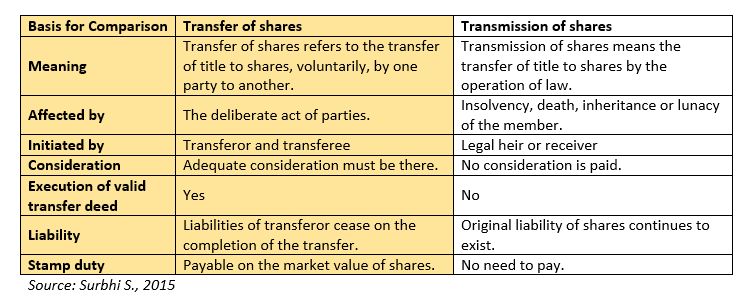
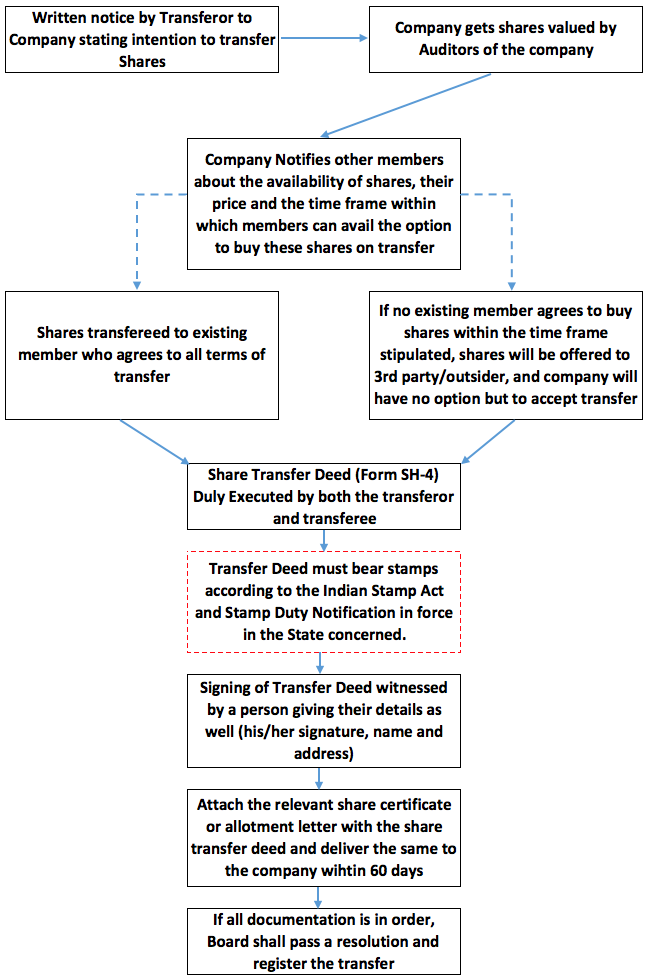
















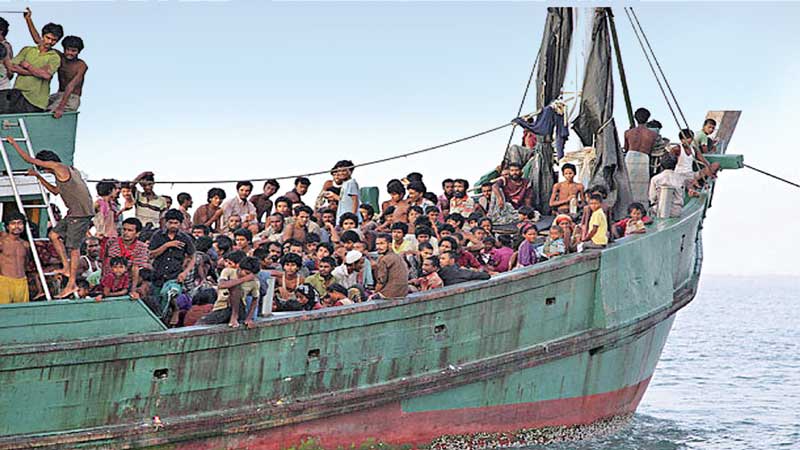






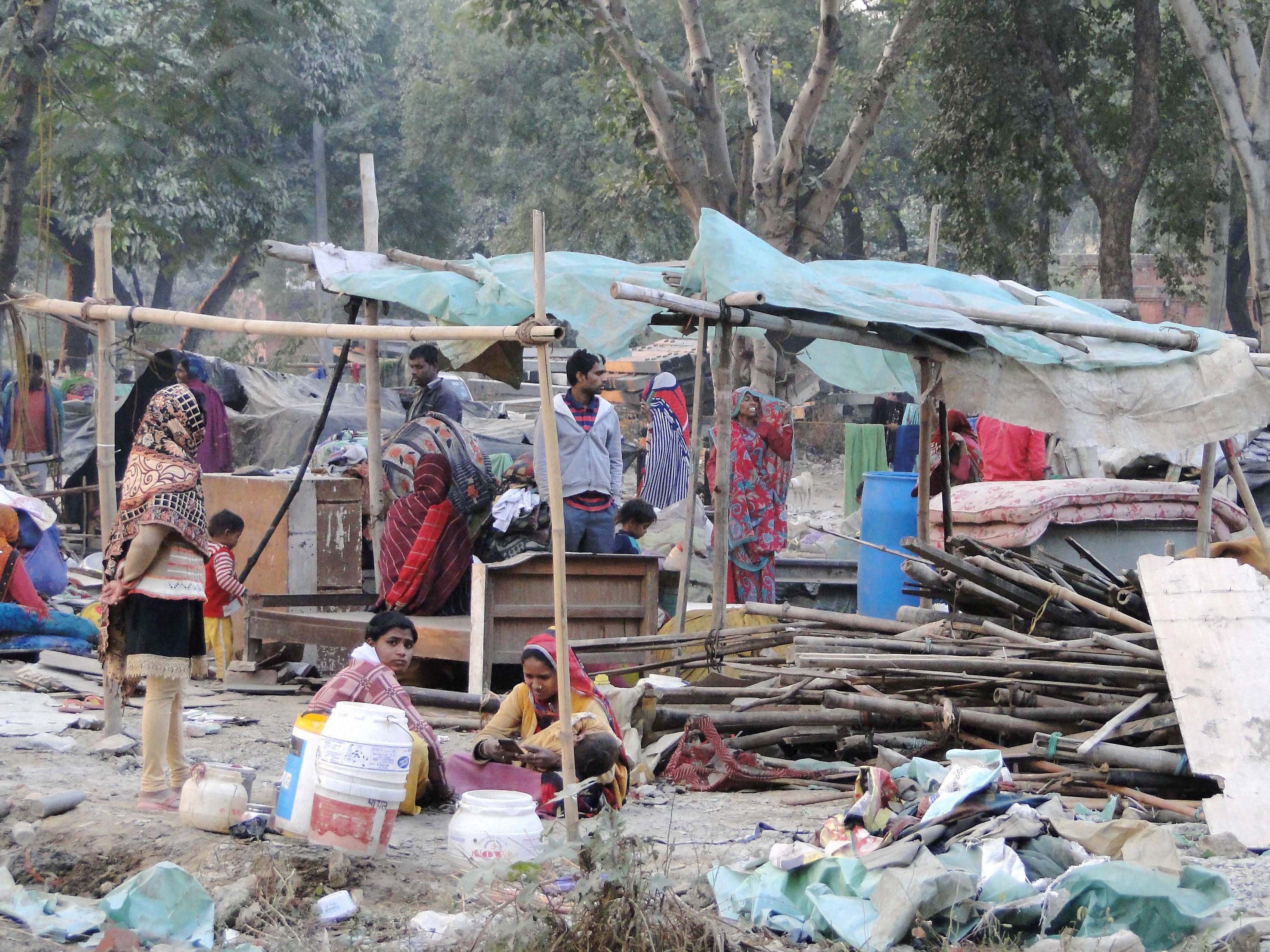
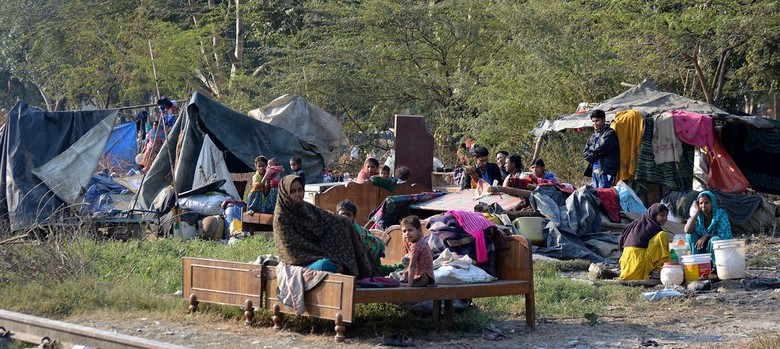




 Allow notifications





