Download Now
Home Blog Page 1710

A Critical Analysis of Building Regulations in New Delhi

0

In this blog post, Shambhavi Kumar, a student of Jindal Global Law School, Sonipat, analyzes the different aspects of building regulations in New Delhi. 

12745836_973229136085387_5201199340001088602_n

Any large scale construction project undertaken in the area of New Delhi must have the following approvals, clearances, sanctions and No Objection Certificates at the five stages of the construction of the proposed project, from the concerned authorities:


PRE-SANCTION STAGE

Project Feasibility

Approvals from the Delhi Development Authority: The Delhi Development Authority must approve the plan for land use of the plot and the Ministry of Urban Development when the land use is shown as Government land in the Master Plan of Delhi[1]. The land use plan for the land area is to be notified by the Ministry of Urban Development after approval from the Delhi Development Authority.63596359478731111843440669_stamp-of-approval-612

When the land allotment letter needs to be changed on grounds of it not being compatible with or permitted by either the Master Plan of Delhi[2] or the Zonal plan, i.e., location of the plot then the land use plan needs to be approved by the Delhi Development Authority followed by a notification from the Ministry of Urban Development.

Construction or augmentation of departmental residential pool accommodations by either a Ministry or a Department requires a No Objection Certificate from the Directorate of Estate in the Ministry of Urban Development. The Central Public Works Department needs an additional, approval for General Pool Residential Accommodation from the Ministry of Urban Development. The case is then forwarded to a Technical Committee of the Delhi Development Authority for approval.

Approval by the Delhi Development Authority and the Ministry of Urban Development is necessary to get relaxations, in public works or projects of national importance, on the grounds of coverage, density, setbacks, Floor Area Ratio, or the height as prescribed in the Master Plan of Delhi[3].

Approval from the Airport Authority of India: If the construction project is located within the 20km radius of an airstrip or funnel, then there is a requirement of a No Objection Certificate on the height clearance of the building, structure or masts included in the plan of the project. This certificate is issued by the Directorate of Air Traffic Management of the Airport Authority of India.

Approval from the Land and Development Office: When land owned by the Land and Development Office, is obtained on a lease and no construction work has been undertaken during the time fixed in the lease allotment letter, then there is a need to obtain a No Objection Certificate from the Land and Development Office.


SANCTION STAGE

Lay Out Plan or Local Area Plan or Urban Design Plan (proposals of a large scale or multi- building projects)

Approval from Local Authority and Body: The Delhi Development Authority, a local authority, as well as, the Municipal Corporation of Delhi or the New Delhi Municipal Corporation, which are the local bodies, need to approve the project under the provisions of the Delhi Building Byelaws, the Master Plan of Delhi as well as the Local Body Acts. In Navin Bhatia and Ors. v. Lt. Governor of Delhi and Ors.,[4] a petition was filed to restrict illegal construction that was completed without a sanctioned plan. The Court held that according to the Municipal Corporation of Delhi Act[5], the layout plan of a project must be approved before starting any construction work. Sanctioning of a layout plan cannot be done retrospectively as it would negate the purpose of such authorisation. permission-clipart-ticketbook

Approval from the National Monument Authority: If the project or even a part of it lies within a radius of 300 meters from the declared boundary of a monument that is protected by the Ancient Monument Act[6] and which is controlled by the Archaeological Survey of India requires a No Objection Certificate issued by the National Monument Authority or the Archaeological Survey of India.

Approval from the Forest Department: If the land use proposal included activities such as tree cutting or felling of trees or transplantation of trees at the site, then it is mandatory to get the approval of the Forest Department of the Government of the National Capital Territory of Delhi.

Approval from the Heritage Conservation Committee: If the proposed land use plan involves or has any link or relation to any of the listed heritage precincts or buildings, which are notified by the Delhi Development Authority, the New Delhi Municipal Corporation, the Municipal Corporation of Delhi from time to time, or have any such heritage site, precinct or building within its compound, then it requires an approval from the Heritage Conservation Committee.

Approval from the Central Vista Committee: If the proposed project lies within the Central Vista boundary in the New Delhi Municipal Corporation, then such a project would require approval from the Central Vista Committee.

Approval from the Delhi Metro Rail Corporation: If the proposed project site lies along or on Metro alignments or falls within 20 meters, on any side of any metro alignment or the Mass Rapid Transit System corridor, i.e., the outside line of any metro line or structure, then it is necessary to get a No Objection Certificate from the Delhi Metro Rail Corporation. In Registrar, University of Delhi v. Union of India and Ors.,[7] all other approvals had been obtained for the construction of a Group Housing project, but the commencement of its construction was delayed due to pending approval of the Delhi Metro Rail Corporation alone.Certificates-attestation-in-Delhi

Approval from the Government of National Capital Territory of Delhi: If a proposed project falls within a radius of 500 meters on any sides of a Major Surface Transport Corridor such as the Bus Rapid Transit System, then there is a necessity of aNo Objection Certificate issued by the Government of National Capital Territory of Delhi.

 Approval from the Road Owning Agencies: If the land use plan includes activities which would result in cutting of a road or footpath, any other service lane or any person’s Right of way or passage, then such a plan would require a No Objection Certificate from the concerned Road Owning Agency, which may be the Delhi Public Works Department, the Municipal Corporation of Delhi, the New Delhi Municipal Corporation or the Delhi Development Authority.

Approval from the Traffic Police: If the project proposal states that it would disrupt the movement of general traffic or the circulation pattern of traffic either temporarily or permanently, either during the construction process or after it, it is important to get a No Objection Certificate from the Delhi Traffic Police.

Approval from the Unified Traffic and Transportation Infrastructure (Planning & Engineering) Centre: If any agency in Delhi has road engineering or infrastructure implications, in any transportation projects and transportation engineering solutions, then it requires clearances from the Unified Traffic and Transportation Infrastructure (Planning & Engineering) Centre of the Delhi Development Authority.

Approval from the Chief Fire Officer: The Delhi Building Byelaws, as well as the National Building Code, stipulate that all land use proposals must, at the layout plan stage itself, require the approval of and a Fire Safety Certificate from the Chief Fire Officer or Director of the Delhi Fire Service[8]. In the case of Gyan Prakash Sharma v. Delhi Development Authority and Anr.,[9] the Court has stated “Bye-laws 6.7.2 and 6.7.3 which clearly postulate that before granting the said permission or sanction the Authority has to seek clearance from Delhi Fire Service or DUAC as the case may be. Refusal or sanction is, therefore, linked with the condition of seeking approval from these authorities…”[10]

 Approval from the Chief Controller of Explosives: If the building that is proposed to be constructed is of a hazardous nature or if it is meant to store or contain hazardous materials then the plan requires the approval of the Chief Controller of Explosives, Nagpur.

Approval from the Chief Inspector of Factories: If the proposed construction is that of an industrial building, then it requires the approval of the Chief Inspector of Factories.Plans-permit

Approval from the Delhi Urban Art Commission: The proposed layout plan must get the approval of the Delhi Urban Art Commission[11] as required by the Delhi Urban Art Commission Act[12]. The necessity of this approval has been reiterated in the case of Gyan Prakash Sharma v. Delhi Development Authority and Anr.[13]

Environment Clearances: All buildings and construction projects that have a proposed built up area of more than 20,000 square meters as well as all area development projects and townships that are proposed to cover an area of more than 50 hectare or a proposed built up area more than 1, 50,000 square meters require environmental clearances issued by the Ministry of Environment and Forests and a State level expert committee[14].


BUILDING PERMIT STAGE

Sanction

Approval from the Local Authority or Body: Local authorities and bodies such as the Delhi Development Authority, the New Delhi Municipal Corporation and the Municipal Corporation of Delhi must approve the building plans and sanction the building permit as provided for in the Delhi Building Byelaws, Local Body Acts and Master Plan of Delhi. The local body must then forward the proposal to various other relevant authorities[15]in the city as may be needed for the grant of approvals and No Objection Certificates necessary for granting of the building permit. In the case of Arvind Singhal v.Max Therapiya Limited,[16] the Court held that the repair and construction work carried out by the defendant, was not sanctioned by the Municipal Corporation of Delhi and was illegal. The Court stated the “In the present case; it appears that the MCD grants no specific written permission. I feel, given facts and circumstances of the present case, the permission of MCD is required.”[17]

Approval from the Deputy Commissioner of Police (Licensing): Proposals that include the construction of an Urban Auditorium, a theatre or a large hall with a seating capacity that exceeds 50 persons and is meant to be used for public amusement requires an approval or a No Objection Certificate from the Deputy Commissioner of Police (Licensing).11build-india28
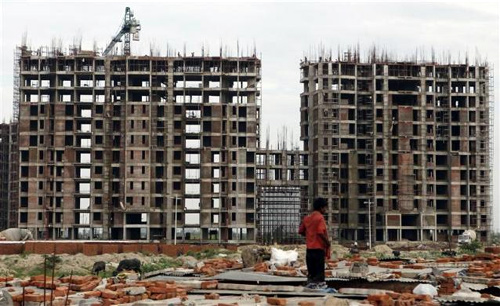
Approval from the North and South Block Advisory Committees: The advice and approval of the North and South Block Advisory Committees is required when the proposed plan involves any alteration or addition to be made to an Urban Development[18] in the area covered by the New Delhi Municipal Corporation since these buildings are deemed to be important heritage structures.

Approval from the Power Distributing and Supplying Agency: The power is distributing, and supply agencies sanction electrical load, electrical substation, and transformers. Additionally, temporary electricity connection is needed before the commencement of construction. To obtain the sanctions mentioned above, the approval of such agencies is essential. These agencies include the New Delhi Municipal Corporation, the Bombay Suburban Electric Supply, and the New Delhi Power Limited.

 Approval from the Water Supplying Agency: Water supply agencies provide water supply, its drainage as well as sewer connections. A temporary connection is needed before construction commences. Hence, the approval of the water supply agencies is required at this stage. These agencies are the New Delhi Municipal Corporation for New Delhi Municipal Corporation area and the Delhi Jal Board for rest of Delhi.


CONSTRUCTION STAGE

Permission from the Central Ground Water Authority: Permission of the Central Ground Water is essential to extract ground water. Such permission is granted according to the guidelines[19] provided by the Environmental Protection Act.[20]constructionimg1_Royaltechinfrastructures

These guidelines govern extraction of ground water by energized means such as digging, or installation of bore wells and for water connections on the project site for the supply of drinking water in both notified as well as non-notified areas for households, industries as well as infrastructure projects.

Intimation to be given to the Local Authority or Body: The applicant who has been granted the building permit must intimate the local Authority or body, in this case, the Delhi Development Authority, the New Delhi Municipal Corporation and the Municipal Corporation of Delhi, in the prescribed written form,[21] seven days before commencement of construction at the project site. The authority or body must acknowledge such intimation before construction is started.

Plinth Level Notice: Submission of a Plinth Level Notice[22] by each owner or lessee is essential. Such a notice should be given to the local authority or body, in this case being the Delhi Development Authority, the New Delhi Municipal Corporation and the Municipal Corporation of Delhi. The Ministry of Urban Development and Poverty Alleviation, of the Government of India, abolished the necessity of C & D Certificates[23]and in its place introduced the process of intimation of completion of the proposed work up till the plinth level.

CERTIFICATE STAGE

Completion-Cum-Occupancy_51760e84-1f3f-11e6-878c-ac18b651cb15
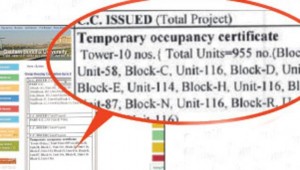
Completion-Cum-Occupation Certificate from the Local Authority or Body: Before the building, or any part of it is occupied, there is a requirement to obtain a Completion-cum-Occupancy Certificate.[24] This certificate is issued by the local authority or body such as the Municipal Corporation of Delhi, the New Delhi Municipal Corporation and the Delhi Development Authority. The proposal is forwarded to the local body to various concerned authorities in the city that needs to issues project-specific approvals and No Objection Certificates that are required for the Completion-cum-Occupancy Certificate to be granted.

Approval from the Lift Inspector: If there are lifts installed in the constructed structure, then it is necessary to get the No Objection Certificate of the Lift Inspector, of the Government of the National Capital Territory of Delhi before the Completion-cum-Occupancy is granted.


Conclusion

In the event of non-compliance with the abovementioned requirements, any construction would be deemed illegal and would need to be demolished as has been held by various Courts in several decisions.

In Dr.Kapil Sethi Vs. Dr. Ajay Gambhir and Ors.,[25] the respondents had raised an unauthorized construction over the sewer lines. They had not obtained permission from either the Municipal Corporation of Delhi , the Delhi Development Authority, or the concerned local bodies, before the construction. The Court ordered the demolition of the said construction on grounds that it was illegal since it was not sanctioned by the relevant authorities.

In the case M.I. Builders Pvt.Ltd v. Radhey Shyam Sahu and Ors.,[26] the Apex Court held that there should be no consideration shown to the builder or any other person in case the construction is not authorized. This holding of the Court has now, almost, become the rule of law.

In Ram Awatar Agarwal v. Corporation of Calcutta,[27]the Court had directed the demolition of an entire multi-storeyed building that was constructed in violation of the relevant building rules.

In the case of Dilip Bhandari v. The Commissioner, Corporation of Chennai, Rippon Buildings,[28] a Madras High Court Division Bench upheld an order for demolition of an illegal construction and stated that construction that is not duly sanctioned or authorized should not be overlooked on account of substantial investment by the builder.

In Palani Hills Conservation Council etc. v. The State of Tamil Nadu,[29] a Division Bench of the Madras High Court directed demolition of a building constructed by a hotel contrary to the plan sanctioned by the second respondent therein.


[divider]

References:

[1] Master Plan for Delhi 2021, Delhi Development Authority, 7 February 2007, reprinted May 2010.

[2] See id.

[3] See id.

[4]Navin Bhatia and Ors. v. Lt. Governor of Delhi and Ors., 2008 DLT 37 150.

[5]Municipal Corporation of Delhi Act, 1957 § 313.

[6] Ancient Monument Act, Act 7 of 1904.

[7] Delhi Metro Rail Corporation. In Registrar, University of Delhi v. Union of India and Ors., 2015 MANU DE 1272.

[8] Delhi Building Bye Laws, 1983 § 6.7.2.

[9]Gyan Prakash Sharma v. Delhi Development Authority and Anr.,2002 DLT 97 205.

[10] See id.

[11] Delhi Building Bye Laws, 1983 § 6.7.3.

[12] Delhi Urban Art Commission Act, Act 1 of 1974.

[13] Supra note 9.

[14] Delhi Pollution Control Committee

[15] As mentioned in Stage II.

[16]ArvindSinghal v.Max Therapiya Limited, 2014 DRJ 146 128.

[17] See id.

[18] An Urban Developmentitorium, a theater or a large hall with a seating capacity that exceeds 50 persons and is meant to be used for public amusement.

[19] Environmental Protection Act, 1986, Guidelines 15 November 2012.

[20] Environmental Protection Act, Act 29 of 1986.

[21] Delhi Building Bye Laws, 1983 § 7.2.1, Form III, Appendix ‘B.’

[22] Delhi Building Bye Laws, 1983, Annexure ‘C’, This includes information regarding completion of proposed work till the plinth level as prescribed in the Performa, supplemented by the stipulated requisite documents, determined fees and charges that are mentioned therein.

[23] Notification no.S-O1154 (E), 21 November 2001.

[24] Delhi Building Bye Laws, 1983 § 7.5.1.

[25]Dr.KapilSethi Vs. Dr. Ajay Gambhir and Ors.,2006 DLT 127 381.

[26]M.I. Builders Pvt.Ltd v. RadheyShyamSahu and Ors,1999 MANU SC0999, para 73.

[27]Ram Awatar Agarwal v. Corporation of Calcutta,1999 SCC 6 532.

[28]Dilip Bhandari v. The Commissioner, Corporation of Chennai, Rippon Buildings,2005MLJ 1 46.

[29]Palani Hills Conservation Council, etc. v. The State of Tamil Nadu, 1995 WLR 2 737.

 

Download Now

B D Thimmaiah, a startup founder on why he did the NUJS online diploma and how it has empowered him

0

IMG-20160731-WA0007

B D Thimmaiah completed the NUJS diploma in Entrepreneurship Administration and Business Laws in 2015. He has done his Bachelors in Engineering from Visvesvaraya Technological University, Karnataka and is currently an Executive Officer at the Advanced Research and Development Corporation (A.R.D.C.). ARDC enables its clients spanning from varied sectors including but not restricted to agrarian and urban sectors; with advanced, cost-effective solutions and research thus, improving their profitability and business productivity. Further, Thimmaiah has always been quite passionate and involved in entrepreneurship; with innovative ideas and a creative streak he has many startups to his credit.

We asked Thimmaiah how the course helped him so far in his career and why he enrolled for this diploma course when he already had a flourishing career. He had very interesting things to talk about his experience with the course. So, we decided to share it with you all as a success story. Over to Thimmaiah:

At the time of joining the NUJS diploma course, I was in the process of setting up my latest venture. Coincidentally, I happen to come across an advertisement of NUJS diploma in Entrepreneurship Administration and Business Laws. As I explored it further, I found it to be quite apt for my needs.

A look at the curriculum and the syllabus assured me that it would give me quite a bit of insight into business laws and the legal scenario in doing business in India. NUJS being one of the top three law schools in India; I was convinced that iPleaders has partnered with one of the best in this field and the flexibility to study at my convenience and the location independent learning, were pivotal in me opting for this course.

My purpose of joining the NUJS diploma in Entrepreneurship Administration and Business Laws was to gain legal knowledge and breadth of the legal system specific to India. Being from a nonlaw background we deal with legal matters almost on a day to day basis, mostly in indirect and often unknown and subtle forms. As an entrepreneur juggling many hats, I had to be aware of the basic laws and legal systems so as to be aware at all times. This course has helped me understand different legal aspects from a technical perspective; of which I did not have the knowledge earlier.

Content wise the course is excellent. It is designed in a manner that a person who is not from a legal background can also follow it easily. I have benefitted the most from the chapters related to Business Structuring and Drafting.

At that time, It helped me in taking quick decisions during the structuring of my business ventures; in small but pivotal decisions like forming an LLP or a Pvt Ltd or a proprietorship, the concept of OPC and its advantages ( This was quite new and even my experienced and seasoned CA too had no idea about it at that time! ).

The Module on drafting helped me understand how agreements are to be drafted and vetted, what are the precautions to be taken, how clauses can be negotiated etc. Down the line, I have drafted quite a few documents thanks to this course, and my lawyers are still wondering how I could manage it so well without their help! They used to be quite surprised when they found my draft quite ‘legal’ in order and form.

This course has empowered me to an extent that it has added on to my persona. Nowadays I not only understand what my legal team is doing, but I also engage in discussions with them regarding different policies, clauses in agreements.. etc.

I have mentioned the NUJS diploma in my LinkedIn profile and I feel that the skills gained from this course have helped me add value to my profile.

I have already recommended this diploma to few of my friends. At any given point of time, if anyone asks me about this course I would be more than happy to recommend it.

I feel this course is for everyone. Anyone who wants to know the basics of business and wants to take his business to the next level would benefit from this course irrespective of their educational background or current sector they are in. It is a course for all who want to have an added edge over life.

Download Now

Who Sets The Bar For Our Education?

1

In this blog post, Disha Pareek, a student of Rajiv Gandhi National University of Law, Punjab, writes about the education system in India and the how it must revamp itself to cater to the ever-evolving youth of India with its changing needs. 

Untitled

From a very long time, we all have had some discussion about the Indian education system. The discord of the people varies from a lack in the educational system to impart proper skill development to having a very strong elementary school education, which is a very basic essential for every individual. All in all, it cannot be denied that our education system does not give space to the students regarding aptitude development and skills exploitation, and the entire educational system has become very mechanical. In today’s era, it is incumbent that revolutionary changes are done in our education system to meet the growing demand of highly skilled people whether it’s Government employees, entrepreneurs, IT graduates, economists and even lawyers.


Who decides what we study?

22-1442916848-13-ugc1

The University Grants Commission (UGC) of India is a statutory body set up in accordance with the UGC Act, 1956 under Ministry of Human Resource Development and is responsible for coordinating, determining and maintaining a minimum standard in higher education. It has 6 regional offices in India. Section 22(3) of the University Grants Commission Act, 1956 which mandates that right to confer any degree, which is previously approved by the central government and is mentioned in this behalf by the Commission by notification in the Official Gazette, will be considered a ‘degree’ in the eye of law.

The University Grants Commission (UGC), so as to ease the procedure to apply for a degree for Masters has provided a list of the degrees for the purpose of Section 22 of the UGC Act, 1956. The following are the degrees in the field of law that are recognized[1]:-

  • Master of Law or Laws (M.L.)
  • Master of Law (L.L.M.)

The University Grants Commission (UGC) has made it compulsory for all universities to secure the permission of UGC six months before starting any new degree course with a nomenclature that does not come under the commission’s list of approved names of degrees. Universities have to adhere to the provisions of the UGC Act vis-a-vis approved nomenclature of degrees and observance of minimum standards of instruction before an award of degrees. If any country violates these provisions it can draw action, including suspension of grants, as opposite to the university or institution concerned.

This step is taken in the wake of the mushroom growth of private universities and deemed universities introducing courses with new degree nomenclatures in a bid to attract students. Problem occurred when students with such unspecified degrees did not find employment. The commission has been, now and then, asking the universities to award degrees which come under the framework of Section 22 of the UGC Act. If a university wishes to award a degree other than the one specified by the UGC, it would need a prior approval before 6 months of starting the same.


Does nomenclature matter?

Taking a cue from the education system abroad, UGC should recognize that name of the course should not matter but time and again, it has denied giving the recognition to courses just because of its name. Rather than doing this, the need of the hour is to judge a course by its credit-worthiness and not the name or label it has.

The UGC should strive to improve the Indian Education system by giving a small contribution so that the students are motivated to pursue their studies and career in India.


NLS Bangalore case

mpaffbanner

NLSIU Bangalore, one of the best law colleges in the country is vying for the University Grants Commission’s (UGC) permission to allow it to award its public policy course students the degree for which they applied in 2014. The story is that NLSIU began a post-graduate course in public policy, for the first time, in 2014. It named the course as the “Master of Public Policy” – a nomenclature which is used internationally in almost all universities. In NLSIU’s case, the total number of students who took admission was 40 and in 2015 it rose to 50.

However, the UGC did not approve the name of the course and wanted to rename as “MA in Public Policy” which means Masters of Art. The college, for this purpose had also set up a committee, around three months ago, with three of the course’s faculty members and several students of the course, to prepare a report for the UGC. The aim was to convince the UGC to accept NLSIU’s original “Master of Public Policy”‘ as the name for the program.

NLSIU had requested the UGC for such permission in 2014 too before starting the program, but the UGC did not grant the permission at the time. The MPP program was as per the global standards and syllabus for such course was unique, with students undertaking unique clinical workshops, research work, and dissertation. The college had hired distinguished professors and academicians for the same. The UGC should, with an open mind, establish better criteria for recognizing a course and should also lay down guidelines keeping in mind the standard of the college.


UGC perspective

In 2013, the UGC had adopted the degree nomenclature recommendations submitted by Indian Law Institute (ILI) Prof Dr. Furqan Ahmad’s committee. Since then, the commission does not allow colleges to award any degrees whose name is not included in the recommended list.The “Master of Public Policy” does not fall in the list.

UGC, after 2013 had become extremely stringent about maintaining uniformity in the application of its rules on degree nomenclatures. “There is a list of specified degrees which the UGC has, which is essential to maintain uniformity and to maintain standards. It poses a great problem for the students when they go from one university to another because the degree awarded must be in the same pattern with that of the other university.”

Any university that wants to award a course in any stream has to take prior permission from the UGC. The UGC is for the benefit of students and colleges and the guidelines of UGC should not be ignored, and universities should honour the authority of UGC as it also aims to make the procedure simple.


Are courses run without UGC recognition legal in India?

Section 22 of the University Grants Commission Act, 1956 confers the power of granting degrees to only those universities established by a central or state act. If any institution/university wants to run a course, a prior recognition or approval by UGC is a must.

The procedure for acquiring such recognition is pretty simple. Firstly, an application with all the details of the said course should be sent to UGC and afterward, an expert team in collaboration with representatives of the institution will hold a meeting. Then, the institutions will be selected who would get UGC’s recognition by decision of the expert committee. The institutions which get such approval will be provided with one-time monetary assistance by UGC. There shall also be the constitution of an expert committee for inspection of such institutions running the courses.


Consequences of violation

Anything which is not legal is illegal. If on inspection, a university found not to be in conformity with the regulations of UGC, the commission may pass an order prohibiting the university from running any such course. UGC must specify the course that a university wants to award. Any university that awards unspecified courses/degrees shall be liable as per the provisions of Section 24 of University Grants Commission Act 1956.


Online education and its importance

online-education

In today’s era, online education or learning through the medium of the internet is very common. Classroom teaching had various limitations like that of location, accessibility, transportation and cost. The most important benefit of online education is the expansion. According to a recent study in the  online learning program, after the United States, India has been reported to have the second highest number of online course enrolments  with more than over 1,55,000 students from the country. Of a total of around 1.2 million students worldwide, 32% are from the U.S while 15% are from India.[2]

Indian education has improved by leaps and bounds, and conventional education system has now become the thing of the past. This  novel concept of accessibility of e-education to anyone at anytime and anywhere is drawing a lot of attention in India. It is benefiting all the stakeholders. The students are benefited by easy availability and more opportunities; the teachers also get to  expand their scope of teaching as they can now teach  internationally. The college or institution that awards such course is the main beneficiary of this.


UGC’s stance on online education

Many universities offer different online courses, but the University Grants Commission, even after so much development in Indian education system has not recognized education and learning through the internet.

There is an urgent need to revamp the procedure and processes of UGC so as to suit to global standards. It’s high time that India realized the importance of education and learning through novel methods because none of the Indian universities can make it to top 100 universities globally due to the over-interference of the commission. The UGC has not been able to deal with the complex emerging problems in the education system, and need is felt to reshape and restructure the commission


De-recognition of the course of Karnataka Open University

In a decision that will badly affect thousands of students and teachers, the UGC has discontinued recognition of all online courses as provided by Karnataka State Open University. UGC faced a lot of criticisms after this step. In another such act by UGC, it denied giving recognition to online courses of different open state universities. The UGC should understand the priorities and it should be progressive and not regressive because offline learning is a passé.


Future prospects

Swayam: The Human Resource and Development Ministry is planning to launch MOOC that is Massive Open Online Course throughout the country. Its main objective is to provide high-quality education relating to different streams and from school level to under and post graduate education.

Another step would be setting up of National Higher Education Authority because UGC has been given blanket powers to regulate the affairs of education and there should be a body to regulate UGC itself. The authority should have the powers of de-recognizing institutions or their courses. It should have a body of experts, scholars, and academicians to evaluate any course, institution or anything of this sort.

Footnotes:

[1] Available at http://www.ugc.ac.in/oldpdf/pub/report/6.pdf

[2] Available at http://24x7learning.com/blog/prospect-of-elearning-in-the-indian-scenario/


Download Now

How To form A Limited Liability Partnership?

1
an LLP

In this blog post, Sunidhi, a student of the Rajiv Gandhi National University of Law, Patiala has written about the advantages of forming an LLP. The blog post explains the procedure to form an LLP in India.

7


Introduction

The Limited Liability Partnership (LLP) was introduced in India in 2008 by enacting the Limited Liability Partnership Act, 2008. This form of business organization is renowned in the world, and now it is establishing its roots in India.

This form of a business organization has mixed features of a Company and a Partnership firm. It is an effort to inculcate advantages of both a company and a partnership firm but to avoid disadvantages of both.  An LLP agreement governs the rights and duties of all the partners. In case there is no LLP agreement then the business organization can adopt the framework laid down in Schedule 1 of the said Act.download (1)

An LLP has a separate legal entity, i.e., an identity different from the partners. Also, it has perpetual succession; its existence is not affected by the dissolution of a partnership, i.e., a partner leaves the business; a new partner is admitted, etc. The liability of an LLP is not more than the assets of the firm, and the liability of partners is also limited to the amount they have agreed to contribute to the business.

There is no maximum limit on the number of partners to form an LLP, but minimum two members should be there to form an LLP. All the partners hold an equal share in the business. All the partners share profits & losses equally and have an equal say in the management of the business. In this form of business organization, there is no mutual agency, i.e., one partner is not liable for an unauthorized act of another partner. In case any partner of the firm indulges in fraudulent practices against customers then the partner(s) who indulged in such activities will bear unlimited liability for such acts. Also, the other partners cannot be sued for the fraudulent acts of defaulting partners. They are secure from legal action against other partners.

Benefits Of Forming An LLP

The LLP accommodates advantages of a company and a partnership firm. The benefits include:

  • The partners do not have unlimited liability. Their liability is limited to the extent stated in the LLP agreement formed by the partners.
  • One partner cannot be sued for fraudulent activities of another partner if he/she was not involved in such activities.
  • The formation cost is low, and the procedure is neither too complex nor very lengthy.
  • The restrictions imposed on an LLP are less than those imposed on a company by the Government.
  • The LLP has a separate identity from its partners. Therefore, the partners are not liable to be sued for dues against the LLP.

The only disadvantage of an LLP is that it cannot raise capital by issuing shares to the public.

Process To Start An LLP

Step 1: Acquire DSC

Digital Signature Certificate (DSC) is a simple digital signature required to obtain DPIN. The applicant can apply online to obtain DSC (https://india.gov.in/apply-online-director-identification-number).  The documents required to acquire it are:

  • DSC Application Form
  • 1 Passport size photograph
  • Address Proof
  • Identity Proof

All these documents should be self-attested.

Step 2: Acquire DPIN

The pre-requisite to form an LLP is Designated Partner Identification Number (DPIN). If the applicant already has a Director Identification Number (DIN), it will serve the purpose. A DPIN can be acquired online as well. To acquire a DPIN, the identity and address proof need to be submitted along with a DPIN form. Also, a passport size photo needs to be affixed on the form, and the applicant has to sign across the photograph. All the documents should be self-attested.Non-Compete

In the case of a foreign applicant, he/she needs to submit passport copy and address proof. These documents should be notarized by Foreign Public Notary or Company Secretary in full-time employment / CEO/ Managing Director of the Indian Company in which he/she proposed to be a director / Consulate of Indian Embassy.

Step 3: Check Name Availability

The applicant needs to submit six names for the LLP. The applicant needs to fill an e-form (Form 1) to check name availability. He/she is also required to specify the meaning and significance of each word proposed for the name of the LLP. The main object of the firm has to be submitted along with the names. The Ministry of Corporate Affairs (MCA) has issued few guidelines for name availability that need to be adhered to by the applicant.

Step 4: Document Submission for Incorporation

If the names have been approved by the Registrar of the companies, then the applicant is required to submit Incorporation Form and Subscription Statement online. The applicant has to register the company within 60 days of name approval. The documents required for submission of Form and Statement are:

  • An LLP agreement needs to be drafted and after being approved by all the promoters, It should be duly stamped. The LLP agreement should be printed on a stamp paper. The amount of stamp paper required varies from state to state.
  • Statement by Promoter (Form 2).
  • Information Regarding the LLP agreement (Form 3).
  • Notice of Consent & appointment of designated partners along with their personal details (Form 4 & 9).
  • Subscription sheet signed by promoters.service-level-agreement_2
  • Proof of Address of Registered Office.

Once all the documents have been acquired by the applicant these need to be submitted to the Registrar of Companies (RoC) and, the fees for registration need to be paid. If the government is satisfied with the authenticity of the documents, then the Certificate of Incorporation will be issued or the demand for some more proofs may be made to ensure the authenticity of documents. Once all the requirements have been met the Certificate of Incorporation will be issued.

The Certificate of Incorporation is the proof that the company has been registered. Once the firm is registered with the ROC, then the LLP formed can apply for its PAN number and open a current bank account.

The Limited Liability Partnership Firm is legally born and ready to start its operation.


Download Now

Procedure for Changing the Name of a Limited Liability Partnership

0
partners

In this blog post, Arushi Chandak, a student pursuing her 2nd Year Student, BA.LLB. (Hons.) from Symbiosis Law School, Pune, and a Diploma in Entrepreneurship Administration and Business Laws from NUJS, Kolkata, details the procedure to be followed while changing the name of a limited liability partnership. 

llp


Introduction

An LLP or a Limited Liability Partnership is a “corporate business vehicle that enables professional expertise and entrepreneurial initiative to combine and operate in a flexible, innovative and efficient manner, as hybrid of companies & partnerships providing benefits of limited liability while allowing its members the flexibility for organizing their internal structure as a partnership”[1], that is, it is a business structure enjoying the benefits of the limited liability of a company and the flexibility of a partnership. It has a separate legal entity, it exists despite any changes in partners, is eligible to enter into contracts and hold parties, wherein partners, both professional and non-professionals, do not hold agreement governs joint liability and mutual rights and duties of the partners.[2]


Naming Convention of a Limited Liability Partnership

As a business model, it gained legislative mandate for its formation and regulation by the Limited Liability Partnership Act, 2008. Section 15 of the Act relates to the name of and a Limited Liability Partnership. It reads as follows:

“(1) Every limited liability partnership shall have either the words “Limited Liability Partnership” or the acronym “LLP” as the last words of its name.

(2) No Limited Liability Partnership shall be registered by a name which, in the opinion of the Central Government is—

(a)  undesirable; or

(b)  identical or too nearly resembles that of any other partnership firm or limited liability partnership or body corporate or a registered trademark, or a trademark which is the subject of an application for registration, of any other person under the Trade Marks Act, 1999 (47 of 1999).”[3]

Often once a name has been finalized by the partners, with changing circumstances, a change in name is required. Section 19 relates to the change of registered name; “Any Limited Liability Partnership may change its name registered with the Registrar by filing with him a notice of such change in such form and manner and on payment of such fees as may be prescribed.”3Rotator_605x250_Gavel

The Ministry of Corporate Affairs in an Explanatory Memorandum to the Limited Liability Partnership Rules[4] explained that in the event of a change in the name of a Limited Liability Partnership, the procedure laid down in the Limited Liability Partnership Agreement is required to be followed. If the agreement is silent on this matter, the consent of all the partners needs to be taken along with checking on the website of the Ministry of Corporate Affairs’ website if the name so wanted is available.

While deciding the name of the Limited Liability Partnership, certain guidelines should be kept in mind. The name of a national hero or the use of a name which suggests state, national or international, patronage or participation in its absence or the use of name or surname which is not of a director or the use of names containing numerals like 19th or prefixing words like new or modern to the name of established and popular firms, national or international is not done. One must also ensure that vague alphabets like AXBYCZ Ltd. or names prohibited by the Emblems and Names (Prevention of Improper Use) Act, 1950 or the words ‘Co-operative’ or ‘Sahakari’ should not be used. In case the business is financial, it’s non-reflection in the name is not permitted. A Limited Liability Partnership should not use general names like ‘Cotton Textiles’ or ‘Silk Manufacturing’ or use words with close resemblance to the names of existing companies in its name.[5]


Procedure for Change of Name

After obtaining the consent of the partners and ensuring that the name is available Form 1; Application for reservation or change of name is required to be filled for name approval along with the following documents:LLP1

  1. Copy of the minutes of the decision/resolution regarding the consent of the partners
  2. The extracts of the relevant portions of the Limited Liability Partnership Agreement, if any
  3. If the change is due to a notification or direction from the Central or State Government or Registrar, a copy of such direction
  4. The LLPIN of Limited Liability Partnership
  5. The name with which the Limited Liability Partnership was earlier incorporated or registered
  6. The grounds of objection to the name of the Limited Liability Partnership incorporated subsequently
  7. Reasons for the change in name

The changed Limited Liability Partnership deed must also be attached. Following this, Form -5; Notice of Change of Name, along with a fee, mentioned in Annexure B has to be submitted to the Registrar. In turn, upon being satisfied by the changed name and documents, issues a fresh certificate of incorporation for the Limited Liability Partnership with the changed name. The name approved shall be available for adoption for only three months. The change name shall only be effective upon the issue of such certificate.[6]

After the fresh certificate of incorporation for the Limited Liability Partnership is issued, the changed name must appear on all official documents of the Limited Liability Partnership along with the words (formerly known as _______________)must appear under the new name of the Limited Liability Partnership.NAMECHANGE-300x300

This current procedure for the process of changing the name of a Limited Liability Partnership is in my opinion adequate for it ensures that no partner is left without a say in the cases where the Limited Liability Partnership Agreement is silent. When the Limited Liability Partnership Agreement provides for a specialized procedure, this process is so created and agreed by the partners themselves. Furthermore, by making the submission of the documents as mentioned above the Ministry of Corporate Affairs has ensured that they are kept in the loop, and no aspects are left hidden. The rules regarding the choosing of a name for the Limited Liability Partnership provide a good guide to partners and help them pick appropriate names. The mandate for mentioning not only the changed name but also the previous name of the Limited Liability Partnership, depicted by the words, ‘formerly as_______’ ensures that investors and other interested persons are aware of such name change of the Limited Liability Partnership.

Therefore, in conclusion, the procedure as mentioned above that needs to be adopted for the process of change in the name of a Limited Liability Partnership must be abided by with strict adherence to the relevant provisions, as mentioned above, of the Limited Liability Partnership Act, 2008.


[divider]

References:

[1]“Ministry of Corporate Affairs – The Limited Liability Partnership Act, 2008”. http://www.mca.gov.in/MinistryV2/llpact.html. Retrieved 2016-05-21.

[2] Section 3 of LLP Act, 2008″. Indian Kanoon. Retrieved 2016-05-21.

[3] Limited Liability Partnership Act, 2008, No. 6 of 2009 http://www.mca.gov.in/Ministry/actsbills/pdf/LLP_Act_2008_15jan2009.pdf

[4] Explanatory Memorandum to the Limited Liability Partnership Rules, Explanatory Memorandum to the Limited Liability Partnership Rules

[5]http://www.caclubindia.com/experts/llp-name-change-1257064.asp

[6]http://www.mca.gov.in/LLP/ChangeCompInfo.html

Download Now

A Voice for the Voiceless: Elephants in Captivity

0

In this blog post, Disha Pareek, a student of RGNUL Patiala analyses the laws that are prevalent to protect elephants in captivity. 

Untitled


It is not only morally but also legally wrong to exploit elephants for anybody’s personal gain. The condition of elephants in India is pitiable; thousands of elephants languish at different places in a pathetic condition where they are chained and captivated for years in unhygienic conditions.

Section 2 (c) of the Prevention of Cruelty to Animals Act, 1960 defines the word captive. “Any animal which is in confinement and is subjected to contrivance for the purpose of hindering or preventing its escape from captivity”[1]

States like Tamil Nadu, Kerala, and Rajasthan, are amongst the top states that are responsible for captivating elephants in circuses and temples. Their abuse and misuse are very common; elephants are kept for degrading things like begging, performing unnatural acts like marching in the wedding procession, walking on roads in hot and cold climates. Around 2500 elephants are held in captivity by private individuals, and they are vulnerable to abuse, confinement, and loneliness.


Problems Faced by Elephants

  • Isolation: Elephants that are captivated are deprived of society and companionship, and they are not properly attended to. Some of them are housed or caged for life, and they are brutally treated by the owners.
  • The Inadequacy of Food and Water: Normally, elephants are provided with sweets and rice which are considered to be very harmful to their health. There is a chronic shortage of water available for them, and the little amount that they get is not potable.
  • Place of Stay: The places where they are kept are like dungeons, which lack hygiene and ventilation. Their training is worth considering as well. Since India lacks proper training centers and trainers, they are subjected to torture, starvation, and beating.


Who Can Own an Elephant

The Wildlife Protection Act makes it illegal to own an elephant as it does not come under the category of pet animals that can be legally owned in India. The Chief Wildlife Conservator of the state has the powers to issue the ownership certificate to those who want to transfer ownership of an elephant since it is not an offense in India by Section 42 of WPA, 1972.

Section 49 of the Wildlife Protection Act prohibits purchasing or acquiring any captive animal in any manner other than a license. In most cases, elephants that are seen in different places like temples, streets, and circuses are illegally acquired, and the perpetrators of such crimes go unpunished.download (2)

Preservation of elephants is a burning topic since the British era before the Constitution came into force. This has been evident through the Elephants Preservation Act, 1879. This act prohibited killing, injuring or capturing elephants except for the purpose of self-defence.

In PETA v/s the state of Maharashtra, the Bombay High Court issued a writ of Mandamus commanding that the elephant ‘Sunder’ be set free and relocated to the Wildlife Rescue and Rehabilitation Center in Bangalore.


Exploitation of Elephants in Temples

In different parts of India, elephants are abused in various religious festivals. The animals are chained, forced to stand for hours in the sun without been given proper food and water, thus, violating Section 11 of the Prevention of Cruelty to Animals Act. Kerala tops the list in exploiting elephants in temples. Kerala has around 700 captive elephants.download

The elephants are forced to parade on the roads in crowded areas with a lot of noise; this is not only harmful to the elephant, but it poses a grave risk to the general public. Elephants that have gone wild have killed a lot of people on the roads. The elephants are rampantly abused in clear violation of different laws like Prevention to Cruelty to Animals Act 1960,

A petition was filed in the Supreme Court by Wildlife Rescue and Rehabilitation Centre in Bangalore. The petition pointed out that mainly temples in Tamil Nadu have hundreds of elephants for this purpose, and they are forced to walk on tarred roads in hot summers. It clearly violates Tamil Nadu captive Elephants (Management and Maintenance) Rules, 2011.


Forced to Beg

Elephants that are forced to beg are continuously exposed to confusing and new traffic. The noises severely damage the ears and overall health of the elephant and the scorching, pothole-ridden roads hurt their body and especially their feet. They suffer from skin diseases, eye infections and diseases of the feet. Elephants need at least 200 kilograms of food and 150 litres of water daily, but working elephants often receive too little food and water.[2]

In nature, elephants are highly social creatures that live in close-knit, social environment. Cubs are looked after not only by their mothers but also by other female elephants. In captivity, baby elephants are separated from their mothers at the age of 3. Captive settings cannot provide elephants with an exciting, stimulating and rewarding environment.


Circus Elephants

Circus is a place which is for the entertainment of general public, but it is no less than torture to innocent animals that are used as tools for humans. Cruelty and coercion are an inherent part of the circus industry.images

The circuses do not have satisfactory regimes for care and safety of elephants. But in 2013, after a proper investigation by the Animal Welfare Board of India, it had decided to stop registering elephants under the Performing Animal Rules.


Laws Governing Captivity

Abuse of animals in any form is a punishable offense under the Prevention of Cruelty to Animals Act, and since the act defines captivity and makes it punishable, the person who is involved in the act of captivating an elephant will be liable to pay a fine of Rs 50. Section 11 of the act makes transportation of animals a punishable offense with a fine of Rs 100 or a 3 -year term imprisonment.

As per the provisions of the Act, it is illegal to override, overdrive or overload animals. The owner will be held liable for not providing adequate food and water to the animal.images (1)

The Constitution of India

The most important document that is the Constitution has provisions regarding animal abuse. Article 21 has an expansive interpretation; it provides liberty to individuals to take care or feed animals and also provide shelter to the homeless animals as the basic right.

As a fundamental duty of every citizen of India, Article 51A (g) of the Constitution obliges every citizen to protect and improve the natural environment which includes forests, lakes, rivers, and wildlife and to have compassion for living creatures.

Section 226 of the Constitution confers on the High Court the power to issue different writs.

Indian Penal Code

It is a cognizable offense under the IPC to cause injury and cruelty to any animal by Sections 428 and 429.

Section 503 is an important provision since it makes intimidation, a criminal offense. Here, intimidating means threatening a person who takes care of animals. Anybody as a right can take care of animals and could not be stopped by anybody. But if someone tries to intimidate an animal lover he can be made liable under this act.


Real Stories

  • The heart-wrenching cries of ‘Raju’: An elephant Raju, who was kept in chains for nearly 50 years in the state of Uttar Pradesh by a drug-addict for the purpose of begging. He was regularly beaten and abused and even starved since the time he was a baby; it only ate paper and plastic for survival. He has been freed, but he suffers from arthritis and chronic wounds all over his body. The volunteers of an organization got a court order by UP Forest Department.download (1)
  • Captivity in South India: The practice of captivating elephants in Southern India dates back thousands of years, it is similar to a status symbol for them. But mostly it is used for temple festivals. The state has as many as 700 captive elephants. The elephants are forced to walk and parade for hours with lots of people and fireworks which are not music to their ears. These elephants are forced to overwork and ride people all day long. The Animal Welfare Board of India filed a complaint regarding the cruel treatment of elephants in the Thrissur Pooram festival. The animals found by the organization were in chains and were made to stand for hours. The Supreme Court of India directed that no owner, organizer or temple will treat an elephant with cruelty and the offender shall be made liable for the offense.


Conclusion

Protection of animals is crucial because they are mute spectators of cruelty and they cannot speak for their rights. The Prevention of Cruelty to Animals Act was enacted so that rights of animals could be properly restored, but as time passed, it has been realized that there are various loopholes in the act. No provision specifically talks about the captivity of elephants and even after the Supreme Court’s directive to not issue a license for elephants in captivity for its use in temples, circuses or zoos; its implementation is hardly felt.

So the need of the hour is to protect elephants from the perpetrators of such crimes because animals are the most innocent creatures from God.


[divider]

Footnotes:

[1] Available at http://envfor.nic.in/legis/awbi/awbi01.html

[2] Available at http://www.petaindia.com/issues/animals-in-entertainment/

Download Now

Mercantile Law And It’s Sources

0

In this blog post, Sunidhi, a student of the Rajiv Gandhi National University of Law, Patiala has written about Mercantile Law of India. The blog post highlights various sources of Indian Mercantile Law.

7

Introduction

Mercantile law or commercial law is the law that regulates commercial activities of the economy. It is a very wide term and all the laws that regulate commercial transaction in India are covered under its ambit. The pre-requisite of such transaction is a valid agreement between the parties to the contract. It can either be express or implied.

It is concerned with the rights and obligations of traders arising out of the commercial transaction. The trader can be an individual, partnership firm or a company. All the Acts in India that govern trade or commerce are part of Mercantile Law of India. For example, Indian Contract Act, 1872; Sale of Goods Act, 1930; Companies Act, 2013;, etc.


Origin

MercantileLaw

The Mercantile Law in India developed with the enactment of the Indian Contract Act, 1872. Before this, all the commercials transactions were governed by the personal laws of the party to contract. For example Hindu Law, Mohammedan Law, etc. The first attempt to codify Mercantile Law in India was made by the Britishers in 1872 by the enactment of Indian Contract Act. Since then, numerous laws have been enacted in India to regulate commercial transactions, such as Partnership Act, Negotiable Instruments Act, etc.


Sources Of Indian Mercantile Law

The Indian Mercantile Law has developed from many sources. The following are the main sources of Indian Mercantile Law:

  • English Mercantile Law:

The Indian Mercantile Law owes its origin to the English Mercantile Law. For a very long time, India was under the control of Britishers. Therefore, it has a direct influence on Indian law, and Indian Mercantile Law is no exception to it. The dependence of Indian Law on English Law is so high that, in the absence of any provision related to the issue in question, the direct recourse is to refer to the English Mercantile Law. The sources of English Mercantile Law are Common Law, Equity, Law Merchant, and Statute Law. The Common law of England or the judge made law is the preliminary source of Indian Law. It is the unwritten law of England that consists of judicial decisions and customs. With the passage of time, this law became rigid. This rigidity led to the development of Equity in England.

The remedy under Common Law was available by obtaining writs, but the writs were very specific and less than required. This led to dissatisfaction among people. And in many cases, the remedy under Common Law was not adequate. So, the people would appeal to the King. The King transferred the cases to the Chancellor, who would decide those cases by his common sense, natural justice, and conscience. This led to the development of Equity Courts. Law Merchant is the law that consists of the principles developed out of the principles of customs and usages. This ultimately became a part of Common Law of England.

Statute law is the written law of England enacted by the Parliament of England. This written law always overrides the unwritten law i.e. Common Law and Equity. It is one of the very vital sources of Mercantile Law of England. For example English Partnership Act, 1890, Sale of Goods Act, 2015, etc.

  • Acts enacted by Indian Legislature:

The greater part of Indian Mercantile law is Legislature enacted. The Acts enacted by the Indian Parliament are that source of law which makes it possible to bring uniformity in Indian Law. Changes can be brought in Indian Law effectively by legislative enactments.


  • Judicial Decisions:

Judges interpret the law and put life into the black and white letters of law for its effective implementation. The decision of judges is binding on all subsequent decisions unless overruled by a higher court or a larger bench. For example, the decision of a High Court is binding on all the lower courts under its jurisdiction, and the decision of a Supreme Court is binding on all the courts of India except for the Supreme Court itself. The decision of the Supreme Court has persuasive value for the same bench, but it has binding value in the case, a larger bench gave the earlier ruling.

Law-Judgement

The doctrine of the binding value of earlier judicial decisions i.e. the precedent is followed to maintain uniformity in delivering justice. Whenever the law is silent on a certain issue, then the judges interpret the law in such a way that the yawning gaps in the law are filled to ensure justice. The precedents have binding value to ensure that no two alike cases are decided on two different principles as this will result in injustice to some. This principle ensures justice for each and every individual along with a measure of certainty for the law itself.

Before independence, the decisions of Privy Council were binding on all the lower courts as it was the highest court of Appeal for Indians. At present, the Supreme Court of India is the highest court of Appeal, and its decisions are binding on all the courts of India. But even today, the decisions of Privy Council and House of Lords are referred to as precedents in deciding certain cases and in interpreting certain statutes in India.


  • Customs and Trade Usages:

Customs and Usages had played a very vital role in regulating the commercial transactions in India when there was no codified law. In fact, the codified law of India has given superseding powers to the customs and usages. For example, Section 1 of Indian Contract Act states, “Nothing herein contained shall affect any usage or custom of trade not inconsistent with the Act.”[1] A custom becomes binding when certain pre-requisites are fulfilled. For example, antique, reasonable, consistent with law, not against public policy. Then, the custom is recognized by courts, and it becomes a legal obligation. Hundi is the best example of this, and it has been recognized by the Negotiable Instruments Act as well.

The need for mercantile law is felt when a dispute arises between the two parties to the contract. Awareness about the law of the land is essential as ignorance of law is no excuse. Therefore, each and every individual should have knowledge of the mercantile law of their country. In the absence of knowledge, no rights can be enjoyed, and no obligations can be met.

Footnote:

[1] Section 1, Indian Contract Act, 1872.


Download Now

India’s Inclusion In the MTCR Group Of Countries

0

In this blog post, Pranav Rudresh, a student of Lloyd Law College, Greater Noida, and currently pursuing a Diploma in Entrepreneurship Administration and Business Laws by NUJS, Kolkata writes about India’s recent inclusion in the MTCR group of nations and the bright prospects it brings.

IMG_20160415_145319347-e1461738121934-768x1024


Introduction

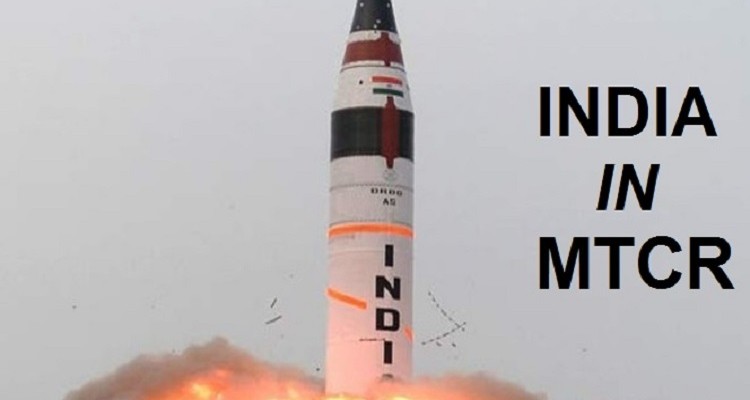
It was in the news for a long time recently that India failed to make it to the NSG (Nuclear Suppliers group) as China blocked India’s way by using its Veto power. However, Indians had something to feel proud of as India successfully entered the MTCR (Missile Technology Control Regime) group of nations of which even China is not a part; with primary support from USA, France, and other powerful nations. Now the important questions are, what advantages will India have after being a permanent member of MTCR and will it help India grow into a super power?

mtcr-india

Let’s start explaining what MTCR is. MTCR stands for Missile Technology Control Regime. It was established in the year 1987 by the G7 nations namely The United States of America, Great Britain, Japan, Germany, Italy, Canada, and France. MTCR is a voluntary association of nations which aims to check the proliferation of nuclear missile and UAV (Unmanned aerial vehicle) such as drones capable of carrying mass destruction weapons. To speak more precisely, MTCR is one of the 4 global nuclear proliferation groups[1] to check the transfer of nuclear missiles and UAVs capable of carrying a payload of 500 kg weight and 300 km range.

To join MTCR, India had put its official application in 2015 which was then blocked by Italy, the reason being the arrest of two Italy fishermen. With the Indian government releasing the fishermen back to Italy, India’s path to joining MTCR was clear. It was on 27th June 2016 that the Ministry of External Affairs announced that India had joined the MTCR as the 35th member. It is interesting to note that China is not a part of MTCR and has been trying to be for a very long time. With New Delhi joining the club ahead of Beijing, it surely gives India an upper hand over China while it also gives an opportunity to India to bid more confidently for the NSG group.

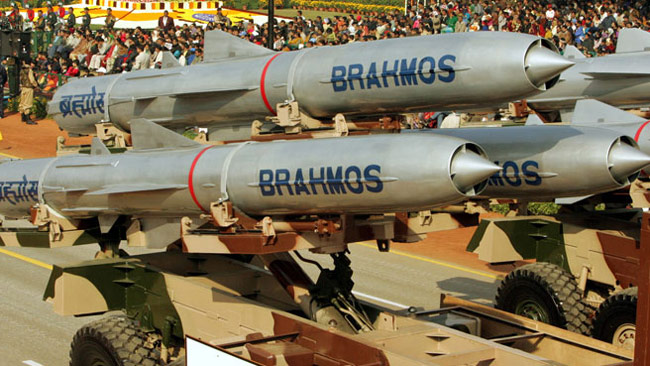
Let us now try to understand what other significant advantages India will have, being a member of the MTCR. So far India was not able to buy high-end missile technology from Russia or any other powerful nation. India’s bid to buy a cryogenic engine from Russia during Cold War had failed as India was not considered qualified for this group. With the permanent seat in MTCR, India’s bid to develop cryogenic engine will progress and India can enhance its space exploration abilities. Also, India will now have the license to sell the BrahMos[2] Missile to Vietnam, who has shown a keen interest in buying it.

Let’s take a look at few other interesting points about India’s entry in MTCR.

  • Access to high-end missile and drone technology:

With an entry in MTCR, India will now have access to high-end missile technology. With increasing threats like cross-border terrorism and rising tensions on international borders with nuclear-powered nations like China, Pakistan, etc., India aims to increase its Ballistic Missile Defence System[3]. It will also enable India to buy drone technology and the UAVs which is being considered of high importance for border surveys and tactical terrorism operation. India is willing to buy at least 40 drones, which include high-end tech drones such as Global Hawk from the USA at the earliest. The USA drones became famous after their successful anti-terrorist operations in Iraq and Afghanistan. The drone technology is being considered of real importance for India to make it future ready.

  • Boost to “Make in India” campaign and foreign policies of India:

India’s inclusion in the MTCR is also a big boost for Prime Minister Narendra Modi’s ambitious “Make in India” project as the technology made in India under the campaign could be shared with other nations in the future. India’s MTCR aims will also include improvement of foreign policies, especially towards the People Republic of China which has been standing as an obstacle; blocking India’s entry in the 48 member proliferation group named NSG. China’s application in MTCR is still pending, and India faces the same case in NSG. With the permanent seat in MTCR, India can negotiate with China over this issue.

  • Export of missile technology:

brahmos_650_070914011152

India and Vietnam have been discussing the trade of world’s fastest supersonic cruise missile which has been developed by a joint venture of India and Russia named the BrahMos. Apart from Vietnam, many other nations such as Australia, South Africa, etc. have shown interest in buying this missile technology from India. For Vietnam, BrahMos can be a great asset as Vietnam has been continuously involved in a war with China over the issue of the South China Sea. MTCR now allows India to adopt a set of international level practice to share this technology capable of mass destruction. The export of this missile is, however, a matter of discussion as the range of BrahMos is reportedly just a touch lower than that required under trade policies of the MTCR. Although if India can transfer this technology to other nations, this might be a big boost to India’s financial and foreign trade policies.. However, at the same time, India needs to be careful about the Indo-Sino or Indo-Russia relations.

Conclusion

India has been looking for a permanent seat in many global nuclear proliferation organizations such as the NSG, the MTCR and so on. India was recently denied the NSG seat due to China and several other countries who believe that India doesn’t deserve to be a part of NSG as it has not signed the NPT (Nuclear Non-Proliferation Treaty)[4]. The news of India’s inclusion in the MTCR, however, brings relaxation for us as we have been trying hard for it for a very long time. It also now gives India a chance to negotiate its deal with China upon the seat in NSG as China’s application in the MTCR is still pending.  Let’s just hope that the MTCR seat brings some real bright prospects for India and helps it grow as a super power in the coming future.

Footnotes:

[1] Other 3 global nuclear proliferation groups are namely the NSG (Nuclear Suppliers group), the Wassenaar arrangement and the Australian group

[2] BrahMos is a supersonic cruise missile developed under joint India-Russia venture.

[3] The Ballistic Missile Defence system is developed under the Ballistic Missile Defence program which aims to make missile technology for Indian army. The DRDO has developed missiles such as Agni, Prithvi, Trishul, etc. under this program.

[4] See: https://www.iaea.org/publications/documents/treaties/npt for details.


Download Now

An Analysis of Smoking Laws in India

4

In this blog post, Disha Pareek, a student of RGNUL Patiala critically analyses the smoking laws prevalent in the country. 

Untitled


Introduction

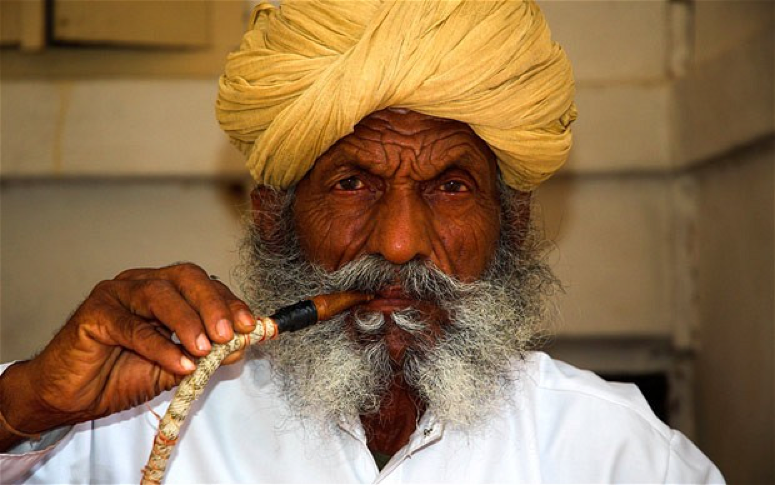
Hookah culture in India isn’t a new concept but has been prevalent since the Mughal period. Today, many big chains of hotels, restaurants, bars and cafes openly serve hookah, and it is as of now, more of a fashion statement than an addiction. Earlier, the villagers in the name of tradition smoked hookah not as custom but as a sign of prestige and royalty.


What is Tobacco?

The World Health Organisation (WHO) defines tobacco as a product that contains “nicotine”, which is the most addictive psychotropic substance. Tobacco products are made entirely or partly of the leaf of the tobacco plant (used as raw material), and they can be smoked, sucked, chewed or smothered.[1] Picture4

Smoking tobacco is a fashion in India. According to Global Adult Tobacco Survey (GATS) India, in the year 2009-10, nearly 35% Indians consumed tobacco in various forms.

It was earlier believed that only cigarettes contained tobacco, but the truth is that tobacco is consumed in various forms. Earlier tobacco was consumed in bidis or hand rollers, but now tobacco is sold under different names like hookahs, pas masala, etc. A report by WHO says that around 12% of world’s smokers are Indians.[2]


How can a Person Apply for a Retail Tobacco License

If any person wants to sell tobacco products in retail, he has to apply for a tobacco license, and it would be specifically for one outlet. There is a whole different process for a registered company or a sole proprietorship. Getting a retail license and tobacco permit is a must for opening a hookah bar as well.[3]


Present Indian Law on Anti-Smoking

Hookahs come within the ambit of Section 3 of Cigarettes and other Tobacco Products (Prohibition of Advertisement and Regulation of Trade and Commerce, Production, Supply, and Distribution) Act, 2003.[4] The current laws on the legality of hookah parlors should be kept in mind for various groups including those who want to open such a lounge or a person who simply wants to consume hookah.

  • As per the COTPA Act, 2003, smoking (in any form) is prohibited in a public place.[5]
  • There is also a prohibition on the direct and indirect advertisement of the same.
  • There is also a provision in the act which mandates that tobacco should not be sold to a person under the age of 18 years.[6]

There are other laws as well that asks for non-smoking in India. The first being The Indian Railways Act, 1989 which prohibits smoking in any compartment of the train[7]. Secondly, the Workmen’s Compensation Act, 1923[8]  aims at protecting the rights of the employees, and by which the employer is liable to compensate the employee where they are exposed to toxic chemicals by way of smoking. Other than the laws mentioned above and regulations, even the Constitution of India; Preamble, Fundamental rights, DPSP comes into the picture.


Laws Relating to Anti-Tobacco in the Indian States

Different states in India by their state laws have banned smoking. The first in this list is Chandigarh from the year 2007. This was a major step, and many other states took a cue from the initiative.  Authorities even used Section 144 of Criminal Procedure Code to ban smoking. Let’s look at the other states where smoking is banned.  Picture2

  1. Delhi: A person cannot smoke in public places, in public vehicles or at a public work. If anybody is caught in the act, the person shall be punished with a fine extending to two hundred rupees or more under the Cigarettes and other Tobacco Products Act, 2003. There is a prohibition on advertising and selling tobacco to a minor or near an educational institute. All the above offenses should be punishable with fine which may extend to five hundred rupees and in the case of a subsequent offense shall be punishable with imprisonment which may extend to three months or with a minimum fine of five hundred rupees but may extend to one thousand rupees or both. The law which is an application to the National Capital Region is the Delhi Prohibition of Smoking and Non-smokers Health Protection Act, 1996.
  2. Maharashtra: The state does not have a separate law of its own, but it has the Maharashtra Opium Smoking Act wherein, whoever smokes opium shall on conviction be punished with an imprisonment for a term which may extend to six months or with a fine which may extend to one thousand rupees or with both. But, in the year 2011, the State Government banned the operation of hookah bars in the state after the case of Robusta v. The Commissioner,[1] in which the petitioner did not get a license. In a very recent Supreme Court ruling after separate appeals filed against the decision of three High Courts banning hookah bars in Gujarat, Madras and Mumbai, the Apex Court took a liberal view in Narinder S. Chadda and Ors v Municipal Corporation of Greater Mumbai[2]and lifted the three-year- old ban on hookah smoking.
  3. Haryana: Considering the harmful cancer-causing effects of tobacco in the country, the state completely banned the sale and manufacture of all products containing tobacco. [3]
  4. Punjab: The Punjab government was to implement the COTPA Act, 2003 in the state and in that regard the government notified the Central Act COTPA, 2013 in its state gazette in the year 2004. Other than that, a tobacco control cell has been set up. This was a major step since the menace of drugs and tobacco is prevalent in the state, and a small glimpse is seen in the movie Udta Punjab.

Although, banning the consumption of tobacco has not been successful, yet some states like Rajasthan, Goa, Tamil Nadu and Meghalaya have with the help of NGOs and other commissions have succeeded in the banning the consumption of tobacco as they have constantly been working towards the path of achieving full-fledged tobacco control.


Non-Tobacco Hookah

Picture3Hookahs which contain alcohol are prohibited under COTPA Act, 2003 but now even flavored, or herbal hookahs are also available which do not contain nicotine (cancer-causing substance) and as a relief to restaurant operators they can legally open herbal hookah bars/lounges.

They are not covered in the ambit of Cigarette and other Tobacco Products Act, 2003.  Amid this discussion came a ruling of the Delhi High Court,World Lung Foundation, South Asia v. New Delhi Municipal Council,[4] in which the court ruled for National Restaurant Association India (NRAI) and held that herbal hookah flavors would not be considered as tobacco as prescribed in the COTPA Act, 2003. The court also opined that the restaurant owner could legally provide the services of a nicotine-free hookah without any legal barrier.


Section 144 of the Criminal Procedure Code

Section 144 is amongst the wide powers conferred upon the executive magistrate in dealing with emergent situations in a specific locality or a town when there is a nuisance or some danger, and the court can order restraint on the personal liberty of an individual.[5] And in various states, this power was used to curb hookah bars. As the commissioner of Gurgaon invoked Section 144 and was followed up by an immediate effect.

However in the case of Restaurant and Lounge Vyapari v The State of MP,[6]the court held that the seizure of hookah bar is not permissible even by Section 144 of the Cr.P.C. and the powers under this section cannot be used in an arbitrary way.


Judiciary and Hookahs: Legality of Hookah Parlours

Since the inception of the hookah culture in India, it has been seen in a spate of controversies. And now and then, some or the other states put a ban on sale and consumption of hookahs.Picture1

In Titanic v. Dy Police Commissioner[7] the court opined that children below the age of 18 are attracted towards hookah bars, and therefore it put a ban on the consumption of hookah in restaurants.

In a very recent Supreme Court ruling after separate appeals filed against the decision of three High Courts banning hookah bars in Gujarat, Madras following the Bombay High Court verdict in cases Titanic v. Dy Police Commissioner[8]and Robusta (Hyglow Cafe)v. The Commissioner Corporation of Chennai and others,[9]Appeals were referred to the Supreme Court. The Apex Court took a liberal view in Narinder S. Chadda and Ors v Municipal Corporation of Greater Mumbai[10]and lifted a three-year- old ban on hookah smoking.


Conclusion

There is a thin line of distinction between a liberty and license. And when liberty becomes license, dictatorship is near. There is a huge difference between a law on paper and in reality. Although age restriction is there in the law very rarely, this has been followed. There must be some valid reason to ban the consumption of hookahs, mainly because many times they contain an excessive amount of nicotine. There is an easy access of hookah to children below the age of 18 in our country.

Moreover, the legal procedure for acquiring a license for establishing a hookah bar depends on the money quotient, meaning thereby that anybody who can pay a lot of money can easily open a lounge. More or less, the procedure nowadays has become very easy, and just by obtaining a Trade License from a local authority one can set up his hookah parlor.

But looking at the present scenario of India, the need of the hour is that law should meddle whenever the legal procedure hasn’t been complied with so that only those people consume it who are legally authorized to and who know about the consequences of their respective acts. But, simply banning something would not help, it could further aggravate the situation as it leads to curiosity in the minds of children and youth, and they might try to opt for an illegal way of doing that.


COTPA (Amendment) Bill, 2015

The COTPA (Amendment) Bill, 2015[11] has been proposed by the Ministry of Health and Family Welfare so as to amend certain provisions of the current law.

  • If anyone is found to be smoking in restricted areas, the penalty will be Rs. 1000 as against Rs. 200.
  • The seller should put a specific warning or else will incur a fine up to Rs. 10000 or a 1- year jail term.
  • The minimum age has been increased to 21 years by this bill.
  • The Ministry while pointing out the spitting of tobacco products as the biggest cause of tuberculosis and H1N1 virus proposes to ban spitting on roads.


[divider]

References:

[1] WP No. 16881 of 2011

[2] AIR 2015 SC 756

[3]http://haryanahealth.nic.in/menudesc.aspx?page=315

[4] W.P. (c) no. 4579/2012

[5] Section 144, Cr.P.C, 1973

[6]W.P. No 15487 of 2014

[7] SCA no 8573 of 2011

[8]Ibid

[9] WP No. 16881 of 2011

[10] AIR 2015 SC 756

[11]http://blogs.bmj.com/tc/files/2015/02/COTPA-Amendment-Bill-2015.pdf

[1]http://www.who.int/topics/tobacco/en/

[2]http://www.mapsofindia.com/my-india/government/amendments-proposed-in-anti-smoking-law-in-india

[3]https://licences.business.gov.sg/SHINE/sop/WebPageHandler?p=OASIS&pn=SelectLicences&ss=FAQ&LicenceID=1019

[4] Section 3 of COTPA Act, 2003

[5] Section 4 of COTPA Act, 2003

[6] Section 6 of COTPA Act, 2003

[7] Section 167, Indian Railway Act, 1989

[8] Section 3, Workmen’s Compensation Act, 1923

Download Now

A practising company secretary, on why she enrolled for the NUJS diploma and how it is enhancing her skills

0

IMG-20160730-WA0014

Janaki Shinkre has her independent practice in Goa. She did her LLB Hons from Goa University and is a qualified Company Secretary and a member of The Institute of Company Secretaries of India. She is passionate about social causes and innovation in education. She has started a social initiative named Eager-i which works with village students to make studies interesting and easy to comprehend for them.

We asked her why she chose to do a diploma course after LLB and CS and she had very interesting things to talk about. We decided to share her experiences with the course with you all. Over to Janaki:

I am passionate about education; after I completed CS I wanted something to fill the gap. I was not in touch with practice as I was concentrating on my CS studies. I wanted some skill based training and took to the internet to search for an appropriate course. I came across the advertisement of NUJS Diploma in Entrepreneurship Administration and Business Laws and liked the course structure. I signed up for the 5-day free material and I was impressed with the material I received and decided to enroll for the course.

I felt there is a gap between the application of knowledge and what is taught in law school or even CS. I was looking for something which would help me to put the concepts I learned into practice.

Initially, I was apprehensive about how effective an online course would be, but the material is written very well. I have gone through a lot of courses and I can certainly say this in comparison. It’s Readable with a very friendly approach. When I read it, it’s like someone talking to me and explaining concepts to me.

Content wise the course is very good. Especially the chapters related to Foreign Direct Investment and Labor Laws. The concepts were put in a really understandable way. Short and crisp information with important points regarding all Labour acts are given. Investment and structuring business were other modules which I found very beneficial and insightful.

I  have read most of these concepts in CS but didn’t know how to use them effectively  or put them into practice. The NUJS diploma is giving me that practical knowledge. Now, I can talk to my clients and explain them these concepts in a practical manner with examples.

I even appreciate the way the assessments for this diploma course are designed. The assessments are conducted in a very constructive manner. Tests are very analytical, they check how much you have understood a topic rather than fire an answer. You cannot mug up and clear the tests without understanding the topics.

The part of the assessments where we have to write researched articles on assigned topics gave me the confidence to write on technical subjects. Although I have been a writer of blogs and stories, I avoided writing on technical subjects. This helped me develop my legal writing skills. Now I have published my articles in a newspaper and a business magazine.

I’m passionate about education and innovation in education. In future, I plan to take up teaching. This course has introduced me to the skill of talking about complex subjects in a simple way and this would definitely come handy in my future teaching role.

I would recommend this diploma to anyone who is willing to enhance his/her knowledge and looking for career advancement. Entrepreneurs, startup owners, lawyers, law students or anyone who wants to gain some knowledge about law. Anyone who is into business or wants to do business can also benefit from this course. Since this course deals with business laws its good for MBAs too.

Download Now
logo
FREE & ONLINE 3-Day Bootcamp (LIVE only) on

How Can Experienced Professionals Become Independent Directors

calender
28th, 29th Mar, 2026, 2 - 5pm (IST) &
30th Mar, 2026, 7 - 10pm (IST).
Bootcamp starting in
Days
HRS
MIN
SEC
Abhyuday AgarwalCOO & CO-Founder, LawSikho

Register now

Abhyuday AgarwalCOO & CO-Founder, LawSikho