Download Now
Home Blog Page 1722

Rights Of Child Born Out Of A Live-in Relationship

3

This article has been written by Saanvi Singla, University Institute of Legal Studies, Panjab University and Sukriti Mathur. It discusses the rights which are available to children born out of a live-in relationship in India. 

Introduction

“Live-in relationship” in simple terms is a relationship in which both partners enjoy their individual freedom and live in a house together without being married to each other. It involves a stable and peaceful co-habitation between two partners without any responsibilities or accountability towards each other. In such a case, no law ties the two people who are living together, and they can leave any time they like without any consequences.

There is no proper legal definition of a live-in relationship and due to this reason the legal status of such a relationship is dubious. The Indian law does not provide any rights or obligations of the parties who are in a live-in relationship. The status of the children who are born as a result of such a relationship is also not clear and due to this reason the courts have provided a description to the concept of live-in relationships through various judgments in the past few years. The courts have liberally stated that any man and women who are cohabiting since a long time will be presumed to be legally married under the law unless it is proved to be contrary.

Laws of Live-In Relationship in India

As of now in India, there are no specific laws related to live in. The top echelons in Indian culture are increasingly accepting of live-in partnerships, but the middle class remains under cultural expectations, and the same cannot be seen in this strata of society. While some countries have recognized the concept of a live-in relationship and given it legal legitimacy by creating the concept of “registration” of a live-in relationship, which is nothing more than a cohabitation contract, others have not. Countries such as Canada and China use this technique.

Despite the fact that live-in partnerships do not have legal status or recognition, this concept is slowly gaining traction and is reflected in recent legislative advancements. The Malimath Commission for Criminal Justice Reform (see here ) was established by the Supreme Court in 2003. According to the report submitted by this Commission: “The definition of ‘wife’ in Section 125 should be changed to include a woman who lived with the man as his wife for a reasonable period of time during the first marriage’s subsistence.”

A female live-in partner has the right to demand alimony as a result of this. In 2008, a report from the National Commission for Women reaffirmed the same requirement in order to protect women in live-in relationships.

The Protection of Women from Domestic Violence Act of 2005 (see here), which included Section 2(f) ( see here ) to protect women in live-in relationships, brought about a reform to protect women in live-in relationships. The aggrieved person who can seek protection is defined in Section 2(a). This has heightened issues of live-in partners and provided them with legal protection. In addition, the Maharashtra government passed a petition in 2008 that stated that a woman who has been in a live-in relationship for a “reasonable length” should be granted legal wife status.

In the Indian context, it is critical to identify such relationships by legislation that empowers both parties with rights and establishes obligations and responsibilities, thereby limiting the scope of such relationships.

For a child born out of a live-in relationship, four rights are very important:

  • Legitimacy
  • Maintenance
  • Property
  • Custody

In this article, we will be discussing these four rights in detail.

Legitimacy Of the Child

The first and the foremost right for a child born in a live-in relationship is the right to legitimacy. This right will form the basis for all the other rights which are available to a child in our country.

In the case of SPS Balasubramanyam v. Sruttayan[1], the SC had said, “If a man and woman are living under the same roof and cohabiting for some years, there will be a presumption under Section 114 of the Evidence Act that they live as husband and wife and the children born to them will not be illegitimate.” This was a landmark case wherein the apex court for the first time upheld the legitimacy of the children born out of a live-in relationship. The court interpreted the statute of such a child to be in concurrence with Article 39(f) of the Constitution of India which lays down the responsibility of the State to provide the children with adequate opportunity to develop in a normal manner and safeguard their interests. 

In the modern days, cases like Tulsi v D[2] have held that a child born from such a relationship will no more be considered as an illegitimate child. The crucial pre-condition for a child born out of a live-in relationship to be not treated as illegitimate is that the parents must have lived under one roof and co-habited for a significantly long time for society to recognize them as husband and wife and “it should not be a “walk in and walk out” relationship, as the Supreme Court has pointed out in its 2010 judgment of Madan Mohan Singh and Ors v Rajni Kant & Anr[3]. The Courts in India have continued to support this interpretation of law in a manner to ensure that no child is “bastardized” for no fault of his/her own as it has been seen in the case of Bharata Matha & Ors. V.R. Vijaya Renganathan & Ors[4].  In this case, the Supreme Court had held that a child born out of a live-in relationship may be allowed to succeed in the inheritance of the property of the parents (if any) and subsequently be given legitimacy in the eyes of the law.

Maintenance

https://lawsikho.com/course/certificate-criminal-litigation-trial-advocacy
click above

Maintenance is often explained as the obligation to provide for another person. It forms a very important aspect in the case of a child born out of a live-in relationship. Under the Hindu Adoptions and Maintenance Act, 1956, Section 21, a legitimate son, son of a predeceased son or the son of a predeceased son of a predeceased son, so long he is a minor or/and a legitimate unmarried daughter or unmarried daughter of a son or the unmarried daughter of a pre-deceased son of a pre-deceased son shall be maintained as dependants by his/her father or the estate of his/her deceased father. A child born out of live-in relationships had not been covered under this Section of the given Act and consequently had been denied the right to be maintained under this statute. 

The Indian judiciary used its power to achieve the ends of social justice in the landmark case of  Dimple Gupta v Rajiv Gupta[5] wherein the Supreme Court held that even an illegitimate child who is born out of an illicit relationship is entitled to maintenance under Section 125 of the CrPC (Code of Criminal Procedure, 1973) which provides maintenance to children whether they are legitimate or illegitimate while they are minors and even after such a child has attained majority if he/she is unable to maintain himself/herself. Even though there have been quite some cases that have upheld the maintenance rights of live-in partners where the statutes were interpreted in a very broad manner to include female live- in partners as “legally wedded wives”, however, in the case of Savitaben Somabhai Bhatiya v State of Gujarat[6] made an exception where the live-in partner had assumed the role of a second wife and was not granted any maintenance, whereas the child born out of the said relationship was granted maintenance.

The denial of providing maintenance to a child born out of a live-in relationship can also be challenged under Article 32 of the Constitution of India amounting to a violation of the fundamental rights which guarantees under Article 21 which provides for the Right to Life and Personal Liberty. Such a denial can deprive an individual of his/her right to lead his/her life with dignity, and this has been upheld by the Kerala High Court in PV Susheela v Komalavally[7].
The unequal treatment of a child born out of a live-in relationship and a child born out of a marital relationship even though both are perceived as legitimate in the eyes of law can amount to a violation of Article 14 which promises Equality before Law[8].

So we can see that the maintenance of a child born out of a live-in relationship is a very sensitive and a complex topic.

Property

Property rights refer to the inheritance rights of children. Under the Hindu Succession Act, 1956, a legitimate Child, both son and daughter form the Class-I heirs in the Joint Family Property. On the other hand, an illegitimate child under Hindu Law inherits the property of his/her mother only and not the putative father.

Legitimacy has always formed a pre-requisite for the inheritance rights under Hindu law. Consequently, the Courts have always ensured that any child who is born from a live-in relationship of a reasonable period should not be denied the right to inheritance and this practice is in sync with Article 39(f) of the Constitution of India. The Supreme Court in Vidyadhari v Sukhrana Bai[9] passed a landmark judgment where the Court granted the right of inheritance to the children born from a live-in relationship and ascribed them with the status of “legal heirs”.

Justice Ganguly in his criticism of the Bharata Matha case deliberated on the issue of live-in relationships and property rights of a child born out of such a relationship. He stated that the legislature has used the word “property” in Section 16(3) of the HMA, 1955 and is actually silent on whether such a property is meant to be an ancestral or a self-acquired property and in light of such an uncertainty, the concerned child’s right to property cannot be arbitrarily denied.

Clauses (1) and (2) of Section 16 expressly declare that such children should be deemed as legitimate children in the eyes of the law. Thus, such discrimination against them and unequal treatment of other legitimate children who are legitimately entitled to all the rights in the property of their parents, both self-acquired and ancestral will amount to an amendment made to this section. Consequently, the Judge stated in Parayan Kandiyal Eravath Kanapravan Kalliani Amma (Smt.) & Ors. vs. K. Devi and Ors[10] wherein it was held that the HMA, 1955, a beneficial legislation, has to be interpreted in a manner which advances the objective of the law.

The intention of the HMA, 1955 with respect to Section 16 and the subsequent amendment eliminating the distinction between children born out of valid/void/voidable marriages is to bring about social reforms and conferment of the social status of legitimacy on innocent children which would actually be undermined by imposing restrictions on rights guaranteed under the said section.

Therefore, the researcher finds it more logical that children born out of such relationships will have the right to whatever becomes of the property of their parents whether self-acquired or ancestral in light of the laws of equity and lack of clarity with respect to the concerned sections of the specified statutes.

Custody

The issue of custody is a significant legal barrier faced by people who are in a live-in relationship in comparison to married couples. Due to the lack of legislation, it is easy to get into such a relationship, but it is very hard to get out. Custody issues on a child born out of a live-in relationship usually arising at the time of separation are dealt in a similar manner as in the case of marriage due to the absence of specific laws for such a scenario.

In Hindu law, the Hindu Minority and Guardianship Act, 1956 clearly states in Section 6 that the father is the natural guardian of his minor legitimate children as it has been laid down in the case of Gita Hariharan v Reserve Bank of India. The mother becomes the natural guardian in the absence of the father which means when the father is not capable of acting as the child’s guardian. Custody4

However, Section 6(b) of the same act seems to deal with live-in relationships in an indirect manner as it grants the custodial rights to the mother in case of children born out of illegitimate relations.

Consequently, if we make a positive interpretation of the law, it can be concluded that in the case of a break-up between the live-in the partner by being the natural guardian of a legitimate child, the father will acquire the custodial rights of the concerned child.

Section 13 of Hindu Minority and Guardianship Act, 1956 goes on to talk about the welfare of the concerned minor to be of paramount consideration and thereby to negate the effect of previous provisions if they are in contravention of the said section.

In Shyam Rao Maroti Korwate v Deepak Kisan Rao Tekam[11], it was held that the word, “welfare” used in Section 13 of the Act has to be inferred literally and must be taken in its broad sense. Such an interpretation is in unanimity with the development of the child as a capable and independent individual.

Important Cases on Child Born In Live In Relationship

As there is no explicit statute that acknowledges the status of couples in live-in relationships, the law governing the status of children born to such couples is equally ambiguous. In a rights-based world where protecting children’s rights are at the top of every legislator’s agenda, the necessity to determine their status becomes even more critical. It is for this reason that by the following judgments we can understand the rights of these children.             

The Supreme Court of India held in Bharata Matha & Ors. V R. Vijaya Renganathan & Ors. (see here ) that a child born out of a live-in relationship may be allowed to succeed inheritance in the parents’ property, if any, and thus given legal legitimacy. In the case it was found that the differential treatment of children from live-in relationships and marital partnerships, even though both are viewed as legal, can amount to a violation of Article14 ( see here ), which guarantees equality before the law.

In a historic decision, Dimple Gupta v Rajiv Gupta( see here ), the Indian judiciary used its power to establish social justice, holding that even an illegitimate child born out of an unlawful connection is entitled to maintenance under Section 125 of the CrPC (see here). And it is from this decision that it can reasonable said that child born from live in relations are entitled to maintenance. Denial of maintenance rights to children born out of live-in relationships can also be contested under Article 32( see here ) as a breach of the Constitution’s fundamental rights. In PV Susheela v Komalavally (see here ), the Kerala High Court recognized Article21 (see here), which gives the right to life and personal liberty, and that rejection to maintenance can deprive such individuals of their right to live their lives with dignity.

Property rights are also an important matter of discussion in this regard In Vidyadhari v Sukhrana Bai ( see here ), the Supreme Court made news by granting inheritance to children born from the live-in relationship in question and granting them the status of “legal heirs.” In light of the current situation, it is reasonable to infer that, while certain laws, such as Section 16 of the Hindu Marriage Act 1955 ( see here ), offer legitimacy to children born out of live-in partnerships, their rights to ancestral property and maintenance remain contested and vary from case to case. This is in violation of Article 39 (f), and the existing situation is uncertain. Similarly, despite the presence of Section 6 (b) of the HMGA1956 ( see here ), custody of a child born out of a live-in relationship is up to interpretation. With the current legal situation, it is possible to assume that the kid of a live-in relationship would face a lack of consistency in life regarding his or her legal status, origin, and eventual rights. 

The Supreme Court ruled in “Indra Sarmavs V. KV Sarma(see here) that all live-in partnerships are not marriage-like. The Court further made following observations in this case.

  • Such a commitment can last a long time and lead to a pattern of reliance and vulnerability, and the growing number of such relationships necessitates proper and effective protection, particularly for the woman and children born from the live-in relationship.
  • Of course, the legislature cannot advocate premarital sex, while such relationships can be intensely personal at times, and people are free to express their views on both sides.
  • As a result, the Parliament must consider these concerns, introduce appropriate legislation, or amend the Act to ensure that women and children born from such partnerships are protected, even if the connection is not in the type of a marriage.

It is crucial to highlight that Sections 494 (see here)  and 495 of the IPC (see here) declare any marriage of a person during the lifetime of her or his husband or wife illegal and penal, unless the marriage is permitted by the concerned individual’s personal law. As a result, a live-in relationship between a married man and a woman, or a married woman and a man, cannot be considered in the “nature of marriage” because it is specifically forbidden by law. Children born from such a relationship, while not considered legitimate, would be entitled to all of the same rights as other children.

Conclusion

It is critical to keep in mind that the law needs to be changed and reformed with the evolution of the society. Even though certain verdicts given by various courts have recognized live-in relationships, an equal number of judgments have done the exact opposite. Hence, it is for the law to take a firm stance on this emerging form of a relationship whose pace is increased by the booming economy and modernization of culture in India. Once this is dealt with, the key issue of the impact of live-in relationships on children must be properly analyzed.

To avoid all these confusions and loopholes, clear laws should be made, and amendments should be made to the ambiguous terms in present laws. They should grant clarity on the status and rights of children born out of a live-in relationship. This will ensure uniformity and will help the establishment of emotional, mental and physical security for such a child.

References

[1] 1994 AIR 133, 1994 SCC (1) 460

[2] 2008 SC 1193

[3] AIR 2010 SC 631

[4] AIR 2010 SC 2685

[5] AIR 2010 SC 239

[6] AIR 2005 SC 1809

[7] (2000)DMC376

[8] Bharata Matha & Ors. V R. Vijaya Renganathan & Ors AIR 2010 SC 2685

[9] AIR 2008 SC 1420

[10] (1996) 4 SCC

[11] 2010 (10) SCC 314

Download Now

Govt. Compensation To Those Falsely Accused of Terrorism

0

In this blog post, Sunidhi, a student of the Rajiv Gandhi National University of Law, Patiala has explained why the government should be made liable to pay compensation to those who are falsely accused of terrorism. The blog post highlights increasing cases of such false accusations. The blog post also highlights all the sufferings that the accused has to undergo in jail and after his/her acquittal.

7

Terrorism

Terrorism is a crime against the society where the terrorists use or threaten to use violent and life destroying means to obtain their ideological, religious or political aim. It is a major threat to human civilization. It is also considered a war crime under the laws of war when used to target non-combatants, such as civilians, neutral military personnel, or enemy prisoners of war.[1] The terrorists use human fear to achieve their goals.


Incidents of cruelty against innocents

An innocent person has not committed any crime but has undergone the punishment for the crime and then the apex court refuses to grant compensation for all the sufferings he had to undergo. Is this what we expect from our judicial system? Is this how Indian police investigates a case? This is not a fabricated story. This has happened not once or twice but innumerable times. The following are few examples of how innocents were accused of being terrorists and released after being imprisoned for many years:

Six persons who were acquitted in 2002 Akshardham Terrorist Attack case were refused compensation for their ‘wrongful’ arrest by the Supreme Court of India recently. The ground for refusal to entertain the compensation plea was that it would have a “serious demoralizing effect” on the investigating agencies.

9 Muslims men were acquitted in April 2016 in the Malegaon Blast Case of 2016. They were set free after being imprisoned for ten years. There are numerous other examples when innocents have suffered due to the inefficiency of the investigating officers.


Problems faced by those who were falsely  accused


Challenges faced in jail

9

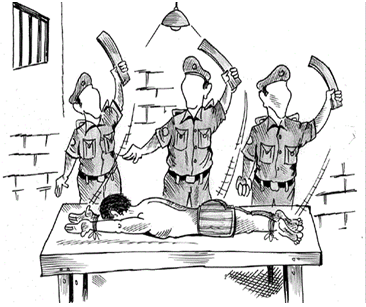
55% of cases lodged in India are against police personnel. So, how do you think will the victims of false accusations be treated in jails? These victims of false accusations have to suffer harassment by police personnel and their jail inmates as they rot in police cells or jails waiting for trial or hearing of appeal till the time they are acquitted. The condition of jails in India is well known to all. They are tortured in jails and forced into self-incrimination.

In 1998, Mohammad Aamir Khan, then 18, was picked up by Delhi Police on charges of terrorism. In 2012, the court acquitted him in 17 out of 19 charges – after Khan had spent 14 years in jail. This is an excerpt of his statement about his days in jail, “I was kept in illegal police detention for seven days where I was tortured – even today, khaki scares me. I have nightmares of police vans chasing me.”[2]


Challenges faced after acquittal

Once the person is accused, our society attaches a tag on him/her that he/she is a terrorist. The media also highlights that these persons tried to kill many innocents, and public feels happy that the government has stopped another terrorist attack and saved the life of many innocent people. But when they are acquitted, no one cares. When these people are released from jail, they don’t get job opportunities. The reason being twofold:

  • They still carry the society imposed terrorist tag which makes it impossible for people to trust them.
  • Their long stay in jail completely cuts them off from society and changes in technology which makes them unfit for technical and good job offers.

Hence, these people fail to secure the jobs they could have secured if they were not imprisoned and secure a safe and better future for their children and family. The lack of good job opportunities leads to poverty. Poverty leads to dissatisfaction and frustration, which in turn induces them to take revenge from society and they end up committing some crime.

This is another excerpt from Mohammad Aamir Khan’s statement, “In 1998, things were very different. When I was released, technology had become very big – people were using advanced phones, social media, ATMs, metros, etc. I am still learning all this.”[3]

10

Also, the society does not accept them and people humiliate them repeatedly. It is also doubtful whether their children would study to become IAS officers or become terrorists for the injustice meted out to them or due to poverty and ostracism by the society they live in. The young people whose fathers were branded as terrorists by the society and treated in that very manner are rejected by the society and often their families are harassed in every possible way.

This was what happens with those who get acquitted, but there are also some unlucky victims who are not brought to justice because their matter is decided by the police by shooting them down. One of such cases is the famous case of Ishrat Jahan who was killed in an alleged fake encounter; the reason given was the threat she posed to the Chief Minister of Gujarat. While the recent statements of David Coleman Headley have raised doubts about her innocence, she’s one of those unfortunate few who couldn’t even stand trial.[4]


Right to get compensation for all the sufferings

The Indian Constitution under Article 21 guarantees that all the persons have the fundamental right to live freely. The Right to life includes the right to live with dignity. It also guarantees human rights to all. But what about the human rights and right to live with dignity of the victims who are falsely accused of terrorism?

When a common man insults another person by instituting a legal proceeding against him/her, then he/she can be punished for the offense of malicious prosecution and compensation is awarded accordingly. Then why the government should not be held liable to pay compensation to the victim of false accusations for all the humiliation and sufferings that he/she has to undergo. After all, the government is elected by the people for its welfare but when the government fails it should also be held accountable and made liable to pay compensation.

If the government is made liable to pay compensation for its felony and made accountable, then it will bring efficiency in its working and avoid repetition of such life destructive errors. This will also tighten the grip on the investigating agency to work carefully instead of this having a “serious demoralizing effect” on them as stated by Supreme Court rejecting compensation plea in Akshardham attack case. Hence, the government should be made liable to pay compensation to those falsely accused of terrorism to have a deterring effect and to do justice to the victims for all their sufferings.

Footnotes:

[1] Hoffman, Bruce (1998). Inside Terrorism.Columbia University Press.p. 32.ISBN 0-231-11468-0. See review in “Inside Terrorism.” The New York Times.

[2]Available at http://blogs.timesofindia.indiatimes.com/the-interviews-blog/i-spent-14-years-in-jail-wrongly-accused-of-terror-saw-torture-and-humanity-grateful-for-indias-secular-democracy-mohammad-aamir-khan/, last accessed on July 7, 2016, at 3:33 p.m.

[3]Ibid.

[4]Available at http://www.youthkiawaaz.com/2016/06/terrorism-charge-young-muslims/, last accessed on July 7, 2016.


Download Now

What Are Vanishing Companies?

0

In this blog post, Saanvi Singla, a student of University Institute of Legal Studies, Panjab University discusses the concept of vanishing companies. This article highlights the meaning, legality and present scenario of vanishing companies.

 1407179598-3294

 

Introduction

More than 3,000 listed companies have vanished over the past two decades. Even after enormous exercise and expenditure done by the Executive, Parliament, and High Court’s order, still, the investors continue to be hesitant. Over the past two decades, a gigantic number of companies have absconded with hundreds of crores of rupees from the investors. Despite the direction from Allahabad High Court some 15 years back, none of the investors have gotten a single penny.

Till date, three lists containing the names of 913 companies have been made after thorough examination: 161 companies in 2012, 604 and 148 companies in earlier lists, which the Coordination and Monitoring Committee, in its minutes of meetings, held in 2006 and 2007, stated that over 50 companies have been identified for involvement and the rest, are under the scanner. However, we never got any response after this, and no company has been added subsequently in the list[1].


What is a vanishing company?

closed

Vanishing companies are companies which raise funds from public through Initial Public Offers (IPOs) and afterwards fail to satisfy the listing/ filing requirements of the Registrar of Companies (ROC) and the Stock Exchanges for a continuous period of two years or more and are not found at their registered office address at the time of inspection which is done by authorities / Stock Exchange.

Thus, a company can be declared to be a vanishing company, if it is found to have:

  • Failed to file the company’s return with the Registrar of Companies (ROC) or with the Stock Exchange (if it continues to be a listed company) for a continuous period of two years or more;
  • It is not being maintained at its registered office whose address has been notified with the Registrar of Companies/ Stock Exchange; and
  • None of its Directors are detectable.

All the three conditions mentioned above have to be satisfied before a company can be declared as a vanishing company.


Laws applicable to vanishing companies

The norms for the identification of a vanishing company have been established by the Coordination and Monitoring Committee (CMC) – a joint system formed by the Securities Market Regulator, Securities and Exchange Board of India (SEBI), RBI and the Ministry of Corporate Affairs (MCA) – established by the Government of India in 1999. We do not have any formal definition of vanishing companies under the Companies Act, 2013. But Section 447 of the Companies Act, 2013 provides for the punishment for fraud and other relevant provisions contain punishments for different types of default. Section 450 also been provided for the punishment of crimes which have not been specified in the Act. Though investments made in equity cannot be recovered from the respective companies as it is considered as risk capital, the directors/ promoters of such fraudulent companies are customarily debarred from accessing the capital market again. Further, FIR and prosecution proceedings can be carried out under the Indian Penal Code.

Originally CMC was authorized with the task of overseeing the status of vanishing companies as well as keeping a record of the action that has been taken by the regulators against the promoters/directors of such fraudulent companies which have utilized or embezzled the proceeds of the IPOs organized during the period 1992-95.

If a declared vanishing company afterward starts filing its returns etc. it is no longer considered as a vanishing company and is subjected to an exclusive monitoring by being kept on a ‘watch list.’

The term vanishing company has also been used by the central bank – RBI. Whenever a company including a Chit Fund or a Non-Banking Financial Company (NBFC) disappears after accepting the deposits from the general public, RBI has declared such fraudulent companies as vanished companies. A list of such companies has been declared on official website of RBI. Till now, RBI has declared more than 1,550 NBFCs as vanished. The matter concerning the vanishing companies has been referred by RBI to the Economic Offences Wing of the concerned State Government to investigate the case and take legal action which includes penal action as per the Indian Penal Code and Criminal Procedure Code, as presumed appropriate. In cases of frauds that have been committed by multi-level marketing schemes, since these are covered under the Prize Chit and Money Circulation Banning Act 1978 and watched by the State Governments, the cases are usually sent to the State Police Department. Economic Offences Wings of State Government has to take action against these firms under the Prize Chit and Money Circulation Banning Act, 1978.

When such companies have been registered under the RBI Act as NBFCs, then they will be under the regulatory purview the RBI. The Bank has been empowered under the Statute (RBI Act, 1934) to issue Prohibitory Orders to stop acceptance of deposits, and criminal proceedings can be initiated against such registered companies[2].


Present scenario

Travel-scam

No major decision has been taken by the present central government regarding these types of companies. The list of the vanished companies stands where it was in the year of 2006-2007, and it declares only 78 companies as vanished companies. It has been estimated that 39,000 crore rupees have been embezzled till date through vanishing companies but sadly we do not have any record to estimate the loss that has been suffered by the citizens of this country. Not a penny has been retrieved by the government. After spending so much money, energy, resources, and time, the judiciary, executive or the legislature have not been able to arrive at concrete decisions.

The government needs to do something and take appropriate action to check the menace of vanishing companies. Otherwise, such companies will keep on flourishing throughout the country, and the people will keep getting scammed.

Footnotes:

[1]http://www.moneylife.in/article/vanishing-companies-and-the-unending-fight-of-investors-to-recover-money/40126.html

[2]http://www.arthapedia.in/index.php?title=Vanishing_Companies


Download Now

Basic Information on the Aadhaar Bill, 2016

0

This blog post written by Saanvi Singla, a student of University Institute of Legal Studies, Panjab University, highlights the implications of the Aadhaar Bill, 2016 on the life of a common man. 

aadhar.ie_


What Is an Aadhaar Card?

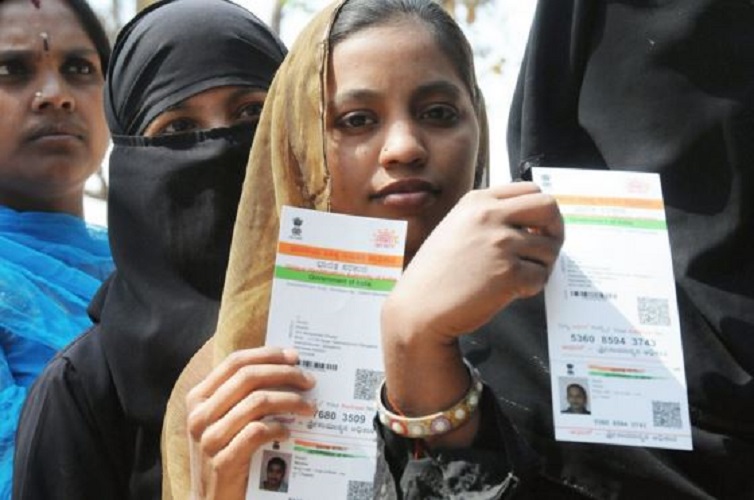
Aadhaar is a 12 digit individual identification number issued by the Unique Identification Authority of India (UIDAI) on behalf of the Government of India. This number serves as a proof of identity and address, anywhere in the country. Aadhaar letter received via Indian Post and e-Aadhaar downloaded from UIDAI website is equally valid.

downloadAny individual, irrespective of age and gender, who is a resident in India and satisfies the verification process laid down by the UIDAI, can enroll for Aadhaar. Every person needs to enroll only once, the enrollment procedure being free of cost.

Each Aadhaar number will be unique to an individual and will remain valid for life. The Aadhaar number will help in providing services like banking, mobile phone connection and other Govt. and non-Govt. Services in due course.

Aadhaar is easily verifiable in an online, cost-effective way. It will be unique and robust enough to eliminate a large number of duplicate and fake identities in Govt. and private databases. In Aadhaar a random number is generated, devoid of any classification based on caste, creed, religion and geography. It establishes uniqueness of every individual by demographic and biometric information. It is a voluntary service that every resident can avail irrespective of present documentation[1].

Journey of Aadhaar

The Aadhar card fiasco completed a full circle on March 11, 2016, when the Aadhaar (Targeted Delivery of Financial and other Subsidies Benefits and Services) Bill. Since it was introduced as a Money Bill, the Upper House purists could not exercise their veto power, and the bill was passed in the Lower House with an overwhelming majority. Now it is for all practical purposes just short of becoming a law.

Before, the approval of the Lok Sabha its validity and legitimacy depended on a notification issued by the former Planning Commission. Due to this reason, the validity and legitimacy of Aadhaar were always under the scanner.

Critics have always rallied against the Aadhaar card scheme as the UIDAI is a body which is the archive of key personal information of the residents of the country and therefore risks breach of privacy. Due to this reason a petition[2] was filled by a former Karnataka High Court Judge, Justice K.S. Puttaswamy. Later a case was also registered under the same issue- UIDAI v. Central Bureau of Investigation(CBI)[3].aadhaar

The issue of legitimacy and privacy always went hand-in-hand. But since the passing of the Bill, the Modi-led NDA government has been able to delink the two issues.

The Aadhaar has been considered as a unique concept in its way as technically it had a support of three regimes- the Atal Bihari Vajpayee-led NDA Government, the two termed UPA Government led by Dr. Manmohan Singh and now Narendra Modi-led NDA Government. In this sense, it is a rare piece of legislation on which there is political consensus among the two major national parties- the Bhartiya Janata Party (BJP) and the Congress.

The Aadhaar (Targeted Delivery of Financial and other Subsidies Benefits and Services) Bill, 2016

This bill was passed by the Lok Sabha with a staggering majority on March 16, 2016, and got the President’s consent on March 25, 2016. Due to this bill, the Aadhaar has attained its legitimacy. The salient features of the bill have been discussed below:

What was the bill about?

This bill proposes to provide targeted distribution of subsidies and services to individuals residing in the territory of India by assigning the Unique Identification Number authorized by the government called Aadhaar Cards. Aadhar cards are given to the residents of India and for a person to be a resident of this country he/she has to stay in the country for at least 182 days in a year.

What are the features of the bill?

For anyone to get the Aadhaar card number, the following details are to be submitted-

  • Biometric (photograph, fingerprint, iris scan)
  • Demographic (name, date of birth, address)

The number will be used to verify the identity of the person who is claiming a service or a subsidy. If a person does not have the Aadhaar number, he/she will have to apply for it. Otherwise, the said person will be given an alternative means of identification. Now any public or private entity can accept Aadhaar card as an identity proof for any purpose. But, the number will not be considered as a proof of citizenship or domicile.

What are the safeguards for the bill?

Only the UID Authority can authenticate the Aadhaar number of an individual if an entity makes a request for the same. The requesting entity has to obtain the consent of the particular person before collecting the respective information. The agency is allowed to use the information only for the purpose for which the respective person has given his/her consent.

The authority is not allowed to share biometric information and other biological attributes. This information will only be used for the enrollment and authentication.

What are the exceptions for the sharing of information?

As per the Section 33 of the Bill, private information can be revealed in two cases-

In the interest of “national security”, a joint secretary in the central government may issue a direction for revealing – 

  1. Aadhaar no.
  2. Biometric information
  3. Demographic information
  4. Photograph

Such a decision will be reviewed by an oversight committee (comprising of Cabinet Secretary, Secretaries of Legal Affairs and Electronics and Information Technology) and will be valid for six months.

On the order of a court – 

  1. An individual’s Aadhaar No.
  2. Photograph
  3. Demographic information can be revealed.

What are the offenses and punishments for violation?

A person shall be penalized with imprisonment up to three years and a minimum fine of ten lakhs for unauthorized access to the centralized database, including revealing any information stored in it. If a requesting entity and an engaging agency fail to comply with rules, they shall be punished with imprisonment up to one year or a fine up to Rs. 10,000 to Rs. 1 lakh (in case of a company) or both[4].


Arguments and Counter-Arguments              

Many objections have been raised by the opposition about the approval of the Aadhaar Bill, 2016. The opposition has accused the government of playing a dirty game of politics by introducing the bill as a money bill as the Upper House has no say in the approval of a money bill. The second objection raised by the opposition was about the Right to Privacy. They had pleaded that since the said matter is being tried in the Supreme Court and legislation should not be passed on the said issue. The opposition in the Upper House has also objected to the use of the words “national security” saying that the term has been misused.469966-adharbill

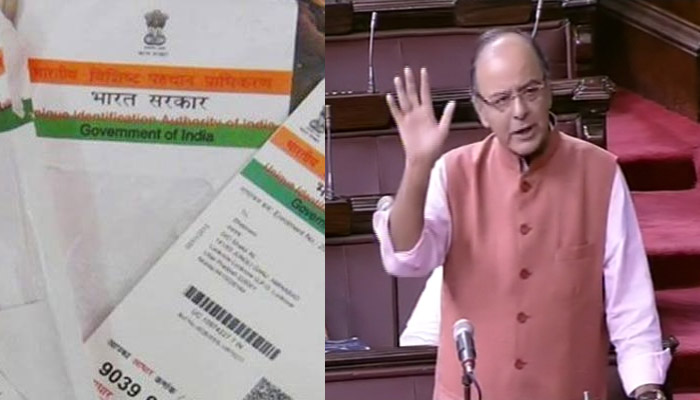
The government has given answers to all these objections. According to Arun Jaitley, Aadhaar Bill is a money Bill as it deals with the subsidies for which money flows out of the Consolidated Fund of India. The second argument was countered by Mr. Jaitley, who pointed out the provision of “Separation of Power” in our Constitution. The third argument was countered on the basis that the terms suggested in the place of “national security” were vague and ambiguous in nature and thus could not be used. He said that the term “national security” has evolved with time and is properly defined and due to this reason it has been used in the bill.

After all these arguments and counter arguments, the bill was passed with a huge majority in the Lower House and received the assent of the President. On March 26, 2016, theGazette of India issued a notification on the Aadhaar Bill.7f55b6bad4479719e7a3776a4283090e

But on April 7, 2016, Mr. Jairam Ramesh, member of Rajya Sabha, moved a petition[5] in the Supreme Court challenging and passing the said bill. On April 25, 2016, the Supreme Court wished to hear the matter and moved the petition made by Mr. Jairam Ramesh. On May 10, 2016, the Attorney General of India argued that the power of the Speaker of Lok Sabha to declare a bill as a Money Bill is not open to judicial review. Still, the Supreme Court asked Mr. Jairam Ramesh to submit a note of his submission and case laws and adjourned the case till July 2016[6].


Conclusion

The passing of this bill has been a very rigorous process. This bill has gained a lot of media coverage and importance in the past few months. Now, that this bill has been finally approved, the clouds of doubt have still not left it. The petition filed by Mr. Jairam Ramesh will play a deciding factor in this bill being converted into law.

Nevertheless, the passing of this bill is a big thing as it is a very important part of the ambitious financial inclusion program of the Narendra Modi government.

Now, Aadhaar can be used in official dealings. It will play a key role in the JAM-Jan Dhan, Aadhaar, and Mobile which will be driving force of the ambitious plan of technology-enabled, real-time direct benefits transfer system.

During the first stage of the project, JAM effectively dealt with the transfer of subsidies in the account of the customer due to which leakages have dropped drastically. But, to take this project to the next level legitimization of Aadhaar was necessary.

A major key to this project is the payment banks. 19 of which were awarded  licenses by the Reserve Bank of India (RBI) last year which includes companies like Airtel M Commerce Services Ltd., part of Bharti Airtel which have a customer base of nearly 240 million and about 150,000 post offices among which 140,000 are in the rural area[7].

To them, Aadhaar will act as an e-identity to keep the transaction cost low and therefore provide a business model for financial inclusion.

In this way, Aadhar is going to play a crucial role in the life of the common man of this country.


[divider]

Footnotes:

[1]https://uidai.gov.in/what-is-aadhaar.html

[2] W.P.(C) 494/2012

[3] SLP (Crl) 2524/2014

[4] http://www.firstpost.com/politics/aadhaar-number-is-not-proof-of-indian-citizenship-all-you-need-to-know-about-the-bill-2678496.html

[5] W.P. (C) 231/2016

[6] http://www.legallyindia.com/blogs/journey-of-aadhaar

[7] http://www.livemint.com/Opinion/Kp0eY8BDHpbgXghQyHerrJ/Everythings-official-about-Aadhaar-now.html

Download Now

Techniques Of Money Laundering

0

In this blog post, Saanvi Singla, a student of University Institute of Legal Studies, Panjab University, explains the concept of money laundering and lists some of the key techniques which are predominantly used for laundering money.

Seychelles_Money-laundering


Introduction

Money laundering is the procedure of changing the returns of wrongdoing and defilement into apparently true blue resources. In various legitimate and administrative frameworks, in any case, the term government evasion has gotten to be merged with different types of budgetary and business wrongdoing, and is in some cases utilized all the more for the most part to incorporate abuse of the money related framework (including, for example, securities, advanced monetary standards, MasterCards, and customary coin), including terrorism financing and avoidance of worldwide assets. Most of the tax evasion laws transparently merge government evasion (which is worried about the wellspring of assets) with terrorism financing (which is worried about the destination of assets) when managing the money related framework.

Few nations characterize government evasion as muddling wellsprings of cash, either purposefully or by just utilizing money related frameworks or administrations that don’t distinguish or track sources or destinations. As Money Laundering is a worldwide phenomenon, several techniques exist through which the said crime takes place all around the world.


Techniques used

There are many techniques through which money laundering can take place. Some of the most common techniques used in money laundering are-

  1. Deposit structuring/smurfing

Screenshot (12)

This procedure includes making various deposits of little sums beneath a reporting limit, either by countless detached investors or to an extensive number of accounts. The cash is then by and large, exchanged to another record. Once in a while a few gathering accounts are utilized, and every one of them courses their assets to another account, thus the cash continues revolving. Nations, to which these assets are exchanged, regularly discover the assets being quickly expelled as cash from the beneficiary records.

  1. Cash deposits followed by telegraphic transfers

Large cash deposits might be made by medication traffickers or other people who have smuggled criminal property out of the nation where the wrongdoing started. Frequently the cash deposit is immediately trailed by a telegraphic exchange to another ward (which could be the first nation where the wrongdoing was submitted), in this way bringing down the danger of seizure.

  1. Connected Accounts

Recognizable proof necessities have a tendency to hinder, or possibly make it troublesome for criminals from opening accounts in false names. Be that as it may, accounts may at present be held in the names of relatives, partners or different persons working for the benefit of the criminal. Different strategies are used to shroud the beneficial owner of the property including the use of shell organizations, quite often fused in another locale and experts, for example, legal advisors or seaward consolidation specialists. These methods are regularly consolidated with a few layers of exchanges and the utilization of various records, hence making endeavors taken after the review trail of the supports more troublesome.


  1. Collection Accounts

Collection amounts are utilized by a wide range of ethnic gatherings. Foreigners pay a considerable measure of little sums into a solitary record, and the gathered assets are then sent to another country in a solitary exchange. Frequently, the remote records get installments from various obviously detached records in the source nation. While this payment technique is regularly used for legitimate purposes by migrants and workers who send cash to their nation of origin, it can be, and is, utilized by criminal gatherings to wash their illegitimate assets.

  1. Payable-through Accounts

Payable-through Accounts are demand deposit accounts maintained at financial institutions by foreign banks or corporations. The foreign bank funnels the deposits and cheques of its customers (usually individuals or businesses located outside the country) into a single account that the foreign bank holds at the local banks. The foreign customers have signing authority over the account as sub-account holders and can thereby conduct normal international banking activities. Many banks offering these types of accounts have been unable to verify or provide any information on many of the customers using these accounts. Payable-through accounts, therefore, pose a challenge to “know your customer” policies and requirements and suspicious activity reporting guidelines.

  1. Bank Drafts and Similar Instruments

1481427821_52e6373a08

Bank drafts, money orders, and cashier’s cheques purchased for cash are useful for laundering purposes because they provide an instrument drawn on a respectable bank or other credit institution and so break the money trail. Breaking this trail is of critical importance to the money launderer, as it makes it impossible – or at least very difficult – for an investigator to establish where laundered funds have ended up. This reduces the ability of the law enforcement authorities to seek a judicial order to appropriate such funds.


  1. Back-to-Back Loans

Back-to-back loans arrangements of action can be utilized for smuggling cash. A cash launderer exchanges his/her criminal proceeds to another nation as security or guarantee for a bank credit, which is then sent back to the first nation. This strategy not only gives laundered cash the presence of a genuine loan, however regularly gives charge focal points.

  1. Bureaux De Change

Bureaux de change (or equivalent) services – such as telegraphic transfer facilities and exchange services, which can be used to buy or sell foreign currencies, to consolidate small denomination bank notes into larger ones, or to exchange financial instruments such as traveler’s cheques, Euro cheques, money orders and personal cheques which can be attractive to money launderers. Criminals will be attracted to bureaux de change in jurisdictions where they are not as heavily regulated as traditional financial institutions, or where they are not regulated as traditional financial institutions, or where they are not regulated at all. Even when regulated, the degree of regulation is often less training within bureaux de change and their internal control systems to guard against money laundering, to be less strong than in other financial institutions.

This weakness is compounded by the fact that most of the customers of the bureaux de change are occasional, making it more difficult for them to ‘know their customer’, thus, making them more vulnerable to money launderers.

  1. Remittance Services

Remittance systems operate in a variety of ways. Often, the remittance business receives cash, which it transfers to the banking system of another account held by an associated company in the foreign jurisdiction. There, the money can be made available to the ultimate recipient. Another technique commonly used by money remitters and currency exchanges is for the criminal organization to receive the funds in the destination country in the local currency, which is then sold to foreign business people who need currency to fund the legitimate purchase of goods and export. The attractiveness of this avenue in particular countries is often encouraged by the existence of strict exchange control. Remittance services are a feature of many ethnic groups; they often charge a lower commission rate than banks for transferring money to another country and have a long history of being used for money laundering, since they are often subject to few, if any regulatory requirements compared to institutions, such as banks, which an equivalent service.


  1. Credit and Debit Cards

credit-card

Structured cash payments for outstanding credit card balances is the most widely recognized use of Visas for tax evasion, frequently with moderately substantial payments as installments and in some cases, with money installments from outsiders. Another method is to use loans from Visa records to buy cashier’s checks or to wire assets to outside destinations. On some events, loans are kept into investment funds or current records. A substantial number of distinguished situations include the utilization of lost or stolen cards by outsiders.


Laws made for Money Laundering

Many laws have been made to tackle the problem of Money Laundering. The Indian Legislature made the Prevention of Money Laundering Act, 2002. This act has been amended multiple times so that it can meet the needs of the hour.

Conclusion

These are a few main techniques through which the market of money laundering is flourishing all around the world. It is very important to understand these techniques to understand the concept of money laundering. By understanding these techniques, new laws can be made to tackle the problem of money laundering.


Download Now

Role Of A Mediator In The Process Of Mediation

0
Business concept. Isolated on white

In this blog post, Saanvi Singla, a student of University Institute of Legal Studies, Panjab University discusses the role and importance of a mediator in the process of mediation.

Business concept. Isolated on white


Introduction

Abraham Lincoln once said, “Discourage litigation. Persuade your clients to compromise, whenever you can. Point out to them the nominal winner is often a real loser- in fees, expenses and waste of time. As a peacemaker, the lawyer has a superior opportunity of being a good person”.
The justice delivery system prevailing in India is of an adversary nature. It puts the conflicting parties against each other, which ultimately causes a lot of animosity amongst them. One of them has to win, and the other is bound to lose. This tedious process not only harms the social standing of a person but also puts him/her through an economic setback as the process of litigation is usually a very expensive and cumbersome affair. It is a well-known fact that litigation involves a large number of technicalities, which leads to a lot of delay and unnecessary expenditure which leaves a stain and stigma of enmity between both the parties. Moreover, in the wake of globalization and liberalization, we need to develop a friendly, speedy and less costly justice delivery system.

This is where an alternative to the usual judicial system becomes into play. Hence, we have alternative dispute resolutions.


What is an alternative dispute resolution?

b043e226-5ea1-46c0-8d6b-4fae6bdec59c
As the term clearly suggests, alternative dispute resolutions are dispute resolution techniques other than the process of litigation. In India, Arbitration and Conciliation Act, 1996 provides the guidelines for the Alternative Dispute Resolution in India. The model laws set by the United Nations Commission on International Trade Law is the main guiding force behind it. Section 89(1) of the Code of Civil Procedure, 1908 also provides for settlement of disputes outside the courts.This type of dispute resolution can be broadly classified into four separate categories: 1) Arbitration 2) Mediation 3) Conciliation 4) Negotiation. But in this article, we will be talking about the process of mediation only.


What is Mediation?

Mediation is a process of negotiation where a neutral and unbiased third party assists the disputing parties in peacefully resolving their disputes. Mediation is known to be a party-centered process. It means that the whole process revolves around the concerned parties. They get the right to decide the outcome of the whole process.

Couple divorcing

Mediation has found quite a bit of popularity in India, especially in the cases of marital disputes.  Nowadays the courts themselves ask the disputing parties to try resolving the concerned matter through mediation so that they can reach a more amicable solution. It has been found many times that couples go to court to file for a divorce on grounds which are not maintainable under law. The court has only to consider the facts that have been given to them, and if the law supports the facts at that time, then the divorce can be granted. More often than not, these type of situations can be easily resolved without necessarily breaking off the sacred bonds of marriage. Sometimes the parties only need an experienced person who can hear their problems out. This is why Courts suggest these troubled married couples to go into mediation and try to resolve the matter before getting a divorce.

Mediation is not only limited to matrimonial disputes. Even in the case of a property dispute, mediation tries to resolve the matter in a manner, which appeases to both the parties. Clearly, there are many advantages of pursuing mediation rather than litigation.Regarding cost effectiveness, time consumption and flexibility, mediation has the upper hand. In mediation, the parties can even waive off their legal entitlements if it ultimately leads to an amicable settlement.

It must be kept in mind that mediation does not and is not meant to solve problems or disputes which on the face of it are illegal in nature. In such a case mediation will be more beneficial to the law breakers, who intentionally break laws for their benefit and seek mediation as an alternative to solve their problems, which do not enjoy any form of solemnity in law or on facts. Mediation thus attempts to resolve legitimate matters in a very peaceful manner. In the whole process of mediation, a mediator has a very important role to play as well.


Who is a mediator? What are his/her functions?

The mediator is a neutral and unbiased third party who assists the feuding parties in their quest for a settlement. Even though the last decision has to be taken by the disputing parties, it is the mediator who first initiates a meeting, discusses the problem and then assists the conflicting parties in finding possible solutions.

The main points that are kept in mind by a mediator are impartiality and neutrality. He has to be completely unbiased all the time while he is resolving a case. He doesn’t have to take any party’s side. His most important task is to act as a catalyst between the conflicting parties. He must take necessary steps to organize the talks between the disputing parties and act as a guiding force while assisting them to reach a solution. He is not allowed to give his personal opinions on the case. But he can assess the case; give the disputing parties a fair idea of what the consequences might be if the said case is taken to court. He can give the parties a few ideas or possible solutions that could help in resolving the dispute.

mediation-4

 In the case of litigation, there are a large number of scenarios where the disputing parties choose to withhold some information, which if revealed, can change the judgment in a very drastic manner. But in the case of mediation, this can be avoided as the parties get a chance to sit in isolation with the mediator and discuss their end of the concerned problem. Here, it is the mediator’s job is to draw out the disputing parties from their defensive shell and make them reveal the truth. While doing so, it is the mediator’s job to keep the party reassured that the secrets revealed in his presence shall be kept completely off the records.

A mediator hence facilitates communication between the disputing parties and encourages interaction between them so as to arrive at an amicable settlement. He also assists the concerned parties in evaluating the situation and finding out the possible outcomes. Thus, we can see that the process of mediation is a party-centered process; the mediator is a very important block in the structure that is mediation.


Conclusion

So we can see that mediation is a very efficient and reliable system through which disputes can be resolved. Through this process, the disputing parties can reach an amicable end. The most important element is the mediator in this process. He makes sure that no party suffers any undue loss. It is his responsibility to ensure that the case reaches its end and does not have to be transferred back to the traditional form of litigation. So we can see that there is a huge responsibility on the shoulders of a mediator.


Download Now

Here’s Why You Should Have a Pan Card

11

In this blog post, Srishti Khindaria, a student of Amity Law School, Delhi, Guru Gobind Singh Indraprastha University writes about the concept of PAN Card and how to apply for it and it’s usage in everyday life for common citizens. The post also talks about some common PAN frauds that take place and how one can beware of those frauds. 

1184841_601046539971928_459524019_n


What is PAN?

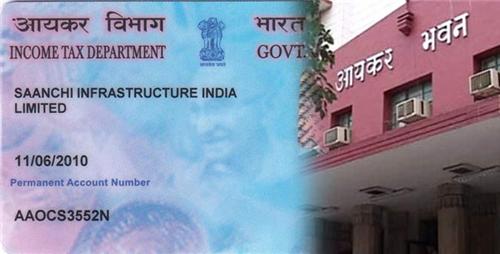
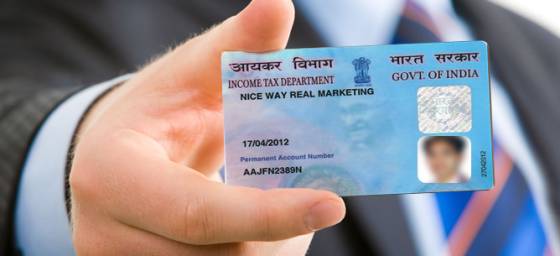
PAN or Permanent Account Number is a unique ten digit alphanumeric number allotted to each taxpayer by the Income Tax Department under the supervision of the Central Board of Direct Taxes. A PAN card is in the form of a laminated card. It enables the IT department to link all transactions of the PAN holder to the department; these could be transactions such as the return of income/wealth/gifts, tax payments, TDS (tax-deductible at source) payments, etc. It also serves as a proof of identity.

uti-pan-card-statusA PAN is mandatory for financial transactions such as receiving a taxable salary, sale/purchase of assets above a specified limit, receiving professional fees, buying mutual funds, etc. It was introduced to facilitate linking of various documents relating to an assessee[1] to ensure that there is an easy retrieval of information and monitoring, and collection of data, and activities relating to investment, raising loans and other business activities of taxpayers for detecting as well as combating tax evasion. In simple words, it acts as an identifier of a person with the Income Tax department. It can be related to the Social Security Number (SSN) in the United Sates or the Social Insurance Number (SIN) in Canada.


Know Your PAN Card

A typical PAN number is in the form of AEZPK6179K, where;

  • The first three characters, i.e., “AEZ” are alphabetic series which run from AAA to ZZZ.
  • The fourth character, i.e., P represents the status of the PAN holder.pan-card-details
    • P denotes Individual
    • F denotes Firm
    • C denotes Company
    • H denotes Hindu Undivided Family (HUF)
    • A denotes Association of Persons (AOP)
    • T denotes Trust
  • The fifth character, i.e., K represents the first letter of the PAN holder’s last name.
  • The next four characters, i.e., “6179” are part of a sequential number series running from 0001 to 9999.
  • The last/tenth character, i.e., “K” is an alphabetic check digit.

Who Must Have a PAN?

The following must be in possession of a PAN Card

  1. All existing taxpayers or assesses or persons who required furnishing a return of income, themselves or on behalf of someone.
  2. Any person who is carrying on business or is involved in any profession where the total sales, turnover or gross receipts are or seem likely to exceed five lakh rupees in the previous financial year.
  3. Any person who intends to enter into a financial transaction where quoting PAN is necessary.
  4. An Assessing Officer may allot PAN to any person either on his own or at a specific request from such person.

How to Apply for PAN Card?

  • A PAN card is applied for using Form 49A- for Indian citizens and Form 49AA- for foreign citizens.
  • The location of PAN card offices in your city can be found on the websites of the Income Tax Department or of the National Securities Depository Limited.
  • An application can also be filed online through the website of the Income Tax department or the National Securities Depository Limited.
  • Copies of proof and identity and address will be required.
  • Payment for the application can be made via cash, cheque or demand draft. In the case of an online application via net banking, debit card or credit card.
  • The status of applications can be tracked online.


 Is PAN Compulsory for Non-Resident Indians?

If anyone in the capacity of being a Non-Resident Indian (NRI) conducts any financial transaction in India, they must compulsorily quote their PAN as without a PAN it would be impossible to conduct financial transactions through banks.

Even to invest in the Indian stock market or to open an NRI account a PAN is required. PAN is also required for purchase of immoveable assets and to operate businesses in India.


Why is A Pan Card Important?

A pan card is required for a lot of purposes thus making it an extremely valuable and indispensable part of most people lives. Some of the important uses of the pan card are as follows;

  1. Filing Income Tax Returns: This is the most obvious and essentially the primary purpose of obtaining the PAN card in the first place.
  2. While Opening a New Bank Account: It is essential to produce a copy of the PAN card while applying for a new bank account be it in a public, private, cooperative or another bank. This is because banks have to keep a tab on all high-value cash transactions and periodically report them to the Reserve Bank of India as per their (RBI) norms. However, under the recently initiated Pradhan Mantri Jan Dhan Yojna a PAN card was not required by participating banks to open bank accounts.
  3. ID Proof: A PAN card is accepted as a valid ID proof in all cases, where Government or non-Government organizations require an ID proof for things such as a passport, gas connection, telephone connection, etc.
  4. At your Job: Upon joining a new company, your employer will require your PAN for taxation purposes. Employers deduct tax at source (TDS- tax-deductible at source), professional tax, etc. Also, they require the PAN to show their outgoings to you in the form of remuneration/salary when they file their tax returns.
  5. For Foreign TravelIt is must quote you PAN in cash payments which are in connection with foreign travel or purchase of foreign currency exceeding the sum of fifty thousand rupees at any one time. This includes everything, from fare to payment to a travel agent. Further to obtain foreign exchange, even if you have a valid passport or Visa you need to submit a copy of your PAN.
  6. Bank Fixed/Time DepositsThe bank will require PAN details in case the value of the FD exceeds fifty thousand rupees. Banks require this as TDS is deducted on the interest earned on FDs.
  7. Share Trading: Trading in shares will also require a PAN. You need to furnish your PAN details to the brokers as well as to the Demat and Trading Account provider.
  8. Mutual Fund Investments: Just as in the case of shares, while investing in mutual funds too a PAN card is required, and you need to quote your PAN for you mutual fund request to be accepted.
  9. Property Transaction: For the sale of purchase of any immovable which is more than rupees ten lakh in value it is essential to quote the PAN of both the buyer and the seller, or else the transaction cannot be completed.
  10. Vehicle Purchase:When purchasing an expensive car or automobile you may be asked to quote your PAN.
  11. Purchase of Jewelry: In case the value of jewelry purchased is more than two lakh rupees than it is essential to have a PAN card.
  12. Cash purchase of bank drafts/ pay orders/ banker’s cheques: For purchase value exceeding Rs. 50,000 on any one day quoting PAN is mandatory.
  13. For Credit Card Application: Quoting PAN Card is the must for obtaining a credit card from a banking institution or company and even cooperative banks.

PAN Frauds You Must Beware Of

The likeliness of PAN identity theft has grown with the growing importance of PAN. Merely safeguarding the physical copy cannot prevent misuse. Information can be misused very easily for benami property transactions or purchase of tickets of high value, as a majority of transactions demand simply quoting of the PAN or a photocopy of the PAN Card. Thus, a copy of your PAN card or its number could be quoted in transactions that you are not even a part.

INDIA - MARCH 15: CREDIT CARDS AND PAN CARDS RECOVERED FROM CHEATERS GURPREET SINGH AND SARABJIT SINGH ARRESTED AT PARLIAMENT STREET POLICE STATION ON THURSDAY. (Photo by Imtiyaz Khan/The India Today Group/Getty Images)

An example of PAN Card Scams includes the Booking of Tatkal Railway Tickets Scam, where a consumer activist group recently revealed that the PAN card copy which is used book Tatkal railway tickets is being misused by several jewelers. As when an individual books tatkal tickets he needs to furnish his PAN details and these details are displayed on the ticket as well as reservation chart and the train coaches and these PAN details are stolen by dishonest jewelers which they use to furnish tax collected details while selling high-value jewelry to individuals who do not wish to disclose their PAN, in order to avoid tax liability.

What to do if you are a Victim of Such a Fraud?

It may be up to six months after which you can become aware of the illegal use of your PAN card.  To check for illegal transactions that you did not approve of you can go through Form 26AS, which is a consolidated statement of deducted tax, along with other things, however if you are a non-tax paying PAN card holder then you may not be able to check this. The PAN holder will have to prove to the Income Tax department that the transaction was not carried out by him and give details of his funds and their sources. This becomes very difficult for the PAN holder and is extremely time-consuming. Thus, as PAN card holders we must take due care and be cautious while handing over out PAN details to anyone, we must hand over only signed photocopies and try to reduce usage of PAN as ID proof in all casual transactions.


[divider]

Footnote:

[1] Under S.2(7) of the Income Tax Act, 1961, unless the context otherwise requires, the term “assessee” means a person by whom any tax or any other sum of money is payable under the Act,

Download Now

Right To Die – India And Around The World

0

In this blog post, Saanvi Singla, a student of University Institute of Legal Studies, Panjab University gives a comparative analysis of the Right to Die in India and the same right in the rest of the world.

the-right-to-die-pictuer


Introduction

The common belief in the world is that the care of human life and happiness is the legitimate goal of good governance and not the destruction of human life. This statement stands in contradiction to the ‘Right to Die’. How can this be a right when the most precious right enshrined in our Constitution is the ‘Right to life’? How can a person be expected to give up the most essential right of all?

Right to die can be used to denote the concepts of Euthanasia, mercy killing, Physician Assisted Suicide (PAS), Suicide, etc. Though they are conceptually different, they fall within the same genre.


Euthanasia around the world                          

As of June 2016, human euthanasia is legal in the Netherlands, Belgium, Ireland, Colombia, and Luxembourg and assisted suicide is legal in Switzerland, Germany Japan, Canada, and Albania and some parts of USA[1].


The United States of America

1453761849224

Active euthanasia is illegal throughout the USA. Patients have the right to refuse medical treatment and to receive proper management of pain at their request (passive euthanasia), even if the patients’ choices accelerate their deaths. Additionally, futile or useless burdensome treatments, such as life-support machines, can be withdrawn under specified circumstances and the federal law and most state laws, only with the informed consent of the patient or, in the event of the incompetence of the patient, with the informed consent of the legal surrogate.

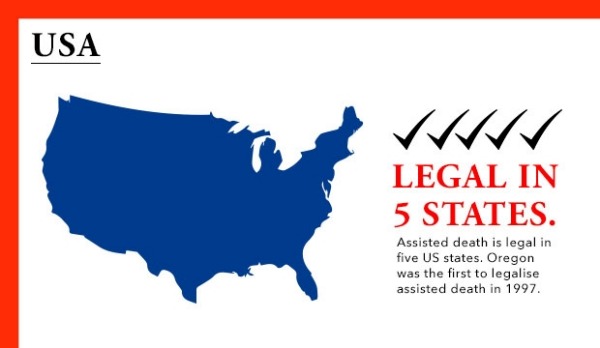
While active euthanasia is illegal throughout the US, assisted euthanasia is legal in Oregon, Washington, Vermont, California (effective from June 2016) and one county in New Mexico.


Australia

Assisted suicide was made legal in Australia for a period, but now it is not. In 1995, it was the world’s first euthanasia legislation. The Rights of the Terminally Ill Act 1995 was passed in the Northern region of Australia. Four patients died under the Act. The legislation was overturned by Australia’s Federal Parliament in 1997.


France

9782290341391_1_75

The controversy over legalizing euthanasia and physician-assisted suicide is not as big as in the United States because of the country’s ‘well-developed hospice care program.’ However, in 2000 the controversy over the uncontroversial topic was ignited by Vincent Humbert. After a car crash that left him ‘unable to ‘walk, see, speak, smell or taste’, he used the movement of his right thumb to write a book, ‘I Ask the Right to Die’ (Je VousDemande le Droit de Mourir) in which he voiced his desire to ‘die legally’. After his appeal had been denied, his mother assisted in killing him by injecting him with an overdose of barbiturates that put him into a coma, killing him two days later. Though his mother was arrested for aiding in her son’s death and later acquitted, the case did jumpstart a new legislation which states that when medicine serves ‘no other purpose than the artificial support of life’ they can be ‘suspended or not undertaken.’

Colombia

Despite its strict Roman Catholic history, in May 1997, Colombian courts allowed for the euthanasia of sick patients who had requested to end their lives. When one of their members brought a lawsuit to the Colombian Supreme Court against it, the court issued a 6 to 3 decision that ‘spelled out the rights of a terminal person to engage in voluntary euthanasia.’
Though physician-assisted suicide is legal, the country has not set away to document rules and regulations for doctors and patients that want to put an end to their lives. It is opposed on religious grounds by many Colombians; many patients have still been able to find doctors who could assist them in ending their lives.[2]


Indian perspective


Classical view

In India, the sanctity of life has been placed on the highest platform. The ‘right to life’ has been given the widest and the broadest meaning in our Constitution as well as by our capable judiciary. It has been rightly done as the ‘Right to Life’ does not mean bare animal existence; it means life with human dignity. Due to this, till date the judiciary of our country has staunchly stood against the implementation of ‘Right to Die’.

In Gian Kaur vs. State of Punjab[3], a five-judge Constitutional Bench held that the ‘right to life’ is naturally inconsistent with the ‘right to die’ as is ‘death’ with ‘life.’ Further, the right to life, which includes the right to live with human dignity, would mean the right to live up to the natural end of life. It can include ‘death with dignity’ but this does not mean the right to end life through unnatural termination of life.

In Naresh Marotrao Sakhre v. Union of India[4], Lodha J. affirmed that ‘Euthanasia or mercy killing is nothing but homicide whatever the circumstances in which it is effected.’

The meaning of the term ‘euthanasia’ is itself shrouded in ambiguity. It has been derived from the Greek word ‘EU Thanatos’ meaning ‘good death.’ To reiterate the judicial pronouncements in the Indian context, good or happy death would imply the ending of life the natural way.

In today’s world, euthanasia means intentional killing of someone whose life is not worth living anymore.   Nowhere has it been mentioned that this term applies to ‘patients’ and not ‘people.’ Due to this reason, it has been considered that such legislation can have a disastrous impact on the society.


Technology has come to age

On the other hand, an irrefutable transition is evidenced in the augmentation of medicine and technology. What was considered as excessive in medicine fifty years ago has become ordinary and routine today. The idea here is that what is excessively burdensome and offers little hope for one may be less burdensome and more hopeful for a second patient in a different state of health.

Nowadays, one can save a person’s life and give him/her a ray of hope for a stable life in rarest of the rare cases. But some diseases and situations are still out of the hands of today’s medicine.  In these cases, euthanasia or any other method can be used to end the suffering of the patient.


Modern View

Decriminalization of suicide has proved to be a turning point. It has opened up doors for new thinking and understanding of the ‘Right to Die’.  The concept of suicide is covered under the ambit of ‘Right to Die’.

“Law Commission of India, in its 210th Report, had recommended that Section 309 (attempt to commit suicide) of IPC needs to be eliminated from the statute book. As law and order is a state subject, views of States/UTs were requested on the recommendations of the Law Commission. 18 states and 4 Union Territory administrations have supported that Section 309 of the IPC may be deleted. Keeping in view the responses from the states/UTs, it has been decided to delete Section 309 of IPC from the statute book.”[5]

Aruna-Shanbaug-Case

In the historical case of Aruna Ramchandra Shanbaug v. The Union of India[6], the Indian Supreme Court has finally given a clear distinction between active and passive euthanasia. The Supreme Court has said that active euthanasia is completely illegal whereas passive euthanasia has been permitted depending from case to case.

Passive euthanasia is when the doctor switches off the support system on which a person is being kept alive or the body is deprived of all kinds of food, nutrition and water which will result in dehydration and starvation. In this way, the person will die a painful and an undignified death. Active euthanasia is when the doctor prescribes medicines and injections for a painless death. In active euthanasia the death is painless and dignified. If it is wrong to kill a person then killing a person in such an inhuman and barbaric manner is also wrong. The courts should consider this plea as the main purpose of euthanasia is a painless and a dignified death. The Supreme Court has not given any thought to the economic and monetary aspect.

This does not mean that the author is questioning the judgment given by the Supreme Court, but is merely suggesting a practical implementation of the said procedure.


Conclusion

If Article 21 of the Indian Constitution gives us a right to live a dignified life, then it should also give us the right to not live a less dignified life.

Euthanasia is a process through which a person can be given a humane and a dignified death. If the prescribed procedure is followed then, a patient and his/her family can be given relief. A person has to be careful regarding the implementation of euthanasia and should follow due procedure cited by the court for the implementation of passive euthanasia. Other aspects such as emotional and financial implications should also be kept in mind.  Euthanasia is a way through which emotional suffering can come to an end. If there is no hope for the patient, then it is better to relieve both the patient and the family members of the emotional trauma. It is better to end it once and for all so that everyone is not suffering on a daily basis.

The financial aspect is also an important aspect. If money is being spent on some patient who has no scope of recovering in the future, then it is just a wasteful expenditure which will ultimately deteriorate the financial condition of the family. So due to these reasons, euthanasia is an effective procedure through which a person can end his/her suffering.

Footnotes:

[1]www.therichest.com/…/10-countries-where-euthanasia-and-assisted-suicide-are-legal/

[2]http://www.legalserviceindia.com/article/l404-Right-To-Die.html

[3] 1996 AIR 946, 1996 SCC (2) 648

[4] 1996 (1) BomCR 92, 1995 CriLJ 96, 1994 (2) MhLj 1850

[5]http://timesofindia.indiatimes.com/india/Government-decriminalizes-attempt-to-commit-suicide-removes-section-309/articleshow/45452253.cms

[6] (2011) 4 SCC 454


Download Now

The Product Certification System Of BIS

2

In this blog post, Saanvi Singla, a student of University Institute of Legal Studies, Panjab University writes about the importance of ISI certification mark and Hallmark and procedure that needs to be followed for obtaining such marks.

bis

Introduction

The Product Certificate Scheme of Bureau of Indian Standards (BIS) provides third party guarantee of quality, safety and dependability of products to the final customer. The presence of ISI certification mark known as Standard Mark on a product is a guarantee of the observance of specifications. The compliance is ensured by regular surveillance of the licensee’s performance by inspections and testing of samples.

In India, BIS operates a product certification scheme covering about 1000 products from Agriculture to Textiles to Electronics. BIS is empowered through a Legislative Act made by the Indian Parliament, known as the Bureau of Indian Standards Act, 1986 for this certification. The certification allows the licensees to use the popular ISI mark, which has become synonymous with Quality products for the Indian and neighboring markets over the past 50 years.

The BIS Product Certification Scheme is operated as per the Bureau of Indian Standards, 1986, Rules and (Certification) Regulations, 1988. The specific procedure for operating a license is outlined in a document called the Scheme of Testing and Inspection (STI). A body called the ‘Certificate Advisory Committee’ is made up of persons from varied sectors like manufacturers, consumers, Government agencies and industries’ associations. They review the performance of the scheme and advice on key policy issues, while the Additional Director General (Marks) is responsible for ensuring that the scheme operates within the framework of rules and procedures established.

The BIS product certification scheme is voluntary in nature and is largely based on ISO Guide 28, which provides general rules for the third party certification system. All BIS certifications are carried out by Indian Standards. A large number of operational elements of the BIS product certification scheme correspond with the requirements of ISO Guide 65.


What is an ISI mark?

isi_thumb

We all have seen products that show that they are ISI approved products. But what is an ISI mark? ISI, in this case, stands for Indian Standards Institute. It was a body that was set up by the government after independence for proper commercial growth and to control the standard of quality of commercial goods that are manufactured in the country. By the mid 80’s, the socio-economic climate of the country changed and due to this reason a bigger and a stronger organization was required to control the quality of goods. This led to the formation of BIS- Bureau of Indian Standards.

It is legally mandatory for 90 products in India to have the ISI mark; otherwise those products cannot be sold in India. Some of these products are electronic appliances like switches, electric motors, wiring cables, heaters, kitchen appliances, etc., and products like Portland cement, LPG valves, LPG cylinders, automotive tires, etc. However, for other products is voluntary.


How to apply for ISI Mark?

Bureau of Indian Standards is the authority in India that certifies the products. For most products, it’s voluntary in nature. If a manufacturer wishes to get his/her product certified, then they have to go through the procedure established by the BIS.

A manufacturer who wishes to get the ISI mark on his/her product has to fill an application and have to submit it to the nearest BIS office.  Submission of the form consists of testing equipment, details of the test procedure, process of manufacture, other enclosures and the required fee of the department.  After the application has been accepted by the authority, then a BIS officer will evaluate the level of the factory, the production capacity of the manufacturer according to the standards laid down for the category in which the manufacturer has applied. Samples of the product are tested by the standards that have been issued by the authority, at the factory and a lab outside. If the test has been found to be satisfactory by the standards of the authority, then the BIS will give the license to the manufacturer.

The other way of getting the ISI license is by providing test reports after it gets the product tested in the Bureau’s lab. He can get the necessary documents certified independently. The authority has to check the reports in a month’s time and grant the usage of the ISI Mark.


What is a Hallmark?

Hallmarking is the scientific determination and official recording of the equitable content of precious metal in precious metal articles. Hallmarks are the official mark used in many countries as a guarantee of purity or fineness of precious metal articles. In India, at present only two precious metals, namely gold and silver have been brought under the purview of Hallmarking.

The BIS Hallmark is used to mark the product for its purity. Hallmark is used in India to mark the purity of gold and silver. It is used to certify that the piece of jewelry conforms to the standards that have been established by the Bureau of Indian Standards. The system of hallmarking the jewelry was started in 2000.


How to apply Hallmark?

hqdefault (1)

If a jeweler wants to sell well hallmarked jewelry, he/she has to obtain a license for the sale of hallmarked jewelry for a particular sales outlet. A license is given to a jeweler for the sale of hallmarked jeweler sale at a particular premise if the application is submitted in the prescribed form along with the necessary documents and payment of the requisite fee and an agreement the license jointly with the BIS.

If a jeweler is also interested in selling hallmarked silver jewelry, then he will have to take a separate license by submitting an application and agreement. After the obtaining of the license, the jeweler has to follow all the terms and conditions that have been mentioned in the agreement. Divergence from the prescribed purity of the precious metals and non-conformance of state requirements may result in the cancellation of the license. Proceedings for penalties, in this case, shall be initiated by the BIS.

Under the BIS Hallmarking Scheme for Gold and Silver jewelry and artifacts, jewelers have to take a separate license for the sale of hallmarked jewelry for every sales outlet. A jeweler who is under the same management which has multiple sales outlets can get a corporate license that will cover all his sales outlets.


Why do we still have substandard products?

While studying about ISI and Hallmark, it became clear that like all things in the government, the structure and policies made to ensure quality and safety to the consumers are well formulated with painstaking details and are well intentioned. Logically, with such strict standards to protect the consumers, our markets should feel like those in western countries, where you can pick a product and mull about its suitability for you, but not worry about the safety and the quality of the product.

Then why are the Consumer Complaint Forums bursting at the seams about things which broke down immediately after they were bought or about promises which have not been kept by manufacturers? Why do we keep reading about counterfeit medicines and adulterated kuttuatta? We see a few possibilities:

  1. Complaints are mostly about non-ISI products. With only 30,000 manufacturers across the country have been granted licenses to use ISI mark.Obviously, there is an ocean of manufacturers who are operating at sub-par standards. Therefore, perhaps BSI should do remove the voluntary scheme and make it mandatory for all the manufacturers of all the products to conform to basic standards of quality.
  2. As there are so many complaints about ISI products, it means that the manufacturers have slipped on standards once they got the ISI certification and BIS has not been vigilant enough in catching on. (Incidentally, if you want to file a complaint about an ISI mark product, you can register it online on BIS site.)
  3. Shady producers use the ISI mark and cheat the consumers without actually applying for the license to use ISI through BIS. This point is acknowledged by BIS, which has resulted in the conduction of enforcement raids on such manufacturers, whose numbers have been increasing many folds every year.

Conclusion

For now, consumers must look for the ISI mark while buying a product. As you can see, getting such a license to use this is quite difficult. Keeping faith that the process is being followed, it is as good a guarantee of quality and safety as one can get today.


Download Now

Laws Against Female Foeticide In India

0

This article is written by Saanvi Singla, a student of University Institute of Legal Studies, Panjab University and Tamanna Jindal, a student at University Institute of Legal Studies, Panjab University. They have laid down some of the main reasons which contribute to the heinous crime of female foeticide in India and also discusses the laws which have been made by the government from time to time to eradicate this crime.

female-foeticide23

They say don’t kill her for she is a mother- the creator, a wife- the companion and a sister- the best friend. I say, let her live not because she is the creator, the companion or the best friend, but because she is a girl equivalent to a boy and a woman equivalent to a man. Don’t protect her just because you need her. Let her live, because you do not have the right to kill her.

Introduction

One of the greatest dangers to our contemporary human progress is the threat of skewed sex proportion. The expanding irregularity amongst males and females is prompting numerous violations, for example, illicit trafficking of ladies, rapes, polygamy and dehumanization of society. These crimes have been on an increase making this world dangerous for women. Female foeticide is a standout amongst the most violent crimes on this planet; maybe what is wretched is that the general population which carries out this heinous crime is amongst the affluent ones.

We all know what female foeticide is. We all know why it is taking place at such a rampant pace. But we should also know the laws which are specifically made to prevent this heinous crime. In this article, we will be discussing the laws which have been made by the government from time to time to stop female foeticide.

Why does female foeticide take place?

a1161de3c2a9f2e548492083fe9ba6a1

These heinous killings of the girl child are advocated mainly on two grounds. One of them is the preference culture. Many scholars believe that female foeticide takes place because of the preference of a male child. They are preferred because they provide manual labor, are the bread earners of the family and succeed the family lineage. The selective abortion of a female child is most common in the areas where cultural norm values a male child over a female child. In a family, son is always considered as an “asset” and daughter, a “liability.”

The second reason is the financial burden. In India, it is considered that having a daughter is a great financial burden. A huge amount of money has to be spent on a daughter’s marriage. Sometimes people have to mortgage their property or even have to sell it for a daughter’s marriage. They sometimes have to take loans that are paid even by the future generations. Due to this reason, a daughter is considered as a financial burden which not many want to bear.

In the case of Voluntary Health Association of Punjab v. Union of India, Hon’ble Justice Dipak Misra observed:

All involved in female foeticide deliberately forget to realize that when the foetus of a girl child is destroyed, a woman of the future is crucified. To put it differently, the present generation invites the sufferings on its own and also sows the seeds of suffering for the future generation, as in the ultimate eventuate, the sex ratio gets affected and leads to manifold social problems.

https://lawsikho.com/course/certificate-criminal-litigation-trial-advocacy
Click Above

Origin

During the 1970s it was widely accepted that the root to many major social and economic issues India was facing at the time, was due to its growing population. However, the preference for a male child was predominant in the Indian families and the common practice then was of producing multiple children until a male child was born in the family. This practice was seen as a major threat and the cause for the rapidly increasing population. Aborting female foetuses was viewed as a viable solution to this problem by the government hospitals. The equipment and procedures at the time being complicated and not risk-free, there were not many cases of female foeticide. However, by the late-1980s and the early 1990s, ultrasound techniques gained popularity throughout India and the practice of female foeticide soon spread to hospitals all over India. However soon, this practice was opposed by some activists, and Indian government passed the Preconception and Prenatal Diagnostic Techniques (PCPNDT) Act, 1994 making sex-selective abortion illegal. However, merely making it illegal did not stop it.

Causes 

Primary causes

The primary causes of female foeticide in India are patriarchal, safety issues and lack of education

Patriarchy

Patriarchy refers to a social system in which men hold primary power in all spheres of life, such as political leadership, moral authority, control of property, family affairs, etc. Most of the societies in India are patriarchal and most of the patriarchal societies are patrilineal, meaning that the male lineage inherits the property and title. Centuries of patriarchy in India has led to oppression of females and eventually to female foeticide since the early 1990s.

  • Gender Discrimination- Centuries of patriarchy has resulted in gender discrimination in all spheres of life. A girl has not been considered as strong, as smart, as intelligent as a boy since times immemorial. Girls had not been allowed to do work such as join the army and police, do heavy-duty jobs, catholic priests, driving buses & trucks and professional pilots, business management, etc. Girls have never been given the real opportunity to make their families proud of themselves.
  • A Girl cannot continue the family lineage- According to the patriarchal structure of the society, girls tend to leave their parental home after marriage and move to their matrimonial home. Therefore, it is believed that girls cannot continue the lineage of the family to which they are born. Not only shall the family lineage come to an end, but also, the parents shall be left on their own during their old age.
  • The desire of a boy/ son- A boy/son is considered to be a prized possession and a status symbol in the Indian society. It is a prevalent ideology that he will increase the size of the family, be the bread-earner for the entire family and will take care of his parents till their last breath. The desire to procure a son is one of the main causes of female foeticide. Unnecessary and consistent tampering of the religious ideologies has led to the misconception that birth of a boy is a path to heaven. Facing the brunt of such faulty ideas, girls are considered inauspicious and worthless and are therefore killed in the womb.
  • Dowry system- The ill-practice of dowry has very deep roots in the India society. A daughter has been looked at as a liability because of the dowry system. The day a girl is born in a family, parents start to worry about the dowry they will have to pay during her marriage and start gathering things and money for her marriage, from the very beginning. Excessive demands for dowry by the in-laws and the subsequent failure on the part of girl’s parents to fulfil such demands lead to the girl being subjected to continuous harassment and torture. To free themselves of such burden and distress, families resort to killing the girls inside the womb.

In the case of the State of H.P. v. Nikku Ram and others, a two-Judge Bench of the Supreme Court  has expressed its agony thus: –

Dowry, dowry and dowry. This is the painful repetition which confronts, and at times haunts, many parents of a girl child in this holy land of ours where, in good old days the belief was :  “Yatra Naryastu Pujyante ramente tatra dewatan” (where woman is worshipped, there is abode of God).”

  • Alien money (Paraaya Dhan)- Girls are considered as ‘paraaya dhan’ by many parents. They believe that money spent on the upbringing of a girl is total misspending as she will go to her matrimonial home after her marriage. She is considered to be the property of her future in-laws, who will consume various resources of her parental house, but will provide no returns to them. To prevent the wastage of resources of the family, female foeticide is considered a viable act.

Safety issues

Increase in the number of crimes against women with the invasion of India by various intruders, became a cause of concern for families having a girl child. Females have borne the brunt of the declining standards of humanity, respect and demeanour. Eve teasing has become a frequent activity throughout India. Many boys tease girls when they find them alone or even in public places. They pass bad comments regarding their dresses, characters, physical appearances, etc. Heinous crimes such as sexual harassment and rape of women, have become common in India. Protection of females is a major concern of the society. The fear of such crimes being committed with one’s own daughter prove detrimental for some families and therefore, they find, killing the female foetus in the womb of the mother itself, a better option.

Lack of education

Even till date more than 25% of the Indian population continues to be illiterate. Lack of education among Indians has proven to be detrimental for the development on the social and psychological front.

The above graph represents the wide disparity between the male and female literacy ratios and this disparity continues to exist even today. Ill-practices like female foeticide still prevail in India because due to lack of education, people continue to believe in faulty ideas. 

Secondary causes

Secondary causes of female foeticide in India are as follows:-

  • Misuse of Ultrasound technology– The Ultrasound technology was introduced in India in the early 1990s. Ultrasound scanning machines can be used to fetch a lot of useful information about the early foetus growth during the pregnancy. Unfortunately, many IVF specialists started to misuse this technology to check the sex of the foetus and then abort the unwanted female foetus.
  • Corruption in the Medical Field- Corruption is also a factor responsible for female foeticide. The medical profession which was once an honest and respected field of work became corrupt with the passage of time. In an attempt to satisfy their greed, doctors started taking a lot of money to check the gender of the foetus using the ultrasound scan technology and then for abortion of the unwanted female foetus. 

Consequences of female foeticide

As the Newton’s Third Law of Motion states, ‘for every action, there is an equal and opposite reaction’, the after effects of this genocide are fatal and have long term effect. It is a disaster that many have unwittingly invited in everybody’s life. Repercussions of female foeticide are long-term and disastrous in nature. Some of them are-

  1. Skewed Sex Ratio

In India, the number of girls per 1000 boys is reducing with each passing decade. From 962 and 945 girls for every 1000 boys in the years 1981 and 1991 respectively, the sex ratio had plunged to an all-time low of 927 girls for 1000 boys in 2001.[1]

  1. Female/Women Trafficking

STOP-Child-Trafficking

The sharp decline in the number of girls makes them sparse for the increasing number of eligible males for marriage. Due to this reason, illegal trafficking of women has become prevalent in many regions. Women, often young girls who’ve just hit puberty, are forced to marry for a price settled by the groom to be. They are normally bought from neighboring areas, where the number of girls might not be as minuscule as the host region. Child marriages have become a rage and child pregnancies, a disastrous consequence.

  1. Increase in Rape and Assault

Once women become an imperiled species, it is only a matter of time before the cases of rape, assault and violence become common. Due to the decline in availability of females, the surviving ones are faced with the reality of handling a society driven by a testosterone high. The legal system might offer protection, but many cases might not even surface because of the fear of desolation and humiliation on the girl’s part.

  1. Population Decline

With no mothers or wombs to bear a child (male or female), there would be fewer births, leading to a rapid reduction in the country’s population. Though a control in population is the goal of many nations like China and India, a total wipe-out of one sex is certainly not the way to achieve this goal.

Laws that makes female foeticide illegal

Due to all these causes and implications of female foeticide, many laws have been passed from time-to-time to control this menace.

India passed its first abortion-related law in 1971, the so-called Medical Termination of Pregnancy Act, which made abortion legit in almost all states of the country, but it was particularly made for the cases of medical risk to the mother and child conceived by rape. The law had also established physicians who could legally perform the abortion in the said scenarios. But the government had not considered the possibility of female foeticide based on technological advances. Due to this reason, this law proved to be highly ineffective.

338977-pcpndt

During the 1980’s, sex screening technologies in India was easily accessible to the common people. Due to this reason, a large number of reports started pouring in about the abuse of the sex screening technologies.  Considering this problem, the Government passed the Pre-natal Diagnostic Techniques Act (PNDT) in 1994. This law was again amended due to various reasons, and it finally became Pre-Conception and Pre-natal Diagnostic Techniques (Regulation and Prevention of Misuse) (PCPNDT) Act in 2004. Its main goal was prevention and punishment of prenatal sex screening and female foeticide.

Implementation of the Law

Many important changes were made in the PCPNDT Act, 2004. It brought ultrasound and amniocentesis under its ambit. It also led to the empowerment of the Central Supervisory Board and the formation of State Level Supervisory Board. The rules, regulations, and punishments are made more stringent.

Despite all these changes, it has been said that the implementation of this act has turned into a farce.  It has been nearly two decades since the law came into force and despite this, not many changes have taken place in the society. Despite rulings given by the Supreme Court and various High Courts to make the existing law an impediment, the courts have shown their hesitancy in sending the offenders off to jail. The convicts in many cases have been let off only by a mere warning by the judge which has led to a mass negative reaction from the legal fraternity as well as social and academic activists. Lawyers and activists have unanimously demanded stringent punishment for the guilty while also fixing the accountability of the competent authorities handling the cases of sex detection[2].

Judicial pronouncement

The Judiciary has played and continues to play a vital role in the prevention of atrocities against women, in general, and female foeticide, in particular.

In the landmark case of Centre For Enquiry Into Health And Allied Themes (CEHAT) v. Union Of India & Others, petitioners concerned about the implementation of the Act, moved the Union of India to Court for effective implementation and execution of the provisions of the Pre-Natal Diagnostic Techniques Act, 1994, which had failed at achieving its goals of preventing female feticide. The court warned the Centre, States and Union Territories to effectively comply with the mandates of the Act and also clarified to the appropriate authorities that it was empowered to take criminal action against violators. The Court directed for amendment of the Act in view of emerging technology and the Act was amended in 2003 to Pre-conception and Pre-natal Diagnostic Techniques (Prohibition of Sex Selection) Act, 1994.The Court also directed the formation of the National Committee (National Monitoring and Implementation Committee— NMIC) to monitor the implementation of The Act.

The constitutionality of The PCPNDT Act, 1994 was challenged in Vinod Soni & Anr. v. Union of India on the ground that it violates Article 21 of the Constitution to the extent it includes the liberty of choosing the sex of the child. The petition was dismissed by the Bombay High Court and the Act was held constitutional.

In the case of Voluntary Health Association of Punjab v. Union of India, Petitioner filed a writ petition before the Supreme Court of India to examine the ways in which the Indian state governments have addressed the problem of sex-selective abortion in India. The Court determined that states failed to effectively implement or enforce the Pre-Conception and Pre-Natal Diagnostic Techniques (Prohibition on Sex-Selection) Act, 1994. Justice K.S. Radhakrishnan issued several orders and directions to map out unregistered clinics to ensure they did not purchase ultra-sonography machines, seize illegally sold ultrasonography machines, and hold workshops to inform communities about the Act’s obligations. Justice Dipak Misra observed that, in order to enforce these laws effectively, the awareness campaigns must encompass social and moral impetus for the Act in order to serve the purpose of implementing legislation effectively and to maintain “humanism” and also that, for The Act to be successful the society must be made aware of the equal role of women in society.

Government schemes

Both the Centre and State governments have initiated a range of girl child welfare schemes with an object of changing the social attitude towards the girls and for their upliftment. Following are a few such schemes:-

  1. Beti Bachao Beti Padhao- It is a central government scheme to save the girl child from sex- selective abortions and advance the education of girl children all over the country. Intitially, the districts having low-sex ratio were targeted.
  2. Balika Samriddhi Yojana- It is a scholarship scheme designed to provide financial aid to young girls and their mothers below the poverty line. The key objective of the scheme is to improve their status in society and improve the enrollment as well as retention of girls in schools.
  3. CBSE Udaan Scheme- It is administered by the Central Board of Secondary Education through the Ministry of Human Resource Development, Government of India. This scheme focuses mainly on increasing the enrolment of girls in engineering and other technical colleges throughout the country.  
  4. Ladli Scheme of Haryana- It is a cash incentive scheme initiated by the Haryana Government that provides a payout of Rs. 5000 annually for a period of 5 years to families with a second girl child born on or after 20th August 2015. The money is deposited in a Kisan Vikas Patra. These deposits along with interest are to be released once the concerned girl child becomes a major.
  5. Karnataka Bhagyashree Scheme- It is a Karnataka government scheme designed to promote the birth of girl child among families below the poverty line. Health insurance cover up to a maximum of Rs. 25,000, is provided to the girl child, annually.

Effectiveness

Despite rulings given by the Supreme Court and various High Courts to make the existing law a practical reality, the implementation of this act has turned into a farce. The legality of Medical Termination of Pregnancy Act, 1971 allows for abortions where pregnancy carries the risk of grave injury to women’s health, therefore, making Ultrasound machines continued to be widely available throughout the country. In such an environment it is very difficult to enforce a law which seeks to control data that whizzes through informal channels and can exercise discreetly.

The various government initiated schemes for the welfare of the girl child focus on the people below poverty line and therefore, fail to incentivize the prevention of sex-selective abortion in comparatively well-off families. Most of the schemes focus on cash-incentives, but the money given out in this regard is actually fuelling the dowry demand. The greed being limitless, the demands are insatiable.

Suggestions

Following are some suggestions to check the evil of female foeticide:

  1. There is a need to properly implement, not only the laws prohibiting sex-selective abortion, but also, the laws combating various causes of female foeticide, such as
  2. However, the statutes are not an absolute solution to prevent this practice of female foeticide. To prevent this practice public awareness is essential and no awareness campaign can ever be complete unless there is real focus on the genius of women and the need for women empowerment.
  3. Medical professionals can play an important role by informing and counselling their patients regarding the gender equality and the impact that a skewed sex ratio has on the society. Women should be made aware about their rights and the ill-effects of abortion.
  4. More and more States should follow and come up with new ideas such as U.P. government’s ‘Mukhbir Yojana’, launched in 2017. Under this scheme the government provides an incentive of up to Rs 2 lakhs to any person who would alert the state authorities regarding the involvement of any doctor or a medical staff in sex determination of the foetus and/or female foeticide.
  5. Women empowerment projects, such as Project Shakti and Project Asha Daan by HUL, Sakhi project by Hindustan Zinc, Underprivileged Girl Child Education by DB Corp. Limited, etc should be encouraged under the Corporate Social Responsibility of the business firms.
  6. Governments should initiate schemes focusing on the well-off strata of the society and providing incentives other than cash.

Conclusion

girl-child

Through many mediums, awareness about female foeticide is being spread throughout the nation. Let it be plays, soap operas, mass awareness programs, ads, endorsement by various celebrities, Beti Bachao campaign, rallies, posters, etc. Everyone is trying to spread the message everywhere.  Despite all these efforts, the sex ratio of our country is not improving.

According to the 2011 Census, there are approximately 110 boys behind 100 girls. This shows that we have wrecked the sex ratio of our country. We can blame the government, the NGO’s or the society as a whole for all we like but till the time the common man does not understand the value of a girl child, this problem will not be solved. The people of this country need to understand that every action has a reaction. Due to rampant female foeticide, the demand for girls for marriage has increased in the whole country. Due to this reason, flesh trade has increased. In one way or the other, it is the female who suffers. We need to understand the importance of a female. After all, they constitute one-half of the society. They should be given the same preference and respect which a male gets in the society.


LawSikho has created a telegram group for exchanging legal knowledge, referrals and various opportunities. You can click on this link and join:  

https://t.me/joinchat/J_0YrBa4IBSHdpuTfQO_sA

Follow us on Instagram and subscribe to our YouTube channel for more amazing legal content 


Footnotes:

[1]http://www.allresearchjournal.com/archives/2015/vol1issue6/PartC/1-6-20.1.pdf

[2]http://indiatoday.intoday.in/story/law-to-curb-female-foeticide-turns-into-farce-pndt-act/1/455255.html


Download Now
logo
FREE & ONLINE 3-Day Bootcamp (LIVE only) on

How Can Experienced Professionals Become Independent Directors

calender
28th, 29th Mar, 2026, 2 - 5pm (IST) &
30th Mar, 2026, 7 - 10pm (IST).
Bootcamp starting in
Days
HRS
MIN
SEC
Abhyuday AgarwalCOO & CO-Founder, LawSikho

Register now

Abhyuday AgarwalCOO & CO-Founder, LawSikho