Download Now
Home Blog Page 1723

Dishonouring A Cheque

0

In this blog post, Saanvi Singla, a student of University Institute of Legal Studies, Panjab University, given a brief insight into the concept of Dishonoring of Cheque. This article highlights the meaning, scope, purpose, applicability of the concept and remedies in case a cheque is dishonoured.
 1519705722_LS_cheque3

Introduction

The beginning of cheques in the market has given a new direction to the commercial and corporate world. Now people prefer to carry and execute a small paper called Cheque rather than carrying currency. Dealings in cheques are indispensable and important not only in the banking sector but also for the commerce, industry and the economy of the country. But the rise in dealings with cheques has also led to the rise of the practice of giving cheques without any intention of honoring them.

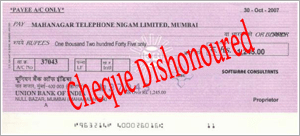
If the amount of cheque is given by the bank to the respective payee, the cheque is considered as honored. If the bank refuses to pay the amount of the cheque, then the cheque is considered as dishonored. Thus, the dishonored cheque means refusal by the bank to pay the amount of the cheque to the payee. This happens when the drawer draws an e-cheque without following the rules and regulations of issuing a cheque or when he/she draws the cheque exceeding the bank balance.

Section 138, the Negotiable Instruments Act 1881 is designed to prevent fraud on the part of the drawer to draw a cheque without sufficient funds in his/her account maintained by him/her in a bank and to induce the payee in due course to act upon it. The main purpose of this piece of legislation is to instill faith in the efficiency of banking operations and soundness in transacting business on the negotiable instruments.


What is a cheque?
sbi_cts

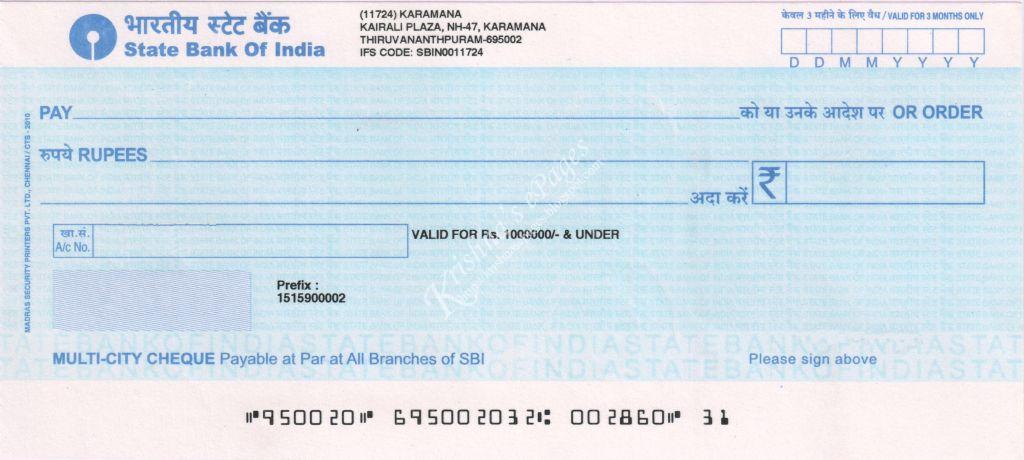
A cheque is a negotiable instrument. It is covered under Section 6 of the Negotiable Instruments Act, 1881. It says that a cheque is a bill of exchange which is drawn on a specific banker. It is not expressed to be payable unless it is demanded. It also includes an electronic image of a truncated cheque as well as a cheque in electronic form.

A cheque is covered in two forms under the said article:

The first type is a cheque in an electric form. It is an exact image of a paper cheque, and it is generated, written and signed in a very secure system and minimum protection is provided for the use of digital signature.

The second type is a cheque in truncated form. It means a cheque which is truncated during the course  of a clearing cycle, either by the clearing house or by the bank whether paying or receiving payment, immediately on generation of an electronic image for transmission, substituting the further physical movement of the cheque in writing[1].

Cheques are a very important component of our lives as they are used in almost all transactions such as repayment of the loan, payment of bill, fees, salary, etc. A huge number of cheques are processed and cleared by banks all over the world on daily basis. Cheques are issued for securing proof of payment. Nevertheless, cheques are a reliable method of payment for a large number of people. A cheque is a negotiable instrument. Crossed and account payee cheques are not negotiable by anyone than the payee. The cheques need to be deposited into the bank account of the payee. Legally, the author of the cheque is called “drawer,” the person in whose favor, the cheque is drawn is called as “payee” and the bank who is directed to pay the amount is known as “drawee”[2].


When does a cheque gets dishonored?

cheque

When a cheque gets dishonored, the drawee immediately issues a “Cheque Return Memo” to the banker of the payee mentioning the reason for non-payment of the particular transaction. The payee’s banker has to give the memo and the dishonored cheque to the payee. The payee can resubmit the cheque within three months of the date mentioned on it if he truly believes that it will be honored this time. However, if the cheque issuer fails to make the payment, then the payee has the right to prosecute the drawer legally.

The payee can legally prosecute the “defaulter” for dishonor of the cheque only if the amount mentioned in the said cheque is discharged towards the payment of a debt or any other kind liability of the defaulter towards the payee. If the cheque was issued in the form of a gift or towards lending a loan or for any unlawful purpose, then the drawer cannot be prosecuted in such a case.


What is the legal action in such a case?
Screenshot (10)

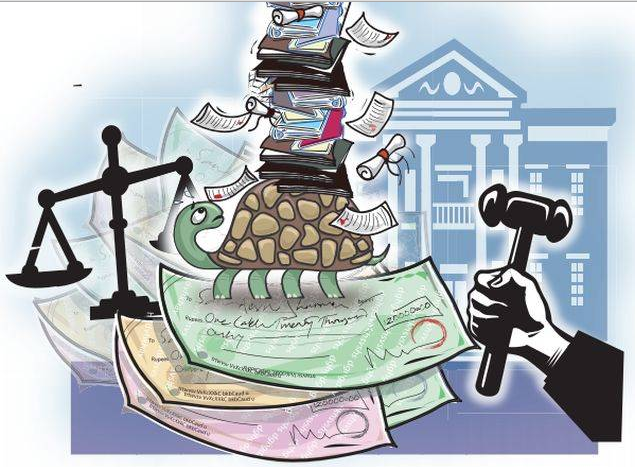
The Negotiable Instruments Act, 1881 is applicable in the cases of dishonor of cheques. According to the Section 138 of the Act which governs dishonor of cheques, it is a criminal offense and is punishable by imprisonment up to 2 years or with a pecuniary penalty or both.

If payee decides to prosecute, the drawer should be given an opportunity of repaying the cheque amount promptly. Such a chance can only be given in the form of a written notice. The payee has to send a notice to the drawer within 30 days from the date of getting “Cheque Return Memo” from the respective bank. The notice has to mention that the cheque amount is to be paid to the payee within 15 days from the date of receiving the notice. If the cheque issuer does not make a new payment within 30 days period of receiving the notice, the payee gets the right to file a criminal complaint against the cheque issuer under Section 138 of the Negotiable Instruments Act, 1881.

However, the complaint has to be registered in a magistrate’s court within the period a month of the completion of the notice period. It is necessary in this type of cases to consult a lawyer who is trained and well versed in this particular area of cases and can properly proceed further in the respective matter.


Ingredients of the offense in this case

  • The cheque has to be issued for the discharge of a debt or any other kind of liability in whole or part.
  • The cheque had been presented within a period of six months or within the specified period, whichever happens earlier.
  • The payee or holder should have issued a notice in writing to the drawer within a period of 30 days of the receipt of information from the bank regarding the return of the respective cheque as due.
  • After receiving such a notice from the holder of the prescribed course of time, the drawer has failed to pay the cheque within a period of 15 days of receiving the said notice.


Reasons for Dishonor of Cheque

  • If the date is not written or is written incorrectly or the date that was given is of three months previous or if the advance date is written.
  • If the payee’s name is not written or not written in a clear manner.
  • If the ordered or crossed cheques are transferred without the proper endorsement and delivery.
  • If the amount is not properly written in words or figures or they have been written incorrectly or if the amount written in words and figures do not match one another.
  • If the changes made on the cheque are not proved by the drawer who has given his signature.
  • If the account number is not written or it is not clear or if it is not clearly mentioned.
  • If the signature is not done or if the signature done on the cheque does not match with the signature specification card kept by the bank.
  • If the amount mentioned on the cheque is more than the amount that the drawer has in his bank account or if as per bank’s rule the minimum balance of the account of the drawer can’t be maintained.
  • If the cheque is overwritten.
  • If the cheque is not in proper condition or it is found to be wet, torn or spotted.
  • If the drawer has given a specific order to the bank to stop any payment by cheque.
  • If the bank has got any information about the death, insolvency or lunacy of the drawer of the depositor.
  • If the court of law has ordered the bank to stop any payments of a cheque.
  • If the bank balance remains less on account of not collecting the cheque deposited.
  • If the drawer has closed the respective bank account before presenting the cheque.


Punishment and Penalty

On receiving the complaint of the said crime, along with an affidavit and pertinent paper trail, the court will issue summons and hear the specific matter. If the defaulter is found guilty, he can be punished with the pecuniary penalty which can be twice the amount of the cheque in question or imprisonment for a term which can be drawn-out up to 2 years or both. The bank also gets the right to stop the cheque book facility given to the defaulter and can close the account for repeated offense of bounced cheques.

If the drawer makes the payment of the cheque in question within 15 days from the date of receipt of the notice, then drawer has not committed any offense. Otherwise, the payee can move forward with his complaint in the court of a jurisdictional magistrate within one month from the date completion of 15 days prescribed in the notice.


Conclusion

This article does not claim to be an all-comprehensive one on the subject. But this should provide a basic insight into the main characteristics of Section 6 and 138 of the Negotiable Instruments Act, which makes dishonoring or bouncing of a cheque a criminal offense.

Due to the infusion of the punitive provisions, the issue of dishonoring of the cheque has been reduced to some extent, and the trading community now feels more assured in receiving the payment through cheques. But the only hindrance is that there is no provision for recovery of the amount covered under a dishonored cheque. In a case where an accused is convicted under Section 138 and the accused has served the sentence but is unable to deposit amount of fine or the cheque, the only option that is left with the complainant is to file a civil suit. The provisions of the Act does not provide for any other method for realization of the amount due to the complainant if the cheque has been dishonored for the reasons of “insufficient funds” in the drawer’s account. The proper course that a complainant can adopt in such a situation is to file a suit before a competent civil court, for recovery of the amount due to him for the reason of a dishonored cheque, which the complainant is at liberty to avail if so advised by the law.

Footnotes:

[1]http://www.vakilno1.com/legal-faq/dishonour-of-cheque-section-138-of-the-negotiable-instruments-act.html

[2]http://www.indiainfoline.com/article/research-articles-personal-finance/cheque-dishonoured-a-step-by-step-guide-for-legal-recourse-113111500895_1.html

 

Download Now

Nemo Dat Quod Non Habet

0

In this blog post, Pramit Bhattacharya, Student, DamodaramSanjivayya National Law University writes about the principle of nemo dat quod non habet. The post highlights the rule which is existing in India and discusses the exceptions to the rule.

1451539_599879256736892_1144192258_n

The literal meaning of the phrase “nemo dat quod non habet” means no one can give what he does not have. This is a legal rule which states that purchasing a property from someone who doesn’t have a title denies the purchaser of the property of an ownership title also. In simple words, if someone gets something because it was transferred to him- as a bequest, sale, gift, etc., he will only have that title which the previous owner had and nothing more. The transferee derives his title from the transferor. This is also known as the derivative principle. The legal rule is also connected to the principle of “first in time is first in right.”

This principle can be explained through the following example. Suppose, X transfers his property to Y. Then X turns around and transfers the property to Z. Following the rule of nemo dat quod non habet, Y will get the right from X. Now Y have the rights and X have none. So X cannot transfer Z the property. The rule of nemo dat has its base as a chain of transactions. The current owner should be able to trace his rights back in time to prove his legitimate acquisition.


Nemo Dat Rule in India

Section 27[1] Of the Sale of Goods Act, 1930 states that when any goods are sold by a person who is not the real owner of the goods and sells them without proper authority and consent from the real owner, the buyer acquires no better title to the goods than the seller had. Further, Section 27 also provides an exception to the rule. Section 27 can be considered as a general rule which protects the interest of the real owner. If there is any defect in the title of the seller, the buyer will also inherit the same defect from the seller. But, this section does not imply that the buyer title is always bad. The basic principle of this rule is that the buyer cannot acquire a better title than the seller. For instance, if a thief sells off the stolen goods, the buyer will have the same title as the thief who sold him the goods.  Sale-of-Goods (1)

Through the judicial pronouncement of Greenwood v Bennett[2]  The rule can be explained.  In this case, Bennett was the real owner of a Jaguar car. Bennett gave his car to a man named Searle for repairing work. Searle used the car for his purpose. While he was using the car, it met with an accident. Searle then sold the car to a garage owner named Harper for 75 £. Harper did not have the knowledge that Searle was not the real owner of the car and spent 226 £ to carry out repair works. He then further sold the car to a finance company. The Court held that since Searle wasn’t the real owner, he couldn’t transfer the right to Harper, who in turn couldn’t pass the rights to the finance company. Bennett was entitled to recover the car.

Although the rule is extremely clear, it isn’t always fair as the innocent buyer may suffer. When the goods are in question, a buyer may find himself in a very tough situation. The apparent harshness of the nemo dat rule was realized, and some exception were provided. The exception applies only to the buyer who has acquired the goods in a good faith and without having knowledge about the rights of the true owner.

In India, in the judicial pronouncement of Life Insurance Corporation v United Bank of India Ltd. &Ors.[3] It was opined by the Court that under Indian law, an actionable claim can be transferred, but only by the person who has a right to the property in respect to which the claim lies.


Exception to the Rule

Transfer by Estoppel: When a person through his actions or words leads another person to believe that some particular state of affairs existed, he would be stopped from denying later that such state of affairs did not exist. This is known as an estoppel. In some cases, the doctrine of estoppel stops the owner from denying the seller’s right to sell the goods, and in such a case the buyer may have a better title to the goods. When the real owner of the goods, through his words or actions leads the buyer to believe that the seller had the authority to dispose of the goods, the real owner would be estopped from denying it later. Section 27 of the Act has the following words “unless the owner of the good is by his conduct precluded from denying the seller’s authority to sell….”

Estoppel can arise in the following manner:

  • Estoppel by act or omission: If there is a legal omission on the part of the real owner, the doctrine of estoppel will apply.
  • Estoppel by negligence: Mere carelessness by the real owner would not constitute negligence. If a person is to be estopped by negligence, then it should be more than mere carelessness on his part, i.e. he has to disregard his obligation towards the opposite party.

Shopping Online Background

Sale by Mercantile Agent: If the real owner of the goods has employed a mercantile agent and the goods are sold by the agent, then the buyer will get a good title because as a general rule an agent can pass better title. The problem arose when the agent did not have the authority to dispose of the goods.  The following conditions need to be satisfied is this provision is to be evoked:

  • The person is an agent as it has been defined under Section 2 (9) of the Sale of Goods Act, 1930.[4]
  • The agent got the documents and goods with the authority of the principal and in the capacity of an agent, and not in the personal capacity.
  • The agent must be acting in the regular course of business while selling the goods to the third party.
  • The buyer should have acted in good faith without having knowledge of the fact that the agent did not have the authority to sell the goods.


Sale by Joint Owner[5]Sale by joint owner is governed by Section 28 of the Sale of Goods Act. This section states that if there is a property to which there are several joint owners but one of them had the sole possession of the property (with the permission of the other co-owners), and he sells the property or transfer the property to a buyer who buys the property in good faith without having knowledge of the fact that the seller had no authority to transfer or sell the property, the buyer gets a good title.

460574257_XS

Sale by a Person in Possession Under Voidable Contract[6]This exception is governed not only by Section 29 of the Sale of Goods Act but also by Section 19[7] and 19A[8] Of the Indian Contract Act, 1872. Both these sections state that if the consent of the parties has been obtained by fraud, coercion, undue influence or misrepresentation, then the contract is voidable at the option of the aggrieved party. Section 29 of the Sale of Goods Act on the other hand states that if a person comes in possession of some goods under a contract which is voidable under Section 19 and 19A of the Contract Act and the goods have been sold by him before the contract was avoided by the aggrieved party then buyer of the goods will have a good title. The rule wouldn’t apply when the contract is void. The right would come into force only if the contract were voidable.


Sale by a Seller in Possession[9]If a seller has sold some goods, then he cannot seal with the same goods. Section 30 (1) however states that if the seller has sold the goods but is still in possession of the goods or possession of the documents, and such goods or documents are sold to some other buyer again or is sold by a mercantile agent on behalf of the seller, then the subsequent buyer will get a good title provided that he was acting in good faith.


Sale by Buyer in Possession[10]Sale by a buyer is possession is governed by Section 30 (2) of the Sale of Goods Act. The provision states that if a buyer is in possession of goods or the documents of title, and he has done so with the consent of the seller, and if such property or goods is transferred to some other person without any notice as regards any lien or other rights of the original seller in respect of those goods, then the third party gets a good title.

download

Resale by Unpaid Seller[11]This section states that, if a seller who hasn’t been paid by the buyer, exercises the right of lien or stops the goods in transit, he may re-sell the goods to another buyer, and such a buyer would get a good title as against the original buyer.


Sale by Finder of Goods[12]Section 169 of the Indian Contract Act states that when the founder of lost goods, cannot find the real owner even after making reasonable diligent efforts or the owner of the goods refuses to pay the finder the legal charges the finder can sell the goods and the buyer will get a good title.


[divider]

Footnotes:

[1]https://indiankanoon.org/doc/1165740/

[2] [1973] 1 QB 195

[3]AIR 1970 Cal 513

[4]https://indiankanoon.org/doc/1951538/

[5]https://indiankanoon.org/doc/1523151/

[6]https://indiankanoon.org/doc/95550/

[7]https://indiankanoon.org/doc/353998/

[8]https://indiankanoon.org/doc/1045643/

[9]https://indiankanoon.org/doc/1630245/

[10]https://indiankanoon.org/doc/1433249/

[11]https://indiankanoon.org/doc/536194/

[12]https://indiankanoon.org/doc/1230755/

Download Now

A Brief Introduction to Nuclear Energy Laws

0

In this blog post, Suhani Chanchlani of Amity Law School, Delhi, I.P University, gives a brief introduction to the guiding principles of Nuclear Energy Laws.

 IMG-20160409-WA0007

So there is another field of law? But why is there a need for nuclear laws anyway? The answer is quite simple (unlike nuclear laws), nuclear technology can reap plentiful benefits to humankind but at the same time, it can be the cause of the destruction of the humankind from the face of the planet. Mind you the utility of nuclear technology is not just limited to energy production but it is known (not by many people though) to have made strides in the field of medicine and agriculture as well. So a technology that can be both a bane or a boon calls out for regulation and not for prohibition. It is in the interest of the humankind to develop nuclear technologies for the true purposes rather than prohibit it altogether because of its potential misuse.

Humans have already devised a mechanism to keep in check the mischievous tendencies of some individuals. You guessed it right! It’s none other than law! So to keep in check the potential misuse of nuclear technologies and at the same time ensure that it is employed for the welfare of humankind, we have nuclear laws.


Definition of Nuclear Law

International Atomic Energy Agency (an organisation that supervises, controls, regulates and lays down norms for the use of nuclear technology), defines nuclear law as:

The body of specific legal norms created to regulate the conduct of legal or natural persons engaged in activities related to fissionable materials, ionizing radiation and exposure to natural sources of radiation. Environmental-Friendly-Law-e1343751045478

This definition highlights certain important aspects of nuclear laws. Firstly, that nuclear law is an important part of national legislations in countries that employ nuclear technology while at the same time it consists of special rules and regulations tailored for the technicalities of this field. Secondly, the laws made addresses the need to regulate the misuse of the technology. Thirdly, just like any other legal regime, the laws made relates to both natural and artificial personalities, be it commercial, governmental, academic, scientific or any other recognized as per the laws of a given nation. Lastly, radioactivity that is produced through fissionable materials or ionizing radiation is the defining feature of the technologies and materials that the nuclear law relates to and thus, justifies a special regime of norms for their conduct.


Principles of Nuclear Law

What are the ground principles upon which nuclear law is based? What distinguishes it from other fields of law? This would be examined hereunder:

Safety Principle: Given the risks associated with the nuclear technology, the objective of the nuclear law is to promote foresight and caution on the part of developers so as to negate the possibilities of harm that may be incurred from the use of it. An offshoot of the safety principle is the precautionary principle. It lays down that the operators or the developers of an industrial activity must take all the precautions conceivable so that there is the least possibility of an occurrence of a nuclear disaster. This principle has its roots in the environmental law and has a significant place in the nuclear law as well. 63487563326

Security Principle: Nuclear technology has a great risk of being put to non-peaceful uses. The acquisition of radiation sources by terrorists or other criminals can pose immense risks to the security. This concern is well reflected in various nuclear disarmament treaties signed by various nations at the time of the cold war. Moreover, IAEA has laid down norms concerning the limit up to which uranium enrichment is allowed for the civilian purpose of generation of electricity. IAEA itself regularly sends for inspectors to check if the nuclear power plants are not diverted for non-peaceful purposes.

Responsibility Principle: There are numerous entities involved in the nuclear industry such operators of nuclear installations, manufacturers of the equipment or sources of ionizing radiation, processors of nuclear material, medical practitioners, professors of nuclear material, construction companies, engineering-architect firms, research and development organizations, financial institutions and regulatory bodies. With so many parties involved in nuclear-related activities, the question arises as to who would be responsible for the incident of nuclear damage? According to the major civil nuclear liability conventions, such as Vienna Convention on Civil Liability for Nuclear Damage, Paris Convention on Third Party Liability in the Field of Nuclear Energy, 1960 and other such conventions and protocols, the operator of the nuclear installation is strictly liable for the nuclear damage. Thus, even in cases where the fault of the operator cannot be proven, he would be liable to pay compensation for the nuclear damage. This has been mandated so as to simplify the legal proceedings for the victims of a nuclear disaster as it would have been excruciating for them to file suits against multitudes of parties involved in nuclear activities. This principle, however, does not form a part of the customary international law as the conventions that stipulate it have not been ratified unanimously by countries possessing nuclear power.

Permission Principle: It is conventionally presumed that all the activities in a state are allowed until they are expressly prohibited by law. As already mentioned before, nuclear activities, by its very nature has an element of risk attached to it. Thus, ‘permission’, ‘authorisation’, ‘license’, ‘certificate’, ‘permit’ or ‘approval’ is essential before any enterprise or entity is allowed to carry out any activity involving fissionable material or radio-isotopes. Before the grant of the approval, it is necessary to examine the benefits and harms of conducting nuclear activities in a particular area. Factors such as the rights of those living in the vicinity of the nuclear installations must be given due consideration. In any eventuality that the costs or harm of carrying out a nuclear activity exceeds the benefits, other alternatives must be considered.998551-compliance

Continuous Control principle: Even after the grant of a license to a nuclear operator, the regular inspects the nuclear installations on a regular basis to ensure that the nuclear installation is in complete compliance with all rules and regulations that apply to it.

Compensation Principle: The use of nuclear technology and materials imposes a great risk to the health of humans, animals and plants and also to the environment and its regenerative quality. Despite taking all the precautions conceivable, there is still a risk of the occurrence of a nuclear accident. The nuclear law provides for the compensation of victims for such eventuality.

Sustainable Development Principle: This principle forms part of the foundations of the environmental law. It identifies a duty of each generation to conduct its activities in a way that the harm is not caused to the next generations. This principle is of particular importance given the fact that if a nuclear activity is not conducted in a safe manner, the damage caused could prevail for a very long time.

Compliance Principle: Nuclear activities through radiological contamination have a great potential to cause trans-border damages. It is one of the founding principles of environmental law and also forms part of the customary international law principles that when a country carries out any activity within its jurisdiction, it would be responsible in the event of the occurrence of any damage to the neighboring countries. This is known as a no-harm principle and is especially relevant to the nuclear law.

Independence Principle: The establishment of a national regulatory body is germane to nuclear law. It is essential that this body remains to be an independent one and not guided by the interests of those who seek to promote nuclear activities for commercial and military purposes. The rules and regulations formulated by this body must be abided by every entity in letter and spirit so as to ensure maintenance of safety.

Transparency Principle: Nuclear technology developed in the wake of Second World War. At that time it was kept confidential and was a closely guarded secret of the states. However, with the use of nuclear technology for peaceful purposes, it is essential to take public`s confidence. Thus, the regulatory bodies, governments, media, research and development organizations and any other relevant organization must keep the public updated with regards to the costs, benefits, and harm associated with the conduction of nuclear activities. Intimation of the occurrence of any nuclear accident is especially essential in this regard. NVGs

International Cooperation Principle: The final principle is concerning the maintenance of co-operation between different states that employ nuclear technology. This would serve the common purpose of achieving greater developments in the nuclear technology. Second, in the area of environment and safety, as the nuclear technology is known to have the potential for trans-boundary impacts, it is essential that the governments harmonize their policies and develop co-operative programs so as to reduce the risks of damage to their citizens and territories. Moreover, the lessons learned in one State on enhancement of safety can be very relevant to improving the situation in other States. In pursuance of achieving improvements in the safety standards of nuclear installments worldwide, such lessons must be promptly and widely shared. Third, the use of nuclear material involves security risks that know no national borders. Threats associated with illicit trafficking in nuclear material and the proliferation of nuclear explosives and their misappropriation and misuse by terrorists have long been recognized as matters requiring a high level of international co-operation.

Download Now

A Guide to Corporate Responsibility Reporting in India

0
CSR

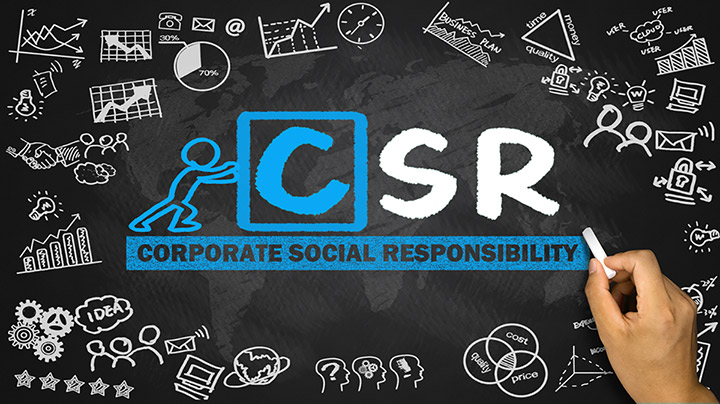
In this blog post, Suhani Chanchlani of Amity Law School Delhi,  firstly examines the sphere of CSR in India, and then examines the essentials of Business Responsibility Report as mandated by SEBI.

IMG-20160409-WA0007


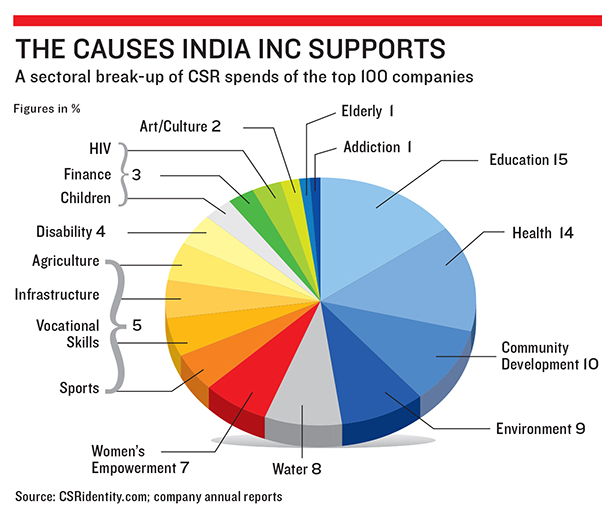
Corporate Social Responsibility is an essential component of corporate governance in India. All the companies that fulfill a set threshold are required to spend a stipulated amount on CSR activities. However, CSR does not end here.

Companies are required to act in a responsible manner towards their stakeholders, towards the environment and the society at large. The core of their business model must reflect its responsible business practices. To gauge how responsibly a business acts, SEBI has made it mandatory for top 100 listed companies to publish Business Responsibility Reports.


What is Corporate Social Responsibility?

Businesses operate in society. They contribute their part to the development of society. However, while undertaking some of the activities, businesses may harm some or the other valuable aspect of society. Businesses may pollute the environment; they may employ workers under extortionate terms, or they may undertake some activities that would undermine the interests of shareholders and other stakeholders. corporate-social-responsibility

Corporate Social Responsibility is a concept that outlines the larger responsibility of businesses towards the society. It seeks to reduce negative externalities associated with carrying out activities in a business and enhance their positive externalities instead. It is thus, about encouraging the corporates to adopt responsible business practices.


Corporate Social Responsibility in India

CSR is not a new concept in India. It gained legal force when it was incorporated under Section 135 of the Companies Act, 2013.

Under this Act, every company that has a net worth of Rs. 500 crore or more, or a turnover of Rs. 1000 crore or more, or a net profit of Rs. 5 crores or more shall be obligated to constitute a Corporate Social Responsibility Committee. Such a committee must be constituted by three or more directors of the Board, and at least one of the directors must be an independent director. It is the responsibility of the Committee to formulate a CSR Policy. 1

Such a policy must duly indicate activities that the company plans to undertake amongst those enlisted in Schedule VII of the Companies Act. Moreover, these companies must spend at least 2% of the average net profits of the preceding three financial years. These activities include promotion of education, eradicating extreme hunger and poverty, promoting gender equality and empowerment of women, improving maternal health and reducing child mortality, combating human immunodeficiency virus, acquired immune deficiency syndrome, malaria and other diseases, ensuring environmental sustainability, promoting hygiene and sanitation in backward areas, social business projects, contribution to the Prime Minister’s National Relief Fund or any other fund set up by the Central Government or the State Governments for socio-economic development and relief and funds for the welfare of the Scheduled Tribes, the Scheduled Castes other backward classes, minorities and women and such other matters as may be prescribed.

The Companies Act requires companies to focus more on the local areas where they operate to undertake their CSR activities. Companies also have the option to collaborate with other companies for the purpose of undertaking CSR activities. However, companies have to make separate CSR reports of their own.


Business Responsibility Reporting as per SEBI Guidelines

Through Business Responsibility Report, SEBI mandates that the listed companies disclose all the practices that they have adopted in pursuance of CSR to all of its stakeholders.

The Ministry of Corporate Affairs came out with the ‘National Voluntary Guidelines on Social, Environmental and Economic Responsibilities of Business’. These guidelines consist of principles that the companies need to adopt as part of their corporate social responsibility.  To make the activities conducted under CSR by publicly listed companies more transparent, SEBI has made it mandatory for top 100 listed entities to include Business Responsibility Report as part of their Annual Reports. It is also mandatory for them to furnish this report to the stock exchange and also publish it on their websites for easy access to all the stakeholders. For other listed companies disclosure of BRR has been made voluntary.

pen

In cases where a foreign company has its subsidiary in India, it is mandatory for them to make their own separate BRR. In the case of an Indian listed company that publishes a sustainability report on a regular basis for the purpose of submission to any foreign regulatory body under internationally recognized reporting framework such as Global Reporting Initiative (GRI), it is not required of them to make a separate BRR. However, they are required to furnish the said sustainability report to all of its stakeholders.  This change came about from the insertion of clause 55 to the listing agreement which reads as:

“Listed entities shall submit, as part of their Annual Reports, Business Responsibility Reports, describing the initiatives taken by them from an environmental, social and governance perspective, in the format suggested.”

SEBI has after that, published the prescribed format of the BRR. It is essential for every top 100 listed company to provide basic information about themselves like its financials, related performance indicators and the practices it has adopted in pursuance of CSR. This information is expressed through indicators such as total turnover, profits after tax and total spending on CSR. Additionally, these entities are obligated to disclose the following information in its report:COR9zcfVAAALG7C111

  • The list of entities to which the BRR and the company policy applies.
  • The company is required to report on at least three of its products or services.
  • It must indicate the proportion of goods and services received by the company from its distributors or suppliers that are a part of the company`s policy and is compliant with environmental and social standards prescribed.
  • It must describe the mechanism the company has in place to recycle its products after consumption as well as wastes generated after that and also at the time of production.
  • The number of stakeholders complaints received in a financial year, and the number of complaints satisfactorily responded must also be mentioned.
  • Some customer complaints received and the percentage of that which were addressed.
  • Some complaints against the company that relates to discriminatory employment, sexual harassment, employment of child labor, forced labor or involuntary labor and the percentage of these complaints that have been addressed or are pending.

imagesThe company must also provide information with regards to its principle-based performance. These principles are as follows:-

  • Carrying out of business with ethics, accountability, and transparency.
  • Providing goods and services that are safe and contribute to sustainability throughout their life cycle.
  • Promoting the well-being of employees.
  • Respecting the interests of all the stakeholders and being responsive to towards them.
  • Respecting and promoting human rights.
  • Respecting, protecting and making efforts to protect the environment.
  • While engaging in influencing of regulatory bodies, customers and the public at large, businesses should act responsibly.

Thus, it can be concluded that the requirement of furnishing Business Responsibility Report, exhorts businesses to instill core principles that are essential for carrying out responsible business practices. This would help businesses to implement responsible business practices as a core part of their business model.

Download Now

An Analysis of European Union`s Right to be Forgotten

0

In this blog post, Suhani Chanchlani of Amity Law School, Delhi, analyses the aspects of the European Union`s controversial Right to be Forgotten.

IMG-20160409-WA0007


 What Is the Right to Be Forgotten?

Under the Right to be Forgotten, residents of the EU nations can request commercial search engines like Google, Yahoo and Bing to remove web pages from the list of search results of the name of the requester. The search engine, however, would itself decide upon the merits whether the request is actual to remove web pages that are providing information that is no longer of relevance.RTBF

In cases where the person’s application is denied, he/she has an option of approaching higher judicial offices or a designated data protection regulators. Search engines can be fined if they fail to remove web pages from their list of search results after validly recognizing a request.

It is pertinent to note that on acceptance of the request, the impugned web page is merely not displayed in the search results of the name of the person. It is not expunged and therefore, remains online. Although it becomes tough to find it.

How Did It Come into Being?

The Right to be Forgotten emanated from the European Court of Justice when a Spanish citizen Mario Costeja Gonzalez initiated actions against Google for its refusal to take down a web page on the search results of his name. This web page displayed a newspaper advertisement that announced the auction of one of the properties of Mr. Gonzalez that took place in 1998 to discharge his social security debt.

_74828473_74828468Mr. Gonzalez was of the opinion that this newspaper advertisement was no longer of any relevance. Hence, Google should take down the link that is harmful to his reputation and invasive of his right to privacy without serving any benefit to the public as a whole.

Google, on the other hand, contended that it neither is the creator of the information that it provides on its search results, nor does it solicit the same. It merely catalogs web pages that already exist online.

The judgment went for Mr. Gonzalez and laid the foundation of the controversial Right to be Forgotten. The Court was of the opinion that the search engines are the controller of information as they retrieve, record and organize the data and store it on their servers to make it available to their users in the form of search results. Therefore, the search engines can be held liable for their activities that are in infringement of anybody`s Right to Privacy since it does anything additional to that of the publishers of the websites.a9940bca-f590-43e8-8685-b395e5092bb8-2060x1236

Moreover, it becomes difficult for a person whose right to privacy is infringed by multiple publishers, to request each of them to take down the offensive content. However, search engines who controls data that is displayed in their search results can at least remove web pages from its search results.

What Is the Scope of This Right?

This right can be exercised by the residents of EU nations only. Earlier, the offensive web pages were not displayed only on the European websites of Google and therefore could be easily accessed by users on using the USA version of the website www.google.com. Google filled this gaping loophole recently. Now the users from EU nations would not be able to access removed web pages using any version of Google. To determine users in EU nations Google uses geolocators.

However, France’s data-protection regulator Commission Nationale de l’Informatique et des Libertés, or CNIL wants Google to make ‘removed web pages’ inaccessible globally on all domains of Google for the effective exercise of the Right to be Forgotten. It contended that an EU resident can still be able to access web pages outside EU nations or by using services as a virtual private network.

In response to this ruling, Google has filed an appeal to the France`s highest court that has jurisdiction over appeals against administrative bodies Conseil d’État. Google is on a firm stand that it only abides by the law of the country in which it operates. It cannot possibly apply the laws of a nation to its activities that are carried out beyond that nation`s jurisdiction.


Why Is the Right to Be Forgotten Appreciated?

  • It just allows individuals to make a request to a search engine to remove a web page from the search results of the name of a requester if the information provided by the web page is inadequate, irrelevant, excessive or invasive of his/her right to privacy. Search engines have to respect such requests. But at the same time, they can deny those requests that ultimately aims at suppression of freedom of expression or of the people`s right to know. This right to know extends to the information about the role played by individuals in their public lives which people have a general interest to know. Thus, a request made by a public figure for delisting a web page would be refused since it relates to his/her public life.
  • The economic interests of search engines would succumb to the right to privacy of individuals. Compromising information about individuals that serves no public interest would be lost in the obscurity of the internet if search engines would delist it from their search results. Thus, a victim of a revenge porn or a person who had been accused of a crime but was acquitted later and other such individuals who have sustained personal damages due to the ‘openness’ of the internet could finally remain intact and be forgotten.


What Are the Shortcomings in Its Practice?

  • The Right to be Forgotten makes it all the more difficult to forget. Consider the very case that was the genesis for this right. Mr. Gonzalez won the case against Google. However, the very purpose of filing of the case, i.e., the delisting of a web page that contained newspaper advertisement of the property foreclosure has come under the public scan as it has now become information that the public has a general interest to know. Many requests have met a similar fate.
  • It is human to be curious about knowing things that are purposely hidden from you. Thus, just like Chinese, people in EU nations would be likely to use way around such as virtual private networks specifically to know about things they cannot access through conventional methods or they could easily ask a person located outside EU to run searches on an individual. Bottom-line: Right to be Forgotten defeats the whole purpose of forgetting.
  • It allows certain individuals to impede access to information that may have been published legitimately in public domain. Although the web pages themselves are not exterminated then again, it becomes virtually impossible to access public records on the internet without the aid of a search engine.
  • The test for removal of web pages is vague. According to the judgment, they are amenable to be excluded from search results if they are “inadequate, irrelevant or no longer relevant”. These terms mean different things to different people. Search engines are more likely to accept requests to be on the safer side so as to avoid the cost of legal actions.

This would seriously harm freedom of expression and the general right of people to know.


How Has the Right to Be Forgotten Been Exercised from Two Years Since Its Inception?

Google claims to have received 436,182 requests out of which it has evaluated 1,527,266 URLs. 43% of the URLs out of the evaluated ones have been removed. Facebook, Twitter, and YouTube features among top ten websites whose links have been most frequently removed from the search results.

Examples of removal requests that have been approved include:

  • An article highlighting the commission of a minor crime by a teacher ten years ago.
  • Web pages that displayed the address of a woman.
  • An article that covered the removal of web pages done by Google that related to the commission of a minor crime.
  • A decade old article that covered the murder of a person and mentioned the name of his wife.
  • A victim of rape`s request to remove articles that covered on her rape.
  • A crime victim whose name had been highlighted in stories covered on three web pages that mentioned her name.
  • A conviction order of a person who was subsequently acquitted of the same crime by a higher court.
  • An article that covered the participation of an individual as a minor in a contest.

Examples of removal requests that were not approved:B_Image_4782

  • Articles covering investigations of sexual abuse accusations on a former clergyman.
  • A link that had a copy of an official state`s document that reported on acts of fraud.
  • A request to remove 50 links that reported on public outcry over accusations of abuse of welfare services.
  • Articles that covered the use of botched procedure by a doctor.
  • Report on the dismissal of a person from his job for the commission of a sexual crime.
  • Report on the embarrassing content that a media professional had posted on the internet.
  • Articles about the arrest of a professional for the commission of financial crime.
  • Report on the arrest and banishment from a church of a priest for possession of child pornography.


[divider]

Sources:

Download Now

A Guide to Licensing Trademarks in India

1

In this blog post, Suhani Chanchlani of Amity Law School Delhi gives a brief layout of the procedure for licensing trademarks in India. The essentials of a licensing agreement and the benefits of licensing a trademark would also be highlighted.

IMG-20160409-WA0007

What is a Trademark?

A trademark is a unique symbol, sign, logo, graphics, design, word, phrases or any combination of these, that distinguishes and identifies a company, brand or firm`s name and or their goods and services from the other entities. It assures the buyers of the genuineness of the products of the companies having a particular trade name and protects the proprietors from unauthorized use of trade-name by third-parties. Trademarks must be distinctive in nature. They cannot be descriptive. A trademark is different from a patent. While a patent is a limited duration intellectual property right over an invention, a trademark is an intellectual right of ownership over those set of words and graphics that distinguishes and identifies a brand name from others. Trademarks are usually granted for 7 to 20 years and unlike patents, they can be renewed indefinitely.


Trademark

What is Meant by Licensing?

When a proprietor of a registered intellectual property authorizes a person to use his intellectual property in a particular manner, under a licensing agreement, it is called licensing. The proprietor of the intellectual property who grants the license is known as a licensor and the person to whom the license is issued is known as a licensee. Licensing is essential for a proprietor as it allows him to engage with those entities that distribute his products to its end users.


How to License a Trademark

Make a Licensing Agreement: A licensing agreement is essential for laying down the terms and conditions of the use of a trademark. Some of the key elements that can be made a part of the agreement subject to special needs and circumstances of the parties include:licenses7

  • Provision for quality control: The provision for quality control is essential for maintaining the goodwill and reputation of the trademark. The agreement must provide for consequences of infringement of quality measures so as to ensure that the quality of the product is maintained.
  • Duration of the license
  • Exclusive or Non-exclusive license
  • If sub-licensing is permitted then the extent of then the terms on which it is permitted and the extent of its use.
  • Commercial terms such as the payment of royalties, escalations, etc.
  • Circumstances under which the license would be canceled.
  • Specific restrictions or terms on the use of trade-name.
  • A dispute settlement mechanism.

The above list of provisions is indicative in nature. Parties need to draft the provisions of their licensing agreement by their requirements.

Register your Licensing Agreement with the Registrar of Trademarks: Although third-parties are allowed to use trademarks if they are permitted by the owners of the trademark. To consolidate the legal position of parties involved, it is advisable to get the license agreement recorded with the Registrar of Trademarks. For this following procedure must be followed:-

  • The application for record of the licensing agreement must be made within six months from the date of entering the agreement.
  • The licensor and the licensee must jointly apply in writing to the registrar on TM-28.
  • The proprietor must also submit an affidavit specifying:
    • the particulars of the relationship between him and the licensee;
    • the control that he holds over the use made by the licensee;
    • the extent to which the licensee can make use of the trademark;
    • the terms and conditions of the use;
    • period of permitted use, or any other relevant matter.
  • The parties must also submit all the other related documents that the Registrar may ask them to submit.
  • Once the Registrar is satisfied with the application and the particulars entailed in it, the licensee or the proposed user of the trademark would be duly registered. The date on which the application for registration was submitted would be entered in the register and from this date only the licensee would become a registered user of a trademark for the third parties. The particulars of the relationship between the licensor and the licensee would be recorded in the Trademarks Journal within two months from the date of registration.
  • The Registrar would after that send a notice of the registration of the licensee as a licensed user to other licensed users, if any, of a particular trademark.
  • Upon the request of an applicant, the Registrar if he is satisfied, would not disclose the particulars of the registration of the licensing agreement, so as to protect against the disclosure of information to rivals.
  • The Registrar can cancel the registration of the licensed user on grounds that include – unauthorised use of trademark, failure of the proprietor or licensor to disclose any material information or fact for the use of trademark, or the failure of the licensee to abide by the stipulations with respect to quality standards, or change of circumstances from the date of registration. Before the cancellation of the license, the Registrar serves a notice to both the parties and makes a decision after hearing both the parties.

Rights of the Licensee/Registered User

A licensee or registered user can call the attention of the proprietor to an infringement of the trademark. He can even initiate proceedings against an infringement of the trademark in his name as if he is the proprietor of the trademark after a one month notice to the proprietor. If he does so, it is advisable for him to cite the proprietor as his co-defendant. However, he shall not be liable to bear any costs if he does not initiate any proceedings.trademarksoftheworld

A registered user does not have a right to assignment or any transmissible right on the use of the trademark. This means that he does not have a right to permit sub-licensing to any third-party without the prior consent of the proprietor.


Benefits of Licensing Trademarks

  • It allows brand owners to take maximum economic benefits of the goodwill of their brand without having to invest in infrastructure for marketing of their products. It ensures them of a regular stream of revenue on account of regular receipt of royalties from the licensee of the trademark.
  • Licensing is also beneficial for a licensee. Upon starting an enterprise under a trademark of a reputable business, a licensee can be assured of stable returns. This substantially reduces the overall risk of starting a new venture.
  • Licensing is of special importance to multi-national companies. If the government has imposed restrictions on shareholding in certain sectors, then a foreign company can still retain control of its outlets by dictating terms and conditions to the licensee of the trademark through a licensing agreement. In this way, foreign companies can build their brand presence even though they might not have invested so much in a particular market.
Download Now

Legal Procedure For Registration Of Marriage in India

1
Registration of marriage

In this blog post, Pranav Rudresh, a student of Lloyd Law College, Greater Noida, writes about the legal procedure for getting married in India, salient features of the marriage registration processes and the costs behind them.

Sociologically, marriage can be defined as the approval of union between two people which must be a steady and lasting relationship. Marriage creates an environment for cultivation and fulfilment of love. In legal terms, marriage is defined as a contract by which a man and a woman reciprocally engage with each other so as to live together. Legally, it is important for both the parties to subscribe to the contract by will if they want to call it as marriage.

It is important to know what are the legal procedures involved in a valid marriage. This article gives a brief idea about the same. Firstly, let’s figure out which acts are related to marriage in India. In India, there are different marriage acts for different religions. For Hindus, there is the Hindu Marriage Act, 1955, which is also applicable for Jains, Sikhs, and the Buddhists. Muslims also have their personal law, which states that Nikah or marriage is a contract and may be permanent or temporary and permits a man to have four wives, the condition being that he must treat all of them equally. For the Parsees, there is a Parsee Marriage & Divorce Act, 1939, which governs the provisions of their marriage and law. For an Indian Christian, there is the Indian Christian Marriage Act 1889.

 Thus the Acts related to marriage in India are

  • The Hindu Marriage Act, 1955.
  • The personal laws of marriage and divorce.

To know more about the legal procedure for registration of marriage in India in brief, please refer to the video below:


Procedures of marriage and registration under the Hindu Marriage Act, 1955

marriage

As stated above, the Hindu Marriage Act, 1955 applies to many religions such as the Hindus, Jains, Sikhs and the Buddhists. It is also applicable to the persons if they have converted to any of these religions from any other religion. The primary condition according to this act is the age of the bride and the bridegroom. While in the case of bride it has been stated as 18 years, in the case of the bridegroom, it is 21. This means that no male or female belonging to any of the above-mentioned religions shall be legally allowed to marry before attaining the aforementioned ages. The Hindu marriage act applies to all over Indian states and the Union territories, Jammu and Kashmir being an exception to it.

According to the law and as per the recent strict guidelines of the Supreme Court, it is highly necessary to register the marriages. Let’s now take a look at few the registration processes and the cost of the same.

As per the Hindu Marriage Act, 1955, following are the requirements for registration:

  • One can apply for marriage at any sub-divisional magistrate’s office; the offline application method can be initiated from there itself; the registration can be done online as well. The details are required after confirming your district/state. In the case of Hindu Marriage Act, one has to wait only 15 days for an appointment while it may extend to 30 days in case of Special Marriage Act.
  • The registration form must be duly signed by both male and female with a sound state of mind. Both the parties must not fall within any degree of prohibited relationship.
  • The second requirement for registration under Hindu Marriage Act, 1955 is any document that provides the date of birth of the individuals. The documents maybe the birth certificate, matriculation certificate, passports, PAN cards, etc.
  • Two passport size photographs of both the parties are required, also one marriage photograph and Marriage invitation card (which although is not mandatory).
  • In a case where the individuals have converted to any of the religions which the Hindu Marriage Act, 1955 covers, the conversion certificate duly verified by a priest to the religion which the individuals have converted to, is also required.
  • The most important process for the registration to complete is the attestation of a Gazetted officer. All the above-mentioned documents must be verified by a Gazetted officer.
  • After the submission of all the above-mentioned documents duly verified, it shall be the duty of the district court to confirm and put a final thumbs up on the marriage registration of the individuals.


Cost of registration:

The basic cost of registration differs from state to state; it is however in between Rs. 100-200.


Procedures of marriage and registration under the Special Marriage Act, 1954

_03f0f5a8-cb51-11e5-83ed-24f59eb81169

The Indian Special Marriage Act is for those who don’t opt the religious way of marriage, i.e. those who prefer other methods of getting married apart from the religious methods such as court marriage.


Marriage between an Indian and a foreigner:

The Special Marriage Act also gives guidelines for marriage between the Indians and Non Indians (foreigners), the condition for which the marriage is taking place in India and not anywhere else. It is also highly necessary for one of the two partners to be at least temporarily residing in India. If one of the partners is residing outside India, it is important for the partner residing in India to fill the Marriage notice which can be obtained from any marriage registrar the individual wishes. This notice will then be sent to the foreign partner who will have to fill it accordingly and submit back to the registrar. The couple then needs to wait for a month to be married.

This process can also be legally useful in applying for Visa or some sort of property issues.

Now the question is whether like the Hindu Marriage Act, 1955, documents are required for registration under the Special Marriage Act, 1954 too? The answer to this is yes, just as the Hindu Marriage Act, documents for registration are required under the Special Marriage Act too. Following are the list of documents required for registration under the special marriage act:

  • Passport – A valid passport is a must requirement in the case of registration under the special marriage act.
  • Birth certificate.
  • A copy of the divorce certificate in case of divorcees.
  • Death certificate of the deceased spouse in case of widowed partner.
  • The certificate mentioning the stay of a couple in India for the period of 30 days.

The special marriage act also covers the requirements of court marriages in India. Court marriage can be between an Indian male and a female irrespective of their caste, religion or creed. It can also be between an Indian and a foreigner, rules of which have been already explained just above. What court marriage does is it removes the rituals and ceremonies that happen the traditional/religious marriages. The interested parties can directly apply to the Marriage Registrar for registration of marriage and be granted of the marriage certificate by the registrar.

There are different situations in court marriage. To mention a few, court marriages can be done among these:

  1. Both male and female are Hindus.
  2. Both male and female belong to different religions.
  3. Between an Indian and foreigner.

According to the Special Marriage Act, when two individuals are willing to do a court marriage, they need to ensure the following things:

  • Both the individuals must not be married substantially to any other partner, i.e. both the parties are required to be unmarried.
  • Both the individuals must have attained the legal age of marriage, i.e. 21 in the case of the groom (male) and 18 in the case of the bride (female).
  • Both the individuals should be marrying with the sound state of mind, and none shall be under any sought of unsound state of mind.


Conditions and requirements for registration when both male and female are Hindus:

Now let’s take a look at the procedure followed in case of both individuals being Hindu:

  • The individuals are required to fill the form and submit it to the marriage registrar in one of the districts in which either of the individuals has resided for not less than a month.
  • The marriage may be allowed only after 30 days unless there is any sort of objection from any of the individual.
  • The marriage is required to take place only at the specified marriage office.
  • Both the individuals are required to be present physically at the time of marriage.
  • The presence of 3 eye witnesses.

Now we look at the most important thing. The documents required for registration. The documents required are as follows:

  • Passport sized photos of the individuals along with the given form and prescribed fee.
  • Resident proof of the individuals.
  • Birth certificate of the individuals.
  • Photos and residential proof of eye witnesses.


Conditions and requirements for registration when both individuals are of different religion:

Under Special Marriage Act, the procedure, as well as the documents necessary for marriage where both individuals are of different religions is almost the same as that in the case where both the individuals are Hindus. Both individuals must file their application in the marriage registrar’s office in the same process as mentioned above. The documents requirement are also the same as mentioned above unless any special circumstances.


Charges an individual has to pay to get married under the Special Marriage Act:

There is no charge taken by the registrar. Registration form charges differ from state to state. The individuals are required to submit the form charges along with the required documents at the time of registration. Generally it is between Rs. 150-200.


A brief account of the personal marriage and divorce Acts

India, being a multi-religion nation, required a law apart from the Hindu marriage act and the special marriage act. Thus each citizen of India is entitled to have his personal laws in case of marriage and divorce.

It has been earlier stated as well that in a case of the Hindus, Sikhs, Jains, and Buddhists, they are governed by the Hindu Marriage Act, 1955, which provides an essential condition as to which the bridegroom should be the age of 21 years and bride of 18 years. Divorce under the Hindu Marriage Act 1955 can be obtained on the various grounds.

quran-30-21-and-among-his-signs1-1

Muslims also have their personal law, which states that Nikah or marriage is a contract and may be permanent or temporary and permits a man, four wives if he treats all of them equally.

Similarly, for the Parsees, there is a Parsee Marriage & Divorce Act, 1939, which governs the provisions of their marriage and law. The Indian Christians are to follow the Indian Christian Marriage Act 1889.

Recently the Supreme Court of India, in the case of Smt. Seema v. Ashwani Kumar on 14 February 2006 issued an order to all the states that marriages must be registered and that it should take no longer than three months. The petition was filed by Seema, a divorced woman, seeking compulsory marriage registrations. The woman’s former husband had refused to pay her alimony claiming that they were never married. The petitioner’s counsel, Balraj Diwan, said the man was taking advantage of the fact that the marriage was never registered. In February 2006; the court held that compulsory registration of marriages of all religions would be a step in the right direction for the prevention of child marriage – a practice that is still widespread in many parts of the country. It said that one way to check the practice was to make it legally binding on all couples to register their marriages, mentioning their ages at the time of marriage.

Thus for any marriage to be termed legal, the registration in the respective registrar’s office must be done within three months. This would not only help government for easy gathering of married people’s census but also help the government to seek out ways to fight against marriage related crimes.


Download Now

Benefits Of The Goods And Service Tax

0
offline gst app

In this blog post, Sunidhi Pubreja, a student of Rajiv Gandhi National University of Law, Patiala lists out the benefits of changing the age old tax regime in India to GST and its impact on the overall growth and development of the Indian economy.

13151554_1000701696685887_5139115040198882872_n

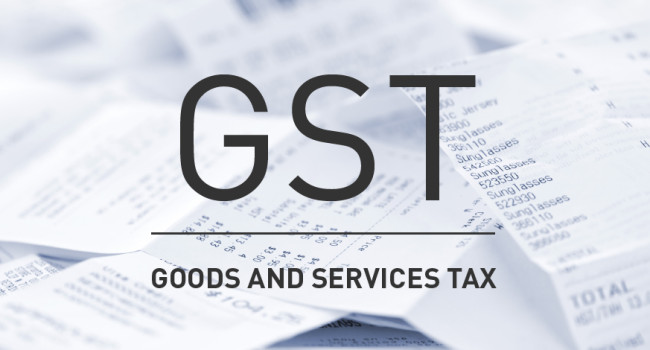
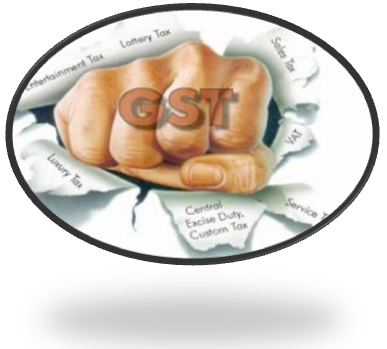
Goods and Service Tax (GST) is a broad based and single comprehensive tax levied on goods and services consumed in an economy. GST is levied at every stage of the production-distribution chain with applicable set-offs in respect of the tax remitted at a previous stage. It is a tax on final consumption. In simple terms, GST may be defined as a tax on goods and services, in which at the time of sale of goods or providing the services, the seller or service provider may claim the input credit of tax which he has paid while purchasing the goods or procuring the service.[1] As VAT can be applied to goods as well as services, it has been termed as Goods and Services Tax. During the last few decades, VAT has become a significant instrument of indirect taxation in more than 130 countries resulting in one-fifth of the world’s tax revenue. It is a tax on goods and services with a continuous chain of set-off advantage. This will be beneficial for the business as it is transparent with a complete chain of set-off, which will result in increased Tax base and better tax payments.

3

Opportunities

The Goods and Services Tax (GST) aims at simplifying India’s tax structure so as to widen the tax base and create a market that will benefit both corporate and the economy. The implementation of GST would ensure that India provides a tax regime that is almost similar to the rest of the world. Implementation of GST will have following benefits:

  • National interest is above all the benefits which anything can provide. The introduction of GST as quoted by Apex Chamber of the Associated Chambers of Commerce and Industry of India (ASSOCHAM) could increase GDP growth rate by 1.4 to 1.7 percent with an annual revenue increase of Rupees 1.2 Lakh Crore at a current level. This will also result in a boost in Tax GDP from 1.5% to 2%.[2]
  • There are two kinds of Black money i.e. the one lying outside India and other existing within India. This bill will put an end in the latter category of the black money. In generic terminology, the black money stems from a transaction which has evaded taxes. An example of such black money in the present day is as follows:-
  • “When a citizen purchases a brush from a shopkeeper but declines a bill, the shopkeeper tells him that the brush will cost 15% more and he helps the shopkeeper evade taxes and generates the black economy.”[3]The Goods and Service Tax will not support such cash transactions as the shop keeper will lose credit for the taxes paid at the earlier stages of manufacture and distribution if he does not give a bill.
  • Poverty reduction has always been the main aim of economic policy making in India. Any policy for poverty reduction must provide at least, food, clothing, shelter, education and health. At present, primary food articles like wheat and rice are liable to tax in many states. However under the GST, all food items covered under the public distribution system are proposed to be exempt from GST i.e. no output tax on the final poor consumer. Similarly, basic health and education services are also intended to be fully exempt.  Housing is yet another important need of the poor. The GST provide for including within its scope, the transaction in real estate. Therefore, for a registered real estate builder, all taxes on inputs (including on land) will be set off against the tax payable on the constructed property.[4] This will reduce the cost of housing. At present, there is no mechanism for complete set-off of stamp duty on land and other indirect taxes on inputs. Since food and these services are necessary to meet basic human needs, the tax exemption for these services will enable the poor to have cheaper accessibility.
  • A business person will be heavily benefited from the GST regime as it will offer them a uniform and simple taxation regime. Additionally, it will also bring Indian manufacturers an edge over the Chinese manufacturers as the costs of production will be turned down. As per ASSOCHAM, overall cost and thus prices of goods manufactured in India may reduce by 10%.[5]This will bring Indian economy in competition with cheap Chinese markets regarding prices. However, as explained above, the business person will not be able to evade taxes by not providing a bill for the transaction. Hence an illegal source for their tax-free black income will begone.2
  • The terms of trade can also be expected to improve for agriculture vis-à-vis manufacture goods. The prices of agricultural goods would increase between 0.61 and 1.18% whereas the overall prices of all manufacturing sector would decline between 1.22 and 2.53%. Consequently, the terms of trade will move for agriculture between 1.9 to 3.8%. The increase in agricultural prices would benefit millions of farmers in India. About foods crops, poor would continue to remain safe under PDS. The prices of many other consumer goods like sugar, beverages, wool, textile products, etc. are likely to decline to reduce the burden on the pockets of common masses.
  • As the GST provides for a single and low rate of tax, this will significantly reduce evasion of taxes. Therefore, there will be little incentive for producers and distributors to evade turnover. The result will be higher compliance and upsurge in revenue. This will also have an indirect but a positive effect on direct tax revenue.
  • The GST envisages a mechanism whereby government at both the levels will cease to have any independent power to make changes in the design and structure once set. Since both levels of government would be similarly placed, this will have no impact on the balance of power.
  • The GST will remove the complex system by having a unified code for implementation of State GST in different states. It will not only subsume many indirect taxes but also simplify the classification issues by implementing only one or two rates of tax. It will also solve the problem of tax cascading by input tax credit mechanisms. Under this system, manufacturers, wholesalers and retailers can avail credits for the GST paid on procurement of stock.
  • There are a large number of works contracts which involve the supply of goods and services which are available to customers from different suppliers from different parts of India. Such situations arise when there is either gap or overlapping taxation power as service tax cannot be imposed under VAT, and the CENVAT does not have the power to impose a tax on sale within the state. GST is the comprehensive solution in this case.


Conclusion

1

The introduction of GST will consolidate goods and service taxes for the purpose of set-off relief and lead to increase in revenue through the broadening of the dealer base by including value addition in the distribution chain and increased compliance. In the GST, the limitation of both CENVAT and Service tax are eliminated with set-off, and a continuous chain of set-off from the original producer and service provider to retailer’s level is established which decreases the burden of allcascading effects. Also, with the implementation of GST, burden of Central Sales Tax (CST) will also be eliminated. GST at the state level will be a major improvement in its tax base for future revenue generation as the service sector is growing at much faster pace than manufacturing sector. As per 2011 data on GDP, the service sector contributes about 57% while industrial sector contributes about 28% of GDP of India. This is the true meaning of GST, and this is the reason GST is not simply consolidation VAT and Service tax, but it is an improvement of the previous system of VAT and service tax.

In the end, on the viability of centralized GST, a statement ofSushil Kumar Modi is apt to cite: -“If they can have one currency Euro and common tax regime, then India with 29 States is capable of achieving it.”

Footnotes:

[1] Kishore Kumar Shah, Goods and Services Tax (GST) In India: Challenges and Opportunities, Global Journal of Multidisciplinary Studies, 209 (2014).

[2] ASSOCHAM: Rational GST regime can improve tax revenues by Rs 1.2 lakh crore, available at http://www.commodityonline.com/news/assochamrational-gst-regime-can-improve-tax-revenues-by-rs-12-lakh-crore-41339-3-1.html (19 Dec. 2011).

[3]Gurucharan Das, Answer to black money is to pass GST, available at http://post.jagran.com/answer-to-black-money-is-to- pass-gst-1307886857 (21 Feb 2016).

[4] GST: Impact on the Poor, available at http://www.lawcrux.com/GST%20Impact%20on%20the%20poor.html (21 Feb 2016).
[5] Supra Note 2.


Download Now

Rights Of A Firm When Raided For Software Piracy

1
piracy meaning

In this blog-post, Disha Pareek, a student of RGNUL, Punjab discusses raids conducted in cases of software piracy. The blog post focuses on the rights of defendants (the one who is being raided).

Untitled

Introduction

The issue of software raids, which is much talked-about can be looked at from two perspectives; first from the point of view of the raided party, to whom such kinds of raids seem to be preferential or biased and the other being from the point of view of an IP enforcer, who wants to ensure absolute protection of their IP rights.

Firstly, the National Association of Software and Services Companies (NASSCOM) defines software piracy as “involving the use, reproduction or distribution without having received the express permission of the software author.”[1]

effects-computer-piracy_b51f9b6ba5cb48de

From the point of Indian law, The Copyright Act does not legalize making or distributing copies of copyrighted software without proper or specific authorization. As per the Indian Copyright Law, an infringing copy is one which is used without the license and permission granted by the owner of the copyright as per Section 51 of the Copyright Act.[2] This kind of infringement violates the exclusive right of the owner. Each infringement of the software is in violation of the exclusive right granted to the owner and amounts to infringement as defined under Section 51 of the Copyright Act, 1957 and is punishable under the provisions of Section 63 of the Copyright Act, 1957. The only exception is provided under Section 52 of the Act, which allows a backup copy purely as a temporary protection against loss, distribution or damage to the original copy. Further, the 1994 amendment to the Copyright Act has incorporated a special penal provision i.e. Section 63-B for knowingly using infringing computer software.[3]

The punishment provided for this act is imprisonment for a term of seven days to a maximum of three years and a fine not less than fifty thousand and which can go up to two lakh rupees. In case the infringing copy of the computer software is used not for pecuniary gain or in the course of trade or business, the imprisonment can be relaxed and fine can be of fifty thousand rupees.[4]

Despite the bulk of the laws on copyright, there are some of the gray areas which need to be interpreted in a broader sense.  A huge debate has been taking place about the rights of the IP enforcers, but very little attention is given to the rights of the raided party. There must be a balance in the issue of piracy of software. But lately, it is being realized that the big giants like Microsoft/Abode, in collaboration with Indian judiciary and Police, are more or less harassing the Small and Medium Enterprises (SMEs).

The law applicable in these cases is of Copyright Act, 1957. Section 64 (amended in 1984) of the said Act gives power to the police officer of the rank of a sub-inspector and above, to seize without warrant all infringing copies of works “if he is satisfied” that an offence of infringement under section 63, “has been, is being, or is likely to be, committed”.[5]

Before the amendment of 1984, this power could only be exercised by a police officer when a Magistrate had already taken cognizance of the matter. On the face of it, this is a very extensive and boundless power since the judiciary does not supervise it, and it simply depends on the “satisfaction” of the officer, which is very subjective and differs from case to case. To put matters in perspective, under the Income Tax Act, dealing with the far more sensitive issue of tax evasion, a search and seizure can only be conducted based on information already in the possession of the investigating authority.[6] Thus, it can be said that, Article 64 gives arbitrary powers to police personnel, and mostly, they do not abide by Sections 51, 52 and 52A and Section 64(2) of the Copyright Act, which asks police not to act arbitrarily and the “satisfaction” be based on some material facts and not some absurd propositions.

Anton Piller order

This order gained prominence in the United Kingdom and Lord Denning explained its importance in Yusuf v. Salamon[7] ,”the order intends to prevent the danger of destruction of evidence.” The order is not a search warrant but authorizes to inspect by permission of defendant. Otherwise, it will be considered a trespass. There is a possibility of abuse of this order by the plaintiff (IP enforcer) so here must be the protection of defendants against such orders.

warrant

According to Rule 8, order 39 CPC provides that before making such order court has to give prior notice to the person concerned, but the dark reality is that these raids take place on a surprise basis.[8]

Supreme Court in the case of Selvi v. the State of Karnataka opined “the search and seizure conducted in light of the order, there is abuse by the authorities towards defendants and resultantly causes violations of a person’s Constitutional Right against Self-incrimination, Right to life (right to a fair trial), and most importantly his Right to privacy.”[9]

Rights available to defendants

In this case, the defendant (the party at fault) should know about his rights and remedies,

no entry black stencil print on the grunge brick wall with gradient effect

  • The most important right in defendant’s favor when he is being raided by the police officer is denying the entry; it’s their discretion whether to allow the plaintiff in the premises for the purpose of search and seizure.
  • The second being, if a company gets a call representing a company, the former has all rights to ask for the authority of the said company and whether they have authority to ask for any evidence of any sorts.
  • If a bunch of people raids the house/office, the person has all right to see whether they have authorization from the court and they must have a court order (in this case, District Court having proper jurisdiction).
  • As per the provisions of Article 64 of Copyright Act, the police can only seize the systems that use pirated software, but in many cases it is alleged by people that police who are given plenary powers misuse it, and all the equipment of the defendants’ company are seized through these raids being carried out by Local Commissioner appointed by the courts along with the technical experts who work for the Plaintiff.[10]
  • The problem does not end here, to avoid unnecessary media attention, many a time these firms have to pay a lot of money demanded by plaintiff’s firm on the pretext of an out-of-court settlement, the amount of which ranges between 5 to 20 Lakhs. But their demand is always higher than this amount.

For instance, one of the largest insurance companies in Guatemala has sued Microsoft over an extortion-like anti-piracy raid. With the help of local law enforcement Microsoft allegedly demanded an on the spot payment of $70,000 for the use of pirated software or the alternative of confiscating all of the company’s computers.[11]

71307_matter

  • Sometimes, the companies do not even use pirated software, but since these raids are uncalled for and surprising, they cannot gather information and keep it safe; therefore, it is advisable that they keep all information at their hand so that it is easily available and the person can rebut the claims against themselves and be saved from harassment.
  • The Delhi HC gave some guidelines one of which is that the defendant must be offered the right to backup his/her data. Such data must not only include data created on licensed software, but also data created using unlicensed software. After all, such “data” can hardly belong to the plaintiff copyright owner.

Having said this, it is important to appreciate that the copyright owner can certainly claim damages based on the “use” to which the infringing material has been put. In other words, if data has been created on unlicensed software, the copyright owner can insist on damages for the said “use” of the software to create that data.

Conclusion

The Indian Courts are moving in the right direction but at the same time, they need to ensure that the entire purpose of such orders is not defeated or misused. While exercising its inherent jurisdiction under the provisions of CPC, the Delhi High Court in The Indian Performing Right vs. Mr.Badal Dhar Chowdhary[12] held those abstract injunctions may not be issued and categorically stated that “vague injunction can be an abuse of the process of the court and such vague and general injunction of anticipatory nature can never be granted.”

 The main problem also lies in the usage of John Doe orders. The extent of such orders needs to be categorically stated to avoid any misuse. Usage of John Doe orders in India has brought in awareness and protection to holders of IP rights, but the question is how such orders will be implemented and enforced. Appointment of Commissioners for search and seizure, new guidelines for curbing copyright infringement are all modes of effectuating John Doe orders. But still, the notion seems to be at initial stage with the handful of orders being passed and not many people have knowledge about its application.

One suggestion to improve the current system lies in setting up of an effective mechanism to implement such tough orders. The proposed infringers must be properly communicated, by this way only John Doe can be improved.


Footnotes:

[1] Available at, http://mmsoftwarepiracy.blogspot.in/2011/07/software-piracy-laws-in-india.html
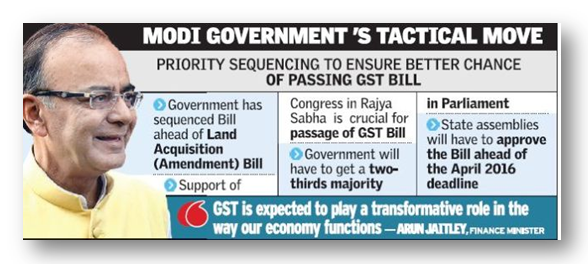
[2] Section 51, Indian Copyright Act, 1957

[3] Section 52, Copyright Act, 1957

[4]ShivveDatta Sharma, Creative Activities, and the Law: Human Rights Approach, Deep, and Deep Publications, 2007

[5]Section 64, Copyright Act, 1957

[6] Available at http://cis-india.org/internet-governance/front-page/blog/privacy/copyright-enforcement

[7] (1980) 3 ALL ER 405 at p 406

[8]Jatindra Kumar Das,  Law of Copyright, PHI Learning Pvt Ltd, 2015, at p 484

[9]AIR 2010 SC 1974

[10] Michal W. Morte, School Law: Cases and Concepts, Allyn and Bacon, 2005

[11] Kevin Mc Laughlin, Microsoft sued for allegedly using Armed cops in Software Piracy raids, Business Insider, June 18, 2013.

[12]Available at, https://indiankanoon.org/doc/3810000/.


Download Now

All that you would need to know about VAT

1

In this blog post, Suhani Chanchlani of Amity Law School, Delhi, analyses the indirect tax regime on goods as prevailing under Value Added Tax. Before you proceed to understand Goods and Services Tax, it is important to understand the aspects of present taxation regime that GST Bill seeks to replace. The rationale behind VAT, its merits and demerits would also be examined.

IMG-20160409-WA0007


What is VAT?

Value Added Tax is an indirect tax that is levied at each stage of value addition of production or distribution chain. Although it is levied from producers, it`s final burden rests on consumers. VAT constitutes a major source of revenue for different states and union territories. However, the Department of Revenue under the Ministry of Finance facilitates the implementation of VAT.


Why was VAT Introduced?

In the previous taxation system, goods were taxed a multiple number of times. For instance, a manufacturer on purchasing inputs would also pay taxes on those inputs. The distributor buying goods from a manufacturer would pay the price of the output of the manufacturer that is inclusive of taxes paid by the manufacturer as well as pay additional taxes on the output of the manufacturer.

Stacks of coins with the letters VAT isolated on white background

The consumer, on the other on his purchase of a good from the distributor would pay a price that is inclusive of the price of the output of the distributor which is again inclusive of taxes paid by the manufacturer and himself. Oh! Don`t forget the additional taxes that the consumer would pay the price of a good! As and when you would proceed further in the value addition chain, the next producer would be obligated to pay higher and higher taxes. And the burden of all this would ultimately lie on the consumer. To make matters worse, some states even levied taxes related to sales such as turnover tax, a surcharge on sales tax and additional surcharge. It wasn`t too bright for the revenue authorities too. Tax evasion for the taxes mentioned above was common. Moreover, it was not too easy to catch hold of defaulters.

VAT was thus, introduced to rationalize the taxation regime of indirect taxes. Taxes such as turnover taxes, a surcharge on sales tax, additional surcharge and Special Additional Tax were abolished while it was decided to phase out Central Sales Tax.


How does VAT Work?

When a producer buys an input, he will pay a price for it that is inclusive of taxes. However, he would get a set-off or input tax credit on the purchase of inputs whereas his output would be taxed. Input tax credit means setting off or canceling of taxes paid on inputs as against the taxes paid on output. VAT is thus, the difference between the taxes paid on outputs and the tax credit received on inputs in a particular period. In case, the tax credit received is greater than the taxes on output; then the tax credit can be carried on to the next financial year. Moreover, this input tax would be given to both traders and manufacturers, irrespective of the state where they would sell their output or the period when they would sell or utilize the input.

For exports, the taxes paid within the State would be refunded within three months. Under this scheme, however, taxes paid on inputs procured from other states or stock transfer would not be credited. This payment of inter-state taxes is proposed to be phased out soon. All producers (manufacturers, wholesalers, distributors, retailers and the like) who have a turnover or sales exceeding a prescribed amount (this amount is set at different values by different states) are liable to pay VAT. vat_calculator-28484-1

It is pertinent to note that documentation of invoices, bills or cash memos is necessary. All those who are liable to pay VAT are ordained to issue tax invoices to purchasers of their products, having all the prescribed specifications.

Moreover, small dealers whose annual gross turnover does not exceed Rs. 50 Lakhs and are otherwise liable to pay VAT, have an option of either paying VAT or opting for the composition scheme. Under the composition scheme, the producers would be liable to pay taxes which would be equivalent to a small percentage of their gross turnover. After opting the composition scheme, the producer would not be able to avail any input tax credit.


VAT Rates and Classification of Commodities

Despite the fact that the method of classification of goods for the purpose of imposition of differential rate of VAT differs from state to state, the following classification substantially applies to most of the states:-

Goods exempted from VAT: – These include commodities that are of social importance and also those on which taxation is barred by the law. Some of these commodities are khadi, salt, condoms and aids used by differently abled. Many states have also included unprocessed goods sold in natural form by the unorganized sector.

1%: – This special VAT rate only applies to precious metals such as platinum, silver and gold in some of the states.

4-5% of VAT is imposed on items of daily usage that are necessary for basic living such as oil, medicines, certain capital goods and some agricultural and industrial inputs.

General VAT rate i.e. 12.5% is imposed on goods such as liquor and cigarette that does not fall under any of the above-mentioned categories.


Merits of VAT

  • It contains tax evasion: – Since; it would not be possible for producers to claim input tax credit without presenting proper invoices of inputs purchased; they would be obligated to maintain proper records of their purchases. Also, the input tax credit would only be set off against taxes on outputs. Thus, a producer is less likely to suppress the record of his purchases as he would not get input tax credit then. He is also less likely to suppress the taxes he paid on his outputs as that would reduce the record of his sales or turnover. paper-Vs-plastic-money
  • It keeps the prices in check: – VAT rectified the scourge of double taxation. Under the earlier taxation system, the producers that were located lower in the production chain had to pay higher taxes and the consumers ultimately borne the brunt. As a result, prices of those goods that involved more people in the production chain were higher than those goods that involved a relatively lesser number of people. VAT thus, has also rationalized the pricing mechanisms of goods. The price is now no longer dependent on the number of people involved in a production chain.
  • It is transparent: – Proper maintenance of invoices alone would allow a producer to claim input tax credit. Because of this requirement, the buyers are presented with invoices from which they get to know what portion of the money that they paid is taxed and on what other basis is a producer charging them.
  • A collection of taxes is easier: – The practice of maintenance of tax invoices, proper documentation of purchases and sales, makes it all the easier for the revenue department to collect taxes. Moreover, there would be no need for compulsory assessment at the end of each year. This has reduced the administration of costs of procuring taxes.


Demerits of VAT

  • VAT does not ensure full-proof measures against tax evasion. When there are differential rates of VAT, exempted category of goods and schemes like composition schemes, tax evasion cannot be weeded out completed as these measures all for way around.
  • As VAT applies by laws and rules formulated within different states, it only ensures against the cascading effect of taxation if goods are sold and purchased within the states. Input tax credit is not provided for goods purchased from outside a particular state.
  • Unlike sales tax where taxes are imposed at the last stage of consumption, VAT is levied at every stage of the production chain. This increases the administration cost as the revenue authorities would have to collect taxes from each and every producer.


Concluding Remarks

VAT rectified many of the shortcomings of the previous tax regime. However, it is not without its limitations. Indirect taxation has to be more rationalized to make way for a common domestic market, competitive prices and elimination of cascading effect of taxes. To achieve this, the government has proposed Goods and Services Tax under which all the indirect taxes including VAT would be subsumed under one head.

Download Now
logo
FREE & ONLINE 3-Day Bootcamp (LIVE only) on

How Can Experienced Professionals Become Independent Directors

calender
28th, 29th Mar, 2026, 2 - 5pm (IST) &
30th Mar, 2026, 7 - 10pm (IST).
Bootcamp starting in
Days
HRS
MIN
SEC
Abhyuday AgarwalCOO & CO-Founder, LawSikho

Register now

Abhyuday AgarwalCOO & CO-Founder, LawSikho