Download Now
Home Blog Page 1735

All You Need To Know About FCNR Accounts

2

In this article, Shubham Khunteta, a student of National Law University, Odisha writes about Foreign Currency Non-Resident (Bank) Account, an account that is required to be opened by NRIs and PIO to invest in India.

NRI

The FCNR Account scheme was introduced with effect from May 15, 1993, superseding FCNR (A) where exchange rates risks were borne by RBI affecting its balance sheet. This account is, in a way, a fixed deposit account, an account with the Indian bank or its branch to invest in India by depositing designated currencies and later many permitted currencies, on which one can earn interest. These accounts can thus be maintained by Non-resident Individuals of Indian Nationality or Indian origin, in foreign currencies by opening them with the authorized banks and authorized dealers a Nationality or Indian origin[1].

 NRIs of Pakistan and Bangladesh require prior approval of RBI.

Initially, this facility to open an account was also available to Overseas Corporate Bodies, which has been withdrawn with effect from Sep 16, 2003. The deposits in this account are primarily governed under the Foreign Exchange Management Act, the Foreign Exchange Regulation Act and the rules & regulations made under it[2]. The RBI issues master circulars and notifications in consultation with the Central government if any change in the structure and policy on these accounts is required.

This account is attractive for the investors due to its eye-catching interest rates at the time when they are not getting similar returns in their home country. As we know that international financial markets are globalized, any change in the policies of one country by way of and after any dovish or hawkish outlook may reflect in the policies of another country if the economy of one country is highly dominant or vulnerable as the case may be.

For instance: Low-interest rates in the US due to low inflation in certain circumstances will reduce the appetite of the investors in the US as they will be getting low returns there. This condition, to a certain extent can be counterpoised if the investor is an NRI/PIO and has an FCNR (B) Account with an authorized person in India. An investment climate that is conducive enough and an Indian economy that is not affected by the US during its zero or low-interest regime will be additional factors affecting such returns. On the basis of such relevant factors, interest rates offered are highly attractive in India at such times.


How is the FCNR (B) scheme different from the FCNR (A) scheme?

Understand it with the help of following illustration

Let’s say, an investor from the US opens an FCNR deposit account with an Authorized bank and deposits 1000 US Dollars for one year at an interest rate of 5% per annum. The bank then gives dollars to the RBI in consideration of the exchange value of the rupee in the market. This implies that on maturity i.e. after one year, the investor will get 1050 US Dollars. Now, as we know, the market is free. Currencies are globally traded, therefore, in such a situation, there can be appreciation and depreciation of currency depending on the global value of currency.

Implications of the currency exchange in case of depreciation of currency

Rupee-Depreciation-–-How-Will-It-Affect-You

Now, let us assume that the value of 1 US Dollar in terms of a Rupee at the time when investor opened his account was 30 Rupees. On the maturity date, for the sake of understanding, let the dollar be equivalent to 40 Rupees. This means that the Indian currency depreciated because of market forces or devaluation as the case may be, and its effects on maturity are-

  • If the scheme was FCNR (A) and RBI had to bear the exchange risk, then it would have to incur an exchange loss of Rs 10 a dollar, which cumulatively, if summed up on 1000 US Dollars[ Let alone Principal amount]would reach to Rs 10,000. After we add the interest component, the reader can get an idea of the total exchange loss. This would be a huge drain on the balance sheet of RBI and subsequently the Government of India( This loss would be a quasi fiscal cost). It would affect its prudential position as this additional loss of 10,500 rupees, if not countered with the income, would reflect badly and tarnish the RBI image.
  • If the scheme is FCNR (B), such loss of Rs 10,000 on the principal component and Rs 500 on interest component will have to be borne by the Banks which opened these accounts.

So, to put it in a nut-shell, it can be said that the objective behind the replacement of FCNR (A) with FCNR (B) was to transfer the exchange rate risk to the banks, but here on certain occasions, the RBI has provided interest subvention benefits to the banks by subsidizing and reducing exchange losses through RBI contribution on the FCNR (B) deposits having maturity of 3 or more years, and it also opened swap windows[3] to attract the foreign inflow of popularly traded currencies like US dollars[4].


Factors that NRIs should deliberate before deciding to open an account in India[5]

  1. Family factor (Can a relative operate the account?);
  2. Source factor (Information regarding deposit as to whether funds can be deposited from sources in India or abroad? ;
  3. Currency factor: Permitted currencies and the associated risks with them;
  4. Tax factors;
  5. Repatriability factor (Whether deposited fund can be repatriable back to the country of investor?)

Advantages of an FCNR (B) Account

  1. Interest earned is tax-free;
  2. Joint accounts are permitted. However, the persons should not be residents of India.
  3. Loans provided against such deposits to the account holder or 3rd person including artificial person like companies against the account as collateral;
  4. Principal and Interest are freely repatriable;

Disadvantages of an FCNR (B) account

  1. Premature withdrawal in less than one year will disentitle the person from any interest and penalty can be imposed for swapping charges incurred by bank;
  2. Foreign currency loans against such an account can be taken by account holders only;

Deposits in the account can be made through

NRI_2

  1. Proceeds from remittances by Non-Resident Indians/Persons of Indian Origin through banking channels;
  2. Funds received in rupees by debit to the account of a non-resident bank maintained with an authorized dealer in India;
  3. Funds which are of repatriable nature in terms with the regulations made by Reserve Bank,can be used to deposit money in these accounts[6].
  4. The deposits can be made by transmitting the funds directly to the FCNR (B) account from the overseas bank account of the investor.
  5. Wire transfer or cheque transaction can also be facilitated.
  6. Accounts can also be opened via foreign currency notes or traveler’s cheque when investor visits India.

Deposits acceptance under the Scheme for the following maturity periods[7]

  • One year and above but less than two years;
  • Two years and above but less than three years;
  • Three years and above but less than four years;
  • Four years and above but less than five years;
  • Five years only.

After the maturity, the account can be renewed within 14 days, failing which the bank will have the discretion to fix interest rates within the prescribed limit set up by RBI. No bank should employ/engage any individual, firm, company, association, institution or any other person for collection of deposit or for selling any other deposit linked products on payment of remuneration or fees or commission in any form or manner.

This condition is to restrain foreign contribution to fund illicit acts, whether directly or indirectly. Banks should comply with such provisions because there can be an onward transfer of funds through loans taken on such deposits to fund individual, firm, company, association, institution or any other person as there can be an influence of a natural or an artificial person. Funds generated out of these deposits shall not be allowed to be transferred to artificial persons unless they are registered with the Ministry of home affairs. Natural persons can be given such funds but subject to proper scrutiny and compliance by banks.

Interest rate calculation on deposits 

The interest rates vary between terms and from currency to currency. For ex- Interest rate may vary between 1-year deposit on US dollars and Swiss Franc. Interest earned on such deposit is tax-free in India.

A bank should obtain prior approval of its Board of Directors for the interest rates that it will offer on deposits of various maturities, within the ceiling prescribed by Reserve Bank of India.

With effect from March 1, 2014, till date-

1-3 years term deposit = LIBOR/Swap plus 200 basis points

3-5 years term deposit = LIBOR/Swap plus 300 basis points[9].

On floating rate deposits, interest shall be paid within the ceiling of SWAP rates for the respective currency/maturity plus 200 basis points/300 basis points as the case may be.

There should not be any discrimination on benefits of interest rate offered to one’s staff member and that of a foreign investor with effect from July 18, 2012.

Premature withdrawal of deposits in less than one year would invite no interest rate benefit and along with that, banks can recover swap cost that it incurred at the time of hedging these deposits with RBI from the investor. Similarly, a penalty can be levied by the bank at their discretion if withdrawal is made prematurely on the term deposits after one year on deposits having a maturity period of more than one year.  However, the penalty provision should be disclosed at the time of acceptance of deposits. If there is not such disclosure, then banks will have to bear the costs. Such premature withdrawal is not available if loan is availed of against such deposit

Advances or loans against the funds in FCNR (B) Account[10]

Advance against an FCNR account is permitted without any ceiling, subject to the usual margin requirement. This facility is provided to the investors and interest charged by the banks need not be calculated with reference to the base rates. [It is in respect of both rupee loans and foreign currency loans]. Purposes for which loans can be granted (See Schedule 2 of FEMA (Deposit Regulations)-

  • Personal purpose or for carrying on business activities;
  • Direct investment in India on non-repatriation basis by way of contribution to the capital of Indian firms/companies;
  • Acquisition of flat/house in India for one’s residential purpose;
  • Fund based and/ or non-fund based facilities for personal purposes or for carrying on business activities to 3rd parties;
  • Fund based and/ or non-fund based facilities for bonafide purposes abroad
    to the account holder and Third Parties;

Redemption

At the time of redemption of these funds, the RBI need not worry about foreign reserves being in a healthy position as most of the loans are leveraged. As these deposits are used by the banks to fulfill their Tier 1 capital requirements, they generally protect themselves from any exchange loss at the time of maturity through various options like swap windows opened by RBI or stepping up inflow of foreign currency by inviting another tranche of such deposits. Therefore, if the liquidity tightness is there, it may be replenished by mopping up open market purchases[11].

Conclusion

After elaborate discussion above, the author would like to conclude by saying that foreign contribution and investment can be made through the route of FCNR account and interest earned can be the sufficient source of attraction because this interest is exempted from tax.[12]This account is unique in itself because other accounts like Non-resident (External) Rupee account (NRE Account) and Non-resident Ordinary rupee account (NRO Account) have various conditions around their Repatriability. FCNR accounts can be denominated in any permitted currency unlike NRE and NRO accounts as they can be denominated in Indian rupees only. Also, FCNR (B) accounts are term deposit accounts only whereas NRE and NRO account can be savings, current, recurring and fixed deposit account. Similarly, there are conditions on the interest rate earned [See RBI- Frequently Asked Questions dated Feb 2, 2015][13].

So, it can be safely assumed that although these three accounts are different, their services can be availed by NRIs. One distinction is to be made here that NRO accounts can be opened by Overseas Corporate Bodies and any person resident outside India, except persons belonging to Pakistan, Bangladesh, Nepal and Bhutan, who need prior approval before they do so. Therefore, an investment through FCNR route is an excellent way of raising capital in the form of foreign currency as participation is limited to Non-resident Indians.


[1]<https://www.rbi.org.in/scripts/BS_ViewMasCirculardetails.aspx?id=8120#14> accessed on 28/4/2016

[2]https://www.bankbazaar.com/fixed-deposit/pros-cons-fcnr-deposit.html>accessed on 29/4/2016

[3]<http://capitalmind.in/2013/09/rbi-with-rajan-opens-a-swap-window-for-fcnr-deposits-with-banks/>accessed on 28/4/2016

[4]<http://timesofindia.indiatimes.com/nri/other-news/All-you-wanted-to-know-about-FCNR-accounts/articleshow/17955437.cms>accessed on 29/4/2015

[5]s: <https://www.bankbazaar.com/fixed-deposit/pros-cons-fcnr-deposit.html>accessed on 29/4/2015

[6]<http://finmin.nic.in/the_ministry/dept_eco_affairs/capital_market_div/FEMA_act_1999.pdf\>accessed on 28/4/2016

[7]See, Schedule 2 of FEMA(Deposit) Regulations

[8]<https://www.rbi.org.in/scripts/BS_ViewMasCirculardetails.aspx?id=9846>accessed on 28/4/2016

[9]<http://www.investopedia.com/terms/l/libor.asp?layout=infini&v=5A&orig=1&adtest=5A/>accessed on 28/4/2016

[10]<https://www.rbi.org.in/scripts/BS_ViewMasCirculardetails.aspx?id=8120#14>accessed on 29/4/2016

[11]<http://www.business-standard.com/article/finance/experts-say-fcnr-b-redemption-to-be-smooth-116042600927_1.html>accessed on 29/4/2016

[12]<http://www.mydigitalfc.com/currency/maturity-fcnr-deposits-not-make-re-volatile-rbi-388>accessed on 28/4/2016

[13]<https://rbi.org.in/scripts/FAQView.aspx?Id=69>accessed on 28/4/2016

 

Download Now

Data Protection Laws In India: A Quick Preview

3

In this blog post, Abhiraj Thakur, a 1st year student of NALSAR University of Law, Hyderabad, writes about Data protection. He also details the current laws in India that deal with the breach of Data Privacy.

Abhiraj

With the advent of the internet and vast flow of information, the world has certainly become small. Millions of computers connected by the internet results in large magnitudes of data flowing from one part of the earth to the other every second. However, as technology develops more and more, so does an increase in the misuse of it, which is by and large inevitable. India over the past years has been witnessing an increase in  cyber crimes in addition to an increase in the usage of the internet for exchange of sensitive, personal and commercial data. Therefore, protection of data is very important.

Many countries of the world provide data protection to its citizens under several International conventions and local laws. Today, it is considered the duty of every civilised nation to grant protection of data to its citizens. Most legal systems of the world today have recognised data protection as a direct offshoot of the Right to Privacy and the privacy for citizens of any country is very important. Some significant examples are:

In Europe

Every citizen of a European union member country has the ‘Right to respect for ones private and family life’ by the virtue of Article 8 of the European Convention on Human rights, 1953. As a result, every citizen has the right to the protection of his/her personal and sensitive data. The European Union Data Protection Directive of 1995 is a comprehensive law that regulates the flow of data for EU states.

international_law

In USA

Data protection as a form of right to privacy was realised much earlier in the United States than anywhere else. The cases such as Griswold v Connecticut made courts ponder over the contours of right to privacy. As of today, there are many federal and state laws to regulate data in US. The Electronics Communication Privacy Act of 1986 and Online Privacy Protection Act of 2003 are the most important federal laws that grant protection to of data to citizens. In fact, there is a specific act just to deal with data protection for children called the Children’s Online Privacy Protection Act of 1998.


Indian Scenario: Framework of Laws

As of today, there is no specific legislation governing data protection for citizens of India. However, there exists a set of general and specialised statutes, policies and procedures that regulate the flow of sensitive data in and out of the country.

What to Protect?

3d illustration of laptop computer locked by key, isolated over white

A pertinent question that arises is “What is sensitive and personal data? and For what is to be protected?” In 2011, the Department of Information Technology of the Government of India released the “Information Technology (Reasonable Security Practices and Procedures and Sensitive Personal Data or Information) Rules, 2011. Rule 2(i) of the notification defines “what is personal information?” It means any information that relates to a natural person from which either directly or indirectly such person can be identified.

Rule 3 of the notification further lays down what sensitive personal data for a person is. It means or includes:

  • Important Passwords, such as of bank accounts or other important financial details.
  • Data about Physical, Psychological and Mental health of a person.
  • Medical records and history of the person including Biometric Information.
  • Data pertaining to Sexual orientation of an individual.


Specialised Statues

The Information Technology Act, 2000

The IT Act by virtue of various sections makes mishandling of sensitive data punishable and inter alia lays down guidelines for handling of such data. Section 43 of the Act makes provision for the imposition of fines up to 10 lakh rupees for downloading data without consent. Also, when someone damages a computer by exposing it to a virus, it is punishable under this section. However, some reasonable exceptions under Section 69 have been carved out for the state to collect data in conditions such as for maintaining public order, sovereignty and integrity of India, etc.cyber_law_laptop_b3hmva

Section 43A of the IT act talks about adopting Reasonable Security Practices and Procedures (RSPPs) that need to be adopted by any person who holds personal sensitive data. If the person fails to follow RSPPs he/she is liable to pay compensation if any wrongful loss or gain takes place subsequently. ‘Person’ under the act also includes corporate bodies who possess and handle personal data. Today, there are numerous companies providing internet services in the country, this section is effective in curbing the malpractices that arise, if any.

Also, Section 72A of the Act talks about situations when there is an unwarranted disclosure of information, intentionally or knowingly by the person who provides services under a contract to another person. If the data disclosed is without the consent of the person to whom the data belongs, the party disclosing can be held liable under this section. The punishment prescribed for such an act ranges from incarceration which may be extended to 3 years or fine to the maximum of 5 lakh rupees. Also, both can be simultaneously awarded.

Intellectual Property Laws : Indian Copyright Act, 1957

Copy-Right-Act-BThe IP laws in India also to an extent deal with data protection of citizens. The Indian Copyright Act of 1957 makes piracy of copyrighted matters a punishable offence. Section 63B of the Act is pertinent in this regard. It makes the  use of an infringing copy of a computer program on another computer punishable. The punishment ranges from 6 months to 3 years in prison. Also fines of varying amounts can be imposed.

The scheme is relevant for data protection as the Indian courts have in past recognised copyright for ‘databases’. Almost all service providing companies maintain a database of their customers, these databases are often huge and demand a lot of time, labour, skill along with money. So the courts have granted copyrights for databases considering them to be “literary works”. This is beneficial for the customers as no other entity apart from the service providing company can legally make use of the information provided by them.


Procedures and Guidelines

Certain Sectoral laws have been framed in the country to deal with the flow of personal data of citizens. These laws act as guidelines and procedures in different sectors of service providing in the country.

IT Rules of 2011, Notification

These rules are made specifically keeping in mind the corporate sector. The corporate sector of today take a lot of personal data of both their customers and employees. So it becomes essential for them to handle such information with caution and care. These corporates need to provide a privacy policy in advance to show as to how they would handle the data.

Rule 5(2) of the Notification restricts collection of personal data by corporate to only those circumstances when it is necessary for any lawful purpose.

Rule 5(3) lays down that a corporate before collecting personal sensitive data from any person needs to make sure that the person is fully aware of the purpose of which data is being collected and also he/she should have voluntarily consented for the collection.

Further, Rule 5(4) states that a corporate shall hold the personal information collected only for the time period that is necessary and not after that.

Credit Information Companies Regulation Act of 2005 (CICRA)

The Act is popularly known as CICRA. As per this Act, the credit information of individuals of India has to be collected in consonance with certain regulations as laid down by this Act. Also under the Act, the bodies that collect the financial information can be held liable in case of unauthorised leak of the Data. Offshore financial transactions are very common in today’s cyberspace and keeping in regard the large number of people involved in them, such acts are helpful for protection of personal data of the individuals concerned.

General Laws

The Indian Penal Code, 1860

ipcUnder the general laws, there is no provision dealing with data privacy, neither in the criminal code or the contract Act.

Reasonably, the IPC is too old a statute to recognize offences such as that of leaking of personal data. But even the latest amendments in the code have not addressed the breaches of data privacy. In this regard, a better approach would be to infer the liability for such breaches from related crimes enumerated in the code. An example can be of Section 403 that talks about dishonest misappropriation or conversion of ‘movable property’. Whether personal data can be considered a movable property within the meaning of this section is a thing to ponder on and for courts to decide.


Judicial Recognition

Indian judiciary has recognised the right to privacy inherent in the right to life and personal liberty granted under Article 21 of the constitution. Also,in numerous cases courts have recognised data protection within the ambit of right to privacy, thus considering it to be a constitutional right.


The greatest advantage of digital age is that it has made the world an Information superhighway, where a lot of information is held, transferred and received by different entities. Privacy is a very important component of human life and so data protection is increasingly becoming an area of concern for the entire world. India though having certain different laws in place to regulate data lacks a comprehensive legislation on data privacy as is there in countries like USA and UK which is alarming with regard to ever increasing number of internet users in the country. How government reacts to threats of technology is a thing to be looked for.

Download Now

Cyberstalking: A Crime or A Tort

3

In this blog post, Abhiraj Thakur, a 1st year Student of NALSAR University of Law, Hyderabad, writes about the problem that exists with cyberstalking and the dilemma that surrounds it, i.e., to ascertain if it’s a crime or a tort. This dilemma even exists in India, so we look at how the current Indian Laws deal with cyberstalking.

Abhiraj

Legislation on cyberstalking varies from country to country. It is explicitly stated as a punishable offense in some countries, while in others cyberstalking falls under the broader offenses of stalking, defamation, nuisance or harassment. However, some argue that these crimes are inadequate in terms of their extent in dealing with such an offense when committed in cyberspace, a point of contention which arises in the Indian context as well.

We live in the Age of Information, where the effect of the internet is profound, particularly with the growth of social media giants like Facebook, Twitter, and Youtube. These Social networking websites allow users access to information about one’s interests and opinions, one’s location and places visited and a host of other personal details which could potentially be harmful in the wrong hands. Information is, indeed, power. As the saying goes, ‘Power Corrupts… and absolute power corrupts absolutely’ it fits adequately in the arena of the internet as well where the world has become information superhighway. Unwelcome and harmful conduct on the internet can take place in a number of ways including spam, spim and phishing. Being a relatively new technology, the courts sometimes find themselves in a pinch when dealing with these tortious or criminal violations. Cyberstalking is one of many such cyber crimes.

To know more about the scope of what to do when someone is stalking you in brief, please refer to the video below:

What is Stalking?

The word “stalking” has acquired a new meaning in internet parlance. Colloquially speaking the act of simply browsing through a user’s online history through social media websites and other web pages to learn about them is referred to as stalking. This trivializes an offence which can have grave and severe consequences.

download (2)Stalking means following and watching someone over an extended period in a way that is annoying or frightening. It involves harassing or threatening behaviour that an individual engages in repeatedly such as following a person, appearing at a person’s home or place of business, making harassing phone calls, leaving written messages on objects, or vandalizing a person’s property. The term cyberstalking broadly refers to the use of internet or other means of electronic communication to stalk a person. It is the means to intimidate or cause harm to an individual or group of individuals.

https://lawsikho.com/course/diploma-cyber-law-fintech-technology-contracts
click above

5927dee3e34771af867509c2dd5ceb50

The history of cyberstalking in India goes back to 2001, in a case where a woman Ritu Kohli complained of being stalked on the internet. Manish Kathuria, a man, used Kohli’s name to engage in illegally chatting and the sending of obscene messages on the website www.mirc.com. He distributed her personal information, and she began receiving annoying calls at odd hours. Kohli reported the matter to the Delhi Police, who dutifully filed a case under Section 509 of the Indian Penal Code which criminalizes any word, gesture or act intended to insult the modesty of a woman.[1] By the Act of 2013, cyberstalking has been specifically outlined as a punishable offence.[2]


Current Statutes Dealing with Cyberstalking in India


The Information Technology Act, 2000

The infamous matter of 2004[3], where an Indian schoolboy recorded a sexual encounter between himself and a 16-year-old girl using his mobile phone is what caught the attention of the Government. The video clip found its way to the Internet through a site called bazzee.com; subsequently, copies were sold via an auction site, and its chief executive officer of American origin was arrested. In the resulting suit, the director of the company was charged for publishing or transmitting obscene material in electronic form under Section 67 of the Act. However, the approach taken by the court, in this case, does not contribute to the determination of the extent of liability of internet service providers and their directors.

cyber_law_laptop_b3hmva

Data protection is an important step in the prevention of cyberstalking as in most cases; cyberstalking is worsened in the situation perpetrator gets hold of the victim’s personal information. In the 2008 Amendment to the IT Act, Section 43A was added to include a “body corporate” within its scope, allowing compensation in case a company or firm causes wrongful loss or wrongful gain to any person by way of handling sensitive information and maintaining the security of such. The body will face civil liability under negligence in case “reasonable security practices and procedures” are not followed.

Where a body corporate, possessing, dealing or handling any sensitive personal data or information in a computer resource which it owns, controls or operates, is negligent in implementing and maintaining reasonable security practices and procedures and thereby causes wrongful loss or wrongful gain to any person, such body corporate shall be liable to pay damages by way of  compensation. The Act causes the corporate body to face civil liability under nuisance.


The Criminal Law (Amendment) Act, 2013

The Act included “Stalking” as an offence under Section 354D of the Indian Penal Code. It is stated that, “Any man who- (i) follows a woman and contacts, or attempts to contact such woman to foster personal communication repeatedly despite a clear indication of disinterest by such woman or; (ii) Monitors the use of a woman by the internet, email or any other form of electronic communication, commits the offence of stalking.” It includes cyberstalking within the ambit of stalking, while some argue that cyberstalking ought to be a separate offence.


Action in Criminal Law

Punishmentlogo copyIn 1999, the United States Department of Justice published a report entitled Cyberstalking: A New Challenge for Law Enforcement and Industry. The report included a differentiation between online and offline stalking. The similarities between stalking in the real world and the online world were that the perpetrators were mostly intimates, the victims mostly women while most stalkers were men and stalkers were motivated by a desire to control the victim. The differences highlighted were the fact that cyberstalking does not require proximity to the victim, electronic communications make it easier for the perpetrator to encourage third parties to harass or threaten a victim and lastly, the technologies enable stalking to take place without physical confrontation.

The Act restricts itself to that stalking which is caused by a man to a woman. Thus, any other type of stalking is not actionable under this law. However, cyberstalking has a large scope which encompasses the multiplicity of users on the internet and thus requires a wider framework to account for such. Working to Halt Online Abuse (WHOA) publishes a yearly report of Online Harassment/Cyberstalking Statistics.

In 2013, it was seen that 60% of victims were female. The report paints an incomplete picture as it only uses completed questionnaires which are filled in by victims who approach the organization. However, it does give a basic idea about the trend of the victims.


Action in Tort Law

Cyberstalking has been mentioned as a cyber-tort and as a cyber-crime. The extent and degree of the act decide whether it is to be actionable in a civil or criminal court. The causes of action for a few relevant torts are stated below, to understand whether cyberstalking could fall into any one of them.


Assault

In the tort of assault, it is required that the defendant by his act creates apprehension in the mind of the plaintiff that he is going to commit battery against the person.  An instance of cyberstalking could not come under this tort as to qualify as assault. An act requires the physical presence of the defendant causing an immediate threat to the plaintiff. This would be unlikely in a situation where electronic means of communication are facilitating the act of stalking.


Defamation

Defamation involves the publication of a statement which directly refers to the plaintiff and injures their reputation. The defamatory nature of a statement depends on upon how the right thinking members of society are likely to take it. If the cyberstalker does publish a defamatory statement, the offence may be actionable.


Nuisance

Nuisance is an unreasonable interference with the enjoyment of one’s land or property which cause damage to the plaintiff. Harassment by persistent telephone calls may amount to a nuisance. Cases of cyberstalking often involve unwanted and incessant communication from the cyberstalker. However, nuisance is dependent on the continuous nature of such communication. A cyberstalker may be threatening or intimidating without constant communication.


Negligence

Negligence is the breach of a duty caused by the omission to do something a reasonable man would do or doing something which a prudent person would not do, causing damage. Negligence essentially requires the existence of a duty of care, breach of that duty and damages

Negligence can be either a tort or crime depending on the degree. This is similar to the act of cyberstalking. However, in the existing framework, it seems as though primarily cases with grave consequences result in legal proceedings. It is necessary that, even when the consequence to the plaintiff is relatively lesser in degree, the plaintiff may seek a remedy due to the infringement of their legal right as per the legal maxim of Ubi Jus Ibi Remedium, i.e., for every wrong the law provides a remedy.

Therefore, cyberstalking could be classified as both a crime and a tort. There have been laws passed to help protect against this terrifying offence. However, whether these laws will be sufficient in tackling the offence remains to be seen. Most incidents of cyberstalking involve notifying law enforcement to ensure speedy justice. However, when the act is of a lesser degree yet still causes legal injury to the plaintiff, the remedy must be sought in a civil court or  Cyber Appellate Tribunal. The line between cyberstalking as a tort and criminal is hazy in the Indian context, being a relatively new phenomenon. It is a dependent upon the circumstances of a particular cyberstalking situation, and one cannot say prima facie what the correct course of legal action would be by generalizing all cyberstalking incidents. Each one varies in degree, and a more comprehensive law is necessary to enable victims to seek justice.


 [divider]

Footnotes: 

[1] Legislation to check cyberstalking needed urgently, FINANCIAL EXPRESS, July 27, 2000, Available at: http://www.financialexpress.com/old/fe/daily/20000727/fco27021.html (last visited May 9, 2016).

[2] Discussed in the next section titled “Laws to Combat Cyberstalking” under “Criminal Law (Amendment Act), 2013.”

[3] Sex-case Delhi schoolboy bailed, BBC, December 22, 2004, Available at: http://news.bbc.co.uk/2/hi/south_asia/4118503.stm (last visited May 9, 2016)

Download Now

Royalties – This Is How Performers Earn Money

0

In this blog post, Soumya Deshawar, a student of University of Petroleum and Energy Studies, writes about the need for performer’s rights, the different types of music royalties, how they are distributed and concludes with how performer’s rights can be protected in India as well as internationally.

1394345_594314770623690_1874013676_n


Being a musician is not confined to the simple tasks of writing a song, recording an album, selling it, and earning money from your sales. For an independent musician who is trying to make a living with his/her music, it’s vital that he understands what kinds of royalty streams are out there available to him as rights.

Talking in a very general sense, each work of music consists of two “sides”; the “Master”, and it’s “Publishing Side”. The Master in general refers to everything that is audible in a song, i.e., the mp3 version of a song, or anything that you upload on YouTube, etc. whereas, the publishing side consists of  the basic skeleton of the musical composition, which includes notes, melodies, chords, rhythms, lyrics, etc. Both “sides” of musical work generate their own royalties. If one is recording a song, then he has the right to both the “Master” and the “Publishing Side” royalties.

Even the “free” music that we hear on YouTube actually creates a royalty for the owner of the music, every time we click on a particular video. Behind all of it, a complete royalty system runs.

The Master generated royalties and the Publishing generated royalties have broadly been divided into:

  • Master-generated royalties
  • Recording royalties from download sales and streams


Recording Royalties

royalties_slide-5

It is the most basic royalty that artists and labels get every time their master recording is being downloaded or streamed from any online portal.


Process of distribution of Royalties

The royalties are collected by a distributor directly from the stores or the streaming platforms on behalf of the relevant labels. The label of the artist will then collect these royalties from the distributor and then, distribute it to the artist. If an artist doesn’t have a label, then he may directly collect his royalty from the distributor.

Royalties from YouTube recording

YouTube, which is the world’s largest and most often used platform for listening to music and of course, for sharing videos, creates opportunities for the master rights holders (labels or performing artists) to earn royalties every time their recording is being played or streamed within a YouTube video, if such a video has some sort of an advertisement attached to it. YouTube earns the revenue from its advertising partners and then shares it with the musicians and the music rights’ owners who help the site to generate billions of views.

youtubemoney

It is to be clarified that the owners of the publishing rights also receive money from YouTube, but YouTube sends a portion of the royalty to Performing Rights Organizations (PROs) which is described later.

YouTube collects royalties through Content ID, an incredible technology that creates an audio fingerprint of the recording, absorbs it into YouTube’s database, and then tracks every single time someone uploads or streams that recording. This means that whenever someone uploads a video with a song that was already in the YouTube’s database, without getting the permission of the right holders, YouTube tracks it, throws an advertisement on such video and monetizes it on the owner’s behalf.

Such royalties can be collected directly from YouTube. But, there is a massively long waiting list, and most applications go unanswered. There are some companies that collect YouTube recording royalties.


Neighboring rights royalties

Neighboring rights, also known as “related rights,” is a term in copyright law, which is used to describe the rights of the performers and master recording owners of both kinds of royalties, either related to Performer’s Rights, or Neighborhood Rights. These are earned through public performances or broadcasts of music. The only difference is that the performance rights refer to the right to publicly perform the musical compositions whereas; the neighboring rights refer to the right to publicly perform the sound recording of such compositions. Neighboring Rights are named so, because they are ‘related to’ performance rights in the field of music publishing, or the rights to publicly perform a recorded composition.


Procedure of collecting Royalties in case of Neighboring Rights

The royalties of neighboring rights are collected by the neighboring rights collection societies. To collect the neighboring rights royalties, it is essential for a rights holder to register his/her individual master recordings directly with each collection society in the territories in which he/she is getting radio play.

If one is a sound recording owner and his/her master recordings are being publicly performed or broadcasted on the following media, then, he/she  and the artists performing on those recordings will have the right to earn royalties from the neighboring rights.

If one’s music is being played on the following platforms, then he/she is earning the neighboring rights royalties:

  • Pandora (or any internet radio platform)
  • BBC Radio, 
Sirius XM (or any satellite radio platform)
  • Cable TV music channels
  • Terrestrial radio outside of the USA
  • Businesses and retailers as background music (i.e. restaurants, retailers, hotels, etc.)
  • Live in clubs or performance venues
  • Various new online media as digital music technology changes and develops

It is to be realized that just because one’s recordings are getting well sold in any given territory does not mean that he/she is earning royalties from neighboring rights. Neighboring rights royalties are earned when one’s master recordings are publicly performed and broadcasted and not “sold”. If there is a large raise in the sales in any particular territory, then, this might be an indication that the radio play has occurred. So, the note of significant increases in sales should be taken by any neighboring rights administrator.

If one is a performing artist and knows that his/her recordings are getting radio airplay, then, he/she must talk to his record label who released his/her music. It should be seen if the label has already been collecting such royalties for him/her or if he/she need to get on board with this to collect these royalties himself/herself.

Performance royalties

image

Performance royalties are earned when a musical composition is broadcast or performed publicly in some or the other way. One is entitled to earn performance royalties when his/her songs are being broadcast or publicly performed.

A person is definitely earning performance royalties if his/her song is:

  • Played on internet radio (like Pandora)
  • Played on terrestrial radio (i.e. 93.3 FM, 100.7 FM, etc.)
  • Played on online streaming services like “Spotify”
  • Performed at live venues or clubs (whether by you as a performer on your tour, a well-known DJ in a club in Sweden, or a cover band in a pub in Nashville)
  • Played in businesses and retailers of all kinds (hotels, restaurants, retail stores, big offices, etc.) as background music
  • Broadcast on TV (whether on an episode of a TV show, a sports channel in passing, or in an advertisement for another brand)

Royalties incurred from performance are definitely a type of special royalty. Just because one is distributing his/her music with a digital distributor like Symphonic doesn’t necessarily mean that he/she is earning royalties from performance. But a person can increase his/her chances of earning them in many different ways.


Process of collecting them

For collecting the maximum performance royalties a person deserves from the PROs, he/she needs to affiliate him/herself as a writer and register his/her compositions with all the PROs in the territories in which he/she is generating performance royalties. This can be made possible through the system of Symphonic Distribution.


Mechanical royalties

These royalties are earned per-unit when a song is sold on a physical medium that is “mechanically reproduced”. For example: Vinyl or physical CDs. Nowadays, these include digital downloads and also internet streaming.

6968692-Gramophone-disk-cd-and-cassette-isolated-on-white-background-Stock-Photo

Process for collecting mechanical royalties

These royalties are collected from the mechanical collection societies (MSCs). All the major world territories have at least one mechanical collection society.

A person is entitled to earn mechanical royalties when his/her song is:

  • Manufactured and sold on physical CDs or vinyl products
  • Reproduced and sold as ringtones
  • Streamed through interactive streaming services (Spotify, Rdio, Beats, etc.)
  • Sold in digital retailers for digital downloads (iTunes, Beatport, Amazon, etc.) outside of the USA

If a person is distributing his/her music to stores and other platforms worldwide using some system of digital music distributor like the Symphonic Distribution, and if he/she is seeing sales and streams result, then he/she is definitely earning the mechanical royalties.

The MSCs make it difficult for independent songwriters (the ones who are not signed with a publisher) to collect the mechanical royalties which they are entitled to. Many such agencies, like the Harry Fox Agency in the USA, don’t let unsigned songwriters to collect their mechanical royalties. Again, a person needs to affiliate himself as a writer and register his compositions with every single mechanical collection agency in the territories he is generating high download sales and streams in order to collect the maximum mechanical royalties he deserve from these agencies.

Print royalties

Performance-Royalty

These royalties are earned when a composition is recorded onto sheet paper for broadcast, printed in songbooks, and published for the general section of people to purchase and play a person’s music at home on their personal instruments for recreation. Such royalties are applicable to a songwriter only if he/she has a radio hit of Top 40.


Conclusion

The legal scenario in India has been proven to be scarce in terms of protecting the numerous rights that the performers have in their performances. The present pace of technological change, the unprotected folklore in India and the interconnected entertainment market have given rise to the need for this protection to be more impenitent. India has a number of stakes for the creation of robust rights for protecting the performers’ rights. These rights of the performers in India are now being protected under the Indian Copyright Law.

Neither of the treaty for the protection of performers’ rights on the International perspective is self-sufficient in encapsulating the same. These may be found out by a comparative reading of the Rome Convention (Producers of sonograms and Broadcasting Organizations, Protection of performers and the WPPT (WIPO Performances and phonogram Treaty).

Download Now

SVS Ravi Kiran; Deputy Manager Legal at one of the world’s leading Pharmaceutical companies on why he enrolled for an online diploma from NUJS and how it is helping him in his career

0

IMG_1574

SVS Ravi Kiran is the Deputy Manager Legal at Mylan Laboratories Ltd, Hyderabad and is part of their litigation team. Mylan Laboratories are one of the world’s leading pharmaceutical companies, which sells its products in approximately 165 countries. Prior to this, he has worked as a Senior Associate at Vakils associated, a reputed law firm in Telangana. He has an LLB from B. R Ambedkar College of Law, Visakhapatnam. He is also passionate about social causes especially related to civil rights and social action.

He completed the NUJS diploma in Entrepreneurship Administration and Business Laws in 2015. Over here he talks about his experience with the NUJS diploma course, and how it helped his career so far. Over to Ravi Kiran:

I discovered the NUJS diploma in Entrepreneurship Administration and Business Laws, while searching for a course that focuses on entrepreneurship, business set up, licensing etc that would help me give informed advice to my clients.

I was searching online for a course like this and came across the advertisement of this course. I liked the course structure and the fact that it covers everything I was looking for.

Before deciding to enroll for the course I opted for the 5-day free course offered by iPleaders and also went through the entire curriculum. The five-day course was so well planned and well structured that I was sure that I wanted to enroll for the diploma.

At the time of enrolling for the diploma, I was working with a law firm as a senior associate and felt that the knowledge gained from the course would add value to my professional expertise and thereby the course just perfectly fitted in!

All the modules in the course were very well structured, but the module which personally benefited me the most is the module on Drafting. It has given me further insight into drafting and helped me appreciate the nuances which people generally tend to overlook in a contract.  The content of the drafting module and the drafting exercises really helped me improve my skills.  I came to know of various clauses which I had never thought of earlier and I strongly believe that this knowledge puts me in a better position to advise clients.

The course curriculum is very well designed and feels that it explains complex subjects like company structuring etc in a very simple manner.  Another aspect that I found really helpful was webinars by industry leaders and experts.

I have mentioned this diploma in my CV and my LinkedIn profile. My friend and colleagues have enquired about this course after finding it on my LinkedIn and I’ve shared my positive experience.

I would be more than happy to recommend this course to anyone; rather I’ve already recommended it few of my friends and colleagues. I’ve even recommended this course to my clients and few of them have also enrolled for this. I believe this course is not just beneficial for lawyers and law students, even mid-level executives and entrepreneurs can benefit immensely from this.

Download Now

Do Non-Disclosure Agreements Exploit Employees?

0

In this Blog Post, Abhiraj Thakur, a student of NALSAR University of Law writes about non-disclosure clauses in employment contracts. As the name suggests, these clauses are for the protection of the confidentiality of the employer, but over the years, it has become a tool for exploitation for the employees. The post also highlights how the courts have interpreted such clauses.

Abhiraj


Employment contracts are designed to secure the rights of both the employer and employee during the period of employment and even after that. Employment contracts are drafted in a manner as to accrue maximum benefits by protecting and minimizing the employers’ liability and ensuring that the employees are not exploited and their work is used to the maximum satisfaction. Employment contracts are mainly used in the legal domain as proof of employment, assigning of liability and as a distinction of the subsisting relationship between two or more contracting parties. The idea of an employment contract is that the purpose and requirements of drawing up such a contract is pre-determined and anything that arises out of this contract would have an impact on the relationship.

Various clauses are inevitable in this type of contract and the Non-Disclosure Clauses are among them. These clauses have bewildered legal intelligentsia for a long time, and hence it becomes necessary to analyze the purpose and interpretation of such terms by the judiciary.


Purpose of Non-Disclosure Agreement

non-disclosure

The purpose of Non-Disclosure Agreements is to protect the business interests of individuals and firms. NDA’s are implemented both during the period of employment and after termination of the employment contract in order not to allow the flow of trade secrets and confidential information. Non-Disclosure Agreements have become an essential part of Employment contracts, considering the diversification and specialization that has taken place over the last 30-40 years.[1] With increasing variegation of ideas, business tactics, patents, discovery and inventions, there has been a simultaneous increase in restrictions placed on how the same is used by corporations to protect their business interests and provide a competitive advantage.

Employees are made to sign NDA’s to ensure that employers are not in a position of a disadvantage after the termination of employment contracts. Even during the existence of the employment, employees are expected to maintain confidentiality.

Construction of the Agreement

nda1

Non-Disclosure Agreements in India typically have 15-20 sections that vary based on the firm’s requirements and classification of information. Two sections are most pertinent in this; which is regarding identification of confidential information and non-disclosure of the same which is complemented by exceptions, waivers, and remedies. The confidentiality of information section deals with what documents, data, and intelligence would be considered confidential by the firm; this essentially covers any knowledge production that takes places during the tenure of the employee with the firm. NDA’s also prevent the usage of this by the employee in the future by patenting such works or by adding a supplementary restrictive covenant regarding ownership of works. NDA’s typically prevent the unauthorized usage of sensitive information[2] and hence it also puts limits on the kind of interaction that employees can have with third-parties while carrying out business transactions.

NDA’s are comparable to Standard-Form Contracts, in that they have a universal structure in the corresponding domains and have similar application throughout. The negotiability of NDA’s is low considering that prospective job-seekers have no options other than to “take it or leave it”. Also, given that they are large-scale contracts[3] and firms cannot be expected to hand out contracts individually, they fall under this ambit. Hence, NDA’s are built to cover a wide array of information that has any potential for the growth of the firm. Ideally, the sensitivity of the information is not included in the agreement as a classification of information isn’t as important as the information itself. The distinction as to whether something is confidential or not depends on a test of reasonability[4] which is based on general practices of business and transaction in a domain.

Case laws and interpretation

In Burlington Home Shopping Pvt. Ltd. v. Rajnish Chibber,[5] it was held that the usage of a database built by the employer during the tenure of the employee was a violation of the NDA that was signed between them and would also fall under copyright infringement. To reiterate R. C. Lohati J, the access to the database and client detail by the employee even after termination of the employment contract was a breach of the Non-disclosure Agreement because it would harm the business interests of the employer. A tangent to the same is provided in Sec. 2 (6) of the Copyright Act, 1957[6] which classifies databases as a literary work whose making involves substantial effort and time.

In Diljeet Titus v. Mr. Alfred A. Adebare and Others,[7] a case that enunciated not only on NDA’s but also what type of relationship would qualify as a contract for service and the ownership of information, it was decided by Sanjay Kishan Kaul, J. that NDA’s form an essential part of employment contracts as they protect the copyrights that is created during the subsistence of the contract. Albeit the relationship was one of partnership and profit-sharing, the defendant had the duty to not disclose information created because of the nature of it and the kind of benefits it accrued to the plaintiff and in not placing restrictions on the flow of this, there would significant damage to the plaintiff and an undue advantage to the defendants.

The case of American Express Bank Ltd. v. Ms. Priya Puri[8] dealt with the issue of NDA’s, in that they restrict the right to the profession under Art. 19(g) of the Constitution. While the plaintiff sought the enforcement of a post-employment contract, the defendant complained of the NDA being used to coerce her into continuing with her job with the plaintiff. It was held that mere possession of confidential information would not violate the NDA and does not inhibit the defendant from taking up another job with a competing firm and that there would be a breach of the NDA only if the information is used to the advantage of the defendant.

Even in the case of Abhinav Gupta v. The State of Haryana,[9] a similar decision was meted out by HarbansLal J. where it was held that breach of NDA occurs only when there is communication of intelligence to a third-party. The case was regarding the offense of hacking which is under the purview of Sec. 66 of the IT Act, 2006. It was held that the copying of information from the employer to the personal email ID of the appellant was in furtherance of the act of passing it on to third-parties and hence there was a breach of the NDA. This case, albeit restricts itself to the criminality of hacking, is relevant because of classification of information.

Analysis of application across jurisdictions

Given that NDA’s are Standard-Form Contracts, they remain the same across various jurisdictions like the UK, USA, and India. NDA’s are most prominent amongst white-collar jobs where there is the highest flow of information and the same forms the basis for all trade, given that data and knowledge have ascendency over any physical work. Hence, there is dominance of patents and copyrights as protective devices in this field. As it is not possible to patent everything that a firm produces, restrictive covenants are used to limit the passing on of trade secrets. NDA’s are increasingly used as knowledge production becomes more exclusive.

 top-secret

Thus, we see that there isn’t any ambiguity or inherent problems with the construction of such clauses in general employment agreements, rather these terms become problematic when they are exploited by companies for their benefit at the detriment of their employees and hence infringe on free practice and efficient employment. Though Indian courts do factor in exceptions according to factual conditions and terms of the negative covenant, in most cases such clauses are found unenforceable as they’re seen to be violating Sec. 27 and Art. 14 of the Constitution of India as well as creating a situation of ‘economic terrorism’ or that of ‘bonded labor’.[10] Jurists across the globe believe that Non – Compete clauses are very restricting in terms of employees being able to carry out trade or even earn a livelihood as a huge chunk of power starts resting with the employers because of these clauses and reduces efficiency as well as the motivation for employees to be a functioning part of such businesses.

Even though there is considerable debate about legality of restrictive covenants under Sec. 27 of the Indian Contract Act, 1872[11], there is substantial precedent set in the case of NDA’s. Their validity has been accepted and they are used almost universally. In India, there has been some distinction between what is considered confidential information and trade secrets.[12]Although this distinction remains pertinent while deciding liability; for theoretical purposes, trade secrets fall under ambit of confidential information because they are exclusively available to a particular firm.

[1]Moral awareness and ethical predispositions: Investigating the role of individual differences in the recognition of moral issues.Reynolds, Scott J.Journal of Applied Psychology, Vol 91(1), Jan 2006, 233-243.

[2]Ten Tips for Non-Disclosure Agreements in Asia, http://www.acc.com/legalresources/publications/topten/ttfnaia.cfm (last visited Mar 20, 2016)

[3]A.J. Kerr, Imposed Terms in Standard Form Contracts, (1981) 98 SALJ 15.

[4]See supra note 2.

[5]61(1995)DLT 6.

[6]INDIAN COPYRIGHT ACT 1957, http://www.ircc.iitb.ac.in/webnew/Indian Copyright Act 1957.html (last visited Mar 21, 2016)

[7]130(2006)DLT 330.

[8](2006)IIILLJ 540 Del.

[9]2008Cri LJ 4536.

[10] As observed in Pepsi Foods Ltd &Ors vs. Bharat Coca- Cola holdings Pvt Ltd

[11]Contract Of Service And Restrictive Covenants  – Employment and HR – India, http://www.mondaq.com/india/x/295626/employee+rights+labour+relations/Contract+Of+Service+And+Restrictive+Covenants (last visited Mar 21, 2016)

Download Now

Loopholes In The 2006 Draft Tribal Policy of India

0

In this blog post, Abhiraj Thakur, a student of NALSAR University of Law, sums up the loopholes of the 2006 draft Tribal Policy of India in the form of five questions. These questions stand at the heart of very purpose of this policy and while exploring their answers, one realizes why our country till today has not been able to uplift the depressed tribals.

Abhiraj


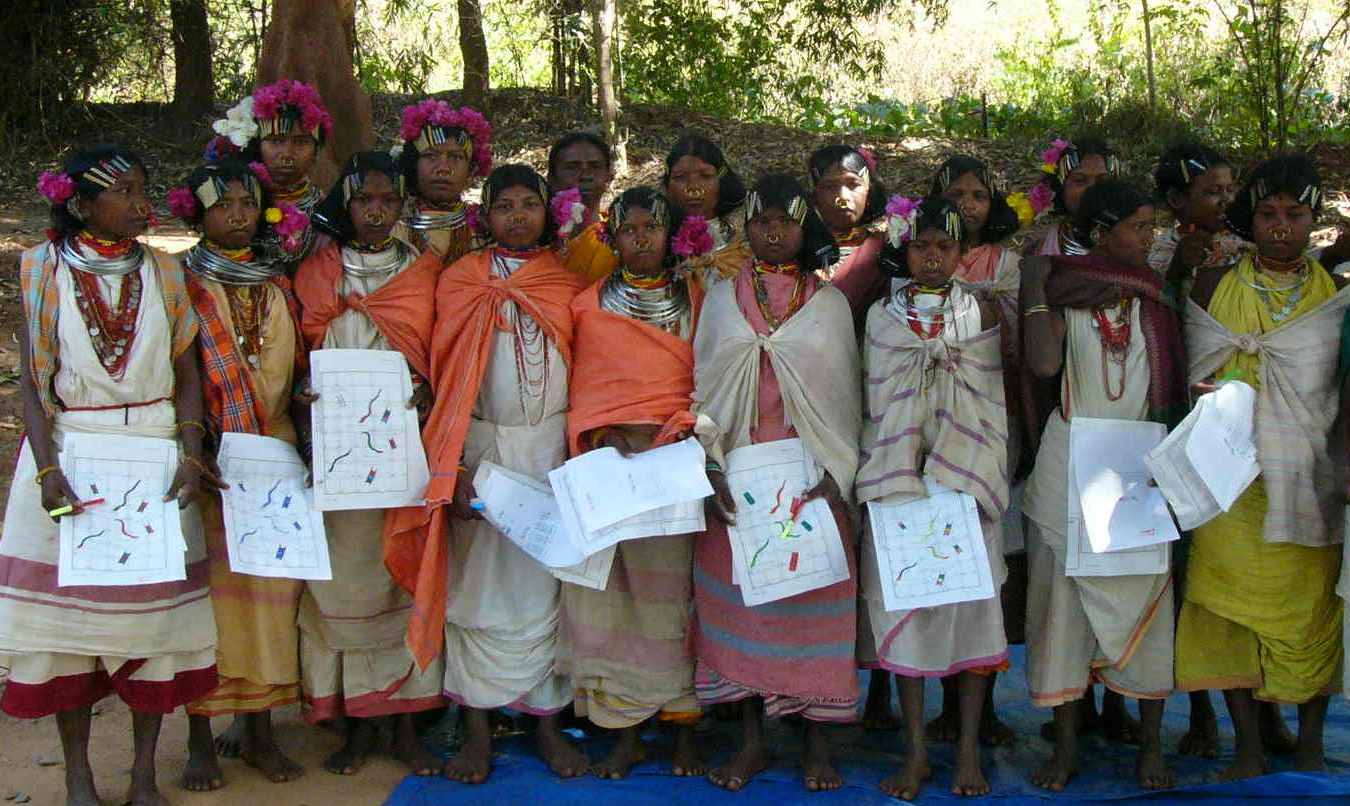
While conquering new lands in the subcontinent, the British came across people who they thought were quite distinct. Being primarily forest dwellers and living a community life, these communities spoke different languages, wore unusual clothes, depended on forests for necessities and most importantly, loved their aloofness from the world. Not being able to deal with such diversity, the British stigmatized these communities as ‘Tribes’ and the members became ‘Tribal’. After the departure of the British, the government of India tried to deal with tribals by framing certain policies claiming that they were for the welfare of these tribals. For the first time after about 60 years of independence, the government of India drafted the tribal policy. The National tribal Policy will serve as the guiding light for the Indian state in dealing with tribal.[1]The tribal policy was formulated in 2006 with the proclaimed motive of welfare of about a 100 million tribals of India[2] and since then, it has not been finalized or passed.

The  that the substantial issues with the tribals still remain as it is. Some of the issues I am talking about are:


Where is Self-governance?

Sdas.fig.1

When it comes to tribals, the greatest issue has always been that of preservation and nourishment of their distinct culture.[3] Tribal life has always been dominated by their customs and practices that are quite different from the state and for this, autonomy is of prime importance for them.[4]

The primary claim of the 2006 policy was that it introduced autonomy and self-governance whilst addressing various concerns. It claimed an enabling framework for self-governance with the primary focus being retaining culture and tradition while entering the mainstream. By the virtue of the policy, The Tribes Advisory Committee (TAC) was to be constituted in those states having the fifth schedule[5] applicable. This was considered a remarkable step in the direction of inclusion of tribes in the mainstream along with preserving the autonomy. But simultaneously, a provision was made that the Governor could promulgate regulations regarding the tribals at his discretion and could set aside any rule or legislation made by the Parliament. Further, the executive power of the state could control and guide the state administration of tribals. Then what is the need of Schedule Five for tribals? Is it nothing but a mere ploy in the hands of the bureaucrats? Interestingly, the policy notes the presence of TACs only in Scheduled areas, which is not true as there are TACs in Tamil Nadu and West Bengal.[6]

Who is a tribal?

headhunters

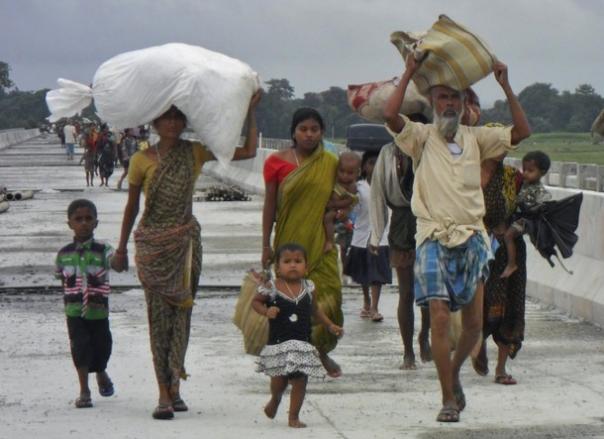
Defining the term and identifying its characteristics has forever been an empirical problem for academicians. It is to be noted that the policy describes tribal communities as ones that are known to dwell in compact areas, following a community way of living which is in harmony with nature, and having a uniqueness of culture, distinctive customs, traditions, beliefs and practices which are simple, direct and non-acquisitive by nature’. Leading columnist Vinay Kumar Shrivastava puts forth an interesting argument that such a representation of tribes is similar to the image portrayed by anthropological writings and coffee table books which serve their own interests through a ‘bizarre’ representation by keeping them frozen in representations of ‘oddities’.[7] The picture in the policy is such a frozen picture of tribes. No more are tribal communities is “compact areas” leading a “community way of life”. Tribal life is disintegrating to the extent that people are moving out in search of opportunities. Almost 55.6 percent of the people permanently displaced from their permanent habitat are tribal.[8]

Further, what the policy fails to acknowledge is that such migration away from their permanent settlement, once done does not recognize them under its applicability. The ridicule, torture, and embarrassment that they face are to be still ethnographically captured. The policy needed to address these people in specialty given that their numbers is on a substantial rise. This can only be done by treating the tribal world perpetually in dynamism as compared to having a static, frozen image accompanied by imposed primitivism and backwardness.


Particular Attention needed for some tribes

Tribal-Education

Noticing the increasing diversities amongst STs, there is acknowledgement of the same in the policy with the qualification that there are some upliftment programs like education which apply to all. However, some tribes, as compared to others, face very specific problems because of their historically conditioned existence which leads to their stigmatization. To name a few are the Bhils and Banjaras and other semi-nomadic and nomadic communities.  The suffering of dehumanization and stigmatization needs very specific designs or categorization to address the problem. Even though Section 20 of the policy talks about nomads very briefly, what is needed is a separate section for their inclusion in the right way rather than placing them under a section which does not justify them.


What about The non-scheduled tribes?

The 2001 census of India identified 8.2 percent of the population as scheduled tribes.[9] There are also non-scheduled tribes that cannot avail the positive benefits of schemes for tribal welfare. The list of tribes – scheduled and non-scheduled is not available as public information. But based on the report, the Scheduled Tribes, by the Anthropological Survey of India, it is evident that non-scheduled tribes constitute another 8.2 percent of the population. The article uses two sets of data and a mathematical analogy to finally deduce that the number of scheduled tribes is equal to the number of non-scheduled tribes. Not being recognized by the government means an exclusion of the latter from all formal policies and programs which lead to tensions on two levels – one among the tribal groups and one between the tribals and the government.


Is policy a failure?

For any public policy, it has to deal with two things: One is ‘Need’ and the other is ‘Target’. The policy for the tribals must be need-based and not target based. As Michel Foucault puts forward in his ‘Foucauldian notion of governmentality’, the false belief that to every problem there is an efficient technocratic solution to which the society is responsive. The story of tribal policy can be by and large described in this one line. Pitting modern against traditional disrupts communities and targeted interventions disregard cultural specificity. Policies are “transferred without modification from culturally and environmentally different plains areas”[10] and implemented by “poorly trained and culturally prejudiced non – tribal officers.” To overcome the inconsistency between policy and needs, tribal development needs to be united in the claim for participation. There was no community inclusion in planning and implementation, leaving such communities not only suffering deprivation, but deepening deprivation, without any democratic space to challenge it.

cc727

On sifting through the relevant sections of the National Tribal policies, these five questions put a blot on the face of Indian Democracy. At the end, it can very well be said that in long run, such policies can never succeed in their substantive goals. In fact, much is needed for igniting a sense of awareness among the people about the tribals. Through such faulty policies, the empathy for the depressed has ruptured. The know-how about tribals consists of legal jargon reasoning and the imposed definitions that have finally led to the misunderstanding of the primary object of tribal studies. It is not long before we realize, it is not assimilation or ‘integration’ into the larger whole[11] that should be the ultimate target but preservation and upliftment through awareness. It has to be a step by step process.

[1] National Tribal Policy Policyed To Address Developmental Issues Of Tribals, July 21, 2006, Press Information Bureau, Government of India. See http://www.pib.nic.in/newsite/erelease.aspx?relid=18976

[2]  National Tribal Policy Soon, The Hindu, October 10, 2006. See http://www.thehindu.com/todays-paper/tpnational/tp-tamilnadu/national-tribal-policy-soon/article3058971.ece

[3]RuhiTewari, PolicyPolicy to Focus on Autonomy, The Indian Express Archive, August 15, 2013. See http://archive.indianexpress.com/news/policy-tribal-policy-to-focus-on-autonomy/1155582/

[4] ibid

[5] Provisions as to the Administration and Control of  Scheduled Areas and Scheduled Tribes, Fifth Schedule, The Constitution of India.

[6] 22 Tribes Advisory Council, Ministry of Tribal Affairs, Government of India, Available at

http://www.tribal.gov.in/Content/Tribes%20Advisory%20Council.aspx

[7]Vinay Kumar Srivastava, Concept of ‘Tribe’ in the Policy National Tribal Policy, Economic and Political Weekly, Vol. 43, No. 50 (Dec. 13 – 19, 2008), pp. 29-35.  30

[8]AkshayaMukul, Nehruvian Approach to Tribal Policy, The Times of India, November 26, 2004. See http://timesofindia.indiatimes.com/india/Nehruvian-approach-to-tribalpolicy/pmredirectshow/936709.cms?curpg=2

[9]RanjitSau, Non-Scheduled Tribes, Economic and Political Weekly, Vol. 41, No. 33 (Aug. 19-25, 2006), p. 3550

[10]Satbir Singh, “Why we fight”: Policy & Planning in India’s Tribal Areas and the Search for ‘Inclusive Growth’, Section 4.2. See http://goo.gl/GbF7NL

[11] 14 Report Condemns India’s Policy Of Assimilation Of Tribals Into Mainstream, One World South Asia, February 9, 2011. See http://southasia.oneworld.net/news/report-condemns-indias-policy-of-assimilation-of-tribals-intomainstream#.UxyeIPmSySo

Download Now

Caste Discrimination and Its Reportage in India: A Critical Analysis

0

In this blog post, Abhiraj Thakur, a Student at NALSAR University of Law, analyses six articles reporting caste discrimination in the country. The post aims to develop a better understanding of “Discrimination,” by analyzing how it has been reported in the newspapers over a brief period.

 Abhiraj

Discrimination, as defined by the dictionary, refers to “the unjust or prejudicial treatment of different categories of people, especially on the grounds of race, age, or sex, or any other such category.” For the purpose of better comprehension and by the constraints of a strict time period and a word limit, I have narrowed down the scope of such discrimination to that of caste.


 Murder

A 62-year-old man named Vaman Nyaynirgune, residing in the district of Borgaon in the Sangli district of Maharashtra, was working peacefully in his field with his brother Sunil, when two young men belonging to an upper caste came up to him and taunted him for having tried to ‘better his situation.’ They then asked him why he had not greeted them and hit him on his back. When he questioned their act, they became furious and beat him up, causing him to die on the spot. The victim had recently returned from working as a porter in Mumbai after which he invested his savings in buying the field, which had reaped a good harvest. This is what is said to have irked the accused.¹

downloadAnother article on the same issue, but published by an activist blog,² tells a completely different story. According to this article, Sunil was working alone in the field when the youths beat him up for not having greeted them properly. When Vaman sent his son with Sunil to file a complaint, he was attacked by the same youths who found it ridiculous that a Dalit would file a case against them.

The difference in the two articles is immense – one is certainly less “the victim dug his own grave” than the other, presumably by being written from two different perspectives; The Hindu, that has to cater to readers of all categories, and the obscure activist one, which tries to garner sympathy for the Dalits.


Migration

assam immigrants

Owing to tension in their village, Dharodhi in Jind district in Rohtak, caused by the death of a youth belonging to an upper caste in a clash over the allocation of five acres of land for families below the poverty line, almost fifty Dalit families chose to migrate to nearby villages to escape trouble. Though there were many others involved in the clash between the two castes, it is only the Dalit families that are relocating as they apprehend police action against them.³

Murder and Rape

A middle-aged woman residing in a village known as Kakua in Agra, who lived only 200 metres from a police post, was gang-raped and then murdered for no identifiable reason but the fact that she was a Dalit.

murderHema had gone to Jhansi with her family but had returned alone a few days before the estimated date of the crime. When her husband returned, he found their house locked from the inside. Upon breaking in, he saw his wife’s mutilated body in pieces on the cot, with blood stains and condoms thrown all over. He went to tell the others and find help. When the guard attempted to go to the police, he was stopped by the headman and his men, who then proceeded to burn the body. The crime is said to have been committed by hoodlums associated with the village headman’s family.4

Another article published by Zee News on the same incident,5 though similar in reporting of facts, does not name the headman, or the main accused. It also uses more subtle language, such as ‘convinced’ instead of ‘forced’, to portray a less harsh image. The Times of India version is more dramatized, possibly to gain more popularity.

Exclusion from Tradition

In a village called Danta in Nasirabad, a young Dalit man, Rakesh, has asked for police protection to be able to ride a horse to his wedding. He will be the first to attempt to do so, taking into account that no Dalit in that village has ever publicly ridden a horse before. The last man that tried to ride one at his wedding was shooed off the streets by angry upper caste villagers who pelted stones at their procession. Since there are still chances of the groom’s procession being harassed for breaking the rule though the local administration has agreed to provide the police protection he had asked for, most of Rakesh’s relatives have decided to give the wedding a miss altogether. However, if they do decide to turn up, Dalit history will be made in the village for the first time.6

The very fact that an article appears in the newspapers about how a man is being prohibited from something as mundane as riding a horse tells a lot about the state of anti-discriminatory laws in India. While the laws explicitly condemn discrimination by caste, the existence of it is so common that instead of implementing the law in society, the man is being offered protection while riding the horse.


Inter-caste Marriage

Picture-10266

Life was going well for a Dalit youth named M. Sivaramakrishnan, after he had gotten married and procured a lucrative job in Singapore. However, the good luck didn’t last long as he was forced to go into hiding as a result of his inter-caste marriage. His wife’s family kidnapped his brother-in-law and demanded that she be handed over to them. The seriousness of the situation caused the youth to resign from his job in Singapore and hide with his family in India.7


Molestation

A 13-year-old Dalit girl named Arshdeep Kaur was molested and thrown off a bus, leading to her death, along with her mother who was with her. The bus belonged to Orbit Aviation Private Limited, which is co-owned by Sukhbir Badal, the Deputy Chief Minister of Punjab. Though the incident took place on the 30th of April, the challan was filed by the police only on the 27th of July against the accused four: the bus driver, the conductor, and two other helpers, all of whom belonged to an upper caste.molestation rape kidnap crime woman girl child_0_0_0_0_0_0_0_0_0

What this article failed to mention, however, was that as soon as the Chief Minister Parkash Singh Badal admitted that the bus belonged to a company his family owned, any questioning of the company was ruled out by the Punjab DGP, as is mentioned in another article about the same issue.9

The difference in these two articles here may be caused by an attempt to avoid political controversy on the part of Hindustan Times. Also noting how Hindustan Times did not publish the name of the author of the article, it is quite possible that the involvement of the ruling party in Punjab made it less preferable for it to publish the entire story.

A Quick Observation 

As shown in the above cases, there is no set way in which the Dalits are discriminated against by the people of upper castes. Discrimination appears in a plethora of forms in various spheres of life, from weddings to inter-caste marriages and from molestation to murder. The difference also lies in how various newspapers and press houses depict such discrimination.

While most national newspapers either dramatize the iNCDHR1ncidents of discrimination, or they take a stand that is too neutral, that is, too impersonal for reporting, the local newspapers or comparatively obscure news websites and blogs are much more realistic in their representation.  It is also evident that some newspapers, such as Hindustan Times in the case of the Punjab molestation case, publish articles that are less politically controversial while others, like The Indian Express, go ahead and publish whatever news exists in reality.

In today’s day and age, newspapers and press, in general, play an imperative role in informing people of things that go on in different parts of the country. In the context of Dalit discrimination, we have seen that an overwhelming majority of them take place in a rural set-up, and the urban society would have no way of knowing such a bias still exists if not for the newspapers. In that sense, the newspapers are entirely successful in spreading awareness about rural practices in urban areas.


 In today’s age, newspapers and press, in general, play an imperative role in informing people of things that go on in different parts of the country. In the context of Dalit discrimination, we have seen that an overwhelming majority of them take place in a rural set-up, and the urban society would have no way of knowing such a bias still exists if not for the newspapers. In that sense, the newspapers are entirely successful in spreading awareness about rural practices in urban areas.

The law defines and prohibits discrimination by caste, among other categories, but the number of cases that pop up where there is at least an underlying, if not overt, theme of discrimination. Through this project, I have learned not only does the caste system in India cause biases but also that the concept of ‘equality,’ as defined by the constitution, is more of a false idea than a practical reality.


[divider]

Footnotes: 

1 Rahi Gaikwad, Dalit Man Killed For Improving His Lot, The Hindu, July 19th, 2015.

http://www.thehindu.com/todays-paper/tp-national/Dalit-man-killed-for-improving-his-lot/article7439167.ece

2 Kamayani, Maharashtra Purogami is dead – 62-year-old Dalit killed for not ‘GREETING’, KR Activist, July 18th, 2015.

http://www.kractivist.org/maharashtra-purogami-is-dead-62-year-old-Dalit-killed-for-not-greeting-wtfnews/

3 Neeraj Mohan, Tension in Jind village, Dalit families flee due to panic, Hindustan Times, July 20th, 2015.

http://www.hindustantimes.com/haryana/tension-in-jind-village-Dalit-families-flee-due-to-panic/article1-1371103.aspx

4 Ishita Mishra, Agra horror: Woman gang-raped, torn to pieces, burnt, The Times Of India, July 21st, 2015.

http://timesofindia.indiatimes.com/city/agra/Agra-horror-Woman-gang-raped-torn-to-pieces-burnt/articleshow/48152851.cms

5 Zee Media Bureau, Dalit woman gang-raped, burnt, cut into pieces in Uttar Pradesh, Zee News, July 21st, 2015.

http://zeenews.india.com/news/uttar-pradesh/Dalit-woman-gang-raped-burnt-cut-into-pieces-in-uttar-pradesh_1633596.html

Kshitiz Gaur, a Dalit groom, seeks protection to ride a horse to his wedding, The Times of India, July 25th, 2015.

http://timesofindia.indiatimes.com/city/jaipur/Dalit-groom-seeks-protection-to-ride-horse-to-his-wedding/articleshow/48210609.cms

7 B. Kolappan, Threats post marriage force Dalit youth, wife to go into hiding, The Hindu, July 26th, 2015.

http://www.thehindu.com/todays-paper/tp-national/threats-post-marriage-force-Dalit-youth-wife-to-go-into-hiding/article7465505.ece

HT Correspondent, Police submit ‘challan’ in Moga bus molestation incident, Hindustan Times, July 27th, 2015.

http://www.hindustantimes.com/bathinda/police-submit-challan-in-moga-bus-molestation-incident/article1-1373714.aspx

Divya Goyal, Political Storm in Punjab After 13-year-old ‘molested’ in a bus owned by Badal Family, The Indian Express, May 1st, 2015.

http://indianexpress.com/article/india/india-others/punjab-bus-molestation-driver-three-others-arrested/


Download Now

Legalising Prostitution – The Debate

0

In this Blog Post, Abhiraj Thakur, a student of NALSAR University of Law, presents various arguments both in favour of and against legalization of prostitution in India.

 Abhiraj


In Support of Legalizing Prostitution

“Sex workers are also human beings and hence they are entitled to a life of dignity.[1]”  How can one be expected to live a life of dignity if they are regularly criticized and judged by the society, apart from being kept on the wrong side of the law as criminals, outlaws, or accused of being a public nuisance? The criticism that sex workers in India are subject to on a daily basis creates an urgent need to recognize and accept their existence, and to provide to them the dignified life they are promised by the Constitution of India. Instead of pushing them underground on inhuman and unrealistic moral grounds, a legal system needs to be adopted which can regulate their services and the economic system they are involved in. Keeping in mind the coverage by the media regarding the legalization of prostitution, three main arguments usually come up:


Human Rights Argument

tumblr_mkn3ufZ50O1sn9t0yo1_500

It is not an unknown fact that prostitutes all over the world constantly face the risk of harassment and abuse. It is also not surprising to learn that wherever they choose to work, they are forced to live on the margins of the law and resign themselves to daily rape, beatings, discrimination and all other forms of mistreatment that they do not deserve.[2] They find it difficult to have access to health care, housing and at times even regular society. An efficacious and proven method to at least somewhat rectify this is to legalize the work that they do but to let coercion into work and exploitation remain illegal. This ensures (to an extent) that pimps and brothel-keepers could be held liable for ill treatment of sex workers, and allows prostitutes to turn to the law and the police for protection.[3]


Regulation Argument

hiv-aids01

The legalization of prostitution will increase the safety of minors around the country, and prevent exploitation to some extent. Authorizing and controlling the profession will guarantee that just consenting and willing adults are allowed to work, and not trafficked youngsters.[4] If this step were taken, harassment of prostitutes by the society and the police, both, would lessen immensely. Prostitution would exist only in certain government regulated zones, and sex workers would have to have appropriate licenses to work. This would thus bring the names of these workers in the administration records and which would enable them to have access to special healthcare or welfare programs. Such regulation would also help in reducing the occurrence of Sexually Transmitted Diseases (STDs) such as AIDS and so forth, which are mainly passed on due to the lack of proper preventive measures in such cases.[5]


Economic Argument

prostitution

Legalizing prostitution in India would mean that every worker as such would have the right to demand minimum wages or a proper salary for their work. According to a study conducted by The Forbes magazine in Chicago, prostitutes working under a pimp or a brothel earn almost one and a half times the money that solo workers do, despite working lesser hours and lesser days. This is likely because such managers would want to keep both their clients and their workers satisfied, which may be assured by increasing the pay and thus improving the behaviour of the prostitutes, leading to happier clients. Such legalization would also mean that a voluntary prostitute may, more conveniently, leave the employment of one brothel and either work by herself or even join another one. This reduces the possibility of exploitation by brothel-keepers and pimps.[6]

Apart from the workers themselves, the legalization of prostitution in India would also benefit the country financially. In India, prostitution is approximately an $8.4 billion industry. Legalizing it and taxing the proceeds like any other business will provide an incentive for the government, and facilitate it in providing regular medical check-ups and protecting the rights of people engaged in the profession.


Other arguments in favour

Another argument taken up by most magazines is that since prostitution already exists in large amounts despite the laws criminalizing the same, it would be more efficient to make it legal and regulate the profession instead. There is also the prevailing notion among most pro-legalisation authors that if prostitution were to become legal, it would help in decreasing the rate of rape, sexual harassment and exploitation of women and children. To support this argument, there are only statistics from other countries that have legalized sex work, which is rather inconclusive as there are examples of both increases and decreases in related crimes after the said legalization.


Against Legalising Prostitution

The aim to ensure the privileges of sex workers is immensely necessary. Nonetheless, legitimizing the exchange will have genuine outcomes. While the administration is proposing to sanction prostitution in India, there are a few genuine results that should be hailed keeping in mind that the end goal is to prevent more damage than benefit. There are a few contentions are not in  favour of the proposed enactment, the most imperative being that this choice won’t just reinforce the human trafficking nexus in the nation, but will likewise push more hindered ladies into prostitution. Rather than criminalizing the purchasing and offering of sex, we are giving more power to the individuals who abuse sex workers and treat ladies/young ladies/youngsters as things that can be sold in a business sector. Sanctioning permits to ladies to intentionally take part in sex work as a business without legal issues gives way to badgering by police and abuse by others, for example, traffickers, brothel-keepers, pimps, and extortionists. The promoters of sanctioning see sex work as “work” and its criminalisation as an infringement of rights. However, prostitution goes against even the International Labour Organisation’s definition of work as it causes bodily harm and is usually undertaken only under financial or some other form of distress. Following are some of the main arguments put forward by the magazines for not decriminalizing prostitution.

Feminist Argument

maxresdefault (1)

While it is true that not all prostitutes are women or even girls, it is a general assumption that a prostitute is usually a female and one that has been forced into the occupation either by the surrounding people or by distressing circumstances. When prostitution is associated with the female sex, there will always be a power relation between the male and the female, regardless of whether prostitution is legalized or not.[7] Therefore, for moral consistency across all sexes, male prostitution should also be legalized if female prostitution is legalized; the argument can be extended to transgender too. The onus, to prevent rapes and other cases of sexual harassment and change the mind-set towards gender equality, lies in creating an environment for gender equality and not in creating laws that are intrinsically biased against them.[8]


Exploitation Argument

tratta-esseri-umani

Similarly, where the misuse of sex workers is concerned, it is a procurement under Immoral Traffic Prevention Act 1986 as ladies who themselves need to leave this calling are furnished with rehabilitation facilities. What the government ought to do is provide those workers who are found, with appropriate directing, training, financial and non-financial assistance so that they realise their capabilities, be independent and carry on with a respectable life. They can be absorbed in different transient professional courses with the goal that they discover life outside red light areas.[9] In India, the greater part of children and women pick this or are made to pick this calling out of desperation brought about by destitution, a lack of another option and the absence of education. Their kids, as they meet with discrimination in schools and society, ought to be provided with access to special facilities. Along these lines, the government should be more effective in wiping out the exploitation of women rather than legalizing prostitution. Similarly, where the misuse of sex workers is concerned, it is a procurement under the Immoral Traffic Prevention Act 1986 that ladies who themselves need to leave this calling are furnished with rehabilitation facilities. What the government ought to do is provide those workers who are found with appropriate directing, training, financial and non-financial assistance so that they comprehend their capabilities, be independent and carry on with a respectable life. They can be selected in different transient professional courses with the goal that they can discover life outside red light areas. Along these lines, the government would be more effective in wiping out the exploitation of women than by legalizing prostitution.

In Toto, it can be observed that Prostitution, the framework that dehumanizes and commodifies the persons and bodies of young children and women for the utilization and benefit of men, is today the object of a serious and global mainstreaming effort that is working for the political and social recognition of the gigantically gainful businesses of sex. Prostitution in India is a genuine social issue, and the solution to it has been rendered problematic by the issue of destitution. Prostitution as a means of earning is rampant in India, and its dominant markets are in the urban communities. The insights accessible on the quantity of sex workers employed in the nation is not precise in light of the fact that there is such a large amount of clandestineness involved, but even disregarding such undetected prostitution, the situation is shockingly horrifying. An extremely precise, extensive picture of prostitution in India is not accessible since sexual misuse of ladies and kids are for the most part unreported violations.

[1]Buddhadeb Bhattacharya versus State of West Bengal: 2011 SCC 538

[2]SwagataSen and SushmitaChoudhary, Gen-Me: Word by Word, India Today (20/02/2006). Available at http://indiatoday.intoday.in/story/ideas-and-trends-that-explain-the-indian-youth/1/181898.html

[3]HimanshiDhawan&Malini Nair, Legalizing Prostitution? Let’s Put a Pin in it, The Times of India, 2nd November, 2014. (Last accessed on 03/02/2016)

http://timesofindia.indiatimes.com/india/Legalizing-prostitution-Lets-put-a-pin-in-it/articleshow/45009389.cms

[4] Leaders, A Personal Choice, the Economist, 9th August, 2014.

http://www.economist.com/news/leaders/21611063-internet-making-buying-and-selling-sex-easier-and-safer-governments-should-stop (Last accessed on 03/02/2016)

[5]BeebanKidron, Devadasis are a Cursed Community,The Guardian, (21/01/2011) http://www.theguardian.com/lifeandstyle/2011/jan/21/devadasi-india-sex-work-religion (last accessed on 02/02/2016)

[6] The Chicago Booth, The Economics of Prostitution, The Forbes, 13th January, 2010. http://forbesindia.com/article/chicago-booth/the-economics-of-prostitution/8992/1

[7] Supra Note 2

[8] Supra Note 4

[9]INDIA TODAY-AC Nielsen-ORG MARG sex survey, accessible here:

http://specials.digitaltoday.in/sexysecrets/index.shtml

Download Now

Everything You Wanted to Know About Qualified Institutional Buyers

0

This article has been written by Shubham Khunteta, a student of National Law University Odisha, Cuttack. He writes about “Qualified Institutional Buyers (QIBs), an often visible term in Company Law. He explains in detail about such investors or buyers.

Company_picture

Introduction

Investment in the company, either domestic or foreign, can be made by many types of investors who are governed by specified sets of regulations. If the investor is not capable, either by his/her individual financial limit or not permitted, to invest individually till he invests a specified statutorily fixed amount, then he usually participates indirectly through certain institutions, through which he can invest limited sums according to the viability of both, himself and institution.

The institution is usually a collective group of people in which a large number of investors repose faith and the institution collects a whopping investible sum from various investors to invest in the market.

bankWhen investing through the institution, investors usually have limited control on their investments in comparison to the individual investment as they hand over the amount for investment to the institution and they, in turn, keep experts to have a vigil on the market. Accordingly, experts recommend the investments to be made and thus the institution in the spree invest in that market.

There are various types of institutions defined in the rules and regulations, but to qualify as a ‘Qualified Institutional Buyer’ (QIB), certain regulations formulated by the SEBI needs to be kept in mind.

As the name itself suggests, it is in the form of an institution and under the institutionalised mechanism, they invest in the company. There are three categories by which we state the representation of holding of specified securities —

  1. Promoters or promoter groups;
  2. Public shareholding; and Non-promoter non-public shareholding.

Public shareholding can be divided further into — 1) Qualified Institutional Buyers; 2) Central Government/State Government(s)/President of India or Non-institutions.

Definition of Qualified Institutional Buyers

B2B-BuyersAccording to Regulation 2(zd)[1], Qualified Institutional Investors comprises of —

  1. A mutual fund, venture capital fund and foreign venture capital investor registered with the Board;
  2. A foreign institutional investor and sub-account (other than a sub-account which is a foreign corporate or foreign individual), registered with the Board;
  3. A public financial institution as defined in Section 4A of the Companies Act, 1956;
  4. A scheduled commercial bank;
  5. A multilateral and bilateral development financial institution;
  6. A state industrial development corporation;
  7. An insurance company registered with the Insurance Regulatory and Development Authority;
  8. A provident fund with minimum corpus of twenty-five crore rupees;
  9. A pension fund with minimum corpus of twenty-five crore rupees;
  10. National Investment Fund set up by resolution no. F. No. 2/3/2005-DDII dated November 23, 2005, of the Government of India published in the Gazette of India;
  11. Insurance funds set up and managed by army, navy or air force of the Union of India;]
  12. Insurance funds set up and managed by the Department of Posts, India.]

It is to be kept in mind that the institutions as written in a) to l) only come under the category of QIBs.

Investment Guidelines on Qualified Institutional Buyers

Private Placement to Qualified Institutional Buyers

708304541-finishing-walking-away-workplace-meeting-organized-gatheringIt is also called as qualified institutional placement or preferential allotment to the qualified institutional buyers. It can only be made by QIBs in listed companies[2] in accordance with SEBI (Disclosure and Investment Protection Guidelines), 2000. It should be kept in mind that guidelines  shall apply to any issue of equity shares / fully convertible debentures (FCDs) / partly convertible debentures (PCDs)(/ nonconvertible debentures (NCDs) with warrants or any securities (other than warrants)), which are convertible into or exchangeable for equity shares at a later date.

Merchant Bankers[3] – who will assist the company formulate a placement document and file a due diligence certificate with the stock exchanges for listing of new shares[4]

The Chapter contains provisions relating to pricing, disclosures, currency of instruments, etc. Under the guidelines, out of the quota fixed for investment by QIBs, a minimum of 10% quota of specified securities shall be allotted to mutual funds and in case, mutual funds are not willing to purchase such minimum amount, this remaining portion may be distributed among other QIBs. It shall be kept in mind that no institution related to a promoter is to be allowed to participate in the investment, but QIBs like lenders who do not hold any share in the Issuer and who obtain the rights in the capacity of lender are not deemed to be a person related to the promoter.

Screen Shot 2016-06-20 at 10.51.23 pmIn a book built issue, a process of price discovery, allocation to Qualified Institutional Buyers (QIBs) permitted is 50%. In case the book built issues are made under the requirement of mandatory allocation of 60% to QIBs[5] . Allotment of the specified securities shall be completed within 12 months from the date of passage of shareholders’ resolution under Section 81(1A) of the Companies Act, 1956. There is no necessity of filing any offer document or notice to be given to SEBI in the case of preferential allotment and QIP. The companies can also offer a discount of up to 5% on the price in qualified institutions placement, subject to the shareholders’ approval[6] .

The Minimum number of allottees shall not be less than 2 when the issue size is less or equal to 250 crores and for above 250 crores, the minimum number of allottees shall not be less than 5. However, it shall be kept in mind that no single allottee shall be allotted more than 50% of the size. Now, SEBI has removed the cap on the number of QIBs who can participate in large IPOs.

Earlier in an IPO sized under 250 crores, the maximum qualified institutional buyer limit was 15 and for above 250 crores, the limit was 25 QIBs. Now, the SEBI has affirmed that the condition for the number of QIBs for allocation of up to Rs 250 crores will remain the same but for issues above that size, there could be 10 additional investors for every additional allocation of Rs 250 crores, subject to minimum allotment of Rs 5 crore per anchor investor. This means that if the issue size is around Rs 1,000 crore, there can be as many as 45 qualified institutional investors[7] .

Participation of QIBs in Initial Public Offer

If the issuer of the specified security fails to fulfill the requirements of Regulation 26(1) regarding profitability before issuance of Initial Public Offer, then such issuer can issue IPO by book building process by fulfilling the condition in Regulation 26(2), i.e., the issuer undertakes to allot, at least seventy-five percent of the net offer to public, to qualified institutional buyers and to refund full subscription money if it fails to make the said minimum allotment to qualified institutional buyers[8] .

QIB’s Evolving Role in the Newly Formed Startups and Small & Medium Enterprises and the Relevance of Institutional Trading Platform

Screen Shot 2016-06-20 at 10.49.49 pmQIBs play an important role in quenching the capital needs of newly formed companies which initially struggle to raise highly needed capital to carry out business flexibly and to prevent shut down due to lack of availability of capital raising mechanisms.

Qualified Institutional Buyers can invest in an entity which is intensive in the use of technology, information technology, intellectual property, data analytics, Bio-technology or Nano-technology to provide products, services or business platforms with substantial value addition. If the capital invested by the QIBs in these companies is equal to or more than 25% of pre-issue capital, then these companies become eligible to register through Institutional trading platform and get listed as a public company, thereby making these companies qualified to issue IPO if certain requirements are met with like other public listed companies[9] .[ See SEBI notification dated 14 Aug 2015 making amendment to SEBI (Issue of Capital and Disclosure Requirement) (Fourth Amendment) Regulations, 2015

Any other entity, other than extensive background on above can also get their company listed through the platform if the pre-issue capital held by QIBs is at least 50 percent [10] .

Conclusion

In conclusion, it can thus be said that ‘Qualified Institutional Buyers’ are a part of public shareholders and play a critical role in investment in a country. They can even invest a day before an IPO so as to make shares’ value attractive and increase the company reputation. Companies often invite them to invest before an IPO so as to stir the interest of other shareholders like retail institutional investors or other non-institutional investors.

There are rules and regulations governing QIBs investments in the company so as to maintain in the market the diversity of representations. It would otherwise lead to monopolisation and reduce the income of the individual investors who rely highly on investments. It is analogous to the principle that there should be equality in participation in the market, and no one should be prejudiced if the person is legitimate and competent to participate in the eyes of the law. Therefore, careful and meticulous reading of requisite provisions should be done before giving a green signal to the investment and to prevent it from getting mired in the cycle of compliance.


[divider]

Footnotes:

[1] Regulation 2(zd), Securities And Exchange Board Of India (Issue Of Capital And Disclosure Requirements) Regulations, 2009

[2] See, Ch. XIIIA of Securities and Exchange Board Of India (Disclosure And Investor Protection) Guidelines, 2000

[3] Sec 2(cb) of Securities and Exchange Board Of India (Merchant Bankers) Regulations, 1992

[4] <http://www.blog.sanasecurities.com/what-is-qualified-institutional-placement/> accessed on 30/05/2016

[5] See, Rule 19(2)(b) of Security Contracts (Regulation) Rules, 1957

[6] <http://www.livemint.com/Money/3OKIvns7DJf3I2EcBpd71K/Sebi-notifies-IPO-reforms.html> accessed on 31/05/2016

[7] <http://www.vccircle.com/news/finance/2015/08/25/sebi-relaxes-ipo-anchor-investment-norms> accessed on 30/05/2016

[8]. See IPO process <http://www.bseindia.com/Static/markets/PublicIssues/aboutIPO.aspx?expandable=6>

[9].<https://www.nseindia.com/emerge/sme_circ_reg_140815.pdf> accessed on 31/05/2016
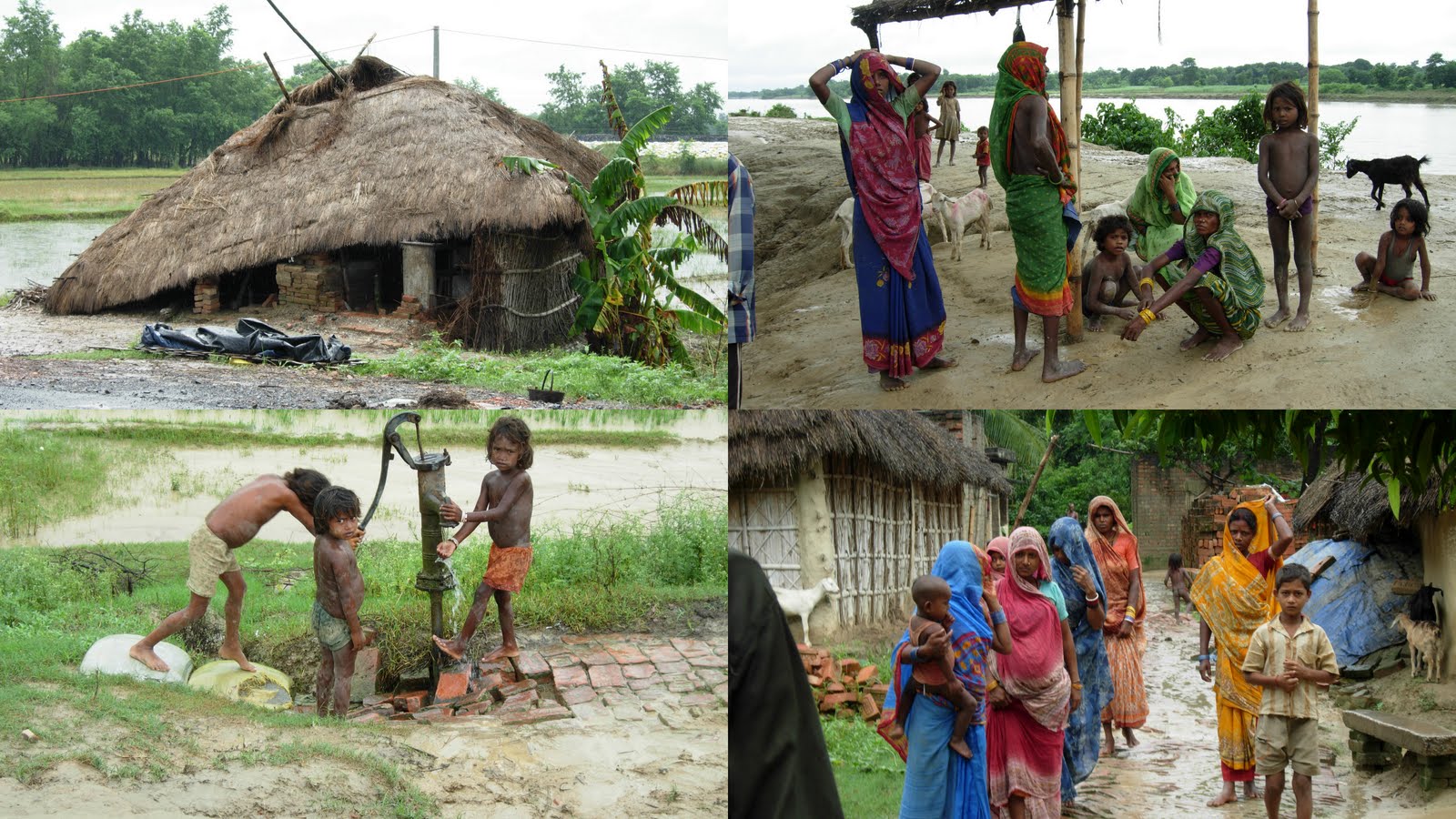
[10]nt. Ibid at 8

Download Now
logo
FREE & ONLINE 3-Day Bootcamp (LIVE only) on

How Can Experienced Professionals Become Independent Directors

calender
28th, 29th Mar, 2026, 2 - 5pm (IST) &
30th Mar, 2026, 7 - 10pm (IST).
Bootcamp starting in
Days
HRS
MIN
SEC
Abhyuday AgarwalCOO & CO-Founder, LawSikho

Register now

Abhyuday AgarwalCOO & CO-Founder, LawSikho