Download Now
Home Blog Page 1734

Doctrine of Respondeat Superior: A Legal Interpretation

0

This article has been written by Shubham Khunteta, a student of National Law University, Odisha, about one of the most often used doctrine in contract and tort: “Doctrine of Respondeat Superior.” It talks about the relevance of the doctrine in deciding the case in hand by the courts. It provides for an interpretation of the doctrine.

Principle to Resolve the Relationship Between Master-Servant and Employer-Employee for Liability Incurred

respondeat-superior (1)

Introduction

There are various doctrines governing the relationship between master-servant and employer-employee. These doctrines are often employed to determine the liability of a person. Among such doctrines is the doctrine of Respondeat Superior based on the concept of vicarious liability. This doctrine is in vogue based on various factors like-

  • The economic capacity of the subordinates, i.e., employees or agents who are presumed to be working under someone’s direction and authority due to their monetary needs. Some of the agents or employees may be getting meagre wages or salaries for the services they are providing. Infallibility in one’s work is not expected from anyone, even the employer.

Due to such fallibility and negligence, such employees or agents may be subjected to the extreme stress if they are directed to compensate the third-party for the negligence in their work. Also, they may not be able to compensate as directed, due to their presumed subordinate position, which would not only impact them but also the person who is injured by their negligent act as they would not be able to get satisfactory compensation.  So, to prevent such a situation from occurring, the superior person like the master or employer is asked to accept the liability of their servant or employee respectively and compensate the affected party. But such blanket acceptance of the liability of the superiors might threaten their interests. Thus, this principle was formulated to regulate such incidents and arrive at proper and equitable justice.

  • The principle also evolved because working for someone in the course of employment without attributing liability on them for the acts of subordinates would allow them to shed and bend their responsibility in choosing responsible and qualitative subordinates. Proper verification and screening would be unimaginably affected. Blame games would surface and increase in such incidences would be reported. The liability on the employer and the master would compel them to choose with prudence, due care, and caution the subordinates.
  • This will also control the employers’ and masters high-handedness and prompt them to be careful and responsive to the needs of their subordinates.

Concept of Doctrine of Respondeat Superior

The doctrine had its origin in the United States and originated from a Latin word meaning,“Let the master answer.” This doctrine was brought on the premise of the limited economic capacity of the subordinates and to control the irresponsible behavior of superiors like the masters or employers. This doctrine is founded on public policy as its purpose is to allocate to the business the risks normally attendant thereto[1]. When this doctrine applies, an employer and the master will be liable for an employee’s and the servant’s negligent commissions or omissions that occur during employment. However, there should be the establishment of a relationship between the superior and the subordinate for the liability to fall on the superiors.

vicarious-liability-personal-injuryActs which are done by the subordinates by their employment and agency can be with the express or implied authority of an employer and a master respectively.

There are two requirements of the doctrine:

  • A true master-servant and employer-employee relationship must be there so that a master and an employer may be properly charged with the servant’s and the employee’s act as his own.
  • The tortious act of a servant and an employee must be one within the scope of his employment

Here, ‘scope of employment’ implies that the act is done with the express or implied authority of the superiors.

The Court in a case refused to accept the submission of a  Contract of Service, i.e., a contract for temporary requisition of services.  The Court opined that as the controlling authority, the hospital is responsible as it owes a duty to the patients and thereby can’t be exonerated for lack of care. The hospital, as a principal was held liable under the doctrine of Respondeat Superior.

Tests for Determination of Relationship

The Direction and Control Test[2] [***Used formerly as now it has become redundant]

It suggests that to differentiate the relationship of master-servant from that of independent contractors, the direction, and control which the masters exercise to make them liable for the act of their servants. It implies that the authority of the master to direct and command the agent to do authorized work and control his actions during the course of employment is the defining characteristic to presume liability of the master.

This is not case with an independent contractor, who is the person employed for the services, as although directions can be given but there is no control, for example, while hiring a taxi one can give directions to taxi driver, but one can’t control his actions as to how to go the way and drive, and Independent Director uses his discretion in things not specified beforehand. For further details on the distinction b/w Independent contractor and an employee see the case[3].

The Hire and Fire Test (Used now)

In the recent years, with the development of science and technology, the ‘control’ test to determine the relationship of ‘master and servant’ has fallen into disrepute and the old test of ‘control’ cannot be strictly applied in each case. Right of control remains an important factor in those cases where it can be applied, but it is not the only matter to be taken into account to determine the existence of the relationship of master and servant. The test of ‘hire’ and ‘fire’ has of late has assumed more importance[4].

It suggests that an employee and a servant can be fired if they do any act which is not permitted. So not only control but what also separates the relationship of master-servant from that of an independent contractor is that the servant can be can be fired from work if he does something which he is not permitted to do.

Course of Employment

The course of employment according to Black’s law dictionary is a legal consideration of all circumstances which may occur in the performance of a person’s job, especially during a period of time where specific objectives are given by the employer to the employee.

80510147-crop-600x338In a case[5], the Court laid down the following propositions in connection with the construction of the expression ‘in the course of employment’. They are: (i) as a rule, the employment of a workman does not commence until he has reached the place of employment and does not continue when he has left the place of employment; (ii) as a rule the journey to and from the place of employment is not included within the expression ‘in the course of employment (iii) the aforesaid two positions are subject to the theory of notional extension of the employers’ premises so as to include the area which the workman passes and re-passes in going to and in leaving the actual place of work; there may be some reasonable extension in both time and place and a workman may be regarded as in the course of his employment even though he had not reached or had left his employers’ premises; (iv) the facts and circumstances of each case will have to be examined very carefully in order to determine whether the accident arose within and in the course of employment keeping in view at all times, the theory of notional extension. On the basis of the first two propositions, the deceased cannot be said to have received the injuries in an accident arising out of and in the course of his employment.

In another case[6], the Court held “To come within the Act, the injury by accident must arise both out of and in the course of employment. The words in the course of the employment mean in the course of the work which the workman is employed to do and which is incidental to it. The words arising out of employment are understood to mean that during the course of the employment, injury has resulted from some risk incidental to the duties of the service, which, unless engaged in the duty owing to the master, it is reasonable to believe the workman would not otherwise have suffered. In other words, there must be a causal relationship between the accident and the employment. The expression arising out of employment is again not confined to the mere nature of the employment. The expression applies to employment as such to its nature, its conditions, its obligations and its incidents. If because of any of those factors, the workman is brought within the zone of special danger, the injury would be one which arises out of employment. To put it differently, if the accident had occurred on account of a risk which is an incident of the employment, the claim for compensation must succeed unless of course, the workman has exposed himself to an added peril by his imprudent act.”

Case Laws on Doctrine of Respondeat Superior

In the case of Automobiles Transport vs. Dewalal and ors, the Rajasthan High Court held that the Automobiles transport company is liable for the acts of the servant done by him/her in the course of employment. The presumption that the vehicle is driven on the master’s instruction or by his authorised agent or servant is always there, and it is on the appellant to prove that such presumption is unwarranted and not verified. The argument of the appellant that the driver was not directed to go through a particular way did not evince interest on their lordship because it is farcical at its best as one can’t expect. For example, the driver was to wait in case of blockade of a particular direction and not move in the other direction to carry out its work although, in case the road is clear, there may be a different picture altogether. Failure to prove such a requirement would condemn the appellant for liability under the both the principle of vicarious liability and doctrine of Respondeat Superior.

juridical concept with hammer and judge, selective focus on metal part,

In the case of Smt. Savita Garg vs. The Director, National Heart Institute[7], the Supreme Court held that in the contract of employment, the hospital is the principal who is responsible for the act of the agent, i.e., one of its doctors if it is unable to justify the court and the complainant that there was no negligence or recklessness on their part and that they acted with due care and caution. As the hospital is in a better position to render such information when demanded as to what medicine was administered, failure to disclose such information would render them culpable. In cases of medical negligence, ordinary human fallibility may prevent the liability if it is a case of a bonafide mistake. However, a mistake of negligence can’t be absolved[8].

Conclusion

The doctrines are an important part of any law, and they help to resolve the case in a non-discriminatory manner to the maximum possible extent. The doctrine of Respondeat Superior has also developed to manage such problems in a manner so as to not lose the element of equity while considering the economic capacity of the affected parties. This doctrine evolved to administer and settle the disputes of the relationship between the master-servant and employer-employee and spruce up avenues to prevent dragging of cases on the conflict of less compensation at the hands of the subordinates. This doctrine ensured that the superior position of the employer and masters are used to leverage the victim affected due to negligence either of the master and employers themselves or servants or employees.

It can thus be deduced that this doctrine is based on the principle of vicarious liability and is used when one acts, under the direction and control of others and commits some negligent act injuring another, liability can be imposed on the person of a superior position and cases can be settled, bearing in mind, this doctrine.

[divider]

Footnotes:

[1]Mechem, Outline of the law of agency, p. 359.

[2] <http://lex-warrier.in/2011/02/justification-of-vicarious-liability/>accessed on 14/06/2016

[3] Performing Right Society Ltd. vs. Mitchell and Booker (Palais De Danse) Ltd [1924] 1 KB 762

[4] the Union of India vs. Abdul Rehman and Ors. AIR 1981 J K 60

[5] S. S. Manufacturing Co. v. Bai Valu Raja AIR 1958 SC 881

[6] Mackinnon. Mackenzie & Co. (P). Ltd. v. Ibrahim Mahammad. Issak, AIR 1970 SC 1906

[7]  (2004) 8 SCC 56

[8] Spring Meadows Hospital & Anr. v. Harjol Ahluwalia (1998) 4 SCC 39


Students of Lawsikho courses regularly produce writing assignments and work on practical exercises as a part of their coursework and develop themselves in real-life practical skills.

LawSikho has created a telegram group for exchanging legal knowledge, referrals, and various opportunities. You can click on this link and join:

https://t.me/lawyerscommunity

Follow us on Instagram and subscribe to our YouTube channel for more amazing legal content.

Download Now

The Menace Of Binge Drinking In India

0

In this blog post, Charvi Arora, a second year student of University of Petroleum and Energy Studies, Dehradun deals with the issues of binge drinking in India, which has become a curse among the teens.

13179429_1296390640375770_8575843077847635900_n


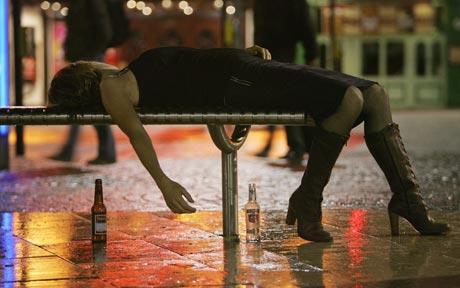
The youth of India is facing a major health crisis with binge drinking. Over the last 20 years, the roots of this problem have become deeper than any other cause. In order to address this issue with the teenagers, it is important to consider both the laws of the nation and the health consequences of such drinking.

Binge drinking refers to the consumption of enough amount of alcohol in a short period which puts the drinker in a great risk. In the country like India, it is unacceptable for the teenagers below the legal age to consume hard alcohol. It is harmful to young people because abusive consumption causes trouble for the public at large.The new idea of drinking to get drunk has become common among the teenagers and therefore the consumption of alcohol is never up to a minimal extent. There is a minimum legal age for drinking alcohol which is different in every state.

pouring-brown-liquor-shots

  • Alcohol is a subject in the State List under the Seventh Schedule of the Constitution of India. Therefore, the laws governing alcohol vary from state to state.[1] The Kerala government is planning to implement almost full prohibition on hard liquor which will take at least10 years approximately. In Bihar, there has been a total ban on drinking alcohol with effect from April, 04, 2016.
  • In states like Gujarat, Manipur, Nagaland and the union territory of Lakshadweep Islands, drinking alcohol is strictly forbidden by law. All other Indian states allow alcohol consumption but fix a legal drinking age. In some states, the legal drinking age can be different for different types of alcoholic beverages. In most of the states like Tamil Nadu, Uttarakhand, Odisha etc., it is 21 years whereas in some states of Delhi, Chandigarh, Haryana, it is as high as 25 years.
  • But drinking is in itself a cause for concern. A study by the Center for Disease Control (CDC) suggests that a rise in drunken driving in the age group of 18-34 is traceable to the growth of binge drinking in that population.[2]The conclusion drawn out of this is that the recent spike in drunken driving, after years of declining fatalities, has become the result of increased binge drinking. It is basically high in the age group of 18-34 years as it is disproportionately common amongst that population.
  • Liquor in India is generally sold at liquor stores, restaurants, hotels, bars, pubs, clubs etc. Home delivery of alcoholic beverages is illegal in Delhi. However, delivery of beer by private vendors and departmental stores is permitted and sale of beer at banquet halls and farm houses is legal in Delhi.
  • In spite of legal restrictions, alcohol consumption in India has risen over 55% over a period of 20 years, according to a study done by Organization for Economic Co-operation and Development.

 

The Origin Of Alcohol Prohibition Laws

drugalcohol

  • Alcohol has been in consumption for centuries in India. Colonization boosted alcohol consumption in India to a great extent. The sudden increase in the use of alcohol became a major concern for the authorities. Therefore, a law was formulated in 1878 which controlled the excise revenue and monitored the manufacture, sale or transit of liquor. However, Uniform Excise Act for the entire country was enacted in 1902.
  • Article 47 of the Constitution of India was included in the Directive Principles of the Constitution because prohibition became an important agenda of the Civil Disobedience Moment and several other movements against liquor thus providing an incentive to include this issue into the Prohibition Policy.


Licensing Laws

It is recommended by the World Health Organization that the member nation governments should begin to reduce the availability of alcoholic beverages. In Article 47 of the Constitution of India, it is referred that the state shall affirm the rising level of nutrition and standard living of its people. It also mentions the prohibition of the use of intoxicating drinks except for medical purposes and further bans drugs which are injurious to health. Excise department regulates and controls the sale of liquor.

  • Whereas, in the national capital territory of Delhi, the retail supply of alcohol is regulated by Delhi Liquor License Rules, 1976 which prohibits the consumption and service of liquor at public places. The basic purpose of this act is to keep a check on alcohol consumption in India.
  • It has become a major challenge to implement alcohol control policies effectively in India as there is a complete absence of a single National Ministry at the Centre to deal with all aspects of alcohol prevention in the states.
  • Conflicts between the center and the state always arise as alcohol is a state subject.
  • The surveying policy under the control of the states is significantly weak and social ‘binge’ drinking has become an emerging trend in parties.

Consequences Binge Drinking in India

  • For those young individuals who are still in their teens, it interferes with their normal growth if they consume liquor.
  • This type of behavior can particularly interfere with essential mental development that occurs at teenage.
  • Those adolescents who drink at an early age are far more likely to develop alcoholism.
  • There are many teenagers who use alcohol as a stepping stone to harder drugs.

Why is Binge Drinking riskier than ordinary drinking?

Each person’s body has a different capacity of accepting certain amounts of alcohol as a normal human can only process one unit of alcohol per hour. It depends on the body of a person as drinking six units of alcohol in a short span of time can only be digested by some individuals. Therefore, some might accept it or some might face the repercussions.

  • It is riskier because consuming a product which a person’s body can’t accept so quickly turns out to be dangerous for the drinker.
  • The effect of alcohol goes to the brain if consumed without intervals and results in poor vision and low response of the stimulus.
  • Drinking the same amount over many hours as well as eating food will have less effect on your blood alcohol concentration (BAC).
  • For the youngsters, getting drunk is usually the main goal of drinking.

What are the effects of binge drinking?

binge_1647286c

Drinking can frequently affect the physical as well as the mental health of the individual consuming liquor and getting drunk can involve many other health issues such as dizziness, loss of coordination, diarrhea, vomiting, loss of inhibition, and even loss of consciousness. If a person vomits when passed out, the airway can become blocked, and the result can in a person choking in his own vomit and dying.

  • Accidents and falls are common as when a person is drunk and can result into nervous imbalance affecting body co-ordination.
  • Overdosing on alcohol can stop a person from breathing or cause him/her to choke while vomiting.
  • Binge drinking can affect a drinker’s mood and weaken memory in the longer term, leading to serious mental health problems.
  • It can also lead to aggressive or violent behavior.


Conclusion

Binge drinking has severe after effects as mentioned before which can sometimes prove to be fatal or have serious consequences on a persons’ mind.  A binge drinker, even if doesn’t drink regularly but consumes alcohol more than the minimal risk alcohol unit at a single time, he/she can face serious problems. The nearest doctor must be consulted with, who would help the affected person to cut down on the drinking habits. According to renowned cardiologist Dr Purshotam Lal, Chairman of the Metro Group of Hospitals and Heart Institute in New Delhi, “Indians have the tendency of indulging in binge drinking during festivals or family celebrations. They eat a lot too, especially in winters which results in the slow digestion of alcohol”.[3]

Most of the youth indulges in binge drinking before the age of 25 years, which is not allowed in many states. In Maharashtra, many of them are not even aware that one must have a license to consume liquor. Whereas, according to the Punjab Excise Act, 1914[4], women are prohibited from working in any part of the state where intoxicated drugs or liquor is consumed in public.

In Andaman and Nicobar Islands, every seventh day of the month is a dry day where alcohol is not sold in the shops. India has also become one of the largest producers of alcohol in the world. Furthermore, India produces 65% of alcoholic beverages in South-East Asia. Most urban areas have witnessed a huge increase in the number of bars and nightclubs that have opened in the recent years and in almost every state of India. Consuming large amount of alcohol can trigger symptoms of depression as well. So, it is my suggestion to all the teenagers reading this, drink rare, drink less, because someone out there is praying for you to be safe.


[1] “246. Subject-matter of laws made by Parliament and by the Legislatures of States”

[2] www.chooseresponsibility.org

[3]http://indiatoday.intoday.in/story/binge-drinking-booze-toast-moderation/1/454896.html

[4]http://www.indiatimes.com/news/india/6-bizarre-state-laws-regarding-liquor-consumption-in-india-249752.html

Download Now

Madrassa Modernization in Maharashtra: Legal Issues

0

In this blog Post, Abhiraj Thakur, Student NALSAR University of Law, writes about the legal issues that crop up when the state tries to intervene in religious matters of the citizens. This is with special reference to the state of Maharashtra, where last year the Government tried to modernize Madrassas[1].The blog also discusses how the Indian Media particularly the press portrays such incidents.

Abhiraj

The recent decision by the BJP-Shiv-Sena led Maharashtra government to de-recognize Madrassas, which do not impart ‘formal education’ through the teaching of subjects like Maths, Science, etc., has received limited, but sensationalized coverage from newspapers. This decision brings several legal issues to light; the write-up shall analyze the following issues and compare these with the narrative of the Media:

  1. Do madrasas fall under the definition of a ‘school’?
  2. Is there any basis for State Intervention in Minority Educational Institutions?
  3. Does the government policy hold any moral or legal ground?

Newspapers have committed the fallacy of projecting this as a polarizing issue with two clear parties at odds—the Muslims and Hindutva outfits. An objective basis to examine the legal formalities that demand such a move by the government and a representation of the varying strands of opinion within the Muslim community itself is absent in the newspapers’ version. Nevertheless, this hostility to the government’s move has helped bring a few pertinent questions about the scheme to be responded to. In the course of the project, I will analyze the reasons and legitimacy to the government’s move, and proceed to highlight its consequences. This will be my critique of the media’s representation.


State Intervention and Cultural Relativism

Indian Press has been vocal in echoing the lament of the All India Ulema Council[2] and select Muslim leaders who have branded the move as a part of the BJP government’s ‘saffronization agenda’ and ‘intervention in the rights of minorities’.[3]

3438647062_6a5ea1456dThe primary argument on which these claims rest is that the government needs to understand situations and practices in the context of one’s religion and culture. This refers to the theory of Cultural Relativism[4]  propounded by Frank Boas and furthered by  Ruth Benedict who states that ‘‘each culture is self-contained, autonomous, separate but equal and makes sense in its context’’.[5]   Hence, the opponents of the move argue that a majoritarian view of ‘good education’ or ‘good curriculum,’ cannot be imposed and applied to every community.

However, there are several issues with the notion of cultural relativism itself, specifically in this context. As put forth by Kluckhohn, ‘‘the doctrine of cultural relativity—coexisting and equally valid patterns of life—precludes moral criticism of any cultural practice, including slavery, cannibalism, Nazism, or communism.’’ Secondly, it subjugates the recognition of some universal ethics and standards in society, which are treated as sacrosanct, regardless of relative standpoints.

The media has acted in haste and proceeded to criticize the government derecognition, ignoring the sociological factors that govern the decision to go to a madrasa in the first place.

  1. Irfan Habib argues how imparting solely religious instruction as a form of education precludes even the option for students passing out of madrassas to explore avenues of mainstream Western education.[6] And while the Madrassas may run the cultural relativity argument, the first and most basic necessity is for the parent or child to have the awareness and accessibility to other modes of schooling, so as to be able to give ‘informed consent’[7] to the traditional mode of education. Without the opportunity for quality mainstream education as set under the National Policy on Education 1992, the child/parent faces a decisional incapacitation from seeking an alternative route to education, and thereby, only religious instruction from a madrassa, is not a choice made from a religious or cultural standpoint.

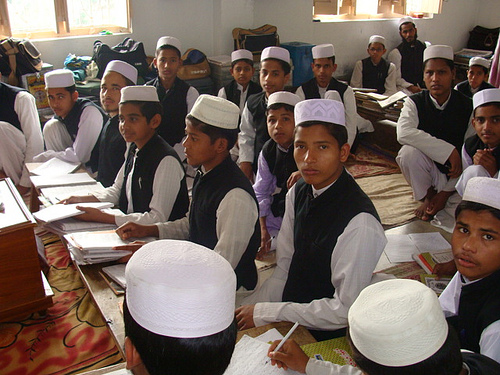
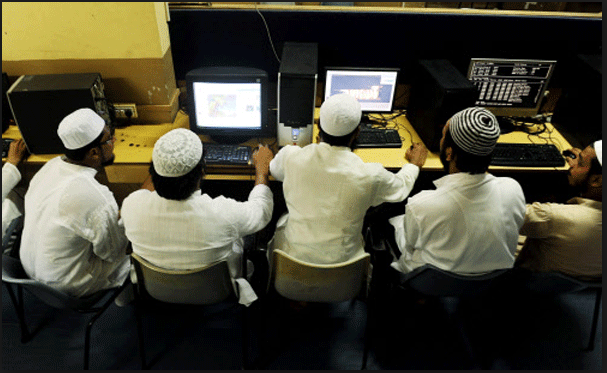
The Rajinder Sachar Committee report made some observations regarding the low representation of members from the Muslim community in jobs both in the public and the private sector. The report concluded that one of the reasons for this is the low level of literacy in the community.[8] Madrassas mainly teach religious subjects and languages although many have added English, Hindi, and even computers to their curricula. But while religious education is rigorous, secular education is typically of a lower standard compared to regular schools with mathematics and science often getting a miss.

As the most viable way to uplift Muslims is through quality education, and therefore, it rests upon the state, core, not-derogate duty to afford every child, the opportunity to this quality education. This responsibility of the state to provide equal educational opportunity to every child regardless of his/her religion, is so fundamental, that incentivising adoption of the State curriculum by according recognition in return, can be justified.


Are Madrassas Schools?

Newspapers have painted a vivid and aggrandized picture of the consequences of the government’s decision. There has been the use of misleading headlines that portray it as a blanket de-recognition and misleading phrases like ‘cancellation of school statuses.[9] The move has been dubbed as ‘arm-twisting madrassas into modernisation’ and ‘outright stereotyping’.[10]

The primary concerns that the newspapers have raised are:

  1. Madrassas will lose their recognition as ‘schools’ and hence, the students receiving education there will be considered as ‘out of school.’
  2. Upon, de-recognition, Madrassas will become ineligible for State funding

1395754-urFirstly, to analyze how this de-recognition impacts Madrassas’ status as schools, I am going to start by questioning whether they were ‘Schools’ in the first place. ‘School,’ in Indian Law, is defined under Section 2(n) of the Right to Education Act ,2009. Madrassas, by virtue of being religious minority education imparting institutions, could be classified as ‘schools’ and so the provisions of the Act can hold. However, The All India Muslim Personal Law Board (AIMPLB) resisted the application of the Right to Education Act on Madrassas claiming it will destroy the madrassa system and violate Article 30 of the Constitution of India. Hence the HRD Ministry issued guidelines under Section 35(1) of the RTE Act affirming that the Act wasn’t applicable to Madrasass and Vedic Pathshalas.

Further, the Supreme Court in, Society for Un-aided Private Schools of Rajasthan Vs. Union of India (UOI) and Anr.,[11] ruled that Madrassas were out of the scope of the RTE Act.

“It was pointed out that where the institution predominantly provides religious instructions like Madrassas, Vedic Pathshalas etc. and do not provide formal secular education, they are exempted from the applicability of the Act.”

These events recognized that Madrassas are not a part of the mainstream education framework of the country and hence, shall not function by the system of standards and visions set forth. Essentially, it segregated Madrassas from the class of ‘Schools’.

Secondly, the direct impact of the withdrawal of recognition to any educational institution is that it loses state funding and its degrees aren’t recognized. However, these concerns are invalidated by a review of the state of affairs prior to this policy.

MAdrassaYoginder Sikand makes a case worth considering in his book, ‘Bastions of the Believers’.[12]   He informs the readers how; it was only those madrassas which followed the state prescribed syllabus that received any funds at all. This is based on the simple argument that the state can’t fund any activity without levying some accountability and standard of operation. Children who weren’t under the national curriculum were never considered ‘in school’. Moreover, due to a little applicability of religious education in modern day professional fields, the students studying in these Madrassas get absorbed as Muslim clerics or other positions in religious institutions.  Even without a mandate by the government, for higher Islamic studies, the degrees awarded by madrasas were not recognized by Indian universities except in the respective theological departments of Aligarh Muslim University and Jamia Milia.

Thus, we can conclude the effect of such declarations by the State changes nothing to the disadvantage of madrassas. Newspapers have acted with high levels of legal illiteracy and projected this as an intrusive ‘change in policy’, failing to take note of how this move, in reality, is a declaration of an already existing policy. Hence, the offer by the Maharashtra Government to madrassas, to include Science and Maths and thereby receive recognition, funding, and accreditation, in my opinion, should not be interpreted as a move to derecognize and delegitimize religious education, but one as a correction of a past mistake, promotion of inclusive and creation of better opportunity for a regular Madrassa-going student.


 [divider]

Footnotes:

[1] The Arabic word madrassa generally has two meanings: (1) in its more common literal and colloquial usage, it simply means “school”; (2) in its secondary meaning, a madrassa is an educational institution offering instruction in Islamic subjects including, but not limited to, the Quran, the sayings (hadith) of the Prophet Muhammad, jurisprudence (fiqh), and law

[2] As voiced by Maulana Mehmood Daryabadi, General Secretary of AIUC

[3] Eg: MIM President Asaduddin Owaisi, Samajwadi Party Leader- Abu Azmi

[4] The New Indian Express, (2015). Modern Edu Must to Ensure Govt Aid for Maharashtra Madrassas.

[5] The Concept of Race as Applied to Social Culture“, Howard Review 1 (1924): pp. 290-299

[6] Habib, S. (2015). Madarssas Do Need Modernisation, but Not in this Manner. [online] The Wire.

[7] Informed Consent refers to informed, voluntary and decisional capacitated consent and is often a legitimacy requirement for certain actions.

[8] Chapter 12, Para 3.1 ,Page  244, Recommendations contained in the Report of the High-Level Committee on Social, Economic and Educational Status of the Muslim Community of India headed by Justice Rajindar Sachar (Retd.)

[9] Aljazeera.com, (2015). Indian state de-recognises madrasa education.

[10] Borker, H. (2015). Maharashtra’s flawed focus on madrassas, The Hindu.

[11] AIR 2012 SC 3445- It was also noted that constitutionality doesn’t necessarily imply desirability

[12] Sikand, Y. (2005). Bastions of the believers. New Delhi: Penguin Books India

Download Now

Contract Through Postage And Telephone

4

In this blog post, Sakshi Bhatnagar, a student of National Law University Odisha, Cuttack writes about contract inter –absentes and gives an insight as to how postage and telephone can be used as a mode of communicating offers and acceptances in making a valid contract between two or more parties who are not present in each other’s vicinity at the time of making a contract.

12019813_1167341736613639_2035022244513496011_n

What does contract inter-absentes mean?

Contract inter-absentes are those contracts in which the contracting parties are not in the presence of each other at the time of making the contract. The contracting parties use different types of methods to communicate their offers and acceptances in the case of contracts inter-absentes like postage, telegram, telegraph, telephone, email, etc. But how does one determine as to when a contract has been formed? Or how can a party seek revocation of contract? Or when is the communication of offer and acceptance complete against the offeror and offeree? All of these questions have been answered below.


Postage: When is acceptance of offer completed?

postal-rule

According to the Indian Contract Act, When the person to whom the proposal is made, signifies his assent thereto, the proposal is said to be accepted.[1]Thus, when a proposal is assented to by the offeree, he is said to have accepted the proposal. The communication of proposals, the acceptance of proposals, and the revocation of proposals and acceptance, respectively, are deemed to be made by any act or omission of the party proposing, accepting or revoking, by which he intends to communicate such proposal, acceptance or revocation, or which has the effect of communicating it.[2] The communication of an acceptance is complete – as against the proposer when it is put in a course of transmission to him so as to be out of the power of the acceptor; as against the acceptor, when it comes to the knowledge of the proposer.[3]

The communication of an Acceptance is only complete when the knowledge of the acceptance reaches the proposer, the proposer receives i.e. the letter containing the absolute and unqualified acceptance to the terms of the offer. Here the words “put in the course of transmission” implies that postal or telegram services can be used[4].

Since the proposal has been communicated using the postal service, any means of communication which is faster than or at least equally efficient can be used to communicate the acceptance. These methods are, however, contingent to the provisions of the offer. If the proposal specifies a particular method, then that method should be followed. Also, if there is and urgency or the time-period is limited, an appropriate method should be used.

Place of communication of acceptance

The offer may specify where the letter of acceptance may be addressed to, in which case the letter must reach that place within the given period, the communication should be posted to the correct address[5] or the last known address[6].If the offer does not specify any address, then the letter can be directed to a reasonable or usual places like the place of business or residence.The letter of acceptance may be sent to the address of the sender, as mentioned in the letter, if the usual address is not known.  A letter, not addressed correctly, cannot be said to have been put in the course of transmission[7].

Completion of contract

Time of Contract- The time of the finalization of the contract is the time when the letter of acceptance has been posted[8].Place of Contract. The place of the contract is the place from where the letter of acceptance has been posted.

Revocation of Proposal

According to Section 5, a proposal may be revoked at any time before the communication of its acceptance is complete as against the proposer, but not afterward. According to Section 4, The communication of a revocation is complete -as against the person who makes it, when it is put into a course of transmission to the person to whom it is made, so as to be out of the power of the person who makes it; as against the person to whom it is made, when it comes to his knowledge.

Thus, an offer can be revoked at any time before the offeree has posted the letter of acceptance[9]..The revocation of the proposal is said to be complete when it comes to the knowledge of the offeror. Any offer is made irrevocable by acceptance[10].

Telephone and Telex: When is acceptance of offer and acceptance is completed?

http://www.dreamstime.com/stock-photo-contract-concept-d-people-shaking-hands-near-vintage-telephone-big-pack-money-image51569500

The communication by telex or telephone, fax or emails is categorized under “instantaneous” modes of communication. They are called so because in these modes in an absence of the contracting parties the communication of offer or acceptance or counter offers reaches the party within a fraction of second or microseconds, i.e., instantaneously in the form of electronic signals. The four instantaneous modes for communicating are the telephone, telex, fax, and emails.

Further, telephone and telex are dealt together in the next section and fax has been dealt in the succeeding section.

Acceptance and Communication of Acceptance

Section 2 Clause (b), of the Indian Contract Act, 1872 states when the person to whom the proposal is made, signifies his assent thereto, the proposal is said to be accepted. Thus, when a proposal is assented to by the offeree, he is said to have accepted the proposal. The communication of  proposal through telephone or telex is complete when the proposal is being communicated to the offeree, i.e., in the case of telephone, when the offeree hears the offer and in the case of telex, when the offeree receives and read the offer, the communication of the proposal is said to be complete.[11]

Revocation of proposal

A person may revoke the plan anytime before the offeree accepts the proposal and communicates his acceptance to the offeror. The communication of the revocation is complete when the offeree receives the message of the revocation, need not be read by him. According to Section 5, a proposal may be revoked at any time before the communication of its acceptance is complete as against the proposer, but not afterward.  According to Section 4, The communication of a revocation is complete -as against the person who makes it, when it is put into a course of transmission to the person to whom it is made, so as to be out of the power of the person who makes it; as against the person to whom it is made, when it comes to his knowledge.

Thus, an offer can be revoked at any time before the offeree has posted the letter of acceptance[12]..The revocation of the proposal is said to be complete when it comes to the knowledge of the offeror. Any offer is made irrevocable by acceptance[13].

Acceptance when complete

When parties are present in front of each other during the time the proposal is being made, the acceptance can easily be communicated by the offeree. But the absence of the parties in front of each other, makes them rely on external sources for transmission of their message. When a telephone is used as a means of communication, then the acceptor is well known for the fact if the offeror has received his message or not, and thus, he can send it again if any disturbances occur in the transmission of the message regarding acceptance.

Therefore, in the case of acceptance, the contract is concluded when acceptance reaches the proposer, i.e., when he has heard the message of acceptance.The postal rule of completion of acceptance, which when acceptance is put in the course of transmission it is deemed to be complete does not apply in the case of communication through telephone or telex.

Place where contract is complete

In Indian law, when parties are at a distance and communicate an offer and acceptance via telephone or telex, then the place of completion of the contract is the place where the offeree speaks to the offeror his acceptance to the offer.[14]Thus, when the offeree expresses his acceptance, the place at which he says it is the one where a contract is formed.

While in English law, when parties are at a distance and communicate an offer and acceptance via telephone or telex, then the place of completion of the contract is the place where the offeror receives the news of acceptance of the offer by the offeree.[15]  Thus, when the offeror receives the communication of acceptance, the place where he receives the communication is the place where the contract is formed.

Cantract-Law

In the case of Bhagwandas Goverdhandas Kedia v M/S. Girdharilal Parshottamdas[16], which is considered to be a landmark case in Indian law describing communication using instantaneous methods, telephone, the following guidelines were given:

  • When the offeree speaks his acceptance, and his words are put in the course of transmission, he is unable to revoke his acceptance. With technological advancement, the device called telephone delivers the message signal instantaneously and within a gap of nanoseconds, the offeror can know the acceptance of the offeree. Thus, it can be said that when offeree speaks his acceptance the offeror gets to hear it and hence, the contract is formed at the place offeree speaks of his acceptance.
  • A contract via instantaneous modes of communication is formed when the offeree accepts the offer and intimates the offeror of his acceptance. The intimation must be by the same external manifestation which law regards as sufficient[17].
  • In the case of telegrams or post, a contract is formed when the offeree puts his acceptance in the course of transmission. This rule, will not apply in case of instantaneous modes of communication like the telephone. A contract, in the event of inter-absentes of parties where communication takes place via telephone, will be complete when the offeree accepts the offer and intimates the offeror of his acceptance. This intimation would make the offer and acceptance of a binding contract. Thus, the postal rule would not apply in instantaneous modes of communication.

This is because a telephonic conversation is taken in a sense that the parties are in the presence of each other, where each party can hear the voice of the other. “Telephone is an instantaneous communication of speech intimating offer and acceptance, rejection and counter-offer. Intervention of an electrical impulse which results in the instantaneous communication of messages from a distance does not alter the nature of the conversation so as to make it analogous to that of an offer and acceptance through post or by Telegram”[18]Also, no third or external agency is involved in communicating the acceptance of one party to another in the case of telephone, making it a conversation that can be taken as instantaneous mode and thus it can be taken in a sense that parties are in the presence of with each other.[19]

[1] Entores Ltd. v. Miles Far Eastern Corp. [1955] 2 Q.B.D

[2] AIR1966 SC 543

[3] Ibid

[4] Ibid

[5] Entores Ltd. v. Miles Far Eastern Corp. [1955] 2 Q.B.D


[6] Section 4, Indian Contract Act, 1872

[7] Offord v.Davies (1862) 12 CBNS 748.

[8] Northern Railway Co. v. Witham (1873) LR 9 CP 16.

[9]Bhagwandas Goverdhandas Kedia vs M/S. Girdharilal Parshottamdas AIR1966 SC 543


[10] Tricumdas Mills v. Haji Sadoo Siddick, 4 Bom LR 215(220).

[11]  Powell v. Lee (1908)99 LT 284 (KB).

[12] Ram Das v. The Official Liquidator, (1887) 9 All 366(384).

[13] Kamisetti Subbiah v. Katha Venkatswami, (1903) 27 Mad 355 at 359.

[14] Offord v.Davies (1862) 12 CBNS 748.

[15] Northern Railway Co. v. Witham (1873) LR 9 CP 16.


[16] Section 2(b), Indian Contract Act, 1872

[17] Section 2(c), Indian Contract Act, 1872

[18] Section 2(d), Indian Contract Act, 1872

[19] Henthorn v. Fraser (1892) 2 Ch 27.


Download Now

Does Copyright Law Protect Ideas?

0

In this blog post, Soumya Deshawar, a student of the University of Petroleum and Energy Studies, Dehradun, analyzes on Idea-Expression Dichotomy in the Copyright Law. This article consists of the core explanation of what exactly is the dichotomy of Idea and Expression in the Copyright Law, the difference between the two, and elaborates on why both are essential for the protection of copyright. This article further talks about the doctrines of “Merger” and “Scènes à Faire”. The article has been concluded by key cases related to the given dichotomy for the better understanding of the readers.

1394345_594314770623690_1874013676_n


Introduction 

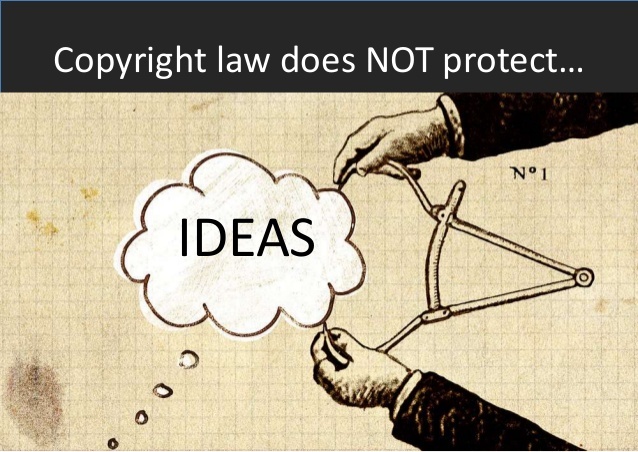
It is a traditional copyright doctrine that copyright protects only expressions and not the Ideas behind such expressions. This Idea/Expression Dichotomy is considered as the central axiom by the courts while determining what is protected in infringement cases.

The essence of copyright lies in this very distinction between expressions and unprotected ideas. Many people have raised their contentions to the idea/expression dichotomy, but none of them have tried understanding and identifying the root of this problem. An idea can in no way exist separate from an expression. Either there is a manifestation, or the idea cannot exist. The main reason behind this is that one can only differentiate the form when the idea has been substituted for some form of writing or other kinds of expression that is when the idea of the writer has been equated to such writing/ expression by him. Thus, drawing a difference between idea and expression cannot decide what is protectable under the Law of Copyrights. Rather, the distinction is to b made between the expressions that are protectable and those that are not, under the Copyrights Act, 1976.

The thesis of this blog is that the difference between expression and idea is misguided and irrelevant regarding deciding for infringement cases.

ip-copyright-its-not-black-white-5-638

In simple terms, neither can “Expressionless Idea” exist, nor can “Idealess Expression”.

Section 102(b) of the Copyrights Act

In no case does copyright protection for an original work of authorship extend to any idea, procedure, process, system, method of operation, concept, principle, or discovery, regardless of the form in which it is described, explained, illustrated, or embodied in such work.[1]

This section can be described as

Copyright does not prevent others from using the ideas or information shown by the author’s work. It relates to the literary, musical, graphic, or artistic form in which the author articulated intellectual concepts. Section 102(b) makes it clear that the protection of copyright does not cover any idea, technique, procedure, system, manner of operation, idea, norm, or discovery, irrespective of the form in which it is defined, elucidated, demonstrated, or embodied in such work.

Some concern has been expressed in the case of copyright in computer programs that should extend protection to the method or procedures implemented by the programmer, rather than merely to expressing his ideas via “writing”. Section 102(b) is intended, amid other things, to make clear that the expression implemented by the programmer is the copyrightable component in a computer program, and that the real processes or methods embodied in the program are not within the range of the copyright law.Section 102(b) in no way expands or contracts the range of copyright protection under the existent law. Its purpose is to restate, in the perspective of the new single Federal system of copyright, that the basic dichotomy concerning expression and idea remains unbothered.

The District Court of the Southern District of New York recently gave the summary for the justification of the idea/expression dichotomy:

The idea/expression dichotomy, although an inexact tool, has not been abandoned because any better way for the settlement of the two conflicting interests of the society which make available the basis to grant and limitations on the protection of copyright, both fulfilling individual creativity and nevertheless allowing the growth and developments grounded on the same subject matter by any person, other than the actual author, has not yet been discovered.

The dichotomy of idea/expression is now customarily applied to all areas that need protection, including many recent developments like the computer programs.

“Ideas” and “Expressions”

idea-152213_640

Ideas are discussed as human mental conceptions or representations. They are not eternal Platonic forms that exist apart from such human conceptions and are waiting to be thought. Thinking is generally viewed as concept manipulation and thus, necessarily involves expressions. Thus, a contrast between ideas ad expressions has never been an issue.

The form/ expression does not add something to an idea that is already existing, independently of all the expressions. Also, the idea of writing cannot exist apart from some form/ expression. Thus, ideas are incepted to be expressions themselves, even in their simplest form, they will always be in some of expression. Thus the fact that “ideas are human conceptions” concludes that the ideas can’t exist apart from the only way of conceptualizing that is “Expression”.

Ideas or potentially protectable expressions can be disembodied, but there can’t be expressionless ideas.

The main difficulty with this dichotomy is that the courts and commentators never define clearly what they mean by “ideas” and “expressions” while relating to them. By only committing to the idea/expression dichotomy, one would just hypothesize the concept.

Scènes à Faire

Some of the courts recognize that some of the ideas can be expressed the most efficiently only when certain elements or background is used. This doctrine is referred to as “Scènes à Faire” in French. Thus, in this case, even the expressions are not protected, except in the case of exact copying. For example, the scene of marching of soldiers cannot be preserved, as it would be common in many war related movies.

The Merger Doctrine

Where there are only some particular ways in which an idea can be expressed, and there is just a little difference between the idea and expression, then the idea and expression are said to be merged. This doctrine is referred to as the “Merger Doctrine”. When this happens, the limited number of ways to express the idea can’t be protected. The reason behind this is that if these ways are protected, then it would be leading to the protection of an idea, which is not a provision of the Copyright Law. This doctrine means that if things are similar in any way, or even if they are identical, they might not be infringing Copyright.


Case Laws

In 1879, the Supreme Court chose in Baker v. Selden {FN43: 101 U.S. 99 (1879)} that the copyright of a book that portrayed a particular accounting procedure did not ensure the structures necessary to utilize the system.

There is no uncertainty that work on the subject of accounting, though only illustrative of well known structures, may be the question of copyright; but, then, it is claimed only as a book. Such a book may be illustrative either of old structures, or of an totally new system; and, reflected as a book, as the effort of an author, handing over information on the subject of accounting, and consisting of detailed descriptions of the art, it may be a very appreciated achievement to the practical knowledge of the public. But there is a clear difference between the books, as such, and the skill which it is intended to demonstrate. The mere declaration of the scheme is so evident that it needs hardly any argument to support it. The same difference may be established of every other skill as well as that of accounting. A treatise on the structure and use of medications, be they old or fresh; on the manufacture and use of watches, or ploughs, or churns; or on the combination and use of colors for painting or dyeing; or on the manner of drawing lines to yield the effect of perception, would be the subject of copyright; but none would argue that the copyright of the treatise would provide the exclusive right to the skill or manufacture described within it.

In 1954, the Supreme Court reiterated the principle that copyright shields expression, but not functions. In the case Mazer v. Stein, the Court addressed the scope of protection of copyright for a sculpture that shaped the base of a lamp. It was found that copyright shielded the artistic traits of the sculpture, but not the functional traits linked with being the base of a lamp.

Unlike a patent, a copyright provides no particular right to the art revealed; protection is given only to the expression of an idea and not the idea itself. In the case of Baker v. Selden, the Court said that a copyrighted book on a unique system of accounting was not infringed by a comparable book using a similar strategy which accomplished similar outcomes where the suspected infringer made an unlike arrangement of the columns and used different headings. The difference is exemplified in the case Fred Fisher, Inc. v. Dillingham, once the court speaks about the two men, each an expert, individually making maps of the same region. Though the maps are alike, each may attain the exclusive right for making copies of his own particular map, and yet none of them will infringe the other’s copyright. Similarly, a copyrighted directory is not infringed by a comparable directory which is the creation of independent work.

The test of whether something is not a protectable idea or a protectable expression is characteristically ad hoc, and organizations of law have been established through court cases for dissimilar types of copyrighted works. But many themes run through most idea-expression explores.


[1] Copyrights Act, 1976


Download Now

Does A Ban on Alcohol Consumption Really Help?

0

In this Blog post, Abhiraj Thakur, 1st-year student NALSAR University of Law, Hyderabad, writes about the efficiency of complete bans on alcohol consumption.

Abhiraj

Bans on alchohol are usually implemented keeping in mind certain goals to be achieved but are these bans able to achieve them, or on the contrary they adversely affect the economy of the state? In this regard, a look at the present laws that completely ban alcohol is necessary. These laws are in force inter alia in states of Mizoram and Nagaland. Let’s look at the consequences of such laws in these two states.

0a13_21Prohibition simply means the prevention by the law of the manufacture and sale of alcohol. A dry state is a state where prohibition is applied, and that is a state in which the manufacture, distribution, import, and sale of alcoholic drinks are prohibited. Until very recently, four Indian states were dry states; namely Gujarat, Manipur, Nagaland, and Mizoram. However, about 2 yrs back on July 10, 2014, Mizoram replaced the Mizoram Liquor (Total Prohibition) Act of 1995 (MLTP) and with the Mizoram Liquor (Prohibition and Control) Bill 2014 (MLPC).[1] Following this policy change in Mizoram, the Nagaland government is in a constant tussle on lifting the Nagaland Total Liquor Prohibition Act of 1989.[2]

To get the answer to the question of whether such blanket-ban really helps we need to analyze the reasons and the consequences of prohibition in the sale and consumption of alcohol – the factors that necessitate total ban, whether total ban is efficient in achieving the objective of the ban and other viable measures for attaining the said objective.


Few Reasons For BAN

Health Reasons

A majority of alcoholic beverages are addictive, containing the same mood-changing agent – ethyl alcohol, in varying percentages. About 10 to 15% of alcohol users develop alcohol dependence and become alcoholics, making excessive alcohol consumption a grave problem for society.[3] Primarily, alcohol consumption causes two adverse effects. Firstly, alcohol is a toxic substance and the root of many health problems. It affects every organ of the body causing slurred speech, loss of balance, vomiting, severe sensory impairment, unconsciousness, stomach cancer, liver cirrhosis, damage to brain cells, damage to blood vessels and the like; resulting in death if consumed heavily.


Increasing Crime Rates

Secondly, alcohol consumption is the cause of many crimes – those committed under the influence of intoxication and those committed to obtaining the money to sustain habitual alcoholism. Crimes such as rash driving, road accidents, suicides, attempts to commit suicide, domestic violence, spousal abuse, violence towards children and elderly are often linked to alcohol consumption.


Religious Reasons

The inhabitants of Nagaland and Mizoram are mainly Christian. The church as an institution has a significant influence on the masses – the power to mobilize people around the views propounded by it; as can be seen in the mass-based organizations that vehemently defend prohibition of alcohol at the Church’s behest. It’s a powerful force in the political arena and holds sway over the regulations that control the sale of alcohol. This is evident in the reaction of the Church to the lifting of the total ban on alcohol in the state of Mizoram. The Bible condemns consumption of liquor, Proverbs 23:21, “The drunkards shall come to poverty.” There is a strong opposition by the Church towards any sale and consumption of alcohol.

Keeping in mind the adverse consequences of alcohol consumption and religious morals, the government spends substantial amount each year on regulating or reducing the flow of alcohol in the country mainly by way of prohibition, taxation, and restricting access by age-bars. The objective of such control-mechanisms is to reduce the degradation of health among the people and to reduce alcohol-related crimes. The government of Mizoram and Nagaland adopted the method of total prohibition.


Understanding Efficacy of Such Blanket-Bans

There’s Still Alcohol….

The Mizoram Liquor Total Prohibition Act of 1996 completely outlawed the sale and consumption of alcohol. But, few exceptions such as provisions for issuing permits for health grounds and for ex-army officials existed. Despite this total ban, alcohol is till today easily found in the state. On-ground surveys reveal that country liquor and Indian Made Foreign Liquor (IMFL) are freely available at Rangvamual and Phunchawng, west of Aizawl.[4]zawlaidi

Near the foothills of Aizwal, the capital of Mizoram, there are rows of shacks serving the local brew called ‘zu.’ Hundreds of locals ride down to drink liquor in these watering holes.[5]  From February 20, 1997, the date the ban was imposed, till April 30 of 2011, the number of people arrested for illegal sale of alcohol was 36,913, of which 27,123 were convicted. These official figures from state excise and narcotics department records could be much lower than the actual number.[6] A total ban coupled with high demand leads to a flourishing moonlighting and bootlegging business. The downside being that there is a lack of any government regulated or monitored sale of alcohol – the sellers have no standards to adhere to. Hence, the sale of spurious adulterated liquor abounds. Consumption of this alcohol leads to many aggravated liver disease, often leading to death.


The Economy is in gallows…

During dry days, the government earns no excise duty from sale of alcohol, since the sale is illegal – naturally the total revenue of the state decreases. However, to enforce the ban, the government needs to allocate more resources in terms of law enforcement officials. Hence, there is a decrease in the total revenue but an increase in the demand for resources for the enforcement of the ban – the government faces a deficit.[7]


Also Such Bans have Other Consequences

The government of Any state that brings in such laws needs to take into account the effects of such a ban on other facets of society. For instance in Mizoram, The ban directly hits employees in breweries and vineyards as well as grape farmers. Grape farming is very prevalent in the hilly regions of the Northeast India. The state of Mizoram produced around 20,800 tons of grapes in 2012-13. Due to pressure from grape farmers, the government has allowed production of local grape wine in certain parts of the state. Army personnel and the Para-military forces, forming a significant portion of the population, have a high demand for liquor. Bowing to pressure, the government was compelled to give liquor licenses to 12 army units.spurious_liquor

Due to pressure from grape farmers, the government has allowed production of local grape wine in certain parts of the state. Army personnel and the Para-military forces, forming a significant portion of the population, have a high demand for liquor. Bowing to pressure, the government was compelled to give liquor licenses to 12 army units.[8] In fact, a large number of studies over a period of time have shown that awareness policies are a better method to control alcohol-related issues. A large number of anthropologists around the globe however believe that not from BAN but With alcohol-awareness policies, the consumption of alcohol and alcohol-related crime both diminish in the long run.

In fact, a large number of studies over a period of time have shown that awareness policies are a better method to control alcohol-related issues. A large number of anthropologists around the globe, however, believe that not from BAN but With alcohol-awareness policies, the consumption of alcohol and alcohol-related crime both diminish in the long run.

In fact, a large number of studies over a period of time have shown that awareness policies are a better method to control alcohol-related issues. A large number of anthropologists around the globe, however, believe that not from BAN but With alcohol-awareness policies, the consumption of alcohol and alcohol-related crime both diminish in the long run.[9] From the data available from the two states, the picture becomes clear that the governments have to increase their spending to a great extent to enforce the ban. This is in turn detrimental to the common populace as that money could have been utilized in a more efficient way by educating people about the harmful effects of alcohol.


 Conclusion 

Many states in India today face constant dilemmas on the issue of banning alcohol.  By going through the consequences of total ban on alcohol, the picture becomes clear that a total eradication on the sale of alcohol is not the most efficient solution – it does not fully attain its aim of reducing alcohol consumption. The resources required for effective implementation of a total ban are not available to most of the states in India. The high demand for alcohol, easy supply from neighboring states and the inability or unwillingness of the state governments to spare enough resources make the enforcement of prohibition futile. In such circumstances, the more viable method of reducing alcohol intake would be regulation through taxation coupled with the policies of alcohol-education. Not only does the state gain revenue from sale of alcohol but also  alcohol-related deaths decrease. In the long run, these policies decrease the demand for alcohol and in so doing achieve the aim of reduced alcohol consumption.


[divider]

Footnotes:

[1] Adam Halliday, “Mizoram lifts 18-year-old ban on alcohol” The Indian Express, July 10, 2014 available, at http://indianexpress.com/article/india/india-others/mizoram-lifts-18-year-old-ban-on-alcohol/

[2] “Nagaland government open to discussion on lifting liquor ban” DNA India, July 24, 2014 available, at http://www.dnaindia.com/india/report-nagaland-government-open-to-discussion-on-lifting-liquor-ban-in-state-2004999

[3] “Alcohol related harm in India – a fact sheet” available at http://www.addictionindia.org/images-ttkh/alcohol-related-harm-in-india-a-fact-sheet.pdf

[4] “Looking for a peg” Indian Express, June 22, 2014 available, at http://indianexpress.com/article/india/india-others/looking-for-a-peg/

[5] “POST-DRY STATE STATUS: Mizoram hoping to earn Rs 30 crore more revenues” The Morung Express, July 19, 2014 available, at http://www.morungexpress.com/regional/118970.html

[6] “Prohibition a ‘failure’ in Mizoram” The Indian Express July 11, 2011 available, at http://archive.indianexpress.com/news/prohibition-a-failure-in-mizoram/815843/

[7] “POST-DRY STATE STATUS: Mizoram hoping to earn Rs 30 crore more revenues” The Morung Express, July 19, 2014 available, at http://www.morungexpress.com/regional/118970.html

[8] “Mizoram likely to lift liquor ban, draft bill in house soon” The Times of India, February 11, 2014 available, at http://timesofindia.indiatimes.com/city/guwahati/Mizoram-likely-to-lift-liquor-ban-draft-bill-in-house-soon/articleshow/30206676.cms

[9] Under these circumstances there is also a reduction in the total revenue generated from the sale of alcohol. However, a policy of alcohol-awareness requires a large initial investment. Subsequently the investment needed to continue educating young masses on the ills of alcohol consumption reduces. Hence, it can be balanced with the loss in the total revenue over time.


Download Now

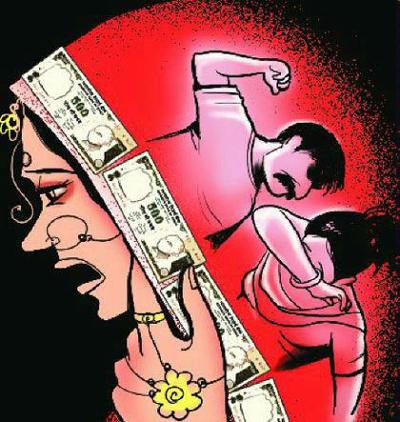
Dowry Death and Cruelty in Indian Law: Suggested Reforms

0

In this blog post, Abhiraj Thakur, a Student at NALSAR University of Law, Hyderabad, explores the problems with the current law of dowry death and cruelty in India. Along with highlighting various suggestions of reforms to the current law, the writer suggests a possible reform.

Abhiraj


Purpose of the Reform Suggestion

The proposals under this law reform suggestion are aimed to curb the menace of dowry and dowry deaths and precisely address the consequent legal technicalities that may arise. The question of amendment of Section 304-B of the  Indian Penal Code, 1860 to have more precise and stringent punishments according to facts of the case would be examined through this proposal. The distinction between the different possible causes of dowry death needs to be sought, for which punishment would need to be awarded accordingly, as opposed to one punishment for any offence falling under that section. It will also take into consideration making offences under Section 498A of the Indian Penal Code compoundable, due to the present situation of frequent occurrences of misuse of this Section. Factors are to be evaluated in every individual case, without blind assumptions, but with certain methods of drawing probable conclusions. It should work efficiently and adequately but at the same time should not be counter-productive.


Why there is a need for Amendment?

The issues that stand today with these laws are owed to the lack of clarity and lack of distinction and classification within the laws concerning interrelated areas of Dowry, Cruelty and Dowry Death.download (1)

This ambiguity, though it may have had its advantages at one point in time in bringing the victims to justice, is in recent years causing many counter-productive results. On the other hand, in some cases, the facts may not meet certain conditions and may not fall into pigeon-holes of known offences. Peculiarities of the case may cause it to avoid falling under a certain offence, and proper procedure may not be taken as a result. Cruelty, as dealt with in Section 498-A of IPC, may be present in numerous forms, but may not be recognised in peculiar cases if the facts do not satisfy the required legal ingredients. Proof required for certain offences causes a burden on the victim, and lack of evidence should not be the reason for denial of justice.

Measures ought to be taken to ensure that in cases of dowry death, there are different possibilities as to how the death of the wife could have occurred, and whether it would necessarily be classified as ‘dowry death.’ Section 304-B of IPC should be amended to include and specify the distinction between ‘murder’ and ‘suicide’ that cause the death in the case of dowry death. It is a vital fact that should significantly affect the case and the suitable punishment given. Because it is currently treated as ‘murder’, one would have to ponder if the same degree of punishment is applicable in all the cases. Since it is considered as murder, the death sentence, if awarded, would be acceptable legally though the dictum of ‘rarest of rare case,’ may have to be adhered to.


Dowry Death

Punishment for Dowry Death is explicitly specified in the Indian Penal Code. It is stated in Section 304-B of Indian Penal Code, of which sub-section (2) specifies the punishment for Dowry Death as ‘imprison­ment for a term which shall not be less than seven years but which may extend to imprisonment for life.’

dowry-related-harrasementIn recent times, the issue of allowing a death sentence for the act of Dowry Death has been a contentious one. In the 202nd Law Commission Report, it has been concluded and expressed that though there is a scope for providing death sentence for the offence of dowry death under Section 304-B, there is no substantive reason to do so. They concluded that because there is no warrant, it would not be amended.[1]

However, the commission did find that there was a need for a classification and distinction to be made regarding dowry death and murder, which are frequently confused for one another. This would greatly affect the case and proceedings, creating a significantly different outcome. With the view in mind that dowry death is to be taken seriously, and justice is to be duly served, it has been treated as a criminal offence with a general definition and punishment.

Sub-section (1) defines dowry death as: ‘Where the death of a woman is caused by any burns or bodily injury or occurs otherwise than under normal circumstances within seven years of her marriage and it is shown that soon before her death she was subjected to cruelty or har­assment by her husband or any relative of her husband for, or in connection with, any demand for dowry, such death shall be called “dowry death”, and such husband or relative shall be deemed to have caused her death…’[2]

Created with a good intention, this law is not necessarily incompetent, but rather vague, with limitations. It requires amendment in the area of defining and specifying the nature of the offence so that the definition is widened and allows more acts to be charged as offences. If an offence dowry death is just classified under a single category, it may exclude certain cases that may otherwise be considered dowry death. This creates another problem, where an offence may be considered dowry death although it is in fact not. This grey area should be eradicated, and a clear distinction should be made between dowry death and other offences.

In the 202nd Law Commission Report after examination had suggested through a valedictory remark:

Reiterating the rider voiced in the case of K. Prema S.Rao Vs Yadla Srinivasa Rao by the Supreme Court, “the Legislature has by amending the Penal Code and Evidence Act made Penal Law more strident for dealing with punishing offences against married women.  Such strident laws would have a deterrent effect on the offenders only if they are so stridently implemented by the law courts to achieve the legislative intention” [3]

It was expressed that the system would need to be sensitive and responsive to the needs of the situation arising from the incidents of dowry death.  ‘Dowry deaths are manifestation of socio-economic maladies prevailing in the society.’  It is necessary that this is addressed at different levels, instead of legal redressal level alone, to curb the menace of dowry deaths.


Cruelty in Marriage

Cruelty is enumerated under Section 498-A in the Indian Penal Code.[4]

As mentioned in the 243rd Law Commission Report, the criticism of over-implication observed by the Courts is justified by the statistical data of the cases under Section 498-A. This misuse of the Section 498-A is evident from the high number of cases pending in various courts across the country. Based on data provided by High Courts during 2011, 3.4 lakh cases under Section 498-A of the IPC were pending trial in various courts by the end of 2010.  There have been as many as 9.38 lakh accused implicated in these cases.dometic-violence

There has been an evident unnecessary accusation of more than one person within cases.[5] This may be due to the fact that the definition allows for wide interpretation and can be seen as an easy opportunity. A burden of requirement of proof needs to be imposed on the party that allows for only certain cases to be accepted. Since the number of cases being accepted into courts is the reason for ineffectiveness, it may be suggested to permit allowance for bailable, cognizable cases that are compoundable with permission of courts. There should also be punishment for parties in case of proven misuse of this section.

In the 237th Law Commission Report, proposed to add sub-section (2A) to Section 320 CrPC. The proposed provision will ensure that the offer to compound the offence is voluntary and free from pressures and the wife has not been subjected to ill-treatment after the offer of compounding.  Incidentally, it underscores the need for the Court playing an active role while dealing with the application for compounding the offence under Section 498-A.[6]


Intersection of Cruelty and Dowry Death

It was held by the Honorable Apex Court in Shanti Vs State of Haryana, that Section 304B and 498A are not mutually exclusive. Two distinct offences are observed and dealt with. A person that is charged and acquitted under Section 304B can be convicted under Section 498A without a charge being framed if such a case is made.  However, from the perspective of practice and procedure and to avoid technical shortcomings, it is sensible in such cases to frame charges under both the Sections.  If the case is established against the accused he can be convicted under both the Sections but no separate sentence need be awarded under Section 498A in view of a substantive sentence being awarded for a major offence under Section 304B.[7] [8]

In Panakanti Sampath Rao Vs State of A.P: Accused was charged with the commission of offences under Sections 498A, 302 and 304B of the  IPC and Sections 3 and 4 of the Dowry Prohibition Act. He was acquitted of the offence of murder under Section 302 but was convicted on the other counts. Life imprisonment was awarded under Section 304B other than the punishment awarded under other charges. On appeal, the High Court found the accused guilty of the offence under Section 302 of the IPC, which the Supreme Court affirmed.[9]


It is thus demanded a law that takes into regard the following findings:

 jail-bars-handcuffs-600The offence of dowry death in Section 304B, IPC does not fall into the categories of the offences for which death penalty has been provided in the Penal Code. Dowry death is different from the offence of murder. The death of a bride may fall under both the categories of offences, namely, murder and dowry death, in which case, a death sentence may be awarded for committing the offence of murder in appropriate cases depending upon the facts and circumstances of each case.[10]

With the argument against offences under Section 498-B being compoundable that state that it may lead to an increase in dowry deaths, it is important to consider the outcome when both Section 498-A and 304-B are amended. Broadly speaking, it would serve a dual purpose in curbing the menace of cruelty, as well as deaths caused because of dowry. Categorizing the offence, changing the requirement of proof, and adopting presumption methods would bring clarity as to how it should be dealt with. Bailable, compoundable offences would contribute in making courts more efficient, and categorizing offences of dowry deaths along with a method of presumption would yield better results of punishments.


[divider]

Footnotes:


[1] 202nd Law Commission Report: Proposal to Amend Section 304-B of Indian Penal Code, (2007).

[2] Section 304-B, Indian Penal Code

[3] K. Prema S.Rao Vs Yadla Srinivasa Rao AIR 2003 SC 11 at p.11 (para 27)

[4] Section 498-A, Indian Penal Code

[5] 243rd Law Commission Report: Section 498A IPC, (2012).

[6] 237th Law Commission Report: Compounding of (IPC) Offences, (2011).

[7] Shanti Vs State of Haryana 1991(1) SCC 371

[8] 202nd Law Commission Report: Proposal to Amend Section 304-B of Indian Penal Code, supra note 1.

[9] Panakanti Sampath Rao Vs State of A.P., (2006) 9 SCC 658

[10] 202nd Law Commission Report: Proposal to Amend Section 304-B of Indian Penal Code.

Download Now

Custodial Death – Who is Responsible?

0

This article is written by Sakshi Bhatnagar, a student of National Law University, Odisha, Aditi Mishra and Lavanya Rai, students of ICFAI Law School, Hyderabad. They delve into the question ‘who is actually responsible for custodial deaths?’ and also tries to analyze if custodial violence is in any way justified.

12019813_1167341736613639_2035022244513496011_n

Introduction

Custodial death is the occasion of the demise of a person, who has been confined by the police on being indicted or being under trial. They can be arranged into three general classes: death in police care, death in legal guardianship, and death in the authority of safeguard/paramilitary powers. The idea of custodial death isn’t new for Indian culture. 

Since the British guideline, individuals have been kicking the bucket in the police guardianship during an interrogation. India has over and oversaw the essential thing privileges of the detainees being broken and the utilization of compulsion and torment to take the ideal explanation. The police organization is constantly scrutinized for custodial deaths, torment, and the utilization of unlawful methods during the interrogation. 

As the police are state subjects, the brunt of the claims of institutional homicide must be borne by the legislatures of the particular states, where the police perpetrate such violations. The colossal number of custodial deaths in the nation highlights the far-reaching utilization of torment on account of the police, who have no respect for the human poise of detainees. 


The concept of custodial death is not new for the Indian society. Since the British rule, people have been dying in the police custody during investigation. India has time and again witnessed the basic fundamental rights of the prisoners being shattered and the use of coercion and torture to take the favourable statement. The police administration is always criticized for custodial deaths, torture, and the use of unlawful means during the investigations. Wikipedia describes the term ‘custodial death’ as ‘death of a person in the custody of the police, prison service or other authorities.[1] It’s legal validity is till date a controversial issue and is always debated as the popular retributive-deterrent philosophy has validated this incarcerational barbarity.[2] Though the authorities are legally bound to provide adequate necessary amenities and ensure the safety of the inmates by providing them a healthy environment which includes timely medical assistance, but the real scenario is different from what the legal implications suggest. It is also seen that mostly the persons belonging to poor sections of the society or the ones that from the depressed castes face this cruelty in prison.

History of Judicial Inquiry

The correction to the CrPC was done quite a while ago.  A discussion was drawn by the support work of human rights activists that had started in any event 10 years under the steady gaze of the law was revised. 

Inside long stretches of its constitution, in 1993, the National Human Rights Commission (NHRC) gave its first-ever rules identifying with custodial passings and assaults. District judges and police directors were coordinated to present a fundamental report on the episode within 24 hours of its event. 

Also, the Law Commission got the issue of ‘Custodial Crimes’ for its 152nd report distributed in 1994 and expressed that, “Regardless of protected and legal arrangements defending the freedom and the life of an individual, the developing occurrence of custodial torture and passing have become an upsetting factor in the general public and the bloody stories of dehumanizing torture, ambush, and demise in the care of police being reported nearly in each morning paper.” 

The law commission had seen that official justices or the district authorities just took a gander at these inquiries as customs and “the discoveries didn’t rouse certainty”.

The law commission suggested twice (in its 113th and 152nd report) the addition of Section 114-B into the Indian Evidence Act 1972, which turns around the weight of confirmation. This is, if there is evidence that the injury was caused during the guardianship, the court may assume that the police officer having care of the individual caused it. This proposal has not yet been taken up by Parliament.

In 2018, the SC, truth be told, affirmed the Victim Protection Scheme in Mahendra Chawla v. Union of India case. While the mechanism was long past due, the viability of its usage stays dubious, given that the scheme relies on the danger appraisal examination defined by the police.

Domestic and International Scenario

dc-Cover-hjigatuq7qb1835a2i2fc1mat4-20160321024903.Medi

The issue of premature death in prison exists not only in the domestic spaces but is also found in the international scenario. Countries such as Bangladesh, Algeria, Argentina, Burma are aware of the presence of this evil practice on their territories. Even the United States of America is not untouched by the issue of custodial violence. 38 deaths in Police custody have been reported in England and Wales between April 2003 to March 2004, as shown by a Joint Committee on Human Rights under the authority of House of Lords and House of Commons in 2004.[3] Amnesty International, in one of their articles in 2013 urged the Malaysian authorities to take immediately steps against the rising number of deaths in police custody, some of which were caused by torture and others by ill-treatment.

The situation in India is not very different from the international one. The Times of India, in November 2013, stated that in the preceding five years, around  12000 people suffered tragic end due to torture that is done on them either in jail or police stations.[4] As per the official data, there were 32 deaths in police custody or disappearance of persons from detention who were remanded to such custody by the Court during the year 2014. Among these, the highest were reported in Andhra Pradesh (16). [5]  These were the ones who had been sent by the Court under the order of remand. National Crime Records Bureau reports on its official website that there were in total 61 deaths or disappearances of persons from police custody in 2014. These were the people who were not sent by the Court to remand. These figures depicted a decline of 37.1% over the preceding year (2013) when this number rose to 97.[6]In their research study, the Police Complaints Authority (PCA) has mentioned about extreme vulnerability of those who die in the police custody and have found that in the period 1998-2003, there was an over-representation of ethnic minorities in deaths in police custody.[7]

Illegal Arrest and Detention

deaths-in-custory

The powers given to the Police administration for the purpose of dealing with the crimes in the society are many times used by them to implicate innocent and poor people in false and fabricated cases under local and special laws such as, Excise Act, Arms Act, Gambling Act, Suppression of Immoral Traffic Act, Motor Vehicle Act etc. And it is an accepted fact that such arrests mostly lead to immense physical and mental torture on the person arrested, due to which, he/she ultimately commits suicide in the prison or dies because of the torture. The National Police Commission in 1981 admitted that around 60% of total arrests made by the police are unnecessary and unjustified.[8]

One of the most reported cases regarding illegal detention was of the two Adivasi boys by Kerala Police in the year 2004-05[9], where the Christian Cultural Forum, Kollam, Kerala, submitted a complaint alleging that police officials of Agali in Attappaddi in Palakkad district of Kerala arrested three ‘Adivasis,’ Manikandan, Parameswaran and Kuppama on 25.5.1997 and as per the facts, they were kept in illegal custody for 23 days. Kuppama, one of these people was female and was beaten black and blue by the police. Chilli powder was stuffed into her vagina and as per the complainant, the Circle Inspector had falsely implicated around 100 Adivasis[10] in fabricated cases. There was a feeling of terror in the Adivasis due to which they were forced to leave their houses.

Another incident took place in the year 1997-98 in the state of Rajasthan, where Shri. Baba Khan of Kota had alleged in his complaint that there were illegal detention and torture by the police and reported that he nad his two brother-in-laws were forcibly taken away by the police authorities, detained and tortured severely. The cognizance was taken for this complaint and the Chief Secretary along with the Director General of Police, Rajasthan were asked to submit a report.[11] The report submitted by the State Police stated that the allegations were baseless and false but disregarding this; the Commission ordered an investigation into the matter. The investigation division established that the accusations were prima facie true.

Other cases mentioned by the National Human Rights Commission include the case of Shri. Raghubir Yadav of Uttar Pradesh, abduction of Rama Rao by Andhra Police[12], illegal detention of Anil Kumar and D.M. Rege[13]of Maharashtra[14]. Joginder Kumar vs. State of Uttar Pradesh[15] and D.K. Basu vs. State of West Bengal.[16]

What Causes of Custodial Violence?

Police system is the main arm of the democracy that deals with the common man directly. Hence, there arises an urgent need to prevent abuse of the power and direct it in the right direction. To achieve this, it is primarily very essential to study the reasons behind the problem of custodial violence. Under what circumstances, does an educated officer of law resorts to such inhuman tactics?

Work Pressure

Also, insurgent groups, which are nowadays cause chaos and massacre in many areas, consist of well-trained criminals who are highly motivated to their cause and do not reveal any information quickly.

In such a situation, the mental pressure becomes a reason for adopting brutality as a means to retrieve information from criminals. Further, we have been gifted with a concept embodied in the basic structure of our legal system which suggests that until and unless the guilt is proved beyond reasonable doubt. There are really few instances where this doctrine affects the law in a negative way. Because these restrictions are there, police at times fail to derive information from such hardened criminals and thus have no hard evidence in the court of law. Ultimately, the real culprit walks unharmed.

To Show Results

Custodial death 4 newindianexpress.com

Once a case is recorded in the Police Diary, its status has to be filed in the court. To show better results, they sometimes resort to illegal arrests, unlawful confinement or detention of people and prove case against them. This has a dual effect on the legal system. First, the wrong person is detained and hence his liberties are violated, secondly, the real statistics about crimes are prevented from being come out, which effects the formulation of effective policies for that area. The legal system can never achieve its basic aim of justice, if such a situation persists for long.

Reformation

Sometimes, the police have to resort to the tactics of violence, to prevent the criminal from committing the crime again. They believe that showing the worse consequences of the act will create fear in the mind of the culprit and thus prevents the possibility of committing it again. The fear of the third-degree methods also changes the perceptions of his subordinates of getting away easily. In some cases, brutal tactics produce the above-desired result but in most situations, the aim is not achieved.

Punitive Violence

There are a few misguided, although honest, police officers who believe in not letting the criminal go away unpunished. Such people believe that there is no better way of ensuring this but by the use of third degree torture methods. Usually, an officer who is morally affected by witnessing the crime wants to punish the culprit. Although, they do it for the betterment of the society, they have to face accusations of illegal detention and torture and have to prove it in their favor.

Laws for Prevention of Custodial Deaths in India

The Indian legislature has taken some steps in the form of Acts, Bills, and Suggestions, which aim at preventing the custodial deaths:

  • The Prevention of Torture Bill, 2010 has been introduced in the Parliament, and Rajya Sabha has recently presented a report on it.
  • The National Human Rights Commission has issued guidelines to be followed in case of custodial deaths and rape.
  • NHRC has also issued guidelines for magisterial inquiry in the cases of custodial death.

Infringement of Fundamental Rights

Our constitution gives central rights to each resident of the nation which incorporates the denounced. Probably the most significant essential rights are presented as correspondence under the watchful eye of the law and equivalent insurance of the law (Article 14), Right to life and individual freedom, and right against self-implication (Article 20(3)).

These rights are accessible to the residents as well as to the outsiders. Occurrences, for example, custodial deaths are against the arrangements of the Constitution of India. On account of Maneka Gandhi v. UOI (1978), “the court saw that Article 21 not just ensures the individual against the meaningful law yet additionally stretches out the assurance to the methodology set down which must be reasonable, just and sensible.” 

It has been held in a catena of decisions that in light of the fact that an individual is in police guardianship or kept or in custody, doesn’t deny of him of his essential rights and its infringement engages the individual to move the Supreme Court under Article 32 of the Constitution of India. Detention doesn’t deny one of his key rights.

Article 20 principally gives an individual the rights against the conviction of offences. These incorporate the standard of non-retroactivity of punitive laws (Nullum crimen sine lege) for example ex-post-facto laws along these lines making it an infringement of the people’s major rights if endeavors are made to convict him and torment him according to some rule. 

Article 22 furnishes four essential rights concerning a conviction. These incorporate being educated regarding the grounds of arrest, to be shielded by a lawful expert of the decision, preventive confinement laws, and appearance before the  Magistrate within 24 hours of the arrest of the individual. 

The instance of Sheela Barse v. State of Maharashtra has given rules on the rights of the arrested people particularly ladies. The court for this situation likewise stressed the requirement for Magistrates to advise all arrested people regarding their rights. Rules were additionally given by the Supreme Court in D.K Basu v. State of West Bengal[7]concerning the rights of people in custody.

Current Status of Anti Torture Bill 

  • India’s anti-torture bill has now been in a trance-like state for almost 10 years. The Central Government, through the Attorney General, told on 22.01.2019 that the draft of Prevention of Torture Bill, 2017, had been sent to all States for their criticism and remarks and that solitary eight States/UTs had answered as at that date. Significantly after impressive time has passed from the date of the Law Commission report, the Prevention of Torture Bill, 2017 has not been presented in the parliament yet. 

Inability to Hold Police Accountable for Custodial Deaths 


  • Indian law requires a legal justice to direct an investigation into each custodial death. The police are relied upon to enroll a First Information Report (FIR) and the death investigated by a police headquarters or an organization other than the one involved.
  • Each instance of custodial death is additionally expected to be accounted for to the National Human Rights Commission (NHRC). The police are moreover, required to report the discoveries of the officer’s request to the NHRC alongside the postmortem report. NHRC rules require the autopsy document to be recorded and the dissection report to be set up as indicated by a model structure.
  • India has sanctioned the International Covenant on Civil and Political Rights and marked the Convention against Torture and Other Cruel, Inhuman or Degrading Treatment, the two of which forbid torment and merciless, barbaric, and debasing treatment or discipline. They additionally accommodate the specialists to arraign the authorities dependable. These responsibilities are reflected in Indian Penal and state laws that censure torment and give some procedural protections against it. 
  • In the case of State of MP vs Shyamsunder Trivedi, the Supreme Court observed that that police are limited by the “ties of fraternity”, would like to stay quiet instead of helping the court. They are furthermore alleged to destroy evidence and intimidate the victims.
  • This sort of police conduct regularly gets defended as “stress” or on the grounds that “the police are average citizens as well”. This is a contorted contention that permits the police, on one hand, to be vain, wrathful macho men, and then again, furnishes them with arms, shut spaces and resistance from results.

45595205

Conclusion

Certainly, the present custodial laws have not been able to direct the practice of use of third-degree methods in the right direction. The current situation in our country is that whenever a prisoner dies in the police custody, the first blame comes from the police authorities. Before blaming them or any other person or body, the circumstances of which the death was caused must be ascertained. It is not suggested that not getting required information from the criminal should be made a ground for giving legal validity to this method. Also, it is the duty of the prison administration to provide proper facilities of medical, infrastructure, sanitation, food, security to the prisoners and a monitory body to only review it but also keep an eye on the other activities inside the prison.

“Today, there is a stunning quiet from a huge segment of those very individuals who requested activity in George Floyd’s case. At the point when it is nearer home, our voices ought to be raised considerably stronger. Nobody ought to pull off homicide. In particular, those whom we trust with guaranteeing peace” 

The deaths of Jayaraj and Fenix happened not long after the executing of George Floyd by a cop in the United States, touching off fights against police utilization of unreasonable power against Black individuals. India ought to endorse the Convention against Torture and Other Cruel, Inhuman or Degrading Treatment or Punishment, and carefully authorize laws and rules on arrest and confinement set out in the Code of Criminal Procedure. 

Notwithstanding professing to be the place where there are Buddha and Mahavira, in the standard Indian story, torture stays a fundamental malevolence, and tit for tat remains the rough perfect of equity. This ruthless, retributive thought of equity is the underlying driver of a powerless enemy of torture enactment in India.

The man battles continues asking, at a point gradually his please and voice become throaty. At long last, just quiet.

[1]Wikipedia.com

[2]Constitutional Miscellany, V.R. Krishna Iyer, 2ndEdn (2003) p.149, 151

[3]Accessed at: www.parliament.uk

[4]11820 Custodial Deaths in Five Years, DhananjayMahapatra, Times of India (24.11.13)

[5]Accessed at: ncrb.nic.in

[6]Ibid

[7]Accessed at: shodhganga.inflibnet.ac.in

[8]Ibid

[9] Accessed at: nhrc.nic.in/Police cases.htm#y25

[10]Case No. 208/11/97-98

[11] Accessed at: nhrc.nic.in/Police cases.htm#y7

[12]Case No. 5828/95-96/NHRC

[13]Case No. 1427/13/98-99

[14]Case No. 517/13/98-99

[15]AIR 1994 4 SCC 260 Cr. LJ

[16]AIR 1997 SCC 610


Download Now

No Relief For Wife Under Domestic Violence Act Unless In ‘Relationship’

2

In this Blog Post, Amit Singhal, a student of National Law Institute University, Bhopal, writes about an interesting judgment passed by Justice Anita Chaudhry of Punjab and Haryana High Court on the maintainability of a complaint, filed under the Domestic Violence Act,  2005, by a wife against her husband after divorce.

AAEAAQAAAAAAAAWZAAAAJGNiNmE0NDM1LTQ4MmUtNDI5NC1iNWI2LTNhMmFiMTNiZTJhYQ


In a significant judgment, the Punjab and Haryana High Court in the case of Amit Agrawal and Others v. Sanjay Aggarwal and Others, Crl. Misc. No. M-36736 of 2014 (O&M) has held that the complaint under Domestic Violence Act (‘DV Act’) is not maintainable, where there is no domestic relationship.

Justice Anita Chaudhry, while hearing the petition under Sec. 482 of Code of Criminal Procedure 1973 (CrPC), quashed the complaint filed u/s. 12 of the DV Act by the Respondent (brother of the wife) since the provisions under DV Act can only be invoked when the marital relationship is in existence.

The Hon’ble Court while deciding upon the maintainability of the present petition relied on the case of Ashish Dixit and others v. State of U.P. and another (2013) 4 SCC 176 and held that if it is found that the complaint has been filed only to harass the other side, then the complaint can be quashed u/s. 482.

MODEL RELEASED. Domestic violence. Silhouette of a woman protecting herself from a blow from her partner by holding her arms in front of her face.

And while deciding upon the proposition “whether the wife can file a complaint under the DV Act when the relationship has come to an end with a decree of divorce,” the court held that from the bare reading of provisions of Ss. 2(a) & 2(f) of the DV Act, it is clear that intention of the legislature is to protect the women who are living in a domestic relationship. The court further held that if the intention of the lawmakers’ is otherwise, then they have used the past tense and not the present tense in the expressions used in these above two sections.Moreover, the court relied on the case of Harbans Lal Malik v. Payal Malik (2010) DLT 67 and held that since the definition of ‘wife’ u/s. 125 of CrPC means ‘divorced wife’, hence the definition of ‘wife’ given u/s. 125 of CrPC cannot be merged with DV Act.

Even though the decree of divorce has been passed exparte, the court held that still the complaint under DV Act is not maintainable on the ground that in the present case the exparte decree has not been set aside. Further, because the FIR lodged by the wife had been quashed by the court and the aggrieved person also had been granted the interim maintenance u/s. 125 of CrPC, therefore permitting the court to proceed with the complaint under DV Act would amount to the travesty of justice and abuse of the process of the court of law.

Therefore from the above reasoning, Justice Anita, allowing the petition u/s. 482 of CrPC, quashed the complaint and proceedings under DV Act before the Magistrate.


Download Now

Post-Employment Non-Compete Clauses

0

In this blog post, Abhiraj Thakur, a student of NALSAR University of Law, writes about non-compete clauses in post-employment contracts. These types of clauses are very common in the corporate world today. The blog post highlights the purpose of such clauses and how has Indian Judiciary dealt with the issues surrounding it.

Abhiraj


Employment contracts are designed to secure the rights of both the employer and employee during the period of employment and even after that. Employment contracts are drafted in a manner to accrue maximum benefits by protecting and minimizing the employers’ liability and ensuring that the employees are not exploited, and their work is used to the maximum satisfaction. Employment contracts are mainly utilized in the legal domain as proof of employment, assigning of liability and as a distinction of the subsisting relationship between two or more contracting parties. The idea of an Employment contract is that the purpose and requirements of drawing up such a contract is pre-determined, and anything that arises out of this contract would have an impact on the relationship.

There are various clauses that are inevitable in this type of contract, and the Non-Compete Clauses are amongst them. Hence, the researchers have chosen these clauses to analyze their purpose, usage, and interpretation by the Indian judiciary.

Non- Compete Clauses (NCC) or Covenant Not to Compete (CNC)

non

Non- Compete Clauses (NCC) or Covenant Not to Compete (CNC) comprises a section under Restrictive Clauses in Employment Agreements. Non – Compete clauses are generally of two types:-

  • Non – Compete Clauses during Employment
  • Non – Compete Clauses post-Employment

For Purposes of this paper, I will focus on Non – Compete Clauses post – Employment, which is imposed on an employee only post – employment. An example of such a clause would be:

For a two-year period following the termination of an Employee’s employment with the Firm, She/he shall not/never in any genuine capacity, directly or indirectly advise, manage, render or perform services to or for any person or entity which is engaged in a business competitive to that of the Company within any geographical location wherein the Company produces, sells or markets its goods and services at the time of such termination.[1]

Objective/Purpose of such a clause

Such clauses are included in the contracts of employment of senior or highly skilled staff at the commencement of the professional employment relationship[2] and are typically clauses that prohibit an employee from competing with his/her former employer for a certain (pre-defined) period of time after leaving the company/business. It reduces the possibility of an ex-employee soliciting or dealing with customers of the business by using knowledge gained during the prior employment and hence indirectly causing harm or loss in profit to the previous place of employment. Companies and Businesses are allowed to add such clauses to agreements and are even held enforceable (to a reasonable extent) in several jurisdictions so as to be able to give enough leeway to businesses to be able to protect their trade and business. Since most businesses have information that are both integral and very valuable as well as pertinent to their success, it’s important that restriction of the use of this information by employees has to be done by employers to protect their businesses.

Since the idea of such clauses rests on the need to protect sensitive information and hence gain maximum profit out of all investment made in a business, they’re mostly imposed on the employment contracts of senior employees; managers, partners, co-founders and thus the restrictions are considered as justified enough in some jurisdictions as well as in quite a few cases.

In the case of HRX Holdings Pvt. Ltd. v. Pearson, 2012[3], Justice Buchanan had upheld a post-employment restraint that was preventing a senior employee from competing with his former employer for two years.

Closer Analysis of the Clause

The biggest critique that is faced by Non-compete Clauses in India is that they are viewed as a violation of Section 27 of the Indian Contract Act and Article 14 in the Indian Constitution. Indian courts have time and again seen NCC as un-enforceable viewing them as a provision in “restraint of trade” which is impermissible under S.27 of the Indian Contract Act[4] and hence void as well as against public policy due to their potential to prevent an individual from earning a livelihood and infringing on his fundamental right of the same.[5]

Along with that, such non – compete clauses suppress employee motivation to a very large extent. A very crucial principle of how the market and businesses work is that companies want people who are independent, motivated and innovative and such people generally turn out to be employees who don’t like the idea of signing a non – competes as it brings upon this compulsion to want to stay with a business solely because of the contract signed and not because of career prospects or aspirations. Thus NCCs turn out to be quite counterproductive in that regard. “The people who don’t want to sign non – competes tend to be the ones you want most. They’re aggressive, motivated, have lots of ideas. The people who willingly sing are the people you don’t want.”[6] Employees who willingly sign Non – Competes are generally those who don’t think they have the capability to succeed or become a part of another business or company and hence are never really valued enough by their current place of employment.

Similarly enforcement of such Non – Competes gives a very bad image to the company as someone who sues ex-employees and hence serves as a further disincentive in attracting young talent as well as the ability to retain them.


Judiciary and Non-compete Clauses

aid6808889-728px-Get-Your-Baby-or-Child-Back-Step-8

It was in the case of Niranjan Shankar Golikarivs The Century Spinning and Manufacturing Company Ltd, 1967[7]where Justice J.M. Shelat in the Supreme Court had observed that “restraints or negative covenants in the appointment or contracts may be valid if they are reasonable”. Further in Para 18 it was observed that in this particular case “the injunction issued against him is restricted as to time, the nature of employment and as to area and cannot therefore be said to be too wide or unreasonable or unnecessary for the protection of the interests of the respondent Company”.

Thus it established the precedent and showed that Indian courts may in certain circumstances enforce confidentiality agreements which have the intention to protect a business’s or an employer’s proprietary rights.

In 1986, the Supreme Court gave a contrary judgment in the case of Central Inland Water Transport Corporation Limited and Anr. v. Brojo Nath Ganguly and Anr.[8] Justice D.P. Madon found that “in agreement/contract, which has for its object a restraint of trade, is prima facie void. If the terms of contract are unconscionable, unfair, unreasonable, and arbitrary and opposed to public policy, they are void under Section 23 of the Contract Act as also violative of Article 14 of the Constitution even if accepted between the parties.” The court also recognized that various contracts are unconscionable solely because of the gross inequality in their bargaining power and the victimized party doesn’t really have much of a choice but to assent to the contract.

Indian Courts have mostly always observed Non – Compete Clauses to be quite against the employment rights and quite unconscionable because the employee never really has a strong hand in the negotiation. Though, the enforceability of such clauses is also quite contingent on how reasonable they are, how they’re worded and the sort of restrictions they impose; if the restriction completely bars an employee from being able to attain any work whatsoever for a period of time it is clearly a restraint against trade as was observed in the case of HRX Holdings Pvt. Ltd. v. Pearson[9] 2012, where the court had found the restraint reasonable because the employee may have had intimate knowledge of the former employer’s client relationships, pricing arrangements, strategies and other vital information and hence their Non – Compete had valid grounds to be enforceable as well as they had provided him with remuneration.

Most companies claim that restrictions of such sort are quite pertinent to protect their confidential information and proprietary rights which are why even in India various foreign companies seek to include confidentiality, non – solicitation and non – compete clauses in their contracts with prospective senior management employees.

The New Delhi High Court gave a judgment in 2009 reaffirming India’s stance on Non – Compete clauses in the case of Desiccant Rotors International Pvt Ltd vs. Bappaditya Sarkar & Anr.[10]Given by Justice Manmohan Singh wherein he clearly laid down that “The stance of the Indian courts on the question of restraint of trade is unmistakably clear.” He found it important to reiterate the principles embodied in Sec. 27 of the Indian Contract Act and that in the scenario of a clash between the attempt of an employer to protect himself from competition with respect to right of an employee to seek employment wherever they choose, the right to livelihood of employees must prevail.[11]

[1]Apoorva Dixit, Restrictive Clauses in Employment Agreements – Legal Situation in India, Academic Exercise – Anil Chawla& Associates, March 22nd, 00:17 am, http://www.indialegalhelp.com/files/restrictiveclauses.pdf

[2] Jonathan Coley & Edward Goodwyn, Restrictive covenants in employment contracts, Out law.com, March 22nd 03:25 am, http://www.out-law.com/page-7086

[3] HRX Holdings Pty Ltd vs Pearson, (2012) FCA 161, Federal Court of Australia

[4] Id

[5] Valerie Demont, Non – Compete Clauses are unenforceable in India: US – India Update, Pepper law, 22nd March 04:42 am, http://www.pepperlaw.com/publications/non-compete-clauses-are-unenforceable-in-india-2010-02-25/

[6] Jeff Haden &OrlyLobel (Professor of Law at University of San Diego), The case against non –  compete agreements, Inc., March 22nd 05:00 am, http://www.inc.com/jeff-haden/non-competes-could-cause-the-death-of-your-business.html

[7] AIR 1967 SC 1098, Justice R.S. Bachawat& Justice J.M. Shelat

[8] 1986, SCR (2) 768

[9](2012) FCA 161, Federal Court of Australia

[10]I.A. No.5455/2008, I.A. No.5454/2008 & I.A. No.5453/2008 in CS(OS) No.337/2008

[11]Id

Download Now
logo
FREE & ONLINE 3-Day Bootcamp (LIVE only) on

How Can Experienced Professionals Become Independent Directors

calender
28th, 29th Mar, 2026, 2 - 5pm (IST) &
30th Mar, 2026, 7 - 10pm (IST).
Bootcamp starting in
Days
HRS
MIN
SEC
Abhyuday AgarwalCOO & CO-Founder, LawSikho

Register now

Abhyuday AgarwalCOO & CO-Founder, LawSikho