Download Now
Home Blog Page 1736

Decoding the Entrenchment Clause as Provided by the Companies Act, 2013

0

This article has been written by Shubham Khunteta, a student of National Law University Odisha, Cuttack on the newly specified clause of entrenchment in the Companies Act, 2013. It analyses the relevance of it to the class of shareholders and also discusses penalty and adjudication in case of non-compliance of such clause.

New-Companies-Act-2013

Introduction

The word ‘entrenchment’ in the newly incorporated entrenchment provisions in the Companies Act 2013 has not been defined therein. However, according to the Oxford dictionary, the word ‘entrench’ literally means firmly added, surrounded and a vital part of something that may be in the constitution document of the company like the Articles of Association. These provisions have been added in the act to give voice and strength to the vulnerable and inferior party so as to not allow discretionary decisions in the company in various areas until the consent of such members if prescribed in the entrenchment clauses of the AOA, is taken. It makes certain amendments either more difficult or impossible, i.e., inadmissible. It may require a form of a supermajority, a referendum submitted to the people, or the consent of another party.

Company_pictureA Company is a group of persons that comes together to create their wealth by making joint and mutual decisions for the benefit of each other, but it is likely that majority shareholders will try to impose their decisions on the others in the working of company, thereby affecting the mutual decision-making power of the shareholders and violating their rights to have a say on matters especially relevant and crucial for them.

Considering such problems, the Companies Act, 2013 incorporated  entrenchment provisions under Section 5(3) to give a helping hand to the minority from the dangers of majoritarianism and to prevent the creation of legal dictatorship.

In the view of these provisions, it is not binding on the company to incorporate such a clause as it is discretionary. However, if such entrenchment provisions are incorporated in the Articles of Association of the company, then the company can’t exercise particular power, without the restrictive conditions for decisions are complied with.


Concept and Interpretation of Entrenchment provisions

The Government inserted a new section, i.e., Section 58(2) in the Companies Act which gave the companies the discretionary power to incorporate in their AOA entrenchment provisions so as to make it cumbersome and more regulatory for the majority and the people at the helm of the company, restricting their power to control the company at their own whims and fancies.

Umbrella-Company

Legal dictatorship that was previously available under the former Companies Act has been restricted by this section and now minority members can insist on the majority to take their grievances into consideration and not make decisions unless minority views are put on board. However, it is to be understood that these provisions are to be provided for in the AoA at the discretion of the company, but once it is so provided, it is to be complied with at any cost and any decision taken in violation of the entrenchment clause in the AOA would be construed as abuse of majority power and violation of the Act.

The Supreme Court in V.B. Rangaraj vs V.B Gopalakrishnan[1] has held in this regard that a private agreement between shareholders would not bind the Company unless the Articles of Association of the Company provides for such limitations. The new act refers to “the Amendment of specified clauses of Articles of Association” as the entrenchment Clause. The entrenchment clause, nevertheless, needs to be in agreement with the Memorandum of Association of the Company and the Companies Act, 2013. Any entrenchment Clause which is against the provision of Companies Act, 2013 or Memorandum of Association is void and unenforceable.

Types of Entrenchment

Entrenchment can be either absolute or conditional. Absolute entrenchment implies that certain provisions are unalterable and impossible to change unless there is a court/tribunal order. This entrenchment is not provided for in the Companies Act, 2013. Conditional entrenchment, on the other hand, implies that certain provisions can be altered, subject to fulfilment of certain conditions or compliance with specific procedures (For example, approval by more than 75% members instead of the usual special majority of 75%.).

Procedure for Incorporation of Entrenchment Clause

These provisions shall only be made either on the[2] 

  1. Formation of the company; or
  2. By an amendment to the Articles of Association by all the members in case of private company and on passing a special resolution in case of public company, if it is already formed.


It means that companies will have to incorporate these provisions in the manner aforementioned only. download (7)After the incorporation of these provisions in the articles, the company has to give a notice to the registrar in the following ways according to the Company (Incorporation) Rules, 2014 –

  1. In the case of a newly formed company, notice is to be given in the Form No. INC.2 for a ‘one person company’ (OPC) or Form No. INC. 7 for companies other than OPCs along with the fees as specified in the Companies (Registration office and fees) Rules, 2014 at the time of the company’s incorporation.
  2. In the case of a company already in existence, Form No. MGT. 14 is to be filed within 30 days from the date the entrenchment articles are incorporated in the AoA along with the fees as specified in the Companies (Registration office and fees) Rules, 2014 under the provisions of Section 11[3] as applicable regarding registration of certain resolutions and agreements with Registrar of companies.

Instances of Entrenchment Clause: Provisions of Articles

  1. Provisions as to proportional representation (Section 163): Before coming into force of the section about entrenchment, the appointment of directors in a company was given effect through a simple majority vote, thereby depriving the substantial minority to place even a single director on the board. Now, to put control on that, entrenchment clauses can be used by the minority to prevent their exploitation and set a rider before the exercise of any such power by the majority.

Although the protection is also available under Sec 163 of the Companies Act, 2013

  1. The power of shareholders/co-venturers/any person to nominate/appoint directors on the Board of a company.
  2. This provision provides that any affirmative rights such as issue of shares, creation of new subsidiaries, borrowing more than a particular limit can only be done with the consent of minority[4].

For example, If PQR Company subscribes by investing in XYZ, a Private Ltd. company in 10% terms, tomorrow if XYZ private limited approaches any Bank for a loan, the bank officials would read the Articles & would ask to get the consent of PQR Company. Now, if there is no entrenchment provision, then ‘XYZ’ may, after passing a special resolution remove the minority right and can borrow beyond the limit.

In order to control it, the entrenchment provisions are usually compelled by the minority to make the majority responsible and the minority in these provisions can get incorporated a clause saying that borrowing beyond a particular limit or issuances of shares is to be done only after the requisite consent of minority has been obtained.

Penalty

Gavel-Money_original

Since no specific penalty or punishment is prescribed for infringement of section 5, general penalty suggested under Section 450 of the Act is applicable. Accordingly, the company, as well as its officer, who is in default or such other person shall be punishable with a fine up to Rs.10, 000/-.[5]  For continuing offence, they are punishable with a further fine up to Rs.1, 000/- for every day after the first during which breach continues.

It may be noted that for a second or a subsequent breach of the provision of this section, if made within a period of three years, then the company as well as its officer who is in default shall be punishable under Section 451 with twice the amount of fine in addition to any imprisonment provided for the offence[6].

Adjudication of Penalty Related Disputes on Violation of Section 5

Under Section 454, the officer appointed by the Central Government, not below the rank of Registrar of Companies, may adjudge and impose a monetary penalty for violation of this section. However, before imposing any penalty, an opportunity of hearing shall be given to the Company and its officers[7].

Conclusion

It can be seen from the provisions related to entrenchment that these newly incorporated provisions are important changes made. Restrictions and conditions on transfer of securities in a private company by a contract[8]  can be enforceable under it, and it would not be against the spirit of the private company feature of non-transferability of security. This agreement need not be provisioned in the Articles as was the case earlier. This can be one of the entrenched provisions in the AOA that the agreement may be tweaked in accordance with the minority rights.

Therefore, at last, it can be said that the government by incorporating the entrenchment provisions in the Companies Act, 2013 gave the breath to live to the minority and vulnerable people and power to negotiate fearlessly with the majority in their interest, although these provisions are discretionary on the part of the company. However, the minority shareholders due to this incorporation into the Companies Act of this provision can insist and bring on the ground the majority to concede with the minority and truly stand to the utmost duty, i.e., “Fiduciary duty” of the majority to minority.


[divider]

Footnotes:

[2] Sec 5(4) of the Companies Act, 2013

[3] See, Section 117(3) of the Companies Act, 2013 to know the application of provision.

[4] http://taxguru.in/company-law/entrenchment-clause-article-association.html

[5] http://pkpandya.com/section-5-articles/

[6] See, Sec 451 of the Companies Act, 2013

[7] See, Sec 454 of the Companies Act, 2013

[8] See, Sec 58(2) of the Companies Act, 2013

Download Now

Inter-country Adoption – What Are The Legal Safeguards?

0

In this blog post, Abhiraj thakur, a student of NALSAR University of Law, writes about the issues surrounding inter-country adoption. He throws light on the existing framework of international and local laws that regulate the practice and highlights the problems associated with it.

Abhiraj


Adoption of a child has been the part of the human society for a long time. The presence of this practice lies in the fact that love and care are considered necessary in this world for any human or animal. For children whose parents have died or for some other reason cannot look after the child, it is considered beneficial for the child and for the society as a whole to give that child to some other willing people who can look after it and provide unconditional love and affection. With changing times, the practice of adoption has undergone a number of changes. In modern times, the practice of adoption has become much more complex. With every country having laws to regulate the practice, certain legal issues cropped up. Since the world has become small with the advent of technology and better modes of communication, inter-country adoptions has become a common phenomenon.

Put in simple words, inter-country adoption refers to the adoption of a child by a person belonging to a different country. Over the last two decades, the number of inter-country adoptions has almost tripled. The practice has gained a foothold in India as well. The practice is especially in vogue among film stars. Today, we see many film stars and other famous personalities adopting children from developing and under developed countries. With the presence of local as well as international laws dealing with adoption, the legal scenario of inter-country adoption becomes an extremely pertinent issue.


International Scenario

world

Legal Framework

The Hague Convention

The increasing trend of inter-country adoptions was for, the first time, observed by the United Nations in 1980s and efforts began to develop laws to regulate the practice. In 1993, a conference on private international law took place in Hague, Netherlands. Subsequently, the Hague Convention on Protection of Children and Co-operation in Respect of Inter-country Adoption was adopted, which is popularly referred to as the Hague Convention of 1993. It came into force in 1995.

UN Convention on Rights of Child

Adopted in 1989, the convention, among other things, talks about Inter-country adoption. Article 21(c) of the convention creates an obligation on the member states to look for possibilities of enacting certain laws and safeguards with respect to inter-country adoption. Also Article 21(b) of the convention talks about adopting proper measures to ensure safe inter-country adoption.


Major Issues with International Laws

The international framework is often considered far more stringent as compared to several local laws of adoption. Some uniform requirements are laid down, which is mandatory for member countries to adopt. Some problematic issues are:


State of Residence

The prospective parents need to confirm their state of residence. The process of confirmation varies from country to country which leads to the possibility of arbitrariness in the procedure involved. For example, in the United States, for an adopted to get visa, he/she needs to meet the eligibility criteria of Naturalization and Immigration service of the state.


Time taking Process

As per a UN report, international adoption usually takes more than 15 months to finalize. The state agencies, while working to validate the status of the child as ‘adoptable’, often suffer from unwarranted laxity in the process.

Indian Scenario

Welcome-Home-INDIA

Internal adoptions in India are governed by the Hindu Adoptions and Maintenance Act of 1956 and the guardianship and Wards Act of 1890. With respect to legislations governing inter-country adoptions, there is no specific statute as of now in the country even though it is a well known practice and a long line of jurisprudence flow dealing with the issue. India being signatory to both the conventions are obligated to make certain safeguards for inter-country adoption in the country.

Judicial Approach to Inter-country Adoption

In the decade of 1980s, India witnessed an unprecedented rise in cases of inter-country adoption. The lack of any specific statute laying down guidelines or procedures dealing with inter-country adoption made it an area of much contention between the parties involved. The judiciary has played a commendable role in providing safeguards in inter-country adoption.

The Supreme Court, for the first time, elaborately dealt with inter-country adoption in the case of Laxmikant Pandey v Union of India.[1] The case was the result of a petition filed by a Delhi-based lawyer Laxmikant Pandey, who submitted that various agencies and social organizations involved in rescuing children and giving them in adoption to foreign parents often indulge in unscrupulous malpractices which is contrary to the very objective of adoption i.e., betterment of children. The Supreme Court, taking cognizance of the petition, raised its concern on non-availability of any comprehensive law dealing with inter-country adoption in the country.

4b2d44c8ad011f7a55573adcddece5f2Guidelines laid down:

Sponsorship of Adoption

For limiting the role of individuals in providing children to be adopted, the court laid down that every application by a foreigner for the adoption of an Indian child needs to be sponsored by child welfare agency that is recognised and licensed by the government of India. Many cases of child trafficking are reported in India every year where individuals sell of children to foreign entities. An efficient implementation of this guideline would ensure that no individual is able to sell a child out to a foreigner.

Application to juvenile court

Further, the most striking guideline was that no application for inter-country adoption of a child can directly be entertained by agencies involved in adoption. The prospective parents need to file an application in the juvenile court of valid jurisdiction and for the adoption, the application further needs to be validated by the court.

Age of the adopted Child

Upholding the principle of the betterment of the child, the court further made a recommendatory cap on the age of the children to be given in adoption. The considered it preferable that the child being given for inter-country adoption is below 3 years of age. Keeping in mind the change of environment and social settings that a child might encounter in a new country, it becomes easier for the child to adapt if adoption is done in early ages of upbringing.

Consonance with the local laws

Supreme Court tried to deal with the problem of non-availability of the specific statute by extending the provision of local laws to inter-country adoption. The Guardianship and the Wards Act of 1890 was extended to cover relevant procedures with regards to inter-country adoption. Also an initiative from legislature in this regard was called from the legislature.

Another case is of Re Jay Kevin Salerno[2] where the Bombay High Court said that the international blend of laws that cover inter-country adoption needs to be interpreted as harmoniously as possible so as to ensure that substantive goals of adoption are realised.

Present Challenges in Inter-country adoption


Legal Challenges

Trafficking and Abuse

STOP-Child-Trafficking

As per a UN report, about 5 million children are sold off every year to be used as slaves in different parts of the world.[3] A line of conventions, though criminalize trafficking and provide stringent counter measures, but the practice has still not been eradicated altogether. During the 2004 tsunami, there were reports of large scale selling of abandoned children.[4]

Institutions to deal with the issue

As of today, the issue of inter-country adoption is covered under the wide arena of child rights and so, international agencies like the UNICEF[5] are not able to devote enough attention to the issue. The Hague convention recommended of the setting up an organization to exclusively deal with inter-country adoption but the plan forever remained on paper. For a country like India, we can learn from various countries of the world which have efficiently set up institutions for this purpose. Lithuania, in 1998, set up the Public Adoptions Authority (PAA)[6] that looks after all the adoption-related issues in the country including inter-country adoption.


Social and Ethical Challenges

Conflict with Religion

A problem with effective legal framework for inter-country adoption is that the practice of adoption is a contentious issue among many religions. In Confucian law, for instance until recently, adopted children had no rights to inherit property and the practice of adoption was severely restricted in Japan and South Korea. Under Sharia law, adoption is considered as violation of the Quran. Verse fifth of the thirty-third Surah in Quran states that adopted children cannot be named after the adoptive father. This verse is interpreted as prohibition of adoption by God himself.

A problem with effective legal framework for inter-country adoption is that the practice of adoption is a contentious issue among many religions. In Confucian law, for instance until recently, adopted children had no rights to inherit property and the practice of adoption was severely restricted in Japan and South Korea. Under Sharia law, adoption is considered as violation of the Quran. Verse fifth of the thirty-third Surah in Quran states that adopted children cannot be named after the adoptive father. This verse is interpreted as prohibition of adoption by God himself.

Interracial Adoptions

Baby's feet on mothers hands. Horizontal Shot.

Even in the era of globalization, race relations form an important area of dispute when it comes to adoption. Often, the question is raised whether the trans-racial adoption of children from a black community by different Caucasian and Anglo-Saxon races is in the best interests of children. The countries like New Zealand and Australia have historically raised concerns regarding entry of other races in their country.[7]

[1] 1984 AIR 469, 1984 SCR (2) 795

[2] AIR 1988 Bom 139

[3] United National Bureau of Child rights report, 2012 Pg 74-75.

[4] United Nations 2nd periodic report of state parties, The Indian Ocean, 2004.

[5] United National Children’s Emergency Fund

[6] United Nations 1st periodic report on State parties, Lithuania, 1992.

[7] Department of Economic and Social Affairs, United Nations report 2006.

Download Now

Deductibility Provisions for Gifts to Business Clients by Businesses

0

This article has been written by Shubham Khunteta, a student of National Law University Odisha, Cuttack on the deductibility provisions available to businesses on gifts given by them to their clients on various occasions.

image

Introduction

Since time immemorial, it is generally considered that anything one gives or receives for free or without consideration gives happiness and deepens the relationship between persons. Now, why does this happen? Is it because we (the receiver of the gift) are not paying anything or that it raises the relationship to the next level by giving in consideration like trust, love and affection which is not valid consideration in law to cease the transfer as gift.

freemoneyGifts, in whatever form, whether cash or kind, is are a transfer of movable or immovable property from donor (Giver) to donee (Receiver) without any consideration in return. Without any consideration/No consideration is the ‘sine qua non’ of the term gift. So when this hallmark is replaced with even inadequate consideration, the transfer ceases to be gift. The expenses on gift can be incurred by one family member for another or by a distant relative or by a business for its clients.

This article specifically focuses on gift expenses incurred by businesses for its clients on festive occasions and other such occasions, etc., and its treatment with respect to the allowance of deduction against income under the Income Tax Act.

Speaking from the perspective of a businessman, there are many reasons for buying gifts for the customers and business associates like maintaining good work relations, opening doors for opportunities, professional networking, and a thank-you for a job well done. There’s also one more incentive to make those gift purchases. All or part of the cost of your business gifts can actually become tax deductions.

Businesses generally offer gifts to their clients to set up long-lasting and durable relationship with them, and these serve as an expense to expand and earn income for the business which in turn lead to deduction of these expenses from the income so as to pay less tax[1]. The important principle to understand here is that the expenses that are incurred should be in the nature of business promotion and not in the nature of capital expenditure and personal expenses of the assesse.

Case Laws Dealing with Such Expensesbannerimage


  • Jaikisan Agarwal vs. Assistant commissioner of Income tax[2]

In relation to determining the genuineness of gift. It is only the fact of the donor having transferred the money into the hands of donee and the availability of the funds at that time in the case of donor which are the material factors to be proved in evidence for holding the genuineness of the gift.

  • Agfa India private Ltd. Vs. Assistant commissioner of Income tax[3]

In this case, the Assessing officer and Commissioner, Income tax had made a disallowance of gift expenses merely because confirmation from the third-party could not be furnished, but on appeal, this decision of AO/commissioner was not accepted and gift expenses were allowed for deduction and it was held that since assesse produced the required expenditure documents, confirmation from the third-party or receiver need not be the reason to disallow the gift expenses for deduction. Thereby, all expenses made for promotion of business except capital expenditure and personal expense be allowed for deduction against income to determine the tax liability under Sec 37(1) of Income Tax Act, 1961.

There are various expenses that can be incurred by business on clients with the objective to expand the customer base and achieve the objective of high profits. These expenses can be in form of giving gifts on the wedding of the client, entertainment, travel and excursions etc. but, it must be noted that the Income Tax Act only provides for these deductions when the gift expenses are for the exclusive benefit of the client and is extendable to the relatives of the client if it is not detrimental to the very principle for which the deduction is allowed. In terms of Sec 123 of the Transfer of Property Act, 1882, a gift of immovable property, which is not registered is bad in law and can‘t pass any title to the decree.

Deductions for the Business

download (6)These deductions are to be examined by the assessing officer because they may have the character of tax evasion and money laundering.

Various forms of the gift qualifying for such deduction are as follows:-

  • Gift can be in form of cash;
  • Gift can be in the form of movable property;
  • Gift can be in the form of immovable property

Businesses have to keep in mind that these deductions don’t exceed the income and completely offset any income liable to be taxed.

For example, a real estate agent might give a client, who purchases a house a Rs. 10000, a gift card from a home improvement store or a Rs. 1000 bottle of wine. The agent attaches a note with the gift asking for future business and referrals accompanied by three business cards.

images (6)Further, the said expenditure should be justifiable and reasonable considering the size and processes of the Company.

For example, the CBDT has issued a circular stating that any expense incurred in providing freebies to medical practitioners by pharmaceutical companies in violation of the provisions of the Indian Medical Council (Professional Conduct, Etiquette and Ethics) Regulations, 2002 shall be inadmissible under Section 37(1) of the Income Tax Act[4], being an expense prohibited by the law. The sum equivalent to value of freebies enjoyed by the medical practitioner shall be taxable as business income or income from other sources depending on the facts of the case.

Deduction for the Client

1445797662-2053Any gift to a public servant is strictly prohibited by law and can invite serious punishment as it is considered to be a bribe.

Under Section 56(ii)[5], deduction for donee (receiver) or income from gift is subjected to certain conditions like:-

  • Gift value should not be more than Rs. 50,000 to claim deduction and over and above it will be liable to taxation for the receiver of gift;
  • Gift over the value of Rs. 50,000 may be allowed deduction if it is given on the wedding of the receiver or if it is given by a relative (definition and limit provided in Income Tax Act) of the receiver.


Conclusion

It is customary in India to give gifts to clients on various festive occasions like Diwali, Christmas, etc. These gifts serve as business promotional expenses. They can be claimed as an offset against the income and deduction can be claimed on that, subject to business size and operations. The Government allows these deductions to improve the business climate among people, but it should be kept in mind that these deductions are prohibited if they are presumptive of tax evasion by business and to carry money laundering activities. These promotional expenses are very important for businesses to improve their brand image and to increase the customer base by alluring with attractive gifts the prospective client.

[divider]

Footnotes:

  • [1] <http://thepractice.com.au/tax-treatment-of-employee-client-parties-and-gifts/>accessed on 2/6/2016
  • [2] (2000) 66 TTJ Pune 704
  • [3] 2001 123 STC 108 Mad
  • [4] See, Sec 37(1) of Income Tax Act, 1961
  • [5] See, Sec 56(ii) of Income tax Act, 1961
Download Now

How Is Plea Bargaining In India Different From USA?

0

In this blog post, Abhiraj Thakur, a student of NALSAR University of Law, Hyderabad highlights the major differences in the procedure of plea bargaining in India in comparison to that in USA. He also explains how the Indian model of plea bargaining, though a derivative of the US model, has evolved over the course of time to avoid the shortcomings that the US model suffers from.

 Abhiraj


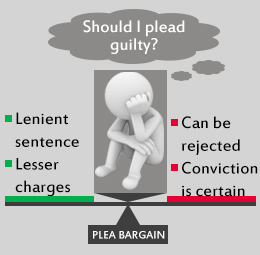
Plea bargaining refers to the concessions that a defendant receives when he pleads guilty to the crimes he has been charged with. It’s a voluntary transaction that must take place with the consent of both the parties concerned. Broadly, there are two kinds of plea bargaining, charge bargaining and sentence bargaining. In charge bargaining, the defendant pleads guilty to a less serious offence or to one of many charges, in exchange for the dropping of the other charges. Sentence bargaining, which is the kind that is followed in India, is the form wherein the accused pleads guilty in exchange for a concession on the sentence.[1]

While plea bargaining has been the subject matter of a lot of discussion in various Indian courts since the 1970s itself, it was formally incorporated into the Code of Criminal Procedure (CrPC) in 2005 as Chapter XXIX through the Criminal Law (Amendment) Act, 2005. Drawing on the recommendations of the Malimath Committee Report, while it is premised on the American model, it is significantly different.


Plea Bargaining Under CRPC


609254-47713-59 (1)

These recommendations were incorporated in the CrPC through the Criminal Law (Amendment) Act 2005. Sections 265A to 265L under chapter XXI now deal with plea bargaining which is significantly different from the scheme followed by American Law. As per the CrPC, the onus to invoke the provisions of plea bargaining is on the accused.[2] Only those accused of offences whose punishment is less than seven years imprisonment and/or fine, and which do not fall under the category of socio-economic offences or crimes against women and children can apply under the given provision.[3] Further, only first time offenders can avail this provision.[4] The procedure is fairly straightforward. Once the application is made, it is submitted to the judge along with an affidavit[5] who will examine the accused in camera to ascertain the voluntariness of the application.[6] Once the judge is satisfied with the voluntariness of the accused’s plea, he gives the accused, the public prosecutor and the victim (and the Investigating officer if the case was made through a police report) time to come to a mutually satisfactory resolution.[7] Guidelines are given for arriving at a mutually satisfactory conclusion, which must be presented before the court. The sentence may be reduced to half or to a fourth of the sentence that had been provided for as per the statute.[8] The judge will then serve the reduced sentence upon the accused, pronouncing his judgement in open court.[9] The accused may also have to give some amount as compensation or cover the victim’s legal expenses.[10] The accuser’s statements will not be admissible anywhere else[11] and there is no provision for an appeal except by special leave petition under article 136 and by writ petitions under article 226 and 226 of the constitution.[12]

The provision as contemplated by the CrPC are significantly at odds with the model that was proposed by the Law Commission, which had suggested the constitution of a “competent authority” who would act as a plea judge for offences that were punishable with imprisonment for seven years or less. In case of other offences, two retired judges of the High Court who would be appointed by the Chief Justice of the High Court in consultation with two of his senior most colleagues, are to decide on merits whether such plea should be allowed for that particular offence. Such a scheme does not leave any scope for any wrongdoings or underhand dealings and provides for greater judicial discretion. The prosecutor and the victim would be involved only to the extent of putting forth their version of the story in front of the requisite authority. Hence, this proposal was not based on the traditional understanding of plea bargaining but only sought to formally acknowledge the practice of showing judicial leniency to those who pleaded guilty.[13]


American Model Vs Indian Model

reviews03+pic

Plea Bargaining was upheld as constitutional in United States in the case of Brady v. United States.[14] Plea bargaining is heavily entrenched in the American criminal administration. There are three kinds of pleadings that are accepted by the US courts: the accused can plead guilty, not guilty or nolo contendere. Plea bargaining is based on the plea of nolo contendere which, as per Fox v. Schedit and State Exrel Clark v. Adam, is a quasi-confession. It is not an inherent right afforded to the accused, but once given by the court it cannot be conditional or retracted in any manner.[15] Essentially, in relation to punishment, it carries the same implications as a guilty plea, but subsequently, it is not admissible to establish guilt in the subsequent cases.

The Indian version of pleas bargaining leans heavily on the American provisions. However, there are a few significant differences between the Indian and the American scheme of plea bargaining:

  • Firstly, in U.S.A, there is no restriction or limitation on the kind of offences for which plea bargaining can be sought. Plea bargaining may be applied for even in offences that carry a sentence of death penalty or life imprisonment. Further, Indian law implies that the victim has an active say in the bargaining proceedings, and may refuse or veto an unsatisfactory resolution. These differences are significant in the sense that they help the Indian model avoid certain pitfalls that plea bargaining is identified with.
  • Secondly, in America, an application for plea bargaining is filed only after negotiations between the accused and the prosecutor is over. However in India, the onus is on the defendant to file an application for plea bargaining. This is a safeguard for the accused and helps in preventing cases of coercion and underhand dealings.
  • Further, there is a provision for the court to ascertain the voluntariness of the application. This too is an important safeguard, taking into account the socio-economic groups that are an intrinsic part of Indian society. It means that the judge can reject a plea bargaining application if he is of the view that there is prima facie no case against the accused, or if he feels that that the accused is getting away with a punishment that is less than what should be due, to the extent that it defeats the purpose of criminal justice or a disparity in the socio-economic status is being exploited to arrive at the bargain.

 There was much debate before the incorporation of plea bargaining, since the courts were vehemently opposed to it. In Muralidhar Meghraj Loya v. State of Maharastra[16], Justice Krishna Iyer observed,

Call plea bargaining‘, plea negotiation‘, trading out‘ and compromise in criminal cases‘ and the trial magistrate drowned by a docket burden nods assent to the sub rosa anteroom settlement. The businessman culprit, confronted by a sure prospect of the agony and ignominy of tenancy of a prison cell, trades out ‘of the situation, the bargain being a plea of guilt, coupled with a promise of no jail’. These advance arrangements please everyone except the distant victim, the silent society.

However, a closer inspection reveals the background of this observation. Justice Iyer’s apprehensions have been mitigated to a great deal with the model that was implemented finally. The offence in question was in relation to food adulteration which had widespread health ramifications. However, with the provisions of the CrPC, socio-economic offences are omitted from the purview of the plea bargaining so if any offence has a broad spectrum effect, the option of plea bargaining will not be available. Secondly, plea bargaining does not always imply that the accused will not be jailed. He will still be punished, and his reduced sentence cannot be lesser than half or one fourth as the case may be.[17]

The rationale behind the introduction of plea bargaining in India was its efficacy in disposing off cases quickly and hence substantially reducing in the backlog problem. The courts have long maintained that justice delayed is justice denied. However, the Indian courts are plagued with a systemic case of backlogs. Plea bargaining certainly seems like an expeditious and efficient device to solve this problem; however it is yet to become popular. Although the legislature has been extremely cautious in its approach towards it and has succeeded in circumventing some of the issues that are associated with plea bargaining, there is still some scope for improvement to make it not only administratively efficient, but also procedurally fair and just.

[1] K.V.K. Santhy, Plea Bargaining In US And Indian Criminal Law Confessions For Concessions, NALSAR LAW REVIEW, Vol 7:No.1, 2013. Available at:

http://www.commonlii.org/in/journals/NALSARLawRw/2013/7.pdf


[2] Section 265B

[3] Section 265A (1) (b)

[4] Section 265B (2)

[5] Section 265B (4)

[6] Section 265B (4)

[7] Section 265B (4) (a)

[8] Section 265E (4) and (5)

[9] Section 265F

[10] Section 265E (2)

[11] Section 265K

[12] Section 265G

[13]SonamKathuria, The Bargain has been Struck: A Case for Plea Bargaining in India, NLS Student Bar Review, Vol 19(2), 2007.

http://www.manupatra.co.in/newsline/articles/Upload/3BEB7B04-1EE3-48EB-8716-279FA2B9AF8A.pdf

Law Commission Report

[14] 397 U.S. 742

[15] Supra note 4.

[16]AIR 1976 S.C. 1929.

[17] Supra note 24.

Download Now

How Can You Protect Your Privacy When You’re Famous?

0

In this blog post, Abhiraj Thakur, a student of NALSAR University of Law, writes about a pertinent but highly underrated topic in India, i.e., celebrity rights. Celebrities in our country have often raised their voice against the non-consensual commercialization popularity. It is important for celebrities to know what remedies are available to them for the protection and restoration of their privacy.

Abhiraj

“He works hard all his life to become known, and then wears glasses to avoid being recognized”

The above phrase by Fred Allen adequately puts forward the dilemma faced by a person when his words and deeds begin to be celebrated by the society. He now struggles to live his life out of the sight of people, he is followed everywhere both by his lovers and his haters. He yearns for his privacy. His name is exploited by other entities for commercial gains and his life is now a mess.
50ef300ea087aa86f43e

Celebrity rights in our country are an issue which has not received the attention it deserves. With tremendous growth of electronic media in the country over past two decades, it has become very possible to bring the private life of an individual into the public domain. There has been a significant increase in the instances where the privacy rights of celebrities have been abused and infringed by the general public. What is the remedy available if such a situation arises?

A broad classification rights, celebrities are entitled to

Personality Rights

Personality encompasses a range of qualities and characteristics around which an image of a person is created in the society. These may include voice, hairstyle, acting etc. One of the theories supporting such ‘personality rights’ is the theory that the celebrity has the ‘moral right’ to reap the fruits of his labour since a ‘commercially marketable image’ must be viewed as the celebrity’s own product, created through conscious and sustained effort in a chosen field of endeavour.[1] There have been numerous cases of unauthorised exploitation of personality of the celebrity thereby infringing their personality rights. An instance being, when Amitabh Bachchan issued notice to a tobacco company for faking his voice to promote their product.[2]

How to protect Personality Rights?

PersonalityRights-BlogPost-Header

In India as of now, there is no legislation or judicial precedent expressly dealing with protection of personality rights of a celebrity. However in USA and UK, these rights are well recognised and have been brought under the framework of civil law with remedies available in the form of redressal against defamation and passing-off.

In India, a claim under defamation can stand only when an injury is caused in terms of reputation, profession etc. Under the existing framework, it is uncertain whether ‘commercial loss’ by wrongful appropriation of one’s persona will come under defamation. When an injury is caused to the business, goodwill or reputation of a person when his goods are passed-off by another in name of him, an action can lie in passing-off. In India the question as to whether the personality of a can person be ‘passed-off’ is an area of ambiguity.

Publicity Rights

The basic idea behind this right is that a person, who has put in capital and labour in building repute and stature associated with his name, has the exclusive right of commercially exploiting it.[3] It also has the implication of creating a negative right of unauthorized use of one’s name and fame. There has been an increase in the instances of unauthorised recording of live performances with the advent of camera phones and other modern devices. These recordings are then sold in black market and thus the people who have no right reap the economic benefits from the name and fame of a celebrity. This is popularly known as bootlegging.

The Indian courts have dealt with the issue in a few cases. One such landmark case is of the case of Sourav Ganguly v. Tata Tea ltd. Indian cricketer Sourav Ganguly performed fantastically in the 1999 Indian tour of England, scoring century at the Lords Stadium. After his return to India was extremely disturbed to know that Tata Tea Ltd., one of the companies he endorsed was promoting the 1kg tea packet by giving an opportunity to the customers to congratulate Sourav through a postcard that was there inside every packet. Ganguly being disturbed by such behaviour on part of company filed a case wherein the court ruled in his favour. The court held that his fame and popularity is his intellectual property and same cannot be commercially exploited.

How to protect publicity rights?

Intellectual property (IP) laws as of now provide the best recourse available to a celebrity to protect his/her publicity rights. In USA and UK, the IP laws adequately cover the publicity rights unlike India where the current set of IP laws is inadequate with regard to publicity rights. Many a times, a film star’s character name is used to promote products by companies in an unauthorised manner. Names are often used in merchandising which at times becomes problematic for celebrities. This is how publicity rights can be protected:

By Trademarks

Trademarks are widely used today to protect movie names, characters etc. from unauthorised commercial exploitation in the form of merchandising. Commercial use can only be done through licensing or assignment and not otherwise.

By Copyright

Movie and character names are often protected through copyrights. Though the Indian Copyright Act of 1957 does not accord protection to name and image of a celebrity, but they can protect their works like paintings and other artistic works.

Privacy Rights

Celebrities, though famous, are in no way a public spectacle and have every right to retain their privacy in every circumstance. People most of the time become curious about the lives of the celebrities they like. This curiosity may extend their personal relationships or to the clothes they wear. In this process, the public often infringe the privacy rights of celebrities.

Paparazzi – a menace to aloofness

kim-kardashian-paparazzi

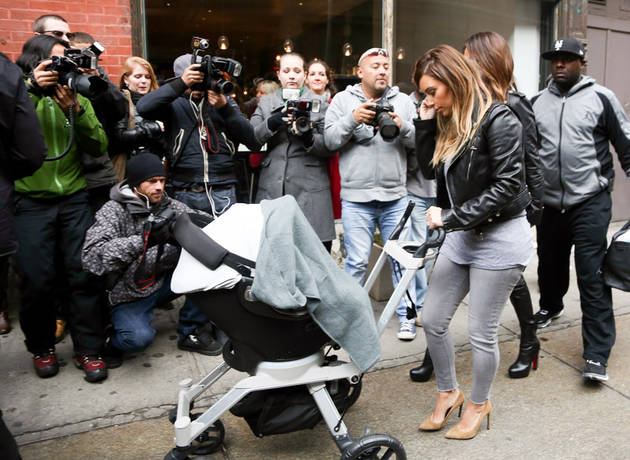
Paparazzi are photographers usually not associated with any press or media house who often take pictures of celebrities while going through their daily routines. In many cases, the celebrities are often caught up in bizarre situations and these photographers then sell these pictures to media houses at high prices, thus exploiting the privacy of an individual solely for monetary profits. They are often a source of humiliation and embarrassment to celebrities.

In USA, the issue of Privacy of celebrities has received widespread attention in the case of Barber v. Times Inc. Paparazzi took photographs of Dorothy Barber while giving birth to a baby boy. Ms Barber was awarded $3000 as damages on account of ‘invasion of her right to privacy’.

How to protect Privacy rights in India?

A long line of jurisprudence flows on issue of Right to Privacy in India. The Supreme Court dealt with many cases that ultimately led to development of right to privacy as a fundamental right guaranteed through the Constitution of India. In the case of M.P Sharma v Satish Chandra, the Supreme court referring to Munn v Illinois held that though our Constitution does not expressly refer to right to privacy, yet it can be traced from “Right To life” enshrined in Article 21 of the constitution and this right is available to all the citizens unless prohibited by constitutional prohibitions. Thus, any celebrity in India can avail right to privacy when he believes his right is infringed by the acts of other people.

Why is protection of Celebrity rights important?

  • Providing certain safeguards to citizens who, through their hard work and endeavours, have become successful in life and can act as an inspiration to the entire society. These provisions can help the people reap benefits of the hard work put in by them in form of authorised licensing and assigning, to derive commercial profits.
  • It ensures that the benefits of having fame are also inherited through such laws as these laws help the immediate family members and coming generations of celebrities to derive benefits.
  • In this age of technological advancement, such laws can prevent situations of “Technological Unemployment” that arise when the work done by a celebrity is sold in an unauthorised manner by making video tapes and selling them in black market.

paparazzi2

In this age marked by the spread of knowledge, education, resources and opportunities, when people often through their capabilities acquire fame and the society starts revering them, it becomes important that this fame does not become a problem of life. Thus, there needs to be enough measures available to such people to protect their privacy and gain rightful benefits of their hard work. While many countries of the world are trying to integrate such rights in their respective framework of law, the lack of any specific legislation in our legal framework is alarming. The skyrocketing endorsement industry provides vast opportunities of exploitation to a large section of the society and so it becomes very important that the law keeps pace with the commercial practices.

[1]http://www.mondaq.com/india/x/22487/Face+Value+Personality+Rights+and+Celebrity+Endorsements

[2] Ibid

[3]Datta A, Celebrity Rights: A legal overview, http:// www.goforthelaw.com/articles/formlawstu/article31. htm

Download Now

Enforceability Of Non-Compete Clauses In India

1

In this Blog Post, Abhiraj Thakur, a student NALSAR University of Law writes about how Indian courts have dealt with the issue of enforceability of non-compete or Restraint of Trade Clause in Contracts. He also highlights the key issues that surround this matter.

Abhiraj

A ‘Restraint of Trade’ clause in a contract that is intended to not allow one party to practice a certain profession, trade or business is only valid under certain conditions of the given and is otherwise void as per Section 27 of The Indian Contract Act, 1872.[1] The ‘Non-Compete’ clauses in certain contracts that are of similar intention lead to the question of enforceability in the Indian courts. Employees that enter into a contract with an employer may agree to neither compete with the employer nor join a competitor during their term of the employment and/or a period after. A contract or part of a contract that is not valid makes the said clause or agreement itself void and it cannot be enforced in court of law. This limits parties to an extent, depending on the contract, in their ability to restrict certain practices of one party that may compete with the other party, despite their agreement.

HLG_Non_Comp_Agreement2Section 27 of the Act that makes a clause of certain intention void and allows it to be valid only when it meets the conditions to be considered as an exception. Courts are obligated to take into consideration the terms of the contract in each individual case and assess the case based on reasonableness, nature of circumstances, and even the nature and relation of the parties in this context. The following interrelated aspects of Non-Compete and Restraint of Trade clauses in employment contracts have been dealt with:

Circumstances under which the clauses are valid – test of reasonableness, situation of employment and fairness to both parties; Protection of employer and right of employee.

  1. Circumstances under which the clauses are valid – test of reasonableness, situation of employment and fairness to both parties; Protection of employer and right of employee.
  1. Enforceability in Indian courts; analysis of different cases and the approaches taken according to the individual circumstances.
  1. Nature of the clauses – ‘Void ab initio’[2], Negative covenant, limited liberty of the parties in this aspect, distinction between Indian law and English law.

The negative non-compete covenants used in agreements can be broadly categorized into term and post term covenants. The legal position in India, in accordance with the Indian Contract Act, 1872, is that the provisions of restriction imposed on employees during employment are reasonable and enforceable while the ones that apply to post employment period are void.[3]Although non-compete clauses for the duration of the term of employment are not regarded as ‘restrictive covenants’ under Indian law, the application of such provision after a party is no longer a part of the organization is not enforceable as it is against the Indian Contract Act.[4]

To validate such non-compete clauses certain reasonable restrictions may be imposed.

iStock_000013592430Large

Distance

Appropriate restrictions on employee that may prohibit from practicing some profession within a reasonable stipulated distance.


Time period/limit

If there is a reasonable time period provided in the clause, then it would be considered under reasonable restrictions.


Trade secrets

The employer may put reasonable restrictions on disclosure of trade secrets.

https://lawsikho.com/course/diploma-advanced-contract-drafting-negotiation-dispute-resolution

Goodwill (Exception)

Article 27 of the Indian Contract Act, 1872, provides an exception for the cases of distribution of goodwill.

‘Injunction’ is used in addition by the Judiciary with the intention of preventing one party from releasing confidential information, using trade secrets, and for the purpose of ‘compensation’.[5]


Indian judiciary and Non-Compete Clauses

In the 1967 case of Niranjan Shankar Golikari v. The Century Spinning And Mfg. Co.[6], it was held by the court that non-compete clauses are not to be considered as ‘restraint of trade’ if they operate during the time period of employment. This was largely due to the apprehension of the employer of the possibility of the employee disclosing confidential information throughout the time of employment.[7]It was held to be valid. The injunction is restricted to time, nature of employment and area. It cannot be thought to be wide, unreasonable or unnecessary.[8]

In the 1967 case of it was held by the court that non-compete clauses are not to be considered as ‘restraint of trade’ if they operate during the time period of employment. This was largely due to the apprehension of the employer of the possibility of the employee disclosing confidential information throughout the time of employment.It was held to be valid. The injunction is restricted to time, nature of employment and area. It cannot be thought to be wide, unreasonable or unnecessary.

In Superintendence Company Of India (P) Ltd v. Krishan Murgai[9], after reference to previous cases, it was assumed that when the object of a contract is restraint of trade, it is prima facie void. Partial restraint or restrictions, qualified or unqualified[10], were also required to fall under the exception[11]. There had not been any test of reasonability. The wording of the agreement would determine whether it was void or not under Section 27. Court found that with adequate proof, restriction can be justified as being reasonable, depending upon the case and contractual agreement.[12] It was held by the apex court that a covenant is void when it restrains the employee from work in the future after termination of his service.[13]The appeal was dismissed.

Judge_and_gavel

In the case of Percept D’Mark (India) Pvt. Ltd v. Zaheer Khan, with regards to the issue of the ‘right of first refusal,’ the Supreme Court found that a restrictive covenant beyond the term of the agreement renders it void and thus unenforceable. It is one of the recent landmarks judgments in which the Supreme Court has upheld the validity of the section.[14] The court also understood that the doctrine of restraint of trade is not limited to employment contracts.[15] In 2009, this was evident in the case of Desiccant Rotors International Pvt Ltd v. Bappaditya Sarkar & Anr. in a conflict between employers protecting themselves from competition and employees working wherever they choose. It was held that livelihood of employees must be given importance and should prevail.[16]

In 1995, the Indian Supreme Court, in M/S Gujarat Bottling Co. Ltd. & Ors. v. The Coca Cola Co. & Ors.,[17] held that a non-disclosure clause shall be applicable for the period of service only. Restraints beyond the period of service would be considered to violate Section 27. Further, the court took into consideration the reason behind the ‘restriction’ in this case, which was just indicated by the obligatory actions by both parties to facilitate sale of goods and ultimately have mutual benefits, as opposed to a one-sided contract. This was observed to not be an explicit restraint of trade, as per the agreements and the circumstances.[18]


One can understand that the section implies that to be valid, an agreement in restraint of trade must be reasonable between the parties and consistent with the interest of the public. The question that arises is what the public policy is and what can be considered as ‘reasonable’ in this context. Under Section 27, “Restraint of trade” is impermissible. Hence, the Indian courts consistently refuse to enforce non-compete clauses in employment contracts after termination, holding them as void and seeing them as against the public policy due to the possibility of depriving one of their fundamental right to earn a living.[19]

Courts have had the presumption that all employees are alike and an individual should not have the ability to injure the company when furthering a lawful profession and restraint on the employee is treated as void. Indian companies classify ‘key’ employees and ‘non-key’ employees. Key employee contracts provide for a non-compete restraint during employment along with either a ‘garden leave’ or a fixed-term clause.[20]

Garden leave

Employees are restrained from competing by being paid full salary during that period. In V.F.S. Global Services Ltd. v. Mr. Suprit Roy[21], the Bombay High Court held that a fully paid three-month ‘garden leave’ agreement with a manager did not renew the employment contract and constituted a ‘restraint of trade’ unenforceable by V.F.S. It was argued that such a clause is prima facie in restraint of trade and hence void as per Section 27. Its aim is to prohibit the employee, after employment, from taking up other employment during the period of three months. The Court held that such a practice is “not fair or proper” and unreasonable restraint of trade.[22] Courts have ruled that an employee can be restricted from joining a competitor during the term during employment period

Employee bond

An employee after training is to work with the company for a certain period. He is liable to pay compensation if he fails to do so.[23]

Certain cases deal with key employees, confidential information and trade secrets. In V.V. Sivaram and others v. FOSECO India Limited, an employee was restrained, after leaving the job, from using secrets and confidential information that was gained during the job, including information about the patent ‘Turbostop’. After leaving under voluntary retirement, injunction in his contract that restrained him from manufacturing and marketing products similar to ‘Turbostop’ was held valid under Section 27.[24]

The issue of enforceability of non-compete obligations on consultants is a contentious one. ‘Lawful professional’ as used in Section 27 is interpreted to include consultants and employees. A consultant who provides services to a client on a fulltime basis could be subject to non-compete obligations.[25]


Role of Constitution/Fundamental Rights

Article 21 and 19 (1) (g) of the Indian Constitution guarantee fundamental right to practice profession and right to livelihood.[26] This right is subject to the authority of law and not unqualified, although such restrictions must be reasonable and in accordance with public interest.

In the case of Pepsi Foods Ltd. & Others v. Bharat Coca-Cola Holdings Pvt. Ltd. and Ors., the enforceability of the negative covenant restraining employees from employment elsewhere was viewed as ‘economic terrorism.’[27] Post-employment restrictions were held to be invalid, in violation of Article 19 (1) (g) of the Constitution.[28]

To Conclude, The validity of non-compete clauses vary from country to country. In this aspect of contract law, the Indian law has parted from the English law. English law is flexible, governed by the judicial precedents in contrast to the rigid Indian law which, in this context, is governed by Section 27 of the Indian Contract Act, 1872. After much evolvement, in the present day English law, general restraint is completely void and partial restrain is permissible so long as it is reasonable, according to the English judges.[29] “Reasonableness” would be the appropriate matter for creating better terms of agreement between employer and employee for their interests in the present day context.[30] The recent trends of the Indian Judiciary leaning towards validating the non-compete clauses to a reasonable and just extent in agreements is an indication of change.”[31]

It is essential that foreign investors in India need to be aware about the current and changing consequences of Section 27, as they organize their employment relationships and incentives with management.

Indian courts in this aspect fail to find a wider and effective scenario as seen in foreign countries. Article 21 and 19 (1) (g) of the Constitution of India guarantees the right to livelihood, making the enforcement of non-compete clauses in India problematic. Even with the difficulties in its effective operation, it is appropriate to acknowledge that the socio- legal, economical & corporate circumstances have changed and developed in India and abroad.


LawSikho has created a telegram group for exchanging legal knowledge, referrals and various opportunities. You can click on this link and join:  

https://t.me/joinchat/J_0YrBa4IBSHdpuTfQO_sA

Follow us on Instagram and subscribe to our YouTube channel for more amazing legal content 


[1]Nilima Bhadbhade, THE INDIAN CONTRACT ACT, 1872 (14 ed.).

[2]Singh, Associates- Shivan & Singh, Non-compete clause in the Indian law of contracts – an insight | Lexology, http://www.lexology.com/library/detail.aspx?g=31ca32d5-6c37-4f0e-a647-869666352b17 (last visited Apr 14, 2016).

[3]LexQuest, Extent of validity of Non-Compete Clause in IndiaLexQuest (2015), http://lexquest.in/extent-validity-non-compete-clause-india/ (last visited Apr 12, 2016).

[4]Non-compete provisions in employment contract: Are they enforceable?, , http://www.businesstoday.in/moneytoday/cover-story/non-compete-provisions-in-employment-contract-validity/story/192009.html (last visited Apr 12, 2016).

[5]Singh, Shivan, and Singh, supra note 3.

[6]Niranjan Shankar Golikari vs The Century Spinning And Mfg. Co. 1967 AIR 1098, 1967 SCR (2) 378, .

[7]LexQuest, supra note 4.

[8]Niranjan Shankar Golikari vs The Century Spinning And Mfg. Co. 1967 AIR 1098, 1967 SCR (2) 378, supra note 7.

[9]Superintendence Company Of India (P) Ltd vs Krishan Murgai  1980 AIR 1717, .

[10]Amartya Bag, Non-compete clauses in Employment Agreements: Are they enforceable in India?iPleaders (2014), http://blog.ipleaders.in/non-compete-clauses-in-employment-agreements-are-they-enforceable-in-india/ (last visited Apr 15, 2016).

[11]Satyavrata Ghosh  v. Kurmee Ram Bangor, [1954] SCR 310, .

[12]Madhub Chander v. Raj Coomar Dass, (1874) Bom.L.R. 76, .

[13]Bag, supra note 11.

[14]Contract Of Service And Restrictive Covenants – Employment and HR – India, , http://www.mondaq.com/india/x/295626/employee+rights+labour+relations/Contract+Of+Service+And+Restrictive+Covenants (last visited Apr 16, 2016).

[15]LexQuest, supra note 4.

[16]Desiccant Rotors International Pvt. Ltd. v. Bappaditya Sarkar & Anr I.A. No.5455/2008, I.A. No.5454/2008 & I.A. No.5453/2008 in  CS(OS) No.337/2008, .

[17]M/S Gujarat Bottling Co.Ltd.& Ors. v. The Coca Cola Co. & Ors. 1995 SCC (5) 545, .

[18]M/S Gujarat Bottling Co.Ltd.& Ors. v. The Coca Cola Co. & Ors. 1995 SCC (5) 545, supra note 18.

[19]admin, Validity of Non-Compete ClauseR & A Associates (2013), http://www.rna-cs.com/validity-of-non-compete-clause/ (last visited Apr 14, 2016).

[20]Non-compete provisions in employment contract: Are they enforceable?,supra note 5.

[21]V.F.S. Global Services Ltd. v. Mr. Suprit Roy 2008 (2) BomCR 446, .

[22]Manupatra Articles, , http://www.manupatrafast.com/articles/PopOpenArticle.aspx?ID=264fdfb0-bb02-416b-9eed-4ca76ca1ee46&txtsearch=Subject:%20Contract (last visited Apr 15, 2016).

[23]Non-Compete and Confidentiality Clauses, Academike (2015), http://www.lawctopus.com/academike/non-compete-and-confidentiality-clauses/ (last visited Apr 16, 2016).

[24]V.V. Sivaram and others v. FOSECO India Limited I.A. No.5455/2008, I.A. No.5454/2008 & I.A. No.5453/2008 in CS(OS) No.337/2008, .

[25]LexQuest, supra note 4.

[26]Constitution of India, (1949).

[27]Pepsi Foods Ltd. & Others v. Bharat Coca-Cola Holdings Pvt. Ltd. and Ors 1999 LLR 1027 (Del.), .

[28]LexQuest, supra note 4.

[29]Bag, supra note 11.

[30]Manupatra Articles, , http://www.manupatrafast.com/articles/PopOpenArticle.aspx?ID=a6cfd61d-d7de-48a7-a093-3f14098affb5&txtsearch=Subject%3A%20Contract (last visited Apr 14, 2016).

[31]Singh, Shivan, and Singh, supra note 3.

Download Now

It Is Always A Woman Who Is Raped and A Man Who Rapes?

0

In this Blog Post, Abhiraj Thakur, a student NALSAR University of Law highlights three major gender issues concerning law against Rape in India. He tries to draw the attention of the readers to an very pertinent question which is, ‘Is a woman always the victim of rape and a man its perpetrator’? 

Abhiraj


It has to be a man to rape a woman.
(Criminal Lawyer) SekharBasu[1]

For centuries we’ve followed the pattern of living in a society which is defined by and has been believed to be comprising of two genders: male and female, predominantly determined by the presence of a specified sex organ. As a result of this, we as a society have assigned a lesser value to all other identities or bodies thought to be different[2] and have given a sanctioned their the probing, prodding, judging and debating like alien objects which we just cannot accept as our own.[3]

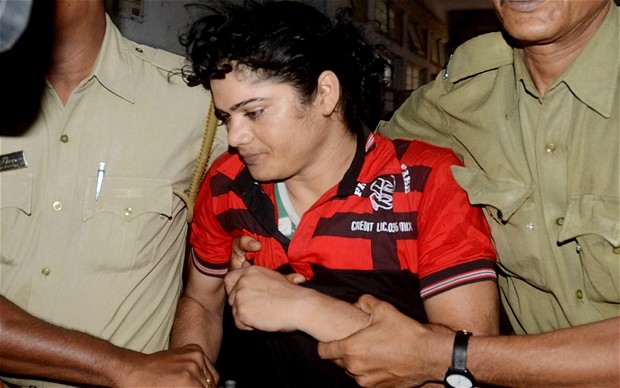
Following the same belief, the laws that govern us too refuse to acknowledge the presence of more identities than just the two (male and female), and hence absolutely fail to comprehend that despite what the first part of S.375 of the Indian Penal Code[4] states, the offence of Rape isn’t solely committed by men on women and goes far beyond just the act of penetration. The recent High Court judgement of the Pinki Pramanik v. State of West Bengal[5] brought about a deep and much required discourse over the definitions of law addressing only two genders and failing to recognize the presence of a third or a fourth or a fifth gender or identity in the society, whether to prosecute or protect. The Pinki Pramanik petition raised an important question in law i.e. whether a person with an intersex anatomy can be accused of the offence of rape within the meaning of S.375 of the Indian Penal Code.

 male-rape-1The sad truth that no one seems to want to talk about or address is that discussion on the issue of rape outside the male-female paradigm is negligible.[6] Whether this stems from a strictly patriarchal societal belief where men are considered supreme and accorded enough power and strength to dominate or whether the fact that they are confined to such a strict box of masculinity that just the idea of an offence of rape against them is considered ridiculous, is not known but the fact remains that the Indian Society and the resulting laws refuse to acknowledge the possibility of rape beyond the male-female paradigm. The first issue that I will bring about in regard to this case is:

The lack of Gender Neutrality in the rape law under the IPC and the positivist approach of the Court in this regard

bodies

In a study of male rape victims, Stephanie Allen explains: “(…) both men and women describe how sexual victimization undermines their sense of autonomy.”

In 1980, Holmstrom and Burgess had reported that although rape always included power, anger and sexuality; sexuality was never the dominant theme. Darke in 1990 linked offender behaviour to an intent to humiliate the victim.[7] The conclusion that most researchers have come to is that rape is used to express anger or power and sexual satisfaction, though a trigger, cannot and is not the only factor resulting in the crime. Upon looking at the psychological reasons behind the commission of rape it seems almost stupid to imagine that only men can inflict this on women. It is true that a sense of dominance is mostly associated with men but the important issue to be noted here is that where rape involves the infliction of power and anger and sexuality, the burden of who can commit the crime cannot be confined to just males. We speak of this because it’s extremely important to define sexual aggression and sexual assault as something that includes a lot more than just sexual satisfaction. Sexual aggression, for this purpose, needs to be defined as “behaviour with the intention of making another person engage in sexual activity despite his or her unwillingness to do so”[8]

Section 375 of the Indian Penal Code[9] defines rape as follows:

“Rape- A man is said to commit ‘rape’ if he:”

And then the section goes on to define which acts specifically will be considered as rape and how the element of consent will be determined.

As evident, the law clearly makes it concrete that rape cannot be committed by anybody else who is not a man, which is problematic for two reasons:

  1. It completely ignores the possibility of males falling victims to the crime
  2. It also gives leeway to people who don’t fall under this definition of the identity of a man, to get away with a crime that clearly violates another individual.

The drawback of keeping the element of consent in sexual assault cases as secondary

gotconsenttext

Though the law clearly states the requirement of consent to determine the occurrence of rape but we see in this particular case that the element of consent was taken to be secondary. The court justified the presence of consent on the grounds that as the petitioner and the complainant were cohabiting in a manner where the complainant’s daughter would address the petitioner as papa, the consent was implied anyhow and hence the claims of sexual assault cannot stand to a large degree. For a Court at such a high stature to take such a stance is extremely problematic as the element of consent needs to be put on a much higher pedestal. It needs to be established clearly that consent for sex is required even in a consensual relationship and no matter how many “yeses” preceded it, a “no” is and should always be a “no”[10], also the law and the courts need to recognize and factor in this idea inherently as consent cannot be something that can be taken to be implied since situations can differ in every case.

The dependence of the law and the judiciary on predetermined identity constructs

Since the possibility of sexual assault on men as well as homosexual transgender and transsexual rape, is a reality, the provisions have to be cognizant of the same.” [11]

As Section 375 of the IPC establishes that the Indian Law and courts only recognize rape as an act inflicted by a man on a woman, and nothing else committed by anybody else who doesn’t fall under the defined identities can classify as rape. The damage that such pre-defined identity constructs cause to the society is extremely harsh. As a result of having only two identities that we as a society recognize and approve of, we negate and ignore all other bodies and people who cannot identify with one particular identity and hence are left alienated and abandoned. What’s even worse is that we only realize that these are unaddressed issues when their lives or choices start affecting ours, as can be seen in this case. The only reason it was even possible to bring up a discourse on the problem of having laws that recognize and accommodate only two identities was the fact that an inter-sex person came under the spotlight for having been accused of a crime. The acquittal or conviction isn’t even under question here because what we really need to question first is how can we call it a society when numerous other identities are left to fend for themselves because no one and no law is ready to recognize them. We need to and have to stop thinking and classifying gender as two categories or two identities when there is a broader spectrum.[12]

Pinki_0_0

There were two main questions that arose from this case filed against Pinki, one was whether she had raped and tortured her partner and second was the question of whether she is a man. The entire discourse that went about on this issue kept running, keeping both these questions mutually in-exclusive to each other. What needed to be noted and kept in mind was that her absolution from one did not necessarily imply absolution from the other, but the law and the court saw contrary to it.

We assume that our bodies are naturally male or female. We don’t bother leaving any space for accommodation of bodies or identities that are slightly or could be different because the way we see it, different is wrong, different is lower than the established norms and identities, and hence doesn’t and shouldn’t matter as much.

[1]http://timesofindia.indiatimes.com/city/kolkata/Lawyers-question-rape-slur-on-former-athlete-Pinki-Pramanik/articleshow/17210809.cms

[2]At times graded by sexuality, sexual preference, caste, religion; but for the purposes of this paper the segregation is going to be looked at by the parameters of sexuality, sexual preference and body types.

[3]GauthamBhan,The right to our bodies, TOI-India Times, July 9, 2012, available at http://timesofindia.indiatimes.com/home/opinion/edit-page/The-right-to-our-bodies/articleshow/14749827.cms?referral=PM

[4]S.375 of IPC – Rape- A man is said to commit ‘rape’ if he-
a) penetrates his penis, to any extent, into the vagina, mouth or any other person; or b) inserts, to any extent, any object or a part of the body, not being the penis, into the vagina, the urethra or anus of a woman or makes her to do so with him or any other person; or c) manipulates any part of the body of a woman so as to cause penetration into the vagina, urethra, anus or any part of body of such woman or makes her to do so with him or any other person; or d) applies his mouth to the vagina, anus, urethra of a woman or makes her to do so with him or any other person

[5]The complainant came to reside along with her husband and child in the same building as of the petitioner[5] in 2009. The complaint was filed three years later in June 2012. During this period of three years the complainant claims to have grown very close to the petitioner and of even have cohabited with her after her husband left her and her child. During this stage of living with the petitioner at the latter’s house, the complainant realized that the petitioner although introducing herself as a woman is not actually a woman. The complainant alleged that taking advantage of her helpless situation the petitioner engaged in repeated physical relations with her and the reason why she remained quiet about all this while was because the petitioner had promised her that she would marry her. The complainant further stated that while promising to marry her the petitioner cohabited with her and she believing in the promises started living with her as her wife, she alleged that the petitioner indulged in sexual assault.

[6]JoshitaJothi and Keshavdev J.S., Rethinking Rape: Should The Law Still Confine To The Paradigm?, 2(1) NLUJ Law Review 56 (2014), available at http://www.nlujodhpur.ac.in/downloads/lawreview/Final_Rethinking%20Rape.pdf (last visited 10-09-2015, 22:15)

[7]Marita P. McCabe and Michele Wauchope, Behavioural Characteristics of Rapists, 11(3) JOURNAL OF SEXUAL AGGRESSION 235 (2005), available at http://dro.deakin.edu.au/eserv/DU:30003215/mccabe-behaviouralcharacterics-2005.pdf (last visited 10-09-2015, 22:36)

[8] Ibid note 6.

[9] Indian Penal Code 1860, Section 375.

[10]VrindaMarwah, Gender bending, gender testing: reflections on the PinkiPramanik case, Indian Journal of Medical Ethics Vol X No 1 January-March 2013, available at http://www.issuesinmedicalethics.org/index.php/ijme/article/view/74 (last accessed 11-09-2015, 00:29am)

[11] Justice J.S.Verma, Justice Leila Seth and GopalSubramanium, Report of the Committee on Amendments to Criminal Law

[12] Ibid note 9

Download Now

Analysis of Judicial Interpretation of Section 295A IPC

1

In this blog post, Abhiraj Thakur, a student at NALSAR University of Law, Hyderabad, critically analyses the different judicial interpretations of Section 295A of the Indian Penal Code. 

Abhiraj

‘He who has denied the providence of Almighty Christ must be punished’[1]

Since antiquity, religion as acted as one of the most powerful binding force of masses and naturally the people who have dared to open their mouths against it have faced serious consequences. Colloquially blasphemy is regarded as contempt of god or hurting religious feelings of a person or group of persons. Many countries of the world have blasphemy laws to regulate the practice as it creates mass public disturbance and often religious violence.

ipcSection 295A occupies a distinct space in the Indian Penal Code and has long been regarded as India’s answer to blasphemy laws prevalent in other criminal statutes. It has been recurrently used in recent times and has generated a wide-ranging spectrum of reactions from the public and the civil society, though such laws should seemingly assume a lesser role in a nation that aims to separate State and religion.

Despite a number of difficulties associated with interpreting Section 295A, the law could be much clearer than it currently is. In order to attract the mischief of the provision of Section 295A, the following ingredients are to be satisfied, viz. a person,

  1. by written words,
  2. with deliberate and malicious intention,
  3. of outraging the religious feelings,
  4. of any class of citizens of India,
  5. Insults or attempts to insult the religion or the religious beliefs of that class.

In other words, (1) the intention has to be deliberate and malicious both and (2) for outraging the religious feelings (3) of a class of citizens of India (4) in order to insult or attempt to insult the religion or religious belief of that class i.e. in India (5) by written words.[2]

Judiciary and Blasphemy

blind-justicePrior to Section 295A, a similar section was already present in colonial India’s law books. The government used to rely solely upon the Section 153A of the IPC. The earliest incident that made judiciary ponder over blasphemy law provisions in the IPC happened during a period of unrest in Punjab in the 1920’s.

A person named Rajpal published an anonymous pamphlet called ‘Rangeela Rasool’ (Colourful prophet). The pamphlet made derogatory and scurrilous remarks about the personal life of Prophet Muhammad and soon led to widespread unrest amongst Indian Muslims after gaining sufficient attention.[3]  Since then judiciary has dealt at length with Section 295A, the much controversial issues surrounding freedom of speech and expression and blasphemy laws can be understood in light of the interpretation of the section by various courts in the country.

When to Punish?

handcuffgavel_istockphoto_thinkstock_8Keeping the worthy intentions of the Assembly in mind, the problems with the statute become all the more apparent. A particularly liberal stream of thought holds that the presence of sections such as 295A in the Indian Penal Code only mirrors the anxiety of the Indian Government to maintain accord and harmony in a multi-religious and multicultural country. However, the lines between maintaining security and creating a draconic law with incommensurate criminal punishment are quite thin.

The constitutionality of Section 295A was questioned in the case of Ramji Lal Mody, where a five-member bench ultimately upheld the provision.[4]

The justification for that decision was that the statute only punishes aggravated forms of insult to religion perpetrated with deliberate and malicious intention. However, the words ‘deliberate and malicious’ were inserted to ensure that the section would be ‘both comprehensive and at the same time of not too wide an application’.[5] This ambiguity of application is a result of judicial interpretation of the section and it has been unfortunate that it has led to a great number of instances where artists and writers have been prosecuted in the name of blasphemy.

Faults in Standard for Applying Exceptions

Exception 1

The principle that legitimate scholarly research and most cases of genuine artistic expression are exempt from this provision has long been held by many as the Sine qua non that allows 295A to be compatible with the importance of freedom of expression in a democracy.[6] Somewhat bizarrely, the Supreme Court has applied such tests in cases that don’t actually warrant it. In Sri Baragur Ramachandrappa v State of Karnataka,[7] a case that involved the ban of a Kannada novel that fictionalised the life of the 12th century Saint Basaveshwara. The author had suggested that Saint Basaveshwara’s nephew was born out of wedlock.

The followers of Basaveshwara ultimately moved the State to ban the book, which duly obliged. Later, the Supreme Court upheld the decision after carefully going over substantial research done by Kannada scholars and local beliefs. It concluded that the author had deliberately tried to spin and introduce a particularly ‘sordid and puerile story’.[8] What the Court had done in effect was to imply that even a writer of fiction had to somehow straddle precepts of scholarly research when writing a humanistic work, a piece of reasoning that is unconvincing and illogical and one that the Court would do well to move away from in the future.[9]

Exception 2

Consequently, the Courts have delved into creating another system of check for 295A, which has been closely borrowed from 153A, one that negates the ‘truth’ test as mentioned above. In State of Maharashtra v Sangharaj Damodar Rupawate,[10] a case about the controversy which surrounded James Laine’s book, Shivaji: A Hindu King in Islamic India.

The incident led to widespread protests in Maharashtra. The Supreme Court used the occurrences as grounds for declaring that the book was responsible for creating feelings of enmity between classes. More interestingly, however, they also held that if any piece of work led to such incidents, even the fact that it contains historical truth is not an acceptable defence.[11]

Causal Connection and Punishment

In Ramji Lal Modi, it was contended that to ensure that the law is a reasonable restriction upon free speech, there should be a proximate connection between the impugned speech and the possibility of public disorder that may or may not arise from it. It is a commonly accepted precept in criminal law to identify the conditions under which the result may be attributed to the accused.[12] The Supreme Court, however, rejected this proposition. 3 years later, however, the Supreme Court in Superintendent, Central Prison, Fatehgarh v Ram Manohar Lohia, held that for a case to stand under 295A, there must be a proximate relation between the proscribed speech and public disorder, and not a ‘far-fetched, remote or fanciful connection’.[13]

Later, the development of further legal precedent in this regard has led to the creation of a very high threshold for the state to fulfil.

[divider]

[1] Blackstone’s Commentary on Common Law

[2] Sujato Bhadra v State of West Bengal, (2005 CriLJ 368), Para 5.1

[3] Neeti Nair, Beyond the “communal” 1920s: the problem of intention, legislative pragmatism, and the making of Section 295A of the Indian Penal Code’, The Indian Economic and Social History Review, Vol. 50, No. 3, September 2013, 317-340

[4] Ramji Lal Modi v State of UP, (1957) 1 SCR 860

[5] Select Committee Report, The Gazette of India, 17 September 1927, p. 252

[6] Nair (2013 : 331)

[7] (2007) SCC 11

[8] Baragur Chandrappa v State of Karnataka, (2007) 5 SCC 11 Para 22

[9] Bhatia (2016: 143)

[10] State of Maharashtra v Sangharaj Damodar Rupawate, (2010) 7 SCC 398

[11] Rupawate, Para 25

[12] Ratanlal and Dhirajlal’s Indian Penal Code, 28th ed., Justice Y.V Chandrachud and V.R Manohar ed. (New Delhi: Wadhwa and Company Law Publishers, 1997

[13] (1960) 2 S.C.R. 821

Download Now

Bank Account For Trusts – How They’re Set Up

0

In this blog post, Abhiraj Thakur, a student of NALSAR University of Law Hyderabad gives a brief idea about procedure to be followed by trusts for opening bank accounts and a few precautions that need to be taken to ensure efficient banking with trusts in India.

Abhiraj

What is a Trust?


In simple words, a trust is a relationship whereby property is held by one party for the benefit of another. The person who decides to give his property to another in trust is called a settlor and to whom the property is transferred trustee. So a trust is made by a settlor, who exchanges property to a trustee. The trustee is subsequently obligated to holds that property for the specific purpose of the beneficiaries. A proprietor of the property has a heap of rights over it. Thus when the property is exchanged by him, that heap of rights is exchanged as well, isolating the property’s lawful possession and control from its evenhanded possession and advantages. Trusts are framed for different reasons, sometimes for assessment shirking reasons or to control the property. It has its advantages in circumstances when the settlor goes missing, or at a later purpose of time becomes a maniac, debilitated, or passes on. Trusts are frequently created in wills, defining how money and property will be handled by children or other beneficiaries.

The bundle of rights that are transferred includes ‘legal title’ to the trust property; a trustee is obligated by law to act for the good of the beneficiaries. The trustee may be compensated and have expenses reimbursed, but otherwise, must turn over all profits from the trust properties. Trustees who violate this fiduciary duty are said to indulge in ‘self-dealing’. Under the laws governing trusts in most of the countries, self-dealing is punishable. Courts have reversed self-dealing actions, ordered profits to be returned, and imposed other sanctions on the culprits.


Who can be a Trustee?

Trustee_LgHP_011

The trustee might be an individual, an organization or an open body. There might be a solitary trustee or numerous co-trustees. The trust is represented by the terms under which it was made. In many cases, this requires a legally binding trust assertion or deed.

Opening of a Bank Accounts for Trusts

AA000085

The formation and operation of trusts in India are governed by the Indian Trusts Act of 1882. As per Section 3 of Indian Contract Act, 1882 “A trust is a commitment attached to the responsibility for, and emerging out of a trust in and acknowledged by the proprietor, or proclaimed and acknowledged by him, for the advantage of another, or of another and the proprietor.”


Step 1: Verification by State Public Trust

Bank opens trust accounts for good parties. A trust can be public or private. All public trusts are required to be registered with the Charity Commissioner of the respective state under Public Trust Act. A charity commissioner has various duties to perform before the bank opens the account for a trust. Before registering an open trust, the Charity Commissioner makes important inquiries with regards to the trust, its trustees, the method of progression of trusteeship and so on. After appropriate inquiries, it makes sections in the register, which are definitive and are official for all concerned. Banks open trust accounts after taking all possible precautionary measures.

Documents Needed

While opening account for a trust, the bank obtains the following documents from the trust:

  1. A duplicate of the constitution of the trust
  2. The trust deed, if available
  3. Testament of enrolment and an affirmed duplicate of the passage of the general population trust’s register
  4. Open Trust Register Number.
  5. A rundown of the present trustees and the power designating them as trustees.
  6. The vital determination went by the trustees for opening the record with the bank.
  7. Attested duplicate of the determination marked by every one of the trustees on the behaviour of the record. For Trusts which have no constitution, instruments of trust or plan is required.

While opening records of such trusts, the bank receives after reports

  • A testament of enrolment issued by the workplace of the Deputy/Assistant Charity Commissioner (Where it is so conceivable, under the relative law).
  • A guaranteed duplicate of the most recent passage in the general population trusts registers (Public Trust Registration), which demonstrates the name of the trust, the Public Trust enrolment No. of the Trust, at which it is enlisted and name/s of the trustee/s.
  • A presentation and a repayment from are gotten every one of the trustees.
  • A determination went by the trustees identifying with the opening of the record

Step 2: Operational Precautions after the opening of Account

Trust accounts must be opened and led entirely as per the terms of the trust deed. Every one of the trustees is required to act jointly with the persons so approved by the enrolled trust deed. Trustees have no forces to delegate their power to one or more unless the force of appointment is approved by the trust deed or is as per the bearings of the court on an application made by the trustees.

Trustees have no inferred power to acquire or vow trust property unless such a provision is incorporated in the trust deed.


Death of a trustee

On the demise of one of the trustees, the trust property goes to alternate trustees according to the procurement of the trust deed. On the off chance that the perished person was the sole trustee, his agent has no privilege to recoup the trust cash. The agent, be that as it may, has the privilege to designate another trustee, gave the expired trustee has, in his will, particularly approved such an arrangement.


Opening of Bank Accounts of Religious and Charitable Trusts

best-ways-to-donate-to-charity

In India, trusts are regularly set up for social causes and affirmed by the Income Tax Department. The get the exemption from an installment of duty and the benefactors to such trusts can deduct the measure of gift to the trust from their assessable wage. The lawful structure in India identifies exercises including “help to the poor, training, restorative alleviation, safeguarding landmarks and environment and the headway of some other object of overall population utility” as beneficial purposes. Organizations shaped under Section 8 of the Companies Act, 2013 for advancing philanthropy get advantages under law including exclusion from different procedural procurements of the Companies Act, either completely or to some extent, and are additionally qualified for various other exceptions that the Central Government may accord through its requests.

 

Step 1: Verification by Regional Charity Commissioner

In order to manage open religious and altruistic trusts, some States Acts have been passed. These beneficent trusts are enlisted with the Charity Commissioner or the Assistant Charity Commissioner of the concerned district. A Certificate of enlistment is issued to this trust by the powers. For the most part, these trusts don’t have an appropriately composed trust deed. Bank opens a record of religious and beneficent trusts on benefits and on being fulfilled with regard to the respectability of the trustees and their status.


Documents needed

While opening an account, the bank obtains the following documents in addition to the form for opening the account which has to be duly signed by the trustees.

  • A resolution specifying the name of the bank, passed in a proper meeting held by all the trustees.
  • Indemnity signed by all the trustees, indemnifying the bank for having allowed operations on the trust account.


Step 2: Operational Precautions to be after opening the Account

78457537

  • Banks don’t allow operations in the record by one individual.
  • A reasonable number of individuals are required for opening and working of the record. If the quantity of trustees is larger, then the number of individuals working the record must be large. Bank occasionally acquires affirmation of parity in the record, marked by every one of the trustees.

Wherever conceivable, request or heading from the Charity Commissioner is acquired, allowing the bank to permit operations on the trust account in the way affirmed by the trustees.

These are the procedures and few precautions that are taken to ensure efficient banking with trusts in India. The relationship that is formed through trust is that of fiduciary nature; that is based on utmost faith and goodwill of the parties. These banking procedures try to ensure fairness in monetary transactions of trusts. However, at times, we may come across cases of fraud and cheating which tells us there are a few loopholes to be plugged.

Download Now

Critical Analysis of India’s Civil Nuclear Liability Law

0

In this blog post, Abhiraj Thakur, a student at NALSAR University of Law, Hyderabad, writes about some of the major issues that surround the laws governing civil nuclear liability in India.

Abhiraj

 
Over the course of history, Man has depended on various sources for energy. In ancient times, he used fire woods from forests to warm and protect himself and with the discovery of fossil fuels came a revolution in energy generation. Today, most of our power needs are fulfilled by fossil fuels derived from mines and ocean beds across the world. The problem with them being of non-renewable nature, the world is constantly looking for new energy sources.

download (5)Nuclear power is one such alternative to conventional sources of energy. Working on the mechanism of nuclear fusion nuclear reactors apart of being used for development of weapons is being widely used all over the world to generate power.
Nuclear fusion can be simply described as when two atoms are combined or fused together, it subsequently releases energy, this energy can be harnessed and utilised for a wide variety of purposes.

With minimal greenhouse emissions and greater power generation capacity than the fossil fuels, nuclear energy is gaining a foothold in many countries of the world. However, the issue of power generation through nuclear technology has for a long time been marred with controversies, the biggest of them being the deadly nature of the radiations that can emerge in case of accidents or other mishaps. The legal issues that surround this fact are of liability in case of such accidents. Today, many countries along with India have various laws to determine civil nuclear liability. There have been such instances in the past and so the issue holds much importance.

Legal Framework in India

22736556_mlThe issue of civil liability in case of nuclear disasters hovered for a long time in policy circles of India but for the first time actively came up in 2006 when India put forward its plan to have civil nuclear agreement with The United States. The agreement was finally achieved in 2008 popularly referred to as the Indo-US Civil Nuclear Agreement. One of the terms of the agreement mandated for civil liability law with regard to nuclear incidents in India. As a result, about 2 years later the infamous The Civil Liability for Nuclear Damage Act of 2010 (hereafter referred to as ‘The Act’) was passed by the Parliament. The Act by far is the most comprehensive legislation that inter alia deals with compensation for the victims of such disasters.

Nature of Liability under the Act

The Doctrine of Strict Liability stands at the heart of the Act. Taking cognizance of the earlier incidents of man-made disasters such as the Bhopal gas tragedy, the parliament deemed strict liability to be better for the substantive purpose of the Act i.e. enable victims to get compensation. The Act imposes strict liability upon the operator of the plant[1], only in cases of ‘Act of God’ or force majeure events the government can be obligated to bear the costs.[2]

cheap-business-liability-insuranceSince its very inception, the Act has been subject to much controversy over the problems that arise due to the provisions for liability enumerated under the act. Some of the pertinent issues that seek attention are:

Monetary Capping on compensation: The act fixes the liability to a certain monetary limit. In the case of operators, the limit is Rupees 15 billion and for the Government the cap is fixed to 300 million dollars of Special Drawing Rights of the IMF[3] which as per the current rates comes out to be roughly 420 million US Dollars. The biggest problem with such capping is the situations when the damage exceeds the limit. The Act does not expressly provide for any provision with respect to damages over the limit which makes the implementation arbitrary in cases of serious nuclear losses.

Limited Private Players: Another issue that surrounds the liability is the operation of such nuclear plants. In India, these plants are state owned and operated through NPCIL[4] and so ultimately the responsibility for such disasters will be borne by common Tax-payers. The operator also being a state entity in India makes the monetary burden of compensation fall on the common man. Opening the area to private players has its own advantages and disadvantages that need to be explored.

Neglect of the Additional Costs: The incidents in the past such as the Fukushima and Chernobyl have shown that apart from granting compensation there are many additional costs which the party at fault needs to bear. These costs include the cost of cleaning up and safe disposal of the nuclear waste. These activities demand a lot of money along with high level of caution and care. The Act does not provide any provision for these additional costs which can prove problematic.

Liability of Suppliers

By the virtue of Section 17 of the Act an operator has the right to recourse against the supplier. Such a right finds its basis in the contract between the operator and his supplier, who is an employee. If the nuclear accident can be attributed to the fault of the supplier due to below standard services and other defects etc. the supplier can be held liable under the contract law. The suppliers claim the act to be unfair to them, few contentions are:

Uncapped Indemnities: These contracts between the operator and supplier are fixed at the value of the contract, or at a certain proportion of the contract value. As per the contract law such contracts are of indemnity and so in the case of any mishap, the supplier would need to indemnify the operator if the accident happened due to his fault. These indemnities are unfixed under the Act and so make the position of the suppliers vulnerable.

 No Scope for bargain: As the extent of indemnifying is unfixed for the supplier, the suppliers in the initial years tried to negotiate with the operator on the amount of money and often try to reach an agreement. The government of India considered such activity to be unfair and outside the purview of the Act and so was enacted Civil Liability for Nuclear Damage Rules of 2011. The Suppliers widely protested this step as being repressive.

Liability under Tort Law

download (1)The section which when harmoniously interpreted can allow compensation under the tort law is section 46. It talks about that nothing in the Act or any other law in force in the country can prevent a person from bringing proceedings against the operator which can be brought under any law apart from this act. Prima facie, the section seems to permit claims under tort law. However few issues that need to be dealt to make the law more efficient are:

Ambiguity of Economic Loss: The question that raises doubts on the very intention of the act is that whether claims in tort law for economic loss can be sustained under this section. The statute is silent on the matter and the question still remains to be solved.

Claim against supplier: Section 46 only talks about claims against operator and so the liability of the suppliers under tort law remains an area of concern. The suppliers seem to be effectively insulated from liability under tort by the section. The contention has been subject to much debate in the parliament. An amendment was tried to bring suppliers as well under the ambit of the section but it failed. The question now comes fundamentally to the intention of the statute, the courts have not dealt with the validity of Section 46 and so any comment on it is futile.


Some Other Issues

Foreign Jurisdiction: India takes supplies from many foreign countries when it comes to nuclear energy. These suppliers are foreign entities to Indian Law, so a burning question that arises is regarding the claims against these foreign suppliers. Can Indian victims move to foreign courts to claim compensation under the Act?[5] The view taken by the Ministry of External affairs seems to be in negative. The issue of jurisdiction arises in such cases. Many people have time and again called for an extra-territorial application of the Act.

Position in International Law: The Convention for Supplementary Compensation for Nuclear Damage called CSCND was adopted by UN that deals with jurisdiction issues in cases of nuclear damage. Article 13 of the convention states that any proceedings concerning claim for compensation from nuclear damage can be instituted only in the courts which have jurisdiction over the area of incident. Thus, it seems that a foreign court would not entertain claims of Indian victims.

 

Thus, we see though India is at par with other nuclear capable countries when it comes to having a comprehensive law dealing with damages for nuclear disasters but there are many loopholes to be plucked. The law in our country must present a more effective mechanism when it comes to dealing with issues enumerated above. The Act currently in force makes few sections of the society much more vulnerable to compensate than the other, which must not happen. Along with solving the ambiguities present an attempt must be made to have a fine balance of the aspirations of suppliers, the state and the civil society.


[divider] 

[1] Section 4 of the Act

[2] Section 5 of the Act

[3] International Monetary Fund

[4] Nuclear Power Corporation of India

[5] http://www.mea.gov.in/press releases.htm?dtl/24766/Frequently_Asked_Questions_and_Answers_on_Civil_Liability_for_Nuclear_Damage_Act_2010_and_related_issues, Last Accessed 24th May 2016

Download Now
logo
FREE & ONLINE 3-Day Bootcamp (LIVE only) on

How Can Experienced Professionals Become Independent Directors

calender
28th, 29th Mar, 2026, 2 - 5pm (IST) &
30th Mar, 2026, 7 - 10pm (IST).
Bootcamp starting in
Days
HRS
MIN
SEC
Abhyuday AgarwalCOO & CO-Founder, LawSikho

Register now

Abhyuday AgarwalCOO & CO-Founder, LawSikho