“Nothing ever becomes reality unless it is experienced.” – John Keats
At iPleaders, our mission is to create extraordinary business lawyers and business leaders with remarkable business skills, regulatory wisdom, strategic prowess and profound business and legal knowledge. To fulfil that mission, we have introduced some amazing things in the last year for our current students and even the alumni – like the iPleaders club, new modules, success stories, enhanced mentorship and placement support and a lot of other things. Our students have achieved amazing things and have thanked the course for what they got out of it.
However, we have been able to make a difference in the lives of only a handful of people so far if you consider the size of our ambition. Our mission is to make a difference to the quality of business lawyering and strategic business leadership in the country and then the world. What if we could empower lawyers and business lawyers by thousands and make difference to the entire India economy? How many extraordinary lawyers will it take to transform the reputation of lawyers in India? How many extraordinary business leaders will it take to lift 100 crore people out of poverty? That is what we want to do, and your help to that end is crucial.
iPleaders hails you all to share with the world the experience you have had with respect to shaping your career and how the NUJS business law diploma course has contributed in that. This is an opportunity to be the inspiration to thousands of young minds by sharing your own story. We need you to share how you used the course and how you contributed through your expertise.
All you need to do is take some time to write down your experience in a few words and share the same on the iPleaders blog. To make it worth your while, there are three prizes for the best shares: 15,000 for the most popular success story, 10,000 for the 2nd most popular success story and INR 5000 for the 3rd most popular success story.
Rules
The Rules of the competition are pretty simple:
Entries must be by current students or alumni of NUJS Business Law Diploma.
All entries must be emailed to us latest by 15 March, 2016.
The write up can be of 700-1500 words.
The entry must be accompanied contact details of the author along with his/her photograph.
The write up that you would send should answer the following questions:
Who are you? What do you do now in life?
What were you doing at the time when you joined the course?
What did you expect from the course? What made you join it?
How did the course make a difference in your career/ life/ skill level?
What do you want to do in your future that inspires you? Will the course help you there? How will it help?
or fill up this form http://goo.gl/forms/m8ddkXHDFb
How will we decide a winner?
All the entries will be placed before an expert panel comprising of top industry players and academicians. They will judge the entries by the value of how inspiring the story is. Make it a point of share your wildest dreams and biggest success.
If there are less than 50 entries, we may cancel the competition. You can read the terms and conditions for participating in this competition by clicking this link.
The best, second best and third best entries will win a sum of Rs. 15,000/-, 10000/- and 5000/- respectively.
So let the world know of your dreams and how you are making the world a better place. We look forward to hear from you! Email your entry to [email protected].
In this blogpost, Vernita Jain, Student, National Law Institute University, Bhopal, writes about the role women directors in a company and steps taken by the government to ensure the presence of women in Board of Directors in every company.
The Constitution of India under article 14 and 15 coupled with its preamble talks about equality and no discrimination on the grounds of sex. Gender inequalities in workplace are easily noticeable, where the top most positions are always reserved for men. But with the changing scenario both the society and the government had started realizing the importance of women, with the government making various laws to empower women.
One such step taken by the government is the presence of at least one women in the class of board of directors. This provision has been introduced under Companies Act, 2013. The second proviso to section 149 (1) of the act makes it mandatory the every listed company shall appoint at least one woman director within one year from the commencement of the second proviso to Section 149(1) of the Act. It further says that any public company having paid up share capital of Rs. 100 crores or more or turnover of Rs. 300 crore or more as on the last date of latest audited financial statements shall also appoint at least one woman director within 1 year from the commencement of the second proviso to Section 149(1) of the Act.
In order to comply with this provision, companies have been provided a period of six months from the date of company’s incorporation. The existing companies are required to comply with this law within one year and new companies incorporated under the new companies act is required to comply within 6 months from the date of its incorporation. In the case of any vacancy in the seat of women director, it shall be filled up within a period of 3 months by the board of or not later than immediate next board meeting, whichever is later.
In this case, India has followed the line of Norway, France, Italy, Spain, and Belgium.
Is it a step towards empowerment of women in the corporate world?
This step by the government is a good start for women empowerment. There are many talented women who have the capability to add value to the boards, with the coming up of this law, women who are deserving will get a chance to prove their talent and efficiency.
In India, only 4% of the directors in public listed companies are women. This low representation in the top positions is due to many reasons. However, some have termed these to as the crises of talent retention.
According to latest Catalyst Bottom Line Report, companies having women in the board of director result in financial performance higher as compared to others. Further, the report also showed that the company having three or more number of directors as women have an above average performance. Female as a directors have greatest impetus for change in times of good performance as the companies deal with risk efficiently.
This law would provide great benefits. But because this provision does not provide the exact qualifications and the category from which women director can be taken, it may result in companies recruiting the women directors from among the promoters friends and family.
Contribution in corporate social responsibility:
If we talk about corporate social responsibility, the amount of contribution that a women director can give is great for their organization. From taking the initiative for CSR, choosing the priorities and choosing a work plan for the management to have a close look at the targets achieved, all would be done efficiently by the women.
In the report by Catalyst and Harvard Business School, companies having women directors tend to contribute more towards the funds. This proves that having women leaders in the top position have a higher level of contribution in case of CSR.
Women directors could also be given the responsibility of recruitment and reviewing human resource policy in order to ensure a better workplace environment both for women and men. Women can result in the company towards having strong and better human-focussed operating plans that would contribute to the sustainability of all business operations and the health and welfare of their employees.
Various survey results have proved that boards and managements with gender diversity have experienced enhanced corporate performance, higher return on equity, return on sales and return on capital employed.
This regulation is only an initial push, but the actual implementation would depend on the whole-hearted acceptance of the role of women directors by promoters and shareholders in general. This should not be seen as compliance, but a necessity.
Conclusion
Though such law can certainly result in increasing the number of women in the top positions of a company, but because of the very reason that it does not have proper guidelines for its implementation its benefits will be short lived if not supervised by the government.
It is important that women should not be accepted just because they are women, but for their skills. Only a woman who is qualified and is capable enough for that should be appointed as a director of the boards. A woman’s contribution in the company will definitely reach to a new level if the methods of choosing directors are right.
This step by the government will definitely help women continue to build their presence in the corporate world.
Many companies have programs to train women, both inside and outside the organization, to train them for the post of board members. Experts said that these initiatives by the company had resulted in encouraging a lot of women to come up for such positions.
This phenomenon has spread throughout the world, and a number of countries have made provisions mandating gender quotas in boardrooms. The latest country to announce such a provision is Germany, which made it mandatory for the companies to fill at least 30% of the supervisory positions with women.
According to a survey by MSCI in the year 2014, boards having gender diversity over and above the regulatory mandates or market norms had fewer instances of governance-related scandals such as bribery, corruption and fraud.
In this blogpost, Vernita Jain, Student, National Law Institute University, Bhopal writes about what is an FIR, the purpose of it, the manner in which it can be filed and who can file an FIR.
First Information Report, FIR is one of the most important constituent of the case. It is the nothing, but a mere statement of a person regarding a particular crime, which is given to the police at the first in the point of time.
Recording all the minute details and setting the case into the motion is the main function of filing FIR.[1] S. 154 of the CrP.C is the provision dealing with FIR. The report that one files under S. 154 is called an FIR. However, one thing that is to be kept in mind while filing an FIR is that it has to be filed regarding cognizable offences. This is generally filed by the complainant or anyone on his behalf, but in certain cases, it can be filled by the accused too.
However, the Criminal Procedure Code doesn’t define ‘FIR’ as a term.
To know more about the scope of how to file an FIR – online and offline in brief, please refer to the video below:
EVIDENTIARY VALUE OF FIR:
A person or the maker of the statement may give many statements, but it is not necessary that every statement of such person can be treated as an FIR. For a statement to constitute the first information report, it is very necessary that two conditions should be fulfilled:
That the statement should be accusation that it must be in nature of a complaint, or it should be a statement that gives some information regarding a crime.
It must relate to a cognizable offence on the face of it[2].
Its evidentiary value:
The FIR is used at the trail in order to show the important material which triggered the starting of the investigation. CrP.C doesn’t consider it as substantive evidence, but it is certainly required for corroborating if all the provisions relating to crime are complied with.[3]
It cannot be used as evidence, even in the case where the maker becomes the accused. The FIR is not accepted as a proof against the complainant, nor it can be used to corroborate or to contradict the witnesses of the case.[4]
FIR can be used in the following manner;
For corroborating evidence.
In cases of contradicting evidences.
In cases to prove the admission against the maker.
In order to refresh the makers memory.
For providing the proof of makers conduct.
When the identity of the accused is required.
However, there are some cases where this can be treated as substantive evidence:
When it is in the manner of dying declaration.
When it is the statement that is made by the maker that the accused was presently hurting him.
When the maker is presented with the FIR in order to refresh his memory in which he claims that he had forgotten the facts that he mentioned while giving the statement.[5]
Manner Of FIR:
Public Prosecutor v. Thula Singh, (1963) 2 Mad. L.J. 473,
The FIR must be in writing, and the substance of that complaint must be entered in a book kept in the police station.
That the information must be recorded in the manner prescribed under Section 154 of the Code. The law does not contemplate that when in the course of the investigation something is elicited first information can thereupon be recorded.
Whether the present information given is FIR or not, is a matter of law not of the officer-in-charge of the police station. It is not his discretion.
The CrPC provides no provision that talks about any preliminary enquiry before the filing of an FIR. If an investigation is commenced after the filing of an FIR, any other information regarding the crime will not be treated as the first information, and would not be admissible under Section 154 of the Code read with Section 157 of the Evidence Act, being hit by Section 162 of the Code of Criminal Procedure.
It Is very necessary that the FIR be filed as early as possible, because if any delay is caused in the filing of FIR, it may arouse suspicion on the complainant.
The FIR has to be filed in the police station that has the jurisdiction of the area where the crime is committed. But, the Indian law has provided an exception in the cases of emergency, in which the FIR can be filled in any station which would be later transferred to the police station having jurisdiction for such crime. FIR based on email and a phone call can also be valid in the case of emergency.
Procedure to file an FIR
The FIR requires the mentioning of time and date of the crime and the identity of the committer, e., the accused in a manner that it becomes easy for the police to identify the accused.
After the complainant has registered the complaint, he has the right to claim the copy of the FIR free of charge. The police then, after the registration of the said FIR has to conduct an investigation regarding the statement made in the FIR. The police can in the case that it finds the statement baseless, and that there is no evidence supporting the same may after communicating it to the maker, decide to drop any further investigation.
In the case, the police find any evidence supporting the makers statement, they have to file a charge sheet that is to be given in the court before the trial begins.
In the cases of refusal by any police officer to file an FIR, a person has a right to directly approach Judicial Magistrate.
Delay in Filing FIR:
A delay in filing FIR is not acceptable until and unless there is a satisfactory explanation provided by the maker. Supreme Court in various cases has talked about the delay in filing FIR. The Supreme Court in Meharaj Singh’s case has explained the consequences that may ensue due to delay in dispatching FIR to the Magistrate in the following words: “……….in the case of murder the copy of the FIR that is received is called a special report. The delay in submitting such a report to the magistrate may lead to an inference that the FIR was not lodged within the required time unless offered a satisfactory explanation for it. Prosecution has led no evidence at all in this behalf……[6]“
However, if the maker gives satisfactory expatiation such as physical condition of the complainant, natural calamities, ignorance of the law by the complainant, or any treat given to him for filing FIR.
Who can file an FIR?
A fir can be filed by any person who is acquainted with the crime. He can be the victim himself, witness to the crime or in certain cases the accused himself. But it is very necessary that the person filing Fir must have knowledge regarding the crime.[7]
SALIENT FEATURES:
There has to be the presence of a fact, supported by evidence.
FIR should be in written form.
Complainant’s signature is necessary.
After writing of the statement, it is necessary that the statement be read over to the maker.
It is the duty of the police officer to enter such information in the record.
Complainant has the right to receive the copy of such FIR.
Original F.I.R must be sent to the Magistrate forthwith.
It is necessary that the action against which the complainant have to file an FIR should be cognizable in nature, i.e the crime should be such where there is no warrant required for the arrest.
[1] State of U.P Vs Krishna Mater & Ors, 2010 (2) L.S 42 (SC)
In this blogpost, Divyaish Kumar Srivastava, Student, Shri Harish Chandra P.G. College, Varanasi, writes about the various registers required to be maintained under Companies Act, 2013.
For a company to function smoothly and comply with the statutory requirements, it is required to maintained certain registers and records in order to fulfill the statutory, statistical, disclosure, MIS[1] purposes. Maintaining of these records actually make the operations of a company more systematic.
Section 128 of Companies Act states that, “every company shall keep at its registered office books of accounts and other relevant books and papers and financial statement for every financial year which give a true and fair view of the state of affairs of the company including that of its branch office and offices, if any, and explain the transactions effected both at the registered office and its branches and such books shall be kept at accrual basis and according to the double entry system of accounting.”
Statutory Books
The Companies Act, 2013 states that every company that has been incorporated under the act is required to keep at its registered office such books, registers and copies of certain returns, documents etc. Such books are called Statutory Books. A company is required to furnish these before the registrar of companies within certain specifies time limits along with the prescribed fees.
Following is a list of books and registers (in alphabetical order) that a company is statutorily required to keep at its registered office –
Annual return as per Section 92
Books of Accounts as Section 128
Books containing minutes of general meeting, Board, Committees of Directors as per Section 118
“Foreign Register” which would contain the names of all the shareholders, debenture holders, particulars of members all other beneficial owners of the company residing outside India as per Section 88
Index of members and of debenture holders as per Section 88(2)
Register of charges as per Section 85
Register of debenture holders as per Section 88(1)
Register of deposits as per Section 73
Register and Index of beneficial owners as per Section 88(3)
Register of members as per Section 88(2)
Register of securities bought back as per Section 68
Register of Renewed and Duplicate Share Certificates
Register of Sweat Equity Shares as per Section 54
Register of Postal Ballot as per Section 110
Register of Directors/ Key Managerial Personnel as per Section 170
Register of investments and securities not held in companies name as per Section 18
Register of loans and guarantees given and securities provided or making acquisition of securities as per Section186(9)
Register of contracts with companies in which directors are interested as per Section 189(5)
Understanding Some Books and Registers in Detail
Books containing minutes of general meeting, Board, Committees of
Directors (Section 118)
This section states that every company shall prepare, sign and keep minutes of proceedings of every general meeting, including the meeting called by requisitionists and any other meeting of any class of shareholders, creditors, Board of Directors or any committee of Board of Directors.
This minute book shall contain the name of directors present at the meeting and also the resolution passed at such meeting. These minutes would be the evidence of proceedings recorded in a meeting.
In addition to the above, it has also been stated that a distinct minute book shall be maintained for each type of meeting namely –
General meeting of the members;
Meeting of the creditors;
Meeting of the board; and
Meeting of the committees of the Board.
Any resolution passed by the postal ballot shall be recorded in the minute book only. Also, the minute book is required to be signed by the chairman of the meeting or by any director who has been duly authorized for this purpose by the board of directors.
The minute book is required to be kept at the registered office of the company or at such other place as approved by the board and shall be kept in the preserved custody of the company secretary of the company or any other director authorized for this purpose.
Register of charges (Section 85)
A register of charge is required to be maintained by the company in Form No. CHG 7. Such register should contain the details of all the charges registered with the registrar on any of the property, assets or undertaking of the company along with the particulars of any of the property acquired which was subject to a charge as well as the particulars of any modification or satisfaction of a charge.
The register of charge is required to be preserved permanently at the registered office of the company but the instrument creating a charge is required to be kept for 8 years from the date of satisfaction of charge by the company.
Register of the company
Every company that accepts deposits is required to keep at its registered office, for a period of 8 years, one or more separate registers, each for deposits accepted/renewed. Such period shall be from the financial year in which entry was made in the register. Such register shall contain in respect of each depositor –
Name, address and PAN of the depositor;
In case of a minor, particulars of the guardian;
Particulars of the nominee;
Deposit receipt number;
Date and amount of each deposit;
Deposit duration and the repayable date;
Interest rate;
Interest payment due date;
Date/s on which the payment of interest will be made;
Details of deposit insurance;
Particulars of security/charge created;
Any other particulars relating to deposit.
The entries in this register are required to authenticated by a director, secretary or any other officer of the company authorized for this purpose.
Register of Members (Section 88)
Every company is required to maintain and keep these registers in relation to its members –
Register of members separately for each class of equity and preference shares.
Register for debenture and any other security holders (each separate)
Foreign register of members and debenture holders
These register should include the index of the names therein.
Further, the register of members of a company, in case the company does not have a share capital, shall contain the following in respect of each member –
Name, address, E-mail, PAN[2] Details, CIN[3] in case the member is a body corporate, UIN[4], if any, Father’s name/Mother’s Name/Spouse’s Name, Occupation, Status, Nationality
Date of becoming a member
Date of cessation of membership
Guarantee amount, if any
Any other instruction given by the member to the company etc.
In this blogpost, Priyanshu Upadhyay, student, Christ University, Bangalore writes about the background, nature and scope of Article 356 of the Indian Constitution also talks about whether emergency in Arunachal Pradesh is valid or not.
Introduction
State of Arunachal Pradesh is going through a tough time. Governor of the State has sought for the imposition of emergency on the ground of constitutional background. The Centre on request of the Governor recommended to the President and had got his assent for the imposition of President’s rule within the state. The decision of Central Government has been attacked by all the rivals of BJP where they claim that the act is arbitrary and against the Constitutional principles. The act has been justified on the ground that there is a constitutional breakdown within the state.
Constitution of India under Article 356 deals with constitutional breakdown within a State and imposition of emergency. The words ‘constitutional breakdown’ is mentioned under the article but has not been defined. Not-defining makes the Article ambiguous and paves the way for misuse and arbitrariness. In order to understand the scope and application of Article 356, it is important to analyze it in the light of its background and judicial decisions.
Background Of Article 356
Part XVIII of the Indian Constitution lays down emergency provisions under Article 352 – 360. Article 352 provides for the proclamation of emergency with reference to the security of India or any State from war, external aggression or armed rebellion. Article 353 lays down the effect of the proclamation of emergency under Article 352, and Article 354 provides for application of provisions relating to the distribution of revenues while a Proclamation of Emergency is in operation. Article 355 provides for the duty of the Union to protect States against external aggression and internal disturbance, and Article 356 provides for emergency Provisions in case of failure of constitutional machinery in States.
In order to understand the emergency provisions, it is necessary to analyze them in the light of their background history and intention of the legislature. The emergency provisions of the Indian Constitution are pari materia to the emergency provisions under the Government of India Act, 1935. Article 352 and 353 are based on Section 102 of the 1935 act wherein Section 102 provided for the power of the federal legislature to legislate if an emergency is proclaimed. Section 45 under part II chapter V of the Government of India Act, 1935 provided for failure of constitutional machinery for the federation. Part II chapter VI under Section 93 provided for such failures in the provinces.
Now, the wordings of Section 355 and 356 reproduce the language used in Section 45 and 93 of the Government of India Act, 1935. The only point of difference was relating to fundamental rights which were not to be under the 1935 Act. The Article was introduced with the intention of being used in rarest of the rare cases but certainly this has not happened. It is amongst the most used provisions under the Indian constitution. In the draft constitution, Articles 277 and 278 under Part XIII contained the emergency provisions. The present article 356 is a revised and redrafted article. In the constitutional assembly debates with reference to Article 278, now 356, Dr. Ambedkar stated:
“I hope the first thing (the president ) will do would be to issue a mere warning to a province that has erred that things were not happening in the way in which they were intended to happen in the constitution. If that warning fails, the second thing for him to do will be to order an election allowing the people to settle matters by themselves. It is only when these two remedies fail, that he would resort to this article.”[1]
The intention behind the inclusion of Article 356 was clearly explained in the Sarkaria Commission report. It stated, even though article 356 was patterned upon the controversial section 93 of the 1935 Act – with this difference that instead of the Governor, the President is vested with the said power – it was yet thought necessary to have it in view of the problems that the Indian republic was expected to face soon after independence. The socio-political experience of the framers of the Constitution made them acutely aware that security of the Nation and the stability of its policy could not be taken for granted. The road to democracy was not expected to be smooth. The vast difference in social, economic and political life, the diversity in languages, race and region, were expected to present the nascent republic with many a difficult situation.[2]
Scope And Application Of Section 356
Article 356 provides for the imposition of emergency in case of failure of constitutional machinery in States. According to the article, the president on receipt of a report from the governor of a State or otherwise, that the government of the State is not being carried according to constitutional provisions, impose the emergency situations as provided under Article 356. The two most important elements of Article 356 are:
‘On receipt of a report from governor or otherwise’, and
‘A situation has arisen in which the Government of the State cannot be carried on in accordance with the constitution.’
Click Above
The above-mentioned elements due to their ambiguity attract an exhaustive analysis. Till date the position regarding the two elements have not been clearly laid down, this has opened them for debates and criticisms. So, the
‘on receipt of the report from Governor or otherwise’
Governor is an executive head of a State. Under Article 159 the governor takes oath in name of god that “he will to the best of his ability preserve, protect and defend the Constitution.” So, it is the prime duty of the Governor to protect, preserve and defend constitutional provisions within state. Continuing the same intention, Article 356 confers power to the Governor in case of failure of constitutional machinery within states. With the use of words ‘ president ……is satisfied that’, establishes that the report of the governor need not be always implemented, the satisfaction of President is required.
According to Article 163(1), there shall be a council of ministers with Chief Minister at the head to aid and advise the Governor, except in so far as he is by or under this Constitution required to exercise his functions or any of them in his discretion. Giving of report under Article 356(1) is not so mentioned in the constitution as a function to be exercised by him in his discretion, it is obvious that in the matter of the Governor reporting to the President that there has been a breakdown of the constitutional machinery must necessarily be a matter in which the Governor cannot possibly act on the advice of his Council of Ministers.[3] The reason is that as a result of the report of the Governor, the State Government would be suspended so, the council of ministers cannot be expected to sign their own death warrant.[4]
Further, the words ‘or otherwise’ depict that the President can under Article 356(1) act on the information received from other sources other than Governor’s report. So the President can act on any report either submitted by Governor or any other person or authority. According to Article 74(1) of the Constitution the council of ministers with the Prime Minister at the head shall aid and advise the President. In the case of State of Rajasthan v. Union of India[5], ratio laid down was that, according to article 74(1) whether President has or has not received a report from the Governor; he can act under Article 356(1) only with the aid and advice of the council of ministers, without which no proclamation under Article 356 can be an issue.
‘A situation has arisen in which the Government of the State cannot be carried on in accordance with the constitution.’
The president’s action under Article 356(1), in general terms, is referred as imposition of emergency but in case of State of Rajasthan v. union of India[6], it was brought out that, when compared with Article 352(1), it is evident that Article 356(1) does not speak of any ‘emergency’ of any kind, the word ‘emergency’ is not used anywhere under Article 356. But, in general, terms and due to the consequences provided under Article 356 it is generally referred as an emergency.
Now, the words ‘carried on in accordance with the constitution’ should not be interpreted literally. If interpreted literally, it would cover failure on the part of Sate Government with regards to all the provisions of the constitution, whatever might be degree and extent of such failure. The machinery of government does not ordinarily fail if this or that provision of the constitution is violated by the acts of the state. Example, an emergency cannot be imposed if a state did not carry out the directive principle of the state. A literal construction of the wide general words of Article 356 which could enable the Union executive to cut at the root of the democratic parliamentary form of government in the states must be rejected in favour of a construction which would preserve that form of government. The exercise of that power must be limited to a ‘failure of constitutional machinery’ that is. To preserving, the parliamentary form of government from internal subversion, or from a deliberate deadlock created by the party or a group of parties, or from a deadlock arising from an indecisive electoral verdict which makes the carrying of the government practically impossible.[7]
In the case of Birinder Singh Rao v. Union of India[8], the Samyukta Dal to which the Chief minister belonged had the support of majority in the assembly, there was no vote in assembly showing lack of confidence in the ministry, still the Governor submitted report under Article 356(1) owing to the fact that large-scale defections were going on between the various parties in the assembly for some time, the position of the ministry was precarious, and no alternative government with a stable majority could be formed. Further, in the case of Bijayananada Patnaik v. President of India[9], in one of its observations pointed out that, the Governor would be justified in recommending President’s rule only after a ministry fall for want of majority, and there is no one else to from an alternative ministry, and not in anticipation of such fall.
Article 356 can be best understood in the light of Sarkaria commission report submitted in 1987. Sarkaria commission in its report opined that when a duly constituted ministry, which has not been defeated on the floor of the house, has lost its majority, the ministry must be provided with an opportunity to demonstrate its majority through ‘floor-test’ by calling an early session of the parliament. If the governor recommends imposition of President’s rule on his subjective assessment that the ministry no longer commands the confidence of the assembly, it would be a case of improper use of the power under Article 356(1).[10] The report explains the phrase ‘“the government of the State cannot be carried on in accordance with the provisions of this Constitution’ into four possible situations of,
(a) Political crisis.
(b) Internal subversion.
(c) Physical break-down.
(d) Non-compliance with constitutional directions of the Union Executive.[11]
According to the report, a constitutional breakdown may be the outcome of the political crisis or deadlock. This may occur where— (i) after a General Election no party or coalition of parties or groups is able to secure an absolute majority in the Legislative Assembly, and, despite exploration of all possible alternatives by the Governor, a situation emerges in which there is a complete demonstrated inability to form a government commanding confidence of the Legislative Assembly; (ii)a Ministry resigns or is dismissed on loss of its majority support in the Assembly and no alternative government commanding the confidence of the Assembly can be formed; (iii) the party having a majority in the Assembly refuses to form or continue the Ministry and all possible alternatives explored by the Governor to find a coalition Ministry commending a majority in the Assembly, have failed.
Further, constitutional breakdown due to internal subversion as provided under the report includes situations: (i) where the government of a State, although carried on by a Ministry enjoying majority support in the Assembly, has been deliberately conducted for period of time in disregard of the Constitution and the law; (ii) Where the Government of the State deliberately creates a deadlock, or pursues a policy to bring the system of responsible government envisaged by the Constitution, to a stand till; (iii) Where the State Government, although ostensibly acting within the constitutional forms, designedly flouts principles and conventions of responsible Government to substitute for them some form of dictatorship; And in each of the situations (i), (ii) and (iii) the alternative steps, including other correctives and warnings, fail to remedy the distortion or bring back the errant State Government to the Constitutional path, (iv)Where a Ministry, although properly constituted, violates the provisions of the Constitution or seeks to use its constitutional powers for purposes not authorised by the Constitution and other correctives and warnings fail; (v) Where the State Government is fomenting a violent revolution or revolt with or without the connivance of a foreign power.
Constitutional breakdown due to physical breakdown can take place: (i) Where a Ministry, although properly constituted, either refuses to discharge its responsibilities to deal with a situation of ‘internal disturbance’, or is unable to deal with such a situation which paralyses the administration, and endangers the security of the State. (ii) Where a natural calamity such as an earthquake, cyclone, epidemic, flood, etc. of unprecedented magnitude and severity, completely paralyses the administration and endangers the security of the State, and the State Government is unwilling or unable to exercise its governmental power to relieve it.
The breakdown due to non-compliance by a State Government with the directions of the Union Government can take place:— (i) Where a direction issued by the Union in the exercise of its executive power under any provision of the Constitution, such as, Articles 256, 257 and 339(2) or, during an Emergency under Article 353, is not complied with by the State Government in spite of adequate warning and opportunity, and the President thereupon holds under Article 365 that a situation, such as that contemplated in Article 356, has arisen; (ii) If public disorder of any magnitude endangering the security of the State, takes place, it is the duty of the State Government to keep the Union Government informed of such disorder, and if the State fails to do so, such failure may amount to impeding the exercise of the executive power of the Union Government and justify the latter giving appropriate directions under Article 257(1). If such a direction given to the State by the Union Executive under Article 257(1) is not complied with inspite of adequate warning, the President thereupon may hold that a situation such as contemplated in Article 356 has arisen.
Emergency In Arunachal Pradesh: Valid Or Not?
The president has assented to the report of Governor and the recommendations of Union Government for the imposition of emergency under Article 356. The Governor has asserted that the State is witnessing constitutional breakdown since December 2015, and emergency is inevitable. The decision of the governor and central government has been criticized by the present chief minister of the state and congress party on the ground of being arbitrary and unnecessary. The decision of central government would be justified if there is a nexus between the reasons of the central government and the elements of Article 356.
The centre justifies the imposition of emergency on the grounds that:
The Congress Government has been in minority for the past several months,
The ministry of home affairs states that the State has been witness to recurred insurgency as well as attempts by China to claim a large part of its territory, so it is imperative and in the interest of the country that the state is socially, economically & political stable.
The governor of the State has stated that there is a serious political instability and war like situation within the State.
The requirement under Article 174 has not been fulfilled, and it is more than six months between two sessions of the state assembly.
Now, Arunachal Pradesh is suffering from political instability since December 2015. On December, 16, 2015, 21 rebels congress MLA’s joined hands with 11 BJP & independents to impeach the speaker. The act was criticized by the speaker by labeling illegal and unconstitutional. Further, 21 rebel party MLA’s, including 14 disqualified a day before, with the help of BJP and independent legislators, congregated at a community hall after the State Assembly.
Further, the concern of china intervening into the borders has always been a problem for the Indian government. China on a number of occasions claims some parts of Arunachal Pradesh and has also taken steps with regards to that. Security problems have existed within the state which can only be solved if there is coordination between the actions of central and state government. Imposition of emergency is not a solution to the problem of china it can only be resolved when the actions of State and Central Government coalesce together.
Now, Article 174 of Indian Constitution reads, (1) The Governor shall from time to time summon the House or each House of the Legislature of the State to meet at such time and place as he thinks fit, but six months shall not intervene between its last sitting in one session and the date appointed for its first sitting in the next session. (2) The Governor may from time to time— (a) prorogue the House or either House; (b) dissolve the Legislative Assembly. The holding of assembly sessions is very important, and if it does not take place after a continuous warning, then it is a serious violation of constitutional provisions.
The actions under Article 356 should be taken only if no alternate remedy is available with the Governor. The Centre has the responsibility to make sure that in case there is any instability within the state it must be provided with enough aids and opportunities to resolve them. Dr. Ambedkar’s observations that the President would issue a warning is important because such a warning serves a number of purposes. It would force the Union to specify with some particularity in what respects the Govt. of the State was not being carried according to the constitutional provisions. On receipt of such warning the state Government has 2 options:
Admit the charges
Show that the Government is carried on in accordance with the constitutional provisions.
The congress has filed a petition before the Apex court against the decision of Centre. The apex court has summoned both the centre and governor for explaining and justifying the decisions. The centre in order to justify its decision must show that no other resort was available.
Conclusion
Article 356 was borrowed pari material from the Governments of India Act, 1935. the article was included with the view that it would be used under serious rarest of the rare cases but has been used over 100 times till now. The reason behind the increasing usage of Article 356 is that when there is a different party at centre and state and in order to take complete control, the centre through the governor imposes Article 356. In the words of Soli Sorabjee, eminent jurist and former Solicitor-General of India, “After the Supreme Court’s judgment in the S. R. Bommai case, it is well settled that Article 356 is an extreme power and is to be used as a last resort in cases where it is manifest that there is an impasse and the constitutional machinery in a State has collapsed.”[12]
Further, giving off warning is necessary under Article 356 so that it is not used to destroy the autonomy of the States. The arbitrary usage of Article 356 would result in destroying the federal nature of our constitution which is also one of the basic features of the constitution. It needs to be remembered that only the spirit of “cooperative federalism” can preserve the balance between the Union and the States and promote the good of the people and not an attitude of dominance or superiority. Under our constitutional system, no single entity can claim superiority.
LawSikho has created a telegram group for exchanging legal knowledge, referrals and various opportunities. You can click on this link and join:
Chandan Kumar Mohanty completed the NUJS diploma in Entrepreneurship Administration and Business Laws in January 2015. He is a corporate lawyer practicing in Orissa High Court and owns a law firm by the name of Lexican India which deals in Corporate Law, environmental Law, Mining and Maritime Law. He has been a guest speaker at many prestigious events and is invited to prestigious organisations like Federation of Indian Export Organisation (FIEO), International Committee of the Red Cross, etc. to deliver lectures. He is associated with several trade unions and social organizations like St John’s Ambulance, Red Cross etc.
He is also involved in several social activities. He provides free guidance and mentoring to law students from economically weak sections of the society. He is invited as a guest lecturer at various law schools of the country, but he prefers to deliver guest lectures mainly at non-NLU law colleges in Odisha and West Bengal as he feels that these students are cut off from the mainstream and they should get an opportunity for quality education.
He has done his LLB from MS Law College, Cuttack and LLM from University Law College, Utkal University, Bhubaneswar. He is currently pursuing his Ph.D. in Maritime Law from Utkal University. Over here he talks about why he chose to do a diploma course after his LLM and a flourishing corporate law practice, his experience with the NUJS diploma course and how it helped his career. Over to Chandan:
I joined the NUJS diploma in Entrepreneurship Administration and Business Laws in 2014, at that time I had already completed my LLB and LLM, was running my own Law Firm and was simultaneously pursuing my Ph.D. in Maritime law.
I discovered the course over the internet. I was searching for some law-related material and I saw an advertisement of the NUJS diploma in Entrepreneurship Administration and Business Laws. I saw the syllabus and structure of the course and liked it. I felt that the areas covered in the course were missing in my profile and I felt the need to fill that gap.
I contacted the iPleaders team to understand more about the course and was fully satisfied with the way the benefits were explained to me. So I decided to enroll for this diploma course.
I found the course to be exceptional. This course helped me update my knowledge and exceeded the expectations I had from it. Entrepreneurship, startups, etc. were not my forte and this course helped me strengthen my hold on these laws as well as to update my knowledge about the latest developments in law.
I found the webinars to be very informative and helpful; it gives you an opportunity to directly interact with experts in different fields of law. The module on Intellectual Property helped me a lot in working with my clients. The module on contract helped me in a case; the examples given in the Master Level Service Agreement came very handy when I had to suggest my client about a similar situation.
I give guest lectures as a hobby, I love interacting with students and sharing my knowledge with them. This course is helping me in that also. I have grasped various techniques of teaching and explaining different topics.
I have already recommended this course to many people. I would recommend it to people from all walks of life who want to have some basic knowledge about latest law and especially to young practitioners, law students and legal executives.
In this blog post, Priyanka Kansara, a law student, from National Law University, Jodhpur writes on, Women’s Reservation Bill- Do we need it?
Introduction
The concept of Reservation policies is not a new phenomenon. It’s been raised from time to time by several specific groups, i.e. reservation for SC/ST/OBC by the respective groups; those groups think that by getting reservation, they would be able to get the representation for their class, but what is to be understood is that reservation and representation are two different phenomena. The point of reservation and representation is misunderstood by many. Merely getting reservation doesn’t mean that you would get enough representation to be heard. The present discussion is all about what the Women Reservation Bill is and how it will help in empowering the women of this country.
Women Empowerment gives the women an ability to decide, enhance their quality to participate, enhance their performance in their respective fields, and assists in their development. People think reservation is necessary for women empowerment, as it gives them the right to take part in policy making which are beneficial for the women made by the assistance of women.
“Achieving the goal of equal participation of women and men in decision-making will provide a balance that more accurately reflects the composition of society and is needed in order to strengthen democracy and promote its proper functioning. Without the active participation of women and the incorporation of women’s perspectives at all levels of decision-making, the goals of equality, development and peace cannot be achieved,” these particular statements introduce the theme correctly as to what legislators want exactly from Women’s Reservation Bill, which is swinging like a pendulum in the galleries of the Parliament. The battle for greater representation to women in Lok Sabha and State Assemblies was routinely punctuated by frayed tempers and war of words which sometimes got physical, as different governments since 1996 tried to get the Women’s Reservation Bill passed in Parliament without success. The Bill also lapsed each time the House was dissolved and was re-introduced by the Government of the day.
Women Reservation Bill
Women Reservation Bill, which was introduced by the parliament in the 108th Constitutional Amendment Bill 2008, seeks to reserve one-third of all seats for women in the Lok Sabha and the state legislative assemblies. The allocation of reserved seats shall be determined by the authority as prescribed by Parliament. Further, it is proposed in the Bill that in Lok Sabha, one-third of the total number of seats which are reserved for Scheduled Castes and Scheduled Tribes shall be reserved for women of those groups. Reserved seats may be allotted by rotation to different constituencies in the state or union territory. However, the reservation of seats for women shall cease to exist 15 years after the commencement of this Amendment Act.
The main objective of the drafters of this bill had the objective, to give a right to women to take part in political activities and right to ensure a place in politics. However, this idea is not new. In 1993, the 73rd amendment to the Constitution of India gave more administrative power and decision-making authority to elected village Gram Panchayats and mandated that one-third (selected at random) of village council’s head positions should be reserved for women. Most major states, except UP, now reserve 33% of their Gram Panchayat Pradhan seats for women by rotation each election cycle. Many local government bodies and councils allocate a significant percentage of seats to women such as all of Kerala – which has 50% reservation, Delhi, and Calcutta.
It is true that empowering women and ensuring their full participation in all spheres of society, including participation in the decision-making process and access to power, are fundamental for the achievement of equality, development and peace but whether it is important to ponder upon the idea that, whether the ‘reservation’ the only way to ensure equal participation of Women in every aspect for the development of the Country.
The Legislators, while stressing the necessity for affirmative action to improve the condition of women, thought that with the full participation of women and with ensuring effective, efficient and mutually reinforcing gender-sensitive policies and programmes, including development policies and programmes at all levels, will result in the increase of empowerment and advancement of women.
Opposition
On the contrary, the opposition opine that the reservation policy would defeat the merit-based selection policy, which could enhance the corrupt activities. It could also be interesting to have some reservation in the political parties, or dual member constituencies, which could give voters the right to vote for the eligible female candidate/s, but there is one beneficial possibility could be seen in the Women Reservation i.e. Women–friendly personnel policies.
The struggle for political rights by women’s groups has been the longest in the history of independent India as the proposed constitution amendment bill had been deferred several times by successive governments since 1996. And passing this Bill is still a struggle as till date the Lok Sabha has not approved Bill.
The Concept of Equal Participation: Impact of Political Participation on the Women Empowerment
Equal participation in politics is the factor behind the Women Reservation Bill; even if the Bill is passed will it guarantee equal right to participation of women in politics and Political Institutions?
Having women in power doesn’t ensure that women or their opinions would be accepted. Mere reservation is not a solution; we will have to ensure the representation of women. It should have a potential to remove the increasing segregation and inequality.
As per World Bank data, in 2015, women in India have 12% participation in national parliament, as compared to countries like Afghanistan, Bangladesh, Iraq and Pakistan which have 28%, 20%, 27% and 21% women participation in their parliaments.
Even though the number is quite better than that of India, but the emerging question is that whether these Countries are doing well in Women Empowerment?
Author’s Views
After having a brief discussion on the issue of correlation between Women Reservation Bill and Women Empowerment, the last question arises as to whether we (still) need Women Reservation Law to ensure Women’s equalized participation in the political gallery. The Women Reservation Bill could be beneficial if the reservation policy is framed as per the socio-economic development, geography, culture, education and the type of political development, as the Socio-economic status of women in the society has a direct influence on their participation in the political sector. Furthermore, eradication of poverty could be a connecting factor for enhancing women participation in the political arena, for that matter we need to rejuvenate the labour and industrial law policy. The economic empowerment and financial independence of women could escalate the opportunities for women to access education and information would assist women to think beyond the constraints of the household for the full participation in politics and political elections.
For the Women Empowerment, we need to have women’s equal participation with men in power and decision making is part of their fundamental right to participate in political life, and for that purpose, recognition and representation are the primary need than that of the reservation. Grass-root level participation such as in Local electoral bodies should be ensured, which could enhance their confidence and facilitates them to share their experience. Moreover, new ways of thinking and acting, educational activities, research about women’s status, and means of communication among women’s organizations are needed. Though the building up of a society according to a paradigm that reflects their values, strengths and aspirations, and thereby reinforce their interest and participation in political processes. The emergence of political, institutional and financial guarantees can promote women’s candidacies to ensure the equal participation of female nominees in electoral campaigns; for that purpose, we definitely need to have the Women Reservation Bill to enhance the opportunity, not just for the sake of improving the data concerning Women Participation in the political arena.
In this blog post, Shipra Prashant, a 2ndyear student of UPES Dehradun writes on Development of the idea of Homosexuality and the exceptions in Right to Privacy.
Section 377 of the Indian Penal Code states that- Whoever voluntarily has carnal intercourse against the order of nature with any man, woman or animal, shall be punished with [imprisonment for life], or with imprisonment of either description for a term which may extend to ten years, and shall be liable for fine.
The term ‘carnal intercourse’ has no definite meaning. The Supreme Court has stated that meaning of ‘carnal intercourse’ should be fluid in nature and not rigid. A Bench of Justices G S Singhvi and S J Mukhopadhyaya said, “The meaning of the word ‘unnatural sex’ has never been constant,” The Indian Penal Code has been vague in defining the terms, but when the question arose as to whether it criminalises consensual sex between two homosexual, the answer was affirmative.
Such a debate as to what constitutes ‘unnatural sex’ gave rise to the whole agenda of providing the LGBT (lesbians, gays, bisexual, transgender) their rights. It is quite ironical that Homosexuality has an ancient history in India. Ancient texts like Rig-Veda which dates back around 1500 BC and sculptures and vestiges depict sexual acts between women as revelations of a feminine world where sexuality was based on pleasure and fertility. The description of homosexual acts in the Kamasutra, the Harems of young boys kept by Muslim Nawabs and Hindu Aristocrats, male homosexuality in the Medieval Muslim history, evidence of sodomy in the Tantric rituals are some historical evidence of same-sex relationships.
Homosexuality in Aryan Era and change in behaviour:
However, the view regarding homosexuality started to change during the time of the invasion of Aryans, where they started suppressing homosexual behaviour that resulted in a rise of patriarchal behaviour. Further such Aryan views increased during the time of the British Colonialism. The society then grew highly intolerant towards homosexuals.
Ever since then, homosexuality has become an unacceptable notion in Indian. However with each passing year, this notion of homosexuality as a mental disorder changed across the globe. Various countries across the world started adopting a broader perspective concerning homosexuality. In 1994, South Africa became the first nation to legalise homosexuality followed by Canada, France, Luxembourg, Holland, Slovenia, Spain, Norway, and Denmark.
But in India, despite having such an extensive past, no progress has been made. In fact, the law which criminalises such activity has its roots in 1860, pre-colonial India. Even though IPC have been amended 30 times since its adoption, but this section of IPC remained unaltered.
Development in India:
In 2001, Naz Foundation, an NGO filed a writ petition in the court with a demand to legalise consensual sex between adults and challenging the constitutional validity of section 377. The petitioner contended that Section 377 encroached upon Articles 14, 15, 19 and 21 of the Constitution of India and also that the section should decriminalise consensual penile non-vaginal sex between two consenting adults of the same sex. In the landmark judgement conveyed in 2009 by the Delhi High Court, that the section was in fact in violation of various fundamental rights including, the right to privacy, the right to dignity under the fundamental right to life and liberty. It was also in violation of Article 14- the right to equality, Article 15- no discrimination on the basis of gender, as was stated in the decision.
The decision of the High Court was regarded as a step toward an open-minded society but then the case was taken to Supreme Court, in the case of Suresh Kumar Koushal and another v NAZ Foundation and others. Justice Sanghvi, in this case, said that Indian Penal Code was pre-constitution and if in fact, any part of the section was in violation of the fundamental rights as prescribed in Part III of the constitutional, it would be void and would have repealed long ago. Also, the practice that is being followed is that of reading the section together with any provision of the legislative. Even if the doctrine of severability is applied in listed section, it will be affecting the whole of the section, and it is not possible. Therefore, the decision of the Delhi High Court in this aspect was incorrect.
If this Section is repealed, and there would be decriminalisation. As a result, it would be decriminalising other sexual offences such as paedophilia, bestiality and other assaults.
The Supreme Court, therefore, concluded that Section 377 did not suffer from any constitutional infirmity and left the matter to the legislature to consider the legitimacy and desirability of the section, whether there shall be some sort of alteration to allow consensual sexual activity between two adults of the same sex in private.
Opposition by LGBT community
The decision taken by the Supreme Court might have caused an uproar in the LGBT community; they have been quick to tag India as a regressive nation, lacking open-mindedness and not letting people exercise their right to privacy and right to life.
In fact, when the whole debate with respect to the Supreme Court was merely regarding the constitutional validity of Section 377, which was upheld by the Apex Court. By giving such a decision, Supreme Court has not criminalised Homosexuals; in fact, it has urged the legislature to take proper initiative to provide the minorities with their rights.
There has been constant urge by the LGBT community that they should be heard and they demand equal rights as given in heterosexual world.
Right to Privacy
The question then arises regarding Right to Privacy. In order to exercise Right to Privacy, firstly such a phenomenon needs to be understood and homosexuals rights regarding such needs to be analysed.
The Indian Constitution does not explicitly provide the right to privacy as a part of the fundamental right. But it has been emphasised time and again that this should be considered as a part of fundamentals rights, so an individual’s right to privacy is not violated under any circumstances by the state.
Lord Denning has also asserted this fact, “English law should recognise the right to privacy, any infringement should result in damages or an injunction as the case may require. It should also recognise a right of confidence for all correspondence and communications which expressly or impliedly are given in confidence. None of these rights is absolute. Each is subject to exceptions. These exceptions are to be allowed whenever the public interest in openness outweighs the public interest in privacy or confidentiality. In every instance, it is a balancing exercise for the Courts. As each case is decided, it will form a precedent for others. So a body of case-law will be established.“
The right to privacy has been considered as an important ingredient in a person’s right to liberty, in the case of Kharak Singh v. State of U.P, the question regarding whether surveillance conferred on the police by the UP police was violative of Article 19(1)(d) and Article 21 of the Constitution. The court at that point regarded it as not an infringement. But this gave rise to the need for emphasising the essential ingredients of personal liberty.
The court in the case of R. Rajagopal v. State of T.N gave the decision that the right to privacy is implicit in the right to life and liberty guaranteed to the citizens of this country by Article 21. A citizen has a right to safeguard the privacy of his own, his family, marriage, procreation, motherhood, child-bearing and education among other matters. None can publish anything concerning the above matters without his consent – whether truthful or otherwise and whether laudatory or critical. If he does so, he would be violating the right to privacy of the person concerned and would be liable in an action for damages. Position may, however, be different, if a person voluntarily thrusts himself into controversy or voluntarily invites or raises a controversy.
However, the court also stated that public official in discharging their official duty cannot raise the defence of Right to privacy.
In formulating the broad principles, the Court has not only dealt with various remedies that should be available against the violation of this right but also the limitations of these remedies. For to give an unqualified absolute right to seek remedy in the Court against any person having committed the breach irrespective of the nature of State functions being discharged by that official would render the very grant of this right a meaning which would be detrimental to public interest. The need for balancing individual interest and public interest in giving effect to this right appears to have been in the mind of the judge while laying down the principles.
Thus, The Supreme Court clearly stated that right to privacy is implicit in Right to life and therefore, there is a scope for further development of this particular right in its establishment and its exercise.
In this blog post, Priyanka Kansara, a law student, from National Law University, Jodhpur writes on, The need for Foreign Contribution and Regulation Act.
Foreign Contribution and Regulation Act
“For the regulation in the acceptance, utilisation and flow of foreign contribution or foreign hospitality by certain individuals or associations or companies and to prohibit acceptance and utilisation of foreign contribution or foreign hospitality for any activities detrimental to the national interest and for matters connected therewith or incidental thereto.”
The Foreign Contribution (Regulations) Act started with an objective which is, ‘National interest and any other matter connected or incidental to it’. The interpretation of this phrase is based on the Constitutionality of certain other Legal Provisions i.e. Companies Act 2013, the Companies (Corporate Social Responsibility Policy) Rules, 2014. National Interest can be meant for the protection of Economic, Social, and communal, cultural, educational, religious values. ‘Foreign Contribution’ is intended for the donation, delivery or any transfer made by any foreign source of any article, of any currency whether Indian or foreign or of any security.
Economic security
Economic Security is the one of the bases for the enactment of the Foreign Contribution and Regulations Act. The FCRA was originally enacted in 1976, ostensibly meant for address ‘security concern’ related to foreign funding in politics. Under the provision of Unlawful Security and Prevention Act; ‘economic security’ includes financial, monetary and fiscal stability, security of means of production and distribution, food security, livelihood security, energy security, ecological and environment security.
This legal Provision is not only meant for the NGOs but also for the Political Organisations and Political Parties. Moreover, the 2010 Amendment Act has also included electronic media companies and “organisations of a political nature” to the list.
Section 3 of the Act of 2010 puts a restriction on foreign contributions. It says that no foreign contribution shall be accepted by any; candidate for election, journalists, judge, Government servant or employee, a member of any Legislature, political party, an organisation of political nature, association or company involved in audio news or audiovisual news.
Do we need FCRA?
Sometimes, it is vital to analysis the need for such a provision. The FCRA is needed for the accountability, transparency in the financial issues attached to the NGOs and their projects.
The answer to the question as to why we need the FCRA is that the National Interest scheme, the protection of entry of ‘Black Money’ is crucial. This Act is meant to harmonise several schemes under which the NGOs worked for the Protection of Human Rights, Fundamental Rights, Environment and Health on the basis of task orientation and driven by people with common public interest.
The Greenpeace Controversy
In August last year, the Government came with the cancellation of licences of about 40, 000 NGOs operating in the Country for the reason that those NGO’s were working with ‘non-national agenda’.
The issue of necessity of the Foreign Contribution and Regulations Act arises with decision of Ministry of Home Affairs to cancel the registration of Greenpeace India in a relentless onslaught against the community’s right to dissent for adversely impacting the economic security of the Country as it is continuously violating FCRA norms and has “prejudicially affected the economic interest of the State by violating Section 12 (4) (f) (ii).
Section 12(4)(f)(ii) of the Act, states that such a contribution was prejudice to the security, strategic, scientific or economic interest of the State. The contention of the MHA was that Greenpeace India had mixed foreign and domestic funds and had not disclosed the movement of security includes funds property. This issue has raised several questions with regard to the FCRA i.e. whether the Government’s action of targeting few NGOs is fair enough for ‘the developing agenda of the Party in Power? Can NGOs be barred from raising the funds from Foreign Institutions? If yes, then in what circumstances?
The Central Bureau of Investigation made a Report against 15 NGOs after the emergence of a probe against Mumbai-based social activist Teesta Setalvad’s company Sabrang Communications and Publishing Private Limited (SCPPL) in which, three of its directors were held liable for accepting Rs. 1.8 Cr. from foreign contributors in the USA without registration and prior permission from the home ministry and for posing a threat to the Communal Harmony.
The conflict of National Agenda and Political Agenda
The term ‘National Interest’ has not been defined anywhere in the provision, which impliedly gives the broad discretionary power to the Government to interpret it, but it doesn’t give power to the political parties to use this provision for any of the NGOs, that works against the ‘agenda of the ruling party’.
It is not the ‘Political Agenda’, which matters; it is the National Agenda, which needs FCR Norms. Political agenda is meant for the fulfilment of their Political promises, and on the other hand, ‘National Agenda’ is intended for the fulfilment of the values which are the primary objective of the Constitution of India. Legal measures should be ensured as to what all the criteria of the violation of the FCR Norms are.
Scrutinization of Black Money issue
The primary objective of encouraging Foreign Contribution only after the prior permission of the Central Government is, to minimise the risk of money laundering and financing for unlawful activities i.e. terrorist financing, etc. As per the Ministry of Home Affairs’ Report, a large number of registered NGOs still do not submit their annual statutory returns mandated by the law. It is not the NGOs that use ‘money’ for dubious purposes that should be regulated, but, it is the manner in which Political Parties finance themselves and the lack of financial disclosure by our elected representatives also need close monitoring under the provisions of FCRA which needs to be regulated.
Conclusion
The need of FCRA is felt for the regulation of foreign contribution and foreign hospitality and for the (i) the sovereignty and integrity of India; or (ii) public interest; or (iii) freedom or fairness of election to any Legislature; or (iv) friendly relations with any foreign State; or (v) harmony between religious, racial, social, linguistic or regional groups, castes or communities.
If we look into the cases like Greenpeace; the Delhi High Court had accepted the Writ Petition of Greenpeace by directing the MHA to state a full-proved reason. Such a step denotes the need of Legal Measures to be taken against the actions of the Government, which could be biased against the NGOs and for the regulations of the financial matters of the NGOs.
On the same footing, the Hon’ble High Court in the case of Association for Democratic Reforms & Anr vs. Union of India & Ors (W.P.(C) 131/2013), found that both the BJP and the Congress had received funds in violation of the Foreign Contribution (Regulation) Act (FCRA)”.
Merely a ‘Political Nature’ is a very dangerous, wide and a very vague expression. The Supreme Court has held if a provision is capable of both use and abuse, and then, it is violative of Article 14 of the Constitution. Right from 1958 the Supreme Court in Ramkrishan Dalmia’s case has said that any provision made by the legislation cannot be such that it is both capable of use as well as abuse. The FCRA has both pros and cons, but we need to analyse as to how to interpret the provision so that the ‘National Agenda’ should be maintained.
This article is written by Arushi Sharma, a student of the National Law Institute University, Bhopal.
BIODIVERSITY ACT, 2002: BACKGROUND AND AIMS
The Indian landscape possesses a rich biodiversity spread over the geographical length and breadth of the country. India is one nation naturally endowed with resources that provide a sustainable ecosystem not only to the flora and fauna endemic to the region but various indigenous communities dependent on these ecosystems. Considering the developmental trail the nation is on there exists an obvious dilemma whether to forego this abundant yet destructible biodiversity in lieu of achievement of goals of economic growth. Clearly making the latter choice would be penny wise but pound foolish alternative, as sustained economic growth is intertwined with natural resources.
The Government being aware of the significant costs a nation like India could incur if the vulnerable and much-needed biodiversity is not put under a protection regimen, rightfully became a party to the International Convention on Biodiversity which was one of the agreements adopted during the Earth Summit held in Rio De Janeiro in 1992, being one of the first to address the relating aspects of biodiversity. The Convention, while reaffirming sovereign rights of nations over their biological resources, establishes three main goals: the conservation of biological diversity, the sustainable use of its components, and the fair and equitable sharing of the benefits from the use of genetic resources.[1] This paper would exclusively focus on the third goal relating to benefit sharing of genetic resources in furtherance of which the Nagoya Protocol was signed in 2011 after intense negotiations.
The Biological Diversity Act, 2002 establishes a National Biodiversity Authority as a national authority to regulate access to Indian biodiversity for commercial and exploitative purposes and protect intellectual property of the country relating to biological resources. The function of Access and Benefit Sharing (ABS) is almost an impossible task to be undertaken by any national authority. To assist them for the same and advise them on matters exclusive and of particular interest to the biodiversity of the State, similar Boards have been established in States under Section 22 of the said Act. So far 25 States have established State Biodiversity Boards[2] while the National Biodiversity Authority operates in States which haven’t yet established them. The powers and functions of the same have been listed down in Section 24 and Section 23 of the Act. However, the question arises if these functions and powers bestowed on the Boards are adequate and whether the rights of communities specific and indigenous to the States are upheld in relation to the commercial exploitation of biodiversity as has been widely undertaken by vested corporate interests. Also attention towards protection of intellectual property of the indigenous populations which survive through biological resources must be drawn.
ANALYSIS OF THE STRUCTURAL AND FUNCTIONAL ASPECTS OF STATE BIODIVERSITY BOARDS
The State Biodiversity Boards (SBB’S) established under this Act have the function of advising the State Government on matters of biodiversity and its equitable distribution and utilization in tandem with the guidelines of the Central Government but more importantly to regulate granting of approvals or requests for commercial utilization of biological resources as given under Section 23. The point of concern here is that such regulations are restricted only to Indians. Also, as given under Section 7 of the Act, the State Boards require a prior intimation for obtaining biological resources only from Indian citizens or corporate associations or organizations registered in India. In these times of economy without boundaries with foreign stakeholders often having a greater share in organizations and corporations, this power of the State Biodiversity Boards which is applicable only on Indian citizens or organizations can be easily exploited by vested interests of commercial giants which have substantial overseas shareholders.
The Biodiversity Act provides for payment of a prescribed fee to the Biodiversity Management Committees established at the Municipal or Panchayat level under “Access and Benefit Sharing “by companies who are using biological resources or use traditionally available knowledge which is often a bone of contention between companies and these Boards as they possess the power to grant them access to bio-resources of the State. Since the grant of approval by the State Boards is only restricted to Indian companies and organizations the tactic of employing commission agents to get this approval is widely used for commercial exploitation as approval from the National Biodiversity Authority implies a cumbersome process requiring strict adherence to established regulations. Thus, companies are little concerned about obtaining such approvals as until even after half a decade of passing of the Act there hardly had been any reporting of violations. But since the threat of depleting biodiversity reserves now looms large on the country and the detrimental effects of the same have been adequately established on long-term sustainability of economic growth the State Boards have taken to task the violating parties. Recently, Uttarakhand Biodiversity Board issued notices to 350 companies[3] violating the provisions of the Act but on the contrary there have been instances where notices served by boards such as the Telangana State Biodiversity Board have met with no response from the companies which goes on to show that recalcitrant companies must be dealt with a firm hand and judicial measures must be resorted to for keeping a check. The multinational giants also deny accountability to State Boards and continue with practices of transporting substantial biological and genetic resources. The State Boards thus remain to be in no position to bargain as these organizations are not “Indian” over which the jurisdiction of these Boards resides, reports of violation to the National Biodiversity Authority are often met with a delayed response, and meanwhile relentless commercial exploitation of State bio-resources continues unchecked despite the Boards being aware of the same.
COMPETING AND ACTUAL INTERESTS OF THE STATE BIODIVERSITY BOARDS
Though these Boards have powers to grant approval towards commercial utilization of State bio-resources, it cannot be said that concern for biodiversity would necessarily prevail over lucrative commercial interests of a developing State. The case where the Madhya Pradesh Biodiversity Minister lobbied for industrial interests [4]making the Board obtain a mandatory approval from the Cabinet before serving notices to violating companies which is clearly against Section 7 of the Central Act has drawn enough flak to put under question the true intention of the State governments in upholding the provisions of the National Biodiversity Act over the industrial and commercial interests of the State. Contrary to this, State Boards like that of Telangana are proceeding to convince MNC’s of their accountability to the National Biodiversity Authority[5] particularly those relating to seeds and pharmaceuticals and export of similar indigenous genetic material abroad. The Board is also making efforts to get them to pay the prescribed fee to Biodiversity Management Committees (BMC) under the Access to Benefit Sharing (ABS) programme. These companies being foreign entities can only be checked by the National Authority but efforts to initiate dialogue between them by the State Board sure welcome appreciation as they bring forth the intention of the State to actively conserve bio-resources and indigenous intellectual property. Furthermore, the Board has entered into 2 ABS agreements [6]with companies from Wardha and Thiruvallar relating to the wonder bacteria of the biotechnology industry, Bacillus Thuringiensis (Bt) found in Mahbubanagar district, for pesticide manufacturing. The prestigious Royal Botanical Garden, Edinburgh has also applied for the plant genetic material from Karimnagar which can rope in foreign capital as well as domestic dividends for the local communities and can be used for achieving developmental goals, though the National Biodiversity Authority reserves the final say in the same as it is an overseas organization. Similarly, the Uttarakhand Biodiversity Board has also entered into an agreement with the cosmetic giant, Habibs[7], which has already transferred the prescribed amount from profits in lieu of the resources gained from the State to the BMC’s. The Board also seeks to further increase the BMC’s for better sharing of benefits among the local indigenous population and implementation of the provisions of the Act. The Kerala State Biodiversity Board has also undertaken measures to decentralize biodiversity conservation [8]in the state in order to deal with the issues of the local population better and closely monitor any violations of the Act. Efforts are being made to synchronize the activities of the BMC’s with the local panchayats to ensure that concrete efforts are undertaken for biodiversity management and to combat the problem of ineffective and inoperational BMC’s. Thus, there might be incidences of commercial exploitative interests prevailing over biodiversity conservation and management but there also exist contrary cases where the commitment of the State Biodiversity Boards towards the efforts of biodiversity conservation over industrial interests is made apparent.
With State Biodiversity Boards resorting to a more proactive stance relating to the provisions of the Act and their own powers and functions, various judicial proceedings have been initiated countrywide which are symptomatic of coordinated Central-State actions to manage and conserve the biodiversity of the country which is indeed in a pitiable state. The primary case relating to bio-piracy by the internationally renowned giant enterprise of Monsanto’s subsidiary Mahyco, a local agricultural university in Karnataka and a violating company of the Biodiversity Act clearly establishes that Karnataka State Biodiversity Authority means business and will not take to such violations lightly. Senior officials of Mahyco-Monsanto, UAS Dharwad and Sathguru Consultants were accused by the National Biodiversity Authority, or NBA, and the Karnataka State Biodiversity Board, or KSBB, of using seeds of at least six local varieties of eggplant in creating a GM eggplant breed, known as Bt Brinjal, without mandatory approvals required under the Biodiversity Act 2002.[9] With pressures from an MNC of this stature it is indeed commendable that criminal proceedings have been initiated in this case as the company is in clear violation of the law and seek to genetically modify an endemic breed native to the state of Karnataka without even making an effort to seek approval of the designated Board which would never have been granted as it was in clear violation of the Act. The company secretively tried to genetically modify the local breeds and developed a new variety called Bt Brinjal which could pose a significant threat to the native breeds and put them under a threat of extinction. Therefore, the Karnataka High Court’s decision to dismiss pleas to halt criminal proceedings against Monsanto can set a strong precedent and serve as a warning to those doubting the efforts of the Government to conserve the biological diversity of India from the looming threat of commercial exploitation made even graver due to biopiracy. The Madhya Pradesh Biodiversity Board sparred with the Indian subsidiary of the chocolate manufacturer Hershey’s[10]on the latter’s failure to respond to multiple violation notices served by the Boards. The failure of the company in obtaining approvals to operate and utilize biological resources of the State for commercial purposes and failure to pay the requisite fee to the BMC’s can be attributed as a reason for initiation of judicial proceedings against the same. This sends out a clear message that a strict adherence to the Act is expected and any violations whatsoever would be dealt with firmly. The State has also implemented provisions for levying and profit sharing with regards to soya bean oil [11]extracting companies whereby it makes it mandatory for the companies to register themselves with the State Biodiversity Authority and share two percent of the profits for environmental protection. It is in fact the first State to implement this provision. The Goa State Biodiversity Board has also actively been involved upholding the interests of the local communities with regard to the conservation of biodiversity. The case of reclamation of the Colva Lake fields was ceased on obtaining an inspection report by the officials of the Biodiversity Board as well as other administrative departments when it was observed that the reclamation would result in interference with hydro-dynamics as well as loss of habitat of seasonal biodiversity. Following the report, the Goa State Biodiversity Board said that “until such time that the biodiversity of the area is not documented across the seasons, no decisions to reclaim the area is to be taken at any level. The board further clarified that “a seasonal inventory of flora and fauna of the site must be carried out before any decision of reclamation is arrived at to rule out the possibilities of any species with conservation concern occurring here”.[12] The stated instances point out to the activities undertaken by the State Boards within their powers to conserve and manage biodiversity in their respective states under Section 24(2) of the Act and how instances of violations must be dealt with judicial sanctions so as to adequately address the concerns of the local population in terms of benefit sharing, protection of their immediate environment along with sending out clear messages to industrial and commercial interests that violations will be strictly dealt with and the rules and regulations must be adhered to in order to continue with the usage and utilization of bio-resources of the State.
INDIGENOUS POPULATION AND THE STATE BIODIVERSITY BOARDS
The indigenous population of the Indian landscape possesses vast reserves of traditional knowledge related to herbs, seeds, horticulture and the much in demand Ayurveda medicine. These populations exist mostly away from the hustle of the much aware urban populations and are unaware of the coveted intellectual property they possess in the form of traditional knowledge and it also seems highly unlikely that they would be acquainted with laws relating to the same. Hence, the Biodiversity Act, 2002 provides an exemption to such local populations and indigenous communities so as to enable them to sustain themselves through biological resources which are a source of their meager livelihood. The commercial aspect of the same can in no circumstances be equated with the exploitative nature of the urban companies or organizations. Section 7 of the Act clearly exempts such people in the nature of small time cultivators or growers and traditional medicine practitioners such as vaids and hakims. The services of these people are much needed in local communities and their vast traditional knowledge is much appreciated, be it related with agricultural practices or medicine. They are not obliged to inform State Boards upon usage of biological resources for they pose no harm to the biodiversity of the State. Also these communities must be consulted by the State Biodiversity Boards after they have been intimated of the commercial activities that are to be undertaken, the “Access to Benefit Sharing” agreements which are now entered into between the State Governments and corporate and industrial stakeholders as has already been stated before are for providing these communities with a safety net and making them beneficiaries of the economic dividends that have been obtained through the natural and biological resources on which they had a primary stake. It is only fair that these people be given their due share. To make them actively involved and become stakeholders with profit the Biodiversity Management Committees require their active participation and are given a direct share in the profits accrued by the commercial and industrial stakeholders so as to enable them to reap the benefits of economic growth which have been brought about with their cooperation. Thereby, the State Biodiversity Boards not only provide them exemptions but must also consult them, the latter part of Section 24(2) clearly stating that an adequate opportunity must be provided to those getting affected to be heard and only then can the Board reach a final decision acceptable to all the stakeholders. Thus, the Act provides for an involvement of and consultation with all the stakeholders.
[1] http://envfor.nic.in/division/convention-biological-diversity-cbd (Last checked on 5/1/2016 )
[2] http://nbaindia.org/ (Last checked on 5/1/2016)
[3] http://www.dailypioneer.com/STATE-EDITIONS/dehradun/350-companies-issued-notice-for-violating-biological-diversity-act.html (Last checked on 6/1/2016)
[4] http://archive.asianage.com/india/minister-tussle-biodiversity-board-606 (Last checked on 6/1/2016)
[5] http://www.thehindu.com/news/cities/Hyderabad/ts-biodiversity-board-to-make-mncs-accountable/article7393883.ece (Last checked on 6/1/2016)
[6] http://cvrinfo.com/beeta/index.php/englishnews/telangana/453-telangana-state-biodiversity-board-signed-two-agreements (Last checked on 6/1/2016)
[7] http://www.tribuneindia.com/news/uttarakhand/biodiversity-board-asks-firms-to-deposit-5-of-profit-as-per-act/83672.html (Last checked on 6/1/2016)
[8] thehindu.com/news/national/kerala/decentralised-biodiversity-management-on-the-cards/article7520959.ece (Last checked on 6/1/2016)
[9] http://www.ibtimes.com/indian-high-court-reinstates-criminal-proceedings-against-monsanto-its-partners-1431534 (Last checked on 7/1/2016)
[10] http://lancasteronline.com/business/local_business/hershey-india-spar-over-biodiversity-law/article_c5749518-a961-11e3-8343-0017a43b2370.html (Last checked on 7/1/2016)
[11] http://www.legalservicesindia.com/article/print.php?art_id=1640 (Last checked on 7/1/2016)






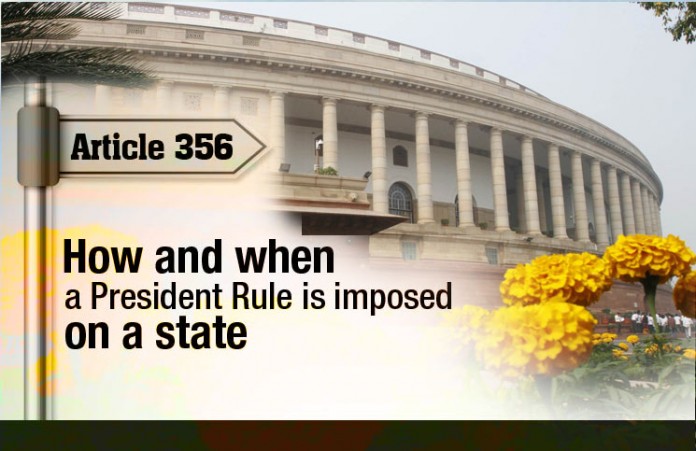









 Allow notifications





