Download Now
Home Blog Page 1766

iPleaders invites applications for the position of Career Visionaries

1


iPleadersLogo Hi-Res_vectorized

Doing business in India is not easy – India ranks 130 in the latest Ease of Doing Business Ranking conducted by World Bank. Nature of the regulatory framework, awareness of the legal system and access to justice system are key factors that pose barriers here. The current situation impacts competitiveness, scale, profitability and the very existence of a business in some cases.

For an overwhelming majority of professionals and lawyers, access to what will make a real difference in their ability to serve clients and be effective is missing. In general, businesses experience the need for lawyers and professionals who can be effective in navigating through this regulatory maze and enable them to fulfill on their commercial intentions.

The scenario is situation driven – in the absence of alternatives, lawyers and business leaders have no choice but to learn by experience or trial and error.

If the situation remains this way, roadblocks to business will continue to present as challenges to the birth and expansion of businesses.

The opportunity

An opportunity exists to create a future of extraordinary accomplishment for professionals and business leaders. In this condition, what is missing is a system of industry-driven and university-certified training and mentorship to enable development of extraordinary professionals and business leaders.

Those who subscribe to such training will create futures and opportunity to develop themselves into extraordinary lawyers and business leaders with remarkable business skills, regulatory wisdom, strategic prowess and profound legal and business knowledge, that enables them to make a lasting difference to the entire country and the world.

They are able to take their effectiveness to a new level, and barriers in the journey to professional success or business leadership can be eliminated. The quality of professional service, speed and effectiveness of doing business are all enhanced dramatically.

In this situation, a Career Visionary is a trained expert and a crucial pillar in the team, who is committed to bringing about the realization of this vision. He or she is committed to reliably creating futures for young professionals, students, working professionals and entrepreneurs that they had never thought possible earlier. He or she also reliably creates dependable pathways (through realizable roadmaps) for realizing this vision, which professionals, businessmen and students can step inside to fulfill on such futures.

Being a Career Visionary is a path for someone who is looking for opportunities to pursue something highly meaningful and satisfying, making a contribution, exploring something new or developing fantastic conversational skills. The people whose lives he or she touches will remember the contribution made to them forever.

Are you interested in being someone who can make this happen? I want to share something from Ray Lewis, which I think can be very useful when applied to lawyers too:

Don’t walk through life just playing football. Don’t walk through life just being an athlete. Athletics will fade. Character and integrity and really making an impact on someone’s life, that’s the ultimate vision, that’s the ultimate goal – bottom line.

Criteria for application

Minimum work experience of 1 year at a corporate law firm (preferably a reputed corporate law firm

Time commitments

4 hours per day (you will need to come to our office)

In addition, there may be more hours for training in the first 2 weeks.

After that, training time will be approximately two hours per week.

There will be a basic salary with incentive. You can download other agreement terms.

If you are interested in applying you may send your CV to Amartya Bag at [email protected].

Can you do it?

With commitment to the work and adequate training, those who are interested in this will be able to produce extraordinary results in this work. The results may reflect in surprising but pleasant developments in other areas of your life as well.

If you are committed, we are clear that you can do it. Nothing explains it better than the statement below:

Don’t underestimate the power of your vision to change the world. Whether that world is your office, your community, an industry or a global movement, you need to have a core belief that what you contribute can fundamentally change the paradigm or way of thinking about problems.

Leroy Hood


Experiences of a Career Visionary

Some time earlier, we wrote about the position and work of a Career Visionary in our team. Here are excerpts from the experience of Samir Agrawal, a Delhi University graduate who pursued an LLM from University College, London and worked at Dhall Law Chambers and then J. Sagar Associates’ (JSA’s) competition law practice. He is currently practicing and has also co-founded a startup called ‘Greybatter’. He is committed to creating great business lawyers. Let’s explore what he had to say about it.

Why did you take up the idea of being a Career Visionary? How had you imagined it to be relevant to your career aspirations? 

I took up the idea in order to spend some time to disseminate what I have experienced and to explore if that can make a difference in lives of other professionals. iPleaders is a perfect platform for doing that owing to their wide network and reach. There are a great deal of law students/lawyers and entrepreneurs out there, who have ambitions and are willing to put in the hard work. However, they seem to be limited by either the traditional law school syllabus, lack of practical exposure, or the fact that they are, perhaps, first generation lawyers or law professionals. A Career Visionary acts as a mentor/counsellor, and with the relevant experience he or she becomes pivotal for their career growth and almost plays the ‘guardian’ role in shaping their career in the contemporary market. I am glad I am able to contribute in some way.

What was it that you learnt here?

I realized that everybody I counseled has aspirations to become tremendously successful and effective as professionals, which they were themselves unable to articulate. One needs to hear them out and be with them. It is almost like for them, finally they are able to pour their aspirations out to someone who is absolutely related to what they want to do.

Was there something you particularly liked? What was something that made you develop yourself most in?

Interaction with so many enterprising students and professionals keeps one energetic as well. There is no doubt that the experience is quite gratifying.

What kind of difference can be made in a call that lasts only 30 minutes? What do you experience after that? 

It is not about the duration or one call. It is about ‘relevance’ of the conversation in their life and career. Once you are able to help them with their aspirations, it is a fabulous thing.

How is it to mentor people senior to you in the profession about how law can enable them to fulfil on their career?

It is not about seniority but what they want to achieve and can that be facilitated by filling certain missing links. For example, there are experienced professionals who want to have their own startups or are already doing that. But they encounter business law questions/hassles day in and day out. If they discover that acquiring certain skills can mitigate that and make their journey easier and faster, it helps them in a big way. There is no doubt that its beyond gratifying.

For those you counsel, what kind of difference is your work making? Can you specifically mention any examples where you made a real difference in a few minutes? 

The most recent one concerns an MBA professional, who is currently working in a consulting firm in Bombay. Her work involved a lot of legal documentation, for which she is not trained currently. When she saw potential that not only could she identify high-risk clauses in a contract, but could also learn to draft agreements, she got excited about her career. She also mentioned that this will also enable her to haver her own startup later on.

Another one was where a student in his fourth year B.A. LL.B. was contemplating doing an LL.M. from abroad in order to get placed n a leading Indian law firm. The counselling helped him contrast the academic nature of an LL.M.  and the relevance of practical business law skills to his career objective.

How is the overall experience of making a difference, for you? How will the experience you are acquiring be useful to you in future? 

It is enriching and as I said gratifying. Being in their world and facilitating their career is a beautiful thing. The experience is certainly helping me in my own work where I regularly interact with new people.

Download Now

Openings for BarHacker Fellowship in Continuing Legal Education

2

iPleadersLogo Hi-Res_vectorized

iPleaders is inviting applications for the BarHacker Fellowship Fellow and Assistant Product Manager.

Responsibilities include:

  • Up-gradation and creation of new content, inviting experts to take guest lectures
  • Persuasive abilities and communication skills
  • Email, online marketing and outreach

What do you get to learn?

This is a fabulous opportunity if you want to develop your legal and analytical skills, create relationships with experts, work in the education sector or start your own company in future. You will also get a 360-degree exposure to product design and marketing. Regular coaching around design of online products, strategic planning and content marketing will be available.

If you want to become an extraordinary lawyer, this position has a promise for you. As a young lawyer, you will get to see and work on what it takes to build something that is commercially viable and that fulfills a need from your expertise.

Apart from acquiring a sense of legal research and exposure on how to create a product, you can use this experience in applying for academic positions or for scholarships in future.

Administrative support and technical support on managing the content will be available.

Term

  • Six months

Criteria:

  • You must be atleast in your 4th or final year  in a law school
  • Participation in at least 1 national level moot court competition
  • You must have accurate English grammar, simple and clear writing.

Remuneration: 2500 per month with incentives depending on the results

If you are interested in applying, please write to Amartya Bag ([email protected]) and copy me on [email protected].

Download Now

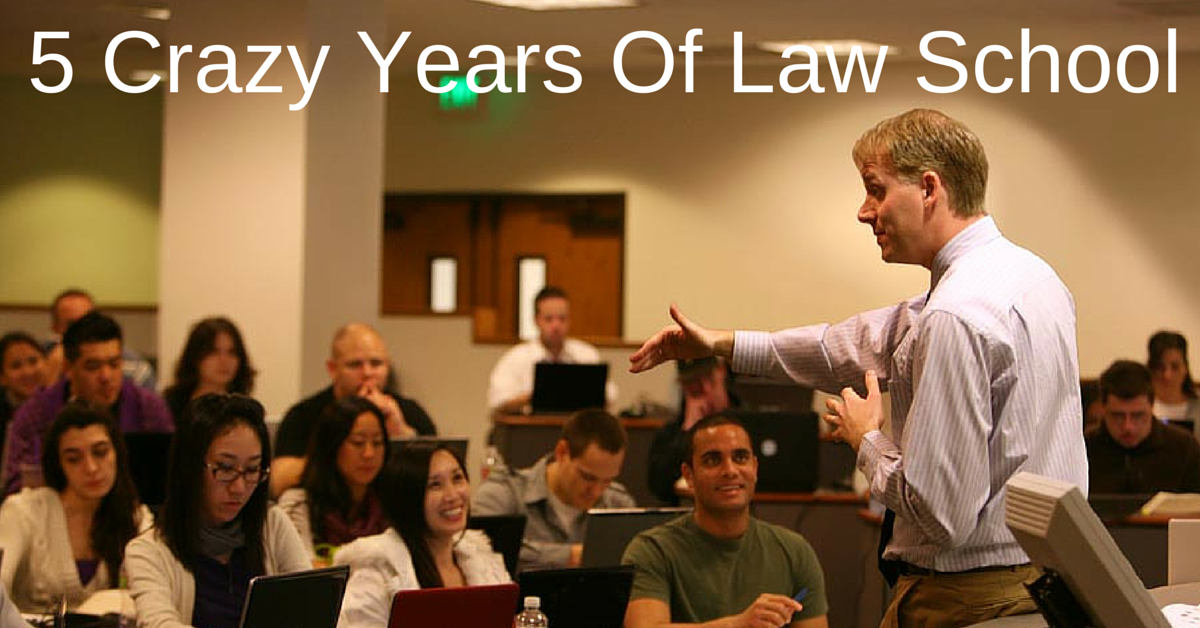
5 Crazy Years Of Law School

0
5 Crazy Years Of Law School

Pritish Chatterjee writes about his 5 years as a law student. He studied at Symbiosis Pune. This is a fascinating read and being republished from A First Taste of Law.

The Thumb

“The thumb represents Poseidon, God of sea in Greek mythology. He was extremely independent. He wasn’t up on Mount Olympus. He preferred to be in the sea doing his own thing.

Notice that the thumb kind of sticks out, in a way, it kind of does its own thing as well. People who wear thumb rings are therefore very individual and independent. They don’t follow trends, but instead prefer to set their own.”

When one enters the law school for the first time, one goes through a plethora of emotions- some are nervous at a new place, some are excited about finally going to a law school, some think of the day when you argue ‘tareek pe tareek’ is not far, some miss their home, some are scared of ragging and some are just wary of being ‘spoilt’ by college life. Irrespective of the emotions, everyone wants to stand out, set his own standard much like the ‘thumb’. They want to be like Alan Shore or Harvey Spector from the Boston legal and the Suits, respectively.

It’s this time the ‘popular’ and ‘cool’ kids are made, at the start of the semester. You better watch out, one foot wrong and 5 years are gone before you realise. If you have a big social circle you’re acceptable. If you eat alone in canteen or hang out alone, you become the ‘weirdo’. No points for being independent!

In and around college- NCC canteen, ILS and symbi hill, anty ki chai at night and null stop poha at 4 in the morning and outside college- Lonavala, Mahabaleswar, Lavasa, Matheran and Goa become from favourite gateways to been-there-done-that-locations!

You can’t sleep at night and you just can’t wake up in the morning! A lot of people for the first time start watching English sitcoms like Big Bang Theory, How I met your mother and TV series like Breaking Bad, Games of Thrones and the likes. English movies and songs especially rock genre become favourite night past time.
On the other hand, you have assignments, tests, internals hovering over the head. Subjects like law of torts, contract have entered your life, like it or not. You get first taste of moot courts, parliamentary debates and Model United Nations (MUNs), presenting papers and other such things unless you have already done them in school.
Some get hooked, some simply hate it. First year passes like a breeze.

The Index

The index finger is represented by Zeus. Zeus was the king of all gods and the god of thunder.

That’s a very dominant finger. It represents power and immense energy.

It’s the second year. You know what cells and councils to join (student council, placement cell and other such cells) and how you want to develop your CV (whether you want it to look more academic or all-round). You’ve had an experience of your first internship, most likely in an NGO. You enrol for diplomas (Intellectual property or cyber law for instance) or foreign language (Spanish and French for example).

By now you know who your real friends are, who to keep close and who not to. You’ve had your share of heart breaks, broken promises and back stabs. You have grown a year older, perhaps, wiser. In Symbiosis you just don’t learn about academics, but you learn a lot about life .You have more horizontal growth than vertical growth.

Your sore eyes soothes from the fact that you’re no more freshers. After being the senior most in school, you become junior most in college- that kind of hurts your ego. Thus, being second year-ites is a welcome change. Some try take advantage of it by putting black pants already (black pants are from 3rd year onwards, 1st two years you have to wear brown pants). You yearn for ‘power and immense energy’!

The number of subjects increases, so does the number of tests, internals and submissions. If you don’t fare well, favourite line by anyone- be it teachers, parents or even office assistants is ‘you’re not in first year anymore. Grow up!’

The Middle

“Your middle finger is represented by Dionysus who is the god of wine. He is an incredibly irreverent god. Having a ring there means you tend to do whatever you want and care less about what others think.”

Enter 3rd year. The college timings change from late morings to early mornings, 8 am. This is by far the most difficult transition. Beware of TNG (Terms Not Granted ie attendance lower than required, say, 75%, you won’t be allowed to appear for exams of that semester). The large groups become small, you have fewer friends, fewer hang outs, your days become long and nights short.

This is a good time in your law school. You are reasonably senior, so you have some power. You have some idea about what your college has to offer but not too senior to worry about about finding a job. You have figured out where your interest lies and what the college can do. At the same time, it is quite a grind as the number of procedural (CrPC and others) and substantive laws (IPC and others) increases.

You have to start taking studies seriously. Wherever you apply for internship, they will have expectations from you. They may not expect you to know all laws, but they will expect you take work seriously and submit the tasks given to you as per deadlines. Same is true for professors in the college. CV building, enhancing soft skills, attending workshops and seminars are in full force.

This year also determines track changes, if any. Some students show entrepreneurial tendency, some want to get in event management, some want to open an NGO, some might just want to change the cell or committee they are in. It’s the year of most significant changes. “You tend to do whatever you want and care less about what others think.” You either pass with flying colours or fail miserably.

The Ring

“Your ring finger is of course represented by Aphrodite, the goddess of love.”

The drastic change is when you sip ‘cutting’ chai and ‘sutta’ at NCC canteen with just another friend, you see a huge group hustling bustling with enthusiasm at the next table. Usually, it would be your brown pant juniors who are planning their trip to Goa or Lonavala. You sigh and look at your friend with expressions ‘those days’! The high fives are replaced with ‘how was your internship dude? Expecting a PPO?’

Your ‘love’ is library, internships and making your CV attractive. Your ear catches only next submission, assignment and exam dates. Subjects like CPC, Law of Evidence and the likes are in this semester to make your life more miserable. These papers experience maximum backlogs.

One has to choose between subjects like Intellectual property/ mergers and acquisition/ cyber law and others. The sword is wielded for future choices you make. One has more laws in the arsenal for internship and a lot of us feel equipped for the corporate world.

The latter part of the semester becomes little emotional as the 4th years give farewell to 5th years. The preparation and the farewell unites the batch and brings back memories of bonding and camaraderie experienced in early years of college. You again start planning for a next Goa trip!

The Pinky

“The pinky is represented by Ares, the god of war. However, it also indicates that you’re a great protector of things.”

Although I haven’t experienced this year first hand, looking at my seniors, I can say with reasonable confidence that it’s the time friends bury the hatchets and come closer. The talks that were avoided, mistakes made are forgotten. Apologies are accepted and nostalgia is round the corner.

Placements and the future stare at you giving you sleepless nights. The fact that your friends might become law firm partners, earn money, get married and have a nice car and you might not, gives you goosebumps.

The world outside awaits. You’re at ‘war’.

Just like to make a tight fist, you need all your five fingers together, you need all the 5 years to mould you into a lawyer.

Download Now

A failure’s guide to Masters in Law

2

Agnidipto Tarafder, Co-Founder of CLATapult, writes about how one should prepare for CLAT for studying LLM from NLU. He has done his LLM from West Bengal National University of Juridical Sciences (NUJS) and formerly tutored at IDIA-Increasing Diversity by Increasing Access to Legal Education.

AgnidiptoHow does one prepare for CLAT LLM? How does one kick-start a start-up? When Ramanuj da (to whom I owe a great deal since few seniors take the trouble to teach you how to type) asked me to write on these topics a few days earlier, what I had to say to him is what I am going to tell you now. If these are questions that you want answers to, you’re asking the wrong questions to the wrong person. What I can tell you, however, is this:

How do you prepare for an exam when everything is going wrong in life, when all hell has broken lose? How do you start a business, without money, resources and zero business experience? If you feel that any of these questions interest you, and you might be benefitted by the knowledge of my mistakes, and you’re welcome to read on, though I offer no guarantees of quality advice

How does one prepare for CLAT LLM- Conventional Wisdom

The nature of the CLAT LLM exam has changed somewhat over the past few years. Initially, a paper having both an objective and a subjective component, it is uniformly objective now in its current avatar. The question cover all compulsory law subjects prescribed by the BCI, with an additional section on Constitutional Law and Jurisprudence. Though the syllabus is the same as that of the AIBE, the preparation requires a more in-depth study of the subjects.

I unequivocally recommend JG Ridall for Jurisprudence, and MP Jain / VN Shukla / JN Pandey (yes, this too. Exam preparation is not a good time for snobbery, I have learnt to my disadvantage) are all useful books to prepare from if you have the time. Since a lot of people take the decision to appear quite late in the day and hence are left with a little over a month to prepare, brushing up key concepts in Constitutional Law by referring to Madhav Khosla’s “The Indian Constitution” (thematically distributed, a beautiful read otherwise also) might be a good idea. Apart from these, the AIBE preparation material by Rainmaker and any standard CLAT LLM Guide (Universal’s is what I had used) should do the trick for all the other subjects- International Law, Labour Law, Administrative Law, Criminal Law and all the rest. These act to supplement the Constitution and Jurisprudence books as well, as they have extensive MCQ questions that follow each chapter, which helps test one’s preparedness. Also, I have heard from others who have taken CLAT LLM successfully, that Mani Tripathi (Jurisprudence) is better for preparation purposes, but I can’t give up my NUJS-snobbery in entirety, can I?

https://lawsikho.com/course/diploma-entrepreneurship-administration-business-laws
click above


Did I study all of this before my LLM? Honestly, not even close!

Believe it or not, here’s my regimen. I coaxed the Constitutional Law professor at NUJS, Prof. Shameek Sen, to give me a rapid set of lectures on most of the broad themes and took extensive notes. (I cannot sell/lend/ donate them, as I do not retain them, sorry. You can ask anybody from 3rd year, NUJS to lend their class notes to you.) That and Madhav Khosla. I did Jurisprudence from Ridall all right, but couldn’t complete it all. Nor did I touch International Law (ironically, I did my LLM in International Law) or Labour law before appearing.

Oh, and having a breakup during exam preparations isn’t a smart idea, either, but a man must make mistakes to learn from them.

So how did I make it? Was it fluke?

Every risk becomes a calculated risk once it succeeds. I had a plan, and it was this. I studied Constitutional Law and Jurisprudence so well (also, I like both subjects. That helps. A lot.) that I could tackle almost anything thrown at me from those two subjects. If I didn’t know it, no chance the guy next to me did. Learning all the other subjects in a week didn’t seem feasible, so I picked the ones I found easier to learn and finished those off from the sources I mentioned. Quality, not Quantity. This was the secret ingredient in my noodle soup, so to speak.

Would I recommend this strategy to you? Absolutely NOT.

Unless you’re in dire straits. I was.

It’s all a learning curve- How failures make philosophers!

When in my final year of law school, I didn’t apply for placements in favor of litigation but didn’t have the tenacity to complete litigation internships. So I started a business with a friend from the neighborhood, of running a BPO/Call Centre. At my place. Ground floor. All-nighter. Selling ‘software’ to clients in the US. With a trade license and documentation, mind. Why? Because someone told me, it’s a “get-rich-quick” scheme, and I wanted to get rich, quick. The business plan he showed me was a work of art. Or fraud. It didn’t matter. It just seemed right. If only excitement could generate revenue! In less than two months, we were out of business, and I, on the verge of being thrown out of my house. I’m still friends with the guy, though. I’m the forgiving kind. I forgave him for the idea, and myself for falling for it.

Emerging Principle- Don’t try learning in a month, what people take years to master. I used this philosophy and avoided trying to learn Labour Law in 2 days, for instance. You can’t become Krishna Iyer in a day. Or a week.

Next stop, CLATapult. I had by then taught at almost all the major CLAT coaching centers in Kolkata at various points during my LLB student life. I taught all possible subjects, and several of my students at these places later became my juniors in college. This experience had to count for something, I felt always. My friend, Saiyed Anzar Abbas, whose room in the NUJS boys hostel (Room 219) had been our common room -cum- hunting ground for years, wanted to start a coaching center for CLAT aspirants in Bhubaneshwar. He asked me to jump on the bandwagon, and once Tanuj Kalia (of Lawctopus fame, and incidentally, our batchmate, friend and fellow huntsman) came into the fold, we went all guns blazing! The location shifted from Bhubaneswar to Kolkata, and other changes followed, but the game was afoot. We recruited teachers from among NUJS students to begin with, our USP being that only CLAT-crackers, i.e.  students of premier national law schools shall teach at these centers.

We got off to a rocky start (to put it mildly!) but soon enough, and with more than a little help from our friends, (Arjun Gupta, Javedur Rahman and the like. The acknowledgement list is so long, it might appear as if CLATapult is a PR firm!) we managed to find two suitable centers in North and South Kolkata and started running. Every month we’d sit to figure out how to pay the bills for the next. We planned and failed, and failed and planned. The determination that was needed to carry on came mostly from Anzar while I was busy trying to rekindle a dying relationship. Yes, I was daft enough to think I could run a start-up and have a life, together. Matters got worse when this significant other decided to call it a day, effectively sending me into Devdas-mode for a substantial part of my last semester in college. Anzar, however, had neither given up on his dream nor, surprisingly, on me.

Emerging Principles- Don’t bother starting a business if you aren’t married to Claire Underwood. Also, when choosing partners for a start-up, the human qualities in people is what you look for, not their unique skill-sets only. Eg- I chose well, Anzar didn’t.

So this is the state in which I started preparing for CLAT, with the sole objective of getting through to NUJS. I couldn’t leave the city as that would mean giving up on CLATapult. Thus, it was kind of desperate, yes. And fortunately, with this level of pre-exam preparation, I got through. Despite the fact that all I scored in the 150 mark paper was 84, when the results came out, it seemed destiny conspired to get me a pretty crazy rank. AIR 4.

After the initial exultation, when I sobered down (which took a while), I realized that the rank was only that good because the All-India highest score was 90. 90/150! 60%! So most people appearing scored less than 50% in the paper. As a result, I got through just fine. And hence, I get to be CLAT-guru for eternity.

Emerging Principle- Sometimes you play well and lose. Sometimes you play rubbish and win. The trick is to keep playing.

Life in a Law School- Much the Same.

I got enrolled in NUJS for the One-Year LLM Course with a specialization in International Law. I did my LLB from NUJS, too. Same Professors, Same Courses. Mostly. With two astounding exceptions. Dr. Sandeepa Bhatt taught Air and Space Law, a compulsory paper in my second semester, which was pretty labour intensive, but worth the effort. I managed to learn that law extends to outer space as well, and now I know that the celebrities buying land on the moon can’t, strictly speaking, claim property rights there. (Law never fails to surprise you!)

The other was Prof. Uday Raj Rai. He taught one compulsory paper in each semester. Both the courses had convoluted names, but simply put, he taught Comparative Constitution and Jurisprudence. And how well he taught! He could blow the doors off the place! If you had an interest in the subject, and the willingness to delve a little deeper, he could unearth for your wonders! I remember him casually remarking in class (I suspect because of my interest in the subject, he liked me initially. And then I started coming in late, and things changed.) – “Mr. Tarafder, I find it illogical to sing such high praise of Maneka Gandhi. Most of that decision are obiter. It’s a passport impounding ka case. This Justice Bhagwati took passport literally! (chuckles)” While it was not my place to question his analyses, his astute knowledge of the law, and ability to analytically dissect almost everything pertaining to the subjects, left me spellbound.

I cleared the NET (National Eligibility Test), which had become a prerequisite for becoming a lecturer. This was while I was pursuing my LLM, and while I struggled with attendance issues in college, was surprised to find myself as the fortunate recipient of the University Gold Medal for Constitutional Law. On analyzing my NET scores later, I concluded that I had cleared the cut-off because of substantially high marks scored in Paper I (reasoning, research methodology- essentially, the non-law aspects. The Vice Chancellor, Dr. Ishwar Bhatt taught us Research Methodology. Being the ungrateful sort, I never thanked him for it.), which made up for the average scores of the other two papers. (Papers II and III- law subjects). The medal in Constitution came from the scores of a repeat examination (or a supplementary paper, as some Universities call it) as I couldn’t sit for the regular exam due to (wait for it…) attendance shortage. Blessing in disguise. I was plain lucky.

Emerging Principle- Don’t question the good things in life.

The rest of life in law school was much the same, except, my friends had left college. That, and the urgent need to focus on things at hand forced me to make difficult choices. Business, as you may have realized already, was not my forte, and so, I quit CLATapult. Anzar was rid of me, and I of my guilt. In the meantime, having zeroed in on academics, I wrote my dissertation on the Law of Privacy, which was later published in a reputed journal. (No explanations needed. I worked for this one.) I got a few more publications in this period, which helped fill the space on an exceptionally vacant CV.

Life after LLM- uncertainties and opportunities

If anybody tells you, many opportunities come your way after completing LLM, it’s a lie! Take it from me. LLM gives you exactly 1 opportunity you didn’t already get at the LLB level, to foray into teaching. Law firms don’t recruit LLMs from India, at least, the better ones don’t. If you are about to appear CLAT with the conviction that after your LLM, you stand a better chance at campus placement, let me clarify- you don’t have significant campus placements for LLMs. Several universities allow the LLMs to appear alongside the LLBs for their placements, but neither the percentage of LLMs recruited nor the job profiles match the LLBs from NLSs. And that, my friend, is the bitter pill you must swallow before joining, no matter what the Universities say in their brochures.

Try Academics. Appear for Judicial Services or UPSC (Civils). Research Organizations and NGOs also. Or, if you are industrious enough, approach corporates for off-campus jobs. Or go for LPOs. But don’t count on the Law School tag to come to your aid, the way it does for the LLBs. Also, PSUs hire through CLAT, and from the little I know, that’s an option totally worth exploring. But unless you want to teach, or make mummy-papa proud by getting a Ph.D., the Indian LLM does little to add value to your CV, in real terms. (Note: I speak strictly from the perspective of one who has an LLB from National Law Schools. Those who’ve done their bachelor’s degree from traditional law colleges, may not find this to be very accurate)

Emerging Principle- Statistics is a funny thing. It’s safer not to put your faith in it. Everybody lies. Self-funding institutions- most of all.

Academics it was to be. I wanted to teach. At NUJS itself. Alumni had done it before, I had precedent. Profs. Shameek Sen and Shouvik Kr. Guha, both my seniors, teachers and friends, had done it (and both of whom have the dubious distinction of having saved my skin on more occasions than I’d care to count). I was confident I’d make the cut. I had all the necessary qualifications, and a few of the desired ones as well. Funny how life goes- I learn to my dismay, that one needs to wait for there to be a vacancy, the University to come out with a call for applications, etc., etc., etc. And there is no certainty on how long it will take for the next such notification to come out. Or whether they will find better candidates than me, as and when it does. All one may do at this point is hope. And suddenly develop a healthy fear of destiny.

I teach a course as a guest lecturer at NUJS, presently. I love teaching, especially since I designed the course I teach. It’s quite an incredible experience, really. Some things have changed. The people I used to hang out with at the nearest shanty have started adding a knighthood before my name. It sounded funny to begin with- people asking for your opinion on how to prepare for end-semester exams, moot problems, and stuff in general. But it also feels like what I was meant to do all along. Except the insecurity of not having a permanent job, especially when half your batchmates are getting married. (The faculty have been very welcoming, though. They’ve taken me in, made me feel comfy in the staff room. Kinda cool, no?) Occupational hazard, I guess. I’ll learn to live with it.

Emerging Principle- Don’t count your chickens, no matter what pony-tailed gurus may say. And enjoy the work you have. You don’t know how long you’ll have it for!

So that was my story. If it was of help, you’re welcome. If it wasn’t- can’t say I didn’t warn you! Cheers!


LawSikho has created a telegram group for exchanging legal knowledge, referrals and various opportunities. You can click on this link and join:  

https://t.me/joinchat/J_0YrBa4IBSHdpuTfQO_sA

Follow us on Instagram and subscribe to our YouTube channel for more amazing legal content 
Download Now

BREAKING NEWS: In a plea for infringement by Monsanto, the Delhi High Court has restrained Nuziveedu Seeds from selling BT Cotton.

0

Cotton_plant,_Ware_County,_GA,_US

Sanuj Das is an Associate Advocate working with Subramaniam & Associates. He has previously worked with Junior Associate at Lakshmikumaran and Sridharan and, as an associate at Inttl Advocare. He holds a master’s degree in pharmacry from Dr. B.C. Roy College of Pharmacy & AHS, WBUT, Durgapur, West Bengal. He has done Primer on Intellectual Property from WIPO, Geneva.

Monsanto sought an injunction against the sale of BT Cotton seeds and use of Monsanto’s mark by Nuziveedu seeds and urged that Nuziveedu (prior licensee of Monsanto) was selling BT Cotton seeds manufactured using patented Bollgard-II gene technology of Monsanto. More so, the sale was being made under Monsanto’s trademark and subsequent to termination of the license agreement between the two parties on 15 November 2015.


Nuziveedu urged that the matter of termination of the license agreement was pending arbitration proceedings in Bombay. Further, the competition commission has recently ordered an investigation into allegedly anticompetitive practices of Monsanto. Monsanto has been allegedly seeking their seeds at a price much higher than mandated by state directives under Seeds Act and Essential Commodities Act. They also submitted that the only ground for urgency was to get an injunction order prior to the DG (Competition Commission) submitting its report.


Notwithstanding, a Bench of Justice Vipin Sanghi of the Delhi High Court restrained Nuziveedu Seeds from selling seeds manufactured after 15 November (i.e. After the termination of the license agreement). It also appointed Local Commissioners to make an inventory of stocks available with Nuziveedu.

More updates when the order is made available.

Download Now

How to stand out as a young lawyer

2
Stand out as a young lawyer
[I am writing this post, as a follow up for a post I have written before because my sister felt that the last post on this subject was not friendly at all and did not do much to help her start the process of learning about businesses. I know most of my readers are law students, and for those who need, a friendly guide to how you can start getting some insights into how businesses work.]

A law student needs to think like a businessman – guess why?

Once you graduate and become a lawyer – you have a few paths to choose. Some of those paths will lead you away from businesses, like a specialized criminal law or constitutional law practice.
However, if you are going to be a corporate lawyer or a tax lawyer, or you work in a law firm or even a shipping lawyer, or any other sort of lawyer who advises any kind of company or business on its day to day function, you must know how businesses function and what is going on inside the head of a businessman .

Here are five things that are common to any successful business
, and if you want to understand how businesses work, you sort of need to understand if not internalize these rules. By default, these will also enhance your actions and differentiate you from the run-of-the-mill law student. A lawyer in a law firm must be well informed. A person who actually follows this course of action, and demonstrate that they understand the value of these in an internship or interview, will have little trouble in convincing anyone to hire him/her.

  1.  Businesses function on the basis of confidence, not a certainty: No one can guarantee what will be the consequence of a certain action. People still act, on a basis of research, information, and calculations. It is, however, not gambling. You do not wait to be certain before you take an action, but still you must take only reasonable, sensible and responsible actions. It is a question of judgment which has to be developed – and every business value that judgment. They want their lawyer to have that judgment. And you must portray confidence in your action, otherwise no one is going to be confident about you.
  2. Timing is everything: A right decision at a wrong time is a wrong decision. Being too early is bad, being too late is a sin. Everybody in the business in on the ball – those with better timing performs better. Some people call it luck, smart people try to get the timing right.
  3. There is no scope for being an amateur and no alternative to expertise: Confidence described in step one should come from expertise and skills. Experiences too to some extent. Learn to pick up skills, not mere information, and you shall be better than the majority of people around you. If you are not good enough, you just don’t make the mark. You just can not afford to sound/appear like an amateur ever if you are in a business. There is no place for amateurs in the business. Ok, maybe there’s place – as minions, but if you are happy with that quit reading this post. Don’t come near my blog. Amateurs think it is OK to make mistakes – that’s the primary sign of an amateur. All sound businesses hate amateurs by default – because they have suffered in hands of some amateur in the past.
  4. There is no yesterday, no tomorrow, you must live in the present: In almost all business what matters is what you are doing right now. If what you are doing right now is good enough, people will connect up your past and future with the present and glorify you. If you don’t have a present, you have no future. And your past does not matter.
  5. Performance or quality alone is not enough, these must translate into the visible expression: Are you good? Then why is no one else telling me that?Is Ratan Tata any good? How do you know? Because every newspaper and tv channel and everyone audible over that scream is saying so. Even if you are a small fry, and you are good, it just does not matter. There will be someone who knows how to become visible in your space and take it all away.
    Learn how to be visible. Make your skills and expertise visible. Make your good deeds visible. What do people find when they google your name? Does the partner know your name? Do the people who matter know that you have fabulous research skills? Make sure they do. Otherwise, it is like you are an actor with brilliant acting skills but no head. And network. It’s best if you can get others to talk about you, otherwise speak for yourself. There is no alternative to this either.
Download Now

NLIU, Bhopal: know this law school

1
Know This Law School: NLIU, Bhopal

NLIU Bhopal is next in line in our “Know this law school” post written by Swati Shanker who is a student out there.

Over to Swati.

Know This Law School: NLIU, BhopalNLIU, Bhopal is one of the premier law institutes of India established in 1997. The university admits 90 undergraduates every year through the Common Law Admission Test. The university is devoted to encouraging intellectual freedom and development of personality and outstanding qualities of leadership amongst its students.
Let us have a look at the stand of the university on the under mentioned criteria:

Quality of education:

The NLIU faculty is quite decent. The teachers are highly qualified and the best part is their readiness to help the students. The strong bonding between students and teachers is the best part over here which guarantees success to diligent students.
NLIU follows trimester system having a total of 15 Trimesters. Each Trimester includes Midterm exam having a weightage of 30 marks and an End- term exam having a weightage of 50 marks. Besides this, the students are required to make projects on each subject of the particular trimester which carries other 15 marks. Every subject carries 5 marks for attendance.
The Trimester system is really hectic and the marks for attendance system add to the plight. These two things make it very difficult to be active in extracurricular activities. However, the best part is that the duration of each Trimester break is quite long and one can spare their time then in creative activities apart from enjoying the vacations.

Recruitment:

The university does not guarantee 100% placement, however, the placement rate is quite satisfactory. All top law firms apart from major PSUs and premium Banks recruit students from here. The placement rate varies each year depending upon the quality of students in a batch and the efforts of the Placement Coordination Committee. However, most of the NLIU students prefer higher education or Judiciary rather than placements.

College environment:

NLIU has a student-friendly environment. The amicable relationship between seniors and juniors is the highlight of this criterion. Ragging is strictly prohibited in the college which is adhered to by all the students. The students here participate in all major decisions related to academics or administration.
NLIU organises its grand sports fest “Virudhikka” every year (in December) in which almost all the premier law institutes do participate. The students participate through various committees in the maintenance of discipline and other activities of the hostel viz. ‘Dining Committee’, ‘Cultural Committee’, ‘Discipline Committee’, ‘Medical Assistance Committee’ and ‘Event Management Committee’ – making the Halls of Residence unique in themselves and distinguished from the rest in terms of practicing participatory management and living democracy. Curfew time for the girls is 9: 00 P.M, however, the same is not applicable on boys.

Infrastructure:

NLIU stands on a really sound footing on this criterion. The University offers separate residential facilities for men and women. All residents are provided with single spacious rooms having adequate furniture. The residents are also provided with 24 hours hot and cold water and laundry services.
NLIU library (popular as Gyan-Mandir) is the central point of attraction which is enriched with quality books. The campus is eco- friendly and its greenery and beauty attracts both students and parents. The campus consists of four hostels. Two hostels are meant for the first year boys and girls to protect them from any probability of being bullied by the seniors.
The mess facility is admirable. There is a separate mess for both boys and girls. The menu ranges from North Indian and South Indian to the Chinese. Non-vegetarian food is served four times a week. Late night snacks are provided during the exam weeks. Sundays are usually a special treat.
The college provides guest room facility to parents and other visitors of students. The campus also consists of a large gymnasium having modern equipment, auditorium and cafe. It’s really a pleasure to walk in the campus especially at night.

City:

Bhopal is known as the “city of Lakes”. The city is really clean and quite. One can enjoy the pleasures of both city and countryside keeping in mind the location of the campus. The college is located far from the city however this never creates a problem as to Swaraj Mazda vehicles are used for providing conveyance facility for the faculty, staff and students to commute to the city, market and railway station twice a week.
It’s never a problem for the foodies over here as the city consists of all the main food hot spots like Pizza Hut, KFC, Mc-Donalds other than tasty street food available at reasonable prices.
The weather condition is quite decent over here and it’s really pleasant during the rainy season. There are a lot of visiting places around the campus at a stone throw distance and one can always visit these places to kill time.
It’s actually a fun to be at NLIU.
Hope this post will help you in gaining worthy knowledge about NLIU and will make your choice easy. For any queries, feel free to contact!


Download Now

National Law School Bangalore (NLS): Know This Law School

0
Know This Law School: NLSIU

Know This Law School- NLSIUIn our series of posts on law schools, the next in line is NLSIU, Bangalore, known to be the best law school in India, written by Preeta Dhar who passed out of NLS this year.
Over to Preeta.
The National Law School of India University, more commonly known as NLS (locally known as the “Nagarbhavi Law College”, and more controversially known as “the Law School”) is what every law aspirant is told he should dream of. Arguably, and statistically, it is the best (or at least, one of the best) law colleges in the country. Of course, no institution of repute can live up to all the hopes, dreams and expectations that have been created around it. Add to that all the necessary hazards associated with any competitive, elite institution. So what is it really like? Here is an inside perspective.

Quality of education at NLS Bangalore

Firstly, not every course is life-changing or profound. On the contrary, they often tend to be routine, and unbearably boring. The routine of a “trimester system” is at first terrifying, then hectic and exhausting. For the uninitiated, the trimester system involves 4 entire courses being taught and evaluated in three months. This means that in your first 3 months of college, you will have suffered 8 exams, 4 research papers, 4 vivas and more than a thousand pages of reading materials (excluding class notes – yours, or those photocopied from the more fervent ‘note-takers’ of the batch). And of course, some professors like to spice things up with “surprise tests” and “take home tests” and other such instruments of torment. While you may be told that this “rigorous work culture” is one of the “hallmarks of the college”, you might just find yourself utterly burnt out in this frantic goose chase.

However, in all fairness, the quality of education in the college is decent. There are courses that are truly remarkable. There are professors that encourage you to question your pre-conceived notions, exhilarate you with drawing links and connections, challenge you to think beyond the textbook and learn to read effectively. Add to this all the extra-credit courses, workshops, and lectures. Now you would wonder why this would be of interest to any sane person, given the more than adequately “rigorous work culture”. However, it does make sense. These provide a wonderful opportunity to explore areas of law that might be of interest to you, and are not a part of the mainstream curriculum – like space law, or media law, or gender and sexuality law. The opportunity and exposure to such courses and interaction with people in different fields go a long way in broadening perceptions and horizons. The most commendable feature of the environment of the classroom, and outside, is that students are encouraged to argue.NLSIU

Infrastructure at NLS Bangalore

The small, well-knit campus of the National Law School, although adequate, is frankly, not much to boast about. The classrooms are equipped with the necessary paraphernalia, which are largely functional. The library is actually pretty cool. There are also limited sports facilities for basketball, football, tennis and the occasional hockey, throwball and table tennis.

Life in the hostels of the Law School, however, is not for the faint hearted. Ensconced in the forested parts in the suburbs of Bangalore, it is has a more than generous share of ‘wildlife’. These include close encounters with frogs, snails, chameleons, snakes and scorpions on a regular basis. And dogs. The ‘home away from home’ makes your realize all the luxuries you took for granted before coming here – clean laundry, hot water, clean bathrooms, functional showers, clean dishes and cutlery and edible food. You learn to adjust to sharing space with frogs in the shower stalls, and running out of water in the middle of a shower, or maybe even an occasional flooding or minor electrical shocks due to faulty earthing facilities.

Things have improved over the years, though. The wi-fi facility is available in the hostels, and food related woes are addressed to a great extent by the small stalls in the campus; the most integral being ‘Chetta’ for the necessary midnight snacks and caffeine boosts.

College environment of NLS Bangalore

At the end of the five years, it is the experience of having lived at breathed at the Law School that you look back and take forward. If you find yourself at a complete loss, give it some time, and things will fall in place. As I have assured panicky newbies, the seniors in the college are actually (by and large) supportive and approachable. In fact, before examinations, seniors even take time out to help you figure out the syllabus and solve previous question papers. Then there is a wide variety of extra-curricular activities that you could explore – be it mooting, or parliamentary debate, or singing or sport.

Engage yourself in what is happening around you. You could try volunteering for events like moots, debates and at Legala or Spiritus. Strawberry Fields, is, of course, (for the want of a better description, I take recourse to this expression) legendary. And don’t forget to take some time out and unwind – at Chetta, or outside the mess over a lazy afternoon tea/juice, in Nagarbhavi, or even outside the library.

Recruitment at NLS Bangalore

I kept this for the last. The answer is yes, everybody who is looking for the job will probably get one. And let’s not fool ourselves. A lot of the hype responsible for this recent surge of law aspirants is the promise of the large pay packet that lies at the end of the five years.

However, a high paying law firm/company job is not the destiny of all the students. It could be if you choose so, but it could also be litigation, or a judicial clerkship, or pursuing further studies, or joining NGOs. Being in National Law School affords you the opportunity to explore your options.

Download Now

Simple rules for being productive

1
Read to Ponder

Read to PonderThis was originally written by Srishti Aishwarya and is being republished here. This blog post focuses on simple rules of productivity and fulfilment in life which are known to us but in the hustle bustle of life, we end up ignoring. We sometimes lose out on taste because we have too much in our plate. Read to ponder.

It takes less time to do a work when you give it your undivided attention.

You are sitting with a book open in front of you, are you reading it? no, you want to go out and chat a bit with your friend. Why are you sitting? You have an obligation towards study/ you have a test tomorrow. In either case, if you don’t have much of an option, instead of thinking about other things while sitting quite on your date with the book, its better if you entertain those pages with your attention and get done with your readings. If you focus on the work in hand, it’s obvious the work will be done in less time.
For instance, I will be able to finish this blog post in less time if I don’t open other windows in between to check emails or think about my presentations scheduled for tomorrow.

You finish your assignment when you have a deadline in hand.

So, you asked your project teammates to research on one theme say “law is a jealous mistress”, then they did not revert back till the time you did not shoot 2-3 follow-up emails asking them to reply within a certain time. They might have replied earlier if you had given them a specific deadline to finish the task in hand.
People always work better with deadlines. Take the example of law school projects, everyone conveniently ignores the projects till the deadlines do not come into the scene which forces people to take the slack up.
Always work with deadlines, if you don’t, either you will not ever do the task or procrastinate.

You set forth your action according to your goals

Whatever you are doing is generally guided by your aim. Your aim can be anything, when in law school, your aim can be to have all the fun you can, so your action can include watching all the series of Friends in your laptop or partying every weekend or maybe all you want is a good job, so you prefer to study every day and everything that is taught in class.

Have a vision on your mind, a higher goal that will motivate your action. You can start with the question that what you want to be after 5 years in law school.

And here are few one-liners, paying heed to which can be beneficial for you;

  • You lead when you take responsibility
  • You succeed when you believe in your dreams
  • You are happy when you are living in the present situation and making the most of it, say enjoying it.
  • You are gloomy when you look for what is missing in your life

Life’s biggest pleasure is solely determined by your definition of it.

Download Now

Lodha Committee Report On Cricket Reforms: An Overview

0

This article is written by  Konina Mandal, a student of KIIT Law School, Bhubaneswar.

To an Indian, cricket is not just a game. It is a religion. Like everything religious, it is very close to human emotion, connecting  the people of India in a unique way. The Board of Control for Cricket in India (BCCI) is the national governing body for cricket in India. Serious inaction with regard to match-fixing, betting, frequent amendments to the rules to enable persons in power to perpetuate their control and promote their financial interests, permitting or enabling its office bearers, employees and players to do acts which clearly give rise to conflicts of interest which have no resolution mechanism, lack of transparency and accountability, failure to provide effective grievance redressal mechanisms and a general apathy towards wrongdoing has invited much condemnation.

A BRIEF SEQUENCE OF EVENTS THAT  LEAD TO THE REPORT

It all began in May 2013 when noted Indian cricketers S Sreesanth, Ankeet Chavan and Ajit Chandila got arrested on account of fraud and cheating, following their suspension by the BCCI,  Mumbai Police arrested the owner of top favourite franchise Chennai Super Kings, Gurunath Meiyappan over the same charges. Later that month, Raj Kundra, co-owner of Rajasthan Royals also faced suspension on account of betting.

The same month saw the IPL governing council appoint a three-member probe panel  to look into the complaints against Gurunath and Kundra. It led to the conclusion that there was “no evidence of any wrongdoing “by Kundra and Gurunath. Responding to a public interest litigation by the Cricket Association of Bihar in July 2013. It was a controversial report;  the Bombay High Court stated  that the BCCI’s probe panel was constituted illegally, and that there was disparity in the evidence collected by the panel. Following the PIL, the SC issued notice to the BCCI, N Srinivasan, his company India Cements – which owns Super Kings – and Royals on an appeal challenging the Bombay High Court order for not appointing a fresh committee to probe the alleged corruption in the IPL.

In October 2013, The Supreme Court constituted a 3 member probe panel comprising of Justice Mukul Mudgal, senior advocate and additional solicitor general L Nageshwar Rao and Assam Cricket Association member Nilay Dutta. With a time limit of 4 months the panel was to conduct its independent investigation into the abovementioned corruption allegations.The Mudgal probe panel’s first report found Gurunath and Kundra guilty of indulging in betting and passing on information during the IPL 2013. In March, the Supreme Court asked then BCCI president N Srinivasan to step down to allow for a fair investigation of the IPL corruption scandal referring to his staying on as “nauseating for cricket.” He was kept out of the BCCI set-up then onwards.

The Mudgal panel probe continued its investigation directed by the SC empowered with greater powers, the court again directed the panel to submit a report in August 2014.In relation to the Mudgal report the Supreme Court named four individuals Srinivasan, IPL chief operating officer Sundar Raman, Gurunath and Kundra. Even though Srinivasan was not directly involved in betting or fixing, or of trying to prevent the investigation into the IPL 2013 corruption scandal he, along with four other BCCI officials, knew about an IPL player violating the code of conduct, but took no action. Raman knew a contact of a bookie and had contacted him eight times in a season, and  investigations into Kundra stopped “abruptly and without reason” when the Rajasthan police was given information about Kundra by the Delhi police.[i]

For the first time in history, an external agency, the Supreme Court, amended the Constitution of the BCCI.  The Supreme Court in its judgement pertaining to the 2013 IPL corruption case[ii] struck down the controversial amendment[iii] to the BCCI constitution’s clause 6.2.4 that allowed board officials to have a commercial interest in the IPL and the Champions League T20, declaring  “void and ineffective”, “unsustainable and impermissible in law”.

FORMATION OF THE LODHA COMMITTEE

In January 2015 the Court appointed a 3 member panel, headed by former Chief Justice of India, RM Lodha, to decide on:

  • The quantum of punishment for Meiyappan and Kundra and for the respective franchises, if necessary, which would be final and binding upon the BCCI and the parties concerned.
  • To look into the role of Raman in the spot-fixing scandal and decide on a punishment, if necessary.
  • To suggest amendments to the processes followed by the BCCI with a view to preventing sporting frauds and conflict of interests
  • To make the board more responsive to public expectations

An 82-point questionnaire was sent by the panel to top board administrators to seek clarity on the functioning of the BCCI. This questionnaire was a guide to recommend changes to the BCCI’s Constitution and functioning.

In July 2015, the committee suspended India Cements and Jaipur IPL. owners of CSK and RR respectively. Meiyappan and Kundra were also banned for life with regard to involvement in cricket matches.

Recently the Lodha panel submitted its FINAL REPORT to the Supreme Court in which it has recommended sweeping changes to the BCCI’s administrative and governance structures.

SUGGESTIONS BROUGHT FORWARD BY THE LODHA COMMITTEE

The Court having realized the disrepute earned by cricket, had to intervene to bring it back from the chasm of misconduct and malpractices. The suggestions that follow show the  Committee’s effort to restore Indian cricket to its deserved status by putting in place good governance structures and best practices.[iv]

  • With regard to Membership, Only cricket Associations representing the States would have voting rights as Full Members of the Board, thereby ensuring equality among the territorial divisions. Any other existing members would be Associate Members.
  • Zones will be considered relevant only for the purpose of the tournaments conducted amongst themselves, but not for nomination to the governance of the Board or to the various Standing Committees.
  • A uniformity in Structure is sought to be achieved with regard to State Associations. Members would necessarily have to restrict the tenures of office bearers and prescribe disqualifications, do away with proxy voting, provide transparency in functioning, be open to scrutiny and audit by the BCCI and include players in membership and management. They would also have to abide by the conflict of interest policy prescribed by the Board, and divorce the Association from the social club, if any.[v]
  • The number of Vice Presidents have been pruned from 5 to 1 keeping the other honorary positions of President, Vice-President, Secretary, Treasurer and Joint Secretary intact. Their duties have been realigned. The President is shorn of his say in selections. The additional vote for the President at meetings is deleted. The terms of these Office Bearers continue to be of 3 years, but with a maximum of 3 such terms regardless of the post held, with a cooling off period after each such term.
  • Separating governance from management, a 9 member Apex Council (with one-third independent members) replaces the 14 member Working Committee. The Council would be consisting of the Office Bearers of the BCCI, an elected representative of the General Body, two representatives of the Players Association (one man and one woman) and one nominee from the C&AG’s office. Terms of eligibility and disqualification are specified with a bar on Ministers and government servants.
  • The introduction of the post of a CEO with strong credentials assisted by a team of managers to handle non-cricketing affairs has been proposed to ensure more professionalism. The Standing and Sub- Committees of the BCCI has been reduced to 2 essential ones which will advice the CEO with reference to tours, technical aspects and tournaments.
  • Specific provisions have been made to encourage cricket for women and the differently-abled. Cricket Committees manned only by former professionals are to look into the selection, coaching, performance evaluation and umpiring.
  • The IPL Governing Council has been given limited autonomy reducing it to 9, including 2 representatives of the Franchisees and nominees of the Players’ Association and the C&AG’s office.
  • Initiation of a Cricket Players’ Association has been proposed which will afford membership to all international and most first class men and women retired cricketers, with the objective of discharging assigned functions with the financial support of the BCCI. It shall be brought into existence by an independent steering committee.[vi]
  • Agents must be registered under the prescribed norms administered by the BCCI and the Players’ Cricket Association.
  • An Ethics Officer will administer detailed norms laid down to avoid any direct or indirect, pecuniary or other conflict or appearance in the discharge of the functions of those persons associated or employed by the BCCI, its Committees, its Members or the IPL Franchisees.
  • The institution of Independent monitors is a notable recommendation. To have an independent Ombudsman to resolve grievances of Members, Administrators, Players and even members of the public and an independent Electoral Officer to oversee the entire electoral process is a novel way of maintaining
  • The BCCI must provide the relevant information in discharge of its public functions. All rules and regulations, norms, details of meetings, expenditures, balance sheets, reports and orders of authorities are to be uploaded on the website as well, bringing it under the ambit of RTI.
  • An independent auditor has been proposed to verify how the Full Members have expended the grants given to them by the BCCI, to record their targets and milestones, and to submit a separate compliance report in this regard.
  • An interesting proposal for the legalization of betting(with strong safeguards) has been made. Spot fixing/Match fixing is sought to be made a criminal offence.
  • To bring about awareness and sensitization, provisions have also been made for lectures, classes, handbooks and mentoring of young players.

The Committee fervently hopes that this report will bring cricket fans back to the fold and put an end to regional excesses and imbalances, reign by cliques, corruption and red tape, all of which have harmed the game and the youngsters looking for nothing more than to take the field in flannels.[vii]

CONCLUSION

Currently, as of February 2016, the Supreme Court has given directions for BCCI to implement recommendation, so it has convened a Special General Meeting on February 19, 2016 to discuss the far-reaching consequences of the Justice RM Lodha Committee report. The far-reaching effect on the implementation of the Lodha Committee’s recommendations calling for sweeping reforms in the BCCI’s structure and the subsequent scathing observation on the matter by the Supreme Court which has shaken the Board members, is set to dominate the SGM.[viii] On effective implementation of the proposed recommendations of the Committee report, cricket will be  more transparent and the spirit of the game will be validated.

[i] How the IPL fixing case led to the Lodha report, ESPNcricinfo, available at http://www.espncricinfo.com/india/content/story/957791.html last seen on 11/2/2016

[ii] Board of Control for Cricket in India v Cricket Association of Bihar (2015) 1 MLJ 711

[iii] Court strikes down controversial BCCI clause,ESPNCricinfo, available at http://www.espncricinfo.com/india/content/story/823061.html last seen on 11/2/2016

[iv] Justice R.M Lodha Committee Report, available at https://lodhacommittee.wordpress.com/2016/01/04/report-on-cricket-reforms/ last seen on 11/2/2016

[v] Ibid at 80

[vi] Ibid at 82

[vii] Ibid at 84

[viii] Board of Control for Cricket in India to Convene Special Meeting To Discuss Justice Lodha Report Recommendations, NDTVSports,

 Available at http://sports.ndtv.com/cricket/news/255371-board-of-control-for-cricket-in-india-to-convene-special-meeting-to-discuss-justice-lodha-report-recommendations last seen on 11/2/2016

Download Now
logo
FREE & ONLINE 3-Day Bootcamp (LIVE only) on

How Can Experienced Professionals Become Independent Directors

calender
28th, 29th Mar, 2026, 2 - 5pm (IST) &
30th Mar, 2026, 7 - 10pm (IST).
Bootcamp starting in
Days
HRS
MIN
SEC
Abhyuday AgarwalCOO & CO-Founder, LawSikho

Register now

Abhyuday AgarwalCOO & CO-Founder, LawSikho