Download Now
Home Blog Page 1772

A Third Year Law Student On How The NUJS Diploma Is Helping Him Excel In His Studies

0

1

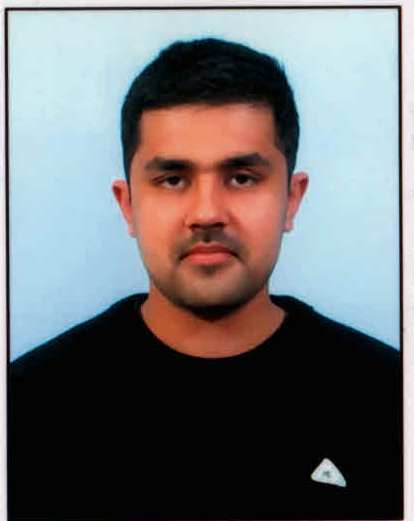
Abhishek Singh Yadav has interned with prestigious organisations like The National Legal Services Authority, People’s Union for Civil Liberties, Madhya Pradesh Human Rights Commission, etc. He has also interned with some renowned lawyers. He is currently pursuing law from Department of Law, Aligarh Muslim University, Aligarh. Apart from his career in law, he is passionate about social causes especially related to Human Rights.

He completed the NUJS Diploma in Entrepreneurship Administration and Business Laws in 2014. He had a very fulfilling experience with the course and had many good things to share about. So we decided to share his experiences with you. Over to Abhishek.

I joined the NUJS diploma in Entrepreneurship Administration and Business Laws while I was in the 1st year of my law school. My seniors told me about this very informative and beneficial online law course from NUJS. So I thought of doing some research myself and took to the internet. I found the course structure and the syllabus of NUJS diploma in Entrepreneurship Administration and Business Laws to be practical and detailed. Secondly, the tag of NUJS was attractive. NUJS is ranked amongst the top Law Schools in country and I was sure, this would certainly look good in my CV.

Apart from this, what attracted me most was the fact that not only students but lawyers and professional were taking up this diploma course from NUJS. This inspired me and I was sure that this course is beneficial, otherwise why would industry experts take this course.

The course syllabus covered subjects such as Labor Law, Taxation and Company Law which are part of my college syllabus. This gave me an edge over others, as I was already aware of topics which were yet to be covered in class and this knowledge helped me grasp the concepts taught in the class very clearly.

Webinars were the best part of the course structure of the NUJS diploma. Webinars by industry experts gave insights into the topics.  One can get in-depth knowledge of the subjects from these webinars.  I’m one of the toppers in my class and I credit it to the notes and knowledge from the NUJS diploma course.

The NUJS diploma course has a very engaging and practical approach towards the subjects.  The chapter on Company Law thoroughly covered the subject. The Contract drafting exercise was very helpful and still comes handy; it helps in my college presentations. I especially found the modules on Labour Law to be very helpful.

This course lays a strong foundation of the subjects; the knowledge gained from this Diploma is so practical that it would help me in my college studies, my internship interviews, my job interviews and even judiciary.

In future, after completion of my Law degree, I plan to pursue a career in judiciary and I’m very sure, the knowledge gained from this course would help me in that.

I would recommend this course to anyone who wants to have a career in corporate law. It is not only for students even professionals who want to gain knowledge about diverse aspects of law can benefit immensely from the NUJS Diploma in Entrepreneurship Administration and Business Laws.

Download Now

Laws On Child Labour in India

1

download (13)

In this blogpost, Rajnandini Mahajan, Student, RGNUL, Punjab, writes about the laws on child labour in India and the judicial trends.

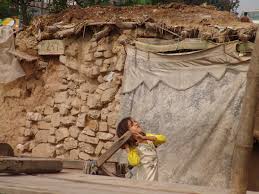
Child labour is not new to India. In fact, it is so rampant that it is now considered normal. ‘Child labour’ refers to a situation where work is done by a person below 15 years of age. The work should be such that it adversely affects the mental and physical health of the child.[1]  According to 7th All India Education Survey, child labour in India is about 17 million.[2] This is an alarmingly high number for a country which aspires to become a superpower in future. A country can never progress unless its future generation is well-equipped with knowledge and education. Instead, millions of children in India are working hard at hazardous places for a square meal. In order to tackle this problem, the lawmakers have made various provisions. However, child labour is still regulated and not completely abolished in India.

CONSTITUTION OF INDIA

The problem of child labour was prevalent even in colonial India and many statutes were enacted by British imperialists to curb this. Quite naturally, even the framers of Indian constitution were not oblivious to the problem. Thus, certain provisions were made in the constitution itself regarding child labour. Article 24 prohibits employment of any child below the age of 14 in factory/mine or any other hazardous activity. Further, Article 39-e direct states to make policies towards securing that the health and strength of workers, men and women and the tender age of children are not abused and that they are not forced by economic necessity to enter vocations unsuited to their age and strength. However, these provisions are not very effective because the constitution is silent on the employment of children above the age of 14 years and employment in non-hazardous activities. Also, provisions of Article 39 are not enforceable in the court of law by the virtue of them being Directive Principles of State Policy. Thus, a need for a stricter and more efficient law was felt. This resulted in the enactment of Child Labour (Prohibition & Regulation) Act, 1986.

CHILD LABOUR (PROHIBITION AND REGULATION) ACT, 1986

The Act aims at banning child labour in some industries mentioned in the schedule and regulation of working conditions where employment of children is permitted. It also prescribes a penalty for the violators. The Act defines a child to mean any person below the age of 14. The Act also defines ‘establishment’ to cover all kinds of workplaces. The Act is divided into two parts: the first part prohibits child labour altogether and the second part regulates the conditions in the permitted areas. According to the act, a child cannot be asked to do overtime and should not be made to work from 7 pm to 8 am. In total, work hours should not exceed 6 hours. In the case of any dispute regarding the age of the worker, his birth certificate would be taken as a proof. The complaint against the cases of child labour can be filed by anyone. Under the Act a person who has employed a child needs to give a declaration containing details of the same to the inspector of the area in which the establishment is located. If a child to be working in a hazardous industry then the person who engaged him could be held liable for imprisonment for a term which shall not be less than three months but which may extend to one year, or with fine which shall not be less than ten thousand rupees but which may extend to twenty thousand rupees, or with both. The act, however, fails to define what hazardous means. The Act lists a total of 18 industries which are considered hazardous. It includes working as domestic help and in dhabas. The proposal to amend the Act has been approved by the cabinet in 2015. The proposed amendments will prohibit the employment of children below the age of 14 years in all kinds of establishments be it hazardous or not- hazardous. However, the children can work in their family enterprises and farmlands after school hours or on holidays. However, it will reduce the number of hazardous industries from 18 to 4. Currently, the prohibited occupations are: Any occupation connected with –

(1) Transport of passengers, goods or mails by railway;

(2) Cinder picking, clearing of an ash pit or building operation in the railway premises;

(3) Work in a catering establishment at a railway station, involving the movement of a vendor or any other employee of the establishment from one platform to another or into or out of a moving train;

(4) Work relating to the construction of a railway station or with any other work where such work is done in close proximity to or between the railway lines;

(5) A port authority within the limits of any port.

(6) Work relating to selling of crackers and fireworks in shops with temporary licences.

(7) Abattoirs/slaughter Houses.[3]

There is no denying of the fact that child labour cannot be prohibited completely as of now. This can be attributed to poverty and over-population. Many a time, a child is the sole bread earner of the family. Thus banning child labour completely will drive such families to destitution. However, child labour does strip the children off their opportunities to get educated and flourish. They lose their childhood to work and responsibilities. The judiciary has acknowledged this in a number of cases.

JUDICIAL TRENDS

In Peoples Union for Democratic Rights v. Union of India[4], the Supreme Court, held that construction works clearly constitute hazardous activities. In Labourers, Salal Hydro Project v. State of Jammu and Kashmir[5], the Court was forced to acknowledge that economic reasons exist for the prevalence of child labour in India. As long as there is poverty, child labour cannot be eradicated. In M.C. Mehta v. State of Tamil Nadu and others[6] the Court observed,”…it is a stark reality that in our country like many others, children are exploited a lot.” The court provided for stricter liability and the increased quantum of compensation to be paid by the employers of child labours.

CONCLUSION

Child labour cannot be eradicated unless the vicious cycle of poverty is broken. The poor children, hungry and uneducated, work to feed themselves. They are exploited and paid far less wages than they should get. They lose their childhood to gross human rights violations. It is high time to take serious measures towards protection of children who are national assets and who will lead this country in the future. Children belong to schools and playgrounds, not factories and workshops.

[1] http://www.ilo.org/ipec/facts/lang–en/index.htm

[2] http://www.ncert.nic.in/programmes/education_survey/pdfs/Schools_Physical_Ancillary_Facilities.pdf

[3] http://labour.gov.in/upload/uploadfiles/files/Divisions/childlabour/act.pdf

[4] AIR 1982 SC 1473

[5] (1983)2 SCC 181

[6] AIR 1997, SCC 283

Download Now

What Is The Evidentiary Value Of A Confession

1

download (5)

In this blogpost, Harsha Jeswani, Student, National Law Institute University, Bhopal writes about types of confessions, who can record a confession and  the probative value of a confession.

INTRODUCTION

The Indian Evidence Act does not define the term “confession”. In his book The Digest, Lord Stephen defined confession as- An admission by an accused from which an inference can be drawn that he has committed the crime. The Indian court relied on this definition for a long period of time which was later on modified by the Privy Council holding that only direct acknowledgment of guilt can be regarded as a confession.

In the case of Pakala Narayan Swami v. Emperor[1] the question before the court was whether statements from which the guilt of an accused can be inferred amounts to a confession or not.
It was observed by Lord Atkin that:

“A confession must either admit in terms the offence, or at any rate substantially all the facts which constitute the offence. An admission of a gravely incriminating fact, even a conclusively incriminating fact, is not in itself a confession, for example, an admission that the accused is the owner of and was in recent possession of the knife or revolver which caused death with no explanation of any other man’s possession.”

TYPES OF CONFESSION

Inculpatory and Exculpatory Confession

The confession where accuse directly admits his guilt is referred as an inculpatory confession. Exculpatory confession, on the other hand, is that confession which absolves the accused from his liability. Only inculpatory confessions can be used as a substantive piece of evidence. Whereas exculpatory confession needs some corroboration for being admissible.

Forms of Confession

 A confession can be made in any form. When the accused admits his guilt directly before a court of law or to the magistrate in court, then it is known as judicial confession, But when it is made to any person outside the court, then it is called as an extra-judicial confession. It includes confession made to a police officer, or to any person or confession made to oneself.  It is often considered as a weak type of evidence. In Pakala Narayan Swami v. Emperor[2], where the accused admitted his guilt before the police and, later on, refused to identify accused before Magistrate and during trial, the court held that it won’t amount to confession as there was no direct admission of guilt by him

In the case of Sahoo v. State of UP[3], due to continuous quarrels between the accused and his daughter-in-law, the accused killed her and made the statement that with her ends the daily quarrels. The court considered the statement to be a confession holding that for a confession to be relevant; it is not necessary that it must be communicated to some other person.

WHO CAN RECORD CONFESSION

Section 164 of Code of Criminal Procedure empowers the Magistrate to record a confession. A confession recorded by any person other than the Magistrate is not admissible. However, before recording confession, the Magistrate needs to comply with certain requirements provided under Section 164, CrPC.

  1. Any Metropolitan Magistrate or Judicial Magistrate irrespective of his jurisdiction in the case can record any statement or confession made to him either at the time of investigation or at any time afterwards before the trial initiates. Further, the police officer who has been conferred the power of Magistrate by law cannot record any confession made to him.
  2. It is the duty of the Magistrate to inform the person making a confession that he is not under any obligation to make the confession, and if he does so, then any statement made by him can be used as evidence against him in a court of law.
  3. The Magistrate must also ensure that the person must make confession voluntarily and must not be under any threat or influence. An involuntary confession is not admissible before a court of law.
  4. However, if a person making a confession at any time before a confession is recorded shows his unwillingness to make a confession, then he cannot be compelled to do so neither he can be arrested in police custody.
  1. The confession made must be signed by the person making it and shall be recorded as per provisions of Section 281, of CrPC which provides for the manner of recording the examination, and the Magistrate shall make a memorandum at the foot of such record to the following effect:-

“I have explained to (name) that he is not bound to make a confession and that, if he does so, any confession he may make be used as evidence against him, and I believe that this confession was voluntarily made. It was taken in my presence and hearing, and was read over to the person making it and admitted by him to be correct, and it contains a full and true account of the statement made by him.”

Magistrate (Sign)

  1. The Magistrate, who recorded the confession or statement, must forward the same to the magistrate who is authorised by whom the case is to be inquired into or tried.

Probative Value of Confession

Though it is presumed that a person will not make a false statement which can be used against him as evidence, yet confession is considered as a weak type of evidence. Its evidential value is very less since there are chances that it can be untrue due to the state of mind of accused or may be influenced by force or under threat etc. Hence, they must be considered in collaboration with other evidence on the record. A court must as a matter of prudence resist from convicting a person solely on the basis of a confession.  They must be taken into account in light of the facts and circumstances of the case.

Bose J. has observed, in Muthuswamy v. State of Madras[4], it was observed by J. Bose that confession is a weak type of evidence. It cannot be accepted merely because it is made by the accused himself and contains a wealth of details. The Supreme Court also held that as a matter of prudence, a court must not base a conviction for murder solely on a confession.

A confession may contain several parts, and it is not permissible in law to admit one part of confession as evidence and reject the remaining part. The court is bound to accept the whole confession as evidence. Hence, it is important that the confessions must either be accepted as a whole or rejected as a whole, and the Court is not competent to accept only the inculpatory part while rejecting the exculpatory part as incredible.

Conclusion

Thus, the Pakla Narayan Swami case made clear that confession refers to the direct acknowledgment of guilt. Also, a confession which has been duly recorded and suffers from no legal infirmity can be used as a substantive piece of evidence against its maker though as a matter of prudence it must be corroborated by some other evidence. Also, only a confession which is voluntary and true can be acted upon that a confession which if free from any threat, inducement or promise.

[1] [AIR 1939 P.C. 47]

[2] Infra

[3] AIR 1996 SC 40

[4] A.I.R. 1954 S.C.47

Download Now

Recent Judgement Related To The Legal Validity Of Aadhaar Card

1

download (12)

In this Saumya Agarwal, Student, Amity Law School, Delhi writes about the purpose for issuing aadhaar cards and the recent judgements related to it.

Introduction

Right to privacy is a basic right which has to be protected by the State. Though it’s not a fundamental right at present but our Constitution makers have incorporated it as an interpretation of Article 21. There is no separate right to privacy as such.

According to Article 12 of the Universal Declaration of Human Rights, 1948 right to privacy means “No one shall be subjected to arbitrary interference with his privacy, family, home or correspondence, nor to attacks upon his honor and reputation. Everyone has the right to the protection of the law against such interference or attacks.”

Adhaar Card Scheme

Aadhaar Cards are issued to the residents of the country by the central government agency of India, Unique Identification Authority of India which is attached to the Planning Commission of India which is now called NITI Ayog. The scheme was launched by the Government of India in 2009 with the objective to give universal identity to each resident of India. The cards are issued to the residents after collecting the biometric and demographic data of the residents, storing them in a centralized database and issuing a 12-digit unique identity number. It is world’s largest national identification number project.

There were a lot of difficulties initially such as non-cooperation of the citizens, technical snags, incorrect data display, etc. Even the purpose of the Aadhaar cards was unclear.

Some civil liberty groups like Citizens Forum for Civil Liberties and Indian Social Action Forum (INSAF) have opposed the scheme on privacy concerns.

Purpose of Issuing the Card

Some of the reasons for issuing the Aadhar cards are:

  • The Unique Identification number identifies each resident’s unique identity. The identity which he can be used for public and private agencies across the country. It also creates an opportunity to address the existing limitations in financial inclusion. It also helps the poor residents to easily establish their identity to banks.[1]
  • As the identification number will be issued to each of the citizens, the government will be able to have a record of the population of the country.
  • Access to finance has remained scarce in rural India. All the rural residents do not have access to bank accounts. People will not have to produce a bulk of the documents while opening a bank account. Hence, they will have access to banks for opening accounts.
  • Aadhaar based Direct Benefit Transfer (LPG Subsidy) – The 12 digit individual identification number on Aadhaar Card is used to get LPG subsidy amount directly in the bank account. This DBTL scheme is named as PAHAL. The PAHAL will mark the end of the duplicate or misuse of LPG connections which are very common in India.

What is the controversy all about?

The three-judge Bench led by Justice J. Chelameswar gave an interim order on 23 September 2013 saying that “Aadhaar Card is voluntary and not mandatory” leaving the decision completely on the citizens if they want to register. However on 11th August 2015, the Supreme Court ordered the government that an Aadhaar card will not be used for any other purpose except other than the PDS Scheme, particularly for distribution of food grains and cooking such as kerosene. It was also used for the LPG distribution scheme. The Court also said that Aadhaar card should not be used for any other purpose, except as might be directed by a court for the purpose of criminal investigation.[2]

It is argued by Attorney General Mukul Rohatgi that right to privacy is not a fundamental right but just an extension of judicial interpretation under Section 21 while defending the constitutional validity of the Aadhaar card. He cited a 1954 judgment (M.P. Sharma vs Satish Chandra) in which the eight-judge bench held that there is no such thing as a fundamental privacy right. He asked a nine-judge bench to examine whether privacy is a fundamental right in India while arguing before Justice J. Chelameswar, Justice SA Bobde and Justice C Nagappan. The petitions that were clubbed are:

  • P (C) No. 439 of 2012 titled S. Raju v. Govt. of India and Ors.
  • PIL No. 10 of 2012 titled Vickram Crishna and Others v. UIDAI and Ors.
  • P. No. 833 of 2013 titled Aruna Roy & Anr. v. Union of India
  • P. No. 829 of 2013 titled S.G. Vombatkere & Anr v. Union of India & Ors.
  • Petition(s) for Special Leave to Appeal (Crl) No(s).2524/2014 titled Unique Identification Authority of India & Another v. Central Bureau of Investigation.

for the ongoing case of  K. Puttaswamy v. Union of India.

There is a lack of clarity on the issue as there were many smaller bench judgments during the 1990s which held that right to privacy can be sometimes interpreted as a fundamental right in India.

Conclusion

In theory, each citizen has a right to protect his own privacy according to his or her own reasoning, including his own well-being. No one can have a better understanding of his or her own privacy except the individual himself.

The scheme lacks legal backing. The government can abuse the data which will be collected under the scheme. The biometric information collected from all those people who have signed up has to be protected by an adequate legal safeguard. Limits should be placed on the government’s ability to gather the information.

The courts have to come to a clear stand on the right to privacy whether right to privacy is a fundamental right or not. Because the right to privacy unlike other rights, which have been a judicial extension of Article 21, affects everyone. The technology has advanced so much these days that not only the government but an individual can also snoop into others privacy. A terrorist attack on the government database will result in privacy violation of millions of people. The number of potential violations will be so large that correcting them will burden the already overburdened judiciary.

[1] https://uidai.gov.in/aadhaar-usage.html

[2]http://www.thehindu.com/news/national/aadhaar-shall-remain-optional-supreme-court/article7525976.ece?homepage=true

Download Now

What Is The Reservation Policy in Educational Institutions In India

1

images (4)

In this blogpost, Priyanka Kansara, Student, National Law University, Jodhpur writes about the reservation policy in educational institutions in India.

The Constitution of India provides for the Casteless and Classless Society, but for the upliftment of each and every Caste in the Educational Sector, the Legislature has provided Legislation named the Central Educational Institution (Reservation in Admission) Act 2006 (hereinafter referred as the Act 2006), the objective of which is to provide for the Reservation of the Students belonging to the Schedule Castes, the Schedule Tribes, the Other Backward Classes of Citizens, to certain Central Educational Institutions established, maintained and aided by the Central Government[1].

A Person can get the benefits of the Reservation in Centrally recognized Educational Institutions if he belongs to OBC, which is defined under section 2 (g) of the Act as the class or classes of Citizens who are socially or economically backward, and recognized and so determined by the Central Government[2]. The concept of centrally recognized Educational Institutions is mentioned under Section 2 (d) of the Act, which says that; Centrally Educational Institutions means-

  • A University established or incorporated by or under a Central Act;
  • An Institutions of National importance set up by an Act of Parliament;
  • An Institution declared as a deemed university under Section 3 of the University Grant Commission Act 1956 and maintained by or receiving aid from the Central Government;
  • An Institution maintained by or receiving aid from the Central Government, whether directly or indirectly, and affiliated to an institutions referred to in clause (i) or clause (ii), or a constituent unit of an Institution referred to in clause (iii);
  • An Educational Institution registered under Societies Registration Act 1860.[3]

Reservation of seats in Central Educational Institutions[4]

The Concept of 27% reservation for the OBCs was coined in the case of Indra Sawhney vs. Union of India[5], popularly known as Mandal Commission Case. In this Case, Justice B. P. Jeevan Reddy states that Liberty, Equality, and Fraternity was a battle cry of the French Revolution; and it is also the motto of our Constitution with the concept of Social-Economical and Political Justices.[6]

Certain terms of the Mandal Commission were prescribed in this Case[7];

  • To determine the criteria for defining the Socially and Educationally backward ‘
  • To recommend steps to be taken for the advancement of the socially and educationally backward classes of citizens so identified;
  • To examine the desirability or otherwise making provisions for the reservation of the appointments or post in favor of such backward classes of citizens which are not adequately represented in Public Services or posts in connections with the affairs of the Union or of any state.[8]

The Case of A. Peeriakaruppan etc. v. State of Tamil Nadu[9] was referred in this Case, where it was stated that Caste has always been recognized as a Class; the statement was backed by the Apex Court Judgment in Minor P. Rajendran vs. the State of Madras[10], wherein Hon’ble Supreme Court has held that Caste is also a Class of Citizens within the meaning of Article 15 (4) of the Constitution.

In Indra Sawhney Judgment[11], the Court has artistically taken the Historical Phenomenon behind the evolution of Backward Class that motivation for the use of expression ‘backward class’ might have come from a feeling to accommodate and benefit those who were deprived from entering into services due to social and economic conditions amongst Hindus. However, it is not the whole truth; the reality is that Backwardness is not defined by Religion, but by Caste as a ‘Class’, which is Socially and Economically Backward because Articles 15 (4) & 16 (4) do not prescribe for Backward Caste, but Backward Class[12]. Though, nowadays, Social-economical backwardness is not the only criteria; Educational backwardness should also be seen. Clause (4) of the Article 15 provides that nothing in this Article or, in clause (2) of Article 29 shall prevent the state from making any special provision for the advancement of any Socially or Economically Backward classes of Citizens or, for the Schedule Castes or Schedule Tribes[13]

Mandal Commission has prescribed the Class system in India by stating that the status of a person is determined by his birth; it means that the yardstick of backwardness in any society is, Economic status as per the spirit of the Constitution but in India, Society had made caste as a sole hierarchy of the Social ranking and uses the caste system as the basic frame of reference.[14] (Indra Sawhney Case)

Criteria for having your Caste in ‘the List[15]’-

List is defined in the National Commission for Backward Classes Act 1993 under section 2 (c)[16], which says that List means list prepared by the Central Government from time to time for purposes of making provision for the reservation of appointments or posts in favour of backward classes of citizens which, in the opinion of that Government, are not adequately represented in the services under the Government of India and any local or other authority within the territory of India or under the control of the Government of India.

In the Case of Ram Singh vs. Union of India[17], wherein the issue was to include Jats in the Central List for 9 States i.e. Haryana, NCT of Delhi, Bharatpur and Dholpur districts of Rajasthan, Madhya Pradesh, Himachal Pradesh, Gujarat, Bihar, Uttar Pradesh and Uttarakhand[18]. The Court had quashed the Petition as the Caste did not fulfill the criteria for the Backward Class in all these above-mentioned States as for having a Caste in Backward List, the Caste as a Class must fulfill the criteria of being Backward i.e. Socially Backward, Educationally Backward, and Economically Backward as well. The Government should consider each and every thing before considering any Caste for the List; occupation, educational background, their representation in Government Services and other Posts, moreover their representation be in proportionate to the population, should also be considered.

Conclusion

Caste as a Class denotes a pictorial phenomena of it, i.e. it shows its Social, Educational, Economical Status; it also shows their representation in several places i.e. in Services and Job Posts, Educational Institutions etc In the Case of State of Andhra Pradesh vs. P. Sagar[19], the Apex Court has stated that ‘‘class’ means homogeneous section of the people grouped together because of certain likenesses or common traits and who are identifiable by some common attributes such as status, rank, occupation, residence in locality, race, religion and the like. In determining whether a particular section forms a class, caste cannot be excluded altogether. But in the determination of a class a test solely based on the caste or community cannot also be accepted.[20]

The General Principle says that if the caste of that person is mentioned in the Central OBC List, then it will surely enable him to avail the benefits of the reservation in Government Services, posts & Educational Institutions under the aegis of Central Government, but for getting the benefits of the reservation in any other state (posts or other benefits under the State Government) one’s caste also has to be under the state’s OBC List. If the person’s Caste is mentioned under the State OBC List; it enables him to avail the benefits under the aegis of State Government.

How the proceeding concerning the Reservation in Educational Institutions will go on, is one thing, but whether we need Reservation in Education is the another one. Education means merit and to get recognition of merit does not depend upon the reservation. However, to give recognition to certain Class in Education sector sometimes gives them the motivation to do well in the Intellectual arena. But there is another drawback in this sector, as sometimes the ‘deserving candidate’ gets defeated by this Reservation Policy. The corruption has also expanded its room, which endangers the whole Education system and that ultimately causes harm to the Basic Structure of the Constitution i.e. Justice, Equity and Rule of Law.

We need to understand the foundational need to have the reservation in the Educational Institutions, as to who all are the beneficiaries of this Reservation; whether they are getting the proper advantages of it; whether in the way towards the Reservation; the Reservation Policy should not be weighed upon the Others’ Fundamental Rights.

[1] The Central Educational Institutions (Reservation in Admission) Act 2006 (hereinafter referred as the Act 2006) (No. 5 of 2007), 3rd January 2007, Ministry of Law & Justice, http://mhrd.gov.in/sites/upload_files/mhrd/files/upload_document/CEI-ResAdm-2006.pdf (accessed on December 15, 2015).

[2] id, s. 2 (g), the Act 2006.

[3] id, s. 2 (d), the Act 2006.

[4] id, s. 3, the Act 2006.

[5] AIR 1993 SC 477.

[6] ibid, Para 3.

[7] ibid, Para 12.

[8]Government of India Report of the Backward Classes Commission, First Part, Vol. I, 1980, p. vii, http://www.ncbc.nic.in/Writereaddata/Mandal%20Commission%20Report%20of%20the%201st%20Part%20English635228715105764974.pdf (accessed on December 15, 2015).

[9] AIR 1071 SC 2303.

[10] AIR 1968 SC 1012.

[11] Supra Note 5.

[12] R. Chitralekha & Anr. vs. State of Mysore, AIR 1964 SC 1823.

[13] Ram Singh & Ors. vs. Union of India, Writ Petition (Civil) No. 274 of 2014, http://judis.nic.in/supremecourt/imgs1.aspx?filename=42483 (accessed on December 15, 2015).

[14] As cited in the Case of Indra Sawhney vs. Union of India, Supra Note 5.

[15] The National Commission for Backward Classes Act 1993: Act No. 27 of 1993 (hereinafter referred as the Act 1993), 2nd April 1993, Ministry of Law, Justice & Company Affairs, http://ncbc.nic.in/Writereaddata/1113.pdf (accessed on December 15, 2015).

[16]id.

[17] Supra Note 13.

[18] id, p. 67.

[19] AIR 1968 SC 1379; http://www.youthforequality.com/supreme-court-cases/9.pdf (accessed on December 15, 2015).

[20]id.

Download Now

Critical Analysis: India Rejects Plea For Saxagliptin Compulsory Licence

0

The Gliptins: India Perspective

India has seen a significant surge of pharma patent litigations in the recent years. Apart from court battles, the number of contentious opposition proceedings before the Indian Patent Office (IPO) and patent revocation proceedings before the Intellectual Property Appellate Board (IPAB) has risen considerably. The generic drug manufacturing industry in India, estimated at approximately $27.9 billion, has shown a keen interest in the Gliptins – a new class of diabetes medication – still under patent protection – which function as dipeptidyl peptidase IV (DPP IV) enzyme inhibitors. The Gliptins have monopolized the spotlight for treatment of diabetes of late. The various Gliptins available in the market are listed under:

GLIPTIN YEAR OF APPROVAL INNOVATOR
Sitagliptin 2006 Merck
Vildagliptin 2007 Novartis
Saxagliptin 2009 AstraZeneca
Linagliptin 2011 Eli Lilly & Boehringer Ingelheim
Anagliptin 2012 Kenkyusho Co.
Teneligliptin 2012 Mitsubishi Tanabe Pharma & Daiichi Sankyo
Alogliptin 2013 Takeda Pharmaceutical Co.
Gemigliptin Under Development LG Life Sciences
Dutogliptin Under Development Phenomix Corporation
Omarigliptin 2015 Merck & Co.

The earliest controversy over Gliptins arose over patented drug Sitagliptin (marketed as Sitagliptin Phosphate Monohydrate) between Merck and Glenmark Pharmaceuticals. An injunction was refused at the preliminary stage. Following a trial which culminated swiftly in two years (in itself a first for patent suits in India) Glenmark was permanently restrained[1] from manufacturing a generic version of Sitagliptin during the term of its patent. .

Novartis, the Swiss drug manufacturer, has also been involved in a number of legal battles over its patented drug Vildagliptin. It has secured multiple pan-India ad-interim injunctions against generic drug manufacturers aiming to sell cheaper versions of the drug after obtaining manufacturing & marketing approvals from various State FDA’s.[2]

Saxagliptin & its Compulsory Licence Saga

In an order of January 19, 2016, the Controller of Patents of the Indian Patent Office rejected an application filed by Lee Pharma seeking a compulsory licence of Astra Zeneca’s drug Saxagliptin.

Section 84(1) of the Patents Act, 1970 (Act) mandates that an application seeking compulsory licence of a patent can be made to the Controller of Patents three years after the grant of a patent on the grounds that:

  1. Reasonable requirements of the public has not been met;
  2. Patented invention not available to the public at a reasonably affordable price;
  3. Patented invention not worked in the territory of India.

Section 84(6) further mandates that in granting a compulsory licence, the Controller shall take into account:

  1. Nature of invention, time elapsed since grant & measures taken by patentee to work the invention;
  2. Ability of the applicant of a compulsory licence to work the invention to the public advantage;
  3. Capacity of applicant to undertake risk in providing capital and working the invention;
  4. Whether reasonable efforts (for a period of six months) were made by the Applicant to seek a voluntary licence from the patentee.

History of Compulsory Licences in India

The first compulsory licence was granted[3] in 2012 to Natco Pharma for Sorafenib Tosylate, a drug for kidney and liver cancer patented by Bayer Corporation and marketed as ‘NEXAVAR’. A compulsory licence was granted on grounds that the drug was not  reasonably  priced, and that the invention was not being worked in India as there was no local manufacturer here. The working requirements were later set aside in an appeal by the IPAB and upheld by the Bombay High Court which held that import could amount to working of patents.

Since then, the IPO has been wary of granting licences unless the Applicant has made out a prima facie case and fully satisfied the conditions laid out in Section 84(vi). A subsequent application for Dasatinib of Bristol Myers Squib sought by BDR Pharmaceuticals was rejected as the applicant failed to make ‘reasonable efforts’ to seek a voluntary licence from the Patentee. It was observed by the IPO that in the process of negotiations, the applicant ought to have answered the queries raised by the patentee pertaining to the applicant’s capacity to manufacture the drug. The Applicant had chosen to ignore such queries and had instead approached the IPO for a compulsory licence.

Saxagliptin Compulsory Licence Rejection

On August 12, 2015, the IPO expressed a preliminary opinion[4] wherein it noted that a prima facie case was not made out by Lee Pharma:

  1. Lee Pharma had failed to establish that the reasonable requirement of the public qua DPP IV amelioration was not being met, since there were other DPP-IV inhibitors also available in the market besides Saxagliptin;
  2. Lee Pharma had failed to establish that the patented invention was not being made available to the public at a reasonable affordable price, since compared to other available brands, Saxagliptin was competitively priced. Additionally, Lee Pharma’s drug was cheaper by only9/tablet;
  3. The IPO did not find merit in the contention that the invention was not being worked in India, as the drug was being imported into India.

In the January 19 order, the Controller reiterated[5] the objections raised in the preliminary opinion of August 12. The Controller noted that Lee Pharma had miserably failed to establish grounds (i) and (ii) of Section 84(1). On ground (iii), the Controller observed that the question of deciding (iii) would only arise when (i) and (ii) were satisfied. More so, the Patentee had satisfied the working requirement by submitting to the IPO information pertaining working by import in terms of quantity imported and amount of the same during Form 27 submission under Section 146 (2) of the Act on working of patents.

 ABOUT THE AUTHOR

sanuj

Sanuj Das is an Associate with Subramaniam & Associates (SNA), a leading full service Intellectual Property Rights firm in India.   Sanuj specializes in pharmaceutical patent litigations. He also handles Patent revocation proceedings before the Appellate Board along with Trademark & Design opposition and litigation proceedings. He has worked with a diverse array of clients, including professionals and scientists from the telecommunication, pharmaceutical, FMCG and apparels sectors.  In addition to a bachelor’s degree in Law, Sanuj also holds a bachelor’s and master’s degrees in Pharmacy, with a specialisation  in Pharmaceutics.

Prior to working with SNA, he has worked with Lakshmikumaran & Sridharan Attorneys – a Tax, Competition and IP firm, as well as with Inttl Advocare, a boutique IP Law firm in New Delhi.

Before joining the legal profession, Sanuj worked with major pharmaceutical companies on novel drug delivery systems involving nanoparticles. He also has publications in peer-reviewed scientific journals.

[1] http://lobis.nic.in/ddir/dhc/AKP/judgement/07-10-2015/AKP07102015S5862013.pdf

[2] Note: The author was involved in some of the ongoing patent litigations for Novartis qua Vildagliptin in the past. No statement herein should be construed to be information relating to such ongoing suits. The views expressed herein are purely the author’s own and not motivated by extraneous factors.

[3] http://www.ipindia.nic.in/iponew/compulsory_license_12032012.pdf

[4]https://ipindiaonline.gov.in/patentsearch/GrantedSearch/pdfviewer.aspx?AppNo=Tk9USUMwMDAxLTEyLUFVR1VTVC0yMDE1LnBkZg==

[5] http://www.ipindia.nic.in/iponew/compulsoryLicense_Application_20January2016.pdf

Download Now

What are the remedies available for Copyright Infringement In India

2

In this blogpost, Haridya Iyengar, Student, Jindal Global Law School, Haryana writes about the different remedies available for copyright infringement in India

Remedies for Copyright Infringement in India

This paper looks at the different remedies a person has for copyright infringement in India. There are three types of remedies a person can get for copyright infringement in India – civil remedies, criminal remedies and administrative remedies. This paper will be analysing each of them in detail.

 Types of Copyright Infringements

Copyright infringement has become a serious issue in the modern world. Infringement occurs when a person intentionally or unintentionally copies the work of another creator. Infringement is usually classified into two categories – primary infringement and secondary infringement.

Rights of Copyright Owners

It is important to first understand the rights held by a copyright owner before tackling the remedies for infringement. Authorized copyright owners have the right to:

  • Publish the work
  • Perform the work in public
  • Produce the work in a material form
  • Produce, reproduce, perform or publish any translation of the work
  • Make any adaptation of the work
  • Communicate the work through broadcast, radio or cable

The original creator of the work enjoys a few exclusive rights to:

  • Make copies of the work
  • Make a derivative based on the original
  • Distribute the work
  • Perform the work publicly
  • Display the work in a commercial setting
  • Seek remedies for unauthorized use of the copyright work

Civil Remedies for Copyright Infringement

The civil remedies for copyright infringement are covered under Section 55 of the Copyright Act of 1957. The different civil remedies available are:

1)    Interlocutory Injunctions

The most important remedy is the grant of an interlocutory injunction.  In most case the application filled is for interlocutory relief and the matter rarely goes beyond the interlocutory stage. There are three requirements for there to be a grant of interlocutory injunction – Firstly, a prima facie case. Secondly, there needs to be a balance of convenience. Finally, there needs to be an irreparable injury.

2)    Pecuniary Remedies

Copyright owners can also seek three pecuniary remedies under Section 55 and 58 of the Copyright Act of 1957. First, an account of profits which lets the owner seek the sum of money made equal to the profit made through unlawful conduct. Second, compensatory damages which let the copyright owner seek the damages he suffered due to the infringement. Third, conversion damages which are assessed according to the value of the article.

3)    Anton Pillar Orders

The Anton pillar order gets its name from the holding in Anton Pillar AG V. Manufacturing Processes. The following elements are present in an Anton Pillar Order – First, an injunction restraining the defendant from destroying or infringing goods. Second, an order permitting the plaintiff’s lawyer to search the defendant’s premises and take goods in their safe custody. Third, an order that the defendant be directed to disclose the names and addresses of suppliers and consumers.

4)    Mareva Injunction

The Mareva injunction comes into play when the court believes that the defendant is trying to delay or obstruct the execution of any decree being passed against him. The court has the power to direct him to place whole or any part of his property under the court’s disposal as may be sufficient to satisfy the decree. This is provided in Order XXXVIII, Rule 5 of The Civil Procedure Code, 1908.

5)    Norwich Pharmacal Order

The Norwich Pharmacal Order is usually passed when information needs to be discovered from a third party.

Criminal Remedies

Under the Copyright Act, 1957 the following remedies are provided for infringement:

  • Imprisonment up to 3 years but, not less than 6 months
  • Fine which may not be less than 50,000 but, may extend up to 2,00,000
  • Search and seizure of infringing goods
  • Delivery of infringing goods to the copyright owner

Fair Dealing under Copyright Law in India

The defence of fair dealing is an integral part of copyright law. The fair dealing defence allowed certain usage of literary works which, would have otherwise been an infringement of copyrights. The fair dealing defence states that copyrights must not stifle the very creativity that law is meant to foster[1]. It is  “a key part of the social bargain at the heart of the copyright law, in which as a society we concede certain limited individual property rights to ensure the benefits of creativity to a living culture.”

The Indian Copyright Act under Section 52 makes fair dealing a valid defence for copyright infringement. This defence places the burden of proof on the copyright owner to establish infringement. However, the Copyright Act has not defined fair dealing which led the Indian court to rely on the definition of English authorities. The court usually relies on the case of Hubbard vs Vosper which held that “It is impossible to define what is “fair dealing.” It must be a question of degree. You must consider first the number and extent of the quotations and extracts. Are they altogether too many and too long to be fair? Then you must consider the use made of them. If they are used as a basis for comment, criticism or review, that may be fair dealing. If they are used to convey the same information as the author, for a rival purpose, that may be unfair. Next, you must consider the proportions. To take long extracts and attach short comments may be unfair. But, short extracts and long comments may be fair. Other considerations may also come to mind. But, after all, whatever  said and done, it must be a matter of impression. As with fair comment in the law of libel, so with fair dealing in the law of copyright. The tribunal decides on facts of the case. In the present case, there is material on which the tribunal of fact could find this to be fair dealing.[2]

References: 
 

[1]  Sharma Ayush, Indian Perspective of dealing with Copyright law: Lex Lata or Lex Ferenda?, Journal of Intellectual Property Rights (2009)

[2] Hubbard v Vosper, [1972] 2 Q.B. 84


LawSikho has created a telegram group for exchanging legal knowledge, referrals and various opportunities. You can click on this link and join:  

https://t.me/joinchat/J_0YrBa4IBSHdpuTfQO_sA

Follow us on Instagram and subscribe to our YouTube channel for more amazing legal content 


Download Now

FARMER SUICIDES: A MAJOR CONCERN

0

download (11)

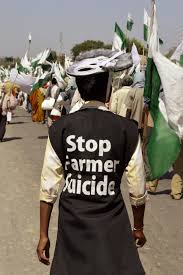
In this blogpost, Vernita Jain, Student, National Law Institute University, Bhopal writes about the reasons as to why farmers are committing suicide in India and what steps is the government taking to deal with the increasing number of suicides.

SUICIDE A SOCIAL PHENOMENON

‘Suicide’, the term suggest killing of oneself voluntary. When a person faces a situation from which he is unable to get out or cope with, the easiest way one finds to run away from such situation is- suicide.

 In a study by Patel et al., it was demonstrated that Suicide in India is a totally different phenomenon from what it is in high-income countries (HICs). Every year, India experiences a number of suicides. The number of suicide in rural areas is almost double those in urban areas, whereas in HICs there is little difference.

In India, the statistics show that there is a constant increase in the number of suicide rates, and the states that account for largest number of suicide are, Maharashtra, MP, Chattisgarh and Karnataka. These five states together accounted for about 90 percent of total farmer suicides.

CAUSES

The problem of farmer suicides has assumed a serious proportion. According to the National Crime Record Bureau (NCRB), 10%of the total suicide rates in India are suicides by farmers.

The Lancet study notes: “Most public attention on suicide in India is focused on suicide in farmers”.

The policy of liberalisation in the Indian economy in the year 1991 led to an “agrarian crisis” and an increase in farmers’ suicides. This policy by the government resulted in the opening of markets was the major cause of ‘agrarian crises’. The number of policies that are introduced by the government was thought to be beneficial for the agriculture, and it certainly changed the face of Indian Agriculture, but such advancement resulted in the increase in the number of Deaths among the farmers. The policy of 1991 has led to changes in aggregate level institutions and public investments.[1]

The changes, brought by the government policy of 1991, increased the cost of inputs, whereas, the price that one gets after production have decreased to a large extent or become far more volatile. The producers with small and marginal landholders, who cultivate cash crops such as coffee and cotton, have been particularly hard hit by these changes.

Vijoo Krishnan of All India Kisan Sabha blames the high input costs of cultivation and falling output costs for the increasing number of suicides. A large number of farmers produce at a loss every year. Farming is becoming risky day by day due to the poor irrigation facility and decreasing subsidies[2].

Advancement in cotton Culture

Cotton cultivation requires relatively large capital expenditure, and it is widely argued that these costs have increased dramatically since the liberalization of the economy.

  • The production of cotton requires large quantities of pesticides. Under the policy of 1991, the government reduced the subsidies in these pesticides which in turn resulted in increasing the price of such.
  • The money to be spent on the irrigation for cotton production is to be a farmers own investment.
  • Due to restrictions put in place by multinational companies, seeds need to be bought every year.

 In many cases, cotton cultivators must borrow money to pay for these capital outlays, and this is particularly true for marginal farmers with very few resources.

Coffee culture

The reason for the losses by cotton production was the increase in the cost of input. However, in the case of the coffee plantation, the reason for the loss was the decrease in the price paid. This is blamed on the purchasing power of multinational companies who continued to sell the end product at a high price.

Indebtedness

Debt makes marginal farmers extremely vulnerable to disruptions such as illness or crop failure as a result of extreme weather or pests[3]. Farmers, when unable to earn money or fulfil the basic requirements of their family, take money from local landlord and moneylenders which result in them getting into the debt traps. When these farmers are unable to return such money, they have no option other than to surrender their land to the big sharks with no means of livelihood left for them.

In the state of Maharashtra, 87% of the families of dead farmers cited indebtedness as an important reason for their difficulties that resulted in the suicide of their relatives.Some observers have suggested that the introduction of genetically modified varieties of crops since liberalization has considerably worsened the situation: the cultivation of such crops is “ecologically vulnerable since it is based on a monoculture of introduced varieties and on non-sustainable practices of chemically intensive farming”.

SUICIDE RATES IN DIFFERENT STATES

This research concentrates on states that have some of the highest suicide rates in the country–such as Andhra Pradesh, Kerala, Karnataka and Maharashtra. Thus, when taken as a whole, this body of research suggests that variations in suicide rates can be explained by the characteristics of the rural political economy.

In a study by Economic and Political Weekly, The vast majority of accounts of farmers’ suicides focus on one of a few relatively small areas of India: the Vidharbha region in eastern Maharashtra[4], the plains of Karnataka and the Telangana region of northern Andhra Pradesh, where farmers’ incomes depend on cotton cultivation; and Wayanad district and neighbouring areas in Kerala, where coffee is the major cash crop.

SUICIDE AND REACTIONS TO IT

Premshankar Meena, a small farmer, killed himself. He didn’t do it  because he was addicted to drugs. In July, when asked if the “lack of support to poor and small farmers by way of greater inputs and better support price for their produce” was the main reason for rising suicides? Radha Mohan Singh, said: “According to NCRB [National Crime Records Bureau], causes of suicides include family problems, illness, drug abuse/addiction, love affairs, barrenness/impotency, etc…” Meena’s family rejected the reasons that agriculture minister, gave for Meena’s suicide. According to them, Meena killed himself because he couldn’t see his damaged crops.

Due to many such cases and the increase in the number of suicides, All India Kisan Sabha organised a protest, which was joined by the farmers of many states Kerala, Karnataka, Andhra Pradesh, Tamil Nadu, Telangana, Maharashtra, Haryana, Punjab, West Bengal, besides Rajasthan and Uttar Pradesh.

MEASURES

The growing concerns regarding the suicide farmers have forced Mr. Dvendra Fadnavis, to launch an integrated scheme to ensure economic sustenance for small and marginal farmers Fadnavis said, “The state has decided to include 25 lakh farmers in the value chain for all major crops.” This scheme by, Mr. Fadnavis, will be with the collaboration of 40 companies that have assured to make investments in agriculture sectors in Maharashtra.

 A new comprehensive policy centred on investment partnership between state government and private sector on one hand and enhancing the irrigation potential on the other is being simultaneously undertaken to enhance the livelihood of farmers.

 To reduce the dependence of farmers on moneylenders, attention had to be paid on the regular income of the farmers.

A need to introduce alternative livelihood like diary, etc. was felt, and the government had started working on such schemes to ensure the survival of farmers even in the situations of crop failures.[5]

The Government had constituted National Commission on Farmers in 2004 under the chairmanship of Dr. M.S. Swaminathan. The major objective of this commission was to devise methods for enhancing profitability, productivity and sustainability of the major farming. Based on the recommendations made by the Commission, the “National Policy for Farmers, 2007” has been formulated and approved by the Government of India. The objectives of this policy, among other things, is to improve the economic viability of farming by substantially improving the net income of farmers in addition to improving productivity, profitability, land, water and support services and provide appropriate price policy, risk management measures.[6]

Main provisions 

Some of the provisions there were introduced by the policy of 2007 were:

 (a) Human Dimension: Focus to be on the economic well-being of the farmers than just on production and productivity and this is to be the principal determinant of Farmers policy.

(b) Definition of Farmers: Expanded to include all categories of persons engaged in the sector so that they can be extended the benefits of the Policy.

(c) Income Per Unit of Water: The concept of maximizing yield and income per unit of water would be adopted in all crop production programmes, stress on awareness and efficiency of water use.

(d) Use of Technology: the introduction of new technologies to enhance productivity per unit of land and water are needed.

(e) National Agricultural Biosecurity System: for coordinating the agriculture bio programme, a system relating to biosecurity system to be set up.

(f) Credit & Insurance: Credit counselling centres to be established where severely indebted farmers can be provided with a debt rescue package to help them out of debt trap. Need for both credit and insurance literacy in villages, Gyan Chaupals to help in the task.

(g) Minimum Support Price (MSP) mechanisms to be implemented effectively across the country so as to ensure remunerative prices for agricultural produce.

(h) Community Foodgrain Banks: To be promoted to help in the marketing of unutilized crops, etc.

CONCLUSION

The problem of farmer suicides has assumed a serious proportion. The toll is increasing year after year. There have been various schemes by the government for the benefit of farmers. Not only the government, but various celebrities like Nana Patekar, have come out and have pledged to help the farmers in drought-affected areas, but still there is not much decrease in the toll of farmers death. So the question here arises is that What should be done to protect farmers?.

There is a need to bring certain changes in the methods of the government, and their policies. Rather than spending afterwards on relief package to deal with farmer suicides, it will be better to take preventive measures to control this crisis. The preventive measures should be addressed on both social and economic fronts. In this connection, the importance of financial literacy, education, counselling, and medical services cannot be over-emphasised for addressing social causes. However, economic causes leading to erosion in farmers income need to be taken up with a sense of urgency. Farmers income is exposed to both production and market risks.

According to Dr. Vikram Patel, a professor at the London School of Hygiene and Tropical Medicine, he thinks that suicide should be considered as a public health issue. He thinks to treat suicide as a public health issue it would help the government to take steps for breaking a cycle of desperation that a large number of Indian farmers face.

In order to decrease the situation of indebtedness among the farmers, it is necessary that, keep a close watch on level and trends of indebtedness of farmers.

It is very important to take care of the production risk that might take place due to crop failure. This could be done with the help of Agricultural Insurance Company with crop damage estimates at the block or sub-block levels. Needless to say, estimates at the individual farm level are imperative to help the affected.

There is an absence of any mechanism to address market risk. Therefore, there is a need to bring changes in the market reforms, so that the deals between farmers and the buyers are fair.

As pointed out earlier the main cause of farmer suicides was indebtedness. Hence, we need to keep a close watch on level and trends of indebtedness of farmers.

As farmer suicides is a matter of grave concern for a fast developing country and a challenge to the well-planned existing financial infrastructure, and the responsibility for this action lies on the shoulders of village officials like local Revenue. They should be entrusted with the responsibility to enquire about the financial health of all the farmers. They would not only be responsible for enquiries but, also for the counselling of distressed farmers and help them with any bank proceedings, in case they find them in any debt trap.

[1] Mishra S. Farmers’ Suicide in Maharashtra. Econ Pol Wkly. 2006;41:1538–1545.

[2] http://www.bbc.com/news/magazine-21077458.

[3] anhati Collective. Farmer suicides in India: a policy-induced disaster of epic proportions.http://sanhati.com/excerpted/4504/

[4] Mishra S, Risks, Farmers’ Suicides and Agrarian Crisis in India. Indira Gandhi Institute of Development Research. Mumbai: Working Paper; 2007. Is There A Way Out?

[5]http://indianexpress.com/article/cities/mumbai/government-working-on-integrated-policy-o-stop-farmer-suicides-devendra-fadnavis/#sthash.Y4E8e2G0.dpuf

[6] https://psainath.org/farm-suicide-trends-in-2012-remain-dismal/

Download Now

Role Of Shadow Directors

0
Private Limited Company


company-975971_960_720

In this blogpost, Sudhi Ranjan Bagri, Student, National Law Institute, Bhopal writes about who are shadow directors, their status and their duties towards the company

Introduction

It is generally presumed that the Board of Directors, control the affairs of the company, and all the transactions are done by them only in the name of the company. They occupy a fiduciary position and act as trustee of the stakeholders. As a result, the board of directors is expected to act in a diligent manner and discharge their duties.

The Managing Directors or Whole-time Directors have more authority along with duties as they act in their dual capacity of being directors as well as employees with substantial powers over the affairs of the Company. Independent Directors, on the other hand, are those whose only connection with the company the directorship which they hold in that company. They are appointed only to ensure the compliance with corporate governance norms.

However, there exists another class of Directors which getaway with the propositions of law and receives unjustified benefits/advantages by avoiding various provisions. Considering such situations, the Companies Act has taken care of such individuals, who are not a member of Board of Directors, yet maintain complete control over the affairs of the company. Such directors are circumstantially categorised under the Companies Act, 2013, as “Person in accordance with whose instructions the board is accustomed to act” and can also be deemed to be Director of a Company. However, in commercial phraseology, such persons are defined as a “Shadow Director”.

A Shadow Director is an “officer” within the definition of the terms in Section 2 (59) of the Companies Act, 2013, as it includes, “any person in accordance with whose directions or instructions the Board of Directors or any one or more of the Directors is or are accustomed to act”.

The Companies Act,2013, deals with such Shadow Directors under various sections. A few of these have been summarised below:

  • Section 2(60)(v) wherein, the meaning of “officer who is in default” includes within itself any person in accordance with whose directions or instructions the Board of directors of the company usually acts.
  • Section 219(c) which is in the nature of empowering the inspectors to investigate into affairs of any company, which is or whose Board is usually acting in accordance with the instructions or orders of any Director of the company under investigation.
  • Section 303(1) explanation (1), of Companies Act, 1956, wherein details of any person in accordance with whose orders or instructions the Board of a company usually acts is required to be entered in the Register of directors.
  • Section 307(10)(a), of Companies Act, 1956, wherein details of shareholdings by Directors needs to be maintained including holdings by any such persons in accordance with whose orders or instructions the Board of directors of a company is accustomed to act.

Status of a Shadow Director

To call someone as a shadow director, the proof that the Board is used to act in accordance with the orders, directions and advice of that person is required to be established.Though this is something which cannot be easily proved, so following parameters can be applied to determine the actual status of the person exercising the control.

Continuity – Whether a pattern, of the Board acting in accordance with the orders of the alleged Shadow Director, can be observed.

Intention -The intention of the alleged Shadow Director to control the members of the Board must be evident. It is said that the Shadow Directors must be like the puppet master who controls the actions of the Board. However, it need not be established that actual instructions or directions were issued to the Board of Directors of the company.

Majority to follow – The next parameter is, determining the compliance to the orders of the Shadow Directors. The directions or the orders which the Shadow Directors are passing must be duly followed or complied with by the Board. However, this doesn’t mean that every member of the Board must act in accordance to those orders/instructions, the act of majority of members of the Board will be sufficient to form a shadow directorship.

Direct involvement in taking decision/s and not merely in an advisory role – This parameter is designed to cover all those people who have a decision-making role in the affairs of the company. However all the persons who give advice cannot said to be Shadow Directors, like the advice given by any person in his professional capacity or as a result of a business relationship with the company would not make him liable to fall within the definition of Shadow Director.

There is a specific provision in regard to such advice given under professional capacity. Section 7 of The Companies Act, 1956, excludes a professional according to whose directions or instructions the Board of directors of a company is accustomed to act, by reason only that the Board acts on advice given by him in a professional capacity and not beyond.

Duties of the Shadow Director

Just because Shadow Director of the company holds such an important position in the company, he has certain duties to the company[1]:

The duties of the Shadow Director are not retrospective to the time when the Directors began to act in accordance with his instructions.

  • A Shadow Director does not have any fiduciary duty towards the company, nor does he directly deal with the assets of the company.
  • It is the duty of a Shadow Director to declare at the board meeting of the company, all his interest in any contract that is entered or to be entered by the company.
  • He needs to disclose his interests in any debentures or shares of the company.
  • The Company Law places restrictions on any property related and financial transactions between that particular company and the shadow director, or with any person who is related to the shadow director.

Conclusion

The main objective of the makers of the Companies act to put the concept of shadow directors was to prevent the avoidance of the duties and liabilities of persons who are in shadow but who have the actual control of the company. If it happens that the majority number of directors follow the instructions of a particular person, in such a case the company is most likely to work on the instruction of that particular person and such person is called a Shadow Director. So logically he also should be subjected to same duties and liabilities to which the Board is subjected to.

[1] Ultraframe (UK) Ltd v Fielding [2005 EWHC 1638](ch)

Download Now

Trial By Media

0

press

In this blogpost, Harsha Jeswani, Student, National Law Institute Univesity, Bhopal writes about what is media trial, fair trial vs. fair speech and media trial vs. free and fair administration of justice.

INTRODUCTION

Media is recognised as the fourth pillar of Democracy after Legislature, Executive and Judiciary.  It plays an important role in creating awareness among people and is capable of changing the viewpoint of society. Therefore, in order to ensure democracy, there is a need for free and independent media. Part III of the Constitution of India does not specifically talk about Freedom of Press. But in a number of cases Supreme Cout held that the freedom of speech and expression enshrined in Article 19(1) of the Constitution includes freedom of the press.

The role of media is to keep the public informed. However, these days the role of media is often criticised especially in reporting criminal matters. The media sometimes go beyond its domain and starts interfering with the functions of the court. So should the media stop reporting criminal cases that directly or indirectly results in interference with the powers of court?

MEANING

Media has started functioning as a public court. It now conducts a parallel trial with the court. It fails to recognise the gap between an accused who is presumed innocent until proven guilty and a convict whose guilt is proved beyond reasonable doubt.

Trial by Media generally refers to a practice where the media starts doing its own investigation and forms a public opinion against the accused even before a trial commences. In this way, it prejudices the trial thereby infringing the right of the accused to a fair trial. Thus, the accused who must be considered as innocent until proven guilty is now presumed as guilty thereby violating his rights.

FAIR TRIAL v. FREE SPEECH

Article 19(1)(a) of the Constitution guarantees the fundamental right to freedom of press and Article 21 of the Constitution recognises the right of an accused to free and fair trial. A balance needs to be maintained between the two fundamental rights. Right to a fair trial is the absolute right of every individual.  Therefore, it cannot be done away with in any case. On the other hand freedom of speech and expression under Article 19 (1) is subjected to reasonable restrictions given under Article 19 (2) of the Constitution and Section 2 (c) of the Contempt of Court Act. Hence, it is evident that right to fair trial is more important as the dignity of an individual is always given preference over the right to free speech and expression and cannot be compromised in any case.

Media should also function on these principles. A fair trial is not purely private benefit for an accused – the publics’ confidence in the integrity of the justice system is crucial.[1] The right to a fair trial lies at the heart of the criminal justice system of India. It recognises several other rights such as the right to be presumed innocent until proven guilty, the right not to be a witness against oneself, the right to a public trial, the right to legal representation, the right to speedy trial, etc. The Supreme Court in the case of Zahira Habibullah Sheikh v. State of Gujarat[2] laid down that a fair trial must always be conducted before an impartial judge. A fair trial is a trial where the chances of biases for or against the accused or the witness are eliminated.

MEDIA TRIAL v. FREE AND FAIR ADMINISTRATION OF JUSTICE

By conducting a parallel trial with the court, media often prejudices the judicial administration of a country by influencing the opinion of the judges. Sometimes, excessive publicity given to an accused or suspect by media before trial commences prejudices a fair trial thereby characterising him as a person who actually has committed the crime. This results in undue interference with the “administration of justice”, calling for proceedings for contempt of court against the media. Recently, Justice Joseph said that Media should play a constructive role in the betterment of the legal system while addressing a seminar on “Current Issues before the legal profession and the judiciary”.[3] He also said that media must exercise due care and caution while reporting criminal matters to avoid any kind of disrespect to the Constitution and the judicial system in the country.

One of the examples in this respect is the case of Aarushi Talwar. In this case, media has played a major role in incriminating parents without any sufficient evidence. Likewise, there are many instances where the media has changed the whole way of perception. Media is often blamed of conducting the trial of the accused and passing the judgement even before the court thereby interfering with the judicial process.The trial is essentially a process to be carried out by the courts. Therefore, media must confine its role to reporting matters and not assuming the role of the court.

CONCLUSION

It cannot be denied that media is considered as a voice of the people. It plays a positive role whenever justice is denied. Some famous criminal cases that would have gone unpunished but for the intervention of media are Priyadarshini Mattoo case, Jessica Lal case, Nitish Katara murder case, etc. However; nowadays media is so much sensationalised that it often exceeds its powers and assumes the role of the court. There are cases where the accused is denied the right to a fair trial due to the unnecessary involvement of media. It is, therefore, important that the media while acting as a watchdog must ensure free and fair administration of justice. The Law Commission in its 200th report emphasised the need to strike a balance between the fundamental right of freedom to speech and expression and the right to free and fair trial of the accused.

[1] Gisborne Herald Co. Ltd. V. Solicitor General, 1995 (3) NZLR 563 (CA)

[2] (2004) 4 SCC 158

[3] http://www.thehindu.com/news/national/kerala/trial-by-media-is-contempt-of-court/article7491331.ece

Download Now
logo
FREE & ONLINE 3-Day Bootcamp (LIVE only) on

How Can Experienced Professionals Become Independent Directors

calender
28th, 29th Mar, 2026, 2 - 5pm (IST) &
30th Mar, 2026, 7 - 10pm (IST).
Bootcamp starting in
Days
HRS
MIN
SEC
Abhyuday AgarwalCOO & CO-Founder, LawSikho

Register now

Abhyuday AgarwalCOO & CO-Founder, LawSikho