Download Now
Home Blog Page 1773

Laws On Smoking In Different States In India

0


download smoking

In this blogpost, Saumya Agarwal, Student, Amity Law School, Delhi writes about laws on smoking in different states in India.

Because tobacco is responsible for an impressive one-third of cancers.” – Bernard Levin

INTRODUCTION

What is tobacco?

Tobacco is a green, leafy plant that is grown in warm climates. After it is picked, it is dried, ground up, and used in different ways. It can be smoked in a cigarette, pipe, or cigar. It can be chewed (called smokeless tobacco or chewing tobacco) or sniffed through the nose (called snuff).

Tobacco use is a risk factor for many diseases, especially those affecting the heart, liver, and lungs, as well as many cancers. In 2008, the World Health Organization named tobacco as the world’s single greatest cause of preventable death.[1]

Tobacco is used in India in many forms. Only 20% of the tobacco is used in the form of cigarettes.  The tobacco use is more varied in our country than in any other country. The traditional form of tobacco is used in the form of bidi, a hand-roller, filterless tobacco cigarette. Tobacco is also used in hookahs, as gutka, as pan masala, etc.

Smoking is banned in public places in India. According to a report submitted by World Health Organization (WHO), 12% of the world’s smokers are Indians[2]. The tobacco products include cigarettes, cigars, cheroots, bidis, cigarette tobacco, pipe tobacco, hookah tobacco, chewing tobacco, pan masala or any chewing material having tobacco as one of its ingredients.

LAWS RELATING TO SMOKING AND OTHER TOBACCO PRODUCTS

 Presently, smoking is governed by the Cigarettes and Other Tobacco Products (Prohibition of Advertisement and Regulation of Trade and Commerce, Production, Supply and Distribution) Act, 2003 and Prohibition of Smoking in Public Places Rules, 2008. However, the Health Ministry is seeking to get it amended.

The Act strictly prohibits the direct or indirect advertisement of cigarettes and other tobacco products in any form- print, electronic or hoardings. One of the major aspect that the Act covers is the ban on the sale of tobacco near the educational institutes.

RECOMMENDED AMENDMENTS

The Health Ministry has put forward certain recommendations to amend the Act. Firstly, raising the minimum age of a person who is buying tobacco products from 18 years to 21 years. Secondly, it is proposed to raise the fine to Rs 1000 from Rs 200 on smoking in public places as well as recommending removal of designated smoking zones in hotels and restaurants. Also, the government seeks to ban the sale of loose cigarettes. According to a survey conducted by a leading market research firm, 70% of the cigarettes sold in India are sold in the form of loose cigarettes.[3]

These are part of the recommendations made in Cigarettes and Other Tobacco Products (Prohibition of Advertisement and Regulation of Trade and Commerce, Production, Supply and Distribution) (Amendment) Bill 2015.

PROBLEMS

According to the Act, “public place” has been defined under Section 3 (l) as any place to which the public have access, whether as of right or not, and includes auditorium, hospital building, railway waiting room, amusement centers, restaurants, public offices, court buildings, educational institution, libraries, public conveyances and the like which are visited by the general public but does not include any open space.

Section 4 says “No person shall smoke in any public place: Provided that in a hotel having thirty rooms or a restaurant having a seating capacity of thirty persons or more and in the airports, a separate provision for the smoking area or space may be made.”

After reading the definition, the first thing that comes to our mind is whether smoking on roads is allowed?

According to the definition of public places stated in the Act, the roads are not included in the definition. So does the court think it is okay to smoke in the roads? What is the use of the Act when the government allows the people to smoke and increase the air pollution? If people are smoking on the roads, then it is likely that more people will become passive smokers.

Experts say that roads and pavements should be included in public places, so technically smoking in public places should be banned. The definition of a public place in the act is translucent which can be misused by the people in general so there should be clarity in the definition. Smoking on pavements affects the old, allergic/asthma people, joggers, infants, etc.

This article seeks a more unambiguous definition as there are so many lives that are affected by it. When a person smokes, it does not only harm him, but it also harms the people around him.

The states of Madhya Pradesh, Kerala, Bihar, Rajasthan, Maharashtra, Haryana, Chhatisgarh, and Jharkhand have implemented the aforesaid provision as envisaged under FSSAI regulation (2.3.4), to enforce a ban on manufacture, sale and storage of Gutka and Pan Masala containing tobacco and nicotine, in their States.

ANTI-TOBACCO LAWS IN DIFFERENT STATES

  • Delhi-

Under the Delhi Prohibition of Smoking and Non-smoking Health Protection Act, 1996, a person should not smoke in public places, in public vehicles or public work or use. The offence is punishable with a fine which may extend to one hundred rupees and in the case of the second or subsequent offence shall be punishable with a minimum fine of two hundred rupees which may also extend to five hundred rupees.

No person should advertise in any place and any public service vehicle which may promote smoking or the sale of cigarettes and beedis, etc. Also, no person shall sell cigarettes, beedis or any other tobacco product to any child below the age of eighteen years. Further, no person shall store, sell or distribute cigarettes or beedis or any other such smoking substance within an area of one hundred metres around by college, school or educational institution. All the above offences should be punishable with fine which may extend to five hundred rupees and in the case of a second or subsequent offence shall be punishable with imprisonment which may extend to three months or with a minimum fine of five hundred rupees but may extend to one thousand rupees or both.

  • Maharashtra-

Maharashtra does not have a separate anti-smoking law. But it has Maharashtra Opium Smoking Act, whoever smokes opium shall on conviction be punished with imprisonment for a term which may extend to six months or with fine which may extend to one thousand rupees or with both.

  • Tamil Nadu-

The Tamil Nadu State Government has acted in a notification in 2001, banned the sale of chewing tobacco, pan masala and gutkha containing tobacco in any form, in the state in the interest of public health under Section 7(4) of the Prevention of Food Adulteration Act, 1954. The state passed an Anti-Tobacco legislation, i.e.,., The Tamil Nadu Prohibition of Smoking and Spitting Act, in February 2003, to provide for the prohibition of smoking and spitting in public places and public vehicles.

  • Punjab

The State Government notified the Central Act in the State Gazette in 2004.

Also, the state has set up a Tobacco Control Cell in the office of Director Health Services, Punjab. The Punjab Government has notified as a number of people to take cognizance of the matter under the Act. They are:

  • Drug Inspector Department of Health & Family Welfare at District Level.
  • Superintendent of police or his representative not below the rank of Sub-inspector at the District level.
  • Civil Surgeons of each District & Medical Superintendent of Medical Colleges and Hospitals of Patiala, Amritsar & Faridkot.
  • All Senior Medical Officers of the Civil Hospitals & Primary Health Centers in the State of Punjab.

Haryana

The Haryana Government has completely banned the manufacture and sale of all the products containing tobacco in the state, The State Food and Drug Administration has also issued a notification regarding the same. Violation of the ban is punishable with imprisonment up to six months or fine up to 1 lakh rupees.

Tobacco is injurious to health. Say NO to tobacco.

[1] http://www.who.int/tobacco/mpower/mpower_report_forward_summary_2008.pdf

[2] http://www.mapsofindia.com/my-india/government/amendments-proposed-in-anti-smoking-law-in-india

[3]http://articles.economictimes.indiatimes.com/2015-01-14/news/58066241_1_loose-cigarettes-tobacco-products-voluntary-health-association

Download Now

Analysis Of Salman Khan:2002 Hit And Run Case

4


salmaan khan

In this blogpost, Saumya Agarwal, Student, Amity Law School, Delhi analysis the Salman Khan hit and run case

SALMAN KHAN: WHO IS HE?

Abdul Rashid Salim Salman Khan better known as Salman Khan as said by Wikipedia, has a diaspora of fan following in India and worldwide. Lovingly known by his fans as Bhai, he is one of the most popular and commercially successful actors in Hindi film industry. Besides being in the news for his films, the actor is in the news for a lot other things like his controversies be it his 2002 hit and run or 2006 blackbuck hunting. The verdict given by the Bombay High Court in the hit and run case acquitted him, but the Maharashtra government has appealed in the SC.

WHAT REALLY IS THE CONTROVERSY?

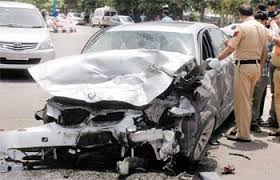
On the night of 28th September 2002, Salman Khan’s white Toyota Land Cruiser crashed into the pavement near the American Express Bakery at Hill Road in Bandra, Mumbai killing one person and injuring four others. His blood samples were taken which showed he drank more than the permissible limit. Subsequently, he was arrested but was granted bail soon after. He was charged with various provisions under IPC, Motor Vehicles Act, 1988 and Bombay Prohibition Act, 1949.

Provisions

  • IPC – 304A (rash and negligent driving which has a punishment uptil two years), 279 (rash driving), 134(abetment of assault), 337 and 338(causing grievous hurt by endangering life or personal safety), 427(mischief).
  • Motor Vehicles Act- driving without licence
  • Bombay Prohibition Act-driving after liquor consumption

Earlier, the case was filed under Section 304A (rash and negligent driving) which was later in 2003 was converted to Section 304 Part (II) (culpable homicide not amounting to murder) on the charges filed by Bandra Metropolitan Magistrate Court’s rules. The Sessions Court, which had earlier, rejected the plea asked the Magistrate to frame charges. The SC agreed with the Magistrate to apply Section 304 Part (II) and rejected the Bombay HC’s view and said it was “too premature a finding and ought not to have been at this stage.”

During this time, the key witness also the actor’s bodyguard Ravindra Patel, who filed the first FIR, died of TB. The witnesses claim that the actor was on the driving seat but the actor denied the claims and said that his left door was jammed, and so he had to get out of the driver’s seat.

When asked whether he was sitting in the driver’s seat, he says he was “briefly” when one driver got out and the other another, Ashok Singh, took over.

KEY POINTS

  • Salman Khan denied drinking; however he didn’t deny going to a bar in Juhu’s JW Marriott Hotel and another bar called Rain in Bandra. The waiter claims that he ordered rum while the actor claims it to be water. The bills made out of the drinks and food was not his. It could not be proved what exactly was it, as it was ‘clear liquid’. But the chemical analysis report suggests that he was drunk at the time of the accident.
  • The ‘star’ singer Kalaam Khan was missed out. The singer’s lawyers gave the defence that he was in England. But Advocate Abha Singh appearing for Santosh Dhandekar, an activist who filed a case for alleged perjury (making false demand) application against the police, saying that under Section 275 of CrPC a witness can be asked to depose via audio or video conference. She claimed that he was deliberately not being called.

“By not examining Kamaal Khan, police tried to cover (hide) an important piece of evidence which might have thrown light on who was driving the car,” she said. She also claims that the prosecution also dropped his name from the list without giving any reason.

  • Dhandekar’s perjury application also claimed that the wrong set of doctors were also brought before the court who claimed that they had conducted the post-mortem on the deceased. This resulted in three years’ delay in the case.
  • Also, the Mumbai police claimed that the case diary of this particular case has been lost along with other 55 of the 63 case related documents which were already missing.
  • Later on in a dramatic twist in the case, Salman Khan claimed that he was not driving, and it was his driver, Ashok Singh who was driving. The driver on the very next day came and confessed as a defence witness that it was truly him and not the actor who was behind the wheel. The defense claimed that the driver took 13 years to come before the Court.
  • The actor claimed that Bala Shankar, the person who took his samples was not an expert himself. Bala Shankar had claimed that the actor had 62mg of alcohol in his blood sample which was higher than the permissible limit and that he was drunk.

Considering all these points the Mumbai’s Sessions Court announced five years’ rigorous imprisonment to the actor against which the actor got an interim bail for two days by the Bombay High Court.

The actor appealed against the conviction of the Session Court in the Bombay HC.

THE VERDICT

The Bombay HC gave the judgment on 10th December 2015. The Court completely disregarding the evidence given by the eyewitness Ravindra Patil and came to the conclusion that the prosecution could not prove the actor’s guilt beyond reasonable doubt. It could not prove that the actor was under the influence of alcohol or was driving. Justice Joshi further said, “it is unnatural on the part of the conduct of Patil to say so many things that he has not said in the FIR, there has been a material improvement on drunkenness and asking Salman to drive slowly… it is more strange from the witness.”

The judge also said that Ashok Singh was Salim Khan’s driver and not Salman’s who was interrogated by inspector Kishan Senghal who said that his statement was not recorded.

However, the Court did not accept Singh’s version that was driving and not the actor. The trial court had noted that Singh had appeared after 13 years of the incident to the court.

The Court also did not accept the fact that the tyre burst and said that the prosecution has not been able to prove the fact that the tyre burst either before the accident or after the accident.

According to Justice Joshi in the case, “On the basis of the evidence produced by the prosecution, the appellant cannot be convicted, no matter how differently the common man thinks.”

QUESTIONS THAT REMAIN UNANSWERED

  • Who was driving?

The Defense held that Salman Khan wasn’t drunk. He wasn’t even driving. The Maharashtra Government chose to take the case to the Supreme Court but as of now the High Court has rejected the theory that Ashok Singh, who took 13 years to speak that he was behind the wheel. By acquitting Salman and not accepting that Ashok was behind the wheel, the question remains unanswered.

  • What happened to Ravindra Patil?

Patil was under immense pressure to change his statement in the court, but he didn’t., all bones and died the same year. He was rejected by his own people. He started disappearing from his job. He suffered from TB and weighed a shocking 30kg. The court dismissed his statement as being unreliable.

OTHER SIMILAR CASES[1]

  • Alister Anthony Pareira Case where Mr. Pareira was convicted for killing seven people on Mumbai’s seafront Carter Road in 2006.

A Supreme Court Bench comprising Justices RM Lodha and Jagdish Singh Khehar ruled that “a person responsible for a reckless or rash or negligent act that causes death which he had knowledge as a reasonable man that such act was dangerous enough to lead to some untoward thing and the death was likely to be caused, may be attributed the knowledge of the consequence and may be fastened with the culpability of homicide not amounting to murder and punishable under Section 304 Part II IPC.”

  • Sanjeev Nanada Case where Mr. Nanda was drinking and driving and had crushed six people under BMW in Delhi in 1999.

The Court held “Drunken driving has become a menace… Every day (it) results in accidents and several human lives are lost; pedestrians in many of our cities are not safe. Late night parties among urban elite have now become a way of life followed by drunken driving…”

All the three cases have one thing in common- all the rich, influential people are drunk at the time of the incident.

CONCLUSION

We all know what happened that night and who was behind the wheel. But as the judgment has been in favor of the actor, the victims feel helpless. They demand justice and compensation from the actor. Most of them are permanently injured and cannot work now. They feel that if the Government is not going to help them, then who will? “If the Government couldn’t do anything, what will they do?” they say. They have waited long for justice. They say “if the Court had to acquit him they could have done it long time back”. It is the duty of the state to protect its people.

The Maharashtra CM Devendra Fadnavis said on 23rd December that Government will appeal against the verdict in the SC. The appeal has already been filed.

[1] http://indianexpress.com/article/explained/hit-and-run-case-salman-khan-set-to-appeal-how-have-courts-seen-ipc-304-ii/

Download Now

What Are Double Tax Avoidance Agreements

2

images (3)

In this blogpost, Rajnandini Mahajan, Student, RGNUL, Punjab writes about what is double taxation agreement, types of DTAA, important clauses and how to apply.

Double taxation refers to the legal regime which mandates levying a tax by two countries on the same financial transaction or income. Double taxation usually occurs when a business or individual of one country indulges in a financial exchange with another country. The value of the income or the item involved in the exchange is taxed both in the country of residence (where the business is incorporated, or the individual is the citizen of) and the source country (the other country which is involved in the transaction). This is a major impediment for the businesses that aim at expanding in different countries. Conversely, it also discourages foreign investments. To overcome this problem of double taxation, countries often enter into Double Taxation Avoidance Agreement with each other. These agreements are usually governed by the principles of Public International Law.

Tax Reliefs under DTAA

A DTAA is needed because there can be overlapping of the tax laws of different countries. Tax reliefs under DTAA can be granted in the following ways:

  • Exemption from taxes in both the countries.
  • Tax levied in only one of the countries
  • The transaction is taxed in both the countries. However, one of the countries gives credit for tax paid under its tax regime against the tax payable in the other country.

In India, relief against Double Taxation is given under Section 90 and 91 of Income Tax Act, 1961. Under Section 90, the government offers tax reliefs through a bilateral agreement with different countries through mutually agreed upon terms. It is done by two methods- by providing a complete exemption from payment overlapping taxes (exemption method) or by giving the taxpayer a concession on his tax payable in India (tax credit method).

Types of DTAA

  • Comprehensive DTAA

Under Comprehensive DTAA, the exemption is granted for all the taxes payable on any income such as wealth tax, gift tax, income tax, etc. India has entered into a Comprehensive Double Taxation Avoidance Agreement with 88 countries including Singapore and Nepal.[1]

  • Limited DTAA

Limited DTAA grants exemptions only for certain types of taxes. For example, India’s DTAA with Pakistan is limited to shipping and aircraft profits only. India has limited DTAA with 16 countries such as Afghanistan, Saudi Arabia, etc.[2]

Models of DTAA

Over the period of time, several models have been developed for DTAA to ensure uniformity and exhaustiveness in tax treaties. OECD Model and UN Model are the most prominent models of DTAA.

OECD Model

Organization for Economic Cooperation and Development (OECD) developed a model for the agreements regarding avoidance of double taxation. It is usually adopted by the developed countries. It lays emphasis on the residence principle .i.e. the right of the country of residence to impose a tax.

UN Model

By virtue of United Nations Model Double Taxation Convention between Developed and Developing Countries, 1980, a new model agreement for Double Taxation Avoidance was chalked out with mutually agreeable terms between the developing and the developed countries. It gives more advantage to the source country .i.e. the country where the income is generated. Nowadays, countries follow a combination of both the models to suit their needs.

Important Clauses of a DTAA

Usually, a typical DTAA comprises of the following clauses:

  • The initial articles of the agreement deal with the scope of the agreement .i.e. the kinds of taxes, persons and duration covered by the agreement.
  • The next few articles deal with definitions of important terms such as ‘residence’, ‘permanent establishment’ and other relevant general definitions.
  • The substantive clauses deal with kind of transactions and applicability of the agreement on those taxes.
  • After these, jurisdiction clauses along with the double taxation avoidance clauses are discussed.
  • Lastly, miscellaneous provisions are discussed.

How to apply?

The benefits under the DTAA can be availed by NRIs and business institutions. In order to apply for it, following steps are needed to be followed:

  • Firstly, a person needs to determine whether his income and country of residence are covered under the DTAA
  • After that, he can submit relevant documents which include self-attested copy of PAN card, visa and passport and self-declaration-cum-indemnity form along with a copy of proof that the taxpayer is a person of Indian origin in case the passport has been renewed during the financial year.
  • Tax Residency Certificate (TRC) has to be obtained from the tax authorities of the country of residence.
  • Lastly, the TRC to be submitted to the deductor (which is bank in most of the cases).

In this era of globalisation, DTAA is an effective tool to encourage foreign investment as well as international trade.

[1] http://pib.nic.in/newsite/erelease.aspx?relid=93330

[2] http://communities.nasscom.in/file_cabinet/files/610754/download/DTAA%202.pdf?m=1368865331

Download Now

What Is Cyber Warfare

0

cyber (1)

In this blogpost, Konina Mandal, Student, School Of Law, KIIT University, Bhubaneshwar, writes about what is cyber warfare, how is it a new weapon, incidents around the world and the position in India.

INTRODUCTION

With the advent of sophisticated technology and greater knowledge of the intricacies of  cyber security, it is not very difficult to imagine situations  which were thought to exist only in science fiction movies. Situations, where  an enemy attacks a country’s computer system controlling  a major dam causing a flood; or where the enemy corrupts the computer program which controls the country’s fighter planes or drones, and consequently the system fails and starts attacking combatants and civilians indiscriminately, are slowly turning into reality in the form of cyber warfare.

When we speak of ‘war’, traditionally, it deals with the commitment of hostilities that involve arms and more precisely involves an attempt to physically wound or kill enemy combatants. Conforming to the layman’s understanding of war, cyber warfare is also a kind of contest of force and perhaps even of arms. However, such attacks are rarely public, and the point is not always to wound or kill enemy soldiers, but to destroy property.[1] The desired effects of cyber attacks are mostly indirect, which means what would normally be considered secondary effects are in fact of central importance.[2] So naturally, the destruction of property, produces  suffering among civilians and perhaps also combatants as foreseeable secondary effect.[3]Countries’ growing dependence on computer networks hence has increased their vulnerability to cyber warfare.

THE NOTION OF CYBER WARFARE : What is Cyber Warfare?

Cyber warfare has been defined by government security expert Richard A. Clarke, in his book Cyber War (May 2010), as “actions by a nation-state to penetrate another nation’s computers or networks for the purposes of causing damage or disruption.” The Economist describes cyber warfare as “the fifth domain of warfare[4],” or even more simply put it can be defined as warfare conducted in cyberspace through Computer Network Operations (CNO) as means and methods.[5] The term“cyber warfare” contains two elements: cyber or cyberspace and warfare. Cyberspace can be defined as “the global digital communication and information transfer infrastructure” [6] and “‘warfare’ is commonly understood as referring to the conduct of military hostilities in situations of armed conflict”[7] There are three main methods of cyber warfare: sabotage, electronic espionage (stealing information from computers via viruses) and attacks on electrical power grids. The third is perhaps most alarming. Cyberspace is not a physical place, unlike a real combat zone, but “it is a ‘virtual interactive experience’ accessible regardless of geographic location”[8]. Myriam Dunn Cavelty defines cyber warfare as “conducting and preparing military operations according to information  related principles. It features formal military forces pitted against each other, and aims at disrupting information and communications systems on which the adversaries rely in order to know themselves”[9]. Thus, cyber warfare is different from the kinetic attacks used in conventional warfare as it is conducted in a different way, even though the goals are the same[10].

CYBER WARFARE A NEW WEAPON: How and Why?

The reason why cyber warfare is becoming an important weapon is that the growing dependence of modern militaries “upon secure, timely flows of massive amounts of information” means that any “disruption would quickly have a crippling effect on the ability to fight”[11]. “Attacking a nation’s critical infrastructure allows a hostile state to erode the victim state’s internal operational viability” and consequently also the infrastructure that supports military actions[12]. Furthermore, cyber warfare primarily involves an attack on a computer system using another computer[13]. This means that cyber warriors often act remotely and launch the attack from within the territory of their own state, thereby reducing, or even eliminating, the likelihood of casualties to their own forces[14]. Moreover, cyber warfare may cause catastrophic effects:“Computer bugs bring down military e-mail systems; oil refineries and pipelines explode; air-traffic-control systems collapse; freight and metro trains derail; financial data are scrambled; the electrical grid goes down . . . orbiting satellites spin out of control. Society soon breaks down as food becomes scarce and money runs out”[15].

INCIDENTS OF CYBER WARFARE AROUND THE WORLD

Cyber warfare has been around as early as 1982. At the height of the cold war, in June 1982, an American early-warning satellite detected a large blast in Siberia.
Computer code stolen from a Canadian company by Soviet spies caused a Soviet gas pipeline to explode. The code had been modified by the CIA to include a logic bomb which changed the pump speeds to cause the explosion. This was one of the earliest cases of cyber war.

With the tap of a button and a few swift keystrokes, cyber warriors can cause grave damages.

In 1991, it was reported by air force that a computer virus named AF/91 was created and was installed on a printer chip and made its way to Iraq via Amman, Jordan. Its job was to make the Iraqi anti-aircraft guns malfunction.

The period between 1998-2000 witnessed the famous attack named ‘Moonlight Maze’. Moonlight Maze refers to an incident in which U.S. officials accidentally discovered a pattern of probing of computer systems at the Pentagon, NASA, Energy Department, private universities, and research labs that had begun in March 1998 and had been going on for nearly two years. Sources reported that the invaders were systematically marauding through tens of thousands of files — including maps of military installations, troop configurations and military hardware designs.

The year 2003 saw the rise of the ‘Titan Rain’, where hackers gained access to many U.S. computer networks, including those at Lockheed Martin, Sandia National Laboratories, Redstone Arsenal, and NASA. These attacks were labelled as Chinese in origin, although their precise nature (i.e., state-sponsored espionage, corporate espionage, or random hacker attacks) and their real identities (i.e., masked by proxy, zombie computer, spyware/virus infected) still remain unknown.

 In 2006, Israel alleged that cyber-warfare was part of the war against Hezbollah, where several countries in the Middle East used Russian hackers and scientists to operate on their behalf to attack the Israel Defense Force, (IDF).

The year 2007 turned out to be very eventful with respect to cyber warfare. 3 serious cases of cyber warfare were observed. First, McAfee, Inc. alleged that China was actively very involved in “cyberwar” and accused it of carrying cyber-attacks in India, Germany and the United States, second, Estonia came under cyber attack in the wake of the relocation of the Bronze Soldier of Tallinn. Estonian authorities, including Estonian Foreign Minister Urmas Paet accused the Kremlin of direct involvement in the cyber attacks and third, United States government suffered an “an espionage Pearl Harbor” in which an “unknown foreign power…broke into all of the high tech agencies, all of the military agencies, and downloaded terabytes of information.

Cyber warfare requires considerable effort and organization, which even very developed nations are willing to put in order to extract crucial information from other countries.  A cyber spy network, dubbed GhostNet, using servers mainly based in China had tapped into classified documents from government and private organizations in 103 countries, including the computers of Tibetan exiles in 2008. However, China has denied such a claim. Again, Operation Aurora, a cyber attack which began in mid-2009 and continued through December 2009, was first publicly disclosed by Google on January 12, 2010, and was believed to be originated from China. The attack was  aimed at dozens of other organizations, of which Adobe Systems, Juniper Networks and Rackspace have publicly confirmed that they were targeted.

Most recently in the year 2010, Iran was attacked by the Stuxnet worm, thought to specifically target its Natanz nuclear enrichment facility. The worm is said to be the most advanced piece of malware ever discovered and significantly increases the profile of cyber warfare.

These incidents clearly point towards the gravity of how cyber warfare has become a major threat to every country in the world.

CYBER WARFARE IN INDIA

India is a large country with countries like China and Pakistan bordering it. In today’s technologically advanced era a mere look at the size of armed forces and military equipment is not enough. Cyber war deterrence is also something that we should start thinking about. It is only recently that the new Indian Government also recognized the importance of cyber security and The Department of Information Technology has in response created the Indian Computer Emergency Response Team (CERT-In) in 2004 to thwart cyber attacks in India. In 2004 itself there were 23 reported cyber security breaches and by 2011 had risen to an alarming 13,301. Hence, in 2011, the government even created a new subdivision, the National Critical Information Infrastructure Protection Centre (NCIIPC) to thwart attacks against energy, transport, banking, telecom, defence, space and other sensitive areas.[16]

A high-profile cyber attack on 12 July 2012 breached the email accounts of about 12,000 people, including those of officials from the Ministry of External AffairsMinistry of Home AffairsDefence Research and Development Organisation (DRDO), and the Indo-Tibetan Border Police (ITBP)[17] As a response to this the Indian government did come up with a  government-private sector plan being overseen by former  National Security Advisor (NSA) Shivshankar Menon in October 2012, whose aim was to beef up India’s cyber security capabilities in the light of a group of experts findings that India faces a 470,000 shortfall of such experts despite the country’s reputation of being an IT and software powerhouse.[18] In February 2013, Information Technology Secretary J. Satyanarayana stated that the NCIIPC was finalizing policies related to national cyber security that would focus on domestic security solutions, reducing exposure through foreign technology. Other steps include the isolation of various security agencies to ensure that a synchronised attack could not succeed on all fronts and the planned appointment of a National Cyber Security Coordinator.[19]Even today, as gunfire continues to be traded across the India-Pakistan border, violating the ceasefire between the neighbours, a full-blown hacking and defacement war seems to have also simultaneously erupted in cyber space. A the battle on the cyber space too is very much on Pakistan’s agenda.
Pakistan like China is known to wage cyber wars with India. The Pakistan cyber army, in particular, has been very active on the internet and has spared no opportunity to hack into Indian websites only to cause an embarrassment. As per the latest alert, Pakistan has directed its cyber army to declare an internet war on India. Intelligence Bureau officials say that Pakistan will use all tactics to declare a non-conventional war on India.[20] Like this India is always under threat from neighbouring and other nations too.
The Defence Ministry should hence consider the creation of a Joint Command for Cyber Warfare and create warriors trained only on this. . It has become extremely crucial that we understand the gravity of these cyber wars and be aware of all the areas of vulnerability that exist in our system. Cybersecurity initiatives and projects in India are negligible in numbers. Even if some projects have been proposed, they have remained on papers only. Projects like National Cyber Coordination Centre (NCCC) of IndiaNational Critical Information Infrastructure Protection Centre (NCIPC) of India, has, etc. failed to materialise so far. The National Cyber Security Policy of India 2013 also failed to take off and even if it is implemented it is weak on numerous aspects like privacy violation in general and civil liberties infringement in particular. It would not be wrong to say that India is a sitting duck in cyberspace and civil liberties protection regime.[21]  Cyber security needs urgent attention of Indian government. In a positive development, the National Cyber Coordination Centre (NCCC) of India may finally see the light of the day and may become functional very soon. The NCCC would help India is fighting against national and international cyber threats. Very soon it would be clear how far the BJP government would go to protect Indian cyberspace.[22] We need to create both defensive and offensive capabilities to be prepared for such attacks. Like China, India also needs to build indigenous capability in key technologies in computers using our own operating systems and networking equipment for our networks to become secure. This effort also requires support from corporate’s as we move ahead to privatized infrastructure like railways, power, etc.

The time has now come for India to recognize this need and address any vulnerability that exists in the system. In the increasingly digital world that we are moving towards, we need to prepare ourselves to defend any web wars that come our way

CONCLUSION

Cyber violence has increasingly become a very threatening aspect of our lives as evidenced by the incidents stated above. We have become afraid of acts of cyber violence only because we have made them acts in the real world.  It was not that long ago that a connected computer could only touch other connected computers.  Now we have a different situation. By putting real world controls on Internet-accessible systems, we have made these acts real and dangerous.  Prioritizing security over convenience is probably the most important act of prevention. The problem is that the humans in the system will take a risk for convenience and not fully understand the potential outcomes.  If we limit the possible outcomes of cyber violence than the economics of the situation will keep us fairly safe.

[1] Michael Newton, Larry May, Proportionality in International Law, (Oxford University Press: Oxford, 2014), p. 265.

[2] Michael N. Schmitt, “Wired Warfare: Computer Network Attack and Jus in Bello”,InternationalReview of the Red Cross, Vol. 84 No. 846, (2002), pp.365, 367.

[3] Ibid

[4] “Cyberwar: war in the fifth domain”, The Economist, 1 (July 2010),, available at: http://www.economist.com/sites/default/files/images/images-magazine/2010/27/fb/201027fbd001.jpg.

[5] Center for Strategic and International Studies, Cybersecurity and Cyberwarfare,Preliminary Assessment of National Doctrine and Organization, UNIDIR Resources Paper, 2011, available at: http://www.unidir.org/files/publications/pdfs/cybersecurity-and-cyberwarfare-preliminary-assessment-of-national-doctrineand-organization-380.pdf. Last accessed on 23/12/2015

[6] Paul Cornish, David Livingstone, Dave Clemente and Claire Yorke, “A Chatham House Report on Cyber Warfare”, (November 2010). Available at www.chathamhouse.org.uk.Last accessed on 25 November 2014.

[7] Supra Note 5

[8]Susan W. Brenner, “Civilians in Cyberwarfare: Conscripts”, Vanderbilt Journal of Transnational Law, Vol. 43, Issue 4,( 2010), pp. 1011-1076.

[9]Myriam Dunn Cavelty, “Cyberwar”, in The Ashgate Research Companion to Modern Warfare, George Kassimeris& John Buckley (eds.), (2010), p. 123.

[10]Susan W. Brenner (n. 14)pp. 1011-1076.

[11]John Arquilla, “The Computer Mouse that Roared: Cyberwar in the Twenty-First Century”, Brown Journal of World Affairs, Vol. XVIII, Issue 1,(2011), p. 28.

[12]A.J. Schaap, “Cyberwarfare Operations: Development and the Use Under International Law”, Air Force Law Review, Vol. 64, (2009) ,p.121.

[13]Timothy Shimeall, Phil Williams and Casey Dunlevy, “Countering cyber war”, NATO Review,Vol. 49 – No. 4, (2001), pp.16-17.

[14]Susan W. Brenner, Cyber Threats: The Emerging Fault Lines of the Nation-State (Oxford University Press:New York, 2009); See also Susan W. Brenner (n. 14) pp. 1011-1076.

[15]“Cyberwar: war in the fifth domain”,(n 6)

[16] Manu Kaushik and Pierre Mario Fitter, ‘Beware of the Bugs'( BusinessToday.in, 17 February 2013) http://www.businesstoday.in/magazine/features/india-cyber-security-at-risk/story/191786.html accessed on 29 December 2015

[17] ibid.

[18] Indrani Bagchi & Vishwa Mohan,”5 lakh cyber warriors to bolster India’s e-defence “  The Times of India (India, 16 October 2012)

[19] Manu Kaushik and Pierre Mario Fitter, ‘Beware of the Bugs'( BusinessToday.in, 17 February 2013) http://www.businesstoday.in/magazine/features/india-cyber-security-at-risk/story/191786.html accessed on 29 December 2015

[20] Vicky Nanjappa, ‘Pakistan wants to launch cyber war on India'(Oneindia,  10 August 2015)
http://www.oneindia.com/india/pakistan-wants-to-launch-cyber-war-on-india-1831947.html
accessed on 1 January 2015.

[21] Ram K Kaushik,’ Cyber Security Needs Urgent Attention Of Indian Government‘ (Cyber security in India,14 September  2014) http://cybersecurityforindia.blogspot.in/ accessed on 1 January 2015.

[22] ibid.

Download Now

Whether Tape Recorded Statements Are Admissible In The Court Of Law

1

tape recorder

In this blogpost, Sudhi Ranjan Bagri, Student, National Law Institute University, Bhopal writes about the admissibility of tape recorded statements.

Introduction

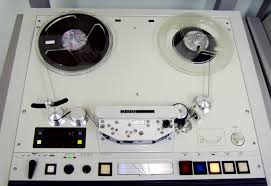
These days the procedure of giving tape recorded conversation as evidence before the court of law particularly in cases pertaining to Prevention of Corruption Act and TADA have become very common. In civil cases also, parties may resort to tape recordings of relevant conversation to support their contentions and strengthen their side. However, before accepting such evidence, the court has to consider various questions like the admissibility, nature and evidentiary value of such tape-recorded conversation.

Prior to the year 2000, i.e. before coming into force of the Information Technology Act, and the subsequent amendment of the Indian Evidence Act, there were only oral or documentary evidence. No provisions were present in the Act, which in any way pointed to the admissibility, nature and evidentiary value of any conversation or any statement which were recorded in an electromagnetic device. The question regarding the admissibility of such tape recorded conversations was raised many times before the court of law. This compelled the courts in India and England to develop principles of receiving such evidence in courts and thereby to act upon such evidence.

The relationship between law and technology has always been a complex one. However, the law is always tilted towards technology whenever required. The courts have very often from time to time, talked about the utility and admissibility of such tape recorded conversation in its various judicial pronouncements.

Judicial trend

Regarding admissibility of photograph: This matter came up before Supreme Court in the case of Abdul Razak v. State of Maharashtra[1]. The SC held that the court may allow the photographs to be received as evidence if the court is satisfied that the concerned photograph is not a result of ‘trick photography’ and the photograph is above suspicion.

Proof of such recording: The Supreme Court in the case of Yusufali v. State of Maharashtra[2], observed that “if a statement is relevant, an accurate tape-record of the statement is also relevant and admissible”. The court further stated that before admitting any such recording as evidence, the time and place and accuracy of the recording has to be proved by a competent witness and that the voice, of the person against whom such evidence is being submitted, must be properly identified. The court promulgated that since magnetic tape recordings can be easily tampered with, they must be received with great caution, and must be admitted only after the court is satisfied that the record has not been tampered with.

Evidentiary value of such recording: The Supreme Court in the case of Mahabir Parsad v. Surinder Kaur[3], was concerned with the evidentiary value which can be attributed to the tape-recordings. The court stated that tape-recordings can be used only as corroborative evidence of the conversation deposed by any of the parties to the conversation. In situations where such evidence is absent, the tape-recordings cannot be used as evidence.

Reliability of such recordings:  The degree of reliance which can be attributed to the tape-recordings was decided by the Supreme Court in the case of R.M. Malkani v. State of Maharashtra[4]. In this case, the prosecution case was based solely on the tape recorded conversation, which clearly proved the appellant’s intention to obtain a bribe. On the other hand, the appellant contended that such conversation cannot be admitted as evidence as per the provisions of Indian Evidence Act, as it was ‘unlawful’. But the Supreme Court discredited the contention of the appellant and held such conversation to be relevant.

The situation regarding the admissibility of the tape recordings as evidence was finally made clear by the Supreme Court in the case of Ram Singh v. Colonel Ram Singh. The apex court in this case laid down following principles regarding admissibility of such recordings:

  1. The voice of the person, against whom such recording is being produced as evidence, must be duly identified by the person who is producing such recording as evidence.
  2. The accuracy of the tape recorded statement has to be proved by the maker of the record by satisfactory evidence, either direct or circumstantial.
  3. Every possibility of tampering with either whole or any part of the tape-recorded statement must be ruled out; otherwise, it may render the said statement out of context and, therefore,
  4. The statement must be relevant according to the rules of the Indian Evidence Act.
  5. The recorded cassette must be carefully sealed and kept in safe or official custody.
  6. The voice of the person should be clearly audible and not lost or distorted by other sounds or disturbances.

Conclusion

The use of modern technology tools like tape records, video films, polygraph tests, DNA tests, etc. make the probability of truth highly certain. It is a general rule of evidence that all such evidence is admitted which helps the court in arriving at the truth.

The provisions of the Indian Evidence Act, coupled with the Information Technology Act, 2000, by and large, makes it clear that the electronic record, which is called as “computer output” is admissible evidence, provided that such evidence shall have to be necessarily accompanied by a certificate, without which, it is inadmissible.

[1] AIR 1970 SC 283

[2] (1967) Bom L.R. 76 (SC)

[3] AIR 1982 SC 1043

[4] AIR 1973 SC 157

Download Now

Analyses Of Section 377 Of The Indian Penal Code

2
Section 377

LGBT

In this blogpost, Rajnandini Mahajan, Student, RGNUL, Punjab critically analyses section 377 of the Indian Penal Code.

Section 377 of the Indian Penal Code deals with unnatural offences. It reads as Unnatural Offences – Whoever voluntarily has carnal intercourse against the order of nature with any man, woman or animal, shall be punished with imprisonment for life, or with imprisonment of either description for a term which may extend to ten years, and shall also be liable to fine.

Explanation – Penetration is sufficient to constitute the carnal intercourse necessary to the offence described in this section.

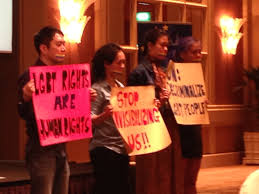
The literal interpretation of this section implies that it makes sodomy, bestiality, paedophilia, tyke sexual abuses and homosexuality punishable. In short, it prohibits every kind of sexual intercourse except heterosexual penile-vaginal intercourse. In addition to that, consent of the individuals is immaterial in such cases. The section has attracted a lot of controversy over the past decade and the demand to decriminalise homosexuality has been on rising. The first petition for this cause was filed in 1994 by AIDS Bhedbhav Virodhi Andolan.

Naz Foundation v NCT Delhi (2009)

In 2001, Naz Foundation, an NGO working for the prevention of HIV/AIDS filed a writ petition in the High Court seeking decriminalisation of sexual activities criminalised in Section 377 to the extent that consensual sex between two sane adults should not be covered by it. The petition was rejected on the grounds that the petitioners did not have a locus standi in the matter. Naz Foundation made an appeal against this in the Supreme Court, which accepted their contention and ordered the Delhi High Court to admit their petition which was a public interest lawsuit.

  • Arguments by the petitioners

The petitioners, Naz Foundation Trust argued that the current status of the Section discouraged the LGBT community to come out of the closet and avail the remedies against HIV/AIDS.  It further argued that it is discriminatory in nature and classifies arbitrarily based on sexual orientation. They also pointed out that Section 377 which criminalises sexual acts against the ‘order of nature’ is based traditional Judeo-Christian moral and ethical standards which abuse homosexuals. Section 377 leads to harassment, forced sex and abuse of the LGBT community by the police.

  • Judgement of the Delhi High Court

In 2009, the Delhi High Court in Naz Foundation v Government of N.C.T Delhi [1] struck down the Section as being unconstitutional and violative of Article 14, 15, 19 and 21. The court gave a broadly reasoned judgement where it held that criminalising homosexuality draws an arbitrary distinction between procreative sexual intercourse and non-procreative sexual intercourse.  Thus against the spirit of right to equality enshrined in Article 14. It further held that it is violative of Right to Privacy and is discriminatory in nature. In arriving at the decision, the High Court relied on a number of documents including foreign judgements, various principles and literature from worldwide including the Yogyakarta principles to study sexuality and sexual orientation extensively. It also took into account the global trends regarding homosexuality. It observed that ” The criminalisation of homosexuality condemns in perpetuity a sizable section of society and forces them to live their lives in the shadow of harassment, exploitation, humiliation, cruel and degrading treatment at the hands of the law enforcement machinery.”

Many sections of the society rejoiced after the pronouncement of this judgement while on the other hand, it also invited the wrath of a number of social organisations. Consequently, Special Leave Petitions against the decision of Delhi High Court were filed by a number of citizens and social organisations.

Suresh Kaushal & Anr. v Naz Foundation[2]

The Court took up the SLPs in one case and overturned the decision of the High Court of Delhi in 2013. Homosexuality was criminalised again. The reasons recorded by Justice Singhvi of Supreme Court in arriving at the decision are:

  • There is a presumption of constitutionality as far as a law passed by the parliament is concerned. The Indian Penal Code is amended many times after the Independence. However, Section 377 remained untouched. This shows that the parliament did not think it proper to delete or amend the section.
  • The doctrine of severability (where a part of a section can be struck down in so far as it is inconsistent with the constitution) cannot be applied in this case. The part relating to homosexuality cannot be struck down without affecting the whole section which is the only section which covers paedophilia and tyke sexual abuses.
  • Section 377 is gender neutral and neither condones nor mandates the treatment meted out by the police to the LGBT community. It does not make a classification between homosexuals and heterosexuals. Further, it does not infringe the right to life guaranteed under Article 21.

Critical Analysis

The Supreme Court has given a very narrow definition of the provisions under the Article 14, 15 and 21. It has not taken into account the changing trends in the world and wider acceptance of different sexual orientations. Unlike the Delhi High Court, it has not considered the historical background and values of the Indian culture where there are evidence of the prevalence of homosexuality. Many temples manifest scenes of people indulging same gender sexual intercourse which the society today considers obscene.[3] Thus, the argument of the respondents that homosexuality being a sin is a western concept and Indians have always been fine with it should have been admitted. Decriminalising homosexuality would have reaped many benefits such as the better implementation of methods for prevention of HIV/AIDS and protection of the LGBT community from the abuse of the police and other public authorities. It would have ensured their Right to live with dignity. India has an estimated 25 lakh gay population and about 7 per cent (1.75 lakh) of them have HIV.[4] Thus, there is a need to accept the sexuality of this substantial chunk of the population and let them live as respectable citizens of India. Since the judgement by the Supreme Court has left it on the parliament to make changes in the IPC regarding Section 377, efforts were made by Dr Shashi Tharoor. He introduced a private member’s bill to decriminalise consensual sexual intercourse between two adults. However, this motion was defeated.[5] Even the Finance Minister Arun Jaitley has said that the Supreme Court needs to review its decision on Section 377.[6] There is a need for parliament to debate this matter reasonably and make provisions to safeguard the rights of LGBT community. The first step towards this will indeed be decriminalisation of homosexuality by making necessary amendments.

[1] 2010 CriLJ 94

[2]  CIVIL APPEAL 10972 OF 2013

[3] http://devdutt.com/blog/did-homosexuality-exist-in-ancient-india.html

[4] http://www.thehindu.com/news/national/govt-submits-data-on-gay-population/article2991667.ece

[5]http://indianexpress.com/article/india/india-news-india/shashi-tharoors-bill-to-decriminalise-homosexuality-defeated-in-ls/

[6] indianexpress.com/article/india/india-news-india/need-to-reconsider-sc-orders-on-377-njac-arun-jaitley/

Download Now

Webinar On Opportunities For Indian Students In Public International Law

0

iPleadersLogo Hi-Res_vectorized

Join us for a webinar with Shriya Maini, Advocate, Supreme Court of India (currently working with United Nations) on “Opportunities for Indian students in Public International Law” (Saturday, 23rd January) between 4 – 5 PM IST. The webinar is organised by iPleaders  as a part of the NUJS Diploma course in Entrepreneurship, Administrative and Business law (http://startup.nujs.edu).

The webinar is accessible to all on the link  https://plus.google.com/events/c2cglcl9klqsttm0bnu3bn0e0to

About the webinar

As an interdisciplinary academic field, Pubic International Law attracts students interested in cross-border issues ranging from international business to armed conflicts and human rights. While International organizations and nonprofits may offer interesting options for an international lawyer, there are law firms and corporate counsels who too are willing to offer jobs at entry level positions to interested Indian students. She is here to take you through a quick tour of all the available options and share some meaty do’s and don’ts, gained out of sheer personal experience as far as seeking employment in the field of International law goes!

About the guest speaker

Ms. Shriya Maini is an advocate practicing at the Supreme Court of India, the Delhi High Court and district courts at New Delhi. She specializes in dispute resolution, focusing on civil and criminal litigation, family and property law matters. After completing her Bachelors from Gujarat National Law University, she joined the Litigation & Arbitration department of erstwhile Amarchand Mangaldas & Suresh A. Shroff, New Delhi as an Associate in their Dispute Resolution Team. She then pursued the BCL (Bachelor of Civil Law) programme on a full scholarship and obtained a Master’s in Law from the University of Oxford, majoring in International Crime. A recipient of the Oxford Global Justice Award 2015 for Public International Law, she is currently working at the United Nations, The Hague, The Netherlands since 2nd January 2016, assisting the President of the International Residual Mechanism for the Criminal Tribunals (MICT), a UN court of law dealing with war crimes that took place during the Balkans in the 1990’s .”  

See you there!!

Download Now

Basic Guide of Establishing a Partnership Firm

1
Partnership firm
Image Source - https://bit.ly/3hSmqjq

This article is written by Haridya Iyenger,  a student of JGLS.

This article will tackle the procedures to create a partnership deed and register a partnership firm. Partnership firms are relatively easy to set up compared to LLP’s and Companies.

Partnership Firm Name

The first step in creating a partnership firm is choosing a good name. Partners are free to choose any name they like as long as it follows these rules:

  • The name must not be too similar or identical to another existing firm which is involved in the same business. This is to prevent confusion and protect the goodwill or reputation of the already existing firm.
  • The firm must not contain words like emperor, crown, imperial or words implying or expressing patronage, sanction or approval of the government. However, if the state government signifies its consent in writing to use such words as part of the firm’s name it can be done[1].

Creating a Partnership Deed

The partnership deed is the most vital document while establishing a partnership firm. This document has all the respective right and obligations of each partner.

While a partnership deed can be an oral or written agreement for tax purposes the partnership agreement needs to be written. The minimum essential requirements of a partnership deed are:

  • Name and address of all the partners and the firm
  • Nature of the business carried on
  • Date of commencement of the business
  • Duration of the partnership
  • Capital contribution and share ration of each partner
  • Duties, powers and obligations of each partner

Apart from the above clause partners may also put in additional clauses. Some of the additional clauses usually put in are:

  • Salaries, commission for payable partners
  • Interest on partner capital and partner’s loan
  • Arrangement of audit
  • Rules to be followed in case of retirement or death of partner

The partnership deed created by the partners should be on stamp paper in accordance with the Indian stamp act and each partner should have a copy of the deed. A copy of the partnership deed should be filled with the registrar of the firm if the firm is being registered.

Why Register a Partnership?

While it is not compulsory to register partnerships firm it is beneficial since, the following rights are provided only to registered firms:

  • The right to file a suit in any court against the firm or other partners for enforcement of any rights arising from the partnership act or any contract.
  • A right arising from any contract cannot be enforced in any court by the firm.
  • The firm or any of its partners cannot claim any set offs or other proceedings in a dispute arising with a third party.

Registration procedure

Partnership firms in India are governed by the Indian Partnership Act, 1932. A partnership firm can be register at the time of creation or after.

To register a firm in India, an application and the prescribed fees is to be submitted to the registrar of the firm of the state in which the firm is situated. The following documents are also supposed to be submitted with the application:

  • Application for registration of partnership in Form No.1
  • Duly filled specimen of affidavit
  • Certified true copy of the partnership deed
  • Ownership proof of the principal place of business. This could be a lease or rental agreement as well.

The application must be signed by all partners or agents authorised by the partners in this behalf. If the registrar is satisfied with the partnership deed then he shall record an entry of the statement in a register called the Register of Firms and issue a Certificate of Registration.

The registrar of firms maintained at office has a complete and up to date information of all registered firms. This register of firm is open to inspection by any person on payment of the prescribed fees. On payment of the prescribed fee a copy of all the details of the firm registered with the registrar will be given to the applicant.

It should be noted that registration with the registrar of firms is different from registration with the income tax department. Registration with the income tax department is mandatory while, registration with the registrar of firms is optional. It is also mandatory for all firms to have a pan card.

After obtaining the pan card the firm will have to open a current account in the name of the partnership firm and operate all its transactions through this bank account.

[1] Section 58(3) of the Indian Partnership Act, 1932

Download Now

Is It Legal To Drive A Vehicle With Temporary Registration Plate In India?

6
temporary registration

This article is written by Saumya Agarwal,  a student of Amity Law School, Noida, on temporary registration plate of vehicle

Registration of the Vehicles

The vehicles in India are registered under the Motor Vehicles Act, 1988 and the Central Motor Vehicles Rules, 1989. A vehicle that has to be registered has to be provided with an official document, Registration Certificate as a proof of registration of a motor vehicle. It is used primarily by the government as a means of ensuring that the road vehicles are on the national vehicle register.

Need for the registration of the vehicles in India

According to Section 39 of the Motor Vehicles Act, 1988 no person shall drive or cause or permit the vehicle to be driven in any public place or any other place unless the vehicle has been registered according to the Act and a certificate of registration of the vehicle has not been suspended or canceled and the vehicle carries a registration mark displayed in the prescribed manner.

The Section also allows the State Governments to prescribe conditions subject to which the provisions of this section will not apply to the motor vehicles in possession of dealers.

Procedure of the Registration

For the registration of the vehicle the person should apply in the prescribed forms to District Transport Office in the person’s region within seven days of purchase, during public dealing hours, preferably between 10 am to 2 pm.

Procedure for registration of a vehicle is given in Section 41 of the Motor Vehicles Act.

How is the registration done?

An application by or behalf of the owner of a motor vehicle for registration shall be in such form and shall be accompanied by such documents, particulars and information and shall be made within such period as may be prescribed by the Central Government. The proviso to this is that if two or more people own the vehicle jointly then one of them on behalf of the all the other owners and the applicant shall be deemed to be the owner of the motor vehicle for the purpose of the Act. The application should be accompanied by such fee as may be prescribed by the Central Government.

The registering authority should issue to the owner of the motor vehicle a registration certificate in such form and containing such particulars and information and in such manner as may be prescribed by the Central Government.

In addition with the other particulars required to be included in the certificate of registration, the certificate should also specify the type of the motor vehicle regarding the design, construction and use of the motor vehicle, by notification in the Official Gazette.

The registering authority should also maintain a register about the particulars of the certificate in the form and manner as may be prescribed by the Central Government.

The registering authority shall assign to the vehicle for display a distinguishing mark consisting of one of the groups of such of those letters and followed by such letters and figures as are allotted to the State by the Central Government from time to time by notification in the Official Gazette and the distinguishing mark shall display and shown on the motor vehicle in such form and in such manner as may be prescribed by the Central Government.

https://lawsikho.com/course/diploma-entrepreneurship-administration-business-laws
Click Above

The validity of the certificate of registration is for fifteen years from the date of issue of such certificate and shall be renewable. An application by or on behalf of the owner of a motor vehicle for the renewal of a certificate of registration shall be made within such period and in such form, containing such particulars and information as may be prescribed by the Central Government. The application shall be accompanied by a fee which is prescribed by the Central Government. The renewed certificate will be issued for a period of five years and intimate the fact to the original registering authority, if it is not the original registering authority.

Temporary Registration

According to Section 43, a motor vehicle may apply to any registering authority or other prescribed authority to have the vehicle temporarily registered in the prescribed manner and the registration should not exceed for more than one month and shall not be renewed. The proviso to the section is that a motor vehicle so registered is a chassis to which a body has not been attached and the same is detained in a workshop beyond the said period of one month for being fitted

A/F Status in India

A/F means ‘Applied For’ for the registration of the number. There is a need for the A/F status because during that time the dealer delivers the vehicle to the customer while they have applied for a permanent registration number. The period of providing the number for the vehicle was one month earlier but it has been reduced to one week. There is a growing trend of the involvement of middlemen and going for A/F number plates for an unlimited period of time. There are numerous cases where people flaunt A/F on number plate for months. Fines can be imposed but people get away by bribing the police when they are caught or they come up with an excuse like the dealer is at fault for the delay. These vehicles are sometimes used in criminal activities for transporting inside and outside the state.

Trade Certificate (TC Number)

A TC number is a temporary authorisation of transit in specific conditions. As per the law, the owner of a new car is not supposed to take possession of the vehicle until the registration is complete. Section 41 states that a trade certificate holder “shall not use any vehicle in (a) public place…”.

The specific instances when the vehicle can be used with a TC number are: for a test, by or on behalf of the holder of the trade certificate during repair; to proceed to or return from a weigh bridge; for a trial for the benefit of a prospective purchaser; to proceed to or from the premises of the dealer or purchaser; to proceed to or return from a workshop or an automobile expo and, lastly, to remove the vehicle after it has been taken possession of by a financier.

Trade Certificate is issued under Rule 34 of the Central Motor Vehicles Rules, 1989. Under the Section, an application for the grant or renewal of a trade certificate shall be made in Form 16 and shall be accompanied by an appropriate fee of Rs. 50. Also, separate application shall be made for each of the vehicles-

  • Motor cycle
  • Invalid carriage
  • Light motor vehicle
  • Medium passenger motor vehicle
  • Medium goods vehicle
  • Heavy passenger motor vehicle
  • Heavy goods vehicle
  • Any other motor vehicle of a specified description

Under Section 35, on a receipt of an application for the grant or renewal of a trade certificate in respect of a vehicle, the registering authority may, if satisfied that the application that the applicant is a bona fide dealer and requires the certificates specified in the application , issue to the applicant one or more certificates as the case may be, in Form 17 (within thirty days from the date of receipt of such an application) and shall assign in respect of each certificate a trade registration mark consisting of the registration mark referred to in the notification made under sub-section (6) of section 41 and followed by two letters and a number containing not more than three digits for each vehicle, for example:-

AB—Represent State Code.

12—Registration District Code.

TCI—Trade certificate number for the vehicle.

Fine and Punishment

The fine for using the term “Unregistered Vehicles” or displaying “Applied For” or Trade Certificate (TC) is Rs.2000 under 39/ 192 MVA.  According to Section 192, whoever drives a motor vehicle or causes or allows a motor vehicle to be used in contravention of the provisions of Section 39 shall be punishable for the first offence with a fine which may extend to five thousand rupees but shall not be less than two thousand rupees for a second or subsequent offence with imprisonment which may extend to one year or with fine which may extend to ten thousand rupees but shall not be less than five thousand rupees or with both.

Case Study[1]

In a drive conducted by the Regional Transport Office (RTO) and Traffic Depart of Lucknow, 10 unregistered plying in the city were caught. According to a report of Times of India, “to drive a vehicle even with the A/F (Applied For) status is an offence. It is a misconception that people can dive with an A/F tag.” The Central Motor Vehicles Rules do not allow driving a vehicle without registration

Ideally, a vehicle registration should be obtained within a week. In case this is not done then the vehicle owner has to pay 5% of tax as penalty. However, during the drive, authorities caught vehicles which were not registered even after a month. In most the cases, though it is the fault of dealers, the owner ends up paying the penalty.

 Conclusion

The vehicles are registered under the Motor Vehicles Act and the Central Motor Vehicles Rules. It is an offence to drive a vehicle with A/F status for a long time. So to curb this, the vehicles should get their permanent registration done as soon as possible. Moreover, dealers have the responsibility of not handing over unregistered vehicles to the customers. They should give vehicles with a permanent registration number to the customer.

[1] http://timesofindia.indiatimes.com/city/lucknow/Driving-vehicles-with-A/F-tag-an-offence/articleshow/7967468.cms


LawSikho has created a telegram group for exchanging legal knowledge, referrals and various opportunities. You can click on this link and join: 

https://t.me/joinchat/J_0YrBa4IBSHdpuTfQO_sA

Follow us on Instagram and subscribe to our YouTube channel for more amazing legal content. 


Download Now

Laws On Child Marriage In India

2
child marriage

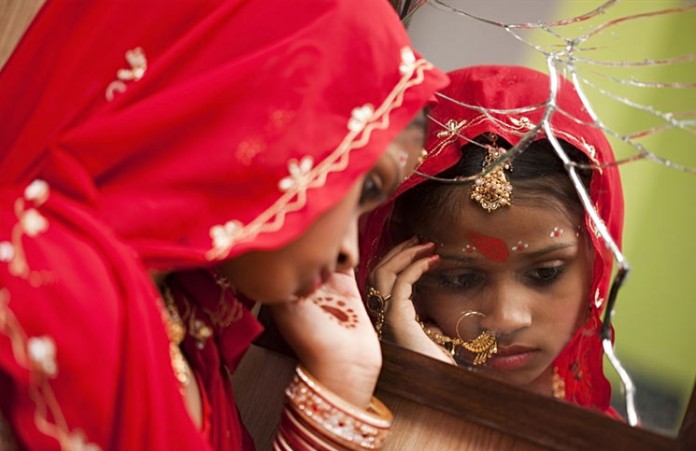
In this blogpost, Rajnandini Mahajan, Student, RGNUL, Punjab writes about the laws on child marriage in India, discusses the laws on child marriage in India.

Download Now
logo
FREE & ONLINE 3-Day Bootcamp (LIVE only) on

How Can Experienced Professionals Become Independent Directors

calender
28th, 29th Mar, 2026, 2 - 5pm (IST) &
30th Mar, 2026, 7 - 10pm (IST).
Bootcamp starting in
Days
HRS
MIN
SEC
Abhyuday AgarwalCOO & CO-Founder, LawSikho

Register now

Abhyuday AgarwalCOO & CO-Founder, LawSikho