Download Now
Home Blog Page 1776

What Is The Current Status Of The No-Detention Policy

3

download (7)

In this blogpost, Saumya Agarwal, Student, Amity Law School, Delhi writes about the no-detention policy, the reasons for its implementation, faults in the policy and the current status of the policy

Introduction

Much uproar is being created over no-detention policy that was introduced during the UPA regime in 2009.The no-detention policy is based on Section 16 of the Right of Children to Free and Compulsory Education Act, 2009. The Section says that no child will be held back in any class or expelled from school till the completion of elementary education. This is adversely affecting the children in many ways. It is affecting their education and their all-round development.

What is no-detention policy?

No student up to class VIII can be failed or expelled from school. All the students up till Class VIII will automatically be promoted to next class. The policy was introduced under Continuous and Comprehensive Evaluation (CCE). It is a process of assessment under the Right to Education Act of India. The main aim of CCE is to evaluate every aspect of the child during their presence in the school. It was also done to reduce the workload of children by taking continuous tests of the students throughout the year. Under the new system, the student’s marks will be replaced by grades which will be evaluated throughout the year through a series of circular and extra-circular activities. Under the scheme, grades will be awarded instead of the marks to the students. The grades will be awarded based on work experience skills, dexterity, innovation, steadiness, teamwork, public speaking, behavior, etc.

Why was the policy implemented?

The policy was implemented under RTE Act in 2010 for the holistic development of the students throughout the year and not just twice a year. The idea was also to reduce the number of dropouts from the schools. Many states already had no-detention policies. This was also done to reduce the pressure on the students of the exams twice a year, and rather they were evaluated throughout the year.

Earlier, it was common to see students repeat the class so that they can perform better the next year. The anxiety of failing made the students work harder. A week or two after the exams, the parents of the students would be communicated that their child is promoted to the next class.

Faults in the policy

The policy is flawed. It is based on the flawed understanding of the student behaviour that the students will study only when there is a fear of failing, which is not the case with many students. It is based on the understanding that the students will drop out of schools if they fail.

The fact that the students will be promoted to the next class up till 8 is making them carefree and they have developed an easy going attitude. They don’t study as there is no fear of failing in them. There is no distinction between the studious and unscholarly students. The students are kept at the same parameter because even if don’t work hard they will be promoted to the next class.

Teachers especially resent this policy as it takes away the power they have over their students. The teachers cannot hold back or expel the weak students. The teachers complain about the children developing a lackadaisical attitude. A large number of teachers have reported that some of the students don’t even come for the exams as there is no fear of repeating the class.[1] The efforts of the teachers go to vain as the students don’t come to schools and even if they come, they don’t pay attention in class or even worse, they disturb the teaching environment of the class.

This, in turn, promotes coaching classes. These students don’t pay attention in class and to pass in the Board examinations they chose to go to these coaching classes. The students also lose out on a chance to develop better. Repeating a class gives them another chance to understand the syllabus better which is taken away from them when they don’t repeat the class. The student, their parents, their teachers don’t know where the student stands.

The policy makers forgot the fact that all the students don’t learn at the same rate. There are some slow learners who require extra attention and care from the teachers. There is a large strength of the students in the schools these days; the slow learners are often ignored. To address them, Rashtriya Madhymik Shiksha Abhiyan (RMSA) was introduced which is a three-month programme for students of class IX before the final exams.

All this has really deteriorated the quality of students in the country. Many states have asked the Union Human Resource Development Ministry to scrap the no-detention policy.

Current Status of the policy

The Union Human Resource Development ministry said that many states have approached them for scrapping the policy so the Union HRD Minister, Smriti Irani said that the ministry has asked all the states in writing that if all the states unanimously agree to scrap the policy, then the ministry will scrap the policy.

The states have given a positive response in scrapping the policy. More than 20 states have asked the central government to revoke the policy. However, the ministry seeks a positive response from all the states. Till then they will not do anything. The Union HRD minister has also said that the ministry will come to the conclusion only after comprehensive discussion with academicians, institutions and psychologists.

However, the ministry seems to be in no hurry to abolish the policy but on the basis of the recommendations of CABE (Central Advisory Board of Education) it has made it clear that it will reintroduce the class promotions in schools as students are not taking their studies seriously under the current system.

The Union HRD Ministry is yet to make a decision on the issue, but the Delhi Deputy Minister Manish Sisodia has introduced the Right to Children to Free and Compulsory Education (Delhi Amendment) Bill in the Delhi Assembly. He proposed the amendment of Sections 8 and 16.

It is proposed to bind the State Government to ensure quality education and to provide that children may not be promoted to higher classes unless they have acquired class appropriate learning level.

He has also written to the Union HRD minister that the no-detention policy should be restricted up to class III.

What will have to be done?

If all the states agree and on the ‘comprehensive discussion with academicians, institutions and psychologists’, the HRD Ministry will have to amend the RTE Act.

Conclusion

The Union HRD Ministry should introduce the amendment in the RTE as quickly as possible. The state governments should also cooperate with the ministry so that they can all reach a consensus. Also, the opinion of the experts should be taken, and the discussions should materialize swiftly as many people will be affected by the decision.

Other states should also introduce similar amendments in their Legislative Assemblies as the future of the nation is at stake. If the youth of the nation will have such a laid-back attitude, then what will happen to the nation? The problem needs to be addressed as promptly as possible.

[1] http://www.thehindu.com/news/cities/chennai/no-detention-policy-works/article3429830.ece

Download Now

Censorship Of Films And The Law

0

cameraman-309112_640

In this blogpost, Rajnandini Mahajan, Student, RGNLU, Punjab writes about censorship of films in India, the role of the judiciary and the arguments for and against the censorship of films in India.

‘Censorship’ is a term generally used to connote the process of restricting the access of ideas and information in apprehension that it may disturb the public peace. In India, Article 19 (1) (a) of the Constitution of India provides for the freedom of speech and expression. The constitution is silent as to the medium of communication of ideas. Nonetheless, this freedom includes the freedom to exhibit motion films. However, this right is not an absolute one. The state can impose the restrictions on the content if it is against the interests of public policy, foreign relations, sovereignty and integrity of the state, public order, decency and morality, or in relation to contempt of court, defamation or incitement of an offense provided that such restriction is reasonable.[1]

The Cinematograph Act, 1952

The film industry in India is a mammoth with more than 1000 movies produced per year.[2] The union legislature derives its power to make laws on censorship of cinema from the Entry 60 under Schedule VII of the Constitution of India. The state is also empowered to make laws on this matter subject to the provisions made by the central legislation.[3]  In order to keep a check on the content which the films show the viewers, the Cinematograph Act was enacted in 1952 which provides for constitution of Censor Board of Film Certification which shall consist of 12-25 members which are appointed by the Central Government. The CBFC is required to examine the films and grant them a certificate for the exhibition, prohibit their release or direct modifications. The various categories of certificates that are granted by the Censor board are U for the films which are suitable for all the audience; U/A for the films which the board finds fine to be viewed by children under the age of 12 only under the supervision of guardian/parents; A if the content is not suitable for audience below the age of 18 and S if the exhibition is restricted to members of a particular profession.[4] The grounds for restricting the films is provided under Section 5(B)1 which are in accordance to reasonable restrictions under Article 19. The applicant for the certificate is to be given reasonable opportunity to present his case in the case the movie is to be granted a certificate other than U or U/A. The Act also provides for the establishment of an Appellate Tribunal to appeal against the decision of the Censor Board. The Tribunal is chaired by a retired judge of a High Court or any person qualified to be a judge of the High Court. It consists of a maximum of 4 other members. The Central government is vested with the power of to call for the record of any proceeding except the proceeding pending before the Appellate Tribunal.[5] If a film is exhibited without the certificate of the Board, the exhibitor is liable for punishment.

Role of Judiciary

A debate has been going on about the validity of censorship as a means to ensure reasonable restriction on the right to freedom of speech and expression.[6] The Judiciary has time and again drawn a line between what comes under freedom of speech and expression and what is its abuse. The rights of artists are reinforced, and the unnecessary censorship struck down.  The Supreme Court in KA Abbas v Union of India [7] for the first time upheld that the films are within the ambit of Article 19(2) and observed that since motion pictures have a deeper impact on the audience; it should be treated differently from the out forms of art. In Raj Kapoor v Laxman[8] the Supreme Court held that the initiation of criminal processes for obscenity etc. under IPC[9]  it is not sustainable if the film has been passed by the censor board. However, the court also maintained that the bar is not absolute, and the filmmaker has to participate in the legal proceedings and claim the safeguard. The decision of the Court in S. Rangarajan v. P. Jagjivan Ram[10] is very important. In the instant case, the Tamil movie ‘Ore Oru Gramathile’ was banned by the government despite it having received a U certificate from the censor board. The movie talked about the reservation and how it should be given on the basis of economic status rather than caste. The Supreme Court struck down the ban and observed, “Movie is the legitimate and the most important medium in which issues of general concern can be treated. The producer may project his own message which the others may not approve of it. But he has a right to ‘think out’ and put the counter appeals to reason. It is a part of a democratic give-and-take to which no one could complain. The State cannot prevent open discussion and open expression, however, hateful to its policies.” In Anand Patwardhan v.Cent. Bd. of Film Certification[11], the petitioner, was asked by the censor board to carry out two cuts and one addition in order to receive a U certificate for his movie “War and Peace.” The petition was filed against this direction of Censor Board. The Court unequivocally observed that the cuts were directed only to harass the filmmaker. In Life Insurance Corporation of India v. Prof. Manubhai D. Shah[12] the Court held that merely because a film/show is critical of the government, it cannot be banned. In the Da Vinci controversy, the Supreme Court rejected the writ petition filed by All India Christians Welfare Association who claimed it to be against Article 25[13] of the constitution of India and that it hurt the sentiments of the Christian community. The court observed that since many predominantly Christian countries have no objection to the content of the movie, and since the movie has been approved by the censor board and central government, it is moot to ban it. Thus, the court has interpreted the provisions of Article 19 and the Cinematograph Act, 1952 to bring out the ambit of censorship and scope of freedom of speech and expression.

Arguments for and against censorship of films

The government has on many occasions banned movies under the garb of reasonable restrictions. Many controversies have also arisen regarding the content of various movies such as Vishwaroopam, Parzania, Bajirao Mastani etc. to name a few. As a result, these movies have been banned in the sensitive areas. Many movies like Kissa Kursi ka got banned during emergency because it was allegedly based on Indira Gandhi’s life. Shah Commission, instituted to inquire into the excesses committed during emergency found Sanjay Gandhi responsible for burning the prints of the movie.[14] Many movies were banned because they were based on issues which could stir up communal enmity like Garam Hawa, Black Friday etc. People who oppose such bans argue that with the movies should not be banned and people should be given the freedom to form their opinions after watching the movies. This is primarily because the grounds mentioned in Section 5 of Cinematography Act, 1952 are very subjective and broad.[15] Since the censor board has no jurisdiction over the contents posted on the internet, the filmmakers who do not wish to carry out the cuts directed by it release the censored parts on the internet the recent example being the release of censored parts of the movie Angry Indian Goddesses in the form of a video by the director. People who support censorship argue that it protects the vulnerable sections of the society like children whose can easily get influenced by the contents and things which are truly offensive and inhumane should not reach the audience.[16]

[1] Article 19(2), Constitution of India, 1950

[2]http://www.forbes.com/sites/niallmccarthy/2014/09/03/bollywood-indias-film-industry-by-the-numbers-infographic/

[3] Entry 33 of List II, Schedule VII of Constitution of India, 1950

[4] Section 4, Cinematograph Act, 1952

[5] Section 6(1) Cinematograph Act, 1952

[6] http://www.debate.org/opinions/should-film-censorship-be-banned

[7] (1971) 2 S.C.R. 446

[8] 1980 SCR (2) 512

[9] Section 79 of Indian Penal Code, 1860

[10](1989) 2 S.C.C. 574, 592

[11] 2004 (1) MAH. L.J. 856

[12] A.I.R. 1993 S.C. 171

[13] Right to freedom of Religion

[14] http://indiatoday.intoday.in/story/emergency-kissa-kursi-ka-sanjay-gandhi-jail/1/446968.html

[15] Supra Note 6

[16] Supra. Note 6

Download Now

Whether The Ban On Cow Slaughter Is Constitutionally Valid

1

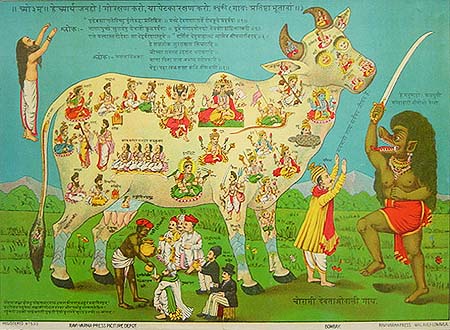
Sacred_cow2

In this blogpost, Haridya Iyengar, Student, Jindal Global Law School, Haryana, writes about whether the ban on the cow slaughter is constitutionally valid or not.

Slaughter of cow and its progeny is now banned in most of India. This has given rise to many questions being raised on the constitutional validity of the ban.  This paper tackles the constitutional validity of the recent cow slaughter laws passed in India.

Laws on Cow Slaughter

The cow slaughter laws in India vary from state to state. It is important to look at the different laws set up in each state before tackling the constitutionality of the laws.

States where Cow Slaughter is Legal

Kerala, West Bengal and all Northeast state with the exception of Manipur and Assam have made no laws banning the slaughter of cows.

States where Cow Slaughter is Totally Banned

Bihar, Chhattisgarh, Delhi, Goa, Gujarat, Haryana, Himachal Pradesh, J&K, Jharkhand, Karnataka, Madhya Pradesh, Maharashtra, Punjab, Rajasthan, Uttar Pradesh and Uttarakhand have imposed a complete ban on cow slaughter. This includes the storage and consumption of beef. However, in Punjab and Uttar Pradesh the import of beef for consumption is not banned. In Himachal Pradesh cow slaughter for the purpose of research is legal[1].

States where Cow Slaughter is Partially Banned

Assam, Andhra Pradesh, Telangana, Manipur and Tamil Nadu have imposed only partial bans on cow slaughter. In Manipur and Tamil Nadu beef consumption and slaughter of cow with “fit- for-slaughter “certificate is allowed.  In Assam, Andhra Pradesh and Telangana slaughter of cows are permitted with “fit-for-slaughter” certificate. The “fit-for-slaughter” certificate is given when the cattle turns economically useless.

Constitutional Support for the Ban on Cow Slaughter

The complete ban on cow slaughter is in consonance with Article 48, Article 246 (Entry no. 15 in the State list) and Article 51-A of the constitution of India.

Article 48

Article 48 states that “The State shall endeavour to organise agriculture and animal husbandry on modern and scientific lines and shall, in particular, take steps for preserving and improving the breeds, and prohibiting the slaughter, of cows and calves and other milch and draught cattle.”
While this does not make it mandatory for the state to impose a complete ban on cow slaughter, it does give the state the power to do so.

Article 246 (15th Entry in the State List)

According to entry No.15 in the state list, “15. Preservation, protection and improvement of stock and prevention of animal diseases; veterinary training and practice.”
This means the state legislature has exclusive power in the enactment of laws banning cow slaughter. That is why there are different laws banning cow slaughter to various degrees.

Article 51-A

Article 51-A (g) states that “It shall be the duty of every citizen of India— (g)  to protect and improve the natural environment including forests, lakes, rivers and wildlife, and to have compassion for living creatures;”.
This gives the state power to enact laws banning cow slaughter to help improve the fundamental compassion towards living creatures.

Cases on Validity of Laws Banning Cow Slaughter

There have been many petitions filed before Supreme Court challenging the validity of the laws. Here are two of the major cases:

1)    Mohd. Hanif Quareshi v. State of Bihar[2]

This case was decided by a 5 judge bench. The petitions challenged slaughter of certain cattle in three states – Uttar Pradesh, Madhya Pradesh and Bihar. The laws were challenged on three grounds:
1) the total ban offended Muslims as the sacrifice of cows was sanctioned on a certain day.
2) Such a ban violated the rights guaranteed to butchers under 19(1) (g) of the constitution.
3) That a total ban was not in the interest of the general public

The Supreme Court held that:
1) the total ban on the slaughter of cattle is valid and in consonance with the directive principles laid down under Article 48.
2) A total ban on she-buffaloes and breeding bull or working bullocks as long as they are capable of being used as milch or draught cattle was also reasonable and valid.

With respect to the first ground of the petition which mentioned that slaughter of cows is required on a certain day the court held that, “no material on the record before us which will enable us to say, in the face of the foregoing facts, that the sacrifice of a cow on that day is an obligatory overt act for a Mussalman to exhibit his religious belief and idea. In the premises, it is not possible for us to uphold this claim of the petitioners.”

However, it must be noted that the court left the question of whether “total ban” was within the scope of the restrictions placed by Article 19 (6).

2)    State of Gujarat vs. Mirzapur Moti Kureshi Kassab Jamat[3]

This is the most important case with respect to the issue of banning cow slaughter. The petition was challenging the amendments in section 5 of the Bombay Animal Preservation, which was also applicable to the state of Gujrat. The amendments changed the ban on slaughter of bulls and bullocks under the age of 16 to a complete ban.

The petition challenged the amendment because of the belief that bull and bullocks over the age of 16 tend to become economically unbeneficial. However, the court held that “The economy of the State of Gujarat is still predominantly agricultural. In the agricultural sector, use of animals for milch, draught, breeding or agricultural purposes has great importance. It has, therefore, become necessary to emphasise preservation and protection of agricultural animals like bulls and bullocks. With the growing adoption of non-conventional energy sources like biogas plants, even the waste material has come to assume considerable value. After the cattle cease to breed or are too old to do work, they still continue to give dung for fuel, manure and biogas, and therefore, they cannot be said to be useless. The backbone of Indian agriculture is the cow and her progeny in a way. The whole structure of the Indian agriculture and its economic system is indirectly dependent on the cow.

In order to give effect to the policy of the State towards securing the principles laid down in Articles 47, 48 and clauses (b) and (c) of Article 39 of the Constitution, it was considered necessary also to impose total prohibition against slaughter of progeny of cow.”

The court also repelled all arguments on the grounds of fundamental rights under Article 14 and 19(1) (g) by stating that, “In the light of the material available in abundance before us, there is no escape from the conclusion that the protection conferred by the impugned enactment on cow progeny is needed in the interest of the nation’s economy. Merely because it may cause “inconvenience” or some “dislocation” to the butchers, restriction imposed by the impugned enactment does not cease to be in the interest of the general public. The former must yield to the latter.”

Conclusion

The analysis made on the provisions of the constitution and judgements of the Supreme Court shows that even the complete ban on cow slaughter is constitutionally valid.

[1] http://indianexpress.com/article/explained/explained-no-beef-nation/

[2] Mohd. Hanif Quareshi v. State of Bihar, 1959 SCR 629 : AIR 1958 SC 731

[3] State of Gujarat v. Mirzapur Moti Kureshi Kassab Jamat, (2005) 8 SCC 534

Download Now

What Are The Major Amendments In The Company Law 2015

2

company-484129_960_720

In this blogpost, Shivam Anand, Student, DSNLU, Vizag, writes about the amendments in the companies Act in 2015.

Benchmarked to 2014, World Bank released a ranking of the countries with reference to “Ease of doing business” based on 10 parameters such as conducive environment for starting of a business, enforcing contracts, resolving insolvency and dealing with construction permits. Being one of the top notch contributors to the world economies India was ranked 142nd out of 189 countries in the list.[1] Taking note of the same Ministry of Corporate affairs in order to remove the impediment and to make the regulatory environment feasible and conducive to the starting and operation of firms introduced the Company Amendment Act 2015 which received the assent of the president of India on 25th May 2015.

Major amendments brought about through the Companies amendment act 2015:-

Amendment of Provision related to common seal:-

Prior to the amendment:

With reference to Section 9 of the Companies Act

“From the date of incorporation mentioned in the certificate of incorporation, such subscribers to the memorandum and all other persons, as may, from time to time, become members of the company, shall be a body corporate by the name contained in the memorandum, capable of exercising all the functions of an incorporated company under this Act and having perpetual succession and a common seal with power to acquire, hold and dispose of property, both movable and immovable, tangible and intangible, to contract and to sue and be sued, by the said name.”

According to Standard-8 (SS-8) issued by the Council of Institute of Company Secretaries of India common seal means “the metallic seal of a company which can be affixed only with the approval of the Board of directors of the company. It is the signature of the company to any document on which it is affixed and binds the company with all obligations undertaken in the document”.[2]

The new amendment act omitted the phrase “and a common seal” from section 9 of the companies act and thus made the very requirement of a common seal as optional. Initially, a common seal over the documents of a company made it legally binding, and it was a sine qua non requisite to make a company bound by any agreement. With the introduction of the new amendment, the mandate of having a common seal of the company has been done away with and made optional for the convenience of the company. Thus, signature by the concerned authorities now would suffice to give legal effect to the agreement documents of the company. In the modern era when technological development has reached an unassailable height and protecting the document in the form electronic data along with recognized digital signatures is the present scenario, the presence of provision mandating the requirement of the common seal is in itself an obsolete provision.

Omission of “Minimum paid up capital” under Section 2 (71) (b) and 2 (68):-

One of the important changes brought in the act is with respect to the relaxation brought for the establishment of business by bringing a change in the definition of a public and private company. The omission of the requirement of minimum paid up capital of Rs. 500000 or higher and Rs. 100000 or higher for the establishment of the public and private company respectively is a big step towards changing the environment for the new start-ups. Under section 2 (71) (b) a public company means a company which has a minimum paid-up capital of five lakh rupees or higher and under 2(68) similar provision for private companies made it mandatory to have a minimum paid-up capital of one lakh rupees for private companies. With the new amendment act on the table the term “minimum paid-up capital” has been done with though the Ministry of Corporate Affairs reserves the right to specify about the same through the channel of its rule making authority.

Impact of the above amendment:

  • Formation of Special Purpose Entity with lower paid up capital. After Enron case, Special Purpose Entity gained fame in the corporate world. Also known as Bankruptcy-remote entity, it’s a kind of subsidiary company with an asset/liability structure and legal status that makes its obligations secure even if the parent company goes bankrupt.[3] A company can use such an entity to finance a large project without putting the entire firm at risk. Thus, the omission of minimum paid up capital will be motivating for the companies to form such special purpose vehicles.
  • Encourage formation of Bogus Shell companies. These are companies formed for business transactions without itself having any significantassets or operations. These bogus shell companies act as a channel for underground economies like tax evasions and disguising true profits of a company, often leading to corporate frauds. Thus bringing about this major change in the company act, it is also a huge responsibility of the government to take necessary steps to curb down such activities in order to keep up the essence of this very amendment that is “ease of doing business.”

Indispensable Changes with respect to Related Party Transaction;-

Any kind of transactions/contracts which specifically interests the related parties as defined under the section 2 (76) are referred as “related party transaction”. Prior to amendment act 2015, a company in order to enter any contract or arrangement with Related Party must comply with three basic necessities which were

  1. The requirement of a special resolution after prescribed paid of capital or turnover which is also a prescribed already.
  2. Holding a Board meeting
  3. No member related to the transaction can vote for the special resolution.

After the amendment, the major change brought in relation to section 188(1) of companies act is the omission of the word “special” articulating in a precise manner that after the amendment no special resolution is required for the approval of related party transaction. Thus, related party transaction after the amendment can be passed by simple majority of the board members. The relaxation has also been extended to the provision regarding the related party transaction between the holding company and wholly owned subsidiary company which required the approval of the shareholder.

Omnibus approval by the Audit committee for related party transaction:-

Prior to the amendment Section 177(4)(iv) read as  “approval or any subsequent modification of transactions of the company with related parties”. In addition to this provision for omnibus approval related party transaction has been added which reads as “Provided that the Audit Committee may make omnibus approval for related party transactions proposed to be entered into by the company subject to such conditions as may be prescribed.”

.This new provision may be said to be in consonance to Clause 49 of the Listing Agreement, which has been formulated for the improvement of corporate governance in all listed companies. It took into consideration the roles responsibilities and liabilities of the audit committee in all matters relating to internal controls and financial reporting and also the accountability of management was enhanced. But it may defeat the practice followed by companies whereby they are required to inform the shareholder of all indispensable details with respect to a related party transaction.

Introduction of threshold limits for fraud reporting:-

Clause 143(12) of the companies act which conferred powers and duties to auditors has been substituted by a new provision. According to the old provision “if an auditor of a company, in the course of the performance of his duties as auditor, has reason to believe that an offence involving fraud is being or has been committed against the company by officers or employees of the company, he shall immediately report the matter to the Central Government within such time and in such manner as may be prescribed”. According to the new provision a threshold limit would be decided by the central government. In accordance with the provision “if an auditor of a company in the course of the performance of his duties as auditor, has reason to believe that an offence of fraud involving such amount or amounts as may be prescribed, is being or has been committed in the company by its officers or employees, the auditor shall report the matter to the Central Government within such time and in such manner as may be prescribed.” But in the case of an offence of fraud involving amount less than the threshold limit the auditor has to inform the same to the auditing committee made under section 177 of the act or to the board. This amendment may be considered to be the most important and major change in the amendment act 2015.

With respect to declaration of dividend

Section 123(1) was a new insertion in the companies act amendment bill 2015 which made it mandatory on the part of the company not to declare dividend until and unless previous losses and depreciation which has been carried over has been set off against profit of the company of the current year. This provision was already available under Companies (Declaration and Payment of Dividend) Rules 2014 which is in effect from 12th June 2014, so it was just a simple way of incorporating the rules in the companies act.

New Insertion of Section 76A in the Companies Act:-

This section has been inserted for punishment in case of contravention to the provision of section 73 and 76 of the companies act which deals with acceptance of deposit from public. Any company that accepts or invites deposits from the public in contravention to the provision of section 73 or 76 or fails to repay the deposits or any interest thereon within the prescribed time limit, the company in such a condition shall other than the repayment of deposits and any sort of interest thereon shall be punishable with a fine of one crore rupees which may extend up to ten crores and every officer who is in default as provided in this section shall be punishable with imprisonment which may extend to seven years or fine which is not less than twenty five lakh rupees but may extend up to two crores rupees or with both.

CONCLUSION

Thus, the above amendment bill can be said to be a major initiative of the present government to set a structure for the future of the corporate world with respect to “ease of doing business”. With the perspective of making it to the upper echelons of World Bank list of countries, only time will reveal the favourable outcome of these changes.

[1] www.doingbusiness.org/rankings

[2] Secretarial standard of affixing of common seal by the Council of the Institute of Company Secretaries of India

[3] http://www.investopedia.com/terms/s/spv.asp

Download Now

Analysis of National Herald Case

0
NYX


NYX

In this blogpost, Rajnanadini Mahajan, Student, Rajiv Gandi National LawUniversity, Punjab analysis the national herald case.

What is the National Herald case?

The National Herald case, which has grabbed the eyeballs of media, is an alleged scam regarding the misappropriation of property. In this high profile case, BJP leader Subramaniun Swamy has filed a petition alleging Congress President Sonia Gandhi and Vice-President Rahul Gandhi to be the main conspirators in the scam. While the Congress is claiming that it is a political vendetta, BJP has distanced itself asserting that it is a judicial matter, and BJP has nothing to do with it.[1] This article explores the legal details and aspects of the case.

Timeline of the case

January 2013: Subramanium Swamy files a complaint against Sonia Gandhi, Rahul Gandhi and others.

June 26, 2014: The Delhi High Court issues summons to Sonia Gandhi and Rahul Gandhi to appear before the court for hearing

August 6, 2015: The proceedings are started by the HC against Sonia Gandhi, Rahul Gandhi and Others.

December 7, 2015: HC refuses to quash the order of summons issued by the lower court.

December 8, 2015: Delhi Court orders Sonia Gandhi, Rahul Gandhi and others to appear on December 19

December 19, 2015: Bail granted to Rahul Gandhi and Sonia Gandhi till next hearing which is scheduled for February 20.

Key facts of the case:

A company called Associated Journals Limited was set up in 1938 by Congress. It ran three newspapers named National Herald (English), Navjeevan (Hindi) and Qaumi Awaz (Urdu). After facing a financial crisis for a long time, National Herald finally shut down in March 2008. In 2011, a non-profit company, Young India Limited was set up with Sonia Gandhi and Rahul Gandhi holding 38% of stake each. The remaining 24% is owned by Oscar Fernandes and Moti Lal Vora, both of whom are senior Congress leaders. All the four people are the directors of the firm as well. The Young India Limited planned and bought the liabilities of National Herald, which were worth INR 90.21 crores for INR 50 lakhs.

Swamy’s allegations:

  • According to Subramanium Swamy, National Herald had grown well owing to the goodwill of the Congress party and had property worth INR 5,000 crores. The Young India Limited sent its director Motilal Vora to strike a deal with National Herald that Young India would provide it with funds in the form of loans to discharge its liabilities and in return National Herald would transfer its shares to National Herald. The Chairman of National Herald was also Moti Lal Vora. After that, the treasurer of Congress Party who was also Moti Lal Vora was asked to provide a loan of INR 90 crores from the party funds to National Herald. The resolution to affect the same was passed by Congress President (Sonia Gandhi), Vice- President (Rahul Gandhi), General Secretary (Oscar Fernandes) and the Treasurer (Moti Lal Vora). After that, the loan given to National Herald was declared ‘sick loan’ ( a loan which is unlikely to be recovered) in the books of accounts of the Congress Party by passing a resolution to this effect by the same people. Thus, the Young India Limited acquired property worth INR 5000 crore without paying anything for it.
  • Swamy also alleges that the property of National Herald was rented out to the government at INR 60 lakhs a month. Thus, the money of taxpayers was also spent by the government to fill the pockets of Rahul Gandhi and Sonia Gandhi.
  • Swamy has accused Sonia Gandhi to have spent Congress Party’s funds worth INR 1 crore in the renovation of Herald House, one of the properties of National Herald.

Legal Issues:

  • According to the petitioner, granting of the unsecured loan at zero per cent interest by a political party to commercial ventures is illegal and violation of Section 29A, B and C of the Representation of the People Act, 1951.
  • It also violates the provisions of Section 13A of the Income Tax Act, 1961 which requires the treasurer of a political party to audit and send a report to the income tax department regarding voluntary contributions and total income of the party in a year.
  • The criminal breach of trust under Section 405 of the Indian Penal Code, 1860, cheating (Section 420 of IPC), criminal conspiracy (Section 120A of IPC) to defraud Congress party and Misappropriation of funds (Section 403 of IPC) by Sonia Gandhi, Rahul Gandhi and others is also alleged to have been committed.

Controversies regarding the case:  

The case has been controversial since its inception. In 2013, when the case was filed by the petitioner, the then Enforcement Directorate, Rajan Katoch, closed the case citing lack of substantive evidence against Sonia Gandhi and Rahul Gandhi. However, he was removed from his post in September 2013, and the case was reopened. Kapil Sibbal, a senior Congress leader, argues that Swamy has no locus standi in the case as he is not even a shareholder in any of the companies. It is also alleged by the Congress party that the case is a mere political tool to defame and bring down the Congress party.[2]

Holding by the Court:

The court has held that there is a prima facie evidence against the accused on the following grounds:

  • Dubious names and addresses of the shareholders of Associated Journals Limited.
  • The holding of the shareholders’ meetings at the residence of Sonia Gandhi which is allotted by the government which is violative of the law that places of accommodation cannot be used as the place of business or commercial activities.
  • Rahul Gandhi’s failure to mention that he owns 38% shares of Young India Limited in his election affidavit.

The trial in the case is still awaited. Many shareholders of Associated Journals Limited like Markandey Katju and Shanti Bhushan have alleged that the shares of their fathers have been fraudulently transferred to Young India Limited.[3]

[1] https://twitter.com/officeofrg?lang=en, http://indianexpress.com/article/india/india-news-india/national-herald-case-bjp-asks-congress-not-to-politicise-a-court-matter/

[2]http://indianexpress.com/article/india/india-news-india/national-herald-case-gandhis-or-other-shareholders-havent-made-a-single-paisa-from-ajl-yil-deal-says-sibal/

[3]http://indianexpress.com/article/india/india-news-india/ajl-did-not-inform-us-or-obtain-approval-for-equity-transfer-say-shareholders/

Download Now

A qualified CS and Legal Manager with a leading pharmaceutical company on why he enrolled for an online Diploma from NUJS

0

IMG-20160114-WA0006

Milind Talegaonkar completed the NUJS diploma in Entrepreneurship Administration and Business Laws in 2015 and he is a qualified Company Secretary from ICSI and is currently looking after legal and company secretarial functions of  a pharmaceutical firm based in Ahmedabad.

We asked Milind how the course helped him so far in his career, and he had very interesting things to talk about. We decided to share his experiences with the course. Over to Milind:

When I took up the course, I already had around 14 years of industry experience and was working with a leading pharmaceutical as Manager- CS and Legal. I wanted to hone my skills and that is why I joined the NUJS diploma in Entrepreneurship Administration and Business Laws.

I felt there is a gap between the application of knowledge and what is taught in management courses or even CS. I was looking for something which would help me to put the concepts I learnt into practice.

I saw an online advertisement of this course and decided to do it because I found this course to be fit for the purpose of gaining practical knowledge of law. Secondly, NUJS is one of the premier national law schools of India and the prospect of getting a diploma from them was an added attraction.

My purpose of joining the NUJS diploma in Entrepreneurship Administration and Business Laws was totally fulfilled. Content wise the course is very good. Especially the chapters related to how agreements are to be drafted and vetted, what are the precautions to be taken, how clauses can be negotiated etc.

This diploma course taught me the non-commercial aspects of drafting an agreement and to negotiate them. When things go wrong and agreements need to be referred, the clarity of agreement helps a lot. So when I draft agreement with this kind of knowledge and meticulous attention. It is acknowledged and appreciated by the management.

Although I’m not from a legal background I look after litigation related to trademarks for my present company and the practical knowledge of law gained through the NUJS diploma helps me in performing this task with ease.

I found the module on business structuring to be very helpful because in my current organization there is often a need to create an offshoot and decision has to be taken about its structure based on factors like taxation, flexibility of operations, ease of regulations, etc. So what I learnt in the module on business structuring comes handy to me.

The valuation side of the equity and the start up structure, criteria to be evaluated while arriving at decisions, FDI and compliance, etc. were outstanding part of this course.

I have mentioned the NUJS diploma in my LinkedIn profile as well as my CV and I feel that the skills gained from this course have helped me perform better in my current job.

I would recommend this diploma to anyone who is willing to enhance his/her knowledge. Especially to anyone who is dealing with law, even if the person is not from a law background. I would especially recommend this to entrepreneurs as they take decisions at macro level and consequences of their decision going wrong would have a major impact. It is important that they have the basic understanding of laws.

Download Now

ExtraTerritorial Operation of Laws made by Parliament

0
SONY DSC

SONY DSC

In this blogpost, Haridya Iyengar, Student, Jindal Global Law School, Haryana writes about the extent of extraterritorial operations of law made by the Indian parliament.

The applicability of any law, which is enacted by Indian parliament, outside the territorial limits of India should be subject to the following constraints and limitations-

1) Doctrine of Territorial Nexus

When analysing Article 245, it is imperative to look at the doctrine of territorial nexus. This doctrine states that only those laws, which have a direct connection with India or have the potential to affect and impact the interest of India and her citizens can have a valid and legally justified extraterritorial applicability.

In Governor- General Vs Raleigh Investment[1] the court held that territorial connection involves consideration of two elements – First, the connection must be real and not illusory. Second, the liability sought to be imposed must be pertinent to that connection.

2) Benefit or Welfare of Indian Citizens

“The purpose is to continuously, and forever be acting in the interest of the people of India. It is a primordial condition and limitation. Whatever else may be the merits or demerits of the Hobbesian notion of absolute sovereignty, even the Leviathan, has to realize that the legitimacy of his or her powers, and its actual continuance, is premised on such powers only being used for the welfare of the people.”[2]

In this case the court put forward the view that since all the powers that rest with the parliament derive their legitimacy from the people of India, the welfare and wellbeing of the Indian population should be their primary concern while making laws and all the laws should be made with sole objective of forwarding the interest and rights of the Indian citizens.

Therefore, even if a law can be applied outside the geographical and political limits of the republic of India, such a law should not prove to be, in any way detrimental to the interest of all those “who constitute India”.

3) Limitation by Article 51 and Article 260 of the Constitution

The scope of Article 245 finds limitation from within the constitution itself in the form of Article 51, which I part of the directive principle of state policy. Article 51 of the constitution makes it very clear that the promotion and promulgation of international peace and security is an extremely important duty of all those who are supposed to govern the country.

In G.V.K Industries vs Income tax officer the Supreme Court puts forward the view that the violation of certain International law principles such as “territorial sovereignty” which are so intensely protected by various international laws and treaties, would be violated if the Indian parliament is deemed to have the power to make laws with extra-territorial application, despite having no nexus or relation with India. Such a violation can prove to be very detrimental to the objective of cultivating harmonious international relations and to be responsible members of the international community. The court also states that India with its legacy of the struggle for independence from the British colonial rule has a moral obligation to uphold and respect the sovereignty of all free nations. The court further gives the example of the Berubari Union and Exchange of Enclave[3] case to illustrate that even when some new territory has been acquired by the lawful exercise of authority by the Indian Union, the Indian judiciary has always ensured principles of international law have been followed while dealing with such territories.

Article 260 further supports this holding by stating that, the government of India may only exercise legislative, executive or judicial functions with respect to certain specified foreign territories. The governments of these territories need to enter into an agreement with the government of India and ask it to perform the duties.

Conclusion

In Conclusion, the parliament must be restricted from making laws on extraterritorial aspects or causes when, such laws have no nexus to India. When nexus is established it must be real and not illusory. If such a connection is established the courts must enforce the law.

[1] AIR 1944 FC 51: 1944 FCR 229

[2] G.V.K Industries vs Income tax officer (2011) 4 SCC 36.

[3] Re: Berubari Union and Exchange of Enclaves AIR 1960 SC 845

Download Now

What Are The Rights Of Senior Citizens?

7

old

In this blogpost, Rajnandini, Student, Rajiv Gandhi National University of Law, Punjab writes about all the laws dealing with rights of the senior citizen.

Aging is a natural process, which leads to weakening of the body and the mind. The productivity and  the working ability also decreases of a person. It is the duty of the state as well as the family of a person to take care of him in his old age. However, due to rampant illiteracy and lack of awareness, many senior citizens are not aware of their rights. This article seeks to discuss the rights and facilities available to the elderly. It also discusses the policies and initiatives taken by various ministries.

Provisions in the Constitution

 Constitution of India envisages protecting the rights of the citizens of India, which include senior citizens as well. Under Part IV (Directive Principles of State Policy), provisions are  Article 41 which directs the state to make effective provisions for securing Right to work and public assistance in certain cases which includes old age and Article 46 which directs the state to protect the economic interests of the weaker sections. The DPSP are fundamental in the governance of the country, but they are not enforceable in the Court of Law.

Legislations

The legal right to claim maintenance is given under personal laws, Code of Criminal Procedure and Maintenance and Welfare of Parents and Senior Citizens Act, 2007. There are certain provisions relating to concessions under Income Tax Act from which senior citizens are benefitted.

Personal Laws

Hindu Adoption and Maintenance Act, 1956

Under Section 20 of Hindu Adoption and Maintenance Act, 1956 parents are entitled to claim maintenance from their son as well as their daughter if they are unable to maintain themselves. This right extends to both natural and adoptive parents. However step parents having their own children cannot claim maintenance from their step-children.

Muslim Personal Law

Under the Muslim personal law, both son and daughter are bound to maintain their parents who are poor if they have means to do so. Since the concept of adoption does not exist in the muslim community, the personal law is silent on the right to maintenance of adoptive parents.

Christian and Parsi Law

No provisions for maintenance are mentioned under Christian and Parsi personal laws regarding parents. The Christian and Parsi parents who wish to seek maintenance from their children need to claim it under Code of Criminal Procedure.

Code of Criminal Procedure

Parents irrespective of the community they belong to can claim maintenance from their children (son and daughter including married daughter) under section 125 of CrPC. The children must have sufficient means to maintain their parents and the parents must lack means to maintain themselves.

Maintenance and Welfare of Parents and Senior Citizens Act, 2007

The Act aims at providing maintenance to senior citizens in order to prevent their destitution. It also seeks to protect the life and property of the senior citizens. It envisages setting up Old Age Homes in every district. The definition of maintenance covers basic necessities of life. This Act applies to all the citizens of India, who have crossed the age of 60 years. Some of the important provisions of the Act are discussed herein.

  • A childless senior citizen can claim maintenance from any relative who possess his property or who would inherit it.
  • The state government is directed to constitute a tribunal which would hear the cases regarding maintenance.
  • The maximum maintenance allowance is to be specified by the state government which should not exceed 10,000 per month.
  • There is the provision of imprisonment if a person defaults in the payment of maintenance as per the order of the tribunal.
  • The appeal against the order of the tribunal can be made to the appellate tribunal within a period of 60 days.
  • The tribunal may conduct a summary
  • The parties cannot engage a legal practitioner for the proceedings to cut the cost of the proceedings.
  • The Act provides for establishment of at least one old-age home in each district with a capacity to shelter 150 senior citizens.
  • A senior citizen can also cancel the transfer of his property by will or gift by applying to the tribunal.
  • The Act prescribes punishment for the abandonment of parents or senior citizens by a person who is liable to take care of them.

Benefits under Tax Laws

Senior citizens are entitled to certain tax benefits also. Some of the beneficial provisions of discussed herein.

  • The income tax slabs are different for senior citizens and super senior citizens. Income up to 3 lakhs for senior citizens and 5 lakhs for super-senior citizens is tax-free while 10% of income tax is levied on the income of 3-5 lakhs in case of senior citizens. (senior citizens: above 60 years of age, super seniors citizens: above 80 years of age)
  • The deduction allowed for payment of medical insurance premium is 20,000 for senior citizens under Section 80D of Income Tax Act, 1961.
  • In case the senior citizen does not have business income, they are exempted from paying Advance tax. They are only required to pay self-assessment tax.
  • Deduction under section 80D as to deduction for the treatment of specified ailment is 60,000 for senior citizens.
  • The amount received by a senior citizen under reserve mortgage scheme is exempted from income tax.

    Other Schemes for senior citizens

  • Under the National Old-age Pension Scheme Central Government is to pay a pension of INR 200 to senior citizens belonging to the BPL household. Another INR 200 is provided by the State Government.
  • The railway ministry provides a concession of 30% and 50% in railway fare to male and female senior citizen respectively above the age of 60 years.
  • The Civil Aviation Ministry provides a concession up to 50% for male senior citizen above 65 years of age and female senior citizen above 63 years of age through the National Carrier and Air India.
  • A public portal has been set up by the department of pensions and pensioner grievances which aims at providing all the information regarding the status, procedure, documents required, as to the application for pension. Complaints can also be lodged through the portal. The portal: http://pensionersportal.gov.in/

Apart from all these schemes and facilities, there are certain measures taken by the government under National Policy on Older Persons, 1999 whereby a separate bureau in the ministry of Social Justice & Empowerment for the senior citizens was set up. It also aimed at setting up of councils of older persons in the states, National Council for older persons and an autonomous National Association of Older Persons.  These bodies are established to look into the problems of the elderly and work towards their solution.


LawSikho has created a telegram group for exchanging legal knowledge, referrals and various opportunities. You can click on this link and join:

https://t.me/joinchat/J_0YrBa4IBSHdpuTfQO_sA

Follow us on Instagram and subscribe to our YouTube channel for more amazing legal content.


References

 http://mospi.nic.in/mospi_new/upload/elderly_in_india.pdf

http://seniorcitizens.hpage.co.in/know-your-rights_56432205.html

Download Now

Constitutionality Of Sedition Law in India

2

law-753482_960_720

In this blogpost, Haridya Iyengar, Student, Jindal Global Law School, Haryana, writes about what is sedition, essential features of sedition and constitutionality of sedition law in India.

This paper tackles the constitutionality of section 124 – A under the Indian Penal Code.  It will seek to establish the constitutionality by analysing various case laws.

What is Sedition?

Sedition is covered under section 124-A of the IPC. However, the section only gives a marginal note on the law of sedition. While, it covers the crimes that come under the law it does not give a precise definition of the term ‘sedition’ itself.
Stephen in his Commentaries, on the Laws of England, 21st Edition, volume IV, at pages 141-142, used the following words to define sedition: “Sedition may be defined as conduct which has, either as its object or as its natural consequence, the unlawful display of dissatisfaction with the Government or with the existing order of society. The seditious conduct may be by words, by deed, or by writing.” In Rex vs. Adler[1] the court defined the law of sedition in the following words, “Nothing is clearer than the law on this head – namely, that whoever by language, either written or spoken incites or encourages other to use physical force or violence in some public matter connected with the State, is guilty of publishing a seditious libel. The word “sedition” in its ordinary natural signification denotes a tumult, an insurrection, a popular commotion, or an uproar; it implies violence or lawlessness in some form…”

Essential Features of Sedition

Any act which has the effect of subverting the government by bringing that government into hatred, contempt or creating dissatisfaction against it, would be within the penal statute it imports the idea of tendency to public disorder by the actual use of violence or incitement to violence. However, the section has taken care to express that strong words under lawful means used to express disapprobation of measures of the government, with a view to their improvement or alteration would not come within the purview of this section. So, comments however strongly worded, expressing disapprobation of actions of the government, without exciting the inclination to cause public disorder through acts of violence, will not be charged by this section.

To be charged under section 124 – A of the IPC there are two essential requirements:

  • Bringing or an attempt to bring hatred or contempt or exciting or attempt to excite dissatisfaction towards the government.
  • This act may be committed through – words, either spoken or written or by signs or by visible representation.

It should also be noted that in Balwant Singh v. State of Punjab the court held that, the casual raising of slogans once or twice by two individuals alone cannot be aimed at exciting or attempt to excite hatred or disaffection towards the government.

In order to actually sustain a conviction under section 124–A of the IPC, it must be proved that – First, the accused spoke the words in question. Second, the accused brought or attempted to bring hatred or excite or attempted to excite dissatisfaction against the government. Third, such dissatisfaction was towards the government.

Constitutionality of Sedition in India

The first case that tackled the constitutionality of Section 124-A was Ram Nandan v. State of U.P. The Allahabad High court held that S.124-A of the IPC is ultra vires as it violates Article 19(1) (a) of the Constitution. 124-A was said to restrict freedom of speech and struck at the very roots of the constitution.

However, this was overruled in the case of Kedarnath Das v. State of Bihar. The court in this case held that this section should limit acts involving intention or tendency to create disorder or disturbance of law and order or incitement of violence. However, if this section is used arbitrarily, it is in violation of Article 19.

It should also be noted that in 1951 there was an amendment made in Article 19(2) which included the expression “in the interest of” and “public order”. This amendment included the legislative restriction on freedom of speech and expression. In Kedarnath Das v. State of Bihar the court was of the view that, the expression “in the interest of public order” has a wider connotation, and not only includes acts which are likely to disturb public order but, can also be interpreted to include Section 124 – A. It was further held that any act which is enacted in the interest of public order can be saved from constitutional invalidity. The court also held that the right guaranteed under Article 19 (1) (a) is subject to the restriction under 19 (2) which comprises of – First, security of the state. Second, friendly relations with foreign states. Third, public order. Fourth, decency or morality. Article 124 – A of the IPC is covered under security of the state and public order since, the section penalizes any spoken or written words or visible representation which, have the effect of bringing or which attempt to bring in hatred or contempt or excite or attempt to excite disaffection towards “the government established by law”.[2]

Conclusion

Section 124 – A has been held constitutionally valid for the security of the state. However, the court has established various guidelines to help safeguard citizens from frivolous sedition charges.

[1] Rex. v. Aldred (1909) 22 CCLC 1

[2] http://www.rmlnlu.ac.in/webj/sedition.pdf

Download Now

An Overview On Doctrine of Estoppel

1

hammer-620009_960_720

In this blogpost, Anmol Deepak, Student, National University of Study and Research in Law, Ranchi writes about what is doctrine of estoppel, different kinds of estoppel and circumstances where the principle of estoppel is applicable.

According to the doctrine of estoppel there are certain facts which the parties are prohibited from proving, Estoppel is a principle of law by which a person is held bound by the representation made by him or arising out of his conduct. Estoppel has been dealt in sections 115 to 117 of the Indian evidence act.

What is doctrine of estoppel

When one person has, by his declaration or by his act, intentionally caused or permitted another person to believe a thing to be true and to act upon such belief neither he nor his representative shall be allowed, in any suit or proceeding between himself and such person or his representative, to deny the truth of that thing.

In a case, a judge, who has showed high age in his certificates right from the beginning of his career, sought to deny it by showing actual municipal birth records, so as to retire at a later age. Held that the judge is estopped. In another case, the wife was of Buddhist faith and the husband a Muslim. She sought a divorce under Buddhist law. Held that she was estopped from denying her earlier committal to Islamic law.

Doctrine of estoppel has gained a new dimension in recent years with the recognition of an equitable doctrine of promissory estoppel both by English and Indian courts. According to it, if a promise is made in the expectation that it should be acted upon in the future, and it was in fact acted upon, the party making the promise will not be allowed to back out of it. The development of such a principle was easy in Britain and USA, where estoppel is a rule of equity (common law), but in India, it is a rule of law, and terms of sec 115 must be strictly complied with.

Difference between promissory estoppel and estoppel

The concept of promissory estoppel differs from the concept of estoppel as continued in Section 115 in that representation in the latter is to an existing fact, while the former relates to a representation of future intention. But it has been accepted by the Supreme Court as “advancing the cause of justice. Though such promise (future) is not supported in point of law by any ‘consideration’( the basis of contract), but only by the party’s conduct; however, if promise is made in circumstances involving legal rights and obligations it is only proper that the parties should be enforced to do what they promised. In Cases, where the government is one of the parties, the court will balance the harm to the public interest by compelling  the government to fulfil its promise and not to allow the government to back out of it to see government does not act arbitrarily.

The doctrine has been variously described as “equitable estoppel”, “quasi estoppel” and “new estoppel. The Doctrine is not really based on the principle of estoppel, but it is a doctrine evolved by equity in order to prevent injustice where a promise made by a person knowing that it would be acted on, it is inequitable to allow the party making the promise to go back upon it. The Doctrine of promissory estoppel need not, therefore, be confined to the limitations of estoppel in the strict sense of word.[1]

In that case, there was news in the papers that the State of U.P. would grant exemptions from sales tax for 3 years to new industrial units. The Petitioner wanted to set up a Vanaspati Plant. He applied to the director of industries and the chief secretary, and both confirmed the availability of the exemption. The petitioner contended that the government should be estopped from going back upon the declared exemption. The Supreme Court allowed the petition, holding that the government was bound by its declared intention. The court also held that detriment is not necessary to create an estoppel against the State. What is necessary is only that the promise should have altered his positions in reliance on the promise.

A mere promise to make a gift will not create an estoppel. It would require a clear and unequivocal promise to import the doctrine into a matter. A leading institution intimated the sanction of a loan with a remark that it did not constitute a commitment on the part of the institution. Held that there was no promise to found the doctrine of promissory estoppel. [2]

Thus, if a person gives rights under a statute, and he gives them up at one stage voluntarily and, later on, tries to enforce those rights, no estoppel can be invoked against him. For example, under the rent control act, the landlord can demand from his tenant only a fair/standard rent. If a tenant agreed to pay a high rent and thereafter files a petition for fixing the fair rent, he wouldn’t be estopped.

The Supreme Court has laid down that it is well settled that there cannot be any estoppel against the Government in the exercise of its sovereign, legislative and executive functions. Where a local development authority announced a housing scheme and accepted applications under it, subsequently finding that the scheme was in violation of the Master Plan cancelled it. It was held that to be free to do so without any shackles of promissory estoppel.[3]

The Doctrine of estoppel has been allowed to be invoked against a University. In Univ. of Madras v. Sundara Shetti (1965) MLJ 25, the university was estopped from claiming that a student had not actually passed, but that his mark sheet contained a mistake. The respondent was declared successful in SSLC exams, got certificates and admitted in college. While in the senior class, he received a notice that his name was not on the list of SSLC holders. Thus, his name was removed from the college rolls.  It was held that it was a case of legal or equitable estoppel which satisfies him his right. Moreover, there was no mala fide on the part of the respondent. The fact of a miscalculation of marks was within the special knowledge of the university and was not known to any other person.

Conclusion

Extensively talking, estoppels work to set up a state of facts that assume an integral part in modifying what might be the legal rights of the parties, as the rights of the parties are judged by different set of facts and laws. The relevant estoppel might be used to set up a cause of action, give a defence to a cause of action or have some other unequivocal impact on evidence causing a claim to succeed or fail.

[1] M.P. Sugar Mills v. State of U.P. AIR 1979 SC 61

[2] Rabishankar v. Orissa state fin. Corpn. AIR1992Ori. 93

[3] Housing Board cooperative Society v. State AIR 1987 M.P.193

Download Now
logo
FREE & ONLINE 3-Day Bootcamp (LIVE only) on

How Can Experienced Professionals Become Independent Directors

calender
28th, 29th Mar, 2026, 2 - 5pm (IST) &
30th Mar, 2026, 7 - 10pm (IST).
Bootcamp starting in
Days
HRS
MIN
SEC
Abhyuday AgarwalCOO & CO-Founder, LawSikho

Register now

Abhyuday AgarwalCOO & CO-Founder, LawSikho