Download Now
Home Blog Page 1828

Real estate industry and protection of consumer interests in India

2


640px-Royal_Lagoon_Bhubaneswar_underconstruction

This article is written by Deeksha Jain.

The Real Estate Industry is one of the most progressive industries in the country. It is that infrastructure service which is said to be driving the economic growth of our country. One of the fastest growing markets of the world today, Real estate Industry has come a long way. It comprises of 4 sub-sectors, i.e., Housing, Retail, Commercial and Hospitality, out of which, housing constitutes 5-6% of India’s GDP. The total realty market in the country is expected to touch US$ 180 billion by 2020.[1] There are hardly any apprehensions about the scope of this sector. It has constantly been gaining huge capital investments by corporate giants spread all over the world. Total investment by private equity (PE) funds in the real estate sector from January–March 2014 was approximately Rs 28 billion (US$ 465.19 million). This is a substantial increase of 28 per cent compared to the previous quarter and close to 2.5 times the investments during January–March 2013.[2]

The fast-growing pace of Real Estate Industry in India shall contribute to the development of Indian economy to a large extent. The Government has also been undertaking steps to improvise the industry and bring out higher amount of investment in all the sub-sectors of Real Estate. The Real Estate (Regulation And Development) Bill, 2013 which is yet to be passed and turned into a statute, aims to create a Real Estate Regulatory Authority and an Appellate Tribunal that will act as a watchdog for the housing sector, primarily towards protecting consumer interests while creating an alternative redress mechanism for any disputes that may arise. This bill also aims to provide a uniform regulatory environment in the real estate sector which is laced with black money, red-tapism, land mafias and corruption. The core objective of this Bill is twofold: firstly, to ensure sales of immovable properties in an efficient and transparent manner and secondly, to protect the interest of consumers in the real estate sector.

NEED FOR CONSUMER PROTECTION

A Consumer, as defined in the Consumer Protection Act, 1986, is a person, who:

i.            “buys any goods for a consideration which has been paid or promised or partly paid and partly promised, or under any system of deferred payment and includes any user of such goods other than the person who buys such goods for consideration paid or promised or partly paid or partly promised, or under any system of deferred payment when such use is made with the approval of such person, but does not include a person who obtains such goods for resale or for any commercial purpose; or

ii.            hires or avails of any services for a consideration which has been paid or promised or partly paid and partly prom­ised, or under any system of deferred payment and includes any beneficiary of such services other than the person who ‘hires or avails of the services for consideration paid or promised, or partly paid and partly promised, or under any system of deferred payment, when such services are availed of with the approval of the first mentioned person but does not include a person who avails of such services for any commercial purposes.”[3]

Like any other industry, consumers hold a pivotal position in management of affairs of this sector as well. Real Estate agents carry out deals with the sole purpose of luring the consumers into buying what they sell. Being the bearer of such a position in the cycle of trade in this sector, consumers are prone to a lot of vulnerabilities. There are innumerable chances for such agents to indulge in certain malpractices at the cost of fidgeting with the safety of the consumers. They may lure the consumers into buying a plot of land which is below the agreed standards by means of misrepresentation or flashy advertisements in the print or electronic media. Consumers may even become victims of fraud or deception at the hands of real estate agents. There are often incidents when such agents, with the motive of making more money and employing fewer resources, indulge in fraudulent activities and take advantage of the lack of knowledge on part of consumers. Consumers are mostly prone to exploitation owing to their illiteracy and ignorance towards the rights they possess.

Thus one can undoubtedly say that Consumers in the real estate industry are prone to a higher degree of risk than they are in the other sectors of the economy. Though progressive, the real estate industry is immensely unregulated. It lacks regulations, it lacks the required ethics. Consumers are exploited by taking advantage of these limitations that plague the real estate industry. The housing sector is immensely opaque, due to which consumers are unable to procure complete information, or enforce accountability against builders and developers. There exists no binding regulatory body to the industry, which affects it by delaying completion of projects, diversion of funds collected from buyers; one-sided contracts in the absence of adequate supply; reneging on contractual commitments by both the developers and the buyers; and constraints in financing and investment options available to the sector, thereby affecting its long-term growth.


ABSENCE OF A REGULATORY BODY

In the Belaire Owner’s Association vs. DLF Ltd case, the Competition Commission of India categorically stated that, “The absence of any single sectoral regulator to regulate the real estate sector in totality, so as to ensure adoption of transparent and ethical business practices and protect the consumers, has only made the situation in the real estate sector worse.[4]” It has also been brought out by various sector specific studies that the very establishment of a regulatory mechanism is likely to infuse more investments in the sector, the absence of which has kept investors at bay. Thus, it can be perceived that there has been a crying need for a real estate regulator to ensure transparency and fix accountability.


With the high level of vulnerability and risk involved, and with the lack of a regulatory framework, it becomes all the more necessary to extend to the consumers legal protection against the malpractices by real estate agents.Primarily, there are 3 reasons for the necessity of Consumer Protection in real estate industry:

  • Real Estate Business involves a large amount of money. Therefore, malpractices against consumers would result in large amounts of losses for them. On the other hand, consumer protection would benefit enormously to the consumers and is in their best interests and other agents tied to the industry.
  • The Real Estate Industry is ‘controlled’ by real estate agents. When governments formulate policies to improve the real estate industry they ask people who represent real estate agents. They rarely ask people who represent consumers. Therefore the consumers have no say in formulation of policies that regulate the industry. The real estate industry not only deceives consumers, it also deceives governments.
  • Consumers lack knowledge. Lack of knowledge and information on part of consumers about the industry also causes them to be exploited. They are misinformed, cheated and often end up losing large amounts of money at the hands of fraud agents because of such lack of information.[5]

Consumers are exploited in the real estate industry in a number of ways which range from up-front expenses, misleading advertisements, false and misrepresented offers, Open inspections and auctions, negative gearing, false advice and needless expenses. The simple reason for the high level of exploitation is that, the Real Estate Industry is controlled by agents of the industry. These agents represent the industry and not the consumers. They are concerned with providing information which relates to real estate agents, and not consumers. Thus, misleading information is given out to the Government as well as consumers which hinder the benefit of the consumers.

EXISTING LEGISLATIONS FOR CONSUMER PROTECTION IN REAL ESTATE SECTOR

Under the provisions of the existing statutes, an aggrieved consumer can rightfully claim relief and compensation, though the legislations require amendments to suit the modern day requirements of the realty sector. Consumers are given legal protection with respect to real estate sector by means of the following legislations:

Consumer Protection Act, 1986: The Act defines the term ‘service’[6] which includes ‘housing construction.’ Therefore the realty sector falls within the ambit of this Act and an aggrieved consumer can approach the Councils set up under this Act and claim relief. However, there is a limitation here that the Act only provides for pecuniary damages and compensation; it doesn’t provide for specific performance. Thus, the recourse available to an aggrieved consumer is real estate industry is only curative and not preventive.

Indian Contract Act, 1872: The recourse available to an aggrieved person under this Act does not stipulate specific performance. Just like the Consumer Protection Act, 1872, the relief granted is only curative and not preventive. In case of breach of contractual obligations, the Act doesn’t provide for specific performance but pecuniary compensation for damage caused.

Specific Relief Act, 1963: This Act, however, provides for specific performance as one of the recourses available to the aggrieved consumer. Though it is only limited to situations where “there exists no standard for ascertaining actual damage caused by the non-performance of the act agreed to be done” or “when the act agreed to be done is such that compensation in money for its non-performance would not afford adequate relief”. Thus, a person dispossessed of immovable property without his consent (other than in due course of law) can recover possession by a suit filed within six months from the date of dispossession.

Indian Penal Code, 1860: Under criminal law, namely, the Indian Penal Code (IPC) the recourse available to an aggrieved homebuyer or a realty consumer is to file a criminal complaint for criminal breach, which if established, entails punishment but does not provide any preventive provisions. Therefore, criminal law too, does not mandate specific performance of contractual obligations.

Competition Act, 2002: While the Competition Law in India is gaining momentum in the real estate industry, it does not provide for making good any loss suffered by individual consumers. It prohibits specific offences like abuse of dominant position, monopoly, etc., but doesn’t lay down the provisions for prevention or specific performance by agents in real estate industry.

The existing provisions in our laws are only curative measures against consumer exploitation. For complete eradication of consumer exploitation it is necessary to lay down provisions for specific performances which are able to prevent consumers against such exploitation.

THE ROAD AHEAD

Reforming the law is not the only way of extending consumer protection. Consumers themselves need to take up individual steps which enable them to build up their cadre and prevent them from exploitation. Not being ignorant about the real estate industry and being informed are the first steps which need to be taken towards it.

To exemplify, Consumers ought to know that in Possession and Allotment related issues, the Supreme Court and National Commission have granted payment of interest up to 18% as compensation. Moreover, rate of interest from allottees of land need to be charged on simple interest basis and not on compound interest basis. Consumers have the right to claim compensation if the land allotted to them is of an inferior standard or defective. Consumers should not fall for random news and information provided them to them. It is so because systems which benefit agents and hurt consumers are given too much good publicity in the real estate industry while systems which offer an alternative viewpoint receive little or no publicity. Proper investigation and verification about the source of the news shall keep them rightfully informed. Therefore, investigation is the key.

Protection to consumers shall pave way for growth of the real estate sector and eventually, it will contribute in the development of Indian economy which in turn, shall benefit the real estate agents as well as the consumers. The real estate industry in India is in dire need of effective regulation, towards consumer protection, and the constitutional limitations within which the Real Estate Bill 2013 was envisaged, is a good starting point towards change.


[1] http://www.ibef.org/industry/real-estate-india.aspx as visited on 20-08-2014.

[2] http://www.ibef.org/industry/real-estate-india.aspx as visited on 20-08-2014.

[3] Consumer Protection Act, 1986, Section 2(d)

[4] http://www.epw.in/system/files/pdf/2014_49_25/Legislation_for_Real_Estate_Sector.pdf as visited on 22-08-2014

[5] http://www.jenman.com.au/Ethics_Concerns.php

[6] Consumer Protection Act, 1986, Section 2(o)

Download Now

Reputational hazards for businesses in connection with sexual harassment laws compliance – lessons from the Tehelka case study

0

892773_391888350909055_1172538301_o

This article is jointly written by Abhyudaya Agarwal and Amartya Bag.

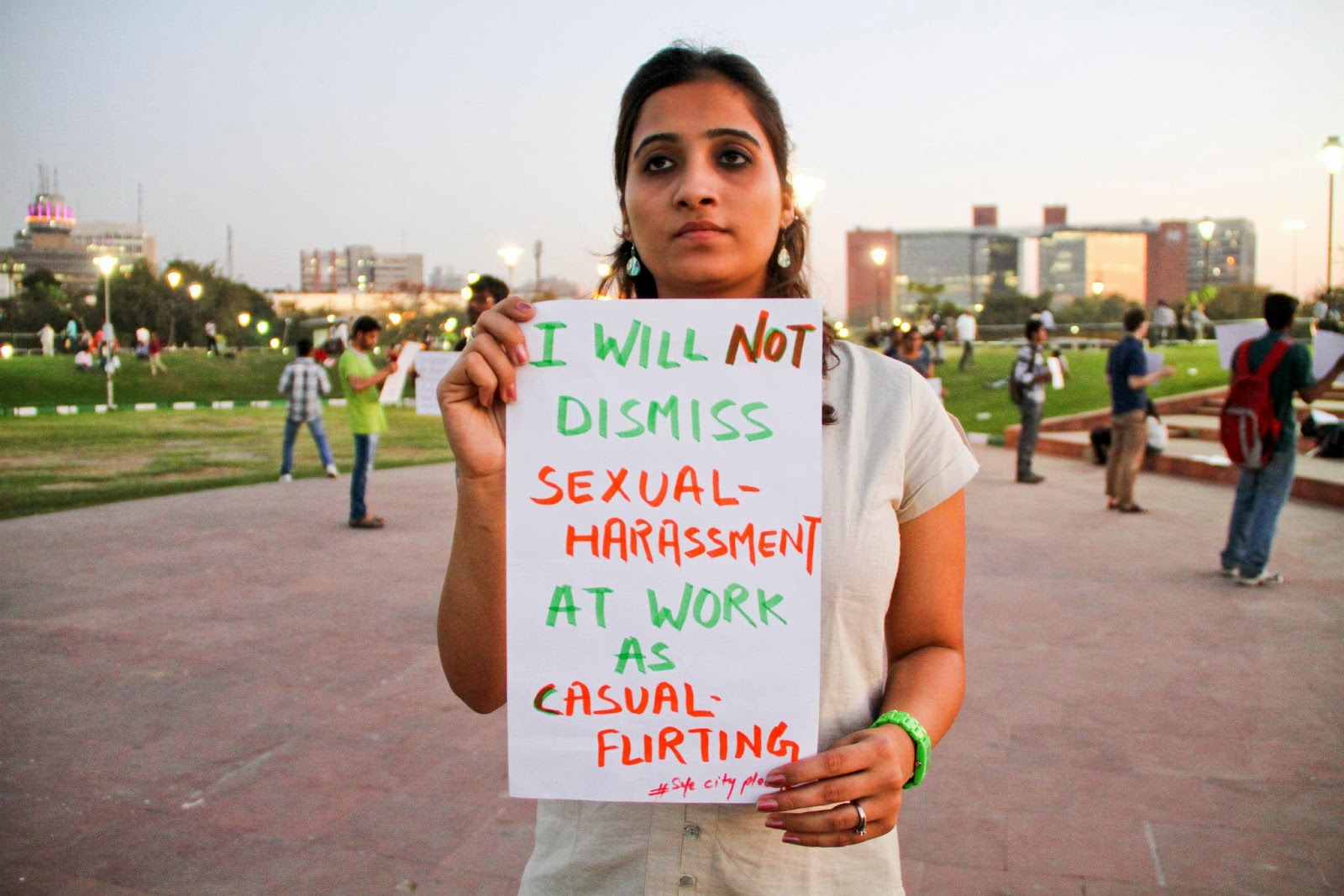
Sexual harassment complaints can be resolved at an organizational level, if the employer sets up the right mechanisms and processes in place. This is a case study to explain the reputational risks that arise from non-compliance with sexual harassment laws, or when senior management at the organization does not give due attention to sexual harassment at work and insensitively handles them. Having suitable mechanisms as required under the Vishaka guidelines, and handling the case according to such mechanisms could have probably prevented the public relations and reputational fiasco for Tehelka. These processes will need to be in compliance with 2013 act now.

This case study explains how absence of suitable processes and incorrect approach by the management led to a public relations and reputational crisis for Tehelka and its founding editor, Tarun Tejpal in criminal proceedings.

Tehelka, one of India’s renowned magazines and print houses, known for its investigative journalism and numerous sting operations, was marred when allegations of sexual harassment of an employee by its founder and Editor-in-Chief Tarun Tejpal in November, 2013 surfaced. The employee (complainant) was a principal correspondent of Tehelka, who was accompanying Tejpal at a five-star hotel in Goa in company-organised event, where she was sexually harassed and assaulted in the lift of the hotel.

Allegation of sexual harassment by the Editor-in-Chief of Tehelka, which known for its high level of investigative journalism, was a rude shock for the common public and subjected to media scrutiny, because of its previous active role in highlighting sexual violence in India, and which also carried a special issue on sexual violence in February 2013. There has been huge media outcry over this incident and claimed a downfall of an institution known for its integrity and firebrand journalism which exposed numerous corruption in the government. While, this could be one of the crucial reasons for the huge public attention, there are multiple reasons which resulted in snowballing of the whole episode.

The incident was further aggravated by the poor management and response by the Managing Editor of Tehelka, Shoma Chaudhury, who tried to downplay the whole event, and even tried to use “intimidation, slander and character assassination ” of the complainant. The complainant alleged that Chaudhury, instead of helping or assisting the complainant, tried to cover up the whole incident. The incident received huge publicity when a mail sent to the employees of Tehelka surfaced on the internet, which mentioned the event as “an untoward incident”, which according to many showed that the management did not treat it like a serious incident, and the management was trying to hide the allegations. As revealed later, it was not a single incident, but there were atleast two incidents of sexual assault in a single week. Moreover, the incident revealed, that Tehelka did not have a complaints committee or other procedure mandated under the Vishaka guidelines to resolve sexual harassment complaints at the workplace (the Sexual Harassment Prevention Act of 2013 was not in force at that point of time). The demand by the complainant to establish a committee to inquire into the incident was brushed off as “an internal issue”, even though sexual harassment is a criminal matter. Instead of establishing an ICC and conducting a proceeding, Tejpal voluntarily stepped down from the editorship for six months, which has been looked as an attempt to downplay the whole procedure of investigation and doing away with the due process followed by an appropriate punishment..

Tehelka management refused to lodge a police complaint initially as it was of the opinion that this is “an internal matter”, and later Chaudhury stated that it was for the complainant to approach the police. However, it is not clear whether the complainant was clearly aware of her legal rights under various laws, and whether she was aware that the provisions under the recently amended IPC could have given her more protection. The Vishaka guidelines mandated that the employer must approach the police in case an instance of sexual harassment at work was serious enough to constitute an offence under the Indian Penal Code. It is important for organisations to provide adequate guidance and assistance to the complainant in filing a police complaint. The statement by Chaudhury was not well thought of, and shows lack of consideration and support for the victim.

Note: The employer is bound to assist the complainant in filing a complaint with the police, if the complainant wishes so.

Subsequently, the Goa Police registered an FIR taking suo motu cognizance of the issue (that is, on their own initiative without a specific person reporting the incident to the police), and charged Tejpal under sections 354, 354-A (sexual harassment), 341 and 342 (wrongful restraint), 376 (rape), 376(2)(f) and 376 (2)(k) (taking advantage of official position and commission of custodial rape) and was arrested on November 30, 2013.Tejpal was released by an order of the Supreme Court later. The case against Tejpal is still pending in the district court.

From a reputational and public relations perspective, the following acts of Tehelka management aggravated the situation:

  • Non-establishment of a suitable procedure to handle sexual harassment complaints (even after the complaint had arisen)
  • The Managing Editor’s downplaying of sexual harassment allegations (instead of commencement of investigations)
  • Internal communication to employees which reflected insensitivity, rather than organizational concern towards serious issues such as sexual harassment at workplace
  • Opinion of the Tehelka management, that this is an internal issue and refusal to an express demand to set up a complaints committee
  • Tejpal temporarily going underground, which indicated acceptance of guilt at some level
  • Inadequate organizational response to a sexual harassment complaint which further undermined the faith in organizational willingness to handle such instances.

Takeaways

The following takeaways / lessons can be useful in ensuring that organizations do not face similar risks:

  • Organizations must ensure that there is adequate legal compliance under the 2013 Act – such as establishment of complaints committees, putting up notices, etc.
  • ICCs must take action when a complaint is filed, such as commencement of investigation or providing  interim measures
  • Organizations must ensure that complaints committees are effectively functioning
  • Organizations must inform employees of their rights and steps that can be taken by them in case they are sexually harassed at work

If you are looking for an effective, accessible and super-fast way to comply with law, and want to find out more about a cloud-based tool that helps in organizational compliance, ICC capacity-building and 100% sensitization for all your employees, visit cloudtrain.in.

Creating a conducive workplace environment for their teams is becoming a challenge for professionals (lawyers, company secretaries, chartered accountants) or those working in HR, training, compliance and legal teams, especially in light of increasing regulatory intervention. Click here to find out about the Executive Certification in Sexual Harassment Prevention and Workplace Diversity offered by the National University of Juridical Sciences (NUJS), Kolkata, a top law university in India (which had also started the country’s most successful comprehensive online business law diploma in 2012). 

Download Now

Monkey selfie: Analysing the Copyright Ownership of Work by an Animal

0

This article is written by Sukhmani Singh.

selfie-640x960

In an unusual twist of events, something rather unimaginable happened when the pictures of a black macaques monkey went viral over the internet. A wildlife photographer, David Slater, was in Indonesian National Park when this incident happened with his camera equipment. While he was visiting the park, he decided to get close to the animals. So, he teamed up with a local guide and embarked on a 3-day journey to befriend these creatures. Slater says that these monkeys are basically inquisitive by nature and were really interested in the equipment that the photographer was carrying with him.

The incident happened when the photographer set up his camera on a tripod and left his equipment for a few minutes. On his return, he saw that the monkeys were going kind of crazy with his equipment. The camera captured more than 100 pictures of the monkeys in a series of different poses. Hence, the “monkey selfie” was taken this way.

The question arose when the photographer requested Wikimedia to take off the Monkey Selfie as it was his camera by which the selfie has been taken. The photographer’s request was not accepted as he did not have copyright over that picture. This stunt has cost David Slater a lot of money.  In a nutshell, the issue is where a photo taken by an animal with the equipment of a photographer shall become a part of the public domain or the property of the owner of the camera.

If we go by the legal pseudo doctrine that says “he who takes the selfie, owns the selfie”, it would be safe to say that the monkey, undoubtedly, has copyright ownership of the selfie. When this doctrine developed, the doctrine was restricted to human beings. With an animal picture in the view, things have taken the concept of copyright ownership to another level.

Copyright is a form of intellectual property that is applicable to any expressible form of an idea or information that is creative and different. Nowadays, copyright has gained a lot of significance because of the development of technology. This “Monkey selfie” has caused a lot of debate over copyright. The author of the work is the copyright owner. In this case, it would be the monkey but, it has been stated by USCO that copyright for work by animals cannot be accepted and registered. This means that the picture does come in public domain– the statement that appeared on Wikimedia that was challenged.

The stand of various countries with respect to copyright ownership by an animal is as follows.

1) United States of America

The US Copyright Office has clearly stated that an animal, ghost or divine being cannot hold copyright over a picture or any other piece of art. The office has stated that it cannot register work that has been produced by nature, plants or animals. In the same way, the office can’t register work by a divine entity or supernatural beings. The exception being that where the work was created by a human being whereby taking inspiration from a divine source was acceptable.

2) United Kingdom

UK shares a similar stance as that of the US. UK’s copyrightable work laws are similar to that of US. The Intellectual Property Office says that according to the UK law, cannot can’t own copyright. The point of discussion is the extent of the contribution by the photographer. If the photographer has a major chunk of contribution of the making of the creative work, then a decision has to be taken by the courts. The product needs to be an attempt of a conscious mind. The law in UK is a bit unclear. But, in short, the law says that if you have consciously attempted to create such a piece of work, then you do have copyright over it. A fluke would not be rewarded. Again, the situations shall vary but, as of now, David Slater has no copyright over the picture.

4) India

When we talk about India, the current situation has not been dealt with under the law. The law does say that copyright is vested with the author of the work, unless it is clicked by a person’s employee or has been specifically commissioned to take the photograph. In this case, it is the monkey who took the picture, and clearly the monkey was nor the employee or was commissioned for taking the photograph, the copyright could not have vested on the photographer. However, the monkey could be considered as the author of the photographer, but under the Indian laws, animals cannot be considered as legal person to claim ownership.

Download Now

Regulatory overview of Contract Labour in India

0

Burj_Dubai_Construction_Workers_on_4_June_2007

This article is written by Narendra Mohan, a student of Faculty of Law, Lucknow University.

Introduction

Contract labour is a significant and growing form of employment. It exists in almost every sphere of the employment, industries, allied operations and also prevalent in the service sector. It generally refers to workers engaged by a contractor for other organisation. The exploitation of contract labour in employment is one the biggest concern of the government as the contract labour have little bargaining power,  social security and often engaged in the hazardous industries with lesser facilities and security. To regulate this system the government enacted the Contract Labour (Regulation & Prohibition) Act, 1970 to secure the status of contract labourers and to abolish them from certain establishment and it came into force on 10.2.1971.

Registration

This Act made it obligatory for the establishment and industries to register before the concerned authority (Asst. Commissioner of Labour or Labour Officer) in a period as fixed by the government before employment of contract labour. All establishments and every contractor which employ or have employed more than 20 contract labours must register with the concerned authority. The application for registration by the principal employer (the person who actually employs) must contain various particulars in relation to the establishment and it shall be made in triplicate in Form-I to the registering officer of the area with appropriate fees as fixed by the government. The certificate of registration shall be granted mentioning the name and type of the establishment, type of business, maximum no. workmen to be employed as contract labour and other particulars in relation with the contract labour in Form-II. If there is any change in the particulars of the establishment, it must be informed to the authority within reasonable time.

Licensing of contractor

To secure the status of the contract labour the legislation made it mandatory for the contractor to obtain the license for the contract work from the licensing officer of the local labour department by applying in triplicate in Form-IV enclosed with Form-V of the principle employer by depositing the prescribed refundable security amount and the licensing fees. A license issued for one contractor work cannot be used for another work which is different in nature. A contractor is not able to engage in any work through contract labour with obtaining license from the licensing authority if it happens the penal action can be taken against the contractor accordingly. The license granted is valid for the period of 12 months and can be renewed.

Rights of labour

The act determines the rights of the contract labour so as to make them secure from any exploitation. These rights ensure equal status of them as of the workmen and the violation of which is enforceable in court of law. The interests of contract labour are protected in terms of wages, hours of work, welfare, health and social security. Any agreement made between the parties, which is inconsistent with the benefits provided under the Act and are not favorable for the labourers will be treated as invalid.

  • The contract labours are entitled for the wages including overtime wages and allowances as stipulated for their work at the establishment. It must be paid without delay whenever the wage period is over. It must be in accordance with the Minimum Wages act.
  • The contract labours have also the right to be provided the safety measures at the establishment and immediate health service in case of any injury to the labour. They are entitled for facilities like rest rooms, canteens, washing facility, first aid facilities and many more. The women labours are entitled for the separate washrooms, restrooms.
  • They are entitled not be employed in any work which is prohibited under any law.

Responsibility of principal employer

Responsibility of principle employer is on priority as he is the person who is connected with the contract labour at work, therefore every facility and security at work must be provided to him by the principal employer. Although his liability for the contract labour is secondary after the contractor yet he is principal in payment of wages and providing the facilities and security at workplace.

  • The employer is responsible for obtaining the certificate of registration and must comply with all the necessary provisions for registration of the establishment and furnish all the particulars as demanded by the authority at times.
  • The principal employer must maintain a register of contractors in Form – XII.
  • The principal employer is responsible for payment of wages including overtime wage and allowances directly paid to the labour in full in accordance with Payment of Wages Act, 1936 in case the contractor fails to make payment within the prescribed time.  The principal employer may recover such amount from the contractor. A representative of the principal employer must be  present while the wages are paid to the contractor.
  • He is also responsible for various facilities which are to be provided at work and which are essential for the contract labour at work. The principal employer is entitled to recover from the contractor any amount spent on providing such facilities to the contract labourers.
  • He is responsible that any contract labour must not engage in hazardous or such work which can cause him the injury at work.
  • He is also responsible for sending Annual Report in a Form XXV to the Registering Officer within 15th February of every year.

Responsibility of contractor

In the contract labour system, the contractor is most responsible person towards the contract labour. His liability under the act is made primary. In case of every situation related with the contract labour, the contractor is responsible.

  • The contractor is responsible to obtain the license from the licensing authority and furnish to them all the particulars and documents as are necessary for the license.
  • He is responsible to maintain the register of workers in Form XIII which shall contain all necessary particulars related with each contract labour.
  •  The contractor must issue an employment card to each of the workers.
  • All facilities and amenities like stay rooms, re           st rooms, washrooms, food, and health facility are to be provided by the contractor.
  • He is primarily responsible for the disbursement of wages to the labours on time and maintains necessary Register of Wages, Deductions, Overtime, display an abstract of this Act in English, Hindi and in a local language, and notices related to rate of wages, period of work, address of labour inspector, etc.
  • The contractor must send Half-yearly reports in Form XXIV to the local labour department in December and June.

Judicial interpretation on abolition and absorption

There are number of judgments in which the court delivered its opinion in relation to the status of contract labour being abolished under the notification as it is one of the disputed social issues in relation to government reforms. Therefore every time the judiciary is more conscious to determine the status and security to be provided for such type of labour and to ensure that they won’t be exploited by the industrial class of the society.

  • In Gammon India Ltd. vs. Union of India 1974 SCC (L&S) 252 numerous provisions and rules under the contract labour act, 1970 were interpreted by the judiciary broadly. Various facilities, wage payment manner, duty of contractor and principal employer were broadly interpreted. Also this case defined the constitutional validity of the contract labour statute as constitutionally valid.
  • In Deena Nath case AIR 1991 SC 3026, Supreme Court held that the principal employer cannot be required to absorb the contract labour which is abolished.
  • But after that there were constant complaints that the contract labours are being thrown out from the employment. So the questions arose as to the status of abolished labour under the act. On this crucial question of the after effect of the abolition of contract labour, the Supreme Court in Air India Statutory Corporation vs. United Labour union AIR 1997 SC 645, overruled the two member bench decision in Deena Nath Case AIR 1991 SC 3026 holding that the high court may direct the principal employer to absorb the contract labour who have been abolished under the government notification. The court also ruled that the linkage between the contractor and the labour stood snapped and the direct relationship stood restored between the principal employer and contract labour as its employees.
  • Later in the landmark case namely Steel Authority of India vs. National union of Water Front workers and others, AIR 2001 SC 3527, the Supreme Court overruled the decision delivered in the Air India Statutory Corporation Case holding hat neither section 10 of the act nor any other provision of the act whether expressly or by necessary implications provides for the automatic absorption of the contract labour. Consequently the principal employer cannot be required to absorb the contract labour working in the establishment.

Obligation and manner of payment of wages

The contractor is obliged to pay the wages of the contract labour at the prescribed period of time. The contractor shall fix wage periods in respect of which wages shall be payable. No wage period shall exceed one month. The wages of every person employed as contract labour in an establishment or by a contractor where less than one thousand such persons are employed shall be paid before the expiry of the seventh day and in other cases before the expiry of tenth day after the last day of the wage period in respect of which the wages are payable. Where the employment of any worker is terminated by or on behalf of the contractor the wages earned by him shall be paid before the expiry of the second working day from the day on which his employment is terminated. All payments of wages-shall be made on a working day of the work premises and during the working time and on a date notified in advance and in case the work is completed before the expiry of the wage period, final payment shall be made within 48 hours of the last working day. Wages shall be paid without any deductions or any kind except those specified by the Central Government by general or special order in this behalf or permissible under the Payment of Wages Act, 1936. A notice showing the wage-period and the place and/time of disbursement of wages shall be displayed at the place of work. The principal employer shall ensure the presence of his authorized representative at the place and time of disbursement of wages by the contractor to workmen and it shall be the duty of the contractor to ensure the disbursement of wages in the presence of such authorized representative.

Penalties

The act penalises the contractor, principal employer or any other person if he contravenes the provisions of the Act. The punishment in most of the offences is imprisonment for a term upto 3 months or fine upto Rs 1000/- or both and in case of continuing offence, an additional Rs 100/- per day.

The act also provides for the penalty if any person obstructs or make disturbance in inspection made by the inspector or refuses to furnish any documents, approvals or register as demanded, the punishment for these kind of offences will be the imprisonment for a term upto 3 months and fine upto Rs 500/- or both.


Photo Credits: Imre Solt

Download Now

5 reasons law students love mooting

0
mooting

moots(1)

“and there I was standing at the podium…..for my first moot court argument…my heart was literally in my throat……and then it began…..I started speaking….I could actually feel the blood pounding in my ears…so nervous I was… but slowly and gradually I gained momentum and spoke with the highest amount of confidence that I had ever mustered in my life….

And when it actually ended…there I was standing …feeling proud of myself on the fact that at last I overcome my inhibitions and presented my case in the boldest manner possible….”

Primarily, moot is the mock trial of how the legal proceedings take place in the courts. It is always regarded as a beginner’s guide. If you love challenges and arguments, then you can also develop a love for mooting during your life in law school. If you have decided upon advocacy as your career then mooting can be a great beginning for your dream.

Now coming to the point why law students loves mooting:

To quote Thomas Jefferson “brevity is best because it leaves no room for inattention by listener”. Mooting makes you brave and confident personality. The challenge and the excitement that you experience while mooting cannot be gained in classes.


  • Mooting is like a competition with fun, and the grilling helps in building up great oratory skills that develop confidence in your ability as advocate. Mooting gives an Opportunity to prove your case even if you know that you are wrong and when you argued in a persuasive way with full of confidence and clarity you feel like you have won the world.
  • Mooting helps you in learning and being perfect in formal legal writing and drafting. It makes you soo perfect in this field of legal writing and drafting that if your batch mates or seniors ask you anything about brief and formal legal drafting or when you work in firms as intern or as an employee, you will always get praised.


  • Mooting develops the skill of team work and coordination. You develop the skill of dedication, working with other fellow team members. You might have so friendly connections with a teammate that you even won’t mind sharing a piece of delicious cake.
  • Mooting can develop research and analytical skills which is the essential requirement for a law student. You learn how and where to apply your research work and mental ability. You need to be exquisitely preparing to argument your case in the moot competition so it is the research that makes you perfect. Once you start researching you might get to know many new facts of law and it makes you more curious.
  • Another reason why a law student loves mooting is that mooting resembles a college paid vacation with condonation for attendance. You get to see new places, you Meet people and see new places and it helps in developing new contacts when you come to meet students of the other laws schools which is very helpful in networking.


So it is through mooting that you get to know how to construct an argument, find a way around an awkward precedent, presenting a clever answer for a judge on the fly and as a hero you turn a hopeless case in successful win. Not to mention, for all this, you need to be better than your opponents at understanding how to go about the Mooting in a manner that is different and, of course, better than your opponents. Doing this online course designed by some of the best Mooters in the country can certainly be a good start at winning. And obviously that is where the fun lies!

The above article is written by: Poonam Bera
3rd year law student at Army Institute of law.

IMAG2095


T

Download Now

Higher Judicial Appointments: A New Perspective

0
Habeas Corpus

Supreme-Court1

This article is written by Narendra Mohan, a student of Lucknow University.

After much conflict and cross swords over the making of higher judicial appointment between executive and judiciary, the legislative body finally come to a step closer to scrap the two-decade old Supreme Court operated “collegium” system for the appointment of judges of higher judiciary by giving the constitutional validity to National judicial appointment commission by inserting Art. 124 A in the constitution. Now this system is deemed to be more comprehensive, transparent, accountable and broad-based mechanism for making such appointment.

Recently the elevation of Karnataka high court judge, KL Manjunath as the chief justice of Punjab and Haryana High Court also boost the irregularity of collegium system. CJI also accepted the limitations in this system but added it would be wrong to claim that the system has not worked at all.

Before 1993 the appointment of judges of higher judiciary is done by the Union law minister. After 1993, the Supreme Court has done away the consultative process and introduced a new system named “collegium” for the appointments of judges of higher judiciary devised by Supreme Court itself which was the outcome of second judges transfer case in 1993. Now this perspective has been changed by introduction of National Judicial Appointment Commission Bill, 2014 passed by both the houses (Lok Sabha: August 13, 2014, Rajya Sabha: August 14, 2014) which provides for the constitution of six- member body for the appointments and transfer of higher judiciary. While stating its aim, the union law minster Mr. Ravishankar Prasad said, “The bill is aimed to ensure that the meritorious people are selected as judges to the higher courts. Also this law does not impact on the independence of judiciary.”

Some of the features of the proposed law are given below:

  • Establishment of a commission named National judicial Appointment Commission consist of six members CJI, Union Law and justice Minister, two senior most judges of supreme court and two other eminent person nominated by a committee comprising of PM, CJI and leader of opposition in Lok Sabha from SC/ST/women or minority community.
  • Reference by central government to NJAC about the vacancies of judges of HCs and SCs.
  • Recommendation by NJAC for appointment of senior most judge of Supreme Court as CJI.
  • Appointment of judges of HCs: recommendation to be made by NJAC of CJ of high court on the basis of seniority, merit and ability.
  • Recommendation for appointment of any judge of high court to made on the basis of views provided by the concerned CJ with two senior most judges, CM and the Governor of the state.
  • NJAC also empowered to recommend the name of judges to transfer the judges from one high court to another and formulate the procedure in this regard.
  • Appointment basis must not be solely the seniority but it must be the ability and merit also.
  • Veto power of members: no recommendation if two members do not agree to such recommendation.
  • President is empowered to direct the NJAC to reconsider the recommendation made by it.

However, this new approach is criticized by RM Lodha, CJI stating that “I also appointed from the same collegiums system and if it is wrong then how my appointment can be right?” Further many other learned judges opposed the new approach by holding that this will increase the inference of executive in the judiciary due to which the supremacy of judiciary may be affected due to political pressure under this system.

In USA the Judicial Appointment Commission comprised of 18 senate members while in UK these members are 70 but in the present law, the veto power is given only to the two members that will lead to more political interference in the judiciary. In any selection, if the two members do not agree, the voice of judicial members can be silenced and no recommendation can be made which may lead to compromise several times during appointments.

Therefore the new system may increase the corruption in the most respected organ of the democracy as the appointment system of its officers may lead to politicizing the vary structure of judiciary.

Download Now

Corporate Social Responsibility (CSR) laws around the World

0

Corporate-Social


This article is written by Sukhmani Singh, a student of  Army Institute of Law, Mohali.

The world is developing with time. What was considered to be impossible yesterday, is possible now. We all know that every action has an equal and opposite reaction. So, if I give a simple example, an industry might be making the best of leather, but, what is the use when that causes a lot of pollution? Nowadays, people are thinking not just about the industry or company and its motives; the models of business are no longer revolving around the monetary aim. In a layman’s language, if I have to define what Corporate Social Responsibility is, I would say that it is the awakening of corporate conscience which aims at embracing the responsibility for the company’s actions. It is a positive step that is taken by doing social good that is beyond the interest of the company. Now, it is a requirement by law. This term became really popular in the 1960s which, unfortunately, has been construed very narrowly.

Those people who support the concept of Corporate Social Responsibility say that it is positive step in the sense that it helps the company make long term profits while doing some social good as well. This statement is rebutted by saying that too much work would just distract the company from achieving its main aim of profit making. Studies have proved that when a model for corporate social responsibility is properly executed, it has a neutral effect on the financial outcome.

The United Nations Industrial Development Organization defines corporate social responsibility as “a management concept whereby companies integrate social and environmental concerns in their business operations and interactions with their stakeholders.”

The world has become more and more aware. All the major players have been contributing to the society in one way or another. If we take the example of India, Aptech, a leading education player with a global presence that has played a broad and continued role in encouraging and nurturing education throughout the country since its inception. As a global player with complete solutions-providing capabilities, Aptech has a long history of participating in community activities. It has, in association with leading NGOs, provided computers at schools, education to the deprived, and training and awareness-camps.

This concept of Corporate Social Responsibility has been introduced all across the globe. Different countries have different ways of application. What is common is that all the countries use the LBG model to assess the real value and impact of their community invest­ment to both, the business and society.

When we talk about Corporate Social Responsibility (CSR), it is understood that it is executed after a lot of planning and strategising.

Here is a brief comparison of the CSR regulation across the globe!

1) In USA

The Corporate Social Responsibility (CSR) team in the Bureau of Economic and Business Affairs leads the Department’s engagement with U.S. businesses in the promotion of responsible and ethical business practices.  The mission of the CSR office is to:

  • Promote a holistic approach to CSR to complement the EB Bureau’s mission of building economic security and fostering sustainable development at home and abroad.
  • Provide guidance and support for American companies engaging in socially responsible, forward-thinking corporate activities that complement U.S. foreign policy and the principles of the Secretary’s Award for Corporate Excellence program.
  • Build on this synergy, working with multinational companies, civil society, labour groups, environmental advocates, and others to encourage the adoption of corporate policies that help companies “do well by doing good.”

2) In UK

It is a part of Corporate Governance. The Companies Act 2006 has now added to those pressures by requiring directors to have regard to community and environmental issues when considering their duty to promote the success of their company and by the disclosures to be included in the Business Review. CSR is, now, an integral part of good governance, for bigger companies in particular.

3) In Europe

The European Commission’s CSR agenda for action is:

  • Enhancing the visibility of CSR and disseminating good practices.
  • Improving and tracking levels of trust in business.
  • Improving self and co-regulation processes.
  • Enhancing market reward for CSR
  • Improving company disclosure of social and environment information.
  • Further integrating CSR into education, training and research.
  • Emphasising the importance of national and sub-national CSR policies.
  • Better aligning European and global approaches to CSR.

The CSR strategy is built upon guidelines and principles laid down by the United Global Compact, United Nations Guiding Principles on Business and Human Rights, ISO 26000 Guidance Standard on Social Responsibility and OECD Guidelines for Multinational Enterprises.

4) In India

CSR in India has traditionally been seen as a philanthropic activity. And in keeping with the Indian tradition, it was an activity that was performed but not deliberated. In 2014, India became the first country in the world to have a mandatory CSR contribution legislation. In India, the concept of CSR is governed by clause 135 of the Companies Act, 2013, which was passed by both Houses of the Parliament, and had received the assent of the President of India on 29 August 2013. The CSR provisions within the Act is applicable to companies with an annual turnover of 1,000 crore INR and more, or a net worth of 500 crore INR and more, or a net profit of five crore INR and more. The new rules, which will be applicable from the fiscal year 2014-15 onwards, also require companies to set-up a CSR committee consisting of their board members, including at least one independent director. The Act encourages companies to spend at least 2% of their average net profit in the previous three years on CSR activities.

5) Other countries

France, Denmark, South Africa and China have a mandatory reporting obligation on the amount spent on CSR activities.

CONCLUSION

All the major countries take CSR with a lot of seriousness, may be out of conscience or because the laws that are being formulated. Some countries are governed by various boards in this matter whereas for some countries, strict laws are made. By and large, what we can say for sure is that though the methods are be different, the end result is quite encouraging. Some other reasons for embracing CSR are that it is an innovation that is a huge benefit to a company and society. Brand differentiation is another reason why companies embrace CSR. CSR is more than fulfilling a duty to the society; it should also bring competitive advantage. All in all, it is an excellent step for the companies and the societies. The models made for implementation of CSR should be made with more planning and skill so that the effect is deeper and wider.


LawSikho has created a telegram group for exchanging legal knowledge, referrals and various opportunities. You can click on this link and join:

https://t.me/joinchat/J_0YrBa4IBSHdpuTfQO_sA

Follow us on Instagram and subscribe to our YouTube channel for more amazing legal content.


Download Now

Double jeopardy and the law in India

0

Double_Jeopardy!_-16

This article is written by Naveen K. Jain, a student of Jindal Global Law School, Sonipat (Haryana).

Introduction

Black’s law dictionary defines Double Jeopardy as: – A second prosecution after a first trial for the same offense.[2] Double Jeopardy follows the principle of Nemo Debet Bis Puniri Pro Uno Delicto which means no man ought to be punished twice for one offense.[3]

It would be fair to say that the right against double jeopardy has been provided in all progressive states in the world. In United States of America, the 5th schedule contains double jeopardy clause[4] which gives right against double conviction for a same crime.[5]

Laws in India and standard test followed in USA

Constitution of India guarantees right against double jeopardy under article 20(2) which states:-

(2) No person shall be prosecuted and punished for the same offence more than once.[6]

General Clauses Act, 1897also provides protection against double jeopardy. Though the specific section is not very well drafted but it does maintain that if a person deserve to be prosecuted due to an act or omission under two or more enactment, then the offender should be punished under any of those provisions [but not under both].[7]

Section 26 of General Clauses act[8] says:-

 About Provision as to offences punishable under two or more enactments

Where an act or omission constitutes an offence under two or more enactments, then the offender shall be liable to be prosecuted and punished under either or any of those enactments, but shall not be liable to be punished twice for the same offence.


On the same lines section 300 of Code of Criminal Procedure, 1973 (hereinafter referred as Cr.PC) provide protection against double jeopardy. It says:-

Section 300[9]:- Person once convicted or acquitted not to be tried for same offence

(1) A person who has once been tried by a Court of competent jurisdiction for an offence and convicted or acquitted of such offence shall, while such conviction or acquittal remains in force, not be liable to be tried again for the same offence, nor on the same facts for any other offence for which a different charge from the one made against him might have been made under sub-section (1) of section 221, or for which he might have been convicted under sub-section (2) thereof.

Recently Supreme court of India in  Kolla Veera Raghav Rao case[10]has affirmed that Section 300(1) CrPC is wider in its scope than Article 20(2)[11] of the Constitution. While Article 20(2) of the Constitution only says that “no person shall be prosecuted and punished for the same offence more than once”, Section 300(1) Cr.PC states that no one can be tried and convicted for the same offence or even for a different offence but on the same facts.[12]

https://lawsikho.com/course/certificate-criminal-litigation-trial-advocacy
click above

Double Jeopardy clause under article 20(2) of Indian Constitution is closely similar to 5th amendment[13] of United States [specifically the double Jeopardy clause in it]. Also, the definition and scope of double jeopardy in India is greatly covered and defined under section 300 of Cr.PC, similarly in US, almost a same type of procedure was first evolved as element test[14] in the case of Blockburger v. United States.[15]

InBlockburger, the Court said that “where the same  transaction or act constitutes a abuse of two separate statutory provisions, the test to be applied to establish whether there are two offenses or only one, is whether each provision requires proof of a fact which the other does not.”‘ This test has long been employed both to measure the correctness of successive prosecutions and to address multiple punishment issues by determining presumptive legislative intent, and is now the exclusive test for defining “same offense.” [16]

Jurisprudential angle

Using H. L. A. Hart’s theory[17], it can be argued that article 20(2) of Indian constitution is a secondary rule that empowers the primary rule under section 300 of Cr.PC. Article 20(2) enumerates the standard requirement and it allows the creation and it empowers subsequent rule on its descriptive lines. Tough, it is not always necessary that a secondary rule has to be very descriptive in nature, often primary rules are vague and obscure but they set the standard that allows the primary rule to evolve.[18] Having said that, based on Hart’s theory of primary and secondary rules, it is the article 20(2) of constitution of India that allows and empowers Section 300 of Cr.PC.

Double Jeopardy law in India essentially protects a person from multiple punishments or successive prosecution based on same facts of a case where the elements of multiple prosecutions are similar to those for which the accused has already been prosecuted or has been acquitted by the court. Going by the basic principle of law, a new charge cannot be framed against a person under section 300 of Cr.PC based on same facts. It is essentially the duty of police who files the charge sheet to ensure that all the charges are framed against a accused properly, also it is a responsibility of the magistrate to ensure that the charge sheet has been filed without an error.

It creates extra burden on both i.e. accused and the state machinery if the charges are not framed cautiously, as it sometimes leads to the double victimization of an accused and on the other side, it also creates problem for state to prosecute a person as it should be.


The applicability of Article 20 (2) and important case

In Rao Shiv Bahadur singh v. State of V.P.[19]  Supreme court held that what is forbidden under article 20 is only conviction or sentence under an ex post facto law and not the trial thereof. It cannot be reasonably urged that the prohibition of double jeopardy applies only when both the instances [two different things for which accused was charged] therefore arise after the Constitution.[20] Article 20 does not have retrospective effects but the laws passed which have retrospective effect should be confined to article 20. Laws passed even when the constitution was not in existence, does not make the constitutional sovereignty ineffective.

In Assistant Collector of Customs v L. R. Malwani [21]

The Supreme Court had made a very important point in respect to article 20(2) of Constitution of India. In this case the Respondent was charged for smuggling foreign goods after Enquiry was held by Customs authorities, smuggled goods were seized and confiscated. Also, Respondent was penalised with penalty.

Appellant then filed a petition against the respondent. Respondents was held guilty by the magistrate and he was given no relief even at the high court. In the revision petition before the Supreme Court under section 403 of Cr.PC, the respondent pleaded defence under article 20(2) of Indian constitution for double jeopardy as he was already had penalised by the customs authorities. One of the main issues before the court was whether that prosecution is barred under Art. 20(2) of the Constitution which says that no person shall be prosecuted and punished for the same offence more than once.

But the court held that it is necessary for an accused person to establish before the court that he had been tried by a “court of competent jurisdiction” for an offence and he was convicted or acquitted of that offence and the said conviction or acquittal is in force.

In this case, the Supreme Court held that the proceeding before the Sea Customs authorities was not a “prosecution” and the order for confiscation was not a “punishment” inflicted by a Court or judicial tribunal within the meaning of Art. 20(2) of the Constitution and hence his subsequent prosecution was not barred.

Recently, in a case of Institute of Chartered Accountants of India v. Vimal kumar Surana[22]the court held that if a person is convicted under a different law, it cannot be said to be a double jeopardy. The defendant was charged under provisions of Chartered accountant act 1949. The court held that merely because he is charged by the provision of said act, it does not give him immunity from prosecution as the element of the offence differs and he can be accused for number of different offences and in different laws including Indian Penal Code.

Though the court did not mentioned about the element test which is also known as Blockburger test[23]. But the honourable court did use the same method to reach to the conclusion. The court said that the test, whether the former offence and the offence now charged have the same ingredients in the sense that the facts constituting the one are sufficient to justify a conviction of the other, not that the facts relied on by the Crown are the same in the two trials. A plea of ‘autrefois acquit'[24] is not proved unless it is shown that the verdict of acquittal of the previous charge necessarily involves an acquittal of the latter.”[25]

Essentials of Double Jeopardy

As it is very clear from the cases mentioned above that one can take the defence of double jeopardy when one is convicted again for a same crime having same elements of prosecution. If a person who has been prosecuted based on same facts but in an offence having different elements of crime, he would not be able to claim a defence under article 20(2) or section 300 of Cr.PC or Section 26 of General Clauses Act, 1897.

By now, it is certainly clear that the scope of Section 300 in Cr.PC is much wider than article 20(2) of Indian Constitution. But, applying the same principles of Hart’s theory of primary and secondary, it is the constitution in article 20(2) that empowers Section 300 or Cr.PC and section 26 of General Clauses Act.

As mentioned before, the supreme court in Kolla Veera Raghav Rao case has already observed that the scope of section 300 is wider[26]than article 20(2) and it is important to notice that the even though section 300 provides wider definition of double Jeopardy, it does also ensures some protections under Cr.PC. The bare reading of section 300 clarifies that, based on same facts of a case, a separate charge cannot be framed by prosecution. Also, if the elements of a crime is same as that to, for which the accused is being prosecuted, the accused cannot be held guilty or a separate charge cannot be initiated against that person.

On the contrary, it is also important to know that if the elements of an offence are different from which the accused is being charged, then he will not be able to please defence under section 300 of Cr.PC as it clearly lays down the condition that a person can be prosecuted based on same facts, if an offence involve different elements that satisfies different charge under a penal law.

Having said that, it is also important that the matter should be tried by a competent jurisdiction for an offence. And that authority itself should decide about the conviction or acquittal of an accused. As it has been discussed in Assistant Collector of Customs v L. R. Malwani that the proceeding before the Sea Customs authorities was not a “prosecution” and the order for confiscation was not a “punishment” inflicted by a Court or judicial tribunal within the meaning of Art. 20(2) of the Constitution and hence his subsequent prosecution was not barred.


LawSikho has created a telegram group for exchanging legal knowledge, referrals and various opportunities. You can click on this link and join:  

https://t.me/joinchat/J_0YrBa4IBSHdpuTfQO_sA

Follow us on Instagram and subscribe to our YouTube channel for more amazing legal content 

______________________________________

[2] Bryan A Garner & Henry Campbell Black, Black’s law dictionary (1 ed. 1999).

[3] Ibid. Also see:- Ne bis in idem:  a man shall not be twice tried for the same crime.

nemo debet bis vexari: No person should be twice sued or prosecuted upon the same set.

[4]  Findlaw, The Concept of Double Jeopardy: Background, http://criminal.findlaw.com/criminal-rights/the-concept-of-double-jeopardy-background.html (last visited May 15, 2014).

[5] Law.cornell.edu, Fifth Amendment, http://www.law.cornell.edu/wex/fifth_amendment (last visited May 15, 2014).

[6]  Indiankanoon.org, Article 20(2) in The Constitution Of India 1949, http://indiankanoon.org/doc/17858/ (last visited May 16, 2014).

[7] The General Clauses Act, 1897.

[8] General Clauses Act, 1897.

[9] Ratanlal Ranchhoddas., Dhirajlal Keshavlal Thakore & V. R Manohar, Ratanlal & Dhirajlal’s the Code of Criminal Procedure (Act II of 1974) (1 ed. 2010)

[10] Kolla Veera Raghav Rao v. Gorantla Venkateswara Rao, (2011) 2 SCC 703, at P.g. 704

[11]  Indiankanoon.org, Article 20(2) in The Constitution of India 1949, http://indiankanoon.org/doc/17858/ (last visited May 16, 2014).

[12]  Ibid

[13] Law.cornell.edu, Double Jeopardy, http://www.law.cornell.edu/wex/double_jeopardy (last visited May 16, 2014).

[14] Kirstin Pace, Fifth Amendment. The Adoption of the” Same Elements” Test: The Supreme Court’s Failure to Adequately Protect Defendants from Double Jeopardy, Journal of Criminal Law and Criminology 769–804 (1994).

[15]  blockburger v. united states,284 U.S. at 304.  http://www.law.cornell.edu/supremecourt/text/284/299 (last visited May 16, 2014)

[16] Anne Bowen Poulin, Double Jeopardy and Multiple Punishment: Cutting the Gordian Knot, 77 U. Colo. L. Rev. 595 (2006).

[17]  Lsolum.typepad.com, Legal Theory Lexicon: Hart, http://lsolum.typepad.com/legal_theory_lexicon/hart/ (last visited May 15, 2014).

[18] Philosophy.hku.hk, H. L. A. Hart’s Legal Positivism, http://www.philosophy.hku.hk/courses/law/Hart%20hnd05.htm (last visited May 15, 2014).

[19] 1953 SCR 1188, 1953 Cri LJ 1480, AIR 1953 SC 394

[20] The court said that the whole idea of article 20 would be in-toto defeated in its implication even to ex post facto laws passed after the Constitution. Every such ex post facto law can be made retrospective, as it should be, if it is to regulate acts committed before the actual passing of the Act, and it can well be urged that by such retrospective operation it becomes the law in force at the time of the commencement of the Act. It is obvious that such a construction which nullifies art. 20 cannot possibly be adopted.

[21] (1969) 2 SCR 438, (1970) Bom LR 782, 1970 Cri 885, AIR 1970 SC 962

[22]  (2011) 1 SCC 534

[23] Blockburger v. United States – 284 U.S. 299 (1932)

[24] Formerly acquitted in criminal law. The name of a plea in bar to a criminal action, stating that the defendant has been once already indicted and tried for the same alleged offense and has been acquitted.

[25] (2011) 1 SCC 534

[26] Kolla Veera Raghav Rao v. Gorantla Venkateswara Rao, (2011) 2 SCC 703, at P.g. 704

Download Now

Corporate fraud prevention mechanisms under Companies Act, 2013

0
fraud

no-fraud

This article is written by Pratyush Pandey, a student of NLU Delhi.

Fraud in relation to affairs of a company or any corporate body as defined in S.447 of Companies Act 2013 includes any act, omission, concealment of any fact or abuse of position committed by any person or any other person with the connivance in any manner, with intent to deceive, to gain undue advantage from, or to injure the interests of, the company or its shareholders or its creditors or any other person, whether or not there is any wrongful gain or wrongful loss.

Companies Act 2013 lists down frauds and prescribes penalties and punishments for violations. The offences which are punishable under S.447 of this Act are cognizable and non-bailable.

FRAUDS COVERED UNDER THE ACT

Section Fraud Defaulter
7(5) Furnishing false information or suppressing material information Any person who does so
8 Affairs of the company conducted fraudulently Every officer in default
34 Mis-statements in prospectus Every person who authorizes the issue of prospectus
36 Fraudulently inducing persons to invest money Any person who does so
38 Personation for acquisition, etc. of securities Any person who does so
46(5) Issuance of duplicate certificate of shares Every officer who defaults
75(1) Company fails to repay deposits/interests Every officer of the company
206 Business being carried out for fraudulent or unlawful purpose Every officer who defaults
229 Person required to provide an explanation or make a statement during an investigation furnishes false statement or destroys documents Person who was required to provide the explanation or make the statement
251 Application is made for removal of name from register with the object of evading liabilities or deceiving or defrauding the creditors Persons in charge of management of the company
266 If Tribunal concludes that an employee during the period of his employment with a company was guilty of any misfeasance, malfeasance or non-feasance in relation to the sick company Any person who is found so guilty
448 A person who makes a false statement or omits a material fact in any return, report, certificate, financial statement, prospectus Person who makes such statement


An auditor shall also be liable for action if the Tribunal has passed final order against him.

A class action can be brought by members or depositors to claim damages or compensation or any other suitable action against the following:

(i) the company or its directors for any fraudulent, unlawful or wrongful act or omission or conduct or any likely act or omission or conduct on its or their part;

(ii) the auditor including audit firm of the company for any improper or misleading statement of particulars made in his audit report or for any fraudulent, unlawful or wrongful act or conduct; or

(iii) any expert or advisor or consultant or any other person for any incorrect or misleading statement made to the company or for any fraudulent, unlawful or wrongful act or conduct or any likely act or conduct on his part;

PENALTY OR PUNISHMENT

S.447 prescribes that the person who is guilty of fraud shall be punishable with imprisonment for a term not less than 6 months and up to 10 years and fine, which shall not be less than the amount involved in the fraud and may extend to thrice of such amount.

If the fraud involves public interest, the minimum imprisonment to be awarded shall be 3 years.

MECHANISMS

Central Government can order investigation into the affairs of a company on the receipt of a report of the Registrar or inspector; on intimation of a special resolution passed by a company that the affairs of the company ought to be investigated; or in public interest.

1. SERIOUS FRAUD INVESTIGATION OFFICE

Section 211 empowers the Central Government to establish an office called Serious Fraud Investigation Office (SFIO) to investigate frauds relating to companies. No other investigating agency shall proceed with investigation in a case in respect of any offence under the Act, once the case has been assigned to SFIO. The SFIO has power to arrest individuals if it has reason to believe that he is guilty based on the material in possession. SFIO shall submit a report to the Central Government on conclusion of investigation. Central Government may direct SFIO to initiate prosecution against the company. SFIO shall share information they possess regarding a case being investigated by the latter and vice versa.

2. AUDITORS AND AUDIT COMMITTEE

Auditors shall report material fraud to the Central Government within 30 days. Immaterial fraud shall be reported to the board or the audit of the company.

Audit committee is required to monitor that every listed company shall establish a vigil mechanism for directors and employees to report genuine concerns. The vigil mechanism shall provide for adequate safeguards against victimization of persons who use such mechanism. It shall make provision for direct access to the chairperson of the Audit Committee in appropriate cases.

3. INDEPENDENT DIRECTORS

Independent directors shall report concerns about actual or suspected fraud. They must also ascertain and ensure that the company has an adequate and functional vigil mechanism and to ensure that the interests of a person who uses such mechanism are not prejudicially affected on account of such use.

Download Now

Right to Life and Duty of the State in cases of Violence and Riots

0

Communal violence and riots keep on manifesting with alarming frequency. It is the State’s obligation to create conditions where rights of individuals or group of persons under Article 21 of the Constitution[1] are not and cannot be violated. It is for the State and its functionaries to evolve methods and strategic to ensure protection of life and liberty of a person or persons which is guaranteed by Article 21. It is obvious that there will be no use of the rights conferred by Article 21 if the State does not exact compliance of the same from its officials and functionaries and private persons. Votaries of violence may strike for different reasons but each time it results in negation of Article 21. Life and liberty is being threatened at the hands of anti-national and anti-social elements, caste champions, criminals and rapists, etc. In some parts of the country terrorists and religious zealots are destroying life in the name of religion. The way a person wants to worship his God should not be a matter for hale or contempt of an individual, jeopardising and threatening his liberty. It is the duty and responsibility of the State to secure and safeguard life and liberty of an individual from mob violence. It is not open to the State to say that the violations are being committed by private persons for which it cannot be held accountable. Riots more often than not take place due to weakness, laxity and indifference of the administration in enforcing law and order. If the authorities act in time and act effectively and efficiently, riots can surely be prevented. Message must go to the mischief mongers that the administration means business and their nefarious designs would be thwarted with an iron hand. Personal liberty is fundamental to the functioning of our democracy. The lofty purpose of Article 21 would he defeated if the State does not lake adequate measures for securing compliance with the same. The State has to control and curb the malefic propensities of those who threaten life and liberty of others. It must shape the society so that the life and liberty of an individual is safe and is given supreme importance and value. It is for the State to ensure that persons live and behave like and are treated as human beings. Article 21 is a great landmark of human liberty and it should serve its purpose of ensuring the human dignity, human survival and human development. The State must strive to give a new vision and peaceful future to its people where they can cooperate, coordinate and co-exist with each other so that full protection of Article 21 is ensured and realised. Article 21 is not a mere platitude or dead letter lying dormant, decomposed, dissipated and inert. It is rather a pulsating reality throbbing with life and spirit of liberty, and it must be made to reach out to every individual within the country. It is the duty and obligation of the State to enforce law and order and to maintain public order so that the fruits of democracy can be enjoyed by all sections of the society irrespective of their religion, caste, creed, colour, region and language. Article 21 is an instrument and a device to attain the goal of freedom of an individual from deprivation and oppression and its violation cannot and must not be tolerated or condoned. Preamble to the Constitution clearly indicates that justice, liberty and equality must be secured to all citizens. Besides, it mandates the State to promote fraternity among the people, ensuring the dignity of the individual and the unity and integrity of the nation. Article 38 of the Constitution[2] also requires the State to promote welfare of the people by securing and protecting, as effectively as it may, a social order in which justice – social, economic and political, shall inform all institutions of the national life. These are the goals set by the Constitution, and Article 21 and other fundamental rights are the means by which those goals are to be attained. Therefore, it becomes the responsibility and avowed duty of the State to adopt means and methods in order to realise the cherished aims.

The sweep of Article 21 is wide and far reaching. Article 21 is not to be restricted to the violation of right to life and liberty committed by the State alone. That right is also to be protected and safeguarded by the State from being violated or interfered with by private individuals. In National Human Rights Commission v. State of Arunachal Pradesh & another[3], the Supreme Court held that the State is bound to protect the life and liberty of every person and it cannot permit any body or group of persons to threaten it. Article 21 is the Nation’s commitment to bring every individual or group of persons within its protective fold. This Nation belongs to members of all the communities. They are equal members of the Indian society. Equality before law and equal protection of laws is ensured to them by Article 14 of the Constitution[4] to them. None is to be favoured or discredited. The conduct of any person or group of persons has to be controlled by the State for the lofty purpose enshrined in Article 21 of the Constitution. It is the duty of the State to create a climate where the cleavage between members of the society belonging to different faiths, caste and creed are eradicated. The State must act in time so that the precious lives of the people are not destroyed or threatened. Otherwise, Article 21 will remain a paper guarantee. Time is long overdue for adopting measures that have more than a hortatory effect in enforcing Article 21 of the Constitution. The State cannot adopt a “do nothing altitude”. Like disease prevention, the State must lake every precaution, measure and initiative to prevent terrorem populi of the magnitude and in the event of an outbreak of riots it must act swiftly to curb the same and not allow precious time to slip by, as any inaction or passivity on its part can result in loss of precious life and liberty of individuals amounting to violation and negation of Article 21 of the Constitution. The State has to enforce minimum standards of civilized behavior of its citizens so that the life, liberty, dignity and worth of an individual is protected and preserved and is not jeopardised or endangered. If it is not able to do all that then it cannot escape the liability to pay adequate compensation to the family of the person killed during riots as his or her life has been extinguished in clear violation of Article 21 of the Constitution which mandates that life cannot be taken away except according to the procedure established by law.

In Pt. Parmanand Katara v. Union of India and others[5] , it was held that Article 21 of the Constitution casts an obligation on the State to preserve life. This was a case where the Supreme Court held that doctors were duty bound to extend medical assistance for preserving life, and every doctor whether at a Government hospital or other wise was required to extend his services with due expertise for protecting life. It was further held that an injured person must be first treated even before the police is contacted.
In Bandhua Mukti Morcha v. Union of India and others[6], the Supreme Court observed that it was the fundamental right of every citizen in this country to live with human dignity, free from exploitation.

[1]Article 21 in The Constitution Of India 1949

21. Protection of life and personal liberty No person shall be deprived of his life or personal liberty except according to procedure established by law

[2]Article 38 in The Constitution Of India 1949

38. State to secure a social order for the promotion of welfare of the people

(1) The State shall strive to promote the welfare of the people by securing and protecting as effectively as it may a social order in which justice, social, economic and political, shall inform all the institutions of the national life

(2) The State shall, in particular, strive to minimize the inequalities in income, and endeavor to eliminate inequalities in status, facilities and opportunities, not only amongst individuals but also amongst groups of people residing in different areas or engaged in different vocations

[3]1996 AIR 1234, 1996 SCC (1) 742

[4]Article 14 in The Constitution Of India 1949

14. Equality before law The State shall not deny to any person equality before the law or the equal protection of the laws within the territory of India Prohibition of discrimination on grounds of religion, race, caste, sex or place of birth

[5]1989 AIR 2039, 1989 SCR (3) 997

[6]1984 AIR 802, 1984 SCR (2) 67

Links to the Book (Be Your Own Lawyer):

http://books.rediff.com/book/be-your-own-lawyer/9789382652106
http://www.prlog.org/12136994-be-your-own-lawyer-kush-kalra-luv-kalra.html
http://www.vijbooks.com/book/254/Kush-Kalra-Luv-Kalra/Be-Your-Own-Layer-Book-for-Layman/9789382652106.html

Links to the Book  (Law Sex and Crime):
http://www.vijbooks.com/book/270/Kush-Kalra-Priyanka-Barupal/Law-Sex-Crime/9789382652229.html
http://www.amazon.in/gp/product/9382652221/?tag=wwwvijbooksco-21

Law for Layman:
http://www.vijbooks.com/book/277/Kush-Kalra-Ayushi-Gaur/Law-4-Layman/9789382652328.html

Law For The Common Man
http://www.vijbooks.com/book/295/Kush-Kalra/Law-For-The-Common-Man/9789382652748.html

The above article is written by Kush Karla who is also the author of the above books

Download Now
logo
FREE & ONLINE 3-Day Bootcamp (LIVE only) on

How Can Experienced Professionals Become Independent Directors

calender
28th, 29th Mar, 2026, 2 - 5pm (IST) &
30th Mar, 2026, 7 - 10pm (IST).
Bootcamp starting in
Days
HRS
MIN
SEC
Abhyuday AgarwalCOO & CO-Founder, LawSikho

Register now

Abhyuday AgarwalCOO & CO-Founder, LawSikho