Patent is a set of exclusive rights granted by a sovereign state to an inventor or their assignee for a limited period of time, in exchange for the public disclosure of the invention. Patents are a form of intellectual property of the party.
The procedure for granting patents, requirements placed on patentee, and the extent of exclusive rights to be granted to the patentee vary in different countries according to their national laws and international agreements.
Under the World Trade Organization’s (WTO) Agreement on Trade-Related Aspects of Intellectual Property Rights, patents should be made available in WTO member states for any invention, in all fields of technology and the term of protection available should be a minimum of 20 years.
In the U.S., a patent is a right to exclude others from:
Making, using, selling, offering for sale, exporting components to be assembled into an infringing device outside the U.S.,
Importing the product of a patented process practiced outside the U.S.,
Inducing others to infringe, offering a product specially adapted for practice of the patent, and a few other very carefully defined categories.
PATENTS AS PROPERTY
Article I, Section 8(8) of the U.S. Constitution provides that; the Congress shall have the power to promote the progress of science and useful art, by securing for limited to authors and inventors the right to their respective writings and discoveries. In this regard, patents implementing that provision would have to grant temporary rights vesting only on the inventors. Nonetheless, patents are now treated like property rights, so that they may be sold, licensed, mortgaged, assigned, transferred, given away, abandoned, actively developed, or held as investments without being developed. Just like there is no legal requirement that owners of real property develop their vacant land, there is likewise no legal requirement that patent owners develop their inventions.
WHAT ARE PATENT TROLLS?
In general terms, a patent troll is a person, business or a corporation that perverts the use of patents as a business module or strategy. The patent troll can be described in one or more of the following type:
Patent(s) are purchased or otherwise acquired from struggling or bankrupt firms and then a suit for patent infringement is brought against a company under the guise that the company has product(s) that infringe on said patent(s).
Patent(s) are enforced against alleged patent infringers, even though the enforcer has no intent to utilize the patent.
Acts as a patent enforcement boiler room having no manufacturing or research function to call its own.
Exists for the sole purpose of enforcing the patents it has acquired.
WHY IS THIS BAD FOR A STARTUP COMPANY?
With the number of patent-related lawsuits on the rise, and the system set up to favour deep-pocketed giants over individual inventors and smaller companies, U.S. technology innovation is in for a continued shaky ride according to patent experts and other observers.
The U.S. Patent and Trademark Office (USPTO) are issuing more patents than ever before. According to a recent USTPO report, around 2/3rds of the two million patents that are active right now are in the technology field. The trend is as damaging for large companies as it is for smaller firms.
LODSYS: THE TOLL TROLL
There are many stories of such patent trolls misusing their power in the IT market and one such is of Todd Moore, founder of 3-man app Development Company called TMSoft sued by Lodsys the patent troll that targets app developers. Lodsys claimed that typical “click to upgrade” function in apps violates two of their patents. It started by targeting Android and iOS app developers, demanding that they pay Lodsys a license fee to use this technology.
Patent trolls are constantly on the lookout for new app developers to slap them with a patent claim and mint money. This adversely affects many startups as they are as it is struggling to keep their inventions in the market and with limited capital, a lawsuit is the last thing on their mind hence they give in and pay the license fee to Lodsys.
However, there are some who do not give in to Lodsys and challenge the claim in a court of law. Due to this it has recently come to light that the technology that Lodsys claims is theirs is actually given to developers by Apple and Google. The developers do not ‘create’ this technology. Lodsys subsequently filed 11 law suits against various companies that are still pending. Apple and Google hence have filed a motion to intervene in the lawsuit, arguing that the law allows it to provide its app developers, the technology at issue, free from claims of infringement. The courts have allowed Apple’s and Google’s motion to appear in the case, the outcome of which is eagerly awaited as it would not only benefit both Apple and Google but would provide app developers with some breathing room.
Google further filed a request for Inter Partes Re-examination, with the Patent and Trademark Office on the two patents Lodsys is asserting against the app developers. A re-examination is a proceeding before the PTO, brought by a third party to challenge the validity of a patent. The PTO had agreed to consider some of Google’s arguments.
While the steps that are taken recently in this regard are positive and may result in the desired outcome the process of reaching that verdict is going to be lengthy one. The litigation process alone would take considerable time and there is no guarantee the verdict will provide absolute relief to the startups. Further, there is no guarantee that the PTO will take into consideration every suggestion made by Google in the re-examination plea and would completely invalidate the patent. One thing is for sure that the verdict is awaited eagerly.
HOW CONGRESS IS DEBATING PATENT REFORM
In June, 2013, President Obama signalled his support for sweeping reforms by signing an array of executive orders and legislative recommendations that would make it harder for patent – holding companies – “patent trolls”, in particular – to embark upon alleged patent infringement lawsuits.
Further, Tech Groups like, Application Developers Alliance (ADA) and the Electronic Frontier Foundation have been protesting against the existing patent laws, which they feel are too accommodating to these patent trolls. These groups and the members of Congress submitting patent reform bills are reacting mainly to the increase in the number of patent infringement lawsuits in recent years.
Since Obama signed the executive offer the push for legislative reform on patent issues is ever increasing. There are now six bills and discussion drafts before Congress that strive to change the way U.S., considers, awards and litigates patents. Here’s a brief overview of what is in each proposal:
SHIELD ACT
Introduced by Reps Jason Chaffetz (R-UT) and Peter DeFazio (D-OR) in February, “Saving High-Tech Innovators from Egregious Legal Disputes” bill would create a “loser pays” system for lawsuits in which patent assertion entities, not using their patents, would have to pay a defendant’s legal bill if they lose their lawsuit. Losing defendants however wouldn’t have to pay. The tech sector like the bill, but some such as ADA have pointed out that some developers and startups can’t afford to pay lawyers for even one appearance in the courts.
PATENT QUALITY IMPROVEMENT ACT
Sen. Chuck Schumer (D-NY) introduced this in May. The bill would better accommodate startups and software developers by changing the language around what types of businesses are covered under the America Invents Act, 2011 law that had changed the patent system from a “first to invent” to a “first inventor file” system.
END ANONYMOUS PATENT ACT
Rep Ted Deutch (D-FL) introduced a bill that would provide a way to confirm who owns a particular patent, and which patents a particular person or company owns. In short, it would require the disclosure and ownership and transfer of ownership of patents. This would help make the patent system transparent, taking away the advantage from the patent trolls.
GOODLATTE PATENT DISCUSSION DRAFT
House Judiciary Committee Chairman Bob Goodlatte (R-VA) issued a bipartisan discussion draft designed to help reduce the cost of frivolous patent litigation and increase patent certainty.
PATENT ABUSE REDUCTION ACT
Introduced by Sen John Coryn (R-TX), in late May, the act proposes “fee shifting” in patent assertion litigation, which would mean any part accused of infringing on a patent that wins a case in court would have its cost covered by the plaintiff of the suit. The bill would also force patent assertion entities to be specific about their complaints, removing all anonymity and ambiguity. It would also prevent trolls to “double sue” alleged infringers first from one shell corporation and then from another.
PATENT LITIGATION AND INNOVATION ACT
In early July, Hakeem Jeffries (D-NY) and Blake Farenthold (R-TX) introduced this act with an aim to set a higher bar for patent infringement actions and give alleged infringes more opportunity to assess and protest the legitimacy of such claims. It also seeks to discourage frivolous matters from being commenced by increasing judicial scrutiny for abusive litigation.
CONCLUSION
In sum the tech sector appears to be relatively happy about the progress that the patent law debate has so far made on Capitol Hill, but groups such as EFF and ADA are hoping for more. While there is a genuine interest taken by the Congress to address this issue, the legislative proposals stop short of completely tackling the problem.
This article has been written by Vrinda Bagaria, edited by Srishti Aishwarya
Commercial lease is required when the property in question is purported to be used for official or business purpose. In technical terms, commercial property is property that derives its income from non-residential sources such as offices, retail space and industrial tenants, and are bought and sold strictly for their ability to produce income.
Unlike a residential lease, a commercial lease tends to cost many times more than a residential lease and is made for a longer duration, often lasting 5 years (can be less as well) or more vis-a-vis an average of 11 months as is the case of residential lease.
So, how do we go about commercial lease?
Types of Commercial Lease
In India, commercial leases are usually term based – and would have a specific time limit after which the lease will expire. In old times, some leases used to be perpetual, but this is a rare practice now given steadily increasing property value and consequent increase in rent. However, apart from straight forward leases, there is another category you should know about is Master-lease/sub lease – where the lessee has the right to further lease the property to others.
Master Lease: The original leaseholder/tenant with become the Master tenant when a sublease is created.
Sublease: The original tenant assigns some or all of his interests in the premises to a third party. The original tenant becomes the master tenant and the new tenant becomes the subtenant. The original is not replaced and is responsible for rent and damages for the term of the lease. The only way to release him from any liability is through Novation, with the landlord’s consent, in the original lease.
However, in other countries there are various types of leases, and some of these (with or without the terminology) are slowly being adopted in India in case of specialised transactions. Go through the list if you are interested.
Net Lease: The tenant is responsible for rent plus property taxes for the premises.
NN or Double Net Lease: The tenant is responsible for rent plus property taxes plus insurance.
NNN or Triple Net Lease: The tenant is responsible for rent plus they pay for their share of property taxes, insurance and operating cost.
Gross Lease: The tenant pays the landlord one set rent amount and the landlord has to make payment for insurance, real estate taxes and maintenance expenses. These are most common in multi-tenant buildings.
Modified Gross Lease: In addition to the rent, the tenant is responsible for janitorial services provided in their space.
Industrial Gross Lease: In addition to the rent, the tenant is responsible for paying for their share of utilities and janitorial services.
Full Service Lease: All services, including utilities and janitorial services, are included in the rent.
Index Lease: The amount of rent depends on a price index such as the Consumer Price Index (CPI). This is considered neutral percentage rate, because neither the landlord nor the tenant is picking the increase rate.
Percentage Lease: This is a percentage of gross of sales. It will vary from year to year based on the success of your business.
Graduated Lease: The amount of rent for future years can vary depending on certain factors, like gross income or an annual percentage increase.
Step up Lease: Rent is increased by a pre-set rate or set amount, to be paid on a set schedule.
Straight Lease or Flat Lease: The amount of rent is fixed for the Lease Term.
What are the main issues that are faced while drafting a commercial lease document?
The usage can vary considerably in case of commercial lease depending on the specific purpose it is used and needs to be tailored keeping in mind the specific needs of the tenant. Here is a checklist for tenants to ensure an effective commercial lease deed. Identify Party and Premises
Due care must be taken to correctly identify the parties to the agreement along with the premises that is the subject matter of lease agreement. The space the tenant leases is known as ‘premises’ and it becomes important for both the tenant and the landlord to clearly define the precise square footage of the premises. The premise defined in the lease often does not match the premise that the tenant expects to receive. Thus extra care must be taken to ensure that there exists no ambiguity in this respect. This is most important when you are entering into a lease contract with the builder himself – in case of a mall or office building. The space you are actually supposed to get should be mentioned in the agreement in an identifiable manner. Term and Commencement
The term of the lease is the time period during which the tenant has exclusive possession and obligation to pay rent for the premises. The dates of commencement and termination of the lease needs to be unambiguously mentioned in the lease deed. The tenant’s needs must be known in advance to determine the length of the lease. Sometimes tenant make capital investments in making the leased space operational (think: setting up manufacturing units/ office fixtures/ interior decoration of substantial value) – and it makes sense only if the lease is sufficiently long term. This should be addressed in the agreement, and if the owner of the property wants to terminate the lease prematurely leading to losses – such losses should be calculated and recovered under the agreement by the tenant.
The date of lease and its commencement are often the same, but sometimes the commencement date is which coincides with the completion of improvements that the landlord agreed to. Hence, if the lease date and commencement date are different then the tenant must ensure that the improvements (if any) must be finished as per his requirements before paying the rent and also make clear whether tenant’s non-rent obligations begin before the commencement date to prevent any sort of problem.
Rent and Additional Rent
The rent forms a basic element of the lease agreement and must be clearly discussed by the tenant and the landlord. The mode of payment, the rate at which it will increase, due date etc. must be clearly stated in the agreement. Usually a significant sum is taken as security – and this has to be specifically dealt with in the agreement. It should be clarified whether there will be any interest on the deposit – in India, usually the deposit is interest free. A monthly due date for rent payment should be fixed – which is usually 4th or 5th of every month – but the parties are free to determine any date.
The grace period before a penalty is charged must be subject to negotiation. The penalty amount must also be discussed. Further, the tenant must carefully review the method in application for the rent increase during the term of the lease agreement. They should ensure that the increases must be based on the Consumer Price Index or a fixed percentage. It can also be a fixed amount of money – considering that a percentage increase leads to compounding related rapid increase during later period of the lease. Expenses and Common Area Maintenance (CAM)
Review the expenses the landlord asks you to pay for diligently and make sure that they are reasonable, and related to building’s operations and consistent with the lease agreement.
Certain costs, like the landlord’s staff’s salaries, capitalized expenses (including major repairs), taxes on income and costs related to landlord’s violation of any governmental regulations are not the tenant’s responsibility and should not be allowed to creep into the agreement.
Common area maintenance (CAM) charges are also and important of concern to tenants. These are certain percentage share of the costs of the landlord’s for maintaining, operating, replacing and repairing the components of the building (eg. lift for the building or common area electricity usage), which the tenant must shell out for. Thus all CAM charges must be pre-determined and agreed upon by both the tenant and the landlord. Repairs and Maintenance of Premises
Often the tenant is only responsible for keeping the premises in good condition and the landlord is responsible for most if not all maintenance and repair obligations.
However, in some cases these obligations may be evenly divided between the landlord and tenant. If so, it is needed to specify clearly which party is responsible for what repairs and maintenance. It is a good idea to put a cap on the expenditure the tenant must incur for such repairs. Economic Concerns/Exclusives
Another significant factor that tenants must not overlook is to obtain exclusive rights to sell goods or provide services. For instance, you may want to operate the only movie theatre in a mall, as two such theatres may lead to loss of business. For this reason, you may want to prevent other tenants or the landlord from leasing out his other properties located nearby or in the same building to anyone carrying on a competing business. To ensure performance by the landlord, the tenant ought to ensure guarantee of an exclusive right in the agreement.
The tenant must know their rights to sublease/ assign the premises. Often there are strict prohibitions on subleasing or assigning the premises unless the landlord’s consent is obtained but whether it is to be granted or withheld is entirely the landlord’s prerogative. Many safeguards can be introduced in the lease deed in relation to this to prevent the landlord to use this power against the tenant. These may include creditworthiness or financial strength of the proposed assignee or demonstrating that the proposed tenant does not violate any exclusives that the landlord has set. Further, the tenant may also add a provision in the agreement setting a time bar on the landlord to give consent and any delay will waiver the landlord’s right to object. Non Use or Misuse of Property
In case of commercial properties, in the event of non-use for more than 6 months of the premises can give a right to the landlord to file a suit for eviction against the tenant under certain laws in India. Ref: Section 13 of Rent Control Act of Bombay
Also there is a Public Premises Act – for premises leased or rented by public or governmental bodies. In case of any misuse or lack of use, or even use which is not covered by the lease agreement, the government body may be able to evict the tenant on basis of this Act. Compliance with Applicable Law
The provisions in many leases call for tenant’s compliance with ‘all applicable laws’ during the term of the lease may seem innocuous at first. What could be unreasonable about a requirement to comply with the law? Such a clause in the agreement may make the tenant responsible for matters that are already not in compliance at the commencement of the lease term. This could be fault of a previous tenant or the landlord, and the new tenant should be made to suffer the consequences. This should be specifically addressed in the agreement. In such situations the tenant may either agree to comply with all applicable laws relating only to the tenant’s use or business at the premises during the term or they could obtain a representation and a warranty from the landlord that premises are in compliance with all applicable laws as of the commencement date. Taking such a representation is a good idea in any case. Premature termination
Landlords ask for a right to prematurely terminate a tenant’s lease, by way of notice and in case of breach. However, this is a very sensitive issue for the tenant, as this can lead to huge losses. One must ask for a very long notice (6 months and 1 year notice period is common for commercial leases), and if possible entirely exclude such a possibility. Many commercial landlords are often fine with giving up this right in return of small amounts, which is a good idea for a commercial tenant. At least, the tenant can ask for a period during which the landlord can not exercise this right. Even the scope for termination for breach should be limited as far as possible as it is a serious commercial threat. Mutual terminations should be fine at any time. Insurance Matters
Insurance is usually not dealt with in Indian lease contracts, but in high value leases and properties this can be very important. Insurance matters in the lease agreement must be diligently reviewed by both the tenant’s and landlord’s insurance agent, if any, to make sure that:
a) They are reasonable and
b) They can be satisfied.
Business/Operational Needs of the Tenant
The tenant must be clear about all his operational needs and must include terms that ensure his ability to carry out his business successfully and to his satisfaction. Such operational needs include parking space, location of the premises, environment around the premises, etc. Damage or Destruction of Premises
In case of damage/destruction of premise, many leases contain a very pro-landlord provision leaving the tenant to adjust with the repairs being made which may not be to his liking or requirement or he may not know how long the repairs will take. This will adversely affect his business in all respects. Hence there should be a time limit set by the tenant wherein the landlord must complete all repairs. Relocation Rights
If the first draft comes from a landlord, especially mall owners and major developers, there may be clauses that give the landlord the right to relocate the tenant to a new location within the building or locality. This affects the tenant’s business as location is a significant factor in building the repute of a business. It is not a standard clause in India and most parties manage to remove these clauses successfully through negotiation.
Thus the above mentioned are certain issues that the tenant must keep in mind before entering into a commercial lease agreement and ensure that his best interests are realised to be able to expand his business. Knowing these issues in advance will ensure the most effective representation of the tenant’s business.
LawSikho has created a telegram group for exchanging legal knowledge, referrals and various opportunities. You can click on this link and join:
Real estate bill India: how will it impact the sector?
This post was written by Satyaditya Singh Dhakare, a student at National Law Institute University, while he was interning at iPleaders.
The Real Estate (Regulation and Development) Bill was recently cleared by the Cabinet.
How will it impact the real estate industry in India? How will developers be affected? Will home buyers benefit? Let’s take a look.
The bill aims to ensure sale of real estate in an efficient and transparent manner and to protect the interests of the consumers in the real state sector. The bill also talks about establishment of a Real Estate Regulatory Authority and an Appellate Tribunal.
Important features/ Rules introduced in the real estate bill
A promoter cannot develop any immovable property or make any constructions without registering the real estate project and obtaining a certificate of registration from the Real Estate Regulatory Authority.
The promoter will have to furnish all the details of the project. These details will include:
(a) details of the sanctions accorded by the Competent Authority.
(b) details of the registration granted by the Authority.
(c) full and true disclosure of his enterprise details including its name, registered address, type of enterprise (proprietorship, societies, partnership, companies, local authority etc.)
(d) a full and true disclosure of the nature of his title to the land on which the proposed project is developed.
(e) the layout plan of the proposed project.
(f) the plan of development works to be executed in the proposed project.
(g) the names and addresses of the real estate agents, if any, for the proposed project.
(h) the names and addresses of the architect, structural engineer, if any
If a person makes an advance or a deposit on the basis of the information contained in the advertisement or prospectus and sustains any loss or damage by reason of any incorrect, false statement included therein, he shall be compensated by the promoter.
A promoter cannot accept any sum of money as an advance payment or deposit, from a person without first entering into a written agreement for sale with such person.
A promoter is supposed to develop and complete the project in accordance with the plans and structural designs.
Developers are required to keep 70% of the money raised from sales into an account exclusively for construction purposes. This amount cannot be used for other projects. The Real Estate Regulatory Authority is entrusted with the responsibility of monitoring these activities.
Every allottee who has entered into an agreement of sale to take a plot or a building shall be responsible to make necessary payments in the manner and within the time as specified in the said agreement. Although if the developer is unable to give possession to the buyer in accordance with the terms of agreement then the developer will be liable to return the amount received by him.
Real Estate Regulatory Authority
Under section 17 of the Bill, a Real Estate Regulatory Authority is supposed to be established by the “Appropriate Government”. Appropriate government means Central Government in respect of matters relating to Union Territory and State Government in respect of matters relating to State Government. The Authority will consist of a Chairperson and at least 2 whole time members. The Authority can take all possible measures for the growth and promotion of a transparent, efficient and competitive real estate sector. Its functions will be rendering advice to the appropriate government in matters relating to the development of real estate, maintaining a website of records of all real estate projects, ensuring compliance of the obligation cast upon the promoters etc. The Authority will also have the power to set up a dispute resolution mechanism.
Real Estate Appellate Tribunal
The Central Government shall establish an appellate tribunal under Section 35 of the bill to:
(a) adjudicate any dispute:
(i ) between a promoter and a allottee;
(ii) between a promoter and Authority;
(iii) between Appropriate Government and the Authority.
(b) hear and dispose of appeal against any direction, decision or order of the Authority under this Act
The Tribunal shall consist of a Chairperson, 4 Judicial Members and at least 4 Technical Members. It will not be bound by the procedures laid down by the Code of Civil Procedure,1908 and will have power to regulate its own procedures. The Appellate Tribunal shall also not be bound by the rules of evidence contained in the Indian Evidence Act, 1872. Every order made by the Appellate Tribunal under the Act shall be executable by the Appellate Tribunal as a decree of civil court, and for this purpose, the Appellate Tribunal shall have all the powers of a civil court. Under Section 47 of the bill, an appeal shall lie against any order(not being an interlocutory order) of the Tribunal to the Supreme Court of India.
Central Advisory Council
The Central Government can also establish a Central Advisory Council under Section 49 of the Bill, which will advise the Central Government on:
(a) on all matters concerning the implementation of the Bill;
(b) major questions of policy as applicable to the real estate sector;
(c) protection of consumer interest;
(d) to foster the growth and development of the real estate sector
(e) any other duty or function as may be assigned to it by the Central Government
Penalties
The Bill also lays down penalties for non-registration, wilful failure to comply with the orders of the Authority or Appellate tribunal and contravention of other provisions of the Bill. The punishment for not registering the project is imprisonment for term which may extend up to 3 years or a penalty which may extend up to 10% of the estimated cost of project. If a promoter wilfully fails to comply with the orders of Authority, then he shall be liable to a penalty of 1 lakh rupees for every day during which such default continues, which may extend to 5% of the estimated cost of the project.
Where an offence under this Bill has been committed by a company, every person who, at the time the offence was committed was in charge of, or was responsible to the company for the conduct of, the business of the company, as well as the company, shall be deemed to be guilty of the offence and shall be liable to be proceeded against and punished accordingly.
Critiques and Praises
The bill was severely criticised by the Developers & Builders and the intermediary agents and brokers.The Builders and Developers argued that that there are already a lot of laws and regulations and if the Bill is passed, it will create a lot more difficulties – the government has tried to allay their fears, as can be seen here. On the other hand, the Bill is nothing less than a boon for the consumers. The consumers are often made promises before the sale of a property but none of them are fulfilled by the promoters/ developers and they almost never hand over flats on time. The consumers now have a quasi-judicial body to approach which can take care of all their problems related to real estate.
The Bill also defines complicated terms like “carpet area”, “development works”, “promoter”, “real estate agent” etc. so that the builders and their team of lawyers do not interpret these terms for their own benefit. This will also help the consumers who cannot afford quality legal service and end up losing their hard earned money.
Are the developer’s interests protected under the Real Estate Bill?
It would be wrong to say that the Bill only focuses on the consumer’s interests and not the developer’s interest. The Bill contains provisions which makes the consumers responsible to make payments in the manner and within the time as specified in the agreement. Section 16 of the Bill talks exclusively about the obligations of allottees.
One of the key feature of the Bill is that the no civil court shall have jurisdiction in respect of any matter which the Authority or the Appellate Tribunal is empowered by this Act to determine and no injunction shall be granted by any court or other authority in respect of any action taken by these two. The orders of the Appellate Tribunal can only be challenged in the Supreme Court. The bill therefore provides substantial amount of power and authority to the Real Estate Development Authority and the Appellate Tribunal.
Please write about the chances of this bill being tabled (has it been tabled yet?) and getting passed.
Status quo
The Bill has been cleared by the Cabinet. It is to be tabled in the monsoon session of the Parliament. Taking into account the positive responses it has generated, the Bill is most likely to be passed and take the form of enacted law soon.
What is crowd funding? When a group of people come together and pool their money via the internet, mostly through social-networking websites, to support the initiatives or business ventures of other organizations, such a process is called crowd funding or crowd financing. Small amounts of capital provided by a number of individuals are used to finance a new business venture. The internet helps in making this process can seamlessly fast and smooth.
There are a large number of crowd funding platforms with around 450 of them already being used actively.
CrowdCube and Seedrs are examples of internet platforms. CrowdCube gives individuals the option of investing small amounts and directly acquiring shares in start-up companies and Seedrs works as a nominated agent to invest in new businesses. Websites also work as crowd funding intermediaries between businesses which need investment and potential investors. Such websites include Kickstarter, Sellaband and Indiegogo. Thus, individuals ought to choose a platform with due diligence on the basis of the type of project they which they wish to launch.
With the growth of crowd funding countries are starting to enact legislations on it because crowd financing involves high risk as many new business ventures fail.
CROWDFUNDING LAW IN ITALY – the DecretoCrescita
The Italian Security and Exchange Commission (CONSOB), the body of the Italian government responsible for regulating Italian securities market, recently passed a decree which legalizes equity-based crowd funding.
DecretoCrescita is the law in Italy which includes the new equity-based crowd funding. This Act includes several sections on helping entrepreneurs getting access to capital and making it easier for them to go through the bankruptcy process. The CONSOB has just passed this law.
Focus on innovative start-ups
With a minimum threshold of 5 million euros for a 12 months period, the focus is not on any kind of small business but on start-ups involving innovation and technology, if they meet the following criteria:
They must be high technology innovative startups – the purpose of the business should include the development and commercialization of high-tech value products or services.
At least 51% of the company should comprise of natural persons, i.e. a subsidiary of another company cannot look for crowdfunding. A corporate investor must therefore have less than 49 percent stake in a venture which seeks crowdfunding.
There shouldn’t be distribution of profits.
It shouldn’t have been in existence for more than 4 years.
Their yearly output should be below 5 million euros.
The business venture should not have been created from an M&A transaction.
Businesses meeting the above criteria will have to get enlisted under a special registry which would then entitle them to tax benefits and legal advantages.
Crowd funding platforms from any European country
Now, equity crowd funding in Italy is available to all European countries. As long as the main area of business and domicile of any European company is of Italy, equity crowd funding will be permitted to it, irrespective of the nationality of its shareholders. So, nationality will not work as a limitation on any non-Italian European company. As long as a company meets certain essential competence and reputation requirements and gets registered with the CONSOB, it can provide crowd funding platforms.
As a double check, even when a CONSOB registered crowd funding platform offers to make an investment it can be finalized only after it has been overseen by a CONSOB registered broker-dealer. This has been done to comply with the anti-laundering laws and the European Union.
How will the investment be regulated?
MiFID is a law across the states of E.U. which provides for harmonized regulation of investment services. For the equity-based crowd funding laws the MiFID Directive has dictated that the subscriber’s investment profile ought to match his propensity to risk investments. However, it will provide for exemptions in small investments- up to 500euros per investment and up to 1000euros per year.
The companies have been granted permission to offer special shares which will be accompanied with limited voting rights against extra economic benefits. So, the professional investors, such as public entities, broker-dealers, investment firms, banks, regulated financial institutions and large undertakings will need to own 5% of a crowd funding firm after the crowd funding. This works both ways because it is compulsory for each crowd funding to have a 5% stake subscribed by such professional investors.
Currently, the equity-based crowd funding law has been enacted only for technology start-ups, not to non-technology businesses. By limiting the crowd funding to innovative start-ups companies which are in the phase of development get the chance to get their business ventures launched. So, the crowd funding law in Italy has been made with the view of boosting the new start-up companies.
A company must be incorporated in Italy to benefit from the law.
In India, equitycrowdfunding is not feasible for startups – they must mandatorily list on a stock exchange if they invite equity contribution from the public, which is an expensive and cumbersome affair for an early stage business. SEBI (the securities markets regulator in India) has, however, facilitated the creation of a dedicated platform for listing of small and medium enterprises – unfortunately, it has not worked due to various drawbacks (as pointed out here).
A share is a unit of measure of a shareholders’ interest in the total capital of the company. Share capital of a company is the capital raised through selling of shares. In other words, share capital is substantive fraction of the total capital of the company and can be divided into a large number of equal parts and each part is known as a share.
Companies issue shares to raise capital for business. It is the most important method of raising capital or long term funds by the company. These funds are required for investment in the basic long term requirements of securing infrastructure, machineries, building up operations and capacity etc.
Types of Shares:
A Company can issue two types of shares;
Preference shares
Equity shares
What are Equity Shares?
Equity shares are ‘ordinary’ shares which represent ownership in a company. Equity shareholders carry voting rights in a company and are paid dividends out of the profit made by the company. Higher the profits, higher will be the dividend and lower the profits, lower will be the dividends. If the company does not make enough profit to pay out dividend, the equity shareholders will not receive any dividend at all.
What are Preference Shares?
Preference shares have a fixed rate of dividend which is paid to the preference share holders before payment of dividend to Equity shareholders. Preference shareholders are given ‘preference’ in payment of dividend and return of capital during winding up. But unlike ordinary shareholders, preference share shareholders usually do not have voting rights in ordinary matters.
How many types of Preference Shares are there?
There are four types of preference shares which a company can issue; they are –
Cumulative and Non cumulative Preference shares
Cumulative preference shares give the right to the preference shareholders to claim the dividends that are not paid in the previous year (they accrue as ‘arrears of dividends’) and they are paid in preference to ordinary dividends.
For non-cumulative or simple preference shares, any dividends that are unpaid or accrued in the previous year cannot be carried forward to the subsequent year or years in respect of that year, and that is considered lost by the shareholders.
Participating and Non Participating Preference shares
Participating Preference shareholders have the right to receive any remaining profit which is left after payment of dividend to the equity shareholders, while Non Participating Preference shareholders do not have such rights.
Convertible and Non Convertible Preference shares
Convertible Preference Shares are corporate fixed-income securities that the shareholders have the option of converting into a certain number of ordinary shares after a predetermined time span or on a specific date, while Non-Convertible Preference Shares are those which do not have the option of their conversion into the equity shares.
Redeemable and Non Redeemable Preference shares
Redeemable Preference shares are those shares which have to be repaid by the company after a fixed period of time from the date of issue of such shares while Non Redeemable Preference shares cannot be redeemed or repaid by the company except in the event of winding up of the company.
What are the Advantages of Preference Shares?
From a company’s point of view:
Fixed Return:
The dividend payable on preference shares is fixed that is usually lower than that payable on equity shares. Thus they help the company in maximizing the profits available for dividend to equity shareholders.
No voting Right:
Preference shareholders have no voting right on matters not directly affecting their right hence promoters or management can retain control over the affairs of the company.
Flexibility in Capital Structure:
The company can maintain flexibility in its capital structure by issuing redeemable preference shares as they can be redeemed under terms of issue.
No burden of Finance:
Issue of preference shares does not prove a burden on the finance of the company because dividends are paid only if profits are available, otherwise no dividend has to be paid.
No charge on assets:
Non-payment of dividend on preference shares does not create a charge on the assets of the company as is in the case of debentures.
Widens Capital Market:
The issue of preference shares widens the scope of capital market as they provide the safety to the investors as well as a fixed rate of return. If company does not issue preference shares, it will not be able to attract the capital from such moderate type of investors.
From Investor’s point of view;
Regular Fixed Income:
Investors in cumulative preference shares get a fixed rate of dividend on preference share regularly even if there is no profit. Arrears of dividend, if any, are paid in the years of profits.
Preferential Rights:
Preference shares carry preferential right as regard to payment of dividend and as regards repayment of capital in case of winding up of company. Thus they enjoy the minimum risk.
Voting Rights for Safety of Interest:
Preference shareholders are given voting rights in matters directly affecting their interest. It means their interest is safeguarded.
Lesser Capital Losses:
As the preference shareholders enjoy the preferential right of repayment of their capital in case of winding up of company, it saves them from capital losses.
Fair Security:
Preference share are fair securities for the shareholders during cyclic market corrections and depression periods when the profits of the company are down. Also, in case of startup companies, preference shares are first choice of investors, and usually the dividend payment is allowed to accumulate until the company becomes profitable. This is done in order to reduce the already high risk that investors take when they invest in early stage companies.
What are the Disadvantages of Preference Shares?
From Companies’ point of view
Higher Rate of Dividend:
Companies pay higher dividend on these shares than the prevailing rate of interest on debentures of bonds. Thus, it usually increases the cost of capital for the company and debt may be preferred.
Financial Burden:
Most of the preference shares are issued cumulative which means that all the arrears of preference dividend must be paid before anything can be paid to equity shareholders. The company is under an obligation to pay dividend on such shares. It thus, reduces the profits for equity shareholders.
Dilution of Claim over Assets:
The issue of preference shares involves dilution of equity shareholders claim over the assets of the company because preference shareholders have the preferential right on the assets of the company in case of winding up.
Adverse effects on credit worthiness:
The credit worthiness of the company is seriously affected by the issue of preference shares. The creditors may anticipate that the continuance of dividend on preference shares and suspension of dividend on equity capital may deprive them of the chance of getting back their principal in full in the event of dissolution of the company, because preference capital has the preference right over the assets of the company.
Tax disadvantage:
The taxable income is not reduced by the amount of preference dividend while in case of debentures or bonds, the interest paid to them is deductible in full.
From Investors’ point of view:
No Voting Rights:
The preference shareholders do not enjoy any voting right except in matters directed affecting their interest.
Fixed Income:
The dividend on preference shares other than participating preference shares is fixed even if the company earns higher profits.
No claim over surplus:
The preferential shareholders have no claim over the surplus. They can only ask for the return of their capital investment in the company.
No Guarantee of Assets:
Company provides no security to the preference capital as is made in the case of debentures. Thus their interests are not protected by the assets of the company.
Therefore, as we can see that Preference Shares are have features of both stocks and bonds such as assured returns.
In fact they are like fixed income instruments- their value remains the same i.e. the price at which the company issued them, while their dividends are fixed, just like interest payments.
Sometimes though, preference shares have the option to be converted into ordinary shares.
In case, where the company is winding up and its assets (land, buildings, offices, machinery, furniture etc) are being sold, the money that comes from the sale is given to the shareholders. After all, shareholders invest in a business and own a portion of it. Preference shareholders get the money first. Their accounts are settled before the ordinary shareholders, who are the last to get paid.
Preference shares can be tailored to give some control to an investor in a private company by contract (through veto powers and director seats) and through the company’s articles of association. However Preference shareholders will not be able to control a public company or a private company that will be doing an IPO (Initial Public Offering) soon.
The Sexual Harassment of Women at Workplace (Prevention, Prohibition and Redressal) Act, 2013 (Sexual Harassment Act) was passed by the Parliament and came into force from 9th December 2013. It was enacted to ensure a safe working environment for women. It provides for protection to women at their workplace from any form of sexual harassment and for redressal of any complaints they may have launched. The Act was formed on the basis of the guidelines laid down by the Supreme Court in its landmark judgement, Vishakha v. State of Rajasthan (where sexual harassment was first defined) but is much wider in scope, bringing within its ambit the domestic worker as well.
Prohibited conduct and definition of sexual harassment
The act has been introduced to curb sexual harassment at workplace – ‘sexual harassment’ is defined as any advances to establish physical contact with a woman, a demand or request for sexual favours, making sexually coloured remarks, showing pornography or any other form of physical, verbal or non-verbal conduct of sexual nature. The following circumstances amongst others constitute may also constitute as forms of sexual harassment, – implied or explicit promise of preferential/detrimental treatment at the workplace, implied or explicit threat about her present or future employment status, interference with her work and/or creating an intimidating or offensive or hostile work environment for her, and humiliating treatment likely to affect her health or safety.
The Act will ensure that women are protected against sexual harassment at all work places, be it public or private, organised sector or even the unorganised sector, regardless of their age and status of employment. The act also covers students in schools and colleges, patients in hospital as well as a woman working in a dwelling place or a house.
The Act creates a mechanism for redressal of complaints and safeguards against false or malicious charges. Under the act, employers who employ 10 employers or more and local authorities will have to set up grievance committees to investigate all complaints. Employers who fail to comply will be punished with a fine that may extend to Rs. 50,000. If, however, they still fail to form a Committee, they can be held liable for a greater fine and may even lead to cancellation of their business license. Every employer with a business or enterprise having more than 10 workers will have to constitute a committee known as ‘Internal Complaints Committee’(ICC) to look into all complaints of sexual harassment at the workplace. Further, in every district, a public official called the District Officer will constitute a committee known as the ‘Local Complaints Committee’ (LCC) to receive complaints against establishments where there is no Internal Complaints Committee or there being a complaint against the employer himself. This committee would further handle all complaints of sexual harassment in the domestic sphere as well as those coming from the unorganised sector.
Key Obligations of the Employer
#1 – Constitution of the Internal Complaints Committee
Every employer, with more than 10 employees,shall constitute an ‘Internal Complaints Committee’ at the workplace and wherein the offices or administrative units of workplace are located at different places, he will, constitute a committee in all such offices and administrative units.
Membership of the Internal Complaints Committee.
It will consist of the following members (to be nominated by the employer):
A Presiding Officer who shall be a woman employed at a senior level at the workplace, unless there is no senior women employee at the office or any other administrative unit. In that case the Presiding Officer shall be nominated from any other workplace of the same employer or other department or organisation.
At least 2 members from amongst the employees either committed to cause of women or who have experience in social work or have legal knowledge.
One member from a Non-Governmental organisation or association committed to the cause of women and familiar with the issues relating to sexual harassment. This member shall not be part of the employer’s enterprise. Provided that one-half of the total members must be women.
The Presiding Officer and Members of the Internal Committee hold office for 3 years from the date of the nomination as specified by the employer. The member from the NGO or association shall be paid such fees or allowance, by the employer, as may be prescribed. The details of the complaints are confidential and if any member of the Committee, be it the Presiding Officer, discloses any details of the same to the media or press or makes it public in any way, will be liable for immediate disqualification from the Committee. Further, if any member has been convicted or accused of any offence under any law, has been found guilty in any disciplinary proceeding/has a disciplinary proceeding pending against him as per any law or has abused his position in any manner, he/she shall be removed from the Committee.
For all establishments having less than 10 workers, or for a COMPLAINT AGAINST HER EMPLOYER, the aggrieved woman will approach the Local Complaints Committee which is a body to check instances of sexual harassment at the district level.
Every complaint must be given in writing to the Internal Complaint Committee within a period of 3 months, from the date of the incident. An extension of a period 3 months can be granted to the woman if she, due to certain circumstances, is unable to file the complaint or is prevented from doing so. If however, she is unable to lodge the complaint due to physical or mental incapacity or death; her legal heirs may do so.
click above
# 2 – Preparation of an Annual Report by the employer
The act casts a duty on employers to include information pertaining to the number of cases filed and disposed of by them in their Annual Report. Organisations which are not under a requirement to prepare an Annual Report have to furnish this information directly to the Local Complaints Committee, which will prepare an Annual Report of its own to be forwarded to the appropriate government.
What is the procedure followed by the complaint committee to resolve a complaint?
The following are the guidelines that need to be followed by the members of the ICC:
When the ICC receives a complaint, it must seek to resolve the issue by way of conciliation if the complainant so wishes. However, no monetary settlement can be the basis of the conciliation. If there is a settlement, a report must be sent by Committee, to the employer to take action in accordance with the recommendations of the Committee.
If however no conciliation can be met with, the ICC must start an inquiry into the complaint. All inquiries must be completed within 90 days. However, in case of a domestic worker, the LCC must transfer the complaint to the police, within 7 days of the complaint, for registering the case under section 509, or any other relevant section, of the Indian Penal Code, if according to them a prima facie case exists.
For the purposes of making an inquiry, the ICC shall has similar powers as a civil court – it can summon and enforce attendance of any person, examine him on oath, order production of documents, etc.
During the pendency of the inquiry interim relief may be granted to the aggrieved woman. The ICC may recommend the employer to
Transfer the aggrieved woman or the respondent to any other workplace.
Grant leave to the aggrieved woman up to a period of 3 months.
Grant such other relief as may be prescribed.
On completion of the inquiry, the committee must submit its recommendations to the employer, within 10 days. The employer must act on those recommendations within 60 days in accordance with the conclusions of the inquiry.
Actions that can be taken by the employer after inquiry
If the respondent is found not guilty, the inquiry will end. If, however, his guilt is proven, then the employer must:
Deduct from the salary or wages of the person who has engaged in sexual harassment, an appropriate sum which can be paid to the aggrieved woman (or to her legal heirs).
Take action for sexual harassment as misconduct in accordance with the service rules applicable to the respondent (in case of a government agency). In case of private organizations, the employer can take such actions including a written apology, warning, reprimand or censure, withholding of promotion, pay rise or increments, terminating the respondent from service or carrying out community service or counselling session.
False and malicious complaints
What can be done if a woman has filed a false complaint of sexual harassment against a colleague, a senior or a junior employee? If the ICC or LCC is of the view that a malicious or false complaint has been made, it may recommend that a penalty be levied on the complainant in accordance with applicable service rules. However, an inquiry must be made in order to establish malicious intent. Also, mere inability to substantiate a complaint will not attract action under this provision.
Consequences of non-compliance with the act
Employers who fail to comply will be punished with a fine that may extend to Rs. 50,000. If any employer who has been convicted earlier of an offence subsequently commits a repeat offence he will be liable for twice the punishment, which may have been imposed on a first conviction. Further, his license for carrying on business may even be cancelled.
Are you compliant with the new sexual harassment law? If you have not complied with the law and looking for an effective, accessible and super-fast way to comply with law, visit here to find out more about a course that helps in organizational compliance, ICC capacity-building and employee sensitization for 100 percent of the organization.
National University of Juridical Sciences, a top law university which is exclusively dedicated to legal research and training, has conceptualized India’s first Executive Certification in Sexual Harassment Prevention and Workplace Diversity (a 3-month online course) to impart skills to managers (working in HR or training departments), compliance professionals (accountants, company secretaries, etc.) and lawyers on implementation of this law on a massive scale, so that they can in turn help organizations with effective compliance. The course has been conceptualized in consultation with industry experts with decades of experience on this issue – from former women’s commission members, partners of top law firms and ex-general counsels of multinational companies.
Get all the templates, formats, step by step guides, checklists and information you need related to employment laws in one place, free of cost. we have simplified compliances, record-keeping, contracts, policies, disputes and litigation for you. Never struggle with employment and labour law again in your life. Click here to download the Legal handbook for HR managers.
Long departed are the days when men used to be the lone breadwinners of a family. Globalization has brought a profound change in the status of women worldwide. However, with the larger invasion of women in the mainstream workforce of India, sexual harassment at workplace has assumed greater aspects. Workplace sexual harassment is a form of gender bigotry which violates a woman’s fundamental right to equality and right to life, assured under Articles 14, 15 and 21 of the Constitution of India. Organisational sexual harassment not only creates a timid and unreceptive working environment for women but also thwart their ability to deliver in today’s competing world. Apart from interrupting with their performance at work, it also sceptically affects their social and commercial growth and puts them through physical and emotional discomfort.
India’s primary legislation precisely marking the issue of workplace sexual harassment; the Sexual Harassment of Women at Workplace (Prevention, Prohibition and Redressal) Act, 2013 (“POSH Act”) was executed by the Ministry of Women and Child Development, India in 2013. The Government also successively notified the rules under the POSH Act titled the Sexual Harassment of Women at Workplace (Prevention, Prohibition and Redressal) Rules, 2013. The year 2013 also substantiated the revelation of the Criminal Law (Amendment) Act, 2013 which has criminalized offences such as sexual harassment, stalking and voyeurism.
Table of Contents
Statement of Objects and Reasons, Sexual Harassment of Women at Workplace (Prevention, Prohibition and Redressal) Act, 2013
The POSH Act has been discoursed with the target of preventing and looking after women against workplace sexual harassment and to safeguard efficient redressal of grievances of sexual harassment. While the statute goals at providing every woman (regardless of her age or employment standing) a harmless, protected and honourable working environment, free from all sorts of harassment, proper operation of the provisions of the statute remains a challenge. Even though the law averting sexual harassment at workplace has been enforced since 2013, there rests absence of precision on different dimensions referring to the statute, involving what comprises sexual harassment, responsibilities of an employer, remedies/defences available to the victim, method of investigation, etc. Several are also not fully mindful of the criminal consequences of sexual harassment. Lustful jokes, inappropriate comments etc. are terminated as normal, with women being doubtful to instigate actions due to apprehension of being questioned or scorned; which underpins the need for better awareness and superior enforcement.
Any tool would be hopeless if the person operating it is heedless of the way it is to be used. Therefore, the aim of this paper is to aid as a equipped reckoner to all the stakeholders and re-instruct them on the law linking to workplace sexual harassment.
Unfolding of the Law on Workplace Sexual Harassment
The abolition of gender-built discrimination has been one of the fundamentals of the Constitutional network of India. The value of gender parity is enshrined in the Constitution, in its Preamble, fundamental rights, fundamental duties and Directive Principles. However, workplace sexual harassment in India, was for the very initial time documented by the Supreme Court of India in its landmark judgment of Vishakha v. State of Rajasthan, in which the Supreme Court mounted definite guiding principles and delivered directions to the Union of India to enact a fitting law for tackling workplace sexual harassment. Not less of an irony, the POSH Act and the POSH Rules was indorsed 16 years after the Vishaka Judgement. In the nonexistence of a definite law in India, the Supreme Court, in the Vishaka Judgment, placed down certain guidelines creating it mandatory for each employer to run a mechanism to redress grievances connecting to workplace sexual harassment (“Vishaka Guidelines”) which were being abided by employers until the depiction of the POSH Act.
The Vishaka Judgement
In 1992, Bhanwari Devi, a Dalit woman working with the rural development program of the Government of Rajasthan, was inhumanly gang raped on account of her efforts to curtail the then prevailing practice of child marriage.
This incident disclosed the hazards that working women were open to on a day to day basis and tinted the urgency for safeguards to be realized in this regard.
Women’s rights activists and lawyers filed a public interest litigation in the Supreme Court of India below the banner of Vishaka. The Supreme Court of India, for the first time, recognised the glaring legislative shortfall and workplace sexual harassment as a human rights destruction. In outlining the Vishaka Guidelines, the Supreme Court of India placed confidence on the Convention on Elimination of All Forms of Discrimination against Women, assumed by the General Assembly of the United Nations, in 1979, which India has both authorized and approved. As per the Vishaka judgment, ‘Sexual Harassment’ contains such unwelcome sexually defined conduct (whether directly or by implication) as:
Physical contact and advances;
A call or invitation for sexual favours;
Sexually coloured remarks;
Showing pornography;
Any other undesirable physical, verbal or nonverbal handling of sexual nature.
Post Vishakha – Some Other Judgments
Apparel Export Promotion Council v. A.K Chopra
The Vishakha judgment set off a nationwide dissertation on workplace sexual harassment and thrusted out wide open an issue that was brushed off under the carpet for the stretched time. The first case before the Supreme Court after Vishakha in this regard was the case of Apparel Export Promotion Council v. A.K Chopra.In this case, the Supreme Court recapitulated the law spread down in the Vishaka Judgment and upheld the removal of a superior officer of the Delhi placed Apparel Export Promotion Council who was found guilty of sexually harassing a junior female employee at the workplace.
In this judgment, the Supreme Court expanded the interpretation of sexual harassment by directing that physical contact was not necessary for it to amount to an action of sexual harassment. The Supreme Court elucidated that “sexual harassment is a shape of sex discrimination propelled through objectionable sexual advances, demand for sexual favours and other verbal or physical treatment with sexual connotations, whether directly or by implication, particularly when compliance to or repudiation of such conduct by the female employee was adequate of being used for stirring the employment of the female employee and irrationally interfering with her work execution and had the reaction of constructing an intimidating or inimical work environment for her.”
Medha Kotwal Lele & Ors. V. Union of India & Ors. A letter penned by Dr. Medha (an NGO) displayed a number of individual cases of sexual harassment affirming that the Vishakha Guidelines were not being effectively actualized. Transforming the letter into a writ petition, the Supreme Court took cognizance and commenced monitoring of execution of the Vishakha Guidelines across the country by leading State Governments to file affidavits highlighting on the steps taken by them to embark the Vishakha Guidelines. In its judgment, the Supreme Court perceived that “the appliance of the Vishakha Guidelines has to be not only in form but also in substance and spirit so as to make achievable secure environment for women at workplace in every regard and thereby empowering working women to work with poise, decency and due respect.’ Not being contented with the application of the Vishakha Guidelines, it directed States to put in place adequate mechanisms to certify valuable implementation of the Vishaka Guidelines. Finally, the Supreme Court declared that in case of a non-obedience or non-compliance of the Vishaka Guidelines, it would be open to the mistreated persons to approach the respective High Courts.
April 23, 2013 The POSH Act obtained the President’s sanction and was published in the Gazette of India. The Indian Ministry of Women and Child Development notified December 09, 2013 as the effective date of the POSH Act and the POSH Rules.
Key Provisions of the POSH Act
Aggrieved Woman: As per the POSH Act, an ‘aggrieved woman’ in respect to a workplace, is a woman of any age, whether employed or not, who alleges to have been imperilled to any act of sexual harassment. It requires that a woman shall not be exposed to sexual harassment at her workplace.
It may be observed that for a woman to claim protection under POSH Act, the occurrence of sexual harassment should have taken place at the ‘workplace’.
What amounts to Sexual Harassment? The POSH Act defines ‘sexual harassment’ in line with Supreme Court’s description of ‘sexual harassment’ in the Vishaka Judgment. As per the POSH Act, ‘sexual harassment’ includes undesirable sexually tinted behaviour, whether direct or by implication.
The Act directs certain obligations upon an employer which involves:
Fostering a gender sensitive workplace and eradicating the primary factors that support towards creating a hostile working situation against women;
articulate and widely circulate an internal policy or agreement or resolution or assertion for exclusion, prevention and redressal of sexual harassment at the workplace;
display evidently at the workplace, the punishing consequences of indulging in such acts;
combine workshops and awareness programmes at regular intervals for briefing employees on its concerns and implications;
cause to initiate action, under the Indian Penal Code, 1860 (“IPC”) or any other law in force, against the offender, or if the aggrieved woman so desires, where the offender is not an employee, in the workplace at which the event of sexual harassment took place;
aid the aggrieved woman if she so opts to file a complaint in relation to the offence under the IPC or some other law for the time being in force.
The Anti-Sexual Harassment Policy
Clearly define ‘sexual harassment’ and outline the range and applicability;
Reveal how the employer exercises zero-tolerance about sexual harassment at workplace;
Extended concept of workplace;
Grievance mechanism;
Regularly distribute and promote the policy at all levels of the organization;
Make Sure that the policy is easily accessible;
Deliver a version of the policy to new joinees as part of their induction;
Evaluate the policy periodically & renew information regarding IC members etc. on a timely basis.
Instances of Acts relating to Sexual Harassment
Whether an act or behaviour would sum to ‘sexual harassment’ is dependent on the aspects of the act and the circumstances.
The following is a suggestive list of acts that could be considered as sexual harassment:
Undesirable sexual advances or proposals;
Annoying for dates or receiving uninvited sexual suggestions or invitations;
Leering;
Displaying sexually expressive objects or images, cartoons, calendars or posters;
Making or using deprecating comments, comments about a person’s body or dress, slurs, monikers or sexually lewd jokes;
Bodily conduct such as unsolicited touching, assault, obstructing or blocking movements;
Forcing or threatening reprisal after a negative answer to sexual advances or for reporting or warning to report sexual harassment;
Gender centred insults and/or sexist remarks;
Indicating or implying that failure to accept a call for a date or sexual favours would harmfully affect the individual in regard to performance evaluation or promotion;
Explicitly or implicitly hinting sexual favours in consideration for hiring, compensation, promotion, retaining decision, relocation, or allocation of job/responsibility/work;
Any act or manner by a person in authority and belonging to one sex which refutes or would deny equal chance in pursuit of career development or otherwise making the environment at the work place hostile or intimidating to a person belonging to the other sex, only on the ground of such individual delivering or refusing sexual favours;
Physical confinement contrary to one’s will and any other act possible to violate one’s privacy.
Other Laws Pertaining to Workplace Sexual Harassment
I. Industrial Employment (Standing Orders) Act, 1946 is a central enactment which requires an employer to express and publish uniform terms of employment in the form of standing orders.
The Standing Orders Act prescribes Model Standing Orders, aiding as guidelines for employers and in the event that an employer has not framed and certified its own standing orders, the terms of the Model Standing Orders will be applicable.
It imposes a list of acts forming ‘misconduct’ and specifically includes sexual harassment.
The Model Standing Orders not only defines ‘sexual harassment’ in line with the definition under the Vishaka Judgment, but also foresees the obligation to set up a complaints committee for redressal of grievances concerning to workplace sexual harassment.
Indian Penal Code, 1860 Conduct that may be interpreted as sexual harassment not only violates the Prevention of Workplace Sexual Harassment Act, but also could amount to an offence under the IPC.
354 Outraging the modesty of a woman Assault or use of criminal force to any woman, intending to outrage or knowing it to be likely that modesty would be outraged.
354-B Assault or use of criminal force to woman with intent to disrobe.
Assault or use of criminal force to any woman or abetment of such act with the intention of disrobing or compelling her to be naked.
354-C Voyeurism
Watching, or capturing the image of a woman engaging in a private act in circumstances where she would usually have the expectation of not being observed either by the perpetrator or by any other person at the behest of the perpetrator or disseminates such image.
354-D Stalking
Following a woman and contracting or attempting to contact such woman to foster personal interaction repeatedly despite a clear indication of disinterest by such woman; or Monitoring the use by a woman of the internet, email or any other form of electronic communication.
After Analysis and Conclusion
Sexual harassment at workplace has remained a constant tussle for women for a long time, nonetheless the introduction of POSH in 2013 has certainly played a significant role in supporting women all across the nation.
The existence of the act has led to noteworthy awareness on the concerns of sexual harassment. Various surveys conducted showed that 77% of the organisations complied fully with the act. About 45% of the respondents felt safer in their workplaces and 91% agreed to enhanced awareness of the act. The act has in addition stirred the media enough to provide ample recognition of the issues faced by women at workplaces.
Despite the progressive influence of the act, there have been numerous instances where well known public figures have still been observed to behave in a manner that shows blatant disregard to the dignity of women and the purpose of POSH.
One such case is of the famed journalist and former editor-in-chief of the tehelka magazine, Tarun Tejpal.
In 2013, a female colleague accused Tejpal of rape and sexual harassment.
The event occurred during the Think festival hosted by the magazine in Goa’s five-star hotel, Bambolim, where the junior colleague was allegedly assaulted by Tejpal in a lift.
On 30th November, he was arrested but has been out on bail, since May 2014.
The allegations have been denied by Tejpal throughout.
Tejpal was charged under Sections 376(2) (rape), 354A (sexual harassment) and 342 (wrongful confinement) of the Indian Penal Code (IPC), by a trial court in Goa, in September 2017.
Furthermore, the Supreme Court denied any relief to Tejpal in his appeal. The court stated that the case was “morally abhorrent” and “serious”. The trial court in Goa has been asked to conduct the trial quickly.
The hearing is still pending.
Another such instance again took place in 2013 itself involving the renowned former justice A K Ganguli.
A law student, under the internship of the former Supreme Court judge, complained of his unwelcomed advances. She alleged in her affidavit that Justice Ganguli had sexually harassed her on the 24th of December in a hotel room in Le’ Meridian hotel between 8:30pm to 10pm when they were working on their reports.
The intern complained that the former justice asked her to go into his hotel room and drink wine and relax. Upon her refusal, he told her he loved her, and he was attracted to her and kissed her arm.
She stated that she felt “uneasy”, “unsettled” and “disturbed” by the judge’s suggestions.
She submitted an affidavit of his unwelcome behaviour to the apex court panel.
Justice Ganguli vehemently denied the accusations.
The consequences of her allegations becoming public forced him to step down as the chairman of the West Bengal Human Rights Commission. (WBHRC).
A further occasion is the case of R K Pachauri that occurred in 2015.
A former work colleague accused the executive vice chairman of sexual harassment. Pachauri was charged under Section 354 (outraging modesty of a woman), Section 354A (sexual harassment) and Section 509 (words used to outrage the modesty of a woman) by the Saket court.
A charge sheet was also filed against Pachauri under the Nirbhaya Act on 1st March 2016.
The aforementioned cases are just three of the various incidents that have taken place in India, even after the institution of the Prevention of Sexual Harassment Act, 2013. In Mumbai it was noticed that there were 54% increases from 371 in 2014 to 570 in 2017 with regards to registered cases of sexual harassment.
There are approximately two cases reported nearly every day.
The sharp rise in the cases shows that the introduction of the act has certainly made women more confident in speaking up against their mistreatment. Whereas earlier these cases would have just remained uncovered, they are now exposed and within easy grasp of public awareness.
India also observed its own Me-Too movement. This has encouraged many women to share their own harassment experiences. For a long period, women were afraid to speak up against harassment as they feared the consequences. But the voices against sexual harassment at workplaces have grown fiercer.
Moreover, it was perceived from the above-mentioned cases that action has been taken against the accused and they have not been able to hide behind the curtain of their prominent professions.
With the justice on the side of the aggrieved women and their tribulations, India is bound to become a safer country for all women.
LawSikho has created a telegram group for exchanging legal knowledge, referrals and various opportunities. You can click on this link and join:
When India and Pakistan gained independence, Jammu and Kashmir chose to retain an independent status for the state. While the state was undergoing standstill agreements with the two newly independent countries, Pakistan attacked the state. Maharaja Hari Singh, the then maharaja of the state, signed an Instrument of Accession with India in order to be able to protect his state.
A GLANCE AT ARTICLE 370
Article 370 of the Indian Constitution gives a special status to the state. Under this article it was declared that the Parliament can make laws for the state only over matters mentioned in the Instrument of Accession. This included Defence, Foreign Affairs, Communications and Finance. It also stated that other matters in the Union and State list could be governed only if specified by the President in concurrence with the government of the state. It also stated that the President could, by public notification, with the state’s Constituent Assembly’s recommendation, declare that this article shall cease to be operative or shall be operative in accordance with modifications and exceptions, as specified by him.
Under the Indira-Sheikh accord signed in 1974 the strengths of the state’s powers were further defined.
CURRENT LEGAL STATUS
The state of Jammu and Kashmir has its own separate Constitution. It is known to have a special status within Indian territory. On certain aspects of law it varies from the rest of India. For instance:
Right to Property
It is still a Fundamental Right for the people of Kashmir while it is not so for the rest of the people of India. Besides this, Indian citizens from other states and women who marry men from any state other than J & K are not permitted to buy land or hold any property within the state.
Moreover, the Fundamental Rights, Fundamental Duties and Directive Principles of State Policy are inapplicable to the state.
EMERGENCY PROVISIONS
The Centre can’t declare Financial Emergency in J & K. To declare emergency on grounds of internal disturbance or imminent danger, it can be done by the President only in concurrence with a request made by the government of the state. So, the only ground where the centre can move unilaterally to declare emergency is that of War and External Aggression.
CRITICISM AGAINST SOME LAWS in Kashmir
Despite such special status, India comes into the line of fire for the laws prevailing in the state. Naturally, Pakistan is at the forefront of the critics. The National Assembly of Pakistan has openly criticised the laws of J & K and has even gone to the extent of declaring them draconian in nature. The Assembly even says that the Kashmiris are subjected to the worst kind of human rights abuses. Some such laws that often face the heat are the following:
JAMMU AND KASHMIR PUBLIC SAFETY ACT (PSA), 1978
Under this act the state has been empowered to arrest a person without trial for a period of two years under the pretext of maintaining public order. The Act has been regarded as unjust as provisions like the right of the accused to appear before a magistrate within 24hours, fair trial in public, access to counsel, ability to meet relatives, cross examination of the witnesses, appeal against conviction, etc. Amnesty International and other human rights organizations have said people tried under these acts have high risks of being tortured. Furthermore, Human Rights Watch till date maintains that grave injustice was committed against Shabir Ahmed Shah a peaceful campaigner for the right to Kashmiri self-determination who spent 22years in jail, in which most of the period was under preventive determination. All this was done only because he called for strikes, issued leaflets and called for the boycott of the Republic Day and Independence Day. The fear that some scholars have expressed is that continuing with such an act will lead to further alienation of the Kashmiri population, instead of healing their wounds.
TERRORIST AND DISRUPTIVE ACTIVITIES ACT (TADA), 1990
Similar to the PSA, this Act allowed detention for a period up to 1 year on grounds of disrupting the territorial sovereignty and integrity of India and even on the suspicion of committing such acts in the future. This Act had given special powers to the security forces in the use of force, arrest and detention and was thus extensively used in Kashmir. Although the Act was repealed in 1995 the concern that is voraciously expressed is that the cases filed under this Act may be applied to the preceding trials which are in connection to the offences committed under the said Act prior to 1995. Kashmir is said to have arrested 19,060 persons under TADA. The Act has been referred to as a black law on numerous occasions.
JAMMU AND KASHMIR DISTURBED AREA ACT, 1990
The Act permits the Central Government or the Governor to declare a part or the whole of the state as disturbed. Now what happens under this disturbed status is that a Head Constable or any other official of the same level has the power to use force or shoot (and kill) under the pretext of protecting and thereby maintaining public order. In addition to this any magistrate or police officer holding a rank of a Sub-Inspector in the least can, if he deems it to be necessary, destroy any arms dump or fortified position from where armed attacks are made or are attempted to be made or is considered to be an area of hideout for armed gangsters. What’s even more interesting is that no suit, prosecution or legal proceeding can be instituted against any individual, who has acted as per the above two provisions, except with the previous sanction of the State Government. Thus, this Act is often viewed by Pakistanis and also Kashmiris as a means of oppressing the inhabitants of the state and leaving them in constant fear of the state officials.
ARMED FORCES (JAMMU AND KASHMIR) SPECIAL POWERS ACT, 1990
This is an Act that has remained a bone of contention between the people of Kashmir and the Central Government since its enactment. Working in relation to this Disturbed Areas Act, the Armed Forces Special Powers Act extends sweeping powers to the military forces when the area has been declared as disturbed. The armed forces can be used in aid of civil authorities. Besides this, even a non-commissioned officer can search any place, seize any vehicle or fire at any person or arrest him without any obligation of disclosing the grounds of his arrest. The criticisms that arise against the provisions of this Act are that it legally facilitates arbitrary arrests and detention as well as extra judicial executions and the destruction of property.
What’s worse is that although the Act provides for the arrested individuals to be brought to the nearest police station this is seldom done. Moreover, the security forces have been told to act on the instructions of the civil administrative authorities but this isn’t what happens in reality. Possibly, the biggest criticism that the Act faces is against the immunity from prosecution that protects the armed forces officials no matter what grave crimes they commit.
Amnesty International and Human Rights Watch have expressed their opinions time and again that the Act has proved to be counter-productive as it has heightened the alienation of the Kashmiris to alarming levels. Despite the fact that many voices have stated that the Act has only worsened the situation, no effort has been made to review the Act. The Act has also failed to quell violence completely. It is regarded as a draconian law that the Britishers had imposed to instil fear within the Indians which has been embodied within the state of Kashmir.
The above four Acts are the ones that are condemned most often. Other than this a few other Acts which often attract negative light are the Indian Telegraph Act, the Official Secrets Act, the National Security Act, the Unlawful Activities (Prevention) Amendment Ordinance and the Prevention of Terrorism Act.
CONCLUSION
The objective of Article 370 was to give a temporary special status to J & K and consequently incorporate the state with the rest of the country and maintain harmony across the region. But what has happened in practise is that the temporary status is far from being repealed. In addition to this the laws that have been enacted have come under fire not only from Pakistan but also from the secessionist activists within the country whose voices have subsequently reached the ears of the inhabitants of the state. All this has led to a certain level of detachment of the people from the rest of the nation. Sadly, they come to perceive the legal set up as one that tends to curtail their freedom and as the causal factor of the majority of their sufferings.
All India Bar Exam has been introduced in 2010 – and all Indian law graduates have to now pass this exam to get a license to practice as a lawyer. Here are some essential details about the All India Bar Exam.
Syllabus
The BCI is prone to change syllabus at the last moment – in 2013 they changed in 12 days before the exam. So be careful about this – but this is the currently valid syllabus:
Subject
Number of questions
(equal marks for each question)
Constitutional Law
10
Civil Procedure Code
10
Criminal Procedure Code
10
Law of Evidence
8
Law of Contract, Specific Relief, Property Laws, Special Contracts and Negotiable Instruments
20
Indian Penal Code
7
Jurisprudence
3
Professional Ethics and Professional Misconduct
4
Alternative Dispute Resolution and Arbitration Act
4
Limitation Act
2
Company Law
4
Family Law
4
Labour and Industrial Laws
6
Sample questions from Bar Exam (AIBE)
Free Sample Paper (courtesy BarHacker): Download from here
Sample paper provided by BCI: Download
AIBE Helpline – contact Bar Council of India if you have queries
Firstly, notice that all subjects do not carry the same weight. Jurisprudence, although a huge subject, carries only 3 marks. Family law is humongous in India with different personal laws for each community, but there will be only 4 questions from here. Hence, start studying with the subjects that carry a lot of marks – like law of contracts, law of constitution, CPC and CrPC. Law of evidence and IPC comes next.
Secondly, this is an open book exam. However, unlike before, BCI doesn’t provide any booklets (the previous booklets are available on BCI website over here: book 1 and book 2). You are advised to carry all the important bare acts. Books are usually not very helpful. You need to mark, underline, flag and highlight the important provisions and parts of your bare act so that you can easily and quickly find the relevant portions. Hence, read your bare acts beforehand to know what answers can be found where in the statutes.
Thirdly, one’s performance in an open book exam can magically transform if they practice giving mock tests. This is an easy way to get conversant with your carry-in material (books you are going to carry for this open book exam). At BarHacker.in you can find realistic mock tests that will thoroughly prepare you for the real exam.
Is it needed in India? If we did not have any bar exam for decades in our country, why do we suddenly need a bar exam now?
Many students protested, filed writ petitions, and in Chennai, even disrupted the Bar Exam repeatedly. Bar Council of India stuck to its guns though, and held the Bar Exam twice a year despite many hiccups and teething problems since 2010.
The efficiency of the exam is quite suspect , due to many hitches. Pages can be filled with the sufferings that law graduates have faced which include initial pass results later on being converted to fail. The whole process is a huge bureaucratic hurdle for fresh graduates. Just registering for the bar exam takes weeks; and to be eligible for it one has to enroll with a state bar council first which takes a lot of time in most states. The costs of registering with a bar and then writing the AIBE often runs into ten to twenty thousand rupees – not considering the time spent running around to deal with the very slow and bureaucratic process.
However, the Bar Exam is clearly here to stay. Why?
A good bar exam is really needed in India
No one wants to talk about it in public but some lawyers in India, especially at the lower courts, just work as agents of other better lawyers. They don’t have the skills or ability to run a law practice. All they can do to earn a livelihood is finding a client and often overcharging poor litigants. They are the ambulance-chasers of India and you can find them outside each jail, when family members of arrested folks come to meet them. You can find them attached to each police station and they are conduits of corruption. They take money and pass on a cut to the administration. Sometimes they are given access to police station, courts and other bastions of criminal justice system through which they can walk in, get copies of confidential documents for a few thousands, they get cases ‘settled’ and claim that they can get you a bail in 2 days if the right amount is paid.
There are other lawyers who are completely clueless as to how they can earn a living. There is tremendous hidden unemployment in the world of lawyers. The degree doesn’t come to rescue unless you can find clients and know how to get things done for them. They try to find good seniors who will give them an opportunity to learn because they are terribly under-prepared to start a legal career. Slowly they realize that years in law college has not at all prepared them for the challenges they face as lawyers.
The terrible state of things
Basically, hundreds of law colleges are producing tens of thousands of incompetent lawyers every year who do not know how to find their place in the legal economy. However, this is not very obvious to everyone except those who get to see the profession from close quarters through experience.
Over the years, the reputation of lawyers as people have plummeted as a result. In common people’s mind, a lawyer is not the image of famous lawyers and statesmen like Palkhivala or Fali Nariman, they think of lawyers as over-promising, corrupt, incompetent tricksters. You can hardly blame them because the lawyers they are dealing with at the bottom of the pyramid very often turn out to be exactly that, incompetent tricksters.
Here comes the Bar Exam
If you realize that hundreds of law colleges are merely working as degree awarding mills – how will you deal with the situation? How do you stop the thousands of incompetent lawyers flooding the legal profession every year and dragging down its standards?
You impose a bar exam on them.
How are the law graduates faring with the current bar exam?
Despite abysmally low standards of questions, and mass cheating reported by examinees in these exams – more than 1 in 3 lawyers appearing for the bar exam fails. This should speak volumes about the state of legal education in India.It is high time that the BCI starts identifying the colleges from which too many graduates are failing in the bar exam, and start to penalize those colleges. Perhaps prevent them from taking more students. At least announce their names in the public so that law aspirants can avoid those colleges.
What can the Bar Exam achieve?
1. It can set a standard for colleges and for law students.
If the colleges’ fate will be tied to the performance of its students in a bar exam – they are much likely to put in some effort in direction of training the students in the right way. Even the law students will have insight as to what are the skills and knowledge they need to acquire to call themselves lawyers – and will make concerted effort towards that goal from the beginning. However, it is crucial that Bar Exam would point them in the right direction by testing the right kind of skills and knowledge. A namesake AIBE like the one we have in the present cannot achieve this purpose. The syllabus and the exam pattern must be thought through very carefully (constituting a ornamental body consisting of judges and senior lawyers doesn’t help – real hardcore research by legal education experts will be needed).
2. It can improve the quality of legal education imparted at law colleges
Most degree awarding law colleges barely teach anything useful to law students. Learning involves memorizing notes and writing exams that test your ability for rote learning. Most of them do not teach anything remotely practical. Law students are not taught to think, write, speak or analyze. They can’t understand provisions of law, let alone apply them. The standard of faculty is a joke in most colleges. Private colleges have mushroomed all over which overcharge students for the most mediocre legal education possible. However, what is worst? None of them can be caught on what they are doing. As there is hidden unemployment (no lawyer will come forward and confess that they are unemployed) – we don’t have any statistics to nail these legal degree mills that hand out useless empty LLB degrees every year. If we track which college is doing well and doing very badly in the bar exam, we will know for sure which ones are the worst perpetrators of the crime described above. This is can go a long, long way is improving the quality of the legal education in the country, of course, provided that the quality of the bar exam itself is improved.
3. It can help to recover the lost respect for legal profession
The public perception of the legal profession is directly proportionate to the quality of lawyers who are allowed to join the practice. The Chartered Accountants, for instance, are very protective of their profession and strictly regulate how many people of what quality get to become chartered accountants. The lawyers have completely failed to protect the profession in this way. The profession is now overrun with people with unacceptably low level of legal skills. The Bar Exam could reform this situation.
4. It can save the people from terrible lawyers
It is understandable that not all lawyers will be of the same caliber. However, people without having minimum legal skills required to justifiably serve a client should not be licensed to practice as lawyers. If such people are given license to practice, they harm the interests of common people. High net worth individuals or big corporations know who are the right lawyers to hire but the common people suffer terribly from these bad quality lawyers. The experience of the common people is so bitter with lawyers, that it has been reflected in popular culture like in movies, literature, lyrics of pop songs.
It is high time to change things for once and all. And a well conducted Bar Exam that properly sets out the minimum expertise level required to practice law can make a major difference to the entire legal system.
To become a lawyer in India one must possess a bachelor degree in Law i.e. LL.B. [Legum Baccalaureus] duly recognised by Bar Council of India. There are two types of degree courses for Law (LL.B.) offered. One can either go for a five year course or a three year course.
LL.B Courses Available in India
Five Year Course
The five-year course is available straight after high school, at an undergraduate level. There are many Universities in India providing the 5 year course. One can enter into any of the University by clearing their respective entrance tests. The most important and popular test among them is the Common Law Admission Test which will get you into the 14 National Law Universities in the country.
List of Universities available through CLAT in the order of their establishment:
To be eligible to appear in CLAT, a candidate should have obtained a Senior Secondary School/Intermediate (10+2) or its equivalent certificate from a recognised Board with not less than 45% marks in aggregate (40% in case of SC and ST candidates) and should be below 20 years of age as on (22 years in case of SC and ST candidates)
CLAT test students on English, Legal Aptitude, Logical reasoning, General Awareness and Elementary Mathematics.
Increase your chances to get into the best law schools. Enrol now for this course, created by the achievers of CLAT, top competitive exam mentors, NLU acedemia, and other successful lawyers in the industry
Apart from the above mentioned Universities there are some other Universities which provide the 5 year course for example National Law University, Delhi , Symbiosis Law School, Jindal Global Law School which conduct their separate admission tests.
Also, there are state level entrance tests which will get you into respective State Universities.
Three Year Course
One can also opt for 3 year course after completing his/her graduation. The candidate is expected to have completed his bachelor’s degree with at least 50% marks. The Universities that offer 3 year course include Delhi University, Banaras Hindu University, Government Law College [Mumbai], ILS Law College etc.
Subjects
A 3 year course comprises of core law subjects like Jurisprudence, Criminal Law, Business Laws, Intellectual Property Laws etc.
The subjects for a 5 year course will depend on the fact whether the course is B.A.LLB or BBA LLB. Apart from the core law subjects these courses will also include art related [History, Sociology, Political science] and commerce related subjects [Accounts, Economics etc.]
Practical Training
Most Universities give little practical legal training to the students to understand how law works in the real world. Generally speaking, legal education in India is extremely theoretical. Students can sometimes get some exposure to a real work environment with the help of internship programs with practicing Advocates, Law Firms, NGOs, PSUs and Judges.
Lawyer ? Advocate
Once you have your LLB degree, you can call yourself a lawyer but you are still not an advocate. A person who wants to get enrolled as an advocate has to first enroll himself/ herself under any State Bar Council. After this he must clear All India Bar Examination [AIBE] conducted by Bar Council Of India to obtain a certificate of practice. This test claims to assess the basic analytical capabilities of the advocate and his/her knowledge of law, although in recent times it has been reduced to a joke through mass cheating, terrible organisation and substandard question papers.
Under Section 24 of the Advocates Act, a person shall be qualified to be admitted as an advocate on a State roll, if he fulfils the following conditions:
He is a citizen of India
He has completed the age of 21 years
He has obtained a degree of law from any University in India which is recognised for the purposes of this Act by the Bar Council of India
He fulfils such other conditions as may be specified in the rules made the State bar Council
He has paid, in respect of the enrolment, stamp duty, if any, chargeable under the Indian Stamp Act 1899, and an enrolment fee payable to the State Bar Council.
Eligible persons are admitted as advocates on the rolls of the State Bar Councils. The Advocates Act, 1961 empowers State Bar Councils to frame their own rules regarding enrolment of advocates. The Council’s Enrolment Committee may scrutinise a candidate’s application. Those admitted as advocates by any State Bar Council are eligible for a Certificate of Enrolment.
According to the Bar Council of India [BCI] rules, one can transfer his name from one State roll to another State roll but cannot have his name on more than one roll.
Registration/Enrolment Process
Before appearing for the All India Bar Examination [AIBE], one also needs to register with the State Bar Council. The State Bar Council’s do not have uniform process of registration. Each of them have a process of their own. For example:
The Bar Council Of Rajasthan and Karnataka offers online registration. The registration form can be filled online.
The State Bar Council of Madhya Pradesh on the other hand requires you to go to their office and collect the registration form and fill it up and then submit it.
You can contact your state’s Bar Council through phone or internet and enquire about the procedures to be followed.
Correspondence/ Distance Learning Courses
A lot of Universities provide distance learning courses and correspondence courses for law. These include National Law School Of India University [NLSIU], Delhi University, Osmania University [Hyderabad], Pune University etc.
One thing that needs to be mentioned here is that Bar Council of India does not recognise any correspondence or distance education degree for law. So, even if you managed to obtain any degree through a distance learning course, you will not be able practice in a Court.
Section 24 of the Advocates Act states that Advocates are the only class of persons entitled to practice the profession of law and any person who practises in any court or before any authority or person, in or before whom he is not entitled to practise under the provisions of this Act, shall be punishable with imprisonment for a term which may extend to six months.
Note that if you want to become an advocate in India, you need a LLB degree [5 years / 3 years]and ANY other course will not give you the license to practice as a lawyer in India.








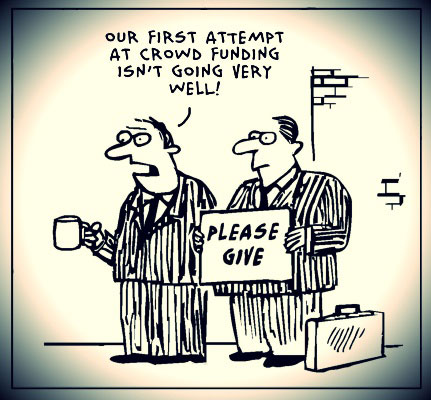









 Allow notifications





