Download Now
Home Blog Page 1845

The Facebook Experiment Has Not Failed

0

FB IPO

This article says that Facebook has failed – and it is time to search for alternatives.

https://medium.com/a-programmers-tale/f7b8c66109ea

Search for alternatives all you want – that’s always a good thing. But Facebook has failed? That part I don’t agree with.

Let’s see what is the argument about failure of Facebook:

1. My wall looks like a junkyard – most of what is on my wall is irrelevant to me

2. Loudmouths now have a gigantic microphone

3. An industry is busy in creating emotionally compelling foolish content and gaming Facebook in showing irrelevant content to us

4. More I use Facebook, more friends, pages, events etc. I accumulate, more irrelevant what I see on Facebook becomes

5. The above weakness is not an accidental flaw of Facebook, but features

Conclusion: Facebook is doomed.

On a little scrutiny, none of these really hold up.

Argument 1: My wall looks like a junkyard

My take: Your Facebook consists of you social network. If your social network is of a low quaility – you wouldn’t see high quality content. For instance, in my network I have entrepreneurs, atheists, law students – I see content relevant to these groups as they regularly share such content. I don’t see updates that astronauts may like. If I want astronaut relevant updates on my Facebook wall, I would have to befriend a few astronauts and add them on Facebook. If most of my friends on Facebook are emotional fools, like mentioned in point 3, then I will get those emotionally compelling foolish updates. In fact, Facebook offers great flexibility to decide whose updates you want to see – you can reduce or increase updates from certain people. If you are lazy and not using such features, too bad for you. If your friends and social network is of a low quality – too bad, but it’s not Facebook’s fault.

Argument 2: Loudmouths now have a gigantic handphone

My take: Yes, we could also call those loudmouths activists, marketers, people with an agenda. Facebook is godsent for them. However, Facebook does not allow each and every message to spread – people have to support the message being spread and only then the activist or the marketer will succeed. Facebook gives us a way to share the messages we care about. This is a great social end. If I need advice, help or support, now I don’t restrict myself to asking my close friends in person only – I ask my entire network on Facebook. And my god, does it work! Also, Facebook, apart from twitter is probably the primary debating forum of our times – where people engage publicly with each other and debate issues that are important. That debate may be irrelevant to a self-centered person, but it is democracy in motion – yes, on Facebook.

Argument 3: there is an industry gaming Facebook to show us foolish irrelevant content

My take: Facebook advertising has picked up these days. And yes, you do see advertisements. But when did advertisements stop people from watching TV? Or from going to movie theatre (in Indian multiplexes we see a lot of ads these days) or even reading blogposts or searching on Google? We pay for what we use on Facebook by tolerating or even reading those ads.  Also, the Facebook ads are more relevant than any other ads – because they are more targeted and discriminating. What our friends (people in the same social group) like, we may like them too! Also, it is liberating for the small businesses in terms of marketing – Facebook advertisement levels the field for startups and small businesses who cannot buy TV and newspaper ads.  My startup iPleaders is a big beneficiary of this advantage. We have at least 400 satisfied students who found us through Facebook ads. For them and as well as for us – this feature added real value to our lives. The industry you are talking about is perhaps one of the biggest strengths of Facebook.

Also, who decided what is foolish emotional content? It is a matter of your test, isn’t it? There are people who are crazy for Justin Beiber – and you may not listen to that sort of music at all. That hardly means there wouldn’t be radio stations that play Justin Beiber’s brand of music and websites on internet will stop carrying them. You should add more people on your network who listens to your kind of music (maybe Spanish Lullaby) and form groups with them so that you can together enjoy what you like and see updates on your wall that you prefer.

Argument 4: More I use Facebook, worse it gets

My take: Facebook is a networking platform – if your network is lousy, so will be your Facebook experience. Add the people you like, remove the ones whose updates you don’t like. That’s intuitive I think.

Argument 5: These weaknesses are not accidental flaws, but features

My take: That’s ludicrous. They are features – but you are looking at them through colored glasses. Every feature of anything can be made to sound like an weakness. This car runs too fast – more likelihood of accident. Bigger car – more difficult to maneuver in traffic. To know what is a real feature – look at how people are using them in real life.

All of these features that you mentioned and identified as flaws, they help millions of people every day in complex ways that we cannot even possibly start to document. The complexity is perhaps the biggest competitive advantage of Facebook.

Download Now

Anti-Ragging Laws in India & The Measures to be taken by the Universities

3
Anti-Ragging Laws

Anti-Ragging Laws

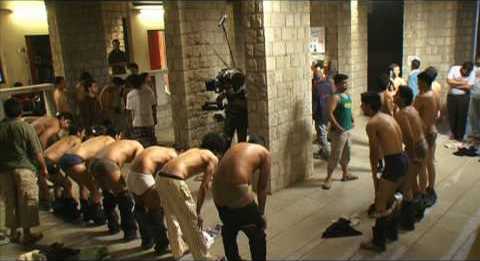
Ragging as we all know, is social interaction between seniors and juniors in schools and colleges. An interaction which can take very brutal, inhuman and anti-social form at times. Even some of the highly reputed colleges and institutions have a terrible history of ragging. Looking at all this, Anti-Ragging Laws are now very much necessary.

Some states in India have their own legislations on ragging. Some states which do not have their own legislation on ragging and therefore the ragging laws in these states are in accordance with the central legislations on ragging.


List of states who have legislation on ragging:

  1. Andhra Pradesh
  2. Maharashtra
  3. Karnataka
  4. Uttar Pradesh
  5. Chandigarh
  6. Tripura
  7. Tamil Nadu
  8. Assam
  9. Kerala
  10. West Bengal
  11. Goa
  12. Jammu and Kashmir


Central Legislations

The central legislations which check the practice of ragging in India are :

  1. Indian Penal Code
  2. UGC Regulations On Curbing The Menace Of Ragging In Higher Educational Institutions, 2009
  3. Other institute specific regualtions


Indian Penal Code

There are provisions in the IPC which can be used by a student to register an FIR in the nearest Police Station. These provisions are:

  1. 294 – Obscene acts and songs
  2. 323 – punishment for voluntarily causing hurt
  3. 324 – voluntarily causing hurt by dangerous weapon or means
  4. 325 – punishment for voluntarily causing grievous hurt
  5. 326 – voluntarily causing grievous hurt by dangerous weapon
  6. 339 – Wrongful Restraint
  7. 340 – Wrongful Confinement
  8. 341 – Punishment for Wrongful Restraint
  9. 342 – Punishment for Wrongful Confinement
  10. 506 – Punishment for culpable homicide not amounting to murder


UGC Regulations On Curbing The Menace Of Ragging In Higher Educational Institutions, 2009 [Click here for complete regulations]

These regulations were passed by the University Grants Commission in the year 2009 to curb the menace of ragging in the Universities in India.

Regulation 6 talks about the measures for prevention of ragging at the institution level. It lays down the steps an institution has to follow during the admission and registration process. A student during the admission process has to file an affidavit along with his parents/guardian’s signature, stating that he will not be ragging other students directly or indirectly.  Also, the institution has to publish the names and contact numbers of Anti-ragging committee of the university.

Every fresh student admitted to the institution shall be given a printed leaflet detailing to whom he/she has to turn to for help and guidance for various purposes including addresses and telephone numbers, so as to enable the student to contact the concerned person at any time.

https://lawsikho.com/course/certificate-criminal-litigation-trial-advocacy

Regulation 6.3 says that every institution shall constitute a  committee to be known as the Anti-Ragging Committee to be nominated and headed by the Head of the institution, and consisting of representatives of civil and police administration, local media, Non-Government Organizations involved in youth activities, representatives of faculty members, representatives of parents, representatives of students  belonging  to the fresher’s category as well as senior students, non-teaching staff; and shall have a diverse mix of membership in terms of levels as well as gender. It shall be the duty of the Anti-Ragging Committee to ensure compliance with the provisions of the Regulations as well as the provisions of any law for the time being in force concerning ragging ; and also to monitor and oversee the performance of the Anti-Ragging Squad. It shall be the duty of the Anti-Ragging Squad to make surprise raids on hostels, and other places vulnerable to incidents of, and having the potential of, ragging.

Regulation 7 lays down that on receipt of any information concerning any reported incident of ragging, the Head of institution shall immediately determine if a case under the penal laws is made out and if so, either on his own or through a member of the Anti-Ragging Committee, proceed to file a First Information Report ( FIR), within twenty four hours of receipt of such information.

Regulation 9 lays down that The Anti-Ragging Committee of the institution shall take an appropriate decision, in regard to punishment or otherwise, depending on the facts of each incident of ragging and nature and gravity of the incident of ragging established in the recommendations of the Anti-Ragging Squad.


Others

Apart from the IPC and the UGC Regulations, there are other government bodies who have their own laws on ragging in their respective acts. For example the All India Council For Technical Education [AICTE] and the Medical Council of India have made their own regulations under their respective acts.

The AICTE has created “All India Council for Technical Education (Prevention and Prohibition of Ragging in Technical Institutions, Universities including Deemed to be Universities imparting technical education) Regulations 2009” under Section 23 and Section 10 of the AICTE Act, 1987.

Similarly, the Medical Council of India has made “Medical Council of India (Prevention and Prohibition of Ragging in Medical Colleges/Institutions) Regulations, 2009” under Section 33 of the Indian Medical Council Act, 1956.


LawSikho has created a telegram group for exchanging legal knowledge, referrals and various opportunities. You can click on this link and join:  

https://t.me/joinchat/J_0YrBa4IBSHdpuTfQO_sA

Follow us on Instagram and subscribe to our YouTube channel for more amazing legal content 

 
Download Now

Analysis of the Madras HC’s judgment regarding Pre-Marital Sex and Marriage

5

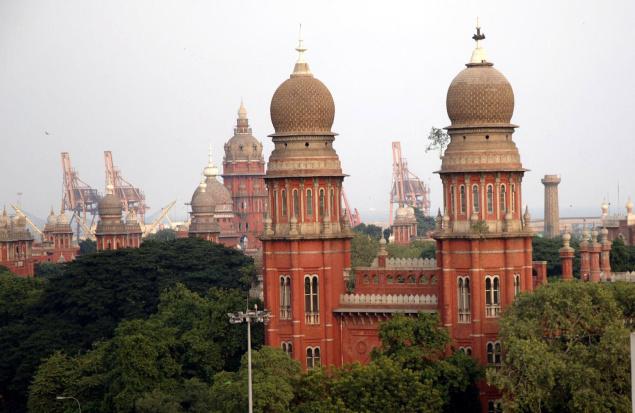
The Madras High Court’s judgment dated 17th June 2013 became a cause for controversy and much humour on social and other media throughout the nation. The judgment apparently designated premarital sex as a mode of solemnising a marriage. Newspapers and news channels came up with their own catchy headlines and therefore the news was interpreted by people in their own way and according to their own understanding.

Facts of the case

A Hindu woman and a muslim man were living under one roof and had sexual relations. The woman gave birth to two children between 1994 and 1999. Documents proved that the man was the father of the second child and that he had applied for a family card for himself, the woman and the two children. The marriage was not registered in the Islamic marriage register. The woman was deserted by the man in 1999 and the woman in 2000 filed for maintenance for her and the two children from the man.

High Court’s Judgment

The High Court or Justice CS Karnan was of the view that a “valid marriage” does not necessarily mean that all the customary rights pertaining to the married couple are to be followed and subsequently solemnized.  Solemnization of marriage is only a customary right and obligation and not a mandatory one. In the instant case, both man and the woman lived together as spouses and therefore the relationship between them cannot be termed as “illegitimate”. The Court was of the view that “ if a woman aged 18 or above has a sexual relationship with a man aged 21 or above, and during the course of such relationship, if the woman becomes pregnant, she would henceforth be treated as the wife and the man would be treated as the husband. Even if the girl does not become pregnant after having such sexual relationship with a man but if there is a strong documentary evidence to show the existence of such relationship then also the couple involved would be termed as wife and husband.

The Court stated that the marriage formalities like exchange of garlands or rings or circling around the matrimonial fire pit or registering of marriage at a government office are only for the satisfaction of the society and the main legal aspect for valid marriage is consummation or sexual interaction. Therefore the legal rights and obligations applicable to a normal wedded couple will also be applicable to couples who have had sexual relationships  which have been established.

Attack of the Media and ‘SocialNetworks’

“Couples Who Indulge in Premarital Sex to be Considered Married: Madras High Court” – India Times

“Couples who have premarital sex to be considered ‘married’- Madras HC” – The Hindu

“Pre-marital sex equals marriage, says Madras HC” – Hindustan Times

Clearly, the newspapers tried to convey the gist of the fifteen page judgment in one catchy headline. Although they succeeded in catching everyone’s eye but at the same time, deceived most of the readers. Without going through the judgment and facts of the case, people formulated opinions of their own. This was followed by an army of tweets and status updates on twitter and facebook, mocking the decision of the Honourable Court.

To understand the judgments, one needs to examine the facts of the case. In the case, a poor woman who had been deserted by her husband, was asking for a monthly maintenance. The husband and the wife had been living together for years under one roof and had children. The husband raised the contention that the marriage was not officially registered and therefore invalid. Therefore, to ensure justice, the Court held that the sexual relationship itself solemnised the marriage.  We are not talking about a one-night stand or an affair which goes on for months but a relationship which continued for six years and out of which, children were begotten.

The Madras High Court very strongly objected the criticism of the verdict. Justice CS Karnan, who gave the judgment said “the court has given the legal relief to the affected woman and without fully understanding the court’s judgment, adverse comments shall not be passed.”

Download Now

Bar Examinations across the globe

0
Bar Exam

Bar Exam
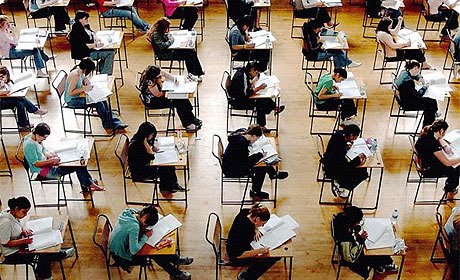
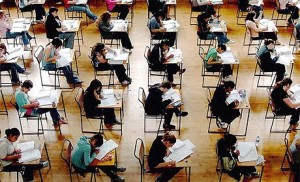
Bar examinations are required in many countries to become a licensed lawyer eligible to practice law. It is a necessary mechanism to control the quality of lawyers joining the practice given wide disparity of educational standards amongst various institutes and colleges teaching law courses. Let us take a look at bar exams around the world starting with the All India Bar Exam, introduced in India in 2010.


Bar Exam in India

The Bar Council of India is a statutory body that regulates and represents the Indian legal profession. It was created under the Advocates Act, 1961. The Bar Council of India on 10th April, 2010 resolved to conduct an All India Bar Examination that tests an advocate’s ability to practice law. Those persons who are admitted as advocates on the rolls of the State Bar Council are eligible to enroll for this exam provided they have graduated in 2010 or later.

The Advocates Act, 1961 empowers State Bar Councils to frame their own rules regarding enrolment of advocates. After getting enrolled to State Bar Council it is further required for an advocate to pass this All India Bar Examination to practice law. This examination is held biannually, usually in April and November, and tests advocates on substantive and procedural law. It assesses basic analytical capabilities and knowledge of law. The examination is carried on by open book system and duration of examination is three hours with no negative marking. A minimum of 40% marks is required to pass this examination.

An advocate may appear for the examination any number of times. Once the advocate passes the examination, he/she will be entitled to a Certificate of Practice. There are in total 900 law schools and colleges approved by BCI as per the data of 2010.

India has the second largest number of lawyers in the world next only to USA. The number of lawyers in India is estimated to be approximately one million, with the law schools of India graduating another 80,000 each year. Even though we have huge number of lawyers enrolled, the ratio of lawyer per person for India only remains as one lawyer per 1250 persons in a country with one of the biggest populations in the world and a very slow legal system.


Bar Exam in the UK

In the UK, Bar Professional Training Course also known as BPTC is a graduate course that is completed by those wishing to join the Bar as barristers. Bar school comprises of ten institutes along with the four Inns of Court which also run this course. The minimum entry requirements for the BPTC is a qualifying law degree with no less than lower second class honours, or a degree in another subject with no less than 2:2 honours in addition to a pass in the Graduate Diploma in Law.

In addition to this applicants should also demonstrate excellent extracurricular activities along with a strong evidence of a commitment to the English Bar to appear for BPTC examination. It is important for a student to have Common Law reasoning and EU law as subjects during their course of studies as LLB students.

Students are required to send in their application to their selected Bar by the end of their LLB second year. A student who is selected is usually notified by the start of their third year.

The Legal Practice Course also known as the Postgraduate Diploma in Legal Practice is the final vocational stage for becoming a solicitor in England and Wales. The course is designed to provide a bridge between academic study and training in a law firm. It is a one year, full time course.

The number of lawyers in UK is estimated to be approximately 151,043, with the bar schools of UK graduating another 8,000 each year. The ratio of lawyer per person for UK is one lawyer per 401 persons.


Comparison of UK bar exam with Indian version

In India there is no minimum score required to appear for bar exam as it is there in UK – in India merely passing the law course is enough while in the UK a 2:2 honours is minimum requirement. In India, a law student who managed to get an LL.B. degree with the minimum pass marks can apply for All India Bar Examination.

Furthermore, no extracurricular activities are taken into consideration for a law student to be enrolled for All India Bar Examination unlike the UK bar. BCI provides lip service to teaching problem solving techniques and other practical skills in its policy but unfortunately they are very rarely followed in law colleges and universities.


Bar Exam in the USA

Admission to the bar in the United States means the granting of permission by a particular court system to a lawyer to practice law in that system. A state bar licensing agency is invariably associated with the judicial branch of government, because American attorneys are all officers of the court of the bar to which they belong. Each US state and similar jurisdiction has its own court system and sets its own rules for bar admission, which usually leads to different admission standards among states. Usually, lawyers seeking admission must earn a Juris Doctor degree from a law school approved by the jurisdiction and then pass a bar exam administered by it. The bar examination in most U.S. states and territories is at least two days long and usually consists of:

a)      Essay questions:

  • Essentially all jurisdictions administer several such questions that test knowledge of general legal principles, and may also test knowledge of the state’s own law. Some jurisdictions choose to use the Multistate Essay Examination, drafted by the NCBE since 1988, for this purpose. Others may draft their own questions with this goal in mind, while some states both draft their own questions and use the MEE.
  • Some jurisdictions administer complicated questions that specifically test knowledge of that state’s law.

b)      Multistate standardized examinations.

A lawyer who is admitted in one state is not automatically allowed to practice in any other. Some states have reciprocal agreements that allow attorneys from other states to practice without sitting for another full bar exam; such agreements differ significantly among the states. The number of lawyers in US is approximately 1,143,358 which is highest when compared with the ratio of lawyers per person to make it one lawyer per 265 persons.


Comparison with the Indian bar exam system

In India there is no limitation to a lawyer to practice in only one state. A person enrolled with state bar council and have passed in All India Bar Examination can practice in any court across India, at least on paper. Furthermore no essay type questions are asked in All India Bar Examination and no examinee is tested with state specific laws. For proper evaluation of examinees, subjective tests should also be included in All India Bar Examination which would help to enhance the quality of lawyers that the bar would admit.


Bar Exam in China

The National Judicial Exam or State Judicial Exam is a unified legal examination administered for all those people who work in the legal industry. All new members of the judiciary and legal profession after 2002 have to pass this examination. The SJE is trying to adopt more unified curricula and standards for education programs of lawyers as well as judges. Under amendments to the Judges Law, Prosecutors Law and the Lawyers Law in 2001, all participants of the SJE must have a university-level education, although not necessarily in law.

The SJE is an exam mainly designed to test the legal knowledge of the person and his ability to join the legal profession. Questions are divided into four parts namely theoretical legal science, applied legal science, provisions in current laws, legal practice and ethics. Candidates are also tested on their knowledge of legal theory, economic law, international law, international private law and international economic law as well as ethics.

The number of lawyers in China is approximately 190,000 with population of china approx 1339 million. This makes the ratio of lawyers per person to make it one lawyer per 7047 persons which is very high.


Comparison with Indian bar exam system

The syllabus for All India Bar Examination is similar to that of China’s National Judicial Exam. Though the modes of examination of these two countries vary but testing ability of both the exams seems to be similar. China falls behind by miles in comparison to ratio of lawyer per person due to huge population.


Bar Exam in Japan

In Japan, Attorneys at law are authorized to represent others and they are qualified to practice in most Japanese legal professions. They are also authorized to give advice on matters of law.

As of 1 March 2011, there are 30,516 attorneys registered with bar associations in Japan. Due to cultural traditions, Japanese have rarely used lawsuits as a means to settle disputes. With the rise of patent disputes and international mergers, Japan is facing a shortage of lawyers and hence Japanese government has allowed universities to offer graduate courses on law in order to fill up the shortage.

Attorneys at law are required to pass a National Bar Examination which is followed by one year of internship under the supervision of the Legal Research and Training Institute of the Supreme Court of Japan. In Japan, having a law degree is not a prerequisite for enrolling for bar examinations. Although due to changes in examination rules there have been introduction of additional requirements for those who sit for the examination without a law degree.

From 2006 onwards a new bar examination was instituted with only two stages. The first stage is a one day short answer examination concerning the six laws as well as administrative law. The second stage is a three day essay examination concerning public law, civil law and criminal law, as well as subjects that can be selected by the examinee which includes labor law, environmental law, public international law, and private international law.

As of 1st march, the number of lawyers in Japan is approximately 30,516 with its population approximately 125 million. This makes the ratio of lawyers per person to make it one lawyer per 4100 persons.


Comparison with Indian bar exam system

Condition of examinees in India is far better than Japan. Studying for the bar exam is a gruelling process in Japan, where so few people pass the bar that some law schools are voluntarily restricting enrolment  In 2011, Japanese law schools admitted 3,620 students, down from 5,800 in 2006, as per the New York Times report. In 2010, only 25 percent of test takers passed the Japanese bar exam, the lowest rate since 2006 when a reformulated test was created. Before that, only 2 percent to 3 percent passed the bar exam. Unsuccessful test takers have to give up soon, because they are allowed only three attempts.

Hope this write up would have helped you get a better picture of bar examination and litigation as profession in different parts of the world including India.




Download Now

Enrolment in Bar Council of Gujarat

1

For getting enrolled in Bar Council of Gujarat, you have to do the following:

Download the form from the website of the Bar Council and get it printed on a legal and green ledger paper only.
Fill up the form carefully.
Affix your photographs. (make sure the photographs are recent)
The candidate has to pay / remit Rs. 600/- being enrolment fee payable to the Rs. 100/- State Bar Council of Gujarat and Rs. 150/- payable by Bank Draft drawn in Rs. 25/- in favour of ‘Bar Council of India’ payable at Ahmedabad under Section 24(1) (f) of the Advocates Act, 1961.
(If the applicant is a member of Schedule Caste or Schedule Tribe the enrolment fees payable by him to the Bar Council of Gujarat shall be Rs. 100/- and to the Bar Council of India Rs. 25/- by a Bank draft drawn in favour of ‘Bar Council of India’ payable at Ahmedabad.)

You need to bring along your:
(i) provisional LL.B. degree certificate;
(ii) proof of your date of birth
(iii) your basic degree certificate;
(iv) LL.B. attendance certificate etc. In any case for submission of Form, it will take not less than 2 visits – 1 for obtaining the form (In case you are manually obtaining it from the office of the Bar Council of Gujarat) and all requisite information and the second visit for submission of the form duly filled in, recommended, with all the attachments. Only after seeing/checking the complete filled up form with all its attachments (both original and attested xerox copies thereof), the clerk will give a further chalan to enable you to remit the enrolment fee. The time taken for the whole enrolment procedure Otherwise takes anything between 15-25 days depending upon when the Committee will sit for enrolment.

[Source: Practising advocate Nikunj Kanara, Gujarat High Court]

https://lawsikho.com/course/certificate-course-in-advanced-civil-litigation-practice-procedure-and-drafting
Click Above

At the time of submission of the form Rs. 500/- will be charged by cash or D. D. in favour of “Bar Council of Gujarat, payable at Ahmedabad.”

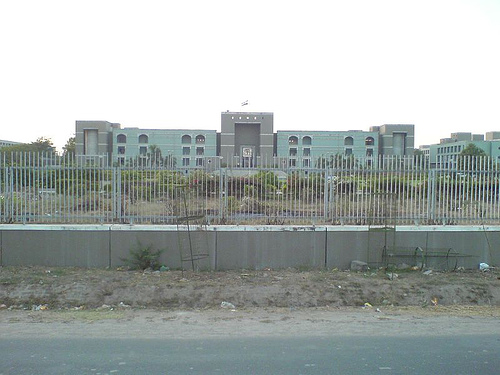
Address: 3rd Floor, in Block – A of Satyamev Complex, Opp: High Court of Gujarat at Sola, Ahmedabad
Contact Details: 79-27434073, 79- 27663460

Official Website: http://www.barcouncilofgujarat.org/


Useful Tips

Write your FULL NAME exactly as it appears on your mark sheet, in the exact sequence as required on each form. Middle Name must be written.
Your photograph must be taken in “uniform” which means that it must be in formal attire, preferably in a coat and tie.
The photograph should be of stamp size. (May different from state to state)
All document copies need to be attested. Getting the attestation from your college principal is the simplest, cheapest and fastest. Else, any gazetted officer, Special Executive Officer or member of the Bar Council will do.
You need to submit the recommendations of 2 advocates who have been in practice for more than 10 years. Don’t forget to get their enrolment number and enrolment date, which will be on their Advocates ID Card.
For any query directly contact the office of your respective State Bar Council.


LawSikho has created a telegram group for exchanging legal knowledge, referrals and various opportunities. You can click on this link and join:  

https://t.me/joinchat/J_0YrBa4IBSHdpuTfQO_sA

Follow us on Instagram and subscribe to our YouTube channel for more amazing legal content 

 
Download Now

Enrolment in Bar Council of Karnataka

8

Application form  is available on a payment of Rs. 200/-.

Instructions regarding enrolment as an advocate:


Filing if enrolment application

The duly filled enrolment application with necessary enclosures should be filed by the candidates in person before the Secretary on or before Thursday of every week (4-00 p.m.)


Enclosures to the application

The application shall be accompanied by the following enclosures:

  1. Original law degree certificate given at the time of convocation or provisional passing certificate.
  2. A statement of marks cards of all the three years or five years in original issued by the University.
  3. S.S.C. Marks Card, school leaving certificate, cumulative Record, transfer certificate or any other authenticated proof of date of birth (Original).
  4. In case of previously employed person Retirement order & Relieving order obtained from the employer (Original).
  5. One set Xerox copy of each of (a) (b) (c) & (d).
  6. Cash Receipt for having credited to the Bar Council Rs. 8001- (In case of S.C/S.T. Rs. 3001- towards enrolment Fee, cost of embossed Enrolment Certificate and Miscellaneous Charges, Issue of Identification Card. The amount in cash shall be paid in the office.
  7. A sum of Rs. 2001- (In case of S.C. or S.T. Rs. 75/- has to be remitted to the VYSYA BANK LTD., HIGH COURT EXTENSION, Bangalore (Bank Challan Enclosed).
  8. Indian Non-Judicial Stamp papers of the value of Rs. 5001.
  9. Four passport size latest photographs are to be affixed.
 

Enrolment of candidates

The student who has already submitted the enrolment application form has to check the Notice Board on the announced dates. Students  whose names are listed on the notice board have to appear before the Enrolment Committee at 2-00 p.m. ON FRIDAY i.e. on Enrolment day, with the prescribed robes.

If the candidates fail to appear before the Enrolment Committee on the day of Enrolment, they may appear on the next enrolment day on payment of late fee of Rs. 100/-.
The Enrolment Certificates will be sent to the candidates by R.P.A.D. to the addresses furnished by them and if the certificates are returned undelivered for any reason, the candidates have to pay Rs. 1001- towards processing charges.
At the time of filing the Application you have to pay Rs. 2,850/- towards welfare fund.

Time period taken : 10-25 days

Note: Fees are subject to change, so keep a tab on the official website to take note of any such change.

Official Website  : http://ksbc.org.in/index.aspx (Online Enrollment facility available)

Address : Bar Council Of Karnataka No. 115, CMH Road, Laxmipurram, Ulsoor, Bangalore.
Contact No:  080-22484875.


Useful Tips

  • Write your FULL NAME exactly as it appears on your mark sheet, in the exact sequence as required on each form. Middle Name must be written.
  • Your photograph must be taken in “uniform” which means that it must be in formal attire, preferably in a coat and tie.
  • The photograph should be of stamp size. (May different from state to state)
  • All document copies need to be attested. Getting the attestation from your college principal is the simplest, cheapest and fastest. Else, any gazetted officer, Special Executive Officer or member of the Bar Council will do.
  • You need to submit the recommendations of 2 advocates who have been in practice for more than 10 years. Don’t forget to get their enrolment number and enrolment date, which will be on their Advocates ID Card.
  • For any query directly contact the office of your respective State Bar Council.


LawSikho has created a telegram group for exchanging legal knowledge, referrals and various opportunities. You can click on this link and join:  

https://t.me/joinchat/J_0YrBa4IBSHdpuTfQO_sA

Follow us on Instagram and subscribe to our YouTube channel for more amazing legal content.
Download Now

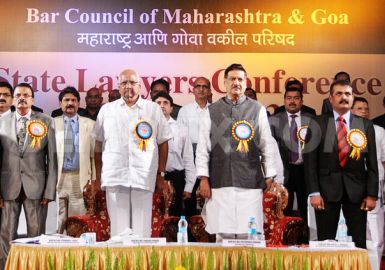
Enrolment in Bar Council of Maharashtra and Goa

16
Bar Council of Maharashtra and Goa
Maharashtra & Goa Bar Council

One can either apply for enrolment in the Bar Council of Maharashtra and Goa online, through their official website – http://www.barcouncilmahgoa.org, or submitting a form physically at the office of the Bar Council at Enrolment Department, 2nd Floor, High Court Extension Building (Behind HSBC Bank, M G Road),  Fort, Mumbai – 400032.

Interestingly, there are certain differences in the fees and procedure involved in the online submission and physical submission of the form.

Difference between online and physical form submission

Online form

Physical form purchased at the office of the Bar council

The person who will submit the online form must pay Rs 5800, in form a Demand Draft (DD) in the name of Bar Council of Maharashtra and Goa. The person who will submit the online form must pay Rs 5450, in form a Demand Draft (DD) in the name of Bar Council of Maharashtra and Goa.
No additional cost apart from the DD to be submitted. The enrolment form that is purchased from the office costs Rs 300.
If you are filing up the  online form, you will be provided with an extra form, ie., the “Membership Form For Maharashtra Advocate Welfare Fund”. Advocates who are enrolling can choose not to fill up the form at this point of time. No such form is given.
In the online form, all pages, except the last two pages, must be printed on green ledger paper only. The last 2 pages of the form, ie, the Advocates Welfare Scheme Rule 40 and Welfare Fund Membership Form need to be printed on a white A4 size paper. The form obtained at the office, has all the forms in the desired manner. So, the chances of error in filling up the form are less.


Documents to be enclosed – A checklist before you submit

  • 1 Demand Draft worth Rs 5800 (online form) or Rs 5450 (physical form) in the name of Bar Council of India, payable at Mumbai
  • 1 Demand Draft worth Rs 150, in the name of Bar Council of India, payable at Mumbai
  • An attested copy of your graduation Certificate (B.Com, BSc, BA) in case of a 3 years LLB course.
  • In case, you have not received your LLB certificate on the date of filing the form, you can submit attested copies of both your final year mark-sheets and the final semester pass certificate/provisional certificate issued by the university.
  • An attested copy of your Birth Proof (You can submit your School / College Leaving Certificate, Birth Certificate or Passport as birth proof)
 

Other guidelines

  • One should be careful while filling up the form. One must write their  FULL NAME as per the name mentioned in the mark sheet and in the proper format as mentioned in the form. If you have a middle name, you should mention it as well.
  • One must affix a stamp-sized photograph, taken in “uniform”, i.e., white shirt and black pant, along with a coat and tie.
  • All the photocopied documents which are submitted must be attested. You can get the documents attested from any gazetted officer, Special Executive Officer or member of the Bar Council or the principal of your college.
  • Moreover, you need to submit recommendations from two practising advocates having experience of more than ten years. The recommendations should be accompanied by the enrolment number and date of enrolment of the advocates from whom you have obtained recommendation.


Contact details

Official website: http://www.barcouncilmahgoa.org

Address: Enrolment Department, Bar  Council of Maharashtra and Goa, 2nd Floor, High Court Extension Building (Behind HSBC Bank, M G Road), Fort, Mumbai – 400032

Contact No.: +91 – 22 – 2265 6567 / 22677508

Information taken from http://lawgic.info/ and http://www.barcouncilmahgoa.org


LawSikho has created a telegram group for exchanging legal knowledge, referrals and various opportunities. You can click on this link and join:  

https://t.me/joinchat/J_0YrBa4IBSHdpuTfQO_sA

Follow us on Instagram and subscribe to our YouTube channel for more amazing legal content.
Download Now

Enrolment in Bar Council of Assam, Nagaland, Meghalaya, Manipur, Tripura, Mizoram, Arunachal Pradesh and Sikkim

0
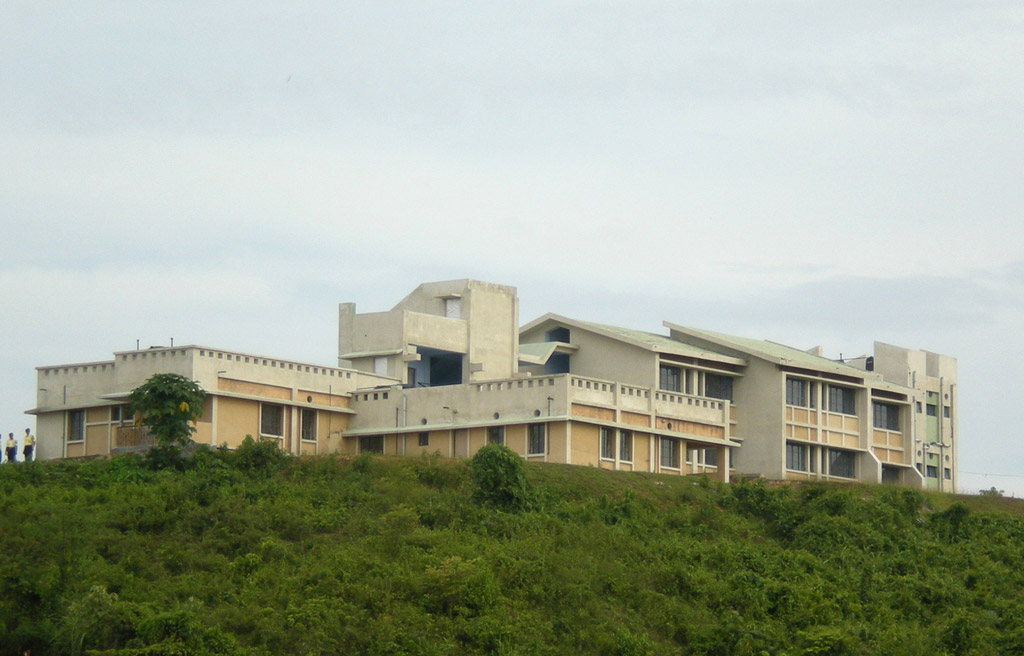
Law School
Department of Law, Assam University
For the North-Eastern States there is one Bar Council. To get enrolled with the Bar Council, you have to do the following:

  1. Firstly obtain a form costing Rs. 400/-. You have to get a Chalan from the Bar Council Clerk, and then remit the amount with Bank in the Bar Council Premises itself. Thereafter on showing the paid chalan, you will be issued with an Enrolment Form.
  2. Fill up the Form, get it certified/recommended from 2 Advocates who have an experience of 10 years or more.
  3. You need to affix your photographs. (photographs must be recent)
  4. Draft of Rs. 600/- (Rs. 100/-for the person who is a member of the Scheduled Caste/Scheduled Tribe) in favour of the Bar Council of Assam, Nagaland, Meghalaya, Manipur, Tripura, Arunachal Pradesh and Sikkim.
  5. Draft of Rs. 150/- (Rs. 25/- for the person who is a member of the Scheduled Caste/Scheduled Tribe) in favour of the Bar Council of India. Both the drafts are to be drawn on Guwahati Brach of any Nationalised Bank.
  6. Following documents are required :

i. Attested copy of SSC/HSC or Equivalent certificate.
ii. Attested copy of LL. B. Certificate issued by the university.
iii. Attested copy of the certificate issued by the law College with roll number and the year of final examination.
iv. Two photographs signed on the reverse by the applicant.
v. Certificates of two Advocates

Time Period: The time period for generally is around 20 days. (Source: Telephonic Query with the office in-charge)
Official website: http://www.barcouncilassametc.org/aboutus.htm
Address: 2nd Floor of the Guwahati High Court, Panbazar, Guwahati-781001, Post Box No. 182
Contact No.: 0361-2544663, 2734840, 099545-46004.

USEFUL TIPS (To be kept in mind)!

  • Write your FULL NAME exactly as it appears on your mark sheet, in the exact sequence as required on each form. Middle Name must be written.
  • Your photograph must be taken in “uniform” which means that it must be in formal attire, preferably in a coat and tie.
  • The photograph should be of stamp size. (May different from state to state)
  • All document copies need to be attested. Getting the attestation from your college principal is the simplest, cheapest and fastest. Else, any gazetted officer, Special Executive Officer or member of the Bar Council will do.
  • You need to submit the recommendations of 2 advocates who have been in practice for more than 10 years. Don’t forget to get their enrolment number and enrolment date, which will be on their Advocates ID Card.

For any query directly contact the office of your respective State Bar Council.

Download Now

Enrolment in Delhi Bar Council

1

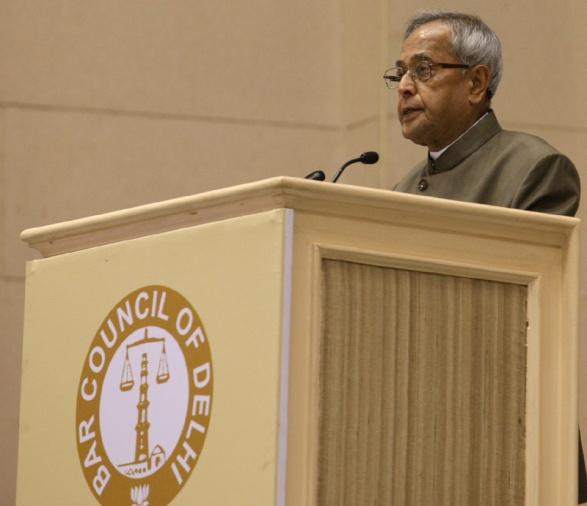
Pranab Mukherjee

This is a step-by-step enrollment process at the Delhi Bar Council, it’s a follow-up from our earlier post on How to become a lawyer: Enrol at the Bar 

For getting enrolled with Delhi Bar Council, you have to do the following:

1. Firstly, Obtain a Form: – costing Rs. 400/- . You have to get a challan from the Bar Council clerk, and then remit the amount with IDBI Bank in the Bar Council premises itself. Thereafter, on showing the paid challan, you will be issued with an enrolment form.

2. Fill up the Form, get it certified/recommended from 2 Advocates with an experience of 10 or more years.

3. You need to affix your photographs on the enrolment form. (make sure the photographs are recent)

4. You need to come along with your : (i) provisional LL.B. degree certificate; (ii) proof of your date of birth (iii) your basic degree certificate; (iv) LL.B. attendance certificate etc. One should keep in mind that for submission of form, it takes not less than 2 visits – 1 for obtaining the form and all requisite information and the second visit for submission of the form duly filled in, recommended, with all the attachments. Only after seeing/checking the completely filled up form with all its attachments (both original and attested xerox copies), the Clerk will give a further challan to enable you to remit the enrolment fee. You can also get the enrolment speeded up using the “tatkal scheme” by paying a sum of Rs. 3000/- or so in which case your application will go in circulation amongst the Bar Council Enrolment Committee Members and Chairman and you can get the Enrolment Number within 2-3 days. Otherwise it would take anything between 15-20 days depending upon when the Committee will sit for enrolment.

[Source:http://www.lawyersclubindia.com/experts/enrollment-with-delhi-bar-council 216791.asp#.UbAeVPljUqY]

Address: 2/B, Siri Fort, Institutional Area, Khel Gaon Marg, New Delhi – 110 049.

Contact no. : 011 2338 7701.

Website : http://www.lawtoday.in/6.php(It is not an official website, although information provided is useful).

Note :- There is also a branch office in the Delhi High Court premises.

USEFUL TIPS (To be kept in mind)!

  • Write your FULLNAME exactly as it appears on your mark sheet, in the exact sequence as required on each form. Middle Name must be written.

  • Your photograph must be taken in “uniform” which means that it must be in formal attire, preferably in a coat and tie.

  • The photograph should be of stamp size. (May different from state to state)

  • All document copies need to be attested. Getting the attestation from your college principal is the simplest, cheapest and fastest. Else, any gazetted officer, Special Executive Officer or member of the Bar Council will do.

  • You need to submit the recommendations of 2 advocates who have been in practice for more than 10 years. Don’t forget to get their enrolment number and enrolment date, which will be on their Advocates ID Card.

  • For any query directly contact the office of your respective State Bar Council.


LawSikho has created a telegram group for exchanging legal knowledge, referrals and various opportunities. You can click on this link and join:

https://t.me/joinchat/J_0YrBa4IBSHdpuTfQO_sA

Follow us on Instagram and subscribe to our YouTube channel for more amazing legal content.
Download Now

How to become a lawyer: Enrol at the Bar

15
become a lawyer

Become a Lawyer

Merely obtaining a law degree, i.e. LL.B. does not entitle one to practice law as an advocate. There are some basic challenges of bureaucracy you must overcome in order to actually practice law. The legal profession in India is regulated by the Advocates Act, 1961 which in turn provides for the creation of Bar Council of India and State Bar Councils. To enter the profession as a practising lawyer, one has to enrol himself/herself as an advocate with any State Bar Council. Interestingly, there are only 18 State Bar Councils although there are 28 States in India.


What are the eligibility criteria?

Section 24 of the Advocates Act specifies the qualifications of a person entitled to be enrolled into the Bar. The section states that a person shall be qualified to be admitted as an advocate on a State roll, if he fulfills the following conditions:

  1. He is a citizen of India, although a national of any other country may be admitted as an advocate on a State roll, if citizens of India, duly qualified, are permitted to practise law in that other country, subject to other restrictions (however, currently BCI has not permitted lawyers of any other country to practice in India).
  2. He has completed the age of twenty-one years.
  3. He has obtained a degree in law after the 12th day of March, 1967, after undergoing a course of study in law from any University in India which is recognised for the purposes of the Advocates Act by the Bar Council of India. If a lawyer has obtained a degree from any foreign university, such a person may be admitted only if the degree is recognised by the Bar Council of India.

Please note that the student has to get himself/herself enrolled with the State Bar Council in order to be eligible to appear for the All India Bar Examination (AIBE). Once the student has cracked the AIBE, he/she is eligible to practice law in the respective court.

[cp_slide_in display=”inline” id=”cp_id_a85c4″][/cp_slide_in]

Note that only the students graduating from the academic year 2009-10 onwards are required to write the Bar Exam, and earlier lawyers did not have to write this exam. Those students who graduated before the notification of 2009-10 do not have to give the exam even if they enrol now.

Very Useful Link for doubts: – http://www.barcouncilofindia.org/about/first-all-india-bar-examination/all-india-bar-examination-frequently-asked-questions/#whoshould

Eligible persons are admitted as advocates on the rolls of the State Bar Councils. The Advocates Act, 1961 empowers State Bar Councils to frame their own rules regarding enrolment of advocates.


Power with the State Bar Council

The State Council’s Enrolment Committee may scrutinise a candidate’s application. Those admitted as advocates by any State Bar Council are eligible for a Certificate of Enrolment. All applicants for enrolment as advocates are required under Section 24 (1) (f) of the Advocates Act, 1961 to pay an enrolment fee of Rs.600/- (Rupees Six hundred only) to the respective State Bar Council and Rs.150/- (Rupees One hundred Fifty only) to the Bar Council of India. These payments should be made using separate demand drafts.

Different state bar councils have formulated their own rules regarding enrolment as an advocate. However, most of the State Bar Council requires the candidate to submit an application along with the degree of law and mark-sheets along with judicial Stamp paper and requisite fees.

However, the amount of money is not confined to the Rs. 750-/ as far as the different state bar councils are concerned. There are several other fees, insurance premiums, Gazette Notification costs, Advocate’s Card costs etc. involved, which brings the total amount required close to Rs. 4000/- to Rs. 5000/-, and sometimes more, depending on the state where one gets enrolled.


Important: Those engaged in service or business cannot enrol
A person who is otherwise qualified to be admitted as an advocate, but is either in full or part-time service or employment or is engaged in any trade, business or profession shall not be admitted as an advocate.

All the papers for enrolment should be presented before the Secretary, Bar Council, in person on the days designated by the respective state bar council.


BCI helpline

When BCI started the AIBE, they also opened a telephonic helpline to clarify all doubts with respect to enrolment with the bar. However, this number is rarely reachable.

Helpline numbers for information about the All India Bar Examination.
The numbers are: 011-49225022 (English) or 011-49225023 (Hindi)
The timings for the helpline numbers are: 10.30 am – 1 pm (Morning) 2 pm – 4.30 pm (Evening)

You can also write in with your queries to [email protected].

Once you are done with registration with the State Bar Council, you can appear in the All India Bar Examination and after passing the exam, you can finally practice.


How to enrol with state bar councils

Below is the list of Bar Councils in India and hyperlinks of a selected few that would take you to detailed procedure for enrolment in those state bar councils.

Bar Council of Andhra Pradesh –
Official website: http://www.barcouncilap.org/
Contact No.: (040) 6685 9885, 6685 4785.

Bar Council of Assam, Nagaland, Meghalaya, Manipur, Tripura, Mizoram & Arunachal Pradesh – Click here to know how to enrol
Official website: http://www.barcouncilassametc.org/aboutus.htm
Contact No.: (0361) 2544663, 2734840, 099545-46004.

Bar Council of Bihar –
No Official website, Blog Available: http://biharstatebarcouncil.blogspot.in/
Contact No.: (0612) 2505583, 2221125.

Bar Council of Chhattisgarh
No Official website, Information available on: http://www.lawtoday.in/5.php
Contact No.: (07752) 410169, 413500.

Bar Council of Delhi – Click here to know how to enrol
No Official website, Information available on: http://www.lawtoday.in/6.php
Contact No.: (011) 2338 7701.

Bar Council of Gujarat – Click here to know how to enrol
Official website: http://www.barcouncilofgujarat.org/
Contact No.: (079) 27663460, 27434073.

Bar Council of Himachal Pradesh
No Official website, Information available on: http://www.lawtoday.in/8.php
Contact no.: (0177) 2812017.

Bar Council of Karnataka – Click here to know how to enrol
Official website: http://ksbc.org.in/index.aspx
Contact No.: (080) 22484875.

Bar Council of Kerala
Official website: http://www.barcouncilkerala.com/
Contact No.: (0484) 2394195, 2393810.

Bar Council of Madhya Pradesh
Official website: http://sbcofmp.org.in/
Contact No.: (07662) 250638.

Bar Council of Maharashtra & Goa – Click here to know how to enrol
Official website: www.barcouncilmahgoa.org
Contact no.: (022) 2265 6567 / 22677508.

Bar Council of Odhisa
Official website: http://odishabarcouncil.org/
Contact No.: (0671) 2507885, 2508453.

Bar Council of Punjab & Haryana
No Official website, Information available on: http://www.lawtoday.in/15.php
Contact No.: (0172) 2688519, 2688507.

Bar Council of Rajasthan
Official website: http://barcouncilofrajasthan.org/
Contact No.: (0291) 2545066, 2545251.

Bar Council of Tamil Nadu
Official website: http://barcounciloftamilnadu.org/
Contact No.: (044) 2534 2739.

Bar Council of Uttar Pradesh
No Official website, Information available on http://www.lawtoday.in/17.php
Contact No.: (542) 2508658, 2382805

Bar Council of West Bengal
Official website: http://wbbarcouncil.org/
Contact No.: (033) 2248 8956, 2248 7233, 2230 5771

High Court of Jammu and Kashmir
There is no State Bar Council, powers are vested in the High Court.
Many PILs have also been filed by lawyers to constitute a State Bar Council.
Interestingly, there is a website (http://www.ajkbarcouncil.com/), which claims to have a Bar Council for Azad Jammu & Kashmir.


State Bar Councils without Official websites:-

  • Bar Council of Bihar
  • Bar Council of Chhattisgarh
  • Bar Council of Delhi
  • Bar Council of Himachal Pradesh
  • Bar Council of Punjab and Haryana
  • Bar Council of Uttar Pradesh

Preparing for All Indian Bar Exam? take this course which is created by iPleaders, India’s leading legal online education provider.

LawSikho has created a telegram group for exchanging legal knowledge, referrals and various opportunities. You can click on this link and join:  

https://t.me/joinchat/J_0YrBa4IBSHdpuTfQO_sA

Follow us on Instagram and subscribe to our YouTube channel for more amazing legal content 
Download Now
logo
FREE & ONLINE 3-Day Bootcamp (LIVE only) on

How Can Experienced Professionals Become Independent Directors

calender
28th, 29th Mar, 2026, 2 - 5pm (IST) &
30th Mar, 2026, 7 - 10pm (IST).
Bootcamp starting in
Days
HRS
MIN
SEC
Abhyuday AgarwalCOO & CO-Founder, LawSikho

Register now

Abhyuday AgarwalCOO & CO-Founder, LawSikho