Download Now
Home Blog Page 1846

List of State Bar Councils in India

0
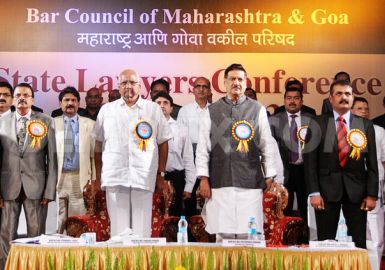
Maharashtra & Goa Bar Council

Bar Council of Andhra Pradesh
Official Website : http://www.barcouncilap.org/
Contact No. : (040) 6685 9885, 6685 4785.

Bar Council of Assam, Nagaland, Meghalaya, Manipur, Tripura, Mizoram & Arunachal Pradesh
Official Website : http://www.barcouncilassametc.org/aboutus.htm
Contact No. : (0361) 2544663, 2734840, 099545-46004.

Bar Council of Bihar
No Official Website, Blog Available : http://biharstatebarcouncil.blogspot.in/
Contact No. : (0612) 2505583, 2221125.

Bar Council of Chhattisgarh
No Official Website, Information available on: http://www.lawtoday.in/5.php
Contact No. : (07752) 410169, 413500.

Bar Council of Delhi
No official Website, Information available on: http://www.lawtoday.in/6.php
Contact No. : (011) 2338 7701.

Bar Council of Gujarat
Official Website: http://www.barcouncilofgujarat.org/
Contact No. : (079) 27663460, 27434073.

Bar Council of Himachal Pradesh
No official Website, Information available on : http://www.lawtoday.in/8.php
Contact no. : (0177) 2812017.

Bar Council of Karnataka
Official Website : http://ksbc.org.in/index.aspx
Contact No. : (080) 22484875.

Bar Council of Kerala
Official Website: http://www.barcouncilkerala.com/
Contact No. : (0484) 2394195, 2393810.

Bar Council of Madhya Pradesh
Official Website : http://sbcofmp.org.in/
Contact No. : (07662) 250638.

Bar Council of Maharashtra & Goa
Official Website : http://www.barcouncilmahgoa.org
Contact no. : (022) 2265 6567 / 22677508.

Bar Council of Odhisa
Official Website : http://odishabarcouncil.org/
Contact No. : (0671) 2507885, 2508453.

Bar Council of Punjab & Haryana
No official website, Information available on : http://www.lawtoday.in/15.php
Contact No. : (0172) 2688519, 2688507.

Bar Council of Rajasthan
Official Website : http://barcouncilofrajasthan.org/
Contact No. : (0291) 2545066, 2545251.

Bar Council of Tamil Nadu
Official Website : http://barcounciloftamilnadu.org/
Contact No. : (044) 2534 2739.

Bar Council of Uttar Pradesh
No official website, Information available on http://www.lawtoday.in/17.php
Contact No. : (542) 2508658, 2382805

Bar Council of West Bengal
Official Website : http://wbbarcouncil.org/
Contact No. : (033) 2248 8956, 2248 7233, 2230 5771

High Court of Jammu and Kashmir
There is no State Bar Council, Powers are vested in the High Court.
Many PILs have also been filed by lawyers to constitute a State Bar Council.
Interestingly, there is a website( http://www.ajkbarcouncil.com/), which claims to have a Bar Council for Azad Jammu & Kashmir.


Researched by Venkatesh, Institute of Law, Nirma University


Download Now

How to enrol with BCI: for Indians studying abroad

0
Cambridge University

Indian National Graduating From Foreign University

Any Indian who obtains his LLB degree whether through a 5 year course or a 3 year course from a foreign university which is recognised by the Bar Council Of India [BCI] is eligible to write the All India Bar Examination [AIBE] and practice in any Indian Court. The necessary conditions for his enrolment into a State Bar Council are as follows:

  • The degree has been obtained after regularly pursuing the course for a period which is not less than three years in case the degree in law is obtained after graduation in any branch of knowledge or for a period of not less than five years if admitted into the integrated course after passing +2 stage in the higher secondary examination or its equivalent (High School);
  • The University is recognized by the Bar Council of India.

List of Universities recognised by the Bar Council of India

[Source: www.barcouncilofindia.org]
  1. Australia
    • UNIVERSITY OF MELBOURNE
    • NATHAN CAMPUS, GRIFFTH UNIVERSITY, BRISBANE
    • SCHOOL OF LAW, BOND UNIVERSITY, GOLD COST
    • QUEENSLAND UNIVERSITY OF TECHNOLOGY, BRISBANE
    • THE UNIVERSITY OF SOUTH WALES, SYDNEY
    • THE AUSTRALIAN NATIONAL UNIVERSITY., CANBERRA
    • UNIVERSITY OF ADELAIDE
    • UNIVERSITY OF FLINDERS
    • UNIVERSITY OF MONASH
    • UNIVERSITY OF SOUTHERN CROSS
    • UNIVERSITY OF SYDNEY
    • UNIVERSITY OF  TASMANIA
    • UNIVERSITY OF TECHNOLOGY SYDNEY
  2. Bangladesh
    • RAJASHAHI UNIVERSITY
    • DACCA UNIVERSITY
    • CHITTAGONG UNIVERSITY
  3. Canada
    • SASKAT CHEWAN UNIVERSITY
    • UNIVERSITY OF ALBERTA
    • UNIVERSITY OF WINDSOR, ONTARIO
  4. Myanmar
    • RANGOON UNIVERSITY
  5. Nepal
    • TRIBHUVAN UNIVERSITY
  6. Pakistan
    • KARACHI UNIVERSITY
    • PUNJAB UNIVERSITY, LAHORE
    • UNIVERSITY OF SIND
  7. Poland
    • UNIVERSITY OF STAPHEN BATROI, IRWILUS
  8. Singapore
    • UNIVERSITY OF SINGAPORE
  9. South Korea
    • HANDONG INTERNATIONAL LAW SCHOOL, HANDONG GLOBAL UNIVERSITY, POHANG, SOUTH KOREA
  10. Uganda
    • MAKARERE UNIVERSITY, KAMPALA
  11. United Kingdom
    • BUCKINGHAM UNIVERSITY
    • CITY UNIVERSITY OF LONDON
    • COUNCIL FOR NATIONAL ACADEMIC AWARDS
    • HULL UNIVERSITY
    • INNS OF COURTS SCHOOL OF LAW
    • LEEDS UNIVERSITY
    • LEICESTER UNIVERSITY
    • LONDON UNIVERSITY
    • OXFORD UNIVERSITY
    • CAMBRIDGE UNIVERSITY
    • THAMES VALLEY UNIVERSITY
    • UNIVERSITY OF WALES COLLEGE OF CARDIFF
    • UNIVERSITY OF BRIMINGHAM
    • UNIVERSITY OF BRIMINGHAM
    • UNIVERSITY OF HEARTFORDSHIRE
    • UNIVERSITY OF DURHAM
    • UNIVERSITY OF LIVERPOOL
    • UNIVERSITY OF WARWICK
    • UNIVERSITY OF BRISTOL
    • EAST ANGLIA UNIVERSITY
    • NOTTINGHAM UNIVERSITY
    • UNIVERSITY OF MANCHESTER
    • * BANGOR UNIVERSITY
    • * KINGSTON UNIVERSITY, LONDON
    • * UNIVERSITY OF WOLVERHAMPTON  SCHOOL OF LEGAL STUDIES
    • * SCHOOL OF LAW, UNIVERSITY OF SHEFFIELD, U. K.
    • * KENT LAW SCHOOL, UNIVERSITY OF KENT, CANTERBURY
    • * SCHOOL OF LAW, UNIVERSITY OF EAST LONDON
    • * SCHOOL OF LAW, UNIVERSITY OF SOUTHAMPTON
    • * UNIVESITY OF WESTMINISTER
    • * BRUNEL LAW SCHOOL, BRUNEL UNIVERSITY, WEST LONDON
    • * SCHOOL OF LAW, BIRMINGHAM CITY UNIVERSITY
    • * NORTHUMBRIA UNIVERSITY, NEWCASTLE UPON TYNE
    • * LANCASHIRE LAW SCHOOL, UNIVESITY OF CENTRAL LANCASHIRE, PRESTON
    • * SCHOOL OF LAW, SWANSEA UNIVERSITY, SWANSEA, U. K.
  12. United States of America
    • CORNELL LAW SCHOOL
    • GEORGE TOWN UNIVERSITY
    • SOUTH WESTERN UNIVERSITY
    • UNIVERSITY OF MICHIGAN
    • UNIVERSITY OF TEXAS
    • MARSHALL THE SCHOOL OF LAW OF THE COLLEGE OF WILLIAM AND MARY, VIRGINIA, USA
    • SYRACUSE UNIVERSITY COLLEGE OF LAW, NEW YORK
    • WIDENER UNIVERSITY SCHOOL OF LAW, WILMINGTON
    • CLEVELAND-MARSHALL COLLEGE OF LAW, CLEVELAND STATE UNIVESITY
    • UNIVESITY OF PENNSYLVANIA LAW SCHOOL, PHILADELPHIA
    • UNIVERSITY OF WISCONSIN
    • UNIVESITY OF CALIFORNIA, BERKELEY
    • FORDHAM UNIVERSITY, NEW YORK
    • SCHOOL OF LAW, LOYOLA UNIVERSTIY, CHICAGO
    • SCHOOL OF LAW, SANTA CLARA UNIVERSTIY, CALIFORNIA
    • SCHOOL OF LAW, HOFSTRA UNIVERSITY, NEW YORK
  13. Zambia
    • UNIVERSITY OF ZAMBIA

Note:The following conditions are applicable for Universities which are marked with
“*” in the list given under United Kingdom.

  • Three years’ LLB degree only if taken after a three years’ bachelor degree course in any subject ( that is after obtaining BA / BSc /B.Com /BBA); or
  • Three Years’ LL.B. course followed immediately by 1 year whole time LPC/BVC and followed by a contract of service with a Law Firm for two years to be entitled to be enrolled as a solicitor or take pupillage for a year in a Chamber of a qualified Barrister to be a Master, or
  • Four Years’ of LLB jointly with another subject like Finance, Accounts, Management or a Language to be immediately followed by one year full time LPC/BVC from a College of Inns of courts/ Solicitors Society or a Master degree in Law. 

How can an university get a degree to be recognized by Bar Council of India?

A foreign University can apply to the Bar Council of India for the recognition of a degree in law. The matters is placed before the Legal Education Committee which gives recommendations to the Bar Council of India. The application for the recognition of degree contains the following details:

  1. History of the University
  2. Prospectus or brochure describing the courses of study
  3. University’s standing in the accreditation list made officially or by any recognized private body
  4. Any other information that the Bar Council of India may prescribe from time to time and subject to inspection by the Bar Council of India of the University, if necessary.

[Source: http://www.ibanet.org/PPID/Constituent/Student_Committee/qualify_lawyer_india.aspx]


Can Foreign Nationals Practice in India?

Any foreign national whether he obtained his degree from an Indian University or a foreign University cannot practice in India. He/she may engage in legal academics or legal research but is prohibited from practising law in India.

Not just foreign nationals but foreign law firms are also not allowed to practice law in Indian territory. The Bombay High Court in Lawyers Collective v. Bar Council of India held that  the practice of law by foreign firms in India is illegal and  that “the practice of law” under the Advocates Act in India encompasses all forms of practice, not just litigation practice in court but also corporate practice, advisory practice, mergers and acquisitions and the whole works.


Researched by: Satyaditya Singh Dhakare, NLIU Bhopal


Download Now

Public Interest Litigation

0
public interest litigation

The expression ‘Public Interest Litigation’ has been borrowed from American jurisprudence, where it was designed to provide legal representation to previously unrepresented groups like the poor, the racial minorities, unorganised consumers, citizens who were passionate about the environmental issues, etc.

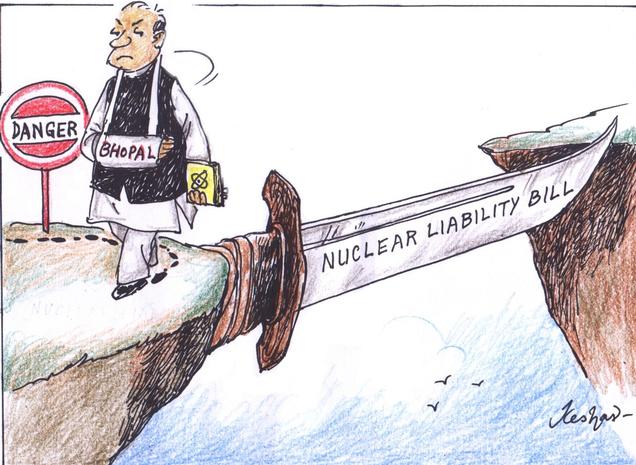
 India’s Supreme court challenging constitutional validity of the Civil Liability for Nuclear Damage Act, 2010
India’s Supreme court challenging constitutional validity of the Civil Liability for Nuclear Damage Act, 2010

You must have come across this phrase quite often, at least in the news. PIL has achieved a place of great importance in our legal system. The term is not expressly defined under any statute. The meaning has evolved out of various judgments. It simply means that any public spirited person can approach the court for a public cause or public interest or public welfare by filing a petition. The question which often arises in this context is what can be regarded as “public interest”? Clearly, “any act for the benefit of public is in public interest.”

In India, the first PIL was filed in the year 1976; Mumbai Kamgar Sabha v. M/s Abdulbhai Faizullabhai and others [1976 (3) SCC 832]. The seed of PIL was sown by Justice Krishna Iyer through this landmark judgement. Soon thereafter, with the efforts of Justice Bhagwati, the concept of PIL has evolved and developed to a great extent. He is in-fact known as the Champion of PIL in India!

The other historical PIL is the one filed for prisoner’s rights Hussainara Khatoon v. State of Bihar. Many has regarded this case as the first PIL in India as well. In this case the attention of the court was drawn to the incredible situation of under trials in Bihar who had been detained pending trial for periods far in excess of the maximum sentence for the offences they were charged with. The court not only proceeded to make the right to speedy trial the central issue of the case but passed the order of general release of close to 40,000 under trials who had undergone detention beyond such maximum period.


What is Public interest litigation?

Public Interest Litigation differs from ordinary litigation. It does not involve the enforcement of the rights of one person against another. Rather, this type of litigation is filed to provide justice to the deprived sections of the society. It is a collaborative effort that encompasses the petitioner, the court and the government. It is commendable to see that courts have taken all possible measures to allow access to public spirited persons and even NGOs to file petitions on behalf of those who cannot approach the court.

A very prominent PIL activist in India is, Mr. M.C. Mehta: a lawyer by profession and a committed environmentalist by choice. From the scores of PILs he filed, it seems his mission in life was to protect the environment. He has single-handedly obtained about 40 landmark judgements and numerous orders from the Supreme Court against environmental offenders. Some of the landmark judgements arising out of PILs filed by him are:

  1. The Oleum Gas Leak Case
  2. The Delhi Vehicular Pollution Case
  3. The Child Labour Case
  4. The Gamma Rays Case
  5. The Ganga Pollution Case.. to name a few.

The Supreme Court has performed Judicial Activism by passing various orders and judgements in PILs. The expression “Judicial Activism” signifies the anxiety of the courts to find out an appropriate remedy for the aggrieved person by formulating a new rule to settle the conflicting questions in the event of uncertain laws or absence of any law on a given point.


How to file a PIL

In India, a PIL can be filed in the Supreme Court under Article 32 and in the High Courts under Article 226 of the Constitution of India.
The Supreme Court has taken various steps that have given a healthy boost to PIL. The procedural requirements are very easy and relaxed as compared to filing of other ordinary petitions. Even a letter, post card, newspaper report or email addressed to the Supreme Court by a person, acting in public interest has been accepted as a petition. Any simple information received by the court complaining of a legal injury against a person or a group of persons, who cannot approach the court directly (because of poverty, disability, social backwardness and the like) can be treated as a PIL. The courts understand that in such cases it would be unfair to expect a person to incur expenses and approach the court through ordinary litigation.

In a landmark judgment, D.K. Basu v State of West Bengal, the court acted upon a letter petition which drew attention to the repeated instances of custodial deaths in West Bengal. The court further mandated that a relative of the arrested must be promptly notified. It made clear that the failure to comply with this direction would be punishable as contempt of court. The early PILs had witnessed the award of compensation by the court to victims of human rights violations. This practice of initiating proceedings on the basis of letters has now been streamlined and has come to be described as ‘epistolary jurisdiction’.

Also, the Supreme Court has relaxed the rule of locus standi while filing PILs. Locus standi means the ability of a person to approach the court having sufficient connection to the case in hand. In other words, a person who has actually suffered a legal harm has the ability to approach a court seeking a remedy. However, in the case of PIL, any public-spirited person, who may not be directly affected by the legal harm, can approach the court, seeking a remedy.

It is pertinent to be noted that once a PIL has been filed, it cannot be withdrawn. The courts might also take suo motu cognizance of matters involving public interest. suo motu is the power of the court to initiate proceedings against a party by its own motion.

However, the procedure to file a PIL is similar to that of a writ petition.


In High Court

If a Public Interest Litigation is filed in a High court, then two (2) copies of the petition have to be filed. Also, an advance copy of the petition has to be served on the each respondent, i.e. opposite party, and this proof of service has to be affixed on the petition.


In Supreme Court

If a Public Interest Litigation is filed in the Supreme court, then (4)+(1) (i.e. 5) sets of petition has to be filed opposite party is served, the copy only when notice is issued.


Court Fees

A Court fee of Rs. 50, per respondent (i.e. for each number of opposite party, court fees of RS. 50) has to be affixed on the petition.


Criticisms of PIL

PILs have been subject to a lot of criticism in recent times. One of the main criticisms is that by entertaining PILs and exercising Judicial Activism, Courts are trying to usurp the functions of the Legislature and Executive. Justice Bhagwati, in the judgement of Bandu Mukti Morcha v. Union of India [AIR 1984 SC 802] had observed that the courts by performing the aforementioned actions are merely assisting in the realisation of the constitutional objectives of the Judiciary and not usurping the functions of the Legislature and Executive.
Another criticism is the major dilution of the principle of locus standi. It has been argued that such dilution has opened up the floodgates for frivolous cases that either involves the litigant’s private interests, or for seeking publicity rather than seeking justice, or to stage their political objectives. In such cases, the petitions have been dismissed and heavy costs have been imposed by the courts. This acts as a deterrent to people from filing such PILs in future.


Some interesting PILs filed in the past one year

  1. May 2013: A PIL has been filed in the Delhi High Court saying that the Prime Minister of India’s Facebook Page shows a distorted picture of the national flag.
  2. May 2013: PIL has been filed in the Supreme Court seeking SIT probe into IPL spot-fixing scam.
  3. April 2013: PIL filed in the Supreme Court seeking to restrain government authorities from taking any coercive action against anyone for posting alleged objectionable comments on social networking sites like Facebook.
  4. March 2013: PIL in the Supreme Court filed by a lawyer seeking orders to make the offence of watching pornography a non-bailable offence.
  5. February 2013: PIL filed against rapper Yo Yo Honey Singh in the Punjab and Haryana High Court for the offensive and vulgar lyrics of his various songs.
  6. April 2012: 2 PILs filed in the Delhi High Court accusing the Union Human Resource Development Ministry of colluding with a particular candidate, another arguing that candidates being considered for the UGC top jobs of Chairman and Vice Chairman are either ineligible or inefficient.
  7. April, 2012: The Gujarat High Court took up suo motu action for the safety and maintenance of the bridge from where Mahatma Gandhi had launched his historic Dandi March in 1930
  8. March 2012: PIL filed in the Madurai Bench of the Madras High Court to stop san quarrying in the rivers Cauvery and Kollidam, in order to protect the natural resources of these rivers.
  9. March 2012: The Supreme Court threw out a petition questioning the appointment of Gujarat Governor Kamla Beniwal and seeking her removal for appointing state Lokayukta disregarding the Chief Minister’s objections, calling the petition frivolous and fined the party heavily.
  10. January, 2012: PIL filed on Army Chief’s Age controversy, in the Supreme Court.

Resource: Prof. H.D. Pithawala’s Book: Legal Language and Legal Writing for the students of the First Year of the Five Year Law Course, Mumbai University


Download Now

Global Business Development Factsheet

0

This factsheet covers the market outline for Islamic Finance globally. It contains links to events which business development managers must attend in order to network and build relationships with industry experts and government officials from across the world. For professionals the industry, this page also mentions the essential qualifications that you must acquire in order to serve organizations in the industry.

Annual Growth rate: 20% (see here)

Volume of assets under management by Islamic law compliant institutions: over 1 trillion

Number of business players:  600 financial institutions operating in more than 75 countries (source)

Islamic Insurance (also known as Takaful)

Expected growth rate in 2011: 31% (see here)

The size of this industry is expected to increase almost three-fold from an estimated US$9 billion in 2009 to $25 billion by 2015, as per an Ernst and Young study (see here for details)

Major Global Events

(These are relevant for aspiring market participants, professionals, and experts as opportunities for networking and are a great brand building exercise)

  • World Islamic Economic Forum (WIEF) [Just finished on 7th to 9th June, 2011 in Astana, Kazakhstan]
  • Annual World Islamic Banking Conference (WIBC, Asia Summit) [Just finished on 8th and 9th June, 2011, Singapore]
  • Annual World Islamic Banking Conference (WIBC, World Summit) [Scheduled for 21st to 23rd November, 2011 in Bahrain]
  • International Takaful Summit (London) [Scheduled for 12th to 13th July, 2011]

Important qualifications/ certifications (for current and aspiring professionals in the industry)

  • Certified Islamic Professional Accountant (CIPA) (see here for details)
  • Certified Shari’a Adviser and Auditor (CSAA) (see here for details)

International standardization bodies

1. Accounting and Auditing Organization for Islamic Financial Institutions (AAOIFI)

Status of AAOIFI

The AAOIFI has 41 accounting and governance guidelines for Islamic financial institutions. The individual financial sector regulators in Bahrain, Qatar, Syria and Sudan have made the standards mandatory for Islamic financial institutions, however, they are merely considered advisable in countries such as Malaysia, Saudi Arabia and the United Arab Emirates. England does not rely on them either.

Lack of standardization is a concern that has attracted the attention of industry professionals and regulators alike, and joint efforts at an international level are expected.

Latest news on Islamic finance from AAOIFI

AAOIFI has passed 11 new financial standards on October 31, 2010 (see here for more details)

2. Islamic Financial Services Board (IFSB)

The Islamic Financial Services Board (IFSB) was established in 2002 as an international standards setting body. It recommends standards consistent with Sharia principles. It has over 190 members, including several central banks, the International Monetary Fund, the World Bank and the Islamic Development Bank.

The IFSB’s recommendations and standards are not binding on its members.

Some of the important standards and guidance notes issued by the IFSB are given below.

Standards relating to Takaful (Islamic Insurance)

IFSB-8: Guiding Principles on Governance for Takâful (Islamic Insurance) Undertakings

IFSB-11: Standard on Solvency Requirements for Takâful (Islamic Insurance) Undertakings

Standard relating to Sukuk

IFSB-7: Capital Adequacy Requirements for Sukuk, Securitisations and Real Estate investment

Capital Adequacy and Risk Management Standards

IFSB-1: Guiding Principles of Risk Management for Institutions (other than Insurance Institutions) offering only Islamic Financial Services (IIFS)

IFSB-2: Capital Adequacy Standard for Institutions (other than Insurance Institutions) offering only Islamic Financial Services (IIFS)

GN-2: Guidance Note in Connection with the Risk Management and Capital Adequacy Standards: Commodity Murâbahah Transactions


View the exhaustive list of standards and guidance notes here


Download Now

Changes in UK immigration law: does it affect professional immigrants?

0
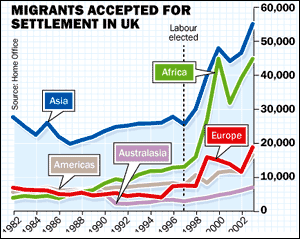
Changing laws reflect immigration stats?

This post is on latest changes in UK immigration law – from Sandeep Kainth, an immigration lawyer in the UK. Sandeep plans to write a series of blogposts for Indians planning to immigrate and those who want to learn about UK immigration law. This is the first post from him. 

I first started blogging some time ago to share my knowledge on Immigration law, under the UK Jurisdiction. I enjoy researching complex cases and achieving results! The Immigration law is changing quite rapidly in the UK.

On 11th June the Government announced changes in the Immigration Law for Non-European Economic Area (NON EEA) these changes will affect people wanting to enter or stay in the UK depending on their private or family life.

I deal with cases from all over the world, and see the demand of people wanting to enter the UK. I also am aware as to how some people spend their life savings for their son/daughter/relative to work study or settle in the UK.

These changes are taking place to help the Governments programme to reform Immigration, and to follow consultation and specialists advice from the ‘MIGRATION ADVISORY COMMITTEE’ these mainly come into effect on the 9th July; 2012.

Below is a description of some of the changes that shall be taking place

1. Introducing a new minimum income of (£18,600) for sponsoring the settlement in the UK of a spouse or partner, or fiancé(e) or proposed civil partner of non-European Economic Area (EEA) nationality, with a higher threshold for any children also sponsored; £22,400 for one child and an additional £2,400 for each further child;

2. Publishing, in casework guidance, a list of factors associated with genuine and non-genuine relationships, to help UK Border Agency caseworkers to focus on these issues;

3. Extending the minimum probationary period for settlement for non-EEA spouses and partners from two years to five years, to test the genuineness of the relationship;

4. Abolishing immediate settlement for the migrant spouses and partner where a couple have been living together overseas for at least 4 years, and requiring them to complete a 5 year probationary period;

5. From October 2013, requiring all applicants for settlement to pass the ‘Life in the UK Test’ and present an English language speaking and listening qualification at B1 level or above of the Common European Framework of Reference for Languages unless they are exempt;

6. Allowing adult and elderly dependants to settle in the UK only where they can demonstrate that, as a result of age, illness or disability, they require a level of long-term personal care that can only be provided by a relative in the UK, and requiring them to apply from overseas rather than switch in the UK from another category, for example as a visitor; and

7. Restricting family visit visa appeals, initially by narrowing the current definitions of family and sponsor for appeal purposes, and then, subject to the passage of the Crime and Courts Bill, which was published on 11 May 2012, removing the full right of appeal against refusal of a family visit visa.


Sandeep Kainth is an experienced Immigration Lawyer; he is passionate about helping people to understand the changes that are occurring in the UK – E-mail: [email protected]

Download Now

Sharia Boards in Islamic Banking and Finance: Opportunity for the youth and something India seems to have overlooked

0
Arab Stock Market

India is all set to embrace Islamic Banking and Finance as reforming the current banking law to allow sharia compliant banking is on top of Finance Minister Pranav Mukherjee’s to-do list. Banking Laws Amendment Bill, 2010 proposes to bring about the necessary changes in Indian Banking Law to open doors for Islamic Banking and Finance in India – which has done extremely well even in non-islamic countries like UK and Sri Lanka. Apart from providing finance of their preference to one of the largest Muslim population in the world, it will enable Indian projects to receive finance from Middle East and other countries where lenders prefer Islamic finance to other conventional methods of financial transactions. However, is India ready to take on the opportunity?

Arab Stock Market
One of the key factor that will determine India’s success at Islamic finance is availability of trained personnel. For the youth in India, this brings fresh opportunity. Those who learn the intricacies of Islamic finance can look forward to meteoric growth as demand for experts will exceed supply right from the beginning. On the other hand, it will be a challenge before banks and financial institutions to find experts for various roles. One of the most difficult task may prove to be creation of a Sharia board which is required to govern and audit compliance of all the products and services with Islamic principles.

What is a Sharia Board?
The fundamental reason for existence of Islamic Banking and Financial products is that it caters to a market which prefers Sharia compliant means of finance. Islamic finance products therefore are required to be Sharia compliant by definition. It therefore becomes necessary that apart from designing a financial or banking product in accordance with principles of Sharia, it must also be certified by experts who understand religious principles as well as banking and finance business. This is where a Sharia-board becomes indispensible in the course of developing Islamic Banking and Finance products.

A Sharia board in this context is an advisory board, which is constituted of Muslim religious scholars who are trained in Islamic Finance. The Board pre-approves various products and services offered by an Islamic Bank or Financial Institution. Their primary job is to consider whether the proposed product or service before them is compliant to Sharia law. If it is not, it may suggest changes so as to Islamic values are maintained.

The Challenge before Sharia Boards
The biggest challenge before any Sharia board is identifying the correct interpretation of Sharia law – as Sharia is not codified law. Even precedents are not binding. Therefore, Islamic scholars often hold varying views on important issues. Uniform practices with respect to what is Sharia compliant banking and what is not is yet to emerge. Lot of difference often exists between rulings of Sharia boards of different banks, especially in different countries as scholars tend to follow different schools of Sharia interpretation.

What will happen in India?
In light of the fact that India is a vast country and with many sects of Islamic people (predominantly Hanafi, Shafi’i in Kerala and others), it is important to ensure that universally agreeable interpretations and principles emerge so that all kind of products and services offered by Indian Islamic banks and financial institutions receive equal treatment. Confusion with respect to this can seriously hamper a nascent market of Islamic products. Lack of uniform principles are also likely to lead to much litigation, and in the Indian context, given the time required to resolve legal disputes, this can surface as a major problem.

Training of Scholars for Effective Participation is Sharia Boards
It is essential therefore that from the outset there should be no lack of trained personnel to man the Sharia boards, who should understand principles of Sharia as well as banking and finance, and do not adopt materially different interpretations of Sharia. The initial training for this purpose is crucial. It is desirable that Reserve Bank of India, bearing the ultimate responsibility to protect banking interests in India, will ensure that the training issue of Sharia boards does not happen in an unplanned and haphazard manner, as that is sure to cause much distress to banks and financial institutions when they start rolling out products and services in accordance with Sharia.


Download Now

Talking About Rights: Islamic Finance in India and constitutional rights

0

In the context of Islamic Finance, does one have a right under the Indian Constitution to receive financial services that are compliant with their religious practices?

Before answering this question, a few things need to be put into perspective.

  1.  In light of the global success of the Islamic Finance Industry, there is no doubt that there are legitimate financial products that can be introduced in India. Many banks are in fact ready to deploy such instruments in India as soon as legal barriers are removed
  2.  A large number of people in our country are excluded from financial services like banking (as documented by the report of the Sachaar Committee), which is a key factor for development amongst the poor. Credit leads to growth of entrepreneurship. However, the question is, if there are religious barriers to these people who are against entering into transactions involving charging of interest, and there are non-interest based (and thus sharia compliant) financial products which are viable and found to be stable and profitable around the world, is there any rational in not offering the same in India too? None that I can see, and none that the Government of India offers as reason.
  3. Is offering such a banking product against secularity? We have adopted the free market in India – and the underlying principle of that market is that demand and supply determines whether a product should exist or not. Everything depends on freedom of choice. As long as there is no significant externality (negative side effects on people other than buyer and seller of the product) or some other kind of market failures (monopoly, asymmetric information etc) the government should not interfere with the free market. In this case, existing laws made by the government to regulate banks prevent them from undertaking Islamic banking products. This is a question of free market economy as much as it is of religious preference.

Right to Islamic Finance under the Constitution

Under the Indian Constitution, right to development has been recognized as a Fundamental Right under Article 21. Access to a credit system and financial services is a very important ingredient of development. While it is possible to argue that the Muslims who does not participate due to the prohibitions in their faith are not excluded by the government by their own preference, it is prima facie faulty argument. The question is not whether Muslims should participate in the regular interest based banking system. The question is whether a viable and credible credit system which is in compliance with their faith, on that they want to access can be arbitrarily (arbitrarily, since no good reason is offered for the same) barred from developing.

Politically, this is a very strange action on part of the ruling party which claims to be pro-Muslim interest.

Legal recourse to legalize Islamic Banking and Finance in India:

The best way to deal with this seems to be taking up the matter up through a writ before High Courts and the Supreme Court, since effectively barring Islamic Finance through regulations amount to violation of Right to Equality (arbitrariness), Right to Practice a Religion (since following religious tenet is resulting in financial exclusion) and Right to Life. Most importantly, once the case is admitted and notice is issued to the Government, they will need to take a stand on the matter. The Government will find it very difficult to take an anti-islamic finance stand in the matter and hopefully the process will thus be expedited.

Download Now

Is Islamic Banking right for India?

0
Islamic Banking
Islamic Banking

An introduction to Islamic Banking

Some of the most famous investment banks in the world, such as Goldman Sachs, Lehmann Brothers and Rothschilds are Jewish origin. Shylock, in the Merchant of Venice, was a Jew. This is for a specific reason – for a long time, Christianity prohibited the charging of interest, and hence, Jewish establishments which offered banking and financial activities flourished.

The story of Islamic finance is similar. Shariah law prohibits the charging of interest (interest is called riba as per Shariah). This does not mean that banks cannot run operations profitably. It simply means that banks run their operations differently – they work as partners in a client’s business, instead of charging ‘money for money’. In a transaction compliant with Islamic law, the bank undertakes the risks associated with ownership of assets. The business is a kind of joint venture.

Islamic law also prohibits transactions which are speculative (such as gambling) or have a significant amount of risk or uncertainty (gharar). Derivatives and contingent contracts are usually invalid, and commercial transactions involving elements of uncertainty need to be carefully structured so that they do not fall foul of this prohibition.

Islamic finance in the global economy

Political regimes in global financial centres had sensed the growth opportunities from Islamic finance early on and accordingly tailored banking laws to permit Islamic products. As a result, Islamic finance has flourished in London, Paris, and Tokyo.  During the financial crisis, Islamic finance also served as a cushion to mitigate the impact of the liquidity crunch.

The Indian connection

India can benefit for Islamic finance for three compelling reasons:

1. India has the second largest Muslim population in the world. This segment of the population needs access to personal finance. Conventional banking products are not in accordance with their personal law and are not fully accepted by the market segment.

2. A high level committee report (known as the Sachar Committee report) in India had pointed out that certain sections of Muslims are very backward in India, and do not use the banking sector. The policy goal of financial inclusion can be met if financial products offered to Muslims are not repugnant to their personal law.

3. India has substantial need for inward investment for its infrastructure development goals, and post the financial crisis, sourcing investment from the Middle Eastern nations is a huge opportunity for India. Mr. H.Abdur Raqeeb, convenor of the National Committee for Islamic Banking and general secretary of Indian Center for Islamic Finance, has pointed out that India needs approximately US $ 500 billion in investment in various sectors in the next 10 years.

However, investors from Islamic nations such as the Middle Eastern countries prefer Islamic law compliant vehicles before they invest in India. The most recent available government data (as of March 2011, from the Department of Industrial Policy and Promotion, Government of India) suggests that UAE has a meagre 1% share of the total foreign direct investment in India. Permitting Islamic finance can fulfil a sizeable portion of India’s investment needs.

The next post shall throw light on the early movers and their plans for Islamic finance.


Download Now

What are house rent agreement, lease & tenancy and how to negotiate them

54
house rent agreement

What is a House Rent Agreement

The house rent agreement of a property is one legal document that almost no-one can avoid. You may have to negotiate (if at all you know how to) or at least sign one either for personal or business use. However it’s surprising as to how few people take the opportunity to negotiate or even understand these agreements – property owners and occupiers included. Most people in India have little idea as to what to look out for in these agreements. Hence, we decided to write this comprehensive guide to negotiating and understanding legal agreements dealing with leasing, renting or leave and license arrangements for residential and commercial properties. This is a must read if you own property that you want to rent out, or even if you are staying or working from a rented premises.

While each house rent or lease agreement has its unique situations that can merit unique terms and conditions to be inserted in a contract, there are some crucial terms that should almost always be included in agreements to protect their interests and prevent future misunderstandings that could potentially lead to trouble, disputes, financial losses or litigation.

Download Now

Facebook and Free Speech: the Long Arm and Short Sight of Law

2
Facebook Data Policy

The news of two girls from Mumbai being nabbed by cops for making a post on Facebook derisive of Bal Thackeray and dismissive of the bandh that brought the city to a standstill after his death is perhaps known to all of us by now. They were booked under Section 66A of the Information Technology Act which penalizes the act of offending or causing annoyance to someone by sending out messages through any electronic information communication device.

This has recently been challenged by Shreya Singhal, a 21 year old graduate in astrophysics from Bristol University, London. Shreya, who happens to be the daughter of Supreme Court advocate Manali Singhal and granddaughter of the late Delhi High Court judge Justice Sunanda Bhandare, and also wishes to pursue legal education, was represented in the Supreme Court by Senior Advocate Mukul Rohtagi.

Her plea states that “The phraseology of Section 66A of the IT Act, 2000 is so wide and vague and incapable of being judged on objective standards, that it is susceptible to wanton abuse and hence falls foul of Article 14, 19 (1)(a) and Article 21 of the Constitution” and she has sought to “reconcile section 41 and 156 (1) of the Criminal Procedure Code with Article 19 (1)(a) of the Constitution”. In short, while challenging Section 66 of the IT Act, she has requested the Apex Court to prohibit arrest without warrant and police investigation without magisterial order for offences which involve freedom of speech and expression.

When questioned on her locus, Senior Advocate Mukul Rohtagi responded that “she is a law student and a Facebook user”. The government is being represented by Attorney General GE Vahnavati in this matter. He admits that the arrest of the two girls were unjustifiable, but, at the same time, he has added that S. 66A of the IT Act cannot be removed .

The Supreme Court has also simultaneously admitted the plea of cartoonist Aseem Trivedi against S. 66A of the IT Act .

Section 66A of the IT Act, 2000 states:

“Any person who sends, by means of a computer resource or a communication device,—
a)any information that is grossly offensive or has menacing character; or
b)any information which he knows to be false, but for the purpose of causing annoyance, inconvenience, danger, obstruction, insult, injury, criminal intimidation, enmity, hatred or ill will, persistently by making use of such computer resource or a communication device,
c)any electronic mail or electronic mail message for the purpose of causing annoyance or inconvenience or to deceive or to mislead the addressee or recipient about the origin of such messages.
Punishment – Imprisonment for a term which may extend to three years and with fine.”

This section is indeed stated in very broad terms. It empowers the State to punish anyone who disseminates any information or expresses any thought which is deemed to be “grossly offensive and has menacing character”. Unfortunately, nowhere in the Act are the terms “grossly offensive” and “menacing” defined, and thus the state is vested with wide discretionary authority to reach a subjective understanding of the terms and penalise or reprimand any individual who posts anything which it deems to be of grossly offensive and menacing nature.

Attaching a penal law which is restrictive of an individual’s right of free speech and expression and is stated in such broad terms and vests such immense power to the state to apprehend and penalise citizens to Sections 41 and 156 (1) of the Criminal Procedure Code so that any breaches to this law is deemed to be a cognizable offence – meaning an offence for which the police does not need an arrest warrant or a magisterial order to arrest and investigate citizens for alleged commission it – does militate against the Constitutionally guaranteed democratic rights to freedom of speech of citizens and stand in the way of expressing and disseminating ideas, opinions and scientific, philosophical, ideological and artistic thoughts through the internet.

One way out is for the judiciary to construe the terms in a narrow manner and set out a clear-cut test so as to provide the state and the citizens with binding law which will serve as a guideline for the state to determine the situation specific applicability of this Section. Thus, instead of removing the law as laid down in S. 66A, fleshing out of binding guidelines for its implementation might be helpful.

S. 66A provides internet users with a degree of security against hate-mails directed against individuals and those which target specific classes, social, religious, ethnic, linguistic, political and ideological groups of people. This also affords protection to individuals from receiving of false information, spam, phishing etc. Hence, scrapping the section it in entirety will render internet users legally defenceless against these. Thus, instead of removal of the section, a constructive interpretation of the broadly worded and subjective terms used in the Section by the judiciary so as to ascertain the exact law envisaged in the section, along with the laying down of strict and pro-people guidelines regarding application and applicability of this Section would suit the purpose in a better manner.

The legal issue which is being raised here is important and contentious at the same time. If all offences which involve freedom of speech are made cognizable then the state might find it difficult at times to deal with sensitive and urgent issues such as sedition, hate-speech directed against social, communal or linguistic groups and castes, and people inciting feelings of hatred and anger against the state or against certain groups and outraging senses of morality such groups with their speech or expression might get off with impunity. Moreover, affording such wide lassitude to free speech might be detrimental to unity and integrity of the state by disruption of general public order. Since independence, the Indian state has been pretty much strict, and at times perhaps stricter than necessary, while dealing with such sensitive issues, including the issue of sedition. Strictness in this matter is perhaps necessary for the sake of our democratic sovereignty, but over-strictness has often led to unfortunate and unwarranted legal and administrative action of censorship, penalty and often undue restriction on freedom of speech, as is noted in the present situation of the two women being arrested for their Facebook posts. A similar incident had happened in West Bengal earlier this year where a professor of Chemistry from Jadavpur University, Calcutta, was arrested for posting a cartoon involving the West Bengal Chief Minister Ms Mamata Banerjee on Facebook, which, allegedly, was offensive of the State.

In light of these recent incidences, a through and open re-interpretation of Article 19 (2) of the Constitution, which allows the state to impose reasonable restrictions on the right to freedom of speech and expression “in the interests of the sovereignty and integrity of India, the security of the State, friendly relations with foreign States, public order, decency or morality or in relation to contempt of court, defamation or incitement to an offence.”, is perhaps the need of the hour. The petitions put forth by Shreya Singhal and Aseem Trivedi provide an excellent opportunity to the Supreme Court of India to undertake such an endeavour, address this issue and thus attend to this pressing need.


Download Now
logo
FREE & ONLINE 3-Day Bootcamp (LIVE only) on

How Can Experienced Professionals Become Independent Directors

calender
28th, 29th Mar, 2026, 2 - 5pm (IST) &
30th Mar, 2026, 7 - 10pm (IST).
Bootcamp starting in
Days
HRS
MIN
SEC
Abhyuday AgarwalCOO & CO-Founder, LawSikho

Register now

Abhyuday AgarwalCOO & CO-Founder, LawSikho