Download Now
Home Blog Page 1847

How to start preparing for CLAT

0
newspaper

8 easy steps to prepare for any competitive exam with objective questions and negative marking (think: CLAT)

clat

This works great for anyone, but for people who are trying to prepare in one or two months for an exam like CLAT, this is the easiet and surest way to crack the exam.

Remember that this method is not a magic pill, but I have not come across a better and quicker method to drastically improve. It takes hard work, and lots of people who are allergic to systematic, strategic hard work will never implement this. This is a method of winners, the best people already implement some loose or less systematic version of this. The beauty of this method is that it is so easy and simple that everyone can follow it, but very few actually do so. If you are not ready to work hard, if you have the discipline needed to be successful, don’t read this article any more – it is not of any use to you anyway. However, if you have a burning desire to succeed, if you have no choice but to crack this exam and make it happen, and you realize that there is very less time – read this and implement this immediately. This method will shave off months from the required preparation time. One month is enough to implement this if you can work for a few hours every day. You can do it over a year if you have the luxury, but faster you do it, better the results.

Lets get started

It all starts from the past years papers. You must first get sufficiently large number of pa st years papers, which can thereafter be analyzed by you to understand what exactly is being assessed in the exam.

Step 1

Get as many past years papers as you can get. For CLAT – since CLAT has been happening only since 2008, there are only 3 or 4 past years papers which are easily available. This is not enough sample size for a good analysis. Hence, get old NLSIU, NALSAR, NUJS, NLUD and NLUO papers. In total, you should get at least 30 to 40 papers in order to do what I am going to tell you to do next.

For some exams, like the All India Bar Exam, you have only a few papers (4 at the time of writing) to analyze. No problem, make the best of what you have. Try to see if there are any similar exams. Very often, judicial services exam’s objective component is very similar to AIBE – so get those papers if you want. Find mock tests sold by preparation services – they would be useful for this purpose too.

Step 2

When you have gathered enough past years papers, it is time to start the analysis. For this, you have to start solving the papers one by one. However, just solving is not enough –  right after you are done solving, comes the analysis part.


Step 3

You check which questions you were able to answer correctly. For this, you can use some answer keys available in the market. Sometimes these answer keys may have wrong answer, so be careful – check with others. One easy way to find our if you are right is to post a question in an online forum and inviting people to answer. The answer is not enough, ask them how to solve, the reasoning behind the answer as well. You can do this on the CLAThacker Facebook group – it is quite active for this purpose. You can even ask someone for answer keys, they float around on the internet – but just make sure that they are not wrong.

Step 4

Now you simply see which questions you got right, and which ones you got wrong. However, this alone is not enough, even within the questions you got right, you must see which ones took too much time to solve.

How do you know if it is taking too much time to solve? You have 200 questions usually in CLAT to be solved in 120 minutes. This means you have no more than 30 secods to solve most English questions, less than a minute to solve Maths questions, less than 10 seconds to solve GK questions, about a minute to solve both legal reasoning and logical reasoning questions. Verbal reasoning questions can be and should be solved very fast. You must not lose too much time on things like comprehension passages.

I know this sounds ridiculous, but this is what you need to achieve over time, and people can do it. You need to learn how – otherwise you’ll not manage to crack CLAT.

While preparing, and initially as you are analyzing the paper, take more time than this – it is fine. Take 3 or 4 hours instead of 2 hrs to finish a paper – no problem. However, record the time you are spending on different type of questions. And if you are taking too much time to solve certain type of questions, note that. It is a problem, and only way you can start handling these problems is by being aware of them.

Step 5

Now you create  three lists. Headings of the three lists will be: solved correctly and quickly (List 1), solved correctly but not quickly enough (List 2) and could not solve correctly (List 3)

Step 6

Identify each question type, and give it a name. For example, in a comprehension passage, it can be  something like this:

Comprehension – factual question

Comprehension – what was the theme of the paragragh

Comprehension – analytical question

Comprehension – appropriate title

You can even write a question or two as an example of the question type. Make sure the name is descriptive enough so that you can easily understand what the name stands for later on.

Step 7

After you have done this with lots of papers (at least 10), you will probably end up with a very long list of types of questions that you can solve quickly and correctly, question types taking too much time to solve, and questions that you are not solving correctly consistently. This is a very very useful list. Preserve this list.

What do these lists signify?

List 3 has the questions that you need to start working on immediately. Take one type at a time and improve your ability to solve that time. Go to teachers, or friends who are good at these subjects to learn how to solve these correctly and qucikly. Clear up you basics by reading a textbook. Identify why you are making wahtever mistakes you are making. Find out shortcuts and better techniques to solve these types of questions.

By the time you are going to write CLAT, if you are still not able to figure out how to solve these types qucikly, you will still benefit from this exercise, as you leave those questions in the paper, and the time you therefore save will be used to solve other questions which would come under List 1 or List 2.

List 2 has questions that also need your attention. You can not afford to spend too much time on a question – as that takes away time from you and you could not attempt the questions that you probably find easier, thus reducing overall marks. If solving a 5 marks comprehension passage is taking 10 minutes, it is better to leave those 5 questions and use that time to solve 10 logical reasoning questions that you know you can solve at 1 minute each.

While preparing, for these type of questions you need to find out how they can be solved faster. You can also increase your speed at solving just by trying to solve them faster. If you take 20 minutes to solve 10 questions, and you need to solve them in 10 minutes, conciously try to make yourself superfast and try to solve them in just 5 minutes. No problem if you get a few answers wrong – keep the speed high and keep practicing. If you do this many times, your brain will learn to solve these types of questions at a high speed. You can solve the same question paper again and again, each time trying to be faster than the last time, but going through the entire mental process of solving the question. Ask you teachers how you can solve certain types of questions faster.

List 1 has the types of questions you can solve easily. This is important to know especially in an exam with negative marking. These are the questions you must attempt during the exam. More types of questions under this list (apart from what is already there – more will be added through practice over time – question types will move on to here from the other lists as you work more on your preparation), higher are the chances that you will crack the exam and do very well.


Remember, this is an extremely smart way of preparing, and it works like magic!


Step 8

Just A few days before CLAT, you should do this exercise again. 7 days before CLAT would be a good idea. Practice at least 10-15 past years papers (estimated time needed for 15 papers and analysis 50 hours) and create this list again. Give your exam according to these lists. List 1 questions are high priority, you must solve them. Avoid questions which still remain in list 3 altogether.  If after solving list 1 questions you still have time, go on to solve list 2 questions. This also ensures that you would not lose marks on negative marks as well.

This was first published in Gyancentral.com which is now defunct.


Download Now

Remedy for Immigrants who are subjected to Violence In United Kingdom

1
Remedy for Immigrants who are subject to crime in UK

If you are a victim of crime, what can you expect from the UK authorities?

The same rights as a British citizen! In UK, there is no differentiation between legal immigrants and illegal aliens. Everyone has the right to full protection from the authorities. This post will outline for you the action points in case someone you know is subjected to violence in the UK. Keep it handy!

Remedy for Immigrants who are subject to crime in UK

VICTIMS OF CRIME

As a victim of crime, the first port of call would be a formal complaint to the police, which can be achieved either over the telephone or by attending the local police station.

In case of an emergency, one should dial ‘999’ which connects you immediately to the emergency services who are required to attend your call within 10 seconds. To report non emergency minor crimes, call ‘101’ so that people in genuine emergency can reach police quickly through ‘999’. One also has the option of reporting crime anonymously by calling Crimestoppers who record your information and pass it to the police so that it can be used to solve the crime without you being bothered any further.

Additionally, victims are entitled to get help from police officers, witness care officers, court staff and probation officers. Victim can expect regular updates (at least once a month) from the police about their case, be told when the offender is arrested, charged, bailed and sentenced, has the right to apply for extra help when giving evidence in court (called ‘special measures’) if they are vulnerable or intimidated, has the right to be told when an offender will be released, and has the right to be referred to Victim Support.

SUSPECTS OF CRIME

The police has the power to stop, question and search the suspect – depending on the situation. If necessary, they also have the power to arrest the suspect if they have the reasonable belief that the suspect has committed a crime or is carrying illegal drugs, weapon, stolen property, or something that could be used to commit a crime. The suspect can be stopped and searched by police without any reasonable ground if the police thinks that serious violence could take place or the suspect was carrying a weapon or had used one.

SEARCH

Before the suspect is searched, it is the duty of the police officer to inform the suspect their name and police station, what they expect to find, the reason they want to search the suspect, why they are legally allowed to search the suspect, and that the suspect can have a record of the search.

ENTRY IN THE PRIVATE PROPERTY

Normally, the police cannot enter a private property without the owner’s permission, unless they’re chasing someone who’s committed a serious crime, they’re stopping serious damage to the property, they hear a ‘cry for help’ of someone in distress, or they have permission to enter the property from a court.

ARREST

Before the arrest, the police must identify themselves as the police, inform the suspect about their arrest and what crime they are being arrested for, explain why it’s necessary to arrest the suspect and also explain to the suspect that they’re not free to leave the police station. If the suspect tries to escape or become violent, the police has the power to use ‘reasonable force’.

RIGHTS AT POLICE STATION

Suspects, after being arrested have the right to get free legal advice, inform someone about his current whereabouts, have medical help if needed, know about the ‘Codes of Practice’ that the police must follow and also know about the written notice informing the suspects about their rights. The suspect has the right to make a complaint of the believe that the police has not behaved professionally at all times while the suspect was in the custody.

One cannot be held in police station without the charge being framed against him for more than 24 hours unless the suspect is alleged to have committed a serious crime, in which case, the period of custody can be extended up to 36 hours by police superintendent or up to 96 hours by the court.

If the police is able to establish that the suspect is involved in the crime, then a formal criminal charge is filed against him. Thereafter, the suspect would either be granted a bail by the police with or without conditions or alternatively be refused a bail and be produced from custody before the next available court.

Thus, whether an immigrant is a victim of a crime or a suspect of a crime in UK, the law keeps him on the equal footing as that of the UK citizen and he has the same rights that have been granted to the UK citizen.

But one might wonder if in practice, the illegal immigrants would come forward to report the crime as they have the threat of being deported. Unfortunately UK, does not have any law or policy that ‘legalises’ the status of illegal migrants who have been victims of crime. Interestingly, U.S. has a policy of “U visa” which basically provides a visa as a reward for coming out and reporting the crime. This will make his stay in the States legal and this is a very good way of getting the illegal aliens out of their shell to report the violent crimes. This was suspended between the years 2000 and 2007 though.

Many commentators recommend that UK should follow US’s “U” visa policy as well.

*Research and Editing by Rishika Lekhadia, 2nd Year, W.B. National University of Juridical Sciences with inputs from Sandeep Kainth, immigration lawyer in the UK.

Download Now

Online Dispute Resolution System- A way toward hassle free dispute resolution and a road into the future

1
Online Dispute Resolution System- A way toward hassle free dispute resolution

This article is written by a Guest Author and Anubhab Banerjee, currently pursuing BBA-LLB (Hons) from the School of Law, Alliance University. This is an article which deals with the concept of Online Dispute Resolution.

Introduction

The legal system around the world is undergoing enormous changes. Most of these changes are associated with moving from the conventional courts to the alternate means of dispute resolution. India as well has been trying to catch up the pace with the rest of the world in promoting such alternate dispute resolution processes.

With further advancements in technology a new concept known as online dispute resolution has evolved. Amid the current situation of lockdown due to the outbreak of COVID-19, it is a very good opportunity for the Indian legal system to encourage the use of Online Dispute Resolution. 

This article deals with Online Dispute Resolution and how the process can help the Indian legal system under the current circumstances and lay a good foothold for the future.

Alternate Dispute Resolution

Alternate Dispute Resolution is a process which is well explained by the name given to it. Alternate Dispute resolution relates itself to all such processes which can be used for resolution of a dispute outside a Court. There are several processes involved under Alternate Dispute Resolution which have been explained further in this section.

Different processes involved in ADR

The following is a brief description of the different processes involved in Alternative Dispute Resolution:

Negotiation

It is a process through which two parties try to resolve their differences by the initiation of a dialogue between them, to try and understand each other and resolve the dispute between them. In the process of negotiation, two people, one representing each party try to enter into a new agreement or resolve conflict with the help of free flow of dialogue between them, understanding the interests of each.

Mediation

Mediation is basically a third-party facilitated negotiation process in which the third party is called a Mediator. The age old tale on conflict resolution is the best way to understand mediation. This is known as the orange story which goes as follows “Once upon a time there was a mother who had two children. One day, the kids came to the mother fighting. There was one orange left in the house and they both wanted it–typical of small children. What is a parent to do?

Luckily, this particular mother is a pro at resolving disputes. She takes the orange from the crying children and asks them why they want it?

When asked why, both the children are able to portray their interests instead of their position of wanting the whole orange for themselves. When asked, one child expresses the desire to make orange juice. The other expresses her need to shave the peel into the recipe for muffins. Instead of only having an equally proportional piece of the fruit each, both the children get what they want by simply portraying their interests out. Subsequently, both have a great time enjoying their respective juice and muffins!

The role played by the mother in this story is exactly the role played by a mediator in a mediation. A mediator has no more involvement in the process than facilitating the free flow of dialogue between the parties and helping them understand their interests better. The agreement if reached by the parties at the end of a mediation is reached as a result of their own considerations without any involvement from the mediator.

Conciliation

Conciliation is a process very similar to that of mediation, the only difference being that a conciliator, unlike a mediator, has the authority to advise the parties in the process. The conciliator in this process is also a signing party in the agreement if reached between the parties in the dispute. As the conciliator has a more active involvement than a mediator and is allowed to pose his own advice to the parties in the process of helping them reach an agreement.

Arbitration

It is a process which can be closely related to litigation. The parties to an arbitration present their case in front of an arbitral tribunal which derives its authority from an arbitration clause/agreement signed between both the parties. The arbitral tribunal passes an arbitration award which shall be held enforceable like a decree of the court.

A case is referred to arbitration only where there is the presence of an arbitration agreement/clause in the principle contract between the conflicting parties, regarding which the dispute has arisen. When such an agreement is present then any disputes arising out of the contract is directed to arbitration. It is a completely consensual process as unless and until the parties agree on an arbitration clause/agreement a dispute cannot be directed to arbitration. 

In the process, both the parties present their individual cases in front of the tribunal, which then decides an award on it accordingly. An arbitrator for the arbitral tribunal is selected solely on the basis of the arbitration agreement/clause decided on by the parties. The only requirement of an arbitral tribunal is that it should constitute an odd number of members. This rule is followed to avoid confusion while making  a decision on passing an award. It allows a majority vote amongst the arbitrators to decide on the awards. An arbitral tribunal may be constituted with a single arbitrator presiding over the proceedings.

Evolution of ODR Industry

Online dispute resolution (ODR) was developed to circumvent clogged and slow moving courts and the hassle of physical dispute resolution mechanisms. ODR tries to harness the power of internet to resolve disputes, by reducing costs, doing away with the necessity to travel to attend courts and generally making the entire process faster and efficient through use of web based technologies. This is the basic precept on which ODR is built. If possible, this could be a significant improvement over the current alternative dispute resolution methods such as traditional arbitration, mediation etc.

ODR debuted in 1998 in United States and not much is known about it in India. What does ODR really entail? Is it a sustainable mechanism for resolving disputes? This post will try to answer these questions

Why ODR?

  • The processes involved under the head of Online Dispute Resolution are all forms of fast track dispute resolution and processes such as mediation, negotiation and conciliation are even amicable ways of dispute resolution. Shifting the whole system online helps us improve the connectivity and convenience for the conduct for such processes. Under the present circumstances with courts around the country shut, it is the best time for online dispute resolution to come up as a sufficient alternative where ever possible.
  • The process of ODR can be considered to be a lot more cost-effective as compared to Litigation. It has a lot of benefits when associated with cutting down on costs. Online Dispute Resolution is a process which cuts down a major expense on travelling, as people who are a part of a dispute can discuss such matters through online means rather than having to travel to places for their hearing. Secondly, the process cuts down on the hefty court costs that are paid on behalf of the parties.
  • Usually, an award passed under the means of dispute resolution or an agreement reached is enforceable under the law due to the different transnational agreements, such as the New York Convention on Enforcement of Arbitration Awards, 1957 and the Singapore Convention on Mediation having been entered into by India. India has incorporated the UNCITRAL Model Laws, 1985 in its Arbitration and COnciliation Act. All of this is done for the purpose of making such processes seamless and legally recognizable. Thus, such awards passed can serve the same purpose which is served by the Courts in India.
  • Cost and Time- ODR is generally considered a more efficient process than ADR/ litigation because it is quicker and less expensive. Given the fact it does not require physical presencce as is the case with ADR and litigation, it saves up on time and cost as may be required.
  • Modus Operandi- The mode of proceedings in ODR is often decided by the parties unlike court based suits that follow a strict statute determined procedure. Of course, ODR must follow the rules laid down by appropriate legislations and some basic principles that all legal proceedings should follow, but it has the potential to emerge as a more flexible and convenient mode of dispute resolution. Also, ODR is typically less confrontational because it take place in a much less formal setting on an online platform.
  • Confidentiality- Confidentiality of matter can be protected far better in an ODR process.
  • Flexibility- ODR is much more flexible as it is governed by party’s agreement or the rules and regulations of the online platform used and is not dependent on the stare decisis (deciding on the basis of precedents) principle just like any other ADR.

The process involved in Online Dispute Resolution

  1. The first and foremost requirement for resolving a dispute through Online Dispute Resolution is an agreement between the parties signifying that if any such dispute arises it’ll be resolved by some means of ODR. The parties may also opt-in for such processes even after the Dispute arises.
  2. The next thing is the selection of a suitable ODR provider. An ODR provider is a platform which provides the parties with a space online where they can register their disputes. The ODR provider should be competent enough to help resolve the disputes between the people. The people working on behalf of the ODR provider should be impartial and unbiased while hearing such disputes. If any person who is a part of the ODR provider shares any kind of relationship with the parties to the dispute, which he/she has been assigned, then such person should opt-out of such a setting.
  3. There is no specific setting required to prepare for a session on an ODR platform. The only requirement being that the parties should be well aware of their rights and obligations before starting such a session.
  4. The process for resolution of a dispute depends much on the rule of the ODR provider with regards to resolution of disputes on their platform. These are the rules for mediation, conciliation, arbitration, etc. specified by such ODR platforms. Usually, the process begins with one party to the dispute contacting the other with a request to resolve their dispute through the means of Online Dispute Resolution.
  5. There are a few things for the parties to keep in mind while they are resolving their disputes through ODR forums. A few of those things are as follows:
  • The parties trying to resolve their dispute show concentrated interest rather than their positions. The best way to portray what interests are is with the help of the orange example. As per the example, there are two kids fighting over an orange. When their mother gets to know about the dispute between the kids, she interferes. She asks each of them: “why do you want the orange”. One answers that he wants the pulp of the orange to make orange juice and the other answers he wants the peel of the orange. Thus, the mother here is able to amicably resolve the dispute between the kids by getting to know their interest. To make it simpler, as per this example the position for both the kids was the orange though their interests differed when asked about why they want it. Thus, people should not use techniques such as positional bargaining while trying to resolve their disputes through ODR.
  • Effective communication between the parties is necessary.
  • Parties should be well aware of the BATNA (Best Alternative to a Negotiated Agreement) as well as WATNA (Worst Alternative to a Negotiated Agreement), which helps provide them with a range between which they might consider to resolve the dispute.
  • Though keeping a bottom line which goes into a negotiation or mediation is never advisable i.e. keeping a bottom line is fine but constantly sticking to it might not end up being beneficial at the end of the day.

How is Online Dispute resolution convenient under the present circumstances

Online Dispute Resolution is the perfect solution for matters that can be resolved through the means of ADR online under circumstances like that of now. The present circumstances have forced us all to be locked down inside our homes. Under these circumstances, most of our disputes registered at the courts have come to a halt. This moment should be used by people to make themselves well aware of the different processes available under Online Dispute Resolution and their advantages. 

Several Practitioners of different forms of ADR around the world are shifting to online means during this time, under the present circumstances. Thus, India and its legal fraternity as well should take a leap towards moving into such online means for the use of ADR. ADR itself is not a popular concept among the Indian public. Thus, it is an extremely hard task to promote ODR in India. 

Though the present circumstances of a lockdown might just be the perfect opportunity to make people aware of the process. Once people realise the benefit of the processes under Online Dispute Resolution i.e. Mediation, Arbitration, Conciliation, etc. they might just want to get used to resolving their disputes through such means rather than going through the conventional means of approaching a court in case a dispute arises.

With the present situation in hand, it is of great uncertainty as to when the courts will reopen for normal proceedings to take place. People should try shifting to such online means for resolving their disputes in such times. As that would not only help them with the fast resolution of the dispute, but also with the resolution of such disputes within the time frames they want to. Online Dispute Resolution is a process which can be carried out from anywhere at any time. So with the availability of an expert mediator, arbitration or conciliator as per the requirements and the agreement between the parties, the parties can go forth with resolving their disputes instead of waiting for the Indian Courts to reopen. 

This would also release some pressure from the shoulders of the Indian Courts. As there might be a lot of unresolved issues and unsatisfied parties who are waiting for the courts to reopen to file a suit. If the suits, out of these which can be resolved by the means of Online Dispute Resolution, are actually resolved by using those means then the courts would be relieved of the unnecessary burden of cases which are to follow. 

People being locked down in their houses, which they are not used to under normal circumstances, might lead to a rise in domestic issues at their homes. These domestic issues may be between family members, between spouses, between children, etc. Maybe under normal circumstances, these issues would not even have come up. There might also be serious cases like that of domestic violence between spouses during this period. Since the courts are no longer a place which can be approached under the present circumstances, people facing such issues can look out for Online Dispute Resolution forums to help resolve their issues amicably. As amicable, settling their issues and mitigating their losses accordingly would even end up saving the relationship shared between the people involved in such a dispute.

How the use of Online Dispute Resolution under the present circumstances can lay a path for the future

The future is global and even Alternate Dispute Resolution over time has become a global concept which has eventually helped resolve several transnational disputes between parties. When we talk about Alternate Dispute Resolution being a global concept we should also consider the advantages that Online Dispute Resolution has in making the whole process of dispute resolution from a global perspective, even more, simple and effective.

If India and Indians in general start becoming aware of these means of Online Dispute Resolution even just because of the present lockdown scenario regarding COVID-19, then such would eventually leave its presence on the society as a whole. As once people start becoming familiar with the ways of Online Dispute Resolution it can be beneficial for the public as well as for the Courts in India.

Indian Courts having a huge backlog of cases i.e. around thirteen lakh cases being pending in the Indian Courts, there is a lot of pressure on the Courts for the completion of these cases. If Online Dispute Resolution can be appropriately promoted then a lot of such burden can be shifted on such ODR platforms which would be beneficial for both the courts and the public.

As it is also an important point to be noticed that the average time span for a case at an Indian Court is of Thirteen years i.e. if both the parties have the required finances to keep on appealing and approach the Supreme Court of India. Thus, this costs the clients dearly and also ends up permanently spoiling the relationship shared between both the parties to the dispute. Instead, if such people opt-in for the resolution of their dispute through the means of Online Dispute Resolution, not only will such be fast but also help them save the relationship they share as well as their money.

Nature of ODR

Online and Offline Model of ODR- The potential use of the Internet to resolve international disputes can be divided into two distinct areas: using Internet-related technology to resolve “real world” disputes online or partially online and using the Internet to resolve disputes arising on the Internet itself.

For instance, in offline dispute, you can have a clause in your contract with your supplier for resolution of dispute using one of the ODR platform. As far as online disputes are concerned, the platform you are dealing with might have an inbuilt mechanism as is the case with EBay

Procedures adopted for ODR

Online Negotiation

Forums such as Cyber Settle uses Negotiation for Dispute Resolution. Online negotiation can be of two types, closed model and open model.

Close Model– Online negotiation thrives on technological changes through blind bidding which is one of the most prevalent dispute resolution services available online. The common characteristic of these processes is the parties’ submission of monetary offers and demands which are not disclosed to their negotiating counterpart, but are compared by computer in rounds. If the offer and demand match, fall within a defined range or overlap the case is settled for the average of the offer and demand, the matching amount, or the demand in the event of an overlap. If the claim is settled, the participants are immediately notified via email

Open Model– Under the open model, a party can view the other’s party offer or demand only after having made a demand or offer. Whenever any offer is within twenty per cent of any demand, there is settlement of the median.

Online Mediation

A typical online mediation procedure takes place as follows. The complainant initiates it by completing a confidential form on the provider’s website. Then, a mediator contacts the respondent in order for him/her to participate. Both parties set forth the mediation ground rules.

The mediator communicates with the parties, sometimes jointly and sometimes individually, to facilitate an agreement. If an agreement is reached, it usually takes the form of writing.

Thus, the online process does not differ very much from the offline process, except for the expanded use of technology. Email is the mediator’s best friend for purposes of framing and moving discussion forward. But email was already used by offline mediators. In online mediation, websites such as Smart Settle,  Legal Face-Off etc. are providing online mediators with new tools to supplement email with other communication tools including electronic conferencing, online chat, video-conferencing, facsimile and telephone.

Online arbitration

Online arbitration proceeds along different communication stages (process agreement, initial presentations, rebuttals, consideration, and decision). Arbitration is in general a much less complicated communication process than mediation. In the simplest arbitration, software that allows positions to be stated and documents to be shared may provide a sufficient frame for the process.

There are many arbitration service provider in abroad such as American Arbitration Association. AAA is known for handling large, complex cases. In 2011, 46% of the arbitration filed with the AAA involved claims $1,000,000 or more.


Future of ODR

As said by Jeffrey N. Rosenthal is an attorney with Blank Rome, the attractiveness of ODR services to the world-at-large will likely only increase. The availability of such systems can build trust in a company by reminding consumers and corporations dealing with it that a neutral third-party can cheaply and easily resolve disputes.

However, India is yet to exploit the benefits of ODR. There is an acute lack of legislative action or awareness in this regard. This problem is teamed up with the lack of ODR institutions in India.

Given the fact that its being predicted that the SME Sector would be the driving force for growth in India, there is huge scope for application of ODR Mechanism in resolution of dispute for SMEs as ODR can be a cheap and easy way out of a disputes that are bound to arise during the course of business.

Conclusion

Online Dispute Resolution is the way for our future and promoting its use during this lockdown period is going to have a huge impact on the legal system post the lockdown. One of the main issues on Online Dispute Resolution not being a preferred platform is that people are not satisfied until and unless they reach a court for their disputes and have their cases heard. Such a mentality will have to change gradually. 

Another problem is that people are not aware about the several advantages associated with the different ADR and ODR mechanisms. If such can be promoted then a lot of load can be shifted from the Indian COurts to ODR mechanisms. In India these mechanisms have not been looked upon to be as effective as the courts, and people should be accustomed with the use of such mechanisms. As it will not only be beneficial for these mechanisms but also for the Indian Judicial system as a whole. Thus, it can be rightly said that Online Dispute Resolution is certainly an aspect to be focused on under the current circumstance as well as looked upon as a mechanism of general use for the future.


LawSikho has created a telegram group for exchanging legal knowledge, referrals and various opportunities. You can click on this link and join:

Follow us on Instagram and subscribe to our YouTube channel for more amazing legal content.

Download Now

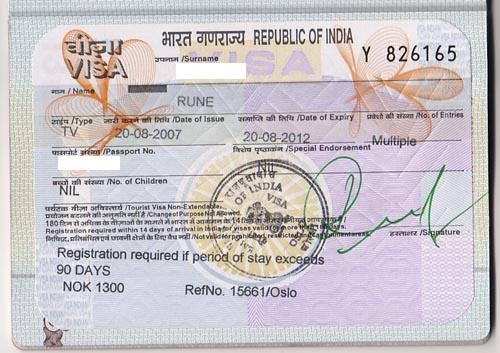
Foreigners working in India: Visa, entry permit and tax registrations

6
Indian Visa

Work related Visa in India

Indian Visa
There are two types of work related visas for non-Indian’s who wish to come to India for work related purposes:
Business Visa designated as ‘B’ Visa and Employment Visa designated as ‘E’ Visa.


Business Visa

This is not applicable for people who are coming to India for part time or full time employment. The following activities can be carried out under a business visa: establishing an industrial/business venture or exploring possibilities to set up industrial/business venture in India, purchase/sell industrial products or commercial products or consumer durables, technical meetings/discussions, attending Board meetings or general meetings, providing business services support, recruitment of manpower, for performing duties as partners in a business and/or functioning as Directors of the company, consultations regarding exhibitions or for participation in exhibitions, trade fairs, business fairs etc., transacting business with suppliers/ potential suppliers at locations in India as buyer, to evaluate or monitor quality, give specifications, place orders, negotiate further supplies etc., relating to goods or services procured from India, acting as experts/specialists on a visit of short duration in connection with an ongoing project with the objective of monitoring the progress of the work, conducting meetings with Indian customers and/or to provide technical guidance, pre-sales or post-sales activity not amounting to actual execution of any contract or project, in-house training of trainees of multinational companies/corporate houses in the regional hubs of the concerned company located in India, internship on project based work in companies/industries for students sponsored by AIESEC, conducting tours and functioning as travel agents and/or conducting business tours of foreigners or business relating to it.
Duration of business visa is only of 6 months.

https://lawsikho.com/course/certificate-course-in-advanced-civil-litigation-practice-procedure-and-drafting
Click Above

 
Those who want to take up employment or consultancy in India for a substantial duration are required to take an employment visa.

Employment Visa

Foreign national who wants to visit India for employment in a company/ firm/organization registered in India or for employment in a foreign company/ firm/organization engaged for execution of some project in India, can obtain employment visa provided that they are being sponsored for an Employment Visa by their employer and they draw a salary in excess of US$ 25,000 per annum. The condition of annual floor limit on income will not apply to:

  • Ethnic cooks,
  • Language teachers (other than English language teachers) / translators and
  • Staff working for the concerned Embassy/High Commission in India.

Employment visa is also granted to foreigners coming to India as a consultant on contract for whom the Indian company pays a fixed remuneration (this may not be in the form of a monthly salary), foreign artists engaged to conduct regular performances for the duration of the employment contract given by Hotels, Clubs, other organizations, coaches of national /state level teams, or reputed sports clubs, sportsmen who are given contract for a specified period by the Indian Clubs/organizations, self-employed foreign nationals coming to India for providing engineering, medical, accounting, legal or such other highly skilled services in their capacity as independent consultants provided the provision of such services by foreign nationals is permitted under law, engineers/technicians coming to India for installation and commissioning of equipment/machines/tools in terms of the contract for supply of such equipment/machines/tools, providers of technical support/services, transfer of know-how/services for which the Indian company pays fees/royalty to the foreign company.


Residential permit – on entry into India

Foreign nationals including their family members who intend to stay in India for more than 180 days or have visa for more than 180 days, have to get themselves registered with the Foreigners’ Regional Registration Office (FRRO) within 2 weeks of their first arrival in India. For the purposes of registration, the persons are required to make an application in the prescribed form and be present in person at the time of registration. The following documents are required to be submitted along with application:

  • Application form in quadruplicate (Form A)
  • Passport and visa in original
  • 4 passport size photographs
  • Proof of residence in India
  • Copy of employment contract and undertakings by the employer

Once the FRRO is satisfied about the above documents, a “Residential permit” to stay in India is issued to the foreign national.


PAN and Service Tax Registration

Employees and consultants are required to seek tax registration (Permanent Account Number) with the Indian Income tax authorities upon their arrival in India. This is a onetime registration. Foreign nationals providing services in India should check if they are liable to pay service tax.


LawSikho has created a telegram group for exchanging legal knowledge, referrals and various opportunities. You can click on this link and join:  

https://t.me/joinchat/J_0YrBa4IBSHdpuTfQO_sA

Follow us on Instagram and subscribe to our YouTube channel for more amazing legal content 


Download Now

Assignment of Intellectual Property Rights in India

1
Intellectual Property - Patent

Assignment of copyright

Intellectual Property - Patent

Assignment of copyright has to be in writing and signed by the assignor or by his duly authorised agent. Copyright consists of a bundle of different rights in the same work, which can be assigned either as a whole to one party or separately to different parties.

· The deed of assignment must specify the `rights assigned’, the duration and territorial extent of assignment, and the royalty payable, if any. When duration of assignment is not specified, it is presumed to be for five years and when territorial extent is not specified, it is presumed to extend within India. (Section 19, Copyright Act, 1957)

· An assignment of a Copyright is exempted from Stamp Duty. (Article 25 of Schedule I of the Bombay Stamp Act, 1958).

The above provisions apply both to registered and unregistered copyright. Apart from the above requirements, in case of registered copyright, the following additional steps also have to be taken.

Registered Copyright

Assignee has to make an application for registration of changes in the particulars of copyright entered in the Register of Copyrights in Form V under Rule 16 of Copyright Rules, 1958 to be delivered by hand or registered post. Attested copies of the deeds of assignments should be enclosed with the application.

Assignment of Design

One can obtain copyright protection on a design either under the Copyright Act, 1957 or Designs Act, 2000. A design which is registrable under the Designs Act but not registered, ceases to have copyright protection after 50 copies have been made of the same using an industrial process. (Section 15 Copyright Act)

Once registered, on subsequent assignment of the design it will be necessary to apply for entry of subsequent ownership under Rule 33 of Designs Rules, 2001. Such application shall be made to the Controller in Form 11. The instrument of assignment has to be presented in original or notarised copy. (Rule 37, Design Rules, 2001)

· The document assigning the right on design has to be in writing and the agreement between the parties concerned should be reduced to the form of an instrument embodying all the terms and conditions governing their rights and obligations. Any contravention of this requirement will render the instrument invalid. (Design Manual) (Possibly based on Copyright Act)

· Upon entry of its particulars in the register of designs, the instrument shall be effective from the date of its execution.

· An application for registration of title shall be filed within six months from the date of execution of the instrument. This period is extendable by a maximum of six months.

https://lawsikho.com/course/diploma-intellectual-property-media-entertainment-laws
click above

Assignment of Trademark

Registered Trademark

Assignment of trademark can be made by making a request on Form TM-23 or 24 depending on whether it is made by assignee alone or conjointly with the registered proprietor, along with the deed of assignment. (Rule 68 of Trademark Rules, 2002)

An application under Rule 68 has to contain full particulars of the instrument, if any, under which the applicant claims to be entitled to the trade mark and such instrument or a duly certified copy thereof has to be produced at the Trade Marks Registry for inspection at the time of application. The Registrar may require and retain an attested copy of any instrument produced for inspection in proof of title.

Unregistered Trademark

An unregistered trade mark may be assigned or transmitted with or without the goodwill of the business concerned. (Section 39 Trademark Act, 1999)

Assignment of Patents

An assignment of a patent has to be made in writing and the agreement between the parties concerned is required to be reduced to the form of a document embodying all the terms and conditions governing their rights and obligations, which must be duly executed. (Section 68, Patents Act, 1970).

Two copies of the assignment instrument certified to be true copies by the applicant or his agent along with an application in Form 16 and the Controller of Patents may call for such other proof of title or written consent as he may require. (Rule 91, Patent Rules, 2003).


LawSikho has created a telegram group for exchanging legal knowledge, referrals and various opportunities. You can click on this link and join:

https://t.me/joinchat/J_0YrBa4IBSHdpuTfQO_sA

Follow us on Instagram and subscribe to our YouTube channel for more amazing legal content 

 
Download Now

Do angels have a way around the startup tax? After budget, SEBI ruins it for angels. . .

3
Start Up tax
Start Up tax

There’s a way around the startup tax, but could SEBI’s new framework for VCs make it impractical for angel investors?

Budget 2012 proposes to introduce several provisions to modify the current taxation framework applicable to venture capitalists. In this post, we study the consequences of one much debated provision which incidentally makes startup funding taxable. What was the government thinking while introducing such a tax that will clearly affect angel investors? Is there any work-around? Is there any easy way out?

Start Up tax
Start Up tax
On the face of it, from a legal reading of the amendment, one possible way for angel investors seems to be registering as a Venture Capital fund with the SEBI – which, however, comes with some downsides. Additionally, SEBI has recently announced a modification of the regulatory framework applicable to VC funds, which may make it more difficult for angel investors to register as VC funds. We decided to explore in this article whether this is a practical solution for angel investors in India, and what it takes to register and operate a venture capital fund registered with the SEBI, both under the current regulations, and under the new regulations proposed by SEBI.

For those who are not clear on what is the startup tax all about (the rest can skip directly to the part titled “Registering a VC fund” below)

As per the budget the Income Tax Act (section 56 to be precise, which deals with how income from “other sources” will be taxed) would be amended (with effect from 1st April, 2013), to state that any amount received by a company for issue of shares that is greater than the fair value ( reflects the real value of the company based on its assets and liabilities) as well as face value (nominal value of the share – usually Rs. 10 or 100 in most cases) of the shares will be taxed as its income (See VCCircle for a discussion on this). Therefore, the company will have to pay tax on such income at corporate income tax rates – 30% (40% for foreign companies) if it sells shares above face value as well as fair value.

Illustration

A startup issues 100,000 shares of face value Rs. 10 at a price of Rs. 50 to an investor. That amounts to a premium of Rs. 40 per share. As per the proposal in the new budget, if the shares are issued at a price which is higher than their fair value, it will be treated as the income of the startup, and the startup will be taxed on it. Assume that the fair value of the shares is Rs. 20. Therefore, the income of the startup form such funding will be 50 – 20 = Rs. 30 per share, or Rs. 3,000,000 (three million). The startup will have to pay a tax of 30%, Rs. 900,000 (nine hundred thousand) on this.

How it affects angel investment in startups

For obvious reasons, startups have to sell shares above fair value of their shares – investors are not buying shares in a startup for the existing value of the share, which is only a small fraction of the amount they pay for each share – they are paying a premium to the face value in the hope that in the long run the fair value of these shares will grow a lot and exceed the price at which they are buying now. This is an investment they are making in low value assets, buying the assets at a higher price than their real price so that the company can use that money to grow itself. Issuing shares at a premium also enables the promoters to retain managerial control over the company, while being able to raise the necessary funding for expansion.

If money raised from investors is taxed, then a company will have lesser resources to grow – and the investor will be very unhappy that 30% of his money is not going to contribute towards the growth of the company. Investment in startups will become a significantly more expensive proposition if this tax applies to angel investor funding. Startups and investors stand to lose out a lot if this tax is applicable – and if a viable solution is not found, it is likely to affect the startup sector in a terrible way.

Registering a VC fund – the way to go for angel investors?

The only clear exception to this tax is in case of investment by a venture capital fund registered with SEBI. In case there is investment by such a fund, this tax would not have to be paid. Most individual investors and even many institutional investors do not register with SEBI in India as a fund. In most cases, money is invested in personal capacity or through closely held companies.

Other benefits of registration

Registration as a venture capital fund has other benefits under Indian law, apart from preventing the tax consequences arising from funding startups under the new budget. For example, registration exempts an investor from the elaborate lock-in requirements in an IPO under Indian law (for an exhaustive discussion of the advantages of registration with SEBI, see my post on the HeadStart Network blog). As per the lock-in requirement, when a company undergoes an IPO, the pre-IPO shareholding of non-promoters (including shares held by investors who have funded the company in investment rounds prior to the IPO) is subject to a lock-in of 1 year. These shares cannot be transferred, so an investor cannot ordinarily realize the value of his investment from an IPO for a further period of 1 year. A VC fund which is registered with the SEBI is exempt from this lock-in requirement. Angel investors who register as VCs with SEBI will be able to benefit from this exemption.

Critical considerations for angel investors before registration

Will it make sense for these investors to pool in some money into a fund first? The factors that will most strongly influence investors are the following:

– how much funds do they need to commit to the VCF at the beginning? How will pooling of funds work?

– how difficult/costly will it be to get a SEBI registration, and later on, to administer the fund/comply with SEBI regulation?

The newest problem in attempting to answer the two questions above is that the regulatory regime applicable to VC funds and other investment vehicles is transforming radically.

Overhaul of the regulatory regime applicable to VCs – which regulations apply?

VCs funds are governed by the SEBI (Venture Capital Funds) Regulations, 1996 (“VCF Regulations”). However, on 2nd April, SEBI issued a press release approving the draft regulations for alternative investment funds (“AIF Regulations”) proposed through a concept paper earlier last year (on 1st August, 2011). (See my post on Yourstory for a criticism of the draft AIF Regulations).

The AIF Regulations propose to revamp the framework applicable to investment vehicles, including VC funds. Finalized AIF Regulations have not been notified yet and are not presently in force, although they may be notified at any time. Once they are notified, venture capital funds will be covered by the AIF Regulations and the VCF Regulations would be automatically repealed. Funds registered under the VCF Regulations will continue to be governed by the same until the existing fund or scheme managed by the fund is wound up. Any registration or approval granted by the SEBI under the VCF Regulations will be presumed to have been granted under the corresponding provisions of the AIF Regulations.

Until the AIF Regulations are notified, VCF Regulations continue to be applicable. Therefore, we have provided a detailed comparison of the relevant provisions of the VCF Regulations and AIF Regulations below.

Is it feasible for angel investors register as VCs after the regulatory change?

SEBI has in its press release mentioned that venture capital funds have positive spillover effects on the economy, and that the it may, along with the government and other regulators, consider granting incentives or concessions based on the need of the funds.

The AIF Regulations have drastically increased the minimum fund size from INR 5 crores to INR 20 crores, and the minimum amount that can be accepted from an investor from INR 5 lakh to INR 1 crore. The increase is significant – angel investors in India cannot individually invest more than about INR 20-25 lakhs. They may not be able to constitute such a large fund, and to pool these amounts.

Further, there are additional restrictions on the tenure of the fund, disclosure and record keeping requirements that will significantly add to the costs of operating as registered entities. We are summarizing some key requirements which will be introduced by the AIF Regulations for the first time:

· The tenure of the fund shall be at least 3 years.

· Detailed information specified under the regulations needs to be disclosed to investors (such as financial, operational, risk management information relating to fund investments, details of regulatory proceedings or breach of information memorandum, etc.).

· The fund manager is required to address all investor complaints.

Conclusion: Registration with the SEBI as a VC fund is the solution for angel investors, to prevent falling under the net of the startup tax. However, SEBI’s announcement to overhaul the regulatory framework for VC funds could make it impractical for angel investors to register with it.

However, SEBI has stated that it will consider giving exemptions for VC funds depending on their need. It may be easier for angels to get relaxations from SEBI to register as VCs, than it is to hope that the tax on startups is withdrawn altogether. Angel investors and startups would need to adopt a consistent stand on the matter, so that they can make a representation to SEBI. Your views as a startup/angel investor will play a significant role in taking this discussion forward.

We are presenting a detailed comparison between the VCF Regulations and AIF Regulations below, so that angels know how they can register as VCs with SEBI. Do you think the new requirements under the AIF Regulations will be difficult to meet for angel investors? You can mention your comments below.

Comparison of key provisions of the VCF Regulations and Draft AIF Regulations

Criterion VCF Regulations Draft AIF Regulations
Minimum total commitment A firm commitment of INR 5 crores from investors before starting operations is required.

This does not mean that the entire amount of INR 5 crore needs to be put up front – just a firm commitment to invest when investment opportunity arises is sufficient. If one investor does not have the intention to invest 5 crore alone, he will have to find other investors to join him to create a fund that can be registered.

Minimum size of the fund must be INR 20 crores.
Minimum investment per investor A venture capital fund cannot accept less than Rs. 5 lakhs from any investor

Minimum investment amount shall be 0.1% of fund size subject to a minimum amount of Rs.1 crore.

Sponsor must contribute a minimum of 2.5% of the fund corpus or INR 5 crores, whichever is lower.

Registration and Application process –Summary of information to be provided to SEBI a. Application form (Form A) as per the First Schedule to the VCF Regulations

b. Constitutional documents of the sponsor/ settlor, the investment manager, and the trustee company

c. A write up on the activities their shareholding pattern/profile of the directors of the sponsor/settlor, the investment manager and the trustee

d. Detailed investment strategy of the fund – This should disclose the investment style or pattern, preferred sectors/industries for investment, proposed corpus, the class of investors, life cycle of the fund and any other relevant information.

e. Declarations and undertakings as prescribed under the VCF regulations.

Application form shall be specified by SEBI and is not provided under the Draft AIF Regulations. SEBI will consider the legal structure of the fund (i.e. whether it is a trust or LLP or company, whether the sponsor, asset management company or the fund manager have relevant experience in managing assets, a sound track record, are fit and proper persons, etc.
Manner of raising funds The VC fund needs to prepare placement memorandums/ contribution agreements, which must be prepared in a fairly detailed manner. This also increases compliance cost. The placement memorandum must indicate the entitlements available on the units purchased by the subscribers of the fund, the manner in which the benefits accrue on the units, tax implications, investment strategy, details of the investment manager/ asset management company, investment horizon, details about the performance of other funds managed by the fund manager, etc. The VC fund can raise funds through a placement memorandum only, which must contain information prescribed under the regulations, such as details of business, terms and conditions of investment services, investment policy, valuation, etc.
Cost of registration Application fee of Rs. 1 lakh must be paid to the SEBI for making an application to register as a VC fund or company. Once SEBI approves the application, a registration fee of Rs. 5 lakhs must be paid. SEBI issues a registration certificate after payment of the registration fee Similar to the VCF Regulations
Time taken to grant registration The grant of registration by SEBI is discretionary under the VCF Regulations and the AIF Regulations – that is, SEBI will only issue a registration certificate if it is satisfied that all the requirements under the regulations are fulfilled, and all material information is adequately disclosed by the applicant. In relation to the VCF Regulations, SEBI officials have informally stated that if the application is complete in all respects and there are no further clarifications required by SEBI, registration as a domestic venture capital fund may take only 1 month. However, 6 to 8 weeks may be a more reasonable estimate. Not known presently. SEBI may take more time initially to grant registrations, since some of the requirements stipulated under the AIF Regulations are different from the VCF Regulations.
Procedure in case of refusal to register SEBI can reject an application that is incomplete, but is required to give the applicant an opportunity of being heard.

Often, SEBI comes back with questions and requires the applicant to submit additional documents or information.

Similar to the VCF Regulations
Investment restrictions A VC fund cannot invest more than 25% of its corpus in one unlisted company. At least 66.66% of its funds must be invested in equity or equity linked investments of unlisted companies. The remaining one third (33.33%) may be invested by way of:

a. Subscription to shares of a company which is making an initial public offer;

b. debt or debt instruments of an unlisted company (if the VC fund has also invested in its equity)

c. Subscription by preferential allotment of shares of listed companies, or equity shares of financially weak or sick industrial companies

d. SPVs created by the venture capital fund for facilitating or promoting investment in accordance with the VC Regulations.

Similar to the VCF Regulations
Record keeping and information Record-keeping obligations add to costs and are somewhat onerous for VC funds. As per the VC Regulations, a VC fund must keep books of account, records and documents giving a true and fair picture of its affairs for a period of 8 years. It must furnish any information requested by SEBI from time to time.

Following records need to be maintained for a period of 5 years after the winding up of the fund:

a. The asset under the scheme/fund

b. Valuation policies and practices

c. Trading practices or investment or trading strategies

d. Particulars of investors and their contribution

e. Analytical or research methodologies


Download Now

The Maharashtra Labour Welfare Fund Act, 1953

24
Hands that serve
Hands that serve

Since there is so little information available on local statutes despite their importance to specific issues, I have decided to write down about the ones that I work with. Since I am working out of Mumbai, I usually get to deal with Bombay statutes most of the time. I have already written about a couple of statutes over here earlier. Today I am going to write about the Maharashtra Labour Welfare Fund. There is also a Bombay Welfare Fund Act which is applicable in Delhi, but interestingly not in Mumbai. Maharashtra Labour Welfare Fund Act is applicable to Pune also, just like rest of Maharashtra.

Hands that serve
Hands that serve

The Maharashtra Labour Welfare Fund Act, 1953 provides for the constitution of a fund for the financing of activities to promote welfare of labour in the state of Maharahstra. Any establishment which is covered under the Bombay Shops and Establishments Act, 1948 or employs at least 5 employees is required to make bi-annual contributions in the months of June and December every year to the Maharashtra Labour Welfare Fund with respect to each of its employees including contract labourers except those employed in managerial capacity or supervisory role drawing monthly salary of more than INR 3,500. For this purpose, apart from paying its own contribution with respect to each employee covered under the statute, the employer needs to deduct a contribution amount from the salary of the employee as well and submit such amount to the labour welfare fund. For this purpose, employers are allotted code numbers. The Government also adds some contribution with this which goes to the Labour Welfare Fund administered by a Welfare Commissioner. The employer has to apply for allotment of code number to the Welfare Commissioner, Maharashtra Labour Welfare Board.

https://lawsikho.com/course/labour-law-hr-managers
click above

Calculation

Calculation of MLWB is done, just through the contribution of both the company as well as the labourer. The employees contribution is Rs. 6.00 for an employee who earns Rs. 3000/- while it is Rs.12 for those who earn more than 3000. Whereas the company contributes is three times what the employee contributes, that is – Rs.18 and Rs. 36 for employees who draw Rs. 3000 and more than Rs. 3000 respectively.

Dues and penalty

Any dues under this act are treated as land revenue due to the state government. If an employer is not paying contributions due to the Board, the commissioner will issue a notice to pay the dues. If the employer fails to pay despite notice, interest will be charged on the dues. If the employer does not deduct employees contribution in a timely manner, employer may have to pay it himself. There is no provision for imprisonment in the statute.

There are similar welfare fund acts in many other states.

This is how a return that one needs to file looks like:
Click here to download.


Get all the templates, formats, step by step guides, checklists and information you need related to employment laws in one place, free of cost. we have simplified compliances, record-keeping, contracts, policies, disputes and litigation for you. Never struggle with employment and labour law again in your life. Click here to download the  Legal handbook for HR managers.


LawSikho has created a telegram group for exchanging legal knowledge, referrals and various opportunities. You can click on this link and join:  

https://t.me/joinchat/J_0YrBa4IBSHdpuTfQO_sA

Follow us on Instagram and subscribe to our YouTube channel for more amazing legal content 


Download Now

New ‘license raj’ regime proposed for VCs & impact on startup funding

1
click above

On August 1,2011, the Securities and Exchange Board of India (“SEBI”) has released draft guidelines to regulate alternative investment funds. The guidelines are currently available for public comment. SEBI has made a rational attempt to separate venture capital funds (VCFs), which are designed to invest in startup companies from Private Equity, real estate and PIPE Funds (Private Investment in Public Equity), all of which had assumed the vehicle of VCFs in India for regulatory purposes.
This post analyzes the impact of the draft guidelines for alternative investment funds on funding options available to startups. If the Alternative Investment Funds Guidelines are passed, will it help startups in any way? Will VCs find it easier to invest? Will VCs retain complete autonomy over their investment strategy?


SEBI’s effort to regulate investment structures in a catch-all manner may spell trouble for many so-called VC and angel funds in India. It may prevent seed funds and smaller precision venture capitalists from pooling capital, if the proposals in the discussion paper go through in the current form. In regulating alternative investment structures, SEBI may have gone beyond its original mandate to protect ‘investor interest’. Its draft guidelines may be retrogressive, as compared to the recent US legislation (passed on November 3) that permits crowd-funding of startup companies.

Some of the key issues that arise from SEBI’s move:

1. It has been understood that SEBI’s power to regulate is limited to listed companies (or companies which intend to list in the near future) only. However, lately, SEBI seems to have extended its powers over a wider turf, including companies which are not listed as well. In fact, SEBI’s proposal on alternative investment funds seems to be another instance of the exercise of power over vehicles that invest in unlisted companies.
This assertion of jurisdiction over matters that are not limited to public companies, is currently being challenged before its superior body, the Securities Appellate Tribunal (“SAT”) in a matter relating to the Sahara Group. SEBI’s attempt to govern all forms of investment structures, if the regulations are finalised, may also be subject to a similar challenge.

2. SEBI has imposed high registration fees of Rs. 6 lakhs on all alternate investment funds. Investing in startups is amongst the riskiest forms of investment, with no predictable indicator to anticipate success. Investors do elaborate planning and adopt strategies that minimize the impact of government charges and taxation. Some of it may be necessary to render investment in sunrise sectors and startup industries economically viable. SEBI’s exorbitant registration fees will add to the costs these funds face, and may come in the way of setting up smaller seed-funds.

3. SEBI has sought to comprehensively restrict the ‘business model’ of the funds, which can prevent fund infusion into high-risk industries and micro and small enterprises and startups.This has been done through the following measures:

a) Imposition of minimum and maximum limits on fund size
SEBI has imposed a maximum fund size of 250 crores for venture capital funds. This makes it more difficult for VC funds to invest in new and risky technologies, which have no ‘predictable’ or ‘charted’ path to success. These technologies can often lead to groundbreaking innovations, and these are the technologies which need VC investment most.

This can be understood better in light of the business model of VC funds. Statistically, a majority of VC investments fail, but the amount of returns on the investments that succeed far outweigh the amount lost out of failed investments, which enables VC funds to make significant profits. In order to make profits by investing in riskier and technology intensive developments, VC funds shall:

i. Need to invest more funds per venture;

ii. Require a huge capital base to ‘pool’ their funds over more ventures, so that success in some ‘risky’ ventures can outweigh the failure in others.
The cap of 250 crores might prevent funds from investing in some potentially useful technologies. It does not provide them the vast capital base that they need to pool their investments in the riskier ventures.
Note that the issue is not whether the cap should have been higher, but that determination of a cap is a subjective issue, and that the cap should be determined on the basis of the business model and the investment strategy of the fund. Can we imagine a limit being imposed on the maximum capital of a company? Isn’t the optimum amount of capital determined by economic indicators and the business model? SEBI’s limit on the maximum size of alternative investment funds is very similar to this.
In addition, SEBI has introduced a minimum size of any alternate investment fund to be Rs. 20 cr. Hence, smaller players cannot source money from high networth individuals or financial institutions. If we apply SEBI’s rationale of containing systemic risk and fraud to the minimum limits it has imposed, we see peculiar results – why would the small size of a financial entity add to the element of risk it poses to a financial system?

b) Requirement of high minimum contribution by fund sponsors
SEBI has required fund managers to themselves invest 5% of the total fund amount. For large funds, this can be a significant amount. For example, a fund with a size of Rs. 200 crore will require the sponsor to put in at least Rs. 10 crores of his own money! It seems that SEBI has given preference to richer managers, and not to the brightest or smartest managers.

This may be justified by SEBI on two grounds:
i. When people invest their own money into a venture, they are likely to be more careful with it, and it can avoid reckless and excessively risky decision making.

ii. The tendency to make short term gains with disregard to long-term gains is lower, when the fund manager’s own money is involved. This is supported by historical experience in the West – in the events that led to the financial crisis, fund managers in US and Europe have taken risky decisions and exploited loopholes in the system for high short term returns. As their own money was not involved, they could successfully walk out with huge bonuses, at the expense of the investors who contributed to the fund.
Recommendation: The West is trying to deal with this problem in a different way – through ‘claw-backs’ in the remuneration packages of fund managers, which allow the fund to take back fund manager’s compensation, if within a few years any reckless or fraudulent behaviour is discovered.This method could be considered by SEBI, as it enables the most competent managers to be appointed to manage the fund. Investors who contribute their own money may not always understand the relevant industry the best, or make the best investment decisions.

c) SMEs and Micro-Enterprises may be excluded from funding – SEBI has imposed a minimum investment limit of Rs. 1 crore, or 0.1% of the fund size, whichever is higher. Thus, a fund with a size of Rs. 2000 crore needs to have a minimum investment of Rs. 2 crore. This may prevent seed funding, and funding of micro and small entreprises in their initial phases. This will also completely block startups from accessing some of the most reputed and larger funds.
The reason that SEBI has sought to regulate various kinds of investment vehicles now is because if they are unregulated, they may pose risk to the financial system of the country in general, that is, the risk out of failure of the institution can affect other parties in the financial system. In that regard, some guidance should be taken on how the Reserve Bank of India has regulated important financial sector entities. RBI uses minimum net-worth requirements to determine whether a large entity in the financial sector, or a large holding company must be regulated.
Recommendation: SEBI could have used net-worth requirements as a criterion to impose more regulation on larger funds, instead of imposing limits on investment and fund-size. SEBI has clarified that its goal behind the guidelines has been to prevent fraud and unfair trade practices. Therefore, it could have specified a net owned fund requirement for alternative funds, instead of specifying a minimum and maximum size, and the minimum amount of investment, it could have added additional disclosure requirements if the size of the fund was more than a particular threshold, or if the investment in a company exceeded a certain percentage. That would enable funds to retain autonomy, while simultaneously guarding against fraud.

4. SEBI has the power to pass regulations to protect investor’s interest. On that basis, SEBI’s regulation of investors in VC funds may be justifiable. However, seed stage and angel investors stand on a different footing from other funds. They may operate with a smaller pool of capital as compared to a traditional VC fund, but they are very sophisticated, and invest in industries that the investors themselves closely follow and understand, as opposed to investors in VC and PE funds, who may rely completely on the expertise and judgment of the fund managers for investing their funds. While regulation of VC and PE Funds to protect investor interest may be justified, regulation of seed stage and angel investors for the same reason is not needed. It is simply a restriction on their scope of operation and limits their freedom to do business, with no purported benefit to any party.

5. SEBI attempts to regulate investments made by financial institutions and high net-worth individuals in order to curb fraud, conflict of interest, unfair trade practices, and to minimise systemic risk. However, it has not commented on the applicability of Know Your Customer (KYC) and Anti-Money Laundering guidelines, a key component.

Download Now

Humanising Penalty: Reconceptualising Indian Judicial Activism

0
Humanising Penalty: Reconceptualising Indian Judicial Activism

A ” historic ” decision waited those present in the Madras High Court courtroom on the 1st of September 2011. In a major relief to three persons convicted for one of the most gruesome assassinations of modern India, that of the then Prime Minister Rajiv Gandhi, the Madras High Court stayed the execution of death sentence earlier meted out to them, for 8 weeks. The news of the verdict was received joyously by the anxious crowd gathered outside. Sombre reflections soon turned into a mood of celebration. The courts’ order is being seen as a ray of hope for those campaigning to save the trio-Murugan, Santham and Perarivalan- whose clemency petitions had been rejected by the President some time back.

A battery of advocates, led by the eminent jurist, Ram Jethmalani, appearing for the convicts, questioned the State’s decision to hang the trio after keeping the mercy petitions in limbo for as long as 11 years. The indefensible delay, he argued, unless properly explained and justified, has rendered this death penalty, immoral, illegal and unconstitutional. He questioned the very rationale underlying the inordinate delay and made a scathing remark that owing to the delay in disposing of the case, the Centre is squarely responsible for inflicting immense “suffering and mental torture” on the accused. Adding that no satisfactory explanation had been given for the delay, he pointed out that the decisions for execution of death sentence in the’ present context amounts to violation of Article 21 of the Indian Constitution, which guarantees protection of personal life and liberty.

Granting interim stay, the bench deferred the hanging, earlier slated for the 9th of September and issued notice to the Centre seeking an explanation from the Centre as to why it took the President 11 long years to reject the mercy pleas. President Pratibha Patil had rejected them in early August this year even though the mercy pleas had been pending since 2000.

Following this rejection, the Tamil Nadu Assembly had then passed a unanimous resolution requesting the President to reconsider her decision. Needless to say, speculation regarding this resolution having influenced the Madras High Court verdict a fair bit has been doing the rounds in the Indian political circles.

However, the fact that this verdict has caused an intellectual storm and triggered a fresh debate on the ethical desirability of a death penalty in India is undeniable. In the wake of this ruling, similar demands for clemency across states are on the rise. The political crises have now empathised with the cause of Devender Singh Bhullar-a Punjabi Sikh convicted of a terror attack in New Delhi in 1993 that had claimed the life of a few denizens. Similarly, Jammu and Kashmir Chief Minister Omar Abdullah reflected the populist sentiment in his state when he tweeted that had his State Assembly passed such a resolution demanding clemency for Afzal Guru, the mastermind behind the Parliament Attacks in December 2001, the reactions would not have been so “muted”.


How does one look at the emerging issues and challenges on this count essentially from a legal perspective?

Punishment is a natural response to crime. The principle is acknowledged worldwide that letting off criminals may result in vigilante justice. The punishment has to be proportionate to the degree of wrongdoing and mitigating circumstances have to be considered while deciding the quantum of punishment. It goes without saying that the accused will be given a fair chance to defend himself/herself.


But various societies in different parts of the world react to crime in different ways. While some, such as a few Arab countries, choose the retributive punishment of “an eye for an eye”, others have deterrent punishment. Of late, there has been a shift towards restorative and reformative approaches to punishment in many countries, including India.

Capital crimes in India include murder, gang robbery with murder, abetting the suicide of a child or insane person, waging war against the Government and abetting mutiny by the armed forces. In recent years, the death penalty has also been imposed under a new anti-terrorism legislation for people convicted of terrorist activities.

Section 354(3) of the Criminal procedure, which was added to the Code in 1973, requires a judge to give “special reasons” for awarding death sentences. In 1980, in the Buchan Singh case, the Honourable Supreme Court propounded the “rarest of rare” doctrine and since then, the life sentence is the rule and death sentence, the exception.

But recently, the Supreme Court refused to impose the capital punishment in the Graham Staines, Jessica Lall and Priyadarshini Mattoo cases on the grounds that these did not fall within the category of “rarest of rare”. Is the judiciary failing to clearly understand the implications of this phrase and becoming increasingly averse to capital punishment?

Recent record suggests so. Despite India voting against a UN resolution calling for a moratorium on death penalty in December 2007, in practice, however, the number of death penalties meted out in post-Independent India has been limited. Since 1995, only one execution has been carried out in India, that of Dhanonjoy Chatterjee in 2004.

The judiciary appears to be hesitant in awarding the death penalty. The executive has disposed of several mercy petitions in the past few months, but around 20 such pleas, including that of Afzal Guru are still pending before the President.

According to the renowned Human Rights organisation, Amnesty International, in India, at least, 100 people in 2007, 40 in 2006, 77 in 2005, 23 in 2004 and 33 in 2002 were sentenced but not executed to death.

The Rajiv Gandhi Assassins’ case may prove to be a decisive test for the death penalty in India.Whatever be the decision of the Madras High Court, the matter is bound to go the Supreme Court, which would lay down guidelines for timely disposal of mercy petitions. If the court rules that inordinate delay is a ground for converting a death penalty to life imprisonment, then it would surely have a bearing on all other mercy petitions, including that of Afzal Guru.

In the first decade of 21st century, more than two-thirds of countries all over the globe have abolished the death penalty in law or practice. Ninety-six countries have abolished capital punishment for all crimes while nine have done away with it for petty crimes. Furthermore, 34 countries have abolished it either in law or practice. Only 58 countries, today, retain this extreme form of punishment. Abolitionist nations include Argentina, Australia, Canada, Cambodia, Columbia, Uzbekistan, Bhutan and Nepal and the entire European Union to name a few. Retentionist countries include the US, China, Japan, Singapore, India, Pakistan, Bangladesh, Nigeria, Arab Countries and North Korea among others.

Critics who oppose capital punishment are of the view that when the State cannot give life, it has no right to take it away either. The death penalty is irreversible. If a convict turns out to be innocent, his execution cannot be undone. In a modern democracy, they point out, punishment should not be retributive. The State should try to reform and rehabilitate the criminal in order to enable him/her to live in the society amicably with other human beings.

According to a bench headed by Justice HS Bedi in September 2009; “We must say with the greatest emphasis that human beings are not chattel (slaves) and should not be used as pawns in furthering some larger political goal or political policy.

The condemned prisoner and his suffering relatives have a very pertinent right in insisting that a decision in the matter be taken within a reasonable time, failing which, power should be exercised in favour of the prisoner.”

Undoubtedly, the Tamil Nadu Assembly’s resolution and the subsequent Madras High Court ruling has certainly helped advocate a paradigm shift on discourse involving touchingly emotive themes like crime and punishment and the humanising death penalty. This quality shift, one hopes, in its ‘irreducible minimum’ would enrich the on-going process of judicial activism and at the top of it Indian judicial perspective, perhaps significantly.

Download Now

Types of Derivatives and Derivative Market

12
Derivatives

One of the key features of financial markets are extreme volatility. Prices of foreign currencies, petroleum and other commodities, equity shares and instruments fluctuate all the time, and poses a significant risk to those whose businesses are linked to such fluctuating prices . To reduce this risk, modern finance provides a method called hedging. Derivatives are widely used for hedging. Of course, some people use it to speculate as well – although in India such speculation is prohibited.

Derivatives are products whose value is derived from one or more basic variables called underlying assets or base . In simpler form, derivatives are financial security such as an option or future whose value is derived in part from the value and characteristics of another an underlying asset. The primary objectives of any investor are to bring an element of certainty to returns and minimise risks. Derivatives are contracts that originated from the need to limit risk. For a better conceptual understanding of different kind of derivatives, you can see this link.

Derivative contracts can be standardized and traded on the stock exchange. Such derivatives are called exchange-traded derivatives. Or they can be customised as per the needs of the user by negotiating with the other party involved. Such derivatives are called over-the-counter (OTC) derivatives.

A Derivative includes:

(a) a security derived from a debt instrument, share, loan, whether secured or unsecured, risk instrument or contract for differences or any other form of security ;

(b) a contract which derives its value from the prices, or index of prices, of underlying securities.

Advantages of Derivatives:

  1. They help in transferring risks from risk adverse people to risk oriented people.
  2. They help in the discovery of future as well as current prices.
  3. They catalyze entrepreneurial activity.
  4. They increase the volume traded in markets because of participation of risk adverse people in greater numbers.
  5. They increase savings and investment in the long run.

M&A lawyersClick here to get  free materials!

Types of Derivative Instruments:

Derivative contracts are of several types. The most common types are forwards, futures, options and swap.

Forward Contracts

A forward contract is an agreement between two parties – a buyer and a seller to purchase or sell something at a later date at a price agreed upon today. Forward contracts, sometimes called forward commitments , are very common in everyone life. Any type of contractual agreement that calls for the future purchase of a good or service at a price agreed upon today and without the right of cancellation is a forward contract.

Future Contracts

A futures contract is an agreement between two parties – a buyer and a seller – to buy or sell something at a future date. The contact trades on a futures exchange and is subject to a daily settlement procedure. Future contracts evolved out of forward contracts and possess many of the same characteristics. Unlike forward contracts, futures contracts trade on organized exchanges, called future markets. Future contacts also differ from forward contacts in that they are subject to a daily settlement procedure. In the daily settlement, investors who incur losses pay them every day to investors who make profits.

[cp_slide_in display=”inline” id=”cp_id_16e11″][/cp_slide_in]

Options Contracts

Options are of two types – calls and puts. Calls give the buyer the right but not the obligation to buy a given quantity of the underlying asset, at a given price on or before a given future date. Puts give the buyer the right, but not the obligation to sell a given quantity of the underlying asset at a given price on or before a given date.

Swaps
Swaps are private agreements between two parties to exchange cash flows in the future according to a prearranged formula. They can be regarded as portfolios of forward contracts. The two commonly used swaps are interest rate swaps and currency swaps.

  1. Interest rate swaps: These involve swapping only the interest related cash flows between the parties in the same currency.
  1. Currency swaps: These entail swapping both principal and interest between the parties, with the cash flows in one direction being in a different currency than those in the opposite direction.
[cp_slide_in display=”inline” id=”cp_id_d6a7a”][/cp_slide_in]

SEBI Guidelines:

SEBI has laid the eligibility conditions for Derivative Exchange/Segment and its Clearing Corporation/House to ensure that Derivative Exchange/Segment and Clearing Corporation/House provide a transparent trading environment, safety and integrity and provide facilities for redressal of investor grievances. Some of the important eligibility conditions are :

  1. Derivative trading to take place through an on-line screen based Trading System.
  2. The Derivatives Exchange/Segment shall have on-line surveillance capability to monitor positions, prices, and volumes on a real time basis so as to deter market manipulation.
  3. The Derivatives Exchange/ Segment should have arrangements for dissemination of information about trades, quantities and quotes on a real time basis through at least two information vending networks, which are easily accessible to investors across the country.
  4. The Derivatives Exchange/Segment should have arbitration and investor grievances redressal mechanism operative from all the four areas/regions of the country.
  5. The Derivatives Exchange/Segment should have satisfactory system of monitoring investor complaints and preventing irregularities in trading.
  6. The Derivative Segment of the Exchange would have a separate Investor Protection Fund.
  7. The Clearing Corporation/House shall perform full novation, i.e., the Clearing Corporation/House shall interpose itself between both legs of every trade, becoming the legal counterparty to both or alternatively should provide an unconditional guarantee for settlement of all trades.
  8. The Clearing Corporation/House shall have the capacity to monitor the overall position of Members across both derivatives market and the underlying securities market for those Members who are participating in both.
  9. The level of initial margin on Index Futures Contracts shall be related to the risk of loss on the position. The concept of value-at-risk shall be used in calculating required level of initial margins. The initial margins should be large enough to cover the one-day loss that can be encountered on the position on 99 per cent of the days.
  10. The Clearing Corporation/House shall establish facilities for electronic funds transfer (EFT) for swift movement of margin payments.
  11. In the event of a Member defaulting in meeting its liabilities, the Clearing Corporation/House shall transfer client positions and assets to another solvent Member or close-out all open positions.
  12. The Clearing Corporation/House should have capabilities to segregate initial margins deposited by Clearing Members for trades on their own account and on account of his client. The Clearing Corporation/House shall hold the clients’ margin money in trust for the client purposes only and should not allow its diversion for any other purpose.
  13. The Clearing Corporation/House shall have a separate Trade Guarantee Fund for the trades executed on Derivative Exchange/Segment.

SEBI has specified measures to enhance protection of the rights of investors in the Derivative Market. These measures are as follows:

  1. Investor’s money has to be kept separate at all levels and is permitted to be used only against the liability of the Investor and is not available to the trading member or clearing member or even any other investor.
  2. The Trading Member is required to provide every investor with a risk disclosure document which will disclose the risks associated with the derivatives trading so that investors can take a conscious decision to trade in derivatives.
  3. Investor would get the contract note duly time stamped for receipt of the order and execution of the order. The order will be executed with the identity of the client and without client ID order will not be accepted by the system. The investor could also demand the trade confirmation slip with his ID in support of the contract note. This will protect him from the risk of price favour, if any, extended by the Member.
  4. In the derivative markets all money paid by the Investor towards margins on all open positions is kept in trust with the Clearing House /Clearing Corporation and in the event of default of the Trading or Clearing Member the amounts paid by the client towards margins are segregated and not utilised towards the default of the member. However, in the event of a default of a member, losses suffered by the Investor, if any, on settled/closed out position are compensated from the Investor Protection Fund, as per the rules, bye-laws and regulations of the derivative segment of the exchanges.

You can do an M&A course and learn more about the same!

Here are some other important topics:

Business And Organisational Structure Of The Bombay Stock Exchange

Analysis Of Amendments Made To Clause 49 Of Listing Agreement Of SEBI

SEBI’s new regulatory initiatives


LawSikho has created a telegram group for exchanging legal knowledge, referrals and various opportunities. You can click on this link and join:

https://t.me/joinchat/J_0YrBa4IBSHdpuTfQO_sA

Follow us on Instagram and subscribe to our YouTube channel for more amazing legal content 

 
Download Now
logo
FREE & ONLINE 3-Day Bootcamp (LIVE only) on

How Can Experienced Professionals Become Independent Directors

calender
28th, 29th Mar, 2026, 2 - 5pm (IST) &
30th Mar, 2026, 7 - 10pm (IST).
Bootcamp starting in
Days
HRS
MIN
SEC
Abhyuday AgarwalCOO & CO-Founder, LawSikho

Register now

Abhyuday AgarwalCOO & CO-Founder, LawSikho