Download Now
Home Blog Page 263

Endogamy and exogamy

0
Jurisprudence

This article is written by Gautam Chaudhary a law student at ChanderPrabhu Jain College of Higher Studies and School of Law, GGSIPU. The present article talks about endogamy and exogamy, their types, and theories.

It has been published by Rachit Garg.

Introduction 

The present article deals with inclusive and exclusive forms of marriage, i.e., endogamy and exogamy. Endogamy is a form of marriage where the union between two adults is solemnised within a social group. Endogamy across the world is considered to be a product of customary practices where a particular social group or tribe solemnises a marriage out of responsibility and with the feeling of not violating their customs and traditions. Endogamous marriage is said to carry a restrictive force along with it since it only limits the marriage within the walls of a particular social group. However, the said marriage is solemnised among various tribes and groups to respect their traditions and to secure their social image among other groups. On the other hand, an exogamous marriage is one where the marriage is solemnised outside the social group. Unlike endogamy, exogamous marriage is of free and flexible nature. There is no social or societal pressure in the case of exogamous marriages. It also benefits the offspring of such marriage since the genes of an offspring are dynamic in nature and the ambit of gene structure in terms of fitness level also increases. 

The present article deals with the numerous characteristics, and further sub-forms of endogamy and exogamy marriages and their related aspects. 

What is endogamy 

The term endogamy relates back to the Greek origin, wherein the two words, i.e., ‘endo’ means within and ‘gamy’ means marriage. Thus, if comprehended together, its meaning comes out to be a marriage that takes place within a community, tribe, social group, and class. It is a customary product since the main reason why it is followed around the world is that the forefathers or ancestors used to practice it to maintain their uniqueness and social status. Thus, satisfying the essentials of a custom to be of existence for a long time, it is now practiced among different tribes and social groups. Endogamous marriages, further, unlike exogamous marriages, can be termed to be the decision of the leader or the eldest man of the tribe or a family, since from earlier times till now, society has been patriarchal in nature, given certain exceptions that have emerged in modern times.

The paramount motive behind the concept of endogamy was and is to secure and maintain the inclusivity of a particular group. Since it is the belief among various tribes that upon marriage outside the group, a mixed culture community is formed which is far away from the ambit of either of the parties to the marriage, leading to the destruction of the honour of the social group. The next reason can be considered to be the belief and adherence to the traditions of the group whereby marrying within the group respects and follows the long aged traditions. The saudi-arabian marriages are endogamous in nature because of the above reasons. Similarly, Rajputs and Syrian Christians in Indian society also follow the concept of endogamous marriages. 

Endogamy in India 

The practice of endogamy takes its origin from the rigid caste structure of earlier Indian society. The endogamous marriage practice is the product of caste system in India. Until 1950, there used to be a division of the community and groups based on position in the caste system, where even  the occupation and various social activities were divided among the different caste groups. In ancient India, when the Aryans came around in 1500 BC, they began their conquest and control practices in north India because, after their arrival, they showed deniability to the local traditions and cultures. After they had conquered everything they could, they pushed the local people to southern India. And then they established their own cultures and traditions wherein they placed priests in the first place, warriors in the second, and merchants and traders in the third. The first and the second placer used to have many political disputes in respect of their status in the new social tradition. After some time, the priest won this battle and acquired the foremost place in the social caste system in ancient India. The Indian Government in 1950 passed a law abolishing discrimination on the grounds of caste and creed. Therefore, it can be said endogamy is not a form of marriage rather it is a rule of marriage that is the product of the rigid caste in India which was created by the Aryans. 

Types of endogamy

Caste endogamy

As the name suggests, caste endogamy refers to the solemnization of marriage within the caste. For example, marriage is to take place within the Kshatriya caste only, not with an individual who belongs to the Shudra caste. 

Tribal endogamy

A tribe can be termed a social group in which people live together, have the same aspirations, speak the same language, and share the same history. People in such a tribe can be related or not. Tribal endogamy means marriage within the tribe. For example, a male member and female member belonging to Tartharol clan of Todas tibe of Nilgiri Hills shall only marry among themselves and not any individual of other tribes. 

Class endogamy

The class system is very elastic and fundamental in nature. There is no rigidity in a class system since it is totally dependent on the personal and socio-economic achievements of an individual. An individual can move from one class to another on the basis of his achievements. Class endogamy refers to a marriage that can only be solemnised within a certain class in society. 

Race endogamy

Racial endogamy means marriage within the race. For example, people of the indo-aryan race would solemnise marriages within their race only. 

Inbreeding

Inbreeding is the technique where genetically related organisms are mated together. Genetically related means when two or more species share a common ancestor. Inbreeding among closely related organisms leads to homozygosity, which means there are chances that the offspring of such mating would have traits that are deleterious or recessive. Such offspring’s fitness and health levels are temporarily decreased as compared to outbreds, i.e., offspring of outbreeding. 

Inbreeding may also lead to inbreeding depression. It is a scientific term given to the harmful effects it has on the offspring of inbreeding. This depression can cause low fitness levels, birth defects, and birth deaths. An individual of outbreeding is comparatively fitter than the inbreds. 

Inbreeding is also considered a sole reason for pushing a species to the verge of extinction. The paramount example is Charles II of the House of Hapsburgs, the last ruler of the Spanish Hapsburg empire. Charles II faced numerous health problems, among which the most horrifying was that he was infertile and thus could not reproduce the next generation of his empire. Due to the above mentioned health defects, inbreeding is considered to be of dangerous nature and is prevented in many places around the world.   

What is exogamy 

Exogamy is exactly the opposite of endogamous marriage. The exogamy form of marriage can be defined as the solemnization of marriage outside of the particular community, tribe, social group, etc. The origin and emergence of this practice of marriage can be traced back to earlier times. For example, the House of Habsburg, wherein, at last, the royal line of the family went into extinction because of the various health effects of inbreeding, which refrained the last king from producing further generations. The object of exogamy marriages is to prevent the marriages of all close relatives, i.e., those who are related to each other by blood or genetically. 

Theories on exogamy

The concept of exogamy has some theories, or rather arguments, for its existence put forth by various sociologists and ethnologists. John Ferguson McLennan, a profound theologist, argues that the concept of exogamy was introduced due to the scarcity and unavailability of women within the tribe. That is why men began marrying women outside their tribe. 

On the other hand, Emile Durkheim gave a religious angle to the birth of this concept. According to him, exogamous marriages are based upon the taboo religion, which states that marriages within the tribe or clan are prohibited because the members of such a clan share a sacred and religious relationship like brothers and sisters, and they carry out such a practice to respect their gods. There was another theory given by him. According to him, exogamy emerged as a marriage practice because the male members of the tribe started pushing other male members out of the tribe, so this led to marriage outside the tribe.

Further, Edvard Westermark gave a scientific reason for the emergence of such marriages, where he states that the probability of faulty genes in exogamous marriages is less as compared to in marriages because in an endogamous marriage the genes are identical to each other where exogamous marriages provide a wide variety of nonidentical genes, thereby limiting the chances of faulty genes in the offspring.   

Forms of exogamy 

The following stated forms of exogamous marriages are in context with Indian society where they showcase how and what are the exogamous forms of marriages. 

Gotra Exogamy

Gotra is the class. They are classified as a sub-division of the Hindu religion. It can be termed a lineage, wherein it refers to the people who are successors in an unbroken male line from a common male ancestor. For example, Atri, Chhikara, and Sharma, etc. People with the same gotra are considered to be brothers and sisters because they are stated to have shared the same lineage from a common male ancestor. Gotra exogamy can be termed as marrying an individual outside of his/her gotra.

Pravar Exogamy

Pravar is said to be a spiritual bond, a bond that is formed when two adults say the name of the same saint at some spiritual or social function. The term ‘saint’ here refers to a person or a mythological person who is considered to be holy.

Village Exogamy

‘Village’ here refers to the relationship of the tribe. Tribes are considered to be a close form of society, which makes every person inclusive of it. Marrying outside the tribe or village is called ‘village exogamy.’ For example, the Munda tribe of Madhya Pradesh.

Pinda Exogamy

Pinda means the same parentage in India. Hindu religion prohibits such marriage as it is considered to be against the Hindu traditions, customs, and natural laws. According to Brahaspati, sapinda relations extend to five maternal generations and seven paternal generations. In accordance with Hindu law, Sapindas, up to five maternal generations and seven paternal generations cannot marry among themselves.  

Difference between endogamy and exogamy forms of marriages

BASISENDOGAMY EXOGAMY 
Meaning Marriage is solemnised within the social caste, social groups and tribes etc.Marriage is solemnised outside the caste, social groups and tribes etc.
Types Caste endogamy, tribal endogamy, class endogamy, race endogamy.Gotra exogamy, pravar exogamy, village exogamy, pinda exogamy.
Motive Endogamy follows the long practised rituals and customs. It is also practised by a family to feel inclusive, to preserve the family name and reputation.No specific motive can be attributed to exogamy, although the liking of an individual can be said to be a reason for its practice. It also prevents the genetic diseases that might result from continuous inbreeding. 
Emergence Endogamous marriages are the product of ancient times.Exogamous marriages are the product of recent times.
Effect Endogamous marriages can result in defective genes.In exogamous marriages, the probability with regard to  defective genes is low.
ExampleMarriage within the ‘Sharma’ community can be said to be an endogamous marriage.Marriage outside the ‘Sharma’ community in the ‘Thakur’ community can be said to be an exogamous marriage.

Conclusion

Endogamy can be termed as a concept of earlier times by looking at the rigidity in regards to marrying a person where the leader of the parents of the tribe has the only authority to choose the groom or bride. Further, it has to be solemnised within the tribe only since marrying outside the tribe is believed to be going against their forefathers’ rituals and traditions. Whereas in the case of exogamy, the position seems to be of the opposite nature. Looking at recent developments, it can be said that the marriage environment is relaxed and free. Also, it can be seen from the nature of such marriages that their operation is mainly based on the social and economic achievement of the individual, unlike endogamy, where the marriage is solemnised by keeping in mind the caste and community of the individual. 

Endogamous and exogamous marriages exist in India in different forms as well. Their history can be traced alongside the emergence of the caste system in India. The motive of these forms of marriage was purely to set out the rules and regulations in ancient times. However, these marriages went through some transformations over time and found themselves formulated in accordance with the law. Under the Hindu Marriage Act, 1955 various provisions are made keeping in mind the dynamic structure of these kinds of holy unions. The best example can be the prohibition on the sapinda marriage under Section 5(v) of the Hindu Marriage Act. Thus, it can be right to conclude that marriage provisions are influenced by ancient marriage concepts. 

Frequently Asked Questions (FAQs)

What is the relationship between endogamous marriages and caste system?

Various theories state that endogamous marriages are sole product of caste system since the caste system in India was the only authoritative system which prohibited marriages other than endogamy through its rigid division of society into four castes, i.e., the Brahmins, Kshatriyas, Vaishyas, and Shudras. Where a member of a caste was prohibited from marrying a member of other caste. The punishment for violation of these notions was of a harsh nature which was death or severe physical harm.  

What are the recent trends of endogamy in India?

Over the period of time, endogamous marriage has gone through various dynamic changes in Indian society. Today, in contemporary India, the concept of endogamy is practiced but not with the same rigidity and limitations it had in earlier times. In Indian society, endogamous marriages are preferred over exogamous marriages but are not completely ridiculed by the family members of an individual. Although there are still some old notions and practices of endogamy in rural areas, relaxation can be found in the urban side of India. 

What are the genetic advantages of exogamous marriages?

An exogamous marriage provides the offspring a wide ambit of genes. Through exogamy, the genes of an individual may come into contact with non-identical genes of another, which would allow the child of such marriages to possess better fitness levels as compared to an endogamous marriage, where the chances of having defaulted genes are higher.

References 

  1. https://www.thoughtco.com/inbreeding-definition-effects-4171861
  2. https://www.britannica.com/topic/endogamy
  3. https://www.newworldencyclopedia.org/entry/exogamy_and_endogamy
  4. https://advocatetanmoy.com/2019/10/05/pinda-meaning-of/

Students of Lawsikho courses regularly produce writing assignments and work on practical exercises as a part of their coursework and develop themselves in real-life practical skills.

LawSikho has created a telegram group for exchanging legal knowledge, referrals, and various opportunities. You can click on this link and join:

https://t.me/lawyerscommunity

Follow us on Instagram and subscribe to our YouTube channel for more amazing legal content.

Download Now

Legal concerns in India regarding implementation of facial recognition technology

0

This article is written by  Raksha Yadav studying at ISBR Law College, Banglore pursuing a Diploma in Law Firm Practice: Research, Drafting, Briefing, and Client Management. This article has been edited by Ojuswi (Associate, Lawsikho). 

This article has been published by Sneha Mahawar.

Introduction 

Technology is the strongest weapon of the 21st century. Any person can rule the world if he/she masters the technology. A single click on a system can provide access to any information across the globe. Technology is a blessing for all human beings. 

Nowadays each individual person is insecure about his/her privacy hence to protect their privacy they use security codes to protect their confidential data or information. One of the best technologies is biometric technology such as fingerprints, facial locks, iris recognition, and palm recognition to protect confidential information.

Facial Recognition Technology is an advancement of the new technology which helps to match every individual face with the digital image of the database. It is used to identify a person’s identity and document by biometric techniques. Every person has different identities hence facial recognition technology easily identifies the person from the database. This technology is used in schools and colleges for the attendance of students or faculty staff, in defence forces to identify criminals, in airports for scanning passengers, and unlocking phones, healthcare, marketing and advertising industries.

This article attempts to explain more about facial recognition technology, and how technology is constantly changing the world. We underestimate how much of an impact technology has on our daily lives.

In the 1960s Facial recognition came into existence when Woodrow Wilson Bledsoe developed the “RAND Tablet” which has the feature of facial recognition. Bledsoe is generally known as the pioneer of facial recognition. He set up a system which used a RAND tablet, a graphical computer input device, to analyse face images. Bledsoe had been using this instrument to manually record the coordinate locations of face characteristics such as a person’s lips, nose, eyes, and hairline.

How does facial recognition technology work

Before getting deep into facial recognition technology it is necessary to understand how this technology works. 

Step 1- Face detection

A person’s image is captured from any snap or video. Face images may appear alone or in a group. It may appear as a person looking straight ahead or practically in profile in the photograph.

Step 2- Face analysis

An image is captured by the camera and analysed. It read the facial features which include the distance between your eyes and the distance from forehead to chin. A 2D image is most preferred for facial recognition.

Step 3- Converting the image to data

Based on a person’s facial features, face capture technology converts analogue information i.e. face into a set of digital information. The screening of the face is essentially reduced to a mathematical formula. Faceprint refers to the numerical code. Each person has their faceprint, similar to how thumbprints are unique.

Step 4- Finding a match

At this step, the face print is compared with the other facial data which is stored in the facial recognition database system. 

In today’s scenario, this technology helps to increase public security, reduce time, and fast processing, provide good convenience and remove bias from stop and search. As this technology easily recognizes habitual offenders and criminals. 

Assistance provided by the facial recognition technology

High-level security

Passwords and pattern locks can easily be hacked by people whereas facial recognition can not be tracked as every person has unique features and all electronic gadgets scan the fingerprints, retinas or faces. It protects highly sensitive information.

Fast verification process

It gives a speedy and reliable process to verify the person’s identity at airports, banks, restaurants, hotels, schools or colleges etc. This recognition is very helpful to protect the public from threats at large.

Time convenient

As every person is in a hurry, this technology helps in locking doors, swiping cards at metro stations, shopping, paying bills etc, and registering to enter or exiting times of employees. No one can steal someone’s face, and every organisation can quickly and easily deploy this technology to improve operations.

Prevention against fraud and theft 

In the banking industry, finance sector, or e-commerce they save all information relating to the financial transaction of every customer in their database and facial recognition technology gives accurate details of the customers. Hence it is very difficult to commit any fraud or theft.

Helpful in a criminal investigation

All intelligence agencies store the data of all the habitual criminals or offenders in their legal database. They can compare the offenders with existing records which is a less time-consuming process.

Health industry

Some genetic illnesses that might generate unusual facial appearances can be diagnosed using facial recognition. These characteristics are detected by the technology, allowing a diagnosis for the patients. Though it is still in the early stages of development, it may someday replace conventional genetic testing because it is quicker and less expensive.

Better collection for images 

It helps to save snaps or images of every person by recognizing their facial features and organises the precious moments of life in one place which can be easily accessible.

Issues with the facial recognition technology

Technology is advancing every day for the welfare of human beings but as every coin has two sides therefore every technology has some pros and cons as well. The most common issues of facial recognition technology are the followings:

Privacy and data security

Apart from the various advantages of facial recognition technology, the privacy of every person is the major issue. It collects the data of the person, monitors their activities etc which might be used. Nobody knows who is collecting their information and for which purpose. Opponents of this technology usually claim that this technique cannot be justified on the grounds of general privacy as we have no idea what happens with our data.

Criminal justice

The technology is very helpful to catch the offenders or criminals but there are also chances that this technology might show some wrong information. Although technology is not always trustworthy, reliance only on it as a source of evidence can be exceedingly risky.

Legal frameworks

There are no exact regulations which talk about the provisions of facial recognition technology and there are countries which banned this technology in their territories such as San Francisco and Oakland in California. The trend is for widespread usage of facial recognition, and authorities are not keeping up.

Less reliability

Misidentifications are common, according to research by the Massachusetts Institute of Technology (MIT). Errors can also be created by minor changes in camera angles or physical appearance. 

Racial bias

Another issue of the technology is that this technology can not identify the colour of people. Facial recognition requires a dataset with a large number of samples. Unfortunately, the early implementations did not include enough people with a wide range of features.

Laws in India

Currently, in India, there is the Information Technology Act 2000 which covers electronic communications, transactions, and filing of records with government organisations. This law recognises digital and electronic signatures. Additionally, it guarantees the safety of digital documents and signatures. Unfortunately, the Information Technology Act does not provide any framework that deals with facial recognition. With the evolution of technology, cyber crimes are also increasing day by day. According to the National Crime Records Bureau (NCRB) in the past four years, cybercrimes have grown in number in the nation by a factor of 4 or 306%. 12,317 incidents of cybercrime were reported in 2016, while 50,035 cases were reported in 2020. In 2020, India would have reported 136 incidences of cybercrime every day. 

The Indian Parliament has introduced a Data Protection Bill 2019 which talks about facial recognition laws. Facial image data, along with fingerprints, iris scans, or any other similar personal data resulting from measurements or technical processing operations carried out on physical, physiological, or behavioural characteristics of a data principal, which allow or confirm the unique identification of that natural person, falls under the definition of “biometric data” under Clause 3(7) of the bill.

Clause 35 of the bill provides power to the Central Government to exempt any agency- for the sake of India’s sovereignty and integrity, the state’s security, its relations with other countries, and public order; or for preventing a cognizable offence related to India’s sovereignty and integrity, the state’s security, cordial relations with other countries, or public order from being incited.

Whereas Clause 36, provides an exemption from the processing of personal data in the interests of prevention, detection, investigation and prosecution of any offence or any other infraction of any law for the time being in effect. 

The bill also provides provisions for establishing a Data Protection Authority (DPA) to protect sensitive and confidential data from any kind of infringement and also ensure efficient implementation of the bill. Clause 92 states that without the authorization of the Central Government no fiduciary data will be permitted as biometric data. Once this bill became law the government implemented the law pertaining to facial recognition technology. 

In India, though there is no exact law on the technology, the Telegraph Act, of 1885 provides provisions for surveillance of all kinds of communication via electronic modes. Even the police and other intelligence agencies monitor the activities of the public. Section 31 of the Police Act, 1861 authorised police to keep records of public places such as roads, streets, resorts, or places of worship. As per the Information Technology (Amendment) Act, 2008 Section 69 and Section 69 B contains provisions which grant power to the state to collect, analyse, and decode digital information and data. Section 69 of the act imposes imprisonment and its term can be extended to seven years along with the fine, whereas under Section 69 B of the act if any person in charge or intermediary violates the conditions mentioned in the section are liable for imprisonment which may extend to three years and imposed fine also.

Challenges in India

The privacy of every individual is one of the key issues that are emerging as regulations for facial recognition is being developed. A fundamental right recognised by Article 21 of the Indian Constitution is the right to privacy. The right to privacy was emphasised more by the Honourable Supreme Court in the case of Justice Puttaswamy v. Union of India and has since been recognised as fundamental freedom that may only be practised in accordance with the law. If no legal framework had been established, any deployment or use of such technology would be a breach of a person’s fundamental right to privacy. The Government must specifically keep in mind certain dimensions and aspects as it moves forward with the adoption of new technology. 

In the case of People‘s Union for Civil Liberties (PUCL) v. Union of India, the issue was raised of the surveillance of phone tapping of politicians by the Central Bureau of Investigation (CBI). The Supreme Court pronounced that phone tapping is a violation of the right to privacy under Article 21 of the Constitution unless any provision authorises it. In this case, the court analysed that phone tapping is allowed under Section 5(2) of the Telegraph Act, 1885.

Conclusion 

Nowadays facial recognition technology is getting more recognition. It can quickly and accurately analyse and identify a person’s face. Many developed countries ban facial recognition technology because the major challenge for the implementation of this technology is an infringement of the privacy of an individual but it can be resolved by developing strong software and must have proper laws for the implementation and rigorous punishment for the violation of those laws. This technology shall be legally approved, including provisions for the use of all biometric data, and people’s privacy must also be respected. Now we all are in the technology era and in the future, it is going to be developed more, therefore, the government must take the incentive to implement these technologies in our country. No technology is good or bad, it is about people who used it whether with bonafide or malafide intention.

References 


Students of Lawsikho courses regularly produce writing assignments and work on practical exercises as a part of their coursework and develop themselves in real-life practical skills.

LawSikho has created a telegram group for exchanging legal knowledge, referrals, and various opportunities. You can click on this link and join:

https://t.me/lawyerscommunity

Follow us on Instagram and subscribe to our YouTube channel for more amazing legal content.

Download Now

Economic democracy

0

The article has been written by Ishani Samajpati, pursuing B.A. LL.B. (Hons) under the University of Calcutta. This article offers a detailed discussion on the concept of economic democracy, its origin, principles and implementation. There is also a brief discussion regarding how economic democracy is being promoted in India through decentralisation.

It has been published by Rachit Garg.

Introduction

The word ‘democracy’ has originated from two Greek words, namely “demos” meaning the citizens living in any of the particular city-states in Greece and “kratos” meaning rule or power. In modern times, democracy has emerged as one of the most popular systems of government across the world, formed on the mandates of the common people. 

As the most popular form of government, democracy has also evolved a lot and has resulted in different types of democracy, mostly based on methods of governance. Economic democracy, which focuses on the economic well-being of every citizen living in the state, is also a form of democracy that seeks to provide economic equality to all. 

While political democracy, the most popular form of democracy, deals with the democratic state and government and attempts to control power in the public sectors, the concept of economic democracy, on the other hand, focuses on economic power. A welfare state protecting and promoting the economic and social welfare of its citizens by providing equal opportunities, fair distribution of wealth and social equality, which form the backbone of economic democracy.  

In this article, the definition and origin of economic democracy, the purposes behind it, how economic democracy is beneficial for the general public and how it can be implemented are discussed. It also offers a brief discussion regarding how economic democracy is promoted in India through decentralisation.

Definition of economic democracy

Economic democracy is a system which balances the economic power of the state and supports and encourages the right of the active participation of the common citizens in the economy irrespective of social class, category, race, gender etc and ensures that the economic power is not controlled by the few selected individuals. 

Economic democracy is a socio-economic philosophy that seeks to shift economic power to the public stakeholders, including workers, suppliers, consumers, and the public at large, instead of large corporate shareholders and managers, to provide autonomy in the workplace. Such a business model recognises the autonomy and the responsibility of the individual employee, forming the basis of forming the democratic rights of information, influence and participation. As a result, an employee is more likely to understand both the business and his or her role in that business. In this way, there is less inequality and more focus on the economic well-being of the employees.

In an economic democracy, each person has the right to participate in decision-making which provides the opportunity to think about ways to improve businesses. This increases the rate of innovation. Moreover, each person equally shares the profits or losses of the business. There is less economic inequality. However, the effect of the losses in the business may be adjusted by the use of a collective reserve of funds.

  • The theory of economic democracy originated in Marxist and socialist ideologies.
  • Economic democracy focuses on economic inequality.
  • Everybody who contributes to the production is entitled to have a fair share of the profits or wages.

There is hardly any standard definition of economic democracy. The proponents claim that economic democracy addresses both the moral and practical concerns of businesses. The moral concerns addressed by economic democracy are an externality, or external cost, which arises to an uninvolved party due to the activities of the other parties, subordination of general well-being, extremely large private profit by depriving others, and the denial of democratic voices in decision making of various economic policy decisions. One of the practical concerns addressed by economic democracy is the compensation for the inherent effective demand gap in a capitalist economy.

In simple words, the term ‘economic democracy’ means absolute freedom from all types of economic exploitation. For example, the workers are not exploited by the owners and are ensured proper wages in proportion to their labour. 

Origin of economic democracy

Supporters of the theories of economic democracy generally state the following reasons that resulted in the introduction of economic democracy: 

  • The modern capitalist system periodically results in economic crises, which leads to a huge deficiency of effective demand, i.e., the demand for a product or any service and the willingness and ability of consumers to purchase them at different prices. Any deficiency in effective demand happens when consumers do not have enough income to purchase the output production or the final product from the market. 
  • The creation of artificial scarcity of common resources in the market by corporate monopolies results in socio-economic imbalances. It restricts consumers’ access to economic opportunities and diminishes their purchasing power. 
  • Economic democracy addresses concerns regarding economic imbalances. In fact, the concept of economic democracy was proposed as one of the socio-economic ideologies. Later, it turned into a stand-alone theory that addresses economic inequalities.
  • Economic democracy proposes a variety of reform agendas to address the issues of economic imbalances. 
  • Economic democracy, as a way to secure equal economic rights, opens a path to full political rights too. 
  • There are both market and non-market theories of economic democracy. 
  • Economic democracy, as a reform agenda, supports theories and real-world examples ranging from the decentralisation of corporate monopolies and economic liberalisation to democratic cooperatives, public banking, fair trade, and the regionalization of food production and currency.
  • The importance of economic democracy increased, particularly after the global financial crisis of 2007-2008. At that time, people around the world started seeking an alternative to hierarchical corporate capitalism. A market economy, where the firms are owned and controlled by the workers, can be a great alternative to capitalism.

Purpose of economic democracy

  • The concept of economic democracy seeks to eliminate all the economic inequalities in society and provide economic justice. To achieve economic democracy, equal wages should be provided for equal work. No differentiation should be made based on any race, colour, caste, creed, or even gender. The existence of economic democracy will become meaningless if the fair distribution of wealth in society does not exist. If there is a concentration of wealth and economic power in the hands of a few influential people, there can be no economic justice.
  • Economic democracy is often compared with business models based on cooperation and co-creation. Such business models include businesses where wealth is widely shared by workers and sometimes even by the public, like producer-owned companies comprising farmers and artisans, and international companies such as Lays or Legos, where consumers suggest ideas for new products.
  • Ownership and control over the ways of production mostly belong to private corporations. However, they can only be sustained because of the daily choices of the consumers in the marketplace. Although critics of this opinion point out that consumers only vote based on the value of the product after purchasing, they do not participate in the management or how the profits should be used. 

Essentials of economic democracy

Economic democracy has turned out to be the unexplored foundation for a free market economy. The free market is the most democratic instrument ever devised by human beings rather than its political counterpart.  

In order to achieve economic democracy, all four economic rights must be guaranteed: 

  • Guarantee to everyone the availability of minimum requirements, including food, clothing, housing, health and education. 
  • To steadily increase people’s purchasing power by redistributing wealth. Develop the use of local resources and support the production of essential goods to meet the consumption of the entire population. 
  • Economic democracy supports and promotes forms of work organisation as much as possible, managed by systems based on coordinated cooperation, which allows every worker to be an entrepreneur of the company for which he/ she works. It gives the general public the right to decide how the local economy will run. Some of the responsibilities of the workers include making decisions, sharing profits and risks etc. 
  • Right to control territorial resources and economic planning by the population. The sovereignty of the economy and resources is the responsibility of the people living in that area. Economic democracy safeguards from speculative external financial economic interference.

Apart from that, there are three key elements to economic democracy:

  •  The rights to information about the company. 
  • The right to take part in decisions about the business and the ability to vote out leaders 
  • The right to a share in the wealth generated by everyone in the company.

Importance of economic democracy for the general public

Economic democracy is immensely crucial for the general public. It helps to take back control of the economy and helps to decide how the economy should run. Economic democracy can provide a just and fair economic system that is also sustainable.

Economic democracy can be achieved:

  • By providing the general public with individual economic rights;
  • Giving collective ownership of the business companies; and
  • Making possible public participation in cases of economic decision-making.

Economic democracy gained importance after the 2007-08 global financial crisis, which made the common people feel alienated and lose control of the economy. It can be important to the general public in the following ways:

Individual rights

According to the Nobel laureate economist Amartya Sen, individual economic freedom can only be achieved when every common man is provided with individual rights to control the economy. This can be achieved by providing everyone with a basic income to provide for the essentials of life, such as food, shelter, and clothing.

This approach would also change the inhuman conditions of the labour market where employers would be forced to make the jobs more suitable for the general public rather than exploiting their labours. 

Collective ownership of business companies

The basic idea behind economic democracy is to provide collective ownership of business companies. Economic democracy provides the general public with control in decision-making capacities also.

Public participation in economic decision making

Economic democracy also provides the common public with the right to engage in economic decision-making. It helps them to decide how the financial resources should be used at a macro level. It will result in a progressive economic choice and will make the economy stable.

Principles of economic democracy

Economic democracy is a concept that allows a good life for all. It is an economy for, of, and by the common people. Economic democracy is based on the following principles:

  • Principle of community: Common goods of human beings comes first. It provides an opportunity for all.
  • Principle of inclusion: Economic democracy creates an opportunity for all, irrespective of any biases such as race, class, colour, creed etc. Hence, it follows the principle of inclusion.
  • Principle of local place: Economic democracy ensures that the wealth of the community always stays local.
  • Principle of good work: It means labour must come before capital.
  • Principle of democratised ownership: Economic democracy creates an enterprise design for a new era where the workers directly contribute to the business and in decision-making capacities while also simultaneously sharing profits and risks.
  • Principle of sustainability: Economic democracy focuses on the sustainable ecosystem and protects it.
  • Principle of ethical finance: It follows and focuses on investing and lending for people and places.
  • Principle of eradication of corruption: Economic democracy employs ways to ensure that no individual gains an unfair advantage over others and confirms equal participation for all. 
  • Principle of transparency: Economic democracy helps to achieve transparency and accountability for both the functioning of government and industry.
  • Principle of protection of rights: Economic democracy emphasises legal structures to recognise and protect property rights.
  • Principle of abolishing hierarchy: Economic democracy abolishes all hierarchical relations such as master-servant or employer-employee relationships. It only consists of public-private partnerships in sectors like financial services, health care, education and energy for all.

However, the practical implementation of all these principles of economic democracy is a gruelling job. While there is a common agreement on ‘opportunity for all’ in reality, it may create bitter conflict. But these issues can be solved by fostering a wider societal engagement.

Implementation of economic democracy

The possible ways to implement economic democracy for a sustainable and equitable society are as follows:

  • Controlling unethical corporate activities and artificial market mechanisms

Regulation of fraudulent corporate activities such as lobbying and market mechanisms like the creation of artificial demand or shortages and artificial price rise is one of the most effective ways to curb economic inequalities. Hence, the creation of a free market will be ensured. 

  • Supporting social enterprises: Social enterprises such as co-operatives and businesses based on co-creation help to provide opportunities to improve the economic conditions for all. 
  • Creation of money in democratic processes: It includes pluralist community currencies and public banking to counter economic imbalances. 
  • Redistribution of income and capital assets is one of the important approaches to achieving economic democracy. 
  • A wider view of economic democracy involves the diversity of production scales and modes. This includes small-scale production and self-employment. 

Human effects of economic democracy

  • Economic democracy helps the members strongly identify with any particular business. Each individual is more committed to contributing than those in normal employment. Since they are directly involved in the business, they are in a better position to do so. 
  • Employees in the business are thus respected, active and acknowledged adults. They are not servants but responsible participants.
  • Economic democracy helps businesses perform well.  The people involved can exercise their autonomy and are treated as genuine participants.
  • Being recognised as an equal is also good for the mental well-being of the employees. It also contributes to the formation of healthy family relationships. 

Consumer activism and economic democracy

The term ‘consumer activism’ refers to the social movement where the activists seek to influence the consumption habits of the consumers through various activities such as providing information, boycotting and picketing products and services and getting involved in litigation suits in order to force the large corporations and business companies to act in accordance with the interests of the consumers rather than their own self-interests. 

Consumer activism is mainly of two types, which fundamentally differ in their approaches. They are organised buying or group purchasing and ethical consumption of goods and services, also known as ethical consumerism.

Whether this type of consumer activism projects the need for economic democracy and helps in gaining social control of the economy is still debatable. However, it is perceived that consumer activism may be able to democratise the economy to some extent.

Organised buying or group purchasing refers to the purchase of goods and services by one or more individuals on behalf of an organisation. The collective buying power of a group of businesses helps in getting the products at a cheaper rate from vendors without actually purchasing them in bulk. It is used in many industries to purchase raw materials and supplies, but it is commonly used in agricultural industries, groceries, healthcare, electronics, and industrial manufacturing.

Ethical consumerism refers to the preferences of consumers of goods based on their own ethical beliefs and morality. The principle behind this stresses individual purchasing power rather than group purchasing power, as happens in organised buying, which tries to increase the social capacity of a committed group of buyers and consumers.

Both organised buying and ethical consumption have the capacity to democratise the economy by subordinating large business corporations and companies. However, it is only possible if the activities are run uniformly by the activists and the business corporations internally have a spirit of democracy rather than focusing on the exploitation of the purchasing power of consumers.

Relationship between civil rights and economic democracy

Civil rights and economic democracy have an integral relationship with each other. While civil rights guarantee equal treatment in political and social situations, the rights provided by economic democracy confirm economic equality and look after the well-being of individuals. The economic perspective of civil rights is closely related to economic democracy in respect of political and cultural concerns.

Economic democracy ensures the economic and non-economic perspectives of any civil rights movement, which depend on the possession of economic power by the people belonging to the marginal sections of society. The concentration of economic power in the hands of a few privileged sections of society not only promotes inequality but also creates economic disparity and racial discrimination.

Economic democracy also fosters cultural goals, which are relevant to achieving civil rights. The cultural goals include the transformation of several cultural values across people of different races and classes, and this requires financial stability. Economic well-being which is provided by economic democracy ensures that everyone can participate in propagating their traditions and culture.

Inclusion and equality of people from all sects of life irrespective of any discrimination are usually achieved through the civil rights movement and it opposes subordination and individualism. Thus, the movement for civil rights seeks to achieve solidarity and empowerment with respect to economic rights. It makes clear that economic rights are not absolute and should not be concentrated in the hands of a few powerful individuals.

Views of international organisations on economic democracy

The International Labour Organisation (ILO), in its Symposium on Workers’ Participation in Decisions within Undertakings (1974), has hailed economic democracy as a means to achieve the self-management of workers. Besides, through measures like decentralisation of the market economy by the intervention of the government, the economic activities of production, consumption, and distribution should improve in favour of the workers. Capital goods will have social ownership, and there will be freedom of employment.

In another study undertaken by the ILO based in India in 1996 titled “Promotion of Social and Economic Democracy through Employment-Intensive Policies”, the ILO termed the achievement of social and economic democracy as an important means to fight against poverty and inequality. It also stated that economic democracy can be achieved by removing economic inequalities by eliminating unemployment and underemployment.

The United Nations (UN) has also been supportive of the promotion of economic democracy. Though the UN has never been vocal for the direct promotion of economic democracy like the ILO, it has focused on the advancement of democracy for the promotion of economic growth. At the World Summit in 2005, the UN stressed on holistic economic development while also calling for sustainable development of the world.

In a 2016 study published by UNESCO titled “Inequality, economic democracy and sustainability”, economic democracy has been credited to reduce inequality, to improve economic growth and to achieve a sustainable way of life. It further states that reducing differences in income does not only depend upon redistribution but also upon the transfer of incomes. Direct representations by the employees on company boards help to expand the economy by consisting of mutual, cooperative, employee-owned companies and social enterprises. It also applauded the benefits of economic democracy in the long run.

Merits and demerits of economic democracy

Economic democracy has several social merits. They are as follows – 

  • There is less hierarchy in any workplace, which improves the work experiences of every individual, provides a sense of self-worth and values individual contributions.
  • Employee-owned business sectors help in creating new jobs faster and the companies have higher productivity.
  • Apart from the lack of hierarchy and improvement in production, economic democracy also benefits investors with a long-term interest in any company. Economic democracy helps in replacing shareholder control in the form of the long-term interests of employees. 
  • Economic democracy has the potential to eliminate the conflicts between the public interests and the anti-democratic manipulations of multinational companies for their own interests.
  • Economic democracy helps in the improvement of social relationships which directly contribute to health and happiness.
  • Economic democracy helps in reducing consumerism which promotes sustainability.

The demerits of economic democracy are that it is a comparatively new term without any proper framework and guidelines to follow. Besides, large business corporations and companies will be focused on their own self-interest rather than that of the common public. There is no proper way to deal with bankrupt organisations. The taxation system by the government in an economic democracy is not clear. Hence, the promotion of economic democracy will be quite difficult in reality. However, with the proper implementation of economic democracy, it has huge potential to reform economic and social growth.

Promotion of economic democracy in India

In India, economic democracy can be promoted by shifting from schemes to programmes that suit the livelihoods and provide ways and responsibilities that focus on the interests and requirements of the local community. These can be promoted through decentralisation. Decentralisation, in simple words, means when power is taken away from Central and state governments and given to local governments, in this case, the Gram Panchayat in rural areas and municipalities in urban areas. 

Decentralisation in India can be of three types. They are: 

1. Political decentralisation; 

2. Administrative decentralisation; and 

3. Fiscal decentralisation. 

Political decentralisation is handing back the powers to the local self-government instead of the national or state government. Administrative decentralisation is the redistribution of administrative authority and financial resources to the local government and fiscal decentralisation is the power given to the local government to raise revenues and taxes. Fiscal decentralisation also includes self-financing or co-financing.

Political decentralisation has already taken place in India through the rural local government, i.e.,  Panchayat Raj and Gram Sabha, through the Constitution (Seventy-third Amendment) Act, 1992. Political decentralisation has also taken place in the urban areas through the Municipalities through the Constitution (Seventy-fourth Amendment) Act, 1992. However, India needs to stress more administrative and fiscal decentralisation for the promotion of economic democracy.

Though there are several challenges in administrative and fiscal decentralisation. For example, in a country like India with a large population, the results of administrative and fiscal democracy are unknown and ambiguous. However, the total decentralisation of every organ of the government can promote economic democracy in India, which is ultimately beneficial for the economic and social growth of the country.

Conclusion

In the system of economic democracy, employees share responsibilities, ownership, control, and decision-making powers over the resources in their communities. The concept is based on the values of solidarity, cooperation, democracy, and sustainability as opposed to the targets of profits and self-interest.

The presence of economic democracy can significantly reduce inequality and lead to greater well-being for all classes, especially the working classes. It also increases the amount of shared wealth in communities instead of concentrating huge amounts of wealth in the hands of a few.

To achieve economic democracy, instead of creating more access to participation, the focus should be on real partnership and shared power, control, and benefits for individuals for the resources that matter in our lives.

Due to various financial and political crises and the worldwide inequalities due to the pandemic of COVID-19, economic democracy has arisen as the need of the moment to remove economic disparity across society.

Frequently asked questions (FAQs) on economic democracy

What is economic democracy?

‘Economic Democracy’ means a system that supports the presence of economically democratic corporations or firms. These are the corporations or films owned by all the employees working there, just as the citizens own the government. It abolishes the employer-employee relation or master-servant relation. All the stakeholders are responsible for the decision-making and changes in policies.

Why do we need to form an economic democracy?

Economic democracy is an economy of, for, and by the people.

  • It aims to meet the essential needs of all.
  • Balances human consumption.
  • Addresses the regenerative capacity of the environment.
  • Responds to the concerns of common people.
  • Share economic prosperity without any discrimination.

What are the issues that economic democracy advocates for?

Economic democracy supports the following issues:

  • Supporting the creation of worker, consumer and platform cooperatives instead of traditional shareholding corporations and venture-funded tech startups.
  • Removing fiscal benefits and subsidies to corporations.
  • Public banking.
  • Social control of investment through initiatives.

What is the importance of economic democracy?

Capitalism has created massive economic inequality and compromised the political systems by concentrating the wealth in the hands of a few powerful individuals and the business corporations owned by them. Economic democracy supports equal participation of every individual in a business corporation which, in turn, will provide economic equality. Economic democracy also ensures that the economy is controlled by the common people.

What is decentralisation?

Decentralisation is a policy matter consisting of even and systematic distribution of authority at every level of management. Every employee working in the institution gets some share in the authority irrespective of the levels of work due to decentralisation. 

Decentralisation acts as the basis of economic democracy.

What is the Economic Democracy Index (EDI)?

Economic Democracy Index (EDI) is a standard developed by the team of professor Andrew Cumbers of the University of Glasgow and Nottingham Trent University, in partnership with the New Economics Foundation and Oxfam to measure the democratic standard of various economies. It also checks for the countries that encourage the democratic participation of common citizens in economic decision-making.

References


Students of Lawsikho courses regularly produce writing assignments and work on practical exercises as a part of their coursework and develop themselves in real-life practical skills.

LawSikho has created a telegram group for exchanging legal knowledge, referrals, and various opportunities. You can click on this link and join:

https://t.me/lawyerscommunity

Follow us on Instagram and subscribe to our YouTube channel for more amazing legal content.

Download Now

Powers and functions of the Supreme Court

0

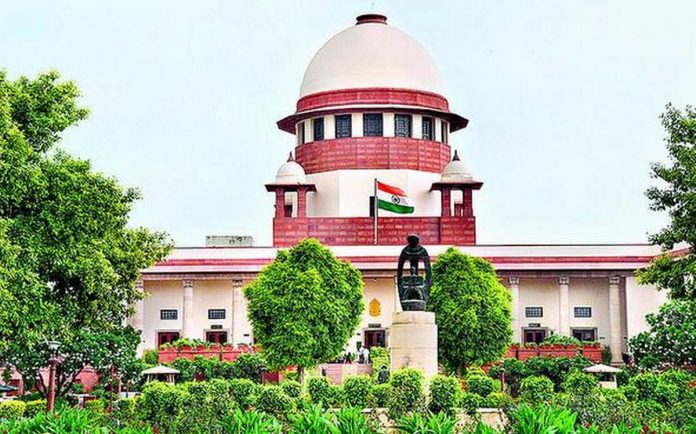
This article is written by Suryansh Singh, a 3rd-year law student from Indore Institute of law and Adhila Muhammed Arif, a student of Government Law College, Thiruvananthapuram. This article mainly discusses the powers and functions of the Supreme Court.

Introduction

Previously Federal Court constituted under the Government of India Act 1935, was considered to be the apex court of India which was structured during British rule. Then in 1950, the Supreme Court was established which took place of the federal court. The constitution is the supreme law of the land and it contains provisions that are enforced by law. Without the enforcement of the law, the provisions embedded under the constitution are meaningless. Therefore the judiciary has independence in order to interpret the provisions of the Indian constitution. Being the apex court of the country the Supreme Court works under the framework of the constitution by acting as the guardian of the constitution and custodian of the fundamental rights and freedom of the citizens of our country. It is the interpreter of the provisions and the controller of the entire judicial system of India.

Article 124 of the Indian constitution states that there shall be a Supreme Court in India. Any decision of the Supreme Court shall be binding upon all the subordinate courts. In India, there is an independent judiciary so the traditional concept of natural justice and good conscience should be maintained equal justice shall prevail. In India, there is a separate judicial system so that the clarity and uniformity in the shall be maintained.

To know more about the powers and functions of the Supreme Court, please refer to the video below:

Organization

There is a hierarchical system in the Indian judiciary. In India, the Supreme Court is the apex judicial authority followed by the high court and then the district court and at last, there comes Panchayat.

Composition

The composition of the Supreme Court is laid down in Clause 1 of Article 124. Article 124 (1) of the Indian Constitution states that the Supreme Court shall consist of the Chief Justice of India and 33 other judges. 

Appointment 

The procedure for the appointment of Supreme Court judges is laid down in Article 124(2). As per this provision, the appointment of a Supreme Court judge is made by the President on the recommendation of the Supreme Court and high court judges.   This image has an empty alt attribute; its file name is Executive-certificate-Course_696-x-293.jpg

Terms of office and removal 

  • As per Article 124(2A), Parliament has the power to determine the age requirements for being a Supreme Court judge. 
  • As per Article 124(2), a Supreme Court judge can hold his office until he reaches the age of 65. However, a judge may step down from the office in the following ways: 
  1. By resignation – The judge can submit a resignation letter to the President. 
  2. By removal – A judge can also be removed from an office as per the procedure laid down in clause 4. 
  3. By death.
This image has an empty alt attribute; its file name is NCLT-696X293-1.jpg

Qualifications

Article 124(3) of the Indian Constitution states the following conditions for a person to become a judge of the Supreme Court

  • He must be a citizen of India.
  • If he is an eminent jurist.
  • He must be a judge of a high court for at least five years.
  • He has been an advocate of a high court for at least ten years or an advocate of two or more such courts.

Procedure of impeachment

A judge of the Supreme Court stands removed if:

  • A motion is signed by the 50 members of Rajya Sabha and 100 members of the Lok Sabha.
  • An inquiry committee consisting of a Supreme Court judge and chief justice of the high court and an eminent jurist is constituted for the investigation of the charges.
  • If the inquiry committee proves the charges then it is addressed in both the house of parliament.
  • If the motion is passed with two-third majority in both houses then the motion is addressed to the president.
  • The judge has the right to in order to prove that he is not guilty.
  • If the president is satisfied with motion addressed to him, he may issue an order to remove the judge.

The Judges (Inquiry) Act, 1968 provides for the procedure for the investigation.

Salary, Allowances, and other amenities

Salary allowances and other benefits of a Supreme Court judge have been stated under Article 125 of the Indian constitution. The salaries and allowances of the judges are decided by the Parliament and it must not vary to its disadvantage.

The other privileges a judge has is of a residence free of cost with a pension after his retirement. A judge after his retirement can’t hold the office for profit motive under state as well as union government. He can’t act in court after his retirement or under any other authority as prescribed by law.

This image has an empty alt attribute; its file name is Civil-Litigation-Practice-Procedure-and-Drafting_696X293-.jpg

What are the jurisdiction and powers of the Supreme Court

The Supreme Court of India is the apex judicial authority in India. Under Article 141 it has been stated that the decision of the Supreme Court is binding upon all the other courts. It tends to regulate the judicial system of the country in order to maintain public peace and protect it from any external transgression. Therefore it possesses a very wide range of powers and functions which are discussed below:

Courts of record

Under Article 129 of the Indian constitution, it has been stated very clearly that the Supreme Court of India is a court of record and has the power to punish contempt itself. A court of record means the proceedings, decisions, or acts of a court which are enrolled for the evidential matter and for interminable and testimonial purposes. They are unquestionable when presented before any other court.

As a court of record, the Supreme Court has two powers: 
  1. Power to determine its jurisdiction, and 
  2. Power to punish for contempt of court. 
In the case of Naresh Shridhar Mirajkar v. State of Maharashtra (1967), in which a judicial order that prohibited the publication of certain evidence given by a witness in a suit was challenged, the Supreme Court stated that it has the jurisdiction and power to decide on any matter unless the Constitution has a provision regarding the same.  In the case of Om Prakash Jaiswal v. D.K. Mittal (2000), which was filed to challenge a judicial order passed by the Allahabad High Court in proceedings initiated under Section 12 of the Contempt of Courts Act, 1971, the Supreme Court stated that a writ issued by it must be respected and obeyed, and the court has to protect itself from any that undermines its dignity.  This image has an empty alt attribute; its file name is Diploma-in-Labour-Employment-696X293-1.jpg

Jurisdiction of the Supreme Court

Original Jurisdiction

Under Article 131 of the Indian constitution, the Supreme Court has original jurisdiction in the following cases

  • If there is a dispute between the government of India and one or more states
  • Between the government of India and any state or states on the one side and one or more states on the other side
  • Between two or more states

Even the dispute arising in the election of the President and Vice President is dealt with by the Supreme Court. In these matters, the Supreme Court has original jurisdiction to exercise its power without the intervention of any other judicial authority. As the Supreme court is the highest judicial authority it protects the fundamental rights of an individual from any kind of infringement. Article 32 it has given the right to an individual to approach the supreme if there is any violation of his fundamental rights. Under Article 32 a court can issue orders or writs( habeas corpus, certiorari, mandamus, prohibition, quo-warranto).

The following are the writs that the Supreme Court can issue under Article 32: 
  1. Habeas corpus: The term habeas corpus literally means ‘to have the body of’. This writ can be issued against the government or any private party for illegally detaining a person for no justifiable reason. It is issued to produce the illegally detained person before the court. 
  2. Mandamus: The writ of mandamus is issued to compel a person who holds a public office to discharge the duties he is legally bound to perform. 
  3. Certiorari: The term literally means ‘to be certified.’ It is used by the Supreme Court to quash an order passed by the lower courts in cases where there is an excess of power or jurisdiction. 
  4. Prohibition: This writ is similar to certiorari, but instead of quashing, it prevents a lower court from passing an order if the Supreme Court is of the opinion that it exceeds its jurisdiction.  
  5. Quo warranto: The term quo warranto literally means ‘by what authority.’ The writ of quo warranto is issued against any party who claims to hold an office of public authority, to which he is actually not entitled to hold. 

This jurisdiction of the Supreme Court is subjected to certain limitations. These limitations any kind of dispute arising from an agreement that was executed even before the constitution was commenced. In case of fundamental rights, it only covers the legal aspects whereas the rest of it is left untouched.

Appellate Jurisdiction

The Supreme Court is the apex judicial authority of appeals and enjoys constitutional, civil as well as criminal appeals.

Constitutional appeal: under Article 132 of the constitution it has been stated that appeal for any final judgement of the high court whether of civil or criminal nature for which the high court issues a certificate stating that it contains a substantial question of law as to the interpretation of the provisions of the constitution lies in the Supreme Court. Even if the high court refuses to issue the certificate, the Supreme Court has the power to grant SLPin these matters.

Civil Appeals:  Article 133 of the Indian Constitution provides that cases of civil nature shall lie in the Supreme Court if the high court is satisfied with the following conditions and certifies that

  • The matter involves a substantial question of law
  • If the high court thinks that this case needs to be decided by the Supreme Court.

Criminal Appeals: under Article 134(1) a criminal appeal shall lie in the Supreme Court under the following  circumstances:

  • If the high court in an appeal has reversed the judgment of the lower court and sentenced death penalty to the accused who has been acquitted.
  • In the second situation when the high court itself has withdrawn a case from a lower court and then sentenced the accused person death penalty.
  • If a case is certified by the high court that it is fit for appeal in the Supreme Court. Sometimes the Supreme Court is conferred with powers by the parliament in order to deal with certain cases decided by the high court.
Interpretation of Constitution: Article 132 states that, if there is a High Court judgment, decree, or order on any civil or criminal proceeding, that involves a substantial question regarding the interpretation of the Constitution, there shall be an appeal to the Supreme Court.  Federal court’s jurisdiction: Before the commencement of the Constitution, we had a Federal Court that was established under the Government of India Act, 1935. It had the jurisdiction to hear appeals on High Court decrees. The Supreme Court was established after the Commencement of the Constitution. Hence, under Article 135, the Supreme Court exercises the jurisdiction of the Federal Court.  Special leave to appeal jurisdiction: Article 136 of the Indian Constitution provides that the Supreme Court has special leave to appeal jurisdiction.

The Supreme Court has the jurisdiction to grant special leave petition to the final judgment given by any lower courts except for the courts or tribunal which has been formed by the law relating to armed forces. However, if the judgment or order is given by a high court(single judge bench) then the no appeal for that matter will be entertained in the Supreme Court.

Under Article 138 of the Indian Constitution, the law expands the jurisdiction of the Supreme Court in respect of subjects contained under the union list and shall also have jurisdiction over any other subject for which the consent of state has been obtained.

Advisory Jurisdiction

Under Article 143 it has been stated that the Supreme Court on many occasions have given advice to the government as well as the president, if the matter is related to the interest of the public or if there arises a substantial question of law. The Supreme Court after the profound inquiry reports to them.

Powers of the Supreme Court of India

  • Being the supreme judicial authority of the country it protects the constitution and enlightens us with the provisions of the constitution through its grand vision which is considered to be final.
  • The power to interpret the Indian Constitution is vested in the Supreme Court of India. 
  • It is the custodian of fundamental rights. Under Article 32 every citizen of India has the Locus Standi to move to court in order to seek legal remedy if there is any kind of infringement to fundamental rights.
  • Under Article 129 Supreme Court is the court of record. Its judgment is unquestionable and are accepted by all the lower courts as precedents. Under Article 141 the decision of the high court is considered to be final and binding upon all the lower courts and regarded as law.
  • If any law is passed by the parliament or the state legislature which does not comply with the provisions of the Indian constitution or is given jurisdiction that they even do not possess will be declared void by the Supreme Court through judicial review.
  • The Supreme Court under Article 137 has the power to review its owns judgement; if new evidence are found, if a fact is related to the records of the came to the light and if there are enough reasons to suffice for a review Supreme Court itself states that nothing can restrain it from reviewing its own decisions if it is satisfied with its effects over the general public.
  • The Supreme Court is conferred with the power to make rules for carrying out its practice and procedure.
  • The Supreme Court has the power to appoint its officers and servants. For example, the Chief Justice of India or the other Supreme court judges is appointed by it to carry out its functions. Though the person has to be qualified for the job.
  • Supreme Court under Article 129 has the power to punish a person if found guilty of contempt of court. Contempt of court basically means hampering the proceedings of the court neglecting its order, defying its authority which ultimately results in disrespect of the Court. The consequences arising out of it includes both civil or criminal penalties depending upon the gravity of the consequences.
  • Appeals under The Peoples Representation Act 1951 can be filed in the Supreme Court.
  • As per Article 140 of the Indian Constitution, the parliament may confer additional powers not mentioned in the Constitution, to the Supreme Court if it is essential for the effective functioning of the Supreme Court. 
  • Under Article 139A, the Supreme Court suggested it has the power to transfer cases under Article 139A. It can do so under the following circumstances, namely, when the Supreme Court and a High Court have cases that are on the same or similar questions of law, the Supreme Court may withdraw the cases pending before the High Court and if the Supreme Court finds it crucial to transfer cases for the purpose of upholding justice.
  • The Supreme Court has the rule-making power under Article 145. The Supreme Court can make rules on the following matters with the president’s approval: 
    1. Persons practicing before the court. 
    2. Procedure for appeals.
    3. Proceedings for the enforcement of fundamental rights. 
    4. Proceedings in the court regarding the transfer of cases. 
    5. Regarding appeal on a High Court judgment where it has reversed an order of acquittal and declared a death sentence instead.
    6. Cost of proceedings
    7. Bail 
    8. Stay of proceedings
    9. Regarding providing a summary determination of any appeal that the Court considers frivolous 
    10. Regarding enquiry for suspension of a Public Service Commission member.
This image has an empty alt attribute; its file name is intellectual-property.png

Miscellaneous provisions regarding the Supreme Court

  • As per Article 127, if there is a situation where the quorum of the Supreme Court is not met for carrying out the sessions of the Court, the Chief Justice of India may appoint a High Court Judge as an ad hoc judge for a particular period of time, with the consultation of the Chief Justice of that High Court and with the consent of the President. 
  • As per Article 130 of the Indian Constitution, the seat of the Supreme Court lies in Delhi. However, it may also lie in another place that the Chief Justice of India, with the consent of the President, appoints. 
  • As per Article 142 of the Indian Constitution, the Supreme Court can pass decrees or orders for any matter pending before it and also have the orders or decrees be enforced. The Court also has the power to pass orders to secure the attendance of a person or discovery or production of documents, and so on. 
  • Article 144 states that all civil and judicial authorities in the Indian territory must aid the Supreme Court.
  • Article 146 provides that the appointments of the officers of the Supreme Court shall be made by the Chief Justice of India or even a judge or an officer under his direction. The administrative expenses of the Court, which include all the salaries and pensions of all such officers, shall be met from the Consolidated Fund of India.

Independence of the judiciary in India

It is very amusing that though our Indian constitution never mentioned about judicial review yet the apex judicial authority possess the power of judicial review. It has been stated under Article 32 and 226 that both the Supreme cCurt as well the high court is conferred with the power of judicial review of the following things-

  • Judicial review of the legislative and administrative actions
  • Judicial review of the quasi-judicial proceedings

India is a democratic type of country in which there is the separation of powers between the legislative, executive and judiciary. They have their own independence and perform their functions accordingly. However, to assure that such independence does not turn out arbitrary, checks and balances between the organs must be maintained. The functioning of a democratic country explicitly lies over the independence of these organs. If the legislative and administrative actions turns out to be unconstitutional or it does not comply with the provisions of the constitution then the court has the power of judicial review in order to restrict such exercises. The ambit of the judicial review has now expanded to the concept of socio-economic justice. In order to keep a check on this power judicial restraint is necessary. Under Article 32  a person can approach the court if there is any infringement of his fundamental rights. Judicial review is the basic structure of the Indian constitution which can’t be curtailed by the amendment. The powers of judicial review enshrined under the Indian constitution are partial or limited in nature as it only deals with unconstitutional exercises performed through administrative and legislative action or whether it deals with the fundamental rights.

Quasi-Judicial function and Judicial Review

Quasi-judicial functions is neither a judicial function nor administrative function. The quasi-judicial act has the appropriate jurisdiction which is sanctioned by the law while determining the basic rights that an individual has in order to enjoy his fundamental freedom. If a tribunal or an authority has been constituted by the law and are conferred the powers of deciding a matter are subject to judicial review.

This image has an empty alt attribute; its file name is Diploma-in-Advanced-Contract-Drafting-696X293-ai-1.jpg

Administrative Action and Judicial Review

The ambit of judicial review is limited to three grounds in case of administrative action.

  • In the case of unreasonability or irrationality
  • Unlawfulness or illegality
  • Proportionality and procedural impropriety

Judicial review of a decision matter process whenever it has been depraved through irrationality and ignorance of such essential factors that no reasonable authority conferred with the power could have made such a decision, follows the due procedure of law and through examination takes the relevance of the factors.

Conclusion

It can be concluded that the Supreme Court is the apex judicial authority of India. The Supreme Court has very wide jurisdiction and it enjoys enormous powers and functions that it performs for the general interest of the public. It is the protector of the fundamental rights of an individual and through its grand vision interprets the provisions of the constitution. It guarantees socio-economic justice to the citizens of India and makes laws which are unquestionable and binding upon all the other courts.

Frequently Asked Questions (FAQs)

Who is the Chief Justice of India in 2022? 

As of 2022, Chief Justice N.V. Ramana is the Chief Justice of India. 

Is a Supreme Court Judge a government servant? 

In the case of Union of India v. Pratibha Bonnerjea (1995), the Supreme Court decided that judges of High Courts and the Supreme Court cannot be viewed as government servants. The reasoning behind this is that to uphold the rule of law, the judiciary must remain independent from the State. 

How can the number of judges constituting the Supreme Court be increased?

The number of judges can be changed by Parliament passing an amendment act. The Supreme Court (Number of Judges) Amendment Act, 2019 was the most recent amendment that changed the number of judges, apart from the Chief Justice of India, from 30 to 33. 

What is the doctrine of stare decisis? 

The phrase ‘stare decisis’ means ‘do not disturb the undisturbed.’ According to the doctrine of stare decisis, a judgment given by the Supreme Court must be applied by all the courts subordinate to it. 

Is the Supreme Court bound by its own decisions? 

In the case of Bengal Immunity Co. v. State of Bihar (1955), the Supreme Court held that nothing prevents the Supreme Court from reconsidering its earlier decisions. However, such departure must be with due care and should be restricted to instances where the previous decision is erroneous. 
Students of Lawsikho courses regularly produce writing assignments and work on practical exercises as a part of their coursework and develop themselves in real-life practical skills. LawSikho has created a telegram group for exchanging legal knowledge, referrals, and various opportunities. You can click on this link and join: https://t.me/lawyerscommunity Follow us on Instagram and subscribe to our YouTube channel for more amazing legal content.

Download Now

Bailable offences

0

This article is written by Michael Shriney from the Sathyabama Institute of Science and Technology. The article defines bailable offences and the ingredients of bail. If bail is a right in a bailable offence, what offences are bailable, as well as, provisions and applicability, and some frequently asked questions are also explained in this article.

This article has been published by Sneha Mahawar.

Table of Contents

Introduction

A person who has been arrested has the legal right to apply for bail, and they must be freed/released after availing of bail. This is known as a bailable offence or crime. Bailable offences should not be serious in nature. Bail is granted so that a suspect can prepare a defence against the allegations that were made against him, which were based on the common law presumption of innocence and to prevent innocent people from being imprisoned. This would otherwise result in a pre-trial punishment. Bail is the suspect’s right if they are held for a crime that is eligible for bail. The suspect can get bail by executing a bail bond. Let’s take a detailed look at how a bailable offence is granted bail.

What is a bailable offence

According to Section 436 of the Criminal Procedure Code, if bailable offence is one that can be released on bond, the suspect has the statutory right to request bail. The discretion to set the amount rests upon the Court or the officer depending on the circumstances. According to Section 2(a) of the Criminal Procedure Code, a bailable offence can be pardoned or reduced in punishment under any other law in effect. The concept of a bailable warrant is defined under Section 71 of the Criminal Procedure Code. A crime is considered a bailable offence if the maximum sentence is three years. A bailable offence is also known as a non-cognizable offence. All prisoners will have the right to prove their innocence by obtaining bail, which must be for bailable offences and will only be granted in particular circumstances for non-bailable offences. A bailable warrant is issued when a suspect fails to appear in court despite repeated requests from the court of law. The court will then issue a bailable warrant requiring the person to appear in court. 

When bail is granted, the suspect is not immediately set free. They are still considered suspects and are required to show up in court for trial, which confirms whether the accused is guilty or not. A suspect person has a right to be freed on bail as soon as all of the conditions of the bail amount have been satisfied. If the suspect meets all the requirements for release from custody, the police cannot deny the release. A person who has been unlawfully detained may be temporarily released on bail by posting a specific amount of security. Once the required surety or bond is provided and the court or police authorities are required to release the accused on bail, the accused person of any bailable offence is immediately entitled to be freed on bail. So, if someone is arrested without a warrant for an offence that qualifies for bail, they have an inalienable right to request bail. 

Ingredients of bail 

  • Bail is a legal right that must be granted to a suspect who has committed bailable offences that qualify for bail.
  • Bail may also be granted by the investigating officer of the police station.
  • Offences that carry a sentence of up to three years may be considered bailable offences, i.e., the maximum penalty is three years in prison.
  • The nature of a bailable offence is less serious.
  • The execution of a bail bond, with or without surety, is necessary.

Is bail a right in a bailable offence 

Yes, Bail is a right in a bailable offence. The investigating officer is required to issue bail. The investigating officer is required to release the accused if, upon his arrest, he provides the appropriate bail and complies with all other requirements. As an example, a suspect may be detained without a warrant. The police officer in charge of this situation is responsible for relaying all information about the crime scene. However, in accordance with Section 50 of the Criminal Procedure Code, the officer is required to explain whether or not the individual being held is eligible for bail. In accordance with Section 436 of the Criminal Procedure Code, the court magistrate may issue bail when the applicant is qualified. However, depending on the circumstances, the court or the officer may sometimes choose the bail amount. 

What are the offences that are bailable  

The suspect has a right to seek bail from the police officer or the court in the following circumstances:

Bailable Offences Section
Abetment (Depends on the offence)Sections 107-120 of the Indian Penal Code
Criminal conspiracy to commit an offence punishable with death (Depends on the offence)Section 120B of the Indian Penal Code
Wearing soldier’s garb, sailor, airmanSection 140 of the Indian Penal Code
Punishment for unlawful assemblySection 144 of the Indian Penal Code
Owner or occupier of land on which unlawful assembly is heldSection 154 of the Indian Penal Code
Being hired to be part of unlawful assembly or riotSection 158 of the Indian Penal Code
Public servants disobeying directions under lawSection 166A of the Indian Penal Code
Public servant framing an incorrect documentSection 167 of the Indian Penal Code
Furnishing false information Section 177 of the Indian Penal Code
False statement on oath to public servantsSection 181 of the Indian Penal Code
Disobedience to order duly promulgated by a public servantSection 186 of the Indian Penal Code
The threat of injury to a public servantSection 189 of the Indian Penal Code
Giving false evidenceSection 191 of the Indian Penal Code
Threatening any person to give false evidenceSection 195A of the Indian Penal Code
Giving false information respecting an offenceSection 203 of the Indian Penal Code
Fraudulently making false claims in courtSection 210 of the Indian Penal Code
Taking a gift, to screen an offender from punishmentSection 213 of the Indian Penal Code
Escape from confinement or custody negligently suffered by a public servantSection 223 of the Indian Penal Code
Intentionally insult or interrupt to public servant sitting in a judicial proceedingSection 228 of the Indian Penal Code
Fraudulent use or false instrument for weighingSection 264 of the Indian Penal Code
Negligent acts likely to spread infectious diseases dangerous to lifeSection 269 of the Indian Penal Code
Adulteration for food or drink intended for saleSection 272 of the Indian Penal Code
Sale of adulterated drugSection 275 of the Indian Penal Code
Rash driving or riding on a public waySection 279 of the Indian Penal Code
Danger or obstruction in public way or line of navigation Section 283 of the Indian Penal Code
Negligent conduct with respect to fire or combustible matterSection 285 of the Indian Penal Code
Sale of an obscene bookSection 292 of the Indian Penal Code
Trespassing on burial placesSection 297 of the Indian Penal Code
Punishment for causing death by negligenceSection 304A of the Indian Penal Code
Attempt to commit suicide Section 309 of the Indian Penal Code
Concealment of birth by secret disposal of the bodySection 318 of the Indian Penal Code
Causing hurtSection 323 of the Indian Penal Code
Using force Section 349 of the Indian Penal Code
Stalking Section 354D of the Indian Penal Code
Punishment for kidnapping Section 363 of the Indian Penal Code
Punishment for cheatingSection 417 of the Indian Penal Code
Punishment for mischiefSection 426 of the Indian Penal Code
Punishment for criminal trespassSection 447 of the Indian Penal Code
Forgery Section 465 of the Indian Penal Code
Falsification of accountsSection 477A of the Indian Penal Code
Possession of forged currency notes or banknotes Section 489C of the Indian Penal Code
Marrying again during the lifetime of the husband or wifeSection 494 of the Indian Penal Code
Marriage ceremony was fraudulently gone through without lawful marriageSection 496 of the Indian Penal Code
Enticing or taking away or detaining with criminal intentSection 498 of the Indian Penal Code
Punishment for defamationSection 500 of the Indian Penal Code
Criminal intimidationSection 506 of the Indian Penal Code
Word, gesture or act intended to insult the modesty of a womanSection 509 of the Indian Penal Code
Misconduct in public by a drunken personSection 510 of the Indian Penal Code

Offences that are eligible for bail

Abetment

  • Abetment is a crime, according to Section 107 of the Indian Penal Code, which states that anybody who aids another person in carrying out any unlawful conduct, participates in an illegal plan to carry it out, or purposely aids another person in carrying out an unlawful act is guilty of the crime. Depending on the situation, this section may occasionally be subjected to a bailable offence.

Criminal conspiracy 

  • A person who engages in a criminal conspiracy but is not one to commit an offence is subject to punishment under Section 120B of the Indian Penal Code, which provides for a maximum six-month sentence in jail, a fine, or both. The offender will be fined when the plan falls apart in a criminal conspiracy. Depending on the situation, this section may occasionally be subjected to a bailable offence.

Wearing garb or carrying tokens used by soldier, sailor or airman

Section 140 of the Indian Penal Code deals with wearing garb or carrying tokens used by soldier, sailor or airman, stating that-

  • Anybody who is not a soldier, sailor, or airman in the military, naval, or air service of the Government of India and wears any attire or carries any token that resembles the aforementioned categories with the goal of portraying themselves as a soldier, sailor, or airman will be punished with imprisonment for a term that extends to three months or both. This is a bailable offence. 

Unlawful assembly

Section 144 of the Indian Penal Code deals with joining an unlawful assembly armed with a deadly weapon, stating that-

  • Any member of an illegal assembly who is in possession of a deadly weapon or other items that may be used to commit an offence that would likely result in death will face a two-year prison sentence, a fine, or both. This is a bailable offence.

Owner or occupier of land on which unlawful assembly

Section 154 of the Indian Penal Code deals with the owner or occupier of land on which unlawful assembly is held, stating that –

  • The owner or occupier of the land where an unauthorised gathering or riot occurs is subject to punishment with a fine of Rs. 1000 whenever such an incident happens. This is a bailable offence.

An individual being part of an unlawful assembly or riot

Section 158 of the Indian Penal Code deals with being hired to be part of an unlawful assembly or riot, stating that-

  • Any person who performs or assists in doing any of the actions, or who offers, attempts, or is involved in doing so which is illegal, will be punished by imprisonment for a term that may not exceed six months, a fine, or both. If the same person uses weapons to cause death, the sentence will be extended to two years, a fine, or both. This is a bailable offence.

Offence by a public servant 

Public servant disobeying the direction of the law

Section 166A of the Indian Penal Code deals with public servant disobeying the direction of the law, stating that –

  • Any individual who is a public servant willfully disobeys a legal order that forbids him from being present during an inquiry into an offence or fails to record any information that was provided to him may face severe punishment for at least six months and up to two years in jail or a fine. This is a bailable offence.

A public servant fabricating a document 

Section 167 of the Indian Penal Code deals with a public servant framing an incorrect document, stating that-

  • Any public servant who prepares a document or electronic record that causes another person harm with the intention to do so or with the knowledge that the information is false will be penalised with up to three years in jail, a fine, or both. This is a bailable offence. This is a bailable offence.

A public servant providing a false document 

Section 177 of the Indian Penal Code deals with furnishing false information, stating that-

  • Anyone who is bound by law to provide information on any subject to a public official as truthful and who knows the information is false is punishable by simple imprisonment for a time up to six months or by a fine of up to one thousand rupees. This is a bailable offence.

A public servant who makes a false statement under oath 

Section 181 of the Indian Penal Code deals with a false statement on oath to public servants, stating that-

  • Any person who is legally bound by law to swear under oath, to tell the truth on any matter to a public official or other person authorised by law to administer the oath but knows the oath to be false, can be penalised with up to three years in jail as well as a fine. This is a bailable offence.

Disobeying the order given by a public servant 

Section 186 of the Indian Penal Code deals with disobedience to order duly promulgated by a public servant, stating that-

  • Any individual who voluntarily prevents a public worker from doing his or her public duties is subject to a three-month jail sentence, a fine up to 500 rupees, or both. This is a bailable offence.

Threatening a public servant 

Section 189 of the Indian Penal Code deals with the threat of injury to a public servant, stating that-

  • Any person who threatens harm to a public employee or to a person in whom they believe the employee has an interest in order to get the employee to do any act or postpone performing an act related to their job duties can be penalised with up to two years in jail, a fine, or both. This is a bailable offence.

False evidence 

Section 191 of the Indian Penal Code deals with giving false evidence, stating that-

  • False evidence is defined as any statement that is false and is made by a person who is legally obligated to do so by an oath, an express legal provision, or a legal obligation to make a declaration on any matter. This is a bailable offence.

Threatening a person to provide false evidence 

Section 195A of the Indian Penal Code deals with threatening any person to give false evidence, stating that-

  • Anyone who threatens someone with injury to that person, reputation, property, or person with the intention of getting them to submit false evidence will be penalised with up to seven years in jail, a fine, or both. This is a bailable offence.

Providing false information 

Section 203 of the Indian Penal Code deals with giving false information respecting an offence, stating that-

  • Anyone who knows or has cause to suspect that an illegal act has been committed and provides false information about that offence that he knows or believes to be false will face up to two years in prison, a fine, or both. This is a bailable offence.

Fraudulently making false claims 

Section 210 of the Indian Penal Code deals with fraudulently making false claims in court, stating that-

  • Anyone who fraudulently obtains a decree or order against another person for a sum that is not due, for a larger sum than what is due to which they are not entitled, or who fraudulently causes a decree or order against another person to be executed after it has been satisfied, or who permits any act to be done, shall be punished with up to two years in prison, a fine, or both. This is a bailable offence.

Taking a gift to screen an offender from punishment 

Section 213 of the Indian Penal Code deals with taking a gift to screen an offender from punishment, stating that-

  • Anyone who agrees to accept, seek, or attempt to get any form of satisfaction for himself or another person faces a fine and a jail sentence of up to three years. This is a bailable offence.

Escaping from confinement or custody 

Section 223 of the Indian Penal Code deals with an escape from confinement or custody negligently suffered by a public servant, stating that-

  • Any public servant who carelessly allows a person accused of or suspected of committing an offence to escape from imprisonment when they are legally required to do so will face a fine, a two-year jail sentence, or both. This is a bailable offence.

Intentional insult or interruption 

Section 228 of the Indian Penal Code deals with intentional insult or interruption to a public servant sitting in a judicial proceeding, stating that-

  • Any individual who taunts or disturbs a public official while that official is participating in a judicial hearing may be sentenced to up to six months in jail or a fine of up to Rs. 1,000. This is a bailable offence.

Fraudulent use of a false instrument for weighing 

Section 264 of the Indian Penal Code deals with the fraudulent use of a false instrument for weighing, stating that-

  • Anyone who knowingly employs a fake instrument for weighing will be sentenced to a year in jail, a fine, or both. This is a bailable offence.

Spreading infectious diseases, which are dangerous to life  

Section 269 of the Indian Penal Code deals with negligent acts likely to spread infectious diseases dangerous to life, stating that-

  • Any person who commits illegal conduct or acts carelessly and believes or has reason to think that it would likely spread infection of a disease that is hazardous to their lives is subject to a six-month jail sentence, a fine, or both. This is a bailable offence.

Adulteration of food or drink intended for sale

Section 272 of the Indian Penal Code deals with the adulteration of food or drink intended for sale, stating that-

  • Any person who adulterates any food or drink in order to pass it off as edible or drinkable while intending to sell it faces up to a 1,000 rupees fine or up to six months in jail. This is a bailable offence.

Sale of an adulterated drug

Section 275 of the Indian Penal Code deals with the sale of an adulterated drug, stating that-

  • Any person who sells, exposes for sale, or encourages the use of any drug or medical preparation for medicinal purposes by another person while knowing that it has been altered with to reduce its efficacy, alter its mechanism, or make it noxious is subject to a six-month prison sentence or a fine up to one thousand rupees. This is a bailable offence.

Rash driving or riding in a public place 

Section 279 of the Indian Penal Code deals with rash driving or riding in a public way, stating that-

  • Any individual who operates a vehicle or uses a public pathway in a rash or negligent manner that endangers human life or causes harm to another person faces up to a 1,000 rupees fine or a six-month jail sentence. This is a bailable offence.

Danger or obstruction in public way or line of navigation

Section 283 of the Indian Penal Code deals with danger or obstruction in public way or line of navigation, stating that-

  • Any conduct or failure to take action involving property in their care or control that endangers, obstructs, or injures another person on a public road or during a public navigation will result in a fine of up to 200 rupees. This is a bailable offence.

Negligent offences with the use of fire or combustible matter

Section 285 of the Indian Penal Code deals with a negligent offence with the use of fire or combustible matter, stating that-

  • Anyone who uses fire or combustible substances in a dangerous or careless manner that endangers human life or causes harm to another person has a maximum penalty of six months in jail and/or a fine of Rs. 1000, or both.

Trespassing on burial places

Section 297 of the Indian Penal Code deals with trespassing on burial places, stating that-

  • Any person who enters a place of worship, a location assigned for the performance of funeral rites, a location used to store the remains of the deceased, or any other location with the intent to offend someone’s feelings, religion, or religion itself, or who offers any violation to a human corpse that disturbs those who have gathered to perform funeral ceremonies, may face up to a year in prison or a fine. This is a bailable offence.

Causing death by negligence

Section 304A of the Indian Penal Code deals with punishment for causing death by negligence, stating that-

  • Any individual who kills someone by doing a careless or reckless act that does not constitute culpable homicide is punishable by up to two years in jail, a fine, or both. This is a bailable offence.

Attempting to commit suicide 

Section 309 of the Indian Penal Code deals with an attempt to commit suicide, stating that-

  • Any individual who makes an attempt to commit suicide or does any action that might represent such an offence will be penalised with up to a year in jail, a fine, or both. This is a bailable offence.

Concealment of birth by secret disposal of the body

Section 318 of the Indian Penal Code deals with concealment of birth by secret disposal of the body, stating that-

  • Any person who willfully conceals or makes an effort to hide the birth of a child, whether that kid dies before, after, or during his or her delivery, shall be penalised with up to two years in jail, a fine, or both. This is a bailable offence.

Hurt

Section 323 of the Indian Penal Code deals with causing hurt, stating that-

  • Anyone who intentionally hurts someone faces a sentence of up to a year in jail, a fine of up to 1,000 rupees, or both. This is a bailable offence.

Using force to cause hurt or harm to another person 

Section 349 of the Indian Penal Code deals with using force, stating that-

  • In accordance with this Section, using force on another person involves moving them, bringing anything into touch with their bodies, lifting them with their own strength, or making an animal move or stop moving. This is a bailable offence.

Stalking 

Section 354D of the Indian Penal Code deals with stalking, stating that-

  • When a man stalks a woman, frequently contacts or tries to contact her for physical interaction while she shows no interest, or 
  • Monitors how she uses the internet, email, or any other kind of electronic communication, it is punishable by up to three years in prison and a fine. This is a bailable offence.

Kidnapping 

Section 363 of the Indian Penal Code deals with punishment for kidnapping, stating that-

  • A person who kidnaps someone from their home or from their legal guardianship faces a fine and a sentence of up to seven years in jail. This is a bailable offence.

Cheating 

Section 417 of the Indian Penal Code deals with punishment for cheating, stating that-

  • When someone cheats, they may be sentenced to up to a year in prison, a fine, or both. This is a bailable offence.

Mischief 

Section 426 of the Indian Penal Code deals with punishment for mischief, stating that-

  • When someone causes mischief, they may be given a sentence of up to three months in jail, a fine, or both. This is a bailable offence.

Criminal trespass 

Section 447 of the Indian Penal Code deals with criminal trespass, stating that-

  • When someone engages in criminal trespass, they may get a sentence of up to three months in jail, a fine of up to 500 rupees, or both. This is a bailable offence.

Forgery 

Section 465 of the Indian Penal Code deals with forgery, stating that-

  • A person who commits forgery can be imprisoned for up to two years, fined, or both. This is a bailable offence.

Falsification of accounts 

Section 477A of the Indian Penal Code deals with the falsification of accounts, stating that-

  • Anyone who willfully and with the aim to deceive destroys, modifies, mutilates, or falsifies any valuable security or account that belongs to another person while they are clerks, officers, or servants is subject to a seven-year jail sentence, a fine, or both. This is a bailable offence.

Possession of forged currency notes or banknotes

Section 489C of the Indian Penal Code deals with possession of forged currency notes or banknotes, stating that-

  • Any person who possesses a fake or counterfeit currency note or banknote in their possession and intends to use it as genuine while knowing or having cause to believe that it is fake or counterfeit is punishable by up to seven years in jail, a fine, or both. This is a bailable offence.

Marrying again when your husband or wife is alive 

Section 494 of the Indian Penal Code deals with marrying again during the lifetime of a husband or wife, stating that-

  • Any individual whose husband or wife is still alive and who marries in a situation where the marriage is void and invalid while the spouse is still alive will be penalised with up to seven years in jail and a fine. This is a bailable offence.

A marriage ceremony was fraudulently gone through without a lawful marriage

Section 496 of the Indian Penal Code deals with marriage ceremonies fraudulently gone through without a lawful marriage, stating that-

  • Any individual who engages in a marriage ceremony dishonestly or with fraudulent purpose while aware that they are not legally married will be penalised with up to seven years in jail or a fine. This is a bailable offence.

Enticing, taking away, or detaining with criminal intent

Section 498 of the Indian Penal Code deals with enticing or taking away, or detaining with criminal intent, stating that-

  • Any person who takes or seduces a married woman they know or have reason to believe is the wife of another man, or any person caring for her on that man’s behalf, with the intent that she may engage in illicit sexual relations with anyone, shall be punished with imprisonment for a term that may not exceed two years, a fine, or both. This is a bailable offence.

Defamation 

Section 500 of the Indian Penal Code deals with punishment for defamation, stating that-

  • Anyone who defames another person faces up to two years in simple imprisonment, a fine, or both. This is a bailable offence.

Criminal intimidation 

Section 506 of the Indian Penal Code deals with punishment for criminal intimidation, stating that-

  • Criminal intimidation is a crime that carries a punishment of either up to two years in jail, a fine, or both for those who commit it. This is a bailable offence.

Insulting a woman by words or actions

Section 509 of the Indian Penal Code deals with a word, gesture, or act intended to insult the modesty of a woman, stating that-

  • Anyone who breaches a woman’s modesty by saying, acting, or showing something with the intent of making her hear what that person says or hears, or by violating her privacy, will be punishable by a term that extends up to a year in prison, a fine, or both. This is a bailable offence.

Misconduct by an intoxicated person in a public place

Section 510 of the Indian Penal Code deals with misconduct in public by a drunken person, stating that-

  • Any person who is intoxicated and appears in public, trespasses into another person’s property, or annoys another person will be penalised with either simple imprisonment for a duration of up to twenty-four hours or a fine of up to ten rupees or both. This is a bailable offence.

Applicability of a bailable offence

  • A bail application must be presented to the judge or magistrate monitoring the trial. The application for bail should be submitted in the specified format, and the judge or magistrate should be specifically identified. 
  • The application must also include a list of all the requirements that the accused must meet in order to satisfy the bail bond’s restrictions. The day after the application is filed, it is often listed. 
  • The application is heard on that day, and the police are required to appear with the accused in court. The magistrate is free to issue any instructions he thinks are right. The accused will have to sign a bail bond if bail is approved.
  • Bail bond: Following the execution of the bail bond, the accused is released from custody subject to the bail bond’s provisions. Bail is set at a fair amount. The bail bond will be lost if any of its requirements are not met.

Under what cases can bail be granted

There are a few requirements for a bail bond for an offence that is subject to bail:

  • The accused individual is not allowed to leave the state’s jurisdiction without a judge’s or a police officer’s permission.
  • The accused criminals must constantly appear in front of the police officials.
  • He/she will under no circumstances tamper with the evidence, as determined by the police department over the course of the inquiry.
  • Even if the crimes are bailable, the court has the authority to deny the accused person bail.
  • It occurs when a person granted bail fails to abide by the bail board’s rules and regulations.

Procedures for a bailable offence

  • An individual is arrested and sent to the police station to submit a report. The police station has authority over the area where the suspect lives and is where the suspect is detained.
  • In order for the court to grant bail, the accused must complete a form that is included in the Criminal Procedure Code’s first schedule and turn it into the designated authorities.
  • The investigating officer of the relevant police station is required to release the accused on bail when the accused provides adequate surety following his or her detention.
  • According to Section 436 of the Criminal Procedure Code, bail can be requested as a right and is often granted by the police officer or the court.

Anticipatory bail on a bailable offence

Anticipatory bail is a type of bail that is provided to prevent and restrict the suspect/accused from being arrested by the police, i.e., before the suspect is arrested. The Allahabad High Court has held that a claim for anticipatory bail under Section 438 of the Criminal Procedure Code is not maintainable for any bailable offence grounds. There are certain exceptions for granting anticipatory bail on a bailable offence.

Exceptions:

  • If there are sufficient grounds to suspect that the accused did not commit the crime.
  • If there are enough grounds, in the perspective of the relevant court, to carry out further investigation. 
  • If the individual is not charged with a crime punishable by death, life imprisonment, or imprisonment for ten years or more.

Cancellation of bail

Misbehaviour in court

In Madhah Chandra Jena v. State of Orissa, 1988, the Orissa High Court held to cancel the bail granted by the court to an accused individual who had misbehaved. If an accused abuses his liberty by abusing the court that granted him bail, the court has the power to cancel the bail. There is no written or implied provision in the Code of Criminal Procedure prohibiting the cancellation of bail, so the magistrate court to whom a case is moved also has the authority to cancel the bail.

Repeating the same offence

In Aluka Sundar Orewa v. State of Karnataka, 2020, the High Court of Karnataka held that if a person commits the same offence again after receiving bail, the bail would be cancelled and they would be subjected to arrest by the police. If a person commits a bailable offence for the first time and receives bail, and then repeats the same offence after receiving bail, his bail will be cancelled and he will be arrested.

  • Section 439(2) and 437(5) of the Criminal Procedure Code

Sections 439(2) and 437(5) of the Criminal Procedure Code both provide for bail cancellation. The bail is cancelled as follows:

  1. If a person abuses his or her liberty by engaging in similar illegal behaviour; or
  2. If a person interrupts the investigation’s progress; or
  3. If someone tries to destroy it with proof or evidence; or
  4. If a person threatens witnesses or engages in similar behaviour, it obstructs the investigation’s progress; or
  5. If a person attempts to escape to another country; or
  6. If a person attempts to leave during the investigation or becomes unreachable to the investigating agency; or
  7. If a person tries to put himself/herself beyond the reach of his/her surety;

In these cases, bail is revoked for a bailable offence under Sections 439(2) and 437(5) of the CrPC.

Case laws

Vineet Kumar v. State of Himachal Pradesh, (2017)

Facts of the case

In this case, A girl who was travelling to her aunt’s house to use the restroom was kidnapped by the accused and taken to a place 100–150 metres away. She begged the accused to leave her alone, but he threatened to engage in sexual activity with her and attempted to rape her forcibly. Her leg was swollen and bruised. She was then fortunately saved, and the culprit was in police custody. The petitioner pleaded for bail since he had been kept in jail for 9 months after attempting to kidnap the girl.

Judgement of the case

The girl’s kidnapping was not sufficiently supported by the evidence. The court did not see any justification for detaining the petitioner for an indefinite period. There was no one who witnessed the accused kidnapping the girl, and the girl’s family also did not observe anyone kidnapping the girl from her aunt’s home.The Himachal Pradesh High Court decided to grant bail to the petitioner, as well as Rs.20,000 each to supply a fresh bail bond with one surety to satisfy the trial court. If he did not follow the bail bond, then his bail would be cancelled.

Kuldeep Raj v. State of Jammu and Kashmir, (2018)

Facts of the case

In this case, the petitioner was charged with stalking under Section 354 of the Indian Penal Code. He applied for bail and was granted bail by the Judicial Magistrate, but the prosecution filed an application to cancel bail against the petitioner, who was constantly threatening prosecution witnesses that he would forcibly lift and marry her and that if other witnesses objected, he would eliminate them. The magistrate subsequently granted the application and cancelled the petitioner’s bail. The petitioner then proceeded before the 1st Additional Sessions Judge in Jammu. The plea was rejected by the court because it was unmaintainable. The petitioner approached the Jammu and Kashmir High Court to grant bail.

Judgement of the case

The Jammu and Kashmir High Court decided that the Magistrate and the revisional court made a mistake in cancelling the petitioner’s bail. As an outcome, the High Court overturned the revisional court’s decision and granted bail to the petitioner, as well as Rs.20,000 each to supply a fresh bail bond with one surety to satisfy the trial court. If the accused has violated the terms of his bail bond, the court has the power to refuse to release him from prison. However, under certain circumstances, the court may also have the power to revoke the bail if the person goes against the court. The High Court had noted this and made a statement about it.

Gundapuneni Kranthi Kumar v. the State of Telangana, (2022)

Facts of the case

In this case, the petitioner is requesting bail in the event that he will be arrested for a crime under Section 285 of the Indian Penal Code. The offence is punishable up to six months in prison or a fine. The offence involves negligently causing harm or injury by the use of fire or flammable material. The crime is both bailable and cognizable. The accused had been given notice by the police to appear before the police officer under Section 41-A of the Criminal Procedure Code.

Issues involved

The issue that arose was whether bail was granted to the petitioner or not.

Judgement of the case

The Telangana High Court held that anticipatory bail could not be given for any bailable offence. However, the concerned Magistrate Court must grant bail to the petitioner under Section 436 of the Cr. P.C.

Conclusion

A bailable offence that is eligible for bail gives the accused the opportunity to prove his innocence. A judge with jurisdiction over the crime or a police officer holding the accused has the power to give bail. On executing a bail bond, the accused might be freed on bail with or without providing sureties. The terms and conditions of the bail bond include things like the accused are not allowed to leave the country without the court’s or the police officer’s permission. The accused must be present when the case is being investigated or inquired into by the court. The evidence that is given to the police officer throughout the investigation cannot be tampered with by the accused. Even if the offence qualifies for bail, the court has the authority to deny the bond. When the person fails to adhere to the terms of the bail bond, the bond will be canceled. An offence that is eligible for bail deals with these situations.

Frequently Asked Questions (FAQs)

What are bailable offences?

A bailable offence grants bail which allows the accused to establish his innocence. The nature of this is less serious. The crime must have a term of imprisonment of three years in jail in order to qualify for bail, which is allowed by law.

Which section of the Criminal Procedure Code deals with the right to give bail under bailable offences?

A bail bond is mentioned in bailable offences under Section 436 of the Criminal Procedure Code, which deals with the right to grant bail under certain circumstances. If the accused violates the terms of the bail, the court has the authority to revoke it.

Give some examples of bailable offences?

Being a part of an illegal assembly, rioting, carrying a deadly weapon, obtaining punishment for cheating, mischief, forgery, defamation, falsifying accounts, and other offences are some examples of bailable offences.

References


Students of Lawsikho courses regularly produce writing assignments and work on practical exercises as a part of their coursework and develop themselves in real-life practical skills.

LawSikho has created a telegram group for exchanging legal knowledge, referrals, and various opportunities. You can click on this link and join:

https://t.me/lawyerscommunity

Follow us on Instagram and subscribe to our YouTube channel for more amazing legal content.

Download Now

Liberal feminism

0
Feminism

This article is written by Mrinal Mukul, a law student at O.P. Jindal Global University, Haryana. This article talks about gender equality through political and legal reforms and the role of feminists in such reforms. 

This article has been published by Sneha Mahawar.

Introduction 

To understand liberal feminism, it is crucial to understand what they focus on and when the movement started. Creating awareness among the people about feminism must be very challenging for them. It took years to explain that men and women are equal and that they both play a vital role in every sector. Liberal feminism has seldom expressed itself in pure form but is entangled with other sometimes conflicting traditions and assumptions. However, it retains a clear core idea based on the belief that women are rational beings and, as such, they are entitled to full human rights and, therefore, should be free to choose their roles in life and make the most of their potential in equal competition with men. 

Liberal feminism began in the 18th and 19th centuries and has continued to the present time. Throughout its history, the liberal feminist movement has focused on eliminating female subordination, rooted in customary and legal restrictions prohibiting women from entering and succeeding in the so-called public world. Liberal feminism is a theory that focuses more on issues such as the workplace, education, and political rights. Liberal feminism also focuses on how private life hinders or enhances public equality. As such, liberal feminists tend to favor marriage as an equal partnership and greater male involvement in parenting. Ending domestic violence and sexual harassment will remove barriers to equality between women and men. The main goal of liberal feminism is gender equality in the public sphere, such as equal education, equal pay for equal work, ending gender segregation at work, and better working conditions. From this perspective, changes in the law will make these goals possible. An important goal is equal pay and promotion in traditionally male-dominated occupations.

Regarding the needs of women, liberal feminists think they want the same things as men want: to receive an education and a decent life to provide for their families. Liberal feminism tends to rely on the state for equality—seeing the state as the protector of individual rights. Liberalism is a series of doctrines that emphasize the value of liberty and advocate that a just state ensures individual liberty. Liberal feminists embrace this value and the role of the state; with, insistence on women’s freedom.

insolvency

Types of feminism 

Liberal feminism 

This feminism focuses on women’s legal rights and gender equality. They believe that women have the same rights as men, and that women’s integration into the public sphere is as important as men’s integration into society. Women should participate in economic, educational, decision-making, and legal development. 

Marxist feminism 

Marxist feminists took ideals from Marx’s writings and applied them to the treatment of women during movements in the 19th, 20th, and 21st centuries. Marxist feminists believe that the path to women’s liberation is to dismantle a capitalist society that allows women to work for free.

Cultural feminism 

Cultural feminism examines radical feminist beliefs and transforms them in a way that celebrates what it means to be a woman. The term first became popular in the 1970s. While the notion that male-dominated societies set oppressive standards for women persists, cultural feminism has retracted and raised those standards. Characters like mothers are seen in cultural feminism as the natural beauty of a woman’s body, soul, and spirit.

Socialist feminism 

It focuses more on social relations and believes that women’s liberation must be in conjunction with social and economic justice. The key to socialist feminism is that patriarchy and capitalism are intertwined forms of exploitation and oppression of women.

Radical feminism 

It talks about the social dominance of men over women. They focus on abolishing patriarchy instead of adjusting the system by changing the laws. Radical feminists also object to economic or class issues that they equate with oppression, such as socialist or Marxist feminism. 

A brief history of liberal feminism 

The ongoing struggle for equality dates back centuries, but the tradition of liberal feminism stems from specific philosophies and policies within the women’s movement. Here is a brief overview of the history of liberal feminism: 

Early Activism

Liberal feminism began during the Enlightenment with the rise of a political philosophy known as classical liberalism. Like many classic liberals of the late 18th and early 19th centuries, liberal feminists believed that the best path to women’s liberation was the right to vote. Early feminist scholars and activists were inspired by Mary Wollstonecraft’s ‘A Defense of the Rights of Woman’ (1792) and later by John Stuart Mill’s ‘Female Subdued’ (1869).

They also focused on the right to education and paid work. Later, the focus shifted to political rights because women were considered vulnerable in society, and to uplift the status of women, political rights were considered very important. All this led to the first wave of feminism.  

Seneca Falls Convention 

The 1848 convention in Seneca Falls, New York, organized by early American feminists like Elizabeth Cady Stanton and Lucretia Mott, was probably the first of the feminist movement’s conferences. Discussions at the event focused on sexism in public spaces and the extension of fundamental rights, with a focus on voting. 

At the 1848 convention, Stanton read the ‘Declaration of Sentiments,’ a statement of grievances and demands patterned after the Declaration of Independence. She called on women to organize and fight for their rights. The convention passed 12 resolutions—11 of which were unanimous—aimed at acquiring certain rights and privileges denied to women in that era. The ninth resolution demanded voting rights for women; it passed after the insistence of Stanton, but later it caused many backers of women’s rights to withdraw their support. Still, it was a cornerstone of the women’s suffrage movement, culminating in the passage of the Nineteenth Amendment in 1920.

Right to vote

In 1920, American women gained the right to vote and hold public office. These are important steps towards an egalitarian society with gender equality.

The following year, as head of the National Woman Suffrage Association in 1900, Carrie Chapman Catt attempted to link women’s suffrage to America’s war effort in the First World War. Although many of her fellow activists were anti-war pacifists, Catt made the controversial decision to support the war, thereby portraying the women’s suffrage movement as patriotic. The effort was successful. President Woodrow Wilson also expressed his support for female enfranchisement.

On August 18, 1920, Congress ratified the Nineteenth Amendment, which guaranteed the right to vote for all American citizens, regardless of gender. The Nineteenth Amendment was a significant victory and a turning point for the feminist movement.

Civil Rights

Major feminist activism gained momentum in the 1960s when many liberal feminists discovered a link between racism and sexism. During this period, pressure to pass the Equal Rights Amendment increased. 

In 1961, President John F. Kennedy created the Presidential Commission on the Status of Women and appointed Eleanor Roosevelt as its chairman. Its report, published in 1963, strongly supported the nuclear family and women’s preparation for motherhood. But it also documents a national pattern of workplace discrimination, unequal pay, legal inequities, and meager support services for working women that needs to be remedied through laws guaranteeing equal pay for equal work, equal employment opportunity, and expanded childcare services. The Equal Pay Act of 1963 provided the guarantee, and the Civil Rights Act of 1964 was amended to prohibit employers from discriminating based on sex.

Influential texts

The Feminine Mystique (1963), by feminist scholar and activist Betty Friedan, examines women’s sacrifices in society, especially in household chores. Her indelible first sentences will resonate with generations of women, like  “This question has been lurking in the minds of American women for years. It is a strange agitation, a resentment, a longing for American women in the middle of the 20th century.” Women dissatisfied with pastoral life spoke about their dissatisfaction with their lives. The ingrained sexism in society limits their opportunities. Today, Friedan’s book is a classic and is often credited with sparking a “second wave” of feminism, which has sparked intense interest in issues such as workplace equality, birth control and abortion, and women’s education. 

Second-wave feminism promotes equal opportunity in the workplace, at home, and in public. In this movement, bourgeois liberal feminists fight gender inequality in the workplace. They speak openly about gender roles in the family, pay gaps, sexual harassment, domestic violence, health care, child care, and reproductive rights.

Lasting impact

Liberal feminist activism continues to this day, although the movement as a whole has diversified in representation and philosophy. Women increasingly control public spaces, participate in decision-making, promote their views and aspirations, and hold themselves accountable for different types of work. The patriarchal structure is increasingly questioned around the world – the process of achieving political and economic equality between men and women seems irreversible. However, the process is never complete, is always in disarray, and faces the greatest challenges and obstacles from more than one institutional structure.

Philosophers’ perspective on liberal feminism

Mary Wollstonecraft 

In Vindication of the Rights of Woman, Wollstonecraft wrote that many so-called gender differences are either fabricated or exaggerated and therefore cannot be used as the basis for different rights and roles. Imposing different educational expectations on men and women is not only unfair but counterproductive and often results in lower productivity and weaker character in female citizens. Wollstonecraft believes both should be educated to improve their rationality, which they define as the ability to act as fully responsible moral agents. The realization of this capacity will provide moral agents with self-realization and benefit society. Because of this, women had to become more rational, while there was no reason for men to cultivate their emotions.

Wollstonecraft advocated formal equality in which women were entitled to the same civil liberties as men. In this way, women can experience a life of true freedom, free from all the constraints of patriarchy. It would even lead to women being allowed to pursue careers outside the home, an argument that was well ahead of its time. For these reasons, Wollstonecraft is rightly considered one of the founders of the feminist movement and managed to build an impressive legacy in her short life.

John Stuart Mill

John Stuart Mill considers it to be one of the most fundamental principles for building a liberal and democratic society. The issues on which Mill campaigned most intensively were related to women’s rights, women’s suffrage, and women’s equal access to education. From the second half of the 1850s until his death, he actively supported the then developing women’s movement, participating in various forms of women’s political struggle against oppression and discrimination, for civil and political rights, and especially for women’s suffrage, as well as political reforms to improve the situation of women. Mill worked to influence legislation and public policy on issues affecting women. For example, he fought for a women’s suffrage amendment to the Reform Bill of 1867 and, a year later, supported the Married Women’s Property Act. He criticized the idea that husbands protect wives through voting rights. For him, disenfranchising women means a bigger fight for women’s equality. As a liberal thinker, Mill firmly believes that depriving women of their liberty is unjust because such actions violate the principles of liberty and equal justice. 

Harriet Taylor

Harriet Taylor’s perspective was that women have the right to education and self-development, and she believed that a woman’s role as wife or mother should not prevent her from pursuing other careers. She believes that equal education and equal employment opportunities are integral to women’s full political equality with men. She said a woman should be able to choose any career, and if her choice is to be a wife and mother, then contributing to the family is her career. She was deeply influenced by ideas of political liberalism, especially equal rights, individualism, and liberty. Liberal feminists propose that accidents of birth like sex become irrelevant in society once true equality is established. She argues that the restrictions on public education were harmful to women, but so were the limitations of Victorian social life, including access to sexual knowledge, resulting in a lack of self-awareness and the entering into marriage contracts without the necessary knowledge. She linked the status of women to slavery. She layers the analogy, suggesting that both slavery and marriage are based on the threat of physical violence, so until domestic violence laws are improved, brutal physical violence in marriage is the same as violence in slavery. Language and law reinforce cultural assumptions evident in men’s incredible phrases about meddling with their wives or children.

The main goal of liberal feminism 

Liberal feminism emphasizes the equal individual rights and freedoms of men and women and downplays gender differences. Liberal feminism is widely accepted as one of the most popular feminist social and political philosophies. Liberal feminists defend gender fairness and emphasize the importance of social, family, and sexual roles in a way that encourages women’s self-fulfillment. They emphasize the similarities between men and women rather than the average differences between them, and they attribute most of the personality and character differences between the sexes to the social construction of gender and tend to promote a range of androgynous virtues for both parties, as in both men and women.

Liberal feminists reject strong claims about gender differences that may support different and possible hierarchical rights and social roles but otherwise avoid promoting specific concepts of the good life for men or women, rather than defending what individuals can pursue in life. The fields of broad neutrality and privacy are most sympathetic to their forms. Although liberal feminists admit some of the decisions women make are questionable because sexist social practices condition them, they also try to avoid maternalism and any second-guessing of those choices made without coercion or threats. It is believed that well-informed and sane adult women are the ultimate judges of their own best interests. Thus, liberal feminists tend to oppose legislative interventions that contradict women’s judgments.

Regarding sexuality, liberal feminism appreciates the tradition of liberalism, valuing personal privacy and autonomy in ways that appear to conflict with the goal of eradicating sexist norms. For example, liberal feminists tend to take a liberal or public health approach to commercial sexual activity. For example, many liberal feminists reject calls to criminalize or even condemn prostitution and pornography, provided those who engage in prostitution and pornography participate without coercion. They defend this position by invoking privacy and the intrinsic value of autonomous choice. Liberal feminists defend the freedom to choose one’s sexual orientation, partner, and behavior because they are beyond the scope of the law.

Three tenets of liberal feminism 

Liberal feminism is different from other feminist ideas and activism. Here are some tenets of liberal feminism:

  • Individualism: Liberal feminism focuses on individual freedom and autonomy. They are rooted in liberal feminism. Individualist feminists took a more legitimate approach to equality, invoking natural law theory. They want to fully recognize women’s individual rights through laws that protect the persons and private property of men and women equally. When people think of feminism these days, individual feminism often comes to mind, precisely because it has become so mainstream.
  • Legal and political reforms: Liberal feminists tend to focus on using existing systems of power, such as courts and government, to secure rights and improve women’s lives. Women have historically fought for equal access to public institutions and the workplace, and representation in cutting-edge industries is a sign of progress.
  • Pragmatism: Many liberal feminists take a pragmatic approach to reform. They look for political struggles that seem to be won and gains they can make in the current political and economic structure of society.

Difference between classical liberal feminism and egalitarian liberal feminism

Classical liberal feminism and egalitarian liberal feminism are both families of doctrines with significant internal differences. Nonetheless, the differences between classical and egalitarian-liberal feminists about freedom have some significant implications as to how the two articulate the problems feminism is trying to solve, how they specify what the liberal feminist agenda is, and what role is assigned to the state. 

Egalitarian-Liberal feminists believe that much can and should be done if we support women’s personal and political autonomy and achieve equality in the process of democratic self-governance in liberal societies such as the United States. They see the state as a potential ally in pursuing these goals and advocate for measures such as anti-discrimination laws, affirmative action, and welfare state programs, as well as measures to change a culture and ensure equal participation in democratic self-governance. These crucial features put egalitarian-liberal feminism on the left side of the political spectrum. 

Classical liberal feminists, on the other hand, tend to hold that feminist political tasks are limited to opposing laws that treat women differently from men, a task they see as primarily accomplished in a society like the United States. They tend to support the outcome of largely unhindered economic and associational arrangements and oppose, for example, anti-discrimination laws, affirmative action, and welfare state programs. These characteristics place classical liberalism on the right side of the political spectrum. However, some classic liberal feminists argue that the task of cultural liberalization remains on the agenda of liberal feminism, although they see it as a non-political task and oppose the use of state power for this purpose. These classic liberal feminists are culturally on the left. However, other classic liberal feminists reject cultural liberalization programs and consider themselves correct.

Egalitarian-liberal feminism understands freedom as personal autonomy (living the life you choose) and political autonomy (becoming a co-author of the conditions of your life). Egalitarian-liberal feminists believe that the exercise of individual autonomy depends on certain favourable conditions that do not fully exist in women’s lives or on social and institutional arrangements that often do not respect women’s individual autonomy and other factors in women’s prosperity. They also argue that women’s needs and interests are not adequately reflected in the framework of their lives and that the basic regulations that maintain these conditions are not legitimized because women are inadequately represented in democratic self-governance processes. Egalitarian-liberal feminists have linked autonomy deficits like these to the ‘gender system,’ i.e., inherited patriarchal traditions and institutions, and they argue that the women’s movement should work to acknowledge and correct these flaws. Since, from an egalitarian perspective, protecting and promoting the autonomy of citizens is an appropriate role for the state, egalitarian feminists believe that the state can and should be an ally of the women’s movement in promoting women’s autonomy. 

Equity feminists are classic liberal feminists who believe that in a society like the United States, the state is the only source of morally significant oppression of women. They saw the political role of feminism in ending laws that specifically restricted women’s freedom, as well as laws that privileged women. Some equity feminists see feminism as playing a non-political role in helping women to use their freedom by developing beneficial character traits, strategies for success, or navigating through a growing array of options. Other equity feminists are social conservatives who believe that while the state should not enforce them, traditional values ​​serve as bulwarks against state power and produce independent and conservative citizens. Cultural liberal feminists are classical-liberal feminists who believe that societies and cultures like the United States are patriarchal and a significant source of women’s oppression. They see patriarchal culture and the state as complementary systems of oppression. However, cultural liberal feminists believe that much of the oppression women experience today is noncoercive and should not be addressed through state remedies but rather through non-violent movements for feminist social change.

Rise of liberal feminism in India 

In India, the feminist movement has grown rapidly in modern times. In order to understand and empathize with the feminist response, it is important to note that Indian feminists present a completely different sequence of images. The long and painful suffering of women, the uphill struggle to get rid of the idea of ​​equal pay for equal work, the ongoing struggle for women’s abortion rights, and contraceptive practices are some of the clear signs of gender inequality that has continued and that women have had to fight. The feminist situation in India has had different periods. Indian society has always been hierarchical. The various hierarchies within the family that concretize age, gender, and status, and within the community in relation to social caste, education, occupation, and relationship to the ruling power, are very strictly maintained.

One of the first concerns of women’s groups across the country is violence against women, especially in India, in the form of rape and dowry deaths. The killing of young married women for dowry, money, or goods is also common in India under the current circumstances. This is also the beginning of the women’s learning process. Most of these protests have focused on the state level, and as women were able to mobilize support, the state government appeared to have responded positively by revising rape and dowry laws to make both stricter. This seemed like a huge victory at the time. But people are starting to realize that unless there is a will and a mechanism to implement it locally, there is little point in just changing the law and that the core issue of discrimination against women is not just in the law but is much more widespread.

To remove such stereotypical practices, Savitribai Phule started the very first movement. She was the first female teacher in the country who started 17 schools to educate women of all castes. She worked with her husband and other women to end caste discrimination and sexism. She also set up ‘Balhatya Pratibandhak Griha’ to prevent female infanticide and to oppose the killing of widows and pregnant rape victims. Today’s Indian feminist advocates highly regard Savitribai Phule.

Another very famous liberal feminist named Tarabai Shinde protested against patriarchy and caste discrimination. She opposed the patriarchy inherent in Hindu scriptures, and her views are still contested to this day. Her first work in Marathi, ‘Stri Purush Tulana’ (Translation – Comparison of men and women), explored the differences between men and women and is considered one of the earliest modern feminist writings in India. Tarabai Shinde was a partner of the Phule couple, and their shared views on gender and caste oppression gave her the platform she needed to lead her fight for women’s rights in India. However, Tarabai Sind not only focuses on women in India but also believes that women all over the world are equally oppressed.

In the early 21st century, Indian feminism tackled a range of issues, from domestic violence and rape to victim stigma and consent. Indira Jaisingh’s tireless efforts contributed to the drafting of the Domestic Violence Act (2005). The tireless efforts of Meenakshi Arora, a senior lawyer in the Supreme Court of India, led to the drafting of the Vishakha Guidelines, which culminated in the Sexual Harassment of Women at Workplace Act (2013). Activist Kavita Krishnan sparked a series of protests and riots following the 2012 Nirbhaya rape case, culminating in the 2013 Criminal Code Amendment legislation making changes to the country’s existing rape laws. While much work remains to be done, the movement to secure women’s rights has come a long way with these inspiring and fierce figures who contributed against patriarchy. 

Many other individuals and organizations are working for gender equality and justice in India, and their efforts are paying off. Liberal feminism in India today shows some encouraging trends:

  • Increasing economic freedom enables women to combat stereotypes.
  • Women’s desires are changing, from economic rights to social and sexual rights.
  • Women do not give up their space, and they usually fight harder to achieve it.
  • There is genuine partnership and collaboration between women and men, especially the youth, to achieve meaningful gender equality.
  • The Internet is helping women build communities and networks, giving them a greater voice and tools to organize and assert their rights.

Critics of liberal feminism 

  • Critics of liberal feminism point to basic gender relations, a focus on government actions that link women’s interests to those in power, a lack of class or racial analysis, and a lack of analysis of the differences between women and men. 
  • Critics often accuse liberal feminism of judging women and their success by masculine standards.
  • White feminism‘ is liberal feminism that assumes the issues faced by white women are issues faced by all women. Unity around liberal feminist goals is more important than racial equality and other similar goals. Even if women achieve equality on paper, it fails to take into account the social and cultural factors that perpetuate inequality. 
  • Radical feminism arose partly because liberal feminism’s preferred approach was to ‘work within the system’ rather than abolish patriarchy entirely. 
  • Intersectionality is a theory developed in a critique of liberal feminism’s pervasive blind spot on race.
  • In recent years, liberal feminism has sometimes been conflated with a form of liberal feminism, sometimes called equity feminism or individual feminism. Individual feminism often resists legislation or government action, preferring to emphasize the development of women’s skills and abilities to better compete in the world. This feminism opposes laws that give either men or women advantages and privileges.

However, after so many criticisms, let’s not forget their important roles in our societal development. Every feminist theory has some criticism, and that is just a part of it, but indeed, one must work on these criticisms. 

After all, even though they have their own setbacks, one must not forget that feminists have an ultimate motive to gain equal justice in society. 

Conclusion 

The conclusion of this article can only be that feminism is not about world peace or love and harmony, but about eliminating society’s systemic, pervasive devaluation of women and women’s work. That means more competition but also much more sharing and cooperation. Feminism draws only one conclusion: equal rights for all genders. No gender is superior to another. All genders should be given equal opportunities, better chances, and social status and be equally respected in society.

Beyond that, we need to change the way people think about feminism in general. Our culture’s subconscious automatically associates ‘feminism’ with ‘man-hating.’ As a result, both men and women today refuse to identify themselves as feminists. This understanding of the term feminism is at odds with its original meaning. Having said that, mainstream society has a tendency to be blinded by fear (in this case, fear is often misplaced). We need to understand that feminism is liberating women from patriarchal oppression; at the same time, men are also being liberated through such initiatives. Feminism also liberates men from patriarchal oppression, just as women are harmed by traditional gender roles. Therefore, it can be said that feminism benefits both genders. Thus, it is high time that we not only promote feminism in society but also explain the term feminism to society so that no one lives in ignorance anymore.

Frequently Asked Questions (FAQs) 

Why was Mary Wollstonecraft called the first feminist? 

Wollstonecraft is known as ‘the first feminist’ for her essay ‘A Vindication of the Rights of Woman,’ in which she argues that women are inferior to men only because of their lack of education, not because of innate deficiency.

What has been the effect of liberal feminism on society?  

Liberal feminism places great importance on the public world, especially the law, political system, education, and working life, and sees the denial of equal legal and political rights as a significant obstacle.

How can we differentiate between liberal feminism and radical feminism? 

Liberal feminists tend to focus more on equality, not just between people but between the sexes in general, and radical feminists tend to see gender differences as imposed by power. Strangely, while contradicting themselves and at odds with each other, these two approaches take sexual differences seriously.

References 


Students of Lawsikho courses regularly produce writing assignments and work on practical exercises as a part of their coursework and develop themselves in real-life practical skills.

LawSikho has created a telegram group for exchanging legal knowledge, referrals, and various opportunities. You can click on this link and join:

https://t.me/lawyerscommunity

Follow us on Instagram and subscribe to our YouTube channel for more amazing legal content.

Download Now

Blog competition winner announcement (Week 4th November 2021)

0

So today is the day! We are finally announcing the winners of our Blog Writing Competition for 4th week of November 2021 (From 22nd November 2021 to 28th November 2021). 

We’d like to say a big thanks to everyone for participating! It has been a great pleasure receiving your articles on a different legal topic, they were all amazing! 

And now we’d like to congratulate our top 5 contestants, who become the undoubted winners. They will receive Prize money of Rs 2000, LawSikho store credits worth Rs. 1000 and a Certificate of Merit from team LawSikho.

They will also get an opportunity to intern at iPleaders under the mentorship of Ramanuj Mukherjee, Abhyuday Agarwal, Harsh Jain, and Komal Shah. Their articles will get published on the iPleaders blog (India’s largest legal blog). Click here to see other perks available to them.

Their entries (see below) received maximum marks based on the average marks given by the panel of editors, and have been crowned the winners!

S.noNameAbout AuthorArticle
1Santosh Bhagwan WaghmareStudent pursuing Certificate Course in Introduction to Legal Drafting: Contracts, Petitions, Opinions & Articles from LawSikhoBail provisions under the Code of Criminal Procedure
2Nupur MitraStudent pursuing Diploma in Cyber Law, FinTech Regulations, and Technology Contracts from LawSikhoIntellectual property rights law in cyberspace
3J Jerusha MelanieStudent pursuing Certificate Course in Introduction to Legal Drafting: Contracts, Petitions, Opinions & Articles from LawSikhoThe pre-trial stage under the Code of Criminal Procedure : step by step procedure
4Darshin ParekhGuest PostLegality of cryptocurrency in India
5Adhila Muhammed ArifInternOrphanage laws in India : protection of orphan children

Meet our next 5 contestants who made it to top 10 here. They will receive a Certificate of Excellence from team LawSikho.

They will also get an opportunity to intern at iPleaders under the mentorship of Ramanuj Mukherjee, Abhyuday Agarwal, Harsh Jain, and Komal Shah. Their articles got published on iPleaders blog (India’s largest legal blog). Click here to see other perks available to them.

S.noNameAbout AuthorArticle
6Himanshu MahamuniInternSettlement of non-compoundable offences
7Aishwarya SStudent pursuing Diploma in Cyber Law, FinTech Regulations and Technology Contracts from LawSikhoInformation Technology (Blocking Rules), 2009 and Section 69a of the IT Act, 2000
8Poonam ShekhawatStudent pursuing Diploma in Advanced Contract Drafting, Negotiation, and Dispute Resolutionfrom LawSikhoAll you need to know about implied contracts in India
9Harsh GuptaInternSection 14 of Specific Relief Act : its significance and application
10Aishwarya ParameshwaranStudent pursuing the Diploma in Intellectual Property, Media, and Entertainment Laws from LawSikho. What is the position of an unregistered trademark under the Trade Marks Act,1999

Click here to see all of the contest entries.

Our panel of judges, which include the iPleaders Blog Team, chose the winning entry based on how well it exemplified the entry requirements.

Certificates will be sent on the email address given by the contestant while submitting the article. The contestants have to claim their prize money by sending their account details as a reply to the mail in which they received their certificate within 1 month (30 days) of the date of declaration of results and not afterwards. 

For any other queries feel free to contact Vanshika Kapoor (Senior Managing Editor, iPleaders) at [email protected]

LawSikho credits can be claimed within twelve months from the date of declaration of the results (after which, credits will expire).

Congratulations to all the participants!

Regards,

Team LawSikho

Download Now

Blog competition winner announcement (Week 3rd November 2021)

0

So today is the day! We are finally announcing the winners of our Blog Writing Competition for 3rd week of November 2021 (From 15th November 2021 to 21st November 2021). 

We’d like to say a big thanks to everyone for participating! It has been a great pleasure receiving your articles on a different legal topic, they were all amazing! 

And now we’d like to congratulate our top 5 contestants, who become the undoubted winners. They will receive Prize money of Rs 2000, LawSikho store credits worth Rs. 1000 and a Certificate of Merit from team LawSikho.

They will also get an opportunity to intern at iPleaders under the mentorship of Ramanuj Mukherjee, Abhyuday Agarwal, Harsh Jain, and Komal Shah. Their articles will get published on the iPleaders blog (India’s largest legal blog). Click here to see other perks available to them.

Their entries (see below) received maximum marks based on the average marks given by the panel of editors, and have been crowned the winners!

S.noNameAbout AuthorArticle
1Kavana RaoInternTransfer of land under Section 43 and 63 of the Bombay Tenancy and Agricultural Lands Act, 1948
2Abhishek NarsingStudent pursuing Certificate Course in Arbitration: Strategy, Procedure and Drafting from LawSikhoHighlighting the difference between the provisions of Section 9 and 17 of the Arbitration and Conciliation Act
3Naveen DabralStudent pursuing Certificate Course in Introduction to Legal Drafting: Contracts, Petitions, Opinions & Articles from LawSikhoHow to draft a special leave petition
4Anindita DebInternIndia’s blazing counterfeit culture : is “fake in India” better than “make in India”
5Swasti JainGuest PostA critique of maternity benefits under the Code on Social Security, 2020

Meet our next 5 contestants who made it to top 10 here. They will receive a Certificate of Excellence from team LawSikho.

They will also get an opportunity to intern at iPleaders under the mentorship of Ramanuj Mukherjee, Abhyuday Agarwal, Harsh Jain, and Komal Shah. Their articles got published on iPleaders blog (India’s largest legal blog). Click here to see other perks available to them.

S.noNameAbout AuthorArticle
6NimishaStudent pursuing Diploma in Law Firm Practice: Research, Drafting, Briefing and Client Management from LawSikhoRole of “right to first refusal” in a shareholders agreement
7Nishtha GarhwalInternAspects of defamation in India with respect to Subramanian Swamy v. Union of India
8Srilakshmi S PInternTrial in absentia : a mechanism of criminal justice
9Amulya BhatiaInternAll you need to know about sexual harassment laws in Pakistan
10Satabdi BhattacharyaStudent pursuing Diploma in Cyber Law, FinTech Regulations and Technology Contracts from LawSikhoWhat is the law for new age GIG workers in India : an overview

Click here to see all of the contest entries.

Our panel of judges, which include the iPleaders Blog Team, chose the winning entry based on how well it exemplified the entry requirements.

Certificates will be sent on the email address given by the contestant while submitting the article. The contestants have to claim their prize money by sending their account details as a reply to the mail in which they received their certificate within 1 month (30 days) of the date of declaration of results and not afterwards. 

For any other queries feel free to contact Vanshika Kapoor (Senior Managing Editor, iPleaders) at [email protected]

LawSikho credits can be claimed within twelve months from the date of declaration of the results (after which, credits will expire).

Congratulations to all the participants!

Regards,

Team LawSikho


Students of Lawsikho courses regularly produce writing assignments and work on practical exercises as a part of their coursework and develop themselves in real-life practical skills.

LawSikho has created a telegram group for exchanging legal knowledge, referrals, and various opportunities. You can click on this link and join:

https://t.me/lawyerscommunity

Follow us on Instagram and subscribe to our YouTube channel for more amazing legal content.

Download Now

Antitrust laws

0
competition law

This article is written by Monesh Mehndiratta, a law student at Graphic Era Hill University, Dehradun. This article deals with antitrust laws in India, explains the meaning and various other provisions of such laws. 

It has been published by Rachit Garg.

Introduction 

Imagine going to the market to buy some vegetables, but you could only find one shop selling carrots at a high price. What will you do in such a situation? You cannot complain about this because there is no such legislation that deals with this particular problem. 

Similarly, when we talk about businesses and companies, it is very important that choices are available to the consumers so that they can buy the products of their choice from the company they wish. What if ‘Whirlpool’ has created a monopoly in the market and there is no other company for refrigerators? You, as the consumer, will have no option but to buy the refrigerator only from this company. You can neither negotiate the prices nor complain to any authority. This makes you realise that it is necessary to have legislation that could prevent monopolies in the market and ensure fair trade practices with the aim of protecting the interests of consumers. That is why we need antitrust laws. 

The laws enacted to provide a free and open market for the benefit of the economy of the country and its consumers are known as antitrust laws. These laws provide such rules and regulations for the proper conduct of business in the market without anyone indulging in malpractices. They help in limiting multiple companies from being formed with the intention of defrauding and fixing prices to control the competition and protect consumers. The current legislation that serves the purpose of antitrust laws in India is the Competition Act of 2002. The article talks about the development of antitrust laws in the country and gives an overview of the Act. 

Need for antitrust laws 

A market is said to be competitive when consumers are given a fair choice to use the product of any company without any imbalance in the cost of the product. In such a market, a particular product is manufactured by various companies and businessmen, but none dominates the market and establishes a monopoly. On the other hand, a market where one company dominates all others and does not provide a fair chance to grow may affect the economy of the country as well. The consumer will have no option but to use the products of only one particular company. Such a market is known as a monopolistic market. 

Imagine yourself going into the market to purchase electronics and you only find the products of one particular ‘XYZ’ company with fixed prices. You would have no option but to buy that product as you can neither compare the prices with other companies manufacturing electronics nor can buy their products. 

The balance that is created between the seller and the buyer or the consumer in a competitive market is absent in a monopolistic market as a result of which there are fluctuations in cost. Thus, there was a need to regulate the market and keep a check on businesses from establishing a monopoly in the market. To serve that purpose, antitrust laws were enacted. 

Development of antitrust laws in India 

Antitrust laws tend to protect the interests of consumers and, thus, are essential for any country. The development of such laws in India can be understood in two phases, i.e., pre-liberalisation and post-liberalisation. 

Pre-liberalisation era

This era is marked by a lot of problems faced by the country as it seeks to become self-reliant. This is the phase when India became an independent country and was struggling to establish its governance and other systems to regulate the conduct of the organs of the country. The government of that time decided to set up the Planning Commission to look into the growth and stability of each sector in the country. The Commission, in its First Five Year Plan, focused on the rehabilitation of the refugees who were the result of partition and were facing hardships. No attention was paid to the economy and stability of the Indian market until the Second Five Year Plan. The Second Five Year Plan is also known as the Mahalanobis Plan. This Mahalanobis Model was adopted to increase the pace of industrialisation. This plan aimed at establishing more and more industries to expand the market and increase the manufacturing process for the development of the country with the goal of a socialistic society. 

With the establishment of industries and businesses in the market, the government felt the need to regulate monopolistic practices and formed the Monopolies Inquiry Commission in 1965 to report on the conditions of the monopoly of a particular company in the market and suggest measures in this regard. On the suggestion of the Commission, the Parliament enacted The Monopolies and Restrictive Trade Practices Act, 1969 (MRTP Act). The aim of the Act was to prevent a monopoly and ensure an equal distribution of resources to all industries.

However, the act was vague and ambiguous and could not serve the purpose at large and could not prevent practices like cartelisation, predatory pricing, and other such strategies. Moreover, it required a lot of paperwork, licences, and permission to set up one industry in the country. There were specified sectors in which a private industry could not be set up and the government held the monopoly. This restricted the growth and expansion of the market. The other plans of the commissions failed due to natural disasters like drought, famine, etc. and also instances of inflation due to various other revolutions in other countries around the world. The Commission, in its Sixth Five Year Plan, thought to introduce liberalisation in the market and adopted its policy and other taxation reforms. The Parliament also amended the Act. 

Post-liberalisation era

Previously, the government focussed on the prevention of monopolies in the market but forgot about the effectiveness of competition. Industries controlled by the state were not competitive and, hence, did not believe in the improvement of products and services. After liberalisation, the nature of the economy changed from one that was controlled by the state to one that was regulated and driven by the market. This era also witnessed foreign companies and investors investing in the Indian market and industry. The government decided to make the procedure easy in order to attract foreign investment. But the MRTP Act could not fulfil the objective, and so the Raghavan Committee was organised to work on the same. The Committee recommended repealing the Act and framing new laws in this regard. Thus, the said Act was repealed by the government.

The other recommendations of the committee included the enactment of legislation that encourages competition in the market and gives choice to consumers. As a result of this, the Competition Act of 2002 was enacted. The Act promoted competition, protected the interests of consumers and provided the opportunity for fair trade and business in the Indian market. It did not completely make all the monopolistic practices illegal, nor did it make the combination of various companies punishable, but it provided an opportunity to defend against anti-competitive practices if they had a valid reason to do so. It gave all industrialists and businessmen the right to free trade, but with reasonable restrictions. This Act continued to be called Antitrust law in the country and serves all the purposes of such laws. 

Competition Act, 2002 : an overview

The Act was enacted in 2002 to ensure freedom of trade and provide rules and regulations for the conduct of businesses in the market. The Act mainly deals with and regulates 3 things: anti-competitive agreements, the dominant position of any business and abuse of that position, combinations of various companies by way of mergers, acquisitions, amalgamations etc. However, the government felt the need to amend the Act to make it as per the needs of society, and thus, the Competition (Amendment) Act, 2007 came into force. 

Scheme of the Competition Act, 2002

The effects doctrine is the basis of the Act and it gives jurisdiction to the Competition Commission of India (CCI) on every anti-competitive agreement, abuse of position by a company having a dominant position in the market or such combinations outside the country or have an Appreciable Adverse Effect on the Competition (AAEC). It provides that all such agreements are not permitted and, hence, will be void. It also talks about horizontal and vertical agreements. 

Anti-competitive Agreements 

Section 3 of the Act deals with anti-competitive agreements that are signed by the parties. The Act mentions two types of anti-competitive agreements. These are:

  • Anti-competitive horizontal agreements (Section 3(3))- the presumptions of these agreements are rebuttable. Such agreements include:
    • Agreement for fixing a price, 
    • An agreement limiting the production or supply, 
    • The agreement that allocates the market,
    • Agreement of collusing biddings. 
  • Anti-competitive vertical agreements (Section 3(4)) – these are made by the parties during production, distribution, supply etc. However, some conditions are necessary in order to protect the intellectual property rights and are not seen as a violation of the Act as per Section 3(5). The following are such agreements:
    • Tie-in arrangements, 
    • Arrangement of exclusive supply, 
    • Refusal to deal, 
    • Maintenance of resale price. 

In 2021, penalties were imposed on some firms by the CCI for bid rigging in a tender by GAIL, as reported by a press release. 

Abuse of dominant position

This is given under Section 4 of the Act. If a company or enterprise uses its position to gain independent control over the market or is affecting the competitors, the company is said to be in a dominant position. No company is prohibited from being in a dominant position, but if it uses its position for illegal means or abuses it, then such abuse of position is prohibited in the Act. The Act gives certain conducts that can be termed as abuse of dominant position. These are:

  • If a position is used to impose any unfair prices or conditions, which includes predatory prices as well,
  • If it is used to limit production or development, 
  • Denies access to the market, 
  • To conclude the contract over unnecessary conditions, 
  • To gain an advantage in other markets. 

A press release recently showed that CCI issued a desist order against the Amateur Baseball Federation of India in 2022 on the ground that it abused its dominant position.

Cartel Agreements 

Some agreements may cause AAEC in the market and, hence, are prohibited under the Act. It is a kind of civil offence and so punishable. Such agreements are called cartel agreements and fall under the list of horizontal agreements. According to a press release in 2022, the CCI imposed a penalty on maritime transport for cartelisation. Another press release reports that a cease order was issued against firms which were guilty of bid rigging and cartelisation in a tender by Eastern Railways. 

Mergers and Acquisitions 

Any combination, whether a merger, an acquisition, or an amalgamation, must adhere to the provisions of Section 5 and Section 6 of the Act and needs prior approval from the CCI. The two requirements are the filing of such mergers and combinations and the de minimis test. The Act also gives jurisdiction to the CCI over all the combinations, even those outside the country.  A notification prior to the combination is required within 30 from the board of directors showing approval in the case of mergers and amalgamations or within 30 of the execution of such an agreement which shows the intention to acquire a business if it is an acquisition. The failure will pave the way for an investigation as authorised by the Act to the CCI. 

However, Schedule 1 of the combination regulations provides certain exemptions where a pre-notification to CCI is not necessary. These are:

  • Acquisition made only as an investment and where the acquirer does not hold 25% of the shares or more directly or indirectly, 
  • Acquisition of additional shares which is not more than 5 % in a financial year and where the acquirer holds more than 25% but less than 50% of the shares or voting rights prior to or after such acquisition. 
  • An acquisition where the acquirer already holds more than 50% of the shares of the company to be acquired except where the transaction is from joint control to sole control. 
  • Renewed tender where the notice has already been filed with the Commission. 
  • Acquisition of raw materials, stock-in-trade, spares etc in the course of business. 
  • Acquisition by a person in the same group except if the business is jointly controlled and they do not belong to the same group.
  • A merger or amalgamation where one has more than 50% of shares in another and the transaction is not from joint control to sole control. 

Penalties and liabilities under the Competition Act, 2002

The Act also provides provisions for penalties and gives the CCI the power to impose such penalties. In the case of anti-competitive agreements, it can fine up to 10% of the average turnover of the last 3 financial years. For cartel agreements, the fine is equal to the profits made in 3 continuous years of such agreement. It can also order desist or ask to modify the agreements. The Act also provides penalties for non-compliance with the order of the Commission under Section 42 and false information under Section 44 of the Act. The Act also empowers CCI to impose lesser penalties under Section 46 of the Act. 

Impact of the Competition Act, 2002 on various organisations 

Organisations run by the state

These include various public sector undertakings and organisations controlled by the State. In the Pre-liberalisation era, they had a monopoly in the market, but with liberalisation, the private sector gloomed and so they lost their monopoly. These organisations usually face hardships due to the high cost of production as compared to the private sector and hence can not compete with them. However, they are not exempted from the control of the Act but no provision applies to the sovereign functions of such organisations if any. 

Medium and small-scale industries

Medium and small industries in India have not gained much recognition yet. At times, they are unable to compete with big private industries and tend to come together to form a combination. They also indulge in bid rigging, which is an anti-competitive practice as per the Act. Hence, they are governed by the Act and any practice made void by the Act, if done, will be punished. 

E-commerce 

With the expansion of e-commerce like Amazon, Flipkart, Zomato, etc., a new challenge has come into existence, i.e., protection of local traders. This type of  e-commerce tends to create a link between buyer and seller and even regulate the fee. They also sell the products at a lower price, because of which there is a clear disadvantage to the local traders who are not associated with such companies and suffer badly. Thus, there is a need to protect their interests and amend the Act to meet their needs. 

Competition Commission of India (CCI) 

CCI is a statutory body within the Ministry of Corporate Affairs set up in 2009 to regulate competition in the market and ensure free and fair trade practices. It is authorised under the Act to prevent activities affecting competition and investigate such cases brought before it. The Competition (Amendment) Act, 2007 led to the establishment of two bodies named the CCI and the Competition Appellate Tribunal (CAT). However, CAT was replaced by the National Company Law Appellate Tribunal (NCLAT) in 2017, but CCI is still in existence and deals with cases violating the Act.  

Objectives of CCI

Following are the objectives of the Commission:

  • It works to eliminate such activities resulting in adverse effects on the competition in the market.
  • It tries to establish a healthy competitive environment by:
    • Engaging all the stakeholders like consumers, industrialists, government etc. 
    • Serving as an organisation having high competence. 
    • Showcasing and promoting transparency and wisdom while using its powers.  
  • The main objective is to protect consumers from unfair trade practices. 
  • Promotes competition and ensures a fair and free right to trade in the market. 
  • It helps and promotes domestic and small-scale businesses and ventures. 

Composition of CCI

The Commission consists of one chairperson and a minimum of 2 members, which can go up to 6 members at max. These are appointed by the Central Government and it can reduce the number of members to one chairperson and 3 other persons rather than 6 for speedy hearing of the cases. It serves as a quasi-judicial body, which means that its decisions are binding on the parties, and it also works to implement the Act besides hearing cases. 

Eligibility of the members 

Every person to be appointed either as a chairperson or as any other member of the Commission must be:

  • A person of integrity, ability and skills, 
  • He must have been a judge of the High Court or have qualified to become so, 
  • He must have 15 years of experience in international trade, business, public affairs, law, commerce, economic issues, accountancy, industry, administration, etc which is useful to carry out the functions and duties of the Commission. 

Functions of CCI

The main function of the Commission is to work for the development of the economy and to promote fair competition as well as fair/just trade practices, as provided by the Preamble of the Act. The other functions are:

  • It makes sure that the consumer interest is protected and given importance in the market. 
  • It promotes healthy competition and deals with cases of unfair trade practices and antitrust agreements if enforced. 
  • It also works as a body regulating and protecting small businesses against competition from  large firms and companies.
  •  It ensures that large companies and businesses do not abuse their position and become dominant in the market, which can easily be done if a particular company controls the supply and production of a product, fixes the price of the product and uses its position to prevent the growth and access of the market to other companies making similar products. 
  • It is given the power under the Act to tell and ask a particular venture to sell the business to the government of the country if it tends to have a negative impact on the market and its development.
  • The Commission makes sure that any foreign company that wants to invest in the country or any of the businesses in the country has complied with all the processes and fulfilled all the requirements. 

Recent news and reports of CCI 

  • A recent report from 2022 shows that CCI has approved and accepted the acquisition of a telecom player by Google International LLC and Airtel. Both the parties decided to invest and buy shares of telecom players and therefore drafted an agreement for the same. But it was observed that any deal which is beyond the set limit requires the approval of a regulator. This is done to prevent unfair trade practices and the CCI acts as the regulator. 
  • Another report of June 2022 reveals that in an ongoing case before the Bombay High Court, it is argued that the antitrust regulator, i.e., the CCI must be prevented from investigating on its own in the matter of alleged price cartels done by debenture trustees of a Non-Banking Financial Companies (NBFC) against the complaint registered by an NBFC with the Securities and Exchange Board of India (SEBI) and CCI regarding the debenture trustees that they are misusing their dominant position. The court in this case had put a stay on the investigation by CCI and further asked SEBI to provide the required documents and its expert opinion while the case is pending in court.
  • Another latest news regarding the working and functioning of the CCI shows that it has accepted the acquisition of Air Asia by Air India on the  condition that it will not have any negative impact on the competition in the market nor will it have any such adverse effect.
  • In its decision against bid-rigging in tenders of the Indian railways, the CCI imposed penalties of Rs. 30 lacs on the seven entities who indulged in such activities and were found guilty. One of them filed an application before the Commission for a lesser penalty under Section 46 of the Competition Act, 2002, and the application was accepted. It was also held that an  application regarding a lesser penalty can be made to CCI with true and genuine disclosure regarding the particular allegation or activity.   
  • The Commission in 2021 had probed into the issue related to the privacy policy of Whatsapp and initiated the investigation, but the company neither provided the information nor responded to the three notices sent by the Commission. The Commission also clarified that it is not investigating the misuse of data and privacy policy of the app but investigating whether the app had used its messaging features and dominant position to force users to accept and sign the policy. The case went to the Delhi High Court, which ordered the company to provide the required information and documents. The case is still pending in the court. 

Challenges faced by CCI 

With the expansion of businesses and industries in the market, the dangers of companies using unfair means to earn money and generate profit at the instance of others are increasing. The Commission is facing regular challenges due to an increase in ventures and companies. More companies imply more competition in the market, which also implies that they will misuse their position and create a situation leading to a monopoly in the market. Also, there is a pendency of cases and complaints in the Commission due to less number of members. The Commission must be made efficient enough and should be given more staff to deal with investigations and hear cases in a speedy manner so that they can deal with such situations and prevent violations of rules and provisions of the Competition Act.  

Another challenge faced by the Commission is related to e-commerce and the digital economy. The Act currently does not deal with the digital economy and e-commerce due to which the interests of consumers are at stake. Provisions relating to network issues, accessibility of online data, and prevention of unfair practices to earn profit while dealing with a client online, etc., must be included in the Act to deal with the loopholes and drawbacks of the digital economy and e-commerce. 

Conclusion 

Antitrust laws are the laws that regulate the market and its activities. Such laws aim at reducing unfair trade practices and prevent monopolies. The concept of antitrust laws was for the first time introduced in the USA in 1890 when the Sherman Act was passed. In India, the MRTP Act dealt with such problems, but with the expansion of industrialisation and urbanisation, the Parliament felt the need to have a whole new Act that could deal with increasing unfair trade practices and keep a check on the businesses. Thus, the Competition Act was enacted in 2002. It was further amended in 2007 and NCLAT was established for the speedy disposal of cases. 

The Act has been successful in preventing the monopolies in the market but facing some new challenges. The introduction of the digital economy and e-commerce  have created some new problems like network issues, delayed payments, privacy and protection of data stored online etc. it has further increased the chances of monopolies in the market as the company having the facility of e-commerce and digital economy will attract more consumers. Moreover, there has been an enormous increase in the cases of fraud and cheating. All this needs to be addressed by the Act and hence, the government must work on how to deal with such problems. 

Frequently asked questions (FAQs)

Why is the Competition Act, 2002 called an antitrust law?

Antitrust law is a kind of competition law and the concept originated to check on the abuse of various trusts in the late 19th century. It is a law against any combination or trust which prevents them from indulging in unfair trade practices which cause stagnant growth of other businesses or enterprises. The Competition Act, 2002 fulfils the objectives and is hence called antitrust law. 

Does the Competition Act, 2002 provide the provisions to appeal against an order of CCI?

Section 40 of the Act provides that an aggrieved person may file an appeal to the Supreme Court against the order of CCI within 60 days of such order. But this Section has been repealed by Section 32 of the Competition (Amendment) Act, 2007. The amendment also provides for the establishment of the Competition Appellate Tribunal (CAT) under Section 53A, which has the power to hear appeals against any order. Further, the appeal against the order of CAT will lie directly to the Supreme Court. 

What are antitrust laws in the USA?

There are 3 antitrust laws in the United States of America. These are:

  1. Sherman Antitrust Act,
  2. The Federal Trade Commission Act
  3. Clayton Antitrust Act

References 


Students of Lawsikho courses regularly produce writing assignments and work on practical exercises as a part of their coursework and develop themselves in real-life practical skills.

LawSikho has created a telegram group for exchanging legal knowledge, referrals, and various opportunities. You can click on this link and join:

https://t.me/lawyerscommunity

Follow us on Instagram and subscribe to our YouTube channel for more amazing legal content.

Download Now

Judicial activism

0

This article has been written by Naveen Talawar, a law student at Karnataka State Law University’s law school. The article is an insight into judicial activism, its background, and its evolution in India.

This article has been published by Sneha Mahawar.

Introduction

Lord Hewart, CJ, who is famous for saying, “It is fundamentally important that justice not only be done but also be clearly and undeniably seen to be done,” gave rise to the concept of judicial activism, which manifested itself in the decisions of numerous so-called “activist” judges. They have been held accountable for bringing justice to the doorsteps of the citizens, even if it means taking unwarranted and unnecessary measures. By stretching the letter of the law a little and acting according to the spirit behind it, the judiciary has intervened in cases where there is a blatant misuse of executive discretion or an unconcerned attitude toward booking the corrupt and other anti-social elements in society.

Under the Indian Constitution, the State has the primary responsibility for ensuring the country’s justice, liberty, equality, and fraternity. The State is obligated to protect the fundamental rights of individuals and to implement the Directive Principles of State Policy. To prevent the state from evading its responsibilities, the Indian Constitution has granted the Court’s inherent powers to review the state’s actions. In this context, the Indian judiciary has been regarded as the protector and guardian of the Indian Constitution.

Following its constitutional obligation, the Indian judiciary has actively defended individuals’ fundamental rights whenever necessary from the state’s unjust, unreasonable, and unfair actions or inactions. By upholding human rights, the judiciary has come a long way in terms of judicial activism, from defending the rights of women in the workplace to implementing the fundamental principles of sustainable development. The judiciary has approached every aspect of human life and proven to be an advantage for the poor by shifting from the “Locus Standi” principle to Public Interest Litigation (PIL). 

Origin and development of judicial activism 

The theory of judicial activism emerged during the judicial review process in the United Kingdom. The British Constitution is an example of an unwritten constitution that allows for judicial activism. During Stuart’s reign (1603-1688), the unwritten constitution created the possibility of judicial review, and thus judicial activism was born.

The judicial review principle was established in 1610 by Justice Edward Coke. In the Thomas Bonham v. College of Physicians case (1610), he made the decision that any law passed by parliament that is against common law or reason can be reviewed and declared void by the courts. This theory of judicial review and, correspondingly, judicial activism was supported by Sir Henry Hobart, who succeeded Sir Edward Coke as Chief Justice of the Court of Common Pleas in 1615.

The first significant case involving the idea of judicial review was Madbury v. Madison (1803), in which the US Supreme Court explicitly declared certain provisions of the Judiciary Act of 1801  unconstitutional. For the first time in American history, a court declared a piece of legislation to be unconstitutional. Since the Supreme Court ruled that federal courts have the authority to invalidate unconstitutional laws, judicial review has gained popularity in the United States.

However, the exact phrase “judicial activism” was used by Arthur Schlesinger Jr. in his article “The Supreme Court: 1947,” which appeared in the January 1947 issue of Fortune Magazine. He used the phrase to categorise the American Supreme Court judges at that time as judicial activists, champions of self-restraint, and judges positioned in between the two sections. 

Further, the American judiciary used the power of judicial review to usher in the era of judicial activism in 1954, with the landmark case of Brown v. Board of Education (1954), where the US Supreme Court ruled unanimously (9-0) that racial segregation in public schools violated the Fourteenth Amendment to the Constitution, which forbids states from depriving anyone within their jurisdictions of equal protection under the law. Furthermore, the Supreme Court in the case of Plessy v. Fergusson (1896) not only abolished laws that treated Black people as a separate class but also guaranteed such rights that were clearly provided for in the Constitution.

The term “judicial activism” was later used on numerous occasions, but the first time a judge used it in a court was in the case of Theriot v. Mercer in 1959. In a related case, Judge Joseph C. Hutcheson used it to oppose a dissenting judgement. He was opposed to judicial activism and the outcomes it sought. The usage also made reference to the shift in connotation that took place in the middle of the 1950s. Some judges viewed the term “judicial activism” as an encroachment.

Furthermore, the ability to engage in judicial activism became a requirement for the existence of an independent judiciary in nations that upheld the rule of law, and other modern democracies quickly followed, giving rise to the concept of judicial activism.

What is judicial activism 

The concept of “judicial activism” is opposed to the idea of “judicial restraint.” Both of these terms are frequently used to describe the assertiveness of judicial power, and they are also used from the perspectives of personal and professional views, putting the courts in a position to lean towards one of the views to play the appropriate role. The terms “judicial activism,” “judicial supremacy,” “judicial absolutism,” “judicial anarchy,” and others are frequently used interchangeably in the United States. The term “judicial activism” is also regarded as ascriptive. This implies that the judges’ performance is based on their ideologies, opinions, values, and interests.

The scope of judicial activism is so broad that no precise definition exists. It does not have a statutory definition because each jurist or scholar defines it differently. Supporters of judicial activism claim it to be a proper form of judicial review.  In contrast, Thomas Jefferson refers to it as the ‘despotic power’ of Federal Judges. According to V.D. Kulshrestha, judicial activism occurs when the judiciary is charged with actually participating in the law-making process and subsequently emerges as a significant player in the legal system.

In contemporary definite terms, judicial activism is frequently seen as a way to correct executive faults by using democratic power within the limits of the Constitution.  It is said that judicial activism empowers judges to act as individual policymakers and independent trustees on behalf of the citizens of the country, in addition to their traditional role. In general, judicial activism refers to the judiciary’s proactive role in correcting errors made by the executive or legislative branches to ensure the efficient coordination of all three crucial pillars.

The discussion above clearly demonstrates that the term “judicial activism” refers to a broader concept. The meaning of the phrase is ambiguous. It is impossible to combine all of it into one concise definition. There are numerous ways to define and comprehend judicial activism. Judges of the Supreme Court and High Courts have rendered several contentious rulings over the past few years that have sparked heated debate. However, it is still unclear exactly what is meant by the term “judicial activism.”

Evolution of judicial activism in India

In the early years after independence, India’s courts were technocratic in nature. Although the goal of justice did not always coincide with this fundamental aspect of how courts functioned, the judiciary was more concerned with following the procedures that were expected of it. To put it another way, the majority of judges at the time were not as creative and did not bother to look for ways to carry out the goal of justice for which they held their positions. Some judges in the British Empire and a newly independent India went out of their way to issue decisions that are now regarded as foundational examples of judicial activism.

The beginning of judicial activism can be traced back to 1893 when Justice Mehmood of the Allahabad High Court issued a dissenting decision that sowed the seeds of activism in India. The case involved an undertrial who couldn’t afford legal representation. In his dissenting opinion, he criticised the rule that appeals should be dismissed solely on the basis that the appellant is unable to pay for the translation and printing of the record in English. This amounted to some form of activism meant to defend the severely harmed undertrials. Although it didn’t sit well with the English judges on the bench, J. Mahmood was forced to resign for using these tactics in court.

Furthermore, the concept of judicial activism in India gained more traction in the late 1960s or early 1970s, when Mrs. Indira Gandhi served as Prime Minister and Mohan Kumaramangalam, a renowned attorney and legal luminary, served as the Union Minister. In order to better serve the interests of the poorer sections of society, the late Mrs. Gandhi attempted to put into practice her favourite slogan, “Garibi Hatao” (remove poverty), by abolishing the privy purses and privileges granted to the former rajas and princes of the princely States of pre-independent India and nationalising the 14 major banks. However, the conservative judiciary took it personally and overturned her attempts. 

Mrs. Gandhi responded strongly and unequivocally, viewing the Supreme Court of India’s ruling in the Privy Purse abolition and bank nationalisation cases as an example of judicial overreach. On the recommendation of Mr. Kumaramangalam, it is believed that the conservative and senior Supreme Court justices who participated in the majority decisions in the aforementioned cases were passed over for appointment to the position of Chief Justice of India. The appointment of the dissenting judge, Mr. A.N. Ray, who was fourth in the line of seniority, led to the resignation of the three senior judges (Justices Hegde, Shelat, and Grover). This served as the foundation for the theory of judicial activism, which emerged as a result of the conflict between the executive and the judiciary. 

Early cases of judicial activism 

The following Supreme Court rulings provide insight into the development of judicial activism in independent India.

During the reign and dominance of British courts, the Supreme Court functioned as a technocratic court, but it gradually began to take an activist stance. The first landmark case in this regard was A.K. Gopalan v. the State of Madras (1950), in which a writ was filed to determine whether detention without trial was a violation of fundamental rights under Article 14, 19, 21, and 22. The Supreme Court opined that the written Constitution contains the authority for judicial review. Even though the challenge was unsuccessful, it did start a new legal trend that became apparent in the years that followed.

Freedom of press

In the case of Sakal Newspapers Pvt. Ltd. v. Union of India (1962), the government sought to regulate the number of pages in relation to the price of the newspaper in accordance with the Newspaper Act of 1956 and order of 1960. The Supreme Court ruled that newspapers could not be subject to the same regulations as other businesses because they served as a forum for the exchange of ideas and information. This decision broadened the protections for free speech provided by Article 19(1)(a) of the Constitution.

Reservation policy

In the case of Balaji v. State of Mysore (1963), the Supreme Court reasoned that economic backwardness was the root cause of social backwardness. The Court distinguished caste from class and ruled that caste should not be used to assess backwardness. Additionally, it was decided that the reserved category’s percentage of the total should not exceed 50%. It was decided that Article 14, as well as the subsets of Articles 15 and 16, must be complied with. Similar limitations on the reservation were imposed by the Court in the case of Chitralekha v.  State of Mysore (1964).

Doctrine of prospective overruling

The doctrine of prospective overruling first appeared in the American legal system.  It states that a decision made in a specific case will only affect the future and will have no retrospective effect on previous decisions. In Golaknath v. State of Punjab (1971), the Supreme Court of India pioneered the idea of “prospective overruling” while addressing the constitutional validity of the 17th Amendment to the Constitution and determined that Parliament lacked the authority to amend Part III of the Constitution or to abridge any of the fundamental rights.

Doctrine of basic structure

In the case of Keshavananda Bharti v. State of Kerala (1973), the Supreme Court issued a decision that is regarded as a watershed moment in Indian constitutional jurisprudence. While addressing the scope of the amending power conferred by Article 368 of the Constitution, the Court developed the theory of “basic structure.” By a 7:6 majority, a Bench of 13 judges ruled that Parliament had broad powers to amend the Constitution but that power must not abridge or destroy the basic structure or basic framework of the Constitution.

Habeas corpus case

The case of ADM Jabalpur v. Shivkant Shukla (1976), in which Article 21 was brought up, resulted in the most contentious Supreme Court decision regarding judicial activism. The majority of the Bench hearing the case of ADM Jabalpur held that in cases of dire emergencies, such as those that existed between 1975 and 1977, a legal procedure could be established, following which even human life could be taken away. Although Justice Chandrachud, who wrote the decision, faced criticism for penning a pro-government opinion, the legal theory he advanced was an excellent illustration of judicial activism.  Justice Chandrachud has interpreted Article 21 in this manner and upheld the legality of legislation requiring acceptance in order to maintain the country’s sovereignty if it is threatened by either internal or external aggression.

Some other cases

In the case of Maneka Gandhi v. Union of India (1978), Maneka Gandhi argued that the government had violated her personal freedom by seizing her passport. The court ruled that the seizure of the passports was unlawful. The A.K. Gopalan case ruling was overturned by the Supreme Court, ensuring the legitimacy of personal liberty under Articles 14, and 21.

In Minerva Mills v. Union of India (1980), the Supreme Court rejected the attempt by the government to overturn the Kesavananda Bharti decision and usurp unrestricted power to amend the Constitution to its liking. As a result, the Court decided that judicial review is an essential part of the legal system and that Parliament is not permitted to broaden the purview of the previously granted limited powers.

Furthermore, Justice P.N. Bhagwati, India’s father of judicial activism, strengthened the concept in several decisions, including Hussainara Khatoon v. Home Secretary, State of Bihar (1979), and Khatri v. the State of Bihar (1981). This paved the way for it to be used as a tool in the hands of judges to ensure complete justice.

Thus, the evolution of judicial activism in India can be divided into three broad stages: 

  1. 1950-1970: The period of the classical judiciary, which did not engage in any kind of activism.
  2. 1970-2000: The period in which the judiciary and judges established the concept of judicial activism and it gained popularity. 
  3. 2000-till now: Judicial activism has flourished and touched various aspects, but it has also been infested by judicial overreach.

Constitutional powers of the Supreme Court and High Courts in India 

Judicial activism is the practice of using the courts’ authority to examine state actions. According to Articles 32 and 226 of the Indian Constitution, the higher judiciary has the power to consider any legislative, executive, or administrative action as unconstitutional and void if it does so. One of the core provisions of the Indian Constitution is the right to judicial review.

Article 32 of the Indian Constitution 

Article 32 of the Indian Constitution provides that every person has the right to directly file a case with the Supreme Court of India for the enforcement of their fundamental rights. Any fundamental right under Article 32 may be enforced by an order or writ issued by the Supreme Court.

The Supreme Court held in Fertilizer Corporation Kamgar Union v. Union of India (1981) that the Supreme Court’s authority granted by Article 32 is an important part of the fundamental framework of the Indian Constitution because “it is meaningless to confer fundamental rights without providing an effective remedy for their enforcement, if and when they are violated.” It cannot be suspended, even in an emergency. In many cases, the Supreme Court has increasingly used a very liberal interpretation of Article 32 to uphold fundamental rights even when faced with private entities performing public duties.

Article 226 of Indian Constitution

Article 226 of the Indian Constitution provides that the High Courts have the power to issue any suitable order or writ for the enforcement of basic rights and other legal rights. In this case, it appears that the High Court’s jurisdiction under Article 226 goes beyond the Supreme Court’s jurisdiction under Article 32. Articles 32 and 226 form the foundation of the Indian Constitution. Furthermore, the High Court was also granted authority over lower courts, tribunals, and special courts by Article 227.

Article 136 of the Indian Constitution

In addition, the Supreme Court may grant special leave to appeal any judgment, decree, determination, sentence, or order made by any court or tribunal in any cause or matter under Article 136 of the Indian Constitution. In situations where there has been grave injustice or there is a significant legal issue, the Supreme Court uses its unique authority.

With the discretionary authority provided by Article 136, a case may be decided in accordance with justice, equity, and good conscience. However, it needs to be used carefully and with caution. In Pritam Singh v. the State (1950), the Supreme Court ruled that the broad discretionary power granted by Article 136 should only be used in exceptional circumstances. 

Additionally, the Supreme Court created the idea of the curative petition in the case of Rupa Ashok Hurra v. Ashok Hurra (2002),  while debating whether an aggrieved person has any right to relief even after the Supreme Court’s final decision.

Article 142 of the Indian Constitution

Article 142 of the Indian Constitution, which gives the Supreme Court the authority to issue an order to ensure full justice in the case at hand, is the most significant provision in relation to judicial activism. The Supreme Court’s decision in M Siddiq (D) Thr Lrs v. Mahant Suresh Das and Ors (2019), also known as the Ram Janmabhoomi/Babri Masjid case, overturned the Allahabad High Court’s (2010) ruling in accordance with Article 142 of the Indian constitution, is an illustration of such an order.

The Supreme Court of India has the authority to enact laws under Article 142 of the Indian Constitution, despite the fact that the Parliament of India retains the primary authority to do so. The order will be in effect until Parliament passes legislation to address the problem, but it should be noted that this Article can be invoked when there is a gap in the law or the order is in the public interest.

arbitration

Notable forms of judicial activism 

The invention of Public Interest Litigation 

Judges like V R Krishna Iyer, P N Bhagwati, Chinnappa Reddy, and D A Desai supported judicial activism and issued numerous decisions addressing people’s fundamental rights. It is frequently claimed that the development of public interest litigation and the ensuing liberalisation of the Locus Standi rule are the roots of judicial activism.  PIL was conceived with the noble goal of empowering the oppressed, poor, and needy by ensuring justice for them by relaxing the rigour of Locus Standi. 

Since the 1970s, the Supreme Court has accepted genuine cases even from people who are not affected. Public Interest Litigation encompasses situations in which the general public interest has been violated or harmed as a result of official indifference and the decisions made in these cases fall under the umbrella of judicial activism. PIL guarantees justice for a larger group of people who do not have access to it. In India, social activists and public interest litigators have actively supported the higher judiciary in advocating measures to ensure the welfare of the oppressed, underprivileged, and exploited classes.

The judiciary has evolved into a reformer with the ability to influence socioeconomic situations. The PILs provide an overview of how proactive Indian courts work to change society. So far, the Supreme Court has considered the issue and the rights of children and women, oppressed and vulnerable groups in society, bonded labour, casual labour, mentally and physically handicapped, undertrial prisoners, detainees, and convicted persons held in custody, and so on.

Judicial decisions on PILs

  1. The practice of taking matters of public importance directly to the Supreme Court began with the case of Maharaj Singh v. State of Uttar Pradesh (1976). In this case, the court agreed that a lack of legal standing would not be sufficient to dismiss a case where harm had been done to the community. The term “PIL” was first used by Justices Iyer and Bhagwati in the Fertilizer Corporation Kamgar Union case. The Court’s decision also referred to petitions that were submitted in the form of letters as having epistolary jurisdiction.
  2. In Hussainara Khatoon v. State of Bihar (1979), a petition was filed with the Supreme Court in response to newspaper articles about the circumstances surrounding undertrials in prison. Some of the defendants had already served more time than was permitted for the crime for which they were detained. The cases were pending for years before an overburdened judiciary, and those on trial were unable to obtain bail because they did not have enough money to pay as bonds and sureties. As a writ, the petition was approved. If they were unable to raise the required bail sum, Justice Bhagwati and the other judges on the bench mandated their release on personal bonds. They claimed that a speedy trial was a fundamental right that couldn’t be restricted due to money. The right to unrestricted access to legal representation is part of the court’s ruling on both the right to life and the right to personal liberty. With this ruling, the judicial system fixed a flaw, and thousands of people facing such undertrials have been granted bail since then.
  3. The court in SP Gupta v. Union of India (1982) also acknowledged the disadvantageous circumstances facing many citizens and ruled that anyone with sufficient interest and a sincere intention could petition the court on their behalf. They argued that the court would treat letters as writ petitions and proceed accordingly and that procedures are nothing more than the handmaidens of justice and cannot be rejected solely for technical reasons.
  4. The Supreme Court ruled in People’s Union for Democratic Rights v. Union of India (1982) that public interest litigation is distinct from the conventional adversarial justice system. The court claims that the goal of public interest litigation is to advance the public good. Public interest litigation was created to provide justice to the poor and other socially or economically disadvantaged members of society. Such a large number of people’s constitutional or legal rights should not go unnoticed.
  5. In the Municipal Council, Ratlam v. Vardichand (1982), the Court accepted a writ petition submitted by a group of citizens seeking orders against the local municipal council for the removal of open drains. The Court stated that if “the centre of gravity of justice is to shift, as indeed the Preamble to the Constitution mandates, from the traditional individualism of Locus Standi to the community orientation of public interest litigation, the court must consider the issues as there is a need to focus on ordinary men.” In a similar vein, the Supreme Court of India accepted a petition for court orders to safeguard the lives of people who used the Ganga’s flowing water as public interest litigation in the case of M.C. Mehta v. Union of India (1988). In this case, the court ordered local governments to take appropriate action to stop Ganga River pollution.

Thus, the goal of public interest litigation is to ensure justice for the most vulnerable members of society, whereas judicial activism is a tool for ensuring justice for all members of society. The Supreme Court and the high courts have used their judicial activism authority to issue numerous rulings since the declaration of the emergency.

The Basic Structure Doctrine 

In addition to creating procedural techniques, the Supreme Court’s activism has enriched jurisprudence with pioneering concepts like the basic structure doctrine. According to this, any amendment that alters the basic structure of the Constitution is unconstitutional.

The Supreme Court ruled in Kesavananda Bharati v. the State of Kerala that the power to amend the Constitution guaranteed by the Constitution did not include the possibility of amending the most fundamental and essential elements of the Constitution. The Constitution’s underlying framework cannot be altered by any amendment. The majority defined the fundamental elements of the constitution as the rule of law, secularism, federalism, equality, and democracy.

Following the Keshavananda Bharati ruling, the Supreme Court invalidated a number of Constitutional Amendments, putting their fundamental test of basic structure. The 39th Amendment was declared unconstitutional by the court in Indira Nehru Gandhi v. Raj Narain (1975) because it sought to uphold Mrs. Gandhi’s election after it had been declared invalid by the Allahabad High Court and while her appeal was still pending before the Supreme Court.

In Minerva Mills Ltd. v. Union of India (1980), the Supreme Court ruled that Parliament had expanded its limited power of amendment contained in Article 368 into absolute power.

In Kihoto Hollohan v. Zachillhu (1992), the Supreme Court determined that paragraph seven of the Constitution’s 10th Schedule, which prohibited judicial review of the Speaker’s or Chairperson of the House’s decision regarding the disqualification of MLAs or MPs, violated the basic structure of the Constitution.

By developing the basic structure doctrine, the Supreme Court ensured that at least some fundamental rights of the underprivileged, minorities and weak cannot be curtailed by the Constitution, not even through Constitutional Amendments. 

Article 21 and judicial activism

If there is a Supreme Court decision that has revolutionised the interpretation of Article 21, which safeguards the right to life and personal liberty, it is Maneka Gandhi v. Union of India (1978). This decision has awakened the Indian judiciary from a persistent state of dormancy with regard to the right to life and the freedom of the individual guaranteed by Article 21 of the Constitution.

A new interpretation of Article 21 of the Indian Constitution was provided by the Supreme Court of India in the case of Maneka Gandhi v. Union of India. It set a great precedent for the further evolution of concepts of reasonableness and fairness. According to the Supreme Court, the concept of life encompasses not just a mere animal existence but also an existence with all the rights that entails. The Supreme Court declared for the first time that simply outlining a process for denying life and liberty is insufficient; the process itself must be just and reasonable.

To protect the rights of millions of people who lack access to justice, Article 21 of the Constitution was expanded to include a broader definition of life, personal liberty, and “procedure established by law.” It actively denounced the abuse of power and inaction on the part of public officials as it fought for the interests of the average citizen. A few cases are as follows:

In the case of P. Rathinam v. Union of India (1994), the Court was asked whether the right to die falls under the purview of the right to life. The majority of the Bench found that it does, and Section 309 of the Indian Penal Code was ruled invalid and unconstitutional. This was overruled in the case of Gian Kaur v. State of Punjab (1996), where the Court ruled that while Article 21 does include the right to die with dignity, the right to life does not include the right to die and that committing suicide is punishable under Indian law. Furthermore, the Supreme Court determined that passive euthanasia is covered by the definition of the right to life under Article 21 in one of the most well-known cases, Common Cause (A Regd. Society) v. Union of India (2018).

The right to privacy is now recognised as an essential component of the right to life and personal liberty. The sanctity of a person’s private sphere is upheld by the ruling in the case of Justice K.S. Puttaswamy (Retd.) v. Union of India (2018). The “right to be alone” is only one aspect of the right to privacy, and it has grown significantly since then.  It includes the freedom to make important personal decisions without unjustified state interference, including those involving intimate sexual behaviour.

In the case of Navtej Singh Johar v. Union of India (2018), the Supreme Court declared a portion of Section 377 of the Indian Penal Code to be unconstitutional and stated that it “violates the right to life and liberty guaranteed by Article 21, which encompasses all aspects of the right to live with dignity, the right to privacy, and the right to autonomy and self-determination with respect to the most intimate decisions of a human being”.

In the case of Shakti Vahini v. Union of India (2018), the Supreme Court ruled that the right to choose one’s life partner is a fundamental right protected by Article 21 and ordered the government to take all reasonable preventive steps to prevent honour killings and related crimes.

In the case of Olga Tellis v. Bombay Municipal Corporation (1986), the Court stepped in to support pavement dwellers in Bombay by pointing out that the right to life also includes the right to a livelihood.  In the M.C. Mehta case, Article 21 recognised the right to a pollution-free environment as a fundamental right. 

The pro-environmental stance of the judiciary 

The Indian judiciary has taken an active role in protecting the environment for the benefit of the population. Given that a pollution-free environment was deemed to be a fundamental right pursuant to Article 21 of the Constitution, the Indian judiciary deserves all the credit for sustainable development and environmental protection. The courts have decided on a number of historic rulings requiring public bodies to address environmental issues. 

One of the judiciary’s most crucial tools was Public Interest Litigation.  Several cases involving environmental protection, preservation, and sustainability have been handled through PIL, making environmental protection a constitutional duty and obligation. The principles and doctrines that have enriched environmental jurisprudence have steadily grown as a result of PIL cases and the accompanying activist approach of the judiciary.

The Indian Supreme Court’s interpretation of the scope of the authority granted by Article 32 of the Indian Constitution to issue directions and orders ‘whichever may be appropriate’ in appropriate proceedings led to the establishment of the doctrine of absolute liability for harm brought on by hazardous and inherently dangerous industries. There are no exceptions to the newly developed doctrine of absolute liability for damages brought on by industry engaged in hazardous and inherently dangerous activities. This doctrine substitutes the English common law’s strict liability rule. This rule was developed in the case of M.C. Mehta v. Union of India (1987), also known as the “oil gas leak case.”

The Court in the above case held that the addition of exceptions to the rule, such as an act of God, the plaintiff’s default, the plaintiff’s consent, an independent act of a third party, and statutory authority, greatly diminished the strict liability principle developed in England more than a century ago in Rylands v. Fletcher (1868). The Supreme Court ruled that cases involving the determination of liability in hazardous and inherently dangerous industries in India did not fall under the exceptions to the strict liability principle.

Since then, beginning with the Rural Litigation Kendra case (1985), the Court has introduced concepts like “sustainable development,” “polluter pay,” and the public trust doctrine principle. It has also adopted some other concepts from international treaties like the Stockholm Declaration, Rio Declaration, Kyoto Protocol, Biodiversity Convention, various United Nations Environmental Programs, and so forth. 

In a progressive development of environmental jurisprudence, the Supreme Court elevated the right to a clean and healthy environment to the status of a fundamental human right under Article 21 of the constitution. India’s environmental governance has benefited from the application of such a constitutional shield to environmental concerns through active judicial activism. The Supreme Court has changed the definition of life from mere animal existence to a meaningful existence through a number of judicial decisions.

In Milkman Colony Vikas Samiti v. State of Rajasthan (2007), the Supreme Court ruled that the right to life includes the right to a clean environment, which contributes to a healthy body and mind. In Arjun Gopal and others v. Union of India and others (2018), the Supreme Court stated, “No one may be permitted to infringe on the right to health of others, granted under Article 21, under the guise of celebration.” 

Justice Shah stated, “We cannot endanger the lives of many people for the sake of a few. The right to life of innocent people is our top priority.”

India’s courts have played a special role in continuously advancing the notion of a decent life by addressing and resolving a variety of environmental issues. In addition to being a human right, everyone in nature, including human and non-human creatures, has a right to a clean and healthy environment. By adopting an activist stance, the Indian court has upheld the right to a clean and healthy environment that is guaranteed by the constitution.

Women empowerment 

The role of judicial activism extends beyond the aforementioned forms. Another area where this has been seen is in women’s empowerment. The judiciary has made significant progress in preventing workplace exploitation of women and improving conditions for women. 

This was also made clear in the case of Air India v. Nargesh Meerza (1981), where the Supreme Court ruled that the rule requiring an air hostess to leave the workforce following her first pregnancy was invalid, unconstitutional, and in violation of Article 14 of the Indian Constitution.

In Mohd. Ahmed Khan v. Shah Bano Begum and Others (1985), the Supreme Court overruled Muslim Law and extended the period of Iddat from four months and ten days to provide justice to Shah Bano Begum. 

In Vishakha v. State of Rajasthan (1997), the Supreme Court issued guidelines for the prevention of sexual harassment cases under Article 32 read with Articles 141 and 142. These regulations from 1997 have been replaced by the Sexual Harassment of Women at Workplace (Prevention, Prohibition, and Redressal) Act of 2013.

In the Railway Board v. Chandrima Das (2000) case, employees of the Indian Railway gang-raped a Bangladeshi national in a room at Howrah’s Yatriniwas station. The government argued that it was immune from liability under tort law because the ‘Yatriniwas’ were not committed while it was performing its official duties. The Hon’ble Court, on the other hand, rejected this claim, stating that the Union of Indians employees, who are in charge of managing the establishment, including Yatrinivas and the railway station, are important components of the machinery of government that carries out commercial activity. 

If any of these employees violate the law, the union government where they work can be held vicariously liable for compensating the victim of their actions, provided that other legal requirements are met. The Supreme Court granted the victim a compensation award of Rs. 10 lakh. The scope of the right is very broad because it extends to non-citizens as well.

In the Laxmi v. Union of India (2015) case, in 2006, Laxmi, a victim of an acid attack, filed a petition calling for laws to control the sale of acid and to compensate the victim. In 2013, the Supreme Court put strict restrictions on the sale of acid due to the rise in cases involving acid attacks on women. 

The decision made it unlawful to sell acid. Dealers are only permitted to sell acid to customers who have valid identification and can justify the purchase. The dealer is required to notify the police of the sale within three days. Additionally, it prohibited the sale of acid to anyone under the age of 18.

By decriminalising adultery and striking it from the Indian Penal Code in the case of Joseph Shine v. Union of India (2018), the Court overturned its own decision in the case of Sowmithri Vishnu v. Union of India & Anr (1985), reasoning that the law was based on gender stereotypes and thus violated Articles 14 and 15 of the Constitution because it only considered the husband of the adulteress who was aggrieved rather than the wife of the adulterer. The Court went on to say that making adultery a crime would be an unjustified invasion of people’s privacy because it would make legalising interpersonal relationships more stringent than they already are.

The Delhi High Court’s decision to commission women into the Army on a permanent basis was recently upheld by a Supreme Court Bench in Defense Secretary v. Babita Puniya and Others (2020). The Supreme Court ruled that excluding women from command positions based only on their physical characteristics and domestic duties is unreasonable. The Court further declared that women’s complete exclusion is unlawful and in violation of Article 14 of the Constitution.

Transformation from activism to overreach 

Parliament has frequently charged the judiciary with judicial interference. The judiciary is acting outside of its constitutional authority, according to the parliament. Judicial activism that goes beyond all justifiable limits is referred to as “judicial overreach.” Judicial overreach occurs when the courts arbitrarily, excessively, and repeatedly intrude into the domain of the legislature and the executive. 

Although the differences between judicial activism and overreach are subtle, their effects on society are completely different. Contrary to the requirement of judicial activism, the intention of judicial overreach is not genuine. Overreach impedes the functioning of a healthy democracy’s institutions.

According to CJ J S Verma, “Judicial activism is appropriate when it is in the realm of legitimate judicial review. There shouldn’t be any judicial tyranny or ad hocism.”  

In April 2007, in New Delhi, Dr. Manmohan Singh spoke at a conference of Chief Ministers and Chief Justices of the High Court. He said, “Courts have played a salutary and corrective role in countless instances. Our people hold them in the highest regard for that. In addition, it is difficult to distinguish between judicial activism and overreach.” This statement sparked broader discussions about judicial accountability in India.

The judiciary has no justification for exercising restraint. In the case of Divisional Manager, Aravalli Golf Course v. Chander Hass (2007), the Supreme Court ruled that judges should not overstep their authority and should not attempt to seize control of the government. Each branch of government, including the legislature, executive, and judiciary, must respect the separation of powers and refrain from meddling in the affairs of the others.

The court emphasised that “judicial activism” should not be mistaken for “judicial adventurism,” noting that “judicial intervention,” “judicial encroachment,” and “judicial activism” are frequently justified by the argument that the legislature and executive are not carrying out their duties properly. The judiciary is no exception to this rule, with cases pending in various courts for more than fifty years. To maintain a healthy balance of power among the three branches of government, the courts should exercise a certain amount of restraint.

Many fundamental constitutional principles are violated by judicial overreach. There is no excuse for it, so it violates the separation of powers. It goes against the law’s supremacy, which is guaranteed by the rule of law. The court, on the other hand, places itself above the law and applies it however it sees fit. Additionally, it strikes against the democratic value of accountability. In a democracy, responsibility is established for all deeds committed, choices made regarding public policy, and executive action or inaction. However, there is simply no accountability of any kind when the court starts to intervene in these areas because courts operate independently of anyone.

Judicial restraint 

The growing number of cases involving judicial overreach sparked a debate about judicial restraint as a preventive measure. Judicial restraint stands in contrast to judicial activism and overreach.

Judicial restraint is a judicial decision-making philosophy in which judges avoid indulging in their personal beliefs about the public good in favour of merely interpreting the law as legislated and according to precedent. The fundamental concept underlying judicial restraint is that the will of the people is best expressed through legislative bodies and that people should bear the consequences of their political choices. Policies are bound to change when the government changes. And with their decision, judges should abstain from establishing new policies. 

To preserve the delicate balance of power among the various branches of democracy, the Supreme Court has repeatedly emphasised the significance of judicial restraint.

In the case of Minor Priyadarshini v. the Director of Elementary (2016), Justice Markandey Katju stated, “Under the Constitution, the legislature, the executive, and the judiciary each have their own broad spheres of operation. If any of these three state bodies ventures outside of their respective jurisdictions, the Constitution’s delicate balance will be upset. Therefore, the judiciary must use restraint and repress the desire to act as a super-legislature. It will only increase its own respect and reputation by exercising restraint.”

In the well-known case of S.R. Bommai v. Union of India (1994), the Court determined that there can be no judicial review when there is a high level of political interest involved and that the judiciary should not get involved. 

In Almitra H. Patel v. Union of India (2000), the Supreme Court rejected giving the Delhi Municipal Corporation instructions on how to clean Delhi, claiming that the matter was outside of its purview and that all it could do was ask the organisation to carry out its legal obligations.

In a number of other cases, the court has upheld the restraint principle and its limited application. In Divisional Manager, Aravali Golf Course v. Chander Haas (2007), the Supreme Court stated that “judges must know their limits and are not to run the government. Instead of acting like emperors, they must be modest and humble. The Constitution establishes a clear division of power, and each branch of government is obligated to respect the others and refrain from encroaching on their domain.”

The Supreme Court once more emphasised in Government of Andra Pradesh v. P Laxmi Devi (2008) that “invalidating a legislative act is a grave step that should never be taken lightly. A court may rule that a statute is unconstitutional not simply because this point of view is possible, but only when it is the only viewpoint that is not subject to the rational question“.

Difference between judicial activism, restraint and overreach

Judicial activism

Judicial activism is the term for the judiciary’s proactive role in defending the rights of citizens. Judicial philosophy drives judges to reject established precedents in favour of innovative and progressive social policies.

Judicial restraint 

Judicial restraint is the exact opposite of judicial activism. It is a theory of judicial interpretation that urges judges to restrain their power. As a procedural theory, the idea of restraint urges courts to hold off on making decisions on legal matters, especially constitutional ones, unless the decision is necessary to settle a particular dispute between opposing parties. It encourages courts debating constitutional matters to accord the elected branches considerable credibility and to only reject their acts when they violate the constitution.

Judicial overreach

Judicial overreach is the term used when judicial activism turns into judicial adventurism. This type of activism involves frequent, arbitrary, and unjustified intrusions by the judiciary into legislative affairs. By doing this, the judiciary goes beyond its authority, risks interfering with the legislative or executive branches of government, and goes against the spirit of the separation of powers.

Difference between judicial activism and judicial restraint

Judicial activism and judicial restraint are terms used to describe the use of the power of the judiciary. Some of the differences between judicial activism and judicial restraint are as follows:

  1. Using the Constitution to promote existing values and conditions is known as judicial activism. Contrastingly, judicial restraint restricts the power of the judge to strike down a law.
  2. Judicial activism and judicial restraint have different objectives. Judicial restraint aids in the preservation of the balance of power among the three branches of government: the judiciary, the executive, and the legislative. In this case, the judges and the court advocated reviewing an existing law rather than changing it. Judicial activism contributes significantly to the creation of social policies on issues like the protection of individual rights, civil rights, public morality, and political injustice.
  3. Judicial activism considers changing aspects of society, whereas judicial restraint is not required to consider wider issues.

Difference between judicial activism and judicial overreach

  1. There is very little difference between judicial activism and overreach. Simply put, judicial overreach happens when judicial activism goes too far and turns into judicial adventurism. The court runs the risk of interfering with the operations of the legislative and executive branches of government when it exceeds its authority.
  2. Although judicial activism is viewed favourably as a supplement to the executive’s failings, overreaching into the executive’s purview is seen as an intrusion into the democratic process.
  3. Individual perceptions influence whether an action is considered activist or excessive. 
  4. The court, on the other hand, has always contended that they must intervene and issue orders due to legislative and executive overreach.

Conclusion 

The scope of judicial activism is so broad that no precise definition exists. The powers for judicial activism or review are derived from the Indian constitution, which empowers them to perform an effective function by asserting themselves. In the Judiciary, protection of the Constitution, rule of law, and constitutionalism are strengthened by judicial activism, which serves as a safety net in the event of a crisis brought on by a different interest group in society. The judiciary oversees the administration of justice and ensures that decisions are made in the public interest and in good faith.

However, courts should exercise caution when implementing the concept. The judges should exercise self-control and limit their interference with other organs. When judges become overly enthusiastic, they tend to cross certain lines, making it difficult to maintain the traditional functioning of the courts. As a result, there must be a distinction between judicial activism and judicial overreach because judicial overreach will destabilise the judiciary. To uphold the nation’s peace, prosperity, law, and order, the government must work more effectively and smoothly. The task of covering up and correcting the wrongdoing and poor judgement of the government cannot be placed as a heavy burden on the judiciary. The skill of judicial activism should be used with extreme caution because it is the height of judicial creativity and a delicate subject. Otherwise, the integrity of the system may be undermined.

FAQs

Why is judicial activism necessary in India?

The legislature has the authority to enact laws in India, and the judiciary is not permitted to intervene. However, there have been instances when the legislature has failed to pass legislation when it was required. In such cases, the judiciary may use the concept of judicial activism to deliver justice to the people, necessitating activism.

Does activism of the Supreme Court go against the Constitution?

No, the Supreme Court has always followed the Constitution. It has tenaciously performed its main duty of upholding constitutional goals. It is the Court’s constitutionally mandated duty to enforce the law, not just for minor infractions, but for those that have serious consequences for the public at large. In such cases, our constitutional framework does not allow for any criticism of such acts as judicial overreach.

Is the judiciary a despotic branch of the State?

The judiciary is not a despotic branch of the state. Despite expanding the areas in which it can weigh in on issues of public administration and policy, the Indian Supreme Court is well aware of the limitations that must be adhered to. The Supreme Court stated in the case of P. Ramachandran Rao v. the State of Karnataka (2002) that it does not consider itself to be an Imperium in Imperio or would function as a despotic branch of the State.

How does judicial activism strengthen democracy in India? 

Judicial activism gives judges the power to make decisions that support innovative and progressive social policies, which helps social engineering. By upholding constitutional restraints, judicial activism in a contemporary democratic system acts as a check on legislative excess and executive tyranny. Additionally, it contributes to the expansion and protection of individual rights.

References 


Students of Lawsikho courses regularly produce writing assignments and work on practical exercises as a part of their coursework and develop themselves in real-life practical skills.

LawSikho has created a telegram group for exchanging legal knowledge, referrals, and various opportunities. You can click on this link and join:

https://t.me/lawyerscommunity

Follow us on Instagram and subscribe to our YouTube channel for more amazing legal content.

Download Now
logo
FREE & ONLINE 3-Day Bootcamp (LIVE only) on

How Can Experienced Professionals Become Independent Directors

calender
28th, 29th Mar, 2026, 2 - 5pm (IST) &
30th Mar, 2026, 7 - 10pm (IST).
Bootcamp starting in
Days
HRS
MIN
SEC
Abhyuday AgarwalCOO & CO-Founder, LawSikho

Register now

Abhyuday AgarwalCOO & CO-Founder, LawSikho